EP1465443A2 - Procédé et appareil pour traiter des services positionnels - Google Patents
Procédé et appareil pour traiter des services positionnels Download PDFInfo
- Publication number
- EP1465443A2 EP1465443A2 EP04100562A EP04100562A EP1465443A2 EP 1465443 A2 EP1465443 A2 EP 1465443A2 EP 04100562 A EP04100562 A EP 04100562A EP 04100562 A EP04100562 A EP 04100562A EP 1465443 A2 EP1465443 A2 EP 1465443A2
- Authority
- EP
- European Patent Office
- Prior art keywords
- location
- area
- request
- network element
- mobile radio
- Prior art date
- Legal status (The legal status is an assumption and is not a legal conclusion. Google has not performed a legal analysis and makes no representation as to the accuracy of the status listed.)
- Granted
Links
- 238000000034 method Methods 0.000 title claims abstract description 27
- 230000001419 dependent effect Effects 0.000 title claims abstract description 23
- 102100023215 Dynein axonemal intermediate chain 7 Human genes 0.000 claims abstract description 5
- 101000907337 Homo sapiens Dynein axonemal intermediate chain 7 Proteins 0.000 claims abstract description 5
- 101001008515 Homo sapiens Ribosomal biogenesis protein LAS1L Proteins 0.000 claims abstract description 5
- 101001023359 Homo sapiens Lung adenoma susceptibility protein 2 Proteins 0.000 claims description 11
- 102100035138 Lung adenoma susceptibility protein 2 Human genes 0.000 claims description 11
- 230000004044 response Effects 0.000 claims description 7
- 238000012545 processing Methods 0.000 claims description 2
- 238000002372 labelling Methods 0.000 claims 1
- 230000001413 cellular effect Effects 0.000 description 6
- 230000007246 mechanism Effects 0.000 description 6
- 238000013459 approach Methods 0.000 description 3
- 238000005516 engineering process Methods 0.000 description 3
- 238000005259 measurement Methods 0.000 description 3
- 230000008569 process Effects 0.000 description 3
- 238000013475 authorization Methods 0.000 description 2
- 238000004891 communication Methods 0.000 description 2
- 238000010586 diagram Methods 0.000 description 2
- 238000005457 optimization Methods 0.000 description 2
- 238000010972 statistical evaluation Methods 0.000 description 2
- 230000001960 triggered effect Effects 0.000 description 2
- 241000282836 Camelus dromedarius Species 0.000 description 1
- 230000008901 benefit Effects 0.000 description 1
- 230000005540 biological transmission Effects 0.000 description 1
- 238000004364 calculation method Methods 0.000 description 1
- 230000008859 change Effects 0.000 description 1
- 238000010276 construction Methods 0.000 description 1
- 230000001934 delay Effects 0.000 description 1
- 230000003111 delayed effect Effects 0.000 description 1
- 238000011161 development Methods 0.000 description 1
- 230000018109 developmental process Effects 0.000 description 1
- 230000003993 interaction Effects 0.000 description 1
- 238000013507 mapping Methods 0.000 description 1
- 238000012986 modification Methods 0.000 description 1
- 230000004048 modification Effects 0.000 description 1
- 230000000737 periodic effect Effects 0.000 description 1
- 230000011664 signaling Effects 0.000 description 1
- 230000003068 static effect Effects 0.000 description 1
Images


Classifications
-
- H—ELECTRICITY
- H04—ELECTRIC COMMUNICATION TECHNIQUE
- H04W—WIRELESS COMMUNICATION NETWORKS
- H04W4/00—Services specially adapted for wireless communication networks; Facilities therefor
- H04W4/02—Services making use of location information
- H04W4/029—Location-based management or tracking services
-
- H—ELECTRICITY
- H04—ELECTRIC COMMUNICATION TECHNIQUE
- H04W—WIRELESS COMMUNICATION NETWORKS
- H04W4/00—Services specially adapted for wireless communication networks; Facilities therefor
- H04W4/02—Services making use of location information
-
- H—ELECTRICITY
- H04—ELECTRIC COMMUNICATION TECHNIQUE
- H04W—WIRELESS COMMUNICATION NETWORKS
- H04W8/00—Network data management
- H04W8/02—Processing of mobility data, e.g. registration information at HLR [Home Location Register] or VLR [Visitor Location Register]; Transfer of mobility data, e.g. between HLR, VLR or external networks
- H04W8/08—Mobility data transfer
-
- H—ELECTRICITY
- H04—ELECTRIC COMMUNICATION TECHNIQUE
- H04W—WIRELESS COMMUNICATION NETWORKS
- H04W88/00—Devices specially adapted for wireless communication networks, e.g. terminals, base stations or access point devices
- H04W88/18—Service support devices; Network management devices
-
- H—ELECTRICITY
- H04—ELECTRIC COMMUNICATION TECHNIQUE
- H04W—WIRELESS COMMUNICATION NETWORKS
- H04W92/00—Interfaces specially adapted for wireless communication networks
- H04W92/02—Inter-networking arrangements
Definitions
- the invention relates to a method for location-based Services.
- the invention further relates to a device to carry out the method according to the invention.
- Location-based services currently offered allow one Localize participants. Services that have more than one subscriber want to treat, for example different "identities" of a person, or unknown identities in a particular Area regardless of the network used a current database with a lot of information about the networks and the areas covered by the networks.
- Location-dependent services are still in the introductory phase and are therefore not used very often. Many of the services listed above have not yet been implemented or can only be implemented in poor resolution, based on information currently available on the network, such as the CellID (designation of a cell of a cellular network) or LAC (Location Area Code - a cell-formed larger area). In the near future, only network-specific services will be offered, an open interface is currently not planned. OMA / LIF (Open Mobile Alliance, Location Interoperability Forum, www.openmobilealliance.org) and 3GPP are just beginning to define the extensions for location-based triggering.
- OMA / LIF Open Mobile Alliance, Location Interoperability Forum, www.openmobilealliance.org
- the object of the invention is to provide a solution for an improved Offer location-based services and the solution of the problems mentioned.
- the invention relates to a method for treating a location-dependent service, for a defined geographical area (hereinafter also referred to as an area), which is operated by at least two devices for determining the geographical position of mobile radio users (GMLC), for a plurality of subscribers in this geographical area Area.
- the location-dependent service (LCS) sends a request for the identity of subscribers in a geographic area to a central network element (LAS1).
- the central network element now requests the current information about the subscribers active in the defined geographical area from the at least two devices for determining the geographical position of mobile radio users (GMLC).
- GMLC geographical position of mobile radio users
- the central network element then delivers the result back to the location-dependent service (LCS).
- the area is freely selectable not limited to a network operator.
- the external local service client, external LCS (Location Services) client must no longer distribute the request to all network operators who offer their services in this area, this is done by the central Network element for him.
- LCS Location Services
- Figure 1 shows the current 3GPP network architecture as shown in of the specification 3GPP TS 23.002 (V5.9.0, 2002-12): Network Architecture, is shown in chapter 5.2.2. There is also a further description of the network elements and interfaces (Lh, Le, Lc, Lg, Iu, Iur, Iub, Uu etc.).
- Home Location Register HLR are the mobile subscribers Entries regarding participant information assigned.
- the visitor location register VLR is that local registers for intermediary services. It will from the mobile switching center, mobile switching center, MSC, used to gather information about roaming participants, So those of own and third-party mobile operators that stay in the area, maintain and their calls to treat.
- the GPRS network node serving GPRS Support node, SGSN, for storing subscriber information required for packet-oriented services in a cellular network.
- SGSN serving GPRS Support node
- the mobile switching center mobile services switching Center, MSC, also provides the interface between the Mobile network and the landline network.
- the exchange performs all necessary functions for circuit-switched To handle services from and to the mobile station.
- the Gateway Mobile Location Center is the first network node to which a location-dependent service in a cellular network Has access. It carries out the authorization and asks the routing information from the home location register HLR.
- the GMLC also stands for other network nodes, such as WLAN access points (also called hotspots), landline etc., that provide access for location-based services.
- WLAN access points also called hotspots
- landline also called landline
- a node B is a logical network component, the one or served several cells.
- a radio network controller is RNC a network component in the cellular network that has one or more Node B checked.
- the Serving Radio Network Controller SRNC coordinates the Location requests depending on the priority and choose the appropriate one Location determination method. It can be an interface for controlling radio network controller CRNC, which mainly aids for determining the position of the terminal and corresponding measurement from the network nodes Queries Node B and LMU.
- the GSM Service Control Function is a functional one Unit that implements the CAMEL service logic of operator-specific services.
- the Cell Broadcast Center CBC, is responsible for that Management of CBS (cell broadcast service) messages and the transmission of CBS messages to the RNS (Radio Network System).
- CBS cell broadcast service
- RNS Radio Network System
- An external LCS location service client requests location information from the network via a L e interface from (3GPP uses the Mobile Location Protocol MLP (LIF / OMA, TS 101 Specification: MLP Mobile Location Protocol)
- MLP Mobile Location Protocol
- the position can for one or more IDs with defined.
- this protocol can only handle a network that has been selected by the external LCS local service client with the help of the subscriber ID. In the future, this protocol should also be applicable for international cases.
- a new network element, Location Area Server LAS, and a new protocol, Location Area Protocol LAP, for handling areas are introduced.
- the location area server is located between or next to the External LCS Local Service Client and the different networks.
- FIG. 2 shows the new network element, location area server LAS, and its position on the net.
- the various cellular or WLAN operators can cooperate and the network element LAS use to relieve their own network elements and various Integrate technologies.
- LAS can connect competing networks and external Allow applications to gain access to these networks.
- the LAS has a database that shows the actual network coverage stores. Each LAS is responsible for a certain area. The area served by a LAS can represent a country, a continent or even a smaller unit. An InterLAS protocol still exists between two LAS and also a mechanism for selecting the correct LAS.
- the requests made by an external LCS local service client are not limited to the area that is covered by a single LAS.
- the Communication with the external LCS local service client takes place via the Location Area Protocol, LAP. This can also for communication with the network nodes GLMC or WLAN hotspot are used, existing standard protocols are also possible, but there must be losses in the Functionality to be accepted.
- LAP Location Area Protocol
- Step 0
- Each LAS contains a table, the addresses of network nodes and the LAS served location areas. These entries can be static, for example be entered by an operator, or dynamic from a protocol similar to that in step 1 described.
- the local area data in the LAS must be updated dynamically. As soon as a new network node offers its service or the topology changes, this network node informs the next LAS of the new area being served. For this he sends a message LAP: UPDATE_LOCATION_AREA to the LAS with areas added or removed, e.g. B. by a list of coordinates, such as described in the MLP protocol.
- LAP UPDATE_LOCATION_AREA
- the network node identifier, the address of the network node and the area served are stored there. If the entire area or a part of it is also served by one or more additional LAS, the message is also forwarded to this LAS.
- the addresses of this additional LAS are stored together with the network node identifier for further actions.
- the LAS As soon as the LAS when sending messages to Network units receives a timeout, it marks this Network as "not available” to keep its database up to date hold. The LAS forwards this information to everyone from the failure additional LAS affected by this network unit.
- each network node should inform the LAS whether it is available. For this purpose, a message LAP: OPERATIONAL_AGAIN sent to the LAS after a failure.
- the LAS checks the area and its responsibility. For the parts of the area that are managed by other LAS, he forwards the request to this LAS. For the self-managed part of the area, he begins to determine all network nodes that are involved and their responsible areas.
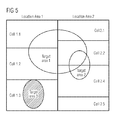
- Figure 3 shows an example of the area created by a LAS is looked after. Have three network nodes, Network Node [1, 2, 3] your supervised areas (simplified as rectangles) announced. The desired area (an ellipse) is now scanned and divided into three areas, Area [1, 2, 3]. New sub areas are formed: subarea 1 consisting of area and Area2 is used for network nodes Network Node 1 and Subarea 2, consisting of Area2 and Area3 is used for Network Node 2. Network Node 3 is not affected by this request.
- the received request is now sent to all selected network nodes forwarded, only the desired subareas are included.
- the answers received become the trigger external LCS local service client directed by either everyone Network nodes collected or dependent as soon as they arrive from the definition in the original request. Provided If a network node does not respond, it will be added to the list the network nodes that cannot be reached are set (see step 1).
- the external LCS local service client knows for requested areas usually these participants' identities are not. Naturally it would be best if the network solved this problem and would offer a protocol, which also with unknown Identity allows a location query. However, this would also a number of concerns about protecting the Provide privacy when all external LCS local service clients would be allowed to track the participants of a network It would also be big news with long ones Keep lists of participants. Even if there is no return from Identities would be required in the request, so the Answer a list of all participants with any one Identification and whereabouts included and also a list of participants for whom the request was unsuccessful was either absent because the participant searched for or whose privacy policy is a request from him Do not allow external LCS local service client.
- a network node operated in a trustworthy environment either by legal authorization or by the network operator itself could solve this problem.
- the LAS contains a database that shows the mapping between Identities and the responsible network node.
- the network nodes periodically update the database in the LAS with all identities that are currently being served by using LAP: UPDATE_IDENTITIES.
- the LAS When the LAS receives a request message from the external LCS local service client LAP: AREA_REQUESTS it distributes this request to every identity that is stored in its database for this network node.
- AREA_REQUEST_RESP of participants located in this area are forwarded to the external LCS local service client, either collected or individually, depending on the mode that was requested. This relieves the external local service client, it does not receive any irrelevant information, for example about subscribers who are not in the requested area but who exist in the network.
- LAS and GMLC e.g. MLP
- This procedure is advantageous because of the number of requests the area is reduced if only active identities are used become.
- the LCS client does not need to know anything about the internal structure know the identities and the size and number of messages is reduced.
- the privacy of participants, that are not queried is guaranteed because none Data is sent from the LAS to the LCS client.
- LAS can be cascaded.
- the LAS has internal rules for the construction of identities, depending on each network used, either predefined or with the message LAP: UPDATE_LOCATION_AREA received from GMLC. It then creates every possible identifier or uses wildcard mechanisms that are permitted by this network to transmit a message (for example "MLP: Triggered Location Reporting Request"), which triggers a response if the object logs on to the network. If it receives such a report and this report indicates that the participant is available, then it can set a periodic trigger in order to obtain the location-dependent information with a somewhat better accuracy, for example in location areas. With this standard protocol mechanism, the LAS can fill its database consisting of identities, network nodes and known location information without a change in the network being necessary.
- MLP Triggered Location Reporting Request
- the LAS collects all identities together with the abilities and properties of the end devices used and, if necessary, identifiers for them (for example SMS, WAP, SIP, e-mail addresses, voice mail, voice ). These options and default settings can also be called up directly by the LAS from a server that holds this data. A temporary identifier for this list of identities is then sent back to the external LCS local service client, along with statistical information such as how many subscribers were found, how many of them can use SMS etc.
- identities for example SMS, WAP, SIP, e-mail addresses, voice mail, voice .
- the external LCS local service client can then address certain parts of the information, for example a web address, a telephone number, a short message or the like, to this temporary list by sending the message LAP: SUBMIT_INFO used.
- the LAS can forward this information to all participants in this temporary list in accordance with the user profiles it has saved.
- the areas used by applications are usually symbolic defined, for example a country, a city, a Building or a shopping arcade. These areas can of course can be represented by a polygon that consists of a There is a set of points and edges, see for example the Specification LIF TS 101.
- LAC 3GPP local areas
- CI Cells
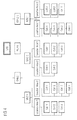
- Figure 4 shows the geographic structure by an LAS is looked after. Its area of responsibility consists of one WiFi and two GMLCs. The GMLC areas are covered from one or more MSC-SGSN. These are in turn divided into location areas and the location areas exist from radio cells.
- Cellular networks are usually in one such a hierarchical structure. For example 3GPP is defined such that an HLR is the MSC area of a subscriber knows in which he is currently. The MSC knows always the last location area of a participant. Only in in some cases, for example when the participant is currently on the phone, the actual cell is known. The precise Otherwise, the position can only be determined explicitly Request to the radio network or to the subscriber station be found out.
- the desired area by polygons or one Composition of ellipses and rectangles is given in Location areas are converted.
- the necessary one Processing process can be quite depending on the size of the area be complex and should be avoided. Changes too the network topology for the external LCS Local service client remain unnoticed and be transparent.
- the further procedure of the LAS depends on the user structure depends on whether the LAS belongs to a network operator or across network operators acts. If the LAS has several network operators heard, a cascaded structure can advantageously be selected as described above. Then the external sends Client submits its request to one of several network operators LAS that behaves according to algorithm A. After that this LAS sends the request to the internal network operator LAS according to algorithm B.
- Algorithm A The LAS knows the internal structure of the network Not.
- the external client sends a message LAP: REQUEST_AREA_IDENTIFIER to the LAS.
- This message contains the full definition of an area.
- the LAS processes this area as already described in part A, step 2.
- the message LAP REQUEST_AREA_IDENTIFIER forwarded to other LAS if necessary.
- the result is saved in the database. It consists of a list of affected units and the subareas for these units, along with the identifiers obtained from other LAS. If there are changes in the network, as described in Part A, Step 1, the data is updated. Since this update is only necessary sporadically, a performance gain can be expected in any case.
- the LAS saves the definition of the area together with the result obtained, creates a unique name AREA_IDENTITY and sends it with the message LAP: REQUEST_AREA_IDENTIFIER_RESPONSE back.
- this identifier can be used by external clients and also by other applications that have become aware of it. Other mechanisms for maintaining these identifiers, for example discarding the entry if it is not used within a number of days or forming the checksum, are necessary and known to the person skilled in the art. Additional information can also be included, for example a readable identifier that describes the nature of this area, such as "shopping center XY" or "city AZ". If the requested area is already contained in the LAS database, the saved identifier AREA_IDENTITY is returned.
- the LAS operator already predefines certain identifiers, for example cities or countries.
- AREA_IDENTITY can then for Messages such as LAP: AREA_REQUEST are used as before described above.
- the use of these identifiers can be promoted, for example by offsetting lower fees or through the higher priority at Answering the news.
- Algorithm B LAS knows the internal structure of the network.
- Step 0
- the message LAP UPDATE_LOCATION_AREA as described above, also contains the internal structure of a treated area, a list of location areas and optionally also a list of radio cells.
- a list of location is in the database Areas and optionally also radio cells for each AREA_IDENTITY saved.
- the network receives different independent requests for different areas of different independent, applications (Applications) that are on many external clients. If the network makes these requests independently treated, it generates a lot of unnecessary traffic.
- the one described Algorithm is said to cause the elaborate Positioning methods only carried out under certain conditions become. It is first determined whether the object is in location areas, then in cells and only, if the object is in a special cell the actual positioning is carried out.
- Target Area 1 If a request for Target Area 1 arrives, it can Result later without further request for the Target Area 2 or Target Area 3 are used, without requesting information from this MSC again.
- Target Area 1 the cells Cell 2.1, Cell 2.2 and Cell 2.4 can be requested. These results can be seen later can be reused for Target Area 2.
- AREA_REQUEST After receiving an order LAP: AREA_REQUEST the requested area is compared with those that ended shortly before or whose request has not yet been processed. If matches are found during the comparison, the request that has just been received is answered from the answers that have already been saved, or is delayed until the result is available. It should be noted that there may be different parameters in the request, such as "Quality of Service” parameters and accuracy of the request.
- the LAS can convert the request into a Break down set of single operations for subareas. For each subarea, the request is handled as before in Step 1 described. Subareas for which there is no result are collected and the requests are then sent to the GMLCs forwarded as already described above.
- the incoming results of the new requests are cached saved, along with a timestamp. As soon as all required Information is collected for the answer the original request will be put together generates a response with the results from the cache.
- partial results can also be sent immediately to the external Client are sent. This improves at least for one Share the response times and spread the load over time.
- the second step can be through the architecture described and databases in LAS can be further improved: If the query AREA_REQUEST it also allows responses returned with greater inaccuracy, or also with location information whose timestamp is more recent, LAS can answer the results of previous requests use. This reduces the number of requests which must be passed on to the GMLC.
- Example 1 A roaming subscriber outside of his home network can alternatively log into two visiting networks VPLMN1 and VPLMN2. If the LAS knows the position of the participant in VPLMN1 exactly and a request for VPLMN2 is made shortly afterwards, the participant has now switched to VPLMN2 and only this fact is known to the LAS, can also be determined from the exact position from VPLMN1, the time difference and the average Speed of the participant, the current position can be calculated in the required quality without a new, more precise location request to the second visitor network VPLMN2 having to be carried out.
- Example 2 We come back to Figure 3. Provided it is known that the place of residence changed some time ago Networknode 1 and has an average Ge speed does not allow the participant to already A request can be made in the Networknode 3 area these are avoided. By using algorithms take into account some of the participant's previous positions, can also accuracy without querying the networks be increased. Some algorithms are already in that document cited above by Lance Doherty et. al. described.
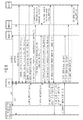
- FIG. 1 A summary of the algorithms can be found in FIG.
- the call diagram is only exemplary of some aspects of the invention, nor is it complete since some necessary response messages have been omitted.
- Shown is a location information server LAS, two application programs external client 1 and 2, with which the LAS communicates via the LAP protocol, two networks with the network elements GMLC1 and GMLC2, with which the location information server communicates via the LAP-MLP protocol, and a second location information server LAS2 with which the first LAS communicates via an Inter LAS protocol.
- the two independent application protocols both want to send an SMS to all participants in the same area. This area is managed by the two independent networks represented by GMLC1 and GMLC2.
- GMLC1 and GMLC2 send their location information coordinates to the Areas for which you are responsible and optional structure and Location of the location areas and radio cells to the LAS. additionally the message can contain a structure of identities and / or a list of currently active identities in it Area.
- the LAS is not responsible for part of the GMLC2 location, therefore the corresponding part of the information in forwarded a message to LAS2.
- the LAS In this little one Network configuration doesn't seem optimal, but it does shows the flexibility of the protocol.
- the external client 1 sends an AREA_REQUEST to the LAS, this contains a description of the requested area.
- the location server LAS2 now also sends standard MLP protocol messages for the area served by him and GMLC2, to the GMLC2.
- the second external client 2 now also sends a location request AREA_REQUEST for the same area as in message 4.
- the LAS local server notices this fact and delays treatment this message, since it replies to the first Request is waiting (message 4).
- the location server receives the responses from the GMLC1. Included in it can be a long list of identities and theirs Location information or error messages. This answer is saved saves until all requested information arrives or until it times out.
- the second location server LAS2 also collects information.
- the second location server LAS2 creates a temporary identity RESP_ID_1 for the collected participant identities and one Identifier AREA_ID_1 for this area for later use. These are sent to the local server LAS.
- the local server LAS now has all the necessary information also creates a temporary identity RESP_ID_2 and one Identifier AREA_ID_2 for this area for later Use. These are sent to the first external client 1.
- the external client 1 now wants a short message SMS to everyone Send participants who are in the previously specified area are located. It therefore sends a SUBMIT_INFO message with the Text of the SMS to the local server LAS to the one stored there List with the identity RESP_ID_2.
- the local server LAS will send the text to this short message SMS send all subscriber identities that he previously had from GLMC1 saved.
- the goal is usually not the GLMC, but a network node that is used for short messages responsible for.
- Location server 2 LAS2 also becomes, as in message 17 above described, proceed.
Landscapes
- Engineering & Computer Science (AREA)
- Computer Networks & Wireless Communication (AREA)
- Signal Processing (AREA)
- Mobile Radio Communication Systems (AREA)
- Telephonic Communication Services (AREA)
Applications Claiming Priority (2)
| Application Number | Priority Date | Filing Date | Title |
|---|---|---|---|
| DE10315064 | 2003-04-02 | ||
| DE10315064A DE10315064A1 (de) | 2003-04-02 | 2003-04-02 | Verfahren und Vorrichtung zur Behandlung von ortsbasierten Diensten |
Publications (3)
| Publication Number | Publication Date |
|---|---|
| EP1465443A2 true EP1465443A2 (fr) | 2004-10-06 |
| EP1465443A3 EP1465443A3 (fr) | 2006-08-02 |
| EP1465443B1 EP1465443B1 (fr) | 2007-12-19 |
Family
ID=32842223
Family Applications (1)
| Application Number | Title | Priority Date | Filing Date |
|---|---|---|---|
| EP04100562A Expired - Lifetime EP1465443B1 (fr) | 2003-04-02 | 2004-02-13 | Procédé et appareil pour traiter des services positionnels |
Country Status (5)
| Country | Link |
|---|---|
| US (1) | US20040198397A1 (fr) |
| EP (1) | EP1465443B1 (fr) |
| AT (1) | ATE381862T1 (fr) |
| DE (2) | DE10315064A1 (fr) |
| ES (1) | ES2298678T3 (fr) |
Families Citing this family (57)
| Publication number | Priority date | Publication date | Assignee | Title |
|---|---|---|---|---|
| CA2507418C (fr) * | 2002-12-11 | 2012-04-17 | Telefonaktiebolaget Lm Ericsson (Publ) | Procede et systeme destines au positionnement dans un reseau de communications mobiles |
| US7660590B2 (en) * | 2003-12-23 | 2010-02-09 | At&T Mobility Ii Llc | Terminal-based server for location tracking |
| US7433673B1 (en) * | 2004-12-17 | 2008-10-07 | Sprint Spectrum L.P. | Method and system for providing location information for a wireless local area network (WLAN) |
| CN100353799C (zh) * | 2005-03-16 | 2007-12-05 | 北京北方烽火科技有限公司 | 一种简单的定位服务系统性能测试方法 |
| US7353034B2 (en) | 2005-04-04 | 2008-04-01 | X One, Inc. | Location sharing and tracking using mobile phones or other wireless devices |
| US8150416B2 (en) * | 2005-08-08 | 2012-04-03 | Jambo Networks, Inc. | System and method for providing communication services to mobile device users incorporating proximity determination |
| BRPI0617002A2 (pt) * | 2005-09-09 | 2011-07-05 | Loc Aid Technologies Inc | sistema para o desenvolvimento de aplicações baseadas na localização, portal para permitir aplicações baseadas na localização de terceiros e método para o desenvolvimento de uma aplicação baseada na localização para ser utilizada por um dispositivo móvel |
| US8731585B2 (en) * | 2006-02-10 | 2014-05-20 | Telecommunications Systems, Inc. | Intelligent reverse geocoding |
| US7899468B2 (en) * | 2005-09-30 | 2011-03-01 | Telecommunication Systems, Inc. | Location sensitive messaging |
| US20070078596A1 (en) | 2005-09-30 | 2007-04-05 | John Grace | Landmark enhanced directions |
| US7957751B2 (en) * | 2006-08-02 | 2011-06-07 | Telecommunication Systems, Inc. | Personal location code |
| US8874145B2 (en) * | 2006-08-02 | 2014-10-28 | Telecommunication Systems, Inc. | Personal location code broker |
| MX2009005796A (es) * | 2006-12-22 | 2009-06-10 | Ericsson Telefon Ab L M | Metodo y aparato para notificacion de alerta a suscriptor movil. |
| US8290513B2 (en) | 2007-06-28 | 2012-10-16 | Apple Inc. | Location-based services |
| US8275352B2 (en) | 2007-06-28 | 2012-09-25 | Apple Inc. | Location-based emergency information |
| US8175802B2 (en) | 2007-06-28 | 2012-05-08 | Apple Inc. | Adaptive route guidance based on preferences |
| US8180379B2 (en) | 2007-06-28 | 2012-05-15 | Apple Inc. | Synchronizing mobile and vehicle devices |
| US8311526B2 (en) | 2007-06-28 | 2012-11-13 | Apple Inc. | Location-based categorical information services |
| US8385946B2 (en) | 2007-06-28 | 2013-02-26 | Apple Inc. | Disfavored route progressions or locations |
| US9109904B2 (en) | 2007-06-28 | 2015-08-18 | Apple Inc. | Integration of map services and user applications in a mobile device |
| US8108144B2 (en) | 2007-06-28 | 2012-01-31 | Apple Inc. | Location based tracking |
| US8774825B2 (en) | 2007-06-28 | 2014-07-08 | Apple Inc. | Integration of map services with user applications in a mobile device |
| US8332402B2 (en) | 2007-06-28 | 2012-12-11 | Apple Inc. | Location based media items |
| US9066199B2 (en) | 2007-06-28 | 2015-06-23 | Apple Inc. | Location-aware mobile device |
| US8762056B2 (en) | 2007-06-28 | 2014-06-24 | Apple Inc. | Route reference |
| US8204684B2 (en) | 2007-06-28 | 2012-06-19 | Apple Inc. | Adaptive mobile device navigation |
| US8145242B2 (en) | 2007-08-31 | 2012-03-27 | At&T Intellectual Property I, L.P. | Determining geographic zone |
| US8355862B2 (en) * | 2008-01-06 | 2013-01-15 | Apple Inc. | Graphical user interface for presenting location information |
| US8803737B2 (en) * | 2008-02-29 | 2014-08-12 | Apple Inc. | Location determination |
| US8213389B2 (en) * | 2008-04-15 | 2012-07-03 | Apple Inc. | Location determination using formula |
| US9250092B2 (en) | 2008-05-12 | 2016-02-02 | Apple Inc. | Map service with network-based query for search |
| US8644843B2 (en) | 2008-05-16 | 2014-02-04 | Apple Inc. | Location determination |
| US8369867B2 (en) | 2008-06-30 | 2013-02-05 | Apple Inc. | Location sharing |
| US8155672B2 (en) | 2008-09-16 | 2012-04-10 | Avaya Inc. | Scalable geo-location event processing |
| US8359643B2 (en) | 2008-09-18 | 2013-01-22 | Apple Inc. | Group formation using anonymous broadcast information |
| US8260320B2 (en) | 2008-11-13 | 2012-09-04 | Apple Inc. | Location specific content |
| US8855665B2 (en) * | 2008-12-17 | 2014-10-07 | Avaya Inc. | Location privacy enforcement in a location-based services platform |
| US8787929B2 (en) * | 2009-02-09 | 2014-07-22 | International Business Machines Corporation | System and methods for providing location information using location based queues |
| US8670748B2 (en) | 2009-05-01 | 2014-03-11 | Apple Inc. | Remotely locating and commanding a mobile device |
| US8666367B2 (en) | 2009-05-01 | 2014-03-04 | Apple Inc. | Remotely locating and commanding a mobile device |
| US8660530B2 (en) | 2009-05-01 | 2014-02-25 | Apple Inc. | Remotely receiving and communicating commands to a mobile device for execution by the mobile device |
| US20100318588A1 (en) * | 2009-06-12 | 2010-12-16 | Avaya Inc. | Spatial-Temporal Event Correlation for Location-Based Services |
| CN102948231B (zh) * | 2010-04-27 | 2015-10-14 | 诺基亚公司 | 处理无线电地图数据库的对象 |
| CN102612828B (zh) * | 2010-10-11 | 2015-07-08 | 西门子企业通讯有限责任两合公司 | 用于用户设备与服务通信的方法以及网络中的部件 |
| CN103858496B (zh) * | 2011-10-12 | 2018-01-26 | 瑞典爱立信有限公司 | 针对蜂窝电信网络中的网络服务的位置数据的映射 |
| US9510171B1 (en) | 2012-03-22 | 2016-11-29 | Sprint Spectrum L.P. | Provisioning mobile station with destination communication address during de-registration |
| US10419890B2 (en) * | 2012-06-15 | 2019-09-17 | Qualcomm Incorporated | Client access to mobile location services |
| US11265673B2 (en) | 2012-06-15 | 2022-03-01 | Qualcomm Incorporated | Client access to mobile location services |
| US9578115B2 (en) | 2012-06-15 | 2017-02-21 | Qualcomm Incorporated | Indoor location server provision and discovery |
| US9838835B2 (en) * | 2012-10-02 | 2017-12-05 | Richard Michael MAHONEY | Systems and methods for providing text beacons |
| TWI463833B (zh) * | 2012-10-31 | 2014-12-01 | Delta Electronics Inc | 感測器資料的快取裝置及其快取方法 |
| WO2014158190A1 (fr) * | 2013-03-29 | 2014-10-02 | Nokia Siemens Networks Oy | Améliorations de l'embms pour la communication de groupe |
| DE102013008560A1 (de) | 2013-05-17 | 2013-12-19 | Daimler Ag | Bewertungsverfahren für standortbezogene Dienste |
| EP3044702A4 (fr) * | 2013-09-13 | 2017-05-10 | Fishberg, Keith | Système de recherche et de réservation de commodités d'accueil, de services spéciaux et de services de restauration |
| US9210621B1 (en) | 2013-09-23 | 2015-12-08 | Sprint Spectrum L.P. | Method and system for facilitating service level continuity |
| US20150119075A1 (en) * | 2013-10-31 | 2015-04-30 | Telecommunication Systems, Inc. | Integrated Land Mobile Radios (LMRs) with Cellular Location Nodes |
| JP2017192058A (ja) * | 2016-04-14 | 2017-10-19 | 日本電気通信システム株式会社 | 位置情報収集装置、システム、方法およびプログラム |
Family Cites Families (13)
| Publication number | Priority date | Publication date | Assignee | Title |
|---|---|---|---|---|
| US6717938B1 (en) * | 1999-04-15 | 2004-04-06 | J2 Global Communications, Inc. | System controlling use of a communication channel |
| US5924041A (en) * | 1996-11-25 | 1999-07-13 | Ericsson Inc. | Method and apparatus for providing a dispatch system in a cellular radiotelephone system |
| GB2336968A (en) * | 1998-05-01 | 1999-11-03 | Nokia Mobile Phones Ltd | A telephone provided with means for establishing a conference call |
| EP1181836B1 (fr) * | 1999-05-05 | 2003-04-02 | Nokia Corporation | Procede de positionnement d'une station mobile |
| WO2000079811A1 (fr) * | 1999-06-18 | 2000-12-28 | Swisscom Mobile Ag | Procede et systeme pour offrir a des abonnes mobiles des services anonymes dependant de l'emplacement |
| US9107031B2 (en) * | 2000-03-13 | 2015-08-11 | Nokia Technologies Oy | Service provision in a communication system |
| IL137483A0 (en) * | 2000-07-25 | 2001-07-24 | Erez Dor | Method for locating and connecting to cellular phone caller |
| JP3805743B2 (ja) * | 2000-08-16 | 2006-08-09 | ノキア コーポレイション | 異なるネットワークにわたりサービスを提供するシステム及び方法 |
| WO2002049386A1 (fr) * | 2000-12-11 | 2002-06-20 | Ericsson Telecomunicações S.A. | Procede et dispositif pour services assures a partir de la localisation dans un systeme de communications cellulaires |
| US6873258B2 (en) * | 2001-04-10 | 2005-03-29 | Telcordia Technologies, Inc. | Location aware services infrastructure |
| WO2003009610A1 (fr) * | 2001-07-18 | 2003-01-30 | Telcontar | Systeme et procede permettant de declencher des reponses a des evenements associes a des lieux |
| EP1286558A1 (fr) * | 2001-08-20 | 2003-02-26 | Alcatel | Réseau et terminal radiotéléphonique mobile pour des services dépendants de la position |
| US20030134648A1 (en) * | 2001-10-04 | 2003-07-17 | Reed Mark Jefferson | Machine for providing a dynamic data base of geographic location information for a plurality of wireless devices and process for making same |
-
2003
- 2003-04-02 DE DE10315064A patent/DE10315064A1/de not_active Withdrawn
-
2004
- 2004-01-30 US US10/768,885 patent/US20040198397A1/en not_active Abandoned
- 2004-02-13 EP EP04100562A patent/EP1465443B1/fr not_active Expired - Lifetime
- 2004-02-13 DE DE502004005740T patent/DE502004005740D1/de not_active Expired - Fee Related
- 2004-02-13 AT AT04100562T patent/ATE381862T1/de not_active IP Right Cessation
- 2004-02-13 ES ES04100562T patent/ES2298678T3/es not_active Expired - Lifetime
Also Published As
| Publication number | Publication date |
|---|---|
| DE502004005740D1 (de) | 2008-01-31 |
| DE10315064A1 (de) | 2004-10-28 |
| ATE381862T1 (de) | 2008-01-15 |
| EP1465443A3 (fr) | 2006-08-02 |
| EP1465443B1 (fr) | 2007-12-19 |
| US20040198397A1 (en) | 2004-10-07 |
| ES2298678T3 (es) | 2008-05-16 |
Similar Documents
| Publication | Publication Date | Title |
|---|---|---|
| EP1465443B1 (fr) | Procédé et appareil pour traiter des services positionnels | |
| DE60105841T2 (de) | Signalisierung in einem zellularen mobilfunknetz mit gepoolten msc'n | |
| DE69920927T2 (de) | Integrierung von sprach- und datendiensten, die einem mobilen drahtlosen gerät geliefert werden | |
| DE60019817T2 (de) | Mobiles Kommunikationsnetz | |
| DE60222188T2 (de) | System und Verfahren zur Auswahl eines Unterstützungsknotens in einem Funkkommunikationssystem | |
| DE4417779C1 (de) | Mobilfunksystem | |
| DE60204289T2 (de) | Flexible benutzer verteilung zwischen benutzerdiensteinheiten | |
| DE60210855T2 (de) | Stammdatei mit Mehrfachprotokollen und Verwendungsverfahren | |
| DE69925751T2 (de) | Verfahren und knotenpunkt zur verbindung von mobilen rechnern | |
| DE60200415T2 (de) | Stammdatei (HLR) mit mehreren Protokollen und Verfahren zu deren Verwendung | |
| DE69834131T2 (de) | Dienste für mobile stationen | |
| DE60225677T2 (de) | Verfahren für verzögertes melden der position in einem zellularen funknetzwerk | |
| DE10246680B4 (de) | Multicasting-Verwaltungsmechanismus für Mobilnetze | |
| EP1186185B1 (fr) | Procede et systeme pour offrir a des abonnes mobiles des services anonymes dependant de l'emplacement | |
| DE69937630T2 (de) | Intelligente netzwerkdienste im paketvermittelten netz | |
| DE112006001657B4 (de) | Verfahren und Vorrichtungen zum Geräteruf und zur Standortaktualisierung in einem Netzwerk | |
| DE10297189T5 (de) | Ortsverwaltungssystem und Paging-Server in einem drahtlosen IP-Netz | |
| DE60223725T2 (de) | Überwachung auf infektionsbasis eines teilnehmers in einem kommunikationsnetzwerk | |
| WO2005055529A1 (fr) | Procede pour etablir une liaison entre un demandeur de service (client) et un prestataire de services (serveur) dans un reseau de communication mobile decentralise | |
| DE60105404T2 (de) | Übertragung von teilnehmerinformationen zu besuchten netzen | |
| DE60120437T2 (de) | Ein endgeräte-gestütztes Diensterkennungsverfahren | |
| DE69926548T2 (de) | Verfahren und vorrichtung zur auswahl von informationen zur identifikationsbestätigung | |
| WO2006061047A1 (fr) | Procede et systeme pour des noeuds de reseaux mobiles dans des reseaux heterogenes | |
| DE60314522T2 (de) | Verfahren und Telekommunikationssystem zur Positionsbestimmung einer Ziel-Teilnehmereinrichtung unter Nutzung einer "Mobile Originating-Location Request (MO-LR)"-Prozedur | |
| DE60118961T2 (de) | Positionierung von endgeräten |
Legal Events
| Date | Code | Title | Description |
|---|---|---|---|
| PUAI | Public reference made under article 153(3) epc to a published international application that has entered the european phase |
Free format text: ORIGINAL CODE: 0009012 |
|
| AK | Designated contracting states |
Kind code of ref document: A2 Designated state(s): AT BE BG CH CY CZ DE DK EE ES FI FR GB GR HU IE IT LI LU MC NL PT RO SE SI SK TR |
|
| AX | Request for extension of the european patent |
Extension state: AL LT LV MK |
|
| PUAL | Search report despatched |
Free format text: ORIGINAL CODE: 0009013 |
|
| AK | Designated contracting states |
Kind code of ref document: A3 Designated state(s): AT BE BG CH CY CZ DE DK EE ES FI FR GB GR HU IE IT LI LU MC NL PT RO SE SI SK TR |
|
| AX | Request for extension of the european patent |
Extension state: AL LT LV MK |
|
| RIC1 | Information provided on ipc code assigned before grant |
Ipc: H04Q 7/38 20060101ALI20060623BHEP Ipc: H04Q 7/22 20060101AFI20040707BHEP |
|
| 17P | Request for examination filed |
Effective date: 20061120 |
|
| 17Q | First examination report despatched |
Effective date: 20070119 |
|
| AKX | Designation fees paid |
Designated state(s): AT BE BG CH CY CZ DE DK EE ES FI FR GB GR HU IE IT LI LU MC NL PT RO SE SI SK TR |
|
| GRAP | Despatch of communication of intention to grant a patent |
Free format text: ORIGINAL CODE: EPIDOSNIGR1 |
|
| RAP1 | Party data changed (applicant data changed or rights of an application transferred) |
Owner name: NOKIA SIEMENS NETWORKS GMBH & CO. KG |
|
| GRAS | Grant fee paid |
Free format text: ORIGINAL CODE: EPIDOSNIGR3 |
|
| RAP3 | Party data changed (applicant data changed or rights of an application transferred) |
Owner name: NOKIA SIEMENS NETWORKS S.P.A. |
|
| GRAA | (expected) grant |
Free format text: ORIGINAL CODE: 0009210 |
|
| RAP3 | Party data changed (applicant data changed or rights of an application transferred) |
Owner name: NOKIA SIEMENS NETWORKS GMBH & CO. KG |
|
| AK | Designated contracting states |
Kind code of ref document: B1 Designated state(s): AT BE BG CH CY CZ DE DK EE ES FI FR GB GR HU IE IT LI LU MC NL PT RO SE SI SK TR |
|
| REG | Reference to a national code |
Ref country code: GB Ref legal event code: FG4D Free format text: NOT ENGLISH |
|
| REG | Reference to a national code |
Ref country code: IE Ref legal event code: FG4D Free format text: LANGUAGE OF EP DOCUMENT: GERMAN |
|
| REG | Reference to a national code |
Ref country code: CH Ref legal event code: EP |
|
| REF | Corresponds to: |
Ref document number: 502004005740 Country of ref document: DE Date of ref document: 20080131 Kind code of ref document: P |
|
| PG25 | Lapsed in a contracting state [announced via postgrant information from national office to epo] |
Ref country code: SE Free format text: LAPSE BECAUSE OF FAILURE TO SUBMIT A TRANSLATION OF THE DESCRIPTION OR TO PAY THE FEE WITHIN THE PRESCRIBED TIME-LIMIT Effective date: 20080319 |
|
| PGFP | Annual fee paid to national office [announced via postgrant information from national office to epo] |
Ref country code: ES Payment date: 20080228 Year of fee payment: 5 |
|
| REG | Reference to a national code |
Ref country code: ES Ref legal event code: FG2A Ref document number: 2298678 Country of ref document: ES Kind code of ref document: T3 |
|
| REG | Reference to a national code |
Ref country code: HU Ref legal event code: AG4A Ref document number: E002854 Country of ref document: HU |
|
| PG25 | Lapsed in a contracting state [announced via postgrant information from national office to epo] |
Ref country code: FI Free format text: LAPSE BECAUSE OF FAILURE TO SUBMIT A TRANSLATION OF THE DESCRIPTION OR TO PAY THE FEE WITHIN THE PRESCRIBED TIME-LIMIT Effective date: 20071219 Ref country code: SI Free format text: LAPSE BECAUSE OF FAILURE TO SUBMIT A TRANSLATION OF THE DESCRIPTION OR TO PAY THE FEE WITHIN THE PRESCRIBED TIME-LIMIT Effective date: 20071219 Ref country code: NL Free format text: LAPSE BECAUSE OF FAILURE TO SUBMIT A TRANSLATION OF THE DESCRIPTION OR TO PAY THE FEE WITHIN THE PRESCRIBED TIME-LIMIT Effective date: 20071219 |
|
| PGFP | Annual fee paid to national office [announced via postgrant information from national office to epo] |
Ref country code: DE Payment date: 20080219 Year of fee payment: 5 Ref country code: HU Payment date: 20080124 Year of fee payment: 5 |
|
| NLV1 | Nl: lapsed or annulled due to failure to fulfill the requirements of art. 29p and 29m of the patents act | ||
| GBV | Gb: ep patent (uk) treated as always having been void in accordance with gb section 77(7)/1977 [no translation filed] | ||
| PG25 | Lapsed in a contracting state [announced via postgrant information from national office to epo] |
Ref country code: CZ Free format text: LAPSE BECAUSE OF FAILURE TO SUBMIT A TRANSLATION OF THE DESCRIPTION OR TO PAY THE FEE WITHIN THE PRESCRIBED TIME-LIMIT Effective date: 20071219 |
|
| PG25 | Lapsed in a contracting state [announced via postgrant information from national office to epo] |
Ref country code: SK Free format text: LAPSE BECAUSE OF FAILURE TO SUBMIT A TRANSLATION OF THE DESCRIPTION OR TO PAY THE FEE WITHIN THE PRESCRIBED TIME-LIMIT Effective date: 20071219 Ref country code: RO Free format text: LAPSE BECAUSE OF FAILURE TO SUBMIT A TRANSLATION OF THE DESCRIPTION OR TO PAY THE FEE WITHIN THE PRESCRIBED TIME-LIMIT Effective date: 20071219 |
|
| BERE | Be: lapsed |
Owner name: NOKIA SIEMENS NETWORKS G.M.B.H. & CO. KG Effective date: 20080228 |
|
| PG25 | Lapsed in a contracting state [announced via postgrant information from national office to epo] |
Ref country code: PT Free format text: LAPSE BECAUSE OF FAILURE TO SUBMIT A TRANSLATION OF THE DESCRIPTION OR TO PAY THE FEE WITHIN THE PRESCRIBED TIME-LIMIT Effective date: 20080519 |
|
| REG | Reference to a national code |
Ref country code: CH Ref legal event code: PL |
|
| REG | Reference to a national code |
Ref country code: IE Ref legal event code: FD4D |
|
| EN | Fr: translation not filed | ||
| PLBE | No opposition filed within time limit |
Free format text: ORIGINAL CODE: 0009261 |
|
| STAA | Information on the status of an ep patent application or granted ep patent |
Free format text: STATUS: NO OPPOSITION FILED WITHIN TIME LIMIT |
|
| PG25 | Lapsed in a contracting state [announced via postgrant information from national office to epo] |
Ref country code: CH Free format text: LAPSE BECAUSE OF NON-PAYMENT OF DUE FEES Effective date: 20080229 Ref country code: DK Free format text: LAPSE BECAUSE OF FAILURE TO SUBMIT A TRANSLATION OF THE DESCRIPTION OR TO PAY THE FEE WITHIN THE PRESCRIBED TIME-LIMIT Effective date: 20071219 Ref country code: IE Free format text: LAPSE BECAUSE OF FAILURE TO SUBMIT A TRANSLATION OF THE DESCRIPTION OR TO PAY THE FEE WITHIN THE PRESCRIBED TIME-LIMIT Effective date: 20071219 Ref country code: LI Free format text: LAPSE BECAUSE OF NON-PAYMENT OF DUE FEES Effective date: 20080229 Ref country code: MC Free format text: LAPSE BECAUSE OF NON-PAYMENT OF DUE FEES Effective date: 20080228 |
|
| 26N | No opposition filed |
Effective date: 20080922 |
|
| PG25 | Lapsed in a contracting state [announced via postgrant information from national office to epo] |
Ref country code: GB Free format text: LAPSE BECAUSE OF FAILURE TO SUBMIT A TRANSLATION OF THE DESCRIPTION OR TO PAY THE FEE WITHIN THE PRESCRIBED TIME-LIMIT Effective date: 20071219 |
|
| PG25 | Lapsed in a contracting state [announced via postgrant information from national office to epo] |
Ref country code: GR Free format text: LAPSE BECAUSE OF FAILURE TO SUBMIT A TRANSLATION OF THE DESCRIPTION OR TO PAY THE FEE WITHIN THE PRESCRIBED TIME-LIMIT Effective date: 20080320 Ref country code: EE Free format text: LAPSE BECAUSE OF FAILURE TO SUBMIT A TRANSLATION OF THE DESCRIPTION OR TO PAY THE FEE WITHIN THE PRESCRIBED TIME-LIMIT Effective date: 20071219 |
|
| PG25 | Lapsed in a contracting state [announced via postgrant information from national office to epo] |
Ref country code: BE Free format text: LAPSE BECAUSE OF NON-PAYMENT OF DUE FEES Effective date: 20080228 |
|
| PG25 | Lapsed in a contracting state [announced via postgrant information from national office to epo] |
Ref country code: FR Free format text: LAPSE BECAUSE OF FAILURE TO SUBMIT A TRANSLATION OF THE DESCRIPTION OR TO PAY THE FEE WITHIN THE PRESCRIBED TIME-LIMIT Effective date: 20081010 Ref country code: AT Free format text: LAPSE BECAUSE OF NON-PAYMENT OF DUE FEES Effective date: 20080213 Ref country code: BG Free format text: LAPSE BECAUSE OF FAILURE TO SUBMIT A TRANSLATION OF THE DESCRIPTION OR TO PAY THE FEE WITHIN THE PRESCRIBED TIME-LIMIT Effective date: 20080319 |
|
| PG25 | Lapsed in a contracting state [announced via postgrant information from national office to epo] |
Ref country code: CY Free format text: LAPSE BECAUSE OF FAILURE TO SUBMIT A TRANSLATION OF THE DESCRIPTION OR TO PAY THE FEE WITHIN THE PRESCRIBED TIME-LIMIT Effective date: 20071219 |
|
| PG25 | Lapsed in a contracting state [announced via postgrant information from national office to epo] |
Ref country code: HU Free format text: LAPSE BECAUSE OF NON-PAYMENT OF DUE FEES Effective date: 20090214 |
|
| PG25 | Lapsed in a contracting state [announced via postgrant information from national office to epo] |
Ref country code: DE Free format text: LAPSE BECAUSE OF NON-PAYMENT OF DUE FEES Effective date: 20090901 |
|
| REG | Reference to a national code |
Ref country code: ES Ref legal event code: FD2A Effective date: 20090214 |
|
| PG25 | Lapsed in a contracting state [announced via postgrant information from national office to epo] |
Ref country code: ES Free format text: LAPSE BECAUSE OF NON-PAYMENT OF DUE FEES Effective date: 20090214 Ref country code: LU Free format text: LAPSE BECAUSE OF NON-PAYMENT OF DUE FEES Effective date: 20080213 |
|
| PG25 | Lapsed in a contracting state [announced via postgrant information from national office to epo] |
Ref country code: TR Free format text: LAPSE BECAUSE OF FAILURE TO SUBMIT A TRANSLATION OF THE DESCRIPTION OR TO PAY THE FEE WITHIN THE PRESCRIBED TIME-LIMIT Effective date: 20071219 |
|
| PG25 | Lapsed in a contracting state [announced via postgrant information from national office to epo] |
Ref country code: IT Free format text: LAPSE BECAUSE OF NON-PAYMENT OF DUE FEES Effective date: 20080229 |