EP1481673A1 - Compositions medicinales contenant une gabapentine ou une pregabaline et antagoniste a canal de calcium de type n - Google Patents
Compositions medicinales contenant une gabapentine ou une pregabaline et antagoniste a canal de calcium de type n Download PDFInfo
- Publication number
- EP1481673A1 EP1481673A1 EP03703174A EP03703174A EP1481673A1 EP 1481673 A1 EP1481673 A1 EP 1481673A1 EP 03703174 A EP03703174 A EP 03703174A EP 03703174 A EP03703174 A EP 03703174A EP 1481673 A1 EP1481673 A1 EP 1481673A1
- Authority
- EP
- European Patent Office
- Prior art keywords
- mmol
- pharmaceutically acceptable
- acceptable salts
- lower alkyl
- aryl
- Prior art date
- Legal status (The legal status is an assumption and is not a legal conclusion. Google has not performed a legal analysis and makes no representation as to the accuracy of the status listed.)
- Withdrawn
Links
Images


Classifications
-
- C—CHEMISTRY; METALLURGY
- C07—ORGANIC CHEMISTRY
- C07D—HETEROCYCLIC COMPOUNDS
- C07D211/00—Heterocyclic compounds containing hydrogenated pyridine rings, not condensed with other rings
- C07D211/04—Heterocyclic compounds containing hydrogenated pyridine rings, not condensed with other rings with only hydrogen or carbon atoms directly attached to the ring nitrogen atom
- C07D211/68—Heterocyclic compounds containing hydrogenated pyridine rings, not condensed with other rings with only hydrogen or carbon atoms directly attached to the ring nitrogen atom having one double bond between ring members or between a ring member and a non-ring member
- C07D211/70—Heterocyclic compounds containing hydrogenated pyridine rings, not condensed with other rings with only hydrogen or carbon atoms directly attached to the ring nitrogen atom having one double bond between ring members or between a ring member and a non-ring member with only hydrogen atoms, hydrocarbon or substituted hydrocarbon radicals, directly attached to ring carbon atoms
-
- A—HUMAN NECESSITIES
- A61—MEDICAL OR VETERINARY SCIENCE; HYGIENE
- A61K—PREPARATIONS FOR MEDICAL, DENTAL OR TOILETRY PURPOSES
- A61K31/00—Medicinal preparations containing organic active ingredients
- A61K31/185—Acids; Anhydrides, halides or salts thereof, e.g. sulfur acids, imidic, hydrazonic or hydroximic acids
- A61K31/19—Carboxylic acids, e.g. valproic acid
- A61K31/195—Carboxylic acids, e.g. valproic acid having an amino group
-
- A—HUMAN NECESSITIES
- A61—MEDICAL OR VETERINARY SCIENCE; HYGIENE
- A61K—PREPARATIONS FOR MEDICAL, DENTAL OR TOILETRY PURPOSES
- A61K31/00—Medicinal preparations containing organic active ingredients
- A61K31/33—Heterocyclic compounds
- A61K31/395—Heterocyclic compounds having nitrogen as a ring hetero atom, e.g. guanethidine or rifamycins
- A61K31/435—Heterocyclic compounds having nitrogen as a ring hetero atom, e.g. guanethidine or rifamycins having six-membered rings with one nitrogen as the only ring hetero atom
- A61K31/44—Non condensed pyridines; Hydrogenated derivatives thereof
- A61K31/445—Non condensed piperidines, e.g. piperocaine
- A61K31/451—Non condensed piperidines, e.g. piperocaine having a carbocyclic group directly attached to the heterocyclic ring, e.g. glutethimide, meperidine, loperamide, phencyclidine, piminodine
-
- A—HUMAN NECESSITIES
- A61—MEDICAL OR VETERINARY SCIENCE; HYGIENE
- A61K—PREPARATIONS FOR MEDICAL, DENTAL OR TOILETRY PURPOSES
- A61K45/00—Medicinal preparations containing active ingredients not provided for in groups A61K31/00 - A61K41/00
- A61K45/06—Mixtures of active ingredients without chemical characterisation, e.g. antiphlogistics and cardiaca
-
- A—HUMAN NECESSITIES
- A61—MEDICAL OR VETERINARY SCIENCE; HYGIENE
- A61P—SPECIFIC THERAPEUTIC ACTIVITY OF CHEMICAL COMPOUNDS OR MEDICINAL PREPARATIONS
- A61P25/00—Drugs for disorders of the nervous system
- A61P25/04—Centrally acting analgesics, e.g. opioids
-
- A—HUMAN NECESSITIES
- A61—MEDICAL OR VETERINARY SCIENCE; HYGIENE
- A61P—SPECIFIC THERAPEUTIC ACTIVITY OF CHEMICAL COMPOUNDS OR MEDICINAL PREPARATIONS
- A61P43/00—Drugs for specific purposes, not provided for in groups A61P1/00-A61P41/00
Definitions
- the present invention relates to a pharmaceutical composition
- a pharmaceutical composition comprising as active substances (a) gabapentin or pregabalin or pharmaceutically acceptable salts thereof and (b) N-type calcium channel antagonist or pharmaceutically acceptable salts thereof, those pharmaceutical composition is primarily effective for prevention, reduction and treatment of pain.
- the present invention also relates to a method for preventing, reducing and treating pain using the above-mentioned active substances, and the use of these active substances.
- Gabapentin is known to have a pain relief effect, although its mechanism of action remains elusive.
- Gabapentin is a derivative of y -amino butyric acid (GABA), but it is shown not to bind to GABA receptors. Nonetheless, gabapentin can work to increase the concentration of GABA in human brain and the ratio of GABA synthesis.
- GABA y -amino butyric acid
- the GABA is an inhibitory neurotransmitter and GABA agonist has been identified as providing outstanding antiallodynia action in animal models, which suggests that gabapentin can exert its analgesic effects through the above-mentioned mode of action associated with GABA (Acta Neurol. Scand. 101:359-371, 2000).
- gabapentin can inhibit calcium current because gabapentin is shown to bind to the ⁇ 2 ⁇ subunit of calcium channels.
- gabapentin does not act on voltage-dependent calcium channels including N-type calcium channel (Epilepsy Res. 16:89-98, 1993); and it is reported on the other hand that gabapentin does not act on N-type calcium channel, but acts on P/Q type calcium channel (Br. J. Pharmacol. 130:900-906, 2000).
- gabapentin acts on all of N-, L- and P/Q type calcium channels (Br. J. Pharmacol. 135:257-265, 2002).
- Pregabalin is also a derivative of GABA and is known to share the pain control effectiveness. Although the mechanism of action associated with pregabalin has not yet been clarified, pregabalin is thought to increase the GABA concentration in nervous tissues in a similar manner of gabapentin. In addition, it is known that pregabalin works to liberate gabapentin from its binding site (Epilepsy Res. 34:1-41, 1999).
- the N-type calcium channel antagonist has a pain control effect, too.
- the N-type calcium channel antagonist acts on the N-type calcium channels specifically positioned in the nerve system to inhibit calcium influx into the nerves.
- the N-type calcium channels which are present at high density in presynaptic terminals of the afferent nociceptive nerve serving to transmit pain signals are concerned in transmission of the pain signals to central nervous system (Exp. Opin. Ther. Patents 8:1237-1250, 1998).
- the N-type calcium channel antagonist can inhibit the influx of calcium into the nerves via the N-type calcium channels to modulate release of the neurotransmitter and inhibit transmission of pain signals to central nervous system. In this way the N-type calcium channel antagonist can exhibit its analgesic action.
- WO2001/76576 discloses a pharmaceutical composition for treatment of pain and migraine, comprising (a) nicotine receptor partial agonist, (b) analgesic, and (c) pharmaceutically acceptable carrier.
- the component (b) of the above-mentioned pharmaceutical composition that is, an analgesic drug, includes anticonvulsants, N-type calcium channel inhibitors or the like, wherein as the anticonvulsant gabapentin, pregabalin or the like is used.
- WO2001/76576 discloses a pharmaceutical composition for treatment of pain and migraine, characterized by comprising the three components (a), (b) and (c), and the composition can achieve its efficacy resulting from the combined use of the three components (a), (b) and (c).
- composition of the present invention which comprises as active substances (a) gabapentin or pregabalin or pharmaceutically acceptable salts thereof and (b) N-type calcium channel antagonist or pharmaceutically acceptable salts thereof. No description is found that suggests the effects as obtained by the combined use of (a) gabapentin or pregabalin or pharmaceutically acceptable salts thereof with (b) N-type calcium channel antagonist or pharmaceutically acceptable salts thereof.
- Gabapentin at high doses is needed when gabapentin is used for the treatment of pain.
- gabapentin at high doses produce side effects such as somnolence, dizziness and ataxia (Pharmacol. Ther. 88:163-185, 2000)
- An object of the present invention is to provide a pharmaceutical composition for prevention, reduction and treatment of pain.
- the inventors of the present invention have intensively studied to solve the above-mentioned problems, and thereafter found that administration of gabapentin in combination with N-type calcium channel antagonist can potentiate the analgesic action when compared with sole administration of gabapentin.
- the present invention has been thus accomplished.
- the combined use of drugs can offer a potential advantage over the administration of one kind of pharmaceutical drug at high doses. More specifically, when (a) gabapentin or pregabalin or pharmaceutically acceptable salts thereof is administered in combination with (b) N-type calcium channel antagonist or pharmaceutically acceptable salts thereof, each drug dose required to achieve the efficacy can be decreased, which translates to fewer side effects.
- the present invention provides a pharmaceutical composition
- a pharmaceutical composition comprising as active substances (a) gabapentin or pregabalin or pharmaceutically acceptable salts thereof and (b) N-type calcium channel antagonist or pharmaceutically acceptable salts thereof.
- the present invention also provides a pharmaceutical composition for prevention, reduction and treatment of pain, comprising as active substances (a) gabapentin or pregabalin or pharmaceutically acceptable salts thereof and (b) N-type calcium channel antagonist or pharmaceutically acceptable salts thereof.
- the present invention provides a method for preventing, reducing and treating pain, comprising the step of administering to mammals both active substances of (a) gabapentin or pregabalin or pharmaceutically acceptable salts thereof in an effective amount so as to achieve efficacy in preventing, reducing and treating pain and (b) N-type calcium channel antagonist or pharmaceutically acceptable salts thereof in an effective amount so as to achieve efficacy in preventing, reducing and treating pain.
- the present invention provides use of (a) gabapentin or pregabalin or pharmaceutically acceptable salts thereof and (b) N-type calcium channel antagonist or pharmaceutically acceptable salts thereof for preparation of a pharmaceutical drug for preventing, reducing and treating pain.
- Gabapentin and pregabalin which are the active ingredients of the present invention, are genetic terms.
- the chemical names thereof are 1-(aminomethyl)-cyclohexaneacetic acid and (S)-3-(aminomethyl)-5-methylhexanoic acid respectively.
- N-type calcium channel antagonists which are the active ingredients of the present invention, refer to agents which inhibit influx of calcium into nerves by acting on N-type calcium channel that exists specifically in nerves.
- N-type calcium channel antagonists are the following compounds shown in (I) to (X) or pharmaceutically acceptable salts thereof.
- the compounds of (I) are new N-type calcium channel antagonists.
- the compounds of (II) to (X) are known N-type calcium channel antagonists and the chemical structural formulae thereof are shown in Tables 1 and 2. Those compounds are described in the references and patents in the Tables.
- N-type calcium channel antagonists are the compounds of the following (I) or pharmaceutically acceptable salts thereof:
- alkyl groups themselves and also alkyl groups in alkenyl groups, alkynyl groups, alkoxyl groups, alkylamino groups, alkylthio groups, alkanoyl groups and the like may be either linear or branched. Examples of these alkyl groups are methyl group, ethyl group, propyl group, isopropyl group, butyl group, pentyl group, hexyl group, and secondary and tertiary butyl groups. In them, those having 1 to 4 carbon atoms are preferred.
- the aryl-lower alkyl groups include, for example, benzyl groups.
- the hetero atoms include nitrogen, oxygen, sulfur, etc.
- the halogen atoms include fluorine, chlorine, bromine and iodine.
- the aryl groups are both substituted and unsubstituted aryl groups. They are preferably phenyl groups and substituted phenyl groups, and the substituents thereof are preferably halogens, alkyl groups and alkoxyl groups.
- the cycloalkyl groups include, for example, cyclopentyl group and cyclohexyl group.
- the cycloalkyl groups which may have a hetero atom in the ring include tetrahydropyranyl group, piperidyl group, pyrrolidinyl group and piperazinyl group.
- Each of a, b, c and d is independently preferably CH.
- Each of R 1 to R 4 is preferably hydrogen atom.
- the group represented by Z is preferably selected from the group consisting of C, CH and N (with the proviso that when Z is C, the bond represented by a dotted line represents a double bond and when Z is CH or N, the bond represented by the dotted line represents a single bond).
- Z is particularly preferably C.
- n preferably represents 1 or 2. It is particularly preferably 2.
- Y 1 preferably represents oxygen atom.
- R 17a in NR 17a and -NR 17a (CH 2 ) v CHR 21 - represented by B is preferably hydrogen atom
- R 21 in -NR 17a (CH 2 ) v CHR 21 - and -(CH 2 ) v CHR 21 - is preferably hydrogen atom or hydroxymethyl group.
- B is particularly preferably -(CH 2 ) v CHR 21 -.
- "v" is preferably 0 to 3, particularly 2 or 3.
- the group represented by G is preferably -(CO)- or a covalent bond.
- n 0 to 6, preferably 0 to 3.
- p and q each independently represent 1, and Y 2 represents carbon atom or sulfur atom.
- R 7 and R 8 are preferably hydrogen atom, a lower alkyl, an aryl, -(CO)R 18a , - (CO)NR 18a R 19a or -(CO)OR 20 .
- R 18a is preferably a lower alkyl, particularly preferably methyl group, ethyl group, isopropyl group or secondary or tertiary butyl group.
- R 19a is preferably hydrogen atom or a lower alkyl group. It is also preferred that R 18a and R 19a together form a cycloalkyl group.
- R 20 is preferably a lower alkyl group, particularly preferably methyl group, ethyl group, isopropyl group or secondary or tertiary butyl group.
- R 7 and R 8 are preferably a group represented by the above general formula (5) wherein s is preferably 0 to 2, E is preferably CHR 23 wherein R 23 preferably represents H, and Y 3 and Y 4 each represent O; R 24 preferably represents H, and R 25 preferably represents -OR 20 or -(CO)OR 20 ; R 9 preferably represents -(CO)OR 20 ; R 10 preferably represents H; R 11 preferably represents H; R 12 preferably represents a substituent represented by the above general formula (6) wherein s preferably represents 2 or 3; Y 3 preferably represents O; R 26 preferably represents H; and R 27 preferably represents -OR 20 or -(CO)OR 20 ; or R 11 and R 12 preferably represent a substituent represented by the above general formula (7) together with nitrogen atom, wherein Y 3 preferably represents O and R 27 preferably represents -OR 20 or -(CO)OR 20 .
- the,configuration thereof is preferably R, S or their mixture.
- diarylalkene derivatives, diarylalkyl derivatives of the following general formula (11) and pharmaceutically acceptable salts thereof are further preferred: wherein R 28 represents an alkyl group having 1 to 12 carbon atoms, a cycloalkyl group having 1 to 12 carbon atoms or a cycloalkyl group which may have a hetero atom in the ring; R 28 is preferably a branched alkyl group, particularly a branched alkyl group having 3 to 8 carbon atoms.
- preferred compounds are those of general formula (1) and more preferred compounds are those having the above-described preferred groups.
- N-type calcium channel antagonists which are the active ingredients of the present invention, or pharmaceutically acceptable salts thereof are the following compounds (1-B) or pharmaceutically acceptable salts thereof:
- N-type calcium channel antagonists as the active ingredients of the present invention, or pharmaceutically acceptable salts thereof are the compounds of the following (II) to (X) shown in Tables 1 and 2 or pharmaceutically acceptable salts thereof:
- the N-type calcium channel antagonists are preferably the compounds of the above general formulae (I) to (X), (1-A), the compounds in (1-B) or pharmaceutically acceptable salts thereof. They are particularly preferably the compounds of the general formulae (II) to (X), the compounds in (1-B) or pharmaceutically acceptable salts thereof.
- the N-type calcium channel antagonists are preferably the compounds of the above general formulae (I) to (X), (1-A), the compounds in (1-B) or pharmaceutically acceptable salts thereof. They are particularly preferably the compounds of the general formulae (II) to (X), the compounds in (1-B) or pharmaceutically acceptable salts thereof.
- the N-type calcium channel antagonists are preferably the compounds of the above general formulae (I) to (X), (1-A), the compounds in (1-B) or pharmaceutically acceptable salts thereof. They are particularly preferably the compounds of the general formulae (II) to (X), the compounds in (1-B) or pharmaceutically acceptable salts thereof.
- the pharmaceutical composition of the present invention may be used for preventing, redressing or treating pain.
- Pain is defined as the feeling or emotional experience of discomfort which is related to a substantive or potential disorder of tissues or is represented by the terms of such disorders.
- Examples of pain are acute pain such as toothache, operative pain, post-operative pain, obstetric pain and muscle pain; chronic inflammatory pain associated with rheumatoid arthritis and osteoarthritis and the like; neuropathic pain such as trigeminal neuralgia, post-herpetic neuralgia or pain caused by HIV infection, diabetic neuropathy, phantom limb pain and causalgia; cancer pain; visceral pain; psychogenic pain; back pain and reflex sympathetic dystrophy.
- the pharmaceutical compositions of the present invention may be used as agents for preventing, redressing or treating migraine or chronic headache.
- Gabapentin or pregabalin and N-type calcium channel antagonists which are the active ingredients of the present invention, may form pharmaceutically acceptable salts thereof.
- they include ammonium salts, salts thereof with alkali metals, e. g. sodium and potassium, salts thereof with alkaline earth metals, e. g. calcium and magnesium, salts thereof with aluminum or zinc, salts thereof with organic amines, e. g. morpholine and piperidine, salts thereof with basic amino acids, e. g. arginine and lysine, salts thereof with inorganic acids, e. g.
- hydrochloric acid sulfuric acid, nitric acid, hydrobromic acid and phosphoric acid, salts thereof with organic acids, e. g. oxalic acid, maleic acid, tartaric acid, fumaric acid, and succinic acid, salts thereof with sulfonic acids, e.g. methanesulfonic acid, benzenesulfonic acid and p-toluenesulfonic acid.
- compositions of the present invention may be obtained by combining (a) gabapentin or pregabalin, or pharmaceutically acceptable salts thereof and (b) N-type calcium channel antagonists or pharmaceutically acceptable salts thereof as active ingredients.
- active ingredients may be prepared as drugs separately or at one time by mixing with a pharmaceutically acceptable carrier(s) in accordance with an ordinary method.
- the dosage forms of the pharmaceutical compositions of the present invention are, for example, oral agents such as tablets, powders, pills, granules, capsules and syrups; injectable solutions such as subcutaneously-injected solutions, intravenously-injected solutions, intramuscular medication, solutions injected into peridural space and solutions injected into subarachnoidal space; external drugs such as intranasal drugs, percutaneously-administered drugs and ointments; suppositories such as rectal suppositories and vaginal suppositories; and drops.
- oral agents such as tablets, powders, pills, granules, capsules and syrups
- injectable solutions such as subcutaneously-injected solutions, intravenously-injected solutions, intramuscular medication, solutions injected into peridural space and solutions injected into subarachnoidal space
- external drugs such as intranasal drugs, percutaneously-administered drugs and ointments
- suppositories such as rectal
- cellulose derivatives such as carboxymethyl cellulose and ethylcellulose
- starches such as potato starch and corn starch
- sugars such as lactose and sucrose
- vegetable oils such as peanut oil, corn oil and sesame oil
- polyethyleneglycol alginic acids, gelatin and talc.
- compositions of the present invention could be sufficient to be the ones, when they are administered, combining (a) gabapentin or pregabalin, or pharmaceutically acceptable salts thereof and (b) N-type calcium channel antagonists or pharmaceutically acceptable salts thereof as active ingredients.
- (a) gabapentin or pregabalin, or pharmaceutically acceptable salts thereof and (b) N-type calcium channel antagonists or pharmaceutically acceptable salts thereof as active ingredients of the present invention may be administered at the same time or administered sequentially at time intervals.
- each active ingredient of the present invention may be administered in the form of a single drug obtained by preparing the active ingredients all at once.
- each active ingredient of the present invention When administered at the same time, it may also be administered through the same administration route or through the different administration routes in the forms of plural drugs obtained by preparing each active ingredient of the present invention separately.
- plural drugs obtained by preparing each active ingredient separately may be administered through the same administration route or through the different administration routes. In this case, administration sequence of each active ingredient can be selected arbitrarily.
- the pharmaceutical compositions of the present invention are used for mammals.
- the dose of the pharmaceutical compositions of the present invention can be selected arbitrarily depending on the patient, his or her age and body weight, symptoms, period of the administration, dosage form, administration route and combination of agents.
- the dose is usually 1 mg to 3600 mg of gabapentin or pregabalin, or pharmaceutically acceptable salts thereof and 0.01 ⁇ g to 5 g of N-type calcium channel antagonists a day for adults.
- diarylalkene derivatives and diarylalkyl derivatives (1), (2), (3) and (4) of the present invention can be produced by processes described below.
- diarylalkene derivatives and diarylalkyl derivatives (1-1) and (3-1) of the general formulae (1) and (3) wherein Y 1 represents oxygen atom, B represents -(CH 2 ) v -CHR 21 and R 5 and R 6 do not together form oxygen atom or sulfur atom and also diarylalkene derivatives and diarylalkyl derivatives (2-1) of the general formula (2) wherein Y 1 represents oxygen atom, and R 5 and R 6 do not together form oxygen atom or sulfur atom can be produced as follows:
- the intended diarylalkene derivatives and diarylalkyl derivatives can be obtained by condensing an amine (13) or (16) with a carboxylic acid (14) or (15) in the presence of a base such as triethylamine and a condensing agent such as 1-ethyl-3-(3'-dimethylaminopropyl)carbodiimide and 1,3-dicyclohexylcarbodiimide.
- 3-(10,11-Dihydro-5H-dibenzo[a,d][7]-annulen-5-ylidene)pyrrolidine was synthesized according to [Patent: FR1522934].
- Compounds (1-1) and (1-3) wherein R 21 is a hydroxyalkyl group can be obtained by, for example, condensing a compound (14) having an ester corresponding to R 21 or a compound (14) having protected hydroxyl group and then reducing the ester with a reducing agent such as lithium borohydride or removing the protecting group.
- Compounds (1-1) and (1-3) having carboxyl group in R 21 can also be obtained by condensing a compound (14) having a corresponding ester to R 21 and then hydrolyzing the ester with a base such as sodium hydroxide.
- Compounds (1-1) and (1-3) having a primary or secondary amino group in R 21 can be obtained by condensing a compound (14) having an amino group protected with, for example, tert-butoxycarbonyl group and then removing the protecting group with an acid or the like.
- Diarylalkene derivatives and diarylalkyl derivatives (1-2), (1-2'), (3-2) and (3-2') of the general formulae (1) and (3) wherein Y 1 represents oxygen atom, B represents NR 17a or -NR 17a (CH 2 ) v CHR 21 - and R 5 and R 6 do not together form oxygen atom or sulfur atom can be produced as follows:
- the intended diarylalkene derivatives and diarylalkyl derivatives can be obtained by reacting an amine (13) or (16) and an amine (17) or (17') with 1,1'-carbonylbis-1H-imidazole (CDI) in the presence of a base such as triethylamine.
- Compounds (1-2') and (3-2') wherein R 21 is a hydroxyalkyl group can be obtained by condensing a compound (17') having a corresponding ester to R 21 or a compound (17') having protected hydroxyl group and then reducing the ester with a reducing agent such as lithium borohydride or removing the protecting group.
- Tertiary aniline derivatives such as those represented by formula (20) can be obtained by reacting an aniline derivative (18) with a sulfonic acid ester or a halide (19) in the presence of a base such as sodium hydride and lithium diisopropylamide.
- Secondary amines (21) can be obtained by removing benzyl from the compounds (20) in the presence of a catalyst such as palladium carbon, palladium hydroxide carbon and Raney nickel.
- the compounds (1-6) wherein R 21 represents a hydroxyalkyl group can be produced by condensing a compound (14) having an ester corresponding to R 21 or a compound (14) having protected hydroxyl group and then reducing the ester with a reducing agent such as lithium borohydride or removing the protecting group.
- the intended diarylalkene derivatives and diarylalkyl derivatives (4-1) can be obtained by, for example, condensing a carboxylic acid (22) with an amine (23) in the presence of a base such as triethylamine and a condensing agent such as 1-ethyl-3-(3'-dimethylaminopropyl)carbodiimide and 1,3-dicyclohexylcarbodiimide.
- the intended compounds (24) can be obtained by, for example, condensing a ketone (25) with ethyl diethylphosphonoacetate (26) in the presence of a base such as sodium hydride and lithium diisopropylamide.
- the reaction mixture was washed with saturated aqueous sodium hydrogencarbonate solution and the organic layer was dried over anhydrous sodium sulfate and then concentrated under reduced pressure.
- reaction mixture was washed with 0.5 N aqueous sodium hydroxide solution and the organic layer was dried over anhydrous sodium sulfate and then concentrated under reduced pressure.
- the resultant mixture was concentrated under reduced pressure and then ethyl acetate was added to the residue.
- the resultant mixture was washed with saturated aqueous sodium hydrogencarbonate solution, dried over anhydrous magnesium sulfate and then concentrated under reduced pressure.
- the title compound was obtained from 511 mg (1.96 mmol) of the compound obtained in Step 1 in Referential Example 71 and 470 mg (1.68 mmol) of 4-(9H-thioxanthen-9-ylidene)piperidine in the same manner as that in Step 2 in Referential Example 50.
- Human neuroblastoma cells IMR-32 were obtained from ATCC (American Type Culture Collection). The medium used was a Phenol Red-free Eagle minimum essential medium containing earle's salts supplement (GIBCO) supplemented with 2 mM of L-glutamine (GIBCO), 1 mM of sodium pyruvate (pH 6.5) (GIBCO), antibiotic / antimycotic mixture (GIBCO) and 10 % fetal calf serum (Cell Culture Technologies).
- GEBCO Phenol Red-free Eagle minimum essential medium containing earle's salts supplement
- GIBCO Phenol Red-free Eagle minimum essential medium containing earle's salts supplement
- GIBCO Phenol Red-free Eagle minimum essential medium containing earle's salts supplemented with 2 mM of L-glutamine (GIBCO), 1 mM of sodium pyruvate (pH 6.5) (GIBCO), antibiotic / antimycotic mixture (
- the medium for IMR-32 cells thus prepared was replaced with 1 ml of Phenol Red-free and earle's salts supplemented Eagle minimum essential medium (GIBCO) containing 2.5 ⁇ M fura-2/AM (Dojin Kagaku, Co.), and the incubation was conducted at 37°C for 30 minutes. Then the medium was replaced with a recording medium (20 mM of HEPES-KOH, 115 mM of NaCl, 5.4 mM of KCl, 0.8 mM of MgCl 2 , 1.8 mM of CaCl 2 and 13.8 mM of D-glucose).
- a recording medium (20 mM of HEPES-KOH, 115 mM of NaCl, 5.4 mM of KCl, 0.8 mM of MgCl 2 , 1.8 mM of CaCl 2 and 13.8 mM of D-glucose).
- Antagonistic activity on N-type calcium channel was determined and analyzed using a fluorescence microscope (Nikon Corporation) and an image analysis device ARGUS 50 (Hamamatsu Photonics).
- a recording medium (20 mM of HEPES-KOH, 115 mM of NaCl, 5.4 mM of KCl, 0.8 mM of MgCl 2 , 1.8 mM of CaCl 2 and 13.8 mM of D-glucose) containing 1 ⁇ M of Nifedipine was given to the cells by reflux by a Y-tube method for 2 minutes. Then a stimulating agent containing 60 mM of potassium chloride was rapidly given by the Y-tube method.
- the calcium concentration change in the cells in this step was shown as the N-type calcium channel activity.
- stimulating agents containing 60 mM of potassium chloride and 0.1, 1 or 10 ⁇ M of the test compound were successively and rapidly given to the cells by the Y-tube method to determine the change in the intracellular calcium concentration.
- the antagonistic activity on N-type calcium channel was calculated from the inhibition rate (%) at a concentration of 10 ⁇ M.
- the antagonistic activity of the new diarylalkene derivatives and diarylalkyl derivatives of the present invention to inhibit L-type calcium channel was determined by the following method in which the relaxation response against the KCl-induced contraction of isolated rat thoracic aorta was employed.
- the slips of thoracic aorta isolated from a Wistar rat were used.
- the aorta was cut to obtain ring-shaped samples having a width of about 3 mm.
- the endothelial cells of the samples were mechanically removed.
- the samples were suspended in a strain gage in Tyrode's solution (158.3 mM of NaCl, 4.0 mM of KCl, 1.05 mM of MgCl 2 , 0.42 mM of NaH 2 PO 4 , 10 mM of NaHCO 3 , 2 mM of CaCl 2 and 5 mM of glucose) in which a gaseous mixture of O 2 (95 %) and CO 2 (5 %) was introduced.
- a static tension of 2 g was applied thereto.
- the tension of the blood vessel was amplified with a transducer and a tension amplifier (EF-601G; Nihon Koden Corporation) and recorded with a multi-pen recorder (Rikadenki Kogyo Co., Ltd.). The experiments were conducted at 37°C.
- the nutrient solution in the sample tank was replaced with High K + Tyrode's solution (112.3 mM of NaCl, 50 mM of KCl, 1.05 mM of MgCl 2 , 0.42 mM of NaH 2 PO 4 , 10 mM of NaHCO 3 , 2 mM of CaCl 2 and 5 mM of glucose) to conduct the contraction reaction.
- High K + Tyrode's solution 112.3 mM of NaCl, 50 mM of KCl, 1.05 mM of MgCl 2 , 0.42 mM of NaH 2 PO 4 , 10 mM of NaHCO 3 , 2 mM of CaCl 2 and 5 mM of glucose
- test compound After attaining the maximum contraction reaction, the test compound was cumulatively added at intervals of 90 minutes to attain concentrations of 10 -9 , 10 -8 , 10 -7 and 10 -6 M.
- the inhibitory rate of the test compound against the maximum contraction response was employed as the index of the antagonistic activity on L-type calcium channels.
- Table 14 shows the results of the measurement of the antagonistic activities on N-type calcium channels (inhibition rate at 10 ⁇ M: %) and L-type calcium channel (pIC 50 ).
- the value of pIC 50 indicates the antagonistic activity of the test compound, i. e. the negative logarithm of the concentration of the test compound necessitated for the 50 % inhibition.
- Analgesic activities were determined in the formalin test.
- Four test groups [a control group (given a saline solution) and groups given 30, 100 and 300 mg/kg of gabapentin] each composed of 6 to 7 male Sprague-Dawley rats (SD rats, 9 weeks old) were used for the experiment.
- Gabapentin was dissolved in a saline solution.
- Fig. 1 is a graph showing the average measurement ⁇ standard error in each experiment group.
- the inhibiting ratios of flinches in the groups given 30, 100 and 300 mg/kg of gabapentin were 11, 42 and 47 %, respectively, based on the average number of the flinches in the control group. It was found that oral administration of 30 and 100 mg/kg of gabapentin produced a dose-dependent decrease in the number of the flinches compared with the control group. However, it was also found that analgesic effect of gabapentin tended to be saturated when administered in the amount of 100 mg/kg or more.
- Analgesic activities were determined in the formalin test.
- Four test groups [a control group, a group given the compound A (the compound of Referential Example 11: 3 mg/kg), a group given 100 mg/kg of gabapentin and a group given a combination of 3 mg/kg of the compound A and 100 mg/kg of gabapentin] each composed of 6 to 7 male Sprague-Dawley rats (SD rats, 9 weeks old) were used for the experiment.
- the administration volume to each group was as follows. In the control group, 5 ml/kg of 0.5 % tragacanth solution and 4 ml/kg of a saline solution were given orally to the rats.
- Fig. 2 is a graph showing the average measurement ⁇ standard error in each experiment group.
- the inhibiting ratios of flinches in the group given the compound A (3 mg/kg), the group given gabapentin (100 mg/kg) and the group given the combination of the compound A and gabapentin (the compound A: 3 mg/kg and gabapentin: 100 mg/kg) were 38, 47 and 68 % respectively, based on the average number of the flinches in the control group.
- Example 1 it was found that analgesic effect of gabapentin tended to be saturated when it was orally administered in the amount of 100 mg/kg or more.
- the inhibiting ratio of flinches in the group given 300 mg/kg of gabapentin was not much different from that in the group given 100 mg/kg of gabapentin.
- 3 mg/kg of the compound A was combined with 100 mg/kg of gabapentin, it was found that the analgesic effect significantly surpassed that on the group given 100 mg/kg of gabapentin and that a remarkable analgesic effect was shown compared with that on the group given 300 mg/kg of gabapentin.
- Analgesic activities were determined in the formalin test.
- Four test groups [a control group, a group given the compound B (the compound of Referential Example 71: 3 mg/kg), a group given 100 mg/kg of gabapentin and a group given a combination of 3 mg/kg of the compound B and 100 mg/kg of gabapentin] each composed of 6 male Sprague-Dawley rats (SD rats, 9 weeks old) were used for the experiment.
- the administration volume to each group was as follows.
- In the control group 3 ml/kg of polyethylene glycol 400 (PEG) and 4 ml/kg of a saline solution were given orally to the rats.
- PEG polyethylene glycol 400
- 4 ml/kg of a saline solution were given orally to the rats.
- Fig. 3 is a graph showing the average measurement ⁇ standard error in each experiment group.
- the inhibiting ratios of flinches in the group given the compound B (3 mg/kg), the group given gabapentin (100 mg/kg) and the group given the combination of the compound B and gabapentin (the compound B: 3 mg/kg and gabapentin: 100 mg/kg) were 16, 59 and 78 % respectively, based on the average number of the flinches in the control group.
- Analgesic activities were determined in the formalin test.
- Four test groups [a control group (given a saline solution) and groups given 10, 30 and 100 mg/kg of pregabalin] each composed of 6 male Sprague-Dawley rats (SD rats, 9 weeks old) were used for the experiment.
- Pregabalin was dissolved in a saline solution. 4 ml/kg of a saline solution or pregabalin was orally administered to the rats.
- Fig. 4 is a graph showing the average measurement ⁇ standard error in each experiment group.
- the inhibiting ratios of flinches in the groups given 10, 30 and 100 mg/kg of pregabalin were 31, 61 and 61 %, respectively, based on the average number of the flinches in the control group. It was found that oral administration of 10 and 30 mg/kg of pregabalin produced a dose-dependent decrease in the number of the flinches compared with the control group. However, it was also found that analgesic effect of pregabalin tended to be saturated when administered in the amount of 30 mg/kg or more.
- Analgesic activities were determined in the formalin test.
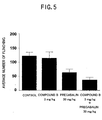
- Four test groups [a control group, a group given the compound B (the compound of Referential Example 71: 3 mg/kg), a group given 30 mg/kg of pregabalin and a group given a combination of 3 mg/kg of the compound B and 30 mg/kg of pregabalin] each composed of 5 to 6 male Sprague-Dawley rats (SD rats, 9 weeks old) were used for the experiment.
- the administration volume to each group was as follows.
- In the control group 3 ml/kg of polyethylene glycol 400 (PEG) and 4 ml/kg of a saline solution were given orally to the rats.
- PEG polyethylene glycol 400
- 4 ml/kg of a saline solution were given orally to the rats.
- Fig. 5 is a graph showing the average measurement ⁇ standard error in each experiment group.
- the inhibiting ratios of flinches in the group given the compound B (3 mg/kg), the group given pregabalin (30 mg/kg) and the group given the combination of the compound B and pregabalin (the compound B: 3 mg/kg and pregabalin: 30 mg/kg) were 7%, 48% and 70 % respectively, based on the average number of the flinches in the control group.
- the combination use of (a) gabapentin or pregabalin, or pharmaceutically acceptable salts thereof and (b) N-type calcium channel antagonists or pharmaceutically acceptable salts thereof as active ingredients can show a stronger analgesic effect than that of a single use thereof and, therefore, they are useful for treating pain.
- gabapentin induces side-effects such as somnolence and dizziness.
- side-effects such as somnolence and dizziness.
- a significant decrease in motor function of the body was observed by a whole body administration of 300 mg/kg of gabapentin or more.
- pregabalin induces side-effects such as somnolence and dizziness.
- side-effects such as somnolence and dizziness.
- a significant decrease in motor function of the body was observed by a whole body administration of 100 mg/kg of pregabalin or more.
- the combination use of the medicines has potential benefits, compared with use of a single medicine in high doses, in terms of less amount of medicine needed for obtaining the treatment effect and resultant lower side-effects.
Landscapes
- Health & Medical Sciences (AREA)
- Chemical & Material Sciences (AREA)
- General Health & Medical Sciences (AREA)
- Organic Chemistry (AREA)
- Veterinary Medicine (AREA)
- Animal Behavior & Ethology (AREA)
- Medicinal Chemistry (AREA)
- Life Sciences & Earth Sciences (AREA)
- Public Health (AREA)
- Pharmacology & Pharmacy (AREA)
- Epidemiology (AREA)
- Nuclear Medicine, Radiotherapy & Molecular Imaging (AREA)
- General Chemical & Material Sciences (AREA)
- Bioinformatics & Cheminformatics (AREA)
- Engineering & Computer Science (AREA)
- Chemical Kinetics & Catalysis (AREA)
- Neurology (AREA)
- Pain & Pain Management (AREA)
- Neurosurgery (AREA)
- Biomedical Technology (AREA)
- Pharmaceuticals Containing Other Organic And Inorganic Compounds (AREA)
- Acyclic And Carbocyclic Compounds In Medicinal Compositions (AREA)
- Medicines That Contain Protein Lipid Enzymes And Other Medicines (AREA)
- Hydrogenated Pyridines (AREA)
- Plural Heterocyclic Compounds (AREA)
- Pyrrole Compounds (AREA)
Applications Claiming Priority (7)
| Application Number | Priority Date | Filing Date | Title |
|---|---|---|---|
| JP2002028208 | 2002-02-05 | ||
| JP2002028208 | 2002-02-05 | ||
| JP2002111068 | 2002-04-12 | ||
| JP2002111068 | 2002-04-12 | ||
| JP2002317480 | 2002-10-31 | ||
| JP2002317480 | 2002-10-31 | ||
| PCT/JP2003/001163 WO2003066040A1 (fr) | 2002-02-05 | 2003-02-05 | Compositions medicinales contenant une gabapentine ou une pregabaline et antagoniste a canal de calcium de type n |
Publications (2)
| Publication Number | Publication Date |
|---|---|
| EP1481673A1 true EP1481673A1 (fr) | 2004-12-01 |
| EP1481673A4 EP1481673A4 (fr) | 2008-09-24 |
Family
ID=27738891
Family Applications (1)
| Application Number | Title | Priority Date | Filing Date |
|---|---|---|---|
| EP03703174A Withdrawn EP1481673A4 (fr) | 2002-02-05 | 2003-02-05 | Compositions medicinales contenant une gabapentine ou une pregabaline et antagoniste a canal de calcium de type n |
Country Status (5)
| Country | Link |
|---|---|
| US (1) | US7713957B2 (fr) |
| EP (1) | EP1481673A4 (fr) |
| JP (2) | JP4428053B2 (fr) |
| AU (1) | AU2003207219A1 (fr) |
| WO (1) | WO2003066040A1 (fr) |
Cited By (6)
| Publication number | Priority date | Publication date | Assignee | Title |
|---|---|---|---|---|
| EP1685102A4 (fr) * | 2003-11-12 | 2008-08-20 | Lg Life Sciences Ltd | Agonistes du recepteur de la melanocortine |
| WO2008121859A1 (fr) * | 2007-03-30 | 2008-10-09 | Xenon Pharmaceuticals Inc. | Procédés d'utilisation de composés tricycliques dans le traitement de maladies ou d'affections véhiculées par canal sodique |
| EP2151237A4 (fr) * | 2007-05-21 | 2012-10-24 | World Trade Imp Export Wtie A G | Composition pharmaceutique comprenant une combinaison d'un agent anti-inflammatoire non stéroïdien et d'un agent anticonvulsivant |
| EP2744808A4 (fr) * | 2011-08-16 | 2015-04-01 | Sinai School Medicine | Composés tricycliques en tant qu'agents anticancéreux |
| US10221158B2 (en) | 2015-09-09 | 2019-03-05 | Icahn School Of Medicine At Mount Sinai | Heterocyclic constrained tricyclic sulfonamides as anti-cancer agents |
| US10759790B2 (en) | 2015-09-09 | 2020-09-01 | Ichan School Of Medicine At Mount Sinai | Heterocyclic constrained tricyclic sulfonamides as anti-cancer agents |
Families Citing this family (10)
| Publication number | Priority date | Publication date | Assignee | Title |
|---|---|---|---|---|
| JP4623354B2 (ja) * | 2000-09-14 | 2011-02-02 | 味の素株式会社 | 新規ピリミジン誘導体及び新規ピリジン誘導体 |
| JP4337138B2 (ja) * | 2001-08-31 | 2009-09-30 | 味の素株式会社 | 新規ジアリールアルケン誘導体及び新規ジアリールアルカン誘導体 |
| NZ545494A (en) * | 2003-09-12 | 2009-10-30 | Pfizer | Combinations comprising alpha-2-delta ligands and serotonin / noradrenaline re-uptake inhibitors |
| EP1871372A4 (fr) * | 2005-04-08 | 2010-06-02 | Neuromed Pharmaceuticals Ltd | Thérapie de combinaison qui comprend un agent bloquant les canaux calciques de type n pour le soulagement de la douleur |
| EP2101585A4 (fr) * | 2006-11-30 | 2011-06-15 | Cenerx Biopharma Inc | Esters dialkylamino alkylés de la pivagabine utilisés comme médicaments dans le traitement des troubles du système nerveux central |
| WO2014168228A1 (fr) * | 2013-04-12 | 2014-10-16 | マルホ株式会社 | Composition pour usage topique |
| CN104109112B (zh) * | 2013-04-19 | 2017-02-08 | 北京勤邦生物技术有限公司 | 赛庚啶半抗原、人工抗原和抗体及其制备方法和应用 |
| MX2014008336A (es) | 2014-07-07 | 2016-01-07 | Pptm Internat S A R L | Combinacion farmacologica antihiperalgesica, antialodinica y antiinflamatoria, composiciones farmaceuticas que la contienen, y su uso para el tratamiento del dolor neuropatico. |
| WO2021150700A1 (fr) * | 2020-01-22 | 2021-07-29 | Icahn School Of Medicine At Mount Sinai | Dérivés de 3-tricyclyl-pipéridines n-substituées utilisés en tant qu'agents anticancéreux et neuroprotecteurs |
| WO2021150697A1 (fr) * | 2020-01-22 | 2021-07-29 | Icahn School Of Medicine At Mount Sinai | Dérivés de 3-tricyclyl-pipéridines n-substituées utilisés en tant qu'agents anticancéreux et neuroprotecteurs |
Family Cites Families (19)
| Publication number | Priority date | Publication date | Assignee | Title |
|---|---|---|---|---|
| KR20010020267A (ko) | 1997-04-25 | 2001-03-15 | 에가시라 구니오 | 신규한 디하이드로피리딘 유도체 |
| US6117841A (en) * | 1997-05-30 | 2000-09-12 | Warner-Lambert Company | Substituted peptidylamine calcium channel blockers |
| SE9702563D0 (sv) | 1997-07-02 | 1997-07-02 | Astra Ab | Compounds |
| US6251918B1 (en) * | 1997-08-11 | 2001-06-26 | Warner-Lambert Company | Aniline derivatives as calcium channel blockers |
| WO1999012537A1 (fr) | 1997-09-08 | 1999-03-18 | Warner-Lambert Company | Compositions analgesiques comprenant des composes anticonvulsivants et leur mode d'utilisation |
| EP1043314A4 (fr) | 1997-12-22 | 2001-01-24 | Ajinomoto Kk | Nouveau derive de dihydropyridine |
| US6458781B1 (en) * | 1998-04-27 | 2002-10-01 | David Thomas Connor | Substituted diarylalkyl amides as calcium channel antagonists |
| TWI245035B (en) | 1998-06-26 | 2005-12-11 | Ono Pharmaceutical Co | Amino acid derivatives and a pharmaceutical composition comprising the derivatives |
| US6387897B1 (en) * | 1998-06-30 | 2002-05-14 | Neuromed Technologies, Inc. | Preferentially substituted calcium channel blockers |
| JP4233692B2 (ja) | 1998-07-21 | 2009-03-04 | エーザイ・アール・アンド・ディー・マネジメント株式会社 | N,n−置換環状アミン誘導体 |
| TWI250152B (en) | 1998-07-21 | 2006-03-01 | Eisai Co Ltd | N,N-substituted cyclic amine compounds used as calcium antagonizer |
| AU3367500A (en) * | 1999-02-18 | 2000-09-04 | Ortho-Mcneil Pharmaceutical, Inc. | Aroyl aminoacyl pyrroles for use in the treatment of neuropathic pain |
| US6451857B1 (en) * | 1999-03-10 | 2002-09-17 | Warner-Lambert Company | Analgesic compositions comprising anti-epileptic compounds and methods of using same |
| WO2000078720A1 (fr) | 1999-06-23 | 2000-12-28 | Ajinomoto Co., Inc. | Derive de la dihydropyridine |
| WO2001001983A1 (fr) * | 1999-07-02 | 2001-01-11 | Warner-Lambert Company | Combinaison synergique de gabapentine et de pregabaline |
| WO2001047512A2 (fr) * | 1999-12-08 | 2001-07-05 | Fluoro Probe, Inc. | Technique analgesique dans le cas d'une douleur liee a une localisation pathologique interne |
| US20010036943A1 (en) * | 2000-04-07 | 2001-11-01 | Coe Jotham W. | Pharmaceutical composition for treatment of acute, chronic pain and/or neuropathic pain and migraines |
| JP4337138B2 (ja) * | 2001-08-31 | 2009-09-30 | 味の素株式会社 | 新規ジアリールアルケン誘導体及び新規ジアリールアルカン誘導体 |
| JP2005298340A (ja) | 2002-03-13 | 2005-10-27 | Ajinomoto Co Inc | 疼痛治療薬 |
-
2003
- 2003-02-05 WO PCT/JP2003/001163 patent/WO2003066040A1/fr not_active Ceased
- 2003-02-05 EP EP03703174A patent/EP1481673A4/fr not_active Withdrawn
- 2003-02-05 JP JP2003565464A patent/JP4428053B2/ja not_active Expired - Fee Related
- 2003-02-05 AU AU2003207219A patent/AU2003207219A1/en not_active Abandoned
-
2004
- 2004-08-05 US US10/911,633 patent/US7713957B2/en not_active Expired - Fee Related
-
2009
- 2009-10-02 JP JP2009230269A patent/JP2010031029A/ja not_active Withdrawn
Cited By (6)
| Publication number | Priority date | Publication date | Assignee | Title |
|---|---|---|---|---|
| EP1685102A4 (fr) * | 2003-11-12 | 2008-08-20 | Lg Life Sciences Ltd | Agonistes du recepteur de la melanocortine |
| WO2008121859A1 (fr) * | 2007-03-30 | 2008-10-09 | Xenon Pharmaceuticals Inc. | Procédés d'utilisation de composés tricycliques dans le traitement de maladies ou d'affections véhiculées par canal sodique |
| EP2151237A4 (fr) * | 2007-05-21 | 2012-10-24 | World Trade Imp Export Wtie A G | Composition pharmaceutique comprenant une combinaison d'un agent anti-inflammatoire non stéroïdien et d'un agent anticonvulsivant |
| EP2744808A4 (fr) * | 2011-08-16 | 2015-04-01 | Sinai School Medicine | Composés tricycliques en tant qu'agents anticancéreux |
| US10221158B2 (en) | 2015-09-09 | 2019-03-05 | Icahn School Of Medicine At Mount Sinai | Heterocyclic constrained tricyclic sulfonamides as anti-cancer agents |
| US10759790B2 (en) | 2015-09-09 | 2020-09-01 | Ichan School Of Medicine At Mount Sinai | Heterocyclic constrained tricyclic sulfonamides as anti-cancer agents |
Also Published As
| Publication number | Publication date |
|---|---|
| WO2003066040A1 (fr) | 2003-08-14 |
| EP1481673A4 (fr) | 2008-09-24 |
| US7713957B2 (en) | 2010-05-11 |
| JP4428053B2 (ja) | 2010-03-10 |
| US20050009814A1 (en) | 2005-01-13 |
| JPWO2003066040A1 (ja) | 2005-05-26 |
| AU2003207219A1 (en) | 2003-09-02 |
| JP2010031029A (ja) | 2010-02-12 |
Similar Documents
| Publication | Publication Date | Title |
|---|---|---|
| JP2010031029A (ja) | ガバペンチン若しくはプレガバリンおよびn型カルシウムチャンネル拮抗剤を含有する医薬組成物 | |
| US8278329B2 (en) | Diarylalkene derivatives and novel diarylalkane derivatives | |
| US6048899A (en) | Anticonvulsant enantiomeric amino acid derivatives | |
| DE69320869T2 (de) | Hydroxamsäure Derivate als Collagenase Inhibitore | |
| EP2118081A2 (fr) | Dérivés de thiazolidine et leurs procédés de préparation | |
| PL171054B1 (pl) | Sposób wytwarzania nowych pochodnych pirolidyny PL PL PL | |
| AU709070B2 (en) | Novel compounds with platelet aggregation inhibitor activity | |
| RU2638549C2 (ru) | Производное циклического амина и его фармацевтическое применение | |
| TW200524578A (en) | Protease inhibitors | |
| US20100168421A1 (en) | A new peptide deformylase inhibitor compound and manufacturing process thereof | |
| EP0678089A1 (fr) | N-acyl pyrrolidines et des medicaments pour le traitement ou la prevention des desordres lies a la ckk et la gastrine. | |
| WO1991000724A1 (fr) | Alkynyle amines de regulation de la neurotransmission cholinergique | |
| US11345658B2 (en) | Compounds and compositions comprising the same for treating hypertension or heart failure | |
| DE69905621T2 (de) | 3-(thio-substituierte amido)-lactame, verwendbar als inhibitoren der matrix-metalloproteinase | |
| HUT58289A (en) | Process for producing piperidine derivatives with cholesterol-synthesis inhibiting activity and pharmaceutical compositions containing | |
| JP6642422B2 (ja) | 環状アミン誘導体及びその医薬用途 | |
| JP6645425B2 (ja) | 環状アミン誘導体及びその医薬用途 | |
| HRP930978A2 (en) | Hydroxamic acid derivatives | |
| PT100222A (pt) | Agentes anti-hipertensivos a base de glutaramidas derivadas de ciclopentano |
Legal Events
| Date | Code | Title | Description |
|---|---|---|---|
| PUAI | Public reference made under article 153(3) epc to a published international application that has entered the european phase |
Free format text: ORIGINAL CODE: 0009012 |
|
| 17P | Request for examination filed |
Effective date: 20040819 |
|
| AK | Designated contracting states |
Kind code of ref document: A1 Designated state(s): AT BE BG CH CY CZ DE DK EE ES FI FR GB GR HU IE IT LI LU MC NL PT SE SI SK TR |
|
| AX | Request for extension of the european patent |
Extension state: AL LT LV MK RO |
|
| A4 | Supplementary search report drawn up and despatched |
Effective date: 20080826 |
|
| RIC1 | Information provided on ipc code assigned before grant |
Ipc: C07D 211/70 20060101ALI20080820BHEP Ipc: A61P 43/00 20060101ALI20080820BHEP Ipc: A61P 25/04 20060101ALI20080820BHEP Ipc: A61K 31/451 20060101ALI20080820BHEP Ipc: A61K 45/00 20060101ALI20080820BHEP Ipc: A61K 31/195 20060101AFI20030820BHEP |
|
| 17Q | First examination report despatched |
Effective date: 20100521 |
|
| STAA | Information on the status of an ep patent application or granted ep patent |
Free format text: STATUS: THE APPLICATION IS DEEMED TO BE WITHDRAWN |
|
| 18D | Application deemed to be withdrawn |
Effective date: 20120901 |