EP1492036B1 - Datenbank-Suchsystem - Google Patents
Datenbank-Suchsystem Download PDFInfo
- Publication number
- EP1492036B1 EP1492036B1 EP04253760A EP04253760A EP1492036B1 EP 1492036 B1 EP1492036 B1 EP 1492036B1 EP 04253760 A EP04253760 A EP 04253760A EP 04253760 A EP04253760 A EP 04253760A EP 1492036 B1 EP1492036 B1 EP 1492036B1
- Authority
- EP
- European Patent Office
- Prior art keywords
- word
- search
- words
- data
- classes
- Prior art date
- Legal status (The legal status is an assumption and is not a legal conclusion. Google has not performed a legal analysis and makes no representation as to the accuracy of the status listed.)
- Expired - Lifetime
Links
Images




Classifications
-
- G—PHYSICS
- G06—COMPUTING OR CALCULATING; COUNTING
- G06F—ELECTRIC DIGITAL DATA PROCESSING
- G06F16/00—Information retrieval; Database structures therefor; File system structures therefor
- G06F16/30—Information retrieval; Database structures therefor; File system structures therefor of unstructured textual data
- G06F16/33—Querying
- G06F16/3331—Query processing
- G06F16/3332—Query translation
- G06F16/3338—Query expansion
-
- G—PHYSICS
- G06—COMPUTING OR CALCULATING; COUNTING
- G06F—ELECTRIC DIGITAL DATA PROCESSING
- G06F16/00—Information retrieval; Database structures therefor; File system structures therefor
- G06F16/90—Details of database functions independent of the retrieved data types
- G06F16/903—Querying
- G06F16/90335—Query processing
- G06F16/90344—Query processing by using string matching techniques
Definitions
- the present invention relates to a database search system that allows retrieval of words and proper nouns serving as entry words from an enormous volume of data such as an encyclopedia by searching the words and proper nouns based on data explaining entry words and data indicating definitions, not based on spellings of entry words.
- a crossword solver used for solving a crossword displays a candidate word containing characters matching known characters by input of wildcard characters in positions of unknown characters as well as input of known characters, followed by depression of an execution key.
- conventional crossword solvers include one that attaches class words/phrases to stored words for classification and allows preliminary designation of a class followed by execution of an operation for searching the words for an intended one, and one that additionally contains compound words consisting of plural words in a stored word list and has a function of retrieving and displaying only a compound word
- crossword solver Upon use of such a crossword solver, it is required that a user forgets a word itself of a target word, the answer to a quiz, although knowing the entirety or part of the word. This is because the crossword solver merely displays only the retrieved word, but displays, for example, neither the definition of the retrieved word nor information related thereto. In particular, crossword quizzes often have questions on proper nouns. Therefore, even if a character string matching a crossword can be retrieved, there is no way to verify whether or not the character string represents the word in question, which is left to the user's judgment.
- a product having a list of words attached with class words/phrases for classification allows retrieval of a target word based on preliminary designation of a class by class word/phrase, yet has a disadvantage that the target word cannot be found by making a wrong selection in class.
- XP002319086 discloses a system for searching a classified database in which a class code is entered to select a particular class of data and data within the selected class is searched for matches with a keyword, which may contain wildcard characters.
- the present invention has an object to provide a database search system that allows storage of a large volume of information particularly related to proper nouns, accurate search through such a database at high speed without limitations posed by classification, and display of the result.
- an electronic word game aid machine comprising:
- the aspect described above allows search through the words related to a target word, thereby making it easy to verify whether or not the result shows the target word.
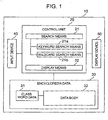
- Fig. 1 is a block diagram showing a structure of an electronic word game aid machine that functions as a database search system according to the present invention.
- Fig. 2 is an external view of the electronic word game aid machine.
- an electronic word game aid machine 10 is provided with a control unit 20 for performing control of each unit, proper noun data 30 stored in a memory such as a ROM, an input device 40 for performing input of a character and operation of an electronic dictionary, and a display device 50 for displaying various information.
- a control unit 20 for performing control of each unit, proper noun data 30 stored in a memory such as a ROM, an input device 40 for performing input of a character and operation of an electronic dictionary, and a display device 50 for displaying various information.
- the control unit 20 performs multiple-unit control of the electronic word game aid machine 10 by causing a CPU to execute a control program etc. stored in the memory such as a ROM, and mainly includes a search means 21 and a display means 22.
- the search means 21 includes keyword a search means 21a and a wildcard search means 21b.
- the proper noun data 30 is composed of a crossword word list 34, proper noun data bodies 33, title word/phras e data 31 indicating a first class of each proper noun data body 33, and title word/phrase data 32 indicating a second class thereof.
- the crossword word list 34 is data consisting of only words attached with class codes for classification.
- each proper noun data body 33 has its data classified by being attached with a first major class, a second minor class, and title words/phrases, in which not only words but also information related thereto are stored as the data. For example, stored with a personal name are years of birth-death, a country of origin, and highlighted achievements and works. This is why the major class title words/phrases 31 and the minor class title words/phrases 32 are provided in addition to the proper noun data bodies 33.
- the display device 50 is a liquid crystal display device and capable of displaying various information.
- CROSW Crossword
- ABREVI Abbreviation
- KNOW-F Knowledge Find
- the input character string is subjected to the search with a wildcard character input in a position of an unknown character to retrieve a word having an appropriate character in the position of the wildcard character.
- abbreviation matching the input character string is retrieved. If no stored abbreviation is matched, definition data of abbreviations is searched for data having a word matching the input character string.
- the search is performed for a class title word/phrase matching the input character string containing at least one or more words, and if there is a matched title word/phrase stored, the search target is limited to the matched class to search for data including another input character string. Also, if a wildcard character is contained in the input character string, the search target is limited to the input character string and the matched class to retrieve data including a word having an appropriate character in the position of the wildcard character.
- the display means 22 outputs necessary guidance information on various operations, information representing results retrieved by the search means 21, and other such information to the display device 50.
- the search means 21 performs a keyword search and a wildcard search through the proper noun data 30 to retrieve data that includes a word matching a word containing a desired keyword and a wildcard character.
- the title words/phrases 31 for the first classes and the title words/phrases 32 for the second classes are data separate from the proper noun data bodies 33. This leads to high-speed verification as to whether or not a class to be searched based on the input character string can be limited.
- address information for access to each proper noun data body 33 corresponding to the respective titlewords/phrases is provided, making it possible to display the proper noun data body 33 at high speed by designation of a class.
- class numbers for the first classes 31 and the second classes 32 are each stored in the top portion of each class of the proper noun data bodies 33.
- the "Knowledge Find" search mode also allows an operation in which the first class 31 and the second class 32 are designated in order, and the corresponding proper noun data body 33 is displayed and scrolled for a search.
- Fig. 3 shows example data structures of the title words/phrases 31 for the first class and the title words/phrases 32 for the second class by taking the proper noun data body 33 as an example.
- Fig. 3 shows examples of data structures of the title words/phrases 31 and 32 for classification and the classified proper noun data body 33.
- the simplest examples are shown in Fig. 3B, Fig. 3C, and Fig. 3D , in which the title words/phrases 31 and title words/phrases 32 for the first and second separate classes, respectively, are arranged and attached with addresses for access to the proper noun data bodies 33 in the storing order.
- Each class number has only to be stored in the top portion of each class of the proper noun data bodies 33.
- Fig. 3B shows an example of data on the title words/phrases 31 for the first classes
- Fig. 3C shows an example of data on the title words/phrases 32 for the second classes
- Fig. 3D shows an example of the proper noun data body 33 with the first class being [#5] and the second class being [#5].
- the data of Fig. 3C is obtained by decomposing the data on the title words/phrases 31 for the first classes on a word basis, and adding the number for each second class word/phrase 32 to the last portion of each line.
- the data of Fig. 3B is obtained by decomposing the data on the title words/phrases 32 for the second classes on a word basis, and adding the address information for access to the proper noun data body 33 to the last portion of each line.
- each group of the second classes defined according to a first class has the number for the first class in the top portion.
- the classes for the proper noun data bodies 33 to be a search range can be found at high speed and thus limited.
- an input word is transformed into plural words including an inflected form, and all the plural words are compared with the word in the title word/phrase, whereby even a word input in a plural form can be matched with the corresponding title word/phrase.
- An example thereof is shown in Fig. 3A .
- the comparison upon the actual search is performed on the four words “ART”, “ARTS”, and “ARTIST” as the search with respect to the word "ART”. While the word “ART” serves as an input word 61, "ART", “ARTS”, and “ARTIST” serve as words 62 within a keyword buffer.
- the user can be allowed to input, without distinction, the title word/phrase for classification, the information related thereto, and further a search target word to be the answer to a quiz.
- the input words all of which generate inflected forms are transformed into a word group including the basic forms and inflected forms, and upon comparison for the whole, all the words in the word group are compared with a word to be compared which is read from a database. Then, if any word within the word group is matched, it is judged that the input word is matched. Accordingly, even if a user inputs a word in any form such as a plural form, a past tense form, or an adjective form, it becomes easier to match the word with the title words/phrases and data indicating the classes of proper noun data, and more accurate search can be performed.
- the input can of course be performed along with the year “1881" as the input character string. Otherwise, by inputting only “arts” and “people” as the input character strings, all the data included in the class #2-2 can be searched and displayed.
- the input words are divided into words containing a wildcard and words containing no wildcard, the words containing no wildcard are used to narrow down the first and second classes, and it is examined within the range of classes finally defined whether or not there are words matching the words containing a wildcard.
- the search can be performed based on a word related to a target answer, and if part of the characters composing a word to be the target answer are clear, it is possible to search for the target answer at high speed by using a wildcard character along with the related word.
- search result data also includes the related information, thereby making it easy to verify whether or not the result is the word to be the correct answer.
- the above description of operation shows the example in which the input word matches the title word/phrase for classification, while if there is no matching, the class is not limited. Then, a word containing no wildcard is compared with data for plural classes, and a word containing a wildcard is compared with the data including the searchword. According to this operation, even if classes are not limited, it is possible to search for the data matching a word containing a wildcard from within the data including related words. Examples thereof include a search performed by inputting a personal name along with the above-mentioned year of birth or year of death using a wildcard.
- Operations similar to the search operation according to the present invention include electronic dictionaries having a function of displaying English conversational sentences which allows retrieval of conversational sentences for an English conversation or the like. They performs an operation of manually selecting classes for conversational sentences based on classified usage scenes or the like, and displaying and scrolling data for a search within limited classes, or on the contrary, searching for conversational sentences containing an input word from among all the data for unlimited classes.
- This operation is completely different from the search operation according to the present invention.
- the present invention provides a completely revolutionary search operation that allows automatic retrieval of target data performed by collectively inputting related information possessed by a user in no particular order, and if part of a word is unclear, simultaneously using a wildcard character for the input.
- the specific data structure and search operation described above are not particularly limited.
- the data is not necessarily divided into two groups of classes, and may range from data having one group of classes to data having many layers of classes.
- the classified database is set as the proper noun data, but is not limited thereto.
- data obtained by classifying encyclopedia data on an entry word basis may be used to set description sentences for entry words as the class words/phrases, and search may be performed for verification as to whether or not a word containing a wildcard matches an entry word with respect to data including the words input in the description sentences.
- the encyclopedia data can be utilized as a powerful information source for word games and quizzes.
- Fig. 7A and Fig 7B show examples of a screen to be displayed.
- a character input screen is displayed on the display device 50 by the display means 22.
- characters are input by the character keys 41 onto this screen.
- the input characters are temporarily stored in the RAM as a character string.
- the screen displayed at this time is shown in Fig. 7A .
- Fig. 7A shows an example in which "arts” and “people” have been input as keywords and "p??????" is being input as a wildcard word.
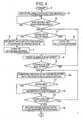
- step 3 it is judged at step 3 whether or not the translation key 45 has been depressed. If it has been depressed, the search means 21 divides the input words into keywords and wildcard words in order at steps 4, 6, and 7. At this time, the input word is developed into a word group including an inflected form at step 5, a keyword group is stored into the keyword buffer within the RAM, and the wildcard words are stored into a wildcard word buffer within the RAM. After all the words have been developed into inflected forms and stored into the buffers at step 9, the process advances to step 10 to compare the word group in the keyword buffer with the title words/phrases 31 for the first classes and the title words/phrases 32 for the second classes.
- step 12 the class number for the word group matched in the above search is stored in the top portion of the keyword buffer.
- step 14 the process advances to step 14 to delete the word group with the class number stored from the keyword buffer while leaving the class number therein. Accordingly, the comparison will not be performed on the same words in the subsequent operations.
- Fig. 5 it is checked whether or not the keyword buffer contains any class number at step 15. If a class number is contained, preparation is made at step 16 for performing the subsequent search for the proper noun data based on an address corresponding to the class number. If no class number is contained, preparation is made at step 17 for performing a search through the proper noun data bodies 33 from the top portion.
- step 18 it is examined at step 18 whether or not the keyword buffer contains any word, and if a word is contained, the word is compared with each of proper noun data bodies 33. If this comparison results in no matched words at step 20, it is checked whether or not there still exists any proper noun data that has not been compared yet at steps 27 and 28. If there exists proper noun data that has not been compared yet, the preparation is made for performing the comparison based on an address of the subsequent data, and the process returns to step 18 to repeat the comparison.
- step 22 the process advances to step 22 to check if the wildcard buffer contains any word. If a word is contained, the proper noun data that was used for comparison at step 19 or has been prepared for comparison to be performed at that time is searched through at step 23 for verification as to whether or not there is a word matching a word containing a wildcard.
- the retrieved proper noun data is displayed on the display device 50 at step 25. If there is no marched word, it is checked whether or not there still exists any proper noun data that has not been compared yet at step 27. If there exists proper noun data that has not been compared yet, the preparation is made for performing the comparison based on an address of the subsequent data, and the process returns to step 18 to repeat the comparison based on the word group in the keyword buffer.
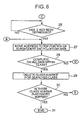
- the process waits at step 26 for depression of a key 44a for instructing a search through the subsequent proper noun data. If it is depressed, the preparation is at step 27 similarly made for performing the comparison based on an address of the subsequent data, and the process returns to step 18 to repeat the comparison based on the word group in the keyword buffer in Fig. 6 .
- a single data body is displayed on the display device capable of single-line display of proper noun data, but the display is not limited thereto. It is also possible to display retrieved data as a list on a multi-line display screen.
- the range where a word inputted by a user is matched is automatically expanded, thereby producing an effect that the desired data can be searched more accurately and at higher speed.
Landscapes
- Engineering & Computer Science (AREA)
- Theoretical Computer Science (AREA)
- Databases & Information Systems (AREA)
- Computational Linguistics (AREA)
- Data Mining & Analysis (AREA)
- Physics & Mathematics (AREA)
- General Engineering & Computer Science (AREA)
- General Physics & Mathematics (AREA)
- Information Retrieval, Db Structures And Fs Structures Therefor (AREA)
Claims (7)
- Elektronische Word-Game-Hilfsmaschine (10), umfassend:eine Datenbank (30), die in eine oder mehr Klassen klassifiziert ist;ein Durchsuchungsmittel (21), das zum Empfangen eingegebener Wörter und Unterteilen der eingegebenen Wörter in Wörter, die ein Wildcard-Zeichen enthalten, und Wörter, die kein Wildcard-Zeichen enthalten, imstande ist;ein Schlüsselwortdurchsuchungsmittel (21a), das zum Durchsuchen der Datenbank (30) nach Klassen, die mit einem oder mehr der eingegebenen Wörter übereinstimmen, die kein Wildcard-Zeichen enthalten, und, wenn übereinstimmende Klassen gefunden werden, zum Begrenzen der Suche auf jene Klassen und Entfernen der entsprechenden übereinstimmenden eingegebenen Wörter aus der Suche imstande ist;ein Wildcard-Durchsuchungsmittel (21b), das zum Durchsuchen nach Daten, die mit einem oder mehr der eingegebenen Wörter übereinstimmen, die ein Wildcard-Zeichen enthalten, und Gewinnen der übereinstimmenden Daten als Suchergebnis imstande ist;wobei das Wildcard-Durchsuchungsmittel (21b) imstande ist, nur die übereinstimmenden Klassen zu durchsuchen, wenn übereinstimmende Klassen von dem Schlüsselwortdurchsuchungsmittel (21a) gefunden wurden, und des Weiteren imstande ist, die gesamte Datenbank (30) zu durchsuchen, wenn keine übereinstimmenden Klassen gefunden wurden.
- Elektronische Word-Game-Hilfsmaschine (10) nach Anspruch 1, wobei die klassifizierte Datenbank (30) eine Datenbank ist, die sich auf eine Enzyklopädie bezieht.
- Elektronische Word-Game-Hilfsmaschine (10) nach Anspruch 1, wobei das Schlüsselwortdurchsuchungsmittel (21a) die Suche auf der Basis einer gebeugten Form eines oder mehr der eingegebenen Wörter durchführt, die kein Wildcard-Zeichen enthalten.
- Elektronische Word-Game-Hilfsmaschine (10) nach Anspruch 1, wobei die klassifizierte Datenbank (30) mit Wörtern zur Klassifizierung der Datenbank (30) bereitgestellt ist; und
das Schlüsselwortdurchsuchungsmittel (21a) den Wörtern zur Klassifizierung für einen Vergleich höchste Priorität verleiht. - Elektronische Word-Game-Hilfsmaschine (10) nach Anspruch 1, wobei in einem Fall, in dem ein eingegebenes Wort in einer Zieldatenbank nicht enthalten ist, ohne Unterbrechung der Suche, das Wort, das nicht in der Zieldatenbank enthalten ist, aus der Suche ausgeschlossen wird, und nur Wörter, die in der Zieldatenbank enthalten sind, zur Fortsetzung der Suche verwendet werden.
- Elektronische Word-Game-Hilfsmaschine (10) nach Anspruch 5, des Weiteren umfassend Mittel zum Benachrichtigen eines Anwenders des Durchsuchungssystems (10), dass eines der eingegebenen Wörter ausgeschlossen wird, wenn das Wort, das nicht in der Zieldatenbank enthalten ist, aus der Suche ausgeschlossen wird.
- Elektronische Word-Game-Hilfsmaschine (10) nach Anspruch 1, wobei jeder von mehreren Datenkörpern in der Datenbank (30) ein Element einer ersten Hauptklasse und einer zweiten Nebenklasse ist.
Applications Claiming Priority (4)
| Application Number | Priority Date | Filing Date | Title |
|---|---|---|---|
| JP2003180118 | 2003-06-24 | ||
| JP2003180118 | 2003-06-24 | ||
| JP2004118866A JP4502114B2 (ja) | 2003-06-24 | 2004-04-14 | データベース検索装置 |
| JP2004118866 | 2004-04-14 |
Publications (3)
| Publication Number | Publication Date |
|---|---|
| EP1492036A2 EP1492036A2 (de) | 2004-12-29 |
| EP1492036A3 EP1492036A3 (de) | 2005-04-27 |
| EP1492036B1 true EP1492036B1 (de) | 2009-04-15 |
Family
ID=33422198
Family Applications (1)
| Application Number | Title | Priority Date | Filing Date |
|---|---|---|---|
| EP04253760A Expired - Lifetime EP1492036B1 (de) | 2003-06-24 | 2004-06-23 | Datenbank-Suchsystem |
Country Status (4)
| Country | Link |
|---|---|
| US (1) | US20040267737A1 (de) |
| EP (1) | EP1492036B1 (de) |
| JP (1) | JP4502114B2 (de) |
| DE (1) | DE602004020545D1 (de) |
Families Citing this family (15)
| Publication number | Priority date | Publication date | Assignee | Title |
|---|---|---|---|---|
| US7769804B2 (en) * | 2006-01-17 | 2010-08-03 | Microsoft Corporation | Server side search with multi-word word wheeling and wildcard expansion |
| US20070164782A1 (en) * | 2006-01-17 | 2007-07-19 | Microsoft Corporation | Multi-word word wheeling |
| US7972205B2 (en) * | 2006-03-31 | 2011-07-05 | Vijay Krishna | Search engine crossword puzzle |
| US20080140519A1 (en) * | 2006-12-08 | 2008-06-12 | Microsoft Corporation | Advertising based on simplified input expansion |
| JP4242899B2 (ja) * | 2007-01-19 | 2009-03-25 | 株式会社コナミデジタルエンタテインメント | ゲーム端末およびプログラム |
| WO2008088005A1 (ja) * | 2007-01-19 | 2008-07-24 | Konami Digital Entertainment Co., Ltd. | ゲーム端末、ゲームシステム、プログラムおよびコンピュータ読み取り可能な記録媒体 |
| US8015129B2 (en) * | 2008-04-14 | 2011-09-06 | Microsoft Corporation | Parsimonious multi-resolution value-item lists |
| TW201135494A (en) * | 2010-04-13 | 2011-10-16 | Fundation Digital Entertainment Co Ltd | Method for analyzing, matching and delivering questions of online game |
| US8195458B2 (en) * | 2010-08-17 | 2012-06-05 | Xerox Corporation | Open class noun classification |
| US8712989B2 (en) | 2010-12-03 | 2014-04-29 | Microsoft Corporation | Wild card auto completion |
| US9110904B2 (en) * | 2011-09-21 | 2015-08-18 | Verizon Patent And Licensing Inc. | Rule-based metadata transformation and aggregation for programs |
| EP2864856A4 (de) | 2012-06-25 | 2015-10-14 | Microsoft Technology Licensing Llc | Anwendungsplattform für eingabemethodeneditor |
| WO2020047709A1 (zh) * | 2018-09-03 | 2020-03-12 | 华为技术有限公司 | 一种中文输入法候选词的搜索方法、终端及服务器 |
| JP6884930B2 (ja) * | 2018-10-04 | 2021-06-09 | 昭和電工株式会社 | 文書検索装置、文書検索プログラム、文書検索方法 |
| US10880331B2 (en) * | 2019-11-15 | 2020-12-29 | Cheman Shaik | Defeating solution to phishing attacks through counter challenge authentication |
Citations (1)
| Publication number | Priority date | Publication date | Assignee | Title |
|---|---|---|---|---|
| US6484162B1 (en) * | 1999-06-29 | 2002-11-19 | International Business Machines Corporation | Labeling and describing search queries for reuse |
Family Cites Families (35)
| Publication number | Priority date | Publication date | Assignee | Title |
|---|---|---|---|---|
| US4829472A (en) * | 1986-10-20 | 1989-05-09 | Microlytics, Inc. | Spelling check module |
| US4972349A (en) * | 1986-12-04 | 1990-11-20 | Kleinberger Paul J | Information retrieval system and method |
| JPH03185561A (ja) * | 1989-12-15 | 1991-08-13 | Ricoh Co Ltd | 欧文単語入力方法 |
| US5321609A (en) * | 1992-05-27 | 1994-06-14 | Franklin Electronic Publishers, Incorporated | Electronic encyclopedia |
| JPH0793328A (ja) * | 1993-09-24 | 1995-04-07 | Matsushita Electric Ind Co Ltd | 綴り不適切訂正装置 |
| US6081804A (en) * | 1994-03-09 | 2000-06-27 | Novell, Inc. | Method and apparatus for performing rapid and multi-dimensional word searches |
| US5721902A (en) * | 1995-09-15 | 1998-02-24 | Infonautics Corporation | Restricted expansion of query terms using part of speech tagging |
| JPH09325928A (ja) * | 1996-06-06 | 1997-12-16 | Fuji Xerox Co Ltd | メッセージ通信方法及び装置 |
| WO1998044432A1 (en) * | 1997-04-01 | 1998-10-08 | Yeong Kuang Oon | Didactic and content oriented word processing method with incrementally changed belief system |
| US6035336A (en) * | 1997-10-17 | 2000-03-07 | International Business Machines Corporation | Audio ticker system and method for presenting push information including pre-recorded audio |
| US6782510B1 (en) * | 1998-01-27 | 2004-08-24 | John N. Gross | Word checking tool for controlling the language content in documents using dictionaries with modifyable status fields |
| US6032145A (en) * | 1998-04-10 | 2000-02-29 | Requisite Technology, Inc. | Method and system for database manipulation |
| US6401060B1 (en) * | 1998-06-25 | 2002-06-04 | Microsoft Corporation | Method for typographical detection and replacement in Japanese text |
| US6363377B1 (en) * | 1998-07-30 | 2002-03-26 | Sarnoff Corporation | Search data processor |
| US6243713B1 (en) * | 1998-08-24 | 2001-06-05 | Excalibur Technologies Corp. | Multimedia document retrieval by application of multimedia queries to a unified index of multimedia data for a plurality of multimedia data types |
| US6601059B1 (en) * | 1998-12-23 | 2003-07-29 | Microsoft Corporation | Computerized searching tool with spell checking |
| US6496843B1 (en) * | 1999-03-31 | 2002-12-17 | Verizon Laboratories Inc. | Generic object for rapid integration of data changes |
| US6519586B2 (en) * | 1999-08-06 | 2003-02-11 | Compaq Computer Corporation | Method and apparatus for automatic construction of faceted terminological feedback for document retrieval |
| US6658404B1 (en) * | 1999-09-20 | 2003-12-02 | Libera, Inc. | Single graphical approach for representing and merging boolean logic and mathematical relationship operators |
| US6665666B1 (en) * | 1999-10-26 | 2003-12-16 | International Business Machines Corporation | System, method and program product for answering questions using a search engine |
| US6757866B1 (en) * | 1999-10-29 | 2004-06-29 | Verizon Laboratories Inc. | Hyper video: information retrieval using text from multimedia |
| AU2001243459A1 (en) * | 2000-03-09 | 2001-09-17 | The Web Access, Inc. | Method and apparatus for performing a research task by interchangeably utilizinga multitude of search methodologies |
| US6782380B1 (en) * | 2000-04-14 | 2004-08-24 | David Victor Thede | Method and system for indexing and searching contents of extensible mark-up language (XML) documents |
| US6556990B1 (en) * | 2000-05-16 | 2003-04-29 | Sun Microsystems, Inc. | Method and apparatus for facilitating wildcard searches within a relational database |
| US6658377B1 (en) * | 2000-06-13 | 2003-12-02 | Perspectus, Inc. | Method and system for text analysis based on the tagging, processing, and/or reformatting of the input text |
| NZ508695A (en) * | 2000-12-07 | 2003-04-29 | Compudigm Int Ltd | Method and system of searching a database of records |
| FI111762B (fi) * | 2000-12-28 | 2003-09-15 | Fonecta Ltd | Menetelmä tietojenkyselynpalvelun aikaansaamiseksi sekä tietojenkyselypalvelujärjestelmä |
| GB0103053D0 (en) * | 2001-02-07 | 2001-03-21 | Nokia Mobile Phones Ltd | A communication terminal having a predictive text editor application |
| CA2340531C (en) * | 2001-03-12 | 2006-10-10 | Ibm Canada Limited-Ibm Canada Limitee | Document retrieval system and search method using word set and character look-up tables |
| US7047183B2 (en) * | 2001-08-21 | 2006-05-16 | Microsoft Corporation | Method and apparatus for using wildcards in semantic parsing |
| US7152056B2 (en) * | 2002-04-19 | 2006-12-19 | Dow Jones Reuters Business Interactive, Llc | Apparatus and method for generating data useful in indexing and searching |
| US7039635B1 (en) * | 2002-06-11 | 2006-05-02 | Microsoft Corporation | Dynamically updated quick searches and strategies |
| US6983481B2 (en) * | 2002-07-25 | 2006-01-03 | International Business Machines Corporation | Apparatus and method for blocking television commercials with a content interrogation program |
| US7305372B2 (en) * | 2003-03-04 | 2007-12-04 | Kurzweil Technologies, Inc. | Enhanced artificial intelligence language |
| US20040209231A1 (en) * | 2003-03-10 | 2004-10-21 | Merritt Nelson A. | Second language learning system |
-
2004
- 2004-04-14 JP JP2004118866A patent/JP4502114B2/ja not_active Expired - Fee Related
- 2004-06-23 EP EP04253760A patent/EP1492036B1/de not_active Expired - Lifetime
- 2004-06-23 DE DE602004020545T patent/DE602004020545D1/de not_active Expired - Lifetime
- 2004-06-23 US US10/875,112 patent/US20040267737A1/en not_active Abandoned
Patent Citations (1)
| Publication number | Priority date | Publication date | Assignee | Title |
|---|---|---|---|---|
| US6484162B1 (en) * | 1999-06-29 | 2002-11-19 | International Business Machines Corporation | Labeling and describing search queries for reuse |
Also Published As
| Publication number | Publication date |
|---|---|
| EP1492036A3 (de) | 2005-04-27 |
| US20040267737A1 (en) | 2004-12-30 |
| EP1492036A2 (de) | 2004-12-29 |
| JP2005038395A (ja) | 2005-02-10 |
| DE602004020545D1 (de) | 2009-05-28 |
| JP4502114B2 (ja) | 2010-07-14 |
Similar Documents
| Publication | Publication Date | Title |
|---|---|---|
| EP1492036B1 (de) | Datenbank-Suchsystem | |
| US5794177A (en) | Method and apparatus for morphological analysis and generation of natural language text | |
| US6735559B1 (en) | Electronic dictionary | |
| JPH0418673A (ja) | テキスト情報抽出方法および装置 | |
| US20050228639A1 (en) | Electronic dictionary with example sentences | |
| KR20040101678A (ko) | 복합 형태소 분석 장치 및 방법 | |
| WO2000007117A2 (en) | An index to a semi-structured database | |
| EP2031490A2 (de) | Elektronisches Wörterbuch, Suchverfahren für ein elektronisches Wörterbuch und Suchprogramm für ein elektronisches Wörterbuch | |
| KR20020072092A (ko) | 단락 단위의 실시간 응답 색인을 이용한 자연어 질의-응답검색시스템 | |
| JP2000132560A (ja) | 中国語テレテキスト処理方法及び装置 | |
| JP3945075B2 (ja) | 辞書機能を備えた電子装置及び情報検索処理プログラムを記憶した記憶媒体 | |
| EP2030659B1 (de) | Wörtersuchvorrichtung, -verfahren und -programm | |
| JP2004118476A (ja) | 電子辞書装置、電子辞書の検索結果表示方法、プログラムおよび記録媒体 | |
| KR100494113B1 (ko) | 웹 브라우저를 이용한 정보 검색 시스템 | |
| KR100452024B1 (ko) | 자연어 질의 응답 검색 엔진 및 검색 방법 | |
| JPH07306858A (ja) | 辞書編集装置 | |
| JP4145776B2 (ja) | 質問応答装置および質問応答方法 | |
| JP2008210229A (ja) | 知的財産情報検索装置、知的財産情報検索方法及び知的財産情報検索プログラム | |
| JP2000311170A (ja) | テキスト情報抽出方法 | |
| JP2719996B2 (ja) | 漢字検索方法および漢字検索装置 | |
| JPH05181912A (ja) | 文書検索装置 | |
| Mon et al. | Myanmar language search engine | |
| JPH09101951A (ja) | 文書検索装置 | |
| JPH08161353A (ja) | 情報検索装置 | |
| Azadnia et al. | Persian web pages clustering improvement: Customizing the STC algorithm |
Legal Events
| Date | Code | Title | Description |
|---|---|---|---|
| PUAI | Public reference made under article 153(3) epc to a published international application that has entered the european phase |
Free format text: ORIGINAL CODE: 0009012 |
|
| AK | Designated contracting states |
Kind code of ref document: A2 Designated state(s): AT BE BG CH CY CZ DE DK EE ES FI FR GB GR HU IE IT LI LU MC NL PL PT RO SE SI SK TR |
|
| AX | Request for extension of the european patent |
Extension state: AL HR LT LV MK |
|
| PUAL | Search report despatched |
Free format text: ORIGINAL CODE: 0009013 |
|
| AK | Designated contracting states |
Kind code of ref document: A3 Designated state(s): AT BE BG CH CY CZ DE DK EE ES FI FR GB GR HU IE IT LI LU MC NL PL PT RO SE SI SK TR |
|
| AX | Request for extension of the european patent |
Extension state: AL HR LT LV MK |
|
| 17P | Request for examination filed |
Effective date: 20051020 |
|
| AKX | Designation fees paid |
Designated state(s): DE GB |
|
| GRAP | Despatch of communication of intention to grant a patent |
Free format text: ORIGINAL CODE: EPIDOSNIGR1 |
|
| GRAS | Grant fee paid |
Free format text: ORIGINAL CODE: EPIDOSNIGR3 |
|
| GRAA | (expected) grant |
Free format text: ORIGINAL CODE: 0009210 |
|
| AK | Designated contracting states |
Kind code of ref document: B1 Designated state(s): DE GB |
|
| REG | Reference to a national code |
Ref country code: GB Ref legal event code: FG4D |
|
| REF | Corresponds to: |
Ref document number: 602004020545 Country of ref document: DE Date of ref document: 20090528 Kind code of ref document: P |
|
| PLBE | No opposition filed within time limit |
Free format text: ORIGINAL CODE: 0009261 |
|
| STAA | Information on the status of an ep patent application or granted ep patent |
Free format text: STATUS: NO OPPOSITION FILED WITHIN TIME LIMIT |
|
| 26N | No opposition filed |
Effective date: 20100118 |
|
| REG | Reference to a national code |
Ref country code: DE Ref legal event code: R079 Ref document number: 602004020545 Country of ref document: DE Free format text: PREVIOUS MAIN CLASS: G06F0017300000 Ipc: G06F0016000000 |
|
| PGFP | Annual fee paid to national office [announced via postgrant information from national office to epo] |
Ref country code: DE Payment date: 20200609 Year of fee payment: 17 |
|
| PGFP | Annual fee paid to national office [announced via postgrant information from national office to epo] |
Ref country code: GB Payment date: 20200610 Year of fee payment: 17 |
|
| REG | Reference to a national code |
Ref country code: DE Ref legal event code: R119 Ref document number: 602004020545 Country of ref document: DE |
|
| GBPC | Gb: european patent ceased through non-payment of renewal fee |
Effective date: 20210623 |
|
| PG25 | Lapsed in a contracting state [announced via postgrant information from national office to epo] |
Ref country code: GB Free format text: LAPSE BECAUSE OF NON-PAYMENT OF DUE FEES Effective date: 20210623 Ref country code: DE Free format text: LAPSE BECAUSE OF NON-PAYMENT OF DUE FEES Effective date: 20220101 |