EP1492296B1 - Apparat und Methode für eine Authentisierung mit einmaliger Passworteingabe über einen unsicheren Netzwerkzugang - Google Patents
Apparat und Methode für eine Authentisierung mit einmaliger Passworteingabe über einen unsicheren Netzwerkzugang Download PDFInfo
- Publication number
- EP1492296B1 EP1492296B1 EP03076977A EP03076977A EP1492296B1 EP 1492296 B1 EP1492296 B1 EP 1492296B1 EP 03076977 A EP03076977 A EP 03076977A EP 03076977 A EP03076977 A EP 03076977A EP 1492296 B1 EP1492296 B1 EP 1492296B1
- Authority
- EP
- European Patent Office
- Prior art keywords
- user
- network
- service
- access
- authentication
- Prior art date
- Legal status (The legal status is an assumption and is not a legal conclusion. Google has not performed a legal analysis and makes no representation as to the accuracy of the status listed.)
- Expired - Lifetime
Links
- 238000000034 method Methods 0.000 title claims abstract description 30
- 230000004044 response Effects 0.000 claims description 8
- 230000007246 mechanism Effects 0.000 description 12
- 238000013459 approach Methods 0.000 description 10
- 238000004891 communication Methods 0.000 description 6
- 238000013475 authorization Methods 0.000 description 5
- 230000008901 benefit Effects 0.000 description 5
- 230000008569 process Effects 0.000 description 5
- 235000014510 cooky Nutrition 0.000 description 3
- 230000004048 modification Effects 0.000 description 2
- 238000012986 modification Methods 0.000 description 2
- 238000005516 engineering process Methods 0.000 description 1
- 238000012384 transportation and delivery Methods 0.000 description 1
Images



Classifications
-
- H—ELECTRICITY
- H04—ELECTRIC COMMUNICATION TECHNIQUE
- H04L—TRANSMISSION OF DIGITAL INFORMATION, e.g. TELEGRAPHIC COMMUNICATION
- H04L63/00—Network architectures or network communication protocols for network security
- H04L63/08—Network architectures or network communication protocols for network security for authentication of entities
- H04L63/0815—Network architectures or network communication protocols for network security for authentication of entities providing single-sign-on or federations
-
- H—ELECTRICITY
- H04—ELECTRIC COMMUNICATION TECHNIQUE
- H04L—TRANSMISSION OF DIGITAL INFORMATION, e.g. TELEGRAPHIC COMMUNICATION
- H04L12/00—Data switching networks
- H04L12/28—Data switching networks characterised by path configuration, e.g. LAN [Local Area Networks] or WAN [Wide Area Networks]
- H04L12/46—Interconnection of networks
- H04L12/4633—Interconnection of networks using encapsulation techniques, e.g. tunneling
-
- H—ELECTRICITY
- H04—ELECTRIC COMMUNICATION TECHNIQUE
- H04L—TRANSMISSION OF DIGITAL INFORMATION, e.g. TELEGRAPHIC COMMUNICATION
- H04L63/00—Network architectures or network communication protocols for network security
- H04L63/08—Network architectures or network communication protocols for network security for authentication of entities
- H04L63/0823—Network architectures or network communication protocols for network security for authentication of entities using certificates
-
- H—ELECTRICITY
- H04—ELECTRIC COMMUNICATION TECHNIQUE
- H04L—TRANSMISSION OF DIGITAL INFORMATION, e.g. TELEGRAPHIC COMMUNICATION
- H04L63/00—Network architectures or network communication protocols for network security
- H04L63/16—Implementing security features at a particular protocol layer
- H04L63/162—Implementing security features at a particular protocol layer at the data link layer
Definitions
- the present invention generally relates to Single Sign-On services for a plurality of users accessing a service network via a non-trusted access network. More particularly, the invention relates to a telecommunication apparatus, user equipment and method for Single Sign-On authentication purposes when the access network does not provide data origin authentication.
- SSO Single Sign-On
- IdP Identity Provider
- SP Service Providers
- the user's terminal is the one that supports the different authentication mechanisms necessary to access the different services.
- the terminal stores the different passwords instead of the user itself.
- this approach still puts the burden of supporting different authentication mechanisms on the user or terminal side.
- the user needs to register itself to every entity playing the role of Service Provider (SP), so that every said entity has the necessary information about the user like, for example, user identity and password, address for mail deliveries, contact information, payment mode, etc.
- SP Service Provider
- a user is just authenticated towards one central entity, which plays the role of Identity Provider (IdP) for said user.
- IdP Identity Provider
- the Service Provider (SP) is presented one or more service credentials from the Identity Provider (IdP), thus stating that the user has been authenticated and providing the necessary information about the user.
- this mechanism requires a business relation between the SP and the IdP.
- MNO Mobile Network Operator
- MNO Mobile Network Operator
- the user controls the access authentication and, at the same time, assumes the role of IdP.
- the user performs an authentication with the Core Network (CN) in order to gain access to the network, such as during a General Packet Radio Service (GPRS) authentication or Circuit Switched authentication, and the IdP relies on this authentication so that a new authentication towards the IdP is not needed, provided that the IdP has the means to obtain that information from the CN.
- GPRS General Packet Radio Service
- the Identity Provider can only rely on the Core Network (CN) authentication if the Access Network, which the user is accessing through, provides data origin authentication. This is the case, for example, when the user is accessing through a GPRS access network.
- CN Core Network
- data origin authentication means that for any data received from the Access Network, and whichever the originator is, the claimed originator of said data can be considered authentic.
- WLAN Wireless Local Area Network
- the SSO principle implies that once a user has performed a Core Network (CN) authentication, such user gets access to services in a variety of networks without a further explicit authentication by virtue of a Single Sign-On (SSO) support, and wherein the Home Network holding a user's subscription assumes the role of IdP for such user.
- CN Core Network
- SSO Single Sign-On
- a user may be authenticated by the user's Home Core Network where the user holds a subscription, or by a Visited Core Network where the user is roaming.
- the present description refers hereinafter to a Core Network authentication regardless whether the home or the visited network was the one authenticating the user.
- CN Core Network
- IP addresses assigned by said CN
- Any data originated at the mobile station can be considered authentic.
- said IP address can be considered as the user's pseudo-identity during the period said IP address is allocated to the user's mobile station.
- MSISDN mobile subscriber directory number
- the first one is the so-called Walled-Garden SSO and refers to the usage of SSO for services that are offered by the same entity that offers SSO, namely Local Services throughout this description. There are no open specifications, or standard technology, supporting this business model.
- SSO Single Sign-On
- Walled garden the Walled Garden
- Federated SSO the Access Network provides data origin authentication
- a user just performs an access authentication and once this step has been accomplished, SSO can be used to gain access to a number of services without any new authentication process.
- the access network is a GPRS network
- the entity playing the role of Identity Provider has assurance that any request for service credentials received from a user with a given IP address comes indeed from that user, and not from an attacker performing IP spoofing.
- the IdP can provide the requested service credentials to the user without performing any extra authentication.
- US-6253327 discloses an apparatus and method for a user being assigned with an IP address once authenticated by a network, this IP address being used as a proof of being authenticated through a negotiated point-to-point protocol session, thus eliminating needs for further authentications when the user accesses public or private network areas. This is an acceptable solution when the access network provides data origin authentication such as a point-to-point protocol session allows.
- the current state of art does not offer a safe solution for Single Sign-On authentication when the Access Network does not provide data origin authentication, since the given IP address identifying the user is not under control of the Mobile Network Operator (MNO) and might be in use by an attacker performing IP spoofing.
- MNO Mobile Network Operator
- the use of a tunnelling mechanism through a secure gateway for authenticating a user accessing a private network, with addition and strip off IP addresses for network entities in the private network and binding functions to associate the origin of a request with the destination of a corresponding response, in order to avoid a direct access from the access network to the private network, as shown in US-6571289, is not helpful when the access network does not provide data origin authentication, and does not preclude intrusions from an attacker user performing IP spoofing.
- the present invention is aimed to overcome this limitation in such a manner that a Mobile Network Operator (MNO) providing access through an Access Network not able to provide data origin authentication, such as WLAN, can re-utilise the original access authentication for SSO.
- MNO Mobile Network Operator
- the present invention is addressed to overcome this limitation, at least, under a network-centric approach.
- the apparatus in accordance with the invention is arranged for receiving a Single Sign-On service request in a telecommunication service network from a user, via an access network that does not provide data origin authentication, whereas the user had received access credentials as a result of having been authenticated by the Core Network.
- This apparatus comprises:
- the apparatus is preferably arranged with means for generating service credentials usable for the user accessing certain services requiring specific authorisation evidences. Additionally, these means are arranged to generate service credentials on a per service basis for the user and upon service request.
- the apparatus is preferably provided with means for communicating with an Authentication Server of the home network in order to check the validity of the access credentials received from the user, when said access credentials are not signed by a recognised authentication entity.
- the apparatus may be advantageously implemented with different components, wherein the means for establishing the secure tunnel with a user are included in a first device named Secure Service Entry Point, and the means for linking session data, access credentials and assigned internal IP address for the user are included in a second device named Single Sign-On server. Under this approach, the apparatus further comprises means for communicating said first and second devices, namely the Secure Service Entry Point with the Single Sign On Server.
- the apparatus of the present invention preferably comprises means for an additional co-ordination with an Identity Provider in charge of said user in the home network.
- Said means for additional co-ordination are preferably located at the Single Sign On Server, though they may be alternatively located at the Secure Service Entry Point as well.
- the apparatus includes means for checking whether the user had been previously authenticated or not. Therefore, the apparatus may be provided with means for communicating with an intermediate entity arranged to intercept the user's access to the HTTP local service, or to the external service in an external network.
- this intermediate entity may be an HTTP-proxy, or a general purpose firewall arranged to this end.
- the apparatus In operation for an other exemplary use when the user is accessing a non-HTTP local service, the apparatus also includes means for checking whether the user had been previously authenticated or not.
- the apparatus also includes means for checking whether the user had been previously authenticated or not.
- the fact of being an HTTP service or a non-HTTP service does not determine the advantages or drawbacks of having the intermediate entity, but rather show different configurations that are compatible with the apparatus of the present invention.
- the user equipment in accordance with the invention is arranged to carry out an authentication procedure with a core network, and includes means for establishing a secure tunnel with a service network, through an access network not providing data origin authentication, wherein the secure tunnel makes use of an outer IP address assigned by said access network, and the user equipment also includes:
- the user equipment advantageously includes means for linking an internal IP address, which is received as an inner IP address within the tunnelled traffic, with the access credentials and with the secure tunnel. This way, further accesses to particular services may easily encounter at the user equipment the previously assigned IP address as a pseudo-identity to directly access said particular services.
- the means for obtaining access credentials at the user equipment includes:
- a method for supporting Single Sign-On services in a telecommunication service network for a user accessing said service network through an access network unable to provide data origin authentication, the user authenticated by a core network comprising the steps of:
- the method further comprises a step of linking an internal IP address received as an inner IP address within the tunnelled traffic with the access credentials and with the secure tunnel at the user equipment side.
- the method also aligned with preferred corresponding features in the above apparatus, further comprises a step of generating service credentials for the user.
- This step may additionally include a step of generating service credentials on a per service basis for the user upon service request.
- the step of checking the validity of access credentials received from the user at the service network further includes a step of communicating with an Authentication Server of the home network, when said access credentials are not signed by a recognised authentication entity.
- the method may further include a step of communicating a first device named Secure Service Entry Point, in charge of the secure tunnel, with a second device named Single Sign On Server (N-42) where the step of linking session data, access credentials and assigned internal IP address for the user takes places.
- a first device named Secure Service Entry Point
- N-42 Single Sign On Server
- the method when the user is accessing to a local service, or to an external service in a network different than the currently accessed service network, the method further includes means for checking whether the user had been previously authenticated or not.
- FIG. 1 shows a basic overview of a known architecture for an access control based on an Extensible Authentication Protocol.
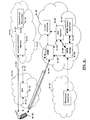
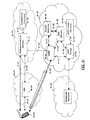
- FIG. 2 illustrates an overview of an exemplary architecture and interfaces, focusing on entities and interfaces involved when the user is authenticated by the user's home network, and is further accessing a service network, via an access network not providing data origin authentication, the service network re-utilising the access authentication.
- FIG. 3 shows a flow sequence describing a currently preferred embodiment for a user to obtain access credentials as a result of being authenticated by the user's home core network.
- Fig. 4 shows a first overview of the exemplary architecture and interfaces shown in Fig. 2, focusing on a preferred operation when the user is accessing a local HTTP service.
- Fig. 5 shows a second overview of the exemplary architecture and interfaces shown in Fig. 2, focusing on a preferred operation when the user is accessing a local non-HTTP service, or a local HTTP service without help of any intermediate entity such as an HTTP-proxy or firewall.
- Fig. 6 shows a third overview of the exemplary architecture and interfaces shown in Fig. 2, focusing on a preferred operation when the user is accessing an external service in a network different than the currently accessed service network.
- the following describes currently preferred embodiments of an apparatus, user equipment and method for offering a user the possibility to gain Single Sign-On (SSO) services when accessing through an Access Network not providing data origin authentication, such as when accessing through a Wireless Local Area Network (WLAN).
- SSO Single Sign-On
- the present invention presents several aspects in connection with the user equipment, with the visited service network, which in particular may be the home service network, and with the establishment of a secure tunnel between said user terminal and said visited service network through an Access Network not providing data origin authentication.
- a service network N-40
- an authentication or access credential is hereinafter referred to as an "access credential”.
- GAS Generic Access Server
- N-22 in the Access Network
- EAP Extensible Authentication Protocol framework
- the Extensible Authentication Protocol provides an authentication framework arranged to support multiple authentication mechanisms.
- EAP has been implemented with hosts and routers that connect each other via switched circuits, or dial-up lines, using a Point-to-Point Protocol (PPP).
- PPP Point-to-Point Protocol
- EAP has been also implemented with switches accordingly with an IEEE802 standard such as 802.1X-2001, for instance, wherein EAP messages are encapsulated.
- N-21 Network Access Server
- NAS Network Access Server
- a user tries to get access to the network.
- a PPP or IEEE 802-based connection (S-21) is established between the client and the GAS (N-22) in the Access Network (N-20).
- the GAS enforces authentication by communicating with an Authentication Server (N-31) in the Core Network (N-30) using an "Authentication, Authorisation and Accounting” (hereinafter AAA) suitable protocol (S-22), and acts as a pass-through for EAP messages.
- AAA Authentication, Authorisation and Accounting
- a conventionally suitable AAA protocol may be a Remote Authentication Dial In User Service (hereinafter RADIUS, in accordance with IETF RFC 2865) protocol that makes use of a client/server model for carrying authentication, authorisation, and configuration information between a Network Access Server (NAS) (N-21; N-22) and an Authentication Server (N-31) as Fig. 1 illustrates.
- RADIUS Remote Authentication Dial In User Service
- N-21; N-22 Network Access Server
- N-31 Authentication Server
- providers of connectivity to telecommunication networks make use of RADIUS in order to verify the identity of their users. Therefore, a user dials a well-known phone number and the modems on both ends, user and connectivity provider, establish a connection.
- the modems in the server side are connected to a Network Access Server (NAS), which requires the user to authenticate before granting access to the network by asking (S-11) for a login name and password.
- the Network Access Server (NAS) (N-21; N-22) uses the RADIUS protocol to communicate (S-12) over the network with a RADIUS server (N-31) that collects the information forwarded from the NAS about the user, such as login name and password, to authenticate the user.
- the authentication process may require or not that the RADIUS server sends a number of challenges to the NAS, which the user should be able to respond for.
- the RADIUS server (N-31) indicates to the NAS (N-21; N-22) whether or not the user (N-10; N-11) is permitted to access the network.
- Another AAA protocol suitable for use may be DIAMETER, which is an evolution of RADIUS.
- an EAP authentication is carried out (S-23) end-to-end between the user (N-10) and the Authentication Server (N-31) through a Generic Access Server (N-22) of the Access Network (N-20), which in particular might be the Network Access Server (N-21) of Fig. 1, for example.
- one or several access credentials are distributed, or agreed on, particularly between the user (N-10) and the Home Network (N-30) or, more generally, between the user and the Core Network, regardless whether the Core Network authenticating the user is the home or a visited network.
- S-24 secure tunnel
- N-40 Service Network
- This secure tunnel (S-24) namely a secure communication channel, must provide at least data origin authentication, or a functional equivalence thereof, as aimed by this first aspect of the present invention.
- the received digital signature is checked and, if it is correct, a short-lived digital certificate is generated for the user's public key.
- This certificate is returned from the Authentication server (N-31) to the user's terminal side (N-10) together with a message indicating a successful authentication.
- the user's terminal side may simply generate a request for a digital certificate to be submitted with the authentication challenge's response.
- the short-lived digital certificate thus obtained by virtue of this preferred embodiment, or another, is a sort of access credential to be linked at the user's terminal side with a secure tunnel in accordance with this first aspect of the present invention.
- the access credentials like the above short-lived certificate, are distributed to the user (N-10) from the Authentication Server (N-31), which in turn may obtain them from a separate Credential Provider (N-32).
- the Authentication Server (N-31) itself generates such access credentials.
- the access credentials may be electronically signed by the Authentication Server (N-31) or by the Credential Provider (N-32).
- An alternative embodiment is that some cryptographic material is derived at both the Authentication Server (N-31) and the user equipment (N-10), and subsequently used as an access credential. In the latter case, it is not necessary to distribute the access credentials from the Authentication Server towards the user, but then the resulting access credentials would not be signed by the Core Network (N-30).
- the access credentials obtained from the Core Network (N-30) during the access authentication are used to set up a secure tunnel (S-24) between the user (N-10) and an entity (N-41) in the home or visited Service Network (N-40), named Secure Service Entry Point (hereinafter SSEP) in the instant specification.
- SSEP Secure Service Entry Point
- a communication channel (S-25) is preferably needed between the SSEP (N-41) and the Authentication Server (N-31), so that the SSEP can check with the Authentication Server whether the access credentials provided by the user (N-10) are acceptable.
- the SSEP (N-41) is preferably arranged to accept them as valid access credentials signed by the Authentication Server (N-31) or by the Credential Provider (N-32).
- the secure communication channel (S-24) between the user (N-10) and the SSEP (N-41) must provide at least data origin authentication. This way, all traffic received over this secure communication channel can be assumed to come from the claimed user and not from an attacker masquerading the user.
- a new mechanism at an entity of a home or visited service network for maintaining session information associated to the user and for linking said session information with the establishment and tear-down of the secure tunnel.
- This entity is preferably a Single Sign-On (SSO) Server (N-42) in co-operation with the above Secure Service Entry Point (SSEP) (N-41), in a currently preferred embodiment, though it may also be either one of them solely.
- SSO Single Sign-On
- SSEP Secure Service Entry Point
- the SSEP exchanges information (S-26) with the SSO Server (N-42), in order to assign an IP address to the user, for being used in the tunnelled traffic.
- This IP address may belong to a pool of IP addresses handled by the Service Network.
- the SSEP (N-41) lets the SSO Server (N-42) know that said user (N-10) has established a session.
- the SSO Server (N-42) can have assurance that further requests for service credentials received with said internal IP address come indeed from the corresponding user.
- the SSO Server needs an additional co-ordination with the Identity Provider (IdP) in charge of said user, namely with an entity of the Home Service Network playing the role of IdP, not shown in any drawing.
- IdP Identity Provider
- the user can at this stage enjoy the Single Sign-On (SSO) services at his or her convenience, even when having accessed through an Access Network not able to provide data origin authentication.
- the user may be operating under any of the business models commented above, namely under the Walled-Garden model or under the Federated Single-Sign-On model, in accordance with nowadays preferred respective embodiments described following this.
- an intermediate node (N-43) intercepts the access (S-30, S-29) to the HTTP local service.
- This intermediate node (N-43) which is preferably an HTTP-Proxy though a general purpose firewall might be arranged to this end as well, queries (S-28) the SSO Server (N-42) on whether the user had been previously authenticated or not.
- a pseudo-identity to identify the user in this case is the previously assigned IP address that ensures data origin authentication.
- the SSO Server (N-42) receiving such query checks that there is an active session tagged with said IP address, and sends an acknowledgement or, rather, a service credential to the HTTP-proxy (N-43), the latter allowing the user's (N-10) access to the HTTP local service (N-44) and, optionally, allocating a cookie into the user's terminal browser.
- This cookie if provided, may be further used to identify the user (N-10) without needing further checks with the SSO Server (N-42) in subsequent requests for HTTP-services.
- the Local Service (N-45) may be directly accessed (S-24, S-31) from the user terminal side (N-10), likely through the SSEP (N-41).
- the requested local service (N-45) makes use of the previously assigned IP address as a pseudo-identity to directly query (S-32) the SSO Server (N-42) on whether the user had been previously authenticated.
- the SSO Server (N-42) receiving such query checks that there is an active session tagged with said IP address, and sends an acknowledgement or, rather, a service credential to the Local Service (N-45) for allowing the user's (N-10) access.
- the user (N-10) attempts to access an external service (N-51) and, accordingly with the LAP protocols, the user's browser (N-10) is redirected (S-30, S-33) to a 3 rd party SP (N-51), namely an external service. Then, the 3 rd party SP (N-51) requests (S-33, S-28) a service authorisation to the SSO Server (N-42) with a given IP address that had been previously assigned when the user provided the access credentials.
- the SSO Server (N-42) checks under SSO premises the authentication and authorisation status for the user assigned with said given IP address as pseudo-identifier and, then, returns a service credential that may be used to sign-on to the requested 3 rd party SP.
- the SSO Server might as well allocate a cookie as for the above first embodiment.
- the SSEP communicates with the SSO Server in order to de-allocate the internal IP address, and to delete the user related session information in the SSO Server.
Landscapes
- Engineering & Computer Science (AREA)
- Computer Networks & Wireless Communication (AREA)
- Signal Processing (AREA)
- Computer Hardware Design (AREA)
- Computer Security & Cryptography (AREA)
- Computing Systems (AREA)
- General Engineering & Computer Science (AREA)
- Data Exchanges In Wide-Area Networks (AREA)
- Mobile Radio Communication Systems (AREA)
- Telephonic Communication Services (AREA)
Claims (23)
- Vorrichtung (N-41, N-42), eingerichtet zum Empfangen einer Einmalanmeldungs- bzw. Single-Sign-On-Dienstanfrage in einem Telekommunikationsdienstnetz (N-40) von einem Benutzer (N-10) über ein Zugangsnetz (N-20), das nicht befähigt ist, Datenursprungs-Authentifizierung bereitzustellen, wobei der Benutzer (N-10) als ein Ergebnis einer Authentifizierung durch ein Kernnetz (N-30) Zugriffsberechtigungsnachweise empfangen hat (S-23), die Vorrichtung umfassend:- eine Einrichtung zum Empfangen (S-24) der Zugriffsberechtigungsnachweise von dem Benutzer (N-10) durch das Zugangsnetz (N-20);- eine Einrichtung zum Prüfen (N-41; S25, N-31) der Gültigkeit der von dem Benutzer (N-10) empfangenen Zugriffsberechtigungsnachweise;- eine Einrichtung zum Einrichten einer gültigen Sitzung mit dem Benutzer (N-10) auf die erfolgreiche Gültigkeitsprüfung der Zugriffsberechtigungsnachweise hin;- eine Einrichtung zum Zuweisen einer internen IP-Adresse zum Identifizieren des Benutzers im Dienstnetz (N-40); und- eine Einrichtung zum Verknüpfen (N-41, S-26, N-42) von Sitzungsdaten, Zugriffsberechtigungsnachweisen und einer zugewiesenen internen IP-Adresse für den Benutzer (N-10);- eine Einrichtung zum Einrichten eines sicheren Tunnels (S-24) mit dem Benutzer (N-10) beim Empfangen der Zugriffsberechtigungsnachweise über das Zugangsnetz (N-20) durch Verwenden einer äußeren IP-Adresse, die dem Benutzer durch das Zugangsnetz für das Adressieren des Benutzers zugewiesen worden ist, und durch Verwenden der internen IP-Adresse, die zum Identifizieren des Benutzers im Dienstnetz (N-40) als eine innere IP-Adresse in dem getunnelten Verkehr zugewiesen ist.
- Vorrichtung nach Anspruch 1, ferner eine Einrichtung umfassend zum Erzeugen von Dienstberechtigungsnachweisen (N-41, S-26, N-42) zum Autorisieren des Benutzers, auf einen Dienst in dem Dienstnetz (N-40) zuzugreifen.
- Vorrichtung nach Anspruch 2, wobei die Dienstberechtigungsnachweise auf einer pro Dienst-Basis für den Benutzer auf eine Dienstanfrage hin erzeugt werden (N-41, S-26, N-42).
- Vorrichtung nach Anspruch 1, ferner eine Einrichtung umfassend zum Kommunizieren (S-25) mit einem Authentifizierungsserver (N-31) des Heimat-Netzes (N-30), um die Gültigkeit der von dem Benutzer (N-10) erhaltenen Zugriffsberechtigungsnachweise zu prüfen, wenn die Zugriffsberechtigungsnachweise nicht durch eine erkannte Authentifizierungseinheit (N-31) signiert sind.
- Vorrichtung nach Anspruch 1, wobei die Einrichtung zum Einrichten des sicheren Tunnels (S-24) mit dem Benutzer (N-10) in einer ersten, Sicher-Dienstzugangspunkt bzw. Secure-Service-Entry-Point (N-41) genannten Einrichtung eingeschlossen ist und die Vorrichtung zum Verknüpfen von Sitzungsdaten, Zugriffsberechtigungsnachweisen und einer zugeordneten internen IP-Adresse für den Benutzer (N-10) in einer zweiten Einrichtung eingeschlossen sind, die Single-Sign-On-Server genannt wird (N-42).
- Vorrichtung nach Anspruch 5, ferner eine Einrichtung umfassend für eine Kommunikation (S-26) zwischen dem Sicher-Dienstzugangspunkt bzw. Secure-Service-Entry-Point (N-41) und dem Single-Sign-On-Server (N-42).
- Vorrichtung nach Anspruch 1, ferner eine Einrichtung umfassend für eine zusätzliche Koordination (S-25) zwischen der Vorrichtung (N-41; N-42) und einem Identitätsbereitsteller (N-31), der für den Benutzer in einem Heimatnetz (N-30) zuständig ist, wenn das Heimatnetz sich von dem Dienstnetz (N-40) unterscheidet, für das die Vorrichtung der Zugangspunkt ist.
- Vorrichtung nach Anspruch 1 zur Verwendung, wenn der Benutzer (N-10) auf einen lokalen HTTP-Dienst (N-44) oder einen externer Dienst (N-51) in einem Netz (N-50) zugreift, das sich von dem Netz, auf das derzeit zugegriffen wird (N-40) unterscheidet, wobei die Vorrichtung eine Einrichtung hat zum Prüfen (N-41, S-30, N-43, S-28, N-42), ob der Benutzer zuvor authentifiziert worden ist oder nicht.
- Vorrichtung nach Anspruch 8 mit einer Einrichtung (S-30, S-28) zum Kommunizieren mit einer Zwischeneinheit (N-43), die eingerichtet ist zum Abhören des Benutzerzugriffs (S-29) auf den HTTP-Lokaldienst (N-44) oder auf den externen Dienst (N-51) in einem externen Netz (N-50).
- Vorrichtung nach Anspruch 9, wobei die Zwischeneinheit (N-43) ein HTTP-Proxy ist.
- Vorrichtung nach Anspruch 9, wobei die Zwischeneinheit (N-43) eine Firewall ist.
- Vorrichtung nach Anspruch 1 zur Verwendung, wenn der Benutzer (N-10) auf einen Nicht-HTTP-Lokaldienst (N-45) zugreift, mit einer Einrichtung zum Prüfen (N-41, S-31, N-45, S-32, N-42), ob der Benutzer zuvor authentifiziert worden ist oder nicht.
- Vorrichtung nach Anspruch 1, wobei die Einrichtung zum Empfangen von Zugriffsberechtigungsnachweisen eine Einrichtung umfasst zum prüfen, ob ein digitales Zertifikat, das durch das Kernnetz ausgegeben worden ist, vorliegt zum Angeben einer erfolgreichen Authentifizierung des Benutzers.
- Benutzerausrüstung (N-10; N-11), eingerichtet zum Ausführen einer Authentifizierungsprozedur mit einem Kernnetz (N-30), und eingerichtet zum Zugreifen auf ein Telekommunikationsdienstnetz (N-40) über ein Zugangsnetz (N-20), das nicht imstande ist, Datenursprungsort-Identifizierung bereitzustellen, wobei die Benutzerausrüstung (N-10, N-11) umfasst:- eine Einrichtung zum Erhalten (S-23) von Zugriffsberechtigungsnachweisen als ein Ergebnis des Authentifiziertwerdens durch das Kernnetz (N-30);- eine Einrichtung zum Senden (S-24) der Zugriffsberechtigungsnachweise in Richtung des Dienstnetzes (N-40), wenn über das Zugangsnetz (N-20) zugegriffen wird;- eine Einrichtung zum Einrichten eines sicheren Tunnels (S-24) mit dem Dienstnetz (N-40) über das Zugangsnetz (N-20), wobei der sichere Tunnel eine äußere IP-Adresse verwendet, die dem Benutzer durch das Zugangsnetz zum Adressieren des Benutzers zugewiesen ist;- eine Einrichtung zum Empfangen (S-24) einer internen IP-Adresse, die dem Dienstnetz (N-40) zugewiesen ist und die als innere IP-Adresse innerhalb des getunnelten Verkehrs eingeschlossen ist zum Identifizieren des Benutzers im Dienstnetz; und- eine Einrichtung zum Verknüpfen der Zugriffsberechtigungsnachweise mit der inneren IP-Adresse und mit dem sicheren Tunnel.
- Benutzerausrüstung (N-10; N-11) nach Anspruch 14, wobei die Einrichtung zum Erhalten von Zugriffsberechtigungsnachweisen einschließt:- eine Einrichtung zum Empfangen einer Authentifizierungs-Hinterfragung von dem Kernnetz;- eine Einrichtung zum Erzeugen und Zurückgeben einer Authentifizierungsantwort zu dem Kernnetz;- eine Einrichtung zum Erzeugen eines Paars aus einem öffentlichen und einem privaten Schlüssel; und- eine Einrichtung um dem Kernnetz den öffentlichen Schlüssel gemeinsam mit einer digitalen Signatur, die die Inhaberschaft des privaten Schlüssels bestätigt, zu unterbreiten.
- Benutzerausrüstung (N-10; N-11) nach Anspruch 14, wobei die Einrichtung zum Erhalten von Zugriffsberechtigungsnachweisen einschließt:- eine Einrichtung zum Empfangen einer Authentifizierungs-Hinterfragung von dem Kernnetz;- eine Einrichtung zum Erzeugen und Zurückgeben einer Authentifizierungsantwort zu dem Kernnetz; und- eine Einrichtung zum Anfordern eines von dem Kernnetz erhaltbaren digitalen Zertifikats.
- Benutzerausrüstung (N-10; N-11) nach Anspruch 16, wobei die Einrichtung zum Erhalten von Zugriffsberechtigungsnachweisen ferner eine Einrichtung zum Erzeugen eines öffentlichen Schlüssels einschließt, für den das Digitalzertifikat erhaltbar ist.
- Verfahren zum Unterstützen von Einmalanmeldungs- bzw. Single-Sign-On-Diensten in einem Telekommunikationsdienstnetz (N-40) für einen Benutzer (N-10), der auf das Dienstnetz (N-40) über ein Zugangsnetz (N-20) zugreift, welches nicht imstande ist, Datenursprungsort-Identifizierung bereitzustellen, wobei der Benutzer (N-10) Zugriffsberechtigungsnachweise als ein Ergebnis des Authentifiziertwerdens durch ein Kernnetz (N-30) empfangen hat (S-23), wobei das Verfahren die Schritte umfasst:- Empfangen (S-24) der Zugriffsberechtigungsnachweise von dem Benutzer (N-10) durch das Zugangsnetz (N-20) bei dem Dienstnetz (N-40);- Prüfen (N-41, S-25, N-31) der Gültigkeit der Zugriffsberechtigungsnachweise, die bei dem Dienstnetz (N-40) empfangen werden;- Einrichten (N-41, S-26, N-42) einer gültigen Sitzung mit dem Benutzer (N-10) auf die erfolgreiche Gültigkeitsprüfung der Zugriffsberechtigungsnachweise;- Zuweisen einer internen IP-Adresse für den Benutzer (N-10) bei dem Dienstnetz (N-41, S-26, N-42) zum Identifizieren des Benutzers, wenn er auf einen Dienst im Dienstnetz zugreift; und- Verknüpfen (N-41, S-26, N-42) von Sitzungsdaten, Zugriffsberechtigungsnachweisen und der für den Benutzer (N-10) zugewiesenen internen IP-Adresse bei einer Einheit (N-41; N-42) des Dienstnetzes (N-40);- Einrichten eines sicheren Tunnels (S-24) zwischen der Benutzerausrüstungsseite (N-10) und einer Einheit (N-41) des Dienstnetzes (N-40) über das Zugangsnetz (N-20) durch Verwenden einer äußere IP-Adresse, die von dem Zugangsnetz zum Adressieren des Benutzers zugewiesen worden ist, und durch Verwenden einer inneren IP-Adresse in dem getunnelten Verkehr, wobei die interne IP-Adresse zugewiesen ist zum Identifizieren des Benutzers im Dienstnetz (N-40); und- Verknüpfen der Zugriffsberechtigungsnachweise mit der internen IP-Adresse und mit dem sicheren Tunnel auf der Benutzerausrüstungsseite (N-10).
- Verfahren nach Anspruch 18, ferner einen Schritt umfassend des Erzeugens von Dienstberechtigungsnachweisen (N-41, S-26, N-42) zum Autorisieren des Benutzers, auf einen Dienst im Dienstnetz (N-40) zuzugreifen.
- Verfahren nach Anspruch 19, wobei der Schritt des Erzeugens von Dienstberechtigungsnachweisen einen Schritt des Erzeugens von Dienstberechtigungsnachweisen auf einer pro-Dienst-Basis für den Benutzer auf eine Dienstanfrage hin einschließt.
- Verfahren nach Anspruch 18, wobei der Schritt des Prüfens (N-41; N-41, S-25, N-31) der Gültigkeit von von dem Benutzer (N-10) bei dem Dienstnetz (N-40) empfangenen Zugriffsberechtigungsnachweisen ferner einen Schritt des Kommunizierens (S-25) mit einem Authentifizierungsserver (N-31) des Heimatnetzes (N-30) einschließt, wenn die Zugriffsberechtigungsnachweise nicht durch eine erkannte Authentifizierungseinheit signiert sind.
- Verfahren nach Anspruch 18, wobei der Schritt des Verknüpfens von Sitzungsdaten, Zugriffsberechtigungsnachweisen und einer für den Benutzer (N-10) zugewiesenen internen IP-Adresse ferner einen Schritt einschließt des Kommunizierens (S-26) zwischen einer ersten, Sicher-Dienstzugangspunkt bzw. Secure-Service-Entry-Point (N-41) genannten Vorrichtung, die zuständig ist für den sicheren Tunnel (S-24), und einem zweiten Dienst, der Einmalanmeldungs- bzw. Single-Sign-On-Server (N-42) genannt wird, bei dem der Schritt des Verknüpfens stattfindet.
- Verfahren nach Anspruch 18 zur Verwendung, wenn der Benutzer (N-10) auf einen lokalen Dienst (N-44; N-45), oder einen externen Dienst (N-51) in einem Netz (N-50) zugreift, das sich von dem Dienstnetz (N-40) unterscheidet, auf das derzeit zugegriffen wird, wobei das Verfahren ferner einen Schritt des Prüfens (S-28, N-42; S-32, N-42) umfasst, ob der Benutzer zuvor authentifiziert worden ist oder nicht.
Priority Applications (9)
| Application Number | Priority Date | Filing Date | Title |
|---|---|---|---|
| DE60313445T DE60313445T2 (de) | 2003-06-26 | 2003-06-26 | Apparat und Methode für eine Authentisierung mit einmaliger Passworteingabe über einen unsicheren Netzwerkzugang |
| ES03076977T ES2281599T3 (es) | 2003-06-26 | 2003-06-26 | Aparato y metodo para la autentificacion de identificacion unica a traves de una red de acceso no confiable. |
| AT03076977T ATE360948T1 (de) | 2003-06-26 | 2003-06-26 | Apparat und methode für eine authentisierung mit einmaliger passworteingabe über einen unsicheren netzwerkzugang |
| EP03076977A EP1492296B1 (de) | 2003-06-26 | 2003-06-26 | Apparat und Methode für eine Authentisierung mit einmaliger Passworteingabe über einen unsicheren Netzwerkzugang |
| JP2006516180A JP4394682B2 (ja) | 2003-06-26 | 2004-06-23 | 非信頼アクセスネットワークを介してシングルサインオン認証を行なう装置及び方法 |
| CN200480018065.3A CN1813457B (zh) | 2003-06-26 | 2004-06-23 | 通过一个不信任接入网络的单点登陆验证的设备和方法 |
| PCT/EP2004/051217 WO2005002165A1 (en) | 2003-06-26 | 2004-06-23 | Apparatus and method for a single sign-on authentication through a non-trusted access network |
| US10/595,025 US20060195893A1 (en) | 2003-06-26 | 2004-06-23 | Apparatus and method for a single sign-on authentication through a non-trusted access network |
| CA2530891A CA2530891C (en) | 2003-06-26 | 2004-06-23 | Apparatus and method for a single sign-on authentication through a non-trusted access network |
Applications Claiming Priority (1)
| Application Number | Priority Date | Filing Date | Title |
|---|---|---|---|
| EP03076977A EP1492296B1 (de) | 2003-06-26 | 2003-06-26 | Apparat und Methode für eine Authentisierung mit einmaliger Passworteingabe über einen unsicheren Netzwerkzugang |
Publications (2)
| Publication Number | Publication Date |
|---|---|
| EP1492296A1 EP1492296A1 (de) | 2004-12-29 |
| EP1492296B1 true EP1492296B1 (de) | 2007-04-25 |
Family
ID=33395926
Family Applications (1)
| Application Number | Title | Priority Date | Filing Date |
|---|---|---|---|
| EP03076977A Expired - Lifetime EP1492296B1 (de) | 2003-06-26 | 2003-06-26 | Apparat und Methode für eine Authentisierung mit einmaliger Passworteingabe über einen unsicheren Netzwerkzugang |
Country Status (9)
| Country | Link |
|---|---|
| US (1) | US20060195893A1 (de) |
| EP (1) | EP1492296B1 (de) |
| JP (1) | JP4394682B2 (de) |
| CN (1) | CN1813457B (de) |
| AT (1) | ATE360948T1 (de) |
| CA (1) | CA2530891C (de) |
| DE (1) | DE60313445T2 (de) |
| ES (1) | ES2281599T3 (de) |
| WO (1) | WO2005002165A1 (de) |
Families Citing this family (43)
| Publication number | Priority date | Publication date | Assignee | Title |
|---|---|---|---|---|
| GB0409496D0 (en) * | 2004-04-28 | 2004-06-02 | Nokia Corp | Subscriber identities |
| US7698734B2 (en) * | 2004-08-23 | 2010-04-13 | International Business Machines Corporation | Single sign-on (SSO) for non-SSO-compliant applications |
| US8245280B2 (en) * | 2005-02-11 | 2012-08-14 | Samsung Electronics Co., Ltd. | System and method for user access control to content in a network |
| US20060218629A1 (en) * | 2005-03-22 | 2006-09-28 | Sbc Knowledge Ventures, Lp | System and method of tracking single sign-on sessions |
| US20060218630A1 (en) * | 2005-03-23 | 2006-09-28 | Sbc Knowledge Ventures L.P. | Opt-in linking to a single sign-on account |
| US7784092B2 (en) * | 2005-03-25 | 2010-08-24 | AT&T Intellectual I, L.P. | System and method of locating identity providers in a data network |
| US7631346B2 (en) * | 2005-04-01 | 2009-12-08 | International Business Machines Corporation | Method and system for a runtime user account creation operation within a single-sign-on process in a federated computing environment |
| FI20050491A0 (fi) * | 2005-05-09 | 2005-05-09 | Nokia Corp | Järjestelmä varmenteiden toimittamiseksi viestintäjärjestelmässä |
| CN100583761C (zh) * | 2005-05-16 | 2010-01-20 | 联想(北京)有限公司 | 一种统一认证的实现方法 |
| JP4984020B2 (ja) * | 2005-08-19 | 2012-07-25 | 日本電気株式会社 | 通信システム、ノード、認証サーバ、通信方法及びそのプログラム |
| CA2527550A1 (en) * | 2005-11-24 | 2007-05-24 | Oz Communications | Method for securely associating data with https sessions |
| WO2007059628A1 (en) * | 2005-11-24 | 2007-05-31 | Oz Communications Inc. | Method for securely associating data with http and https sessions |
| US7561692B2 (en) * | 2006-02-27 | 2009-07-14 | Alvarion Ltd. | Method of authenticating mobile terminal |
| US8452961B2 (en) * | 2006-03-07 | 2013-05-28 | Samsung Electronics Co., Ltd. | Method and system for authentication between electronic devices with minimal user intervention |
| US20070288487A1 (en) * | 2006-06-08 | 2007-12-13 | Samsung Electronics Co., Ltd. | Method and system for access control to consumer electronics devices in a network |
| US7827275B2 (en) | 2006-06-08 | 2010-11-02 | Samsung Electronics Co., Ltd. | Method and system for remotely accessing devices in a network |
| CA2653543A1 (en) * | 2006-06-09 | 2007-12-13 | Telefonaktiebolaget L M Ericsson (Publ) | Access to services in a telecommunications network |
| JP4882546B2 (ja) * | 2006-06-28 | 2012-02-22 | 富士ゼロックス株式会社 | 情報処理システムおよび制御プログラム |
| US8280989B2 (en) * | 2006-12-14 | 2012-10-02 | Bce Inc. | Method, system and apparatus for provisioning a communication client |
| JP2008181427A (ja) * | 2007-01-25 | 2008-08-07 | Fuji Xerox Co Ltd | シングルサインオンシステム、情報端末装置、シングルサインオンサーバ、プログラム |
| US7647404B2 (en) * | 2007-01-31 | 2010-01-12 | Edge Technologies, Inc. | Method of authentication processing during a single sign on transaction via a content transform proxy service |
| US8307411B2 (en) | 2007-02-09 | 2012-11-06 | Microsoft Corporation | Generic framework for EAP |
| US7941831B2 (en) * | 2007-02-09 | 2011-05-10 | Microsoft Corporation | Dynamic update of authentication information |
| US20080222714A1 (en) * | 2007-03-09 | 2008-09-11 | Mark Frederick Wahl | System and method for authentication upon network attachment |
| US8572716B2 (en) * | 2007-04-23 | 2013-10-29 | Microsoft Corporation | Integrating operating systems with content offered by web based entities |
| US20090064291A1 (en) * | 2007-08-28 | 2009-03-05 | Mark Frederick Wahl | System and method for relaying authentication at network attachment |
| US20090089870A1 (en) * | 2007-09-28 | 2009-04-02 | Mark Frederick Wahl | System and method for validating interactions in an identity metasystem |
| US20100182970A1 (en) * | 2009-01-21 | 2010-07-22 | Qualcomm Incorporated | Multiple Subscriptions Using a Single Air-Interface Resource |
| EP2417789B1 (de) | 2009-04-07 | 2014-07-30 | Togewa Holding AG | Verfahren und system zum authentifizieren eines netzwerkknotens in einem auf uam basierenden wlan-netzwerk |
| US8375429B2 (en) * | 2009-04-09 | 2013-02-12 | Novell, Inc. | Network-based application control |
| US8943552B2 (en) * | 2009-04-24 | 2015-01-27 | Blackberry Limited | Methods and apparatus to discover authentication information in a wireless networking environment |
| US8607316B2 (en) * | 2010-08-31 | 2013-12-10 | Blackberry Limited | Simplified authentication via application access server |
| KR20140109478A (ko) * | 2010-12-30 | 2014-09-15 | 인터디지탈 패튼 홀딩스, 인크 | 통신 핸드오프 시나리오를 위한 인증 및 보안 채널 설정 |
| US9088891B2 (en) | 2012-08-13 | 2015-07-21 | Wells Fargo Bank, N.A. | Wireless multi-factor authentication with captive portals |
| US9166969B2 (en) * | 2012-12-06 | 2015-10-20 | Cisco Technology, Inc. | Session certificates |
| US20150026772A1 (en) * | 2013-07-16 | 2015-01-22 | Samsung Electronics Co., Ltd. | Media based authentication and authorization for secure services |
| CN104767721B (zh) * | 2014-01-08 | 2019-03-15 | 阿尔卡特朗讯公司 | 向第三方用户提供核心网络服务的方法和网络单元 |
| US9794266B2 (en) | 2014-09-05 | 2017-10-17 | Qualcomm Incorporated | Using multiple credentials for access and traffic differentiation |
| EP3381171B1 (de) * | 2015-11-25 | 2021-12-15 | Akamai Technologies, Inc. | Eindeutige identifizierung und sichere kommunikation mit einem gerät in einem unkontrollierten netzwerk |
| US9769668B1 (en) | 2016-08-01 | 2017-09-19 | At&T Intellectual Property I, L.P. | System and method for common authentication across subscribed services |
| US10382428B2 (en) | 2016-09-21 | 2019-08-13 | Mastercard International Incorporated | Systems and methods for providing single sign-on authentication services |
| AU2018232853B2 (en) * | 2017-03-09 | 2023-02-02 | Magnus Skraastad GULBRANDSEN | Core network access provider |
| US11924638B2 (en) * | 2021-06-01 | 2024-03-05 | Micron Technology, Inc. | Cellular network authentication using a memory security token |
Family Cites Families (8)
| Publication number | Priority date | Publication date | Assignee | Title |
|---|---|---|---|---|
| US6105027A (en) * | 1997-03-10 | 2000-08-15 | Internet Dynamics, Inc. | Techniques for eliminating redundant access checking by access filters |
| US6317838B1 (en) * | 1998-04-29 | 2001-11-13 | Bull S.A. | Method and architecture to provide a secured remote access to private resources |
| US6311275B1 (en) * | 1998-08-03 | 2001-10-30 | Cisco Technology, Inc. | Method for providing single step log-on access to a differentiated computer network |
| US6571289B1 (en) * | 1998-08-03 | 2003-05-27 | Sun Microsystems, Inc. | Chained registrations for mobile IP |
| US6253327B1 (en) * | 1998-12-02 | 2001-06-26 | Cisco Technology, Inc. | Single step network logon based on point to point protocol |
| CA2400623C (en) * | 2000-03-17 | 2007-03-20 | At&T Corp. | Web-based single-sign-on authentication mechanism |
| DE10043203A1 (de) * | 2000-09-01 | 2002-03-21 | Siemens Ag | Generische WLAN-Architektur |
| US7793095B2 (en) * | 2002-06-06 | 2010-09-07 | Hardt Dick C | Distributed hierarchical identity management |
-
2003
- 2003-06-26 AT AT03076977T patent/ATE360948T1/de not_active IP Right Cessation
- 2003-06-26 DE DE60313445T patent/DE60313445T2/de not_active Expired - Lifetime
- 2003-06-26 EP EP03076977A patent/EP1492296B1/de not_active Expired - Lifetime
- 2003-06-26 ES ES03076977T patent/ES2281599T3/es not_active Expired - Lifetime
-
2004
- 2004-06-23 US US10/595,025 patent/US20060195893A1/en not_active Abandoned
- 2004-06-23 WO PCT/EP2004/051217 patent/WO2005002165A1/en not_active Ceased
- 2004-06-23 CA CA2530891A patent/CA2530891C/en not_active Expired - Fee Related
- 2004-06-23 CN CN200480018065.3A patent/CN1813457B/zh not_active Expired - Fee Related
- 2004-06-23 JP JP2006516180A patent/JP4394682B2/ja not_active Expired - Fee Related
Non-Patent Citations (1)
| Title |
|---|
| None * |
Also Published As
| Publication number | Publication date |
|---|---|
| DE60313445T2 (de) | 2008-01-10 |
| DE60313445D1 (de) | 2007-06-06 |
| CA2530891A1 (en) | 2006-01-06 |
| JP2009514256A (ja) | 2009-04-02 |
| JP4394682B2 (ja) | 2010-01-06 |
| CN1813457A (zh) | 2006-08-02 |
| CN1813457B (zh) | 2011-04-13 |
| CA2530891C (en) | 2014-08-12 |
| EP1492296A1 (de) | 2004-12-29 |
| US20060195893A1 (en) | 2006-08-31 |
| ATE360948T1 (de) | 2007-05-15 |
| WO2005002165A1 (en) | 2005-01-06 |
| ES2281599T3 (es) | 2007-10-01 |
Similar Documents
| Publication | Publication Date | Title |
|---|---|---|
| EP1492296B1 (de) | Apparat und Methode für eine Authentisierung mit einmaliger Passworteingabe über einen unsicheren Netzwerkzugang | |
| RU2304856C2 (ru) | Способ и система, предназначенные для установления соединения через сеть доступа | |
| KR100996983B1 (ko) | 셀룰러 통신 시스템에서의 재인증 허용 방법 및 장치 | |
| JP4832756B2 (ja) | Wlanローミングの間にgsm認証を行う方法およびシステム | |
| EP2039110B1 (de) | Verfahren und system zur steuerung des zugangs zu netzwerken | |
| US20050114680A1 (en) | Method and system for providing SIM-based roaming over existing WLAN public access infrastructure | |
| US20090199001A1 (en) | Access to services in a telecommunications network | |
| CN101160924A (zh) | 在通信系统中分发证书的方法 | |
| WO2004008715A1 (en) | Eap telecommunication protocol extension | |
| US20040166874A1 (en) | Location related information in mobile communication system | |
| EP1530883B1 (de) | Identitätsschutz in einem universellen lan-funktelefonsystem | |
| Leu et al. | Running cellular/PWLAN services: practical considerations for cellular/PWLAN architecture supporting interoperator roaming | |
| ZA200501089B (en) | Method system for GSM authentication during WLAN Roaming | |
| HK1079365B (en) | Method and system for gsm authentication during wlan roaming |
Legal Events
| Date | Code | Title | Description |
|---|---|---|---|
| PUAI | Public reference made under article 153(3) epc to a published international application that has entered the european phase |
Free format text: ORIGINAL CODE: 0009012 |
|
| 17P | Request for examination filed |
Effective date: 20040701 |
|
| AK | Designated contracting states |
Kind code of ref document: A1 Designated state(s): AT BE BG CH CY CZ DE DK EE ES FI FR GB GR HU IE IT LI LU MC NL PT RO SE SI SK TR |
|
| AX | Request for extension of the european patent |
Extension state: AL LT LV MK |
|
| AKX | Designation fees paid |
Designated state(s): AT BE BG CH CY CZ DE DK EE ES FI FR GB GR HU IE IT LI LU MC NL PT RO SE SI SK TR |
|
| GRAP | Despatch of communication of intention to grant a patent |
Free format text: ORIGINAL CODE: EPIDOSNIGR1 |
|
| GRAS | Grant fee paid |
Free format text: ORIGINAL CODE: EPIDOSNIGR3 |
|
| GRAA | (expected) grant |
Free format text: ORIGINAL CODE: 0009210 |
|
| AK | Designated contracting states |
Kind code of ref document: B1 Designated state(s): AT BE BG CH CY CZ DE DK EE ES FI FR GB GR HU IE IT LI LU MC NL PT RO SE SI SK TR |
|
| PG25 | Lapsed in a contracting state [announced via postgrant information from national office to epo] |
Ref country code: CH Free format text: LAPSE BECAUSE OF FAILURE TO SUBMIT A TRANSLATION OF THE DESCRIPTION OR TO PAY THE FEE WITHIN THE PRESCRIBED TIME-LIMIT Effective date: 20070425 Ref country code: FI Free format text: LAPSE BECAUSE OF FAILURE TO SUBMIT A TRANSLATION OF THE DESCRIPTION OR TO PAY THE FEE WITHIN THE PRESCRIBED TIME-LIMIT Effective date: 20070425 Ref country code: LI Free format text: LAPSE BECAUSE OF FAILURE TO SUBMIT A TRANSLATION OF THE DESCRIPTION OR TO PAY THE FEE WITHIN THE PRESCRIBED TIME-LIMIT Effective date: 20070425 |
|
| REG | Reference to a national code |
Ref country code: GB Ref legal event code: FG4D |
|
| REG | Reference to a national code |
Ref country code: IE Ref legal event code: FG4D |
|
| REG | Reference to a national code |
Ref country code: CH Ref legal event code: EP |
|
| REF | Corresponds to: |
Ref document number: 60313445 Country of ref document: DE Date of ref document: 20070606 Kind code of ref document: P |
|
| REG | Reference to a national code |
Ref country code: SE Ref legal event code: TRGR |
|
| PG25 | Lapsed in a contracting state [announced via postgrant information from national office to epo] |
Ref country code: PT Free format text: LAPSE BECAUSE OF FAILURE TO SUBMIT A TRANSLATION OF THE DESCRIPTION OR TO PAY THE FEE WITHIN THE PRESCRIBED TIME-LIMIT Effective date: 20070925 |
|
| REG | Reference to a national code |
Ref country code: ES Ref legal event code: FG2A Ref document number: 2281599 Country of ref document: ES Kind code of ref document: T3 |
|
| REG | Reference to a national code |
Ref country code: CH Ref legal event code: PL |
|
| NLV1 | Nl: lapsed or annulled due to failure to fulfill the requirements of art. 29p and 29m of the patents act | ||
| ET | Fr: translation filed | ||
| PG25 | Lapsed in a contracting state [announced via postgrant information from national office to epo] |
Ref country code: AT Free format text: LAPSE BECAUSE OF FAILURE TO SUBMIT A TRANSLATION OF THE DESCRIPTION OR TO PAY THE FEE WITHIN THE PRESCRIBED TIME-LIMIT Effective date: 20070425 |
|
| PG25 | Lapsed in a contracting state [announced via postgrant information from national office to epo] |
Ref country code: BE Free format text: LAPSE BECAUSE OF FAILURE TO SUBMIT A TRANSLATION OF THE DESCRIPTION OR TO PAY THE FEE WITHIN THE PRESCRIBED TIME-LIMIT Effective date: 20070425 |
|
| PG25 | Lapsed in a contracting state [announced via postgrant information from national office to epo] |
Ref country code: NL Free format text: LAPSE BECAUSE OF FAILURE TO SUBMIT A TRANSLATION OF THE DESCRIPTION OR TO PAY THE FEE WITHIN THE PRESCRIBED TIME-LIMIT Effective date: 20070425 Ref country code: DK Free format text: LAPSE BECAUSE OF FAILURE TO SUBMIT A TRANSLATION OF THE DESCRIPTION OR TO PAY THE FEE WITHIN THE PRESCRIBED TIME-LIMIT Effective date: 20070425 Ref country code: CZ Free format text: LAPSE BECAUSE OF FAILURE TO SUBMIT A TRANSLATION OF THE DESCRIPTION OR TO PAY THE FEE WITHIN THE PRESCRIBED TIME-LIMIT Effective date: 20070425 Ref country code: MC Free format text: LAPSE BECAUSE OF NON-PAYMENT OF DUE FEES Effective date: 20070630 Ref country code: SI Free format text: LAPSE BECAUSE OF FAILURE TO SUBMIT A TRANSLATION OF THE DESCRIPTION OR TO PAY THE FEE WITHIN THE PRESCRIBED TIME-LIMIT Effective date: 20070425 Ref country code: BG Free format text: LAPSE BECAUSE OF FAILURE TO SUBMIT A TRANSLATION OF THE DESCRIPTION OR TO PAY THE FEE WITHIN THE PRESCRIBED TIME-LIMIT Effective date: 20070725 |
|
| PG25 | Lapsed in a contracting state [announced via postgrant information from national office to epo] |
Ref country code: SK Free format text: LAPSE BECAUSE OF FAILURE TO SUBMIT A TRANSLATION OF THE DESCRIPTION OR TO PAY THE FEE WITHIN THE PRESCRIBED TIME-LIMIT Effective date: 20070425 |
|
| PLBE | No opposition filed within time limit |
Free format text: ORIGINAL CODE: 0009261 |
|
| STAA | Information on the status of an ep patent application or granted ep patent |
Free format text: STATUS: NO OPPOSITION FILED WITHIN TIME LIMIT |
|
| 26N | No opposition filed |
Effective date: 20080128 |
|
| PG25 | Lapsed in a contracting state [announced via postgrant information from national office to epo] |
Ref country code: GR Free format text: LAPSE BECAUSE OF FAILURE TO SUBMIT A TRANSLATION OF THE DESCRIPTION OR TO PAY THE FEE WITHIN THE PRESCRIBED TIME-LIMIT Effective date: 20070726 |
|
| PG25 | Lapsed in a contracting state [announced via postgrant information from national office to epo] |
Ref country code: RO Free format text: LAPSE BECAUSE OF FAILURE TO SUBMIT A TRANSLATION OF THE DESCRIPTION OR TO PAY THE FEE WITHIN THE PRESCRIBED TIME-LIMIT Effective date: 20070425 Ref country code: IE Free format text: LAPSE BECAUSE OF NON-PAYMENT OF DUE FEES Effective date: 20070626 |
|
| PG25 | Lapsed in a contracting state [announced via postgrant information from national office to epo] |
Ref country code: EE Free format text: LAPSE BECAUSE OF FAILURE TO SUBMIT A TRANSLATION OF THE DESCRIPTION OR TO PAY THE FEE WITHIN THE PRESCRIBED TIME-LIMIT Effective date: 20070425 |
|
| PG25 | Lapsed in a contracting state [announced via postgrant information from national office to epo] |
Ref country code: CY Free format text: LAPSE BECAUSE OF FAILURE TO SUBMIT A TRANSLATION OF THE DESCRIPTION OR TO PAY THE FEE WITHIN THE PRESCRIBED TIME-LIMIT Effective date: 20070425 |
|
| PG25 | Lapsed in a contracting state [announced via postgrant information from national office to epo] |
Ref country code: LU Free format text: LAPSE BECAUSE OF NON-PAYMENT OF DUE FEES Effective date: 20070626 |
|
| PG25 | Lapsed in a contracting state [announced via postgrant information from national office to epo] |
Ref country code: HU Free format text: LAPSE BECAUSE OF FAILURE TO SUBMIT A TRANSLATION OF THE DESCRIPTION OR TO PAY THE FEE WITHIN THE PRESCRIBED TIME-LIMIT Effective date: 20071026 Ref country code: TR Free format text: LAPSE BECAUSE OF FAILURE TO SUBMIT A TRANSLATION OF THE DESCRIPTION OR TO PAY THE FEE WITHIN THE PRESCRIBED TIME-LIMIT Effective date: 20070425 |
|
| REG | Reference to a national code |
Ref country code: FR Ref legal event code: PLFP Year of fee payment: 14 |
|
| REG | Reference to a national code |
Ref country code: FR Ref legal event code: PLFP Year of fee payment: 15 |
|
| REG | Reference to a national code |
Ref country code: FR Ref legal event code: PLFP Year of fee payment: 16 |
|
| PGFP | Annual fee paid to national office [announced via postgrant information from national office to epo] |
Ref country code: DE Payment date: 20210629 Year of fee payment: 19 Ref country code: FR Payment date: 20210625 Year of fee payment: 19 Ref country code: IT Payment date: 20210621 Year of fee payment: 19 |
|
| PGFP | Annual fee paid to national office [announced via postgrant information from national office to epo] |
Ref country code: GB Payment date: 20210628 Year of fee payment: 19 |
|
| REG | Reference to a national code |
Ref country code: DE Ref legal event code: R079 Ref document number: 60313445 Country of ref document: DE Free format text: PREVIOUS MAIN CLASS: H04L0029060000 Ipc: H04L0065000000 |
|
| PGFP | Annual fee paid to national office [announced via postgrant information from national office to epo] |
Ref country code: SE Payment date: 20210630 Year of fee payment: 19 Ref country code: ES Payment date: 20210701 Year of fee payment: 19 |
|
| REG | Reference to a national code |
Ref country code: DE Ref legal event code: R119 Ref document number: 60313445 Country of ref document: DE |
|
| REG | Reference to a national code |
Ref country code: SE Ref legal event code: EUG |
|
| GBPC | Gb: european patent ceased through non-payment of renewal fee |
Effective date: 20220626 |
|
| PG25 | Lapsed in a contracting state [announced via postgrant information from national office to epo] |
Ref country code: SE Free format text: LAPSE BECAUSE OF NON-PAYMENT OF DUE FEES Effective date: 20220627 Ref country code: FR Free format text: LAPSE BECAUSE OF NON-PAYMENT OF DUE FEES Effective date: 20220630 |
|
| PG25 | Lapsed in a contracting state [announced via postgrant information from national office to epo] |
Ref country code: GB Free format text: LAPSE BECAUSE OF NON-PAYMENT OF DUE FEES Effective date: 20220626 Ref country code: DE Free format text: LAPSE BECAUSE OF NON-PAYMENT OF DUE FEES Effective date: 20230103 |
|
| REG | Reference to a national code |
Ref country code: ES Ref legal event code: FD2A Effective date: 20230728 |
|
| PG25 | Lapsed in a contracting state [announced via postgrant information from national office to epo] |
Ref country code: IT Free format text: LAPSE BECAUSE OF NON-PAYMENT OF DUE FEES Effective date: 20220626 |
|
| PG25 | Lapsed in a contracting state [announced via postgrant information from national office to epo] |
Ref country code: ES Free format text: LAPSE BECAUSE OF NON-PAYMENT OF DUE FEES Effective date: 20220627 |