EP1504273B1 - System zum testen von digitalbausteinen - Google Patents
System zum testen von digitalbausteinen Download PDFInfo
- Publication number
- EP1504273B1 EP1504273B1 EP03720566A EP03720566A EP1504273B1 EP 1504273 B1 EP1504273 B1 EP 1504273B1 EP 03720566 A EP03720566 A EP 03720566A EP 03720566 A EP03720566 A EP 03720566A EP 1504273 B1 EP1504273 B1 EP 1504273B1
- Authority
- EP
- European Patent Office
- Prior art keywords
- test
- pattern
- register
- unit
- output
- Prior art date
- Legal status (The legal status is an assumption and is not a legal conclusion. Google has not performed a legal analysis and makes no representation as to the accuracy of the status listed.)
- Expired - Lifetime
Links
Images


Classifications
-
- G—PHYSICS
- G01—MEASURING; TESTING
- G01R—MEASURING ELECTRIC VARIABLES; MEASURING MAGNETIC VARIABLES
- G01R31/00—Arrangements for testing electric properties; Arrangements for locating electric faults; Arrangements for electrical testing characterised by what is being tested not provided for elsewhere
- G01R31/28—Testing of electronic circuits, e.g. by signal tracer
- G01R31/317—Testing of digital circuits
- G01R31/3181—Functional testing
- G01R31/3183—Generation of test inputs, e.g. test vectors, patterns or sequences
-
- G—PHYSICS
- G01—MEASURING; TESTING
- G01R—MEASURING ELECTRIC VARIABLES; MEASURING MAGNETIC VARIABLES
- G01R31/00—Arrangements for testing electric properties; Arrangements for locating electric faults; Arrangements for electrical testing characterised by what is being tested not provided for elsewhere
- G01R31/28—Testing of electronic circuits, e.g. by signal tracer
- G01R31/317—Testing of digital circuits
- G01R31/3181—Functional testing
- G01R31/31813—Test pattern generators
-
- G—PHYSICS
- G01—MEASURING; TESTING
- G01R—MEASURING ELECTRIC VARIABLES; MEASURING MAGNETIC VARIABLES
- G01R31/00—Arrangements for testing electric properties; Arrangements for locating electric faults; Arrangements for electrical testing characterised by what is being tested not provided for elsewhere
- G01R31/28—Testing of electronic circuits, e.g. by signal tracer
- G01R31/317—Testing of digital circuits
- G01R31/3181—Functional testing
- G01R31/3185—Reconfiguring for testing, e.g. LSSD, partitioning
- G01R31/318533—Reconfiguring for testing, e.g. LSSD, partitioning using scanning techniques, e.g. LSSD, Boundary Scan, JTAG
- G01R31/318544—Scanning methods, algorithms and patterns
- G01R31/318547—Data generators or compressors
Definitions
- the present invention relates to a digital module with a self-test function or a method for generating Such a digital module, as well as a method or a Device for testing digital components.
- the relevant digital modules contain functional elements which are interconnected in a suitable manner, so that the digital modules fulfill the required function.
- simple digital components it is still possible to test their functionality by observing their behavior from the outside.
- the digital components become more complex and in particular comprise synchronous functional elements, a great many different switching states can occur in their interior which are no longer verifiable from the outside.
- it is known for testing digital components to divide functional elements within a digital module into test units and to check each test unit separately. For this purpose, the inputs of the test unit are subjected to a test pattern and the resulting test pattern response at the outputs of the test unit is evaluated.
- test pattern output register to a test unit into which the test pattern can be loaded and whose outputs apply the test pattern to the inputs of the test unit.
- the inputs of the test unit are subjected to the largest possible number of different combinations of input signals.
- the number of inputs of such a test unit is in the range of a few hundred to a few thousand. This means that, for digital signals the number of different possibilities for acting on the inputs of the test unit is at least 2 100 may partly be much more.
- test pattern output registers it is by no means possible to load such a large number of test patterns into the test pattern output registers or to evaluate the respectively resulting test pattern responses. In practice, therefore, it is sufficient to select certain test patterns with which the largest possible number of possible errors within the test unit can be recognized. Disadvantageously, this requires on the one hand a complicated selection process in which the internal structure of the test unit has to be taken into account. Moreover, with such selected test patterns, it is often not possible to detect all errors within a test unit.
- the present invention is based on the object, a Digital module with self-test function or a method for Generation of such a digital module or a method for testing a digital module and a device for Testing a digital device to create, with which possible quickly a comprehensive functional test of Function elements within the digital module achieved can be.
- the present invention utilizes the insight that pertains to a specific output of a test unit only changes a limited number of inputs of the test unit. This means that to observe the behavior of a Output of the test unit only a part of the inputs of the test unit be subjected to different test patterns must, since the remaining inputs of the test unit itself anyway do not affect this particular output.
- a test pattern output register for applying the inputs of the test unit with a test pattern loaded, at least partially from a periodic sequence of a subpattern.
- the subpattern in particular is significantly shorter than the test pattern.
- On Reason for the reduced length of the subpattern compared to The test pattern is therefore possible to use all possible combinations to use as a subpattern without the total For the test of the digital module required time period inadmissible gets high.
- the test pattern is a binary word whose individual digits contain the logical state with which an input of the test unit is applied. For example, if sub-patterns whose length is ⁇ 30 or 20 bits are used, the number of possible different sub-patterns will be in the range of 2 20 to 2 30 . In such a range, it is still possible to use every possible combination as a sub-pattern. The generation of the subpattern and thus also of the test pattern is considerably simplified since no selection has to take place. In addition, however, it is also possible to select specific sub-patterns with which all or a sufficiently large number of errors in the test unit can already be detected. In this case, too, an advantage can be achieved since, even with this procedure, a greatly reduced number of different test patterns results.
- the number of inputs of this test unit is, at which alone changes to the admission affect the particular output. If, for example, the Number of actions for a particular output of a test unit 20 is so, this means that while watching a certain Output for testing functional elements anyway just feeding these 10 inputs with test patterns are useful, since an admission of other inputs anyway lead to no reaction at the particular exit.
- the design of the digital module made sure that the outputs of each test unit have as low as possible Wirkanlast.
- the length of the subpatterns to build up the test patterns may be in particular on the number of reactions of the individual test units orientate. At an effective number of 10, for example advantageously only sub-patterns with a length of Essentially ⁇ 10 used. Usually occur in the Test units of a digital module different Wirkanlast on. In such a case, the maximum length of the Subpattern depending on the maximum number of actions or one average number of actions are determined.
- the sub-patterns can advantageously be fed back from one Shift registers are generated, where the input resulting in an exclusive-or link between the Output and another shift member of the shift register is charged.
- test pattern response For evaluation of the test pattern response at the outputs of the Test unit come in different ways in question. On the one hand The test pattern response can be sent directly to the outputs of the test unit be evaluated. This requires a corresponding facility for evaluating the test pattern unit directly to the Test unit connected. Besides, it is also possible the test pattern response at the outputs of the test pattern unit first in a test answer reading register and off this preferably serially transmitted to an evaluation unit. For evaluation, the test pattern response may be lossy or possibly not lossy compressed. The aim is basically to reduce the information content of the Test pattern response to reduce whether the test pattern response at a particular on the inputs of the test unit activated test pattern for a correct function of the Test unit or indicates an error of the test unit. As a rule, the test pattern response is therefore lossy compressed, because only the distinction between the error case and the proper health of the test unit must be distinguished. It is also possible Test responses from multiple connected test patterns together compress.
- the compression of a test answer or test answers should not be so big that despite faulty Test unit the result of compression by chance the result the compression in the proper condition of the test unit can correspond. If, for example, the result lossy compression is an 8-bit word and the proper condition of the test unit by a specific 8-bit number is characterized by one can not Too low probability of a faulty condition lead the test unit to a different test response, however after the lossy compression to the same 8-bit value results as it results in error-free case would. For this reason, the compression of the test pattern response may or more test pattern answers a certain level do not exceed.
- a feedback shift register from several single registers, where the input of the shift register resulting in a first exclusive OR operation between the output of the shift register and the Output of another, in particular the penultimate, single register is charged. At least one single register becomes the result of a second exclusive OR operation between the output of the previous one Single register and the output of an output of the Test unit acted upon.
- the first single register becomes the input of the single register with the result of a Exclusive OR link between the result of the first Exclusive-OR operation and an output signal of the test unit applied.
- Evaluation unit can also be several times in succession attached test responses are evaluated. These can be the Shift operations of the shift register performed in the clock be in the at the outputs of the test unit new Test answers. Such a procedure is suitable especially in cases where rapidly different Test pattern are switched to the test unit.
- the test pattern becomes the test pattern output register serially loaded. If in such an embodiment with each shift clock of a shift register as a test pattern output register one at the outputs of the test unit connected evaluation unit each resulting Test response can evaluate the different sub-patterns one after the other into the test pattern output register become. In this way, so to speak, wander the various Sub-pattern step by step past the entrances of the test unit, so that each section of the inputs of the test unit successively applied to all sub-patterns. That I with each shift clock of the test pattern output register, the application the inputs of the test unit changes, it is in advantageous in this case, located at the outputs of the test unit resulting test responses with each shift clock of the Evaluate test pattern output register.
- the test pattern output register both for applying the inputs of the test unit with the test pattern as well as reading in the test answer used.
- the test pattern output register is with Entrances and outputs provided, with the inputs of the Test pattern output register with the outputs of the test unit and the outputs of the test pattern output register with the inputs the test unit are connected.
- this is designed as a shift register. In operation becomes initially pushed serially into the test pattern output register and later the test pattern output register is driven so that it takes over the test response applied to its inputs. This can then be read serially.
- test pattern output register a serial input for reading the test pattern, a parallel output for applying the inputs of a Test unit with the test pattern, a parallel input to the Reading the test response of another test unit and a serial output for serial output of the test response.
- the test response when pushing out evaluated from the test pattern output register can be the Output of the test pattern output register to an input of a Be evaluated evaluation, to the otherwise an output of the test unit can be connected directly.
- the evaluation unit can be a feedback shift register of the type described above, wherein the fed back Shift register of the evaluation unit in the same cycle how the shift register of the test pattern output register is driven becomes. It is also possible to have an evaluation unit with a feedback shift register with several inputs for data to be evaluated and the test pattern responses from several test pattern output registers simultaneously to the various inputs of the feedback To shift register. In such a case, in the evaluation unit a signature depending on several simultaneously transmitted to the evaluation unit test responses educated.
- test pattern output register for reading and serial Issuing a test answer is used in this way of all the rule that the test pattern is to charge the inputs overwritten the test unit of a test response becomes. Therefore, advantageously in such a case, the Test pattern output register before accepting a test response only fully loaded with a new test pattern. To one such overwriting of the test pattern in the test pattern output register To avoid this, a double shift register can be used with two Strands be provided while the one strand with the test pattern loaded and the other strand to take over and serial Issuing the test response is used.
- the test pattern output registers are functional elements the test unit used to carry out the test of the digital module to a test pattern output register are interconnectable.
- existing anyway Functional elements of the test unit for providing the test pattern output registers are used. Possibly. can not completely suitable functional elements with appropriate Functionalities are extended, so that for the provision of test pattern output registers is required Effort by using functional elements of the test unit can be reduced.
- a test pattern consists at least in part of a periodic one Sequence of a particular subpattern or exclusively from a periodic sequence of the particular subpattern.
- the Subpattern can either be retrieved from a memory which stores a selection of sub-patterns, or systematically generated. This can for example A digital counter can be used up or down counts and whose counter reading is used as a sub-pattern becomes.
- a self-test unit is provided in the digital module.
- This self-test unit can either the sub-pattern or the Test patterns are generated independently or it is a possibility to control the self-test unit from outside of the digital module provided. In the latter case, either a sub-pattern or control signals for generating the sub-pattern transmitted to the self-test unit in the digital module so that it generates the test pattern and into the Test pattern output register loads.
- the test pattern response not necessarily within the digital module be evaluated. For example, the test pattern response be transmitted to the outside and outside of the digital block be evaluated for example by compression.
- the electron beam method can also be used. This can be electrical potentials on the digital module be detected without contact. An advantage with this procedure is that within the digital block as well Points can be monitored with no output Test unit are connected.
- the test patterns used may be relative to their periodic Part also have a variable periodicity. This is achieved with sub-patterns of different lengths. To one To achieve such periodicity, can be particularly fed back Shift registers are used. In an advantageous Embodiment will be such a sub-pattern shift register from a part of a also as a test pattern output register used shift registers used. It must be at different However, long sub-patterns created a possibility be, a variable periodicity of the sub-pattern shift register to reach.
- this may be a multiplexer which uses the output of the test pattern output register to the inputs of various individual registers of the Sub-pattern shift register can feedback, equally the multiplexer the input of the sub-pattern shift register connect to different outputs of single registers can.
- the sub-pattern shift register can also be used of functional elements of the digital module are formed for testing the digital module to the sub-pattern shift register are switchable.
- the test of the digital module with started as short as possible sub-patterns as this one lower Allow number of different options. It can the length of the sub-pattern can be gradually increased up to one Value, no additional error detection capabilities and, in particular, up to a value of the number of actions corresponds to the test units. If with such a Gradually increasing the length of sub-patterns every possible Combination within the subpattern can be used the lengths of the sub-pattern selected according to the primes row because sub-patterns whose length is integer divisible is necessarily shorter by the periodic sequence Subpattern have already been presented. The previous However, this only applies to test patterns that come from a periodic Sequence of sub-patterns are generated.
- the invention also relates to a method for generating of such a digital module.
- the generation of digital components takes place for the most part rake-protected, where can be provided, the implementation of the parts, which is required to construct a digital module according to the invention are to save, and in this way by simple Add this function to the compute-based generation Any digital module with the invention Equip self-test function.
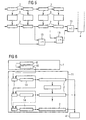
- FIG. 1 schematically shows the structure of a digital module according to a first embodiment of the present invention shown.
- this first embodiment comprises the digital module a test unit 3 with functional elements, a test pattern output register 2 and an evaluation unit 16.
- a self-test unit 1 is provided, in a self-test phase of the digital module the controls necessary functions for self-test.
- the test pattern output register 2 is a shift register with parallel Output and serial input, with the parallel output of the test pattern output register 2, numerous output lines includes, each act on an input of the test unit 3.
- the serial input of the test pattern output register 2 is connected to the self-test unit 1 for this one Test pattern in the form of a digital value, in particular a binary value, serially load into the test pattern output register 2 can.
- the outputs on the right side of the Test unit 3 are connected to inputs of the evaluation unit 16.
- the components of the test pattern output register 2 and / or the evaluation unit 16 and / or the self-test unit 1 can be functional elements of the digital module, outside the self-test phase to normal operation of the Digital modules are used and in the self-test phase be switched to the test pattern output register 2 or the evaluation unit 16 or the self-test unit 1 form.
- Within the test unit 3 are numerous functional elements interconnected, the inputs of the Test unit 3 externally addressable inputs of the functional elements the test unit 3 correspond and the outputs the test unit 3 externally observable outputs of the functional elements the test unit 3 correspond.
- the functional elements within the test unit 3, gates or Be switching elements.
- the test pattern is used the inputs of the test unit 3 from one or more sub-patterns formed, the length or lengths thereof in particular not the maximum or average number of hits for the Outputs of the test unit 3 exceed.
- the individual locations of the subpattern or subpatterns at the outputs of the test pattern output register 2 in FIG whose sliding direction can be next to each other can in this way with the shortest possible sub-patterns a complete Loading the cone 5 can be achieved.
- the digital module can also other test units 3, which each have a test pattern output register 2 and an evaluation unit 16 are assigned, each are connected to the self-test unit 1.
- test patterns For testing the functional elements within the test unit 3 within the self-test unit 1 changing test patterns whose length is the number of inputs of the test unit 3 corresponds to the one after the other in the test pattern output register 2 are loaded.
- the test patterns are starting generated by sub-patterns using a test pattern either partially or completely a periodic sequence of a particular Subpatters may be or a sequence of different Subpattern can be. This essentially depends on it from, in which clock the evaluation unit 16 at the outputs the test unit 3 can evaluate existing test response.
- the evaluation unit 16 at each shift clock of the test pattern output register 2 in which a modified admission of the inputs of Test unit 3 can be achieved and therefore also a set changed test pattern response at the outputs can evaluate the test pattern response.
- the different sub-patterns one after the other into the test pattern output register 2 to load serially, so that the different subpatterns successively at the entrances the impact cone 5 wander past, these sliding operations continue until the last subpattern completely pushed through the test pattern output register 2 has been.
- the various resulting test responses are lossy from the evaluation unit 16 to a Compressed signature, which is a digital value.
- This signature is from the evaluation unit 16 in particular to the serial Self-test unit 1 transfer, so this depending the data loaded into the test pattern output register 2 can determine whether the resulting signature on a proper Function of the functional elements within the Close test unit 3. It is for the selected Sequence of sub-patterns for loading the test unit 3 preferably in advance by the compression by a certain evaluation unit 16 resulting signature when properly Function of the test unit 3 and determined in the Self-test unit 1 filed. This then only needs the from the evaluation unit 16 supplied signature with the filed Compare target signature and so on match determine the proper condition of the test unit 3. In this type of evaluation within the evaluation unit 16, the signature formation is clock-controlled therein, wherein the Clock for signature formation within the evaluation unit 16 with matches the shift clock for the test pattern output register 2.
- each shift clock of the test pattern output register 2 several clocks for signature formation within the evaluation unit 16. Unfortunately, this slows down the bump test of the digital module.
- the evaluation unit 16 may u.U. also be set up so that they themselves already won Check the signature or the read-in test responses to this effect can see if the functional elements within the test unit 3 work correctly.
- test pattern output register 2 completely load with a new test pattern.
- every new test pattern is a periodic consequence of a formed certain sub-pattern.
- test patterns are from the self-test unit 1 sequentially loaded into the test pattern output register 2, wherein the evaluation unit 16, the resulting test response takes over and the self-test unit 1 transmits as soon as the Test pattern output register 2 is loaded with a test pattern.
- the compression of the test response happens in this case in the self-test unit 1.
- the subpatterns may be different in the preceding cases Wise ways are generated.
- a memory for storing the ones to be used Subpattern be present.
- the Self-test unit 1 include a digital counter whose Counter readings are used as sub-patterns. This method can be carried out with very little effort and is particularly suitable for short sub-patterns in which all combinations of individual bodies are used should.
- FIG. 2 shows a digital module according to a second exemplary embodiment of the present invention.
- this 1 again denotes the self-test unit.
- the ones to be tested Components of the digital module are in a functional element block 11 summarized.
- Within the functional element block 11 is an example of a test pattern output register 2 for applying a not shown Test unit 3.
- the functional element block 11 comprises an evaluation unit, not shown, for evaluating the Test answers.
- the interaction between the test pattern output register 2, the test unit and the evaluation unit can in the ways described in the first embodiment respectively.
- the sub-pattern shift register becomes 15 loaded with a sub-pattern and with the multiplexer 18 set a periodicity that is the length of the subpattern equivalent.
- the sub-pattern shift register 15 continues to operate in the sliding direction, the previously charged Sub-pattern repeated as often as desired due to the feedback.
- the thus obtained periodic sequence of the subpattern into the Test pattern output register 2 loaded.
- a memory 6 serving within the self-test unit may serve 1 is arranged.
- a Submustereingangstechnisch 17 provided, which together with the output of the memory 6 leads to a multiplexer 7, with the for applying the sub-pattern shift register 15 either a derived from the memory 6 sub-pattern or from the outside via the Submustereingangs effet 17 supplied sub-pattern can be forwarded.
- a fed back Shift registers are used to subpattern to generate, wherein the input of the shift register with the Result of an exclusive-OR operation between the output and a further shift member of the shift register acted upon and the state of the shift register as a sub-pattern transferred in parallel or serially to the sub-pattern shift register 15 becomes.
- a counter 10 is provided which is the one at the output of the sub-pattern shift register 15 bits pushed out counts.
- the self-test unit 1 has a test control block 8 on, put the functional element block 11 in the test mode can. In this putting in the test mode can For example, certain functional elements within the Function element block 11 to a test pattern output register 2 or switched to an evaluation unit, wherein additionally made the necessary connections for self-test can be.
- test answer acceptance block 9 provided the assumption of a test response in an evaluation unit controls, provided that the evaluation unit used requires such takeover control.
- the self-test of the digital module is carried out as follows. First, the self-test unit 1 of the functional element block 11 by means of the test control block 8 in the test mode added. After selecting the desired source for the one used Sub-pattern by means of the multiplexer 7 is either via the submode input line 17 or from the memory 6 a sub-pattern is loaded into the sub-pattern shift register 15. Dependent of the length of the sub-pattern used is by means of of the multiplexer 18 set the required periodicity. The sub-pattern shift register 15 then becomes long continue to operate in push mode until the test pattern output register 2 complete with a periodic sequence of the subpattern is filled. This is done with the help of the counter 10 monitored.
- test response acceptance block 9 a suitable control command to the functional element block 11, in which at least one Test response is taken in an evaluation.
- the evaluation the test response can be either by means of a suitable designed evaluation within the functional element block 11 take place or carried out outside become.
- a connection, not shown, between the functional element block 11 and the self-test unit 1 is provided be about which the at least one test answer in the Self-test unit 1 are transmitted for local evaluation can.
- at least one Test response either directly or via the self-test unit 1 from outside the digital module and evaluate there. The latter is particularly useful in cases in which the sub-pattern used via the Submustereingangs effet 17 has been supplied from the outside.
- FIG. 3 shows a third embodiment of the present invention Invention, in which a total of three test units 3 and three test pattern output registers 2 are provided.
- the test pattern output registers 2 are in this embodiment designed as a shift register and set up such that they each have a serial output, a serial Input, a parallel output and a parallel input exhibit.
- the parallel inputs of the test pattern output registers 2 are each with an output of a test unit 3 so that the test responses of the test units 3 in FIG the test pattern output register 2 can be adopted.
- the parallel outputs of the test pattern output registers 2 are like previously described with the inputs of the test units 3 to Exposure to a test pattern.
- the serial Inputs are as previously described with the self-test unit 1 connected and the serial outputs with a Evaluation unit 4 connected.
- Each test pattern output register 2 is both energized the inputs of a test unit 3 in a test pattern as also used to take over the test response. Since, however, at Apply the test responses to the test pattern output registers 2 overwrite the content previously contained in it, it is advantageous in this embodiment, first the test pattern output register 2 completely with a new one Load test pattern and then the resulting Test responses by suitable control of the test pattern output registers 2 in it. The into the test pattern output registers 2 loaded test patterns are advantageously same, but may be different.
- Test responses of the test units 3 are in the Sliding operation operated, so that the test answers serially be transmitted to the evaluation unit 4.
- the evaluation unit 4 is operated so that with each shift clock the Test pattern output register 2, with which the test answers in the Evaluation unit 4 are transmitted, the test unit 4 the newly inserted bit compresses.
- FIG. 4 shows a possible structure of the evaluation unit 4 shown.
- the evaluation unit 4 is shown by a feedback shift register of several individual Slide members 12 and 12 individual registers formed.
- the Sliding direction is in the case shown from left to right.
- the input of the first single register 12, the left is shown, is the result of a first exclusive-OR operation between the outputs of the last and of the penultimate single register 12.
- This first Exclusive-OR linking is done with the help of an exclusive OR gate 13, whose two inputs are connected to the output the last or the penultimate single register 12 connected are.
- exclusive-OR gates 13 are provided which between two consecutive individual registers 12 interposed are, wherein they are connected such that the input of a single register 12 resulting in a second exclusive OR connection between the output of preceding single register 12 and one via an input line 19 signal supplied to the evaluated Signal corresponds, is applied.
- the input lines 19 for example, directly the outputs of a test unit be connected or the serial output of a Shift register into which the test response has been taken is and from the test answer serial to the evaluation unit is forwarded.
- the evaluation unit 4 can in the in FIG 4 illustrated form, for example, in the digital module be used according to the third embodiment, wherein for the evaluation unit as many input lines 19 must be provided, such as test pattern output register 2 available are.
- each Output of the test unit 3 with an input line 19 of Evaluation unit 4 must be connected.
- the in Figure 4 shown evaluation must be ensured be that after a change to the input line 19 applied signals at least one shift clock the Single register 12 is performed.
- the individual register 12 at least be switched on a clock.
- the evaluation unit 4 in a digital example according to the first embodiment must also the individual register 12 of the Evaluation unit at each shift cycle of the test pattern output register 2 be advanced by at least one clock.
- FIG. 5 shows a digital module according to a fourth exemplary embodiment of the present invention partially shown.
- the essential difference to the other embodiments is that the test answers faster can be evaluated.
- the test answers faster can be evaluated.
- As in the previous embodiments become test units 3 by means of partial registers 2 subjected to test patterns.
- the for four test units 3 provided four partial registers 2 serially connected to each other so that they have a single large shift register form.
- Apply to the outputs of the four test units 3 four sub-registers 2 set up in this way are that they each have a parallel input the Test response of a test unit 3 can take over.
- the each other associated sub-registers 2 in this case together a single shift register.
- the below shown Partial registers 2 have not shown parallel outputs for applying further test units 3.
- Farther Exclusive-OR gate 13 are provided, which together with the Partial registers 2 are so interconnected that the output of each Partial register with a first input of an Exclusive-OR gate 13 is connected, the second input to the output is connected to that exclusive-OR gate 13, whose first input from the output of the previous partial register 2 is applied.
- FIG. 6 shows a digital module according to a fifth exemplary embodiment of the present invention.
- the essential Features are located in the functional element block 11, in which a plurality of test pattern output registers 2 are provided are also used to record test responses.
- Left of each test pattern output register 2 is a feedback shift register 14 connected, with all feedback shift registers 14 by means of multiplexers 7 together a shift register are interconnected.
- Each multiplexer 7 is set up to receive the input of a feedback shift register 14 either with the output of the feedback Shift register 14 or with the output of a previous one Feedback shift register 14 can connect.
- the multiplexer Figure 7 shows the input either with the output of the feedback shift register 14 or with a sub-pattern output of Connect self-test unit 1.
- the self-test unit 1 comprises a sub-pattern shift register 15 and a memory 6 to record a number of submasters.
- the sub-pattern shift register 15 transmits a sub-pattern serially in the functional element block 11th
- test pattern output registers 2 are inputs an evaluation unit 4 connected, as before described a signature for the evaluation of the test answers all serially pushed out of the test pattern output registers 2 Generate test responses.
- the Multiplexer 7 is driven so that it the inputs of the feedback shift registers 14 with the entrance of the previous one Feedback shift register 14 or the sub-pattern shift register 15 connect.
- This phase becomes a subpattern from the memory 6 by means of the sub-pattern shift register 15 through the first multiplexer 7 in the first feedback shift register 14 loaded. After that it can be repeated either the same subpattern or another subpattern be pushed behind with the result that in the end all Feedback shift register 14 filled with a sub-pattern where the feedback shift registers 14 are dependent on the sub-pattern shifted out from the sub-pattern shift register 15 be filled with any and various sub-patterns can.
- the self-test unit 1 can still do many other not shown Components used to conduct the self-test of the Digital modules are required and related to Other embodiments are described.
Landscapes
- Engineering & Computer Science (AREA)
- General Engineering & Computer Science (AREA)
- Physics & Mathematics (AREA)
- General Physics & Mathematics (AREA)
- Tests Of Electronic Circuits (AREA)
- Test And Diagnosis Of Digital Computers (AREA)
Description
Seiten 298-303;
Claims (38)
- Digitalbaustein mit Funktionselementen, die wenigstens einer Testeinheit (3) mit Eingängen und Ausgängen zugeordnet sind, wenigstens einem Testmusterausgaberegister (2) mit einem parallelen Ausgang zum Beaufschlagen der Eingänge der wenigstens einen Testeinheit (3) mit einem Testmuster, und einer Selbsttesteinheit (1) zum Steuern des Testmusterausgaberegisters (2) und zum Laden des Testmusterausgaberegisters (2) mit einem Testmuster, das die Form eines Digitalwerts aufweist,
dadurch gekennzeichnet, dass die Selbsttesteinheit (1) derart ausgestaltet ist, dass sie das Testmuster als eine periodische Folge eines Submusters erzeugt, das ebenfalls die Form eines Digitalwerts aufweist,
wobei eine maximale Periodizität des Testmusters in Abhängigkeit wenigstens einer Wirkanzahl von Eingängen der Testeinheit (3) für einen bestimmten Ausgang der Testeinheit (3) bestimmt wird, wobei die Wirkanzahl die Anzahl von Eingängen der Testeinheit (3) ist, an denen sich allein Änderungen auf den bestimmten Ausgang der Testeinheit (3) auswirken. - Digitalbaustein nach Anspruch 1,
dadurch gekennzeichnet, dass der Digitalbaustein wenigstens eine Auswerteeinheit (4) zum Auswerten einer an den Ausgängen der wenigstens einen Testeinheit (3) anliegenden Testmusterantwort aufweist. - Digitalbaustein nach Anspruch 2,
dadurch gekennzeichnet, dass der Digitalbaustein wenigstens ein Testantwortleseregister aufweist, das mit den Ausgängen der Testeinheit (3) verbunden ist und derart eingerichtet ist, dass es zumindest in einem Testmodus des Digitalbausteins eine an den Ausgängen der Testeinheit (3) anliegende Testantwort übernehmen und seriell zu der Auswerteeinheit (4) weitergeben kann. - Digitalbaustein nach Anspruch 3,
dadurch gekennzeichnet, dass der Digitalbaustein Funktionselemente aufweist, die Register sind und derart eingerichtet sind, dass sie von der Selbsttesteinheit (1) zu dem wenigstens einen Testantwortleseregister (2) umgeschaltet werden können. - Digitalbaustein nach Anspruch 3 oder 4,
dadurch gekennzeichnet, dass die Selbsttesteinheit (1) derart eingerichtet ist, dass sie die Testmusterausgaberegister (2) vollständig mit einem neuen Testmuster laden und anschließend die Testantwortleseregister derart ansteuern kann, dass sie die Testantwort übernehmen. - Digitalbaustein nach einem der Ansprüche 3 bis 5,
dadurch gekennzeichnet, dass das Testantwortleseregister von einem Testmusterausgaberegister (2) gebildet ist, das Eingänge aufweist, die mit Ausgängen einer Testeinheit (3) verbunden sind. - Digitalbaustein nach einem der Ansprüche 3 bis 6,
dadurch gekennzeichnet, dass das Testantwortleseregister ein in Einzelschieberegister (12) unterteiltes Schieberegister ist und derart eingerichtet ist, dass es an die Auswerteeinheit (4) das Ergebnis einer Exklusiv-Oder-Verknüpfung zwischen einem Ausgangssignal des in Schieberichtung des Schieberegisters letzten Einzelschieberegisters (12) und einem Ausgangssignal wenigstens eines weiteren Einzelschieberegisters (12) seriell weitergeben kann. - Digitalbaustein nach einem der Ansprüche 2 bis 7,
dadurch gekennzeichnet, dass die Auswerteeinheit (4) ein rückgekoppeltes Schieberegister aus mehreren Einzelregistern (12) ist, dessen Eingang mit dem Ergebnis einer ersten Exklusiv-Oder-Verknüpfung zwischen dem Ausgang des in Schieberichtung des Schieberegisters letzten Einzelregister (12) und dem Ausgang wenigstens eines weiteren Einzelregisters (12) beaufschlagt werden kann, wobei der Eingang wenigstens eines Einzelregisters (12) mit dem Ergebnis wenigstens einer zweiten Exklusiv-Oder-Verknüpfung zwischen dem Ergebnis der ersten Exklusiv-Oder-Verknüpfung oder dem Ausgang des vorangehenden Einzelregisters (12) und einem Ausgangssignal der wenigstens einen Testeinheit (3) beaufschlagbar ist, wobei im Falle des in Schieberichtung ersten Einzelregisters (12) der Eingang mit dem Ergebnis einer weiteren Exklusiv-Oder-Verknüpfung zwischen dem Ergebnis der ersten Exklusiv-Oder-Verknüpfung und einem Ausgangssignal der wenigstens einen Testeinheit (3) beaufschlagbar ist. - Digitalbaustein nach einem der vorhergehenden Ansprüche,
dadurch gekennzeichnet, dass das Testmusterausgaberegister (2) ein Schieberegister ist, das derart eingerichtet ist, dass das Testmuster von der Selbsttesteinheit (1) seriell in das Testmusterausgaberegister (2) geladen werden kann. - Digitalbaustein nach einem der vorhergehenden Ansprüche,
dadurch gekennzeichnet, dass der Digitalbaustein Funktionselemente aufweist, die Register sind und derart eingerichtet sind, dass sie von der Selbsttesteinheit (1) zu dem wenigstens einen Testmusterausgaberegister (2) umgeschaltet werden können. - Digitalbaustein nach einem der vorhergehenden Ansprüche,
dadurch gekennzeichnet, dass die Selbsttesteinheit (1) einen Speicher (6) aufweist und derart eingerichtet ist, dass sie das Testmuster mittels eines im Speicher (6) abgelegten Submusters als periodische Folge des Submusters mit variabler Periodizität bilden kann. - Digitalbaustein nach einem der vorhergehenden Ansprüche,
dadurch gekennzeichnet, dass die Selbsttesteinheit (1) einen Zähler aufweist und derart eingerichtet ist, dass sie den Zähler in Aufwärts- und/oder Abwärts-Zählrichtung betreiben kann und das Testmuster mittels des Zählerstands des Zählers als Submuster bilden kann. - Digitalbaustein nach einem der vorhergehenden Ansprüche,
dadurch gekennzeichnet, dass der Digitalbaustein mehrere Testmusterausgaberegister (2) aufweist und derart eingerichtet ist, dass die Testmusterausgaberegister (2) gleichzeitig mit dem gleichen Testmuster geladen werden. - Digitalbaustein nach einem der vorhergehenden Ansprüche,
dadurch gekennzeichnet, dass der Digitalbaustein wenigstens ein rückgekoppeltes Submusterschieberegister (14) aufweist, das mit einem Submuster ladbar ist und derart eingerichtet ist, dass es seriell das Testmuster als periodische Folge des Submusters ausgeben kann. - Digitalbaustein nach Anspruch 14,
dadurch gekennzeichnet, dass das Submusterschieberegister (14) derart eingerichtet ist, dass es das Testmuster als periodische Folge des Submusters mit variabler Periodizität ausgeben kann. - Digitalbaustein nach Anspruch 14 oder 15,
dadurch gekennzeichnet, dass das Submusterschieberegister (14) in der Selbsttesteinheit (1) enthalten ist. - Digitalbaustein nach Anspruch 14 oder 15,
dadurch gekennzeichnet, dass die Register des Testmusterausgaberegisters (2) wenigstens teilweise zu dem Submusterschieberegister (14) umschaltbar sind. - Digitalbaustein nach Anspruch 14 oder 15,
dadurch gekennzeichnet, dass ein Teil des Testmusterausgaberegisters (2) das Submusterschieberegister (14) bildet. - Digitalbaustein nach einem der vorhergehenden Ansprüche,
dadurch gekennzeichnet, dass das Testmusterausgaberegister (2) derart mit der Testeinheit (3) verschaltet ist, dass die Eingänge der Testeinheit (3), an denen sich allein Änderungen auf einen bestimmten Ausgang der Testeinheit (3) auswirken, in Bezug auf die Reihenfolge der Ausgänge des Testmusterausgaberegisters (2) möglichst nahe beisammen liegen. - Digitalbaustein nach einem der vorhergehenden Ansprüche,
dadurch gekennzeichnet, dass die Testeinheit (3) derart eingerichtet ist, dass die Wirkanzahlen von Eingängen der Testeinheit (3) für die Ausgänge der Testeinheit (3) möglichst klein sind. - Digitalbaustein nach einem der vorhergehenden Ansprüche,
dadurch gekennzeichnet, dass der Digitalbaustein nach außen geführte Steuerleitungen für die Selbsttesteinheit (1) aufweist, wobei die Selbsttesteinheit (1) derart eingerichtet ist, dass sie anhand von über die Steuerleitungen eingebbaren Befehlen steuerbar ist. - Digitalbaustein mit Funktionselementen, die wenigstens einer Testeinheit (3) mit Eingängen und Ausgängen zugeordnet sind, wenigstens einem Testmusterausgaberegister (2) mit einem parallelen Ausgang zum Beaufschlagen der Eingänge der wenigstens einen Testeinheit (3) mit einem Testmuster, wenigstens einer Auswerteeinheit (4) zum Auswerten einer an den Ausgängen der wenigstens einen Testeinheit (3) anliegenden Testmusterantwort und einer Selbsttesteinheit (1) zum Steuern des wenigstens einen Testmusterausgaberegisters (2) und der Auswerteeinheit (4) und zum Laden des Testmusterausgaberegisters mit dem Testmuster, das die Form eines Binärwerts aufweist,
dadurch gekennzeichnet, dass die Selbsttesteinheit (1) derart ausgestaltet ist, dass sie das Testmuster als Folge wenigstens eines aus einer Liste von Submustern auswählbaren Submusters erzeugt, wobei das Testmusterausgaberegister (2) ein Schieberegister ist, das seriell mit dem Testmuster geladen werden kann, und die Auswerteeinheit (4) derart eingerichtet ist, dass es bei jedem Takt, mit dem ein neuer Teil des Testmusters in das Testmusterausgaberegister (2) geladen wird, die Testmusterantwort auswerten kann,
wobei die maximale Länge der Submuster in Abhängigkeit wenigstens einer Wirkanzahl von Eingängen einer Testeinheit (3) für einen bestimmten Ausgang der Testeinheit (3) ist, wobei die Wirkanzahl die Anzahl von Eingängen der Testeinheit (3) ist, an denen sich allein Änderungen auf den bestimmten Ausgang der Testeinheit (3) auswirken. - Digitalbaustein nach Anspruch 22,
dadurch gekennzeichnet, dass die Auswerteeinheit (4) ein rückgekoppeltes Schieberegister aus mehreren Einzelregistern (12) ist, dessen Eingang mit dem Ergebnis einer ersten Exklusiv-Oder-Verknüpfung zwischen dem Ausgang des in Schieberichtung des Schieberegisters letzten Einzelregisters (12) und dem Ausgang wenigstens eines weiteren Einzelregisters (12) des Schieberegisters beaufschlagt ist. - Digitalbaustein nach Anspruch 22 oder 23,
dadurch gekennzeichnet, dass der Digitalbaustein Funktionselemente aufweist, die Register sind und derart eingerichtet sind, dass sie von der Selbsttesteinheit (1) zu dem wenigstens einen Testmusterausgaberegister (2) umgeschaltet werden können. - Digitalbaustein nach einem der Ansprüche 22 bis 24,
dadurch gekennzeichnet, dass die Selbsttesteinheit (1) einen Speicher (6) aufweist, und derart eingerichtet ist, dass sie das Testmuster mittels im Speicher (6) abgelegter Submuster bilden kann. - Digitalbaustein nach einem der Ansprüche 22 bis 25,
dadurch gekennzeichnet, dass die Selbsttesteinheit (1) einen Zähler aufweist und derart eingerichtet ist, dass sie den Zähler in Auf- und/oder Abwärts-Zählrichtung betreiben kann und das Testmuster mittels der Zählerstände des Zählers bilden kann. - Digitalbaustein nach einem der Ansprüche 22 bis 26,
dadurch gekennzeichnet, dass der Digitalbaustein mehrere Testmusterausgaberegister (2) aufweist und derart eingerichtet ist, dass die Testmusterausgaberegister (2) gleichzeitig mit dem gleichen Testmuster geladen werden. - Verfahren zum Testen eines Digitalbausteins, wobei der Digitalbaustein Funktionselemente, die wenigstens einer Testeinheit (3) mit Eingängen und Ausgängen zugeordnet sind, wenigstens ein Testmusterausgaberegister (2) mit einem parallelen Ausgang zum Beaufschlagen der Eingänge der wenigstens einen Testeinheit (3) mit einem Testmuster und eine Selbsttesteinheit (1) zum Steuern des Testmusterausgaberegisters (2) und zum Laden des Testmusterausgaberegisters (2) mit einem Testmuster, das die Form eines Digitalwerts aufweist, aufweist,
dadurch gekennzeichnet, dass das Testmuster als periodische Folge eines Submusters erzeugt wird, das ebenfalls die Form eines Digitalwerts aufweist,
dass das wenigstens eine Testmusterregister (2) mit einem Testmuster geladen wird, und dass das Antwortverhalten der wenigstens einen Testeinheit (3) auf das Testmuster ausgewertet wird,
wobei eine maximale Periodizität des Testmusters in Abhängigkeit wenigstens einer Wirkanzahl von Eingängen der Testeinheit (3) für einen bestimmten Ausgang der Testeinheit (3) bestimmt wird, wobei die Wirkanzahl die Anzahl von Eingängen der Testeinheit (3) ist, an denen sich allein Änderungen auf den bestimmten Ausgang der Testeinheit (3) auswirken. - Verfahren zum Testen eines Digitalbausteins, wobei der Digitalbaustein Funktionselemente, die wenigstens einer Testeinheit (3) mit Eingängen und Ausgängen zugeordnet sind, und wenigstens ein Testmusterausgaberegister (2) mit einem parallelen Ausgang zum Beaufschlagen der Eingänge der wenigstens einen Testeinheit (3) mit einem Testmuster, das die Form eines Digitalwerts aufweist, wobei das Testmusterausgaberegister (2) als Schieberegister ausgebildet ist, aufweist,
dadurch gekennzeichnet, dass das Testmusterausgaberegister (2) mit dem Testmuster seriell geladen wird und mit jedem Takt, mit dem ein Bit des Testmusters in das Testmusterausgaberegister (2) geladen wird, eine an den Ausgängen der wenigstens einen Testeinheit (3) anliegenden Testmusterantwort ausgewertet wird, wobei das Testmuster als eine Folge wenigstens eines aus einer Liste von Submustern auswählbaren Submusters erzeugt wird, wobei die maximale Länge der Submuster in Abhängigkeit wenigstens einer Wirkanzahl von Eingängen einer Testeinheit (3) für einen bestimmten Ausgang der Testeinheit (3) ist, wobei die Wirkanzahl die Anzahl von Eingängen der Testeinheit (3) ist, an denen sich allein Änderungen auf den bestimmten Ausgang der Testeinheit (3) auswirken. - Verfahren nach Anspruch 28 oder 29,
dadurch gekennzeichnet, dass zur Auswertung einer Testmusterantwort bei einem rückgekoppelten Schieberegister mit mehreren Einzelregistern (12), dessen Eingang mit dem Ergebnis einer ersten Exklusiv-Oder-Verknüpfung zwischen dem Ausgang des in Schieberichtung letzten Einzelregisters (12) und dem Ausgang wenigstens eines weiteren Einzelregisters (12) des Schieberegisters beaufschlagt wird, wobei der Eingang wenigstens eines Einzelregisters (12) mit dem Ergebnis wenigstens einer zweiten Exklusiv-Oder-Verknüpfung zwischen dem Ergebnis der ersten Exklusiv-Oder-Verknüpfung oder dem Ausgang des vorangehenden Einzelregisters (12) und einem Ausgangssignal der Testeinheit (3) beaufschlagt wird, wobei im Falle des in Schieberichtung ersten Einzelregisters (12) der Eingang mit dem Ergebnis einer weiteren Exklusiv-Oder-Verknüpfung zwischen dem Ergebnis der ersten Exklusiv-Oder-Verknüpfung und einem Ausgangssignal der Testeinheit (3) beaufschlagt wird, so dass in dem rückgekoppelten Schieberegister in Abhängigkeit des wenigstens einen Ausgangs der Testeinheit (3) eine Signatur gebildet wird. - Verfahren nach Anspruch 28 oder 29,
dadurch gekennzeichnet, dass eine an den Ausgängen der wenigstens einen Testeinheit (3) anliegende Testmusterantwort mit Hilfe von wenigstens einem Testmusterleseregister zu einem bestimmten Zeitpunkt übernommen wird und seriell zur Auswertung an eine Auswerteeinheit (4) weitergegeben wird. - Verfahren nach Anspruch 31,
dadurch gekennzeichnet, dass das Testmusterleseregister (2) von einem Testmusterausgaberegister (2) gebildet wird, wobei bei der Übernahme der Testmusterantwort in ein Testmusterantwortleseregister der Inhalt des Testmusterausgaberegisters (2) überschrieben wird. - Verfahren nach Anspruch 32,
dadurch gekennzeichnet, dass jedes Testmusterausgaberegister (2) des Digitalbausteins sowohl zum Beaufschlagen der Eingänge der wenigstens einen Testeinheit (3) mit einem Testmuster als auch als Testmusterantwortleseregister dient. - Verfahren nach Anspruch 29 oder 30 und einem der Ansprüche 31 bis 33,
dadurch gekennzeichnet, dass die Testmusterantwort der Testeinheit (3) mittels des Testmusterleseregisters (2) seriell zur Signaturbildung an das rückgekoppelte Schieberegister zur Auswertung weitergegeben wird, wobei der serielle Ausgabetakt des Testmusterleseregisters (2) gleich dem seriellen Schiebetakt des rückgekoppelten Schieberegisters zur Auswertung ist. - Verfahren nach Anspruch 28 oder 29,
dadurch gekennzeichnet, dass das Testmusterantwortverhalten der wenigstens einen Testeinheit (3) durch electron-beam-Testverfahren ausgewertet wird. - Vorrichtung zum Testen eines Digitalbausteins, wobei der Digitalbaustein Funktionselemente, die wenigstens einer Testeinheit (3) mit Eingängen und Ausgängen zugeordnet sind, wenigstens ein Testmusterausgaberegister (2) mit einem parallelen Ausgang zum Beaufschlagen der Eingänge der wenigstens einen Testeinheit (3) mit einem Testmuster, wenigstens einer aus Lese- oder Auswerteeinheit zum Auslesen bzw. zum Auswerten einer an den Ausgängen der wenigstens einen Testeinheit (3) anliegenden Testmusterantwort, und einer Selbsttesteinheit (1) zum Steuern des Testmusterausgaberegisters (2) und der Auswerte- bzw. Ausleseeinheit und zum Laden des Testmusterausgaberegisters (2) mit wenigstens einem Testmuster, das die Form eines Digitalwerts aufweist,
wobei die Vorrichtung eine Datenverarbeitungseinrichtung zum Erzeugen von Testdaten, und eine Testmusterübertragungseinheit aufweist, die derart eingerichtet ist, dass sie Testmuster in den Digitalbaustein zum Laden in das wenigstens eine Testmusterausgaberegister (2) übertragen kann,
dadurch gekennzeichnet, dass das Testmuster eine Folge wenigstens eines Submusters ist, welches aus einer Liste von Submustern auswählbar ist, oder eine periodische Folge eines Submusters ist, wobei das Submuster ebenfalls die Form eines Digitalwerts aufweist, und die Vorrichtung so eingerichtet ist, dass die Datenverarbeitungseinrichtung als Testmusterdaten das wenigstens eine Submuster erzeugt und zur Testmusterübertragungseinheit überträgt und die Testmusterübertragungseinheit aus dem von der Datenverarbeitungseinheit empfangenen wenigstens einen Submuster das Testmuster zum Laden in den Digitalbaustein erzeugt,
wobei eine maximale Periodizität des Testmusters bzw. eine maximale Länge der Submuster in Abhängigkeit wenigstens einer Wirkanzahl von Eingängen der Testeinheit (3) für einen bestimmten Ausgang der Testeinheit (3) bestimmt wird, wobei die Wirkanzahl die Anzahl von Eingängen der Testeinheit (3) ist, an denen sich allein Änderungen auf einen bestimmten Ausgang der Testeinheit (3) auswirken. - Vorrichtung nach Anspruch 36,
dadurch gekennzeichnet, dass die Testmusterübertragungseinheit eine Nadelplatte mit Kontaktierungsspitzen zum Kontaktieren von Kontaktpunkten auf dem Digitalbaustein ist. - Vorrichtung zum Testen eines Digitalbausteins nach Ansprüch 36,
dadurch gekennzeichnet, dass die Vorrichtung derart eingerichtet ist, dass sie über aus dem Digitalbaustein herausführende Steuerleitungen an die Selbsttesteinheit (1) innerhalb des Digitalbausteins Steuerbefehle zum Erzeugen des wenigstens einen Submusters oder Steuerbefehle zum Auswählen des wenigstens einen Submusters aus gespeicherten Submustern oder das wenigstens eine Submuster jeweils zur Erzeugung von Testmustern innerhalb des Digitalbausteins übertragen kann.
Applications Claiming Priority (3)
| Application Number | Priority Date | Filing Date | Title |
|---|---|---|---|
| DE10221611A DE10221611B4 (de) | 2002-05-15 | 2002-05-15 | Digitalbaustein mit einer Selbsttestfunktion |
| DE10221611 | 2002-05-15 | ||
| PCT/EP2003/005058 WO2003098243A1 (de) | 2002-05-15 | 2003-05-14 | System zum testen von digitalbausteinen |
Publications (2)
| Publication Number | Publication Date |
|---|---|
| EP1504273A1 EP1504273A1 (de) | 2005-02-09 |
| EP1504273B1 true EP1504273B1 (de) | 2005-10-12 |
Family
ID=29413847
Family Applications (1)
| Application Number | Title | Priority Date | Filing Date |
|---|---|---|---|
| EP03720566A Expired - Lifetime EP1504273B1 (de) | 2002-05-15 | 2003-05-14 | System zum testen von digitalbausteinen |
Country Status (7)
| Country | Link |
|---|---|
| US (1) | US7386776B2 (de) |
| EP (1) | EP1504273B1 (de) |
| JP (1) | JP3892459B2 (de) |
| CN (1) | CN100526900C (de) |
| AU (1) | AU2003224158A1 (de) |
| DE (2) | DE10221611B4 (de) |
| WO (1) | WO2003098243A1 (de) |
Families Citing this family (5)
| Publication number | Priority date | Publication date | Assignee | Title |
|---|---|---|---|---|
| DE10221611B4 (de) | 2002-05-15 | 2013-01-24 | Infineon Technologies Ag | Digitalbaustein mit einer Selbsttestfunktion |
| DE102004044813A1 (de) * | 2004-09-16 | 2006-03-23 | Robert Bosch Gmbh | Verfahren zum Testen eines integrierten Schaltkreises |
| US7533314B2 (en) * | 2006-08-10 | 2009-05-12 | Microsoft Corporation | Unit test extender |
| US7941679B2 (en) * | 2007-08-10 | 2011-05-10 | Atrenta, Inc. | Method for computing power savings and determining the preferred clock gating circuit of an integrated circuit design |
| US8868992B2 (en) * | 2009-12-31 | 2014-10-21 | Intel Corporation | Robust memory link testing using memory controller |
Family Cites Families (22)
| Publication number | Priority date | Publication date | Assignee | Title |
|---|---|---|---|---|
| US7137048B2 (en) * | 2001-02-02 | 2006-11-14 | Rambus Inc. | Method and apparatus for evaluating and optimizing a signaling system |
| US5187712A (en) * | 1990-02-26 | 1993-02-16 | At&T Bell Laboratories | Pseudo-exhaustive self-test technique |
| US5278842A (en) * | 1991-02-04 | 1994-01-11 | International Business Machines Corporation | Delay test coverage enhancement for logic circuitry employing level sensitive scan design |
| US5309447A (en) * | 1991-06-03 | 1994-05-03 | At&T Bell Laboratories | Space compression technique for pseudo-exhaustive self-testing of digital electronic circuits |
| JP2584172B2 (ja) * | 1991-08-23 | 1997-02-19 | インターナショナル・ビジネス・マシーンズ・コーポレイション | デイジタル試験信号発生回路 |
| JPH0764817A (ja) * | 1993-08-30 | 1995-03-10 | Mitsubishi Electric Corp | 故障検出システム |
| US5414716A (en) * | 1993-09-22 | 1995-05-09 | Mitsubishi Electronic Research Laboratories, Inc. | Weighting system for testing of circuits utilizing determination of undetected faults |
| US5617531A (en) * | 1993-11-02 | 1997-04-01 | Motorola, Inc. | Data Processor having a built-in internal self test controller for testing a plurality of memories internal to the data processor |
| US6061818A (en) * | 1997-05-08 | 2000-05-09 | The Board Of Trustees Of The Leland Stanford Junior University | Altering bit sequences to contain predetermined patterns |
| US6201829B1 (en) * | 1998-04-03 | 2001-03-13 | Adaptec, Inc. | Serial/parallel GHZ transceiver with pseudo-random built in self test pattern generator |
| US6370664B1 (en) * | 1998-10-29 | 2002-04-09 | Agere Systems Guardian Corp. | Method and apparatus for partitioning long scan chains in scan based BIST architecture |
| DE19917884C1 (de) * | 1999-04-20 | 2000-11-16 | Siemens Ag | Schaltung mit eingebautem Selbsttest |
| US6668347B1 (en) * | 2000-05-08 | 2003-12-23 | Intel Corporation | Built-in self-testing for embedded memory |
| US6782501B2 (en) * | 2001-01-23 | 2004-08-24 | Cadence Design Systems, Inc. | System for reducing test data volume in the testing of logic products |
| US6769084B2 (en) * | 2001-03-13 | 2004-07-27 | Samsung Electronics Co., Ltd. | Built-in self test circuit employing a linear feedback shift register |
| US6782515B2 (en) * | 2002-01-02 | 2004-08-24 | Cadence Design Systems, Inc. | Method for identifying test points to optimize the testing of integrated circuits using a genetic algorithm |
| US6807646B1 (en) * | 2002-03-04 | 2004-10-19 | Synopsys, Inc. | System and method for time slicing deterministic patterns for reseeding in logic built-in self-test |
| JP2003332443A (ja) * | 2002-05-08 | 2003-11-21 | Toshiba Corp | 半導体集積回路とその設計支援装置およびテスト方法 |
| DE10221611B4 (de) | 2002-05-15 | 2013-01-24 | Infineon Technologies Ag | Digitalbaustein mit einer Selbsttestfunktion |
| US7234092B2 (en) * | 2002-06-11 | 2007-06-19 | On-Chip Technologies, Inc. | Variable clocked scan test circuitry and method |
| US6920597B2 (en) * | 2002-07-31 | 2005-07-19 | Thomas Hans Rinderknecht | Uniform testing of tristate nets in logic BIST |
| US20040193986A1 (en) * | 2003-03-31 | 2004-09-30 | Canagasaby Karthisha S. | On-die pattern generator for high speed serial interconnect built-in self test |
-
2002
- 2002-05-15 DE DE10221611A patent/DE10221611B4/de not_active Expired - Fee Related
-
2003
- 2003-05-14 EP EP03720566A patent/EP1504273B1/de not_active Expired - Lifetime
- 2003-05-14 JP JP2004505712A patent/JP3892459B2/ja not_active Expired - Fee Related
- 2003-05-14 CN CNB038109360A patent/CN100526900C/zh not_active Expired - Fee Related
- 2003-05-14 WO PCT/EP2003/005058 patent/WO2003098243A1/de not_active Ceased
- 2003-05-14 US US10/514,537 patent/US7386776B2/en not_active Expired - Lifetime
- 2003-05-14 AU AU2003224158A patent/AU2003224158A1/en not_active Abandoned
- 2003-05-14 DE DE50301371T patent/DE50301371D1/de not_active Expired - Lifetime
Also Published As
| Publication number | Publication date |
|---|---|
| CN1653344A (zh) | 2005-08-10 |
| DE10221611A1 (de) | 2003-12-04 |
| JP3892459B2 (ja) | 2007-03-14 |
| AU2003224158A1 (en) | 2003-12-02 |
| EP1504273A1 (de) | 2005-02-09 |
| US20060069951A1 (en) | 2006-03-30 |
| WO2003098243A1 (de) | 2003-11-27 |
| CN100526900C (zh) | 2009-08-12 |
| DE10221611B4 (de) | 2013-01-24 |
| JP2006507475A (ja) | 2006-03-02 |
| US7386776B2 (en) | 2008-06-10 |
| DE50301371D1 (de) | 2006-02-23 |
Similar Documents
| Publication | Publication Date | Title |
|---|---|---|
| DE3687672T2 (de) | Pruefverfahren mittels gewichteten zufallsmustergenerators. | |
| DE3130714C2 (de) | ||
| DE69127060T2 (de) | Tester für integrierte Schaltungen | |
| DE3913219C3 (de) | Integrierte Halbleiterschaltung mit mehreren Schaltungen, die logischen Tests unterworfen werden | |
| DE69432200T2 (de) | Als Zellenmatrix-Netzwerk organisiertes elektronisches System | |
| EP0903587B1 (de) | Verfahren zum Testen einer elektronischen Schaltung | |
| EP0009572A2 (de) | Verfahren und Anordnung zur Prüfung von durch monolithisch integrierte Halbleiterschaltungen dargestellten sequentiellen Schaltungen | |
| DE3702408C2 (de) | ||
| DE3124902C2 (de) | ||
| EP0766092A1 (de) | Testbare Schaltungsanordnung mit mehreren identischen Schaltungsblöcken | |
| EP0628832B1 (de) | Integrierte Schaltung mit Registerstufen | |
| DE3786747T2 (de) | Programmierbare logische Anordnung. | |
| EP1504273B1 (de) | System zum testen von digitalbausteinen | |
| DE10335809B4 (de) | Integrierte Schaltung mit einem zu testenden elektronischen Schaltkreis und Testsystem-Anordnung zum Testen der integrierten Schaltung | |
| DE1424706B2 (de) | Suchvorrichtung zum auffinden von informationen aus ungeordnet zugefuehrten informationsfolgen | |
| DE4017533C2 (de) | ||
| DE3639577A1 (de) | Logikbaustein zur erzeugung von ungleich verteilten zufallsmustern fuer integrierte schaltungen | |
| DE69129728T2 (de) | Operationsanalyseeinrichtung vom Abtastpfadtyp mit nur einem Abtasttaktgeber und nur einer Ausgangsphase für eine integrierte Schaltung | |
| DE19651713C2 (de) | Bauelement-Testgerät zum Testen elektronischer Bauelemente | |
| DE102005046588B4 (de) | Vorrichtung und Verfahren zum Test und zur Diagnose digitaler Schaltungen | |
| DE69126249T2 (de) | Verarbeitungsvorrichtung und Verfahren zur Programmierung einer solchen Vorrichtung | |
| DD145972A5 (de) | Einrichtung zur feststellung der l enge beliebiger schieberegister | |
| DE10338922B4 (de) | Elektrische Diagnoseschaltung sowie Verfahren zum Testen und/oder zur Diagnose einer integrierten Schaltung | |
| EP1179737A2 (de) | Anordnung zum Testen eines integrierten Schaltkreises | |
| DE102009000698A1 (de) | Prüfschaltung zur Prüfung einer Durchführung eines Handshake-Protokolls und Verfahren zur Prüfung einer Durchführung eines Handshake-Protokolls |
Legal Events
| Date | Code | Title | Description |
|---|---|---|---|
| PUAI | Public reference made under article 153(3) epc to a published international application that has entered the european phase |
Free format text: ORIGINAL CODE: 0009012 |
|
| 17P | Request for examination filed |
Effective date: 20041028 |
|
| AK | Designated contracting states |
Kind code of ref document: A1 Designated state(s): AT BE BG CH CY CZ DE DK EE ES FI FR GB GR HU IE IT LI LU MC NL PT RO SE SI SK TR |
|
| AX | Request for extension of the european patent |
Extension state: AL LT LV MK |
|
| GRAP | Despatch of communication of intention to grant a patent |
Free format text: ORIGINAL CODE: EPIDOSNIGR1 |
|
| GRAS | Grant fee paid |
Free format text: ORIGINAL CODE: EPIDOSNIGR3 |
|
| GRAA | (expected) grant |
Free format text: ORIGINAL CODE: 0009210 |
|
| DAX | Request for extension of the european patent (deleted) | ||
| RBV | Designated contracting states (corrected) |
Designated state(s): DE FR GB |
|
| AK | Designated contracting states |
Kind code of ref document: B1 Designated state(s): DE FR GB |
|
| REG | Reference to a national code |
Ref country code: GB Ref legal event code: FG4D Free format text: NOT ENGLISH |
|
| GBT | Gb: translation of ep patent filed (gb section 77(6)(a)/1977) |
Effective date: 20051130 |
|
| REF | Corresponds to: |
Ref document number: 50301371 Country of ref document: DE Date of ref document: 20060223 Kind code of ref document: P |
|
| ET | Fr: translation filed | ||
| PLBE | No opposition filed within time limit |
Free format text: ORIGINAL CODE: 0009261 |
|
| STAA | Information on the status of an ep patent application or granted ep patent |
Free format text: STATUS: NO OPPOSITION FILED WITHIN TIME LIMIT |
|
| 26N | No opposition filed |
Effective date: 20060713 |
|
| PGFP | Annual fee paid to national office [announced via postgrant information from national office to epo] |
Ref country code: DE Payment date: 20150721 Year of fee payment: 13 |
|
| REG | Reference to a national code |
Ref country code: FR Ref legal event code: PLFP Year of fee payment: 14 |
|
| PGFP | Annual fee paid to national office [announced via postgrant information from national office to epo] |
Ref country code: GB Payment date: 20160520 Year of fee payment: 14 |
|
| PGFP | Annual fee paid to national office [announced via postgrant information from national office to epo] |
Ref country code: FR Payment date: 20160520 Year of fee payment: 14 |
|
| REG | Reference to a national code |
Ref country code: DE Ref legal event code: R119 Ref document number: 50301371 Country of ref document: DE |
|
| PG25 | Lapsed in a contracting state [announced via postgrant information from national office to epo] |
Ref country code: DE Free format text: LAPSE BECAUSE OF NON-PAYMENT OF DUE FEES Effective date: 20161201 |
|
| GBPC | Gb: european patent ceased through non-payment of renewal fee |
Effective date: 20170514 |
|
| REG | Reference to a national code |
Ref country code: FR Ref legal event code: ST Effective date: 20180131 |
|
| PG25 | Lapsed in a contracting state [announced via postgrant information from national office to epo] |
Ref country code: GB Free format text: LAPSE BECAUSE OF NON-PAYMENT OF DUE FEES Effective date: 20170514 |
|
| PG25 | Lapsed in a contracting state [announced via postgrant information from national office to epo] |
Ref country code: FR Free format text: LAPSE BECAUSE OF NON-PAYMENT OF DUE FEES Effective date: 20170531 |