EP1505164A2 - Electrical contact having high electrical conductivity made of internally oxidized silver-oxide material for compact electromagnetic relay - Google Patents
Electrical contact having high electrical conductivity made of internally oxidized silver-oxide material for compact electromagnetic relay Download PDFInfo
- Publication number
- EP1505164A2 EP1505164A2 EP04018360A EP04018360A EP1505164A2 EP 1505164 A2 EP1505164 A2 EP 1505164A2 EP 04018360 A EP04018360 A EP 04018360A EP 04018360 A EP04018360 A EP 04018360A EP 1505164 A2 EP1505164 A2 EP 1505164A2
- Authority
- EP
- European Patent Office
- Prior art keywords
- oxides
- precipitated
- ultra
- internal oxidation
- oxidation treatment
- Prior art date
- Legal status (The legal status is an assumption and is not a legal conclusion. Google has not performed a legal analysis and makes no representation as to the accuracy of the status listed.)
- Granted
Links
Images





Classifications
-
- H—ELECTRICITY
- H01—ELECTRIC ELEMENTS
- H01H—ELECTRIC SWITCHES; RELAYS; SELECTORS; EMERGENCY PROTECTIVE DEVICES
- H01H1/00—Contacts
- H01H1/02—Contacts characterised by the material thereof
- H01H1/021—Composite material
- H01H1/023—Composite material having a noble metal as the basic material
- H01H1/0237—Composite material having a noble metal as the basic material and containing oxides
- H01H1/02372—Composite material having a noble metal as the basic material and containing oxides containing as major components one or more oxides of the following elements only: Cd, Sn, Zn, In, Bi, Sb or Te
- H01H1/02376—Composite material having a noble metal as the basic material and containing oxides containing as major components one or more oxides of the following elements only: Cd, Sn, Zn, In, Bi, Sb or Te containing as major component SnO2
-
- C—CHEMISTRY; METALLURGY
- C22—METALLURGY; FERROUS OR NON-FERROUS ALLOYS; TREATMENT OF ALLOYS OR NON-FERROUS METALS
- C22C—ALLOYS
- C22C1/00—Making non-ferrous alloys
- C22C1/10—Alloys containing non-metals
- C22C1/1078—Alloys containing non-metals by internal oxidation of material in solid state
-
- H—ELECTRICITY
- H01—ELECTRIC ELEMENTS
- H01H—ELECTRIC SWITCHES; RELAYS; SELECTORS; EMERGENCY PROTECTIVE DEVICES
- H01H1/00—Contacts
- H01H1/02—Contacts characterised by the material thereof
- H01H1/021—Composite material
- H01H1/023—Composite material having a noble metal as the basic material
- H01H1/0237—Composite material having a noble metal as the basic material and containing oxides
-
- H—ELECTRICITY
- H01—ELECTRIC ELEMENTS
- H01H—ELECTRIC SWITCHES; RELAYS; SELECTORS; EMERGENCY PROTECTIVE DEVICES
- H01H1/00—Contacts
- H01H1/02—Contacts characterised by the material thereof
- H01H1/021—Composite material
- H01H1/023—Composite material having a noble metal as the basic material
- H01H1/0237—Composite material having a noble metal as the basic material and containing oxides
- H01H1/02372—Composite material having a noble metal as the basic material and containing oxides containing as major components one or more oxides of the following elements only: Cd, Sn, Zn, In, Bi, Sb or Te
-
- B—PERFORMING OPERATIONS; TRANSPORTING
- B22—CASTING; POWDER METALLURGY
- B22F—WORKING METALLIC POWDER; MANUFACTURE OF ARTICLES FROM METALLIC POWDER; MAKING METALLIC POWDER; APPARATUS OR DEVICES SPECIALLY ADAPTED FOR METALLIC POWDER
- B22F2998/00—Supplementary information concerning processes or compositions relating to powder metallurgy
- B22F2998/10—Processes characterised by the sequence of their steps
Definitions
- the present invention relates to an electrical contact made of an internally oxidized silver-oxide material which has high electrical conductivity and excellent electrical contact characteristics over a long period of time in the form of a compact element, that is, one which exhibits high welding resistance and high wear resistance and is suitable for an electromagnetic relay which is made smaller in size.
- the electromagnetic relay 100 is constituted, for example, from an electromagnet 101 including an iron core 111 and a coil 112, an armature lever 102 having a substantially L-shaped section, a movable contact spring 141 and a stationary contact spring 142 that are provided above the armature lever 102, and electrical contacts 151 and 152 fixed at one end each of the movable contact spring 141 and the stationary contact spring 142 opposing each other, as shown in schematic longitudinal sectional views of Fig. 6A and Fig. 6B.
- At least a part of the electromagnet 101 is covered by a yoke 103, with an insulator 106 provided on the top surface of the yoke 103. Other ends of the movable contact spring 141 and of the stationary contact spring 142 are secured on the insulator 106.
- a return spring 143 is provided above the stationary contact spring 142, while one end of the return spring 143 is secured on the insulator 106.
- a contact drive card 107 is provided in contact with the movable contact spring 141 between the armature lever 102 and the return spring 143.
- the electromagnetic relay 100 In the case of the electromagnetic relay 100 having the structure described above, it is used under the conditions of 14 VDC for the power voltage and rated current of 20 to 30 A, if it is used in an automobile.
- the electrical contact usually has a rivet-shape measuring 3 to 5 mm in diameter.
- the electromagnetic relays that are functional components of automobile, office equipment, etc., are also becoming smaller in size.
- the electrical contacts used in the electromagnetic relay have been becoming smaller in size, and are required to have a head diameter in a range from 1.5 to 2.5 mm in the case of a rivet-shaped one.
- the electromagnetic relay Even when made smaller in size, the electromagnetic relay must operate under the same conditions as those of the conventional ones, that is, under conditions of 14 VDC for the power voltage and rated current of 20 to 30 A in the case of automotive application. Thus, the current density flowing in the electrical contact per unit area becomes much higher as the contact is made smaller.
- the internally oxidized silver-oxide material which is made by subjecting an Ag alloy having a composition consisting essentially of, by weight (percentages are by weight), 4.5 to 10% Sn, 0.1 to 5% In, and 0.01 to 5% Bi, with the balance consisting of Ag and unavoidable impurities, to an internal oxidation treatment under the conditions of maintaining at a temperature ranging from 650 to 750°C in an oxidizing atmosphere for 15 to 30 hours, as disclosed in U.S. Patent No. 4,680,162.
- the internally oxidized silver-oxide material which is made by subjecting an Ag alloy having a composition consisting essentially of, by weight (percentages are by weight), 5 to 10% Sn, 1 to 6% In, and 0.01 to 0.5% Ni, with the balance consisting of Ag and unavoidable impurities, to an internal oxidation treatment under the conditions of maintaining at a temperature ranging from 650 to 750°C in an oxidizing atmosphere for 15 to 30 hours, as disclosed in Japanese Patent Application, Second Publication No. S55-4825.
- the internally oxidized silver-oxide material which is made by subjecting an Ag alloy having a composition consisting essentially of, by weight (percentages are by weight), 3 to 12% Sn, 2 to 15% In, and 0.1 to 8% Cu, with the balance consisting of Ag and unavoidable impurities, to an internal oxidation treatment under the conditions of maintaining at a temperature ranging from 650 to 750°C in an oxidizing atmosphere for 15 to 30 hours, as disclosed in Japanese Patent Application, First Publication No. S51-55989.
- the internally oxidized silver-oxide material which is made by subjecting an Ag alloy having a composition consisting essentially of, by weight % (percentages are by weight), 4 to 11% Sn, 1 to 5% In, and 0.05 to 4% Te, and, if necessary, 0.03 to 0.5% Ni, with the balance consisting of Ag and unavoidable impurities, to an internal oxidation treatment under the conditions of maintaining at a temperature ranging from 650 to 750°C in an oxidizing atmosphere for 15 to 30 hours, as disclosed in Japanese Patent Application, First Publication No. H04-314837.
- the electrical contact made of the internally oxidized silver-oxide material described above for the use in electromagnetic relay has relatively low electrical conductivity.
- the electrical contact is made of the internally oxidized silver-oxide material in a small size, greater heat generation occurs between the contacts, and which leads to softening of the contacts.
- the contacts have significantly deteriorated welding resistance and wear resistance, eventually reaching the end of their service life in a relatively short period of time.
- the ultra-fine grains of Sn-based oxides and In-based oxides precipitated by the internal oxidation treatment do not exist in the Ag matrix, and therefore electrical conductivity of the electrical contact is remarkably improved and the increase in heat generation due to high current density brought about by the size reduction can be significantly reduced.
- fusing between the contacts and wear in the electrical contacts made of the internally oxidized silver-oxide material are suppressed, thus exhibiting excellent contact characteristics over an extended period of time.
- the electrical contact according to the first aspect of the present invention is based on the results of the study described above.
- the electrical contact according to the first aspect of the present invention is made of the internally oxidized silver-oxide material having high electrical conductivity for a compact electromagnetic relay which is prepared by subjecting an Ag alloy having a composition consisting essentially of, by weight, 5.1 to 9% Sn, 1.5 to 5% In, and 0.005 to 0.06% Bi, with the balance consisting of Ag and unavoidable impurities, to an internal oxidation treatment and then subjecting to a heat treatment for diffusion, aggregation, and growth of precipitated oxides, wherein the internally oxidized silver-oxide material has a metallographic structure such that coarse grains of composite oxides are dispersed and distributed in an Ag matrix, the coarse grains of composite oxides being formed as a result of coarsening of ultra-fine grains of Sn-based oxides and ultra-fine grains of In-based oxides, which are precipitated by the internal oxidation treatment, by the heat treatment for diffusion, aggregation, and growth of the precipitated oxides.
- the electrical contact according to the first aspect of the present invention has high electrical conductivity, heat generation due to high current density brought about by the size reduction can be significantly reduced. As a result, softening of the electrical contact by the heating thereof is suppressed and durability against fusing of the contacts can be maintained. Thus, electrical contact characteristics such as welding resistance and wear resistance can be maintained at high levels over an extended period of time.
- Sn makes thermally stable Sn-based oxides through an internal oxidation treatment, and therefore a Sn component has the effect of forming the thermally stable Sn-based oxides through the internal oxidation treatment and improving welding resistance and wear resistance of the contacts.
- the Sn content is set in a range from 5.1 to 9%.
- In has an effect of accelerating the precipitation of Sn-based oxides in the internal oxidation treatment, and forms thermally stable In-based oxides.
- In has the effects of improving the welding resistance.
- the In content is set in a range from 1.5 to 5%.
- Bi has an effect of significantly accelerating the diffusion, aggregation, and growth of the ultra-fine grains of Sn-based oxides and In-based oxides precipitated through internal oxidation treatment, which result in the formation of coarse grains of composite oxides, during the heat treatment for diffusion, aggregation, and growth of the precipitated oxides.
- the Bi content is less than 0.005%, diffusion, aggregation, and growth of the ultra-fine grains of Sn-based oxides and In-based oxides do not proceed sufficiently, resulting in the ultra-fine grains of Sn-based oxides and In-based oxides remaining in the Ag matrix that may make it impossible to achieve sufficient improvement in the electrical conductivity.
- the Bi content is more than 0.06%, the coarse grains of composite oxides grow too large, resulting in excessively large proportion of area occupied by the Ag matrix that causes welding resistance to decrease. Therefore, the Bi content is set in a range from 0.005 to 0.06%.
- the ultra-fine grains of Sn-based oxides and In-based oxides precipitated by the internal oxidation treatment do not exist in the Ag matrix, and therefore electrical conductivity of the electrical contact is remarkably improved and the increase in heat generation due to high current density brought about by the size reduction can be significantly reduced.
- fusing between the contacts and wear in the electrical contacts made of the internally oxidized silver-oxide material are suppressed, thus exhibiting excellent contact characteristics over an extended period of time.
- the electrical contact according to the second aspect of the present invention is based on the results of the study described above.
- the electrical contact according to the second aspect of the present invention is made of an internally oxidized silver-oxide material having high electrical conductivity for a compact electromagnetic relay which is prepared by subjecting an Ag alloy having a composition consisting essentially of, by weight, 5.1 to 9% Sn, 1.5 to 5% In, 0.03 to 0.5% Ni, and 0.005 to 0.06% Bi, with the balance consisting of Ag and unavoidable impurities, to an internal oxidation treatment and then subjecting to a heat treatment for diffusion, aggregation, and growth of precipitated oxides, wherein the internally oxidized silver-oxide material has a metallographic structure such that coarse grains of composite oxides are dispersed and distributed in an Ag matrix, the coarse grains of composite oxides being formed as a result of coarsening of ultra-fine grains of Sn-based oxides and ultra-fine grains of In-based oxides, which are precipitated by the internal oxidation treatment, by the heat treatment for diffusion, aggregation, and growth of the precipitated oxides.
- the electrical contact according to the second aspect of the present invention has high electrical conductivity, heat generation due to high current density brought about by the size reduction can be significantly reduced. As a result, softening of the electrical contact by the heating thereof is suppressed and durability against fusing of the contacts can be maintained. Thus, electrical contact characteristics such as welding resistance and wear resistance can be maintained at high levels over an extended period of time.
- Sn makes thermally stable Sn-based oxides through an internal oxidation treatment, and therefore a Sn component has the effect of forming the thermally stable Sn-based oxides through the internal oxidation treatment and improving welding resistance and wear resistance of the contacts.
- the Sn content is set in a range from 5.1 to 9%.
- In has an effect of accelerating the precipitation of Sn-based oxides in the internal oxidation treatment, and forms thermally stable In-based oxides.
- In has the effects of improving the welding resistance.
- the In content is set in a range from 1.5 to 5%.
- Ni has an effect of refining Ag crystal grains of the Ag matrix to improve the strength, thereby making it possible to further reduce the thickness of the electrical contact.
- the Ni content is set in a range from 0.03 to 0.5%.
- Bi has an effect of significantly accelerating the diffusion, aggregation, and growth of the ultra-fine grains of Sn-based oxides and In-based oxides precipitated through internal oxidation treatment, which result in the formation of coarse grains of composite oxides, during the heat treatment for diffusion, aggregation, and growth of the precipitated oxides.
- the Bi content is less than 0.005%, diffusion, aggregation, and growth of the ultra-fine grains of Sn-based oxides and In-based oxides do not proceed sufficiently, resulting in the ultra-fine grains of Sn-based oxides and In-based oxides remaining in the Ag matrix that may make it impossible to achieve sufficient improvement in the electrical conductivity.
- the Bi content is more than 0.06%, the coarse grains of composite oxides grow too large, resulting in excessively large proportion of area occupied by the Ag matrix that causes welding resistance to decrease. Therefore, the Bi content is set in a range from 0.005 to 0.06%.
- the ultra-fine grains of Sn-based oxides and In-based oxides precipitated by the internal oxidation treatment do not exist in the Ag matrix, and therefore electrical conductivity of the electrical contact is remarkably improved and the increase in heat generation due to high current density brought about by the size reduction can be significantly reduced.
- fusing between the contacts and wear in the electrical contacts made of the internally oxidized silver-oxide material are suppressed, thus exhibiting excellent contact characteristics over an extended period of time.
- the strength is improved by the action of Ni, which contributes to size reduction of the electrical contact.
- the electrical contact according to the third aspect of the present invention is based on the results of the study described above.
- the electrical contact according to one mode of the third aspect of the present invention is made of the internally oxidized silver-oxide material having high electrical conductivity for a compact electromagnetic relay which is prepared by subjecting an Ag alloy having a composition consisting essentially of, by weight, 5.1 to 9% Sn, 1.5 to 5% In, 0.05 to 0.5% Cu, and 0.005 to 0.06% Bi, with the balance consisting of Ag and unavoidable impurities, to an internal oxidation treatment and then subjecting to a heat treatment for diffusion, aggregation, and growth of precipitated oxides, wherein the internally oxidized silver-oxide material has a metallographic structure such that coarse grains of composite oxides are dispersed and distributed in an Ag matrix, the coarse grains of composite oxides being formed as a result of coarsening of ultra-fine grains of Sn-based oxides and ultra-fine grains of In-based oxides, which are precipitated by the internal oxidation treatment, by the heat treatment for diffusion, aggregation, and growth of the precipitated oxides.
- the electrical contact according to one mode of the third aspect of the present invention has high electrical conductivity, heat generation due to high current density brought about by the size reduction can be significantly reduced. As a result, softening of the electrical contact by the heating thereof is suppressed and durability against fusing of the contacts can be maintained. Thus, electrical contact characteristics such as welding resistance and wear resistance can be maintained at high levels over an extended period of time.
- the electrical contact according to another mode of the third aspect of the present invention is made of the internally oxidized silver-oxide material having high electrical conductivity for a compact electromagnetic relay which is prepared by subjecting an Ag alloy having a composition consisting essentially of, by weight, 5.1 to 9% Sn, 1.5 to 5% In, 0.05 to 0.5% Cu, 0.005 to 0.06% Bi, and 0.03 to 0.5% Ni, with the balance consisting of Ag and unavoidable impurities, to an internal oxidation treatment and then subjecting to a heat treatment for diffusion, aggregation, and growth of precipitated oxides, wherein the internally oxidized silver-oxide material has a metallographic structure such that coarse grains of composite oxides are dispersed and distributed in an Ag matrix, the coarse grains of composite oxides being formed as a result of coarsening of ultra-fine grains of Sn-based oxides and ultra-fine grains of In-based oxides, which are precipitated by the internal oxidation treatment, by the heat treatment for diffusion, aggregation, and growth of the
- the electrical contact according to another mode of the third aspect of the present invention has high electrical conductivity, heat generation due to high current density brought about by the size reduction can be significantly reduced. As a result, softening of the electrical contact by the heating thereof is suppressed and durability against fusing of the contacts can be maintained. Thus, electrical contact characteristics such as welding resistance and wear resistance can be maintained at high levels over an extended period of time.
- Sn makes thermally stable Sn-based oxides through an internal oxidation treatment, and therefore a Sn component has the effect of forming the thermally stable Sn-based oxides through the internal oxidation treatment and improving welding resistance and wear resistance of the contacts.
- the Sn content is set in a range from 5.1 to 9%.
- In has an effect of accelerating the precipitation of Sn-based oxides in the internal oxidation treatment, and forms thermally stable In-based oxides.
- In has the effects of improving the welding resistance.
- the In content is set in a range from 1.5 to 5%.
- Cu has an effect of accelerating the precipitation of Sn-based oxides and In-based oxides in the internal oxidation treatment.
- the Cu content is set in a range from 0.05 to 0.5%.
- Bi has an effect of significantly accelerating the diffusion, aggregation, and growth of the ultra-fine grains of Sn-based oxides and In-based oxides precipitated through internal oxidation treatment, which result in the formation of coarse grains of composite oxides, during the heat treatment for diffusion, aggregation, and growth of the precipitated oxides.
- the Bi content is less than 0.005%, diffusion, aggregation, and growth of the ultra-fine grains of Sn-based oxides and In-based oxides do not proceed sufficiently, resulting in the ultra-fine grains of Sn-based oxides and In-based oxides remaining in the Ag matrix that may make it impossible to achieve sufficient improvement in the electrical conductivity.
- the Bi content is more than 0.06%, the coarse grains of composite oxides grow too large, resulting in excessively large proportion of area occupied by the Ag matrix that causes welding resistance to decrease. Therefore, the Bi content is set in a range from 0.005 to 0.06%.
- Ni has an effect of refining Ag crystal grains of the Ag matrix to improve the strength, thereby making it possible to further reduce the thickness of the electrical contact. Therefore, Ni is optionally added.
- the Ni content is set in a range from 0.03 to 0.5%.
- the ultra-fine grains of Sn-based oxides and In-based oxides precipitated by the internal oxidation treatment do not exist in the Ag matrix, and therefore electrical conductivity of the electrical contact is remarkably improved and the increase in heat generation due to high current density brought about by the size reduction can be significantly reduced.
- fusing between the contacts and wear in the electrical contacts made of the internally oxidized silver-oxide material are suppressed, thus exhibiting excellent contact characteristics over an extended period of time.
- the strength is improved by the action of Ni, which contributes to size reduction of the electrical contact.
- the electrical contact according to the fourth aspect of the present invention is based on the results of the study described above.
- the electrical contact according to one mode of the fourth aspect of the present invention is made of the internally oxidized silver-oxide material having high electrical conductivity for a compact electromagnetic relay which is prepared by subjecting an Ag alloy having a composition consisting essentially of, by weight, 5.1 to 9% Sn, 1.5 to 5% In, and 0.05 to 0.8% Te, with the balance consisting of Ag and unavoidable impurities, to an internal oxidation treatment and then subjecting to a heat treatment for diffusion, aggregation, and growth of precipitated oxides, wherein the internally oxidized silver-oxide material has a metallographic structure such that coarse grains of composite oxides are dispersed and distributed in an Ag matrix, the coarse grains of composite oxides being formed as a result of coarsening of ultra-fine grains of Sn-based oxides and ultra-fine grains of In-based oxides, which are precipitated by the internal oxidation treatment, by the heat treatment for diffusion, aggregation, and growth of the precipitated oxides.
- the electrical contact according to one mode of the fourth aspect of the present invention has high electrical conductivity, heat generation due to high current density brought about by the size reduction can be significantly reduced. As a result, softening of the electrical contact by the heating thereof is suppressed and durability against fusing of the contacts can be maintained. Thus, electrical contact characteristics such as welding resistance and wear resistance can be maintained at high levels over an extended period of time.
- the electrical contact according to another mode of the fourth aspect of the present invention is made of the internally oxidized silver-oxide material having high electrical conductivity for a compact electromagnetic relay which is prepared by subjecting an Ag alloy having a composition consisting essentially of, by weight, 5.1 to 9% Sn, 1.5 to 5% In, 0.05 to 0.8% Te, and 0.03 to 0.5% Ni, with the balance consisting of Ag and unavoidable impurities, to an internal oxidation treatment and then subjecting to a heat treatment for diffusion, aggregation, and growth of precipitated oxides, wherein the internally oxidized silver-oxide material has a metallographic structure such that coarse grains of composite oxides are dispersed and distributed in an Ag matrix, the coarse grains of composite oxides being formed as a result of coarsening of ultra-fine grains of Sn-based oxides and ultra-fine grains of In-based oxides, which are precipitated by the internal oxidation treatment, by the heat treatment for diffusion, aggregation, and growth of the precipitated oxides.
- the electrical contact according to another mode of the fourth aspect of the present invention has high electrical conductivity, heat generation due to high current density brought about by the size reduction can be significantly reduced. As a result, softening of the electrical contact by the heating thereof is suppressed and durability against fusing of the contacts can be maintained. Thus, electrical contact characteristics such as welding resistance and wear resistance can be maintained at high levels over an extended period of time.
- Sn makes thermally stable Sn-based oxides through an internal oxidation treatment, and therefore a Sn component has the effect of forming the thermally stable Sn-based oxides through the internal oxidation treatment and improving welding resistance and wear resistance of the contacts.
- the Sn content is set in a range from 5.1 to 9%.
- In has an effect of accelerating the precipitation of Sn-based oxides in the internal oxidation treatment, and forms thermally stable In-based oxides.
- In has the effects of improving the welding resistance.
- the In content is set in a range from 1.5 to 5%.
- Te has an effect of forming oxides capable of easily subliming upon arc generation caused by on-off operation to improve welding resistance and wear resistance. Te also has an effect of significantly accelerating the diffusion, aggregation, and growth of the ultra-fine grains of Sn-based oxides and In-based oxides precipitated through internal oxidation treatment, which result in the formation of coarse grains of composite oxides, during the heat treatment for diffusion, aggregation, and growth of the precipitated oxides.
- the Te content is set in a range from 0.05 to 0.8%.
- Ni has an effect of refining Ag crystal grains of the Ag matrix to improve the strength, thereby making it possible to further reduce the thickness of the electrical contact. Therefore, Ni is optionally added.
- the Ni content is set in a range from 0.03 to 0.5%.
- the ultra-fine grains of Sn-based oxides and In-based oxides precipitated by the internal oxidation treatment do not exist in the Ag matrix, and therefore electrical conductivity of the electrical contact is remarkably improved and the increase in heat generation due to high current density brought about by the size reduction can be significantly reduced.
- fusing between the contacts and wear in the electrical contacts made of the internally oxidized silver-oxide material are suppressed, thus exhibiting excellent contact characteristics over an extended period of time.
- the strength is improved by the action of Ni, which contributes to size reduction of the electrical contact.
- the electrical contact according to the fifth aspect of the present invention is based on the results of the study described above.
- the electrical contact according to one mode of the fifth aspect of the present invention is made of the internally oxidized silver-oxide material having high electrical conductivity for a compact electromagnetic relay which is prepared by subjecting an Ag alloy having a composition consisting essentially of, by weight, 5.1 to 9% Sn, 1.5 to 5% In, 0.05 to 0.5% Cu, and 0.05 to 0.8% Te, with the balance consisting of Ag and unavoidable impurities, to an internal oxidation treatment and then subjecting to a heat treatment for diffusion, aggregation, and growth of precipitated oxides, wherein the internally oxidized silver-oxide material has a metallographic structure such that coarse grains of composite oxides are dispersed and distributed in an Ag matrix, the coarse grains of composite oxides being formed as a result of coarsening of ultra-fine grains of Sn-based oxides and ultra-fine grains of In-based oxides, which are precipitated by the internal oxidation treatment, by the heat treatment for diffusion, aggregation, and growth of the precipitated oxides.
- the electrical contact according to one mode of the fifth aspect of the present invention has high electrical conductivity, heat generation due to high current density brought about by the size reduction can be significantly reduced. As a result, softening of the electrical contact by the heating thereof is suppressed and durability against fusing of the contacts can be maintained. Thus, electrical contact characteristics such as welding resistance and wear resistance can be maintained at high levels over an extended period of time.
- the electrical contact according to another mode of the fifth aspect of the present invention is made of the internally oxidized silver-oxide material having high electrical conductivity for a compact electromagnetic relay which is prepared by subjecting an Ag alloy having a composition consisting essentially of, by weight, 5.1 to 9% Sn, 1.5 to 5% In, 0.05 to 0.5% Cu, 0.05 to 0.8% Te, and 0.03 to 0.5% Ni, with the balance consisting of Ag and unavoidable impurities, to an internal oxidation treatment and then subjecting to a heat treatment for diffusion, aggregation, and growth of precipitated oxides, wherein the internally oxidized silver-oxide material has a metallographic structure such that coarse grains of composite oxides are dispersed and distributed in an Ag matrix, the coarse grains of composite oxides being formed as a result of coarsening of ultra-fine grains of Sn-based oxides and ultra-fine grains of In-based oxides, which are precipitated by the internal oxidation treatment, by the heat treatment for diffusion, aggregation, and growth of the precipitated
- the electrical contact according to another mode of the fifth aspect of the present invention has high electrical conductivity, heat generation due to high current density brought about by the size reduction can be significantly reduced. As a result, softening of the electrical contact by the heating thereof is suppressed and durability against fusing of the contacts can be maintained. Thus, electrical contact characteristics such as welding resistance and wear resistance can be maintained at high levels over an extended period of time.
- Sn makes thermally stable Sn-based oxides through an internal oxidation treatment, and therefore a Sn component has the effect of forming the thermally stable Sn-based oxides through the internal oxidation treatment and improving welding resistance and wear resistance of the contacts.
- the Sn content is set in a range from 5.1 to 9%.
- In has an effect of accelerating the precipitation of Sn-based oxides in the internal oxidation treatment, and forms thermally stable In-based oxides.
- In has the effects of improving the welding resistance.
- the In content is set in a range from 1.5 to 5%.
- Cu has an effect of accelerating the precipitation of Sn-based oxides and In-based oxides in the internal oxidation treatment.
- the Cu content is set in a range from 0.05 to 0.5%.
- Te has an effect of forming oxides capable of easily subliming upon arc generation caused by on-off operation to improve welding resistance and wear resistance. Te also has an effect of significantly accelerating the diffusion, aggregation, and growth of the ultra-fine grains of Sn-based oxides and In-based oxides precipitated through internal oxidation treatment, which result in the formation of coarse grains of composite oxides, during the heat treatment for diffusion, aggregation, and growth of the precipitated oxides.
- the Te content is set in a range from 0.05 to 0.8%.
- Ni has an effect of refining Ag crystal grains of the Ag matrix to improve the strength, thereby making it possible to further reduce the thickness of the electrical contact. Therefore, Ni is optionally added.
- the Ni content is set in a range from 0.03 to 0.5%.
- Each of Ag alloys having the composition shown in Table 1-1 was melted by a high frequency induction melting furnace and then casted into a columnar ingot.
- the ingot was heat-extruded at a temperature of 700°C to form a plate 30 mm in width ⁇ 10 mm in thickness, which was hot-rolled at a temperature of 700°C to form a plate 30 mm in width ⁇ 3 mm in thickness, and then the plate was cold-rolled while subjecting to intermediate annealing to form a thin plate 30 mm in width ⁇ 0.6 mm in thickness.
- the resulting thin plate was cut along the longitudinal direction at intervals of 2 mm in width to form a strip 30 mm in length ⁇ 2 mm in width ⁇ 0.6 mm in thickness.
- the strip was subjected to an internal oxidation treatment under the conditions of maintaining at 700°C in an oxygen atmosphere for 24 hours to obtain internally oxidized Ag alloys (hereinafter referred to as internally oxidized materials) 1-A1 to 1-A13 and internally oxidized materials 1-B1 to 1-B9 of comparative embodiments.
- internally oxidized materials internally oxidized Ag alloys
- Each of the strip-shaped internally oxidized materials 1-A1 to 1-A13 and the internally oxidized materials 1-B1 to 1-B9 of the comparative embodiments was put in a die and then compressed to form a columnar formed article 70 mm in diameter ⁇ 70 mm in length.
- the columnar formed article was subjected to a heat treatment for diffusion, aggregation, and growth of precipitated oxides under the conditions of maintaining at predetermined temperature ranging from 900 to 950°C in an air atmosphere for 12 hours.
- the heat-treated columnar formed article was hot-extruded at a temperature of 800°C to form a wire rod of 7 mm in diameter, which was then hot-drawn at a temperature of 800°C to form a wire rod of 1.4 mm in diameter.
- the metallographic structure of various electrical contacts thus obtained was observed by using a scanning electron microscope (magnification: 20,000 times).
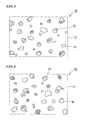
- Fig. 1 is a schematic view showing a metallographic structure of an electrical contact of Embodiment 1-3 according to the first aspect of the present invention
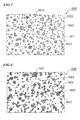
- Fig. 7 is a schematic view showing a metallographic structure of a conventional electrical contact (internally oxidized electrical contact) of Comparative Embodiment 1-a3.
- any of electrical contacts 10 of Embodiments 1-1 to 1-13 ultra-fine particles of Sn-based oxides and In-based oxides do not exist in the state of being precipitated by the internal oxidation treatment. It has been found that, in any of electrical contacts 10 of Embodiments 1-1 to 1-13, the material constituting the electrical contact has a metallographic structure such that coarse grains of composite oxides 12 are dispersed and distributed in an Ag matrix 11, the coarse grains of composite oxides being formed as a result of coarsening of ultra-fine grains of Sn-based oxides and ultra-fine grains of In-based oxides, which are precipitated by the internal oxidation treatment, by the heat treatment for diffusion, aggregation, and growth of the precipitated oxides.
- the material constituting the electrical contact has a metallographic structure such that ultra-fine particles of Sn-based oxides 1012 and In-based oxides 1013 exist in an Ag matrix 1011 in the state of being precipitated by the internal oxidation treatment.
- any of the electrical contacts of Embodiments 1-1 to 1-13 has excellent electrical conductivity. Therefore, heat generation between the contacts is significantly suppressed. As a result, softening of the electrical contact by the heating thereof is suppressed and excellent durability against fusing of the contacts can be maintained. Consequently, the head diameter of the rivet-shape is reduced to 2.3 mm and thus a very long service life can be obtained in an on-off test under service conditions at high current density.
- the electrical contacts according to the first aspect of the present invention demonstrates excellent electrical contact characteristics over a long period of time, that is, high welding resistance and high wear resistance, even if greater current density per unit area is caused by size reduction, and is therefore suitable for an electromagnetic relay which is made smaller in size.
- Each of Ag alloys having the composition shown in Table 2-1 was melted by a high frequency induction melting furnace and then casted into a columnar ingot.
- the ingot was heat-extruded at a temperature of 700°C to form a plate 30 mm in width ⁇ 10 mm in thickness, which was hot-rolled at a temperature of 700°C to form a plate 30 mm in width ⁇ 3 mm in thickness, and then the plate was cold-rolled while subjecting to intermediate annealing to form a thin plate 30 mm in width ⁇ 0.6 mm in thickness.
- the resulting thin plate was cut along the longitudinal direction at intervals of 2 mm in width to form a strip 30 mm in length ⁇ 2 mm in width ⁇ 0.6 mm in thickness.
- the strip was subjected to an internal oxidation treatment under the conditions of maintaining at 700°C in an oxygen atmosphere for 24 hours, and the strip subjected to the internal oxidation treatment was put in a die and then compressed to form a columnar formed article 70 mm in diameter ⁇ 70 mm in length.
- the columnar formed article was subjected to a heat treatment for diffusion, aggregation, and growth of precipitated oxides under the conditions of maintaining at predetermined temperature ranging from 900 to 950°C in an air atmosphere for 12 hours.
- the heat-treated columnar formed article was hot-extruded at a temperature of 800°C to form a wire rod of 7 mm in diameter, which was then hot-drawn at a temperature of 800°C to form a wire rod of 1.4 mm in diameter.
- the metallographic structure of various electrical contacts thus obtained was observed by using a scanning electron microscope (magnification: 20,000 times).
- Fig. 2 is a schematic view showing a metallographic structure of an electrical contact of Embodiment 2-3 according to the second aspect of the present invention
- Fig. 8 is a schematic view showing a metallographic structure of a conventional electrical contact of Comparative Embodiment 2-3.
- any of electrical contacts 20 of Embodiments 2-1 to 2-17 ultra-fine particles of Sn-based oxides and In-based oxides do not exist in the state of being precipitated by the internal oxidation treatment. It has been found that, in any of electrical contacts 20 of Embodiments 2-1 to 2-17, the material constituting the electrical contact has a metallographic structure such that coarse grains of composite oxides 22 are dispersed and distributed in an Ag matrix 21, the coarse grains of composite oxides 22 being formed as a result of coarsening of ultra-fine grains of Sn-based oxides and ultra-fine grains of In-based oxides, which are precipitated by the internal oxidation treatment, by the heat treatment for diffusion, aggregation, and growth of the precipitated oxides.
- the material constituting the electrical contact has a metallographic structure such that ultra-fine particles of Sn-based oxides 1022 and In-based oxides 1023 exist in an Ag matrix 1021 in the state of being precipitated by the internal oxidation treatment.
- any of the electrical contacts of Embodiments 2-1 to 2-17 has excellent electrical conductivity. Therefore, heat generation between the contacts is significantly suppressed. As a result, softening of the electrical contact by the heating thereof is suppressed and excellent durability against fusing of the contacts can be maintained. Consequently, the head diameter of the rivet-shape is reduced to 2.3 mm and thus a very long service life can be obtained in an on-off test under service conditions at high current density.
- the electrical contacts according to the second aspect of the present invention demonstrates excellent electrical contact characteristics over a long period of time, that is, high welding resistance and high wear resistance, even if greater current density per unit area is caused by size reduction, and is therefore suitable for an electromagnetic relay which is made smaller in size.
- Each ofAg alloys having the composition shown in Table 3-1 was melted by a high frequency induction melting furnace and then casted into a columnar ingot.
- the ingot was heat-extruded at a temperature of 700°C to form a plate 30 mm in width ⁇ 10 mm in thickness, which was hot-rolled at a temperature of 700°C to form a plate 30 mm in width ⁇ 3 mm in thickness, and then the plate was cold-rolled while subjecting to intermediate annealing to form a thin plate 30 mm in width ⁇ 0.6 mm in thickness.
- the resulting thin plate was cut along the longitudinal direction at intervals of 2 mm in width to form a strip 30 mm in length ⁇ 2 mm in width ⁇ 0.6 mm in thickness.
- the strip was subjected to an internal oxidation treatment under the conditions of maintaining at 700°C in an oxygen atmosphere for 24 hours, and the strip subjected to the internal oxidation treatment was put in a die and then compressed to form a columnar formed article 70 mm in diameter ⁇ 70 mm in length.
- the columnar formed article was subjected to a heat treatment for diffusion, aggregation, and growth of precipitated oxides under the conditions of maintaining at predetermined temperature ranging from 900 to 950°C in an air atmosphere for 12 hours.
- the heat-treated columnar formed article was hot-extruded at a temperature of 800°C to form a wire rod of 7 mm in diameter, which was then hot-drawn at a temperature of 800°C to form a wire rod of 1.4 mm in diameter.
- the metallographic structure of various electrical contacts thus obtained was observed by using a scanning electron microscope (magnification: 20,000 times).
- Fig. 3 is a schematic view showing a metallographic structure of an electrical contact of Embodiment 3-3 according to the third aspect of the present invention
- Fig. 9 is a schematic view showing a metallographic structure of a conventional electrical contact (internally oxidized electrical contact) of Comparative Embodiment 3-3.
- any of electrical contacts 30 of Embodiments 3-1 to 3-21 ultra-fine particles of Sn-based oxides and In-based oxides do not exist in the state of being precipitated by the internal oxidation treatment. It has been found that, in any of electrical contacts 30 of Embodiments 3-1 to 3-21, the material constituting the electrical contact has a metallographic structure such that coarse grains of composite oxides 32 are dispersed and distributed in an Ag matrix 31, the coarse grains of composite oxides 32 being formed as a result of coarsening of ultra-fine grains of oxides, which are precipitated by the internal oxidation treatment, by the heat treatment for diffusion, aggregation, and growth of the precipitated oxides.
- the material constituting the electrical contact has a metallographic structure such that ultra-fine particles of Sn-based oxides 1032 and In-based oxides 1033 exist in an Ag matrix 1031 in the state of being precipitated by the internal oxidation treatment.
- any of the electrical contacts of Embodiments 3-1 to 3-21 has excellent electrical conductivity. Therefore, heat generation between the contacts is significantly suppressed. As a result, softening of the electrical contact by the heating thereof is suppressed and excellent durability against fusing of the contacts can be maintained. Consequently, the head diameter of the rivet-shape is reduced to 2.3 mm and thus a very long service life can be obtained in an on-off test under service conditions at high current density.
- the electrical contacts according to the third aspect of the present invention demonstrates excellent electrical contact characteristics over a long period of time, that is, high welding resistance and high wear resistance, even if greater current density per unit area is caused by size reduction, and is therefore suitable for an electromagnetic relay which is made smaller in size.
- Each of Ag alloys having the composition shown in Table 4-1 was melted by a high frequency induction melting furnace and then casted into a columnar ingot.
- the ingot was heat-extruded at a temperature of 700°C to form a plate 30 mm in width ⁇ 10 mm in thickness, which was hot-rolled at a temperature of 700°C to form a plate 30 mm in width ⁇ 3 mm in thickness, and then the plate was cold-rolled while subjecting to intermediate annealing to form a thin plate 30 mm in width ⁇ 0.6 mm in thickness.
- the resulting thin plate was cut along the longitudinal direction at intervals of 2 mm in width to form a strip 30 mm in length ⁇ 2 mm in width ⁇ 0.6 mm in thickness.
- the strip was subjected to an internal oxidation treatment under the conditions of maintaining at 700°C in an oxygen atmosphere for 24 hours to obtain internally oxidized Ag alloys (hereinafter referred to as internally oxidized materials) 4-A1 to 4-A13, Ni-containing internally oxidized materials 4-B1 to 4-B4 and internally oxidized materials 4-C1 to 4-C13 of comparative embodiments.
- internally oxidized materials 4-A1 to 4-A13, Ni-containing internally oxidized materials 4-B1 to 4-B4 and internally oxidized materials 4-C1 to 4-C13 of comparative embodiments.
- each of the strip-shaped internally oxidized materials 4-A1 to 4-A13, the Ni-containing internally oxidized materials 4-B to 4-B4 and the internally oxidized materials 4-C1 to 4-C13 of the comparative embodiments was put in a die and then compressed to form a columnar formed article 70 mm in diameter ⁇ 70 mm in length.
- the columnar formed article was subjected to a heat treatment for diffusion, aggregation, and growth of precipitated oxides under the conditions of maintaining at predetermined temperature ranging from 900 to 950°C in an air atmosphere for 12 hours.
- the heat-treated columnar formed article was hot-extruded at a temperature of 800°C to form a wire rod of 7 mm in diameter, which was then hot-drawn at a temperature of 800°C to form a wire rod of 1.4 mm in diameter.
- the metallographic structure of various electrical contacts thus obtained was observed by using a scanning electron microscope (magnification: 20,000 times).
- Fig. 4 is a schematic view showing a metallographic structure of an electrical contact of Embodiment 4-3 according to the fourth aspect of the present invention
- Fig. 10 is a schematic view showing a metallographic structure of a conventional electrical contact (internally oxidized electrical contact) of Comparative Embodiment 4-a3.
- any of electrical contacts 40 of Embodiments 4-1 to 4-17 ultra-fine particles of Sn-based oxides and In-based oxides do not exist in the state of being precipitated by the internal oxidation treatment. It has been found that, in any of electrical contacts 40 of Embodiments 4-1 to 4-17, the material constituting the electrical contact has a metallographic structure such that coarse grains of composite oxides 42 are dispersed and distributed in an Ag matrix 41, the coarse grains of composite oxides being formed as a result of coarsening of ultra-fine grains of oxides, which are precipitated by the internal oxidation treatment, by the heat treatment for diffusion, aggregation, and growth of the precipitated oxides.
- the material constituting the electrical contact has a metallographic structure such that ultra-fine particles of Sn-based oxides 1042 and In-based oxides 1043 exist in an Ag matrix 1041 in the state of being precipitated by the internal oxidation treatment.
- any of the electrical contacts of Embodiments 4-1 to 4-17 has excellent electrical conductivity. Therefore, heat generation between the contacts is significantly suppressed. As a result, softening of the electrical contact by the heating thereof is suppressed and excellent durability against fusing of the contacts can be maintained. Consequently, the head diameter of the rivet-shape is reduced to 2.3 mm and thus a very long service life can be obtained in an on-off test under service conditions at high current density.
- the electrical contacts according to the fourth aspect of the present invention demonstrates excellent electrical contact characteristics over a long period of time, that is, high welding resistance and high wear resistance, even if greater current density per unit area is caused by size reduction, and is therefore suitable for an electromagnetic relay which is made smaller in size.
- Each of Ag alloys having the composition shown in Table 5-1 was melted by a high frequency induction melting furnace and then casted into a columnar ingot.
- the ingot was heat-extruded at a temperature of 700°C to form a plate 30 mm in width ⁇ 10 mm in thickness, which was hot-rolled at a temperature of 700°C to form a plate 30 mm in width ⁇ 3 mm in thickness, and then the plate was cold-rolled while subjecting to intermediate annealing to form a thin plate 30 mm in width ⁇ 0.6 mm in thickness.
- the resulting thin plate was cut along the longitudinal direction at intervals of 2 mm in width to form a strip 30 mm in length ⁇ 2 mm in width ⁇ 0.6 mm in thickness.
- the strip was subjected to an internal oxidation treatment under the conditions of maintaining at 700°C in an oxygen atmosphere for 24 hours, and the strip subjected to the internal oxidation treatment was put in a die and then compressed to form a columnar formed article 70 mm in diameter ⁇ 70 mm in length.
- the columnar formed article was subjected to a heat treatment for diffusion, aggregation, and growth of precipitated oxides under the conditions of maintaining at predetermined temperature ranging from 900 to 950°C in an air atmosphere for 12 hours.
- the heat-treated columnar formed article was hot-extruded at a temperature of 800°C to form a wire rod of 7 mm in diameter, which was then hot-drawn at a temperature of 800°C to form a wire rod of 1.4 mm in diameter.
- the metallographic structure of various electrical contacts thus obtained was observed by using a scanning electron microscope (magnification: 20,000 times).
- Fig. 5 is a schematic view showing a metallographic structure of an electrical contact of Embodiment 5-3 according to the fifth aspect of the present invention
- Fig. 11 is a schematic view showing a metallographic structure of a conventional electrical contact of Comparative Embodiment 5-3.
- any of electrical contacts 50 of Embodiments 5-1 to 5-21 ultra-fine particles of Sn-based oxides and In-based oxides do not exist in the state of being precipitated by the internal oxidation treatment. It has been found that, in any of electrical contacts 50 of Embodiments 5-1 to 5-21, the material constituting the electrical contact has a metallographic structure such that coarse grains of composite oxides 52 are dispersed and distributed in an Ag matrix 51, the coarse grains of composite oxides 52 being formed as a result of coarsening of ultra-fine grains of oxides, which are precipitated by the internal oxidation treatment, by the heat treatment for diffusion, aggregation, and growth of the precipitated oxides.
- the material constituting the electrical contact has a metallographic structure such that ultra-fine particles of Sn-based oxides 1052 and In-based oxides 1053 exist in an Ag matrix 1051 in the state of being precipitated by the internal oxidation treatment.
- any of the electrical contacts of Embodiments 5-1 to 5-21 has excellent electrical conductivity. Therefore, heat generation between the contacts is significantly suppressed. As a result, softening of the electrical contact by the heating thereof is suppressed and excellent durability against fusing of the contacts can be maintained. Consequently, the head diameter of the rivet-shape is reduced to 2.3 mm and thus a very long service life can be obtained in an on-off test under service conditions at high current density.
- the electrical contacts according to the fifth aspect of the present invention demonstrates excellent electrical contact characteristics over a long period of time, that is, high welding resistance and high wear resistance, even if greater current density per unit area is caused by size reduction, and is therefore suitable for an electromagnetic relay which is made smaller in size.
- the present invention can be utilized as electrical contacts for various electromagnetic relays which are used in automobile, office equipment, etc.
Landscapes
- Chemical & Material Sciences (AREA)
- Engineering & Computer Science (AREA)
- Materials Engineering (AREA)
- Composite Materials (AREA)
- Mechanical Engineering (AREA)
- Metallurgy (AREA)
- Organic Chemistry (AREA)
- Contacts (AREA)
- Powder Metallurgy (AREA)
Abstract
Description
| Internally oxidized material | Components of Ag alloy (% by weight) | |||
| Sn | In | Bi | Ag + Impurities | |
| 1-A1 | 5.13 | 3.15 | 0.033 | Balance |
| 1-A2 | 6.04 | 3.08 | 0.031 | Balance |
| 1-A3 | 7.02 | 3.13 | 0.030 | Balance |
| 1-A4 | 8.01 | 3.22 | 0.032 | Balance |
| 1-AS | 8.96 | 3.17 | 0.031 | Balance |
| 1-A6 | 6.97 | 1.52 | 0.030 | Balance |
| 1-A7 | 7.99 | 2.14 | 0.030 | Balance |
| 1-A8 | 7.06 | 3.96 | 0.029 | Balance |
| 1-A9 | 7.05 | 4.97 | 0.033 | Balance |
| 1-A10 | 7.03 | 3.09 | 0.0054 | Balance |
| 1-A11 | 6.89 | 3.17 | 0.014 | Balance |
| 1-A12 | 7.08 | 3.06 | 0.043 | Balance |
| 1-A13 | 7.03 | 3.21 | 0.058 | Balance |
| 1-B1 | 5.13 | 3.15 | - | Balance |
| 1-B2 | 5.99 | 3.12 | - | Balance |
| 1-B3 | 7.05 | 3.06 | - | Balance |
| 1-B4 | 8.00 | 3.21 | - | Balance |
| 1-B5 | 8.95 | 3.05 | - | Balance |
| 1-B6 | 7.01 | 1.54 | - | Balance |
| 1-B7 | 6.96 | 2.18 | - | Balance |
| 1-B8 | 7.02 | 4.05 | - | Balance |
| 1-B9 | 7.04 | 4.97 | - | Balance |
Motor lock loading method
Power voltage: 14 VDC
Rated current: 23 A
Contact closing force: 15 gf
Contact opening force: 15 gf
| Internally oxidized material | Electrical conductivity (%IACS) | Hardness (Hv) | Endurance switching cycles (×103) | |
| Embodiment 1-1 | 1-A1 | 80 | 89 | 12.1 |
| Embodiment 1-2 | 1-A2 | 78 | 92 | 13.5 |
| Embodiment 1-3 | 1-A3 | 77 | 94 | 19.6 |
| Embodiment 1-4 | 1-A4 | 75 | 94 | 17.9 |
| Embodiment 1-5 | 1-A5 | 74 | 97 | 14.0 |
| Embodiment 1-6 | 1-A6 | 78 | 91 | 10.4 |
| Embodiment 1-7 | 1-A7 | 77 | 93 | 11.3 |
| Embodiment 1-8 | 1-A8 | 75 | 96 | 18.1 |
| Embodiment 1-9 | 1-A9 | 74 | 96 | 15.2 |
| Embodiment 1-10 | 1-A10 | 77 | 95 | 14.6 |
| Embodiment 1-11 | 1-A11 | 77 | 94 | 17.4 |
| Embodiment 1-12 | 1-A12 | 77 | 92 | 19.0 |
| Embodiment 1-13 | 1-A13 | 76 | 94 | 20.8 |
| Comparative Embodiment 1-1 | 1-B1 | 72 | 101 | 2.5 |
| Comparative Embodiment 1-2 | 1-B2 | 72 | 103 | 4.1 |
| Comparative Embodiment 1-3 | 1-B3 | 69 | 110 | 5.4 |
| Comparative Embodiment 1-4 | 1-B4 | 67 | 112 | 5.0 |
| Comparative Embodiment 1-5 | 1-B5 | 65 | 115 | 3.3 |
| Comparative Embodiment 1-6 | 1-B6 | 72 | 104 | 3.2 |
| Comparative Embodiment 1-7 | 1-B7 | 71 | 107 | 3.7 |
| Comparative Embodiment 1-8 | 1-B8 | 68 | 109 | 4.5 |
| Comparative Embodiment 1-9 | 1-B9 | 66 | 113 | 5.1 |
| Internally oxidized material | Electrical conductivity (%IACS) | Hardness (Hv) | Endurance switching cycles (×103) | |
| Comparative Embodiment 1-a1 | 1-A1 | 71 | 102 | 1.7 |
| Comparative Embodiment 1-a2 | 1-A2 | 70 | 105 | 3.6 |
| Comparative Embodiment 1-a3 | 1-A3 | 67 | 110 | 5.0 |
| Comparative Embodiment 1-a4 | 1-A4 | 66 | 112 | 4.4 |
| Comparative Embodiment 1-a5 | 1-A5 | 65 | 115 | 3.7 |
| Comparative Embodiment 1-a6 | 1-A6 | 71 | 104 | 1.3 |
| Comparative Embodiment 1-a7 | 1-A7 | 70 | 105 | 2.8 |
| Comparative Embodiment 1-a8 | 1-A8 | 67 | 111 | 4.5 |
| Comparative Embodiment 1-a9 | 1-A9 | 65 | 114 | 4.3 |
| Comparative Embodiment 1-a10 | 1-A10 | 67 | 108 | 4.8 |
| Comparative Embodiment 1-a11 | 1-A11 | 67 | 110 | 4.6 |
| Comparative Embodiment 1-a12 | 1-A12 | 67 | 109 | 4.9 |
| Comparative Embodiment 1-a13 | 1-A13 | 67 | 111 | 4.4 |
| Comparative Embodiment 1-b1 | 1-B1 | 71 | 104 | 1.2 |
| Comparative Embodiment 1-b2 | 1-B2 | 71 | 106 | 3.2 |
| Comparative Embodiment 1-b3 | 1-B3 | 67 | 113 | 4.9 |
| Comparative Embodiment 1-b4 | 1-B4 | 66 | 115 | 4.2 |
| Comparative Embodiment 1-b5 | 1-B5 | 65 | 116 | 2.8 |
| Comparative Comparative Embodiment 1-b6 | 1-B6 | 71 | 107 | 1.5 |
| Comparative Embodiment 1-b7 | 1-B7 | 70 | 109 | 2.3 |
| Comparative Embodiment 1-b8 | 1-B8 | 67 | 112 | 4.2 |
| Comparative Embodiment 1-b9 | 1-B9 | 65 | 115 | 3.9 |


Motor lock loading method
Power voltage: 14 VDC
Rated current: 25 A
Contact closing force: 15 gf
Contact opening force: 15 gf


Motor lock loading method
Power voltage: 14 VDC
Rated current: 28 A
Contact closing force: 15 gf
Contact opening force: 15 gf
| Internally oxidized material | Components of Ag alloy (% by weight) | ||||
| Sn | In | Te | Ni | Ag + Impurities | |
| 4-A1 | 5.11 | 2.96 | 0.41 | - | Balance |
| 4-A2 | 6.10 | 2.89 | 0.38 | - | Balance |
| 4-A3 | 7.08 | 3.04 | 0.43 | - | Balance |
| 4-A4 | 8.04 | 2.87 | 0.40 | - | Balance |
| 4-A5 | 8.95 | 3.01 | 0.38 | - | Balance |
| 4-A6 | 6.88 | 1.54 | 0.43 | - | Balance |
| 4-A7 | 6.92 | 2.25 | 0.39 | - | Balance |
| 4-A8 | 7.01 | 3.88 | 0.43 | - | Balance |
| 4-A9 | 6.96 | 4.93 | 0.41 | - | Balance |
| 4-A10 | 7.04 | 2.99 | 0.053 | - | Balance |
| 4-A11 | 7.05 | 3.07 | 0.26 | - | Balance |
| 4-A12 | 6.97 | 3.01 | 0.63 | - | Balance |
| 4-A13 | 7.06 | 3.06 | 0.78 | - | Balance |
| 4-B1 | 6.96 | 3.02 | 0.39 | 0.034 | Balance |
| 4-B2 | 6.87 | 2.98 | 0.42 | 0.28 | Balance |
| 4-B3 | 7.06 | 3.03 | 0.38 | 0.39 | Balance |
| 4-B4 | 7.08 | 3.08 | 0.40 | 0.47 | Balance |
| 4-C1 | 5.15 | 2.99 | - | - | Balance |
| 4-C2 | 6.04 | 2.87 | - | - | Balance |
| 4-C3 | 6.89 | 3.03 | - | - | Balance |
| 4-C4 | 8.03 | 3.01 | - | - | Balance |
| 4-C5 | 8.96 | 3.06 | - | - | Balance |
| 4-C6 | 6.89 | 1.57 | - | - | Balance |
| 4-C7 | 7.06 | 2.27 | - | - | Balance |
| 4-C8 | 6.88 | 4.02 | - | - | Balance |
| 4-C9 | 7.07 | 4.93 | - | - | Balance |
| 4-C10 | 7.02 | 2.96 | - | 0.035 | Balance |
| 4-C11 | 6.99 | 3.04 | - | 0.29 | Balance |
| 4-C12 | 7.08 | 2.96 | - | 0.37 | Balance |
| 4-C13 | 7.01 | 3.04 | - | 0.48 | Balance |
Motor lock loading method
Power voltage: 14 VDC
Rated current: 30 A
Contact closing force: 20 gf
Contact opening force: 20 gf
| Internally oxidized material | Electrical conductivity (%IACS) | Hardness (Hv) | Endurance switching cycles (×103) | |
| Embodiment 4-1 | 4-A1 | 79 | 89 | 9.8 |
| Embodiment 4-2 | 4-A2 | 77 | 92 | 11.6 |
| Embodiment 4-3 | 4-A3 | 76 | 94 | 18.9 |
| Embodiment 4-4 | 4-A4 | 75 | 95 | 16.5 |
| Embodiment 4-5 | 4-A5 | 74 | 98 | 13.4 |
| Embodiment 4-6 | 4-A6 | 77 | 93 | 10.1 |
| Embodiment 4-7 | 4-A7 | 77 | 95 | 10.9 |
| Embodiment 4-8 | 4-A8 | 75 | 96 | 17.2 |
| Embodiment 4-9 | 4-A9 | 74 | 97 | 15.1 |
| Embodiment 4-10 | 4-A10 | 76 | 96 | 18.1 |
| Embodiment 4-11 | 4-A11 | 76 | -96 | 15.7 |
| Embodiment 4-12 | 4-A12 | 75 | 95 | 16.3 |
| Embodiment 4-13 | 4-A13 | 75 | 97 | 14.2 |
| Embodiment 4-14 | 4-B1 | 76 | 95 | 19.1 |
| Embodiment 4-15 | 4-B2 | 76 | 96 | 20.5 |
| Embodiment 4-16 | 4-B3 | 75 | 95 | 20.9 |
| Embodiment 4-17 | 4-B4 | 75 | 97 | 17.8 |
| Comparative Embodiment 4-1 | 4-C1 | 72 | 99 | 1.1 |
| Comparative Embodiment 4-2 | 4-C2 | 71 | 101 | 3.4 |
| Comparative Embodiment 4-3 | 4-C3 | 69 | 105 | 5.9 |
| Comparative Embodiment 4-4 | 4-C4 | 67 | 106 | 4.3 |
| Comparative Embodiment 4-5 | 4-C5 | 66 | 110 | 2.8 |
| Comparative Embodiment 4-6 | 4-C6 | 72 | 100 | 1.3 |
| Comparative Embodiment 4-7 | 4-C7 | 71 | 104 | 2.5 |
| Comparative Embodiment 4-8 | 4-C8 | 68 | 107 | 4.6 |
| Comparative Embodiment 4-9 | 4-C9 | 67 | 108 | 3.9 |
| Comparative Embodiment 4-1 | 4-C10 | 69 | 103 | 5.8 |
| Comparative Embodiment 4-11 | 4-C11 | 68 | 106 | 6.3 |
| Comparative Embodiment 4-12 | 4-C12 | 68 | 103 | 5.1 |
| Comparative Embodiment 4-13 | 4-C13 | 68 | 109 | 5.5 |
| Internal oxidized material | Electrical conductivity (%IACS) | Hardness (Hv) | Endurance switching cycles (×103) | |
| Comparative Embodiment 4-a1 | 4-A1 | 71 | 105 | 1.6 |
| Comparative Embodiment 4-a2 | 4-A2 | 69 | 108 | 3.1 |
| Comparative Embodiment 4-a3 | 4-A3 | 66 | 111 | 4.9 |
| Comparative Embodiment 4-a4 | 4-A4 | 65 | 113 | 4.3 |
| Comparative Embodiment 4-a5 | 4-A5 | 64 | 115 | 2.8 |
| Comparative Embodiment 4-a6 | 4-A6 | 70 | 108 | 1.5 |
| Comparative Embodiment 4-a7 | 4-A7 | 69 | 109 | 2.0 |
| Comparative Embodiment 4-a8 | 4-A8 | 66 | 114 | 4.1 |
| Comparative Embodiment 4-a9 | 4-A9 | 65 | 115 | 3.6 |
| Comparative Embodiment 4-a10 | 4-A10 | 67 | 110 | 4.2 |
| Comparative Embodiment 4-a11 | 4-A11 | 66 | 111 | 4.5 |
| Comparative Embodiment 4-a12 | 4-A12 | 66 | 113 | 4.8 |
| Comparative Embodiment 4-a13 | 4-A13 | 66 | 113 | 3.7 |
| Comparative Embodiment 4-b 1 | 4-B1 | 67 | 110 | 5.1 |
| Comparative Embodiment 4-b2 | 4-B2 | 67 | 114 | 5.6 |
| Comparative Embodiment 4-b3 | 4-B3 | 66 | 114 | 5.5 |
| Comparative Embodiment 4-b4 | 4-B4 | 66 | 115 | 5.0 |
| Comparative Embodiment 4-c1 | 4-C1 | 71 | 102 | 0.6 |
| Comparative Embodiment 4-c2 | 4-C2 | 71 | 105 | 2.4 |
| Comparative Embodiment 4-c3 | 4-C3 | 67 | 108 | 3.7 |
| Comparative Embodiment 4-C4 | 4-C4 | 66 | 112 | 3.3 |
| Comparative Embodiment 4-C5 | 4-C5 | 65 | 117 | 1.8 |
| Comparative Embodiment 4-c6 | 4-C6 | 71 | 105 | 0.8 |
| Comparative Embodiment 4-c7 | 4-C7 | 70 | 110 | 1.6 |
| Comparative Embodiment 4-c8 | 4-C8 | 67 | 111 | 3.1 |
| Comparative Embodiment 4-c9 | 4-C9 | 65 | 112 | 2.6 |
| Comparative Embodiment 4-c10 | 4-C10 | 67 | 108 | 3.7 |
| Comparative Embodiment 4-c11 | 4-C11 | 67 | 111 | 4.2 |
| Comparative Embodiment 4-c12 | 4-C12 | 67 | 110 | 3.6 |
| Comparative Embodiment 4-c13 | 4-C13 | 67 | 114 | 3.1 |


Motor lock loading method
Power voltage: 14 VDC
Rated current: 30 A
Contact closing force: 15 gf
Contact opening force: 15 gf
Claims (8)
- An electrical contact having high electrical conductivity made of an internally oxidized silver-oxide material for a compact electromagnetic relay
which is prepared by subjecting an Ag alloy having a composition consisting essentially of, by weight, 5.1 to 9% Sn, 1.5 to 5% In, and 0.005 to 0.06% Bi, with the balance consisting of Ag and unavoidable impurities, to an internal oxidation treatment and then subjecting to a heat treatment for diffusion, aggregation, and growth of precipitated oxides wherein,
the internally oxidized silver-oxide material has a metallographic structure such that coarse grains of composite oxides (12) are dispersed and distributed in anAg matrix (11), the coarse grains of composite oxides being formed as a result of coarsening of ultra-fine grains of Sn-based oxides and ultra-fine grains of In-based oxides, which are precipitated by the internal oxidation treatment, by the heat treatment for diffusion, aggregation and growth of the precipitated oxides. - An electrical contact having high electrical conductivity made of an internally oxidized silver-oxide material for a compact electromagnetic relay
which is prepared by subjecting an Ag alloy having a composition consisting essentially of, by weight, 5.1 to 9% Sn, 1.5 to 5% In, 0.03 to 0.5% Ni, and 0.005 to 0.06% Bi, with the balance consisting ofAg and unavoidable impurities, to an internal oxidation treatment and then subjecting to a heat treatment for diffusion, aggregation, and growth of precipitated oxides, wherein
the internally oxidized silver-oxide material has a metallographic structure such that coarse grains of composite oxides (22) are dispersed and distributed in an Ag matrix (21), the coarse grains of composite oxides being formed as a result of coarsening of ultra-fme grains of Sn-based oxides and ultra-fine grains of In-based oxides, which are precipitated by the internal oxidation treatment, by the heat treatment for diffusion, aggregation, and growth of the precipitated oxides. - An electrical contact having high electrical conductivity made of an internally oxidized silver-oxide material for a compact electromagnetic relay
which is prepared by subjecting an Ag alloy having a composition consisting essentially of, by weight, 5.1 to 9% Sn, 1.5 to 5% In, 0.05 to 0.5% Cu, and 0.005 to 0.06% Bi, with the balance consisting of Ag and unavoidable impurities, to an internal oxidation treatment and then subjecting to a heat treatment for diffusion, aggregation, and growth of precipitated oxides, wherein
the internally oxidized silver-oxide material has a metallographic structure such that coarse grains of composite oxides (32) are dispersed and distributed in an Ag matrix (31), the coarse grains of composite oxides being formed as a result of coarsening of ultra-fine grains of Sn-based oxides and ultra-fine grains of In-based oxides, which are precipitated by the internal oxidation treatment, by the heat treatment for diffusion, aggregation, and growth of the precipitated oxides. - An electrical contact having high electrical conductivity made of an internally oxidized silver-oxide material for a compact electromagnetic relay which is prepared by subjecting an Ag alloy having a composition consisting essentially of, by weight, 5.1 to 9% Sn, 1.5 to 5% In, 0.05 to 0.5% Cu, 0.005 to 0.06% Bi, and 0.03 to 0.5% Ni, with the balance consisting of Ag and unavoidable impurities, to an internal oxidation treatment and then subjecting to a heat treatment for diffusion, aggregation, and growth of precipitated oxides, wherein
the internally oxidized silver-oxide material has a metallographic structure such that coarse grains of composite oxides (32) are dispersed and distributed in an Ag matrix (31), the coarse grains of composite oxides being formed as a result of coarsening of ultra-fine grains of Sn-based oxides and ultra-fine grains of In-based oxides, which are precipitated by the internal oxidation treatment, by the heat treatment for diffusion, aggregation, and growth of the precipitated oxides. - An electrical contact having high electrical conductivity made of an internally oxidized silver-oxide material for a compact electromagnetic relay which is prepared by subjecting an Ag alloy having a composition consisting essentially of, by weight, 5.1 to 9% Sn, 1.5 to 5% In, and 0.05 to 0.8% Te, with the balance consisting of Ag and unavoidable impurities, to an internal oxidation treatment and then subjecting to a heat treatment for diffusion, aggregation, and growth of precipitated oxides, wherein
the internally oxidized silver-oxide material has a metallographic structure such that coarse grains of composite oxides (42) are dispersed and distributed in an Ag matrix (41), the coarse grains of composite oxides being formed as a result of coarsening of ultra-fine grains of Sn-based oxides and ultra-fine grains of In-based oxides, which are precipitated by the internal oxidation treatment, by the heat treatment for diffusion, aggregation, and growth of the precipitated oxides. - An electrical contact having high electrical conductivity made of an internally oxidized silver-oxide material for a compact electromagnetic relay which is prepared by subjecting an Ag alloy having a composition consisting essentially of, by weight, 5.1 to 9% Sn, 1.5 to 5% In, 0.05 to 0.8% Te, and 0.03 to 0.5% Ni, with the balance consisting of Ag and unavoidable impurities, to an internal oxidation treatment and then subjecting to a heat treatment for diffusion, aggregation, and growth of precipitated oxides, wherein
the internally oxidized silver-oxide material has a metallographic structure such that coarse grains of composite oxides (42) are dispersed and distributed in an Ag matrix (41), the coarse grains of composite oxides being formed as a result of coarsening of ultra-fine grains of Sn-based oxides and ultra-fine grains of In-based oxides, which are precipitated by the internal oxidation treatment, by the heat treatment for diffusion, aggregation, and growth of the precipitated oxides. - An electrical contact having high electrical conductivity made of an internally oxidized silver-oxide material for a compact electromagnetic relay which is prepared by subjecting an Ag alloy having a composition consisting essentially of, by weight, 5.1 to 9% Sn, 1.5 to 5% In, 0.05 to 0.5% Cu, and 0.05 to 0.8% Te, with the balance consisting of Ag and unavoidable impurities, to an internal oxidation treatment and then subjecting to a heat treatment for diffusion, aggregation, and growth of precipitated oxides, wherein
the internally oxidized silver-oxide material has a metallographic structure such that coarse grains of composite oxides (52) are dispersed and distributed in an Ag matrix (51), the coarse grains of composite oxides being formed as a result of coarsening of ultra-fine grains of Sn-based oxides and ultra-fine grains of In-based oxides, which are precipitated by the internal oxidation treatment, by the heat treatment for diffusion, aggregation, and growth of the precipitated oxides. - An electrical contact having high electrical conductivity made of an internally oxidized silver-oxide material for a compact electromagnetic relay which is prepared by subjecting an Ag alloy having a composition consisting essentially of, by weight, 5.1 to 9% Sn, 1.5 to 5% In, 0.05 to 0.5% Cu, 0.05 to 0.8% Te, and 0.03 to 0.5% Ni, with the balance consisting ofAg and unavoidable impurities, to an internal oxidation treatment and then subjecting to a heat treatment for diffusion, aggregation, and growth of precipitated oxides, wherein
the internally oxidized silver-oxide material has a metallographic structure such that coarse grains of composite oxides (52) are dispersed and distributed in an Ag matrix (51), the coarse grains of composite oxides being formed as a result of coarsening of ultra-fine grains of Sn-based oxides and ultra-fine grains of In-based oxides, which are precipitated by the internal oxidation treatment, by the heat treatment for diffusion, aggregation, and growth of the precipitated oxides.
Applications Claiming Priority (10)
| Application Number | Priority Date | Filing Date | Title |
|---|---|---|---|
| JP2003289820 | 2003-08-08 | ||
| JP2003289820A JP4092650B2 (en) | 2003-08-08 | 2003-08-08 | Electrical contacts made of internal silver oxide-oxide materials for miniaturized electromagnetic relays with high conductivity |
| JP2003401298 | 2003-12-01 | ||
| JP2003401299A JP4389564B2 (en) | 2003-12-01 | 2003-12-01 | Electrical contacts made of internal silver oxide-oxide material for miniaturized electromagnetic relays with high conductivity |
| JP2003401297A JP4389562B2 (en) | 2003-12-01 | 2003-12-01 | Electrical contacts made of internal silver oxide-oxide material for miniaturized electromagnetic relays with high conductivity |
| JP2003401297 | 2003-12-01 | ||
| JP2003401296 | 2003-12-01 | ||
| JP2003401296A JP4389561B2 (en) | 2003-12-01 | 2003-12-01 | Electrical contacts made of internal silver oxide-oxide material for miniaturized electromagnetic relays with high conductivity |
| JP2003401299 | 2003-12-01 | ||
| JP2003401298A JP4389563B2 (en) | 2003-12-01 | 2003-12-01 | Electrical contacts made of internal silver oxide-oxide material for miniaturized electromagnetic relays with high conductivity |
Publications (3)
| Publication Number | Publication Date |
|---|---|
| EP1505164A2 true EP1505164A2 (en) | 2005-02-09 |
| EP1505164A3 EP1505164A3 (en) | 2006-06-07 |
| EP1505164B1 EP1505164B1 (en) | 2009-04-29 |
Family
ID=33556710
Family Applications (1)
| Application Number | Title | Priority Date | Filing Date |
|---|---|---|---|
| EP04018360A Expired - Lifetime EP1505164B1 (en) | 2003-08-08 | 2004-08-03 | Process for producing an electrical contact having high electrical conductivity for a compact electromagnetic relay and produced electrical contact |
Country Status (4)
| Country | Link |
|---|---|
| US (1) | US8187395B2 (en) |
| EP (1) | EP1505164B1 (en) |
| CN (1) | CN1603443B (en) |
| DE (1) | DE602004020844D1 (en) |
Cited By (3)
| Publication number | Priority date | Publication date | Assignee | Title |
|---|---|---|---|---|
| WO2011086167A1 (en) | 2010-01-15 | 2011-07-21 | Umicore Ag & Co. Kg | Electric contact element and method for producing an electric contact element |
| EP2644723A1 (en) | 2012-03-26 | 2013-10-02 | Umicore AG & Co. KG | Composite material |
| CN103714981A (en) * | 2013-12-20 | 2014-04-09 | 宁波赛特勒电子有限公司 | Relay |
Families Citing this family (9)
| Publication number | Priority date | Publication date | Assignee | Title |
|---|---|---|---|---|
| US7189292B2 (en) * | 2003-10-31 | 2007-03-13 | International Business Machines Corporation | Self-encapsulated silver alloys for interconnects |
| WO2009018232A1 (en) * | 2007-07-27 | 2009-02-05 | Redshift Internetworking, Inc | A system and method for unified communications threat management (uctm) for converged voice, video and multi-media over ip flows |
| JP5156658B2 (en) * | 2009-01-30 | 2013-03-06 | 株式会社日立製作所 | Electronic components for LSI |
| JP5424811B2 (en) * | 2009-10-18 | 2014-02-26 | 三菱マテリアルシーエムアイ株式会社 | Electrical contact for relay and method for manufacturing the same |
| US9028586B2 (en) * | 2011-12-29 | 2015-05-12 | Umicore | Oxidation method |
| RU2539896C1 (en) * | 2013-11-18 | 2015-01-27 | Федеральное Государственное Автономное Образовательное Учреждение Высшего Профессионального Образования "Сибирский Федеральный Университет" | Method to produce silver-tin oxide material alloyed with indium oxide for electric contacts |
| CN105374598A (en) * | 2015-11-05 | 2016-03-02 | 福达合金材料股份有限公司 | Manufacturing method for coarse oxide particle silver-based electric contact materials |
| WO2019176891A1 (en) * | 2018-03-16 | 2019-09-19 | 田中貴金属工業株式会社 | Dc high voltage relay and contact material for dc high voltage relay |
| CN116511379A (en) * | 2023-03-30 | 2023-08-01 | 济源豫金靶材科技有限公司 | Preparation method of high-density silver oxide pressed ingot |
Family Cites Families (14)
| Publication number | Priority date | Publication date | Assignee | Title |
|---|---|---|---|---|
| US3933485A (en) * | 1973-07-20 | 1976-01-20 | Chugai Denki Kogyo Kabushiki-Kaisha | Electrical contact material |
| JPS5632378B2 (en) | 1974-11-12 | 1981-07-27 | ||
| US4141727A (en) * | 1976-12-03 | 1979-02-27 | Matsushita Electric Industrial Co., Ltd. | Electrical contact material and method of making the same |
| JPS54137425A (en) * | 1978-04-17 | 1979-10-25 | Matsushita Electric Ind Co Ltd | Electric contact material |
| JPS554825A (en) | 1978-06-26 | 1980-01-14 | Seiko Epson Corp | Cell timepiece |
| GB2055398B (en) * | 1979-08-01 | 1983-06-02 | Chugai Electric Ind Co Ltd | Electrical contact materials of internally oxidized ag-sn-bi alloy |
| JPS6147894A (en) | 1984-08-10 | 1986-03-08 | 本州製紙株式会社 | Metal vapor deposited paper |
| US4680162A (en) * | 1984-12-11 | 1987-07-14 | Chugai Denki Kogyo K.K. | Method for preparing Ag-SnO system alloy electrical contact material |
| US4636270A (en) | 1985-09-23 | 1987-01-13 | Chugai Denki Kogyo K.K. | Internal oxidized Ag-Sn system alloy contact materials |
| US5451272A (en) * | 1991-04-12 | 1995-09-19 | Mitsubishi Materials Corporation | Silver-oxide electric contact material for use in switches for high current |
| JPH0762188B2 (en) | 1991-04-12 | 1995-07-05 | 三菱マテリアル株式会社 | Silver-oxide type electrical contact material |
| JPH0873966A (en) | 1994-06-27 | 1996-03-19 | Sumitomo Metal Mining Co Ltd | Method for manufacturing electrical contact material |
| DE19503182C1 (en) * | 1995-02-01 | 1996-05-15 | Degussa | Sintered material used as electrical contacts for switching amperage rating |
| JP2001355028A (en) * | 2000-06-13 | 2001-12-25 | Mitsubishi Materials Corp | Silver / oxide contact material |
-
2004
- 2004-08-03 EP EP04018360A patent/EP1505164B1/en not_active Expired - Lifetime
- 2004-08-03 DE DE602004020844T patent/DE602004020844D1/en not_active Expired - Lifetime
- 2004-08-06 US US10/913,863 patent/US8187395B2/en not_active Expired - Fee Related
- 2004-08-06 CN CN200410076655.3A patent/CN1603443B/en not_active Expired - Lifetime
Cited By (8)
| Publication number | Priority date | Publication date | Assignee | Title |
|---|---|---|---|---|
| WO2011086167A1 (en) | 2010-01-15 | 2011-07-21 | Umicore Ag & Co. Kg | Electric contact element and method for producing an electric contact element |
| DE102010014745A1 (en) | 2010-01-15 | 2011-07-21 | Tyco Electronics AMP GmbH, 64625 | Method for manufacturing switchable, electrical contact member for switching or prominent contacts at e.g. electromagnetic relay, involves accessing contacting area for counter contact, via which material of wire is formed |
| US8749330B2 (en) | 2010-01-15 | 2014-06-10 | Umicore Ag & Co. Kg | Electric contact element and method for producing an electric contact element |
| EP2644723A1 (en) | 2012-03-26 | 2013-10-02 | Umicore AG & Co. KG | Composite material |
| WO2013144112A1 (en) | 2012-03-26 | 2013-10-03 | Umicore Ag & Co. Kg | Contact material |
| US9928931B2 (en) | 2012-03-26 | 2018-03-27 | Umicore Technical Materials Ag & Co. Kg | Contact material |
| CN103714981A (en) * | 2013-12-20 | 2014-04-09 | 宁波赛特勒电子有限公司 | Relay |
| CN103714981B (en) * | 2013-12-20 | 2015-08-05 | 宁波赛特勒电子有限公司 | A kind of relay |
Also Published As
| Publication number | Publication date |
|---|---|
| US20050028896A1 (en) | 2005-02-10 |
| EP1505164A3 (en) | 2006-06-07 |
| CN1603443B (en) | 2011-08-24 |
| US8187395B2 (en) | 2012-05-29 |
| CN1603443A (en) | 2005-04-06 |
| DE602004020844D1 (en) | 2009-06-10 |
| EP1505164B1 (en) | 2009-04-29 |
Similar Documents
| Publication | Publication Date | Title |
|---|---|---|
| JP4729680B2 (en) | Copper-based alloy with excellent press punchability | |
| JP4660735B2 (en) | Method for producing copper-based alloy sheet | |
| EP1505164A2 (en) | Electrical contact having high electrical conductivity made of internally oxidized silver-oxide material for compact electromagnetic relay | |
| US7145422B2 (en) | DC relay | |
| JP2008266787A (en) | Copper alloy material and method for producing the same | |
| EP3767656B1 (en) | Dc high voltage relay | |
| JP2004307905A (en) | Cu alloy and method for producing the same | |
| US6432157B1 (en) | Method for preparing Ag-ZnO electric contact material and electric contact material produced thereby | |
| US20150348664A1 (en) | Copper alloy for electronic and electric devices, component for electronic and electric devices, and terminal | |
| TWI753570B (en) | Dc high voltage relay and contact material for dc high voltage relay | |
| KR100977294B1 (en) | Silver oxide-zinc contact material | |
| EP0508055A1 (en) | Silver-oxide based electric contact material | |
| US11168382B2 (en) | Sliding contact material and method for producing same | |
| JP5567395B2 (en) | Silver-oxide based electrical contact materials | |
| JP2010100912A (en) | Silver-oxide-based electric contact material | |
| US20240183008A1 (en) | Electrically-conductive material having excellent wear resistance and heat resistance | |
| JP4389564B2 (en) | Electrical contacts made of internal silver oxide-oxide material for miniaturized electromagnetic relays with high conductivity | |
| JP4994144B2 (en) | Silver-oxide based electrical contact materials | |
| US6791045B1 (en) | Shielded-type automotive relay controlling a magnet clutch load of a vehicle air-conditioner | |
| JP4092650B2 (en) | Electrical contacts made of internal silver oxide-oxide materials for miniaturized electromagnetic relays with high conductivity | |
| JP4389563B2 (en) | Electrical contacts made of internal silver oxide-oxide material for miniaturized electromagnetic relays with high conductivity | |
| JP4389561B2 (en) | Electrical contacts made of internal silver oxide-oxide material for miniaturized electromagnetic relays with high conductivity | |
| EP2374907A1 (en) | Copper alloy material for electrical/electronic components, and method for producing same | |
| JP4994143B2 (en) | Silver-oxide based electrical contact materials | |
| JP2004193099A (en) | DC relay |
Legal Events
| Date | Code | Title | Description |
|---|---|---|---|
| PUAI | Public reference made under article 153(3) epc to a published international application that has entered the european phase |
Free format text: ORIGINAL CODE: 0009012 |
|
| AK | Designated contracting states |
Kind code of ref document: A2 Designated state(s): AT BE BG CH CY CZ DE DK EE ES FI FR GB GR HU IE IT LI LU MC NL PL PT RO SE SI SK TR |
|
| AX | Request for extension of the european patent |
Extension state: AL HR LT LV MK |
|
| PUAL | Search report despatched |
Free format text: ORIGINAL CODE: 0009013 |
|
| AK | Designated contracting states |
Kind code of ref document: A3 Designated state(s): AT BE BG CH CY CZ DE DK EE ES FI FR GB GR HU IE IT LI LU MC NL PL PT RO SE SI SK TR |
|
| AX | Request for extension of the european patent |
Extension state: AL HR LT LV MK |
|
| 17P | Request for examination filed |
Effective date: 20060925 |
|
| AKX | Designation fees paid |
Designated state(s): DE FR GB IT |
|
| 17Q | First examination report despatched |
Effective date: 20080527 |
|
| RTI1 | Title (correction) |
Free format text: PROCESS FOR PRODUCING AN ELECTRICAL CONTACT HAVING HIGH ELECTRICAL CONDUCTIVITY FOR A COMPACT ELECTROMAGNETIC RELAY AND PRODUCED ELECTRICAL CONTACT |
|
| GRAP | Despatch of communication of intention to grant a patent |
Free format text: ORIGINAL CODE: EPIDOSNIGR1 |
|
| GRAS | Grant fee paid |
Free format text: ORIGINAL CODE: EPIDOSNIGR3 |
|
| GRAA | (expected) grant |
Free format text: ORIGINAL CODE: 0009210 |
|
| AK | Designated contracting states |
Kind code of ref document: B1 Designated state(s): DE FR GB IT |
|
| REG | Reference to a national code |
Ref country code: GB Ref legal event code: FG4D |
|
| REF | Corresponds to: |
Ref document number: 602004020844 Country of ref document: DE Date of ref document: 20090610 Kind code of ref document: P |
|
| PLBE | No opposition filed within time limit |
Free format text: ORIGINAL CODE: 0009261 |
|
| STAA | Information on the status of an ep patent application or granted ep patent |
Free format text: STATUS: NO OPPOSITION FILED WITHIN TIME LIMIT |
|
| 26N | No opposition filed |
Effective date: 20100201 |
|
| PG25 | Lapsed in a contracting state [announced via postgrant information from national office to epo] |
Ref country code: IT Free format text: LAPSE BECAUSE OF NON-PAYMENT OF DUE FEES Effective date: 20110803 |
|
| PGRI | Patent reinstated in contracting state [announced from national office to epo] |
Ref country code: IT Effective date: 20121015 |
|
| REG | Reference to a national code |
Ref country code: FR Ref legal event code: PLFP Year of fee payment: 13 |
|
| REG | Reference to a national code |
Ref country code: FR Ref legal event code: PLFP Year of fee payment: 14 |
|
| REG | Reference to a national code |
Ref country code: FR Ref legal event code: PLFP Year of fee payment: 15 |
|
| PGFP | Annual fee paid to national office [announced via postgrant information from national office to epo] |
Ref country code: IT Payment date: 20230831 Year of fee payment: 20 Ref country code: GB Payment date: 20230824 Year of fee payment: 20 |
|
| PGFP | Annual fee paid to national office [announced via postgrant information from national office to epo] |
Ref country code: FR Payment date: 20230822 Year of fee payment: 20 Ref country code: DE Payment date: 20230822 Year of fee payment: 20 |
|
| REG | Reference to a national code |
Ref country code: DE Ref legal event code: R071 Ref document number: 602004020844 Country of ref document: DE |
|
| REG | Reference to a national code |
Ref country code: GB Ref legal event code: PE20 Expiry date: 20240802 |
|
| PG25 | Lapsed in a contracting state [announced via postgrant information from national office to epo] |
Ref country code: GB Free format text: LAPSE BECAUSE OF EXPIRATION OF PROTECTION Effective date: 20240802 |
|
| PG25 | Lapsed in a contracting state [announced via postgrant information from national office to epo] |
Ref country code: GB Free format text: LAPSE BECAUSE OF EXPIRATION OF PROTECTION Effective date: 20240802 |