EP1507792B1 - Vorrichtung von peptid- oder proteindarstellung, verfahren zu deren herstellung und deren verwendung - Google Patents
Vorrichtung von peptid- oder proteindarstellung, verfahren zu deren herstellung und deren verwendung Download PDFInfo
- Publication number
- EP1507792B1 EP1507792B1 EP03755166A EP03755166A EP1507792B1 EP 1507792 B1 EP1507792 B1 EP 1507792B1 EP 03755166 A EP03755166 A EP 03755166A EP 03755166 A EP03755166 A EP 03755166A EP 1507792 B1 EP1507792 B1 EP 1507792B1
- Authority
- EP
- European Patent Office
- Prior art keywords
- positive
- polypeptides
- support
- slides
- semicarbazide
- Prior art date
- Legal status (The legal status is an assumption and is not a legal conclusion. Google has not performed a legal analysis and makes no representation as to the accuracy of the status listed.)
- Expired - Lifetime
Links
- 108090000765 processed proteins & peptides Proteins 0.000 title claims abstract description 89
- 102000004196 processed proteins & peptides Human genes 0.000 title claims abstract description 84
- 238000000034 method Methods 0.000 title claims abstract description 34
- 108090000623 proteins and genes Proteins 0.000 title claims description 14
- 102000004169 proteins and genes Human genes 0.000 title claims description 13
- 238000002360 preparation method Methods 0.000 title abstract description 10
- 229920001184 polypeptide Polymers 0.000 claims abstract description 80
- DUIOPKIIICUYRZ-UHFFFAOYSA-N semicarbazide group Chemical group NNC(=O)N DUIOPKIIICUYRZ-UHFFFAOYSA-N 0.000 claims description 34
- 239000011521 glass Substances 0.000 claims description 19
- 239000007787 solid Substances 0.000 claims description 10
- 238000000151 deposition Methods 0.000 claims description 9
- 238000006243 chemical reaction Methods 0.000 claims description 7
- 238000002444 silanisation Methods 0.000 claims description 7
- 239000003153 chemical reaction reagent Substances 0.000 claims description 6
- 238000005070 sampling Methods 0.000 claims description 6
- 238000004519 manufacturing process Methods 0.000 claims description 5
- 230000008569 process Effects 0.000 claims description 5
- IQPQWNKOIGAROB-UHFFFAOYSA-N isocyanate group Chemical group [N-]=C=O IQPQWNKOIGAROB-UHFFFAOYSA-N 0.000 claims description 4
- 239000000872 buffer Substances 0.000 claims description 3
- 238000012216 screening Methods 0.000 claims description 3
- BLRPTPMANUNPDV-UHFFFAOYSA-N Silane Chemical compound [SiH4] BLRPTPMANUNPDV-UHFFFAOYSA-N 0.000 claims description 2
- 150000001413 amino acids Chemical group 0.000 claims description 2
- 239000012634 fragment Substances 0.000 claims description 2
- 150000002429 hydrazines Chemical class 0.000 claims description 2
- 229910010272 inorganic material Inorganic materials 0.000 claims description 2
- 239000011147 inorganic material Substances 0.000 claims description 2
- 210000000056 organ Anatomy 0.000 claims description 2
- 239000011368 organic material Substances 0.000 claims description 2
- 239000000816 peptidomimetic Chemical group 0.000 claims description 2
- 230000002285 radioactive effect Effects 0.000 claims description 2
- 229910000077 silane Inorganic materials 0.000 claims description 2
- 239000010703 silicon Substances 0.000 claims description 2
- 229910052710 silicon Inorganic materials 0.000 claims description 2
- 229920001059 synthetic polymer Polymers 0.000 claims description 2
- 125000003277 amino group Chemical group 0.000 claims 2
- 238000009738 saturating Methods 0.000 claims 1
- 238000001514 detection method Methods 0.000 abstract description 18
- 230000000295 complement effect Effects 0.000 abstract description 4
- 239000000427 antigen Substances 0.000 description 51
- 108091007433 antigens Proteins 0.000 description 51
- 102000036639 antigens Human genes 0.000 description 51
- 238000012360 testing method Methods 0.000 description 28
- ZMXDDKWLCZADIW-UHFFFAOYSA-N N,N-Dimethylformamide Chemical compound CN(C)C=O ZMXDDKWLCZADIW-UHFFFAOYSA-N 0.000 description 24
- 239000000243 solution Substances 0.000 description 24
- 210000002966 serum Anatomy 0.000 description 19
- OKKJLVBELUTLKV-UHFFFAOYSA-N Methanol Chemical compound OC OKKJLVBELUTLKV-UHFFFAOYSA-N 0.000 description 18
- 241000725303 Human immunodeficiency virus Species 0.000 description 17
- 238000002965 ELISA Methods 0.000 description 15
- 238000001179 sorption measurement Methods 0.000 description 14
- 230000032683 aging Effects 0.000 description 9
- 238000007306 functionalization reaction Methods 0.000 description 9
- 208000002672 hepatitis B Diseases 0.000 description 9
- 235000018102 proteins Nutrition 0.000 description 9
- 238000000018 DNA microarray Methods 0.000 description 8
- 101710114816 Gene 41 protein Proteins 0.000 description 7
- XLYOFNOQVPJJNP-UHFFFAOYSA-N water Chemical compound O XLYOFNOQVPJJNP-UHFFFAOYSA-N 0.000 description 7
- LFQSCWFLJHTTHZ-UHFFFAOYSA-N Ethanol Chemical compound CCO LFQSCWFLJHTTHZ-UHFFFAOYSA-N 0.000 description 6
- 208000005176 Hepatitis C Diseases 0.000 description 6
- YXFVVABEGXRONW-UHFFFAOYSA-N Toluene Chemical compound CC1=CC=CC=C1 YXFVVABEGXRONW-UHFFFAOYSA-N 0.000 description 6
- 241000700605 Viruses Species 0.000 description 6
- 150000001412 amines Chemical group 0.000 description 6
- 238000005406 washing Methods 0.000 description 6
- 239000008367 deionised water Substances 0.000 description 5
- 229910021641 deionized water Inorganic materials 0.000 description 5
- 230000008021 deposition Effects 0.000 description 5
- 229920000136 polysorbate Polymers 0.000 description 5
- 238000007430 reference method Methods 0.000 description 5
- 239000000523 sample Substances 0.000 description 5
- 238000003860 storage Methods 0.000 description 5
- GQHTUMJGOHRCHB-UHFFFAOYSA-N 2,3,4,6,7,8,9,10-octahydropyrimido[1,2-a]azepine Chemical compound C1CCCCN2CCCN=C21 GQHTUMJGOHRCHB-UHFFFAOYSA-N 0.000 description 4
- MHAJPDPJQMAIIY-UHFFFAOYSA-N Hydrogen peroxide Chemical compound OO MHAJPDPJQMAIIY-UHFFFAOYSA-N 0.000 description 4
- JGFZNNIVVJXRND-UHFFFAOYSA-N N,N-Diisopropylethylamine (DIPEA) Chemical compound CCN(C(C)C)C(C)C JGFZNNIVVJXRND-UHFFFAOYSA-N 0.000 description 4
- NQRYJNQNLNOLGT-UHFFFAOYSA-N Piperidine Chemical compound C1CCNCC1 NQRYJNQNLNOLGT-UHFFFAOYSA-N 0.000 description 4
- QAOWNCQODCNURD-UHFFFAOYSA-N Sulfuric acid Chemical compound OS(O)(=O)=O QAOWNCQODCNURD-UHFFFAOYSA-N 0.000 description 4
- WYURNTSHIVDZCO-UHFFFAOYSA-N Tetrahydrofuran Chemical compound C1CCOC1 WYURNTSHIVDZCO-UHFFFAOYSA-N 0.000 description 4
- 230000000984 immunochemical effect Effects 0.000 description 4
- 238000011534 incubation Methods 0.000 description 4
- 239000000463 material Substances 0.000 description 4
- 239000000203 mixture Substances 0.000 description 4
- 238000011160 research Methods 0.000 description 4
- YMWUJEATGCHHMB-UHFFFAOYSA-N Dichloromethane Chemical compound ClCCl YMWUJEATGCHHMB-UHFFFAOYSA-N 0.000 description 3
- 241000711549 Hepacivirus C Species 0.000 description 3
- 230000015572 biosynthetic process Effects 0.000 description 3
- 238000009826 distribution Methods 0.000 description 3
- 239000012948 isocyanate Substances 0.000 description 3
- 150000002513 isocyanates Chemical class 0.000 description 3
- 239000013641 positive control Substances 0.000 description 3
- 238000011002 quantification Methods 0.000 description 3
- 108020003175 receptors Proteins 0.000 description 3
- PYWVYCXTNDRMGF-UHFFFAOYSA-N rhodamine B Chemical compound [Cl-].C=12C=CC(=[N+](CC)CC)C=C2OC2=CC(N(CC)CC)=CC=C2C=1C1=CC=CC=C1C(O)=O PYWVYCXTNDRMGF-UHFFFAOYSA-N 0.000 description 3
- 150000003349 semicarbazides Chemical class 0.000 description 3
- 230000035945 sensitivity Effects 0.000 description 3
- 235000020183 skimmed milk Nutrition 0.000 description 3
- 238000003756 stirring Methods 0.000 description 3
- 239000000126 substance Substances 0.000 description 3
- 238000002604 ultrasonography Methods 0.000 description 3
- SJECZPVISLOESU-UHFFFAOYSA-N 3-trimethoxysilylpropan-1-amine Chemical compound CO[Si](OC)(OC)CCCN SJECZPVISLOESU-UHFFFAOYSA-N 0.000 description 2
- 208000030507 AIDS Diseases 0.000 description 2
- XKRFYHLGVUSROY-UHFFFAOYSA-N Argon Chemical compound [Ar] XKRFYHLGVUSROY-UHFFFAOYSA-N 0.000 description 2
- 102000004190 Enzymes Human genes 0.000 description 2
- 108090000790 Enzymes Proteins 0.000 description 2
- 241000700721 Hepatitis B virus Species 0.000 description 2
- OAKJQQAXSVQMHS-UHFFFAOYSA-N Hydrazine Chemical compound NN OAKJQQAXSVQMHS-UHFFFAOYSA-N 0.000 description 2
- 241001529936 Murinae Species 0.000 description 2
- OFBQJSOFQDEBGM-UHFFFAOYSA-N Pentane Chemical compound CCCCC OFBQJSOFQDEBGM-UHFFFAOYSA-N 0.000 description 2
- 229920001213 Polysorbate 20 Polymers 0.000 description 2
- FAPWRFPIFSIZLT-UHFFFAOYSA-M Sodium chloride Chemical compound [Na+].[Cl-] FAPWRFPIFSIZLT-UHFFFAOYSA-M 0.000 description 2
- 101800001690 Transmembrane protein gp41 Proteins 0.000 description 2
- 238000003556 assay Methods 0.000 description 2
- 230000008901 benefit Effects 0.000 description 2
- 239000011545 carbonate/bicarbonate buffer Substances 0.000 description 2
- 238000010511 deprotection reaction Methods 0.000 description 2
- 239000013024 dilution buffer Substances 0.000 description 2
- 239000000428 dust Substances 0.000 description 2
- 108091005608 glycosylated proteins Proteins 0.000 description 2
- 102000035122 glycosylated proteins Human genes 0.000 description 2
- 208000006454 hepatitis Diseases 0.000 description 2
- 231100000283 hepatitis Toxicity 0.000 description 2
- 238000003119 immunoblot Methods 0.000 description 2
- 208000019423 liver disease Diseases 0.000 description 2
- 102000039446 nucleic acids Human genes 0.000 description 2
- 108020004707 nucleic acids Proteins 0.000 description 2
- 150000007523 nucleic acids Chemical class 0.000 description 2
- 230000007170 pathology Effects 0.000 description 2
- 239000008363 phosphate buffer Substances 0.000 description 2
- 235000010486 polyoxyethylene sorbitan monolaurate Nutrition 0.000 description 2
- 239000000256 polyoxyethylene sorbitan monolaurate Substances 0.000 description 2
- 150000007659 semicarbazones Chemical class 0.000 description 2
- 241000894007 species Species 0.000 description 2
- YLQBMQCUIZJEEH-UHFFFAOYSA-N tetrahydrofuran Natural products C=1C=COC=1 YLQBMQCUIZJEEH-UHFFFAOYSA-N 0.000 description 2
- WSLDOOZREJYCGB-UHFFFAOYSA-N 1,2-Dichloroethane Chemical compound ClCCCl WSLDOOZREJYCGB-UHFFFAOYSA-N 0.000 description 1
- WADSJYLPJPTMLN-UHFFFAOYSA-N 3-(cycloundecen-1-yl)-1,2-diazacycloundec-2-ene Chemical compound C1CCCCCCCCC=C1C1=NNCCCCCCCC1 WADSJYLPJPTMLN-UHFFFAOYSA-N 0.000 description 1
- GPIARXZSVWTOMD-UHFFFAOYSA-N 4-[chloro(dimethyl)silyl]butanenitrile Chemical compound C[Si](C)(Cl)CCCC#N GPIARXZSVWTOMD-UHFFFAOYSA-N 0.000 description 1
- 108010031480 Artificial Receptors Proteins 0.000 description 1
- 101710121417 Envelope glycoprotein Proteins 0.000 description 1
- 108700039791 Hepatitis C virus nucleocapsid Proteins 0.000 description 1
- 241000234435 Lilium Species 0.000 description 1
- 239000000020 Nitrocellulose Substances 0.000 description 1
- 239000002202 Polyethylene glycol Substances 0.000 description 1
- 108010039918 Polylysine Proteins 0.000 description 1
- 102000007056 Recombinant Fusion Proteins Human genes 0.000 description 1
- 108010008281 Recombinant Fusion Proteins Proteins 0.000 description 1
- 229910004298 SiO 2 Inorganic materials 0.000 description 1
- 102100021696 Syncytin-1 Human genes 0.000 description 1
- 208000036142 Viral infection Diseases 0.000 description 1
- 239000013543 active substance Substances 0.000 description 1
- 150000001371 alpha-amino acids Chemical class 0.000 description 1
- 235000008206 alpha-amino acids Nutrition 0.000 description 1
- 235000001014 amino acid Nutrition 0.000 description 1
- 238000004458 analytical method Methods 0.000 description 1
- 238000013459 approach Methods 0.000 description 1
- 229910052786 argon Inorganic materials 0.000 description 1
- 238000003491 array Methods 0.000 description 1
- 230000001580 bacterial effect Effects 0.000 description 1
- 239000011324 bead Substances 0.000 description 1
- 150000001576 beta-amino acids Chemical class 0.000 description 1
- 230000015556 catabolic process Effects 0.000 description 1
- 229920006317 cationic polymer Polymers 0.000 description 1
- 125000003636 chemical group Chemical group 0.000 description 1
- 230000000052 comparative effect Effects 0.000 description 1
- 239000006059 cover glass Substances 0.000 description 1
- 238000006731 degradation reaction Methods 0.000 description 1
- 238000011161 development Methods 0.000 description 1
- 230000018109 developmental process Effects 0.000 description 1
- 238000003745 diagnosis Methods 0.000 description 1
- 230000004069 differentiation Effects 0.000 description 1
- 238000010790 dilution Methods 0.000 description 1
- 239000012895 dilution Substances 0.000 description 1
- 238000007598 dipping method Methods 0.000 description 1
- 230000008034 disappearance Effects 0.000 description 1
- 239000012153 distilled water Substances 0.000 description 1
- 238000001035 drying Methods 0.000 description 1
- 238000011066 ex-situ storage Methods 0.000 description 1
- 238000000605 extraction Methods 0.000 description 1
- 238000001914 filtration Methods 0.000 description 1
- 125000002485 formyl group Chemical group [H]C(*)=O 0.000 description 1
- 125000003827 glycol group Chemical group 0.000 description 1
- 125000005597 hydrazone group Chemical group 0.000 description 1
- 125000002887 hydroxy group Chemical group [H]O* 0.000 description 1
- 150000002466 imines Chemical group 0.000 description 1
- 230000003100 immobilizing effect Effects 0.000 description 1
- 238000011065 in-situ storage Methods 0.000 description 1
- 239000007788 liquid Substances 0.000 description 1
- 239000012528 membrane Substances 0.000 description 1
- 238000002493 microarray Methods 0.000 description 1
- 238000005497 microtitration Methods 0.000 description 1
- 230000004048 modification Effects 0.000 description 1
- 238000012986 modification Methods 0.000 description 1
- 229920001220 nitrocellulos Polymers 0.000 description 1
- 229920000620 organic polymer Polymers 0.000 description 1
- 230000003071 parasitic effect Effects 0.000 description 1
- 229920001223 polyethylene glycol Polymers 0.000 description 1
- 229920000656 polylysine Polymers 0.000 description 1
- 230000004481 post-translational protein modification Effects 0.000 description 1
- 238000003498 protein array Methods 0.000 description 1
- 230000009467 reduction Effects 0.000 description 1
- 238000010992 reflux Methods 0.000 description 1
- 235000020161 semi-skimmed milk Nutrition 0.000 description 1
- 238000011896 sensitive detection Methods 0.000 description 1
- 239000012279 sodium borohydride Substances 0.000 description 1
- 229910000033 sodium borohydride Inorganic materials 0.000 description 1
- 239000011780 sodium chloride Substances 0.000 description 1
- 238000000527 sonication Methods 0.000 description 1
- 230000002269 spontaneous effect Effects 0.000 description 1
- 239000000725 suspension Substances 0.000 description 1
- 238000003786 synthesis reaction Methods 0.000 description 1
- JGVWCANSWKRBCS-UHFFFAOYSA-N tetramethylrhodamine thiocyanate Chemical compound [Cl-].C=12C=CC(N(C)C)=CC2=[O+]C2=CC(N(C)C)=CC=C2C=1C1=CC=C(SC#N)C=C1C(O)=O JGVWCANSWKRBCS-UHFFFAOYSA-N 0.000 description 1
- 231100000331 toxic Toxicity 0.000 description 1
- 230000002588 toxic effect Effects 0.000 description 1
- 230000009466 transformation Effects 0.000 description 1
- CKIXFRABPZURLY-UHFFFAOYSA-N triethoxy(3-isocyanopropyl)silane Chemical compound CCO[Si](OCC)(OCC)CCC[N+]#[C-] CKIXFRABPZURLY-UHFFFAOYSA-N 0.000 description 1
- UCPYLLCMEDAXFR-UHFFFAOYSA-N triphosgene Chemical compound ClC(Cl)(Cl)OC(=O)OC(Cl)(Cl)Cl UCPYLLCMEDAXFR-UHFFFAOYSA-N 0.000 description 1
- 230000009385 viral infection Effects 0.000 description 1
- 230000003612 virological effect Effects 0.000 description 1
- 238000001262 western blot Methods 0.000 description 1
Images


Classifications
-
- C—CHEMISTRY; METALLURGY
- C07—ORGANIC CHEMISTRY
- C07K—PEPTIDES
- C07K17/00—Carrier-bound or immobilised peptides; Preparation thereof
- C07K17/14—Peptides being immobilised on, or in, an inorganic carrier
-
- C—CHEMISTRY; METALLURGY
- C07—ORGANIC CHEMISTRY
- C07K—PEPTIDES
- C07K1/00—General methods for the preparation of peptides, i.e. processes for the organic chemical preparation of peptides or proteins of any length
- C07K1/107—General methods for the preparation of peptides, i.e. processes for the organic chemical preparation of peptides or proteins of any length by chemical modification of precursor peptides
- C07K1/1072—General methods for the preparation of peptides, i.e. processes for the organic chemical preparation of peptides or proteins of any length by chemical modification of precursor peptides by covalent attachment of residues or functional groups
- C07K1/1077—General methods for the preparation of peptides, i.e. processes for the organic chemical preparation of peptides or proteins of any length by chemical modification of precursor peptides by covalent attachment of residues or functional groups by covalent attachment of residues other than amino acids or peptide residues, e.g. sugars, polyols, fatty acids
-
- Y—GENERAL TAGGING OF NEW TECHNOLOGICAL DEVELOPMENTS; GENERAL TAGGING OF CROSS-SECTIONAL TECHNOLOGIES SPANNING OVER SEVERAL SECTIONS OF THE IPC; TECHNICAL SUBJECTS COVERED BY FORMER USPC CROSS-REFERENCE ART COLLECTIONS [XRACs] AND DIGESTS
- Y10—TECHNICAL SUBJECTS COVERED BY FORMER USPC
- Y10T—TECHNICAL SUBJECTS COVERED BY FORMER US CLASSIFICATION
- Y10T436/00—Chemistry: analytical and immunological testing
- Y10T436/25—Chemistry: analytical and immunological testing including sample preparation
Definitions
- the present invention relates to a device for presenting polypeptides, to its method of preparation as well as to its uses, in particular as a diagnostic tool (polypeptide chip) for the miniaturized detection of structurally or functionally complementary molecules of said polypeptides, particularly of 'antibody.
- polypeptide chip corresponds to the terms “peptide arrays”, “peptide microarrays”, “peptide chips”, “protein chips” or “protein arrays”, commonly used in the literature.
- a great craze is currently known for the use of polypeptide chips for the detection, in various liquid biological media, of antibodies or of specific parts thereof, of antigens (in particular viral, bacterial or parasitic), of receptors , sequences responsible for the binding to a molecule (enzyme, receptor, antibody), the study of the specificity of enzymes or the development of artificial receptors.
- these chips must allow reproducible immobilization of the probes, insofar as a reproducible immobilization is conditional on a detection that is itself reproducible.
- the term "probe” is intended to mean any polypeptide which is deposited on the surface of a support and which serves for the capture of targets present in a biological medium, these probes being specific for the targets to be detected.
- the sensitivity of the detection depends on the immobilization rate, the capture rate and the method of detection of a signal, but also and especially on the level of the background noise (non-specific signal).
- a decrease in background noise improves the signal-to-noise ratio.
- the background noise essentially comes from the non-specific adsorption of molecules other than the biological species of interest which it is desired to detect and which should therefore be limited. The ideal is therefore to obtain a device that has a very low background noise and a high signal detection intensity.
- the first major method is to bind the polypeptides covalently to a solid surface such as a glass surface or an organic polymer surface.
- a method of preparation consisting in immobilizing the polypeptides via an imine bond resulting from the reaction between an amine function of the polypeptides and an aldehyde function of a silanized support.
- This process then requires a step of in situ reduction of the imine function, for example by sodium borohydride in order to stabilize the polypeptide-surface link.
- the major disadvantage of this approach is the need to perform chemical steps to bind the polypeptide to the surface of the support, which may in particular lead, in some cases, degradation of the polypeptide implemented. In addition, such reactions significantly complicate the method of manufacturing polypeptide chips.
- the second major method is to immobilize the polypeptides by adsorption on a surface without establishing a covalent bond.
- This method obviously has the advantage of being simpler from an industrial point of view because it does not necessarily involve a chemical step of functionalization of the polypeptides.
- the article by Falipou S. et al., Bioconjugate Chem., 1999, 10 , 346-353 describes a method according to which SiO 2 beads or glass slides are silanized with 3-cyanopropyldimethylchlorosilane. so as to allow the immobilization of antibodies (glycosylated proteins), the non-covalent attachment being, in this case, through the hydroxyl functions of the glycosylated portions.
- the inventors have therefore set themselves the goal of overcoming all the problems encountered with the prior art devices described above and of providing for presentation devices for polypeptides that are stable over time (at least 3 months aging under accelerated conditions, which corresponds to 12 months of aging at room temperature), simple to manufacture and to implement, applicable to all kinds of polypeptides without it being necessary to go through steps of functionalization of those ci and allowing the sensitive and reproducible detection of a signal with a very low background noise.
- the present invention therefore firstly relates to a device for presenting polypeptides, characterized in that it comprises at least one solid support functionalized with semicarbazide groups on which said polypeptides are adsorbed.
- While surfaces containing semicarbazide groups are usually used to immobilize biomolecules such as benzaldehyde-functionalized nucleic acids (Podyminogin MA et al., Nucleic Acid Research, 2001, 29, 5090-5098) or function-modified polypeptides ⁇ -oxo aldehydes (International Application WO 01/42495 or Melnyk, O.
- the simple adsorption of polypeptides on such a support makes it possible to access devices that are stable over time (at least 12 months to ambient temperature), simple to manufacture and to implement, according to a methodology applicable to all kinds of polypeptides (without addition of chemical reagents, except the buffers conventionally used to solubilize polypeptides) and which allow the sensitive and reproducible detection of a signal with a very low background noise.
- polypeptides denotes the set of peptides comprising at least two amino acids (of the L or D series, alpha-amino acids, beta-amino acids, alpha-hydrazino acids, protein-alpha-amino acids). or not), peptidomimetics (mimics of secondary structures, beta elbow mimes for example), proteins and protein fragments.
- polypeptides adsorbed on the surface of the device according to the present invention may be extraction or recombinant polypeptides, without constraint as to their structure (polypeptides with or without post-translational modification). It may also be synthetic polypeptides bearing various modifications, such as for example a polyethylene glycol group or chemical groups inert with respect to the surface semicarbazide groups, such as, for example, semicarbazone and hydrazone groups.
- All solid supports that can be functionalized with a semicarbazide group are usable according to the invention.
- Such supports there may be mentioned in particular organic and inorganic materials, for example selected from glass, silicon and its derivatives and synthetic polymers.
- the supports functionalized with semicarbazide groups can be printed for example with a "spotteur” with needles.
- the quality of the adsorption of the polypeptides on the support can be controlled by its ability to fix a fluorescent synthesis peptide probe.
- the functionalization of the support is carried out in a single step by reaction of the support with a silane bearing a semicarbazide group.
- the devices according to the invention can be used directly or stored at room temperature, away from light and dust.
- the invention also relates to the use of polypeptide display devices as "polypeptide chips", as a miniaturized and highly parallel diagnostic tool, or for the detection of a risk during a transfusion or other procedure. 'an organ donation.
- the devices according to the present invention can also be used as "polypeptide chips" for serotyping or screening epitopes.
- the devices according to the present invention can also be used as polypeptide chips for the quantification of proteins in complex biological media.
- the devices according to the present invention can also be used for the analysis of the relationships between peptide biological molecules, ligand-receptor type.
- EXAMPLE 1 FUNCTIONALIZATION OF GLASS BLADES BY SEMICARBAZID GROUPS
- Pre-cleaned commercial sanders (Esco) with ground edges and frosted edges are immersed in a solution of a mixture of hydrogen peroxide and sulfuric acid (50/50, v / v) during a night. Rinses of 3 minutes beforehand are carried out with deionized water (3 times) then with methanol (1 time), before dipping the slides in a 3% bath of aminopropyltrimethoxysilane in 95% methanol for 30 minutes. under ultrasound. The slides are then rinsed successively by baths of 3 minutes in methanol (1 time), with deionized water (2 times) and finally with methanol (1 time). The slides are then drained for a few minutes, dried for 15 minutes in an oven at 110 ° C. and then stored in a vacuum desiccator.
- step b) above The slides obtained in step b) above are then rapidly drained before being directly immersed in a solution containing 9-fluorenylmethoxycarbonyl-NH-NH 2 (Fmoc-NH-NH 2 ), previously prepared according to Zhang et al. ., Anal. Biochem., 1991, 195, 160-170, at 22 mmol / l in dimethylformamide (DMF) and treated for 2 hours with ultrasound.
- the slides are then rinsed successively by two baths of 3 minutes in DMF.
- step c) The slides previously obtained in step c) above are immersed in a solution of DMF containing piperidine (0.2% by volume) and 1,8-diazabicyclo [5.4.0] -undec-7-ene (DBU) (2% by volume) for 30 minutes.
- DBU 1,8-diazabicyclo [5.4.0] -undec-7-ene
- the slides are then rinsed successively by baths of 3 minutes in DMF (1 time), with deionized water (2 times) and finally with methanol (1 time) before being dried and stored in a desiccator under empty.
- Step A Preparation of the silanization reagent containing the protected semicarbazide group (Fmoc-NH-NH-CO-NH- (CH) 2 ) 3 -Si- (EtO 3 )
- Pre-cleaned commercial sanders (Esco) with ground edges and frosted edges are immersed in a solution of a mixture of hydrogen peroxide and sulfuric acid (50/50, v / v) during a night.
- the slides are then rinsed with stirring in the following successive baths: deionized water (3 times 3 minutes), absolute ethanol (1 time 3 minutes) and then dried with the vane pump.
- the slides are then immersed for 2 hours in a 1 mg / ml solution of the silanization reagent prepared above in step a) in a mixture of tetrahydrofuran (THF) at 10% in toluene at 47 ° C. and ultrasound.
- THF tetrahydrofuran
- the slides are then rinsed with stirring in toluene (2 times 3 minutes) before being drained, then dried for 15 minutes in an oven at 120 ° C. and stored in a vacuum desiccator.
- step b) The slides previously obtained above in step b) are immersed in DMF solution for 3 minutes before being stirred in a bath containing piperidine (0.2% by volume) and diazabicyclo-undecene. (2% by volume) in DMF for 30 minutes with stirring.
- the slides are then rinsed successively by baths of 3 minutes in DMF (1 time), in deionized water (2 times) and finally in methanol (1 time) before being dried and stored in a desiccator under empty.
- the slides thus prepared are ready to be used for adsorbing polypeptides.
- Solutions of synthetic peptides or of recombinant proteins (antigens) are diluted, between 0.1 and 10 mg / ml according to the protein used, in a phosphate buffer (pH 7.4) or in a carbonate / bicarbonate buffer (pH 9, 2) and then are distributed in the wells of a 96-well ELISA plate. A minimum volume of 20 ⁇ l of sample per well is required to perform the step of printing slides.
- the plate is then installed on a 4-needle automatic spottor (for example of the MWG 417 Arrayer type from Affymetrix).
- the device for depositing antigen solutions is called spotteur.
- the slides are then printed with the polypeptide solutions according to a pre-established scheme.
- the needles are then washed thoroughly according to the manufacturer's recommendations.
- the slides thus printed are kept at room temperature, in a closed cupboard, away from light and dust.
- the stability of the slides has been studied (see Example 6 below).
- the results show that the properties of the slides thus printed are not altered during storage for three months at 37 ° C. in a humid atmosphere (accelerated aging conditions).
- the printed slides are first subjected to a sonication step for 1 hour in a saturation solution: phosphate buffer supplemented with 1.8% NaCl, pH 7.4 (PBS solution) + 0.1% Tween ® 20 + 5% skim milk).
- the slides are then subjected to three successive washes with a solution of PBS in the presence of 0.05% Tween® 20.
- the slides are then incubated for 45 minutes at 37 ° C in the presence of 100 .mu.l of patient serum, diluted 1/50 in dilution buffer (PBS solution + 0.1% Tween 20 + 5% skimmed milk) under a cover glass slide (24x60 mm). Incubation is done in a humid atmosphere.
- dilution buffer PBS solution + 0.1% Tween 20 + 5% skimmed milk
- the step of detecting the antibodies of patients on the polypeptides adsorbed on the slides is carried out by fixing fluorescent anti-human Ig antibodies thereon: 100 ⁇ l of anti-human IgG-AM antibody solution labeled with the rhodamine (TRITC) (Jackson ImmunoResearch Laboratories, Baltimore, USA), diluted 1/100 in dilution buffer (PBS solution + 0.1% Tween 20 + 5% skimmed milk). Each slide is then covered with a glass slide (24 ⁇ 60 mm) and incubated for 45 minutes at 37 ° C. under a humid atmosphere.
- TRITC rhodamine
- the reading of the slides is then performed by measuring the fluorescence emitted using a blade scanner (Affymetrix 418 Array Scanner), at two different powers (P35 / PMT 50 or P55 / PMT 70). Quantification of the fluorescence emitted is then performed using Sc analyses® software (Stanford-University Software). Unless otherwise indicated, the results presented in the tables below were obtained at power P35 / PMT 50.
- Sera of patients whose serology is known were analyzed using the chips according to the invention.
- the threshold value (VS) is calculated as the mean of the signal of 20 negative sera minus the background, to which is added 3 times the standard deviation calculated on these values of negative sera. All the sera referenced negative gave a fluorescence value below the threshold value and have therefore been found negative by implementing the blades according to the invention.
- the threshold value is calculated as the average of 20 negative sera minus the background noise, plus 3 times the standard deviation on these values. negative sera. For the other antigens tested, no fluorescence greater than the background is observed for the negative sera; the threshold value therefore corresponds to the value of the negatives minus the background noise, ie zero
- Lot 2 is particularly interesting: it increases the sensitivity of sero-detection by allowing unambiguous detection of weak Abbott ELISA sera (less than 10), for which RIBA (Recombinant Immunoblot Assay) A recombinant immunoblotting test carried out on a nitrocellulose membrane which makes it possible to know which antigen of the hepatitis C virus is directed to the antibodies produced following a viral infection) is either positive or limited (0.5+).
- RIBA Recombinant Immunoblot Assay
- a recombinant immunoblotting test carried out on a nitrocellulose membrane which makes it possible to know which antigen of the hepatitis C virus is directed to the antibodies produced following a viral infection) is either positive or limited (0.5+).
- the use of the antigen of Lot 2 adsorbed on a semicarbazide support thus makes it possible to improve the sensitivity of the detection with respect to the ELISA, which is particularly interesting in terms of the precocity of the detection.
- polypeptide biochips according to the invention are more specific than the reference Abbott ELISA. Indeed, Abbott false positive sera (sera 2, 9, 17, 18, 25, 26, 29 and 32, RIBA negative confirmed sera) were correctly diagnosed (negative) using the polypeptide biochips according to the invention.
- the semicarbazide glass slides on which NS3, NS4 and core antigens are adsorbed thus constitute sensitive and specific diagnostic tools making it possible to differentiate between the different antigens of hepatitis C whereas with the ELISA technique, which uses combinations of different antigens, it is not possible to obtain such a differentiation.
- HIV AIDS virus
- Protein A was used as a positive control.
- the optimal concentration is 1 mg / ml and 0.5 mg / ml for the Gp120 antigen, however for the latter the signal saturation plateau may not have been reached, suggesting that higher concentrations may also lead to excellent results.
- EXAMPLE 6 STUDY OF THE STABLE STABILITY OF THE DEVICES PREPARED FOR EXAMPLES 4 AND 5
- the slides thus prepared were incubated with 20 sera referenced positive.
- the slides thus prepared were subjected to a stability study over time, according to the protocol described above in Example 6.
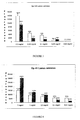
- the slides comprising semicarbazide groups according to the invention are stable after three months of storage under accelerated conditions.
- semicarbazide glass slides as prepared in Example 1 above were printed with antigens from different pathologies (HIV, hepatitis B: HBV and hepatitis C: HCV).
- the reference methods used are the Ac HIV Genscreen Plus® test from BIORAD and the Ac HIV Integral test from BEHRING. The positivity of these tests is confirmed by a Western Blot test.
- the reference methods used are the BIORAD HBs test and the BIORAD HBc test.
- the reference methods used are the HCV test from BIORAD and the HCV EIA 3.0 test from ABBOTT. Positivity is confirmed by a DECISCAN HCV PLUS® RIBA test.
- the slides were printed with the recombinant antigens of NS3 (0.5 mg / ml) and the whole gene (Lot 1: 0.5 mg / ml ).
- HBc (core) antigens 10 mg / ml and HBs Lot b at 5 mg / ml, as described above. in example 3.
- the slides were printed with antigens Gp120 (0.5 mg / ml) and Gp41 (2 mg / ml) as described herein. above Example 5.
- the sera were diluted 1/50 as described above.
- the slides were first incubated for 45 minutes with these sera and then for 45 minutes with the complementary fluorescent antibody.
- the RIBA test which is used to confirm the positivity of a serum against hepatitis C, was performed and found to be negative. These sera are therefore HCV negative because they do not have antibodies directed against the virus, so they have not been in contact with this virus.
- This example is intended to demonstrate that the implementation of the devices according to the invention makes it possible to fix a monoclonal antibody on a glass slide comprising semicarbazide groups (antigen directed against the surface antigen of the hepatitis B virus ) which is then contacted with a serum having this surface antigen; revealing using another rhodamine-labeled monoclonal antibody against hepatitis B surface antigen.
- This so-called “sandwich” technique makes it possible to detect circulating antigens in a serum.
- This technique has many potential applications, both in serodiagnosis and screening of biological molecules (search for active substances, toxic), by fixing a battery of known monoclonal antibodies and directed against these biological molecules.
- Each deposit is made 3 times, which makes a total of 27 deposits of monoclonal antibody solution on each slide.
- the revealing step is carried out with 100 ⁇ l of a murine monoclonal antibody anti-hepatitis B surface antigen (clone NF5 solution sold by the company Advanced Immuno Chemical at a concentration of 1.5 mg / ml), previously labeled with rhodamine and diluted 1/100 in a dilution solution (PBS-Tween 0.1% - semi-skimmed milk 5%).
- a murine monoclonal antibody anti-hepatitis B surface antigen (clone NF5 solution sold by the company Advanced Immuno Chemical at a concentration of 1.5 mg / ml)
- rhodamine previously labeled with rhodamine and diluted 1/100 in a dilution solution (PBS-Tween 0.1% - semi-skimmed milk 5%).
- the incubation is carried out for 60 minutes between slide and coverslip at 37 ° C. in a humid atmosphere.
- the slides are read by the Affymetrix scanner (Affymetrix 418 Array) at the power of P70, PMT90. Fluorescence quantification is performed using Sc analyses® software (Standford-University Software).
Landscapes
- Chemical & Material Sciences (AREA)
- Organic Chemistry (AREA)
- General Health & Medical Sciences (AREA)
- Molecular Biology (AREA)
- Health & Medical Sciences (AREA)
- Life Sciences & Earth Sciences (AREA)
- Biochemistry (AREA)
- Biophysics (AREA)
- Proteomics, Peptides & Aminoacids (AREA)
- Genetics & Genomics (AREA)
- Medicinal Chemistry (AREA)
- Analytical Chemistry (AREA)
- General Chemical & Material Sciences (AREA)
- Chemical Kinetics & Catalysis (AREA)
- Inorganic Chemistry (AREA)
- Peptides Or Proteins (AREA)
- Investigating Or Analysing Biological Materials (AREA)
- Investigating Or Analysing Materials By The Use Of Chemical Reactions (AREA)
- Preparation Of Compounds By Using Micro-Organisms (AREA)
Claims (13)
- Vorrichtung zur Präsentation von Polypeptiden, dadurch gekennzeichnet, dass sie wenigstens einen festen Träger, der durch Semicarbazidgruppierungen funktionalisiert ist, umfasst, an den die Polypeptide adsorbiert sind.
- Vorrichtung nach Anspruch 1, dadurch gekennzeichnet, dass die Polypeptide unter den Peptiden, die wenigstens zwei Aminosäuren umfassen, den Peptidomimetika, den Proteinen und den Proteinfragmenten ausgewählt sind.
- Vorrichtung nach Anspruch 1 oder 2, dadurch gekennzeichnet, dass der feste Träger ein organisches oder anorganisches Material ist, das aus Glas, Silicium und seinen Derivaten und synthetischen Polymeren ausgewählt ist.
- Verfahren zur Herstellung einer Vorrichtung zur Präsentation von Polypeptiden, wie sie in einem der Ansprüche 1 bis 3 definiert ist, dadurch gekennzeichnet, dass es die folgenden Stufen umfasst:- Funktionalisierung eines festen Trägers durch Semicarbazidgruppierungen und- Abscheidung von Polypeptiden in Form von Probenpunkten und ihre Adsorption auf dem so funktionalisierten Träger.
- Verfahren nach Anspruch 4, dadurch gekennzeichnet, dass die Funktionalisierung des Trägers umfasst:- Einführung einer Aminfunktion durch eine Silanisierungsreaktion des Trägers,- Transformation der Aminfunktion in eine Isocyanatfunktion,- Reaktion der Isocyanatfunktion mit einem Hydrazinderivat zur Bildung der Semicarbazidgruppierung.
- Verfahren nach Anspruch 4, dadurch gekennzeichnet, dass die Funktionalisierung des Trägers in einer einzigen Stufe durch Reaktion des Trägers mit einem Silan, das eine Semicarbazidgruppierung trägt, durchgeführt wird.
- Verfahren nach einem der Ansprüche 4 bis 6, dadurch gekennzeichnet, dass die Abscheidung der Polypeptide umfasst:- Herstellung von Polypeptidlösungen in einem Puffer mit einer Konzentration zwischen 10 mg/ml und 0,01 mg/ml;- ihre Verteilung in einem zu ihrer Entnahme geeigneten Behälter vom Typ Vertiefungen einer Mikrotiterplatte;- ihre Entnahme mit Hilfe einer manuellen Entnahmeapparatur oder einer automatischen Entnahmeapparatur, bspw. vom Spotter-Typ;- ihre Abscheidung auf dem Semicarbazidträger und ggf.- Sättigung des Trägers.
- Verwendung einer Vorrichtung zur Präsentation von Polypeptiden nach einem der Ansprüche 1 bis 3 als Polypeptid-Chips als Diagnosewerkzeug, das miniaturisiert und hoch parallel ist.
- Verwendung einer Vorrichtung zur Präsentation von Polypeptiden nach einem der Ansprüche 1 bis 3 als Polypeptid-Chips für die Detektion eines Risikos bei einer Transfusion oder einer Organspende.
- Verwendung einer Vorrichtung zur Präsentation von Polypeptiden nach einem der Ansprüche 1 bis 3 als Polypeptid-Chips für die Serumtypisierung oder das Screening von Epitopen.
- Verwendung nach einem der Ansprüche 8 bis 10, dadurch gekennzeichnet, dass sie Detektion von Antworten des Antigen-Antikörpertyps durch Verwendung von markierten Reagenzien, fluoreszierenden Reagenzien, radioaktiven Reagenzien oder chemisch markierten Reagenzien einsetzt.
- Verwendung einer Vorrichtung zur Präsentation von Polypeptiden nach einem der Ansprüche 1 bis 3 als Polypeptid-Chips für die quantitative Bestimmung von Proteinen in komplexen biologischen Medien.
- Verwendung einer Vorrichtung zur Präsentation von Polypeptiden nach einem der Ansprüche 1 bis 3 als Polypeptid-Chips zur Analyse von Ligand-Rezeptor-Beziehungen zwischen biologischen Peptidmolekülen.
Applications Claiming Priority (3)
| Application Number | Priority Date | Filing Date | Title |
|---|---|---|---|
| FR0206489A FR2840409B1 (fr) | 2002-05-28 | 2002-05-28 | Dispositif de presentation de peptides ou de proteines, son procede de preparation et ses utilisations |
| FR0206489 | 2002-05-28 | ||
| PCT/FR2003/001471 WO2003099855A1 (fr) | 2002-05-28 | 2003-05-15 | Dispositif de présentation de peptides ou de protéines, son procédé de préparation et ses utilisations. |
Publications (2)
| Publication Number | Publication Date |
|---|---|
| EP1507792A1 EP1507792A1 (de) | 2005-02-23 |
| EP1507792B1 true EP1507792B1 (de) | 2006-09-06 |
Family
ID=29558768
Family Applications (1)
| Application Number | Title | Priority Date | Filing Date |
|---|---|---|---|
| EP03755166A Expired - Lifetime EP1507792B1 (de) | 2002-05-28 | 2003-05-15 | Vorrichtung von peptid- oder proteindarstellung, verfahren zu deren herstellung und deren verwendung |
Country Status (9)
| Country | Link |
|---|---|
| US (1) | US20070243623A1 (de) |
| EP (1) | EP1507792B1 (de) |
| JP (1) | JP4414880B2 (de) |
| AT (1) | ATE338764T1 (de) |
| AU (1) | AU2003260546A1 (de) |
| CA (1) | CA2487483C (de) |
| DE (1) | DE60308176T2 (de) |
| FR (1) | FR2840409B1 (de) |
| WO (1) | WO2003099855A1 (de) |
Families Citing this family (3)
| Publication number | Priority date | Publication date | Assignee | Title |
|---|---|---|---|---|
| US20070243632A1 (en) * | 2003-07-08 | 2007-10-18 | Coller Barry S | Methods for measuring platelet reactivity of patients that have received drug eluting stents |
| JP5469313B2 (ja) * | 2008-03-26 | 2014-04-16 | 大阪瓦斯株式会社 | フルオレン骨格を有するケイ素化合物 |
| CN115963260B (zh) * | 2022-06-27 | 2025-05-23 | 珠海碳云晶芯智能科技有限公司 | 多肽芯片及其在艾滋病诊断产品制备中的应用 |
Family Cites Families (4)
| Publication number | Priority date | Publication date | Assignee | Title |
|---|---|---|---|---|
| US5856571A (en) * | 1995-06-07 | 1999-01-05 | Cellpro, Incorporated | Semicarbazide-containing linker compounds for formation of stably-linked conjugates and methods related thereto |
| EP1169649A2 (de) * | 1999-04-15 | 2002-01-09 | The Board Of Trustees Of The Leland Stanford Junior University | Mikromatrizen für polypeptiden |
| FR2801904B1 (fr) * | 1999-12-07 | 2002-02-08 | Pasteur Institut | Produits comprenant un support sur lequel sont fixes des acides nucleiques et leur utilisation comme puce a adn |
| FR2825095B1 (fr) * | 2001-05-28 | 2003-09-26 | Dev Des Antigenes Combinatoire | Dispositif de presentation de polypeptides, utilisable comme "puce" pour la detection miniaturisee de molecules |
-
2002
- 2002-05-28 FR FR0206489A patent/FR2840409B1/fr not_active Expired - Fee Related
-
2003
- 2003-05-15 AU AU2003260546A patent/AU2003260546A1/en not_active Abandoned
- 2003-05-15 DE DE60308176T patent/DE60308176T2/de not_active Expired - Lifetime
- 2003-05-15 JP JP2004508110A patent/JP4414880B2/ja not_active Expired - Fee Related
- 2003-05-15 AT AT03755166T patent/ATE338764T1/de not_active IP Right Cessation
- 2003-05-15 CA CA2487483A patent/CA2487483C/fr not_active Expired - Fee Related
- 2003-05-15 WO PCT/FR2003/001471 patent/WO2003099855A1/fr not_active Ceased
- 2003-05-15 US US10/515,190 patent/US20070243623A1/en not_active Abandoned
- 2003-05-15 EP EP03755166A patent/EP1507792B1/de not_active Expired - Lifetime
Also Published As
| Publication number | Publication date |
|---|---|
| FR2840409A1 (fr) | 2003-12-05 |
| JP2006501439A (ja) | 2006-01-12 |
| FR2840409B1 (fr) | 2004-08-27 |
| AU2003260546A1 (en) | 2003-12-12 |
| EP1507792A1 (de) | 2005-02-23 |
| JP4414880B2 (ja) | 2010-02-10 |
| ATE338764T1 (de) | 2006-09-15 |
| CA2487483A1 (fr) | 2003-12-04 |
| DE60308176T2 (de) | 2007-08-23 |
| CA2487483C (fr) | 2012-03-13 |
| US20070243623A1 (en) | 2007-10-18 |
| WO2003099855A1 (fr) | 2003-12-04 |
| AU2003260546A8 (en) | 2003-12-12 |
| DE60308176D1 (de) | 2006-10-19 |
Similar Documents
| Publication | Publication Date | Title |
|---|---|---|
| CN1178063C (zh) | 测定多种被分析物的固态元件的生产方法和应用、及包括该元件的系统 | |
| US20100249375A1 (en) | Immobilizing molecules on a solid support | |
| EP0874242B2 (de) | Vorrichtung und Apparat zur gleichzeitigen Detektion von mehreren Analyten | |
| US8404621B2 (en) | Method for immobilization, physiologically active substance-immobilized carrier, carrier for immobilization, carrier, and process for producing carrier | |
| KR100377946B1 (ko) | 덴드리머를 이용한 단분자막의 제조방법 | |
| JP5388462B2 (ja) | 担体及びその製造方法 | |
| JP2009139366A (ja) | 生体分子固定化のための方法 | |
| EP1507792B1 (de) | Vorrichtung von peptid- oder proteindarstellung, verfahren zu deren herstellung und deren verwendung | |
| EP3126832A1 (de) | Steuerungsmittel zur implementierung von mehereren analyseverfahren | |
| EP1563304B1 (de) | Verfahren zur fixierung eines proteins auf einem pyrrolpolymerisat, und dessen verwendung zur herstellung eines sensors | |
| JP5344835B2 (ja) | 固定化方法、生理活性物質固定化担体及び固定用担体 | |
| US7537934B2 (en) | Chemiluminescence sensor array | |
| CN107255713B (zh) | 可用于诊断人肠道病毒感染的试剂盒 | |
| US20100137155A1 (en) | Biosensor, method for fabricating the same, detecting method utilizing the same | |
| CN110832323A (zh) | 用于检测样品中的生物治疗物质的聚集体的方法 | |
| EP1390751B1 (de) | Vorrichtung zur polypeptidpräsentation, verwendbar als sensorchip zur miniaturisierten detektion von molekülen | |
| JP4352849B2 (ja) | プラスチックの表面処理方法、プラスチック基板およびプラスチック製バイオチップ | |
| JPH052940B2 (de) | ||
| CN103788195B (zh) | 多肽、包含该多肽的检测器件和检测试剂盒 | |
| JP4370874B2 (ja) | マイクロアレイ用基板 | |
| US20210373003A1 (en) | Irreversible and covalent method for immobilizing glycoprotein | |
| CN103788197B (zh) | 多肽、包含该多肽的检测器件和检测试剂盒 | |
| JPH09292397A (ja) | バイオセンサ、キット、生体物質の分析方法及びバイオセンサの製造方法 | |
| FR2847983A1 (fr) | Dispositif miniature de detection electrique d'interactions de type ligand-recepteur, preparation et utilisations. | |
| JP2004061328A (ja) | 検出素子 |
Legal Events
| Date | Code | Title | Description |
|---|---|---|---|
| PUAI | Public reference made under article 153(3) epc to a published international application that has entered the european phase |
Free format text: ORIGINAL CODE: 0009012 |
|
| 17P | Request for examination filed |
Effective date: 20041210 |
|
| AK | Designated contracting states |
Kind code of ref document: A1 Designated state(s): AT BE BG CH CY CZ DE DK EE ES FI FR GB GR HU IE IT LI LU MC NL PT RO SE SI SK TR |
|
| AX | Request for extension of the european patent |
Extension state: AL LT LV MK |
|
| 17Q | First examination report despatched |
Effective date: 20050622 |
|
| DAX | Request for extension of the european patent (deleted) | ||
| GRAP | Despatch of communication of intention to grant a patent |
Free format text: ORIGINAL CODE: EPIDOSNIGR1 |
|
| GRAS | Grant fee paid |
Free format text: ORIGINAL CODE: EPIDOSNIGR3 |
|
| RAP1 | Party data changed (applicant data changed or rights of an application transferred) |
Owner name: CENTRE NATIONAL DE LA RECHERCHE SCIENTIFIQUE Owner name: UNIVERSITE DE LILLE 2 Owner name: SEDAC THERAPEUTICS |
|
| GRAA | (expected) grant |
Free format text: ORIGINAL CODE: 0009210 |
|
| AK | Designated contracting states |
Kind code of ref document: B1 Designated state(s): AT BE BG CH CY CZ DE DK EE ES FI FR GB GR HU IE IT LI LU MC NL PT RO SE SI SK TR |
|
| PG25 | Lapsed in a contracting state [announced via postgrant information from national office to epo] |
Ref country code: IT Free format text: LAPSE BECAUSE OF FAILURE TO SUBMIT A TRANSLATION OF THE DESCRIPTION OR TO PAY THE FEE WITHIN THE PRESCRIBED TIME-LIMIT;WARNING: LAPSES OF ITALIAN PATENTS WITH EFFECTIVE DATE BEFORE 2007 MAY HAVE OCCURRED AT ANY TIME BEFORE 2007. THE CORRECT EFFECTIVE DATE MAY BE DIFFERENT FROM THE ONE RECORDED. Effective date: 20060906 Ref country code: FI Free format text: LAPSE BECAUSE OF FAILURE TO SUBMIT A TRANSLATION OF THE DESCRIPTION OR TO PAY THE FEE WITHIN THE PRESCRIBED TIME-LIMIT Effective date: 20060906 Ref country code: IE Free format text: LAPSE BECAUSE OF FAILURE TO SUBMIT A TRANSLATION OF THE DESCRIPTION OR TO PAY THE FEE WITHIN THE PRESCRIBED TIME-LIMIT Effective date: 20060906 Ref country code: NL Free format text: LAPSE BECAUSE OF FAILURE TO SUBMIT A TRANSLATION OF THE DESCRIPTION OR TO PAY THE FEE WITHIN THE PRESCRIBED TIME-LIMIT Effective date: 20060906 Ref country code: CZ Free format text: LAPSE BECAUSE OF FAILURE TO SUBMIT A TRANSLATION OF THE DESCRIPTION OR TO PAY THE FEE WITHIN THE PRESCRIBED TIME-LIMIT Effective date: 20060906 Ref country code: SK Free format text: LAPSE BECAUSE OF FAILURE TO SUBMIT A TRANSLATION OF THE DESCRIPTION OR TO PAY THE FEE WITHIN THE PRESCRIBED TIME-LIMIT Effective date: 20060906 Ref country code: RO Free format text: LAPSE BECAUSE OF FAILURE TO SUBMIT A TRANSLATION OF THE DESCRIPTION OR TO PAY THE FEE WITHIN THE PRESCRIBED TIME-LIMIT Effective date: 20060906 Ref country code: SI Free format text: LAPSE BECAUSE OF FAILURE TO SUBMIT A TRANSLATION OF THE DESCRIPTION OR TO PAY THE FEE WITHIN THE PRESCRIBED TIME-LIMIT Effective date: 20060906 Ref country code: AT Free format text: LAPSE BECAUSE OF FAILURE TO SUBMIT A TRANSLATION OF THE DESCRIPTION OR TO PAY THE FEE WITHIN THE PRESCRIBED TIME-LIMIT Effective date: 20060906 |
|
| REG | Reference to a national code |
Ref country code: GB Ref legal event code: FG4D Free format text: NOT ENGLISH |
|
| RAP2 | Party data changed (patent owner data changed or rights of a patent transferred) |
Owner name: UNIVERSITE DE LILLE 2 Owner name: CENTRE NATIONAL DE LA RECHERCHE SCIENTIFIQUE |
|
| REG | Reference to a national code |
Ref country code: CH Ref legal event code: EP |
|
| REG | Reference to a national code |
Ref country code: IE Ref legal event code: FG4D Free format text: LANGUAGE OF EP DOCUMENT: FRENCH |
|
| REF | Corresponds to: |
Ref document number: 60308176 Country of ref document: DE Date of ref document: 20061019 Kind code of ref document: P |
|
| NLT2 | Nl: modifications (of names), taken from the european patent patent bulletin |
Owner name: CENTRE NATIONAL DE LA RECHERCHE SCIENTIFIQUE EN UN Effective date: 20060920 |
|
| PG25 | Lapsed in a contracting state [announced via postgrant information from national office to epo] |
Ref country code: DK Free format text: LAPSE BECAUSE OF FAILURE TO SUBMIT A TRANSLATION OF THE DESCRIPTION OR TO PAY THE FEE WITHIN THE PRESCRIBED TIME-LIMIT Effective date: 20061206 Ref country code: BG Free format text: LAPSE BECAUSE OF FAILURE TO SUBMIT A TRANSLATION OF THE DESCRIPTION OR TO PAY THE FEE WITHIN THE PRESCRIBED TIME-LIMIT Effective date: 20061206 Ref country code: SE Free format text: LAPSE BECAUSE OF FAILURE TO SUBMIT A TRANSLATION OF THE DESCRIPTION OR TO PAY THE FEE WITHIN THE PRESCRIBED TIME-LIMIT Effective date: 20061206 |
|
| PG25 | Lapsed in a contracting state [announced via postgrant information from national office to epo] |
Ref country code: ES Free format text: LAPSE BECAUSE OF FAILURE TO SUBMIT A TRANSLATION OF THE DESCRIPTION OR TO PAY THE FEE WITHIN THE PRESCRIBED TIME-LIMIT Effective date: 20061217 |
|
| GBT | Gb: translation of ep patent filed (gb section 77(6)(a)/1977) |
Effective date: 20061127 |
|
| PG25 | Lapsed in a contracting state [announced via postgrant information from national office to epo] |
Ref country code: PT Free format text: LAPSE BECAUSE OF FAILURE TO SUBMIT A TRANSLATION OF THE DESCRIPTION OR TO PAY THE FEE WITHIN THE PRESCRIBED TIME-LIMIT Effective date: 20070219 |
|
| REG | Reference to a national code |
Ref country code: CH Ref legal event code: NV Representative=s name: ISLER & PEDRAZZINI AG |
|
| NLV1 | Nl: lapsed or annulled due to failure to fulfill the requirements of art. 29p and 29m of the patents act | ||
| REG | Reference to a national code |
Ref country code: IE Ref legal event code: FD4D |
|
| PLBE | No opposition filed within time limit |
Free format text: ORIGINAL CODE: 0009261 |
|
| STAA | Information on the status of an ep patent application or granted ep patent |
Free format text: STATUS: NO OPPOSITION FILED WITHIN TIME LIMIT |
|
| 26N | No opposition filed |
Effective date: 20070607 |
|
| REG | Reference to a national code |
Ref country code: CH Ref legal event code: PCAR Free format text: ISLER & PEDRAZZINI AG;POSTFACH 1772;8027 ZUERICH (CH) |
|
| BERE | Be: lapsed |
Owner name: CENTRE NATIONAL DE LA RECHERCHE SCIENTIFIQUE Effective date: 20070531 Owner name: UNIVERSITE DE LILLE 2 Effective date: 20070531 |
|
| PG25 | Lapsed in a contracting state [announced via postgrant information from national office to epo] |
Ref country code: MC Free format text: LAPSE BECAUSE OF NON-PAYMENT OF DUE FEES Effective date: 20070531 |
|
| PG25 | Lapsed in a contracting state [announced via postgrant information from national office to epo] |
Ref country code: BE Free format text: LAPSE BECAUSE OF NON-PAYMENT OF DUE FEES Effective date: 20070531 |
|
| PG25 | Lapsed in a contracting state [announced via postgrant information from national office to epo] |
Ref country code: GR Free format text: LAPSE BECAUSE OF FAILURE TO SUBMIT A TRANSLATION OF THE DESCRIPTION OR TO PAY THE FEE WITHIN THE PRESCRIBED TIME-LIMIT Effective date: 20061207 |
|
| PG25 | Lapsed in a contracting state [announced via postgrant information from national office to epo] |
Ref country code: EE Free format text: LAPSE BECAUSE OF FAILURE TO SUBMIT A TRANSLATION OF THE DESCRIPTION OR TO PAY THE FEE WITHIN THE PRESCRIBED TIME-LIMIT Effective date: 20060906 |
|
| PG25 | Lapsed in a contracting state [announced via postgrant information from national office to epo] |
Ref country code: CY Free format text: LAPSE BECAUSE OF FAILURE TO SUBMIT A TRANSLATION OF THE DESCRIPTION OR TO PAY THE FEE WITHIN THE PRESCRIBED TIME-LIMIT Effective date: 20060906 Ref country code: LU Free format text: LAPSE BECAUSE OF NON-PAYMENT OF DUE FEES Effective date: 20070515 |
|
| PG25 | Lapsed in a contracting state [announced via postgrant information from national office to epo] |
Ref country code: HU Free format text: LAPSE BECAUSE OF FAILURE TO SUBMIT A TRANSLATION OF THE DESCRIPTION OR TO PAY THE FEE WITHIN THE PRESCRIBED TIME-LIMIT Effective date: 20070307 Ref country code: TR Free format text: LAPSE BECAUSE OF FAILURE TO SUBMIT A TRANSLATION OF THE DESCRIPTION OR TO PAY THE FEE WITHIN THE PRESCRIBED TIME-LIMIT Effective date: 20060906 |
|
| PGFP | Annual fee paid to national office [announced via postgrant information from national office to epo] |
Ref country code: DE Payment date: 20120524 Year of fee payment: 10 Ref country code: CH Payment date: 20120525 Year of fee payment: 10 |
|
| PGFP | Annual fee paid to national office [announced via postgrant information from national office to epo] |
Ref country code: FR Payment date: 20120625 Year of fee payment: 10 Ref country code: GB Payment date: 20120525 Year of fee payment: 10 |
|
| REG | Reference to a national code |
Ref country code: CH Ref legal event code: PL |
|
| GBPC | Gb: european patent ceased through non-payment of renewal fee |
Effective date: 20130515 |
|
| PG25 | Lapsed in a contracting state [announced via postgrant information from national office to epo] |
Ref country code: LI Free format text: LAPSE BECAUSE OF NON-PAYMENT OF DUE FEES Effective date: 20130531 Ref country code: DE Free format text: LAPSE BECAUSE OF NON-PAYMENT OF DUE FEES Effective date: 20131203 Ref country code: CH Free format text: LAPSE BECAUSE OF NON-PAYMENT OF DUE FEES Effective date: 20130531 |
|
| REG | Reference to a national code |
Ref country code: DE Ref legal event code: R119 Ref document number: 60308176 Country of ref document: DE Effective date: 20131203 |
|
| REG | Reference to a national code |
Ref country code: FR Ref legal event code: ST Effective date: 20140131 |
|
| PG25 | Lapsed in a contracting state [announced via postgrant information from national office to epo] |
Ref country code: GB Free format text: LAPSE BECAUSE OF NON-PAYMENT OF DUE FEES Effective date: 20130515 |
|
| PG25 | Lapsed in a contracting state [announced via postgrant information from national office to epo] |
Ref country code: FR Free format text: LAPSE BECAUSE OF NON-PAYMENT OF DUE FEES Effective date: 20130531 |