EP1537062B1 - Hydrogenation selective des acetylenes - Google Patents
Hydrogenation selective des acetylenes Download PDFInfo
- Publication number
- EP1537062B1 EP1537062B1 EP03737041.8A EP03737041A EP1537062B1 EP 1537062 B1 EP1537062 B1 EP 1537062B1 EP 03737041 A EP03737041 A EP 03737041A EP 1537062 B1 EP1537062 B1 EP 1537062B1
- Authority
- EP
- European Patent Office
- Prior art keywords
- catalyst
- process according
- reaction zone
- hydrogenation
- hydrogen
- Prior art date
- Legal status (The legal status is an assumption and is not a legal conclusion. Google has not performed a legal analysis and makes no representation as to the accuracy of the status listed.)
- Expired - Lifetime
Links
- 238000005984 hydrogenation reaction Methods 0.000 title claims description 102
- 125000002534 ethynyl group Chemical class [H]C#C* 0.000 title description 28
- 239000003054 catalyst Substances 0.000 claims description 281
- PXHVJJICTQNCMI-UHFFFAOYSA-N Nickel Chemical compound [Ni] PXHVJJICTQNCMI-UHFFFAOYSA-N 0.000 claims description 134
- KAKZBPTYRLMSJV-UHFFFAOYSA-N Butadiene Chemical compound C=CC=C KAKZBPTYRLMSJV-UHFFFAOYSA-N 0.000 claims description 103
- 238000006555 catalytic reaction Methods 0.000 claims description 83
- 229910052763 palladium Inorganic materials 0.000 claims description 59
- 238000000034 method Methods 0.000 claims description 52
- 150000001875 compounds Chemical class 0.000 claims description 49
- 229910052759 nickel Inorganic materials 0.000 claims description 46
- 239000010949 copper Substances 0.000 claims description 44
- UFHFLCQGNIYNRP-UHFFFAOYSA-N Hydrogen Chemical compound [H][H] UFHFLCQGNIYNRP-UHFFFAOYSA-N 0.000 claims description 42
- 230000008569 process Effects 0.000 claims description 42
- 229910052739 hydrogen Inorganic materials 0.000 claims description 40
- 239000001257 hydrogen Substances 0.000 claims description 40
- 229910052802 copper Inorganic materials 0.000 claims description 37
- 229910052751 metal Inorganic materials 0.000 claims description 36
- 239000002184 metal Substances 0.000 claims description 36
- 238000006243 chemical reaction Methods 0.000 claims description 35
- PNEYBMLMFCGWSK-UHFFFAOYSA-N aluminium oxide Inorganic materials [O-2].[O-2].[O-2].[Al+3].[Al+3] PNEYBMLMFCGWSK-UHFFFAOYSA-N 0.000 claims description 32
- 229930195733 hydrocarbon Natural products 0.000 claims description 31
- 150000002430 hydrocarbons Chemical class 0.000 claims description 31
- RYGMFSIKBFXOCR-UHFFFAOYSA-N Copper Chemical compound [Cu] RYGMFSIKBFXOCR-UHFFFAOYSA-N 0.000 claims description 30
- 150000001336 alkenes Chemical class 0.000 claims description 26
- 239000004215 Carbon black (E152) Substances 0.000 claims description 21
- 239000000203 mixture Substances 0.000 claims description 20
- 229910052709 silver Inorganic materials 0.000 claims description 17
- 239000011148 porous material Substances 0.000 claims description 14
- 239000011701 zinc Substances 0.000 claims description 14
- 150000002739 metals Chemical group 0.000 claims description 13
- 229910052725 zinc Inorganic materials 0.000 claims description 11
- 230000000694 effects Effects 0.000 claims description 8
- BQCADISMDOOEFD-UHFFFAOYSA-N Silver Chemical compound [Ag] BQCADISMDOOEFD-UHFFFAOYSA-N 0.000 claims description 7
- 239000010931 gold Substances 0.000 claims description 7
- 239000004332 silver Substances 0.000 claims description 7
- 229910052737 gold Inorganic materials 0.000 claims description 6
- HCHKCACWOHOZIP-UHFFFAOYSA-N Zinc Chemical compound [Zn] HCHKCACWOHOZIP-UHFFFAOYSA-N 0.000 claims description 5
- 229910052797 bismuth Inorganic materials 0.000 claims description 5
- PCHJSUWPFVWCPO-UHFFFAOYSA-N gold Chemical compound [Au] PCHJSUWPFVWCPO-UHFFFAOYSA-N 0.000 claims description 4
- 229910052750 molybdenum Inorganic materials 0.000 claims description 4
- 229910052702 rhenium Inorganic materials 0.000 claims description 4
- KDLHZDBZIXYQEI-UHFFFAOYSA-N palladium Substances [Pd] KDLHZDBZIXYQEI-UHFFFAOYSA-N 0.000 description 130
- 239000012535 impurity Substances 0.000 description 37
- KDKYADYSIPSCCQ-UHFFFAOYSA-N but-1-yne Chemical group CCC#C KDKYADYSIPSCCQ-UHFFFAOYSA-N 0.000 description 30
- 239000000047 product Substances 0.000 description 26
- WFYPICNXBKQZGB-UHFFFAOYSA-N butenyne Chemical group C=CC#C WFYPICNXBKQZGB-UHFFFAOYSA-N 0.000 description 22
- 230000003197 catalytic effect Effects 0.000 description 18
- 150000001993 dienes Chemical class 0.000 description 18
- 238000011084 recovery Methods 0.000 description 18
- 229910007568 Zn—Ag Inorganic materials 0.000 description 17
- 238000004821 distillation Methods 0.000 description 13
- SQGYOTSLMSWVJD-UHFFFAOYSA-N silver(1+) nitrate Chemical class [Ag+].[O-]N(=O)=O SQGYOTSLMSWVJD-UHFFFAOYSA-N 0.000 description 13
- MWWATHDPGQKSAR-UHFFFAOYSA-N propyne Chemical group CC#C MWWATHDPGQKSAR-UHFFFAOYSA-N 0.000 description 12
- 239000002904 solvent Substances 0.000 description 12
- RRHGJUQNOFWUDK-UHFFFAOYSA-N Isoprene Chemical compound CC(=C)C=C RRHGJUQNOFWUDK-UHFFFAOYSA-N 0.000 description 10
- 238000004519 manufacturing process Methods 0.000 description 10
- 230000009977 dual effect Effects 0.000 description 9
- 238000005470 impregnation Methods 0.000 description 9
- 239000000463 material Substances 0.000 description 8
- 239000011259 mixed solution Substances 0.000 description 8
- 229910045601 alloy Inorganic materials 0.000 description 7
- 239000000956 alloy Substances 0.000 description 7
- HSFWRNGVRCDJHI-UHFFFAOYSA-N alpha-acetylene Natural products C#C HSFWRNGVRCDJHI-UHFFFAOYSA-N 0.000 description 7
- -1 ethylene, propylene, butadiene Chemical class 0.000 description 7
- 239000007789 gas Substances 0.000 description 7
- JRZJOMJEPLMPRA-UHFFFAOYSA-N olefin Natural products CCCCCCCC=C JRZJOMJEPLMPRA-UHFFFAOYSA-N 0.000 description 7
- 239000012071 phase Substances 0.000 description 7
- BASFCYQUMIYNBI-UHFFFAOYSA-N platinum Substances [Pt] BASFCYQUMIYNBI-UHFFFAOYSA-N 0.000 description 7
- UHOVQNZJYSORNB-UHFFFAOYSA-N Benzene Chemical compound C1=CC=CC=C1 UHOVQNZJYSORNB-UHFFFAOYSA-N 0.000 description 6
- 229910002651 NO3 Inorganic materials 0.000 description 6
- 238000001354 calcination Methods 0.000 description 6
- 238000002474 experimental method Methods 0.000 description 6
- 239000007791 liquid phase Substances 0.000 description 6
- 229920000642 polymer Polymers 0.000 description 6
- 229910000564 Raney nickel Inorganic materials 0.000 description 5
- VYPSYNLAJGMNEJ-UHFFFAOYSA-N Silicium dioxide Chemical compound O=[Si]=O VYPSYNLAJGMNEJ-UHFFFAOYSA-N 0.000 description 5
- NINIDFKCEFEMDL-UHFFFAOYSA-N Sulfur Chemical compound [S] NINIDFKCEFEMDL-UHFFFAOYSA-N 0.000 description 5
- 239000007788 liquid Substances 0.000 description 5
- GPNDARIEYHPYAY-UHFFFAOYSA-N palladium(ii) nitrate Chemical compound [Pd+2].[O-][N+]([O-])=O.[O-][N+]([O-])=O GPNDARIEYHPYAY-UHFFFAOYSA-N 0.000 description 5
- 239000000243 solution Substances 0.000 description 5
- 229910052717 sulfur Inorganic materials 0.000 description 5
- 239000011593 sulfur Substances 0.000 description 5
- XLYOFNOQVPJJNP-UHFFFAOYSA-N water Substances O XLYOFNOQVPJJNP-UHFFFAOYSA-N 0.000 description 5
- IJGRMHOSHXDMSA-UHFFFAOYSA-N Atomic nitrogen Chemical compound N#N IJGRMHOSHXDMSA-UHFFFAOYSA-N 0.000 description 4
- 239000007868 Raney catalyst Substances 0.000 description 4
- PPBRXRYQALVLMV-UHFFFAOYSA-N Styrene Chemical compound C=CC1=CC=CC=C1 PPBRXRYQALVLMV-UHFFFAOYSA-N 0.000 description 4
- 230000004913 activation Effects 0.000 description 4
- 230000008901 benefit Effects 0.000 description 4
- 238000007664 blowing Methods 0.000 description 4
- 239000003575 carbonaceous material Substances 0.000 description 4
- 238000000151 deposition Methods 0.000 description 4
- 239000011521 glass Substances 0.000 description 4
- 238000011068 loading method Methods 0.000 description 4
- 229910052697 platinum Inorganic materials 0.000 description 4
- 238000000746 purification Methods 0.000 description 4
- 125000000383 tetramethylene group Chemical group [H]C([H])([*:1])C([H])([H])C([H])([H])C([H])([H])[*:2] 0.000 description 4
- BOFLDKIFLIFLJA-UHFFFAOYSA-N 2-methylbut-1-en-3-yne Chemical compound CC(=C)C#C BOFLDKIFLIFLJA-UHFFFAOYSA-N 0.000 description 3
- OKKJLVBELUTLKV-UHFFFAOYSA-N Methanol Chemical compound OC OKKJLVBELUTLKV-UHFFFAOYSA-N 0.000 description 3
- ZMXDDKWLCZADIW-UHFFFAOYSA-N N,N-Dimethylformamide Chemical compound CN(C)C=O ZMXDDKWLCZADIW-UHFFFAOYSA-N 0.000 description 3
- YXFVVABEGXRONW-UHFFFAOYSA-N Toluene Chemical compound CC1=CC=CC=C1 YXFVVABEGXRONW-UHFFFAOYSA-N 0.000 description 3
- IYABWNGZIDDRAK-UHFFFAOYSA-N allene Chemical compound C=C=C IYABWNGZIDDRAK-UHFFFAOYSA-N 0.000 description 3
- QNRMTGGDHLBXQZ-UHFFFAOYSA-N buta-1,2-diene Chemical compound CC=C=C QNRMTGGDHLBXQZ-UHFFFAOYSA-N 0.000 description 3
- 238000009903 catalytic hydrogenation reaction Methods 0.000 description 3
- 239000007795 chemical reaction product Substances 0.000 description 3
- 229910017052 cobalt Inorganic materials 0.000 description 3
- 239000010941 cobalt Substances 0.000 description 3
- GUTLYIVDDKVIGB-UHFFFAOYSA-N cobalt atom Chemical compound [Co] GUTLYIVDDKVIGB-UHFFFAOYSA-N 0.000 description 3
- 230000001186 cumulative effect Effects 0.000 description 3
- 238000000895 extractive distillation Methods 0.000 description 3
- 150000002431 hydrogen Chemical class 0.000 description 3
- 229910052745 lead Inorganic materials 0.000 description 3
- 230000005012 migration Effects 0.000 description 3
- 238000013508 migration Methods 0.000 description 3
- 231100000614 poison Toxicity 0.000 description 3
- 230000007096 poisonous effect Effects 0.000 description 3
- 238000006116 polymerization reaction Methods 0.000 description 3
- 239000012266 salt solution Substances 0.000 description 3
- 239000002002 slurry Substances 0.000 description 3
- 238000001179 sorption measurement Methods 0.000 description 3
- XNMQEEKYCVKGBD-UHFFFAOYSA-N 2-butyne Chemical group CC#CC XNMQEEKYCVKGBD-UHFFFAOYSA-N 0.000 description 2
- QGZKDVFQNNGYKY-UHFFFAOYSA-N Ammonia Chemical compound N QGZKDVFQNNGYKY-UHFFFAOYSA-N 0.000 description 2
- VTYYLEPIZMXCLO-UHFFFAOYSA-L Calcium carbonate Chemical compound [Ca+2].[O-]C([O-])=O VTYYLEPIZMXCLO-UHFFFAOYSA-L 0.000 description 2
- XDTMQSROBMDMFD-UHFFFAOYSA-N Cyclohexane Chemical compound C1CCCCC1 XDTMQSROBMDMFD-UHFFFAOYSA-N 0.000 description 2
- 102000002322 Egg Proteins Human genes 0.000 description 2
- 108010000912 Egg Proteins Proteins 0.000 description 2
- UEXCJVNBTNXOEH-UHFFFAOYSA-N Ethynylbenzene Chemical group C#CC1=CC=CC=C1 UEXCJVNBTNXOEH-UHFFFAOYSA-N 0.000 description 2
- OAKJQQAXSVQMHS-UHFFFAOYSA-N Hydrazine Chemical compound NN OAKJQQAXSVQMHS-UHFFFAOYSA-N 0.000 description 2
- 229910018054 Ni-Cu Inorganic materials 0.000 description 2
- GRYLNZFGIOXLOG-UHFFFAOYSA-N Nitric acid Chemical compound O[N+]([O-])=O GRYLNZFGIOXLOG-UHFFFAOYSA-N 0.000 description 2
- 229910018481 Ni—Cu Inorganic materials 0.000 description 2
- WYURNTSHIVDZCO-UHFFFAOYSA-N Tetrahydrofuran Chemical compound C1CCOC1 WYURNTSHIVDZCO-UHFFFAOYSA-N 0.000 description 2
- TZCXTZWJZNENPQ-UHFFFAOYSA-L barium sulfate Chemical compound [Ba+2].[O-]S([O-])(=O)=O TZCXTZWJZNENPQ-UHFFFAOYSA-L 0.000 description 2
- 238000009835 boiling Methods 0.000 description 2
- 239000001273 butane Substances 0.000 description 2
- 239000003638 chemical reducing agent Substances 0.000 description 2
- 229910052593 corundum Inorganic materials 0.000 description 2
- 239000012043 crude product Substances 0.000 description 2
- 238000001035 drying Methods 0.000 description 2
- 210000003278 egg shell Anatomy 0.000 description 2
- 239000012467 final product Substances 0.000 description 2
- HYBBIBNJHNGZAN-UHFFFAOYSA-N furfural Chemical compound O=CC1=CC=CO1 HYBBIBNJHNGZAN-UHFFFAOYSA-N 0.000 description 2
- 229910052732 germanium Inorganic materials 0.000 description 2
- 229910001385 heavy metal Inorganic materials 0.000 description 2
- QWTDNUCVQCZILF-UHFFFAOYSA-N isopentane Chemical compound CCC(C)C QWTDNUCVQCZILF-UHFFFAOYSA-N 0.000 description 2
- 229910044991 metal oxide Inorganic materials 0.000 description 2
- 150000004706 metal oxides Chemical class 0.000 description 2
- UAEPNZWRGJTJPN-UHFFFAOYSA-N methylcyclohexane Chemical compound CC1CCCCC1 UAEPNZWRGJTJPN-UHFFFAOYSA-N 0.000 description 2
- 238000002156 mixing Methods 0.000 description 2
- 150000005673 monoalkenes Chemical class 0.000 description 2
- IJDNQMDRQITEOD-UHFFFAOYSA-N n-butane Chemical compound CCCC IJDNQMDRQITEOD-UHFFFAOYSA-N 0.000 description 2
- OFBQJSOFQDEBGM-UHFFFAOYSA-N n-pentane Natural products CCCCC OFBQJSOFQDEBGM-UHFFFAOYSA-N 0.000 description 2
- 229910017604 nitric acid Inorganic materials 0.000 description 2
- 229910052757 nitrogen Inorganic materials 0.000 description 2
- 229910000510 noble metal Inorganic materials 0.000 description 2
- 238000012856 packing Methods 0.000 description 2
- 230000000704 physical effect Effects 0.000 description 2
- 230000000607 poisoning effect Effects 0.000 description 2
- 239000002244 precipitate Substances 0.000 description 2
- QQONPFPTGQHPMA-UHFFFAOYSA-N propylene Natural products CC=C QQONPFPTGQHPMA-UHFFFAOYSA-N 0.000 description 2
- 125000004805 propylene group Chemical group [H]C([H])([H])C([H])([*:1])C([H])([H])[*:2] 0.000 description 2
- 239000010948 rhodium Substances 0.000 description 2
- MHOVAHRLVXNVSD-UHFFFAOYSA-N rhodium atom Chemical compound [Rh] MHOVAHRLVXNVSD-UHFFFAOYSA-N 0.000 description 2
- 239000000377 silicon dioxide Substances 0.000 description 2
- 239000007921 spray Substances 0.000 description 2
- 229940065278 sulfur compound Drugs 0.000 description 2
- 150000003464 sulfur compounds Chemical class 0.000 description 2
- 229910052718 tin Inorganic materials 0.000 description 2
- 238000005406 washing Methods 0.000 description 2
- 229910001845 yogo sapphire Inorganic materials 0.000 description 2
- ONDPHDOFVYQSGI-UHFFFAOYSA-N zinc nitrate Inorganic materials [Zn+2].[O-][N+]([O-])=O.[O-][N+]([O-])=O ONDPHDOFVYQSGI-UHFFFAOYSA-N 0.000 description 2
- UGFAIRIUMAVXCW-UHFFFAOYSA-N Carbon monoxide Chemical compound [O+]#[C-] UGFAIRIUMAVXCW-UHFFFAOYSA-N 0.000 description 1
- 229910017770 Cu—Ag Inorganic materials 0.000 description 1
- RWSOTUBLDIXVET-UHFFFAOYSA-N Dihydrogen sulfide Chemical class S RWSOTUBLDIXVET-UHFFFAOYSA-N 0.000 description 1
- VGGSQFUCUMXWEO-UHFFFAOYSA-N Ethene Chemical compound C=C VGGSQFUCUMXWEO-UHFFFAOYSA-N 0.000 description 1
- 239000005977 Ethylene Substances 0.000 description 1
- 101100010166 Mus musculus Dok3 gene Proteins 0.000 description 1
- FXHOOIRPVKKKFG-UHFFFAOYSA-N N,N-Dimethylacetamide Chemical compound CN(C)C(C)=O FXHOOIRPVKKKFG-UHFFFAOYSA-N 0.000 description 1
- SECXISVLQFMRJM-UHFFFAOYSA-N N-Methylpyrrolidone Chemical compound CN1CCCC1=O SECXISVLQFMRJM-UHFFFAOYSA-N 0.000 description 1
- 229910003296 Ni-Mo Inorganic materials 0.000 description 1
- 229910001252 Pd alloy Inorganic materials 0.000 description 1
- NPXOKRUENSOPAO-UHFFFAOYSA-N Raney nickel Chemical compound [Al].[Ni] NPXOKRUENSOPAO-UHFFFAOYSA-N 0.000 description 1
- WRYNUJYAXVDTCB-UHFFFAOYSA-M acetyloxymercury Chemical compound CC(=O)O[Hg] WRYNUJYAXVDTCB-UHFFFAOYSA-M 0.000 description 1
- 150000001361 allenes Chemical class 0.000 description 1
- 229910052782 aluminium Inorganic materials 0.000 description 1
- 229910021529 ammonia Inorganic materials 0.000 description 1
- 238000013459 approach Methods 0.000 description 1
- 229910052785 arsenic Inorganic materials 0.000 description 1
- RQNWIZPPADIBDY-UHFFFAOYSA-N arsenic atom Chemical compound [As] RQNWIZPPADIBDY-UHFFFAOYSA-N 0.000 description 1
- 125000004429 atom Chemical group 0.000 description 1
- 230000015572 biosynthetic process Effects 0.000 description 1
- QDWJUBJKEHXSMT-UHFFFAOYSA-N boranylidynenickel Chemical compound [Ni]#B QDWJUBJKEHXSMT-UHFFFAOYSA-N 0.000 description 1
- 229910000019 calcium carbonate Inorganic materials 0.000 description 1
- 229910002091 carbon monoxide Inorganic materials 0.000 description 1
- 229910010293 ceramic material Inorganic materials 0.000 description 1
- 239000003610 charcoal Substances 0.000 description 1
- 239000003795 chemical substances by application Substances 0.000 description 1
- 239000003426 co-catalyst Substances 0.000 description 1
- 239000000571 coke Substances 0.000 description 1
- 230000002301 combined effect Effects 0.000 description 1
- 238000010960 commercial process Methods 0.000 description 1
- 230000000052 comparative effect Effects 0.000 description 1
- 230000021615 conjugation Effects 0.000 description 1
- 238000001816 cooling Methods 0.000 description 1
- 229920001577 copolymer Polymers 0.000 description 1
- 230000009849 deactivation Effects 0.000 description 1
- 230000007423 decrease Effects 0.000 description 1
- 230000003247 decreasing effect Effects 0.000 description 1
- 239000008367 deionised water Substances 0.000 description 1
- 229910021641 deionized water Inorganic materials 0.000 description 1
- 238000003795 desorption Methods 0.000 description 1
- 238000011161 development Methods 0.000 description 1
- 230000018109 developmental process Effects 0.000 description 1
- AFABGHUZZDYHJO-UHFFFAOYSA-N dimethyl butane Natural products CCCC(C)C AFABGHUZZDYHJO-UHFFFAOYSA-N 0.000 description 1
- 229940113088 dimethylacetamide Drugs 0.000 description 1
- 150000002170 ethers Chemical class 0.000 description 1
- 238000001125 extrusion Methods 0.000 description 1
- 239000012847 fine chemical Substances 0.000 description 1
- 238000001879 gelation Methods 0.000 description 1
- 238000009776 industrial production Methods 0.000 description 1
- 229910052741 iridium Inorganic materials 0.000 description 1
- 229910052742 iron Inorganic materials 0.000 description 1
- 238000006317 isomerization reaction Methods 0.000 description 1
- 150000002736 metal compounds Chemical class 0.000 description 1
- WSFSSNUMVMOOMR-NJFSPNSNSA-N methanone Chemical compound O=[14CH2] WSFSSNUMVMOOMR-NJFSPNSNSA-N 0.000 description 1
- GYNNXHKOJHMOHS-UHFFFAOYSA-N methyl-cycloheptane Natural products CC1CCCCCC1 GYNNXHKOJHMOHS-UHFFFAOYSA-N 0.000 description 1
- 239000004005 microsphere Substances 0.000 description 1
- DDTIGTPWGISMKL-UHFFFAOYSA-N molybdenum nickel Chemical compound [Ni].[Mo] DDTIGTPWGISMKL-UHFFFAOYSA-N 0.000 description 1
- LCEDQNDDFOCWGG-UHFFFAOYSA-N morpholine-4-carbaldehyde Chemical compound O=CN1CCOCC1 LCEDQNDDFOCWGG-UHFFFAOYSA-N 0.000 description 1
- 238000000465 moulding Methods 0.000 description 1
- 229910000480 nickel oxide Inorganic materials 0.000 description 1
- YWLMLDISGOHLFG-UHFFFAOYSA-H nickel(2+);trioxido(oxo)-$l^{5}-arsane Chemical compound [Ni+2].[Ni+2].[Ni+2].[O-][As]([O-])([O-])=O.[O-][As]([O-])([O-])=O YWLMLDISGOHLFG-UHFFFAOYSA-H 0.000 description 1
- 229910017464 nitrogen compound Inorganic materials 0.000 description 1
- 150000002830 nitrogen compounds Chemical class 0.000 description 1
- 238000006384 oligomerization reaction Methods 0.000 description 1
- 150000002898 organic sulfur compounds Chemical class 0.000 description 1
- 229910052762 osmium Inorganic materials 0.000 description 1
- GNRSAWUEBMWBQH-UHFFFAOYSA-N oxonickel Chemical compound [Ni]=O GNRSAWUEBMWBQH-UHFFFAOYSA-N 0.000 description 1
- 239000002245 particle Substances 0.000 description 1
- 239000003208 petroleum Substances 0.000 description 1
- 239000000843 powder Substances 0.000 description 1
- 238000002360 preparation method Methods 0.000 description 1
- 238000003825 pressing Methods 0.000 description 1
- 239000002994 raw material Substances 0.000 description 1
- 238000004064 recycling Methods 0.000 description 1
- 230000008929 regeneration Effects 0.000 description 1
- 238000011069 regeneration method Methods 0.000 description 1
- 238000011160 research Methods 0.000 description 1
- 229910052703 rhodium Inorganic materials 0.000 description 1
- 229910052707 ruthenium Inorganic materials 0.000 description 1
- 150000003839 salts Chemical class 0.000 description 1
- 238000000926 separation method Methods 0.000 description 1
- 239000011949 solid catalyst Substances 0.000 description 1
- 238000001694 spray drying Methods 0.000 description 1
- 238000005507 spraying Methods 0.000 description 1
- 238000004230 steam cracking Methods 0.000 description 1
- 238000003786 synthesis reaction Methods 0.000 description 1
- YLQBMQCUIZJEEH-UHFFFAOYSA-N tetrahydrofuran Natural products C=1C=COC=1 YLQBMQCUIZJEEH-UHFFFAOYSA-N 0.000 description 1
- 150000003568 thioethers Chemical class 0.000 description 1
- 230000007704 transition Effects 0.000 description 1
- 238000007740 vapor deposition Methods 0.000 description 1
Images





Classifications
-
- C—CHEMISTRY; METALLURGY
- C07—ORGANIC CHEMISTRY
- C07C—ACYCLIC OR CARBOCYCLIC COMPOUNDS
- C07C5/00—Preparation of hydrocarbons from hydrocarbons containing the same number of carbon atoms
- C07C5/02—Preparation of hydrocarbons from hydrocarbons containing the same number of carbon atoms by hydrogenation
- C07C5/08—Preparation of hydrocarbons from hydrocarbons containing the same number of carbon atoms by hydrogenation of carbon-to-carbon triple bonds
- C07C5/09—Preparation of hydrocarbons from hydrocarbons containing the same number of carbon atoms by hydrogenation of carbon-to-carbon triple bonds to carbon-to-carbon double bonds
-
- C—CHEMISTRY; METALLURGY
- C07—ORGANIC CHEMISTRY
- C07C—ACYCLIC OR CARBOCYCLIC COMPOUNDS
- C07C7/00—Purification; Separation; Use of additives
- C07C7/148—Purification; Separation; Use of additives by treatment giving rise to a chemical modification of at least one compound
- C07C7/163—Purification; Separation; Use of additives by treatment giving rise to a chemical modification of at least one compound by hydrogenation
- C07C7/167—Purification; Separation; Use of additives by treatment giving rise to a chemical modification of at least one compound by hydrogenation for removal of compounds containing a triple carbon-to-carbon bond
-
- C—CHEMISTRY; METALLURGY
- C07—ORGANIC CHEMISTRY
- C07C—ACYCLIC OR CARBOCYCLIC COMPOUNDS
- C07C2523/00—Catalysts comprising metals or metal oxides or hydroxides, not provided for in group C07C2521/00
- C07C2523/70—Catalysts comprising metals or metal oxides or hydroxides, not provided for in group C07C2521/00 of the iron group metals or copper
- C07C2523/74—Iron group metals
- C07C2523/755—Nickel
-
- C—CHEMISTRY; METALLURGY
- C07—ORGANIC CHEMISTRY
- C07C—ACYCLIC OR CARBOCYCLIC COMPOUNDS
- C07C2523/00—Catalysts comprising metals or metal oxides or hydroxides, not provided for in group C07C2521/00
- C07C2523/70—Catalysts comprising metals or metal oxides or hydroxides, not provided for in group C07C2521/00 of the iron group metals or copper
- C07C2523/76—Catalysts comprising metals or metal oxides or hydroxides, not provided for in group C07C2521/00 of the iron group metals or copper combined with metals, oxides or hydroxides provided for in groups C07C2523/02 - C07C2523/36
- C07C2523/80—Catalysts comprising metals or metal oxides or hydroxides, not provided for in group C07C2521/00 of the iron group metals or copper combined with metals, oxides or hydroxides provided for in groups C07C2523/02 - C07C2523/36 with zinc, cadmium or mercury
-
- C—CHEMISTRY; METALLURGY
- C07—ORGANIC CHEMISTRY
- C07C—ACYCLIC OR CARBOCYCLIC COMPOUNDS
- C07C2523/00—Catalysts comprising metals or metal oxides or hydroxides, not provided for in group C07C2521/00
- C07C2523/70—Catalysts comprising metals or metal oxides or hydroxides, not provided for in group C07C2521/00 of the iron group metals or copper
- C07C2523/89—Catalysts comprising metals or metal oxides or hydroxides, not provided for in group C07C2521/00 of the iron group metals or copper combined with noble metals
Definitions
- the present invention relates to the removal of acetylenic compounds from olefin containing streams, in particular streams containing diolefins.
- the crude streams for the commercial production of olefins and dienes contain various compounds as impurities. Acetylenic impurities need to be removed from the streams to produce acceptable quality olefin and diene products.
- a preferred technique for removing the acetylenic impurities is partial hydrogenation, often called selective hydrogenation.
- the catalytic hydrogenation of acetylenic compounds is utilized to remove acetylenic impurities in the crude product stream.
- acetylenic impurities such as acetylene, methyl acetylene, vinyl acetylene, ethyl acetylene, 2-methyl-1-buten-3-yne and the like, in various crude mixed C 2 -C 5 streams need to be removed with minimum loss of useful materials such as ethylene, propylene, butenes, butadiene, isoprene and the like in the feed streams.
- the preferred technique for the purification in commercial practice is the selective hydrogenation of acetylenic compounds over hydrogenation catalysts.
- the difficulty in the catalytic hydrogenation of acetylenic compounds rises from the fact that the hydrogenation must be carried out in the presence of a large excess of olefins or dienes or both.
- valuable olefin and diene products in the crude product streams are not inert. This is especially true as the conversion of acetylenic compounds approaches completion, resulting in the loss of valuable products. Therefore, during the selective hydrogenation of acetylenic compounds, minimizing the loss of olefins and dienes is highly desirable for the commercial production of olefins such as ethylene, propylene, and styrene and dienes such as 1,3-butadiene and isoprene.
- the selectivity of a catalyst is often the determining factor in selecting a catalyst for the production of olefins and dienes.
- Acetylenic compounds have been hydrogenated over all Group VIII, metals and copper catalysts. Specifically catalytic partial hydrogenation of acetylenic compounds to olefinic compounds which are important for industrial production of olefins, dienes and fine chemicals. All Group VIII metals (Pd, Pt, Rh, Ru, Ir and Os) and non noble metals (Fe, Co and Ni), and Cu catalysts have been known to be active for the hydrogenation of acetylenic compounds and olefins. All Group VIII noble metal catalysts and Ni catalysts have satisfactory catalytic activities for application in the commercial hydrogenation process. But more important for a catalyst is the selectivity for the hydrogenation of acetylenic compounds because of over hydrogenation of olefinic compounds during hydrogenation of acetylenic compounds.
- the difficulty of hydrogenating an acetylenic group in a molecule depends on the location of the triple bond on the molecule whether there is conjugation or an olefin group.
- An isolated terminal triple bond is easiest to selectively hydrogenate. Conjugated triple bond with double bond is much more difficult for the selective hydrogenation.
- the order of decreasing selectivity is Pd>Rh>Pt>Ru>Os>Ir. L: Kh. Freidlin et al., Dokl. Akad.
- Nauk SSSR 152 (6), 1383, 1962 reported that the order is palladium black>platinum black>rhodium black>Raney nickel>Raney cobalt for the terminal acetylenes and palladium black>Raney nickel> platinum black>Raney cobalt>rhodium black for internal acetylenes.
- Palladium on barium sulfate is reported to be more selective than Raney nickel in hydrogenation of vinyl acetylene in liquid phase ( Catalytic Hydrogenation over Platinum Metals by Paul. N. Rylander, p.75, Academic Press, 1967 ).
- Product analysis at 100% conversion of vinyl acetylene indicates that the product from Raney nickel catalyst contains only about half the butadiene (35%) and 23 times the butane (23%) compared with the product from palladium supported on barium sulfate.
- Pd, Ni, Cu and Co catalysts have been known to be useful for the hydrogenation of acetylenes ( Handbook of Commercial Catalysts, pp. 105-138, Howard F. Rase, CRC Press, 2000 ).
- the most preferred catalysts in commercial application of selective hydrogenation of acetylenes are palladium-based catalysts such as Pd, Pd/Pb, Pd/Ag or Pd/Au on a support such as alumina and the copper catalyst on a support such as alumina.
- Pd catalysts are the most preferred catalysts because of high activity and supposedly superior selectivity compared with other metal catalysts.
- palladium catalysts have the highest selectivity for the selective hydrogenation of acetylenes among Group VIII metals. No art has been found showing higher selectivity of nickel catalysts over palladium catalysts. In fact, palladium catalysts are the choice of all current commercial processes for the selective hydrogenation of acetylenic impurities (vinyl acetylene, ethyl acetylene and methyl acetylene) in the crude butadiene streams and crude C 3 olefin streams.
- 1,3-Butadiene is an important raw material for production of various polymers such as butadiene-styrene copolymer.
- One of the processes for producing 1,3-butadiene is co-production of various olefins by steam cracking of petroleum fractions.
- the crude mixed C 4 stream from a steam cracker is selectively hydrogenated to partially remove C 4 acetylenic compounds.
- the selectively hydrogenated stream is sent to the 1,3-butadiene recovery unit where solvent extractive distillation is used to separate 1,3-butadiene from the rest of components in the mixed stream.
- the palladium-based catalysts for selective hydrogenation of C 4 acetylenic compounds are highly active. However, their level of selectivity does not allow complete removal of C 4 acetylenes without an unacceptable high loss of 1,3-butadiene due to over hydrogenation.
- Another inherent problem of palladium-based catalysts is the loss and migration of palladium due to the formation of soluble Pd complex compound by the reaction of Pd atoms on the catalyst surface with vinyl acetylene, if the hydrogenation is carried out in the presence of a liquid phase. Silver and gold have been used to minimize the loss of palladium and reduce catalytic polymerization of acetylenic compounds. Palladium-based catalysts are disclosed in U.S.
- U.S. patent 5,877,363 (1999 ) disclosed the process for the selective hydrogenation of acetylenic impurities and 1,2-butadiene in mixed olefin rich C 4 streams by using supported Pt and Pd catalysts.
- the copper-based catalyst is very selective so that the recovery of 1,3-butadiene from the mixed stream is higherthan palladium-based catalysts.
- the activity of copper catalysts is very low compared with palladium-based catalysts, a large volume of catalyst and large reactor are required.
- the copper catalyst cokes up quickly and frequent regeneration of the catalyst is necessary.
- Such catalysts are disclosed in U.S. patents 4,440,956 (1984 ) and 4,494,906 (1985 ).
- Ni and Ni-Cu alloy catalysts are effective for methyl acetylene hydrogenation.
- the catalyticactivity rapidly increases with addition of copper to nickel up to 25 wt.% in alloy catalyst.
- the selectivity to propylene and extent of polymerization increase with increasing of copper in the alloy.
- Nickel-based catalysts are known in the art to be effective for the selective hydrogenation of acetylenic impurities in mixed streams of olefins. It is well documented that nickel catalysts in any form are highly active for hydrogenation of olefins and benzene. Because of very high activity of Ni catalysts for hydrogenation of olefins, the selective hydrogenation of acetylenes in mixtures of dienes or olefins is preferentially carried out over the presulfided nickel catalyst or in the presence of moderating agent for the nickel catalysts, as known in the prior art.
- Nickel catalysts are disclosed in U.S. patents 4,504,593 (1985 ) and 3,691,248 (1972 ).
- U.S. Patent No. 4,504,593 teaches the use of supported bimetallic catalyst comprised of at least one group VIII metal selected from the Pt, Pd, Ni and Co group, and at least one metal from the Ge, Sn, and Pb group for selective hydrogenation of acetylenic hydrocarbons and diolefins in the olefinic mixtures to mono-olefins.
- the catalyst contains 0.1 to 10 wt.% Ni, preferably from 1 to 5 wt.%, on a support such as alumina (70 m 2 /g and 0.5 cc/g total pore volume).
- the catalysts are prepared in two steps, introducing the second component (Ge, Sn or Pb) of the catalyst to the Ni catalyst from the first step.
- the selective hydrogenation is preferably carried out in the presence of sulfur and nitrogen compound to obtain acceptable improved selectivity.
- the patent does not suggest the selective hydrogenation of C 4 acetylenes in mixed butadiene streams in the absence of sulfur with the activated Ni metal catalyst.
- U.S. Patent No. 3,793,388 (1974 ) disclosed the selective hydrogenation of acetylene in olefin mixtures in the presence of nickel catalyst supported on alumina.
- the alumina is characterized by having a substantial portion of pores having at least 120 ⁇ diameter and at least 2 m 2 /g surface area.
- the nickel content on the catalyst is from about 0.5 to about 8 mg per square meter of total alumina surface area.
- Br 1,182.929 (1970 ) disclosed a useful catalyst for selective hydrogenation of acetylenic hydrocarbons in an olefin mixture such as crude butadiene stream.
- the catalyst is the nickel promoted copper catalyst supported on a carrier.
- the weight of the copper component on the catalyst exceeds the weight of Ni and the weight of the carrier exceeds the weight of active metal components.
- the final catalyst in mixed oxide form is prepared by calcining a mixture of oxides at 850°C.
- the catalyst is activated by reducing the temperature from 180° to 600°C. with a hydrogen-containing gas.
- the metallic active components on the activated catalyst is at least 25% by weight of the active metal components. The remaining percentage is in the form of their oxides.
- the selective hydrogenation is carried out in gas phase at a temperature from 100° to 250° C. and about 1 WHSV.
- the cycle time is about 420 hours.
- U.S. Pat. No. 4,748,290 (1988 ) disclosed a nickel boride catalyst supported on alumina for hydrogenation of acetylenic and diolefinic compounds to monoolefinic compound. Reacting supported nickel arsenate with a borohydride compound activates the catalyst.
- U.S. Pat. No. 4,831,200 (1989 ) disclosed the process for a two-step selective hydrogenation of acetylenic impurities in crude butadiene stream.
- the acetylenic impurities in crude feed streams are partially hydrogenated in the palladium-based catalyst disclosed in U.S. Pat. No. 4,533,779 and then the remaining impurities are hydrogenated in the copper-base catalyst disclosed in U.S. Pat. Nos. 4,493,906 and 4,440,956 discussed above.
- GB-A-1 361, 940 describes purification of dienes by removing acetylenic impurities by hydrogenation over a catalyst such as nickel or kieselguhr, Raney nickel, Pd or Al 2 O 3 and nickel oxide and copper on Al 2 O 3 , which may be activated before a washing by passing H 2 therethrough at 250-320°C.
- a catalyst such as nickel or kieselguhr, Raney nickel, Pd or Al 2 O 3 and nickel oxide and copper on Al 2 O 3 , which may be activated before a washing by passing H 2 therethrough at 250-320°C.
- Examples describe the purification of isoprene, butadiene and hexadiene-1,3 using as catalyst wash liquids isopentane, butane and cyclohexane, respectively.
- US-A-3 075 917 describes selective hydrogenation of acetylenes and/or diolefmes in hydrocarbon mixtures by treatment of hydrogen under pressure in the presence of a fixed bed hydrogenation catalyst, such as a nickel catalyst, and recovering the hydrocarbon fraction substantially free of acetylene, methyl acetylene and allene. Examples describe the purification of a 1,3 butadiene-containing stream.
- the present process has as an advantage of a greater selectivity for the removal of acetylenic compounds from hydrocarbon streams with higher yields of the desired olefinic compounds.
- the present process provides a higher yield of 1,3-butadiene of higher purity from crude C4 streams. It is a particular feature of the present invention that it employs an inexpensive and readily available catalyst at key points in the process which leads to a further advantage that other sulfur or heavy metal sensitive catalysts such as the palladium and copper-based catalysts may also be employed down stream for further improvements.
- the present invention is a process as defined in claim 1.
- the catalyst may contain the metals of Mo, Re, and/or Bi.
- the unsulfided nickel metal comprises the major portion of the metal components on the support.
- unsulfided nickel catalysts surprisingly have higher selectivity than palladium catalyst for acetylenic compounds.
- unsulfided nickel catalysts have other highly desirable properties for the selective hydrogenation of C4 acetylenes compared to palladium catalysts for production of 1,3-butadiene.
- Acetylenic impurities in various mixed streams comprising C 2 -C 12 olefins, diolefins and styrene are removed by selective hydrogenation.
- the selective hydrogenation is performed by passing the feed through multiple catalytic reaction zones.
- the nickel-based catalyst in unsulfided form is surprisingly the more effective for the selective hydrogenation of acetylenic impurities such as vinyl acetylene, ethyl acetylene, and the like, and results in the least over hydrogenation of dienes such as 1,3-butadiene than the most commercially favored palladium-based catalysts. It is important that the active metallic nickel-based catalyst must not be presulfided or contain arsenic prior to the selective hydrogenation to obtain the superior performance compared to the prior art.
- the selective hydrogenation has to be carried out at higher temperature, which results in an inferior recovery of the 1,3-butadiene and faster catalyst deactivation.
- sulfur impurities usually found in the hydrocarbon feed streams are not a serious problem to the present unsulfided Ni catalyst in the present process.
- the optimum metal loading on the Ni-based and Pd-based catalysts are quite different.
- the palladium-based catalysts are more active than the nickel-based catalysts based on the active metal content loaded on the catalyst, because the nickel content on a Ni-based catalyst is usually about two orders of magnitude higher than the palladium content on a Pd-based catalyst.
- the unsulfided nickel-based catalyst has superior activity over the palladium-based catalyst based on a given weight of the catalyst or a given volume of the catalyst under a similar hydrogenation condition.
- the poisoning effects of organic sulfur compounds, such as mercaptans and heavy metals such as organo-mercuric compounds for the catalysts, such as palladium, copper and copper-zinc-silver-palladium containing catalysts are eliminated in the first unsulfided Ni catalytic reaction zone.
- organo-mercuric compounds for the catalysts such as palladium, copper and copper-zinc-silver-palladium containing catalysts are eliminated in the first unsulfided Ni catalytic reaction zone.
- partial conversion of acetylenic compounds, especially vinyl acetylene is another objective of the first catalytic reaction zone to reduce the loss and migration of palladium metal and the rate of the build-up of poisonous carbonaceous materials on the catalysts in the second and third catalytic reaction zones.
- the service of the first unsulfided Ni-based catalytic reaction zone prolongs the cycle time of the copper-based catalysts.
- a part of the unsulfided Ni catalyst in the first catalytic reaction zone is sacrificed as a guard bed.
- the unsulfided Ni catalyst is present on the support in amounts in excess of that necessary for the selective hydrogenation, thus allowing for some of the nickel to be contaminated with the sulfur or other impurities.
- the unsulfided Ni is preferably used in an amount of at least 5%, preferably at least 10%, more than required for the selective hydrogenation in question.
- the C 4 acetylenic impurities in a mixed crude butadiene stream are removed completely or to less than 30 ppm combined C 4 acetylenes (for example, less than 20 ppm VA and 10 ppm EA) by selective hydrogenation with high recovery of 1,3-butadiene in this invention, which makes the separation of 1,3-butadiene from the mixed stream simpler and cheaper.
- the catalysts are placed in more catalytic reaction zones, which are part of any physical devices.
- the examples of such devices, in which chemical reactions related to this invention occur are one or any combinations of fixed bed reactor, distillation column reactor, solvent extractive distillation column reactor, boiling point reactor, trickle bed reactor, moving bed reactor, ebulating bed reactor, fluidized reactor, stirred tank reactor, and the like.
- the activation of the unsulfided Ni-based catalyst is carried out at temperature in a range of about 121°C (250°F) to about 538°C (1000°F) under the ambient hydrogen pressure to about 4137 kPa (600 psi) hydrogen pressure for 1 hour to 40 hours.
- a combination of unsulfided nickel-based catalyst, a Pd promoted Cu-Zn-Ag catalyst and optionally a copper-based catalyst is used.
- the feed is first passed through the unsulfided nickel-based catalytic reaction zone prior to entering the second catalytic reaction zone composed of either lower activity nickel-based catalyst or one or both of the Pd promoted Cu-Zn-Ag catalyst and a copper-based catalyst.
- Hydrogen is premixed with hydrocarbon feed prior to entering the catalytic reaction zones or added to the catalytic reaction zones at the multiple positions along the catalytic reaction zones.
- the selective hydrogenation of acetylenic compounds generates heat in the catalytic reaction zones resulting in hot spots or an undesirably uneven temperature profile in the catalytic reaction zones.
- the feed is passed through catalytic reaction zone(s) in gas phase, liquid phase or a mixed phase of gas and liquid.
- the temperature of selective hydrogenation reaction in the catalytic reaction zones is one of the most important process variables. The main distinction is that the present process using the unsulfided Ni is the lower temperatures used for any given reaction compared to the processes using other catalysts.
- the temperature in the catalytic reaction zone is in a range of about 10°C (50°F) to about 216°C (420°F), preferably from about 13°C (55°F) to about 193°C (380°F). But the temperature is determined by the specific acetylenic compounds to be hydrogenated, the dienes and/or olefins to be recovered, catalyst to be used, and the intended physical phase of the hydrocarbons in a specific catalytic reaction zone.
- the temperature for the selective hydrogenation is in a range of from about 13°C (55°F) to about 193°C (380°F).
- the temperature is in a range of from about 13°C (55°F) to 82°C (180°F).
- the temperature is in a range of from about 16°C (60°F) to about 177°C (350°F).
- the temperature is in a range of from about 18°C (65°F) to about 204°C (400°F).
- the selective hydrogenation over the unsulfided Ni catalysts disclosed in this invention is preferably carried out at low hydrogenation temperature in a range of 10° (50°) to about 82°C (180°F), more preferably from about 21° to 77°C (70° to 170°F) for C 4 acetylenic compounds in crude butadiene stream.
- the selective hydrogenation is preferably carried out in a catalytic distillation reactor or a fixed bed reactor with internal cooling system as heat exchanger or a combination of these two reactor systems.
- the concentration of hydrogen in the catalytic reaction zones is another important process variable.
- the concentration of hydrogen in the catalytic reaction zones depends on a number of factors including the concentration of acetylenic compounds in the incoming feed stream into a specific reaction zone, the specific acetylene compound(s), the intended conversion of acetylenes across a specific catalytic reaction zone, the temperature of a specific catalytic reaction zone, the pressure of the catalytic reaction zone, catalyst in a specific reaction zone, and the specific physical device of the catalytic reaction zone.
- the minimum amount of hydrogen is no less than 25 mole %, preferably 40 mole %, of the concentration of the total acetylenes in the incoming stream into a specific catalytic reaction zone. But for the catalysts containing no Group VIII metals, the minimum amount of hydrogen concentration is no less than 40 mole %, preferably 60 mole % of the concentration of the total acetylenes in the stream coming into a specific catalytic reaction zone.
- the pressure of the catalytic reaction zones is in the range of from about 69 kPa (10 psig) to about 3447 kPa (500 psig), preferably from about 207 kPa (30 psig) to 2413 kPa (350 psig).
- the pressure of a catalytic reaction zone is determined by the following specifics; the specific physical device of a catalytic reaction zone, whether a solvent is used or not, the intended temperature of a selective hydrogenation reaction in a specific catalytic reaction zone, catalyst, and intended phase (gas, liquid or a mixed phase of gas and liquid) of hydrocarbons in the catalytic reaction zone.
- the flow rate of the hydrocarbons in a specific reaction zone is determined by the followings: the amount of catalyst, the specific physical device of a catalytic reaction zone, intended conversion of acetylenic compounds across the specific reaction zone, and the concentration of hydrogen, temperature and pressure in a specific catalytic reaction zone.
- the steam cracked hydrocarbon streams for the production of olefins and dienes containing acetylenic impurities such as acetylene, methyl acetylene, ethyl acetylene, vinyl acetylene, 2-methyl-1-buten-3-yne or phenyl acetylene are passed through a series of two or three catalytic reaction zones to remove acetylenic impurities. Since the objectives, the concentration of acetylenes, and the compositions of the catalysts in each catalytic reaction zone are different, the optimum concentration of hydrogen in each reaction zone is different. Therefore, the hydrogen concentration in each reaction zone is accordingly adjusted by adding hydrogen or removing hydrogen to/from the incoming feed stream to each catalytic reaction zone.
- process variables may be independently adjusted for each catalytic reaction zone for the best performance of the catalyst in each reaction zone.
- An example of a feed stream for the present process is a crude C 4 butadiene stream from a steam cracker.
- a combination of a nickel-based catalyst and a palladium-based catalyst, a nickel-based catalyst and a copper-based catalyst, or a nickel-based catalyst and a palladium promoted copper-based catalyst may be used in a given physical device, where the hydrogenation occurs, with or without adjustment of hydrogen at each catalyst reaction zone.
- the single catalytic reaction zone may be composed of one, two or three different catalysts. It is important that the crude feed always first passes through an unsulfided nickel-based catalyst bed prior to entering other catalyst beds.
- a mixture of a crude C 4 butadiene stream from a steam cracker and hydrogen is passed through a single catalytic reaction zone or a series of two or three catalytic reaction zones to remove acetylenic impurities.
- Crude C 4 butadiene streams usually contain methyl acetylene, ethyl acetylene, vinyl acetylene, propadiene, and 1,2-butadiene impurities.
- the catalyst in the first catalytic reaction zone is comprised of unsulfided Ni or optionally unsulfided Ni and one or more of the elements among Mo, Re, and Bi supported on a porous support such as alumina, silica, and the like.
- the preferred Ni content on Ni catalysts is from 3 to about 75 wt. % of total catalyst, preferably from 4 to 60 wt. % Ni.
- the preferred content on a Ni-Mo catalyst are 5 to 60 wt. % for Ni, preferably from 5 to 45 wt. % Ni, and 1 to 40 wt. % for Mo.
- the catalyst in the first catalytic reaction zone may be composed of two different catalysts of a Ni catalyst and a multi component Ni catalyst discussed above.
- the two different catalysts may be mixed together prior to loading in the first catalytic reaction zone or alternatively the Ni only catalyst in the front of the other catalyst or vice versa.
- the poisoning effect of sulfur compounds in the feed stream on the catalysts in the second and third catalytic reaction zones is neutralized in this first catalytic reaction zone by both conversion to organic thioethers and reaction with the Ni catalysts.
- Other important objectives of the first catalytic reaction zone are partial conversion of acetylenic compounds, especially vinyl acetylene, in the feed stream to minimize the Pd loss/migration (if Pd is used in a subsequent catalyst) and reducing the build-up rate of the carbonaceous materials on the catalyst(s) in the next catalytic reaction zone(s).
- the recovery of 1,3-butadiene from the first catalytic reaction zone is preferably maintained at higher than about 97 wt. %, preferentially about 98 wt. %.
- N F wt. % of X in feed stream
- N P wt. % of X in product stream
- X is 1,3-butadiene, vinyl acetylene or ethyl acetylene.
- the concentration of combined acetylenic impurities in the product stream from the first unsulfided Ni-based catalytic reaction zone is in a range from about 20 wt. ppm to about 5000 wt. ppm depending on the concentration of acetylenic impurities in the feed stream. It is possible to completely convert all the acetylenic impurities in the feed stream by passing through a single catalytic reaction zone in the presence of a nickel-based catalyst only, which is not part of the present invention.
- the first catalytic reaction zone serves to maximize the isomerization of propadiene to methyl acetylene and 1,2-butadiene to 1,3-butadiene.
- the product stream from the first catalytic reaction zone is passed through a second catalytic reaction zone with or without an adjustment for optimal hydrogen concentration at an optimal process condition.
- the concentration of the combined C 4 acetylenic impurities is in a range from 0 wt. ppm to about 350 wt. ppm, depending on the concentrations of acetylenic impurities in the original feed stream to the first catalytic reaction zone and the process condition of the second catalytic reaction zone.
- the recovery of 1,3-butadiene across the second catalytic reaction zone is better than about 98 wt. %.
- the catalyst in the second catalytic reaction zone is any one of the conventional palladium-based catalysts or preferably an improved copper catalyst containing at least one Group VIII metal component, a Ag, Au component or mixtures thereof on an alumina support comprising at least one of the properties of average pore diameter larger than 200 ⁇ or apparent bulk density of less than about 0.70 g/cm 3 , such as a catalyst comprised of Cu, Zn, and optionally Ag supported on porous support such as alumina or a Pd promoted Cu-Zn-Ag disclosed in U.S. Ser. No. 09/827,411, filed 04/06/01 .
- an improved multi component palladium catalyst comprising Pd, or Pd and other Group 8 metals and at least two metals selected from Ag, Zn or Bi, disclosed in U.S. Ser. No. 09/977, 666, filed 10/15/01 , may be used in the second catalytic reaction zone.
- the palladium and nickel contents in the promoted copper catalysts are from about 20 wt. ppm to 0.3 wt. % for Pd and 0 to 15 wt. % for Ni.
- the copper content is from about 0.4 to 30 wt. %.
- Silver or gold content is from 0 to about 5 wt. %.
- Zinc content is from 0 to 25 wt. %.
- the use of any conventional palladium-based catalyst or conventional copper-based catalyst in the second or subsequent catalytic reaction zone is within the scope of this invention.
- a third catalytic reaction zone is optional.
- the product stream from the second catalytic reaction zone is passed through the third catalytic reaction zone with or without an adjustment for optimal hydrogen concentration at an optimal process condition.
- the remaining C4 acetylenic impurities are removed completely. Therefore, the product stream from the third catalytic reaction zone contains no detectable C4 acetylenic impurities.
- the recovery of 1,3-butadiene across the third catalytic reaction zone is better than about 99 wt. %.
- the catalyst in the third catalytic reaction zone is the improved Cu-Zn-Ag catalyst or the Cu-Zn-Ag catalyst promoted with Pd as described above or optionally unsulfided Ni or both or a conventional copper catalyst as disclosed in U.S.
- the palladium or nickel content in the promoted copper catalyst in this third catalytic reaction zone is from 10 wt. ppm to 0.3 wt. % Pd and 0.1 to about 10 wt. % Ni.
- the copper content is from about 0.3 to 10 wt. %.
- Silver and gold content is from 0 wt. % to about 1 wt. %.
- Zinc content is from 0 to 10 wt. %.
- any combination of the two or three catalysts may be loaded in a single reactor in any form or operational mode. But the feed is passed first through the unsulfided Ni-based catalytic reaction zone.
- the first two reaction zones may be combined into a single reactor by loading the first two catalysts together in series, and optionally a second separate reactor may serve as the third catalytic reaction zone.
- Another option is combining the last two reaction zones into a single reactor by loading the last two catalysts together in series.
- three separate reactors serve as three reaction zones.
- the selective hydrogenation of acetylenic impurities can be carried out in various configurations for the reaction zone.
- Carrying out the reaction in any combination of modes such as fixed bed reactor, catalytic distillation reactor, solvent extractive catalytic distillation reactor, boiling point reactor, moving bed reactor, fluidized reactor, and the like is a part of this invention.
- the examples of such combinations are a single fixed bed, a single catalytic distillation column reactor, a single catalytic extractive distillation reactor, three fixed beds, two fixed beds, a catalytic distillation reactor for the first catalytic reaction zone with one or two fixed bed reactors for second and third catalytic reaction zones, one or two fixed bed reactors with a catalytic distillation column reactor for the last catalytic reaction zone, fixed bed reactor for the first reaction zone with a solvent extractive catalytic distillation column reactor for the second reaction zone.
- any catalyst deteriorates with on-stream time due to various reasons.
- One of the reasons is slow build-up of poisonous carbonaceous materials on the catalyst surface.
- a solvent may be used to wash off heavy polymers to slow down the build-up rate of the poisonous carbonaceous materials on the catalyst. Therefore, heavy polymers should be soluble, at least to some degree, in the solvent under the selective hydrogenation condition.
- solvent is C 4 -C 10 paraffinic hydrocarbons, cyclohexane, methyl cyclohexane, benzene, toluene, alkyl nitriles, furfural, dimethyl acetamide, dimethyl formamide, methylpyrrolidone, formylmorpholine, and ethers such as tetrahydrofuran.
- the solvent may be build up in the catalytic distillation system, at the start-up of the unit, by recycling heavy components, which is usually a small part of feed and is also produced by oligomerization and polymerization during the selective hydrogenation in the reactors.
- a similar operation can be implemented for the fixed bed system by using a separator to separate heavy components in the reactor effluent or in the feed.
- Solvent is co-fed with feed to the catalytic reaction zone for the fixed bed operation.
- solvent is introduced at a proper position of the top half of the column.
- Another alternative operational procedure is occasional washing the catalysts with solvent at a proper temperature in a range from 10°C to 399°C (50° F to 750° F) under a pressure from 0 to 34474 kPa (0 to 500 psi), preferably in the presence of hydrogen.
- the catalysts useful in this invention can be prepared by depositing catalyst components on supports such as alumina, silica, carbons, charcoal, ceramic materials, polymers, and various structured materials such as packing materials for fixed bed reactors or distillation columns.
- the support has surface area of greater than 40 m 2 /g for the unsulfided Ni catalysts.
- Various deposition techniques such as impregnation, spraying, spray drying of slurry, vapor deposition, and the like can be used. All these techniques are well known to those skilled in the arts.
- the catalysts can be a structured packing material made out of Ni, Cu, Pd-Cu-Ag alloy, Ni-Pd alloy, Ni-Cu alloy and the like, which can be placed in the selective hydrogen reaction zone in any physical device.
- inorganic or organic metal compounds on the shaped supports such as spheres, extrudates, tablets, and the like.
- inorganic salts deposited on supports such as alumina are decomposed to metal oxides by calcining the impregnation products at elevated temperature in air.
- the metal oxides on the support are reduced to metals to activate the catalysts by using reducing agents such as hydrogen, carbon monoxide, ammonia, methanol, and the like at a suitable temperature. If the catalysts need activation at low temperature, low temperature reducing agents such as hydrazine, aluminum alkyls, formaldehyde, and the like are used.
- the improved Cu-Zn-Ag catalyst disclosed in 09/827,411, noted above is prepared by impregnating an aqueous mixed solution of copper, zinc and silver nitrate salts on a suitably shaped gamma-alumina in a rotary impregnator followed by drying and calcination at elevated temperature.
- the palladium promoted Cu-Zn-Ag catalyst is prepared by depositing copper, zinc, silver and palladium on a suitably shaped support such as high temperature calcined porous transition alumina.
- catalytic metal components are precipitated from mixed solutions in the presence or absence of a supporting material and the precipitates are washed with clean water followed by drying to obtain powders which are used to shape various forms by using various techniques such as extrusion, pressing into tablets in proper size and molding.
- the shaped materials are normally calcined at suitable temperatures. If one needs the catalysts in the small micro sphere form for the fluidized reactor operation, slurries are prepared from the precipitates. The slurries are spray-dried to proper particle size followed by calcination at elevated temperatures. Spray-dried materials can also be shaped to produce catalysts in extrudate or tablet form.
- the catalysts can be prepared by the catalyst preparation technique disclosed in U.S. Patent 6,337,300 .
- the alloy catalyst is prepared by removing an extractable metal component from a shaped alloy catalyst.
- nickel catalysts are all unsulfided metal.
- the catalyst was activated at 113 °C (235°F) by passing 300 cc per min of 33 volume % hydrogen gas in nitrogen for 2.5 hours and then 300 cc per min of hydrogen at 204°C (400°F) for 2 hours under 103 kPa (15 psig) pressure.
- the reactor was cooled to ambient temperature.
- the selective hydrogenation of acetylenic impurities was carried out at 6 ml/min of hydrocarbon feed and at 165 sccm/min of hydrogen flow rate at the beginning of the reaction down to 100 sccm/min toward to the end of the run under 745 kPa (108 psig) total reactor pressure.
- the feed was comprised of 0.95 wt. % vinyl acetylene, 0.14 wt.
- the catalyst was activated at 113°C (235°F) by passing 300 cc per min of 33 volume % hydrogen gas in nitrogen for 3 hours and then 300 cc per min of hydrogen at 302°C (575°F) for 3 hours under 103 kPa (15 psig) pressure.
- the reactor was cooled to ambient temperature.
- the selective hydrogenation of acetylenic impurities in the same feed used in the Example 1A was carried out at 6 ml/min of hydrocarbon feed and at 100 sccm/min of hydrogen flow rate at the beginning of the reaction down to 38 sccm/min toward to the end of the run under 745 kPa (108 psig) total reactor pressure.
- the feed was the same feed used in the Example 1A.
- the selective hydrogenation of acetylenic impurities in the feed was carried out at 6 ml/min of hydrocarbon feed to the first reactor and at a constant hydrogen flow rate of 42 sccm/min until the end of this experiment under 745 kPa (108 psig) total reactor pressure.
- the reactor effluent from this first reactor was directly fed to the second reactor. But the reactor effluent was mixed with hydrogen gas at various rates from 100 down to 50 sccm/min prior to entering to the catalytic reaction zone of the second reactor.
- the temperature of the first hydrogenation reactor was about 49°C (120°F) at the end of the catalyst bed and about 29°C (84°F) at the beginning of the catalyst bed.
- the temperature of the second hydrogenation reactor was about 49°C to 52°C (120° to 125°F) at the end of the catalyst bed and about 29°C (85°F) at the beginning of the catalyst bed.
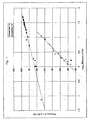
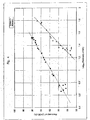
- the reaction products from the second reactor were analyzed to evaluate the performance of the dual reactor system. The results are illustrated in FIGS. 3 and 4 and demonstrate a superior performance of the dual catalyst systems comprised of Ni catalyst and palladium-based catalyst to palladium-based catalyst alone in the Example 1A.
- Ni catalyst 28 wt. % Ni; KL6564 obtained from CRI were loaded in a fixed bed reactor in the same manner as described in the Example 1 B.
- the catalyst was activated at 121°C (250°F) for 2 hours by passing a mixture of 200 sccm/min N 2 and 100 sccm/min N 2 and then 354°C (670°F) for 4 hours with 300 sccm/min H 2 .
- the catalyst was 1.2 mm diameter trilope extrudate.
- the BET surface area of the catalyst was about 120 m 2 /g.
- the feed was comprised of 0.98 w % vinyl acetylene, 0.12 wt.% ethyl acetylene and 0.08 wt.% methyl acetylene, 72.52 wt.% 1,3-BD, 0.12 wt.% 1,2-BD, 14.04 wt.% butenes and the balance mostly inerts.
- the selective hydrogenation of acetylenic impurities in the feed was carried out at 6 ml/min of hydrocarbon feed and at various hydrogen flow rates from 100 to 40 sccm/min and 745 kPa (108 psig) total creactor pressure.
- the temperature of the hydrogenation reactor was about 48° to 53°C (119° to 127° F) at the end of the catalyst bed and about 32°C to 40°C (90° to 104°F) at the beginning of the catalyst bed.
- the recovery of 1,3-butadiene of the product containing 5 ppm VA and 0 ppm EA was 96.0 %.
- the results are illustrated in Fig. 6 .
- the performance of this catalyst is superior to that of the Pd-based catalyst in the Example 1A.
- the Cu-Zn-Ag catalyst promoted with Pd was prepared according to the invention disclosure in serial no. 09/827,411, noted above using alumina (1/16" diameter spherically shaped) prepared by the oil dropping gelation technique.
- the physical properties of the alumina is summarized in Table 1.
- the alumina was calcined at 1100°C for 3 hours in air. This calcined alumina had the following physical properties: 67.4 m 2 /g BET surface area, an average pore diameter of 35.2 nm (362 ⁇ ), and 0.701 cc/g of total N 2 pore volume.
- the apparent bulk densities of aluminas before calcination and after calcination were about 0.48 g/cc and 0.62 g/cc, respectively. More than about 90 % of the pores were larger than 10.0 nm (100 ⁇ ) diameter.
- XRD of the calcined alumina showed mostly theta-alumina with some delta. This calcined alumina is used to prepare catalyst.
- the Cu-Zn-Ag catalyst promoted with palladium was prepared by using a two-step impregnation technique. The mixed solution was prepared by dissolving 28.8g Cu(NO 3 ) 2 .2.5H 2 O, 10g ZnNO 3 ) 2 .6H 2 O and 0.5g AgNO 3 in 285 ml water.
- the mixed salt solution was poured over 300g calcined alumina in a rotary impregnator and then dried at about 200°C by blowing in hot air.
- the dried product was calcined at 450°C for 2 hours.
- the calculated metal composition on the alumina support based on the compounds used was 2.5 wt.% Cu, 0.7 wt.% Zn and 0.1 wt.% Ag.
- Another mixed solution was prepared by dissolving 2.275g Cu(NO 3 ) 2 .2.5H 2 O, 1.895g Zn(NO 3 ) 2 .6H 2 O, 0.25g AgNO 3 and 6.95g palladium nitrate solution (10 wt.% palladium nitrate in 10 wt.% nitric acid solution purchased from Aldrich) in 70 ml water.
- This mixed solution was sprayed on the first impregnation product in the rotary impregnator by using an atomizer over a period of about 15 minutes and then dried at 200°C for about 1 hour by blowing in hot air. The product was calcined at 350°C for 2 hour in air.
- the selective hydrogenation of acetylenic impurities in the feed was carried out at 6 ml/min of hydrocarbon feed to the first reactor and at a constant hydrogen flow rate of 40 sccm/min until the end of this experiment under 745 kPa (108 psig) total reactor pressure.
- the reactor effluent from this first reactor was directly fed to the second reactor. But the reactor effluent was mixed with hydrogen gas at various rates from 25 down to 5 sccm/min prior to entering the second catalytic reaction zone.
- the temperature of the first hydrogenation reactor was about 49°C (120°F) at the end of the catalyst bed and about 37°C to 48°C (99°F to 119°F) at the beginning of the catalyst bed.
- the temperature of the second hydrogenation reactor was about 46°C to 51°C (115°F to 123°F) at the end of the catalyst bed and about 27°C to 29°C (80°F to 85°F) at the beginning of the catalyst bed.
- the reaction products from the second reactor were analyzed to evaluate the performance of the dual reactor system.
- the recovery of 1,3-butadiene of the product containing 0 ppm VA and 16 ppm EA was 97.8%.
- the result is illustrated in Fig. 5 and Fig. 6 to demonstrate a superior performance result of the dual catalyst system comprised of Ni catalyst and the Pd promoted Cu-Zn-Ag catalyst to either the palladium-based catalyst in the Example 1A or the Ni catalyst alone in the Example 3.
- the Cu-Zn-Ag catalyst promoted with Pd was prepared according to U.S. serial no. 09/827,411 noted above.
- the same calcined alumina used in Example 4 was used to prepare the Cu-Zn-Ag catalyst promoted with Pd.
- the Cu-Zn-Ag-Pd catalyst was prepared by using a two-step impregnation technique.
- the mixed salt solution was prepared by dissolving 28.8g Cu(NO 3 ) 2 .2.5H 2 O,10g Zn(NO 3 ) 2 .6H 2 O and 0.5g AgNO 3 in 285 ml deionized water.
- the mixed solution was poured over 300g calcined alumina in a rotary impregnator and then dried at about 200°C by blowing in hot air. The dried product was calcined at 450°C for 2 hours.
- the calculated metal composition on the alumina support based on the compounds used was 2.53 wt.% Cu, 0.71 wt.% Zn and 0.10% Ag.
- a mixed salt solution was prepared by dissolving 4.55g Cu(NO 3 ) 2 .2.5H 2 O, 3.79g Zn(NO 3 ) 2 . 6H 2 O, and 1.47g AgNO 3 in 40g water.
- a palladium nitrate solution was prepared by dissolving 1.47g palladium nitrate (42.8% Pd) in 40g of aqueous 1 wt.% nitric acid solution. The mixed solution and palladium nitrate solution were mixed together. The combined mixed solution was sprayed on the first impregnation product in the rotary impregnator by using an atomizer over a period of about 15 minutes and then dried at 200°C for about 1 hour by blowing in hot air. The dried product was calcined at 350°C for 2 hours in air. Most of the metallic components from the second step spray impregnation were deposited in a thin layer of from about 0.12 mm to 0.16 mm. The calculated metal composition on the final product based on the compounds used was 2.91 wt.% Cu, 0.97 wt.% Zn, 0.20% Ag and 0.20 wt.% Pd.
- Example 3 Fifty grams of the same Ni catalyst (KL6564) in the Example 3 were loaded in the first reactor and activated in the same manner as in Example 4. Fifty grams of the Cu-Zn-Ag catalyst promoted with Pd as described above were loaded in the second reactor and activated at 121°C (250°F) for 3 hours by passing a mixture of 200 sccm/min N 2 and 100 sccm/min N 2 and then 302°C (575°F) for 3 hours with 300 sccm/min H 2. The feed was the same feed used in the Example 3.
- the selective hydrogenation of acetylenic impurities in the feed was carried out at 6 ml/min of hydrocarbon feed to the first reactor and at a constant hydrogen flow rate of 40 sccm/min until the end of this experiment under 745 kPa (108 psig) total reactor pressure.
- the reactor effluent from this first reactor was directly fed to the second reactor. But the reactor effluent was mixed with hydrogen gas at various rates from 24 down to 6 sccm/min prior to entering to the catalytic reaction zone of the second reactor.
- the temperature of the first hydrogenation reactor was about 49°C (120°F) at the end of the catalyst bed and about 24°C to 48°C (76°F to 119°F) at the beginning of the catalyst bed.
- the temperature of the second hydrogenation reactor was about 48°C to 51°C (118° F to 124°F) at the end of the catalyst bed and about 32°C to 48°C (90°F to 118°F) at the beginning of the catalyst bed.
- the reaction products from the second reactor were analyzed to evaluate the performance of the dual reactor system.
- the recovery of 1,3-butadiene of the product containing 0 ppm VA and 14 ppm EA was 97.5%.
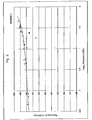
- the result is illustrated in Figures 7 and 8 and demonstrates a superior performance of the dual catalyst system comprised of Ni catalyst and Pd promoted Cu-Zn-Ag catalyst compared to either the palladium-based catalyst in the Example 1A or the Ni catalyst alone in the Example 3.
- Ni catalyst 70 wt. % Ni; KL65271
- the catalyst was activated at 121°C (250°F) for 3 hours by passing a mixture of 200 sccm/min N 2 and 100 sccm/min N 2 and then 354°C (670°F) for 5 hours with 300 sccm/min H 2 .
- the catalyst was 1.2 mm diameter trilope extrudate.
- the feed was the same feed used in the Example 3.
- the selective hydrogenation of acetylenic impurities in the feed was carried out at 6 ml/min of hydrocarbon feed and at various hydrogen flow rates of from 105 down to 80 sccm/min and 745 kPa (108 psig) total reactor pressure.
- the temperature of the hydrogenation reactor was about 49°C to 51°C (120°F to 124°F) at the end of the catalyst bed and about 27°C (80°F) at the beginning of the catalyst bed.
- the recovery of 1,3-butadiene product containing 0 ppm VA and 14 ppm EA was 93.4%.
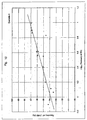
- the result is illustrated in FIGS. 9 and 10 .
- the performance of this catalyst is superior to that of the Pd-based catalyst in the Example 1A.
Landscapes
- Chemical & Material Sciences (AREA)
- Organic Chemistry (AREA)
- Chemical Kinetics & Catalysis (AREA)
- General Chemical & Material Sciences (AREA)
- Engineering & Computer Science (AREA)
- Analytical Chemistry (AREA)
- Oil, Petroleum & Natural Gas (AREA)
- Water Supply & Treatment (AREA)
- Organic Low-Molecular-Weight Compounds And Preparation Thereof (AREA)
- Low-Molecular Organic Synthesis Reactions Using Catalysts (AREA)
- Catalysts (AREA)
Claims (21)
- Procédé de suppression de composés acétyléniques de courants d'hydrocarbures comprenant :La mise en contact d'une alimentation de butadiène brut contenant une première concentration en composés acétyléniques en C4 et des oléfines avec un premier catalyseur comprenant du nickel métallique non sulfuré sur support en présence d'hydrogène dans une première zone réactionnelle dans des conditions de température et de pression et à une concentration en hydrogène favorisant l'hydrogénation des composés acétyléniques en C4 pour produire une première fraction d'hydrocarbures ayant une deuxième concentration en composés acétyléniques en C4 inférieure à ladite première concentration ;La mise en contact de la première fraction d'hydrocarbures avec un deuxième catalyseur en présence d'hydrogène dans une deuxième zone réactionnelle pour produire une deuxième fraction d'hydrocarbures ayant une troisième concentration en composés acétyléniques en C4 inférieure à ladite deuxième concentration ; etLa récupération de la deuxième fraction d'hydrocarbures ;dans lequel le deuxième catalyseur comprend soit un catalyseur à base de nickel de faible activité ou au moins un d'un catalyseur à base de Pd et d'un catalyseur à base de Cu.
- Procédé selon la revendication 1, dans lequel ledit catalyseur de nickel métallique non sulfuré est modifié avec des métaux de Mo, Re, Bi ou des mélanges de ceux-ci.
- Procédé selon la revendication 1, dans lequel ledit deuxième catalyseur comprend du Ni métallique non sulfuré sur support.
- Procédé selon la revendication 3, dans lequel ledit deuxième catalyseur comprend un catalyseur à base de nickel métallique non sulfuré modifié avec des métaux de Mo, Re, Bi ou des mélanges de ceux-ci.
- Procédé selon la revendication 1, dans lequel ledit deuxième catalyseur comprend un catalyseur à base de Pd.
- Procédé selon la revendication 1, dans lequel ledit deuxième catalyseur comprend un catalyseur à base de Cu.
- Procédé selon la revendication 5, dans lequel ledit deuxième catalyseur comprend un composant à base d'argent.
- Procédé selon la revendication 5, dans lequel ledit deuxième catalyseur comprend du Pd ou Pd et d'autres métaux du groupe VIII et au moins deux métaux choisis parmi Ag, Zn ou Bi.
- Procédé selon la revendication 6, dans lequel ledit deuxième catalyseur comprend un catalyseur à base de cuivre contenant au moins un composant métallique du groupe VIII, un composant à base d'Ag, d'Au ou de mélanges de ceux-ci sur un support d'alumine comprenant au moins une des propriétés de diamètre de pore moyen supérieur à 20 nm (200 Å) ou de masse volumique apparente inférieure à environ 0,70 g/cm3.
- Procédé selon la revendication 9, dans lequel ledit deuxième catalyseur comprend du cuivre, du zinc, de l'argent activé avec du Pd.
- Procédé selon la revendication 5, dans lequel ledit deuxième catalyseur comprend un composant à base d'argent.
- Procédé selon la revendication 5, dans lequel ledit deuxième catalyseur comprend un composant à base d'or.
- Procédé selon la revendication 1, dans lequel l'hydrogène est prémélangé avec l'alimentation de butadiène brut avant d'entrer dans les zones réactionnelles catalytiques.
- Procédé selon la revendication 1, dans lequel l'hydrogène est ajouté aux zones réactionnelles catalytiques en de multiples positions le long des zones réactionnelles catalytiques.
- Procédé selon la revendication 1, dans lequel les conditions de température et de pression et la concentration en hydrogène favorisant l'hydrogénation des composés acétyléniques en C4 sont ajustées séparément pour chaque zone réactionnelle.
- Procédé selon la revendication 1, dans lequel la température dans la zone réactionnelle est comprise dans la plage allant de 21 à 77 °C (70 à 170 °F).
- Procédé selon la revendication 1, dans lequel le catalyseur à base de Ni non sulfuré est présent sur le support en des quantités en excès par rapport à celles nécessaires pour l'hydrogénation sélective.
- Procédé selon la revendication 9, dans lequel la surface dudit support est supérieure à 40 m2/g.
- Procédé selon la revendication 1, dans lequel les première et deuxième zones de catalyseur sont dans un réacteur unique.
- Procédé selon la revendication 1, dans lequel les première et deuxième zones de catalyseur sont dans des réacteurs séparés.
- Procédé selon la revendication 1, comprenant en outre la mise en contact de la deuxième fraction d'hydrocarbures avec un troisième catalyseur en présence d'hydrogène dans une troisième zone réactionnelle pour produire une troisième fraction d'hydrocarbures ne comprenant pas de composés acétyléniques en C4 détectables.
Applications Claiming Priority (3)
| Application Number | Priority Date | Filing Date | Title |
|---|---|---|---|
| US215096 | 2002-08-08 | ||
| US10/215,096 US20040030207A1 (en) | 2002-08-08 | 2002-08-08 | Selective hydrogenation of acetylenes |
| PCT/US2003/018583 WO2004014824A1 (fr) | 2002-08-08 | 2003-06-12 | Hydrogenation selective des acetylenes |
Publications (3)
| Publication Number | Publication Date |
|---|---|
| EP1537062A1 EP1537062A1 (fr) | 2005-06-08 |
| EP1537062A4 EP1537062A4 (fr) | 2009-11-04 |
| EP1537062B1 true EP1537062B1 (fr) | 2016-01-13 |
Family
ID=31494798
Family Applications (1)
| Application Number | Title | Priority Date | Filing Date |
|---|---|---|---|
| EP03737041.8A Expired - Lifetime EP1537062B1 (fr) | 2002-08-08 | 2003-06-12 | Hydrogenation selective des acetylenes |
Country Status (17)
| Country | Link |
|---|---|
| US (2) | US20040030207A1 (fr) |
| EP (1) | EP1537062B1 (fr) |
| JP (1) | JP2005535705A (fr) |
| KR (1) | KR100991896B1 (fr) |
| CN (1) | CN1665761B (fr) |
| AR (1) | AR039725A1 (fr) |
| AU (1) | AU2003238018B2 (fr) |
| BR (1) | BR0312104A (fr) |
| CA (1) | CA2488051C (fr) |
| ES (1) | ES2566799T3 (fr) |
| MX (1) | MXPA05001198A (fr) |
| PL (1) | PL205554B1 (fr) |
| RO (1) | RO122850B1 (fr) |
| RU (1) | RU2310639C2 (fr) |
| TW (1) | TWI327999B (fr) |
| WO (1) | WO2004014824A1 (fr) |
| ZA (1) | ZA200409499B (fr) |
Families Citing this family (24)
| Publication number | Priority date | Publication date | Assignee | Title |
|---|---|---|---|---|
| US7364540B1 (en) | 1997-06-12 | 2008-04-29 | Uromedica, Inc. | Implantable device and method for adjustably restricting a body lumen |
| US7341977B2 (en) * | 2003-06-20 | 2008-03-11 | Nanoscale Corporation | Method of sorbing sulfur compounds using nanocrystalline mesoporous metal oxides |
| US7022645B2 (en) * | 2003-08-04 | 2006-04-04 | Catalytic Distillation Technologies | Ni hydrogenation catalysts, manufacture and use |
| FR2895417B1 (fr) * | 2005-12-23 | 2011-10-14 | Inst Francais Du Petrole | Procede de desulfurisation comprenant une etape de transformation et une etape d'extraction des composes soufres |
| US7348463B2 (en) * | 2006-03-27 | 2008-03-25 | Catalytic Distillation Technologies | Hydrogenation of aromatic compounds |
| RU2383521C1 (ru) * | 2008-10-21 | 2010-03-10 | Общество с ограниченной ответственностью "Старт-Катализатор" | Способ очистки этилена от примесей ацетилена |
| CN101475439B (zh) | 2008-12-18 | 2012-05-09 | 中国石油化工股份有限公司 | 苯乙烯存在下采用复合床进行苯乙炔选择加氢的方法 |
| EP2199269A1 (fr) * | 2008-12-22 | 2010-06-23 | Total Petrochemicals Research Feluy | Procédé pour la purification de produits hydrocarbonés contenant de l'oléfine |
| TWI457313B (zh) * | 2009-12-18 | 2014-10-21 | China Petro Chemical Technologydevelopment Company | Study on the selective hydrogenation of phenylethylene in the presence of styrene in the presence of |
| FR2963344B1 (fr) | 2010-07-29 | 2012-07-27 | IFP Energies Nouvelles | Procede d'hydrogenation selective en presence d'un catalyseur a base d'un metal du groupe viii prepare au moyen d'au moins un oligosaccharide cyclique |
| US9108188B2 (en) | 2012-03-07 | 2015-08-18 | Chevoron Phillip Chemical Company, LP | Selective hydrogenation catalyst and methods of making and using same |
| CN102627519B (zh) * | 2012-03-28 | 2014-09-10 | 清华大学 | 制备丁二烯的方法和系统 |
| CN103787815B (zh) * | 2012-10-30 | 2015-09-16 | 中国石油化工股份有限公司 | 一种丁二烯尾气的加氢方法 |
| DE102013006794A1 (de) * | 2013-04-19 | 2014-10-23 | Thyssenkrupp Industrial Solutions Ag | Verfahren und Vorrichtung zur Herstellung von Schalenkatalysatoren |
| BR112015029993B1 (pt) | 2013-05-31 | 2021-08-31 | Shell Internationale Research Maatschappij B.V. | Composição catalítica de hidroprocessamento contendo um composto polar heterocíclico, método para fabricação da dita composição e processo para hidrotratamento de uma matéria-prima de hidrocarboneto |
| CN106582704B (zh) * | 2015-10-14 | 2019-06-11 | 中国石油化工股份有限公司 | 两段复合镍基催化剂床 |
| US9896394B2 (en) | 2016-04-21 | 2018-02-20 | National Industrialization Company | Method for improving propane dehydrogenation process |
| CN108863706B (zh) * | 2017-05-15 | 2021-06-01 | 中国石油天然气股份有限公司 | 一种含炔碳四馏分的选择加氢方法 |
| CN108865241B (zh) * | 2017-05-15 | 2021-01-01 | 中国石油天然气股份有限公司 | 一种裂解汽油碳八馏分选择加氢方法 |
| CN108863697B (zh) * | 2017-05-15 | 2021-06-01 | 中国石油天然气股份有限公司 | 一种增产丁二烯的方法 |
| CN108863699B (zh) * | 2017-05-15 | 2021-06-01 | 中国石油天然气股份有限公司 | 一种炔烃选择加氢回收丁二烯的方法 |
| RU2658417C1 (ru) * | 2017-06-01 | 2018-06-21 | Федеральное государственное бюджетное образовательное учреждение высшего образования "Башкирский государственный университет" | Способ повышения эффективности селективного гидрирования |
| US10507435B1 (en) * | 2018-06-28 | 2019-12-17 | Uop Llc | Membrane process for olefin separation |
| FR3091657B1 (fr) * | 2019-01-15 | 2023-04-14 | Ifp Energies Now | Procédé de préparation d’un catalyseur d’hydrogénation sélective comprenant une étape de formation d’un alliage de NiCu en pré-imprégnation |
Family Cites Families (39)
| Publication number | Priority date | Publication date | Assignee | Title |
|---|---|---|---|---|
| DE534475C (de) * | 1929-11-28 | 1931-09-26 | I G Farbenindustrie Akt Ges | Verfahren zur Entfernung des Acetylens aus acetylenhaltigen Gasgemischen |
| US3075917A (en) * | 1957-12-17 | 1963-01-29 | Bayer Ag | Process for the selective hydrogenation of hydrocarbon mixtures |
| FR1243656A (fr) * | 1959-01-06 | 1960-10-14 | British Petroleum Co | Procédé d'hydrogénation de carbures acétyléniques |
| US3205281A (en) * | 1959-03-02 | 1965-09-07 | Chemetron Corp | Method of selectively hydrogenating acetylenic compounds in a gas consisting predominately of olefins |
| DE1667210B2 (de) | 1966-12-20 | 1976-05-06 | Nippon Oil Co., Ltd., Tokio | Verfahren zur herstellung eines fuer eine selektive hydrierung von acetylenkohlenwasserstoffen geeigneten kupfer-nickel-katalysators |
| US3691248A (en) * | 1971-01-22 | 1972-09-12 | Gulf Oil Corp | Selective hydrogenation of acetylenes |
| US3793388A (en) * | 1972-05-30 | 1974-02-19 | Phillips Petroleum Co | Selective hydrogenation of acetylene from olefins with a nickel on alumina catalyst |
| GB1361940A (en) * | 1972-10-11 | 1974-07-30 | Sterlitamaxky O Promy Z Proizv | Process for purifying diene hydrocarbons from acetylene hydroc arbon contaminants |
| JPS5416481B2 (fr) * | 1972-10-28 | 1979-06-22 | ||
| US3897511A (en) * | 1973-11-12 | 1975-07-29 | Dow Chemical Co | Removal of {60 -acetylenes from gas streams |
| US4277313A (en) * | 1980-03-27 | 1981-07-07 | El Paso Products Company | Recovery of 1,3-butadiene |
| JPS57123123A (en) * | 1981-01-23 | 1982-07-31 | Nippon Oil Co Ltd | Preparation of high purity butadiene |
| JPS57185228A (en) * | 1981-05-12 | 1982-11-15 | Showa Denko Kk | Selective hydrogenating method of acetylenic compound |
| JPS58149987A (ja) * | 1982-03-02 | 1983-09-06 | Sumitomo Chem Co Ltd | 炭化水素類の選択的水素添加の方法 |
| FR2529905B1 (fr) * | 1982-07-09 | 1988-04-08 | Inst Francais Du Petrole | Procede et dispositif d'hydrotraitement d'hydrocarbures en phase liquide, en presence d'un catalyseur en lit expanse ou bouillonnant |
| US4440956A (en) * | 1982-10-25 | 1984-04-03 | The Dow Chemical Company | Selective hydrogenation of acetylenes in the presence of butadiene and catalyst used in the hydrogenation |
| FR2539647B1 (fr) * | 1983-01-24 | 1985-06-07 | Inst Francais Du Petrole | Procede de preparation de catalyseurs bimetalliques ou plurimetalliques supportes a base d'un ou plusieurs metaux du groupe viii et d'au moins un metal du groupe iv catalyseurs obtenus et leurs utilisations |
| US4493906A (en) * | 1983-03-08 | 1985-01-15 | The Dow Chemical Company | Catalyst for the selective hydrogenation of acetylenes |
| DE3374666D1 (en) * | 1983-03-08 | 1988-01-07 | Dow Chemical Co | Catalyst for selective hydrogenation of alkynes in the presence of dienes |
| GB2199589B (en) * | 1986-12-30 | 1991-07-24 | Labofina Sa | Improved process for the selective hydrogenation of acetylenes |
| JPS63291643A (ja) * | 1987-05-25 | 1988-11-29 | Nippon Kayaku Co Ltd | フエニルアセチレン類の選択水素添加反応用触媒 |
| JP2567291B2 (ja) * | 1990-03-28 | 1996-12-25 | 株式会社コスモ総合研究所 | 炭化水素油の水素化処理方法 |
| US6169218B1 (en) * | 1992-02-10 | 2001-01-02 | Catalytic Distillation Technologies | Selective hydrogenation of highly unsaturated compounds in hydrocarbon streams |
| FR2704865B1 (fr) * | 1993-05-06 | 1995-07-21 | Inst Francais Du Petrole | Procédé d'hydrogénation catalytique. |
| US5849963A (en) * | 1993-12-09 | 1998-12-15 | Daikin Industries, Ltd. | Method for producing difluoromethane and 1,1,1,2-tetrafluoroethane |
| US5595634A (en) * | 1995-07-10 | 1997-01-21 | Chemical Research & Licensing Company | Process for selective hydrogenation of highly unsaturated compounds and isomerization of olefins in hydrocarbon streams |
| DE19636064A1 (de) * | 1996-09-05 | 1998-03-12 | Basf Ag | Verfahren zur Hydrierung |
| US5877363A (en) * | 1996-09-23 | 1999-03-02 | Catalytic Distillation Technologies | Process for concurrent selective hydrogenation of acetylenes and 1,2 butadine in hydrocarbon streams |
| DE19721897A1 (de) | 1997-05-26 | 1998-12-03 | Degussa | Geformter Metall-Festbettkatalysator, Verfahren zu seiner Herstellung und seine Verwendung |
| NL1009014C2 (nl) * | 1998-04-28 | 1999-10-29 | Dsm Nv | Werkwijze voor de hydrogenering van fenylacetyleen in een styreenbevattend medium met behulp van een katalysator. |
| US6413413B1 (en) * | 1998-12-31 | 2002-07-02 | Catalytic Distillation Technologies | Hydrogenation process |
| US6414205B1 (en) * | 2000-03-24 | 2002-07-02 | Catalytic Distillation Technologies | Process for the removal of MAPD from hydrocarbon streams |
| US6576588B2 (en) * | 2000-04-07 | 2003-06-10 | Catalytic Distillation Technologies | Process for selective hydrogenation of alkynes and catalyst therefor |
| RU2180611C1 (ru) * | 2000-12-26 | 2002-03-20 | Институт катализа им. Г.К. Борескова СО РАН | Катализатор и способ селективного гидрирования ацетиленовых углеводородов |
| US6867338B2 (en) * | 2002-03-15 | 2005-03-15 | Catalytic Distillation Technologies | Selective hydrogenation of acetylenes and dienes in a hydrocarbon stream |
| US6734328B1 (en) * | 2002-11-08 | 2004-05-11 | Catalytic Distillation Technologies | Process for the selective hydrogenation of alkynes |
| US7022645B2 (en) * | 2003-08-04 | 2006-04-04 | Catalytic Distillation Technologies | Ni hydrogenation catalysts, manufacture and use |
| US7045669B2 (en) * | 2003-08-05 | 2006-05-16 | Catalytic Distillation Technologies | Dual pressure catalytic distillation hydrogenation column system for the front end of an ethylene plant |
| US7208646B2 (en) * | 2004-05-14 | 2007-04-24 | Catalytic Distillation Technologies | Selective hydrogenation of butadiene |
-
2002
- 2002-08-08 US US10/215,096 patent/US20040030207A1/en not_active Abandoned
-
2003
- 2003-06-12 CA CA002488051A patent/CA2488051C/fr not_active Expired - Fee Related
- 2003-06-12 AU AU2003238018A patent/AU2003238018B2/en not_active Ceased
- 2003-06-12 CN CN038155060A patent/CN1665761B/zh not_active Expired - Lifetime
- 2003-06-12 WO PCT/US2003/018583 patent/WO2004014824A1/fr not_active Ceased
- 2003-06-12 PL PL373118A patent/PL205554B1/pl unknown
- 2003-06-12 JP JP2004527568A patent/JP2005535705A/ja active Pending
- 2003-06-12 RO ROA200500079A patent/RO122850B1/ro unknown
- 2003-06-12 EP EP03737041.8A patent/EP1537062B1/fr not_active Expired - Lifetime
- 2003-06-12 BR BR0312104-6A patent/BR0312104A/pt not_active IP Right Cessation
- 2003-06-12 MX MXPA05001198A patent/MXPA05001198A/es active IP Right Grant
- 2003-06-12 RU RU2005106257/04A patent/RU2310639C2/ru not_active IP Right Cessation
- 2003-06-12 ES ES03737041.8T patent/ES2566799T3/es not_active Expired - Lifetime
- 2003-06-12 KR KR1020057002108A patent/KR100991896B1/ko not_active Expired - Fee Related
- 2003-06-20 TW TW092116826A patent/TWI327999B/zh not_active IP Right Cessation
- 2003-06-24 AR ARP030102256A patent/AR039725A1/es unknown
-
2004
- 2004-11-24 ZA ZA200409499A patent/ZA200409499B/en unknown
- 2004-12-13 US US11/010,907 patent/US7319176B2/en not_active Expired - Lifetime
Also Published As
| Publication number | Publication date |
|---|---|
| JP2005535705A (ja) | 2005-11-24 |
| EP1537062A4 (fr) | 2009-11-04 |
| RU2310639C2 (ru) | 2007-11-20 |
| KR20050035266A (ko) | 2005-04-15 |
| EP1537062A1 (fr) | 2005-06-08 |
| RU2005106257A (ru) | 2005-07-20 |
| BR0312104A (pt) | 2005-05-24 |
| US20040030207A1 (en) | 2004-02-12 |
| TW200406378A (en) | 2004-05-01 |
| PL205554B1 (pl) | 2010-04-30 |
| ES2566799T3 (es) | 2016-04-15 |
| TWI327999B (en) | 2010-08-01 |
| CN1665761B (zh) | 2010-08-18 |
| WO2004014824A1 (fr) | 2004-02-19 |
| ZA200409499B (en) | 2005-10-20 |
| CA2488051A1 (fr) | 2004-02-19 |
| AU2003238018A1 (en) | 2004-02-25 |
| PL373118A1 (en) | 2005-08-08 |
| CA2488051C (fr) | 2009-10-13 |
| US7319176B2 (en) | 2008-01-15 |
| AR039725A1 (es) | 2005-03-09 |
| US20050154241A1 (en) | 2005-07-14 |
| AU2003238018B2 (en) | 2008-09-04 |
| RO122850B1 (ro) | 2010-03-30 |
| MXPA05001198A (es) | 2005-05-16 |
| CN1665761A (zh) | 2005-09-07 |
| KR100991896B1 (ko) | 2010-11-04 |
Similar Documents
| Publication | Publication Date | Title |
|---|---|---|
| EP1537062B1 (fr) | Hydrogenation selective des acetylenes | |
| US7838710B2 (en) | Selective hydrogenation process and catalyst | |
| US6717022B2 (en) | Process for selective hydrogenation of alkynes and catalyst therefor | |
| US7737079B2 (en) | Ni catalyst, process for making catalysts and selective hydrogenation process | |
| CN101098751A (zh) | Ni催化剂,其制备方法及选择性加氢工艺 | |
| US20060155154A1 (en) | Process for the selective hydrogenation of alkynes |
Legal Events
| Date | Code | Title | Description |
|---|---|---|---|
| PUAI | Public reference made under article 153(3) epc to a published international application that has entered the european phase |
Free format text: ORIGINAL CODE: 0009012 |
|
| 17P | Request for examination filed |
Effective date: 20050307 |
|
| AK | Designated contracting states |
Kind code of ref document: A1 Designated state(s): AT BE BG CH CY CZ DE DK EE ES FI FR GB GR HU IE IT LI LU MC NL PT RO SE SI SK TR |
|
| AX | Request for extension of the european patent |
Extension state: AL LT LV MK |
|
| DAX | Request for extension of the european patent (deleted) | ||
| A4 | Supplementary search report drawn up and despatched |
Effective date: 20091006 |
|
| 17Q | First examination report despatched |
Effective date: 20100301 |
|
| GRAP | Despatch of communication of intention to grant a patent |
Free format text: ORIGINAL CODE: EPIDOSNIGR1 |
|
| INTG | Intention to grant announced |
Effective date: 20150717 |
|
| RIC1 | Information provided on ipc code assigned before grant |
Ipc: C07C 5/03 20060101AFI20150703BHEP Ipc: C07C 5/05 20060101ALI20150703BHEP Ipc: C07C 7/167 20060101ALI20150703BHEP Ipc: C07C 5/09 20060101ALI20150703BHEP |
|
| GRAS | Grant fee paid |
Free format text: ORIGINAL CODE: EPIDOSNIGR3 |
|
| GRAA | (expected) grant |
Free format text: ORIGINAL CODE: 0009210 |
|
| AK | Designated contracting states |
Kind code of ref document: B1 Designated state(s): AT BE BG CH CY CZ DE DK EE ES FI FR GB GR HU IE IT LI LU MC NL PT RO SE SI SK TR |
|
| REG | Reference to a national code |
Ref country code: GB Ref legal event code: FG4D |
|
| REG | Reference to a national code |
Ref country code: CH Ref legal event code: EP |
|
| REG | Reference to a national code |
Ref country code: IE Ref legal event code: FG4D |
|
| REG | Reference to a national code |
Ref country code: AT Ref legal event code: REF Ref document number: 770396 Country of ref document: AT Kind code of ref document: T Effective date: 20160215 |
|
| REG | Reference to a national code |
Ref country code: DE Ref legal event code: R096 Ref document number: 60348457 Country of ref document: DE |
|
| REG | Reference to a national code |
Ref country code: NL Ref legal event code: FP |
|
| REG | Reference to a national code |
Ref country code: ES Ref legal event code: FG2A Ref document number: 2566799 Country of ref document: ES Kind code of ref document: T3 Effective date: 20160415 |
|
| REG | Reference to a national code |
Ref country code: AT Ref legal event code: MK05 Ref document number: 770396 Country of ref document: AT Kind code of ref document: T Effective date: 20160113 |
|
| REG | Reference to a national code |
Ref country code: FR Ref legal event code: PLFP Year of fee payment: 14 |
|
| PG25 | Lapsed in a contracting state [announced via postgrant information from national office to epo] |
Ref country code: FI Free format text: LAPSE BECAUSE OF FAILURE TO SUBMIT A TRANSLATION OF THE DESCRIPTION OR TO PAY THE FEE WITHIN THE PRESCRIBED TIME-LIMIT Effective date: 20160113 Ref country code: GR Free format text: LAPSE BECAUSE OF FAILURE TO SUBMIT A TRANSLATION OF THE DESCRIPTION OR TO PAY THE FEE WITHIN THE PRESCRIBED TIME-LIMIT Effective date: 20160414 |
|
| PG25 | Lapsed in a contracting state [announced via postgrant information from national office to epo] |
Ref country code: AT Free format text: LAPSE BECAUSE OF FAILURE TO SUBMIT A TRANSLATION OF THE DESCRIPTION OR TO PAY THE FEE WITHIN THE PRESCRIBED TIME-LIMIT Effective date: 20160113 Ref country code: SE Free format text: LAPSE BECAUSE OF FAILURE TO SUBMIT A TRANSLATION OF THE DESCRIPTION OR TO PAY THE FEE WITHIN THE PRESCRIBED TIME-LIMIT Effective date: 20160113 Ref country code: PT Free format text: LAPSE BECAUSE OF FAILURE TO SUBMIT A TRANSLATION OF THE DESCRIPTION OR TO PAY THE FEE WITHIN THE PRESCRIBED TIME-LIMIT Effective date: 20160513 |
|
| REG | Reference to a national code |
Ref country code: DE Ref legal event code: R097 Ref document number: 60348457 Country of ref document: DE |
|
| PG25 | Lapsed in a contracting state [announced via postgrant information from national office to epo] |
Ref country code: DK Free format text: LAPSE BECAUSE OF FAILURE TO SUBMIT A TRANSLATION OF THE DESCRIPTION OR TO PAY THE FEE WITHIN THE PRESCRIBED TIME-LIMIT Effective date: 20160113 Ref country code: EE Free format text: LAPSE BECAUSE OF FAILURE TO SUBMIT A TRANSLATION OF THE DESCRIPTION OR TO PAY THE FEE WITHIN THE PRESCRIBED TIME-LIMIT Effective date: 20160113 |
|
| PLBE | No opposition filed within time limit |
Free format text: ORIGINAL CODE: 0009261 |
|
| STAA | Information on the status of an ep patent application or granted ep patent |
Free format text: STATUS: NO OPPOSITION FILED WITHIN TIME LIMIT |
|
| PG25 | Lapsed in a contracting state [announced via postgrant information from national office to epo] |
Ref country code: CZ Free format text: LAPSE BECAUSE OF FAILURE TO SUBMIT A TRANSLATION OF THE DESCRIPTION OR TO PAY THE FEE WITHIN THE PRESCRIBED TIME-LIMIT Effective date: 20160113 Ref country code: RO Free format text: LAPSE BECAUSE OF FAILURE TO SUBMIT A TRANSLATION OF THE DESCRIPTION OR TO PAY THE FEE WITHIN THE PRESCRIBED TIME-LIMIT Effective date: 20160113 Ref country code: SK Free format text: LAPSE BECAUSE OF FAILURE TO SUBMIT A TRANSLATION OF THE DESCRIPTION OR TO PAY THE FEE WITHIN THE PRESCRIBED TIME-LIMIT Effective date: 20160113 |
|
| 26N | No opposition filed |
Effective date: 20161014 |
|
| PG25 | Lapsed in a contracting state [announced via postgrant information from national office to epo] |
Ref country code: MC Free format text: LAPSE BECAUSE OF FAILURE TO SUBMIT A TRANSLATION OF THE DESCRIPTION OR TO PAY THE FEE WITHIN THE PRESCRIBED TIME-LIMIT Effective date: 20160113 |
|
| REG | Reference to a national code |
Ref country code: CH Ref legal event code: PL |
|
| PG25 | Lapsed in a contracting state [announced via postgrant information from national office to epo] |
Ref country code: SI Free format text: LAPSE BECAUSE OF FAILURE TO SUBMIT A TRANSLATION OF THE DESCRIPTION OR TO PAY THE FEE WITHIN THE PRESCRIBED TIME-LIMIT Effective date: 20160113 Ref country code: BG Free format text: LAPSE BECAUSE OF FAILURE TO SUBMIT A TRANSLATION OF THE DESCRIPTION OR TO PAY THE FEE WITHIN THE PRESCRIBED TIME-LIMIT Effective date: 20160413 |
|
| REG | Reference to a national code |
Ref country code: IE Ref legal event code: MM4A |
|
| PG25 | Lapsed in a contracting state [announced via postgrant information from national office to epo] |
Ref country code: CH Free format text: LAPSE BECAUSE OF NON-PAYMENT OF DUE FEES Effective date: 20160630 Ref country code: LI Free format text: LAPSE BECAUSE OF NON-PAYMENT OF DUE FEES Effective date: 20160630 |
|
| PG25 | Lapsed in a contracting state [announced via postgrant information from national office to epo] |
Ref country code: IE Free format text: LAPSE BECAUSE OF NON-PAYMENT OF DUE FEES Effective date: 20160612 |
|
| REG | Reference to a national code |
Ref country code: FR Ref legal event code: PLFP Year of fee payment: 15 |
|
| PG25 | Lapsed in a contracting state [announced via postgrant information from national office to epo] |
Ref country code: HU Free format text: LAPSE BECAUSE OF FAILURE TO SUBMIT A TRANSLATION OF THE DESCRIPTION OR TO PAY THE FEE WITHIN THE PRESCRIBED TIME-LIMIT; INVALID AB INITIO Effective date: 20030612 Ref country code: CY Free format text: LAPSE BECAUSE OF FAILURE TO SUBMIT A TRANSLATION OF THE DESCRIPTION OR TO PAY THE FEE WITHIN THE PRESCRIBED TIME-LIMIT Effective date: 20160113 |
|
| REG | Reference to a national code |
Ref country code: FR Ref legal event code: PLFP Year of fee payment: 16 |
|
| PG25 | Lapsed in a contracting state [announced via postgrant information from national office to epo] |
Ref country code: LU Free format text: LAPSE BECAUSE OF NON-PAYMENT OF DUE FEES Effective date: 20160612 |
|
| PGFP | Annual fee paid to national office [announced via postgrant information from national office to epo] |
Ref country code: FR Payment date: 20200512 Year of fee payment: 18 Ref country code: TR Payment date: 20200612 Year of fee payment: 18 |
|
| PGFP | Annual fee paid to national office [announced via postgrant information from national office to epo] |
Ref country code: GB Payment date: 20200603 Year of fee payment: 18 Ref country code: IT Payment date: 20200512 Year of fee payment: 18 |
|
| PGFP | Annual fee paid to national office [announced via postgrant information from national office to epo] |
Ref country code: ES Payment date: 20200701 Year of fee payment: 18 |
|
| GBPC | Gb: european patent ceased through non-payment of renewal fee |
Effective date: 20210612 |
|
| PG25 | Lapsed in a contracting state [announced via postgrant information from national office to epo] |
Ref country code: GB Free format text: LAPSE BECAUSE OF NON-PAYMENT OF DUE FEES Effective date: 20210612 |
|
| PG25 | Lapsed in a contracting state [announced via postgrant information from national office to epo] |
Ref country code: FR Free format text: LAPSE BECAUSE OF NON-PAYMENT OF DUE FEES Effective date: 20210630 |
|
| PGFP | Annual fee paid to national office [announced via postgrant information from national office to epo] |
Ref country code: NL Payment date: 20220420 Year of fee payment: 20 |
|
| PG25 | Lapsed in a contracting state [announced via postgrant information from national office to epo] |
Ref country code: IT Free format text: LAPSE BECAUSE OF NON-PAYMENT OF DUE FEES Effective date: 20210612 |
|
| PGFP | Annual fee paid to national office [announced via postgrant information from national office to epo] |
Ref country code: DE Payment date: 20220420 Year of fee payment: 20 |
|
| REG | Reference to a national code |
Ref country code: ES Ref legal event code: FD2A Effective date: 20220803 |
|
| PGFP | Annual fee paid to national office [announced via postgrant information from national office to epo] |
Ref country code: BE Payment date: 20220526 Year of fee payment: 20 |
|
| PG25 | Lapsed in a contracting state [announced via postgrant information from national office to epo] |
Ref country code: ES Free format text: LAPSE BECAUSE OF NON-PAYMENT OF DUE FEES Effective date: 20210613 |
|
| REG | Reference to a national code |
Ref country code: DE Ref legal event code: R071 Ref document number: 60348457 Country of ref document: DE |
|
| REG | Reference to a national code |
Ref country code: NL Ref legal event code: MK Effective date: 20230611 |
|
| REG | Reference to a national code |
Ref country code: BE Ref legal event code: MK Effective date: 20230612 |
|
| PG25 | Lapsed in a contracting state [announced via postgrant information from national office to epo] |
Ref country code: TR Free format text: LAPSE BECAUSE OF NON-PAYMENT OF DUE FEES Effective date: 20210612 |