EP1571535A2 - Computer mit Sekundärprozessor und geringem Energieverbrauch sowie zweiten Bildschirm. - Google Patents
Computer mit Sekundärprozessor und geringem Energieverbrauch sowie zweiten Bildschirm. Download PDFInfo
- Publication number
- EP1571535A2 EP1571535A2 EP05002059A EP05002059A EP1571535A2 EP 1571535 A2 EP1571535 A2 EP 1571535A2 EP 05002059 A EP05002059 A EP 05002059A EP 05002059 A EP05002059 A EP 05002059A EP 1571535 A2 EP1571535 A2 EP 1571535A2
- Authority
- EP
- European Patent Office
- Prior art keywords
- computer
- primary
- processor
- communicates
- interface
- Prior art date
- Legal status (The legal status is an assumption and is not a legal conclusion. Google has not performed a legal analysis and makes no representation as to the accuracy of the status listed.)
- Ceased
Links
Images





Classifications
-
- G—PHYSICS
- G06—COMPUTING OR CALCULATING; COUNTING
- G06F—ELECTRIC DIGITAL DATA PROCESSING
- G06F1/00—Details not covered by groups G06F3/00 - G06F13/00 and G06F21/00
- G06F1/16—Constructional details or arrangements
- G06F1/1613—Constructional details or arrangements for portable computers
- G06F1/1633—Constructional details or arrangements of portable computers not specific to the type of enclosures covered by groups G06F1/1615 - G06F1/1626
- G06F1/1637—Details related to the display arrangement, including those related to the mounting of the display in the housing
- G06F1/1647—Details related to the display arrangement, including those related to the mounting of the display in the housing including at least an additional display
-
- G—PHYSICS
- G06—COMPUTING OR CALCULATING; COUNTING
- G06F—ELECTRIC DIGITAL DATA PROCESSING
- G06F1/00—Details not covered by groups G06F3/00 - G06F13/00 and G06F21/00
- G06F1/16—Constructional details or arrangements
- G06F1/1613—Constructional details or arrangements for portable computers
- G06F1/1615—Constructional details or arrangements for portable computers with several enclosures having relative motions, each enclosure supporting at least one I/O or computing function
- G06F1/1616—Constructional details or arrangements for portable computers with several enclosures having relative motions, each enclosure supporting at least one I/O or computing function with folding flat displays, e.g. laptop computers or notebooks having a clamshell configuration, with body parts pivoting to an open position around an axis parallel to the plane they define in closed position
-
- G—PHYSICS
- G06—COMPUTING OR CALCULATING; COUNTING
- G06F—ELECTRIC DIGITAL DATA PROCESSING
- G06F1/00—Details not covered by groups G06F3/00 - G06F13/00 and G06F21/00
- G06F1/16—Constructional details or arrangements
- G06F1/1613—Constructional details or arrangements for portable computers
- G06F1/1633—Constructional details or arrangements of portable computers not specific to the type of enclosures covered by groups G06F1/1615 - G06F1/1626
- G06F1/1684—Constructional details or arrangements related to integrated I/O peripherals not covered by groups G06F1/1635 - G06F1/1675
- G06F1/169—Constructional details or arrangements related to integrated I/O peripherals not covered by groups G06F1/1635 - G06F1/1675 the I/O peripheral being an integrated pointing device, e.g. trackball in the palm rest area, mini-joystick integrated between keyboard keys, touch pads or touch stripes
- G06F1/1692—Constructional details or arrangements related to integrated I/O peripherals not covered by groups G06F1/1635 - G06F1/1675 the I/O peripheral being an integrated pointing device, e.g. trackball in the palm rest area, mini-joystick integrated between keyboard keys, touch pads or touch stripes the I/O peripheral being a secondary touch screen used as control interface, e.g. virtual buttons or sliders
-
- G—PHYSICS
- G06—COMPUTING OR CALCULATING; COUNTING
- G06F—ELECTRIC DIGITAL DATA PROCESSING
- G06F1/00—Details not covered by groups G06F3/00 - G06F13/00 and G06F21/00
- G06F1/26—Power supply means, e.g. regulation thereof
- G06F1/32—Means for saving power
- G06F1/3203—Power management, i.e. event-based initiation of a power-saving mode
-
- G—PHYSICS
- G06—COMPUTING OR CALCULATING; COUNTING
- G06F—ELECTRIC DIGITAL DATA PROCESSING
- G06F1/00—Details not covered by groups G06F3/00 - G06F13/00 and G06F21/00
- G06F1/26—Power supply means, e.g. regulation thereof
- G06F1/32—Means for saving power
- G06F1/3203—Power management, i.e. event-based initiation of a power-saving mode
- G06F1/3234—Power saving characterised by the action undertaken
- G06F1/3287—Power saving characterised by the action undertaken by switching off individual functional units in the computer system
-
- G—PHYSICS
- G06—COMPUTING OR CALCULATING; COUNTING
- G06F—ELECTRIC DIGITAL DATA PROCESSING
- G06F1/00—Details not covered by groups G06F3/00 - G06F13/00 and G06F21/00
- G06F1/26—Power supply means, e.g. regulation thereof
- G06F1/32—Means for saving power
- G06F1/3203—Power management, i.e. event-based initiation of a power-saving mode
- G06F1/3234—Power saving characterised by the action undertaken
- G06F1/3293—Power saving characterised by the action undertaken by switching to a less power-consuming processor, e.g. sub-CPU
-
- Y—GENERAL TAGGING OF NEW TECHNOLOGICAL DEVELOPMENTS; GENERAL TAGGING OF CROSS-SECTIONAL TECHNOLOGIES SPANNING OVER SEVERAL SECTIONS OF THE IPC; TECHNICAL SUBJECTS COVERED BY FORMER USPC CROSS-REFERENCE ART COLLECTIONS [XRACs] AND DIGESTS
- Y02—TECHNOLOGIES OR APPLICATIONS FOR MITIGATION OR ADAPTATION AGAINST CLIMATE CHANGE
- Y02D—CLIMATE CHANGE MITIGATION TECHNOLOGIES IN INFORMATION AND COMMUNICATION TECHNOLOGIES [ICT], I.E. INFORMATION AND COMMUNICATION TECHNOLOGIES AIMING AT THE REDUCTION OF THEIR OWN ENERGY USE
- Y02D10/00—Energy efficient computing, e.g. low power processors, power management or thermal management
-
- Y—GENERAL TAGGING OF NEW TECHNOLOGICAL DEVELOPMENTS; GENERAL TAGGING OF CROSS-SECTIONAL TECHNOLOGIES SPANNING OVER SEVERAL SECTIONS OF THE IPC; TECHNICAL SUBJECTS COVERED BY FORMER USPC CROSS-REFERENCE ART COLLECTIONS [XRACs] AND DIGESTS
- Y02—TECHNOLOGIES OR APPLICATIONS FOR MITIGATION OR ADAPTATION AGAINST CLIMATE CHANGE
- Y02D—CLIMATE CHANGE MITIGATION TECHNOLOGIES IN INFORMATION AND COMMUNICATION TECHNOLOGIES [ICT], I.E. INFORMATION AND COMMUNICATION TECHNOLOGIES AIMING AT THE REDUCTION OF THEIR OWN ENERGY USE
- Y02D30/00—Reducing energy consumption in communication networks
- Y02D30/50—Reducing energy consumption in communication networks in wire-line communication networks, e.g. low power modes or reduced link rate
Definitions
- the present invention relates to laptop and desktop computer architectures, and more particularly to laptop and desktop computer architectures having low-power secondary processors and secondary displays for providing reduced functionality when the laptop and desktop computers are in an inactive mode.
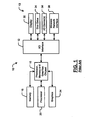
- the computer 10 includes an input/output (I/O) interface 12 that communicates with one or more peripheral devices 13.
- the memory 16 stores data and includes random access memory (RAM), read-only memory (ROM), Flash memory, and/or any other type of electronic data storage.
- the memory 16 communicates with a processor, memory and graphics hub 18.
- a processor 20 also communicates with the processor, memory and graphics hub 18 and performs data processing, calculations, and other tasks.
- a graphics card and/or chip 24 may be provided to accelerate graphics processing.
- the processor, memory and graphics hub 18 and/or the graphics card and/or chip 24 are omitted and/or are integrated with other components.
- the computer 10 further includes a display 30, which is typically a color display.
- a disk drive system 34 typically includes a magnetic storage medium that stores data.
- the disk drive system 34 may include a hard disk controller (HDC), an embedded processor, and/or other components (not shown).
- One or more input/output (I/O) devices 36 such as a keyboard, a mouse, a touch pad, a scratch pad and/or other pointing and/or input devices facilitate data input, navigation and/or user interaction with the computer.
- a wireless network interface 38 enables wireless connectivity with a wireless network such as a wide area network, a local area network, a cellular network such as CDMA, GSM, GSM3G, GPRS systems or other cellular networks, a Bluetooth network, or any other wireless network type.
- the wireless network interface 38 may be compliant with IEEE Section 802.11, 802.11 a, 802.11 b, 802.11 g, and/or 802.16.
- a laptop user when a laptop user travels with a laptop 50, the laptop 50 may pass through hot zones 54-1 and 54-2 (collectively hot zones 54).
- Access points 56-1 and 56-2 (collectively access points 56) provide wireless network connectivity to a distributed communications system 58 such as the Internet in the hot zones 54-1 and 54-2, respectively.
- a home zone 60 may include an access point 62 that also provides wireless access to the distributed communication system 58.
- the laptop 50 Unless the laptop 50 is turned on and booted up, the user is not able to determine whether he or she has entered a hot zone 54. As can be appreciated, booting up the laptop 50 to determine whether a hot zone 54 is available is a time-consuming process. Likewise, when the laptop user wants to check e-mail, to check securities quotes, to trade securities and/or to use other internet services, the laptop user must boot up the laptop 50.
- a computer includes a primary processor, a primary memory, and a primary input/output (I/O) interface that communicates with the primary processor and the primary memory.
- a primary display communicates with the primary I/O interface.
- the primary processor, the primary memory, and the primary display are operated in active and inactive modes and are powered down when the computer is in the inactive mode.
- a secondary processor dissipates less power than the primary processor.
- a secondary display communicates with the secondary processor. The secondary processor and the secondary display are powered up when the computer is in the inactive mode.
- a secondary memory communicates with the secondary processor, is powered up when the computer is in the inactive mode and has a lower storage capacity than the primary memory.
- the secondary processor and the secondary display support Personal Digital Assistant-like functions while the computer is in the inactive mode.
- the computer is a laptop and the secondary display is integrated with an outer surface of the laptop.
- a disk drive system communicates with the primary I/O interface.
- the secondary processor and the secondary memory are integrated with the disk drive system.
- a wireless network interface communicates with the primary I/O interface.
- the secondary processor and the secondary memory are integrated with the wireless network interface.
- a secondary I/O device communicates with the secondary processor.
- the secondary display supports touch pad operation.
- the computer is a desktop computer that includes an enclosure.
- the secondary display is integrated with the enclosure.
- a system comprises the computer and further comprises a wireless network interface that communicates with the secondary processor.
- a distributed communications system communicates with the wireless network interface.
- a server communicates with the distributed communications system.
- An agent module is executed by the secondary processor and retrieves at least one of e-mail messages and securities data from the server.
- a hot zone module is executed by the secondary processor, identifies when the computer is in a hot zone, and provides a visual indication of the hot zone on the secondary display.
- a computer has active and inactive modes and includes a secondary processor and a secondary display that communicates with the secondary processor.
- the secondary processor and the secondary display are powered when the computer is in the inactive mode and support Personal Digital Assistant-like functions while the computer is in the inactive mode.
- a secondary memory communicates with the secondary processor and is powered when the computer is in the inactive mode.
- Figure 1 is a functional block diagram of an exemplary computer architecture for laptop and desktop computers according to the prior art
- Figure 2 illustrates a laptop computer as it travels through hot zones according to the prior art
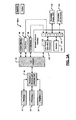
- Figure 3A is a functional block diagram of a first computer architecture for laptop and desktop computers with a secondary processor and a secondary display according to the present invention
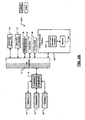
- Figure 3B is a functional block diagram of a second computer architecture for laptop and desktop computers with a secondary processor and a secondary display according to the present invention
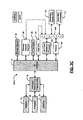
- Figure 3C is a functional block diagram of a third computer architecture for laptop and desktop computers with a secondary processor and a secondary display according to the present invention
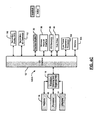
- Figure 4A is a functional block diagram of a fourth computer architecture that is similar to FIG. 3A and that powers the primary I/O interface during the inactive mode according to the present invention
- Figure 4B is a functional block diagram of a fifth computer architecture that is similar to FIG. 3B and that powers the primary I/O interface during the inactive mode according to the present invention
- Figure 4C is a functional block diagram of a sixth computer architecture that is similar to FIG. 3C and that powers the primary I/O interface during the inactive mode according to the present invention
- Figure 5A is a perspective view of a laptop computer including a secondary display according to the present invention.
- Figure 5B is a perspective view of a laptop computer including a secondary display and a secondary input/output device according to the present invention
- FIG. 5C is a perspective view of a laptop computer including a secondary display mounted inside of the laptop adjacent to the keyboard according to the present invention
- Figure 6A illustrates a front view of a desktop computer including an integrated secondary display according to the present invention
- Figure 6B illustrates a front view of a desktop computer including a peripheral secondary display according to the present invention.
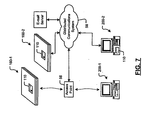
- Figure 7 illustrates laptop and desktop computers with secondary displays that are directly and/or wirelessly connected to a distributed communication system and a server.
- module, agent and/or device refers to an application specific integrated circuit (ASIC), an electronic circuit, a software or firmware program, a processor (shared, dedicated, or group) and memory that execute one or more software or firmware programs, a combinational logic circuit, or other suitable components that provide the described functionality.
- ASIC application specific integrated circuit
- processor shared, dedicated, or group
- memory that execute one or more software or firmware programs, a combinational logic circuit, or other suitable components that provide the described functionality.
- the present invention provides a novel computer architecture including a low-power secondary processor for operating a secondary display in laptop and desktop computers.
- the secondary processor dissipates very low power and supports a reduced set of Personal Digital Assistant-like services such as text messaging, e-mail messaging, securities quote retrieval and/or trading, hot zone identification, e-mail notification and the like when the computer is in an inactive mode.
- the low-power secondary processor and the secondary display are operated when the computer is in the inactive mode.
- the term inactive mode refers to low-power hibemating modes, off modes and/or other modes that do not provide sufficient power to support complex processing and graphics that are normally performed by the primary processor and the primary display of the laptop and desktop computers in the active mode.
- a computer architecture 100-1 in addition to the primary components described above in conjunction with FIG. 1, a computer architecture 100-1 according to the present invention further includes a low-power secondary processor 102 and secondary memory 104.
- the low-power secondary processor 102 and the secondary memory 104 communicate with a secondary input/output interface 108.
- the secondary memory 104 includes RAM, ROM, Flash, and/or any other type of electronic data storage. As can be appreciated, some or all of the primary memory 16 can be used instead of and/or in addition to the secondary memory 104.
- a secondary display 110 communicates with the I/O interface 108 and supports simple graphics such as the display of text, icons and other low resolution graphics.
- the secondary display 110 preferably includes a monochrome liquid crystal display (LCD), although a color LCD or other display types may be used.
- the secondary display 110 may support touch screen functionality.
- one or more secondary input/output devices 112 may be provided such as buttons, touch pads, scratch pads, pointing devices and the like.
- the low-power secondary processor 102, secondary memory 104, and secondary I/O interface 108 are integrated/embedded with a wireless network interface 120.
- the wireless network interface 120 supports a wireless network such as a wide area network, a local area network, a cellular network such as CDMA, GSM, GSM3G, GPRS systems or other cellular networks, a Bluetooth network, or any other wireless network type.
- the wireless network interface 38 may be compliant with IEEE Section 802.11, 802.11a, 802.11b, 802.11g, and/or 802.16, which are hereby incorporated by reference in their entirety.
- the secondary processor 102 also supports wireless network functionality in addition to the functionality that is described above and that is enabled when the computer is in the inactive mode.
- the wireless network interface 120 may include another processor that supports wireless network functionality in addition to the secondary processor 102.
- the low-power secondary processor 102, secondary memory 104, and secondary I/O interface 108 are integrated/embedded with a system on chip (SOC) (including a hard disk drive (HDD) and read channel) of a disk drive system 130.
- SOC system on chip
- the secondary processor 102 also supports disk drive functionality in addition to other functionality that is described above and that is enabled when the computer is in the inactive mode.
- the disk drive system 130 may have dedicated processor in addition to the secondary processor 102.
- the low-power secondary processor 102, memory 104, and interface 108 are not embedded in or otherwise integrated with other system components.
- the primary memory 16, primary processor 20, graphics 24, hub 18, and primary display 30 are in the inactive mode.
- the wireless network interface 120, low-power secondary processor 102, secondary memory 104, secondary I/O interface 108, secondary display 110, and secondary I/O devices 112 are powered and support the desired reduced functionality.
- the I/O interface 12 may be either inactive (as shown) or active.
- the disk drive system 34 may be powered as needed to store and retrieve data or not powered during the inactive mode. If the disk drive system 34 is not powered during the inactive mode, the secondary memory 104 should have a sufficient size to support the desired reduced functionality.
- the primary memory 16, primary processor 20, graphics 24, hub 18, and primary display 30 are inactive.
- the wireless network interface 120, low-power secondary processor 102, secondary memory 104, secondary I/O interface 108, secondary display 110, disk drive system 34 and secondary I/O devices 112 are powered and support the desired reduced functionality.
- the I/O interface 12 may be either inactive (as shown) or active.
- the primary memory 16, primary processor 20, graphics 24, hub 18, and primary display 30 are inactive.
- the wireless network interface 120, low-power secondary processor 102, secondary memory 104, secondary I/O interface 108, secondary display 110, and secondary I/O devices 112 are powered and support the desired reduced functionality.
- the I/O interface 12 may be either inactive (as shown) or active.
- the disk drive system 34 may be powered as needed to store and retrieve data or not powered during the inactive mode. If the disk drive system 34 is not powered during the inactive mode, the secondary memory 104 should have a sufficient size to support the desired reduced functionality.
- the low-power secondary processors 102 of the computer architectures 100 have sufficient processing power to drive the secondary displays 110.
- the secondary processors 102 also handle input and output events via the secondary I/O device(s) 112.
- the secondary processors 102 also preferably execute hot zone detecting (HZD) modules 190 (for example, shown in FIG. 3B) that sense hot zones and generate an icon, text or other visual message on the secondary display 110 to notify the user of the hot zone.
- HZD hot zone detecting
- the secondary processors 102 may also execute agent modules 194 (for example, shown in FIG. 3B) that access and retrieve securities quotes, e-mail, and the like from servers that are associated with the distributed communications system.
- agent modules 194 may also generate scrolling banners, icons, text or other visual messages on the secondary display 110 using the information that is retrieved.
- the user may also use the I/O devices 112 and/or touch pad to perform personal digital assistant -like (PDA-like) tasks such as to retrieve and respond to e-mails, to retrieve securities quotes, to perform securities trades, and/or other similar tasks.
- PDA-like personal digital assistant -like
- the computer architecture 110-4 employs the primary I/O interface 12 during the inactive mode.
- the primary I/O interface 12 remains fully or at least partially powered so that it can support the secondary functions.
- the secondary display 110 and the secondary I/O devices 112 communicate with the low power secondary processor 102 and memory 104, which are integrated/embedded with the wireless network interface 120, through the primary I/O interface 12.
- the disk drive 34 and/or the I/O devices 36 may also be powered during the inactive mode and may communicate with the low power secondary processor 102 and memory 104 through the primary I/O interface 12. If the primary I/O devices 36 are powered, the secondary I/O devices 112 may optionally be omitted. For example, a primary keyboard, mouse and/or other primary I/O device may be used for user interaction during the inactive mode.
- the computer architecture 110-5 employs the primary I/O interface 12 during the inactive mode.
- the primary I/O interface 12 remains fully or at least partially powered so that it can support the secondary functions.
- the secondary display 110 and the secondary I/O devices 112 communicate with the low power secondary processor 102 and memory 104, which are integrated/embedded with the disk drive 130, through the primary I/O interface 12.
- the wireless network interface 38 and/or the I/O devices 36 may also be powered during the inactive mode and may communicate with the low power secondary processor 102 and memory 104 through the primary I/O interface 12. If the primary I/O devices 36 are powered, the secondary I/O devices 112 may optionally be omitted.
- the primary keyboard, mouse and/or other primary I/O device may be used for user interaction during the inactive mode.
- the computer architecture 110-6 employs the primary I/O interface 12 during the inactive mode.
- the primary I/O interface 12 remains fully or at least partially powered so that it can support the secondary functions.
- the secondary display 110 and the secondary I/O device 112 communicate with the low power secondary processor 102 and memory 104 through the primary I/O interface 12.
- the disk drive 34, the wireless network interface 38 and/or the I/O devices 36 may also be powered during the inactive mode and may communicate with the low power secondary processor 102 and memory 104 through the primary I/O interface 12. If the primary I/O devices 36 are powered, the secondary I/O devices 112 may optionally be omitted. For example, the primary keyboard, mouse and/or other primary I/O device may be used for user interaction during the inactive mode.
- a laptop computer 160 includes the secondary display 110.
- the secondary display 110 can be arranged on a top side 166 of the laptop computer 160.
- Skilled artisans will appreciate that the secondary display 110 may be located in many other locations on the laptop 160 including, but not limited to, the front edges, inside of the laptop adjacent to the keyboard, or in any other suitable location.
- secondary I/O devices 170 may be provided such as but not limited to buttons, a scratch pad, a pointing device, a keyboard, a mini key pad, an alphanumeric key pad similar to a telephone and/or other devices.
- the secondary I/O devices 170 are located adjacent to the secondary display 110.
- the secondary display 110 is located adjacent to the keyboard on the inside of the laptop. Still other locations will be readily apparent.
- a desktop computer 200 includes the secondary display 110, which can be integrated with a computer enclosure 204 as shown. Skilled artisans will appreciate that there are a variety of other suitable locations on the enclosure 204, the keyboard (or other I/O device) and/or the monitor 206 for the secondary display 110.
- the secondary display 110 is connected as a peripheral device to the desktop computer 200.
- the secondary display 110 can also be connected to a laptop computer as a peripheral device as well.
- the low power secondary processor 102, the secondary memory 104 and/or the secondary I/O interface 108 may also be associated with the peripheral secondary display 110.
- the secondary processors 102 and secondary displays 110 that are associated with the laptop and desktop computers can be operated in a network, for example, wirelessly via the access point 56 and/or directly connected to the distributed communications system 58.
- the secondary processors 102 and secondary displays 110 provide the reduced set of services without requiring the laptop or desktop computer to be booted up.
- the secondary display and other components that are operated when the primary components are inactive may be powered by the battery that powers the laptop and/or via a secondary battery (not shown).
- the secondary battery is recharged by the main battery during the active mode.
Landscapes
- Engineering & Computer Science (AREA)
- Theoretical Computer Science (AREA)
- Physics & Mathematics (AREA)
- General Engineering & Computer Science (AREA)
- Computer Hardware Design (AREA)
- General Physics & Mathematics (AREA)
- Human Computer Interaction (AREA)
- Computing Systems (AREA)
- Mathematical Physics (AREA)
- Power Sources (AREA)
- User Interface Of Digital Computer (AREA)
- Calculators And Similar Devices (AREA)
- Controls And Circuits For Display Device (AREA)
Applications Claiming Priority (2)
| Application Number | Priority Date | Filing Date | Title |
|---|---|---|---|
| US779544 | 2004-02-13 | ||
| US10/779,544 US7421602B2 (en) | 2004-02-13 | 2004-02-13 | Computer with low-power secondary processor and secondary display |
Publications (2)
| Publication Number | Publication Date |
|---|---|
| EP1571535A2 true EP1571535A2 (de) | 2005-09-07 |
| EP1571535A3 EP1571535A3 (de) | 2010-03-24 |
Family
ID=34750450
Family Applications (1)
| Application Number | Title | Priority Date | Filing Date |
|---|---|---|---|
| EP05002059A Ceased EP1571535A3 (de) | 2004-02-13 | 2005-02-01 | Computer mit Sekundärprozessor und geringem Energieverbrauch sowie zweiten Bildschirm. |
Country Status (5)
| Country | Link |
|---|---|
| US (3) | US7421602B2 (de) |
| EP (1) | EP1571535A3 (de) |
| JP (1) | JP4963791B2 (de) |
| CN (1) | CN100573404C (de) |
| TW (1) | TWI368140B (de) |
Cited By (1)
| Publication number | Priority date | Publication date | Assignee | Title |
|---|---|---|---|---|
| WO2011129718A1 (ru) * | 2010-03-29 | 2011-10-20 | Mikheyev Alexander Alexandrovich | Универсальное устройство ввода информации в персональный компьютер (варианты) |
Families Citing this family (59)
| Publication number | Priority date | Publication date | Assignee | Title |
|---|---|---|---|---|
| US8749561B1 (en) | 2003-03-14 | 2014-06-10 | Nvidia Corporation | Method and system for coordinated data execution using a primary graphics processor and a secondary graphics processor |
| US7421602B2 (en) * | 2004-02-13 | 2008-09-02 | Marvell World Trade Ltd. | Computer with low-power secondary processor and secondary display |
| US7730335B2 (en) | 2004-06-10 | 2010-06-01 | Marvell World Trade Ltd. | Low power computer with main and auxiliary processors |
| US7788427B1 (en) | 2005-05-05 | 2010-08-31 | Marvell International Ltd. | Flash memory interface for disk drive |
| US7617359B2 (en) * | 2004-06-10 | 2009-11-10 | Marvell World Trade Ltd. | Adaptive storage system including hard disk drive with flash interface |
| US7702848B2 (en) * | 2004-06-10 | 2010-04-20 | Marvell World Trade Ltd. | Adaptive storage system including hard disk drive with flash interface |
| BRPI0419168B1 (pt) | 2004-09-24 | 2017-05-16 | Nokia Corp | dispositivo eletrônico compreendendo a detecção de uma entrada de um usuário durante um modo de operação inativo |
| US8743019B1 (en) | 2005-05-17 | 2014-06-03 | Nvidia Corporation | System and method for abstracting computer displays across a host-client network |
| US7539882B2 (en) * | 2005-05-30 | 2009-05-26 | Rambus Inc. | Self-powered devices and methods |
| US9846479B1 (en) * | 2005-05-30 | 2017-12-19 | Invent.Ly, Llc | Smart security device with monitoring mode and communication mode |
| US7779280B2 (en) * | 2005-09-16 | 2010-08-17 | Gary Stephen Shuster | Low power mode for portable computer system |
| TWI364669B (en) * | 2005-12-02 | 2012-05-21 | Elitegroup Computer Systems Co Ltd | Computer apparatus, wireless network transmission system and transmission method thereof |
| CN1992611B (zh) * | 2005-12-30 | 2010-05-12 | 联想(北京)有限公司 | 移动计算装置及其接收数据包的方法 |
| WO2007081218A1 (en) * | 2006-01-10 | 2007-07-19 | Cupp Computing As | Dual mode power-saving computing system |
| JP2007241747A (ja) * | 2006-03-09 | 2007-09-20 | Toshiba Corp | 情報処理装置およびメール受信方法 |
| US8775704B2 (en) * | 2006-04-05 | 2014-07-08 | Nvidia Corporation | Method and system for communication between a secondary processor and an auxiliary display subsystem of a notebook |
| US9195428B2 (en) * | 2006-04-05 | 2015-11-24 | Nvidia Corporation | Method and system for displaying data from auxiliary display subsystem of a notebook on a main display of the notebook |
| US20070242061A1 (en) * | 2006-04-14 | 2007-10-18 | Microsoft Corporation | Mobile auxiliary display model |
| US20080263324A1 (en) | 2006-08-10 | 2008-10-23 | Sehat Sutardja | Dynamic core switching |
| US8238233B2 (en) * | 2007-03-28 | 2012-08-07 | Intel Corporation | Maintaining network services across multiple physical interfaces |
| US7831850B2 (en) * | 2007-03-29 | 2010-11-09 | Microsoft Corporation | Hybrid operating systems for battery powered computing systems |
| CN101364210B (zh) * | 2007-08-06 | 2012-05-30 | 鸿富锦精密工业(深圳)有限公司 | 一种可扩展使用组成部件的便携式电脑 |
| US8225078B2 (en) * | 2007-08-30 | 2012-07-17 | International Business Machines Corporation | Document viewing mode for battery powered computing devices |
| US8615647B2 (en) | 2008-02-29 | 2013-12-24 | Intel Corporation | Migrating execution of thread between cores of different instruction set architecture in multi-core processor and transitioning each core to respective on / off power state |
| US20090259865A1 (en) * | 2008-04-11 | 2009-10-15 | Qualcomm Incorporated | Power Management Using At Least One Of A Special Purpose Processor And Motion Sensing |
| US20110213998A1 (en) * | 2008-06-11 | 2011-09-01 | John George Mathieson | System and Method for Power Optimization |
| US20110213950A1 (en) * | 2008-06-11 | 2011-09-01 | John George Mathieson | System and Method for Power Optimization |
| US20090309243A1 (en) * | 2008-06-11 | 2009-12-17 | Nvidia Corporation | Multi-core integrated circuits having asymmetric performance between cores |
| US20110213947A1 (en) * | 2008-06-11 | 2011-09-01 | John George Mathieson | System and Method for Power Optimization |
| CN101620462A (zh) * | 2008-07-03 | 2010-01-06 | 鸿富锦精密工业(深圳)有限公司 | 计算机装置 |
| US8736617B2 (en) | 2008-08-04 | 2014-05-27 | Nvidia Corporation | Hybrid graphic display |
| US7885060B2 (en) * | 2008-08-11 | 2011-02-08 | Dell Products L.P. | Auxiliary display systems and methods |
| US20100058082A1 (en) * | 2008-08-27 | 2010-03-04 | Lenovo (Singapore) Ple., Ltd. | Maintaining network link during suspend state |
| US8799425B2 (en) | 2008-11-24 | 2014-08-05 | Nvidia Corporation | Configuring display properties of display units on remote systems |
| US20100138768A1 (en) * | 2008-12-02 | 2010-06-03 | Nvidia Corporation | Simplifying Configuration Of Multiple Display Units For Common Use |
| US9075559B2 (en) * | 2009-02-27 | 2015-07-07 | Nvidia Corporation | Multiple graphics processing unit system and method |
| US9135675B2 (en) | 2009-06-15 | 2015-09-15 | Nvidia Corporation | Multiple graphics processing unit display synchronization system and method |
| US8766989B2 (en) * | 2009-07-29 | 2014-07-01 | Nvidia Corporation | Method and system for dynamically adding and removing display modes coordinated across multiple graphics processing units |
| TWI463322B (zh) * | 2009-08-06 | 2014-12-01 | Asustek Comp Inc | 具有雙主機之電腦系統 |
| US9111325B2 (en) * | 2009-12-31 | 2015-08-18 | Nvidia Corporation | Shared buffer techniques for heterogeneous hybrid graphics |
| US8780122B2 (en) | 2009-09-16 | 2014-07-15 | Nvidia Corporation | Techniques for transferring graphics data from system memory to a discrete GPU |
| JP5744897B2 (ja) * | 2009-12-22 | 2015-07-08 | ノキア コーポレイション | サブシステムを介してエネルギー管理を実行するための方法および装置 |
| US9081573B2 (en) * | 2010-02-19 | 2015-07-14 | Intel Corporation | Method and apparatus for automatically repainting an external display during transitioning to a low power state |
| KR20130087853A (ko) * | 2012-01-30 | 2013-08-07 | 삼성전자주식회사 | 파워 컨트롤 시스템 및 그 동작 방법 |
| JP2013175127A (ja) * | 2012-02-27 | 2013-09-05 | Brother Ind Ltd | 入出力設定プログラム、出力設定プログラム、及び、データ処理装置 |
| US9569279B2 (en) | 2012-07-31 | 2017-02-14 | Nvidia Corporation | Heterogeneous multiprocessor design for power-efficient and area-efficient computing |
| US9155046B2 (en) * | 2012-09-12 | 2015-10-06 | Intel Corporation | Optimizing semi-active workloads |
| GB201217175D0 (en) * | 2012-09-26 | 2012-11-07 | Yota Devices Ipr Ltd | Device with screen |
| US9613469B2 (en) | 2013-03-15 | 2017-04-04 | Bosch Automotive Service Solutions Inc. | Graphical user interface with vehicle scanned function |
| US9818379B2 (en) | 2013-08-08 | 2017-11-14 | Nvidia Corporation | Pixel data transmission over multiple pixel interfaces |
| KR102137097B1 (ko) * | 2014-08-21 | 2020-07-23 | 삼성전자주식회사 | 소모 전류 저감 방법 및 이를 지원하는 전자 장치 |
| KR102296909B1 (ko) * | 2015-01-09 | 2021-09-01 | 삼성전자주식회사 | 보조 배터리를 내장한 전자장치 및 보조 배터리 충전 방법 |
| US10163309B1 (en) * | 2017-06-27 | 2018-12-25 | Ethicon Llc | Surgical instrument with integrated and independently powered displays |
| US11202388B2 (en) * | 2017-10-30 | 2021-12-14 | Telefonaktiebolaget Lm Ericsson (Publ) | Living room convergence device |
| EP3665547A4 (de) | 2017-11-07 | 2021-03-24 | Hewlett-Packard Development Company, L.P. | Zeitlich freigegebene daten |
| US11048301B2 (en) | 2019-01-11 | 2021-06-29 | Datalogic Ip Tech S.R.L. | Multiple displays management in barcode reading applications |
| JP7006648B2 (ja) * | 2019-04-02 | 2022-01-24 | カシオ計算機株式会社 | 電子機器、制御方法及びプログラム |
| JP7003962B2 (ja) * | 2019-04-02 | 2022-01-21 | カシオ計算機株式会社 | 電子機器、制御方法及びプログラム |
| CN111586653B (zh) * | 2020-04-09 | 2023-04-28 | 出门问问信息科技有限公司 | 一种数据读取和存储方法、装置以及计算机可读存储介质 |
Citations (5)
| Publication number | Priority date | Publication date | Assignee | Title |
|---|---|---|---|---|
| US20020086719A1 (en) | 2000-12-29 | 2002-07-04 | Pankaj Kedia | Low power subsystem for portable computers |
| US20020103949A1 (en) | 2001-01-26 | 2002-08-01 | Watts La Vaughn F. | Combination personal data assistant and personal computing device with master slave input output |
| US20020103951A1 (en) | 2001-01-26 | 2002-08-01 | Huber Gary Douglas | Removable personal digital assistant in a dual personal computer/personal digital assistant computer architecture |
| US20030135771A1 (en) | 2001-03-16 | 2003-07-17 | Cupps Bryan T. | Novel personal electronics device with a dual core processor |
| EP1355224A2 (de) * | 2002-04-17 | 2003-10-22 | Microsoft Corporation | Verminderung des Leerlaufmodeenergieverbrauchs in einem vernetzten batteriegespeisten Gerät |
Family Cites Families (24)
| Publication number | Priority date | Publication date | Assignee | Title |
|---|---|---|---|---|
| EP0667579A1 (de) | 1994-02-09 | 1995-08-16 | Ballard Synergy Corporation | Cache-Speicher für optische Speichervorrichtung |
| GB2310513B (en) | 1996-02-20 | 2000-02-16 | Ibm | Computer with reduced power consumption |
| US5768164A (en) * | 1996-04-15 | 1998-06-16 | Hewlett-Packard Company | Spontaneous use display for a computing system |
| JP3101592B2 (ja) | 1997-09-03 | 2000-10-23 | インターナショナル・ビジネス・マシーンズ・コーポレ−ション | オーディオ機能を持つ外部記憶装置、及びオーディオ機能を持つ外部記憶装置を搭載可能な情報処理装置 |
| US6735708B2 (en) * | 1999-10-08 | 2004-05-11 | Dell Usa, L.P. | Apparatus and method for a combination personal digital assistant and network portable device |
| AU2001235012A1 (en) | 2000-02-15 | 2001-08-27 | O2 Micro, Inc. | Audio controller for portable electronic devices |
| JP2002007373A (ja) | 2000-06-20 | 2002-01-11 | Fujitsu Ltd | 半導体装置 |
| JP2002073497A (ja) * | 2000-09-04 | 2002-03-12 | Sharp Corp | 情報処理装置及び情報処理方法 |
| US6735663B2 (en) * | 2000-12-18 | 2004-05-11 | Dell Products L.P. | Combination personal data assistant and personal computing device |
| US20020129288A1 (en) * | 2001-03-08 | 2002-09-12 | Loh Weng Wah | Computing device having a low power secondary processor coupled to a keyboard controller |
| JP2004535713A (ja) | 2001-06-04 | 2004-11-25 | エヌシーティー グループ インコーポレーテッド | 通信回路網の有効なバンド幅を大きくすることためのシステムと方法 |
| WO2003029943A2 (en) * | 2001-09-29 | 2003-04-10 | International Business Machines Corporation | A method for sync-ahead on a dual mode high-power-low-power device and apparatus therefore |
| US8181118B2 (en) * | 2001-11-28 | 2012-05-15 | Intel Corporation | Personal information device on a mobile computing platform |
| JP2003167656A (ja) | 2001-11-29 | 2003-06-13 | Sony Corp | 携帯型情報機器 |
| US7424623B2 (en) | 2002-03-28 | 2008-09-09 | O2 Micro International Limited | Personal computer integrated with personal digital assistant |
| TW552499B (en) | 2002-04-12 | 2003-09-11 | Asustek Comp Inc | Instantaneously switching apparatus of power source efficiency mode for computer system |
| JP2003323417A (ja) | 2002-04-30 | 2003-11-14 | Matsushita Electric Ind Co Ltd | 半導体集積回路装置 |
| US7080271B2 (en) * | 2003-02-14 | 2006-07-18 | Intel Corporation | Non main CPU/OS based operational environment |
| US7221331B2 (en) * | 2003-05-05 | 2007-05-22 | Microsoft Corporation | Method and system for auxiliary display of information for a computing device |
| US7240228B2 (en) * | 2003-05-05 | 2007-07-03 | Microsoft Corporation | Method and system for standby auxiliary processing of information for a computing device |
| US20050066290A1 (en) * | 2003-09-16 | 2005-03-24 | Chebolu Anil Kumar | Pop-up capture |
| US20050066209A1 (en) * | 2003-09-18 | 2005-03-24 | Kee Martin J. | Portable electronic device having high and low power processors operable in a low power mode |
| US7925298B2 (en) * | 2003-09-18 | 2011-04-12 | Vulcan Portals Inc. | User interface for a secondary display module of a mobile electronic device |
| US7421602B2 (en) * | 2004-02-13 | 2008-09-02 | Marvell World Trade Ltd. | Computer with low-power secondary processor and secondary display |
-
2004
- 2004-02-13 US US10/779,544 patent/US7421602B2/en not_active Expired - Lifetime
-
2005
- 2005-01-19 TW TW094101598A patent/TWI368140B/zh not_active IP Right Cessation
- 2005-02-01 EP EP05002059A patent/EP1571535A3/de not_active Ceased
- 2005-02-05 CN CNB2005100075297A patent/CN100573404C/zh not_active Expired - Lifetime
- 2005-02-09 JP JP2005033647A patent/JP4963791B2/ja not_active Expired - Lifetime
-
2008
- 2008-08-19 US US12/229,034 patent/US8151129B2/en not_active Expired - Lifetime
-
2012
- 2012-04-02 US US13/437,490 patent/US8341447B2/en not_active Expired - Fee Related
Patent Citations (5)
| Publication number | Priority date | Publication date | Assignee | Title |
|---|---|---|---|---|
| US20020086719A1 (en) | 2000-12-29 | 2002-07-04 | Pankaj Kedia | Low power subsystem for portable computers |
| US20020103949A1 (en) | 2001-01-26 | 2002-08-01 | Watts La Vaughn F. | Combination personal data assistant and personal computing device with master slave input output |
| US20020103951A1 (en) | 2001-01-26 | 2002-08-01 | Huber Gary Douglas | Removable personal digital assistant in a dual personal computer/personal digital assistant computer architecture |
| US20030135771A1 (en) | 2001-03-16 | 2003-07-17 | Cupps Bryan T. | Novel personal electronics device with a dual core processor |
| EP1355224A2 (de) * | 2002-04-17 | 2003-10-22 | Microsoft Corporation | Verminderung des Leerlaufmodeenergieverbrauchs in einem vernetzten batteriegespeisten Gerät |
Cited By (1)
| Publication number | Priority date | Publication date | Assignee | Title |
|---|---|---|---|---|
| WO2011129718A1 (ru) * | 2010-03-29 | 2011-10-20 | Mikheyev Alexander Alexandrovich | Универсальное устройство ввода информации в персональный компьютер (варианты) |
Also Published As
| Publication number | Publication date |
|---|---|
| US20120192001A1 (en) | 2012-07-26 |
| CN1655090A (zh) | 2005-08-17 |
| US20050182980A1 (en) | 2005-08-18 |
| TW200530839A (en) | 2005-09-16 |
| US20080320321A1 (en) | 2008-12-25 |
| US8341447B2 (en) | 2012-12-25 |
| JP4963791B2 (ja) | 2012-06-27 |
| JP2005228327A (ja) | 2005-08-25 |
| US7421602B2 (en) | 2008-09-02 |
| US8151129B2 (en) | 2012-04-03 |
| EP1571535A3 (de) | 2010-03-24 |
| CN100573404C (zh) | 2009-12-23 |
| TWI368140B (en) | 2012-07-11 |
Similar Documents
| Publication | Publication Date | Title |
|---|---|---|
| US7421602B2 (en) | Computer with low-power secondary processor and secondary display | |
| US9607579B2 (en) | Personal information device on a mobile computing platform | |
| US7254730B2 (en) | Method and apparatus for a user to interface with a mobile computing device | |
| US7231198B2 (en) | Context-dependent operation of computer devices | |
| KR101099314B1 (ko) | 정보의 보조 표시를 위한 시스템 | |
| EP1594037A2 (de) | Kontextbewusste Zusatzanzeige und Anwendungen | |
| EP2224323A1 (de) | Verfahren und tragbares elektronisches Gerät zur Auslösung von Werbung auf einem Bildschirm | |
| US20060130072A1 (en) | Extensible architecture for auxiliary displays | |
| JP2007506190A (ja) | 低電力モードで動作可能な低電力プロセッサおよび高電力プロセッサを有するポータブル電子デバイス | |
| JP2007506188A (ja) | スタンドアローンおよびシステム機能を有するポータブル電子デバイスのための着脱可能なモジュール | |
| US20170309235A1 (en) | Method and portable electronic device having a double screen | |
| US7203516B2 (en) | Multi-functional mobile terminal for independently operating heterogeneous devices and method for executing independent operation using the same | |
| US20080195972A1 (en) | System and method for accessing an icon of a handheld electronic device | |
| CN108234744A (zh) | 一种推送消息管理方法及移动终端 | |
| US20140372930A1 (en) | Method and device for displaying a list view through a sliding operation | |
| US20110258429A1 (en) | System and Method for Information Handling System Low Power Network Communications | |
| US8599158B2 (en) | Multi-surface touch sensitive apparatus and method | |
| Hu et al. | Internet-enabled mobile handheld devices for mobile commerce | |
| JP5044961B2 (ja) | クライアント装置およびプログラム | |
| Schiefer et al. | Taxonomy for mobile Terminals | |
| CN116133091A (zh) | 消息处理方法、装置和第一电子设备 | |
| CN110286420A (zh) | 接近传感器的校准方法、装置、存储介质和电子设备 | |
| US20090157871A1 (en) | Information Processing Apparatus and Wireless Connection Service Availability Notification Method | |
| KR20120031558A (ko) | 휴대용 전자기기 상호간을 연결하기 위한 인터페이스 제공방법 및 그 방법에 의한 휴대용 전자기기 | |
| KR20050080764A (ko) | 개인용 컴퓨터에서의 디스플레이 제어방법 |
Legal Events
| Date | Code | Title | Description |
|---|---|---|---|
| PUAI | Public reference made under article 153(3) epc to a published international application that has entered the european phase |
Free format text: ORIGINAL CODE: 0009012 |
|
| AK | Designated contracting states |
Kind code of ref document: A2 Designated state(s): AT BE BG CH CY CZ DE DK EE ES FI FR GB GR HU IE IS IT LI LT LU MC NL PL PT RO SE SI SK TR |
|
| AX | Request for extension of the european patent |
Extension state: AL BA HR LV MK YU |
|
| PUAL | Search report despatched |
Free format text: ORIGINAL CODE: 0009013 |
|
| AK | Designated contracting states |
Kind code of ref document: A3 Designated state(s): AT BE BG CH CY CZ DE DK EE ES FI FR GB GR HU IE IS IT LI LT LU MC NL PL PT RO SE SI SK TR |
|
| AX | Request for extension of the european patent |
Extension state: AL BA HR LV MK YU |
|
| 17P | Request for examination filed |
Effective date: 20100601 |
|
| 17Q | First examination report despatched |
Effective date: 20100721 |
|
| AKX | Designation fees paid |
Designated state(s): DE FR GB |
|
| STAA | Information on the status of an ep patent application or granted ep patent |
Free format text: STATUS: THE APPLICATION HAS BEEN REFUSED |
|
| 18R | Application refused |
Effective date: 20120828 |