EP1753207B1 - Autokonfiguration in einem ATM-Netz - Google Patents
Autokonfiguration in einem ATM-Netz Download PDFInfo
- Publication number
- EP1753207B1 EP1753207B1 EP05017322A EP05017322A EP1753207B1 EP 1753207 B1 EP1753207 B1 EP 1753207B1 EP 05017322 A EP05017322 A EP 05017322A EP 05017322 A EP05017322 A EP 05017322A EP 1753207 B1 EP1753207 B1 EP 1753207B1
- Authority
- EP
- European Patent Office
- Prior art keywords
- dhcp
- atm
- leaf node
- facility
- connection information
- Prior art date
- Legal status (The legal status is an assumption and is not a legal conclusion. Google has not performed a legal analysis and makes no representation as to the accuracy of the status listed.)
- Expired - Lifetime
Links
Images
Classifications
-
- H—ELECTRICITY
- H04—ELECTRIC COMMUNICATION TECHNIQUE
- H04L—TRANSMISSION OF DIGITAL INFORMATION, e.g. TELEGRAPHIC COMMUNICATION
- H04L12/00—Data switching networks
- H04L12/54—Store-and-forward switching systems
- H04L12/56—Packet switching systems
- H04L12/5601—Transfer mode dependent, e.g. ATM
-
- H—ELECTRICITY
- H04—ELECTRIC COMMUNICATION TECHNIQUE
- H04L—TRANSMISSION OF DIGITAL INFORMATION, e.g. TELEGRAPHIC COMMUNICATION
- H04L49/00—Packet switching elements
- H04L49/60—Software-defined switches
- H04L49/606—Hybrid ATM switches, e.g. ATM&STM, ATM&Frame Relay or ATM&IP
-
- H—ELECTRICITY
- H04—ELECTRIC COMMUNICATION TECHNIQUE
- H04L—TRANSMISSION OF DIGITAL INFORMATION, e.g. TELEGRAPHIC COMMUNICATION
- H04L61/00—Network arrangements, protocols or services for addressing or naming
- H04L61/50—Address allocation
- H04L61/5007—Internet protocol [IP] addresses
- H04L61/5014—Internet protocol [IP] addresses using dynamic host configuration protocol [DHCP] or bootstrap protocol [BOOTP]
-
- H—ELECTRICITY
- H04—ELECTRIC COMMUNICATION TECHNIQUE
- H04L—TRANSMISSION OF DIGITAL INFORMATION, e.g. TELEGRAPHIC COMMUNICATION
- H04L12/00—Data switching networks
- H04L12/54—Store-and-forward switching systems
- H04L12/56—Packet switching systems
- H04L12/5601—Transfer mode dependent, e.g. ATM
- H04L2012/5625—Operations, administration and maintenance [OAM]
-
- H—ELECTRICITY
- H04—ELECTRIC COMMUNICATION TECHNIQUE
- H04L—TRANSMISSION OF DIGITAL INFORMATION, e.g. TELEGRAPHIC COMMUNICATION
- H04L12/00—Data switching networks
- H04L12/54—Store-and-forward switching systems
- H04L12/56—Packet switching systems
- H04L12/5601—Transfer mode dependent, e.g. ATM
- H04L2012/5625—Operations, administration and maintenance [OAM]
- H04L2012/5626—Network management, e.g. Intelligent nets
-
- H—ELECTRICITY
- H04—ELECTRIC COMMUNICATION TECHNIQUE
- H04L—TRANSMISSION OF DIGITAL INFORMATION, e.g. TELEGRAPHIC COMMUNICATION
- H04L12/00—Data switching networks
- H04L12/54—Store-and-forward switching systems
- H04L12/56—Packet switching systems
- H04L12/5601—Transfer mode dependent, e.g. ATM
- H04L2012/5638—Services, e.g. multimedia, GOS, QOS
- H04L2012/5665—Interaction of ATM with other protocols
- H04L2012/5667—IP over ATM
-
- H—ELECTRICITY
- H04—ELECTRIC COMMUNICATION TECHNIQUE
- H04L—TRANSMISSION OF DIGITAL INFORMATION, e.g. TELEGRAPHIC COMMUNICATION
- H04L12/00—Data switching networks
- H04L12/54—Store-and-forward switching systems
- H04L12/56—Packet switching systems
- H04L12/5601—Transfer mode dependent, e.g. ATM
- H04L2012/5685—Addressing issues
Definitions
- the invention relates to methods and apparatus for configuring a first device of an ATM network, wherein the first device sends a DHCP request to a second device using first ATM connection information, such as in EP 1511332 A disclosed.
- ATM-based ATM: Asynchronous Transfer Mode
- IP-based IP: Internet Protocol
- GSM Global System for Mobile Communications
- GSM Global System for Mobile Communications
- UMTS Universal Mobile Telecommunications System
- a configuration of the IP interface of the device must be done. Suitable configuration methods for this purpose are e.g. BOOTP (Bootstrap Protocol) and DHCP (Dynamic Host Configuration Protocol).
- the invention has for its object to provide methods for configuration within an ATM and IP-based network. Furthermore, suitable facilities for carrying out the methods will be presented.
- the first device sends a DHCP request (DHCP: Dynamic Host Configuration Protocol) to a second device using first ATM connection information. Furthermore, the first device receives a DHCP response transmitted from the second device to the first device using the first ATM connection information.
- the DHCP response contains information about second ATM connection information. The first device uses the second ATM connection information to send further messages.
- the first device that can be configured by the DHCP message exchange is e.g. to an end node of an ATM network, which is connected to one or more other nodes of the ATM network.
- the second device is preferably a DHCP server which serves to receive and send DHCP messages and thus is the end node of the DHCP communication with the first device.
- the transmission of DHCP messages between the first and second devices may be done directly or through one or more nodes forwarding the DHCP messages.
- the message transmission over the individual nodes between the first and the second device can be partially or completely via ATM.
- the DHCP messages are messages that conform to the specification of the DHCP standard.
- the first ATM connection information is used to transmit the DHCP messages.
- This can be a specific PVC (Permanent Virtual Circuit).
- the PVC is characterized by a pair of values VPI (Virtual Path Identifier) and VCI (Virtual Channel Identifier).
- the sending of further messages using the second ATM connection information is message transmission to at least one device that is different from the second device.
- the second device is not the final recipient of the other messages, but another device.
- the second ATM connection information via which the first device was informed by the second device is used for communication of the first device with another device.
- the second ATM connection information can also be used for a message transmission to the second device.
- a second device receives a DHCP request transmitted from the first device to the second device using first ATM connection information.
- the second device sends a DHCP response using the first ATM connection information to the first device, the DHCP response including information about second ATM connection information.
- the first ATM connection information corresponds to an ATM connection established before the sending of the DHCP request.
- a default connection i. a default connection, which is set up and can be used for configuration purposes.
- the DHCP request and the DHCP response between the first and the second device are forwarded by at least one non-DHCP-capable device.
- a device of the ATM network non-DHCP capable, however, while it may receive and forward DHCP messages like other ATM messages, it can not understand and process the DHCP content of the messages as such.
- the DHCP messages between the first and second devices may be forwarded through one or more IP- or DHCP-enabled devices.
- an IP configuration and an ATM configuration of the first device are performed using information contained in the DHCP response.
- the ATM configuration is a configuration of the ATM interface of the first device, i. a configuration with respect to the layer or layers of the protocol stack of the first device, which correspond to the ATM protocol. The same applies to the IP configuration.
- the information required for the IP configuration is contained by default in a DHCP response.
- the second ATM connection information used for the ATM configuration may be e.g. be contained in an optional field of DHCP response.
- the method is used with respect to a plurality of first devices, wherein the first ATM connection information is the same for the plurality of first devices.
- the first ATM connection information is the same for the plurality of first devices.
- several devices of the ATM network are configured, wherein these multiple devices may be connected to the same or different ATM nodes.
- the multiple devices to be configured use the same ATM connection information for configuration purposes.
- a third device in each case receives a DHCP request sent by the first plurality of devices using the first ATM connection information, before the forwarding at the ATM frame level and multiplexes the DHCP requests before forwarding. This approach allows the use of the same ATM connection information for multiple devices to be configured connected to the same ATM node.
- the first means is a base station of a mobile radio communication system, such as e.g. one system according to the UMTS standard, and the second one is a DHCP server.
- a mobile radio communication system such as e.g. one system according to the UMTS standard
- the second one is a DHCP server.
- the first ATM connection information from the first device is used exclusively for sending DHCP messages. This means that other ATM connection information is used for the transmission of other messages, since the first ATM connection information is reserved for configuration purposes.
- a first device has means for sending a DHCP request to a further device using first ATM connection information, means for receiving a DHCP transmitted from the further device to the device using the first ATM connection information A response, wherein the DHCP response includes information about second ATM connection information, and means for using the second ATM connection information to send further messages.
- a second ATM network device comprises means for receiving a DHCP request transmitted from another device using first ATM connection information to the device, and means for sending a DHCP response using the first ATM connection information to the device another device, wherein the DHCP response contains information about second ATM connection information.
- the two devices according to the invention are particularly suitable for carrying out the method according to the invention, and this can also apply to the refinements and developments. For this they may include other suitable means.
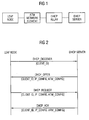
- FIG. 1 shows a section of a communication network, which includes the devices LEAF NODE, ATM NETWORK ELEMENT, DHCP RELAY and DHCP SERVER.
- the connections between the LEAF NODE and ATM NETWORK ELEMENT devices, as well as the ATM NETWORK ELEMENT and DHCP RELAY devices, are ATM connections.
- the devices LEAF NODE, ATM NETWORK ELEMENT, DHCP RELAY are thus part of an ATM network.
- the DHCP SERVER device is connected to the ATM network via the DHCP RELAY device. It is also possible that the device DHCP RELAY is connected via ATM to the device ATM NETWORK ELEMENT, in this case no device DHCP RELAY is necessary.
- the communication network may be, for example, the O & M (Operation and Maintenance) network of a Mobile communication system according to the standard UTMS act.
- the device LEAF NODE eg a base station of the UTMS mobile radio communication system, should be reconfigured or reconfigured.
- the device LEAF NODE may have been newly inserted into the ATM network or its position within the ATM network may have been changed.
- DHCP Dynamic Host Configuration Protocol
- Droms Dynamic Host Configuration Protocol, RFC 2131, IETF, March 1997 ,
- the LEAF NODE facility receives its IP address from the DHCP SERVER facility.
- the end nodes of the DHCP communication are thus the LEAF NODE and DHCP SERVER devices.
- the process of DHCP communication is in FIG. 2 shown.
- the ATM NETWORK NODE and DHCP RELAY facilities forwarding the messages between the LEAF NODE and DHCP SERVER devices are in FIG. 2 not shown.
- the devices LEAF NODE and DHCP RELAY are part of an ATM network, there must be a PVC (permanent virtual circuit) between them. This is characterized by the parameters VPI (Virtual Path Identifier) and VCI (Virtual Channel Identifier).
- VPI Virtual Path Identifier
- VCI Virtual Channel Identifier
- the use of a default PVC means that the LEAF NODE device must be informed of the VCI and VPI parameters to be used by it for the default PVC before the start of the configuration.
- a default PVC means that the devices which are not to be configured, but which have messages in the context of Receive and send configuration, ie the devices ATM NETWORK ELEMENT and DHCP RELAY, which each know for the default PVC to use parameters VCI and VPI and thus the default PVC is reserved for configuration operations.
- the names of the messages sent between the devices LEAF NODE and DHCP SERVER are indicated by an arrow, and information contents of the messages are indicated by the respective arrow in square brackets.
- the device LEAF NODE using the default PVC, sends the message DHCP_DISCOVER to the device DHCP SERVER, which includes an identification information CLIENT_ID of the device LEAF NODE.
- the device DHCP SERVER responds to the device LEAF NODE with a message DHCP_OFFER, which in addition to the identification information CLIENT_ID of the device LEAF NODE comprises IP configuration data IP_CONFIG and ATM configuration data ATM_CONFIG for the device LEAF NODE.
- the IP configuration data IP_CONFIG assign the LEAF NODE device an IP address.
- the ATM configuration data ATM_CONFIG indicates parameters VPI and VCI to be used by the device LEAF NODE for future ATM communication. These parameters VPI and VCI differ from the parameters of the default PVC used by the device LEAF NODE for the configuration.
- the future ATM communication may be, for example, a communication between the device LEAF NODE and a device responsible for the control and / or maintenance of the device LEAF NODE, such as the communication with a RNC (Radio Network Controller) or with an O & M (Operation and Maintenance) establishment of a UMTS mobile radio communication system.
- RNC Radio Network Controller
- O & M Operaation and Maintenance
- a default PVC is used for the configuration of the device LEAF NODE, wherein as part of the configuration in the device LEAF NODE a new PVC is configured, which allows for ATM communication following the configuration is used.
- the ATM configuration data ATM_CONFIG can also be used to configure a plurality of PVCs in the LEAF NODE device.
- the device LEAF NODE responds to the message DHCP_OFFER according to the usual DHCP method with a message DHCP_REQUEST, which repeats the identification information CLIENT_ID of the device LEAF NODE, the IP configuration data IP_CONFIG and the ATM configuration data ATM_CONFIG.
- the device DHCP SERVER responds to the message DHCP_REQUEST according to the usual DHCP method with a message DHCP_ACK which repeats the identification information CLIENT_ID of the device LEAF NODE, and the IP configuration data IP_CONFIG used in the future by the device LEAF NODE and the ATM configuration data ATM_CONFIG indicates.
- the DHCP messages DHCP_DISCOVER, DHCP_OFFER, DHCP_REQUEST and DHCP_ACK are usually sent by broadcast to all nodes of a network section. With ATM networks, however, a broadcast transmission is not possible.
- the default PVC is used for sending DHCP messages.
- the default PVC is not used for sending non-DHCP messages. To indicate that it is unable to receive unicast messages before completing the configuration, i. that it is not possible to address and send messages to the LEAF NODE device prior to completion of the configuration, the LEAF NODE device sets a broadcast bit in the DHCP messages.
- the DHCP enables the configuration of the IP interface according to the DHCP standard.
- the DHCP messages include DHCP_OFFER, DHCP_REQUEST, and
- DHCP_ACK also the ATM configuration data ATM_CONFIG. This can be realized by using according to the DHCP standard defined optional fields, described eg in S. Alexander, R. Droms: DHCP options and BOOTP vendor extensions, RFC 2132, IETF, March 1997.
- the ATM configuration data ATM_CONFIG can be inserted in these optional fields.
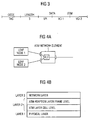
- FIG. 3 shows the structure of an optional additional field of a DHCP message, which is used to transmit the ATM configuration data ATM_CONFIG.
- the identification information CODE of the additional field This is a number TAG that can have values set in accordance with the DHCP standard.
- the length specification LENGTH which has the value 3, since 3 octets are required for the following content DATA ITEM of the optional additional field.
- the content DATA ITEM is composed of the one-byte specification VPI of the VPI of the ATM configuration data ATM_CONFIG and the two-byte specification VCI1 and VCI2 of the VCI of the ATM configuration data ATM_CONFIG.
- the local IP and ATM configuration takes place in the device LEAF NODE.
- the LEAF NODE device checks to see if it matches the message DHCP_ACK. If there is a mismatch, the PVC that has already been set up is reconfigured according to the message DHCP_ACK.
- the IP interface is configured according to the message of the DHCP_ACK message and linked to the new PVC. Furthermore, the default PVC is linked to the interface so that the default PVC is used for DHCP messages.
- the LEAF NODE devices reconfigures the IP interface back to the unconfigured state and performs the reconfiguration using the Default PVC by. For the messages except the DHCP messages, the newly created PVC is used.
- FIG. 4a shows the case that the device ATM NETWORK ELEMENT is connected to the two devices LEAF NODE 1 and LEAF NODE 2.
- FLF Frame Level Forwarding
- FIG. 4b shows the construction of the lowest three protocol layers LAYER 1, LAYER 2 and LAYER 3 of the ISO / OSI protocol stack of the device ATM NETWORK ELEMENT.
- the lowest layer LAYER 1 represents the physical layer PHYSICAL LAYER, as transmission method of the physical layer eg SDH (Synchronous Digital Hierarchy) or PDH (Plesiochronous Digital Hierarchy) can be used.
- the second layer LAYER 2 consists of an ATM layer ATM LAYER CELL LEVEL, on which ATM cells are considered, and an ATM adaptation layer ATM ADAPTION LAYER FRAME LEVEL on which AAL frames are viewed.
- the third layer, LAYER 3, is the network layer NETWORK LAYER, which uses IP.
- the multiplexing of the messages of the two devices LEAF NODE 1 and LEAF NODE 2 takes place on the ATM adaptation layer ATM ADAPTION LAYER FRAME LEVEL.
- the multiplexing described makes it possible to use the same default PVC for the entire ATM network, which reduces the number of PVCs to be reserved for the configuration.
- the configuration of the devices ATM NETWORK ELEMENT and DHCP RELAY is the FIG. 1 as follows: the ATM NETWORK ELEMENT device is a node of the ATM network which is not DHCP enabled. This handles the DHCP messages of the FIG. 2 like other ATM messages and forwards them according to the parameters VPI and VCI over ATM.
- the device DHCP RELAY is a DHCP-capable node, which recognizes the DHCP content of the DHCP messages and accordingly forwards them to the device responsible for DHCP communications device DHCP SERVER or DHCP server sent from the device DHCP SERVER Receives and forwards messages.
- the DHCP RELAY device is the LEAF NODE device in terms of IP interface, the first node on the way to the DHCP SERVER device.
- the invention thus makes it possible By using a default PVC, non-DHCP enabled ATM nodes support the DHCP process by forwarding DHCP messages.
- the ATM NETWORK ELEMENT device between the LEAF NODE device and the DHCP RELAY device, there may be a plurality of non-IP or DHCP enabled devices.
- the device ATM NETWORK ELEMENT is not present, so that the devices LEAF NODE sends DHCP messages directly to the device DHCP RELAY. It is also possible that the facility sends LEAF NODE DHCP messages directly to the DHCP SERVER facility. The facilities LEAF NODE also uses the default PVC in these cases.
- the described approach enables the autoconfiguration of an ATM network device, both in terms of IP configuration and in terms of configuration the configuration of the ATM interface.
- a modification of ATM nor a modification of DHCP is required, with respect to DHCP is only exploited that reserved for manufacturer-specific information reserved fields are used to transmit the ATM configuration data.
- a manual configuration of the device could take place. For this, a technician would need to enter the appropriate configuration data at the facility's location. This proves to be expensive and thus disadvantageous in a large number of devices to be configured.
- the invention is applicable both to the initial installation or configuration of a device, as well as to a reconfiguration of a previously configured in the ATM network device, the reconfiguration can affect the IP and / or the ATM interface.
Landscapes
- Engineering & Computer Science (AREA)
- Computer Networks & Wireless Communication (AREA)
- Signal Processing (AREA)
- Data Exchanges In Wide-Area Networks (AREA)
- Glass Compositions (AREA)
- Small-Scale Networks (AREA)
Description
- Die Erfindung betrifft Verfahren und Vorrichtungen zum Konfigurieren einer ersten Einrichtung eines ATM-Netzes, bei dem die erste Einrichtung unter Verwendung von ersten ATM-Verbindungsinformationen eine DHCP-Anfrage an eine zweite Einrichtung versendet, wie z.B. in
EP 1511332 A offenbart. - In Kommunikationssystemen werden Nachrichten zwischen Sender und Empfänger übertragen. Die Übertragung kann direkt oder über weiterleitende Einrichtungen erfolgen. Bekannt sind z.B. ATM-basierte (ATM: Asynchronous Transfer Mode) und IPbasierte (IP: Internet Protocol) Kommunikationsnetze. Diese können beispielsweise in Mobilfunkkommunikationssystemen, z.B. nach dem Standard GSM (Global System for Mobile Communications) oder UMTS (Universal Mobile Telecommunications System) eingesetzt werden.
- Wird eine Einrichtung neu in ein IP-basiertes Netz eingebracht oder ändert sich die Adresse der Einrichtung innerhalb des IP-basiertes Netzes, so muss eine Konfiguration der IP-Schnittstelle der Einrichtung erfolgen. Hierzu geeignete Konfigurationsverfahren sind z.B. BOOTP (Bootstrap Protocol) und DHCP (Dynamic Host Configuration Protocol).
- Der Erfindung liegt die Aufgabe zugrunde, Verfahren zur Konfiguration innerhalb eines ATM- und IP-basierten Netzes aufzuzeigen. Weiterhin sollen geeignete Einrichtungen zur Durchführung der Verfahren vorgestellt werden.
- Diese Aufgabe wird durch ein Verfahren mit den Merkmalen des Anspruchs 1, sowie durch ein Verfahren und durch Vorrichtungen mit Merkmalen von nebengeordneten Ansprüchen gelöst. Vorteilhafte Ausgestaltungen und Weiterbildungen sind Gegenstand von Unteransprüchen.
- Bei dem erfindungsgemäßen Verfahren zum Konfigurieren einer ersten Einrichtung eines ATM-Netzes versendet die erste Einrichtung unter Verwendung von ersten ATM-Verbindungsinformationen eine DHCP-Anfrage (DHCP: Dynamic Host Configuration Protocol) an eine zweite Einrichtung. Weiterhin empfängt die erste Einrichtung eine von der zweiten Einrichtung zur ersten Einrichtung unter Verwendung der ersten ATM-Verbindungsinformationen übertragene DHCP-Antwort. Die DHCP-Antwort enthält Informationen über zweite ATM-Verbindungsinformationen. Die erste Einrichtung verwendet die zweiten ATM-Verbindungsinformationen zur Versendung weiterer Nachrichten.
- Bei der ersten Einrichtung, welche durch den DHCP-Nachrichtenaustausch konfiguriert werden kann, handelt es sich z.B. um einen Endknoten eines ATM-Netzes, welcher an einen oder mehrere weitere Knoten des ATM-Netzes angeschlossen ist. Bei der zweiten Einrichtung handelt es sich vorzugsweise um einen DHCP-Server, welcher dem Empfang und der Versendung von DHCP-Nachrichten dient und somit der Endknoten der DHCP-Kommunikation mit der ersten Einrichtung ist. Die Übertragung der DHCP-Nachrichten zwischen der ersten und der zweiten Einrichtung kann direkt oder über eine oder mehrere die DHCP-Nachrichten weiterleitende Knoten erfolgen. Die Nachrichtenübertragung über die einzelnen Knoten zwischen der ersten und der zweiten Einrichtung kann teilweise oder vollständig über ATM erfolgen. Bei den DHCP-Nachrichten handelt es sich um Nachrichten, welche der Spezifikation des DHCP-Standards entsprechen.
- Für die Übertragung der DHCP-Nachrichten werden die ersten ATM-Verbindungsinformationen eingesetzt. Hierbei kann sich um eine bestimmte PVC (Permanent Virtual Circuit, permanente virtuelle Verbindung) handeln. Für die erste Einrichtung ist die PVC durch ein Wertepaar VPI (Virtual Path Identifier) und VCI (Virtual Channel Identifier) gekennzeichnet.
- In Weiterbildung der Erfindung handelt es sich bei der Versendung weiterer Nachrichten unter Verwendung der zweiten ATM-Verbindungsinformationen um Nachrichtenversendungen an zumindest eine von der zweiten Einrichtung unterschiedliche Einrichtung. Dies bedeutet, dass in diesem Fall nicht die zweite Einrichtung der Endempfänger der weiteren Nachrichten ist, sondern eine andere Einrichtung. Somit werden die zweiten ATM-Verbindungsinformationen, über welche die erste Einrichtung von der zweiten Einrichtung informiert wurde, für eine Kommunikation der ersten Einrichtung mit einer weiteren Einrichtung eingesetzt. Zusätzlich oder alternativ können die zweiten ATM-Verbindungsinformationen auch für eine Nachrichtenversendungen an die zweite Einrichtung eingesetzt werden.
- Bei dem zweiten erfindungsgemäßen Verfahren zum Konfigurieren einer ersten Einrichtung eines ATM-Netzes empfängt eine zweite Einrichtung eine von der ersten Einrichtung unter Verwendung von ersten ATM-Verbindungsinformationen zu der zweiten Einrichtung übertragene DHCP-Anfrage. Die zweite Einrichtung sendet eine DHCP-Antwort unter Verwendung der ersten ATM-Verbindungsinformationen an die erste Einrichtung, wobei die DHCP-Antwort Informationen über zweite ATM-Verbindungsinformationen enthält. Obige Erläuterungen hinsichtlich des ersten erfindungsgemäßen Verfahrens gelten entsprechend auch für das zweite erfindungsgemäße Verfahren.
- Einer Ausgestaltung der Erfindung gemäß entsprechen die ersten ATM-Verbindungsinformationen einer vor der Versendung der DHCP-Anfrage eingerichteten ATM-Verbindung. Somit existiert eine Default-Verbindung, d.h. eine voreingestellte Verbindung, welche eingerichtet ist und zu Zwecken der Konfiguration eingesetzt werden kann.
- Vorteilhaft ist es, wenn die DHCP-Anfrage und die DHCP-Antwort zwischen der ersten und der zweiten Einrichtung durch zumindest eine nicht-DHCP-fähige Einrichtung weitergeleitet werden. Ist eine Einrichtung des ATM-Netzes nicht-DHCP-fähig, so kann sie DHCP-Nachrichten zwar wie andere ATM-Nachrichten auch empfangen und weiterleiten, sie kann den DHCP-Inhalt der Nachrichten jedoch nicht als solchen verstehen und verarbeiten. Zusätzlich zur Weiterleitung der DHCP-Nachrichten durch eine oder mehrere nicht-DHCP-fähige Einrichtungen können die DHCP-Nachrichten zwischen der ersten und der zweiten Einrichtung durch eine oder mehrere IP- bzw. DHCP-fähige Einrichtungen weitergeleitet werden.
- In Weiterbildung der Erfindung erfolgt unter Verwendung von in der DHCP-Antwort enthaltenen Informationen eine IP-Konfiguration und eine ATM-Konfiguration der ersten Einrichtung. Bei der ATM-Konfiguration handelt es sich um eine Konfiguration der ATM-Schnittstelle der ersten Einrichtung, d.h. um eine Konfiguration in Bezug auf diejenige Schicht oder Schichten des Protokollstapels der ersten Einrichtung, welche dem ATM-Protokoll entsprechen. Entsprechendes gilt für die IP-Konfiguration. Die Informationen, welche für die IP-Konfiguration benötigt werden, sind standardmäßig in einer DHCP-Antwort enthalten. Die für die ATM-Konfiguration verwendeten zweiten ATM-Verbindungsinformationen können z.B. in einem optionalen Feld der DHCP-Antwort enthalten sein.
- Einer bevorzugten Weiterbildung der Erfindung gemäß wird das Verfahren in Bezug auf eine Mehrzahl von ersten Einrichtungen eingesetzt, wobei die ersten ATM-Verbindungsinformationen für die Mehrzahl der ersten Einrichtungen gleich sind. Es werden somit mehrere Einrichtungen des ATM-Netzes konfiguriert, wobei diese mehreren Einrichtungen an den gleichen oder an unterschiedliche ATM-Knoten angeschlossen sein können. Die mehreren zu konfigurierenden Einrichtungen verwenden die gleichen ATM-Verbindungsinformationen zu Konfigurationszwecken. Vorteilhaft ist es ferner, wenn eine dritte Einrichtung jeweils eine von den mehreren ersten Einrichtungen unter Verwendung der ersten ATM-Verbindungsinformationen gesendete DHCP-Anfrage empfängt, die DHCP-Anfragen vor der Weiterleitung auf ATM-Rahmenebene betrachtet, und die DHCP-Anfragen vor der Weiterleitung multiplext. Dieses Vorgehen ermöglicht die Verwendung der gleichen ATM-Verbindungsinformationen für mehrere an den gleichen ATM-Knoten angeschlossene zu konfigurierende Einrichtungen.
- Vorzugsweise handelt es sich bei der ersten Einrichtung um eine Basisstation eines Mobilfunkkommunikationssystems, wie z.B. eines Systems nach dem Standard UMTS, und bei der zweiten Einrichtung um einen DHCP-Server.
- In Ausgestaltung der Erfindung werden die ersten ATM-Verbindungsinformationen von der ersten Einrichtung ausschließlich zur Versendung von DHCP-Nachrichten eingesetzt. Dies bedeutet, dass für die Versendung anderer Nachrichten andere ATM-Verbindungsinformationen verwendet werden, da die ersten ATM-Verbindungsinformationen für Konfigurationszwecke reserviert sind.
- Eine erste erfindungsgemäße Einrichtung eines ATM-Netzes weist Mittel auf zum Versenden einer DHCP-Anfrage an eine weitere Einrichtung unter Verwendung von ersten ATM-Verbindungsinformationen, Mittel zum Empfangen einer von der weiteren Einrichtung zu der Einrichtung unter Verwendung der ersten ATM-Verbindungsinformationen übertragenen DHCP-Antwort, wobei die DHCP-Antwort Informationen über zweite ATM-Verbindungsinformationen enthält, und Mittel zum Verwenden der zweiten ATM-Verbindungsinformationen zur Versendung weiterer Nachrichten.
- Eine zweite erfindungsgemäße Einrichtung eines ATM-Netzes weist Mittel auf zum Empfangen einer von einer weiteren Einrichtung unter Verwendung von ersten ATM-Verbindungsinformationen zu der Einrichtung übertragenen DHCP-Anfrage, sowie Mittel zum Versenden einer DHCP-Antwort unter Verwendung der ersten ATM-Verbindungsinformationen an die weitere Einrichtung, wobei die DHCP-Antwort Informationen über zweite ATM-Verbindungsinformationen enthält.
- Die beiden erfindungsgemäßen Einrichtungen eignen sich insbesondere zur Durchführung der erfindungsgemäßen Verfahren, wobei dies auch auf die Ausgestaltungen und Weiterbildungen zutreffen kann. Hierzu können sie weitere geeignete Mittel umfassen.
- Im folgenden wird die Erfindung anhand eines Ausführungsbeispiels näher erläutert. Dabei zeigen:
- Figur 1:
- einen Ausschnitt aus einem Kommunikationsnetz,
- Figur 2:
- einen Nachrichtenaustausch im Rahmen einer DHCP-Kommunikation,
- Figur 3:
- das Format eines optionalen Zusatzfeldes einer DHCP-Nachricht gemäß der Erfindung,
- Figur 4a:
- eine Ausgestaltung eines Knotens des ATM-Netzes,
- Figur 4b:
- einen Protokollstapel des Knotens der
Figur 4a . -
Figur 1 zeigt einen Ausschnitt aus einem Kommunikationsnetz, welches die Einrichtungen LEAF NODE, ATM NETWORK ELEMENT, DHCP RELAY und DHCP SERVER umfasst. Bei den Verbindungen zwischen den Einrichtungen LEAF NODE und ATM NETWORK ELEMENT, sowie zwischen den Einrichtungen ATM NETWORK ELEMENT und DHCP RELAY handelt es sich um ATM-Verbindungen. Die Einrichtungen LEAF NODE, ATM NETWORK ELEMENT, DHCP RELAY sind somit Bestandteil eines ATM-Netzes. Die Einrichtung DHCP SERVER ist über die Einrichtung DHCP RELAY an das ATM-Netz angeschlossen. Es ist auch möglich, dass die Einrichtung DHCP RELAY über ATM an die Einrichtung ATM NETWORK ELEMENT angeschlossen ist, in diesem Fall ist keine Einrichtung DHCP RELAY nötig. - Bei dem Kommunikationsnetz kann es sich z.B. um das O&M (Operation und Maintenance) Netz eines Mobilfunkkommunikationssystems nach dem Standard UTMS handeln. Die Einrichtung LEAF NODE, z.B. eine Basisstation des UTMS Mobilfunkkommunikationssystems, soll neu- oder umkonfiguriert werden. Beispielsweise kann die Einrichtung LEAF NODE neu in das ATM-Netz eingebracht worden sein oder ihre Position innerhalb des ATM-Netzes kann verändert worden sein. Weiterhin ist es möglich, dass eine Umkonfiguration stattfindet, da Parameter der ATM-Kommunikation der Einrichtung LEAF NODE geändert werden sollen. Zur Konfiguration der Einrichtung LEAF NODE wird DHCP (Dynamic Host Configuration Protocol) verwendet, beschrieben z.B. in R. Droms: Dynamic Host Configuration Protocol, RFC 2131, IETF, März 1997.
- Im Rahmen der DHCP-Konfiguration empfängt die Einrichtung LEAF NODE ihre IP-Adresse von der Einrichtung DHCP SERVER. Bei den Endknoten der DHCP-Kommunikation handelt es sich somit um die Einrichtungen LEAF NODE und DHCP SERVER. Der Ablauf der DHCP-Kommunikation ist in
Figur 2 dargestellt. Die die Nachrichten zwischen den Einrichtungen LEAF NODE und DHCP SERVER weiterleitenden Einrichtungen ATM NETWORK NODE und DHCP RELAY sind inFigur 2 nicht dargestellt. - Da die Einrichtungen LEAF NODE und DHCP RELAY Bestandteil eines ATM-Netzes sind, muss zwischen diesen eine PVC (Permanent Virtual Circuit, permanente virtuelle Verbindung) bestehen. Diese wird gekennzeichnet durch die Parameter VPI (Virtual Path Identifier) und VCI (Virtual Channel Identifier). Für die DHCP-Kommunikation der
Figur 2 zwischen den Einrichtungen LEAF NODE und DHCP SERVER wird eine den beiden Einrichtungen LEAF NODE und DHCP RELAY bekannte Default-PVC, d.h. eine voreingestellte PVC, verwendet. Die Verwendung einer Default-PVC bedeutet, dass der Einrichtung LEAF NODE die von ihr für die Default-PVC zu verwendenden Parameter VCI und VPI vor Beginn der Konfiguration bekannt gegeben werden müssen. Weiterhin bedeutet die Verwendung einer Default-PVC, dass die nicht zu konfigurierenden Einrichtungen, welche jedoch Nachrichten im Rahmen der Konfiguration empfangen und versenden, d.h. die Einrichtungen ATM NETWORK ELEMENT und DHCP RELAY, die jeweils für die Default-PVC zu verwendenden Parameter VCI und VPI kennen und somit die Default-PVC für Konfigurationsvorgänge reserviert ist. - In
Figur 2 sind jeweils über einem Pfeil die Namen der zwischen den Einrichtungen LEAF NODE und DHCP SERVER versendeten Nachrichten, und unter dem jeweiligen Pfeil in eckigen Klammern Informationsgehalte der Nachrichten angegeben. Zu Beginn des DHCP-Verfahrens sendet die Einrichtung LEAF NODE unter Verwendung der Default-PVC die Nachricht DHCP_DISCOVER an die Einrichtung DHCP SERVER, welche eine Identifikationsinformation CLIENT_ID der Einrichtung LEAF NODE umfasst. Die Einrichtung DHCP SERVER antwortet der Einrichtung LEAF NODE mit einer Nachricht DHCP_OFFER, welche neben der Identifikationsinformation CLIENT_ID der Einrichtung LEAF NODE IP-Konfigurationsdaten IP_CONFIG und ATM-Konfigurationsdaten ATM_CONFIG für die Einrichtung LEAF NODE umfasst. Die IP-Konfigurationsdaten IP_CONFIG weisen der Einrichtung LEAF NODE eine IP-Adresse zu. Die ATM-Konfigurationsdaten ATM_CONFIG geben Parameter VPI und VCI an, welche von der Einrichtung LEAF NODE für eine zukünftige ATM-Kommunikation zu verwenden sind. Diese Parameter VPI und VCI unterscheiden sich von den Parametern der von der Einrichtung LEAF NODE für die Konfiguration verwendeten Default-PVC. Bei der zukünftigen ATM-Kommunikation kann es sich z.B. um eine Kommunikation zwischen der Einrichtung LEAF NODE und einer für die Kontrolle und/oder Wartung der Einrichtung LEAF NODE zuständigen Einrichtung handeln, wie z.B. um die Kommunikation mit einem RNC (Radio Network Controller) oder mit einer O&M (Operation und Maintenance) Einrichtung eines UMTS Mobilfunkkommunikationssystems. Es wird somit eine Default-PVC für die Konfiguration der Einrichtung LEAF NODE verwendet, wobei im Rahmen der Konfiguration in der Einrichtung LEAF NODE eine neue PVC konfiguriert wird, welche für eine ATM-Kommunikation im Anschluss an die Konfiguration verwendet wird. Durch die ATM-Konfigurationsdaten ATM_CONFIG kann auch eine Mehrzahl von PVCs in der Einrichtung LEAF NODE konfiguriert werden. - Die Einrichtung LEAF NODE antwortet auf die Nachricht DHCP_OFFER gemäß dem üblichen DHCP-Verfahren mit einer Nachricht DHCP_REQUEST, welche die Identifikationsinformation CLIENT_ID der Einrichtung LEAF NODE, die IP-Konfigurationsdaten IP_CONFIG und die ATM-Konfigurationsdaten ATM_CONFIG wiederholt. Schließlich antwortet die Einrichtung DHCP SERVER auf die Nachricht DHCP_REQUEST gemäß dem üblichen DHCP-Verfahren mit einer Nachricht DHCP_ACK, welche die Identifikationsinformation CLIENT_ID der Einrichtung LEAF NODE wiederholt, und die zukünftig von der Einrichtung LEAF NODE verwendeten IP-Konfigurationsdaten IP_CONFIG und die ATM-Konfigurationsdaten ATM_CONFIG angibt.
- Die DHCP-Nachrichten DHCP_DISCOVER, DHCP_OFFER, DHCP_REQUEST und DHCP_ACK werden üblicherweise per Broadcast an alle Teilnehmer eines Netzabschnittes versendet. Bei ATM-Netzen jedoch ist eine Broadcast-Versendung nicht möglich. Um eine Broadcast-Versendung in dem ATM-Netz zu emulieren, wird für die Versendung von DHCP-Nachrichten die Default-PVC verwendet. Für die Versendung von nicht-DHCP-Nachrichten wird nicht die Default-PVC verwendet. Um anzuzeigen, dass sie vor Beendigung der Konfiguration nicht in der Lage ist, Unicast-Nachrichten zu empfangen, d.h. dass es vor Beendigung der Konfiguration nicht möglich ist, Nachrichten dediziert an die Einrichtung LEAF NODE zu adressieren und zu versenden, setzt die Einrichtung LEAF NODE ein Broadcast-Bit in den DHCP-Nachrichten.
- Gemäß dem DHCP-Standard ermöglicht DHCP die Konfiguration der IP-Schnittstelle. Gemäß dem beschriebenen Verfahren beinhalten die DHCP-Nachrichten DHCP_OFFER, DHCP_REQUEST und
- DHCP_ACK überdies die ATM-Konfigurationsdaten ATM_CONFIG. Dies kann realisiert werden durch Verwendung von gemäß dem DHCP-Standard definierten optionalen Feldern, beschrieben z.B. in
S. Alexander, R. Droms: DHCP options and BOOTP vendor extensions, RFC 2132, IETF, März 1997.
Die ATM-Konfigurationsdaten ATM_CONFIG können in diese optionalen Felder eingefügt werden. -
Figur 3 zeigt den Aufbau eines optionalen Zusatzfeldes einer DHCP-Nachricht, welches zur Übertragung der ATM-Konfigurationsdaten ATM_CONFIG verwendet wird. Zu Beginn steht die Identifikationsinformation CODE des Zusatzfeldes. Hierbei handelt es sich um eine Zahl TAG, welche gemäß dem DHCP-Standard festgelegte Werte aufweisen kann. Darauf folgt die Längenangabe LENGTH, welche den Wert 3 aufweist, da für den folgenden Inhalt DATA ITEM des optionalen Zusatzfeldes 3 Oktetts benötigt werden. Der Inhalt DATA ITEM setzt sich aus der ein Byte langen Angabe VPI der VPI der ATM-Konfigurationsdaten ATM_CONFIG und der zwei Byte langen Angabe VCI1 und VCI2 der VCI der ATM-Konfigurationsdaten ATM_CONFIG zusammen. - Nachdem die Einrichtungen LEAF NODE die Nachricht DHCP_ACK empfangen hat, findet die lokale IP- und ATM- Konfiguration in der Einrichtung LEAF NODE statt. Bei Vorhandensein einer bereits eingerichteten PVC überprüft die Einrichtungen LEAF NODE, ob diese mit den Angaben der Nachricht DHCP_ACK übereinstimmt. Bei mangelnder Übereinstimmung wird die bereits eingerichtete PVC entsprechend den Angaben der Nachricht DHCP_ACK umkonfiguriert. Die IP-Schnittstelle wird entsprechend den Angaben der Nachricht DHCP_ACK konfiguriert und mit der neuen PVC verknüpft. Weiterhin wird die Default-PVC mit der Schnittstelle verknüpft, so dass für DHCP-Nachrichten die Default-PVC verwendet wird. Im Fall eines Fehlers oder wenn aus einem anderen Grund eine Neukonfiguration nötig ist, konfiguriert die Einrichtungen LEAF NODE die IP-Schnittstelle zurück zum unkonfigurierten Zustand und führt die Neukonfiguration unter Verwendung der Default-PVC durch. Für die Nachrichten mit Ausnahme der DHCP-Nachrichten wird die neu eingerichtete PVC verwendet.
- Es ist möglich, mehrere zu konfigurierende Einrichtungen LEAF NODE an die Einrichtung ATM NETWORK ELEMENT anzuschließen. Diese können für das erläuterte Konfigurations-Verfahren eine Default-PVC mit den gleichen Parametern VPI und VCI verwenden. Hierbei multiplext die Einrichtung ATM NETWORK ELEMENT die Nachrichten der mehreren Einrichtungen LEAF NODE auf eine einzige ausgehende PVC.
Figur 4a zeigt den Fall, dass die Einrichtung ATM NETWORK ELEMENT an die beiden Einrichtungen LEAF NODE 1 und LEAF NODE 2 angeschlossen ist. Die Nachrichten im Rahmen der Konfiguration der Einrichtungen LEAF NODE 1 und LEAF NODE 2 gelangen in zwei unterschiedliche Input-Ports der Einrichtung ATM NETWORK ELEMENT, werden in einem Verfahrensschritt FLF (FLF: Frame Level Forwarding) gemäß den Ausführungen des folgenden Absatzes gemultiplext und über einen gemeinsamen Output-Port ausgegeben. Entsprechendes gilt in umgekehrter Richtung für die Nachrichtenversendung im Rahmen der Konfiguration über die Einrichtung ATM NETWORK ELEMENT zu den Einrichtungen LEAF NODE 1 und LEAF NODE 2. - Das Multiplexen der Nachrichten in dem Verfahrensschritt FLF aufgrund der Verwendung der gleichen Default-PVC für die Einrichtungen LEAF NODE 1 und LEAF NODE 2 kann nicht in Bezug auf ATM-Zellen durchgeführt werden, vielmehr müssen hierzu von der Einrichtung ATM NETWORK ELEMENT AAL-Rahmen betrachtet werden.
Figur 4b zeigt den Aufbau der untersten drei Protokollschichten LAYER 1, LAYER 2 und LAYER 3 des ISO/OSI Protokollstapels der Einrichtung ATM NETWORK ELEMENT. Die unterste Schicht LAYER 1 stellt die physikalische Schicht PHYSICAL LAYER dar, als Übertragungsverfahren der physikalischen Schicht kann z.B. SDH (Synchronous Digital Hierarchy) oder PDH (Plesiochronous Digital Hierarchy) verwendet werden. Die zweite Schicht LAYER 2 besteht aus einer ATM-Schicht ATM LAYER CELL LEVEL, auf welcher ATM-Zellen betrachtet werden, und einer ATM Adaptionsschicht ATM ADAPTION LAYER FRAME LEVEL, auf welche AAL-Rahmen betrachtet werden. Bei der dritten Schicht LAYER 3 handelt es sich um die Netzwerk-Schicht NETWORK LAYER, welche IP verwendet. Das Multiplexen der Nachrichten der beiden Einrichtungen LEAF NODE 1 und LEAF NODE 2 erfolgt auf der ATM Adaptionsschicht ATM ADAPTION LAYER FRAME LEVEL. Das beschriebene Multiplexen erlaubt es, die gleiche Default-PVC für das gesamte ATM-Netz zu verwenden, wodurch die Anzahl der für die Konfiguration zu reservierenden PVCs reduziert wird. - Alternativ zur Verwendung der gleichen Default-PVC für die Verbindung von der Einrichtung ATM NETWORK ELEMENT in Richtung der Einrichtung DHCP RELAY für eine Mehrzahl von an eine Einrichtung ATM NETWORK ELEMENT angeschlossenen zu konfigurierenden Einrichtungen LEAF NODE können für die verschiedenen Einrichtungen LEAF NODE auch verschiedene Default-PVCs zum Einsatz kommen. Hierdurch entfällt das Multiplexen der Nachrichten der verschiedenen Einrichtungen LEAF NODE in der Einrichtung ATM NETWORK ELEMENT. Hierdurch steigt jedoch die Anzahl der für die Konfiguration verwendeten PVCs.
- Vorzugsweise ist die Ausgestaltung der Einrichtungen ATM NETWORK ELEMENT und DHCP RELAY der
Figur 1 folgendermaßen: bei der Einrichtung ATM NETWORK ELEMENT handelt es sich um einen Knoten des ATM-Netzes, welcher nicht DHCP-fähig ist. Dieser behandelt die DHCP-Nachrichten derFigur 2 wie andere ATM-Nachrichten und leitet diese gemäß den Parametern VPI und VCI über ATM weiter. Hingegen handelt es sich bei der Einrichtung DHCP RELAY um einen DHCP-fähigen Knoten, welcher den DHCP-Inhalt der DHCP-Nachrichten erkennt und diese dementsprechend an die für DHCP-Kommunikationen zuständige Einrichtung DHCP SERVER weiterleitet bzw. von der Einrichtung DHCP SERVER gesendete DHCP-Nachrichten empfängt und weiterleitet. Bei der Einrichtung DHCP RELAY handelt es sich aus Sicht der Einrichtung LEAF NODE in Bezug auf die IP-Schnittstelle um den ersten Knoten auf dem Weg zu der Einrichtung DHCP SERVER. Die Erfindung ermöglicht es somit durch Verwendung einer Default PVC, dass nicht DHCP-fähige ATM-Knoten das DHCP-Verfahren unterstützen, indem sie DHCP-Nachrichten weiterleiten. Anstelle der einen Einrichtung ATM NETWORK ELEMENT zwischen der Einrichtung LEAF NODE und der Einrichtung DHCP RELAY können sich eine Mehrzahl von nicht IP- bzw. DHCP-fähigen Einrichtungen befinden. - Alternativ zur beschriebenen Konstellation der
Figur 1 ist es möglich, dass die Einrichtung ATM NETWORK ELEMENT nicht vorhanden ist, so dass die Einrichtungen LEAF NODE DHCP-Nachrichten direkt an die Einrichtung DHCP RELAY sendet. Weiterhin ist es möglich, dass die Einrichtungen LEAF NODE DHCP-Nachrichten direkt an die Einrichtung DHCP SERVER sendet. Die Einrichtungen LEAF NODE verwendet auch in diesen Fällen die Default-PVC. - Die Einrichtung LEAF NODE muss für die Konfiguration durch im ATM-Netz eindeutige Identifikationsinformationen identifizierbar sein. Bei DHCP stehen hierzu die Hardware-Adresse der Einrichtung LEAF NODE zur Verfügung, enthalten in dem DHCP Header-Feld "chaddr", sowie ein dedizierter "client identifier", entsprechend dem DHCP Tag 61 oder 97. Es bietet sich die Verwendung des dedizierten "client identifiers" an, da die Hardware-Adresse auf eine Länge von 16 Byte beschränkt ist. Folgende Möglichkeiten können zur Identifizierung der Einrichtungen LEAF NODE durch den dedizierten "client identifier" verwendet werden:
- die ATM-Hardware-Adresse,
- ein dedizierter "Universally Unique Identifier" (UUID), welcher an die Haupt-Kontrolleinrichtung der Einrichtungen LEAF NODE gekoppelt ist,
- ortsspezifische Informationen, wie z.B. GPS-Koordinaten (GPS: Global Positioning System) oder netzbetreiberspezifische Werte.
- Die beschriebene Vorgehensweise ermöglicht die Autokonfiguration einer Einrichtung eines ATM-Netzes sowohl hinsichtlich der Konfiguration der IP- als auch hinsichtlich der Konfiguration der ATM-Schnittstelle. Hierzu ist weder eine Modifikation von ATM noch eine Modifikation von DHCP nötigt, bezüglich DHCP wird lediglich ausgenutzt, dass für herstellerspezifische Informationen reservierte Felder zur Übermittlung der ATM-Konfigurationsdaten verwendet werden. Alternativ zum Einsatz der Erfindung könnte eine manuelle Konfiguration der Einrichtung erfolgen. Hierzu müsste ein Techniker am Ort der Einrichtung die entsprechenden Konfigurationsdaten eingeben. Dies erweist sich als aufwendig und somit als nachteilhaft bei einer großen Anzahl von zu konfigurierenden Einrichtungen.
- Die Erfindung ist sowohl auf die Erstinstallation bzw. Konfiguration einer Einrichtung anwendbar, als auch auf eine Umkonfiguration einer bereits zuvor im ATM-Netz konfigurierten Einrichtung, wobei die Umkonfiguration die IP- und/oder die ATM-Schnittstelle betreffen kann.
Claims (13)
- Verfahren zum Konfigurieren einer ersten Einrichtung (LEAF NODE) eines ATM-Netzes, bei dem die erste Einrichtung (LEAF NODE)
unter Verwendung von ersten ATM-Verbindungsinformationen eine DHCP-Anfrage (DHCP_DISCOVER, DHCP_REQUEST) an eine zweite Einrichtung (DHCP SERVER) versendet,
eine von der zweiten Einrichtung (DHCP SERVER) zur ersten Einrichtung (LEAF NODE) unter Verwendung der ersten ATM-Verbindungsinformationen übertragene DHCP-Antwort (DHCP_OFFER, DHCP_ACK) empfängt, dadurch gekennzeichnet, dass die DHCP-Antwort (DHCP_OFFER, DHCP_ACK) Informationen über zweite ATM-Verbindungsinformationen (ATM_CONFIG) enthält, und die erste Einrichtung die zweiten ATM-Verbindungsinformationen (ATM_CONFIG) zur Versendung weiterer Nachrichten verwendet. - Verfahren nach Anspruch 1, bei dem
es sich bei der Versendung weiterer Nachrichten unter Verwendung der zweiten ATM-Verbindungsinformationen (ATM_CONFIG) um Nachrichtenversendungen an zumindest eine von der zweiten Einrichtung (DHCP SERVER) unterschiedliche Einrichtung handelt. - Verfahren zum Konfigurieren einer ersten Einrichtung (LEAF NODE) eines ATM-Netzes, bei dem eine zweite Einrichtung (DHCP SERVER)
eine von der ersten Einrichtung (LEAF NODE) unter Verwendung von ersten ATM-Verbindungsinformationen zu der zweiten Einrichtung (DHCP SERVER) übertragene DHCP-Anfrage (DHCP_DISCOVER, DHCP_REQUEST) empfängt,
eine DHCP-Antwort (DHCP_OFFER, DHCP_ACK) unter Verwendung der ersten ATM-Verbindungsinformationen an die erste Einrichtung (LEAF NODE) sendet, dadurch gekennzeichnet, dass die DHCP-Antwort (DHCP_OFFER, DHCP_ACK) Informationen über zweite ATM-Verbindungsinformationen (ATM_CONFIG) enthält. - Verfahren nach einem der Ansprüche 1 bis 3, bei dem
die ersten ATM-Verbindungsinformationen einer vor der Versendung der DHCP-Anfrage (DHCP_DISCOVER) eingerichteten ATM-Verbindung entsprechen. - Verfahren nach einem der Ansprüche 1 bis 4, bei dem
die DHCP-Anfrage (DHCP_DISCOVER, DHCP_REQUEST) und die DHCP-Antwort (DHCP_OFFER, DHCP_ACK) zwischen der ersten (LEAF NODE) und der zweiten Einrichtung (DHCP SERVER) durch zumindest eine nicht-DHCP-fähige Einrichtung (ATM NETWORK ELEMENT) weitergeleitet werden. - Verfahren nach einem der Ansprüche 1 bis 5, bei dem
unter Verwendung von in der DHCP-Antwort (DHCP_OFFER, DHCP_ACK) enthaltenen Informationen (IP_CONFIG, ATM_CONFIG) eine IP-Konfiguration und eine ATM-Konfiguration der ersten Einrichtung (LEAF NODE) erfolgt. - Verfahren nach einem der Ansprüche 1 bis 6, bei dem
die zweiten ATM-Verbindungsinformationen (ATM_CONFIG) in einem optionalen Feld der DHCP-Antwort (DHCP_OFFER, DHCP_ACK) enthalten sind. - Verfahren nach einem der Ansprüche 1 bis 7, bei dem
das Verfahren in Bezug auf eine Mehrzahl von ersten Einrichtungen (LEAF NODE 1, LEAF NODE 2) eingesetzt wird, wobei die ersten ATM-Verbindungsinformationen für die Mehrzahl der ersten Einrichtungen (LEAF NODE 1, LEAF NODE 2) gleich sind. - Verfahren nach Anspruch 8, bei dem
eine dritte Einrichtung (ATM NETWORK ELEMENT) jeweils eine von den mehreren ersten Einrichtungen (LEAF NODE 1, LEAF NODE 2) unter Verwendung der ersten ATM-Verbindungsinformationen gesendete DHCP-Anfrage (DHCP_DISCOVER, DHCP_REQUEST) empfängt, die DHCP-Anfragen (DHCP_DISCOVER) vor der Weiterleitung auf ATM-Rahmenebene betrachtet, und die DHCP-Anfragen (DHCP_DISCOVER) vor der Weiterleitung multiplext. - Verfahren nach einem der Ansprüche 1 bis 9, bei dem
es sich bei der ersten Einrichtung (LEAF NODE) um eine Basisstation eines Mobilfunkkommunikationssystems und bei der zweiten Einrichtung (DHCP SERVER) um einen DHCP-Server handelt. - Verfahren nach einem der Ansprüche 1 bis 10, bei dem
die ersten ATM-Verbindungsinformationen von der ersten Einrichtung (LEAF NODE) ausschließlich zur Versendung von DHCP-Nachrichten eingesetzt werden. - Einrichtung (LEAF NODE) eines ATM-Netzes, mit
Mitteln zum Versenden einer DHCP-Anfrage (DHCP_DISCOVER, DHCP_REQUEST) an eine weitere Einrichtung (DHCP SERVER) unter Verwendung von ersten ATM-Verbindungsinformationen, Mitteln zum Empfangen einer von der weiteren Einrichtung (DHCP SERVER) zu der Einrichtung (LEAF NODE) unter Verwendung der ersten ATM-Verbindungsinformationen übertragenen DHCP-Antwort (DHCP_OFFER, DHCP_ACK), dadurch gekennzeichnet, dass die DHCP-Antwort (DHCP_OFFER, DHCP_ACK) Informationen über zweite ATM-Verbindungsinformationen (ATM_CONFIG) enthält, und
Mitteln zum Verwenden der zweiten ATM-Verbindungsinformationen (ATM_CONFIG) zur Versendung weiterer Nachrichten. - Einrichtung (DHCP SERVER) eines ATM-Netzes, mit
Mitteln zum Empfangen einer von einer weiteren Einrichtung (LEAF NODE) unter Verwendung von ersten ATM-Verbindungsinformationen zu der Einrichtung (DHCP SERVER) übertragenen DHCP-Anfrage (DHCP_DISCOVER, DHCP_REQUEST), Mitteln zum Versenden einer DHCP-Antwort (DHCP_OFFER, DHCP_ACK) unter Verwendung der ersten ATM-Verbindungsinformationen an die weitere Einrichtung (LEAF NODE), dadurch gekennzeichnet, dass die DHCP-Antwort (DHCP_OFFER, DHCP_ACK) Informationen über zweite ATM-Verbindungsinformationen (ATM_CONFIG) enthält.
Priority Applications (3)
| Application Number | Priority Date | Filing Date | Title |
|---|---|---|---|
| AT05017322T ATE389294T1 (de) | 2005-08-09 | 2005-08-09 | Autokonfiguration in einem atm-netz |
| EP05017322A EP1753207B1 (de) | 2005-08-09 | 2005-08-09 | Autokonfiguration in einem ATM-Netz |
| DE502005003210T DE502005003210D1 (de) | 2005-08-09 | 2005-08-09 | Autokonfiguration in einem ATM-Netz |
Applications Claiming Priority (1)
| Application Number | Priority Date | Filing Date | Title |
|---|---|---|---|
| EP05017322A EP1753207B1 (de) | 2005-08-09 | 2005-08-09 | Autokonfiguration in einem ATM-Netz |
Publications (2)
| Publication Number | Publication Date |
|---|---|
| EP1753207A1 EP1753207A1 (de) | 2007-02-14 |
| EP1753207B1 true EP1753207B1 (de) | 2008-03-12 |
Family
ID=35519763
Family Applications (1)
| Application Number | Title | Priority Date | Filing Date |
|---|---|---|---|
| EP05017322A Expired - Lifetime EP1753207B1 (de) | 2005-08-09 | 2005-08-09 | Autokonfiguration in einem ATM-Netz |
Country Status (3)
| Country | Link |
|---|---|
| EP (1) | EP1753207B1 (de) |
| AT (1) | ATE389294T1 (de) |
| DE (1) | DE502005003210D1 (de) |
Families Citing this family (2)
| Publication number | Priority date | Publication date | Assignee | Title |
|---|---|---|---|---|
| CN101296203B (zh) | 2007-04-23 | 2011-12-28 | 华为技术有限公司 | 对家庭网络中应用终端进行自动配置的装置、系统和方法 |
| CN102056197B (zh) * | 2009-10-30 | 2014-04-09 | 中兴通讯股份有限公司 | 一种iub口信息的修改装置及方法 |
Family Cites Families (3)
| Publication number | Priority date | Publication date | Assignee | Title |
|---|---|---|---|---|
| EP1227641A3 (de) * | 2000-12-19 | 2004-02-11 | Alcatel USA Sourcing, L.P. | Proxy- Signalierung mit LAN-Emulation-Verbindungsaufbau ausgelöst durch DHCP-Anforderungen |
| CN1176532C (zh) * | 2002-05-13 | 2004-11-17 | 大唐移动通信设备有限公司 | 3g基站实现特定操作维护通道的自动建立方法 |
| CN1223225C (zh) * | 2002-05-22 | 2005-10-12 | 华为技术有限公司 | 第三代移动通信系统中基站操作维护通道的自动建立方法 |
-
2005
- 2005-08-09 EP EP05017322A patent/EP1753207B1/de not_active Expired - Lifetime
- 2005-08-09 AT AT05017322T patent/ATE389294T1/de not_active IP Right Cessation
- 2005-08-09 DE DE502005003210T patent/DE502005003210D1/de not_active Expired - Fee Related
Also Published As
| Publication number | Publication date |
|---|---|
| EP1753207A1 (de) | 2007-02-14 |
| ATE389294T1 (de) | 2008-03-15 |
| DE502005003210D1 (de) | 2008-04-24 |
Similar Documents
| Publication | Publication Date | Title |
|---|---|---|
| DE602005003189T2 (de) | Verfahren und System zum Aufbau eines bidirektionalen Tunnels | |
| EP2378735B1 (de) | Verfahren zum Betreiben eines Mobilfunknetzes | |
| US8260887B2 (en) | Method for automatic configuration of an access router compatible with the DHCP protocol, for specific automatic processing of IP flows from a client terminal | |
| DE10084639B4 (de) | Automatische Festellung von Knoten, die einem virtuellen Unternetz zugeordnet sind | |
| DE60028254T2 (de) | Steuerungsgerät und -verfahren für paketbasierte kommunikation | |
| DE69533225T2 (de) | Vorrichtung zur bereitstellung eines lokalen netzemulationsdienstes über ein öffentliches, verbindungsloses atm-netz | |
| DE60216313T2 (de) | Verfahren zum einrichten eines administrationskanals auf ipoa-kanal-basis | |
| DE19742681A1 (de) | GPRS-Teilnehmerauswahl von mehreren Internet-Dienstanbietern | |
| DE112004000040T5 (de) | Verfahren und System für das Erzeugen von IP-Adressen von Zugangsterminals und das Senden von Nachrichten für die Erzeugung von IP-Adressen in einem IP-System | |
| DE102007039516A1 (de) | Verfahren zum benutzerspezifischen Konfigurieren eines Kommunikationsports | |
| WO2002065725A2 (de) | Verfahren und anordnung zum ermitteln der virtuellen adresse eines endgerätes | |
| EP1360821B1 (de) | Verfahren und anordnung zum ermitteln der internetprotokolladresse einer endgeräteanordnung | |
| EP1753207B1 (de) | Autokonfiguration in einem ATM-Netz | |
| EP1566018B1 (de) | Verfahren zum automatischen konfigurieren von kommunikationsbeziehungen zwischen in einem paketorientierten kommunikationsnetz angeordneten kommunikationseinheiten | |
| DE29517800U1 (de) | ATM-Kommunikationsnetz mit netzinterner Konfiguration eines zusätzlichen ATM-Vermittlungsknotens | |
| DE102005006889B4 (de) | Verfahren, Kommunikationsanordnung und Kommunikationsvorrichtung zum Einrichten einer Kommunikationsbeziehung in zumindest einem Kommunikationsnetz | |
| EP3544265A1 (de) | Verfahren zur bereitstellung von diensten durch ein server-system an automatisierungsgeräte eines industriellen automatisierungssystems und konfigurationseinheit | |
| EP4035315A1 (de) | Automatisierungsnetzwerk und verfahren zur datenübertragung in einem automatisierungsnetzwerk | |
| EP1400077B1 (de) | Funkkommunikationssystem und verfahren zu dessen betrieb | |
| EP3142334B1 (de) | Verfahren zum betrieb von kommunikationsgeräten innerhalb eines industriellen automatisierungssystems | |
| DE60130678T2 (de) | Verfahren zum senden von paketen über leitungsvermittelte netzwerke | |
| EP1631042A1 (de) | Verfahren zum Zuweisen einer Geräteadresse an eine Nebenstation in einem Netzwerk sowie eine derartige Nebenstation und Hauptstation für das Netzwerk | |
| EP1662752A1 (de) | Verfahren zur Konfigurierung eines Gerätes mit DHCP über PPPoE | |
| DE60214628T2 (de) | Schalteinheit eines Paketübertragungsnetzwerk | |
| EP3579498B1 (de) | Verfahren zum konfigurieren eines kommunikationsnetzes |
Legal Events
| Date | Code | Title | Description |
|---|---|---|---|
| PUAI | Public reference made under article 153(3) epc to a published international application that has entered the european phase |
Free format text: ORIGINAL CODE: 0009012 |
|
| AK | Designated contracting states |
Kind code of ref document: A1 Designated state(s): AT BE BG CH CY CZ DE DK EE ES FI FR GB GR HU IE IS IT LI LT LU LV MC NL PL PT RO SE SI SK TR |
|
| AX | Request for extension of the european patent |
Extension state: AL BA HR MK YU |
|
| RAP1 | Party data changed (applicant data changed or rights of an application transferred) |
Owner name: NOKIA SIEMENS NETWORKS GMBH & CO. KG |
|
| 17P | Request for examination filed |
Effective date: 20070814 |
|
| GRAP | Despatch of communication of intention to grant a patent |
Free format text: ORIGINAL CODE: EPIDOSNIGR1 |
|
| AKX | Designation fees paid |
Designated state(s): AT BE BG CH CY CZ DE DK EE ES FI FR GB GR HU IE IS IT LI LT LU LV MC NL PL PT RO SE SI SK TR |
|
| RAP3 | Party data changed (applicant data changed or rights of an application transferred) |
Owner name: NOKIA SIEMENS NETWORKS S.P.A. |
|
| RAP3 | Party data changed (applicant data changed or rights of an application transferred) |
Owner name: NOKIA SIEMENS NETWORKS GMBH & CO. KG |
|
| GRAS | Grant fee paid |
Free format text: ORIGINAL CODE: EPIDOSNIGR3 |
|
| GRAA | (expected) grant |
Free format text: ORIGINAL CODE: 0009210 |
|
| AK | Designated contracting states |
Kind code of ref document: B1 Designated state(s): AT BE BG CH CY CZ DE DK EE ES FI FR GB GR HU IE IS IT LI LT LU LV MC NL PL PT RO SE SI SK TR |
|
| REG | Reference to a national code |
Ref country code: GB Ref legal event code: FG4D Free format text: NOT ENGLISH |
|
| REG | Reference to a national code |
Ref country code: CH Ref legal event code: EP |
|
| REG | Reference to a national code |
Ref country code: IE Ref legal event code: FG4D Free format text: LANGUAGE OF EP DOCUMENT: GERMAN |
|
| REF | Corresponds to: |
Ref document number: 502005003210 Country of ref document: DE Date of ref document: 20080424 Kind code of ref document: P |
|
| PG25 | Lapsed in a contracting state [announced via postgrant information from national office to epo] |
Ref country code: FI Free format text: LAPSE BECAUSE OF FAILURE TO SUBMIT A TRANSLATION OF THE DESCRIPTION OR TO PAY THE FEE WITHIN THE PRESCRIBED TIME-LIMIT Effective date: 20080312 Ref country code: LT Free format text: LAPSE BECAUSE OF FAILURE TO SUBMIT A TRANSLATION OF THE DESCRIPTION OR TO PAY THE FEE WITHIN THE PRESCRIBED TIME-LIMIT Effective date: 20080312 |
|
| NLV1 | Nl: lapsed or annulled due to failure to fulfill the requirements of art. 29p and 29m of the patents act | ||
| PG25 | Lapsed in a contracting state [announced via postgrant information from national office to epo] |
Ref country code: PL Free format text: LAPSE BECAUSE OF FAILURE TO SUBMIT A TRANSLATION OF THE DESCRIPTION OR TO PAY THE FEE WITHIN THE PRESCRIBED TIME-LIMIT Effective date: 20080312 Ref country code: LV Free format text: LAPSE BECAUSE OF FAILURE TO SUBMIT A TRANSLATION OF THE DESCRIPTION OR TO PAY THE FEE WITHIN THE PRESCRIBED TIME-LIMIT Effective date: 20080312 Ref country code: SI Free format text: LAPSE BECAUSE OF FAILURE TO SUBMIT A TRANSLATION OF THE DESCRIPTION OR TO PAY THE FEE WITHIN THE PRESCRIBED TIME-LIMIT Effective date: 20080312 |
|
| REG | Reference to a national code |
Ref country code: IE Ref legal event code: FD4D |
|
| PG25 | Lapsed in a contracting state [announced via postgrant information from national office to epo] |
Ref country code: PT Free format text: LAPSE BECAUSE OF FAILURE TO SUBMIT A TRANSLATION OF THE DESCRIPTION OR TO PAY THE FEE WITHIN THE PRESCRIBED TIME-LIMIT Effective date: 20080818 Ref country code: CZ Free format text: LAPSE BECAUSE OF FAILURE TO SUBMIT A TRANSLATION OF THE DESCRIPTION OR TO PAY THE FEE WITHIN THE PRESCRIBED TIME-LIMIT Effective date: 20080312 Ref country code: ES Free format text: LAPSE BECAUSE OF FAILURE TO SUBMIT A TRANSLATION OF THE DESCRIPTION OR TO PAY THE FEE WITHIN THE PRESCRIBED TIME-LIMIT Effective date: 20080623 Ref country code: SE Free format text: LAPSE BECAUSE OF FAILURE TO SUBMIT A TRANSLATION OF THE DESCRIPTION OR TO PAY THE FEE WITHIN THE PRESCRIBED TIME-LIMIT Effective date: 20080612 Ref country code: SK Free format text: LAPSE BECAUSE OF FAILURE TO SUBMIT A TRANSLATION OF THE DESCRIPTION OR TO PAY THE FEE WITHIN THE PRESCRIBED TIME-LIMIT Effective date: 20080312 |
|
| PG25 | Lapsed in a contracting state [announced via postgrant information from national office to epo] |
Ref country code: RO Free format text: LAPSE BECAUSE OF FAILURE TO SUBMIT A TRANSLATION OF THE DESCRIPTION OR TO PAY THE FEE WITHIN THE PRESCRIBED TIME-LIMIT Effective date: 20080312 Ref country code: NL Free format text: LAPSE BECAUSE OF FAILURE TO SUBMIT A TRANSLATION OF THE DESCRIPTION OR TO PAY THE FEE WITHIN THE PRESCRIBED TIME-LIMIT Effective date: 20080312 |
|
| PG25 | Lapsed in a contracting state [announced via postgrant information from national office to epo] |
Ref country code: IS Free format text: LAPSE BECAUSE OF FAILURE TO SUBMIT A TRANSLATION OF THE DESCRIPTION OR TO PAY THE FEE WITHIN THE PRESCRIBED TIME-LIMIT Effective date: 20080712 |
|
| EN | Fr: translation not filed | ||
| PLBE | No opposition filed within time limit |
Free format text: ORIGINAL CODE: 0009261 |
|
| STAA | Information on the status of an ep patent application or granted ep patent |
Free format text: STATUS: NO OPPOSITION FILED WITHIN TIME LIMIT |
|
| PG25 | Lapsed in a contracting state [announced via postgrant information from national office to epo] |
Ref country code: DK Free format text: LAPSE BECAUSE OF FAILURE TO SUBMIT A TRANSLATION OF THE DESCRIPTION OR TO PAY THE FEE WITHIN THE PRESCRIBED TIME-LIMIT Effective date: 20080312 Ref country code: IE Free format text: LAPSE BECAUSE OF FAILURE TO SUBMIT A TRANSLATION OF THE DESCRIPTION OR TO PAY THE FEE WITHIN THE PRESCRIBED TIME-LIMIT Effective date: 20080312 |
|
| 26N | No opposition filed |
Effective date: 20081215 |
|
| PG25 | Lapsed in a contracting state [announced via postgrant information from national office to epo] |
Ref country code: MC Free format text: LAPSE BECAUSE OF NON-PAYMENT OF DUE FEES Effective date: 20080831 |
|
| PG25 | Lapsed in a contracting state [announced via postgrant information from national office to epo] |
Ref country code: BG Free format text: LAPSE BECAUSE OF FAILURE TO SUBMIT A TRANSLATION OF THE DESCRIPTION OR TO PAY THE FEE WITHIN THE PRESCRIBED TIME-LIMIT Effective date: 20080612 Ref country code: EE Free format text: LAPSE BECAUSE OF FAILURE TO SUBMIT A TRANSLATION OF THE DESCRIPTION OR TO PAY THE FEE WITHIN THE PRESCRIBED TIME-LIMIT Effective date: 20080312 Ref country code: FR Free format text: LAPSE BECAUSE OF FAILURE TO SUBMIT A TRANSLATION OF THE DESCRIPTION OR TO PAY THE FEE WITHIN THE PRESCRIBED TIME-LIMIT Effective date: 20090102 |
|
| PG25 | Lapsed in a contracting state [announced via postgrant information from national office to epo] |
Ref country code: BE Free format text: LAPSE BECAUSE OF NON-PAYMENT OF DUE FEES Effective date: 20080831 |
|
| PG25 | Lapsed in a contracting state [announced via postgrant information from national office to epo] |
Ref country code: IT Free format text: LAPSE BECAUSE OF FAILURE TO SUBMIT A TRANSLATION OF THE DESCRIPTION OR TO PAY THE FEE WITHIN THE PRESCRIBED TIME-LIMIT Effective date: 20080312 Ref country code: DE Free format text: LAPSE BECAUSE OF NON-PAYMENT OF DUE FEES Effective date: 20090303 |
|
| PG25 | Lapsed in a contracting state [announced via postgrant information from national office to epo] |
Ref country code: CY Free format text: LAPSE BECAUSE OF FAILURE TO SUBMIT A TRANSLATION OF THE DESCRIPTION OR TO PAY THE FEE WITHIN THE PRESCRIBED TIME-LIMIT Effective date: 20080312 |
|
| PG25 | Lapsed in a contracting state [announced via postgrant information from national office to epo] |
Ref country code: AT Free format text: LAPSE BECAUSE OF NON-PAYMENT OF DUE FEES Effective date: 20080809 |
|
| REG | Reference to a national code |
Ref country code: CH Ref legal event code: PL |
|
| GBPC | Gb: european patent ceased through non-payment of renewal fee |
Effective date: 20090809 |
|
| PG25 | Lapsed in a contracting state [announced via postgrant information from national office to epo] |
Ref country code: CH Free format text: LAPSE BECAUSE OF NON-PAYMENT OF DUE FEES Effective date: 20090831 Ref country code: LI Free format text: LAPSE BECAUSE OF NON-PAYMENT OF DUE FEES Effective date: 20090831 |
|
| PG25 | Lapsed in a contracting state [announced via postgrant information from national office to epo] |
Ref country code: LU Free format text: LAPSE BECAUSE OF NON-PAYMENT OF DUE FEES Effective date: 20080809 Ref country code: HU Free format text: LAPSE BECAUSE OF FAILURE TO SUBMIT A TRANSLATION OF THE DESCRIPTION OR TO PAY THE FEE WITHIN THE PRESCRIBED TIME-LIMIT Effective date: 20080913 |
|
| PG25 | Lapsed in a contracting state [announced via postgrant information from national office to epo] |
Ref country code: TR Free format text: LAPSE BECAUSE OF FAILURE TO SUBMIT A TRANSLATION OF THE DESCRIPTION OR TO PAY THE FEE WITHIN THE PRESCRIBED TIME-LIMIT Effective date: 20080312 |
|
| PG25 | Lapsed in a contracting state [announced via postgrant information from national office to epo] |
Ref country code: GR Free format text: LAPSE BECAUSE OF FAILURE TO SUBMIT A TRANSLATION OF THE DESCRIPTION OR TO PAY THE FEE WITHIN THE PRESCRIBED TIME-LIMIT Effective date: 20080613 |
|
| PG25 | Lapsed in a contracting state [announced via postgrant information from national office to epo] |
Ref country code: GB Free format text: LAPSE BECAUSE OF NON-PAYMENT OF DUE FEES Effective date: 20090809 |