EP1801221A1 - Promotor sequenzen - Google Patents
Promotor sequenzen Download PDFInfo
- Publication number
- EP1801221A1 EP1801221A1 EP05028139A EP05028139A EP1801221A1 EP 1801221 A1 EP1801221 A1 EP 1801221A1 EP 05028139 A EP05028139 A EP 05028139A EP 05028139 A EP05028139 A EP 05028139A EP 1801221 A1 EP1801221 A1 EP 1801221A1
- Authority
- EP
- European Patent Office
- Prior art keywords
- seq
- nucleic acid
- gene
- acid sequence
- promoter
- Prior art date
- Legal status (The legal status is an assumption and is not a legal conclusion. Google has not performed a legal analysis and makes no representation as to the accuracy of the status listed.)
- Withdrawn
Links
- 150000007523 nucleic acids Chemical class 0.000 claims abstract description 87
- 108090000765 processed proteins & peptides Proteins 0.000 claims abstract description 64
- 102000004196 processed proteins & peptides Human genes 0.000 claims abstract description 64
- 229920001184 polypeptide Polymers 0.000 claims abstract description 63
- 238000000034 method Methods 0.000 claims abstract description 33
- 108020004707 nucleic acids Proteins 0.000 claims abstract description 14
- 102000039446 nucleic acids Human genes 0.000 claims abstract description 14
- 108091028043 Nucleic acid sequence Proteins 0.000 claims description 66
- 241000228150 Penicillium chrysogenum Species 0.000 claims description 35
- 230000002538 fungal effect Effects 0.000 claims description 28
- 238000004519 manufacturing process Methods 0.000 claims description 27
- 239000002609 medium Substances 0.000 claims description 16
- 239000002773 nucleotide Substances 0.000 claims description 16
- 125000003729 nucleotide group Chemical group 0.000 claims description 16
- 239000013604 expression vector Substances 0.000 claims description 10
- 238000003780 insertion Methods 0.000 claims description 8
- 230000037431 insertion Effects 0.000 claims description 8
- 238000006467 substitution reaction Methods 0.000 claims description 8
- 238000012217 deletion Methods 0.000 claims description 7
- 230000037430 deletion Effects 0.000 claims description 7
- 230000000295 complement effect Effects 0.000 claims description 6
- 238000003259 recombinant expression Methods 0.000 claims description 6
- 241000228431 Acremonium chrysogenum Species 0.000 claims description 4
- 239000001963 growth medium Substances 0.000 claims description 4
- 241001465318 Aspergillus terreus Species 0.000 claims description 3
- 241000228153 Penicillium citrinum Species 0.000 claims description 3
- 239000013598 vector Substances 0.000 abstract description 26
- 241000233866 Fungi Species 0.000 abstract description 8
- 241000228143 Penicillium Species 0.000 abstract description 3
- 101150101900 uidA gene Proteins 0.000 description 56
- 108090000623 proteins and genes Proteins 0.000 description 52
- 230000014509 gene expression Effects 0.000 description 49
- 238000004458 analytical method Methods 0.000 description 47
- 210000004027 cell Anatomy 0.000 description 47
- 239000013612 plasmid Substances 0.000 description 23
- 108700039691 Genetic Promoter Regions Proteins 0.000 description 22
- 241000588724 Escherichia coli Species 0.000 description 21
- 238000003753 real-time PCR Methods 0.000 description 20
- 108091026890 Coding region Proteins 0.000 description 19
- 238000011529 RT qPCR Methods 0.000 description 19
- 108091034117 Oligonucleotide Proteins 0.000 description 15
- JLCPHMBAVCMARE-UHFFFAOYSA-N [3-[[3-[[3-[[3-[[3-[[3-[[3-[[3-[[3-[[3-[[3-[[5-(2-amino-6-oxo-1H-purin-9-yl)-3-[[3-[[3-[[3-[[3-[[3-[[5-(2-amino-6-oxo-1H-purin-9-yl)-3-[[5-(2-amino-6-oxo-1H-purin-9-yl)-3-hydroxyoxolan-2-yl]methoxy-hydroxyphosphoryl]oxyoxolan-2-yl]methoxy-hydroxyphosphoryl]oxy-5-(5-methyl-2,4-dioxopyrimidin-1-yl)oxolan-2-yl]methoxy-hydroxyphosphoryl]oxy-5-(6-aminopurin-9-yl)oxolan-2-yl]methoxy-hydroxyphosphoryl]oxy-5-(6-aminopurin-9-yl)oxolan-2-yl]methoxy-hydroxyphosphoryl]oxy-5-(6-aminopurin-9-yl)oxolan-2-yl]methoxy-hydroxyphosphoryl]oxy-5-(6-aminopurin-9-yl)oxolan-2-yl]methoxy-hydroxyphosphoryl]oxyoxolan-2-yl]methoxy-hydroxyphosphoryl]oxy-5-(5-methyl-2,4-dioxopyrimidin-1-yl)oxolan-2-yl]methoxy-hydroxyphosphoryl]oxy-5-(4-amino-2-oxopyrimidin-1-yl)oxolan-2-yl]methoxy-hydroxyphosphoryl]oxy-5-(5-methyl-2,4-dioxopyrimidin-1-yl)oxolan-2-yl]methoxy-hydroxyphosphoryl]oxy-5-(5-methyl-2,4-dioxopyrimidin-1-yl)oxolan-2-yl]methoxy-hydroxyphosphoryl]oxy-5-(6-aminopurin-9-yl)oxolan-2-yl]methoxy-hydroxyphosphoryl]oxy-5-(6-aminopurin-9-yl)oxolan-2-yl]methoxy-hydroxyphosphoryl]oxy-5-(4-amino-2-oxopyrimidin-1-yl)oxolan-2-yl]methoxy-hydroxyphosphoryl]oxy-5-(4-amino-2-oxopyrimidin-1-yl)oxolan-2-yl]methoxy-hydroxyphosphoryl]oxy-5-(4-amino-2-oxopyrimidin-1-yl)oxolan-2-yl]methoxy-hydroxyphosphoryl]oxy-5-(6-aminopurin-9-yl)oxolan-2-yl]methoxy-hydroxyphosphoryl]oxy-5-(4-amino-2-oxopyrimidin-1-yl)oxolan-2-yl]methyl [5-(6-aminopurin-9-yl)-2-(hydroxymethyl)oxolan-3-yl] hydrogen phosphate Polymers Cc1cn(C2CC(OP(O)(=O)OCC3OC(CC3OP(O)(=O)OCC3OC(CC3O)n3cnc4c3nc(N)[nH]c4=O)n3cnc4c3nc(N)[nH]c4=O)C(COP(O)(=O)OC3CC(OC3COP(O)(=O)OC3CC(OC3COP(O)(=O)OC3CC(OC3COP(O)(=O)OC3CC(OC3COP(O)(=O)OC3CC(OC3COP(O)(=O)OC3CC(OC3COP(O)(=O)OC3CC(OC3COP(O)(=O)OC3CC(OC3COP(O)(=O)OC3CC(OC3COP(O)(=O)OC3CC(OC3COP(O)(=O)OC3CC(OC3COP(O)(=O)OC3CC(OC3COP(O)(=O)OC3CC(OC3COP(O)(=O)OC3CC(OC3COP(O)(=O)OC3CC(OC3COP(O)(=O)OC3CC(OC3COP(O)(=O)OC3CC(OC3CO)n3cnc4c(N)ncnc34)n3ccc(N)nc3=O)n3cnc4c(N)ncnc34)n3ccc(N)nc3=O)n3ccc(N)nc3=O)n3ccc(N)nc3=O)n3cnc4c(N)ncnc34)n3cnc4c(N)ncnc34)n3cc(C)c(=O)[nH]c3=O)n3cc(C)c(=O)[nH]c3=O)n3ccc(N)nc3=O)n3cc(C)c(=O)[nH]c3=O)n3cnc4c3nc(N)[nH]c4=O)n3cnc4c(N)ncnc34)n3cnc4c(N)ncnc34)n3cnc4c(N)ncnc34)n3cnc4c(N)ncnc34)O2)c(=O)[nH]c1=O JLCPHMBAVCMARE-UHFFFAOYSA-N 0.000 description 15
- 108020004999 messenger RNA Proteins 0.000 description 13
- 108091032973 (ribonucleotides)n+m Proteins 0.000 description 12
- 108020004414 DNA Proteins 0.000 description 11
- IJGRMHOSHXDMSA-UHFFFAOYSA-N Atomic nitrogen Chemical compound N#N IJGRMHOSHXDMSA-UHFFFAOYSA-N 0.000 description 10
- 230000000694 effects Effects 0.000 description 10
- 238000010208 microarray analysis Methods 0.000 description 9
- 102000004190 Enzymes Human genes 0.000 description 8
- 108090000790 Enzymes Proteins 0.000 description 8
- 108700007698 Genetic Terminator Regions Proteins 0.000 description 8
- 238000013518 transcription Methods 0.000 description 8
- 230000035897 transcription Effects 0.000 description 8
- 108010019653 Pwo polymerase Proteins 0.000 description 7
- 238000003556 assay Methods 0.000 description 7
- 239000002299 complementary DNA Substances 0.000 description 7
- 239000012634 fragment Substances 0.000 description 7
- 230000001915 proofreading effect Effects 0.000 description 7
- 102000004169 proteins and genes Human genes 0.000 description 7
- 101150104241 ACT gene Proteins 0.000 description 6
- 238000000636 Northern blotting Methods 0.000 description 6
- 108700008625 Reporter Genes Proteins 0.000 description 6
- 108091081024 Start codon Proteins 0.000 description 6
- 230000004927 fusion Effects 0.000 description 6
- 230000009466 transformation Effects 0.000 description 6
- 101100437498 Escherichia coli (strain K12) uidA gene Proteins 0.000 description 5
- 108010060309 Glucuronidase Proteins 0.000 description 5
- FFEARJCKVFRZRR-BYPYZUCNSA-N L-methionine Chemical compound CSCC[C@H](N)C(O)=O FFEARJCKVFRZRR-BYPYZUCNSA-N 0.000 description 5
- 101100054791 Penicillium chrysogenum ACT gene Proteins 0.000 description 5
- 238000002123 RNA extraction Methods 0.000 description 5
- 230000001580 bacterial effect Effects 0.000 description 5
- 238000010804 cDNA synthesis Methods 0.000 description 5
- 238000012512 characterization method Methods 0.000 description 5
- 238000010367 cloning Methods 0.000 description 5
- 238000010195 expression analysis Methods 0.000 description 5
- 239000003999 initiator Substances 0.000 description 5
- 229930182817 methionine Natural products 0.000 description 5
- 229910052757 nitrogen Inorganic materials 0.000 description 5
- 230000008569 process Effects 0.000 description 5
- 238000000746 purification Methods 0.000 description 5
- 238000010839 reverse transcription Methods 0.000 description 5
- 238000012163 sequencing technique Methods 0.000 description 5
- 238000000605 extraction Methods 0.000 description 4
- 230000035772 mutation Effects 0.000 description 4
- 235000015097 nutrients Nutrition 0.000 description 4
- 230000001105 regulatory effect Effects 0.000 description 4
- VWDWKYIASSYTQR-UHFFFAOYSA-N sodium nitrate Chemical compound [Na+].[O-][N+]([O-])=O VWDWKYIASSYTQR-UHFFFAOYSA-N 0.000 description 4
- 230000002103 transcriptional effect Effects 0.000 description 4
- QRBLKGHRWFGINE-UGWAGOLRSA-N 2-[2-[2-[[2-[[4-[[2-[[6-amino-2-[3-amino-1-[(2,3-diamino-3-oxopropyl)amino]-3-oxopropyl]-5-methylpyrimidine-4-carbonyl]amino]-3-[(2r,3s,4s,5s,6s)-3-[(2s,3r,4r,5s)-4-carbamoyl-3,4,5-trihydroxy-6-(hydroxymethyl)oxan-2-yl]oxy-4,5-dihydroxy-6-(hydroxymethyl)- Chemical compound N=1C(C=2SC=C(N=2)C(N)=O)CSC=1CCNC(=O)C(C(C)=O)NC(=O)C(C)C(O)C(C)NC(=O)C(C(O[C@H]1[C@@]([C@@H](O)[C@H](O)[C@H](CO)O1)(C)O[C@H]1[C@@H]([C@](O)([C@@H](O)C(CO)O1)C(N)=O)O)C=1NC=NC=1)NC(=O)C1=NC(C(CC(N)=O)NCC(N)C(N)=O)=NC(N)=C1C QRBLKGHRWFGINE-UGWAGOLRSA-N 0.000 description 3
- OKTJSMMVPCPJKN-UHFFFAOYSA-N Carbon Chemical compound [C] OKTJSMMVPCPJKN-UHFFFAOYSA-N 0.000 description 3
- LTQCLFMNABRKSH-UHFFFAOYSA-N Phleomycin Natural products N=1C(C=2SC=C(N=2)C(N)=O)CSC=1CCNC(=O)C(C(O)C)NC(=O)C(C)C(O)C(C)NC(=O)C(C(OC1C(C(O)C(O)C(CO)O1)OC1C(C(OC(N)=O)C(O)C(CO)O1)O)C=1NC=NC=1)NC(=O)C1=NC(C(CC(N)=O)NCC(N)C(N)=O)=NC(N)=C1C LTQCLFMNABRKSH-UHFFFAOYSA-N 0.000 description 3
- 108010035235 Phleomycins Proteins 0.000 description 3
- 230000000692 anti-sense effect Effects 0.000 description 3
- 229910052799 carbon Inorganic materials 0.000 description 3
- 238000006243 chemical reaction Methods 0.000 description 3
- 230000002759 chromosomal effect Effects 0.000 description 3
- 238000005516 engineering process Methods 0.000 description 3
- 230000009368 gene silencing by RNA Effects 0.000 description 3
- 230000012010 growth Effects 0.000 description 3
- 239000003550 marker Substances 0.000 description 3
- 230000010076 replication Effects 0.000 description 3
- 102000040650 (ribonucleotides)n+m Human genes 0.000 description 2
- 108010085238 Actins Proteins 0.000 description 2
- 244000105975 Antidesma platyphyllum Species 0.000 description 2
- 241000351920 Aspergillus nidulans Species 0.000 description 2
- 102000004163 DNA-directed RNA polymerases Human genes 0.000 description 2
- 108090000626 DNA-directed RNA polymerases Proteins 0.000 description 2
- 102000016911 Deoxyribonucleases Human genes 0.000 description 2
- 108010053770 Deoxyribonucleases Proteins 0.000 description 2
- WQZGKKKJIJFFOK-GASJEMHNSA-N Glucose Natural products OC[C@H]1OC(O)[C@H](O)[C@@H](O)[C@@H]1O WQZGKKKJIJFFOK-GASJEMHNSA-N 0.000 description 2
- 108700026244 Open Reading Frames Proteins 0.000 description 2
- 108010076504 Protein Sorting Signals Proteins 0.000 description 2
- 108020004511 Recombinant DNA Proteins 0.000 description 2
- WQZGKKKJIJFFOK-VFUOTHLCSA-N beta-D-glucose Chemical compound OC[C@H]1O[C@@H](O)[C@H](O)[C@@H](O)[C@@H]1O WQZGKKKJIJFFOK-VFUOTHLCSA-N 0.000 description 2
- 230000033228 biological regulation Effects 0.000 description 2
- 239000003153 chemical reaction reagent Substances 0.000 description 2
- 238000010276 construction Methods 0.000 description 2
- 238000001914 filtration Methods 0.000 description 2
- 239000008103 glucose Substances 0.000 description 2
- 235000009424 haa Nutrition 0.000 description 2
- 238000009396 hybridization Methods 0.000 description 2
- 238000002703 mutagenesis Methods 0.000 description 2
- 231100000350 mutagenesis Toxicity 0.000 description 2
- 238000007899 nucleic acid hybridization Methods 0.000 description 2
- 210000001938 protoplast Anatomy 0.000 description 2
- 230000003362 replicative effect Effects 0.000 description 2
- 238000002741 site-directed mutagenesis Methods 0.000 description 2
- 230000002311 subsequent effect Effects 0.000 description 2
- 238000013519 translation Methods 0.000 description 2
- 238000011144 upstream manufacturing Methods 0.000 description 2
- FLUSEOZMBNGLSB-HNTFPEDGSA-N (2S,3R,4R,5R,6R)-2-bromo-3-chloro-3,4,5,6-tetrahydroxy-4-(1H-indol-2-yl)oxane-2-carboxylic acid Chemical compound O[C@H]1[C@H](O)O[C@](Br)(C(O)=O)[C@](O)(Cl)[C@@]1(O)C1=CC2=CC=CC=C2N1 FLUSEOZMBNGLSB-HNTFPEDGSA-N 0.000 description 1
- 102000007469 Actins Human genes 0.000 description 1
- 108091093088 Amplicon Proteins 0.000 description 1
- 101150092493 CREA gene Proteins 0.000 description 1
- 229930186147 Cephalosporin Natural products 0.000 description 1
- 102000053602 DNA Human genes 0.000 description 1
- YQYJSBFKSSDGFO-UHFFFAOYSA-N Epihygromycin Natural products OC1C(O)C(C(=O)C)OC1OC(C(=C1)O)=CC=C1C=C(C)C(=O)NC1C(O)C(O)C2OCOC2C1O YQYJSBFKSSDGFO-UHFFFAOYSA-N 0.000 description 1
- 241001465754 Metazoa Species 0.000 description 1
- 108091092724 Noncoding DNA Proteins 0.000 description 1
- 108020004711 Nucleic Acid Probes Proteins 0.000 description 1
- 108010038807 Oligopeptides Proteins 0.000 description 1
- 102000015636 Oligopeptides Human genes 0.000 description 1
- 229910019142 PO4 Inorganic materials 0.000 description 1
- 206010034133 Pathogen resistance Diseases 0.000 description 1
- 229930182555 Penicillin Natural products 0.000 description 1
- JGSARLDLIJGVTE-MBNYWOFBSA-N Penicillin G Chemical compound N([C@H]1[C@H]2SC([C@@H](N2C1=O)C(O)=O)(C)C)C(=O)CC1=CC=CC=C1 JGSARLDLIJGVTE-MBNYWOFBSA-N 0.000 description 1
- 239000013614 RNA sample Substances 0.000 description 1
- NINIDFKCEFEMDL-UHFFFAOYSA-N Sulfur Chemical compound [S] NINIDFKCEFEMDL-UHFFFAOYSA-N 0.000 description 1
- 239000005864 Sulphur Substances 0.000 description 1
- 108700009124 Transcription Initiation Site Proteins 0.000 description 1
- 108091023040 Transcription factor Proteins 0.000 description 1
- 102000040945 Transcription factor Human genes 0.000 description 1
- 241000700605 Viruses Species 0.000 description 1
- 238000012870 ammonium sulfate precipitation Methods 0.000 description 1
- 239000003242 anti bacterial agent Substances 0.000 description 1
- 229940088710 antibiotic agent Drugs 0.000 description 1
- 238000013459 approach Methods 0.000 description 1
- 210000004507 artificial chromosome Anatomy 0.000 description 1
- 230000003115 biocidal effect Effects 0.000 description 1
- 239000003139 biocide Substances 0.000 description 1
- 230000000903 blocking effect Effects 0.000 description 1
- 150000001720 carbohydrates Chemical class 0.000 description 1
- 235000014633 carbohydrates Nutrition 0.000 description 1
- 230000001925 catabolic effect Effects 0.000 description 1
- 230000015556 catabolic process Effects 0.000 description 1
- 239000013592 cell lysate Substances 0.000 description 1
- 238000005119 centrifugation Methods 0.000 description 1
- 229940124587 cephalosporin Drugs 0.000 description 1
- 150000001780 cephalosporins Chemical class 0.000 description 1
- 238000011098 chromatofocusing Methods 0.000 description 1
- 238000004587 chromatography analysis Methods 0.000 description 1
- 210000000349 chromosome Anatomy 0.000 description 1
- 150000001875 compounds Chemical class 0.000 description 1
- 239000000356 contaminant Substances 0.000 description 1
- 230000001276 controlling effect Effects 0.000 description 1
- 238000012258 culturing Methods 0.000 description 1
- PAFZNILMFXTMIY-UHFFFAOYSA-N cyclohexylamine Chemical class NC1CCCCC1 PAFZNILMFXTMIY-UHFFFAOYSA-N 0.000 description 1
- 238000006731 degradation reaction Methods 0.000 description 1
- 238000013461 design Methods 0.000 description 1
- 239000003623 enhancer Substances 0.000 description 1
- 238000001704 evaporation Methods 0.000 description 1
- 230000008020 evaporation Effects 0.000 description 1
- 230000007717 exclusion Effects 0.000 description 1
- 239000004744 fabric Substances 0.000 description 1
- 238000000855 fermentation Methods 0.000 description 1
- 230000004151 fermentation Effects 0.000 description 1
- 230000030279 gene silencing Effects 0.000 description 1
- 230000002068 genetic effect Effects 0.000 description 1
- 238000010353 genetic engineering Methods 0.000 description 1
- 229910001385 heavy metal Inorganic materials 0.000 description 1
- 230000002209 hydrophobic effect Effects 0.000 description 1
- 230000001771 impaired effect Effects 0.000 description 1
- 238000000338 in vitro Methods 0.000 description 1
- 230000002779 inactivation Effects 0.000 description 1
- 238000011534 incubation Methods 0.000 description 1
- 230000010354 integration Effects 0.000 description 1
- 230000003993 interaction Effects 0.000 description 1
- 230000003834 intracellular effect Effects 0.000 description 1
- 238000005342 ion exchange Methods 0.000 description 1
- 238000001155 isoelectric focusing Methods 0.000 description 1
- 108010012172 isopenicillin N synthetase Proteins 0.000 description 1
- 239000007788 liquid Substances 0.000 description 1
- 230000004777 loss-of-function mutation Effects 0.000 description 1
- 238000005259 measurement Methods 0.000 description 1
- 230000001404 mediated effect Effects 0.000 description 1
- 239000000203 mixture Substances 0.000 description 1
- 238000012986 modification Methods 0.000 description 1
- 230000004048 modification Effects 0.000 description 1
- 239000004570 mortar (masonry) Substances 0.000 description 1
- 239000002853 nucleic acid probe Substances 0.000 description 1
- 230000037361 pathway Effects 0.000 description 1
- 229940049954 penicillin Drugs 0.000 description 1
- NBIIXXVUZAFLBC-UHFFFAOYSA-K phosphate Chemical compound [O-]P([O-])([O-])=O NBIIXXVUZAFLBC-UHFFFAOYSA-K 0.000 description 1
- 239000010452 phosphate Substances 0.000 description 1
- 230000008488 polyadenylation Effects 0.000 description 1
- 230000032361 posttranscriptional gene silencing Effects 0.000 description 1
- 239000000843 powder Substances 0.000 description 1
- 238000001556 precipitation Methods 0.000 description 1
- 238000001742 protein purification Methods 0.000 description 1
- 230000022532 regulation of transcription, DNA-dependent Effects 0.000 description 1
- 150000003839 salts Chemical class 0.000 description 1
- 238000012216 screening Methods 0.000 description 1
- 238000002864 sequence alignment Methods 0.000 description 1
- 230000019491 signal transduction Effects 0.000 description 1
- 238000002415 sodium dodecyl sulfate polyacrylamide gel electrophoresis Methods 0.000 description 1
- 238000010563 solid-state fermentation Methods 0.000 description 1
- 241000894007 species Species 0.000 description 1
- 238000002798 spectrophotometry method Methods 0.000 description 1
- 238000001694 spray drying Methods 0.000 description 1
- 239000000126 substance Substances 0.000 description 1
- 238000012360 testing method Methods 0.000 description 1
- XLYOFNOQVPJJNP-UHFFFAOYSA-N water Substances O XLYOFNOQVPJJNP-UHFFFAOYSA-N 0.000 description 1
Images


Classifications
-
- C—CHEMISTRY; METALLURGY
- C07—ORGANIC CHEMISTRY
- C07K—PEPTIDES
- C07K14/00—Peptides having more than 20 amino acids; Gastrins; Somatostatins; Melanotropins; Derivatives thereof
- C07K14/37—Peptides having more than 20 amino acids; Gastrins; Somatostatins; Melanotropins; Derivatives thereof from fungi
- C07K14/385—Peptides having more than 20 amino acids; Gastrins; Somatostatins; Melanotropins; Derivatives thereof from fungi from Penicillium
-
- C—CHEMISTRY; METALLURGY
- C12—BIOCHEMISTRY; BEER; SPIRITS; WINE; VINEGAR; MICROBIOLOGY; ENZYMOLOGY; MUTATION OR GENETIC ENGINEERING
- C12N—MICROORGANISMS OR ENZYMES; COMPOSITIONS THEREOF; PROPAGATING, PRESERVING, OR MAINTAINING MICROORGANISMS; MUTATION OR GENETIC ENGINEERING; CULTURE MEDIA
- C12N15/00—Mutation or genetic engineering; DNA or RNA concerning genetic engineering, vectors, e.g. plasmids, or their isolation, preparation or purification; Use of hosts therefor
- C12N15/09—Recombinant DNA-technology
- C12N15/63—Introduction of foreign genetic material using vectors; Vectors; Use of hosts therefor; Regulation of expression
- C12N15/79—Vectors or expression systems specially adapted for eukaryotic hosts
- C12N15/80—Vectors or expression systems specially adapted for eukaryotic hosts for fungi
Definitions
- the present invention relates to methods for producing polypeptides in filamentous fungi.
- the present invention also relates to isolated Penicillium promoter sequences and to nucleic acid constructs, vectors, and host cells comprising the promoter sequences operably linked to nucleic acid sequences encoding polypeptides.
- Recombinant production of homologous and heterologous proteins in a fungal host cell allows production of proteins in commercially relevant quantities.
- Recombinant production of a protein is accomplished by constructing an expression vector in which the DNA coding for the protein is placed under the expression control of a promoter, excised from a regulated gene, suitable for the host cell.
- the expression vector is introduced into the host cell, usually by plasmid-mediated transformation. Production of the protein is then achieved by culturing the transformed host cell under suitable conditions necessary for the proper functioning of the promoter contained in the expression vector.
- the filamentous fungi Penicillium chrysogenum and Acremonium chrysogenum have the ability to produce antibiotics like penicillin and cephalosporin and are therefore of industrial interest.
- techniques for genetic manipulation of these strains have been developed in the last couple of years. These techniques include the transformation of protoplasts with vectors including a selection marker like the phleomycin resistance gene ( Kolar, M. et al. (1988), Gene 62, 127-134 ).
- the expression of genes of interest and the replacement of the promoters of these genes by other homologous or heterologous promoters in order to improve gene expression has been shown.
- promoters of constitutively highly expressed genes have been identified which do not show negative catabolic regulation, hereinafter called high constitutive promoters.
- the inactivation of gene expression is used to eliminate or at least down-regulate activities of enzymes or regulators in order to eliminate undesirable regulatory pathways or regulators in a specific signaling cascade.
- gene disruption is not appropriate because of the level of ploidy or because it results in a non-viable organism.
- RNA-mediated gene silencing a new method to alter gene expression, is extensively characterized in various model organisms from plants to animals. Recently this technology is also established in filamentous fungi.
- the RNA-mediated gene silencing is a posttranscriptional gene-silencing in which doublestranded RNA (dsRNA) triggers the degradation of cognate mRNA in a sequence-specific manner ( Nakayashiki, H. et al. (2005), Fungal Genetics and Biology 42, 275-283 ).
- dsRNA doublestranded RNA
- the present invention provides improved methods for producing a polypeptide in a fungal host cell and new promoters for such production.
- the present invention relates to a method for producing a polypeptide, comprising the steps of:
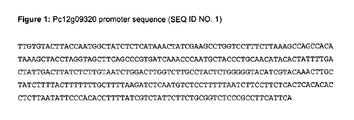
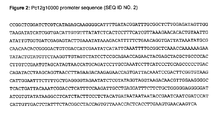
- the present invention also relates to isolated nucleic acid sequences comprising a nucleic acid sequence selected from the group consisting of SEQ ID NO. 1, SEQ ID NO. 2, SEQ ID NO. 3, SEQ ID NO. 4, SEQ ID NO. 5 and subsequences thereof.
- the present invention also relates to isolated nucleic acid sequences, selected from the group consisting of
- the present invention also relates to nucleic acid constructs comprising a nucleic acid sequence encoding a polypeptide operably linked to the nucleic acid sequence described above. It further relates to recombinant expression vectors and a recombinant host cells comprising the nucleic acid constructs.
- the present invention relates to a method for producing a polypeptide, comprising the steps of:
- the fungal host cell in step a) is a filamentous fungal host cell. More preferably, the fungal host cell in step a) is Penicillium chrysogenum or Acremonium chrysogenum or Aspergillus terreus or Penicillium citrinum.
- the cells are cultivated in a nutrient medium suitable for production of the polypeptide using methods known in the art.
- the cell may be cultivated by shake flask cultivation, small-scale or large-scale fermentation (including continuous, batch, fed-batch, or solid state fermentations) in laboratory or industrial fermentors performed in a suitable medium and under conditions allowing the polypeptide to be expressed and/or isolated.
- the cultivation takes place in a suitable nutrient medium comprising carbon and nitrogen sources and inorganic salts, using procedures known in the art.
- Suitable media are available from commercial suppliers or may be prepared according to published compositions (e.g., in catalogues of the American Type Culture Collection).
- the polypeptide can be recovered directly from the medium. If the polypeptide is not secreted, it can be recovered from cell lysates. The resulting polypeptide may be recovered by methods known in the art. For example, the polypeptide may be recovered from the nutrient medium by conventional procedures including, but not limited to, centrifugation, filtration, extraction, spray- drying, evaporation, or precipitation.
- polypeptides may be purified by a variety of procedures known in the art including, but not limited to, chromatography (e.g., ion exchange, affinity, hydrophobic, chromatofocusing, and size exclusion), electrophoretic procedures (e.g., preparative isoelectric focusing), differential solubility (e.g., ammonium sulfate precipitation), SDS- PAGE, or extraction (see, e.g., Protein Purification, J.-C. Janson and Lars Ryden, editors, VCH Publishers, New York, 1989 ).
- chromatography e.g., ion exchange, affinity, hydrophobic, chromatofocusing, and size exclusion
- electrophoretic procedures e.g., preparative isoelectric focusing
- differential solubility e.g., ammonium sulfate precipitation
- SDS- PAGE or extraction
- promoter is defined herein as a DNA sequence that binds RNA polymerase and directs the polymerase to the correct downstream transcriptional start site of a nucleic acid sequence encoding a polypeptide to initiate transcription. RNA polymerase effectively catalyzes the assembly of messenger RNA complementary to the appropriate DNA strand of the coding region.
- promoter will also be understood to include the 5' non-coding region (between promoter and translation start) for translation after transcription into mRNA, cis-acting transcription control elements such as enhancers, and other nucleotide sequences capable of interacting with transcription factors.
- mutant promoter is defined herein as a promoter having a nucleotide sequence comprising a substitution, deletion, and/or insertion of one or more nucleotides of a parent promoter, wherein the mutant promoter has more or less promoter activity than the corresponding parent promoter.
- mutant promoter will also encompass natural variants and in vitro generated variants obtained using methods well known in the art such as classical mutagenesis, site-directed mutagenesis, and DNA shuffling.
- hybrid promoter is defined herein as parts of two or more promoters that are fused together to generate a sequence that is a fusion of the two or more promoters, which is operably linked to a coding sequence and mediates the transcription of the coding sequence into mRNA.
- tandem promoter is defined herein as two or more promoter sequences each of which is operably linked to a coding sequence and mediates the transcription of the coding sequence into mRNA.
- operably linked is defined herein as a configuration in which a control sequence, e.g., a promoter sequence, is appropriately placed at a position relative to a coding sequence such that the control sequence directs the production of a polypeptide encoded by the coding sequence.
- control sequence e.g., a promoter sequence
- coding sequence is defined herein as a nucleic acid sequence that is transcribed into mRNA which is translated into a polypeptide when placed under the control of the appropriate control sequences. The boundaries of the coding sequence are generally determined by the ATG start codon located just upstream of the open reading frame at the 5' end of the mRNA and a transcription terminator sequence located just downstream of the open reading frame at the 3' end of the mRNA.
- a coding sequence can include, but is not limited to, genomic DNA, cDNA, semisynthetic, synthetic, and recombinant nucleic acid sequences.
- the promoter has the nucleic acid sequence of SEQ ID NO. 1 or a subsequence thereof.
- the promoter has the nucleic acid sequence of SEQ ID NO. 2 or a subsequence thereof.
- the promoter has the nucleic acid sequence of SEQ ID NO. 3 or a subsequence thereof.
- the promoter has the nucleic acid sequence of SEQ ID NO. 4 or a subsequence thereof.
- the promoter has the nucleic acid sequence of SEQ ID NO. 5 or a subsequence thereof.
- the promoter may also be a mutant of the promoters described above having a substitution, deletion, and/or insertion of one or more nucleotides.
- a mutant promoter may have one or more mutations. Each mutation is an independent substitution, deletion, and/or insertion of a nucleotide.
- the introduction of a substitution, deletion, and/or insertion of a nucleotide into the promoter may be accomplished using any of the methods known in the art such as classical mutagenesis, site-directed mutagenesis, or DNA shuffling.
- the promoter may also be a hybrid promoter comprising a portion of one or more promoters of the present invention; a portion of a promoter of the present invention and a portion of another promoter, e.g., a leader sequence of one promoter and the transcription start site from the other promoter; or a portion of one or more promoters of the present invention and a portion of one or more other promoters.
- the other promoter may be any promoter sequence which shows transcriptional activity in the fungal host cell of choice including a mutant, truncated, and hybrid promoter, and may be obtained from genes encoding extracellular or intracellular polypeptides either homologous or heterologous to the host cell.
- the other promoter sequence may be native or foreign to the nucleic acid sequence encoding the polypeptide and native or foreign to the cell.
- promoters useful in the construction of hybrid promoters with the promoters of the present invention include the promoters obtained from the genes which are regulated, for example induced or repressed by any compounds of the culture medium, like carbohydrates, nitrogen, phosphate, sulphur etc. or any chemical inductor known in the art. Promoters useful in the construction of hybrid promoters with the promoters of the present invention may also be induced or repressed by any physical condition, for example temperature.
- the promoter may also be a tandem promoter comprising two more promoters of the present invention or alternatively one or more promoters of the present invention and one or more other promoters, such as those exemplified above.
- the two or more promoter sequences of the tandem promoter may simultaneously promote the transcription of the nucleic acid sequence.
- one or more of the promoter sequences of the tandem promoter may promote the transcription of the nucleic acid sequence at different stages of growth of the cell.
- a mutant, hybrid, or tandem promoter of the present invention has at least about 20%, preferably at least about 40%, more preferably at least about 60%, more preferably at least about 80%, more preferably at least about 90%, more preferably at least about 100%, even more preferably at least about 200%, most preferably at least about 300%, and even most preferably at least about 400% of the promoter activity of the promoter of SEQ ID NO. 1, SEQ ID NO. 2, SEQ ID NO. 3, SEQ ID NO. 4 or SEQ ID NO. 5.
- polypeptide encoded by the nucleic acid sequence may be native or heterologous to the fungal host cell of interest.
- polypeptide is not meant herein to refer to a specific length of the encoded product and, therefore, encompasses peptides, oligopeptides, and proteins.
- heterologous polypeptide is defined herein as a polypeptide which is not native to the fungal cell, a native polypeptide in which modifications have been made to alter the native sequence, or a native polypeptide whose expression is quantitatively altered as a result of a manipulation of the fungal cell by recombinant DNA techniques.
- a native polypeptide may be recombinantly produced by, e.g., placing a gene encoding the polypeptide under the control of a promoter of the present invention to enhance expression of the polypeptide, to expedite export of a native polypeptide of interest outside the cell by use of a signal sequence, and to increase the copy number of a gene encoding the polypeptide normally produced by the cell.
- the fungal cell may contain one or more copies of the nucleic acid sequence encoding the polypeptide.
- the native or homologue polypeptide as well as the heterologous polypeptide may be either a non-secreted or a secreted polypeptide.
- the polypeptide is a native or homologue polypeptide.
- the polypeptide is a non-secreted polypeptide.
- the present invention also relates to an isolated nucleic acid sequence comprising a nucleic acid sequence selected from the group consisting of SEQ ID NO. 1, SEQ ID NO. 2, SEQ ID NO. 3, SEQ ID NO. 4, SEQ ID NO. 5 and subsequences thereof.
- the isolated nucleic acid sequence comprises the nucleic acid sequence of SEQ ID NO. 1 or a subsequence thereof. In another preferred embodiment, the isolated nucleic acid sequence comprises the nucleic acid sequence of SEQ ID NO. 2 or a subsequence thereof. In another preferred embodiment, the isolated nucleic acid sequence comprises the nucleic acid sequence of SEQ ID NO. 3 or a subsequence thereof. In another preferred embodiment, the isolated nucleic acid sequence comprises the nucleic acid sequence of SEQ ID NO. 4 or a subsequence thereof. In another preferred embodiment, the isolated nucleic acid sequence comprises the nucleic acid sequence of SEQ ID NO. 5 or a subsequence thereof.
- the present invention also relates to nucleic acid constructs comprising a nucleic acid sequence encoding a polypeptide operably linked to a promoter of the present invention and one or more control sequences which direct the expression of the coding sequence in a suitable host cell under conditions compatible with the control sequences.
- nucleic acid construct is synonymous with the term expression cassette when the nucleic acid construct contains a coding sequence and all the control sequences required for expression of the coding sequence.
- the nucleic acid sequence may comprise one or more native control sequences or one or more of the native control sequences may be replaced with one or more control sequences foreign to the nucleic acid sequence for improving expression of the coding sequence in a host cell.
- control sequences is defined herein to include all components which are necessary or advantageous for the expression of a polypeptide of the present invention.
- Each control sequence may be native or foreign to the nucleic acid sequence encoding the polypeptide.
- control sequences include, but are not limited to, a leader, polyadenylation sequence, propeptide sequence, promoter of the present invention, signal peptide sequence, and transcription terminator.
- the control sequences include a promoter of the present invention, and transcriptional and translational stop signals.
- the control sequences may be provided with linkers for the purpose of introducing specific restriction sites facilitating ligation of the control sequences with the coding region of the nucleic acid sequence encoding a polypeptide.
- the present invention also relates to recombinant expression vectors comprising a promoter of the present invention, a nucleic acid sequence encoding a polypeptide, and transcriptional and translational stop signals.
- the various nucleic acid and control sequences described above may be joined together to produce a recombinant expression vector which may include one or more convenient restriction sites to allow for insertion or substitution of the promoter and/or nucleic acid sequence encoding the polypeptide at such sites.
- the nucleic acid sequence may be expressed by inserting the nucleic acid sequence or a nucleic acid construct comprising the promoter and/or sequence into an appropriate vector for expression.
- the coding sequence is located in the vector so that the coding sequence is operably linked with a promoter of the present invention and one or more appropriate control sequences for expression.
- the recombinant expression vector may be any vector (e.g., a plasmid or virus) which can be conveniently subjected to recombinant DNA procedures and can bring about the expression of the nucleic acid sequence.
- the choice of the vector will typically depend on the compatibility of the vector with the host cell into which the vector is to be introduced.
- the vectors may be linear or closed circular plasmids.
- the vector may be an autonomously replicating vector, i.e., a vector which exists as an extrachromosomal entity, the replication of which is independent of chromosomal replication, e.g., a plasmid, an extrachromosomal element, a minichromosome, or an artificial chromosome.
- the vector may contain any means for assuring self-replication.
- the vector may be one which, when introduced into the host cell, is integrated into the genome and replicated together with the chromosome(s) into which it has been integrated.
- a single vector or plasmid or two or more vectors or plasmids which together contain the total DNA to be introduced into the genome of the host cell, or a transposon may be used.
- the vector may be introduced into the host cell in combination with one or more additional vectors by the method of co-transformation.
- the vectors of the present invention preferably contain one or more selectable markers which permit easy selection of transformed cells.
- a selectable marker is a gene the product of which provides for biocide or viral resistance, resistance to heavy metals, prototrophy to auxotrophs, and the like.
- Suitable markers for use in a filamentous fungal host cell include, but are not limited to, hygromycin or phleomycin. Further suitable markers are for example described in Finklstein, Ball (eds.), Applied Molecular Genetics of Filamentous fungi (ibid.) Biotechnology of Filamentous fungi, Butterworth-Heinemann, Boston, 1992 .
- the present invention also relates to recombinant host cells, comprising a promoter of the present invention operably linked to a nucleic acid sequence encoding a polypeptide, which are advantageously used in the recombinant production of the polypeptides.
- a vector comprising a promoter of the present invention operably linked to a nucleic acid sequence encoding a polypeptide is introduced into a host cell so that the vector is maintained as a chromosomal integrant or as a self- replicating extra- chromosomal vector as described earlier.
- host cell encompasses any progeny of a parent cell that is not identical to the parent cell due to mutations that occur during replication.
- the choice of a host cell will to a large extent depend upon the gene encoding the polypeptide and its source.
- the host cell may be any fungal cell useful in the methods of the present invention.
- the fungal host cell is a filamentous fungal cell.
- the filamentous fungal cell is Penicillium chrysogenum or Acremonium chrysogenum or Aspergillus terreus or Penicillium citrinum.
- the present invention also relates to isolated nucleic acid sequences, selected from the group consisting of
- the present invention relates to isolated nucleic acid sequences having at least 80% homology with a sequence selected from the group consisting of SEQ ID NO. 1, SEQ ID NO. 2, SEQ ID NO. 3, SEQ ID NO. 4 and SEQ ID NO. 5.
- the degree of homology is about 85%, more preferably about 90%, even more preferably about 95%, and most preferably about 99%.
- sequence comparisons are carried out using a Smith-Waterman sequence alignment algorithm (see e.g. Waterman, M.S. Introduction to Computational Biology: Maps, sequences and genomes. Chapman & Hall. London: 1995. ISBN 0-412-99391-0 , or at http://www-hto.usc.edu/software/segaln/index.html ).
- the locals program, version 1.16 is used with following parameters: match: 1, mismatch penalty: 0.33, open-gap penalty: 2, extended-gap penalty: 2.
- a subsequence is a nucleic acid sequence encompassed by SEQ ID NO. 1, SEQ ID NO. 2, SEQ ID NO. 3, SEQ ID NO. 4 and SEQ ID NO. 5, except that one or more nucleotides from the 5' and/or 3' end have been deleted and which retains part of or the complete promoter activity. For instance, about 50 or about 100 nucleotides may be deleted from the 5' and/or 3' end.
- allelic variant denotes any of two or more alternative forms of a gene occupying the same chomosomal locus. Allelic variation arises naturally through mutation, and may result in polymorphism within populations.
- the present invention relates to isolated nucleic acid sequences which hybridize under conditions of stringency with (i) a sequence selected from the group consisting of SEQ ID NO. 1, SEQ ID NO. 2, SEQ ID NO. 3, SEQ ID NO. 4 and SEQ ID NO. 5; (ii) a subsequence of (i) of at least 100 nucleotides, or (iii) a complementary strand of (i) or (ii).
- the subsequence of SEQ ID NO. 1, SEQ ID NO. 2, SEQ ID NO. 3, SEQ ID NO. 4 and SEQ ID NO. 5 may be at least 100 nucleotides or preferably at least 200 nucleotides.
- Substantially similar nucleic acid fragments may be characterized by their ability to hybridize to each other under conditions of stringency known by those skilled in the art ( Hames and Higgins, Eds. (1985) Nucleic Acid Hybridization, IRL Press, Oxford, UK ). Stringency conditions can be adjusted to screen for (highly) similar fragments, such as genes that duplicate functional enzymes from (closely) related organisms. Post hybridization washes determine stringency conditions.
- condition of stringency is defined herein as a series of washes starting with 6xSSC, 0.5% SDS at room temperature for 15 min, then repeated with 2xSSC, 0.5% SDS at 45°C for 30 min, and then repeated twice with 0.2xSSC, 0.5% SDS at 60°C.
- condition of high stringency is defined herein as a series of washes starting with 6xSSC, 0.5% SDS at room temperature for 15 min, then repeated with 2xSSC, 0.5% SDS at 45°C for 30 min, and then repeated twice with 0.1xSSC, 0.1% SDS at 65°C.
- hybridization indicates that the nucleic acid sequence hybridizes to a labeled nucleic acid probe corresponding to the nucleic acid sequence shown in SEQ ID NO. 1, SEQ ID NO. 2, SEQ ID NO. 3, SEQ ID NO. 4 and SEQ ID NO. 5, their complementary strands, or subsequences thereof under conditions of stringency, preferably under conditions of high stringency.
- the present invention also relates to a nucleic acid construct comprising a nucleic acid sequence encoding a polypeptide operably linked to the nucleic acid sequence described above. It further relates to a recombinant expression vector and a recombinant host cell comprising the nucleic acid construct.
- RNA from mycelia of P. chrysogenum is isolated which are grown under various conditions, i.e. under production conditions and collected by filtration on sterile cloth. The wet mycelium is flash-frozen in liquid nitrogen and ground to a powder using a mortar and pestle. Total RNA is extracted using the TRIZOL ® Reagent (Invitrogen) extraction protocol. All procedures are performed according to the manufacturers protocols.
- RNA samples are purified with RNeasy ® columns (Qiagen) and an on-column DNase digest is performed using the RNase-Free DNase Set Kit (Qiagen).
- RNA is resuspended in DEPC-treated, sterile, destilled water and its concentration is measured by spectrophotometry (Ultrospec 3100 pro, Amersham).
- the quality of the RNA is checked by Bioanalyzer-measurements (Agilent) using the RNA 6000 Nano Assay (Agilent). Subsequent reverse transcription is performed using the High Capacity cDNA Archive Kit (Applied Biosytems).
- Pc12g09320 Specific oligonucleotides for the Pc12g09320 gene are designed using the Primer Express software (Applied Biosystems).
- the forward primer Pc12g09320_U1 (5'-CAAGGCCGACCACAGCTT-3') (SEQ ID NO. 6) and the reverse primer Pc12g09320_L1 (5'-GCCGAGACGGTTGACGAAT-3') (SEQ ID NO. 7) which cover positions 207-224 and 306-288, respectively, of the Pc12g09320 gene sequence are designed.
- the known act gene of P. chrysogenum is used (Acc. No.
- the plasmid pGen4.5 is generated in two steps.
- a 607 bp terminator region of the Penicillium chrysogenum ⁇ -actin gene (Accession No. AF056975) is amplified by PCR with the proof reading, Pwo DNA polymerase (Roche), digested with Not I and Bam HI and cloned in a pBluescript II KS+ Vector from Stratagene.
- Pwo DNA polymerase Roche
- a 1812 bp fragment including the coding region of the E is amplified by PCR with the proof reading, Pwo DNA polymerase (Roche), digested with Not I and Bam HI and cloned in a pBluescript II KS+ Vector from Stratagene.
- coli uidA gene is amplified by PCR with the proof reading, Pwo DNA polymerase (Roche), digested with Nar I and Pst I and cloned in the pBluescript II KS+ Vector containing the ⁇ -actin terminator region.
- Pwo DNA polymerase Roche
- the putative promoter region of the gene Pc12g09320 is evaluated assuming that the coding region of the gene Pc12g09310 upstream of Pc12g09320 delimits its putative promoter region.
- the Pc12g09320 promotor region is cloned using the following oligonucleotides as primers: Pc12g09320-for (5'-GTCAAAGCTTGTGTACTTACCAATGGC-3') (SEQ ID NO. 10) and Pc12g09320-rev (5'-AGTCATGCATGCTGAATGAAGGCGGGAGA-3') (SEQ ID NO. 11).
- the 351 bp DNA fragment obtained by PCR with the proof reading, Pwo DNA polymerase (Roche) is digested with Hind III and Sphl and subcloned in the Hind III and Sph I digested plasmid pGen4.5 containing the E.coli uidA gene and the Penicillium chrysogenum act terminator region and generating the plasmid pGen4.24.
- the uidA gene of E . coli is fused translationally with the Pc12g09320 promotor region. This is carried out designing the Sph I site such that it is part of the ATG start codon which codes for the initiator methionine of the uidA gene.
- the sequencing of the amplified promoter region as well as the fusion region between p-Pc12g09320 and the uidA gene confirm the correctness of the promoter sequence as well as the exact arrangement of the latter reporter gene in the correct reading frame.
- Protoplasts are transformed according to Cantoral et al. (1), and transformants are selected on minimal medium containing NaNO 3 and glucose as the nitrogen and carbon sources, respectively and 30 ⁇ g/ml phleomycin (Sigma).
- the uidA gene of E. coli is fused with the Pc12g09320 promoter as described in Section 1.2. of Example 1.
- the heterologous expression of the uidA gene is characterized by quantitative PCR (7900HT, Applied Biosystems). Specific oligonucleotides for the uidA gene are designed using the Primer Express software (Applied Biosystems).
- the forward primer Ec_uidA_U1 (5'-TTCATGCCAGTCCAGCGTT-3') (SEQ ID NO. 12)
- the reverse primer Ec_uidA_L1 (5'- CGACCGCAAACCGAAGTC-3') which yield a 56-bp product.
- RNA isolation and purification as well as the cDNA synthesis and the subsequents quantitative PCR analysis using the act gene as control are carried out as described in Section 1.1. of Example 1.
- Four independent P. chrysogenum strains which harbor the uidA gene under control of the Pc12g09320 promoter are analyzed by qPCR. In all of these strains a very high level of uidA mRNA is detected. This result confirms that the Pc12g09320-promoter-uidA construct expresses the heterologous uidA gene as well as the endogenous Pc12g09320 gene. This result is in accordance with the strong UIDA enzyme activity which is observed on chromogenic plate medium (see Section 1.3., Example 1).
- Quantitative PCR analysis is performed to confirm and quantify the high expression level of new gene Pc12g09320 which is detected by full genome microarray analysis.
- qPCR analysis is performed as described in Section 1.1. of Example 1.
- Total RNA is isolated from mycelia of P. chrysogenum which are grown under various conditions, i.e. under production conditions.
- Subsequent reverse transcription is performed to generate cDNA which serves as template in qPCR analysis (see Section 1.1. of Example 1).
- Specific oligonucleotides for the Pc12g10000 gene are designed using the Primer Express software (Applied Biosystems).
- the forward primer Pc12g10000_U1 (5'-AACAACATTGCGCTCGATGA-3') (SEQ ID NO.
- the Pc12g10000 promotor region is cloned using the following oligonucleotides as primers: Pc12g10000-for (5'-GTCAAAGCTTCCGGCTCGGATCTCGTC-3') (SEQ ID NO. 16) and Pc12g10000-rev (5'-GAGGGCATGCTGACTTGTTCACTTCAAGG-3') (SEQ ID NO. 17).
- the 764 bp DNA fragment obtained by PCR with the proof reading, Pwo DNA polymerase (Roche) is digested with Hind III and Sph I and subcloned in the Hind III and Sph I digested plasmid pGen4.5 containing the E.coli uidA gene and the Penicillium chrysogenum act terminator region and generating the plasmid pGen4.25 (see section 1.2., Example 1).
- the uidA gene of E. coli is fused translationally with the Pc12g10000 promotor region. This is carried out designing the Sph I site such that it is part of the ATG start codon which codes for the initiator methionine of the uidA gene.
- the sequencing of the amplified promoter region as well as the fusion region between p-Pc12g10000 and the uidA gene confirm the correctness of the promoter sequence as well as the exact arrangement of the latter reporter gene in the correct reading frame.
- the uidA gene of E. coli is fused with the Pc12g09320 promoter as described in Section 2.2. of Example 2.
- the heterologous expression of the uidA gene is characterized by quantitative PCR (7900HT, Applied Biosystems). Specific oligonucleotides for the uidA gene are designed as described in Section 1.4. of Example 1.
- the processes of RNA isolation and purification as well as the cDNA synthesis and the subsequents quantitative PCR analysis using the act gene as control are carried out as described in Section 1.1. of Example 1.
- Three independent P. chrysogenum strains which harbor the uidA gene under control of the Pc12g10000 promoter are analyzed by qPCR.
- Quantitative PCR analysis is performed to confirm and quantify the high expression level of new gene Pc16g00660 which is detected by full genome microarray analysis.
- qPCR analysis is performed as described in Section 1.1. of Example 1.
- Total RNA is isolated from mycelia of P. chrysogenum which are grown under various conditions, i.e. under production conditions.
- Subsequent reverse transcription is performed to generate cDNA which served as template in qPCR analysis (see Section 1.1. of Example 1).
- Specific oligonucleotides for the Pc16g00660 gene are designed using the Primer Express software (Applied Biosystems).
- the forward primer Pc16g00660_U1 (5'-TGAAGTTCGACGAGGACTGATG-3') (SEQ ID NO.
- the Pc16g00660 promotor region is cloned using the following oligonucleotides as primers: Pc16g00660-for (5'-GTCAAAGCTTGATATGTGGAGCCTGCG-3') (SEQ ID NO. 20) and Pc16g00660-rev (5'-TCATGCATGCTGGCGGTTCTGGAATCCAG-3') (SEQ ID NO. 21).
- the 1498 bp DNA fragment obtained by PCR with the proof reading, Pwo DNA polymerase (Roche) is digested with Hind III and Sph I and subcloned in the Hind III and Sph I digested plasmid pGen4.5 containing the E.coli uidA gene and the Penicillium chrysogenum act terminator region and generating the plasmid pGen4.26 (see section 1.2., Example 1).
- the uidA gene of E. coli is fused translationally with the Pc16g00660 promotor region. This is carried out designing the Sph I site such that it is part of the ATG start codon which codes for the initiator methionine of the uidA gene.
- the sequencing of the amplified promoter region as well as the fusion region between p-Pc16g00660 and the uidA gene confirm the correctness of the promoter sequence as well as the exact arrangement of the latter reporter gene in the correct reading frame.
- pGen4.26 is transformed and the transformation event verified by the same procedure as described in section 1.3., Example 1. Southern analysis confirms the presence of the plasmid pGen4.26. The presence of the UIDA transcript can be determined by Northern Blot analysis and the relative amount by qPCR-analysis. UIDA-Plate assay as well as Northern and qPCR analysis show clearly that the transformed P-Pc16g00660- uidA construct expresses the heterologous bacterial ⁇ -glucuronidase gene.
- the uidA gene of E. coli is fused with the Pc16g00660 promoter as described in Section 3.2. of Example 3.
- the heterologous expression of the uidA gene is characterized by quantitative PCR (7900HT, Applied Biosystems). Specific oligonucleotides for the uidA gene are designed as described in Section 1.4. of Example 1.
- the processes of RNA isolation and purification as well as the cDNA synthesis and the subsequent quantitative PCR analysis using the act gene as control are carried out as described in Section 1.1. of Example 1.
- Four independent P. chrysogenum strains which harbor the uidA gene under control of the Pc16g00660 promoter are analyzed by qPCR.
- Quantitative PCR analysis is performed to confirm and quantify the high expression level of new gene Pc21g04830 which is detected by full genome microarray analysis.
- qPCR analysis is performed as described in Section 1.1. of Example 1.
- Total RNA is isolated from mycelia of P. chrysogenum which are grown under various conditions, i.e. under production conditions.
- Subsequent reverse transcription is performed to generate cDNA which served as template in qPCR analysis (see Section 1.1 of Example 1).
- Specific oligonucleotides for the Pc21g04830 gene are designed using the Primer Express software (Applied Biosystems).
- the forward primer Pc21g04830_U1 (5'-TTGTCCTGGTCTTTCCCCATT-3') (SEQ ID NO.
- the Pc21g04830 promotor region is cloned using the following oligonucleotides as primers: Pc21g04830-for (5'-GTCAAAGCTTGAATTCCATCGCCGGGTCGCC-3') (SEQ ID NO. 24) and Pc21g04830-rev (5'-TCATGCATGCTCGAGGAAGGGAGGAGAGG-3') (SEQ ID NO. 25).
- the 1363 bp DNA fragment obtained by PCR with the proof reading, Pwo DNA polymerase (Roche) is digested with Hind III and Sph I and subcloned in the Hind III and Sph I digested plasmid pGen4.5 containing the E.coli uidA gene and the Penicillium chrysogenum act terminator region and generating the plasmid pGen4.27 (see section 1.2., Example 1).
- the uidA gene of E . coli is fused translationally with the Pc21 g04830 promotor region. This is carried out designing the Sph I site such that it is part of the ATG start codon which codes for the initiator methionine of the uidA gene.
- the sequencing of the amplified promoter region as well as the fusion region between p-Pc21g04830 and the uidA gene confirm the correctness of the promoter sequence as well as the exact arrangement of the latter reporter gene in the correct reading
- pGen4.27 is transformed and the transformation event verified by the same procedure as described in section 1.3., Example 1. Southern analysis confirms the presence of the plasmid pGen4.27. The presence of the UIDA transcript can be determined by Northern Blot analysis and the relative amount by qPCR-analysis. UIDA-Plate assay as well as Northern and qPCR analysis show clearly that the transformed P-Pc21g04830- uidA construct expresses the heterologous bacterial ⁇ -glucuronidase gene.
- the uidA gene of E. coli is fused with the Pc21 g04830 promoter as described in Section 4.2. of Example 4.
- the heterologous expression of the uidA gene is characterized by quantitative PCR (7900HT, Applied Biosystems). Specific oligonucleotides for the uidA gene are designed as described in Section 1.4. of Example 1.
- the processes of RNA isolation and purification as well as the cDNA synthesis and the subsequent quantitative PCR analysis using the act gene as control are carried out as described in Section 1.1. of Example 1.
- Four independent P. chrysogenum strains which harbor the uidA gene under control of the Pc21g04830 promoter are analyzed by qPCR.
- Quantitative PCR analysis is performed to confirm and quantify the high expression level of new gene Pc21g20300 which is detected by full genome microarray analysis.
- qPCR analysis is performed as described in Section 1.1. of Example 1.
- Total RNA is isolated from mycelia of P. chrysogenum which are grown under various conditions, i.e. under production conditions.
- Subsequent reverse transcription is performed to generate cDNA which served as template in qPCR analysis (see Section 1.1. of Example 1).
- Specific oligonucleotides for the Pc21g20300 gene are designed using the Primer Express software (Applied Biosystems).
- the forward primer Pc21g20300_U1 (5'-CTGCAGAGCGATGGTTGCT-3') (SEQ ID NO.
- the Pc21g20300 promotor region is cloned using the following oligonucleotides as primers: Pc21g20300-for (5'-GTCAGAATTCCCCTTCTGGTGATTG-3') (SEQ ID NO. 28) and Pc21g20300-rev (5'-GCTGATGCATCTTGATGGATTGACT-3') (SEQ ID NO. 29).
- the 1359 bp DNA fragment obtained by PCR with the proof reading, Pwo DNA polymerase (Roche) is digested with Eco RI and Nsi I and subcloned in the Eco RI and Nsi I digested plasmid pGen4.5 containing the E.coli uidA gene and the Penicillium chrysogenum act terminator region and generating the plasmid pGen4.30 (see section 1.2., Example 1).
- the uidA gene of E. coli is fused translationally with the Pc21 g20300 promotor region. This is carried out designing the Nsi I site such that it is part of the ATG start codon which codes for the initiator methionine of the uidA gene.
- the sequencing of the amplified promoter region as well as the fusion region between p-Pc21g20300 and the uidA gene confirm the correctness of the promoter sequence as well as the exact arrangement of the latter reporter gene in the correct reading
- pGen4.30 is transformed and the transformation event verified with the same procedure described in section 1.3., Example 1.
- Southern analysis confirms the presence of the plasmid pGen4.30.
- the presence of the UIDA transcript can be determined by Northern Blot analysis and the relative amount by qPCR-analysis.
- UIDA-Plate assay as well as Northern and qPCR analysis show clearly that the transformed P-Pc21g20300- uidA construct expresses the heterologous bacterial ⁇ -glucuronidase gene.
- the uidA gene of E. coli is fused with the Pc21 g20300 promoter as described in Section 5.2. of Example 5.
- the heterologous expression of the uidA gene is characterized by quantitative PCR (7900HT, Applied Biosystems). Specific oligonucleotides for the uidA gene are designed as described in Section 1.4. of Example 1.
- the processes of RNA isolation and purification as well as the cDNA synthesis and the subsequent quantitative PCR analysis using the act gene as control are carried out as described in Section 1.1. of Example 1.
- Three independent P. chrysogenum strains which harbor the uidA gene under control of the Pc21g20300 promoter are analyzed by qPCR.
Landscapes
- Life Sciences & Earth Sciences (AREA)
- Health & Medical Sciences (AREA)
- Chemical & Material Sciences (AREA)
- Genetics & Genomics (AREA)
- Organic Chemistry (AREA)
- Engineering & Computer Science (AREA)
- Biophysics (AREA)
- Bioinformatics & Cheminformatics (AREA)
- Biochemistry (AREA)
- Zoology (AREA)
- Molecular Biology (AREA)
- Wood Science & Technology (AREA)
- General Health & Medical Sciences (AREA)
- General Engineering & Computer Science (AREA)
- Mycology (AREA)
- Biomedical Technology (AREA)
- Biotechnology (AREA)
- Physics & Mathematics (AREA)
- Plant Pathology (AREA)
- Gastroenterology & Hepatology (AREA)
- Microbiology (AREA)
- Proteomics, Peptides & Aminoacids (AREA)
- Medicinal Chemistry (AREA)
- Micro-Organisms Or Cultivation Processes Thereof (AREA)
Priority Applications (5)
| Application Number | Priority Date | Filing Date | Title |
|---|---|---|---|
| EP05028139A EP1801221A1 (de) | 2005-12-22 | 2005-12-22 | Promotor sequenzen |
| US12/097,799 US20090162897A1 (en) | 2005-12-22 | 2006-12-20 | Promoter Sequences |
| EP06841064A EP1966382A2 (de) | 2005-12-22 | 2006-12-20 | Promoter-sequenzen |
| JP2008546252A JP2009523413A (ja) | 2005-12-22 | 2006-12-20 | プロモーター配列 |
| PCT/EP2006/012319 WO2007071399A2 (en) | 2005-12-22 | 2006-12-20 | Promoter sequences |
Applications Claiming Priority (1)
| Application Number | Priority Date | Filing Date | Title |
|---|---|---|---|
| EP05028139A EP1801221A1 (de) | 2005-12-22 | 2005-12-22 | Promotor sequenzen |
Publications (1)
| Publication Number | Publication Date |
|---|---|
| EP1801221A1 true EP1801221A1 (de) | 2007-06-27 |
Family
ID=36726107
Family Applications (2)
| Application Number | Title | Priority Date | Filing Date |
|---|---|---|---|
| EP05028139A Withdrawn EP1801221A1 (de) | 2005-12-22 | 2005-12-22 | Promotor sequenzen |
| EP06841064A Withdrawn EP1966382A2 (de) | 2005-12-22 | 2006-12-20 | Promoter-sequenzen |
Family Applications After (1)
| Application Number | Title | Priority Date | Filing Date |
|---|---|---|---|
| EP06841064A Withdrawn EP1966382A2 (de) | 2005-12-22 | 2006-12-20 | Promoter-sequenzen |
Country Status (4)
| Country | Link |
|---|---|
| US (1) | US20090162897A1 (de) |
| EP (2) | EP1801221A1 (de) |
| JP (1) | JP2009523413A (de) |
| WO (1) | WO2007071399A2 (de) |
Families Citing this family (3)
| Publication number | Priority date | Publication date | Assignee | Title |
|---|---|---|---|---|
| EP2123772A1 (de) | 2008-04-29 | 2009-11-25 | DSM IP Assets B.V. | Beta-Lactamantibiotikum produzierende Stämme |
| EP2310487A2 (de) | 2008-08-05 | 2011-04-20 | DSM IP Assets B.V. | Adipoyl-7-adca produzierende stämme |
| DE102008052529A1 (de) * | 2008-10-21 | 2010-04-22 | Henkel Ag & Co. Kgaa | Expressionsverstärkte Nukleinsäuren |
Citations (2)
| Publication number | Priority date | Publication date | Assignee | Title |
|---|---|---|---|---|
| EP0922766A1 (de) * | 1997-04-18 | 1999-06-16 | Antibioticos, S.A. | Verfahren zur inaktivierung von genen zweier enzyme des phenylacetatkatabolismus, dafür verwendete plasmide und damit transformierte stämme |
| US6300095B1 (en) * | 1997-03-05 | 2001-10-09 | Antibioticos, S.A. | Promoters of the genes glutamate dehydrogenase β-N-acetylhexosaminidase and γ-actin and their use in filamentous fungi expression, secretion and antisense systems |
-
2005
- 2005-12-22 EP EP05028139A patent/EP1801221A1/de not_active Withdrawn
-
2006
- 2006-12-20 JP JP2008546252A patent/JP2009523413A/ja not_active Withdrawn
- 2006-12-20 EP EP06841064A patent/EP1966382A2/de not_active Withdrawn
- 2006-12-20 WO PCT/EP2006/012319 patent/WO2007071399A2/en not_active Ceased
- 2006-12-20 US US12/097,799 patent/US20090162897A1/en not_active Abandoned
Patent Citations (2)
| Publication number | Priority date | Publication date | Assignee | Title |
|---|---|---|---|---|
| US6300095B1 (en) * | 1997-03-05 | 2001-10-09 | Antibioticos, S.A. | Promoters of the genes glutamate dehydrogenase β-N-acetylhexosaminidase and γ-actin and their use in filamentous fungi expression, secretion and antisense systems |
| EP0922766A1 (de) * | 1997-04-18 | 1999-06-16 | Antibioticos, S.A. | Verfahren zur inaktivierung von genen zweier enzyme des phenylacetatkatabolismus, dafür verwendete plasmide und damit transformierte stämme |
Non-Patent Citations (13)
Also Published As
| Publication number | Publication date |
|---|---|
| WO2007071399A2 (en) | 2007-06-28 |
| US20090162897A1 (en) | 2009-06-25 |
| JP2009523413A (ja) | 2009-06-25 |
| EP1966382A2 (de) | 2008-09-10 |
| WO2007071399A3 (en) | 2007-09-27 |
Similar Documents
| Publication | Publication Date | Title |
|---|---|---|
| US8143023B2 (en) | Method for methanol independent induction from methanol inducible promoters in Pichia | |
| CN109477115B (zh) | 用于真核生物的表达系统 | |
| CN111235180A (zh) | 缩短玉米花期的方法 | |
| EP0866872A1 (de) | Ein pilz, bei dem die gene area. pepc und / oder pepe inaktiviert wurden | |
| JP2002536993A (ja) | オキサロ酢酸ヒドロラーゼ欠陥真菌宿主細胞 | |
| CN112010953B (zh) | 小麦白粉病抗性相关蛋白Pm24及其编码基因和应用 | |
| EP1801221A1 (de) | Promotor sequenzen | |
| EP1902138B1 (de) | Hitzeinduzierbare tetrahymena-promotoren und deren verwendung | |
| CN109721649A (zh) | 一种水稻株型调控相关基因、蛋白质与应用 | |
| JP7246102B2 (ja) | 組換え絹を製造するための改変株 | |
| AU2002366655B2 (en) | Gene promoters | |
| CN114891800B (zh) | 玉米穗长基因及其应用 | |
| CN101198697A (zh) | 作为选择性标记的同源amds基因 | |
| JP4671394B2 (ja) | キャンディダ・ユティリス由来のプロモーターdna | |
| JP5257972B2 (ja) | アスペルギルス属菌の新規薬剤耐性組換え選択マーカー遺伝子 | |
| JPH11502408A (ja) | アスペルギルス(Aspergillus)属由来の可動性トランスポゾンの同定およびクローニング | |
| WO2025140482A1 (zh) | 可改善目标多肽表达效果的多核苷酸构建体及其应用 | |
| JP2006121995A (ja) | Ebna1変異体 | |
| KR20000059663A (ko) | 신규한 아스퍼질러스 오리재 파이루베이트 디카르복실라제 유전자의 프로모터, 그 재조합 플라스미드 및 형질전환된 미생물 |
Legal Events
| Date | Code | Title | Description |
|---|---|---|---|
| PUAI | Public reference made under article 153(3) epc to a published international application that has entered the european phase |
Free format text: ORIGINAL CODE: 0009012 |
|
| AK | Designated contracting states |
Kind code of ref document: A1 Designated state(s): AT BE BG CH CY CZ DE DK EE ES FI FR GB GR HU IE IS IT LI LT LU LV MC NL PL PT RO SE SI SK TR |
|
| AX | Request for extension of the european patent |
Extension state: AL BA HR MK YU |
|
| STAA | Information on the status of an ep patent application or granted ep patent |
Free format text: STATUS: THE APPLICATION HAS BEEN WITHDRAWN |
|
| 18W | Application withdrawn |
Effective date: 20071213 |