EP1803267B1 - Verfahren und system zum senden von email über ein netzwerk - Google Patents
Verfahren und system zum senden von email über ein netzwerk Download PDFInfo
- Publication number
- EP1803267B1 EP1803267B1 EP05795374A EP05795374A EP1803267B1 EP 1803267 B1 EP1803267 B1 EP 1803267B1 EP 05795374 A EP05795374 A EP 05795374A EP 05795374 A EP05795374 A EP 05795374A EP 1803267 B1 EP1803267 B1 EP 1803267B1
- Authority
- EP
- European Patent Office
- Prior art keywords
- mail message
- message
- supervisor
- sending
- Prior art date
- Legal status (The legal status is an assumption and is not a legal conclusion. Google has not performed a legal analysis and makes no representation as to the accuracy of the status listed.)
- Expired - Lifetime
Links
Images




Classifications
-
- H—ELECTRICITY
- H04—ELECTRIC COMMUNICATION TECHNIQUE
- H04L—TRANSMISSION OF DIGITAL INFORMATION, e.g. TELEGRAPHIC COMMUNICATION
- H04L63/00—Network architectures or network communication protocols for network security
- H04L63/12—Applying verification of the received information
- H04L63/123—Applying verification of the received information received data contents, e.g. message integrity
-
- H—ELECTRICITY
- H04—ELECTRIC COMMUNICATION TECHNIQUE
- H04L—TRANSMISSION OF DIGITAL INFORMATION, e.g. TELEGRAPHIC COMMUNICATION
- H04L51/00—User-to-user messaging in packet-switching networks, transmitted according to store-and-forward or real-time protocols, e.g. e-mail
- H04L51/21—Monitoring or handling of messages
- H04L51/212—Monitoring or handling of messages using filtering or selective blocking
-
- H—ELECTRICITY
- H04—ELECTRIC COMMUNICATION TECHNIQUE
- H04L—TRANSMISSION OF DIGITAL INFORMATION, e.g. TELEGRAPHIC COMMUNICATION
- H04L9/00—Cryptographic mechanisms or cryptographic arrangements for secret or secure communications; Network security protocols
- H04L9/32—Cryptographic mechanisms or cryptographic arrangements for secret or secure communications; Network security protocols including means for verifying the identity or authority of a user of the system or for message authentication, e.g. authorization, entity authentication, data integrity or data verification, non-repudiation, key authentication or verification of credentials
Definitions
- the present invention relates to a method and a system for sending electronic mail messages (emails) via a network such as internet through a mail processing unit, in accordance with the preambles of claims 1 and 18 respectively.
- a network such as internet
- a mail processing unit in accordance with the preambles of claims 1 and 18 respectively.
- Such a method and system is described in EP-A-1365340 .
- the European document EP 1 241 610 A2 describes a system in which electronic messages can only be sent when the writer of the message has given explicit approval thereof, for instance by placing a digital signature. Although this does prevent a message being sent erroneously to a wrong address or the sending of a draft message, the problem of the informal character of the electronic message in a certain sense persists.
- a further problem of the known electronic mail systems is the question of liability of the sender for possible mistakes in the exchange of letters.
- Many companies including insurance companies, banks, law firms, and consultancies in general, conduct correspondence with content which has the same legal status as that of a regular exchange of letters.
- electronic messages are drawn up and sent with less care and in the existing mail systems the outgoing electronic messages can moreover not be monitored by others, such as for instance a supervisor, there is a great likelihood of incorrect information going astray. Companies can now be held liable for the damage resulting from providing incorrect information.
- the invention therefore relates to a method for sending electronic mail incorporating the possibility of obligatory approval of outgoing electronic messages of a determined user or a number of users, for instance an employee with limited authority, by one or more supervisors assigned to the user.
- a supervisor assigns to the user to the user.
- this message is for instance placed in the "outgoing messages" directory but not yet actually sent. Only after the supervisor has read and approved the message, can the message be sent.
- the method also comprises of generating an electronic mail message to be sent without authorization, addressing the generated mail message and sending the unauthorized mail message to the addressee over the network. This makes it possible for the user to send electronic messages which are not authorized by the supervisor, for instance messages with a content or with an addressee which it is agreed beforehand does not require authorization.
- the method comprises of blocking the sending of all unauthorized mail messages. This means that only messages authorized by the supervisor can actually be sent.
- the method comprises of adding to the generated mail message an indicator which indicates whether or not the mail message has been authorized. On the basis of the indicator the recipient can ascertain the status of the received message.
- the method herein comprises of sending the indicator along with the mail message to the addressee, for instance separately of the message or together with the message by incorporating it into the mail message.
- the indicator is a label added to the mail message.
- the label contains information representative of the authorization status of the mail message, in particular (but not limited to) text data.
- the electronic message can for instance be provided with a piece of text indicating whether the content of the electronic message is authorized, and therefore has a determined legal status, or whether the content of the message is unauthorized and no liability for the content thereof can therefore be accepted.
- a user could him/herself also make the above stated addition in the form of a label.
- a digital signature of the supervisor is therefore added to the electronic message instead of or in addition to the above mentioned label.
- digital signatures have a legal status comparable to that of handwritten signatures. In other countries this is not the case, but the use of a digital signature can in any case greatly increase the reliability of the electronic traffic in mail messages.
- Digital signatures can be realized in different ways. Signatures according to the Digital Signature Standard (DSS) are for instance generated by means of a set of rules which are included in the so-called Digital Signature Algorithm (DSA) and a number of parameters, so that the identity of the signature and the integrity of the sent data can be verified. Use is made herein of two digital keys, a public key accessible to everyone and a private key known only to the user. With such a digital signature the messages can be monitored with a very high degree of reliability. Furthermore, two-way authorization hereby becomes possible. Within the company of the sender, certainty will be wanted as to whether monitoring has taken place, and the recipient moreover wishes to know with certainty that monitoring has actually taken place.
- DSA Digital Signature Algorithm
- the method comprises of showing the user the authorization status of the mail message generated by the user, so that the user is kept informed of the fact of whether the message has been sent or not.
- the supervisor is likewise shown whether the mail messages generated by one or more users have already been authorized by the relevant supervisor. In either case, whether a mail message is authorized or unauthorized can be designated with different colours and/or different symbols.
- the method preferably comprises of linking each of the users of the mail processing unit to one or more associated supervisors, by making use of relations between the different users and supervisors that are pre-stored in the mail processing unit.
- the method preferably comprises, after sending of an electronic mail message, of receiving an electronic receipt confirmation message from the addressee and linking the receipt confirmation message to the originally sent electronic mail message.
- the receipt confirmation message can be representative of the technical receipt of the sent mail message and/or representative of the mail message being opened. In the latter case the mail message has not only been received, but also opened (and probably also read).
- the method can further comprise of making an overview of the electronic mail messages sent by the mail processing unit and the receipt of electronic receipt confirmation messages, so that the user can readily check whether the mail messages sent by him/her have reached the correct persons.
- the sending means are also adapted to send unauthorized mail messages over the network to the addressee without authorization of the supervisor.
- a user can hereby continue to send for instance private messages without these being viewed by a supervisor. Such messages do not however have an authorized status.
- the sending means are however adapted to block the sending of all unauthorized mail messages, which means that a user can only sent messages after monitoring by a supervisor.
- the mail processing unit can comprise a personal computer, including a standard email server.
- the method can be implemented in a computer program running on such a computer.
- the computer program can herein run separately, i.e. independently of a standard email program installed on the computer, such as Microsoft TM Outlook, can operate together with the standard email program as so-called add-on program, or can be fully incorporated in an email program.
- the invention also relates to a data carrier having stored thereon a computer program product, upon the execution of which on a computer system the method described herein is performed.
- FIG. 1 shows schematically a preferred embodiment of the system for processing electronic mail message (emails).
- the system comprises a mail server 1 coupled via an internal network 2 to a number of computers, including user computers 3 and supervisor computers 4,4'.
- Mail server 1 is further connected to an external network 10, such as for instance the internet.
- Mail server 1 and the other computers 3,4,4' each comprise, among other parts, a central processing unit and storage means co-acting therewith, such as a memory of the RAM and ROM type, a hard disk, floppy disk, an optical read device for reading optical disks, and the like.
- the other computers 3,4,4' also comprise input means, for instance in the form of a keyboard 5, 7 respectively or a mouse 5', 7' respectively and a display 6, 8 respectively.
- Mail server 1 and computers 3,4,4' can be loaded in known manner with computer software in order to program the system such that the method steps described herein can be performed.
- the users of the system can generate an electronic mail message with their user computers 3, for instance by operating the keyboard 5 connected to user computers 3.
- the supervisor can also generate electronic mail messages.
- the mail messages can be sent via the internal network 2 with mail server 1, which mail server 1 in turn sends the generated mail messages via external network 10 to one or more addressees, such as the personal computer O shown schematically in figure 1.
- addressees such as the personal computer O shown schematically in figure 1.
- the supervisor computer 4 of a supervisor with limited authority can also be perceived as user computer, wherein a second supervisor computer 4' of a supervisor with more extensive authority then monitors the mail messages generated by supervisor computer 4.
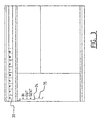
- a user of the system proceeds as follows. First of all the user generates (step 20, figure 2) an electronic message in known manner by operating the button "new" (30 in figure 3), whereby a new input screen 31 (figure 4) is displayed on the screen.
- the user inputs for instance text via input means 5, for instance a keyboard, a voice recognition device, etc.
- the mail message can also contain image data and/or sound data in addition to text data. Video or sound fragments can thus be added to each text message, either as attachment or directly in the mail message itself, or graphic objects and the like can be inserted directly into the message.
- the user enters (step 21) via the address input field 33 one or more email addresses of the persons who must receive the relevant email. Addressing can of course also take place prior to input of the text of the mail message or during inputting thereof.
- the mail processing unit After having generated the mail message and inputted the addresses of the addressee, the user operates the "send" button 32, as shown in figure 4, whereby the mail message is ready for sending as far as the user is concerned. Instead of actually sending the mail message to the addressee(s), the mail processing unit places the message in the "outgoing mail" directory (directory for outgoing mail to be supervised as designated with reference numeral 34 in figure 3), in particular in a directory (as designated in figure 3 with reference numeral 35) associated with the relevant user (user A) of one of the supervisors associated with the user and thus saves (step 22 in figure 2) the mail message on the storage means of the mail processing unit.
- directory directory for outgoing mail to be supervised as designated with reference numeral 34 in figure 3
- a directory as designated in figure 3 with reference numeral 35
- outgoing mail directory the generated mail message is placed depends on relations, pre-stored in the mail processing unit, between the users of the system and the different supervisors.
- the message generated by user A goes to the outgoing mail directory of supervisor B (figure 3).
- supervisor B inspects his display 8
- the message of user A is shown on the display (step 23 in figure 2) in the directory for outgoing mail to be supervised 34 of supervisor B.
- Supervisor B Since the specific message has not yet been checked by the supervisor it is given a colour indication, for instance red, and/or a specific symbol or specific designation which is representative of the unauthorized status of the mail message. Supervisor B subsequently opens the mail message to be authorized and is shown the window in figure 5. Supervisor B checks (step 24) the content of the message. If the supervisor approves the content of the mail message, he/she operates an "agreed" button 12 (figure 3) so as to indicate that, as far is he/she is concerned, the relevant message is approved.
- the mail processing unit After receiving the agreement of supervisor B, the mail processing unit adds (step 25) a text pre-stored in the storage means to the authorized message, for instance at the bottom thereof as shown in figure 6. Added in figure 6 is a label which states for instance that the relevant message has been checked by a supervisor and that the recipient(s) of the message may therefore assume that the content of the message is correct.
- the thus modified mail message is then sent (step 26) by the mail processing unit to the addressee(s) via external network 10.
- the addressee opens the received mail message, he/she sees immediately that the relevant mail message has been authorized, and that the content thereof is correct since an indicator in the form of a determined standard text has been added to the mail message.
- supervisor B does not agree with the content of the mail message, sending thereof is blocked (step 27). The message then remains in the outgoing mail directory of supervisor B without being sent.
- the supervisor B can indicate by means of operating a "not approved" button 13 that he/she will not authorize the message.
- the message is either removed or a communication is sent to user A informing user A of the fact that the mail message has not been authorized.
- User A then has the possibility of optionally amending the message and sending it to the supervisor once again.
- a mail message is not sent without authorization by a supervisor.
- Other embodiments do however incorporate the option of allowing the user to send unauthorized mail messages, for instance private messages or messages with content not requiring authorization.
- the user generates a mail message and sends it by operating the "send unauthorized message" key 15.
- the mail processing unit adds a label B to the non-authorized message, for instance at the bottom of the message, as shown in figure 7.
- This label for instance contains a text indicating that the present mail message has not been authorized and therefore no liability can be accepted for the content thereof.
- Only after label B has been added is the mail message, including label B, sent via external network 10 to the addressee(s). When the mail message is opened the addressee is in this case immediately informed of the unauthorized status of the message. In the shown example this also means that the sender of the mail message does not accept liability for the content of the message.
- the supervisor In some cases the possibility is also incorporated of the supervisor him/herself sending a message or sending a message from a user for which no authorization is given.
- the supervisor operates the "not approved" button 13, so that the mail processing unit adds an indicator, for instance the above mentioned label B, to the non-authorized message in order to clarify the status of the mail message to the recipient thereof.
- a supervisor can be monitored as a user of the system by a further supervisor. It is also possible to have each message of a user monitored first by a first supervisor and thereafter, after authorization by the first supervisor, to have it monitored by a second supervisor, possibly a supervisor with more authority than the first supervisor.
- a layered authorization structure can thus be developed which takes into account the levels of authority prevailing within the company.
- the system is adapted, when a third party sends a mail message to the mail processing unit of a user, which user is for one reason or another unable to respond to the message, to send back a message to the third party stating that the user cannot respond to the received mail message.
- a mail message can for instance be sent in which the label contains a standard message, such as "The recipient of this message is not present in the office and cannot answer your mail message".
- Such a mail message is also referred to as an "out of office reply".
- the mail processing unit can optionally send a received message to, or at least make it readable for, another user or a supervisor, so that the other user or supervisor can deal with the mail message. In such a case a statement to this effect can be included in a mail message, preferably the above mentioned mail message, and sent to the third party.
- this receipt confirmation i.e. a technical receipt confirmation and/or a read receipt confirmation
- this receipt confirmation is not placed in the "in-box" of the computer system but is coupled as a marking to the originally sent mail message. This provides the sender with the option of generating an overview of the mail messages sent by him/her and actually received by the intended recipients(s).
Landscapes
- Engineering & Computer Science (AREA)
- Computer Security & Cryptography (AREA)
- Computer Networks & Wireless Communication (AREA)
- Signal Processing (AREA)
- Computer Hardware Design (AREA)
- Computing Systems (AREA)
- General Engineering & Computer Science (AREA)
- Information Transfer Between Computers (AREA)
- Data Exchanges In Wide-Area Networks (AREA)
- Computer And Data Communications (AREA)
Claims (34)
- Verfahren zum Senden von elektronischen Nachrichten, Emails, über ein Netzwerk, wie zum Beispiel das Internet, durch eine Nachrichtenverarbeitungseinheit, umfassend:- Generieren einer zu autorisierenden elektronischen Nachricht eines Benutzers durch die Nachrichtenverarbeitungseinheit, wobei die Nachricht Text-, Bild- und/oder Audiodaten umfaßt;- Adressieren der generierten nicht autorisierten Nachricht durch die Nachrichtenverarbeitungseinheit;- temporäres Speichern der generierten nicht autorisierten Nachricht in der Nachrichtenverarbeitungseinheit;- Zeigen der nicht autorisierten Nachricht einem dem Benutzer zugeordneten, vorangehend festgelegten Supervisor;- Senden der elektronischen Nachricht an den Adressaten über das Netzwerk nur nach Autorisierung durch den Supervisor;dadurch gekennzeichnet, daß der Schritt des Sendens der Nachricht Hinzufügen eines Indikators zur autorisierten Nachricht, der anzeigt, ob die Nachricht autorisiert worden ist oder nicht, und danach Senden der Nachricht umfaßt.
- Verfahren nach Anspruch 1, umfassend Verknüpfen jedes Benutzers der Nachrichtenverarbeitungseinheit mit einem oder mehr zugeordneten Supervisors, indem Beziehungen zwischen den unterschiedlichen Benutzern und Supervisors verwendet werden, die in der Nachrichtenverarbeitungseinheit vorab gespeichert sind, wobei der Schritt des Adressierens der generierten nicht autorisierten Nachricht durch die Nachrichtenverarbeitungseinheit Ausgeben der Nachricht in das Verzeichnis für abgehende Nachrichten des Supervisors umfaßt.
- Verfahren nach Anspruch 1 oder 2, umfassend Senden des Indikators gemeinsam mit der Nachricht an den Adressaten.
- Verfahren nach Anspruch 1, 2 oder 3, umfassend Aufnehmen des Indikators in die Nachricht.
- Verfahren nach einem der Ansprüche 1 bis 4, dadurch gekennzeichnet, daß der Indikator eine der Nachricht hinzugefügte Kennung ist.
- Verfahren nach Anspruch 5, dadurch gekennzeichnet, daß die Kennung Informationen, insbesondere Textdaten, enthält, die den Autorisierungsstatus der Nachricht repräsentieren.
- Verfahren nach einem der Ansprüche 1 bis 6, umfassend:- wenn die Nachricht autorisiert ist, Abrufen eines ersten Textes und Hinzufügen des ersten Textes zur generierten Nachricht; und- wenn die Nachricht nicht autorisiert ist, Abrufen eines zweiten Textes, der sich von dem ersten Text unterscheidet, und Hinzufügen des zweiten Textes zur generierten Nachricht.
- Verfahren nach Anspruch 1, umfassend Generieren einer elektronischen Nachricht, die ohne Autorisierung zu senden ist, Adressieren der generierten Nachricht und Senden der nicht autorisierten Nachricht an den Adressaten über das Netzwerk.
- Verfahren nach einem der vorangehenden Ansprüche, umfassend Blockieren des Sendens aller nicht autorisierten Nachrichten.
- Verfahren nach einem der vorangehenden Ansprüche, umfassend Plazieren der generierten Nachricht in einem Verzeichnis, das für den Supervisor vorgesehen ist, und Blockieren des Sendens der Nachricht, bis die Nachrichtenverarbeitungseinheit eine Autorisierungsnachricht von dem Supervisor empfangen hat.
- Verfahren nach Anspruch 1, dadurch gekennzeichnet, daß der Indikator eine digitale Signatur umfaßt.
- Verfahren nach einem der vorangehenden Ansprüche, umfassend dem Benutzer Zeigen des Autorisierungsstatus der von dem Benutzer generierten Nachricht.
- Verfahren nach einem der vorangehenden Ansprüche, umfassend dem Supervisor zeigen, ob die von einem oder mehreren Benutzern generierten Nachrichten von dem Supervisor bereits autorisiert worden sind oder nicht.
- Verfahren nach Anspruch 12 oder 13, dadurch gekennzeichnet, daß, ob eine Nachricht autorisiert oder nicht autorisiert ist, mit unterschiedlichen Farben und/oder unterschiedlichen Symbolen gezeigt wird.
- Verfahren nach einem der vorangehenden Ansprüche, umfassend Verknüpfen jedes Benutzers der Nachrichtenverarbeitungseinheit mit einem oder mehreren zugeordneten Supervisorn.
- Verfahren nach einem der vorangehenden Ansprüche, umfassend, nach Senden einer elektronischen Nachricht, Empfangen einer elektronischen Empfangsbestätigungsnachricht von einem der Adressaten und Verknüpfen der Empfangsbestätigungsnachricht mit der ursprünglich gesendeten elektronischen Nachricht.
- Verfahren nach Anspruch 16, umfassend Erstellen eines Überblicks der von der Nachrichtenverarbeitungseinheit gesendeten elektronischen Nachrichten und von der Nachrichtenverarbeitungseinheit empfangenen elektronischen Empfangsbestätigungsnachrichten.
- System zum Senden von elektronischen Nachrichten, Emails, über ein Netzwerk, wie zum Beispiel das Internet, umfassend eine Nachrichtenverarbeitungseinheit, die mit dem Netzwerk zur Verarbeitung von abgehenden elektronischen Nachrichten verbindbar ist, wobei die Nachrichtenverarbeitungseinheit umfaßt:- eine erste Eingabeeinrichtung zur Eingabe von Text-, Bild- oder Audiodaten durch einen Benutzer;- eine Generiereinrichtung zum Generieren einer zu autorisierenden elektronischen Nachricht auf der Grundlage der Eingabedaten;- Adressiereinrichtungen zum Adressieren der generierten nicht autorisierten Nachricht;- eine Speichereinrichtung zum Speichern der erzeugten nicht autorisierten Nachricht;- eine Anzeigeeinrichtung zum einem dem Benutzer zugeordneten vorab spezifizierten Supervisor Zeigen der nicht autorisierten Nachricht;- eine zweite Eingabeeinrichtung zur Eingabe eines Autorisierungscodes durch den Supervisor;- Sendeeinrichtungen, die gestaltet sind, um, nur nach Empfangen des Autorisierungscodes, die elektronische Nachricht über das Netzwerk an den Adressaten zu senden;dadurch gekennzeichnet, daß die Sendeeinrichtungen gestaltet sind, um der generierten Nachricht einen Indikator hinzuzufügen, der anzeigt, ob die Nachricht autorisiert worden ist oder nicht, und danach die Nachricht zu senden.
- System nach Anspruch 18, dadurch gekennzeichnet, daß Verknüpfungsinformationen in der Speichereinrichtung zum Verknüpfen jedes Benutzers der Nachrichtenverarbeitungseinheit mit einem oder mehreren zugeordneten Supervisors vorab gespeichert sind und daß die Adressiereinrichtungen gestaltet sind, um die Nachricht in das Verzeichnis für abgehende Nachrichten des Supervisors auszugeben.
- System nach Anspruch 18 oder 19, dadurch gekennzeichnet, daß die Addiereinrichtungen gestaltet sind, um den Indikator gemeinsam mit der Nachricht an den Adressaten zu senden.
- System nach Anspruch 18, 19 oder 20, dadurch gekennzeichnet, daß die Sendeeinrichtungen gestaltet sind, um den Indikator in die Nachricht aufzunehmen.
- System nach einem der Ansprüche 18 - 21, dadurch gekennzeichnet, daß der Indikator eine der Nachricht hinzugefügte Kennung ist.
- System nach Anspruch 22, dadurch gekennzeichnet, daß die Kennung Informationen, insbesondere Textdaten, enthält, die den Autorisierungsstatus der Nachricht repräsentieren.
- System nach einem der Ansprüche 18 - 23, dadurch gekennzeichnet, daß die Sendeeinrichtungen gestaltet sind, um einen ersten Text abzurufen und den ersten Text der generierten Nachricht hinzuzufügen, wenn die Nachricht autorisiert ist, und einen zweiten Text abzurufen, der sich von dem ersten Text unterscheidet, und den zweiten Text der generierten Nachricht hinzuzufügen, wenn die Nachricht nicht autorisiert ist.
- System nach Anspruch 18, dadurch gekennzeichnet, daß die Sendeeinrichtungen auch gestaltet sind, um nicht autorisierte Nachrichten über das Netzwerk an den Adressaten ohne Autorisierung des Supervisors zu senden.
- System nach Anspruch 18, dadurch gekennzeichnet, daß die Sendeeinrichtungen gestaltet sind, um das Senden aller nicht autorisierten Nachrichten zu blockieren.
- System nach einem der Ansprüche 18 - 26, das gestaltet ist, um die generierte Nachricht in ein Verzeichnis auszugeben, das für den Supervisor vorgesehen ist, und Senden der Nachricht zu blockieren, bis die Nachrichtenverarbeitungseinheit eine Autorisierungsnachricht von dem Supervisor empfangen hat.
- System nach Anspruch 27, umfassend eine Signatorgeneriereinrichtung zum Generieren einer elektronischen Signatur als Indikator.
- System nach einem der Ansprüche 18 - 28, das gestaltet ist, um dem Benutzer auf einer zweiten Anzeigeeinrichtung den Autorisierungsstatus der von dem Benutzer generierten Nachricht zu zeigen.
- System nach einem der Ansprüche 18 - 29, das gestaltet ist, um dem Supervisor auf der ersten Anzeigeeinrichtung zu zeigen, ob die von einem oder mehreren Benutzern generierten Nachrichten von dem Supervisor bereits autorisiert worden sind oder nicht.
- System nach Anspruch 29 oder 30, dadurch gekennzeichnet, daß, ob eine Nachricht autorisiert oder nicht autorisiert ist, mit unterschiedlichen Farben und/oder unterschiedlichen Symbolen gezeigt wird.
- System nach einem der Ansprüche 18 - 32, umfassend eine Empfangseinrichtung zum Empfangen von elektronischen Nachrichten, insbesondere zum Empfangen einer Empfangsbestätigungsnachricht, und eine Verknüpfungseinrichtung zum Verknüpfen der Empfangsbestätigungsnachricht mit der ursprünglich gesendeten Nachricht.
- System oder Verfahren nach einem der vorangehenden Ansprüche, dadurch gekennzeichnet, daß die Nachrichtenverarbeitungseinheit einen Personalcomputer umfaßt.
- Datenträger, auf dem ein Computerprogrammprodukt gespeichert ist, wobei bei Ausführung desselben in einem Computersystem das Verfahren nach einem der Ansprüche 1-17 durchgeführt wird.
Priority Applications (3)
| Application Number | Priority Date | Filing Date | Title |
|---|---|---|---|
| SI200530183T SI1803267T1 (sl) | 2004-10-18 | 2005-10-18 | Postopek in sistem za poĺ iljanje elektronske poĺ te preko mreĺ˝e |
| PL05795374T PL1803267T3 (pl) | 2004-10-18 | 2005-10-18 | Sposób i system do wysyłania poczty elektronicznej w sieci |
| CY20081100478T CY1107931T1 (el) | 2004-10-18 | 2008-05-19 | Μεθοδος και συστημα για την αποστολη ηλεκτρονικου ταχυδρομειου επι ενος δικτυου |
Applications Claiming Priority (2)
| Application Number | Priority Date | Filing Date | Title |
|---|---|---|---|
| NL1027274A NL1027274C2 (nl) | 2004-10-18 | 2004-10-18 | Werkwijze en systeem voor het via een netwerk verzenden van elektronische post. |
| PCT/NL2005/000749 WO2006043807A1 (en) | 2004-10-18 | 2005-10-18 | Method and system for sending electronic mail over a network |
Publications (2)
| Publication Number | Publication Date |
|---|---|
| EP1803267A1 EP1803267A1 (de) | 2007-07-04 |
| EP1803267B1 true EP1803267B1 (de) | 2008-02-06 |
Family
ID=34974171
Family Applications (1)
| Application Number | Title | Priority Date | Filing Date |
|---|---|---|---|
| EP05795374A Expired - Lifetime EP1803267B1 (de) | 2004-10-18 | 2005-10-18 | Verfahren und system zum senden von email über ein netzwerk |
Country Status (19)
| Country | Link |
|---|---|
| US (1) | US8543650B2 (de) |
| EP (1) | EP1803267B1 (de) |
| JP (1) | JP2008517398A (de) |
| KR (1) | KR101160719B1 (de) |
| CN (1) | CN101065939B (de) |
| AT (1) | ATE385641T1 (de) |
| AU (1) | AU2005296441B2 (de) |
| CA (1) | CA2584520C (de) |
| CY (1) | CY1107931T1 (de) |
| DE (1) | DE602005004671T2 (de) |
| DK (1) | DK1803267T3 (de) |
| ES (1) | ES2297761T3 (de) |
| IL (1) | IL182588A (de) |
| NL (1) | NL1027274C2 (de) |
| PL (1) | PL1803267T3 (de) |
| PT (1) | PT1803267E (de) |
| SI (1) | SI1803267T1 (de) |
| WO (1) | WO2006043807A1 (de) |
| ZA (1) | ZA200703612B (de) |
Families Citing this family (13)
| Publication number | Priority date | Publication date | Assignee | Title |
|---|---|---|---|---|
| US8539029B2 (en) * | 2007-10-29 | 2013-09-17 | Microsoft Corporation | Pre-send evaluation of E-mail communications |
| US8949343B2 (en) * | 2008-08-28 | 2015-02-03 | Microsoft Corporation | Email confirmation page for social network notifications |
| US20100306019A1 (en) * | 2009-06-02 | 2010-12-02 | Computer Associates Think, Inc. | System and method for task assignment and alert |
| JP5088351B2 (ja) * | 2009-08-05 | 2012-12-05 | コニカミノルタビジネステクノロジーズ株式会社 | 電子メール送信装置およびプログラム |
| US8965984B2 (en) * | 2011-08-26 | 2015-02-24 | Blackberry Limited | Electronic communication device and method for processing messages |
| US20130290437A1 (en) * | 2012-04-26 | 2013-10-31 | Appsense Limited | Systems and methods for mining organizational data to form social networks |
| US9465856B2 (en) | 2013-03-14 | 2016-10-11 | Appsense Limited | Cloud-based document suggestion service |
| US9367646B2 (en) | 2013-03-14 | 2016-06-14 | Appsense Limited | Document and user metadata storage |
| CN105144767B (zh) | 2013-04-12 | 2019-07-02 | Sk电信有限公司 | 用于检查消息的装置和方法以及用户终端 |
| WO2014168453A1 (ko) * | 2013-04-12 | 2014-10-16 | 에스케이텔레콤 주식회사 | 메시지 검사장치, 사용자 단말 및 방법 |
| KR101878969B1 (ko) * | 2014-08-07 | 2018-07-16 | 주식회사 케이티 | 안심 메시지 서비스 방법, 이를 수행하는 메시지 서비스 장치 및 사용자 단말 |
| US20160182421A1 (en) * | 2014-12-18 | 2016-06-23 | International Business Machines Corporation | Policy-based delayed dispatch of e-mail messages |
| US20200258044A1 (en) * | 2019-02-11 | 2020-08-13 | Microsoft Technology Licensing, Llc | Predicting and supporting email deferral |
Family Cites Families (19)
| Publication number | Priority date | Publication date | Assignee | Title |
|---|---|---|---|---|
| JPH04326642A (ja) * | 1991-04-26 | 1992-11-16 | Mitsubishi Electric Corp | 認証型電子メール方式 |
| JPH06187172A (ja) * | 1992-12-18 | 1994-07-08 | Hitachi Ltd | 電子メール駆動型ジョブ操作方式 |
| JPH06318938A (ja) * | 1993-03-12 | 1994-11-15 | Sharp Corp | データ生成・処理装置 |
| JP3298379B2 (ja) * | 1995-09-20 | 2002-07-02 | 株式会社日立製作所 | 電子承認方法及びシステム |
| US6393464B1 (en) * | 1999-05-10 | 2002-05-21 | Unbound Communications, Inc. | Method for controlling the delivery of electronic mail messages |
| JP2001337896A (ja) * | 2000-05-26 | 2001-12-07 | Nec Microsystems Ltd | 電子メール装置およびそのプログラムを記録した記録媒体 |
| GB0027280D0 (en) * | 2000-11-08 | 2000-12-27 | Malcolm Peter | An information management system |
| US7174453B2 (en) * | 2000-12-29 | 2007-02-06 | America Online, Inc. | Message screening system |
| US20020169835A1 (en) * | 2000-12-30 | 2002-11-14 | Imarcsgroup.Com,Llc | E-mail communications system, method and program |
| JP2002207672A (ja) * | 2001-01-12 | 2002-07-26 | Canon Inc | 電子メールの送信制御装置、方法、プログラム及び記憶媒体 |
| US20020133556A1 (en) * | 2001-03-16 | 2002-09-19 | Rajko Milovanovic | Method of E-mail |
| US20030023736A1 (en) * | 2001-07-12 | 2003-01-30 | Kurt Abkemeier | Method and system for filtering messages |
| JP2004078394A (ja) * | 2002-08-13 | 2004-03-11 | Takashi Kawaba | 差し込みメールシステムと差し込みメールサービス方法 |
| WO2004019574A2 (en) * | 2002-08-26 | 2004-03-04 | Kevin Orton | System for prevention of undesirable internet content |
| US7496628B2 (en) * | 2003-02-25 | 2009-02-24 | Susquehanna International Group, Llp | Electronic message filter |
| JP2004289814A (ja) * | 2003-03-06 | 2004-10-14 | Matsushita Electric Ind Co Ltd | メッセージデータ送受信装置 |
| US20050021637A1 (en) * | 2003-07-22 | 2005-01-27 | Red Hat, Inc. | Electronic mail control system |
| US7890585B2 (en) * | 2003-09-03 | 2011-02-15 | Lowe John C | Second person review of email |
| US7698558B2 (en) * | 2003-11-21 | 2010-04-13 | Rpost International Limited | System for, and method of, providing the transmission, receipt and content of an e-mail message |
-
2004
- 2004-10-18 NL NL1027274A patent/NL1027274C2/nl not_active IP Right Cessation
-
2005
- 2005-10-18 CN CN2005800406438A patent/CN101065939B/zh not_active Expired - Fee Related
- 2005-10-18 DE DE602005004671T patent/DE602005004671T2/de not_active Expired - Lifetime
- 2005-10-18 PT PT05795374T patent/PT1803267E/pt unknown
- 2005-10-18 DK DK05795374T patent/DK1803267T3/da active
- 2005-10-18 AU AU2005296441A patent/AU2005296441B2/en not_active Ceased
- 2005-10-18 SI SI200530183T patent/SI1803267T1/sl unknown
- 2005-10-18 WO PCT/NL2005/000749 patent/WO2006043807A1/en not_active Ceased
- 2005-10-18 US US11/665,778 patent/US8543650B2/en not_active Expired - Fee Related
- 2005-10-18 EP EP05795374A patent/EP1803267B1/de not_active Expired - Lifetime
- 2005-10-18 AT AT05795374T patent/ATE385641T1/de active
- 2005-10-18 PL PL05795374T patent/PL1803267T3/pl unknown
- 2005-10-18 JP JP2007537821A patent/JP2008517398A/ja active Pending
- 2005-10-18 ES ES05795374T patent/ES2297761T3/es not_active Expired - Lifetime
- 2005-10-18 CA CA2584520A patent/CA2584520C/en not_active Expired - Fee Related
- 2005-10-18 KR KR1020077011023A patent/KR101160719B1/ko not_active Expired - Fee Related
- 2005-10-18 ZA ZA200703612A patent/ZA200703612B/xx unknown
-
2007
- 2007-04-16 IL IL182588A patent/IL182588A/en not_active IP Right Cessation
-
2008
- 2008-05-19 CY CY20081100478T patent/CY1107931T1/el unknown
Also Published As
| Publication number | Publication date |
|---|---|
| CN101065939A (zh) | 2007-10-31 |
| DK1803267T3 (da) | 2008-06-09 |
| US20090049130A1 (en) | 2009-02-19 |
| HK1113712A1 (en) | 2008-10-10 |
| JP2008517398A (ja) | 2008-05-22 |
| CA2584520C (en) | 2014-12-02 |
| CN101065939B (zh) | 2010-12-29 |
| US8543650B2 (en) | 2013-09-24 |
| NL1027274C2 (nl) | 2006-04-19 |
| AU2005296441B2 (en) | 2009-07-16 |
| CY1107931T1 (el) | 2013-09-04 |
| DE602005004671T2 (de) | 2009-02-05 |
| PL1803267T3 (pl) | 2008-07-31 |
| ATE385641T1 (de) | 2008-02-15 |
| WO2006043807A1 (en) | 2006-04-27 |
| KR20070091114A (ko) | 2007-09-07 |
| SI1803267T1 (sl) | 2008-06-30 |
| IL182588A0 (en) | 2007-07-24 |
| ZA200703612B (en) | 2008-08-27 |
| PT1803267E (pt) | 2008-04-15 |
| ES2297761T3 (es) | 2008-05-01 |
| AU2005296441A1 (en) | 2006-04-27 |
| IL182588A (en) | 2012-06-28 |
| KR101160719B1 (ko) | 2012-06-28 |
| DE602005004671D1 (de) | 2008-03-20 |
| EP1803267A1 (de) | 2007-07-04 |
| CA2584520A1 (en) | 2006-04-27 |
Similar Documents
| Publication | Publication Date | Title |
|---|---|---|
| IL182588A (en) | System and method for sending e-mail on the network | |
| US20230030475A1 (en) | User interface for email inbox to call attention differently to different classes of email | |
| AU2011100527B4 (en) | Method of and system for message classification of web email | |
| US7774421B2 (en) | Mitigating address book weaknesses that permit the sending of e-mail to wrong addresses | |
| US8782402B2 (en) | System and method for secure communications | |
| CN108833640A (zh) | 电子邮件消息的区分类 | |
| US20050204009A1 (en) | System, method and computer program product for prioritizing messages | |
| US20060200523A1 (en) | User interface for email inbox to call attention differently to different classes of email | |
| WO2016168427A1 (en) | System for analyzing susceptibility to social engineering and benchmarking based on characterization attribute and theme | |
| US11297024B1 (en) | Chat-based systems and methods for data loss prevention | |
| WO2010094626A1 (en) | Message handling | |
| HK1113712B (en) | Method and system for sending electronic mail over a network | |
| EP3284002A1 (de) | System zur analyse der anfälligkeit für soziales engineering und benchmarking auf der grundlage von charakterisierungseigenschaft und thema | |
| JP2004514977A (ja) | システム、方法、およびマルチユーザ電子メールシステム用のコンピュータプログラム製品 | |
| AU2014215972B2 (en) | Method of and system for message classification of web email | |
| Darbyshire et al. | Gmail | |
| HK1173580B (en) | System for confirming erroneous e-mail transmission | |
| HK1173580A (en) | System for confirming erroneous e-mail transmission | |
| JP2013501295A (ja) | メッセージ配信システム |
Legal Events
| Date | Code | Title | Description |
|---|---|---|---|
| PUAI | Public reference made under article 153(3) epc to a published international application that has entered the european phase |
Free format text: ORIGINAL CODE: 0009012 |
|
| 17P | Request for examination filed |
Effective date: 20070417 |
|
| AK | Designated contracting states |
Kind code of ref document: A1 Designated state(s): AT BE BG CH CY CZ DE DK EE ES FI FR GB GR HU IE IS IT LI LT LU LV MC NL PL PT RO SE SI SK TR |
|
| 17Q | First examination report despatched |
Effective date: 20070821 |
|
| GRAP | Despatch of communication of intention to grant a patent |
Free format text: ORIGINAL CODE: EPIDOSNIGR1 |
|
| GRAS | Grant fee paid |
Free format text: ORIGINAL CODE: EPIDOSNIGR3 |
|
| GRAA | (expected) grant |
Free format text: ORIGINAL CODE: 0009210 |
|
| DAX | Request for extension of the european patent (deleted) | ||
| AK | Designated contracting states |
Kind code of ref document: B1 Designated state(s): AT BE BG CH CY CZ DE DK EE ES FI FR GB GR HU IE IS IT LI LT LU LV MC NL PL PT RO SE SI SK TR |
|
| REG | Reference to a national code |
Ref country code: GB Ref legal event code: FG4D |
|
| REG | Reference to a national code |
Ref country code: CH Ref legal event code: EP |
|
| REG | Reference to a national code |
Ref country code: IE Ref legal event code: FG4D |
|
| REF | Corresponds to: |
Ref document number: 602005004671 Country of ref document: DE Date of ref document: 20080320 Kind code of ref document: P |
|
| REG | Reference to a national code |
Ref country code: CH Ref legal event code: NV Representative=s name: ARNOLD & SIEDSMA AG |
|
| REG | Reference to a national code |
Ref country code: RO Ref legal event code: EPE |
|
| REG | Reference to a national code |
Ref country code: SE Ref legal event code: TRGR |
|
| REG | Reference to a national code |
Ref country code: PT Ref legal event code: SC4A Free format text: AVAILABILITY OF NATIONAL TRANSLATION Effective date: 20080402 |
|
| REG | Reference to a national code |
Ref country code: ES Ref legal event code: FG2A Ref document number: 2297761 Country of ref document: ES Kind code of ref document: T3 |
|
| REG | Reference to a national code |
Ref country code: GR Ref legal event code: EP Ref document number: 20080401006 Country of ref document: GR |
|
| REG | Reference to a national code |
Ref country code: DK Ref legal event code: T3 |
|
| REG | Reference to a national code |
Ref country code: PL Ref legal event code: T3 |
|
| NLR4 | Nl: receipt of corrected translation in the netherlands language at the initiative of the proprietor of the patent | ||
| ET | Fr: translation filed | ||
| REG | Reference to a national code |
Ref country code: HU Ref legal event code: AG4A Ref document number: E003408 Country of ref document: HU |
|
| PLBE | No opposition filed within time limit |
Free format text: ORIGINAL CODE: 0009261 |
|
| STAA | Information on the status of an ep patent application or granted ep patent |
Free format text: STATUS: NO OPPOSITION FILED WITHIN TIME LIMIT |
|
| 26N | No opposition filed |
Effective date: 20081107 |
|
| REG | Reference to a national code |
Ref country code: FR Ref legal event code: PLFP Year of fee payment: 11 |
|
| REG | Reference to a national code |
Ref country code: FR Ref legal event code: PLFP Year of fee payment: 12 |
|
| REG | Reference to a national code |
Ref country code: FR Ref legal event code: PLFP Year of fee payment: 13 |
|
| PGFP | Annual fee paid to national office [announced via postgrant information from national office to epo] |
Ref country code: TR Payment date: 20171005 Year of fee payment: 13 |
|
| REG | Reference to a national code |
Ref country code: FR Ref legal event code: PLFP Year of fee payment: 14 |
|
| PGFP | Annual fee paid to national office [announced via postgrant information from national office to epo] |
Ref country code: PL Payment date: 20180925 Year of fee payment: 14 Ref country code: LU Payment date: 20181029 Year of fee payment: 14 |
|
| PGFP | Annual fee paid to national office [announced via postgrant information from national office to epo] |
Ref country code: PT Payment date: 20180925 Year of fee payment: 14 Ref country code: NL Payment date: 20181026 Year of fee payment: 14 |
|
| PGFP | Annual fee paid to national office [announced via postgrant information from national office to epo] |
Ref country code: FI Payment date: 20181029 Year of fee payment: 14 Ref country code: SE Payment date: 20181029 Year of fee payment: 14 Ref country code: RO Payment date: 20181016 Year of fee payment: 14 Ref country code: LT Payment date: 20181016 Year of fee payment: 14 Ref country code: SK Payment date: 20181017 Year of fee payment: 14 Ref country code: AT Payment date: 20181019 Year of fee payment: 14 Ref country code: DE Payment date: 20181029 Year of fee payment: 14 Ref country code: HU Payment date: 20181009 Year of fee payment: 14 Ref country code: DK Payment date: 20181029 Year of fee payment: 14 Ref country code: EE Payment date: 20181025 Year of fee payment: 14 Ref country code: IE Payment date: 20181025 Year of fee payment: 14 Ref country code: MC Payment date: 20181022 Year of fee payment: 14 Ref country code: CZ Payment date: 20181017 Year of fee payment: 14 Ref country code: IS Payment date: 20181018 Year of fee payment: 14 Ref country code: GR Payment date: 20181030 Year of fee payment: 14 |
|
| PGFP | Annual fee paid to national office [announced via postgrant information from national office to epo] |
Ref country code: BG Payment date: 20181025 Year of fee payment: 14 Ref country code: CH Payment date: 20181105 Year of fee payment: 14 Ref country code: SI Payment date: 20181015 Year of fee payment: 14 Ref country code: BE Payment date: 20181029 Year of fee payment: 14 Ref country code: ES Payment date: 20181102 Year of fee payment: 14 Ref country code: GB Payment date: 20181029 Year of fee payment: 14 Ref country code: LV Payment date: 20181010 Year of fee payment: 14 Ref country code: FR Payment date: 20181025 Year of fee payment: 14 Ref country code: IT Payment date: 20181023 Year of fee payment: 14 |
|
| PGFP | Annual fee paid to national office [announced via postgrant information from national office to epo] |
Ref country code: CY Payment date: 20181004 Year of fee payment: 14 |
|
| REG | Reference to a national code |
Ref country code: DE Ref legal event code: R119 Ref document number: 602005004671 Country of ref document: DE |
|
| REG | Reference to a national code |
Ref country code: FI Ref legal event code: MAE |
|
| REG | Reference to a national code |
Ref country code: EE Ref legal event code: MM4A Ref document number: E001885 Country of ref document: EE Effective date: 20191031 |
|
| REG | Reference to a national code |
Ref country code: DK Ref legal event code: EBP Effective date: 20191031 |
|
| PG25 | Lapsed in a contracting state [announced via postgrant information from national office to epo] |
Ref country code: MC Free format text: LAPSE BECAUSE OF NON-PAYMENT OF DUE FEES Effective date: 20191031 |
|
| REG | Reference to a national code |
Ref country code: CH Ref legal event code: PL |
|
| REG | Reference to a national code |
Ref country code: NL Ref legal event code: MM Effective date: 20191101 |
|
| REG | Reference to a national code |
Ref country code: SK Ref legal event code: MM4A Ref document number: E 3433 Country of ref document: SK Effective date: 20191018 |
|
| REG | Reference to a national code |
Ref country code: LT Ref legal event code: MM4D Effective date: 20191018 |
|
| PG25 | Lapsed in a contracting state [announced via postgrant information from national office to epo] |
Ref country code: CZ Free format text: LAPSE BECAUSE OF NON-PAYMENT OF DUE FEES Effective date: 20191018 Ref country code: LU Free format text: LAPSE BECAUSE OF NON-PAYMENT OF DUE FEES Effective date: 20191018 Ref country code: CH Free format text: LAPSE BECAUSE OF NON-PAYMENT OF DUE FEES Effective date: 20191031 Ref country code: CY Free format text: LAPSE BECAUSE OF NON-PAYMENT OF DUE FEES Effective date: 20191018 Ref country code: FI Free format text: LAPSE BECAUSE OF NON-PAYMENT OF DUE FEES Effective date: 20191018 Ref country code: PT Free format text: LAPSE BECAUSE OF NON-PAYMENT OF DUE FEES Effective date: 20200522 Ref country code: GR Free format text: LAPSE BECAUSE OF NON-PAYMENT OF DUE FEES Effective date: 20200506 Ref country code: DE Free format text: LAPSE BECAUSE OF NON-PAYMENT OF DUE FEES Effective date: 20200501 Ref country code: LI Free format text: LAPSE BECAUSE OF NON-PAYMENT OF DUE FEES Effective date: 20191031 Ref country code: RO Free format text: LAPSE BECAUSE OF NON-PAYMENT OF DUE FEES Effective date: 20191018 Ref country code: EE Free format text: LAPSE BECAUSE OF NON-PAYMENT OF DUE FEES Effective date: 20191031 |
|
| REG | Reference to a national code |
Ref country code: BE Ref legal event code: MM Effective date: 20191031 |
|
| REG | Reference to a national code |
Ref country code: AT Ref legal event code: MM01 Ref document number: 385641 Country of ref document: AT Kind code of ref document: T Effective date: 20191018 |
|
| PG25 | Lapsed in a contracting state [announced via postgrant information from national office to epo] |
Ref country code: LV Free format text: LAPSE BECAUSE OF NON-PAYMENT OF DUE FEES Effective date: 20191018 Ref country code: SE Free format text: LAPSE BECAUSE OF NON-PAYMENT OF DUE FEES Effective date: 20191019 Ref country code: HU Free format text: LAPSE BECAUSE OF NON-PAYMENT OF DUE FEES Effective date: 20191019 Ref country code: BE Free format text: LAPSE BECAUSE OF NON-PAYMENT OF DUE FEES Effective date: 20191031 Ref country code: BG Free format text: LAPSE BECAUSE OF NON-PAYMENT OF DUE FEES Effective date: 20200531 Ref country code: NL Free format text: LAPSE BECAUSE OF NON-PAYMENT OF DUE FEES Effective date: 20191101 Ref country code: SK Free format text: LAPSE BECAUSE OF NON-PAYMENT OF DUE FEES Effective date: 20191018 |
|
| GBPC | Gb: european patent ceased through non-payment of renewal fee |
Effective date: 20191018 |
|
| PG25 | Lapsed in a contracting state [announced via postgrant information from national office to epo] |
Ref country code: FR Free format text: LAPSE BECAUSE OF NON-PAYMENT OF DUE FEES Effective date: 20191031 Ref country code: LT Free format text: LAPSE BECAUSE OF NON-PAYMENT OF DUE FEES Effective date: 20191018 Ref country code: IE Free format text: LAPSE BECAUSE OF NON-PAYMENT OF DUE FEES Effective date: 20191018 Ref country code: GB Free format text: LAPSE BECAUSE OF NON-PAYMENT OF DUE FEES Effective date: 20191018 Ref country code: DK Free format text: LAPSE BECAUSE OF NON-PAYMENT OF DUE FEES Effective date: 20191031 Ref country code: IT Free format text: LAPSE BECAUSE OF NON-PAYMENT OF DUE FEES Effective date: 20191018 |
|
| PG25 | Lapsed in a contracting state [announced via postgrant information from national office to epo] |
Ref country code: SI Free format text: LAPSE BECAUSE OF NON-PAYMENT OF DUE FEES Effective date: 20191019 Ref country code: AT Free format text: LAPSE BECAUSE OF NON-PAYMENT OF DUE FEES Effective date: 20191018 |
|
| REG | Reference to a national code |
Ref country code: SI Ref legal event code: KO00 Effective date: 20201030 |
|
| REG | Reference to a national code |
Ref country code: ES Ref legal event code: FD2A Effective date: 20210302 |
|
| PG25 | Lapsed in a contracting state [announced via postgrant information from national office to epo] |
Ref country code: ES Free format text: LAPSE BECAUSE OF NON-PAYMENT OF DUE FEES Effective date: 20191019 |
|
| PG25 | Lapsed in a contracting state [announced via postgrant information from national office to epo] |
Ref country code: IS Free format text: LAPSE BECAUSE OF NON-PAYMENT OF DUE FEES Effective date: 20191101 |
|
| PG25 | Lapsed in a contracting state [announced via postgrant information from national office to epo] |
Ref country code: PL Free format text: LAPSE BECAUSE OF NON-PAYMENT OF DUE FEES Effective date: 20191018 |
|
| PG25 | Lapsed in a contracting state [announced via postgrant information from national office to epo] |
Ref country code: TR Free format text: LAPSE BECAUSE OF NON-PAYMENT OF DUE FEES Effective date: 20191018 |