EP1844800A1 - Therapieeinrichtung mit zeitflexibler Blutdruckregelung - Google Patents
Therapieeinrichtung mit zeitflexibler Blutdruckregelung Download PDFInfo
- Publication number
- EP1844800A1 EP1844800A1 EP06112431A EP06112431A EP1844800A1 EP 1844800 A1 EP1844800 A1 EP 1844800A1 EP 06112431 A EP06112431 A EP 06112431A EP 06112431 A EP06112431 A EP 06112431A EP 1844800 A1 EP1844800 A1 EP 1844800A1
- Authority
- EP
- European Patent Office
- Prior art keywords
- blood pressure
- control device
- values
- control
- time
- Prior art date
- Legal status (The legal status is an assumption and is not a legal conclusion. Google has not performed a legal analysis and makes no representation as to the accuracy of the status listed.)
- Granted
Links
Images



Classifications
-
- A—HUMAN NECESSITIES
- A61—MEDICAL OR VETERINARY SCIENCE; HYGIENE
- A61B—DIAGNOSIS; SURGERY; IDENTIFICATION
- A61B5/00—Measuring for diagnostic purposes; Identification of persons
- A61B5/02—Detecting, measuring or recording for evaluating the cardiovascular system, e.g. pulse, heart rate, blood pressure or blood flow
-
- A—HUMAN NECESSITIES
- A61—MEDICAL OR VETERINARY SCIENCE; HYGIENE
- A61M—DEVICES FOR INTRODUCING MEDIA INTO, OR ONTO, THE BODY; DEVICES FOR TRANSDUCING BODY MEDIA OR FOR TAKING MEDIA FROM THE BODY; DEVICES FOR PRODUCING OR ENDING SLEEP OR STUPOR
- A61M1/00—Suction or pumping devices for medical purposes; Devices for carrying-off, for treatment of, or for carrying-over, body-liquids; Drainage systems
- A61M1/14—Dialysis systems; Artificial kidneys; Blood oxygenators ; Reciprocating systems for treatment of body fluids, e.g. single needle systems for hemofiltration or pheresis
- A61M1/16—Dialysis systems; Artificial kidneys; Blood oxygenators ; Reciprocating systems for treatment of body fluids, e.g. single needle systems for hemofiltration or pheresis with membranes
-
- A—HUMAN NECESSITIES
- A61—MEDICAL OR VETERINARY SCIENCE; HYGIENE
- A61M—DEVICES FOR INTRODUCING MEDIA INTO, OR ONTO, THE BODY; DEVICES FOR TRANSDUCING BODY MEDIA OR FOR TAKING MEDIA FROM THE BODY; DEVICES FOR PRODUCING OR ENDING SLEEP OR STUPOR
- A61M1/00—Suction or pumping devices for medical purposes; Devices for carrying-off, for treatment of, or for carrying-over, body-liquids; Drainage systems
- A61M1/14—Dialysis systems; Artificial kidneys; Blood oxygenators ; Reciprocating systems for treatment of body fluids, e.g. single needle systems for hemofiltration or pheresis
- A61M1/16—Dialysis systems; Artificial kidneys; Blood oxygenators ; Reciprocating systems for treatment of body fluids, e.g. single needle systems for hemofiltration or pheresis with membranes
- A61M1/1601—Control or regulation
- A61M1/1603—Regulation parameters
-
- A—HUMAN NECESSITIES
- A61—MEDICAL OR VETERINARY SCIENCE; HYGIENE
- A61M—DEVICES FOR INTRODUCING MEDIA INTO, OR ONTO, THE BODY; DEVICES FOR TRANSDUCING BODY MEDIA OR FOR TAKING MEDIA FROM THE BODY; DEVICES FOR PRODUCING OR ENDING SLEEP OR STUPOR
- A61M1/00—Suction or pumping devices for medical purposes; Devices for carrying-off, for treatment of, or for carrying-over, body-liquids; Drainage systems
- A61M1/34—Filtering material out of the blood by passing it through a membrane, i.e. hemofiltration or diafiltration
- A61M1/3403—Regulation parameters
-
- A—HUMAN NECESSITIES
- A61—MEDICAL OR VETERINARY SCIENCE; HYGIENE
- A61M—DEVICES FOR INTRODUCING MEDIA INTO, OR ONTO, THE BODY; DEVICES FOR TRANSDUCING BODY MEDIA OR FOR TAKING MEDIA FROM THE BODY; DEVICES FOR PRODUCING OR ENDING SLEEP OR STUPOR
- A61M1/00—Suction or pumping devices for medical purposes; Devices for carrying-off, for treatment of, or for carrying-over, body-liquids; Drainage systems
- A61M1/34—Filtering material out of the blood by passing it through a membrane, i.e. hemofiltration or diafiltration
- A61M1/3403—Regulation parameters
- A61M1/341—Regulation parameters by measuring the filtrate rate or volume
-
- A—HUMAN NECESSITIES
- A61—MEDICAL OR VETERINARY SCIENCE; HYGIENE
- A61M—DEVICES FOR INTRODUCING MEDIA INTO, OR ONTO, THE BODY; DEVICES FOR TRANSDUCING BODY MEDIA OR FOR TAKING MEDIA FROM THE BODY; DEVICES FOR PRODUCING OR ENDING SLEEP OR STUPOR
- A61M1/00—Suction or pumping devices for medical purposes; Devices for carrying-off, for treatment of, or for carrying-over, body-liquids; Drainage systems
- A61M1/36—Other treatment of blood in a by-pass of the natural circulatory system, e.g. temperature adaptation, irradiation ; Extra-corporeal blood circuits
-
- A—HUMAN NECESSITIES
- A61—MEDICAL OR VETERINARY SCIENCE; HYGIENE
- A61M—DEVICES FOR INTRODUCING MEDIA INTO, OR ONTO, THE BODY; DEVICES FOR TRANSDUCING BODY MEDIA OR FOR TAKING MEDIA FROM THE BODY; DEVICES FOR PRODUCING OR ENDING SLEEP OR STUPOR
- A61M1/00—Suction or pumping devices for medical purposes; Devices for carrying-off, for treatment of, or for carrying-over, body-liquids; Drainage systems
- A61M1/36—Other treatment of blood in a by-pass of the natural circulatory system, e.g. temperature adaptation, irradiation ; Extra-corporeal blood circuits
- A61M1/3607—Regulation parameters
-
- A—HUMAN NECESSITIES
- A61—MEDICAL OR VETERINARY SCIENCE; HYGIENE
- A61M—DEVICES FOR INTRODUCING MEDIA INTO, OR ONTO, THE BODY; DEVICES FOR TRANSDUCING BODY MEDIA OR FOR TAKING MEDIA FROM THE BODY; DEVICES FOR PRODUCING OR ENDING SLEEP OR STUPOR
- A61M1/00—Suction or pumping devices for medical purposes; Devices for carrying-off, for treatment of, or for carrying-over, body-liquids; Drainage systems
- A61M1/36—Other treatment of blood in a by-pass of the natural circulatory system, e.g. temperature adaptation, irradiation ; Extra-corporeal blood circuits
- A61M1/3621—Extra-corporeal blood circuits
- A61M1/3639—Blood pressure control, pressure transducers specially adapted therefor
-
- A—HUMAN NECESSITIES
- A61—MEDICAL OR VETERINARY SCIENCE; HYGIENE
- A61M—DEVICES FOR INTRODUCING MEDIA INTO, OR ONTO, THE BODY; DEVICES FOR TRANSDUCING BODY MEDIA OR FOR TAKING MEDIA FROM THE BODY; DEVICES FOR PRODUCING OR ENDING SLEEP OR STUPOR
- A61M2205/00—General characteristics of the apparatus
- A61M2205/33—Controlling, regulating or measuring
- A61M2205/3331—Pressure; Flow
-
- A—HUMAN NECESSITIES
- A61—MEDICAL OR VETERINARY SCIENCE; HYGIENE
- A61M—DEVICES FOR INTRODUCING MEDIA INTO, OR ONTO, THE BODY; DEVICES FOR TRANSDUCING BODY MEDIA OR FOR TAKING MEDIA FROM THE BODY; DEVICES FOR PRODUCING OR ENDING SLEEP OR STUPOR
- A61M2205/00—General characteristics of the apparatus
- A61M2205/50—General characteristics of the apparatus with microprocessors or computers
Definitions
- the invention relates to a therapy device with a sphygmomanometer and a control device with time-flexible regulation of the blood pressure of the patient during a therapy procedure, in particular a therapy device for extracorporeal blood purification.
- EP 1 226 838 A2 Therapy facilities with interval-type blood pressure measurement and with a reduced number of measuring procedures are described. Based on the same length of all intervals, for example, 5 minutes per interval, this ensures the control of the evaluation of the blood pressure and blood pressure trends in each interval according to uniform rules, as in EP 0 956 872 B1 is described.
- the invention is therefore based on the object, a therapy device with a reduced number of blood pressure measurements form such that a time-flexible blood pressure control is possible.
- the blood pressure measurements requested by externally connected devices or by the medical staff are evaluated differently depending on their time within the control intervals defined by the control device.
- An externally requested blood pressure measurement at a small time interval, for example 60 sec, before the start of a new control interval is treated as a regular blood pressure measurement, as it would be prompted by the control device itself at the designated times by a regular trigger (RT) without external request.
- the externally triggered trigger is therefore evaluated as a quasi-regular trigger (QRT).
- the control device As soon as an externally requested blood pressure measurement leads to a blood pressure value in the regular blood pressure range, the control device itself initiates a further blood pressure measurement at the beginning of the next control interval. This blood pressure measurement is also carried out without external request in the following regular intervals same as after regular measurements repeated until the blood pressure is again above the regular blood pressure range.
- the control device ensures time-flexible blood pressure regulation which reacts immediately after each blood pressure measurement, irrespective of the time and number of external requirements, and thus also increases the quality of the blood pressure regulation and the safety of the patient in critical situations. At the same time, unnecessary duplicate measurements on the patient are avoided when external and regular requirements for blood pressure measurements follow one another at a small time interval.
- the invention is particularly suitable for dialysis machines and other devices for extracorporeal blood treatment, but also for example for infusion therapy.
- the dialysis machine shown in Fig. 1 corresponds in its basic structure to that of EP 0 956 872 B1 or from EP 1 226 838 A2 ,
- the dialysis machine 10 includes an ultrafiltration device 11 having a primary chamber 12 and a secondary chamber 13 separated by a membrane 14.
- the primary chamber 12 is part of a blood circulation 15, in which blood which has been removed via the arterial system of the patient is cleaned in the ultrafiltration device 11 and subsequently returned to the patient 16 via the venous system.
- a pump 17 In the blood circulation 15 is a pump 17. This is designed as a volumetric pump, ie the flow rate of this pump corresponds to their drive speed, and is controllable.
- the secondary chamber 13 of the ultrafiltration device 11 is located in a dialysis fluid path 18 in which dialysis fluid is pumped.
- the dialyzing fluid comes from a reservoir (not shown), receives in the ultrafiltration device 11 additional substances from the blood and is then pumped to a (not shown) drain.
- a flow chamber 19 or 20 is arranged in front of and behind the secondary chamber 13, which regulates the flow rate at the point in question.
- the flow chamber 19 and the flow chamber 20 have the same flow rate. Via the volume-controlled ultrafiltration pump 36, the desired ultrafiltration amount UFV is subtracted in a defined ultrafiltration rate UFR.
- the time integral over the ultrafiltration rate UFR forms the ultrafiltration volume UFV, ie the volume of liquid which has passed the membrane 14 since the beginning of the treatment.
- the regulation of the ultrafiltration rate is carried out by the control device 23, which supplies control signals for the delivery rate of the pump 36.
- the delivery rate of the pump is adjusted to give a desired ultrafiltration rate.
- the controller 23 further receives the blood pressure signal BP of a sphygmomanometer 24 attached to the body of the patient.
- the sphygmomanometer has an inflatable cuff around the arm of the Patient and performs non-invasive blood pressure measurements. The times of the blood pressure measurements are determined internally by the control device 23 via the lines 25 and externally by connected monitors and / or the medical staff.
- blood pressure trend values can also be supplied to the control device 23, as can be seen in FIG EP 0 956 872 B1 is described.
- the control device 23 regulates the ultrafiltration rate UFR as a function of the received input variables.
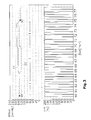
- Fig. 2 illustrates an example of blood-rock control as controlled by the controller 23 without external requirements for additional blood pressure measurements during a therapy procedure.
- Fig. 2 shows the time course of the relative ultrafiltration rate (in%). During this dialysis treatment, first a high relative ultrafiltration rate of 200% is used, and then the ultrafiltration rate is lowered to a minimum value of about 25%.
- systolic blood pressure BPsys of a patient is entered during this dialysis treatment.
- the dashed line shows the current blood pressure curve 33, as it would result in continuous blood pressure measurement.
- a collection of blood pressure waveforms is stored in previous therapy procedures.
- the blood pressure measuring device 24 measures the current blood pressure at intervals of 5 minutes and stores it as a blood pressure curve 33.
- the blood pressure control takes place exclusively as a function of the current blood pressure curve 33.
- the initial phase lasts 45 minutes in the present embodiment.
- the current blood pressure curve 33 with the stored blood pressure curve s previous treatments of the same patient.
- the blood pressure profile with the greatest similarity to the current blooddrying course is determined from the data memory and used as a (dotted) guide curve 35 for the current treatment.
- the blood pressure measurements BPM are carried out at intervals of 20 minutes or in the final phase C at intervals of 30 minutes.
- the blood pressure control continues to take place at intervals of 5 minutes, wherein at the times in which no measurement is performed, the values of the (dotted) guide curve as the actual value of the blood pressure are used as basis and in the times of blood pressure measurement BPM the current values of the (dashed) blood pressure curve 33.
- the values used as the actual blood pressure for the control result from the solid curve 37, which indicates the "hypothetical blood pressure curve".
- the ultrafiltration rate UFR is reduced, as indicated in region 40 in FIG.
- a predetermined limit in this example 130 mmHg
- FIG. 3 and FIG. 4 illustrate, for the treatment section shown in FIG. 2, from 60 minutes to 77 minutes over a spread time axis, the time-flexible reaction of the control device 23 to externally requested blood pressure measurements.
- the control device causes a division of the time axis in intervals I, which are here 5 minutes and in each case from 60 to 65 minutes, from 65 to 70 minutes and from 70 to 75 minutes, etc. take.
- the control device 23 causes measurements in the treatment phase A2 only at intervals of 15 minutes, ie after every 3 intervals, measurements by the regular triggers RT at the times 60 min and 75 min according to criterion a).
- the blood pressure control takes place on the basis of the measured values 33.
- the blood pressure control takes place with the hypothetical Values 37.
- the measured blood pressure value 33 is used for the regulation during the first interval in each time period.
- the control takes place using the curve 37, which indicates the "hypothetical blood pressure curve". In this way, frequent blood pressure measurements are avoided.
- the control may return to the current curve 33.
- the irregular trigger IRT a new blood pressure measurement is triggered, which then has the consequence that at the time 70 min, ie at the beginning of the third interval I, again a blood pressure measurement is performed.
- the registered external request category b) or c) at the time 67.5 min triggers an irregular trigger IRT, since the request time outside the tolerance period of 60 sec the beginning of the next 5-minute interval at 70 min.
- the controller reacts immediately with a decrease in the ultrafiltration rate UFR in the period 41, since the measured blood pressure ⁇ 130 mmHg and is in the regular blood pressure range.
- the regular triggers RT are generated at shorter intervals, in this case at the intervals of an interval I.
- the control device 23 thus initiates a regular trigger RT at the beginning of the next 5-min interval I at 70 min and thus another one regular blood pressure measurement.
- the controller 23 Since the measured value here> 130 mmHg, the controller 23 now increases the relative ultrafiltration rate UFR back to 200%.
- the entered external measurement request at 74.5 min generates a quasi-regular trigger QRT, since the request time here is within the tolerance period of 60 s before the beginning of the next 5-min interval I.
- the hypothetical values 37 in this example only take effect in the time interval from 65.0 minutes to 67.5 minutes. In the time periods from 60.0 minutes to 65.0 minutes and from 67.5 minutes to 80.0 minutes, the control is based on the current blood pressure curve 33.
Landscapes
- Health & Medical Sciences (AREA)
- Heart & Thoracic Surgery (AREA)
- Life Sciences & Earth Sciences (AREA)
- Vascular Medicine (AREA)
- Biomedical Technology (AREA)
- Engineering & Computer Science (AREA)
- Public Health (AREA)
- Veterinary Medicine (AREA)
- Animal Behavior & Ethology (AREA)
- General Health & Medical Sciences (AREA)
- Anesthesiology (AREA)
- Hematology (AREA)
- Cardiology (AREA)
- Urology & Nephrology (AREA)
- Emergency Medicine (AREA)
- Pathology (AREA)
- Surgery (AREA)
- Molecular Biology (AREA)
- Medical Informatics (AREA)
- Biophysics (AREA)
- Physics & Mathematics (AREA)
- Physiology (AREA)
- External Artificial Organs (AREA)
- Measuring Pulse, Heart Rate, Blood Pressure Or Blood Flow (AREA)
- Massaging Devices (AREA)
Abstract
Description
- Die Erfindung betrifft eine Therapieeinrichtung mit einem Blutdruckmessgerät und einer Regeleinrichtung mit zeitflexibler Regelung des Blutdruckes des Patienten während eines Therapievorganges, insbesondere ein Therapiegerät zur extrakorporalen Blutreinigung.
- Bei verschiedenen Therapien, wie beispielsweise bei der Hämodialyse, ist es erforderlich, den Blutdruck des Patienten laufend zu überwachen. Hierfür werden Geräte zur unblutigen (non-invasiven) Blutdruckmessung mit einer um den Arm des Patienten herumlegbaren Manschette benutzt, die aufgepumpt und dann unter Druckmessung langsam entlastet wird. Um eine quasi-kontinuierliche Blutdruckregelung zu erreichen, muss die Regeleinrichtung in Intervallen von wenigen Minuten Regelvorgänge durchführen. Die während einer mehrstündigen Behandlung hierfür erforderliche Anzahl von Blutdruckmessungen kann erheblich reduziert werden, wenn zu festgelegten Zeitpunkten die Blutdruckmessungen durch Blutdruckwerte substituiert werden, die aus früheren Behandlungen desselben Patienten gewonnen wurden.
- In der
Europäischen Patentanmeldung EP 1 226 838 A2 sind Therapieeinrichtungen mit intervallartiger Blutdruckmessung und mit reduzierter Anzahl der Messvorgänge beschrieben. Anhand der gleichen Länge aller Intervalle, beispielsweise 5 Minuten je Intervall, gewährleistet hierbei die Regeleinrichtung die Auswertung des Blutdruckverlaufes und der Blutdrucktrends in jedem Intervall nach einheitlichen Regeln, wie dies inEP 0 956 872 B1 beschrieben ist. - Da für morbide Ereignisse während der Hämodialyse, wie Hypotonie, Schwindelanfälle, Erbrechen u. a., multifaktorielle Ursachen zu berücksichtigen sind, werden in der klinischen Praxis mitunter Monitore für weitere Größen (beispielsweise EKG, relatives Blutvolumen, Hämatokrit, Blutsauerstoffgehalt) zur Erkennung von Komplikationen verwendet. Hieraus können sich in Abhängigkeit von den Messergebnissen zu beliebigen Zeitpunkten Anforderungen für zusätzliche Blutdruckmessungen ergeben. Klinische Erfahrungen mit Dialysepatienten zeigen, dass in Abhängigkeit vom Zustand des Patienten mitunter auch Blutdruckmessungen direkt vom medizinischen Personal angefordert werden.
- Der Erfindung liegt deshalb die Aufgabe zugrunde, eine Therapieeinrichtung mit reduzierter Anzahl der Blutdruckmessungen derart auszubilden, dass eine zeitflexible Blutdruckregelung ermöglicht wird.
- Die Lösung dieser Aufgabe erfolgt erfindungsgemäß mit den Merkmalen des Patentanspruchs 1. Hiernach wird von der Regeleinrichtung nach jeder Blutdruckmessung in Abhängigkeit vom ermittelten Blutdruckwert entschieden, ob die Blutdruckregelung auf der Grundlage von hypothetischen oder von realen Blutdruckwerten fortgesetzt wird. Dazu werden von der Regeleinrichtung die folgenden Kategorien von Blutdruckwerten in die Regelung des Blutdruckes einbezogen:
- a) Blutdruckwerte, die von der Regeleinrichtung entsprechend einem implementierten Zeitregime in Abhängigkeit von den an der Therapieeinrichtung eingestellten Zielparametern der Behandlung (zum Beispiel Gesamt-Ultrafiltrationsvolumen, Behandlungsdauer, maximale Ultrafiltrationsrate) zu vorgesehenen Zeitpunkten angefordert oder durch Werte aus früheren Therapievorgängen substituiert werden, und
- b) Blutdruckwerte, die von angeschlossenen externen Mess- und Auswertegeräten für andere physiologische Größen (zum Beispiel EKG, Relatives Blutvolumen, Hämatokrit, Blutsauerstoffgehalt) zu anderen Zeitpunkten als unter a) durch irreguläre Trigger (IRT) und/oder durch quasi-reguläre Trigger (QRT) automatisch angefordert werden, und
- c) Blutdrurkwerte, die vom medizinischen Personal manuell zu anderen Zeitpunkten als unter a) und b) durch irreguläre Trigger (IRT) und/oder durch quasi-reguläre Trigger (QRT) angefordert werden.
- Vorzugsweise führt die Regeleinrichtung die folgenden Schritte aus:
- A Steuerung des Blutdruckmessers zur Durchführung von intervallartigen Blutdruckmessungen,
- B Erfassung und zeitabhängige Auswertung aller weiteren Blutdruckmessungen, die von angeschlossenen externen Geräten und/oder vom medizinischen Personal angefordert wurden,
- C Erstellen und Speichern einer Sammlung der zeitlichen Verläufe des Blutdruckes bei mehreren Therapievorgängen,
- D Regelung des Blutdruckes unter Benutzung von gemessenen Blutdruckwerten und von Substitutionswerten aus früheren Therapievorgängen in Form einer Leitkurve.
- Gemäß einer bevorzugten Weiterbildung der Erfindung ist vorgesehen, dass die von extern angeschlossenen Geräten oder vom medizinischen Personal angeforderten Blutdruckmessungen in Abhängigkeit von ihrem Zeitpunkt innerhalb der von der Regeleinrichtung festgelegten Regelintervalle unterschiedlich bewertet werden. Eine extern angeforderte Blutdruckmessung in geringem Zeitabstand, beispielsweise 60 sec, vor Beginn eines neuen Regelintervalls wird einer regulären Blutdruckmessung gleichgestellt, wie sie ohne externe Anforderung von der Regeleinrichtung selbst zu den hierfür festgelegten Zeitpunkten durch einen regulären Trigger (RT) veranlasst würde. Der extern ausgelöste Trigger wird deshalb als quasi-regulärer Trigger (QRT) gewertet. Andere extern angeforderte Blutdruckmessungen in größerem Zeitabstand, beispielsweise > 60 sec vor Beginn eines neuen Regelintervalls, werden von der Regeleinrichtung als irreguläre Trigger (IRT) erkannt und durch eine separate Regelbasis bewertet, die die Zeitpunkte innerhalb des jeweiligen Regelintervalls berücksichtigt. Bei mehreren externen Anforderungen innerhalb eines Regelintervalls reagiert diese Regelbasis auf jede einzelne Anforderung sofort mit einer Anpassung der Führungsgröße der Blutdruckregelung, beispielsweise der Ultrafiltrationsrate. Als Bezugswert hierfür dient unabhängig von der Anzahl externer Anforderungen und in gleicher Weise wie für reguläre Blutdruckwerte jeweils der Wert der Führungsgröße, den die Regeleinrichtung zu Beginn des betreffenden Regelintervalls ermittelt hat. Sobald eine extern angeforderte Blutdruckmessung zu einem Blutdruckwert im regelpflichtigen Blutdruckbereich führt, veranlasst die Regeleinrichtung zu Beginn des nächsten Regelintervalls selbst eine weitere Blutdruckmessung. Diese Blutdruckmessung wird auch ohne externe Anforderung in den darauf folgenden Regelintervallen in gleicher Weise wie nach regulären Messungen solange wiederholt, bis der Blutdruck wieder oberhalb des regelpflichtigen Blutdruckbereiches liegt. Durch die beschriebene Arbeitsweise gewährleistet die Regeleinrichtung eine zeitflexible Blutdruckregelung, die unabhängig vom Zeitpunkt und von der Anzahl externer Anforderungen sofort nach jeder Blutdruckmessung reagiert und damit auch in kritischen Situationen die Qualität der Blutdruckregelung und die Sicherheit des Patienten erhöht. Gleichzeitig werden unnötige Doppelmessungen am Patienten vermieden, wenn externe und reguläre Anforderungen für Blutdruckmessungen in einem geringen Zeitabstand aufeinander folgen.
- Die Erfindung eignet sich insbesondere für Dialysegeräte und andere Geräte für die extrakorporale Blutbehandlung, jedoch auch beispielsweise für die Infusionstherapie.
- Im folgenden wird unter Bezugnahme auf die Zeichnungen ein Ausführungsbeispiel der Erfindung näher erläutert.
- Es zeigen:
- Fig. 1
- eine schematische Darstellung einer Therapieeinrichtung in Form eines Dialysegerätes,
- Fig. 2
- ein Zeitdiagramm der Dialysebehandlung mit Darstellung des Blutdruckes und der Ultrafiltrationsrate,
- Fig. 3
- ein Zeitdiagramm mit regulärer Reaktion der Regeleinrichtung ohne externe Messanforderungen und
- Fig. 4
- ein Zeitdiagramm mit zeitflexibler Reaktion der Regeleinrichtung bei externen Messanforderungen.
- Das in Fig. 1 dargestellte Dialysegerät entspricht in seinem Grundaufbau demjenigen von
EP 0 956 872 B1 oder vonEP 1 226 838 A2 . Das Dialysegerät 10 enthält eine Ultrafiltrationsvorrichtung 11 mit einer Primärkammer 12 und einer Sekundärkammer 13, die durch eine Membran 14 voneinander getrennt sind. Die Primärkammer 12 ist Bestandteil eines Blutkreislaufes 15, bei dem Blut, welches über das arterielle System des Patienten entnommen wurde, in der Ultrafiltrationsvorrichtung 11 gereinigt und anschließend über das venöse System zum Patienten 16 zurückgeführt wird. In dem Blutkreislauf 15 befindet sich eine Pumpe 17. Diese ist als volumetrische Pumpe ausgebildet, d. h. die Fördermenge dieser Pumpe entspricht ihrer Antriebsgeschwindigkeit, und ist steuerbar. - Die Sekundärkammer 13 der Ultrafiltrationsvorrichtung 11 befindet sich in einem Dialysierflüssigkeitsweg 18, in dem Dialysierflüssigkeit gepumpt wird. Die Dialysierflüssigkeit kommt von einem (nicht dargestellten) Vorratsbehälter, nimmt in der Ultrafiltrationsvorrichtung 11 zusätzliche Substanzen aus dem Blut auf und wird dann zu einem (nicht dargestellten) Ablauf gepumpt. In dem Dialysierflüssigkeitsweg ist vor und hinter der Sekundärkammer 13 jeweils eine Durchflusskammer 19 bzw. 20 angeordnet, welche die Durchflussrate an der betreffenden Stelle regelt. Die Durchflusskammer 19 und die Durchflusskammer 20 haben die gleiche Förderrate. Über die volumengesteuerte Ultrafiltrationspumpe 36 wird die gewünschte Ultrafiltrationsmenge UFV in einer festgelegten Ultrafiltrationsrate UFR abgezogen. Das Zeitintegral über die Ultrafiltrationsrate UFR bildet das Ultrafiltrationsvolumen UFV, also dasjenige Flüssigkeitsvolumen, das seit Beginn der Behandlung die Membran 14 passiert hat. Die Regelung der Ultrafltrationsrate erfolgt durch die Regeleinrichtung 23, die Steuersignale für die Förderrate der Pumpe 36 liefert. Die Förderrate der Pumpe wird in der Weise eingestellt, dass sich eine gewünschte Ultrafiltrationsrate ergibt.
- Die Regeleinrichtung 23 empfängt ferner das Blutdrucksignal BP eines Blutdruckmessers 24, der am Körper des Patienten angebracht ist. Der Blutdruckmesser weist eine aufblasbare Manschette auf, die um den Arm des Patienten gelegt ist, und führt nicht-invasive Blutdruckmessungen aus. Die Zeitpunkte der Blutdruckmessungen werden intern durch die Regeleinrichtung 23 über die Leitungen 25 und extern durch angeschlossene Monitore und/oder das medizinische Personal festgelegt. Neben dem Blutdruckwert können der Regeleinrichtung 23 auch noch Blutdrucktrendwerte zugeführt werden, wie es in
EP 0 956 872 B1 beschrieben ist. Die Regeleinrichtung 23 regelt in Abhängigkeit von den erhaltenen Eingangsgrößen die lJltrafiltrationsrate UFR. - Fig 2 veranschaulicht ein Beispiel der Blutdrockregelung, wie sie von der Regeleinrichtung 23 ohne externe Anforderungen für zusätzliche Blutdruckmessungen während eines Therapievorganges gesteuert wird.
- Die untere Hälfte von Fig. 2 zeigt den zeitlichen Verlauf der relativen Ultrafiltrationsrate (in %). Während dieser Dialysebehandlung wird zunächst mit hoher relativer Ultrafiltrationsrate von 200 % gearbeitet, und anschließend wird die Ultrafiltrationsrate auf einen Minimalwert von etwa 25 % abgesenkt.
- In der oberen Hälfte von Fig. 2 ist der systolische Blutdruck BPsys eines Patienten während dieser Dialysebehandlung eingetragen. Dabei zeigt die gestrichelte Linie den aktuellen Blutdruckverlauf 33, wie er sich bei kontinuierlicher Blutdruckmessung ergeben würde.
- In der Regeleinrichtung 23 oder in einem zentralen Computer ist eine Sammlung von zeitlichen Verläufen des Blutdruckes bei früheren Therapievorgängen gespeichert.
- In einer Anfangsphase A1 wird mit dem Blutdruckmessgerät 24 in Intervallen von 5 min der aktuelle Blutdruck gemessen und als Blutdruckverlauf 33 gespeichert. Die Blutdruckregelung erfolgt ausschließlich in Abhängigkeit von dem aktuellen Blutdruckverlauf 33. Die Anfangsphase dauert bei dem vorliegenden Ausführungsbeispiel 45 min. Am Ende der Anfangsphase A1 wird der aktuelle Blutdruckverlauf 33 mit den gespeicherten Blutdruckverläufen vorangegangener Behandlungen desselben Patienten verglichen. Anhand statistischer Analysen (Mittelwerte, Standardabweichungen, t-Test oder Bildverarbeitungsmethoden) wird aus dem Datenspeicher der Blutdruckverlauf mit der größten Ähnlichkeit zum aktuellen Blutdrockverlauf ermittelt und für die laufende Behandlung als (gepunktete) Leitkurve 35 benutzt.
- In der sich anschließenden zweiten Phase A2 werden Blutdruckmessungen, die durch die Striche BPM bezeichnet sind, im Zeitregime der Regeleinrichtung 23 durchgeführt, im vorliegenden Fall in Intervallen von 15 min. In der Phase B erfolgen die Blutdruckmessungen BPM in Intervallen von 20 min oder in der Endphase C in Intervallen von 30 min. Die Blutdruckregelung findet jedoch weiterhin in Intervallen von 5 min statt, wobei jeweils zu den Zeitpunkten, in denen keine Messung durchgeführt wird, die Werte der (gepunkteten) Leitkurve als Ist-Wert des Blutdruckes zu Grunde gelegt werden und in den Zeitpunkten der Blutdruckmessung BPM die aktuellen Werte des (gestrichelten) Blutdruckverlaufes 33. Die als Ist-Blutdruck für die Regelung benutzten Werte ergeben sich aus der durchgezogenen Kurve 37, die den "hypothetischen Blutdruckverlauf" angibt.
- Aus Fig. 2 ist zu erkennen, dass zu den Zeitpunkten der Blutdruckmessung BPM der hypothetische Blutdruckverlauf, der für die Regelung maßgebend ist, den Wert des aktuellen (gestrichelten) Blutdruckes 33 annimmt, während in den dazwischen liegenden Zeitpunkten der Wert der (gepunkteten) Leitkurve angenommen wird.
- Wenn der Ist-Wert unter einen vorbestimmten Grenzwert, in diesem Beispiel 130 mmHg, abfällt, wird die Ultrafiltrationsrate UFR verringert, so wie das in Fig. 2 in dem Bereich 40 angegeben ist. Durch die Verringerung der Ultrafiltrationsrate wird dem Patienten weniger Flüssigkeit entzogen, und auf diese Weise wird der Verringerung des Blutdruckes entgegengewirkt.
- Fig. 3 und Fig. 4 veranschaulichen für den in Fig. 2 enthaltenen Behandlungsabschnitt von 60 min bis 77 min über einer gespreizten Zeitachse die zeitflexible Reaktion der Regeleinrichtung 23 auf extern angeforderte Blutdruckmessungen. Die Regeleinrichtung bewirkt eine Aufteilung der Zeitachse in Intervalle I, die hier 5 min betragen und jeweils von 60 - 65 min, von 65 - 70 min und von 70 - 75 min usw. dauern. Ohne externe Anforderungen (Fig. 3) veranlasst die Regeleinrichtung 23 in Behandlungsphase A2 nur im Abstand von 15 min, also nach jeweils 3 Intervallen, Messungen durch die regulären Trigger RT zu den Zeitpunkten 60 min und 75 min gemäß Kriterium a). In dem auf einen regulären Trigger RT folgenden ersten Intervall von 60 - 65 min erfolgt die Blutdruckregelung anhand der gemessenen Werte 33. In dem zweiten und dritten Intervall I von 60 min bis 70 min und von 70 min bis 75 min erfolgt die Blutdruckregelung mit den hypothetischen Werten 37.
- Der gemessene Blutdruckwert 33 wird während des ersten Intervalls in jeder Zeitspanne für die Regelung zugrunde gelegt. In den nachfolgenden Intervallen derselben Zeitspanne erfolgt die Regelung anhand der Kurve 37, die den "hypothetischen Blutdruckverlauf" angibt. Auf diese Weise werden häufige Blutdruckmessungen vermieden. Wenn allerdings gemäß Figur 4 während der Benutzung der Kurve 37 ein irregulärer Trigger IRT auftritt, kann die Regelung zu der aktuellen Kurve 33 zurückkehren. Somit wird mit dem irregulären Trigger IRT eine neue Blutdruckmessung ausgelöst, was dann zur Folge hat, dass zur Zeit 70 min, also am Anfang des dritten Intervalls I, wiederum eine Blutdruckmessung durchgeführt wird.
- Die zeitflexible Reaktion der Regeleinrichtung in Abhängigkeit von den Zeitpunkten externer Anforderungen veranschaulicht Figur 4. Die eingetragene externe Anforderung gemäß Kategorie b) oder c) zum Zeitpunkt 67,5 min löst einen irregulären Trigger IRT aus, da der Anforderungszeitpunkt außerhalb des Toleranzzeitraums von 60 sec vor dem Beginn des nächsten 5-min-Intervalls bei 70 min liegt. Die Regeleinrichtung reagiert sofort mit einer Senkung der Ultrafiltrationsrate UFR im Zeitabschnitt 41, da der gemessene Blutdruck < 130 mmHg beträgt und im regelpflichtigen Blutdruckbereich liegt. Bei einer Absenkung der Ultrafiltrationsrate werden die regulären Trigger RT in kürzeren Zeitabständen erzeugt, hier in den Zeitabständen eines Intervalls I. Die Regeleinrichtung 23 veranlasst also bereits zum Beginn des nächsten 5-min-Intervalls I bei 70 min einen regulären Trigger RT und damit eine weitere reguläre Blutdruckmessung. Da der Messwert hier > 130 mmHg ist, erhöht die Regeleinrichtung 23 jetzt die relative Ultrafiltrationsrate UFR wieder auf 200 %. Die eingetragene externe Messanforderung bei 74,5 min erzeugt einen quasiregulären Trigger QRT, da der Anforderungszeitpunkt hier im Toleranzzeitraum von 60 s vor dem Beginn des nächsten 5-min-Intervalls I liegt. Der sonst fällige reguläre Trigger bei 75 min wird deshalb unterdrückt und der vom quasiregulären Trigger QRT ermittelte Blutdruckwert = 130 mmHg für das nächste 5-min-Intervall von 75 min bis 80 min übernommen. Die hypothetischen Werte 37 werden in diesem Beispiel nur im Zeitabschnitt von 65,0 min bis 67,5 min wirksam. In den Zeitabschnitten von 60,0 min bis 65,0 min und von 67,5 min bis 80,0 min erfolgt die Regelung anhand des aktuellen Blutdruckverlaufs 33.
Claims (3)
- Therapieeinrichtung für eine Behandlung mit einstellbaren Zielparametern, wie Gesamt-Ultrafiltrationsvolumen, Behandlungsdauer, maximale Ultrafiltrationsrate, mit einem Blutdruckmessgerät (24) und einer Regeleinrichtung (23) zur zeitflexiblen Regelung des Blutdruckes des Patienten während eines Therapievorganges in Abhängigkeit von ermittelten Blutdruckwerten, wobei die Regeleinrichtung nach jeder Blutdruckmessung in Abhängigkeit vom ermittelten Blutdruckwert entscheidet, ob die Blutdruckregelung mit hypothetischen oder mit realen Blutdruckwerten fortgesetzt wird, und wobei die Regeleinrichtung die folgenden Kategorien von Blutdruckwerten in die Regelung des Blutdruckes einbezieht:a) Blutdruckwerte, die von der Regeleinrichtung entsprechend einem implementierten Zeitregime in Abhängigkeit von den an der Therapieeinrichtung eingestellten Zielparametern der Behandlung zu vorgesehenen Zeitpunkten angefordert oder durch Werte aus früheren Therapievorgängen substituiert werden,b) Blutdruckwerte, die von Mess- und Auswertegeräten für andere physiologische Größen zu anderen Zeitpunkten als unter a) durch irreguläre Trigger (IRT) und/oder quasi-reguläre Trigger (QRT) angefordert werden, undc) Blutdruckwerte, die vom medizinischen Personal zu anderen Zeitpunkten als unter a) und b) durch irreguläre Trigger (IRT) und/oder quasi-reguläre Trigger (QRT) angefordert werden.
- Therapieeinrichtung nach Anspruch 1, wobei die Regeleinrichtung (23) die folgenden Schritte ausführt:A Erfassung, Klassierung und Verarbeitung aller nach den Kategorien a) bis c) ermittelten Blutdruckmesswerte in Abhängigkeit von den jeweiligen Zeitpunkten der Messungen und entsprechend dem von der Regeleinrichtung (23) vorgegebenen Zeitregime für die Blutdruckregelung,B Ersetzen aller Blutdruckwerte nach Kategorie a) durch die ermittelten Blutdruckmesswerte nach Kategorien b) und c), wenn diese Messwerte innerhalb eines festgelegten Toleranzzeitraumes unmittelbar vor den für die Blutdruckwerte nach Kategorie a) festgelegten Zeitpunkten vom Blutdruckmesser an die Regeleinrichtung übergeben werden.C Erstellen und Speichern einer Sammlung der zeitlichen Verläufe des Blutdruckes bei mehreren Therapievorgängen,D Ermitteln desjenigen Blutdruckverlaufes aus den gespeicherten Verläufen, der mit dem aktuellen Blutdruckverlauf (33) die größte Ähnlichkeit hat, als Leitkurve (35),E Regelung des Blutdruckes anhand der nach den Kategorien a) bis c) erhaltenen Blutdruckwerte, wobei die Werte für vorgesehene Zeitpunkte ohne Blutdruckmessung aus der Leitkurve (35) ermittelt werden.
- Therapieeinrichtung nach Anspruch 2, wobei nach jeder Messung eine neuerliche Überprüfung des bisherigen Blutdruckverlaufes mit den gespeicherten Blutdruckverläufen erfolgt, auf Ähnlichkeit
Priority Applications (3)
| Application Number | Priority Date | Filing Date | Title |
|---|---|---|---|
| EP06112431A EP1844800B1 (de) | 2006-04-10 | 2006-04-10 | Therapieeinrichtung mit zeitflexibler Blutdruckregelung |
| DE502006002940T DE502006002940D1 (de) | 2006-04-10 | 2006-04-10 | Therapieeinrichtung mit zeitflexibler Blutdruckregelung |
| AT06112431T ATE423582T1 (de) | 2006-04-10 | 2006-04-10 | Therapieeinrichtung mit zeitflexibler blutdruckregelung |
Applications Claiming Priority (1)
| Application Number | Priority Date | Filing Date | Title |
|---|---|---|---|
| EP06112431A EP1844800B1 (de) | 2006-04-10 | 2006-04-10 | Therapieeinrichtung mit zeitflexibler Blutdruckregelung |
Publications (2)
| Publication Number | Publication Date |
|---|---|
| EP1844800A1 true EP1844800A1 (de) | 2007-10-17 |
| EP1844800B1 EP1844800B1 (de) | 2009-02-25 |
Family
ID=36910883
Family Applications (1)
| Application Number | Title | Priority Date | Filing Date |
|---|---|---|---|
| EP06112431A Expired - Lifetime EP1844800B1 (de) | 2006-04-10 | 2006-04-10 | Therapieeinrichtung mit zeitflexibler Blutdruckregelung |
Country Status (3)
| Country | Link |
|---|---|
| EP (1) | EP1844800B1 (de) |
| AT (1) | ATE423582T1 (de) |
| DE (1) | DE502006002940D1 (de) |
Cited By (2)
| Publication number | Priority date | Publication date | Assignee | Title |
|---|---|---|---|---|
| DE102013101989A1 (de) * | 2013-02-28 | 2014-09-18 | B. Braun Avitum Ag | Fuzzy-Logik |
| US10342910B2 (en) | 2013-08-07 | 2019-07-09 | B. Braun Avitum Ag | Device and method for predicting intradialytic parameters |
Citations (4)
| Publication number | Priority date | Publication date | Assignee | Title |
|---|---|---|---|---|
| US4718891A (en) * | 1984-05-03 | 1988-01-12 | Henry Ford Hospital | Automated hemodialysis control based upon patient blood pressure and heart rate |
| EP0956872A2 (de) * | 1998-05-14 | 1999-11-17 | B. Braun Melsungen Ag | Blutreinigungsmaschine |
| EP1226838A2 (de) * | 2001-01-24 | 2002-07-31 | B. Braun Medizintechnologie GmbH | Therapieeinrichtung |
| US6736789B1 (en) * | 1997-10-21 | 2004-05-18 | Fresenius Medical Care Deutschland Gmbh | Method and device for extracorporeal blood treatment with a means for continuous monitoring of the extracorporeal blood treatment |
-
2006
- 2006-04-10 EP EP06112431A patent/EP1844800B1/de not_active Expired - Lifetime
- 2006-04-10 AT AT06112431T patent/ATE423582T1/de not_active IP Right Cessation
- 2006-04-10 DE DE502006002940T patent/DE502006002940D1/de not_active Expired - Lifetime
Patent Citations (4)
| Publication number | Priority date | Publication date | Assignee | Title |
|---|---|---|---|---|
| US4718891A (en) * | 1984-05-03 | 1988-01-12 | Henry Ford Hospital | Automated hemodialysis control based upon patient blood pressure and heart rate |
| US6736789B1 (en) * | 1997-10-21 | 2004-05-18 | Fresenius Medical Care Deutschland Gmbh | Method and device for extracorporeal blood treatment with a means for continuous monitoring of the extracorporeal blood treatment |
| EP0956872A2 (de) * | 1998-05-14 | 1999-11-17 | B. Braun Melsungen Ag | Blutreinigungsmaschine |
| EP1226838A2 (de) * | 2001-01-24 | 2002-07-31 | B. Braun Medizintechnologie GmbH | Therapieeinrichtung |
Cited By (3)
| Publication number | Priority date | Publication date | Assignee | Title |
|---|---|---|---|---|
| DE102013101989A1 (de) * | 2013-02-28 | 2014-09-18 | B. Braun Avitum Ag | Fuzzy-Logik |
| US9486568B2 (en) | 2013-02-28 | 2016-11-08 | B. Braun Avitum Ag | Fuzzy logic |
| US10342910B2 (en) | 2013-08-07 | 2019-07-09 | B. Braun Avitum Ag | Device and method for predicting intradialytic parameters |
Also Published As
| Publication number | Publication date |
|---|---|
| ATE423582T1 (de) | 2009-03-15 |
| EP1844800B1 (de) | 2009-02-25 |
| DE502006002940D1 (de) | 2009-04-09 |
Similar Documents
| Publication | Publication Date | Title |
|---|---|---|
| EP2061532B1 (de) | Therapieeinrichtung mit gedächtnisgestützter regeleinrichtung | |
| EP1226838B1 (de) | Therapieeinrichtung | |
| EP0956872B1 (de) | Blutreinigungsmaschine | |
| EP4048336B1 (de) | Dialysesystem mit kontinuierlicher glukose-überwachung | |
| DE10047421C1 (de) | Verfahren und Vorrichtung zur Ultrafiltrationskontrolle bei Blutbehandlungsverfahren | |
| DE19746377C1 (de) | Blutbehandlungsvorrichtung mit einer Einrichtung zur kontinuierlichen Überwachung des Blutdrucks des Patienten | |
| EP3193961B1 (de) | Vorrichtung zum steuern einer blutbehandlungsvorrichtung unter berücksichtigen von patientenfeedback bei der blutbehandlung und blutbehandlungsvorrichtung | |
| EP2209421B1 (de) | Vorrichtung zum ermitteln wenigstens einer kennzahl den glukosestoffwechsel eines patienten betreffend | |
| EP2985045B1 (de) | Verfahren zum einstellen eines blutflusses in einer dialysevorrichtung und dialysevorrichtung | |
| DE102008010531A1 (de) | Verfahren zum Betreiben einer Blutbehandlungsvorrichtung, sowie Blutvolumenmonitor und Blutbehandlungsvorrichtung zum Ausführen des Verfahrens | |
| EP1991116A1 (de) | Dialysegerät mit messeinrichtungen zur erfassung des blutdrucks sowie verfahren zur bestimmung des blutdrucks sowie ein speichermedium zur verwendung in einem dialysegerät | |
| EP2913073A1 (de) | Vorrichtung und Verfahren zur Erkennung einer venösen Nadeldiskonnektion | |
| EP3576805B1 (de) | Anordnung mit einer blutpumpe, einer steuereinheit und einem gerät zur übermittlung der messwerte | |
| EP2846852B1 (de) | Vorrichtung zur extrakorporalen blutbehandlung zum ermitteln einer blutflussrate für eine extrakorporale blutbehandlungsvorrichtung | |
| EP1844800B1 (de) | Therapieeinrichtung mit zeitflexibler Blutdruckregelung | |
| EP3131603B1 (de) | Vorrichtung zum entfernen von blut aus einem extrakorporalen blutkreislauf unter druckkontrolle | |
| WO2016041635A1 (de) | Verfahren und vorrichtung zur vorhersage von einem oder mehreren für den ausgang einer blutbehandlung charakteristischen parametern | |
| EP3765116A1 (de) | Verfahren zum einstellen einer steuer- oder regelvorrichtung einer blutbehandlungsvorrichtung, und vorrichtungen | |
| DE102011085503B4 (de) | Steuerungseinheit sowie medizinische Untersuchungsvorrichtung | |
| DE2318296A1 (de) | Geraet zur blutdialyse | |
| WO2016041798A1 (de) | Verfahren und vorrichtung zur steuerung der behandlungsdauer von behandlungen mit medizintechnischen geräten | |
| EP2763718A1 (de) | Dialysevorrichtung sowie verfahren zum betreiben derselben |
Legal Events
| Date | Code | Title | Description |
|---|---|---|---|
| PUAI | Public reference made under article 153(3) epc to a published international application that has entered the european phase |
Free format text: ORIGINAL CODE: 0009012 |
|
| AK | Designated contracting states |
Kind code of ref document: A1 Designated state(s): AT BE BG CH CY CZ DE DK EE ES FI FR GB GR HU IE IS IT LI LT LU LV MC NL PL PT RO SE SI SK TR |
|
| AX | Request for extension of the european patent |
Extension state: AL BA HR MK YU |
|
| RAP1 | Party data changed (applicant data changed or rights of an application transferred) |
Owner name: B. BRAUN AVITUM AG |
|
| 17P | Request for examination filed |
Effective date: 20080209 |
|
| 17Q | First examination report despatched |
Effective date: 20080317 |
|
| AKX | Designation fees paid |
Designated state(s): AT BE BG CH CY CZ DE DK EE ES FI FR GB GR HU IE IS IT LI LT LU LV MC NL PL PT RO SE SI SK TR |
|
| GRAP | Despatch of communication of intention to grant a patent |
Free format text: ORIGINAL CODE: EPIDOSNIGR1 |
|
| RIN1 | Information on inventor provided before grant (corrected) |
Inventor name: KORTH, STEFFEN Inventor name: ROEHER, OTFRIED |
|
| GRAS | Grant fee paid |
Free format text: ORIGINAL CODE: EPIDOSNIGR3 |
|
| GRAA | (expected) grant |
Free format text: ORIGINAL CODE: 0009210 |
|
| AK | Designated contracting states |
Kind code of ref document: B1 Designated state(s): AT BE BG CH CY CZ DE DK EE ES FI FR GB GR HU IE IS IT LI LT LU LV MC NL PL PT RO SE SI SK TR |
|
| REG | Reference to a national code |
Ref country code: GB Ref legal event code: FG4D Free format text: NOT ENGLISH |
|
| REG | Reference to a national code |
Ref country code: CH Ref legal event code: EP |
|
| REG | Reference to a national code |
Ref country code: IE Ref legal event code: FG4D Free format text: LANGUAGE OF EP DOCUMENT: GERMAN |
|
| REF | Corresponds to: |
Ref document number: 502006002940 Country of ref document: DE Date of ref document: 20090409 Kind code of ref document: P |
|
| REG | Reference to a national code |
Ref country code: SE Ref legal event code: TRGR |
|
| PG25 | Lapsed in a contracting state [announced via postgrant information from national office to epo] |
Ref country code: LT Free format text: LAPSE BECAUSE OF FAILURE TO SUBMIT A TRANSLATION OF THE DESCRIPTION OR TO PAY THE FEE WITHIN THE PRESCRIBED TIME-LIMIT Effective date: 20090225 Ref country code: NL Free format text: LAPSE BECAUSE OF FAILURE TO SUBMIT A TRANSLATION OF THE DESCRIPTION OR TO PAY THE FEE WITHIN THE PRESCRIBED TIME-LIMIT Effective date: 20090225 Ref country code: SI Free format text: LAPSE BECAUSE OF FAILURE TO SUBMIT A TRANSLATION OF THE DESCRIPTION OR TO PAY THE FEE WITHIN THE PRESCRIBED TIME-LIMIT Effective date: 20090225 Ref country code: FI Free format text: LAPSE BECAUSE OF FAILURE TO SUBMIT A TRANSLATION OF THE DESCRIPTION OR TO PAY THE FEE WITHIN THE PRESCRIBED TIME-LIMIT Effective date: 20090225 |
|
| NLV1 | Nl: lapsed or annulled due to failure to fulfill the requirements of art. 29p and 29m of the patents act | ||
| PG25 | Lapsed in a contracting state [announced via postgrant information from national office to epo] |
Ref country code: PL Free format text: LAPSE BECAUSE OF FAILURE TO SUBMIT A TRANSLATION OF THE DESCRIPTION OR TO PAY THE FEE WITHIN THE PRESCRIBED TIME-LIMIT Effective date: 20090225 Ref country code: LV Free format text: LAPSE BECAUSE OF FAILURE TO SUBMIT A TRANSLATION OF THE DESCRIPTION OR TO PAY THE FEE WITHIN THE PRESCRIBED TIME-LIMIT Effective date: 20090225 Ref country code: IS Free format text: LAPSE BECAUSE OF FAILURE TO SUBMIT A TRANSLATION OF THE DESCRIPTION OR TO PAY THE FEE WITHIN THE PRESCRIBED TIME-LIMIT Effective date: 20090625 |
|
| REG | Reference to a national code |
Ref country code: IE Ref legal event code: FD4D |
|
| PG25 | Lapsed in a contracting state [announced via postgrant information from national office to epo] |
Ref country code: PT Free format text: LAPSE BECAUSE OF FAILURE TO SUBMIT A TRANSLATION OF THE DESCRIPTION OR TO PAY THE FEE WITHIN THE PRESCRIBED TIME-LIMIT Effective date: 20090812 Ref country code: DK Free format text: LAPSE BECAUSE OF FAILURE TO SUBMIT A TRANSLATION OF THE DESCRIPTION OR TO PAY THE FEE WITHIN THE PRESCRIBED TIME-LIMIT Effective date: 20090225 Ref country code: CZ Free format text: LAPSE BECAUSE OF FAILURE TO SUBMIT A TRANSLATION OF THE DESCRIPTION OR TO PAY THE FEE WITHIN THE PRESCRIBED TIME-LIMIT Effective date: 20090225 Ref country code: EE Free format text: LAPSE BECAUSE OF FAILURE TO SUBMIT A TRANSLATION OF THE DESCRIPTION OR TO PAY THE FEE WITHIN THE PRESCRIBED TIME-LIMIT Effective date: 20090225 Ref country code: ES Free format text: LAPSE BECAUSE OF FAILURE TO SUBMIT A TRANSLATION OF THE DESCRIPTION OR TO PAY THE FEE WITHIN THE PRESCRIBED TIME-LIMIT Effective date: 20090605 Ref country code: IE Free format text: LAPSE BECAUSE OF FAILURE TO SUBMIT A TRANSLATION OF THE DESCRIPTION OR TO PAY THE FEE WITHIN THE PRESCRIBED TIME-LIMIT Effective date: 20090225 |
|
| BERE | Be: lapsed |
Owner name: B. BRAUN AVITUM A.G. Effective date: 20090430 |
|
| PG25 | Lapsed in a contracting state [announced via postgrant information from national office to epo] |
Ref country code: SK Free format text: LAPSE BECAUSE OF FAILURE TO SUBMIT A TRANSLATION OF THE DESCRIPTION OR TO PAY THE FEE WITHIN THE PRESCRIBED TIME-LIMIT Effective date: 20090225 Ref country code: RO Free format text: LAPSE BECAUSE OF FAILURE TO SUBMIT A TRANSLATION OF THE DESCRIPTION OR TO PAY THE FEE WITHIN THE PRESCRIBED TIME-LIMIT Effective date: 20090225 |
|
| REG | Reference to a national code |
Ref country code: HU Ref legal event code: AG4A Ref document number: E006112 Country of ref document: HU |
|
| PLBE | No opposition filed within time limit |
Free format text: ORIGINAL CODE: 0009261 |
|
| STAA | Information on the status of an ep patent application or granted ep patent |
Free format text: STATUS: NO OPPOSITION FILED WITHIN TIME LIMIT |
|
| PG25 | Lapsed in a contracting state [announced via postgrant information from national office to epo] |
Ref country code: BG Free format text: LAPSE BECAUSE OF FAILURE TO SUBMIT A TRANSLATION OF THE DESCRIPTION OR TO PAY THE FEE WITHIN THE PRESCRIBED TIME-LIMIT Effective date: 20090525 |
|
| 26N | No opposition filed |
Effective date: 20091126 |
|
| PG25 | Lapsed in a contracting state [announced via postgrant information from national office to epo] |
Ref country code: MC Free format text: LAPSE BECAUSE OF NON-PAYMENT OF DUE FEES Effective date: 20090430 |
|
| PG25 | Lapsed in a contracting state [announced via postgrant information from national office to epo] |
Ref country code: BE Free format text: LAPSE BECAUSE OF NON-PAYMENT OF DUE FEES Effective date: 20090430 |
|
| PG25 | Lapsed in a contracting state [announced via postgrant information from national office to epo] |
Ref country code: AT Free format text: LAPSE BECAUSE OF NON-PAYMENT OF DUE FEES Effective date: 20090410 |
|
| PG25 | Lapsed in a contracting state [announced via postgrant information from national office to epo] |
Ref country code: GR Free format text: LAPSE BECAUSE OF FAILURE TO SUBMIT A TRANSLATION OF THE DESCRIPTION OR TO PAY THE FEE WITHIN THE PRESCRIBED TIME-LIMIT Effective date: 20090526 |
|
| REG | Reference to a national code |
Ref country code: CH Ref legal event code: PL |
|
| PG25 | Lapsed in a contracting state [announced via postgrant information from national office to epo] |
Ref country code: CH Free format text: LAPSE BECAUSE OF NON-PAYMENT OF DUE FEES Effective date: 20100430 Ref country code: LI Free format text: LAPSE BECAUSE OF NON-PAYMENT OF DUE FEES Effective date: 20100430 |
|
| PG25 | Lapsed in a contracting state [announced via postgrant information from national office to epo] |
Ref country code: LU Free format text: LAPSE BECAUSE OF NON-PAYMENT OF DUE FEES Effective date: 20090410 |
|
| PG25 | Lapsed in a contracting state [announced via postgrant information from national office to epo] |
Ref country code: TR Free format text: LAPSE BECAUSE OF FAILURE TO SUBMIT A TRANSLATION OF THE DESCRIPTION OR TO PAY THE FEE WITHIN THE PRESCRIBED TIME-LIMIT Effective date: 20090225 |
|
| PG25 | Lapsed in a contracting state [announced via postgrant information from national office to epo] |
Ref country code: CY Free format text: LAPSE BECAUSE OF FAILURE TO SUBMIT A TRANSLATION OF THE DESCRIPTION OR TO PAY THE FEE WITHIN THE PRESCRIBED TIME-LIMIT Effective date: 20090225 |
|
| REG | Reference to a national code |
Ref country code: FR Ref legal event code: PLFP Year of fee payment: 11 |
|
| REG | Reference to a national code |
Ref country code: FR Ref legal event code: PLFP Year of fee payment: 12 |
|
| REG | Reference to a national code |
Ref country code: FR Ref legal event code: PLFP Year of fee payment: 13 |
|
| REG | Reference to a national code |
Ref country code: FR Ref legal event code: PLFP Year of fee payment: 18 |
|
| PGFP | Annual fee paid to national office [announced via postgrant information from national office to epo] |
Ref country code: GB Payment date: 20240423 Year of fee payment: 19 |
|
| PGFP | Annual fee paid to national office [announced via postgrant information from national office to epo] |
Ref country code: DE Payment date: 20240418 Year of fee payment: 19 |
|
| PGFP | Annual fee paid to national office [announced via postgrant information from national office to epo] |
Ref country code: IT Payment date: 20240430 Year of fee payment: 19 Ref country code: FR Payment date: 20240419 Year of fee payment: 19 |
|
| PGFP | Annual fee paid to national office [announced via postgrant information from national office to epo] |
Ref country code: SE Payment date: 20240423 Year of fee payment: 19 Ref country code: HU Payment date: 20240410 Year of fee payment: 19 |
|
| P01 | Opt-out of the competence of the unified patent court (upc) registered |
Free format text: CASE NUMBER: APP_3904/2025 Effective date: 20250124 |
|
| REG | Reference to a national code |
Ref country code: DE Ref legal event code: R119 Ref document number: 502006002940 Country of ref document: DE |
|
| REG | Reference to a national code |
Ref country code: SE Ref legal event code: EUG |
|
| PG25 | Lapsed in a contracting state [announced via postgrant information from national office to epo] |
Ref country code: HU Free format text: LAPSE BECAUSE OF NON-PAYMENT OF DUE FEES Effective date: 20250411 |
|
| GBPC | Gb: european patent ceased through non-payment of renewal fee |
Effective date: 20250410 |
|
| PG25 | Lapsed in a contracting state [announced via postgrant information from national office to epo] |
Ref country code: DE Free format text: LAPSE BECAUSE OF NON-PAYMENT OF DUE FEES Effective date: 20251104 |
|
| PG25 | Lapsed in a contracting state [announced via postgrant information from national office to epo] |
Ref country code: GB Free format text: LAPSE BECAUSE OF NON-PAYMENT OF DUE FEES Effective date: 20250410 |
|
| PG25 | Lapsed in a contracting state [announced via postgrant information from national office to epo] |
Ref country code: FR Free format text: LAPSE BECAUSE OF NON-PAYMENT OF DUE FEES Effective date: 20250430 |
|
| PG25 | Lapsed in a contracting state [announced via postgrant information from national office to epo] |
Ref country code: SE Free format text: LAPSE BECAUSE OF NON-PAYMENT OF DUE FEES Effective date: 20250411 |
|
| PG25 | Lapsed in a contracting state [announced via postgrant information from national office to epo] |
Ref country code: IT Free format text: LAPSE BECAUSE OF NON-PAYMENT OF DUE FEES Effective date: 20250410 |