EP1879127A1 - Procédé et système d'autentification de l'utilisateur et système de gestion de mot de passe - Google Patents
Procédé et système d'autentification de l'utilisateur et système de gestion de mot de passe Download PDFInfo
- Publication number
- EP1879127A1 EP1879127A1 EP06117117A EP06117117A EP1879127A1 EP 1879127 A1 EP1879127 A1 EP 1879127A1 EP 06117117 A EP06117117 A EP 06117117A EP 06117117 A EP06117117 A EP 06117117A EP 1879127 A1 EP1879127 A1 EP 1879127A1
- Authority
- EP
- European Patent Office
- Prior art keywords
- password
- perceptual
- user
- user authentication
- parameters
- Prior art date
- Legal status (The legal status is an assumption and is not a legal conclusion. Google has not performed a legal analysis and makes no representation as to the accuracy of the status listed.)
- Withdrawn
Links
Images




Classifications
-
- G—PHYSICS
- G07—CHECKING-DEVICES
- G07F—COIN-FREED OR LIKE APPARATUS
- G07F7/00—Mechanisms actuated by objects other than coins to free or to actuate vending, hiring, coin or paper currency dispensing or refunding apparatus
- G07F7/08—Mechanisms actuated by objects other than coins to free or to actuate vending, hiring, coin or paper currency dispensing or refunding apparatus by coded identity card or credit card or other personal identification means
- G07F7/10—Mechanisms actuated by objects other than coins to free or to actuate vending, hiring, coin or paper currency dispensing or refunding apparatus by coded identity card or credit card or other personal identification means together with a coded signal, e.g. in the form of personal identification information, like personal identification number [PIN] or biometric data
- G07F7/1025—Identification of user by a PIN code
-
- G—PHYSICS
- G06—COMPUTING OR CALCULATING; COUNTING
- G06F—ELECTRIC DIGITAL DATA PROCESSING
- G06F21/00—Security arrangements for protecting computers, components thereof, programs or data against unauthorised activity
- G06F21/30—Authentication, i.e. establishing the identity or authorisation of security principals
- G06F21/31—User authentication
- G06F21/36—User authentication by graphic or iconic representation
-
- G—PHYSICS
- G06—COMPUTING OR CALCULATING; COUNTING
- G06V—IMAGE OR VIDEO RECOGNITION OR UNDERSTANDING
- G06V40/00—Recognition of biometric, human-related or animal-related patterns in image or video data
- G06V40/10—Human or animal bodies, e.g. vehicle occupants or pedestrians; Body parts, e.g. hands
- G06V40/16—Human faces, e.g. facial parts, sketches or expressions
- G06V40/168—Feature extraction; Face representation
- G06V40/171—Local features and components; Facial parts ; Occluding parts, e.g. glasses; Geometrical relationships
-
- G—PHYSICS
- G06—COMPUTING OR CALCULATING; COUNTING
- G06V—IMAGE OR VIDEO RECOGNITION OR UNDERSTANDING
- G06V40/00—Recognition of biometric, human-related or animal-related patterns in image or video data
- G06V40/20—Movements or behaviour, e.g. gesture recognition
Definitions
- the present invention relates to a perceptual password-based user authentication method.
- the invention further relates to a perceptual password management system and a user authentication system comprising such a password management system.
- the invention relates to a method for improving security in a user authentication system based on perceptual passwords.
- User authentication is a critical component of any security system for physical or logical access.
- identity claims can be verified based on user knowledge (e.g. alphanumeric passwords or Personal Identification Numbers), items of possession (e.g. physical keys or smart cards) or user characteristics (i.e. biometrics).
- Alphanumeric passwords and Personal Identification Numbers (PINs) are straightforward to use and can be efficiently entered using e.g. conventional computer keyboards or numeric keypads.
- PINs Personal Identification Numbers
- research in information security indicates that alphanumeric passwords are not well adapted to the way humans process information. In general, users find passwords difficult to remember and a solution many users adopt is to reduce the complexity and number of passwords across applications, which reduces the security obtained through the passwords.
- Security tokens such as physical keys or smart cards offer an alternative or complement to alphanumeric passwords and PINs for user authentication.
- Physical keys and smart cards are frequently used in physical access applications and the infrastructure is well established. Smart card technologies have reached a high level of maturity and can offer distinct advantages in some applications.
- physical items for user authentication similarly to traditional knowledge-based methods, physical items for user authentication have significant drawbacks. For example, authentication tokens are frequently lost, shared between users, duplicated or stolen.
- biometric user authentication based on sampling of physiological or behavioral characteristics. Recent technical innovations and a maturing market place indicate a promising future for this form of user authentication.
- biometric technologies may also introduce new issues in user authentication relating to e.g. portability, usability and robustness. Example issues with current technologies include failures in verifying authorized users, failures in rejecting unauthorized users, and failures in detecting synthetic or fake biometric samples. Also, some of these technologies may depend on specialized hardware increasing the overall cost of the physical or logical access system.
- Perceptual passwords A relatively new and less explored user authentication technology is perceptual or graphical passwords, first introduced in 1996 by Greg Blonder and colleagues at Lucent Technologies.
- Perceptual passwords are based on the observation that humans find it easier to recall complex patterns when expressed as pictures as opposed to sequences of characters or digits.
- PPW technologies may be used in any physical or logical access application integrating a graphical display.
- PPW technologies offer distinct advantages in mobile applications where the devices may not include a complete keyboard and data entry is achieved using a limited set of keys, a touch screen or a stylus.
- a trusted server stores a dataset of seed values from which synthetic images can be generated. The seeds have been manually processed to make sure that the corresponding abstract images meet regularity requirements and are visually distinguishable.
- the user constructs an image portfolio by selecting a number of images from a larger set presented by the server.
- the server creates a challenge set of portfolio and decoy images and the user is successfully verified if all of the portfolio images are identified.
- a problem with the above approach is that the generated images will belong to different object classes and may include unique and/or atypical characteristics, making the PPW-system vulnerable to so-called shoulder surfing security attacks.
- time-consuming manual processing is required to remove unfavorable portfolio images.
- images need to be manually labeled with respect to gross appearance to avoid display of images with dissimilar but typical characteristics.
- a PPW-system using synthetic faces as password objects is disclosed.
- a face image is split into regions and the system keeps an image archive for each of the facial regions.
- a synthetic face is then generated by randomly selecting one image from each of the archives and fusing them together to form a composite image. The characteristics of skin and hair are then added on top of these surface formations.
- a drawback of this PPW-system is that fusing of randomly selected image parts may result in composite images that differ significantly from the other displayed images. This reduces the security of the system, since images with dissimilar characteristics are more easily identified in a shoulder-surfing attack. Again, to address this problem, manual processing is required to remove unfavorable image parts, to create a list of valid combinations and to label the corresponding image compositions with respect to gross appearance.
- a growing problem in user authentication is the unauthorized recording or logging of keystrokes, mouse-clicks and screen dumps performed by malicious software such as spyware.
- the recorded information may be relayed to a third party and then used to reproduce a verification session.
- a general object of the present invention is to provide an improved perceptual password-based user authentication method and system.
- a further object of the present invention is to improve security in user authentication systems based on perceptual passwords.
- a user authentication method comprising the steps of generating a perceptual password including a password object, the password object being synthesized by means of a controlled deviation from a reference password object within an object space defined by appearance parameters previously acquired from a training set of objects, assigning the perceptual password to a user, receiving a user identity claim comprising a user-provided perceptual password, comparing the user-provided perceptual password with the perceptual password assigned to the claimed user and based on the result of the comparison, accepting or rejecting the user identity claim.
- a "perceptual password” should here be understood as a password comprising more information than simply textual information.
- the perceptual password could, for example, include still or moving images which may be in two (2D) or three (3D) dimensions and which may be abstract or realistic, sound, various symbols, or a combination thereof.
- a perceptual password may also include textual information, and, for example, distorted text is here considered to comprise more information than just the textual information.
- images included in perceptual passwords may be presented in grayscale or color.
- Password objects comprised in perceptual passwords may be represented using both absolute and relative representations.
- Absolute representations include, for example, the image of a password object and the representation of a password object in terms of its appearance parameters.
- a password object can also be represented as a set of deviation parameters defining the object appearance in relation to a reference password object.
- a "password object” should here be understood as the appearance parameter representation of the object and the "object space” as the space of all possible password objects.
- a perceptual password may be automatically generated or user-generated. Furthermore, the thus generated perceptual password(s) may be automatically assigned to a user or assigned following selection of the user among several perceptual passwords presented to the user.
- the user may initiate or control the generation of the perceptual password(s), or, more specifically, the user may synthesize a set of password objects by manually adjusting user interface controls to modify the appearance parameters of the reference password object.
- the steps comprised in the user authentication method according to the present invention may be performed at the same or different physical locations.
- the steps of generating one or several perceptual password(s) and assigning this/these perceptual password(s) to a user may be performed upon enrolment at a dedicated enrolment station, which may be at a secure location, which may be protected against so-called shoulder-surfing attacks, while the steps of receiving a user identity claim, comparing the user-provided perceptual password(s) with the perceptual password(s) previously assigned to the claimed user and accepting or rejecting the user identity claim may typically take place at the logical or physical access points of the user authentication system.
- the method according to the present invention does not require storage of a portfolio of full or partial images, but synthetic images may be generated as needed, which results in reduced storage space requirements, while maintaining a large password space.
- the method according to the present invention enables real-time controlled generation of clearly distinguishable password objects, which decreases the occurrence of rejections of legitimate users.
- the method of the present invention enables generation of password objects within a single object class, such as human faces, and with controlled characteristics. This may, for example, be accomplished by selecting a suitable training set.
- a suitable training set For example, be selected by selecting a suitable training set.
- PPW systems typically require manual processing of the image portfolio to remove images with unfavorable or atypical characteristics. Examples include images with unique shape and texture variations that may be easily identifiable in a shoulder-surfing attack and therefore compromise the security of the PPW system. For face images, unique shape and texture variations include, for example, scars and tattoos.
- the portfolio images need to be manually labeled with respect to gross appearance to avoid the display of images with dissimilar (but typical) characteristics.
- the reference password object may be determined through statistical analysis of at least a sub-set of the previously acquired appearance parameters.
- the reference password object may be determined through statistical analysis of the entire set of previously acquired appearance parameters or of a suitable selection of these. For example, a selected sub-set of appearance parameters may correspond to a sub-group of the objects in the training set. In this way, different reference password objects may be used for different groups of users, although the same training set was utilized for the different groups.
- the reference password object may advantageously be synthesized from mean values of at least a sub-set of said previously acquired appearance parameters.
- the reference password object may be given a central location in the sub-space of the object space determined by the selected sub-set of the training set.
- any other suitable statistical measure such as, for example, the median, may be used to derive the appearance parameters of the reference password object.
- the step of generating may comprise the steps of acquiring a set of deviation parameters, and deviating, in the object space, from the reference password object in a direction and with an amount determined by the set of deviation parameters, to thereby arrive at the password object.
- the deviation of the password object from the reference password object may be determined by deviation parameters which may be internally generated by the user authentication system, or, alternatively, acquired from an external source, such as a user input device or a remotely located password management system.
- This type of parametric appearance control enables precisely controlled generation of perceptual passwords with suitable characteristics.
- the above step of deviating may comprise the step of adding, to a set of appearance parameters of the reference password object, a deviation set of appearance parameters obtained by weighting a set of prototype appearances obtained through statistical analysis of at least a sub-set of the appearance parameters of the training set with the acquired set of deviation parameters.
- the prototype appearances may preferably be represented by eigenvectors of the covariance matrices of at least a sub-set of the acquired appearance parameters, for example shapes and textures, of the training set.
- the training set may advantageously be selected such that the object space corresponds to a well-defined object class, such as human or animal faces. Furthermore, in the case of human faces, the training set may, for example, be selected such that the resulting object space corresponds to a certain sex, race and/or age group.
- the password object comprised in the perceptual password may advantageously be a representation of an image of a human face. Research indicates that humans are better at recognizing faces than other types of objects. Face images are therefore ideal candidates for password objects.
- the step of receiving may comprise the steps of presenting to a user an initial perceptual password seed comprising an initial password object, and altering means for altering an appearance of the initial password object, and receiving a user-provided perceptual password comprising a user-altered initial password object.
- the initial perceptual password seed may, for example, be presented to the user by means of a graphical display, which may be situated in a portable device, such as a mobile phone, or be a part of a personal computer, or be present at a physical access point.
- a graphical display which may be situated in a portable device, such as a mobile phone, or be a part of a personal computer, or be present at a physical access point.
- the altering means may be provided in the form of physical or graphical user interface controls, manipulation of which lead to changes of deviation parameters, leading to a user-controlled deviation from the initial password object.
- the shape and texture of the initial password object may be changed and the corresponding image synthesized and displayed in real-time.
- the altering means may not necessarily be graphical user interface widgets such as buttons and scroll bars.
- the user interface controls may be hardware controls such as the navigational keys on a computer keyboard, the scroll wheel on a mouse, or the track wheel on a mobile device.
- the absolute status of a user interface control should not be apparent from the interface since this may assist an unauthorized person in reproducing the verification session.
- the similarity may be estimated using standard pattern recognition distance measures such as the Euclidean distance, correlation, normalized correlation, or the Mahalanobis distance applied to corresponding vector elements in the parameter space, or corresponding pixel values in the synthesized images.
- standard pattern recognition distance measures such as the Euclidean distance, correlation, normalized correlation, or the Mahalanobis distance applied to corresponding vector elements in the parameter space, or corresponding pixel values in the synthesized images.
- the initial password object may be a default password object, such as the reference password object.
- the initial password object may be closer in the object space to the password object comprised in the perceptual password assigned to the user than the reference password object.
- the initial password object may be randomly selected.
- the altering means may be adapted to enable altering of the appearance of the initial password object with a minimum step size, thereby facilitating for the user to arrive sufficiently close to the password object comprised in the perceptual password assigned to the user.
- the object space may be constrained and dependency on similarity metrics in enrolment and verification thereby avoided.
- the risk of selecting neighboring objects is low and one-way hash functions may be employed for secure storage of PPWs.
- Popular hash functions include SHA-2, MD5, RIPE-MD, HAVAL and SNERFU.
- the password hashing would make the user authentication method according to the present embodiment fully compatible with existing infrastructure for password management.
- the verification may be initiated with multiple randomly generated and unique password objects.
- the user is then asked to select one of the password objects and adjust the controls to align the appearance with any of the password objects previously assigned to the user.
- the initial password objects all undergo the same transformation in appearance parameters, such as shape and texture, as controlled by the user.
- the step of receiving may comprise the steps of presenting to a user a plurality of perceptual password candidates, each comprising a password object, prompting the user to indicate any of the presented perceptual password candidates which correspond to perceptual passwords previously assigned to the user, and receiving the user-indicated perceptual password(s).
- the perceptual password candidates may be presented to the user together or one by one on a graphical display.
- the perceptual password candidates may typically be displayed in a matrix of a pre-defined size, e.g. 3 x 3 or 4 x 3 to correspond to standard numeric keypad configurations.
- graphical display and usability constraints may affect the choice of object matrix size.
- the above steps may be repeated for a sequence of displays until the user has successfully recognized and selected a pre-defined percentage of the password objects assigned to the user, or until a pre-defined maximum number of displays has been reached.
- the spatial positions of the password objects on the graphical display may advantageously be varied between verification sessions.
- displays not including any of the perceptual passwords assigned to the user may be presented by the user authentication system. In this case, the user should ignore the display and proceed with the next one.
- a perceptual password management system comprising processing circuitry adapted to indicate a perceptual password comprising a password object, the password object being synthesized by means of a controlled deviation from a reference password object within an object space defined by appearance parameters previously acquired from a training set of objects, and assign the indicated perceptual password to a user.
- the perceptual password management system may be dedicated to a particular user authentication system, or may be a centralized system adapted to serve a plurality of user authentication systems.
- the model used for generating perceptual passwords may either be stored locally on a user terminal or device, or centrally on a server connected with the user terminal through a local-area or wide-area network. If the model is stored in a central location, the generation of the perceptual password(s) may take place at the central location, or at the local terminal. The latter case, however, requires that a copy of the model used for generating the perceptual passwords is stored on the local terminal. Alternatively, the perceptual passwords may be generated at another location remote from the perceptual password management system, by the operator of the perceptual password management system or by a third party.
- the perceptual password management system indicates at least one of the perceptual passwords generated at the remote location and then assigns the indicated password(s) to a user.
- the assigned perceptual passwords may then be provided to the relevant user authentication system directly from the remote location where they were generated or via the perceptual password management system.
- model parameters such as deviation parameters indicative of a certain password object, or generated password objects or perceptual passwords comprising such password objects may be distributed from the central server to the user terminals.
- perceptual password data compression may advantageously be applied to reduce the bandwidth requirements.
- the data may, furthermore, be encrypted, and error-correcting codes may be employed to increase robustness with respect to transmission noise.
- perceptual passwords By generating perceptual passwords centrally and distributing password data including image data, storage of models on local terminals or devices may be avoided and storage space requirements thereby reduced. This may be an attractive solution for low-memory mobile devices such as mobile phones, PDAs and tablet PCs. More importantly, however, is that we do not need to distribute the perceptual password generation models and therefore reduce the risk of models being compromised.
- standard lossless or lossy data compression techniques may be employed to reduce the size of the image data comprised in the perceptual passwords. Examples of suitable data compression techniques include the ones developed by the Joint Photographic Experts Group (JPEG), e.g. the JPEG 2000 wavelet based image compression standard.
- JPEG Joint Photographic Experts Group
- the centralized service may provide functionality for model updating and security patch management. Also, the service can manage the security validation of models and the replacement of corrupted models.
- the centralized perceptual password management system may, additionally, provide service for password management to allow sharing of perceptual passwords across applications or networks.
- the system may support issuing, re-issuing, validation, invalidation, encryption, decryption and storage of PPWs.
- the perceptual password management system of the invention may provide functionality for pro-active and re-active password checking, issuing of one-time passwords, salting of PPWs, enforcement of time restrictions on passwords, and single sign-on.
- a scheme may be implemented for allocation of perceptual passwords to organizations and user groups. For example, groups of perceptual passwords may be allocated to specific organizations allowing e.g. enhanced password diagnostics.
- the system can, for example, immediately reject the request if the supplied PPW does not belong to the password group assigned to the organization. Consequently, we save time by not accessing the central user database and we can therefore handle more access requests per time unit. Note that this does not prevent us from logging the requests (including the claimed username and password) for future analysis, including tracing of unauthorized access attempts.
- the above-mentioned perceptual password may be indicated by means of a selection of model parameters indicative of the perceptual password.
- These model parameters may include a set of deviation parameters, for enabling deviation, in the object space, from the reference password object in a direction and with an amount determined by the set of deviation parameters.
- the processing circuitry comprised in the perceptual password management system of the present invention may further be configured to generate the perceptual password based on the model parameters.
- the perceptual password management system of the present invention may further be included in a user authentication system, further comprising display means, for displaying to a user at least one perceptual password entity comprising a password object, user input means for enabling input indicative of a user identity claim comprising a user-provided perceptual password, and processing circuitry configured to compare the user-provided perceptual password with the perceptual password previously assigned to the claimed user, and accept or reject the user identity claim based on the result of the comparison.
- a computer program module adapted to execute the steps of the method according to the present invention when run in a user authentication system according to the invention.
- a method for improving security in a user authentication system based on perceptual passwords, comprising the steps of displaying at least one perceptual password entity and at least one password tag carrying information which is easily extractable by a human being, while being difficult to automatically extract using a computer program, receiving a textual input, and comparing the textual input with the information carried by the password tag.
- a "perceptual password entity” includes, for example, a perceptual password candidate for selection by a user or an initial perceptual password seed for modification by a user.
- the at least one password tag and the at least one perceptual password entity may be displayed simultaneously or following each other.
- the present aspect of the invention is based upon the realization that security in a user authentication system based on selection or modification of perceptual passwords can be improved by decoupling the output of the user authentication system from the input to the system. This is especially the case for so-called spyware attacks involving unauthorized recording or logging of keystrokes, mouse-clicks and screen dumps performed by malicious software, since such a decoupling would render recorded input information useless for the attacker.
- textual input received by the system may be used by the system to gain information related to a perceptual password entity.
- information may include a selection of one or several perceptual password candidates or user-controlled modification of a displayed perceptual password seed. While being useful to the user authentication system, this information has no meaning to malicious software, such as spyware, since the coupling between the appearance of the displayed password tag and the textual information carried by the tag is generally only discernible to a human being.
- An additional effect obtained through the present aspect of the invention is that it may be verified that the textual input is actually provided by a human being. Thereby, protection against a so-called dictionary attack against the user authentication system is provided, as well as against spyware attacks. Furthermore, additional security is obtained, since the method according to the present aspect of the invention may be used to ascertain that enrolment is performed by a human being, so that no perceptual passwords are assigned to computer generated virtual users.
- ATTs Automatic Turing Tests
- Reverse Turing Tests Reverse Turing Tests
- a kind of automatic Turing Test is performed primarily in order to make the connection between user-entered textual input and any information related to one or several displayed perceptual password entities opaque to malicious software, such as spyware.
- malicious software such as spyware
- the method according to the present aspect of the invention improves security of the user authentication system by making so-called shoulder surfing attacks less likely to succeed.
- An observer needs to watch the keyboard, temporarily memorize the textual information being entered, map the textual information to one or several password tag(s) displayed on the screen and then memorize the perceptual password entity or entities associated with the password tag(s).
- the information carried by the password tags and the location of the password objects and the password tags on the display may vary between verification sessions. Also, in a typical implementation the password objects and password tags may only be shown on the display for a limited period of time.
- perceptual password entities of the present aspect of the invention need not be generated according to previous aspects of the present invention, but may be any kind of perceptual passwords, such as facial or other images from a dataset, user selected password objects, or system generated perceptual passwords, which are generated using other schemes than the one described above.
- the information carried by the password tag may be related to at least one of the displayed password objects.
- the method according to the present aspect of the invention may further comprise the step of extracting, from the textual input, the information related to the at least one perceptual password entity.
- a plurality of perceptual password entities may be displayed together with the at least one password tag, and the information carried by the at least one password tag may be indicative of a selection of at least one of the perceptual password entities.
- the user may select one or several perceptual password entities, for example during verification, without revealing to spyware which object(s) was/were selected.
- This improves the security of the user authentication system.
- one or several screen images may contain password tags carrying no relevant information. If all password tags lack relevant information, the screen image should be ignored by the user and the system proceeds to the next screen image.
- the plurality of perceptual password entities may be displayed together with a plurality of password tags each carrying information which is easily extractable by a human being, while being difficult to automatically extract using a computer program, and the information carried by each of said password tags may be indicative of a selection of a corresponding one of the perceptual password entities.
- each of the perceptual password entities may be selectable through textual input corresponding to the information carried by more than one of said password tags.
- the perceptual password entities may be displayed in a matrix formation and each row and column may be selected through textual input of information comprised in a password tag indicating that particular row or column.
- the method according to the present aspect of the invention may further comprise the step of permitting, given that the textual input corresponds to the information carried by the password tag, selection and/or modification of the at least first perceptual password entity.
- a perceptual password entity is effectively locked against selection and/or modification by other than a human user, thereby avoiding computerized brute force attacks against the user authentication system.
- the password tag may comprise a string of distorted alphanumeric characters, the information carried by the password tag being the string of alphanumeric characters.
- the password tag comprises at least one graphical object embedded in a background having different texture properties, the information carried by the password tag being, for example, the number of the embedded graphical objects.
- a user authentication system comprising display means for displaying at least one perceptual password entity and at least one password tag carrying information which is easily extractable by a human being, while being difficult to automatically extract using a computer program, input means for receiving a textual input, and processing circuitry configured to compare the textual input with the information carried by the password tag, thereby enabling determination of whether the input was performed by a human being.
- processing circuitry may further be configured to extract, from the textual input, information related to the at least one perceptual password entity.
- a flow-chart illustrating the user authentication method according to the present invention is shown.
- a perceptual password comprising a password object is generated in a first step 101. More detail on the generation of the perceptual password is given below in connection with figs 2 and 3.
- the perceptual password generated in step 101 is assigned to a user. This assignment of a perceptual password (or any password) to a user is generally referred to as enrolment of the user. Following enrolment, the user is ready to use her/his assigned perceptual password in order to gain access to, for example, a logical or physical system, such as a computer network or a building, respectively.
- step 103 a verification attempt is performed and the user authentication system receives a user-provided perceptual password.
- This user-provided perceptual password may be presented to the system in various ways, and in order to increase security of the user authentication system, the user may be required to provide several perceptual passwords corresponding to previously assigned perceptual passwords.
- the reception of one or several user-provided perceptual passwords is described in more detail below in connection with figs 7a-c and 8a-c.
- the user-provided password(s) is/are subsequently, in step 104, compared with the password(s) previously (in step 102) assigned to the user.
- step 105 the user identity claim is accepted or rejected based on the result of the comparison of step 104.
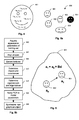
- the step 101 of generating a perceptual password in fig 1 is here replaced by a step 201 of acquiring deviation parameters d (fig 6) followed by a step 202 of deviating in an object space 601 defined by appearance parameters obtained from a previously acquired training set of objects, from the reference password object 602 in a direction and with an amount determined by the acquired set of deviation parameters, as schematically shown by the arrow in fig 6.
- a flow chart is shown, schematically illustrating a method for generating a perceptual password according to the present invention.
- a reference password object is determined.
- a set of deviation parameters is acquired. These deviation parameters may be acquired from an internal source, such as a memory or from an external source, such as from an external system or from a user via some user-input device, such as a keyboard, mouse, touchpad or touchscreen.
- the acquired deviation parameters are used to deviate, within the object space defined by the previously acquired training set of objects, from the reference password object determined in step 301 to arrive at a password object included in the thus generated perceptual password.
- the appearance parameters thus acquired define an object space, within which the controlled deviation from a reference password object is performed.
- An example of such a deviation is schematically shown in fig 6 and will be described in more detail below.
- an example password object here in the form of a stylized human face 401 is shown, from which appearance parameters in the form of shape and texture values s 1 - s n and t 1 - t m at respective locations (X s1 , y s1 ) - (y sn , y sn ) and (X t1 , Y t1 ) - (X tm, y tm ) are extracted.
- MPEG Moving Picture Experts Group
- ISO/IEC Moving Picture Experts Group
- the group has developed the MPEG-4 standard including the definition of a number of facial feature points to be used in animation. These feature points or landmarks are also used in other applications such as model-based image coding systems.
- the MPEG-4 compliant statistical model may be reused in other mobile applications such as model-based image coding, facial animation or biometric user authentication, and precious storage space thereby saved.
- a training set 500 of graphical objects 501-50n is schematically shown.
- appearance parameters as explained in connection with fig 4
- a model for synthesizing the password objects included in the perceptual passwords can be determined.
- the variation in shape and texture is learned from the graphical objects 501-50n comprised in the training set 500.
- a parametric deformable model may be generated, which meets requirements on generality, specificity and compactness.
- a model meets our requirement on generality if it captures all the variation in shape and texture within a given object class and therefore allows the synthesis of all valid objects.
- the requirement on specificity is met if we cannot synthesize invalid objects using the parametric model.
- a model is generated by, in a first step 550, capturing the variations in shape and texture in a given object class as represented by a training set.
- An object shape can be represented by a set of n points in any dimension. Typically the points are in two or three dimensions. We obtain these points or landmarks from the training set using manual, semi-automatic or fully automatic localization.
- a shape may be generalized to include time.
- a 3D shape may consist of 3D points or 2D points sampled over time (i.e. an image sequence).
- a 2D shape can consist of 2D points or 1D points sampled over time.
- a subsequent step 551 the shapes are aligned in order to remove the effect of any geometrical similarity transformations (i.e. translations, scalings and rotations). This may, for example, be achieved using Generalized Procrustes Analysis (GPA).
- GPS Generalized Procrustes Analysis
- the shape coordinates may then be projected into the tangent plane of the shape manifold, at the pole given by the mean shape.
- the texture representation is extracted by warping the image patches into correspondence using, for example, a piecewise affine warp or thin plate splines and then sampling the values from the shape-free patches.
- the Procrustes mean shape as the reference shape to which the image patches are warped.
- other reference shapes such as the corresponding median shape, are equally applicable.
- the variability in object shape and texture may advantageously be modeled using Principal Component Analysis (PCA).
- PCA Principal Component Analysis
- the sample shape and texture means, s and t , and the corresponding covariances, ⁇ s and ⁇ t are determined in step 553.
- the eigenvectors and eigenvalues of ⁇ s and ⁇ t are determined, and the matrices ⁇ s and ⁇ t formed of column eigenvectors.
- the combined appearance model parameters c are obtained.
- the columns of ⁇ c are the eigenvectors of the sample covariance matrix estimated from the training set of shape and texture parameters b .
- s s ⁇ + ⁇ s ⁇ W s - 1 ⁇ ⁇ c
- s ⁇ c t t ⁇ + ⁇ t ⁇ ⁇ c , t ⁇ c
- the object instance (s, t) is synthesized into an image by warping the pixel intensities of t into the geometry of the shape s.
- the eigenvector matrices ⁇ s , ⁇ t and ⁇ c are truncated.
- EM Expectation Maximization
- the method detailed above is based on the assumption that object variations can be accurately captured using a linear model of shape and texture.
- the linear model may not adequately represent more complex variations in shape such as those generated when there is a change in viewing position of a 3D object.
- Possible non-linear extensions of the above framework include the use of polynomial modes, multi-layer perceptrons to perform non-linear PCA, kernel PCA, and polar coordinates for rotating subparts of the model.
- MMs Morphable Models
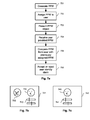
- a perceptual password is generated in a first step 701 and assigned to a user in a second step 702 as previously described in general terms in connection with fig 1.
- These steps describe the enrolment procedure of the recall authentication scheme, which will now be described in greater detail with reference to fig 7b.
- the recall authentication scheme the user, during the enrolment procedure, learns to recognize and synthesize one or several password objects comprised in corresponding perceptual passwords. These password objects may be automatically generated by the system or created through user-provided input.
- the password object(s) 720 may, for example, be synthesized using the statistical model detailed above and may, for example, be presented one by one on a graphical display 721 next to a default object 722, which may, for example, be the reference password object. Also displayed are a number of user interface controls 723 to change the appearance of the default object 722. The user is asked to adjust the controls 723 to change the appearance of the default password object 722 to be as similar as possible to the password object 720. When the similarity is above a threshold, the procedure may be terminated, or, for increased system security, repeated with further password objects. The training phase is completed when the user has processed all of the objects displayed for a certain level of system security.
- the system may ask the user to perform a number of dummy verifications. If more than a pre-defined maximum percentage of the verifications fail, the system may assign new objects to the user and the training phase is re-iterated.
- a perceptual password seed comprising an initial password object, is presented to the user in step 703.
- the user authentication receives a user-provided perceptual password, which is compared with the perceptual password previously assigned to the user in step 705. Based on this comparison, the system accepts or rejects the user identity claim in step 706.
- the user is shown an initial password object 740 and user interface controls 741 on a graphical display 742.
- the user needs to modify the appearance of the initial password object 740 to get sufficiently close to any of the password objects 720 comprised in any of the perceptual passwords previously assigned to the user.
- the appearance of the initial password object 740 may be changed as in the enrolment process by adjusting the user interface controls 741.
- the user may be asked to perform a series of verifications in order to be authenticated. When the similarity with respect to any of the previously assigned password objects is above a threshold, the initial password object then replaces the synthesized object and the controls are reset. The user is then asked to synthesize another of the previously assigned password objects.
- the authentication procedure is complete.
- figs 8a-c a third embodiment of the authentication method according to the present invention is shown, where user authentication is performed by means of so-called recognition authentication.
- a perceptual password is generated in a first step 801 and assigned to a user in a second step 802 as previously described in general terms in connection with fig 1.
- These steps describe the enrolment process of the recognition authentication scheme, which will now be described in greater detail with reference to fig 8b.
- the recognition authentication scheme the user, during the enrolment procedure, learns to recognize one or several password objects comprised in corresponding perceptual passwords. These password objects may be automatically generated by the system or created through user-provided input.
- the password object(s) 820a-i may, for example, be synthesized using the statistical model detailed above and may, for example, be presented together or one by one on a graphical display 821. If relevant for the password object type, there may textual information displayed next to the object to assist in the learning process.
- the training phase is completed when the user has viewed all of the objects 820a-i. To make sure the training phase was successful, the system may ask the user to perform a number of dummy verifications. If more than a pre-defined maximum percentage of the verifications fail, the system may assign new password objects to the user and the training phase is re-iterated.
- the enrolment process should take place in a secure environment since the password objects 820a-i assigned to the user are clearly shown on the display 821 for some time and could therefore be learned or recorded by unauthorized users in a shoulder-surfing attack.
- a plurality of perceptual password candidates is presented to the user in step 803.
- the perceptual password candidates presented to the user may or may not include one or several of the perceptual passwords previously assigned to the user in step 802.
- the user is prompted by the system to indicate any of the presented perceptual password candidates, which correspond to perceptual passwords previously assigned to the user.
- the user indicated perceptual password candidate(s) is/are then received by the system in step 805 and compared with the perceptual password(s) previously assigned to the user in step 806. Based on this comparison, the system then accepts or rejects the user identity claim in step 807.
- the user is shown a set of perceptual password candidates, each comprising a password object, which here includes one of the previously assigned perceptual passwords, say 820f and a number of decoy perceptual passwords 840a-h on a graphical display 841.
- the user is asked to select a previously assigned perceptual password comprising a password object among the perceptual password candidates displayed on the display device 841.
- the objects will be displayed in a matrix of a pre-defined size, e.g. 3 x 3 or 4 x 3 to correspond to standard numeric keypad configurations.
- graphical display and usability constraints may affect the choice of object matrix size.
- the selection process may be repeated for a sequence of displays until the user has successfully recognized and selected a pre-defined percentage of the previously assigned perceptual passwords, or until a pre-defined maximum number of displays has been reached.
- One or several of the displays in a sequence of displays may contain only decoy perceptual passwords.
- the user should then proceed to the next display using user interface means, such as a specified keyboard key or an "ignore" button (not shown) displayed on the display means for ignoring the present display.
- figs 4, 5a, 6, 7b-c, and 8b-c show highly simplified perceptual passwords including password objects.
- shape and texture characteristics have been exaggerated to clearly illustrate, for example, the natural variability in an object training set, or the reoccurrence of a particular password object in verification.
- the perceptual passwords assigned to the user in the recall and recognition authentication schemes described above may, as mentioned, be selected or generated by the user.
- the system may then, for example, present a set of password objects from which the user chooses a subset.
- the password objects comprised in the perceptual passwords assigned to the user may then be generated by randomly selecting appearance parameters, such as shape and/or texture, within the constraints of the statistical model.
- the user may synthesize a set of objects by starting from an initial password object and adjusting user interface controls to modify the shape and texture of the initial password object.
- the basic form of a shoulder-surfing attack is when an unauthorized person is looking over the shoulder of a user entering his or her password.
- this form of attack may be addressed by enforcing time restrictions on the display of PPW objects. After a pre-defined maximum display time (typically a few seconds), the PPW objects are replaced by, for example, the initial or reference password object, randomly chosen objects or a non-object.
- the password management system may enforce restrictions on character sets and password length.
- alphanumeric passwords are usually restricted to the standard printable ASCII characters and a typical maximum password length in recent desktop operating systems is 127 characters.
- the perceptual password is represented in the form of vectors of real numbers and a straightforward alphanumeric conversion is to map the real numbers to integers by scaling and rounding.
- the maximum password length limits the size of the scaling and the rounding may therefore result in significant information loss.
- it may be possible to avoid information loss by implementing lookup tables where model parameter values are mapped to alphanumeric representations. The lookup table effectively restricts the model parameter space to pre-defined passwords and may be stored together with the model.
- a strong alphanumeric password is typically defined as a password with at least eight characters containing upper and lower case letters, numerical digits and special characters (e.g. punctuation characters).
- password policies usually require that passwords are not included in a dictionary or crackers list, and do not represent e.g. valid calendar dates or license plate numbers.
- a user authentication system 901 comprising a perceptual password management system 902 and a number of enrolment/verification terminals 903a-n, each having a graphical display 904a-n and user input means, here in the form of a keyboard 905a-n.
- the perceptual password management system 902 includes a microprocessor 906, which is adapted to generate perceptual passwords and to assign one or several of these perceptual passwords to a user, and a memory 907 for storing information indicative of the assignment.
- An assignment item stored in the memory 907 could, for example, include a user ID and a set of deviation parameters for enabling generation of the perceptual password assigned to the user.
- the assignment item may further include model parameters, which may be different for different groups of users, or the assignment item may include the perceptual password assigned to the user in the form of, for example, an image file.
- the user may communicate with the user authentication system via one or several of the enrolment/verification terminals 903a-n as described above in connection with figs 7a-c and/or 8a-c.
- a user authentication system 1001 comprising a centralized perceptual password management system 1002 and a number of local user authentication systems 1003a-n, each having a microprocessor 1004a-n, and a memory 1005a-n.
- Each of the local user authentication systems further includes a number of graphical displays and user input means, here in the form of keyboards.
- the centralized perceptual password management system 1002 includes a microprocessor 1006 which is adapted to select model parameters enabling generation of a perceptual password comprising a password object which is synthesized by means of a controlled deviation from a reference password object within an object space defined by appearance parameters previously acquired from a training set of objects.
- the microprocessor 1006 is further adapted to assign the perceptual password indicated by the selected model parameters to a particular user.
- the centralized perceptual password management system 1002 further comprises a memory 1007 for storing information indicative of the assignment.
- An assignment item stored in the memory 1007 could, for example, include a user ID and a set of deviation parameters for enabling generation of the perceptual password assigned to the user.
- the assignment item may further include model parameters, which may be different for different groups of users, or the assignment item may include the perceptual password assigned to the user in the form of, for example, an image file.
- the user may interact with one of the local user authentication systems 1003a-n as described above in connection with figs 7a-c and/or 8a-c.
- the local user authentication system may be constituted by, for example, a mobile device such as a mobile phone, PDA or tablet PC.
- the mobile device may be connected with a central server, incorporating the centralized password management system 1002 through a wireless connection such as the ones provided through the second (2G) and third (3G) generation mobile networks.
- the user authentication systems described above in connection with figs 9 and 10 may be included in logical or physical access systems, in which logical and physical access, respectively, is granted to a user following successful authentication.
- the perceptual password functionality may advantageously be integrated in a system equipped with smart card technology.
- the smart card may be viewed as a processing unit with non-volatile storage capabilities, and the card interacts with a smart card reader through a contact or contact-less interface.
- the processing steps may be distributed between the card, the card reader and other processing units connected with the card reader (e.g. a central server). Also, the data may be distributed between memory units connected with any of these processing units.
- the graphical display may be mounted on the smart card or the card reader.
- SIM Subscriber Identity Module
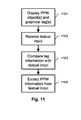
- a flow-chart illustrating a preferred embodiment of the method according to the present invention for improving security in a user authentication system based on perceptual passwords is shown.
- a first step 1101 at least one perceptual password entity and at least one password tag are displayed.
- the password tag carries information which is related to at least one of the displayed perceptual password entities and which is easily extractable by a human being but difficult to automatically extract using a computer program.
- a textual input is received, which is, in the next step 1103, compared to the information carried by the password tag.
- information related to the at least one perceptual password entity is extracted.
- fig 12a schematically illustrating a first embodiment of the security improvement method according to the present invention
- four perceptual password entities here in the form of perceptual password candidates 1201a-d
- the screen image 1202 further includes a box 1204 for textual input.
- the single password tag 1203 displayed contains information enabling selection of each of the perceptual password candidates 1201a-d.
- the letter A is entered, and consequently the perceptual password candidate 1201b selected.
- the perceptual password candidates and password tags illustrated in figs 12a-c are simplified illustrations intended to clarify the present method.
- the perceptual password candidates may include, for example, still or moving images which may be in 2D or 3D and which may be realistic or abstract, and the password tags typically exhibit variations in color, shape, and texture in order to make the information carried by the password tags easily accessible to a human being while being difficult to automatically extract by means of a computer program.
- the password tags may be displayed on a non-uniform background to further increase the complexity of the automated extraction task.
- the screen image 1230 includes four perceptual password candidates 1231a-d and four corresponding password tags 1232a-d.
- the perceptual password candidate 1231d is selected by the textual entry of the letters Qm in the box 1233.
- the screen image 1250 once again includes four perceptual password candidates 1251a-d and four password tags 1252a-d, one for each row and column of displayed password candidates.
- the perceptual password candidate 1251c is selected through the entry of the letters AQml corresponding to the row and column coordinates of the selected password candidate 1251c.
- the textual input is, for the sake of clarity, displayed in a text box. In typical applications, however, this textual input would not be shown at all or masked as is common practice for entry of conventional alphanumeric passwords.
Landscapes
- Engineering & Computer Science (AREA)
- General Physics & Mathematics (AREA)
- Theoretical Computer Science (AREA)
- Health & Medical Sciences (AREA)
- Physics & Mathematics (AREA)
- General Health & Medical Sciences (AREA)
- Oral & Maxillofacial Surgery (AREA)
- Multimedia (AREA)
- Human Computer Interaction (AREA)
- Computer Vision & Pattern Recognition (AREA)
- Computer Security & Cryptography (AREA)
- Psychiatry (AREA)
- Social Psychology (AREA)
- Computer Hardware Design (AREA)
- Software Systems (AREA)
- General Engineering & Computer Science (AREA)
- Collating Specific Patterns (AREA)
- Storage Device Security (AREA)
Priority Applications (3)
| Application Number | Priority Date | Filing Date | Title |
|---|---|---|---|
| EP06117117A EP1879127A1 (fr) | 2006-07-13 | 2006-07-13 | Procédé et système d'autentification de l'utilisateur et système de gestion de mot de passe |
| US12/309,218 US20090293119A1 (en) | 2006-07-13 | 2007-07-09 | User authentication method and system and password management system |
| PCT/EP2007/056939 WO2008006791A1 (fr) | 2006-07-13 | 2007-07-09 | Procédé et système d'authentification d'un utilisateur et système de gestion du mot de passe |
Applications Claiming Priority (1)
| Application Number | Priority Date | Filing Date | Title |
|---|---|---|---|
| EP06117117A EP1879127A1 (fr) | 2006-07-13 | 2006-07-13 | Procédé et système d'autentification de l'utilisateur et système de gestion de mot de passe |
Publications (1)
| Publication Number | Publication Date |
|---|---|
| EP1879127A1 true EP1879127A1 (fr) | 2008-01-16 |
Family
ID=37499622
Family Applications (1)
| Application Number | Title | Priority Date | Filing Date |
|---|---|---|---|
| EP06117117A Withdrawn EP1879127A1 (fr) | 2006-07-13 | 2006-07-13 | Procédé et système d'autentification de l'utilisateur et système de gestion de mot de passe |
Country Status (3)
| Country | Link |
|---|---|
| US (1) | US20090293119A1 (fr) |
| EP (1) | EP1879127A1 (fr) |
| WO (1) | WO2008006791A1 (fr) |
Cited By (4)
| Publication number | Priority date | Publication date | Assignee | Title |
|---|---|---|---|---|
| WO2010005662A1 (fr) * | 2008-06-16 | 2010-01-14 | Qualcomm Incorporated | Procédé et système de sécurité par mot de passe graphique |
| CN102637114A (zh) * | 2012-03-15 | 2012-08-15 | 广东国笔科技股份有限公司 | 实现触控解锁的数据处理设备、系统及方法 |
| US10423775B1 (en) * | 2014-06-05 | 2019-09-24 | Amazon Technologies, Inc. | Assisted password generation |
| CN114117385A (zh) * | 2021-11-19 | 2022-03-01 | 数网金融有限公司 | 一种密码生成方法、装置及计算机可读存储介质 |
Families Citing this family (90)
| Publication number | Priority date | Publication date | Assignee | Title |
|---|---|---|---|---|
| US8327420B2 (en) * | 2006-10-30 | 2012-12-04 | Girish Chiruvolu | Authentication system and method |
| CA2676395C (fr) * | 2007-01-23 | 2015-09-15 | Carnegie Mellon University | Controle d'acces a des systemes informatiques et annotation de fichiers multimedia |
| US8055905B2 (en) * | 2008-08-19 | 2011-11-08 | International Business Machines Corporation | Graphical password authentication based on pixel differences |
| US8234502B2 (en) * | 2008-08-29 | 2012-07-31 | International Business Machines Corporation | Automated password authentication |
| US8086745B2 (en) * | 2008-08-29 | 2011-12-27 | Fuji Xerox Co., Ltd | Graphical system and method for user authentication |
| US10637832B2 (en) * | 2008-09-30 | 2020-04-28 | EMC IP Holding Company LLC | Method and apparatus providing a framework for secure information lifecycle |
| US8621396B1 (en) * | 2008-10-20 | 2013-12-31 | Google Inc. | Access using image-based manipulation |
| US8136167B1 (en) | 2008-10-20 | 2012-03-13 | Google Inc. | Systems and methods for providing image feedback |
| US8542251B1 (en) | 2008-10-20 | 2013-09-24 | Google Inc. | Access using image-based manipulation |
| US20100125906A1 (en) * | 2008-11-19 | 2010-05-20 | Palo Alto Research Center Incorporated | Resetting a forgotten password using the password itself as authentication |
| US8196198B1 (en) | 2008-12-29 | 2012-06-05 | Google Inc. | Access using images |
| WO2010080857A2 (fr) * | 2009-01-07 | 2010-07-15 | Dolby Laboratories Licensing Corporation | Extraction d'empreinte digitale multimédia pouvant être mise à l'échelle |
| US8392986B1 (en) | 2009-06-17 | 2013-03-05 | Google Inc. | Evaluating text-based access strings |
| GB0910545D0 (en) | 2009-06-18 | 2009-07-29 | Therefore Ltd | Picturesafe |
| CN101930510A (zh) * | 2009-06-25 | 2010-12-29 | 鸿富锦精密工业(深圳)有限公司 | 密码保护方法 |
| US9146669B2 (en) * | 2009-12-29 | 2015-09-29 | Bizmodeline Co., Ltd. | Password processing method and apparatus |
| US8856955B2 (en) * | 2010-05-18 | 2014-10-07 | ServiceSource International, Inc. | Remediating unauthorized sharing of account access to online resources |
| JP5704854B2 (ja) * | 2010-07-26 | 2015-04-22 | オリンパスイメージング株式会社 | 表示装置 |
| US20120124654A1 (en) * | 2010-11-16 | 2012-05-17 | Evolucard S/A | System and method for a secure user interface |
| US10069852B2 (en) | 2010-11-29 | 2018-09-04 | Biocatch Ltd. | Detection of computerized bots and automated cyber-attack modules |
| US10164985B2 (en) | 2010-11-29 | 2018-12-25 | Biocatch Ltd. | Device, system, and method of recovery and resetting of user authentication factor |
| US12101354B2 (en) * | 2010-11-29 | 2024-09-24 | Biocatch Ltd. | Device, system, and method of detecting vishing attacks |
| US10728761B2 (en) | 2010-11-29 | 2020-07-28 | Biocatch Ltd. | Method, device, and system of detecting a lie of a user who inputs data |
| US9531701B2 (en) * | 2010-11-29 | 2016-12-27 | Biocatch Ltd. | Method, device, and system of differentiating among users based on responses to interferences |
| US10055560B2 (en) | 2010-11-29 | 2018-08-21 | Biocatch Ltd. | Device, method, and system of detecting multiple users accessing the same account |
| US10685355B2 (en) * | 2016-12-04 | 2020-06-16 | Biocatch Ltd. | Method, device, and system of detecting mule accounts and accounts used for money laundering |
| US10083439B2 (en) | 2010-11-29 | 2018-09-25 | Biocatch Ltd. | Device, system, and method of differentiating over multiple accounts between legitimate user and cyber-attacker |
| US10262324B2 (en) | 2010-11-29 | 2019-04-16 | Biocatch Ltd. | System, device, and method of differentiating among users based on user-specific page navigation sequence |
| US11223619B2 (en) | 2010-11-29 | 2022-01-11 | Biocatch Ltd. | Device, system, and method of user authentication based on user-specific characteristics of task performance |
| US20250016199A1 (en) * | 2010-11-29 | 2025-01-09 | Biocatch Ltd. | Device, System, and Method of Detecting Vishing Attacks |
| US10395018B2 (en) | 2010-11-29 | 2019-08-27 | Biocatch Ltd. | System, method, and device of detecting identity of a user and authenticating a user |
| US10298614B2 (en) * | 2010-11-29 | 2019-05-21 | Biocatch Ltd. | System, device, and method of generating and managing behavioral biometric cookies |
| US10949757B2 (en) | 2010-11-29 | 2021-03-16 | Biocatch Ltd. | System, device, and method of detecting user identity based on motor-control loop model |
| US10747305B2 (en) | 2010-11-29 | 2020-08-18 | Biocatch Ltd. | Method, system, and device of authenticating identity of a user of an electronic device |
| US10970394B2 (en) | 2017-11-21 | 2021-04-06 | Biocatch Ltd. | System, device, and method of detecting vishing attacks |
| US10069837B2 (en) | 2015-07-09 | 2018-09-04 | Biocatch Ltd. | Detection of proxy server |
| US10404729B2 (en) | 2010-11-29 | 2019-09-03 | Biocatch Ltd. | Device, method, and system of generating fraud-alerts for cyber-attacks |
| US9483292B2 (en) | 2010-11-29 | 2016-11-01 | Biocatch Ltd. | Method, device, and system of differentiating between virtual machine and non-virtualized device |
| US20190158535A1 (en) * | 2017-11-21 | 2019-05-23 | Biocatch Ltd. | Device, System, and Method of Detecting Vishing Attacks |
| US10476873B2 (en) | 2010-11-29 | 2019-11-12 | Biocatch Ltd. | Device, system, and method of password-less user authentication and password-less detection of user identity |
| US10586036B2 (en) | 2010-11-29 | 2020-03-10 | Biocatch Ltd. | System, device, and method of recovery and resetting of user authentication factor |
| US10776476B2 (en) | 2010-11-29 | 2020-09-15 | Biocatch Ltd. | System, device, and method of visual login |
| US10621585B2 (en) | 2010-11-29 | 2020-04-14 | Biocatch Ltd. | Contextual mapping of web-pages, and generation of fraud-relatedness score-values |
| US9747436B2 (en) * | 2010-11-29 | 2017-08-29 | Biocatch Ltd. | Method, system, and device of differentiating among users based on responses to interferences |
| US11210674B2 (en) | 2010-11-29 | 2021-12-28 | Biocatch Ltd. | Method, device, and system of detecting mule accounts and accounts used for money laundering |
| US10897482B2 (en) | 2010-11-29 | 2021-01-19 | Biocatch Ltd. | Method, device, and system of back-coloring, forward-coloring, and fraud detection |
| US10032010B2 (en) | 2010-11-29 | 2018-07-24 | Biocatch Ltd. | System, device, and method of visual login and stochastic cryptography |
| US10949514B2 (en) | 2010-11-29 | 2021-03-16 | Biocatch Ltd. | Device, system, and method of differentiating among users based on detection of hardware components |
| US10474815B2 (en) | 2010-11-29 | 2019-11-12 | Biocatch Ltd. | System, device, and method of detecting malicious automatic script and code injection |
| US10037421B2 (en) | 2010-11-29 | 2018-07-31 | Biocatch Ltd. | Device, system, and method of three-dimensional spatial user authentication |
| US10917431B2 (en) | 2010-11-29 | 2021-02-09 | Biocatch Ltd. | System, method, and device of authenticating a user based on selfie image or selfie video |
| US11269977B2 (en) | 2010-11-29 | 2022-03-08 | Biocatch Ltd. | System, apparatus, and method of collecting and processing data in electronic devices |
| US10834590B2 (en) | 2010-11-29 | 2020-11-10 | Biocatch Ltd. | Method, device, and system of differentiating between a cyber-attacker and a legitimate user |
| US9258123B2 (en) | 2010-12-16 | 2016-02-09 | Blackberry Limited | Multi-layered color-sensitive passwords |
| US8635676B2 (en) | 2010-12-16 | 2014-01-21 | Blackberry Limited | Visual or touchscreen password entry |
| US8863271B2 (en) * | 2010-12-16 | 2014-10-14 | Blackberry Limited | Password entry using 3D image with spatial alignment |
| US8650635B2 (en) | 2010-12-16 | 2014-02-11 | Blackberry Limited | Pressure sensitive multi-layer passwords |
| US8661530B2 (en) | 2010-12-16 | 2014-02-25 | Blackberry Limited | Multi-layer orientation-changing password |
| US9135426B2 (en) | 2010-12-16 | 2015-09-15 | Blackberry Limited | Password entry using moving images |
| US8650624B2 (en) * | 2010-12-16 | 2014-02-11 | Blackberry Limited | Obscuring visual login |
| US8745694B2 (en) * | 2010-12-16 | 2014-06-03 | Research In Motion Limited | Adjusting the position of an endpoint reference for increasing security during device log-on |
| US8769641B2 (en) | 2010-12-16 | 2014-07-01 | Blackberry Limited | Multi-layer multi-point or pathway-based passwords |
| US8931083B2 (en) | 2010-12-16 | 2015-01-06 | Blackberry Limited | Multi-layer multi-point or randomized passwords |
| US8631487B2 (en) | 2010-12-16 | 2014-01-14 | Research In Motion Limited | Simple algebraic and multi-layer passwords |
| US8590017B2 (en) | 2011-02-28 | 2013-11-19 | International Business Machines Corporation | Partial authentication for access to incremental data |
| US8769668B2 (en) | 2011-05-09 | 2014-07-01 | Blackberry Limited | Touchscreen password entry |
| US20130097697A1 (en) * | 2011-10-14 | 2013-04-18 | Microsoft Corporation | Security Primitives Employing Hard Artificial Intelligence Problems |
| US9223948B2 (en) | 2011-11-01 | 2015-12-29 | Blackberry Limited | Combined passcode and activity launch modifier |
| US9740884B2 (en) * | 2012-04-10 | 2017-08-22 | Good Technology Holdings Limited | Method and device for generating a code |
| US9742751B2 (en) * | 2012-11-05 | 2017-08-22 | Paypal, Inc. | Systems and methods for automatically identifying and removing weak stimuli used in stimulus-based authentication |
| US9443132B2 (en) * | 2013-02-05 | 2016-09-13 | Children's National Medical Center | Device and method for classifying a condition based on image analysis |
| BR112015018676A2 (pt) | 2013-02-11 | 2017-07-18 | Bayer Cropscience Lp | composições que compreendem gougerotina e um agente de controle biológico |
| US9589120B2 (en) | 2013-04-05 | 2017-03-07 | Microsoft Technology Licensing, Llc | Behavior based authentication for touch screen devices |
| US9263055B2 (en) | 2013-04-10 | 2016-02-16 | Google Inc. | Systems and methods for three-dimensional audio CAPTCHA |
| KR102091606B1 (ko) * | 2013-10-30 | 2020-03-20 | 엘지전자 주식회사 | 단말기 및 그 제어 방법 |
| JP6257272B2 (ja) * | 2013-11-05 | 2018-01-10 | キヤノン株式会社 | 画像形成装置、画像形成方法、及びプログラム、並びに画像形成システム |
| WO2015151980A1 (fr) * | 2014-04-02 | 2015-10-08 | ソニー株式会社 | Système de traitement d'informations et programme informatique |
| SE538349C3 (en) * | 2014-09-30 | 2016-06-28 | Tokon Security Ab | Method for authentication using an electronic device |
| US9785765B2 (en) * | 2014-11-13 | 2017-10-10 | Microsoft Technology Licensing, Llc | Systems and methods for differential access control based on secrets |
| US9811650B2 (en) * | 2014-12-31 | 2017-11-07 | Hand Held Products, Inc. | User authentication system and method |
| GB2539705B (en) | 2015-06-25 | 2017-10-25 | Aimbrain Solutions Ltd | Conditional behavioural biometrics |
| GB2552032B (en) | 2016-07-08 | 2019-05-22 | Aimbrain Solutions Ltd | Step-up authentication |
| US10198122B2 (en) | 2016-09-30 | 2019-02-05 | Biocatch Ltd. | System, device, and method of estimating force applied to a touch surface |
| US10122706B2 (en) * | 2016-10-27 | 2018-11-06 | Ca, Inc. | Authenticating identity for password changes |
| US10579784B2 (en) | 2016-11-02 | 2020-03-03 | Biocatch Ltd. | System, device, and method of secure utilization of fingerprints for user authentication |
| US10397262B2 (en) | 2017-07-20 | 2019-08-27 | Biocatch Ltd. | Device, system, and method of detecting overlay malware |
| FR3087911B1 (fr) * | 2018-10-24 | 2021-11-12 | Amadeus Sas | Authentification par pointage et cliquage |
| US11216586B2 (en) | 2018-12-03 | 2022-01-04 | At&T Intellectual Property I, L.P. | Multi-dimensional progressive security for personal profiles |
| US11606353B2 (en) | 2021-07-22 | 2023-03-14 | Biocatch Ltd. | System, device, and method of generating and utilizing one-time passwords |
| US20260025267A1 (en) * | 2024-07-19 | 2026-01-22 | Ian Crowley | Method and system for generating enhanced login credentials |
Citations (3)
| Publication number | Priority date | Publication date | Assignee | Title |
|---|---|---|---|---|
| EP0677801A1 (fr) * | 1994-04-04 | 1995-10-18 | AT&T Corp. | Mot de passe graphique |
| EP1422589A1 (fr) * | 2001-07-27 | 2004-05-26 | Avimir, LLC | Procede et dispositif pour introduire un mot de passe afin d'acceder a une base de donnees |
| US20040230843A1 (en) * | 2003-08-20 | 2004-11-18 | Wayne Jansen | System and method for authenticating users using image selection |
Family Cites Families (5)
| Publication number | Priority date | Publication date | Assignee | Title |
|---|---|---|---|---|
| GB9125540D0 (en) * | 1991-11-30 | 1992-01-29 | Davies John H E | Access control systems |
| JPWO2003069489A1 (ja) * | 2002-02-14 | 2005-11-04 | 若山 裕典 | 本人認証の方法 |
| JP3967322B2 (ja) * | 2002-03-19 | 2007-08-29 | 富士通株式会社 | パスワード入力装置、パスワード入力方法およびその方法をコンピュータに実行させるプログラム |
| US7549170B2 (en) * | 2003-04-30 | 2009-06-16 | Microsoft Corporation | System and method of inkblot authentication |
| US20050097179A1 (en) * | 2003-09-16 | 2005-05-05 | Orme Gregory M. | Spam prevention |
-
2006
- 2006-07-13 EP EP06117117A patent/EP1879127A1/fr not_active Withdrawn
-
2007
- 2007-07-09 US US12/309,218 patent/US20090293119A1/en not_active Abandoned
- 2007-07-09 WO PCT/EP2007/056939 patent/WO2008006791A1/fr not_active Ceased
Patent Citations (3)
| Publication number | Priority date | Publication date | Assignee | Title |
|---|---|---|---|---|
| EP0677801A1 (fr) * | 1994-04-04 | 1995-10-18 | AT&T Corp. | Mot de passe graphique |
| EP1422589A1 (fr) * | 2001-07-27 | 2004-05-26 | Avimir, LLC | Procede et dispositif pour introduire un mot de passe afin d'acceder a une base de donnees |
| US20040230843A1 (en) * | 2003-08-20 | 2004-11-18 | Wayne Jansen | System and method for authenticating users using image selection |
Cited By (10)
| Publication number | Priority date | Publication date | Assignee | Title |
|---|---|---|---|---|
| WO2010005662A1 (fr) * | 2008-06-16 | 2010-01-14 | Qualcomm Incorporated | Procédé et système de sécurité par mot de passe graphique |
| CN102067150A (zh) * | 2008-06-16 | 2011-05-18 | 高通股份有限公司 | 用于图形通关码安全性的方法和系统 |
| JP2011524592A (ja) * | 2008-06-16 | 2011-09-01 | クゥアルコム・インコーポレイテッド | グラフィカルパスコードセキュリティのための方法およびシステム |
| JP2013239184A (ja) * | 2008-06-16 | 2013-11-28 | Qualcomm Inc | グラフィカルパスコードセキュリティのための方法およびシステム |
| US8683582B2 (en) | 2008-06-16 | 2014-03-25 | Qualcomm Incorporated | Method and system for graphical passcode security |
| CN102067150B (zh) * | 2008-06-16 | 2015-06-24 | 高通股份有限公司 | 用于图形通关码安全性的方法和系统 |
| CN102637114A (zh) * | 2012-03-15 | 2012-08-15 | 广东国笔科技股份有限公司 | 实现触控解锁的数据处理设备、系统及方法 |
| CN102637114B (zh) * | 2012-03-15 | 2014-05-14 | 广东国笔科技股份有限公司 | 实现触控解锁的数据处理设备、系统及方法 |
| US10423775B1 (en) * | 2014-06-05 | 2019-09-24 | Amazon Technologies, Inc. | Assisted password generation |
| CN114117385A (zh) * | 2021-11-19 | 2022-03-01 | 数网金融有限公司 | 一种密码生成方法、装置及计算机可读存储介质 |
Also Published As
| Publication number | Publication date |
|---|---|
| WO2008006791A1 (fr) | 2008-01-17 |
| US20090293119A1 (en) | 2009-11-26 |
Similar Documents
| Publication | Publication Date | Title |
|---|---|---|
| EP1879127A1 (fr) | Procédé et système d'autentification de l'utilisateur et système de gestion de mot de passe | |
| Jansen | Authenticating users on handheld devices | |
| Jain et al. | Biometrics: a tool for information security | |
| JP6789264B2 (ja) | バーコードを使用する身元認証 | |
| Uludag et al. | Biometric cryptosystems: issues and challenges | |
| US7840034B2 (en) | Method, system and program for authenticating a user by biometric information | |
| US8868902B1 (en) | Characteristically shaped colorgram tokens in mobile transactions | |
| CN110245482B (zh) | 认证方法和系统 | |
| US20120311320A1 (en) | Mobile Transaction Methods and Devices With Three-Dimensional Colorgram Tokens | |
| US20120278241A1 (en) | Traceable and non-reputable transaction devices and methods | |
| JP2009543176A (ja) | トレースレス生体認証識別システム及び方法 | |
| CN107209821A (zh) | 用于对电子文件进行数字签名的方法以及认证方法 | |
| WO2015028772A1 (fr) | Chiffrement de données et carte à puce stockant des données chiffrées | |
| Bobkowska et al. | Incorporating iris, fingerprint and face biometric for fraud prevention in e‐passports using fuzzy vault | |
| Sheng et al. | Template-free biometric-key generation by means of fuzzy genetic clustering | |
| US20070031009A1 (en) | Method and system for string-based biometric authentication | |
| WO2020136763A1 (fr) | Système d'authentification, dispositif d'authentification, procédé d'authentification et programme | |
| Shafique et al. | Modern authentication techniques in smart phones: Security and usability perspective | |
| US11501580B1 (en) | Methods and systems for implementing secure biometric recognition | |
| Prasad et al. | A study on multifactor authentication model using fingerprint hash code, password and OTP | |
| Barral | Biometrics & [and] Security: Combining Fingerprints, Smart Cards and Cryptography | |
| Cimato et al. | Biometrics and privacy | |
| Chergui et al. | Can a chaos system provide secure communication over insecure networks?—Online automatic teller machine services as a case study | |
| CN114491619B (zh) | 人脸认证识别方法、装置、存储介质及设备 | |
| Aithal | A Study on Multifactor Authentication Model Using Fingerprint Hash Code, Password and OTP |
Legal Events
| Date | Code | Title | Description |
|---|---|---|---|
| PUAI | Public reference made under article 153(3) epc to a published international application that has entered the european phase |
Free format text: ORIGINAL CODE: 0009012 |
|
| AK | Designated contracting states |
Kind code of ref document: A1 Designated state(s): AT BE BG CH CY CZ DE DK EE ES FI FR GB GR HU IE IS IT LI LT LU LV MC NL PL PT RO SE SI SK TR |
|
| AX | Request for extension of the european patent |
Extension state: AL BA HR MK YU |
|
| 17P | Request for examination filed |
Effective date: 20080716 |
|
| AKX | Designation fees paid |
Designated state(s): AT BE BG CH CY CZ DE DK EE ES FI FR GB GR HU IE IS IT LI LT LU LV MC NL PL PT RO SE SI SK TR |
|
| 17Q | First examination report despatched |
Effective date: 20080916 |
|
| STAA | Information on the status of an ep patent application or granted ep patent |
Free format text: STATUS: THE APPLICATION IS DEEMED TO BE WITHDRAWN |
|
| 18D | Application deemed to be withdrawn |
Effective date: 20110201 |