EP1891098B1 - Gène transporteur de l'ion sulfate et son utilisation - Google Patents
Gène transporteur de l'ion sulfate et son utilisation Download PDFInfo
- Publication number
- EP1891098B1 EP1891098B1 EP06767209A EP06767209A EP1891098B1 EP 1891098 B1 EP1891098 B1 EP 1891098B1 EP 06767209 A EP06767209 A EP 06767209A EP 06767209 A EP06767209 A EP 06767209A EP 1891098 B1 EP1891098 B1 EP 1891098B1
- Authority
- EP
- European Patent Office
- Prior art keywords
- yeast
- polynucleotide
- gene
- seq
- protein
- Prior art date
- Legal status (The legal status is an assumption and is not a legal conclusion. Google has not performed a legal analysis and makes no representation as to the accuracy of the status listed.)
- Not-in-force
Links
Images


Classifications
-
- C—CHEMISTRY; METALLURGY
- C07—ORGANIC CHEMISTRY
- C07K—PEPTIDES
- C07K14/00—Peptides having more than 20 amino acids; Gastrins; Somatostatins; Melanotropins; Derivatives thereof
- C07K14/37—Peptides having more than 20 amino acids; Gastrins; Somatostatins; Melanotropins; Derivatives thereof from fungi
- C07K14/39—Peptides having more than 20 amino acids; Gastrins; Somatostatins; Melanotropins; Derivatives thereof from fungi from yeasts
- C07K14/395—Peptides having more than 20 amino acids; Gastrins; Somatostatins; Melanotropins; Derivatives thereof from fungi from yeasts from Saccharomyces
-
- C—CHEMISTRY; METALLURGY
- C12—BIOCHEMISTRY; BEER; SPIRITS; WINE; VINEGAR; MICROBIOLOGY; ENZYMOLOGY; MUTATION OR GENETIC ENGINEERING
- C12N—MICROORGANISMS OR ENZYMES; COMPOSITIONS THEREOF; PROPAGATING, PRESERVING, OR MAINTAINING MICROORGANISMS; MUTATION OR GENETIC ENGINEERING; CULTURE MEDIA
- C12N1/00—Microorganisms; Compositions thereof; Processes of propagating, maintaining or preserving microorganisms or compositions thereof; Processes of preparing or isolating a composition containing a microorganism; Culture media therefor
- C12N1/14—Fungi; Culture media therefor
- C12N1/16—Yeasts; Culture media therefor
- C12N1/18—Baker's yeast; Brewer's yeast
-
- C—CHEMISTRY; METALLURGY
- C12—BIOCHEMISTRY; BEER; SPIRITS; WINE; VINEGAR; MICROBIOLOGY; ENZYMOLOGY; MUTATION OR GENETIC ENGINEERING
- C12N—MICROORGANISMS OR ENZYMES; COMPOSITIONS THEREOF; PROPAGATING, PRESERVING, OR MAINTAINING MICROORGANISMS; MUTATION OR GENETIC ENGINEERING; CULTURE MEDIA
- C12N15/00—Mutation or genetic engineering; DNA or RNA concerning genetic engineering, vectors, e.g. plasmids, or their isolation, preparation or purification; Use of hosts therefor
- C12N15/09—Recombinant DNA-technology
- C12N15/63—Introduction of foreign genetic material using vectors; Vectors; Use of hosts therefor; Regulation of expression
- C12N15/79—Vectors or expression systems specially adapted for eukaryotic hosts
- C12N15/80—Vectors or expression systems specially adapted for eukaryotic hosts for fungi
- C12N15/81—Vectors or expression systems specially adapted for eukaryotic hosts for fungi for yeasts
-
- C—CHEMISTRY; METALLURGY
- C12—BIOCHEMISTRY; BEER; SPIRITS; WINE; VINEGAR; MICROBIOLOGY; ENZYMOLOGY; MUTATION OR GENETIC ENGINEERING
- C12P—FERMENTATION OR ENZYME-USING PROCESSES TO SYNTHESISE A DESIRED CHEMICAL COMPOUND OR COMPOSITION OR TO SEPARATE OPTICAL ISOMERS FROM A RACEMIC MIXTURE
- C12P11/00—Preparation of sulfur-containing organic compounds
Definitions
- the present invention relates to a sulfate ion transporter gene and use thereof, in particular, a brewery yeast for producing alcoholic beverages with enhanced flavor stability, and a method for producing said beverages. More particularly, the present invention relates to a yeast, whose sulfite-producing capability that contribute to a product's flavor, is adjusted by controlling expression level of SUL2 gene encoding brewery yeast sulfate ion transporter Sul2p, in particular the non-ScSUL2 gene specific to a lager brewing yeast, and to a method for producing alcoholic beverages with said yeast
- Sulfite has been known as a compound having high anti-oxidative activity, and thus has been widely used in the fields of food, beverages, pharmaceutical products or the like (for example, Japanese Laid-Open Patent Application Nos. H06-040907 and 2000-093096 ).
- sulfate has been used as an anti-oxidant
- addition of up to 350 ppm (parts per million) of residual concentration is permitted by the Ministry of Health, Welfare and Labor in Japan.
- shelf life quality maintained period
- yeast produces, by biosynthesis, sulfur containing compounds required for yeast life cycle. Sulfite is produced as an intermediate metabolite.
- sulfite content in a product can be increased without addition of sulfite.
- Methods of increasing sulfite content in a fermentation liquor during brewing process include (1) a method based on process control, and (2) a method based on breeding of yeast.
- amount of sulfate produced is in inverse proportion to the amount of initial oxygen supply, amount of oxygen to be supplied can be reduced to increase amount of sulfite produced and to prevent oxidation.
- sulfite is an intermediate produced in biosynthesis of sulfur-containing amino acids or sulfur-containing vitamins. Sulfite is produced by reduction of three step reactions of sulfate ions taken up from outside of cells.
- the MET3 gene is a gene encoding an enzyme that catalyzes a first reaction; the MET14 gene is a gene encoding an enzyme that catalyzes a second reaction.
- Korch et al. attempted to increase a sulfite-producing capability of yeasts by increasing the expression level of these two genes, and found that MET14 is more effective ( C. Korch et al., Proc. Eur. Brew. Conv. Conger., Lisbon, 201-208, 1991 ).
- Hansen et al. attempted to increase production amount of sulfite by disrupting a MET10 gene encoding a reductase for sulfite to prevent reduction of sulfite produced ( J. Hansen et al., Nature Biotech.,1587-1591,1996 ).
- Fujimura et al. attempted to increase sulfite content in beer by increasing expression level of a non-ScSSU1 gene unique to a lager brewing yeast among SSU1 genes encoding sulfite ion afflux pump of yeast to promote excretion of sulfite to outside the fungal body ( Fujimura et al., Abstract of 2003 Annual Conference of the Japan Society for Bioscience, Biotechnology and Agrochem., 159, 2003 ).
- the materials and methods disclosed herein solve the above problems, and as a result succeeded in identifying and isolating a gene encoding sulfate ion transporter from lager brewing yeast which has advantageous effects in comparison to the existing proteins. Moreover, a yeast was transformed by introducing and expressing the obtained gene to confirm that the amount of sulfite produced was increased, thereby completing the present invention.
- the present invention relates to a novel sulfate ion transporter gene existing specifically in a lager brewing yeast, to a protein encoded by said gene, to a transformed yeast in which the expression of said gene is controlled, to a method for controlling the amount of sulfite in a product by using a yeast in which the expression of said gene is controlled. More specifically, the present invention provides the following polynucleotides, a vector comprising said polynucleotide, a transformed yeast into which said vector has been introduced, a method for producing alcoholic beverages by using said transformed yeast, and the like.
- the content of sulfite having an anti-oxidative activity in a product can be increased so that alcoholic beverages can be produced with enhanced flavor and improved shelf life.
- the present inventors have studied based on this conception and as a result, isolated and identified nonSc-ScSUL2 gene encoding a sulfate ion transporter unique to lager brewing yeast based on the lager brewing yeast genome information mapped according to the method disclosed in Japanese Laid-Open Patent Application No. 2004-283169 .
- the nucleotide sequence of the gene is represented by SEQ ID NO: 1.
- an amino acid sequence of a protein encoded by the gene is represented by SEQ ID NO: 2.
- the present invention provides (a) a polynucleotide comprising a polynucleotide of the nucleotide sequence of SEQ ID NO:1; and (b) a polynucleotide comprising a polynucleotide encoding a protein of the amino acid sequence of SEQ ID NO:2.
- the polynucleotide can be DNA or RNA.
- the target polynucleotide of the present invention is not limited to the polynucleotide encoding a sulfate ion transporter gene derived from lager brewing yeast and may include other polynucleotides encoding proteins having equivalent functions to said protein. Proteins with equivalent functions include, for example, (c) a protein of an amino acid sequence of SEQ ID NO: 2 with 1 to 50 amino acids thereof being deleted, substituted, inserted and/or added and having sulfate ion transporter activity.
- Such proteins include a protein consisting of an amino acid sequence of SEQ ID NO: 2 with, for example, 1 to 50, 1 to 40, 1 to 39, 1 to 38,1 to 37,1 to 36,1 to 35,1 to 34, 1 to 33, 1 to 32, 1 to 31, 1 to 30, 1 to 29,1 to 28, 1 to 27, 1 to 26, 1 to 25,1 to 24.1 to 23, 1 to 22,1 to 21, 1 to 20,1 1 to 19,1 to 18,1 to 17,1 to 16,1 to 15,1 to 14,1 to 13,1 to 12,1 to 11,1 to 10,1 to 9,1 to 8,1 to 7,1 to 6 (1 to several amino acids), 1 to 5, 1 to 4, 1 to 3, I to 2, or 1 amino acid residues thereof being deleted, substituted, inserted and/or added and having a sulfate ion transporter activity.
- SEQ ID NO: 2 amino acid sequence of SEQ ID NO: 2 with, for example, 1 to 50, 1 to 40, 1 to 39, 1 to 38,1 to 37,1 to 36,1 to 35,1 to 34, 1 to
- such proteins include (d) a protein having an amino acid sequence with 94% or higher, 95% or higher, 96% or higher, 97% or higher, 98% or higher, 99% or higher, 99.1% or higher, 99.2% or higher, 99.3% or higher, 99.4% or higher, 99.5% or higher, 99.6% or higher, 99.7% or higher, 99.8% or higher, or 99.9% or higher identity with the amino acid sequence of SEQ ID NO: 2, and having a sulfate ion transporter activity.
- the percentage identity is preferably higher.
- Sulfate ion transporter activity may be measured, for example, by a method of Cherest et al. as described in Genetics, 145: 627-635,1997 .
- the present invention also discloses (e) a polynucleotide comprising a polynucleotide which hybridizes to a polynucleotide consisting of a nucleotide sequence complementary to the nucleotide sequence of SEQ ID NO: 1 under stringent conditions and which encodes a protein having sulfate ion transporter activity; and (f) a polynucleotide comprising a polynucleotide which hybridizes to a polynucleotide complementary to a nucleotide sequence of encoding a protein of SEQ ID NO: 2 under stringent conditions, and which encodes a protein having sulfate ion transporter activity.
- a polynucleotide that hybridizes under stringent conditions refers to nucleotide sequence, such as a DNA, obtained by a colony hybridization technique, a plaque hybridization technique, a southern hybridization technique or the like using all or part of polynucleotide of a nucleotide sequence complementary to the nucleotide sequence of SEQ ID NO: 1 or DNA encoding the amino acid sequence of SEQ ID NO: 2 as a probe.
- the hybridization method may be a method described, for example, in MOLECULAR CLONING 3rd Ed., CURRENT PROTOCOLS IN MOLECULAR BIOLOGY, John Wiley & Sons 1987-1997 .
- stringent conditions may be any of low stringency conditions, moderate stringency conditions or high stringency conditions.
- Low stringency conditions are, for example, 5 x SSC, 5 x Denhardt's solution, 0.5% SDS, 50% formamide at 32°C.
- Mode stringency conditions are, for example, 5 x SSC, 5 x Denhardt's solution, 0.5% SDS, 50% formamide at 42°C.
- High stringency conditions are, for example, 5 x SSC, 5 x Denhardt's solution, 0.5% SDS, 50% formamide at 50°C.
- a polynucleotide such as a DNA
- a polynucleotide with higher homology is expected to be obtained efficiently at higher temperature, although multiple factors are involved in hybridization stringency including temperature, probe concentration, probe length, ionic strength, time, salt concentration and others, and one skilled in the art may appropriately select these factors to realize similar stringency.
- Polynucleotides that can be hybridized include polynucleotides having 94% or higher, 95% or higher, 96% or higher, 97% or higher, 98% or higher, 99% or higher, 99.1% or higher, 99.2% or higher, 99.3% or higher, 99.4% or higher, 99.5% or higher, 99.6% or higher, 99.7% or higher, 99.8% or higher or 99.9% or higher identity to DNA encoding the amino acid sequence of SEQ ID NO: 2 as calculated by homology search software, such as FASTA and BLAST using default parameters.
- homology search software such as FASTA and BLAST using default parameters.
- the polynucleotide of the present invention includes (j) a polynucleotide encoding RNA having a nucleotide sequence complementary to a transcript of the polynucleotide (DNA) according to (4) above; (k) a polynucleotide encoding RNA that represses the expression of the polynucleotide (DNA) according to (4) above through RNAi effect; (1) a polynucleotide encoding RNA having an activity of specifically cleaving a transcript of the polynucleotide (DNA) according to (4) above; and (m) a polynucleotide encoding RNA that represses expression of the polynucleotide (DNA) according to (4) above through co-supression effect.
- polynucleotides may be incorporated into a vector, which can be introduced into a cell for transformation to repress the expression of the polynucleotides (DNA) of (a) to (i) above.
- these polynucleotides may suitably be used when repression of the expression of the above DNA is preferable.
- polynucleotide encoding RNA having a nucleotide sequence complementary to the transcript of DNA refers to so-called antisense DNA.
- Antisense technique is known as a method for repressing expression of a particular endogenous gene, and is described in various publications (see e.g., Hirajima and Inoue: New Biochemistry Experiment Course 2 Nucleic Acids IV Gene Replication and Expression (Japanese Biochemical Society Ed., Tokyo Kagaku Dozin Co., Ltd.) pp.319-347, 1993 ).
- the sequence of antisense DNA is preferably complementary to all or part of the endogenous gene, but may not be completely complementary as long as it can effectively repress the expression of the gene.
- the transcribed RNA has preferably 90% or higher, and more preferably 95% or higher complementarity to the transcript of the target gene.
- the length of the antisense DNA is at least 15 bases or more, preferably 100 bases or more, and more preferably 500 bases or more.
- RNAi refers to a phenomenon where when double-stranded RNA having a sequence identical or similar to the target gene sequence is introduced into a cell, the expressions of both the introduced foreign gene and the target endogenous gene are repressed.
- RNA as used herein includes, for example, double-stranded RNA that causes RNA interference of 21 to 25 base length, for example, dsRNA (double strand RNA), siRNA (small interfering RNA) or shRNA (short hairpin RNA).
- RNA may be locally delivered to a desired site with a delivery system such as liposome, or a vector that generates the double-stranded RNA described above may be used for local expression thereof
- dsRNA, siRNA or shRNA double-stranded RNA
- Methods for producing or using such double-stranded RNA are known from many publications (see, e.g., Japanese National Phase PCT Laid-open Patent Publication No. 2002-516062 ; US 2002/086356A ; Nature Genetics. 24(2). 180-183, 2000 Feb .; Genesis, 26(4), 240-244,2000 April ; Nature, 407:6802, 319-20, 2002 Sep. 21 ; Genes & Dev., Vol.16, (8), 948-958, 2002 Apr.15 ; Proc.
- polynucleotide encoding RNA having an activity of specifically cleaving transcript of DNA generally refers to a ribozyme.
- Ribozyme is an RNA molecule with a catalytic activity that cleaves a transcript of a target DNA and inhibits the function of that gene. Design of ribozymes can be found in various known publications (see, e.g., FEBS Lett. 228: 228, 1988 ; FEBS Lett. 239: 285, 1988 ; Nucl. Acids. Res. 17: 7059, 1989 ; Nature 323: 349, 1986 ; Nucl. Acids. Res.
- polynucleotide encoding RNA that represses DNA expression through co-supression effect refers to a nucleotide that inhibits functions of target DNA by "co-supression”.
- co-supression refers to a phenomenon where when a gene having a sequence identical or similar to a target endogenous gene is transformed into a cell, the expressions of both the introduced foreign gene and the target endogenous gene are repressed. Design of polynucleotides having a co-supression effect can also be found in various publications (see, e.g., Smyth DR: Curr. Biol. 7: R793, 1997 , Martienssen R: Curr. Biol. 6: 810, 1996 ).
- the present invention also provides proteins encoded by any of the polynucleotides (a) to (d) above.
- a preferred protein of the present invention comprises an amino acid sequence of SEQ ID NO:2 with 1 to 50 amino acids thereof being deleted, substituted, inserted and/or added, and has sulfate ion transporter activity.
- Such protein includes those having an amino acid sequence of SEQ ID NO: 2 with amino acid residues thereof of the number mentioned above being deleted, substituted, inserted and/or added and having a sulfate ion transporter activity.
- such protein includes those having homology as described above with the amino acid sequence of SEQ ID NO: 2 and having sulfate ion transporter activity.
- Such proteins may be obtained by employing site-directed mutation described for example, in MOLECULAR CLONING 3rd Ed., CURRENT PROTOCOLS IN MOLECULAR BIOLOGY , Nuc. Acids. Res., 10: 6487 (1982 ), Proc. Natl Acad Sci. USA 79: 6409 (1982 ), Gene 34: 315 (1985 ), Nuc. Acids. Res., 13: 4431 (1985 ), Proc. Natl Acad Sci. USA 82: 488 (1985 ).
- Deletion, substitution, insertion and/or addition of 1 to 50 amino acid residues in an amino acid sequence of the protein of the invention means that 1 to 50 amino acid residues are deleted, substituted, inserted and/or added at any one or more positions in the same amino acid sequence. Two or more types of deletion, substitution, insertion and/or addition may occur concurrently.
- Group A leucine, isoleucine, norleucine, valine, norvaline, alanine, 2-aminobutanoic acid, methionine, o-methylserine, t-butylglycine, t-butylalanine, cyclohexylalanine;
- Group B asparatic acid, glutamic acid, isoasparatic acid, isoglutamic acid, 2-aminoadipic acid, 2-aminosuberic acid;
- Group C asparagine, glutamine;
- Group D lysine, arginine, ornithine, 2.4-diaminobutanoic acid. 2,3-diaminopropionic acid;
- Group E proline, 3-hydroxyproline, 4-hydroxyproline;
- Group F serine, threonine, homoserine; and
- Group G phenylalanine, tyrosine.
- the protein of the present invention may also be produced by chemical synthesis methods such as Fmoc method (fluorenylmethyloxycarbonyl method) and tBoc method (t-butyloxycarbonyl method).
- Fmoc method fluorenylmethyloxycarbonyl method
- tBoc method t-butyloxycarbonyl method
- peptide synthesizers available from, for example, Advanced ChemTech, PerkinElmer, Pharmacia, Protein Technology Instrument, Synthecell-Vega. PerSeptive, Shimazu Corp. can also be used for chemical synthesis.
- the present invention then provides a vector comprising the polynucleotide described above.
- the vector of the present invention is directed to a vector including any of the polynucleotides described in (a) to (d) above or the polynucleotides described in (j) to (m) above.
- the vector of the present invention comprises an expression cassette including as components (a) a promoter that can transcribe in a yeast cell; (b) a polynucleotide described in any of (a) to (d) above that is linked to the promoter in sense or antisense direction; and (c) a signal that functions in the yeast with respect to transcription termination and polyadenylation of RNA molecule.
- these polynucleotides are introduced into the promoter in the sense direction to promote expression of the polynucleotide (DNA) described in any of (a) to (d) above.
- the polynucleotide is introduced into the promoter in the antisense direction to repress the expression of the polynucleotide (DNA) described in any of (a) to (d).
- the polynucleotide may be introduced such that the polynucleotide of any of the (j) to (m) is expressed.
- the target gene DNA
- a gene may be disrupted to repress the expression of the DNA or the protein.
- a gene may be disrupted by adding or deleting one or more bases to or from a region involved in expression of the gene product in the target gene, for example, a coding region or a promoter region, or by deleting these regions entirely.
- Such disruption of gene may be found in known publications (see, e.g., Proc. Natl. Acad. Sci. USA, 76, 4951(1979 ), Methods in Enzymology, 101, 202(1983 ), Japanese Laid-Open Patent Application No. 6-253826 ).
- a vector introduced in the yeast may be any of a multicopy type (YEp type), a single copy type (YCp type), or a chromosome integration type (YIp type).
- YEp type J. R. Broach et al., EXPERIMENTAL MANIPULATION OF GENE EXPRESSION, Academic Press, New York, 83, 1983
- YCp50 M. D. Rose et al., Gene 60: 237, 1987
- YIp5 K. Struhl et al., Proc. Natl. Acad Sci: US4, 76: 1035, 1979
- YIp type vector all of which are readily available.
- Promoters/terminators for adjusting gene expression in yeast may be in any combination as long as they function in the brewery yeast and they have no influence on the concentration of amino acid, sugar, higher alcohol or ester in fermentation broth.
- a promoter of glyceraldehydes 3-phosphate dehydrogenase gene (TDH3), or a promoter of 3-phosphoglycerate kinase gene (PGK1) may be used.
- TDH3 glyceraldehydes 3-phosphate dehydrogenase gene
- PGK1 3-phosphoglycerate kinase gene
- auxotrophy marker cannot be used as a selective marker upon transformation for a brewery yeast, for example, a geneticin-resistant gene (G418r), a copper-resistant gene (CUP 1) ( Marin et al., Proc. Natl. Acad Sci. USA, 81, 337 1984 ) or a cerulenin-resistant gene (fas2m, PDR4) ( Junji Inokoshi et al., Biochemistry, 64, 660, 1992 ; and Hussain et al., Gene, 101: 149, 1991 , respectively) may be used.
- G418r a geneticin-resistant gene
- CUP 1 Marin et al., Proc. Natl. Acad Sci. USA, 81, 337 1984
- fas2m, PDR4 cerulenin-resistant gene
- a vector constructed as described above is introduced into a host yeast.
- the host yeast include any yeast that can be used for brewing, for example, brewery yeasts for beer, wine and sake.
- yeasts such as genus Saccharomyces may be used.
- a lager brewing yeast for example, Saccharomyces pastorianus W34/70, Saccharomyces carlsbergensis NCYC453 or NCYC456, or Saccharomyces cerevisiae NBRC1951, NBRC1952, NBRC1953 or NBRC1954 may be used.
- whisky yeasts such as Saccharomyces cerevisiae NCYC90, wine yeasts such as wine yeasts #1, 3 and 4 from the Brewing Society of Japan, and sake yeasts such as sake yeast #7 and 9 from the Brewing Society of Japan may also be used but not limited thereto.
- lager brewing yeasts such as . Saccharomyces pastorianus may be used preferably.
- a yeast transformation method may be a generally used known method.
- methods that can be used include but not limited to an electroporation method ( Meth Enzym., 194: 182 (1990 )), a spheroplast method ( Proc. NotL. Acad Sci. USA, 75: 1929(1978 )), a lithium acetate method ( J. Bacteriology, 153: 163 (1983 )), and methods described in Proc. Natl. Acad Sci USA, 75: 1929 (1978 ), METHODS IN YEAST GENETICS, 2000 Edition: A Cold Spring Harbor Laboratory Course Manual .
- a host yeast is cultured in a standard yeast nutrition medium (e.g., YEPD medium ( Genetic Engineering. Vol. 1, Plenum Press, New York, 117(1979 )), etc.) such that OD600 nm will be 1 to 6.
- a standard yeast nutrition medium e.g., YEPD medium ( Genetic Engineering. Vol. 1, Plenum Press, New York, 117(1979 )), etc.
- This culture yeast is collected by centrifugation, washed and pre-treated with alkali ion metal ion, preferably lithium ion at a concentration of about 1 to 2 M. After the cell is left to stand at about 30°c for about 60 minutes, it is left to stand with DNA to be introduced (about 1 to 20 ⁇ g) at about 30°C for about another 60 minutes.
- Polyethyleneglycol preferably about 4,000 Dalton of polyethyleneglycol, is added to a final concentration of about 20% to 50%. After leaving at about 30°C for about 30 minutes, the cell is heated at about 42°C for about 5 minutes. Preferably, this cell suspension is washed with a standard yeast nutrition medium, added to a predetermined amount of fresh standard yeast nutrition medium and left to stand at about 30°C for about 60 minutes. Thereafter, it is seeded to a standard agar medium containing an antibiotic or the like as a selective marker to obtain a transformant
- the vector of the present invention described above is introduced into a yeast suitable for brewing a target alcoholic product
- This yeast can be used to produce a desired alcoholic beverage with enhanced flavor with an increased content of sulfite.
- yeasts to be selected by the yeast assessment method of the present invention can also be used.
- the target alcoholic beverages include, for example, but not limited to beer, sparkling liquor ( happoushu ) such as a beer-taste beverage, wine, whisky, sake and the like.
- alcoholic beverages with enhanced flavor can be produced using the existing facility without increasing the cost.
- a sulphate ion in the culture medium is efficiently incorporated, well growth of yeast and/or alcoholic fermentation may be possible when a raw material containing low sulfur source, e.g., a wort having low malt ratio in the case of beer.
- sulfur-containing compounds including hydrogen sulfide as an intermediate-metabolite in the pathway which cause undesirable off-flavor for alcoholic beverages, are sometimes generated in large amounts and accumulated.
- incorporation of sulphate ion as a starting material may be suppressed.
- an alcoholic beverage wherein the off flavor is reduced can be produced.
- the present invention relates to a method for assessing a test yeast for its sulfite-producing capability by using a primer or a probe designed based on a nucleotide sequence of a sulfate ion transporter gene having the nucleotide sequence of SEQ ID NO:1.
- General techniques for such assessment method is known and is described in, for example, WO01/040514 , Japanese Laid-Open Patent Application No. 8-205900 or the like. This assessment method is described in below.
- genome of a test yeast is prepared.
- any known method such as Hereford method or potassium acetate method may be used (e.g., METHODS IN YEAST GENETICS, Cold Spring Harbor Laboratory Press, 130 (1990 )).
- a primer or a probe designed based on a nucleotide sequence (preferably, ORF sequence) of the sulfate ion transporter gene the existence of the gene or a sequence specific to the gene is determined in the test yeast genome obtained.
- the primer or the probe may be designed according to a known technique.
- Detection of the gene or the specific sequence may be carried out by employing a known technique.
- a polynucleotide including part or all of the specific sequence or a polynucleotide including a nucleotide sequence complementary to said nucleotide sequence is used as one primer, while a polynucleotide including part or all of the sequence upstream or downstream from this sequence or a polynucleotide including a nucleotide sequence complementary to said nucleotide sequence, is used as another primer to amplify a nucleic acid of the yeast by a PER method, thereby determining the existence of amplified products and molecular weight of the amplified products.
- the number of bases of polynucleotide used for a primer is generally 10 base pairs (bp) or more, and preferably 15 to 25 bp. In general, the number of bases between the primers is suitably 300 to 2000 bp.
- the reaction conditions for PCR are not particularly limited but may be, for example, a denaturation temperature of 90 to 95°C, an annealing temperature of 40 to 60°C, an elongation temperature of 60 to 75°C, and the number of cycle of 10 or more.
- the resulting reaction product may be separated, for example, by electrophoresis using agarose gel to determine the molecular weight of the amplified product. This method allows prediction and assessment of the capability of the yeast to produce sulfite as determined by whether the molecular weight of the amplified product is a size that contains the DNA molecule of the specific part In addition, by analyzing the nucleotide sequence of the amplified product, the capability may be predicted and/or assessed more precisely.
- a test yeast is cultured to measure an expression level of the sulfate ion transporter gene having the nucleotide sequence of SEQ ID NO: 1 to assess the test yeast for its sulfite-producing capability.
- the test yeast is cultured and then mRNA or a protein resulting from the sulfate ion transporter gene is quantified.
- the quantification of mRNA or protein may be carried out by employing a known technique. For example, RNA may be quantified, by Northern hybridization or quantitative RT-PCR, while protein may be quantified, for example, by Western blotting ( CURRENT PROTOCOLS IN MOLECULAR BIOLOGY, John Wiley & Sons 1994-2003 ).
- test yeasts are cultured and expression levels of the sulfate ion transporter gene having the nucleotide sequence of SEQ ID NO: 1 are measured to select a test yeast with the gene expression level according to the target capability of producing sulfite, thereby selecting a yeast favorable for brewing desired alcoholic beverages.
- a reference yeast and a test yeast may be cultured so as to measure and compare the expressions level of the gene in each of the yeasts, thereby selecting a favorable test yeast.
- a reference yeast and one or more test yeasts are cultured and an expression level of the sulfate ion transporter gene having the nucleotide sequence of SEQ ID NO:1 is measured in each yeast
- a test yeast with the gene expressed higher than that in the reference yeast a yeast suitable for brewing alcoholic beverages can be selected.
- test yeasts are cultured and a yeast with a higher sulfite-producing capability is selected, thereby selecting a yeast suitable for brewing desired alcoholic beverages.
- the test yeasts or the reference yeast may be, for example, a yeast introduced with the vector of the invention, an artificially mutated yeast or a naturally mutated yeast.
- the mutation treatment may employ any methods including, for example, physical methods such as ultraviolet irradiation and radiation irradiation, and chemical methods associated with treatments with drugs such as EMS (ethylmethane sulphonate) and N-methyl-N-nitrosoguanidine ( see , e.g. , Yasuji Oshima Ed., BIOCHEMISTRY EXPERIMENTS vol. 39, Yeast Molecular Genetic Experiment, pp. 67-75, JSSP ).
- EMS ethylmethane sulphonate
- N-methyl-N-nitrosoguanidine see , e.g. , Yasuji Oshima Ed., BIOCHEMISTRY EXPERIMENTS vol. 39, Yeast Molecular Genetic Experiment, pp.
- yeasts used as the reference yeast or the test yeasts include any yeasts that can be used for brewing, for example, brewery yeasts for beer, wine, sake and the like. More specifically, yeasts such as genus Saccharomyces may be used ( e.g. , S. pastorianus , S. cerevisiae , and S. carlsbergensis ). According to the present invention, a lager brewing yeast, for example, Saccharomyces pastorianus W34/70; Saccharomyces carlsbergensis NCYC453 or NCYC456; or Saccharomyces cerevisiae NBRC1951, NBRC1952, NBRC1953 or NBRC1954 may be used.
- Saccharomyces pastorianus W34/70 for example, Saccharomyces carlsbergensis NCYC453 or NCYC456; or Saccharomyces cerevisiae NBRC1951, NBRC1952, NBRC1953 or NB
- whisky yeasts such as Saccharomyces cerevisiae NCYC90; wine yeasts such as wine yeasts #1, 3 and 4 from the Brewing Society of Japan; and sake yeasts such as sake yeast #7 and 9 from the Brewing Society of Japan may also be used but not limited thereto.
- lager brewing yeasts such as Saccharomyces pastorianus may preferably be used.
- the reference yeast and the test yeasts may be selected from the above yeasts in any combination.
- PCR was carried out using chromosomal DNA of a genome sequencing strain, Saccharomyces pastorianus Weihenhephan 34/70 strain, as a template to obtain DNA fragments (about 2.7 kb each) including either of the full-length gene of ScSUL2 and that of non-ScSUL2.
- the amplification of the ScSUL2 gene was conducted with primers ScSUL2_for (SEQ ID NO: 3) and ScSUL2_rv (SEQ ID NO: 4).
- the amplification of the non-ScSUL2 gene was conducted with primers non-ScSUL2_for (SEQ ID NO: 5) and non-ScSUL2_rv (SEQ ID NO: 6).
- the thus-obtained nonScSUL2 gene fragment or non-ScSUL2 gene fragment was inserted into pCR2.1-TOPO vector (Invitrogen) by TA cloning.
- the nucleotide sequences of ScSUL2 and non-ScSUL2 genes were analyzed according to Sanger's method ( F. Sanger, Science, 214: 1215, 1981 ) to confirm the nucleotide sequence. Alter confirming that the nucleotide sequences are correct, the vectors were designated as TOP/ScSUL2 and TOP/non-ScSUL2, respectively.
- Each of the plasmids TOPO/ScSUL2 described in Example 1 was digested with restriction enzymes SacI and NotI to prepare a DNA fragment of about 2.7 kb including ScSUL2 gene. This fragment was linked to pUP3GLP2 treated with restriction enzymes SacI and NotI, thereby constructing a ScSUL2 constitutive expression vector, pUP-ScSUL2. Also, following the same procedures, non-ScSUL2 constitutive expression vector was constructed.
- the yeast expression vector, pUP3GLP2 is a YIp type (chromosome integration type) vector having orotidine-5-phosphoric acid decarboxylase gene URA3 at the homologous recombinant site.
- the introduced gene was constitutively expressed by the promoter and terminator of glycerylaldehyde-3-phosphoric acid dehydrogenase gene, TDH3.
- Drug-resistant gene YAP as a selective marker for yeast was introduced under the control of the promoter and terminator of galactokinase GAL1, whereby the expression is induced in a culture media comprising galactose.
- Ampicillin-resistant gene Amp r as a selective marker for E. coli was also included.
- the constitutive expression vector prepared by the method above was used to transform Saccharomyces pastorianus Weihenstephan 34/70 strain according to the method described in Japanese Laid-Open Patent Application No. 07-303475 .
- Right assessment on the SUL2 gene cannot be conducted if sulfite is accumulated within the fungal body since the yeast itself is damaged by sulfite.
- a strain in which non-ScSSU1 gene encoding a sulfite efflux pump is highly expressed was prepared according to the method described in Japanese Patent Application Laid-Open No. 2004-283169 , and designated as TFO010..
- ScSUL2 specific primers ScSUL2_F2 (SEQ ID NO: 7) and ScSUL2_R3 (SEQ ID NO: 8) were used.
- non_ScSUL2 specific primers non-ScSUL2_F2 (SEQ ID NO: 9) and non-ScSUL2_R3 (SEQ ID NO: 10) were used.
- PDA1_for51 SEQ ID NO: 11
- PDAI_730rv SEQ ID NO: 12
- the PCR products were developed by agarose electrophoresis, and stained with an ethidium bromide solution.
- the signal value of each of the SUL2 genes was standardized with reference to the signal value of the PDA I gene.
- the strains having showed twice or more expression level of the parent TF010, were designated as ScSUL2- or non-ScSUL2-highly expressed strains. Two strains were selected for each of ScSUL2 and non-ScSUL2 genes.
- Wort extract concentration 13% Wort content 800 mL Wort dissolved oxygen concentration about 8 ppm Fermentation temperature 15°C - stable Yeast input 5 g wet yeast fungal body/800 mL Wort extract
- the fermentation broth was sampled with time to observe the cell growth (shown in Figure 1 ) and sugar consumption (shown in Figure 2 ) with time.
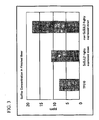
- Quantification of the sulfite content upon completion of fermentation was carried out by collecting sulfite in hydrogen peroxide solution by distillation under acidic condition, and titration with alkali (Revised BCOJ Beer Analysis Method by the Brewing Society of Japan). The results are shown in Figure 3 . The results are shown in average of the data obtained from the two strains.
- the amount of sulfite produced upon completion of fermentation while the parent strain TF010 produced 8 ppm, the ScSUL2-highly expressed strains produced 10 ppm and the non-ScSUL2-highly expressed strains produced 18 ppm. Thus, it was found that the amount of sulfite produced can be remarkably increased by high expression of the non-ScSUL2. In these cases, differences in the growth rates and the extract consumption rates were little between the parent strain and the constitutively expressed strains.
- Example 4 Beer Brewing Testing using wort containing low sulfur source
- Saccharomyces pastorianus Weihenstephan 34/70 strain is transformed with the high expression vector prepared in Example 2 to obtain, Sc and non-ScSUL2 (sole) highly expressed strains, respectively. Then, a wort containing 24% of malt ratio is prepared as a wort containing low sulfur source. Subsequently, using paraent and the highly expressed strains obtained, under the following conditions.beer brewing testing is carried out Wort extract concentration 13% Wort content 2L Wort dissolved oxygen concentration about 8ppm Fermentation temperature 15°C constantly Yeast input 10.5 g of wet yeast cells/2 L of wort
- the fermentation broth is sampled with time to observe the cell growth (OD660) and the sugar consumption with time.
- PCR using a plasmid including a drug-resistant marker (pFA6a ( G418 ) or pAG25 ( natl )) as a template is conducted to prepare a fragment for SUL2 gene disruption.
- pFA6a G418
- pAG25 natl
- W34/70 strain or spore cloning strain (W34/70-2) is transformed.
- the transformation is performed in accordance with the method described in Patent Kokai H07-303475 .
- the concentrations of the drugs for selection are 300 mg/L for geneticin and 50 mg/L of nourseothricin, respectively.
- Example 6 Analysis of amounts of sulfur-containing compound produced upon beer brewing testing
- the fermentation broth is sampled with time to observe the cell growth (OD660) and the sugar consumption with time.
- Analysis of sulfur-containing compounds in broth is performed by employing head-space gas chromatography.
- alcoholic beverages with enhanced flavor and long shelf life (with good quality)
- desirable alcoholic fermentation can be performed by using raw materials with low contents of sulfur-containing amino acid, e.g., sparkling liquor ( happoushu ) wort.
- an alcoholic beverage having desirable flavor can be produced.
Landscapes
- Life Sciences & Earth Sciences (AREA)
- Chemical & Material Sciences (AREA)
- Health & Medical Sciences (AREA)
- Organic Chemistry (AREA)
- Mycology (AREA)
- Genetics & Genomics (AREA)
- Engineering & Computer Science (AREA)
- General Health & Medical Sciences (AREA)
- Wood Science & Technology (AREA)
- Biochemistry (AREA)
- Zoology (AREA)
- Microbiology (AREA)
- Bioinformatics & Cheminformatics (AREA)
- Biotechnology (AREA)
- General Engineering & Computer Science (AREA)
- Biophysics (AREA)
- Medicinal Chemistry (AREA)
- Molecular Biology (AREA)
- Biomedical Technology (AREA)
- Proteomics, Peptides & Aminoacids (AREA)
- Gastroenterology & Hepatology (AREA)
- Botany (AREA)
- Physics & Mathematics (AREA)
- Chemical Kinetics & Catalysis (AREA)
- General Chemical & Material Sciences (AREA)
- Plant Pathology (AREA)
- Tropical Medicine & Parasitology (AREA)
- Virology (AREA)
- Micro-Organisms Or Cultivation Processes Thereof (AREA)
- Measuring Or Testing Involving Enzymes Or Micro-Organisms (AREA)
- Investigating Or Analysing Biological Materials (AREA)
- Peptides Or Proteins (AREA)
Abstract
Claims (21)
- Polynucléotide choisi dans le groupe comprenant :(a) un polynucléotide comprenant un polynucléotide constitué de la séquence nucléotidique de SEQ ID NO : 1 ;(b) un polynucléotide comprenant un polynucléotide codant pour une protéine constituée de la séquence d'acides aminés de SEQ ID NO : 2 ;(c) un polynucléotide codant pour une séquence d'acides aminés de SEQ ID NO : 2 dans laquelle 1 à 50 acides aminés de celles-ci sont délétés, substitués, insérés et/ou ajoutés, et où ladite protéine possède une activité de transporteur des ions sulfate ; et(d) un polynucléotide codant pour une protéine présentant une identité de 94 % ou supérieure avec la séquence d'acides aminés de SEQ ID NO : 2, et possédant une activité de transporteur des ions sulfate.
- Polynucléotide selon la revendication 1, constitué de SEQ ID NO : 1.
- Polynucléotide selon la revendication 1, codant pour une protéine de SEQ ID NO : 2.
- Polynucléotide selon la revendication 1, où le polynucléotide est de l'ADN.
- Polynucléotide choisi parmi les polynucléotides (j) à (m) suivants :(j) un polynucléotide codant pour l'ARN d'une séquence nucléotidique complémentaire d'un transcrit du polynucléotide (ADN) selon la revendication 4 ;(k) un polynucléotide codant pour l'ARN qui réprime l'expression du polynucléotide (ADN) selon la revendication 4 par l'intermédiaire d'un effet ARNi ;(l) un polynucléotide codant pour l'ARN possédant une activité de clivage spécifique d'un transcrit du polynucléotide (ADN) selon la revendication 4 ; et(m) un polynucléotide codant pour l'ARN qui réprime l'expression du polynucléotide (ADN) selon la revendication 4 par l'intermédiaire d'un effet de cosuppression.
- Protéine codée par le polynucléotide selon l'une quelconque des revendications 1 à 4.
- Vecteur comprenant le polynucléotide selon l'une quelconque des revendications 1 à 4.
- Vecteur comprenant le polynucléotide selon la revendication 5.
- Levure comprenant le vecteur selon la revendication 7 ou 8.
- Levure selon la revendication 9, dans laquelle la capacité à produire des sulfites est amplifiée par l'introduction du vecteur selon la revendication 7.
- Levure dans laquelle une expression du polynucléotide (ADN) selon la revendication 4 est réprimée par l'introduction du vecteur selon la revendication 8, ou par la rupture d'un gène associé au polynucléotide (ADN) selon la revendication 4.
- Levure exprimant la protéine selon la revendication 6, dans laquelle l'expression de ladite protéine augmente la production de sulfites par ladite levure.
- Procédé de production d'une boisson alcoolisée comprenant la culture de la levure selon l'une quelconque des revendications 9 à 12 dans des conditions de production d'une boisson alcoolisée.
- Procédé de production d'une boisson alcoolisée selon la revendication 13, dans lequel la boisson alcoolisée brassée est une boisson à base de malt.
- Procédé de production d'une boisson alcoolisée selon la revendication 13, dans lequel la boisson alcoolisée brassée est du vin.
- Procédé permettant d'estimer une levure à tester pour sa capacité à produire des sulfites, comprenant l'utilisation d'une amorce ou d'une sonde conçue d'après une séquence nucléotidique d'un gène de transporteur des ions sulfate ayant la séquence nucléotidique de SEQ ID NO : 1.
- Procédé permettant d'estimer une levure à tester pour sa capacité à produire des sulfites, comprenant : la culture d'une levure à tester ; et la mesure d'un taux d'expression d'un gène de transporteur des ions sulfate ayant la séquence nucléotidique de SEQ ID NO : 1.
- Procédé permettant de sélectionner une levure, comprenant : la culture de levures à tester ; la quantification de la protéine selon la revendication 6 ou la mesure d'un taux d'expression d'un gène de transporteur des ions sulfate ayant la séquence nucléotidique de SEQ ID NO : 1 ; et la sélection d'une levure à tester présentant ladite quantité de protéine ou ledit taux d'expression du gène selon une capacité cible de production de sulfites.
- Procédé permettant de sélectionner une levure selon la revendication 18, comprenant : la culture d'une levure de référence et de levures à tester ; la mesure d'un taux d'expression d'un gène de transporteur des ions sulfate ayant la séquence nucléotidique de SEQ ID NO : 1 dans chaque levure ; et la sélection d'une levure à tester présentant le gène exprimé supérieur ou inférieur à celui dans la levure de référence.
- Procédé permettant de sélectionner une levure selon la revendication 18, comprenant : la culture d'une levure de référence et de levures à tester ; la quantification de la protéine selon la revendication 6 dans chaque levure ; et la sélection d'une levure à tester présentant ladite protéine pour une quantité supérieure ou inférieure à celle dans la levure de référence.
- Procédé de production d'une boisson alcoolisée comprenant: la conduite d'une fermentation pour produire une boisson alcoolisée en utilisant la levure selon l'une quelconque des revendications 9 à 12 ou une levure sélectionnée par le procédé selon l'une quelconque des revendications 18 à 20 ; et l'ajustement de la quantité de production de sulfites.
Applications Claiming Priority (2)
| Application Number | Priority Date | Filing Date | Title |
|---|---|---|---|
| JP2005177821 | 2005-06-17 | ||
| PCT/JP2006/312559 WO2006135110A1 (fr) | 2005-06-17 | 2006-06-16 | Gene transporteur de l'ion sulfate et son utilisation |
Publications (2)
| Publication Number | Publication Date |
|---|---|
| EP1891098A1 EP1891098A1 (fr) | 2008-02-27 |
| EP1891098B1 true EP1891098B1 (fr) | 2011-08-24 |
Family
ID=37076387
Family Applications (1)
| Application Number | Title | Priority Date | Filing Date |
|---|---|---|---|
| EP06767209A Not-in-force EP1891098B1 (fr) | 2005-06-17 | 2006-06-16 | Gène transporteur de l'ion sulfate et son utilisation |
Country Status (9)
| Country | Link |
|---|---|
| US (1) | US20090053358A1 (fr) |
| EP (1) | EP1891098B1 (fr) |
| JP (1) | JP4918504B2 (fr) |
| KR (1) | KR20080027245A (fr) |
| CN (1) | CN101189338B (fr) |
| AU (1) | AU2006258437B2 (fr) |
| CA (1) | CA2612304A1 (fr) |
| DK (1) | DK1891098T3 (fr) |
| WO (1) | WO2006135110A1 (fr) |
Families Citing this family (2)
| Publication number | Priority date | Publication date | Assignee | Title |
|---|---|---|---|---|
| AU2013305714A1 (en) * | 2012-08-22 | 2015-02-05 | Butamax Advanced Biofuels Llc | Production of fermentation products |
| JP2022552638A (ja) * | 2019-10-01 | 2022-12-19 | フィリップ・モーリス・プロダクツ・ソシエテ・アノニム | 植物における糖およびアミノ酸含有量の調節(sultr3) |
Family Cites Families (5)
| Publication number | Priority date | Publication date | Assignee | Title |
|---|---|---|---|---|
| AU6084100A (en) * | 1999-07-12 | 2001-01-30 | Monsanto Technology Llc | Nucleic acid molecules and other molecules associated with sterol synthesis and metabolism |
| DE10116101B4 (de) * | 2001-03-30 | 2005-07-28 | Donalies, Ute, Dipl.-Ing. | Nukleinsäurekonstrukt und Mikroorganismus mit die Sulfitbildung erhöhenden Sequenzen |
| KR100969177B1 (ko) * | 2003-03-04 | 2010-07-08 | 산토리 홀딩스 가부시키가이샤 | 양조 효모 유전자의 스크리닝 방법 |
| US20060099612A1 (en) * | 2004-09-02 | 2006-05-11 | Suntory Limited | Method for analyzing genes of industrial yeasts |
| US20060046253A1 (en) * | 2004-09-02 | 2006-03-02 | Suntory Limited | Method for analyzing genes of industrial yeasts |
-
2006
- 2006-06-16 DK DK06767209.7T patent/DK1891098T3/da active
- 2006-06-16 CN CN2006800199682A patent/CN101189338B/zh not_active Expired - Fee Related
- 2006-06-16 CA CA002612304A patent/CA2612304A1/fr not_active Abandoned
- 2006-06-16 US US11/922,219 patent/US20090053358A1/en not_active Abandoned
- 2006-06-16 KR KR1020077028325A patent/KR20080027245A/ko not_active Withdrawn
- 2006-06-16 WO PCT/JP2006/312559 patent/WO2006135110A1/fr not_active Ceased
- 2006-06-16 EP EP06767209A patent/EP1891098B1/fr not_active Not-in-force
- 2006-06-16 AU AU2006258437A patent/AU2006258437B2/en not_active Ceased
- 2006-06-16 JP JP2007557230A patent/JP4918504B2/ja not_active Expired - Fee Related
Also Published As
| Publication number | Publication date |
|---|---|
| KR20080027245A (ko) | 2008-03-26 |
| JP2008546371A (ja) | 2008-12-25 |
| JP4918504B2 (ja) | 2012-04-18 |
| DK1891098T3 (da) | 2011-11-21 |
| WO2006135110A1 (fr) | 2006-12-21 |
| AU2006258437B2 (en) | 2011-07-07 |
| CN101189338B (zh) | 2011-06-29 |
| CN101189338A (zh) | 2008-05-28 |
| US20090053358A1 (en) | 2009-02-26 |
| AU2006258437A1 (en) | 2006-12-21 |
| EP1891098A1 (fr) | 2008-02-27 |
| CA2612304A1 (fr) | 2006-12-21 |
Similar Documents
| Publication | Publication Date | Title |
|---|---|---|
| EP1874808B1 (fr) | Gène de catalase et utilisation de celui-ci | |
| EP1869172B1 (fr) | Gene d'aminotransferase d'acide amine a chaine ramifiee et utilisation associee | |
| EP1891098B1 (fr) | Gène transporteur de l'ion sulfate et son utilisation | |
| US20090246317A1 (en) | Acyl-coa: ethanol o-acyltransferase/esterase gene and use thereof | |
| EP1924687B1 (fr) | Gene d'alcool acetyle transferase et utilisation associee | |
| US20090087515A1 (en) | Gene encoding acetolactate synthase and use thereof | |
| EP1924598B1 (fr) | Gene esterase et utilisation associee | |
| US20090304858A1 (en) | Phosphoadenylyl Sulfate Reductase Gene and Use Thereof | |
| US20090130255A1 (en) | Catalase Gene and Use Thereof | |
| AU2006280675A1 (en) | Sulfate adenyltransferase gene and use thereof | |
| AU2006339191B2 (en) | Catalase gene and use thereof | |
| US20090269437A1 (en) | Glycerol channel gene and use thereof |
Legal Events
| Date | Code | Title | Description |
|---|---|---|---|
| PUAI | Public reference made under article 153(3) epc to a published international application that has entered the european phase |
Free format text: ORIGINAL CODE: 0009012 |
|
| 17P | Request for examination filed |
Effective date: 20071205 |
|
| AK | Designated contracting states |
Kind code of ref document: A1 Designated state(s): AT BE BG CH CY CZ DE DK EE ES FI FR GB GR HU IE IS IT LI LT LU LV MC NL PL PT RO SE SI SK TR |
|
| RIN1 | Information on inventor provided before grant (corrected) |
Inventor name: SHIMONAGA, TOMOKO,C/O SUNTORY LIMITED, RESEARCH CE Inventor name: KODAMA, YUKIKO,C/O SUNTORY LIMITED, RESEARCH CENTE Inventor name: NAKAO, YOSHIHIRO,C/O SUNTORY LIMITED,RESEARCH CENT |
|
| DAX | Request for extension of the european patent (deleted) | ||
| DAX | Request for extension of the european patent (deleted) | ||
| 17Q | First examination report despatched |
Effective date: 20080915 |
|
| RAP1 | Party data changed (applicant data changed or rights of an application transferred) |
Owner name: SUNTORY HOLDINGS LIMITED |
|
| GRAP | Despatch of communication of intention to grant a patent |
Free format text: ORIGINAL CODE: EPIDOSNIGR1 |
|
| GRAS | Grant fee paid |
Free format text: ORIGINAL CODE: EPIDOSNIGR3 |
|
| GRAA | (expected) grant |
Free format text: ORIGINAL CODE: 0009210 |
|
| AK | Designated contracting states |
Kind code of ref document: B1 Designated state(s): AT BE BG CH CY CZ DE DK EE ES FI FR GB GR HU IE IS IT LI LT LU LV MC NL PL PT RO SE SI SK TR |
|
| REG | Reference to a national code |
Ref country code: GB Ref legal event code: FG4D |
|
| REG | Reference to a national code |
Ref country code: CH Ref legal event code: EP |
|
| REG | Reference to a national code |
Ref country code: IE Ref legal event code: FG4D |
|
| REG | Reference to a national code |
Ref country code: DE Ref legal event code: R096 Ref document number: 602006024038 Country of ref document: DE Effective date: 20111020 |
|
| REG | Reference to a national code |
Ref country code: DK Ref legal event code: T3 |
|
| REG | Reference to a national code |
Ref country code: NL Ref legal event code: T3 |
|
| LTIE | Lt: invalidation of european patent or patent extension |
Effective date: 20110824 |
|
| PG25 | Lapsed in a contracting state [announced via postgrant information from national office to epo] |
Ref country code: PT Free format text: LAPSE BECAUSE OF FAILURE TO SUBMIT A TRANSLATION OF THE DESCRIPTION OR TO PAY THE FEE WITHIN THE PRESCRIBED TIME-LIMIT Effective date: 20111226 Ref country code: IS Free format text: LAPSE BECAUSE OF FAILURE TO SUBMIT A TRANSLATION OF THE DESCRIPTION OR TO PAY THE FEE WITHIN THE PRESCRIBED TIME-LIMIT Effective date: 20111224 Ref country code: LT Free format text: LAPSE BECAUSE OF FAILURE TO SUBMIT A TRANSLATION OF THE DESCRIPTION OR TO PAY THE FEE WITHIN THE PRESCRIBED TIME-LIMIT Effective date: 20110824 Ref country code: SE Free format text: LAPSE BECAUSE OF FAILURE TO SUBMIT A TRANSLATION OF THE DESCRIPTION OR TO PAY THE FEE WITHIN THE PRESCRIBED TIME-LIMIT Effective date: 20110824 Ref country code: FI Free format text: LAPSE BECAUSE OF FAILURE TO SUBMIT A TRANSLATION OF THE DESCRIPTION OR TO PAY THE FEE WITHIN THE PRESCRIBED TIME-LIMIT Effective date: 20110824 |
|
| REG | Reference to a national code |
Ref country code: AT Ref legal event code: MK05 Ref document number: 521628 Country of ref document: AT Kind code of ref document: T Effective date: 20110824 |
|
| PG25 | Lapsed in a contracting state [announced via postgrant information from national office to epo] |
Ref country code: CY Free format text: LAPSE BECAUSE OF FAILURE TO SUBMIT A TRANSLATION OF THE DESCRIPTION OR TO PAY THE FEE WITHIN THE PRESCRIBED TIME-LIMIT Effective date: 20110824 Ref country code: SI Free format text: LAPSE BECAUSE OF FAILURE TO SUBMIT A TRANSLATION OF THE DESCRIPTION OR TO PAY THE FEE WITHIN THE PRESCRIBED TIME-LIMIT Effective date: 20110824 Ref country code: AT Free format text: LAPSE BECAUSE OF FAILURE TO SUBMIT A TRANSLATION OF THE DESCRIPTION OR TO PAY THE FEE WITHIN THE PRESCRIBED TIME-LIMIT Effective date: 20110824 Ref country code: GR Free format text: LAPSE BECAUSE OF FAILURE TO SUBMIT A TRANSLATION OF THE DESCRIPTION OR TO PAY THE FEE WITHIN THE PRESCRIBED TIME-LIMIT Effective date: 20111125 Ref country code: PL Free format text: LAPSE BECAUSE OF FAILURE TO SUBMIT A TRANSLATION OF THE DESCRIPTION OR TO PAY THE FEE WITHIN THE PRESCRIBED TIME-LIMIT Effective date: 20110824 Ref country code: LV Free format text: LAPSE BECAUSE OF FAILURE TO SUBMIT A TRANSLATION OF THE DESCRIPTION OR TO PAY THE FEE WITHIN THE PRESCRIBED TIME-LIMIT Effective date: 20110824 |
|
| PG25 | Lapsed in a contracting state [announced via postgrant information from national office to epo] |
Ref country code: BE Free format text: LAPSE BECAUSE OF FAILURE TO SUBMIT A TRANSLATION OF THE DESCRIPTION OR TO PAY THE FEE WITHIN THE PRESCRIBED TIME-LIMIT Effective date: 20110824 |
|
| PG25 | Lapsed in a contracting state [announced via postgrant information from national office to epo] |
Ref country code: CZ Free format text: LAPSE BECAUSE OF FAILURE TO SUBMIT A TRANSLATION OF THE DESCRIPTION OR TO PAY THE FEE WITHIN THE PRESCRIBED TIME-LIMIT Effective date: 20110824 Ref country code: SK Free format text: LAPSE BECAUSE OF FAILURE TO SUBMIT A TRANSLATION OF THE DESCRIPTION OR TO PAY THE FEE WITHIN THE PRESCRIBED TIME-LIMIT Effective date: 20110824 |
|
| PG25 | Lapsed in a contracting state [announced via postgrant information from national office to epo] |
Ref country code: EE Free format text: LAPSE BECAUSE OF FAILURE TO SUBMIT A TRANSLATION OF THE DESCRIPTION OR TO PAY THE FEE WITHIN THE PRESCRIBED TIME-LIMIT Effective date: 20110824 Ref country code: IT Free format text: LAPSE BECAUSE OF FAILURE TO SUBMIT A TRANSLATION OF THE DESCRIPTION OR TO PAY THE FEE WITHIN THE PRESCRIBED TIME-LIMIT Effective date: 20110824 Ref country code: RO Free format text: LAPSE BECAUSE OF FAILURE TO SUBMIT A TRANSLATION OF THE DESCRIPTION OR TO PAY THE FEE WITHIN THE PRESCRIBED TIME-LIMIT Effective date: 20110824 |
|
| PLBE | No opposition filed within time limit |
Free format text: ORIGINAL CODE: 0009261 |
|
| STAA | Information on the status of an ep patent application or granted ep patent |
Free format text: STATUS: NO OPPOSITION FILED WITHIN TIME LIMIT |
|
| 26N | No opposition filed |
Effective date: 20120525 |
|
| REG | Reference to a national code |
Ref country code: DE Ref legal event code: R097 Ref document number: 602006024038 Country of ref document: DE Effective date: 20120525 |
|
| PG25 | Lapsed in a contracting state [announced via postgrant information from national office to epo] |
Ref country code: MC Free format text: LAPSE BECAUSE OF NON-PAYMENT OF DUE FEES Effective date: 20120630 |
|
| REG | Reference to a national code |
Ref country code: CH Ref legal event code: PL |
|
| REG | Reference to a national code |
Ref country code: CH Ref legal event code: PL |
|
| REG | Reference to a national code |
Ref country code: IE Ref legal event code: MM4A |
|
| REG | Reference to a national code |
Ref country code: FR Ref legal event code: ST Effective date: 20130228 |
|
| PG25 | Lapsed in a contracting state [announced via postgrant information from national office to epo] |
Ref country code: IE Free format text: LAPSE BECAUSE OF NON-PAYMENT OF DUE FEES Effective date: 20120616 Ref country code: ES Free format text: LAPSE BECAUSE OF FAILURE TO SUBMIT A TRANSLATION OF THE DESCRIPTION OR TO PAY THE FEE WITHIN THE PRESCRIBED TIME-LIMIT Effective date: 20111205 Ref country code: FR Free format text: LAPSE BECAUSE OF NON-PAYMENT OF DUE FEES Effective date: 20120702 Ref country code: LI Free format text: LAPSE BECAUSE OF NON-PAYMENT OF DUE FEES Effective date: 20120630 Ref country code: CH Free format text: LAPSE BECAUSE OF NON-PAYMENT OF DUE FEES Effective date: 20120630 |
|
| PG25 | Lapsed in a contracting state [announced via postgrant information from national office to epo] |
Ref country code: BG Free format text: LAPSE BECAUSE OF FAILURE TO SUBMIT A TRANSLATION OF THE DESCRIPTION OR TO PAY THE FEE WITHIN THE PRESCRIBED TIME-LIMIT Effective date: 20111124 |
|
| PG25 | Lapsed in a contracting state [announced via postgrant information from national office to epo] |
Ref country code: TR Free format text: LAPSE BECAUSE OF FAILURE TO SUBMIT A TRANSLATION OF THE DESCRIPTION OR TO PAY THE FEE WITHIN THE PRESCRIBED TIME-LIMIT Effective date: 20110824 |
|
| PG25 | Lapsed in a contracting state [announced via postgrant information from national office to epo] |
Ref country code: LU Free format text: LAPSE BECAUSE OF NON-PAYMENT OF DUE FEES Effective date: 20120616 |
|
| PG25 | Lapsed in a contracting state [announced via postgrant information from national office to epo] |
Ref country code: HU Free format text: LAPSE BECAUSE OF FAILURE TO SUBMIT A TRANSLATION OF THE DESCRIPTION OR TO PAY THE FEE WITHIN THE PRESCRIBED TIME-LIMIT Effective date: 20060616 |
|
| PGFP | Annual fee paid to national office [announced via postgrant information from national office to epo] |
Ref country code: NL Payment date: 20160510 Year of fee payment: 11 |
|
| PGFP | Annual fee paid to national office [announced via postgrant information from national office to epo] |
Ref country code: DE Payment date: 20160607 Year of fee payment: 11 Ref country code: GB Payment date: 20160615 Year of fee payment: 11 |
|
| PGFP | Annual fee paid to national office [announced via postgrant information from national office to epo] |
Ref country code: DK Payment date: 20160610 Year of fee payment: 11 |
|
| REG | Reference to a national code |
Ref country code: DE Ref legal event code: R119 Ref document number: 602006024038 Country of ref document: DE |
|
| REG | Reference to a national code |
Ref country code: DK Ref legal event code: EBP Effective date: 20170630 |
|
| REG | Reference to a national code |
Ref country code: NL Ref legal event code: MM Effective date: 20170701 |
|
| GBPC | Gb: european patent ceased through non-payment of renewal fee |
Effective date: 20170616 |
|
| PG25 | Lapsed in a contracting state [announced via postgrant information from national office to epo] |
Ref country code: NL Free format text: LAPSE BECAUSE OF NON-PAYMENT OF DUE FEES Effective date: 20170701 |
|
| PG25 | Lapsed in a contracting state [announced via postgrant information from national office to epo] |
Ref country code: GB Free format text: LAPSE BECAUSE OF NON-PAYMENT OF DUE FEES Effective date: 20170616 Ref country code: DE Free format text: LAPSE BECAUSE OF NON-PAYMENT OF DUE FEES Effective date: 20180103 |
|
| PG25 | Lapsed in a contracting state [announced via postgrant information from national office to epo] |
Ref country code: DK Free format text: LAPSE BECAUSE OF NON-PAYMENT OF DUE FEES Effective date: 20170630 |