EP1895434A1 - Multimedia-Systemrahmen mit Schichtkonsolidierungszugriff auf mehrere Medienvorrichtungen - Google Patents
Multimedia-Systemrahmen mit Schichtkonsolidierungszugriff auf mehrere Medienvorrichtungen Download PDFInfo
- Publication number
- EP1895434A1 EP1895434A1 EP07015910A EP07015910A EP1895434A1 EP 1895434 A1 EP1895434 A1 EP 1895434A1 EP 07015910 A EP07015910 A EP 07015910A EP 07015910 A EP07015910 A EP 07015910A EP 1895434 A1 EP1895434 A1 EP 1895434A1
- Authority
- EP
- European Patent Office
- Prior art keywords
- multimedia
- database
- files
- information
- stored
- Prior art date
- Legal status (The legal status is an assumption and is not a legal conclusion. Google has not performed a legal analysis and makes no representation as to the accuracy of the status listed.)
- Withdrawn
Links
Images






Classifications
-
- G—PHYSICS
- G06—COMPUTING OR CALCULATING; COUNTING
- G06F—ELECTRIC DIGITAL DATA PROCESSING
- G06F16/00—Information retrieval; Database structures therefor; File system structures therefor
- G06F16/40—Information retrieval; Database structures therefor; File system structures therefor of multimedia data, e.g. slideshows comprising image and additional audio data
- G06F16/43—Querying
- G06F16/438—Presentation of query results
- G06F16/4387—Presentation of query results by the use of playlists
-
- G—PHYSICS
- G11—INFORMATION STORAGE
- G11B—INFORMATION STORAGE BASED ON RELATIVE MOVEMENT BETWEEN RECORD CARRIER AND TRANSDUCER
- G11B27/00—Editing; Indexing; Addressing; Timing or synchronising; Monitoring; Measuring tape travel
-
- G—PHYSICS
- G06—COMPUTING OR CALCULATING; COUNTING
- G06F—ELECTRIC DIGITAL DATA PROCESSING
- G06F16/00—Information retrieval; Database structures therefor; File system structures therefor
- G06F16/40—Information retrieval; Database structures therefor; File system structures therefor of multimedia data, e.g. slideshows comprising image and additional audio data
- G06F16/41—Indexing; Data structures therefor; Storage structures
-
- G—PHYSICS
- G11—INFORMATION STORAGE
- G11B—INFORMATION STORAGE BASED ON RELATIVE MOVEMENT BETWEEN RECORD CARRIER AND TRANSDUCER
- G11B20/00—Signal processing not specific to the method of recording or reproducing; Circuits therefor
- G11B20/10—Digital recording or reproducing
-
- G—PHYSICS
- G11—INFORMATION STORAGE
- G11B—INFORMATION STORAGE BASED ON RELATIVE MOVEMENT BETWEEN RECORD CARRIER AND TRANSDUCER
- G11B27/00—Editing; Indexing; Addressing; Timing or synchronising; Monitoring; Measuring tape travel
- G11B27/02—Editing, e.g. varying the order of information signals recorded on, or reproduced from, record carriers
- G11B27/031—Electronic editing of digitised analogue information signals, e.g. audio or video signals
-
- G—PHYSICS
- G11—INFORMATION STORAGE
- G11B—INFORMATION STORAGE BASED ON RELATIVE MOVEMENT BETWEEN RECORD CARRIER AND TRANSDUCER
- G11B27/00—Editing; Indexing; Addressing; Timing or synchronising; Monitoring; Measuring tape travel
- G11B27/10—Indexing; Addressing; Timing or synchronising; Measuring tape travel
Definitions
- the invention relates to the field of multimedia systems, and in particular, to a multimedia system framework that has a layer consolidating access to multiple media devices with diverse media sets.
- Multimedia systems may employ multiple media players for playback of multimedia content.
- Such players include cell phones with Secure Digital (SD) Cards that play encoded music files, Sony PlayStationPortable units that use Sony Memory Stick technology for storage and playback of encoded music files, iPod® devices that employ internal hard disk drives for storage and playback of media files, including video media files, and other media players, including those that employ Universal Serial Bus (USB) flash memory.
- Media files may be encoded on these devices using a variety of different formats such as MPEG layer III (MP3) encoding, Windows Media Audio (WMA) encoding, Windows Media Video encoding, RealAudio encoding, RealVideo encoding, DVD video, CD audio, and the like.
- MP3 MPEG layer III
- WMA Windows Media Audio
- a user first identifies the device from which a media file is to be played and then the specific media file on the device for playback.
- the specific media file on the device for playback.
- License rights of music or video that restrict certain items to be played from specific devices further complicate the problem of locating and playing the desired item. Segmenting media based on its physical location, as is common on current vehicle media systems, also may give rise to safety risks because of the distractions that may occur when the end user attempts to locate media from a variety of sources while driving the vehicle.
- Multimedia systems such as those used in vehicles, address the content of the attached media devices using the metadata contained within each media device. Accordingly, content playback involves selecting the media device and browsing the retrieved metadata from the device. Once the desired content is identified by the user from displayed metadata, it may be played back through the multimedia system.
- a multimedia system comprises a multimedia engine, a database, and a human machine interface.
- the multimedia engine may be adapted to access multimedia files from a plurality of multimedia data sources for playback on one or more of a plurality of multimedia output devices.
- the database may be adapted to store information relating to multimedia files stored on the plurality of multimedia data sources.
- the multimedia file information from the plurality of multimedia data sources may be consolidated in a commonly accessible format in the database.
- the human machine interface may be adapted to provide a graphical interface to information stored on the database for playback of corresponding multimedia files from the plurality of multimedia data sources.
- Figure 1 is a block diagram illustrating one manner of implementing a multimedia system having consolidated access to files on multiple media devices.
- FIG. 2 is a functional block diagram showing detailed components that may be employed to implement the system shown in Figure 1.
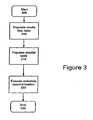
- Figure 3 is a flowchart illustrating a number of interrelated operations that may be used to implement the MSS module shown in Figure 2.
- Figure 4 is a flowchart illustrating a number of interrelated operations that may be used to populate the media file synchronization table.
- Figure 5 is a flowchart illustrating a number of interrelated operations that may be executed to execute the metadata synchronization referenced in Figure 3.
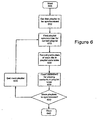
- Figure 6 is a flowchart illustrating a number of interrelated operations that may be executed to implement the playlist synchronization referenced in Figure 5.
- Figure 7 is a table illustrating exemplary fields that may be employed in media file records of the database shown in Figure 2.
- Figure 8 is a table illustrating exemplary fields that may be employed in playlist file records of the database shown in Figure 2.
- Figure 9 is a table illustrating exemplary fields that may be employed in a media stores table of the database shown in Figure 2.
- Figure 10 is a table illustrating exemplary fields that may be employed in a slots table of the database shown in Figure 2.
- Figure 1 is a block diagram illustrating one manner of implementing a multimedia system 100 having consolidated access to files on multiple media devices.
- system 100 may have a media playback and selection level 110 that, for example, provides high level interaction between multiple media devices in system 100 and a further software interface level or user.
- the media playback and selection level 110 facilitates selection of media files from multiple devices and allows playback of selected media files through output devices that are located in one or more playback zones 111.
- a first device 112 may be comprised of an audio CD in a CD player attached to system 100 and also may include one or more audio files 120 that may be selected for playback through output devices in one or more zones 111 of the system 100.
- a second device 114 may be comprised of a DVD disk in a DVD player attached to system 100 and may include one or more video files 122 that may be selected for playback through output devices in one or more zones 111 of the system 100.
- a third device 116 may be comprised of an MP3 player attached to system 100 and may include one or more audio/video files 124 that may be selected for playback through output devices of the playback zones 111 of the system 100.
- a user may request playback of all media files having a genre of "Country" and the media selection and playback level 110 will proceed to locate and playback all media files identified at the consolidated file content information level 118 independent of the device(s) on which the files are located.
- the consolidated file content information level 118 may dynamically detect any new devices as they are attached in system 100. Upon identification of the newly added device, information relating to the corresponding media file contents is identified and included, for example, in a file content information database at level 118.
- media playback and selection level 110 may navigate the information stored in these components as if the information were stored in a single database.
- FIG. 2 is a functional block diagram showing detailed components that may be employed to implement the system shown in Figure 1.
- the exemplary system 200 may include a Multimedia Engine (MME) module 205 that interacts with a human machine interface (HMI) module 210 as well as interacting with an IO media module 215 that provides an interface between a plurality of different multimedia devices 220 and the MME module 205.
- the HMI module 210 provides an interface that may include multimodal user inputs such as voice, touch buttons and touch screens that are employed by the user to identify the content to be played and to request certain playback operations.
- the information acquired by the HMI module 210 as a result of these user interactions is passed to the MME module 205.
- the MME module 205 obtains media file information for a requested file name, file type, genre, artist, etc., using metadata from consolidated media file information stored, for example, in a database 225.
- Database 225 is used by the MME module 205 to store and retrieve metadata for media files that client applications, such as the HMI module 210, access. The client applications may use this information to display media files to a user or otherwise arrange for playback of the media files in a desired manner.
- Database 225 may support multiple connections from multiple clients in a concurrent manner. The information in database 225 may be divided between multiple files. Each database file can be stored in RAM, flash, or hard drives in a configurable manner that does not affect access by higher level applications.
- the media files may reside on different types of devices in different formats
- the metadata for each file may be stored using a single format on the database 225.
- the media file contents from different incompatible devices attached to the system may be brought into the ambit of one controllable and browseable interface so that HMI module 210 can be used with all MME supported media file types and devices.
- HMI designers need only understand the data format used by the database 225 to access and play all media files in the system 200.
- the HMI module 210 can be designed to reference content and issue generic 'play', 'pause' type commands for all the supported devices despite the diversity of the device types and media formats.
- the MME module 205 may include a synchronization module 230 that is used for real time synchronization of metadata available on various media.
- a synchronization module 230 that is used for real time synchronization of metadata available on various media.
- the MSS module 235 is used whenever there is a need for metadata synchronization, e.g., after a device has been plugged into the system.
- Figure 3 is a flowchart illustrating a number of interrelated operations that may be used to implement the MSS module 235.
- the MSS module 235 When started at block 305, the MSS module 235 records the particulars of the files to be synchronized in a media files table by executing the operation shown at block 310. Information regarding the playlists that need synchronization is recorded in a playlist sync table by the operations shown at block 315.
- the actual metadata synchronization occurs in the operation represented at block 320 before any final operations are executed at block 325.
- Figure 4 is a flowchart illustrating a number of interrelated operations that may be used at block 310 of Figure 3 to populate the media file sync table.
- the file name and attributes of the first file on the media being synchronized are obtained at the operation represented at block 410.
- the file name and one or more file attributes, such as the time stamp on the file and its size, are compared with the information stored on the database 225. If these attributes stored on the media are different from those stored on the database 225, the system assumes at block 415 that the metadata for this media file needs synchronization. Otherwise, no synchronization is required. If the media file metadata needs synchronization, the file name is added to the media files sync table at block 420.
- the media files sync table contains a list of all the media files that need synchronization.
- the sequence of occurrence of a file in the table depends on whether a "breadth-first" or a "depth-first” approach for synchronization is chosen by the system designer.
- a "breadth-first" synchronization begins at the media store root directory and progresses level by level. During synchronization, the nodes at a given level are processed first, and then the nodes at the next level are considered. In this way, all directories at the same depth or level are synchronized before directories deeper in the tree are examined.
- a "depth-first" synchronization starts at the media store root directory, and begins traversing the first node it finds before going deeper in the directory structure examining sub-nodes as it finds them. For example, in a root directory with two sub-directories, all the members of the first found sub-directory that need synchronization are recorded first in the media files sync table before the second directory is examined.
- "breadth-first" synchronization facilities are provided for prioritizing folders/files. With such a facility, the folders/files at each level are displayed to the user at the same time as "breadth-first" synchronization progresses. A user may click on any of these folders/files or go inside any of the folders and click any item inside that needs to be synchronized first. On identification of such a high priority folder/file the synchronization of the current folder/file in progress is preempted and the higher priority folder/file is synchronized first. On completion of the synchronization of this higher priority folder/file the synchronization of the preempted folder/file is resumed.
- Figure 5 is a flowchart illustrating a number of interrelated operations that may be executed to implement the task shown at block 320 of Figure 3.
- the metadata for the first file to be synchronized is obtained from the media file sync table at block 510.
- the metadata retrieved from the media file sync table is stored in the database 225 at block 515. Whether or not there are more files to be synchronized is determined in the operation represented at block 520. If there are more files to be synchronized, the metadata for the next file to be synchronized is obtained from the media file sync table at block 525 and the retrieved metadata is stored in the database 225 at block 515.
- These operations are repeated until all media files identified in the media file sync table have been added to the database 225.
- synchronization of the playlists identified in the playlist sync table takes place at block 530 before final operations are executed at block 535.
- Figure 6 is a flowchart illustrating a number of interrelated operations that may be executed to implement the task shown at block 530 of Figure 5.
- the first playlist to be synchronized is obtained from the playlist sync table at block 610.
- the playlist synchronizer that is adapted to handle the current playlist is identified at block 615.
- the particulars of each file in the playlist are recorded in a playlist data table stored on the database 225 in the operation at block 620.
- the information recorded for each file includes the file id (fid), the playlist id (plid) and the order id (oid) that specifies the order in which the file is to be played.
- An appropriate statement is then inserted in the playlist table in database 225 for playing the contents specified in the playlist at block 625.
- the processing of the current playlist is completed, the a check is made at block 630 to determine whether there are more playlists in the playlist sync table that are in need of synchronization in the database 225. If more playlists need synchronization, the next playlist to be processed is obtained from the playlist sync table at block 635 and control returns to the operation shown at block 615. Otherwise, final operations are executed at block 640.
- the records in database 225 may have a number of different structures depending on the requirements of the system. Some fields that may be used in such database records and their corresponding meaning are shown in the table of Figure 7. Exemplary fields that may be used in connection with a playlist table in database 225 are shown in Figure 8.
- Database 225 also may include a media stores table.
- Each mediastore in the mediastores table describes one physical device containing media that the engine has seen. This could be an iPod, hard drive, USB stick, DVD Video disc, etc. Mediastores come and go as they are inserted and removed and this table is updated accordingly as that happens. All entries in the library table belong to one mediastore which is where the media is located. Mediastores are uniquely identified by an identifier that can be used to later attain the msid for the mediastore which links to the other tables.
- Figure 9 shows exemplary fields that may be used in connection with the media stores table.
- the database 225 may include a slots table. Slots may be used to define fileystem locations where mediastores can be connected and removed. For example, an audiocd may be found in the filesystem at location /fs/cd0. If it were a networked audiocd, it may be found at /net/remote_host/fs/cd0.
- the MME 205 may be designed to support an unlimited number of slots. Figure 10 shows exemplary fields that may be used in connection with the slots table.
- the metadata corresponding to a file may be available on the media containing the file.
- Metadata for a file may include information regarding the music type and the group that produced the music. It is also possible to incorporate various additional types of metadata.
- the metadata may include information on the quality of the content stored in the file. This quality information may be used in the selection of contents to be played for a user, or with certain license or other restrictions associated with the content.
Landscapes
- Engineering & Computer Science (AREA)
- Theoretical Computer Science (AREA)
- Multimedia (AREA)
- General Engineering & Computer Science (AREA)
- Databases & Information Systems (AREA)
- Physics & Mathematics (AREA)
- Data Mining & Analysis (AREA)
- General Physics & Mathematics (AREA)
- Signal Processing (AREA)
- Software Systems (AREA)
- Information Retrieval, Db Structures And Fs Structures Therefor (AREA)
- Management Or Editing Of Information On Record Carriers (AREA)
- Television Signal Processing For Recording (AREA)
- User Interface Of Digital Computer (AREA)
- Two-Way Televisions, Distribution Of Moving Picture Or The Like (AREA)
Applications Claiming Priority (3)
| Application Number | Priority Date | Filing Date | Title |
|---|---|---|---|
| US84024606P | 2006-08-25 | 2006-08-25 | |
| US84165906P | 2006-08-31 | 2006-08-31 | |
| US11/765,258 US20080059510A1 (en) | 2006-08-31 | 2007-06-19 | Multimedia system framework having layer consolidating access to multiple media devices |
Publications (1)
| Publication Number | Publication Date |
|---|---|
| EP1895434A1 true EP1895434A1 (de) | 2008-03-05 |
Family
ID=38704926
Family Applications (1)
| Application Number | Title | Priority Date | Filing Date |
|---|---|---|---|
| EP07015910A Withdrawn EP1895434A1 (de) | 2006-08-25 | 2007-08-13 | Multimedia-Systemrahmen mit Schichtkonsolidierungszugriff auf mehrere Medienvorrichtungen |
Country Status (4)
| Country | Link |
|---|---|
| EP (1) | EP1895434A1 (de) |
| JP (2) | JP2008054312A (de) |
| KR (1) | KR20080018805A (de) |
| CA (1) | CA2598349A1 (de) |
Cited By (4)
| Publication number | Priority date | Publication date | Assignee | Title |
|---|---|---|---|---|
| EP1939764A3 (de) * | 2006-12-14 | 2008-07-30 | QNX Software Systems GmbH & Co. KG | Mediensystem mit Synchronisation mit bevorzugter Priorisierung der Synchronisationsreihenfolge |
| US8412752B2 (en) | 2005-07-01 | 2013-04-02 | Qnx Software Systems Limited | File system having transaction record coalescing |
| US8566503B2 (en) | 2006-08-25 | 2013-10-22 | Qnx Software Systems Limited | Multimedia filesystem having unified representation of content on diverse multimedia devices |
| US8667029B2 (en) | 2005-07-01 | 2014-03-04 | Qnx Software Systems Limited | Optimized startup verification of file system integrity |
Citations (6)
| Publication number | Priority date | Publication date | Assignee | Title |
|---|---|---|---|---|
| WO2002042864A2 (en) * | 2000-11-21 | 2002-05-30 | Thomson Licensing S.A. | A system for unified extraction of media objects |
| US20020120634A1 (en) * | 2000-02-25 | 2002-08-29 | Liu Min | Infrastructure and method for supporting generic multimedia metadata |
| US20050210507A1 (en) * | 2004-03-17 | 2005-09-22 | Sony Corporation | System and method for multimedia playlist |
| US20050256845A1 (en) * | 2004-05-10 | 2005-11-17 | Microsoft Corporation | Data management for a networked multimedia console |
| US20060074851A1 (en) * | 2004-10-06 | 2006-04-06 | Michio Nagai | Management of play count of content data |
| US20060195480A1 (en) * | 2005-02-28 | 2006-08-31 | Michael Spiegelman | User interface for sharing and searching playlists |
Family Cites Families (3)
| Publication number | Priority date | Publication date | Assignee | Title |
|---|---|---|---|---|
| JP2003216620A (ja) * | 2002-01-17 | 2003-07-31 | Matsushita Electric Ind Co Ltd | コンテンツ管理システム、コンテンツ管理方法、媒体、およびプログラム |
| KR100562907B1 (ko) * | 2003-12-18 | 2006-03-21 | 삼성전자주식회사 | 미디어 컨텐츠의 통합 관리 장치 및 그 방법 |
| WO2006074110A2 (en) * | 2005-01-05 | 2006-07-13 | Divx, Inc. | System and method for a remote user interface |
-
2007
- 2007-08-13 EP EP07015910A patent/EP1895434A1/de not_active Withdrawn
- 2007-08-17 KR KR1020070082649A patent/KR20080018805A/ko not_active Ceased
- 2007-08-17 JP JP2007213080A patent/JP2008054312A/ja active Pending
- 2007-08-22 CA CA002598349A patent/CA2598349A1/en not_active Abandoned
-
2011
- 2011-03-01 JP JP2011044534A patent/JP2011155667A/ja active Pending
Patent Citations (6)
| Publication number | Priority date | Publication date | Assignee | Title |
|---|---|---|---|---|
| US20020120634A1 (en) * | 2000-02-25 | 2002-08-29 | Liu Min | Infrastructure and method for supporting generic multimedia metadata |
| WO2002042864A2 (en) * | 2000-11-21 | 2002-05-30 | Thomson Licensing S.A. | A system for unified extraction of media objects |
| US20050210507A1 (en) * | 2004-03-17 | 2005-09-22 | Sony Corporation | System and method for multimedia playlist |
| US20050256845A1 (en) * | 2004-05-10 | 2005-11-17 | Microsoft Corporation | Data management for a networked multimedia console |
| US20060074851A1 (en) * | 2004-10-06 | 2006-04-06 | Michio Nagai | Management of play count of content data |
| US20060195480A1 (en) * | 2005-02-28 | 2006-08-31 | Michael Spiegelman | User interface for sharing and searching playlists |
Non-Patent Citations (1)
| Title |
|---|
| SWIERK E ET AL: "THE ROMA PERSONAL METADATA SERVICE", MOBILE NETWORKS AND APPLICATIONS, ACM, NEW YORK, NY, US, vol. 7, no. 5, 1 January 2002 (2002-01-01), pages 407 - 418, XP008035588, ISSN: 1383-469X, DOI: 10.1023/A:1016547801710 * |
Cited By (4)
| Publication number | Priority date | Publication date | Assignee | Title |
|---|---|---|---|---|
| US8412752B2 (en) | 2005-07-01 | 2013-04-02 | Qnx Software Systems Limited | File system having transaction record coalescing |
| US8667029B2 (en) | 2005-07-01 | 2014-03-04 | Qnx Software Systems Limited | Optimized startup verification of file system integrity |
| US8566503B2 (en) | 2006-08-25 | 2013-10-22 | Qnx Software Systems Limited | Multimedia filesystem having unified representation of content on diverse multimedia devices |
| EP1939764A3 (de) * | 2006-12-14 | 2008-07-30 | QNX Software Systems GmbH & Co. KG | Mediensystem mit Synchronisation mit bevorzugter Priorisierung der Synchronisationsreihenfolge |
Also Published As
| Publication number | Publication date |
|---|---|
| JP2008054312A (ja) | 2008-03-06 |
| CA2598349A1 (en) | 2008-02-25 |
| JP2011155667A (ja) | 2011-08-11 |
| KR20080018805A (ko) | 2008-02-28 |
Similar Documents
| Publication | Publication Date | Title |
|---|---|---|
| US20080059510A1 (en) | Multimedia system framework having layer consolidating access to multiple media devices | |
| CN101226530B (zh) | 具有采用抢占式同步顺序优先化的同步功能的媒体系统 | |
| US7593950B2 (en) | Album art on devices with rules management | |
| KR100466143B1 (ko) | 파일 관리 방법, 콘텐츠 기록 장치, 콘텐츠 재생 장치 및콘텐츠 기록 매체 | |
| JP4644925B2 (ja) | 情報処理装置および情報処理方法 | |
| JP2008052731A (ja) | 多様なマルチメディアデバイス上のコンテンツの統一された表現を有するマルチメディアファイルシステム | |
| WO2007126996A2 (en) | System and methods for enhanced metadata entry | |
| CN1860481A (zh) | 使用内容标识符来下载cd封面图片以表示音频内容项 | |
| JP2008152259A (ja) | 実質的に同様のメディアコンテンツを有する複数のファイルから再生用のメディアファイルを選択するシステム | |
| EP1895434A1 (de) | Multimedia-Systemrahmen mit Schichtkonsolidierungszugriff auf mehrere Medienvorrichtungen | |
| CN101256566B (zh) | 具有统一访问多个媒体设备的层的多媒体系统框架 | |
| KR20000013758A (ko) | 멀티미디어 파일 보강 사용 방법 및 기록매체 | |
| JP2009157800A (ja) | 情報処理装置、情報処理方法、コンテンツ授受システム、およびコンピュータプログラム | |
| KR20080019013A (ko) | 저속 검색 저장 장치로부터의 그래픽 검색 | |
| CN101996665A (zh) | 可携式装置的媒体播放方法以及其可携式装置 | |
| US20080098034A1 (en) | Method Of Updating Content Of A Portable Device | |
| EP1872272A1 (de) | Verfahren und vorrichtung zum editieren von programmsuchinformationen | |
| JP3729776B2 (ja) | ファイル管理方法及びコンテンツ記録/再生装置 | |
| KR102244332B1 (ko) | 메타데이터를 이용한 다중 매체 내 음원 관리 장치 및 방법 | |
| JP2004030116A (ja) | 情報再生表示装置、方法及びプログラム | |
| JP5316569B2 (ja) | ファイル管理装置及びファイル管理方法 | |
| KR100272786B1 (ko) | 멀티미디어 파일 보강 사용 방법 및 장치 | |
| CN101300597A (zh) | 盘写作中的文件夹 | |
| KR100746042B1 (ko) | 컨텐츠 파일 브라우징 방법 및 장치 | |
| KR100839014B1 (ko) | 메타데이터를 동반한 직접 인코딩 시스템 |
Legal Events
| Date | Code | Title | Description |
|---|---|---|---|
| PUAI | Public reference made under article 153(3) epc to a published international application that has entered the european phase |
Free format text: ORIGINAL CODE: 0009012 |
|
| 17P | Request for examination filed |
Effective date: 20070813 |
|
| AK | Designated contracting states |
Kind code of ref document: A1 Designated state(s): AT BE BG CH CY CZ DE DK EE ES FI FR GB GR HU IE IS IT LI LT LU LV MC MT NL PL PT RO SE SI SK TR |
|
| AX | Request for extension of the european patent |
Extension state: AL BA HR MK YU |
|
| AKX | Designation fees paid |
Designated state(s): AT BE BG CH CY CZ DE DK EE ES FI FR GB GR HU IE IS IT LI LT LU LV MC MT NL PL PT RO SE SI SK TR |
|
| 17Q | First examination report despatched |
Effective date: 20090115 |
|
| RAP1 | Party data changed (applicant data changed or rights of an application transferred) |
Owner name: QNX SOFTWARE SYSTEMS GMBH & CO. KG |
|
| RAP1 | Party data changed (applicant data changed or rights of an application transferred) |
Owner name: QNX SOFTWARE SYSTEMS LIMITED |
|
| RAP1 | Party data changed (applicant data changed or rights of an application transferred) |
Owner name: QNX SOFTWARE SYSTEMS LIMITED |
|
| RAP1 | Party data changed (applicant data changed or rights of an application transferred) |
Owner name: 2236008 ONTARIO INC. |
|
| STAA | Information on the status of an ep patent application or granted ep patent |
Free format text: STATUS: THE APPLICATION IS DEEMED TO BE WITHDRAWN |
|
| 18D | Application deemed to be withdrawn |
Effective date: 20140414 |
|
| R18D | Application deemed to be withdrawn (corrected) |
Effective date: 20150414 |