EP1945768B1 - Modifikation der flavonoidbiosynthese in pflanzen - Google Patents
Modifikation der flavonoidbiosynthese in pflanzen Download PDFInfo
- Publication number
- EP1945768B1 EP1945768B1 EP06790424A EP06790424A EP1945768B1 EP 1945768 B1 EP1945768 B1 EP 1945768B1 EP 06790424 A EP06790424 A EP 06790424A EP 06790424 A EP06790424 A EP 06790424A EP 1945768 B1 EP1945768 B1 EP 1945768B1
- Authority
- EP
- European Patent Office
- Prior art keywords
- nucleic acid
- plant
- sequence
- acid fragment
- pap1
- Prior art date
- Legal status (The legal status is an assumption and is not a legal conclusion. Google has not performed a legal analysis and makes no representation as to the accuracy of the status listed.)
- Not-in-force
Links
- 229930003935 flavonoid Natural products 0.000 title claims description 40
- 150000002215 flavonoids Chemical class 0.000 title claims description 40
- 235000017173 flavonoids Nutrition 0.000 title claims description 40
- 230000015572 biosynthetic process Effects 0.000 title claims description 24
- 238000012986 modification Methods 0.000 title description 5
- 230000004048 modification Effects 0.000 title description 5
- 150000007523 nucleic acids Chemical class 0.000 claims description 144
- 108090000623 proteins and genes Proteins 0.000 claims description 85
- 102000039446 nucleic acids Human genes 0.000 claims description 78
- 108020004707 nucleic acids Proteins 0.000 claims description 78
- 239000013598 vector Substances 0.000 claims description 72
- 238000000034 method Methods 0.000 claims description 42
- 102000004169 proteins and genes Human genes 0.000 claims description 30
- 239000012634 fragment Substances 0.000 claims description 26
- 239000002773 nucleotide Substances 0.000 claims description 24
- 125000003729 nucleotide group Chemical group 0.000 claims description 24
- 238000004519 manufacturing process Methods 0.000 claims description 20
- 102000004196 processed proteins & peptides Human genes 0.000 claims description 19
- 108090000765 processed proteins & peptides Proteins 0.000 claims description 19
- 229920001184 polypeptide Polymers 0.000 claims description 16
- 239000004459 forage Substances 0.000 claims description 14
- 230000000692 anti-sense effect Effects 0.000 claims description 12
- 239000003550 marker Substances 0.000 claims description 12
- 230000004790 biotic stress Effects 0.000 claims description 10
- 239000000049 pigment Substances 0.000 claims description 10
- 241000700605 Viruses Species 0.000 claims description 9
- 239000004410 anthocyanin Substances 0.000 claims description 9
- 229930002877 anthocyanin Natural products 0.000 claims description 9
- 235000010208 anthocyanin Nutrition 0.000 claims description 9
- 230000003064 anti-oxidating effect Effects 0.000 claims description 9
- 230000009920 chelation Effects 0.000 claims description 9
- 229910052751 metal Inorganic materials 0.000 claims description 9
- 239000002184 metal Substances 0.000 claims description 9
- 241000238631 Hexapoda Species 0.000 claims description 8
- 238000010521 absorption reaction Methods 0.000 claims description 8
- 244000053095 fungal pathogen Species 0.000 claims description 8
- 244000005700 microbiome Species 0.000 claims description 8
- 230000007123 defense Effects 0.000 claims description 5
- NWKFECICNXDNOQ-UHFFFAOYSA-N flavylium Chemical compound C1=CC=CC=C1C1=CC=C(C=CC=C2)C2=[O+]1 NWKFECICNXDNOQ-UHFFFAOYSA-N 0.000 claims description 5
- 230000002068 genetic effect Effects 0.000 claims description 5
- 230000004071 biological effect Effects 0.000 claims description 3
- 230000000295 complement effect Effects 0.000 claims description 3
- 230000002708 enhancing effect Effects 0.000 claims description 2
- 125000003275 alpha amino acid group Chemical group 0.000 claims 2
- 102000054765 polymorphisms of proteins Human genes 0.000 claims 1
- 241000196324 Embryophyta Species 0.000 description 92
- 244000042324 Trifolium repens Species 0.000 description 69
- 108020004635 Complementary DNA Proteins 0.000 description 64
- 238000010804 cDNA synthesis Methods 0.000 description 47
- 239000002299 complementary DNA Substances 0.000 description 47
- 108020004414 DNA Proteins 0.000 description 46
- 235000013540 Trifolium repens var repens Nutrition 0.000 description 45
- 241000219793 Trifolium Species 0.000 description 33
- 239000013615 primer Substances 0.000 description 33
- 230000014509 gene expression Effects 0.000 description 29
- 229920002770 condensed tannin Polymers 0.000 description 28
- 241000209082 Lolium Species 0.000 description 24
- 210000004027 cell Anatomy 0.000 description 24
- 241000234642 Festuca Species 0.000 description 22
- 241000219823 Medicago Species 0.000 description 21
- 238000003752 polymerase chain reaction Methods 0.000 description 21
- 230000009466 transformation Effects 0.000 description 20
- 239000013612 plasmid Substances 0.000 description 19
- 150000001413 amino acids Chemical group 0.000 description 18
- 241000894007 species Species 0.000 description 16
- 210000001519 tissue Anatomy 0.000 description 16
- 240000004296 Lolium perenne Species 0.000 description 15
- 235000021374 legumes Nutrition 0.000 description 15
- 238000012163 sequencing technique Methods 0.000 description 14
- 235000010729 Trifolium repens Nutrition 0.000 description 13
- 101710161144 Anthocyanidin reductase Proteins 0.000 description 12
- 102000004190 Enzymes Human genes 0.000 description 12
- 108090000790 Enzymes Proteins 0.000 description 12
- 230000037361 pathway Effects 0.000 description 12
- 108091023040 Transcription factor Proteins 0.000 description 10
- 102000040945 Transcription factor Human genes 0.000 description 10
- 238000003753 real-time PCR Methods 0.000 description 10
- 230000001105 regulatory effect Effects 0.000 description 10
- 230000009261 transgenic effect Effects 0.000 description 10
- 238000004458 analytical method Methods 0.000 description 9
- 239000000523 sample Substances 0.000 description 9
- LFQSCWFLJHTTHZ-UHFFFAOYSA-N Ethanol Chemical compound CCO LFQSCWFLJHTTHZ-UHFFFAOYSA-N 0.000 description 8
- 235000017587 Medicago sativa ssp. sativa Nutrition 0.000 description 8
- 235000015724 Trifolium pratense Nutrition 0.000 description 8
- 241000219870 Trifolium subterraneum Species 0.000 description 8
- 239000000047 product Substances 0.000 description 8
- 235000013526 red clover Nutrition 0.000 description 8
- 108091032973 (ribonucleotides)n+m Proteins 0.000 description 7
- 244000025254 Cannabis sativa Species 0.000 description 7
- 241000772415 Neovison vison Species 0.000 description 7
- 108091028043 Nucleic acid sequence Proteins 0.000 description 7
- 230000003321 amplification Effects 0.000 description 7
- 238000006243 chemical reaction Methods 0.000 description 7
- 229930013032 isoflavonoid Natural products 0.000 description 7
- 150000003817 isoflavonoid derivatives Chemical class 0.000 description 7
- 235000012891 isoflavonoids Nutrition 0.000 description 7
- 239000000203 mixture Substances 0.000 description 7
- 238000003199 nucleic acid amplification method Methods 0.000 description 7
- XLYOFNOQVPJJNP-UHFFFAOYSA-N water Substances O XLYOFNOQVPJJNP-UHFFFAOYSA-N 0.000 description 7
- 241000589158 Agrobacterium Species 0.000 description 6
- 241000219194 Arabidopsis Species 0.000 description 6
- 241000234643 Festuca arundinacea Species 0.000 description 6
- 240000004658 Medicago sativa Species 0.000 description 6
- 235000010624 Medicago sativa Nutrition 0.000 description 6
- OKKJLVBELUTLKV-UHFFFAOYSA-N Methanol Chemical compound OC OKKJLVBELUTLKV-UHFFFAOYSA-N 0.000 description 6
- 102100026115 S-adenosylmethionine synthase isoform type-1 Human genes 0.000 description 6
- 240000008042 Zea mays Species 0.000 description 6
- 235000002017 Zea mays subsp mays Nutrition 0.000 description 6
- OJOBTAOGJIWAGB-UHFFFAOYSA-N acetosyringone Chemical compound COC1=CC(C(C)=O)=CC(OC)=C1O OJOBTAOGJIWAGB-UHFFFAOYSA-N 0.000 description 6
- 150000004636 anthocyanins Chemical class 0.000 description 6
- 238000010367 cloning Methods 0.000 description 6
- 239000002609 medium Substances 0.000 description 6
- 230000019612 pigmentation Effects 0.000 description 6
- 238000010186 staining Methods 0.000 description 6
- 108091060211 Expressed sequence tag Proteins 0.000 description 5
- 241000209510 Liliopsida Species 0.000 description 5
- 108010007784 Methionine adenosyltransferase Proteins 0.000 description 5
- 108700026244 Open Reading Frames Proteins 0.000 description 5
- 235000016383 Zea mays subsp huehuetenangensis Nutrition 0.000 description 5
- 230000000875 corresponding effect Effects 0.000 description 5
- 238000005516 engineering process Methods 0.000 description 5
- 241001233957 eudicotyledons Species 0.000 description 5
- 230000007407 health benefit Effects 0.000 description 5
- 238000009396 hybridization Methods 0.000 description 5
- 235000009973 maize Nutrition 0.000 description 5
- 239000000463 material Substances 0.000 description 5
- 239000000178 monomer Substances 0.000 description 5
- 210000000056 organ Anatomy 0.000 description 5
- 238000002360 preparation method Methods 0.000 description 5
- 241000234645 Festuca pratensis Species 0.000 description 4
- 241000508723 Festuca rubra Species 0.000 description 4
- VEXZGXHMUGYJMC-UHFFFAOYSA-N Hydrochloric acid Chemical compound Cl VEXZGXHMUGYJMC-UHFFFAOYSA-N 0.000 description 4
- 244000100545 Lolium multiflorum Species 0.000 description 4
- 241000215452 Lotus corniculatus Species 0.000 description 4
- 102000010292 Peptide Elongation Factor 1 Human genes 0.000 description 4
- 108010077524 Peptide Elongation Factor 1 Proteins 0.000 description 4
- 241000209504 Poaceae Species 0.000 description 4
- 240000002913 Trifolium pratense Species 0.000 description 4
- 235000005487 catechin Nutrition 0.000 description 4
- ADRVNXBAWSRFAJ-UHFFFAOYSA-N catechin Natural products OC1Cc2cc(O)cc(O)c2OC1c3ccc(O)c(O)c3 ADRVNXBAWSRFAJ-UHFFFAOYSA-N 0.000 description 4
- 239000003623 enhancer Substances 0.000 description 4
- 238000002474 experimental method Methods 0.000 description 4
- 230000001939 inductive effect Effects 0.000 description 4
- 229930015704 phenylpropanoid Natural products 0.000 description 4
- 150000002995 phenylpropanoid derivatives Chemical class 0.000 description 4
- 239000013600 plasmid vector Substances 0.000 description 4
- 230000006798 recombination Effects 0.000 description 4
- 238000005215 recombination Methods 0.000 description 4
- 238000006467 substitution reaction Methods 0.000 description 4
- 239000006228 supernatant Substances 0.000 description 4
- 241000589155 Agrobacterium tumefaciens Species 0.000 description 3
- 108010004539 Chalcone isomerase Proteins 0.000 description 3
- 108010044229 Dihydroflavanol 4-reductase Proteins 0.000 description 3
- 108010018087 Flavanone 3-dioxygenase Proteins 0.000 description 3
- 229930182566 Gentamicin Natural products 0.000 description 3
- CEAZRRDELHUEMR-URQXQFDESA-N Gentamicin Chemical compound O1[C@H](C(C)NC)CC[C@@H](N)[C@H]1O[C@H]1[C@H](O)[C@@H](O[C@@H]2[C@@H]([C@@H](NC)[C@@](C)(O)CO2)O)[C@H](N)C[C@@H]1N CEAZRRDELHUEMR-URQXQFDESA-N 0.000 description 3
- PEDCQBHIVMGVHV-UHFFFAOYSA-N Glycerine Chemical compound OCC(O)CO PEDCQBHIVMGVHV-UHFFFAOYSA-N 0.000 description 3
- 101100288095 Klebsiella pneumoniae neo gene Proteins 0.000 description 3
- 108091034117 Oligonucleotide Proteins 0.000 description 3
- 240000007377 Petunia x hybrida Species 0.000 description 3
- 108700023158 Phenylalanine ammonia-lyases Proteins 0.000 description 3
- 238000007792 addition Methods 0.000 description 3
- 108010031387 anthocyanidin synthase Proteins 0.000 description 3
- 238000003556 assay Methods 0.000 description 3
- 230000008901 benefit Effects 0.000 description 3
- 230000003247 decreasing effect Effects 0.000 description 3
- 230000029087 digestion Effects 0.000 description 3
- 239000013604 expression vector Substances 0.000 description 3
- 108010060641 flavanone synthetase Proteins 0.000 description 3
- 230000005714 functional activity Effects 0.000 description 3
- -1 isoflavonoids Chemical class 0.000 description 3
- LTYOQGRJFJAKNA-DVVLENMVSA-N malonyl-CoA Chemical compound O[C@@H]1[C@H](OP(O)(O)=O)[C@@H](COP(O)(=O)OP(O)(=O)OCC(C)(C)[C@@H](O)C(=O)NCCC(=O)NCCSC(=O)CC(O)=O)O[C@H]1N1C2=NC=NC(N)=C2N=C1 LTYOQGRJFJAKNA-DVVLENMVSA-N 0.000 description 3
- 230000001404 mediated effect Effects 0.000 description 3
- 108020004999 messenger RNA Proteins 0.000 description 3
- 230000002018 overexpression Effects 0.000 description 3
- 239000001253 polyvinylpolypyrrolidone Substances 0.000 description 3
- 229920000523 polyvinylpolypyrrolidone Polymers 0.000 description 3
- 235000013809 polyvinylpolypyrrolidone Nutrition 0.000 description 3
- 239000008213 purified water Substances 0.000 description 3
- 230000002829 reductive effect Effects 0.000 description 3
- 229960000268 spectinomycin Drugs 0.000 description 3
- UNFWWIHTNXNPBV-WXKVUWSESA-N spectinomycin Chemical compound O([C@@H]1[C@@H](NC)[C@@H](O)[C@H]([C@@H]([C@H]1O1)O)NC)[C@]2(O)[C@H]1O[C@H](C)CC2=O UNFWWIHTNXNPBV-WXKVUWSESA-N 0.000 description 3
- PFTAWBLQPZVEMU-DZGCQCFKSA-N (+)-catechin Chemical compound C1([C@H]2OC3=CC(O)=CC(O)=C3C[C@@H]2O)=CC=C(O)C(O)=C1 PFTAWBLQPZVEMU-DZGCQCFKSA-N 0.000 description 2
- PBZMVAYHJDFHIR-UHFFFAOYSA-N 2-phenyl-3,4-dihydrochromene-2,3-diol Chemical class OC1CC2=CC=CC=C2OC1(O)C1=CC=CC=C1 PBZMVAYHJDFHIR-UHFFFAOYSA-N 0.000 description 2
- 108010016192 4-coumarate-CoA ligase Proteins 0.000 description 2
- NGSWKAQJJWESNS-UHFFFAOYSA-N 4-coumaric acid Chemical compound OC(=O)C=CC1=CC=C(O)C=C1 NGSWKAQJJWESNS-UHFFFAOYSA-N 0.000 description 2
- 229920001817 Agar Polymers 0.000 description 2
- IJGRMHOSHXDMSA-UHFFFAOYSA-N Atomic nitrogen Chemical compound N#N IJGRMHOSHXDMSA-UHFFFAOYSA-N 0.000 description 2
- DQFBYFPFKXHELB-UHFFFAOYSA-N Chalcone Natural products C=1C=CC=CC=1C(=O)C=CC1=CC=CC=C1 DQFBYFPFKXHELB-UHFFFAOYSA-N 0.000 description 2
- 241000218631 Coniferophyta Species 0.000 description 2
- 108010014303 DNA-directed DNA polymerase Proteins 0.000 description 2
- 102000016928 DNA-directed DNA polymerase Human genes 0.000 description 2
- 241000509579 Draco Species 0.000 description 2
- 108010062650 Flavonoid 3',5'-hydroxylase Proteins 0.000 description 2
- 108030005163 Leucoanthocyanidin reductases Proteins 0.000 description 2
- LTYOQGRJFJAKNA-KKIMTKSISA-N Malonyl CoA Natural products S(C(=O)CC(=O)O)CCNC(=O)CCNC(=O)[C@@H](O)C(CO[P@](=O)(O[P@](=O)(OC[C@H]1[C@@H](OP(=O)(O)O)[C@@H](O)[C@@H](n2c3ncnc(N)c3nc2)O1)O)O)(C)C LTYOQGRJFJAKNA-KKIMTKSISA-N 0.000 description 2
- 241001465754 Metazoa Species 0.000 description 2
- LRHPLDYGYMQRHN-UHFFFAOYSA-N N-Butanol Chemical compound CCCCO LRHPLDYGYMQRHN-UHFFFAOYSA-N 0.000 description 2
- 229920000473 Phlobaphene Polymers 0.000 description 2
- 108020004459 Small interfering RNA Proteins 0.000 description 2
- 229930006000 Sucrose Natural products 0.000 description 2
- CZMRCDWAGMRECN-UGDNZRGBSA-N Sucrose Chemical compound O[C@H]1[C@H](O)[C@@H](CO)O[C@@]1(CO)O[C@@H]1[C@H](O)[C@@H](O)[C@H](O)[C@@H](CO)O1 CZMRCDWAGMRECN-UGDNZRGBSA-N 0.000 description 2
- 108010006785 Taq Polymerase Proteins 0.000 description 2
- 108010036937 Trans-cinnamate 4-monooxygenase Proteins 0.000 description 2
- 108090000848 Ubiquitin Proteins 0.000 description 2
- 102000044159 Ubiquitin Human genes 0.000 description 2
- 239000008272 agar Substances 0.000 description 2
- 229930014669 anthocyanidin Natural products 0.000 description 2
- 235000008758 anthocyanidins Nutrition 0.000 description 2
- 210000004436 artificial bacterial chromosome Anatomy 0.000 description 2
- 229930015036 aurone Natural products 0.000 description 2
- 150000001530 aurones Chemical class 0.000 description 2
- 230000001580 bacterial effect Effects 0.000 description 2
- 239000000872 buffer Substances 0.000 description 2
- 150000001765 catechin Chemical class 0.000 description 2
- GPRBEKHLDVQUJE-VINNURBNSA-N cefotaxime Chemical compound N([C@@H]1C(N2C(=C(COC(C)=O)CS[C@@H]21)C(O)=O)=O)C(=O)/C(=N/OC)C1=CSC(N)=N1 GPRBEKHLDVQUJE-VINNURBNSA-N 0.000 description 2
- 229960004261 cefotaxime Drugs 0.000 description 2
- 238000005119 centrifugation Methods 0.000 description 2
- 108010011897 chalcone reductase Proteins 0.000 description 2
- 235000005513 chalcones Nutrition 0.000 description 2
- 150000001789 chalcones Chemical class 0.000 description 2
- 230000002759 chromosomal effect Effects 0.000 description 2
- 229950001002 cianidanol Drugs 0.000 description 2
- 150000001875 compounds Chemical class 0.000 description 2
- 238000005520 cutting process Methods 0.000 description 2
- 238000012217 deletion Methods 0.000 description 2
- 230000037430 deletion Effects 0.000 description 2
- 238000001212 derivatisation Methods 0.000 description 2
- 239000012153 distilled water Substances 0.000 description 2
- 230000000694 effects Effects 0.000 description 2
- 210000002257 embryonic structure Anatomy 0.000 description 2
- 235000012734 epicatechin Nutrition 0.000 description 2
- 229930003944 flavone Natural products 0.000 description 2
- 150000002213 flavones Chemical class 0.000 description 2
- 235000011949 flavones Nutrition 0.000 description 2
- HVQAJTFOCKOKIN-UHFFFAOYSA-N flavonol Natural products O1C2=CC=CC=C2C(=O)C(O)=C1C1=CC=CC=C1 HVQAJTFOCKOKIN-UHFFFAOYSA-N 0.000 description 2
- 150000002216 flavonol derivatives Chemical class 0.000 description 2
- 235000011957 flavonols Nutrition 0.000 description 2
- 239000006260 foam Substances 0.000 description 2
- 229960002518 gentamicin Drugs 0.000 description 2
- 238000011534 incubation Methods 0.000 description 2
- JTEDVYBZBROSJT-UHFFFAOYSA-N indole-3-butyric acid Chemical compound C1=CC=C2C(CCCC(=O)O)=CNC2=C1 JTEDVYBZBROSJT-UHFFFAOYSA-N 0.000 description 2
- 238000002347 injection Methods 0.000 description 2
- 239000007924 injection Substances 0.000 description 2
- 238000002955 isolation Methods 0.000 description 2
- 229960000318 kanamycin Drugs 0.000 description 2
- 229930027917 kanamycin Natural products 0.000 description 2
- SBUJHOSQTJFQJX-NOAMYHISSA-N kanamycin Chemical compound O[C@@H]1[C@@H](O)[C@H](O)[C@@H](CN)O[C@@H]1O[C@H]1[C@H](O)[C@@H](O[C@@H]2[C@@H]([C@@H](N)[C@H](O)[C@@H](CO)O2)O)[C@H](N)C[C@@H]1N SBUJHOSQTJFQJX-NOAMYHISSA-N 0.000 description 2
- 229930182823 kanamycin A Natural products 0.000 description 2
- 238000002372 labelling Methods 0.000 description 2
- 238000013507 mapping Methods 0.000 description 2
- 238000012269 metabolic engineering Methods 0.000 description 2
- 239000011785 micronutrient Substances 0.000 description 2
- 235000013369 micronutrients Nutrition 0.000 description 2
- 239000013642 negative control Substances 0.000 description 2
- 239000008188 pellet Substances 0.000 description 2
- 239000000843 powder Substances 0.000 description 2
- 230000008569 process Effects 0.000 description 2
- 230000004224 protection Effects 0.000 description 2
- 210000001938 protoplast Anatomy 0.000 description 2
- 108091008146 restriction endonucleases Proteins 0.000 description 2
- 230000002441 reversible effect Effects 0.000 description 2
- JQXXHWHPUNPDRT-WLSIYKJHSA-N rifampicin Chemical compound O([C@](C1=O)(C)O/C=C/[C@@H]([C@H]([C@@H](OC(C)=O)[C@H](C)[C@H](O)[C@H](C)[C@@H](O)[C@@H](C)\C=C\C=C(C)/C(=O)NC=2C(O)=C3C([O-])=C4C)C)OC)C4=C1C3=C(O)C=2\C=N\N1CC[NH+](C)CC1 JQXXHWHPUNPDRT-WLSIYKJHSA-N 0.000 description 2
- 229960001225 rifampicin Drugs 0.000 description 2
- 210000004767 rumen Anatomy 0.000 description 2
- 239000004055 small Interfering RNA Substances 0.000 description 2
- 239000000243 solution Substances 0.000 description 2
- 235000021286 stilbenes Nutrition 0.000 description 2
- 150000001629 stilbenes Chemical class 0.000 description 2
- 239000000126 substance Substances 0.000 description 2
- 239000005720 sucrose Substances 0.000 description 2
- 239000000725 suspension Substances 0.000 description 2
- 239000003104 tissue culture media Substances 0.000 description 2
- 238000013518 transcription Methods 0.000 description 2
- 230000035897 transcription Effects 0.000 description 2
- 238000001890 transfection Methods 0.000 description 2
- 210000003934 vacuole Anatomy 0.000 description 2
- 230000003612 virological effect Effects 0.000 description 2
- 239000011782 vitamin Substances 0.000 description 2
- 235000013343 vitamin Nutrition 0.000 description 2
- 229940088594 vitamin Drugs 0.000 description 2
- 229930003231 vitamin Natural products 0.000 description 2
- 102000040650 (ribonucleotides)n+m Human genes 0.000 description 1
- WBYWAXJHAXSJNI-VOTSOKGWSA-M .beta-Phenylacrylic acid Natural products [O-]C(=O)\C=C\C1=CC=CC=C1 WBYWAXJHAXSJNI-VOTSOKGWSA-M 0.000 description 1
- NKDFYOWSKOHCCO-YPVLXUMRSA-N 20-hydroxyecdysone Chemical compound C1[C@@H](O)[C@@H](O)C[C@]2(C)[C@@H](CC[C@@]3([C@@H]([C@@](C)(O)[C@H](O)CCC(C)(O)C)CC[C@]33O)C)C3=CC(=O)[C@@H]21 NKDFYOWSKOHCCO-YPVLXUMRSA-N 0.000 description 1
- DMZOKBALNZWDKI-JBNLOVLYSA-N 4-Coumaroyl-CoA Natural products S(C(=O)/C=C/c1ccc(O)cc1)CCNC(=O)CCNC(=O)[C@@H](O)C(CO[P@@](=O)(O[P@@](=O)(OC[C@H]1[C@@H](OP(=O)(O)O)[C@@H](O)[C@@H](n2c3ncnc(N)c3nc2)O1)O)O)(C)C DMZOKBALNZWDKI-JBNLOVLYSA-N 0.000 description 1
- NGSWKAQJJWESNS-ZZXKWVIFSA-M 4-Hydroxycinnamate Natural products OC1=CC=C(\C=C\C([O-])=O)C=C1 NGSWKAQJJWESNS-ZZXKWVIFSA-M 0.000 description 1
- DFYRUELUNQRZTB-UHFFFAOYSA-N Acetovanillone Natural products COC1=CC(C(C)=O)=CC=C1O DFYRUELUNQRZTB-UHFFFAOYSA-N 0.000 description 1
- 102000007469 Actins Human genes 0.000 description 1
- 108010085238 Actins Proteins 0.000 description 1
- 241000589156 Agrobacterium rhizogenes Species 0.000 description 1
- 108091093088 Amplicon Proteins 0.000 description 1
- 241000219195 Arabidopsis thaliana Species 0.000 description 1
- 101100226484 Arabidopsis thaliana CYP75B1 gene Proteins 0.000 description 1
- 235000017060 Arachis glabrata Nutrition 0.000 description 1
- 244000105624 Arachis hypogaea Species 0.000 description 1
- 235000010777 Arachis hypogaea Nutrition 0.000 description 1
- 235000018262 Arachis monticola Nutrition 0.000 description 1
- 244000075850 Avena orientalis Species 0.000 description 1
- 235000007319 Avena orientalis Nutrition 0.000 description 1
- 235000007558 Avena sp Nutrition 0.000 description 1
- 241000219310 Beta vulgaris subsp. vulgaris Species 0.000 description 1
- 235000014698 Brassica juncea var multisecta Nutrition 0.000 description 1
- 235000006008 Brassica napus var napus Nutrition 0.000 description 1
- 240000000385 Brassica napus var. napus Species 0.000 description 1
- 235000006618 Brassica rapa subsp oleifera Nutrition 0.000 description 1
- 235000004977 Brassica sinapistrum Nutrition 0.000 description 1
- 101100184662 Caenorhabditis elegans mogs-1 gene Proteins 0.000 description 1
- 241000701489 Cauliflower mosaic virus Species 0.000 description 1
- 244000045195 Cicer arietinum Species 0.000 description 1
- 235000010523 Cicer arietinum Nutrition 0.000 description 1
- WBYWAXJHAXSJNI-SREVYHEPSA-N Cinnamic acid Chemical compound OC(=O)\C=C/C1=CC=CC=C1 WBYWAXJHAXSJNI-SREVYHEPSA-N 0.000 description 1
- 108010066133 D-octopine dehydrogenase Proteins 0.000 description 1
- 102000012410 DNA Ligases Human genes 0.000 description 1
- 108010061982 DNA Ligases Proteins 0.000 description 1
- 239000003155 DNA primer Substances 0.000 description 1
- 239000003298 DNA probe Substances 0.000 description 1
- 241000588724 Escherichia coli Species 0.000 description 1
- 101100437498 Escherichia coli (strain K12) uidA gene Proteins 0.000 description 1
- 241001302160 Escherichia coli str. K-12 substr. DH10B Species 0.000 description 1
- 101000768061 Escherichia phage P1 Antirepressor protein 1 Proteins 0.000 description 1
- 244000004281 Eucalyptus maculata Species 0.000 description 1
- 108700007698 Genetic Terminator Regions Proteins 0.000 description 1
- 102000053187 Glucuronidase Human genes 0.000 description 1
- 108010060309 Glucuronidase Proteins 0.000 description 1
- 244000068988 Glycine max Species 0.000 description 1
- 235000010469 Glycine max Nutrition 0.000 description 1
- 108010033040 Histones Proteins 0.000 description 1
- 240000005979 Hordeum vulgare Species 0.000 description 1
- 235000007340 Hordeum vulgare Nutrition 0.000 description 1
- 241000748095 Hymenopappus filifolius Species 0.000 description 1
- 102100034343 Integrase Human genes 0.000 description 1
- 108091092195 Intron Proteins 0.000 description 1
- 108010025815 Kanamycin Kinase Proteins 0.000 description 1
- COLNVLDHVKWLRT-QMMMGPOBSA-N L-phenylalanine Chemical compound OC(=O)[C@@H](N)CC1=CC=CC=C1 COLNVLDHVKWLRT-QMMMGPOBSA-N 0.000 description 1
- 241000219743 Lotus Species 0.000 description 1
- 235000007688 Lycopersicon esculentum Nutrition 0.000 description 1
- 108091057508 Myc family Proteins 0.000 description 1
- 235000006508 Nelumbo nucifera Nutrition 0.000 description 1
- 235000006510 Nelumbo pentapetala Nutrition 0.000 description 1
- 244000061176 Nicotiana tabacum Species 0.000 description 1
- 235000002637 Nicotiana tabacum Nutrition 0.000 description 1
- 238000000636 Northern blotting Methods 0.000 description 1
- 108020005187 Oligonucleotide Probes Proteins 0.000 description 1
- 240000007594 Oryza sativa Species 0.000 description 1
- 235000007164 Oryza sativa Nutrition 0.000 description 1
- 101100494423 Oryza sativa subsp. japonica CYP75B3 gene Proteins 0.000 description 1
- 101150045844 PAP1 gene Proteins 0.000 description 1
- 238000012408 PCR amplification Methods 0.000 description 1
- 241000209117 Panicum Species 0.000 description 1
- 235000006443 Panicum miliaceum subsp. miliaceum Nutrition 0.000 description 1
- 235000009037 Panicum miliaceum subsp. ruderale Nutrition 0.000 description 1
- 241001268782 Paspalum dilatatum Species 0.000 description 1
- 241000209046 Pennisetum Species 0.000 description 1
- 235000008331 Pinus X rigitaeda Nutrition 0.000 description 1
- 241000018646 Pinus brutia Species 0.000 description 1
- 235000011613 Pinus brutia Nutrition 0.000 description 1
- 108700001094 Plant Genes Proteins 0.000 description 1
- 101100214699 Pseudomonas aeruginosa aacC1 gene Proteins 0.000 description 1
- 108091034057 RNA (poly(A)) Proteins 0.000 description 1
- 108020004518 RNA Probes Proteins 0.000 description 1
- 239000003391 RNA probe Substances 0.000 description 1
- 108010092799 RNA-directed DNA polymerase Proteins 0.000 description 1
- 108700008625 Reporter Genes Proteins 0.000 description 1
- 241000589180 Rhizobium Species 0.000 description 1
- 108050008511 S-adenosylmethionine synthases Proteins 0.000 description 1
- ZONYXWQDUYMKFB-UHFFFAOYSA-N SJ000286395 Natural products O1C2=CC=CC=C2C(=O)CC1C1=CC=CC=C1 ZONYXWQDUYMKFB-UHFFFAOYSA-N 0.000 description 1
- 240000000111 Saccharum officinarum Species 0.000 description 1
- 235000007201 Saccharum officinarum Nutrition 0.000 description 1
- 238000012300 Sequence Analysis Methods 0.000 description 1
- DWAQJAXMDSEUJJ-UHFFFAOYSA-M Sodium bisulfite Chemical compound [Na+].OS([O-])=O DWAQJAXMDSEUJJ-UHFFFAOYSA-M 0.000 description 1
- 239000005708 Sodium hypochlorite Substances 0.000 description 1
- 240000003768 Solanum lycopersicum Species 0.000 description 1
- 244000061456 Solanum tuberosum Species 0.000 description 1
- 235000002595 Solanum tuberosum Nutrition 0.000 description 1
- 240000003829 Sorghum propinquum Species 0.000 description 1
- 235000011684 Sorghum saccharatum Nutrition 0.000 description 1
- 238000002105 Southern blotting Methods 0.000 description 1
- 235000021536 Sugar beet Nutrition 0.000 description 1
- 108700019146 Transgenes Proteins 0.000 description 1
- 235000021307 Triticum Nutrition 0.000 description 1
- 244000098338 Triticum aestivum Species 0.000 description 1
- 230000006750 UV protection Effects 0.000 description 1
- 235000009754 Vitis X bourquina Nutrition 0.000 description 1
- 235000012333 Vitis X labruscana Nutrition 0.000 description 1
- 240000006365 Vitis vinifera Species 0.000 description 1
- 235000014787 Vitis vinifera Nutrition 0.000 description 1
- 241001222757 Wild cucumber mosaic virus Species 0.000 description 1
- 235000005824 Zea mays ssp. parviglumis Nutrition 0.000 description 1
- 238000002835 absorbance Methods 0.000 description 1
- 238000009825 accumulation Methods 0.000 description 1
- 230000009471 action Effects 0.000 description 1
- 239000011543 agarose gel Substances 0.000 description 1
- 239000005030 aluminium foil Substances 0.000 description 1
- 230000001093 anti-cancer Effects 0.000 description 1
- 239000004599 antimicrobial Substances 0.000 description 1
- 238000013459 approach Methods 0.000 description 1
- 210000001106 artificial yeast chromosome Anatomy 0.000 description 1
- 125000003118 aryl group Chemical group 0.000 description 1
- 238000002869 basic local alignment search tool Methods 0.000 description 1
- 230000003115 biocidal effect Effects 0.000 description 1
- 230000033228 biological regulation Effects 0.000 description 1
- 230000001851 biosynthetic effect Effects 0.000 description 1
- 230000006696 biosynthetic metabolic pathway Effects 0.000 description 1
- 239000007844 bleaching agent Substances 0.000 description 1
- 238000010805 cDNA synthesis kit Methods 0.000 description 1
- 229930016911 cinnamic acid Natural products 0.000 description 1
- 235000013985 cinnamic acid Nutrition 0.000 description 1
- 239000013599 cloning vector Substances 0.000 description 1
- 230000000052 comparative effect Effects 0.000 description 1
- 238000009833 condensation Methods 0.000 description 1
- 230000005494 condensation Effects 0.000 description 1
- 239000000470 constituent Substances 0.000 description 1
- 235000005822 corn Nutrition 0.000 description 1
- 230000002596 correlated effect Effects 0.000 description 1
- 230000001351 cycling effect Effects 0.000 description 1
- 210000000805 cytoplasm Anatomy 0.000 description 1
- 238000007405 data analysis Methods 0.000 description 1
- 230000007812 deficiency Effects 0.000 description 1
- 230000001419 dependent effect Effects 0.000 description 1
- 238000013461 design Methods 0.000 description 1
- 238000011161 development Methods 0.000 description 1
- 235000014113 dietary fatty acids Nutrition 0.000 description 1
- 230000003828 downregulation Effects 0.000 description 1
- 235000013399 edible fruits Nutrition 0.000 description 1
- 238000004520 electroporation Methods 0.000 description 1
- 238000001976 enzyme digestion Methods 0.000 description 1
- 210000001339 epidermal cell Anatomy 0.000 description 1
- 239000011536 extraction buffer Substances 0.000 description 1
- 229930195729 fatty acid Natural products 0.000 description 1
- 239000000194 fatty acid Substances 0.000 description 1
- 150000004665 fatty acids Chemical class 0.000 description 1
- 230000035558 fertility Effects 0.000 description 1
- 229930003949 flavanone Natural products 0.000 description 1
- 235000011981 flavanones Nutrition 0.000 description 1
- 150000002208 flavanones Chemical class 0.000 description 1
- 108010015706 flavonoid 3'-hydroxylase Proteins 0.000 description 1
- 230000004927 fusion Effects 0.000 description 1
- 239000010931 gold Substances 0.000 description 1
- 229910052737 gold Inorganic materials 0.000 description 1
- 238000000227 grinding Methods 0.000 description 1
- 208000019622 heart disease Diseases 0.000 description 1
- 230000001744 histochemical effect Effects 0.000 description 1
- 108010002685 hygromycin-B kinase Proteins 0.000 description 1
- 230000001900 immune effect Effects 0.000 description 1
- 230000006872 improvement Effects 0.000 description 1
- 238000000338 in vitro Methods 0.000 description 1
- 239000002054 inoculum Substances 0.000 description 1
- 238000003780 insertion Methods 0.000 description 1
- 230000037431 insertion Effects 0.000 description 1
- 238000007834 ligase chain reaction Methods 0.000 description 1
- 230000031700 light absorption Effects 0.000 description 1
- 239000007788 liquid Substances 0.000 description 1
- 235000021073 macronutrients Nutrition 0.000 description 1
- 238000005259 measurement Methods 0.000 description 1
- 230000007246 mechanism Effects 0.000 description 1
- 210000000473 mesophyll cell Anatomy 0.000 description 1
- 230000004060 metabolic process Effects 0.000 description 1
- WBYWAXJHAXSJNI-UHFFFAOYSA-N methyl p-hydroxycinnamate Natural products OC(=O)C=CC1=CC=CC=C1 WBYWAXJHAXSJNI-UHFFFAOYSA-N 0.000 description 1
- 238000002156 mixing Methods 0.000 description 1
- 238000010369 molecular cloning Methods 0.000 description 1
- 239000004570 mortar (masonry) Substances 0.000 description 1
- 229910052757 nitrogen Inorganic materials 0.000 description 1
- 108010058731 nopaline synthase Proteins 0.000 description 1
- 239000002751 oligonucleotide probe Substances 0.000 description 1
- 230000003287 optical effect Effects 0.000 description 1
- 230000036961 partial effect Effects 0.000 description 1
- 235000020232 peanut Nutrition 0.000 description 1
- COLNVLDHVKWLRT-UHFFFAOYSA-N phenylalanine Natural products OC(=O)C(N)CC1=CC=CC=C1 COLNVLDHVKWLRT-UHFFFAOYSA-N 0.000 description 1
- 108010082527 phosphinothricin N-acetyltransferase Proteins 0.000 description 1
- 239000000419 plant extract Substances 0.000 description 1
- 238000004161 plant tissue culture Methods 0.000 description 1
- 230000008488 polyadenylation Effects 0.000 description 1
- 239000013641 positive control Substances 0.000 description 1
- 239000002243 precursor Substances 0.000 description 1
- 238000000746 purification Methods 0.000 description 1
- 238000012755 real-time RT-PCR analysis Methods 0.000 description 1
- 238000011084 recovery Methods 0.000 description 1
- 230000010076 replication Effects 0.000 description 1
- 230000001850 reproductive effect Effects 0.000 description 1
- 238000003757 reverse transcription PCR Methods 0.000 description 1
- 235000009566 rice Nutrition 0.000 description 1
- 238000006798 ring closing metathesis reaction Methods 0.000 description 1
- 238000012216 screening Methods 0.000 description 1
- 230000000405 serological effect Effects 0.000 description 1
- 230000011664 signaling Effects 0.000 description 1
- 235000010267 sodium hydrogen sulphite Nutrition 0.000 description 1
- SUKJFIGYRHOWBL-UHFFFAOYSA-N sodium hypochlorite Chemical compound [Na+].Cl[O-] SUKJFIGYRHOWBL-UHFFFAOYSA-N 0.000 description 1
- 239000002689 soil Substances 0.000 description 1
- 125000006850 spacer group Chemical group 0.000 description 1
- 239000008223 sterile water Substances 0.000 description 1
- 239000000758 substrate Substances 0.000 description 1
- 230000001629 suppression Effects 0.000 description 1
- 229920001864 tannin Polymers 0.000 description 1
- 239000001648 tannin Substances 0.000 description 1
- 235000018553 tannin Nutrition 0.000 description 1
- 239000008399 tap water Substances 0.000 description 1
- 235000020679 tap water Nutrition 0.000 description 1
- DMZOKBALNZWDKI-MATMFAIHSA-N trans-4-coumaroyl-CoA Chemical compound O=C([C@H](O)C(C)(COP(O)(=O)OP(O)(=O)OC[C@@H]1[C@H]([C@@H](O)[C@@H](O1)N1C2=NC=NC(N)=C2N=C1)OP(O)(O)=O)C)NCCC(=O)NCCSC(=O)\C=C\C1=CC=C(O)C=C1 DMZOKBALNZWDKI-MATMFAIHSA-N 0.000 description 1
- 238000010361 transduction Methods 0.000 description 1
- 230000026683 transduction Effects 0.000 description 1
- 238000012546 transfer Methods 0.000 description 1
- 238000013519 translation Methods 0.000 description 1
- 230000014621 translational initiation Effects 0.000 description 1
- 230000003827 upregulation Effects 0.000 description 1
- 238000011144 upstream manufacturing Methods 0.000 description 1
- 238000001262 western blot Methods 0.000 description 1
Images





Classifications
-
- C—CHEMISTRY; METALLURGY
- C12—BIOCHEMISTRY; BEER; SPIRITS; WINE; VINEGAR; MICROBIOLOGY; ENZYMOLOGY; MUTATION OR GENETIC ENGINEERING
- C12N—MICROORGANISMS OR ENZYMES; COMPOSITIONS THEREOF; PROPAGATING, PRESERVING, OR MAINTAINING MICROORGANISMS; MUTATION OR GENETIC ENGINEERING; CULTURE MEDIA
- C12N15/00—Mutation or genetic engineering; DNA or RNA concerning genetic engineering, vectors, e.g. plasmids, or their isolation, preparation or purification; Use of hosts therefor
- C12N15/09—Recombinant DNA-technology
- C12N15/63—Introduction of foreign genetic material using vectors; Vectors; Use of hosts therefor; Regulation of expression
- C12N15/79—Vectors or expression systems specially adapted for eukaryotic hosts
- C12N15/82—Vectors or expression systems specially adapted for eukaryotic hosts for plant cells, e.g. plant artificial chromosomes (PACs)
- C12N15/8241—Phenotypically and genetically modified plants via recombinant DNA technology
- C12N15/8242—Phenotypically and genetically modified plants via recombinant DNA technology with non-agronomic quality (output) traits, e.g. for industrial processing; Value added, non-agronomic traits
- C12N15/8243—Phenotypically and genetically modified plants via recombinant DNA technology with non-agronomic quality (output) traits, e.g. for industrial processing; Value added, non-agronomic traits involving biosynthetic or metabolic pathways, i.e. metabolic engineering, e.g. nicotine, caffeine
- C12N15/825—Phenotypically and genetically modified plants via recombinant DNA technology with non-agronomic quality (output) traits, e.g. for industrial processing; Value added, non-agronomic traits involving biosynthetic or metabolic pathways, i.e. metabolic engineering, e.g. nicotine, caffeine involving pigment biosynthesis
-
- C—CHEMISTRY; METALLURGY
- C07—ORGANIC CHEMISTRY
- C07K—PEPTIDES
- C07K14/00—Peptides having more than 20 amino acids; Gastrins; Somatostatins; Melanotropins; Derivatives thereof
- C07K14/415—Peptides having more than 20 amino acids; Gastrins; Somatostatins; Melanotropins; Derivatives thereof from plants
-
- C—CHEMISTRY; METALLURGY
- C12—BIOCHEMISTRY; BEER; SPIRITS; WINE; VINEGAR; MICROBIOLOGY; ENZYMOLOGY; MUTATION OR GENETIC ENGINEERING
- C12N—MICROORGANISMS OR ENZYMES; COMPOSITIONS THEREOF; PROPAGATING, PRESERVING, OR MAINTAINING MICROORGANISMS; MUTATION OR GENETIC ENGINEERING; CULTURE MEDIA
- C12N15/00—Mutation or genetic engineering; DNA or RNA concerning genetic engineering, vectors, e.g. plasmids, or their isolation, preparation or purification; Use of hosts therefor
- C12N15/09—Recombinant DNA-technology
- C12N15/63—Introduction of foreign genetic material using vectors; Vectors; Use of hosts therefor; Regulation of expression
- C12N15/79—Vectors or expression systems specially adapted for eukaryotic hosts
- C12N15/82—Vectors or expression systems specially adapted for eukaryotic hosts for plant cells, e.g. plant artificial chromosomes (PACs)
- C12N15/8241—Phenotypically and genetically modified plants via recombinant DNA technology
- C12N15/8242—Phenotypically and genetically modified plants via recombinant DNA technology with non-agronomic quality (output) traits, e.g. for industrial processing; Value added, non-agronomic traits
- C12N15/8243—Phenotypically and genetically modified plants via recombinant DNA technology with non-agronomic quality (output) traits, e.g. for industrial processing; Value added, non-agronomic traits involving biosynthetic or metabolic pathways, i.e. metabolic engineering, e.g. nicotine, caffeine
Definitions
- the present invention relates generally to nucleic acid fragments and their encoded amino acid sequences for flavonoid biosynthetic enzymes in plants, and the use thereof for the modification of flavonoid biosynthesis in plants.
- Flavonoids constitute a relatively diverse family of aromatic molecules that are derived from phenylalanine and malonyl-coenzyme A (CoA, via the fatty acid pathway). These compounds include six major subgroups that are found in most higher plants: the chalcones, flavones, flavonols, flavandiols, anthocyanins and condensed tannins (or proanthocyanidins). A seventh group, the aurones, is widespread, but not ubiquitous.
- flavonoids Some plant species also synthesize specialised forms of flavonoids, such as the isoflavonoids that are found in legumes and a small number of non-legume plants. Similarly, sorghum and maize are among the few species known to synthesize 3-deoxyanthocyanins (or phlobaphenes in the polymerised form).
- the stilbenes which are closely related to flavonoids, are synthesised by another group of unrelated species that includes grape, peanut and pine.
- flavonoids Besides providing pigmentation to flowers, fruits, seeds, and leaves, flavonoids also have key roles in signalling between plants and microbes, in male fertility of some species, in defense as antimicrobial agents and feeding deterrants, and in UV protection.
- Flavonoids also have significant activities when ingested by animals, and there is great interest in their potential health benefits, particularly for compounds such as isoflavonoids, which have been linked to anticancer benefits, and stilbenes that are believed to contribute to reduced heart disease.
- the major branch pathways of flavonoid biosynthesis start with general phenylpropanoid metabolism and lead to the nine major subgroups: the colorless chalcones, aurones, isoflavonoids, flavones, flavonols, flavandiols, anthocyanins, condensed tannins, and phlobaphene pigments.
- the enzyme phenylalanine ammonia-lyase (PAL) of the general phenylpropanoid pathway will lead to the production of cinnamic acid.
- Cinnamate-4-hydroxylase (C4H) will produce p-coumaric acid which will be converted through the action of 4-coumaroyl:CoA-ligase (4CL) to the production of 4-coumaroyl-CoA and malonyl-CoA.
- chalcone synthase uses malonyl CoA and 4-coumaryl CoA as substrates.
- Chalcone reductase (CHR) balances the production of 5-hydroxy- or 5-deoxyflavonoids.
- the next enzyme, chalcone isomerase (CHI) catalyses ring closure to form a flavanone, but the reaction can also occur spontaneously.
- Further enzymes in the pathway are: flavanone 3-hydroxylase (F3H), dihydroflavonol 4-reductase (DFR), flavonoid 3'-hydroxylase (F3'H) and flavonoid 3', 5' hydroxylase (F3'5'H).
- leucoanthocyanidins can be reduced to catechins by leucoanthocyanidin reductase (LAR) or to anthocyanidins by leucoanthocyanidin dioxygenase (LDOX).
- Anthocyanidins can be converted to anthocyanins by the addition of sugar groups, or to epicatechins by anthocyanidin reductase (ANR), encoded by the BANYULS gene.
- Catechins and epicatechins are the subunits of condensed tannins (CTs), which in Arabidopsis are thought to be transported into the vacuole by a multidrug secondary transporter-like protein, TRANSPARENT TESTA 12 (TT12), and polymerised by an unknown mechanism.
- Cs condensed tannins
- TT12 multidrug secondary transporter-like protein
- Enzymes in the flavonoid pathway have been found to be controlled by a range of transcription factors in Arabidopsis, maize and petunia.
- condensed tannin biosynthesis requires the function of TRANSPARENT TESTA 2 (TT2), a myb family factor, TRANSPARENT TESTA 8 (TT8), a myc family factor and TRANSPARENT TESTA GLABRA 1 (TTG1), a WD40 family factor, among other transcription factors.
- TT2 TRANSPARENT TESTA 2
- TT8 TRANSPARENT TESTA 8
- TSG1 TRANSPARENT TESTA GLABRA 1
- Other myc and myb family transcription factors regulate distinct parts of the flavonoid pathway in maize, petunia and other plant species.
- PURPLE ANTHOCYANIN PIGMENT 1 (PAP1) from Arabidopsis thaliana belongs to a family of MYB-type transcription factors, including an2 (Petunia hybrida) and ant1 (Lycopersicon esculentum), that control anthocyanin production in plants.
- PAP1 positively regulates the production of anthocyanins in Arabidopsis foliage by transcriptionally inducing seven flavonoid pathway enzymes common to flavonoid and condensed tannin biosynthesis, namely, PAL, 4CL, CHS, CHI, F3H, DFR and LDOX.
- nucleic acid sequences encoding PAP1-like transcription factors have been isolated for certain species of plants, there remains a need for materials useful in modifying flavonoid biosynthesis; in modifying protein binding, metal chelation, anti-oxidation, and UV-light absorption; in modifying plant pigment production; in modifying plant defense to biotic stresses such as viruses, microorganisms, insects, fungal pathogens; in modifying forage quality, for example by disrupting protein foam and conferring protection from rumen pasture bloat, particularly in forage legumes and grasses, including alfalfa, medics, clovers, ryegrasses and fescues, and for methods for their use.
- the invention provides a purified or isolated nucleic acid or nucleic acid fragment encoding a PURPLE ANTHOCYANIN PIGMENT 1 (PAP1) protein, or a nucleic acid or nucleic acid fragment encoding a sequence that is complementary or antisense to a sequence encoding a PAP1 protein, said nucleic acid or nucleic acid fragment including a nucleotide sequence selected from the group consisting of:
- the invention also provides a purified or isolated PAP1 polypeptide including an amino acid sequence selected from the group consisting of:
- the present disclosure also provides substantially purified or isolated nucleic acids or nucleic acid fragments encoding amino acid sequences for a class of proteins which are related to PAP1, or functionally active fragments or variants thereof. Such proteins are referred to herein as PAP1-like.
- PAP1-like polypeptide By a PAP1-like polypeptide is meant that either one of both of the following criteria apply: (i) the gene which encodes the polypeptide is expressed in a similar manner to PAP1, and (ii) the polypeptide has similar functional activity to PAP1.
- the PAP1-like polypeptide has at least approximately 70%, preferably at least approximately 80%, more preferably at least approximately 90% identity to PAP1.
- nucleic acids or nucleic acid fragments complementary and antisense to PAP1-like encoding nucleic acid fragments.
- PAP1 or PAP1-like polypeptides in plants may enhance or otherwise alter flavonoid biosynthesis; may enhance or otherwise alter the plant capacity for protein binding, metal chelation, anti-oxidation, or W-light absorption; may enhance or reduce or otherwise alter plant pigment production.
- ANR or ANR-like polypeptides may enhance or otherwise alter flavonoid biosynthesis; may enhance or otherwise alter the plant capacity for protein binding, metal chelation, anti-oxidation, or UV-light absorption; may enhance or reduce or otherwise alter plant pigment production.
- the sequential, simultaneous or combined over-expression of candidates for PAP1 and ANR may confer enhanced herbage quality and/or bloat-safety on plants, such as pasture plants, preferably through up-regulation of condensed tannins in for example their leaves.
- Methods for the manipulation of PAP1 and/or ANR or -like gene activities in plants including legumes such as clovers (Trifolium species), lucerne ( Medicago sativa) and grass species such as ryegrasses (Lolium species) and fescues (Festuca species), may facilitate the production of, for example, forage legumes and forage grasses and other crops with enhanced tolerance to biotic stresses such as viruses, microorganisms, insects and fungal pathogens; altered pigmentation in flowers; forage legumes with enhanced herbage quality and bloat-safety; crops with enhanced isoflavonoid content leading to health benefits.
- legumes such as clovers (Trifolium species), lucerne ( Medicago sativa) and grass species such as ryegrasses (Lolium species) and fescues (Festuca species)
- clovers Trifolium species
- lucerne Medicago sativa
- grass species such as ryegrasse
- transcription factors to modify multiple product-specific enzymes in the flavonoid pathway may be a useful alternative strategy to cloning genes encoding many enzymes and modifying their expression in transgenic plants.
- the clover (Trifolium), medic (Medicago), ryegrass (Lolium) or fescue (Festuca) species may be of any suitable type, including white clover (Trifolium repens), red clover (Trifolium pratense), subterranean clover (Trifolium subterraneum), alfalfa (Medicago sativa), Italian or annual ryegrass (Lolium multiflorum ), perennial ryegrass (Lolium perenne), tall fescue (Festuca arundinacea / Lolium arundinaceum), meadow fescue (Festuca pratensis) and red fescue (Festuca rubra).
- the species is a clover or a ryegrass, more preferably white clover (T. repens ) or perennial ryegrass (L. perenne).
- White clover (Trifolium repens L.) and perennial ryegrass (Lolium perenne L.) are key pasture legumes and grasses, respectively, in temperate climates throughout the world. Perennial ryegrass is also an important turf grass.
- Nucleic acids according to the invention may be full-length genes or part thereof, and are also referred to as “nucleic acid fragments" and “nucleotide sequences” in this specification. For convenience, the expression “nucleic acid or nucleic acid fragment” is used to cover all of these.
- the nucleic acid or nucleic acid fragment may be of any suitable type and includes DNA (such as cDNA or genomic DNA) and RNA (such as mRNA) that is single- or doublestranded, optionally containing synthetic, non-natural or altered nucleotide bases, and combinations thereof.
- DNA such as cDNA or genomic DNA
- RNA such as mRNA
- isolated means that the material is removed from its original environment (eg. the natural environment if it is naturally occurring).
- a naturally occurring nucleic acid present in a living plant is not isolated, but the same nucleic acid separated from some or all of the coexisting materials in the natural system, is isolated.
- nucleic acids could be part of a vector and/or such nucleic acids could be part of a composition, and still be isolated in that such a vector or composition is not part of its natural environment.
- nucleic acids or nucleic acid fragments could be assembled to form a consensus contig.
- the term "consensus contig” refers to a nucleotide sequence that is assembled from two or more constituent nucleotide sequences that share common or overlapping regions of sequence homology.
- the nucleotide sequence of two or more nucleic acids or nucleic acid fragments can be compared and aligned in order to identify common or overlapping sequences.
- sequences and thus their corresponding nucleic acids or nucleic acid fragments
- the fragment or variant in relation to nucleic acids it is meant that the fragment or variant (such as an analogue, derivative or mutant) encodes a polypeptide, which is capable of modifying flavonoid biosynthesis; in a plant.
- Such variants include naturally occurring allelic variants and non-naturally occurring variants. Additions, deletions, substitutions and derivatizations of one or more of the nucleotides are contemplated so long as the modifications do not result in loss of functional activity of the fragment or variant
- the functionally active fragment or variant has at least approximately 75% identity to the relevant part of the above mentioned nucleotide sequence, more preferably at least approximately 80% identity, more preferably at least approximately 90% identity, most preferably at least approximately 95% identity.
- Such functionally active variants and fragments include, for example, those having nucleic acid changes which result in conservative amino acid substitutions of one or more residues in the corresponding amino acid sequence.
- the fragment has a size of at least 30 nucleotides, more preferably at least 45 nucleotides, most preferably at least 60 nucleotides.
- Nucleic acids or nucleic acid fragments encoding at least a portion of a candidate PAP1 ortholog have been isolated and identified.
- the nucleic acids or nucleic acid fragments of the present invention may be used to isolate cDNAs and genes encoding homologous proteins from the same or other plant species. Isolation of homologous genes using sequence-dependent protocols, such as methods of nucleic acid hybridisation, and methods of DNA and RNA amplification as exemplified by various uses of nucleic acid amplification technologies (e.g. polymerase-chain reaction, ligase chain reaction), is well known in the art.
- genes encoding other PAP1-like proteins may be isolated directly by using all or a portion of the nucleic acids or nucleic acid fragments of the present invention as hybridisation probes to screen libraries from the desired plant employing the methodology well known to those skilled in the art.
- Specific oligonucleotide probes based upon the nucleic acid sequences of the present invention may be designed and synthesized by methods known in the art.
- the entire sequences may be used directly to synthesize DNA probes by methods known to the skilled artisan such as random primer DNA labelling, nick translation, or end-labelling techniques, or RNA probes using available in vitro transcription systems.
- primers may be designed and used to amplify a part or all of the sequences of the present invention.
- the resulting amplification products may be labelled directly during amplification reactions or labelled after amplification reactions, and used as probes to isolate full-length cDNA or genomic fragments under conditions of appropriate stringency.
- short segments of the nucleic acids or nucleic acid fragments of the present invention may be used in protocols to amplify longer nucleic acids or nucleic acid fragments encoding homologous genes from DNA or RNA.
- polymerase chain reaction may be performed on a library of cloned nucleic acid fragments wherein the sequence of one primer is derived from the nucleic acid sequences of the present invention, and the sequence of the other primer takes advantage of the presence of the polyadenylic acid tracts to the 3' end of the mRNA precursor encoding plant genes.
- the second primer sequence may be based upon sequences derived from the cloning vector.
- a substantially purified or isolated flavonoid biosynthesis-regulating transcription factor from a legume or grass species Preferably, the present disclosure provides a substantially purified or isolated polypeptide selected from the group consisting of PAP1 and PAP1-like proteins, and functionally active fragments and variants thereof, preferably from a clover (Trifolium), medic (Medicago), ryegrass (Lolium) or fescue (Festuca) species.
- a clover Trifolium
- medic Medicago
- ryegrass Lolium
- Festuca fescue
- the clover (Trifolium), medic (Medicago), ryegrass (Lolium) or fescue (Festuca) species may be of any suitable type, including white clover ( Trifolium repens ) , red clover ( Trifolium pratense), subterranean clover (Trifolium subterraneum), alfalfa (Medicago sativa), Italian or annual ryegrass (Lolium multiflorum), perennial ryegrass (Lolium perenne), tall fescue (Festuca arundinacea / Lolium arundinaceum ), meadow fescue (Festuca pratensis) and red fescue (Festuca rubra ).
- the species may be a clover or a ryegrass, more particularly white clover (T. repens) or perennial ryegrass (L. perenne).
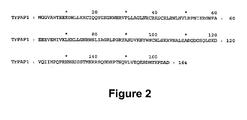
- the substantially purified or isolated PAP1 or PAP1-like polypeptide includes an amino acid sequence selected from the group consisting of the sequences shown in Figures 2 and 5 hereto (SEQ ID Nos: 2 and 4, respectively), and functionally active fragments and variants thereof.
- the fragment or variant has one or more of the biological properties of the proteins PAP1 and PAP1-like, respectively. Additions, deletions, substitutions and derivatizations of one or more of the amino acids are contemplated so long as the modifications do not result in loss of functional activity of the fragment or variant.
- the functionally active fragment or variant has at least approximately 60% identity to the relevant part of the above mentioned amino acid sequence, more preferably at least approximately 80% identity, most preferably at least approximately 90% identity.
- Such functionally active variants and fragments include, for example, those having conservative amino acid substitutions of one or more residues in the corresponding amino acid sequence.
- the fragment has a size of at least 10 amino acids, more preferably at least 15 amino acids, most preferably at least 20 amino acids.
- a polypeptide recombinantly produced from a nucleic acid or nucleic acid fragment according to the present disclosure is provided.
- nucleotide sequences of the present disclosure facilitates immunological screening of cDNA expression libraries.
- Synthetic peptides representing portions of the instant amino acid sequences may be synthesized. These peptides may be used to immunise animals to produce polyclonal or monoclonal antibodies with specificity for peptides and/or proteins including the amino acid sequences. These antibodies may be then used to screen cDNA expression libraries to isolate full-length cDNA clones of interest.
- a method of isolating a nucleic acid or nucleic acid fragment of the present disclosure including sequencing nucleic acid fragments from a nucleic acid library.
- the nucleic acid library may be of any suitable type and is preferably a cDNA library.
- the nucleic acid or nucleic acid fragment may be isolated from a recombinant plasmid or may be amplifed, for example using polymerase chain reaction.
- the sequencing may be performed by techniques known to those skilled in the art.
- nucleic acid or nucleic acid fragment of the present disclosure and/or nucleotide sequence information thereof, as a molecular genetic marker.
- nucleic acids or nucleic acid fragments according to the present disclosure and/or nucleotide sequence information thereof may be used as a molecular genetic marker for quantitative trait loci (QTL) tagging, QTL mapping, DNA fingerprinting and in marker assisted selection, particularly in clovers, alfalfa, ryegrasses and fescues.
- QTL quantitative trait loci
- nucleic acids or nucleic acid fragments according to the present disclosure and/or nucleotide sequence information thereof may be used as molecular genetic markers in plant improvement in relation to plant tolerance to biotic stresses such as viruses, microorganisms, insects, fungal pathogens; in relation to forage quality; in relation to bloat safety; in relation to condensed tannin content; in relation to plant pigmentation.
- sequence information revealing SNPs in allelic variants of the nucleic acids or nucleic acid fragments of the present disclosure and/or nucleotide sequence information thereof may be used as molecular genetic markers for QTL tagging and mapping and in marker assisted selection, particularly in clovers, alfalfa, ryegrasses and fescues.
- a construct including a nucleic acid or nucleic acid fragment according to the present invention.
- construct refers to an artificially assembled or isolated nucleic acid molecule, which includes the gene of interest.
- a construct may include the gene or genes of interest, a marker gene which in some cases can also be the gene of interest and appropriate regulatory sequences. It should be appreciated that the inclusion of regulatory sequences in a construct is optional, for example, such sequences may not be required in situations where the regulatory sequences of a host cell are to be used.
- construct includes vectors but should not be seen as being limited thereto.
- a vector including a nucleic acid or nucleic acid fragment according to the present invention.
- a construct or vector including a nucleic acid or nucleic acid fragment encoding a PAP1 or PAP1-like transcription factor, or a functionally active fragment or variant thereof.
- the construct or vector may further include a nucleic acid or nucleic acid fragment encoding ANR (BANYULS), or a functionally active fragment or variant thereof.
- the nucleic acids or nucleic acid fragments encode PAP1 or ANR from a legume or grass species, such as a clover (Trifolium), medic (Medicago), ryegrass ( Lolium ) and/or fescue ( Festuca ) species.
- vector encompasses both cloning and expression vectors. Vectors are often recombinant molecules containing nucleic acid molecules from several sources.
- the vector may include a regulatory element such as a promoter, a nucleic acid or nucleic acid fragment according to the present invention and a terminator; said regulatory element, nucleic acid or nucleic acid fragment and terminator being operatively linked.
- a regulatory element such as a promoter, a nucleic acid or nucleic acid fragment according to the present invention and a terminator; said regulatory element, nucleic acid or nucleic acid fragment and terminator being operatively linked.
- operatively linked is meant that said regulatory element is capable of causing expression of said nucleic acid or nucleic acid fragment in a plant cell and said terminator is capable of terminating expression of said nucleic acid or nucleic acid fragment in a plant cell.
- said regulatory element is upstream of said nucleic acid or nucleic acid fragment and said terminator is downstream of said nucleic acid or nucleic acid fragment.
- the vector may be of any suitable type and may be viral or non-viral.
- the vector may be an expression vector.
- Such vectors include chromosomal, non-chromosomal and synthetic nucleic acid sequences, eg. derivatives of plant viruses; bacterial plasmids; derivatives of the Ti plasmid from Agrobacterium tumefaciens, derivatives of the Ri plasmid from Agrobacterium rhizogenes; phage DNA; yeast artificial chromosomes; bacterial artificial chromosomes; binary bacterial artificial chromosomes; vectors derived from combinations of plasmids and phage DNA.
- any other vector may be used as long as it is replicable, integrative or viable in the plant cell.
- the regulatory element and terminator may be of any suitable type and may be endogenous to the target plant cell or may be exogenous, provided that they are functional in the target plant cell.
- the regulatory element is a promoter.
- promoters which may be employed in the vectors of the present invention are well known to those skilled in the art. Factors influencing the choice of promoter include the desired tissue specificity of the vector, and whether constitutive or inducible expression is desired and the nature of the plant cell to be transformed (eg. monocotyledon or dicotyledon).
- Particularly suitable constitutive promoters include the Cauliflower Mosaic Virus 35S (CaMV 35S) promoter, the maize Ubiquitin promoter, and the rice Actin promoter.
- terminators which may be employed in the vectors of the present invention are also well known to those skilled in the art.
- the terminator may be from the same gene as the promoter sequence or a different gene.
- Particularly suitable terminators are polyadenylation signals, such as the CaMV 35S polyA and other terminators from the nopaline synthase (nos) and the octopine synthase (ocs) genes.
- the vector in addition to the regulatory element, the nucleic acid or nucleic acid fragment of the present invention and the terminator, may include further elements necessary for expression of the nucleic acid or nucleic acid fragment, in different combinations, for example vector backbone, origin of replication (ori), multiple cloning sites, spacer sequences, enhancers, introns (such as the maize Ubiquitin Ubi intron), antibiotic resistance genes and other selectable marker genes [such as the neomycin phosphotransferase (npt2) gene, the hygromycin phosphotransferase (hph) gene, the phosphinothricin acetyltransferase (bar or pat) gene], and reporter genes (such as beta-glucuronidase (GUS) gene (gusA)].
- the vector may also contain a ribosome binding site for translation initiation.
- the vector may also include appropriate sequences for amplifying expression.
- the presence of the vector in transformed cells may be determined by other techniques well known in the art, such as PCR (polymerase chain reaction), Southern blot hybridisation analysis, histochemical GUS assays, northern and western blot hybridisation analyses.
- the vectors of the present invention may be incorporated into a variety of plants, including monocotyledons (such as grasses from the genera Lolium, Festuca, Paspalum, Pennisetum, Panicum and other forage and turfgrasses, corn, oat, sugarcane, wheat and barley), dicotyledons (such as arabidopsis, tobacco, clovers, medics, eucalyptus, potato, sugarbeet, canola, soybean, chickpea) and gymnosperms.
- monocotyledons such as grasses from the genera Lolium, Festuca, Paspalum, Pennisetum, Panicum and other forage and turfgrasses, corn, oat, sugarcane, wheat and barley
- dicotyledons such as arabidopsis, tobacco, clovers, medics, eucalyptus, potato, sugarbeet, canola, soybean, chickpea
- gymnosperms such as grass
- the vectors may be used to transform monocotyledons, preferably grass species such as ryegrasses (Lolium species) and fescues (Festuca species), more preferably perennial ryegrass, including forage- and turf-type cultivars.
- the vectors may be used to transform dicotyledons, preferably forage legume species such as clovers (Trifolium species) and medics (Medicago species), more preferably white clover ( Trifolium repens), red clover (Trifolium pratense), subterranean clover (Trifolium subterraneum) and alfalfa (Medicago sativa).
- Clovers, alfalfa and medics are key pasture legumes in temperate climates throughout the world.
- Techniques for incorporating the vectors of the present invention into plant cells are well known to those skilled in the art. Such techniques include Agrobacterium mediated introduction, electroporation to tissues, cells and protoplasts, protoplast fusion, injection into reproductive organs, injection into immature embryos and high velocity projectile introduction to cells, tissues, calli, immature and mature embryos. The choice of technique will depend largely on the type of plant to be transformed.
- Cells incorporating the vectors of the present invention may be selected, as described above, and then cultured in an appropriate medium to regenerate transformed plants, using techniques well known in the art.
- the culture conditions such as temperature, pH and the like, will be apparent to the person skilled in the art.
- the resulting plants may be reproduced, either sexually or asexually, using methods well known in the art, to produce successive generations of transformed plants.
- a plant cell, plant, plant seed or other plant part including, e.g. transformed with, a vector or construct, nucleic acid or nucleic acid fragment of the present invention.
- the plant cell, plant, plant seed or other plant part may be from any suitable species, including monocotyledons, dicotyledons and gymnosperms.
- the plant cell, plant, plant seed or other plant part may be from a monocotyledon, preferably a grass species, more preferably a ryegrass (Lolium species) or fescue (Festuca species), more preferably perennial ryegrass, including both forage- and turf-type cultivars.
- the plant cell, plant, plant seed or other plant part may be from a dicotyledon, preferably forage legume species such as clovers (Trifolium species) and medics (Medicago species), more preferably white clover (Trifolium repens), red clover (Trifolium pratense), subterranean clover (Trifolium subterraneum) and alfalfa (Medicago sativa).
- clovers Trifolium species
- medics Medicago species
- white clover Trifolium repens
- red clover Trifolium pratense
- subterranean clover Trifolium subterraneum
- alfalfa Medicago sativa
- the present invention also provides a plant, plant seed or other plant part, or a plant extract derived from a plant cell of the present invention, and preferably including e.g. transformed with, a vector or construct, nucleic acid or nucleic acid fragment of the present invention.
- flavonoid biosynthesis may be increased or decreased. It may be increased, for example by incorporating additional copies of a sense nucleic acid of the present invention. It may be decreased, for example, by incorporating an antisense nucleic acid or dsRNA or small interfering RNA (siRNA) derived from the nucleotide sequences of the present invention.
- siRNA small interfering RNA
- the number of copies of genes encoding different enzymes involved in flavonoid biosynthesis may be manipulated to modify flavonoid biosynthesis, protein binding, metal chelation, anti oxidation, UV light absorption, plant pigment production, plant defense to biotic stresses and modifying forage quality.
- a method of modifying flavonoid biosynthesis including introducing into said plant an effective amount of a nucleic acid or nucleic acid fragment, construct and/or vector according to the present invention.
- the present invention also provides a method of enhancing herbage quality and/or bloat safety in a plant, which method includes over-expressing PAP1 and ANR (BANYULS) in said plant in a sequential, simultaneous or combined manner.
- the method includes introducing into said plant an effective amount of one or more nucleic acids or nucleic acid fragments encoding PAP1 and ANR (BANYULS), preferably from a legume or grass species, such as clover (Trifolium), medic (Medicago), ryegrass (Lolium) and/or fescue (Festuca) species.
- a legume or grass species such as clover (Trifolium), medic (Medicago), ryegrass (Lolium) and/or fescue (Festuca) species.
- the plant is a pasture plant.
- an effective amount it is meant an amount sufficient to result in an identifiable phenotypic trait in said plant, or a plant, plant seed or other plant part derived therefrom. Such amounts can be readily determined by an appropriately skilled person, taking into account the type of plant, the route of administration and other relevant factors. Such a person will readily be able to determine a suitable amount and method of administration. See, for example, Maniatis et al, Molecular Cloning: A Laboratory Manual, Cold Spring Harbor Laboratory, Cold Spring Harb or.
- flavonoid biosynthesis may be increased or otherwise altered, for example by incorporating additional copies of a sense nucleic acid or nucleic acid fragment of the present invention. They may be decreased or otherwise altered, for example by incorporating an antisense nucleic acid or nucleic acid fragment of then present invention.
- RNA libraries may be prepared by any of many methods available. For example, total RNA may be isolated using the Trizol method (Gibco-BRL, USA) or the RNeasy Plant Mini kit (Qiagen, Germany), following the manufacturers' instructions. cDNAs may be generated using the SMART PCR cDNA synthesis kit (Clontech, USA), cDNAs may be amplified by long distance polymerase chain reaction using the Advantage 2 PCR Enzyme system (Clontech, USA), cDNAs may be cleaned using the GeneClean spin column (Bio 101, USA), tailed and size fractionated, according to the protocol provided by Clontech.
- Trizol method Gibco-BRL, USA
- RNeasy Plant Mini kit Qiagen, Germany
- the cDNAs may be introduced into the pGEM-T Easy Vector system 1 (Promega, USA) according to the protocol provided by Promega.
- the cDNAs in the pGEM-T Easy plasmid vector are transfected into Escherichia coli Epicurian coli XL1 0-Gold ultra competent cells (Stratagene, USA) according to the protocol provided by Stratagene.
- the cDNAs may be introduced into plasmid vectors for first preparing the cDNA libraries in Uni-ZAP XR vectors according to the manufacturer's protocol (Stratagene Cloning Systems, La Jolla, CA, USA). The Uni-ZAP XR libraries are converted into plasmid libraries according to the protocol provided by Stratagene. Upon conversion, cDNA inserts will be contained in the plasmid vector pBluescript.
- the cDNAs may be introduced directly into precut pBluescript II SK(+) vectors (Stratagene) using T4 DNA ligase (New England Biolabs), followed by transfection into E. coli DH10B cells according to the manufacturer's protocol (GIBCO BRL Products).
- plasmid DNAs are prepared from randomly picked bacterial colonies containing recombinant plasmids, or the insert cDNA sequences are amplified via polymerase chain reaction using primers specific for vector sequences flanking the inserted cDNA sequences. Plasmid DNA preparation may be performed robotically using the Qiagen QiaPrep Turbo kit (Qiagen, Germany) according to the protocol provided by Qiagen. Amplified insert DNAs are sequenced in dye-terminator sequencing reactions to generate partial cDNA sequences (expressed sequence tags or "ESTs"). The resulting ESTs are analyzed using an Applied Biosystems ABI 3700 sequence analyser.
- the cDNA clone encoding a PAP1-like protein was identified by conducting BLAST (Basic Local Alignment Search Tool; Altschul et al. (1993) J. Mol. Biol. 215:403-410 ) searches.
- the cDNA sequence obtained was analysed for similarity to all publicly available DNA sequences contained in the eBioinformatics nucleotide database using the BLASTN algorithm provided by the National Center for Biotechnology Information (NCBI).
- NCBI National Center for Biotechnology Information
- the DNA sequence was translated in all reading frames and compared for similarity to all publicly available protein sequences contained in the SWISS-PROT protein sequence database using BLASTx algorithm (v 2.0.1) ( Gish and States (1993) Nature Genetics 3:266-272 ) provided by the NCBI.
- the full-length cDNA was identified from our EST sequence database using relevant published sequences (NCBI databank) as queries for BLAST searches.
- the full-length cDNA was identified by alignment of the query and hit sequences using Sequencher (Gene Codes Corp., Ann Arbor, MI 48108, USA).
- the original cDNA in the pGEM-T easy vector was then used to transform chemically competent DH5 alpha cells (Invitrogen, Carlsbad, USA). At least two colonies per transformation were picked for initial sequencing with M13F and M13R primers.
- the resulting sequences were aligned with the original EST sequence using Sequencher to confirm identity and one of the two clones was picked for full-length sequencing, usually the one with the best initial sequencing result.
- oligonucleotide primer was designed to the initial sequence and used for further sequencing from the 5' end.
- the sequence of this oligonucleotide primer is shown in Table 2.
- An extended poly-A tail necessitated the sequencing of the cDNA to be completed from the 5' end.
- the contig was then assembled in Sequencher.
- the contig included the 5' end of the original EST sequence and extended beyond the poly-A tail at the 3' end of the cDNA.
- cDNA fragments were generated by high fidelity PCR using the original pGEM-T Easy plasmid cDNA as a template.
- the primers used contained attB1 and attB2 GATEWAY® recombination sites for directional cloning into the target vector.
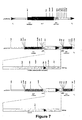
- the cDNA fragments were cloned into the recombination site of the pDONR221TM vector ( Figure 8 ) using BP GATEWAY® technology (Invitrogen, Carlsbad, USA).
- the pPZPRCS2 binary vector (Hajdukiewicz et al,.
- pKYLX71:35S 2 was cut with Clal. The 5' overhang was filled in using Klenow and the blunt end was A-tailed with Taq polymerase. After cutting with EcoRI, the 2kb fragment with an EcoRI-compatible and a 3'-A tail was gel-purified.
- pPZP221 was cut with HindIII and the resulting 5' overhang filled in and T-tailed with Taq polymerase. The remainder of the original pPZP221 multi-cloning site was removed by digestion with EcoRI, and the expression cassette cloned into the EcoRI site and the 3' T overhang restoring the HindIII site.
- This binary vector contains between the left and right border the plant selectable marker gene aaaC1 under the control of the 35S promoter and 35S terminator and the pKYLX71:35S 2 -derived expression cassette with a CaMV 35S promoter with a duplicated enhancer region and an rbcS terminator.
- This vector was GATEWAY®-enabled by digesting it with Xbal and blunt-ended using Klenow DNA polymerase, allowing the RfA recombination cassette to be cloned in the sense or antisense orientation between the enhanced 35S promoter and the rbcS terminator.
- Transformation vectors containing chimeric genes using full-length open reading frame cDNAs encoding the white clover TrPAP1 protein in the sense orientation and antisense orientations under the control of the CaMV 35S or 35S 2 promoters were generated using GATEWAY® technology ( Figure 6 ).
- the orientation of the white clover PAP1 constructs (sense or antisense) was checked by restriction enzyme digestion and sequencing.
- the enhanced 35S promoter linked to the rbcS terminator was amplified by high-fidelity PCR from a pPZP200-based vector (Hajdukiewicz et al., 1994) using oligonucleotide primers designed to add an Agel site to the 5' end and a Notl site to the 3' end of the PCR fragment (Table 3).
- This pPZP200-based vector had been modified as already described to contain the 35S2:rbcs expression cassette and a nos promoter:nptII:nos terminator selectable marker cassette.
- the PCR product and pAUX3131 were digested with Agel and Notl and ligated together.
- a cassette containing the 35S promoter linked to the 35S terminator was cut from the pDH51 vector using EcoRI and cloned into the EcoRI site of pAUX3132.
- modified versions of pAUX3131 and pAUX3132 were GATEWAY®-enabled by digesting them with BamHI and blunt-ending using Klenow DNA polymerase, allowing the RfB recombination cassette to be cloned in the sense orientation between the promoter and terminator sequences of each vector.
- Auxiliary vectors containing chimeric genes using full-length open reading frame cDNAs encoding the white clover BAN and PAP1 genes in the sense orientation under the control of the CaMV 35S or 35S 2 promoters were generated using GATEWAY® technology ( Figure 7 ).
- a nos promoter: nptII :nos terminator selectable marker cassette encoding kanamycin resistance was amplified by high-fidelity PCR from the modified pPZP200 vector already described, using primers designed to add AscI sites to the 5' and 3' ends (Table 3).
- the PCR product and the pPZPRCS2 binary transformation vector (Goderis et al., 2002) were digested using AscI and ligated together ( Figure 7 ).
- pPZP221-based transformation vectors with TrBANa and TrPAP1 cDNAs comprising the full open reading frame sequences in sense and antisense orientations under the control of the CaMV 35S promoter with duplicated enhancer region (35S 2 ) were generated as detailed in Example 4.
- transgenic white clover plants carrying the white clover TrBANa and TrPAP1 cDNAs under the control of the CaMV 35S promoter with and without the duplicated enhancer region (35S 2 ) is described here in detail.
- the selection process is shown in Figure 9 .
- White clover (cv 'Mink') seeds were rinsed for 5 minutes in running tap water and incubated twice, for 5 minutes in 70% v/v ethanol in a 120 ml tissue culture container with gentle shaking. The same container was used to incubate the seeds for 2 minutes in 1% sodium hypochlorite (1:3 ratio of DomestosTM bleach in water) with gentle shaking. The seeds were then rinsed six times in sterile water in a laminar flow hood and incubated for 18 hours at 4° C in the dark. Cotyledonary explant were extracted using 10 ml syringes attached to 21 G needles (Terumo, Japan) under a dissecting microscope in a laminar flow hood.
- Both layers of the seed coat were peeled away, the end of the hypocotyl was cut off and the cotyledons with approximately 4 mm of hypocotyl were separated and transferred to a 90 x 90 x 20 mm petri dish containing MGL medium.
- Agrobacterium tumefaciens strain AGL-1 containing each PZP221-derived binary expression vector was streaked on LB medium containing 50 ⁇ g/ml rifampicin and 100 ⁇ g/ml spectinomycin and grown at 27 °C for 48 hours.
- a single colony was used to inoculate 5 ml of LB medium containing 50 ⁇ g/ml rifampicin and 100 ⁇ g/ml spectinomycin and grown over night at 27 °C and 250 rpm on an orbital shaker.
- the overnight culture was used as an inoculum for 40 ml of YEP medium containing 100 ⁇ g/ml spectinomycin and 40 mg/l acetosyringone. Incubation was over night at 27 °C and 250 rpm on an orbital shaker in a 250 ml Erlenmeyer flask.
- the overnight cultures were centrifuged for 15 min at 5500 xg and the supernatant discarded.
- the cells were resuspended in MGL media with 40 mg/l acetosyringone to a volume corresponding to an OD 600 reading of 0.4.
- the cells were then incubated at 27 °C and 250 rpm until the OD 600 reading reached 0.8.
- the MGL medium was removed from the petri dish containing white clover cotyledonary explants and replaced with the prepared Agrobacterium suspension using a sterile serological pipette.
- the petri dish was sealed with laboratory film, covered with aluminium foil and incubated with gentle shaking for 45 min.
- the dish was opened in the laminar flow hood and the Agrobacterium suspension removed with a pipette.
- the explants were then transferred to plates containing RM73 media with 40 mg/l acetosyringone (Table 4) and incubated for 3 days in a plant tissue culture room at 22 °C with a 16 hour photoperiod.
- the explants were transferred, with the hypocotyl end in the media, to plates containing RM73 media with 75 mg/l gentamicin and 250 mg/l cefotaxime.
- the explants were transferred to fresh plates every two weeks for 6-8 weeks.
- Shoots were then transferred to 120 ml tissue culture vessels containing RIM media (Table 5) with 75 mg/l gentamicin and 250 mg/l cefotaxime.
- RIM media Table 5
- 1-2 leaflets of white clover plants recovered from the transformation process were harvested and freeze-dried.
- the tissue was homogenised on a Retsch MM300 mixer mill, then centrifuged for 10 min at 1700xg to collect cell debris.
- Genomic DNA was isolated from the supernatant using Wizard Magnetic 96 DNA Plant System kits (Promega) on a Biomek FX (Beckman Coulter). 5 ⁇ l of the sample (50 ⁇ l) were then analysed on an agarose gel to check the yield and the quality of the genomic DNA.
- Genomic DNA was analysed for the presence of the transgene by real-time PCR using SYBR Green chemistry.
- PCR primer pairs were designed to detect the aacC1 gentamycin resistance gene and the nptll kanamycin resistance gene in the transferred T-DNA regions of pPZP221 and pPZPRCS2-based binary transformation vectors, respectively, using MacVector (Accelrys).
- sequences of these primers are as follows: nptll.f 5'- GGCTATGACTGGGCACAACA - 3' (SEQ ID No: 14) nptll.r 5'- ACCGGACAGGTCGGTCTTG - 3' (SEQ ID No: 15) pPZPaacC1-1.r.f 5'- TCAAGTATGGGCATCATTCGCAC - 3' (SEQ ID No: 16) pPZPaacC1-1.r 5'- TGCTCAAACCGGGCAGAACG - 3' (SEQ ID No: 17)
- Wild type white clover plants show blue staining in epidermal cells in the floral organs and in trichomes.
- Lotus corniculatus cv 'Draco'
- cv 'Draco' a forage legume with a 'bloat-safe' level of condensed tannins in the leaves
- Figure 10 shows blue staining of approximately 50% of mesophyll cells in leaves.
- DMACA staining can detect economically significant levels of condensed tannins and their monomers in the leaves of established bloat-safe forage legumes.
- condensation of catechin monomers to form condensed tannins and their transport from the cytoplasm to the vacuole is poorly understood.
- modifying the regulation of known enzymes and transcription factors in the flavonoid pathway may up-regulate catechin levels but not increase condensed tannin levels, and therefore, bloat-safety.
- the PVPP-butanol-HCl assay detects only condensed tannins, relying on the ability of condensed tannins, but not their monomers to bind to PVPP. The detailed method is as follows.
- Clover leaf and inflorescence (positive control) tissue was snap-frozen and ground to a fine powder in a mortar and pestle under liquid nitrogen. After grinding, 0.75 g of the powder from each sample was transferred to a 14 ml screw-cap centrifuge tube (Falcon), vortex-mixed with 1.5 ml of extraction buffer containing 80% v/v methanol in distilled water with 5.3 mM sodium bisulfite. Samples were mixed for 5 hours on a mixing wheel before centrifugation at 3000 xg for 10 minutes. A 1 ml aliquot of each supernatant was transferred to a 1.5 ml microcentrifuge tube and reduced to 0.25 ml in a vacuum centrifuge.
- Equal volumes of the sample were added to each of two 1.5 ml microcentrifuge tubes containing 25 mg of polyvinyl polypyrrolidone (PVPP). Each mixture was vortex-mixed intermittently for 15 min and centrifuged for 1 min at maximum speed in a microcentrifuge. After removal of the supernatant, the pellet was washed four times with 1 ml of methanol, with a 1 min centrifugation step at maximum speed in a microcentrifuge between each wash.
- PVPP polyvinyl polypyrrolidone
- Real-time RT-PCR is a recently developed technique that allows more quantitative analyses of gene expression than Northern or conventional RT-PCR experiments.
- real-time RT-PCR with SYBR Green chemistry and gene-specific primers involves the automatic measurement of the level of a fluorescent PCR product generated from a cDNA species over each cycle. The abundance of each template is proportional to the amplification rate. Therefore, a threshold corresponding to the start of the exponential phase of PCR allows the relative abundance of target genes to be standardised against a uniformly expressed 'housekeeping' gene in each tissue and compared to a negative control without a template.
- the specificity of the primer sets was confirmed using 1 ul of plasmid DNA (0.01 ng/ul) from the original cDNA cloned into pGEM-T Easy or autoclaved, purified water, 12.5 ul 2x SYBR Green Master Mix (Applied Biosystems), 0.5 ul each of the forward and reverse primers (10 uM) and 10.5 ul of autoclaved, purified water (Sartorius AG, Goettingen, Germany).
- Real-time PCR was performed in 96-well optical PCR plates (Applied Biosystems) using the Stratagene MX3000P cycler and the following cycling parameters: 95°C for 10 min, 40 cycles of 95°C for 30 sec and 60°C for 1 min, followed by 55°C for 1 min and 95°C for 1 min with a cycle threshold cut-off of 24 cycles
- cDNA Complementary DNA
- QIAGEN GmbH Quantitect Reverse Transcriptase Kit
- Real-time RT-PCR reactions were set up and run as described earlier using 1 ul of cDNA, plasmid control DNA or autoclaved, purified water as the template.
- the expression of clover BAN and PAP1 homologues correlated well with condensed tannin production in mature buds within the lower half of immature white clover inflorescences ( Figure 11 ).
Landscapes
- Health & Medical Sciences (AREA)
- Life Sciences & Earth Sciences (AREA)
- Genetics & Genomics (AREA)
- Engineering & Computer Science (AREA)
- Chemical & Material Sciences (AREA)
- Biotechnology (AREA)
- Organic Chemistry (AREA)
- Molecular Biology (AREA)
- Biomedical Technology (AREA)
- General Engineering & Computer Science (AREA)
- Zoology (AREA)
- Wood Science & Technology (AREA)
- Bioinformatics & Cheminformatics (AREA)
- Biochemistry (AREA)
- Biophysics (AREA)
- General Health & Medical Sciences (AREA)
- Plant Pathology (AREA)
- Physics & Mathematics (AREA)
- Cell Biology (AREA)
- Microbiology (AREA)
- Nutrition Science (AREA)
- Botany (AREA)
- Medicinal Chemistry (AREA)
- Gastroenterology & Hepatology (AREA)
- Proteomics, Peptides & Aminoacids (AREA)
- Breeding Of Plants And Reproduction By Means Of Culturing (AREA)
- Micro-Organisms Or Cultivation Processes Thereof (AREA)
Claims (18)
- Aufgereinigte(s) oder isolierte(s) Nukleinsäure oder Nukleinsäurefragment, codierend für ein PURPLE ANTHOCYANIN PIGMENT 1 (PAP1)-Protein, oder Nukleinsäure oder Nukleinsäurefragment, codierend für eine Sequenz, die in Bezug auf eine Sequenz, die für ein PAP1-Protein codiert, komplementär oder antisense ist, wobei die Nukleinsäure oder das Nukleinsäurefragment eine Nukleotidsequenz beinhaltet, die aus der folgenden Gruppe ausgewählt ist:(a) Sequenzen gemäß den beigefügten Figuren 1 und 4 (Sequenz ID Nr.: 1 bzw. 3);(b) Komplemente der unter (a) genannten Sequenzen;(c) funktionell aktive Fragmente der in (a) und (b) genannten Sequenzen, die fähig sind, die Flavonoidbiosynthese in einer Pflanze zu modifizieren und die eine Größe von mindestens 60 Nukleotiden aufweisen;(d) funktionell aktive Varianten der in (a) und (b) genannten Sequenzen, die fähig sind, die Flavonoidbiosynthese in einer Pflanze zu modifizieren und die mindestens 90% Identität zu der in (a) oder (b) genannten Sequenz aufweisen.
- Nukleinsäure oder Nukleinsäurefragment nach Anspruch 1, wobei die funktionell aktiven Varianten mindestens 95% Identität zu der in (a) oder (b) genannten Sequenz aufweisen.
- Nukleinsäure oder Nukleinsäurefragment nach Anspruch 1, wobei die Nukleinsäure oder das Nukleinsäurefragment eine Nukleotidsequenz beinhaltet, die aus der folgenden Gruppe ausgewählt ist: (a) den in den beigefügten Figuren 1 und 4 gezeigten Sequenzen (Sequenz ID Nr.: 1 bzw. 3) und (b) Komplemente der in (a) genannten Sequenzen.
- Nukleinsäure oder Nukleinsäurefragment nach Anspruch 1, wobei die Nukleinsäure oder das Nukleinsäurefragment eine Nukleotidsequenz, die aus der Gruppe bestehend aus den in den beigefügten Figuren 1 und 4 gezeigten Sequenzen (Sequenz ID Nr.: 1 bzw. 3) besteht, beinhaltet.
- Konstrukt, das eine Nukleinsäure oder ein Nukleinsäurefragment nach einem der Ansprüche 1-4 beinhaltet.
- Vektor, der eine Nukleinsäure oder ein Nukleinsäurefragment nach einem der Ansprüche 1-4 beinhaltet.
- Vektor nach Anspruch 6, der weiterhin einen Promoter und einen Terminator beinhaltet, wobei der Promoter, die Nukleinsäure oder das Nukleinsäurefragment und der Terminator operativ verknüpft sind.
- Vektor nach Anspruch 6 oder 7, der weiterhin eine Nukleinsäure oder ein Nukleinsäurefragment, die/das für ANR (BANYULS) codiert, beinhaltet.
- Pflanzenzelle, Pflanze, Pflanzensamen oder sonstiger Pflanzenteil, die/der ein Konstrukt nach Anspruch 5 oder einen Vektor nach einem der Ansprüche 6-8 beinhaltet.
- Pflanze, Pflanzensamen oder sonstiger Pflanzenteil, die/der von einer Pflanzenzelle oder Pflanze nach Anspruch 9 abstammt und ein Konstrukt nach Anspruch 5 oder einen Vektor nach einem der Ansprüche 6-8 beinhaltet.
- Verfahren zum Modifizieren(a) der Flavonoidbiosynthese in einer Pflanze,(b) der Metallchelatisierung, der Antioxidation und/oder der UV-Lichtabsorption in einer Pflanze;(c) der Farbstoffproduktion in einer Pflanze,(d) der pflanzlichen Abwehr gegenüber einem biotischen Stress, oder(e) der Futterqualität einer Pflanze,wobei das Verfahren beinhaltet, dass man eine wirksame Menge einer Nukleinsäure oder eines Nukleinsäurefragments nach einem der Ansprüche 1-4, eines Konstrukts nach Anspruch 5 oder eines Vektors nach einem der Ansprüche 6-8 in die Pflanze einführt.
- Verfahren nach Anspruch 11, wobei der biotische Stress aus der Gruppe Viren, Mikroorganismen, Insekten und pilzliche Pathogene ausgewählt ist.
- Verwendung einer Nukleinsäure oder eines Nukleinsäurefragments nach einem der Ansprüche 1-4 und/oder ihrer/seiner Nukleotidsequenzinformation und/oder ihrer/seiner SNPs (Single Nucleotide Polymorphisms) als molekularer Genmarker.
- Aufgereinigtes oder isoliertes PAP1-Polypeptid, das eine Aminosäuresequenz beinhaltet, die aus der folgenden Gruppe ausgewählt ist:(a) den in den beigelegten Figuren 2 und 5 dargestellten Sequenzen (Sequenz ID Nr.: 2 bzw. 4); und(b) funktionell aktiven Varianten der in (a) genannten Sequenzen, die eine oder mehrere der biologischen Eigenschaften von PAP1 aufweisen und die mindestens 90% Identität zu Sequenz ID Nr.: 2 oder Sequenz ID Nr.: 4 aufweisen.
- Polypeptid nach Anspruch 14, wobei das Polypeptid eine Aminosäuresequenz beinhaltet, die aus der Gruppe bestehend aus Sequenz ID Nr.: 2 und Sequenz ID Nr.: 4 ausgewählt ist.
- Aufgereinigtes oder isoliertes Polypeptid, das von einer Nukleinsäure oder einem Nukleinsäurefragment nach einem der Ansprüche 1-4 codiert wird.
- Verfahren zum Verbessern der Futterpflanzenqualität einer Pflanze und/oder der Ungefährlichkeit einer Pflanze in Bezug auf Blähungen, bei dem man PAP1 und ANR (BANYULS) in der Pflanze aufeinanderfolgend, gleichzeitig oder kombiniert überexprimiert, und bei dem man ein(e) oder mehrere Nukleinsäuren oder Nukleinsäurefragmente nach einem der Ansprüche 1-4 und ein(e) oder mehrere Nukleinsäuren oder Nukleinsäurefragmente, die für ANR (BANYULS) codieren, in die Pflanze einführt.
- Verfahren nach Anspruch 17, wobei es sich bei der Pflanze um eine Weidepflanze handelt.
Applications Claiming Priority (2)
| Application Number | Priority Date | Filing Date | Title |
|---|---|---|---|
| AU2005905942A AU2005905942A0 (en) | 2005-10-26 | Flavonoid biosynthesis | |
| PCT/AU2006/001590 WO2007048189A1 (en) | 2005-10-26 | 2006-10-25 | Modification of flavonoid biosynthesis in plants |
Publications (3)
| Publication Number | Publication Date |
|---|---|
| EP1945768A1 EP1945768A1 (de) | 2008-07-23 |
| EP1945768A4 EP1945768A4 (de) | 2009-04-15 |
| EP1945768B1 true EP1945768B1 (de) | 2013-03-27 |
Family
ID=37967342
Family Applications (1)
| Application Number | Title | Priority Date | Filing Date |
|---|---|---|---|
| EP06790424A Not-in-force EP1945768B1 (de) | 2005-10-26 | 2006-10-25 | Modifikation der flavonoidbiosynthese in pflanzen |
Country Status (8)
| Country | Link |
|---|---|
| US (1) | US8008543B2 (de) |
| EP (1) | EP1945768B1 (de) |
| CA (1) | CA2626920C (de) |
| DK (1) | DK1945768T3 (de) |
| ES (1) | ES2416712T3 (de) |
| NZ (1) | NZ567620A (de) |
| PT (1) | PT1945768E (de) |
| WO (1) | WO2007048189A1 (de) |
Families Citing this family (2)
| Publication number | Priority date | Publication date | Assignee | Title |
|---|---|---|---|---|
| CN116286872B (zh) * | 2023-04-12 | 2025-12-12 | 上海交通大学 | 一种紫花苜蓿myb转录因子及编码基因和应用 |
| CN117683109B (zh) * | 2024-02-04 | 2024-04-19 | 云南师范大学 | ScF3'H基因在提高马铃薯抗寒性中的应用 |
Citations (1)
| Publication number | Priority date | Publication date | Assignee | Title |
|---|---|---|---|---|
| US20040019927A1 (en) * | 1999-11-17 | 2004-01-29 | Sherman Bradley K. | Polynucleotides and polypeptides in plants |
Family Cites Families (12)
| Publication number | Priority date | Publication date | Assignee | Title |
|---|---|---|---|---|
| US7491806B2 (en) * | 1997-11-24 | 2009-02-17 | Monsanto Technology, Llc | Nucleic acid molecules and other molecules associated with transcription in plants |
| US7345217B2 (en) * | 1998-09-22 | 2008-03-18 | Mendel Biotechnology, Inc. | Polynucleotides and polypeptides in plants |
| US20100293669A2 (en) * | 1999-05-06 | 2010-11-18 | Jingdong Liu | Nucleic Acid Molecules and Other Molecules Associated with Plants and Uses Thereof for Plant Improvement |
| US20040031072A1 (en) * | 1999-05-06 | 2004-02-12 | La Rosa Thomas J. | Soy nucleic acid molecules and other molecules associated with transcription plants and uses thereof for plant improvement |
| WO2001032002A1 (en) | 1999-11-05 | 2001-05-10 | Basf Corporation | Myb transcription factors and uses thereof |
| AU2001269960A1 (en) | 2000-06-23 | 2002-01-08 | The Salk Institute For Biological Studies | Regulation of anthocyanin pigment production |
| US6573432B1 (en) * | 2000-07-05 | 2003-06-03 | The Samuel Roberts Noble Foundation, Inc. | Regulation of anthocyanin pigment production |
| ATE408009T1 (de) | 2000-10-30 | 2008-09-15 | Exelixis Plant Sciences Inc | Identifizierung und charakterisierung einer anthocyaninmutante (ant1) in tomate |
| AU2003247824B2 (en) | 2002-06-28 | 2008-05-08 | The Samuel Roberts Noble Foundation, Inc. | Genetic manipulation of condensed tannins |
| JP2005204657A (ja) * | 2003-12-24 | 2005-08-04 | Japan Science & Technology Agency | タンニン含量が低減された植物体の生産方法およびこれを用いて得られる植物体、並びにその利用 |
| NZ552453A (en) | 2004-07-09 | 2009-09-25 | Samuel Roberts Noble Found Inc | Genetic manipulation of condensed tannins |
| US7880059B2 (en) * | 2007-04-26 | 2011-02-01 | The Samuel Roberts Noble Foundation | Production of proanthocyanidins to improve forage quality |
-
2006
- 2006-10-25 EP EP06790424A patent/EP1945768B1/de not_active Not-in-force
- 2006-10-25 DK DK06790424.3T patent/DK1945768T3/da active
- 2006-10-25 ES ES06790424T patent/ES2416712T3/es active Active
- 2006-10-25 NZ NZ567620A patent/NZ567620A/en not_active IP Right Cessation
- 2006-10-25 WO PCT/AU2006/001590 patent/WO2007048189A1/en not_active Ceased
- 2006-10-25 PT PT67904243T patent/PT1945768E/pt unknown
- 2006-10-25 CA CA2626920A patent/CA2626920C/en not_active Expired - Fee Related
- 2006-10-25 US US12/091,546 patent/US8008543B2/en not_active Expired - Fee Related
Patent Citations (1)
| Publication number | Priority date | Publication date | Assignee | Title |
|---|---|---|---|---|
| US20040019927A1 (en) * | 1999-11-17 | 2004-01-29 | Sherman Bradley K. | Polynucleotides and polypeptides in plants |
Also Published As
| Publication number | Publication date |
|---|---|
| DK1945768T3 (da) | 2013-07-01 |
| ES2416712T3 (es) | 2013-08-02 |
| WO2007048189A1 (en) | 2007-05-03 |
| EP1945768A1 (de) | 2008-07-23 |
| US8008543B2 (en) | 2011-08-30 |
| CA2626920C (en) | 2018-09-18 |
| CA2626920A1 (en) | 2007-05-03 |
| PT1945768E (pt) | 2013-07-04 |
| EP1945768A4 (de) | 2009-04-15 |
| NZ567620A (en) | 2011-11-25 |
| US20090113573A1 (en) | 2009-04-30 |
Similar Documents
| Publication | Publication Date | Title |
|---|---|---|
| US9567600B2 (en) | Modification of flavonoid biosynthesis in plants | |
| EP2170035B1 (de) | Modifikation des pflanzlichen flavonoidmetabolismus | |
| EP1945768B1 (de) | Modifikation der flavonoidbiosynthese in pflanzen | |
| AU2006308510B2 (en) | Modification of flavonoid biosynthesis in plants | |
| AU2006272455B2 (en) | Modification of flavonoid biosynthesis in plants | |
| AU2012213953B2 (en) | Modification of flavonoid biosynthesis in plants with transparent testa glabra 1 | |
| AU2015201995A1 (en) | Plant flavonoid metabolism (2) |
Legal Events
| Date | Code | Title | Description |
|---|---|---|---|
| PUAI | Public reference made under article 153(3) epc to a published international application that has entered the european phase |
Free format text: ORIGINAL CODE: 0009012 |
|
| 17P | Request for examination filed |
Effective date: 20080521 |
|
| AK | Designated contracting states |
Kind code of ref document: A1 Designated state(s): AT BE BG CH CY CZ DE DK EE ES FI FR GB GR HU IE IS IT LI LT LU LV MC NL PL PT RO SE SI SK TR |
|
| A4 | Supplementary search report drawn up and despatched |
Effective date: 20090312 |
|
| 17Q | First examination report despatched |
Effective date: 20090714 |
|
| DAX | Request for extension of the european patent (deleted) | ||
| GRAP | Despatch of communication of intention to grant a patent |
Free format text: ORIGINAL CODE: EPIDOSNIGR1 |
|
| GRAS | Grant fee paid |
Free format text: ORIGINAL CODE: EPIDOSNIGR3 |
|
| GRAA | (expected) grant |
Free format text: ORIGINAL CODE: 0009210 |
|
| AK | Designated contracting states |
Kind code of ref document: B1 Designated state(s): AT BE BG CH CY CZ DE DK EE ES FI FR GB GR HU IE IS IT LI LT LU LV MC NL PL PT RO SE SI SK TR |
|
| REG | Reference to a national code |
Ref country code: GB Ref legal event code: FG4D |
|
| REG | Reference to a national code |
Ref country code: CH Ref legal event code: EP |
|
| REG | Reference to a national code |
Ref country code: AT Ref legal event code: REF Ref document number: 603449 Country of ref document: AT Kind code of ref document: T Effective date: 20130415 |
|
| REG | Reference to a national code |
Ref country code: IE Ref legal event code: FG4D |
|
| REG | Reference to a national code |
Ref country code: DE Ref legal event code: R096 Ref document number: 602006035324 Country of ref document: DE Effective date: 20130529 |
|
| REG | Reference to a national code |
Ref country code: DK Ref legal event code: T3 |
|
| REG | Reference to a national code |
Ref country code: PT Ref legal event code: SC4A Free format text: AVAILABILITY OF NATIONAL TRANSLATION Effective date: 20130624 |
|
| PG25 | Lapsed in a contracting state [announced via postgrant information from national office to epo] |
Ref country code: SE Free format text: LAPSE BECAUSE OF FAILURE TO SUBMIT A TRANSLATION OF THE DESCRIPTION OR TO PAY THE FEE WITHIN THE PRESCRIBED TIME-LIMIT Effective date: 20130327 Ref country code: BG Free format text: LAPSE BECAUSE OF FAILURE TO SUBMIT A TRANSLATION OF THE DESCRIPTION OR TO PAY THE FEE WITHIN THE PRESCRIBED TIME-LIMIT Effective date: 20130627 Ref country code: LT Free format text: LAPSE BECAUSE OF FAILURE TO SUBMIT A TRANSLATION OF THE DESCRIPTION OR TO PAY THE FEE WITHIN THE PRESCRIBED TIME-LIMIT Effective date: 20130327 |
|
| REG | Reference to a national code |
Ref country code: ES Ref legal event code: FG2A Ref document number: 2416712 Country of ref document: ES Kind code of ref document: T3 Effective date: 20130802 |
|
| REG | Reference to a national code |
Ref country code: AT Ref legal event code: MK05 Ref document number: 603449 Country of ref document: AT Kind code of ref document: T Effective date: 20130327 |
|
| REG | Reference to a national code |
Ref country code: LT Ref legal event code: MG4D |
|
| REG | Reference to a national code |
Ref country code: NL Ref legal event code: T3 |
|
| PG25 | Lapsed in a contracting state [announced via postgrant information from national office to epo] |
Ref country code: FI Free format text: LAPSE BECAUSE OF FAILURE TO SUBMIT A TRANSLATION OF THE DESCRIPTION OR TO PAY THE FEE WITHIN THE PRESCRIBED TIME-LIMIT Effective date: 20130327 Ref country code: GR Free format text: LAPSE BECAUSE OF FAILURE TO SUBMIT A TRANSLATION OF THE DESCRIPTION OR TO PAY THE FEE WITHIN THE PRESCRIBED TIME-LIMIT Effective date: 20130628 Ref country code: LV Free format text: LAPSE BECAUSE OF FAILURE TO SUBMIT A TRANSLATION OF THE DESCRIPTION OR TO PAY THE FEE WITHIN THE PRESCRIBED TIME-LIMIT Effective date: 20130327 |
|
| PG25 | Lapsed in a contracting state [announced via postgrant information from national office to epo] |
Ref country code: BE Free format text: LAPSE BECAUSE OF FAILURE TO SUBMIT A TRANSLATION OF THE DESCRIPTION OR TO PAY THE FEE WITHIN THE PRESCRIBED TIME-LIMIT Effective date: 20130327 |
|
| PG25 | Lapsed in a contracting state [announced via postgrant information from national office to epo] |
Ref country code: IS Free format text: LAPSE BECAUSE OF FAILURE TO SUBMIT A TRANSLATION OF THE DESCRIPTION OR TO PAY THE FEE WITHIN THE PRESCRIBED TIME-LIMIT Effective date: 20130727 Ref country code: AT Free format text: LAPSE BECAUSE OF FAILURE TO SUBMIT A TRANSLATION OF THE DESCRIPTION OR TO PAY THE FEE WITHIN THE PRESCRIBED TIME-LIMIT Effective date: 20130327 Ref country code: EE Free format text: LAPSE BECAUSE OF FAILURE TO SUBMIT A TRANSLATION OF THE DESCRIPTION OR TO PAY THE FEE WITHIN THE PRESCRIBED TIME-LIMIT Effective date: 20130327 Ref country code: CZ Free format text: LAPSE BECAUSE OF FAILURE TO SUBMIT A TRANSLATION OF THE DESCRIPTION OR TO PAY THE FEE WITHIN THE PRESCRIBED TIME-LIMIT Effective date: 20130327 Ref country code: SK Free format text: LAPSE BECAUSE OF FAILURE TO SUBMIT A TRANSLATION OF THE DESCRIPTION OR TO PAY THE FEE WITHIN THE PRESCRIBED TIME-LIMIT Effective date: 20130327 Ref country code: RO Free format text: LAPSE BECAUSE OF FAILURE TO SUBMIT A TRANSLATION OF THE DESCRIPTION OR TO PAY THE FEE WITHIN THE PRESCRIBED TIME-LIMIT Effective date: 20130327 |
|
| PG25 | Lapsed in a contracting state [announced via postgrant information from national office to epo] |
Ref country code: CY Free format text: LAPSE BECAUSE OF FAILURE TO SUBMIT A TRANSLATION OF THE DESCRIPTION OR TO PAY THE FEE WITHIN THE PRESCRIBED TIME-LIMIT Effective date: 20130327 Ref country code: PL Free format text: LAPSE BECAUSE OF FAILURE TO SUBMIT A TRANSLATION OF THE DESCRIPTION OR TO PAY THE FEE WITHIN THE PRESCRIBED TIME-LIMIT Effective date: 20130327 |
|
| PLBE | No opposition filed within time limit |
Free format text: ORIGINAL CODE: 0009261 |
|
| STAA | Information on the status of an ep patent application or granted ep patent |
Free format text: STATUS: NO OPPOSITION FILED WITHIN TIME LIMIT |
|
| PG25 | Lapsed in a contracting state [announced via postgrant information from national office to epo] |
Ref country code: IT Free format text: LAPSE BECAUSE OF FAILURE TO SUBMIT A TRANSLATION OF THE DESCRIPTION OR TO PAY THE FEE WITHIN THE PRESCRIBED TIME-LIMIT Effective date: 20130327 |
|
| 26N | No opposition filed |
Effective date: 20140103 |
|
| REG | Reference to a national code |
Ref country code: DE Ref legal event code: R097 Ref document number: 602006035324 Country of ref document: DE Effective date: 20140103 |
|
| PG25 | Lapsed in a contracting state [announced via postgrant information from national office to epo] |
Ref country code: MC Free format text: LAPSE BECAUSE OF FAILURE TO SUBMIT A TRANSLATION OF THE DESCRIPTION OR TO PAY THE FEE WITHIN THE PRESCRIBED TIME-LIMIT Effective date: 20130327 |
|
| REG | Reference to a national code |
Ref country code: CH Ref legal event code: PL |
|
| REG | Reference to a national code |
Ref country code: IE Ref legal event code: MM4A |
|
| PG25 | Lapsed in a contracting state [announced via postgrant information from national office to epo] |
Ref country code: LI Free format text: LAPSE BECAUSE OF NON-PAYMENT OF DUE FEES Effective date: 20131031 Ref country code: CH Free format text: LAPSE BECAUSE OF NON-PAYMENT OF DUE FEES Effective date: 20131031 |
|
| PG25 | Lapsed in a contracting state [announced via postgrant information from national office to epo] |
Ref country code: IE Free format text: LAPSE BECAUSE OF NON-PAYMENT OF DUE FEES Effective date: 20131025 |
|
| PG25 | Lapsed in a contracting state [announced via postgrant information from national office to epo] |
Ref country code: TR Free format text: LAPSE BECAUSE OF FAILURE TO SUBMIT A TRANSLATION OF THE DESCRIPTION OR TO PAY THE FEE WITHIN THE PRESCRIBED TIME-LIMIT Effective date: 20130327 |
|
| PG25 | Lapsed in a contracting state [announced via postgrant information from national office to epo] |
Ref country code: HU Free format text: LAPSE BECAUSE OF FAILURE TO SUBMIT A TRANSLATION OF THE DESCRIPTION OR TO PAY THE FEE WITHIN THE PRESCRIBED TIME-LIMIT; INVALID AB INITIO Effective date: 20061025 Ref country code: SI Free format text: LAPSE BECAUSE OF FAILURE TO SUBMIT A TRANSLATION OF THE DESCRIPTION OR TO PAY THE FEE WITHIN THE PRESCRIBED TIME-LIMIT Effective date: 20130327 Ref country code: LU Free format text: LAPSE BECAUSE OF NON-PAYMENT OF DUE FEES Effective date: 20131025 |
|
| REG | Reference to a national code |
Ref country code: FR Ref legal event code: PLFP Year of fee payment: 10 |
|
| REG | Reference to a national code |
Ref country code: FR Ref legal event code: PLFP Year of fee payment: 11 |
|
| REG | Reference to a national code |
Ref country code: FR Ref legal event code: PLFP Year of fee payment: 12 |
|
| REG | Reference to a national code |
Ref country code: FR Ref legal event code: PLFP Year of fee payment: 13 |
|
| PGFP | Annual fee paid to national office [announced via postgrant information from national office to epo] |
Ref country code: ES Payment date: 20191122 Year of fee payment: 14 |
|
| PGFP | Annual fee paid to national office [announced via postgrant information from national office to epo] |
Ref country code: NL Payment date: 20201028 Year of fee payment: 15 |
|
| PGFP | Annual fee paid to national office [announced via postgrant information from national office to epo] |
Ref country code: DK Payment date: 20201026 Year of fee payment: 15 Ref country code: FR Payment date: 20201022 Year of fee payment: 15 Ref country code: GB Payment date: 20201022 Year of fee payment: 15 Ref country code: PT Payment date: 20201015 Year of fee payment: 15 Ref country code: DE Payment date: 20201022 Year of fee payment: 15 |
|
| REG | Reference to a national code |
Ref country code: ES Ref legal event code: FD2A Effective date: 20220131 |
|
| REG | Reference to a national code |
Ref country code: DE Ref legal event code: R119 Ref document number: 602006035324 Country of ref document: DE |
|
| REG | Reference to a national code |
Ref country code: DK Ref legal event code: EBP Effective date: 20211031 |
|
| PG25 | Lapsed in a contracting state [announced via postgrant information from national office to epo] |
Ref country code: ES Free format text: LAPSE BECAUSE OF NON-PAYMENT OF DUE FEES Effective date: 20201026 |
|
| REG | Reference to a national code |
Ref country code: NL Ref legal event code: MM Effective date: 20211101 |
|
| GBPC | Gb: european patent ceased through non-payment of renewal fee |
Effective date: 20211025 |
|
| PG25 | Lapsed in a contracting state [announced via postgrant information from national office to epo] |
Ref country code: PT Free format text: LAPSE BECAUSE OF NON-PAYMENT OF DUE FEES Effective date: 20220426 Ref country code: NL Free format text: LAPSE BECAUSE OF NON-PAYMENT OF DUE FEES Effective date: 20211101 Ref country code: GB Free format text: LAPSE BECAUSE OF NON-PAYMENT OF DUE FEES Effective date: 20211025 Ref country code: DE Free format text: LAPSE BECAUSE OF NON-PAYMENT OF DUE FEES Effective date: 20220503 |
|
| PG25 | Lapsed in a contracting state [announced via postgrant information from national office to epo] |
Ref country code: FR Free format text: LAPSE BECAUSE OF NON-PAYMENT OF DUE FEES Effective date: 20211031 |
|
| PG25 | Lapsed in a contracting state [announced via postgrant information from national office to epo] |
Ref country code: DK Free format text: LAPSE BECAUSE OF NON-PAYMENT OF DUE FEES Effective date: 20211031 |