EP1962514A1 - Procede de binarisation et dispositif associe - Google Patents
Procede de binarisation et dispositif associe Download PDFInfo
- Publication number
- EP1962514A1 EP1962514A1 EP06828244A EP06828244A EP1962514A1 EP 1962514 A1 EP1962514 A1 EP 1962514A1 EP 06828244 A EP06828244 A EP 06828244A EP 06828244 A EP06828244 A EP 06828244A EP 1962514 A1 EP1962514 A1 EP 1962514A1
- Authority
- EP
- European Patent Office
- Prior art keywords
- subset
- coding
- binary
- symbols
- symbol
- Prior art date
- Legal status (The legal status is an assumption and is not a legal conclusion. Google has not performed a legal analysis and makes no representation as to the accuracy of the status listed.)
- Ceased
Links
Images

Classifications
-
- H—ELECTRICITY
- H04—ELECTRIC COMMUNICATION TECHNIQUE
- H04N—PICTORIAL COMMUNICATION, e.g. TELEVISION
- H04N19/00—Methods or arrangements for coding, decoding, compressing or decompressing digital video signals
- H04N19/50—Methods or arrangements for coding, decoding, compressing or decompressing digital video signals using predictive coding
- H04N19/503—Methods or arrangements for coding, decoding, compressing or decompressing digital video signals using predictive coding involving temporal prediction
- H04N19/51—Motion estimation or motion compensation
- H04N19/513—Processing of motion vectors
- H04N19/517—Processing of motion vectors by encoding
-
- H—ELECTRICITY
- H04—ELECTRIC COMMUNICATION TECHNIQUE
- H04N—PICTORIAL COMMUNICATION, e.g. TELEVISION
- H04N19/00—Methods or arrangements for coding, decoding, compressing or decompressing digital video signals
- H04N19/10—Methods or arrangements for coding, decoding, compressing or decompressing digital video signals using adaptive coding
- H04N19/134—Methods or arrangements for coding, decoding, compressing or decompressing digital video signals using adaptive coding characterised by the element, parameter or criterion affecting or controlling the adaptive coding
- H04N19/136—Incoming video signal characteristics or properties
- H04N19/137—Motion inside a coding unit, e.g. average field, frame or block difference
- H04N19/139—Analysis of motion vectors, e.g. their magnitude, direction, variance or reliability
-
- H—ELECTRICITY
- H04—ELECTRIC COMMUNICATION TECHNIQUE
- H04N—PICTORIAL COMMUNICATION, e.g. TELEVISION
- H04N19/00—Methods or arrangements for coding, decoding, compressing or decompressing digital video signals
- H04N19/50—Methods or arrangements for coding, decoding, compressing or decompressing digital video signals using predictive coding
-
- H—ELECTRICITY
- H04—ELECTRIC COMMUNICATION TECHNIQUE
- H04N—PICTORIAL COMMUNICATION, e.g. TELEVISION
- H04N19/00—Methods or arrangements for coding, decoding, compressing or decompressing digital video signals
- H04N19/90—Methods or arrangements for coding, decoding, compressing or decompressing digital video signals using coding techniques not provided for in groups H04N19/10-H04N19/85, e.g. fractals
- H04N19/91—Entropy coding, e.g. variable length coding [VLC] or arithmetic coding
Definitions
- the invention relates to the field of image coding techniques, and more particularly, to a technique for binary coding MVD (Motion Vector Difference) absolute values.
- MVD Motion Vector Difference
- Video coding is to compress digital video information so that more efficient transmission and storage may be achieved.
- Video coding is a core multimedia technology, and video compression coding standards are the basis of the digital media industry.
- H.264/AVC MPEG4-Part10
- ITU-T VCEG Video Coding Experts Group
- ISO/IEC MPEG JVT Joint Video Team
- other examples of video coding standards may include AVS1.0-P2 developed by VC-1 (previously known as WMV - 9) and AVS (Audio Video Standard) or the like.
- the basic framework for MPEG/JVT/VCEG video coding standards is to employ a hybrid coding framework incorporating block-based motion compensation and transform coding, including intra-frame prediction, inter-frame prediction, transformation, quantization, entropy coding, and so on.
- block-based motion vectors are used to eliminate redundancy among images.
- intra-frame prediction spatial prediction modes are used to eliminate redundancy within an image.
- prediction residual is subject to transformation and quantization, to eliminate visual redundancy within the image.
- entropy coding is applied to the motion vectors, prediction modes, quantization parameters and transformation coefficients for compression.
- the basic processing unit is macro block.
- a macro block has a luminance block of 16 ⁇ 16 pixels and a corresponding chroma block.
- a macro block may be divided into blocks, and the size of a block may be 16 ⁇ 8, 8 ⁇ 16, 8 ⁇ 8, 8 ⁇ 4, 4 ⁇ 8, 4 ⁇ 4 or the like.
- a block is usually subject to intra-frame, inter-frame predictions and transformation.
- a motion vector is the output of a motion estimation operation during inter-frame prediction in video coding, and equals the coordinate offset of the current block relative to a matching reference block in the image, including horizontal MV and vertical MV.
- Motion estimation may comprise integer-pixel motion estimation and sub-pixel motion estimation.
- Sub-pixel may include 1/2 pixel and 1/4 pixel.
- Motion estimation is performed in units of minimum sub-pixels, such as 1/4 pixel, and thus motion vector is an integer constantly.
- prediction processing is further performed on motion vectors. Prediction processing on motion vectors is usually based on motion vectors of adjacent blocks.
- a prediction value is referred to as MVD (Motion Vector Difference), including horizontal MVD and vertical MVD.
- the unit of MVD is same as that of MV, and is also minimum sub-pixel, such as 1/4 pixel.
- MVD is also an integer constantly. Accordingly, the MVD absolute value is a nonnegative integer.
- the transformed and quantized residual coefficients and MVDs are processed at the entropy coder, to eliminate statistical redundancy among data, and then outputted into a code stream.
- the entropy coder may comprise a Huffman coder or an arithmetic coder.
- the two coders are widely used in standards such as H.264/AVC and AVS1.0-P2.
- the Huffman coder maps symbols with different probabilities to binary bit strings of different lengths through variable length coding, so as to remove statistical redundancy.
- the arithmetic coder removes statistical redundancy by mapping a symbol sequence to a numeral within an interval of [0, 1).
- arithmetic coders mainly include Binary Arithmetic Coders (BAC), for example, Q-Coder (a binary arithmetic coder), QM-Coder (a binary arithmetic coder), MQ-Coder (a binary arithmetic coder), and CABAC (Context based Adaptive Binary Arithmetic Coder) in H.2641AVC.
- BAC Binary Arithmetic Coders
- Q-Coder a binary arithmetic coder
- QM-Coder a binary arithmetic coder
- MQ-Coder a binary arithmetic coder
- CABAC Context based Adaptive Binary Arithmetic Coder
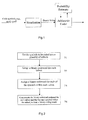
- a BAC has a binary bit string as its input as shown in Fig.1
- the coded data first needs to be binarized in video compression standards (for example, H.264/AVC standard). That is, the symbols to be coded (i.e., non binary data, such as the transformed and quantized coefficients or MVD absolute values) are mapped to a binary string.
- Binarization is a pre-process before binary arithmetic coding is performed. In the present invention, binarization is also referred to as binary coding, which means assigning a binary codeword to a symbol.
- a fixed length code has a fixed codeword length.
- a symbol set corresponding to a fixed length code has a limited number of symbols, with the number of symbols determined by the length of the fixed length code.
- a fixed length code of length N may represent 2 N symbols. Taking 8 symbols as an example, the length of the fixed length code is 3, specifically as shown in Table 1.
- Table 1 Symbol Codeword o 000 1 001 2 010 3 011 4 100 5 101 6 110 7 111
- the unary code represents a symbol as a run of 1's (or 0's) and a tail 0 (or 1).
- the number of 1's (or 0's) in the run is equal to the value of the symbol.
- Unary code is very simple. However, when the value of the symbol is rather large, a long codeword string will occur, as shown in Table 2.
- Table 2 Symbol Codeword 0 0 1 10 2 110 3 1110 4 11110 5 111110 6 1111110 7 11111110
- Truncated unary code is a special form of unary code.
- Unary code may represent an infinite number of codewords. However, when there is a finite number of coedwords, the last-bit terminator for the last codeword is redundant and thus may be removed.
- Such a codeword is referred to as truncated unary code.
- the number of codwords is N + 1
- the (N + 1) th codeword is set as a run of N 1's (or 0's) and the terminator 0 (or 1) is omitted, to form a N-bit truncated unary code.
- the codeword of symbol "7" is modified to be "1111111", that is, to have 7-bit truncated unary code.
- the exp-Golomb code has a prefix portion and a postfix portion.
- the number of codewords grows exponentially as the code length increases.
- its prefix portion has a run of 0's and a 1.
- the number of of 0's in the longest run read from the leftmost bit in the prefix is counted as LeadingZeroBits.
- the bit number of the postfix portion is determined as LeadingZeroBits + k. From the read bit number of the postfix, bits(LeadingZeroBits + k) may be determined through parsing.
- the first form of order k exp-Golomb code is described as above.
- the order k exp-Golomb code may have a second form.
- the prefix portion has a run of 1's and a 0.
- the number of 1's in the longest run read from the leftmost bit of the prefix is counted as LeadingBits.
- the bit number of the postfix portion is determined as LeadingBits + k. From the read bit number of the postfix, bits(LeadingBits + k) may be determined through parsing.
- each binary coding method has its limitations in practical applications. That is, they cannot provide appropriate binary coding by adapting to the distribution properties of various sources flexibly, which influences the coding performance to some extent.
- the invention provides a binarization method and apparatus, configured to perform binary encoding and decoding operations on MVD (Motion Vector Difference) absolute values in a video coder, so that the resulting binary symbols can be well adapted to the distribution properties of the MVD absolute values and thus enhance the coding performance.
- MVD Motion Vector Difference
- the present invention provides a binary coding method for MVD (Motion Vector Difference) absolute values in a video coder, including: dividing symbols for MVD absolute values into a plurality of subsets according to their probability distribution properties, each subset including symbols for one or more consecutive nonnegative integers; assigning a binary codeword for each subset; assigning a binary codeword for each of the symbols within a subset according to their respective probability distributions in the subset, all the symbols in a subset having a consistent coding type; and concatenating and outputting the binary codeword for each subset and the binary codeword for each symbol in the subset, as a binary coding result for the symbol.
- MVD Motion Vector Difference
- the present invention also provides a binary coding apparatus for MVD (Motion Vector Difference) absolute values in a video coder, including a subset division unit, a subset binary coding unit, a subset symbol binary coding unit and a binary result determination unit.
- the subset division unit is configured to divide symbols for MVD absolute values into a plurality of subsets according to their probability distribution properties, each subset including symbols for one or more consecutive nonnegative integers.
- the subset binary coding unit is configured to assign a binary codeword for each subset.
- the subset symbol binary coding unit is configured to assign a binary code for each of the symbols in each subset according to their respective probability distributions, all the symbols in a subset having a consistent coding method.
- the binary result determination unit is configured to concatenate and output the binary codeword for each subset and the binary codeword for each symbol in the subset, as a binary coding result for the symbol.
- the present invention still provides a binary decoding method for MVD (Motion Vector Difference) absolute values in a video decoder, including: receiving a binary codeword for an MVD absolute value; matching coded codewords for subsets corresponding to a subset coding rule sequentially with a bit segment in the most front of the binary codeword, to determine the number of a subset to which the MVD absolute value belongs; obtaining a coding rule for symbols included in the subset according to the determined subset number; parsing other bit segments in the binary codeword according to the coding rule, to obtain a symbol in the subset; and determining a symbol for the MVD absolute value according to a subset division rule.
- MVD Motion Vector Difference
- the present invention further provides a binary decoding apparatus for MVD (Motion Vector Difference) absolute values in a video decoder, including a prefix parsing unit, a postfix parsing unit and a symbol determination unit.
- the prefix parsing unit is configured to receive a binary codeword for an MVD absolute value, and match coded codewords for subsets corresponding to a subset coding rule sequentially with a bit segment in the most front of the binary codeword, so as to determine the number of a subset to which the MVD absolute value belongs.
- the postfix parsing unit is configured to obtain a coding rule for symbols included in the subset according to the subset number determined by the prefix parsing unit, and parse other bit segments in the binary codeword according to the coding rule, so as to obtain a symbol in the subset.
- the symbol determination unit is configured to determine a symbol for the MVD absolute value according to a subset division rule.
- the prefix portion and the postfix portion of a binary symbol string may be adjusted. It can be adapted to the probability distribution properties of different symbols from various sources, to achieve the purpose of source compression coding and improve the coding efficiency. Furthermore, it prevents the codeword length from being too long due to too many symbols in a symbol set which may be caused by using a single type of codeword.
- the method is equally applicable to the binary pre-processing in arithmetic coders.
- the design of the prefix portion provides an effective method for codeword classification in arithmetic coders, so as to improve the performance of arithmetic codes.
- Fig. 1 is a diagram illustrating the principle of a binary arithmetic coder
- Fig.2 is a diagram illustrating an embodiment of a coding process as provided in the present invention.
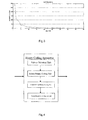
- Fig.3 is a diagram illustrating the distribution of MVD absolute values
- Fig.4 is a block diagram illustrating an embodiment of a coding apparatus as provided in the present invention.
- Fig.5 is a diagram illustrating an embodiment of a decoding process as provided in the present invention.
- Fig.6 is a block diagram illustrating an embodiment of a decoding apparatus as provided in the present invention.
- the invention provides a method for implementation of binarization over symbols to be coded (referred to as symbols hereafter for simplicity).
- symbols referred to as symbols hereafter for simplicity.
- the prefix portion and postfix portion of a binary string may be adjusted, so as to be adapted to the distribution properties of different sources symbols.
- a symbol is mapped to a binary bit string in the invention.
- the binary bit string has two parts of a prefix and a postfix.
- the symbol is defined as an object to be coded, and may be a numeral (for example, 1, 2, 3%), a letter (for example, a, b, c%) or any other character. Symbols as a whole may form a symbol set.
- a method may be used to map a symbol to a binary sequence representation, and the binary sequence is a binary string corresponding to the symbol.
- the binary sequence may be referred to as the codeword corresponding to the symbol.
- the symbol "a” is represented as "0011", wherein "a” is the symbol and "0011” is the binary string or codeword corresponding to "a”.
- the binary coding process provided in the invention comprises the following implementation.
- a set of symbols to be coded is divided into a plurality of subsets according to the distribution properties of the symbols.
- the class of each subset is assigned a codeword, which is used as the prefix portion of the symbols to be coded. That is, each subset is assigned a binary codeword.
- a codeword used to identify each subset is referred to as the identification codeword for the subset class.
- the implementation may use unary coding method, fixed length coding method, exp-Golomb coding method or any other coding method with which the prefix may be uniquely identified.
- each symbol within a subset is assigned a further codeword, which is used as the postfix portion of the symbol. That is, each symbol within each subset is assigned a further binary codeword, which is used as the postfix portion of the symbol.
- the implementation may use unary coding method, fixed length coding method, or exp-Golomb coding method.
- the postfix portion may be omitted if there is only one symbol within a subset. That is, the symbol may be identified with the identification codeword for the subset. In the whole coding process, however, at least one subset has two or more symbols.
- the present invention is applicable to binarization of MVD absolute values in video coding.
- a MVD is divided into two parts in advance: mvdAbs (that is, the absolute value of the MVD) and mvdSign (that is, negative or positive). If mvdAbs is zero, the corresponding binary symbol string is "0" and there is no mvdSign; otherwise, mvdAbs is followed by mvdSign.
- MVD absolute values (abbreviated to MVD hereafter) is as follows. As shown in Fig.2 , four steps are involved.
- Step 21 Symbols for MVD absolute values are divided into a plurality of subsets according to their probability distribution properties, each subset including one or more consecutive nonnegative integers;
- Step 22 A binary codeword is assigned for each subset
- Step 23 Binary coding is performed on the symbols in each subset according to their respective probability distributions, all the symbols in a subset having a consistent coding method
- Step 24 The binary codeword for each subset and the binary codeword for each symbol in the subset are concatenated and outputted as a binary coding result for the symbol.
- a first embodiment is as follows.
- Step 21 MVDs to be coded are divided into a plurality of subsets
- the MVDs have a typical distribution as shown in Fig.3 .
- the x-axis represents the MVD absolute values
- the y-axis shows their distribution (the occurrence times of various MVD absolute values of all blocks in a coding frame of image are accumulated). From the distribution properties of the MVDs as shown in Fig.3 , it can be observed that the distribution of 0 accounts for a large percentage, the distribution of 1 to 5 represents a fast decreasing process, the distribution of 6 to 20 represents a slow decreasing process, and the distribution of more than 20 is uniform substantially. Accordingly, the symbol set is divided into 4 subsets, 0: ⁇ 0 ⁇ , 1: ⁇ x
- 1 ⁇ x ⁇ 6 ⁇ , 2: ⁇ x
- 6 ⁇ x ⁇ 21 ⁇ , and 3: ⁇ x
- x> 21 ⁇ .
- Step 22 A codeword is assigned for each subset class. That is, each subset is assigned a binary codeword, specifically as shown in Table 5.
- Table 5 Class Number Codeword 0 0 1 10 2 110 3 111
- unary coding method is used for codeword assignment.
- other binary coding methods may be used depending on the distributions of source symbols.
- Step 23 A binary codeword is assigned for each of the symbols within each subset
- a codeword is assigned to each of the symbols within each subset. Since subset 0 has only one symbol, this class only needs a codeword for the subset class. Unary codes are used for subset 1, order 0 exp-Golomb codes are used for subset 2, and order 3 Exp-Golomb codes are used for subset 3. For the symbols in different subsets, the codewords of the symbols may be the same. For the symbols in a certain subset, codeword assignment may be accomplished by using many methods according to their respective probability distribution properties within the subset. Generally, a symbol with higher probability leads to a codeword with a shorter length. Unary coding and exp-Golomb coding are simple implementations for this guideline, but the invention is not limited in this context.
- Step 24 The binary codeword assigned for each subset in step 22 and the binary codeword assigned for each symbol in the subset in step 23 are concatenated to form a binary coding result including a prefix portion and a postfix portion.
- the distribution properties of MVD absolute values may vary.
- the corresponding subset division method and coding method may be adjusted in part, as in example 2.
- a second embodiment is as follows.
- Step 21 MVD absolute values to be coded are divided into a plurality of subsets
- the entire symbol set is divided into three subsets, 0: ⁇ 0 ⁇ , 1: ⁇ x
- 1 ⁇ x ⁇ 9 ⁇ , and 2: ⁇ x
- x> 9 ⁇ .
- Step 22 A codeword is assigned for each subset class. That is, each subset is assigned a binary codeword. Specifically, the assignment is shown in Table 7. Table 7 Class Number Codeword 0 0 1 10 2 11
- truncated unary coding method is used for codeword assignment.
- other binary coding methods may be used depending on the distributions of source symbols.
- Step 23 A binary codeword is assigned for each of the symbols within each subset
- each subset class is assigned a codeword
- a further codeword is assigned to each of the symbols within the subset. The assignment is as follows.
- subset 0 Since subset 0 has only one symbol, this class only needs a codeword for the subset class.
- Truncated unary codes are used for subset 1, multiple 0's plus a last "1".
- the codeword for the last symbol in the subset is truncated by the last "1".
- Order 3 exp-Golomb codes are used for subset 2.
- the codewords of the symbols may be the same.
- codeword assignment may be accomplished by using many methods according to their respective probability distribution properties within the subset. Generally, a symbol with higher probability leads to a codeword with shorter length. Truncated unary codes and exp-Golomb codes are simple implementations for this guideline, but the invention is not limited in this context.
- Step 24 The binary codeword assigned for each subset in step 22 and the binary codeword assigned for each symbol within the subset in step 23 are concatenated, to form a binary coding result including a prefix portion and a postfix portion.
- Table 8 Class Number Symbol Codeword Prefix Postfix 0 0 0 1 1 10 0 2 10 01 3 10 001 4 10 0001 5 10 00001 6 10 000001 7 10 0000001 8 10 0000000 2 9 11 0000 10 11 0001 11 11 0010 .
- the invention also provides a binary coding apparatus for MVD (Motion Vector Difference) absolute values.
- MVD Motion Vector Difference
- the specific configuration is shown in Fig.4 , comprising a subset division unit, a subset binary coding unit, a subset symbol binary coding unit and a binary result determination unit.
- This unit is configured to divide MVD absolute values which need binarization processing, into a plurality of subsets according to probability distribution properties, each subset including one or more consecutive nonnegative integers. Specific divisions have been illustrated above, and the description is omitted here.
- This unit is configured to assign a binary codeword for each subset.
- fixed length code or variable length code may be used to assign a binary codeword for each subset.
- the fixed length code may include, but is not limited to truncated unary code.
- This unit is configured to assign a binary code for each of the symbols within each subset, all the symbols within a subset having a consistent coding rule.
- the coding method is based on the probability distributions of the symbols within the subset.
- fixed length code or variable length code may be used to assign a binary codeword for each symbol within the subset.
- the fixed length code may include, but is not limited to truncated unary code and exp-Golomb code.
- the coding method may vary.
- This unit is configured to concatenate the binary codeword assigned for each subset and the binary codeword assigned for each symbol in the subset, so as to form a binary coding result corresponding to each of the symbols which need binarization processing.
- the invention also provides specific implementations for binary decoding MVD (Motion Vector Difference) absolute values.
- MVD Motion Vector Difference
- Binary decoding is the inverse of binary coding. A brief description will be made below to specific embodiments of the binary decoding solution.
- an embodiment of the binary decoding implementation comprises the following.
- Step 51 prefix parsing
- coded codewords for subsets are obtained according to a pre-configured subset coding rule.
- the coded codewords for the subsets are matched in turn with a bit segment in the most front of the binary codeword. If a codeword is matched, the bit segment in the corresponding binary codeword is taken as the prefix and the remaining bit segment as the postfix. From the prefix, it is possible to determine the number of the corresponding subset according the subset coding method.
- the subset coding rule is the truncated unary coding with three subset codewords "0", "10” and "11” in total
- the three subset codewords are used in turn to match a bit segment in the most front of the binary codeword "110001”.
- the prefix is determined as "11”
- the remaining part is determined as the postfix "000 1 ".
- the subset number is determined as "2" by parsing the prefix "11".
- Step 52 postfix parsing
- a coding rule for the symbols within the subset may be determined.
- the postfix is parsed, so as to obtain a symbol within the subset.
- the coding method for the subset 2 is determined as order 3 exp-Golomb coding. With this method, the postfix "0001" is parsed, to obtain a symbol "1" (that is, the second symbol in the subset).
- Step 53 determining the symbol for the MVD absolute value according to the subset division rule.
- subset 2 is known as ⁇ x
- x> 9 ⁇
- the symbol for the MVD absolute value corresponding to the symbol "1" in the subset is 1" + "9", that is, a decimal number "10".
- the invention also provides a binary decoding apparatus.
- the specific implementation has a configuration as shown in Fig.6 .
- coded codewords for subsets are obtained according to a pre-configured subset coding rule.
- the coded codewords for the subsets are matched in turn with a bit segment in the most front of the binary codeword. If a codeword is matched, the bit segment in the corresponding binary codeword is taken as the prefix and the remaining bit segment as the postfix. From the determined prefix and the subset coding method, it is possible to determine the number of the corresponding subset.
- the subset coding rule may be configured to divide symbols for MVD absolute values into 3 subsets: subset 1 including 0, subset 2 including nonnegative integers greater than or equal to 1 and less than N, and subset 3 including all other nonnegative greater than or equal to N, where N is greater than 4 and less than 16.
- the prefix parsing unit may match with the numbers (that is, coded codewords) of the three subsets, so as to perform prefix parsing.
- the coding rule for the subset of symbols may be determined.
- the postfix is parsed, so as to obtain a symbol in the subset.
- the coding rule for the symbols included in the subset may be configured as follows: symbol 0 in the subset 1 is coded as 0, and the binary result is also 0; truncated unary coding is used to perform binary coding on the symbols in the subset 2; and order 3 exp-Golomb coding is used to perform binary coding on the symbols in the subset 3. According to this coding rule, a corresponding symbol may be obtained via decoding.
- the symbol for the MVD absolute value may be obtained.
Landscapes
- Engineering & Computer Science (AREA)
- Multimedia (AREA)
- Signal Processing (AREA)
- Compression Or Coding Systems Of Tv Signals (AREA)
- Compression, Expansion, Code Conversion, And Decoders (AREA)
- Image Processing (AREA)
Priority Applications (1)
| Application Number | Priority Date | Filing Date | Title |
|---|---|---|---|
| EP14163246.3A EP2765780A1 (fr) | 2005-12-05 | 2006-12-05 | Procédé de binarisation et dispositif associé |
Applications Claiming Priority (2)
| Application Number | Priority Date | Filing Date | Title |
|---|---|---|---|
| CN200510127531 | 2005-12-05 | ||
| PCT/CN2006/003290 WO2007065351A1 (fr) | 2005-12-05 | 2006-12-05 | Procede de binarisation et dispositif associe |
Related Child Applications (1)
| Application Number | Title | Priority Date | Filing Date |
|---|---|---|---|
| EP14163246.3A Division EP2765780A1 (fr) | 2005-12-05 | 2006-12-05 | Procédé de binarisation et dispositif associé |
Publications (2)
| Publication Number | Publication Date |
|---|---|
| EP1962514A1 true EP1962514A1 (fr) | 2008-08-27 |
| EP1962514A4 EP1962514A4 (fr) | 2012-02-15 |
Family
ID=38122480
Family Applications (2)
| Application Number | Title | Priority Date | Filing Date |
|---|---|---|---|
| EP14163246.3A Withdrawn EP2765780A1 (fr) | 2005-12-05 | 2006-12-05 | Procédé de binarisation et dispositif associé |
| EP06828244A Ceased EP1962514A4 (fr) | 2005-12-05 | 2006-12-05 | Procede de binarisation et dispositif associe |
Family Applications Before (1)
| Application Number | Title | Priority Date | Filing Date |
|---|---|---|---|
| EP14163246.3A Withdrawn EP2765780A1 (fr) | 2005-12-05 | 2006-12-05 | Procédé de binarisation et dispositif associé |
Country Status (4)
| Country | Link |
|---|---|
| US (1) | US7564384B2 (fr) |
| EP (2) | EP2765780A1 (fr) |
| CN (1) | CN101167366B (fr) |
| WO (1) | WO2007065351A1 (fr) |
Cited By (2)
| Publication number | Priority date | Publication date | Assignee | Title |
|---|---|---|---|---|
| WO2012051000A1 (fr) * | 2010-10-13 | 2012-04-19 | Qualcomm Incorporated | Signalisation de résolution de vecteurs de mouvement adaptative pour codage vidéo |
| US9237355B2 (en) | 2010-02-19 | 2016-01-12 | Qualcomm Incorporated | Adaptive motion resolution for video coding |
Families Citing this family (25)
| Publication number | Priority date | Publication date | Assignee | Title |
|---|---|---|---|---|
| US7289674B2 (en) * | 2002-06-11 | 2007-10-30 | Nokia Corporation | Spatial prediction based intra coding |
| US8576918B2 (en) * | 2007-07-09 | 2013-11-05 | Broadcom Corporation | Method and apparatus for signaling and decoding AVS1-P2 bitstreams of different versions |
| US7609000B1 (en) * | 2007-10-22 | 2009-10-27 | Google Inc. | Variable-length compression technique for encoding or decoding a sequence of integers |
| US7652596B1 (en) * | 2007-10-22 | 2010-01-26 | Google Inc. | Variable-length compression technique for encoding or decoding a sequence of integers |
| JP5676744B2 (ja) * | 2010-04-13 | 2015-02-25 | フラウンホーファー−ゲゼルシャフト・ツール・フェルデルング・デル・アンゲヴァンテン・フォルシュング・アインゲトラーゲネル・フェライン | エントロピー符号化 |
| CA2806796C (fr) * | 2011-06-24 | 2020-08-25 | Panasonic Corporation | Codage et decodage d'image au moyen de composants horizontaux a deux parties et verticaux a deux parties de vecteurs de difference de mouvement |
| EP3306939B1 (fr) | 2011-06-28 | 2020-08-05 | Samsung Electronics Co., Ltd. | Procédé et appareil de codage vidéo, ainsi que procédé correspondant pour décoder la vidéo, accompagné d'un décodage arithmétique et d'une signalisation à deux dimensions du dernier coefficient significatif |
| IN2014CN02377A (fr) * | 2011-09-29 | 2015-06-19 | Sharp Kk | |
| PL3754982T3 (pl) | 2011-09-29 | 2024-09-02 | Sharp Kabushiki Kaisha | Urządzenie do dekodowania obrazu, sposób dekodowania obrazu, sposób kodowania obrazu i urządzenie kodowania obrazu do realizowania konwersji bipredykcyjnej na unipredykcyjną |
| WO2013070974A2 (fr) | 2011-11-08 | 2013-05-16 | General Instrument Corporation | Procédé de détermination de mots codés binaires pour des coefficients de transformée |
| US9154792B2 (en) | 2011-11-08 | 2015-10-06 | Qualcomm Incorporated | Progressive coding of position of last significant coefficient |
| WO2013070970A2 (fr) | 2011-11-08 | 2013-05-16 | General Instrument Corporation | Procédé de détermination de mots codés binaires pour des coefficients de transformée |
| US9357185B2 (en) | 2011-11-08 | 2016-05-31 | Qualcomm Incorporated | Context optimization for last significant coefficient position coding |
| CN105027560A (zh) | 2012-01-21 | 2015-11-04 | 摩托罗拉移动有限责任公司 | 确定用于变换系数的二进制码字的方法 |
| WO2013110000A1 (fr) * | 2012-01-21 | 2013-07-25 | General Instrument Corporation | Procédé de détermination de mots de codage binaire pour des coefficients de transformée |
| US9635358B2 (en) | 2012-01-21 | 2017-04-25 | Google Technology Holdings LLC | Method of determining binary codewords for transform coefficients |
| US9479780B2 (en) | 2012-02-01 | 2016-10-25 | Google Technology Holdings LLC | Simplification of significance map coding |
| CN110602509A (zh) | 2012-02-04 | 2019-12-20 | 谷歌技术控股有限责任公司 | 用于最末重要系数位置编码中的上下文减少的设备和方法 |
| MX363952B (es) * | 2012-04-13 | 2019-04-08 | Mitsubishi Electric Corp | Dispositivo de codificacion de imagen, dispositivo de decodificacion de imagen, metodo de codificacion de imagen, y metodo de decodificacion de imagen. |
| US9715525B2 (en) * | 2013-06-28 | 2017-07-25 | Khalifa University Of Science, Technology And Research | Method and system for searching and storing data |
| US20160044339A1 (en) * | 2014-08-07 | 2016-02-11 | Qualcomm Incorporated | System and method for reordering of prefixes and suffixes in variable length coding to increase throughput |
| US9781424B2 (en) | 2015-01-19 | 2017-10-03 | Google Inc. | Efficient context handling in arithmetic coding |
| CN115278256B (zh) | 2020-03-16 | 2023-09-08 | 北京达佳互联信息技术有限公司 | 对视频数据进行解码的方法、装置和介质 |
| WO2021256082A1 (fr) * | 2020-06-18 | 2021-12-23 | パナソニック インテレクチュアル プロパティ コーポレーション オブ アメリカ | Dispositif de codage, dispositif de décodage, procédé de codage et procédé de décodage |
| CN114615504B (zh) * | 2020-12-04 | 2024-09-17 | 腾讯科技(深圳)有限公司 | 视频解码方法、视频编码方法、装置及设备 |
Family Cites Families (7)
| Publication number | Priority date | Publication date | Assignee | Title |
|---|---|---|---|---|
| JPH02101822A (ja) * | 1988-10-08 | 1990-04-13 | Sony Corp | データ符号化方法 |
| US5808572A (en) * | 1997-05-22 | 1998-09-15 | National Science Council | Method and apparatus for finite-length arithmetic coding |
| KR100316785B1 (ko) * | 1999-11-04 | 2001-12-13 | 윤종용 | 비트 오류에 견실한 산술 부호화/복호화 장치 및 그 방법 |
| WO2003043345A1 (fr) * | 2001-11-16 | 2003-05-22 | Ntt Docomo, Inc. | Procede de codage d'image, procede de decodage d'image, codeur et decodeur d'image, programme, signal de donnees informatiques et systeme d'emission d'image |
| US6900748B2 (en) | 2003-07-17 | 2005-05-31 | Fraunhofer-Gesellschaft Zur Foerderung Der Angewandten Forschung E.V. | Method and apparatus for binarization and arithmetic coding of a data value |
| CN100394693C (zh) * | 2005-01-21 | 2008-06-11 | 华中科技大学 | 一种变长码的编码和解码方法 |
| US7053803B1 (en) * | 2005-01-31 | 2006-05-30 | Hewlett Packard Development Company, L.P. | Data compression |
-
2006
- 2006-12-05 EP EP14163246.3A patent/EP2765780A1/fr not_active Withdrawn
- 2006-12-05 CN CN2006800140195A patent/CN101167366B/zh active Active
- 2006-12-05 EP EP06828244A patent/EP1962514A4/fr not_active Ceased
- 2006-12-05 WO PCT/CN2006/003290 patent/WO2007065351A1/fr not_active Ceased
-
2008
- 2008-06-04 US US12/132,959 patent/US7564384B2/en active Active
Cited By (3)
| Publication number | Priority date | Publication date | Assignee | Title |
|---|---|---|---|---|
| US9237355B2 (en) | 2010-02-19 | 2016-01-12 | Qualcomm Incorporated | Adaptive motion resolution for video coding |
| WO2012051000A1 (fr) * | 2010-10-13 | 2012-04-19 | Qualcomm Incorporated | Signalisation de résolution de vecteurs de mouvement adaptative pour codage vidéo |
| US10327008B2 (en) | 2010-10-13 | 2019-06-18 | Qualcomm Incorporated | Adaptive motion vector resolution signaling for video coding |
Also Published As
| Publication number | Publication date |
|---|---|
| US7564384B2 (en) | 2009-07-21 |
| EP2765780A1 (fr) | 2014-08-13 |
| CN101167366A (zh) | 2008-04-23 |
| US20080231483A1 (en) | 2008-09-25 |
| CN101167366B (zh) | 2010-10-27 |
| WO2007065351A1 (fr) | 2007-06-14 |
| EP1962514A4 (fr) | 2012-02-15 |
Similar Documents
| Publication | Publication Date | Title |
|---|---|---|
| US7564384B2 (en) | Binarizing method and device thereof | |
| US12120333B2 (en) | Context and bypass encoding video | |
| US8111934B2 (en) | Extension of two-dimensional variable length coding for image compression | |
| US9509989B2 (en) | Method and apparatus for reordered binarization of syntax elements in CABAC | |
| KR100856398B1 (ko) | 복수 매핑 테이블을 이용한 가변장 부호화 및 복호화방법과 그 장치 | |
| KR101171697B1 (ko) | 정수-값 데이터의 스트림을 압축하는 시스템 및 방법 | |
| US7486211B2 (en) | Method and system for entropy coding | |
| EP2317476B1 (fr) | Codage et décodage de signature multimédia | |
| US20080219578A1 (en) | Method and apparatus for context adaptive binary arithmetic coding and decoding | |
| RU2510573C2 (ru) | Способ для кодирования последовательности целых чисел, устройство хранения и сигнал, переносящий кодированную последовательность целых чисел, а также способ декодирования последовательности целых чисел | |
| EP2533538A2 (fr) | Procédé et système permettant de réduire la surcharge de modélisation pour la compression de données | |
| EP3461307B1 (fr) | Compression de données numériques | |
| CN1984336A (zh) | 一种二进制化方法及装置 | |
| US8938001B1 (en) | Apparatus and method for coding using combinations | |
| AU758003B2 (en) | Improvement of fine granularity scalability using bit plane coding of transform coefficients | |
| EP2362547B1 (fr) | Méthodes de codage et de décodage et des dispositifs utilisant un indicateur secondaire mot de code | |
| KR100858245B1 (ko) | 결정 비트를 이용한 부호화/복호화 장치 및 그에 따른프로그램이 기록된 매체 | |
| WO2005001771A1 (fr) | Methode de codage d'un signal dans un train de bits | |
| Choi et al. | High throughput entropy coding in the HEVC standard | |
| KR20090113208A (ko) | 정수들의 시퀀스를 인코딩하기 위한 방법, 인코딩된 정수 시퀀스를 운반하는 저장 디바이스 및 신호, 그리고 정수들의 시퀀스를 디코딩하기 위한 방법 | |
| Standard | Jung-Ah Choi & Yo-Sung Ho |
Legal Events
| Date | Code | Title | Description |
|---|---|---|---|
| PUAI | Public reference made under article 153(3) epc to a published international application that has entered the european phase |
Free format text: ORIGINAL CODE: 0009012 |
|
| 17P | Request for examination filed |
Effective date: 20080619 |
|
| AK | Designated contracting states |
Kind code of ref document: A1 Designated state(s): AT BE BG CH CY CZ DE DK EE ES FI FR GB GR HU IE IS IT LI LT LU LV MC NL PL PT RO SE SI SK TR |
|
| A4 | Supplementary search report drawn up and despatched |
Effective date: 20120116 |
|
| RIC1 | Information provided on ipc code assigned before grant |
Ipc: H04N 7/32 20060101ALI20120110BHEP Ipc: H04N 7/26 20060101AFI20120110BHEP |
|
| DAX | Request for extension of the european patent (deleted) | ||
| 17Q | First examination report despatched |
Effective date: 20121108 |
|
| APBK | Appeal reference recorded |
Free format text: ORIGINAL CODE: EPIDOSNREFNE |
|
| APBN | Date of receipt of notice of appeal recorded |
Free format text: ORIGINAL CODE: EPIDOSNNOA2E |
|
| REG | Reference to a national code |
Ref country code: DE Ref legal event code: R003 |
|
| APAF | Appeal reference modified |
Free format text: ORIGINAL CODE: EPIDOSCREFNE |
|
| APBT | Appeal procedure closed |
Free format text: ORIGINAL CODE: EPIDOSNNOA9E |
|
| STAA | Information on the status of an ep patent application or granted ep patent |
Free format text: STATUS: THE APPLICATION HAS BEEN REFUSED |
|
| 18R | Application refused |
Effective date: 20140411 |