EP1970296B1 - Foldable bicycle - Google Patents
Foldable bicycle Download PDFInfo
- Publication number
- EP1970296B1 EP1970296B1 EP07104160A EP07104160A EP1970296B1 EP 1970296 B1 EP1970296 B1 EP 1970296B1 EP 07104160 A EP07104160 A EP 07104160A EP 07104160 A EP07104160 A EP 07104160A EP 1970296 B1 EP1970296 B1 EP 1970296B1
- Authority
- EP
- European Patent Office
- Prior art keywords
- bicycle
- wheel
- folded
- frame
- shaft
- Prior art date
- Legal status (The legal status is an assumption and is not a legal conclusion. Google has not performed a legal analysis and makes no representation as to the accuracy of the status listed.)
- Not-in-force
Links
Images



Classifications
-
- B—PERFORMING OPERATIONS; TRANSPORTING
- B62—LAND VEHICLES FOR TRAVELLING OTHERWISE THAN ON RAILS
- B62K—CYCLES; CYCLE FRAMES; CYCLE STEERING DEVICES; RIDER-OPERATED TERMINAL CONTROLS SPECIALLY ADAPTED FOR CYCLES; CYCLE AXLE SUSPENSIONS; CYCLE SIDECARS, FORECARS, OR THE LIKE
- B62K15/00—Collapsible or foldable cycles
- B62K15/006—Collapsible or foldable cycles the frame being foldable
-
- B—PERFORMING OPERATIONS; TRANSPORTING
- B62—LAND VEHICLES FOR TRAVELLING OTHERWISE THAN ON RAILS
- B62K—CYCLES; CYCLE FRAMES; CYCLE STEERING DEVICES; RIDER-OPERATED TERMINAL CONTROLS SPECIALLY ADAPTED FOR CYCLES; CYCLE AXLE SUSPENSIONS; CYCLE SIDECARS, FORECARS, OR THE LIKE
- B62K19/00—Cycle frames
- B62K19/46—Luggage carriers forming part of frame
-
- B—PERFORMING OPERATIONS; TRANSPORTING
- B62—LAND VEHICLES FOR TRAVELLING OTHERWISE THAN ON RAILS
- B62K—CYCLES; CYCLE FRAMES; CYCLE STEERING DEVICES; RIDER-OPERATED TERMINAL CONTROLS SPECIALLY ADAPTED FOR CYCLES; CYCLE AXLE SUSPENSIONS; CYCLE SIDECARS, FORECARS, OR THE LIKE
- B62K15/00—Collapsible or foldable cycles
- B62K2015/005—Collapsible or foldable cycles having additional wheels for use when folded or collapsed
Definitions
- the invention relates to a foldable bicycle according to the preamble of claim 1.
- a foldable bicycle of the initially-mentioned type is known, e.g., from GB-A-2 387 147 .
- a conventional art related to a folded bicycle principally implements a folding segment provided on the frame of the bicycle whereupon the front portion can be folded toward the back portion of the bicycle and the front and back wheels of the bicycle can be settled abreast to achieve the objective of reducing the amount of floor space taken by the bicycle and facilitating portability of the bicycle.
- This conventional foldable bicycle has a seat stem that can be plunged downward through the frame and stretching out from the bottom of a seat tube so that the seat stem can function as a third supporting point to support the folded bicycle in concert with the front and back wheels. Nevertheless, friction between the bottom of the seat stem and the ground can substantially cause a drag upon pushing or pulling the folded bicycle.
- the invention provides a foldable bicycle according to claim 1. Further embodiments of the invention are described in the dependent claims.
- the auxiliary wheel When the bicycle is folded and carries a basket or rack, the auxiliary wheel can be landed or retracted optionally due to user's need. As the auxiliary wheel, which can be shifted up or down, is landed, the folded bicycle can work as a tri-wheel hand wagon or pull cart; while as the auxiliary wheel is retracted, the folded bicycle can work as a dual-wheel hand wagon or pull cart.
- the auxiliary wheel substitutes the chainwheel protector and folding segment to be the third supporting point of the folded bicycle.
- the chainwheel protector and folding segment can be prevented against attrition and the folded bicycle can be stably supported.
- the disclosed foldable bicycle can be easily operated, moved or carried by even a child or girl.
- the disclosed foldable bicycle is a multi-functioned wheel cart facilitating conveying heavy articles.
- the foldable bicycle may be folded in either a clockwise or anti-clockwise direction.
- the front and back wheels are settled or positioned almost abreast and the auxiliary wheel can work in concert with the front and back wheels to support the folded bicycle with supporting points that are arranged in a triangular form on the ground.
- the folded bicycle can stand stably or move steady under an external push or pull force.
- Figure 1 is provided to illustrate a rack 60 that can be expanded into a basket form 50 as shown in following Figures (i.e. Figures 2 and 8 ).
- Figures 2 and 8 As the rack 60 or basket 50 is merely a possible accessory of the disclosed foldable bicycle and not to be contained in the scope of the present invention, it will not be discussed in great detail herein.
- a conventional foldable bicycle 70 comprises a folding segment 702 provided on the frame 701 thereof.
- the front portion of the foldable bicycle can be folded toward the back portion thereof and a front wheel 74 and a back wheel 75 of the bicycle 70 can be settled abreast as shown in Figure3 .
- an auxiliary wheel 76 is deposited on the frame 701 in front of the folding segment 702.
- the auxiliary wheel 76 may be situated at the left side, right side or bottom of the frame 701 and may be provided in the amount of one or more.
- the structure on the auxiliary wheel 76 can be referred to Figure 6 . It comprises a shaft 761 and a wheel 762 attached at the bottom of the shaft 761, wherein the position of wheel 762 can be adjusted with respect to the shaft 761 to ensure that the wheel 762 can be substantively landed on the ground.
- the top of the shaft 761 is coupled to the frame 701 of the bicycle 70 by means of a pivot assembly 81.
- Said pivot assembly 81 comprises a cross-shaped recess 811 and a protruding bar 812 which are provided on the frame 701 and shaft 761 respectively wherein the both components are fastened together by a fastening component 813 which is sheathed into an elastic component 814 and pivotally pierced therethrough.
- the shaft 761 can be slightly pulled outward to allow the cross-shaped recess 811 and protruding bar 812 getting separated so that the shaft 761 can be pivoted on the fastening component 813.
- the shaft 761 when the protruding bar 812 is vertically engaged with the vertical groove 8111 of the cross-shaped recess 811, the shaft 761 is positioned perpendicularly and the wheel 762 is landed on the ground.
- the protruding bar 812 when the protruding bar 812 is transversely engaged with the horizontal groove 8112 of the cross-shaped recess 811, the shaft 761 is positioned horizontally with respect to the frame 701 and the wheel 762 is departed from the ground.
- the user can set the auxiliary wheel 76 landed or retracted.
- the folded bicycle can work as a tri-wheel hand wagon or pull cart.
- the folded bicycle can work as a dual-wheel hand wagon or pull cart, as shown in Figures 2 , 7 and 8 .
- Figure 4 the bicycle is now folded and with the auxiliary wheel 76 landed on the ground while the rack 60 is equipped thereto.
- Figure 5 shows the bicycle alone, which, similar to Figure 4 , is folded and with the auxiliary wheel 76 landed on the ground.
- the auxiliary wheel 76 when the bicycle is folded and with the auxiliary wheel 76 landed on the ground, the auxiliary wheel 76 can function in concert with the front and back wheels 74, 75 as three supporting points that are arranged in a triangular form on the ground and provide optimum support to a tri-wheel pull cart. Therefore, the folded bicycle supported by the landed auxiliary wheel 76 can possess a constant center of gravity and desirable balance ability whereby the folded bicycle can stand stably or move steady under an external push or pull force.
- the bicycle is expanded for a user's riding.
- said rack 60 is expanded into the form of the basket 50 and deposited in front of the head of the bicycle.
- the basket 50 is folded into the rack 60 and deposited at the tail of the bicycle over the back wheel 75.
- the rack 60 is expanded into the form of the basket 50 and arranged at the tail of the bicycle over the back wheel 75.
Landscapes
- Engineering & Computer Science (AREA)
- Mechanical Engineering (AREA)
- Motorcycle And Bicycle Frame (AREA)
- Vehicle Step Arrangements And Article Storage (AREA)
Abstract
Description
- The invention relates to a foldable bicycle according to the preamble of claim 1.
- A foldable bicycle of the initially-mentioned type is known, e.g., from
GB-A-2 387 147 - A conventional art related to a folded bicycle principally implements a folding segment provided on the frame of the bicycle whereupon the front portion can be folded toward the back portion of the bicycle and the front and back wheels of the bicycle can be settled abreast to achieve the objective of reducing the amount of floor space taken by the bicycle and facilitating portability of the bicycle.
- However, one problem with such a strategy is that when being folded, such conventional foldable bicycle typically stands on the chainwheel protector as a third supporting point in addition to the front and back wheels. This may consequently cause damage or deformation to the chainwheel protector. Also, the portability and mobility of the folded bicycle have never been perfect in practice.
- To remedy foresaid problem, another conventional foldable bicycle is provided. This conventional foldable bicycle has a seat stem that can be plunged downward through the frame and stretching out from the bottom of a seat tube so that the seat stem can function as a third supporting point to support the folded bicycle in concert with the front and back wheels. Nevertheless, friction between the bottom of the seat stem and the ground can substantially cause a drag upon pushing or pulling the folded bicycle.
- It is one objective of the present invention to provide a foldable bicycle having at least one auxiliary wheel so as to provide at a third supporting point to the folded bicycle. To this end, the invention provides a foldable bicycle according to claim 1. Further embodiments of the invention are described in the dependent claims. When the bicycle is folded and carries a basket or rack, the auxiliary wheel can be landed or retracted optionally due to user's need. As the auxiliary wheel, which can be shifted up or down, is landed, the folded bicycle can work as a tri-wheel hand wagon or pull cart; while as the auxiliary wheel is retracted, the folded bicycle can work as a dual-wheel hand wagon or pull cart.
- According to the present invention, the auxiliary wheel substitutes the chainwheel protector and folding segment to be the third supporting point of the folded bicycle. Thus, the chainwheel protector and folding segment can be prevented against attrition and the folded bicycle can be stably supported. As a result, the disclosed foldable bicycle can be easily operated, moved or carried by even a child or girl. Meantime, the disclosed foldable bicycle is a multi-functioned wheel cart facilitating conveying heavy articles.
- According to the present invention the foldable bicycle may be folded in either a clockwise or anti-clockwise direction. When the bicycle is folded, the front and back wheels are settled or positioned almost abreast and the auxiliary wheel can work in concert with the front and back wheels to support the folded bicycle with supporting points that are arranged in a triangular form on the ground.
- Thereby, the folded bicycle can stand stably or move steady under an external push or pull force.
- The invention as well as a preferred mode of use, further objectives and advantages thereof, will best be understood by reference to the following detailed description of an illustrative embodiment when read in conjunction with the accompanying drawings, wherein:
-
Figure 1 is a perspective view of a rack of the disclosed foldable bicycle; -
Figure 2 is a perspective view of the disclosed foldable bicycle showing it expanded; -
Figure 3 is a perspective view of the disclosed foldable bicycle showing it folded; -
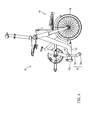
Figure 4 is a lateral view of the disclosed foldable bicycle showing the rack being equipped thereto; -
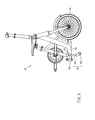
Figure 5 is a lateral view of the disclosed foldable bicycle; -
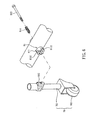
Figure 6 is an exploded view of the auxiliary wheel of the present invention; -
Figure 7 is an applied view of the disclosed foldable bicycle showing the rack being appended onto the tail thereof; and -
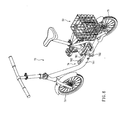
Figure 8 is an applied view of the disclosed foldable bicycle showing a basket being appended onto the tail thereof; and -
Figure 1 is provided to illustrate arack 60 that can be expanded into abasket form 50 as shown in following Figures (i.e.Figures 2 and8 ). As therack 60 orbasket 50 is merely a possible accessory of the disclosed foldable bicycle and not to be contained in the scope of the present invention, it will not be discussed in great detail herein. - As shown in
Figure 2 , a conventionalfoldable bicycle 70 comprises afolding segment 702 provided on theframe 701 thereof. Upon the foldingsegment 702, the front portion of the foldable bicycle can be folded toward the back portion thereof and afront wheel 74 and aback wheel 75 of thebicycle 70 can be settled abreast as shown inFigure3 . - In
Figures 2 and3 , it can be seen that anauxiliary wheel 76 is deposited on theframe 701 in front of thefolding segment 702. Theauxiliary wheel 76 may be situated at the left side, right side or bottom of theframe 701 and may be provided in the amount of one or more. The structure on theauxiliary wheel 76 can be referred toFigure 6 . It comprises ashaft 761 and awheel 762 attached at the bottom of theshaft 761, wherein the position ofwheel 762 can be adjusted with respect to theshaft 761 to ensure that thewheel 762 can be substantively landed on the ground. The top of theshaft 761 is coupled to theframe 701 of thebicycle 70 by means of apivot assembly 81. Saidpivot assembly 81 comprises across-shaped recess 811 and aprotruding bar 812 which are provided on theframe 701 andshaft 761 respectively wherein the both components are fastened together by afastening component 813 which is sheathed into anelastic component 814 and pivotally pierced therethrough. In virtue of theelastic component 814, theshaft 761 can be slightly pulled outward to allow thecross-shaped recess 811 and protrudingbar 812 getting separated so that theshaft 761 can be pivoted on thefastening component 813. According to the present invention, when theprotruding bar 812 is vertically engaged with thevertical groove 8111 of thecross-shaped recess 811, theshaft 761 is positioned perpendicularly and thewheel 762 is landed on the ground. Alternatively, when theprotruding bar 812 is transversely engaged with thehorizontal groove 8112 of thecross-shaped recess 811, theshaft 761 is positioned horizontally with respect to theframe 701 and thewheel 762 is departed from the ground. - When the disclosed
bicycle 70 is folded, the user can set theauxiliary wheel 76 landed or retracted. When theauxiliary wheel 76 is landed, as shown inFigures 3 ,4 and5 , the folded bicycle can work as a tri-wheel hand wagon or pull cart. Whereas, when theauxiliary wheel 76 is retracted, the folded bicycle can work as a dual-wheel hand wagon or pull cart, as shown inFigures 2 ,7 and8 . - Additionally, in
Figure 4 , the bicycle is now folded and with theauxiliary wheel 76 landed on the ground while therack 60 is equipped thereto.Figure 5 shows the bicycle alone, which, similar toFigure 4 , is folded and with theauxiliary wheel 76 landed on the ground. - Referring again to
Figures 3 ,4 and5 , when the bicycle is folded and with theauxiliary wheel 76 landed on the ground, theauxiliary wheel 76 can function in concert with the front andback wheels auxiliary wheel 76 can possess a constant center of gravity and desirable balance ability whereby the folded bicycle can stand stably or move steady under an external push or pull force. - In
Figures 2 ,7 and8 , the bicycle is expanded for a user's riding. According toFigure 2 , saidrack 60 is expanded into the form of thebasket 50 and deposited in front of the head of the bicycle. InFigure 7 , thebasket 50 is folded into therack 60 and deposited at the tail of the bicycle over theback wheel 75. And inFigure 8 , it can be seen that therack 60 is expanded into the form of thebasket 50 and arranged at the tail of the bicycle over theback wheel 75. - Although a particular embodiment of the invention has been described in detail for purposes of illustration, it will be understood by one of ordinary skill in the art that numerous variations will be possible to the disclosed embodiments without going outside the scope of the invention as disclosed in the claims.
Claims (4)
- A foldable bicycle (70) that comprises a folding segment (702) provided on the frame (701) thereof, whereupon the bicycle (70) can be folded in the manner that a front wheel (74) is settled at the side of a back wheel (75) of the bicycle (70) and further comprises:an auxiliary wheel (76) deposited on the frame (701) in front of the folding segment (702) so that when the bicycle (70) is folded, the auxiliary wheel (76), the front wheel (74) and back wheel (75) function as three supporting points that are arranged in a triangular form on a plane, characterized in that the auxiliary wheel (76) is deposited at the left side of the frame (701) or is deposited at the right side of the frame (701).
- The foldable bicycle of Claim 1, wherein the auxiliary wheel (76) comprises a shaft (761) and a wheel (762) attached at the bottom of the shaft (761) wherein the top of the shaft (761) is coupled to the frame (701) of the bicycle (70) by means of a pivot assembly (81).
- The foldable bicycle (70) of Claim 2, wherein the pivot assembly (81) comprises a cross-shaped recess (811) and a protruding bar (812) which are provided on the frame (701) and the top of the shaft (761) respectively, which are fastened together by a fastening component (813) and an elastic component (814) pivotally pierced therethrough.
- The foldable bicycle (70) of Claim 3, wherein the position of wheel (762) can be adjusted with respect to the shaft (761).
Priority Applications (3)
| Application Number | Priority Date | Filing Date | Title |
|---|---|---|---|
| EP07104160A EP1970296B1 (en) | 2007-03-14 | 2007-03-14 | Foldable bicycle |
| AT07104160T ATE455698T1 (en) | 2007-03-14 | 2007-03-14 | FOLDABLE BIKE |
| DE602007004439T DE602007004439D1 (en) | 2007-03-14 | 2007-03-14 | Foldable bicycle |
Applications Claiming Priority (1)
| Application Number | Priority Date | Filing Date | Title |
|---|---|---|---|
| EP07104160A EP1970296B1 (en) | 2007-03-14 | 2007-03-14 | Foldable bicycle |
Publications (2)
| Publication Number | Publication Date |
|---|---|
| EP1970296A1 EP1970296A1 (en) | 2008-09-17 |
| EP1970296B1 true EP1970296B1 (en) | 2010-01-20 |
Family
ID=38353721
Family Applications (1)
| Application Number | Title | Priority Date | Filing Date |
|---|---|---|---|
| EP07104160A Not-in-force EP1970296B1 (en) | 2007-03-14 | 2007-03-14 | Foldable bicycle |
Country Status (3)
| Country | Link |
|---|---|
| EP (1) | EP1970296B1 (en) |
| AT (1) | ATE455698T1 (en) |
| DE (1) | DE602007004439D1 (en) |
Cited By (1)
| Publication number | Priority date | Publication date | Assignee | Title |
|---|---|---|---|---|
| EP2471700A1 (en) | 2010-12-31 | 2012-07-04 | Decathlon | Folding bicycle with stabilisation system |
Families Citing this family (3)
| Publication number | Priority date | Publication date | Assignee | Title |
|---|---|---|---|---|
| EP2409906A3 (en) | 2010-07-21 | 2013-09-25 | Georg Mies | Folding bicycle |
| CN103921877B (en) * | 2014-04-08 | 2016-05-25 | 太原科技大学 | The shopping convertible car of riding instead of walk |
| US9428239B1 (en) | 2015-06-19 | 2016-08-30 | Pi Manufacturing Inc. | Bicycle convertible to a stroller |
Family Cites Families (7)
| Publication number | Priority date | Publication date | Assignee | Title |
|---|---|---|---|---|
| US4433852A (en) * | 1981-02-12 | 1984-02-28 | Hon Corporation | Foldable and portable vehicle |
| WO1987001084A1 (en) * | 1985-08-21 | 1987-02-26 | Noriaki Kato | Folding bicycle serving also as cart |
| JP3370630B2 (en) * | 1999-12-20 | 2003-01-27 | 克一 村山 | Folding bike |
| GB2387147A (en) * | 2002-04-03 | 2003-10-08 | Edmund Helmuth Bush | A bicycle convertible into a shopping trolley |
| US20050151345A1 (en) * | 2004-01-14 | 2005-07-14 | Ji-Huang Chen | Foldable bike capable of standing and being pulled after folded |
| DE202004002387U1 (en) * | 2004-02-17 | 2004-04-08 | An New Industrial Co., Ltd. | Collapsible and portable electric scooter rapidly collapses in three simple steps to form a case having auxiliary wheels |
| TWM289405U (en) * | 2005-10-21 | 2006-04-11 | Yi-Shiung Lu | Folding bike |
-
2007
- 2007-03-14 AT AT07104160T patent/ATE455698T1/en not_active IP Right Cessation
- 2007-03-14 EP EP07104160A patent/EP1970296B1/en not_active Not-in-force
- 2007-03-14 DE DE602007004439T patent/DE602007004439D1/en active Active
Cited By (1)
| Publication number | Priority date | Publication date | Assignee | Title |
|---|---|---|---|---|
| EP2471700A1 (en) | 2010-12-31 | 2012-07-04 | Decathlon | Folding bicycle with stabilisation system |
Also Published As
| Publication number | Publication date |
|---|---|
| DE602007004439D1 (en) | 2010-03-11 |
| EP1970296A1 (en) | 2008-09-17 |
| ATE455698T1 (en) | 2010-02-15 |
Similar Documents
| Publication | Publication Date | Title |
|---|---|---|
| US20080224441A1 (en) | Foldable bicycle | |
| US7837206B1 (en) | Wheeled carrier scooter | |
| US5161811A (en) | Trolley with a foldable seat assembly | |
| US8505956B2 (en) | Stroller | |
| CN1925768B (en) | luggage that slides on wheels | |
| US9493206B1 (en) | Transformable folding electric scooter | |
| US9090274B1 (en) | Convertible cargo container | |
| US9604660B1 (en) | Foldable stroller to form a trolley | |
| JP2010535665A (en) | Folding bike | |
| EP1970296B1 (en) | Foldable bicycle | |
| US20060214396A1 (en) | Collapsible stroller for children and the like | |
| EP2052945A1 (en) | Foldable pushcart | |
| US9481389B2 (en) | Convertible jogging and all-terrain strollers | |
| TWI812956B (en) | Convertible child stroller system with auxiliary basket | |
| US20070108710A1 (en) | Child stroller construction | |
| EP2930092B1 (en) | Foldable vehicle | |
| JP2008273418A (en) | Transport cart stopper | |
| JP2015074442A (en) | Electrically-driven cart device | |
| US5490688A (en) | Control device for folding and expanding a baggage cart | |
| EP1381536B1 (en) | Trolley for luggage or other loads | |
| EP2684765A1 (en) | Passenger carrier front wheel arrangement | |
| EP1227025A1 (en) | Folding collapsible luggage cart | |
| KR200431212Y1 (en) | Kart with Adjustable Angle | |
| KR101700592B1 (en) | A multipurpose transfer car | |
| US20240092413A1 (en) | Bicycle trailer |
Legal Events
| Date | Code | Title | Description |
|---|---|---|---|
| PUAI | Public reference made under article 153(3) epc to a published international application that has entered the european phase |
Free format text: ORIGINAL CODE: 0009012 |
|
| AK | Designated contracting states |
Kind code of ref document: A1 Designated state(s): AT BE BG CH CY CZ DE DK EE ES FI FR GB GR HU IE IS IT LI LT LU LV MC MT NL PL PT RO SE SI SK TR |
|
| AX | Request for extension of the european patent |
Extension state: AL BA HR MK RS |
|
| 17P | Request for examination filed |
Effective date: 20090129 |
|
| 17Q | First examination report despatched |
Effective date: 20090305 |
|
| AKX | Designation fees paid |
Designated state(s): AT BE BG CH CY CZ DE DK EE ES FI FR GB GR HU IE IS IT LI LT LU LV MC MT NL PL PT RO SE SI SK TR |
|
| GRAP | Despatch of communication of intention to grant a patent |
Free format text: ORIGINAL CODE: EPIDOSNIGR1 |
|
| GRAS | Grant fee paid |
Free format text: ORIGINAL CODE: EPIDOSNIGR3 |
|
| GRAA | (expected) grant |
Free format text: ORIGINAL CODE: 0009210 |
|
| AK | Designated contracting states |
Kind code of ref document: B1 Designated state(s): AT BE BG CH CY CZ DE DK EE ES FI FR GB GR HU IE IS IT LI LT LU LV MC MT NL PL PT RO SE SI SK TR |
|
| REG | Reference to a national code |
Ref country code: GB Ref legal event code: FG4D |
|
| REG | Reference to a national code |
Ref country code: CH Ref legal event code: EP |
|
| REG | Reference to a national code |
Ref country code: IE Ref legal event code: FG4D |
|
| REF | Corresponds to: |
Ref document number: 602007004439 Country of ref document: DE Date of ref document: 20100311 Kind code of ref document: P |
|
| REG | Reference to a national code |
Ref country code: NL Ref legal event code: VDEP Effective date: 20100120 |
|
| LTIE | Lt: invalidation of european patent or patent extension |
Effective date: 20100120 |
|
| PG25 | Lapsed in a contracting state [announced via postgrant information from national office to epo] |
Ref country code: AT Free format text: LAPSE BECAUSE OF FAILURE TO SUBMIT A TRANSLATION OF THE DESCRIPTION OR TO PAY THE FEE WITHIN THE PRESCRIBED TIME-LIMIT Effective date: 20100120 |
|
| PG25 | Lapsed in a contracting state [announced via postgrant information from national office to epo] |
Ref country code: ES Free format text: LAPSE BECAUSE OF FAILURE TO SUBMIT A TRANSLATION OF THE DESCRIPTION OR TO PAY THE FEE WITHIN THE PRESCRIBED TIME-LIMIT Effective date: 20100501 Ref country code: NL Free format text: LAPSE BECAUSE OF FAILURE TO SUBMIT A TRANSLATION OF THE DESCRIPTION OR TO PAY THE FEE WITHIN THE PRESCRIBED TIME-LIMIT Effective date: 20100120 Ref country code: IS Free format text: LAPSE BECAUSE OF FAILURE TO SUBMIT A TRANSLATION OF THE DESCRIPTION OR TO PAY THE FEE WITHIN THE PRESCRIBED TIME-LIMIT Effective date: 20100520 Ref country code: PT Free format text: LAPSE BECAUSE OF FAILURE TO SUBMIT A TRANSLATION OF THE DESCRIPTION OR TO PAY THE FEE WITHIN THE PRESCRIBED TIME-LIMIT Effective date: 20100520 Ref country code: LT Free format text: LAPSE BECAUSE OF FAILURE TO SUBMIT A TRANSLATION OF THE DESCRIPTION OR TO PAY THE FEE WITHIN THE PRESCRIBED TIME-LIMIT Effective date: 20100120 |
|
| PG25 | Lapsed in a contracting state [announced via postgrant information from national office to epo] |
Ref country code: PL Free format text: LAPSE BECAUSE OF FAILURE TO SUBMIT A TRANSLATION OF THE DESCRIPTION OR TO PAY THE FEE WITHIN THE PRESCRIBED TIME-LIMIT Effective date: 20100120 Ref country code: LV Free format text: LAPSE BECAUSE OF FAILURE TO SUBMIT A TRANSLATION OF THE DESCRIPTION OR TO PAY THE FEE WITHIN THE PRESCRIBED TIME-LIMIT Effective date: 20100120 Ref country code: FI Free format text: LAPSE BECAUSE OF FAILURE TO SUBMIT A TRANSLATION OF THE DESCRIPTION OR TO PAY THE FEE WITHIN THE PRESCRIBED TIME-LIMIT Effective date: 20100120 Ref country code: SI Free format text: LAPSE BECAUSE OF FAILURE TO SUBMIT A TRANSLATION OF THE DESCRIPTION OR TO PAY THE FEE WITHIN THE PRESCRIBED TIME-LIMIT Effective date: 20100120 |
|
| PG25 | Lapsed in a contracting state [announced via postgrant information from national office to epo] |
Ref country code: MC Free format text: LAPSE BECAUSE OF NON-PAYMENT OF DUE FEES Effective date: 20100331 Ref country code: SE Free format text: LAPSE BECAUSE OF FAILURE TO SUBMIT A TRANSLATION OF THE DESCRIPTION OR TO PAY THE FEE WITHIN THE PRESCRIBED TIME-LIMIT Effective date: 20100120 Ref country code: RO Free format text: LAPSE BECAUSE OF FAILURE TO SUBMIT A TRANSLATION OF THE DESCRIPTION OR TO PAY THE FEE WITHIN THE PRESCRIBED TIME-LIMIT Effective date: 20100120 Ref country code: BE Free format text: LAPSE BECAUSE OF FAILURE TO SUBMIT A TRANSLATION OF THE DESCRIPTION OR TO PAY THE FEE WITHIN THE PRESCRIBED TIME-LIMIT Effective date: 20100120 Ref country code: CY Free format text: LAPSE BECAUSE OF FAILURE TO SUBMIT A TRANSLATION OF THE DESCRIPTION OR TO PAY THE FEE WITHIN THE PRESCRIBED TIME-LIMIT Effective date: 20100120 Ref country code: EE Free format text: LAPSE BECAUSE OF FAILURE TO SUBMIT A TRANSLATION OF THE DESCRIPTION OR TO PAY THE FEE WITHIN THE PRESCRIBED TIME-LIMIT Effective date: 20100120 Ref country code: GR Free format text: LAPSE BECAUSE OF FAILURE TO SUBMIT A TRANSLATION OF THE DESCRIPTION OR TO PAY THE FEE WITHIN THE PRESCRIBED TIME-LIMIT Effective date: 20100421 |
|
| PLBE | No opposition filed within time limit |
Free format text: ORIGINAL CODE: 0009261 |
|
| STAA | Information on the status of an ep patent application or granted ep patent |
Free format text: STATUS: NO OPPOSITION FILED WITHIN TIME LIMIT |
|
| PG25 | Lapsed in a contracting state [announced via postgrant information from national office to epo] |
Ref country code: SK Free format text: LAPSE BECAUSE OF FAILURE TO SUBMIT A TRANSLATION OF THE DESCRIPTION OR TO PAY THE FEE WITHIN THE PRESCRIBED TIME-LIMIT Effective date: 20100120 Ref country code: BG Free format text: LAPSE BECAUSE OF FAILURE TO SUBMIT A TRANSLATION OF THE DESCRIPTION OR TO PAY THE FEE WITHIN THE PRESCRIBED TIME-LIMIT Effective date: 20100420 Ref country code: CZ Free format text: LAPSE BECAUSE OF FAILURE TO SUBMIT A TRANSLATION OF THE DESCRIPTION OR TO PAY THE FEE WITHIN THE PRESCRIBED TIME-LIMIT Effective date: 20100120 |
|
| 26N | No opposition filed |
Effective date: 20101021 |
|
| PG25 | Lapsed in a contracting state [announced via postgrant information from national office to epo] |
Ref country code: IE Free format text: LAPSE BECAUSE OF NON-PAYMENT OF DUE FEES Effective date: 20100314 Ref country code: DK Free format text: LAPSE BECAUSE OF FAILURE TO SUBMIT A TRANSLATION OF THE DESCRIPTION OR TO PAY THE FEE WITHIN THE PRESCRIBED TIME-LIMIT Effective date: 20100120 |
|
| PG25 | Lapsed in a contracting state [announced via postgrant information from national office to epo] |
Ref country code: IT Free format text: LAPSE BECAUSE OF FAILURE TO SUBMIT A TRANSLATION OF THE DESCRIPTION OR TO PAY THE FEE WITHIN THE PRESCRIBED TIME-LIMIT Effective date: 20100120 |
|
| PG25 | Lapsed in a contracting state [announced via postgrant information from national office to epo] |
Ref country code: MT Free format text: LAPSE BECAUSE OF FAILURE TO SUBMIT A TRANSLATION OF THE DESCRIPTION OR TO PAY THE FEE WITHIN THE PRESCRIBED TIME-LIMIT Effective date: 20100120 |
|
| REG | Reference to a national code |
Ref country code: CH Ref legal event code: PL |
|
| PG25 | Lapsed in a contracting state [announced via postgrant information from national office to epo] |
Ref country code: CH Free format text: LAPSE BECAUSE OF NON-PAYMENT OF DUE FEES Effective date: 20110331 Ref country code: LI Free format text: LAPSE BECAUSE OF NON-PAYMENT OF DUE FEES Effective date: 20110331 |
|
| PGFP | Annual fee paid to national office [announced via postgrant information from national office to epo] |
Ref country code: GB Payment date: 20120323 Year of fee payment: 6 |
|
| PG25 | Lapsed in a contracting state [announced via postgrant information from national office to epo] |
Ref country code: LU Free format text: LAPSE BECAUSE OF NON-PAYMENT OF DUE FEES Effective date: 20100314 Ref country code: HU Free format text: LAPSE BECAUSE OF FAILURE TO SUBMIT A TRANSLATION OF THE DESCRIPTION OR TO PAY THE FEE WITHIN THE PRESCRIBED TIME-LIMIT Effective date: 20100721 |
|
| PG25 | Lapsed in a contracting state [announced via postgrant information from national office to epo] |
Ref country code: TR Free format text: LAPSE BECAUSE OF FAILURE TO SUBMIT A TRANSLATION OF THE DESCRIPTION OR TO PAY THE FEE WITHIN THE PRESCRIBED TIME-LIMIT Effective date: 20100120 |
|
| PGFP | Annual fee paid to national office [announced via postgrant information from national office to epo] |
Ref country code: FR Payment date: 20130319 Year of fee payment: 7 |
|
| GBPC | Gb: european patent ceased through non-payment of renewal fee |
Effective date: 20130314 |
|
| PG25 | Lapsed in a contracting state [announced via postgrant information from national office to epo] |
Ref country code: GB Free format text: LAPSE BECAUSE OF NON-PAYMENT OF DUE FEES Effective date: 20130314 |
|
| PGFP | Annual fee paid to national office [announced via postgrant information from national office to epo] |
Ref country code: DE Payment date: 20140331 Year of fee payment: 8 |
|
| REG | Reference to a national code |
Ref country code: FR Ref legal event code: ST Effective date: 20141128 |
|
| PG25 | Lapsed in a contracting state [announced via postgrant information from national office to epo] |
Ref country code: FR Free format text: LAPSE BECAUSE OF NON-PAYMENT OF DUE FEES Effective date: 20140331 |
|
| REG | Reference to a national code |
Ref country code: DE Ref legal event code: R119 Ref document number: 602007004439 Country of ref document: DE |
|
| PG25 | Lapsed in a contracting state [announced via postgrant information from national office to epo] |
Ref country code: DE Free format text: LAPSE BECAUSE OF NON-PAYMENT OF DUE FEES Effective date: 20151001 |