EP1972099B1 - Vorrichtung, verfahren und computerprogrammprodukt zur bereitstellung einer systeminformationswerbeerweiterung für dynamische netzwerke - Google Patents
Vorrichtung, verfahren und computerprogrammprodukt zur bereitstellung einer systeminformationswerbeerweiterung für dynamische netzwerke Download PDFInfo
- Publication number
- EP1972099B1 EP1972099B1 EP07700483.6A EP07700483A EP1972099B1 EP 1972099 B1 EP1972099 B1 EP 1972099B1 EP 07700483 A EP07700483 A EP 07700483A EP 1972099 B1 EP1972099 B1 EP 1972099B1
- Authority
- EP
- European Patent Office
- Prior art keywords
- access point
- availability information
- access
- message
- available
- Prior art date
- Legal status (The legal status is an assumption and is not a legal conclusion. Google has not performed a legal analysis and makes no representation as to the accuracy of the status listed.)
- Active
Links
Images


Classifications
-
- H—ELECTRICITY
- H04—ELECTRIC COMMUNICATION TECHNIQUE
- H04W—WIRELESS COMMUNICATION NETWORKS
- H04W48/00—Access restriction; Network selection; Access point selection
- H04W48/08—Access restriction or access information delivery, e.g. discovery data delivery
-
- H—ELECTRICITY
- H04—ELECTRIC COMMUNICATION TECHNIQUE
- H04W—WIRELESS COMMUNICATION NETWORKS
- H04W48/00—Access restriction; Network selection; Access point selection
- H04W48/16—Discovering, processing access restriction or access information
-
- H—ELECTRICITY
- H04—ELECTRIC COMMUNICATION TECHNIQUE
- H04W—WIRELESS COMMUNICATION NETWORKS
- H04W48/00—Access restriction; Network selection; Access point selection
- H04W48/20—Selecting an access point
-
- H—ELECTRICITY
- H04—ELECTRIC COMMUNICATION TECHNIQUE
- H04W—WIRELESS COMMUNICATION NETWORKS
- H04W88/00—Devices specially adapted for wireless communication networks, e.g. terminals, base stations or access point devices
- H04W88/08—Access point devices
Definitions
- the exemplary and non-limiting embodiments of this invention relate generally to wireless communications systems methods, systems and devices and, more specifically, relate to wireless access techniques, particularly in those systems that employ intermediate relay access nodes between primary access nodes and user equipment.
- GB2277849 discloses as per its abstract that a mobile 20 operates within a radio communication network where there are a plurality of base stations 24, each allocated a radio channel 21, 22, 23. The mobile is informed of which channels are temporarily in use by a Short Information Message (SIM) which is broadcasted over the channels. The mobile scans all radio channels in its vicinity and determines the potential grade of service which each may provide. The mobile compares the channel availability information with its channel quality measurements to create a prioritized list of channels. The most favourable channel for communicating 21 is chosen, and the choice is relayed to base. The mobile regularly updates its knowledge of the status and potential grade of service of the radio channels in its locality. If the mobiles preferred channel becomes engaged, the mobile already knows which is the next best available channel.
- SIM Short Information Message
- US2005243858 discloses as per its abstract that a system and method for communicating between nodes in a communications network.
- the network includes nodes that broadcast and receive data packets over a radio channel.
- the system includes a distributed trunking method that distributes the communications between the nodes over multiple channels.
- Voice and other data may be broadcast over data channels, while information regarding the availability of the data channels is broadcast over a control channel.
- Access to the control channel is controlled using a protocol that may include carrier sense multiple access with collision avoidance (CSMA/CA), time division multiple access (TDMA) or a hybrid of CSMA/TDMA.
- CSMA/CA carrier sense multiple access with collision avoidance
- TDMA time division multiple access
- hybrid of CSMA/TDMA a hybrid of CSMA/TDMA.
- a first embodiment of the invention is a method as defined by claim 1.
- a second embodiment of the invention is a method as defined by claim 3.
- a third embodiment of the invention is a user equipment as defined by claim 18.
- a fourth embodiment of the invention is an access point as defined by claim 20.
- a fifth embodiment of the invention is a computer program product comprising a computer readable memory medium tangibly embodying a computer readable program as defined by claim 21.
- a sixth embodiment of the invention is a computer program product comprising a computer readable memory medium tangibly embodying a computer readable program as defined by claim 22.
- the exemplary embodiments of this invention provide a technique and a mechanism to extend system information advertised by RAT APs/BSs to facilitate access network characteristics in a dynamic network environment.
- an additional information element is added to system info that presents an indication of how static/dynamic the access situation currently is, the indication being proportional to the possible usage time (lifetime) of related access.
- the additional information element that is added to the system info can also be related to how mobile the AP/BS is. For example, the information element may indicate that to fully use this particular network attachment, the device's mobility/moving should be able to support a speed of up to 50 km/h.
- both dynamic and fixed installations of APs/ BSs may advertise network access to UEs, and by also advertising an expectation value of the network access lifetime, are enabled to provide additional information for UEs to perform optimal network access selection.
- a wireless network 100 is adapted for communication with a UE 110 via a Node B (BS) 120.
- the network 100 may include a RNC 140, which may be referred to as a serving RNC (SRNC).
- the UE 110 includes a data processor (DP) 112, a memory (MEM) 114 that stores a program (PROG) 116, and a suitable radio frequency transceiver 118 for bidirectional wireless communication with Node B 120, which also includes a DP 122, a MEM 124 that stores a PROG 126, and a suitable RF transceiver 128.
- DP data processor
- MEM memory
- PROG program
- the Node B 120 is coupled via a data path 130 (Iub) to the RNC 140 that also includes a DP 142 and a MEM 144 storing an associated PROG 146.
- the RNC 140 may be coupled to another RNC (not shown) by another data path 150 (Iur).
- At least one of the PROGs 116, 126 and 146 is assumed to include program instructions that, when executed by the associated DP, enable the electronic device to operate in accordance with the exemplary embodiments of this invention, as will be discussed below in greater detail.
- the various embodiments of the UE 110 can include, but are not limited to, cellular telephones, personal digital assistants (PDAs) having wireless communication capabilities, portable computers having wireless communication capabilities, image capture devices such a digital cameras having wireless communication capabilities, gaming devices having wireless communication capabilities, music storage and playback appliances having wireless communication capabilities, Internet appliances permitting wireless Internet access and browsing, as well as portable units or terminals that incorporate combinations of such functions.
- PDAs personal digital assistants
- portable computers having wireless communication capabilities
- image capture devices such a digital cameras having wireless communication capabilities
- gaming devices having wireless communication capabilities
- music storage and playback appliances having wireless communication capabilities
- Internet appliances permitting wireless Internet access and browsing, as well as portable units or terminals that incorporate combinations of such functions.
- the UE 110 can include, in addition to the (long range) transceiver 118, a short range (local) transceiver 119, such as an RF or optical Bluetooth transceiver.
- a short range transceiver 119 such as an RF or optical Bluetooth transceiver.
- the UE 110 may communicate with local APs or RNs, and may in turn function as a RN, via the Node B, of the wireless network 100.
- the embodiments of this invention may be implemented by computer software executable by the DP 112 of the UE 110 and the other DPs, such as the DP 121 of the Node B 120, or by hardware, or by a combination of software and hardware.
- the MEMs 114, 124 and 144 may be of any type suitable to the local technical environment and may be implemented using any suitable data storage technology, such as semiconductor-based memory devices, magnetic memory devices and systems, optical memory devices and systems, fixed memory and removable memory.
- the DPs 112, 122 and 142 may be of any type suitable to the local technical environment, and may include one or more of general purpose computers, special purpose computers, microprocessors, digital signal processors (DSPs) and processors based on a multi-core processor architecture, as non-limiting examples.
- the UE 110 which additionally may include multi-access support (e.g., the local transceiver 119), is enabled to perform network access selection in a dynamic network environment.
- the UE 110 is provided information that represents a predicted access serving time (lifetime) of a network access node or access point, enabling the UE 110 to use this information as part of a network access selection procedure to provide more optimal access for the user, possibly in accordance with user preferences.
- the information provided to the UE 110 is called "access point availability information", and reflects the expected level of availability of the access point.
- the lifetime information may be locally configured or, by Relay Nodes may use similar information as the entities providing access for them.
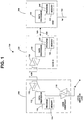
- FIGS 2 and 3 show two non-limiting examples of the use of the invention.
- an AP 210 (such as the Node B in Figure 1 ) associated with an Operator A (OperA) access network, such as one that is part of a fixed infrastructure, may advertise in a System Information Advertisement (SystemInfoAdv) message that it is always available to provide access services by explicitly advertising an "Infinite" lifetime. This same functionality may also be achieved by omitting the lifetime information in the SystemInfoAdv message, which in this case would implicitly indicate that the entity advertising access is part of a fixed infrastructure and is assumed to be always available for providing access.
- SystemInfoAdv System Information Advertisement
- a BS 310 in an OperB access network may advertise in a SystemInfoAdv message that it is always available to provide access services by explicitly advertising an "Infinite" lifetime.
- OperB also includes at least one RN 320 that represents a (temporary) extension of the OperB access network, and the RN 320 also correspondingly advertises an "Infinite” lifetime.
- another RN 330 such as the UE 110, is used for further extending the access network of OperB instead advertises a "short time" lifetime.
- a UE 110 when functioning as a RN, may be expected to change location frequently and/or be periodically powered on and off. There may be certain exceptions, and advertised lifetimes may be adjusted accordingly by each device that advertises and provides access to other devices.
- some access attachment options such as during HO, may also be considered.
- the typically frequent HO required naturally guides the HO to macrocell BTSs.
- short lifetime available BTSs are possible (as the mobile device will soon leave and break the attachment).
- Short breaks between the attachment points may be acceptable for some devices (such as data-based TCP connections) and, in this case, a series of intermittent short lived accesses with high BW may be selected.
- the last leg(s) may be implemented with moving mobile devices having relay capabilities.
- the last leg(s) may be implemented with moving mobile devices having relay capabilities.
- only those users with low mobility may wish to use such relay nodes with less than Infinite lifetimes.
- High mobility nodes have their own frequent HOs to cope with, and thus may avoid the use of AP RNs having short lifetimes.
- the lifetime may be calculated using a plurality of different parameters including, but not limited to, the radio technology in use, the network topology and/or the characteristics of the relevant application(s).
- the lifetime information may be partitioned and presented. For example, one embodiment may expressly advertise the lifetime in, for example, seconds or minutes. However, this approach may be less preferred, as it could require some significant number of bits for expressing the lifetime information in the SystemInfoAdv message. One possibly more preferred approach defines some predetermined number of lifetime classes, enabling some optimum bit-wise frame encoding to be selected.
- CLASS MEANING 1 random typically very random, such as less than one minute 2 short; typically between 1 and 5 minutes 3 short+; typically between 5 and 30 minutes 4 average; typically between 30 minutes and 1 hour 5 average+; typically between 1 hour and 3 hours 6 long; typically between 3 hours and 1 day 7 days; typically one or more days 8 infinite; static, semi-static or pseudo-static installation
- the lifetime advertised by the first relay AP may be adjusted in consideration of the lifetime advertised by the second AP. This adjustment may be made, as one non-limiting example, by operating a computer program, such as the PROG 146 in Figure 1 , for determining a probability that the first AP will be available during its predicted lifetime in view of the advertised availability of the second AP, or by any suitable technique.
- the first AP may check to see if the lifetime of the second AP is less than its own and, if so, it may advertise the second AP's lifetime, otherwise it advertises its own lifetime.
- the mobile node of UE 110 uses the lifetime information is application-specific. For example, some UEs 110 may simply ignore the lifetime information, while others may consider it when seeking to gain access to an operator. In the latter case the choice of AP can be based on the current needs of the UE 110, such as whether the UE 110 wishes to make a voice call or a data call. In general, the choice of a particular AP, based at least in part on the lifetime information provided in accordance with exemplary embodiments of this invention, can be a function of the current QoS needs of the UE 110. The speed of the UE 110 or of the RN, if mobile, may also be a consideration.
- FIG. 4 is flow charts depicting methods operating in accordance with the invention.
- an access point in a wireless communications system generates a message comprising at least access point availability information.
- the access point availability information indicates a level of availability provided by the access point. For example, as described previously, the access point availability information may indicate that the access point is always available. In other situations, the access point may indicate that it is not always available by generating a message communicating that the access point is only available for a finite duration.
- the access point availability information is made available to other elements in the wireless communication system to help the other elements to decide whether to use the access point to perform a communication operation.
- the user equipment receives the message containing the access point availability information; and then uses the access point availability information to determine whether to select the access point to perform a communication operation.
- the access point may comprise a base station; a relay node; a mobile node; user equipment; or user equipment functioning as a relay node.
- a plurality of access points are each performing the operations indicated in Figure 4 , indicating their relative levels of availability by generating and transmitting messages containing access point availability information.
- access point availability information can be encoded.
- the default position may be that an access point is always available. Accordingly, if a specific identification of a level of availability of an access point is omitted, it may be assumed that the access point is always available. Access points that provide a specific identification of the duration that they are available are assumed not to be available for infinite duration but rather only for the duration identified in the access point availability information.
- Access point availability information can be determined in several ways. Typically, access point availability information is determined from at least one of several parameters such as, for example, the mobility of the access point; the topology of the wireless communications network; the applications that are using the access point to perform a communications operations; or characteristics of the applications that use the access point.
- additional steps are performed to use available mobile nodes to extend coverage in the wireless communications network.
- a plurality of access points generate and transmit messages containing access point availability information, and a subset of the plurality of access points further comprise a plurality of mobile nodes.
- an additional step is performed, the step comprising: using access point availability information contained in messages transmitted by each of the plurality of mobile nodes to select certain of the mobile nodes to operate as relay nodes.
- the mobile nodes selected to operate as relay nodes exhibit relatively greater levels of availability than nodes not selected to operate as relay nodes.
- each access point of the plurality is generating and transmitting messages containing access point availability information.
- a first access point may be providing service using a second access point. If the level of availability of the second access point varies, for example, the first access point may have to adjust its own level of availability when generating access point availability information. This is done in order to reflect the effect of the variability of the level of availability of the second access point on the level of availability of the first access point.
- additional steps would be performed at the first access point, the additional steps comprising: receiving messages from the second access point containing the access point availability information associated with the second access point; and adjusting the access point availability information generated by the first access point, reflecting that the level of availability provided by the first access point is dependent on the level of availability provided by the second access point.
- Figure 5 depicts a method performed at user equipment in a wireless communications system.
- a user equipment operative in a wireless communications system receives a message transmitted by an access point, the message containing access point availability information.
- the user equipment retrieves the access point availability information from the message.
- the user equipment uses the access point availability information to decide whether to use the access point to perform a communication operation.
- user equipment in a wireless communication system receives a message transmitted by an access point, the message containing access point availability information.
- the user equipment determines whether an operation to be performed by the user equipment involving selection and use of an access point requires consideration of the level of availability of the access point.
- the user equipment selects an access point using the access point availability information only if it is determined that the operation to be performed by the user equipment requires consideration of the level of availability provided by the access point.
- the exemplary embodiments of this invention provide a method, apparatus and computer program product(s) to provide from a network access node an indication of the availability of the access node to function in this capacity for a UE, or for another access node.
- the use of the exemplary embodiments of this invention enables more optimal network access selection to be performed by a UE, and also has the potential to enhance the user's experience.
- the various embodiments may be implemented in hardware or special purpose circuits, software, logic or any combination thereof.
- some aspects may be implemented in hardware, while other aspects may be implemented in firmware or software which may be executed by a controller, microprocessor or other computing device, although the invention is not limited thereto.
- firmware or software which may be executed by a controller, microprocessor or other computing device, although the invention is not limited thereto.
- While various aspects of the invention may be illustrated and described as block diagrams, flow charts, or using some other pictorial representation, it will be well understood that these blocks, apparatus, systems, techniques or methods described herein maybe implemented in, as non-limiting examples, hardware, software, firmware, special purpose circuits of logic, general purpose hardware or controller or other computing devices, or some combination thereof.
- Embodiments of the inventions maybe practiced in various components such as integrated circuit modules.
- the design of integrated circuits is by and large a highly automated process.
- Complex and powerful software tools are available for converting a logic level diagram into a semiconductor circuit design ready to be etched and formed on a semiconductor substrate.
- Programs such as those provided by Synopsys, Inc. of Mountain View, California and Cadence Design, of San Jose, California automatically route conductors and locate components on a semiconductor chip using well established rules of design as well as libraries of pre-stored design modules.
- the resultant design in a standardized electronic format (e.g., Opus, GDSII, or the like) maybe transmitted to a semiconductor fabrication facility or "fab" for fabrication.
- the lifetime information maybe provided in other than a SystemInfoAdv or similar type of message.
- any and all modifications of the teachings of this invention will still fall within the scope of the non-limiting embodiments of this invention.
Landscapes
- Engineering & Computer Science (AREA)
- Computer Security & Cryptography (AREA)
- Computer Networks & Wireless Communication (AREA)
- Signal Processing (AREA)
- Mobile Radio Communication Systems (AREA)
Claims (22)
- Verfahren, das Folgendes umfasst:an einem Zugangspunkt in einem drahtlosen Kommunikationssystem, Erzeugen (410) einer Nachricht, die mindestens Zugangspunktverfügbarkeitsinformationen aufweist, wobei die Zugangspunktverfügbarkeitsinformationen eine Verfügbarkeitsstufe, die von dem Zugangspunkt bereitgestellt wird, angeben, wobei die Zugangspunktverfügbarkeitsinformationen von anderen Elementen des drahtlosen Kommunikationssystems beim Entscheiden, ob der Zugangspunkt verwendet wird, um einen Kommunikationsvorgang durchzuführen, verwendet werden können; undÜbertragen (420) der Nachricht, die mindestens die Zugangspunktverfügbarkeitsinformationen aufweist; dadurch gekennzeichnet, dass die Zugangspunktverfügbarkeitsinformationen einen Zeitraum kennzeichnen, während welchem der Zugangspunkt verfügbar sein wird.
- Verfahren nach Anspruch 1, das ferner Folgendes umfasst:Empfangen (510) an dem Benutzergerät (110), das in dem drahtlosen Kommunikationssystem betriebsbereit ist, der Nachricht, die die Zugangspunktverfügbarkeitsinformationen enthält; undVerwenden (520) an dem Benutzergerät der Zugangspunktverfügbarkeitsinformationen, um zu bestimmen, ob der Zugangspunkt ausgewählt wird, um einen Kommunikationsvorgang durchzuführen.
- Verfahren zur Zugangspunktauswahl durch ein Benutzergerät in einem drahtlosen Kommunikationssystem, das Folgendes umfasst:Empfangen (510) einer Nachricht, die durch einen Zugangspunkt übertragen wird, wobei die Nachricht Zugangspunktverfügbarkeitsinformationen enthält;Abrufen (520) der Zugangspunktverfügbarkeitsinformationen von der Nachricht; undVerwenden (530) der Zugangspunktverfügbarkeitsinformationen, um zu entscheiden, ob der Zugangspunkt zum Durchführen eines Kommunikationsvorgangs verwendet wird; dadurch gekennzeichnet, dass die Zugangspunktverfügbarkeitsinformationen einen Zeitraum kennzeichnen, während welchem der Zugangspunkt verfügbar sein wird.
- Verfahren nach Anspruch 1 oder 3, wobei der Zugangspunkt eine Basisstation (120) in einem drahtlosen Kommunikationsnetzwerk ist.
- Verfahren nach Anspruch 1 oder 3, wobei der Zeitraum nicht eingeschränkt ist, was ein Hinweis dahingehend ist, dass der Zugangspunkt immer verfügbar ist.
- Verfahren nach Anspruch 1 oder 3, wobei der Zeitraum eine endliche Dauer hat, was ein Hinweis dahingehend ist, dass der Zugangspunkt nicht immer verfügbar ist.
- Verfahren nach Anspruch 1 oder 3, wobei mehrere Zugangspunkte in dem drahtlosen Kommunikationssystem betriebsbereit sind, wobei jeder Zugangspunkt Nachrichten überträgt, die verwendet werden, um Zugangspunktverfügbarkeitsinformationen zu übermitteln.
- Verfahren nach Anspruch 7, wobei nur Zugangspunkte, die weniger als während der gesamten Zeit verfügbar sind, Zugangspunktverfügbarkeitsinformationen bereitstellen, die insbesondere endliche Zeitdauern kennzeichnen, während welchen die Zugangspunkte verfügbar sein werden.
- Verfahren nach Anspruch 8, wobei Zugangspunkte, die während der gesamten Zeit verfügbar sind, Zugangspunktverfügbarkeitsinformationen auslassen, die insbesondere eine Zeitdauer kennzeichnen, wobei die Auslassung angibt, dass der Zugangspunkt immer verfügbar ist.
- Verfahren nach Anspruch 1 oder 3, wobei die Zugangspunktverfügbarkeitsinformationen unter Verwendung mindestens eines Parameters bestimmt werden.
- Verfahren nach Anspruch 10, wobei der mindestens eine Parameter die Mobilität des Zugangspunkts betrifft.
- Verfahren nach Anspruch 10, wobei der mindestens eine Parameter die Topologie des drahtlosen Kommunikationsnetzwerks betrifft.
- Verfahren nach Anspruch 10, wobei der mindestens eine Parameter die Identität einer Anwendung betrifft, die den Zugangspunkt während eines Kommunikationsvorgangs verwenden wird.
- Verfahren nach Anspruch 10, wobei der mindestens eine Parameter Merkmale einer Anwendung betrifft, die den Zugangspunkt während eines Kommunikationsvorgangs verwenden wird.
- Verfahren nach Anspruch 10, wobei der Zugangspunkt ein Übertragungsknoten ist.
- Verfahren nach Anspruch 1, wobei mehrere Zugangspunkte Nachrichten erzeugen und übertragen, die Zugangspunktverfügbarkeitsinformationen enthalten, und wobei eine Untergruppe der mehreren Zugangspunkte mehrere mobile Knoten aufweist, wobei das Verfahren ferner Folgendes umfasst:Verwenden von Zugangspunktverfügbarkeitsinformationen, die in Nachrichten enthalten sind, die von jedem der mehreren mobilen Knoten übertragen werden, um bestimmte der mobilen Koten zum Betrieb als Übertragungsknoten auszuwählen.
- Verfahren nach Anspruch 1, wobei der Zugangspunkt, der die Nachricht erzeugt, einen ersten Zugangspunkt aufweist, wobei der erste Zugangspunkt Zugang durch eine Verbindung mit einem zweiten Zugangspunkt bereitstellt, wobei der zweite Zugangspunkt auch Nachrichten erzeugt und überträgt, die Zugangspunktverfügbarkeitsinformationen enthalten, die auf eine Verfügbarkeitsstufe hinweisen, die von dem zweiten Zugangspunkt bereitgestellt wird, wobei das Verfahren ferner Folgendes umfasst:an dem ersten Zugangspunkt, Empfangen von Nachrichten von dem zweiten Zugangspunkt, die die Zugangspunktverfügbarkeitsinformationen enthalten, die mit dem zweiten Zugangspunkt verknüpft sind; undEinstellen der Zugangspunktverfügbarkeitsinformationen, die von dem ersten Zugangspunkt erzeugt und übertragen werden, Wiedergeben, dass die Verfügbarkeitsstufe, die von dem ersten Zugangspunkt bereitgestellt wird, von der Verfügbarkeitsstufe, die von dem zweiten Zugangspunkt bereitgestellt wird, abhängt.
- Benutzergerät (110), das Folgendes umfasst:einen Speicher (114), der ein Programm (116) speichert, das konfiguriert ist, um das Benutzergerät zu steuern, wenn es ausgeführt wird;einen Transceiver (118), der zur bidirektionalen Kommunikation in einem drahtlosen Kommunikationssystem konfiguriert ist; undeinen Datenprozessor (112), der mit dem Speicher und dem Transceiver gekoppelt ist, wobei der Datenprozessor konfiguriert ist, um das Programm auszuführen;wobei, wenn der Datenprozessor das Programm ausführt, das Benutzergerät konfiguriert ist, um Folgendes durchzuführen:Empfangen (510) durch den Transceiver (118) einer Nachricht, die von einem Zugangspunkt übertragen wird, wobei die Nachricht Zugangspunktverfügbarkeitsinformationen enthält;Abrufen (520) der Zugangspunktverfügbarkeitsinformationen von der Nachricht; undVerwenden (530) der Zugangspunktverfügbarkeitsinformationen, um zu entscheiden, ob der Zugangspunkt verwendet wird, um einen Kommunikationsvorgang durchzuführen;dadurch gekennzeichnet, dass die Zugangspunktverfügbarkeitsinformationen einen Zeitraum kennzeichnen, während welchem der Zugangspunkt verfügbar sein wird.
- Benutzergerät (110) nach Anspruch 18, wobei, wenn der Datenprozessor das Programm ausführt, das Benutzergerät konfiguriert ist, um das Verfahren nach einem der Ansprüche 4 bis 15 durchzuführen.
- Zugangspunkt (120) in einem drahtlosen Kommunikationssystem, wobei der Zugangspunkt Folgendes umfasst:einen Speicher, der ein Programm (126) speichert, das konfiguriert ist, um den Zugangspunkt zu steuern, wenn es ausgeführt wird;einen Transceiver (128), der zur bidirektionalen Kommunikation in dem drahtlosen Kommunikationssystem konfiguriert ist;einen Datenprozessor (122), der mit dem Speicher und dem Transceiver gekoppelt ist, wobei der Datenprozessor konfiguriert ist, um das Programm auszuführen; undwobei, wenn das Programm von dem Datenprozessor ausgeführt wird, der Zugangspunkt konfiguriert ist, um eine Nachricht zu erzeugen, die Zugangspunktverfügbarkeitsinformationen enthält; und den Transceiver dazu zu bringen, die Nachricht zu übertragen; dadurch gekennzeichnet, dass die Zugangspunktverfügbarkeitsinformationen einen Zeitraum kennzeichnen, während welchem der Zugangspunkt verfügbar sein wird.
- Computerprogrammprodukt (124, 126), das ein computerlesbares Speichermedium (124) umfasst, das ein computerlesbares Programm (126) konkret darstellt, wobei das computerlesbare Programm von einer Datenverarbeitungsvorrichtung (120) ausgeführt werden kann, die ein Zugangspunkt (120) in einem drahtlosen Kommunikationssystem ist, wobei das computerlesbare Programm konfiguriert ist, wenn es ausgeführt wird, um eine Nachricht an dem Zugangspunkt (120) zu erzeugen, die eine Verfügbarkeitsstufe des Zugangspunkts angibt; und den Zugangspunkt dazu zu bringen, die Nachricht zu übertragen;
dadurch gekennzeichnet, dass die Zugangspunktverfügbarkeitsinformationen einen Zeitraum kennzeichnen, während welchem der Zugangspunkt verfügbar sein wird. - Computerprogrammprodukt (116, 114), das ein computerlesbares Speichermedium (114) umfasst, das ein computerlesbares Programm (116) konkret darstellt, wobei das computerlesbare Programm von einer Datenverarbeitungsvorrichtung (110) ausgeführt werden kann, wobei das computerlesbare Programm, wenn es ausgeführt wird, konfiguriert ist, um das Benutzergerät (110) dazu zu bringen, Nachrichten von Zugangspunkten (120) in einem drahtlosen Kommunikationssystem zu empfangen, wobei die Nachrichten Zugangspunktverfügbarkeitsinformationen enthalten, wobei die Zugangspunktverfügbarkeitsinformationen jeweilige Verfügbarkeitsstufen der Zugangspunkte angeben; um die Zugangspunktverfügbarkeitsinformationen aufzurufen, wenn ein Zugangspunkt ausgewählt wird, um einen Kommunikationsvorgang durchzuführen; und einen Zugangspunkt in Abhängigkeit von den Informationen, die die Beständigkeit der Zugangspunkte angeben, auszuwählen;
dadurch gekennzeichnet, dass die Zugangspunktverfügbarkeitsinformationen einen Zeitraum kennzeichnen, während welchem der Zugangspunkt verfügbar sein wird.
Applications Claiming Priority (2)
| Application Number | Priority Date | Filing Date | Title |
|---|---|---|---|
| US75875806P | 2006-01-13 | 2006-01-13 | |
| PCT/IB2007/000092 WO2007080512A1 (en) | 2006-01-13 | 2007-01-12 | Apparatus, method and computer program product providing system information advertisement extension for dynamic networks |
Publications (3)
| Publication Number | Publication Date |
|---|---|
| EP1972099A1 EP1972099A1 (de) | 2008-09-24 |
| EP1972099A4 EP1972099A4 (de) | 2015-03-18 |
| EP1972099B1 true EP1972099B1 (de) | 2017-07-12 |
Family
ID=38256033
Family Applications (1)
| Application Number | Title | Priority Date | Filing Date |
|---|---|---|---|
| EP07700483.6A Active EP1972099B1 (de) | 2006-01-13 | 2007-01-12 | Vorrichtung, verfahren und computerprogrammprodukt zur bereitstellung einer systeminformationswerbeerweiterung für dynamische netzwerke |
Country Status (6)
| Country | Link |
|---|---|
| US (1) | US7747267B2 (de) |
| EP (1) | EP1972099B1 (de) |
| JP (1) | JP4772877B2 (de) |
| KR (1) | KR101050381B1 (de) |
| CN (1) | CN101390343B (de) |
| WO (1) | WO2007080512A1 (de) |
Families Citing this family (13)
| Publication number | Priority date | Publication date | Assignee | Title |
|---|---|---|---|---|
| US7480700B2 (en) * | 2004-04-27 | 2009-01-20 | Apple Inc. | Method and system for retrieval and usage of remote entry points |
| JP5178284B2 (ja) * | 2008-04-07 | 2013-04-10 | 株式会社日立製作所 | 基地局制御装置及びアクセス規制方法 |
| EP2392169A1 (de) * | 2009-01-30 | 2011-12-07 | Nokia Siemens Networks Oy | Lastausgleich in relaiserweiterten zugangsnetzen |
| US9026044B2 (en) * | 2010-04-16 | 2015-05-05 | Samsung Electronics Co., Ltd. | Method and system for responder-aware relay station selection in wireless communication networks |
| CN101909326B (zh) * | 2010-08-17 | 2014-08-13 | 中兴通讯股份有限公司 | 一种接入点的选择方法及装置 |
| GB201211565D0 (en) * | 2012-06-29 | 2012-08-15 | Microsoft Corp | Determining availability of an acess network |
| GB201211580D0 (en) | 2012-06-29 | 2012-08-15 | Microsoft Corp | Determining suitablity of an access network |
| WO2015188846A1 (en) * | 2014-06-10 | 2015-12-17 | Telefonaktiebolaget L M Ericsson (Publ) | Scanning for access points in a wireless local area network |
| CN104320861B (zh) * | 2014-11-04 | 2016-06-01 | 腾讯科技(深圳)有限公司 | 无线连接建立方法、装置、终端设备、应用服务器及系统 |
| US20170142650A1 (en) * | 2015-03-09 | 2017-05-18 | Hewlett Packard Enterprise Development Lp | Predicting access point availability |
| WO2016141527A1 (en) | 2015-03-09 | 2016-09-15 | Hewlett-Packard Development Company, L.P. | Predicting available access points |
| CN108834196A (zh) * | 2018-05-31 | 2018-11-16 | 连尚(新昌)网络科技有限公司 | 一种无线接入点的接入信息的发送、接收方法及设备 |
| EP3959925A1 (de) * | 2019-04-26 | 2022-03-02 | Sony Group Corporation | Kommunikation in mobilfunknetzen mit dynamischen zellen |
Family Cites Families (15)
| Publication number | Priority date | Publication date | Assignee | Title |
|---|---|---|---|---|
| GB2277849B (en) * | 1993-05-06 | 1997-09-10 | Spectronics Micro Syst Ltd | Radio communication system |
| US6996088B1 (en) | 1998-09-18 | 2006-02-07 | Harris Corporation | Distributed trunking mechanism for VHF networking |
| US6760599B1 (en) | 2000-09-29 | 2004-07-06 | Arraycomm, Inc. | Method and apparatus for selecting a base station |
| JP2002135824A (ja) * | 2000-10-27 | 2002-05-10 | Sharp Corp | ネットワーク接続システム及びその接続方法 |
| JP2003032725A (ja) | 2001-07-18 | 2003-01-31 | Ntt Docomo Inc | 移動通信システムにおける無線基地局選択方法及びシステム並びに無線基地局 |
| JP4154174B2 (ja) * | 2002-05-20 | 2008-09-24 | 株式会社エヌ・ティ・ティ・ドコモ | トラフィック量測定装置、トラフィック量測定方法及びトラフィック量測定プログラム |
| US7876837B2 (en) * | 2002-09-30 | 2011-01-25 | Motorola Mobility, Inc. | Method for reducing access noise in a spread spectrum communication system |
| JP4095455B2 (ja) * | 2003-01-27 | 2008-06-04 | キヤノン株式会社 | 無線lan接続ソフトウエア、無線端末及びその制御方法 |
| US7146130B2 (en) | 2003-02-24 | 2006-12-05 | Qualcomm Incorporated | Wireless local access network system detection and selection |
| US20040196812A1 (en) * | 2003-04-07 | 2004-10-07 | Instant802 Networks Inc. | Multi-band access point with shared processor |
| US7536205B2 (en) * | 2004-06-15 | 2009-05-19 | Samsung Electronics Co., Ltd. | Apparatus and method for downlink spatial division multiple access scheduling in a wireless network |
| TWI251999B (en) * | 2004-09-23 | 2006-03-21 | Inst Information Industry | Media access control method of wireless local area networks having both guaranteed network service quality and power consumption management |
| JP4891310B2 (ja) | 2005-03-14 | 2012-03-07 | コーニンクレッカ フィリップス エレクトロニクス エヌ ヴィ | 無線ネットワークで利用可能なチャネルをシグナリングする方法及びシステム |
| WO2006103276A1 (en) | 2005-03-31 | 2006-10-05 | Siemens Aktiengesellschaft | An access method for a multi-hop wireless network |
| US7577449B2 (en) * | 2006-06-29 | 2009-08-18 | Motorola, Inc. | Method and system for coordinating a sleep mode wake-up time |
-
2007
- 2007-01-12 EP EP07700483.6A patent/EP1972099B1/de active Active
- 2007-01-12 CN CN2007800066045A patent/CN101390343B/zh active Active
- 2007-01-12 JP JP2008549950A patent/JP4772877B2/ja active Active
- 2007-01-12 KR KR1020087019678A patent/KR101050381B1/ko active Active
- 2007-01-12 WO PCT/IB2007/000092 patent/WO2007080512A1/en not_active Ceased
- 2007-01-12 US US11/652,816 patent/US7747267B2/en active Active
Non-Patent Citations (1)
| Title |
|---|
| None * |
Also Published As
| Publication number | Publication date |
|---|---|
| US20070180320A1 (en) | 2007-08-02 |
| WO2007080512A1 (en) | 2007-07-19 |
| JP2009523347A (ja) | 2009-06-18 |
| CN101390343B (zh) | 2012-05-23 |
| US7747267B2 (en) | 2010-06-29 |
| EP1972099A1 (de) | 2008-09-24 |
| KR101050381B1 (ko) | 2011-07-20 |
| EP1972099A4 (de) | 2015-03-18 |
| JP4772877B2 (ja) | 2011-09-14 |
| CN101390343A (zh) | 2009-03-18 |
| KR20080092438A (ko) | 2008-10-15 |
Similar Documents
| Publication | Publication Date | Title |
|---|---|---|
| EP1972099B1 (de) | Vorrichtung, verfahren und computerprogrammprodukt zur bereitstellung einer systeminformationswerbeerweiterung für dynamische netzwerke | |
| CN102461293B (zh) | Gps辅助网络管理 | |
| US8275407B2 (en) | Methods and apparatus for communicating using multiple transmission power levels | |
| CN101394207B (zh) | 感知无线电终端装置和使用感知无线电通信的方法 | |
| KR101431313B1 (ko) | 통신 셀을 한 클러스트에 동적으로 할당하기 위한 방법 및 장치 | |
| JP2019512905A (ja) | デバイスツーデバイス通信の伝送リソースを確定するための方法及び装置 | |
| JP6833868B2 (ja) | 通信方法、ネットワーク設備及び端末設備 | |
| EP1997243B1 (de) | Verfahren und vorrichtung zur auswahl von kanalstreucodes | |
| EP3220691B1 (de) | Netzwerkknotenauswahl und aktivierungsverfahren und -vorrichtung | |
| JPWO2016208095A1 (ja) | 無線端末、d2d通信制御装置、及び予備中継無線端末選択方法 | |
| JP2007512755A (ja) | P2p使用可能システムにおいてシステム容量を増加する方法及び装置 | |
| US20080043667A1 (en) | Apparatus and method of providing packet service status using access class barred list in mobile communication system | |
| CN104160765A (zh) | 用于在无线网络中确定频谱分配的基站和方法 | |
| EP2043393B1 (de) | Mobile station und kommunikationssystemauswahlverfahren | |
| JP5361379B2 (ja) | ユニバーサル移動電話システムにおけるターゲット加入者を識別し、追跡するための方法および装置 | |
| EP3928569B1 (de) | Kommunikationsvorrichtung, infrastrukturausrüstung und verfahren | |
| KR20080065627A (ko) | Voip 패킷의 충돌 확률을 감소시키기 위한 장치 | |
| US11259231B2 (en) | Relay determining method and apparatus | |
| CN111615188B (zh) | 数据传输方法、装置及计算机存储介质 | |
| JP2008017419A (ja) | 無線通信システム、無線基地局、通信制御方法、および通信制御プログラム | |
| US8184617B2 (en) | Call center enabler | |
| CA2655436C (en) | System and method to dynamically manage a talk group signaling type | |
| CN119605238A (zh) | 装置、方法和计算机程序 | |
| JP7817821B2 (ja) | 通信装置、制御方法、ならびにプログラム | |
| CN113365325B (zh) | 数据传输方法、装置、存储介质及电子设备 |
Legal Events
| Date | Code | Title | Description |
|---|---|---|---|
| PUAI | Public reference made under article 153(3) epc to a published international application that has entered the european phase |
Free format text: ORIGINAL CODE: 0009012 |
|
| 17P | Request for examination filed |
Effective date: 20080709 |
|
| AK | Designated contracting states |
Kind code of ref document: A1 Designated state(s): AT BE BG CH CY CZ DE DK EE ES FI FR GB GR HU IE IS IT LI LT LU LV MC NL PL PT RO SE SI SK TR |
|
| DAX | Request for extension of the european patent (deleted) | ||
| RAP1 | Party data changed (applicant data changed or rights of an application transferred) |
Owner name: NOKIA CORPORATION |
|
| REG | Reference to a national code |
Ref country code: DE Ref legal event code: R079 Ref document number: 602007051596 Country of ref document: DE Free format text: PREVIOUS MAIN CLASS: H04L0012280000 Ipc: H04W0048080000 |
|
| A4 | Supplementary search report drawn up and despatched |
Effective date: 20150216 |
|
| RIC1 | Information provided on ipc code assigned before grant |
Ipc: H04W 48/08 20090101AFI20150210BHEP |
|
| RAP1 | Party data changed (applicant data changed or rights of an application transferred) |
Owner name: NOKIA TECHNOLOGIES OY |
|
| GRAP | Despatch of communication of intention to grant a patent |
Free format text: ORIGINAL CODE: EPIDOSNIGR1 |
|
| STAA | Information on the status of an ep patent application or granted ep patent |
Free format text: STATUS: GRANT OF PATENT IS INTENDED |
|
| INTG | Intention to grant announced |
Effective date: 20170217 |
|
| GRAS | Grant fee paid |
Free format text: ORIGINAL CODE: EPIDOSNIGR3 |
|
| GRAA | (expected) grant |
Free format text: ORIGINAL CODE: 0009210 |
|
| STAA | Information on the status of an ep patent application or granted ep patent |
Free format text: STATUS: THE PATENT HAS BEEN GRANTED |
|
| AK | Designated contracting states |
Kind code of ref document: B1 Designated state(s): AT BE BG CH CY CZ DE DK EE ES FI FR GB GR HU IE IS IT LI LT LU LV MC NL PL PT RO SE SI SK TR |
|
| REG | Reference to a national code |
Ref country code: GB Ref legal event code: FG4D |
|
| REG | Reference to a national code |
Ref country code: CH Ref legal event code: EP |
|
| REG | Reference to a national code |
Ref country code: AT Ref legal event code: REF Ref document number: 909392 Country of ref document: AT Kind code of ref document: T Effective date: 20170715 |
|
| REG | Reference to a national code |
Ref country code: IE Ref legal event code: FG4D |
|
| REG | Reference to a national code |
Ref country code: DE Ref legal event code: R096 Ref document number: 602007051596 Country of ref document: DE |
|
| REG | Reference to a national code |
Ref country code: NL Ref legal event code: FP |
|
| REG | Reference to a national code |
Ref country code: LT Ref legal event code: MG4D |
|
| REG | Reference to a national code |
Ref country code: FR Ref legal event code: PLFP Year of fee payment: 12 |
|
| REG | Reference to a national code |
Ref country code: AT Ref legal event code: MK05 Ref document number: 909392 Country of ref document: AT Kind code of ref document: T Effective date: 20170712 |
|
| PG25 | Lapsed in a contracting state [announced via postgrant information from national office to epo] |
Ref country code: SE Free format text: LAPSE BECAUSE OF FAILURE TO SUBMIT A TRANSLATION OF THE DESCRIPTION OR TO PAY THE FEE WITHIN THE PRESCRIBED TIME-LIMIT Effective date: 20170712 Ref country code: FI Free format text: LAPSE BECAUSE OF FAILURE TO SUBMIT A TRANSLATION OF THE DESCRIPTION OR TO PAY THE FEE WITHIN THE PRESCRIBED TIME-LIMIT Effective date: 20170712 Ref country code: LT Free format text: LAPSE BECAUSE OF FAILURE TO SUBMIT A TRANSLATION OF THE DESCRIPTION OR TO PAY THE FEE WITHIN THE PRESCRIBED TIME-LIMIT Effective date: 20170712 Ref country code: AT Free format text: LAPSE BECAUSE OF FAILURE TO SUBMIT A TRANSLATION OF THE DESCRIPTION OR TO PAY THE FEE WITHIN THE PRESCRIBED TIME-LIMIT Effective date: 20170712 |
|
| PG25 | Lapsed in a contracting state [announced via postgrant information from national office to epo] |
Ref country code: LV Free format text: LAPSE BECAUSE OF FAILURE TO SUBMIT A TRANSLATION OF THE DESCRIPTION OR TO PAY THE FEE WITHIN THE PRESCRIBED TIME-LIMIT Effective date: 20170712 Ref country code: IS Free format text: LAPSE BECAUSE OF FAILURE TO SUBMIT A TRANSLATION OF THE DESCRIPTION OR TO PAY THE FEE WITHIN THE PRESCRIBED TIME-LIMIT Effective date: 20171112 Ref country code: PL Free format text: LAPSE BECAUSE OF FAILURE TO SUBMIT A TRANSLATION OF THE DESCRIPTION OR TO PAY THE FEE WITHIN THE PRESCRIBED TIME-LIMIT Effective date: 20170712 Ref country code: BG Free format text: LAPSE BECAUSE OF FAILURE TO SUBMIT A TRANSLATION OF THE DESCRIPTION OR TO PAY THE FEE WITHIN THE PRESCRIBED TIME-LIMIT Effective date: 20171012 Ref country code: ES Free format text: LAPSE BECAUSE OF FAILURE TO SUBMIT A TRANSLATION OF THE DESCRIPTION OR TO PAY THE FEE WITHIN THE PRESCRIBED TIME-LIMIT Effective date: 20170712 Ref country code: GR Free format text: LAPSE BECAUSE OF FAILURE TO SUBMIT A TRANSLATION OF THE DESCRIPTION OR TO PAY THE FEE WITHIN THE PRESCRIBED TIME-LIMIT Effective date: 20171013 |
|
| REG | Reference to a national code |
Ref country code: DE Ref legal event code: R097 Ref document number: 602007051596 Country of ref document: DE |
|
| PG25 | Lapsed in a contracting state [announced via postgrant information from national office to epo] |
Ref country code: RO Free format text: LAPSE BECAUSE OF FAILURE TO SUBMIT A TRANSLATION OF THE DESCRIPTION OR TO PAY THE FEE WITHIN THE PRESCRIBED TIME-LIMIT Effective date: 20170712 Ref country code: DK Free format text: LAPSE BECAUSE OF FAILURE TO SUBMIT A TRANSLATION OF THE DESCRIPTION OR TO PAY THE FEE WITHIN THE PRESCRIBED TIME-LIMIT Effective date: 20170712 Ref country code: CZ Free format text: LAPSE BECAUSE OF FAILURE TO SUBMIT A TRANSLATION OF THE DESCRIPTION OR TO PAY THE FEE WITHIN THE PRESCRIBED TIME-LIMIT Effective date: 20170712 |
|
| PLBE | No opposition filed within time limit |
Free format text: ORIGINAL CODE: 0009261 |
|
| STAA | Information on the status of an ep patent application or granted ep patent |
Free format text: STATUS: NO OPPOSITION FILED WITHIN TIME LIMIT |
|
| PG25 | Lapsed in a contracting state [announced via postgrant information from national office to epo] |
Ref country code: SK Free format text: LAPSE BECAUSE OF FAILURE TO SUBMIT A TRANSLATION OF THE DESCRIPTION OR TO PAY THE FEE WITHIN THE PRESCRIBED TIME-LIMIT Effective date: 20170712 Ref country code: EE Free format text: LAPSE BECAUSE OF FAILURE TO SUBMIT A TRANSLATION OF THE DESCRIPTION OR TO PAY THE FEE WITHIN THE PRESCRIBED TIME-LIMIT Effective date: 20170712 Ref country code: IT Free format text: LAPSE BECAUSE OF FAILURE TO SUBMIT A TRANSLATION OF THE DESCRIPTION OR TO PAY THE FEE WITHIN THE PRESCRIBED TIME-LIMIT Effective date: 20170712 |
|
| 26N | No opposition filed |
Effective date: 20180413 |
|
| PG25 | Lapsed in a contracting state [announced via postgrant information from national office to epo] |
Ref country code: SI Free format text: LAPSE BECAUSE OF FAILURE TO SUBMIT A TRANSLATION OF THE DESCRIPTION OR TO PAY THE FEE WITHIN THE PRESCRIBED TIME-LIMIT Effective date: 20170712 |
|
| REG | Reference to a national code |
Ref country code: CH Ref legal event code: PL |
|
| PG25 | Lapsed in a contracting state [announced via postgrant information from national office to epo] |
Ref country code: LU Free format text: LAPSE BECAUSE OF NON-PAYMENT OF DUE FEES Effective date: 20180112 |
|
| REG | Reference to a national code |
Ref country code: BE Ref legal event code: MM Effective date: 20180131 |
|
| PG25 | Lapsed in a contracting state [announced via postgrant information from national office to epo] |
Ref country code: BE Free format text: LAPSE BECAUSE OF NON-PAYMENT OF DUE FEES Effective date: 20180131 Ref country code: LI Free format text: LAPSE BECAUSE OF NON-PAYMENT OF DUE FEES Effective date: 20180131 Ref country code: CH Free format text: LAPSE BECAUSE OF NON-PAYMENT OF DUE FEES Effective date: 20180131 |
|
| PG25 | Lapsed in a contracting state [announced via postgrant information from national office to epo] |
Ref country code: MC Free format text: LAPSE BECAUSE OF FAILURE TO SUBMIT A TRANSLATION OF THE DESCRIPTION OR TO PAY THE FEE WITHIN THE PRESCRIBED TIME-LIMIT Effective date: 20170712 |
|
| PG25 | Lapsed in a contracting state [announced via postgrant information from national office to epo] |
Ref country code: TR Free format text: LAPSE BECAUSE OF FAILURE TO SUBMIT A TRANSLATION OF THE DESCRIPTION OR TO PAY THE FEE WITHIN THE PRESCRIBED TIME-LIMIT Effective date: 20170712 |
|
| PG25 | Lapsed in a contracting state [announced via postgrant information from national office to epo] |
Ref country code: HU Free format text: LAPSE BECAUSE OF FAILURE TO SUBMIT A TRANSLATION OF THE DESCRIPTION OR TO PAY THE FEE WITHIN THE PRESCRIBED TIME-LIMIT; INVALID AB INITIO Effective date: 20070112 Ref country code: PT Free format text: LAPSE BECAUSE OF FAILURE TO SUBMIT A TRANSLATION OF THE DESCRIPTION OR TO PAY THE FEE WITHIN THE PRESCRIBED TIME-LIMIT Effective date: 20170712 |
|
| PG25 | Lapsed in a contracting state [announced via postgrant information from national office to epo] |
Ref country code: CY Free format text: LAPSE BECAUSE OF FAILURE TO SUBMIT A TRANSLATION OF THE DESCRIPTION OR TO PAY THE FEE WITHIN THE PRESCRIBED TIME-LIMIT Effective date: 20170712 |
|
| P01 | Opt-out of the competence of the unified patent court (upc) registered |
Effective date: 20230527 |
|
| PGFP | Annual fee paid to national office [announced via postgrant information from national office to epo] |
Ref country code: GB Payment date: 20251204 Year of fee payment: 20 |
|
| PGFP | Annual fee paid to national office [announced via postgrant information from national office to epo] |
Ref country code: NL Payment date: 20251215 Year of fee payment: 20 Ref country code: FR Payment date: 20251208 Year of fee payment: 20 |
|
| PGFP | Annual fee paid to national office [announced via postgrant information from national office to epo] |
Ref country code: IE Payment date: 20251209 Year of fee payment: 20 |
|
| PGFP | Annual fee paid to national office [announced via postgrant information from national office to epo] |
Ref country code: DE Payment date: 20251203 Year of fee payment: 20 |