EP2011569A1 - Catalyst for hydrolysis of cellulose and/or reduction of hydrolysis product thereof, and method for producing sugar alcohol from cellulose - Google Patents
Catalyst for hydrolysis of cellulose and/or reduction of hydrolysis product thereof, and method for producing sugar alcohol from cellulose Download PDFInfo
- Publication number
- EP2011569A1 EP2011569A1 EP07737615A EP07737615A EP2011569A1 EP 2011569 A1 EP2011569 A1 EP 2011569A1 EP 07737615 A EP07737615 A EP 07737615A EP 07737615 A EP07737615 A EP 07737615A EP 2011569 A1 EP2011569 A1 EP 2011569A1
- Authority
- EP
- European Patent Office
- Prior art keywords
- cellulose
- catalyst
- hydrolysis
- employed
- solid support
- Prior art date
- Legal status (The legal status is an assumption and is not a legal conclusion. Google has not performed a legal analysis and makes no representation as to the accuracy of the status listed.)
- Withdrawn
Links
Images




Classifications
-
- B—PERFORMING OPERATIONS; TRANSPORTING
- B01—PHYSICAL OR CHEMICAL PROCESSES OR APPARATUS IN GENERAL
- B01J—CHEMICAL OR PHYSICAL PROCESSES, e.g. CATALYSIS OR COLLOID CHEMISTRY; THEIR RELEVANT APPARATUS
- B01J23/00—Catalysts comprising metals or metal oxides or hydroxides, not provided for in group B01J21/00
- B01J23/38—Catalysts comprising metals or metal oxides or hydroxides, not provided for in group B01J21/00 of noble metals
- B01J23/40—Catalysts comprising metals or metal oxides or hydroxides, not provided for in group B01J21/00 of noble metals of the platinum group metals
- B01J23/42—Platinum
-
- B—PERFORMING OPERATIONS; TRANSPORTING
- B01—PHYSICAL OR CHEMICAL PROCESSES OR APPARATUS IN GENERAL
- B01J—CHEMICAL OR PHYSICAL PROCESSES, e.g. CATALYSIS OR COLLOID CHEMISTRY; THEIR RELEVANT APPARATUS
- B01J23/00—Catalysts comprising metals or metal oxides or hydroxides, not provided for in group B01J21/00
- B01J23/38—Catalysts comprising metals or metal oxides or hydroxides, not provided for in group B01J21/00 of noble metals
- B01J23/40—Catalysts comprising metals or metal oxides or hydroxides, not provided for in group B01J21/00 of noble metals of the platinum group metals
-
- B—PERFORMING OPERATIONS; TRANSPORTING
- B01—PHYSICAL OR CHEMICAL PROCESSES OR APPARATUS IN GENERAL
- B01J—CHEMICAL OR PHYSICAL PROCESSES, e.g. CATALYSIS OR COLLOID CHEMISTRY; THEIR RELEVANT APPARATUS
- B01J23/00—Catalysts comprising metals or metal oxides or hydroxides, not provided for in group B01J21/00
- B01J23/38—Catalysts comprising metals or metal oxides or hydroxides, not provided for in group B01J21/00 of noble metals
- B01J23/40—Catalysts comprising metals or metal oxides or hydroxides, not provided for in group B01J21/00 of noble metals of the platinum group metals
- B01J23/46—Ruthenium, rhodium, osmium or iridium
- B01J23/462—Ruthenium
-
- B—PERFORMING OPERATIONS; TRANSPORTING
- B01—PHYSICAL OR CHEMICAL PROCESSES OR APPARATUS IN GENERAL
- B01J—CHEMICAL OR PHYSICAL PROCESSES, e.g. CATALYSIS OR COLLOID CHEMISTRY; THEIR RELEVANT APPARATUS
- B01J29/00—Catalysts comprising molecular sieves
- B01J29/03—Catalysts comprising molecular sieves not having base-exchange properties
- B01J29/0308—Mesoporous materials not having base exchange properties, e.g. Si-MCM-41
- B01J29/0316—Mesoporous materials not having base exchange properties, e.g. Si-MCM-41 containing iron group metals, noble metals or copper
- B01J29/0325—Noble metals
-
- B—PERFORMING OPERATIONS; TRANSPORTING
- B01—PHYSICAL OR CHEMICAL PROCESSES OR APPARATUS IN GENERAL
- B01J—CHEMICAL OR PHYSICAL PROCESSES, e.g. CATALYSIS OR COLLOID CHEMISTRY; THEIR RELEVANT APPARATUS
- B01J29/00—Catalysts comprising molecular sieves
- B01J29/04—Catalysts comprising molecular sieves having base-exchange properties, e.g. crystalline zeolites
- B01J29/06—Crystalline aluminosilicate zeolites; Isomorphous compounds thereof
- B01J29/064—Crystalline aluminosilicate zeolites; Isomorphous compounds thereof containing iron group metals, noble metals or copper
- B01J29/068—Noble metals
-
- B—PERFORMING OPERATIONS; TRANSPORTING
- B01—PHYSICAL OR CHEMICAL PROCESSES OR APPARATUS IN GENERAL
- B01J—CHEMICAL OR PHYSICAL PROCESSES, e.g. CATALYSIS OR COLLOID CHEMISTRY; THEIR RELEVANT APPARATUS
- B01J29/00—Catalysts comprising molecular sieves
- B01J29/04—Catalysts comprising molecular sieves having base-exchange properties, e.g. crystalline zeolites
- B01J29/06—Crystalline aluminosilicate zeolites; Isomorphous compounds thereof
- B01J29/08—Crystalline aluminosilicate zeolites; Isomorphous compounds thereof of the faujasite type, e.g. type X or Y
- B01J29/10—Crystalline aluminosilicate zeolites; Isomorphous compounds thereof of the faujasite type, e.g. type X or Y containing iron group metals, noble metals or copper
- B01J29/12—Noble metals
- B01J29/126—Y-type faujasite
-
- B—PERFORMING OPERATIONS; TRANSPORTING
- B01—PHYSICAL OR CHEMICAL PROCESSES OR APPARATUS IN GENERAL
- B01J—CHEMICAL OR PHYSICAL PROCESSES, e.g. CATALYSIS OR COLLOID CHEMISTRY; THEIR RELEVANT APPARATUS
- B01J29/00—Catalysts comprising molecular sieves
- B01J29/04—Catalysts comprising molecular sieves having base-exchange properties, e.g. crystalline zeolites
- B01J29/06—Crystalline aluminosilicate zeolites; Isomorphous compounds thereof
- B01J29/18—Crystalline aluminosilicate zeolites; Isomorphous compounds thereof of the mordenite type
- B01J29/20—Crystalline aluminosilicate zeolites; Isomorphous compounds thereof of the mordenite type containing iron group metals, noble metals or copper
- B01J29/22—Noble metals
-
- B—PERFORMING OPERATIONS; TRANSPORTING
- B01—PHYSICAL OR CHEMICAL PROCESSES OR APPARATUS IN GENERAL
- B01J—CHEMICAL OR PHYSICAL PROCESSES, e.g. CATALYSIS OR COLLOID CHEMISTRY; THEIR RELEVANT APPARATUS
- B01J29/00—Catalysts comprising molecular sieves
- B01J29/04—Catalysts comprising molecular sieves having base-exchange properties, e.g. crystalline zeolites
- B01J29/06—Crystalline aluminosilicate zeolites; Isomorphous compounds thereof
- B01J29/40—Crystalline aluminosilicate zeolites; Isomorphous compounds thereof of the pentasil type, e.g. types ZSM-5, ZSM-8 or ZSM-11, as exemplified by patent documents US3702886, GB1334243 and US3709979, respectively
- B01J29/42—Crystalline aluminosilicate zeolites; Isomorphous compounds thereof of the pentasil type, e.g. types ZSM-5, ZSM-8 or ZSM-11, as exemplified by patent documents US3702886, GB1334243 and US3709979, respectively containing iron group metals, noble metals or copper
- B01J29/44—Noble metals
-
- B—PERFORMING OPERATIONS; TRANSPORTING
- B01—PHYSICAL OR CHEMICAL PROCESSES OR APPARATUS IN GENERAL
- B01J—CHEMICAL OR PHYSICAL PROCESSES, e.g. CATALYSIS OR COLLOID CHEMISTRY; THEIR RELEVANT APPARATUS
- B01J29/00—Catalysts comprising molecular sieves
- B01J29/04—Catalysts comprising molecular sieves having base-exchange properties, e.g. crystalline zeolites
- B01J29/06—Crystalline aluminosilicate zeolites; Isomorphous compounds thereof
- B01J29/70—Crystalline aluminosilicate zeolites; Isomorphous compounds thereof of types characterised by their specific structure not provided for in groups B01J29/08 - B01J29/65
- B01J29/72—Crystalline aluminosilicate zeolites; Isomorphous compounds thereof of types characterised by their specific structure not provided for in groups B01J29/08 - B01J29/65 containing iron group metals, noble metals or copper
- B01J29/74—Noble metals
- B01J29/7415—Zeolite Beta
-
- B—PERFORMING OPERATIONS; TRANSPORTING
- B01—PHYSICAL OR CHEMICAL PROCESSES OR APPARATUS IN GENERAL
- B01J—CHEMICAL OR PHYSICAL PROCESSES, e.g. CATALYSIS OR COLLOID CHEMISTRY; THEIR RELEVANT APPARATUS
- B01J35/00—Catalysts, in general, characterised by their form or physical properties
- B01J35/30—Catalysts, in general, characterised by their form or physical properties characterised by their physical properties
- B01J35/391—Physical properties of the active metal ingredient
- B01J35/394—Metal dispersion value, e.g. percentage or fraction
-
- C—CHEMISTRY; METALLURGY
- C07—ORGANIC CHEMISTRY
- C07C—ACYCLIC OR CARBOCYCLIC COMPOUNDS
- C07C29/00—Preparation of compounds having hydroxy or O-metal groups bound to a carbon atom not belonging to a six-membered aromatic ring
- C07C29/132—Preparation of compounds having hydroxy or O-metal groups bound to a carbon atom not belonging to a six-membered aromatic ring by reduction of an oxygen containing functional group
- C07C29/136—Preparation of compounds having hydroxy or O-metal groups bound to a carbon atom not belonging to a six-membered aromatic ring by reduction of an oxygen containing functional group of >C=O containing groups, e.g. —COOH
- C07C29/14—Preparation of compounds having hydroxy or O-metal groups bound to a carbon atom not belonging to a six-membered aromatic ring by reduction of an oxygen containing functional group of >C=O containing groups, e.g. —COOH of a —CHO group
- C07C29/141—Preparation of compounds having hydroxy or O-metal groups bound to a carbon atom not belonging to a six-membered aromatic ring by reduction of an oxygen containing functional group of >C=O containing groups, e.g. —COOH of a —CHO group with hydrogen or hydrogen-containing gases
-
- B—PERFORMING OPERATIONS; TRANSPORTING
- B01—PHYSICAL OR CHEMICAL PROCESSES OR APPARATUS IN GENERAL
- B01J—CHEMICAL OR PHYSICAL PROCESSES, e.g. CATALYSIS OR COLLOID CHEMISTRY; THEIR RELEVANT APPARATUS
- B01J21/00—Catalysts comprising the elements, oxides, or hydroxides of magnesium, boron, aluminium, carbon, silicon, titanium, zirconium, or hafnium
- B01J21/02—Boron or aluminium; Oxides or hydroxides thereof
- B01J21/04—Alumina
-
- B—PERFORMING OPERATIONS; TRANSPORTING
- B01—PHYSICAL OR CHEMICAL PROCESSES OR APPARATUS IN GENERAL
- B01J—CHEMICAL OR PHYSICAL PROCESSES, e.g. CATALYSIS OR COLLOID CHEMISTRY; THEIR RELEVANT APPARATUS
- B01J21/00—Catalysts comprising the elements, oxides, or hydroxides of magnesium, boron, aluminium, carbon, silicon, titanium, zirconium, or hafnium
- B01J21/06—Silicon, titanium, zirconium or hafnium; Oxides or hydroxides thereof
- B01J21/063—Titanium; Oxides or hydroxides thereof
-
- B—PERFORMING OPERATIONS; TRANSPORTING
- B01—PHYSICAL OR CHEMICAL PROCESSES OR APPARATUS IN GENERAL
- B01J—CHEMICAL OR PHYSICAL PROCESSES, e.g. CATALYSIS OR COLLOID CHEMISTRY; THEIR RELEVANT APPARATUS
- B01J21/00—Catalysts comprising the elements, oxides, or hydroxides of magnesium, boron, aluminium, carbon, silicon, titanium, zirconium, or hafnium
- B01J21/06—Silicon, titanium, zirconium or hafnium; Oxides or hydroxides thereof
- B01J21/066—Zirconium or hafnium; Oxides or hydroxides thereof
-
- B—PERFORMING OPERATIONS; TRANSPORTING
- B01—PHYSICAL OR CHEMICAL PROCESSES OR APPARATUS IN GENERAL
- B01J—CHEMICAL OR PHYSICAL PROCESSES, e.g. CATALYSIS OR COLLOID CHEMISTRY; THEIR RELEVANT APPARATUS
- B01J21/00—Catalysts comprising the elements, oxides, or hydroxides of magnesium, boron, aluminium, carbon, silicon, titanium, zirconium, or hafnium
- B01J21/12—Silica and alumina
-
- B—PERFORMING OPERATIONS; TRANSPORTING
- B01—PHYSICAL OR CHEMICAL PROCESSES OR APPARATUS IN GENERAL
- B01J—CHEMICAL OR PHYSICAL PROCESSES, e.g. CATALYSIS OR COLLOID CHEMISTRY; THEIR RELEVANT APPARATUS
- B01J21/00—Catalysts comprising the elements, oxides, or hydroxides of magnesium, boron, aluminium, carbon, silicon, titanium, zirconium, or hafnium
- B01J21/18—Carbon
-
- B—PERFORMING OPERATIONS; TRANSPORTING
- B01—PHYSICAL OR CHEMICAL PROCESSES OR APPARATUS IN GENERAL
- B01J—CHEMICAL OR PHYSICAL PROCESSES, e.g. CATALYSIS OR COLLOID CHEMISTRY; THEIR RELEVANT APPARATUS
- B01J2229/00—Aspects of molecular sieve catalysts not covered by B01J29/00
- B01J2229/10—After treatment, characterised by the effect to be obtained
- B01J2229/18—After treatment, characterised by the effect to be obtained to introduce other elements into or onto the molecular sieve itself
-
- B—PERFORMING OPERATIONS; TRANSPORTING
- B01—PHYSICAL OR CHEMICAL PROCESSES OR APPARATUS IN GENERAL
- B01J—CHEMICAL OR PHYSICAL PROCESSES, e.g. CATALYSIS OR COLLOID CHEMISTRY; THEIR RELEVANT APPARATUS
- B01J2235/00—Indexing scheme associated with group B01J35/00, related to the analysis techniques used to determine the catalysts form or properties
-
- B—PERFORMING OPERATIONS; TRANSPORTING
- B01—PHYSICAL OR CHEMICAL PROCESSES OR APPARATUS IN GENERAL
- B01J—CHEMICAL OR PHYSICAL PROCESSES, e.g. CATALYSIS OR COLLOID CHEMISTRY; THEIR RELEVANT APPARATUS
- B01J2235/00—Indexing scheme associated with group B01J35/00, related to the analysis techniques used to determine the catalysts form or properties
- B01J2235/15—X-ray diffraction
-
- B—PERFORMING OPERATIONS; TRANSPORTING
- B01—PHYSICAL OR CHEMICAL PROCESSES OR APPARATUS IN GENERAL
- B01J—CHEMICAL OR PHYSICAL PROCESSES, e.g. CATALYSIS OR COLLOID CHEMISTRY; THEIR RELEVANT APPARATUS
- B01J23/00—Catalysts comprising metals or metal oxides or hydroxides, not provided for in group B01J21/00
- B01J23/38—Catalysts comprising metals or metal oxides or hydroxides, not provided for in group B01J21/00 of noble metals
- B01J23/48—Silver or gold
-
- B—PERFORMING OPERATIONS; TRANSPORTING
- B01—PHYSICAL OR CHEMICAL PROCESSES OR APPARATUS IN GENERAL
- B01J—CHEMICAL OR PHYSICAL PROCESSES, e.g. CATALYSIS OR COLLOID CHEMISTRY; THEIR RELEVANT APPARATUS
- B01J23/00—Catalysts comprising metals or metal oxides or hydroxides, not provided for in group B01J21/00
- B01J23/70—Catalysts comprising metals or metal oxides or hydroxides, not provided for in group B01J21/00 of the iron group metals or copper
-
- B—PERFORMING OPERATIONS; TRANSPORTING
- B01—PHYSICAL OR CHEMICAL PROCESSES OR APPARATUS IN GENERAL
- B01J—CHEMICAL OR PHYSICAL PROCESSES, e.g. CATALYSIS OR COLLOID CHEMISTRY; THEIR RELEVANT APPARATUS
- B01J35/00—Catalysts, in general, characterised by their form or physical properties
- B01J35/50—Catalysts, in general, characterised by their form or physical properties characterised by their shape or configuration
-
- B—PERFORMING OPERATIONS; TRANSPORTING
- B01—PHYSICAL OR CHEMICAL PROCESSES OR APPARATUS IN GENERAL
- B01J—CHEMICAL OR PHYSICAL PROCESSES, e.g. CATALYSIS OR COLLOID CHEMISTRY; THEIR RELEVANT APPARATUS
- B01J35/00—Catalysts, in general, characterised by their form or physical properties
- B01J35/50—Catalysts, in general, characterised by their form or physical properties characterised by their shape or configuration
- B01J35/55—Cylinders or rings
-
- Y—GENERAL TAGGING OF NEW TECHNOLOGICAL DEVELOPMENTS; GENERAL TAGGING OF CROSS-SECTIONAL TECHNOLOGIES SPANNING OVER SEVERAL SECTIONS OF THE IPC; TECHNICAL SUBJECTS COVERED BY FORMER USPC CROSS-REFERENCE ART COLLECTIONS [XRACs] AND DIGESTS
- Y02—TECHNOLOGIES OR APPLICATIONS FOR MITIGATION OR ADAPTATION AGAINST CLIMATE CHANGE
- Y02P—CLIMATE CHANGE MITIGATION TECHNOLOGIES IN THE PRODUCTION OR PROCESSING OF GOODS
- Y02P20/00—Technologies relating to chemical industry
- Y02P20/50—Improvements relating to the production of bulk chemicals
-
- Y—GENERAL TAGGING OF NEW TECHNOLOGICAL DEVELOPMENTS; GENERAL TAGGING OF CROSS-SECTIONAL TECHNOLOGIES SPANNING OVER SEVERAL SECTIONS OF THE IPC; TECHNICAL SUBJECTS COVERED BY FORMER USPC CROSS-REFERENCE ART COLLECTIONS [XRACs] AND DIGESTS
- Y02—TECHNOLOGIES OR APPLICATIONS FOR MITIGATION OR ADAPTATION AGAINST CLIMATE CHANGE
- Y02P—CLIMATE CHANGE MITIGATION TECHNOLOGIES IN THE PRODUCTION OR PROCESSING OF GOODS
- Y02P20/00—Technologies relating to chemical industry
- Y02P20/50—Improvements relating to the production of bulk chemicals
- Y02P20/584—Recycling of catalysts
Definitions
- the present invention relates to a cellulose hydrolysis and reduction catalyst and to a method of producing sugar alcohols from cellulose. More particularly, the present invention relates to a catalyst permitting the direct production of sugar alcohols from cellulose and to a method of producing sugar alcohols from cellulose using this catalyst.
- the specific sugar alcohols that are produced by the present invention are sorbitol and/or manitol.
- the biomass is a renewable resource and plays a role in preventing global warming by inhibiting the emission of carbon dioxide.
- Processes of converting the biomass to ethanol, lactic acid, and other useful chemical products by an enzymatic or chemical method are being examined in the production of chemical products from the biomass (biorefinery).
- starch derived from corn is the main material employed in biorefinery.
- cellulose is present in overwhelmingly greater quantity than starch.
- the techniques to convert cellulose to chemically useful products by reducing the molecular weight thereof has not been developed, and this resource is currently virtually untapped. (See Koshijima et al., Functional Cellulose, CMC Publishing Co., Ltd.
- the cellulose has to be pretreated and the product separation is not easy.
- Specht et al. used a mixture of cellulose and hemicellulose that had been treated by hydrolysis as a raw material, and after adjustment of its pH at 8 or greater, sugar alcohols was synthesized by hydrogenation with supported Raney nickel catalyst (see H. Specht and H. Dewein, DE 1066567 (1959 ), the entire contents of which are hereby incorporated by reference herein).
- cellulose pretreatment and pH adjustment were required.
- Atlas Powder Corp. employed a Ni/diatomaceous earth catalyst to hydrogenate starch and obtain polyols (see Atlas Powder, GB 872809 (1961 ), the entire contents of which are hereby incorporated by reference herein).
- Kruse et al. employed a Ru/USY catalyst to synthesize sorbitol from cornstarch in two-steps (see W. M. Kruse and L. W. Wright, US 3,963,788 (1976 ), the entire contents of which are hereby incorporated by reference herein).
- Jacobs et al. employed a Ru/USY catalyst to synthesize sorbitol in a single step (see P. Jacobs and H. Hinnekens, EP 0329923 (1989 ), Japanese Unexamined Patent Publication (KOKAI) Heisei No. 1-268653 , or English family member EP 0329923A1 ; the entire contents of which are hereby incorporated by reference herein). Hydrogenation of water-insoluble cellulose is not conducted in the cited references. Moreover, the catalysts are limited to high-dispersion ones with a Ru dispersion of 0.58 or higher.
- the cellulose is always treated with an acid or an alkali to increase solubility in water, and then employed as a reaction substrate; there is no example of water-insoluble cellulose itself being used.
- the need to separate the catalyst and product, adjust the pH, neutralize the acid or alkali, and activate the catalyst during reuse create problems in the form of a major load on the environment.
- the objects of the present invention are to provide a catalyst for use in the production of sugar alcohols by the hydrolysis and hydrogenation of cellulose that permits the use of cellulose without pretreatment, that affords easy separation of catalyst and product, and that does not require pH adjustment, acid or alkali neutralization, or activation of the catalyst during reuse, and to provide a method for producing sugar alcohols from cellulose employing this catalyst.
- the present inventors conducted reactions with the aim of reducing the molecular weight of cellulose by using a solid catalyst. This resulted in the discovery that by conducting cellulose hydrolysis and hydrogenation reactions in water with pressurized hydrogen with a supported metal catalyst as indicated by the following reaction equation, sugar alcohols (sorbitol and manitol) were synthesized in a single step.
- the present invention is as follows:
- the present invention has the following features:
- Sorbitol is a sugar alcohol with three applications.
- the first application is that of sweetener, which is widespread in the food industry.
- the second is future application as an intermediate in the synthesis of useful compounds such as isosorbide, propylene glycol, ethylene glycol, glycerol, 1,4-sorbitan, and lactic acid.
- Isosorbide in particular, is also employed in current processes, such as copolymerization during the production of polyethylene terephthalate (PET) to production polyethylene isosorbide terephthalate (PEIT).
- PET polyethylene terephthalate
- PEIT polyethylene isosorbide terephthalate
- the PEIT polymer has a higher glass transition point than PET, so use in transparent plastic containers that can hold hot water is anticipated.
- the third application is as an intermediate in the production of hydrogen and liquid hydrocarbons (comprised mainly of C5 and C6 alkanes) that can be renewed from the biomass.
- Hydrogen is employed in fuel cells and hydrocarbons are a raw material for petrochemistry. Although hydrogen can be produced from glucose and sorbitol using supported metal catalysts, based on the research of Dumesic et al., the use of sorbitol as a raw materials affords greater hydrogen and alkane selectivity than glucose (J. A. Dumesic et al., Chem. Commun. 36 (2004)).
- Manitol is an isomer (epimer) of sorbitol at the C2 position and has properties similar to those of sorbitol.
- the catalyst of the present invention in which a transition metal of group 8 to 11 is supported on a solid support, catalyzes the hydrolysis of cellulose and/or the reduction of a hydrolysis product.
- the "hydrolysis product” referred to is a cellulose hydrolysis product, specifically glucose.
- the solid support employed in the catalyst of the present invention is suitably comprised of a porous material; it is also suitable for a transition metal to be supported on the surface of the porous material.
- the solid support employed in the catalyst of the present invention is suitably comprised of a porous material at least some portion of the surface of which supports a transition metal, and the solid support may be comprised of a porous material as a whole or may be comprised of a nonporous material the surface of which is coated with a porous material.
- the support may also be comprised of another porous material.
- At least a portion of the solid support employed in the catalyst of the present invention can be comprised of an inorganic oxide, for example.
- the inorganic oxide is desirably the above-described porous material.
- at least a portion of the solid support employed in the catalyst of the present invention is desirably in the form of a solid support exhibiting acidity, with the solid support exhibiting acidity desirably being the above-described porous material.
- the solid support desirably gives a proton acid site on the support, at which hydrogen molecules are dissociated by a metal such as Pt.
- the solid support are: silica, alumina, silica-alumina, zeolite, titania, zirconia, and activated carbon.
- amorphous silicas are: Wako Pure Chemical Industries, Ltd.: Wakogels (C-100, C-100E, C-200, C-200E, C-300, C-300E, C-300HG, C-400HG, C-500HG, 50C18,100C18 , DX, FC-40, FC-40FM, G, LP-20, LP-40, LP-60, Q-12, Q-22, Q-23, Q-50, Q-63, and S-1); Wakosils (C-200, C-300, 25SIL, 25C18, 40SIL, and 40C18); Kanto Chemical Co., Inc.: silica gels (60 and 60N); Merck, Inc.: silica gels (40, 60, and 100); Sigma-Aldrich Japan K.
- silica gels (03,12, 15, 22, 40, 41, 62, 922, 923, high-purity grade, 70-230 mesh 60 A, 70-270 mesh 60 A, 130-270 mesh 60 A, and 200-400 mesh 60 A) and silicon dioxide (particle size 0.5-10 micrometers); Fuji Silysia Chemical, Ltd.: CARIACT (Q, G, and P); Grace Davison Co.: Davisil (633, 634, 635, 636, 643, 644, 645, 646, and 710); Degussa (Nippon Aerosil Co., Ltd.)): Aerosil (90, 130, 150, 200, 300, and 380); NIKKI CHEMICAL CO.,LTD.: silica catalysts (N601, N601A, N601T, N601R3, N601A3, N601T3, N602, N602A, N602T, N608R, N608A, and N608T); Catalysis Society of Japan:
- mesoporous silicas are those having pore diameters of 2 to 50 nm and surface areas of 500 to 1,500 m 2 g -1 , such as FSM-16 ( S. Inagaki et al., J. Chem. Soc., Chem. Commun., 680 (1993 ); MCM-41 ( C. T. Kresge et al., Nature, 359, 710 (1992 ); J. S. Beck, et al. J. Am. Chem. Soc., 114, 10834 (1992 )); SBA-15 ( D.
- alumina in the form of gamma-alumina examples include Wako Pure Chemical Industries, Ltd.: activated alumina; Kanto Chemical Co., Inc.: aluminum oxide ( alpha -type, NanoTek, activated); Merck Inc.: Alumina (90, 90 (activated, acidic, activity I), 90 (activated, basic, activity I), and 90(activated, neutral, activity I)); Sigma-Aldrich Japan K.K.: aluminum oxide (99.99 percent, - 100 mesh 99.9 percent, powder ⁇ 10 micrometers, nanopowder, nanopowder whiskers, -100 mesh 99 percent, pellets 3 mm, activated acidic Brockmann I, activated weakly acidic Brockmann I, activated basic Brockmann I, activated neutral Brockmann I, fused); Nishio K.K.: gamma -alumina A-11; NIKKI CHEMICAL CO.,LTD.: alumina catalysts (N611N, N61N3, N612N, and N613N
- titania examples comprise the rutile, anatase, and amorphous forms, specifically: Wako Pure Chemical Industries, Ltd.: titanium (IV) oxide (amorphous, anatase, and rutile forms, 80 nm); Kanto Chemical Co., Inc.: titanium (IV) oxide (rutile and anatase forms, 3N, NanoTek); Sigma-Aldrich Japan K.K.: Titanium(IV) oxide (99.999 percent, 99.99 percent, mesoporous 32 Angstrom pore 99.95 percent, powder ⁇ 5 microns 99.9+ percent, powder 99.9+ percent, -325 mesh 99+ percent; Japan Aerosil Co., Ltd.: Aeroxide TiO 2 (NKT90, P25, PF2, and T805); Sakai Chemical Industry Co., Ltd.: titanium oxides (SR-1, R-42, R-GL, R-GX, R-GX-2, R-45M, R-650, R-32, R-5N, R-5N
- silica-alumina examples include Sigma-Aldrich Japan K.K.: silica-alumina catalyst support grade 135; NIKKI CHEMICAL CO.,LTD.: silica-alumina (N631 L, N631 HN, N632L, N632HN, N633L, and N633HN), and the Catalysis Society of Japan: silica-alumina reference catalysts (JRC-SAH-1 and JRC-SAL-2).
- zeolite examples include: beta -type (structural code BEA, hereinafter same): Catalysis Society of Japan: zeolite ( beta ) reference catalysts JRC-Z-B25(1), JRC-Z-HB25(1), JRC-HB150(1); Zeolyst Co.: CP814N*, CP814E*, CP814C*, CP814Q*, CP81 1 E-1 50, CP811C-300; Tosoh Corporation: 930NHA, 940NHA, and 940HOA; Y-type (FAU): Sigma-Aldrich Japan K.K.: molecular sieve catalyst support, sodium Y zeolite, powder; molecular sieves catalyst support, ammonium Y zeolite, powder; Catalysis Society of Japan: zeolite (Y-type) reference catalysts JRC-Z-Y4.8, JRC-Z-Y5.6, JRC-Z-HY4.8(2), JRC-Z-Y5.5, J
- ZSM-5 type Catalysis Society of Japan: zeolite (ZSM-5) reference catalysts: JRC-Z5-25H, JRC-Z5-70H, JRC-Z5-1000H, JRC-Z5-10NA, JRC-Z5-1000NA, JRC-Z5-90NA(1), and JRC-Z5-90H(1); and Zeolyst Co.: CBV2314, CBV3020E, CBV3024E, CBV5524G, CBV8014, and CBV28014.
- USY type with dealumination treatment is desirable.
- activated carbon examples include Wako Pure Chemical Industries, Ltd.: activated carbon (for chromatography, comminuted form 0.2 to 1 mm, comminuted form 2 to 5 mm, granular form, powder form, powder acid-washed, powder alkaline, powder neutral, rod-shaped); Kanto Chemical Co., Inc.: activated carbon (particulate and powder); Sigma-Aldrich Japan K.K.: activated carbon granules 4 to 14 mesh; Norit Japan Co., Ltd.: PK, PKDA 10x30 MESH (MRK), ELORIT, AZO, DARCO, HYDRODARCO 3000/4000, DARCO LI, PETRODARCO, DARCO MRX, GAC, GAC PLUS, DARCO VAPURE, GCN, C GRAN, ROW/ROY, RO, ROX, RB/W, R, R.EXTRA, SORBONORIT, GF 40/45, CNR, ROZ, RBAA, RBHG
- Shirasagi (A, C, DO-2, DO-5, DO-11, FAC-10, M, P, PHC, Element DC), Aldenite, Carboraffin, Carboraffin DC, honeycomb carbo Shirasagi, Morshibon, strong Shirasagi, purified Shirasagi, special order Shirasagi, X-7000/X7100, X7000-3/X-7100-3, LPM006, LPM007, and particulate Shirasagi (APRC, C2c, C2x, DC, G2c, G2x, GAAx, GH2x, GHxUG, GM2x, GOC, GOHx, GOX, GS1x, GS2x, GS3x, GTx, GTsx, KL, LGK-100, LGK-400, LGK-700, LH2c, MAC, MAC-W, NCC, S2x, SRCX
- a support that is in the form of a powder, particle, grain, or pellet can be comprised solely of the above-described porous material, oxide, or material exhibiting acidity.
- a support of honeycomb structure can be comprised of a nonporous material, such as a support comprised of cordierite or the surface of which is coated with a porous material, oxide, or material exhibiting acidity. This support can also be comprised of another porous material.
- the transition metal is at least one member selected from the group consisting of platinum, ruthenium, rhodium, palladium, iridium, nickel, cobalt, iron, copper, silver, and gold. These transition metals may be employed singly or in combinations of two or more. From the perspective of high catalytic activity, the transition metal is desirably selected from among the platinum group of metals consisting of platinum, ruthenium, rhodium, palladium, and iridium.
- the transition metal is suitably supported on the surface of the solid support with a dispersion of 0.01 to 0.95, desirably 0.1 to 0.9, and preferably, 0.3 to 0.8.
- the lower the dispersion the lower the rate of proton formation from the hydrogen molecules due to metal aggregation, thus decreasing the reaction rate.
- the dispersion of the transition metal can be adjusted by the amount of transition metal compound employed as the starting material, the temperature conditions (rate of temperature rise and maximum temperature) of oxygen calcination during catalyst preparation, and the temperature conditions during hydrogen reduction (rate of temperature rise and maximum temperature).
- the amount of transition metal that is supported on the solid support can be suitably determined in consideration of the type and the dispersion of the transition metal, and is, for example, suitably 0.01 to 50 mass percent, desirably 0.01 to 30 mass percent, and more preferably, 0.01 to 10 mass percent, of the catalyst.
- the catalyst of the present invention can be produced by referencing conventional methods for preparing metal-supporting solid catalysts.
- preparation is possible in the following manner by the impregnation method.
- the support is vacuum dried for one hour at 150°C.
- water is added to prepare a dispersion liquid.
- an aqueous solution containing a prescribed quantity of a metal salt is added to prepare a dispersion liquid.
- an aqueous solution containing a prescribed quantity of a metal salt and the mixture is stirred for 15 hours.
- the water is evaporated off under reduced pressure to obtain a solid, which is calcined for 2 hours at 400°C under an oxygen gas flow.
- the product is then reduced for 2 hours at 400°C under a hydrogen gas flow to obtain a catalyst in solid form (see the flowchart below).
- the catalyst of the present invention is employed to reduce a hydrolysis product of cellulose. That is, it can be used to prepare sugar alcohols by reducing glucose, which is a hydrolysis product of cellulose.
- the catalyst of the present invention is employed to hydrolyze cellulose and reduce the hydrolysis product of the cellulose. That is, it can be used to prepare sugar alcohols by hydrolyzing cellulose to obtain glucose and then reducing the glucose.
- the cellulose that is hydrolyzed by the catalyst of the present invention will be described in detail in the method for producing sugar alcohols below.
- the method of producing sugar alcohols of the present invention comprises the steps of hydrolyzing cellulose in a hydrogen-containing atmosphere in the presence of the above-described catalyst of the present invention and reducing the hydrolysis product of cellulose.
- the cellulose serving as the raw material is not specifically limited; commercially available cellulose in powder form can be employed as is.
- the cellulose is of plant form, and may be, for example, water-insoluble alpha- cellulose obtained by bleaching a defatted wood powder with a chlorine treatment to obtain a chemical pulp (holocellulose), which is then subjected to an alkali treatment to remove the hemicellulose.
- cellulose two or more alpha -cellulose units are bonded together by hydrogen bonds and exhibit crystallinity.
- cellulose exhibiting such crystallinity can be employed as the starting material, or such crystalline cellulose can be treated to reduce the crystallinity and the resulting cellulose of reduced crystallinity can be employed.
- the cellulose of reduced crystallinity can be cellulose the crystallinity of which has been partially reduced, or cellulose in which the crystallinity has been completely, or nearly completely, eliminated.
- the type of processing used to reduce crystallinity is not specifically limited, but a crystallinity-reducing process capable of cleaving the above hydrogen bonds and at least partially producing single-chain alpha- cellulose is desirable.
- the use of a starting material in the form of cellulose at least partially comprising single-chain alpha -cellulose greatly enhances the efficiency of hydrolysis.
- the process used to reduce the crystallinity of the starting material cellulose can be a method of obtaining single-chain alpha -cellulose by physically cleaving the hydrogen bond of alpha -cellulose such as a ball mill processing (see H. Zhao, J. H. Kwak, J. A. Franz, J. M. White, J. E. Holladay, Energy & Fuels, 20, 807 (2006 ), the entire contents of which are hereby incorporated by reference herein), or a method of obtaining single-chain alpha -cellulose by chemically cleaving the hydrogen bond of alpha -cellulose such as a phosphoric acid processing (see Y. -H. P. Zhang, J. Cui, L. R. Lynd, L.
- a further example of a process for reducing the crystallinity of cellulose is processing with pressurized hot water (see N. Hayashi, S. Fujita, T. Irie, T. Sakamoto, M. Shibata, J. Jpn. Inst. Energy, 83, 805 (2004 ), and M. Sasaki, Z. Fang, Y. Fukushima, T. Adschiri, K. Arai, Ind. Eng. Chem. Res., 39, 2883 (2000 ), the entire contents of which are hereby incorporated by reference herein).
- the hydrolysis and reduction are conducted in the presence of water.
- the quantity of water present is at least enough to hydrolyze the entire quantity of cellulose, and desirably falls within a mass range of 5 to 500, for example, relative to the cellulose when the fluidity and stirring properties of the reaction mixture are taken into account.
- the quantity of catalyst employed can be suitably determined in consideration of the activity of the catalyst and the reaction conditions (such as the temperature, duration, and hydrogen pressure). For example, a mass ratio falling within a range of 0.05 to 5 relative to the cellulose is suitable.
- the reaction atmosphere is a hydrogen-containing atmosphere.
- the hydrogen-containing atmosphere for example, suitably consists of a hydrogen pressure of 1 to 100 MPa, desirably 1.5 to 50, and more preferably, 2 to 20 MPa.
- the hydrolysis and reduction are, for example, suitably conducted at 150 to 250°C with heating, desirably 180 to 250°C with heating, and more preferably, 190 to 210°C with heating.
- the reaction time of the hydrolysis and reduction can be suitably determined by taking into account the scale of the reaction, the reaction conditions, the amounts of catalyst and cellulose employed, and the like. Normally, a reaction time of 1 to 100 hours is suitable.
- the reaction can be conducted in batch-type, continuous flow-type, or the like.
- the reaction is desirably conducted by stirring the reaction mixture.
- the reaction mixture can be subjected to solid-liquid separation, the aqueous solution containing the sugar alcohols can be recovered as a liquid phase, and solids including at least the catalyst and unreacted cellulose can be separated out as the solid phase.
- the method of solid-liquid separation is not specifically limited, and may be suitably determined based on the usual methods in consideration of the shape and form of the catalyst, the amount of unreacted cellulose present, and the like. For example, methods such as filtration, centrifugation, and precipitation can be employed. The solid containing the catalyst and unreacted cellulose can be employed in the next reaction.
- the catalyst of the present invention does not specifically require activation for reuse.
- the usual activation of metal-supported solid catalysts can be employed prior to reuse.
- the catalyst can be washed with water and dried and the metal and residual organic compounds on the support can be removed by thermal degradation with heating for 1 to 5 hours at 200 to 500°C under a hydrogen gas flow while returning the surface of the supported metal to a reduced state for use.
- Catalyst supports in the form of amorphous silica (denoted as SiO 2 hereinafter: CARIACT Q-10 made by Fuji Silysia Chemical, Ltd.), mesoporous silica (FSM-16, prepared in-house ( S. Inagaki, et al., J. Chem. Soc., Chem. Commun., 680 (1993 ))), gamma -alumina ( gamma -Al 2 O 3 , made by Nishio K. K.
- HUSY prepared from NaY (Union Carbide LZY-52) by the method described in Patent References 4 and 5 was found to have a Si/Al ratio of 2.9 by fluorescence X-ray analysis.
- HUSY the Si/Al atomic ratio will be shown in parentheses and a notation such as HUSY (40) will be employed.
- ZSM-5 was calcined in air at 550°C for 8 hours to obtain HZSM-5.
- the support was pretreated by heating under vacuum at 150°C for 1 hour and then used for catalyst preparation.
- Metal precursors were commercially available chloroplatinic acid (H 2 PtCl 6 ⁇ xH 2 O), ruthenium chloride (RuCl 3 ⁇ xH 2 O), hexaammineruthenium chloride ([Ru(NH 3 ) 6 ]Cl 3 ), rhodium chloride (RhCl 3 ⁇ xH 2 O), palladium chloride (PdCl 2 ), iridium chloride (IrCl 3 ⁇ xH 2 O), and nickel chloride (NiCl 2 ⁇ 6H 2 O). Since PdCl 2 was insoluble in water, a small amount of hydrochloric acid was added and vacuum distillation was conducted in an evaporator to obtain water-soluble H 2 PdCl 4 . The other metal salts were employed as is, Ion-exchange water was employed as the water.
- the powder was charged in a U-shaped glass tube and calcined by heating at 400°C for 2 hours under an oxygen gas flow (flow rate 20 mL/minute). After cooling to room temperature, nitrogen gas was passed through to remove the oxygen, and under a hydrogen gas flow (flow rate 20 mL/minute), the mixture was reduced by heating for 2 hours at 400°C. After cooling to room temperature, nitrogen gas was passed through to remove the hydrogen, and the powder was recovered.
- the amount of metal supported in the catalyst was 60 mass percent for Ni/SiO 2 -Al 2 O 3 , but 2.5 mass percent for other catalysts.
- the dispersion by carbon monoxide adsorption by the pulse method (CO/Pt, measured with a Chembet-3000 made by Quantachrome Instruments) is shown in Table 1.
- the dispersion of Pt varied significantly based on the support.
- the dispersion of the Ru catalyst at about 0.01 to 0.03, was lower than that described in Patent References 4 and 5. This was attributed to the Ru surface being sensitive to air and the surface being oxidized by trace amounts of air that mixed in during the operation.
- this Ru catalyst was employed to hydrolyze and hydrogenate starch, it exhibited the same high activity described in Patent References 4 and 5 and did not exhibit diminished catalytic performance. Thus, it was employed unaltered in subsequent tests.
- Table 1 Dispersion of various catalysts by CO adsorption Catalyst Dispersion (CO/Pt) Pt/FSM-16 0.44 Pt/SiO 2 0.08 Pt/ gamma -Al 2 O 3 0.50 Pt/HUSY(20) 0.41 Pt/C 0.03 Pt/ZrO 2 0.08 Pt/TiO 2 0.18 Ru/FSM-16 0.005 Ru/SiO 2 0.02 Ru/HUSY(20, Cl, IMP) 0.01 Ru/HUSY(2.9, NH 3 , IE) 0.026 Pd/FSM-16 0.08 Ir/FSM-16 0.16 Rh/FSM-16 0.39
- 5 MPa of hydrogen gas was introduced at room temperature.
- the autoclave was placed in a 190°C oil bath and the reaction was conducted for 24 hours while stirring with a magnetic stirrer. Subsequently, the autoclave was cooled to room temperature, the remaining hydrogen gas was removed, the autoclave was returned to ambient pressure, the autoclave was opened, and the contents were recovered.
- the product was analyzed with a liquid chromatograph (Shimadzu Corp. LC10ATVP, differential refractive index detector, column: Shodex Asahipak NH2P-50 4E or Shimadzu Shim-pack SPR-Ca).
- the sugar alcohols (sorbitol and manitol) were identified by liquid chromatography mass spectrometry (Shimadzu LCMS-2010A).
- the manitol yield was similarly calculated.
- Fig. 1 The results of the reaction conducted under the standard conditions using the various supported metal catalysts are given in Fig. 1 .
- cellulose hydrolysis and hydrogenation proceeded catalytically and sugar alcohols were produced, with sorbitol being the primary product.
- the yield of sugar alcohols produced with the Pt/ gamma -Al 2 O 3 catalyst was 18 percent, of which sorbitol comprised 15 percent and mannitol 3 percent. Similar product selectivity was achieved with the other catalysts.
- Pt/HUSY (40) and Pt/SiO 2 -Al 2 O 3 produced sugar alcohol yields of 20 percent or higher and afforded high activity.
- the activity order of the metals was: Pt > Ru > Pd > Rh > Ni > Ir.
- Pt the order of activity based on supports is given in Fig. 2 .
- the sequence was: HUSY (40), SiO 2 -Al 2 O 3 > HUSY (20), gamma -Al 2 O 3 > HZSM-5, HUSY (30) > HUSY (15) > HUSY (100), H- beta > FSM-16, SiO 2 , HY (2.6), TiO 2 > ZrO 2 > C (activated carbon), HUSY (2.9), HMOR.
- the supported Ru catalyst exhibited activity in catalyzing and hydrogenating cellulose.
- a catalyst Patent References 4 and 5
- HUSY 2.9
- LZY-52 which was reported in prior art as having exhibited high activity in starch hydrolysis and hydrogenation, afforded an extremely low yield of 3 percent or lower regardless of the catalyst preparation and a Ru precursor.
- the Ru catalyst employing HUSY (20) as support afforded a sugar alcohol yield of 17 percent.
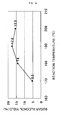
- the sugar alcohol yields for reaction times of 24 and 72 hours are shown in Fig. 5 . Except for the reaction time, the standard conditions were employed. For the three catalysts, the sugar alcohol yield increased little at 72 hours. For each catalyst, the peaks of unidentified by-products were found to increase on the liquid chromatograph at a reaction time of 72 hours.
- the first reaction was conducted under the standard conditions using Pt/ gamma -Al 2 O 3 as catalyst. Following the reaction, the reaction mixture was placed on a centrifugal separator, the solid was sedimented, and the solid was separated by filtering the supernatant solution. As shown in Fig. 6 , the sugar alcohol yield at the time was 18 percent. The separated solid was replenished with cellulose, water was added, and the reaction was similarly conducted. The sugar alcohol yield was 15 percent in the second reaction and 15 percent in the third reaction. These values were almost the same as that in the first reaction. Accordingly, it was found that the catalyst could be reused without activation treatment.
- Phosphoric acid treatment was conducted based on the method of Y. -H. P. Zhang, J. Cui, L. R. Lynd, L. Kuang, Biomacromolecules , 7 , 644 (2006).
- a polypropylene bottle with a capacity of 250 mL
- a magnetic stirrer was introduced, and the mixture was stirred for 5 minutes at room temperature.
- 55 mL of ice-cooled phosphoric acid Karlo Chemical Co., Ltd., special grade
- the stirring operation was conducted by vigorous stirring for 10 minutes and then halting stirring and allowing the mixture to stand for 2 to 3 minutes. This process was repeated for a total of one hour. In this operation, 5 minutes after the phosphoric acid was added all the cellulose was dissolved, giving a uniform aqueous solution. Subsequently, when 200 mL of ice-cooled water was added, the cellulose precipitated as a white powder, which was separated by centrifugal separation. The white powder obtained was washed 5 times with water; the aqueous solution had a pH of 2.5 to 3.0. Next, 2 mL of 2M calcium carbonate aqueous solution was added and the washing was repeated in a neutralization process that resulted in a pH of close to 6.0 to 7.0.
- the white powder was washed 5 to 6 times with water.
- the white powder obtained was dried at 60°C under reduced pressure in a rotary evaporator and then placed in a desiccator containing silica gel and dried overnight. After drying, 0.96 g of white powder was obtained.
- Ball milling treatment was conducted based on the method of H. Zhao, J. H. Kwak, J. A. Franz, J. M. White, J. E. Holladay, Energy & Fuels, 20, 807 (2006 ).
- To a ceramic pot mill with a capacity of 900 mL were charged 1 kg of zirconia beads (10 mm in diameter) and 10 g of cellulose (Merck Inc., Avicel, micropowder). Grinding was conducted for 2 hours at 60 rpm with a bench pot mill rotating base (AS ONE Corp., ANZ-51S). No medium such as water was employed. After the treatment, 0.9 g of powder was recovered and employed in the catalytic reaction as it was.
- Fig. 7 shows the results of X-ray powder diffraction of unreacted, phosphoric acid-treated, and ball mill-treated cellulose.
- the peak intensity greatly diminished, indicating that the crystalline structure collapsed.
- a 100 mL stainless-steel autoclave (OM Labotech Corp., MMJ-100) was used as a reactor and a test was conducted at triple the reaction scale of Embodiment 1.
- the catalysts employed were: gamma -alumina-supported Pt catalyst (Pt/Al 2 O 3 , 0.21 g), HUSY zeolite (Si/Al ratio of 20)-supported Pt catalyst (Pt/HUSY (20), 0.21 g), and gamma -alumina-supported Ru catalyst (Ru/Al 2 O 3 , 0.11 g). These catalysts were prepared by the impregnation method using chloroplatinic acid or ruthenium trichloride as starting materials according to the method described in Embodiment 1.
- the metal loading was 2.5 mass percent.
- the reaction was conducted according to the following procedure. Cellulose (Merck Inc., Avicel, 0.48 g) and distilled water (60 mL) were charged to an autoclave, the autoclave was closed, and 5 MPa of hydrogen was introduced at room temperature. At that time, the ratio of glucose units to the number of metal atoms was adjusted to a molar ratio of 110 (0.9 mol percent). The mixture was heated to 190°C in an electric furnace while stirring with the motorized stirring vanes in the reactor (600 to 800 rpm) and reacted for 24 hours. After the reaction, the mixture was centrifugated and filtered to separate the solid from the supernatant aqueous solution. The product in the aqueous solution was analyzed by liquid chromatography (HPLC) and liquid chromatograph - mass spectrometry (LC-MS).
- HPLC liquid chromatograph - mass spectrometry
- the total yield of the above four sugar alcohol analogs from untreated cellulose was 46.6 percent with Pt/A 2 O 3 . Under identical conditions, the total yield was 33.9 percent with Ru/Al 2 O 3 .
- the yield increased when the cellulose was treated with phosphoric acid. With Pt/Al 2 O 3 catalyst, the total yield of sugar alcohols was 61.2 percent, and the total yield of analogs was 76.9 percent. The yield also increased with phosphoric acid treatment for Ru/Al 2 O 3 catalyst.
- the yields of sugar alcohols and analogs are 70 percent or greater under the hydrogenation and degradation conditions in water with supported metal catalysts by using cellulose pretreated with phosphoric acid or by the ball milling treatment as the starting material.
- the present invention is useful in the field of techniques of producing sugar alcohols (sorbitol and manitol) from cellulose resources.
Landscapes
- Chemical & Material Sciences (AREA)
- Organic Chemistry (AREA)
- Engineering & Computer Science (AREA)
- Materials Engineering (AREA)
- Chemical Kinetics & Catalysis (AREA)
- Crystallography & Structural Chemistry (AREA)
- Dispersion Chemistry (AREA)
- Catalysts (AREA)
- Organic Low-Molecular-Weight Compounds And Preparation Thereof (AREA)
- Low-Molecular Organic Synthesis Reactions Using Catalysts (AREA)
Abstract
Description
- The present application claims priority under Japanese Patent Application
2006-54342, filed on March 1, 2006 - The present invention relates to a cellulose hydrolysis and reduction catalyst and to a method of producing sugar alcohols from cellulose. More particularly, the present invention relates to a catalyst permitting the direct production of sugar alcohols from cellulose and to a method of producing sugar alcohols from cellulose using this catalyst. The specific sugar alcohols that are produced by the present invention are sorbitol and/or manitol.
- The biomass is a renewable resource and plays a role in preventing global warming by inhibiting the emission of carbon dioxide. Processes of converting the biomass to ethanol, lactic acid, and other useful chemical products by an enzymatic or chemical method are being examined in the production of chemical products from the biomass (biorefinery). Currently, starch derived from corn is the main material employed in biorefinery. In terms of the quantity of resources of primary structural components of plants that are available, cellulose is present in overwhelmingly greater quantity than starch. However, the techniques to convert cellulose to chemically useful products by reducing the molecular weight thereof has not been developed, and this resource is currently virtually untapped. (See Koshijima et al., Functional Cellulose, CMC Publishing Co., Ltd. (2003), and The Japan Institute of Energy, ed., Biomass Handbook, Ohmsha (2002), the entire contents of which are hereby incorporated by reference herein.) For example, a large number of research has been conducted into degrading cellulose with enzymes. However, major problems remain with enzymatic methods because of low reaction rates and the need to greatly enhance activity and separate the enzyme from the product. Processes of obtaining glucose by hydrolysis with sulfuric acid or hydrofluoric acid have been attempted in the degradation of cellulose with catalysts. However, such processes have not been put into general practice due to corrosion of reactors with an acid, hazards, and the production of large amounts of neutralization waste becoming a major load on the environment.
- In precedent researches of the chemical conversion of cellulose with catalysts, Balandin and Vasyunina, et al., have conducted hydrogenation with a supported ruthenium catalyst to produce sorbitol from sulfite cellulose with a yield of 82 percent (see A. A. Balandin, N. A. Vasyunina, G. S. Barysheva, S. V. Chepigo, Izv. Akad. Nauk SSSR, Ser. Khim., 392 (1957), the entire contents of which are hereby incorporated by reference herein.). However, there is no description of the use of cellulose itself as a raw material. Further, in this reaction, the use of sulfuric acid requires separation of the product, and presents problems in the form of the generation of neutralization waste and the corrosion of reactors. The same group employed silk cellulose that had been treated with alkali and acid as a raw material, and conducted hydrogenation with supported Raney nickel in the presence of nickel sulfate in an aqueous solution to obtain sorbitol (see N. A. Vasyunina, A. A. Balandin, G. S. Barysheva, S. V. Chepigo, Yu. L. Pogpsov, Z. Prik. Khim., 37, 2725 (1964), the entire contents of which are hereby incorporated by reference herein). Here again, the cellulose has to be pretreated and the product separation is not easy. Specht et al. used a mixture of cellulose and hemicellulose that had been treated by hydrolysis as a raw material, and after adjustment of its pH at 8 or greater, sugar alcohols was synthesized by hydrogenation with supported Raney nickel catalyst (see
H. Specht and H. Dewein, DE 1066567 (1959 ), the entire contents of which are hereby incorporated by reference herein). However, cellulose pretreatment and pH adjustment were required. - Although cellulose is insoluble in water, most starches with similar structure are water soluble. Since hydrolysis and hydrogenation reactions of water-soluble starch proceed smoothly, a large number of research has been conducted in this area. Atlas Powder Corp. employed a Ni/diatomaceous earth catalyst to hydrogenate starch and obtain polyols (see Atlas Powder,
GB 872809 (1961 - Kruse et al. employed a Ru/USY catalyst to synthesize sorbitol from cornstarch in two-steps (see
W. M. Kruse and L. W. Wright, US 3,963,788 (1976 ), the entire contents of which are hereby incorporated by reference herein). - Jacobs et al. employed a Ru/USY catalyst to synthesize sorbitol in a single step (see
P. Jacobs and H. Hinnekens, EP 0329923 (1989 ), Japanese Unexamined Patent Publication (KOKAI) Heisei No.1-268653 EP 0329923A1 ; the entire contents of which are hereby incorporated by reference herein). Hydrogenation of water-insoluble cellulose is not conducted in the cited references. Moreover, the catalysts are limited to high-dispersion ones with a Ru dispersion of 0.58 or higher. - As shown above, in the conventional production of sugar alcohols, such as sorbitol, by the hydrolysis and hydrogenation of cellulose, the cellulose is always treated with an acid or an alkali to increase solubility in water, and then employed as a reaction substrate; there is no example of water-insoluble cellulose itself being used. Further, the need to separate the catalyst and product, adjust the pH, neutralize the acid or alkali, and activate the catalyst during reuse create problems in the form of a major load on the environment.
- Accordingly, the objects of the present invention are to provide a catalyst for use in the production of sugar alcohols by the hydrolysis and hydrogenation of cellulose that permits the use of cellulose without pretreatment, that affords easy separation of catalyst and product, and that does not require pH adjustment, acid or alkali neutralization, or activation of the catalyst during reuse, and to provide a method for producing sugar alcohols from cellulose employing this catalyst.
- To solve the above-stated problem, the present inventors conducted reactions with the aim of reducing the molecular weight of cellulose by using a solid catalyst. This resulted in the discovery that by conducting cellulose hydrolysis and hydrogenation reactions in water with pressurized hydrogen with a supported metal catalyst as indicated by the following reaction equation, sugar alcohols (sorbitol and manitol) were synthesized in a single step.
-

- The present invention is as follows:
- [1] A catalyst for cellulose hydrolysis and/or the reduction of hydrolysis products,
in which a transition metal ofgroup 8 to 11 is supported on a solid support. - [2] The catalyst according to [1], wherein at least a portion of said solid support is comprised of a porous material.
- [3] The catalyst according to [1] or [2], wherein at least a portion of said solid support is comprised of an inorganic oxide.
- [4] The catalyst according to any one of [1] to [3], wherein at least a portion of said solid support is comprised of a material exhibiting acidity.
- [5] The catalyst according to any one of [1] to [4], wherein at least a portion of said solid support is at least one member selected from the group consisting of: silica, alumina, silica-alumina, zeolite, titania, zirconia, and activated carbon.
- [6] The catalyst according to any one of [1] to [5], wherein said solid support is in powder form, particulate form, granular form, or pellet form; has a honeycomb structure or extruded shape; is in ring form or columnar form; has an extruded ribbed shape; or is in ribbed ring form.
- [7] The catalyst according to any one of [1] to [5], wherein said transition metal is at least one member selected from the group consisting of: platinum, ruthenium, rhodium, palladium, iridium, nickel, cobalt, iron, copper, silver, and gold.
- [8] The catalyst according to any one of [1] to [7], wherein said transition metal is supported on the surface of the solid support at a dispersion of 0.01 to 60.
- [9] The catalyst according to any one of [1] to [8], wherein said transition metal is supported at 0.01 to 60 mass percent.
- [10] The catalyst according to any one of [1] to [8], wherein the catalyst is employed for cellulose hydrolysis.
- [11] The catalyst according to any one of [1] to [8], wherein the catalyst is employed for reduction of a cellulose hydrolysis product.
- [12] The catalyst according to any one of [1] to [8], wherein the catalyst is employed for cellulose hydrolysis and for reduction of a cellulose hydrolysis product.
- [13] A method of producing sugar alcohols comprising:
hydrolyzing cellulose in the presence of the catalyst described in any one of [1] to [9] in a hydrogen-containing atmosphere with pressurization; and
reducing the hydrolysis product of cellulose. - [14] The producing method according to [13], wherein said cellulose is alpha-cellulose having crystallinity or having reduced crystallinity.
- [15] The producing method according to [13] or [14], wherein the hydrolysis and reduction are conducted in the presence of water.
- [16] The producing method according to any one of [13] to [15], wherein said catalyst is employed in a mass ratio of 0.05 to 5 relative to cellulose.
- [17] The producing method according to any one of [13] to [16], wherein the hydrogen-containing atmosphere has a hydrogen pressure of 1 to 100 MPa.
- [18] The producing method according to any one of [13] to [17], wherein said hydrolysis and reduction are conducted with heating at 150 to 250°C.
- [19] The producing method of any one of [13] to [18], wherein said sugar alcohols are sorbitol and/or manitol.
- [20] The producing method of any one of [13] to [19], wherein after completion of said hydrolysis and reduction, the reaction mixture is subjected to solid-liquid separation and separated into an aqueous solution comprising sugar alcohols and a solid comprising at least the catalyst and unreacted cellulose.
- The present invention has the following features:
- 1. The fact that sugar alcohols (sorbitol and manitol) can be directly synthesized employing cellulose as raw material has been discovered for the first time. The principal component of the sugar alcohols is sorbitol.
- 2. The fact that among catalysts, supported Pt and Ru catalysts exhibit high activity has been discovered. Catalysts corresponding to the previously patented Ru/HUSY (Ru/HUSY (2.9, NH3, IE) in
Fig. 1 ), which synthesize sorbitol from starch, exhibit only extremely low activity (a yield of 0.7 percent) in the present cellulose reaction. Accordingly, only with the recently discovered catalyst has the cellulose reaction become possible. Inorganic oxide supports exhibiting solid acidity afford high activity. - 3. The catalyst that has been separated can be reused as is; activation processing is unnecessary.
- Sorbitol is a sugar alcohol with three applications. The first application is that of sweetener, which is widespread in the food industry. The second is future application as an intermediate in the synthesis of useful compounds such as isosorbide, propylene glycol, ethylene glycol, glycerol, 1,4-sorbitan, and lactic acid. Isosorbide, in particular, is also employed in current processes, such as copolymerization during the production of polyethylene terephthalate (PET) to production polyethylene isosorbide terephthalate (PEIT). The PEIT polymer has a higher glass transition point than PET, so use in transparent plastic containers that can hold hot water is anticipated. The third application, also a future application, is as an intermediate in the production of hydrogen and liquid hydrocarbons (comprised mainly of C5 and C6 alkanes) that can be renewed from the biomass. Hydrogen is employed in fuel cells and hydrocarbons are a raw material for petrochemistry. Although hydrogen can be produced from glucose and sorbitol using supported metal catalysts, based on the research of Dumesic et al., the use of sorbitol as a raw materials affords greater hydrogen and alkane selectivity than glucose (J. A. Dumesic et al., Chem. Commun. 36 (2004)). Accordingly, application of the results of the present invention permits the production of hydrogen for fuel cells and hydrocarbons for the petrochemical industry employing cellulose as raw material with sorbitol as intermediate. Manitol is an isomer (epimer) of sorbitol at the C2 position and has properties similar to those of sorbitol.
- The catalyst of the present invention, in which a transition metal of
group 8 to 11 is supported on a solid support, catalyzes the hydrolysis of cellulose and/or the reduction of a hydrolysis product. The "hydrolysis product" referred to is a cellulose hydrolysis product, specifically glucose. - At least a portion of the solid support employed in the catalyst of the present invention is suitably comprised of a porous material; it is also suitable for a transition metal to be supported on the surface of the porous material. Accordingly, the solid support employed in the catalyst of the present invention is suitably comprised of a porous material at least some portion of the surface of which supports a transition metal, and the solid support may be comprised of a porous material as a whole or may be comprised of a nonporous material the surface of which is coated with a porous material. The support may also be comprised of another porous material.
- At least a portion of the solid support employed in the catalyst of the present invention can be comprised of an inorganic oxide, for example. The inorganic oxide is desirably the above-described porous material. Further, at least a portion of the solid support employed in the catalyst of the present invention is desirably in the form of a solid support exhibiting acidity, with the solid support exhibiting acidity desirably being the above-described porous material. Based on the results of research by the present inventors, the solid support desirably gives a proton acid site on the support, at which hydrogen molecules are dissociated by a metal such as Pt.
- Specific example of the solid support are: silica, alumina, silica-alumina, zeolite, titania, zirconia, and activated carbon.
Among the silicas, examples of amorphous silicas are: Wako Pure Chemical Industries, Ltd.: Wakogels (C-100, C-100E, C-200, C-200E, C-300, C-300E, C-300HG, C-400HG, C-500HG, 50C18,100C18, DX, FC-40, FC-40FM, G, LP-20, LP-40, LP-60, Q-12, Q-22, Q-23, Q-50, Q-63, and S-1); Wakosils (C-200, C-300, 25SIL, 25C18, 40SIL, and 40C18); Kanto Chemical Co., Inc.: silica gels (60 and 60N); Merck, Inc.: silica gels (40, 60, and 100); Sigma-Aldrich Japan K. K.: silica gels (03,12, 15, 22, 40, 41, 62, 922, 923, high-purity grade, 70-230 mesh 60 A, 70-270 mesh 60 A, 130-270 mesh 60 A, and 200-400 mesh 60 A) and silicon dioxide (particle size 0.5-10 micrometers); Fuji Silysia Chemical, Ltd.: CARIACT (Q, G, and P); Grace Davison Co.: Davisil (633, 634, 635, 636, 643, 644, 645, 646, and 710); Degussa (Nippon Aerosil Co., Ltd.)): Aerosil (90, 130, 150, 200, 300, and 380); NIKKI CHEMICAL CO.,LTD.: silica catalysts (N601, N601A, N601T, N601R3, N601A3, N601T3, N602, N602A, N602T, N608R, N608A, and N608T); Catalysis Society of Japan: silica reference catalysts (JRC-SIO-1, JRC-SIO-5, JRC-SIO-6, JRC-SIO-7, and JRC-SIO-9A); and Riedel-de Haën Co.: Cabosil M-5. - Examples of mesoporous silicas are those having pore diameters of 2 to 50 nm and surface areas of 500 to 1,500 m2g-1, such as FSM-16 (S. Inagaki et al., J. Chem. Soc., Chem. Commun., 680 (1993); MCM-41 (C. T. Kresge et al., Nature, 359, 710 (1992); J. S. Beck, et al. J. Am. Chem. Soc., 114, 10834 (1992)); SBA-15 (D. Zhao, et al., Science, 279, 548 (1998); Taiyo Kagaku Co., Ltd.: NPM (nanoporous material, pore diameter 1-10nm); and Sigma-Aldrich Japan K.K.: Silica (mesostructured, hexagonal framework, MCM-41 type).
- Examples of alumina in the form of gamma-alumina are: Wako Pure Chemical Industries, Ltd.: activated alumina; Kanto Chemical Co., Inc.: aluminum oxide (alpha-type, NanoTek, activated); Merck Inc.: Alumina (90, 90 (activated, acidic, activity I), 90 (activated, basic, activity I), and 90(activated, neutral, activity I)); Sigma-Aldrich Japan K.K.: aluminum oxide (99.99 percent, - 100 mesh 99.9 percent, powder <10 micrometers, nanopowder, nanopowder whiskers, -100 mesh 99 percent, pellets 3 mm, activated acidic Brockmann I, activated weakly acidic Brockmann I, activated basic Brockmann I, activated neutral Brockmann I, fused); Nishio K.K.: gamma-alumina A-11; NIKKI CHEMICAL CO.,LTD.: alumina catalysts (N611N, N61N3, N612N, and N613N); and the Catalysis Society of Japan: alumina reference catalysts (JRC-ALO-1, JRC-ALO-2, JRC-ALO-3, JRC-ALO-5, JRC-ALO-1A, JRC-ALO-5A, JRC-ALO-6, JRC-ALO-7, and JRC-ALO-8).
- Examples of titania comprise the rutile, anatase, and amorphous forms, specifically: Wako Pure Chemical Industries, Ltd.: titanium (IV) oxide (amorphous, anatase, and rutile forms, 80 nm); Kanto Chemical Co., Inc.: titanium (IV) oxide (rutile and anatase forms, 3N, NanoTek); Sigma-Aldrich Japan K.K.: Titanium(IV) oxide (99.999 percent, 99.99 percent, mesoporous 32 Angstrom pore 99.95 percent, powder <5 microns 99.9+ percent, powder 99.9+ percent, -325 mesh 99+ percent; Japan Aerosil Co., Ltd.: Aeroxide TiO2 (NKT90, P25, PF2, and T805); Sakai Chemical Industry Co., Ltd.: titanium oxides (SR-1, R-42, R-GL, R-GX, R-GX-2, R-45M, R-650, R-32, R-5N, R-5N-2, R-61N, R-62N, R-7E, R-3L, R-3L-SN, R-11P, R-21, R-25, R-310, D-918, A-110, A-150, ST-G, A-190, SA-1, and SA-1L); Ishihara Sangyo Kaisha, Ltd.: ultrafine particulate titanium oxide (TTO-51(A), TTO-51(C), TTO-55(A), TTO-55(B), TTO-55(C), TTO-55(D), TTO-S-1, TTO-S-2, TTO-S-3, MPT-136, TTO-V-3, TTO-V-4, TTO-F-2, and TTO-F-6), neutral titaniasol TSK-5, catalyst supporting titanium oxides (MC-50, MC-90, MC-150), and photocatalyic titanium oxides (ST-01, ST-21, ST-31, ST-41, and ST-30L); and the Catalysis Society of Japan: titania reference catalysts (JRC-TIO-1, JRC-TIO-2, JRC-TIO-4, JRC-TIO-5, JRC-TIO-6, JRC-TIO-7, JRC-TIO-8, JRC-TIO-9, JRC-TIO-10, JRC-TIO-11, JRC-TIO-12, and JRC-TIO-13),
- Examples of silica-alumina are Sigma-Aldrich Japan K.K.: silica-alumina catalyst support grade 135; NIKKI CHEMICAL CO.,LTD.: silica-alumina (N631 L, N631 HN, N632L, N632HN, N633L, and N633HN), and the Catalysis Society of Japan: silica-alumina reference catalysts (JRC-SAH-1 and JRC-SAL-2).
- Examples of zeolite are:
beta-type (structural code BEA, hereinafter same): Catalysis Society of Japan: zeolite (beta) reference catalysts JRC-Z-B25(1), JRC-Z-HB25(1), JRC-HB150(1); Zeolyst Co.: CP814N*, CP814E*, CP814C*, CP814Q*,CP81 1 E-1 50, CP811C-300; Tosoh Corporation: 930NHA, 940NHA, and 940HOA;
Y-type (FAU): Sigma-Aldrich Japan K.K.: molecular sieve catalyst support, sodium Y zeolite, powder; molecular sieves catalyst support, ammonium Y zeolite, powder; Catalysis Society of Japan: zeolite (Y-type) reference catalysts JRC-Z-Y4.8, JRC-Z-Y5.6, JRC-Z-HY4.8(2), JRC-Z-Y5.5, JRC-Z-Y5.3, JRC-Z-HY5.5, and JRC-Z-HY5.3; UOP LLC: Y-52(NaY), Y-64(NH4Y), Y-74(HY), Y-84(NH4Y), and LZ-15(HY); Zeolyst Co.: CBV100, CBV300, CBV400, CBV 600, CBV 712, CBV 720, CBV 740, CBV760, CBV780, and CBV 901); Tosoh Corporation: 320NAA, 320HOA, 331HSA, 341NHA, 350HUA, 360HUA, 385HUA, and 390HUA; and Catalysts & Chemicals Ind. Co., Ltd.: ZCP-50S, ZCP-50, ZCP-150, ZCP-300, ZCP-700, ZCP-1000, ZCP-2000, ZCE-50S, ZCE-50, ZCE-150 to 2000, ZCB-50S, and ZCB-2000. In the present application, when referring to Y-type zeolites, the dealuminated Y-type zeolites is referred to as "USY" and those that have not been so processed simply as "Y". Accordingly, those in which the cation is a proton is referred to as "HUSY" and "HY," respectively.
ZSM-5 type (MFI): Catalysis Society of Japan: zeolite (ZSM-5) reference catalysts: JRC-Z5-25H, JRC-Z5-70H, JRC-Z5-1000H, JRC-Z5-10NA, JRC-Z5-1000NA, JRC-Z5-90NA(1), and JRC-Z5-90H(1); and Zeolyst Co.: CBV2314, CBV3020E, CBV3024E, CBV5524G, CBV8014, and CBV28014.
Mordenite zeolite (MOR): Catalysis Society of Japan: zeolite (mordenite) reference catalysts JRC-Z-M15(1), JRC-Z-M20(1), JRC-Z-HM20(5), JRC-Z-HM90(1); Zeolyst Co.: CBV10A, CBV21A, and CBV90A; and Tosoh Corporation: 642NAA, 640HOA, and 690HOA. Among those cited above, USY type with dealumination treatment is desirable. - Examples of activated carbon are: Wako Pure Chemical Industries, Ltd.: activated carbon (for chromatography, comminuted form 0.2 to 1 mm, comminuted form 2 to 5 mm, granular form, powder form, powder acid-washed, powder alkaline, powder neutral, rod-shaped); Kanto Chemical Co., Inc.: activated carbon (particulate and powder); Sigma-Aldrich Japan K.K.: activated carbon granules 4 to 14 mesh; Norit Japan Co., Ltd.: PK, PKDA 10x30 MESH (MRK), ELORIT, AZO, DARCO, HYDRODARCO 3000/4000, DARCO LI, PETRODARCO, DARCO MRX, GAC, GAC PLUS, DARCO VAPURE, GCN, C GRAN, ROW/ROY, RO, ROX, RB/W, R, R.EXTRA, SORBONORIT, GF 40/45, CNR, ROZ, RBAA, RBHG, RZN, RGM, SX, SA, D 10, VETERINAIR, PN, ZN, SA-SW, W, GL, SAM, HB PLUS, A/B/C EUR/USP, CA, CN, CG, GB, CAP/CGP SUPER, S-51, S-51 A, S-51 HF, S-51 FF, DARCO GFP, HDB/HDC/HDR/HDW, GRO SAFE, DARCO INSUL, FM-1, DARCO TRS, DARCO FGD/FGL/Hg/Hg-LH. and PAC 20/200; Japan EnviroChemicals, Ltd.: Shirasagi (A, C, DO-2, DO-5, DO-11, FAC-10, M, P, PHC, Element DC), Aldenite, Carboraffin, Carboraffin DC, honeycomb carbo Shirasagi, Morshibon, strong Shirasagi, purified Shirasagi, special order Shirasagi, X-7000/X7100, X7000-3/X-7100-3, LPM006, LPM007, and particulate Shirasagi (APRC, C2c, C2x, DC, G2c, G2x, GAAx, GH2x, GHxUG, GM2x, GOC, GOHx, GOX, GS1x, GS2x, GS3x, GTx, GTsx, KL, LGK-100, LGK-400, LGK-700, LH2c, MAC, MAC-W, NCC, S2x, SRCX, TAC, WH2c/W2c, WH2x, WH5c/W5c, WHA, X2M (Morshibon 5A), XRC, X7000H/X7100H, X7000H-3/X7100-3, LGK-700, and DX7-3); Kuraray Chemical Co., Ltd: gas phase-use particulate activated carbons GG/GS/GA; gas phase-use activated carbons GW/GL/GLC/KW/GWC; and powder activated carbons PW/PK/PDX; Calgon Mitsubishi Chemical Carbon: Diahope (006, 006S, 007, 008, 008B, 008S, 106, 6D, 6MD, 6MW, 6W, S60, C, DX, MM, MZ, PX, S60S, S61, S70, S80, S80A, S80J, S80S, S81, ZGA4, ZGB4, ZGN4, ZGR3, ZGR4, ZS, ZX-4, and ZX-7), Diasorp (F, G4-8, W 8-32, W 10-30, XCA-C, XCA-AS, and ZGR4-C), and Calgon (AG 40, AGR, APA, AP3-60, AP4-60, APC, ASC, BPL, BPL 4x10, CAL, CENTAUR 4x6, CENTAUR 8x30, CENTAUR 12x40, CENTAUR HSV, CPG 8x30, CPG 12x40, F-AG 5, Filtrasorb 300, Filtrasorb 400, GRC 20, GRC 20 12x40, GRC 22, HGR, HGR-LH, HGR-P, IVP 4x6, OL 20x50, OLC 20x50, PCB, PCB 4x10, RVG, SGL, STL 820, URC, WS 460, WS 465, WS 480, WS490, and WSC 470); Ajinomoto Fine-Techno Co., Inc.: BA, BA-H, CL-H, CL-K, F-17, GS-A, GS-B, HF, HG, HG-S, HN, HP, SD, Y-180C, Y-4, Y-4S, Y-10S, Y-10SF, YF-4, YN-4, YP, and ZN; and Cataler Corporation: A series, BC-9, BFG series, CT series, DSW series, FM-150, FW, FY series, GA, PG series, and WA series. Activated carbon with a surface area of 800 to 1,500 m2g-1 is desirable.
- Neither the shape nor the form of the solid support is specifically limited. However, for example, powder form, particulate form, granular form, pellet form, or honeycomb form; an extruded shape; a ring form or columnar form; an extruded ribbed shape; or a ribbed ring form can be used. A support that is in the form of a powder, particle, grain, or pellet, for example, can be comprised solely of the above-described porous material, oxide, or material exhibiting acidity. By contrast, a support of honeycomb structure can be comprised of a nonporous material, such as a support comprised of cordierite or the surface of which is coated with a porous material, oxide, or material exhibiting acidity. This support can also be comprised of another porous material.
- The transition metal is at least one member selected from the group consisting of platinum, ruthenium, rhodium, palladium, iridium, nickel, cobalt, iron, copper, silver, and gold. These transition metals may be employed singly or in combinations of two or more. From the perspective of high catalytic activity, the transition metal is desirably selected from among the platinum group of metals consisting of platinum, ruthenium, rhodium, palladium, and iridium.
- The transition metal is suitably supported on the surface of the solid support with a dispersion of 0.01 to 0.95, desirably 0.1 to 0.9, and preferably, 0.3 to 0.8. The lower the dispersion, the lower the rate of proton formation from the hydrogen molecules due to metal aggregation, thus decreasing the reaction rate. The dispersion of the transition metal can be adjusted by the amount of transition metal compound employed as the starting material, the temperature conditions (rate of temperature rise and maximum temperature) of oxygen calcination during catalyst preparation, and the temperature conditions during hydrogen reduction (rate of temperature rise and maximum temperature).
- The amount of transition metal that is supported on the solid support can be suitably determined in consideration of the type and the dispersion of the transition metal, and is, for example, suitably 0.01 to 50 mass percent, desirably 0.01 to 30 mass percent, and more preferably, 0.01 to 10 mass percent, of the catalyst.
- The catalyst of the present invention can be produced by referencing conventional methods for preparing metal-supporting solid catalysts. For example, preparation is possible in the following manner by the impregnation method.
The support is vacuum dried for one hour at 150°C. Next, water is added to prepare a dispersion liquid. To this is added an aqueous solution containing a prescribed quantity of a metal salt and the mixture is stirred for 15 hours. Subsequently, the water is evaporated off under reduced pressure to obtain a solid, which is calcined for 2 hours at 400°C under an oxygen gas flow. The product is then reduced for 2 hours at 400°C under a hydrogen gas flow to obtain a catalyst in solid form (see the flowchart below).
- The catalyst of the present invention is employed to reduce a hydrolysis product of cellulose. That is, it can be used to prepare sugar alcohols by reducing glucose, which is a hydrolysis product of cellulose. Alternatively, the catalyst of the present invention is employed to hydrolyze cellulose and reduce the hydrolysis product of the cellulose. That is, it can be used to prepare sugar alcohols by hydrolyzing cellulose to obtain glucose and then reducing the glucose. The cellulose that is hydrolyzed by the catalyst of the present invention will be described in detail in the method for producing sugar alcohols below.
- The method of producing sugar alcohols of the present invention comprises the steps of hydrolyzing cellulose in a hydrogen-containing atmosphere in the presence of the above-described catalyst of the present invention and reducing the hydrolysis product of cellulose.
- The cellulose serving as the raw material is not specifically limited; commercially available cellulose in powder form can be employed as is. The cellulose is of plant form, and may be, for example, water-insoluble alpha-cellulose obtained by bleaching a defatted wood powder with a chlorine treatment to obtain a chemical pulp (holocellulose), which is then subjected to an alkali treatment to remove the hemicellulose.
- Generally, in cellulose, two or more alpha-cellulose units are bonded together by hydrogen bonds and exhibit crystallinity. In the present invention, cellulose exhibiting such crystallinity can be employed as the starting material, or such crystalline cellulose can be treated to reduce the crystallinity and the resulting cellulose of reduced crystallinity can be employed. The cellulose of reduced crystallinity can be cellulose the crystallinity of which has been partially reduced, or cellulose in which the crystallinity has been completely, or nearly completely, eliminated. The type of processing used to reduce crystallinity is not specifically limited, but a crystallinity-reducing process capable of cleaving the above hydrogen bonds and at least partially producing single-chain alpha-cellulose is desirable. The use of a starting material in the form of cellulose at least partially comprising single-chain alpha-cellulose greatly enhances the efficiency of hydrolysis.
- The process used to reduce the crystallinity of the starting material cellulose can be a method of obtaining single-chain alpha-cellulose by physically cleaving the hydrogen bond of alpha-cellulose such as a ball mill processing (see H. Zhao, J. H. Kwak, J. A. Franz, J. M. White, J. E. Holladay, Energy & Fuels, 20, 807 (2006), the entire contents of which are hereby incorporated by reference herein), or a method of obtaining single-chain alpha-cellulose by chemically cleaving the hydrogen bond of alpha-cellulose such as a phosphoric acid processing (see Y. -H. P. Zhang, J. Cui, L. R. Lynd, L. Kuang, Biomacromotecules, 7, 644 (2006), the entire contents of which are hereby incorporated by reference herein), for example. Even when the processing to reduce the crystallinity of cellulose does not completely eliminate the crystallinity of the cellulose, as described in
Embodiment 7, the efficiency of hydrolysis is greatly enhanced by employing cellulose as the starting material, the crystallinity of which has been partially reduced comparing to that prior to such processing. - A further example of a process for reducing the crystallinity of cellulose is processing with pressurized hot water (see N. Hayashi, S. Fujita, T. Irie, T. Sakamoto, M. Shibata, J. Jpn. Inst. Energy, 83, 805 (2004), and M. Sasaki, Z. Fang, Y. Fukushima, T. Adschiri, K. Arai, Ind. Eng. Chem. Res., 39, 2883 (2000), the entire contents of which are hereby incorporated by reference herein).
- The hydrolysis and reduction are conducted in the presence of water. The quantity of water present is at least enough to hydrolyze the entire quantity of cellulose, and desirably falls within a mass range of 5 to 500, for example, relative to the cellulose when the fluidity and stirring properties of the reaction mixture are taken into account.
- The quantity of catalyst employed can be suitably determined in consideration of the activity of the catalyst and the reaction conditions (such as the temperature, duration, and hydrogen pressure). For example, a mass ratio falling within a range of 0.05 to 5 relative to the cellulose is suitable.
- The reaction atmosphere is a hydrogen-containing atmosphere. The hydrogen-containing atmosphere, for example, suitably consists of a hydrogen pressure of 1 to 100 MPa, desirably 1.5 to 50, and more preferably, 2 to 20 MPa.
- The hydrolysis and reduction are, for example, suitably conducted at 150 to 250°C with heating, desirably 180 to 250°C with heating, and more preferably, 190 to 210°C with heating.
- The reaction time of the hydrolysis and reduction can be suitably determined by taking into account the scale of the reaction, the reaction conditions, the amounts of catalyst and cellulose employed, and the like. Normally, a reaction time of 1 to 100 hours is suitable. The reaction can be conducted in batch-type, continuous flow-type, or the like. The reaction is desirably conducted by stirring the reaction mixture.
- Once the hydrolysis and reduction have ended, the reaction mixture can be subjected to solid-liquid separation, the aqueous solution containing the sugar alcohols can be recovered as a liquid phase, and solids including at least the catalyst and unreacted cellulose can be separated out as the solid phase. The method of solid-liquid separation is not specifically limited, and may be suitably determined based on the usual methods in consideration of the shape and form of the catalyst, the amount of unreacted cellulose present, and the like. For example, methods such as filtration, centrifugation, and precipitation can be employed. The solid containing the catalyst and unreacted cellulose can be employed in the next reaction.
- The catalyst of the present invention does not specifically require activation for reuse. However, for example, the usual activation of metal-supported solid catalysts can be employed prior to reuse.
In the catalyst activation process, the catalyst can be washed with water and dried and the metal and residual organic compounds on the support can be removed by thermal degradation with heating for 1 to 5 hours at 200 to 500°C under a hydrogen gas flow while returning the surface of the supported metal to a reduced state for use. - The present invention will be described in detail below through embodiments.
- Catalyst supports in the form of amorphous silica (denoted as SiO2 hereinafter: CARIACT Q-10 made by Fuji Silysia Chemical, Ltd.), mesoporous silica (FSM-16, prepared in-house (S. Inagaki, et al., J. Chem. Soc., Chem. Commun., 680 (1993))), gamma-alumina (gamma-Al2O3, made by Nishio K. K. A-11), titania (TiO2, Merck, Inc.), zirconia (ZrO2, Wako Pure Chemical Industries, Ltd.), silica-alumina (SiO2-Al2O3, Sigma-Aldrich Japan K.K. grade 135), HY (Zeolyst Co., CBV600, Si/Al atomic ratio of 2.6), HUSY (Zeolyst Co., CBV720 (Si/Al ratio 15), 740 (Si/Al ratio 20), 760 (Si/Al ratio 30), 780 (Si/Al ratio 40)), HUSY (Catalysts & Chemicals Ind. Co., Ltd. ZCP-2000, Si/Al ratio 100), ZSM-5 (Zeolyst Co. CBV4024E), H-beta (Catalysis Society of Japan, catalyst JRC-Z-B25(1)), HMOR (Catalysis Society reference catalyst JRC-Z-M15(1)), activated carbon (Takeda Pharmaceutical Co., Ltd. (now, Japan EnviroChemicals, Ltd.), LPM007) were employed. HUSY prepared from NaY (Union Carbide LZY-52) by the method described in
Patent References - The example of Pt/HUSY (40) will be described below as the method of preparing a catalyst. HUSY (40) powder (200 mg) was heated at 150 °C for 1 hour using a vacuum line and dried (degree of vacuum about 10-3 Torr = 0.13 Pa). The mixture was cooled to room temperature and water (20 mL) was added to disperse the powder. To this was added an aqueous solution (5 mL) of H2PtCl6·xH2O (15 mg) and the mixture was stirred for 15 hours at room temperature. Subsequently, the water was evaporated off in an evaporator. The powder obtained was vacuum dried at room temperature for 2 hours in a vacuum line. Next, the powder was charged in a U-shaped glass tube and calcined by heating at 400°C for 2 hours under an oxygen gas flow (flow
rate 20 mL/minute). After cooling to room temperature, nitrogen gas was passed through to remove the oxygen, and under a hydrogen gas flow (flowrate 20 mL/minute), the mixture was reduced by heating for 2 hours at 400°C. After cooling to room temperature, nitrogen gas was passed through to remove the hydrogen, and the powder was recovered. The amount of metal supported in the catalyst was 60 mass percent for Ni/SiO2-Al2O3, but 2.5 mass percent for other catalysts. For catalysts in which Ru was supported on HUSY (2.9), [Ru(NH3)6]Cl3 was employed as starting material and the ion-exchange (IE) method (Patent References 4 and 5) was employed to prepare Ru/HUSY (2.9, NH3, IE). The impregnation - evaporation to dryness (IMP) method was employed using [Ru(NH3)6]Cl3 to prepare Ru/HUSY (2.9, NH3, IMP), and the impregnation - evaporation to dryness method was employed on RuCl3·xH2O to prepare Ru/HUSY (2.9, Cl, IMP). The catalytic activity of these compounds was compared. In addition, HUSY (20) support was impregnated with RuCl3·xH2O and the evaporation to dryness method was employed to prepare Ru/HUSY (20, Cl, IMP) as a catalyst for use. - The dispersion by carbon monoxide adsorption by the pulse method (CO/Pt, measured with a Chembet-3000 made by Quantachrome Instruments) is shown in Table 1. The dispersion of Pt varied significantly based on the support. The dispersion of the Ru catalyst, at about 0.01 to 0.03, was lower than that described in
Patent References Patent References - [Table 1]
Table 1 Dispersion of various catalysts by CO adsorption Catalyst Dispersion (CO/Pt) Pt/FSM-16 0.44 Pt/SiO2 0.08 Pt/gamma-Al2O3 0.50 Pt/HUSY(20) 0.41 Pt/C 0.03 Pt/ZrO2 0.08 Pt/TiO2 0.18 Ru/FSM-16 0.005 Ru/SiO2 0.02 Ru/HUSY(20, Cl, IMP) 0.01 Ru/HUSY(2.9, NH3, IE) 0.026 Pd/FSM-16 0.08 Ir/FSM-16 0.16 Rh/FSM-16 0.39 - The reaction procedure for Pt/HUSY (40) is shown. These conditions will be referred to as the "standard conditions" hereinafter. To a stainless-steel autoclave (Taiatsu Techno Corp., model TPR2, 30 mL capacity) were charged 0.16 g of cellulose (Merck, Inc., microcrystals, 80 percent or more having a particle diameter of 20 to 160 micrometers), Pt/HUSY (40) (0.068 g), 20 g of water, and a stirrer, and the autoclave was closed. Here, the number of mols S of C6H10O5 units in the cellulose was 0.99 mmols and the total number C of atoms of metal in the catalyst was adjusted to be S/C = 110. When changing the catalyst, the mass of the catalyst was adjusted to achieve S/C = 110; 0.068 g of Pt catalyst, 0.036 g of Ru catalyst, 0.037 g of Rh catalyst, 0.037 g of Pd catalyst, 0.068 g of Ir catalyst, and 0.009 g of Ni catalyst were employed. Next, 5 MPa of hydrogen gas was introduced at room temperature. The autoclave was placed in a 190°C oil bath and the reaction was conducted for 24 hours while stirring with a magnetic stirrer. Subsequently, the autoclave was cooled to room temperature, the remaining hydrogen gas was removed, the autoclave was returned to ambient pressure, the autoclave was opened, and the contents were recovered.
- The product was analyzed with a liquid chromatograph (Shimadzu Corp. LC10ATVP, differential refractive index detector, column: Shodex Asahipak NH2P-50 4E or Shimadzu Shim-pack SPR-Ca). The sugar alcohols (sorbitol and manitol) were identified by liquid chromatography mass spectrometry (Shimadzu LCMS-2010A). The sorbitol yield was the ratio of the number of mols P of sorbitol produced to the number of mols S of C6H10O5 units of cellulose charged: the sorbitol yield (percentage) = (number of mols P of sorbitol produced)/(number of mols S of C6H10O5 units of cellulose charged) x 100. The manitol yield was similarly calculated.
- The results of the reaction conducted under the standard conditions using the various supported metal catalysts are given in
Fig. 1 . In almost all cases, cellulose hydrolysis and hydrogenation proceeded catalytically and sugar alcohols were produced, with sorbitol being the primary product. For example, the yield of sugar alcohols produced with the Pt/gamma-Al2O3 catalyst was 18 percent, of which sorbitol comprised 15 percent and mannitol 3 percent. Similar product selectivity was achieved with the other catalysts. Under these reaction conditions, Pt/HUSY (40) and Pt/SiO2-Al2O3 produced sugar alcohol yields of 20 percent or higher and afforded high activity. The activity order of the metals was: Pt > Ru > Pd > Rh > Ni > Ir. For Pt, the order of activity based on supports is given inFig. 2 . The sequence was: HUSY (40), SiO2-Al2O3 > HUSY (20), gamma-Al2O3 > HZSM-5, HUSY (30) > HUSY (15) > HUSY (100), H-beta > FSM-16, SiO2, HY (2.6), TiO2 > ZrO2 > C (activated carbon), HUSY (2.9), HMOR. Activity was highest for HUSY (40) and SiO2 - Al2O3, while the yields were low for ZrO2, activated carbon, HUSY (2.9), and HMOR. Based on these results, it was surmised that those inorganic oxides exhibiting acidity were effective as supports, but the acidity did not directly correspond to the order of acid strength of the supports. Accordingly, the main active site of cellulose hydrolysis was not the acid sites inherently present on the support. Instead, it is suggested the hydrogen molecules were dissociated by Pt and Ru under hydrogen pressure conditions, moving onto the support (the spillover phenomenon) and creating proton acid sites (Hattori, Shokubai, 45, 327 (2003)). Actually, as shown inFig. 3 , when the reaction was conducted under similar conditions employing the various supports without the metals, only a small amount of glucose was produced. This resulst indicates that supporting the metals promotes hydrolysis. - The supported Ru catalyst exhibited activity in catalyzing and hydrogenating cellulose. However, interestingly, a catalyst (Patent References 4 and 5) employing HUSY (2.9) that was prepared from LZY-52, which was reported in prior art as having exhibited high activity in starch hydrolysis and hydrogenation, afforded an extremely low yield of 3 percent or lower regardless of the catalyst preparation and a Ru precursor. However, the Ru catalyst employing HUSY (20) as support afforded a sugar alcohol yield of 17 percent.
- The dependence on reaction temperature of the sugar alcohol yield by Pt/gamma-Al2O3 catalyst was examined. Except for the reaction temperature, the standard conditions were employed. As shown in
Fig. 4 , the sugar alcohol yield at 180°C was 14 percent, increased to 18 percent at 190°C. However, at 200°C, the yield decreased to 16 percent. Thus, 190°C was the optimal temperature. - The sugar alcohol yields for reaction times of 24 and 72 hours are shown in
Fig. 5 . Except for the reaction time, the standard conditions were employed. For the three catalysts, the sugar alcohol yield increased little at 72 hours. For each catalyst, the peaks of unidentified by-products were found to increase on the liquid chromatograph at a reaction time of 72 hours. - Reuse of the catalysts was examined. The first reaction was conducted under the standard conditions using Pt/gamma-Al2O3 as catalyst. Following the reaction, the reaction mixture was placed on a centrifugal separator, the solid was sedimented, and the solid was separated by filtering the supernatant solution. As shown in
Fig. 6 , the sugar alcohol yield at the time was 18 percent. The separated solid was replenished with cellulose, water was added, and the reaction was similarly conducted. The sugar alcohol yield was 15 percent in the second reaction and 15 percent in the third reaction. These values were almost the same as that in the first reaction. Accordingly, it was found that the catalyst could be reused without activation treatment. - A test was conducted in which the charge stock was tripled. That is, to an autoclave were charged 0.4807 g of cellulose, 0.209 g of Pt/gamma-Al2O3, and 60 g of water. Hydrogen was introduced at an initial pressure of 5 MPa and the mixture was reacted for 24 hours at 190°C. Following the reaction, the solid (catalyst and cellulose) was separated from the aqueous phase by centrifugation. Analysis of the aqueous phase by liquid chromatography revealed a sugar alcohol yield of 28 percent, which converted to a mass of 0.135 g. When the aqueous phase was evaporated to dryness, 0.223 g of an oily substance was obtained. Accordingly, the sugar alcohol selectivity (based on mass) in the aqueous solution was 61 percent. The remaining by-products were unidentified.
- Phosphoric acid treatment was conducted based on the method of Y. -H. P. Zhang, J. Cui, L. R. Lynd, L. Kuang, Biomacromolecules, 7, 644 (2006). To a polypropylene bottle (with a capacity of 250 mL) were charged 1.0 g of cellulose (Merck, Inc., Avicel, micropowder) and 30 mL of distilled water, a magnetic stirrer was introduced, and the mixture was stirred for 5 minutes at room temperature. Next, 55 mL of ice-cooled phosphoric acid (Kanto Chemical Co., Ltd., special grade) was added and the mixture was vigorously stirred while being cooled with ice to about 4°C. The stirring operation was conducted by vigorous stirring for 10 minutes and then halting stirring and allowing the mixture to stand for 2 to 3 minutes. This process was repeated for a total of one hour. In this operation, 5 minutes after the phosphoric acid was added all the cellulose was dissolved, giving a uniform aqueous solution. Subsequently, when 200 mL of ice-cooled water was added, the cellulose precipitated as a white powder, which was separated by centrifugal separation. The white powder obtained was washed 5 times with water; the aqueous solution had a pH of 2.5 to 3.0. Next, 2 mL of 2M calcium carbonate aqueous solution was added and the washing was repeated in a neutralization process that resulted in a pH of close to 6.0 to 7.0. Subsequently, the white powder was washed 5 to 6 times with water. The white powder obtained was dried at 60°C under reduced pressure in a rotary evaporator and then placed in a desiccator containing silica gel and dried overnight. After drying, 0.96 g of white powder was obtained.
- Ball milling treatment was conducted based on the method of H. Zhao, J. H. Kwak, J. A. Franz, J. M. White, J. E. Holladay, Energy & Fuels, 20, 807 (2006). To a ceramic pot mill with a capacity of 900 mL were charged 1 kg of zirconia beads (10 mm in diameter) and 10 g of cellulose (Merck Inc., Avicel, micropowder). Grinding was conducted for 2 hours at 60 rpm with a bench pot mill rotating base (AS ONE Corp., ANZ-51S). No medium such as water was employed. After the treatment, 0.9 g of powder was recovered and employed in the catalytic reaction as it was.
-
Fig. 7 shows the results of X-ray powder diffraction of unreacted, phosphoric acid-treated, and ball mill-treated cellulose. In the unreacted cellulose, a strong diffraction peak derived from the (002) crystal plane of cellulose I was observed in the vicinity of 2theta = 23 degrees. However, after the treatment with phosphoric acid or the ball milling, the peak intensity greatly diminished, indicating that the crystalline structure collapsed. - A 100 mL stainless-steel autoclave (OM Labotech Corp., MMJ-100) was used as a reactor and a test was conducted at triple the reaction scale of
Embodiment 1. The catalysts employed were: gamma-alumina-supported Pt catalyst (Pt/Al2O3, 0.21 g), HUSY zeolite (Si/Al ratio of 20)-supported Pt catalyst (Pt/HUSY (20), 0.21 g), and gamma-alumina-supported Ru catalyst (Ru/Al2O3, 0.11 g). These catalysts were prepared by the impregnation method using chloroplatinic acid or ruthenium trichloride as starting materials according to the method described inEmbodiment 1. The metal loading was 2.5 mass percent. The reaction was conducted according to the following procedure. Cellulose (Merck Inc., Avicel, 0.48 g) and distilled water (60 mL) were charged to an autoclave, the autoclave was closed, and 5 MPa of hydrogen was introduced at room temperature. At that time, the ratio of glucose units to the number of metal atoms was adjusted to a molar ratio of 110 (0.9 mol percent). The mixture was heated to 190°C in an electric furnace while stirring with the motorized stirring vanes in the reactor (600 to 800 rpm) and reacted for 24 hours. After the reaction, the mixture was centrifugated and filtered to separate the solid from the supernatant aqueous solution. The product in the aqueous solution was analyzed by liquid chromatography (HPLC) and liquid chromatograph - mass spectrometry (LC-MS). - The results of the catalytic reaction are shown in Table 2. When non-treated cellulose was employed, the overall yield of sugar alcohols was 35.4 percent with Pt/Al2O3 (sorbitol (1): 27.7 percent, mannitol (2): 7.7 percent). In
Embodiment 1, a stirrer was charged in the autoclave and stirring was conducted with a magnetic stirrer. However, in the present embodiment, stirring was conducted with stirring vanes, enhancing efficiency, to which the increased yield was attributed.Fig. 8 shows a typical liquid chromatogram of the products (cellulose pretreated with the ball milling, Ru/Al2O3 catalyst). In addition to sorbitol (retention time 19.3 minutes) and mannitol (retention time 15.5 minutes), there were also large peaks at retention times of 13.9 and 10.8 minutes, which were unidentified. However, based on LC-MS analysis, the peak at a retention time of 13.9 minutes was presumed to be didehyroxyhexitol (3) and the peak at a retention time of 10.8 minutes to be anhydrosorbitol (4). These are both sorbitol analogs in which two oxygen atoms or one water molecule, respectively, is eliminated from sorbitol. The structures of (1) to (4) are given below. For (3) and (4), the positions of the deoxygenation were undetermined. -

- The total yield of the above four sugar alcohol analogs from untreated cellulose was 46.6 percent with Pt/A2O3. Under identical conditions, the total yield was 33.9 percent with Ru/Al2O3.
- [Table 2]
Table 2. Sugar alcohol synthesis by degradation of pretreated cellulose Yield (%) Cellulose pretreatment Catalyst Sorbitol (1) Mannitol (2) Di-dehyroxyhexitol (3) Anhydrosorbitol (4) Total yield of sugar alcohols (1+2) Total yield ofsugar alcohol analogs (1+2+3+4) None Pt/Al2O3 27.7 7.7 6.2 5.0 35.4 46.6 None Ru/Al2O3 23.7 5.2 3.6 1.4 28.9 33.9 Phosphoric acid Pt/Al2O3 49.5 11.7 10.8 4.9 61.2 76.9 Phosphoric acid Ru/Al2O3 47.3 7.6 3.5 2.2 54.9 60.6 Ball mill Pt/HUSY (20) 54.5 6.3 5.4 1.6 60.8 67.8 Ball mill Pt/Al2O3 41.0 10.4 7.2 12.0 51.4 70.6 Ball mill Ru/Al2O3 58.3 11.4 6.6 5.6 69.7 81.9 - The yield increased when the cellulose was treated with phosphoric acid. With Pt/Al2O3 catalyst, the total yield of sugar alcohols was 61.2 percent, and the total yield of analogs was 76.9 percent. The yield also increased with phosphoric acid treatment for Ru/Al2O3 catalyst.
- A rise in the yield was also observed for the ball milling treatment. With Pt/Al2O3 catalyst, the total yield of sugar alcohols was 51.4 percent, and the total yield of analogs was 70.6 percent. Similar results were obtained with Pt/HUSY (20). With Ru/Al2O3, the yield increased furthermore, to a total yield of sugar alcohols of 69.7 percent, and a total yield of analogs of 81.9 percent. Extremely high yields were thus achieved. Accordingly, the cellulose conversion was 80 percent or greater. The ratio of sorbitol to mannitol was 5.1.
- As shown above, in the present embodiment, the yields of sugar alcohols and analogs are 70 percent or greater under the hydrogenation and degradation conditions in water with supported metal catalysts by using cellulose pretreated with phosphoric acid or by the ball milling treatment as the starting material.
- The present invention is useful in the field of techniques of producing sugar alcohols (sorbitol and manitol) from cellulose resources.
-
-
Fig. 1 shows the yield of sugar alcohols from cellulose with various catalysts. -
Fig. 2 shows the yield of sugar alcohols from cellulose with various Pt catalysts. -
Fig. 3 shows the yield of glucose from cellulose with various supports. -
Fig. 4 shows the dependence of the sugar alcohol yield on the reaction temperature (catalyst: Pt/gamma-Al2O3). -
Fig. 5 shows the sugar alcohol yields in 24-hour and 72-hour reactions. -
Fig. 6 shows a catalyst reuse test (catalyst: Pt/gamma-Al2O3). -
Fig. 7 shows the results of X-ray powder diffraction analysis of untreated cellulose and cellulose pretreated with phosphoric acid and ball milling. -
Fig. 8 shows a liquid chromatogram of the typical product (cellulose treated with ball milling, Ru/Al2O3 catalyst) obtained inEmbodiment 7.
Claims (20)
- A catalyst for cellulose hydrolysis and/or the reduction of hydrolysis products, in which a transition metal of group 8 to 11 is supported on a solid support.
- The catalyst according to claim 1, wherein at least a portion of said solid support is comprised of a porous material.
- The catalyst according to claim 1 or 2, wherein at least a portion of said solid support is comprised of an inorganic oxide.
- The catalyst according to any one of claims 1 to 3, wherein at least a portion of said solid support is comprised of a material exhibiting acidity.
- The catalyst according to any one of claims 1 to 4, wherein at least a portion of said solid support is at least one member selected from the group consisting of: silica, alumina, silica-alumina, zeolite, titania, zirconia, and activated carbon.
- The catalyst according to any one of claims 1 to 5, wherein said solid support is in powder form, particulate form, granular form, or pellet form; has a honeycomb structure or extruded shape; is in ring form or columnar form; has an extruded ribbed shape; or is in ribbed ring form.
- The catalyst according to any one of claims 1 to 5, wherein said transition metal is at least one member selected from the group consisting of: platinum, ruthenium, rhodium, palladium, iridium, nickel, cobalt, iron, copper, silver, and gold.
- The catalyst according to any one of claims 1 to 7, wherein said transition metal is supported on the surface of the solid support at a dispersion of 0.01 to 60.
- The catalyst according to any one of claims 1 to 8, wherein said transition metal is supported at 0.01 to 60 mass percent.
- The catalyst according to any one of claims 1 to 8, wherein the catalyst is employed for cellulose hydrolysis.
- The catalyst according to any one of claims 1 to 8, wherein the catalyst is employed for reduction of a cellulose hydrolysis product.
- The catalyst according to any one of claims 1 to 8, wherein the catalyst is employed for cellulose hydrolysis and for reduction of a cellulose hydrolysis product.
- A method of producing sugar alcohols comprising:hydrolyzing cellulose in the presence of the catalyst described in any one of claims 1 to 9 in a hydrogen-containing atmosphere with pressurization; andreducing the hydrolysis product of cellulose.
- The producing method according to claim 13, wherein said cellulose is alpha-cellulose having crystallinity or having reduced crystallinity.
- The producing method according to claim 13 or 14, wherein the hydrolysis and reduction are conducted in the presence of water.
- The producing method according to any one of claims 13 to 15, wherein said catalyst is employed in a mass ratio of 0.05 to 5 relative to cellulose.
- The producing method according to any one of claims 13 to 16, wherein the hydrogen-containing atmosphere has a hydrogen pressure of 1 to 100 MPa.
- The producing method according to any one of claims 13 to 17, wherein said hydrolysis and reduction are conducted with heating at 150 to 250°C.
- The producing method of any one of claims 13 to 18, wherein said sugar alcohols are sorbitol and/or manitol.
- The producing method of any one of claims 13 to 19, wherein after completion of said hydrolysis and reduction, the reaction mixture is subjected to solid-liquid separation and separated into an aqueous solution comprising sugar alcohols and a solid comprising at least the catalyst and unreacted cellulose.
Applications Claiming Priority (2)
| Application Number | Priority Date | Filing Date | Title |
|---|---|---|---|
| JP2006054342 | 2006-03-01 | ||
| PCT/JP2007/053935 WO2007100052A1 (en) | 2006-03-01 | 2007-03-01 | Catalyst for hydrolysis of cellulose and/or reduction of hydrolysis product thereof, and method for producing sugar alcohol from cellulose |
Publications (2)
| Publication Number | Publication Date |
|---|---|
| EP2011569A1 true EP2011569A1 (en) | 2009-01-07 |
| EP2011569A4 EP2011569A4 (en) | 2012-08-29 |
Family
ID=38459151
Family Applications (1)
| Application Number | Title | Priority Date | Filing Date |
|---|---|---|---|
| EP07737615A Withdrawn EP2011569A4 (en) | 2006-03-01 | 2007-03-01 | CATALYST FOR HYDROLYSIS OF CELLULOSE AND / OR REDUCTION OF THE HYDROLYSIS PRODUCT AND PROCESS FOR PRODUCTION OF SUGAR ALCOHOL FROM CELLULOSE |
Country Status (8)
| Country | Link |
|---|---|
| US (1) | US8945309B2 (en) |
| EP (1) | EP2011569A4 (en) |
| JP (1) | JP4423432B2 (en) |
| CN (1) | CN101394928A (en) |
| BR (1) | BRPI0708416A2 (en) |
| CA (1) | CA2644074A1 (en) |
| RU (1) | RU2427422C2 (en) |
| WO (1) | WO2007100052A1 (en) |
Cited By (14)
| Publication number | Priority date | Publication date | Assignee | Title |
|---|---|---|---|---|
| DE102008030892A1 (en) * | 2008-06-30 | 2009-12-31 | Süd-Chemie AG | Degradation of carbohydrate-containing materials with inorganic catalysts |
| WO2010106053A3 (en) * | 2009-03-17 | 2011-01-13 | Bioecon International Holding N.V. | Process for converting polysaccharides in an inorganic molten salt hydrate |
| WO2011098683A1 (en) | 2010-02-11 | 2011-08-18 | IFP Energies Nouvelles | Method for processing a lignocellulose or cellulose biomass by means of solid tungsten-based lewis acids |
| WO2011141545A1 (en) * | 2010-05-12 | 2011-11-17 | Shell Internationale Research Maatschappij B.V. | Process for liquefying a cellulosic material |
| WO2012022853A1 (en) | 2010-07-29 | 2012-02-23 | IFP Energies Nouvelles | Process for converting lignocellulosic or cellulose biomass via solid lewis acid catalysts based on tungsten oxide and on a metal chosen from groups 8 to 11 |
| WO2012085362A1 (en) | 2010-12-22 | 2012-06-28 | IFP Energies Nouvelles | Process for converting cellulose or lignocellulosic biomass using catalysts based on tin oxide and/or on antimony oxide and on a metal selected from groups 8 to 11 |
| WO2012085361A1 (en) | 2010-12-22 | 2012-06-28 | IFP Energies Nouvelles | Process for converting cellulose or lignocellulosic biomass using stable non-zeolite solid lewis acids based on tin or antimony alone or as a mixture |
| WO2011141546A3 (en) * | 2010-05-12 | 2012-10-11 | Shell Internationale Research Maatschappij B.V. | Process for liquefying a cellulosic material |
| WO2013011205A1 (en) | 2011-07-19 | 2013-01-24 | IFP Energies Nouvelles | Flexible method of transforming lignocellulosic biomass into hydrocarbons |
| EP2487224A4 (en) * | 2009-09-24 | 2013-09-18 | Guangzhou Inst Energy Conv Cas | METHOD FOR HYDROLYSIS REFORMING OF LIGNOCELLULOSIC BIOMASS TO PRODUCE BIOCARBURANT |
| WO2013151510A1 (en) * | 2012-04-05 | 2013-10-10 | Agency For Science, Technology And Research | A method for synthesizing a sugar alcohol |
| WO2014056486A1 (en) | 2012-10-09 | 2014-04-17 | Studiengesellschaft Kohle Mbh | Method for obtaining sugar alcohols having five to six carbon atoms |
| US9416319B2 (en) | 2012-10-08 | 2016-08-16 | Shell Oil Company | Process for liquefying a cellulosic material |
| US10227666B2 (en) | 2015-12-10 | 2019-03-12 | Industrial Technology Research Institute | Solid catalysts and method for preparing sugars using the same |
Families Citing this family (46)
| Publication number | Priority date | Publication date | Assignee | Title |
|---|---|---|---|---|
| CN101428213B (en) * | 2007-11-07 | 2011-04-20 | 中国科学院大连化学物理研究所 | Uses of carbon carried noble metal catalysts in cellulose hydrogenation hydrolytic reaction |
| CN101428214B (en) * | 2007-11-07 | 2011-01-19 | 中国科学院大连化学物理研究所 | Application of Alumina Supported Noble Metal Catalysts in Cellulose Hydrohydrolysis |
| US20110223643A1 (en) * | 2007-11-23 | 2011-09-15 | China Fuel (Huaibei) Bioenergy Technology Developm | System for bionic catalytic hydrolyzing cellulose and its use in producing liquid fuel from cellulose biomass |
| JP5641504B2 (en) * | 2008-12-09 | 2014-12-17 | 国立大学法人北海道大学 | Method for producing a sugar-containing liquid mainly composed of glucose |
| WO2010067795A1 (en) * | 2008-12-09 | 2010-06-17 | 日本甜菜製糖株式会社 | Process for producing sugar alcohol and sugar from agricultural product or agricultural by-product |
| CA2756320C (en) * | 2009-03-25 | 2016-11-29 | Daeyeon Lee | Imprinted biomimetic catalysts for cellulose hydrolysis |
| US9181505B2 (en) * | 2009-06-03 | 2015-11-10 | Texaco Inc. & Texaco Development Corporation | Integrated biofuel process |
| JP5633878B2 (en) | 2009-09-25 | 2014-12-03 | 国立大学法人北海道大学 | Catalyst for hydrolysis of cellulose or hemicellulose, and method for producing sugar-containing liquid using the catalyst |
| GB0918821D0 (en) | 2009-10-27 | 2009-12-09 | Univ Leuven Kath | Catalytic process for the production of alcohols from biomass-related feedstocks |
| CN101703230B (en) * | 2009-11-13 | 2016-09-21 | 淮北中润生物能源技术开发有限公司 | The method of producing artificial grain by cellulose biomass |
| EP2516357A4 (en) * | 2009-12-22 | 2015-04-08 | CONVERSION OF CARBOHYDRATES TO HYDROCARBONS | |
| CN101768050B (en) * | 2009-12-25 | 2012-12-05 | 北京大学 | Method for preparing ethylene glycol and 1,2-propylene glycol |
| AU2010344335B2 (en) | 2010-01-27 | 2014-10-23 | Council Of Scientific & Industrial Research | A one pot and single step hydrolytic process for the conversion of lignocellulose into value added chemicals |
| JP2011184420A (en) * | 2010-03-11 | 2011-09-22 | Univ Of Tokyo | Method for producing monosaccharide |
| EP2551357A1 (en) * | 2010-03-24 | 2013-01-30 | China Fuel (Huaibei) Bioenergy Technology Development Co., Ltd | Simultaneous hydrolysis refine method of cellulose biomass |
| JP5894387B2 (en) * | 2010-07-21 | 2016-03-30 | 国立大学法人北海道大学 | Method for producing sugar alcohol |
| JP5823756B2 (en) * | 2010-07-21 | 2015-11-25 | 国立大学法人北海道大学 | Method for producing sugar alcohol |
| US8932453B2 (en) * | 2010-07-23 | 2015-01-13 | Phillips 66 Company | Hydroprocessing process with improved catalyst activity |
| EP2431394A1 (en) * | 2010-09-17 | 2012-03-21 | BIOeCON International Holding N.V. | Simultaneous hydrolysis and hydrogenation of cellulose |
| CN103313999A (en) | 2010-11-02 | 2013-09-18 | 因温特可再生能源公司 | Mixed super critical fluid hydrolysis and alcoholysis of cellulose to form glucose and glucose derivatives |
| JP2014507270A (en) * | 2011-01-24 | 2014-03-27 | ビーエーエスエフ ソシエタス・ヨーロピア | Hydrogenation catalyst containing nickel-supported carbon |
| FR2978157B1 (en) | 2011-07-19 | 2014-09-12 | IFP Energies Nouvelles | FLEXIBLE PROCESS FOR TRANSFORMING LIGNOCELLULOSIC BIOMASS TO HYDROCARBONS IN THE PRESENCE OF AN ACID |
| FR2978156B1 (en) | 2011-07-19 | 2014-11-07 | IFP Energies Nouvelles | FLEXIBLE LIGNOCELLULOSIC BIOMASS TRANSFORMATION PROCESS WITH PURIFICATION STEP |
| JP2013111530A (en) * | 2011-11-29 | 2013-06-10 | Toshiba Corp | Catalyst for hydrolyzing plant-based material and method for producing sugar using the catalyst |
| CN103130609A (en) * | 2011-12-02 | 2013-06-05 | 广西科学院 | Cellulose single-step method for preparing sugar alcohol |
| RU2497800C1 (en) * | 2012-10-09 | 2013-11-10 | Федеральное государственное бюджетное образовательное учреждение высшего профессионального образования "Тверской государственный технический университет" | Method of catalytic conversion of cellulose in hexitols |
| JPWO2014097799A1 (en) * | 2012-12-18 | 2017-01-12 | 昭和電工株式会社 | Method for hydrolysis of plant biomass |
| US20150337403A1 (en) * | 2012-12-18 | 2015-11-26 | Showa Denko K.K. | Plant-biomass hydrolysis method |
| US20160008783A1 (en) * | 2013-02-15 | 2016-01-14 | Empire Technology Development Llc | Photocatalytic degradation of sugar |
| CN104072335B (en) * | 2013-03-28 | 2016-10-05 | 中国石油大学(北京) | A kind of method of catalytic conversion of cellulose to prepare glycol, hexahydric alcohol and gamma-valerolactone |
| EP3088409B1 (en) * | 2013-12-25 | 2019-02-06 | Jellyfish Research Laboratories, Inc. | Continuous production method for decomposition product from water-insoluble macromolecular compound |
| EP3101000B1 (en) | 2014-01-28 | 2020-07-29 | Nippon Shokubai Co., Ltd. | Hydrogenation reaction method |
| US9856195B2 (en) * | 2014-04-10 | 2018-01-02 | Archer-Daniels Midland Company | Phosphonic acid catalyst in dehydrative cyclization of 5 and 6 carbon polyols with improved color and product accountability |
| FR3021329B1 (en) * | 2014-05-26 | 2020-05-29 | Roquette Freres | METHANOGENIC SUBSTRATE FOR THE MANUFACTURE OF BIOGAS. |
| JP6692024B2 (en) * | 2014-07-30 | 2020-05-13 | 出光興産株式会社 | Method for producing pentanol |
| JP6651196B2 (en) * | 2015-06-17 | 2020-02-19 | 出光興産株式会社 | Method for producing C5 + compound |
| CN106632370B (en) * | 2015-11-03 | 2018-09-21 | 中国科学院大连化学物理研究所 | A kind of method that glucose prepares isobide |
| CN108607607A (en) * | 2018-04-21 | 2018-10-02 | 安徽工程大学 | A kind of preparation method of functional bacteria cellulose |
| CN109321688B (en) * | 2018-09-28 | 2022-05-17 | 中国科学院宁波材料技术与工程研究所 | Preparation method of water-soluble sugar |
| CN110614091B (en) * | 2019-09-30 | 2023-05-30 | 华东理工大学 | Spindle-shaped mesogenic TiO 2 Composite photocatalyst, preparation method and application thereof |
| KR102310957B1 (en) * | 2019-11-13 | 2021-10-12 | 한국과학기술원 | Catalyst for dehydrogenation reactin for liquid organic hydrogen carrie(LOHC) and manufacturing methd for the same |
| CN111171161B (en) * | 2020-02-19 | 2020-09-11 | 江苏瑞佳新材料有限公司 | Cellulose acetate butyrate and preparation method thereof |
| WO2023192177A1 (en) * | 2022-03-28 | 2023-10-05 | Worcester Polytechnic Institute | Method of improved cellulose hydrolysis |
| CN115350721B (en) * | 2022-10-21 | 2023-01-31 | 农业农村部环境保护科研监测所 | Nickel-based double-active-domain catalyst and preparation method and application thereof |
| CN116984022B (en) * | 2023-07-27 | 2025-12-26 | 东北电力大学 | A method for preparing H-Beta molecular sieve/carbon nitride nanocomposite materials |
| CN119076050B (en) * | 2024-08-28 | 2025-05-09 | 中国矿业大学 | Ruthenium-based solid acid catalyst, preparation method thereof and application thereof in ethanol preparation by carbon dioxide hydrogenation |
Family Cites Families (15)
| Publication number | Priority date | Publication date | Assignee | Title |
|---|---|---|---|---|
| DE1066567B (en) | 1957-07-02 | 1959-10-08 | Udic S. A., Zug (Schweiz) | PROCESS FOR THE PRODUCTION OF MIXTURES OF MIXED VALUES ALCOHOLS BY HYDROGENATION OF SUGAR MIXTURES |
| US3963788A (en) | 1974-08-20 | 1976-06-15 | Kruse Walter M | Polyhydric alcohol production using ruthenium zeolite catalyst |
| US4018620A (en) * | 1975-05-19 | 1977-04-19 | Biocel Corporation | Method of hydrolyzing cellulose to monosaccharides |
| US4058411A (en) * | 1976-08-30 | 1977-11-15 | General Electric Company | Decrystallization of cellulose |
| US4396786A (en) * | 1980-10-27 | 1983-08-02 | Johnson Matthey Public Limited Company | Method for producing fuel oil from cellulosic materials |
| US4470851A (en) | 1981-03-26 | 1984-09-11 | Laszlo Paszner | High efficiency organosolv saccharification process |
| SU1701115A3 (en) | 1982-02-09 | 1991-12-23 | Бау-Унд Форшунгсгезельшафт Термоформ Аг (Инопредприятие) | Method of producing sugar from cellulose containing stock |
| JPH0617327B2 (en) | 1986-05-26 | 1994-03-09 | 農林水産省森林総合研究所長 | Method for producing xylitol |
| DE3880477T2 (en) * | 1988-02-22 | 1993-09-16 | Fina Research | CATALYTIC ONE-STEP PROCESS FOR DIRECTLY CONVERTING POLYSACCHARIDES TO MULTI-VALUE ALCOHOLS. |
| DE3928285A1 (en) | 1989-08-26 | 1991-02-28 | Basf Ag | METHOD FOR PRODUCING LOW, MULTIPLE VALUE ALCOHOLS |
| DE19815639A1 (en) * | 1998-04-07 | 1999-10-14 | Basf Ag | Process for the production of sugar alcohols |
| EP1417282B1 (en) | 2001-06-01 | 2005-05-04 | Albemarle Netherlands B.V. | Process for the hydrogenation of aromatics |
| DE10128203A1 (en) | 2001-06-11 | 2002-12-12 | Basf Ag | Production of sorbitol a ruthenium catalyst prepared by impregnation of an amorphous silicon dioxide support material and drying followed by immediate hydrogen reduction. |
| DE10128205A1 (en) | 2001-06-11 | 2002-12-12 | Basf Ag | Ruthenium catalysts, useful for the production of sugar alcohols, are prepared by impregnation of an amorphous silicon dioxide support material followed by drying and immediate reduction. |
| JP4420772B2 (en) | 2004-08-12 | 2010-02-24 | Hoya株式会社 | Circuit board fixing mechanism |
-
2007
- 2007-03-01 WO PCT/JP2007/053935 patent/WO2007100052A1/en not_active Ceased
- 2007-03-01 CN CNA2007800074094A patent/CN101394928A/en active Pending
- 2007-03-01 US US12/224,433 patent/US8945309B2/en not_active Expired - Fee Related
- 2007-03-01 BR BRPI0708416-1A patent/BRPI0708416A2/en not_active IP Right Cessation
- 2007-03-01 RU RU2008138887/04A patent/RU2427422C2/en not_active IP Right Cessation
- 2007-03-01 CA CA002644074A patent/CA2644074A1/en not_active Abandoned
- 2007-03-01 EP EP07737615A patent/EP2011569A4/en not_active Withdrawn
- 2007-03-01 JP JP2008502845A patent/JP4423432B2/en active Active
Cited By (26)
| Publication number | Priority date | Publication date | Assignee | Title |
|---|---|---|---|---|
| DE102008030892A1 (en) * | 2008-06-30 | 2009-12-31 | Süd-Chemie AG | Degradation of carbohydrate-containing materials with inorganic catalysts |
| EP2294230A1 (en) * | 2008-06-30 | 2011-03-16 | Süd-Chemie AG | Decomposition of materials containing carbohydrates using inorganic catalysts |
| WO2010106053A3 (en) * | 2009-03-17 | 2011-01-13 | Bioecon International Holding N.V. | Process for converting polysaccharides in an inorganic molten salt hydrate |
| US8440845B2 (en) | 2009-03-17 | 2013-05-14 | Bioecon International Holding N.V. | Process for converting polysaccharides in an inorganic molten salt hydrate |
| EP2487224A4 (en) * | 2009-09-24 | 2013-09-18 | Guangzhou Inst Energy Conv Cas | METHOD FOR HYDROLYSIS REFORMING OF LIGNOCELLULOSIC BIOMASS TO PRODUCE BIOCARBURANT |
| WO2011098683A1 (en) | 2010-02-11 | 2011-08-18 | IFP Energies Nouvelles | Method for processing a lignocellulose or cellulose biomass by means of solid tungsten-based lewis acids |
| US10066168B2 (en) | 2010-05-12 | 2018-09-04 | Shell Oil Company | Process for liquefying a cellulosic material and its products |
| WO2011141546A3 (en) * | 2010-05-12 | 2012-10-11 | Shell Internationale Research Maatschappij B.V. | Process for liquefying a cellulosic material |
| US9365778B2 (en) | 2010-05-12 | 2016-06-14 | Shell Oil Company | Process for liquefying a cellulosic material and its products |
| CN102939323A (en) * | 2010-05-12 | 2013-02-20 | 国际壳牌研究有限公司 | Process for liquefying a cellulosic material |
| WO2011141545A1 (en) * | 2010-05-12 | 2011-11-17 | Shell Internationale Research Maatschappij B.V. | Process for liquefying a cellulosic material |
| AU2011251965B2 (en) * | 2010-05-12 | 2014-06-12 | Shell Internationale Research Maatschappij B.V. | Process for liquefying a cellulosic material |
| CN102939323B (en) * | 2010-05-12 | 2016-03-30 | 国际壳牌研究有限公司 | The method of liquefied fiber cellulosic material |
| AU2011251966B2 (en) * | 2010-05-12 | 2014-04-17 | Shell Internationale Research Maatschappij B.V. | Process for liquefying a cellulosic material |
| WO2012022853A1 (en) | 2010-07-29 | 2012-02-23 | IFP Energies Nouvelles | Process for converting lignocellulosic or cellulose biomass via solid lewis acid catalysts based on tungsten oxide and on a metal chosen from groups 8 to 11 |
| WO2012085362A1 (en) | 2010-12-22 | 2012-06-28 | IFP Energies Nouvelles | Process for converting cellulose or lignocellulosic biomass using catalysts based on tin oxide and/or on antimony oxide and on a metal selected from groups 8 to 11 |
| WO2012085361A1 (en) | 2010-12-22 | 2012-06-28 | IFP Energies Nouvelles | Process for converting cellulose or lignocellulosic biomass using stable non-zeolite solid lewis acids based on tin or antimony alone or as a mixture |
| WO2013011205A1 (en) | 2011-07-19 | 2013-01-24 | IFP Energies Nouvelles | Flexible method of transforming lignocellulosic biomass into hydrocarbons |
| WO2013151510A1 (en) * | 2012-04-05 | 2013-10-10 | Agency For Science, Technology And Research | A method for synthesizing a sugar alcohol |
| US9586878B2 (en) | 2012-04-05 | 2017-03-07 | Agency For Science, Technology And Research | Method for synthesizing a sugar alcohol |
| US9416319B2 (en) | 2012-10-08 | 2016-08-16 | Shell Oil Company | Process for liquefying a cellulosic material |
| DE102012109595A1 (en) | 2012-10-09 | 2014-04-24 | Studiengesellschaft Kohle Mbh | Process for obtaining sugar alcohols having five to six carbon atoms |
| WO2014056486A1 (en) | 2012-10-09 | 2014-04-17 | Studiengesellschaft Kohle Mbh | Method for obtaining sugar alcohols having five to six carbon atoms |
| US9206098B2 (en) | 2012-10-09 | 2015-12-08 | Studiengesellschaft Kohle Mbh | Method for obtaining sugar alcohols having five to six carbon atoms |
| US10227666B2 (en) | 2015-12-10 | 2019-03-12 | Industrial Technology Research Institute | Solid catalysts and method for preparing sugars using the same |
| US10883151B2 (en) | 2015-12-10 | 2021-01-05 | Industrial Technology Research Institute | Solid catalysts |
Also Published As
| Publication number | Publication date |
|---|---|
| BRPI0708416A2 (en) | 2011-05-31 |
| CA2644074A1 (en) | 2007-09-07 |
| WO2007100052A1 (en) | 2007-09-07 |
| US20090217922A1 (en) | 2009-09-03 |
| JPWO2007100052A1 (en) | 2009-07-23 |
| JP4423432B2 (en) | 2010-03-03 |
| US8945309B2 (en) | 2015-02-03 |
| CN101394928A (en) | 2009-03-25 |
| RU2427422C2 (en) | 2011-08-27 |
| RU2008138887A (en) | 2010-04-10 |
| EP2011569A4 (en) | 2012-08-29 |
Similar Documents
| Publication | Publication Date | Title |
|---|---|---|
| US8945309B2 (en) | Catalyst for cellulose hydrolysis and/or reduction of cellulose hydrolysis products and method of producing sugar alcohols from cellulose | |
| EP2374903B1 (en) | Method for producing a sugar-containing liquid in which the primary ingredient is glucose | |
| EP2481479B1 (en) | Catalyst for hydrolysis of cellulose or hemicellulose, and process for production of sugar-containing solution using the catalyst | |
| Maki-Arvela et al. | Production of lactic acid/lactates from biomass and their catalytic transformations to commodities | |
| ES2876326T3 (en) | Production of adipic acid and derivatives from materials containing carbohydrates | |
| EP3536679B1 (en) | Dual catalyst system for propylene production | |
| EP2526109B2 (en) | Isomerization of sugars | |
| Rodriguez-Padron et al. | Benign-by-design orange peel-templated nanocatalysts for continuous flow conversion of levulinic acid to N-heterocycles | |
| EP2248793A2 (en) | Production method for a monohydric alcohol from a monocarboxylic acid or from a derivative thereof | |
| CN102803194A (en) | Production of glutaric acid and derivatives from carbohydrate-containing substances | |
| Niu et al. | Construction of Cu-MO x (M= Zn or Al) interface in Cu catalysts for hydrogenation rearrangement of furfural | |
| US20020169344A1 (en) | Process for lactose conversion to polyols | |
| Li et al. | Sustainable production of 2, 3-pentanedione: catalytic performance of Ba2P2O7 doped with Cs for vapor-phase condensation of lactic acid | |
| KR101828002B1 (en) | Preparation method of 1,3-cyclohexanedimethanol | |
| JP5823756B2 (en) | Method for producing sugar alcohol | |
| Sreekantan et al. | Investigation of the Effect of Zeolite Supports and the Role of W‐Species for One‐Pot Catalytic Conversion of Cellulose to Ethylene Glycol: Theoretical & Experimental Studies. | |
| JP5894387B2 (en) | Method for producing sugar alcohol | |
| Gundekari et al. | In situ Generated Ru (0)-HRO@ Na-β From Hydrous Ruthenium Oxide (HRO)/Na-β: An Energy-Efficient Catalyst for Selective Hydrogenation of Sugars | |
| Zhang et al. | Hydrogenolysis of biomass‐derived levulinic acid to produce 1, 4‐pentanediol over Co/ZrO2 catalyst | |
| EP3342843B1 (en) | Upgrading ketoacid | |
| EP3115105A2 (en) | Compositions and methods related to the production of acrylonitrile | |
| JP2021126639A (en) | Catalyst for reduction reaction of 3,4-dihydroxytetrahydrofuran | |
| Romero Camacho | Conversion of cellulosic biomass towards added value products over bifunctional | |
| Zhang et al. | Mechanistic insights into Ti/SiO2‐catalyzed gas‐phase synthesis of glycolide from methyl glycolate | |
| CZ307177B6 (en) | A catalyst for hydroisomerization of C4-C7 alkanes, its preparation and use |
Legal Events
| Date | Code | Title | Description |
|---|---|---|---|
| PUAI | Public reference made under article 153(3) epc to a published international application that has entered the european phase |
Free format text: ORIGINAL CODE: 0009012 |
|
| 17P | Request for examination filed |
Effective date: 20080924 |
|
| AK | Designated contracting states |
Kind code of ref document: A1 Designated state(s): AT BE BG CH CY CZ DE DK EE ES FI FR GB GR HU IE IS IT LI LT LU LV MC MT NL PL PT RO SE SI SK TR |
|
| AX | Request for extension of the european patent |
Extension state: AL BA HR MK RS |
|
| DAX | Request for extension of the european patent (deleted) | ||
| A4 | Supplementary search report drawn up and despatched |
Effective date: 20120730 |
|
| RIC1 | Information provided on ipc code assigned before grant |
Ipc: C07C 29/76 20060101ALI20120724BHEP Ipc: C07C 29/10 20060101ALI20120724BHEP Ipc: B01J 23/44 20060101AFI20120724BHEP Ipc: C07C 31/26 20060101ALI20120724BHEP Ipc: B01J 23/46 20060101ALI20120724BHEP Ipc: C07B 61/00 20060101ALI20120724BHEP Ipc: B01J 29/74 20060101ALI20120724BHEP |
|
| 17Q | First examination report despatched |
Effective date: 20141113 |
|
| STAA | Information on the status of an ep patent application or granted ep patent |
Free format text: STATUS: THE APPLICATION IS DEEMED TO BE WITHDRAWN |
|
| 18D | Application deemed to be withdrawn |
Effective date: 20170808 |