EP2044255B1 - Wäschebehandlungsvorrichtung - Google Patents
Wäschebehandlungsvorrichtung Download PDFInfo
- Publication number
- EP2044255B1 EP2044255B1 EP07768804.2A EP07768804A EP2044255B1 EP 2044255 B1 EP2044255 B1 EP 2044255B1 EP 07768804 A EP07768804 A EP 07768804A EP 2044255 B1 EP2044255 B1 EP 2044255B1
- Authority
- EP
- European Patent Office
- Prior art keywords
- water
- steam generator
- treating apparatus
- laundry treating
- supplied
- Prior art date
- Legal status (The legal status is an assumption and is not a legal conclusion. Google has not performed a legal analysis and makes no representation as to the accuracy of the status listed.)
- Active
Links
Images




Classifications
-
- D—TEXTILES; PAPER
- D06—TREATMENT OF TEXTILES OR THE LIKE; LAUNDERING; FLEXIBLE MATERIALS NOT OTHERWISE PROVIDED FOR
- D06F—LAUNDERING, DRYING, IRONING, PRESSING OR FOLDING TEXTILE ARTICLES
- D06F58/00—Domestic laundry dryers
- D06F58/20—General details of domestic laundry dryers
- D06F58/203—Laundry conditioning arrangements
-
- D—TEXTILES; PAPER
- D06—TREATMENT OF TEXTILES OR THE LIKE; LAUNDERING; FLEXIBLE MATERIALS NOT OTHERWISE PROVIDED FOR
- D06F—LAUNDERING, DRYING, IRONING, PRESSING OR FOLDING TEXTILE ARTICLES
- D06F2103/00—Parameters monitored or detected for the control of domestic laundry washing machines, washer-dryers or laundry dryers
-
- D—TEXTILES; PAPER
- D06—TREATMENT OF TEXTILES OR THE LIKE; LAUNDERING; FLEXIBLE MATERIALS NOT OTHERWISE PROVIDED FOR
- D06F—LAUNDERING, DRYING, IRONING, PRESSING OR FOLDING TEXTILE ARTICLES
- D06F2103/00—Parameters monitored or detected for the control of domestic laundry washing machines, washer-dryers or laundry dryers
- D06F2103/20—Washing liquid condition, e.g. turbidity
-
- D—TEXTILES; PAPER
- D06—TREATMENT OF TEXTILES OR THE LIKE; LAUNDERING; FLEXIBLE MATERIALS NOT OTHERWISE PROVIDED FOR
- D06F—LAUNDERING, DRYING, IRONING, PRESSING OR FOLDING TEXTILE ARTICLES
- D06F2103/00—Parameters monitored or detected for the control of domestic laundry washing machines, washer-dryers or laundry dryers
- D06F2103/38—Time, e.g. duration
-
- D—TEXTILES; PAPER
- D06—TREATMENT OF TEXTILES OR THE LIKE; LAUNDERING; FLEXIBLE MATERIALS NOT OTHERWISE PROVIDED FOR
- D06F—LAUNDERING, DRYING, IRONING, PRESSING OR FOLDING TEXTILE ARTICLES
- D06F2103/00—Parameters monitored or detected for the control of domestic laundry washing machines, washer-dryers or laundry dryers
- D06F2103/42—Parameters monitored or detected for the control of domestic laundry washing machines, washer-dryers or laundry dryers related to filters or pumps
-
- D—TEXTILES; PAPER
- D06—TREATMENT OF TEXTILES OR THE LIKE; LAUNDERING; FLEXIBLE MATERIALS NOT OTHERWISE PROVIDED FOR
- D06F—LAUNDERING, DRYING, IRONING, PRESSING OR FOLDING TEXTILE ARTICLES
- D06F2103/00—Parameters monitored or detected for the control of domestic laundry washing machines, washer-dryers or laundry dryers
- D06F2103/60—Parameters monitored or detected for the control of domestic laundry washing machines, washer-dryers or laundry dryers related to auxiliary conditioning or finishing agents, e.g. filling level of perfume tanks
-
- D—TEXTILES; PAPER
- D06—TREATMENT OF TEXTILES OR THE LIKE; LAUNDERING; FLEXIBLE MATERIALS NOT OTHERWISE PROVIDED FOR
- D06F—LAUNDERING, DRYING, IRONING, PRESSING OR FOLDING TEXTILE ARTICLES
- D06F2105/00—Systems or parameters controlled or affected by the control systems of washing machines, washer-dryers or laundry dryers
- D06F2105/58—Indications or alarms to the control system or to the user
-
- D—TEXTILES; PAPER
- D06—TREATMENT OF TEXTILES OR THE LIKE; LAUNDERING; FLEXIBLE MATERIALS NOT OTHERWISE PROVIDED FOR
- D06F—LAUNDERING, DRYING, IRONING, PRESSING OR FOLDING TEXTILE ARTICLES
- D06F39/00—Details of washing machines not specific to a single type of machines covered by groups D06F9/00 - D06F27/00
- D06F39/007—Arrangements of water softeners
-
- D—TEXTILES; PAPER
- D06—TREATMENT OF TEXTILES OR THE LIKE; LAUNDERING; FLEXIBLE MATERIALS NOT OTHERWISE PROVIDED FOR
- D06F—LAUNDERING, DRYING, IRONING, PRESSING OR FOLDING TEXTILE ARTICLES
- D06F39/00—Details of washing machines not specific to a single type of machines covered by groups D06F9/00 - D06F27/00
- D06F39/40—Steam generating arrangements
-
- D—TEXTILES; PAPER
- D06—TREATMENT OF TEXTILES OR THE LIKE; LAUNDERING; FLEXIBLE MATERIALS NOT OTHERWISE PROVIDED FOR
- D06F—LAUNDERING, DRYING, IRONING, PRESSING OR FOLDING TEXTILE ARTICLES
- D06F58/00—Domestic laundry dryers
- D06F58/20—General details of domestic laundry dryers
-
- D—TEXTILES; PAPER
- D06—TREATMENT OF TEXTILES OR THE LIKE; LAUNDERING; FLEXIBLE MATERIALS NOT OTHERWISE PROVIDED FOR
- D06F—LAUNDERING, DRYING, IRONING, PRESSING OR FOLDING TEXTILE ARTICLES
- D06F58/00—Domestic laundry dryers
- D06F58/32—Control of operations performed in domestic laundry dryers
- D06F58/34—Control of operations performed in domestic laundry dryers characterised by the purpose or target of the control
- D06F58/36—Control of operational steps, e.g. for optimisation or improvement of operational steps depending on the condition of the laundry
- D06F58/44—Control of operational steps, e.g. for optimisation or improvement of operational steps depending on the condition of the laundry of conditioning or finishing, e.g. for smoothing or removing creases
Definitions
- the present invention relates to a laundry treating apparatus and a method of controlling the same, and more particularly, to a laundry treating apparatus or a drying machine that is capable of removing or preventing wrinkles or rumples on laundry.
- a laundry treating apparatus may be classified as a washing or drying machine for washing or drying laundry or a laundry refreshing machine for refreshing laundry.
- a laundry treating apparatus with the features of the preamble is known from WO 2008007888 A2 .
- refreshing laundry means the removal of moisture from the laundry, the removal of wrinkles or rumples from the laundry, the removal of static electricity from the laundry, or the removal of a smell from the laundry and the addition of perfume.
- a drying machine is an electric home appliance that dries washed laundry, for example, washed clothes, using high-temperature air.
- the drying machine includes a drum for receiving an object to be dried, a drive source for driving the drum, a heating unit for heating air to be introduced into the drum, and a blower unit for suctioning or discharging air into or out of the drum.
- the drying machine may be classified as an electric drying machine or a gas drying machine.
- the electric drying machine heats air using electric resistance heat.
- the gas drying machine heats air using heat generated by the combustion of gas.
- the drying machine may be classified as a condensation type drying machine or a discharge type drying machine.
- a condensation type drying machine air, heat-exchanged with an object to be dried in a drum and changed into a high-humidity phase, is circulated without discharging the air out of the drying machine. Heat exchange is performed between an additional condenser and external air to produce condensed water, which is discharged out of the drying machine.
- the drying machine In the discharge type drying machine, air, heat-exchanged with an object to be dried in a drum and changed into a high-humidity phase, is directly discharged out of the drying machine. Based on how to put laundry in the drying machine, the drying machine may be classified as a top loading type drying machine or a front loading type drying machine. In the top loading type drying machine, an object to be dried is put in the drying machine from above. In the front loading type drying machine, an object to be dried is put in the drying machine from the front.
- laundry which has been already washed and spin-dried, is put in a drying machine such that the laundry is dried by the drying machine.
- the water-washed laundry is wrinkled according to the principle of water washing, and the wrinkles on the laundry are not completely removed during the drying process performed by the drying machine. Consequently, an additional ironing process is needed to remove wrinkles on a dried object, i.e., laundry which has been already dried by the conventional drying machine.
- the clothes and the washed laundry may be wrinkled, crumpled, or folded (hereinafter, generally referred to as "wrinkled"). Consequently, there is a high necessity for an apparatus that is capable of easily and conveniently removing wrinkles on clothes during the normal use and storage of the clothes.
- An object of the present invention devised to solve the problem lies on a laundry treating apparatus that is capable of preventing and/or removing wrinkles on laundry and a method of controlling the same.
- a laundry treating apparatus includes a laundry receiving unit for receiving laundry, a steam generator for generating steam to be supplied to the laundry receiving unit, a water supply unit for supplying water to the steam generator, a water softening member for softening water to be supplied to the steam generator, and a control unit for controlling the replacement or regeneration time of the water softening member to be displayed on a display unit.
- a laundry treating apparatus including a laundry receiving unit for receiving laundry, a steam generator for generating steam to be supplied to the laundry receiving unit, a water supply unit for supplying water to the steam generator, a water softening member for softening water to be supplied to the steam generator, a water softening detection unit for detecting whether water to be supplied to the steam generator has been softened, and a confirmation window for allowing a user to confirm the detection result of the water softening detection unit from the outside.
- a drying machine including a drum for receiving laundry, the drum being selectively rotatable, a hot air heater for heating air to generate high-temperature hot air to be supplied to the drum, a steam generator for generating steam to be supplied to the drum, a water supply source for supplying water to the steam generator, a water softening member for softening water to be supplied to the steam generator, and a control unit for controlling the replacement or regeneration time of the water softening member to be displayed on a display unit.
- a drying machine including a drum for receiving laundry, the drum being selectively rotatable, a hot air heater for heating air to generate high-temperature hot air to be supplied to the drum, a steam generator for generating steam to be supplied to the drum, a water supply source for supplying water to the steam generator, a water softening member for softening water to be supplied to the steam generator, a water softening detection unit for detecting whether water to be supplied to the steam generator has been softened, and a confirmation window for allowing a user to confirm the detection result of the water softening detection unit from the outside.
- a front loading electrical condensation type drying machine will be described as an embodiment of the present invention in order to describe a laundry treating apparatus, especially a drying machine, according to the present invention and a method of controlling the same.
- the present invention is not limited to the above-specified drying machine, and therefore, it is also possible to apply the present invention to a top loading gas condensation type drying machine.
- a laundry treating apparatus especially a drying machine, according to an embodiment of the present invention and a method of controlling the same will be described with reference to FIGs. 1 and 2 .
- a cabinet 10 forming the external appearance of the drying machine, are mounted a rotary drum 20, and a motor 70 and a belt 68 for driving the drum 20.
- a heater 90 hereinafter, referred to as a "hot air heater” for convenience of description
- hot air high-temperature air
- a hot air supply duct 44 for hot air, generated by the hot air heater 90, into the drum 20.
- an exhaust duct 80 for discharging high-humidity air, heat-exchanged with an object to be dried in the drum 20, out of the drying machine, and a blower unit 60 for suctioning the high-humidity air.
- a steam generator 200 for generating high-temperature steam, is mounted at a predetermined position in the cabinet 10.
- an indirect drive system in which the drum 20 is rotated using the motor 70 and the belt 68, is illustrated and described for convenience of description.
- the present invention is not limited to the indirect drive system.
- the present invention may be applied to a direct drive system in which the motor is directly connected to the rear of the drum 20 such that the drum 20 is directly rotated by the motor.
- a drying machine corresponding to this embodiment includes a laundry receiving unit formed in the shape of the drum 20.
- the laundry receiving unit is not limited to the drum.
- any laundry receiving units will belong to the technical concept of the present invention so long as steam can be supplied into the laundry receiving units, in which laundry is received.
- the cabinet 10 forms the external appearance of the drying machine.
- the cabinet 10 includes a base 12 forming the bottom thereof, a pair of side covers 14 mounted vertically on the base 12, a front cover 16 and a rear cover 18 mounted at the front and rear of the side covers 14, respectively, and a top cover 17 located at the top of the side covers 14.
- a control panel 19, having various manipulation switches, is normally disposed at the top cover 17 or the front cover 16.
- To the front cover 16 is mounted a door 164.
- the rear cover 18 is provided with a suction unit 182, through which external air is introduced, and an exhaust hole 184, which is a final channel for discharging air in the drum 20 out of the cabinet 10.
- the interior space of the drum 20 serves as a drying chamber in which a drying process is carried out. Inside the drum 20 are preferably mounted lifts 22 for lifting and dropping an object to be dried, such that the object turns over, to increase the drying efficiency.
- a front supporter 30 and a rear supporter 40 are mounted between the drum 20 and the cabinet 10 (the front cover 16 and the rear cover 18).
- the drum 20 is rotatably mounted between the front supporter 30 and the rear supporter 40.
- Between the front supporter 30 and the drum 20 and between the rear supporter 40 and the drum 20 are mounted sealing members (not shown) for preventing the leakage of air, respectively.
- the front supporter 30 and the rear supporter 40 enclose the front and the rear of the drum 20 to define the drying chamber.
- the front supporter 30 and the rear supporter 40 serve to support the front and rear ends of the drum 20.
- a lint duct 50 which is a channel for discharging air in the drum 20 out of the drying machine, is connected to the front supporter 30.
- a lint filter 52 In the lint duct 50 is mounted a lint filter 52.
- One side of the blower unit 60 is connected to the lint duct 50, and the other side of the blower unit 60 is connected to the exhaust duct 80.
- the exhaust duct 80 communicates with the exhaust hole 184, which is formed in the rear cover 18.
- the blower unit 60 includes a blower 62 and a blower housing 64.
- the blower 62 is generally connected to the motor 70, which drives the drum 20.
- the hot air supply duct 44 is connected to the opening 42.
- the hot air supply duct 44 communicating with the drum 20, serves as a channel for supplying hot air into the drum 20. Consequently, the hot air heater 90 is mounted at a predetermined position on the hot air supply duct 44.
- the steam generator 200 for generating steam to be supplied into the drum 20, is mounted at a predetermined position in the cabinet 10. The details of the steam generator 200 will be described with reference to FIG. 3 .
- the steam generator 200 includes a water tank 210 for storing water, a heater 240 mounted in the water tank 210, a water level sensor 260 for sensing the water level in the steam generator 200, and a temperature sensor 270 for sensing the temperature in the steam generator 200.
- the water level sensor 260 includes a common electrode 262, a low water level electrode 264, and a high water level electrode 266.
- the water level sensor 260 senses a high water level or a low water level in the steam generator 200 based on the current conduction between the common electrode 262 and the high water level electrode 266 or the current conduction between the common electrode 262 and the low water level electrode 264.
- a water supply hose 220 for supplying water.
- a steam hose 230 for discharging steam.
- a nozzle 250 To the tip end of the steam hose 230 is preferably mounted a nozzle 250, which is formed in a predetermined shape.
- One end of the water supply hose 220 is connected to an external water supply source, such as a faucet.
- the tip end of the steam hose 230 or the nozzle 250, i.e., the steam discharge port, is located at a predetermined position in the drum 20 for spraying steam into the drum 20.
- the water supply hose 220 and the external water supply source may be mounted a valve (not shown) for selectively supplying water to the steam generator 200.
- the water supply hose 220 and the valve constitute a water supply unit for supplying water to the steam generator.
- the steam generator 200 is constructed in a structure in which a predetermined amount of water stored in the water tank 210, having a predetermined size, is heated by the heater 240 to generate steam (hereinafter, referred to as a "tub heating type steam generator” for convenience for description).
- a tub heating type steam generator for convenience for description
- the present invention is not limited to the above-specified steam generator. Consequently, the present invention may use any steam generator so long as the steam generator is capable of generating steam.
- the steam generator 200 may be constructed in a structure in which the heater is directly mounted around the water supply hose, through which water passes, to heat water without storing the water in a predetermined space (hereinafter, referred to as a "pipe heating type steam generator” for convenience for description).
- a water supply source 300 for supplying water to the steam generator, is detachably mounted to a steam generator 200.
- the water supply source may be a faucet.
- the installation of the water supply source is very complicated. This is because water is not generally used in the drying machine, and therefore, when the faucet is used as the water supply source, it is necessary to install various devices, which are annexed to the faucet.
- the detachable water supply source 300 is used. Specifically, the water supply source 300 is separated from the steam generator 200 so as to fill the water supply source 300 with water. After the water supply source 300 is filled with the water, the water supply source 300 is connected to the water supply channel of the steam generator 200, i.e., the water supply hose 220, which is very convenient.
- the pump 400 is preferably rotatable in forward and reverse directions. Consequently, it is possible to supply water to the steam generator, and, if necessary, it is possible to collect the remaining water from the steam generator 200. However, it is also possible to supply water to the steam generator 200 using water head difference between the water supply source 300 and the steam generator 200, not using the pump 400.
- the water supply unit for supplying water to the steam generator 200 includes the water supply source 300, which is detachably mounted to a machine body of the drying machine, an intermediate hose 490, the pump 400, and the water supply hose 220.
- a safety valve 500 is preferably mounted on a steam channel for discharging steam from the steam generator 200, i.e., a steam hose 230.
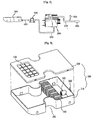
- the detachable water supply source 300 (hereinafter, referred to as a "cartridge" for convenience of description) will be described with reference to FIG. 5 .
- the cartridge 300 including a lower housing 310 for storing water and an upper housing 320 detachably mounted to the lower housing 310.
- the cartridge 300 is constructed in a structure including the lower housing 310 and the upper housing 320, it is easy to clean scale accumulating in the cartridge 300.
- it is easy to separate filters 330 and 340 and a water softening member 350 from the upper and lower housings and to clean or regenerate the separate filters 330 and 340 and the water softening member 350.
- a first filter 330 is preferably mounted to the upper housing 320. Specifically, the first filter 330 is mounted in a water introduction part of the upper housing 320 for primarily filtering water when the water is supplied to the cartridge 300.
- an opening and closing member 360 for selectively discharging water in the cartridge to the outside. Consequently, when the cartridge is separated from the drying machine, the water in the cartridge is not allowed to be discharged to the outside, and, when the cartridge is mounted in the drying machine, the water in the cartridge is allowed to be discharged to the outside.
- a second filter 340 for filtering water. More preferably, the second filter 340 is detachably mounted to the opening and closing member 360.
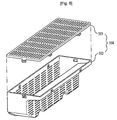
- the water softening member 350 for softening water. More preferably, the water softening member 350 is detachably mounted in the cartridge 300. As shown in FIG. 6 , the water softening member 350 includes a lower housing 352 having a plurality of through-holes and an upper housing 353 detachably mounted to the lower housing 352.
- the upper housing 353 has a plurality of through-holes. Preferably, a space defined between the upper housing 353 and the lower housing 352 is filled with ion-exchange resin (not shown).
- the present invention is not limited to the above-specified water softening member or any specific water softening mechanism.
- the use of any water softening member that is capable of softening water belongs to the technical concept of the present invention.
- the reason to use the water softening member 350 is as follows.
- lime such as calcium carbonate (CaCO 3 )
- Ca(HCO 3 ) 2 calcium hydrogencarbonate
- the water softening process using the ion-exchange resin is represented by 2(R-SONa) + Ca2 ⁇ -> (R-SO)Ca + 2Na
- the regenerating process of the ion-exchange resin is represented by (R-SO)Ca + 2NaCl ⁇ -> 2(R-SONa) + CaCl.
- the efficiency of the water softening member 350 may be lowered with the passage of time or with the increase in frequency of use. Consequently, it is necessary to replace or regenerate the water softening member 350 at an appropriate point of time such that the water softening efficiency of the water softening member 350 is maintained.
- the laundry treating apparatus especially the drying machine, may include a control unit for controlling a display unit for displaying a replacement or regeneration time of the water softening member such that a user can be easily informed of the replacement or regeneration time of the water softening member.
- the replacement or regeneration time of the water softening member may be decided based on various factors.
- the replacement or regeneration time of the water softening member may be decided based on the frequency of supply of water to the steam generator. Specifically, it is possible for the control unit to count the frequency of supply of water to the steam generator using the pump based on the frequency of opening and closing of the valve opened and closed to supply water to the steam generator from the external faucet.
- control unit (not shown) is mounted in the control panel 19 shown in FIG. 1 .
- the operation of the laundry treating apparatus is controlled by the control unit.
- the display unit (not shown) is mounted on the front of the control panel for allowing a user to easily see the information displayed on the display unit.
- the replacement or regeneration time of the water softening member may be decided based on whether a specific time has elapsed irrespective of whether the water softening member is used or not. Specifically, the control unit counts time until the replacement or regeneration of the water softening member is needed after the replacement or regeneration of the water softening member is completed. Consequently, the control unit decides that the replacement or regeneration of the water softening member is necessary when the specific time has elapsed.
- the replacement or regeneration time of the water softening member may be decided based on the frequency of use of the steam generator. This may be carried out by counting the frequency of supply of electric current to the heater in the steam generator.
- the replacement or regeneration time of the water softening member may be decided based on the accumulated amount of water supplied to the steam generator through the water supply unit. Specifically, the replacement or regeneration time of the water softening member may be decided based on how much water necessary to generate steam is supplied to the steam generator.
- water contains a large amount of limestone for example, it is possible to lower a reference value with respect to the accumulate amount of water.
- water contains a small amount of limestone on the other hand, it is possible to raise a reference value with respect to the accumulated amount of water.
- the accumulated amount of water may be easily confirmed by the controller accumulatively counting the quantity of flow measured through a flow meter mounted between the water supply unit and the steam generator.
- the accumulated amount of water may be easily confirmed by a rotational frequency sensor 950 for sensing the rotational frequency of a gear unit of the pump 400, as shown in FIG. 9 .
- the amount of water pumped by the pump may be decided in proportion to the rotational frequency of the gear unit. Consequently, when the rotational frequency of the gear unit is decided, it is possible to decide the amount of water supplied through the pump 400.
- the rotational frequency sensor 950 may sense the change of magnetic flux according to the rotation of a magnet 960 formed at a predetermined position of the gear unit to easily sense the rotational frequency of the gear unit.
- the rotational frequency sensor 950 may by a hole sensor.
- the replacement or regeneration time of the water softening member is decided by the control unit counting time or frequency. Consequently, the counted time or the counted frequency is preferably reset to an initial value after the replacement or regeneration of the water softening member is completed.
- the initial value may be "0".
- the reset may be accomplished by sensing the attachment or detachment of the water softening member under the control of the control unit.
- an additional reset button (not shown) may be mounted on the control panel 19 such that the reset is accomplished by pressing the reset button.
- the control unit displays that the replacement or regeneration of the water softening member is needed through the display unit.
- the displayed information disappears from the display unit, the counted frequency of use of the steam generator is reset, and the frequency of use of the steam generator is newly counted.
- the control unit may further include a memory for storing the frequency of use of the steam generator.
- the memory may be easily realized by using electrical erasable programmable read only memory (EEP-ROM).
- EEP-ROM electrical erasable programmable read only memory
- an additional battery (not shown) may be included for preventing the memory from being reset to the initial value when a power source is interrupted.
- the display unit displays only the replacement or regeneration time of the water softening member. Specifically, when time, frequency, or the accumulated amount of water, counted by the control unit, exceeds a predetermined value, the display unit 900 displays that the replacement or regeneration of the water softening member is needed. This may be easily realized by lighting a light emitting diode (LED).
- the display unit 900 may be disposed at one side of the control panel 19. Of course, the display unit 900 may also generate a predetermined sound to easily inform a user that the replacement or regeneration of the water softening member is needed.
- the display unit displays remaining time, remaining frequency, or the remaining amount of water available as well as the replacement or regeneration time of the water softening member. Specifically, the number of LEDs constituting the display unit 910 is increased as time, frequency, or the amount of water supplied is accumulated. When time or frequency, counted by the control unit, exceeds a predetermined value, all the LEDs of the display unit 910 are lit. Of course, all the LEDs of the display unit 910 are initially lit, and all the LEDs of the display unit 910 are blinked when time or frequency, counted by the control unit, exceeds the predetermined value.
- the replacement or regeneration of the water softening member is necessary after how much time or how many frequencies has elapsed as well as the replacement or regeneration time of the water softening member. Also, the user can be easily informed that the replacement or regeneration of the water softening member is necessary after how much water is further supplied.
- the replacement or regeneration time of the water softening member is displayed with a percentage of 100 and to increase the percentage with the accumulation of the time or the frequency. For example, on the assumption that the replacement or regeneration of the water softening member is needed when the frequency of use of the steam generator is 100, 50 % of the LEDs may be lit on the display unit 910 when the frequency of use of the steam generator is 50.
- the display unit shown in FIG. 7C is identical to the display unit shown in FIG. 7B except that the display unit 920 is formed in the shape of a bar graph. Consequently, the bar graph is raised as time, frequency, or the amount of water supplied is accumulated. When the time, frequency, or the amount of water supplied exceeds a predetermined value, the bar graph is fully raised. Consequently, it is possible for a user to be easily informed of the replacement or regeneration time of the water softening member.
- the above-described replacement or regeneration time of the water softening member does not directly represent when the replacement or regeneration of the water softening member is needed.
- the replacement or regeneration time of the water softening member is indirectly represented through a predetermined time or frequency. Consequently, the time or the frequency may be large or small depending upon the status of water at a site to which the present invention is applied.
- the replacement or regeneration of the water softening member may be needed even in a short time or small frequency of use in a region where the hardness of water is very high.
- the replacement or regeneration of the water softening member may be unnecessary even over a long time or large frequency of use in a region where the hardness of water is very low.
- the deviation in the replacement or regeneration time of the water softening member may be reduced depending upon how the initial value is set.
- the drying machine according to the present invention may further include a hardness sensor (not shown) for directly sensing the water softening efficiency of the water softening member and displaying the replacement or regeneration time of the water softening member.
- a hardness sensor (not shown) for directly sensing the water softening efficiency of the water softening member and displaying the replacement or regeneration time of the water softening member.
- the hardness sensor measures the content of minerals in wash water.
- the hardness sensor measures the content of mineral matter, such as magnesium ions (Mg+) and calcium ions (Ca+), in the wash water. Consequently, it is possible to easily confirm whether water is softened into a satisfactory state through the water softening member by using the hardness sensor.
- the hardness sensor measures the magnitude of conductivity changed depending upon the amount of ions contained in the water. Consequently, a conductivity sensor may be used as the hardness sensor. The amount of ions contained in the water is decided based on the conductivity sensed by the conductivity sensor.
- the hardness sensor is preferably mounted between the water softening member 350 and the steam generator 200.
- the control unit preferably displays that the hardness of water is greater than the reference value through the display unit.
- the hardness of water sensed by the hardness sensor exceeds the reference value, for example, it is displayed through a hardness display unit 930, shown in FIGs. 7A, 7B, and 7C , that the water softening member cannot sufficiently perform the water softening function.
- this display may be realized by an LED or a sound under the control of the control unit.
- FIG. 8 is a structural view illustrating a water softening detection unit for detecting whether water to be supplied to the steam generator shown in FIG. 4 has been softened.
- this embodiment includes a water softening detection unit 970 for detecting the degree of softening of water to be supplied to the steam generator and a confirmation window 980 for allowing a user to confirm the detection result of the water softening detection unit 970 from the outside such that the user can be easily informed about the replacement or regeneration time of the water softening member.
- this embodiment includes the water softening detection unit 970 and the confirmation window 980 instead of the display unit and the control unit for controlling the display unit, which are included in the previous embodiment. Consequently, it is possible for a user to confirm the water softening detection unit 970 through the confirmation window 980, and therefore, the user is easily informed about the replacement or regeneration time of the water softening member.
- the water softening detection unit 970 for detecting the degree of softening of water, is located as shown in FIG. 8 .
- the water softening detection unit 970 may be located at any position on the water supply channel between the water supply unit and the steam generator. Specifically, the water softening detection is possible as long as water passes through the water softening detection unit 970 before the water, having passed through the water softening member 350, is supplied to the steam generator.
- the water softening detection unit 970 may be located at the end of a branch pipe (not shown) diverging from the water supply channel 220.
- the water softening detection unit 970 is mounted between the water softening member 350 and the pump 400. This is because water does not flow before the pump 400 is driven, and therefore, it is possible to detect PH of the water more accurately.
- the water softening detection unit 970 may be a PH sensor the color of which is changed depending upon the PH degree of water such that a user can easily determine whether the water has been softened. More specifically, the PH sensor may be a PH paper.
- the color of the PH paper When water exhibits basicity, for example, the color of the PH paper is changed to yellowish green or celadon green. As the basicity of the water is increased, the color of the PH paper is changed to celadon green.
- the color of the PH paper When water exhibits acidity, on the other hand, the color of the PH paper is changed to red or yellow. As the acidity of the water is increased, the color of the PH paper is changed to red. Consequently, when the color of the PH paper is changed to yellow, a user determines that the water is satisfactorily softened by the water softening member. Also, when the color of the PH paper is changed to yellowish green or celadon green, the user determines that the water is not satisfactorily softened by the water softening member.
- the water softening detection unit is preferably located inside the confirmation window 980 such that the user can see the water softening detection unit through the confirmation window 980 from the outside.
- the confirmation window 980 is preferably a visible window.
- a position, the most easily accessible by a user, may be the control panel 19 of the laundry treating apparatus. Consequently, the confirmation window 980 is preferably located at the front of the control panel 19 shown in FIG. 1 .
- the pump 400 serves to selectively supply water to the steam generator 200. Specifically, the pump 400 is rotated, in a forward or reverse direction, to supply water to the steam generator 200 or collect the remaining water from the steam generator 200.
- the pump 400 is preferably a gear-type pump so as to perform the above-described function.
- FIG. 9 illustrates a gear-type pump 400 as an example of the pump 400.
- the gear-type pump 400 includes a pair of gears 420 disposed in a case 410.
- the case 410 is provided with an inlet port 430 and an outlet port 414. Specifically, water is discharged from the inlet port 430 to the outlet port 414 or from the outlet port 414 to the inlet port 430 depending upon the rotating direction of the gears 420.
- a drawer-type container (hereinafter, referred to as a "drawer") 700 that can be inserted and withdrawn.
- the cartridge 300 is mounted in the drawer 700.
- the cartridge 300 is not directly connected to a connection port 480.
- the cartridge 300 is mounted in the drawer 700, and the drawer 700 is inserted and withdrawn such that the cartridge 300 is indirectly coupled to and separated from the connection port 480.
- the drawer 700 is located at the front of the drying machine, for example, at the control panel 19. More specifically, a supporter 820 is mounted at the rear of the control panel 19. The supporter 820 is arranged approximately in parallel with a top frame 830. To the supporter 820 and the top frame 830 are mounted a drawer guide 710 for guiding and supporting the drawer 700. Preferably, a top guide 810 is mounted at a portion of the top of the drawer guide 710.
- the top and one side (the front of the drying machine) of the drawer guide 710 are open.
- the drawer 700 is inserted and withdrawn through the side opening of the drawer guide 710.
- the connection port 480 is located at the top of the drawer guide 710 at the other side of the drawer guide 710.
- FIG. 10 illustrates the control panel 19 installed at the front cover of the drying machine. Consequently, the drawer 700 is inserted into and withdrawn from the control panel 19.
- the present invention is not limited to the above-specified structure. For example, when the control panel is mounted at the top cover of the drying machine, as shown in FIG. 1 , the drawer 700 may be directly mounted at the front cover of the drying machine.
- the cartridge 300 When the cartridge 300 is mounted in the drawer 700, on the other hand, it is preferable that at least opposite sides of the cartridge 300 correspond in shape to those of the drawer 700, and therefore, the cartridge 300 is tightly coupled to the drawer 700. At the opposite sides of the cartridge 300 are preferably formed concave parts 301 for allowing a user to mount and separate the cartridge 300 in and from the drawer 700.
- the cartridge 300 When a user withdraws the drawer 700, the cartridge 300 is also withdrawn. In this state, the user separates the cartridge 300 from the drawer 700. Subsequently, the user supplies water into the separated cartridge 300 through the water supply port, for example, the first filter 330, such that the cartridge 300 is filled with the water. After that, the user puts the cartridge 300, which is filled with the water, in the drawer 700, and then pushes the drawer 700 inward. As a result, the cartridge 300 is automatically coupled to the connection port 480, and therefore, the water in the cartridge flows toward the pump 400.
- the water supply port for example, the first filter 330
- the cartridge 300 includes the upper housing 320 and the lower housing 310. Consequently, it is easy and convenient to clean the separated cartridge 300.
- the drawer 700 may be used as a directly detachable water supply source.
- the drawer 700 is used as the directly detachable water supply source, however, water may overflow due to carelessness of a user during the supply of water to the drawer 700. This problem may be solved to some extent by using the cartridge 300 as the detachable water supply source.
- the drawer 700 is used as the directly detachable water supply source, it is possible to simplify the structure of the drawer 700.
- FIG. 11 illustrates the water softening member 350 mounted in the drawer 700 for convenience of description.
- the present invention is not limited to this structure.
- the first filter 300 and the second filter 340 may be also mounted in the drawer 700.
- the method of controlling the drying machine according to the present invention includes a drum heating step (SS3) of heating the drum, a steam supply step (SS5) of supplying steam, generated by the steam generator, to the drum, and a hot air supply step (SS7) for supplying hot air to the drum.
- a water supply step (SS1) is carried out before the drum heating step (SS3).
- the control method according to the present invention further includes a cooling step (SS9) of cooling the drum, which is carried out after the hot air supply step (SS7).
- control method according to the present invention further includes a water collection step of discharging water remaining in the steam generator, i.e., the remaining water in the steam generator, to the outside, which is carried out after the steam supply step (SS5).
- a water collection step of discharging water remaining in the steam generator, i.e., the remaining water in the steam generator, to the outside, which is carried out after the steam supply step (SS5).
- the drum heating step (SS3) is a step of heating the drum to a predetermined temperature such that the removal of wrinkles on laundry can be more effectively performed at the next step, i.e., the steam supply step (SS5).
- the drum heating step (SS3) is carried out for a predetermined period of time (T_pre T_pump). At this time, the drum is preferably tumbled.
- the drum may be intermittently tumbled. Tumbling is rotating the drum at a speed of approximately 50 rpm or less. Tumbling is well known in the art to which the present invention pertains, and therefore, a detailed description thereof will not be given.
- the drum heating step (SS3) is initiated at a point of time when the water level in the steam generator reaches a high water level after water is supplied to the steam generator for a predetermined period of time (T_pump).
- the steam heater is preferably operated at a point of time when the drum heating step (SS3) is initiated. This is because steam is generated a predetermined period of time after the steam heater is operated.
- the termination of the drum heating step (SS3) preferably coincides with a point of time when the steam is generated.
- the drum heating may be accomplished by supplying hot air to the drum.
- the steam supply step (SS5) is a step of supplying steam to the drum such that the removal of wrinkles on laundry is performed.
- the steam supply step (SS5) is carried out for a predetermined period of time (T_steam).
- T_steam a predetermined period of time
- the drum is preferably tumbled. More preferably, the drum is intermittently tumbled.
- the period of time (T_steam), for which the steam supply step (SS5) is carried out, is previously set through experiments based on a factor, such as the amount of an object to be dried.
- the water level in the steam generator is lowered. Consequently, water is preferably supplied to the steam generator when a low water level is detected. In this case, water may be continuously supplied to the steam generator until the high water level is detected.
- water is supplied to the steam generator for a predetermined period of time before the water level in the steam generator reaches the high water level, for example, approximately 3 seconds, so as to increase the heating efficiency.
- tumbling at the steam supply step (SS5) is repeated intermittently and periodically, for example, approximately 3 seconds per minute.
- the hot air supply step (SS7) is a step of supplying hot air, generated by the hot air heater, to the drum such that laundry, which may be slightly wetted by the steam, is dried again.
- the hot air supply step (SS7) is carried out for a predetermined period of time (T_dry). At this time, the drum is not tumbled.
- T_dry a predetermined period of time
- the period of time (T_dry), for which the hot air supply step (SS7) is carried out, is also previously set through experiments based on a factor, such as the amount of an object to be dried.
- the cooling step (SS9) is a step of cooling an object to be dried, the temperature of which has been increased at the hot air supply step (SS7).
- the cooling step (SS9) is carried out for a predetermined period of time (T_cooling). At this time, the drum is not tumbled.
- T_cooling The period of time (T_cooling), for which the cooling step (SS9) is carried out, is also previously set through experiments based on a factor, such as the amount of an object to be dried.
- cool air may be supplied to the drum at the cooling step (SS9), the temperature of the object is not relatively high. Consequently, the object may be left as it is for a predetermined period of time, which is simple but preferred.
- the pump control method includes a water supply step (S100 and S200) of supplying water to the steam generator, which generates steam to be supplied to the drum, and a water collection step (S300) of collecting the water remaining in the steam generator.
- the water supply step (S100 and S200) preferably includes an initial water supply step (S100) and a water level maintenance step (S200) of maintaining the water level in the steam generator.
- the water collection step (S300) is preferably carried out by the pump. More preferably, the water is collected to the detachable water supply source, which is connected to the steam generator.
- the water supply step (S100 and S200) preferably includes the initial water supply step (S100) and the water level maintenance step (S200) of maintaining the water level in the steam generator.
- the pump is rotated in a forward direction to supply water to the steam generator (S1).
- S3 When the water level in the steam generator reaches a high water level (S3), the pump is stopped, and the steam heater is operated (S5).
- the steam heater As the steam heater is operated, water is heated to generate steam. With the discharge of the generated steam, the water in the steam generator is reduced. Consequently, the water level in the steam generator is detected, and, when the water level in the steam generator reaches a low water level, the pump is rotated in the forward direction to supply water to the steam generator (S9 and S11). At this time, as previously described, the water may be continuously supplied to the steam generator until the high water level is detected. Preferably, however, water is supplied to the steam generator for a predetermined period of time, for example, approximately 3 seconds, so as to increase the heating efficiency.
- the pump is rotated in the forward direction for a predetermined period of time, for example, approximately 5 seconds, to supply water to the steam generator (S21).
- the temperature in the steam generator is compared with the safety temperature (Temp_crit) (S23).
- the pump is rotated in the reverse direction for a predetermined period of time, for example, approximately 30 seconds, to collect the remaining water from the steam generator (S25).
- the procedure is ended without the rotation of the pump in the reverse direction to collect the remaining water from the steam generator (S27).
- the temperature in the steam generator may be compared with the safety temperature after a predetermined period of time is delayed, and, when the above-mentioned requirement is satisfied, the remaining water may be collected from the steam generator.
- the safety temperature (Temp_crit) means the maximum temperature at which the reliability of the pump is maintained. For example, the safety temperature is approximately 60 degree.
- the water supply time (T_pump), the steam generation preparing time (T_pre), the steam supply time (T_steam), the drying time (T_dry), the cooling time (T_cooling), the delay time (T_delay), the tumbling time, and the pump operating time, shown in FIGs. 12 and 13 , are illustrative examples, and the above-specified times may be appropriately changed depending upon the capacity of the drying machine or the amount of an object to be dried.
- the laundry treating apparatus according to the present invention had the effect of removing and preventing wrinkles on laundry although there was a difference depending upon the kinds of laundry, for example, the kinds of laundry materials, and the hygroscopic degree of the laundry.
- An example of an object to be dried may be laundry spin-dried by a washing machine.
- the object is not limited to the laundry.
- the present invention is particularly useful when wrinkles on clothes worn approximately one day, i.e., the clothes which are already dried and a little wrinkled, are removed by the drying machine according to the present invention.
- the drying machine according to the present invention may be used as a kind of wrinkle removing apparatus.
- the laundry treating apparatus especially the laundry drying apparatus, and the method of controlling the same according to the present invention have the following effects.
- the present invention has the effect of effectively preventing or removing rumples or wrinkles on a dried object. Also, the present invention has the effect of sterilizing the object and removing a smell from the object.
- the present invention has the effect of effectively removing rumples or wrinkles from dried laundry without additional ironing.
- the present invention has the effect of effectively softening water to be supplied to the steam generator, thereby preventing the reaction in efficiency of the steam generator due to scale.
- the present invention has the effect of allowing a user to easily confirm the replacement or regeneration time of the water softening member, thereby appropriately accomplishing the replacement or regeneration of the water softening member.
Landscapes
- Engineering & Computer Science (AREA)
- Textile Engineering (AREA)
- Control Of Washing Machine And Dryer (AREA)
- Detail Structures Of Washing Machines And Dryers (AREA)
Claims (16)
- Wäschebehandlungsvorrichtung, die Folgendes umfasst:eine Wäscheaufnahmeeinheit zum Aufnehmen von Wäsche;einen Dampfgenerator (200) zum Erzeugen von Dampf, der der Wäscheaufnahmeeinheit zugeführt werden soll;eine Wasserzufuhreinheit zum Zuführen von Wasser zu dem Dampfgenerator (200);ein Wasserenthärtungselement (350) zum Enthärten von Wasser, das dem Dampfgenerator (200) zugeführt werden soll;eine Anzeigeeinheit (900) zum Anzeigen einer Austausch- oder Regenerationszeit des Wasserenthärtungselements (350); undeine Steuereinheit zum Steuern, dass die Austausch- oder Regenerationszeit des Wasserenthärtungselements in der Anzeigeeinheit angezeigt wird;dadurch gekennzeichnet, dass die Wasserzufuhreinheit eine abnehmbare Wasserzufuhrquelle (300) umfasst, die ein unteres Gehäuse (310) zum Aufbewahren von Wasser und ein oberes Gehäuse (320), das an dem unteren Gehäuse (310) abnehmbar angebracht ist, umfasst, wobei das Wasserenthärtungselement (350) in der abnehmbaren Wasserzufuhrquelle (300) abnehmbar angebracht ist.
- Wäschebehandlungsvorrichtung nach Anspruch 1, wobei die Austausch- oder Regenerationszeit des Wasserenthärtungselements (350) auf Basis der Anzahl, wie oft dem Dampfgenerator (200) Wasser zugeführt wurde, bestimmt wird.
- Wäschebehandlungsvorrichtung nach Anspruch 2, wobei die Anzeigeeinheit (900) wenigstens die Anzahl, wie oft dem Dampfgenerator (200) Wasser zugeführt wurde, eine verbleibende Anzahl, wie oft dem Dampfgenerator (200) Wasser zugeführt wird, bzw. ein vorher festgelegtes Signal, wenn die Anzahl, wie oft dem Dampfgenerator (200) Wasser zugeführt wurde, einen vorher festgelegten Wert überschreitet, anzeigt.
- Wäschebehandlungsvorrichtung nach Anspruch 1, wobei die Austausch- oder Regenerationszeit des Wasserenthärtungselements (350) auf Basis davon, ob eine bestimmte Zeit verstrichen ist, bestimmt wird.
- Wäschebehandlungsvorrichtung nach Anspruch 4, wobei die Anzeigeeinheit (900) wenigstens eine gezählte Zeit, eine verbleibende Zeit bzw. ein vorher festgelegtes Signal, wenn eine gezählte Zeit einen vorher festgelegten Wert überschreitet, anzeigt.
- Wäschebehandlungsvorrichtung nach Anspruch 1, wobei die Austausch- oder Regenerationszeit des Wasserenthärtungselements (350) auf Basis der Anzahl, wie oft der Dampfgenerator (200) betrieben wurde, bestimmt wird.
- Wäschebehandlungsvorrichtung nach Anspruch 6, wobei die Anzeigeeinheit (900) wenigstens die Anzahl, wie oft der Dampfgenerator (200) betrieben wurde, eine verbleibenden Anzahl, wie oft der Dampfgenerator (200) betrieben werden kann, bzw. ein vorher festgelegtes Signal, wenn die Anzahl, wie oft der Dampfgenerator (200) betrieben wurde, einen vorher festgelegten Wert überschreitet, anzeigt.
- Wäschebehandlungsvorrichtung nach Anspruch 1, wobei die Anzeigeeinheit (900) gestartet wird, nachdem der Austausch oder eine Regeneration des Wasserenthärtungselements (350) beendet ist.
- Wäschebehandlungsvorrichtung nach Anspruch 1, die ferner einen Härtesensor zum Messen der Härte von Wasser, das dem Dampfgenerator (200) zugeführt wird, umfasst, wobei die Steuereinheit die Ausgabe eines vorher festgelegten Signals steuert, wenn die Härte von Wasser, die durch den Härtesensor gemessen wird, einen Bezugswert überschreitet.
- Wäschebehandlungsvorrichtung nach Anspruch 9, wobei der Härtesensor zwischen dem Wasserenthärtungselement (350) und dem Dampfgenerator (200) angeordnet ist.
- Wäschebehandlungsvorrichtung nach Anspruch 1, die ferner eine Detektionseinheit (970) zum Detektieren einer aufsummierten Menge von Wasser, das dem Dampfgenerator (200) zugeführt wird, oder einer Anzahl, wie oft dem Dampfgenerator (200) Wasser zugeführt wurde, umfasst, wobei die Austausch- oder Regenerationszeit des Wasserenthärtungselements (350) auf Basis der aufsummierten Menge von Wasser oder der Anzahl bestimmt wird.
- Wäschebehandlungsvorrichtung nach Anspruch 11, die ferner eine Getriebepumpe (400), die zwischen der Wasserzufuhreinheit und dem Dampfgenerator (200) angeordnet ist, zum wahlweisen Zuführen von Wasser zu dem Dampfgenerator (200) umfasst, wobei die Detektionseinheit (970) die Anzahl von Drehungen eines Getriebes der Pumpe (400) misst.
- Wäschebehandlungsvorrichtung nach Anspruch 1, die ferner Folgendes umfasst:eine Wasserenthärtung-Detektionseinheit (970) zum Detektieren, ob Wasser, das dem Dampfgenerator (200) zugeführt werden soll, enthärtet wurde; undein Fenster (980), damit ein Benutzer das Detektionsergebnis prüfen kann.
- Wäschebehandlungsvorrichtung nach Anspruch 13, wobei die Wasserenthärtung-Detektionseinheit (970) zwischen dem Wasserenthärtungselement (350) und dem Dampfgenerator (200) angeordnet ist.
- Wäschebehandlungsvorrichtung nach Anspruch 13, wobei die Wasserenthärtung-Detektionseinheit (970) ein pH-Wert-Sensor ist, dessen Farbe sich abhängig von dem pH-Wert von Wasser ändert.
- Wäschebehandlungsvorrichtung nach Anspruch 13, die ferner eine Pumpe (400) umfasst, die zwischen der Wasserzufuhreinheit und dem Dampfgenerator (200) zum wahlweisen Zuführen von Wasser zu dem Dampfgenerator (200) angeordnet ist, wobei die Wasserenthärtung-Detektionseinheit (970) zwischen dem Wasserenthärtungselement (350) und der Pumpe (400) angeordnet ist.
Applications Claiming Priority (4)
| Application Number | Priority Date | Filing Date | Title |
|---|---|---|---|
| KR1020060067064A KR101208528B1 (ko) | 2006-07-18 | 2006-07-18 | 의류 처리 장치 |
| KR1020060067065A KR101265615B1 (ko) | 2006-07-18 | 2006-07-18 | 의류 처리 장치 |
| KR1020060067066A KR101208529B1 (ko) | 2006-07-18 | 2006-07-18 | 의류 처리 장치 |
| PCT/KR2007/003477 WO2008010670A2 (en) | 2006-07-18 | 2007-07-18 | Laundry treating apparatus |
Publications (3)
| Publication Number | Publication Date |
|---|---|
| EP2044255A2 EP2044255A2 (de) | 2009-04-08 |
| EP2044255A4 EP2044255A4 (de) | 2014-01-22 |
| EP2044255B1 true EP2044255B1 (de) | 2016-09-28 |
Family
ID=38957212
Family Applications (1)
| Application Number | Title | Priority Date | Filing Date |
|---|---|---|---|
| EP07768804.2A Active EP2044255B1 (de) | 2006-07-18 | 2007-07-18 | Wäschebehandlungsvorrichtung |
Country Status (3)
| Country | Link |
|---|---|
| US (1) | US8973414B2 (de) |
| EP (1) | EP2044255B1 (de) |
| WO (1) | WO2008010670A2 (de) |
Families Citing this family (38)
| Publication number | Priority date | Publication date | Assignee | Title |
|---|---|---|---|---|
| KR100556503B1 (ko) * | 2002-11-26 | 2006-03-03 | 엘지전자 주식회사 | 건조기의 건조 시간제어 방법 |
| DE10260149A1 (de) * | 2002-12-20 | 2004-07-01 | BSH Bosch und Siemens Hausgeräte GmbH | Vorrichtung zur Bestimmung des Leitwertes von Wäsche, Wäschetrockner und Verfahren zur Verhinderung von Schichtbildung auf Elektroden |
| DE102005013051A1 (de) * | 2005-03-18 | 2006-09-21 | BSH Bosch und Siemens Hausgeräte GmbH | Kondensations-Wäschetrockner |
| US7913419B2 (en) * | 2005-12-30 | 2011-03-29 | Whirlpool Corporation | Non-tumble clothes dryer |
| DE102007007354B4 (de) | 2006-02-20 | 2013-10-10 | Lg Electronics Inc. | Wäschetrockner und Verfahren zur Steuerung |
| KR100830514B1 (ko) | 2006-06-12 | 2008-05-21 | 엘지전자 주식회사 | 건조기 및 그 제어방법 |
| KR101341461B1 (ko) * | 2006-12-15 | 2013-12-16 | 엘지전자 주식회사 | 스팀 건조기 |
| US7997006B2 (en) * | 2007-01-12 | 2011-08-16 | Lg Electronics Inc. | Laundry machine and control method thereof |
| KR101498027B1 (ko) * | 2008-04-01 | 2015-03-03 | 엘지전자 주식회사 | 의류처리장치 및 의류처리장치의 제어방법 |
| CN102257206B (zh) | 2007-08-03 | 2014-06-18 | Lg电子株式会社 | 衣服处置装置及其控制方法 |
| CN102017519A (zh) * | 2008-04-29 | 2011-04-13 | Lg电子株式会社 | 家用电器和家用电器系统 |
| ATE533880T1 (de) * | 2008-04-30 | 2011-12-15 | Lg Electronics Inc | Waschmaschine |
| KR101608760B1 (ko) | 2008-04-30 | 2016-04-04 | 엘지전자 주식회사 | 의류처리장치 |
| ES2374768T3 (es) | 2008-04-30 | 2012-02-21 | Lg Electronics Inc. | Lavadora. |
| US8756828B2 (en) | 2008-05-01 | 2014-06-24 | Whirlpool Corporation | Failure mode detection in an appliance dispensing system |
| US9054953B2 (en) | 2008-06-16 | 2015-06-09 | Lg Electronics Inc. | Home appliance and home appliance system |
| KR101442115B1 (ko) | 2009-04-10 | 2014-09-18 | 엘지전자 주식회사 | 가전기기 및 가전기기 시스템 |
| KR101555586B1 (ko) | 2009-04-10 | 2015-09-24 | 엘지전자 주식회사 | 가전기기 |
| KR101579481B1 (ko) | 2009-04-10 | 2015-12-22 | 엘지전자 주식회사 | 가전기기 진단시스템 및 그 진단방법 |
| CN102474420B (zh) | 2009-07-06 | 2014-12-17 | Lg电子株式会社 | 家电诊断系统及其操作方法 |
| KR20110010374A (ko) | 2009-07-24 | 2011-02-01 | 엘지전자 주식회사 | 가전기기 진단시스템 및 그 방법 |
| KR101403000B1 (ko) | 2009-07-24 | 2014-06-17 | 엘지전자 주식회사 | 가전기기 및 그 신호출력방법 |
| KR101607891B1 (ko) | 2009-07-31 | 2016-04-11 | 엘지전자 주식회사 | 가전기기 진단시스템 및 그 진단방법 |
| KR101482138B1 (ko) | 2009-07-31 | 2015-01-13 | 엘지전자 주식회사 | 가전기기 진단시스템 및 그 진단방법 |
| KR101748605B1 (ko) | 2010-01-15 | 2017-06-20 | 엘지전자 주식회사 | 냉장고 및 냉장고 진단시스템 |
| US20110266272A1 (en) * | 2010-04-30 | 2011-11-03 | Colburn Michael G | Steam Generator System |
| WO2012005512A2 (ko) | 2010-07-06 | 2012-01-12 | 엘지전자 주식회사 | 가전기기 진단장치 |
| KR101416937B1 (ko) | 2011-08-02 | 2014-08-06 | 엘지전자 주식회사 | 가전기기, 가전기기 진단시스템 및 동작방법 |
| KR101252167B1 (ko) | 2011-08-18 | 2013-04-05 | 엘지전자 주식회사 | 가전기기 진단장치 및 그 진단방법 |
| CN104520491B (zh) | 2012-02-16 | 2016-12-21 | Lg电子株式会社 | 衣物处理设备 |
| JP2013208247A (ja) | 2012-03-30 | 2013-10-10 | Panasonic Corp | 衣類処理装置 |
| KR101942781B1 (ko) | 2012-07-03 | 2019-01-28 | 엘지전자 주식회사 | 가전기기 및 가전기기 진단을 위한 신호음 출력방법 |
| KR20140007178A (ko) | 2012-07-09 | 2014-01-17 | 엘지전자 주식회사 | 가전기기 및 그 시스템 |
| US9568244B2 (en) * | 2013-02-27 | 2017-02-14 | Lg Electronics Inc. | Laundry treating apparatus |
| EP3425285A1 (de) * | 2017-07-05 | 2019-01-09 | Electrolux Appliances Aktiebolag | Wasserverwaltungssystem |
| USD854764S1 (en) * | 2017-08-08 | 2019-07-23 | Samsung Electronics Co., Ltd. | Stacking kit for washing machine |
| CN110924107B (zh) * | 2019-12-12 | 2021-11-19 | 华南理工大学广州学院 | 一种智能晾衣架工作方法 |
| USD1017935S1 (en) * | 2023-10-17 | 2024-03-12 | Xiangfu Zhu | Stacking kit for washing machine |
Citations (1)
| Publication number | Priority date | Publication date | Assignee | Title |
|---|---|---|---|---|
| WO2008007888A2 (en) * | 2006-07-10 | 2008-01-17 | Lg Electronics Inc. | Laundry machine and controlling method thereof |
Family Cites Families (16)
| Publication number | Priority date | Publication date | Assignee | Title |
|---|---|---|---|---|
| US2209487A (en) * | 1937-01-23 | 1940-07-30 | Richard E Wagner | Water softening apparatus |
| US2087157A (en) * | 1937-03-19 | 1937-07-13 | Leroy C Lind | Art of water softening |
| US3250392A (en) * | 1964-02-17 | 1966-05-10 | Honeywell Inc | Water softener system control apparatus |
| US3891552A (en) * | 1974-04-12 | 1975-06-24 | William C Prior | Control valve for water softeners |
| EP0086031A1 (de) * | 1982-02-05 | 1983-08-17 | Imperial Chemical Industries Plc | Sprühvorrichtung |
| US5377496A (en) * | 1993-10-05 | 1995-01-03 | Carrier Corporation | Refrigeration system with installed acid contamination indicator |
| US6823878B1 (en) | 1999-04-22 | 2004-11-30 | Eltek S.P.A. | Household appliance using water, namely a washing machine, with improved device for softening the water |
| US6691536B2 (en) * | 2000-06-05 | 2004-02-17 | The Procter & Gamble Company | Washing apparatus |
| US7308808B2 (en) * | 2002-04-22 | 2007-12-18 | General Electric Company | Apparatus and method for article cleaning |
| KR200320290Y1 (ko) | 2003-04-25 | 2003-07-22 | 조성채 | 스팀세차장치 |
| KR20050066493A (ko) * | 2003-12-26 | 2005-06-30 | 엘지전자 주식회사 | 세탁기 조작 패널의 버튼 구조 |
| EP1861540B1 (de) * | 2005-03-25 | 2015-10-28 | LG Electronics Inc. | Wäschebehandlungsmaschine |
| KR100710298B1 (ko) | 2005-03-25 | 2007-04-23 | 엘지전자 주식회사 | 드럼세탁기 |
| KR100830514B1 (ko) * | 2006-06-12 | 2008-05-21 | 엘지전자 주식회사 | 건조기 및 그 제어방법 |
| KR20080029336A (ko) | 2006-09-29 | 2008-04-03 | 엘지전자 주식회사 | 건조기 및 그 제어방법 |
| EP1959043B1 (de) * | 2007-02-19 | 2018-11-14 | Electrolux Home Products Corporation N.V. | Haushaltsgerät mit externer Wasserversorgung |
-
2007
- 2007-07-18 US US12/309,398 patent/US8973414B2/en active Active
- 2007-07-18 EP EP07768804.2A patent/EP2044255B1/de active Active
- 2007-07-18 WO PCT/KR2007/003477 patent/WO2008010670A2/en not_active Ceased
Patent Citations (1)
| Publication number | Priority date | Publication date | Assignee | Title |
|---|---|---|---|---|
| WO2008007888A2 (en) * | 2006-07-10 | 2008-01-17 | Lg Electronics Inc. | Laundry machine and controlling method thereof |
Also Published As
| Publication number | Publication date |
|---|---|
| US20090288456A1 (en) | 2009-11-26 |
| US8973414B2 (en) | 2015-03-10 |
| EP2044255A4 (de) | 2014-01-22 |
| WO2008010670A8 (en) | 2009-03-05 |
| EP2044255A2 (de) | 2009-04-08 |
| WO2008010670A3 (en) | 2008-06-05 |
| WO2008010670A2 (en) | 2008-01-24 |
Similar Documents
| Publication | Publication Date | Title |
|---|---|---|
| EP2044255B1 (de) | Wäschebehandlungsvorrichtung | |
| US7997006B2 (en) | Laundry machine and control method thereof | |
| US8931186B2 (en) | Drying machine and method for controlling the same | |
| KR100830514B1 (ko) | 건조기 및 그 제어방법 | |
| KR101253181B1 (ko) | 건조기 및 그 제어방법 | |
| KR101341461B1 (ko) | 스팀 건조기 | |
| KR101253180B1 (ko) | 스팀건조기 | |
| AU2008200122B2 (en) | Laundry machine and control method thereof | |
| KR100698132B1 (ko) | 건조기 | |
| KR100964692B1 (ko) | 의류처리장치 및 이의 제어방법 | |
| KR20080107788A (ko) | 의류처리장치 및 이의 제어방법 | |
| KR101265615B1 (ko) | 의류 처리 장치 | |
| KR20090083325A (ko) | 의류처리장치 및 이의 제어방법 | |
| KR20080107787A (ko) | 의류처리장치 및 이의 제어방법 | |
| CN101473086B (zh) | 衣物烘干机以及用于控制该烘干机的方法 | |
| KR100698133B1 (ko) | 건조기의 제어방법 | |
| KR101341463B1 (ko) | 스팀건조기 | |
| KR101208528B1 (ko) | 의류 처리 장치 | |
| KR101387474B1 (ko) | 스팀 건조기 | |
| KR101208529B1 (ko) | 의류 처리 장치 | |
| KR100698134B1 (ko) | 건조기 및 그 제어방법 | |
| KR101342366B1 (ko) | 스팀 건조기 | |
| KR100698224B1 (ko) | 건조기 | |
| KR100698222B1 (ko) | 건조기 및 그 제어방법 | |
| KR20080029336A (ko) | 건조기 및 그 제어방법 |
Legal Events
| Date | Code | Title | Description |
|---|---|---|---|
| PUAI | Public reference made under article 153(3) epc to a published international application that has entered the european phase |
Free format text: ORIGINAL CODE: 0009012 |
|
| 17P | Request for examination filed |
Effective date: 20090121 |
|
| AK | Designated contracting states |
Kind code of ref document: A2 Designated state(s): AT BE BG CH CY CZ DE DK EE ES FI FR GB GR HU IE IS IT LI LT LU LV MC MT NL PL PT RO SE SI SK TR |
|
| AX | Request for extension of the european patent |
Extension state: AL BA HR MK RS |
|
| DAX | Request for extension of the european patent (deleted) | ||
| RBV | Designated contracting states (corrected) |
Designated state(s): DE FR |
|
| A4 | Supplementary search report drawn up and despatched |
Effective date: 20131220 |
|
| RIC1 | Information provided on ipc code assigned before grant |
Ipc: D06F 39/08 20060101AFI20131216BHEP Ipc: D06F 39/04 20060101ALI20131216BHEP Ipc: D06F 39/00 20060101ALI20131216BHEP |
|
| RIC1 | Information provided on ipc code assigned before grant |
Ipc: D06F 39/08 20060101AFI20160317BHEP Ipc: D06F 39/04 20060101ALI20160317BHEP Ipc: D06F 39/00 20060101ALI20160317BHEP |
|
| GRAP | Despatch of communication of intention to grant a patent |
Free format text: ORIGINAL CODE: EPIDOSNIGR1 |
|
| INTG | Intention to grant announced |
Effective date: 20160422 |
|
| RAP1 | Party data changed (applicant data changed or rights of an application transferred) |
Owner name: LG ELECTRONICS INC. |
|
| GRAS | Grant fee paid |
Free format text: ORIGINAL CODE: EPIDOSNIGR3 |
|
| GRAA | (expected) grant |
Free format text: ORIGINAL CODE: 0009210 |
|
| AK | Designated contracting states |
Kind code of ref document: B1 Designated state(s): DE FR |
|
| REG | Reference to a national code |
Ref country code: DE Ref legal event code: R096 Ref document number: 602007048105 Country of ref document: DE |
|
| REG | Reference to a national code |
Ref country code: FR Ref legal event code: PLFP Year of fee payment: 11 |
|
| REG | Reference to a national code |
Ref country code: DE Ref legal event code: R097 Ref document number: 602007048105 Country of ref document: DE |
|
| PLBE | No opposition filed within time limit |
Free format text: ORIGINAL CODE: 0009261 |
|
| STAA | Information on the status of an ep patent application or granted ep patent |
Free format text: STATUS: NO OPPOSITION FILED WITHIN TIME LIMIT |
|
| 26N | No opposition filed |
Effective date: 20170629 |
|
| REG | Reference to a national code |
Ref country code: FR Ref legal event code: PLFP Year of fee payment: 12 |
|
| PGFP | Annual fee paid to national office [announced via postgrant information from national office to epo] |
Ref country code: FR Payment date: 20220607 Year of fee payment: 16 |
|
| PG25 | Lapsed in a contracting state [announced via postgrant information from national office to epo] |
Ref country code: FR Free format text: LAPSE BECAUSE OF NON-PAYMENT OF DUE FEES Effective date: 20230731 |
|
| PGFP | Annual fee paid to national office [announced via postgrant information from national office to epo] |
Ref country code: DE Payment date: 20250609 Year of fee payment: 19 |