EP2083090A1 - Analyse d'interaction d'acide nucléique - Google Patents
Analyse d'interaction d'acide nucléique Download PDFInfo
- Publication number
- EP2083090A1 EP2083090A1 EP09250188A EP09250188A EP2083090A1 EP 2083090 A1 EP2083090 A1 EP 2083090A1 EP 09250188 A EP09250188 A EP 09250188A EP 09250188 A EP09250188 A EP 09250188A EP 2083090 A1 EP2083090 A1 EP 2083090A1
- Authority
- EP
- European Patent Office
- Prior art keywords
- nucleic acid
- acid molecule
- linear composite
- linker
- acid molecules
- Prior art date
- Legal status (The legal status is an assumption and is not a legal conclusion. Google has not performed a legal analysis and makes no representation as to the accuracy of the status listed.)
- Granted
Links
Images



Classifications
-
- C—CHEMISTRY; METALLURGY
- C12—BIOCHEMISTRY; BEER; SPIRITS; WINE; VINEGAR; MICROBIOLOGY; ENZYMOLOGY; MUTATION OR GENETIC ENGINEERING
- C12N—MICROORGANISMS OR ENZYMES; COMPOSITIONS THEREOF; PROPAGATING, PRESERVING, OR MAINTAINING MICROORGANISMS; MUTATION OR GENETIC ENGINEERING; CULTURE MEDIA
- C12N15/00—Mutation or genetic engineering; DNA or RNA concerning genetic engineering, vectors, e.g. plasmids, or their isolation, preparation or purification; Use of hosts therefor
- C12N15/09—Recombinant DNA-technology
- C12N15/10—Processes for the isolation, preparation or purification of DNA or RNA
- C12N15/1034—Isolating an individual clone by screening libraries
- C12N15/1065—Preparation or screening of tagged libraries, e.g. tagged microorganisms by STM-mutagenesis, tagged polynucleotides, gene tags
-
- C—CHEMISTRY; METALLURGY
- C12—BIOCHEMISTRY; BEER; SPIRITS; WINE; VINEGAR; MICROBIOLOGY; ENZYMOLOGY; MUTATION OR GENETIC ENGINEERING
- C12Q—MEASURING OR TESTING PROCESSES INVOLVING ENZYMES, NUCLEIC ACIDS OR MICROORGANISMS; COMPOSITIONS OR TEST PAPERS THEREFOR; PROCESSES OF PREPARING SUCH COMPOSITIONS; CONDITION-RESPONSIVE CONTROL IN MICROBIOLOGICAL OR ENZYMOLOGICAL PROCESSES
- C12Q1/00—Measuring or testing processes involving enzymes, nucleic acids or microorganisms; Compositions therefor; Processes of preparing such compositions
- C12Q1/68—Measuring or testing processes involving enzymes, nucleic acids or microorganisms; Compositions therefor; Processes of preparing such compositions involving nucleic acids
- C12Q1/6804—Nucleic acid analysis using immunogens
-
- C—CHEMISTRY; METALLURGY
- C12—BIOCHEMISTRY; BEER; SPIRITS; WINE; VINEGAR; MICROBIOLOGY; ENZYMOLOGY; MUTATION OR GENETIC ENGINEERING
- C12Q—MEASURING OR TESTING PROCESSES INVOLVING ENZYMES, NUCLEIC ACIDS OR MICROORGANISMS; COMPOSITIONS OR TEST PAPERS THEREFOR; PROCESSES OF PREPARING SUCH COMPOSITIONS; CONDITION-RESPONSIVE CONTROL IN MICROBIOLOGICAL OR ENZYMOLOGICAL PROCESSES
- C12Q1/00—Measuring or testing processes involving enzymes, nucleic acids or microorganisms; Compositions therefor; Processes of preparing such compositions
- C12Q1/68—Measuring or testing processes involving enzymes, nucleic acids or microorganisms; Compositions therefor; Processes of preparing such compositions involving nucleic acids
- C12Q1/6806—Preparing nucleic acids for analysis, e.g. for polymerase chain reaction [PCR] assay
Definitions
- the present invention generally relates to the field of gene expression. More specifically, the present invention relates to nucleic acid interactions. In particular, the invention relates to analysis, detection and/or identification of nucleic acid interaction components.
- nucleic acid interactions in particular interactions in nucleic acid-protein complexes and in chromatin, is important in understanding gene regulation and expression.
- TFBS transcription factor binding sites
- Simonis et al ., (2006) described the chromosome conformation capture-on-chip (4C) technique wherein inverse PCR was first performed using primer sequences targeted to specific sites and subsequently, microarray analysis was used to identify other sites (as available on the microarray) which interact with the targeted sites.
- Zhao et al ., (2006) described a strategy termed circular chromosome conformation capture (4C) wherein the captured sequences which interact with the specific target sequences are identified by sequencing. This method is limited in its application in that only sequences which interact with specific target sequences can be identified.
- 5C a strategy termed 5C which includes performing a multiplex ligation-mediated amplification on a 3C library to generate a 5C library to detect global interactions.
- the 5C forward and reverse primer sequences are designed for all restriction fragments for the genomic region of interest.
- the 5C library is a quantitative "carbon copy" of a part of the 3C library, as determined or limited by the 5C primers used. This method is limited in its application in that only interactions between sites corresponding to 5C primers can be identified.
- Ruan et al (US 2007-0238101 A1 ) provides a method utilising ditags capable of high-throughput, global unbiased interrogation of nucleic acid interactions and binding sites.
- each tag in the ditag is short and occasionally may not be adequate for identification and/or mapping of the interacting fragments.
- this prior art method is not able to separate out interactions between different nucleic acid molecules from self-ligated molecules.
- ditags may also be formed from long linear composite molecules and these may not reflect actual nucleic acid interactions.
- Solexa sequencing or sequencing by synthesis is an example of a recently developed sequencing technology ( WO 2007/091077 , WO 2007/010252 and WO 2007/123744 ). Solexa sequencing has been applied to the analysis of ChIP sequences but only in the context of comparing immuno-enriched chromatin compared to control chromatin to identify binding sites of a protein known as NRSF (Johnson et al ., 2007).
- the invention provides a method of preparing at least one isolated linear composite nucleic acid molecule comprising at least one first tag from at least one first nucleic acid molecule and at least one second tag from at least one second nucleic acid molecule, wherein the first and second nucleic acid molecules interact in a nucleic acid mixture and wherein the first and second tags are from different nucleic acid molecules; comprising the steps of:
- nucleic acid molecules After ligating the ends of the nucleic acid molecules, several types of nucleic acid molecules may be formed. (See Figure 4 as an example). These include linear composite molecules (linear interactions), circular self-ligated molecules, circular multimers (circular interactions), incompletely ligated and unligated molecules (for example, DNA with no linkers and incomplete linker-containing DNA).
- the method according to the invention may separate out and/or provide at least one linear composite nucleic acid molecule or a pool of (more than one) linear composite nucleic acid molecules from the other nucleic acid molecules.
- the method further comprises ligating at least one adapter to at least one end of at least one linear composite nucleic acid molecule to form at least one adapter-ligated linear composite nucleic acid molecule, and isolating the adapter-ligated linear composite nucleic acid molecule(s).
- the present invention provides an isolated linear composite nucleic acid molecule comprising at least one first tag from at least a first nucleic acid molecule and at least a second tag from at least one second nucleic acid molecule, wherein the first and second nucleic acid molecules interact in a nucleic acid mixture; and wherein the first and second tags are from different nucleic acid molecules.
- each isolated linear composite nucleic acid molecule of the invention there are at least two tags, with each tag representing a nucleic acid molecule which interacts with a different nucleic acid molecule represented by at least one other tag.
- the nucleic acid mixture comprising interacting nucleic acid molecules comprises at least one nucleic acid-protein complex and/or chromatin.
- the nucleic acid mixture may be produced by any method.
- the nucleic acid mixture may be prepared by chromatin immunoprecipitation (ChIP).
- linear composite nucleic acid molecule(s) of the invention may be amplified. Any standard amplification method may be used, including but not limited to rolling circle amplification and/or polymerase chain reaction (PCR). Further, the linear composite nucleic acid molecule(s) of the invention may also be isolated or purified for further analysis.
- PCR polymerase chain reaction
- the linear composite nucleic acid molecules of the invention may be sequenced.
- the sequence of the tags comprising the linear composite nucleic acid molecules may be obtained by any sequencing method.
- the sequencing method used may obtain sequence information from at least two tags of the linear composite nucleic acid molecules.
- the sequenced tags representing interacting nucleic acid molecules may be mapped to at least one reference sequence.
- the reference sequence comprises at least one sequence database, such as a genome sequence database. Mapping the sequenced tags to the genome may determine which nucleic acid molecules interact in close spatial proximity to which other nucleic acid molecules.
- the interacting nucleic acid molecules identified may be located at some distance on the same chromosome or they may be on different chromosomes. Importantly, the invention accordingly may provide a global de novo picture of these interactions.
- the invention may identify and/or discover protein binding site(s) including for example, transcription factor binding sites.
- the invention may identify and/or discover sites on different and/or separate nucleic acid molecules which interact with one another and with protein(s) and/or transcription factor(s).
- Adapter refers to an oligonucleotide molecule which is to be ligated or is ligated to the ends of a nucleic acid molecule. Adapters may be used for amplification, sequencing and/or inserting a nucleic acid fragment into a vector.
- “Circular multimer(s)” refer to multimers formed when different or separate nucleic acid molecules are ligated at their ends to form closed nucleic acid molecules.
- a circular multimer will include at least two separate nucleic acid molecules ligated at the ends to form a closed molecule but may include more than two separate nucleic acid molecules.
- Composite nucleic acid molecule refers to a nucleic acid molecule comprising at least one first tag from at least one first nucleic acid molecule and at least one second tag from at least one second nucleic acid molecules, wherein the first and second tags are from different nucleic acid molecules.
- a composite nucleic acid molecule comprises at least two tags, but may comprise three or more tags, with each tag being from a different nucleic acid molecule.
- a composite nucleic acid molecule may be linear or circular.
- a “linear composite nucleic acid molecule” has two free ends, i.e. the ends are not joined together.
- a linear composite nucleic acid molecule comprises at least two tags, but may comprise three or more tags (multimer), with at least two tags being from different nucleic acid molecules.
- Isolated composite nucleic acid molecule means a composite nucleic acid molecule which is separated or isolated, and is substantially free of other nucleic acid molecules which are not composite nucleic acid molecules. Isolated composite nucleic acid molecules may comprise at least one composite nucleic acid molecule or may comprise several or many different composite nucleic acid molecules as long as they are substantially free of non-composite nucleic acid molecules. Substantially free is taken to mean at least about 60% free, in particular about 75% free, more in particular about 85%, preferably about 90% free and most preferably about 95%..
- Isolated linear composite nucleic acid molecule means a linear composite nucleic acid molecule which is separated or isolated, and is substantially free of other nucleic acid molecules which are not linear composite nucleic acid molecules. Isolated linear composite nucleic acid molecules may comprise at least one linear composite nucleic acid molecule or may comprise several or many different linear composite nucleic acid molecules as long as they are substantially free of non-linear composite nucleic acid molecules. Substantially free is taken to mean at least about 60% free, in particular about 75% free, more in particular about 85%, preferably about 90% free and most preferably about 95%.
- Linker refers to an oligonucleotide molecule which is used to link or links the ends of nucleic acid molecules together. A linker may be used for ligating to another linker to join the ends of nucleic acid molecules.
- Nucleic acid material comprises nucleic acid molecules.
- Nucleic acid-protein complex refers to an interaction of nucleic acid material and a protein such as that found in chromatin or when a transcription factor binds to a stretch of nucleic acid.
- a “tag” refers to a nucleic acid molecule which represents a larger nucleic acid molecule, such as a gene.
- the tag may be sequenced and the sequence of the tag may be used to map the tag to a genome. Tags may also be used to identify genes.
- Tag length in general means the length of a nucleic acid tag comprising a nucleic acid fragment from a longer nucleic acid molecule.
- the tags of the present invention are generally longer than 19-21 bp.
- the tags lengths of the linear composite oligonucleotides of the present invention obtained depend on the sonication conditions used and are expected to be at least about 50 bp or longer.
- appropriate sizes of the linear composite suitable for further analysis may be selected for. For example, through size selection of the linear composite nucleic acid molecules, tag lengths about 50-1000 bp may be selected for. In particular, tag lengths of about 50-300 bp long may be selected for.
- the sizes of the linear composite molecules are longer than the tag lengths. For example, if the tag lenghs are 50-300 bp, the linear composite molecules would be about 200-500 bp (note that the tags are expected to be unequal and have different lengths).
- “Virtual DNA fragment” refers to a tag wherein the sequence is extended from the sequenced part of the tag following mapping to the reference genome. Following sequencing, the sequence of the tag is used to map the tag to a reference genome. Once mapped, a virtual DNA fragment is generated by including the sequence from the region it is mapped to for about 500 bp, thus extending the sequence.
- the direction for extending the sequence information of the tag for the virtual DNA fragment is so as to include the sequence of the part of the tag which is not sequenced, and may be deduced from the method of generating the tag and the sequencing method used. For example, if Solexa sequencing is used, the sequence of the virtual DNA fragment is extended in the same direction as the sequencing method. Further, as another example, the direction for extending the sequence information of a first tag may be towards the adjacent tag ligated to it.
- the present invention relates to a method of detecting, identifying and/or preparing at least one isolated nucleic acid molecule from a nucleic acid mixture.
- the invention provides a method of preparing at least one isolated composite nucleic acid molecule comprising at least one first tag from at least one first nucleic acid molecule and at least one second tag from at least one second nucleic acid molecule, wherein the first and second nucleic acid molecules interact in the nucleic acid mixture and wherein the first and second tags are from different nucleic acid molecules.
- the invention provides a method of preparing at least one isolated linear composite nucleic acid molecule comprising at least one first tag from at least one first nucleic acid molecule and at least one second tag from at least one second nucleic acid molecule, wherein the first and second nucleic acid molecules interact in a nucleic acid mixture and wherein the first and second tags are from different nucleic acid molecules; comprising the steps of:
- the present invention also provides an isolated linear composite nucleic acid molecule comprising at least one first tag from at least one first nucleic acid molecule and at least one second tag from at least one second nucleic acid molecule; wherein the first and second nucleic acid molecules interact in a nucleic acid mixture; and wherein the first and second tags are from different nucleic acid molecules.
- the nucleic acid mixture may comprise at least one nucleic acid-protein complex and/or chromatin.
- the nucleic acid mixture may be prepared by any method.
- the nucleic acid mixture may be prepared by a modified chromatin immunoprecipitation (ChIP).
- ChIP modified chromatin immunoprecipitation
- a standard ChIP protocol (Orlando et al ., 1997) may be used for obtaining the chromatin but with some modifications. In particular the modifications are that the nucleic acid material is not eluted, reverse cross-linked to remove the formaldehyde cross-links or purified.
- the chromatin prepared by this method may be bound to sepharose beads or any other suitable type of beads.
- Sonication may be used to break up long nucleic acid molecules into separate molecules, however, the nucleic acid interactions are retained because of the cross-linking. In this way, interacting nucleic acid sites which are widely separated on the same long nucleic acid molecules are broken into separate molecules and may be identified by the method of the invention.
- the ends of the nucleic acid molecules in the chromatin are then end-filled, for example by T4 DNA polymerase.
- a ligation reaction is then performed to ligate the ends of the nucleic acid molecules together.
- first ligation comprising ligating linker(s) with at least one non-ligatable end to at least one end of the nucleic acid molecule(s).
- excess linkers may be removed and the ligated linker(s) may be converted to make the non-ligatable end(s) ligatable.
- the linker(s) are then ligated, thus linking the ends of the nucleic acid molecules to form at least one linker-ligated linear composite molecule.
- linkers which may be used for ligating or linking the ends of the nucleic acid molecules.
- Linker H (first strand): 5' GCG ATA TCG GAT CCA AC 3' (SEQ ID NO: 1)
- Linker H (second strand): 5' GTT GGA TCC GAT ATC GCG GCC 3' (SEQ ID NO: 2)
- the first strand and second strand of linker H forms the linker H with an overhang:
- the blunt end is for ligating to the ends of the nucleic acid molecules while the overhang is for ligating with another linker, thus joining the ends of the nucleic acid molecule.
- At least one dephosphorylated linker may be ligated to at least one end of the nucleic acid molecules, as shown in Figure 1 .
- the linker(s) may be coupled to biotin for subsequent purification with avidin or streptavidin. It is understood that the linker(s) are not limited to being coupled to biotin molecules and may be coupled to any other component. In particular, the component may be used to purify or isolate the linker-ligated nucleic acid molecules.
- the fifth base, T (in bold) of the first strand of Linker H is biotinylated.
- the ligation conditions may be modified or adjusted, as required, so as to maximise the ligation of the linker(s) to the end(s) of the nucleic acid molecules, or to optimize other conditions relevant to particular embodiments. Any ligation condition may be modified or adjusted, including but not limited to increasing or decreasing the time for the ligation reaction and/or concentration of the reagents.
- the nucleic acid molecules may be eluted off the sepharose beads. Alternatively, they may also be left on the beads.
- linker(s) are dephosphorylated, it is expected that the linker(s) are unliklely to ligate to form dimers or concatemers of linker(s).
- linker(s) are dephosphorylated, it is expected that the linker(s) may ligate to the phosphorylated ends of the nucleic acid molecule but cannot ligate to link together the ends of the nucleic acid molecule until they are phosphorylated.
- the dephosphorylated ends of the ligated linker(s) are then phosphorylated.
- a second ligation is performed, to allow the ends of the nucleic acid molecules to ligate.
- the ligation conditions may be modified or adjusted as required, so as to maximise the ligation of the ends of different nucleic acid molecules via the linkers to form linear nucleic acid molecules and to reduce the self-ligation or circularisation of the ends of any one nucleic acid molecule and/or formation of circular multimers. Any of the ligation conditions may be modified, including but not limited to increasing or decreasing the time for the ligation reaction and/or concentration of the reagent(s).
- the ligation reactions are adjusted or modified to maximise intermolecular ligation of separate nucleic acid molecules.
- the ligation is performed under very dilute conditions of the nucleic acid molecules to maximise the ligation of the ends of different nucleic acid molecules and to reduce the formation of circular multimers.
- At least one dephosphorylated linker comprising at least one restriction enzyme site may be ligated to at least one end of the nucleic acid molecules in the nucleic acid mixture. This is followed by cutting the ligated linker(s) to produce ligatable ends. The ligatable ends of the ligated linker(s) may then be ligated to ligate the ends of the nucleic acid molecules.
- the ligatable end after restriction may be a blunt or have a cohesive end with a 5' or 3' overhang.
- a restriction enzyme which cuts rarely may be used. In other words, the restriction site for the enzyme should not occur too frequently. The reason being, to reduce the possibility of cutting the nucleic acid material in the nucleic acid mixture to very short fragments.
- the ligated nucleic acid molecule(s) may comprise at least one linker linking the first nucleic acid molecule and the second nucleic acid molecule.
- the nucleic acid material is then treated to reverse the formaldehyde cross-links and purified.
- Purification of at least one linker-ligated nucleic acid molecule may be performed using a binding system comprising at least two components, where in at least one first component is coupled to the linker, and at least a second component binds the first component to isolate the linker-ligated nucleic acid molecule(s).
- the components include but are not limited to streptavidin-biotin, avidin-biotin, protein-antibody and/or magnet/magnetic material.
- biotinylated linker-ligated nucleic acid material is purified using streptavidin beads. Only the nucleic acid material that contains biotinylated linkers will be immobilized on the streptavidin beads. If another component is bound to the linkers used, other systems of purifying the nucleic acid molecules suitable for the component may be used.
- adapters may then be ligated to the ends of the purified nucleic acid material (See Figure 1 ). As can be understood from Figure 3 , only blunt ended, non-circularised nucleic acid material can be ligated to the adapters. Self-ligated nucleic acid molecules and circular multimers cannot be ligated to the adapters. The linear composite nucleic molecule(s) with both adapters and linkers ligated may then be isolated.
- Either the linker or the adapters or both may be coupled to at least one first component(s).
- the coupled component(s) may be used to isolate ligated nucleic acid material.
- the coupled component(s) may be used to isolate linear composite nucleic acid molecule(s).
- the coupled first component(s) bind to at least one second component(s) which may be used to isolate nucleic acid molecule(s) which are coupled to the first component(s).
- the components may include but are not limited to streptavidin-biotin, avidin-biotin, protein-antibody and/or magnet/magnetic material.
- the method is able to obtain at least one isolated linear composite nucleic acid molecule comprising at least one first tag from at least one first nucleic acid molecule and at least one second tag from at least one second nucleic acid molecule, wherein the first and second nucleic acid molecules interact in a nucleic acid mixture, and wherein the first and second tags are from different nucleic acid molecules.
- the isolated linear composite nucleic acid molecule(s) may further comprise adapters.
- the isolated linear composite molecule(s) may comprise at least one linker linking the tags and/or at least one adapter.
- Either the linker(s) and/or adapters may be biotinylated or coupled to another component for use in purifying or isolating the linker-ligated and/or adapter ligated linear composite nucleic acid molecule(s).
- the method of the invention does not isolate interacting nucleic acid ligated to form circular multimers (circular interactions in Figure 5 ). However, it is expected that the number of non-circular ligations is high, and with careful adjustment of the ligation conditions, it may be possible to maximise the ligation of the ends of separate nucleic acid molecules and reduce circularisation of the ends of any one nucleic acid molecule and/or formation of circular multimers.
- the method should not produce substantial bias as there is no aspect of the method that will make it more likely that DNA species of a particular type will only form circular interactions instead of linear interactions.
- PCR of fragments of different lengths may result in a length bias
- the size range of the fragments used in this protocol is small.
- sonication tends to produce mostly random breaks in the DNA, hence sonication will tend to have an equal chance of producing short or long fragments.
- the method of the invention generates nucleic acid molecules comprising longer tags than the nucleic acid interaction analysis method disclosed in Ruan et al., (US 2007-0238101 A1 ).
- the tag length of the linear composite nucleic acid molecules are expected to be longer than 19-21 bp in length.
- the tag lengths in the linear composite molecules are dependent on the sonication conditions used. In general, the tag lengths of the linear composite molecules may be at least about 50 bp or longer.
- Linear composite molecules of suitable sizes for further analysis may be selected for using size selection methods known to the person skilled in the art. For example, through size selection of the linear composite nucleic acid molecules, tag lengths about 50-1000 bp may be selected for. In particular, tag lengths of about 50-300 bp long may be selected for.
- PCR may be performed to amplify the linear composite nucleic acid molecules.
- the linear composite nucleic acid molecules, before or after amplification, may be selected for suitable sizes, by any standard method, including gel electrophoresis and gel excision.
- the main considerations in selection for the appropriate sizes of the linear composite nucleic acid molecules are that the sizes should be above the size of primer dimers and unannealed adapters and below the sizes of long linear multimers.
- Long linear multimers are undesirable because they may complicate the data analysis. Long multimers are chimeras and may comprise several linear composite molecules linked together ( Figure 6 ). They represent false interactions and accordingly are regarded as "interaction noise" ( Figure 6 ).
- long linear multimers may result from the ligation of several nucleic acid molecules and accordingly may represent false interactions.
- linear composite nucleic acid molecules with sizes of approximately 200-500 bp may be selected.
- the tag length of each tag in the linear composite nucleic acid molecules are unequal and about 50-300 bp).
- the ligation reactions are optimised such that long linear multimers are formed only with a low frequency, it may be possible that larger sized fragments of linear composite nucleic acid molecules may be selected. Accordingly, with size selection, an advantage is that long linear multimers may be eliminated as their sizes will be above the size range. Similarly, fragments that are too short, unannealed adapters and primer dimers may also be eliminated.
- linear composite nucleic acid molecules may be concatenated by standard methods.
- the length controlled concatenation method Ruan et al., US application 11/449,872 ) may be used.
- the isolated linear composite nucleic acid molecules may be sequenced.
- the sequencing method used may obtain sequence information from different regions of the nucleic acid molecule, for example, from at least two tags of the linear composite nucleic acid molecule.
- the isolated nucleic acid molecules may be sequenced according to the Solexa method (Ilumina) which is capable of pairwise sequencing two different regions of a target nucleic acid molecule. Accordingly, the Solexa method may be adapted for sequencing at least two different tags from each linear composite molecule.
- Solexa method may be adapted for sequencing at least two different tags from each linear composite molecule
- other known sequencing methods including but not limited to Sanger sequencing, 454 sequencing, sequencing by ligation (Applied Biosystems SOLiD system) and the true single molecule sequencing (Helicos Biosciences Corporation) may also be used.
- the Solexa method is a technology that can provide ultra-high output sequencing of paired tags from the isolated oligonucleotides ( WO 2007/010252 , WO 2007/091077 and WO 2007/123744 ), the entire contents of which is herein incorporated by reference.
- the method also known as Sequencing by Synthesis, basically involves the following steps: (1) fragmentation of the DNA; (2) ligation of adapters to both ends of the fragments; and (3) attachment of single stranded fragments randomly to the inside surface of a flow cell.
- bridge amplification involves (a) allowing single stranded fragments to bend to come into contact with primers randomly bound on the inside surface of the flow cell, (b) single stranded fragments becoming double stranded fragments, which are then (c) denatured. Cycles of amplification are repeated such that millions of clonal clusters of double stranded DNA are generated in each channel of the flow cell, (5) Sequencing is then performed, using reversible, fluorescent terminators and polymerase.
- Solexa sequencing is ultra-high output in the sense that it can sequence many different molecules concurrently and hence generate a large quantity of sequence information and is suitable for use with the method of the present invention.
- the method of the invention provides linear composite nucleic acid molecules comprising longer tags (in particular, selected to be about 50-300 bp) than the nucleic acid interaction analysis method disclosed in Ruan et al., (US 2007-0238101 A1 ).
- the tag length of the linear composite nucleic acid molecules are expected to be longer than 19-21 bp in length. In particular, the tag lengths about 50-300 bp are selected for.
- linear composite nucleic acid molecules comprising the longer tags may accordingly be sequenced directly by the high-throughput Solexa method according to the manufacturer's instructions.
- the Solexa method has several important advantages: (1) the Solexa method can sequence "tags" of 20-36 base pairs per read presently. This tag length may also increase with further technology improvements (2) Solexa may be capable of sequencing tags from both sides of the DNA fragment, providing paired end tag information (3) Solexa is capable of performing reads on long DNA fragments of variable length.
- Solexa sequencing may be carried out directly on the nucleic acid molecules of the invention by ligating adapters which are also Solexa adapters or primers to the nucleic acid molecules.
- the invention therefore provides a streamlined method wherein the isolated linear composite nucleic acid molecules may directly be used for the high-throughput Solexa sequencing method.
- sequencing methods may also be used for sequencing the isolated linear composite nucleic acid molecules.
- sequencing methods capable of sequencing from at least two different regions of the nucleic acid molecules, for example, from two tags of the linear composite nucleic acid molecules may be used.
- multiplex polony sequencing Shendure et al ., 2005
- mate-paired sequencing with the Applied Biosystems SOLiD system and paired end sequencing using the Heliscope Single Molecule Sequencer Helicos Biosciences Corporation
- Mate-paired sequencing may be carried out using the SOLiD Mate-Paired Library Sequencing Kit (Applied Biosystems).
- each tag of the linear composite nucleic acid molecules can then be mapped to the genome.
- the method produces nucleic acid molecules comprising longer tags (in particular, selected to be about 50-300 bp in length) which may be mapped accurately to the genome. Since the tags are longer, the rate at which the tags may map uniquely to the genome is expected to be high.
- Each single tag may be used to identify binding sites. Paired tags from each isolated nucleic acid of the invention may be used to identify nucleic acid interactions, particularly interactions between binding sites of proteins in nucleic acid-protein complexes.
- the invention provides isolated linear composite nucleic acid molecules comprising tags from at least two different or separate interacting nucleic acid molecules, and therefore eliminates nucleic acid molecules comprising tags from the ends of the same nucleic acid molecule ligating together.
- Such self-ligated nucleic acid molecules being circular are not present in the material for sequencing. Accordingly, following sequencing and subsequent mapping, only tags representing different or separate interacting nucleic acid molecules are obtained. (See Figure 7 ). The "noise" from sequences contributed by self-ligated nucleic acid molecules and long linear multimers is reduced.
- DNA with no linkers may be eliminated during the purification and immobilisation step (see Figure 3 and Figure 5 ).
- Self-ligation (true site) of a nucleic acid molecule comprises a site that interacts with a particular protein of interest but it only represents a single site interaction.
- Self-ligation (ChIP noise) on the other hand, is a false negative piece of nucleic acid molecule which does not interact with the particular protein of interest at all and can be regarded as a "contamination" of the ChIP preparation.
- these self-ligated molecules may be eliminated because adapters may not be ligated to them and accordingly, they may also not be amplified by PCR. (See Figure 6 ).
- the present invention allows the study of global nucleic acid interactions de novo without limitation to the primers or microarrays used.
- the prior art methods utilising primers may require initially an assumption of interactions (pre-conceived surmise) and may not be truly global, since the construction of primer pairs representing a global perspective of the reference genome is impractical.
- the present invention accordingly provides a method capable of studying global nucleic acid interactions, with longer tags representing nucleic acid interactions and a reduction in "noise".
- an aliquot was taken and subjected to elution and reverse cross-linking according to the standard protocol (Orlando et al ., 1997).
- the amount of DNA may be determined according to any standard protocol.
- the aliquot may also be checked for proper ChIP enrichment according to standard protocols (Haring et al ., 2007).
- beads were resuspended by pipetting. A volume of beads suspension corresponding to ⁇ 100ng of ChIP DNA, as determined from the DNA quantitation was used for end filling. This volume of beads were collected by centrifugation at 100 g for 5 minutes and resuspended in 150 ⁇ l of sterile distilled water.
- the reaction mix was prepared as follows: Beads 150 ⁇ l 10 ⁇ Buffer for T4 DNA Polymerase (Promega) 50 ⁇ l 10mM dNTPs (Eppendorf) 5 ⁇ l T4 DNA Polymerase (Promega, 7.9u/ul) 6.3 ⁇ l Sterile distilled H 2 O 438.7 ⁇ l 500 ⁇ l
- reaction was then incubated at 37 °C for 15 minutes with gentle mixing on a rotator.
- Intelli-Mixer RM-2L, Skyline In particular, the manufacturer's pre-program F8 (30 rpm) may be used.
- the beads were washed thrice with 1 ml Wash buffer (10 mM Tris-Cl, pH 7.5; 1 mM EDTA; 500 mM NaCl, all reagents from Ambion). The beads were mixed well by inverting the microfuge tubes and collected by centrifugation at 100 g for 5 minutes at 4 °C.
- Wash buffer 10 mM Tris-Cl, pH 7.5; 1 mM EDTA; 500 mM NaCl, all reagents from Ambion.
- the reaction mix was prepared as follows. Biotinylated linkers (200 ng/ ⁇ l) (IDT) 10 ⁇ l 5 ⁇ T4 DNA Ligase Buffer with PEG (Invitrogen) 200 ⁇ l T4 DNA Ligase (30u/ul, Fermentas) 4 ⁇ l H 2 O 86 ⁇ l 1000 ⁇ l
- T4 DNA ligase was at ⁇ 0.1u/ ⁇ l. Following the final wash from above, the beads were suspended in this reaction mix and incubated at 16 °C with gentle mixing on a rotator (Intelli-Mixer RM-2L, Skyline) for 16 hours. The manufacturer's pre-program F8 (30 rpm) may be used.
- reaction mix was prepared as follows: 10 ⁇ T4 DNA Ligase Buffer (NEB) 100 ⁇ l T4 DNA Polynucleotide Kinase (10u/ ⁇ l, NEB) 20 ⁇ l Sterile distilled H 2 O 880 ⁇ l 1000 ⁇ l
- the washed beads from the ligation reaction were resuspended in the above reaction mix and incubated at 37 °C with gentle mixing on a rotator (Intelli-Mixer RM-2L, Skyline) for 30 minutes.
- a rotator Intelli-Mixer RM-2L, Skyline
- the manufacturer's pre-program F8 (30 rpm) may be used.
- the second ligation reaction was performed to ligate the phosphorylated linkers by adding 6 ⁇ l of T4 DNA Ligase (30 U/ ⁇ l, Fermentas). The contents were mixed immediately and incubated at 22 °C with gentle mixing on a rotator (Intelli-Mixer RM-2L, Skyline) for 16 hours. In particular, the manufacturer's pre-program F8 (30 rpm) may be used.
- the ligation reaction was separated into 575 ⁇ l aliquots, with adjustment to the required volume using sterile distilled water if necessary.
- 150 ⁇ l of Elution buffer (1 % SDS, 0.1 M NaHCO 3 ) and 5 ⁇ l of proteinase K (Ambion, 20 mg/ml) were added to each aliquot and the beads were incubated at 65 °C overnight to remove the cross-links and elute the nucleic acid molecules.
- the solution was then centrifuged at 16,100 g for 2 minutes and the supernatant was transferred into new microfuge tubes.
- the DNA was extracted using phenol: chloroform:isoamyl alcohol (25:24:1), pH7.9 (Ambion).
- a phase-gel tube (Eppendorf) may be used to extract the DNA.
- DNA was further purified using sodium acetate and isopropanol precipitation as follows: DNA (after phenol extraction) ⁇ 500 ⁇ l 3M NaOAc, pH5.2 (Ambion) 50 ⁇ l GlycoBlue (15mg/ml) (Ambion) 2 ⁇ l Isopropanol (20 °C) (Sigma) 500 ⁇ l
- the reaction was incubated at -80 °C for 1 hour and the DNA precipitate was obtained by centrifugation at 16,100 g at 4 °C for 30 minutes.
- the DNA pellet obtained was washed twice with 500 ⁇ l of 75 % ethanol and resuspended in 30 ⁇ l of EB buffer (Qiagen).
- the dynabeads were washed twice with 100 ⁇ l of 1XB&W buffer, again using the Magnetic Particle Collector (Invitrogen, for collecting the Dynabeads for each wash.
- the Dynabeads were then resuspended in 50 ⁇ l of EB buffer (Qiagen) and transferred to a fresh 1.5 ml microfuge tube. PCR was performing using Accuprime according to the Solexa preparation protocol (Illumina).
- the PCR products from, typically 1-25 reactions, may be pooled.
- the Dynabeads were then removed using the magnetic particle collector leaving the supernatant.
- the DNA was precipitated from the supernatant with isopropanol precipitation in the presence of GlycoBlue (Ambion) as co-precipitant as described in Example 7. After the final wash, the supernatant was discarded and the DNA resuspended in 40 ⁇ l of TE buffer (Qiagen)
- the DNA was then electrophoresed in Novex 6 % TBE PAGE gel, 1.0 mm, 5 well (Invitrogen cat. no. DC6264BOX) at 200 V for 30 minutes.
- the DNA standard size markers used were the 25 bp DNA Ladder and the Low DNA Mass Ladder (both from Invitrogen).
- the DNA from the sample lanes of approximately 200-500 bp in sizes were excised and purified using the gel crush method.
- the excised gel pieces were collected into 0.6 ml microfuge tubes that have been pierced at the bottom with a 21 G needle.
- the pierced 0.6 microfuge tube was placed into a 1.5 ml screw-cap microfuge tube and centrifuged at 16,100 g at 4 °C for 5 minutes. The centrifugation process shreds the gel slices which are then collected in the bottom of each 1.5 ml screw-cap microfuge tube.
- TE buffer Qiagen
- the 1.5 screw-cap microfuge tubes containing the shredded gel pieces were frozen at -80 °C for 1-2 h, and then transferred directly to 37 °C for 16 h (maceration).
- each 1.5 ml tube was transferred to a SpinX centrifuge filter (Corning) and centrifuged at 16, 100 g, 4 °C for 10 minutes.
- the 1.5 ml tubes used for the maceration were rinsed by adding 200 ⁇ l of TE buffer (Qiagen) and subjected to a brief spin in a centrifuge to collect the TE buffer to the bottom of the tube.
- TE buffer Qiagen
- the TE buffer used for the rinsing was then transferred into the corresponding SpinX centrifuge containing the gel pieces, resuspending the gel pieces by stirring briefly with the pipette tip.
- the TE buffer was collected by centrifuging again at 16,100 g, 4 °C for 20 minutes.
- the filtrate was pooled and the DNA was precipitated with isopropanol and resuspended in 21 ⁇ l of TE buffer (Qiagen).
- the DNA may be purified with QIAEX II (Qiagen) according to the manufacturer's instructions, and eluted in 21 ⁇ l of TE buffer (Qiagen).
- the quality and quantity of the recovered DNA may be determined by analysing a 1 ul of the recovered DNA with the 1000 DNA Chip kit (Agilent) according to the manufacturer's instructions.
- the quality and the quantity of the recovered DNA may be determined using picogreen fluorimetry (Quant-iT DNA assay kit, Molecular Probes) according to the manufacturer's instructions.
- Solexa sequencing (Illumina) was performed on the purified PCR products according to the manufacturer's instructions.
- the paired tags may be analysed using the software described in Chiu et al ., (2006).
- the tags were mapped to the relevant reference genome using an alignment approach based on a compressed suffix array algorithm, in which the entire relevant genome was indexed as a reference database (Hon et al ., 2007) and the tags were matched to the database.
- the tags may also be mapped to the relevant reference genome using the ELAND program provided by Solexa.
- the sequenced information from each tag is extended by about 500 bp in the 5' to 3' direction to form a virtual DNA fragment.
- the virtual DNA fragment may be used for the analysis, by determining the frequency of tag mapped to a particular region (tag density).
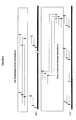
- the unboxed tags in Figure 8 illustrates that different regions have different map densities. Peaks can be identified as local maxima in the tag density, and binding sites can be identified as peaks with a high number of tags. High confidence interactions can be identified by finding multiple paired tags that map between two binding sites, and medium confidence interactions can be identified by finding multiple paired tags that map between a binding site and a non-binding site, as well as single paired tags that map between two binding sites.
- data obtained from the method of Ruan et al. (US 2007-0238101 ) may also be integrated with the data from the present invention to identify binding sites and interactions.
Landscapes
- Chemical & Material Sciences (AREA)
- Life Sciences & Earth Sciences (AREA)
- Health & Medical Sciences (AREA)
- Organic Chemistry (AREA)
- Engineering & Computer Science (AREA)
- Genetics & Genomics (AREA)
- Zoology (AREA)
- Wood Science & Technology (AREA)
- Analytical Chemistry (AREA)
- Bioinformatics & Cheminformatics (AREA)
- Biotechnology (AREA)
- General Engineering & Computer Science (AREA)
- Proteomics, Peptides & Aminoacids (AREA)
- Molecular Biology (AREA)
- Physics & Mathematics (AREA)
- Microbiology (AREA)
- Biophysics (AREA)
- Immunology (AREA)
- Biochemistry (AREA)
- General Health & Medical Sciences (AREA)
- Biomedical Technology (AREA)
- Crystallography & Structural Chemistry (AREA)
- Plant Pathology (AREA)
- Pathology (AREA)
- Bioinformatics & Computational Biology (AREA)
- Chemical Kinetics & Catalysis (AREA)
- Measuring Or Testing Involving Enzymes Or Micro-Organisms (AREA)
Applications Claiming Priority (1)
| Application Number | Priority Date | Filing Date | Title |
|---|---|---|---|
| US12/020,071 US8263367B2 (en) | 2008-01-25 | 2008-01-25 | Nucleic acid interaction analysis |
Publications (2)
| Publication Number | Publication Date |
|---|---|
| EP2083090A1 true EP2083090A1 (fr) | 2009-07-29 |
| EP2083090B1 EP2083090B1 (fr) | 2014-03-12 |
Family
ID=40578772
Family Applications (1)
| Application Number | Title | Priority Date | Filing Date |
|---|---|---|---|
| EP09250188.1A Not-in-force EP2083090B1 (fr) | 2008-01-25 | 2009-01-23 | Analyse d'interaction d'acide nucléique |
Country Status (3)
| Country | Link |
|---|---|
| US (1) | US8263367B2 (fr) |
| EP (1) | EP2083090B1 (fr) |
| SG (1) | SG154420A1 (fr) |
Cited By (8)
| Publication number | Priority date | Publication date | Assignee | Title |
|---|---|---|---|---|
| WO2011146056A1 (fr) * | 2010-05-18 | 2011-11-24 | University Of Southern California | Capture de conformation liée |
| WO2012159025A3 (fr) * | 2011-05-18 | 2013-05-16 | Life Technologies Corporation | Analyse de conformation de chromosome |
| US9715573B2 (en) | 2015-02-17 | 2017-07-25 | Dovetail Genomics, Llc | Nucleic acid sequence assembly |
| US10457934B2 (en) | 2015-10-19 | 2019-10-29 | Dovetail Genomics, Llc | Methods for genome assembly, haplotype phasing, and target independent nucleic acid detection |
| US10526641B2 (en) | 2014-08-01 | 2020-01-07 | Dovetail Genomics, Llc | Tagging nucleic acids for sequence assembly |
| US10947579B2 (en) | 2016-05-13 | 2021-03-16 | Dovetail Genomics, Llc | Recovering long-range linkage information from preserved samples |
| US10975417B2 (en) | 2016-02-23 | 2021-04-13 | Dovetail Genomics, Llc | Generation of phased read-sets for genome assembly and haplotype phasing |
| US11807896B2 (en) | 2015-03-26 | 2023-11-07 | Dovetail Genomics, Llc | Physical linkage preservation in DNA storage |
Families Citing this family (10)
| Publication number | Priority date | Publication date | Assignee | Title |
|---|---|---|---|---|
| US9434985B2 (en) | 2008-09-25 | 2016-09-06 | University Of Massachusetts | Methods of identifying interactions between genomic loci |
| JP5843614B2 (ja) * | 2009-01-30 | 2016-01-13 | オックスフォード ナノポア テクノロジーズ リミテッド | 膜貫通配列決定における核酸構築物のためのアダプター |
| WO2012005595A2 (fr) * | 2010-07-09 | 2012-01-12 | Wouter Leonard De Laat | Stratégies de séquençage de la région génomique d'intérêt v3-d |
| US9029103B2 (en) | 2010-08-27 | 2015-05-12 | Illumina Cambridge Limited | Methods for sequencing polynucleotides |
| AU2012288629B2 (en) | 2011-07-25 | 2017-02-02 | Oxford Nanopore Technologies Limited | Hairpin loop method for double strand polynucleotide sequencing using transmembrane pores |
| US11155860B2 (en) | 2012-07-19 | 2021-10-26 | Oxford Nanopore Technologies Ltd. | SSB method |
| KR102168813B1 (ko) | 2013-03-08 | 2020-10-22 | 옥스포드 나노포어 테크놀로지즈 리미티드 | 효소 정지 방법 |
| GB201403096D0 (en) | 2014-02-21 | 2014-04-09 | Oxford Nanopore Tech Ltd | Sample preparation method |
| GB201609220D0 (en) | 2016-05-25 | 2016-07-06 | Oxford Nanopore Tech Ltd | Method |
| GB201807793D0 (en) | 2018-05-14 | 2018-06-27 | Oxford Nanopore Tech Ltd | Method |
Citations (10)
| Publication number | Priority date | Publication date | Assignee | Title |
|---|---|---|---|---|
| WO2001016378A2 (fr) * | 1999-09-01 | 2001-03-08 | Whitehead Institute For Biomedical Research | Analyse s'etendant aux chromosomes des interactions entre une proteine et l'adn |
| WO2002014550A2 (fr) * | 2000-08-14 | 2002-02-21 | Transgenetics Incorporated | Decouverte de gene cible de facteur de transcription |
| WO2005007814A2 (fr) * | 2003-07-03 | 2005-01-27 | The Regents Of The University Of California | Mappage genomique d'elements d'adn fonctionnels et de proteines cellulaires |
| WO2006135342A1 (fr) * | 2005-06-14 | 2006-12-21 | Agency For Science, Technology And Research | Procede permettant de traiter et/ou de mapper des sequences ditag a un genome |
| WO2007004057A2 (fr) * | 2005-07-04 | 2007-01-11 | Erasmus University Medical Center | 4c |
| WO2007010252A1 (fr) | 2005-07-20 | 2007-01-25 | Solexa Limited | Procede de sequencage d'une matrice de polynucleotide |
| WO2007057785A2 (fr) * | 2005-05-24 | 2007-05-24 | Rolf Ohisson | Methodes d'analyse d'interactions entre au moins sequences d'acides nucleiques |
| WO2007091077A1 (fr) | 2006-02-08 | 2007-08-16 | Solexa Limited | Procédé de séquençage d'une matrice polynucléotidique |
| WO2007106047A1 (fr) * | 2006-03-13 | 2007-09-20 | Agency For Science, Technology And Research | Analyse d'interaction d'acide nucléique |
| WO2007123744A2 (fr) | 2006-03-31 | 2007-11-01 | Solexa, Inc. | Systèmes et procédés pour analyse de séquençage par synthèse |
Family Cites Families (12)
| Publication number | Priority date | Publication date | Assignee | Title |
|---|---|---|---|---|
| US5866330A (en) | 1995-09-12 | 1999-02-02 | The Johns Hopkins University School Of Medicine | Method for serial analysis of gene expression |
| US6054276A (en) | 1998-02-23 | 2000-04-25 | Macevicz; Stephen C. | DNA restriction site mapping |
| US6136537A (en) | 1998-02-23 | 2000-10-24 | Macevicz; Stephen C. | Gene expression analysis |
| US6916610B2 (en) | 1999-12-29 | 2005-07-12 | Arch Development Corporation | Method for generation of longer cDNA fragments from sage tags for gene identification |
| US6498013B1 (en) | 2000-07-28 | 2002-12-24 | The Johns Hopkins University | Serial analysis of transcript expression using MmeI and long tags |
| GB0228289D0 (en) | 2002-12-04 | 2003-01-08 | Genome Inst Of Singapore Nat U | Method |
| WO2004065628A1 (fr) | 2003-01-21 | 2004-08-05 | Guoliang Fu | Detection multiplex quantitative d'acides nucleiques |
| US8222005B2 (en) | 2003-09-17 | 2012-07-17 | Agency For Science, Technology And Research | Method for gene identification signature (GIS) analysis |
| WO2005042781A2 (fr) | 2003-10-31 | 2005-05-12 | Agencourt Personal Genomics Corporation | Procedes de production d'une etiquette appariee a partir d'une sequence d'acides nucleiques et methodes d'utilisation associees |
| WO2006003721A1 (fr) | 2004-07-02 | 2006-01-12 | Kabushiki Kaisha Dnaform | Procede de preparation de marqueurs de sequence |
| US8005621B2 (en) | 2004-09-13 | 2011-08-23 | Agency For Science Technology And Research | Transcript mapping method |
| US20080124707A1 (en) | 2006-06-09 | 2008-05-29 | Agency For Science, Technology And Research | Nucleic acid concatenation |
-
2008
- 2008-01-25 US US12/020,071 patent/US8263367B2/en not_active Expired - Fee Related
-
2009
- 2009-01-23 EP EP09250188.1A patent/EP2083090B1/fr not_active Not-in-force
- 2009-01-23 SG SG200900563-8A patent/SG154420A1/en unknown
Patent Citations (11)
| Publication number | Priority date | Publication date | Assignee | Title |
|---|---|---|---|---|
| WO2001016378A2 (fr) * | 1999-09-01 | 2001-03-08 | Whitehead Institute For Biomedical Research | Analyse s'etendant aux chromosomes des interactions entre une proteine et l'adn |
| WO2002014550A2 (fr) * | 2000-08-14 | 2002-02-21 | Transgenetics Incorporated | Decouverte de gene cible de facteur de transcription |
| WO2005007814A2 (fr) * | 2003-07-03 | 2005-01-27 | The Regents Of The University Of California | Mappage genomique d'elements d'adn fonctionnels et de proteines cellulaires |
| WO2007057785A2 (fr) * | 2005-05-24 | 2007-05-24 | Rolf Ohisson | Methodes d'analyse d'interactions entre au moins sequences d'acides nucleiques |
| WO2006135342A1 (fr) * | 2005-06-14 | 2006-12-21 | Agency For Science, Technology And Research | Procede permettant de traiter et/ou de mapper des sequences ditag a un genome |
| WO2007004057A2 (fr) * | 2005-07-04 | 2007-01-11 | Erasmus University Medical Center | 4c |
| WO2007010252A1 (fr) | 2005-07-20 | 2007-01-25 | Solexa Limited | Procede de sequencage d'une matrice de polynucleotide |
| WO2007091077A1 (fr) | 2006-02-08 | 2007-08-16 | Solexa Limited | Procédé de séquençage d'une matrice polynucléotidique |
| WO2007106047A1 (fr) * | 2006-03-13 | 2007-09-20 | Agency For Science, Technology And Research | Analyse d'interaction d'acide nucléique |
| US20070238101A1 (en) | 2006-03-13 | 2007-10-11 | Agency For Science, Technology And Research | Nucleic acid interaction analysis |
| WO2007123744A2 (fr) | 2006-03-31 | 2007-11-01 | Solexa, Inc. | Systèmes et procédés pour analyse de séquençage par synthèse |
Non-Patent Citations (16)
Cited By (15)
| Publication number | Priority date | Publication date | Assignee | Title |
|---|---|---|---|---|
| WO2011146056A1 (fr) * | 2010-05-18 | 2011-11-24 | University Of Southern California | Capture de conformation liée |
| WO2012159025A3 (fr) * | 2011-05-18 | 2013-05-16 | Life Technologies Corporation | Analyse de conformation de chromosome |
| US8663919B2 (en) | 2011-05-18 | 2014-03-04 | Life Technologies Corporation | Chromosome conformation analysis |
| US8877440B2 (en) | 2011-05-18 | 2014-11-04 | Life Technologies Corporation | Chromosome conformation analysis |
| US10526641B2 (en) | 2014-08-01 | 2020-01-07 | Dovetail Genomics, Llc | Tagging nucleic acids for sequence assembly |
| US12180535B2 (en) | 2014-08-01 | 2024-12-31 | Dovetail Genomics, Llc | Tagging nucleic acids for sequence assembly |
| US11600361B2 (en) | 2015-02-17 | 2023-03-07 | Dovetail Genomics, Llc | Nucleic acid sequence assembly |
| US9715573B2 (en) | 2015-02-17 | 2017-07-25 | Dovetail Genomics, Llc | Nucleic acid sequence assembly |
| US10318706B2 (en) | 2015-02-17 | 2019-06-11 | Dovetail Genomics, Llc | Nucleic acid sequence assembly |
| US11807896B2 (en) | 2015-03-26 | 2023-11-07 | Dovetail Genomics, Llc | Physical linkage preservation in DNA storage |
| US10457934B2 (en) | 2015-10-19 | 2019-10-29 | Dovetail Genomics, Llc | Methods for genome assembly, haplotype phasing, and target independent nucleic acid detection |
| US10975417B2 (en) | 2016-02-23 | 2021-04-13 | Dovetail Genomics, Llc | Generation of phased read-sets for genome assembly and haplotype phasing |
| US12404537B2 (en) | 2016-02-23 | 2025-09-02 | Dovetail Genomics, Llc | Generation of phased read-sets for genome assembly and haplotype phasing |
| US12065691B2 (en) | 2016-05-13 | 2024-08-20 | Dovetail Genomics, Llc | Recovering long-range linkage information from preserved samples |
| US10947579B2 (en) | 2016-05-13 | 2021-03-16 | Dovetail Genomics, Llc | Recovering long-range linkage information from preserved samples |
Also Published As
| Publication number | Publication date |
|---|---|
| EP2083090B1 (fr) | 2014-03-12 |
| US20090191598A1 (en) | 2009-07-30 |
| SG154420A1 (en) | 2009-08-28 |
| US8263367B2 (en) | 2012-09-11 |
Similar Documents
| Publication | Publication Date | Title |
|---|---|---|
| EP2083090B1 (fr) | Analyse d'interaction d'acide nucléique | |
| US20230272452A1 (en) | Combinatorial single molecule analysis of chromatin | |
| JP7532455B2 (ja) | 連続性を維持した転位 | |
| Denker et al. | The second decade of 3C technologies: detailed insights into nuclear organization | |
| US10934578B2 (en) | Method of analysing DNA sequences | |
| AU2021224760A1 (en) | Capturing genetic targets using a hybridization approach | |
| Fullwood et al. | Chromatin interaction analysis using paired‐end tag sequencing | |
| Cullum et al. | The next generation: using new sequencing technologies to analyse gene regulation | |
| JP7232643B2 (ja) | 腫瘍のディープシークエンシングプロファイリング | |
| KR102903151B1 (ko) | 염색질 형태 캡처(3c) 라이브러리의 제조 공정 | |
| CN109641933B (zh) | 染色质相互作用的全基因组鉴定 | |
| WO2019134586A1 (fr) | Procédé et système d'identification d'interaction de chromatine régulatrice de gènes et application associée | |
| CN107109698B (zh) | Rna stitch测序:用于直接映射细胞中rna:rna相互作用的测定 | |
| US20230227809A1 (en) | Multiplex Chromatin Interaction Analysis with Single-Cell Chia-Drop | |
| Goh et al. | Chromatin interaction analysis with paired-end tag sequencing (ChIA-PET) for mapping chromatin interactions and understanding transcription regulation | |
| US10287621B2 (en) | Targeted chromosome conformation capture | |
| US20180274007A1 (en) | Methods of genome seqencing and epigenetic analysis | |
| US20240150830A1 (en) | Phased genome scale epigenetic maps and methods for generating maps | |
| WO2017176971A1 (fr) | Procédés de séquençage du génome et d'analyse épigénétique | |
| Hinte et al. | CUT&RUN and CUT&Tag for histone modification and transcription factor binding analyses | |
| Rizzo et al. | All things ChIP: ChIP-Chip, ChIP-Seq, ChIP-PCR | |
| WO2024006712A1 (fr) | Procédés de préparation et d'analyse d'acides nucléiques avec ligature de proximité à partir de cellules isolées | |
| HK40039747A (en) | Compositions for rna-chromatin interaction analysis and uses thereof | |
| Head et al. | Practical Guide | |
| Ruan et al. | Chromatin Interaction Analysis Using Paired‐End Tag Sequencing (ChIA‐PET) |
Legal Events
| Date | Code | Title | Description |
|---|---|---|---|
| PUAI | Public reference made under article 153(3) epc to a published international application that has entered the european phase |
Free format text: ORIGINAL CODE: 0009012 |
|
| AK | Designated contracting states |
Kind code of ref document: A1 Designated state(s): AT BE BG CH CY CZ DE DK EE ES FI FR GB GR HR HU IE IS IT LI LT LU LV MC MK MT NL NO PL PT RO SE SI SK TR |
|
| AX | Request for extension of the european patent |
Extension state: AL BA RS |
|
| 17P | Request for examination filed |
Effective date: 20100108 |
|
| 17Q | First examination report despatched |
Effective date: 20100208 |
|
| AKX | Designation fees paid |
Designated state(s): AT BE BG CH CY CZ DE DK EE ES FI FR GB GR HR HU IE IS IT LI LT LU LV MC MK MT NL NO PL PT RO SE SI SK TR |
|
| REG | Reference to a national code |
Ref country code: DE Ref legal event code: R079 Ref document number: 602009022366 Country of ref document: DE Free format text: PREVIOUS MAIN CLASS: C12Q0001680000 Ipc: C12N0015100000 |
|
| RIC1 | Information provided on ipc code assigned before grant |
Ipc: C12N 15/10 20060101AFI20120127BHEP Ipc: C12Q 1/68 20060101ALI20120127BHEP |
|
| GRAP | Despatch of communication of intention to grant a patent |
Free format text: ORIGINAL CODE: EPIDOSNIGR1 |
|
| RIN1 | Information on inventor provided before grant (corrected) |
Inventor name: WEI, CHIA LIN Inventor name: FULLWOOD, MELISSA JANE Inventor name: RUAN, YIJUN Inventor name: LIU, JUN |
|
| GRAP | Despatch of communication of intention to grant a patent |
Free format text: ORIGINAL CODE: EPIDOSNIGR1 |
|
| INTG | Intention to grant announced |
Effective date: 20130404 |
|
| GRAP | Despatch of communication of intention to grant a patent |
Free format text: ORIGINAL CODE: EPIDOSNIGR1 |
|
| INTG | Intention to grant announced |
Effective date: 20130912 |
|
| GRAS | Grant fee paid |
Free format text: ORIGINAL CODE: EPIDOSNIGR3 |
|
| GRAA | (expected) grant |
Free format text: ORIGINAL CODE: 0009210 |
|
| AK | Designated contracting states |
Kind code of ref document: B1 Designated state(s): AT BE BG CH CY CZ DE DK EE ES FI FR GB GR HR HU IE IS IT LI LT LU LV MC MK MT NL NO PL PT RO SE SI SK TR |
|
| REG | Reference to a national code |
Ref country code: GB Ref legal event code: FG4D |
|
| REG | Reference to a national code |
Ref country code: CH Ref legal event code: EP |
|
| REG | Reference to a national code |
Ref country code: AT Ref legal event code: REF Ref document number: 656356 Country of ref document: AT Kind code of ref document: T Effective date: 20140315 |
|
| REG | Reference to a national code |
Ref country code: IE Ref legal event code: FG4D |
|
| REG | Reference to a national code |
Ref country code: DE Ref legal event code: R096 Ref document number: 602009022366 Country of ref document: DE Effective date: 20140424 |
|
| REG | Reference to a national code |
Ref country code: NL Ref legal event code: VDEP Effective date: 20140312 |
|
| PG25 | Lapsed in a contracting state [announced via postgrant information from national office to epo] |
Ref country code: LT Free format text: LAPSE BECAUSE OF FAILURE TO SUBMIT A TRANSLATION OF THE DESCRIPTION OR TO PAY THE FEE WITHIN THE PRESCRIBED TIME-LIMIT Effective date: 20140312 Ref country code: NO Free format text: LAPSE BECAUSE OF FAILURE TO SUBMIT A TRANSLATION OF THE DESCRIPTION OR TO PAY THE FEE WITHIN THE PRESCRIBED TIME-LIMIT Effective date: 20140612 |
|
| REG | Reference to a national code |
Ref country code: AT Ref legal event code: MK05 Ref document number: 656356 Country of ref document: AT Kind code of ref document: T Effective date: 20140312 |
|
| REG | Reference to a national code |
Ref country code: LT Ref legal event code: MG4D |
|
| PG25 | Lapsed in a contracting state [announced via postgrant information from national office to epo] |
Ref country code: FI Free format text: LAPSE BECAUSE OF FAILURE TO SUBMIT A TRANSLATION OF THE DESCRIPTION OR TO PAY THE FEE WITHIN THE PRESCRIBED TIME-LIMIT Effective date: 20140312 Ref country code: SE Free format text: LAPSE BECAUSE OF FAILURE TO SUBMIT A TRANSLATION OF THE DESCRIPTION OR TO PAY THE FEE WITHIN THE PRESCRIBED TIME-LIMIT Effective date: 20140312 Ref country code: CY Free format text: LAPSE BECAUSE OF FAILURE TO SUBMIT A TRANSLATION OF THE DESCRIPTION OR TO PAY THE FEE WITHIN THE PRESCRIBED TIME-LIMIT Effective date: 20140312 |
|
| PG25 | Lapsed in a contracting state [announced via postgrant information from national office to epo] |
Ref country code: HR Free format text: LAPSE BECAUSE OF FAILURE TO SUBMIT A TRANSLATION OF THE DESCRIPTION OR TO PAY THE FEE WITHIN THE PRESCRIBED TIME-LIMIT Effective date: 20140312 Ref country code: LV Free format text: LAPSE BECAUSE OF FAILURE TO SUBMIT A TRANSLATION OF THE DESCRIPTION OR TO PAY THE FEE WITHIN THE PRESCRIBED TIME-LIMIT Effective date: 20140312 |
|
| PG25 | Lapsed in a contracting state [announced via postgrant information from national office to epo] |
Ref country code: RO Free format text: LAPSE BECAUSE OF FAILURE TO SUBMIT A TRANSLATION OF THE DESCRIPTION OR TO PAY THE FEE WITHIN THE PRESCRIBED TIME-LIMIT Effective date: 20140312 Ref country code: CZ Free format text: LAPSE BECAUSE OF FAILURE TO SUBMIT A TRANSLATION OF THE DESCRIPTION OR TO PAY THE FEE WITHIN THE PRESCRIBED TIME-LIMIT Effective date: 20140312 Ref country code: BG Free format text: LAPSE BECAUSE OF FAILURE TO SUBMIT A TRANSLATION OF THE DESCRIPTION OR TO PAY THE FEE WITHIN THE PRESCRIBED TIME-LIMIT Effective date: 20140612 Ref country code: EE Free format text: LAPSE BECAUSE OF FAILURE TO SUBMIT A TRANSLATION OF THE DESCRIPTION OR TO PAY THE FEE WITHIN THE PRESCRIBED TIME-LIMIT Effective date: 20140312 Ref country code: IS Free format text: LAPSE BECAUSE OF FAILURE TO SUBMIT A TRANSLATION OF THE DESCRIPTION OR TO PAY THE FEE WITHIN THE PRESCRIBED TIME-LIMIT Effective date: 20140712 Ref country code: BE Free format text: LAPSE BECAUSE OF FAILURE TO SUBMIT A TRANSLATION OF THE DESCRIPTION OR TO PAY THE FEE WITHIN THE PRESCRIBED TIME-LIMIT Effective date: 20140312 Ref country code: NL Free format text: LAPSE BECAUSE OF FAILURE TO SUBMIT A TRANSLATION OF THE DESCRIPTION OR TO PAY THE FEE WITHIN THE PRESCRIBED TIME-LIMIT Effective date: 20140312 |
|
| PG25 | Lapsed in a contracting state [announced via postgrant information from national office to epo] |
Ref country code: AT Free format text: LAPSE BECAUSE OF FAILURE TO SUBMIT A TRANSLATION OF THE DESCRIPTION OR TO PAY THE FEE WITHIN THE PRESCRIBED TIME-LIMIT Effective date: 20140312 Ref country code: ES Free format text: LAPSE BECAUSE OF FAILURE TO SUBMIT A TRANSLATION OF THE DESCRIPTION OR TO PAY THE FEE WITHIN THE PRESCRIBED TIME-LIMIT Effective date: 20140312 Ref country code: PL Free format text: LAPSE BECAUSE OF FAILURE TO SUBMIT A TRANSLATION OF THE DESCRIPTION OR TO PAY THE FEE WITHIN THE PRESCRIBED TIME-LIMIT Effective date: 20140312 Ref country code: SK Free format text: LAPSE BECAUSE OF FAILURE TO SUBMIT A TRANSLATION OF THE DESCRIPTION OR TO PAY THE FEE WITHIN THE PRESCRIBED TIME-LIMIT Effective date: 20140312 |
|
| REG | Reference to a national code |
Ref country code: DE Ref legal event code: R097 Ref document number: 602009022366 Country of ref document: DE |
|
| PG25 | Lapsed in a contracting state [announced via postgrant information from national office to epo] |
Ref country code: PT Free format text: LAPSE BECAUSE OF FAILURE TO SUBMIT A TRANSLATION OF THE DESCRIPTION OR TO PAY THE FEE WITHIN THE PRESCRIBED TIME-LIMIT Effective date: 20140714 |
|
| PLBE | No opposition filed within time limit |
Free format text: ORIGINAL CODE: 0009261 |
|
| STAA | Information on the status of an ep patent application or granted ep patent |
Free format text: STATUS: NO OPPOSITION FILED WITHIN TIME LIMIT |
|
| PG25 | Lapsed in a contracting state [announced via postgrant information from national office to epo] |
Ref country code: DK Free format text: LAPSE BECAUSE OF FAILURE TO SUBMIT A TRANSLATION OF THE DESCRIPTION OR TO PAY THE FEE WITHIN THE PRESCRIBED TIME-LIMIT Effective date: 20140312 |
|
| 26N | No opposition filed |
Effective date: 20141215 |
|
| REG | Reference to a national code |
Ref country code: DE Ref legal event code: R097 Ref document number: 602009022366 Country of ref document: DE Effective date: 20141215 |
|
| PG25 | Lapsed in a contracting state [announced via postgrant information from national office to epo] |
Ref country code: IT Free format text: LAPSE BECAUSE OF FAILURE TO SUBMIT A TRANSLATION OF THE DESCRIPTION OR TO PAY THE FEE WITHIN THE PRESCRIBED TIME-LIMIT Effective date: 20140312 |
|
| PG25 | Lapsed in a contracting state [announced via postgrant information from national office to epo] |
Ref country code: SI Free format text: LAPSE BECAUSE OF FAILURE TO SUBMIT A TRANSLATION OF THE DESCRIPTION OR TO PAY THE FEE WITHIN THE PRESCRIBED TIME-LIMIT Effective date: 20140312 |
|
| REG | Reference to a national code |
Ref country code: CH Ref legal event code: PL |
|
| PG25 | Lapsed in a contracting state [announced via postgrant information from national office to epo] |
Ref country code: LU Free format text: LAPSE BECAUSE OF FAILURE TO SUBMIT A TRANSLATION OF THE DESCRIPTION OR TO PAY THE FEE WITHIN THE PRESCRIBED TIME-LIMIT Effective date: 20150123 |
|
| PG25 | Lapsed in a contracting state [announced via postgrant information from national office to epo] |
Ref country code: MC Free format text: LAPSE BECAUSE OF FAILURE TO SUBMIT A TRANSLATION OF THE DESCRIPTION OR TO PAY THE FEE WITHIN THE PRESCRIBED TIME-LIMIT Effective date: 20140312 |
|
| PG25 | Lapsed in a contracting state [announced via postgrant information from national office to epo] |
Ref country code: CH Free format text: LAPSE BECAUSE OF NON-PAYMENT OF DUE FEES Effective date: 20150131 Ref country code: LI Free format text: LAPSE BECAUSE OF NON-PAYMENT OF DUE FEES Effective date: 20150131 |
|
| REG | Reference to a national code |
Ref country code: FR Ref legal event code: ST Effective date: 20150930 |
|
| REG | Reference to a national code |
Ref country code: IE Ref legal event code: MM4A |
|
| PG25 | Lapsed in a contracting state [announced via postgrant information from national office to epo] |
Ref country code: FR Free format text: LAPSE BECAUSE OF NON-PAYMENT OF DUE FEES Effective date: 20150202 |
|
| PG25 | Lapsed in a contracting state [announced via postgrant information from national office to epo] |
Ref country code: IE Free format text: LAPSE BECAUSE OF NON-PAYMENT OF DUE FEES Effective date: 20150123 |
|
| PG25 | Lapsed in a contracting state [announced via postgrant information from national office to epo] |
Ref country code: GR Free format text: LAPSE BECAUSE OF FAILURE TO SUBMIT A TRANSLATION OF THE DESCRIPTION OR TO PAY THE FEE WITHIN THE PRESCRIBED TIME-LIMIT Effective date: 20140613 |
|
| PG25 | Lapsed in a contracting state [announced via postgrant information from national office to epo] |
Ref country code: MT Free format text: LAPSE BECAUSE OF FAILURE TO SUBMIT A TRANSLATION OF THE DESCRIPTION OR TO PAY THE FEE WITHIN THE PRESCRIBED TIME-LIMIT Effective date: 20140312 |
|
| PG25 | Lapsed in a contracting state [announced via postgrant information from national office to epo] |
Ref country code: HU Free format text: LAPSE BECAUSE OF FAILURE TO SUBMIT A TRANSLATION OF THE DESCRIPTION OR TO PAY THE FEE WITHIN THE PRESCRIBED TIME-LIMIT; INVALID AB INITIO Effective date: 20090123 |
|
| PG25 | Lapsed in a contracting state [announced via postgrant information from national office to epo] |
Ref country code: TR Free format text: LAPSE BECAUSE OF FAILURE TO SUBMIT A TRANSLATION OF THE DESCRIPTION OR TO PAY THE FEE WITHIN THE PRESCRIBED TIME-LIMIT Effective date: 20140312 |
|
| PGFP | Annual fee paid to national office [announced via postgrant information from national office to epo] |
Ref country code: DE Payment date: 20180130 Year of fee payment: 10 Ref country code: GB Payment date: 20180131 Year of fee payment: 10 |
|
| PG25 | Lapsed in a contracting state [announced via postgrant information from national office to epo] |
Ref country code: MK Free format text: LAPSE BECAUSE OF FAILURE TO SUBMIT A TRANSLATION OF THE DESCRIPTION OR TO PAY THE FEE WITHIN THE PRESCRIBED TIME-LIMIT Effective date: 20140312 |
|
| REG | Reference to a national code |
Ref country code: DE Ref legal event code: R119 Ref document number: 602009022366 Country of ref document: DE |
|
| GBPC | Gb: european patent ceased through non-payment of renewal fee |
Effective date: 20190123 |
|
| PG25 | Lapsed in a contracting state [announced via postgrant information from national office to epo] |
Ref country code: DE Free format text: LAPSE BECAUSE OF NON-PAYMENT OF DUE FEES Effective date: 20190801 |
|
| PG25 | Lapsed in a contracting state [announced via postgrant information from national office to epo] |
Ref country code: GB Free format text: LAPSE BECAUSE OF NON-PAYMENT OF DUE FEES Effective date: 20190123 |