EP2105311B1 - Appareil de génération de données d'impression et programme de génération de données d'impression stockant un support lisible sur ordinateur - Google Patents
Appareil de génération de données d'impression et programme de génération de données d'impression stockant un support lisible sur ordinateur Download PDFInfo
- Publication number
- EP2105311B1 EP2105311B1 EP09154895A EP09154895A EP2105311B1 EP 2105311 B1 EP2105311 B1 EP 2105311B1 EP 09154895 A EP09154895 A EP 09154895A EP 09154895 A EP09154895 A EP 09154895A EP 2105311 B1 EP2105311 B1 EP 2105311B1
- Authority
- EP
- European Patent Office
- Prior art keywords
- line
- lines
- print data
- character
- Prior art date
- Legal status (The legal status is an assumption and is not a legal conclusion. Google has not performed a legal analysis and makes no representation as to the accuracy of the status listed.)
- Active
Links
Images




Classifications
-
- B—PERFORMING OPERATIONS; TRANSPORTING
- B41—PRINTING; LINING MACHINES; TYPEWRITERS; STAMPS
- B41J—TYPEWRITERS; SELECTIVE PRINTING MECHANISMS, i.e. MECHANISMS PRINTING OTHERWISE THAN FROM A FORME; CORRECTION OF TYPOGRAPHICAL ERRORS
- B41J3/00—Typewriters or selective printing or marking mechanisms characterised by the purpose for which they are constructed
- B41J3/407—Typewriters or selective printing or marking mechanisms characterised by the purpose for which they are constructed for marking on special material
- B41J3/4075—Tape printers; Label printers
Definitions
- the present disclosure relates to a print data generation apparatus and a computer-readable medium storing a print data generation program.
- a printing apparatus that performs printing on a tape-like print medium (hereinafter referred to as a "tape") is known.
- This type of printing apparatus will be hereinafter referred to as a "tape printing apparatus".
- Some printing apparatuses may generate print data themselves to perform printing.
- Other printing apparatuses may be connected to another apparatus such as a personal computer that generates print data, receive the print data and perform printing.
- a user may edit a print target by arranging the print target at desired print position on a print medium.
- the print target may be a character string and an illustration, for example.
- Hei 5-346947 which is regarded as closest prior art, the user can edit a print-target character string to be aligned at the "left”, “center”, or “right”, if a text direction of the character string is horizontal.
- the user can also edit the character string to be aligned at the "top”, “center”, and “bottom”, if the text direction is vertical.
- the user may need print data for the aligned multiple character strings.
- the user may need to enter the character string as many times as a desired number of repetitions into an apparatus that generates print data for printing by the tape printing apparatus.
- Such type of apparatus may conventionally have a function referred to as "copy-and-print”.
- the copy-and-print function refers to a function to generate print data for a specified number of repeated character strings aligned at predetermined intervals.
- the tape printing apparatus may have a function referred to as "repeat printing”.
- the repeat printing function refers to a function to use the same print data to print a character string a specified number of times to repeat printing. By using the repeat printing function, the same character string may be printed a plurality of number of times, and a print result with a plurality of the aligned same character strings may be obtained.
- an adhesive material may be applied to a back surface of a tape, which is opposite to a printing surface of the tape. Therefore, printed tapes may be stuck to a variety of goods and used. For example, a tape having a name printed thereon may be stuck on a stationery product such as scissors to be used.
- the name may stand out too much while the stationery product is in use.
- the name printed on the tape may be useful for someone who found the stationery product left by the user and tries to find the owner.
- the name may be of no use when the owner is using the stationery product ordinarily.
- characters of the name to be printed may be decorated sometimes.
- One type of decoration may be a designed list of the repeated names.
- the conventional print data generation apparatus for the conventional tape printing apparatus may cost the user a time to enter the characters and edit them.
- the use of the repeat printing function may not always bring a desired result for the user.
- relatively wide spacing may be required between the consecutive character strings for tape feeding.
- character strings in the respective lines may have different lengths, corresponding to the number of characters or the size thereof. Therefore, the character strings may not be aligned in a well-balanced manner in some cases.
- a case may be considered here, in which a print result includes two lines of character strings, the character string in the first line has three characters, the character string in the second line has 10 characters, and the characters each have the same size.
- the use of copy-and-print function or repeat printing function may result in a poor balance, because spacing between the character strings in the first line may be wider by seven characters than the spacing in the second line.
- Various exemplary embodiments of the general principles herein provide a print data generation apparatus according to claim 1 that generates print data to print decorative print results with simple entering operation and a computer-readable medium according to claim 5 storing a print data generation program.
- the print data generation apparatus generates print data to be used for printing a print result including a plurality of lines on a tape-shaped print medium.
- the print data generation apparatus includes an input device, a storage device, and a print data generation device.
- the input device inputs a plurality of character strings to be printed on the print medium, wherein each of the plurality of character strings is input for each of the plurality of lines.
- the storage device stores the plurality of character strings input through the input device, wherein each of the plurality of character strings is stored for each of the plurality of lines.
- the print data generation device generates the print data in which each of the plurality of character strings stored in the storage device are repeatedly arranged in a predetermined character size defined for each of the plurality of lines and at predetermined spacing in each of the plurality of lines until the print result reaches a predetermined length.
- the computer-readable medium stores a print data generation program.
- the print data generation program includes instructions to cause a computer to execute the steps of accepting a plurality of character strings to be printed in a plurality of lines on a tape-shaped print medium, wherein each of the plurality of character strings is input for each of the plurality of lines, storing each of the plurality of character strings for each of the plurality of lines, and generating print data in which each of the plurality of character strings are repeatedly arranged in a predetermined character size defined for each of the plurality of lines and at predetermined spacing in each of the plurality of lines until a print result including the plurality of lines reaches a predetermined length.
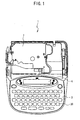
- FIG. 1 is a plan view of a tape printing apparatus in a condition where a lid of a cassette housing portion has been removed;
- FIG. 2 is a block diagram of an electrical configuration of the tape printing apparatus
- FIG. 3 is an explanatory diagram of an example of a configuration of a ROM
- FIG. 4 is an explanatory diagram of an example of a configuration of a RAM
- FIG. 5 is a schematic illustration of an example of print results
- FIG. 6 is a schematic illustration of another example of the print results
- FIG. 7 is a schematic illustration of a further example of the printing results
- FIG. 8 is a schematic illustration of a decorative label length setting screen
- FIG. 9 is a schematic illustration of a first-line character string entry screen
- FIG. 10 is a schematic illustration of a second-line character string entry screen
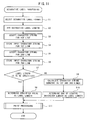
- FIG. 11 is a flowchart of decorative label processing
- FIG. 12 is a flowchart of printing processing performed in the decorative label processing
- FIG. 13 is a flowchart of first-line processing performed in the printing processing
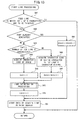
- FIG. 14 is a flowchart of second-line processing performed in the printing processing.
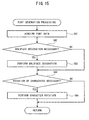
- FIG. 15 is a flowchart of font generation processing performed in the first-line processing and the second-line processing.
- the tape printing apparatus 1 includes a cassette housing 7 at a rear portion (upper part in FIG. 1 ) and a keyboard portion 3 at a front portion (lower part in FIG. 1 ).
- the cassette housing 7 is a concave portion to house a known tape cassette (not shown) containing a wound tape serving as a print medium.
- the keyboard portion 3 has a plurality of keys 30 arranged thereon.
- the keys 30 may include character keys and function keys for entering various commands.
- the character keys may include, for example, keys for entering alphabets, Japanese HIRAGANA characters, Japanese KATAKANA characters, numeric characters, symbols, etc.
- the function keys may include, for example, a PRINT key, a CANCEL key, etc.
- the tape printing apparatus 1 includes a liquid crystal display (LCD) 4 between the cassette housing 7 and the keyboard portion 3.
- the LCD 4 may display characters entered via the keyboard portion 3 as a print target, as well as setting items and options for various kinds of setting.
- a control system of the tape printing apparatus 1 is configured such that a control circuit portion 10 as a nucleus is formed on a control board.
- the control circuit portion 10 includes a CPU 11, a ROM 12, and a RAM 13, which are connected to each other via a bus 106.
- a cassette sensor 2 to detect a tape cassette, the keyboard portion 3, a liquid crystal display controller (hereinafter referred to as "LCDC") 24, and drive circuits 25 to 27 are each connected to the CPU 11.
- the LCDC 24, which is connected to the LCD 4, has a video RAM (not shown) to output display data to the LCD 4.
- the drive circuit 25 drives a thermal head 5.
- the drive circuit 26 drives a tape feed motor 6.
- the drive circuit 27 drives a cutter mechanism 8 to cut off a tape.
- the thermal head 5 is disposed in a tape width direction of the wound tape contained in the tape cassette.
- the tape printing apparatus 1 prints one line of information in the tape width direction by the thermal head 5 and then feeds the printed tape by one line of distance using the tape feed motor 6. Each time printing and feeding are repeated, one line of information is printed on the tape.
- the ROM 12 may have, for example, a program storage area 121, a CG data storage area 122, a symbol data storage area 123, a dictionary information storage area 124, a screen information storage area 125, and a message information storage area 126.
- the ROM 12 may have other storage areas that are not shown.
- the program storage area 121 stores a display drive control program, a print drive control program, a print data generation program, and other various programs required to control the tape printing apparatus 1.
- the display drive control program is used to control the LCDC 24 in accordance with code data of characters entered through the keyboard portion 3.
- the print drive control program is used to drive the thermal head 5 and the tape feed motor 6 by reading data stored in a print buffer 131 (see FIG. 4 ).
- the print data generation program is used to generate print data required to adjust the number of characters or block lines and print them, in accordance with the width of the tape, which is a print medium.
- the CG data storage area 122 stores dot data for various sizes of characters and symbols that can be entered through the keyboard portion 3.
- the symbol data storage area 123 stores dot data for graphics and illustrations.
- the dictionary information storage area 124 stores information of a dictionary required for Kanji conversion.
- the screen information storage area 125 stores forms of screens to be displayed on the LCD 4.
- the message information storage area 126 stores messages to be displayed on the LCD 4.
- the RAM 13 has an input buffer 130, the print buffer 131, a label length storage area 132, a first character string storage area 133, a second character string storage area 134, a feed line counter storage area 135, a first character counter storage area 136, a second character counter storage area 137, a first font storage area 138, and a second font storage area 139.
- the RAM 13 may have other storage areas that are not shown.
- the input buffer 130 stores information inputted via the keyboard 3 as a print target.
- the input information may include, for example, characters, information about characters, and a line feed.
- the information about characters may include, for example, a font size and a font type.
- the print buffer 131 stores information required to drive the thermal head 5 for printing.
- the print buffer 131 may store, for example, dot patterns for printing and the number of pulses to be applied, which is the level of energy required to form each of the dots.
- the label length storage area 132 stores a length by which printing is to be performed on the label. This length will be hereinafter referred to as a "label length".
- the first character string storage area 133 stores a character string to be printed in the first line.
- the second character string storage area 134 stores a character string to be printed in the second line.
- the feed line counter storage area 135 stores a counter (a variable "Line") that is used to count feed lines. It should be noted that a feed line does not refer to the first or second line in a format, but refers to a line by which the tape is fed by the tape feed motor 6.
- the first character counter storage area 136 stores a counter (a variable "Cnt1") that is used to count characters of the character string in the first line when the print data is generated.
- the second character counter storage area 137 stores a counter (a variable "Cnt2") that is used to count characters of the character string in the second line when the print data is generated.
- the first font storage area 138 stores the font of the characters in the first line when the print data is generated.
- the second font storage area 139 stores the font of the characters in the second line when the print data is generated.
- print results 101 to 103 each include character strings printed in two lines.
- a character string "YAMAMOTO HANAKO” in uppercase is repeatedly printed in the first line, and another character string "yamamoto” in lowercase is repeatedly printed in the second line.
- the first line is printed in a larger font size than the second line.
- the print result 102 the first line of the print result 101 is printed highlighted.
- the second line of the print result 101 is printed as rotated by 180 degrees.
- a plurality of formats is prepared beforehand for the tape printing apparatus 1.
- a front type, a font size, and a decoration are set for the character string in each line.
- the font type, the font size, and the decoration are collectively referred to as "character attributes”.
- the print results 101 through 103 respectively shown in FIGS. 5 to 7 are each referred to as a "decorative label", and a format for printing a decorative label is referred to as a "decorative label format".
- the user may select a decorative label format and enter character strings to be printed in the first line and the second line, respectively.
- the tape printing apparatus 1 may repeatedly print each line of the character strings entered by the user based on the character attributes defined for each line in the decorative label format. It should be noted that even if the respective lengths of the print results of the character strings in the first and second lines are different from each other owing to the numbers of the characters or the character attributes, the character strings are aligned repeatedly in the respective lines without being influenced by the other line. Thus, in the examples shown in FIG. 5 to 7 , the lowercase character string "yamamoto" in the second line is not influenced by the position where the uppercase character string "YAMAMOTO HANAKO" is repeated in the first line.
- a decorative label length setting screen 41 may have a "Label length setting" field to select whether to specify a label length, and a "Label length” field to specify a label length if the label length is to be specified.
- the “Label length setting” field the user may select either of the options, "Specify” or “Not Specify”.
- the “Label length” field the user may specify the label length in millimeter units.
- a decorative label having a length specified in the "Label length” field may be created.
- the length of the print result of the character string in the first line and the length of the print result of the character string in the second line may be compared. Then, whichever larger in comparison may be determined as a label length.
- a first line character string entry screen 42 may include a message "ENTER CHARACTER STRING FOR FIRST LINE” and an entry field to enter the character string.
- a second line character string entry screen 43 may include a message of "ENTER CHARACTER STRING FOR SECOND LINE” and an entry field to enter the character string.
- the decorative label processing starts if an instruction to execute a "decorative label" function is given through operations by the user on the keyboard portion 3.
- a description will be given below, using an example where a character string in the first line is "YAMAMOTO HANAKO" in uppercase and a character string in the second line is "yamamoto" in lowercase.
- the number of the uppercase characters in the first line is fifteen (15) and the number of the lowercase characters in the second line is eight (8).
- a decorative label format selection screen (not shown) to select a decorative label format is displayed on the LCD 4, and a selection entered by the user is accepted (S1).
- a selected format is stored in a predetermined storage area (not shown) of the RAM 13.
- the decorative label length setting screen 41 shown in FIG. 8 is displayed on the LCD 4.
- the user may select whether to specify or not to specify a label length. Further, in a case where a label length is to be set, a value of the label length is set (S2).
- the first line character string entry screen 42 shown in FIG. 9 is displayed, and entry of a character string to be printed in the first line is accepted (S3).
- the input character string is stored in the first character string storage area 133 (S4).
- the second line character string entry screen 43 shown in FIG. 10 is displayed, and entry of a character string to be printed in the second line is accepted (S5).
- the input character string is stored in the second character string storage area 133 (S6) .
- it is determined whether the label length is to be specified S7). If "Specify" has been selected in the "Label length Setting" field on the decorative label length setting screen 41, it is determined that the label length is to be specified (YES at S7).
- the value specified in the "Label length” field on the decorative label length setting screen 41 is converted into a number of dots and then stored in the label length storage area 132 of the RAM 13 (S8).
- a calculation ratio of 10 dots/mm may be used. In such case, if a label length of 50 mm is specified, the number of 500 is stored.
- the label length will be set based on the character strings in the first and second lines and the selected decorative label format (S9, S10). Specifically, a length (a number of dots) to be required for a generated font (dot data) of the character string in the first line is calculated, based on the character attributes of the first line in the selected decorative label format (S9). Similarly, a length to be required for a generated font for the character string in the second line is also calculated, based on the character attributes of the second line in the selected decorative label format (S9). Then, the two lengths are compared, and the one with a larger length is selected and stored as a label length in the label length storage area 132 (S10).
- print processing is performed (S11 and FIG. 12 ).
- an initial value one (1) is stored as variable Cnt1 that is used to count the characters of the character string in the first line (S21) .
- an initial value one (1) is stored as variable Cnt2 that is used to count the characters of the character string in the second line (S21).
- An initial value one (1) is stored as variable Line that is used to count feed lines (S22).
- the tape feed motor 6 is turned ON (S23).
- the print buffer 131 is cleared (S24) to perform the first (lst) line processing (S25 and FIG. 13 ) and the second (2nd) line processing (S26 and FIG. 14 ). In the first line processing and the second line processing, a dot pattern of a feed line indicated by variable Line is extracted for each line and stored in the print buffer 131.
- the current feed line is a feed line in which the first line's characters are to be printed (S41).
- a blank space will be provided at the beginning and the end of printing. If the current feed line is a feed line that corresponds to the blank space, the character string in the first line is not to be printed. In such a case, it is determined that the current feed line is not a feed line in which the first line's characters are to be printed (NO at S41).
- the number of the feed lines included in the blank space may be predetermined for each decorative label format.
- variable Line that is, first line in this case
- the present processing is ended. Accordingly, information to give an instruction of printing is not stored at a position corresponding to the first line in the print buffer 131.
- the second line processing like the first line processing, it is determined whether the current feed line is a feed line in which the second line's characters are to be printed (S61). If a feed line indicated by variable Line, that is, first line in this case, is not a feed line in which the second line's characters are to be printed (NO at S61), the present processing is ended. Accordingly, information to give an instruction of printing is not stored at a position corresponding to the second line in the print buffer 131.
- the processing returns to the print processing shown in FIG. 12 , to determine whether the selected decorative label format needs highlighting (S27). If the format needs highlighting (for example, the format for obtaining the print result 102 shown in FIG. 6 ) (YES at S27), among the information pieces stored in the print buffer 131, specified dots are highlighted (S28). Specifically, the dots to which pulses are to be applied from the thermal head 5 are changed into the dots to which no pulses are to be applied. The dots to which no pulses are to be applied are changed into the dots to which the pulses are to be applied. Then, based on the information stored in the print buffer 131, printing for one feed line is performed (S29). At this point, after one feed line is printed by the thermal head 5, the tape is fed by an amount of one feed line by the tape feed motor 6.
- variable Line 1
- NO at S30 1
- 1 is added to variable Line to provide 2 (S31) and the processing returns to step S24. Then, the processing of steps S24 through S31 is repeated.
- the following processing will be performed in the first line processing of step S25 .
- the current feed line is a feed line in which the first line' s characters are to be printed (YES at S41 in FIG. 13 ).
- S42 a font of the first line' s characters has already been generated.
- no font has been generated and stored in the first font storage area 138 (NO at S42).
- variable Cnt1 for counting the characters of the first line's character string is larger than the number of the characters in the first line (S43).
- variable Cnt1 is not larger than the number of the characters in the first line, that is, 15 (NO at S43). Therefore, a character code of the Cnt1th character as counted from the first of the character string in the first line (S46).
- a character code for the uppercase "Y" which is the first character in the first line, is acquired.
- a value 1 is added to Cnt1 to provide 2 (S47), and font generation processing is performed (S48 and FIG. 15 ).
- font data is acquired based on the character code acquired from the CG data storage area 122 of the ROM 12 at step S46 and the font size specified by the character attributes of the decorative label format selected at step S1.
- the acquired font data is stored in the first font storage area 138 (S81). If boldface decoration is necessary in the selected decorative label format (YES at S82), the font data stored in the first font storage area 138 is subjected to boldface decoration (S83). If boldface decoration is not necessary (NO at S82), no decoration is applied. If rotation of the characters is necessary in the selected decorative label format (YES at S84), the font data stored in the first storage area 138 is rotated (S85).
- the font generation processing is ended, so that the processing returns to the first line processing shown in FIG. 13 .
- the font of the Cnt1th character is stored in the first font storage area 138 in a shape corresponding to the decorative label format.
- variable tCnt1 that is used to count feed lines of the font stored in the first font storage area 138 (S49).
- Variable tCnt1 is stored in a storage area (not shown) arranged in the RAM 13.
- Data of the tCnt1th feed line of the font stored in the first font storage area 138 is stored into the print buffer 131 (S51), and the processing returns to the print processing of FIG. 12 .
- step S26 The following processing in the second line processing of step S26 is performed as follows. First, it is determined that the current feed line is a feed line in which the second line's characters are to be printed (YES at S61 in FIG. 14 ) . Subsequently, it is determined whether a font of the second line's characters has already been generated (S62). Immediately after the processing on the feed lines included in the blank space, no font has been generated and stored in the second font storage area 138 yet (NO at S62). Then, it is determined whether variable Cnt2 for counting the characters of the second line' s character string is larger than the number of the characters in the second line (S63).
- Cnt2 is not larger than a number of the characters in the second line of eight (NO at S63). Therefore, a character code for the Cnt2th character as counted from the first character of the character string in the second line is acquired (S66).
- a character code for the lowercase "y" which is the first character in the second line, is acquired.
- a value 1 is added to Cnt2 to provide 2 (S67), and the font generation processing is performed (S68 in FIG. 15 ).
- the font of the Cnt2th character is to be stored in the second font storage area 139 in a shape corresponding to the decorative label format.
- an initial value 1 is stored as variable tCnt2 that is used to count feed lines of the font stored in the second font storage area 139 (S69).
- Variable tCnt2 is stored in a storage area (not shown) arranged in the RAM 13.
- Data of the tCnt2th line of the font stored in the second font storage area 139 is stored into the print buffer 131 (S71), and the processing returns to the print processing of FIG. 12 .
- dot data for the first line and the second line have been stored in the print buffer 131. Subsequently, if the format needs highlighting (YES at S27), the characters are highlighted (S28). Otherwise (NO at S27), the characters are not highlighted. Then, one feed line of data is printed based on the information stored in the print buffer 131 (S29).
- variable Line processing is performed as follows (S25). First, it is determined that the current feed line is a feed line in which the first line's characters are to be printed (YES at S41 in FIG. 13 ). The font is stored in the first font storage area 138 and so the font has already been generated (YES at S42).
- variable tCnt1 for counting feed lines of the font stored in the first font storage area 138 to provide 2 (S50).
- the data of the tCnt1th feed line of the font stored in the first font storage area 138 is stored into the print buffer 131 (S51). Then, the processing returns to the print processing of FIG. 12 .
- the second line processing will be performed as follows (S25). First, it is determined that the current feed line is a feed line in which the second line's characters are to be printed (YES at S61 in FIG. 14 ). The font is stored in the second font storage area 139 and so the font has already been generated (YES at S62). Therefore, a value 1 is added to variable tCnt2 for counting feed lines of the font stored in the second font storage area 139 to provide 2 (S70). The data of the tCnt2th feed line of the font stored in the second font storage area 139 is stored into the print buffer 131 (S71). Then, the processing returns to the print processing of FIG. 12 .
- the eighth character in the second line a lowercase "o" will be processed.
- the character code for a space is acquired (S64). Because all the characters of the character string in the second line have been printed, the character code for the space is acquired to give a space for the next printing.
- an initial value 1 is stored as variable Cnt2 (S65). If the processing is being performed to obtain the print result 101 or 102, the fourth character in the first line, an uppercase "A”, is being processed at this point in the first line processing (see FIG. 13 ).
- steps S24 through S31 are repeated further, and the 15th character in the first line, an uppercase character "O", will be processed.
- the character code for a space is acquired (S44). Because all the characters of the character string in the first line have been printed, the character code for the space is acquired to give a space for the next printing.
- an initial value 1 is stored as variable Cnt1 (S45). If the processing is being performed to obtain the print result 101 or 102, the eighth character in the second line, a lowercase "o", is being processed at this point in the 4th round of the second line processing (see FIG.14 ).
- variable Line for counting feed lines exceeds the label length, it means that printing for the label length has been ended (YES at S30). Accordingly, the print processing shown in FIG. 12 is ended, thus the decorative label processing shown in FIG. 11 is ended.
- a font may be generated separately for the first line and the second line and developed in the print buffer. Therefore, even if the print results of the first and second lines have different lengths, character strings in the respective lines can be repeatedly arranged without influencing each other. For example, if the print result of a character string in the first line has a length of 1cm and the print result of a character string in the second line has a length of 10 cm, a difference in the length of the print results is 9 cm. However, the character string of 1cm may be repeatedly arranged in the first line without being influenced by the length of 10cm of the print result of the character string in the second line. Therefore, no wasteful space of 9 cm may be disposed between the repeated character strings in the first line.
- the user can easily obtain a decorative label in which character strings are repeatedly arranged, through a simple operation of entering respective character strings for the first and second lines and selecting a decorative label format. Therefore, it may be unnecessary for the user to enter the same character string several times, to set character attributes separately, or to adjust the arrangement of the character strings.
- the label may have a decorative appearance.
- contents of the character string (name) may not be emphasized more than necessary.
- a viewer of the label can clearly recognize the contents of the character string (name), if necessary.
- the user can set a label length, the user can obtain a decorative label having a desired length, on which a character strings are repeatedly printed in a well-balanced manner to serve as a beautiful decoration.
- the user may set a label length as a print length of either one of the lines whichever has a character string to make a longer print result. Therefore, the user can easily create a label on which each of the complete character strings of the two lines is printed. In this case, in the line having the character string to make a longer print result, one character string may be disposed. On the other hand, in the line having the character string to make a shorter print result, the same character string may be repeatedly disposed. It is thus possible for the user to obtain such a printed label having the length of the character string with a longer print result, with the character string of the other line repeated to match the length and serving as decoration.
- the print data generation apparatus 1 having a printing function may generate print data.
- the print data generation apparatus that generates print data need not have an output function.
- a print data generation program may be stored beforehand in the hard disk drive of a personal computer and the CPU in the personal computer may execute the print data generation program.
- a display device for example, a display
- an input device for example, a keyboard
- the personal computer serving as a print data generation apparatus may generate print data. This may hold true with an apparatus such as a notebook-type personal computer, in which the display device and the input device are integrated into one apparatus.
- the number of lines in the decorative format may be three or more.
- processing corresponding to the first line processing and the second line processing may be performed on the respective lines.
- the character string may be repeatedly arranged in each line in a well-balanced manner, without being influenced by the lengths of the respective character strings or the lengths of the print results when the respective character strings are printed in other lines. Therefore, by printing the character strings based on the generated print data, such print results can be obtained that the character strings may serve as a beautiful decoration.
- the character string may be repeatedly arranged in each line until the length of the repeated character string reaches a length of a line that has the character string to make the longest print result. Therefore, only one character string may be disposed in the line that has the longest print result, while the other character strings may be disposed repeatedly in the other lines, respectively. Therefore, it may be possible for the user to obtain a printed label having the length of the line having the character string with the longest print result, with the other character strings in the other lines serving as a decoration.
Landscapes
- Record Information Processing For Printing (AREA)
- Printers Characterized By Their Purpose (AREA)
Claims (8)
- Appareil de génération de données d'impression (1) qui génère des données d'impression destinées à être utilisées pour imprimer un résultat d'impression comprenant une pluralité de lignes sur un support d'impression en forme de bande, comprenant :un dispositif d'entrée (11) qui introduit une pluralité de chaînes de caractères à imprimer sur le support d'impression, une chaîne correspondante de la pluralité de chaînes de caractères étant introduite pour chacune de la pluralité de lignes ;un dispositif de mémorisation (133, 134) qui mémorise la pluralité de chaînes de caractères introduites par le dispositif d'entrée (11), la chaîne correspondante de la pluralité de chaînes de caractères étant mémorisée pour chacune de la pluralité de lignes ; etun dispositif de génération de données d'impression (11) qui génère les données d'impression dans lesquelles chaque chaîne de la pluralité de chaînes de caractères mémorisées dans le dispositif de mémorisation (133, 134) est agencée de manière répétée dans une taille de caractère prédéterminée définie individuellement pour chacune de la pluralité de lignes et à un espacement prédéterminé dans chacune de la pluralité de lignes jusqu'à ce que le résultat d'impression atteigne une longueur prédéterminée.
- Appareil de génération de données d'impression (1) selon la revendication 1, dans lequel la longueur prédéterminée est la plus importante parmi les longueurs qui sont données dans un cas dans lequel la pluralité de chaînes de caractères introduites par le dispositif d'entrée (11) sont respectivement imprimées dans la taille de caractère prédéterminée définie pour chacune de la pluralité de lignes.
- Appareil de génération de données d'impression (1) selon la revendication 1, comprenant en outre un dispositif de spécification (11) qui spécifie une longueur de résultat d'impression, dans lequel la longueur prédéterminée est la longueur spécifiée par le dispositif de spécification.
- Appareil de génération de données d'impression selon l'une quelconque des revendications 1 à 3, dans lequel les caractères des chaînes de caractères comprennent des attributs de caractère.
- Support lisible par ordinateur (121) mémorisant un programme de génération de données d'impression qui comprend des instructions pour amener un ordinateur à réaliser les étapes suivantes :accepter une pluralité de chaînes de caractères à imprimer dans une pluralité de lignes sur un support d'impression en forme de bande, une chaîne correspondante de la pluralité de chaînes de caractères étant introduite pour chacune de la pluralité de lignes ;mémoriser la chaîne correspondante de la pluralité de chaînes de caractères pour chacune de la pluralité de lignes ; etgénérer des données d'impression dans lesquelles chaque chaîne de la pluralité de chaînes de caractères est agencée de manière répétée dans une taille de caractère définie individuellement pour chacune de la pluralité de lignes et à un espacement prédéterminé dans chacune de la pluralité de lignes jusqu'à ce qu'un résultat d'impression comprenant la pluralité de lignes atteigne une longueur prédéterminée.
- Support lisible par ordinateur (121) selon la revendication 5, dans lequel la longueur prédéterminée est la plus importante parmi les longueurs qui sont données dans un cas dans lequel la pluralité de chaînes de caractères sont imprimées respectivement dans la taille de caractère prédéterminée définie pour chacune de la pluralité de lignes.
- Support lisible par ordinateur (121) selon la revendication 5, dans lequel :le programme de génération de données d'impression comprend en outre des instructions pour amener l'ordinateur à réaliser l'étape consistant à accepter une spécification d'une longueur du résultat d'impression ; etla longueur prédéterminée est la longueur spécifiée.
- Support lisible par ordinateur (121) selon l'une quelconque des revendications 5 à 7, dans lequel les caractères des chaînes de caractères comprennent des attributs de caractère.
Applications Claiming Priority (1)
| Application Number | Priority Date | Filing Date | Title |
|---|---|---|---|
| JP2008079723A JP4735653B2 (ja) | 2008-03-26 | 2008-03-26 | 印刷データ作成装置及び印刷データ作成プログラム |
Publications (2)
| Publication Number | Publication Date |
|---|---|
| EP2105311A1 EP2105311A1 (fr) | 2009-09-30 |
| EP2105311B1 true EP2105311B1 (fr) | 2011-05-25 |
Family
ID=40902843
Family Applications (1)
| Application Number | Title | Priority Date | Filing Date |
|---|---|---|---|
| EP09154895A Active EP2105311B1 (fr) | 2008-03-26 | 2009-03-11 | Appareil de génération de données d'impression et programme de génération de données d'impression stockant un support lisible sur ordinateur |
Country Status (5)
| Country | Link |
|---|---|
| US (1) | US8345270B2 (fr) |
| EP (1) | EP2105311B1 (fr) |
| JP (1) | JP4735653B2 (fr) |
| CN (1) | CN101544133B (fr) |
| AT (1) | ATE510700T1 (fr) |
Families Citing this family (3)
| Publication number | Priority date | Publication date | Assignee | Title |
|---|---|---|---|---|
| JP6292539B2 (ja) | 2014-10-17 | 2018-03-14 | ブラザー工業株式会社 | テープ印字装置及び印字表示プログラム |
| USD817370S1 (en) * | 2015-09-15 | 2018-05-08 | Jtekt Corporation | Control board device for machine tool |
| JP7314505B2 (ja) * | 2018-12-18 | 2023-07-26 | カシオ計算機株式会社 | プログラム、印刷データ生成装置、及び、印刷データ生成方法 |
Family Cites Families (8)
| Publication number | Priority date | Publication date | Assignee | Title |
|---|---|---|---|---|
| JPH05346947A (ja) | 1992-06-15 | 1993-12-27 | Mutoh Ind Ltd | 文字列処理方法および装置 |
| JP2003044466A (ja) * | 2001-07-31 | 2003-02-14 | Riso Kagaku Corp | 文字列配置方法および装置並びにプログラム |
| JP3767563B2 (ja) | 2003-03-18 | 2006-04-19 | ブラザー工業株式会社 | テープ印刷装置 |
| US7503711B2 (en) * | 2004-03-10 | 2009-03-17 | Kroy Llc | Tape printing apparatus and method of printing |
| JP3108090U (ja) | 2004-06-25 | 2005-04-07 | 圭子 石本 | 接着剤付き区割り用テープ |
| JP4844011B2 (ja) * | 2005-05-23 | 2011-12-21 | マックス株式会社 | 粘着テープ及び粘着テープの製造方法 |
| US8650482B2 (en) * | 2005-12-14 | 2014-02-11 | Microsoft Corporation | Dynamic positioning and aligning tabs relative to margins indent and column width |
| JP4808559B2 (ja) * | 2006-07-14 | 2011-11-02 | 株式会社キングジム | テープ印刷装置及びテープ印刷プログラム |
-
2008
- 2008-03-26 JP JP2008079723A patent/JP4735653B2/ja active Active
-
2009
- 2009-03-11 EP EP09154895A patent/EP2105311B1/fr active Active
- 2009-03-11 AT AT09154895T patent/ATE510700T1/de not_active IP Right Cessation
- 2009-03-20 US US12/383,153 patent/US8345270B2/en active Active
- 2009-03-24 CN CN2009101324331A patent/CN101544133B/zh active Active
Also Published As
| Publication number | Publication date |
|---|---|
| ATE510700T1 (de) | 2011-06-15 |
| US8345270B2 (en) | 2013-01-01 |
| JP2009233884A (ja) | 2009-10-15 |
| EP2105311A1 (fr) | 2009-09-30 |
| CN101544133B (zh) | 2012-12-19 |
| US20090244603A1 (en) | 2009-10-01 |
| JP4735653B2 (ja) | 2011-07-27 |
| CN101544133A (zh) | 2009-09-30 |
Similar Documents
| Publication | Publication Date | Title |
|---|---|---|
| US5403101A (en) | Tape printer having line enhancement capability | |
| EP0695643B1 (fr) | Imprimante de bandes | |
| EP2105311B1 (fr) | Appareil de génération de données d'impression et programme de génération de données d'impression stockant un support lisible sur ordinateur | |
| JPWO1995017310A1 (ja) | テープ印刷装置 | |
| US5444828A (en) | Document processing device and method | |
| JPH05305748A (ja) | 印字装置 | |
| US5606658A (en) | Text processing device for printing character strings in various character string shapes | |
| EP1788476A1 (fr) | Appareil de traitement de documents | |
| US7033092B2 (en) | Apparatus, method and program for producing small prints | |
| JP2864412B2 (ja) | 印刷装置 | |
| EP0606768A2 (fr) | Processeur pour les données de positionnement en forme de points dans un appareil de traitement de texte | |
| JP2005138556A (ja) | 印字装置及び印字方法 | |
| JP3118999B2 (ja) | スケール印刷装置 | |
| US7357324B2 (en) | System, method, and program for generating barcode data | |
| JP2998829B2 (ja) | テープ状ラベル作成装置 | |
| JP3292393B2 (ja) | 文書処理装置 | |
| EP0660248B1 (fr) | Appareil de traitement de texte | |
| JPH07276715A (ja) | 任意行数のブロックを複数印字可能なテープ印字装置 | |
| EP0593190A2 (fr) | Appareil de traitement de données d'impression | |
| JP3237979B2 (ja) | テープ印刷装置 | |
| JPH07285244A (ja) | 印字装置 | |
| JPH07172010A (ja) | ラベル作成装置 | |
| EP0631242A2 (fr) | Appareil de traitement de texte avec fonction d'ombrage de caractères décoratifs | |
| JPH06203028A (ja) | 文書処理装置 | |
| JPH0679927A (ja) | スケール印刷装置 |
Legal Events
| Date | Code | Title | Description |
|---|---|---|---|
| PUAI | Public reference made under article 153(3) epc to a published international application that has entered the european phase |
Free format text: ORIGINAL CODE: 0009012 |
|
| AK | Designated contracting states |
Kind code of ref document: A1 Designated state(s): AT BE BG CH CY CZ DE DK EE ES FI FR GB GR HR HU IE IS IT LI LT LU LV MC MK MT NL NO PL PT RO SE SI SK TR |
|
| AX | Request for extension of the european patent |
Extension state: AL BA RS |
|
| 17P | Request for examination filed |
Effective date: 20100310 |
|
| AKX | Designation fees paid |
Designated state(s): AT BE BG CH CY CZ DE DK EE ES FI FR GB GR HR HU IE IS IT LI LT LU LV MC MK MT NL NO PL PT RO SE SI SK TR |
|
| GRAP | Despatch of communication of intention to grant a patent |
Free format text: ORIGINAL CODE: EPIDOSNIGR1 |
|
| GRAS | Grant fee paid |
Free format text: ORIGINAL CODE: EPIDOSNIGR3 |
|
| GRAA | (expected) grant |
Free format text: ORIGINAL CODE: 0009210 |
|
| AK | Designated contracting states |
Kind code of ref document: B1 Designated state(s): AT BE BG CH CY CZ DE DK EE ES FI FR GB GR HR HU IE IS IT LI LT LU LV MC MK MT NL NO PL PT RO SE SI SK TR |
|
| REG | Reference to a national code |
Ref country code: GB Ref legal event code: FG4D |
|
| REG | Reference to a national code |
Ref country code: CH Ref legal event code: EP |
|
| REG | Reference to a national code |
Ref country code: IE Ref legal event code: FG4D |
|
| REG | Reference to a national code |
Ref country code: DE Ref legal event code: R096 Ref document number: 602009001326 Country of ref document: DE Effective date: 20110707 |
|
| REG | Reference to a national code |
Ref country code: NL Ref legal event code: VDEP Effective date: 20110525 |
|
| PG25 | Lapsed in a contracting state [announced via postgrant information from national office to epo] |
Ref country code: PT Free format text: LAPSE BECAUSE OF FAILURE TO SUBMIT A TRANSLATION OF THE DESCRIPTION OR TO PAY THE FEE WITHIN THE PRESCRIBED TIME-LIMIT Effective date: 20110926 Ref country code: SE Free format text: LAPSE BECAUSE OF FAILURE TO SUBMIT A TRANSLATION OF THE DESCRIPTION OR TO PAY THE FEE WITHIN THE PRESCRIBED TIME-LIMIT Effective date: 20110525 Ref country code: NO Free format text: LAPSE BECAUSE OF FAILURE TO SUBMIT A TRANSLATION OF THE DESCRIPTION OR TO PAY THE FEE WITHIN THE PRESCRIBED TIME-LIMIT Effective date: 20110825 Ref country code: HR Free format text: LAPSE BECAUSE OF FAILURE TO SUBMIT A TRANSLATION OF THE DESCRIPTION OR TO PAY THE FEE WITHIN THE PRESCRIBED TIME-LIMIT Effective date: 20110525 Ref country code: LT Free format text: LAPSE BECAUSE OF FAILURE TO SUBMIT A TRANSLATION OF THE DESCRIPTION OR TO PAY THE FEE WITHIN THE PRESCRIBED TIME-LIMIT Effective date: 20110525 |
|
| PG25 | Lapsed in a contracting state [announced via postgrant information from national office to epo] |
Ref country code: AT Free format text: LAPSE BECAUSE OF FAILURE TO SUBMIT A TRANSLATION OF THE DESCRIPTION OR TO PAY THE FEE WITHIN THE PRESCRIBED TIME-LIMIT Effective date: 20110525 Ref country code: GR Free format text: LAPSE BECAUSE OF FAILURE TO SUBMIT A TRANSLATION OF THE DESCRIPTION OR TO PAY THE FEE WITHIN THE PRESCRIBED TIME-LIMIT Effective date: 20110826 Ref country code: LV Free format text: LAPSE BECAUSE OF FAILURE TO SUBMIT A TRANSLATION OF THE DESCRIPTION OR TO PAY THE FEE WITHIN THE PRESCRIBED TIME-LIMIT Effective date: 20110525 Ref country code: SI Free format text: LAPSE BECAUSE OF FAILURE TO SUBMIT A TRANSLATION OF THE DESCRIPTION OR TO PAY THE FEE WITHIN THE PRESCRIBED TIME-LIMIT Effective date: 20110525 Ref country code: IS Free format text: LAPSE BECAUSE OF FAILURE TO SUBMIT A TRANSLATION OF THE DESCRIPTION OR TO PAY THE FEE WITHIN THE PRESCRIBED TIME-LIMIT Effective date: 20110925 Ref country code: CY Free format text: LAPSE BECAUSE OF FAILURE TO SUBMIT A TRANSLATION OF THE DESCRIPTION OR TO PAY THE FEE WITHIN THE PRESCRIBED TIME-LIMIT Effective date: 20110525 Ref country code: BE Free format text: LAPSE BECAUSE OF FAILURE TO SUBMIT A TRANSLATION OF THE DESCRIPTION OR TO PAY THE FEE WITHIN THE PRESCRIBED TIME-LIMIT Effective date: 20110525 Ref country code: FI Free format text: LAPSE BECAUSE OF FAILURE TO SUBMIT A TRANSLATION OF THE DESCRIPTION OR TO PAY THE FEE WITHIN THE PRESCRIBED TIME-LIMIT Effective date: 20110525 Ref country code: ES Free format text: LAPSE BECAUSE OF FAILURE TO SUBMIT A TRANSLATION OF THE DESCRIPTION OR TO PAY THE FEE WITHIN THE PRESCRIBED TIME-LIMIT Effective date: 20110905 |
|
| PG25 | Lapsed in a contracting state [announced via postgrant information from national office to epo] |
Ref country code: NL Free format text: LAPSE BECAUSE OF FAILURE TO SUBMIT A TRANSLATION OF THE DESCRIPTION OR TO PAY THE FEE WITHIN THE PRESCRIBED TIME-LIMIT Effective date: 20110525 |
|
| PG25 | Lapsed in a contracting state [announced via postgrant information from national office to epo] |
Ref country code: EE Free format text: LAPSE BECAUSE OF FAILURE TO SUBMIT A TRANSLATION OF THE DESCRIPTION OR TO PAY THE FEE WITHIN THE PRESCRIBED TIME-LIMIT Effective date: 20110525 Ref country code: CZ Free format text: LAPSE BECAUSE OF FAILURE TO SUBMIT A TRANSLATION OF THE DESCRIPTION OR TO PAY THE FEE WITHIN THE PRESCRIBED TIME-LIMIT Effective date: 20110525 |
|
| PG25 | Lapsed in a contracting state [announced via postgrant information from national office to epo] |
Ref country code: SK Free format text: LAPSE BECAUSE OF FAILURE TO SUBMIT A TRANSLATION OF THE DESCRIPTION OR TO PAY THE FEE WITHIN THE PRESCRIBED TIME-LIMIT Effective date: 20110525 Ref country code: PL Free format text: LAPSE BECAUSE OF FAILURE TO SUBMIT A TRANSLATION OF THE DESCRIPTION OR TO PAY THE FEE WITHIN THE PRESCRIBED TIME-LIMIT Effective date: 20110525 |
|
| PLBE | No opposition filed within time limit |
Free format text: ORIGINAL CODE: 0009261 |
|
| STAA | Information on the status of an ep patent application or granted ep patent |
Free format text: STATUS: NO OPPOSITION FILED WITHIN TIME LIMIT |
|
| 26N | No opposition filed |
Effective date: 20120228 |
|
| PG25 | Lapsed in a contracting state [announced via postgrant information from national office to epo] |
Ref country code: IT Free format text: LAPSE BECAUSE OF FAILURE TO SUBMIT A TRANSLATION OF THE DESCRIPTION OR TO PAY THE FEE WITHIN THE PRESCRIBED TIME-LIMIT Effective date: 20110525 |
|
| REG | Reference to a national code |
Ref country code: DE Ref legal event code: R097 Ref document number: 602009001326 Country of ref document: DE Effective date: 20120228 |
|
| PG25 | Lapsed in a contracting state [announced via postgrant information from national office to epo] |
Ref country code: MC Free format text: LAPSE BECAUSE OF NON-PAYMENT OF DUE FEES Effective date: 20120331 |
|
| REG | Reference to a national code |
Ref country code: IE Ref legal event code: MM4A |
|
| PG25 | Lapsed in a contracting state [announced via postgrant information from national office to epo] |
Ref country code: IE Free format text: LAPSE BECAUSE OF NON-PAYMENT OF DUE FEES Effective date: 20120311 |
|
| PG25 | Lapsed in a contracting state [announced via postgrant information from national office to epo] |
Ref country code: MK Free format text: LAPSE BECAUSE OF FAILURE TO SUBMIT A TRANSLATION OF THE DESCRIPTION OR TO PAY THE FEE WITHIN THE PRESCRIBED TIME-LIMIT Effective date: 20110525 |
|
| PG25 | Lapsed in a contracting state [announced via postgrant information from national office to epo] |
Ref country code: BG Free format text: LAPSE BECAUSE OF FAILURE TO SUBMIT A TRANSLATION OF THE DESCRIPTION OR TO PAY THE FEE WITHIN THE PRESCRIBED TIME-LIMIT Effective date: 20110825 |
|
| PG25 | Lapsed in a contracting state [announced via postgrant information from national office to epo] |
Ref country code: MT Free format text: LAPSE BECAUSE OF FAILURE TO SUBMIT A TRANSLATION OF THE DESCRIPTION OR TO PAY THE FEE WITHIN THE PRESCRIBED TIME-LIMIT Effective date: 20110525 |
|
| REG | Reference to a national code |
Ref country code: CH Ref legal event code: PL |
|
| PG25 | Lapsed in a contracting state [announced via postgrant information from national office to epo] |
Ref country code: CH Free format text: LAPSE BECAUSE OF NON-PAYMENT OF DUE FEES Effective date: 20130331 Ref country code: LI Free format text: LAPSE BECAUSE OF NON-PAYMENT OF DUE FEES Effective date: 20130331 |
|
| PG25 | Lapsed in a contracting state [announced via postgrant information from national office to epo] |
Ref country code: TR Free format text: LAPSE BECAUSE OF FAILURE TO SUBMIT A TRANSLATION OF THE DESCRIPTION OR TO PAY THE FEE WITHIN THE PRESCRIBED TIME-LIMIT Effective date: 20110525 |
|
| PG25 | Lapsed in a contracting state [announced via postgrant information from national office to epo] |
Ref country code: LU Free format text: LAPSE BECAUSE OF NON-PAYMENT OF DUE FEES Effective date: 20120311 |
|
| PG25 | Lapsed in a contracting state [announced via postgrant information from national office to epo] |
Ref country code: HU Free format text: LAPSE BECAUSE OF FAILURE TO SUBMIT A TRANSLATION OF THE DESCRIPTION OR TO PAY THE FEE WITHIN THE PRESCRIBED TIME-LIMIT Effective date: 20090311 |
|
| REG | Reference to a national code |
Ref country code: FR Ref legal event code: PLFP Year of fee payment: 8 |
|
| REG | Reference to a national code |
Ref country code: FR Ref legal event code: PLFP Year of fee payment: 9 |
|
| REG | Reference to a national code |
Ref country code: FR Ref legal event code: PLFP Year of fee payment: 10 |
|
| P01 | Opt-out of the competence of the unified patent court (upc) registered |
Effective date: 20230529 |
|
| PGFP | Annual fee paid to national office [announced via postgrant information from national office to epo] |
Ref country code: GB Payment date: 20260211 Year of fee payment: 18 |
|
| PGFP | Annual fee paid to national office [announced via postgrant information from national office to epo] |
Ref country code: DE Payment date: 20260213 Year of fee payment: 18 |
|
| PGFP | Annual fee paid to national office [announced via postgrant information from national office to epo] |
Ref country code: FR Payment date: 20260209 Year of fee payment: 18 |