EP2114048A1 - Procédé pour un terminal de protocole d'initiation de session pour indiquer le mode de fonctionnement de réponse à un serveur de réseau de protocole Internet - Google Patents
Procédé pour un terminal de protocole d'initiation de session pour indiquer le mode de fonctionnement de réponse à un serveur de réseau de protocole Internet Download PDFInfo
- Publication number
- EP2114048A1 EP2114048A1 EP09168421A EP09168421A EP2114048A1 EP 2114048 A1 EP2114048 A1 EP 2114048A1 EP 09168421 A EP09168421 A EP 09168421A EP 09168421 A EP09168421 A EP 09168421A EP 2114048 A1 EP2114048 A1 EP 2114048A1
- Authority
- EP
- European Patent Office
- Prior art keywords
- sip
- push
- talk
- answer mode
- server
- Prior art date
- Legal status (The legal status is an assumption and is not a legal conclusion. Google has not performed a legal analysis and makes no representation as to the accuracy of the status listed.)
- Granted
Links
Images




Classifications
-
- H—ELECTRICITY
- H04—ELECTRIC COMMUNICATION TECHNIQUE
- H04L—TRANSMISSION OF DIGITAL INFORMATION, e.g. TELEGRAPHIC COMMUNICATION
- H04L65/00—Network arrangements, protocols or services for supporting real-time applications in data packet communication
- H04L65/40—Support for services or applications
- H04L65/4061—Push-to services, e.g. push-to-talk or push-to-video
-
- H—ELECTRICITY
- H04—ELECTRIC COMMUNICATION TECHNIQUE
- H04L—TRANSMISSION OF DIGITAL INFORMATION, e.g. TELEGRAPHIC COMMUNICATION
- H04L65/00—Network arrangements, protocols or services for supporting real-time applications in data packet communication
- H04L65/1066—Session management
- H04L65/1101—Session protocols
- H04L65/1104—Session initiation protocol [SIP]
-
- H—ELECTRICITY
- H04—ELECTRIC COMMUNICATION TECHNIQUE
- H04L—TRANSMISSION OF DIGITAL INFORMATION, e.g. TELEGRAPHIC COMMUNICATION
- H04L67/00—Network arrangements or protocols for supporting network services or applications
- H04L67/50—Network services
- H04L67/535—Tracking the activity of the user
-
- H—ELECTRICITY
- H04—ELECTRIC COMMUNICATION TECHNIQUE
- H04W—WIRELESS COMMUNICATION NETWORKS
- H04W76/00—Connection management
- H04W76/40—Connection management for selective distribution or broadcast
- H04W76/45—Connection management for selective distribution or broadcast for Push-to-Talk [PTT] or Push-to-Talk over cellular [PoC] services
-
- H—ELECTRICITY
- H04—ELECTRIC COMMUNICATION TECHNIQUE
- H04W—WIRELESS COMMUNICATION NETWORKS
- H04W84/00—Network topologies
- H04W84/02—Hierarchically pre-organised networks, e.g. paging networks, cellular networks, WLAN [Wireless Local Area Network] or WLL [Wireless Local Loop]
- H04W84/04—Large scale networks; Deep hierarchical networks
- H04W84/08—Trunked mobile radio systems
-
- H—ELECTRICITY
- H04—ELECTRIC COMMUNICATION TECHNIQUE
- H04L—TRANSMISSION OF DIGITAL INFORMATION, e.g. TELEGRAPHIC COMMUNICATION
- H04L65/00—Network arrangements, protocols or services for supporting real-time applications in data packet communication
- H04L65/10—Architectures or entities
- H04L65/1016—IP multimedia subsystem [IMS]
-
- H—ELECTRICITY
- H04—ELECTRIC COMMUNICATION TECHNIQUE
- H04W—WIRELESS COMMUNICATION NETWORKS
- H04W4/00—Services specially adapted for wireless communication networks; Facilities therefor
- H04W4/06—Selective distribution of broadcast services, e.g. multimedia broadcast multicast service [MBMS]; Services to user groups; One-way selective calling services
- H04W4/10—Push-to-Talk [PTT] or Push-On-Call services
-
- H—ELECTRICITY
- H04—ELECTRIC COMMUNICATION TECHNIQUE
- H04W—WIRELESS COMMUNICATION NETWORKS
- H04W76/00—Connection management
- H04W76/10—Connection setup
-
- H—ELECTRICITY
- H04—ELECTRIC COMMUNICATION TECHNIQUE
- H04W—WIRELESS COMMUNICATION NETWORKS
- H04W80/00—Wireless network protocols or protocol adaptations to wireless operation
Definitions
- This invention pertains generally to methods of communication between communication devices and, more particularly, to a method and apparatus for providing push-to-talk (PTT) communication services in a communication system such as, for example, a cellular telephone system.
- PTT push-to-talk
- a wireless push-to-talk (PTT) communication system such as, for example, a push-to-talk over cellular (PoC) system, allows a group of individuals, each having a wireless communication device, such as a cellular telephone, to communicate with other members of the group.
- PTT push-to-talk over cellular
- a wireless communication device such as a cellular telephone
- PoC push-to-talk over cellular
- PTT systems typically relied on a single frequency, or a dedicated broadcast channel, over which communications were received by the wireless communication devices. In most early systems, only one member could transmit information to the other members at a time. However, all members could listen to the dedicated channel, in order to receive communications from the member who is transmitting.
- a member desiring to transmit to other members of the system typically would send an access request by depressing a PTT button on the member's wireless communication device, which allows sole access to the dedicated channel.
- IP Internet Protocol
- IP signaling protocols include the International Telecommunications Union-Telecommunications Standardization Sector (ITU-T) H.323 and the Internet Engineering Task Force (IETF) specified Session Initiation Protocol (SIP), RFC 3261, which is used as the signaling protocol for the 3 GPP IP multimedia subsystem (IMS).
- ITU-T International Telecommunications Union-Telecommunications Standardization Sector
- IETF Internet Engineering Task Force
- SIP Session Initiation Protocol
- RFC 3261 3 GPP IP multimedia subsystem
- Wireless communication devices find, join, leave and learn about various groups of people requiring communications with each other (e.g ., nets) using, for example, SIP, which is a well-known signaling protocol used in the telecommunications industry.
- SIP is an application-layer control (signaling) protocol for creating, modifying and terminating sessions with one or more users. These sessions include, for example, Internet telephone calls, multimedia distribution and multimedia conferences.
- SIP function is registration between a SIP uniform resource identifier (i . e ., a sequence of characters employed for addressing resources and users for transmission in a network protocol and for representation of human language communication, e . g ., a SIP: URI) and one or more contact addresses (e . g ., a device address, such as an IP address).
- SIP through its registration function, permits a user agent to create, modify and delete registrations.
- Basic registration includes the address-of-record that the registration refers to, identification of registration and state of registration. The registration states may be initialized, activated and terminated.
- a SIP state machine remains in its active state. When the last contact expires or is removed, the registration transitions to the terminated state.
- the registration state is normally stored in a proxy / registrar or in a separate database.
- the SIP wireless communication device When the SIP wireless communication device is continuously on, it must be continuously registered to the SIP/IP network if it is to use the services of the 3GPP IMS SIP based network. Registrations may be used by policy administrators to terminate or shorten a registration, and to request that the wireless communication device re-register, in order that it can be re-authenticated.
- a SIP PTT wireless communication device or PTT terminal may support different operating answer modes including an Auto-Answer mode and a Manual-Answer mode. For example, when a PTT terminal is in the Auto-Answer mode, then when another user in the corresponding net/group presses a PTT button on their PTT terminal and speaks into that PTT terminal, the other user(s) with PTT terminals set to the Auto-Answer mode hear that spoken voice from their PTT terminal(s). Alternatively, when a PTT terminal is in the Manual-Answer mode, the other user(s) of that PTT terminal must manually answer ( e . g ., there is first a "ring" at the PTT terminal(s)) before hearing that spoken voice.
- an Auto-Answer mode when a PTT terminal is in the Auto-Answer mode, then when another user in the corresponding net/group presses a PTT button on their PTT terminal and speaks into that PTT terminal, the other user(s) with
- a further enhancement to this basic concept is the use of network stored Authorization Accept Lists with per user authorization of the operating answer mode for PTT sessions from each user (some users may have only Manual-Answer privilege, while other users may have Auto-Answer privilege).
- the handling for the PTT session is determined by a combination of the calling user's Authorization privilege on the Accept List and the operating answer mode set by the terminal.
- Auto-Answer mode where only those users that have Auto-Answer privilege on the Accept List cause the terminal to answer automatically
- always-Auto-Answer mode where all users on the Accept List, regardless of privilege, cause the terminal to answer automatically.
- the terminal may support one or two or all three of these operating modes.
- the operating answer mode may be selected by the user at the PTT terminal by employing, for example, a physical switch or button, one or more settings of an enabled profile, or by some other suitable mechanism. Since the operating answer mode changes the network signaling scenario of the SIP/IP PTT network server that controls the setup of SIP PTT sessions, this mode of the SIP PTT terminal needs to be communicated to the network server.
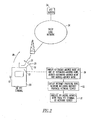
- FIG. 1 shows a SIP/IP core network 1 including a PTT server 2, a presence server 3 and a plurality of SIP PTT terminals 4,5,6.
- wireless SIP PTT terminals 4,5,6 are shown, wire line (e . g ., land line-based or local area network (LAN) based) PTT terminals (not shown) may be employed.
- wire line e . g ., land line-based or local area network (LAN) based
- LAN local area network
- a PTT terminal such as 4, may typically include an optional antenna 8, an optional display 9, a plurality of keys 10, a mouthpiece or microphone 11, an earpiece, earphone, headset or loudspeaker 12, and a PTT switch 13.
- one of the existing keys 10 or selection of a displayed menu option may function as a PTT switch when in a PTT mode of communication instead of using the dedicated PTT switch 13.
- group creation is possibly based on HTTP and XCAP, and signaling control is based upon SIP.
- Voice traffic is carried out through a suitable Internet protocol, such as Real-time Transport Protocol (RTP), which is designed to provide end-to-end network transport functions for applications transmitting real-time data, such as voice and video.
- RTP Real-time Transport Protocol
- Both SIP and RTP sit at the top of an IP related stack including UDP and IP layers.
- a plurality of suitable PoC applications form the top layer of a PoC protocol stack, which includes that IP related stack.
- a suitable mobile channel such as 3GPP R99 upgraded GPRS or E-GPRS or W-CDMA/UMTS, or CDMA 2000 1X or its variants, WLAN access or other 3G radio access technologies, provides the access network, which supports header compression and streaming traffic class Quality of Service (QoS).
- QoS Quality of Service
- a Header is a component of a SIP message, such as 14, that conveys information about the message. It is structured as a sequence of header fields.
- a header field is a component of a SIP message header.
- a header field can appear as one or more header field rows. Header field rows consist of a header field name and zero or more header field values. Multiple header field values on a given header field row are separated by commas. Some header fields can only have a single header field value, and as a result, always appear as a single header field row.
- a Header Field Value is a single value.
- a header field consists of zero or more header field values.
- a Message is data sent between SIP elements, such as 2-7, as part of the SIP protocol.
- SIP messages 14,15,16 are either requests or responses.
- a Request such as 14,15, is a SIP message sent from a client to a server, for the purpose of invoking a particular operation.
- a Response such as 16, is a SIP message sent from a server to a client, for indicating the status of a request sent from the client to the server.
- a Server such as 2,3,7, is a network element that receives requests in order to service them and sends back responses to those requests.
- Examples of servers are proxies, user agent servers, redirect servers and registrars.
- the network-based PTT server 2 receives invitations for group communication from one user.
- the server 2 invites all the other members of the group to the communication, controls the "floor” ( e . g ., the right to speak), bridges the communication between all the members of the net/group, and needs to know the current answer mode of the SIP PTT terminals 4,5,6 for proper signaling conditions, and communication media handling.
- the network-based presence server 3 stores Presence Information published by the individual SIP PTT terminals 4,5,6, and also possibly other network based sources (e . g. , servers, such as 2,7) and delivers Notifications of Presence Information to authorized watchers who subscribe to the Presence Information using their terminals.
- Presence Information published by the individual SIP PTT terminals 4,5,6, and also possibly other network based sources (e . g. , servers, such as 2,7) and delivers Notifications of Presence Information to authorized watchers who subscribe to the Presence Information using their terminals.
- the SIP registrar 7 is a server that accepts SIP Register requests and places the information it receives in those requests into the location service database for the domain it handles.
- the PoC system has an auto-answer mode flag, which can be set on a user and/or a group basis.
- the auto-answer mode flag is stored in a Group Management Server (GLMS) (not shown) in a Group Management database that is accessed by the PoC PTT server 2.
- GLMS Group Management Server
- the user has the ability to configure the corresponding PTT terminal, such as 4, to either automatically accept the incoming session request or to be prompted before accepting the request.
- the user sets auto-answer mode on, then the auto-answer mode is applied to the incoming PoC sessions. Otherwise, if the auto-answer mode is off, then the manual-answer mode is applied.
- the IETF has defined this division of relatively static and relatively dynamic data as "Hard State” and "Soft State,” respectively. Different protocol mechanisms are appropriate to manipulate Hard State and Soft State data. The answer mode is considered as Soft State, the manipulation of groups and lists in a database is considered Hard State.
- the invention provides a method for a push-to-talk (PTT) communication device including an operating mode to indicate that operating mode to a push-to-talk network server.
- PTT push-to-talk
- a method for a push-to-talk communication device including an operating mode to indicate the operating mode to a push-to-talk network server comprises: employing as the operating mode of the push-to-talk communication device one of a first answer mode and a second answer mode; employing a communication network including a push-to-talk network server; and indicating the operating mode in a Session Initiation Protocol message from the push-to-talk communication device to the push-to-talk network server over the communication network.
- the method may further comprise employing as the first answer mode an automatic-answer mode; employing as the second answer mode a manual-answer mode; employing as the communication network an Internet Protocol core network; and employing as the push-to-talk network server an Internet Protocol push-to-talk network server.
- a method for a push-to-talk communication device including an operating mode to indicate the operating mode to a push-to-talk network server comprises: employing as the operating mode of the push-to-talk communication device one of a first answer mode, a second answer mode and a third answer mode; employing a communication network including a push-to-talk network server; and indicating the operating mode in a Session Initiation Protocol message from the push-to-talk communication device to the push-to-talk network server over the communication network.
- the method may employ as the first answer mode an automatic-answer mode; employ as the second answer mode an always-automatic-answer mode; employ as the third answer mode a manual-answer mode; employ as the communication network an Internet Protocol core network; and employ as the push-to-talk network server an Internet Protocol push-to-talk network server.
- a method for a push-to-talk communication device including an operating mode to send the operating mode to a push-to-talk network server comprises: employing as the operating mode of the push-to-talk communication device one of at least a first answer mode and a second answer mode; employing a communication network including a push-to-talk network server; and sending the operating mode in an event reporting message from the push-to-talk communication device or from another device on behalf of the push-to-taik communication device to the push-to-talk network server over the communication network.
- indicate and “indicating” shall expressly include, but not be limited by, notify and notifying, publish and publishing, and register and registering.
- wireless communication device shall expressly include, but not be limited by, a cellular telephone, a mobile telephone, a wireless push-to-talk (PTT) terminal, a mobile electronic communication device, and a wireless handheld electronic device including, for example, a wireless local area network (WLAN) terminal.
- PTT wireless push-to-talk
- WLAN wireless local area network
- PTT terminal shall expressly include, but not be limited by, a wireless PTT terminal, and a wire line PTT terminal.
- event reporting message means a message that reports an event or state change in an entity.
- the event reporting message may be sent to another entity as a notification in response to a subscription by the other entity to receive notifications concerning the subscribed to event (e . g ., without limitation, a SIP Notify method) or may be pushed or published asynchronously to another entity ( e . g ., without limitation, a SIP Publish method).
- Event package means a specification which defines a set of state information to be reported by a notifying entity to another entity. Event packages define the syntax and semantics to convey such state information.
- XML Extensible Markup Language
- the invention is described in association with Session Initiation Protocol (STP) push-to-talk (PTT) over cellular (PoC) networks, although the invention is applicable Internet Protocol (IP) core networks.
- STP Session Initiation Protocol
- PTT push-to-talk
- IP Internet Protocol
- Figure 2 shows a method for a SIP PTT terminal 20 including an operating answer mode 22 to indicate that operating answer mode to an Internet Protocol PTT network server 24.
- the method includes employing, at 26, the operating answer mode 22 as one of an automatic-answer mode 28, an always-automatic-answer mode 29 and a manual-answer mode 30.
- a Session Initiation Protocol/Internet Protocol core network 34 is employed including the Internet Protocol PTT network server 24.
- the operating mode 22 is indicated in a Session Initiation Protocol message, at 40, from the SIP PTT terminal 20 to the Internet Protocol based PTT network server 24 over the Session Initiation Protocol/Internet Protocol core network 34.
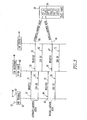
- FIG. 3 shows a message diagram for changing the operating mode of a PTT terminal 42, including the PTT switch 13 and an Auto/Manual toggle switch 43, at a PTT server 44.
- SIP supports the capability of a PTT terminal, such as 42, to indicate the features that it supports in a SIP Register request, such as 50, using a SIP Contact header, such as 51, by extending the feature-param of the contact header field.
- Feature tags may begin with a plus sign for tags that are user defined extensions.
- Table 1 A suitable mechanism is shown in Table 1: wherein:
- This mechanism provides for the enc-feature-tag of the feature-param to be extended.
- An enc-feature-tag is included as part of the SIP Contact header 51 that indicates the current operating mode of the PTT terminal 42.
- the PTT terminal 42 may include this feature-param in the contact header during each SIP registration. If the mode of the PTT terminal 42 is changed by the user, then the PTT terminal 42 refreshes its registration including the feature-param with the new value in the contact header of the SIP register request.
- the SIP PTT server 44 that controls the setup of PTT sessions needs to obtain the registration information from the SIP registrar 46 in the SIP/IP core 48, in order to obtain the operating mode of the PTT terminal 42.
- FIG 3 shows two groupings of SIP messages 50,52,64,62 and 64,66,70,72 associated with the Automatic-Answer Mode 58 and Manual-Answer Mode 68, respectively, of the PTT terminal 42.
- the SIP registrar 46 in the SIP/EP core 48 is configured to perform third party registrations with the PTT server 44 when the PTT terminal 42 registers.
- the PTT server 44 sets the state 54 ( e . g ., PTT A state) of the corresponding PTT terminal 42 in its state table 56 ( e . g ., also including PTT B and PTT C states for other PTT terminals (not shown)) to Automatic-Answer Mode 58.
- the SIP registrar 46 in the SIP/IP core 48 responds to the SIP Register request 50 with a SIP 200 OK response 60 to the PTT terminal 42.
- the PTT server 44 responds to the SIP Register request 52 with a SIP 200 OK response 62 to the SIP registrar 46 in the SIP/IP core 48.
- An example SIP Register request sent by the PTT terminal 42 to indicate Automatic-Answer Mode is as follows:
- the user switches the PTT terminal 42 from Automatic-Answer Mode to Manual-Answer Mode by employing the Auto/Manual toggle switch 43 to select the Manual-Answer Mode (M).
- M Manual-Answer Mode
- Any suitable physical switch or button (not shown), one or more settings of an enabled profile (not shown), a menu selection (not shown), or any other suitable selection mechanism (not shown) may be employed.
- the SIP registrar 46 in the SIP/IP core 48 performs another third party registration with the PTT server 44 when the PTT terminal 42 re-registers.
- the PTT server 44 switches the state 54 of the corresponding PTT terminal 42 in its state table 56 to Manual-Answer Mode 68.
- the SIP registrar 46 in the SIP/IP core 48 responds to the SIP Register request 64 with a SIP 200 OK response 70 to the PTT terminal 42.
- the PTT server 44 responds to the SIP Register request 66 with a SIP 200 OK response 72 to the SIP registrar 46 in the SIP/IP core 48.
- An example SIP Register request sent by the PTT terminal 42 to indicate Manual-Answer Mode is as follows:
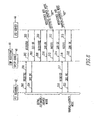
- FIG. 4 another message diagram shows message sequences for changing the operating mode of the PTT terminal 42 at the PTT server 44.
- SIP supports the ability of SIP devices, such as PTT server 44, to subscribe and be notified of events that occur in other SIP devices, such as PTT terminal 42, using a suitable subscription mechanism. This mechanism involves subscription using a SIP Subscribe method to a SIP Event package. An authorized subscription receives notifications about events related to the Event package using the SIP Notify method.
- An Event Package is an application specific specification which defines a set of state information to be reported by a notifier to a subscriber.
- An Event Template-Package is a special kind of event package which defines a set of states which maybe applied to all possible event packages, including itself.
- a Notification is the act of a notifier sending a Notify message to a subscriber to inform the subscriber of the state of a resource.
- a Notifier is a user agent which generates Notify requests for the purpose of notifying subscribers of the state of a resource. Notifiers typically also accept Subscribe requests to create subscriptions.
- a State Agent is a notifier which publishes state information on behalf of a resource; in order to do so, it may need to gather such state information from multiple sources. State Agents always have complete state information for the resource for which they are creating notifications.
- a Subscriber is a user agent, which receives Notify requests from notifiers. These Notify requests contain information about the state of a resource in which the subscriber is interested. Subscribers typically also generate Subscribe requests and send them to notifiers to create subscriptions.
- a Dialog is a peer-to-peer SIP relationship between two user agents that persists for some time.
- a Dialog is established by SIP messages, such as a 2xx response to an invite request.
- a Subscription is a set of application states associated with a Dialog.
- This application state includes a pointer to the associated dialog, the event package name, and possibly an identification token.
- New Event packages can be defined for additional subscription state information.
- subscriptions exist in both a subscriber and a notifier.
- the SIP Event Package may be advantageously employed for the PTT terminal operating mode.
- the SIP/IP PTT network server e . g ., PTT server 44
- the SIP/IP PTT network server that controls the setup of PTT sessions subscribes to the corresponding SIP PTT terminal's operating (answer) mode Event package.
- the corresponding PTT terminal such as 42, then, sends SIP Notify requests, such as 88 or 96, to the PTT server 44 whenever the operating (answer) mode changes at that PTT terminal.
- Entities in the SIP/IP network can subscribe to resource or call state for various resources or calls in the network, and those entities (or entities acting on their behalf) can send notifications when those states change.
- a typical flow of messages might include: (1) a Subscribe from the Subscriber to the Notifier, in order to request a state subscription; (2) a 200 OK response from the Notifier to the Subscriber to acknowledge the subscription; (3) a Notify from the Notifier to the Subscriber to return current state information; (4) a 200 OK response from the Subscriber to the Notifier, in order to acknowledge the Notify; and (5) any further repetitions of messages (3) and (4) for further state information.
- Notify messages are sent to inform Subscriber(s) of changes in state to which the Subscriber has a subscription.
- Subscriptions are typically put in place using the SIP Subscribe method, although other suitable mechanisms may be employed.
- the PTT server 44 Subscribes to the corresponding PTT terminal's operating (answer) mode XML Event package, which is defined for this application by sending a SIP Subscribe request 80 for the operating (answer) mode XML Event package 81 to the SIP/IP core 48.
- the SIP/IP core 48 routes the SIP Subscribe 80, as shown at 82, to the PTT terminal 42.
- the PTT terminal 42 which will perform the role of a Notifier, responds to the SIP Subscribe 80, as routed at 82, with a SIP 200 OK response 84 to the SIP/IP core 48.
- the SIP/IP core 48 routes the SIP 200 OK response 84, as shown at 86, to the PTT server 44.
- the PTT server 44 sets the state 54 ( Figure 3 ) of the corresponding PTT terminal 42 in its state table 56 ( Figure 3 ) to Automatic-Answer Mode 58'.
- the PTT server 44 responds to the Notify 88, as routed at 90, with a SIP 200 OK response 92 to the SIP/IP core 48.
- the SIP/IP core 48 routes the SIP 200 OK response 92, as shown at 94, to the PTT terminal 42.
- the user switches the PTT terminal 42 from Automatic-Answer Mode to Manual-Answer Mode.
- the SIP/IP core 48 routes the SIP Notify 96, as shown at 98, to the PTT server 44.
- the PTT server 44 switches the state 54 ( Figure 3 ) of the corresponding PTT terminal 42 in its state table 56 ( Figure 3 ) to Manual-Answer Mode 68'.
- the PTT server 44 responds to the Notify 96, as routed at 98, with a SIP 200 OK response 100 to the SIP/IP core 48.
- the SIP/IP core 48 routes the SIP 200 OK response 100, as shown at 102, to the PTT terminal 42.
- FIG. 5A another message diagram shows message sequences for changing the operating mode of the PTT terminal 42 at the PTT server 44.
- User presence represents the willingness and ability of a user to communicate with other users on the SIP/IP network.
- SIP supports presence functionality and the ability of PTT terminals, such as 42, to publish presence state information about themselves using a suitable SIP Publish method to a suitable Presence User Agent, such as presence server 108.
- the presence server 108 includes a set of contact addresses that represent the various mechanisms for contacting the user.
- the contact address listed for voice will be an address-of-record. The status of that contact may depend upon any number of factors, including, for example, the state of any registrations against that address-of-record.
- Registration state may be equated to user presence.
- this allows for the Presence server 108 to be separated from the SIP registrar 46 ( Figure 3 ), yet still use registration information to construct a presence document, which describes the presence of the presentity (e . g ., a presence entity; a provider of presence information to a presence service) to which the SIP registrar 46 ( Figure 3 ) has subscribed. This is discussed in greater detail, below, in connection with Figure 6 and Example 3.
- the presence server 108 can generate a subscription to the SIP registrar 46 ( Figure 3 ) for the registration event package. As a result, the presence server 108 would learn about the registration state for that user, and it could use that information to generate presence documents. Alternatively, the SIP registrar 46 could Publish the Registration State to the presence server 108 using SIP Publish ( e . g ., as is discussed below in connection with Figures 5A-5B ), or the presence server 108 could receive a third party registration from the SIP Registrar 46 when a new user registers ( e . g ., as is discussed below in connection with Figure 6 ).
- the PTT terminal 42 publishes its operating (answer) mode either as a separate presence tuple or as an attribute of another presence tuple transported using the SIP Publish method.
- the Publish method is routed either to: (1) a network based Presence server entity, such as presence server 108, which allows the SIP PTT network server 44 that controls the setup of PTT sessions to Subscribe to the corresponding SIP PTT terminal's Presence status for the operating (answer) mode, or (2) the SIP PTT network server 44, which implements the Presence User Agent functions.
- the Presence server 108 gets merged with the PTT server 44.
- the PTT server 44 implements the Presence server 108 functionality with message exchanges being employed between the combined entities.
- the PTT server 44 Subscribes to the corresponding PTT terminal's Presence state by sending a SIP Subscribe request 110 for the Presence Event package for the PTT user via the SIP/IP core 48. If the PTT server 44 is only interested in the Operating Mode state, then the body of the Subscribe 110 may contain filters 111 indicating that only changes to the Operating Mode state should be notified. In turn, the SIP/IP core 48 routes the SIP Subscribe 110, as shown at 112, to the Presence server 108. Then, the Presence server 108 responds to the Subscribe 110, as routed at 112, with a SIP 200 OK response 114 via the SIP/IP core 48. Next, the SIP/IP core 48 routes the SIP 200 OK response 114, as shown at 116, to the PTT server 44.
- the SIP/IP core 48 routes the SIP 200 OK response 122, as shown at 124, to the PTT terminal 42.
- the SIP/IP core 48 routes the SIP Notify 126, as shown at 128, to the PTT server 44.
- the PTT server 44 sets the state 54 ( Figure 3 ) of the corresponding PTT terminal 42 in its state table 56 ( Figure 3 ) to Automatic-Answer Mode 58 ".
- the PTT server 44 responds to the Notify 126, as routed at 128, with a SIP 200 OK response 130 to the SIP/IP core 48.
- the SIP/IP core 48 routes the SIP 200 OK response 130, as shown at 132, to the Presence server 108.
- the user switches the PTT terminal 42 from Automatic-Answer Mode to Manual-Answer Mode.
- the SIP/IP core 48 routes the SIP Publish 134, as shown at 136, to the Presence server 108.
- the Presence server 108 responds to the Publish 134, as routed at 136, with a SIP 200 OK response 138 to the SIP/IP core 48.
- the SIP/IP core 48 routes the SIP 200 OK response 138, as shown at 140, to the PTT terminal 42.
- the SIP registrar 46 may Publish to the Presence server 108 the PTT terminal SIP registration and have the PTT server 44 subscribe to the Presence server 108, in order to discover the SIP registration and have the Presence server 108 deliver the operating answer mode that was Published by the SIP registrar 46.
- the following disclosure is with respect to the Automatic-Answer Mode, it will be appreciated that a suitable corresponding indication mechanism may be employed for the Manual-Answer Mode or the Always-Automatic-Answer Mode.
- the PTT server 44 Subscribes to the corresponding PTT terminal's Presence state by sending a SIP Subscribe request 210 to subscribe to the Presence Events of that PTT terminal via the SIP/IP core 48. If the PTT server 44 is only interested in the Operating Mode state, then the body of the Subscribe 210 may contain filters 211 indicating that only changes to the Operating Mode state should be notified. In turn, the SIP/IP core 48 routes the SIP Subscribe 210, as shown at 212, to the Presence server 108. Then, the Presence server 108 responds to the Subscribe 210, as routed at 212, with a SIP 200 OK response 214 via the SIP/IP core 48. Next, the SIP/IP core 48 routes the SIP 200 OK response 214, as shown at 216, to the PTT server 44.
- the Presence server 108 notifies that the PTT terminal 42 is currently not registered by sending a SIP Notify 226 containing the Presence Information including the State Unregistered 227 in the body of the Notify 226 to the SIP/IP core 48.
- the SIP/IP core 48 routes the SIP Notify 226, as shown at 228, to the PTT server 44.
- the PTT server 44 sets the state 54 ( Figure 3 ) of the corresponding PTT terminal 42 in its state table 56 ( Figure 3 ) to Not Registered 217.
- the PTT server 44 responds to the Notify 226, as routed at 228, with a SIP 200 OK response 230 to the SIP/IP core 48.
- the SIP/IP core 48 routes the SIP 200 OK response 230, as shown at 232, to the Presence server 108.
- the Presence server 108 sets the state 254 of the PTT terminal 42 in the Presence Document (PD) 256 to Registered and Automatic-Answer Mode. Then, the SIP registrar 46 in the SIP/IP core 48 responds to the SIP Register request 250 with a SIP 200 OK response 260 to the PTT terminal 42. Next, the Presence server 108 responds to the SIP Register request 252 with a SIP 200 OK response 262 to the SIP registrar 46 in the SIP/IP core 48.
- PD Presence Document
- Figure 7 shows another alternative to the SIP registrar 46 in the SIP/IP core 48 of Figure 3 sending the SIP Register requests 52 or 66 to the PTT server 44.
- the following disclosure is with respect to the Automatic-Answer Mode, it will be appreciated that a suitable corresponding indication mechanism may be employed for the Manual-Answer Mode or the Always-Automatic-Answer Mode. For example, if the user switches the PTT terminal 42 to Manual-Answer Mode, then this triggers a refresh Registration by that PTT terminal.
- the PTT server 44 sends a SIP Subscribe request 280 to the SIP Registrar 46 in the SIP/IP core 48 to subscribe to the Registration Events 281 of the PTT terminal 42. Then, the SIP Registrar 46 responds to the Subscribe 280 with a SIP 200 OK response 282 to the PTT server 44.
- the SIP Registrar 46 notifies that the PTT terminal 42 is currently not registered by sending a SIP Notify 284 containing the state Unregistered 285 in the body of the Notify 284 to the PTT server 44.
- the PTT server 44 sets the state 54 ( Figure 3 ) of the corresponding PTT terminal 42 in its state table 56 ( Figure 3 ) to the state Not Registered 286. Then, the PTT server 44 responds to the Notify 284 with a STP 200 OK response 287 to the SIP Registrar 46.
- the PTT server 44 sets the state 54 ( Figure 3 ) of the corresponding PTT terminal 42 in its state table 56 ( Figure 3 ) to the Registered and Automatic-Answer Mode 58"". Finally, the PTT server 44 responds to the Notify 292 with a SIP 200 OK response 294 to the SIP registrar 46.
- Figure 8 shows another alternative to the SIP registrar 46 in the SIP/IP core 48 of Figure 3 sending the SIP Register requests 52 or 66 to the PTT server 44.
- an initial mode e . g ., the Automatic-Answer Mode
- a subsequent mode e . g ., the Manual-Answer Mode
- a suitable corresponding indication mechanism may be employed for subsequent mode changes ( e . g ., to the Always-Automatic-Answer Mode). For example, if the user switches the PTT terminal 42 to the Always-Automatic-Answer Mode, then this triggers a refresh Registration by that PTT terminal.
- the SIP registrar 46 only performs a third party registration on an initial registration ( e . g ., after the PTT terminal 42 powers on).
- the PTT server 44 in response to the initial third party registration, subscribes to the PTT terminal's Registration Event package, in order to obtain the operating mode of that PTT terminal and other changes to the registration state.
- the SIP Registrar 46 in the SIP/IP core 48 has been configured to perform third party registrations with the PTT server 44 when the PTT terminal 42 initially registers.
- the SIP Registrar 46 in the SIP/IP core 48 sends a SIP Register request 302 to the PTT server 44.
- This SIP Register request 302 does not contain an operating mode parameter in the contact header 303.
- the SIP Registrar 46 in the SIP/IP core 48 responds to the Register 300 with a SIP 200 OK response 304 to the PTT terminal 42.
- the PTT server 44 responds to the Register 302 with a SIP 200 OK response 306 to the SIP Registrar 46 in the SIP/IP core 48.
- the PTT server 44 sends a SIP Subscribe request 308 to SIP Registrar 46 in the SIP/IP core 48, in order to subscribe to the Registration Events 309 of the PTT terminal 42.
- the SIP Registrar 46 responds to the Subscribe 308 with a SIP 200 OK response 310 to the PTT server 44.
- the PTT server 44 sets the state 54 ( Figure 3 ) of the corresponding PTT terminal 42 in its state table 56 ( Figure 3 ) to Registered and Automatic-Answer Mode 58""'.
- the PTT server 44 responds to the Notify 312 with a SIP 200 OK response 314 to the SIP Registrar 46.
- the SIP Registrar 46 in the SIP/IP core 48 responds to the Register 316 with a SIP 200 OK response 320 to the PTT terminal 42.
- the PTT server 44 switches the state 54 ( Figure 3 ) of the corresponding PTT terminal 42 in its state table 56 ( Figure 3 ) to Manual-Answer Mode 68'''.
- the PTT server 44 responds to the Notify 318 with a SIP 200 OK response 322 to the SIP Registrar 46.
- the PTT terminal 42 communicates its operating (answer) mode using the SIP Publish method and an event package containing elements for the current value of its operating (answer) mode.
- the Publish method is routed to the SIP PTT network server 44.
- the PTT terminal 42 has initially registered with the SIP registrar 46 ( Figure 3 ).
- the SIP/IP core 48 routes the SIP Publish 338, as shown at 340, to the SIP PTT network server 44.
- the PTT server 44 sets the state 54 ( Figure 3 ) of the corresponding PTT terminal 42 in its state table 56 ( Figure 3 ) to Automatic-Answer Mode 58 """ .
- the SIP PTT network server 44 responds to the Publish 338, as routed at 340, with a SIP 200 OK response 342 to the SIP/IP core 48.
- the SIP/IP core 48 routes the SIP 200 OK response 342, as shown at 344, to the PTT terminal 42.
- the user switches the PTT terminal 42 from Automatic-Answer Mode to Manual-Answer Mode.
- the SIP/IP core 48 routes the SIP Publish 354, as shown at 356, to the SIP PTT network server 44.
- the PTT server 44 switches the state 54 ( Figure 3 ) of the corresponding PTT terminal 42 in its state table 56 ( Figure 3 ) to Manual-Answer Mode 68"".
- the SIP PTT network server 44 responds to the Publish 354, as routed at 356, with a SIP 200 OK response 358 to the SIP/IP core 48.
- the SIP/IP core 48 routes the SIP 200 OK response 358, as shown at 360, to the PTT terminal 42.
- the Presence server 108 of Figure 6 may employ messages 280,282,284,287,292,294 from Figure 7 , with the Presence server 108, instead of the PTT server 44, performing the Subscribing to the Registration Events 281 of the PTT terminal 42 in place of messages 252,252 of Figure 6 .
- Automatic-Answer Mode and Manual-Answer Mode are disclosed in connection with Figures 3-5, 8 and 9A-9B , the Always-Automatic-Answer Mode or any one, two or all three of such modes may be employed.
- Automatic-Answer Mode is disclosed in connection with Figures 6 and 7 , the Manual-Answer Mode, the Always-Automatic-Answer Mode or any one, two or all three of such modes may be employed.
- Auto-Answer Mode means the same as “Automatic-Answer Mode”.
- Always-Automatic-Answer Mode means the same as “Always-Auto-Answer Mode”.
- Always-Auto-Answer Mode means the same as “Always-Automatic-Answer Mode”.
- the Group Management Server as referenced herein may be a Group List Management Server (not shown) or an XML Document Management Server (XDMS)(not shown).
- XDMS XML Document Management Server
- a document management server and/or database (not shown), which includes an XDMS or GLMS or Group List Management Server, stores group identities, contact lists, and/or authorization policies. Also, there may be one or more XDMSs that operate at the same time.
- the present invention provides a method for a push-to-talk communication device, the method including indicating an operating mode to a push-to-talk network server.
- the method includes: employing as the operating mode of the push-to-talk communication device one of a first answer mode and a second answer mode; employing a communication network including a push-to-talk network server; and, indicating the operating mode in a Session Initiation Protocol message from the push-to-talk communication device to the push-to-talk network server over the communication network.
- the method also includes: employing as the first answer mode an automatic-answer mode; employing as the second answer mode a manual-answer mode; employing as the communication network an Internet Protocol core network; and, employing as the push-to-talk network server an Internet Protocol push-to-talk network server. More optionally, the method further includes: registering the operating mode of the push-to-talk communication device with the Internet Protocol push-to-talk network server. Yet more optionally, the method still further includes: employing a Session Initiation Protocol registrar on the Internet Protocol core network; and, sending a first Session Initiation Protocol Register message from the push-to-talk communication device to the Session Initiation Protocol registrar. Yet even more optionally, the method also includes: sending a second Session Initiation Protocol Register message from the Session Initiation Protocol registrar to the Internet Protocol push-to-talk network server.
- the method also includes: employing as the first answer mode an automatic-answer mode; employing as the second answer mode a manual-answer mode; employing as the communication network an Internet Protocol core network; employing as the push-to-talk network server an Internet Protocol push-to-talk network server; registering the operating mode of the push-to-talk communication device with the Internet Protocol push-to-talk network server; employing a Session Initiation Protocol registrar on the Internet Protocol core network; sending a first Session Initiation Protocol Register message from the push-to-talk communication device to the Session Initiation Protocol registrar; employing as the operating mode of the push-to-talk communication device the automatic-answer mode; and, including in the first Session Initiation Protocol Register message a header having a parameter representing the automatic-answer mode.
- the method further includes: sending a second Session Initiation Protocol Register message from the Session Initiation Protocol registrar to the Internet Protocol push-to-talk network server; including in the second Session Initiation Protocol Register message a header having a parameter representing the automatic-answer mode; and, setting a state of the push-to-talk communication device to the automatic-answer mode at the Internet Protocol push-to-talk network server.
- the method also includes: employing as the first answer mode an automatic-answer mode; employing as the second answer mode a manual-answer mode; employing as the communication network an Internet Protocol core network; employing as the push-to-talk network server an Internet Protocol push-to-talk network server; registering the operating mode of the push-to-talk communication device with the Internet Protocol push-to-talk network server; employing a Session Initiation Protocol registrar on the Internet Protocol core network; sending a first Session Initiation Protocol Register message from the push-to-talk communication device to the Session Initiation Protocol registrar; employing as the operating mode of the push-to-talk communication device an always-automatic-answer mode; and, including in the first Session Initiation Protocol Register message a header having a parameter representing the always-automatic-answer mode.
- the method further includes: sending a second Session Initiation Protocol Register message from the Session Initiation Protocol registrar to the Internet Protocol push-to-talk network server; including in the second Session Initiation Protocol Register message a header having a parameter representing the always-automatic-answer mode; and, setting a state of the push-to-talk communication device to the always-automatic-answer mode at the Internet Protocol push-to-talk network server.
- the method also includes: employing as the first answer mode an automatic-answer mode; employing as the second answer mode a manual-answer mode; employing as the communication network an Internet Protocol core network; employing as the push-to-talk network server an Internet Protocol push-to-talk network server; registering the operating mode of the push-to-talk communication device with the Internet Protocol push-to-talk network server; employing a Session Initiation Protocol registrar on the Internet Protocol core network; sending a first Session Initiation Protocol Register message from the push-to-talk communication device to the Session Initiation Protocol registrar; employing as the operating mode of said push-to-talk communication device said manual-answer mode; and, including in said first Session Initiation Protocol Register message a header having a parameter representing said manual-answer mode.
- the method further includes: sending a second Session Initiation Protocol Register message from said Session Initiation Protocol registrar to said Internet Protocol push-to-talk network server; including in said second Session Initiation Protocol Register message a header having a parameter representing said manual-answer mode; and, setting a state of said push-to-talk communication device to said manual-answer mode at said Internet Protocol push-to-talk network server.
- the method also includes: employing as the first answer mode an automatic-answer mode; employing as the second answer mode a manual-answer mode; employing as the communication network an Internet Protocol core network; employing as the push-to-talk network server an Internet Protocol push-to-talk network server; and, notifying said Internet Protocol push-to-talk network server of the operating mode of said push-to-talk communication device.
- the method further includes: sending a Session Initiation Protocol Subscribe message associated with said operating mode of said push-to-talk communication device from said Internet Protocol push-to-talk network server to said Internet Protocol core network; and, routing said Session Initiation Protocol Subscribe message by said Internet Protocol core network to said push-to-talk communication device.
- the method also includes: defining and employing an event package, including said automatic-answer mode, which is owned by said push-to-talk communication device. Yet even more optionally, the method further includes: subscribing using said Session Initiation Protocol Subscribe message to said event package on said push-to-talk communication device; sending a Session Initiation Protocol Notify message for said automatic-answer mode from said push-to-talk communication device to said Internet Protocol core network; routing said Session Initiation Protocol Notify message by said Internet Protocol core network to said Internet Protocol push-to-talk network server; and, setting a state of said push-to-talk communication device to said automatic-answer mode at said Internet Protocol push-to-talk network server.
- the method also includes: employing as the first answer mode an automatic-answer mode; employing as the second answer mode a manual-answer mode; employing as the communication network an Internet Protocol core network; and, employing as the push-to-talk network server an Internet Protocol push-to-talk network server; notifying said Internet Protocol push-to-talk network server of the operating mode of said push-to-talk communication device; and, defining and employing an event package, including said automatic-answer mode, which is owned by said push-to-talk communication device.
- the method further includes: sending a Session Initiation Protocol Publish message containing said event package associated with said operating mode of said push-to-talk communication device from said push-to-talk communication device to said Internet Protocol core network; routing said Session Initiation Protocol Publish message by said Internet Protocol core network to said Internet Protocol push-to-talk network server; and, setting a state of said push-to-talk communication device to said automatic-answer mode at said Internet Protocol push-to-talk network server.
- the method also includes: employing as the first answer mode an automatic-answer mode; employing as the second answer mode a manual-answer mode; employing as the communication network an Internet Protocol core network; employing as the push-to-talk network server an Internet Protocol push-to-talk network server; and, notifying said Internet Protocol push-to-talk network server of the operating mode of said push-to-talk communication device; sending a Session Initiation Protocol Subscribe message associated with said operating mode of said push-to-talk communication device from said Internet Protocol push-to-talk network server to said Internet Protocol core network; routing said Session Initiation Protocol Subscribe message by said Internet Protocol core network to said push-to-talk communication device; and, defining and employing an event package, including an always-automatic-answer mode, which is owned by said push-to-talk communication device.
- the method also includes: subscribing using said Session Initiation Protocol Subscribe message to said event package on said push-to-talk communication device; sending a Session Initiation Protocol Notify message for said always-automatic-answer mode from said push-to-talk communication device to said Internet Protocol core network; routing said Session Initiation Protocol Notify message by said Internet Protocol core network to said Internet Protocol push-to-talk network server; and, setting a state of said push-to-talk communication device to said always-automatic-answer mode at said Internet Protocol push-to-talk network
- the method also includes: employing as the first answer mode an automatic-answer mode; employing as the second answer mode a manual-answer mode; employing as the communication network an Internet Protocol core network; and, employing as the push-to-talk network server an Internet Protocol push-to-talk network server; notifying said Internet Protocol push-to-talk network server of the operating mode of said push-to-talk communication device; and, defining and employing an event package, including an always-automatic-answer mode, which is owned by said push-to-talk communication device.
- the method further includes: sending a Session Initiation Protocol Publish message containing said event package associated with said operating mode of said push-to-talk communication device from said push-to-talk communication device to said Internet Protocol core network; routing said Session Initiation Protocol Publish message by said Internet Protocol core network to said Internet Protocol push-to-talk network server; and, setting a state of said push-to-talk communication device to said always-automatic-answer mode at said Internet Protocol push-to-talk network server.
- the method also includes: employing as the first answer mode an automatic-answer mode; employing as the second answer mode a manual-answer mode; employing as the communication network an Internet Protocol core network; employing as the push-to-talk network server an Internet Protocol push-to-talk network server; and, notifying said Internet Protocol push-to-talk network server of the operating mode of said push-to-talk communication device; sending a Session Initiation Protocol Subscribe message associated with said operating mode of said push-to-talk communication device from said Internet Protocol push-to-talk network server to said Internet Protocol core network; routing said Session Initiation Protocol Subscribe message by said Internet Protocol core network to said push-to-talk communication device; and, defining and employing an event package, including said manual-answer mode, which is owned by said push-to-talk communication device.
- the method further includes: subscribing using said Session Initiation Protocol Subscribe message to said event package on said push-to-talk communication device; sending a Session Initiation Protocol Notify message for said manual-answer mode from said push-to-talk communication device to said Internet Protocol core network; routing said Session Initiation Protocol Notify message by said Internet Protocol core network to said Internet Protocol push-to-talk network server; and, setting a state of said push-to-talk communication device to said manual-answer mode at said Internet Protocol push-to-talk network server.
- the method also includes: employing as the first answer mode an automatic-answer mode; employing as the second answer mode a manual-answer mode; employing as the communication network an Internet Protocol core network; employing as the push-to-talk network server an Internet Protocol push-to-talk network server; notifying said Internet Protocol push-to-talk network server of the operating mode of said push-to-talk communication device; and, defining and employing an event package, including said manual-answer mode, which is owned by said push-to-talk communication device.
- the method further includes: sending a Session Initiation Protocol Publish message containing said event package associated with said operating mode of said push-to-talk communication device from said push-to-talk communication device to said Internet Protocol core network; routing said Session Initiation Protocol Publish message by said Internet Protocol core network to said Internet Protocol push-to-talk network server; and, setting a state of said push-to-talk communication device to said manual-answer mode at said Internet Protocol push-to-talk network server.
- the method also includes: employing as the first answer mode an automatic-answer mode; employing as the second answer mode a manual-answer mode; employing as the communication network an Internet Protocol core network; employing as the push-to-talk network server an Internet Protocol push-to-talk network server; and, publishing the operating mode of said push-to-talk communication device to a Presence server of said Internet Protocol core network.
- the method also includes: employing as the first answer mode an automatic-answer mode; employing as the second answer mode a manual-answer mode; employing as the communication network an Internet Protocol core network; employing as the push-to-talk network server an Internet Protocol push-to-talk network server; and, publishing the operating mode of said push-to-talk communication device to an Internet Protocol push-to-talk network server.
- the method also includes: employing as the first answer mode an automatic-answer mode; employing as the second answer mode a manual-answer mode; employing as the communication network an Internet Protocol core network; employing as the push-to-talk network server an Internet Protocol push-to-talk network server; publishing the operating mode of said push-to-talk communication device to a Presence server of said Internet Protocol core network; and, defining and employing an event package, for said push-to-talk communication device, including said operating mode.
- the method further includes: sending a Session Initiation Protocol Subscribe message for said event package from said Internet Protocol push-to-talk network server to said Internet Protocol core network; and, routing said Session Initiation Protocol Subscribe message by said Internet Protocol core network to said Presence server of said Internet Protocol core network.
- the method also includes: employing as the first answer mode an automatic-answer mode; employing as the second answer mode a manual-answer mode; employing as the communication network an Internet Protocol core network; employing as the push-to-talk network server an Internet Protocol push-to-talk network server; publishing the operating mode of said push-to-talk communication device to a Presence server of said Internet Protocol core network; and sending a Session Initiation Protocol Publish message containing a representation of said automatic-answer mode from said push-to-talk communication device to said Internet Protocol core network.
- the method further includes: routing said Session Initiation Protocol Publish message by said Internet Protocol core network to said Presence server; sending a Session Initiation Protocol Notify message containing a representation of said automatic-answer mode from said Presence server to said Internet Protocol core network; routing said Session Initiation Protocol Notify message by said Internet Protocol core network to said Internet Protocol push-to-talk network server; and, setting a state of said push-to-talk communication device to said automatic-answer mode at said Internet Protocol push-to-talk network server.
- the method also includes: employing as the first answer mode an automatic-answer mode; employing as the second answer mode a manual-answer mode; employing as the communication network an Internet Protocol core network; employing as the push-to-talk network server an Internet Protocol push-to-talk network server; publishing the operating mode of said push-to-talk communication device to a Presence server of said Internet Protocol core network; sending a Session Initiation Protocol Publish message containing a representation of said automatic-answer mode from said push-to-talk communication device to said Internet Protocol core network; routing said Session Initiation Protocol Publish message by said Internet Protocol core network to said Internet Protocol push-to-talk network server; and, setting a state of said push-to-talk communication device to said automatic-answer mode at said Internet Protocol push-to-talk network server.
- the method also includes: employing as the first answer mode an automatic-answer mode; employing as the second answer mode a manual-answer mode; employing as the communication network an Internet Protocol core network; employing as the push-to-talk network server an Internet Protocol push-to-talk network server; publishing the operating mode of said push-to-talk communication device to a Presence server of said Internet Protocol core network; defining and employing an event package, for said push-to-talk communication device, including said operating mode; and, sending a Session Initiation Protocol Publish message containing a representation of an always-automatic-answer mode from said push-to-talk communication device to said Internet Protocol core network.
- the method further includes: routing said Session Initiation Protocol Publish message by said Internet Protocol core network to said Presence server; sending a Session Initiation Protocol Notify message containing a representation of said always-automatic-answer mode from said Presence server to said Internet Protocol core network; routing said Session Initiation Protocol Notify message by said Internet Protocol core network to said Internet Protocol push-to-talk network server; and, setting a state of said push-to-talk communication device to said always-automatic-answer mode at said Internet Protocol push-to-talk network server.
- the method also includes: employing as the first answer mode an automatic-answer mode; employing as the second answer mode a manual-answer mode; employing as the communication network an Internet Protocol core network; employing as the push-to-talk network server an Internet Protocol push-to-talk network server; publishing the operating mode of said push-to-talk communication device to a Presence server of said Internet Protocol core network; defining and employing an event package, for said push-to-talk communication device, including said operating mode; and, sending a Session Initiation Protocol Publish message containing a representation of an always-automatic-answer mode from said push-to-talk communication device to said Internet Protocol core network.
- the method further includes: routing said Session Initiation Protocol Publish message by said Internet Protocol core network to said Presence server; sending a Session Initiation Protocol Notify message containing a representation of said always-automatic-answer mode from said Presence server to said Internet Protocol core network; routing said Session Initiation Protocol Publish message by said Internet Protocol core network to said Internet Protocol push-to-talk network server; and, setting a state of said push-to-talk communication device to said always-automatic-answer mode at said Internet Protocol push-to-talk network server.
- the method also includes: employing as the first answer mode an automatic-answer mode; employing as the second answer mode a manual-answer mode; employing as the communication network an Internet Protocol core network; employing as the push-to-talk network server an Internet Protocol push-to-talk network server; publishing the operating mode of said push-to-talk communication device to a Presence server of said Internet Protocol core network; defining and employing an event package, for said push-to-talk communication device, including said operating mode; and, sending a Session Initiation Protocol Publish message containing a representation of said manual-answer mode from said push-to-talk communication device to said Internet Protocol core network.
- the method further includes: routing said Session Initiation Protocol Publish message by said Internet Protocol core network to said Presence server; sending a Session Initiation Protocol Notify message containing a representation of said manual-answer mode from said Presence server to said Internet Protocol core network; and, routing said Session Initiation Protocol Notify message by said Internet Protocol core network to said Internet Protocol push-to-talk network server; and setting a state of said push-to-talk communication device to said manual-answer mode at said Internet Protocol push-to-talk network server.
- the method also includes: employing as the first answer mode an automatic-answer mode; employing as the second answer mode a manual-answer mode; employing as the communication network an Internet Protocol core network; employing as the push-to-talk network server an Internet Protocol push-to-talk network server; publishing the operating mode of said push-to-talk communication device to a Presence server of said Internet Protocol core network; defining and employing an event package, for said push-to-talk communication device, including said operating mode; sending a Session Initiation Protocol Publish message containing a representation of said manual-answer mode from said push-to-talk communication device to said Internet Protocol core network; routing said Session Initiation Protocol Publish message by said Internet Protocol core network to said Internet Protocol push-to-talk network server; and, setting a state of said push-to-talk communication device to said manual-answer mode at said Internet Protocol push-to-talk network server.
- the method also includes: employing as the first answer mode an automatic-answer mode; employing as the second answer mode a manual-answer mode; employing as the communication network an Internet Protocol core network; employing as the push-to-talk network server an Internet Protocol push-to-talk network server; and, employing as said push-to-talk communication device a wireless push-to-talk terminal.
- the method also includes: employing as the first answer mode an automatic-answer mode; employing as the second answer mode a manual-answer mode; employing as the communication network an Internet Protocol core network; employing as the push-to-talk network server an Internet Protocol push-to-talk network server; and, employing as said Internet Protocol core network a Session Initiation Protocol 1 Internet Protocol core network.
- the method also includes: employing as the first answer mode an automatic-answer mode; employing as the second answer mode a manual-answer mode; employing as the communication network an Internet Protocol core network; employing as the push-to-talk network server an Internet Protocol push-to-talk network server; and, employing as said Internet Protocol core network a Session Initiation Protocol push-to-talk over cellular network to indicate said operating mode to said Internet Protocol push-to-talk network server.
- the method also includes: employing as the first answer mode an automatic-answer mode; employing as the second answer mode a manual-answer mode; employing as the communication network an Internet Protocol core network; employing as the push-to-talk network server an Internet Protocol push-to-talk network server; and, selecting one of said automatic-answer mode, an always-automatic-answer mode and said manual-answer mode at said push-to-talk communication device, and responsively providing said indicating said operating mode in a Session Initiation Protocol message from said push-to-talk communication device to said Internet Protocol push-to-talk network server over said Internet Protocol core network. More optionally, the method further includes: employing a toggle switch to select said one of said automatic-answer mode, said always-automatic-answer mode and said manual-answer mode at said push-to-talk communication device.
- the method also includes: employing as the first answer mode an automatic-answer mode; employing as the second answer mode a manual-answer mode; employing as the communication network an Internet Protocol core network; employing as the push-to-talk network server an Internet Protocol push-to-talk network server; employing a Session Initiation Protocol Presence server on said Internet Protocol core network; sending a Session Initiation Protocol Register message including said operating mode from said push-to-talk communication device to said Internet Protocol core network; and, routing said Session Initiation Protocol Register message including said operating mode by said Internet Protocol core network to said Presence server.
- the method further includes: sending a Session Initiation Protocol Notify message including said operating mode from said Presence server to said Internet Protocol core network; and, routing said Session Initiation Protocol Notify message including said operating mode by said Internet Protocol core network to said Internet Protocol push-to-talk network server.
- the method also includes: employing as the first answer mode an automatic-answer mode; employing as the second answer mode a manual-answer mode; employing as the communication network an Internet Protocol core network; employing as the push-to-talk network server an Internet Protocol push-to-talk network server; employing a Session Initiation Protocol Registration server on said Internet Protocol core network; accepting a Subscription from said Internet Protocol push-to-talk network server at said Session Initiation Protocol Registration server to a Registration Event package for said push-to-talk communication device; and, registering said operating mode of said push-to-talk communication device with said Registration server. More optionally, the method further includes: sending a Session Initiation Protocol Notify message for said operating mode from said Registration server to said Internet Protocol push-to-talk network server.
- the method also includes: employing as the first answer mode an automatic-answer mode; employing as the second answer mode a manual-answer mode; employing as the communication network an Internet Protocol core network; employing as the push-to-talk network server an Internet Protocol push-to-talk network server; employing a Session Initiation Protocol Registration server on said Internet Protocol core network; accepting a Subscription from said Internet Protocol push-to-talk network server at said Session Initiation Protocol Registration server to a Registration Event package for said push-to-talk communication device; registering said operating mode of said push-to-talk communication device with said Registration server; and, notifying said Internet Protocol push-to-talk network server of said operating mode.
- the method further includes: employing as said operating mode of said push-to-talk communication device a first operating mode; changing said first operating mode to a different second operating mode of said push-to-talk communication device; registering said different second operating mode of said push--to-talk communication device with said Registration server; and, notifying said Internet Protocol push-to-talk network server of said different second operating mode.
- the method also includes: employing as the first answer mode an automatic-answer mode; employing as the second answer mode a manual-answer mode; employing as the communication network an Internet Protocol core network; employing as the push-to-talk network server an Internet Protocol push-to-talk network server; employing a Session Initiation Protocol Registration server on said Internet Protocol core network; employing a Session Initiation Protocol Presence server on said Internet Protocol core network; accepting a Subscription from said Internet Protocol Presence server at said Session Initiation Protocol Registration server to a Registration Event package for said push-to-talk communication device; and, registering said operating mode of said push-to-talk communication device with said Registration server.
- the method further includes: sending a Session Initiation Protocol Notify message for said operating mode from said Registration server to said Presence server. Even more preferably, the method also includes: sending another Session Initiation Protocol Notify message for said operating mode from said Presence server to said Internet Protocol push-to-talk network server.
- Another aspect of this disclosure provides a further method for a push-to-talk communication device, the method including an operating mode to indicate said operating mode to a push-to-talk network server.
- the method includes: employing as the operating mode of said push-to-talk communication device one of a first answer mode, a second answer mode and a third answer mode; and, employing a communication network including a push-to-talk indicating said operating mode in a Session Initiation Protocol message from said push-to-talk communication device to said push-to-talk network server over said communication network.
- the further method also includes: employing as the first answer mode an automatic-answer mode; employing as the second answer mode an always-automatic-answer mode; employing as the third answer mode a manual-answer mode; employing as said communication network an Internet Protocol core network; and, employing as said push-to-talk network server an Internet Protocol push-to-talk network server. More optionally, the further method further includes: employing a toggle switch to select said one of said automatic-answer mode, said always-automatic-answer mode and said manual-answer mode at said push-to-talk communication device.
- Another aspect of the disclosure provides a still further method for a push-to-talk communication device, the method including an operating mode to send said operating mode to a push-to-talk network server.
- the still further method includes: employing as the operating mode of said push-to-talk communication device one of at least a first answer mode and a second answer mode; employing a communication network including a push-to-talk network server; and, sending said operating mode in an event reporting message from said push-to-talk communication device or from another device on behalf of said push-to-talk communication device to said push-to-talk network server over said communication network.
- the still further method also includes: employing as the first answer mode an automatic-answer mode; employing as the second answer mode a manual-answer mode; employing as said communication network an Internet Protocol core network; and, employing as said push-to-talk network server an Internet Protocol push-to-talk network server.
- the still further mode further includes: employing as the operating mode of said push-to-talk communication device an always-automatic-answer mode as a third answer mode.
- Another aspect of this disclosure provides a still further method for a push-to-talk communication device, the method including an operating mode to send said operating mode to a push-to-talk network server.
- the still further method includes: employing as the operating mode of said push-to-talk communication device one of at least a first answer mode and a second answer mode; employing a communication network including a push-to-talk network server; sending said operating mode in an event reporting message from said push-to-talk communication device or from another device on behalf of said push-to-talk communication device to said push-to-talk network server over said communication network; and, employing a Session Initiation Protocol message as said event reporting message.
- a push-to-talk communication device includes an operating mode to send said operating mode to a push-to-talk network server.
- the still further method includes: employing as the operating mode of said push-to-talk communication device one of at least a first answer mode and a second answer mode; employing a communication network including a push-to-talk network server; sending said operating mode in an event reporting message from said push-to-talk communication device or from another device on behalf of said push-to-talk communication device to said push-to-talk network server over said communication network; and, employing a Session Initiation Protocol Notify message as said event reporting message.
- the method may further include: employing an event package to encode an event in said event reporting message for said operating system. More optionally, the method may also include: employing XML encoding for said event package for said event reporting message.
- a push-to-talk communication device includes an operating mode to send said operating mode to a push-to-talk network server.
- the still further method includes: employing as the operating mode of said push-to-talk communication device one of at least a first answer mode and a second answer mode; employing a communication network including a push-to-talk network server; sending said operating mode in an event reporting message from said push-to-talk communication device or from another device on behalf of said push-to-talk communication device to said push-to-talk network server over said communication network; and, employing a Session Initiation Protocol Publish message as said event reporting message.
- the method may further include: employing an event package to encode an event in said event reporting message for said operating system. More optionally, the method may also include: employing XML encoding for said event package for said event reporting message.
Landscapes
- Engineering & Computer Science (AREA)
- Computer Networks & Wireless Communication (AREA)
- Signal Processing (AREA)
- Multimedia (AREA)
- Business, Economics & Management (AREA)
- General Business, Economics & Management (AREA)
- Computer Hardware Design (AREA)
- General Engineering & Computer Science (AREA)
- Telephonic Communication Services (AREA)
- Mobile Radio Communication Systems (AREA)
- Communication Control (AREA)
- Data Exchanges In Wide-Area Networks (AREA)
Applications Claiming Priority (4)
| Application Number | Priority Date | Filing Date | Title |
|---|---|---|---|
| US56166404P | 2004-04-13 | 2004-04-13 | |
| US62003404P | 2004-10-19 | 2004-10-19 | |
| EP08172157A EP2031826B1 (fr) | 2004-04-13 | 2005-04-12 | Procédé pour un terminal de protocole d'initiation de session pour indiquer le mode de fonctionnement de réponse à un serveur de réseau de protocole Internet |
| EP05732855A EP1741262B1 (fr) | 2004-04-13 | 2005-04-12 | Procede permettant l'indication de mode de fonctionnement de reponse a un serveur de reseau de messagerie vocale instantanee de protocole internet par un terminal a bouton de conversation a protocole de lancement de session |
Related Parent Applications (2)
| Application Number | Title | Priority Date | Filing Date |
|---|---|---|---|
| EP05732855A Division EP1741262B1 (fr) | 2004-04-13 | 2005-04-12 | Procede permettant l'indication de mode de fonctionnement de reponse a un serveur de reseau de messagerie vocale instantanee de protocole internet par un terminal a bouton de conversation a protocole de lancement de session |
| EP08172157A Division EP2031826B1 (fr) | 2004-04-13 | 2005-04-12 | Procédé pour un terminal de protocole d'initiation de session pour indiquer le mode de fonctionnement de réponse à un serveur de réseau de protocole Internet |
Publications (2)
| Publication Number | Publication Date |
|---|---|
| EP2114048A1 true EP2114048A1 (fr) | 2009-11-04 |
| EP2114048B1 EP2114048B1 (fr) | 2015-04-01 |
Family
ID=34964745
Family Applications (3)
| Application Number | Title | Priority Date | Filing Date |
|---|---|---|---|
| EP08172157A Expired - Lifetime EP2031826B1 (fr) | 2004-04-13 | 2005-04-12 | Procédé pour un terminal de protocole d'initiation de session pour indiquer le mode de fonctionnement de réponse à un serveur de réseau de protocole Internet |
| EP05732855A Expired - Lifetime EP1741262B1 (fr) | 2004-04-13 | 2005-04-12 | Procede permettant l'indication de mode de fonctionnement de reponse a un serveur de reseau de messagerie vocale instantanee de protocole internet par un terminal a bouton de conversation a protocole de lancement de session |
| EP09168421.7A Expired - Lifetime EP2114048B1 (fr) | 2004-04-13 | 2005-04-12 | Procédé pour un terminal de protocole d'initiation de session pour indiquer le mode de fonctionnement de réponse à un serveur de réseau de protocole Internet |
Family Applications Before (2)
| Application Number | Title | Priority Date | Filing Date |
|---|---|---|---|
| EP08172157A Expired - Lifetime EP2031826B1 (fr) | 2004-04-13 | 2005-04-12 | Procédé pour un terminal de protocole d'initiation de session pour indiquer le mode de fonctionnement de réponse à un serveur de réseau de protocole Internet |
| EP05732855A Expired - Lifetime EP1741262B1 (fr) | 2004-04-13 | 2005-04-12 | Procede permettant l'indication de mode de fonctionnement de reponse a un serveur de reseau de messagerie vocale instantanee de protocole internet par un terminal a bouton de conversation a protocole de lancement de session |
Country Status (11)
| Country | Link |
|---|---|
| US (2) | US7280502B2 (fr) |
| EP (3) | EP2031826B1 (fr) |
| JP (2) | JP4540706B2 (fr) |
| KR (1) | KR101154156B1 (fr) |
| CN (1) | CN1973509B (fr) |
| AT (2) | ATE424083T1 (fr) |
| AU (2) | AU2005234201B2 (fr) |
| CA (1) | CA2558130C (fr) |
| DE (2) | DE602005012942D1 (fr) |
| ES (2) | ES2320908T3 (fr) |
| WO (1) | WO2005101786A1 (fr) |
Families Citing this family (76)
| Publication number | Priority date | Publication date | Assignee | Title |
|---|---|---|---|---|
| US7522931B2 (en) * | 1998-06-05 | 2009-04-21 | Netnumber, Inc. | Method and apparatus for accessing a network computer to establish a push-to-talk session |
| US8990304B2 (en) * | 2003-11-11 | 2015-03-24 | Telefonaktiebolaget L M Ericsson (Publ) | Method for providing multimedia information to a calling party at call set up |
| WO2005101786A1 (fr) * | 2004-04-13 | 2005-10-27 | Research In Motion Limited | Procede permettant l'indication de mode de fonctionnement de reponse a un serveur de reseau de messagerie vocale instantanee de protocole internet par un terminal a bouton de conversation a protocole de lancement de session |
| US20060089174A1 (en) * | 2004-04-29 | 2006-04-27 | Tapwave, Inc. | Mobile computing device with a physical button for wireless communications |
| US7444160B1 (en) * | 2004-07-20 | 2008-10-28 | Sony Ericsson Mobile Communications Ab | Silent mode for mobile terminal push-to-talk |
| US7395080B2 (en) * | 2004-07-30 | 2008-07-01 | Kyocera Wireless Corp. | Call processing system and method |
| KR100640324B1 (ko) * | 2004-08-19 | 2006-10-30 | 삼성전자주식회사 | 이동통신 단말기에서의 푸시투토크 방식의 그룹 통화 방법 |
| CN101027926B (zh) * | 2004-09-21 | 2012-11-14 | 艾利森电话股份有限公司 | 提供无线一键通(PoC)动态业务选项的设备和方法 |
| KR100666984B1 (ko) * | 2004-09-24 | 2007-01-10 | 삼성전자주식회사 | 푸쉬 투 토크 오버 셀룰러 시스템 사용자의 응답 모드에따른 호 처리 시스템 및 방법 |
| JP4348271B2 (ja) * | 2004-10-05 | 2009-10-21 | パナソニック株式会社 | Sip端末制御システム |
| DE102004053597B4 (de) * | 2004-11-05 | 2008-05-29 | Infineon Technologies Ag | Verfahren zum automatischen Erzeugen und/oder Steuern einer Telekommunikations-Konferenz mit einer Vielzahl von Teilnehmern, Telekommunikations-Konferenz-Endgerät und Telekommunikations-Konferenz-Servereinrichtung |
| US10116691B2 (en) * | 2004-11-23 | 2018-10-30 | Kodiak Networks, Inc. | VoIP denial-of-service protection mechanisms from attack |
| KR101058643B1 (ko) * | 2005-01-11 | 2011-08-22 | 삼성전자주식회사 | 푸쉬 투 토크 오버 셀룰러 시스템의 그룹 세션 개시 방법및 그 시스템 |
| KR101181174B1 (ko) * | 2005-01-26 | 2012-09-18 | 삼성전자주식회사 | 푸쉬투토크 오버 셀룰러 시스템 사용자의 단말 교체시세션 지속 보장 방법 및 그 시스템 |
| KR100761276B1 (ko) * | 2005-04-11 | 2007-09-28 | 엘지전자 주식회사 | PoC서비스를 위한 Simultaneous 세션제어방법 및 장치 |
| DE102005037569B4 (de) * | 2005-08-09 | 2011-03-03 | Infineon Technologies Ag | Verfahren zum Vergeben eines Kommunikationsrechts, Kommunikationskonferenz-Sitzung-Server und Kommunikationskonferenz-Sitzung-Server-Anordnung |
| KR101159341B1 (ko) * | 2005-08-19 | 2012-06-25 | 삼성전자주식회사 | Xdm 서비스 정보 관리 시스템 및 방법 |
| EP1925140B1 (fr) * | 2005-09-15 | 2012-11-21 | Telefonaktiebolaget LM Ericsson (publ) | Procede et appareil pour maintenir des informations a jour dans un client ims |
| JP4722656B2 (ja) * | 2005-09-29 | 2011-07-13 | 京セラ株式会社 | 無線通信装置及び無線通信方法 |
| DK1781053T3 (da) * | 2005-10-28 | 2012-08-13 | Ericsson Telefon Ab L M | Fremgangsmåder og apparat til tjeneste af typen push-to-talk |
| CN1794652B (zh) * | 2005-11-09 | 2011-09-14 | 华为技术有限公司 | 一种设置呈现体配置信息的方法、系统、服务器及单元 |
| KR101331321B1 (ko) * | 2005-12-07 | 2013-11-20 | 삼성전자주식회사 | 프레젼스 서비스를 제공 및 제어하는 방법 |
| KR101225403B1 (ko) * | 2005-12-12 | 2013-01-22 | 삼성전자주식회사 | PoC 시스템에서 PoC 그룹 세션 개설을 위한 방법과단말기 및 그 시스템 |
| US7693270B2 (en) * | 2005-12-15 | 2010-04-06 | Alcatel-Lucent Usa Inc. | Method and network for providing service blending to a subscriber |
| US20070140299A1 (en) * | 2005-12-15 | 2007-06-21 | Hofmann Markus A | Method and network for providing service blending to a subscriber |
| US7937102B2 (en) * | 2005-12-22 | 2011-05-03 | Motorola Mobility, Inc. | Method of operating a multi-camp mobile communication device while engaged in a call and receiving a dispatch call |
| KR101002572B1 (ko) * | 2006-01-12 | 2010-12-17 | 엘지전자 주식회사 | PT Box를 이용한 PT 세션 설정 방법 및 단말 |
| KR101008121B1 (ko) * | 2006-02-10 | 2011-01-13 | 후아웨이 테크놀러지 컴퍼니 리미티드 | Xml 문서 관리 방법 및 시스템 |
| US20070255714A1 (en) * | 2006-05-01 | 2007-11-01 | Nokia Corporation | XML document permission control with delegation and multiple user identifications |
| US9100408B2 (en) * | 2006-05-02 | 2015-08-04 | Telefonaktiebolaget L M Ericsson (Publ) | Method for registering multi-contact devices |
| US20080285487A1 (en) * | 2006-05-10 | 2008-11-20 | Jan Forslow | Method and system for providing full duplex services over multiple simplex media paths and sessions |
| KR20080013684A (ko) * | 2006-08-09 | 2008-02-13 | 엘지전자 주식회사 | Pt 서비스의 자동 응답 모드에서의 프라이버시 확보 방법 |
| KR101322990B1 (ko) | 2006-08-09 | 2013-10-29 | 엘지전자 주식회사 | Pt 서비스의 자동 응답 모드에서의 프라이버시 확보 방법 |
| US8849986B2 (en) * | 2006-08-14 | 2014-09-30 | Samsung Electronics Co., Ltd | System and method for presence notification based on presence attribute |
| US9025587B2 (en) * | 2006-08-16 | 2015-05-05 | Microsoft Technology Licensing | Auto answer in voice over internet protocol |
| US8306529B2 (en) * | 2006-09-15 | 2012-11-06 | Alcatel Lucent | Method and apparatus for concurrent registration of voice and data subscribers |
| GB2443008A (en) * | 2006-10-20 | 2008-04-23 | Vodafone Plc | Group management in a Session Initiation Protocol network. |
| JP4847840B2 (ja) * | 2006-10-20 | 2011-12-28 | ソフトバンクモバイル株式会社 | 通信端末、通信方法、通信プログラム、および通信システム |
| US20080133742A1 (en) * | 2006-11-30 | 2008-06-05 | Oz Communications Inc. | Presence model for presence service and method of providing presence information |
| US8223961B2 (en) * | 2006-12-14 | 2012-07-17 | Motorola Mobility, Inc. | Method and device for answering an incoming call |
| CN101115059A (zh) * | 2007-01-19 | 2008-01-30 | 华为技术有限公司 | 多媒体子系统中传递终端信息的方法、设备及系统 |
| US20080178253A1 (en) * | 2007-01-22 | 2008-07-24 | Antti Laurila | User Access Policy for Storing Offline |
| JP2008225688A (ja) * | 2007-03-09 | 2008-09-25 | Nec Corp | 端末制御方法及び該方法を用いたサービス提供システム |
| US8219087B2 (en) * | 2007-03-21 | 2012-07-10 | Cellco Partnership | Method, apparatus, computer program product and system for providing dynamic assignment of session capabilities |
| KR101431826B1 (ko) * | 2007-03-29 | 2014-08-25 | 삼성전자주식회사 | 프레젼스 소스로부터 프레젼스 정보를 직접 요청하기 위한시스템 및 방법 |
| KR20090019665A (ko) | 2007-08-21 | 2009-02-25 | 삼성전자주식회사 | 구독자의 선호도를 참조하여 sip을 기반으로 하는이벤트 통지를 제어하는 시스템 및 방법 |
| CN101426017B (zh) * | 2007-11-01 | 2012-06-27 | 华为技术有限公司 | 一种地址簿的处理方法和系统 |
| KR101470504B1 (ko) * | 2008-04-23 | 2014-12-08 | 삼성전자주식회사 | 핸드오버 서비스를 제공하는 이동 단말기 및 네트워크 장치 |
| US8374643B2 (en) * | 2009-02-25 | 2013-02-12 | Research In Motion Limited | Systems and methods for facilitating push-to-talk (PTT) communications using SIP-based messaging |
| US20120134352A1 (en) * | 2010-11-30 | 2012-05-31 | Nextel Communications, Inc. | Systems and Methods for Web-Based Push-To-Talk Communications |
| US8990381B2 (en) * | 2010-12-31 | 2015-03-24 | Motorola Solutions, Inc. | Method and apparatus for managing common and application specific presence information |
| US8769076B2 (en) * | 2011-02-14 | 2014-07-01 | Telefonaktiebolaget L M Ericsson (Publ) | Methods and systems for presence publication using SIP register feature tags |
| CN103117985B (zh) * | 2011-11-17 | 2016-04-13 | 中国电信股份有限公司 | 一种控制多个同号sip 终端注册到网络的方法和系统 |
| CN103188667B (zh) * | 2011-12-27 | 2016-08-03 | 中国电信股份有限公司 | 无线局域网接入方法、网关及网络融合系统 |
| US20140162644A1 (en) * | 2012-12-11 | 2014-06-12 | Innovative Sonic Corporation | Method and apparatus for proximity service enhancement in a wireless communication system |
| US9049688B2 (en) * | 2013-02-04 | 2015-06-02 | Google Technology Holdings LLC | Selective auto-accept of full duplex push to talk call |
| WO2017062655A1 (fr) * | 2015-10-06 | 2017-04-13 | Kodiak Networks, Inc. | Système et procédé de sélection de schéma de codage multimédia (mes) |
| GB2557803B (en) | 2015-10-06 | 2021-07-07 | Kodiak Networks Inc | System and method for tuning PTT over LTE |
| US10425450B2 (en) * | 2016-02-27 | 2019-09-24 | Ofinno, Llc | Mission critical communications |
| US10264077B2 (en) * | 2016-04-04 | 2019-04-16 | Netsapiens | System and methods for employing non-related communication architecture for signaling in another communication architecture |
| US11589213B2 (en) * | 2018-09-20 | 2023-02-21 | T-Mobile Usa, Inc. | Presence server message handling |
| US12548087B1 (en) | 2019-04-08 | 2026-02-10 | Avalara, Inc. | Online service provider (OSP) monitoring running statistic of incoming datasets of entity in relation to higher-burden threshold of domain identified from plurality of domains, for notifying the entity of rare risk of negative consequences of the running statistic reaching the higher-burden threshold within current time period, and opportunity to avoid the negative consequences |
| US11632419B1 (en) | 2019-12-19 | 2023-04-18 | Avalara, Inc. | Coarse values for estimating less-than-critical resources |
| US12028273B2 (en) | 2019-09-27 | 2024-07-02 | Avalara, Inc. | Computing systems, networks, and notifications |
| US11526950B1 (en) | 2020-01-22 | 2022-12-13 | Avalara, Inc. | Disestablishing entity's selected resource computation in response to loss of nexus establishment condition for selected domain |
| US11238542B1 (en) | 2020-01-29 | 2022-02-01 | Avalara, Inc. | Online interactive notification platform for exploring possible tax nexus and implications |
| US11403419B1 (en) | 2020-03-04 | 2022-08-02 | Avalara, Inc. | Online software platform (OSP) querying client data about relationship instances for application of permission digital rules in addition to resource digital rules for the relationship instances |
| US11463375B1 (en) | 2020-03-05 | 2022-10-04 | Avalara, Inc. | Online software platform (OSP) accessing digital rules updated based on client inputs |
| CA3182235A1 (fr) * | 2020-07-02 | 2022-01-06 | Gregory T. Kavounas | Plateforme de service en ligne (osp) generant et transmettant au nom d'une entite primaire a une tierce partie une proposition de l'entite primaire tout en maintenant l'entite primaire anonym |
| US11853302B1 (en) | 2020-07-23 | 2023-12-26 | Avalara, Inc. | Automatically starting activities upon crossing threshold |
| US11330034B1 (en) | 2020-10-27 | 2022-05-10 | T-Mobile Usa, Inc. | Data disruption tracking for wireless networks, such as IMS networks |
| CN112511703B (zh) * | 2020-12-02 | 2023-01-03 | 中国建设银行股份有限公司 | 一种话机自动应答的处理方法、装置及电子设备 |
| JP7553806B2 (ja) | 2020-12-29 | 2024-09-19 | アイコム株式会社 | 無線機、無線通信制御方法および無線通信制御プログラム |
| JP7553805B2 (ja) | 2020-12-29 | 2024-09-19 | アイコム株式会社 | 無線機、無線通信制御方法および無線通信制御プログラム |
| US12200592B2 (en) | 2022-03-15 | 2025-01-14 | T-Mobile Usa, Inc. | Automatically identifying a call associated with a wireless telecommunication network as an open-line call |
| US12284582B2 (en) | 2022-03-15 | 2025-04-22 | T-Mobile Usa, Inc. | Inaudibly notifying a caller of a status of an open-line call |
Citations (1)
| Publication number | Priority date | Publication date | Assignee | Title |
|---|---|---|---|---|
| US20030190888A1 (en) * | 2002-02-04 | 2003-10-09 | Manish Mangal | Method and system for reducing latency when initiating real-time media sessions |
Family Cites Families (22)
| Publication number | Priority date | Publication date | Assignee | Title |
|---|---|---|---|---|
| JPS62115832A (ja) | 1985-11-15 | 1987-05-27 | Sharp Corp | 半導体装置のメサ溝形成方法 |
| JP2568199B2 (ja) * | 1987-05-14 | 1996-12-25 | 日本電信電話株式会社 | 同報通話方式 |
| US6240150B1 (en) * | 1998-05-12 | 2001-05-29 | Nortel Networks Limited | Method and apparatus for filtering interference in a modem receiver |
| US6584490B1 (en) | 1998-10-30 | 2003-06-24 | 3Com Corporation | System and method for providing call-handling services on a data network telephone system |
| US6360093B1 (en) * | 1999-02-05 | 2002-03-19 | Qualcomm, Incorporated | Wireless push-to-talk internet broadcast |
| US6564261B1 (en) | 1999-05-10 | 2003-05-13 | Telefonaktiebolaget Lm Ericsson (Publ) | Distributed system to intelligently establish sessions between anonymous users over various networks |
| US6240391B1 (en) | 1999-05-25 | 2001-05-29 | Lucent Technologies Inc. | Method and apparatus for assembling and presenting structured voicemail messages |
| US6751468B1 (en) * | 1999-05-26 | 2004-06-15 | Bellsouth Intellectual Property Corporation | Systems and methods for providing push to talk feature for wireless communication systems |
| US6671370B1 (en) | 1999-12-21 | 2003-12-30 | Nokia Corporation | Method and apparatus enabling a calling telephone handset to choose a ringing indication(s) to be played and/or shown at a receiving telephone handset |
| US6477150B1 (en) | 2000-03-03 | 2002-11-05 | Qualcomm, Inc. | System and method for providing group communication services in an existing communication system |
| CN1247036C (zh) * | 2000-03-03 | 2006-03-22 | 高通股份有限公司 | 在现有的通信系统中参与小组通信服务的方法和设备 |
| CN1395172A (zh) * | 2001-07-06 | 2003-02-05 | 英业达股份有限公司 | 仿真实际电子化邮件系统及其方法 |
| US7307963B2 (en) | 2001-08-03 | 2007-12-11 | At&T Corp. | Architecture and method for using IEEE 802.11-like wireless LAN system to emulate private land mobile radio system (PLMRS) radio service |
| US7738407B2 (en) | 2001-08-03 | 2010-06-15 | At&T Intellectual Property Ii, L.P. | Method and apparatus for delivering IPP2T (IP-push-to-talk) wireless LAN mobile radio service |
| SE0300555D0 (sv) * | 2003-02-24 | 2003-02-24 | Ericsson Telefon Ab L M | Improvements in or relating to push-to-talk services |
| US7107017B2 (en) * | 2003-05-07 | 2006-09-12 | Nokia Corporation | System and method for providing support services in push to talk communication platforms |
| US8090396B2 (en) * | 2003-06-30 | 2012-01-03 | Motorola Mobility, Inc. | Push-to-talk features in wireless communications devices and methods |
| JP2007513592A (ja) * | 2003-12-08 | 2007-05-24 | キョウセラ ワイヤレス コープ. | コンタクト管理のためのプッシュツートークユーザインターフェース |
| US20050143111A1 (en) * | 2003-12-30 | 2005-06-30 | Fitzpatrick Matthew D. | Determining availability of members of a contact list in a communication device |
| US20050169223A1 (en) * | 2004-01-16 | 2005-08-04 | Crocker Ronald T. | Method and apparatus for facilitating a PTT session initiation using an IP-based protocol |
| US20060116151A1 (en) * | 2004-01-16 | 2006-06-01 | Sullivan Joseph R | Method and apparatus for management of paging resources associated with a push-to-talk communication session |
| WO2005101786A1 (fr) * | 2004-04-13 | 2005-10-27 | Research In Motion Limited | Procede permettant l'indication de mode de fonctionnement de reponse a un serveur de reseau de messagerie vocale instantanee de protocole internet par un terminal a bouton de conversation a protocole de lancement de session |
-
2005
- 2005-04-12 WO PCT/GB2005/001392 patent/WO2005101786A1/fr not_active Ceased
- 2005-04-12 US US11/104,385 patent/US7280502B2/en active Active
- 2005-04-12 EP EP08172157A patent/EP2031826B1/fr not_active Expired - Lifetime
- 2005-04-12 AT AT05732855T patent/ATE424083T1/de not_active IP Right Cessation
- 2005-04-12 AT AT08172157T patent/ATE467971T1/de not_active IP Right Cessation
- 2005-04-12 ES ES05732855T patent/ES2320908T3/es not_active Expired - Lifetime
- 2005-04-12 CN CN200580012359XA patent/CN1973509B/zh not_active Expired - Lifetime
- 2005-04-12 DE DE602005012942T patent/DE602005012942D1/de not_active Expired - Lifetime
- 2005-04-12 EP EP05732855A patent/EP1741262B1/fr not_active Expired - Lifetime
- 2005-04-12 JP JP2007504489A patent/JP4540706B2/ja not_active Expired - Lifetime
- 2005-04-12 CA CA2558130A patent/CA2558130C/fr not_active Expired - Lifetime
- 2005-04-12 EP EP09168421.7A patent/EP2114048B1/fr not_active Expired - Lifetime
- 2005-04-12 ES ES08172157T patent/ES2346110T3/es not_active Expired - Lifetime
- 2005-04-12 DE DE602005021261T patent/DE602005021261D1/de not_active Expired - Lifetime
- 2005-04-12 AU AU2005234201A patent/AU2005234201B2/en not_active Expired
- 2005-04-12 KR KR1020067023738A patent/KR101154156B1/ko not_active Expired - Lifetime
-
2007
- 2007-07-31 US US11/831,015 patent/US8639280B2/en active Active
-
2009
- 2009-06-03 JP JP2009134526A patent/JP2009232474A/ja active Pending
- 2009-09-16 AU AU2009215232A patent/AU2009215232B2/en not_active Expired
Patent Citations (1)
| Publication number | Priority date | Publication date | Assignee | Title |
|---|---|---|---|---|
| US20030190888A1 (en) * | 2002-02-04 | 2003-10-09 | Manish Mangal | Method and system for reducing latency when initiating real-time media sessions |
Non-Patent Citations (5)
| Title |
|---|
| "OMA-AD PoC-V1 0-20040204-D Push to talk over Cellular (PoC) - Architecture. Draft Version 1.0", ANNOUNCEMENT OPEN MOBILE ALLIANCE, XX, XX, no. version 10, 4 February 2004 (2004-02-04), pages 1 - 77, XP002327398 * |
| "PUSH TO TALK OVER CELLULAR (POC); LIST MANAGEMENT AND DO-NOT-DISTURB; POC RELEASE 1.0", LIST MANAGEMENT AND DO-NOT-DISTURB V1.1.3, August 2003 (2003-08-01), pages 1 - 53, XP000863837 * |
| 3GPP: "3rd Generation Partnership Project; Technical Specification Group Services and System Aspects; 3GPP enablers for OMA PoC Services; Stage 2 (Release 6)", 3GPP TR 23.979 V0.3.0, March 2004 (2004-03-01), pages 1 - 10, XP002333208, Retrieved from the Internet <URL:http://www.3gpp.org/ftp/Specs/archive/23_series/23.979/23979-030.zip> [retrieved on 20050623] * |
| ANETT SCHUELKE, NEC CORPORATION: "Availability Control Function", OMA-POC-2004-0035, 29 January 2004 (2004-01-29), pages 1 - 7, XP002333207, Retrieved from the Internet <URL:http://member.openmobilealliance.org/ftp/public_documents/POC/2004/OMA-POC-2004-0035R01-Availability-Control.zip;OMA-POC-2004-0035-Availability-Control-Function_R01.doc> [retrieved on 20050623] * |
| ROSENBERGJ ET AL: "Session Initiation Protocol (SIP) Extensions for Presence", IETF DRAFT, 20 May 2002 (2002-05-20), pages 1 - 9, XP002228500 * |
Also Published As
| Publication number | Publication date |
|---|---|
| DE602005021261D1 (de) | 2010-06-24 |
| CN1973509B (zh) | 2012-07-04 |
| EP2031826A2 (fr) | 2009-03-04 |
| JP4540706B2 (ja) | 2010-09-08 |
| CA2558130A1 (fr) | 2005-10-27 |
| ATE424083T1 (de) | 2009-03-15 |
| CA2558130C (fr) | 2011-09-06 |
| JP2009232474A (ja) | 2009-10-08 |
| AU2009215232A1 (en) | 2009-10-08 |
| KR101154156B1 (ko) | 2012-06-14 |
| US7280502B2 (en) | 2007-10-09 |
| EP2031826B1 (fr) | 2010-05-12 |
| US20050255811A1 (en) | 2005-11-17 |
| DE602005012942D1 (de) | 2009-04-09 |
| WO2005101786A1 (fr) | 2005-10-27 |
| KR20060130783A (ko) | 2006-12-19 |
| AU2009215232B2 (en) | 2012-07-19 |
| US20070270104A1 (en) | 2007-11-22 |
| EP2031826A3 (fr) | 2009-05-27 |
| ES2346110T3 (es) | 2010-10-08 |
| JP2007531366A (ja) | 2007-11-01 |
| CN1973509A (zh) | 2007-05-30 |
| EP1741262B1 (fr) | 2009-02-25 |
| AU2005234201A1 (en) | 2005-10-27 |
| EP1741262A1 (fr) | 2007-01-10 |
| ATE467971T1 (de) | 2010-05-15 |
| US8639280B2 (en) | 2014-01-28 |
| AU2005234201B2 (en) | 2009-06-18 |
| ES2320908T3 (es) | 2009-05-29 |
| EP2114048B1 (fr) | 2015-04-01 |
Similar Documents
| Publication | Publication Date | Title |
|---|---|---|
| CA2558130C (fr) | Procede permettant l'indication de mode de fonctionnement de reponse a un serveur de reseau de messagerie vocale instantanee de protocole internet par un terminal a bouton de conversation a protocole de lancement de session | |
| US7324505B2 (en) | Sustained VOIP call logs using PoC contact lists | |
| US8862746B2 (en) | Systems and methods for integrating applications on user equipment utilizing special URI control messages | |
| US8295207B2 (en) | Group call capability query | |
| US8467820B2 (en) | Push-to-talk optimization | |
| US20060179115A1 (en) | Controlling push operation in a communication system | |
| US20050265313A1 (en) | Communication system | |
| EP2116036B1 (fr) | Identification de participants à une conférence | |
| MXPA06011739A (en) | Method for a session initiation protocol push-to-talk terminal to indicate answer operating mode to an internet protocol push-to-talk network server | |
| HK1142188B (en) | A method to determine multimedia capabilities, the multimedia application server and the system for the same |
Legal Events
| Date | Code | Title | Description |
|---|---|---|---|
| PUAI | Public reference made under article 153(3) epc to a published international application that has entered the european phase |
Free format text: ORIGINAL CODE: 0009012 |
|
| 17P | Request for examination filed |
Effective date: 20090825 |
|
| AC | Divisional application: reference to earlier application |
Ref document number: 2031826 Country of ref document: EP Kind code of ref document: P Ref document number: 1741262 Country of ref document: EP Kind code of ref document: P |
|
| AK | Designated contracting states |
Kind code of ref document: A1 Designated state(s): AT BE BG CH CY CZ DE DK EE ES FI FR GB GR HU IE IS IT LI LT LU MC NL PL PT RO SE SI SK TR |
|
| RAP1 | Party data changed (applicant data changed or rights of an application transferred) |
Owner name: RESEARCH IN MOTION LIMITED |
|
| 17Q | First examination report despatched |
Effective date: 20110524 |
|
| RAP1 | Party data changed (applicant data changed or rights of an application transferred) |
Owner name: BLACKBERRY LIMITED |
|
| RAP1 | Party data changed (applicant data changed or rights of an application transferred) |
Owner name: BLACKBERRY LIMITED |
|
| GRAP | Despatch of communication of intention to grant a patent |
Free format text: ORIGINAL CODE: EPIDOSNIGR1 |
|
| RIC1 | Information provided on ipc code assigned before grant |
Ipc: H04W 76/02 20090101ALN20140915BHEP Ipc: H04L 29/08 20060101ALI20140915BHEP Ipc: H04W 76/00 20090101ALI20140915BHEP Ipc: H04L 29/06 20060101AFI20140915BHEP Ipc: H04W 84/08 20090101ALI20140915BHEP Ipc: H04W 4/10 20090101ALN20140915BHEP Ipc: H04W 80/00 20090101ALN20140915BHEP |
|
| INTG | Intention to grant announced |
Effective date: 20141016 |
|
| RIN1 | Information on inventor provided before grant (corrected) |
Inventor name: BUCKLEY, ADRIAN Inventor name: SUNDRESH, BOKINAKERE SUBBARAO Inventor name: ALLEN, ANDREW MICHAEL |
|
| GRAS | Grant fee paid |
Free format text: ORIGINAL CODE: EPIDOSNIGR3 |
|
| GRAA | (expected) grant |
Free format text: ORIGINAL CODE: 0009210 |
|
| AC | Divisional application: reference to earlier application |
Ref document number: 1741262 Country of ref document: EP Kind code of ref document: P Ref document number: 2031826 Country of ref document: EP Kind code of ref document: P |
|
| AK | Designated contracting states |
Kind code of ref document: B1 Designated state(s): AT BE BG CH CY CZ DE DK EE ES FI FR GB GR HU IE IS IT LI LT LU MC NL PL PT RO SE SI SK TR |
|
| REG | Reference to a national code |
Ref country code: GB Ref legal event code: FG4D |
|
| REG | Reference to a national code |
Ref country code: CH Ref legal event code: EP |
|
| REG | Reference to a national code |
Ref country code: IE Ref legal event code: FG4D |
|
| REG | Reference to a national code |
Ref country code: DE Ref legal event code: R096 Ref document number: 602005046224 Country of ref document: DE Effective date: 20150513 |
|
| REG | Reference to a national code |
Ref country code: AT Ref legal event code: REF Ref document number: 719675 Country of ref document: AT Kind code of ref document: T Effective date: 20150515 |
|
| REG | Reference to a national code |
Ref country code: SE Ref legal event code: TRGR |
|
| REG | Reference to a national code |
Ref country code: NL Ref legal event code: T3 |
|
| REG | Reference to a national code |
Ref country code: AT Ref legal event code: MK05 Ref document number: 719675 Country of ref document: AT Kind code of ref document: T Effective date: 20150401 |
|
| REG | Reference to a national code |
Ref country code: LT Ref legal event code: MG4D |
|
| PG25 | Lapsed in a contracting state [announced via postgrant information from national office to epo] |
Ref country code: LT Free format text: LAPSE BECAUSE OF FAILURE TO SUBMIT A TRANSLATION OF THE DESCRIPTION OR TO PAY THE FEE WITHIN THE PRESCRIBED TIME-LIMIT Effective date: 20150401 Ref country code: CZ Free format text: LAPSE BECAUSE OF FAILURE TO SUBMIT A TRANSLATION OF THE DESCRIPTION OR TO PAY THE FEE WITHIN THE PRESCRIBED TIME-LIMIT Effective date: 20150401 Ref country code: PT Free format text: LAPSE BECAUSE OF FAILURE TO SUBMIT A TRANSLATION OF THE DESCRIPTION OR TO PAY THE FEE WITHIN THE PRESCRIBED TIME-LIMIT Effective date: 20150803 Ref country code: ES Free format text: LAPSE BECAUSE OF FAILURE TO SUBMIT A TRANSLATION OF THE DESCRIPTION OR TO PAY THE FEE WITHIN THE PRESCRIBED TIME-LIMIT Effective date: 20150401 |
|
| PG25 | Lapsed in a contracting state [announced via postgrant information from national office to epo] |
Ref country code: IS Free format text: LAPSE BECAUSE OF FAILURE TO SUBMIT A TRANSLATION OF THE DESCRIPTION OR TO PAY THE FEE WITHIN THE PRESCRIBED TIME-LIMIT Effective date: 20150801 Ref country code: GR Free format text: LAPSE BECAUSE OF FAILURE TO SUBMIT A TRANSLATION OF THE DESCRIPTION OR TO PAY THE FEE WITHIN THE PRESCRIBED TIME-LIMIT Effective date: 20150702 Ref country code: AT Free format text: LAPSE BECAUSE OF FAILURE TO SUBMIT A TRANSLATION OF THE DESCRIPTION OR TO PAY THE FEE WITHIN THE PRESCRIBED TIME-LIMIT Effective date: 20150401 |
|
| REG | Reference to a national code |
Ref country code: CH Ref legal event code: PL |
|
| REG | Reference to a national code |
Ref country code: DE Ref legal event code: R097 Ref document number: 602005046224 Country of ref document: DE |
|
| REG | Reference to a national code |
Ref country code: IE Ref legal event code: MM4A |
|
| PG25 | Lapsed in a contracting state [announced via postgrant information from national office to epo] |
Ref country code: IT Free format text: LAPSE BECAUSE OF FAILURE TO SUBMIT A TRANSLATION OF THE DESCRIPTION OR TO PAY THE FEE WITHIN THE PRESCRIBED TIME-LIMIT Effective date: 20150401 Ref country code: LI Free format text: LAPSE BECAUSE OF NON-PAYMENT OF DUE FEES Effective date: 20150430 Ref country code: MC Free format text: LAPSE BECAUSE OF FAILURE TO SUBMIT A TRANSLATION OF THE DESCRIPTION OR TO PAY THE FEE WITHIN THE PRESCRIBED TIME-LIMIT Effective date: 20150401 Ref country code: EE Free format text: LAPSE BECAUSE OF FAILURE TO SUBMIT A TRANSLATION OF THE DESCRIPTION OR TO PAY THE FEE WITHIN THE PRESCRIBED TIME-LIMIT Effective date: 20150401 Ref country code: DK Free format text: LAPSE BECAUSE OF FAILURE TO SUBMIT A TRANSLATION OF THE DESCRIPTION OR TO PAY THE FEE WITHIN THE PRESCRIBED TIME-LIMIT Effective date: 20150401 Ref country code: CH Free format text: LAPSE BECAUSE OF NON-PAYMENT OF DUE FEES Effective date: 20150430 |
|
| PLBE | No opposition filed within time limit |
Free format text: ORIGINAL CODE: 0009261 |
|
| STAA | Information on the status of an ep patent application or granted ep patent |
Free format text: STATUS: NO OPPOSITION FILED WITHIN TIME LIMIT |
|
| PG25 | Lapsed in a contracting state [announced via postgrant information from national office to epo] |
Ref country code: RO Free format text: LAPSE BECAUSE OF NON-PAYMENT OF DUE FEES Effective date: 20150401 Ref country code: SK Free format text: LAPSE BECAUSE OF FAILURE TO SUBMIT A TRANSLATION OF THE DESCRIPTION OR TO PAY THE FEE WITHIN THE PRESCRIBED TIME-LIMIT Effective date: 20150401 Ref country code: PL Free format text: LAPSE BECAUSE OF FAILURE TO SUBMIT A TRANSLATION OF THE DESCRIPTION OR TO PAY THE FEE WITHIN THE PRESCRIBED TIME-LIMIT Effective date: 20150401 |
|
| 26N | No opposition filed |
Effective date: 20160105 |
|
| REG | Reference to a national code |
Ref country code: FR Ref legal event code: PLFP Year of fee payment: 12 |
|
| PG25 | Lapsed in a contracting state [announced via postgrant information from national office to epo] |
Ref country code: IE Free format text: LAPSE BECAUSE OF NON-PAYMENT OF DUE FEES Effective date: 20150412 |
|
| PG25 | Lapsed in a contracting state [announced via postgrant information from national office to epo] |
Ref country code: SI Free format text: LAPSE BECAUSE OF FAILURE TO SUBMIT A TRANSLATION OF THE DESCRIPTION OR TO PAY THE FEE WITHIN THE PRESCRIBED TIME-LIMIT Effective date: 20150401 |
|
| PG25 | Lapsed in a contracting state [announced via postgrant information from national office to epo] |
Ref country code: BE Free format text: LAPSE BECAUSE OF FAILURE TO SUBMIT A TRANSLATION OF THE DESCRIPTION OR TO PAY THE FEE WITHIN THE PRESCRIBED TIME-LIMIT Effective date: 20150401 |
|
| REG | Reference to a national code |
Ref country code: FR Ref legal event code: PLFP Year of fee payment: 13 |
|
| PG25 | Lapsed in a contracting state [announced via postgrant information from national office to epo] |
Ref country code: HU Free format text: LAPSE BECAUSE OF FAILURE TO SUBMIT A TRANSLATION OF THE DESCRIPTION OR TO PAY THE FEE WITHIN THE PRESCRIBED TIME-LIMIT; INVALID AB INITIO Effective date: 20050412 Ref country code: BG Free format text: LAPSE BECAUSE OF FAILURE TO SUBMIT A TRANSLATION OF THE DESCRIPTION OR TO PAY THE FEE WITHIN THE PRESCRIBED TIME-LIMIT Effective date: 20150401 |
|
| PG25 | Lapsed in a contracting state [announced via postgrant information from national office to epo] |
Ref country code: CY Free format text: LAPSE BECAUSE OF FAILURE TO SUBMIT A TRANSLATION OF THE DESCRIPTION OR TO PAY THE FEE WITHIN THE PRESCRIBED TIME-LIMIT Effective date: 20150401 |
|
| PG25 | Lapsed in a contracting state [announced via postgrant information from national office to epo] |
Ref country code: TR Free format text: LAPSE BECAUSE OF FAILURE TO SUBMIT A TRANSLATION OF THE DESCRIPTION OR TO PAY THE FEE WITHIN THE PRESCRIBED TIME-LIMIT Effective date: 20150401 |
|
| PG25 | Lapsed in a contracting state [announced via postgrant information from national office to epo] |
Ref country code: LU Free format text: LAPSE BECAUSE OF NON-PAYMENT OF DUE FEES Effective date: 20150412 |
|
| REG | Reference to a national code |
Ref country code: FR Ref legal event code: PLFP Year of fee payment: 14 |
|
| REG | Reference to a national code |
Ref country code: DE Ref legal event code: R079 Ref document number: 602005046224 Country of ref document: DE Free format text: PREVIOUS MAIN CLASS: H04L0029060000 Ipc: H04L0065000000 |
|
| REG | Reference to a national code |
Ref country code: DE Ref legal event code: R082 Ref document number: 602005046224 Country of ref document: DE Ref country code: DE Ref legal event code: R081 Ref document number: 602005046224 Country of ref document: DE Owner name: MALIKIE INNOVATIONS LTD., IE Free format text: FORMER OWNER: BLACKBERRY LTD., WATERLOO, ONTARIO, CA |
|
| PGFP | Annual fee paid to national office [announced via postgrant information from national office to epo] |
Ref country code: NL Payment date: 20240425 Year of fee payment: 20 |
|
| REG | Reference to a national code |
Ref country code: GB Ref legal event code: 732E Free format text: REGISTERED BETWEEN 20240530 AND 20240605 |
|
| PGFP | Annual fee paid to national office [announced via postgrant information from national office to epo] |
Ref country code: GB Payment date: 20240423 Year of fee payment: 20 |
|
| PGFP | Annual fee paid to national office [announced via postgrant information from national office to epo] |
Ref country code: DE Payment date: 20240429 Year of fee payment: 20 |
|
| PGFP | Annual fee paid to national office [announced via postgrant information from national office to epo] |
Ref country code: FR Payment date: 20240430 Year of fee payment: 20 Ref country code: FI Payment date: 20240425 Year of fee payment: 20 |
|
| PGFP | Annual fee paid to national office [announced via postgrant information from national office to epo] |
Ref country code: SE Payment date: 20240429 Year of fee payment: 20 |
|
| REG | Reference to a national code |
Ref country code: DE Ref legal event code: R071 Ref document number: 602005046224 Country of ref document: DE |
|
| REG | Reference to a national code |
Ref country code: NL Ref legal event code: MK Effective date: 20250411 |
|
| REG | Reference to a national code |
Ref country code: GB Ref legal event code: PE20 Expiry date: 20250411 |
|
| REG | Reference to a national code |
Ref country code: SE Ref legal event code: EUG |
|
| PG25 | Lapsed in a contracting state [announced via postgrant information from national office to epo] |
Ref country code: GB Free format text: LAPSE BECAUSE OF EXPIRATION OF PROTECTION Effective date: 20250411 |