EP2212812B1 - Points de contrôle multivoie dans un système de stockage de données - Google Patents
Points de contrôle multivoie dans un système de stockage de données Download PDFInfo
- Publication number
- EP2212812B1 EP2212812B1 EP08837344.4A EP08837344A EP2212812B1 EP 2212812 B1 EP2212812 B1 EP 2212812B1 EP 08837344 A EP08837344 A EP 08837344A EP 2212812 B1 EP2212812 B1 EP 2212812B1
- Authority
- EP
- European Patent Office
- Prior art keywords
- indirection
- objects
- superblock
- root node
- checkpoint
- Prior art date
- Legal status (The legal status is an assumption and is not a legal conclusion. Google has not performed a legal analysis and makes no representation as to the accuracy of the status listed.)
- Active
Links
Images

















Classifications
-
- G—PHYSICS
- G06—COMPUTING OR CALCULATING; COUNTING
- G06F—ELECTRIC DIGITAL DATA PROCESSING
- G06F11/00—Error detection; Error correction; Monitoring
- G06F11/07—Responding to the occurrence of a fault, e.g. fault tolerance
- G06F11/14—Error detection or correction of the data by redundancy in operations
- G06F11/1402—Saving, restoring, recovering or retrying
- G06F11/1415—Saving, restoring, recovering or retrying at system level
- G06F11/1435—Saving, restoring, recovering or retrying at system level using file system or storage system metadata
-
- G—PHYSICS
- G06—COMPUTING OR CALCULATING; COUNTING
- G06F—ELECTRIC DIGITAL DATA PROCESSING
- G06F16/00—Information retrieval; Database structures therefor; File system structures therefor
- G06F16/10—File systems; File servers
- G06F16/18—File system types
- G06F16/1873—Versioning file systems, temporal file systems, e.g. file system supporting different historic versions of files
Definitions
- the present invention relates to data storage systems, and in particular to multi-way checkpoints and validating objects and data structures in a data storage system.
- one side Is used to hold a "checkpoint" copy of the filesystem while the other side is used for ongoing management of the filesystem (including creation, deletion, and modification of filesystem objects).
- the roles of the two sides reverse so that a "checkpoint” is taken using the side of the structure that was being used for ongoing management of the filesystem and ongoing management of the filesystem continues using the side of the structure that held the previous "checkpoint.”
- Two so-called dynamic superb locks are maintained for keeping track of the current and checkpoint versions of the filesystem.
- checkpoint One purpose of the "checkpoint” is to store a copy of the filesystem in case an error occurs during the ongoing management of the filesystem. Under certain circumstances, the filesystem may be reverted to the "checkpoint” version.
- One risk in such a system is that both the current version of the filesystem and the "checkpoint” version may become corrupted.
- Another risk is that an important piece of information will be removed or changed, and neither the current version of the filesystem nor the "checkpoint,” version will include the original piece of information.
- filesystem metadata data structures are critical to the correct functionality of the filesystem. It is desirable to be able to detect corruption of these structures easily and reliably,
- Some level of validation can be provided by embedding validation information such as a CRC in each block of filesystem metadata. However, this only provides validation of the block in isolation. It is possible that a valid block A and a valid block B may combine to form an invalid structure AB.
- a more rigorous validator would be one which validated the structure as a whole.
- One method for achieving this would be to calculate a CRC across the entire structure.
- the entire structure would have to be read (to calculate the new CRC value) whenever any part of the structure changed.
- Another option would be to keep a checksum of the entire structure. This would allow the new checksum to be calculated without having to read the entire structure, since the checksum of the old data could be removed from the overall checksum and then the checksum of the new data inserted.
- a checksum provides only a weak level of protection for large structures since, for example, two errors may cancel each other out, leaving a correct checksum despite the incorrect contents.
- Some prior art systems maintain a list of the CRCs for the files in a storage system (e.g., http://www.dogma.net/markn/articles/crcman/crcman,htm ) for the blocks in a file (e.g., http://filerepair.sourceforge.net/ ).
- US 2003/182301 A1 relates to a system and method for managing a plurality of snapshots.
- a set of metadata describing a file system is contained within the file system so that a snapshot of the file system includes the associated metadata.
- Backup client file systems are restored to a backup server using conventional dump and restore techniques.
- the backup server then utilizes a user-defined snapshot management schedule to manage the set of backups associated with the backup server.
- Such management of snapshots can include deletion of snapshots based upon a variety of parameters including the time stamp.
- a method for maintaining a plurality of checkpoint versions of a filesystem in a data storage system involves maintaining at least three superb locks in the data storage system, each superb lock representing a version of the filesystem including a working version of the filesystem represented by a designated current superblock and at least two checkpoint versions of the filesystem represented by the other superb locks; maintaining a plurality of indirection objects in the data storage system, wherein each superblock includes a reference to one of the indirection objects such that each indirection object is referenced by at least one of the superb locks; and at a designated checkpoint, retaining a copy of the working version of the filesystem including the indirection object referenced by said designated current superblock as a new checkpoint version using a first designated superblock and continuing to maintain the working version of the filesystem using a second designated superblock, wherein the new checkpoint version supplants an earlier checkpoint version.
- the apparatus includes at least one storage device and a storage processor in communication with the at least one storage device.
- the storage processor is configured for maintaining at least three superb locks in the data storage system, each superblock representing a version of the filesystem including a working version of the filesystem represented by a designated current superblock and at least two checkpoint versions of the filesystem represented by the other superblocks; maintaining a plurality of indirection objects in the data storage system, wherein each superblock includes a reference to one of the indirection objects such that each indirection object is referenced by at least one of the superblocks; and at a designated checkpoint, retaining a copy of the working version of the filesystem including the indirection object referenced by said designated current superblock as a new checkpoint version using a first designated superblock and continuing to maintain the working version of the filesystem using a second designated superblock, wherein the new checkpoint version supplants an earlier checkpoint version.
- the at least three superblocks may be stored at fixed locations within the data storage system.
- said first designated superblock is said designated current superblock and said second designated superblock is a selected one of the other superblocks.
- the superblocks may be logically arranged as a circular list, in which case said second designated superblock is the next successive superblock in the circular list following said first designated superblock.
- said second designated superblock is said designated current superblock and said first designated superblock is a selected one of the other superblocks.
- continuing to maintain the working version of the filesystem using said second designated superblock may involve initially including in said second designated superblock a reference to the indirection object referenced by said designated current superblock; and upon modification of the indirection object referenced by said designated current superblock, creating a new version of said indirection object and including in said second designated superblock a reference to said new version.
- continuing to maintain the working version of the filesystem using said second designated superblock may involve creating a new version of said indirection object upon retaining the copy of the working filesystem and including in said second designated superblock a reference to said new version.
- the number of superblocks may be fixed or use- configurable.
- a distinct checkpoint number or other identifier may be included in each superblock associated with a checkpoint version of the filesystem.
- the indirection objects may be implemented as pseudo- files that map each of a plurality of object numbers to a sector address of a root node associated with a corresponding filesystem object.
- Certain aspects may relate to validation of a data structure comprising a table having a sequence of table entries, each table entry including a type field and a pointer field, the type field indicating whether the table entry is used or free, the pointer field including a reference to a next free table entry if the table entry is free such that the data structure includes a list of free table entries linked using pointer fields.
- the method involves (a) maintaining a tracking structure in a memory, the tracking structure including a corresponding status field for each table entry, the status fields having an unmarked state and a marked state; (b) processing the table entries sequentially and tracking the used and free table entries using the tracking structure, such tracking including marking the status fields corresponding to used table entries and marking the status fields corresponding to the next free table entries referenced in the pointer fields of free table entries; and (c) determining validity of the data structure based on the tracking structure.
- the apparatus includes table entry processing logic configured to process the table entries sequentially and track the used and free table entries using a tracking structure, the tracking structure including a corresponding status field for each table entry, the status fields having an unmarked state and a marked state, such processing and tracking including marking the status fields corresponding to used table entries and marking the status fields corresponding to the next free table entries referenced in the pointer fields of free table entries; and validation logic configured to determine validity of the data structure based on the tracking structure.
- the system includes a memory in which a tracking structure is maintained, the tracking structure including a corresponding status field for each table entry, the status fields having an unmarked state and a marked state; and a validator configured to process the table entries sequentially and track the used and free table entries using the tracking structure, such processing and tracking including marking the status fields corresponding to used table entries and marking the status fields corresponding to the next free table entries referenced in the pointer fields of free table entries, the validator further configured to determine validity of the data structure based on the tracking structure.
- the tracking structure may be a bitmap, an array, a table, or another appropriate tracking structure.
- Processing each table entry may involve determining whether the table entry is used or free based on the type field; if the table entry is used and the corresponding status field in the tracking structure is marked, outputting an error indication indicating that the data structure is corrupted; if the table entry is used and the corresponding status field in the tracking structure is unmarked, marking such status field in the tracking structure; if the table entry is free and the status field corresponding to the next free table entry referenced in the pointer field of the table entry is marked, outputting an error indication indicating that the data structure is corrupted; and if the table entry is free and the status field corresponding to the next free table entry referenced in the pointer field of the table entry is unmarked, marking such status field in the tracking structure.
- an error indication may be output if the tracking structure includes any erroneous unmarked status entries.
- the list of free table entries may be non-circular or circular.
- the data structure may include a plurality of free table entries lists.
- the data structure may be a filesystem indirection object.
- objects stored in the storage system are protected by multiple levels of validation.
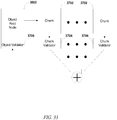
- Each chunk of an object is associated with a chunk validator, and an object validator is computed for the object based on the chunk validators, specifically by combining the chunk validators using a reversible operation such as addition, multiplication, or bitwise exclusive-OR, to name but a few.
- the object validator is stored in the storage system and may be used at various times to validate the object, for example, upon a startup of the storage system, upon taking a checkpoint or "snapshot" of the status of the storage system, or at other appropriate times.
- the method involves computing an object validator for the object using a reversible operation to combine the chunk validators, whereby the object validator can be updated based on at least one of an old chunk validator and a new chunk validator for a single chunk; and storing the object validator for the object.
- the apparatus includes a storage system configured to store objects; and a validation system configured to compute an object validator for the object using a reversible operation to combine the chunk validators and store the object validator, whereby the object validator can be updated based on at least one of an old chunk validator and a new chunk validator for a single chunk.
- the chunk validators may be computed using a checksum, a cyclic redundancy check, an exclusive-OR, a hash, and/or an error correction code, to name but a few.
- the reversible operation may include addition, multiplication, bitwise exclusive-OR, to name but a few.
- the chunk validators may be 32-bit cyclic redundancy checks and the object validator may be a 64-bit sum of the 32-bit cyclic redundancy checks.
- An object may be validated by validating each object chunk using its respective stored chunk validator; computing a verification object validator using the chunk validators; and comparing the verification object validator with the stored object validator to determine validity of the object.
- the object validator for an object may be updated when a new chunk is added to the object, when an old chunk is removed from the object, or when a chunk is modified.
- the object validator may be updated by computing and storing a new chunk validator for the new chunk; computing a new object validator for the object using the stored object validator and the new chunk validator (e.g., by adding the new chunk validator to the stored object validator); and storing the new object validator for the object.
- the object validator may be updated by computing a new object validator for the object using the stored object validator and the old chunk validator associated with the removed chunk (e.g., by subtracting the old chunk validator from the stored object validator); and storing the new object validator for the object.
- the object validator may be updated by computing and storing a new chunk validator for the modified chunk; computing a new object validator for the object using the stored object validator, the new chunk validator, and an old chunk validator stored for the chunk (e.g., by subtracting the old chunk validator from the stored object validator and adding the new chunk validator to the stored object validator); and storing the new object validator for the object.
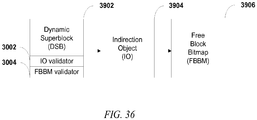
- Object validators may be stored in various ways within the storage system such as, for example, within the objects themselves, within a storage system root node structure (e.g., a dynamic superblock of a filesystem in which the object is stored), and/or within an indirection object associated with the object, to name but a few.
- a storage system root node structure e.g., a dynamic superblock of a filesystem in which the object is stored
- an indirection object associated with the object to name but a few.
- a “RAID controller” is a device or system that combines the storage capacity of several storage devices into a virtual piece of storage space that may be referred to alternatively as a “system drive” (“SD”), a “logical unit” (“LU” or “LUN”), or a “volume.”
- SD system drive
- LU logical unit
- LUN logical unit
- volume a virtual piece of storage space that may be referred to alternatively as a “system drive” (“SD”), a “logical unit” (“LU” or “LUN”), or a "volume.”
- SD system drive
- LU logical unit
- LUN logical unit identifier
- each SD will be no larger than a predetermined maximum size, e.g., 2 TB - 64 TB or more.
- the RAID controller When commands are sent to an SD, the RAID controller typically forwards the commands to all storage devices of the SD at the same time.
- the RAID controller helps to overcome three of the main limitations of typical storage devices, namely that the storage devices are typically the slowest components of the storage system, they are typically the most likely to suffer catastrophic failure, and they typically have relatively small storage capacity.
- a "RAID system” is a device or system that includes one or more RAID controllers and a number of storage devices. Typically, a RAID system will contain two RAID controllers (so that one can keep working if the other fails, and also to share the load while both are healthy) and a few dozen storage devices. In exemplary embodiments, the RAID system is typically configured with between two and thirty-two SDs. When a file server needs to store or retrieve data, it sends commands to the RAID controllers of the RAID system, which in turn are responsible for routing commands onwards to individual storage devices and storing or retrieving the data as necessary.
- mirror relationships can be established between SDs such that data written to one SD (referred to as the "primary SD") is automatically written by the RAID system to another SD (referred to herein as the "secondary SD” or “mirror SD") for redundancy purposes.
- the secondary SD may be managed by the same RAID system as the primary SD or by a different local or remote RAID system.
- Mirroring SDs effectively provides RAID 1+0 functionality across SDs in order to provide recovery from the loss or corruption of an SD or possibly even multiple SDs in some situations.
- a “filesystem” is a structure of files and directories (folders) stored in a file storage system.
- filesystems are typically managed using a number of virtual storage constructs, and in exemplary embodiments, filesystems are managed using a hierarchy of virtual storage constructs referred to as ranges, stripesets, and spans.
- range is composed of either a primary SD on its own or a primary/secondary SD pair that are supposed to contain identical data and therefore offer the same storage capacity as a single SD.
- a “stripeset” is composed of one or more ranges.
- a “span” is composed of one or more stripesets. Thus, a span is ultimately composed of one or more SDs (typically four to fifty SDs).
- a span can be divided into one or more filesystems, with each filesystem having a separate name and identifier and potentially different characteristics (e.g., one filesystem may be formatted with 32KB clusters and another with 4KB clusters, one filesystem may be Worm and another not, etc.). Each filesystem on the span is formatted, mounted, and unmounted separately. Filesystems may be created and deleted in any order and at any time. Filesystems can be configured to expand automatically (or alternatively to prevent or restrict auto-expansion) or can be expanded manually.
- objects are a unit of information stored in a data storage system.
- objects may include system objects (e.g., a root directory object, a free block bitmap object) as well as file objects (e.g., user file objects).
- An object may be implemented using a tree structure having a root node that points to various other structures, such as storage blocks that contain content, direct nodes that point to storage blocks, or indirect nodes that point to other indirect nodes or to direct nodes.
- objects are stored in one or more storage devices, such as disk drives.
- a "chunk” is a portion of an object that is stored in one or more storage devices.
- An object is typically composed of a plurality of chunks.
- a chunk may, but is not required to, coincide with a storage block of a block storage device.
- An object may include chunks having different sizes, storage locations, and other characteristics.
- a "set" of values may include one or more values.
- Embodiments of the present invention allow multiple checkpoints to be taken so that multiple versions of the filesystem can be maintained over time.
- multiple separate root structures referred to hereinafter as “dynamic superblocks” or “DSBs"
- the DSBs are preferably stored in fixed locations within the storage system for easy access, although the DSBs may alternatively be stored in other ways.
- FIG. 1 is a schematic block diagram of a file storage system in accordance with an exemplary embodiment of the present invention.
- the file storage system includes a number of file servers (a single file server 9002 is shown for the sake of simplicity and convenience) in communication with various client devices 9006 1 - 9006 M over a communication network 9004 such as an Internet Protocol network (e.g., the Internet) and also in communication with various RAID systems 9008 1 - 9008 N over a storage network 9010 such as a FibreChannel network.
- the client devices 9006 1 - 9006 M and the file server 9002 communicate using one or more network file protocols, such as CIFS and/or NFS.
- the file server 9002 includes a storage processor for managing one or more filesystems.
- the file server 9002 can be configured to allow client access to portions of the filesystems, such as trees or sub-trees under designated names. In CIFS parlance, such access may be referred to as a "share" while in NFS parlance, such access may be referred to as an "export.”
- the file server 9002 may include various hardware-implemented and/or hardware-accelerated subsystems, for example, as described in United States Patent Application Nos. 09/879,798 and 10/889,158 , and may include a hardware-based filesystem including a plurality of linked sub-modules, for example, as described in United States Patent Application Nos.
- Each RAID system 9008 typically includes at least one RAID controller (and usually two RAID controllers for redundancy) as well as a number of physical storage devices (e.g., disks) that are managed by the RAID controller(s).
- the RAID system 9008 aggregates its storage resources into a number of SDs.
- each RAID system 9008 may be configured with between 2 and 32 SDs.
- Each SD may be limited to a predetermined maximum size (e.g., 2 TB - 64 TB or more).
- Combining several storage devices into an SD can provide a number of benefits, including increased speed (individual storage devices are relatively slow, but data can be striped across several storage devices to widen the bottleneck), increased capacity (individual storage devices are comparatively small, but several storage devices can be combined to provide more usable space), abstraction (the amount of space used can be either larger or smaller than the size of a single storage device), and resilience (parity or redundancy information can be stored on each storage device so that the SD can withstand the loss of a storage device).
- the file server 9002 is configured to use one or more SDs, which can be from a single RAID system or from multiple RAID systems.
- the file server 9002 can normally interrogate the RAID systems to find out whether each SD is primary or secondary.
- the method of controlling which SDs are used by the file server 9002 is referred to herein as "licensing.”
- the file server 9002 will typically be licensed for some SDs and unlicensed for others.
- the file server 9002 is capable of combining several SDs into a larger storage pool referred to herein as a "span.”
- a span is essentially a RAID 0 array of several SDs. Combining several SDs into a span can provide a number of benefits similar to those obtained by combining multiple physical disks into an SD, including increased speed (spreading I/O between multiple SDs on multiple RAID systems can widen the storage bottleneck further), increased storage capacity (the span can be larger than a single SD, which may be limited to two terabytes), and additional abstraction, which allows for more flexible storage space allocation.
- the file server 9002 stores various types of objects in the filesystem.
- the objects may be classified generally as system objects and file objects.
- File objects are created for storage of user data and associated attributes, such as a word processor or spreadsheet files.
- System objects are created by the file storage system for managing information and include such things as root directory objects, free-space allocation objects, modified checkpoint objects list objects, modified retained objects list objects, and software metadata objects, to name but a few. More particularly, directory objects are created for storage of directory information.
- Free-space allocation objects are created for storage of free-space allocation information.
- Modified checkpoint objects list objects and modified retained objects list objects are created for storage of information relating to checkpoints and retained checkpoints, respectively.
- An software metadata object (which is described in more detail below) is a special object for holding excess file attributes associated with a file or directory object (i.e., file attributes that cannot fit within pre-designated areas within the file or directory object as described below, such as CIFS security attributes), and is created by the creator of the file or directory object, which includes a reference to the software metadata object within the file or directory object.
- An instantiation of the filesystem is managed using a tree structure having root node (referred to as a dynamic superblock or DSB) that is preferably stored at a fixed location within the storage system.
- a dynamic superblock or DSB a tree structure having root node
- the file server 9002 may maintain multiple DSBs to store different versions of the filesystem representing different checkpoints (e.g., a current "working" version and one or more "checkpoint" versions).
- the DSB includes a pointer to an indirection object (described in detail below), which in turn includes pointers to other objects.
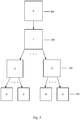
- FIG. 2 is a schematic block diagram showing the general format of a filesystem instantiation in accordance with an exemplary embodiment of the present invention.
- the DSB 202 is a special structure that represents the root of the filesystem tree structure.
- the DSB 202 includes a pointer to an indirection object 204, which in turn includes pointers to other objects in the filesystem including system objects 206 and file objects 208.
- N dynamic superblocks (N > 2) are maintained for a filesystem, only one of which is considered to be the most up to date at any given point in time.
- the number of DSBs may be fixed or configurable.
- the DSBs are located at fixed locations and are used to record the state of the checkpoints on the disk. Each DSB points to an indirection object.
- each dynamic superblock the following information is stored in each dynamic superblock:
- the DSBs are treated as a circular list (i.e., the first dynamic superblock is considered to successively follow the last dynamic superblock), and each successive checkpoint uses the next successive dynamic superblock in the circular list.
- the file server 9002 opens the volume, it typically reads in all dynamic superblocks and performs various checks on the DSBs.
- the DSB having the latest checkpoint number with the checkpoint state marked as completed and various other sanity checks passed is considered to represent the latest valid checkpoint on this volume.
- the file server 9002 begins using the next DSB in the circular list for the next checkpoint.
- each object in the filesystem including the indirection object 204, each of the system objects 206, and each of the file objects 208, is implemented using a separate tree structure that includes a separate object root node and optionally includes a number of indirect nodes, direct nodes, and storage blocks.
- the DSB 202 includes a pointer to the root node of the indirection object 204.
- the indirection object 204 includes pointers to the root nodes of the other objects.
- FIG. 3 is a schematic block diagram showing the general format of an object tree structure in accordance with an exemplary embodiment of the present invention.
- a root (“R") node 302 may point to various indirect (“I”) nodes 304, each of which may point to a number of direct (“D") nodes 306, each of which may point to a number of storage blocks (“B”) 308.
- object tree structures can vary widely, for example, depending on the size of the object.
- the tree structure of a particular object can vary over time as information is added to and deleted from the object.
- nodes may be dynamically added to the tree structure as more storage space is used for the object, and different levels of indirection may be used as needed (e.g., an indirect node can point to direct nodes or to other indirect nodes).
- an object root node is created for the object. Initially, the root node of such an "empty" object has no pointers to any indirect nodes, direct nodes, or data blocks.
- root node As data is added to the object, it is first of all put into data blocks pointed to directly from the root node. This is illustrated in the diagram of FIG. 4 , showing use of a root node with no other nodes. Note that, for the sake of simplicity in this and all the following diagrams, the root node and direct node are shown as having only two data pointers, and the indirect node is shown as only having two indirect or direct node pointers.
- FIG. 5 shows employment of a root node with this direct node A. Note that the root node has multiple data block pointers but only a single pointer to either a direct or an indirect node.
- FIG. 6 shows employment of a root node with an indirect node as well as direct nodes.
- the pointer in the root node which was pointing to the direct node A is changed to point at the indirect node B, and the first pointer in the indirect node B is set to point at the direct node A.
- a new direct node C is created, which is also pointed to from the indirect node B.
- more direct nodes are created, all of which are pointed to from the indirect node.
- FIG. 7 illustrates use of multiple layers of indirect nodes placed between the root node and the direct nodes.
- the object root node includes a checkpoint number to identify the checkpoint in which the object was last modified (the checkpoint number initially identifies the checkpoint in which the object was created and thereafter the checkpoint number changes each time the object is modified in a new checkpoint).
- the checkpoint number at which the object was created is also stored in the object root node.
- a parameter to identify the type of object for which the object root node is providing metadata is also stored in the object root node.
- the object type may, for example, be any of freespace, file, or directory.
- the object root node also has a parameter for the length of the object in blocks.
- the object root node also carries a series of pointers. One of these is a pointer to any immediately preceding version of the object root node. If it turns out that a retained checkpoint has been taken for the pertinent checkpoint, then there may have been stored an immediately preceding version of the object root node in question, and the pointer identifies the sector number of such an immediately preceding version of the object root node.
- the object root node For the actual data to which the object root node corresponds, the object root node includes a separate pointer to each block of data associated with the corresponding object. The location of up to 18 data blocks is stored in the object root node. For data going beyond 18 blocks, a direct node is additionally required, in which case the object root node also has a pointer to the direct node, which is identified in the object root node by sector number on the disk.
- the direct node includes a checkpoint number and is arranged to store the locations of a certain number of blocks (e.g., about 60 or 61 blocks) pertinent to the object.
- first direct node When a first direct node is fully utilized to identify data blocks, then one or more indirect node are used to identify the first direct node as well as additional direct nodes that have blocks of data corresponding to the object.
- the object root node has a pointer to the indirect node, and the indirect node has pointers to corresponding direct nodes.
- additional intervening indirect nodes are employed as necessary. This structure permits fast identification of a part of a file, irrespective of the file's fragmentation.
- Various embodiments of the present invention may include mechanisms to facilitate creation of large files, which are typically sparse files that are filled with zeros when first created.
- the object root nodes and the direct nodes include a flag for each block pointer to indicate whether the corresponding block is logically filled with zeros (the block does not actually need to be filled with zeros).
- the bit associated with the data block can be set to indicate that the data block is zero-filled, and read accesses to that data block will return zeros without actually reading data from the data block.
- a similar mechanism allows files to be created without actually allocating all data blocks and nodes for the file.
- pointers to blocks and other nodes may include a bit to indicate whether or not the block or other node has been actually created. In a case where the relevant blocks and nodes have not yet been created, then blocks and nodes are created as necessary to accommodate write requests, and the allocation bit is toggled accordingly. Note that creating a block requires allocation of space, writing the data to the block, and setting the bit flags for the pertinent nodes. In one particular exemplary embodiment, this mechanism is only used to create files without allocating all data blocks; other file nodes are allocated as described above.
- Node structure may also be established, in an exemplary embodiment, in a manner to further reduce disk writes in connection with node structures.
- the node structure needs to accommodate the storage not only of file contents but also of file attributes.
- File attributes include a variety of parameters, including file size, file creation time and date, file modification time and date, read-only status, and access permissions, among others.
- This connection takes advantage of the fact that changing the contents of an object root node can be performed frequently during a given checkpoint, since the object root node is not yet written to disk (i.e., because disk writes of object root nodes are delayed, as discussed above). Therefore, in an exemplary embodiment, a portion of the object root node is reserved for storage of file attributes.
- each object root node stores the following types of information:
- an object may include copies of root nodes that are created each time a retained checkpoint is taken.
- the pointer to the older root node version and the pointer to the newer root node version allow a doubly-linked list of root nodes to be created including the current root node and any copies of root nodes that are created for retained checkpoints.
- the doubly-linked list facilitates creation and deletion of retained checkpoints.
- the indirect node provides a level of indirection between the root node and the direct node.
- the following information is stored in the indirect node in an exemplary embodiment:
- the direct node provides direct pointers to data blocks on the disk.
- the following information is stored in the direct node in an exemplary embodiment:
- the number of levels of indirection decreases as the object gets smaller, until all the data in the object can be referenced via the direct block pointers in the root node, at which point all the remaining direct and indirect nodes are freed and the indirection level will be set to zero.
- a write operation to a particular file object has a start offset that is beyond the current end of the object or the length of the object is set to be greater than the current length
- the undefined portion of the object e.g., between the current end of the object and the start of newly written data
- this involves allocating disk blocks for all zero-filled portions of the object and filling those disk blocks with zeros. For a 1GB file, this might take of the order of 10 seconds. For a 1 TB file, it might take on the order of 3 hours.
- the contents of those data blocks are left unwritten, and a bit within each data block pointer is used to indicate that the block is deemed to be zero-filled. If the file server 9002 (and, in particular, the Object Store sub-module) sees this bit set, then it knows that the block should be filled with zeroes, even though on disk it may contain something completely different. If the block is read, then the file server 9002 returns zeroes for this block rather than returning its actually on-disk contents. If the block is written in such a way that the write does not fill the entire block, then the file server 9002 will write zeroes to the portion of the block that is not being written and will then reset the "zero-filled" bit for this block.
- Another concern with setting the length of an object to some very large value is the time it takes to allocate the data blocks and create the required direct and indirect node structures. For example, in an exemplary embodiment using a disk block size of 4K, a 1 TB object requires approximately 4 million direct nodes as well as a lesser number of indirect nodes. This might take in the order of 40 seconds to write to disk. Also the free space allocation of all the data blocks required, and the subsequent updates to the free space bitmap, would significantly add to this time. If a checkpoint were to be taken immediately after the file creation begins, the entire system generally would stop servicing requests (to any volumes) for the whole of this time.
- this issue may be addressed by not actually allocating disk blocks for the zero-filled portions of the file, as discussed above. This means that when the object store sees a write to a zero filled block, it would first have to allocate disk space for that block and put a pointer to it in the relevant node structure.
- each node pointer could include a bit to indicate whether or not the node to which it points is allocated. If the node is not allocated, when an operation comes along which requires that node to be valid, only then would disk space be allocated for it and the correct pointer inserted. In this way, a huge zero-filled object may have only a root node, which can be created very quickly.
- each object is associated with an object number that is used to reference the object.
- System objects typically have fixed, predefined object numbers, since they generally always exist in the system.
- File objects are typically assigned object numbers dynamically from a pool of available object numbers. These file object numbers may be reused in some circumstances (e.g., when a file is deleted, its object number may be freed for reuse by a subsequent file object).
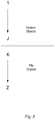
- FIG. 8 shows a representation of object number assignments for an exemplary embodiment of the present invention.
- the filesystem may include Z object numbers (where Z is variable and may grow over time as the number of objects increases).
- Z is variable and may grow over time as the number of objects increases.
- a certain range of object numbers is reserved for system objects 206 (in this example, object numbers 1-J), and the remaining object numbers (in this example, object numbers K - Z) are assigned to file objects 208.
- the number of system objects 206 is fixed, while the number of file objects 208 may vary.
- the indirection object 204 is logically organized as a table, with one table entry per object indexed by object number. As shown in FIG. 9 , each entry 502 in the table includes an object type field and a pointer field. A number of different values are defined for the object type field, but for the sake of discussion, one set of values is defined for "used" objects and another set of values is defined for "free" objects. Thus, the value in the object type field of a particular table entry will indicate whether the corresponding object number is used or free.
- the pointer field of each used table entry includes a pointer to the root node of the object.
- an object root node is created (as discussed above), and an object number is assigned to the object.
- a pointer to the object root node is stored in the indirection object 204, specifically in the table entry associated with the assigned object number. Therefore, the file server 9002 can easily locate the object root node of any object based on its object number, specifically by indexing into the indirection object table structure and accessing the pointer field.
- the root node of such an "empty" object has no pointers to any indirect nodes, direct nodes, or data blocks, although data blocks, indirect nodes, and direct nodes may be added to the object tree structure over time.
- the pointer fields of free table entries are used to maintain one or more free object number lists (and preferably two singly-linked, non-circular free object number lists, for example, as described in U.S. Provisional Patent Application No. 60/979,561 entitled System, Device, and Method for Validating Data Structures in a Storage System, which was filed on October 12, 2007.
- the table entry associated with each free object number includes a reference to a next free object number in its free object number list rather than a pointer to the root node of an object. Because a free object number list is a singly-linked, non-circular list in an exemplary embodiment, the table entry associated with the last free object number in a free object number list includes a "null" reference (e.g., the value zero).
- Free object numbers in the list could be recycled and removed from the list as new objects are created, and free object numbers could be added to the list as objects are deleted from the system.
- the file server takes a "checkpoint" or "snapshot" of the filesystem from time to time (e.g., as discussed below or in United States Patent Application No. 10/286,015 entitled Apparatus and Method for Hardware-Based File System filed on November 1, 2002 in the name of Geoffrey S. Barrall et al. and United States Patent Application No. 11/841,353 entitled Apparatus and Method for Hardware-Based File System filed on August 20, 2007 in the name of Gerissay S.
- the file server has a "working copy" of the filesystem that may change, for example, as objects are created, deleted, and modified.
- a working copy of the filesystem that may change, for example, as objects are created, deleted, and modified.
- two free object number lists are used to ensure that a particular object number cannot be freed and reused within the same working copy of the filesystem (i.e., by adding freed object numbers to one list but allocating object numbers from the other list), and the bottom 32 bits of the current checkpoint number are included in the object handle when the object is created so that objects created in different checkpoints will have different handles.
- the file server recycles free object numbers from one list while adding newly freed object numbers to the other list.
- the roles of the two lists are "swapped" so that object numbers freed during the previous checkpoint are available to be recycled while new object numbers that are freed during the current checkpoint are not available to be recycled during that checkpoint.
- the list from which free object numbers are being recycled is empty when a new object is being created, then the indirection object is expanded in order to provide additional free object numbers (even though there may actually be some free object numbers in the other list).
- both lists will generally accumulate a number of free object numbers over time due to the role swapping at each checkpoint, so, in the steady state, the indirection object should not need to expand often.
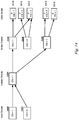
- FIG. 23 is a schematic block diagram showing the relationship between the DSB 202 and the indirection object 204 in accordance with an exemplary embodiment of the present invention.
- the DSB 202 includes a pointer 602 to the indirection object 204 (and, more specifically, to the root node of the indirection object 204), and also includes two pointers 604 and 605, one for each of the free object number lists in the indirection object 204.
- the two pointers may be referred to hereinafter as "DSB.listA" and "DSB.listB.”
- Each pointer 604, 605 points to the table entry at the start of its respective free object number list.
- the file server 9002 can easily locate the indirection object 204 (and hence the root node of any other object) as well as free object number lists using the DSB 202.
- the value in the object type field of a particular table entry will indicate whether the corresponding object number is used or free. If that object number is used, then the pointer field of that table entry will include a pointer to the root node of the corresponding object. If, however, that object number is free, then the pointer field of that table entry will include a reference to a next free object number in its free object number list.
- freed object numbers are added to the head of a free object number list, and recycled object numbers are also taken from the head of a free object number list.
- the following is exemplary pseudo-code for adding a freed object number "i" to free object number list A:
- the indirection object 204 may be necessary or desirable to verify the indirection object 204, including the free object number list(s), from time to time in order to ensure that all free object numbers are included in the free object number list(s) and that no "used" object numbers are included in the free object number list(s).
- One way to verify the indirection object 204, including the free object number list(s) is to traverse each free object number list from the start to end to ensure that there are no loops and to ensure that the list ends with a null reference.
- free object number lists are not ordered but instead are updated as object numbers happen to be used and freed, so traversing a free object number list would generally entail jumping around the indirection object 204 according to the references of the singly-linked list. Such traversal of a free object number list would generally be slow and inefficient.
- the indirection object table structure is traversed sequentially from top to bottom, and the "used" and “free” object numbers are tracked using a bitmap or other appropriate data structure. Specifically, if a particular object number is used, then the corresponding bit in the bitmap is marked; if that bit was already marked, then the indirection object is corrupted (e.g., because that "used" object number is erroneously referenced by an earlier "free” entry).
- the corresponding entry in the indirection object table structure includes a reference to the next free object number in the free object number list, so the bit corresponding to such next free object number is marked in the bitmap; if that bit was already marked, then the indirection object is corrupted (e.g., because the free object number list includes a "used" object number or because the free object number list includes a circular reference).
- the two starting table entries which are pointed to by the pointers 604, 605 in the DSB 202, are checked, and if either table entry is "used,” then the indirection object is corrupted.
- the only bits that should be left unmarked are the bits associated with the two starting table entries for the two free object number lists, which are pointed to by the pointers 604, 605 in the DSB 202. If either of those bits is marked, then the indirection object is corrupted. If any other bits in the bitmap are unmarked, then the corresponding object numbers are neither used nor included in the free object number lists, in which case the indirection object is usable (because such "unlinked" free entries will not be recycled in the normal course). Additional processing may be performed to ensure that each free object number list terminates with a null reference.
- the bitmap could be initialized to all zeros, and a bit in the bitmap could be "marked” by setting the bit (i.e., to one); in this regard, a so-called “test-and-set” operation may be used to both test the value of the bit and set the bit in a single operation.
- the bitmap could be initialized to all ones and a bit in the bitmap could be "marked” by clearing the bit (i.e., to zero).
- Other types of data structures and other types of marking schemes may be used in other embodiments.
- the present invention is not limited to the use of a bitmap or to any particular type of data structure or marking scheme.
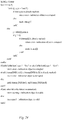
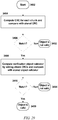
- FIG. 24 is a logic flow diagram showing exemplary high-level pseudo-code for validating the indirection object 204 in accordance with an exemplary embodiment of the present invention.
- the logic first initializes the bitmap.
- the logic then sequentially processes each table entry in the indirection object. Specifically, the logic inspects the object type field of the table entry to determine whether the corresponding object number is used or free. If the object number is used, then the logic checks the corresponding bit in the bitmap to see if it is already marked; if so, then processing terminates because the indirection object is corrupted; if not, then the logic marks the bit.
- the logic checks the bit in the bitmap corresponding to the next free object number referenced in the table entry to see if it is already marked; if so, then processing terminates because the indirection object is corrupted; if not, then the logic marks the bit.
- the logic performs additional processing to check that the two starting table entries for the two free object number lists are "free" and that the only bits left unmarked in the bitmap are the bits associated with the two starting table entries for the two free object number lists (e.g., by testing those bits and setting them if unmarked, and then checking to see if any other bits remain unmarked); if so, then the indirection object is valid; if not, then the indirection object is corrupted. If the only problem is that there is one or more "unlinked" free object numbers, then the indirection object is considered to be usable.
- Each table entry is designated by an entry number and includes a type field indicating the entry type (i.e., used or free) and a pointer field indicating, for free entries, the next entry number in the list. For convenience and clarity, pointers for "used" entries are omitted.
- the starting table entries for the two free object number lists are indicated by "ListA" and "ListB" pointers.
- free object number list A includes entries 4, 2, and 8 (in that order), while free object number list B includes only entry 6.
- bit 7 is checked in the bitmap. Since bit 7 was already marked during the processing of table entry 6, the indirection object is deemed to be invalid because a used table entry is included in a free object number list.
- bit 5 (which is referenced in table entry 6) is checked in the bitmap. Since bit 5 was already marked during the processing of table entry 5, the indirection object is deemed to be invalid because a used table entry is included in a free object number list.
- bits 4 and 6 are checked. Even though bits 4 and 6 are unmarked, a problem exists because bit 8 is also unmarked, but the indirection object is considered to be usable because object number 8 effectively cannot be recycled.
- object number 8 is included in both free object number lists.
- bit 8 (which is referenced in table entry 6) is checked in the bitmap. Since bit 8 was already marked during the processing of table entry 2, the indirection object is deemed to be invalid.
- bits 4 and 6 are checked. Since bit 4 was already marked during the processing of table entry 8, the indirection object is deemed to be invalid.
- bits indicated by the ListA and ListB pointers are checked. Since bit 7 was already marked during the processing of table entry 7, the indirection object is deemed to be invalid.
- Various embodiments may perform additional error checking. For example, before marking a bit in the bitmap (particularly based on a reference to a free object number, i.e., the variable "j" in pseudo-code shown in FIG. 24 ), a check may be performed to make sure that the reference is within the range of valid object numbers (i.e., if there are Z object numbers, a value greater than Z would be erroneous, indicating that the indirection object is corrupted). Similar error checking could be performed for the two start pointers (i.e., DSB.listA and DSB.listB).
- a check may be performed to ensure that the free object number list is not empty (i.e., that the start pointer DSB.listA or DSB.listB is not null).
- various embodiments may perform additional error processing to determine the type of error that exists. For example, if a particular object number is used but the corresponding bit in the bitmap is already marked, then that object number may be erroneously included in the free object number list. Similarly, if the bit associated with an object number referenced in a "free" table entry is already marked and that referenced object number is used, then that referenced object number may be erroneously included in the free object list. If the bit associated with an object number referenced in a "free" table entry is already marked and that referenced object number is free, then the free object number list may include a circular reference. Other error scenarios may exist.
- the free object number list is a non-circular list in the exemplary embodiment described above, it should be noted that, with appropriate changes to the described validation logic, the free object number list could be implemented using a circular list such that the table entry associated with the last free object number in the free object number list includes a reference back to the table entry associated with the first free object number in the free object number list.
- the free object number list were to include only one free object number, then the table entry associated with that free object number would include a reference to itself instead of a "null" pointer.
- the bit associated with the first free object number in the free object number list would be marked during the sequential processing of the table entries (i.e., when the table entry associated with the last free object number in the free object number list is processed), so the logic would not need to specifically check that bit after completing the sequential processing of the table entries.
- the following portion of the pseudo-code shown in FIG. 24 would not need to be performed:
- FIG. 25 is a schematic block diagram for a data structure validation system in accordance with an exemplary embodiment of the present invention.
- the validation system includes a validator 802 and a bitmap 804.
- the validator 802 may access the DSB 202 to locate the indirection object 204 via pointer 602 and/or the start of each free object number list within the indirection object 204 via pointers 604, 605.
- the validator 802 steps sequentially through the table entries of the indirection object 204, marking used and free object numbers in the bitmap 804 substantially as described above. Assuming no error is encountered during the sequential processing of the table entries, the validator 802 every object number is accounted for in the bitmap 804.
- the indirection object can be validated using a single pass through the indirection object.
- sequential processing enables multiple pointers to be read during a single read operation and also enables the file server to leverage read-ahead functionality that is available in an exemplary embodiment.
- an exemplary embodiment provides an efficient way to validate the indirection object.
- bitmap is used to track used and free object numbers in an exemplary embodiment
- other types of data structures may alternatively be used to track used and free object numbers.
- an array or table may be used to track used and free object numbers, with a separate array/table entry associate with each object number.
- pointers to the starts of the free object number lists are maintained in the DSB 202 in an exemplary embodiment, the pointers to the starts of the free object number lists may be maintained elsewhere, and the present invention is not limited to any particular manner of maintaining the start pointers.
- the free object number lists could be managed in other ways.
- the two lists could be could be combined so that all free object numbers are available for recycling, and one of the lists could be used to track object numbers that are freed during the new checkpoint.
- each table entry in the indirection object is processed discretely in an exemplary embodiment, it may be possible to divide up the processing of the indirection object, for example, using multiple computer tasks, multiple computer processors, or multiple instances of hardware logic. Each task, processor, or hardware logic instance could operate on a different, non-overlapping portion of the indirection object table, with the bitmap stored, for example, in a common or shared memory.
- an exemplary embodiment described above includes two free object number lists within the indirection object
- the present invention is not limited to two free object number lists. Rather, a single free object number list, or, for that matter, more than two free object number lists, may be included within the indirection object, and the logic described with reference to FIG. 24 could be modified appropriately for validating such alternative indirection objects.
- the indirection object may be implemented as a "pseudo-file" having no actual storage blocks.
- the indirection object instead of having pointers to actual data blocks in the object tree structure (e.g., as shown in FIG. 2 ), such pointers in the indirection object tree structure point to the root nodes of the corresponding objects.
- the indirection object maps each object number to the sector address of the root node associated with the corresponding filesystem object. The indirection object tree structure can then be traversed based on an object number in order to obtain a pointer to the root node of the corresponding object.
- the indirection object "pseudo-file" is structured so that a common piece of code can be used to traverse the indirection object tree structure based on an object number in order to obtain a pointer to the root node of the corresponding object and to traverse other object tree structures based on a file offset in order to obtain a pointer to the corresponding data block.
- the object number is essentially converted into a virtual file offset, and then the indirection object tree structure is traversed in the same way that other object tree structures are traversed using an actual file offset.
- system objects have fixed, pre-defined object numbers, although certain system objects may have variable object numbers.
- object numbers may be fixed, pre-defined object numbers, although certain system objects may have variable object numbers. The following is a description of some system objects in an exemplary embodiment of the present invention.
- a root directory object is a system object (i.e., it has a root node and a fixed predetermined object number) that maps file names to their corresponding object numbers.
- the file storage system allocates a root node for the file, assigns an object number for the file, adds an entry to the root directory object mapping the file name to the object number, and adds an entry to the indirection object mapping the object number to the disk address of the root node for the file.
- An entry in the indirection object maps the root directory object number to the disk address of the root directory object's root node.
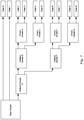
- FIG. 10 is a schematic block diagram demonstrating the general relationship between the DSB 202, the indirection object 204, the root directory object 606, and the file objects 208, in accordance with an exemplary embodiment of the present invention.
- an entry in the indirection object maps the root directory object number to the disk address of the root directory object's root node, the root directory object maps file names to object numbers, and the indirection object maps object numbers to objects.
- the file server 9002 can locate the root directory object 606 via the indirection object (i.e., using the object number associated with the root directory object 606), map the file name to its corresponding object number using the root directory object 606, and then locate the object via the indirection object using the object number.
- the indirection object i.e., using the object number associated with the root directory object 606
- a free space bit map object is a system object (i.e., it has a root node and a fixed predetermined object number) that indicates free storage blocks in the file storage system.
- An entry in the indirection object maps the free space bit map object number to the disk address of the free space bit map object's root node.
- a modified checkpoint objects lists object is a system object (i.e., it has a root node and a fixed predetermined object number) that identifies objects that have been created or modified during a checkpoint cycle.
- a modified checkpoint objects list object is created.
- a free blocks object is a system object that is used to keep track of data blocks that have become unused by the filesystem during a particular checkpoint.
- the free blocks object lists the sector addresses that are available to be freed.
- the fact that a particular data block has become unused by the filesystem does not necessarily mean that the data block can be freed for reuse, since the data block may be associated with an earlier checkpoint and/or retained checkpoint.
- other mechanisms e.g., a background cleanup task
- the file storage system would maintain N free blocks objects for N checkpoints (where N is typically greater than two), with the indirection object including separate entries for the N free blocks objects using fixed predetermined free blocks object numbers (i.e., N entries in the indirection object).
- N is typically greater than two
- the file storage system would process the free blocks object associated with that checkpoint so that the information contained therein is not lost.
- the file storage system could maintain more than N free blocks objects (even though only N checkpoints are maintained) so that the free blocks objects could be processed using a background cleanup process rather than a run-time process.
- N the number of free blocks objects in the system could vary, it would not be practical to have a fixed number of entries in the indirection object, so a directory of free blocks objects (e.g., a free blocks directory object) could be used instead.
- a single entry in the indirection object could be used for the free blocks directory object, and the free blocks directory object could maintain pointers to the individual free blocks objects.
- a retained checkpoint configuration object is a system object that is used to maintain a list of retained checkpoints.
- An entry in the indirection object maps the retained checkpoint configuration object number to the disk address of the retained checkpoint configuration object's root node.
- the retained checkpoint configuration object is discussed in further detail below.
- the processing of file system requests is delineated by a series of checkpoints that are scheduled to occur no less frequently than some user-specified interval, such as every 10 seconds. Checkpoints may be taken at other times such as, for example, if more than half of the non-volatile RAM being used for the current checkpoint is full, if the sector cache is becoming full, if the user requests a retained checkpoint (discussed below), or under other appropriate circumstances.
- each successive checkpoint there is stored, on disk, current file structure information that supersedes previously stored file structure information from the immediately preceding checkpoint.
- Checkpoints are numbered sequentially and are used to temporally group processing of file requests.
- exemplary embodiments of the present invention maintain N DSBs (where N is greater than two, e.g., 16).
- the DSBs are used to take successive checkpoints.
- FIG. 11 schematically shows an object structure for an exemplary object that was created at a checkpoint number 1.
- the object includes four data blocks, namely data block 0 (2310), data block 1 (2312), data block 2 (2314), and data block 3 (2316).
- a direct node 2306 includes a pointer to data block 0 (2310) and a pointer to data block 1 (2312).
- a direct node 2308 includes a pointer to data block 2 (2314) and a pointer to data block 3 (2316).
- An indirect node 2304 includes a pointer to direct node 2306 and a pointer to direct node 2308.
- a root node 2302 includes a pointer to indirect node 2304. All nodes and all data blocks are marked with checkpoint number 1.
- FIG. 12 schematically shows the object structure after creation of the new root node 2403. At this point, both root node 2402 and new root node 2403 point to indirect node 2304.
- the Object Store sub-module then traverses the object structure starting at the root node until it reaches the descriptor for data block 0 (2310). Since data block 0 (2310) is part of an earlier checkpoint, it cannot be modified. Instead, the Object Store sub-module creates a modified copy of data block 2310 in free space on the disk and marks this new data block with checkpoint number 3 (i.e., the checkpoint at which it was created).
- FIG. 13 schematically shows the object structure after creation of the new data block 2510.
- the Object Store sub-module now needs to put a pointer to the new data block 2510 in a direct node, but the Object Store sub-module cannot put a pointer to the new data block 2510 in the direct node 2306 because the direct node 2306 is a component of the earlier checkpoint.
- the Object Store sub-module therefore creates a modified copy of direct node 2306 to free space on the disk including pointers to the new data block 0 (2510) and the old data block 1 (2312) and marks this new direct node with checkpoint number 3 (i.e., the checkpoint at which it was created).
- FIG. 14 schematically shows the object structure after creation of the new direct node 2606 including pointers to the new data block 0 (2510) and the old data block 1 (2312).
- the Object Store sub-module now needs to put a pointer to the new direct node 2606 in an indirect node, but the Object Store sub-module cannot put a pointer to the new direct node 2606 in the indirect node 2304 because the indirect node 2304 is a component of the earlier checkpoint.
- the Object Store sub-module therefore creates a modified copy of indirect node 2304 with pointers to the new direct node 2606 and the old direct node 2308.
- FIG. 15 schematically shows the object structure after creation of the new indirect node including pointers to the new direct node 2606 and the old direct node 2308.
- FIG. 16 schematically shows the object structure after the pointer to the new indirect node 2704 is written into the new root node 2403.
- blocks 2402, 2304, 2306, and 2310 are components of the checkpoint 1 version but are not components of the current checkpoint 3 version of the object; blocks 2308, 2312, 2314, and 2316 are components of both the checkpoint 1 version and the current checkpoint 3 version of the object; and blocks 2403, 2704, 2606, and 2510 are components of the current checkpoint 3 version of the object but are not components of the checkpoint 1 version.
- new node do not necessarily need to be created in the order described above.
- the new root node could be created last rather than first.
- the changes propagate up through the object tree structure so that a new root node is created for the modified object.
- a new root node would only need to be created for an object once in a given checkpoint; the new root node can be revised multiple times during a single checkpoint.
- the current indirection object is modified to point to the root node of the modified object rather than to the root node of the previous version of the object. For example, with reference again to FIG. 16 , the current indirection object would be updated to point to root node 2403 rather than to root node 2402 for the object number associated with this object.
- the current indirection object is updated accordingly. For example, if a new object is created, the indirection object is modified to include a pointer to the root node of the new object. If an existing object is deleted, the indirection object is modified to mark the corresponding object number as free.
- the indirection object is also a tree structure having a root node
- modification of the indirection object also propagates up through the tree structure so that a new root node would be created for the modified indirection object. Again, a new root node would only need to be created for the indirection object once in a given checkpoint; the new root node can be revised multiple times during a single checkpoint.
- each version of the filesystem i.e., the current version and each checkpoint version
- each version of the filesystem generally will include a separate version of the indirection object, each having a different indirection object root node (but possibly sharing one or more indirect nodes, direct nodes, and/or data blocks).
- the DSBs are treated as a circular list, and checkpoints continue to be taken at scheduled intervals such that, during the steady state, each new checkpoint "overwrites" an old checkpoint so that the old version of the filesystem represented by the "overwritten" checkpoint is lost.
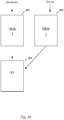
- FIG. 17 is a schematic diagram showing various filesystem structures prior to the taking of a checkpoint, in accordance with an exemplary embodiment of the present invention. Specifically, two DSBs numbered 202 and 203 are shown. DSB 202 is associated with the current version of the filesystem and includes a pointer to the root node of the current version of the indirection object 204. DSB 203 is the next available DSB.
- the next DSB in the circular list (i.e., DSB 203 in this example) is initialized for the new checkpoint.
- such initialization includes writing the next checkpoint number into DSB 203 and storing a pointer to the root node of indirection object 204 into DSB 203.
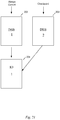
- FIG. 18 is a schematic diagram showing the various filesystem structures after a checkpoint is taken, in accordance with an exemplary embodiment of the present invention.
- DSB 202 represents the most recent checkpoint version of the filesystem
- DSB 203 represents the current (working) version of the filesystem.
- the current version of the filesystem may change as objects are created, modified, and deleted. Also, as discussed above, when the current version of the filesystem changes, a new version of the indirection object (having a new root node) is created. Consequently, when the current version of the indirection object changes after a checkpoint is taken as depicted in FIG. 18 , such that a new indirection object root node is created, the DSB for the current filesystem version (i.e., DSB 203 in FIG. 18 ) is updated to point to the new indirection object root node rather than to the prior indirection object root node.
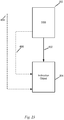
- FIG. 19 is a schematic diagram showing the various filesystem structures after modification of the indirection object, in accordance with an exemplary embodiment of the present invention.
- DSB 202 which is associated with the checkpoint version of the filesystem, points to the checkpoint version of the indirection object 204
- DSB 203 which is associated with the current version of the filesystem, points to the root node of new indirection object 205.
- checkpoints generally are taken at regular intervals such that multiple versions of the filesystem are maintained over time.
- the current (working) version of the filesystem moves to the next successive DSB in the circular list.
- storage associated with the deleted checkpoint can be recovered in due course, for example, using a background task that identifies and frees storage that is no longer being used.
- a particular DSB may be reused as the current DSB for successive checkpoints, with the other DSBs used to save checkpoint versions of the filesystem.
- FIG. 20 is a schematic diagram showing various filesystem structures prior to the taking of a checkpoint, in accordance with an exemplary embodiment of the present invention. Specifically, two DSBs numbered 202 and 203 are shown. DSB 202 is associated with the current version of the filesystem and includes a pointer to the root node of the current version of the indirection object 204. DSB 203 is the next available DSB.
- the next DSB 203 is initialized for the new checkpoint.
- initialization includes writing the next checkpoint number into DSB 203 and storing a pointer to the root node of indirection object 204 into DSB 203.
- FIG. 18 is a schematic diagram showing the various filesystem structures after a checkpoint is taken, in accordance with an exemplary embodiment of the present invention.
- DSB 203 represents the most recent checkpoint version of the filesystem, while DSB 202 continues to represent the current (working) version of the filesystem.
- the current version of the filesystem may change as objects are created, modified, and deleted. Also, as discussed above, when the current version of the filesystem changes, a new version of the indirection object (having a new root node) is created. Consequently, when the current version of the indirection object changes after a checkpoint is taken as depicted in FIG. 21 , such that a new indirection object root node is created, the DSB for the current filesystem version (i.e., DSB 202 in FIG. 21 ) is updated to point to the new indirection object root node rather than to the prior indirection object root node.
- DSB 203 which is associated with the checkpoint version of the filesystem, points to the checkpoint version of the indirection object 204
- DSB 202 which continues to be associated with the current version of the filesystem, points to the root node of new indirection object 205.
- the file server 9002 is capable of maintaining more that one checkpoint, so there may be multiple versions of the filesystem to which the filesystem can be reverted. Utilities can be provided to allow an operator to examine the contents of the various checkpoint versions in order to facilitate selection of a checkpoint version for reverting the filesystem.
- N checkpoints may be maintained in the system (where N is typically greater than two and may be user-configurable), a user-triggered mechanism may be provided for retaining a checkpoint such that it will remain valid and accessible (read-only) until the user chooses to delete it.
- a retained checkpoint is essentially a read-only version of the file system structure at a particular checkpoint. Multiple retained checkpoints can be taken, and mechanisms are included for deleting a selected retained checkpoint or reverting the file system to a selected retained checkpoint (for example, to return the file system to a known state following a catastrophe). As long as a retained checkpoint remains active, the nodes and data blocks that comprise the retained checkpoint cannot be modified or returned to free space. It should be noted that a node or data block can be a component of multiple retained checkpoints, and a particular node or data block cannot be returned to free space as long as the node or data block is a component of at least one retained checkpoint.
- taking a retained checkpoint involves, among other things, saving a copy of the corresponding DSB in free space on disk and storing a reference to the stored DSB copy in the retained checkpoint configuration object.
- a retained checkpoint is stored in the filesystem, structures associated with the retained checkpoint cannot be deleted. This is true even if the checkpoint from which the retained checkpoint was taken has been overwritten.
- the file server 9002 includes mechanisms to prevent structures associated with retained checkpoints from being deleted.
- objects stored in the storage system may be protected by multiple levels of validation.
- Each chunk of an object may be associated with a chunk validator, and an object validator may be computed for the object based on the chunk validators.
- the object validator is stored in the storage system and may be used at various times to validate the object, for example, upon a startup of the storage system, upon taking a checkpoint or "snapshot" of the status of the storage system, or at other appropriate times.
- a chunk validator is computed and stored for each object chunk, and an object validator is computed from the chunk validators and stored in the data storage system.
- the object validator is computed using a reversible operation such that, when a particular chunk is modified, the object validator can be updated based on the old and new chunk validators for that chunk without having to perform a computation over multiple chunks, for example, by removing the old chunk validator (i.e., the chunk validator prior to the modification) from the object validator and combining the new chunk validator (i.e., computed following the modification) to the object validator. In this way, the object validator can be updated without having to compute the entire object validator from all chunk validators.
- the object validator may be stored within the object itself (e.g., within the root node) or may be stored elsewhere in the data storage system (e.g., within a dynamic superblock or within an object table).
- the object validator is computed by summing the chunk validators of all object chunks. For example, if the chunk validators are 32-bit cyclic redundancy check (CRC) values, then the object validator may be the 64-bit sum of the 32-bit CRCs of all chunks.
- CRC cyclic redundancy check
- the object validator can be updated by subtracting the old chunk validator (i.e., the chunk validator prior to the modification) from the object validator and adding the new chunk validator (i.e., computed following the modification) to the object validator, resulting in an object validator that is the sum of all chunk validators without having to actually sum all of the chunk validators.
- Each chunk can be validated individually by computing a chunk verification validator for the chunk and comparing the chunk verification validator with the stored chunk validator for the chunk. In complex data storage systems, however, it may be insufficient to simply validate each chunk. Certain types of errors can cause chunks to be dropped from and/or added to objects, for example, by corruption of pointers in the object structure. Thus, even if every chunk referenced in an object structure is valid based on its chunk validator, it is still possible for the object as a whole to be invalid. Therefore, the object can be validated by computing an object verification validator using the chunk validators of all chunks referenced in the object structure and comparing the object verification validator with the stored object validator for the object.
- FIG. 26 is a logic flow diagram depicting general logic for storing an object in a storage system in accordance with various embodiments of this invention.
- the logic begins at execution block 3102. For each chunk associated with the object (e.g., via links in an object tree structure), a chunk validator is computed at execution block 3104, and the chunk validator is stored in the system (e.g., within the chunk itself) at execution block 3106. An object validator is then computed using the chunk validators at execution block 3108, and this object validator is stored in the system at execution block 3110. The logic ends at execution block 3199.
- Chunk validators may be computed using any of a variety of mechanisms, including, but in no way limited to, checksum algorithms, cyclic redundancy check (CRC) algorithms, bitwise exclusive-OR (XOR) functions, hashing functions, parity checking functions, and error correcting codes, to name but a few.
- CRC cyclic redundancy check
- XOR bitwise exclusive-OR
- hashing functions e.g., parity checking functions
- error correcting codes e.g., error correcting codes.
- Different mechanisms have different properties that may be appropriate for different implementations and environments. For example, some mechanisms are computationally simple but may not provide significant protection (e.g., checksum or XOR), while others are more computationally intensive but may provide more protection (e.g., CRC or hashing functions). Some mechanisms may be well-suited for software implementations while others maybe well-suited for hardware implementations.
- object validators may be computed using any of a variety of mechanisms, although, in embodiments of the present invention, the mechanism used for computing object validators is reversible.
- Exemplary mechanisms for computing object validators include, but are in no way limited to, addition, multiplication, and bitwise XOR, which are reversible using subtraction, division, and bitwise XOR, respectively.
- the process of storing an object will be, for the most part, determined by the processes used to compute the chunk validators and the object validator.
- the chunk validators are computed using a 32-bit CRC algorithm
- the object validator for an object is computed by summing the chunk validators associated with the object chunks into a 64-bit sum.
- Such an embodiment provides a high level of error detection capability while still allowing the object validator to be updated following a structure change without requiring that all chunks (or all chunk validators) be accessed.
- the process used for storing objects will vary accordingly.
- the logic begins at execution block 3202. For each chunk 3702 associated with the object, a chunk CRC 3704 is computed at execution block 3204, and the chunk CRCs 3704 are stored in the system at execution block 3206. CRCs 3704 are then added together to form a 64-bit object validator 3706 at execution block 3208. Object validator 3706 is then stored in the system at execution block 3210. The logic ends at execution block 3299.
- the validity of a stored object may be checked using the stored chunk validators and object validator.
- each chunk associated with the object e.g., via links in an object tree structure
- an error recovery mechanism may be activated (e.g., generating an alert to an operator and/or reverting to an earlier version of the object or the entire filesystem).
- the entire object is validated by computing a verification object validator using the chunk validators and comparing the verification object validator with the stored object validator.
- the object is considered to be valid. If, however, the verification object validator does not match the stored object validator, then the object is considered to be invalid, in which case an error recovery mechanism may be activated (e.g., generating an alert to an operator and/or reverting to an earlier version of the object or the entire filesystem).
- An object might become invalid, for example, due to corruption of the object tree structure to omit a chunk from the object or add a chunk that is not really part of the object.
- FIG. 28 is a logic flow diagram depicting general logic for verifying an object in accordance with various embodiments of the invention.
- the logic begins at execution block 3302. For each chunk associated with the object, a verification chunk validator is computed and compared with a stored chunk validator at execution block 3304. If any of the verification chunk validators does not match its respective stored chunk validator at execution block 3306, then the object is considered to be invalid at execution block 3392. If all of the chunks are valid, however, a verification object validator is computed using the chunk validators and compared with the stored object validator at execution block 3308. If the verification object validator does not match the stored object validator in execution block 3310, then the object is considered to be invalid at execution block 3394. If the verification object validator matches the stored object validator in execution block 3310, then the entire object is considered to be valid in execution block 3399.
- the process of validating an object will be, for the most part, determined by the process used to store the object.
- chunks are validated by computing a 32-bit CRC and comparing the computed CRC with the stored CRC for the chunk
- the object is validated by computing a 64-bit sum of the 32-bit chunk CRCs and comparing the 64-bit sum with the stored 64-bit object validator.
- the process for validating objects will vary accordingly.
- a chunk CRC is computed and compared with a corresponding stored CRC for the chunk at execution block 3404. If the computed CRC for any chunk does not match its corresponding stored CRC at execution block 3406, then the object is considered to be invalid at execution block 3492. If all of the chunks are valid, however, a 64-bit verification object validator is computed by summing the 32-bit chunk CRCs and is compared with the 64-bit stored object validator at execution block 3408. If the verification object validator does not match the stored object validator at execution block 3410, then the object is considered to be invalid at execution block 3494. If, however the verification object validator matches the stored object validator at execution block 3410, then the object is considered to be valid at execution block 3499.
- the object validator for the object is updated. For example, if a new chunk is added to the object, then a chunk validator is computed and stored for the new chunk, and an updated object validator is computed for the object by adding the chunk validator to the saved object validator. If an existing chunk is removed from the object, then an updated object validator is computed for the object by subtracting from the saved object validator the chunk validator associated with the removed chunk. If an existing chunk is modified, then a new chunk validator is computed for the chunk, and an updated object validator is computed for the object by removing the old chunk validator from, and adding the new chunk validator to, the saved object validator.
- FIG. 30 is a logic flow diagram depicting general logic updating an object validator when a chunk is modified in accordance with various embodiments of this invention.
- the logic begins at execution block 3502. When a chunk is modified at execution block 3504, a new chunk validator is computed for the chunk at execution block 3506, and the new chunk validator is stored at execution block 3508. An updated object validator is then computed using the old chunk validator, the new chunk validator, and the saved object validator at execution block 3510. The updated object validator is stored for the object at execution block 3512. The logic ends at execution block 3599.
- the process of updating an object validator will be, for the most part, determined by the process used to store the object.
- the object validator is updated by removing an old 32-bit CRC from the saved 64-bit object validator and/or adding a new 32-bit CRC to the saved 64-bit object validator.
- the process used for updating object validators will vary accordingly.
- the logic begins at execution block 3602.
- a chunk is modified at execution block 3604
- a new 32-bit CRC is computed for the chunk at execution block 3606.
- the new 32-bit CRC is stored for the chunk at execution block 3608.
- a new 64-bit object validator is computed for the object by adding the new 32-bit CRC to the saved object validator and subtracting the old 32-bit CRC for the chunk from the saved object validator at execution block 3610.
- the new object validator is stored at execution block 3612.
- the logic ends at execution block 3699.
- the process for updating the object validator is similar when adding or removing a chunk. Specifically, upon adding a new chunk to the object, a 32-bit CRC is computed and stored for the new chunk, and the 32-bit CRC is added to the saved 64-bit object validator. On the other hand, upon removing a chunk from the object, the old 32-bit CRC for the chunk is subtracted from the saved 64-bit object validator.
- a chunk may be "modified" by either modifying the existing chunk or by creating a modified version of the chunk and updating the object structure to point to the modified chunk instead of the chunk it replaces.
- each object is implemented as a tree structure having a root node, so the object validator may be stored in the object root node.
- FIG. 33 is a schematic block diagram showing storage of the object validator in the object root node in accordance with an exemplary embodiment of the present invention.
- a chunk validator 3704 is computed for each chunk 3702, and the chunk validators 3704 are combined (e.g., by summing) to form the object validator 3706, which is stored in the object root node 3802.
- an entire filesystem containing multiple objects is also implemented as a tree structure having a special root node referred to as a dynamic superblock (DSB) as well as various other objects accessible directly or indirectly from the DSB.
- DSB dynamic superblock
- FIG. 34 is a schematic block diagram showing the general format of a filesystem in accordance with an exemplary embodiment of the present invention.
- the filesystem includes a dynamic superblock (DSB) 3902, an indirection object 3904, and various other filesystem objects and structures including, among others, a free block bitmap 3906.
- the DSB 3902 is the root of the filesystem, and, in this example, is stored at a fixed location so it can easily be located (certain embodiments include multiple DSBs so that different versions of the filesystem may be maintained).
- the indirection object 3904, the free block bitmap 3906 and other filesystem objects are stored using separate tree structures, each having its own root node and other elements. These objects may be stored at varying locations in the storage system.
- the DSB 3902 includes a pointer to the indirection object 3904, and the indirection object 3904 in turn includes pointers to other filesystem objects including the free block bitmap 3906.
- the object validators for such objects may be stored in the respective root nodes as discussed above.
- the object validators for certain objects may be stored directly in the DSB 3902 or in other critical filesystem objects such as, for example, the indirection object 3904.
- FIG. 35 is a schematic block diagram showing the object validator for the indirection object 3904 stored in the DSB 3902 and the object validator for the free block bitmap 3906 stored in the indirection object 3904, in accordance with an exemplary embodiment of the present invention.
- FIG. 36 is a schematic block diagram showing the object validators for both the indirection object 3904 and the free block bitmap 3906 stored in the DSB 3902, in accordance with an exemplary embodiment of the present invention.
- Object validators could certainly be provided for every object in a data storage system, but it is envisioned that, in practice, object validators may be limited to a subset of the objects in the system, particularly those that are critical to system operation.
- the decision as to which objects are to be protected using object validators is an implementational one that may very on a case-by-case basis.
- the decision as to when to validate objects using the object validators is an implementational one that may vary on a case-by-case basis. For example, objects may be validated upon system startup, upon taking a checkpoint or "snapshot," on a scheduled basis (e.g., every day at a certain time), or at other appropriate times.
- Some considerations as to which objects to protect using object validators and when to validate objects using object validators include the importance of the object to system operation; the system overhead of creating, maintaining, and checking validators and resultant impact on system performance; and impact on storage space/speed, to name but a few. Using object validators only for system-critical components is likely to be a reasonable trade-off between system reliability and performance impact.
- an object validator that is the sum of the chunk validators so that an obsolete chunk validator can be removed from the object validator using subtraction. It should be noted, however, that the present invention is not limited to the use of addition/subtraction for the object validator. Other techniques, including reversible operations such as multiplication/division or bitwise exclusive-OR (XOR), may alternatively be used for the object validator. Thus, for example, an object validator may be computed by multiplying the chunk validators, and a particular chunk validator may be removed from the resulting object validator using a division operation.
- XOR bitwise exclusive-OR
- an object validator may be computed by combining the chunk validators using an XOR function, and a particular chunk validator may be removed from the resulting object validator using an XOR operation.
- an object may be composed of different types of chunks (e.g., data blocks, tree nodes, etc.), and the chunk validators for the different types of chunks may be combined into a single object validator as discussed above.
- chunk validators may be computed for different types of chunks (e.g., 32-bit CRC for data blocks, 16-bit checksum for tree nodes), and the different types of chunk validators may also be combined into a single object validator as discussed above.
- embodiments of the present invention are not limited to the specific types of storage systems, filesystems, objects, and data structures described above for exemplary embodiments. Embodiments of the present invention may be employed in various types of data storage systems including, but not limited to, file servers, web servers, and RAID systems, to name but a few.
- server is used herein to describe a device that may be used in a communication system and should not be construed to limit the present invention to any particular type of device.
- embodiments of the present invention may be implemented in a client, server, computer, switch, or other type of communication device.
- the present invention may be embodied in many different forms, including, but in no way limited to, computer program logic for use with a processor (e.g., a microprocessor, microcontroller, digital signal processor, or general purpose computer), programmable logic for use with a programmable logic device (e.g., a Field Programmable Gate Array (FPGA) or other PLD), discrete components, integrated circuitry (e.g., an Application Specific Integrated Circuit (ASIC)), or any other means including any combination thereof.
- a processor e.g., a microprocessor, microcontroller, digital signal processor, or general purpose computer
- programmable logic for use with a programmable logic device
- FPGA Field Programmable Gate Array
- ASIC Application Specific Integrated Circuit
- Source code may include a series of computer program instructions implemented in an appropriate programming language (e.g., an object code, an assembly language, or a high-level language such as Fortran, C, C++, JAVA, or HTML) for use with various operating systems or operating environments.
- the source code may define and use various data structures and communication messages.
- the source code may be in a computer executable form (e.g., via an interpreter), or the source code may be converted (e.g., via a translator, assembler, or compiler) into a computer executable form.
- the computer program may be fixed in any form (e.g., source code form, computer executable form, or an intermediate form) either permanently or transitorily in a tangible storage medium, such as a semiconductor memory device (e.g., a RAM, ROM, PROM, EEPROM, or Flash-Programmable RAM), a magnetic memory device (e.g., a diskette or fixed disk), an optical memory device (e.g., a CD-ROM), a PC card (e.g., PCMCIA card), or other memory device.
- a semiconductor memory device e.g., a RAM, ROM, PROM, EEPROM, or Flash-Programmable RAM
- a magnetic memory device e.g., a diskette or fixed disk
- an optical memory device e.g., a CD-ROM
- PC card e.g., PCMCIA card
- the computer program may be fixed in any form in a signal that is transmittable to a computer using any of various communication technologies, including, but in no way limited to, analog technologies, digital technologies, optical technologies, wireless technologies (e.g., Bluetooth), networking technologies, and internetworking technologies.
- the computer program may be distributed in any form as a removable storage medium with accompanying printed or electronic documentation (e.g., shrink wrapped software), preloaded with a computer system (e.g., on system ROM or fixed disk), or distributed from a server or electronic bulletin board over the communication system (e.g., the Internet or World Wide Web).
- Hardware logic including programmable logic for use with a programmable logic device
- implementing all or part of the functionality previously described herein may be designed using traditional manual methods, or may be designed, captured, simulated, or documented electronically using various tools, such as Computer Aided Design (CAD), a hardware description language (e.g., VHDL or AHDL), or a PLD programming language (e.g., PALASM, ABEL, or CUPL).
- CAD Computer Aided Design
- a hardware description language e.g., VHDL or AHDL
- PLD programming language e.g., PALASM, ABEL, or CUPL
- Programmable logic may be fixed either permanently or transitorily in a tangible storage medium, such as a semiconductor memory device (e.g., a RAM, ROM, PROM, EEPROM, or Flash-Programmable RAM), a magnetic memory device (e.g., a diskette or fixed disk), an optical memory device (e.g., a CD-ROM), or other memory device.
- a semiconductor memory device e.g., a RAM, ROM, PROM, EEPROM, or Flash-Programmable RAM
- a magnetic memory device e.g., a diskette or fixed disk
- an optical memory device e.g., a CD-ROM
- the programmable logic may be fixed in a signal that is transmittable to a computer using any of various communication technologies, including, but in no way limited to, analog technologies, digital technologies, optical technologies, wireless technologies (e.g., Bluetooth), networking technologies, and internetworking technologies.
- the programmable logic may be distributed as a removable storage medium with accompanying printed or electronic documentation (e.g., shrink wrapped software), preloaded with a computer system (e.g., on system ROM or fixed disk), or distributed from a server or electronic bulletin board over the communication system (e.g., the Internet or World Wide Web).
- printed or electronic documentation e.g., shrink wrapped software
- a computer system e.g., on system ROM or fixed disk
- server or electronic bulletin board e.g., the Internet or World Wide Web
Landscapes
- Engineering & Computer Science (AREA)
- Theoretical Computer Science (AREA)
- Physics & Mathematics (AREA)
- General Engineering & Computer Science (AREA)
- General Physics & Mathematics (AREA)
- Data Mining & Analysis (AREA)
- Databases & Information Systems (AREA)
- Library & Information Science (AREA)
- Quality & Reliability (AREA)
- Information Retrieval, Db Structures And Fs Structures Therefor (AREA)
- Hardware Redundancy (AREA)
Claims (13)
- - Produit programme d'ordinateur comprenant des instructions de programme lisibles par ordinateur qui, lorsqu'elles s'exécutent sur ou sont chargées dans un système de stockage de données, amènent le système de stockage de données à exécuter un procédé pour gérer un système de fichier,
le procédé comprenant :- le maintien d'une pluralité de superblocs (202, 203), chaque superbloc étant associé à l'un d'une pluralité de points de contrôle et représentant une version du système de fichier comprenant une version actuelle du système de fichier représentée par un premier superbloc (202) de la pluralité de superblocs et au moins une version de point de contrôle du système de fichier représentée par au moins un second superbloc (203) de la pluralité de superblocs ;- le maintien d'une pluralité d'objets d'indirection (204, 205), chaque objet d'indirection comprenant une structure d'arbre respective comprenant un noeud racine (302) de l'objet d'indirection respectif ; et- la gestion d'une pluralité d'objets (206, 208) autres que les objets d'indirection (204, 205), chacun des autres objets comprenant une structure d'arbre respective comprenant un noeud racine (2302) de l'autre objet respectif ;dans lequel chacun de la pluralité de superblocs (202, 203) comprend une référence au noeud racine (302) d'au moins l'un des objets d'indirection (204, 205) de telle sorte que chacun des objets d'indirection est référencé par au moins l'un de la pluralité de superblocs (202, 203), et chacun des objets d'indirection comprend une référence au noeud racine (2302) d'au moins l'un des autres objets (206, 208) de telle sorte que chacun des autres objets est référencé par au moins l'un des objets d'indirection (204, 205) ;
dans lequel, par utilisation d'un objet d'indirection référencé par le premier superbloc (202) et d'au moins un objet d'indirection (204) référencé par l'au moins un second superbloc (203), le procédé comprend le maintien de la version actuelle du système de fichier et la retenue de l'au moins une version de point de contrôle du système de fichier ;
dans lequel chaque superbloc stocke un numéro de point de contrôle respectif qui est associé au superbloc respectif et, pour chacun des objets comprenant l'objet d'indirection, le noeud racine (302 ; 2302) de l'objet respectif comprend un numéro de point de contrôle identifiant un point de contrôle respectif dans lequel l'objet respectif a été modifié en dernier ; et
dans lequel, pour chacun des objets comprenant l'objet d'indirection, le noeud racine (302 ; 2302) de l'objet respectif comprend un pointeur vers une version de noeud racine plus ancienne du noeud racine respectif s'il y en a une. - - Produit programme d'ordinateur selon la revendication 1, dans lequel
le maintien de la pluralité de superblocs comprend le maintien des superblocs (202, 203) à des emplacements fixes dans le système de stockage de données. - - Produit programme d'ordinateur selon la revendication 1, dans lequel
la pluralité de superblocs (202, 203) sont disposés de manière logique comme une liste circulaire, et ledit second superbloc (203) est un superbloc successif d'après dans la liste circulaire suivant le premier superbloc (202). - - Produit programme d'ordinateur selon la revendication 1, dans lequel
le maintien de la version actuelle du système de fichier et la retenue de l'au moins une version de point de contrôle du système de fichier comprend au moins un parmi :- inclure initialement dans ledit second superbloc une référence à l'objet d'indirection référencé par ledit premier superbloc ; et après modification de l'objet d'indirection référencé par ledit premier superbloc : créer une nouvelle version dudit objet d'indirection ; et inclure dans ledit second superbloc une référence à ladite nouvelle version, et- créer une nouvelle version dudit objet d'indirection après retenue de la copie du système de fichier actuel et inclure dans ledit second superbloc une référence à ladite nouvelle version. - - Produit programme d'ordinateur selon la revendication 1, dans lequel :le nombre de superblocs (202, 203) est fixe ; oule nombre de superblocs (202, 203) est configurable par l'utilisateur.
- - Produit programme d'ordinateur selon la revendication 1, dans lequel
les objets d'indirection sont mis en oeuvre comme des pseudo-fichiers qui mappent chacun d'une pluralité de numéros d'objet à une adresse de secteur d'un noeud racine associé à un objet correspondant (206, 208) autre que les objets, d'indirection (204, 205). - - Appareil pour gérer un système de fichier, comprenant :au moins un dispositif de stockage ; etun processeur de stockage en communication avec l'au moins un dispositif de stockage, le processeur de stockage étant configuré pour exécuter :- le maintien d'une pluralité de superblocs (202, 203), chaque superbloc étant associé à l'un d'une pluralité de points de contrôle et représentant une version du système de fichier comprenant une version actuelle du système de fichier représentée par un premier superbloc (202) de la pluralité de superblocs et au moins une version de point de contrôle du système de fichier représentée par au moins un second superbloc (203) de la pluralité de superblocs ;- le maintien d'une pluralité d'objets d'indirection (204, 205), chaque objet d'indirection comprenant une structure d'arbre respective comprenant un noeud racine (302) de l'objet d'indirection respectif ; et- la gestion d'une pluralité d'objets (206, 208) autres que les objets d'indirection (204, 205), chacun des autres objets comprenant une structure d'arbre respective comprenant un noeud racine (2302) de l'autre objet respectif ;dans lequel chacun de la pluralité de superblocs (202, 203) comprend une référence au noeud racine (302) d'au moins l'un des objets d'indirection (204, 205) de telle sorte que chacun des objets d'indirection est référencé par au moins l'un de la pluralité de superblocs (202, 203), et chacun des objets d'indirection comprend une référence au noeud racine (2302) d'au moins l'un des autres objets (206, 208) de telle sorte que chacun des autres objets est référencé par au moins l'un des objets d'indirection (204, 205) ; etdans lequel, par utilisation d'un objet d'indirection référencé par le premier superbloc (202) et d'au moins un objet d'indirection (204) référencé par l'au moins un second superbloc (203), le procédé comprend le maintien de la version actuelle du système de fichier et la retenue de l'au moins une version de point de contrôle du système de fichier ;dans lequel chaque superbloc stocke un numéro de point de contrôle respectif qui est associé au superbloc respectif et, pour chacun des objets comprenant l'objet d'indirection, le noeud racine (302 ; 2302) de l'objet respectif comprend un numéro de point de contrôle identifiant un point de contrôle respectif dans lequel l'objet respectif a été modifié en dernier ; etdans lequel, pour chacun des objets comprenant l'objet d'indirection, le noeud racine (302 ; 2302) de l'objet respectif comprend un pointeur vers une version de noeud racine plus ancienne du noeud racine respectif s'il y en a une.
- - Appareil selon la revendication 7, dans lequel
le processeur de stockage est configuré pour maintenir les superblocs (202, 203) à des emplacements fixes dans le système de stockage de données. - - Appareil selon la revendication 7, dans lequel :les superblocs (202, 203) sont disposés de manière logique comme une liste circulaire, etledit second superbloc (203) est un superbloc successif d'après dans la liste circulaire suivant ledit premier superbloc (202).
- - Appareil selon la revendication 7, dans lequel
le processeur de stockage est configuré pour exécuter au moins un parmi :- inclure initialement dans ledit second superbloc une référence à l'objet d'indirection référencé par ledit premier superbloc et, après modification de l'objet d'indirection référencé par ledit premier superbloc, créer une nouvelle version dudit objet d'indirection et inclure dans ledit second superbloc une référence à ladite nouvelle version ; et- créer une nouvelle version dudit objet d'indirection après retenue de la copie du système de fichier actuel et inclure dans ledit second superbloc une référence à ladite nouvelle version. - - Appareil selon la revendication 7, dans lequel :le nombre de superblocs (202, 203) est fixe ; oule nombre de superblocs (202, 203) est configurable par l'utilisateur.
- - Appareil selon la revendication 7, dans lequel
les objets d'indirection sont mis en oeuvre comme des pseudo-fichiers qui mappent chacun d'une pluralité de numéros d'objet à une adresse de secteur d'un noeud racine associé à un objet correspondant (206, 208) autre que les objets d'indirection (204, 205). - - Procédé pour gérer un système de fichier dans un système de stockage de données, le procédé comprenant :- le maintien d'une pluralité de superblocs (202, 203), chaque superbloc étant associé à l'un d'une pluralité de points de contrôle et représentant une version du système de fichier comprenant une version actuelle du système de fichier représentée par un premier superbloc (202) de la pluralité de superblocs et au moins une version de point de contrôle du système de fichier représentée par au moins un second superbloc (203) de la pluralité de superblocs ;- le maintien d'une pluralité d'objets d'indirection (204, 205), chaque objet d'indirection comprenant une structure d'arbre respective comprenant un noeud racine (302) de l'objet d'indirection respectif ; et- la gestion d'une pluralité d'objets (206, 208) autres que les objets d'indirection (204, 205), chacun des autres objets comprenant une structure d'arbre respective comprenant un noeud racine (2302) de l'autre objet respectif ;dans lequel chacun de la pluralité de superblocs (202, 203) comprend une référence au noeud racine (302) d'au moins l'un des objets d'indirection (204, 205) de telle sorte que chacun des objets d'indirection est référencé par au moins l'un de la pluralité de superblocs (202, 203), et chacun des objets d'indirection comprend une référence au noeud racine (2302) d'au moins l'un des autres objets (206, 208) de telle sorte que chacun des autres- objets est référencé par au moins l'un des objets d'indirection (204, 205) ; et
dans lequel, par utilisation d'un objet d'indirection référencé par le premier superbloc (202) et d'au moins un objet d'indirection (204) référencé par l'au moins un second superbloc (203), le procédé comprend le maintien de la version actuelle du système de fichier et la retenue de l'au moins une version de point de contrôle du système de fichier ;
dans lequel chaque superbloc stocke un numéro de point de contrôle respectif qui est associé au superbloc respectif et, pour chacun des objets comprenant l'objet d'indirection, le noeud racine (302 ; 2302) de l'objet respectif comprend un numéro de point de contrôle identifiant un point de contrôle respectif dans lequel l'objet respectif a été modifié en dernier ; et
dans lequel, pour chacun des objets comprenant l'objet d'indirection, le noeud racine (302 ; 2302) de l'objet respectif comprend un pointeur vers une version de noeud racine plus ancienne du noeud racine respectif s'il y en a une.
Applications Claiming Priority (4)
| Application Number | Priority Date | Filing Date | Title |
|---|---|---|---|
| US97956107P | 2007-10-12 | 2007-10-12 | |
| US12/015,192 US8504904B2 (en) | 2008-01-16 | 2008-01-16 | Validating objects in a data storage system |
| US12/164,730 US9767120B2 (en) | 2008-01-16 | 2008-06-30 | Multi-way checkpoints in a data storage system |
| PCT/US2008/079308 WO2009049023A2 (fr) | 2007-10-12 | 2008-10-09 | Points de contrôle multivoie dans un système de stockage de données |
Publications (2)
| Publication Number | Publication Date |
|---|---|
| EP2212812A2 EP2212812A2 (fr) | 2010-08-04 |
| EP2212812B1 true EP2212812B1 (fr) | 2017-05-10 |
Family
ID=40549832
Family Applications (1)
| Application Number | Title | Priority Date | Filing Date |
|---|---|---|---|
| EP08837344.4A Active EP2212812B1 (fr) | 2007-10-12 | 2008-10-09 | Points de contrôle multivoie dans un système de stockage de données |
Country Status (2)
| Country | Link |
|---|---|
| EP (1) | EP2212812B1 (fr) |
| WO (1) | WO2009049023A2 (fr) |
Families Citing this family (2)
| Publication number | Priority date | Publication date | Assignee | Title |
|---|---|---|---|---|
| CN106662983B (zh) * | 2015-12-31 | 2019-04-12 | 华为技术有限公司 | 分布式存储系统中的数据重建的方法、装置和系统 |
| CN115016728A (zh) * | 2022-05-05 | 2022-09-06 | 阿里巴巴(中国)有限公司 | 数据处理方法以及装置 |
Family Cites Families (4)
| Publication number | Priority date | Publication date | Assignee | Title |
|---|---|---|---|---|
| EP1003103B1 (fr) * | 1993-06-03 | 2008-10-01 | Network Appliance, Inc. | Méthode et dispositif décriture d'un système de fichiers dans une zone non prédéterminée |
| US7475098B2 (en) * | 2002-03-19 | 2009-01-06 | Network Appliance, Inc. | System and method for managing a plurality of snapshots |
| US6857001B2 (en) * | 2002-06-07 | 2005-02-15 | Network Appliance, Inc. | Multiple concurrent active file systems |
| US20050097141A1 (en) * | 2003-10-30 | 2005-05-05 | International Business Machines Corporation | Autonomic filesystem recovery |
-
2008
- 2008-10-09 WO PCT/US2008/079308 patent/WO2009049023A2/fr not_active Ceased
- 2008-10-09 EP EP08837344.4A patent/EP2212812B1/fr active Active
Also Published As
| Publication number | Publication date |
|---|---|
| WO2009049023A2 (fr) | 2009-04-16 |
| WO2009049023A3 (fr) | 2009-11-05 |
| EP2212812A2 (fr) | 2010-08-04 |
Similar Documents
| Publication | Publication Date | Title |
|---|---|---|
| US9928250B2 (en) | System and method for managing deduplication using checkpoints in a file storage system | |
| US9760579B2 (en) | File cloning and de-cloning in a data storage system | |
| US9767120B2 (en) | Multi-way checkpoints in a data storage system | |
| US20250156215A1 (en) | Transaction interlocks for a distributed system | |
| AU2015283852C1 (en) | Redundant, fault-tolerant, distributed remote procedure call cache in a storage system | |
| US9519575B2 (en) | Conditional iteration for a non-volatile device | |
| US8250035B1 (en) | Methods and apparatus for creating a branch file in a file system | |
| US20100228800A1 (en) | Data Compression in a File Storage System | |
| US10776321B1 (en) | Scalable de-duplication (dedupe) file system | |
| WO2010113167A1 (fr) | Deduplication de donnees stockees dans un volume copie | |
| US7526622B1 (en) | Method and system for detecting and correcting data errors using checksums and replication | |
| US7552146B1 (en) | Method and apparatus for offline and online consistency checking of aggregates and flexible volumes | |
| US8112465B2 (en) | System, device, and method for validating data structures in a storage system | |
| US9778882B2 (en) | Dynamic write balancing in a data storage system | |
| EP2212812B1 (fr) | Points de contrôle multivoie dans un système de stockage de données | |
| US7281188B1 (en) | Method and system for detecting and correcting data errors using data permutations | |
| Yuan et al. | Comprehensive evaluation of file systems robustness with SPIN model checking |
Legal Events
| Date | Code | Title | Description |
|---|---|---|---|
| PUAI | Public reference made under article 153(3) epc to a published international application that has entered the european phase |
Free format text: ORIGINAL CODE: 0009012 |
|
| 17P | Request for examination filed |
Effective date: 20100506 |
|
| AK | Designated contracting states |
Kind code of ref document: A2 Designated state(s): AT BE BG CH CY CZ DE DK EE ES FI FR GB GR HR HU IE IS IT LI LT LU LV MC MT NL NO PL PT RO SE SI SK TR |
|
| AX | Request for extension of the european patent |
Extension state: AL BA MK RS |
|
| RIN1 | Information on inventor provided before grant (corrected) |
Inventor name: HOLTOM, JOHN, C. Inventor name: BERRINGTON, NEIL Inventor name: BENHAM, SIMON, L. Inventor name: ASTON, CHRISTOPHER, J. |
|
| DAX | Request for extension of the european patent (deleted) | ||
| RAP1 | Party data changed (applicant data changed or rights of an application transferred) |
Owner name: HITACHI DATA SYSTEMS ENGINEERING UK LIMITED |
|
| 17Q | First examination report despatched |
Effective date: 20150518 |
|
| GRAP | Despatch of communication of intention to grant a patent |
Free format text: ORIGINAL CODE: EPIDOSNIGR1 |
|
| STAA | Information on the status of an ep patent application or granted ep patent |
Free format text: STATUS: GRANT OF PATENT IS INTENDED |
|
| INTG | Intention to grant announced |
Effective date: 20161116 |
|
| GRAS | Grant fee paid |
Free format text: ORIGINAL CODE: EPIDOSNIGR3 |
|
| GRAA | (expected) grant |
Free format text: ORIGINAL CODE: 0009210 |
|
| STAA | Information on the status of an ep patent application or granted ep patent |
Free format text: STATUS: THE PATENT HAS BEEN GRANTED |
|
| AK | Designated contracting states |
Kind code of ref document: B1 Designated state(s): AT BE BG CH CY CZ DE DK EE ES FI FR GB GR HR HU IE IS IT LI LT LU LV MC MT NL NO PL PT RO SE SI SK TR |
|
| RAP1 | Party data changed (applicant data changed or rights of an application transferred) |
Owner name: HITACHI DATA SYSTEMS ENGINEERING UK LIMITED |
|
| REG | Reference to a national code |
Ref country code: GB Ref legal event code: FG4D |
|
| REG | Reference to a national code |
Ref country code: AT Ref legal event code: REF Ref document number: 893021 Country of ref document: AT Kind code of ref document: T Effective date: 20170515 Ref country code: CH Ref legal event code: EP |
|
| REG | Reference to a national code |
Ref country code: IE Ref legal event code: FG4D |
|
| REG | Reference to a national code |
Ref country code: DE Ref legal event code: R096 Ref document number: 602008050251 Country of ref document: DE |
|
| REG | Reference to a national code |
Ref country code: NL Ref legal event code: MP Effective date: 20170510 |
|
| REG | Reference to a national code |
Ref country code: LT Ref legal event code: MG4D |
|
| REG | Reference to a national code |
Ref country code: AT Ref legal event code: MK05 Ref document number: 893021 Country of ref document: AT Kind code of ref document: T Effective date: 20170510 |
|
| PG25 | Lapsed in a contracting state [announced via postgrant information from national office to epo] |
Ref country code: ES Free format text: LAPSE BECAUSE OF FAILURE TO SUBMIT A TRANSLATION OF THE DESCRIPTION OR TO PAY THE FEE WITHIN THE PRESCRIBED TIME-LIMIT Effective date: 20170510 Ref country code: NO Free format text: LAPSE BECAUSE OF FAILURE TO SUBMIT A TRANSLATION OF THE DESCRIPTION OR TO PAY THE FEE WITHIN THE PRESCRIBED TIME-LIMIT Effective date: 20170810 Ref country code: HR Free format text: LAPSE BECAUSE OF FAILURE TO SUBMIT A TRANSLATION OF THE DESCRIPTION OR TO PAY THE FEE WITHIN THE PRESCRIBED TIME-LIMIT Effective date: 20170510 Ref country code: GR Free format text: LAPSE BECAUSE OF FAILURE TO SUBMIT A TRANSLATION OF THE DESCRIPTION OR TO PAY THE FEE WITHIN THE PRESCRIBED TIME-LIMIT Effective date: 20170811 Ref country code: AT Free format text: LAPSE BECAUSE OF FAILURE TO SUBMIT A TRANSLATION OF THE DESCRIPTION OR TO PAY THE FEE WITHIN THE PRESCRIBED TIME-LIMIT Effective date: 20170510 Ref country code: FI Free format text: LAPSE BECAUSE OF FAILURE TO SUBMIT A TRANSLATION OF THE DESCRIPTION OR TO PAY THE FEE WITHIN THE PRESCRIBED TIME-LIMIT Effective date: 20170510 Ref country code: LT Free format text: LAPSE BECAUSE OF FAILURE TO SUBMIT A TRANSLATION OF THE DESCRIPTION OR TO PAY THE FEE WITHIN THE PRESCRIBED TIME-LIMIT Effective date: 20170510 |
|
| PG25 | Lapsed in a contracting state [announced via postgrant information from national office to epo] |
Ref country code: IS Free format text: LAPSE BECAUSE OF FAILURE TO SUBMIT A TRANSLATION OF THE DESCRIPTION OR TO PAY THE FEE WITHIN THE PRESCRIBED TIME-LIMIT Effective date: 20170910 Ref country code: PL Free format text: LAPSE BECAUSE OF FAILURE TO SUBMIT A TRANSLATION OF THE DESCRIPTION OR TO PAY THE FEE WITHIN THE PRESCRIBED TIME-LIMIT Effective date: 20170510 Ref country code: SE Free format text: LAPSE BECAUSE OF FAILURE TO SUBMIT A TRANSLATION OF THE DESCRIPTION OR TO PAY THE FEE WITHIN THE PRESCRIBED TIME-LIMIT Effective date: 20170510 Ref country code: NL Free format text: LAPSE BECAUSE OF FAILURE TO SUBMIT A TRANSLATION OF THE DESCRIPTION OR TO PAY THE FEE WITHIN THE PRESCRIBED TIME-LIMIT Effective date: 20170510 Ref country code: BG Free format text: LAPSE BECAUSE OF FAILURE TO SUBMIT A TRANSLATION OF THE DESCRIPTION OR TO PAY THE FEE WITHIN THE PRESCRIBED TIME-LIMIT Effective date: 20170810 Ref country code: LV Free format text: LAPSE BECAUSE OF FAILURE TO SUBMIT A TRANSLATION OF THE DESCRIPTION OR TO PAY THE FEE WITHIN THE PRESCRIBED TIME-LIMIT Effective date: 20170510 |
|
| PG25 | Lapsed in a contracting state [announced via postgrant information from national office to epo] |
Ref country code: RO Free format text: LAPSE BECAUSE OF FAILURE TO SUBMIT A TRANSLATION OF THE DESCRIPTION OR TO PAY THE FEE WITHIN THE PRESCRIBED TIME-LIMIT Effective date: 20170510 Ref country code: SK Free format text: LAPSE BECAUSE OF FAILURE TO SUBMIT A TRANSLATION OF THE DESCRIPTION OR TO PAY THE FEE WITHIN THE PRESCRIBED TIME-LIMIT Effective date: 20170510 Ref country code: EE Free format text: LAPSE BECAUSE OF FAILURE TO SUBMIT A TRANSLATION OF THE DESCRIPTION OR TO PAY THE FEE WITHIN THE PRESCRIBED TIME-LIMIT Effective date: 20170510 Ref country code: CZ Free format text: LAPSE BECAUSE OF FAILURE TO SUBMIT A TRANSLATION OF THE DESCRIPTION OR TO PAY THE FEE WITHIN THE PRESCRIBED TIME-LIMIT Effective date: 20170510 Ref country code: DK Free format text: LAPSE BECAUSE OF FAILURE TO SUBMIT A TRANSLATION OF THE DESCRIPTION OR TO PAY THE FEE WITHIN THE PRESCRIBED TIME-LIMIT Effective date: 20170510 |
|
| REG | Reference to a national code |
Ref country code: DE Ref legal event code: R097 Ref document number: 602008050251 Country of ref document: DE |
|
| PG25 | Lapsed in a contracting state [announced via postgrant information from national office to epo] |
Ref country code: IT Free format text: LAPSE BECAUSE OF FAILURE TO SUBMIT A TRANSLATION OF THE DESCRIPTION OR TO PAY THE FEE WITHIN THE PRESCRIBED TIME-LIMIT Effective date: 20170510 |
|
| PLBE | No opposition filed within time limit |
Free format text: ORIGINAL CODE: 0009261 |
|
| STAA | Information on the status of an ep patent application or granted ep patent |
Free format text: STATUS: NO OPPOSITION FILED WITHIN TIME LIMIT |
|
| 26N | No opposition filed |
Effective date: 20180213 |
|
| PG25 | Lapsed in a contracting state [announced via postgrant information from national office to epo] |
Ref country code: SI Free format text: LAPSE BECAUSE OF FAILURE TO SUBMIT A TRANSLATION OF THE DESCRIPTION OR TO PAY THE FEE WITHIN THE PRESCRIBED TIME-LIMIT Effective date: 20170510 Ref country code: MC Free format text: LAPSE BECAUSE OF FAILURE TO SUBMIT A TRANSLATION OF THE DESCRIPTION OR TO PAY THE FEE WITHIN THE PRESCRIBED TIME-LIMIT Effective date: 20170510 |
|
| REG | Reference to a national code |
Ref country code: CH Ref legal event code: PL |
|
| REG | Reference to a national code |
Ref country code: IE Ref legal event code: MM4A |
|
| REG | Reference to a national code |
Ref country code: FR Ref legal event code: ST Effective date: 20180629 |
|
| PG25 | Lapsed in a contracting state [announced via postgrant information from national office to epo] |
Ref country code: CH Free format text: LAPSE BECAUSE OF NON-PAYMENT OF DUE FEES Effective date: 20171031 Ref country code: LU Free format text: LAPSE BECAUSE OF NON-PAYMENT OF DUE FEES Effective date: 20171009 Ref country code: LI Free format text: LAPSE BECAUSE OF NON-PAYMENT OF DUE FEES Effective date: 20171031 |
|
| REG | Reference to a national code |
Ref country code: BE Ref legal event code: MM Effective date: 20171031 |
|
| PG25 | Lapsed in a contracting state [announced via postgrant information from national office to epo] |
Ref country code: BE Free format text: LAPSE BECAUSE OF NON-PAYMENT OF DUE FEES Effective date: 20171031 Ref country code: FR Free format text: LAPSE BECAUSE OF NON-PAYMENT OF DUE FEES Effective date: 20171031 |
|
| PG25 | Lapsed in a contracting state [announced via postgrant information from national office to epo] |
Ref country code: MT Free format text: LAPSE BECAUSE OF NON-PAYMENT OF DUE FEES Effective date: 20171009 |
|
| PG25 | Lapsed in a contracting state [announced via postgrant information from national office to epo] |
Ref country code: IE Free format text: LAPSE BECAUSE OF NON-PAYMENT OF DUE FEES Effective date: 20171009 |
|
| REG | Reference to a national code |
Ref country code: DE Ref legal event code: R079 Ref document number: 602008050251 Country of ref document: DE Free format text: PREVIOUS MAIN CLASS: G06F0017300000 Ipc: G06F0016000000 |
|
| REG | Reference to a national code |
Ref country code: DE Ref legal event code: R082 Ref document number: 602008050251 Country of ref document: DE Representative=s name: MERH-IP MATIAS ERNY REICHL HOFFMANN PATENTANWA, DE Ref country code: DE Ref legal event code: R081 Ref document number: 602008050251 Country of ref document: DE Owner name: HITACHI VANTARA CORPORATION, SANTA CLARA, US Free format text: FORMER OWNER: HITACHI DATA SYSTEMS ENGINEERING UK LTD., BRACKNELL, BERKSHIRE, GB Ref country code: DE Ref legal event code: R081 Ref document number: 602008050251 Country of ref document: DE Owner name: HITACHI VANTARA LLC, SANTA CLARA, US Free format text: FORMER OWNER: HITACHI DATA SYSTEMS ENGINEERING UK LTD., BRACKNELL, BERKSHIRE, GB |
|
| PG25 | Lapsed in a contracting state [announced via postgrant information from national office to epo] |
Ref country code: HU Free format text: LAPSE BECAUSE OF FAILURE TO SUBMIT A TRANSLATION OF THE DESCRIPTION OR TO PAY THE FEE WITHIN THE PRESCRIBED TIME-LIMIT; INVALID AB INITIO Effective date: 20081009 |
|
| REG | Reference to a national code |
Ref country code: GB Ref legal event code: 732E Free format text: REGISTERED BETWEEN 20190919 AND 20190925 |
|
| PG25 | Lapsed in a contracting state [announced via postgrant information from national office to epo] |
Ref country code: CY Free format text: LAPSE BECAUSE OF NON-PAYMENT OF DUE FEES Effective date: 20170510 |
|
| REG | Reference to a national code |
Ref country code: DE Ref legal event code: R082 Ref document number: 602008050251 Country of ref document: DE Representative=s name: MERH-IP MATIAS ERNY REICHL HOFFMANN PATENTANWA, DE Ref country code: DE Ref legal event code: R081 Ref document number: 602008050251 Country of ref document: DE Owner name: HITACHI VANTARA LLC, SANTA CLARA, US Free format text: FORMER OWNER: HITACHI VANTARA CORPORATION, SANTA CLARA, CALIF., US |
|
| PG25 | Lapsed in a contracting state [announced via postgrant information from national office to epo] |
Ref country code: TR Free format text: LAPSE BECAUSE OF FAILURE TO SUBMIT A TRANSLATION OF THE DESCRIPTION OR TO PAY THE FEE WITHIN THE PRESCRIBED TIME-LIMIT Effective date: 20170510 |
|
| REG | Reference to a national code |
Ref country code: GB Ref legal event code: 732E Free format text: REGISTERED BETWEEN 20200326 AND 20200401 |
|
| PG25 | Lapsed in a contracting state [announced via postgrant information from national office to epo] |
Ref country code: PT Free format text: LAPSE BECAUSE OF FAILURE TO SUBMIT A TRANSLATION OF THE DESCRIPTION OR TO PAY THE FEE WITHIN THE PRESCRIBED TIME-LIMIT Effective date: 20170510 |
|
| PGFP | Annual fee paid to national office [announced via postgrant information from national office to epo] |
Ref country code: DE Payment date: 20240919 Year of fee payment: 17 |
|
| PGFP | Annual fee paid to national office [announced via postgrant information from national office to epo] |
Ref country code: GB Payment date: 20250923 Year of fee payment: 18 |