EP2236123A1 - Procédé de maquillage, dispositif de simulation de maquillage, et programme de simulation de maquillage - Google Patents
Procédé de maquillage, dispositif de simulation de maquillage, et programme de simulation de maquillage Download PDFInfo
- Publication number
- EP2236123A1 EP2236123A1 EP09703363A EP09703363A EP2236123A1 EP 2236123 A1 EP2236123 A1 EP 2236123A1 EP 09703363 A EP09703363 A EP 09703363A EP 09703363 A EP09703363 A EP 09703363A EP 2236123 A1 EP2236123 A1 EP 2236123A1
- Authority
- EP
- European Patent Office
- Prior art keywords
- makeup
- area
- face
- line
- side face
- Prior art date
- Legal status (The legal status is an assumption and is not a legal conclusion. Google has not performed a legal analysis and makes no representation as to the accuracy of the status listed.)
- Withdrawn
Links
Images





Classifications
-
- G—PHYSICS
- G06—COMPUTING OR CALCULATING; COUNTING
- G06T—IMAGE DATA PROCESSING OR GENERATION, IN GENERAL
- G06T11/00—Two-dimensional [2D] image generation
Definitions
- the present disclosure relates to a makeup method, a makeup simulation device, and a makeup simulation program which are adapted to apply makeup to a side face of a subject.
- FIG. 1 illustrates the results of the research as to which of the face angles (a front face, a slanting face, and a side face) is the one that the people are most concerned about in the particular situations.
- the people who are most concerned about the "front face” in conversation or having a meal with a friend were 88.3%, and the people who are most concerned about the "side face” in the same situation were only 1.7%.
- the people who are most concerned about the "slanting face” or the "side face” are sharply increased in number as illustrated in FIG. 1 .
- FIG. 2 illustrates the results of the research as to which of the face angles is the most favorite one that people at the age of twenties and forties consider with respect to their own faces. As illustrated in FIG. 2 , both the people at the age of twenties and the people at the age of forties who answered the "side face" as being the favorite face angle were only 7.8%.
- the makeup methods according to the related art are centered on the "front face” of a person and take into consideration the way the "front face” of a person is when viewed from the front of the person.
- the way the "side face” of a person is when viewed from the lateral direction of the person is not taken into consideration.
- the present disclosure provides a makeup method, a makeup simulation device, and a makeup simulation program which are adapted to apply makeup to a side face of a subject effectively, in order to attain a beautiful makeup no matter where the subject may be viewed from.
- the present disclosure provides a makeup method for applying makeup to a side face of a subject, the makeup method including: a side-face specific area extracting step of extracting a specific area from a side face of the subject rendered on a plane of the subject; a makeup area extracting step of extracting a makeup area to which the makeup is to be applied based on a plurality of specific areas of the side face extracted in the side-face specific area extracting step; and a makeup step of applying the makeup to a facial area of the subject corresponding to the makeup area extracted in the makeup area extracting step.
- the present disclosure provides a makeup simulation device for applying makeup to a subject in a photographic image which is generated by capturing a side face of the subject
- the makeup simulation device including: a side-face outline extracting unit to extract an outline of a side face contained in the photographic image; a side-face specific area extracting unit to extract a specific area of the side face based on the outline of the side face extracted by the side-face outline extracting unit; a makeup area extracting unit to extract a makeup area of the subject in the photographic image to which the makeup is to be applied, based on a plurality of specific areas extracted by the side-face specific area extracting unit; and a makeup unit to apply the makeup to the makeup area extracted by the makeup area extracting unit.
- the present disclosure provides a makeup simulation program which, when executed by a computer, causes the computer to execute a makeup method in a makeup simulation device, the makeup method including: extracting, by a side-face outline extracting unit of the makeup simulation device, an outline of a side face contained in the photographic image; extracting, by a side-face specific area extracting unit of the makeup simulation device, a specific area of the side face based on the outline of the side face extracted by the side-face outline extracting unit; extracting, by a makeup area extracting unit of the makeup simulation device, a makeup area of the subject in the photographic image to which the makeup is to be applied, based on a plurality of specific areas extracted by the side-face specific area extracting unit; and applying, by a makeup unit of the makeup simulation device, the makeup to the makeup area extracted by the makeup area extracting unit.
- a makeup method adapted to apply makeup to a side face of a subject effectively and to obtain a beautiful makeup no matter where the subject may be viewed from.
- the present disclosure is based on the recognition that creating a "feeling of depth" of a face is important in a case of the "side face", there is a "depth balance" of a beautiful side face which has never been present in a case of the "front face”, and the depth balance may be expressed by applying makeup, to attain a beautiful makeup of a person no matter where the person may be viewed from.
- a total of 20 monitors including 14 persons consisting of 7 types x 2 persons who were extracted from the features of the side face and 6 persons who were extracted from the features of the front face, were selected from among 100 persons as photograph panels used for the questionnaire research. From the photograph panels of these 20 monitors, the ranking of the side faces considered to be "beautiful” or not to be “beautiful” and the reasons were obtained from the cosmetics engineers.
- FIG. 3 illustrates the results of the research about the focus of attention that is considered by the cosmetics engineers as a beautiful side face. As illustrated in FIG. 3 , it is found out that, according to the cosmetics engineers, when selecting a beautiful side face (non-makeup face), their attention is paid to "face outline”, “jaw line”, “cubic effect”, and "balance”.
- the following makeup areas are set up as areas for performing an effective makeup method in order to create "feeling of depth" of the face by taking into consideration the above balance.
- the setting of the makeup areas can be performed roughly by a cosmetics engineer by directly applying a pencil, etc. to a side face of a subject.
- the makeup job may be performed such that a mirror is set in a state in which an image of the side face is visible to the subject.
- a predetermined scale may be used.
- a face has a three-dimensional configuration
- the following setting method may be used.
- an image of a side face of a subject is captured by using a digital camera, a cellular phone, or a real-time makeup simulator, and setting up a makeup area of the subject is set up based on a screen of the captured image.
- FIG. 4 is a diagram for explaining a method of setting up a makeup area according to an embodiment of the present disclosure.
- a line is horizontally drawn from a eyebrow ridge 100 to a hairline based on the side face disposed in a horizontal position. It is supposed that this line is a line 10 (the first line).
- the eyebrow ridge 100 is a point of the eyebrow inside the corner of an eye area (just above the end of the eye white) at about 2/3 of the eyebrow length from a start point of the eyebrow (the beginning of the eyebrow) when viewed from the front.
- a line is horizontally drawn from a jaw point of the side face (or under the jaw) to a neck. It is supposed that this line is a line 20 (the second line).
- a horizontal line segment which connects a tip 101 of the nose and a base 102 of the ear is drawn, and a line is vertically drawn from a midpoint 103 of the line segment. It is supposed that this line is a line 30 (the third line). A line is vertically drawn from the eyebrow ridge 100. It is supposed that this line is a line 40 (the fourth line).
- FIG. 5 is a diagram for explaining a method of setting up a tip of a nose in order to set up the makeup area more accurately according to this embodiment.
- the tip 101 of the nose is set up in the side face using a line 50 (the fifth line) which is a straight line which is drawn from the tip 101 of the nose to the point of the jaw, and a line 60 (the sixth line) which is a straight line drawn from the eyebrow ridge 100 to the tip 101 of the nose.
- the line 50 may also called E line.
- the tip 101 of the nose may be set up as being an intersection of the line 50 and the line 60.
- the tip 101 of the nose may be approximated by the peak point of the nose in the side face.
- FIG. 6 is a diagram for explaining a method of setting up a reference point of the third line in order to set up the makeup area according to this embodiment.
- a straight line is horizontally drawn from the tip 101 of the nose to the base 102 of the ear (or the end of the face). It is supposed that this line is a line 70 (the seventh line).
- the intersection at which the line 70 crosses the base 102 of the ear is determined, and the midpoint 103 is determined as being the midpoint of the segment of the line 70 which connects the tip 101 of the nose and the intersection.
- the midpoint 103 may be determined as being a point of the line 70 located at about 2/3 of the length of the line segment.
- the cosmetics engineer may apply a scale, a pencil, etc. to the subject's side face and specify, as the midpoint 103, a point of the makeup area corresponding to the half of the length from the tip of the nose to the end of the face.
- This midpoint 103 may be marked using a concealer pencil, etc.
- the makeup area 200 illustrated in FIG. 4 is set up as being the area surrounded by the thus determined four lines 10, 20, 30, and 40.
- the above-described lines 10-40 may be modified to suit the skin feature of an individual person, etc., such that the makeup area 200 may be set up.
- FIGs. 7A, 7B and 7C are diagrams for explaining the relationship between a set-up makeup area of the face and a cubic effect of the face using the three-dimensional configuration data of the face.
- FIGs. 7A-7C a contour-line image of the face of a subject which is obtained using a three-dimensional measuring device is illustrated. This subject's face is provided by the average of three-dimensional face configuration data of 15 women at the age of twenties. Therefore, it can be said that the configuration of the face of the average woman at the age of twenties is expressed.
- FIGs. 7A, 7B and 7C illustrate the images of the front face, the slanting face, and the side face, which are provided by rotation of the contour-line image provided under the above-described conditions, and the makeup area 200 is superimposed on each of the images illustrated.
- FIG. 7A expresses the makeup area 200 superimposed on the image of the front face
- FIG. 7B expresses the makeup area 200 superimposed on the image of the slanting face
- FIG. 7C expresses the makeup area 200 on the image of the side face.
- the portion where the line 40 indicating the beginning of the makeup area 200 is drawn corresponds to the cheekbone of the face. As is apparent from the front face of FIG. 7A and the slanting face of FIG. 7B , this portion is a raised portion of the cheek as illustrated by the contour lines. This portion is also equivalent to a raised portion of the face.
- the intervals of contour lines being distant from the line 40 and approaching the nose side are narrowed and a slope is provided.
- the raised portion of the cheek continues up to around the central area of the makeup area 200 on the opposite side of the line 40, and the intervals of contour lines between the central area and the line 30 (which indicates the end of the makeup area 200) are dense. Hence, it appears that the configuration of the face has the curved surfaces on both sides of the line 40.
- the makeup area 200 is a portion where the configuration of the face is expressed by the height difference. Therefore, a feeling of depth of the face and a cubic effect can be effectively expressed by applying makeup to the makeup area 200 effectively.
- FIG. 8 is a diagram for explaining a method of applying makeup to an eyebrow tip portion in a makeup area according to this embodiment.
- the makeup is applied so that the eyebrow tip portion is not lowered from the start point of the eyebrow. In practice, this may be checked from both the front face and the side face using a mirror, etc.
- gradation makeup is applied to the eyebrow tip portion up to the length corresponding to the central area 300 among the three divisional areas in the makeup area 200 between the line 30 and the line 40.
- a makeup material such as an eyebrow pencil
- a makeup position A of the eyebrow tip portion as indicated by the oval A in FIG. 8
- the gradation may merge into the skin and may disappear.
- FIG. 9 is a diagram for explaining a method of applying makeup to an eye in a makeup area according to this embodiment.
- an eye makeup (which is an eye makeup gradation in a predetermined eye color) is applied using a makeup material, such as eye shadow, to a makeup position B of the makeup area 200 as indicated by the oval B in FIG. 9 .
- a cubic effect can be provided by this gradation effect.
- An eyeliner is applied to keep the eye tip portion of the eyeliner from being lowered from the eye baseline. It is desirable to apply gradation to the eye tip portion to merge into the skin.
- FIG. 10 is a diagram for explaining a method of applying makeup to a cheek in a makeup area according to this embodiment.
- a cheek makeup (rouge) is applied to a makeup position C of the makeup area 200 indicated by the oval C in FIG. 10 .
- a cheek gradation as a depth of the cheek makeup (rouge) is applies to two or more of the three divisional areas of the makeup area 200 near the line 40 (which indicates the beginning of the makeup area 200).
- the cheek makeup the arrangement of the whole face and the balance of the parts of the face, such as the eye, the nose, the mouth and the eyebrows, are adjusted.
- the cheek makeup is applied so that the skeleton becomes conspicuous and a natural rise line may appear on the face. It is desirable to apply the gradation so that it may merge into the skin. Thereby, a feeling of depth of the face and a cubic effect can be provided.
- FIG. 11 is a diagram for explaining a method of applying makeup to a corner-of-mouth portion in a makeup area according to this embodiment.
- the corner-of-mouth makeup is applied to the makeup position of the corner of the mouth as indicated by the oval D in FIG. 11 , using a makeup material, such as a lip liner, to make the corner of the mouth sharp.
- FIG. 12A and FIG. 12B illustrate photograph panels for explaining the verification of the effect of the gradation makeup applied to the eyebrow tip portion according to this embodiment. As illustrated in FIG. 12A and FIG. 12B , two photograph panels are prepared in order to examine the effect of applying the makeup to the tip of the eyebrow in the makeup area 200.
- FIG. 12A illustrates the photograph panel in which the gradation is not applied to the eyebrow tip portion
- FIG. 12B illustrates the photograph panel in which the gradation is applied to the eyebrow tip portion.
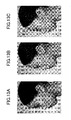
- FIGs. 13A, 13B and 13C illustrate photograph panels for explaining the verification of the effect of additional line makeup applied to the eyebrow tip portion according to this embodiment. As illustrated in FIGs. 13A-13C , three photograph panels are prepared in order to check the length of the eyebrow tip portion.
- FIG. 13A illustrates the photograph panel in which the length of the makeup-applied eyebrow tip portion exceeds the line 30 which indicates the end of the makeup area 200.
- FIG. 13B illustrates the photograph panel in which the makeup-applied eyebrow tip portion ends at the line 40 which indicates the beginning of the makeup area 200.
- FIG. 13C illustrates the photograph panel in which the length of the makeup-applied eyebrow tip portion according to this embodiment corresponds to the central area 300 exceeding the line 40 which indicates the beginning of the makeup area 200.
- all the 18 cosmetics engineers selected the photograph panel of FIG. 13C of this embodiment as a beautiful side face.
- FIGs. 14A, 14B and 14C illustrate photograph panels for explaining the verification of the effect of cheek makeup applied to the cheek of the side face according to this embodiment. As illustrated in FIGs. 14A-14C , three photograph panels are prepared in order to examine the effect of applying the makeup to the cheek in the makeup area 200.
- FIG. 14A illustrates the photograph panel in which the cheek makeup according to this embodiment is applied to two or more of the three divisional areas of the makeup area 200 near the line 40 which indicates the beginning of the makeup area 200.
- FIG. 14B illustrates the photograph panel in which the applied cheek makeup exceeds the line 30 which indicates the end of the makeup area 200
- FIG. 14C illustrates the photograph panel in which the length of the applied cheek makeup does not reach the central area 300 but exceeds the line 40 which indicates the beginning of the makeup area 200.
- FIG. 14A 61% of the 18 cosmetic engineers selected FIG. 14A , 6% selected FIG. 14B , and 33% selected FIG. 14C .
- the photograph panel of FIG. 14A in which the cheek makeup according to this embodiment is applied was selected as a beautiful side face.
- FIGs. 15A-15E and FIGs. 16A-16E illustrate photograph panels of makeup stage levels I-V respectively for explaining the verification of the makeup effect according to this embodiment.
- the respective photograph panels of the makeup stage levels I to V are prepared in order to select a beautiful side face.
- the length of the eyebrow tip portion exceeds the line 40 which indicates the beginning of the makeup area 200 but does not reach the central area 300 among the three divisional areas of the makeup area 200.
- the cheek makeup is applied to the area that does not reach the central area 300 in the makeup area 200.
- the length of the eyebrow tip portion of this embodiment corresponds to the central area 300 of the makeup area 200.
- the cheek makeup is applied to two or more of the three divisional areas in the makeup area 300 near the line 40 which indicates the beginning of the makeup area 200, and a natural cubic effect is provided.
- the eyebrow tip portion of this embodiment ends around the central area 300 of the makeup area 200, and the gradation makeup is additionally applied to the eyebrow tip portion.
- the eyeliner gradation is further applied to the eye tip portion to keep the eyeliner from being lowered from the eye baseline.
- the gradation makeup as the cheek processing is applied to two or more of the three divisional areas in the makeup area 200 near the line 40 which indicates the beginning of the makeup area 200, so that the highlight and the shade color are added further and a cubic effect is improved.
- the makeup-applied eyebrow tip portion is increased in length to be larger than that of the level III.
- the makeup-applied the eyebrow tip portion is further increased in length to be larger than the eyebrow tip portion of the level IV.
- FIGs. 17A-17E illustrate photograph panels of front face images which correspond to the side face images of FIGs. 15A-15E respectively.
- FIGs. 18A-18E illustrate photograph panels of front face images which correspond to the side face images of FIGs. 16A-16E respectively.
- the respective photograph panels are prepared in order to select a beautiful side face.
- FIG. 19 illustrates the results of a questionnaire research as to which is considered a beautiful side face and a beautiful front face among the photograph panels of FIGs. 15A-15F and among the photograph panels of FIGs. 17A-17E respectively.
- FIG. 20 illustrates the results of a questionnaire research as to which is considered a beautiful side face and a beautiful front face among the photograph panels of FIGs. 16A-16E and among the photograph panels of FIGs. 18A-18E respectively.
- the results of the researches indicate that the level II of this embodiment was selected as a beautiful side face for both the photograph panels. Moreover, the results of the researches indicate that the level III in which the highlight and the shade color are added to this embodiment was also selected as a beautiful side face.
- the side face of this embodiment was selected as a beautiful side face, and it is confirmed that the "depth balance" of the face can be expressed by the makeup method of this embodiment and a beautiful side face is realizable.
- the level II and the level III were selected as a beautiful front face, and it is confirmed that the side face of this embodiment is considered beautiful even when viewed from the front.
- recognizing the above-described makeup area 200 and checking the makeup effect after the above-described makeup method is performed enables the cosmetics engineer to judge whether a beautiful side face is created by the makeup and judge whether a beautiful makeup no matter where it may be viewed from is attained.
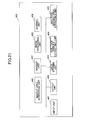
- FIG. 21 illustrates the functional composition of a makeup simulation device according to this embodiment.
- the makeup simulation device 400 of this embodiment includes an input unit 401, an output unit 402, a data storing unit 403, a side-face outline extracting unit 404, a side-face specific area extracting unit 405, a makeup area extracting unit 406, a makeup unit 407, an image generating unit 408, and a control unit 409.
- the input unit 401 receives a start/end command of various instructions, input by a user, such as side-face outline extracting instructions, side-face specific area extracting instructions, makeup area extracting instructions, makeup instructions, and image generating instructions.
- the input unit 401 includes a keyboard and a pointing device, such as a mouse.
- the input unit 401 further includes a function to input an image containing an image portion of an object (for example, a subject) captured by an imaging unit, such as a digital camera.
- the output unit 402 displays and outputs the information input by the input unit 401, and the resulting information generated in response to the input information.
- the output unit 402 includes a display unit, a loudspeaker, etc.
- the output unit 402 may include a printer function.
- the output unit 402 in such a case may print the result of the side-face outline extracting processing, the result of the side-face specific area extracting processing, the result of the makeup area extracting processing, and the result of the makeup processing on a printing medium, such as paper, so that the printing medium can be provided to the user.
- the input unit 401 and the output unit 402 may be formed in an integral input/output unit, such as a touch panel.
- the touch panel in such a case can receive inputs from the user who touches a predetermined position of its display portion using a user's finger or using a pen-type input unit.
- the data storing unit 403 stores various data items, including the result of the side-face outline extracting processing by the side-face outline extracting unit 404, the result of the side-face specific area extracting processing by the side-face specific area extracting unit 405, the result of the makeup area extracting processing by the makeup area extracting unit 406, the result of the makeup processing by the makeup unit 407, and the result of the image generating processing by the image generating unit 408.
- the various data items stored in the data storing unit 403 can be read out if needed.
- the side-face outline extracting unit 404 performs background processing, such as color transforming and performs binarization line drawing processing as processing for extracting an outline of a side face of a subject from a captured photographic image.
- the side-face outline extracting unit 404 extracts an outline of the side face of the subject in the photographic image by pattern matching.
- the side-face specific area extracting unit 405 Based on the outline of the side face of the subject extracted from the photographic image by the side-face outline extracting unit 404, the side-face specific area extracting unit 405 performs processing which specifies a plurality of side-face specific areas of the subject in the photographic image by pattern matching with a reference side-face mask, and extracts a specific area from the specified areas.
- the side-face specific area extracting unit 405 sets up a peak position of the outline based on the form of the outline of the side face of the subject extracted from the photographic image, and specifies a position of a jaw, and a position of a nose based on the set-up peak position.
- the side-face specific area extracting unit 405 specifies an area of a mouth of the subject in the photographic image by pattern matching with a reference side-face mask, and further specifies a position of a corner of the mouth based on the specified area of the mouth. Similarly, the side-face specific area extracting unit 405 specifies an area of an eye of the subject in the photographic image, and further specifies an eye tip portion, a highest point of an upper eyelid, and a lowest point of a lower eyelid based on the specified area of the eye.
- the side-face specific area extracting unit 405 specifies an area of an eyebrow of the subject in the photographic image, and specifies a position of an eyebrow ridge of the subject based on the specified area of the eyebrow.
- the side-face specific area extracting unit 405 specifies an area of an ear of the subject in the photographic image, and specifies a position of a base of the ear based on the specified area of the ear.
- the side-face specific area extracting unit 405 can extract the eyebrow ridge, the tip of the nose, and the base of the ear of the subject from the photographic image.
- the above-described side-face specific area extracting work may be performed by selecting each specific area manually.
- the makeup area extracting unit 406 performs extracting processing which extracts a makeup area 200 to which the makeup is to be applied as a simulation to the photographic image of the subject, based on a plurality of side-face specific areas extracted by the side-face specific area extracting unit 405.
- the makeup area extracting unit 406 Based on the side face disposed in a horizontal position, the makeup area extracting unit 406 generates, relative to the side face of the subject in the photographic image, a line 10 drawn horizontally from an eyebrow ridge 100 of the side face to a hairline thereof, and generates a line 20 drawn horizontally from a jaw point of the side face of the subject in the photographic image to a neck thereof.
- the makeup area extracting unit 406 generates a line 30 drawn vertically from the midpoint 103 of the segment of a horizontal line connecting a tip 101 of the nose of the side face of the subject in the photographic image and a base 102 of the ear thereof, and generates a line 40 drawn vertically drawn from the eyebrow ridge.
- the makeup area extracting unit 406 extracts the area surrounded by these lines 10, 20, 30 and 40 as being the makeup area 200.
- the makeup unit 407 performs makeup processing, including eyebrow makeup processing, lipstick processing, cheek makeup processing, shadow processing, etc. by using the known methods, to the makeup area 200 of the subject in the photographic image extracted by the makeup area extracting unit 406, so that the above-described makeup method is carried out on the makeup simulation device.
- the makeup unit 407 performs the eyebrow makeup processing which applies an eyebrow line to the extracted eyebrow area of the subject in the photographic image to keep an eyebrow tip portion of the eyebrow line from being lowered from a start point of the eyebrow.
- the makeup unit 407 may perform an eyebrow gradation processing which applies an eyebrow gradation to an eyebrow tip portion along a length corresponding to a central area 300 among three divisional areas into which the spacing in the makeup area 200 between the line 40 and the line 30 is vertically divided.
- the makeup unit 407 performs the cheek makeup processing which applies a cheek makeup to two or more of the three divisional areas in the extracted makeup area 200 of the subject in the photographic image near the line 40.
- the makeup unit 407 may perform a cheek gradation processing which applies a cheek gradation to two or more of the three divisional areas as the cheek makeup processing.
- the makeup unit 407 performs the shadow processing to the subject in the photographic image.
- the makeup unit 407 may perform an eye makeup processing which applies an eye makeup to the extracted area of the eye of the subject in the photographic image in a predetermined eye color.
- the makeup unit 407 may perform an eyeliner makeup processing which applies an eyeliner makeup (gradation) to keep an eye tip portion of the eyeliner makeup from being lowered from the eye base line.
- the makeup unit 407 may perform a corner-of-mouth makeup processing which applies a lipstick makeup to a corner of the mouth of the subject extracted from the area of the month of the subject in the photographic image, using a lip liner, to make the corner of the mouth sharp.
- the image generating unit 408 In response to the input instructions input by the user through the input unit 401, the image generating unit 408 generates the image data for displaying the makeup area of the subject in the photographic image, based on the side-face outline data obtained by the side-face outline extracting unit 404, the side-face specific area data obtained by the side-face specific area extracting unit 405, and the makeup area information obtained by the makeup area extracting unit 406, and outputs the image data by using the output unit 402.
- the image generating unit 408 generates an image, based on the various data, including the image generation results by the image generating unit 408, the image data for displaying the makeup area 200 of the subject in the photographic image, and the makeup processing data obtained by the makeup unit 407, and outputs the image by using the output unit 402.
- the control unit 409 controls operation of the whole makeup simulation device 400. Specifically, in response to the instructions input by the user from the input unit 401, the control unit 409 carries out control of each of the side-face outline extracting processing, the side-face specific area extracting processing, the makeup area extracting processing, the makeup processing, and the image generating processing. Accordingly, the makeup simulation processing which applies makeup to a side face of a subject effectively and attains a beautiful makeup no matter where the subject may be viewed from can be present to the user.
- the above-described makeup simulation device 400 may be constituted by a general-purpose personal computer or a server.
- an executable program (makeup simulation program) is prepared to cause a computer to perform the respective functions, and the executable program is installed in the general-purpose personal computer or the server.
- the makeup simulation processing according to the present disclosure can be carried out by the general-purpose personal computer or the server.
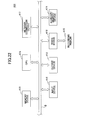
- FIG. 22 illustrates the hardware composition of a computer which can carry out the makeup simulation processing according to this embodiment.
- the computer includes an input device 411, an output device 412, a drive device 413, an auxiliary memory device 414, a memory device 415, a CPU (central processing unit) 416 that performs various kinds of control, and a network connection device 417. These elements of the computer are interconnected by a system bus B.
- the input device 411 includes a keyboard and a pointing device, such as a mouse, which are operated by a user.
- the input device 411 inputs various operational signals, such as a request of program execution, which are input from the user.
- the input device 411 further includes an input unit which inputs an image containing a side face portion of a subject captured by an imaging unit, such as a camera.
- the output device 412 includes a display unit which displays various windows and data needed to operate the computer for performing the processing according to the present disclosure.
- This display unit can display the progress of execution of a program and the result of the execution, etc. in accordance with the control program executed by the CPU 416.
- the input device 411 and the output device 412 may be formed in an integral input/output device, such as a touch panel.
- the touch panel in such a case can receive inputs from the user who touches a predetermined position of its display portion using a user's finger or using a pen-type input unit.
- the executable program to be installed in the computer is provided by a removable recording medium 418, such as USB (universal serial bus) memory, a CD-ROM, etc.
- the recording medium 418 in which the executable program is recorded can be set in the drive device 413, and the executable program recorded in the recording medium 418 is installed from the recording medium 418 to the auxiliary memory device 414 via the drive device 413.
- the auxiliary memory device 414 is a storage unit, such as a hard disk drive.
- the auxiliary memory device 414 stores the executable program according to the present disclosure and the control program executed by the computer. These programs in the auxiliary memory device 414 can be accessed if needed.
- the memory device 415 stores the executable program read from the auxiliary memory device 414 by the CPU 416.
- the memory device 415 includes a ROM (read-only memory), a RAM (random access memory), etc.
- the CPU 416 controls processing of the whole computer, such as various computations and input/output processes of data with the respective hardware components in accordance with the control program, such as OS (operating system), and the executable program stored in the memory device 415, so that the makeup simulation processing can be carried out.
- control program such as OS (operating system)
- the executable program stored in the memory device 415, so that the makeup simulation processing can be carried out.
- a variety of necessary information items can be read out from the auxiliary memory device 414 during execution of the program.
- the results of the execution of the program can be stored in the auxiliary memory device 414.
- the network connection device 417 connects the computer with a communication network.
- the executable program can be acquired from an external terminal connected to the communication network.
- the results of execution of a program and the executable program according to the present disclosure can be supplied to an external terminal via the communication network.
- the makeup simulation processing according to the present disclosure can be carried out.
- the makeup simulation processing according to the present disclosure can be easily carried out by a general-purpose personal computer by installing the executable program therein.
- FIG. 23 is a flowchart for explaining a makeup simulation method which carries out the makeup simulation processing according to this embodiment.
- the input unit 401 receives a photographic image containing a side face of a subject disposed in a horizontal position, which image is captured by an imaging unit of a camera or the like (S10).
- the side-face outline extracting unit 404 performs background processing of the captured image, such as color transforming (S11).
- the side-face outline extracting unit 404 performs binarization line drawing processing of the captured image and extracts an outline of the side face of the subject included in the photographic image by pattern matching (S12).
- the side-face specific area extracting unit 405 sets up a peak position of the outline based on the form of the outline of the side face of the photographic subject extracted in the step S12 (S13).
- the side-face specific area extracting unit 405 specifies a position of a jaw of the subject in the photographic image (S14) and specifies a position of a nose of the subject in the photographic image (S15).
- the side-face specific area extracting unit 405 determines whether a position of the nose based on a predetermined feature amount of the position of the nose of the side face has been specified with respect to the position of the nose specified in the step S15 (S16).
- the side-face specific area extracting unit 405 specifies an area of the mouth of the subject in the photographic image by pattern matching with a reference side-face mask based on the outline of the side face of the subject extracted from the photographic image by the side-face outline extracting unit 404 (S17).
- the control is transferred to the step S15.
- the side-face specific area extracting unit 405 specifies a position of the corner of the mouth of the subject in the photographic image based on the area of the mouth specified in the step S17 (S18).
- the side-face specific area extracting unit 405 specifies an area of the eye of the subject in the photographic image by using the same method (S19). Subsequently, the side-face specific area extracting unit 405 specifies an eye tip portion of the subject in the photographic image, a highest point of an upper eyelid of the subject in the photographic image, and a lowest point of a lower eyelid of the subject in the photographic image based on the area of the eye specified in the step S19 (S20).
- the side-face specific area extracting unit 405 determines whether the area of the eye has been specified (S21). When it is determined in the step S21 that the area of the eye has been specified, the side-face specific area extracting unit 405 specifies an area of the eyebrow of the subject in the photographic image by using the same method (S22).
- step S21 When it is determined in the step S21 that the area of the eye has not been specified, the control is transferred to the step S19.
- the side-face specific area extracting unit 405 specifies a position of the eyebrow ridge of the subject in the photographic image based on the area of the eyebrow specified in the step S22 (S23).
- the side-face specific area extracting unit 405 determines whether the area of the eyebrow has been specified (S24).
- the side-face specific area extracting unit 405 specifies an area of the ear of the subject in the photographic image in a similar manner (S25).
- the control is transferred to the step S22.
- the side-face specific area extracting unit 405 specifies a position of the base of the ear of the subject in the photographic image based on the area of the ear specified in the step S25 (S26).
- the makeup area extracting unit 406 extracts a makeup area 200 from the subject in the captured photographic image by using the above-described method, and displays the extracted makeup area 200 on the side face of the subject in the photographic image (S27). This makes it possible to provide a visual indication of the makeup area 200 of the captured image for the subject.
- the makeup unit 407 applies makeup to the makeup area 200 of the subject in the photographic image (S28).
- the makeup unit 407 performs the above-described makeup processing, including the eyebrow makeup processing, the cheek processing, the shadow processing, and the lipstick processing, in the makeup area 200 of the subject in the extracted photographic image by using the known methods.
- the above-described makeup simulation processing carries out the makeup processing in the makeup area 200 of the subject in the captured photographic image so that a depth balance of a beautiful side face can be expressed. It is possible to provide specific effects of the above-described makeup method to the subject.
- the input image or the image obtained by the respective processing may be input to the data storing unit 403.
- the input image, the progress of execution of the respective processing or the result of the execution, and the result of the processing when requested by the user from the input unit 401 may be supplied through the output unit 402.
- the present disclosure is applicable to the makeup methods performed in beauty salons, cosmetics sales corners of department stores, makeup seminars, beauty parlors, etc., and involves industrial applicability.
Landscapes
- Physics & Mathematics (AREA)
- General Physics & Mathematics (AREA)
- Engineering & Computer Science (AREA)
- Theoretical Computer Science (AREA)
- Image Processing (AREA)
- Image Analysis (AREA)
- Processing Or Creating Images (AREA)
Applications Claiming Priority (3)
| Application Number | Priority Date | Filing Date | Title |
|---|---|---|---|
| JP2008012013 | 2008-01-22 | ||
| JP2009010416A JP5432532B2 (ja) | 2008-01-22 | 2009-01-20 | 化粧方法、化粧シミュレーション装置、及び化粧シミュレーションプログラム |
| PCT/JP2009/050892 WO2009093617A1 (fr) | 2008-01-22 | 2009-01-21 | Procédé de maquillage, dispositif de simulation de maquillage, et programme de simulation de maquillage |
Publications (2)
| Publication Number | Publication Date |
|---|---|
| EP2236123A1 true EP2236123A1 (fr) | 2010-10-06 |
| EP2236123A4 EP2236123A4 (fr) | 2014-09-17 |
Family
ID=40901125
Family Applications (1)
| Application Number | Title | Priority Date | Filing Date |
|---|---|---|---|
| EP09703363.3A Withdrawn EP2236123A4 (fr) | 2008-01-22 | 2009-01-21 | Procédé de maquillage, dispositif de simulation de maquillage, et programme de simulation de maquillage |
Country Status (7)
| Country | Link |
|---|---|
| US (1) | US20100288295A1 (fr) |
| EP (1) | EP2236123A4 (fr) |
| JP (1) | JP5432532B2 (fr) |
| KR (1) | KR20100110793A (fr) |
| CN (1) | CN101925345A (fr) |
| TW (1) | TW200946167A (fr) |
| WO (1) | WO2009093617A1 (fr) |
Families Citing this family (15)
| Publication number | Priority date | Publication date | Assignee | Title |
|---|---|---|---|---|
| US8523570B2 (en) * | 2010-05-21 | 2013-09-03 | Photometria, Inc | System and method for providing a face chart |
| US8550818B2 (en) * | 2010-05-21 | 2013-10-08 | Photometria, Inc. | System and method for providing and modifying a personalized face chart |
| JP4862955B1 (ja) * | 2010-10-29 | 2012-01-25 | オムロン株式会社 | 画像処理装置、画像処理方法、および制御プログラム |
| US8908904B2 (en) * | 2011-12-28 | 2014-12-09 | Samsung Electrônica da Amazônia Ltda. | Method and system for make-up simulation on portable devices having digital cameras |
| JP6128309B2 (ja) | 2013-02-01 | 2017-05-17 | パナソニックIpマネジメント株式会社 | メイクアップ支援装置、メイクアップ支援方法、およびメイクアップ支援プログラム |
| CN103870821A (zh) * | 2014-04-10 | 2014-06-18 | 上海影火智能科技有限公司 | 一种虚拟试妆的方法和系统 |
| BR112018008541A2 (pt) | 2015-10-30 | 2018-10-30 | Koninklijke Philips Nv | método implementado por computador para determinar uma rota de transmissão de patógenos relacionados, mídia de armazenamento não transitório legível por computador e sistema implementado por computador para pré-formar uma análise de genoma |
| US9984282B2 (en) * | 2015-12-10 | 2018-05-29 | Perfect Corp. | Systems and methods for distinguishing facial features for cosmetic application |
| JP6731616B2 (ja) * | 2016-06-10 | 2020-07-29 | パナソニックIpマネジメント株式会社 | バーチャルメイク装置、バーチャルメイク方法、およびバーチャルメイクプログラム |
| CN107679446B (zh) * | 2017-08-17 | 2019-03-15 | 平安科技(深圳)有限公司 | 人脸姿态检测方法、装置及存储介质 |
| CN109508581A (zh) * | 2017-09-15 | 2019-03-22 | 丽宝大数据股份有限公司 | 身体信息分析装置及其腮红分析方法 |
| CN109508587A (zh) * | 2017-09-15 | 2019-03-22 | 丽宝大数据股份有限公司 | 身体信息分析装置及其底妆分析方法 |
| CN108256235A (zh) * | 2018-01-19 | 2018-07-06 | 上海爱优威软件开发有限公司 | 化妆辅导方法 |
| KR20190136483A (ko) * | 2018-05-31 | 2019-12-10 | (주)라온스퀘어 | 뷰티 콘텐츠 제공방법 |
| US20240074563A1 (en) * | 2019-10-11 | 2024-03-07 | Shiseido Company, Ltd. | Automatic makeup machine, method, program, and control device |
Family Cites Families (15)
| Publication number | Priority date | Publication date | Assignee | Title |
|---|---|---|---|---|
| US5659625A (en) * | 1992-06-04 | 1997-08-19 | Marquardt; Stephen R. | Method and apparatus for analyzing facial configurations and components |
| JP3529954B2 (ja) * | 1996-09-05 | 2004-05-24 | 株式会社資生堂 | 顔だち分類法及び顔だちマップ |
| JP2001204545A (ja) * | 2000-01-28 | 2001-07-31 | Iti Joho Kogaku Kenkyusho:Kk | 化粧鏡装置 |
| US7082211B2 (en) * | 2002-05-31 | 2006-07-25 | Eastman Kodak Company | Method and system for enhancing portrait images |
| US7421097B2 (en) * | 2003-05-27 | 2008-09-02 | Honeywell International Inc. | Face identification verification using 3 dimensional modeling |
| JP2005062960A (ja) * | 2003-08-18 | 2005-03-10 | Masayoshi Hakamata | 美容指針提示方法、記録媒体及び美容指針提示システム |
| JP4404650B2 (ja) * | 2004-01-30 | 2010-01-27 | デジタルファッション株式会社 | 化粧シミュレーション装置、化粧シミュレーション方法、化粧シミュレーションプログラム |
| US20070019882A1 (en) * | 2004-01-30 | 2007-01-25 | Shoji Tanaka | Makeup simulation program, makeup simulation device, and makeup simulation method |
| JP2005339288A (ja) * | 2004-05-27 | 2005-12-08 | Toshiba Corp | 画像処理装置及びその方法 |
| JP5116965B2 (ja) * | 2005-11-08 | 2013-01-09 | 株式会社 資生堂 | 美容医療診断方法、美容医療診断システム、美容医療診断プログラム、及び該プログラムが記録された記録媒体 |
| KR101363691B1 (ko) * | 2006-01-17 | 2014-02-14 | 가부시키가이샤 시세이도 | 메이크업 시뮬레이션 시스템, 메이크업 시뮬레이션 장치,메이크업 시뮬레이션 방법 및 메이크업 시뮬레이션프로그램 |
| JP2008094785A (ja) * | 2006-10-13 | 2008-04-24 | Shiseido Co Ltd | メーキャップ方法 |
| US8027505B2 (en) * | 2007-02-11 | 2011-09-27 | Tcms Transparent Beauty Llc | System and method for providing simulated images through cosmetic monitoring |
| JP2009064423A (ja) * | 2007-08-10 | 2009-03-26 | Shiseido Co Ltd | メイクアップシミュレーションシステム、メイクアップシミュレーション装置、メイクアップシミュレーション方法およびメイクアップシミュレーションプログラム |
| US8005270B2 (en) * | 2008-04-11 | 2011-08-23 | Youdocs Llc | System and method for determining an objective measure of human beauty |
-
2009
- 2009-01-20 JP JP2009010416A patent/JP5432532B2/ja active Active
- 2009-01-21 KR KR1020107013925A patent/KR20100110793A/ko not_active Withdrawn
- 2009-01-21 WO PCT/JP2009/050892 patent/WO2009093617A1/fr not_active Ceased
- 2009-01-21 CN CN2009801028637A patent/CN101925345A/zh active Pending
- 2009-01-21 EP EP09703363.3A patent/EP2236123A4/fr not_active Withdrawn
- 2009-01-21 US US12/863,819 patent/US20100288295A1/en not_active Abandoned
- 2009-01-22 TW TW098102539A patent/TW200946167A/zh unknown
Non-Patent Citations (2)
| Title |
|---|
| No further relevant documents disclosed * |
| See also references of WO2009093617A1 * |
Also Published As
| Publication number | Publication date |
|---|---|
| WO2009093617A1 (fr) | 2009-07-30 |
| EP2236123A4 (fr) | 2014-09-17 |
| KR20100110793A (ko) | 2010-10-13 |
| US20100288295A1 (en) | 2010-11-18 |
| TW200946167A (en) | 2009-11-16 |
| JP2009199587A (ja) | 2009-09-03 |
| JP5432532B2 (ja) | 2014-03-05 |
| CN101925345A (zh) | 2010-12-22 |
Similar Documents
| Publication | Publication Date | Title |
|---|---|---|
| EP2236123A1 (fr) | Procédé de maquillage, dispositif de simulation de maquillage, et programme de simulation de maquillage | |
| CN101779218B (zh) | 化妆模拟系统及其化妆模拟方法 | |
| JP5261586B2 (ja) | メイクアップシミュレーションシステム、メイクアップシミュレーション装置、メイクアップシミュレーション方法およびメイクアップシミュレーションプログラム | |
| EP3039990B1 (fr) | Dispositif d'aide au maquillage, système d'aide au maquillage, procédé d'aide au maquillage et programme d'aide au maquillage | |
| JP6008323B2 (ja) | メイクアップ支援装置、メイクアップ支援方法、およびメイクアップ支援プログラム | |
| JPWO2015029392A1 (ja) | メイクアップ支援装置、メイクアップ支援方法、およびメイクアップ支援プログラム | |
| JP5324031B2 (ja) | 美容シミュレーションシステム | |
| KR102325829B1 (ko) | 안면착용 제품 추천 방법 및 그 장치 | |
| US20190347832A1 (en) | Makeup simulation device, method, and non-transitory recording medium | |
| KR20130029482A (ko) | 헤어스타일 시뮬레이션 시스템, 시뮬레이션 방법 및 시뮬레이션 방법을 실현시키기 위한 프로그램을 기록한 컴퓨터 판단가능한 기록매체 | |
| JP2005169085A (ja) | 化粧のレンジを備えたキットと肌の明度レベルを分析するシステム | |
| JP2011022733A (ja) | メーキャップシミュレーション装置、メーキャップシミュレーションプログラム及び対面販売支援方法 | |
| JP2006081847A (ja) | 肌解析ネットワークシステム | |
| JP2013178789A (ja) | 美容シミュレーションシステム | |
| JP5484101B2 (ja) | 顔型分類装置、顔型分類方法および該方法を実現させるプログラムが記憶された記録媒体 | |
| JP6132248B2 (ja) | メイクアップ支援装置 | |
| JP5283471B2 (ja) | 理想顔生成方法、理想顔生成システム、及び理想顔生成プログラム | |
| Nishimura et al. | iMake: eye makeup design generator | |
| JP7413691B2 (ja) | 画像処理装置、画像処理方法及びプログラム | |
| JP7335110B2 (ja) | アイメーキャップ商品推奨プログラム、方法、装置、およびシステム | |
| KR20020069595A (ko) | 얼굴 그림 제작 시스템 및 방법 | |
| JP2025007634A (ja) | 情報処理方法 | |
| US20260087704A1 (en) | Method for providing traditional make-up service | |
| HK1146579A (en) | Makeup method, makeup simulation device, and makeup simulation program | |
| Tani et al. | Development of A Smart Mirror with Life Log Functions and Its Evaluation |
Legal Events
| Date | Code | Title | Description |
|---|---|---|---|
| PUAI | Public reference made under article 153(3) epc to a published international application that has entered the european phase |
Free format text: ORIGINAL CODE: 0009012 |
|
| 17P | Request for examination filed |
Effective date: 20100723 |
|
| AK | Designated contracting states |
Kind code of ref document: A1 Designated state(s): AT BE BG CH CY CZ DE DK EE ES FI FR GB GR HR HU IE IS IT LI LT LU LV MC MK MT NL NO PL PT RO SE SI SK TR |
|
| AX | Request for extension of the european patent |
Extension state: AL BA RS |
|
| DAX | Request for extension of the european patent (deleted) | ||
| A4 | Supplementary search report drawn up and despatched |
Effective date: 20140818 |
|
| RIC1 | Information provided on ipc code assigned before grant |
Ipc: A61Q 1/00 20060101ALI20140811BHEP Ipc: A61K 8/00 20060101AFI20140811BHEP Ipc: A61Q 1/04 20060101ALI20140811BHEP Ipc: G06T 1/00 20060101ALI20140811BHEP Ipc: A61Q 1/10 20060101ALI20140811BHEP Ipc: G06T 7/00 20060101ALI20140811BHEP |
|
| STAA | Information on the status of an ep patent application or granted ep patent |
Free format text: STATUS: THE APPLICATION IS DEEMED TO BE WITHDRAWN |
|
| 18D | Application deemed to be withdrawn |
Effective date: 20150317 |