EP2255712A2 - Telescopically rotatable mop - Google Patents
Telescopically rotatable mop Download PDFInfo
- Publication number
- EP2255712A2 EP2255712A2 EP10162977A EP10162977A EP2255712A2 EP 2255712 A2 EP2255712 A2 EP 2255712A2 EP 10162977 A EP10162977 A EP 10162977A EP 10162977 A EP10162977 A EP 10162977A EP 2255712 A2 EP2255712 A2 EP 2255712A2
- Authority
- EP
- European Patent Office
- Prior art keywords
- internal
- external
- rod
- clamping sleeve
- engaging element
- Prior art date
- Legal status (The legal status is an assumption and is not a legal conclusion. Google has not performed a legal analysis and makes no representation as to the accuracy of the status listed.)
- Granted
Links
- 238000007373 indentation Methods 0.000 claims description 6
- XLYOFNOQVPJJNP-UHFFFAOYSA-N water Substances O XLYOFNOQVPJJNP-UHFFFAOYSA-N 0.000 claims description 5
- 238000003780 insertion Methods 0.000 claims description 2
- 230000037431 insertion Effects 0.000 claims description 2
- 230000033001 locomotion Effects 0.000 description 9
- 229920000742 Cotton Polymers 0.000 description 2
- 239000004744 fabric Substances 0.000 description 2
- 229910052751 metal Inorganic materials 0.000 description 2
- 239000002184 metal Substances 0.000 description 2
- 229910052782 aluminium Inorganic materials 0.000 description 1
- XAGFODPZIPBFFR-UHFFFAOYSA-N aluminium Chemical compound [Al] XAGFODPZIPBFFR-UHFFFAOYSA-N 0.000 description 1
- 230000006835 compression Effects 0.000 description 1
- 238000007906 compression Methods 0.000 description 1
- 235000004879 dioscorea Nutrition 0.000 description 1
- 230000000694 effects Effects 0.000 description 1
- 238000001746 injection moulding Methods 0.000 description 1
- 239000007769 metal material Substances 0.000 description 1
- 238000000034 method Methods 0.000 description 1
- 229910052755 nonmetal Inorganic materials 0.000 description 1
- 238000002791 soaking Methods 0.000 description 1
- 238000005406 washing Methods 0.000 description 1
Images





Classifications
-
- A—HUMAN NECESSITIES
- A47—FURNITURE; DOMESTIC ARTICLES OR APPLIANCES; COFFEE MILLS; SPICE MILLS; SUCTION CLEANERS IN GENERAL
- A47L—DOMESTIC WASHING OR CLEANING; SUCTION CLEANERS IN GENERAL
- A47L13/00—Implements for cleaning floors, carpets, furniture, walls, or wall coverings
- A47L13/10—Scrubbing; Scouring; Cleaning; Polishing
- A47L13/20—Mops
-
- A—HUMAN NECESSITIES
- A47—FURNITURE; DOMESTIC ARTICLES OR APPLIANCES; COFFEE MILLS; SPICE MILLS; SUCTION CLEANERS IN GENERAL
- A47L—DOMESTIC WASHING OR CLEANING; SUCTION CLEANERS IN GENERAL
- A47L13/00—Implements for cleaning floors, carpets, furniture, walls, or wall coverings
- A47L13/10—Scrubbing; Scouring; Cleaning; Polishing
- A47L13/14—Scrubbing; Scouring; Cleaning; Polishing combined with squeezing or wringing devices
-
- A—HUMAN NECESSITIES
- A61—MEDICAL OR VETERINARY SCIENCE; HYGIENE
- A61P—SPECIFIC THERAPEUTIC ACTIVITY OF CHEMICAL COMPOUNDS OR MEDICINAL PREPARATIONS
- A61P35/00—Antineoplastic agents
-
- B—PERFORMING OPERATIONS; TRANSPORTING
- B25—HAND TOOLS; PORTABLE POWER-DRIVEN TOOLS; MANIPULATORS
- B25G—HANDLES FOR HAND IMPLEMENTS
- B25G1/00—Handle constructions
- B25G1/04—Handle constructions telescopic; extensible; sectional
Definitions
- the invention relates to a telescopically rotatable mop, and more particularly to a structure that ensures a smooth operation in dewatering the mop with one hand only and without use of the feet.
- the aforementioned device can improve the inconvenient way of wringing the mop fabrics by hands, yet the operation still requires a user to step on the pedal continuously by one foot, and keep the user's body in balance by another foot.
- Such arrangement not only involves an inconvenient operation, but also endangers the safety of users when the users fail to stand stably or fall. Therefore, it is necessary to develop a mop with an easy, convenient and safe operation in dewatering.
- An object of the invention is to provide a telescopically rotatable mop that permits a convenient operation with less effort when the internal and external rods rotate in a telescopic way. In this way, the operation failure may be minimized and the service life may be increased.
- the invention includes:
- the actuating element is rotated by a linear motion of the driving element when the external rod is moved up-and-down.
- the engaging element is driven in rotation in one direction only, thereby creating a continuous rotation of the internal rod and the disc body in the same direction by the inertia force.
- a centrifugal force is produced to throw away the water absorbed in the mop yarns.
- a mop in accordance with the invention includes an internal rod 10, an external rod 20, an engaging element 30, a driving element 50, an actuating element 40, a disc body 60, and a locking mechanism 70.
- the internal rod 10 is constructed as a hollow circular tube and made by metal or non-metal material. Therefore, it can be an aluminum tube or a plastic tube.
- the external rod 20 includes a bottom portion in a telescopic connection with a top portion of the internal rod 10. According to the embodiment, the operator can hold on the external rod 20 to conduct a telescopic motion on the internal rod 10.
- the engaging element 30 is positioned within the opening at the top of the internal rod 10.
- an annular element 33 and a fixing cap 34 are mounted and fixed on the engaging element 30 after the engaging element 30 is placed within the top of the internal rod 10.
- the upper portion of the engaging element 30 is externally provided with a flange 31.
- the fixing cap 34 includes a through hole 341 at the top thereof and a projecting flange 342 at the external rim thereof.
- the bottom of the fixing cap 34 fits into an opening 32 of the engaging element 30 in place.
- the bottom of the internal rim of the engaging element 30 is provided with driven teeth 35.
- the driving element 50 is formed in an elongated shape and positioned within the external rod 20 in such a way that the driving element 50 is moved up and down synchronically with the external rod 20.
- the driving element 50 includes a fixing block 51 fastened by a fixing element (not shown) or in a riveting way within the top end of the external rod 20.
- a protection sleeve 22 is mounted on the external rod 20.
- the actuating element 40 is positioned within the engaging element 30 for accommodating the driving element 50.
- the driving element 50 is constructed as a worm or a threaded piece.
- the internal wall of the actuating element 40 has to be formed to be a threaded sleeve 41.
- the actuating element 40 is correspondingly provided with a worm thread or an elongated groove such that the driving element 50 may impart a rotary motion to the actuating element 40 by means of the up-and-down linear movement of the external rod 20.
- the driving element 50 is constructed as a threaded piece.
- the threaded sleeve 41 at the internal end of the actuating element 40 is constructed as an elongated groove such that the up-and-down movement of the driving element 50 in the threaded sleeve 41 may impart a rotary motion to the actuating element 40 within the engaging element 30.
- the bottom of the actuating element 40 is provided with downward driving teeth 42 in contract with the upward driven teeth 35 of the engaging element 30. Since the engaging teeth are formed in an inclined way, the drive is subject to a rotation in a certain direction.
- the engaging element 30 is subject to a clockwise rotation like the actuating element 40 when the actuating element 40 is driven by the driving element 50.
- the actuating element 40 is driven when the driving element 50 is compressed downward. Meanwhile, the engaging element 30 is brought in clockwise rotation. To the contrary, as shown in FIG. 8 , when the driving element 50 is pulled upward, the actuating element 40 is brought in a counterclockwise rotation. At that time, the downward driving teeth 42 of the actuating element 40 is driven in an idle non-rotation state relative to the driving teeth 35 of the engaging element 30. In other words, the engaging element 30 remains unmoved such that the driving element 50 can be returned to the original position for a renewed downward compression to drive the engaging element 30 again.
- the disc body 60 is secured to the bottom of the internal rod 10 and includes mop yarns 61.
- the locking mechanism 70 is mounted on the external rod 20 for locking the internal rod 10 and the external rod 20 in place or for unlocking them in a telescopic state. As shown in FIGS. 2 , 9 and 10 , the locking mechanism 70 includes an internal clamping sleeve 70a, an external clamping sleeve 70b, and a U-shaped lever 70c, but should not limited thereto:
- the external clamping sleeve 70b is mounted on the periphery of the internal clamping sleeve 70a.
- the upper portion of the external clamping sleeve 70b is provided with an external tube 75 corresponding to the internal tube 71.
- the external tube 75 includes at both sides thereof two mounting holes 76 in alignment with the positioning holes 72 of the internal tube 71.
- the mounting holes 76 are formed as a non-circular and rectangular hole, but should be limited thereto.
- the mounting holes 76 and the positioning holes 72 are not concentrically positioned such that cams 78 within the mounting holes 76 tend to conduct an eccentric push action.
- a bell mouth 77 is formed at the lower portion of the external clamping sleeve 70b for fitting over the conic body 73.
- the U-shaped lever 70c includes a swivel protrusion 79 and an eccentric cam 78 at the internal wall of both sides thereof for fitting into the positioning holes 72 of the internal clamping sleeve 70a and the mounting holes 76 of the external clamping sleeve 70b.
- the eccentric cams 78 are positioned within the mounting holes 76.
- the swivel protrusions 79 together with the eccentric cams 38 and the U-shaped locking arm 30c are formed by the injection-molding process.
- the swivel protrusion 39 can be replaced by a processed metal post.
- the eccentric cams 78 are offset within the mounting holes 76, thereby moving the external clamping sleeve 70b on the periphery of the internal clamping sleeve 70a upward or downward.
- the external rim of the internal clamping sleeve 70a rises when the U-shaped lever 70c is pushed downward. Due to the action of the indentation 74, the bell mouth 77 of the external clamping sleeve 70b is brought in a loosened position relative to the conic body 73 of the internal clamping sleeve 70a.
- the internal rod 10 and the external rod 20 are unlocked and brought in a telescopic state.
- the external clamping sleeve 70b is moved downward when the U-shaped lever 70c is pulled upward. In this way, the internal clamping sleeve 70a is so clamped that the internal and external rods 10, 20 are fixed in place.
- the internal rod 10 won't be acted upon thereby and remains to rotate in the same direction due to the action of the inertia force.
- the internal rod 10 and the disc body 60 may be rotated more than 10 times within a dewatering basket 81 of a bucket body 80 by means that the user pushes downward and pulls upward the external rod 20 for a few times.
- the dewatering basket 81 is rotatable within the bucket body 80.
- the dewatering basket 81 in accordance with the invention may be synchronically driven in rotation when the disc body 60 is rotated by the internal rod 10. In this way, the mop yarns 61 of the disc body 60 are subject to the centrifugal force for dewatering. Meanwhile, the water removed may be received within the bucket body 80.
- the engaging element 30 is constructed as a cylindrical body with the middle and lower parts secured to the inside of the internal rod 10.
- An annular element 33 rotatable clockwise and counterclockwise at 360° is mounted on the top portion of the engaging element 30 projecting in an exposed manner from the internal rod 10.
- the external diameter D1 of the annular element 33 is greater than the external diameter D2 of the internal rod 10, but smaller than is almost the same to the internal diameter ⁇ 1 of the external rod 20.
- the length L1 of the driving element 50 is smaller than the length L2 of the inside of the engaging element 30.
- the bottom of the fixing cap 34 is extended and secured to the opening 32 of the engaging element 30 in such a way that a gap S is provided between the fixing cap 34 and the top of the actuating element 40.
- the fixing cap 34 includes at the top thereof a projecting flange 342 (whose external diameter is greater than the external diameter D2 of the internal rod 10, but smaller than the external diameter D1 of the annular element 33) for positioning the annular element 33 on the periphery of the top portion of the engaging element 30 without affecting the rotation of the annular element 33 within the external rod 20.
- the driving element 50 includes at the bottom thereof a position-limiting element 52 and a positioning element 53 for a reliable stop of the driving element 50 in a preset position and for a practical protection of the internal rod 10 and the driving element 50 from being detached from the internal rod 10.
- the structure in accordance with the invention is provided to resolve the problems with respect to the telescopic and rotary motions of the internal and external rods 10, 20. Moreover, the structure permits a more smooth operation with less effort. Meanwhile, the noise may be reduced and the service life may be increased.
Landscapes
- Health & Medical Sciences (AREA)
- Chemical & Material Sciences (AREA)
- Chemical Kinetics & Catalysis (AREA)
- General Chemical & Material Sciences (AREA)
- Medicinal Chemistry (AREA)
- Nuclear Medicine, Radiotherapy & Molecular Imaging (AREA)
- Organic Chemistry (AREA)
- Pharmacology & Pharmacy (AREA)
- Life Sciences & Earth Sciences (AREA)
- Animal Behavior & Ethology (AREA)
- General Health & Medical Sciences (AREA)
- Public Health (AREA)
- Veterinary Medicine (AREA)
- Engineering & Computer Science (AREA)
- Mechanical Engineering (AREA)
- Cleaning Implements For Floors, Carpets, Furniture, Walls, And The Like (AREA)
Abstract
Description
- The invention relates to a telescopically rotatable mop, and more particularly to a structure that ensures a smooth operation in dewatering the mop with one hand only and without use of the feet.
- After a mop has been used, it is necessary to wring dirty water from mop fabrics (or cotton strips) of the mop before soaking clean water again to facilitate washing a floor, and mopping is obviously a tiresome job. Therefore, related manufacturers have developed various different dewatering devices for the mop, such as a dewatering device disclosed in R.O.C. Pat. No.
347146 - An object of the invention is to provide a telescopically rotatable mop that permits a convenient operation with less effort when the internal and external rods rotate in a telescopic way. In this way, the operation failure may be minimized and the service life may be increased.
- In order to achieve the above-mentioned objects, the invention includes:
- a) an internal rod having a hollow body;
- b) an external rod having a hollow body with a bottom portion in a telescopic connection with a top portion of the internal rod;
- c) an engaging element positioned within the opening at the top of the internal rod, the engaging element having at the bottom thereof a through hole and at the internal bottom rim a plurality of driven teeth;
- d) a driving element formed in an elongated shape and positioned within the external rod in such a way that the driving element is moved up and down synchronically with the external rod;
- e) an actuating element positioned within the engaging element with a threaded sleeve at the top thereof for accommodating the driving element, the actuating element having at the bottom thereof a plurality of driving teeth corresponding to the driven teeth of the engaging element for driving the engaging element in a single direction when the actuating element is rotated by the driving element;
- f) a fixing cap having a through hole for the insertion of the driving element, the fixing cap being mounted on the opening of the engaging element;
- g) a disc body secured to the bottom of the internal rod and having mop yams;
- h) a locking mechanism mounted on the external rod for locking the internal rod and the external rod in place or for unlocking them in a telescopic state,
wherein the engaging element is constructed as a cylindrical body with the middle and lower parts secured to the inside of the internal rod, and an annular element rotatable clockwise and counterclockwise at 360° is mounted on the top portion of the engaging element projecting in an exposed manner from the internal rod, and the external diameter D1 of the annular element is greater than the external diameter D2 of the internal rod, but smaller than is almost the same to the internal diameter φ1 of the external rod;
wherein the length L1 of thedriving element 50 is smaller than the length L2 of the inside of the engaging element; and
wherein the bottom of the fixing cap is extended and secured to the opening of the engaging element in such a way that a gap S is provided between the fixing cap and the top of the actuating element, and the fixing cap includes at the top thereof a projecting flange (whose external diameter is greater than the external diameter D2 of the internal rod, but smaller than the external diameter D1 of the annular element) for positioning the annular element on the periphery of the top portion of the engaging element without affecting the rotation of the annular element within the external rod. - Accordingly, the actuating element is rotated by a linear motion of the driving element when the external rod is moved up-and-down. Moreover, the engaging element is driven in rotation in one direction only, thereby creating a continuous rotation of the internal rod and the disc body in the same direction by the inertia force. As a result, a centrifugal force is produced to throw away the water absorbed in the mop yarns.
- The accomplishment of this and other objects of the invention will become apparent from the following descriptions and its accompanying figures of which:
-
FIG. 1 is a perspective view of the invention; -
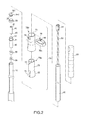
FIG. 2 is an exploded perspective view of the invention; -
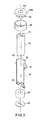
FIG. 3 is an exploded perspective view of the main structure of the invention with the engaging element illustrated in half section. -
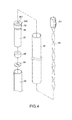
FIG. 4 is an exploded perspective view of the main structure of the invention with the engaging element and the annular element in the connection position -
FIG. 5 is a cross-sectional view of the main structure of the invention with the internal and external rods in a position of relative motion; -
FIG. 6 is a cross-sectional view taken along the line 6-6 inFIG. 5 ; -
FIG. 7 is a cross-sectional view of the structure in accordance with the invention, showing that the external rod is compressed downward; -
FIG. 8 is a cross-sectional view of the structure in accordance with the invention, showing that the external rod is pulled upward; -
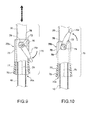
FIG. 9 is a schematic drawing of the locking mechanism of the invention in a loosened position when the external clamping sleeve is lifted; -
FIG. 10 is a schematic drawing of the locking mechanism of the invention in a tightened position when the external clamping sleeve is lowered; -
FIG. 11 is an application view I of the invention; and -
FIG. 12 is an application view II of the invention. - First of all, referring to
FIGS. 1 through 8 , a mop in accordance with the invention includes aninternal rod 10, anexternal rod 20, anengaging element 30, adriving element 50, anactuating element 40, adisc body 60, and alocking mechanism 70. - The
internal rod 10 is constructed as a hollow circular tube and made by metal or non-metal material. Therefore, it can be an aluminum tube or a plastic tube. - The
external rod 20 includes a bottom portion in a telescopic connection with a top portion of theinternal rod 10. According to the embodiment, the operator can hold on theexternal rod 20 to conduct a telescopic motion on theinternal rod 10. - The
engaging element 30 is positioned within the opening at the top of theinternal rod 10. According to this embodiment, anannular element 33 and afixing cap 34 are mounted and fixed on theengaging element 30 after theengaging element 30 is placed within the top of theinternal rod 10. The upper portion of theengaging element 30 is externally provided with aflange 31. Thefixing cap 34 includes a throughhole 341 at the top thereof and a projectingflange 342 at the external rim thereof. The bottom of thefixing cap 34 fits into an opening 32 of theengaging element 30 in place. As shown inFIG. 3 , the bottom of the internal rim of theengaging element 30 is provided with driventeeth 35. - The
driving element 50 is formed in an elongated shape and positioned within theexternal rod 20 in such a way that thedriving element 50 is moved up and down synchronically with theexternal rod 20. According this embodiment, thedriving element 50 includes afixing block 51 fastened by a fixing element (not shown) or in a riveting way within the top end of theexternal rod 20. Moreover, aprotection sleeve 22 is mounted on theexternal rod 20. - The actuating
element 40 is positioned within theengaging element 30 for accommodating thedriving element 50. Thedriving element 50 is constructed as a worm or a threaded piece. As a result, the internal wall of the actuatingelement 40 has to be formed to be a threadedsleeve 41. According to the structure of the worm or the threaded piece, the actuatingelement 40 is correspondingly provided with a worm thread or an elongated groove such that thedriving element 50 may impart a rotary motion to the actuatingelement 40 by means of the up-and-down linear movement of theexternal rod 20. According to this embodiment, thedriving element 50 is constructed as a threaded piece. As a result, the threadedsleeve 41 at the internal end of the actuatingelement 40 is constructed as an elongated groove such that the up-and-down movement of thedriving element 50 in the threadedsleeve 41 may impart a rotary motion to the actuatingelement 40 within theengaging element 30. As shown inFIG. 3 , the bottom of the actuatingelement 40 is provided with downward drivingteeth 42 in contract with the upward driventeeth 35 of theengaging element 30. Since the engaging teeth are formed in an inclined way, the drive is subject to a rotation in a certain direction. As shown inFIG. 7 , theengaging element 30 is subject to a clockwise rotation like theactuating element 40 when theactuating element 40 is driven by thedriving element 50. In this way, the actuatingelement 40 is driven when thedriving element 50 is compressed downward. Meanwhile, theengaging element 30 is brought in clockwise rotation. To the contrary, as shown inFIG. 8 , when thedriving element 50 is pulled upward, theactuating element 40 is brought in a counterclockwise rotation. At that time, the downward drivingteeth 42 of theactuating element 40 is driven in an idle non-rotation state relative to thedriving teeth 35 of theengaging element 30. In other words, the engagingelement 30 remains unmoved such that the drivingelement 50 can be returned to the original position for a renewed downward compression to drive the engagingelement 30 again. - The
disc body 60 is secured to the bottom of theinternal rod 10 and includesmop yarns 61. - The
locking mechanism 70 is mounted on theexternal rod 20 for locking theinternal rod 10 and theexternal rod 20 in place or for unlocking them in a telescopic state. As shown inFIGS. 2 ,9 and 10 , thelocking mechanism 70 includes aninternal clamping sleeve 70a, anexternal clamping sleeve 70b, and aU-shaped lever 70c, but should not limited thereto: - The
internal clamping sleeve 70a includes aninternal tube 71 at the top thereof. The bottom of theexternal rod 20 is introduced into theinternal tube 71 and fastened there in place. The fastening effect may be achieved in the clamping, locking, hooking, or screwing way. The fastening technique belongs to the prior art so that no further descriptions thereto are given hereinafter. Both sides of theinternal clamping sleeve 70a are provided with positioning holes 72. Moreover, the bottom portion of theinternal clamping sleeve 70a is constructed as a conic body 73 (extending or expanding from the top to the bottom) with anindentation 74. Theindentation 74 is extended in axial direction. Preferably, there are at least twoindentations 74. - The
external clamping sleeve 70b is mounted on the periphery of theinternal clamping sleeve 70a. The upper portion of theexternal clamping sleeve 70b is provided with anexternal tube 75 corresponding to theinternal tube 71. Theexternal tube 75 includes at both sides thereof two mountingholes 76 in alignment with the positioning holes 72 of theinternal tube 71. According to the embodiment, the mountingholes 76 are formed as a non-circular and rectangular hole, but should be limited thereto. The mounting holes 76 and the positioning holes 72 are not concentrically positioned such thatcams 78 within the mountingholes 76 tend to conduct an eccentric push action. Abell mouth 77 is formed at the lower portion of theexternal clamping sleeve 70b for fitting over theconic body 73. - The
U-shaped lever 70c includes aswivel protrusion 79 and aneccentric cam 78 at the internal wall of both sides thereof for fitting into the positioning holes 72 of theinternal clamping sleeve 70a and the mountingholes 76 of theexternal clamping sleeve 70b. Besides, theeccentric cams 78 are positioned within the mounting holes 76. According to this embodiment, theswivel protrusions 79 together with the eccentric cams 38 and the U-shaped locking arm 30c are formed by the injection-molding process. However, it should not be restricted thereto. In other words, the swivel protrusion 39 can be replaced by a processed metal post. - Based upon the above-mentioned structure, when the
U-shaped lever 70c swivels on theswivel protrusion 79, theeccentric cams 78 are offset within the mountingholes 76, thereby moving theexternal clamping sleeve 70b on the periphery of theinternal clamping sleeve 70a upward or downward. As shown inFIG. 9 , the external rim of theinternal clamping sleeve 70a rises when theU-shaped lever 70c is pushed downward. Due to the action of theindentation 74, thebell mouth 77 of theexternal clamping sleeve 70b is brought in a loosened position relative to theconic body 73 of theinternal clamping sleeve 70a. As a result, theinternal rod 10 and theexternal rod 20 are unlocked and brought in a telescopic state. As shown inFIG. 10 , theexternal clamping sleeve 70b is moved downward when theU-shaped lever 70c is pulled upward. In this way, theinternal clamping sleeve 70a is so clamped that the internal andexternal rods - As shown in
FIG. 7 , when thelocking mechanism 70 is unlocked in an opened position and theexternal rod 20 is compressed downward, the drivingelement 50 is synchronically lowered to pass through the threadedsleeve 41 of theactuating element 40. In this way, theactuating element 40 is rotated clockwise so as to cause a synchronic rotation of the engagingelement 30. The engagingelement 30 is tightly secured to theinternal rod 10. Therefore, theinternal rod 10 tends to be rotated in a single direction. When theexternal rod 20 is pulled upward, as depicted above, theactuating element 40 is in an idle state relative to the engagingelement 30 when rotated counterclockwise (seeFIG. 8 ). In this way, theinternal rod 10 is subject to a continuous rotation in a clockwise direction due to the inertia force without any intervention from the upward pull of theexternal rod 20. - As shown in
FIGS. 11 and12 , when theexternal rod 20 is pushed downward, theinternal rod 10 and thedisc body 60 are rotated in a single direction, thereby removing the mop yarns 61 (seeFIG. 11 ) attached to thedisc body 60 by the centrifugal force outward. - Furthermore, when the
external rod 20 is pulled upward, as depicted above, theinternal rod 10 won't be acted upon thereby and remains to rotate in the same direction due to the action of the inertia force. In this way, theinternal rod 10 and thedisc body 60 may be rotated more than 10 times within adewatering basket 81 of abucket body 80 by means that the user pushes downward and pulls upward theexternal rod 20 for a few times. Unlike theconventional bucket body 80 employing an internal drive mechanism to drive its dewateringbasket 81 in rotation by a user's foot, thedewatering basket 81 according to this embodiment is rotatable within thebucket body 80. Unlike the conventional way, thedewatering basket 81 in accordance with the invention may be synchronically driven in rotation when thedisc body 60 is rotated by theinternal rod 10. In this way, themop yarns 61 of thedisc body 60 are subject to the centrifugal force for dewatering. Meanwhile, the water removed may be received within thebucket body 80. - However, many tests done for a long time on the above-mentioned structure show that the
internal rod 10 is lifted and rotated within theexternal rod 20 at the time when theexternal rod 20 is pushed downward and pulled upward (seeFIGS. 5 and6 ). The reason for that is that a tremendous frictional resistance tends to be created when theinternal rod 10 is positioned too closely to theexternal rod 20 and when the external diameter D2 of theinternal rod 10 is almost the same to the internal diameter φ1 of theexternal rod 20. In this way, the telescopic motion of the internal andexternal rods external rods - In order to resolve the above-mentioned problems, the structure in accordance with the invention is provided with following features.
- As shown in
FIG. 6 , the engagingelement 30 is constructed as a cylindrical body with the middle and lower parts secured to the inside of theinternal rod 10. Anannular element 33 rotatable clockwise and counterclockwise at 360° is mounted on the top portion of the engagingelement 30 projecting in an exposed manner from theinternal rod 10. The external diameter D1 of theannular element 33 is greater than the external diameter D2 of theinternal rod 10, but smaller than is almost the same to the internal diameter φ1 of theexternal rod 20. As shown inFIG. 5 , the length L1 of the drivingelement 50 is smaller than the length L2 of the inside of the engagingelement 30. In addition, the bottom of the fixingcap 34 is extended and secured to theopening 32 of the engagingelement 30 in such a way that a gap S is provided between the fixingcap 34 and the top of theactuating element 40. The fixingcap 34 includes at the top thereof a projecting flange 342 (whose external diameter is greater than the external diameter D2 of theinternal rod 10, but smaller than the external diameter D1 of the annular element 33) for positioning theannular element 33 on the periphery of the top portion of the engagingelement 30 without affecting the rotation of theannular element 33 within theexternal rod 20. - Furthermore, the driving
element 50 includes at the bottom thereof a position-limitingelement 52 and apositioning element 53 for a reliable stop of the drivingelement 50 in a preset position and for a practical protection of theinternal rod 10 and the drivingelement 50 from being detached from theinternal rod 10. - The structure in accordance with the invention is provided to resolve the problems with respect to the telescopic and rotary motions of the internal and
external rods
Claims (5)
- A telescopically rotatable mop, comprising:a) an internal rod (10) having a hollow body;b) an external rod (20) having a hollow body with a bottom portion in a telescopic connection with a top portion of the internal rod (10);c) an engaging element (30) positioned within the opening at the top of the internal rod (10), the engaging element having at the bottom thereof a through hole and at the internal bottom rim a plurality of driven teeth (35);d) a driving element (50) formed in an elongated shape and positioned within the external rod (20) in such a way that the driving element (50) is moved up and down synchronically with the external rod (20);e) an actuating element (40) positioned within the engaging element (30) with a threaded sleeve (41) at the top thereof for accommodating the driving element (50), the actuating element having at the bottom thereof a plurality of driving teeth (35) corresponding to the driven teeth 35 of the engaging element (30) for driving the engaging element (30) in a single direction when the actuating element is rotated by the driving element (50);f) a fixing cap (34) having a through hole (341) for the insertion of the driving element (50), the fixing cap (34) being mounted on the opening of the engaging element (30);g) a disc body (60) secured to the bottom of the internal rod (10) and having mop yarns (61);h) a locking mechanism (70) mounted on the external rod (20) for locking the internal rod (10) and the external rod (20) in place or for unlocking them in a telescopic state;
wherein the engaging element (30) is constructed as a cylindrical body with the middle and lower parts secured to the inside of the internal rod (10), and an annular element (33) rotatable clockwise and counterclockwise at 360° is mounted on the top portion of the engaging element (30) projecting in an exposed manner from the internal rod (10), and the external diameter D1 of the annular element (33) is greater than the external diameter D2 of the internal rod (10), but smaller than is almost the same to the internal diameter φ1 of the external rod (20);
wherein the length L1 of the driving element 50 is smaller than the length L2 of the inside of the engaging element; and
wherein the bottom of the fixing cap (34) is extended and secured to the opening (32) of the engaging element (30) in such a way that a gap S is provided between the fixing cap and the top of the actuating element (40), and the fixing cap (34) includes at the top thereof a projecting flange (342) (whose external diameter is greater than the external diameter D2 of the internal rod (10), but smaller than the external diameter D1 of the annular element (33) ) for positioning the annular element (33) on the periphery of the top portion of the engaging element (30) without affecting the rotation of the annular element (33) within the external rod (20). - The mop as recited in claim 1 wherein the driving element (50)includes a position-limiting element (52) and a positioning element (53) at the bottom thereof.
- The mop as recited in claim 1 wherein the engaging element (30) includes a flange (31) at the periphery of the top portion thereof for securing the engaging element (30) to the opening of the internal rod (10).
- The mop as recited in claim 1 wherein the locking mechanism (70) includes:a) an internal clamping sleeve (70a) having an internal tube (71) at the top thereof, the bottom of the external rod (20) being introduced into the internal tube (71) and fastened there in place, both sides of the internal clamping sleeve (70a) being provided with positioning holes (72), the bottom portion of the internal clamping sleeve (70a) being constructed as a conic body (73) (extending or expanding from the top to the bottom) with an indentation (74);b) an external clamping sleeve (70b) being mounted on the periphery of the internal clamping sleeve (70a), the upper portion of the external clamping sleeve (70b) being provided with an external tube (75) corresponding to the internal tube (71), the external tube (75) having at both sides thereof two mounting holes (76) in alignment with the positioning holes (72) of the internal tube (71), a bell mouth (77) being formed at the lower portion of the external clamping sleeve (70b) for fitting over the conic body (73); andc) a U-shaped lever (70c) having a swivel protrusion (79) and an eccentric cam (78) at the internal wall of both sides thereof for fitting into the positioning holes (72) of the internal clamping sleeve (70a) and the mounting holes (76) of the external clamping sleeve (70b), the eccentric cams (78) being positioned within the mounting holes (76);
wherein, when the U-shaped lever (70c) swivels on the swivel protrusion (79), the eccentric cams (78) are offset within the mounting holes (76), thereby moving the external clamping sleeve (70b) on the periphery of the internal clamping sleeve (70a) upward or downward;
wherein, due to the action of the indentation, the bell mouth (77) of the external clamping sleeve (70b) is brought in a tightened or loosened position relative to the conic body (73) of the internal clamping sleeve (70a), thereby locking the internal and external rods (10) - (20) in place or unlocking them in a telescopic state. - The mop as recited in claim 1 wherein the disc body (60) includes a dewatering basket (81) rotatable within a bucket body 80, and wherein the dewatering basket (81) tends to be synchronically driven in rotation when the disc body (60) is rotated by the internal rod, whereby the mop yarns (61) of the disc body (60) are subject to the centrifugal force for dewatering, and the water removed may be received within the bucket body (80).
Priority Applications (1)
| Application Number | Priority Date | Filing Date | Title |
|---|---|---|---|
| PL10162977T PL2255712T3 (en) | 2009-05-27 | 2010-05-17 | Telescopically rotatable mop |
Applications Claiming Priority (1)
| Application Number | Priority Date | Filing Date | Title |
|---|---|---|---|
| TW098209417U TWM368410U (en) | 2009-05-27 | 2009-05-27 | Mop converting vertically linear displacement into uni-directional dehydration |
Publications (3)
| Publication Number | Publication Date |
|---|---|
| EP2255712A2 true EP2255712A2 (en) | 2010-12-01 |
| EP2255712A3 EP2255712A3 (en) | 2011-11-02 |
| EP2255712B1 EP2255712B1 (en) | 2012-12-26 |
Family
ID=42668722
Family Applications (1)
| Application Number | Title | Priority Date | Filing Date |
|---|---|---|---|
| EP10162977A Active EP2255712B1 (en) | 2009-05-27 | 2010-05-17 | Telescopically rotatable mop |
Country Status (5)
| Country | Link |
|---|---|
| EP (1) | EP2255712B1 (en) |
| ES (1) | ES2401546T3 (en) |
| MY (1) | MY154735A (en) |
| PL (1) | PL2255712T3 (en) |
| TW (1) | TWM368410U (en) |
Cited By (10)
| Publication number | Priority date | Publication date | Assignee | Title |
|---|---|---|---|---|
| CN102389282A (en) * | 2011-08-19 | 2012-03-28 | 林义斌 | Screw drive device and mop using same |
| WO2013043632A1 (en) * | 2011-09-19 | 2013-03-28 | Travelpro International Inc. | Telescoping luggage handle and stabilizer |
| EP2650089A1 (en) | 2012-04-11 | 2013-10-16 | Leifheit Ag | Blocking mechanism for a telescopic handle |
| EP2799189A1 (en) | 2013-05-03 | 2014-11-05 | Leifheit Ag | Arrest mechanism for a telescopic handle |
| US8978194B1 (en) | 2014-04-28 | 2015-03-17 | Telebrands Corp. | Rotating mop handle and bucket assembly |
| CN115046113A (en) * | 2022-08-15 | 2022-09-13 | 临沂澳百奇建筑材料有限公司 | Building foundation engineering detection device |
| USD973295S1 (en) | 2021-04-20 | 2022-12-20 | The Libman Company | Bucket |
| USD973294S1 (en) | 2021-04-20 | 2022-12-20 | The Libman Company | Mop |
| US11717130B2 (en) | 2021-04-20 | 2023-08-08 | The Libman Company | Mop system with rotating mop head |
| US12245732B2 (en) | 2023-05-03 | 2025-03-11 | The Libman Company | Grip handle assembly for a mop |
Families Citing this family (7)
| Publication number | Priority date | Publication date | Assignee | Title |
|---|---|---|---|---|
| CN201585947U (en) * | 2010-01-14 | 2010-09-22 | 金国寿 | Rotary mechanism |
| CN103222837B (en) * | 2010-05-04 | 2014-05-07 | 赵一美 | Method for cleaning mop and method for cleaning and dehydrating mop |
| CN103654664B (en) * | 2013-11-26 | 2015-12-02 | 嘉兴捷顺旅游制品有限公司 | Up-down rotary type mop-cleaning dehydration combination unit |
| USD720905S1 (en) | 2014-04-30 | 2015-01-06 | Telebrands Corp. | Base for a cleaning apparatus |
| USD723758S1 (en) | 2014-05-20 | 2015-03-03 | Telebrands, Corp. | Dual spout mop bucket |
| USD723234S1 (en) | 2014-05-20 | 2015-02-24 | Telebrands Corp. | Dual spout mop bucket with agitator |
| USD746528S1 (en) | 2014-05-23 | 2015-12-29 | Telebrands Corp. | Mop ring |
Family Cites Families (2)
| Publication number | Priority date | Publication date | Assignee | Title |
|---|---|---|---|---|
| GB235684A (en) * | 1924-04-17 | 1925-06-25 | Gerald Lawrenoe Opperman | Improvements in and relating to mops |
| DE102005023084A1 (en) * | 2005-05-13 | 2006-11-23 | Leifheit Ag | Mopping device has rotary drive and is provided with mopping head, holding element or handle whereby mopping head can be rotated for carrying out dehumidifying process, preferably hydro-extracting process |
-
2009
- 2009-05-27 TW TW098209417U patent/TWM368410U/en not_active IP Right Cessation
-
2010
- 2010-05-17 PL PL10162977T patent/PL2255712T3/en unknown
- 2010-05-17 EP EP10162977A patent/EP2255712B1/en active Active
- 2010-05-17 ES ES10162977T patent/ES2401546T3/en active Active
- 2010-05-25 MY MYPI2010002421A patent/MY154735A/en unknown
Cited By (16)
| Publication number | Priority date | Publication date | Assignee | Title |
|---|---|---|---|---|
| CN102389282A (en) * | 2011-08-19 | 2012-03-28 | 林义斌 | Screw drive device and mop using same |
| CN102389282B (en) * | 2011-08-19 | 2014-12-24 | 林义斌 | Screw drive device and mop using same |
| WO2013043632A1 (en) * | 2011-09-19 | 2013-03-28 | Travelpro International Inc. | Telescoping luggage handle and stabilizer |
| USD699438S1 (en) | 2011-09-19 | 2014-02-18 | Travelpro International Inc. | Telescoping handle |
| EP2650089A1 (en) | 2012-04-11 | 2013-10-16 | Leifheit Ag | Blocking mechanism for a telescopic handle |
| EP2799189A1 (en) | 2013-05-03 | 2014-11-05 | Leifheit Ag | Arrest mechanism for a telescopic handle |
| US9730568B2 (en) | 2014-04-28 | 2017-08-15 | Telebrands Corp. | Rotating mop handle and bucket assembly |
| US8997305B1 (en) | 2014-04-28 | 2015-04-07 | Telebrands Corp. | Rotating mop handle and bucket assembly |
| US8978194B1 (en) | 2014-04-28 | 2015-03-17 | Telebrands Corp. | Rotating mop handle and bucket assembly |
| USD973295S1 (en) | 2021-04-20 | 2022-12-20 | The Libman Company | Bucket |
| USD973294S1 (en) | 2021-04-20 | 2022-12-20 | The Libman Company | Mop |
| US11717130B2 (en) | 2021-04-20 | 2023-08-08 | The Libman Company | Mop system with rotating mop head |
| US12605031B2 (en) | 2021-04-20 | 2026-04-21 | The Libman Company | Mop system with rotating mop head |
| CN115046113A (en) * | 2022-08-15 | 2022-09-13 | 临沂澳百奇建筑材料有限公司 | Building foundation engineering detection device |
| CN115046113B (en) * | 2022-08-15 | 2022-11-08 | 临沂澳百奇建筑材料有限公司 | Building foundation engineering detection device |
| US12245732B2 (en) | 2023-05-03 | 2025-03-11 | The Libman Company | Grip handle assembly for a mop |
Also Published As
| Publication number | Publication date |
|---|---|
| EP2255712A3 (en) | 2011-11-02 |
| MY154735A (en) | 2015-07-15 |
| ES2401546T3 (en) | 2013-04-22 |
| TWM368410U (en) | 2009-11-11 |
| PL2255712T3 (en) | 2013-04-30 |
| EP2255712B1 (en) | 2012-12-26 |
Similar Documents
| Publication | Publication Date | Title |
|---|---|---|
| US8220101B2 (en) | Telescopically rotatable mop | |
| EP2255712B1 (en) | Telescopically rotatable mop | |
| US8291544B2 (en) | Mop with the function of dewatering the yarns by twisting in a single direction via an up-and-down linear motion | |
| US8336160B2 (en) | Dual rotating dewater bucket and mop thereof | |
| US8291538B2 (en) | Mop structure of converting vertical linear displacement into unidirectional rotation for dewatering a mop | |
| US8826486B2 (en) | Mop cleaning set | |
| KR200458282Y1 (en) | Mop with the function of dewatering mop through twisting in one direction through the linear up and down motion | |
| US8112840B2 (en) | Disc rotating and positioning structure of a mop | |
| KR101373410B1 (en) | Spiral drive mechanism and spin mop with the same | |
| CN101919679B (en) | cleaning tools | |
| JP2013138849A (en) | Cleaning mop and its washing bucket | |
| JP2013138849A5 (en) | ||
| WO2025075859A1 (en) | Mop assembly with sliding, rotatable and clamping wringer sleeve | |
| US8978193B2 (en) | Spin mop | |
| CN101884516B (en) | A kind of mop bucket and its matching mop | |
| AU2010101339A4 (en) | Telescopically rotatable mop | |
| US7891039B2 (en) | Cleaning apparatus with fast wringing ability | |
| CN210697444U (en) | Cleaning tool | |
| KR200462559Y1 (en) | Telescopically rotatable mop | |
| CN201505105U (en) | Mop capable of converting up-down linear displacement into unidirectional driving rotation for dewatering | |
| CN110151079A (en) | Burnisher | |
| CA2708621C (en) | Mop with wringing device | |
| CN201861575U (en) | Rotary mop combination | |
| KR20120003264A (en) | Cleaner with rotary dewatering push rod | |
| JP6726712B2 (en) | Centrifugal dehydration mop |
Legal Events
| Date | Code | Title | Description |
|---|---|---|---|
| PUAI | Public reference made under article 153(3) epc to a published international application that has entered the european phase |
Free format text: ORIGINAL CODE: 0009012 |
|
| AK | Designated contracting states |
Kind code of ref document: A2 Designated state(s): AL AT BE BG CH CY CZ DE DK EE ES FI FR GB GR HR HU IE IS IT LI LT LU LV MC MK MT NL NO PL PT RO SE SI SK SM TR |
|
| AX | Request for extension of the european patent |
Extension state: BA ME RS |
|
| PUAL | Search report despatched |
Free format text: ORIGINAL CODE: 0009013 |
|
| AK | Designated contracting states |
Kind code of ref document: A3 Designated state(s): AL AT BE BG CH CY CZ DE DK EE ES FI FR GB GR HR HU IE IS IT LI LT LU LV MC MK MT NL NO PL PT RO SE SI SK SM TR |
|
| AX | Request for extension of the european patent |
Extension state: BA ME RS |
|
| RIC1 | Information provided on ipc code assigned before grant |
Ipc: A47L 13/20 20060101AFI20110923BHEP |
|
| 17P | Request for examination filed |
Effective date: 20120329 |
|
| GRAP | Despatch of communication of intention to grant a patent |
Free format text: ORIGINAL CODE: EPIDOSNIGR1 |
|
| GRAS | Grant fee paid |
Free format text: ORIGINAL CODE: EPIDOSNIGR3 |
|
| GRAA | (expected) grant |
Free format text: ORIGINAL CODE: 0009210 |
|
| AK | Designated contracting states |
Kind code of ref document: B1 Designated state(s): AL AT BE BG CH CY CZ DE DK EE ES FI FR GB GR HR HU IE IS IT LI LT LU LV MC MK MT NL NO PL PT RO SE SI SK SM TR |
|
| REG | Reference to a national code |
Ref country code: GB Ref legal event code: FG4D |
|
| REG | Reference to a national code |
Ref country code: CH Ref legal event code: EP |
|
| REG | Reference to a national code |
Ref country code: AT Ref legal event code: REF Ref document number: 590004 Country of ref document: AT Kind code of ref document: T Effective date: 20130115 |
|
| REG | Reference to a national code |
Ref country code: DE Ref legal event code: R096 Ref document number: 602010004268 Country of ref document: DE Effective date: 20130228 |
|
| REG | Reference to a national code |
Ref country code: SE Ref legal event code: TRGR |
|
| REG | Reference to a national code |
Ref country code: ES Ref legal event code: FG2A Ref document number: 2401546 Country of ref document: ES Kind code of ref document: T3 Effective date: 20130422 |
|
| PG25 | Lapsed in a contracting state [announced via postgrant information from national office to epo] |
Ref country code: NO Free format text: LAPSE BECAUSE OF FAILURE TO SUBMIT A TRANSLATION OF THE DESCRIPTION OR TO PAY THE FEE WITHIN THE PRESCRIBED TIME-LIMIT Effective date: 20130326 Ref country code: LT Free format text: LAPSE BECAUSE OF FAILURE TO SUBMIT A TRANSLATION OF THE DESCRIPTION OR TO PAY THE FEE WITHIN THE PRESCRIBED TIME-LIMIT Effective date: 20121226 Ref country code: HR Free format text: LAPSE BECAUSE OF FAILURE TO SUBMIT A TRANSLATION OF THE DESCRIPTION OR TO PAY THE FEE WITHIN THE PRESCRIBED TIME-LIMIT Effective date: 20121226 Ref country code: FI Free format text: LAPSE BECAUSE OF FAILURE TO SUBMIT A TRANSLATION OF THE DESCRIPTION OR TO PAY THE FEE WITHIN THE PRESCRIBED TIME-LIMIT Effective date: 20121226 |
|
| REG | Reference to a national code |
Ref country code: PL Ref legal event code: T3 |
|
| REG | Reference to a national code |
Ref country code: NL Ref legal event code: T3 |
|
| REG | Reference to a national code |
Ref country code: LT Ref legal event code: MG4D |
|
| PG25 | Lapsed in a contracting state [announced via postgrant information from national office to epo] |
Ref country code: SI Free format text: LAPSE BECAUSE OF FAILURE TO SUBMIT A TRANSLATION OF THE DESCRIPTION OR TO PAY THE FEE WITHIN THE PRESCRIBED TIME-LIMIT Effective date: 20121226 Ref country code: LV Free format text: LAPSE BECAUSE OF FAILURE TO SUBMIT A TRANSLATION OF THE DESCRIPTION OR TO PAY THE FEE WITHIN THE PRESCRIBED TIME-LIMIT Effective date: 20121226 Ref country code: GR Free format text: LAPSE BECAUSE OF FAILURE TO SUBMIT A TRANSLATION OF THE DESCRIPTION OR TO PAY THE FEE WITHIN THE PRESCRIBED TIME-LIMIT Effective date: 20130327 |
|
| PG25 | Lapsed in a contracting state [announced via postgrant information from national office to epo] |
Ref country code: EE Free format text: LAPSE BECAUSE OF FAILURE TO SUBMIT A TRANSLATION OF THE DESCRIPTION OR TO PAY THE FEE WITHIN THE PRESCRIBED TIME-LIMIT Effective date: 20121226 Ref country code: IS Free format text: LAPSE BECAUSE OF FAILURE TO SUBMIT A TRANSLATION OF THE DESCRIPTION OR TO PAY THE FEE WITHIN THE PRESCRIBED TIME-LIMIT Effective date: 20130426 Ref country code: BG Free format text: LAPSE BECAUSE OF FAILURE TO SUBMIT A TRANSLATION OF THE DESCRIPTION OR TO PAY THE FEE WITHIN THE PRESCRIBED TIME-LIMIT Effective date: 20130326 Ref country code: SK Free format text: LAPSE BECAUSE OF FAILURE TO SUBMIT A TRANSLATION OF THE DESCRIPTION OR TO PAY THE FEE WITHIN THE PRESCRIBED TIME-LIMIT Effective date: 20121226 |
|
| PG25 | Lapsed in a contracting state [announced via postgrant information from national office to epo] |
Ref country code: PT Free format text: LAPSE BECAUSE OF FAILURE TO SUBMIT A TRANSLATION OF THE DESCRIPTION OR TO PAY THE FEE WITHIN THE PRESCRIBED TIME-LIMIT Effective date: 20130426 Ref country code: RO Free format text: LAPSE BECAUSE OF FAILURE TO SUBMIT A TRANSLATION OF THE DESCRIPTION OR TO PAY THE FEE WITHIN THE PRESCRIBED TIME-LIMIT Effective date: 20121226 |
|
| PG25 | Lapsed in a contracting state [announced via postgrant information from national office to epo] |
Ref country code: DK Free format text: LAPSE BECAUSE OF FAILURE TO SUBMIT A TRANSLATION OF THE DESCRIPTION OR TO PAY THE FEE WITHIN THE PRESCRIBED TIME-LIMIT Effective date: 20121226 |
|
| PLBE | No opposition filed within time limit |
Free format text: ORIGINAL CODE: 0009261 |
|
| STAA | Information on the status of an ep patent application or granted ep patent |
Free format text: STATUS: NO OPPOSITION FILED WITHIN TIME LIMIT |
|
| PG25 | Lapsed in a contracting state [announced via postgrant information from national office to epo] |
Ref country code: CY Free format text: LAPSE BECAUSE OF FAILURE TO SUBMIT A TRANSLATION OF THE DESCRIPTION OR TO PAY THE FEE WITHIN THE PRESCRIBED TIME-LIMIT Effective date: 20121226 |
|
| 26N | No opposition filed |
Effective date: 20130927 |
|
| PG25 | Lapsed in a contracting state [announced via postgrant information from national office to epo] |
Ref country code: MC Free format text: LAPSE BECAUSE OF FAILURE TO SUBMIT A TRANSLATION OF THE DESCRIPTION OR TO PAY THE FEE WITHIN THE PRESCRIBED TIME-LIMIT Effective date: 20121226 |
|
| REG | Reference to a national code |
Ref country code: DE Ref legal event code: R097 Ref document number: 602010004268 Country of ref document: DE Effective date: 20130927 |
|
| REG | Reference to a national code |
Ref country code: IE Ref legal event code: MM4A |
|
| PG25 | Lapsed in a contracting state [announced via postgrant information from national office to epo] |
Ref country code: IE Free format text: LAPSE BECAUSE OF NON-PAYMENT OF DUE FEES Effective date: 20130517 |
|
| PG25 | Lapsed in a contracting state [announced via postgrant information from national office to epo] |
Ref country code: MT Free format text: LAPSE BECAUSE OF FAILURE TO SUBMIT A TRANSLATION OF THE DESCRIPTION OR TO PAY THE FEE WITHIN THE PRESCRIBED TIME-LIMIT Effective date: 20121226 |
|
| PG25 | Lapsed in a contracting state [announced via postgrant information from national office to epo] |
Ref country code: SM Free format text: LAPSE BECAUSE OF FAILURE TO SUBMIT A TRANSLATION OF THE DESCRIPTION OR TO PAY THE FEE WITHIN THE PRESCRIBED TIME-LIMIT Effective date: 20121226 |
|
| PG25 | Lapsed in a contracting state [announced via postgrant information from national office to epo] |
Ref country code: MK Free format text: LAPSE BECAUSE OF FAILURE TO SUBMIT A TRANSLATION OF THE DESCRIPTION OR TO PAY THE FEE WITHIN THE PRESCRIBED TIME-LIMIT Effective date: 20121226 Ref country code: LU Free format text: LAPSE BECAUSE OF NON-PAYMENT OF DUE FEES Effective date: 20130517 Ref country code: HU Free format text: LAPSE BECAUSE OF FAILURE TO SUBMIT A TRANSLATION OF THE DESCRIPTION OR TO PAY THE FEE WITHIN THE PRESCRIBED TIME-LIMIT; INVALID AB INITIO Effective date: 20100517 |
|
| PGFP | Annual fee paid to national office [announced via postgrant information from national office to epo] |
Ref country code: SE Payment date: 20150526 Year of fee payment: 6 |
|
| PGFP | Annual fee paid to national office [announced via postgrant information from national office to epo] |
Ref country code: PL Payment date: 20150430 Year of fee payment: 6 |
|
| REG | Reference to a national code |
Ref country code: FR Ref legal event code: PLFP Year of fee payment: 7 |
|
| PG25 | Lapsed in a contracting state [announced via postgrant information from national office to epo] |
Ref country code: SE Free format text: LAPSE BECAUSE OF NON-PAYMENT OF DUE FEES Effective date: 20160518 |
|
| REG | Reference to a national code |
Ref country code: FR Ref legal event code: PLFP Year of fee payment: 8 |
|
| PG25 | Lapsed in a contracting state [announced via postgrant information from national office to epo] |
Ref country code: PL Free format text: LAPSE BECAUSE OF NON-PAYMENT OF DUE FEES Effective date: 20160517 |
|
| REG | Reference to a national code |
Ref country code: FR Ref legal event code: PLFP Year of fee payment: 9 |
|
| PG25 | Lapsed in a contracting state [announced via postgrant information from national office to epo] |
Ref country code: AL Free format text: LAPSE BECAUSE OF FAILURE TO SUBMIT A TRANSLATION OF THE DESCRIPTION OR TO PAY THE FEE WITHIN THE PRESCRIBED TIME-LIMIT Effective date: 20121226 |
|
| PGFP | Annual fee paid to national office [announced via postgrant information from national office to epo] |
Ref country code: IT Payment date: 20210524 Year of fee payment: 12 |
|
| PGFP | Annual fee paid to national office [announced via postgrant information from national office to epo] |
Ref country code: TR Payment date: 20210510 Year of fee payment: 12 Ref country code: ES Payment date: 20210607 Year of fee payment: 12 |
|
| REG | Reference to a national code |
Ref country code: ES Ref legal event code: FD2A Effective date: 20230706 |
|
| PG25 | Lapsed in a contracting state [announced via postgrant information from national office to epo] |
Ref country code: IT Free format text: LAPSE BECAUSE OF NON-PAYMENT OF DUE FEES Effective date: 20220517 Ref country code: ES Free format text: LAPSE BECAUSE OF NON-PAYMENT OF DUE FEES Effective date: 20220518 |
|
| PGFP | Annual fee paid to national office [announced via postgrant information from national office to epo] |
Ref country code: NL Payment date: 20230511 Year of fee payment: 14 Ref country code: FR Payment date: 20230516 Year of fee payment: 14 Ref country code: DE Payment date: 20230526 Year of fee payment: 14 Ref country code: CZ Payment date: 20230511 Year of fee payment: 14 Ref country code: CH Payment date: 20230602 Year of fee payment: 14 |
|
| PGFP | Annual fee paid to national office [announced via postgrant information from national office to epo] |
Ref country code: AT Payment date: 20230525 Year of fee payment: 14 |
|
| PGFP | Annual fee paid to national office [announced via postgrant information from national office to epo] |
Ref country code: BE Payment date: 20230509 Year of fee payment: 14 |
|
| PGFP | Annual fee paid to national office [announced via postgrant information from national office to epo] |
Ref country code: GB Payment date: 20230524 Year of fee payment: 14 |
|
| REG | Reference to a national code |
Ref country code: DE Ref legal event code: R119 Ref document number: 602010004268 Country of ref document: DE |
|
| REG | Reference to a national code |
Ref country code: CH Ref legal event code: PL |
|
| REG | Reference to a national code |
Ref country code: NL Ref legal event code: MM Effective date: 20240601 |
|
| REG | Reference to a national code |
Ref country code: AT Ref legal event code: MM01 Ref document number: 590004 Country of ref document: AT Kind code of ref document: T Effective date: 20240517 |
|
| PG25 | Lapsed in a contracting state [announced via postgrant information from national office to epo] |
Ref country code: AT Free format text: LAPSE BECAUSE OF NON-PAYMENT OF DUE FEES Effective date: 20240517 |
|
| PG25 | Lapsed in a contracting state [announced via postgrant information from national office to epo] |
Ref country code: CZ Free format text: LAPSE BECAUSE OF NON-PAYMENT OF DUE FEES Effective date: 20240517 |
|
| GBPC | Gb: european patent ceased through non-payment of renewal fee |
Effective date: 20240517 |
|
| PG25 | Lapsed in a contracting state [announced via postgrant information from national office to epo] |
Ref country code: CZ Free format text: LAPSE BECAUSE OF NON-PAYMENT OF DUE FEES Effective date: 20240517 Ref country code: AT Free format text: LAPSE BECAUSE OF NON-PAYMENT OF DUE FEES Effective date: 20240517 Ref country code: CH Free format text: LAPSE BECAUSE OF NON-PAYMENT OF DUE FEES Effective date: 20240531 |
|
| PG25 | Lapsed in a contracting state [announced via postgrant information from national office to epo] |
Ref country code: NL Free format text: LAPSE BECAUSE OF NON-PAYMENT OF DUE FEES Effective date: 20240601 |
|
| REG | Reference to a national code |
Ref country code: BE Ref legal event code: MM Effective date: 20240531 |
|
| PG25 | Lapsed in a contracting state [announced via postgrant information from national office to epo] |
Ref country code: DE Free format text: LAPSE BECAUSE OF NON-PAYMENT OF DUE FEES Effective date: 20241203 |
|
| PG25 | Lapsed in a contracting state [announced via postgrant information from national office to epo] |
Ref country code: BE Free format text: LAPSE BECAUSE OF NON-PAYMENT OF DUE FEES Effective date: 20240531 |
|
| PG25 | Lapsed in a contracting state [announced via postgrant information from national office to epo] |
Ref country code: FR Free format text: LAPSE BECAUSE OF NON-PAYMENT OF DUE FEES Effective date: 20240531 |
|
| PG25 | Lapsed in a contracting state [announced via postgrant information from national office to epo] |
Ref country code: GB Free format text: LAPSE BECAUSE OF NON-PAYMENT OF DUE FEES Effective date: 20240517 |