EP2285064A1 - System and method for originating a SIP call via a circuit-switched network from a user equipment device - Google Patents
System and method for originating a SIP call via a circuit-switched network from a user equipment device Download PDFInfo
- Publication number
- EP2285064A1 EP2285064A1 EP10184609A EP10184609A EP2285064A1 EP 2285064 A1 EP2285064 A1 EP 2285064A1 EP 10184609 A EP10184609 A EP 10184609A EP 10184609 A EP10184609 A EP 10184609A EP 2285064 A1 EP2285064 A1 EP 2285064A1
- Authority
- EP
- European Patent Office
- Prior art keywords
- sip
- call
- uri
- network
- message
- Prior art date
- Legal status (The legal status is an assumption and is not a legal conclusion. Google has not performed a legal analysis and makes no representation as to the accuracy of the status listed.)
- Ceased
Links
- 238000000034 method Methods 0.000 title claims abstract description 48
- 230000004044 response Effects 0.000 claims abstract description 65
- 238000013507 mapping Methods 0.000 claims abstract description 30
- 230000000977 initiatory effect Effects 0.000 claims abstract description 14
- 238000010295 mobile communication Methods 0.000 claims description 48
- 238000004891 communication Methods 0.000 claims description 18
- 102000018059 CS domains Human genes 0.000 claims description 10
- 108050007176 CS domains Proteins 0.000 claims description 10
- 238000004590 computer program Methods 0.000 claims description 3
- 230000007246 mechanism Effects 0.000 description 9
- 238000005516 engineering process Methods 0.000 description 8
- 238000010586 diagram Methods 0.000 description 5
- 230000006870 function Effects 0.000 description 5
- 101150012579 ADSL gene Proteins 0.000 description 4
- 102100020775 Adenylosuccinate lyase Human genes 0.000 description 4
- 108700040193 Adenylosuccinate lyases Proteins 0.000 description 4
- 230000001413 cellular effect Effects 0.000 description 4
- 238000006243 chemical reaction Methods 0.000 description 4
- 230000001404 mediated effect Effects 0.000 description 3
- 238000012544 monitoring process Methods 0.000 description 3
- 238000012545 processing Methods 0.000 description 3
- 230000000644 propagated effect Effects 0.000 description 3
- 230000003321 amplification Effects 0.000 description 2
- 230000006399 behavior Effects 0.000 description 2
- 238000013500 data storage Methods 0.000 description 2
- 238000013461 design Methods 0.000 description 2
- 238000001914 filtration Methods 0.000 description 2
- 238000007726 management method Methods 0.000 description 2
- 238000012986 modification Methods 0.000 description 2
- 230000004048 modification Effects 0.000 description 2
- 238000003199 nucleic acid amplification method Methods 0.000 description 2
- 230000008569 process Effects 0.000 description 2
- 238000013475 authorization Methods 0.000 description 1
- 230000005540 biological transmission Effects 0.000 description 1
- 238000003490 calendering Methods 0.000 description 1
- 238000010276 construction Methods 0.000 description 1
- 230000001419 dependent effect Effects 0.000 description 1
- 230000002085 persistent effect Effects 0.000 description 1
- 238000013468 resource allocation Methods 0.000 description 1
- 230000011664 signaling Effects 0.000 description 1
- 230000007704 transition Effects 0.000 description 1
- 238000010200 validation analysis Methods 0.000 description 1
- 238000012795 verification Methods 0.000 description 1
Images



Classifications
-
- H—ELECTRICITY
- H04—ELECTRIC COMMUNICATION TECHNIQUE
- H04M—TELEPHONIC COMMUNICATION
- H04M7/00—Arrangements for interconnection between switching centres
- H04M7/006—Networks other than PSTN/ISDN providing telephone service, e.g. Voice over Internet Protocol (VoIP), including next generation networks with a packet-switched transport layer
- H04M7/0075—Details of addressing, directories or routing tables
-
- H—ELECTRICITY
- H04—ELECTRIC COMMUNICATION TECHNIQUE
- H04L—TRANSMISSION OF DIGITAL INFORMATION, e.g. TELEGRAPHIC COMMUNICATION
- H04L65/00—Network arrangements, protocols or services for supporting real-time applications in data packet communication
- H04L65/1066—Session management
- H04L65/1083—In-session procedures
- H04L65/1095—Inter-network session transfer or sharing
-
- H—ELECTRICITY
- H04—ELECTRIC COMMUNICATION TECHNIQUE
- H04L—TRANSMISSION OF DIGITAL INFORMATION, e.g. TELEGRAPHIC COMMUNICATION
- H04L12/00—Data switching networks
- H04L12/66—Arrangements for connecting between networks having differing types of switching systems, e.g. gateways
-
- H—ELECTRICITY
- H04—ELECTRIC COMMUNICATION TECHNIQUE
- H04L—TRANSMISSION OF DIGITAL INFORMATION, e.g. TELEGRAPHIC COMMUNICATION
- H04L65/00—Network arrangements, protocols or services for supporting real-time applications in data packet communication
- H04L65/1066—Session management
- H04L65/1069—Session establishment or de-establishment
-
- H—ELECTRICITY
- H04—ELECTRIC COMMUNICATION TECHNIQUE
- H04W—WIRELESS COMMUNICATION NETWORKS
- H04W76/00—Connection management
- H04W76/10—Connection setup
- H04W76/12—Setup of transport tunnels
-
- H—ELECTRICITY
- H04—ELECTRIC COMMUNICATION TECHNIQUE
- H04W—WIRELESS COMMUNICATION NETWORKS
- H04W8/00—Network data management
- H04W8/26—Network addressing or numbering for mobility support
-
- H—ELECTRICITY
- H04—ELECTRIC COMMUNICATION TECHNIQUE
- H04L—TRANSMISSION OF DIGITAL INFORMATION, e.g. TELEGRAPHIC COMMUNICATION
- H04L65/00—Network arrangements, protocols or services for supporting real-time applications in data packet communication
- H04L65/10—Architectures or entities
- H04L65/1016—IP multimedia subsystem [IMS]
-
- H—ELECTRICITY
- H04—ELECTRIC COMMUNICATION TECHNIQUE
- H04L—TRANSMISSION OF DIGITAL INFORMATION, e.g. TELEGRAPHIC COMMUNICATION
- H04L65/00—Network arrangements, protocols or services for supporting real-time applications in data packet communication
- H04L65/1066—Session management
- H04L65/1101—Session protocols
- H04L65/1104—Session initiation protocol [SIP]
-
- H—ELECTRICITY
- H04—ELECTRIC COMMUNICATION TECHNIQUE
- H04W—WIRELESS COMMUNICATION NETWORKS
- H04W76/00—Connection management
- H04W76/10—Connection setup
- H04W76/11—Allocation or use of connection identifiers
-
- H—ELECTRICITY
- H04—ELECTRIC COMMUNICATION TECHNIQUE
- H04W—WIRELESS COMMUNICATION NETWORKS
- H04W80/00—Wireless network protocols or protocol adaptations to wireless operation
- H04W80/08—Upper layer protocols
- H04W80/10—Upper layer protocols adapted for application session management, e.g. SIP [Session Initiation Protocol]
Definitions
- the present patent disclosure generally relates to call routing in communications networks. More particularly, and not by way of any limitation, the present patent disclosure is directed to a system and method for managing call routing in a network environment including a circuit-switched (CS) network and an IP multimedia subsystem (IMS) network, wherein a CS-originated IP call (e.g. based on the Session Initiation Protocol or SIP) is to be routed using the IMS network infrastructure.
- CS circuit-switched
- IMS IP multimedia subsystem
- Today's advanced communication devices are capable of seamlessly operating in a packet-switched IP network domain (using, for example, wireless LAN (WLAN) or Wi-MAX networks, etc.) as well as a circuit-switched cellular network domain.
- 3GPP 3 rd Generation Partnership Project
- 3GPP 3 rd Generation Partnership Project
- IMS IP multimedia subsystem
- UE user equipment
- a UE device in 3GPP is able to make a voice call to a called party using the circuit-switched network domain only because either no packet-switched network is available or the available networks in the packet-switched domain do not support the Voice-over-IP (VoIP) service.
- VoIP Voice-over-IP
- the called party happens to be an IP-only subscriber and is identified with a Uniform Resource Indicator (URI)
- URI Uniform Resource Indicator
- the originating UE may not be able to make the IP-based call since the UE device can effectuate only E.164 number-based calls while operating in the circuit-switched domain.
- URI Uniform Resource Indicator
- SIP Session Initiation Protocol
- UE user equipment
- IMS IP multimedia subsystem
- the AS node dynamically allocates a select E.164 number with respect to the called party's URI received from the UE device, and returns it to the UE device in a SIP 380 (Alternative Service) Response message. Subsequently, the dynamically-allocated E.164 number is sent from the UE device in a call setup message for identification of the URI and other suitable call information at the AS node. Thus, the dynamically-allocated E.164 number is utilized for routing the SIP call towards the called party upon interrogating the SIP URI - IMRN mapping, whereupon it may be released back to the pool of IMRNs for future use.
- SIP 380 Alternative Service
- Appropriate timers may be provided at the device and AS node endpoints so that it can be verified whether a call reference number associated with the call remains valid (e.g. it has not timed out) or the dynamically-allocated IMRN remains valid (e.g. it has not timed out).
- the released IMRN may be quarantined for a period of time.
- SIP Session Initiation Protocol
- UE user equipment
- IMS IP multimedia subsystem
- the AS node dynamically allocates a select E.164 number with respect to the called party's URI received from the UE device, and returns it to the UE device in a SIP 380 (Alternative Service) Response message. Subsequently, the dynamically-allocated E.164 number is sent from the UE device in a call setup message for identification of the URI and other suitable call information at the AS node. Thus, the dynamically-allocated E.164 number is utilized for routing the SIP call towards the called party upon interrogating the SIP URI - IMRN mapping, whereupon it may be released back to the pool of IMRNs for future use.
- SIP 380 Alternative Service
- Appropriate timers may be provided at the device and AS node endpoints so that it can be verified whether a call reference number associated with the call remains valid (e.g. it has not timed out) or the dynamically-allocated IMRN remains valid (e.g. it has not timed out).
- the released IMRN may be quarantined for a period of time.
- FIG. 1 an exemplary network environment 100 is depicted wherein an embodiment of the present patent disclosure may be practiced for routing a SIP call originated by a UE device in a circuit-switched network or domain.
- the network environment 100 includes an access space 104 comprised of a number of access technologies available to a plurality of UE devices 102-1 through 102-N.
- a UE device may be any tethered or untethered communications device, and may include any personal computer (e.g. desktops, laptops, palmtops, or handheld computing devices) equipped with a suitable wireless modem or a mobile communications device (e.g. cellular phones or data-enabled handheld devices capable of receiving and sending messages, web browsing, et cetera), or any enhanced PDA device or integrated information appliance capable of email, video mail, Internet access, corporate data access, messaging, calendaring and scheduling, information management, and the like.
- the UE device is capable of operating in multiple modes in that it can engage in both circuit-switched (CS) as well as packet-switched (PS) communications, and can transition from one mode of communications to another mode of communications without loss of continuity.
- CS circuit-switched
- PS packet-switched
- the access space 104 may be comprised of both CS and PS networks, which may involve wireless technologies, wireline technologies, broadband access technologies, etc.
- reference numeral 106 refers to wireless technologies such as Global System for Mobile Communications (GSM) networks and Code Division Multiple Access (CDMA) networks, although it is envisaged that the teachings hereof may be extended to any 3 rd Generation Partnership Project (3GPP)-compliant cellular network (e.g. 3GPP or 3GPP2) as well.
- 3GPP 3 rd Generation Partnership Project
- Reference numeral 108 refers to broadband access networks including wireless local area networks or WLANs, Wi-MAX networks as well as fixed networks such as DSL, cable broadband, etc.
- the conventional wireline PSTN infrastructure 110 is also exemplified as part of the access space 104.
- IMS IP multimedia subsystem
- 3GPP 3rd Generation Partnership Project
- IMS IP multimedia subsystem
- IMS IP multimedia subsystem
- IMS is a framework for managing the applications (i.e. services) and networks (i.e. access) that is capable of providing multimedia services.
- IMS defines an "application server" to be the network element that delivers services subscribers use, e.g. voice call continuity (VCC), Push-To-Talk (PTT), IMS Centralized Services (ICS) etc.
- VCC voice call continuity
- PTT Push-To-Talk
- ICS IMS Centralized Services
- IMS manages applications by defining common control components that each application server (AS) is required to have, e.g. subscriber profiles, IMS mobility, network access, authentication, service authorization, charging and billing, inter-operator functions, and interoperation with the legacy phone network.
- AS application server
- IMS Multimedia Domain
- reference numerals 114-1 to 114-N refer to a plurality of AS nodes operable to support various services, e.g. VCC, PTT, ICS etc. as alluded to hereinabove.
- AS nodes e.g. AS 114-(N-1)
- IMS Centralised Services Control Function ICCF
- ICCF is operable as an IMS application server element that resides in the home IMS network and tracks all call sessions and related mobile Voice-over-IP (VoIP) bearer traffic, between CS and IMS domains.
- AS 114-(N-1) Additional details regarding the functionality of AS 114-(N-1) may be found in the pending U.S. patent application entitled "SYSTEM AND METHOD FOR MANAGING CALL ROUTING IN A NETWORK ENVIRONMENT INCLUDING IMS" (Attorney Docket No. 1400-1059US; RIM No.: 30683-US-PAT), Application No.: 11/328,875, filed January 10, 2006 , referenced hereinabove.
- AS 114-N another AS node, AS 114-N, is provided as part of the core IMS network 112 for facilitating routing of IP/SIP calls originated by one of the UE devices in the CS domain while connectivity in the PS domain is not available or the available PS networks are not capable of supporting the VoIP service (e.g. due to bandwidth limitations).
- Appropriate database structures e.g. DB 122
- timer mechanisms e.g. timer 124
- suitable logic 126 may be provided in association with AS 114-N for purposes of configuring and managing a pool of IP multimedia routing numbers (IMRNs) from which a select IMRN may be dynamically-allocated for purposes of SIP call routing as will be described in greater detail below.
- IMRNs IP multimedia routing numbers
- AS 114-N is preferably provided with appropriate logic/structure/software/firmware module(s), such as call continuity control function (CCCF) 116, network domain section (NeDS) 118, and gsm service capability feature (gsm SCF) 120 for performing the following: maintaining a pool of E.164 numbers that are operable as IMRNs which terminate on the AS node, wherein a select E.164 number may be mapped to the received information in the SIP Invite message, including but not limited to, a called party's SIP URI or Tel URI, P-Preferred Identity, Privacy Indication, and Network Access Info header; dynamically allocating the select E.164 number to a received called party's URI (e.g.
- CCCF call continuity control function
- NeDS network domain section
- gsm SCF gsm service capability feature
- SIP URI or Tel URI SIP URI or Tel URI
- SIP 380 Alternative Service
- AS 114-N Alternative Service
- E.164 is indicative of the International Telecommunications Union ( ITU ) telephone numbering plan, which specifies how and by whom telephone numbers are assigned.
- ITU International Telecommunications Union
- the format and notation of E.164 telephone numbers is specified in the ITU standard E.123, for example.
- the AS node e.g. AS 114-N
- the AS node may be configured in a number of ways with respect to the E.164 numbers. For example, a particular E.164 number may be provided as a "starting address" number of an IMRN range. Another E.164 number may operate as a range delimiter with respect to the IMRN range. To allow flexibility, it may be desirable to provide for different pools of IMRNs to be configured from different number ranges.
- appropriate timer mechanism(s) may be implemented at AS 114-N in order to ensure that the allocated IMRNs remain valid (e.g. they have not timed out, that is, they are used within appropriate time limits) or suitable quarantine times are applied.
- management of timers associated with IMRNs at AS 114-N and timers associated with call reference numbers at the originating UE device allows for dynamic provisioning of IMRNs that could be used for effectuating SIP calls by the UE device operating in the CS domain.
- FIG. 2 depicts a flowchart of an exemplary embodiment of an overall methodology of the present patent disclosure for effectuating a CS-originated SIP call by a UE device with respect to a called party identified by a URI (e.g. a SIP URI or Tel URI).
- a URI e.g. a SIP URI or Tel URI.
- the SIP call is initiated by the end user of the UE device, or the originating party.
- the originating party either enters the URI via a suitable interface (e.g. MMI) or selects it from a list stored in the UE.
- a typical SIP address may take on the form of sip: ⁇ username >@ ⁇ hostname > , which may include additional syntax elements and parameters such as those described in, e.g.
- Tel URI Tel URI
- RRC Request For Comments
- the call information may include information such as a call reference number associated with the call, called party's SIP URI (or, the B-URI), Opaque parameter (if available), GRID parameter (if available), additional URI-related information (e.g. display name), calling party's SIP URI (or, the A-URI), Opaque parameter, privacy indicator, network access info header etc.
- AOR Address of Record
- Opaque and GRID parameters they will be provided as part of the call information.
- the calling party sends its own URI comprising AOR, Opaque and GRID parameters, they will also be provided in the call information.
- a timer may be initiated on the UE device that is used for monitoring at least a portion of the call information that is transmitted by the originating UE device as described above.
- the timer may be implemented for monitoring the elapsed time since a particular call reference number is generated and forwarded to the IMS network node.
- an IMRN selected from the pool of IMRNs is dynamically associated with respect to the call reference number, wherein the IMRN is mapped to the at least a portion of the call information, e.g. the received called party's SIP URI (block 204).
- the IMRN may be mapped to all the received SIP call information.
- a timer may be started at the network node for monitoring a time-to-live variable associated with the dynamically-allocated IMRN.
- the dynamically-allocated IMRN is provided to the UE device via a SIP 380 (Alternative Service) Response message.
- SIP 380 (Alternative Service) Response message which includes the dynamically-allocated IMRN at the UE device
- the elapsed time associated with the call reference number is monitored to ensure that it is not stale (block 206).
- the dynamically-allocated IMRN is accepted by the UE device if the time elapsed satisfies a select condition, e.g. within a time-to-live value (block 208).
- the dynamic IMRN may optionally be returned back to the pool of IMRNs, wherein it may be quarantined for a certain period of time before it is reused or becomes available for future use (block 212).
- the call information i.e. called party's SIP URI or Tel URI, call reference number, etc.
- AS node appropriate logic at the AS node may create a record that maps the received call information to an E.164-based IMRN, which is transmitted back to the UE device.
- the UE Upon correlating the IMRN with the call reference number, the UE sets up a call using the IMRN that terminates on the AS node.
- the IMRN is then interrogated against the record to retrieve the called party's URI for establishing a SIP session with the called party (i.e. between the calling party (UE device) identified by the A-party address and the called party identified by the B-party address).
- the message flow between the UE device and the home IMS network's AS node may be mediated through a number of other appropriate network infrastructure elements, and may be implemented in a number of ways depending on the device capabilities as well as the network features and protocols being used.
- the message flow may be mediated via network elements such as a mobile switching center (MSC) and a media gateway control function (MGCF) element disposed between the UE device and its home IMS AS node operable to facilitate CS-originated SIP calls.
- MSC mobile switching center
- MGCF media gateway control function
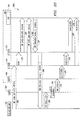
- FIG. 3A depicts a message flow embodiment 300A for effectuating a CS-originated SIP call based on dynamic IMRN allocation where SIP messaging is implemented.
- a wireless UE device 302 having the CS domain and IMS domain modes of functionality is operable to generate a SIP Invite message 312 towards an application server (AS) node 308 in response to detecting that a SIP call is being initiated from UE device 302 in the CS domain.
- the SIP Invite message 312 includes applicable call information such as call reference number, called party's SIP URI, additional URI information, and the like, e.g. A-party AOR in the P_Preferred Identity, Privacy Indicator Opaque parameter, GRID parameter, etc.
- the originating party either enters the URI (or SIP address) or Tel URI via a suitable interface (e.g. MMI) or selects it from a list stored in the UE to initiate the call.
- a suitable interface e.g. MMI
- the SIP Invite message 312 may further include an indicator in an indicator field that indicates whether the message is for a circuit-switched (CS) mobile-originated (MO) call (i.e. whether UE device 302 intends to make this call via CS domain).
- CS circuit-switched
- MO mobile-originated
- a new Network-Access-Info value such as "GERAN-CS” may be utilized.
- a new feature tag or new URI parameter may be provided in the SIP Invite message. Note, however, that an indication may be assumed merely from the inclusion of the SIP URI or Tel URI of the called party ("B-party") in the SIP Invite message.
- the TARGET address in the SIP Invite message is populated with the SIP URI or Tel URI of the called party or B-party.
- a SIP URI field of the SIP Invite message is populated with a public service identifier (PSI) of the AS node.
- PSI public service identifier
- a cause value in the SIP Invite message will be set appropriately to indicate that a radio bearer channel for the session is to be established over the CS domain.
- a suitable timer mechanism 310 may be initiated at the UE device in order to monitor a time-to-live variable associated with the call reference number. It should be appreciated that this timer may be provided in addition to normal SIP timers as this operation is known to provide a SIP 380 Response with specific information within a certain timeframe.
- AS node 308 disposed in the user's home IMS network is operable to launch SIP-URI logic 313 for generating and populating a suitable SIP 380 (Alternative Service) Response message (e.g. SIP 380 Response message) as described above.
- SIP 380 Alternative Service
- the network node Upon verifying that the user is allowed to do a SIP call and the Invite message includes the proper CS MO indicator, the network node (in this example, the IMS AS node) dynamically allocates a select IMRN mapped to the call information or parameters (e.g.
- the dynamically-allocated IMRN may be referred to as an IMS Centralised Service Routing Number or "ICSRN.”
- the dialog information contained in the Invite Header or in the body of the Invite may be used to correlate the call.
- a suitable timer mechanism may be started (block 314) at the AS node 308 in order to monitor a time-to-live variable associated with the dynamically allocated IMRN.
- UE device 302 After verifying that the call reference has not timed out based on the UE device's timer mechanism, responsive to receipt of the SIP 380 Response message 316, UE device 302 initiates a call setup message 320 that includes the dynamic IMRN (or ICSRN).
- MSC 304 generates an Initial Address Message (IAM) 322 towards MGCF 306.
- IAM Initial Address Message
- a SIP Invite message 324 that contains the IMRN is generated by MGCF 306 towards the AS node 308, which then uses the IMRN mapping for establishing the SIP session or call to the called party (not shown).
- the timer mechanism may be stopped (block 326) to verify if the IMRN has timed out. If timed-out, the SIP Invite message may be discarded and the call routing process may be terminated. If the IMRN has not timed out, the AS node 308 may establish the SIP session based on the IMRN correlation. After using the IMRN for correlation, it may be returned to the IMRN pool, wherein a quarantine timer may be started (block 328) such that the IMRN is prohibited from further use until the quarantine timer is stopped after a period of time (block 330).
- the timer mechanism at the device side may also be used to ensure that the call reference number has not timed out (e.g., using the timer mechanism 318), which reference number is used by the UE device to correlate the information received from the network node (e.g., dynamic IMRN). If the timer expires before the same reference number is received back from the network node, the UE device may reattempt the call process a predetermined number of times (e.g. five attempts), after which if no response has been received, the call procedure may be deemed to have failed. In other words, if the UE device receives a reference number that is no longer valid, it may be discarded and the call procedure may be terminated.
- FIG. 3B depicts a message flow diagram 300B for a mobile-originated SIP call by employing a SIP Invite message with a SIP-URI in the Request-URI wherein certain intermediary nodes in a home network 350 are exemplified.
- UE device 302 is operable to generate a SIP Invite message 356 towards I-CSCF 352, wherein the SIP Invite message includes a SIP-URI of the called party contained in the TARGET field.
- This Invite message is propagated to AS node 308 either directly as SIP Invite 362 or via S-CSCF 354 by way of SIP Invite messages 358 and 360.
- SIP 380 (Alternative Service) Response message 364 having the ICSRN is generated by AS node 308 towards S-CSCF 354, which is then propagated to UE device 302 via SIP response 366.
- a call setup message 368 having the ICSRN is provided to MSC 304, which initiates a CS origination procedure 370.
- IAM messaging 372 from MSC 304 towards MGCF 306 is operable to generate SIP Invite 374 towards I-CSCF 352, which may be directly propagated to AS node 308 as Invite message 380 having the ICSRN.
- I-CSCF 352 first provides a SIP Invite 376 to S-CSCF 354 which then propagates a SIP Invite 378 to AS node 308. Regardless, once the ICSRN is received at the AS node 308, appropriate call correlation is made to establish the SIP call between the UE and the called party.
- the E.164 number is not dynamically allocated but rather merely identified, calculated, or otherwise selected in accordance with any suitable algorithm.
- the UE device when it detects that it needs to invoke CS call origination, it may produce and send a SIP Invite message to an R-URI that is known to terminate at the IMS centralized services node.
- the Target parameter of the SIP Invite message is populated with the B party address (SIP URI or Tel URI) and the Cause value of the SIP Invite message is set to indicate that the call needs to be set up over CS.
- the R-URI may be populated with the B-party address, and may further include an indicator in an indicator field that indicates whether the message is for a circuit-switched (CS) mobile-originated (MO) call (i.e.
- a new Network-Access-Info value such as "GERAN-CS" may be utilized.
- a new feature tag or new URI parameter may be provided in the SIP Invite message.
- the SIP Invite message contains the GRUU of the UE/Public ID combination.
- the P-Preferred-ID is set to the calling line identity (CLI) associated with the user or subscriber of the UE device for identification in the CS network.
- the SIP R-URI may be one of many that has been provisioned in the UE device to indicate the ICCF. If so, the UE device could choose one of these at random, the URI could have some indice that identifies a priority order.
- the invite shall contain the GRUU of the UE/Public ID combination.
- the P-Preferred-ID shall be set to the calling line identity that the user wants to be known as in the CS network.
- the Network-Access-Info header shall be set to a value to indicate that the call is SIP controlled, but the radio bearer goes over the CS domain, in this example the setting is 3GPP-GERAN-CS, another example could be 3GPP-UTRAN-CS.
- the UE Upon receipt of a 380 (Alternative Service) response to the SIP Invite message, the UE shall use the ICSRN that was provided in the 380 (Alternative Service) response as the E.164 number to set up a CS call to.
- This E.164 number shall be in the contact header of the 380 (Alternative Service) or in fact it could be in the XML body.
- IMS centralized service node configuration information includes (a) the ICSRN E.164 start address number; and (b) number of ICSRN to be allocated or the last E.164 start address number. To allow for flexibility in numbering plan, there maybe more occurrences of (a) and (b) allowing pools of ICSRN to be allocated from different number ranges.
- other configuration information may include (c) life time an ICSRN can live for; and (d) quarantine time of an ICSRN - how long after an ICSRN has been assigned back to the ICSRN pool it cannot be used for.
- the IMS centralized services node receives an Invite that contains an R-URI is shall examine that R-URI to determine if that R-URI is associated with a request to initiate a MO call over CS.
- An alternative implementation is that the IMS centralized services node will examine the P-Access-Network-Info header. If it is set to GERAN-CS or some other value to indicate call-set-up over CS, the IMS centralized services node shall assume the received Invite shall be terminated here and the behaviour as follows shall take place.
- the IMS centralized services node will assign a ICSRN to the received GRUU.
- the following represents a possible mapping of the ICSRN to the other information elements.
- the IMS centralized services node may do the following: (a) Resend the same ICSRN and reset the timer; (b) Allocate a new ICSRN, start a timer associated with that ICSRN and put the old put into the quarantine pool; and (c) Reject the request altogether and put the old put into the quarantine pool.
- FIG. 4 depicts a block diagram of an embodiment of a mobile communication device operable as a wireless UE device, e.g., UE 302, for purposes of the present patent disclosure.
- UE 302 may comprise an arrangement similar to one shown in FIG. 4
- a microprocessor 402 providing for the overall control of an embodiment of UE 302 is operably coupled to a communication subsystem 404 that is capable of multi-mode communications (e.g., CS domain, IP domain such as IMS, et cetera).
- the communication subsystem 404 generally includes one or more receivers 408 and one or more transmitters 414 as well as associated components such as one or more local oscillator (LO) modules 410 and a processing module such as a digital signal processor (DSP) 412.
- LO local oscillator
- DSP digital signal processor
- the particular design of the communication module 404 may be dependent upon the communications networks with which the mobile device is intended to operate (e.g., a CDMA network, a GSM network, WLAN, et cetera).
- signals received by antenna 406 through appropriate access infrastructure 405 are provided to receiver 408, which may perform such common receiver functions as signal amplification, frequency down conversion, filtering, channel selection, analog-to-digital (A/D) conversion, and the like.
- signals to be transmitted are processed, including modulation and encoding, for example, by DSP 412, and provided to transmitter 414 for digital-to-analog (D/A) conversion, frequency up conversion, filtering, amplification and transmission over the air-radio interface via antenna 416.
- DSP 412 digital-to-analog
- Microprocessor 402 may also interface with further device subsystems such as auxiliary input/output (I/O) 418, serial port 420, display 422, keyboard/keypad 424, speaker 426, microphone 428, random access memory (RAM) 430, a short-range communications subsystem 432, and any other device subsystems, e.g., timer mechanisms, generally labeled as reference numeral 433.
- I/O auxiliary input/output
- serial port 420 display 422, keyboard/keypad 424, speaker 426, microphone 428, random access memory (RAM) 430, a short-range communications subsystem 432, and any other device subsystems, e.g., timer mechanisms, generally labeled as reference numeral 433.
- display 422, keyboard/keypad 424, speaker 426, microphone 428 are part of the user interface of the mobile communication device through which calls may be initiated by and maintained for the end user.
- a SIM/RUIM 434 may also be provided in communication with the microprocessor 402.
- SIM/RUIM interface 434 is operable with a SIM/RUIM card having a number of key configurations 444 and other information 446 such as URIs as well as identification and subscriber-related data.
- a SIM/RUIM the UE device is referred to as mobile equipment (ME) but techniques of the present disclosure are applicable to either device.
- Operating system software and applicable service logic software may be embodied in a persistent storage module (i.e., non-volatile storage) such as Flash memory 435.
- Flash memory 435 may be segregated into different areas, e.g., storage area for computer programs 436 (e.g., service processing logic), as well as data storage regions such as device state 437, address book 439, other personal information manager (PIM) data 441, and other data storage areas generally labeled as reference numeral 443.
- a transport stack 445 may be provided to effectuate one or more appropriate radio-packet transport protocols.
- a call control logic module 448 is provided for appropriate call message processing according to the present techniques, effectuating SIP-URI and call reference ID generation, validation, verification, and correlation with IMRNs, etc. as set forth hereinabove.
- SIP Session Initiation Protocol
- UE user equipment
- IMS IP multimedia subsystem
- SIP Invite message which includes a SIP Uniform Resource Indicator (URI) or Tele URI of the called party is sent from the UE device to an application server (AS) node in the IMS network.
- AS application server
- IMRNs IP multimedia routing numbers
- the AS node dynamically allocates a select E.164 number with respect to the called party's URI received from the UE device, and returns it to the UE device in a SIP 380 (Alternative Service) Response message. Subsequently, the dynamically-allocated E.164 number is sent from the UE device in a call setup message for identification of the URI at the AS node.
- the dynamically-allocated E.164 number is utilized for routing the SIP call towards the called party upon interrogating the URI - IMRN mapping, whereupon it may be released back to the pool of IMRNs for future use.
- Appropriate timers may be provided at the device and AS node endpoints so that it can be verified whether a call reference number associated with the call remains valid (e.g. it has not timed out) or the dynamically-allocated IMRN remains valid (e.g. it has not timed out).
- the released IMRN may be quarantined for a period of time.
- the technique may include the acts of maintaining access to a pool of E.164 numbers as IP multimedia routing numbers (IMRNs); receiving a SIP Invite message for a SIP call originating from a user equipment (UE) device through a circuit-switched network domain, the SIP Invite message having call information which includes a SIP URI or Tel URI of the called party; selecting one of the E.164 numbers and storing a mapping between the selected E.164 number and the call information; causing a SIP 380 (Alternative Service) Response message to be sent to the UE device in response to receiving the SIP Invite message, the SIP 380 (Alternative Service) message including the selected E.164 number; and after the sending of the SIP 380 (Alternative Service) Response message, receiving a call setup message from the UE device for the SIP call, the call setup message having the selected E.164 number; identifying, with use of the selected E.164 number via the stored mapping, the URI identified from the call setup message; and causing
Landscapes
- Engineering & Computer Science (AREA)
- Computer Networks & Wireless Communication (AREA)
- Signal Processing (AREA)
- Business, Economics & Management (AREA)
- General Business, Economics & Management (AREA)
- Multimedia (AREA)
- Databases & Information Systems (AREA)
- Telephonic Communication Services (AREA)
- Mobile Radio Communication Systems (AREA)
- Data Exchanges In Wide-Area Networks (AREA)
- Exchange Systems With Centralized Control (AREA)
- Information Transfer Between Computers (AREA)
Abstract
Description
- This patent application claims priority to "SYSTEM AND METHOD FOR ORIGINATING A SIP CALL VIA A CIRCUIT-SWITCHED NETWORK FROM A USER EQUIPMENT DEVICE," Application No. 11/740,102 (Attorney Docket No. 0108-0340/US, RIM No.: 32270-US-PAT), and filed on 25 April 2007, and to "SYSTEM AND METHOD FOR MANAGING CALL CONTINUITY IN IMS NETWORK ENVIRONMENT USING SIP MESSAGING," Application No. 11/542,462 (Attorney Docket No. 1400-1070US, RIM No.: 31348-US-PAT), and filed on October 3 2006, which are hereby incorporated by reference herein.
- The present patent disclosure generally relates to call routing in communications networks. More particularly, and not by way of any limitation, the present patent disclosure is directed to a system and method for managing call routing in a network environment including a circuit-switched (CS) network and an IP multimedia subsystem (IMS) network, wherein a CS-originated IP call (e.g. based on the Session Initiation Protocol or SIP) is to be routed using the IMS network infrastructure.
- Today's advanced communication devices are capable of seamlessly operating in a packet-switched IP network domain (using, for example, wireless LAN (WLAN) or Wi-MAX networks, etc.) as well as a circuit-switched cellular network domain. To facilitate such capability, current 3rd Generation Partnership Project (3GPP) standards specify a new, IP-based network architecture referred to as the IP multimedia subsystem (IMS) which allows a communication device (referred to as user equipment or UE) to initiate calls to both IP-only subscribers and conventional circuit-switched telephony subscribers using either of the domains. There may arise a situation, however, where a wireless device, i.e. a UE device in 3GPP, is able to make a voice call to a called party using the circuit-switched network domain only because either no packet-switched network is available or the available networks in the packet-switched domain do not support the Voice-over-IP (VoIP) service. In such a situation, if the called party happens to be an IP-only subscriber and is identified with a Uniform Resource Indicator (URI), the originating UE may not be able to make the IP-based call since the UE device can effectuate only E.164 number-based calls while operating in the circuit-switched domain.
- Methods and apparatus for originating a Session Initiation Protocol (SIP) call from a user equipment (UE) device in a network environment including a circuit-switched (CS) network and an IP multimedia subsystem (IMS) network to a called party are described herein. When the SIP call is originated from the UE device in the CS network domain, a SIP Invite message which includes a SIP Uniform Resource Indicator (URI) or Tel URI of the called party is sent from the UE device to an application server (AS) node in the IMS network. At the AS node, a pool of E.164 numbers are maintained as IP multimedia routing numbers (IMRNs) which are utilized for mapping to or otherwise associating with called party URIs. The AS node dynamically allocates a select E.164 number with respect to the called party's URI received from the UE device, and returns it to the UE device in a SIP 380 (Alternative Service) Response message. Subsequently, the dynamically-allocated E.164 number is sent from the UE device in a call setup message for identification of the URI and other suitable call information at the AS node. Thus, the dynamically-allocated E.164 number is utilized for routing the SIP call towards the called party upon interrogating the SIP URI - IMRN mapping, whereupon it may be released back to the pool of IMRNs for future use. Appropriate timers may be provided at the device and AS node endpoints so that it can be verified whether a call reference number associated with the call remains valid (e.g. it has not timed out) or the dynamically-allocated IMRN remains valid (e.g. it has not timed out). Optionally, the released IMRN may be quarantined for a period of time.
- A more complete understanding of the embodiments of the present patent disclosure may be had by reference to the following Detailed Description when taken in conjunction with the accompanying drawings wherein:
-
FIG. 1 depicts a network environment including circuit-switched network infrastructure and IM multimedia subsystem (IMS) infrastructure wherein an embodiment of the present patent disclosure may be practiced; -
FIG. 2 depicts a flowchart associated with one or more exemplary embodiments of the present patent disclosure; -
FIGS. 3A and3B depict exemplary message flow diagrams for originating a SIP call by employing a SIP Invite message with a SIP-URI of the called party in the Request-URI, for mapping with a dynamically-allocated IP multimedia routing number (IMRN) at an application server (AS) node; and -
FIG. 4 depicts a block diagram of an embodiment of a communications device operable for purposes of the present patent disclosure. - Methods and apparatus for originating a Session Initiation Protocol (SIP) call from a user equipment (UE) device in a network environment including a circuit-switched (CS) network and an IP multimedia subsystem (IMS) network to a called party are described herein. When the SIP call is originated from the UE device in the CS network domain, a SIP Invite message which includes a SIP Uniform Resource Indicator (URI) or Tel URI of the called party is sent from the UE device to an application server (AS) node in the IMS network. At the AS node, a pool of E.164 numbers are maintained as IP multimedia routing numbers (IMRNs) which are utilized for mapping to or otherwise associating with called party URIs. The AS node dynamically allocates a select E.164 number with respect to the called party's URI received from the UE device, and returns it to the UE device in a SIP 380 (Alternative Service) Response message. Subsequently, the dynamically-allocated E.164 number is sent from the UE device in a call setup message for identification of the URI and other suitable call information at the AS node. Thus, the dynamically-allocated E.164 number is utilized for routing the SIP call towards the called party upon interrogating the SIP URI - IMRN mapping, whereupon it may be released back to the pool of IMRNs for future use. Appropriate timers may be provided at the device and AS node endpoints so that it can be verified whether a call reference number associated with the call remains valid (e.g. it has not timed out) or the dynamically-allocated IMRN remains valid (e.g. it has not timed out). Optionally, the released IMRN may be quarantined for a period of time.
- A system and method of the present patent disclosure will now be described with reference to various examples of how the embodiments can best be made and used. Like reference numerals are used throughout the description and several views of the drawings to indicate like or corresponding parts, wherein the various elements are not necessarily drawn to scale. Referring now to the drawings, and more particularly to
FIG. 1 , anexemplary network environment 100 is depicted wherein an embodiment of the present patent disclosure may be practiced for routing a SIP call originated by a UE device in a circuit-switched network or domain. As depicted, thenetwork environment 100 includes anaccess space 104 comprised of a number of access technologies available to a plurality of UE devices 102-1 through 102-N. For purposes of the present disclosure, a UE device may be any tethered or untethered communications device, and may include any personal computer (e.g. desktops, laptops, palmtops, or handheld computing devices) equipped with a suitable wireless modem or a mobile communications device (e.g. cellular phones or data-enabled handheld devices capable of receiving and sending messages, web browsing, et cetera), or any enhanced PDA device or integrated information appliance capable of email, video mail, Internet access, corporate data access, messaging, calendaring and scheduling, information management, and the like. Preferably, the UE device is capable of operating in multiple modes in that it can engage in both circuit-switched (CS) as well as packet-switched (PS) communications, and can transition from one mode of communications to another mode of communications without loss of continuity. - The
access space 104 may be comprised of both CS and PS networks, which may involve wireless technologies, wireline technologies, broadband access technologies, etc. For example,reference numeral 106 refers to wireless technologies such as Global System for Mobile Communications (GSM) networks and Code Division Multiple Access (CDMA) networks, although it is envisaged that the teachings hereof may be extended to any 3rd Generation Partnership Project (3GPP)-compliant cellular network (e.g. 3GPP or 3GPP2) as well.Reference numeral 108 refers to broadband access networks including wireless local area networks or WLANs, Wi-MAX networks as well as fixed networks such as DSL, cable broadband, etc. Also exemplified as part of theaccess space 104 is the conventionalwireline PSTN infrastructure 110. - An IP multimedia subsystem (IMS)
core network 112 is coupled to the various access networks set forth above, including any CS-based networks. As is well known, the IMS standard defined by the 3GPP is designed to allow service providers manage a variety of services that can be delivered via IP over any network type, wherein IP is used to transport both bearer traffic and SIP-based signaling traffic. Broadly, IMS is a framework for managing the applications (i.e. services) and networks (i.e. access) that is capable of providing multimedia services. IMS defines an "application server" to be the network element that delivers services subscribers use, e.g. voice call continuity (VCC), Push-To-Talk (PTT), IMS Centralized Services (ICS) etc. IMS manages applications by defining common control components that each application server (AS) is required to have, e.g. subscriber profiles, IMS mobility, network access, authentication, service authorization, charging and billing, inter-operator functions, and interoperation with the legacy phone network. - It should be understood that whereas IMS is defined by the 3GPP standards body which mainly addresses GSM networks, another group, 3GPP2, is involved in defining a closely analogous architecture referred to as Multimedia Domain (MMD). MMD is essentially an IMS for CDMA networks, and since MMD and IMS are roughly equivalent, the term "IMS" may be used in this present patent disclosure to refer collectively to both IMS and MMD where applicable.
- Continuing to refer to
FIG. 1 , reference numerals 114-1 to 114-N refer to a plurality of AS nodes operable to support various services, e.g. VCC, PTT, ICS etc. as alluded to hereinabove. Furthermore, in order to effectuate call control of a SIP call using CS as the voice bearer, one of the AS nodes, e.g. AS 114-(N-1), may be provided for implementing functionality referred to as IMS Centralised Services Control Function (ICCF). ICCF is operable as an IMS application server element that resides in the home IMS network and tracks all call sessions and related mobile Voice-over-IP (VoIP) bearer traffic, between CS and IMS domains. Additional details regarding the functionality of AS 114-(N-1) may be found in the pending U.S. patent application entitled "SYSTEM AND METHOD FOR MANAGING CALL ROUTING IN A NETWORK ENVIRONMENT INCLUDING IMS" (Attorney Docket No. 1400-1059US; RIM No.: 30683-US-PAT), Application No.:11/328,875, filed January 10, 2006 - Additionally, another AS node, AS 114-N, is provided as part of the
core IMS network 112 for facilitating routing of IP/SIP calls originated by one of the UE devices in the CS domain while connectivity in the PS domain is not available or the available PS networks are not capable of supporting the VoIP service (e.g. due to bandwidth limitations). Appropriate database structures (e.g. DB 122), timer mechanisms (e.g. timer 124) andsuitable logic 126 may be provided in association with AS 114-N for purposes of configuring and managing a pool of IP multimedia routing numbers (IMRNs) from which a select IMRN may be dynamically-allocated for purposes of SIP call routing as will be described in greater detail below. - In accordance with the teachings of the present patent disclosure, AS 114-N is preferably provided with appropriate logic/structure/software/firmware module(s), such as call continuity control function (CCCF) 116, network domain section (NeDS) 118, and gsm service capability feature (gsm SCF) 120 for performing the following: maintaining a pool of E.164 numbers that are operable as IMRNs which terminate on the AS node, wherein a select E.164 number may be mapped to the received information in the SIP Invite message, including but not limited to, a called party's SIP URI or Tel URI, P-Preferred Identity, Privacy Indication, and Network Access Info header; dynamically allocating the select E.164 number to a received called party's URI (e.g. SIP URI or Tel URI) and other received information and providing the select E.164 number to the originating UE device via a SIP 380 (Alternative Service) Response message; verifying that the select E.164 number has not timed out when that select E.164 number is returned (via conventional CS call setup) to AS 114-N for effectuating a SIP call session with respect to the called party; and optionally, quarantining the select E.164 number for a period of time upon releasing it back to the pool for future use.
- Note that E.164 is indicative of the International Telecommunications Union (ITU) telephone numbering plan, which specifies how and by whom telephone numbers are assigned. The format and notation of E.164 telephone numbers is specified in the ITU standard E.123, for example. To manage a pool of dynamically-allocable IMRNs, the AS node (e.g. AS 114-N) may be configured in a number of ways with respect to the E.164 numbers. For example, a particular E.164 number may be provided as a "starting address" number of an IMRN range. Another E.164 number may operate as a range delimiter with respect to the IMRN range. To allow flexibility, it may be desirable to provide for different pools of IMRNs to be configured from different number ranges. Further, appropriate timer mechanism(s) may be implemented at AS 114-N in order to ensure that the allocated IMRNs remain valid (e.g. they have not timed out, that is, they are used within appropriate time limits) or suitable quarantine times are applied. As will be described in detail below, management of timers associated with IMRNs at AS 114-N and timers associated with call reference numbers at the originating UE device allows for dynamic provisioning of IMRNs that could be used for effectuating SIP calls by the UE device operating in the CS domain.
-
FIG. 2 depicts a flowchart of an exemplary embodiment of an overall methodology of the present patent disclosure for effectuating a CS-originated SIP call by a UE device with respect to a called party identified by a URI (e.g. a SIP URI or Tel URI). The SIP call is initiated by the end user of the UE device, or the originating party. Preferably, the originating party either enters the URI via a suitable interface (e.g. MMI) or selects it from a list stored in the UE. As is well known, a typical SIP address may take on the form of sip: <username>@<hostname>, which may include additional syntax elements and parameters such as those described in, e.g. RFC 3261 entitled: SIP: Session Initiation Protocol and Internet Draft entitled Obtaining and Using Globally Routable User Agent (UA) URIs (GRUU) in the Session Initiation Protocol (SIP) (draft-ietf-sip-gruu-06) (Expires: April 23, 2006). - Note that a "Tel URI" is presently defined in Request For Comments (RFC) 3966 (December 2004). Some examples of Tel URIs are as follows: (1) tel:+1-201-555-0123: This URI points to a phone number in the United States. The hyphens are included to make the number more human readable; they separate country, area code and subscriber number; (2) tel:7042;phone-context=example.com: The URI describes a local phone number valid within the context "example.com"; and (3) tel:863-1234;phone-context=+1-914-555: The URI describes a local phone number that is valid within a particular phone prefix.
- At
block 202, various pieces of information relating to the SIP call (which may be collectively referred to as "call information" herein). The call information may include information such as a call reference number associated with the call, called party's SIP URI (or, the B-URI), Opaque parameter (if available), GRID parameter (if available), additional URI-related information (e.g. display name), calling party's SIP URI (or, the A-URI), Opaque parameter, privacy indicator, network access info header etc. If the calling party sends a B-URI that comprises an Address of Record (AOR) as well as Opaque and GRID parameters, they will be provided as part of the call information. Additionally, if the calling party sends its own URI comprising AOR, Opaque and GRID parameters, they will also be provided in the call information. - A timer may be initiated on the UE device that is used for monitoring at least a portion of the call information that is transmitted by the originating UE device as described above. In particular, the timer may be implemented for monitoring the elapsed time since a particular call reference number is generated and forwarded to the IMS network node. At the IMS network node, an IMRN selected from the pool of IMRNs is dynamically associated with respect to the call reference number, wherein the IMRN is mapped to the at least a portion of the call information, e.g. the received called party's SIP URI (block 204). In some embodiments, the IMRN may be mapped to all the received SIP call information. Also, a timer may be started at the network node for monitoring a time-to-live variable associated with the dynamically-allocated IMRN.
- Thereafter, the dynamically-allocated IMRN is provided to the UE device via a SIP 380 (Alternative Service) Response message. Upon receipt of the SIP 380 (Alternative Service) Response message which includes the dynamically-allocated IMRN at the UE device, the elapsed time associated with the call reference number is monitored to ensure that it is not stale (block 206). The dynamically-allocated IMRN is accepted by the UE device if the time elapsed satisfies a select condition, e.g. within a time-to-live value (block 208). In response, appropriate call setup is then initiated by the UE device using the dynamic IMRN, whereby the accepted IMRN is returned to the AS node since it terminates thereat. Upon receipt of the IMRN at the AS node, its time-to-live variable is monitored to ensure that it has not timed out (block 210). Thereafter, the called party's SIP URI or Tel URI (and any other suitable SIP information originally received that is mapped to the dynamically-allocated IMRN) is utilized by the AS node for effectuating the SIP session with the called party by producing and sending a SIP Invite message (e.g. inserting the A-party URI, Privacy indicator, B-party URI, Opaque parameter, etc., in the SIP Invite message and causing it to be sent to the called party). In one implementation, the dynamic IMRN may optionally be returned back to the pool of IMRNs, wherein it may be quarantined for a certain period of time before it is reused or becomes available for future use (block 212).
- Based on the foregoing, those skilled in the art will appreciate that when the call information, i.e. called party's SIP URI or Tel URI, call reference number, etc. is sent by the UE device to the serving AS node, appropriate logic at the AS node may create a record that maps the received call information to an E.164-based IMRN, which is transmitted back to the UE device. Upon correlating the IMRN with the call reference number, the UE sets up a call using the IMRN that terminates on the AS node. The IMRN is then interrogated against the record to retrieve the called party's URI for establishing a SIP session with the called party (i.e. between the calling party (UE device) identified by the A-party address and the called party identified by the B-party address).
- It should be further recognized by those skilled in the art that the message flow between the UE device and the home IMS network's AS node may be mediated through a number of other appropriate network infrastructure elements, and may be implemented in a number of ways depending on the device capabilities as well as the network features and protocols being used. Typically, the message flow may be mediated via network elements such as a mobile switching center (MSC) and a media gateway control function (MGCF) element disposed between the UE device and its home IMS AS node operable to facilitate CS-originated SIP calls.
-
FIG. 3A depicts amessage flow embodiment 300A for effectuating a CS-originated SIP call based on dynamic IMRN allocation where SIP messaging is implemented. Awireless UE device 302 having the CS domain and IMS domain modes of functionality is operable to generate a SIP Invite message 312 towards an application server (AS)node 308 in response to detecting that a SIP call is being initiated fromUE device 302 in the CS domain. As described earlier, the SIP Invite message 312 includes applicable call information such as call reference number, called party's SIP URI, additional URI information, and the like, e.g. A-party AOR in the P_Preferred Identity, Privacy Indicator Opaque parameter, GRID parameter, etc. As described above, the originating party either enters the URI (or SIP address) or Tel URI via a suitable interface (e.g. MMI) or selects it from a list stored in the UE to initiate the call. - The SIP Invite message 312 may further include an indicator in an indicator field that indicates whether the message is for a circuit-switched (CS) mobile-originated (MO) call (i.e. whether
UE device 302 intends to make this call via CS domain). For example, a new Network-Access-Info value such as "GERAN-CS" may be utilized. Alternatively, a new feature tag or new URI parameter may be provided in the SIP Invite message. Note, however, that an indication may be assumed merely from the inclusion of the SIP URI or Tel URI of the called party ("B-party") in the SIP Invite message. In one preferred embodiment, the TARGET address in the SIP Invite message is populated with the SIP URI or Tel URI of the called party or B-party. In this case, a SIP URI field of the SIP Invite message is populated with a public service identifier (PSI) of the AS node. A cause value in the SIP Invite message will be set appropriately to indicate that a radio bearer channel for the session is to be established over the CS domain. - A
suitable timer mechanism 310 may be initiated at the UE device in order to monitor a time-to-live variable associated with the call reference number. It should be appreciated that this timer may be provided in addition to normal SIP timers as this operation is known to provide aSIP 380 Response with specific information within a certain timeframe. - Responsive to the Invite message 312, which may be mediated via I-CSCF and/or S-CSCF nodes, AS
node 308 disposed in the user's home IMS network is operable to launch SIP-URI logic 313 for generating and populating a suitable SIP 380 (Alternative Service) Response message (e.g. SIP 380 Response message) as described above. Upon verifying that the user is allowed to do a SIP call and the Invite message includes the proper CS MO indicator, the network node (in this example, the IMS AS node) dynamically allocates a select IMRN mapped to the call information or parameters (e.g. A-party AOR in the P_Preferred Identity, Privacy Indicator Opaque parameter, GRID parameter, etc.) and returns it back toUE device 302 viaSIP 380message 316. Again, the dynamically-allocated IMRN may be referred to as an IMS Centralised Service Routing Number or "ICSRN." The dialog information contained in the Invite Header or in the body of the Invite may be used to correlate the call. - A suitable timer mechanism may be started (block 314) at the
AS node 308 in order to monitor a time-to-live variable associated with the dynamically allocated IMRN. After verifying that the call reference has not timed out based on the UE device's timer mechanism, responsive to receipt of theSIP 380Response message 316,UE device 302 initiates acall setup message 320 that includes the dynamic IMRN (or ICSRN). In response,MSC 304 generates an Initial Address Message (IAM) 322 towardsMGCF 306. ASIP Invite message 324 that contains the IMRN is generated byMGCF 306 towards theAS node 308, which then uses the IMRN mapping for establishing the SIP session or call to the called party (not shown). It is recognized that various intermediate SIP messages and resource allocation/reservation negotiations may take place betweenMGCF 306 and the called party subsequent toSIP Invite 324, which are not described in particular detail herein. Also, additional ISUP messaging that may take place before a bearer path is established between theUE device 302 and the called party understood by those skilled in the art is not shown herein. - Upon receipt of the dynamically-allocated IMRN via
SIP Invite 324 at theAS node 308, the timer mechanism may be stopped (block 326) to verify if the IMRN has timed out. If timed-out, the SIP Invite message may be discarded and the call routing process may be terminated. If the IMRN has not timed out, theAS node 308 may establish the SIP session based on the IMRN correlation. After using the IMRN for correlation, it may be returned to the IMRN pool, wherein a quarantine timer may be started (block 328) such that the IMRN is prohibited from further use until the quarantine timer is stopped after a period of time (block 330). - As pointed out previously, the timer mechanism at the device side may also be used to ensure that the call reference number has not timed out (e.g., using the timer mechanism 318), which reference number is used by the UE device to correlate the information received from the network node (e.g., dynamic IMRN). If the timer expires before the same reference number is received back from the network node, the UE device may reattempt the call process a predetermined number of times (e.g. five attempts), after which if no response has been received, the call procedure may be deemed to have failed. In other words, if the UE device receives a reference number that is no longer valid, it may be discarded and the call procedure may be terminated.
-
FIG. 3B depicts a message flow diagram 300B for a mobile-originated SIP call by employing a SIP Invite message with a SIP-URI in the Request-URI wherein certain intermediary nodes in ahome network 350 are exemplified. Similar to theflow diagram embodiment 300A described above,UE device 302 is operable to generate aSIP Invite message 356 towards I-CSCF 352, wherein the SIP Invite message includes a SIP-URI of the called party contained in the TARGET field. This Invite message is propagated to ASnode 308 either directly asSIP Invite 362 or via S-CSCF 354 by way ofSIP Invite messages Response message 364 having the ICSRN is generated byAS node 308 towards S-CSCF 354, which is then propagated toUE device 302 viaSIP response 366. Acall setup message 368 having the ICSRN is provided toMSC 304, which initiates aCS origination procedure 370.IAM messaging 372 fromMSC 304 towardsMGCF 306 is operable to generateSIP Invite 374 towards I-CSCF 352, which may be directly propagated to ASnode 308 asInvite message 380 having the ICSRN. Alternatively, I-CSCF 352 first provides aSIP Invite 376 to S-CSCF 354 which then propagates aSIP Invite 378 to ASnode 308. Regardless, once the ICSRN is received at theAS node 308, appropriate call correlation is made to establish the SIP call between the UE and the called party. - Note that, in one variation of the technique described in relation to
FIGs. 2 ,3A , and3B , the E.164 number is not dynamically allocated but rather merely identified, calculated, or otherwise selected in accordance with any suitable algorithm. - Elaborating on the techniques of the present disclosure in further detail, when the UE device detects that it needs to invoke CS call origination, it may produce and send a SIP Invite message to an R-URI that is known to terminate at the IMS centralized services node. In this case, the Target parameter of the SIP Invite message is populated with the B party address (SIP URI or Tel URI) and the Cause value of the SIP Invite message is set to indicate that the call needs to be set up over CS. Alternatively, the R-URI may be populated with the B-party address, and may further include an indicator in an indicator field that indicates whether the message is for a circuit-switched (CS) mobile-originated (MO) call (i.e. whether
UE device 302 intends to make this call via the CS domain). For example, a new Network-Access-Info value such as "GERAN-CS" may be utilized. Alternatively, a new feature tag or new URI parameter may be provided in the SIP Invite message. In the first case, the SIP Invite message contains the GRUU of the UE/Public ID combination. The P-Preferred-ID is set to the calling line identity (CLI) associated with the user or subscriber of the UE device for identification in the CS network. The B-Party Public user address (Tel URI, SIP URI) is set in SIP URI Target parameter, and the cause value indicates CS bearer required = YYY. - Note that when the Target parameter is used to carry the B party address, the SIP R-URI may be one of many that has been provisioned in the UE device to indicate the ICCF. If so, the UE device could choose one of these at random, the URI could have some indice that identifies a priority order.
- An example is provided below:
      INVITE sip:icenetworknode@example.com;\

 target=sip:+15555551002%40example.com;user=phone;\
                cause=YYY SIP/2.0
      P-Preferred-Identity: <tel: +1-555-1001>
      P-Access-Network-Info: 3GPP-GERAN;
      Privacy: none
 From:Alice
 <sip:+15551001@example.com;user=phone>;tag=9fxced76sl
      Supported: gruu
      To: sip:+15555551002@example.com;user=phone
     Call-ID: c3x842276298220188511
     CSeq: 1 INVITE
     Max-Forwards: 70
      Contact: <sip:alice@192.0.2.1>
      ;+sip.instance="<urn:uuid:f81d4fae-7dec-11d0-a765-
 00a0c91e6bf6>"
      Content-Type: application/sdp
      Content-Length: *Body length goes here*
     INVITE sip: sip:+15555551002%40example.com;user=phone;\
                SIP/2.0
      P-Preferred-Identity: <tel: +1-555-1001>
      P-Access-Network-Info: 3GPP-GERAN-CS;
      Privacy: none
      From:Alice
 <sip:+15551001@example.com;user=phone>;tag=9fxced76sl
      Supported: gruu
      To: sip:+15555551002@example.com;user=phone
      Call-ID: c3x842276298220188511
      CSeq: 1 INVITE
      Max-Forwards: 70
      Contact: <sip:alice@192.0.2.1>
      ;+sip.instance="<urn:uuid:f81d4fae-7dec-11d0-a765-
 00a0c91e6bf6>"
      Content-Type: application/sdp
      Content-Length: *Body length goes here*
ICSRN --
- GRUU
- P-Asserted ID(s)
- B-Number (SIP URI or Tel URI)
 <!ELEMENT ICSRN EMPTY>
 <!ATTLIST ICSRN
   TYPE (SIP_URI | Tel_URI) #REQUIRED
 >

 <!ELEMENT RAT EMPTY>
 <!ATTLIST RAT
 TYPE (IEEE-802.11 | IEEE-802.11a | IEEE-802.11b | IEEE-
 802.11g | 3GPP-GERAN | 3GPP-UTRAN-FDD | 3GPP-UTRAN-TDD |
 ADSL | ADSL2 | ADSL2+ | RADSL | SDSL | HDSL | HDSL2 |
 G.SHDSL | VDSL | IDSL | 3GPP2-1X | 3GPP2-1X-HRPD | DOCSIS |
 token | 3GPP -GERAN CS | 3GPP -GERAN PS | 3GPP-UTRAN CS |
 3GPP-UTRAN PS | EVDO | CDMA1X | WiMAX) #REQUIRED
 >
Or
<!ELEMENT AT EMPTY>
 <!ATTLIST AT
 TYPE (IEEE-802.11 | IEEE-802.11a | IEEE-802.11b | IEEE-
 802.11g | 3GPP-GERAN | 3GPP-UTRAN-FDD | 3GPP-UTRAN-TDD |
 ADSL | ADSL2 | ADSL2+ | RADSL | SDSL | HDSL | HDSL2 |
 G.SHDSL | VDSL | IDSL | 3GPP2-1X | 3GPP2-1X-HRPD | DOCSIS |
 token | 3GPP -GERAN CS | 3GPP -GERAN PS | 3GPP-UTRAN CS |
 3GPP-UTRAN PS | EVDO |CDMA1X | WiMAX) #REQUIRED
 >

 <?xml version="1.0" ?>
 <!-- Draft DTD for the IMS XML body. -->

 <!DOCTYPE ims-3gpp [
       <!-- ims-3gpp element: root element -->

       <!ELEMENT ims-3gpp (alternative-service?, service-info?)>
       <!ATTLIST ims-3gpp version CDATA #REQUIRED>

       <!-- service-info element: The transparent data received from HSS for AS -->
       <!ELEMENT service-info (#PCDATA)>

       <! -- altemative-service: alternative-service used in emergency sessions -->
       <!ELEMENT alternative-service (type, reason)>
       <!ELEMENT type (emergency | vcc-domain-tx,
 MO call)>
       <!ELEMENT reason (#PCDATA)>
 <!ELEMENT vcc-domain-tx (uri?, access-type?, domain-type?)
 <!ELEMENT uri (#PCDATA)>
 <!ELEMENT access-type EMPTY>
 <!ATTLIST access-type
 access-technology (TEEE-802.11 | IEEE-802.11a | IEEE-
 802.11b | IEEE-802.11g | 3GPP-GERAN | 3GPP-UTRAN-FDD | 3GPP-
 UTRAN-TDD | ADSL | ADSL2 | ADSL2+ | RADSL | SDSL | HDSL |
 HDSL2 | G.SHDSL | VDSL | IDSL | 3GPP2-1X | 3GPP2-1X-HRPD |
 DOCSIS | token | 3GPP -GERAN CS | 3GPP -GERAN PS | 3GPP-UTRAN
 CS | 3GPP-UTRAN PS | EVDO | CDMA1X | WiMAX) #REQUIRED
 >
 <!ELEMENT domain-type EMPTY>
 <!ATTLIST domain-type
  domain (IMS | CS) #IMPLIED
 >
 ] >

 <vcc-domain-tx>
     <uri>tel:ffff</uri>
     <access-type access-technology=/IEEE-802.11"/>
     <domain-type domain="IMS"/>
 </vcc-domain-tx>

 END
According to further inventive aspects there is provided:
- 1. A method for use in routing a Session Initiation Protocol (SIP) call in a network environment including a circuit-switched (CS) network and an Internet Protocol (IP) multimedia subsystem (IMS) network, the SIP call being originated in the CS network by a mobile communication device towards a called party identified by a SIP Uniform Resource Indicator (URI) or Tel URI, the method comprising the acts of:
- causing a SIP Invite message with call information associated with the SIP call to be sent to the IMS network in response to identifying a mobile-originated call request for the SIP call, the SIP Invite message including the URI of the called party;
- receiving a SIP 380 (Alternative Service) Response message from the IMS network in response to sending the SIP Invite message, the SIP 380 (Alternative Service) Response message including an E.164 number; and
- after receiving the SIP 380 (Alternative Service) Response message, causing a CS call setup message to be sent to the IMS network for the SIP call, the CS call setup message including the E.164 number for routing the SIP call to the called party.
- 2. The method of 1, further comprising:
- populating a TARGET field of SIP Invite message with the URI of the called party.
- 3. The method of 1, further comprising:
- populating a URI field of the SIP Invite message with a public service identifier (PSI) of an application server (AS) node of the IMS network.
- 4. The method of 1, further comprising:
- populating the SIP Invite message with an indicator field which indicates whether the SIP Invite message is for a circuit-switched mobile-originated call from the mobile communication device.
- 5. The method of 1, wherein the act of identifying the mobile-originated call request which includes the URI of the called party comprises receiving a selection of the URI at a user interface of the mobile communication device.
- 6. The method of 1, wherein the E.164 number is a dynamically-selected E.164 number from a pool of E.164 numbers in the IMS network and mapped to the URI in the IMS network.
- 7. The method of
claim 1, which is embodied in a computer program product comprising a computer readable medium and computer instructions stored in the computer readable medium, the computer instructions being executable by one or more processors of the wireless device for performing the method. - 8. A mobile communication device operable to originate a SIP call in a network environment including a circuit-switched (CS) network and an Internet Protocol (IP) multimedia subsystem (IMS) network, the call being directed towards a called party identified by a SIP Uniform Resource Indicator (URI) or Tele URI, the mobile communication device comprising:
- one or more processors;
- a wireless transceiver coupled to the one or more processors;
- the wireless transceiver being adapted for communications via the CS network;
- the one or more processors being adapted to:
- cause a SIP Invite message with call information associated with the SIP call to be sent, via the wireless transceiver and the CS network, to the IMS network in response to identifying a mobile-originated call request for the SIP call, the SIP Invite message including the URI of the called party;
- receive, via the wireless transceiver and the CS network, a SIP 380 (Alternative Service) Response message from the IMS network in response to sending the SIP Invite message, the SIP 380 (Alternative Service) Response message including an E.164 number; and
- after receiving the SIP 380 (Alternative Service) Response message, cause a CS call setup message to be transmitted, via the wireless transceiver and the CS network, to the IMS network for the SIP call, the CS call setup message including the E.164 number for routing the SIP call to the called party.
- 9. The mobile communication device of 8, wherein the one or more processors are further operative to populate a TARGET field of SIP Invite message with the URI of the called party.
- 10. The mobile communication device of 8, wherein the one or more processors are further operative to populate a URI field of the SIP Invite message with a public service identifier (PSI) of an application server (AS) node of the IMS network.
- 11. The mobile communication device of 8, wherein the one or more processors are further operative to populate the SIP Invite message with an indicator field which indicates whether the SIP Invite message is for a circuit-switched mobile-originated call from the mobile communication device.
- 12. The mobile communication device of 8, wherein the one or more processors are operative to cause the SIP Invite message to be sent in response to detecting a user-initiated call request at the wireless device which includes the URI of the called party.
- 13. A method operable with an application server (AS) node for effectuating a Session Initiation Protocol (SIP) call in a network environment including a circuit-switched (CS) network and an Internet Protocol (IP) multimedia subsystem (IMS) network, the SIP call being directed towards a called party identified by a SIP Uniform Resource Indicator (URI) or Tel URI, the method comprising the acts of:
- maintaining access to a pool of E.164 numbers;
- receiving a SIP Invite message for the SIP call originating from a mobile communication device through the CS network, the SIP Invite message having call information which includes the URI of the called party;
- selecting one of the E.164 numbers from the pool and storing a mapping between the selected E.164 number and the call information for the SIP call;
- causing a SIP 380 (Alternative Service) Response message to be sent to the mobile communication device in response to receiving the SIP Invite message, the SIP 380 (Alternative Service) message including the selected E.164 number;
- after the sending of the SIP 380 (Alternative Service) Response message, receiving a CS call setup message from the mobile communication device for the SIP call, the CS call setup message having the selected E.164 number;
- identifying, with use of the selected E.164 number via the stored mapping, the URI identified from the CS call setup message; and
- causing a SIP session with the called party to be established with use of the URI identified via the stored mapping.
- 14. The method of 13, further comprising:
- identifying the URI of the called party a TARGET field of SIP Invite message.
- 15. The method of 13, wherein a URI field of the SIP Invite message is populated with a public service identifier (PSI) of the AS node of the IMS network.
- 16. The method of 13, further comprising:
- reading an indicator in an indicator field in the SIP Invite message;
- identifying whether the indicator is set to indicate a circuit-switched mobile-originated call from the mobile communication device;
- if the indicator is set to indicate the circuit-switched mobile-originated call, then performing the subsequent acts of selecting the E.164 number, storing the mapping, and causing a SIP 380 (Alternative Service) Response message to be sent to the mobile communication device; and
- otherwise, if the indicator is not set to indicate the circuit-switched mobile-originated call, then refraining from performing the subsequent acts,
- 17. An application server (AS) node for use in an Internet Protocol (IP) multimedia subsystem (IMS) network for effectuating a Session Initiation Protocol (SIP) call originated by a mobile communication device in a network environment including a circuit-switched (CS) network, the call being directed towards a called party identified by a SIP Uniform Resource Indicator (URI) or Tele URI, the AS node comprising one or more processors which are adapted to maintain access to a pool of E.164 numbers; receive a SIP Invite message for the SIP call originating from the mobile communication device via the CS network, the SIP Invite message having call information which includes the URI of the called party; select one of the E.164 numbers from the pool and store a mapping between the selected E.164 number and the call information for the SIP call; cause a SIP 380 (Alternative Service) Response message to be sent to the mobile communication device in response to receiving the SIP Invite message, the SIP 380 (Alternative Service) message including the selected E.164 number; after the sending of the SIP 380 (Alternative Service) Response message, receive a CS call setup message from the mobile communication device for the SIP call, the CS call setup message having the selected E.164 number; identify, with use of the selected E.164 number via the stored mapping, the URI identified from the call setup message; and cause a SIP session with the called party to be established with use of the URI identified via the stored mapping.
- 18. The AS node of 17, wherein the one or more processors are further adapted to identify the URI of the called party a TARGET field of SIP Invite message.
- 19. The AS node of 17, wherein the one or more processors are further adapted to select the E.164 number by dynamically allocating the E.164 number from the pool.
- 20. The AS node of 17, wherein the one or more processors are further adapted to read an indicator in an indicator field in the SIP Invite message; identify whether the indicator is set to indicate a circuit-switched mobile-originated call from the mobile communication device; if the indicator is set to indicate the circuit-switched mobile-originated call, then perform the subsequent acts of selecting the E.164 number, storing the mapping, and causing a SIP 380 (Alternative Service) Response message to be sent to the mobile communication device; and otherwise, if the indicator is not set to indicate the circuit-switched mobile-originated call, then refrain from performing the subsequent acts.
Claims (15)
- A method for obtaining an E.164 number for use in the circuit-switched domain, the method using a Session Initiation Protocol "SIP" call in a network environment (100) including a circuit-switched "CS" network (106) in the CS domain and an Internet Protocol "IP" multimedia subsystem "IMS" network (112) in the packet-switched "PS" domain, the SIP call being originated in the CS network by a mobile communication device (302) towards a called party identified by a SIP Uniform Resource Indicator "URI", the method comprising the acts performed at a mobile communication device (302) of:detecting that a network in the PS domain does not support the Voice-over-IP (VoIP) service;causing a SIP Invite message (312) with call information associated with the SIP call to be sent to the IMS network (112, 308) in response to identifying a mobile-originated call request for the SIP call, the call information including the SIP URI of the called party;receiving a SIP 380 Alternative Service Response message (316) from the IMS network (112,308) in response to sending the SIP Invite message (312), the SIP 380 Alternative Service Response message (316) including an E.164 number; andafter receiving the SIP 380 Alternative Service Response message (316), causing a CS call setup message (320) to be sent to the IMS network (112, 308) for the SIP call, the CS call setup message (320) including the E.164 number for routing the SIP call to the called party.
- The method of claim 1, wherein the call information further comprises a call reference number related to the SIP call; and verifying (206) that the call reference number returned from the IMS network (112,308) remains valid using a timer.
- The method of any of the preceding claims, further comprising at least one of:populating a TARGET field of SIP Invite message (312) with the URI of the called party; andpopulating a URI field of the SIP Invite message (312) with a public service identifier "PSI" of an application server "AS" node of the IMS network (112,308); andpopulating the SIP Invite message (312) with an indicator field which indicates whether the SIP Invite message (312) is for a circuit-switched mobile-originated call from the mobile communication device (302); andpopulating the SIP Invite message (312) with an indicator indicating if a bearer for the SIP call can use the CS network (106)..
- The method of any of the preceding claims, wherein the E.164 number is a dynamically-selected E.164 number from a pool of E.164 numbers in the IMS network (112, 308) and mapped to the URI in the IMS network (112, 308).
- The method of any of the preceding claims, which is embodied in a computer program product comprising a computer readable medium and computer instructions stored in the computer readable medium, the computer instructions being executable by one or more processors (402) of the mobile communication device (302) for performing the method.
- A mobile communication device (302) operable to originate a Session Initiation Protocol "IP" call in a network environment (100) including a circuit-switched "CS" network (106) and an Internet Protocol "IP" multimedia subsystem "IMS" network (112, 308), the call being directed towards a called party identified by a SIP Uniform Resource Indicator "URI" or Tel URI, the mobile communication device (302) comprising:one or more processors (402);a wireless transceiver (404) coupled to the one or more processors (402);the wireless transceiver (404) being adapted for communications via the CS network (106);the one or more processors (402) being adapted to:cause a SIP Invite message (312) with call information associated with the SIP call to be sent to the IMS network (112, 308) in response to identifying a mobile-originated call request for the SIP call, the call information including at least a call reference number related to the SIP call and the URI of the called party;receive a SIP 380 Alternative Service Response message (316) from the IMS network (112, 308) in response to sending the SIP Invite message (312), the SIP 380 Alternative Service Response message (316) including the call reference number and an E.164 number;verify (206) that the call reference number returned from the IMS network (112, 308) remains valid using a timer; and,after receiving the SIP 380 Alternative Service Response message (316) and upon verifying (206) that the returned call reference number remains valid, cause a CS call setup message (320) to be transmitted, via the wireless transceiver (404) and the CS network (106), to the IMS network (112, 308) for the SIP call, the CS call setup message (320) including the E.164 number for routing the SIP call to the called party.
- The mobile communication device (302) of claim 6, wherein the one or more processors (402) are further operative to populate a TARGET field of SIP Invite message (312) with the URI of the called party; or
wherein the one or more processors (402) are further operative to populate a URI field of the SIP Invite message (312) with a public service identifier "PSI" of an application server "AS" node of the IMS network (112, 308); or
wherein the one or more processors (402) are further operative to populate the SIP Invite message (312) with an indicator field which indicates whether the SIP Invite message (312) is for a circuit-switched mobile-originated call from the mobile communication device (302). - The mobile communication device (302) of any one of claims 6-7, wherein the one or more processors (402) are operative to cause the SIP Invite message (312) to be sent in response to detecting a user-initiated call request at the mobile communication device (302) which includes the URI of the called party; or
wherein one or more processors (402) are further operative to include an indicator in the SIP Invite message (312) indicating if a bearer for the SIP call can use the CS network (106). - A method operable with an application server "AS" node (308) for effectuating a Session Initiation Protocol "SIP" call in a network environment (100) including a circuit-switched "CS" network (106) and an Internet Protocol "IP" multimedia subsystem "IMS" network (112), the SIP call being directed towards a called party identified by a SIP Uniform Resource Indicator "URI" or Tel URI, the method comprising the acts of:while connectivity in the PS domain is not available or the available PS networks are not capable of supporting the VoIP service;receiving a SIP Invite message (312) for the SIP call originating in the CS network (106) from a mobile communication device (302), the SIP Invite message (312) having call information which includes the URI of the called party;mapping (204) between an E.164 number and the call information for the SIP call;causing a SIP 380 Alternative Service Response message (316) to be sent to the mobile communication device (302) in response to receiving the SIP Invite message (312), the SIP 380 Alternative Service Response message (316) including the E.164 number;after the sending of the SIP 380 Alternative Service Response message (316), receiving a CS call setup message (320) from the mobile communication device (302) for the SIP call, the CS call setup message (320) having the E.164 number;verifying (210) that the E.164 number received from the mobile communication device (302) remains valid using a timer;identifying (212), with use of the received E.164 number via the mapping, the URI identified from the CS call setup message (320); and,causing a SIP session (212) with the called party to be established with use of the URI identified via the mapping.
- The method of claim 9, further comprising:identifying the URI of the called party a TARGET field of SIP Invite message (312); orwherein a URI field of the SIP Invite message (312) is populated with a public service identifier (PSI) of the AS node (302) of the IMS network (112).
- The method of any one of claims 9-10, further comprising:reading an indicator in an indicator field in the SIP Invite message (312);identifying whether the indicator is set to indicate a circuit-switched mobile-originated call from the mobile communication device (302);if the indicator is set to indicate the circuit-switched mobile-originated call, then performing the subsequent acts of selecting the E.164 number, storing the mapping, and causing the SIP 380 Alternative Service Response message (316) to be sent to the mobile communication device (302); and,otherwise, if the indicator is not set to indicate the circuit-switched mobile-originated call, then refraining from performing the subsequent acts.
- The method of any one of claims 9-11, wherein the SIP Invite message (312) further includes an indicator indicating if a bearer for the SIP call can use the CS network (106).
- An application server "AS" node (308) for use in an Internet Protocol "IP" multimedia subsystem "IMS" network (112) for effectuating a Session Initiation Protocol (SIP) call originated by a mobile communication device (302) in a network environment (100) including a circuit-switched (CS) network (106), the call being directed towards a called party identified by a SIP Uniform Resource Indicator (URI) or Tel URI, the AS node (302) comprising one or more processors which are adapted to receive a SIP Invite message (312) for the SIP call originating in the CS network (106) from the mobile communication device (302), the SIP Invite message (312) having call information which includes the URI of the called party; store (204) a mapping between an E.164 number and the call information for the SIP call; cause a SIP 380 Alternative Service Response message (316) to be sent to the mobile communication device (302) in response to receiving the SIP Invite message (312), the SIP 380 Alternative Service Response message (316) including the E.164 number; after the sending of the SIP 380 Alternative Service Response message (316), receive a CS call setup message (320) from the mobile communication device (302) for the SIP call, the CS call setup message (320) having the E.164 number; verify (210) that the E.164 number received from the mobile communication device (302) remains valid using a timer; identify (212), with use of the received E.164 number via the stored mapping, the URI identified from the call setup message (320); and cause (212) a SIP session with the called party to be established with use of the URI identified via the stored mapping.
- The AS node (308) of claim 21, wherein the one or more processors are further adapted to identify the URI of the called party a TARGET field of SIP Invite message (312); orwherein the one or more processors are further adapted to select the E.164 number by dynamically allocating the E.164 number from a pool; orwherein the SIP Invite message (312) further includes an indicator indicating if a bearer for the SIP call can use the CS network (106).
- The AS node (308) of any one of claims 13-14, wherein the one or more processors are further adapted to read an indicator in an indicator field in the SIP Invite message (312); identify whether the indicator is set to indicate a circuit-switched mobile-originated call from the mobile communication device (302); if the indicator is set to indicate the circuit-switched mobile-originated call, then perform the subsequent acts of selecting the E.164 number, storing the mapping, and causing the SIP 380 Alternative Service Response message (316) to be sent to the mobile communication device (302); and otherwise, if the indicator is not set to indicate the circuit-switched mobile-originated call, then refrain from performing the subsequent acts.
Applications Claiming Priority (3)
| Application Number | Priority Date | Filing Date | Title |
|---|---|---|---|
| US11/542,462 US7995565B2 (en) | 2006-10-03 | 2006-10-03 | System and method for managing call continuity in IMS network environment using SIP messaging |
| US11/740,102 US7710950B2 (en) | 2006-02-06 | 2007-04-25 | System and methods for originating a SIP call via a circuit-switched network from a user equipment device |
| EP07108383A EP1909455B1 (en) | 2006-10-03 | 2007-05-16 | System and method for originating a SIP call via a circuit-switched network from a user equipment device |
Related Parent Applications (1)
| Application Number | Title | Priority Date | Filing Date |
|---|---|---|---|
| EP07108383.6 Division | 2007-05-16 |
Publications (1)
| Publication Number | Publication Date |
|---|---|
| EP2285064A1 true EP2285064A1 (en) | 2011-02-16 |
Family
ID=38421645
Family Applications (2)
| Application Number | Title | Priority Date | Filing Date |
|---|---|---|---|
| EP10184609A Ceased EP2285064A1 (en) | 2006-10-03 | 2007-05-16 | System and method for originating a SIP call via a circuit-switched network from a user equipment device |
| EP07108383A Active EP1909455B1 (en) | 2006-10-03 | 2007-05-16 | System and method for originating a SIP call via a circuit-switched network from a user equipment device |
Family Applications After (1)
| Application Number | Title | Priority Date | Filing Date |
|---|---|---|---|
| EP07108383A Active EP1909455B1 (en) | 2006-10-03 | 2007-05-16 | System and method for originating a SIP call via a circuit-switched network from a user equipment device |
Country Status (7)
| Country | Link |
|---|---|
| US (3) | US7710950B2 (en) |
| EP (2) | EP2285064A1 (en) |
| JP (2) | JP4944988B2 (en) |
| AT (1) | ATE514270T1 (en) |
| BR (1) | BRPI0705973B1 (en) |
| MX (1) | MX2007012131A (en) |
| TW (1) | TWI358930B (en) |
Cited By (3)
| Publication number | Priority date | Publication date | Assignee | Title |
|---|---|---|---|---|
| WO2018115795A1 (en) * | 2016-12-22 | 2018-06-28 | Orange | Classifying and routing control messages for a communications infrastructure |
| US10477607B2 (en) | 2009-06-29 | 2019-11-12 | Blackberry Limited | System and method for voice service in an evolved packet system |
| US11824904B1 (en) | 2022-11-18 | 2023-11-21 | T-Mobile Usa, Inc. | Verifying delivery of rich call data object to a terminating wireless device |
Families Citing this family (64)
| Publication number | Priority date | Publication date | Assignee | Title |
|---|---|---|---|---|
| US7769000B2 (en) | 2006-01-10 | 2010-08-03 | Research In Motion Limited | System and method for managing call routing in a network environment including IMS |
| CN100474854C (en) * | 2006-01-10 | 2009-04-01 | 华为技术有限公司 | Method and network system for selecting called continued network |
| US7710950B2 (en) * | 2006-02-06 | 2010-05-04 | Research In Motion Limited | System and methods for originating a SIP call via a circuit-switched network from a user equipment device |
| US7830868B2 (en) * | 2006-02-06 | 2010-11-09 | Research In Motion Limited | System and method for effecutating a SIP call in a network environment including IMS |
| USRE48967E1 (en) | 2006-02-06 | 2022-03-08 | Blackberry Limited | System and method for originating a call via a circuit-switched network from a user equipment device |
| KR101276821B1 (en) * | 2006-02-06 | 2013-06-18 | 엘지전자 주식회사 | Multiple network connection method and communication device thereof |
| DK1994708T3 (en) * | 2006-03-14 | 2013-08-12 | Ericsson Telefon Ab L M | ROUTING MESSAGES IN IP MULTIMEDIA SUBSYSTEM |
| KR100925733B1 (en) * | 2006-04-21 | 2009-11-11 | 엘지전자 주식회사 | Method for transmitting information in wireless communication system and terminal supporting the method |
| US7760712B2 (en) * | 2006-08-11 | 2010-07-20 | Research In Motion Limited | System and method for managing call continuity in IMS network environment |
| US20080056236A1 (en) * | 2006-08-31 | 2008-03-06 | Deborah Lewandowski Barclay | Unified IMS supplementary services signaling across circuit and packet domains |
| US8542815B2 (en) | 2006-11-02 | 2013-09-24 | Digifonica (International) Limited | Producing routing messages for voice over IP communications |
| US8630855B2 (en) * | 2006-12-22 | 2014-01-14 | Anthony Oddo | Call system and method |
| US8041331B2 (en) * | 2007-01-05 | 2011-10-18 | Research In Motion Limited | System and method for conditionally attempting an emergency call setup |
| KR100922953B1 (en) * | 2007-02-05 | 2009-10-22 | 삼성전자주식회사 | Method and system for handling call change request in internet protocol multimedia subsystem |
| US7822035B2 (en) * | 2007-03-07 | 2010-10-26 | Nokia Corporation | Use of communication service identifiers |
| PL2140648T3 (en) * | 2007-03-30 | 2012-03-30 | Ericsson Telefon Ab L M | System and method for indicating circuit switched access at ims registration |
| FI122996B (en) * | 2007-05-10 | 2012-09-28 | Teliasonera Ab | Processing of service request |
| US8340017B2 (en) * | 2007-06-01 | 2012-12-25 | Research In Motion Limited | Message generation system and method for managing the delivery of mobile-terminated (MT) calls in IMS network environment |
| US20090003582A1 (en) * | 2007-06-27 | 2009-01-01 | Microsoft Corporation | Optimized Replacement of Calls Using A Grid Parameter |
| KR101351032B1 (en) * | 2007-07-04 | 2014-01-10 | 엘지전자 주식회사 | Method for supporting session mobility |
| US8438257B2 (en) * | 2007-07-10 | 2013-05-07 | Telefonaktiebolaget Lm Ericsson (Publ) | Methods, apparatuses and computer program for IMS recovery upon restart of a S-CSCF |
| US8681960B2 (en) * | 2007-08-30 | 2014-03-25 | 8631654 Canada Inc. | Extending originating capabilities of a subscriber to devices in any telephony network |
| CA2701122A1 (en) * | 2007-09-29 | 2009-04-09 | Research In Motion Limited | Schema indication system and method in a network environment including ims |
| CN101919222B (en) | 2007-10-27 | 2014-02-05 | 黑莓有限公司 | Content deployment system and method for processing message content in a distributed environment |
| CA2646039C (en) * | 2007-12-21 | 2013-07-09 | Research In Motion Limited | Presence-based call switching |
| US8521155B2 (en) * | 2007-12-21 | 2013-08-27 | Research In Motion Limited | Presence-based call switching |
| US9967132B2 (en) * | 2008-04-08 | 2018-05-08 | Nokia Solutions And Networks Oy | Correlating communication sessions |
| US8621084B2 (en) * | 2008-04-25 | 2013-12-31 | Blackberry Limited | Methods to route a bearer via circuit switching to an internet protocol multimedia system node using session initiation protocol contact header |
| JP5244969B2 (en) | 2008-06-02 | 2013-07-24 | リサーチ イン モーション リミテッド | System and method for managing emergency requests |
| US9602552B2 (en) * | 2008-06-02 | 2017-03-21 | Blackberry Limited | Coding and behavior when receiving an IMS emergency session indicator from authorized source |
| US8478226B2 (en) * | 2008-06-02 | 2013-07-02 | Research In Motion Limited | Updating a request related to an IMS emergency session |
| US8924567B1 (en) * | 2008-08-29 | 2014-12-30 | Avaya Inc. | SIP service wrap |
| CN101577884B (en) * | 2008-09-19 | 2012-06-13 | 中兴通讯股份有限公司 | Media negotiation method for IP multimedia link |
| EP2166790A1 (en) * | 2008-09-19 | 2010-03-24 | NEC Corporation | Method for personal network service configuration |
| US20100150144A1 (en) * | 2008-12-12 | 2010-06-17 | Bernard Ku | Method and apparatus for completing a circuit switched service call in an internet protocol network |
| GB2466677B (en) * | 2009-01-06 | 2012-09-19 | Samsung Electronics Co Ltd | Voice communication between user equipment and network |
| EP2282418A3 (en) * | 2009-06-23 | 2011-03-09 | Alcatel Lucent | A station comprising at least two transmit antennas, and a method of transmitting therefrom |
| US8208968B2 (en) * | 2009-06-26 | 2012-06-26 | Rockstar Bidco, LP | Mobile fast alerting |
| US20110194554A1 (en) * | 2010-02-10 | 2011-08-11 | Telefonaktiebolaget L M Ericsson (Publ) | Systems and methods for implementing call pick up using gruu an ims network |
| TWI404387B (en) * | 2010-08-13 | 2013-08-01 | Chunghwa Telecom Co Ltd | Communication system and method for using session initiation protocol (sip) on a converted ip address |
| TWI404386B (en) * | 2010-08-13 | 2013-08-01 | Chunghwa Telecom Co Ltd | Communication system and method for using multi-tiered registration session initiation protocol (sip) |
| US9271765B2 (en) * | 2011-02-24 | 2016-03-01 | Spinal Elements, Inc. | Vertebral facet joint fusion implant and method for fusion |
| JP5871495B2 (en) * | 2011-06-24 | 2016-03-01 | キヤノン株式会社 | COMMUNICATION DEVICE, ITS CONTROL METHOD, AND PROGRAM |
| SG187286A1 (en) * | 2011-07-29 | 2013-02-28 | Smart Communications Inc | System and method for activating a mobile device to initiate a communication |
| US8872667B2 (en) | 2011-09-13 | 2014-10-28 | International Business Machines Corporation | Fault isolation and service restoration in an electric grid |
| US9672576B2 (en) | 2011-09-13 | 2017-06-06 | International Business Machines Corporation | System and method for enabling effective work force management of a smart grid |
| US9503368B2 (en) * | 2012-02-27 | 2016-11-22 | Metaswitch Networks Ltd. | Routing a call |
| ES2768400T3 (en) * | 2012-04-10 | 2020-06-22 | Nokia Technologies Oy | Mobile origin short message / mobile termination service without mobile station international subscriber directory number (MSISDN) in the internet protocol multimedia subsystem (IMS) |
| US20140185491A1 (en) * | 2012-12-29 | 2014-07-03 | Simon Ma | Systems and Methods for Providing Telecommunications |
| US9591430B2 (en) | 2013-09-16 | 2017-03-07 | Blackberry Limited | Temporary identifiers and expiration values for discoverable user equipments (UEs) |
| US9344564B2 (en) | 2014-09-16 | 2016-05-17 | Verizon Patent And Licensing Inc. | MSC logic for SIP invite with IMRN |
| EP3205129A1 (en) * | 2014-10-09 | 2017-08-16 | Telefonaktiebolaget LM Ericsson (publ) | Handling supplementary services |
| EP3048827A1 (en) * | 2015-01-20 | 2016-07-27 | Alcatel Lucent | Identity modification |
| CN109196836B (en) * | 2016-05-13 | 2021-12-03 | 德国电信股份有限公司 | Method, system and storage medium for improving handling of internet multimedia subsystem, IMS, conversational services of a user equipment |
| US10291659B2 (en) | 2016-10-18 | 2019-05-14 | T-Mobile Usa, Inc. | Timer management for session initiation protocol |
| CN109194687B (en) * | 2018-10-17 | 2021-07-27 | Oppo广东移动通信有限公司 | A method, electronic device and computer-readable storage medium for managing IMS registration |
| US11303754B1 (en) * | 2021-01-13 | 2022-04-12 | Verizon Patent And Licensing Inc. | Ringless voicemail attempt detection |
| US11895162B2 (en) | 2021-12-21 | 2024-02-06 | Bank Of America Corporation | System and method for implementing a cloud-to-enterprise voice application gateway |
| US12200592B2 (en) | 2022-03-15 | 2025-01-14 | T-Mobile Usa, Inc. | Automatically identifying a call associated with a wireless telecommunication network as an open-line call |
| US12284582B2 (en) | 2022-03-15 | 2025-04-22 | T-Mobile Usa, Inc. | Inaudibly notifying a caller of a status of an open-line call |
| US12376172B2 (en) * | 2022-03-21 | 2025-07-29 | T-Mobile Usa, Inc. | Call setup for evolved packet system fallback |
| KR20230141745A (en) | 2022-03-30 | 2023-10-10 | 지오 플랫폼즈 리미티드 | Network device and method for universal central exchange |
| US12581012B2 (en) * | 2022-10-04 | 2026-03-17 | T-Mobile Usa, Inc. | Unique call progress tone invocation timer per client or access type |
| WO2025145403A1 (en) * | 2024-01-04 | 2025-07-10 | Nokia Solutions And Networks Oy | Enhancements to session initiation protocol communication |
Citations (3)
| Publication number | Priority date | Publication date | Assignee | Title |
|---|---|---|---|---|
| US20050058125A1 (en) * | 2003-09-11 | 2005-03-17 | Nokia Corporation | IP-based services for circuit-switched networks |
| US20050195762A1 (en) * | 2004-03-08 | 2005-09-08 | Nokia Corporation | Communication system |
| US20050233727A1 (en) * | 2002-05-06 | 2005-10-20 | Nokia Corporation | System and method for handling sessions of specific type in communication networks |
Family Cites Families (49)
| Publication number | Priority date | Publication date | Assignee | Title |
|---|---|---|---|---|
| US5440626A (en) | 1993-11-23 | 1995-08-08 | At&T Corp. | Arrangement for sharing a telephone office code |
| US6201856B1 (en) | 1998-12-15 | 2001-03-13 | Ameritech Corporation | Emergency telephone call notification service system and method |
| US7747699B2 (en) | 2001-05-30 | 2010-06-29 | Prueitt James K | Method and system for generating a permanent record of a service provided to a mobile device |
| WO2002103486A2 (en) | 2001-06-18 | 2002-12-27 | Crandell Jeffrey L | Apparatus, systems and methods for managing incoming and outgoing communication |
| US7403517B2 (en) * | 2001-06-20 | 2008-07-22 | Nokia Corporation | System, device and method for providing call forwarding in dual subscription mode |
| GB0115996D0 (en) * | 2001-06-29 | 2001-08-22 | Nokia Corp | Circuit-switched and packet-switched communications |
| US7962644B1 (en) | 2002-03-18 | 2011-06-14 | Oracle International Corporation | Systems and methods for handling a plurality of communications |
| US7065092B2 (en) | 2002-07-31 | 2006-06-20 | Sbc Properties, L.P. | Resource reservation protocol based guaranteed quality of service internet protocol (IP) connections over a switched network using newly assigned IP addresses |
| US6920216B2 (en) | 2002-08-19 | 2005-07-19 | Intel Corporation | Automatic call distribution with computer telephony interface enablement |
| JP3854221B2 (en) * | 2002-11-14 | 2006-12-06 | 日本電信電話株式会社 | ALG device that can acquire and calculate the lifetime of the address set |
| US20040120316A1 (en) | 2002-12-18 | 2004-06-24 | Mccormack Tony | Routing of web-based contacts |
| US8250168B2 (en) | 2003-01-03 | 2012-08-21 | Openwave Systems Inc. | Methods for accessing published contents from a mobile device |
| US20040137918A1 (en) | 2003-01-13 | 2004-07-15 | Tomi Varonen | Method and system for locating a mobile terminal |
| US9369498B2 (en) | 2003-01-30 | 2016-06-14 | Nokia Technologies Oy | Message-based conveyance of load control information |
| US20040203680A1 (en) * | 2003-04-08 | 2004-10-14 | Nortel Networks Limited | Integrated wireline and wireless service |
| JP2004343440A (en) | 2003-05-15 | 2004-12-02 | Nippon Telegr & Teleph Corp <Ntt> | Communication control method and system |
| US20050003857A1 (en) | 2003-05-21 | 2005-01-06 | Nortel Networks Limited | Call transfer for an integrated wireline and wireless service using a temporary directory number |
| JP3924554B2 (en) | 2003-07-03 | 2007-06-06 | 松下電器産業株式会社 | HANDOVER METHOD AND GATEWAY DEVICE |
| US7200400B2 (en) | 2003-12-15 | 2007-04-03 | International Business Machines Corporation | Mobile to 802.11 voice multi-network roaming utilizing SIP signaling with SIP proxy or redirect server |
| AU2003294194A1 (en) | 2003-12-30 | 2005-07-21 | Telefonaktiebolaget Lm Ericsson (Publ) | Method and communication system for automatically discovering the multmedia service capability |
| US7203496B2 (en) * | 2004-01-29 | 2007-04-10 | Lucent Technologies Inc. | Storing query results to reduce number portability queries in wireless network |
| US7706401B2 (en) * | 2004-08-13 | 2010-04-27 | Verizon Business Global Llc | Method and system for providing interdomain traversal in support of packetized voice transmissions |
| JP4460400B2 (en) * | 2004-09-07 | 2010-05-12 | 株式会社エヌ・ティ・ティ・ドコモ | Communication system and communication method |
| SE0402384D0 (en) * | 2004-10-01 | 2004-10-01 | Ericsson Telefon Ab L M | Terminal capability determination subject to call forwarding |
| GB2419774A (en) * | 2004-10-27 | 2006-05-03 | Ericsson Telefon Ab L M | Accessing IP multimedia subsystem (IMS) services |
| CA2586574A1 (en) * | 2004-11-30 | 2007-06-08 | Telefonaktiebolaget Lm Ericsson (Publ) | Method for smm capability distribution |
| JP2006222822A (en) | 2005-02-14 | 2006-08-24 | Hitachi Ltd | Handover system |
| US8102811B2 (en) | 2005-03-07 | 2012-01-24 | Lg Electronics Inc. | Providing mobility management protocol information to a mobile terminal for performing handover in a mobile communication system |
| EP3264721B1 (en) * | 2005-03-17 | 2020-10-07 | Ericsson AB | Method and apparatus for circuit-switched and multimedia subsystem voice continuity |
| US20060268900A1 (en) | 2005-05-25 | 2006-11-30 | Telefonaktiebolaget Lm Ericsson (Publ) | Local switching of calls setup by multimedia core network |
| EP1889426B1 (en) | 2005-05-27 | 2021-03-03 | BlackBerry Limited | Circuit-switched and multimedia subsystem voice continuity with bearer path interruption |
| WO2006134454A2 (en) | 2005-06-13 | 2006-12-21 | Nortel Networks Limited | Inter-domain call routing |
| JP2008547289A (en) * | 2005-06-15 | 2008-12-25 | アゼール ネットワークス, インコーポレイテッド | Voice call continuity application server between IP-CAN and CS network |
| US8694008B2 (en) | 2005-06-16 | 2014-04-08 | At&T Mobility Ii Llc | Multi-mode handset services |
| US8401002B2 (en) | 2005-06-22 | 2013-03-19 | Research In Motion Limited | Exchange and use of globally unique device identifiers for circuit-switched and packet switched integration |
| US10178522B2 (en) * | 2005-08-02 | 2019-01-08 | Qualcomm Incorporated | VoIP emergency call support |
| WO2007022086A2 (en) * | 2005-08-12 | 2007-02-22 | University Of Rochester | Antibodies and methods for predicting dental caries |
| US8208442B2 (en) * | 2005-08-22 | 2012-06-26 | Genband Us Llc | Multimedia subsystem service control for circuit-switched subsystem calls |
| EP1917790A2 (en) | 2005-08-26 | 2008-05-07 | Tekelec | Methods, systems, and computer program products for dynamically controlling a pstn network element from an ip network element using signaling |
| US20070049281A1 (en) * | 2005-08-31 | 2007-03-01 | Motorola, Inc. | Method and apparatus for dual mode mobile station call delivery |
| WO2007080444A1 (en) | 2005-10-07 | 2007-07-19 | Alcatel Lucent | Method and apparatus for assisting a radio communication transfer in a cellular radio comunication system |
| US7885266B2 (en) | 2005-10-24 | 2011-02-08 | Motorola Mobility, Inc. | Method for IP multimedia services session setup |
| US7769000B2 (en) | 2006-01-10 | 2010-08-03 | Research In Motion Limited | System and method for managing call routing in a network environment including IMS |
| US7710950B2 (en) | 2006-02-06 | 2010-05-04 | Research In Motion Limited | System and methods for originating a SIP call via a circuit-switched network from a user equipment device |
| KR100933121B1 (en) | 2006-01-23 | 2009-12-21 | 삼성전자주식회사 | Method and apparatus for processing CIS terminal call request of IMS terminal including real time service through IMS domain |
| KR20070108425A (en) | 2006-02-06 | 2007-11-12 | 엘지전자 주식회사 | How to perform a procedure in VCC, terminal and CCCapplication server |
| US8340626B2 (en) | 2006-04-28 | 2012-12-25 | Qualcomm Incorporated | System and method for supporting voice call continuity for VOIP emergency calls |
| US20080008157A1 (en) | 2006-07-06 | 2008-01-10 | Edge Stephen W | Method And Apparatus For Parallel Registration And Call Establishment |
| US7668159B2 (en) | 2007-04-25 | 2010-02-23 | Research In Motion Limited | Methods and apparatus for obtaining variable call parameters suitable for use in originating a SIP call via a circuit-switched network from a user equipment device |
-
2007
- 2007-04-25 US US11/740,102 patent/US7710950B2/en not_active Expired - Lifetime
- 2007-05-16 AT AT07108383T patent/ATE514270T1/en not_active IP Right Cessation
- 2007-05-16 EP EP10184609A patent/EP2285064A1/en not_active Ceased
- 2007-05-16 EP EP07108383A patent/EP1909455B1/en active Active
- 2007-09-28 MX MX2007012131A patent/MX2007012131A/en active IP Right Grant
- 2007-10-02 BR BRPI0705973-6A patent/BRPI0705973B1/en active IP Right Grant
- 2007-10-02 TW TW096136933A patent/TWI358930B/en active
-
2010
- 2010-03-25 US US12/732,041 patent/US8369319B2/en active Active
- 2010-10-27 JP JP2010241503A patent/JP4944988B2/en active Active
-
2012
- 2012-03-02 JP JP2012046894A patent/JP5388381B2/en active Active
- 2012-12-26 US US13/726,777 patent/US8989179B2/en not_active Ceased
Patent Citations (3)
| Publication number | Priority date | Publication date | Assignee | Title |
|---|---|---|---|---|
| US20050233727A1 (en) * | 2002-05-06 | 2005-10-20 | Nokia Corporation | System and method for handling sessions of specific type in communication networks |
| US20050058125A1 (en) * | 2003-09-11 | 2005-03-17 | Nokia Corporation | IP-based services for circuit-switched networks |
| US20050195762A1 (en) * | 2004-03-08 | 2005-09-08 | Nokia Corporation | Communication system |
Non-Patent Citations (2)
| Title |
|---|
| "Use of SIP 380 Alternative Service to support dynamic VDNs", INTERNET ARTICLE, 23 October 2006 (2006-10-23) - 27 October 2006 (2006-10-27), pages 1 - 7, XP002448926, Retrieved from the Internet <URL:http://www.3gpp.org/ftp/tsg_sa/WG2_Arch/TSGS2_55_Busan/Docs/S2-063605.zip> [retrieved on 20070831] * |
| DEREK OXLEY NANDAKISHORE ANANT ALBAL DOUGLAS ANDREW WHITE SIDNEY TANG: "Techniques To Support VoIP Using WAP In A 2G And GPRS In 2.5G Networks", IP.COM JOURNAL, IP.COM INC., WEST HENRIETTA, NY, US, 22 February 2002 (2002-02-22), pages 1 - 4, XP013002148, ISSN: 1533-0001 * |
Cited By (7)
| Publication number | Priority date | Publication date | Assignee | Title |
|---|---|---|---|---|
| US10477607B2 (en) | 2009-06-29 | 2019-11-12 | Blackberry Limited | System and method for voice service in an evolved packet system |
| US11129223B2 (en) | 2009-06-29 | 2021-09-21 | Blackberry Limited | System and method for voice service in an evolved packet system |
| WO2018115795A1 (en) * | 2016-12-22 | 2018-06-28 | Orange | Classifying and routing control messages for a communications infrastructure |
| FR3061386A1 (en) * | 2016-12-22 | 2018-06-29 | Orange | CLASSIFICATION AND HANDLING OF CONTROL MESSAGES OF A COMMUNICATIONS INFRASTRUCTURE |
| US11005707B2 (en) | 2016-12-22 | 2021-05-11 | Orange | Classifying and routing control messages for a communications infrastructure |
| US11824904B1 (en) | 2022-11-18 | 2023-11-21 | T-Mobile Usa, Inc. | Verifying delivery of rich call data object to a terminating wireless device |
| US12088641B2 (en) | 2022-11-18 | 2024-09-10 | T-Mobile Usa, Inc. | Verifying delivery of rich call data object to a terminating wireless device |
Also Published As
| Publication number | Publication date |
|---|---|
| EP1909455B1 (en) | 2011-06-22 |
| US20130107876A1 (en) | 2013-05-02 |
| JP5388381B2 (en) | 2014-01-15 |
| JP2012147458A (en) | 2012-08-02 |
| US7710950B2 (en) | 2010-05-04 |
| US8989179B2 (en) | 2015-03-24 |
| TW200833047A (en) | 2008-08-01 |
| US20100177771A1 (en) | 2010-07-15 |
| MX2007012131A (en) | 2009-02-13 |
| BRPI0705973A (en) | 2008-07-15 |
| JP4944988B2 (en) | 2012-06-06 |
| HK1115488A1 (en) | 2008-11-28 |
| ATE514270T1 (en) | 2011-07-15 |
| BRPI0705973B1 (en) | 2023-05-16 |
| TWI358930B (en) | 2012-02-21 |
| US20070274289A1 (en) | 2007-11-29 |
| US8369319B2 (en) | 2013-02-05 |
| EP1909455A1 (en) | 2008-04-09 |
| JP2011091809A (en) | 2011-05-06 |
Similar Documents
| Publication | Publication Date | Title |
|---|---|---|
| US7710950B2 (en) | System and methods for originating a SIP call via a circuit-switched network from a user equipment device | |
| EP2367335B1 (en) | Methods and apparatus for obtaining variable call parameters suitable for use in originating a SIP call via a circuit-switched network from a user equipment device | |
| US7995565B2 (en) | System and method for managing call continuity in IMS network environment using SIP messaging | |
| US8599838B2 (en) | System and method for effectuating a SIP call in a network environment including IMS | |
| CA2605098C (en) | System and method for managing call continuity in ims network environment using sip messaging | |
| CA2576877C (en) | System and method for effectuating a sip call in a network environment including ims | |
| CA2605102C (en) | System and method for originating a sip call via a circuit-switched network from a user equipment device | |
| USRE48967E1 (en) | System and method for originating a call via a circuit-switched network from a user equipment device | |
| HK1115488B (en) | System and method for originating a sip call via a circuit-switched network from a user equipment device | |
| HK1161004A1 (en) | Methods and apparatus for obtaining variable call parameters suitable for use in originating a sip call via a circuit-switched network from a user equipment device | |
| HK1161004B (en) | Methods and apparatus for obtaining variable call parameters suitable for use in originating a sip call via a circuit-switched network from a user equipment device | |
| HK1123411A (en) | Methods and apparatus for obtaining variable call parameters suitable for use in originating a sip call via a circuit-switched network from a user equipment device | |
| HK1147636B (en) | Method and system for routing a sip call in a network environment including a circuit-switched network and an ip multimedia subsystem ims | |
| HK1147636A1 (en) | Method and system for routing a sip call in a network environment including a circuit-switched network and an ip multimedia subsystem ims | |
| HK1123421B (en) | Method and system for routing a sip call in a network environment including a circuit-switched network and an ip multimedia subsystem ims |
Legal Events
| Date | Code | Title | Description |
|---|---|---|---|
| PUAI | Public reference made under article 153(3) epc to a published international application that has entered the european phase |
Free format text: ORIGINAL CODE: 0009012 |
|
| 17P | Request for examination filed |
Effective date: 20100930 |
|
| AC | Divisional application: reference to earlier application |
Ref document number: 1909455 Country of ref document: EP Kind code of ref document: P |
|
| AK | Designated contracting states |
Kind code of ref document: A1 Designated state(s): AT BE BG CH CY CZ DE DK EE ES FI FR GB GR HU IE IS IT LI LT LU LV MC MT NL PL PT RO SE SI SK TR |
|
| AX | Request for extension of the european patent |
Extension state: AL BA HR MK RS |
|
| 17Q | First examination report despatched |
Effective date: 20111202 |
|
| STAA | Information on the status of an ep patent application or granted ep patent |
Free format text: STATUS: THE APPLICATION HAS BEEN REFUSED |
|
| 18R | Application refused |
Effective date: 20130130 |