EP2286915A2 - Liquides ioniques ayant un cation comprénant un groupe basique - Google Patents
Liquides ioniques ayant un cation comprénant un groupe basique Download PDFInfo
- Publication number
- EP2286915A2 EP2286915A2 EP10185093A EP10185093A EP2286915A2 EP 2286915 A2 EP2286915 A2 EP 2286915A2 EP 10185093 A EP10185093 A EP 10185093A EP 10185093 A EP10185093 A EP 10185093A EP 2286915 A2 EP2286915 A2 EP 2286915A2
- Authority
- EP
- European Patent Office
- Prior art keywords
- bas
- cat
- use according
- ionic liquid
- substituted
- Prior art date
- Legal status (The legal status is an assumption and is not a legal conclusion. Google has not performed a legal analysis and makes no representation as to the accuracy of the status listed.)
- Withdrawn
Links
- 0 **1(CC2)CC*2CC1 Chemical compound **1(CC2)CC*2CC1 0.000 description 6
- VSGJHHIAMHUZKF-UHFFFAOYSA-N CC(C(CCC1)=O)C1=O Chemical compound CC(C(CCC1)=O)C1=O VSGJHHIAMHUZKF-UHFFFAOYSA-N 0.000 description 1
- WNHIDZVMFJMOQQ-UHFFFAOYSA-N CC(C)N(CCN1C=CN(C)C1)C(C)C Chemical compound CC(C)N(CCN1C=CN(C)C1)C(C)C WNHIDZVMFJMOQQ-UHFFFAOYSA-N 0.000 description 1
Images

Classifications
-
- B—PERFORMING OPERATIONS; TRANSPORTING
- B01—PHYSICAL OR CHEMICAL PROCESSES OR APPARATUS IN GENERAL
- B01J—CHEMICAL OR PHYSICAL PROCESSES, e.g. CATALYSIS OR COLLOID CHEMISTRY; THEIR RELEVANT APPARATUS
- B01J31/00—Catalysts comprising hydrides, coordination complexes or organic compounds
- B01J31/02—Catalysts comprising hydrides, coordination complexes or organic compounds containing organic compounds or metal hydrides
-
- C—CHEMISTRY; METALLURGY
- C07—ORGANIC CHEMISTRY
- C07C—ACYCLIC OR CARBOCYCLIC COMPOUNDS
- C07C217/00—Compounds containing amino and etherified hydroxy groups bound to the same carbon skeleton
- C07C217/02—Compounds containing amino and etherified hydroxy groups bound to the same carbon skeleton having etherified hydroxy groups and amino groups bound to acyclic carbon atoms of the same carbon skeleton
- C07C217/04—Compounds containing amino and etherified hydroxy groups bound to the same carbon skeleton having etherified hydroxy groups and amino groups bound to acyclic carbon atoms of the same carbon skeleton the carbon skeleton being acyclic and saturated
- C07C217/06—Compounds containing amino and etherified hydroxy groups bound to the same carbon skeleton having etherified hydroxy groups and amino groups bound to acyclic carbon atoms of the same carbon skeleton the carbon skeleton being acyclic and saturated having only one etherified hydroxy group and one amino group bound to the carbon skeleton, which is not further substituted
- C07C217/08—Compounds containing amino and etherified hydroxy groups bound to the same carbon skeleton having etherified hydroxy groups and amino groups bound to acyclic carbon atoms of the same carbon skeleton the carbon skeleton being acyclic and saturated having only one etherified hydroxy group and one amino group bound to the carbon skeleton, which is not further substituted the oxygen atom of the etherified hydroxy group being further bound to an acyclic carbon atom
-
- B—PERFORMING OPERATIONS; TRANSPORTING
- B01—PHYSICAL OR CHEMICAL PROCESSES OR APPARATUS IN GENERAL
- B01D—SEPARATION
- B01D11/00—Solvent extraction
- B01D11/04—Solvent extraction of solutions which are liquid
-
- B—PERFORMING OPERATIONS; TRANSPORTING
- B01—PHYSICAL OR CHEMICAL PROCESSES OR APPARATUS IN GENERAL
- B01J—CHEMICAL OR PHYSICAL PROCESSES, e.g. CATALYSIS OR COLLOID CHEMISTRY; THEIR RELEVANT APPARATUS
- B01J31/00—Catalysts comprising hydrides, coordination complexes or organic compounds
-
- B—PERFORMING OPERATIONS; TRANSPORTING
- B01—PHYSICAL OR CHEMICAL PROCESSES OR APPARATUS IN GENERAL
- B01J—CHEMICAL OR PHYSICAL PROCESSES, e.g. CATALYSIS OR COLLOID CHEMISTRY; THEIR RELEVANT APPARATUS
- B01J31/00—Catalysts comprising hydrides, coordination complexes or organic compounds
- B01J31/02—Catalysts comprising hydrides, coordination complexes or organic compounds containing organic compounds or metal hydrides
- B01J31/0201—Oxygen-containing compounds
-
- B—PERFORMING OPERATIONS; TRANSPORTING
- B01—PHYSICAL OR CHEMICAL PROCESSES OR APPARATUS IN GENERAL
- B01J—CHEMICAL OR PHYSICAL PROCESSES, e.g. CATALYSIS OR COLLOID CHEMISTRY; THEIR RELEVANT APPARATUS
- B01J31/00—Catalysts comprising hydrides, coordination complexes or organic compounds
- B01J31/02—Catalysts comprising hydrides, coordination complexes or organic compounds containing organic compounds or metal hydrides
- B01J31/0201—Oxygen-containing compounds
- B01J31/0204—Ethers
-
- B—PERFORMING OPERATIONS; TRANSPORTING
- B01—PHYSICAL OR CHEMICAL PROCESSES OR APPARATUS IN GENERAL
- B01J—CHEMICAL OR PHYSICAL PROCESSES, e.g. CATALYSIS OR COLLOID CHEMISTRY; THEIR RELEVANT APPARATUS
- B01J31/00—Catalysts comprising hydrides, coordination complexes or organic compounds
- B01J31/02—Catalysts comprising hydrides, coordination complexes or organic compounds containing organic compounds or metal hydrides
- B01J31/0215—Sulfur-containing compounds
- B01J31/0225—Sulfur-containing compounds comprising sulfonic acid groups or the corresponding salts
-
- B—PERFORMING OPERATIONS; TRANSPORTING
- B01—PHYSICAL OR CHEMICAL PROCESSES OR APPARATUS IN GENERAL
- B01J—CHEMICAL OR PHYSICAL PROCESSES, e.g. CATALYSIS OR COLLOID CHEMISTRY; THEIR RELEVANT APPARATUS
- B01J31/00—Catalysts comprising hydrides, coordination complexes or organic compounds
- B01J31/02—Catalysts comprising hydrides, coordination complexes or organic compounds containing organic compounds or metal hydrides
- B01J31/0234—Nitrogen-, phosphorus-, arsenic- or antimony-containing compounds
-
- B—PERFORMING OPERATIONS; TRANSPORTING
- B01—PHYSICAL OR CHEMICAL PROCESSES OR APPARATUS IN GENERAL
- B01J—CHEMICAL OR PHYSICAL PROCESSES, e.g. CATALYSIS OR COLLOID CHEMISTRY; THEIR RELEVANT APPARATUS
- B01J31/00—Catalysts comprising hydrides, coordination complexes or organic compounds
- B01J31/02—Catalysts comprising hydrides, coordination complexes or organic compounds containing organic compounds or metal hydrides
- B01J31/0234—Nitrogen-, phosphorus-, arsenic- or antimony-containing compounds
- B01J31/0235—Nitrogen containing compounds
- B01J31/0237—Amines
-
- B—PERFORMING OPERATIONS; TRANSPORTING
- B01—PHYSICAL OR CHEMICAL PROCESSES OR APPARATUS IN GENERAL
- B01J—CHEMICAL OR PHYSICAL PROCESSES, e.g. CATALYSIS OR COLLOID CHEMISTRY; THEIR RELEVANT APPARATUS
- B01J31/00—Catalysts comprising hydrides, coordination complexes or organic compounds
- B01J31/02—Catalysts comprising hydrides, coordination complexes or organic compounds containing organic compounds or metal hydrides
- B01J31/0277—Catalysts comprising hydrides, coordination complexes or organic compounds containing organic compounds or metal hydrides comprising ionic liquids, as components in catalyst systems or catalysts per se, the ionic liquid compounds being used in the molten state at the respective reaction temperature
-
- B—PERFORMING OPERATIONS; TRANSPORTING
- B01—PHYSICAL OR CHEMICAL PROCESSES OR APPARATUS IN GENERAL
- B01J—CHEMICAL OR PHYSICAL PROCESSES, e.g. CATALYSIS OR COLLOID CHEMISTRY; THEIR RELEVANT APPARATUS
- B01J31/00—Catalysts comprising hydrides, coordination complexes or organic compounds
- B01J31/02—Catalysts comprising hydrides, coordination complexes or organic compounds containing organic compounds or metal hydrides
- B01J31/0277—Catalysts comprising hydrides, coordination complexes or organic compounds containing organic compounds or metal hydrides comprising ionic liquids, as components in catalyst systems or catalysts per se, the ionic liquid compounds being used in the molten state at the respective reaction temperature
- B01J31/0278—Catalysts comprising hydrides, coordination complexes or organic compounds containing organic compounds or metal hydrides comprising ionic liquids, as components in catalyst systems or catalysts per se, the ionic liquid compounds being used in the molten state at the respective reaction temperature containing nitrogen as cationic centre
-
- B—PERFORMING OPERATIONS; TRANSPORTING
- B01—PHYSICAL OR CHEMICAL PROCESSES OR APPARATUS IN GENERAL
- B01J—CHEMICAL OR PHYSICAL PROCESSES, e.g. CATALYSIS OR COLLOID CHEMISTRY; THEIR RELEVANT APPARATUS
- B01J31/00—Catalysts comprising hydrides, coordination complexes or organic compounds
- B01J31/02—Catalysts comprising hydrides, coordination complexes or organic compounds containing organic compounds or metal hydrides
- B01J31/0277—Catalysts comprising hydrides, coordination complexes or organic compounds containing organic compounds or metal hydrides comprising ionic liquids, as components in catalyst systems or catalysts per se, the ionic liquid compounds being used in the molten state at the respective reaction temperature
- B01J31/0278—Catalysts comprising hydrides, coordination complexes or organic compounds containing organic compounds or metal hydrides comprising ionic liquids, as components in catalyst systems or catalysts per se, the ionic liquid compounds being used in the molten state at the respective reaction temperature containing nitrogen as cationic centre
- B01J31/0281—Catalysts comprising hydrides, coordination complexes or organic compounds containing organic compounds or metal hydrides comprising ionic liquids, as components in catalyst systems or catalysts per se, the ionic liquid compounds being used in the molten state at the respective reaction temperature containing nitrogen as cationic centre the nitrogen being a ring member
- B01J31/0282—Catalysts comprising hydrides, coordination complexes or organic compounds containing organic compounds or metal hydrides comprising ionic liquids, as components in catalyst systems or catalysts per se, the ionic liquid compounds being used in the molten state at the respective reaction temperature containing nitrogen as cationic centre the nitrogen being a ring member of an aliphatic ring, e.g. morpholinium
-
- B—PERFORMING OPERATIONS; TRANSPORTING
- B01—PHYSICAL OR CHEMICAL PROCESSES OR APPARATUS IN GENERAL
- B01J—CHEMICAL OR PHYSICAL PROCESSES, e.g. CATALYSIS OR COLLOID CHEMISTRY; THEIR RELEVANT APPARATUS
- B01J31/00—Catalysts comprising hydrides, coordination complexes or organic compounds
- B01J31/02—Catalysts comprising hydrides, coordination complexes or organic compounds containing organic compounds or metal hydrides
- B01J31/0277—Catalysts comprising hydrides, coordination complexes or organic compounds containing organic compounds or metal hydrides comprising ionic liquids, as components in catalyst systems or catalysts per se, the ionic liquid compounds being used in the molten state at the respective reaction temperature
- B01J31/0278—Catalysts comprising hydrides, coordination complexes or organic compounds containing organic compounds or metal hydrides comprising ionic liquids, as components in catalyst systems or catalysts per se, the ionic liquid compounds being used in the molten state at the respective reaction temperature containing nitrogen as cationic centre
- B01J31/0281—Catalysts comprising hydrides, coordination complexes or organic compounds containing organic compounds or metal hydrides comprising ionic liquids, as components in catalyst systems or catalysts per se, the ionic liquid compounds being used in the molten state at the respective reaction temperature containing nitrogen as cationic centre the nitrogen being a ring member
- B01J31/0284—Catalysts comprising hydrides, coordination complexes or organic compounds containing organic compounds or metal hydrides comprising ionic liquids, as components in catalyst systems or catalysts per se, the ionic liquid compounds being used in the molten state at the respective reaction temperature containing nitrogen as cationic centre the nitrogen being a ring member of an aromatic ring, e.g. pyridinium
-
- B—PERFORMING OPERATIONS; TRANSPORTING
- B01—PHYSICAL OR CHEMICAL PROCESSES OR APPARATUS IN GENERAL
- B01J—CHEMICAL OR PHYSICAL PROCESSES, e.g. CATALYSIS OR COLLOID CHEMISTRY; THEIR RELEVANT APPARATUS
- B01J31/00—Catalysts comprising hydrides, coordination complexes or organic compounds
- B01J31/02—Catalysts comprising hydrides, coordination complexes or organic compounds containing organic compounds or metal hydrides
- B01J31/0277—Catalysts comprising hydrides, coordination complexes or organic compounds containing organic compounds or metal hydrides comprising ionic liquids, as components in catalyst systems or catalysts per se, the ionic liquid compounds being used in the molten state at the respective reaction temperature
- B01J31/0287—Catalysts comprising hydrides, coordination complexes or organic compounds containing organic compounds or metal hydrides comprising ionic liquids, as components in catalyst systems or catalysts per se, the ionic liquid compounds being used in the molten state at the respective reaction temperature containing atoms other than nitrogen as cationic centre
-
- B—PERFORMING OPERATIONS; TRANSPORTING
- B01—PHYSICAL OR CHEMICAL PROCESSES OR APPARATUS IN GENERAL
- B01J—CHEMICAL OR PHYSICAL PROCESSES, e.g. CATALYSIS OR COLLOID CHEMISTRY; THEIR RELEVANT APPARATUS
- B01J31/00—Catalysts comprising hydrides, coordination complexes or organic compounds
- B01J31/02—Catalysts comprising hydrides, coordination complexes or organic compounds containing organic compounds or metal hydrides
- B01J31/0277—Catalysts comprising hydrides, coordination complexes or organic compounds containing organic compounds or metal hydrides comprising ionic liquids, as components in catalyst systems or catalysts per se, the ionic liquid compounds being used in the molten state at the respective reaction temperature
- B01J31/0287—Catalysts comprising hydrides, coordination complexes or organic compounds containing organic compounds or metal hydrides comprising ionic liquids, as components in catalyst systems or catalysts per se, the ionic liquid compounds being used in the molten state at the respective reaction temperature containing atoms other than nitrogen as cationic centre
- B01J31/0291—Catalysts comprising hydrides, coordination complexes or organic compounds containing organic compounds or metal hydrides comprising ionic liquids, as components in catalyst systems or catalysts per se, the ionic liquid compounds being used in the molten state at the respective reaction temperature containing atoms other than nitrogen as cationic centre also containing elements or functional groups covered by B01J31/0201 - B01J31/0274
-
- C—CHEMISTRY; METALLURGY
- C07—ORGANIC CHEMISTRY
- C07B—GENERAL METHODS OF ORGANIC CHEMISTRY; APPARATUS THEREFOR
- C07B61/00—Other general methods
-
- C—CHEMISTRY; METALLURGY
- C07—ORGANIC CHEMISTRY
- C07C—ACYCLIC OR CARBOCYCLIC COMPOUNDS
- C07C211/00—Compounds containing amino groups bound to a carbon skeleton
- C07C211/62—Quaternary ammonium compounds
- C07C211/63—Quaternary ammonium compounds having quaternised nitrogen atoms bound to acyclic carbon atoms
-
- C—CHEMISTRY; METALLURGY
- C07—ORGANIC CHEMISTRY
- C07C—ACYCLIC OR CARBOCYCLIC COMPOUNDS
- C07C45/00—Preparation of compounds having >C = O groups bound only to carbon or hydrogen atoms; Preparation of chelates of such compounds
- C07C45/51—Preparation of compounds having >C = O groups bound only to carbon or hydrogen atoms; Preparation of chelates of such compounds by pyrolysis, rearrangement or decomposition
- C07C45/511—Preparation of compounds having >C = O groups bound only to carbon or hydrogen atoms; Preparation of chelates of such compounds by pyrolysis, rearrangement or decomposition involving transformation of singly bound oxygen functional groups to >C = O groups
- C07C45/512—Preparation of compounds having >C = O groups bound only to carbon or hydrogen atoms; Preparation of chelates of such compounds by pyrolysis, rearrangement or decomposition involving transformation of singly bound oxygen functional groups to >C = O groups the singly bound functional group being a free hydroxyl group
-
- C—CHEMISTRY; METALLURGY
- C07—ORGANIC CHEMISTRY
- C07C—ACYCLIC OR CARBOCYCLIC COMPOUNDS
- C07C45/00—Preparation of compounds having >C = O groups bound only to carbon or hydrogen atoms; Preparation of chelates of such compounds
- C07C45/61—Preparation of compounds having >C = O groups bound only to carbon or hydrogen atoms; Preparation of chelates of such compounds by reactions not involving the formation of >C = O groups
- C07C45/62—Preparation of compounds having >C = O groups bound only to carbon or hydrogen atoms; Preparation of chelates of such compounds by reactions not involving the formation of >C = O groups by hydrogenation of carbon-to-carbon double or triple bonds
-
- C—CHEMISTRY; METALLURGY
- C07—ORGANIC CHEMISTRY
- C07C—ACYCLIC OR CARBOCYCLIC COMPOUNDS
- C07C45/00—Preparation of compounds having >C = O groups bound only to carbon or hydrogen atoms; Preparation of chelates of such compounds
- C07C45/61—Preparation of compounds having >C = O groups bound only to carbon or hydrogen atoms; Preparation of chelates of such compounds by reactions not involving the formation of >C = O groups
- C07C45/65—Preparation of compounds having >C = O groups bound only to carbon or hydrogen atoms; Preparation of chelates of such compounds by reactions not involving the formation of >C = O groups by splitting-off hydrogen atoms or functional groups; by hydrogenolysis of functional groups
- C07C45/66—Preparation of compounds having >C = O groups bound only to carbon or hydrogen atoms; Preparation of chelates of such compounds by reactions not involving the formation of >C = O groups by splitting-off hydrogen atoms or functional groups; by hydrogenolysis of functional groups by dehydration
-
- C—CHEMISTRY; METALLURGY
- C07—ORGANIC CHEMISTRY
- C07C—ACYCLIC OR CARBOCYCLIC COMPOUNDS
- C07C45/00—Preparation of compounds having >C = O groups bound only to carbon or hydrogen atoms; Preparation of chelates of such compounds
- C07C45/61—Preparation of compounds having >C = O groups bound only to carbon or hydrogen atoms; Preparation of chelates of such compounds by reactions not involving the formation of >C = O groups
- C07C45/67—Preparation of compounds having >C = O groups bound only to carbon or hydrogen atoms; Preparation of chelates of such compounds by reactions not involving the formation of >C = O groups by isomerisation; by change of size of the carbon skeleton
-
- C—CHEMISTRY; METALLURGY
- C07—ORGANIC CHEMISTRY
- C07C—ACYCLIC OR CARBOCYCLIC COMPOUNDS
- C07C45/00—Preparation of compounds having >C = O groups bound only to carbon or hydrogen atoms; Preparation of chelates of such compounds
- C07C45/61—Preparation of compounds having >C = O groups bound only to carbon or hydrogen atoms; Preparation of chelates of such compounds by reactions not involving the formation of >C = O groups
- C07C45/67—Preparation of compounds having >C = O groups bound only to carbon or hydrogen atoms; Preparation of chelates of such compounds by reactions not involving the formation of >C = O groups by isomerisation; by change of size of the carbon skeleton
- C07C45/68—Preparation of compounds having >C = O groups bound only to carbon or hydrogen atoms; Preparation of chelates of such compounds by reactions not involving the formation of >C = O groups by isomerisation; by change of size of the carbon skeleton by increase in the number of carbon atoms
- C07C45/72—Preparation of compounds having >C = O groups bound only to carbon or hydrogen atoms; Preparation of chelates of such compounds by reactions not involving the formation of >C = O groups by isomerisation; by change of size of the carbon skeleton by increase in the number of carbon atoms by reaction of compounds containing >C = O groups with the same or other compounds containing >C = O groups
-
- C—CHEMISTRY; METALLURGY
- C07—ORGANIC CHEMISTRY
- C07C—ACYCLIC OR CARBOCYCLIC COMPOUNDS
- C07C45/00—Preparation of compounds having >C = O groups bound only to carbon or hydrogen atoms; Preparation of chelates of such compounds
- C07C45/61—Preparation of compounds having >C = O groups bound only to carbon or hydrogen atoms; Preparation of chelates of such compounds by reactions not involving the formation of >C = O groups
- C07C45/67—Preparation of compounds having >C = O groups bound only to carbon or hydrogen atoms; Preparation of chelates of such compounds by reactions not involving the formation of >C = O groups by isomerisation; by change of size of the carbon skeleton
- C07C45/68—Preparation of compounds having >C = O groups bound only to carbon or hydrogen atoms; Preparation of chelates of such compounds by reactions not involving the formation of >C = O groups by isomerisation; by change of size of the carbon skeleton by increase in the number of carbon atoms
- C07C45/72—Preparation of compounds having >C = O groups bound only to carbon or hydrogen atoms; Preparation of chelates of such compounds by reactions not involving the formation of >C = O groups by isomerisation; by change of size of the carbon skeleton by increase in the number of carbon atoms by reaction of compounds containing >C = O groups with the same or other compounds containing >C = O groups
- C07C45/73—Preparation of compounds having >C = O groups bound only to carbon or hydrogen atoms; Preparation of chelates of such compounds by reactions not involving the formation of >C = O groups by isomerisation; by change of size of the carbon skeleton by increase in the number of carbon atoms by reaction of compounds containing >C = O groups with the same or other compounds containing >C = O groups combined with hydrogenation
-
- C—CHEMISTRY; METALLURGY
- C07—ORGANIC CHEMISTRY
- C07C—ACYCLIC OR CARBOCYCLIC COMPOUNDS
- C07C45/00—Preparation of compounds having >C = O groups bound only to carbon or hydrogen atoms; Preparation of chelates of such compounds
- C07C45/61—Preparation of compounds having >C = O groups bound only to carbon or hydrogen atoms; Preparation of chelates of such compounds by reactions not involving the formation of >C = O groups
- C07C45/67—Preparation of compounds having >C = O groups bound only to carbon or hydrogen atoms; Preparation of chelates of such compounds by reactions not involving the formation of >C = O groups by isomerisation; by change of size of the carbon skeleton
- C07C45/68—Preparation of compounds having >C = O groups bound only to carbon or hydrogen atoms; Preparation of chelates of such compounds by reactions not involving the formation of >C = O groups by isomerisation; by change of size of the carbon skeleton by increase in the number of carbon atoms
- C07C45/72—Preparation of compounds having >C = O groups bound only to carbon or hydrogen atoms; Preparation of chelates of such compounds by reactions not involving the formation of >C = O groups by isomerisation; by change of size of the carbon skeleton by increase in the number of carbon atoms by reaction of compounds containing >C = O groups with the same or other compounds containing >C = O groups
- C07C45/74—Preparation of compounds having >C = O groups bound only to carbon or hydrogen atoms; Preparation of chelates of such compounds by reactions not involving the formation of >C = O groups by isomerisation; by change of size of the carbon skeleton by increase in the number of carbon atoms by reaction of compounds containing >C = O groups with the same or other compounds containing >C = O groups combined with dehydration
-
- C—CHEMISTRY; METALLURGY
- C07—ORGANIC CHEMISTRY
- C07D—HETEROCYCLIC COMPOUNDS
- C07D213/00—Heterocyclic compounds containing six-membered rings, not condensed with other rings, with one nitrogen atom as the only ring hetero atom and three or more double bonds between ring members or between ring members and non-ring members
- C07D213/02—Heterocyclic compounds containing six-membered rings, not condensed with other rings, with one nitrogen atom as the only ring hetero atom and three or more double bonds between ring members or between ring members and non-ring members having three double bonds between ring members or between ring members and non-ring members
- C07D213/04—Heterocyclic compounds containing six-membered rings, not condensed with other rings, with one nitrogen atom as the only ring hetero atom and three or more double bonds between ring members or between ring members and non-ring members having three double bonds between ring members or between ring members and non-ring members having no bond between the ring nitrogen atom and a non-ring member or having only hydrogen or carbon atoms directly attached to the ring nitrogen atom
- C07D213/60—Heterocyclic compounds containing six-membered rings, not condensed with other rings, with one nitrogen atom as the only ring hetero atom and three or more double bonds between ring members or between ring members and non-ring members having three double bonds between ring members or between ring members and non-ring members having no bond between the ring nitrogen atom and a non-ring member or having only hydrogen or carbon atoms directly attached to the ring nitrogen atom with hetero atoms or with carbon atoms having three bonds to hetero atoms with at the most one bond to halogen, e.g. ester or nitrile radicals, directly attached to ring carbon atoms
- C07D213/72—Nitrogen atoms
- C07D213/73—Unsubstituted amino or imino radicals
-
- C—CHEMISTRY; METALLURGY
- C07—ORGANIC CHEMISTRY
- C07D—HETEROCYCLIC COMPOUNDS
- C07D233/00—Heterocyclic compounds containing 1,3-diazole or hydrogenated 1,3-diazole rings, not condensed with other rings
- C07D233/54—Heterocyclic compounds containing 1,3-diazole or hydrogenated 1,3-diazole rings, not condensed with other rings having two double bonds between ring members or between ring members and non-ring members
-
- C—CHEMISTRY; METALLURGY
- C07—ORGANIC CHEMISTRY
- C07D—HETEROCYCLIC COMPOUNDS
- C07D303/00—Compounds containing three-membered rings having one oxygen atom as the only ring hetero atom
- C07D303/02—Compounds containing oxirane rings
- C07D303/12—Compounds containing oxirane rings with hydrocarbon radicals, substituted by singly or doubly bound oxygen atoms
- C07D303/32—Compounds containing oxirane rings with hydrocarbon radicals, substituted by singly or doubly bound oxygen atoms by aldehydo- or ketonic radicals
-
- B—PERFORMING OPERATIONS; TRANSPORTING
- B01—PHYSICAL OR CHEMICAL PROCESSES OR APPARATUS IN GENERAL
- B01J—CHEMICAL OR PHYSICAL PROCESSES, e.g. CATALYSIS OR COLLOID CHEMISTRY; THEIR RELEVANT APPARATUS
- B01J2231/00—Catalytic reactions performed with catalysts classified in B01J31/00
- B01J2231/30—Addition reactions at carbon centres, i.e. to either C-C or C-X multiple bonds
- B01J2231/34—Other additions, e.g. Monsanto-type carbonylations, addition to 1,2-C=X or 1,2-C-X triplebonds, additions to 1,4-C=C-C=X or 1,4-C=-C-X triple bonds with X, e.g. O, S, NH/N
- B01J2231/341—1,2-additions, e.g. aldol or Knoevenagel condensations
-
- B—PERFORMING OPERATIONS; TRANSPORTING
- B01—PHYSICAL OR CHEMICAL PROCESSES OR APPARATUS IN GENERAL
- B01J—CHEMICAL OR PHYSICAL PROCESSES, e.g. CATALYSIS OR COLLOID CHEMISTRY; THEIR RELEVANT APPARATUS
- B01J2231/00—Catalytic reactions performed with catalysts classified in B01J31/00
- B01J2231/30—Addition reactions at carbon centres, i.e. to either C-C or C-X multiple bonds
- B01J2231/34—Other additions, e.g. Monsanto-type carbonylations, addition to 1,2-C=X or 1,2-C-X triplebonds, additions to 1,4-C=C-C=X or 1,4-C=-C-X triple bonds with X, e.g. O, S, NH/N
- B01J2231/341—1,2-additions, e.g. aldol or Knoevenagel condensations
- B01J2231/342—Aldol type reactions, i.e. nucleophilic addition of C-H acidic compounds, their R3Si- or metal complex analogues, to aldehydes or ketones
-
- B—PERFORMING OPERATIONS; TRANSPORTING
- B01—PHYSICAL OR CHEMICAL PROCESSES OR APPARATUS IN GENERAL
- B01J—CHEMICAL OR PHYSICAL PROCESSES, e.g. CATALYSIS OR COLLOID CHEMISTRY; THEIR RELEVANT APPARATUS
- B01J2231/00—Catalytic reactions performed with catalysts classified in B01J31/00
- B01J2231/30—Addition reactions at carbon centres, i.e. to either C-C or C-X multiple bonds
- B01J2231/34—Other additions, e.g. Monsanto-type carbonylations, addition to 1,2-C=X or 1,2-C-X triplebonds, additions to 1,4-C=C-C=X or 1,4-C=-C-X triple bonds with X, e.g. O, S, NH/N
- B01J2231/341—1,2-additions, e.g. aldol or Knoevenagel condensations
- B01J2231/346—Mannich type reactions, i.e. nucleophilic addition of C-H acidic compounds, their R3Si- or metal complex analogues to aldimines or ketimines
-
- B—PERFORMING OPERATIONS; TRANSPORTING
- B01—PHYSICAL OR CHEMICAL PROCESSES OR APPARATUS IN GENERAL
- B01J—CHEMICAL OR PHYSICAL PROCESSES, e.g. CATALYSIS OR COLLOID CHEMISTRY; THEIR RELEVANT APPARATUS
- B01J2231/00—Catalytic reactions performed with catalysts classified in B01J31/00
- B01J2231/30—Addition reactions at carbon centres, i.e. to either C-C or C-X multiple bonds
- B01J2231/34—Other additions, e.g. Monsanto-type carbonylations, addition to 1,2-C=X or 1,2-C-X triplebonds, additions to 1,4-C=C-C=X or 1,4-C=-C-X triple bonds with X, e.g. O, S, NH/N
- B01J2231/348—1,4-additions, e.g. conjugate additions
-
- B—PERFORMING OPERATIONS; TRANSPORTING
- B01—PHYSICAL OR CHEMICAL PROCESSES OR APPARATUS IN GENERAL
- B01J—CHEMICAL OR PHYSICAL PROCESSES, e.g. CATALYSIS OR COLLOID CHEMISTRY; THEIR RELEVANT APPARATUS
- B01J2231/00—Catalytic reactions performed with catalysts classified in B01J31/00
- B01J2231/30—Addition reactions at carbon centres, i.e. to either C-C or C-X multiple bonds
- B01J2231/34—Other additions, e.g. Monsanto-type carbonylations, addition to 1,2-C=X or 1,2-C-X triplebonds, additions to 1,4-C=C-C=X or 1,4-C=-C-X triple bonds with X, e.g. O, S, NH/N
- B01J2231/349—1,2- or 1,4-additions in combination with further or prior reactions by the same catalyst, i.e. tandem or domino reactions, e.g. hydrogenation or further addition reactions
-
- B—PERFORMING OPERATIONS; TRANSPORTING
- B01—PHYSICAL OR CHEMICAL PROCESSES OR APPARATUS IN GENERAL
- B01J—CHEMICAL OR PHYSICAL PROCESSES, e.g. CATALYSIS OR COLLOID CHEMISTRY; THEIR RELEVANT APPARATUS
- B01J2231/00—Catalytic reactions performed with catalysts classified in B01J31/00
- B01J2231/40—Substitution reactions at carbon centres, e.g. C-C or C-X, i.e. carbon-hetero atom, cross-coupling, C-H activation or ring-opening reactions
- B01J2231/42—Catalytic cross-coupling, i.e. connection of previously not connected C-atoms or C- and X-atoms without rearrangement
- B01J2231/4205—C-C cross-coupling, e.g. metal catalyzed or Friedel-Crafts type
- B01J2231/4261—Heck-type, i.e. RY + C=C, in which R is aryl
-
- B—PERFORMING OPERATIONS; TRANSPORTING
- B01—PHYSICAL OR CHEMICAL PROCESSES OR APPARATUS IN GENERAL
- B01J—CHEMICAL OR PHYSICAL PROCESSES, e.g. CATALYSIS OR COLLOID CHEMISTRY; THEIR RELEVANT APPARATUS
- B01J2231/00—Catalytic reactions performed with catalysts classified in B01J31/00
- B01J2231/60—Reduction reactions, e.g. hydrogenation
- B01J2231/64—Reductions in general of organic substrates, e.g. hydride reductions or hydrogenations
- B01J2231/641—Hydrogenation of organic substrates, i.e. H2 or H-transfer hydrogenations, e.g. Fischer-Tropsch processes
- B01J2231/645—Hydrogenation of organic substrates, i.e. H2 or H-transfer hydrogenations, e.g. Fischer-Tropsch processes of C=C or C-C triple bonds
-
- B—PERFORMING OPERATIONS; TRANSPORTING
- B01—PHYSICAL OR CHEMICAL PROCESSES OR APPARATUS IN GENERAL
- B01J—CHEMICAL OR PHYSICAL PROCESSES, e.g. CATALYSIS OR COLLOID CHEMISTRY; THEIR RELEVANT APPARATUS
- B01J2231/00—Catalytic reactions performed with catalysts classified in B01J31/00
- B01J2231/70—Oxidation reactions, e.g. epoxidation, (di)hydroxylation, dehydrogenation and analogues
- B01J2231/72—Epoxidation
-
- B—PERFORMING OPERATIONS; TRANSPORTING
- B01—PHYSICAL OR CHEMICAL PROCESSES OR APPARATUS IN GENERAL
- B01J—CHEMICAL OR PHYSICAL PROCESSES, e.g. CATALYSIS OR COLLOID CHEMISTRY; THEIR RELEVANT APPARATUS
- B01J2531/00—Additional information regarding catalytic systems classified in B01J31/00
- B01J2531/80—Complexes comprising metals of Group VIII as the central metal
- B01J2531/82—Metals of the platinum group
- B01J2531/824—Palladium
-
- B—PERFORMING OPERATIONS; TRANSPORTING
- B01—PHYSICAL OR CHEMICAL PROCESSES OR APPARATUS IN GENERAL
- B01J—CHEMICAL OR PHYSICAL PROCESSES, e.g. CATALYSIS OR COLLOID CHEMISTRY; THEIR RELEVANT APPARATUS
- B01J2531/00—Additional information regarding catalytic systems classified in B01J31/00
- B01J2531/90—Catalytic systems characterized by the solvent or solvent system used
-
- B—PERFORMING OPERATIONS; TRANSPORTING
- B01—PHYSICAL OR CHEMICAL PROCESSES OR APPARATUS IN GENERAL
- B01J—CHEMICAL OR PHYSICAL PROCESSES, e.g. CATALYSIS OR COLLOID CHEMISTRY; THEIR RELEVANT APPARATUS
- B01J31/00—Catalysts comprising hydrides, coordination complexes or organic compounds
- B01J31/02—Catalysts comprising hydrides, coordination complexes or organic compounds containing organic compounds or metal hydrides
- B01J31/0277—Catalysts comprising hydrides, coordination complexes or organic compounds containing organic compounds or metal hydrides comprising ionic liquids, as components in catalyst systems or catalysts per se, the ionic liquid compounds being used in the molten state at the respective reaction temperature
- B01J31/0287—Catalysts comprising hydrides, coordination complexes or organic compounds containing organic compounds or metal hydrides comprising ionic liquids, as components in catalyst systems or catalysts per se, the ionic liquid compounds being used in the molten state at the respective reaction temperature containing atoms other than nitrogen as cationic centre
- B01J31/0288—Phosphorus
-
- B—PERFORMING OPERATIONS; TRANSPORTING
- B01—PHYSICAL OR CHEMICAL PROCESSES OR APPARATUS IN GENERAL
- B01J—CHEMICAL OR PHYSICAL PROCESSES, e.g. CATALYSIS OR COLLOID CHEMISTRY; THEIR RELEVANT APPARATUS
- B01J31/00—Catalysts comprising hydrides, coordination complexes or organic compounds
- B01J31/02—Catalysts comprising hydrides, coordination complexes or organic compounds containing organic compounds or metal hydrides
- B01J31/0277—Catalysts comprising hydrides, coordination complexes or organic compounds containing organic compounds or metal hydrides comprising ionic liquids, as components in catalyst systems or catalysts per se, the ionic liquid compounds being used in the molten state at the respective reaction temperature
- B01J31/0287—Catalysts comprising hydrides, coordination complexes or organic compounds containing organic compounds or metal hydrides comprising ionic liquids, as components in catalyst systems or catalysts per se, the ionic liquid compounds being used in the molten state at the respective reaction temperature containing atoms other than nitrogen as cationic centre
- B01J31/0289—Sulfur
-
- B—PERFORMING OPERATIONS; TRANSPORTING
- B01—PHYSICAL OR CHEMICAL PROCESSES OR APPARATUS IN GENERAL
- B01J—CHEMICAL OR PHYSICAL PROCESSES, e.g. CATALYSIS OR COLLOID CHEMISTRY; THEIR RELEVANT APPARATUS
- B01J31/00—Catalysts comprising hydrides, coordination complexes or organic compounds
- B01J31/16—Catalysts comprising hydrides, coordination complexes or organic compounds containing coordination complexes
- B01J31/22—Organic complexes
- B01J31/2204—Organic complexes the ligands containing oxygen or sulfur as complexing atoms
- B01J31/2208—Oxygen, e.g. acetylacetonates
-
- Y—GENERAL TAGGING OF NEW TECHNOLOGICAL DEVELOPMENTS; GENERAL TAGGING OF CROSS-SECTIONAL TECHNOLOGIES SPANNING OVER SEVERAL SECTIONS OF THE IPC; TECHNICAL SUBJECTS COVERED BY FORMER USPC CROSS-REFERENCE ART COLLECTIONS [XRACs] AND DIGESTS
- Y02—TECHNOLOGIES OR APPLICATIONS FOR MITIGATION OR ADAPTATION AGAINST CLIMATE CHANGE
- Y02P—CLIMATE CHANGE MITIGATION TECHNOLOGIES IN THE PRODUCTION OR PROCESSING OF GOODS
- Y02P20/00—Technologies relating to chemical industry
- Y02P20/50—Improvements relating to the production of bulk chemicals
- Y02P20/54—Improvements relating to the production of bulk chemicals using solvents, e.g. supercritical solvents or ionic liquids
Definitions
- the present invention relates to ionic liquids and more specifically to novel basic ionic liquids and uses thereof as solvents in chemical reactions.
- the basic ionic liquids additionally, being capable of promoting, or catalysing, chemical reactions.
- WO 03/062171 describes the use of the neutral molecule 1-methylimidazole for the removal of acids from a reaction mixture e.g. silylation of alcohols.
- the 1-methylimidazole / acid complex formed can be easily removed from the reaction mixture.
- WO 04/029004 describes the synthesis of the basic ionic liquid N-(diethylaminobutyl)-trimethylammonoim bis triflamide for use in the Suzuki coupling, where it is inferior in this reaction to simple bases such as potassium carbonate.
- the basic ionic liquid disclosed is not used as a solvent, but instead as a liquid support.
- the solvent in contrast, is a regular, non-basic, ionic liquid.
- the basic ionic liquid 1-butyl-3-aminopropyl tetrafluoroborate reacts with carbon dioxide and that the amino group can chemically bond to reactants in a chemical process.
- the ionic liquid disclosed is not base stable as it comprises a base unstable imidazole ring in conjunction with a base unstable tetrafluoroborate anion.
- ionic liquid refers to a liquid that is capable of being produced by melting a solid, and when so produced, consists solely of ions. Ionic liquids may be derived from organic salts.
- An ionic liquid may be formed from a homogeneous substance comprising one species of cation and one species of anion, or can be composed of more than one species of cation and/or anion.
- an ionic liquid may be composed of more than one species of cation and one species of anion.
- An ionic liquid may further be composed of one species of cation, and one or more species of anion.
- the mixed salts of the invention can comprise mixed salts containing anions and cations.
- ionic liquid may refer to a homogeneous composition consisting of a single salt (one cationic species and one anionic species) or it may refer to a heterogeneous composition containing more than one species of cation and/or more than one species of anion.
- a class of ionic liquids which is of special interest is that of salt compositions with melting points below 100°-C. Such compositions are mixtures of components which are often liquid at temperatures below the individual melting points of the components.
- bases refers to Bronsted bases having the ability to react with (neutralise) acids to form salts.
- the pH range of bases is from 7.0 to 14.0 when dissolved or suspended in water.
- the present invention describes new uses of basic ionic liquids as solvents and in base catalysed or promoted chemical reactions, separations or processes.
- reaction medium i.e solvent
- catalyst it is possible to achieve higher selectivity, improved yields, simplified separation or purification of products, reduce or eliminate volatile solvents.
- an ionic liquid as a solvent in a base-catalysed chemical reaction, the ionic liquid being composed of at least one species of cation and at least one species of anion, characterized in that a cation of the ionic liquid comprises (i) a positively charged moiety and (ii) a basic moiety.
- the basic ionic liquids for use in the present invention may be represented by the formula: Cat + - Z - Bas ⁇ X -
- Bas comprises at least one nitrogen, phosphorus, sulphur, oxygen or boron atom, for example, Bas may comprise at least one primary, secondary or tertiary amino group.
- Bas as defined herein does not include -OH, as it is not considered basic in the context of the present invention, due to difficulties with protonation. More preferably, Bas does not include -OH and -OR 1 .
- Bas is selected from -N(R 1 )(R 2 ), and -P(R 1 )(R 2 )(R 3 ); and wherein R 1 , R 2 and R 3 can be the same or different and are each independently selected from hydrogen, linear or branched alkyl, cycloalkyl, aryl and substituted aryl.
- R 1 , R 2 and F 3 are each selected from hydrogen, methyl, ethyl, isopropyl, propyl, butyl, sec-butyl, isobutyl, pentyl, hexyl, cyclohexyl, benzyl and phenyl.
- Bas is -N(CH 3 ) 2 or-N(GH(CH 3 ) 2 ) 2 .
- Another aspect of the present invention is directed to use of compounds which are basic ionic liquids and wherein Bas is a hindered basic moiety.
- hindered basic moiety refers to a functional group that acts as a base, but because of steric hinderance, does not chemically bond to the reagents or products.
- the group R should have low nucleophilicity such as that described for Hunig's base (bis-(diisopropyl)ethylamine) (see Tetrahedron Letters 1981, 31, 1483 ). Also in this respect, reference is made to paper, " Hindered non-nuclepohilic base with high protein affinity", Chem. Ber. 1958, 91, p380 ad Chem. Ber., 1993, 29, p1042 . This means that the basic group R is capable of forming a chemical bond with free hydrogen ions, but does not form chemical bonds with the reagents or products in a chemical process.
- the Bas moiety should have lower nucleophilicity or greater steric hinderance than that given be three ethyl groups attached to the nitrogen as disclosed in WO 04/029004 .
- Z may be selected from linear or branched C 1 to C 18 alkanediyl, substituted alkanediyl, dialkanylether or dialkanylketone, preferably C 1 to C 8 and more preferably C 2 to C 6 .
- Z is selected from -(CH 2 -CH 2 )-, (CH 2 -CH 2 -CH 2 )-,-(CH 2 -CH 2 -CH 2 -CH 2 )-, -(CH 2 -CH 2 -CH 2 -CH 2 )-, -(CH 2 -CH2-CH2-CH2-CH 2 -CH 2 )-, -(CH 2 -CH 2 -O-CH 2 -CH 2 )-and -(CH 2 -CH 2 -O-CH 2 -CH 2 -CH 2 )-.
- the Cat + moiety may comprise or consist of a heterocyclic ring structure selected from imidazolium, pyridinium, pyrazolium, thiazolium, isothiazolinium, azathiozolium, oxothiazolium, oxazinium, oxazolium, oxaborolium, dithiazolium, triazolium, selenozolium, oxaphospholium, pyrollium, borolium, furanium, thiophenium, phospholium, pentazolium, indolium, indolinium, oxazolium, isooxazolium, isotriazolium, tetrazolium, benzofuranium, dibenzofuranium, benzothiophenium, dibenzothiophenium, thiadiazolium, pyrimidinium, pyrazinium, pyridazinium, piperazinium, piperidinium, morpholinium,
- Preferred Cat + -Z-Bas in accordance with the present invention may be selected from: and wherein: Bas and Z are as defined above; and R b , R c , R d , R e , R f , R g and R h can be the same or different, and are each independently selected from hydrogen, a C 1 to C 40 , straight chain or branched alkyl group, a C 3 to C 8 cycloalkyl group, or a C 6 to C 10 aryl group, wherein said alkyl, cycloalkyl or aryl groups are unsubstituted or may be substituted by one to three groups selected from: C 1 to C 6 alkoxy, C 6 to C 10 aryl, CN, OH, NO 2 , C 7 to C 30 aralkyl and C 7 to C 30 alkaryl, or any two of R b , R e , R d , R e and R f attached to adjacent carbon atoms form a methylene
- Cat + -Z-Bas is selected from:- and wherein: Bas, Z and R b are as define above.
- Cat + -Z-Bas may be selected from the group consisting of:
- the Cat + moiety for use in the present invention may be obtained by akylation, protonation and/or acylation of a precursor selected from imidazoles, pyridines, pyrazoles, thiazoles, isothiazoles, azathiozoles, oxothiazoles, oxazines, oxazolines, oxazoboroles, dithiozoles, triazoles, selenozoles, oxaphospholes, pyrroles, boroles, furans, thlophenes, phospholes, pentazoles, indoles, indolines, oxazoles, isooxazoles, isotriazoles, tetrazoles, benzofurans, dibenzofurans, benzothiophenes, dibenzothiophenes, thiadiazoles, pyrimidines, pyrazines, pyridazines, piperazines, piperidines, morpholines, pyrans,
- the Cat + moiety may also be an acyclic organic ion.
- Cat + moiety is acyclic, it preferably comprises or consists of a group selected from amino amidino, imino, guanidino, phosphino, arsino, stibino, alkoxyalkyl, alkylthio, alkylseleno and phosphinimino.
- Cat + -Z-Bas is preferably selected from: N ⁇ Z - Bas ⁇ R b ⁇ R c ⁇ R d + and P ⁇ Z - Bas ⁇ R b ⁇ R c ⁇ R d + wherein: Bas, Z, R b , R c , and R d are as defined above
- Bas is preferably not -OH, as the group, in the context of the present ionic liquids, is not considered basic.
- Cat + -Z-Bas is selected from: wherein: Bas, Z and R b are as defined above.
- Cat + -Z-Bas is selected from:
- Cat + -Z-Bas may also be: wherein: R b is as defined above
- the anion X - may be an alkylated or halogenated salt of a Group IB, IIIA, IVA, VA, VIA or VIIA element.
- X - is preferably selected from hydroxide, alkoxide, phenoxide, dicyanamide, borate, phosphate, nitrate, sulfate, triflate, halogenated copperate, antimonate, phosphite, substituted and unsubstituted metalloborane, substituted and unsubstituted carboxylate and triflate; or mixtures thereof.
- X - is selected from BF 4 , PF 6 , CF 3 SO 3 , CF 3 COO, SbF 6 , CuCl 2 , A 5 F 6 , SO 4 , CF 3 CH 2 CH 2 COO, (CF 3 SO 2 ) 3 C, CF 3 (CF 2 ) 3 SO 3 , [CF 3 SO 2 ] 2 N and a metal inorganic anion.
- X - is selected from halide, triflate, bistrifluoromethanesulfonylamide [(CF 3 SO 2 ) 2 N] and alkysulfonate [RSO 3 ].
- the ionic liquid may comprise a mixture of one or more cations having a basic moiety and a positively charged moiety.
- the ionic liquid may further comprise a mixture of one or more anions.
- the ionic liquid may further comprise a mixture of one or more ionic liquids composed of a cation and an anion.
- the ionic liquid may further comprise one or more basic anions.
- the basic anion may be represented by the formula: [X-R-Bas] - Wherein:
- R is selected from -(CH 2 -CH 2 )-, (CH 2 -CH 2 -CH 2 )-,-(CH 2 -CH 2 -CH 2 -CH 2 )-, -(CH 2 -CH 2 -CH 2 -CH 2 )-, -(CH 2 -CH 2 -CH 2 -CH 2 -CH 2 )-, -(CH 2 -CH 2 -O-CH 2 -CH 2 )- and -(CH 2 -CH 2 -O-CH 2 -CH 2 -CH 2 )-.
- the Cat + moiety may be selected from those disclosed above and the anionic species X - may also a basic ion.
- Such basic ionic liquid is typically formed by reacting an ionic liquid precursor with either an alkali metal hydroxide or alkali earth metal hydroxide in a solvent medium with the loss of a salt, as is known by one skilled in the art.
- the most preferred anionic species are those prepared from potassium hydroxide or sodium hydroxide.
- the basic ionic liquids of the present invention may be used in a range of chemical reactions.
- the chemical reactions include the Heck Reaction, Suzuki Coupling, nucleophilic displacement reactions, hydrolysis, esterification, transesterification aldol reactions, epoxidation, hydrogenation, condensation, oxidation reduction, hydration, dehydration, substitution, aromatic substitution, addition (including to carbonyl groups), elimination, polymerisation, depolymerisation, oligomerisation, dimersiation, coupling, electrocyclic, isomerisation, carbene formation, epimerisation, inversion, rearrangement, photochemical, microwave assisted, thermal, sonochemical and disproportionation reactions.
- the basic ionic liquids of the present invention may also be used to catalyse and/or promote reactions, such as those listed above.
- catalyst is used herein to include all forms of catalysis, including classic initiators, co-initiators, co-catalysts, activating techniques, etc.
- the above-referenced processes may be generally carried out at a pressure of from about 1 atm (atmospheric pressure) to about 1000 atm (elevated pressure).
- the reaction can be carried out over a wide range of temperatures and is not particularly limited. Usually the reaction temperature is within the range of from about -50°C to 400°C, more typically within the range of from 0°C to 250°C, such as from 20°C to 150°C.
- the aldol condensation reactions of the instant case may run for approximately from about 0.01 to 1000 hours, preferably from about 0.1 to 100 hours, and most preferably for about 1 to 10 hours.
- Another aspect of the present invention is directed to basic ionic liquids of formula: Cat + - Z - Bas ⁇ X - wherein:
- Z may be selected from linear or branched C 1 to C 6 alkanediyl, substituted alkanediyl, dialkanylether or dialkanylketone.
- Z is selected from -(CH 2 -CH 2 )-, (CH 2 -CH 2 -CH 2 )-,-(CH 2 -CH 2 -CH 2 -CH 2 )-, -(CH 2 -CH 2 -CH 2 -CH 2 -CH 2 )-, -(CH 2 -CH 2 -CH 2 -CH 2 -CH 2 )-, -(CH 2 -CH 2 -O-CH 2 -CH 2 )- and -(CH 2 -CH 2 -O-CH 2 -CH 2 -CH 2 )-.
- the basic ionic liquid is preferably selected from a compound of formula: and wherein: Bas, Z and X - are as defined above; and
- R b , R c , R d , R e , R f , R g and R h can be the same or different, and are each independently selected from hydrogen, a C 1 to C 40 , straight chain or branched alkyl group, a C 3 to C 8 cycloalkyl group, or a C 6 to C 10 aryl group, wherein said alkyl, cycloalkyl or aryl groups are unsubstituted or may be substituted by one to three groups selected from: C 1 to C 6 alkoxy, C 6 to C 10 aryl, CN, OH, NO 2 , C 7 to C 30 aralkyl and C 7 to C 30 alkaryl, or any two of R b , R c , R d , R e and R f attached to adjacent carbon atoms form a methylene chain -(CH 2 ) q - wherein q is from 8 to 20.
- the basic ionic liquid is selected from: and wherein: Bas, X - and R b are as defined above.
- the basic ionic liquid is selected from a compound of formula:
- the basic ionic liquid is selected from compounds of formula: Cat + - Z - Bas ⁇ X - wherein:
- the acyclic ionic liquid is selected from a compound of formula: wherein: Bas, Z, X- and R b are as defined above.
- the ionic liquid is selected from: and
- Still yet another aspect of the present invention is directed to a basic ionic liquid of formula: wherein: X - and R b are as defined above
- the basicity (or base strength) of a basic ionic liquid can be altered, by adjusting the distance between the cationic centre and the basic group.
- a separation of distances corresponding to (approximately) 2 methylene groups gives a mild basic ionic liquid.
- a separation of 6 methylene groups (or similar distance to that or 6 methylene groups) gives a stronger basic ionic liquid.
- the base strength of the ionic liquid can be adjusted.
- the ionic liquid phase can be recycled by way of methods known in the art and applied as reaction medium to form products.
- the ionic liquid medium may also be recycled for use in other reactions.
- the mono alkyl DABCO bromides have fairly high melting points, but the hexyl, octyl and decyl DABCO bromides are ionic liquids (m.p. ⁇ 100° C).
- the decomposition temperatures are all in the 220-250 °C range by DSC.
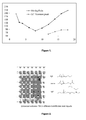
- the melting point of the C 6 DABCO bromide ionic liquid fell to 25 °C for the [C 6 DABCO][N(SO 2 CF 3 ) 2 ] which formed a gel at this temperature (see Figure 1 ).
- Ethyl DABCO methanesulfonate [C 2 DABCO][OSO 2 CH 3 ] (mp 81 °C) and hexyl DABCO methanesulfonate have also been synthesised from the reaction of DABCO and ethylmethanesulfonate or hexylmethanesulfonate.
- Diazobicyclo-[2,2,0]-octene (1.13 g, 12.5 mmol) and alkyl bromide (10 mmol) were heated under reflux (or at 150 °C which ever is the lower) for 1 to 24 hours. On cooling a precititate formed. This was dissolved in a minimum quantity boiling ethyl acetate / isopropanol for C2 to C10 DABCD bromides and boiling toluene / ethyl acetate for C12 to C18 DABCO bromides. The crystals that formed on cooling were filtered off and dried by heating at 80 °C for 4 hours under vacuum (1 mmHg). The compounds were analysed by NMR and DSC. Yields typically 60-80%
- Diazobicyclo-[2,2,0]-octene (1.13 g, 12.5 mmol) and alkyl methanesulfonate (10 mmol) were heated at 100 °C for 1 hour. On cooling a precititate formed. This was dissolved in a minimum quantity boiling ethyl acetate / isopropanol. The crystals that formed on cooling were filtered off and dried by heating at 80 °C for 4 hours under vacuum (1 mmHg). The compounds were analysed by NMR and DSC. Yields typically 70-80%.
- TMEDA Tetramethylethylenediamine
- TMEDA Tetramethylethylenediamine
- alkyl bromide 25 mmol
- [C 2 TMEDA]Br and [C 4 TMEDA]Br a crystaline solid formed and for [C 18 TMEDA]Br, a liquid crystaline material formed.
- N , N -dimethylaminopyidine (DMAP) ionic liquids are synthesised from DMAP and an alkyl methanesulfonate as below.
- DMAP Dimethylaminopyridine
- ethyl or hexyl methanesulfonate 25 mmol
- ethyl or hexyl methanesulfonate 25 mmol
- a precititate formed. This was dissolved in a minimum quantity boiling ethyl acetate / isopropanol for C 2 to C 6 DMAP methanesulfonates.
- the crystals that formed on cooling were filtered off and dried by heat at 80 °C for 4 hours under vacuum (1 mmHg).
- the compounds were analysed by NMR and DSC. Yields typically 80-85%.
- the dichloromethane extracts were dried over Na 2 SO 4 , filtered and concentrated on a rotary evapourator.
- the product was Kugelrorh distilled at 110-120 °C, 1mmHg to give 2.3 g of a colourless oil (N-morpholinoethyl dimethylaminoethyl ether).
- 1-Chloro-2-(diisopropylamino)ethane hydrochloride is commercially available and was use to quaternise methylimidazole, yielding the imidazolium cation with a diisopropylamino group in the side chain (below).
- the 1-chloro-2-(diisopropylamino)ethane hydrochloride was used to alkylate dimethylaminoethanol, the resulting diamine was alkylated with propyl bromide.
- the quaternisation reaction itself is regiospecific, the diisopropylamino group is non-nucleophilic and cannot be quaternised under the applied conditions.
- the obtained salt shows a five atom chain between the cation and the basic diisopropylamino group.
- the metathesis reaction with lithium bistriflimide gave a room temperature ionic liquid. Its structure is shown in below.
- the epoxidation reaction of chalcone was carried out in this ionic liquid and gave 100 % conversion.
- the substrate was dissolved in the ionic liquid phase and an aqueous phase containing hydrogen peroxide was added.
- FIG. 2 shows a picture of three different bistriflimide ionic liquids after addition of a defined amount of indicator followed by evaporation of the solvent.
- the sample on the left shows [bmim][NTf 2 ], in the centre is methyl-(2-diisopropylamino)-imiazolium [NTf 2 ], both containing the same concentration of indicator. According to their colour they seem to possess a similar basicity.
- Figure 2 shows the indicator in an ionic liquid with a five atom chain between the base and the cation, its colour is shifted towards blue, indicating stronger basic properties.
- This ionic liquid did act as a good base catalyst (and solvent) in the chalcone epoxidation reaction.
- the above scheme shows the synthesis of an ionic liquid bearing a two carbon spacer between the quaternary nitrogen and the basic nitrogen.
- the DSC of the basic ionic liquid indicates that the melting point of the ionic liquid is -27 °C.
- the above scheme shows a synthesis of a range of basic ionic liquids, for example, bearing a 5-atom spacer between the quaternary nitrogen and the basic nitrogen.
- the general synthetic strategy for the preparation of BIL 1-4 is simple and versatile and is shown in the Scheme above.
- a vital part of the synthesis of the base-tethered ionic liquids involves the use of 2-diisopropylaminoethyl chloride reacting with a chosen nucleophilic reagent and is facilitated by the neighbouring group participation from the diisopropylamino moiety.
- the synthetic strategy for the preparation of BIL 1, 2 and 4 takes into account the ability to selectively quaternise the pendant amino, imidazolyl or pyridyl groups as against the diisopropylalkylamino group which is non-nucleophiolic in nature.
- the synthetic strategy for the preparation of BIL 3 makes use of the insolubility of the mono-quaternised diamine which precipitates out of toluene (solvent) thereby preventing it from further reaction with the alkyl halide.
- the halide anion associated with the quaternary ammonium salts was subjected to metathesis with lithium bis-triflimide to generate base tethered ionic liquids BIL 1-4 .
- UV/Vis spectra give an indication of how the base strength of the pendant amino group varies with chain length and/or nature of the atoms in the chain. This can be explained by the fact that electronic repulsion between two cations (in the protonated state) decreases with increasing chain length, leading to higher basicity.
- the short wave-length band (- 400-460 nm) represents the 'proton attached form' of the dye of the indicator while the long wave-length band ( ⁇ 620-640 nm) represents the 'deprotonated form' of the dye.
- the growth of the long wave-length band increases with the length of the chain between the two nitrogen atoms.
- long wave-length band is also associated with a small bathochromic shift. We have qualitatively shown here how the basicity of an ionic liquid can be tuned to a certain extent by simply changing the distance between the two nitrogen atoms without having to vary the nature of the dialkylamino group.
- Robinson annulation This involves a Michael reaction of an unsaturated ketone with a ketone followed by an internal aldol condensation. The reaction is typically carried out in solvents such as alcohols and in some cases, dipolar aprotic solvents such as DMF or DMSO are necessary.
- the Robinson annulation is a two step reaction and the intermediate Michael product is not normally isolated.
- the Robinson annulation above was carried out using a base ionic liquid. At room temperature, the Michael product was obtained in high yield in under 5 minutes. This was considerably faster than a similar reaction carried in ethanol. The aldol condensation only occurred in the ionic liquid when the temperature was raised to 80 °C. This reaction can also be carried out with a basic ionic liquid including but not limited to those in Examples 1-4.
- Proline is known to catalyse the reaction of 2-methylcyclohexa1,3-dione with MVK and is reported to give a 49 % yield of the annulated product (70 % ee) in DMSO at 35 °C. This reaction was attempted in a basic ionic liquid and the Michael reaction worked efficiently. This reaction can also be carried out with a basic ionic liquid including but not limited to those in Examples 1-4.
- the condensation of acetone to isophorone can be performed in basic ionic liquids.
- the Basic ionic liquids acts as both a catalyst and solvent
- the ionic liquids used in the above experiments were hydrophilic in nature and due to the presence of the nucleophilic nitrogen, they were also capable of catalysing the aldol condensation.
- the NMR spectroscopy revealed that the ionic liquids remain intact after the reaction so that these can be used further for the next cycle provided the products are separated by distillation. It is also possible to make these ionic liquids hydrophobic by replacing the anions, Br - or [OMs] - by the [NTf 2 ] - anion.
- the basic ionic liquids give superior yield and selectivity in the crossed aldol reaction.
- aldol chemistry route to the synthesis of dihydrojasmone in ionic liquids catalysed by proline offers excellent yields of MDJ-1. It is also possible to obtain MDJ-2 via catalytic distillation and can be viewed as one pot synthesis.
- Benzaldehyde (4mM) and ethylcyano acetate (4.1 mM) were added to BIL 1(1 ml) in a Schlenk tube which was then stoppered and stirred at room temperature overnight.
- the products were extracted into cyclohexane (4x4 ml) and evaporation of the solvent from combined cyclohexane extracts yielded the products.
Landscapes
- Chemical & Material Sciences (AREA)
- Organic Chemistry (AREA)
- Chemical Kinetics & Catalysis (AREA)
- Engineering & Computer Science (AREA)
- Materials Engineering (AREA)
- Organic Low-Molecular-Weight Compounds And Preparation Thereof (AREA)
- Catalysts (AREA)
- Nitrogen Condensed Heterocyclic Rings (AREA)
- Pyrrole Compounds (AREA)
- Low-Molecular Organic Synthesis Reactions Using Catalysts (AREA)
- Epoxy Compounds (AREA)
- Pyridine Compounds (AREA)
Applications Claiming Priority (2)
| Application Number | Priority Date | Filing Date | Title |
|---|---|---|---|
| GBGB0500029.4A GB0500029D0 (en) | 2005-01-04 | 2005-01-04 | Basic ionic liquids |
| EP06700155A EP1853385A2 (fr) | 2005-01-04 | 2006-01-04 | Liquides ioniques dune base |
Related Parent Applications (2)
| Application Number | Title | Priority Date | Filing Date |
|---|---|---|---|
| EP06700155.2 Division | 2006-01-04 | ||
| EP06700155A Division EP1853385A2 (fr) | 2005-01-04 | 2006-01-04 | Liquides ioniques dune base |
Publications (2)
| Publication Number | Publication Date |
|---|---|
| EP2286915A2 true EP2286915A2 (fr) | 2011-02-23 |
| EP2286915A3 EP2286915A3 (fr) | 2015-03-11 |
Family
ID=34179131
Family Applications (2)
| Application Number | Title | Priority Date | Filing Date |
|---|---|---|---|
| EP10185093.1A Withdrawn EP2286915A3 (fr) | 2005-01-04 | 2006-01-04 | Liquides ioniques ayant un cation comprénant un groupe basique |
| EP06700155A Ceased EP1853385A2 (fr) | 2005-01-04 | 2006-01-04 | Liquides ioniques dune base |
Family Applications After (1)
| Application Number | Title | Priority Date | Filing Date |
|---|---|---|---|
| EP06700155A Ceased EP1853385A2 (fr) | 2005-01-04 | 2006-01-04 | Liquides ioniques dune base |
Country Status (9)
| Country | Link |
|---|---|
| US (1) | US8609572B2 (fr) |
| EP (2) | EP2286915A3 (fr) |
| JP (1) | JP2008526821A (fr) |
| KR (1) | KR20070104899A (fr) |
| CN (1) | CN101137437B (fr) |
| BR (1) | BRPI0606302A2 (fr) |
| GB (1) | GB0500029D0 (fr) |
| MX (1) | MX2007008161A (fr) |
| WO (1) | WO2006072775A2 (fr) |
Families Citing this family (60)
| Publication number | Priority date | Publication date | Assignee | Title |
|---|---|---|---|---|
| US7687513B1 (en) | 2004-10-21 | 2010-03-30 | University Of Notre Dame Du Lac | Aminopyridinium ionic liquids |
| GB0500028D0 (en) * | 2005-01-04 | 2005-02-09 | Univ Belfast | Base stable ionic liquids |
| JP2006206457A (ja) * | 2005-01-25 | 2006-08-10 | Toyota Motor Corp | 環状アンモニウム溶融塩およびその利用 |
| EP1911829A1 (fr) * | 2006-10-10 | 2008-04-16 | The Queen's University of Belfast | Procédé de déacidification du brut |
| WO2007138307A2 (fr) * | 2006-05-25 | 2007-12-06 | The Queen's University Of Belfast | Procédé d'élimination d'acides contenant du soufre dans le pétrole brut |
| JP2009541302A (ja) * | 2006-07-24 | 2009-11-26 | ザ プロクター アンド ギャンブル カンパニー | シクロヘキセニルケトンのエピマー化方法及びアルドール縮合プロセスにおけるその利用 |
| US7674608B2 (en) | 2007-02-23 | 2010-03-09 | The University Of Toledo | Saccharifying cellulose |
| CN104232704A (zh) | 2007-03-14 | 2014-12-24 | 托莱多大学 | 生物质预处理 |
| US7772293B2 (en) * | 2007-07-31 | 2010-08-10 | Invista North America S.A.R.L. | Ionic liquid solvents and a process for the depolymerization of polyamides |
| KR101072896B1 (ko) * | 2007-10-09 | 2011-10-17 | 한미홀딩스 주식회사 | 이온성 액체 매개체를 이용한 몬테루카스트산의 제조 방법 |
| JP5009736B2 (ja) * | 2007-10-15 | 2012-08-22 | 日本曹達株式会社 | 環状アミノエーテルを用いたマンニッヒ反応 |
| US7999355B2 (en) * | 2008-07-11 | 2011-08-16 | Air Products And Chemicals, Inc. | Aminosilanes for shallow trench isolation films |
| EP2350251B1 (fr) * | 2008-09-01 | 2013-05-29 | Expelliere International Ltd. | Compositions et procedes pour l'elimination de residus de chewing-gum de substrats |
| GB0905896D0 (en) | 2009-04-06 | 2009-05-20 | Univ Belfast | Process for removing metals from hydrocarbons |
| GB0908986D0 (en) | 2009-05-26 | 2009-07-01 | Univ Belfast | Process for removing organic acids from crude oil and crude oil distillates |
| JP5490613B2 (ja) * | 2010-05-31 | 2014-05-14 | 三洋化成工業株式会社 | アルミニウム電解コンデンサ用電解液、およびそれを用いたアルミニウム電解コンデンサ |
| GB2484301B8 (en) | 2010-10-05 | 2017-11-22 | The Queen's Univ Of Belfast | Process for removing metals from hydrocarbons |
| CN102001925B (zh) * | 2010-11-12 | 2013-04-24 | 淮阴师范学院 | 一种2-戊叉基环戊酮的生产方法 |
| FR2967904B1 (fr) * | 2010-11-25 | 2013-06-14 | Oreal | Composition pour traiter des fibres keratiniques comprenant un tensioactif cationique quinuclidinium |
| JP2012116802A (ja) * | 2010-12-02 | 2012-06-21 | Nitto Boseki Co Ltd | イオン液体及びその製造方法 |
| CN102140063B (zh) * | 2011-03-09 | 2016-07-06 | 中国科学院上海有机化学研究所 | 一种合成三氟甲基丙烯酸衍生物的方法 |
| US8444922B2 (en) | 2011-05-02 | 2013-05-21 | Empire Technology Development Llc | Air purification |
| CN102786436B (zh) * | 2011-05-19 | 2015-09-16 | 浙江久而久化学有限公司 | 一种合成氰乙酸酯的方法 |
| ES2702487T3 (es) * | 2011-06-17 | 2019-03-01 | Nantenergy Inc | Líquido iónico que contiene iones sulfonato |
| GB2496898B (en) * | 2011-11-25 | 2020-10-28 | Petroliam Nasional Berhad Petronas | Corrosion inhibition |
| JP5323221B2 (ja) * | 2011-11-28 | 2013-10-23 | 日本乳化剤株式会社 | イオン性液体並びにこれを含む帯電防止剤、防曇剤、分散剤または乳化剤、潤滑剤、電解液、およびセルロース溶解剤 |
| US8946471B2 (en) * | 2011-12-29 | 2015-02-03 | Uop Llc | Process for oxidizing an alkyl-aromatic compound |
| CN102850314B (zh) * | 2012-07-12 | 2014-08-13 | 盐城师范学院 | 双功能碱性离子液体水相催化苯并氧杂蒽衍生物的合成 |
| CN103012202B (zh) * | 2012-12-04 | 2014-10-08 | 山东鑫泉医药有限公司 | 沙坦联苯的制备方法 |
| CN103204845B (zh) * | 2013-03-12 | 2014-12-24 | 西北大学 | 咪唑基离子液体及其合成方法和应用 |
| KR101415844B1 (ko) * | 2013-03-29 | 2014-07-09 | 한국과학기술연구원 | 소수성 이온성 액체 기반 이산화황 및 아황산 흡수제 |
| CN105107545B (zh) * | 2014-04-09 | 2017-07-14 | 中国科学院化学研究所 | 离子液体催化剂的应用 |
| CN104016973B (zh) * | 2014-05-28 | 2016-11-02 | 台州学院 | 一种制备二芳香环取代烯烃的方法 |
| GB2538760A (en) * | 2015-05-27 | 2016-11-30 | The Queen's Univ Of Belfast | Removal of free fatty acids from glyceride oils |
| EP3098293A1 (fr) | 2015-05-27 | 2016-11-30 | Evonik Degussa GmbH | Procédé d'élimination de métaux à partir d'une huile de glycérides contenant un métal comprenant le traitement d'un sel d'ammonium quaternaire basique |
| GB2538758A (en) | 2015-05-27 | 2016-11-30 | Green Lizard Tech Ltd | Process for removing chloropropanols and/or glycidol |
| EP3098292A1 (fr) | 2015-05-27 | 2016-11-30 | Evonik Degussa GmbH | Procédé de raffinage d'huile glycéridique comprenant un traitement de sel d'ammonium quaternaire basique |
| DE102015212749A1 (de) | 2015-07-08 | 2017-01-12 | Evonik Degussa Gmbh | Verfahren zur Entfeuchtung von feuchten Gasgemischen |
| JP6685039B2 (ja) * | 2015-08-26 | 2020-04-22 | 国立大学法人東北大学 | 化合物、イオン液体、白金族元素の抽出剤、白金族元素の抽出方法 |
| EP3257568B1 (fr) | 2016-06-14 | 2019-09-18 | Evonik Degussa GmbH | Procede de deshumidification de melanges gazeux humides par des liquides ioniques |
| DE102016210484A1 (de) | 2016-06-14 | 2017-12-14 | Evonik Degussa Gmbh | Verfahren zur Entfeuchtung von feuchten Gasgemischen |
| DE102016210478A1 (de) | 2016-06-14 | 2017-12-14 | Evonik Degussa Gmbh | Verfahren zur Entfeuchtung von feuchten Gasgemischen |
| CN106632522B (zh) * | 2016-09-20 | 2019-07-12 | 华南理工大学 | 一种碱性离子液体催化葡萄糖异构制备果糖的方法 |
| CN107243642B (zh) * | 2017-06-20 | 2019-02-22 | 太原理工大学 | 利用离子液辅助制备锑烯的方法 |
| CN107673957B (zh) * | 2017-10-13 | 2020-10-23 | 河北工业大学 | 一种酸碱双功能离子液体催化低碳醛羟醛自缩合反应的方法 |
| EP3483237A1 (fr) | 2017-11-10 | 2019-05-15 | Evonik Degussa GmbH | Procédé d'extraction d'acides gras d'une huile glycéridique |
| US11655402B2 (en) * | 2017-11-21 | 2023-05-23 | Nitto Denko Corporation | Basic ionic liquids compositions and elements including the same |
| WO2019113513A1 (fr) | 2017-12-08 | 2019-06-13 | Baker Hughes, A Ge Company, Llc | Inhibiteurs asphaltène de puits à base de liquide ionique et leurs procédés d'utilisation |
| EA202091413A1 (ru) | 2018-07-11 | 2020-09-24 | Бейкер Хьюз Холдингз Ллк | Скважинные ингибиторы асфальтенов на основе ионной жидкости и способы их применения |
| AR116635A1 (es) * | 2018-10-15 | 2021-05-26 | Servier Lab | Proceso para la síntesis de derivados de piperazinil-etoxi-bromofenilo y su aplicación en la producción de compuestos que los contienen |
| CN110713462A (zh) * | 2019-09-03 | 2020-01-21 | 沈阳化工大学 | 用于环己烷-乙醇体系分离1-癸基-3-甲基咪唑磷酸盐离子液体方法 |
| US11235283B2 (en) * | 2019-12-30 | 2022-02-01 | Industrial Technology Research Institute | Ionic liquid and forward osmosis process employing the same |
| CN114426458B (zh) * | 2020-10-13 | 2024-01-09 | 中国石油化工股份有限公司 | 一种环氧烷烃催化水合制二元醇的方法 |
| CN112808306A (zh) * | 2021-01-13 | 2021-05-18 | 华东理工大学 | 一种有机酸稳定的金属氧簇催化剂的制备方法及其应用 |
| CN113620787A (zh) * | 2021-07-12 | 2021-11-09 | 浙江诺亚氟化工有限公司 | 一种含氟芳香醚的合成方法 |
| CN114522723B (zh) * | 2022-03-08 | 2023-04-18 | 福州大学 | 一种轻质烷烃低温异构化催化剂及其制备方法和应用 |
| CN116332854B (zh) * | 2023-03-21 | 2024-09-24 | 浙江昂利泰制药有限公司 | 一种亚苄基海因的制备方法 |
| CN117024365B (zh) * | 2023-08-24 | 2025-06-24 | 山西师范大学 | 一种吡唑类离子液体及利用其催化Mannich反应的方法 |
| CN117024364B (zh) * | 2023-08-24 | 2025-06-20 | 山西师范大学 | 一种吡唑类离子液体及利用其催化Betti反应的方法 |
| CN117326959A (zh) * | 2023-09-25 | 2024-01-02 | 华东理工大学 | 一种氨基醚类化合物及其合成方法 |
Citations (4)
| Publication number | Priority date | Publication date | Assignee | Title |
|---|---|---|---|---|
| US6552232B2 (en) | 2001-06-26 | 2003-04-22 | Exxonmobil Research And Engineering Company | Process for conducting aldol condensation reactions in ionic liquid media |
| WO2003062171A2 (fr) | 2002-01-24 | 2003-07-31 | Basf Aktiengesellschaft | Procede de separation d'acides a partir de melanges reactionnels au moyen de liquides ioniques |
| WO2004029004A1 (fr) | 2002-09-26 | 2004-04-08 | Centre National De La Recherche Scientifique | Compositions contenant des liquides ioniques et leurs utilisations, notamment en synthese organique |
| US6774240B2 (en) | 1999-12-01 | 2004-08-10 | The Queen's University Of Belfast | Process for preparing ambient temperature ionic liquids |
Family Cites Families (23)
| Publication number | Priority date | Publication date | Assignee | Title |
|---|---|---|---|---|
| US3014039A (en) * | 1959-09-29 | 1961-12-19 | Searle & Co | 9-[omega-n-(omega-dialkylaminoalkyl)aminoalkyl]-9-pyrid[3, 4-b]-indoles and derivatives |
| US4883655A (en) * | 1986-10-24 | 1989-11-28 | Gaf Corporation | Quaternized nitrogen containing polycyclic compounds |
| DE4405055A1 (de) * | 1994-02-17 | 1995-08-24 | Basf Ag | Verfahren zur Herstellung von Isocyanuratgruppen aufweisenden Polyisocyanaten und ihre Verwendung |
| US6307102B1 (en) * | 1997-10-15 | 2001-10-23 | Tosoh Corporation | Amine catalyst for producing polyurethane and polyisocyanurate |
| CA2283670C (fr) | 1998-02-03 | 2011-06-07 | Acep Inc. | Materiaux utiles en tant que solutes electrolytiques |
| GB9906829D0 (en) | 1999-03-24 | 1999-05-19 | Univ Leicester | Ionic liquids |
| FR2813305B1 (fr) * | 2000-08-23 | 2004-02-13 | Inst Francais Du Petrole | Procede ameliore d'hydroformylation mettant en oeuvre un catalyseur a base de cobalt et/ou de rhodium dans un solvant ionique non aqueux |
| GB0023708D0 (en) | 2000-09-27 | 2000-11-08 | Scionix Ltd | Hydrated salt mixtures |
| GB0023706D0 (en) * | 2000-09-27 | 2000-11-08 | Scionix Ltd | Ionic liquids |
| JP3541223B2 (ja) * | 2001-03-08 | 2004-07-07 | 東北大学長 | イオン性液体中でのPd/C触媒を用いたHeck反応 |
| JP2002275118A (ja) * | 2001-03-15 | 2002-09-25 | Central Glass Co Ltd | アルドール反応生成物の製造方法 |
| GB0112093D0 (en) * | 2001-05-18 | 2001-07-11 | Univ Belfast | Hydrogenation processes |
| EP2243539A3 (fr) * | 2002-04-05 | 2011-06-01 | University Of South Alabama | Liquides ioniques fonctionnalisés et leurs procédés d'utilisation |
| JP4239537B2 (ja) | 2002-09-18 | 2009-03-18 | 株式会社ジーエス・ユアサコーポレーション | 常温溶融塩型電解質およびそれを用いた電気化学デバイス |
| DE10247578A1 (de) * | 2002-10-13 | 2004-04-22 | Solvent Innovation Gmbh | Neuartige, funktionalisierte ionische Flüssigkeiten und Verfahren zu ihrer Herstellung |
| DE10258671A1 (de) | 2002-12-13 | 2004-06-24 | Merck Patent Gmbh | Ionische Flüssigkeiten mit [N(CF3)2]-Anionen |
| PL1660457T3 (pl) | 2003-08-26 | 2012-05-31 | Ecole Polytechnique Fed Lausanne Epfl | Ciecze jonowe bazujące na solach imidazoliowych zawierających nitrylową grupę funkcyjną |
| JP2005104845A (ja) * | 2003-09-26 | 2005-04-21 | Tosoh Corp | 4級アンモニウム系常温溶融塩及び製造法 |
| KR20060124724A (ko) * | 2004-01-26 | 2006-12-05 | 유니버시티 오브 사우스 앨라배마 | 음이온성―스위트너를 기반으로 하는 이온성 액체 및그것의 사용 방법 |
| EA009571B1 (ru) * | 2004-03-12 | 2008-02-28 | Сэнт-Гобэн Керамикс & Пластикс, Инк. | Распылительно высушенный оксид алюминия для носителя катализатора |
| ES2263346B1 (es) | 2004-08-25 | 2007-12-16 | Consejo Superior De Investigaciones Cientificas | Uso de una composicion catalitica en la insercion de dioxido de carbo no en acetales, ortoesteres y epoxidos. |
| MX2007007558A (es) | 2004-12-21 | 2007-07-24 | Hoffmann La Roche | Derivados de tetralina y de indano y usos de los mismos. |
| GB0500028D0 (en) * | 2005-01-04 | 2005-02-09 | Univ Belfast | Base stable ionic liquids |
-
2005
- 2005-01-04 GB GBGB0500029.4A patent/GB0500029D0/en not_active Ceased
-
2006
- 2006-01-04 KR KR1020077017743A patent/KR20070104899A/ko not_active Withdrawn
- 2006-01-04 WO PCT/GB2006/000006 patent/WO2006072775A2/fr not_active Ceased
- 2006-01-04 JP JP2007549946A patent/JP2008526821A/ja not_active Ceased
- 2006-01-04 EP EP10185093.1A patent/EP2286915A3/fr not_active Withdrawn
- 2006-01-04 US US11/794,772 patent/US8609572B2/en not_active Expired - Fee Related
- 2006-01-04 MX MX2007008161A patent/MX2007008161A/es active IP Right Grant
- 2006-01-04 EP EP06700155A patent/EP1853385A2/fr not_active Ceased
- 2006-01-04 BR BRPI0606302A patent/BRPI0606302A2/pt not_active IP Right Cessation
- 2006-01-04 CN CN2006800056706A patent/CN101137437B/zh not_active Expired - Fee Related
Patent Citations (4)
| Publication number | Priority date | Publication date | Assignee | Title |
|---|---|---|---|---|
| US6774240B2 (en) | 1999-12-01 | 2004-08-10 | The Queen's University Of Belfast | Process for preparing ambient temperature ionic liquids |
| US6552232B2 (en) | 2001-06-26 | 2003-04-22 | Exxonmobil Research And Engineering Company | Process for conducting aldol condensation reactions in ionic liquid media |
| WO2003062171A2 (fr) | 2002-01-24 | 2003-07-31 | Basf Aktiengesellschaft | Procede de separation d'acides a partir de melanges reactionnels au moyen de liquides ioniques |
| WO2004029004A1 (fr) | 2002-09-26 | 2004-04-08 | Centre National De La Recherche Scientifique | Compositions contenant des liquides ioniques et leurs utilisations, notamment en synthese organique |
Non-Patent Citations (13)
| Title |
|---|
| "Hindered non-nuclepohilic base with high protein affinity", CHEM. BER., vol. 91, 1958, pages 380 |
| AGGARWAL, V. K., CHEM. COMMUN., 2002, pages 1612 - 1613 |
| CHEM. BER., vol. 29, 1993, pages 1042 |
| DARBRE ET AL., CHEM. COMMUN., 2003, pages 1090 |
| DAVIS, CHEMISTRY LETTERS, vol. 33, 2004, pages 1072 - 1077 |
| FORSYTH, S. A., CHEM. COMMUN., 2002, pages 714 - 715 |
| M. J. EARLE, ABSTRACTS OF PAPERS OF THE AMERICAN CHEMICAL SOCIETY, vol. 221, 2001, pages 161 |
| M. J. EARLE; K. R. SEDDON; P. B. MCCORMAC, GREEN CHEM., vol. 2, 2000, pages 261 |
| M. J. EARLE; P. B. MCCORMAC; K. R. SEDDON, CHEMICAL COMMUNICATIONS, 1998, pages 2245 |
| MATEUS, N. M. M., GREEN CHEM., 2003, pages 347 |
| S. ABELLO, CHEM. COMMUN., 2004, pages 1096 - 1097 |
| TETRAHEDRON LETTERS, vol. 31, 1981, pages 1483 |
| TICHIT ET AL., J. CATAL., vol. 219, 2003, pages 167 |
Also Published As
| Publication number | Publication date |
|---|---|
| CN101137437B (zh) | 2012-06-27 |
| JP2008526821A (ja) | 2008-07-24 |
| CN101137437A (zh) | 2008-03-05 |
| GB0500029D0 (en) | 2005-02-09 |
| US8609572B2 (en) | 2013-12-17 |
| BRPI0606302A2 (pt) | 2017-09-19 |
| EP2286915A3 (fr) | 2015-03-11 |
| WO2006072775A3 (fr) | 2007-04-26 |
| KR20070104899A (ko) | 2007-10-29 |
| US20090270248A1 (en) | 2009-10-29 |
| WO2006072775A2 (fr) | 2006-07-13 |
| EP1853385A2 (fr) | 2007-11-14 |
| MX2007008161A (es) | 2008-02-19 |
Similar Documents
| Publication | Publication Date | Title |
|---|---|---|
| EP2286915A2 (fr) | Liquides ioniques ayant un cation comprénant un groupe basique | |
| CN101137436B (zh) | 碱稳定性离子液体 | |
| Yadav et al. | Efficient and Eco‐Friendly Process for the Synthesis of Bis (1H‐indol‐3‐yl) methanes using Ionic Liquids | |
| JP4698945B2 (ja) | イオン液体 | |
| KR100989299B1 (ko) | 관능화된 이온성 액체, 및 그의 사용 방법 | |
| US7863458B2 (en) | Halogen-free ionic liquids | |
| CN101426751B (zh) | 脱水方法 | |
| US20040007693A1 (en) | Ionic liquids containing borate or phosphate anions | |
| Song et al. | Crown ether complex cation ionic liquids: preparation and applications in organic reactions | |
| US20090143597A1 (en) | Ionic Liquids Based on Imidazolium Salts Incorporating a Nitrile Functionality | |
| US7119235B2 (en) | Process utilizing zeolites as catalysts/catalyst precursors | |
| EP1997555A1 (fr) | Catalyseurs acide de lewis immobilises enduits de liquides ioniques et leur utilisation | |
| FI87195B (fi) | Kvaternaera ammoniumsalter anvaenda saosom fasoeverfoeringskatalysatorer. | |
| WO2005026179A1 (fr) | Liquides ioniques contenant des groupes hydroxyles secondaires, et leur methode de preparation | |
| Jiang et al. | Preparation of dialkoxypropanes in simple ammonium ionic liquids | |
| US12281058B2 (en) | Manganese catalysts and their use in hydrogenation of ketones | |
| Nisar et al. | New task-specific ionic liquids as bifunctional organocatalysts; Synthesis, characterization, and computational insights | |
| Allochio Filho et al. | First synthesis of aminonaphthoquinones derived from lawsone in a colloidal dispersion system created by a Brønsted acid-surfactant-combined catalyst in water: An environmentally friendly protocol | |
| Kryshtal et al. | Tetraalkylammonium and 1, 3‐Dialkylimidazolium Salts with Fluorinated Anions as Recoverable Phase‐Transfer Catalysts in Solid Base‐Promoted Cross‐Aldol Condensations | |
| Davey et al. | Synthesis of 3-(4-tert-butylphenyl)-2-propen-1-one, a precursor to Lilial®, via an aldol condensation in an ionic liquid | |
| Gujar et al. | Ionic liquids as catalysts, solvents and conversion agents | |
| JPH04295440A (ja) | 不整水素添加 | |
| Maton et al. | Synthesis and Properties of Alkoxy‐and Alkenyl‐Substituted Peralkylated Imidazolium Ionic Liquids | |
| Kalviri et al. | Catalytic dehydrative etherification and chlorination of benzyl alcohols in ionic liquids | |
| KR20090030384A (ko) | 벤질 알코올류의 산화 반응에 의한 벤즈알데히드류 또는벤질 케톤의 제조방법 |
Legal Events
| Date | Code | Title | Description |
|---|---|---|---|
| PUAI | Public reference made under article 153(3) epc to a published international application that has entered the european phase |
Free format text: ORIGINAL CODE: 0009012 |
|
| AC | Divisional application: reference to earlier application |
Ref document number: 1853385 Country of ref document: EP Kind code of ref document: P |
|
| AK | Designated contracting states |
Kind code of ref document: A2 Designated state(s): AT BE BG CH CY CZ DE DK EE ES FI FR GB GR HU IE IS IT LI LT LU LV MC NL PL PT RO SE SI SK TR |
|
| RIN1 | Information on inventor provided before grant (corrected) |
Inventor name: EARLE, MARTYN JOHN Inventor name: KATDARE, SUHAS Inventor name: GUNARATNE, NIMAL Inventor name: FROHLICH, UTE Inventor name: SEDDON, KENNETH RICHARD Inventor name: FORSYTH, STEWART |
|
| RIC1 | Information provided on ipc code assigned before grant |
Ipc: C07D 301/12 20060101ALI20140929BHEP Ipc: C07C 45/72 20060101ALI20140929BHEP Ipc: C07C 45/69 20060101ALI20140929BHEP Ipc: B01J 31/02 20060101AFI20140929BHEP Ipc: C07B 37/04 20060101ALI20140929BHEP Ipc: C07C 45/62 20060101ALI20140929BHEP Ipc: C07C 209/60 20060101ALI20140929BHEP |
|
| PUAL | Search report despatched |
Free format text: ORIGINAL CODE: 0009013 |
|
| AK | Designated contracting states |
Kind code of ref document: A3 Designated state(s): AT BE BG CH CY CZ DE DK EE ES FI FR GB GR HU IE IS IT LI LT LU LV MC NL PL PT RO SE SI SK TR |
|
| RIC1 | Information provided on ipc code assigned before grant |
Ipc: C07C 45/72 20060101ALI20150202BHEP Ipc: C07D 301/12 20060101ALI20150202BHEP Ipc: C07C 45/62 20060101ALI20150202BHEP Ipc: C07B 37/04 20060101ALI20150202BHEP Ipc: C07C 45/69 20060101ALI20150202BHEP Ipc: B01J 31/02 20060101AFI20150202BHEP Ipc: C07C 209/60 20060101ALI20150202BHEP |
|
| STAA | Information on the status of an ep patent application or granted ep patent |
Free format text: STATUS: THE APPLICATION IS DEEMED TO BE WITHDRAWN |
|
| 18D | Application deemed to be withdrawn |
Effective date: 20150801 |