EP2359845A1 - Inhalant comprenant une superoxyde dismutase modifiée - Google Patents
Inhalant comprenant une superoxyde dismutase modifiée Download PDFInfo
- Publication number
- EP2359845A1 EP2359845A1 EP09830289A EP09830289A EP2359845A1 EP 2359845 A1 EP2359845 A1 EP 2359845A1 EP 09830289 A EP09830289 A EP 09830289A EP 09830289 A EP09830289 A EP 09830289A EP 2359845 A1 EP2359845 A1 EP 2359845A1
- Authority
- EP
- European Patent Office
- Prior art keywords
- sod
- inhalant
- superoxide dismutase
- inhalant according
- interstitial pneumonia
- Prior art date
- Legal status (The legal status is an assumption and is not a legal conclusion. Google has not performed a legal analysis and makes no representation as to the accuracy of the status listed.)
- Withdrawn
Links
Images



Classifications
-
- A—HUMAN NECESSITIES
- A61—MEDICAL OR VETERINARY SCIENCE; HYGIENE
- A61K—PREPARATIONS FOR MEDICAL, DENTAL OR TOILETRY PURPOSES
- A61K47/00—Medicinal preparations characterised by the non-active ingredients used, e.g. carriers or inert additives; Targeting or modifying agents chemically bound to the active ingredient
- A61K47/06—Organic compounds, e.g. natural or synthetic hydrocarbons, polyolefins, mineral oil, petrolatum or ozokerite
- A61K47/16—Organic compounds, e.g. natural or synthetic hydrocarbons, polyolefins, mineral oil, petrolatum or ozokerite containing nitrogen, e.g. nitro-, nitroso-, azo-compounds, nitriles, cyanates
- A61K47/18—Amines; Amides; Ureas; Quaternary ammonium compounds; Amino acids; Oligopeptides having up to five amino acids
- A61K47/186—Quaternary ammonium compounds, e.g. benzalkonium chloride or cetrimide
-
- A—HUMAN NECESSITIES
- A61—MEDICAL OR VETERINARY SCIENCE; HYGIENE
- A61K—PREPARATIONS FOR MEDICAL, DENTAL OR TOILETRY PURPOSES
- A61K38/00—Medicinal preparations containing peptides
- A61K38/16—Peptides having more than 20 amino acids; Gastrins; Somatostatins; Melanotropins; Derivatives thereof
- A61K38/43—Enzymes; Proenzymes; Derivatives thereof
- A61K38/44—Oxidoreductases (1)
- A61K38/446—Superoxide dismutase (1.15)
-
- A—HUMAN NECESSITIES
- A61—MEDICAL OR VETERINARY SCIENCE; HYGIENE
- A61K—PREPARATIONS FOR MEDICAL, DENTAL OR TOILETRY PURPOSES
- A61K47/00—Medicinal preparations characterised by the non-active ingredients used, e.g. carriers or inert additives; Targeting or modifying agents chemically bound to the active ingredient
- A61K47/06—Organic compounds, e.g. natural or synthetic hydrocarbons, polyolefins, mineral oil, petrolatum or ozokerite
- A61K47/08—Organic compounds, e.g. natural or synthetic hydrocarbons, polyolefins, mineral oil, petrolatum or ozokerite containing oxygen, e.g. ethers, acetals, ketones, quinones, aldehydes, peroxides
- A61K47/10—Alcohols; Phenols; Salts thereof, e.g. glycerol; Polyethylene glycols [PEG]; Poloxamers; PEG/POE alkyl ethers
-
- A—HUMAN NECESSITIES
- A61—MEDICAL OR VETERINARY SCIENCE; HYGIENE
- A61K—PREPARATIONS FOR MEDICAL, DENTAL OR TOILETRY PURPOSES
- A61K47/00—Medicinal preparations characterised by the non-active ingredients used, e.g. carriers or inert additives; Targeting or modifying agents chemically bound to the active ingredient
- A61K47/06—Organic compounds, e.g. natural or synthetic hydrocarbons, polyolefins, mineral oil, petrolatum or ozokerite
- A61K47/26—Carbohydrates, e.g. sugar alcohols, amino sugars, nucleic acids, mono-, di- or oligo-saccharides; Derivatives thereof, e.g. polysorbates, sorbitan fatty acid esters or glycyrrhizin
-
- A—HUMAN NECESSITIES
- A61—MEDICAL OR VETERINARY SCIENCE; HYGIENE
- A61K—PREPARATIONS FOR MEDICAL, DENTAL OR TOILETRY PURPOSES
- A61K47/00—Medicinal preparations characterised by the non-active ingredients used, e.g. carriers or inert additives; Targeting or modifying agents chemically bound to the active ingredient
- A61K47/50—Medicinal preparations characterised by the non-active ingredients used, e.g. carriers or inert additives; Targeting or modifying agents chemically bound to the active ingredient the non-active ingredient being chemically bound to the active ingredient, e.g. polymer-drug conjugates
- A61K47/51—Medicinal preparations characterised by the non-active ingredients used, e.g. carriers or inert additives; Targeting or modifying agents chemically bound to the active ingredient the non-active ingredient being chemically bound to the active ingredient, e.g. polymer-drug conjugates the non-active ingredient being a modifying agent
- A61K47/54—Medicinal preparations characterised by the non-active ingredients used, e.g. carriers or inert additives; Targeting or modifying agents chemically bound to the active ingredient the non-active ingredient being chemically bound to the active ingredient, e.g. polymer-drug conjugates the non-active ingredient being a modifying agent the modifying agent being an organic compound
- A61K47/543—Lipids, e.g. triglycerides; Polyamines, e.g. spermine or spermidine
- A61K47/544—Phospholipids
-
- A—HUMAN NECESSITIES
- A61—MEDICAL OR VETERINARY SCIENCE; HYGIENE
- A61K—PREPARATIONS FOR MEDICAL, DENTAL OR TOILETRY PURPOSES
- A61K9/00—Medicinal preparations characterised by special physical form
- A61K9/0012—Galenical forms characterised by the site of application
- A61K9/007—Pulmonary tract; Aromatherapy
- A61K9/0073—Sprays or powders for inhalation; Aerolised or nebulised preparations generated by other means than thermal energy
- A61K9/0075—Sprays or powders for inhalation; Aerolised or nebulised preparations generated by other means than thermal energy for inhalation via a dry powder inhaler [DPI], e.g. comprising micronized drug mixed with lactose carrier particles
-
- A—HUMAN NECESSITIES
- A61—MEDICAL OR VETERINARY SCIENCE; HYGIENE
- A61K—PREPARATIONS FOR MEDICAL, DENTAL OR TOILETRY PURPOSES
- A61K9/00—Medicinal preparations characterised by special physical form
- A61K9/0012—Galenical forms characterised by the site of application
- A61K9/007—Pulmonary tract; Aromatherapy
- A61K9/0073—Sprays or powders for inhalation; Aerolised or nebulised preparations generated by other means than thermal energy
- A61K9/0078—Sprays or powders for inhalation; Aerolised or nebulised preparations generated by other means than thermal energy for inhalation via a nebulizer such as a jet nebulizer, ultrasonic nebulizer, e.g. in the form of aqueous drug solutions or dispersions
-
- A—HUMAN NECESSITIES
- A61—MEDICAL OR VETERINARY SCIENCE; HYGIENE
- A61K—PREPARATIONS FOR MEDICAL, DENTAL OR TOILETRY PURPOSES
- A61K9/00—Medicinal preparations characterised by special physical form
- A61K9/10—Dispersions; Emulsions
-
- A—HUMAN NECESSITIES
- A61—MEDICAL OR VETERINARY SCIENCE; HYGIENE
- A61K—PREPARATIONS FOR MEDICAL, DENTAL OR TOILETRY PURPOSES
- A61K9/00—Medicinal preparations characterised by special physical form
- A61K9/14—Particulate form, e.g. powders, Processes for size reducing of pure drugs or the resulting products, Pure drug nanoparticles
-
- A—HUMAN NECESSITIES
- A61—MEDICAL OR VETERINARY SCIENCE; HYGIENE
- A61P—SPECIFIC THERAPEUTIC ACTIVITY OF CHEMICAL COMPOUNDS OR MEDICINAL PREPARATIONS
- A61P11/00—Drugs for disorders of the respiratory system
-
- A—HUMAN NECESSITIES
- A61—MEDICAL OR VETERINARY SCIENCE; HYGIENE
- A61P—SPECIFIC THERAPEUTIC ACTIVITY OF CHEMICAL COMPOUNDS OR MEDICINAL PREPARATIONS
- A61P31/00—Antiinfectives, i.e. antibiotics, antiseptics, chemotherapeutics
Definitions
- the present invention relates to an inhalant containing a superoxide dismutase, and particularly to an inhalant containing a lecithinized superoxide dismutase (hereinafter may be simply referred to as PC-SOD) as an active ingredient, particularly for treatment of lung diseases such as interstitial pneumonia.
- PC-SOD lecithinized superoxide dismutase
- a superoxide dismutase (hereinafter may be simply referred to as SOD) is a bioactive protein which has been extracted from bovine blood as an anti-inflammatory protein by Huber et al., in 1965, and which has been found that it specifically eliminates superoxide anions (O 2 - ) as one of active oxygen species.
- SOD superoxide dismutase
- active oxygen is mainly released by phagocytes such as neutrophils and macrophages for sterilization.
- phagocytes such as neutrophils and macrophages for sterilization.
- there are typically various antioxidants such as SODs corresponding to excessive active oxygen, and they protect healthy cells against injury by the active oxygen.
- the PC-SOD is a lecithinized SOD obtained by preparing a Cu- and Zn-containing human superoxide dismutase (SOD) by gene recombination technology, and then performing chemical binding of an average of four molecules of lecithin derivative (phosphatidylcholine derivative: PC) to one molecule of SOD (dimmer).
- SOD human superoxide dismutase
- the PC-SOD has high affinity for cell membranes, and is approved to have high therapeutic effects on diseases involving active oxygen, such as ischemia-reperfusion injury and cardiomyopathy induced by anthracycline anticancer drugs which are etiological factors in the lesions.
- Carious agents containing a PC-SOD as an active ingredient such as a therapeutic agent for acute heart failure (Patent Document 2), an antiviral agent (Patent Document 3), a therapeutic agent for lupus nephritis (Patent Document 4), an improving agent for cerebral vascular accident-related dysfunction (Patent Document 5), an anti-fibrosis agent (Patent Document 6), or a treatment agent for allergic diseases (Patent Document 7), and a therapeutic agent for burns (Patent Document 8) have been already proposed.
- a therapeutic agent for acute heart failure Patent Document 2
- an antiviral agent Patent Document 3
- a therapeutic agent for lupus nephritis Patent Document 4
- an improving agent for cerebral vascular accident-related dysfunction Patent Document 5
- an anti-fibrosis agent Patent Document 6
- a treatment agent for allergic diseases Patent Document 7
- a therapeutic agent for burns Patent Document 8
- Interstitial pneumonia is a disease, in which a main lesion (primarily including thickening, cell infiltration, and fibrosis) is alveolar septa, and inflammation and fibrosis are protracted.
- the interstitial pneumonia can be classified depending on whether or not their etiology is known.
- the interstitial pneumonia is an intractable disease, in which inflammation causes increase in cells, collagen, and the like, to thicken the alveolar wall, and reduce oxygen uptake, resulting in shortness of breath (dyspnea).
- dyspnea shortness of breath
- IIP idiopathic interstitial pneumonia
- IPF idiopathic pulmonary fibrosis
- IIP is classified into idiopathic pneumatic fibrosis, nonspecific interstitial pneumonia, acute interstitial pneumonia, idiopathic cryptogenic organizing pneumonia, respiratory bronchiolitis-associated interstitial lung disease, desquamative interstitial pneumonia, lymphocytic interstitial pneumonia, and the like, as a clinicopathological disease entity.
- interstitial pneumonia occurs as a side effect of antitumor drugs, and in particular, interstitial pneumonia becomes a problem as a serious side effect of gefitinib.
- induction of cytotoxic effects or induction of allergy reactions according to onset of interstitial pneumonia involves active oxygen such as superoxide anions, and iron complexes.
- active oxygen such as superoxide anions, and iron complexes.
- SODs active oxygen caused by SODs
- the inventors have investigated therapeutic effects for patients with interstitial pneumonia, additionally with idiopathic interstitial pneumonia, by using the previously proposed lecithinized superoxide dismutase (PC-SOD) having high affinity for cells.
- PC-SOD lecithinized superoxide dismutase
- the inventor has additionally investigated, and confirmed that intratracheal administration, in which a PC-SOD is directly administered to a lung tissue, or spray administration maintains a PC-SOD concentration in the lung tissue at a high level and the PC-SOD is extremely effective for interstitial pneumonia.
- the present invention has been completed.
- the present invention is very unique.
- an object of the present invention to provide an inhalant containing a PC-SOD as an active ingredient for treatment of interstitial pneumonia, and particularly idiopathic (acute) or chronic interstitial pneumonia.
- one basic aspect of the present invention is an inhalant containing, as an active ingredient, a lecithinized superoxide dismutase represented by the following general formula (I): SOD' (Q-B) m (I) (wherein SOD' is a residue of a superoxide dismutase; Q is a chemical crosslinking; B is a residue without a hydrogen atom of a hydroxyl group of lysolecithin having the hydroxyl group at the 2-position of glycerol; and m is the average number of bonds of lysolecithin to one molecule of superoxide dismutase and is an integer of 1 or more).
- SOD' is a residue of a superoxide dismutase
- Q is a chemical crosslinking
- B is a residue without a hydrogen atom of a hydroxyl group of lysolecithin having the hydroxyl group at the 2-position of glycerol
- m is the average number of bonds of
- the present invention is preferably an inhalant, wherein Q in the lecithinized superoxide dismutase represented by the formula (I) used in the present invention is -C-(O)-(CH 2 ) n -C(O)- (wherein n is an integer of 2 or more).
- the present invention is specifically an inhalant, wherein the SOD' is a residue of a human superoxide dismutase, and more specifically a residue of a modified superoxide dismutase, in which the amino acid at the 111-position of amino acid sequence of the human superoxide dismutase is converted into S-(2-hydroxyethylthio)cysteine.
- the present invention is an inhalant, wherein the superoxide dismutase is a superoxide dismutase containing copper and zinc at the active center.
- the present invention is an inhalant containing a lecithinized superoxide dismutase and a stabilizing agent thereof, wherein the stabilizing agent is a sugar component, and especially sucrose.
- the present invention is an inhalant which has a form of a fine powder formulation, an aqueous solution, or a suspension formulation for inhalation, and is intratracheally administered.
- the present invention is an inhalant for treatment or prevention of interstitial pneumonia, and especially an inhalant, in which interstitial pneumonia occurs as a side effect of antitumor drugs.
- Interstitial pneumonia in the present invention includes idiopathic interstitial pneumonia, and includes, as a clinicopathological disease entity, diseases classified into idiopathic pneumatic fibrosis, nonspecific interstitial pneumonia, acute interstitial pneumonia, idiopathic cryptogenic organizing pneumonia, respiratory bronchiolitis-associated interstitial lung disease, desquamative interstitial pneumonia, lymphocytic interstitial pneumonia, and the like.
- onset of interstitial pneumonia is caused by, for example, drug administration, induction of cytotoxic effects by metabolites thereof, or induction of allergy reactions.
- the inductions involve active oxygen such as superoxide anions, and iron complexes. Therefore, elimination of the active oxygen caused by SODs, or the like, can effectively suppress these inductions.
- effective treatment for interstitial pneumonia can be performed.
- the present invention can be used as an effective therapeutic agent for interstitial pneumonia which is one of side effects of an antitumor drug. Under a circumstance where there have not been effective therapeutic agents for interstitial pneumonia heretofore, intratracheal administration of specific PC-SOD, particularly, enables administration of PC-SOD to a lung tissue at a high level. Therefore, there are advantages, in which the therapeutic effect is sufficiently high.
- the PC-SOD used in the present invention has more excellent affinity for cell membranes than the conventional SOD and higher ability to eliminate superoxide anions locally in the lesion.
- the PC-SOD itself becomes excellent in stability.
- the effect of an SOD having a short half-life is continuously exerted.
- the PC-SOD is particularly excellent.
- lecithin is referred to as normal lecithin which means phosphatidylcholine
- lysolecithin is referred to as a compound, in which one molecule of fatty acid bonded at the 2-position of glycerol in lecithin is removed and a hydroxyl group is bound to the carbon atom at the 2-position.
- the PC-SOD used as an active ingredient can be usually obtained by binding one or more lecithin derivatives, in which a chemical crosslinking agent is bound to the hydroxyl group at the 2-position of lysolecithin to the SOD.
- the PC-SOD can be represented by the following formula (I): SOD'(Q-B) m (I) (wherein the SOD' is a residue of the superoxide dismutase; Q is a chemical crosslinking; B is a residue without a hydrogen atom of a hydroxyl group of lysolecithin having the hydroxyl group at the 2-position of glycerol; and m is the average number of bonds of lysolecithin to one molecule of superoxide dismutase and is an integer of 1 or more).
- the SOD' used herein may be not particularly limited to an origin thereof as long as such an essential function of decomposing active oxygen (O 2 - ) in the living organism is exerted.
- SOD residues derived from various plants, animals, or microorganisms can be widely used. However, in view of application for medicines, it is preferable that antigenicity in the living organism be reduced as much as possible. Accordingly, as the SOD' for use, it is preferable to suitably select appropriate SOD residues depending on subjects to administer the therapeutic agent for interstitial pneumonia of the present invention.
- the SOD' is one attempting to be administered to actual patients with interstitial pneumonia as the subject, and therefore, in order to reduce antigenicity in the living organism as much as possible due to the administration, human-derived SOD residues are preferably used. Accordingly, as an SOD for treatment of interstitial pneumonia of the present invention, in view of antigenicity, the human-derived SOD is used better.
- human-derived SOD a human-derived Cu- and Zn-containing SOD (human-derived SOD containing copper and zinc at the active center; hereinafter may be abbreviated as human Cu- and Zn-containing SOD) is expressed in a large amount in cells, production technology based on a genetic engineering method has been already established, and therefore the human Cu- and Zn-containing SOD can be prepared in a large amount. Accordingly, the human Cu- and Zn-containing SOD is particularly preferably used.
- This human Cu- and Zn-containing SOD includes: a natural human Cu- and Zn-containing SOD produced from human tissues or cultured cells; a human Cu- and Zn-containing SOD produced by the genetic engineering method; a recombinant human Cu- and Zn-containing SOD having substantially the same amino acid sequence as in the natural human Cu- and Zn-containing SOD; an SOD in which partial amino acids in amino acid sequences of these human Cu- and Zn-containing SODs are deleted, added, substituted, or chemically modified or changed; and the like, and any human Cu- and Zn-containing SOD may be used.
- a human Cu- and Zn-containing SOD in which an amino acid (cysteine: Cys) at the 111-position of amino acid sequence of natural human Cu- and Zn-containing SOD has been converted into S-(2-hydroxyethylthio)cysteine is preferable.
- Such a human Cu- and Zn-containing SOD is described in detail in Patent document 1 (Japanese Patent Laid-open Publication No. 9-117279 ), and can be obtained by the method described therein. Accordingly, preparation of human Cu- and Zn-containing SOD described in detail in Patent Document 1 (Japanese Patent Application Laid-Open No. Hei 9-117279 ) is partially incorporated herein, and in the case of the PC-SOD used in the present invention, these human Cu- and Zn-containing SODs can be obtained as a material.
- the fatty acid residue (acyl group) shown as R is preferably a saturated or unsaturated fatty acid residue having a carbon number of 10 to 28, more preferably a myristoyl group, a palmitoyl group, a stearoyl group, an icosanoyl group, a docosanoyl group, and another saturated fatty acid residue having a carbon number of 14 to 22, and particularly preferably a palmitoyl group which is a saturated fatty acid residue having a carbon number of 16.
- the chemical crosslinking shown as Q in the general formula (I) is not particularly limited as long as an SOD and lecithin can be crosslinked to be chemically (covalently) bonded with each other.
- Such a chemical crosslinking is particularly preferably a residue: - C(O)-(CH 2 ) n -C(O)- (wherein n is an integer of 2 or more).
- This residue is a residue without hydroxyl groups at both the ends of a linear dicarboxylic acid represented by the formula: HO-C(O)-(CH 2 ) n -C(O)-OH, an anhydride, an ester, or a halide thereof, or the like (provided that in the case of the anhydride, ester, and halide, a moiety corresponding to the hydroxy groups at both the ends).
- n is an integer of 2 or more, and preferably an integer of 2 to 10.
- m represents the average number of bond of lysolecithin to one molecule of SOD. For this reason, m is an integer of 1 or more, preferably 1 to 12, and particularly preferably 4.
- a method for producing a PC-SOD used in the present invention that is, a method for binding a lecithin derivative with an SOD, and preferably with a human Cu- and Zn-containing SOD can be performed, for example, by using the method described in Patent document 1.
- the PC-SOD is obtained by covalent binding of an average of four molecules of a lecithin derivative to a free amino group of a human Cu- and Zn-containing SOD produced by gene recombination using E. coli as a host cell.
- the PC-SOD used in the inhalant provided by the present invention particularly for treatment of interstitial pneumonia be purified to such an extent that it is usable as a medicine and substantially contain no substances which are not permitted to be mixed as a medicine.
- a purified PC-SOD having a specific SOD activity of 2,500 U/mg (2.5 kU/mg) or more, and more preferably having a specific SOD activity of 3,000 U/mg (3.0 kU/mg) or more can be used.
- 1 U represents the enzyme amount of PC-SOD which inhibits 50% of NBT (nitro blue tetrazolium) reduction rate as measured using NBT under a condition of pH 7.8 and 30°C in accordance with the method described in J. Biol. Chem., vol. 244, No. 22 6049-6055 (1969 ).
- the inhalant provided by the present invention is an inhalant containing the PC-SOD thus prepared as an active ingredient.
- an inhalant means a pharmaceutical composition for delivery to the trachea, bronchus, lung, and the like, suitably a composition suitable for a nasal drop, or administration through the nose or lung, and particularly a composition suitable for administration through the lung.
- the inhalant of the present invention can be produced in the form of powder, solution, or suspension using the above-described PC-SOD as an active ingredient.
- the PC-SOD as an active ingredient is pulverized as it is or with an additive such as an excipient, a lubricant, a binder, a disintegrator, a stabilizing agent, and a corrective, and therefore the inhalant can be produced.
- excipients include organic excipients including saccharides such as lactose, sucrose, glucose, mannitol, and sorbitol; starch derivatives such as corn starch, potato starch, ⁇ -starch, dextrin and carboxymethyl starch; cellulose derivatives such as crystal cellulose, low-substituted hydroxypropylcellulose, hydroxypropyl methylcellulose, carboxymethyl cellulose, and carboxymethyl cellulose calcium; gum arabic, dextran, and pullulan; and inorganic excipients including silicic acid derivatives such as light anhydrous silicic acid, and synthetic aluminum silicate and magnesium aluminum silicate; phosphate salts such as calcium phosphate; carbonate salts such as calcium carbonate; and sulfate salts such as calcium sulfate.
- saccharides such as lactose, sucrose, glucose, mannitol, and sorbitol
- starch derivatives such as corn starch, potato starch, ⁇ -
- lubricants include stearic acid, metal salts of stearic acid such as calcium stearate and magnesium stearate; talc; colloidal silica; waxes such as veegum or tspermaceti: boric acid; adipic acid; sodium sulfate; sulfate salts; glycol; fumaric acid; sodium benzoate; DL-leucine; fatty acid sodium salts; laurylsulfate salts such as sodium lauryl sulfate and magnesium lauryl sulfate; silicic acids such as silicic anhydride and silicic acid hydrates; and the above-described starch derivatives.
- stearic acid metal salts of stearic acid such as calcium stearate and magnesium stearate
- talc colloidal silica
- waxes such as veegum or tspermaceti: boric acid; adipic acid; sodium sulfate
- binders examples include polyvinyl pyrrolidone, macrogol, and the same compounds as in the excipient.
- disintegrators include the same compounds as in the excipient, and chemically-modified starch and celluloses such as croscarmellose sodium, sodium starch glycolate, and crosslinked-polyvinyl pyrrolidone.
- stabilizing agents include p-oxybenzoic acid esters such as methyl paraben and propyl paraben; alcohols such as chlorobutanol, benzyl alcohol and phenylethyl alcohol; benzalkonium chloride; phenols such as phenol and cresol; thimerosal; dehydroacetic acid; sorbic acids; and the like.
- correctives include sweeteners, acidulants, flavors, and the like, which are usually used.
- the inhalant when the inhalant is produced as a solution or suspension, the inhalant can be produced by dissolving or suspending PC-SOD in water or a mixture of water and an auxiliary solvent, for example, an alcohol auxiliary solvent such as ethanol, propylene glycol, and polyethylene glycol.
- an auxiliary solvent for example, an alcohol auxiliary solvent such as ethanol, propylene glycol, and polyethylene glycol.
- Such a solution or suspension can additionally contain antiseptics, solubilizers, buffers, isotonizing agents, absorption promoters, thickeners, and the like.
- antiseptics examples include benzalkonium chloride
- solubilizers examples include polysorbate and a surfactant
- isotonizing agents examples include sodium chloride.
- a suspending agent for example, microcrystalline cellulose, and carboxymethyl cellulose sodium
- the inhalant produced as described above is directly administered inside the nasal or mouth cavity or to the trachea, bronchi, lung, or the like in a nebulous form by using common means in the field of inhalant, for example, a dropper, a pipette, a cannula, or a sprayer such as an atomizer or a nebulizer.
- the inhalant can be administered by spraying it as an aerosol in the form of pressure bag with an appropriate propellant (for example, gases of chlorofluorocarbons such as dichlorofluoromethane, trichlorofluoromethane, or dichlorotetrafluoroethane, carbon dioxide, or the like), or by using a nebulizer.
- an appropriate propellant for example, gases of chlorofluorocarbons such as dichlorofluoromethane, trichlorofluoromethane, or dichlorotetrafluoroethane, carbon dioxide, or the like
- the inhalant of the present invention may be an inhalant containing a PC-SOD as an active ingredient and a stabilizing agent.
- the stabilizing agent include a sugar component.
- the sugar component is not particularly limited as long as it is a sugar component used pharmaceutically, and sucrose is preferable. Therefore, the most preferable inhalant provided by the present invention is a composition containing a PC-SOD and sucrose.
- sucrose sucrose purified to an extent usable as a medicine is preferably used, and in particular, sucrose processed by activated charcoal is preferably used.
- sucrose can be used together with a PC-SOD, whereby reduction in the activity of the PC-SOD due to long term storage can be prevented, and accordingly, sucrose can be used to prepare a composition for inhalation whose stability is high and property is particularly good even if it is lyophilized.
- the mixing ratio of the PC-SOD to sucrose in the inhalant provided by the present invention, and particularly in the inhalant for treatment of interstitial pneumonia can be suitably determined depending on an administration amount, a form of the formulation, or the like, and is particularly limited.
- the weight ratio of the PC-SOD to sucrose is preferably within a range of about 0.1/100 to 80/100, and more preferably about 0.4/100 to 60/100.
- the amount of PC-SOD which is an active ingredient when the inhalant provided by the present invention is used to prepare a therapeutic agent for treatment of interstitial pneumonia and the administration amount of the formulation are varied depending on a method for preparing the formulation, a dosage form, a target disease degree, or age or body weight of a patient, but not particularly limited.
- a dosage form a dosage form a target disease degree, or age or body weight of a patient
- a target disease degree a target disease degree, or age or body weight of a patient
- a target disease degree a target disease degree
- age or body weight of a patient but not particularly limited.
- 0.5 to 100 mg (1,500 to 300,000 U) daily per adult can be exemplified.
- the number of doses is not particularly limited, but the administration can be performed once or more daily.
- mice To ICR mice (6- to 8-week old, body weight: 28 to 32 g), 5 mg/kg of bleomycin was intratracheally administered to produce lung injury.
- macrophages, lymphocytes, and neutrophils in an alveolar lavage fluid were measured to confirm the state of cell infiltration (inflammation state), and the amount of hydroxyproline (collagen) was measured to confirm the state of fibrosis.
- PC-SODs with the respective concentrations were administered once daily by various administration routes including intravenous, intratracheal, and pulmonary inhalation administration. The mice were sacrificed 6 hours after the final administration, a serum and a lung tissue were collected, and the concentration of the PC-SOD in the serum and lung tissue was measured by ELISA method. The results are summarized in Table 1 described below.
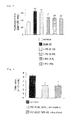
- Example 2 To ICR mice (6- to 8-week old, body weight: 28 to 32 g), 5 mg/kg of bleomycin was intratracheally administered to produce lung injury. The confirmation of production of lung injury was performed in the same way as in Example 1. A PC-SOD having a concentration of 0.15, 0.75, 1.5, 3.0, 15, or 30 kU/kg was dissolved in 5% xylitol, the PC-SOD was intratracheally administered to these lung injury model mice once daily for 3 days in a dose of 15 ⁇ L per mouse. After 3 days, the alveolar lavage fluid was collected from the mice, and the whole cells were counted. Further, the respective cells in alveolar macrophages, lymphocytes, and neutrophils were stained by Diff-Quik stain, and the cells were counted.
- Fig. 1 shows the whole number of cells in the alveolar lavage fluid
- Fig. 2 shows the results of alveolar macrophages
- Fig. 3 shows the results of lymphocytes
- Fig. 4 shows the results of neutrophils.
- * shows a significant difference to the bleomycin administration group.
- Example 2 To ICR mice (6- to 8-week old, body weight: 28 to 32 g), 5 mg/kg of bleomycin was intratracheally administered to produce lung injury. The confirmation of production of lung injury was performed in the same way as in Example 1. A PC-SOD having a concentration of 0.15, 0.75, 1.5, or 15 kU/kg was dissolved in 5% xylitol, and the PC-SOD was intratracheally administered to the lung injury model mice once daily for 14 days in a dose of 15 ⁇ L per mouse. On 15th day, the mice were sacrificed, and slices of a lung tissue were produced. The slices were stained by H&E stain and Masson's trichrome stain, and change of the lung tissue was observed.
- hydroxyproline collagen
- the state of fibrosis in the lung was observed.
- an example where 5% xylitol solution in which a PC-SOD was not dissolved was administered was used.
- Example 2 To ICR mice (6- to 8-week old, body weight: 28 to 32 g), 5 mg/kg of bleomycin was intratracheally administered to produce lung injury. The confirmation of production of the lung injury was performed in the same way as in Example 1.
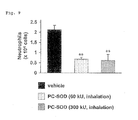
- a PC-SOD having a concentration of 60 or 300 kU was dissolved in 10 mL of solution, the PC-SOD was administered to the respective mice using an ultrasonic nebulizer through pulmonary inhalation once daily for 3 days. After 3 days, the alveolar lavage fluid was collected from the mice, and the whole cells were counted. Further, the respective cells in alveolar macrophages, lymphocytes, and neutrophils were stained by Diff-Quik stain, and the cells were counted.
- Fig. 6 shows the whole number of cells in the alveolar lavage fluid
- Fig. 7 shows the results of alveolar macrophages
- Fig. 8 shows the results of lymphocytes
- Fig. 9 shows the results of neutrophils.
- * shows a significant difference to the bleomycin administration group.
- Example 5 Clinical test example of administration of PC-SOD by nebulizer
- the PC-SOD which is the active ingredient of the present invention is free of side effects, and thus safe for human.
- the PC-SOD is approved to be useful for therapeutic effects of interstitial pneumonia.
- a liquid formulation for inhalation was prepared by dissolving 1%(w/w) of PC-SOD, 10%(w/w) of sucrose, and 0.05%(w/w) of benzalkonium chloride in an aqueous solution of 5% xylitol.
- a liquid formulation for inhalation was prepared using 1%(w/w) of PC-SOD, 10%(w/w) of sucrose, 0.05%(w/w) of benzalkonium chloride, 10%(w/w) of polyethylene glycol, 20%(w/w) of propylene glycol, and the balance of purified water.
- a powder formulation for inhalation was prepared using 5%(w/w) of PC-SOD and the balance of sucrose (fine powder).
- the inhalant provided by the present invention is an inhalant, in which a specific PC-SOD as an SOD is used as an active ingredient, has an excellent affinity for a cell membrane and the like as compared with the conventional SOD, and has a high ability to favorably eliminate superoxide anions locally in the lesion.
- the present invention is an inhalant which allows the PS-SOD to be administered directly to a lung tissue or the like by inhalation.
- the effect of SOD eliminates active oxygens such as superoxide anions which induce cell injury to effectively suppress the induction, and as a result, treatment useful for interstitial pneumonia can be achieved, and has a great value in medical care.
Landscapes
- Health & Medical Sciences (AREA)
- Chemical & Material Sciences (AREA)
- Life Sciences & Earth Sciences (AREA)
- Engineering & Computer Science (AREA)
- General Health & Medical Sciences (AREA)
- Medicinal Chemistry (AREA)
- Veterinary Medicine (AREA)
- Public Health (AREA)
- Pharmacology & Pharmacy (AREA)
- Animal Behavior & Ethology (AREA)
- Epidemiology (AREA)
- Bioinformatics & Cheminformatics (AREA)
- Molecular Biology (AREA)
- General Chemical & Material Sciences (AREA)
- Chemical Kinetics & Catalysis (AREA)
- Oil, Petroleum & Natural Gas (AREA)
- Pulmonology (AREA)
- Otolaryngology (AREA)
- Proteomics, Peptides & Aminoacids (AREA)
- Dispersion Chemistry (AREA)
- Biophysics (AREA)
- Gastroenterology & Hepatology (AREA)
- Immunology (AREA)
- Biochemistry (AREA)
- Organic Chemistry (AREA)
- Nuclear Medicine, Radiotherapy & Molecular Imaging (AREA)
- Oncology (AREA)
- Communicable Diseases (AREA)
- Medicines That Contain Protein Lipid Enzymes And Other Medicines (AREA)
- Medicinal Preparation (AREA)
Applications Claiming Priority (2)
| Application Number | Priority Date | Filing Date | Title |
|---|---|---|---|
| JP2008308331 | 2008-12-03 | ||
| PCT/JP2009/069067 WO2010064522A1 (fr) | 2008-12-03 | 2009-11-09 | Inhalant comprenant une superoxyde dismutase modifiée |
Publications (2)
| Publication Number | Publication Date |
|---|---|
| EP2359845A1 true EP2359845A1 (fr) | 2011-08-24 |
| EP2359845A4 EP2359845A4 (fr) | 2015-05-27 |
Family
ID=42233175
Family Applications (1)
| Application Number | Title | Priority Date | Filing Date |
|---|---|---|---|
| EP09830289.6A Withdrawn EP2359845A4 (fr) | 2008-12-03 | 2009-11-09 | Inhalant comprenant une superoxyde dismutase modifiée |
Country Status (7)
| Country | Link |
|---|---|
| US (1) | US20110262420A1 (fr) |
| EP (1) | EP2359845A4 (fr) |
| JP (1) | JPWO2010064522A1 (fr) |
| KR (1) | KR20110094321A (fr) |
| CN (1) | CN102238958A (fr) |
| CA (1) | CA2745411A1 (fr) |
| WO (1) | WO2010064522A1 (fr) |
Families Citing this family (3)
| Publication number | Priority date | Publication date | Assignee | Title |
|---|---|---|---|---|
| CN108348584B (zh) * | 2015-10-29 | 2022-11-01 | 日本株式会社Ltt生物医药 | 急性呼吸窘迫综合征治疗剂 |
| WO2022015138A1 (fr) * | 2020-07-16 | 2022-01-20 | Silva Castro Hector | Agent antiseptique déposable par aspersion ou inhalation dans le système du tractus respiratoire inférieur |
| CN121058897B (zh) * | 2025-11-10 | 2026-02-06 | 浙江安各洛生物技术有限公司 | 一种含超氧化物歧化酶的口腔速溶膜及其制备工艺 |
Family Cites Families (18)
| Publication number | Priority date | Publication date | Assignee | Title |
|---|---|---|---|---|
| JPS568687A (en) * | 1979-07-04 | 1981-01-29 | Toyo Jozo Co Ltd | Preparation of creatinase |
| JPH0952843A (ja) | 1995-08-09 | 1997-02-25 | Samu Kenkyusho:Kk | 急性腎不全治療剤 |
| JPH0959178A (ja) | 1995-08-24 | 1997-03-04 | Samu Kenkyusho:Kk | 抗ウイルス剤及び抗ウイルス作用増強剤 |
| JPH09110717A (ja) | 1995-10-21 | 1997-04-28 | Samu Kenkyusho:Kk | ループス腎炎治療剤 |
| JP3857338B2 (ja) | 1995-10-25 | 2006-12-13 | 株式会社Lttバイオファーマ | レシチン化スーパーオキシドディスムターゼおよびそれを有効成分とする医薬 |
| JPH10338645A (ja) | 1997-06-06 | 1998-12-22 | Samu Kenkyusho:Kk | 脳血管障害に伴う機能障害改善剤 |
| JP2001002585A (ja) * | 1999-06-22 | 2001-01-09 | Ltt Kenkyusho:Kk | レシチン化スーパーオキシドジスムターゼ含有抗線維化剤 |
| JP3792487B2 (ja) | 1999-06-24 | 2006-07-05 | 株式会社Lttバイオファーマ | レシチン化スーパーオキシドジスムターゼ含有医薬組成物 |
| WO2001000230A1 (fr) * | 1999-06-24 | 2001-01-04 | Ltt Institute Co., Ltd. | Composition medicamenteuse contenant une superoxyde dismutase modifiee par lecithine |
| SE9903985D0 (sv) * | 1999-11-03 | 1999-11-03 | Aga Ab | Use of nitric oxide |
| JP2001151695A (ja) | 1999-11-26 | 2001-06-05 | Ltt Institute Co Ltd | アレルギー疾患処置剤 |
| US6899869B2 (en) * | 2000-04-25 | 2005-05-31 | Tomoaki Hoshino | Method of preparing an animal model for interstitial pneumonia |
| PE20050941A1 (es) * | 2003-12-16 | 2005-11-08 | Nycomed Gmbh | Suspensiones acuosas de ciclesonida para nebulizacion |
| JP4958556B2 (ja) * | 2004-10-12 | 2012-06-20 | 株式会社Lttバイオファーマ | レシチン化スーパーオキシドディスムターゼ組成物およびその製造方法 |
| JP2006169128A (ja) | 2004-12-13 | 2006-06-29 | Ltt Bio-Pharma Co Ltd | 熱傷治療剤 |
| US20070065367A1 (en) * | 2005-09-20 | 2007-03-22 | Rany Condos | Method of treating pulmonary disease with interferons |
| EP1949093A2 (fr) * | 2005-10-11 | 2008-07-30 | Alvine Pharmaceuticals, Inc. | Préparations et méthodes pour l'augmentation de la stabilité gastro-intestinale d'oligopeptides et de polypeptides |
| US20100143321A1 (en) * | 2006-12-19 | 2010-06-10 | Ltt Bio Pharma Co., Ltd. | Therapeutic composition for interstitual pneumonia |
-
2009
- 2009-11-09 CN CN2009801484324A patent/CN102238958A/zh active Pending
- 2009-11-09 US US13/131,414 patent/US20110262420A1/en not_active Abandoned
- 2009-11-09 CA CA2745411A patent/CA2745411A1/fr not_active Abandoned
- 2009-11-09 EP EP09830289.6A patent/EP2359845A4/fr not_active Withdrawn
- 2009-11-09 WO PCT/JP2009/069067 patent/WO2010064522A1/fr not_active Ceased
- 2009-11-09 KR KR1020117015084A patent/KR20110094321A/ko not_active Ceased
- 2009-11-09 JP JP2010541279A patent/JPWO2010064522A1/ja active Pending
Non-Patent Citations (1)
| Title |
|---|
| See references of WO2010064522A1 * |
Also Published As
| Publication number | Publication date |
|---|---|
| US20110262420A1 (en) | 2011-10-27 |
| CN102238958A (zh) | 2011-11-09 |
| CA2745411A1 (fr) | 2010-06-10 |
| JPWO2010064522A1 (ja) | 2012-05-10 |
| WO2010064522A1 (fr) | 2010-06-10 |
| EP2359845A4 (fr) | 2015-05-27 |
| KR20110094321A (ko) | 2011-08-23 |
Similar Documents
| Publication | Publication Date | Title |
|---|---|---|
| CN101677947B (zh) | 包含胰岛素衍生物的药物制剂 | |
| US20120251444A1 (en) | Treatment of liver disorders by administration of rap conjugates | |
| HUE032287T2 (en) | Protease-stabilized, acylated insulin analogues | |
| EP0335133A2 (fr) | Délivrance d'un médicament à l'aide d'un tensioactif pulmonaire pour faciliter l'absorption | |
| JP2007534686A (ja) | 哺乳動物において中枢神経系(cns)の障害を治療するための、アセチルコリンエステラーゼ(ace)阻害剤を使用した組成物および方法 | |
| HU215933B (hu) | Szintetikus peptidek és ezeket tartalmazó tüdő-felületaktív anyagok | |
| EP2359845A1 (fr) | Inhalant comprenant une superoxyde dismutase modifiée | |
| Bodhe et al. | Dose-ranging studies on liposomal amphotericin B (L-AMP-LRC-1) in the treatment of visceral leishmaniasis | |
| WO1998034622A1 (fr) | Procedes d'administration d'amifostine | |
| US12385017B2 (en) | Acute respiratory distress syndrome therapeutic agent | |
| KR101654959B1 (ko) | 만성 폐색성 폐질환 개선제 | |
| US20100143321A1 (en) | Therapeutic composition for interstitual pneumonia | |
| US9616100B2 (en) | Methods of use of HSP70 for increased performance or treatment of HSP70 related disorders | |
| WO2005004914A1 (fr) | Composition medicinale contenant un leurre nf-$g(k)b pour le traitement et la prevention de maladies respiratoires et procede l'utilisant | |
| KR20220041744A (ko) | 나파모스타트 또는 카모스타트를 포함하는 흡입용 제제 | |
| BR112013005697B1 (pt) | Formulação aquosa estável | |
| CA2043107A1 (fr) | Compose therapeutique | |
| US9937241B2 (en) | Degradation resistant HSP70 formulations and uses thereof | |
| US20100048621A1 (en) | Medicament for treating chronic obstructive pulmonary disease | |
| JP2002080395A (ja) | 心筋傷害処置剤 | |
| JP2021134176A (ja) | ムーコル症治療薬 | |
| PT99837A (pt) | Processo para a preparacao de composicoes farmaceuticas contendo interferao alfa e metodo para administracao de interferao alfa por inalacao oral para tratar asma e doencas pulmonares proliferativas nao malignas | |
| JP2008515849A (ja) | 抗トロンビン性化合物の経肺投与 | |
| EP0401426A1 (fr) | Utilisation de gangliosides pour le traitement du disfonctionnement du système nerveux autonome dans la maladie de Chagas | |
| HK1132930B (en) | Treatment of liver disorders by administration of receptor-associated protein (rap)-conjugates |
Legal Events
| Date | Code | Title | Description |
|---|---|---|---|
| PUAI | Public reference made under article 153(3) epc to a published international application that has entered the european phase |
Free format text: ORIGINAL CODE: 0009012 |
|
| 17P | Request for examination filed |
Effective date: 20110530 |
|
| AK | Designated contracting states |
Kind code of ref document: A1 Designated state(s): AT BE BG CH CY CZ DE DK EE ES FI FR GB GR HR HU IE IS IT LI LT LU LV MC MK MT NL NO PL PT RO SE SI SK SM TR |
|
| DAX | Request for extension of the european patent (deleted) | ||
| RA4 | Supplementary search report drawn up and despatched (corrected) |
Effective date: 20150428 |
|
| RIC1 | Information provided on ipc code assigned before grant |
Ipc: A61K 47/26 20060101ALI20150421BHEP Ipc: A61P 11/00 20060101ALI20150421BHEP Ipc: A61K 38/44 20060101AFI20150421BHEP Ipc: A61K 9/10 20060101ALI20150421BHEP Ipc: A61K 9/72 20060101ALI20150421BHEP Ipc: A61K 9/14 20060101ALI20150421BHEP Ipc: A61K 47/48 20060101ALI20150421BHEP |
|
| STAA | Information on the status of an ep patent application or granted ep patent |
Free format text: STATUS: THE APPLICATION IS DEEMED TO BE WITHDRAWN |
|
| 18D | Application deemed to be withdrawn |
Effective date: 20151201 |