EP2365188A1 - Cooling gas turbine components with seal slot channels - Google Patents
Cooling gas turbine components with seal slot channels Download PDFInfo
- Publication number
- EP2365188A1 EP2365188A1 EP11156672A EP11156672A EP2365188A1 EP 2365188 A1 EP2365188 A1 EP 2365188A1 EP 11156672 A EP11156672 A EP 11156672A EP 11156672 A EP11156672 A EP 11156672A EP 2365188 A1 EP2365188 A1 EP 2365188A1
- Authority
- EP
- European Patent Office
- Prior art keywords
- channel
- segment
- inlet
- outlet
- seal slot
- Prior art date
- Legal status (The legal status is an assumption and is not a legal conclusion. Google has not performed a legal analysis and makes no representation as to the accuracy of the status listed.)
- Granted
Links
Images



Classifications
-
- F—MECHANICAL ENGINEERING; LIGHTING; HEATING; WEAPONS; BLASTING
- F01—MACHINES OR ENGINES IN GENERAL; ENGINE PLANTS IN GENERAL; STEAM ENGINES
- F01D—NON-POSITIVE DISPLACEMENT MACHINES OR ENGINES, e.g. STEAM TURBINES
- F01D11/00—Preventing or minimising internal leakage of working-fluid, e.g. between stages
- F01D11/005—Sealing means between non relatively rotating elements
-
- F—MECHANICAL ENGINEERING; LIGHTING; HEATING; WEAPONS; BLASTING
- F05—INDEXING SCHEMES RELATING TO ENGINES OR PUMPS IN VARIOUS SUBCLASSES OF CLASSES F01-F04
- F05D—INDEXING SCHEME FOR ASPECTS RELATING TO NON-POSITIVE-DISPLACEMENT MACHINES OR ENGINES, GAS-TURBINES OR JET-PROPULSION PLANTS
- F05D2240/00—Components
- F05D2240/10—Stators
- F05D2240/11—Shroud seal segments
-
- F—MECHANICAL ENGINEERING; LIGHTING; HEATING; WEAPONS; BLASTING
- F05—INDEXING SCHEMES RELATING TO ENGINES OR PUMPS IN VARIOUS SUBCLASSES OF CLASSES F01-F04
- F05D—INDEXING SCHEME FOR ASPECTS RELATING TO NON-POSITIVE-DISPLACEMENT MACHINES OR ENGINES, GAS-TURBINES OR JET-PROPULSION PLANTS
- F05D2240/00—Components
- F05D2240/80—Platforms for stationary or moving blades
- F05D2240/81—Cooled platforms
Definitions
- the present invention relates to shrouds and nozzles for gas turbines and, more particularly, to arrangements for cooling shrouds and nozzles of gas turbines.
- Shrouds employed in a gas turbine surround and in part define the hot gas path through the turbine.
- Shrouds are typically characterized by a plurality of circumferentially extending shroud segments arranged about the hot gas path, with each segment including discrete inner and outer shroud bodies.
- there are two or three inner shroud segments for each outer shroud segment with the outer shroud segments being secured to the stationary inner shell or casing of the turbine and the inner shroud segments being secured to the outer shroud segments.
- the inner shroud segments directly surround the rotating parts of the turbine, i.e., the rotor wheels carrying rows of buckets or blades.
- convection cooling holes that extend through the segments and into the gaps between the segments to cool the sides of the segments and to prevent hot path gas ingestion into the gaps.
- the area that is purged and cooled by a single cooling hole is small, however, because the velocity of the cooling air exiting the cooling hole is high and the cooling air diffuses into the hot gas flow path.
- Shroud slash faces in particular, above the bucket region, are the life-limiting regions, mainly due to oxidation. This is caused by the continuous ingestion of hot gases thrown by the bucket towards the shroud inter-segment gaps.
- Traditional cooling methods use cooling holes along the slash face drilled from post-impingement cold section, or discrete perpendicular channels machined along the length of the seal slot, which improves the slash face cooling to certain extent, but whose effects are very localized as they do not cover the entire length of low-life slash face region.
- a nozzle may be formed by a plurality of sections, or segments, and seals between adjacent segments.
- Service run nozzles in a gas turbine may have distorted sidewalls as a result of previous weld repairs or due to stress relief during service. Creep strain due to applied loads at operating temperatures may also contribute to distortion. This movement of the sidewalls will cause the seal slots that are contained within the sidewalls to be out of position relative to engine center.
- a reduction in available cooling air will result in increased oxidation of the nozzle due to a resultant higher metal temperature and the lack of cooling will also cause changes to thermal gradients within the nozzle leading to increased cracking of the part. This will increase subsequent repair costs and may reduce the life of the parts.
- Misaligned sidewalls may also result in flow path steps.
- the hot gas will not have a smooth path but will be tripped by the mismatch between adjacent nozzle segments, resulting in turbulent flow and reduced energy of the gas stream, thereby reducing performance.
- Turbulent flow also increases thermal transfer to the nozzle and so will raise the metal temperature, leading to increased oxidation and cracking.
- a segment of a component for use in a gas turbine comprises a leading edge; a trailing edge; a pair of opposed lateral sides between the leading and trailing edges; and a seal slot provided in each lateral side.
- the seal slot comprises a surface having a channel extending in an axial direction defined from the leading edge to the trailing edge, at least one inlet to the channel, and at least one outlet from the channel, wherein the at least one outlet is spaced downstream from the at least one inlet in the axial direction.
- a gas turbine comprises at least one of an inner shroud and a nozzle, wherein at least one of the inner shroud and the nozzle comprises a plurality of circumferentially arranged segments, and each segment comprises a leading edge, a trailing edge, a pair of opposed lateral sides between the leading and trailing edges; and a seal slot provided in each lateral side, the seal slot comprising a surface, the surface comprising a channel extending in an axial direction defined from the leading edge to the trailing edge, at least one inlet to the channel, and at least one outlet from the channel, wherein the at least one outlet is spaced downstream from the at least one inlet in the axial direction.
- a method of cooling a component of a gas turbine comprises a plurality of segments circumferentially arranged. Each segment comprises a leading edge, a trailing edge, a pair of opposed lateral sides between the leading and trailing edges, and a seal slot provided in each lateral side. The component further comprises a seal on each seal slot.
- the method comprises directing cooling air that leaks into the seal slot below the seal through at least one inlet into a channel formed in a surface of the seal slot, wherein the channel extends in an axial direction defmed from the leading edge to the trailing edge; directing the leaking cooling air along the channel; and directing the leaking cooling air out of the channel through at least one outlet, wherein the at least one outlet is spaced downstream from the at least one inlet in the axial direction.
- an inner shroud segment 2 comprises a leading edge 4 and a trailing edge 6.
- the inner shroud segment 2 is configured to be connected to an outer shroud segment by a leading edge hook 8 and a trailing edge hook 10.
- the inner shroud segment 2 comprises impingement cavities, or plenums, 12 which receive relatively cold air from the turbine compressor to cool the inner shroud segments.
- trailing edge convection cooling apertures 14 extend through the inner shroud segment 2, and as shown in Fig. 2 , leading edge convection cooling apertures 16 are provided adjacent the leading edge 4.
- the inner shroud segment 2 may comprise a seal slot 18 configured to receive a hard/cloth seal located on the seal slot surface 22.
- the post-impingement air leaks into the gas path between two inner shroud segments and through the hard/cloth seals located on the seal slot surface 22.
- the post-impingement leakage/cooling air enters the seal slot 18 below the hard/cloth seals on the seal slots 18 and exits into the hot gas path, thus providing active cooling closer to the slash faces 20 of the inner shroud segments.
- the slash faces 20 are provided on opposed lateral sides of the inner shroud segment 2.
- discrete channels 24 are provided in the seal slot surface 22.
- the post-impingement leakage/cooling air enters perpendicular inlet channels 24 below the hard/cloth seals on the seal slots 18 and provides active cooling to the slash face 20.
- perpendicular refers to a direction perpendicular to the axial direction of the inner shroud segment defined from the leading edge to the trailing edge in a direction from an upstream position to a downstream position of a hot gas path through the turbine shroud.
- the cooling provided by the inlet channels 24 is localized and does not cover the entire length of the slash face region.
- a section or segment of a gas turbine nozzle includes an outer wall 42, an inner wall 46, and an airfoil 44 between the walls 42, 46.
- the nozzle segment includes a leading edge 4 and a trailing edge 6.
- the section also includes a number of seal slots 18 provided in opposed lateral sides of the nozzle segment.
- the seal slots 18 retain the end face seals (sometimes referred to as spline seals or slash face seals) that seal between adjacent nozzle segments and prevent the compressor discharge air leaking into the hot gas path and prevent ingestion of hot gas into the component.
- the seal slot surface 22 comprises a plurality of perpendicular inlet channels 28.
- the post-impingement leakage/cooling air 26 enters the multiple perpendicular inlet channels 28 and then flows axially in a channel 30, and then enters perpendicular exit channels 32 into the hot gas path 34.
- the term axial refers to the direction of the inner shroud segment from the leading edge to the trailing edge in a direction from an upstream position to a downstream position of the hot gas path through the turbine.
- the exit channels 32 are located alternately from the inlet channels 28. This configuration reduces the possibility that combustion gases from the hot gas path 34 may enter the seal slot of the inner shroud segment. It should be appreciated, however, that the inlet channels 28 and the exit channels 32 may be coaxial to each other. It should also be appreciated that the inlet channels 28 and/or the outlet channels 32 may not be perpendicular to the axial channel 30, but may instead be provided at an angle to the axial channel 30. It should be further appreciated that the number of inlet channels may be different from the number of outlet channels, or that the widths and/or lengths of the inlet channels and/or the outlet channels may be different from each other.
- a seal slot surface 22 comprises a plurality of perpendicular inlet channels 28.
- the post-impingement leakage/cooling air 26 enters the inlet channels 28 and flows into the channel 30 and then flows out the perpendicular exit channels 32 into the hot gas path 34.
- the exit channels 32 are provided after the inlet channels 28 in the axial direction of the seal slot surface 22. This configuration provides robust cooling in cases where the leading edge backflow margin is low because it prevents hot gases from short-circuiting through the exit channels 32 near the leading edge of the segment.
- a seal slot surface 22 includes a channel 36.
- the leakage/cooling air 26 enters the channel at inlet 38 and exits the channel 36 at outlet 40.
- the channel 36 may take a zig-zag configuration in the seal slot surface 22.
- the channel may include a serpentine configuration
- each portion, or segment, of the channel 36 is shown as linear in Fig. 8 , it should be appreciated that the portions, or segments, may be curved, or curvilinear.
- the configuration of Fig. 8 provides an increased convection path length compared to the embodiments shown in Figs. 6 and 7 .
- the channels 30, 36 shown in the embodiments of Figs. 6-8 provide continuous convective cooling of the seal slot surface 22 closer to the hot surface of the slash face.
- continuous partial or full length axial convective cooling By providing continuous partial or full length axial convective cooling, the heat transfer coefficient of the post-impingement leakage/cooling air is increased and effective cooling closer to the hot slash face can be achieved.
- Continuous partial or full length axial convective cooling closer to the hot metal helps to cool the slash face, thus increasing the mechanical life of the inner shroud and/or nozzle segments. As more cooling is provided to the shroud and/or nozzle low life regions, in particular to the slash face length of the shroud segment above the bucket region of the turbine, it is possible to achieve higher mechanical life.
- seal slot surfaces of the embodiments shown in Figs. 6-8 may be cast with the seal slot of the inner shroud segment or nozzle segment. It should also be appreciated that the embodiments of the seal slot surface 22 shown in Figs. 6-8 may be formed by electro-discharge machining of the seal slot surface of an inner shroud or nozzle segment. Existing shroud and/or nozzle segments may thus be modified to include seal slot surfaces having continuous axial channels and an inlet(s) and an outlet(s).
- the cooling flow along the seal slot channels can be used to cool the slash face metal temperature below certain temperature requirement, resulting in a more uniform metal temperature distribution.
- By providing continuous partial or full length axial convective cooling effective cooling closer to the hot slash face can be achieved.
- the reduction in slash face temperature can increase shroud and nozzle part intervals and achieve higher mechanical life. Since the life-limiting region of the shroud and/or nozzle is targeted, higher mechanical life can be achieved with the increase of HGP intervals.
Landscapes
- Engineering & Computer Science (AREA)
- Mechanical Engineering (AREA)
- General Engineering & Computer Science (AREA)
- Turbine Rotor Nozzle Sealing (AREA)
Abstract
Description
- The present invention relates to shrouds and nozzles for gas turbines and, more particularly, to arrangements for cooling shrouds and nozzles of gas turbines.
- Shrouds employed in a gas turbine surround and in part define the hot gas path through the turbine. Shrouds are typically characterized by a plurality of circumferentially extending shroud segments arranged about the hot gas path, with each segment including discrete inner and outer shroud bodies. Conventionally, there are two or three inner shroud segments for each outer shroud segment, with the outer shroud segments being secured to the stationary inner shell or casing of the turbine and the inner shroud segments being secured to the outer shroud segments. The inner shroud segments directly surround the rotating parts of the turbine, i.e., the rotor wheels carrying rows of buckets or blades.
- Because the inner shroud segments are exposed to hot combustion gases in the hot gas path, systems for cooling the inner shroud segments are oftentimes necessary to reduce the temperature of the segments. This is especially true for inner shroud segments in the first and second stages of a turbine that are exposed to very high temperatures of the combustion gases due to their close proximity to the turbine combustors. Heat transfer coefficients are also very high due to rotation of the turbine buckets or blades.
- To cool the shrouds, typically relatively cold air from the turbine compressor is supplied via convection cooling holes that extend through the segments and into the gaps between the segments to cool the sides of the segments and to prevent hot path gas ingestion into the gaps. The area that is purged and cooled by a single cooling hole is small, however, because the velocity of the cooling air exiting the cooling hole is high and the cooling air diffuses into the hot gas flow path.
- Typically, the post-impingement air leaks into the gas path between two inner shrouds, through hard/cloth seals located on the seal slot surface. Shroud slash faces, in particular, above the bucket region, are the life-limiting regions, mainly due to oxidation. This is caused by the continuous ingestion of hot gases thrown by the bucket towards the shroud inter-segment gaps. Traditional cooling methods use cooling holes along the slash face drilled from post-impingement cold section, or discrete perpendicular channels machined along the length of the seal slot, which improves the slash face cooling to certain extent, but whose effects are very localized as they do not cover the entire length of low-life slash face region.
- Another component of gas turbines that includes seal slots are nozzles. A nozzle may be formed by a plurality of sections, or segments, and seals between adjacent segments. Service run nozzles in a gas turbine may have distorted sidewalls as a result of previous weld repairs or due to stress relief during service. Creep strain due to applied loads at operating temperatures may also contribute to distortion. This movement of the sidewalls will cause the seal slots that are contained within the sidewalls to be out of position relative to engine center.
- If the sidewalls are not pressed back into position, the seal slots between adjacent segments would not be aligned with each other, and it may prove impossible to fit the seals in place. Alternatively, it may be possible to force the seals into the slots but this would lock the nozzle segments together such that they could not move or "float" relative to each other. This float is necessary to allow for thermal expansion and to ensure the segments load up against the sealing faces (hook fit and chordal hinge) during operation. If they are locked together, it is likely they will be skewed and will not load against their sealing faces. This will result in compressor discharge air leaking directly into the hot gas path and will reduce the amount of air available for combustion and for cooling of the nozzle. The result of reduced air for combustion will be lower performance of the turbine and increased emissions. A reduction in available cooling air will result in increased oxidation of the nozzle due to a resultant higher metal temperature and the lack of cooling will also cause changes to thermal gradients within the nozzle leading to increased cracking of the part. This will increase subsequent repair costs and may reduce the life of the parts.
- Misaligned sidewalls may also result in flow path steps. The hot gas will not have a smooth path but will be tripped by the mismatch between adjacent nozzle segments, resulting in turbulent flow and reduced energy of the gas stream, thereby reducing performance. Turbulent flow also increases thermal transfer to the nozzle and so will raise the metal temperature, leading to increased oxidation and cracking.
- According to one embodiment, a segment of a component for use in a gas turbine comprises a leading edge; a trailing edge; a pair of opposed lateral sides between the leading and trailing edges; and a seal slot provided in each lateral side. The seal slot comprises a surface having a channel extending in an axial direction defined from the leading edge to the trailing edge, at least one inlet to the channel, and at least one outlet from the channel, wherein the at least one outlet is spaced downstream from the at least one inlet in the axial direction.
- According to another embodiment, a gas turbine comprises at least one of an inner shroud and a nozzle, wherein at least one of the inner shroud and the nozzle comprises a plurality of circumferentially arranged segments, and each segment comprises a leading edge, a trailing edge, a pair of opposed lateral sides between the leading and trailing edges; and a seal slot provided in each lateral side, the seal slot comprising a surface, the surface comprising a channel extending in an axial direction defined from the leading edge to the trailing edge, at least one inlet to the channel, and at least one outlet from the channel, wherein the at least one outlet is spaced downstream from the at least one inlet in the axial direction.
- According to yet another embodiment, a method of cooling a component of a gas turbine is provided. The component comprises a plurality of segments circumferentially arranged. Each segment comprises a leading edge, a trailing edge, a pair of opposed lateral sides between the leading and trailing edges, and a seal slot provided in each lateral side. The component further comprises a seal on each seal slot. The method comprises directing cooling air that leaks into the seal slot below the seal through at least one inlet into a channel formed in a surface of the seal slot, wherein the channel extends in an axial direction defmed from the leading edge to the trailing edge; directing the leaking cooling air along the channel; and directing the leaking cooling air out of the channel through at least one outlet, wherein the at least one outlet is spaced downstream from the at least one inlet in the axial direction.
-
-
Fig. 1 is a front perspective view of an inner shroud segment; -
Fig. 2 is a rear perspective of the inner shroud segment ofFIG. 1 ; -
Fig. 3 is a side perspective of the inner shroud segment ofFIGS. 1 and2 ; -
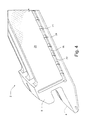
Fig. 4 is a side perspective of another inner shroud segment; -
Fig. 5 is a perspective view of a gas turbine nozzle section; -
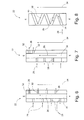
Fig. 6 is a plan view of a seal slot surface according to an embodiment of the invention; -
Fig. 7 is a plan view of a seal slot surface according to another embodiment of the invention; and -
Fig. 8 is a plan view of a seal slot surface according to a further embodiment of the invention. - Referring to
Figs. 1-3 , aninner shroud segment 2 comprises a leadingedge 4 and atrailing edge 6. Theinner shroud segment 2 is configured to be connected to an outer shroud segment by a leadingedge hook 8 and atrailing edge hook 10. - The
inner shroud segment 2 comprises impingement cavities, or plenums, 12 which receive relatively cold air from the turbine compressor to cool the inner shroud segments. As shown inFig. 1 , trailing edgeconvection cooling apertures 14 extend through theinner shroud segment 2, and as shown inFig. 2 , leading edgeconvection cooling apertures 16 are provided adjacent the leadingedge 4. - Referring still to
Figs. 1-3 , theinner shroud segment 2 may comprise aseal slot 18 configured to receive a hard/cloth seal located on theseal slot surface 22. Typically, the post-impingement air leaks into the gas path between two inner shroud segments and through the hard/cloth seals located on theseal slot surface 22. The post-impingement leakage/cooling air enters theseal slot 18 below the hard/cloth seals on theseal slots 18 and exits into the hot gas path, thus providing active cooling closer to the slash faces 20 of the inner shroud segments. Theslash faces 20 are provided on opposed lateral sides of theinner shroud segment 2. - Referring to
Fig. 4 ,discrete channels 24 are provided in theseal slot surface 22. The post-impingement leakage/cooling air entersperpendicular inlet channels 24 below the hard/cloth seals on theseal slots 18 and provides active cooling to theslash face 20. As used herein, the term perpendicular refers to a direction perpendicular to the axial direction of the inner shroud segment defined from the leading edge to the trailing edge in a direction from an upstream position to a downstream position of a hot gas path through the turbine shroud. The cooling provided by theinlet channels 24 is localized and does not cover the entire length of the slash face region. - Referring to
Fig. 5 , a section or segment of a gas turbine nozzle includes anouter wall 42, aninner wall 46, and anairfoil 44 between thewalls edge 4 and atrailing edge 6. The section also includes a number ofseal slots 18 provided in opposed lateral sides of the nozzle segment. Theseal slots 18 retain the end face seals (sometimes referred to as spline seals or slash face seals) that seal between adjacent nozzle segments and prevent the compressor discharge air leaking into the hot gas path and prevent ingestion of hot gas into the component. - Referring to
Fig. 6 , according to an embodiment of the invention, theseal slot surface 22 comprises a plurality ofperpendicular inlet channels 28. The post-impingement leakage/coolingair 26 enters the multipleperpendicular inlet channels 28 and then flows axially in achannel 30, and then entersperpendicular exit channels 32 into thehot gas path 34. As used herein, the term axial refers to the direction of the inner shroud segment from the leading edge to the trailing edge in a direction from an upstream position to a downstream position of the hot gas path through the turbine. - As shown in
Fig. 6 , theexit channels 32 are located alternately from theinlet channels 28. This configuration reduces the possibility that combustion gases from thehot gas path 34 may enter the seal slot of the inner shroud segment. It should be appreciated, however, that theinlet channels 28 and theexit channels 32 may be coaxial to each other. It should also be appreciated that theinlet channels 28 and/or theoutlet channels 32 may not be perpendicular to theaxial channel 30, but may instead be provided at an angle to theaxial channel 30. It should be further appreciated that the number of inlet channels may be different from the number of outlet channels, or that the widths and/or lengths of the inlet channels and/or the outlet channels may be different from each other. - Referring to
Fig. 7 , aseal slot surface 22 according to another embodiment comprises a plurality ofperpendicular inlet channels 28. The post-impingement leakage/coolingair 26 enters theinlet channels 28 and flows into thechannel 30 and then flows out theperpendicular exit channels 32 into thehot gas path 34. As shown inFig. 7 , theexit channels 32 are provided after theinlet channels 28 in the axial direction of theseal slot surface 22. This configuration provides robust cooling in cases where the leading edge backflow margin is low because it prevents hot gases from short-circuiting through theexit channels 32 near the leading edge of the segment. - Referring to
Fig. 8 , aseal slot surface 22 according to another embodiment includes achannel 36. The leakage/coolingair 26 enters the channel atinlet 38 and exits thechannel 36 atoutlet 40. Thechannel 36 may take a zig-zag configuration in theseal slot surface 22. Alternatively to, or in combination with, the zig-zag configuration, the channel may include a serpentine configuration Although each portion, or segment, of thechannel 36 is shown as linear inFig. 8 , it should be appreciated that the portions, or segments, may be curved, or curvilinear. The configuration ofFig. 8 provides an increased convection path length compared to the embodiments shown inFigs. 6 and 7 . - The
channels Figs. 6-8 provide continuous convective cooling of theseal slot surface 22 closer to the hot surface of the slash face. By providing continuous partial or full length axial convective cooling, the heat transfer coefficient of the post-impingement leakage/cooling air is increased and effective cooling closer to the hot slash face can be achieved. Continuous partial or full length axial convective cooling closer to the hot metal helps to cool the slash face, thus increasing the mechanical life of the inner shroud and/or nozzle segments. As more cooling is provided to the shroud and/or nozzle low life regions, in particular to the slash face length of the shroud segment above the bucket region of the turbine, it is possible to achieve higher mechanical life. - The seal slot surfaces of the embodiments shown in
Figs. 6-8 may be cast with the seal slot of the inner shroud segment or nozzle segment. It should also be appreciated that the embodiments of theseal slot surface 22 shown inFigs. 6-8 may be formed by electro-discharge machining of the seal slot surface of an inner shroud or nozzle segment. Existing shroud and/or nozzle segments may thus be modified to include seal slot surfaces having continuous axial channels and an inlet(s) and an outlet(s). - The cooling flow along the seal slot channels can be used to cool the slash face metal temperature below certain temperature requirement, resulting in a more uniform metal temperature distribution. By providing continuous partial or full length axial convective cooling, effective cooling closer to the hot slash face can be achieved. The reduction in slash face temperature can increase shroud and nozzle part intervals and achieve higher mechanical life. Since the life-limiting region of the shroud and/or nozzle is targeted, higher mechanical life can be achieved with the increase of HGP intervals.
- While the invention has been described in connection with what is presently considered to be the most practical and preferred embodiment, it is to be understood that the invention is not to be limited to the disclosed embodiment, but on the contrary, is intended to cover various modifications and equivalent arrangements included within the spirit and scope of the appended claims.
- Various aspects and embodiments of the present invention are defined by the following numbered clauses:
- 1. A segment of a component for use in a gas turbine engine, the segment comprising:
- a leading edge;
- a trailing edge;
- a pair of opposed lateral sides between the leading and trailing edges; and
- a seal slot provided in each lateral side, the seal slot comprising a surface, the surface comprising
- a channel extending in an axial direction defined from the leading edge to the trailing edge,
- at least one inlet to the channel, and
- at least one outlet from the channel, wherein the at least one outlet is spaced downstream from the at least one inlet in the axial direction.
- 2. A segment according to clause 1, wherein the channel extends a full axial length of the seal slot surface.
- 3. A segment according to clause 1, wherein the at least one inlet comprises at least one inlet channel and the at least one outlet comprises at least one outlet channel.
- 4. A segment according to clause 3, wherein at least one of the at least one inlet channel and the at least one outlet channel is perpendicular to the channel.
- 5. A segment according to clause 1, wherein the at least one outlet comprises a plurality of outlets and the least one inlet comprises a plurality of inlets, and the plurality of outlets are axially offset from the plurality of inlets.
- 6. A segment according to clause 1, wherein the at least one outlet comprises a plurality of outlets and the at least one inlet comprises a plurality of inlets, and all of the outlets are axially downstream of all of the inlets.
- 7. A segment according to clause 1, wherein the axial channel comprises at least one of a zig-zag and a serpentine shape.
- 8. A segment according to clause 1, wherein the segment comprises an inner shroud segment.
- 9. A segment according to clause 1, wherein the segment comprises a nozzle segment.
- 10. A gas turbine engine, comprising:
- at least one of an inner shroud and a nozzle, wherein at least one of the inner shroud and the nozzle comprises a plurality of circumferentially arranged segments, and each segment comprises
- a leading edge,
- a trailing edge,
- a pair of opposed lateral sides between the leading and trailing edges, and
- a seal slot provided in each lateral side, the seal slot comprising a surface, the surface comprising
- a channel extending in an axial direction defined from the leading edge to the trailing edge,
- at least one inlet to the channel, and
- at least one outlet from the channel, wherein the at least one outlet is spaced downstream from the at least one inlet in the axial direction.
- 11. A method of cooling a component of a gas turbine engine, the component comprising a plurality of segments circumferentially arranged, each segment comprising a leading edge, a trailing edge, a pair of opposed lateral sides between the leading and trailing edges, and a seal slot provided in each lateral side, the component further comprising a seal on each seal slot, the method comprising:
- directing cooling air that leaks into the seal slot below the seal through at least one inlet into a channel formed in a surface of the seal slot, wherein the channel extends in an axial direction defined from the leading edge to the trailing edge;
- directing the leaking cooling air along the channel; and
- directing the leaking cooling air out of the channel through at least one outlet, wherein the at least one outlet is spaced downstream from the at least one inlet in the axial direction.
- 12. A method according to clause 11, wherein the channel extends a full axial length of the seal slot surface.
- 13. A method according to clause 11, wherein the at least one inlet comprises at least one inlet channel and the at least one outlet comprises at least one outlet channel.
- 14. A method according to clause 13, wherein at least one of the at least one inlet channel and the at least one outlet channel is perpendicular to the axial channel.
- 15. A method according to clause 11, wherein the at least one outlet comprises a plurality of outlets and the least one inlet comprises a plurality of inlets, and the plurality of outlets are axially offset from the plurality of inlets.
- 16. A method according to clause 11, wherein the at least one outlet comprises a plurality of outlets and the at least one inlet comprises a plurality of inlets, and all of the outlets are axially downstream of all of the inlets.
- 17. A method according to clause 11, wherein the axial channel comprises at least one of a zig-zag and a serpentine shape.
- 18. A method according to clause 11, wherein the segment comprises an inner shroud segment.
- 19. A method according to clause 11, wherein the segment comprises a nozzle segment.
Claims (15)
- A segment of a component for use in a gas turbine engine, the segment comprising:a leading edge (4);a trailing edge (6);a pair of opposed lateral sides (20) between the leading and trailing edges; anda seal slot (18) provided in each lateral side, the seal slot comprising a surface (22), the surface comprisinga channel (30, 36) extending in an axial direction defined from the leading edge to the trailing edge,at least one inlet (28, 38) to the channel, andat least one outlet (32, 40) from the channel, wherein the at least one outlet is spaced downstream from the at least one inlet in the axial direction.
- A segment according to claim 1, wherein the channel (30) extends a full axial length of the seal slot surface (22).
- A segment according to claim 1 or claim 2, wherein the at least one inlet comprises at least one inlet channel (28) and the at least one outlet comprises at least one outlet channel (32).
- A segment according to claim 3, wherein at least one of the at least one inlet channel (28) and the at least one outlet channel (32) is perpendicular to the channel (30).
- A segment according to any one of claims 1-4, wherein the at least one outlet comprises a plurality of outlets and the least one inlet comprises a plurality of inlets, and the plurality of outlets are axially offset from the plurality of inlets.
- A segment according to any one of claims 1-4, wherein the at least one outlet comprises a plurality of outlets and the at least one inlet comprises a plurality of inlets, and all of the outlets are axially downstream of all of the inlets.
- A segment according to any of the preceding claims, wherein the axial channel (36) comprises at least one of a zig-zag and a serpentine shape.
- A segment according to any of the preceding claims, wherein the segment comprises an inner shroud segment.
- A segment according to any of the preceding claims, wherein the segment comprises a nozzle segment.
- A gas turbine engine, comprising:at least one of an inner shroud and a nozzle, wherein at least one of the inner shroud and the nozzle comprises a plurality of circumferentially arranged segments according to any one of claims 1-9.
- A method of cooling a component of a gas turbine engine, the component comprising a plurality of segments circumferentially arranged, each segment comprising a leading edge (4), a trailing edge (6), a pair of opposed lateral sides (20) between the leading and trailing edges, and a seal slot (18) provided in each lateral side, the component further comprising a seal on each seal slot, the method comprising:directing cooling air that leaks into the seal slot below the seal through at least one inlet (28, 38) into a channel (30, 36) formed in a surface (22) of the seal slot, wherein the channel extends in an axial direction defined from the leading edge to the trailing edge;directing the leaking cooling air (26) along the channel; anddirecting the leaking cooling air out of the channel through at least one outlet (32, 40), wherein the at least one outlet is spaced downstream from the at least one inlet in the axial direction.
- A method according to claim 11, wherein the at least one inlet comprises at least one inlet channel (28) and the at least one outlet comprises at least one outlet channel (32).
- A method according to claim 12, wherein at least one of the at least one inlet channel and the at least one outlet channel is perpendicular to the axial channel.
- A method according to any one of claims 11-13, wherein the at least one outlet comprises a plurality of outlets and the least one inlet comprises a plurality of inlets, and the plurality of outlets are axially offset from the plurality of inlets.
- A method according to claim 11, wherein the axial channel comprises at least one of a zig-zag and a serpentine shape.
Applications Claiming Priority (1)
| Application Number | Priority Date | Filing Date | Title |
|---|---|---|---|
| US12/716,784 US8371800B2 (en) | 2010-03-03 | 2010-03-03 | Cooling gas turbine components with seal slot channels |
Publications (2)
| Publication Number | Publication Date |
|---|---|
| EP2365188A1 true EP2365188A1 (en) | 2011-09-14 |
| EP2365188B1 EP2365188B1 (en) | 2013-12-18 |
Family
ID=44070627
Family Applications (1)
| Application Number | Title | Priority Date | Filing Date |
|---|---|---|---|
| EP11156672.5A Active EP2365188B1 (en) | 2010-03-03 | 2011-03-02 | Cooling gas turbine components with seal slot channels |
Country Status (4)
| Country | Link |
|---|---|
| US (1) | US8371800B2 (en) |
| EP (1) | EP2365188B1 (en) |
| JP (1) | JP5778946B2 (en) |
| CN (1) | CN102191954B (en) |
Cited By (3)
| Publication number | Priority date | Publication date | Assignee | Title |
|---|---|---|---|---|
| EP2615255A1 (en) * | 2012-01-10 | 2013-07-17 | General Electric Company | Turbine assembly and method for controlling a temperature of an assembly |
| US8845285B2 (en) | 2012-01-10 | 2014-09-30 | General Electric Company | Gas turbine stator assembly |
| EP2907977A1 (en) * | 2014-02-14 | 2015-08-19 | Siemens Aktiengesellschaft | Component that can be charged with hot gas for a gas turbine and sealing assembly with such a component |
Families Citing this family (14)
| Publication number | Priority date | Publication date | Assignee | Title |
|---|---|---|---|---|
| US9022728B2 (en) * | 2011-10-28 | 2015-05-05 | United Technologies Corporation | Feather seal slot |
| US20130177383A1 (en) * | 2012-01-05 | 2013-07-11 | General Electric Company | Device and method for sealing a gas path in a turbine |
| JP2013177875A (en) * | 2012-02-29 | 2013-09-09 | Ihi Corp | Gas turbine engine |
| US20130315719A1 (en) * | 2012-05-25 | 2013-11-28 | General Electric Company | Turbine Shroud Cooling Assembly for a Gas Turbine System |
| US20140064969A1 (en) * | 2012-08-29 | 2014-03-06 | Dmitriy A. Romanov | Blade outer air seal |
| US9464536B2 (en) | 2012-10-18 | 2016-10-11 | General Electric Company | Sealing arrangement for a turbine system and method of sealing between two turbine components |
| EP2811118B1 (en) * | 2013-06-06 | 2018-03-14 | MTU Aero Engines GmbH | Guide blade segment of a turboengine and turbine |
| US20150198063A1 (en) * | 2014-01-14 | 2015-07-16 | Alstom Technology Ltd | Cooled stator heat shield |
| US9897318B2 (en) | 2014-10-29 | 2018-02-20 | General Electric Company | Method for diverting flow around an obstruction in an internal cooling circuit |
| US20170175576A1 (en) * | 2015-12-16 | 2017-06-22 | General Electric Company | System and method for utilizing target features in forming inlet passages in micro-channel circuit |
| KR101873156B1 (en) * | 2017-04-12 | 2018-06-29 | 두산중공업 주식회사 | Turbine vane and gas turbine having the same |
| GB201720121D0 (en) * | 2017-12-04 | 2018-01-17 | Siemens Ag | Heatshield for a gas turbine engine |
| US10837315B2 (en) * | 2018-10-25 | 2020-11-17 | General Electric Company | Turbine shroud including cooling passages in communication with collection plenums |
| US11608752B2 (en) | 2021-02-22 | 2023-03-21 | General Electric Company | Sealing apparatus for an axial flow turbomachine |
Citations (7)
| Publication number | Priority date | Publication date | Assignee | Title |
|---|---|---|---|---|
| WO1996018025A1 (en) * | 1994-12-07 | 1996-06-13 | Pratt & Whitney Canada Inc. | Gas turbine engine feather seal arrangement |
| EP1162346A2 (en) * | 2000-06-08 | 2001-12-12 | General Electric Company | Cooling for turbine shroud segments |
| EP1621736A2 (en) * | 2004-07-30 | 2006-02-01 | ALSTOM Technology Ltd | Wall structure for a hot gas flow path |
| GB2432888A (en) * | 1997-12-03 | 2007-06-06 | Rolls Royce Plc | Blade tip clearance system |
| US20080206042A1 (en) * | 2006-11-30 | 2008-08-28 | Ching-Pang Lee | Methods and system for recuperated circumferential cooling of integral turbine nozzle and shroud assemblies |
| JP2009257281A (en) * | 2008-04-21 | 2009-11-05 | Toshiba Corp | Gas turbine stator blade and gas turbine apparatus |
| EP2239418A2 (en) * | 2009-03-31 | 2010-10-13 | General Electric Company | Feeding Film Cooling Holes from Seal Slots |
Family Cites Families (22)
| Publication number | Priority date | Publication date | Assignee | Title |
|---|---|---|---|---|
| US4902198A (en) * | 1988-08-31 | 1990-02-20 | Westinghouse Electric Corp. | Apparatus for film cooling of turbine van shrouds |
| JPH03213602A (en) * | 1990-01-08 | 1991-09-19 | General Electric Co <Ge> | Self cooling type joint connecting structure to connect contact segment of gas turbine engine |
| JPH09125906A (en) * | 1995-11-08 | 1997-05-13 | Mitsubishi Heavy Ind Ltd | Stationary blade for gas turbine |
| JPH10184310A (en) * | 1996-12-24 | 1998-07-14 | Hitachi Ltd | Gas turbine vane |
| DE19963371A1 (en) * | 1999-12-28 | 2001-07-12 | Alstom Power Schweiz Ag Baden | Chilled heat shield |
| US6354795B1 (en) * | 2000-07-27 | 2002-03-12 | General Electric Company | Shroud cooling segment and assembly |
| US6554566B1 (en) * | 2001-10-26 | 2003-04-29 | General Electric Company | Turbine shroud cooling hole diffusers and related method |
| US7033138B2 (en) * | 2002-09-06 | 2006-04-25 | Mitsubishi Heavy Industries, Ltd. | Ring segment of gas turbine |
| US7147432B2 (en) * | 2003-11-24 | 2006-12-12 | General Electric Company | Turbine shroud asymmetrical cooling elements |
| US7524163B2 (en) * | 2003-12-12 | 2009-04-28 | Rolls-Royce Plc | Nozzle guide vanes |
| US6984106B2 (en) * | 2004-01-08 | 2006-01-10 | General Electric Company | Resilent seal on leading edge of turbine inner shroud |
| US7097429B2 (en) * | 2004-07-13 | 2006-08-29 | General Electric Company | Skirted turbine blade |
| US7121802B2 (en) * | 2004-07-13 | 2006-10-17 | General Electric Company | Selectively thinned turbine blade |
| US7217081B2 (en) * | 2004-10-15 | 2007-05-15 | Siemens Power Generation, Inc. | Cooling system for a seal for turbine vane shrouds |
| US7163376B2 (en) * | 2004-11-24 | 2007-01-16 | General Electric Company | Controlled leakage pin and vibration damper for active cooling and purge of bucket slash faces |
| JP2006188962A (en) * | 2004-12-28 | 2006-07-20 | Mitsubishi Heavy Ind Ltd | Cooling structure of gas turbine high temperature part |
| US7520715B2 (en) * | 2005-07-19 | 2009-04-21 | Pratt & Whitney Canada Corp. | Turbine shroud segment transpiration cooling with individual cast inlet and outlet cavities |
| US7231724B2 (en) * | 2005-10-28 | 2007-06-19 | General Electric Company | Nozzle seal slot measuring tool and method |
| US7309212B2 (en) * | 2005-11-21 | 2007-12-18 | General Electric Company | Gas turbine bucket with cooled platform leading edge and method of cooling platform leading edge |
| US7416391B2 (en) * | 2006-02-24 | 2008-08-26 | General Electric Company | Bucket platform cooling circuit and method |
| US7625172B2 (en) * | 2006-04-26 | 2009-12-01 | United Technologies Corporation | Vane platform cooling |
| US8215914B2 (en) * | 2008-07-08 | 2012-07-10 | General Electric Company | Compliant seal for rotor slot |
-
2010
- 2010-03-03 US US12/716,784 patent/US8371800B2/en active Active
-
2011
- 2011-03-01 JP JP2011043435A patent/JP5778946B2/en active Active
- 2011-03-02 EP EP11156672.5A patent/EP2365188B1/en active Active
- 2011-03-03 CN CN201110058275.7A patent/CN102191954B/en active Active
Patent Citations (7)
| Publication number | Priority date | Publication date | Assignee | Title |
|---|---|---|---|---|
| WO1996018025A1 (en) * | 1994-12-07 | 1996-06-13 | Pratt & Whitney Canada Inc. | Gas turbine engine feather seal arrangement |
| GB2432888A (en) * | 1997-12-03 | 2007-06-06 | Rolls Royce Plc | Blade tip clearance system |
| EP1162346A2 (en) * | 2000-06-08 | 2001-12-12 | General Electric Company | Cooling for turbine shroud segments |
| EP1621736A2 (en) * | 2004-07-30 | 2006-02-01 | ALSTOM Technology Ltd | Wall structure for a hot gas flow path |
| US20080206042A1 (en) * | 2006-11-30 | 2008-08-28 | Ching-Pang Lee | Methods and system for recuperated circumferential cooling of integral turbine nozzle and shroud assemblies |
| JP2009257281A (en) * | 2008-04-21 | 2009-11-05 | Toshiba Corp | Gas turbine stator blade and gas turbine apparatus |
| EP2239418A2 (en) * | 2009-03-31 | 2010-10-13 | General Electric Company | Feeding Film Cooling Holes from Seal Slots |
Cited By (8)
| Publication number | Priority date | Publication date | Assignee | Title |
|---|---|---|---|---|
| EP2615255A1 (en) * | 2012-01-10 | 2013-07-17 | General Electric Company | Turbine assembly and method for controlling a temperature of an assembly |
| US8845285B2 (en) | 2012-01-10 | 2014-09-30 | General Electric Company | Gas turbine stator assembly |
| US8905708B2 (en) | 2012-01-10 | 2014-12-09 | General Electric Company | Turbine assembly and method for controlling a temperature of an assembly |
| EP2615254A3 (en) * | 2012-01-10 | 2017-08-02 | General Electric Company | Gas turbine stator assembly having abuting components with slots for receiving a sealing member |
| EP2907977A1 (en) * | 2014-02-14 | 2015-08-19 | Siemens Aktiengesellschaft | Component that can be charged with hot gas for a gas turbine and sealing assembly with such a component |
| WO2015121407A1 (en) * | 2014-02-14 | 2015-08-20 | Siemens Aktiengesellschaft | Component which can be subjected to hot gas for a gas turbine and sealing arrangement having such a component |
| CN105980664A (en) * | 2014-02-14 | 2016-09-28 | 西门子股份公司 | Components capable of withstanding hot gas for use in gas turbines and seals having such components |
| CN105980664B (en) * | 2014-02-14 | 2018-02-16 | 西门子股份公司 | Components capable of withstanding hot gas for use in gas turbines and seals having such components |
Also Published As
| Publication number | Publication date |
|---|---|
| JP2011179500A (en) | 2011-09-15 |
| US8371800B2 (en) | 2013-02-12 |
| EP2365188B1 (en) | 2013-12-18 |
| CN102191954B (en) | 2014-04-02 |
| JP5778946B2 (en) | 2015-09-16 |
| CN102191954A (en) | 2011-09-21 |
| US20110217155A1 (en) | 2011-09-08 |
Similar Documents
| Publication | Publication Date | Title |
|---|---|---|
| US8371800B2 (en) | Cooling gas turbine components with seal slot channels | |
| US6779597B2 (en) | Multiple impingement cooled structure | |
| US10801345B2 (en) | Chevron trip strip | |
| US7632062B2 (en) | Turbine rotor blades | |
| US9011077B2 (en) | Cooled airfoil in a turbine engine | |
| JP6209609B2 (en) | Moving blade | |
| CN103422908B (en) | Cooling structure in the end of turbine rotor blade | |
| JP5566755B2 (en) | Rotor blades for turbine engines | |
| US8967973B2 (en) | Turbine bucket platform shaping for gas temperature control and related method | |
| EP2148042A2 (en) | A blade for a rotor having a squealer tip with a partly inclined surface | |
| EP3088674B1 (en) | Rotor blade and corresponding gas turbine | |
| KR20030030849A (en) | Turbine airfoil with enhanced heat transfer | |
| US10202864B2 (en) | Chevron trip strip | |
| EP3184742B1 (en) | Turbine airfoil with trailing edge cooling circuit | |
| US8827643B2 (en) | Turbine bucket platform leading edge scalloping for performance and secondary flow and related method | |
| US20200088037A1 (en) | Turbine engine with annular cavity | |
| EP2264283A2 (en) | A cooled component for a gas turbine engine | |
| EP3184743B1 (en) | Turbine airfoil with trailing edge cooling circuit | |
| CN109083686B (en) | Turbine blade cooling structure and related method | |
| EP3329100B1 (en) | Cooling arrangements in tip shrouded turbine rotor blades | |
| CN101737092B (en) | About the device of turbine airfoil cooling apertures | |
| EP2169183A2 (en) | Turbine nozzle with curved recesses in the outer platforms | |
| US20140064942A1 (en) | Turbine rotor blade platform cooling | |
| WO2023147116A1 (en) | Components for gas turbine engines | |
| EP4469664A2 (en) | Baffle for installation within a leading edge cavity of an airfoil body and airfoil assembly |
Legal Events
| Date | Code | Title | Description |
|---|---|---|---|
| PUAI | Public reference made under article 153(3) epc to a published international application that has entered the european phase |
Free format text: ORIGINAL CODE: 0009012 |
|
| AK | Designated contracting states |
Kind code of ref document: A1 Designated state(s): AL AT BE BG CH CY CZ DE DK EE ES FI FR GB GR HR HU IE IS IT LI LT LU LV MC MK MT NL NO PL PT RO RS SE SI SK SM TR |
|
| AX | Request for extension of the european patent |
Extension state: BA ME |
|
| 17P | Request for examination filed |
Effective date: 20120314 |
|
| GRAP | Despatch of communication of intention to grant a patent |
Free format text: ORIGINAL CODE: EPIDOSNIGR1 |
|
| INTG | Intention to grant announced |
Effective date: 20130716 |
|
| GRAS | Grant fee paid |
Free format text: ORIGINAL CODE: EPIDOSNIGR3 |
|
| GRAA | (expected) grant |
Free format text: ORIGINAL CODE: 0009210 |
|
| AK | Designated contracting states |
Kind code of ref document: B1 Designated state(s): AL AT BE BG CH CY CZ DE DK EE ES FI FR GB GR HR HU IE IS IT LI LT LU LV MC MK MT NL NO PL PT RO RS SE SI SK SM TR |
|
| REG | Reference to a national code |
Ref country code: GB Ref legal event code: FG4D |
|
| REG | Reference to a national code |
Ref country code: CH Ref legal event code: EP |
|
| REG | Reference to a national code |
Ref country code: AT Ref legal event code: REF Ref document number: 645756 Country of ref document: AT Kind code of ref document: T Effective date: 20140115 |
|
| REG | Reference to a national code |
Ref country code: IE Ref legal event code: FG4D |
|
| REG | Reference to a national code |
Ref country code: DE Ref legal event code: R096 Ref document number: 602011004196 Country of ref document: DE Effective date: 20140213 |
|
| REG | Reference to a national code |
Ref country code: NL Ref legal event code: VDEP Effective date: 20131218 |
|
| PG25 | Lapsed in a contracting state [announced via postgrant information from national office to epo] |
Ref country code: SE Free format text: LAPSE BECAUSE OF FAILURE TO SUBMIT A TRANSLATION OF THE DESCRIPTION OR TO PAY THE FEE WITHIN THE PRESCRIBED TIME-LIMIT Effective date: 20131218 Ref country code: LT Free format text: LAPSE BECAUSE OF FAILURE TO SUBMIT A TRANSLATION OF THE DESCRIPTION OR TO PAY THE FEE WITHIN THE PRESCRIBED TIME-LIMIT Effective date: 20131218 Ref country code: NO Free format text: LAPSE BECAUSE OF FAILURE TO SUBMIT A TRANSLATION OF THE DESCRIPTION OR TO PAY THE FEE WITHIN THE PRESCRIBED TIME-LIMIT Effective date: 20140318 Ref country code: HR Free format text: LAPSE BECAUSE OF FAILURE TO SUBMIT A TRANSLATION OF THE DESCRIPTION OR TO PAY THE FEE WITHIN THE PRESCRIBED TIME-LIMIT Effective date: 20131218 Ref country code: FI Free format text: LAPSE BECAUSE OF FAILURE TO SUBMIT A TRANSLATION OF THE DESCRIPTION OR TO PAY THE FEE WITHIN THE PRESCRIBED TIME-LIMIT Effective date: 20131218 |
|
| REG | Reference to a national code |
Ref country code: AT Ref legal event code: MK05 Ref document number: 645756 Country of ref document: AT Kind code of ref document: T Effective date: 20131218 |
|
| REG | Reference to a national code |
Ref country code: LT Ref legal event code: MG4D |
|
| PG25 | Lapsed in a contracting state [announced via postgrant information from national office to epo] |
Ref country code: RS Free format text: LAPSE BECAUSE OF FAILURE TO SUBMIT A TRANSLATION OF THE DESCRIPTION OR TO PAY THE FEE WITHIN THE PRESCRIBED TIME-LIMIT Effective date: 20131218 Ref country code: LV Free format text: LAPSE BECAUSE OF FAILURE TO SUBMIT A TRANSLATION OF THE DESCRIPTION OR TO PAY THE FEE WITHIN THE PRESCRIBED TIME-LIMIT Effective date: 20131218 |
|
| PG25 | Lapsed in a contracting state [announced via postgrant information from national office to epo] |
Ref country code: IS Free format text: LAPSE BECAUSE OF FAILURE TO SUBMIT A TRANSLATION OF THE DESCRIPTION OR TO PAY THE FEE WITHIN THE PRESCRIBED TIME-LIMIT Effective date: 20140418 Ref country code: EE Free format text: LAPSE BECAUSE OF FAILURE TO SUBMIT A TRANSLATION OF THE DESCRIPTION OR TO PAY THE FEE WITHIN THE PRESCRIBED TIME-LIMIT Effective date: 20131218 Ref country code: BE Free format text: LAPSE BECAUSE OF FAILURE TO SUBMIT A TRANSLATION OF THE DESCRIPTION OR TO PAY THE FEE WITHIN THE PRESCRIBED TIME-LIMIT Effective date: 20131218 |
|
| PG25 | Lapsed in a contracting state [announced via postgrant information from national office to epo] |
Ref country code: RO Free format text: LAPSE BECAUSE OF FAILURE TO SUBMIT A TRANSLATION OF THE DESCRIPTION OR TO PAY THE FEE WITHIN THE PRESCRIBED TIME-LIMIT Effective date: 20131218 Ref country code: ES Free format text: LAPSE BECAUSE OF FAILURE TO SUBMIT A TRANSLATION OF THE DESCRIPTION OR TO PAY THE FEE WITHIN THE PRESCRIBED TIME-LIMIT Effective date: 20131218 Ref country code: AT Free format text: LAPSE BECAUSE OF FAILURE TO SUBMIT A TRANSLATION OF THE DESCRIPTION OR TO PAY THE FEE WITHIN THE PRESCRIBED TIME-LIMIT Effective date: 20131218 Ref country code: SK Free format text: LAPSE BECAUSE OF FAILURE TO SUBMIT A TRANSLATION OF THE DESCRIPTION OR TO PAY THE FEE WITHIN THE PRESCRIBED TIME-LIMIT Effective date: 20131218 Ref country code: CY Free format text: LAPSE BECAUSE OF FAILURE TO SUBMIT A TRANSLATION OF THE DESCRIPTION OR TO PAY THE FEE WITHIN THE PRESCRIBED TIME-LIMIT Effective date: 20131218 Ref country code: PL Free format text: LAPSE BECAUSE OF FAILURE TO SUBMIT A TRANSLATION OF THE DESCRIPTION OR TO PAY THE FEE WITHIN THE PRESCRIBED TIME-LIMIT Effective date: 20131218 Ref country code: CZ Free format text: LAPSE BECAUSE OF FAILURE TO SUBMIT A TRANSLATION OF THE DESCRIPTION OR TO PAY THE FEE WITHIN THE PRESCRIBED TIME-LIMIT Effective date: 20131218 Ref country code: PT Free format text: LAPSE BECAUSE OF FAILURE TO SUBMIT A TRANSLATION OF THE DESCRIPTION OR TO PAY THE FEE WITHIN THE PRESCRIBED TIME-LIMIT Effective date: 20140418 Ref country code: NL Free format text: LAPSE BECAUSE OF FAILURE TO SUBMIT A TRANSLATION OF THE DESCRIPTION OR TO PAY THE FEE WITHIN THE PRESCRIBED TIME-LIMIT Effective date: 20131218 |
|
| REG | Reference to a national code |
Ref country code: DE Ref legal event code: R097 Ref document number: 602011004196 Country of ref document: DE |
|
| PLBE | No opposition filed within time limit |
Free format text: ORIGINAL CODE: 0009261 |
|
| STAA | Information on the status of an ep patent application or granted ep patent |
Free format text: STATUS: NO OPPOSITION FILED WITHIN TIME LIMIT |
|
| PG25 | Lapsed in a contracting state [announced via postgrant information from national office to epo] |
Ref country code: DK Free format text: LAPSE BECAUSE OF FAILURE TO SUBMIT A TRANSLATION OF THE DESCRIPTION OR TO PAY THE FEE WITHIN THE PRESCRIBED TIME-LIMIT Effective date: 20131218 Ref country code: LU Free format text: LAPSE BECAUSE OF FAILURE TO SUBMIT A TRANSLATION OF THE DESCRIPTION OR TO PAY THE FEE WITHIN THE PRESCRIBED TIME-LIMIT Effective date: 20140302 |
|
| 26N | No opposition filed |
Effective date: 20140919 |
|
| REG | Reference to a national code |
Ref country code: IE Ref legal event code: MM4A Ref country code: DE Ref legal event code: R097 Ref document number: 602011004196 Country of ref document: DE Effective date: 20140919 |
|
| PG25 | Lapsed in a contracting state [announced via postgrant information from national office to epo] |
Ref country code: IE Free format text: LAPSE BECAUSE OF NON-PAYMENT OF DUE FEES Effective date: 20140302 |
|
| PG25 | Lapsed in a contracting state [announced via postgrant information from national office to epo] |
Ref country code: SI Free format text: LAPSE BECAUSE OF FAILURE TO SUBMIT A TRANSLATION OF THE DESCRIPTION OR TO PAY THE FEE WITHIN THE PRESCRIBED TIME-LIMIT Effective date: 20131218 |
|
| PG25 | Lapsed in a contracting state [announced via postgrant information from national office to epo] |
Ref country code: MT Free format text: LAPSE BECAUSE OF FAILURE TO SUBMIT A TRANSLATION OF THE DESCRIPTION OR TO PAY THE FEE WITHIN THE PRESCRIBED TIME-LIMIT Effective date: 20131218 |
|
| REG | Reference to a national code |
Ref country code: FR Ref legal event code: PLFP Year of fee payment: 6 |
|
| PG25 | Lapsed in a contracting state [announced via postgrant information from national office to epo] |
Ref country code: SM Free format text: LAPSE BECAUSE OF FAILURE TO SUBMIT A TRANSLATION OF THE DESCRIPTION OR TO PAY THE FEE WITHIN THE PRESCRIBED TIME-LIMIT Effective date: 20131218 |
|
| PG25 | Lapsed in a contracting state [announced via postgrant information from national office to epo] |
Ref country code: MC Free format text: LAPSE BECAUSE OF FAILURE TO SUBMIT A TRANSLATION OF THE DESCRIPTION OR TO PAY THE FEE WITHIN THE PRESCRIBED TIME-LIMIT Effective date: 20131218 |
|
| PG25 | Lapsed in a contracting state [announced via postgrant information from national office to epo] |
Ref country code: BG Free format text: LAPSE BECAUSE OF FAILURE TO SUBMIT A TRANSLATION OF THE DESCRIPTION OR TO PAY THE FEE WITHIN THE PRESCRIBED TIME-LIMIT Effective date: 20131218 Ref country code: IT Free format text: LAPSE BECAUSE OF FAILURE TO SUBMIT A TRANSLATION OF THE DESCRIPTION OR TO PAY THE FEE WITHIN THE PRESCRIBED TIME-LIMIT Effective date: 20131218 Ref country code: GR Free format text: LAPSE BECAUSE OF FAILURE TO SUBMIT A TRANSLATION OF THE DESCRIPTION OR TO PAY THE FEE WITHIN THE PRESCRIBED TIME-LIMIT Effective date: 20140319 |
|
| PG25 | Lapsed in a contracting state [announced via postgrant information from national office to epo] |
Ref country code: TR Free format text: LAPSE BECAUSE OF FAILURE TO SUBMIT A TRANSLATION OF THE DESCRIPTION OR TO PAY THE FEE WITHIN THE PRESCRIBED TIME-LIMIT Effective date: 20131218 Ref country code: HU Free format text: LAPSE BECAUSE OF FAILURE TO SUBMIT A TRANSLATION OF THE DESCRIPTION OR TO PAY THE FEE WITHIN THE PRESCRIBED TIME-LIMIT; INVALID AB INITIO Effective date: 20110302 |
|
| REG | Reference to a national code |
Ref country code: FR Ref legal event code: PLFP Year of fee payment: 7 |
|
| REG | Reference to a national code |
Ref country code: FR Ref legal event code: PLFP Year of fee payment: 8 |
|
| PG25 | Lapsed in a contracting state [announced via postgrant information from national office to epo] |
Ref country code: MK Free format text: LAPSE BECAUSE OF FAILURE TO SUBMIT A TRANSLATION OF THE DESCRIPTION OR TO PAY THE FEE WITHIN THE PRESCRIBED TIME-LIMIT Effective date: 20131218 |
|
| PG25 | Lapsed in a contracting state [announced via postgrant information from national office to epo] |
Ref country code: AL Free format text: LAPSE BECAUSE OF FAILURE TO SUBMIT A TRANSLATION OF THE DESCRIPTION OR TO PAY THE FEE WITHIN THE PRESCRIBED TIME-LIMIT Effective date: 20131218 |
|
| PGFP | Annual fee paid to national office [announced via postgrant information from national office to epo] |
Ref country code: FR Payment date: 20210219 Year of fee payment: 11 Ref country code: CH Payment date: 20210219 Year of fee payment: 11 |
|
| REG | Reference to a national code |
Ref country code: CH Ref legal event code: PL |
|
| PG25 | Lapsed in a contracting state [announced via postgrant information from national office to epo] |
Ref country code: LI Free format text: LAPSE BECAUSE OF NON-PAYMENT OF DUE FEES Effective date: 20220331 Ref country code: FR Free format text: LAPSE BECAUSE OF NON-PAYMENT OF DUE FEES Effective date: 20220331 Ref country code: CH Free format text: LAPSE BECAUSE OF NON-PAYMENT OF DUE FEES Effective date: 20220331 |
|
| REG | Reference to a national code |
Ref country code: DE Ref legal event code: R081 Ref document number: 602011004196 Country of ref document: DE Owner name: GENERAL ELECTRIC TECHNOLOGY GMBH, CH Free format text: FORMER OWNER: GENERAL ELECTRIC CO., SCHENECTADY, N.Y., US |
|
| REG | Reference to a national code |
Ref country code: GB Ref legal event code: 732E Free format text: REGISTERED BETWEEN 20240222 AND 20240228 |
|
| PGFP | Annual fee paid to national office [announced via postgrant information from national office to epo] |
Ref country code: GB Payment date: 20260220 Year of fee payment: 16 |
|
| PGFP | Annual fee paid to national office [announced via postgrant information from national office to epo] |
Ref country code: DE Payment date: 20260219 Year of fee payment: 16 |