EP2378253B1 - Magnetic pole detection system and magnetic pole detection method - Google Patents
Magnetic pole detection system and magnetic pole detection method Download PDFInfo
- Publication number
- EP2378253B1 EP2378253B1 EP11158434.8A EP11158434A EP2378253B1 EP 2378253 B1 EP2378253 B1 EP 2378253B1 EP 11158434 A EP11158434 A EP 11158434A EP 2378253 B1 EP2378253 B1 EP 2378253B1
- Authority
- EP
- European Patent Office
- Prior art keywords
- magnetic pole
- magnetic
- array
- poles
- sensor array
- Prior art date
- Legal status (The legal status is an assumption and is not a legal conclusion. Google has not performed a legal analysis and makes no representation as to the accuracy of the status listed.)
- Not-in-force
Links
Images


Classifications
-
- G—PHYSICS
- G01—MEASURING; TESTING
- G01B—MEASURING LENGTH, THICKNESS OR SIMILAR LINEAR DIMENSIONS; MEASURING ANGLES; MEASURING AREAS; MEASURING IRREGULARITIES OF SURFACES OR CONTOURS
- G01B7/00—Measuring arrangements characterised by the use of electric or magnetic techniques
- G01B7/003—Measuring arrangements characterised by the use of electric or magnetic techniques for measuring position, not involving coordinate determination
-
- G—PHYSICS
- G01—MEASURING; TESTING
- G01D—MEASURING NOT SPECIALLY ADAPTED FOR A SPECIFIC VARIABLE; ARRANGEMENTS FOR MEASURING TWO OR MORE VARIABLES NOT COVERED IN A SINGLE OTHER SUBCLASS; TARIFF METERING APPARATUS; MEASURING OR TESTING NOT OTHERWISE PROVIDED FOR
- G01D5/00—Mechanical means for transferring the output of a sensing member; Means for converting the output of a sensing member to another variable where the form or nature of the sensing member does not constrain the means for converting; Transducers not specially adapted for a specific variable
- G01D5/12—Mechanical means for transferring the output of a sensing member; Means for converting the output of a sensing member to another variable where the form or nature of the sensing member does not constrain the means for converting; Transducers not specially adapted for a specific variable using electric or magnetic means
- G01D5/14—Mechanical means for transferring the output of a sensing member; Means for converting the output of a sensing member to another variable where the form or nature of the sensing member does not constrain the means for converting; Transducers not specially adapted for a specific variable using electric or magnetic means influencing the magnitude of a current or voltage
- G01D5/142—Mechanical means for transferring the output of a sensing member; Means for converting the output of a sensing member to another variable where the form or nature of the sensing member does not constrain the means for converting; Transducers not specially adapted for a specific variable using electric or magnetic means influencing the magnitude of a current or voltage using Hall-effect devices
- G01D5/145—Mechanical means for transferring the output of a sensing member; Means for converting the output of a sensing member to another variable where the form or nature of the sensing member does not constrain the means for converting; Transducers not specially adapted for a specific variable using electric or magnetic means influencing the magnitude of a current or voltage using Hall-effect devices influenced by the relative movement between the Hall device and magnetic fields
-
- G—PHYSICS
- G01—MEASURING; TESTING
- G01D—MEASURING NOT SPECIALLY ADAPTED FOR A SPECIFIC VARIABLE; ARRANGEMENTS FOR MEASURING TWO OR MORE VARIABLES NOT COVERED IN A SINGLE OTHER SUBCLASS; TARIFF METERING APPARATUS; MEASURING OR TESTING NOT OTHERWISE PROVIDED FOR
- G01D5/00—Mechanical means for transferring the output of a sensing member; Means for converting the output of a sensing member to another variable where the form or nature of the sensing member does not constrain the means for converting; Transducers not specially adapted for a specific variable
- G01D5/12—Mechanical means for transferring the output of a sensing member; Means for converting the output of a sensing member to another variable where the form or nature of the sensing member does not constrain the means for converting; Transducers not specially adapted for a specific variable using electric or magnetic means
- G01D5/244—Mechanical means for transferring the output of a sensing member; Means for converting the output of a sensing member to another variable where the form or nature of the sensing member does not constrain the means for converting; Transducers not specially adapted for a specific variable using electric or magnetic means influencing characteristics of pulses or pulse trains; generating pulses or pulse trains
- G01D5/245—Mechanical means for transferring the output of a sensing member; Means for converting the output of a sensing member to another variable where the form or nature of the sensing member does not constrain the means for converting; Transducers not specially adapted for a specific variable using electric or magnetic means influencing characteristics of pulses or pulse trains; generating pulses or pulse trains using a variable number of pulses in a train
- G01D5/2454—Encoders incorporating incremental and absolute signals
- G01D5/2455—Encoders incorporating incremental and absolute signals with incremental and absolute tracks on the same encoder
-
- G—PHYSICS
- G01—MEASURING; TESTING
- G01D—MEASURING NOT SPECIALLY ADAPTED FOR A SPECIFIC VARIABLE; ARRANGEMENTS FOR MEASURING TWO OR MORE VARIABLES NOT COVERED IN A SINGLE OTHER SUBCLASS; TARIFF METERING APPARATUS; MEASURING OR TESTING NOT OTHERWISE PROVIDED FOR
- G01D5/00—Mechanical means for transferring the output of a sensing member; Means for converting the output of a sensing member to another variable where the form or nature of the sensing member does not constrain the means for converting; Transducers not specially adapted for a specific variable
- G01D5/12—Mechanical means for transferring the output of a sensing member; Means for converting the output of a sensing member to another variable where the form or nature of the sensing member does not constrain the means for converting; Transducers not specially adapted for a specific variable using electric or magnetic means
- G01D5/244—Mechanical means for transferring the output of a sensing member; Means for converting the output of a sensing member to another variable where the form or nature of the sensing member does not constrain the means for converting; Transducers not specially adapted for a specific variable using electric or magnetic means influencing characteristics of pulses or pulse trains; generating pulses or pulse trains
- G01D5/249—Mechanical means for transferring the output of a sensing member; Means for converting the output of a sensing member to another variable where the form or nature of the sensing member does not constrain the means for converting; Transducers not specially adapted for a specific variable using electric or magnetic means influencing characteristics of pulses or pulse trains; generating pulses or pulse trains using pulse code
- G01D5/2497—Absolute encoders
Definitions
- the present invention relates to a magnetic pole detection system and a magnetic pole detection method, e.g., used for detecting a position of a moving vehicle.
- a magnetic absolute sensor which has a magnetic drum provided with a magnetized surface magnetized in a preset pattern in a circumferential direction or linearly. Further, the magnetic absolute sensor comprises a detector provided with a plurality of magnetism detecting elements disposed opposite to the magnetized surface, and which detects the absolute position of the rotating drum based on the detection outputs from the detector obtained by rotating the magnetic drum.
- a magnetizing pattern on the outer peripheral surface of the magnetic drum is such that N and S poles are magnetized.
- a preset magnetized pattern according to an M series pattern onto respective 2 n (n: positive integer) magnetized segments formed at equal pitches, respective magnetism detecting elements are disposed so as to face the mutually different magnetized segments.
- the magnetized pattern is so set as to provide different detection patterns for different rotation positions when the rotating drum is rotated, whereby implementing a compact, low-cost magnetic absolute sensor.
- scales for a position determining apparatus having marks of different amplitudes. A scale is fixed to one part of a position determining apparatus, and a read head is relatively movable on the other part of the apparatus.
- Incremental scale marks are regularly spaced along the scale and are counted in a counter to give an indication of relative position of the scale and read head.
- the marks may, e.g., be recorded magnetically.
- Some scales are distinguishable from the other, e.g., by having different amplitudes.
- Positioning information can be encoded in a binary word.
- An absolute measurement scale comprises an incremental scale with light reflecting lines alternating with non-light reflecting lines in which absolute data, in the form of discrete codewords, is embedded in the incremental scale by removing light reflecting lines.
- the codewords are arranged such that the scale is palindromic and cyclic.
- a look-up table is used to determine a coarse absolute position by comparing absolute position data extracted from the scale with absolute codewords in the look-up table.
- the absolute position is determined by combining the coarse absolute position with the position of the start of the first codeword in the data extracted.
- the absolute position may be determined to within a scale pitch by combining the absolute position with the incremental position.
- an absolute encoder In the absolute encoder, tracks are arranged side-by-side on a magnetic drum in axial direction thereof. Absolute patterns of circulatory random sequence codes are divided and recorded on the tracks. An additional track for generating sine-waves of two phases in synchronism with the reading of the absolute patterns is provided on the magnetic drum, so that an output can be obtained by combining a coarse value of an absolute position obtained from the tracks and a fine value of an absolute position obtained from the additional track.
- the absolute patterns are detected from the two tracks recorded on the magnetic drum by magnetic resistive elements connected with each other to form circuits each having a three-terminal. Terminals of the magnetic resistive elements are connected through a common line with an electric power source in order to prevent the lines from being crossed.
- a detection head has an array including a plurality of coils. Magnetic marks are arranged in a travel route at a pitch equal to the array length. By interaction between the magnetic marks and the coils, a position of a moving vehicle is determined based on the magnetic marks.
- the inventors developed a system adopting a combination of a magnetic pole array including a plurality of magnetic poles arranged in a straight line, and a coil array including a plurality of coils for detecting a position based on the magnetic pole array (e.g., Patent Publication 1: JP2009-276827A ).
- the magnetic poles are arranged at the same pitch such that magnetic poles of N and S are arranged alternately, i.e., the adjacent magnetic poles have the opposite polarities N and S.
- the coil array detects a phase based on the magnetic pole. In this approach, pitch numbers of the magnetic poles in the magnetic pole array cannot be determined from the coil array.
- the signal from the coil array changes cyclically for each of the magnetic poles. Therefore, using this information, the number of cycles in which the signal from the coil array changed is counted to determine the pitch numbers of the magnetic poles.
- restarting operation becomes difficult.
- Detection of the pitch numbers of the magnetic poles of the magnetic pole and detection of the phase relative to the magnetic pole can be used, e.g., for controlling a linear motor, in addition to detecting a position of a moving vehicle.
- a linear synchronous motor is used as the linear motor, the pitch numbers of the magnetic poles of the magnetic pole array and the phase relative to the magnetic pole are detected, and feedback control is provided for the linear motor.
- control can be implemented without any significant troubles
- An object of the present invention is to make it possible to identify a pitch of a magnetic pole in a magnetic pole array without any data that requires storage of information such as a repeat number of cycles.
- the present invention relates to a magnetic pole detection system including the features of claim 1.
- the pitch number of the magnetic pole is identified regardless of data detected in the past, e.g., data indicating how many cycles of magnetic poles have been counted. Therefore, the pitch number of the magnetic pole in the magnetic pole array can be detected reliably without being affected by a power failure or the like.
- the magnetic pole detection system further includes a plurality of marks arranged in parallel with the magnetic pole array and changing in units of magnetic poles of the magnetic pole array, and a mark sensor array including a plurality of mark detection sensors provided in parallel with the magnetic sensor array.
- the pitch detection unit identifies a pitch number of the magnetic pole in the magnetic pole array based on a series of signals from the mark detection sensors. In this manner, the pitch number of the magnetic pole can be identified based on a series of signals from the marks arranged in parallel with the magnetic pole array. Identification is not made based only on the signal from one mark, but made based on the series of signals. Therefore, it is acceptable that the amount of information from each mark is small. Thus, the magnetic pole pitch number can be identified using simple marks each having a small amount of information.
- the marks are configured at least by the magnetic poles of the magnet array extended in a first direction perpendicular to a second direction in which the magnetic poles of the magnet array are arranged and magnetic poles of the magnet array un-extended in the first direction.
- the mark can be configured based on whether or not the magnetic pole is extended or not.
- three types of the magnetic poles can be identified by the marks.
- there are only two types of marks indicating whether the magnetic pole is extended or not may be provided.
- the marks can be formed integrally with the magnetic pole array, and the marks can be configured simply.
- a portion detected by the magnetic sensor array in the magnetic pole array is referred to as the first magnetic pole array, and a portion detected by the mark sensor array is referred to as the second magnetic pole array. It can be considered that the first magnetic pole array and the second magnetic pole array are arranged in parallel with each other in the longitudinal direction of the magnetic pole array.
- the magnetic pole detection system further includes an offset correction unit for converting data regarding the pitch number of the magnetic pole in the magnetic pole array into a reference position of each magnetic pole, and converting the phase into a shift from the reference position to output an absolute position.
- an offset correction unit for converting data regarding the pitch number of the magnetic pole in the magnetic pole array into a reference position of each magnetic pole, and converting the phase into a shift from the reference position to output an absolute position.
- the present invention relates to a method of detecting a magnetic pole of a magnetic pole array including magnetic poles ofN and S arranged alternately with a magnetic sensor array including a plurality of magnetic sensors.
- the method comprises the features of claim 3.
- FIGS. 1 to 6 show an embodiment and its application.
- FIG. 1 shows a magnetic pole detector 2.
- the magnetic pole detector 2 includes a phase detection head 4 for detecting a phase relative to each of magnetic poles of a magnetic pole array, and a pitch determination circuit 6 for determining, i.e., identifying a pitch number of a magnetic pole which is currently being detected regardless of historical detection data, and an offset correction unit 8.
- the phase detection head 4 includes an alternating current power supply 10 and a coil array made up of a plurality of, e.g., four coils 11 to 14.
- the coils 11 to 14 are connected to resistors R1 to R4, respectively.
- the coil array faces a magnetic pole array 30 shown in FIG. 3 to detect the phase based on the magnetic pole in the magnetic pole array.
- Reference numerals P1 and P2 denote operational amplifiers for collecting signals as shown in FIG. 1 .
- ⁇ denotes a phase relative to each magnetic pole of the magnetic pole array.
- the output current of the alternating current power supply 10 is expressed by sin ⁇ t, and two signals of sin ⁇ x sin ⁇ t and cos ⁇ x sin ⁇ t are obtained from the operational amplifiers P1, P2.
- These signals are processed by an operational amplifier circuit 16, e.g., by delaying the phase of the signal of sin ⁇ x sin ⁇ t by ⁇ /2 to produce sin ⁇ x cos ⁇ t. Then, by adding sin ⁇ x cos ⁇ t to sin ⁇ x sin ⁇ t, sin( ⁇ + ⁇ t) is obtained by addition theorem.
- the coil array is an example of a magnetic sensor array
- the pitch determination circuit 6 is an example of a pitch identification unit.
- a counter 20 counts a clock signal (not shown). For example, the counter 20 is reset when a zero crossing detector 18 or the like detects that the phase of the output current from the alternating current power supply 10 becomes 0. Though the zero crossing detector 18 has been mentioned for the purpose of explaining operation of the circuit, the zero crossing detector 18 may not be provided physically. For example, in the case where a D/A converter or the like is used for the alternating current power supply 10, the counter 20 should be reset when the input to the D/A converter becomes zero.
- ⁇ is a phase relative to one magnetic pole.
- ⁇ becomes 0, and when the center of the coil array 14 faces the other end of the magnetic pole, for example, ⁇ becomes 2 ⁇ .
- ⁇ represents a position at the center of the coil array relative to the magnetic pole.
- a magnetic sensor array having a plurality other magnetic sensors such as hall elements, magneto-resistive effect sensors, magneto-impedance effect sensors arranged in an array may be provided.
- a set of four magnetic sensors or a set of two magnetic sensors are arranged within the width of one magnetic pole (one pitch) of the magnetic pole array, the phase relative to each magnetic pole can be detected.
- the drive circuit shown in FIG. 1 is merely an example.
- Various other circuits are known as circuits for detecting the phase relative to the magnetic coil from the coil array.
- the logic circuit 24 includes a plurality of hall elements 22.
- the number of the hall elements 22 is 5.
- the number of the hall elements is 3, 7, 9, 1, or the like.
- the hall elements are denoted by alphabets A, ... E.
- a plurality of the hall elements 22 are arranged in a line at the same pitch as the poles of the magnetic pole array.
- a combination of signals that can be determined uniquely depending on the position of the magnetic pole array is outputted.
- the hall elements 22 can identify three types of states N, S, or no polarity in the embodiment, it is sufficient that the hall elements 22 can identify two types of the states, i.e., the presence or absence of the magnetic pole.
- magnetic sensors such as coils, magneto-resistive effect sensors, magneto-impedance effect sensors may be used, If the magnetic sensors such as the hall elements 22 are arranged densely in comparison with the magnetic poles of the magnetic pole array, e.g., at 1/2 pitch of the arrangement pitch the magnetic poles in the magnetic pole array, temporal missing of the pitch number at the time of passing a border between magnetic poles will not occur.
- the combination of signals from the five hall elements A to E can be determined uniquely depending on the position on the coil array.
- the logic circuit 24 stores a table or the like showing correspondence between combinations of the signals from the individual hall elements A to E and positions on the magnetic pole array, and outputs the pitch number on the magnetic pole array, i.e., the number of the magnetic pole pitch.
- the table is an example of means for converting the combination of the signals from the hall elements A to E into the magnetic pole pitch.
- the pitch number of the magnetic pole is inputted to a controller 44 of a linear motor 42 shown in FIG. 6 .
- An offset correction unit 8 converts data indicating which magnetic pole array is currently being detected (in the case where a plurality of magnetic pole arrays are present) and the pitch number of the magnetic pole in the magnetic pole array into a reference position in each magnetic pole, e.g., an absolute position at an end of the magnetic pole. In the embodiment, this conversion is referred to as the offset correction.
- the offset correction unit 8 stores an offset for each of the magnetic poles, or an offset for each magnet array. Assuming that the magnetic poles are arranged at an equal pitch in the magnet array, the width of the magnetic pole is stored.
- the phase ⁇ of the magnetic pole is represented by converting the ratio of the shift of the current position relative to the reference position of the magnetic pole which is currently being detected to the width of the magnetic pole into an angle in a range of 0° to 360°. Further, the width of the magnet pole can be determined based on a difference or the like between the offset of the magnet which is currently being detected and the offset of the next magnetic pole.
- the offset correction unit 8 outputs the absolute position based on the combination of the ID (data indicating which magnetic pole array is currently being detected in the case where a plurality of magnetic pole arrays are present), the pitch number of the magnetic pole which is currently being detected, and the phase ⁇ in the magnetic pole. Further, in the case where only the control of the linear motor is implemented, the offset correction unit 8 is not required.
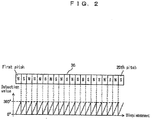
- FIG. 2 is a graph showing the relationship between the arrangement of the magnetic poles in a magnetic pole array and output from a phase detection head.
- the magnetic pole array 30 is made up of 20 magnetic poles.
- the magnetic poles are arranged at the same pitch such that magnetic poles of N and S are arranged alternately, i.e., the adjacent magnetic poles have the opposite polarities N and S.
- the magnetic poles has the same size in a direction in which the magnetic poles are arranged.
- the pitch between the magnetic poles i.e., the interval between the central lines of the adjacent magnetic poles is referred to as the pitch of the magnetic pole.
- the phase detection head cannot recognize which magnetic pole is currently being detected, and outputs the phase relative to the magnetic pole which is currently being detected, as a phase, e.g., in a range of 0° to 360°.
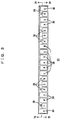
- FIG. 3 shows structure of a magnetic pole array 30.
- the magnetic pole array 30 is formed by combining long magnets 36 each having a large size in a direction perpendicular to the longitudinal direction of the array 30 and short magnets 38 each having a small size in the direction perpendicular to the longitudinal direction of the array 30.
- the number of the magnets 36, 38 is 20 in total.
- the pitches at the magnetic poles are identified into three types of polarities, i.e., the polarity ofN at the long magnet, the polarity of S at the long magnet, and no polarity at the short magnet.
- the short magnet having the reduced size does not show any polarity at the position where the long magnet protrudes. Identification of three types of polarities are used as magnetic marks.
- the hall elements are mark sensors for detecting these marks. If the types of five pitches are detected by the five hall elements of the pitch determination circuit, there are 3 5 possible combinations of possible signals. After inappropriate signals are eliminated from the combinations, for example, several tens to 100 arrangements of the magnetic pole pitches can be identified. Therefore, the pitch number on the magnetic pole array can be identified uniquely based on the combination of the outputs from the five hall elements. It should be noted that even if the number of pitches in the magnetic pole array 30 is increased, the pitch number can be identified uniquely by increasing the number of hall elements.
- the magnets 36, 38 of the magnet pole array 30 are arranged such that the adjacent magnets 36, 38 have the opposite polarities. Further, the long magnets 36 have the same size in the longitudinal direction of the array 30, and have different sizes in the direction perpendicular to the longitudinal direction of the array 30.
- the magnetic pole array 30 is formed by arranging a first magnetic pole array 32 and a second magnetic pole array 34 in parallel with each other in a moving direction of the moving vehicle.
- the first magnetic pole array 32 is the secondary side of the linear motor, and used for detecting the phase in the magnetic pole using the phase detection head.
- the second magnetic pole array 34 identifies the pitch number in the magnetic pole array using the magnetic sensors such as the hall elements.
- the first magnetic pole array 32 is present in a portion below a border line indicated by arrows shown in FIG. 3
- the second magnetic pole array 34 is present in a portion above the border line.
- the first magnetic pole array 32 and the second magnetic pole array 34 are provided in parallel with each other, and the three types of states, i.e., polarities of N, S, and no polarity in the second magnetic pole array 34 are detected, e.g., by the five hall elements.
- the second magnetic pole array 34 is formed by combining the long magnets 36 and the short magnets 38 to simplify the structure of the array 30.
- the magnetic poles used in the second magnetic pole array 34 and the magnetic poles used in the first magnetic pole array 32 may be separated physically.
- the second magnetic pole array 34 should have two or more lines.
- long magnets, middle magnets, and short magnets are arranged such that the second magnetic pole array 34 includes magnet poles arranged in two parallel lines.
- the long magnets and the middle magnets are considered as the same, and are distinguished from the short magnets.
- the long magnets are distinguished from the middle magnets and the short magnets.
- the magnetic pole array 30 is the secondary side of the linear motor.
- the magnetic pole array 30 may be provided separately from the secondary side of the linear motor, or may be used for recognizing the position of the moving vehicle regardless of the linear motor.
- FIG. 4 shows a pattern of outputs from the hall elements A to E.
- the output pattern shows the relationship between the center of the phase detection head and the pitch number of the magnetic pole which faces the center of the detection head. Based on the layout of the second magnetic pole array 34 shown in FIG. 3 , a signal for uniquely defining the magnet pole detected by the phase detection head as shown in FIG. 4 is obtained.
- FIG. 5 shows processing in the embodiment.
- the pitch number of the magnetic pole in the magnet array is detected by the hall element array.
- the phase relative to the magnet pole which is currently being detected is determined.
- the absolute position of the moving vehicle is determined.
- a control signal for controlling the linear motor is generated.
- FIG. 6 shows a moving vehicle 40 utilizing the embodiment.
- a plurality of magnetic pole arrays 30 are arranged along a travel route of the moving vehicle 40.
- a linear motor 42 is a linear synchronization motor or the like. Portions of the first magnetic pole arrays in the magnetic pole arrays 30 are used as the secondary side.
- a magnetic pole detector 2 a relative position relative to the magnet pole array 30 is determined.
- the linear motor 42 is controlled by the controller 44, and the absolute position of the moving vehicle 40 is determined. Further, data indicating which magnetic pole array is currently being detected is stored in a flash memory or the like to prevent loss of the data by a power failure. In the case of determining the absolute position at an arbitrary position, the interval between the adjacent magnetic pole arrays 30 is reduced.
- the linear motor 42 and the magnetic pole detector 2 are provided on the moving vehicle 40, alternatively, the linear motor 42 and the magnetic pole detector 2 may be provided on the ground, and the magnetic pole array 30 may be provided on the moving vehicle.
- the moving vehicle is not limited to a transportation vehicle such as an overhead traveling vehicle or a rail vehicle.
- the moving vehicle may be a transfer apparatus, a head of a working machine or a transportation apparatus for transporting a workpiece.
- the hall elements A to E may be arranged in a direction perpendicular to a direction in which magnetic poles of the magnet pole arrays are arranged, and a magnetic mark, an optical mark or the like having an amount of data corresponding to 5 bits may be provided for each of the magnetic poles.
- the marks realized simply by combining the long magnets 36 and the short magnets 36 need to be replaced by twenty types of marks inefficiently.
- the components such as the computation circuit 16, the counter 20, the logic circuit 24, the offset correction unit 8 or the like may be provided as discrete circuits. Alternatively, these components may be provided as computer structure made up of hardware and software.
Landscapes
- Physics & Mathematics (AREA)
- General Physics & Mathematics (AREA)
- Transmission And Conversion Of Sensor Element Output (AREA)
- Measurement Of Length, Angles, Or The Like Using Electric Or Magnetic Means (AREA)
- Geophysics And Detection Of Objects (AREA)
Description
- The present invention relates to a magnetic pole detection system and a magnetic pole detection method, e.g., used for detecting a position of a moving vehicle.
- In In
WO 02/48653 A1 US-A-5,004,982 , there are described scales for a position determining apparatus having marks of different amplitudes. A scale is fixed to one part of a position determining apparatus, and a read head is relatively movable on the other part of the apparatus. Incremental scale marks are regularly spaced along the scale and are counted in a counter to give an indication of relative position of the scale and read head. The marks may, e.g., be recorded magnetically. Some scales are distinguishable from the other, e.g., by having different amplitudes. Positioning information can be encoded in a binary word. - In
US 2004/0118758 A1 , there is described an absolute position measurement. An absolute measurement scale comprises an incremental scale with light reflecting lines alternating with non-light reflecting lines in which absolute data, in the form of discrete codewords, is embedded in the incremental scale by removing light reflecting lines. The codewords are arranged such that the scale is palindromic and cyclic. A look-up table is used to determine a coarse absolute position by comparing absolute position data extracted from the scale with absolute codewords in the look-up table. The absolute position is determined by combining the coarse absolute position with the position of the start of the first codeword in the data extracted. The absolute position may be determined to within a scale pitch by combining the absolute position with the incremental position. - In
US-A-5,430,373 , there is described an absolute encoder. In the absolute encoder, tracks are arranged side-by-side on a magnetic drum in axial direction thereof. Absolute patterns of circulatory random sequence codes are divided and recorded on the tracks. An additional track for generating sine-waves of two phases in synchronism with the reading of the absolute patterns is provided on the magnetic drum, so that an output can be obtained by combining a coarse value of an absolute position obtained from the tracks and a fine value of an absolute position obtained from the additional track. The absolute patterns are detected from the two tracks recorded on the magnetic drum by magnetic resistive elements connected with each other to form circuits each having a three-terminal. Terminals of the magnetic resistive elements are connected through a common line with an electric power source in order to prevent the lines from being crossed. - In
US 2009/0278710 A1 , there is described a moving vehicle system and method of detecting position of a moving vehicle. A detection head has an array including a plurality of coils. Magnetic marks are arranged in a travel route at a pitch equal to the array length. By interaction between the magnetic marks and the coils, a position of a moving vehicle is determined based on the magnetic marks. - The inventors developed a system adopting a combination of a magnetic pole array including a plurality of magnetic poles arranged in a straight line, and a coil array including a plurality of coils for detecting a position based on the magnetic pole array (e.g., Patent Publication 1:
JP2009-276827A - Detection of the pitch numbers of the magnetic poles of the magnetic pole and detection of the phase relative to the magnetic pole can be used, e.g., for controlling a linear motor, in addition to detecting a position of a moving vehicle. For example, a linear synchronous motor is used as the linear motor, the pitch numbers of the magnetic poles of the magnetic pole array and the phase relative to the magnetic pole are detected, and feedback control is provided for the linear motor. In both of the control of the linear motor and position detection of the moving vehicle, if the pitch numbers of the magnetic poles in the magnetic pole array are found without counting cycles of the signal, control can be implemented without any significant troubles,
- An object of the present invention is to make it possible to identify a pitch of a magnetic pole in a magnetic pole array without any data that requires storage of information such as a repeat number of cycles.
- The present invention relates to a magnetic pole detection system including the features of
claim 1. - In the present invention, the pitch number of the magnetic pole is identified regardless of data detected in the past, e.g., data indicating how many cycles of magnetic poles have been counted. Therefore, the pitch number of the magnetic pole in the magnetic pole array can be detected reliably without being affected by a power failure or the like.
- The magnetic pole detection system further includes a plurality of marks arranged in parallel with the magnetic pole array and changing in units of magnetic poles of the magnetic pole array, and a mark sensor array including a plurality of mark detection sensors provided in parallel with the magnetic sensor array. The pitch detection unit identifies a pitch number of the magnetic pole in the magnetic pole array based on a series of signals from the mark detection sensors. In this manner, the pitch number of the magnetic pole can be identified based on a series of signals from the marks arranged in parallel with the magnetic pole array. Identification is not made based only on the signal from one mark, but made based on the series of signals. Therefore, it is acceptable that the amount of information from each mark is small. Thus, the magnetic pole pitch number can be identified using simple marks each having a small amount of information.
- Also, the marks are configured at least by the magnetic poles of the magnet array extended in a first direction perpendicular to a second direction in which the magnetic poles of the magnet array are arranged and magnetic poles of the magnet array un-extended in the first direction. In this manner, the mark can be configured based on whether or not the magnetic pole is extended or not. In the embodiment, by combining information indicating whether the magnetic pole is extended or not and the polarity of the magnetic pole, three types of the magnetic poles can be identified by the marks. Alternatively, without considering the polarity of the magnetic pole, there are only two types of marks indicating whether the magnetic pole is extended or not may be provided. In this case, the marks can be formed integrally with the magnetic pole array, and the marks can be configured simply. A portion detected by the magnetic sensor array in the magnetic pole array is referred to as the first magnetic pole array, and a portion detected by the mark sensor array is referred to as the second magnetic pole array. It can be considered that the first magnetic pole array and the second magnetic pole array are arranged in parallel with each other in the longitudinal direction of the magnetic pole array.
- Preferably, the magnetic pole detection system further includes an offset correction unit for converting data regarding the pitch number of the magnetic pole in the magnetic pole array into a reference position of each magnetic pole, and converting the phase into a shift from the reference position to output an absolute position.
- Further, the present invention relates to a method of detecting a magnetic pole of a magnetic pole array including magnetic poles ofN and S arranged alternately with a magnetic sensor array including a plurality of magnetic sensors. The method comprises the features of claim 3.
-
- [
FIG.1 ]
FIG. 1 is a block diagram showing a magnetic pole detector according to an embodiment. - [
FIG. 2 ]
FIG. 2 is a diagram schematically showing a magnetic pole array and output from a phase detection head. - [
FIG. 3 ]
FIG. 3 is a plan view showing the magnetic pole array according to the embodiment. - [
FIG. 4 ]
FIG. 4 is a table showing determination of a central position in a traveling direction of the phase detection head. - [
FIG. 5 ]
FIG. 5 is a flow chart showing an algorithm of detecting an absolute position according to the embodiment. -
FIG. 6 ]
FIG. 6 is a block diagram showing a moving vehicle system utilizing the embodiment. - Hereinafter, an embodiment in the most preferred form for carrying out the present invention will be described. The scope of the invention shall be determined by the claims.
-
FIGS. 1 to 6 show an embodiment and its application.FIG. 1 shows amagnetic pole detector 2. Themagnetic pole detector 2 includes a phase detection head 4 for detecting a phase relative to each of magnetic poles of a magnetic pole array, and apitch determination circuit 6 for determining, i.e., identifying a pitch number of a magnetic pole which is currently being detected regardless of historical detection data, and an offset correction unit 8. The phase detection head 4 includes an alternating current power supply 10 and a coil array made up of a plurality of, e.g., four coils 11 to 14. The coils 11 to 14 are connected to resistors R1 to R4, respectively. The coil array faces amagnetic pole array 30 shown inFIG. 3 to detect the phase based on the magnetic pole in the magnetic pole array. Reference numerals P1 and P2 denote operational amplifiers for collecting signals as shown inFIG. 1 . α denotes a phase relative to each magnetic pole of the magnetic pole array. The output current of the alternating current power supply 10 is expressed by sinωt, and two signals of sinα x sinωt and cosα x sinωt are obtained from the operational amplifiers P1, P2. These signals are processed by anoperational amplifier circuit 16, e.g., by delaying the phase of the signal of sinα x sinωt by π/2 to produce sinα x cosωt. Then, by adding sinα x cosωt to sinα x sinωt, sin(α + ωt) is obtained by addition theorem. The coil array is an example of a magnetic sensor array, and thepitch determination circuit 6 is an example of a pitch identification unit. - A counter 20 counts a clock signal (not shown). For example, the
counter 20 is reset when a zerocrossing detector 18 or the like detects that the phase of the output current from the alternating current power supply 10 becomes 0. Though the zerocrossing detector 18 has been mentioned for the purpose of explaining operation of the circuit, the zerocrossing detector 18 may not be provided physically. For example, in the case where a D/A converter or the like is used for the alternating current power supply 10, thecounter 20 should be reset when the input to the D/A converter becomes zero. By counting a period of time, e.g., from ωt = 0 to α ± ωt = 0, by thecounter 20 based on sinωt, sin(α ± ωt) = 0 or the like, α can be determined, α is a phase relative to one magnetic pole. When the center of the coil array 14 faces one end of the magnetic pole, α becomes 0, and when the center of the coil array 14 faces the other end of the magnetic pole, for example, α becomes 2π. α represents a position at the center of the coil array relative to the magnetic pole. - Though the coils 11 to 14 are provided for detection of the phase of the magnetic pole in the embodiment, a magnetic sensor array having a plurality other magnetic sensors such as hall elements, magneto-resistive effect sensors, magneto-impedance effect sensors arranged in an array may be provided. For example, in the case where a set of four magnetic sensors or a set of two magnetic sensors are arranged within the width of one magnetic pole (one pitch) of the magnetic pole array, the phase relative to each magnetic pole can be detected. The drive circuit shown in
FIG. 1 is merely an example. Various other circuits are known as circuits for detecting the phase relative to the magnetic coil from the coil array. - The
logic circuit 24 includes a plurality ofhall elements 22. For example, the number of thehall elements 22 is 5. Alternatively, the number of the hall elements is 3, 7, 9, 1, or the like. For the purpose of explanation, the hall elements are denoted by alphabets A, ... E. A plurality of thehall elements 22 are arranged in a line at the same pitch as the poles of the magnetic pole array. A combination of signals that can be determined uniquely depending on the position of the magnetic pole array is outputted. In the embodiment, though thehall elements 22 can identify three types of states N, S, or no polarity in the embodiment, it is sufficient that thehall elements 22 can identify two types of the states, i.e., the presence or absence of the magnetic pole. Further, instead of the hall elements, magnetic sensors such as coils, magneto-resistive effect sensors, magneto-impedance effect sensors may be used, If the magnetic sensors such as thehall elements 22 are arranged densely in comparison with the magnetic poles of the magnetic pole array, e.g., at 1/2 pitch of the arrangement pitch the magnetic poles in the magnetic pole array, temporal missing of the pitch number at the time of passing a border between magnetic poles will not occur. - The combination of signals from the five hall elements A to E can be determined uniquely depending on the position on the coil array. The
logic circuit 24 stores a table or the like showing correspondence between combinations of the signals from the individual hall elements A to E and positions on the magnetic pole array, and outputs the pitch number on the magnetic pole array, i.e., the number of the magnetic pole pitch. The table is an example of means for converting the combination of the signals from the hall elements A to E into the magnetic pole pitch. The pitch number of the magnetic pole is inputted to acontroller 44 of alinear motor 42 shown inFIG. 6 . - An offset correction unit 8 converts data indicating which magnetic pole array is currently being detected (in the case where a plurality of magnetic pole arrays are present) and the pitch number of the magnetic pole in the magnetic pole array into a reference position in each magnetic pole, e.g., an absolute position at an end of the magnetic pole. In the embodiment, this conversion is referred to as the offset correction. For example, the offset correction unit 8 stores an offset for each of the magnetic poles, or an offset for each magnet array. Assuming that the magnetic poles are arranged at an equal pitch in the magnet array, the width of the magnetic pole is stored. The phase α of the magnetic pole is represented by converting the ratio of the shift of the current position relative to the reference position of the magnetic pole which is currently being detected to the width of the magnetic pole into an angle in a range of 0° to 360°. Further, the width of the magnet pole can be determined based on a difference or the like between the offset of the magnet which is currently being detected and the offset of the next magnetic pole. The offset correction unit 8 outputs the absolute position based on the combination of the ID (data indicating which magnetic pole array is currently being detected in the case where a plurality of magnetic pole arrays are present), the pitch number of the magnetic pole which is currently being detected, and the phase α in the magnetic pole. Further, in the case where only the control of the linear motor is implemented, the offset correction unit 8 is not required.
-
FIG. 2 is a graph showing the relationship between the arrangement of the magnetic poles in a magnetic pole array and output from a phase detection head. For example, themagnetic pole array 30 is made up of 20 magnetic poles. The magnetic poles are arranged at the same pitch such that magnetic poles of N and S are arranged alternately, i.e., the adjacent magnetic poles have the opposite polarities N and S. The magnetic poles has the same size in a direction in which the magnetic poles are arranged. The pitch between the magnetic poles, i.e., the interval between the central lines of the adjacent magnetic poles is referred to as the pitch of the magnetic pole. The phase detection head cannot recognize which magnetic pole is currently being detected, and outputs the phase relative to the magnetic pole which is currently being detected, as a phase, e.g., in a range of 0° to 360°. -
FIG. 3 shows structure of amagnetic pole array 30. Themagnetic pole array 30 is formed by combininglong magnets 36 each having a large size in a direction perpendicular to the longitudinal direction of thearray 30 andshort magnets 38 each having a small size in the direction perpendicular to the longitudinal direction of thearray 30. For example, the number of themagnets magnetic pole array 30 is increased, the pitch number can be identified uniquely by increasing the number of hall elements. - The
magnets magnet pole array 30 are arranged such that theadjacent magnets long magnets 36 have the same size in the longitudinal direction of thearray 30, and have different sizes in the direction perpendicular to the longitudinal direction of thearray 30. It can be considered that themagnetic pole array 30 is formed by arranging a firstmagnetic pole array 32 and a secondmagnetic pole array 34 in parallel with each other in a moving direction of the moving vehicle. The firstmagnetic pole array 32 is the secondary side of the linear motor, and used for detecting the phase in the magnetic pole using the phase detection head. The secondmagnetic pole array 34 identifies the pitch number in the magnetic pole array using the magnetic sensors such as the hall elements. The firstmagnetic pole array 32 is present in a portion below a border line indicated by arrows shown inFIG. 3 , and the secondmagnetic pole array 34 is present in a portion above the border line. - In this manner, the first
magnetic pole array 32 and the secondmagnetic pole array 34 are provided in parallel with each other, and the three types of states, i.e., polarities of N, S, and no polarity in the secondmagnetic pole array 34 are detected, e.g., by the five hall elements. The secondmagnetic pole array 34 is formed by combining thelong magnets 36 and theshort magnets 38 to simplify the structure of thearray 30. The magnetic poles used in the secondmagnetic pole array 34 and the magnetic poles used in the firstmagnetic pole array 32 may be separated physically. - If the length of the
magnetic pole array 30 is increased much more, and the secondmagnetic pole array 34 is formed as one line array as shown inFIG. 3 , it may become difficult to identify the pitch number of the magnetic pole. In such a case, the secondmagnetic pole array 34 should have two or more lines. For example, long magnets, middle magnets, and short magnets are arranged such that the secondmagnetic pole array 34 includes magnet poles arranged in two parallel lines. In the line adjacent to the firstmagnetic pole array 32, the long magnets and the middle magnets are considered as the same, and are distinguished from the short magnets. In the next line, the long magnets are distinguished from the middle magnets and the short magnets. In the embodiment, themagnetic pole array 30 is the secondary side of the linear motor. Alternatively, themagnetic pole array 30 may be provided separately from the secondary side of the linear motor, or may be used for recognizing the position of the moving vehicle regardless of the linear motor. -
FIG. 4 shows a pattern of outputs from the hall elements A to E. The output pattern shows the relationship between the center of the phase detection head and the pitch number of the magnetic pole which faces the center of the detection head. Based on the layout of the secondmagnetic pole array 34 shown inFIG. 3 , a signal for uniquely defining the magnet pole detected by the phase detection head as shown inFIG. 4 is obtained. -
FIG. 5 shows processing in the embodiment. The pitch number of the magnetic pole in the magnet array is detected by the hall element array. In the coil array, the phase relative to the magnet pole which is currently being detected is determined. Based on combination of these items of data, the absolute position of the moving vehicle is determined. Further, based on the relationship between the pitch number of the magnetic pole and the phase, a control signal for controlling the linear motor is generated. -
FIG. 6 shows a movingvehicle 40 utilizing the embodiment. A plurality ofmagnetic pole arrays 30 are arranged along a travel route of the movingvehicle 40. For example, alinear motor 42 is a linear synchronization motor or the like. Portions of the first magnetic pole arrays in themagnetic pole arrays 30 are used as the secondary side. By amagnetic pole detector 2, a relative position relative to themagnet pole array 30 is determined. Then, thelinear motor 42 is controlled by thecontroller 44, and the absolute position of the movingvehicle 40 is determined. Further, data indicating which magnetic pole array is currently being detected is stored in a flash memory or the like to prevent loss of the data by a power failure. In the case of determining the absolute position at an arbitrary position, the interval between the adjacentmagnetic pole arrays 30 is reduced. Further, in the case where only the control of thelinear motor 42 is intended, calculation of the absolute position is not required. In the embodiment, though thelinear motor 42 and themagnetic pole detector 2 are provided on the movingvehicle 40, alternatively, thelinear motor 42 and themagnetic pole detector 2 may be provided on the ground, and themagnetic pole array 30 may be provided on the moving vehicle. The moving vehicle is not limited to a transportation vehicle such as an overhead traveling vehicle or a rail vehicle. For example, the moving vehicle may be a transfer apparatus, a head of a working machine or a transportation apparatus for transporting a workpiece. - In the embodiment, the following advantages are obtained.
- (1) It is possible to determine the pitch number of the magnetic pole of the
magnetic pole array 30 which is currently being detected, and provide feedback control for the linear motor. - (2) The
magnetic pole array 30 can be configured simply by combining thelong magnets 36 and theshort magnets 38 for providing the firstmagnetic pole array 32 and the secondmagnetic pole array 34. - (3) In the case of determining the pitch number in the longer magnetic pole array, the second
magnetic pole arrays 34 should be arranged in parallel with each other in two or more lines, or the number of magnetic sensors such as the hall elements should be increased. - It should be noted that the hall elements A to E may be arranged in a direction perpendicular to a direction in which magnetic poles of the magnet pole arrays are arranged, and a magnetic mark, an optical mark or the like having an amount of data corresponding to 5 bits may be provided for each of the magnetic poles. However, in this case, the marks realized simply by combining the
long magnets 36 and theshort magnets 36 need to be replaced by twenty types of marks inefficiently. The components such as thecomputation circuit 16, thecounter 20, thelogic circuit 24, the offset correction unit 8 or the like may be provided as discrete circuits. Alternatively, these components may be provided as computer structure made up of hardware and software. -
- 2: magnetic pole detector
- 4: phase detection head
- 6: pitch determination circuit
- 8: offset correction unit
- 10: alternating current power supply
- 11 to 14: coil
- 16: computation circuit
- 18: zero crossing detector
- 20: counter
- 22: hall element
- 24: logic circuit
- 30: magnetic pole array
- 32: first magnetic pole array
- 34: second magnetic pole array
- 36: long magnet
- 38: short magnet
- 40: moving vehicle
- 42: linear motor
- 44: controller
- R1 to R4: resistor
- P1, P2: operational amplifier
Claims (4)
- A magnetic pole detection system comprising:a magnetic pole array (30) including a plurality of magnetic poles of N and S arranged alternately;a magnetic sensor array (22) including a plurality of magnetic sensors (A to E) for detecting a magnetic pole of the magnetic pole array (30);a phase detection head (11-14) for detecting a phase regarding one magnetic pole currently being detected by the magnetic sensor array (22) in the magnetic pole array (30) according to a signal from the magnetic sensor array (30);a pitch identification unit (24) for identifying a pitch number of the magnetic pole currently being detected in the magnetic pole array (30);a plurality of marks arranged in parallel with the magnetic pole array (30), changing synchronously with the magnetic poles of the magnetic pole array (32); andthe marks each being configured at least by the magnetic poles of the magnetic sensor array (22) extended in a first direction perpendicular to a second direction in which the magnet poles of the magnet sensor array (22) are arranged and magnetic poles of the magnet sensor array (22) un-extended in the first direction; wherein the mark sensor array (22) includes a plurality of mark detection sensors (A to E) provided in parallel with the magnetic sensor array (22); andthe pitch identification unit (22) identifies the pitch number of a magnetic pole in the magnet pole array (32) based on unique combinations of signals from the mark detection sensors (A to E).
- The magnetic pole detection system according to claim 1, further comprising an offset correction unit (8) for converting data regarding the pitch number of the magnetic pole in the magnetic pole array (30) into a reference position of each magnetic pole, and converting the phase into a shift from the reference position to output an absolute position.
- A method of detecting a magnetic pole of a magnetic pole array (30) comprising magnetic poles of N and S arranged alternately with a magnetic sensor array (22) including a plurality of magnetic sensors, the method comprising the steps of:detecting a phase regarding one magnetic pole currently being detected by the magnetic sensor array (22) in the magnetic pole array by a phase detection head (11 to 14); andidentifying a pitch number of the magnetic pole currently being detected in the magnetic pole array (30); whereina plurality of marks are arranged in parallel with the magnetic pole array (30), the marks changing synchronously with the magnetic poles of the magnetic pole array (32);and the marks each being configured at least by the magnetic poles of the magnetic sensor array (22) extended in a first direction perpendicular to a second direction in which the magnetic poles of the magnetic sensor array (22) are arranged and magnetic poles of the magnetic sensor array (22) un-extended in the first direction;the magnetic sensor array (32) further including a plurality of mark detection sensors (A to E) being provided in parallel with the magnetic sensor array (30); andthe identifying step includes identifying the pitch number of the magnetic pole in the magnetic pole array (30) based on unique combinations of signals from the mark detection sensors (A to E).
- The method of claim 3, further comprising converting data regarding the pitch number of the magnetic pole in the magnetic pole array into a reference position of each magnetic pole, and converting the phase into a shift from the reference position to output an absolute position.
Applications Claiming Priority (1)
| Application Number | Priority Date | Filing Date | Title |
|---|---|---|---|
| JP2010091106A JP5077717B2 (en) | 2010-04-12 | 2010-04-12 | Magnetic pole detection system |
Publications (3)
| Publication Number | Publication Date |
|---|---|
| EP2378253A2 EP2378253A2 (en) | 2011-10-19 |
| EP2378253A3 EP2378253A3 (en) | 2012-04-25 |
| EP2378253B1 true EP2378253B1 (en) | 2016-08-17 |
Family
ID=44276153
Family Applications (1)
| Application Number | Title | Priority Date | Filing Date |
|---|---|---|---|
| EP11158434.8A Not-in-force EP2378253B1 (en) | 2010-04-12 | 2011-03-16 | Magnetic pole detection system and magnetic pole detection method |
Country Status (7)
| Country | Link |
|---|---|
| US (1) | US8659290B2 (en) |
| EP (1) | EP2378253B1 (en) |
| JP (1) | JP5077717B2 (en) |
| KR (1) | KR101393297B1 (en) |
| CN (1) | CN102221322B (en) |
| SG (1) | SG175499A1 (en) |
| TW (1) | TWI482985B (en) |
Cited By (1)
| Publication number | Priority date | Publication date | Assignee | Title |
|---|---|---|---|---|
| DE102017123772A1 (en) | 2017-10-12 | 2019-04-18 | Paul Tutzu | Electromagnetic measuring system for the detection of length and angle based on the magneto-impedance effect |
Families Citing this family (21)
| Publication number | Priority date | Publication date | Assignee | Title |
|---|---|---|---|---|
| US8957675B2 (en) | 2010-03-03 | 2015-02-17 | Jtekt Corporation | Rotation angle detection device |
| WO2015010669A1 (en) * | 2013-07-23 | 2015-01-29 | BALLUF GmbH | Method for dynamic linearisation of sensor signals from a magnetic strip length measuring system |
| JP6225961B2 (en) * | 2015-08-21 | 2017-11-08 | 村田機械株式会社 | Moving body |
| CN107848437B (en) * | 2015-08-21 | 2020-08-14 | 村田机械株式会社 | moving body |
| JP6191665B2 (en) * | 2015-08-21 | 2017-09-06 | 村田機械株式会社 | Moving body |
| DE102015122829A1 (en) * | 2015-12-23 | 2017-06-29 | Balluff Gmbh | Absolutely measuring length measuring system |
| WO2018126910A1 (en) * | 2017-01-05 | 2018-07-12 | 广东美的制冷设备有限公司 | Air conditioner, detection and control device for use with moving member in air conditioner and method |
| CN107015279B (en) * | 2017-05-31 | 2020-06-05 | 广东美的制冷设备有限公司 | Air conditioner and detection control device and method for moving part in air conditioner |
| CN107328016B (en) * | 2017-05-31 | 2020-05-05 | 广东美的制冷设备有限公司 | Air conditioner and detection control device and method of moving parts in air conditioner |
| CN107045146B (en) * | 2017-05-31 | 2020-10-02 | 广东美的制冷设备有限公司 | Air conditioner and detection control device for moving part in air conditioner |
| CN107015280B (en) * | 2017-05-31 | 2020-05-05 | 广东美的制冷设备有限公司 | Air conditioner and detection control device and method of moving parts in air conditioner |
| DE102017001386A1 (en) * | 2017-02-13 | 2018-08-16 | Marantec Antriebs- Und Steuerungstechnik Gmbh & Co. Kg | Sensor for determining the position of a drive system |
| CN107015281B (en) * | 2017-05-31 | 2020-09-25 | 广东美的制冷设备有限公司 | Air conditioner and detection control device and method of moving parts in air conditioner |
| CN107015278B (en) * | 2017-05-31 | 2020-09-25 | 广东美的制冷设备有限公司 | Air conditioner and detection control device and method of moving parts in air conditioner |
| WO2019139613A1 (en) * | 2018-01-12 | 2019-07-18 | Honeywell International Inc. | Magnetic encoding for smart position sensor range extension |
| JP7020258B2 (en) * | 2018-04-06 | 2022-02-16 | 村田機械株式会社 | Position detection system and driving system |
| CN109272100A (en) * | 2018-09-03 | 2019-01-25 | 南京冠盛汽配有限公司 | Hub-bearing unit band end cap detection magnetic number of poles method |
| DE102019218351A1 (en) * | 2019-11-27 | 2021-05-27 | Dr. Johannes Heidenhain Gesellschaft Mit Beschränkter Haftung | Sensor element for storing rotation or position information |
| DE102023129609B3 (en) * | 2023-10-26 | 2025-02-27 | Sick Ag | drive with magnetic absolute coding |
| DE202023106207U1 (en) * | 2023-10-26 | 2025-01-31 | Sick Ag | drive with magnetic absolute coding |
| SI26599A (en) * | 2024-01-11 | 2025-07-31 | Rls Merilna Tehnika D.O.O. | Magnetic information carrier and position encoder |
Family Cites Families (22)
| Publication number | Priority date | Publication date | Assignee | Title |
|---|---|---|---|---|
| US540373A (en) * | 1895-06-04 | werle | ||
| JPS63113915U (en) * | 1987-01-19 | 1988-07-22 | ||
| JPH01502452A (en) * | 1987-02-24 | 1989-08-24 | レニショウ パブリック リミテッド カンパニー | Scale for positioning equipment |
| JP3037380B2 (en) * | 1990-08-30 | 2000-04-24 | 日立金属株式会社 | Magnetic encoder |
| US5208496A (en) * | 1990-09-17 | 1993-05-04 | Maglev Technology, Inc. | Linear synchronous motor having variable pole pitches |
| JP2974182B2 (en) * | 1991-10-25 | 1999-11-08 | オークマ株式会社 | Absolute encoder |
| EP0555961B1 (en) | 1992-02-13 | 1997-07-16 | Japan Servo Co. Ltd. | Absolute encoder |
| CN2145366Y (en) * | 1992-12-10 | 1993-11-03 | 陈骥良 | Detecting structure for axes angle position |
| US5434504A (en) * | 1993-10-01 | 1995-07-18 | International Business Machines Corporation | Position sensors for linear motors including plural symmetrical fluxes generated by a planar drive coil and received by planar sense coils being colinear along an axis of motion |
| US5886520A (en) * | 1995-01-24 | 1999-03-23 | Canon Kabushiki Kaisha | Position sensor having magnetic resistance effect devices for detecting a position of an object |
| JP3564000B2 (en) * | 1999-04-28 | 2004-09-08 | ペンタックス株式会社 | Encoder |
| JP4290281B2 (en) * | 1999-06-10 | 2009-07-01 | 株式会社ハーモニック・ドライブ・システムズ | Absolute sensor |
| JP3424206B2 (en) * | 2000-12-07 | 2003-07-07 | 日本サーボ株式会社 | Magnetic encoder |
| US6600308B2 (en) * | 2001-02-05 | 2003-07-29 | Pentax Corporation | Magnetic encoder and method for reducing harmonic distortion thereof |
| GB0109057D0 (en) * | 2001-04-11 | 2001-05-30 | Renishaw Plc | Absolute postition measurement |
| TW540073B (en) * | 2001-10-19 | 2003-07-01 | Viewmove Technologies Inc | Electromagnetic mark device for a magnetism encoder |
| ITTO20030365A1 (en) | 2003-05-20 | 2004-11-21 | Fiat Ricerche | DEVICE AND PROCEDURE FOR DETERMINING THE POSITION |
| JP5100073B2 (en) * | 2006-09-28 | 2012-12-19 | 村田機械株式会社 | Linear motor device and machine tool equipped with the same |
| KR101660894B1 (en) * | 2007-06-27 | 2016-10-10 | 브룩스 오토메이션 인코퍼레이티드 | Multiple dimension position sensor |
| JP5093664B2 (en) * | 2008-02-06 | 2012-12-12 | 村田機械株式会社 | Mobile system |
| JP2009216589A (en) * | 2008-03-11 | 2009-09-24 | Makome Kenkyusho:Kk | Absolute value type magnetic scale device |
| JP4438882B2 (en) * | 2008-05-12 | 2010-03-24 | 村田機械株式会社 | Mobile system |
-
2010
- 2010-04-12 JP JP2010091106A patent/JP5077717B2/en not_active Expired - Fee Related
-
2011
- 2011-03-11 KR KR1020110021812A patent/KR101393297B1/en not_active Expired - Fee Related
- 2011-03-16 EP EP11158434.8A patent/EP2378253B1/en not_active Not-in-force
- 2011-03-21 CN CN201110071708.2A patent/CN102221322B/en not_active Expired - Fee Related
- 2011-03-28 SG SG2011021664A patent/SG175499A1/en unknown
- 2011-03-30 US US13/076,190 patent/US8659290B2/en not_active Expired - Fee Related
- 2011-04-08 TW TW100112325A patent/TWI482985B/en not_active IP Right Cessation
Cited By (2)
| Publication number | Priority date | Publication date | Assignee | Title |
|---|---|---|---|---|
| DE102017123772A1 (en) | 2017-10-12 | 2019-04-18 | Paul Tutzu | Electromagnetic measuring system for the detection of length and angle based on the magneto-impedance effect |
| DE102017123772B4 (en) | 2017-10-12 | 2019-06-19 | Paul Tutzu | Electromagnetic measuring system for the detection of length and angle based on the magneto-impedance effect |
Also Published As
| Publication number | Publication date |
|---|---|
| TWI482985B (en) | 2015-05-01 |
| US8659290B2 (en) | 2014-02-25 |
| EP2378253A2 (en) | 2011-10-19 |
| JP2011220873A (en) | 2011-11-04 |
| TW201144853A (en) | 2011-12-16 |
| JP5077717B2 (en) | 2012-11-21 |
| US20110248709A1 (en) | 2011-10-13 |
| KR101393297B1 (en) | 2014-05-09 |
| KR20110114436A (en) | 2011-10-19 |
| CN102221322A (en) | 2011-10-19 |
| CN102221322B (en) | 2015-08-05 |
| SG175499A1 (en) | 2011-11-28 |
| EP2378253A3 (en) | 2012-04-25 |
Similar Documents
| Publication | Publication Date | Title |
|---|---|---|
| US8659290B2 (en) | Magnetic pole detection system and magnetic pole detection method | |
| US20120032668A1 (en) | Transportation Vehicle System and Charging Method for the Transportation Vehicle System | |
| ES2910796T3 (en) | position encoder | |
| US10724877B2 (en) | Compact pseudorandom scale and read head for an inductive type absolute position encoder | |
| US6271661B2 (en) | Absolute position transducer having a non-binary code-track-type scale | |
| US9664748B2 (en) | Systems and methods for providing signal encoding representative of a signature region in a target | |
| US8497764B2 (en) | Position transmitter system | |
| CN101832789A (en) | Absolute magnetic position encoder | |
| CN110799436A (en) | Position determination system and method for obtaining car position of an elevator car | |
| JP4593910B2 (en) | Encoder | |
| US20100050455A1 (en) | Device for measuring the relative position of a material measure and a reading head | |
| KR102550704B1 (en) | absolute value encoder | |
| JP6147637B2 (en) | Position detection device | |
| CN114649985B (en) | Methods for determining jumping | |
| CN117040227A (en) | Linear transmission system | |
| US20080231265A1 (en) | Position detector with tilt sensor | |
| JP7768843B2 (en) | Positioning device, drive device | |
| JP2010256169A (en) | Linear scale | |
| JPH0684893B2 (en) | Origin detection device for magnetic encoder | |
| JP2025152270A (en) | Encoder with ID detection function | |
| JPH01311221A (en) | Magnetic absolute encoder | |
| JPS6275317A (en) | Displacement encoder |
Legal Events
| Date | Code | Title | Description |
|---|---|---|---|
| AK | Designated contracting states |
Kind code of ref document: A2 Designated state(s): AL AT BE BG CH CY CZ DE DK EE ES FI FR GB GR HR HU IE IS IT LI LT LU LV MC MK MT NL NO PL PT RO RS SE SI SK SM TR |
|
| AX | Request for extension of the european patent |
Extension state: BA ME |
|
| PUAI | Public reference made under article 153(3) epc to a published international application that has entered the european phase |
Free format text: ORIGINAL CODE: 0009012 |
|
| PUAL | Search report despatched |
Free format text: ORIGINAL CODE: 0009013 |
|
| AK | Designated contracting states |
Kind code of ref document: A3 Designated state(s): AL AT BE BG CH CY CZ DE DK EE ES FI FR GB GR HR HU IE IS IT LI LT LU LV MC MK MT NL NO PL PT RO RS SE SI SK SM TR |
|
| AX | Request for extension of the european patent |
Extension state: BA ME |
|
| RIC1 | Information provided on ipc code assigned before grant |
Ipc: G01D 5/245 20060101AFI20120319BHEP Ipc: G01D 5/14 20060101ALI20120319BHEP Ipc: G01D 5/249 20060101ALI20120319BHEP |
|
| 17P | Request for examination filed |
Effective date: 20120627 |
|
| GRAP | Despatch of communication of intention to grant a patent |
Free format text: ORIGINAL CODE: EPIDOSNIGR1 |
|
| INTG | Intention to grant announced |
Effective date: 20160509 |
|
| GRAS | Grant fee paid |
Free format text: ORIGINAL CODE: EPIDOSNIGR3 |
|
| GRAA | (expected) grant |
Free format text: ORIGINAL CODE: 0009210 |
|
| AK | Designated contracting states |
Kind code of ref document: B1 Designated state(s): AL AT BE BG CH CY CZ DE DK EE ES FI FR GB GR HR HU IE IS IT LI LT LU LV MC MK MT NL NO PL PT RO RS SE SI SK SM TR |
|
| REG | Reference to a national code |
Ref country code: GB Ref legal event code: FG4D |
|
| REG | Reference to a national code |
Ref country code: CH Ref legal event code: EP |
|
| REG | Reference to a national code |
Ref country code: IE Ref legal event code: FG4D |
|
| REG | Reference to a national code |
Ref country code: AT Ref legal event code: REF Ref document number: 821536 Country of ref document: AT Kind code of ref document: T Effective date: 20160915 |
|
| REG | Reference to a national code |
Ref country code: DE Ref legal event code: R096 Ref document number: 602011029229 Country of ref document: DE |
|
| REG | Reference to a national code |
Ref country code: NL Ref legal event code: MP Effective date: 20160817 |
|
| REG | Reference to a national code |
Ref country code: LT Ref legal event code: MG4D |
|
| REG | Reference to a national code |
Ref country code: AT Ref legal event code: MK05 Ref document number: 821536 Country of ref document: AT Kind code of ref document: T Effective date: 20160817 |
|
| PG25 | Lapsed in a contracting state [announced via postgrant information from national office to epo] |
Ref country code: IT Free format text: LAPSE BECAUSE OF FAILURE TO SUBMIT A TRANSLATION OF THE DESCRIPTION OR TO PAY THE FEE WITHIN THE PRESCRIBED TIME-LIMIT Effective date: 20160817 Ref country code: HR Free format text: LAPSE BECAUSE OF FAILURE TO SUBMIT A TRANSLATION OF THE DESCRIPTION OR TO PAY THE FEE WITHIN THE PRESCRIBED TIME-LIMIT Effective date: 20160817 Ref country code: NL Free format text: LAPSE BECAUSE OF FAILURE TO SUBMIT A TRANSLATION OF THE DESCRIPTION OR TO PAY THE FEE WITHIN THE PRESCRIBED TIME-LIMIT Effective date: 20160817 Ref country code: NO Free format text: LAPSE BECAUSE OF FAILURE TO SUBMIT A TRANSLATION OF THE DESCRIPTION OR TO PAY THE FEE WITHIN THE PRESCRIBED TIME-LIMIT Effective date: 20161117 Ref country code: LT Free format text: LAPSE BECAUSE OF FAILURE TO SUBMIT A TRANSLATION OF THE DESCRIPTION OR TO PAY THE FEE WITHIN THE PRESCRIBED TIME-LIMIT Effective date: 20160817 Ref country code: RS Free format text: LAPSE BECAUSE OF FAILURE TO SUBMIT A TRANSLATION OF THE DESCRIPTION OR TO PAY THE FEE WITHIN THE PRESCRIBED TIME-LIMIT Effective date: 20160817 Ref country code: FI Free format text: LAPSE BECAUSE OF FAILURE TO SUBMIT A TRANSLATION OF THE DESCRIPTION OR TO PAY THE FEE WITHIN THE PRESCRIBED TIME-LIMIT Effective date: 20160817 |
|
| PG25 | Lapsed in a contracting state [announced via postgrant information from national office to epo] |
Ref country code: ES Free format text: LAPSE BECAUSE OF FAILURE TO SUBMIT A TRANSLATION OF THE DESCRIPTION OR TO PAY THE FEE WITHIN THE PRESCRIBED TIME-LIMIT Effective date: 20160817 Ref country code: AT Free format text: LAPSE BECAUSE OF FAILURE TO SUBMIT A TRANSLATION OF THE DESCRIPTION OR TO PAY THE FEE WITHIN THE PRESCRIBED TIME-LIMIT Effective date: 20160817 Ref country code: LV Free format text: LAPSE BECAUSE OF FAILURE TO SUBMIT A TRANSLATION OF THE DESCRIPTION OR TO PAY THE FEE WITHIN THE PRESCRIBED TIME-LIMIT Effective date: 20160817 Ref country code: SE Free format text: LAPSE BECAUSE OF FAILURE TO SUBMIT A TRANSLATION OF THE DESCRIPTION OR TO PAY THE FEE WITHIN THE PRESCRIBED TIME-LIMIT Effective date: 20160817 Ref country code: GR Free format text: LAPSE BECAUSE OF FAILURE TO SUBMIT A TRANSLATION OF THE DESCRIPTION OR TO PAY THE FEE WITHIN THE PRESCRIBED TIME-LIMIT Effective date: 20161118 Ref country code: PL Free format text: LAPSE BECAUSE OF FAILURE TO SUBMIT A TRANSLATION OF THE DESCRIPTION OR TO PAY THE FEE WITHIN THE PRESCRIBED TIME-LIMIT Effective date: 20160817 Ref country code: PT Free format text: LAPSE BECAUSE OF FAILURE TO SUBMIT A TRANSLATION OF THE DESCRIPTION OR TO PAY THE FEE WITHIN THE PRESCRIBED TIME-LIMIT Effective date: 20161219 |
|
| PG25 | Lapsed in a contracting state [announced via postgrant information from national office to epo] |
Ref country code: EE Free format text: LAPSE BECAUSE OF FAILURE TO SUBMIT A TRANSLATION OF THE DESCRIPTION OR TO PAY THE FEE WITHIN THE PRESCRIBED TIME-LIMIT Effective date: 20160817 Ref country code: RO Free format text: LAPSE BECAUSE OF FAILURE TO SUBMIT A TRANSLATION OF THE DESCRIPTION OR TO PAY THE FEE WITHIN THE PRESCRIBED TIME-LIMIT Effective date: 20160817 |
|
| PGFP | Annual fee paid to national office [announced via postgrant information from national office to epo] |
Ref country code: DE Payment date: 20170322 Year of fee payment: 7 |
|
| REG | Reference to a national code |
Ref country code: DE Ref legal event code: R097 Ref document number: 602011029229 Country of ref document: DE |
|
| PG25 | Lapsed in a contracting state [announced via postgrant information from national office to epo] |
Ref country code: DK Free format text: LAPSE BECAUSE OF FAILURE TO SUBMIT A TRANSLATION OF THE DESCRIPTION OR TO PAY THE FEE WITHIN THE PRESCRIBED TIME-LIMIT Effective date: 20160817 Ref country code: BG Free format text: LAPSE BECAUSE OF FAILURE TO SUBMIT A TRANSLATION OF THE DESCRIPTION OR TO PAY THE FEE WITHIN THE PRESCRIBED TIME-LIMIT Effective date: 20161117 Ref country code: CZ Free format text: LAPSE BECAUSE OF FAILURE TO SUBMIT A TRANSLATION OF THE DESCRIPTION OR TO PAY THE FEE WITHIN THE PRESCRIBED TIME-LIMIT Effective date: 20160817 Ref country code: SK Free format text: LAPSE BECAUSE OF FAILURE TO SUBMIT A TRANSLATION OF THE DESCRIPTION OR TO PAY THE FEE WITHIN THE PRESCRIBED TIME-LIMIT Effective date: 20160817 Ref country code: SM Free format text: LAPSE BECAUSE OF FAILURE TO SUBMIT A TRANSLATION OF THE DESCRIPTION OR TO PAY THE FEE WITHIN THE PRESCRIBED TIME-LIMIT Effective date: 20160817 Ref country code: BE Free format text: LAPSE BECAUSE OF FAILURE TO SUBMIT A TRANSLATION OF THE DESCRIPTION OR TO PAY THE FEE WITHIN THE PRESCRIBED TIME-LIMIT Effective date: 20160817 |
|
| PLBE | No opposition filed within time limit |
Free format text: ORIGINAL CODE: 0009261 |
|
| STAA | Information on the status of an ep patent application or granted ep patent |
Free format text: STATUS: NO OPPOSITION FILED WITHIN TIME LIMIT |
|
| 26N | No opposition filed |
Effective date: 20170518 |
|
| PG25 | Lapsed in a contracting state [announced via postgrant information from national office to epo] |
Ref country code: SI Free format text: LAPSE BECAUSE OF FAILURE TO SUBMIT A TRANSLATION OF THE DESCRIPTION OR TO PAY THE FEE WITHIN THE PRESCRIBED TIME-LIMIT Effective date: 20160817 |
|
| REG | Reference to a national code |
Ref country code: CH Ref legal event code: PL |
|
| GBPC | Gb: european patent ceased through non-payment of renewal fee |
Effective date: 20170316 |
|
| PG25 | Lapsed in a contracting state [announced via postgrant information from national office to epo] |
Ref country code: MC Free format text: LAPSE BECAUSE OF FAILURE TO SUBMIT A TRANSLATION OF THE DESCRIPTION OR TO PAY THE FEE WITHIN THE PRESCRIBED TIME-LIMIT Effective date: 20160817 |
|
| REG | Reference to a national code |
Ref country code: IE Ref legal event code: MM4A |
|
| REG | Reference to a national code |
Ref country code: FR Ref legal event code: ST Effective date: 20171130 |
|
| PG25 | Lapsed in a contracting state [announced via postgrant information from national office to epo] |
Ref country code: FR Free format text: LAPSE BECAUSE OF NON-PAYMENT OF DUE FEES Effective date: 20170331 Ref country code: LU Free format text: LAPSE BECAUSE OF NON-PAYMENT OF DUE FEES Effective date: 20170316 |
|
| PG25 | Lapsed in a contracting state [announced via postgrant information from national office to epo] |
Ref country code: LI Free format text: LAPSE BECAUSE OF NON-PAYMENT OF DUE FEES Effective date: 20170331 Ref country code: IE Free format text: LAPSE BECAUSE OF NON-PAYMENT OF DUE FEES Effective date: 20170316 Ref country code: GB Free format text: LAPSE BECAUSE OF NON-PAYMENT OF DUE FEES Effective date: 20170316 Ref country code: CH Free format text: LAPSE BECAUSE OF NON-PAYMENT OF DUE FEES Effective date: 20170331 |
|
| PG25 | Lapsed in a contracting state [announced via postgrant information from national office to epo] |
Ref country code: MT Free format text: LAPSE BECAUSE OF NON-PAYMENT OF DUE FEES Effective date: 20170316 |
|
| REG | Reference to a national code |
Ref country code: DE Ref legal event code: R119 Ref document number: 602011029229 Country of ref document: DE |
|
| PG25 | Lapsed in a contracting state [announced via postgrant information from national office to epo] |
Ref country code: AL Free format text: LAPSE BECAUSE OF FAILURE TO SUBMIT A TRANSLATION OF THE DESCRIPTION OR TO PAY THE FEE WITHIN THE PRESCRIBED TIME-LIMIT Effective date: 20160817 |
|
| PG25 | Lapsed in a contracting state [announced via postgrant information from national office to epo] |
Ref country code: DE Free format text: LAPSE BECAUSE OF NON-PAYMENT OF DUE FEES Effective date: 20181002 |
|
| PG25 | Lapsed in a contracting state [announced via postgrant information from national office to epo] |
Ref country code: HU Free format text: LAPSE BECAUSE OF FAILURE TO SUBMIT A TRANSLATION OF THE DESCRIPTION OR TO PAY THE FEE WITHIN THE PRESCRIBED TIME-LIMIT; INVALID AB INITIO Effective date: 20110316 |
|
| PG25 | Lapsed in a contracting state [announced via postgrant information from national office to epo] |
Ref country code: CY Free format text: LAPSE BECAUSE OF NON-PAYMENT OF DUE FEES Effective date: 20160817 |
|
| PG25 | Lapsed in a contracting state [announced via postgrant information from national office to epo] |
Ref country code: MK Free format text: LAPSE BECAUSE OF FAILURE TO SUBMIT A TRANSLATION OF THE DESCRIPTION OR TO PAY THE FEE WITHIN THE PRESCRIBED TIME-LIMIT Effective date: 20160817 |
|
| PG25 | Lapsed in a contracting state [announced via postgrant information from national office to epo] |
Ref country code: TR Free format text: LAPSE BECAUSE OF FAILURE TO SUBMIT A TRANSLATION OF THE DESCRIPTION OR TO PAY THE FEE WITHIN THE PRESCRIBED TIME-LIMIT Effective date: 20160817 |
|
| PG25 | Lapsed in a contracting state [announced via postgrant information from national office to epo] |
Ref country code: IS Free format text: LAPSE BECAUSE OF FAILURE TO SUBMIT A TRANSLATION OF THE DESCRIPTION OR TO PAY THE FEE WITHIN THE PRESCRIBED TIME-LIMIT Effective date: 20161217 |