EP2408770B1 - Benzothiophen-nitrothiazolid und andere antimikrobielle stoffe mit breitem spektrum - Google Patents
Benzothiophen-nitrothiazolid und andere antimikrobielle stoffe mit breitem spektrum Download PDFInfo
- Publication number
- EP2408770B1 EP2408770B1 EP10753952.0A EP10753952A EP2408770B1 EP 2408770 B1 EP2408770 B1 EP 2408770B1 EP 10753952 A EP10753952 A EP 10753952A EP 2408770 B1 EP2408770 B1 EP 2408770B1
- Authority
- EP
- European Patent Office
- Prior art keywords
- compound
- ntz
- amino acid
- amino
- biofilm
- Prior art date
- Legal status (The legal status is an assumption and is not a legal conclusion. Google has not performed a legal analysis and makes no representation as to the accuracy of the status listed.)
- Active
Links
- 0 CC(*1)=C(C)C(*)=C1C(Nc([s]c([N+]([O-])=O)c1*)c1[N+]([O-])=O)=O Chemical compound CC(*1)=C(C)C(*)=C1C(Nc([s]c([N+]([O-])=O)c1*)c1[N+]([O-])=O)=O 0.000 description 8
- VNYQZWIRYQPQKP-UHFFFAOYSA-N [O-][N+](c1cnc(NC(c2ccc(-c3c(C(F)(F)F)cccc3)[o]2)=O)[s]1)=O Chemical compound [O-][N+](c1cnc(NC(c2ccc(-c3c(C(F)(F)F)cccc3)[o]2)=O)[s]1)=O VNYQZWIRYQPQKP-UHFFFAOYSA-N 0.000 description 2
- MYWDPEIDQHKCST-UHFFFAOYSA-N CC(C)(C)OC(Nc(cccc1)c1C(Nc1ncc([N+]([O-])=O)[s]1)=O)=O Chemical compound CC(C)(C)OC(Nc(cccc1)c1C(Nc1ncc([N+]([O-])=O)[s]1)=O)=O MYWDPEIDQHKCST-UHFFFAOYSA-N 0.000 description 1
- RWUOEXJTAOXNJD-UHFFFAOYSA-N CC(CNC(C1CCNCC1)=O)C[O](C)c(cccc1)c1S Chemical compound CC(CNC(C1CCNCC1)=O)C[O](C)c(cccc1)c1S RWUOEXJTAOXNJD-UHFFFAOYSA-N 0.000 description 1
- YQNQNVDNTFHQSW-UHFFFAOYSA-N CC(Oc1ccccc1C(Nc1ncc([N+]([O-])=O)[s]1)=O)=O Chemical compound CC(Oc1ccccc1C(Nc1ncc([N+]([O-])=O)[s]1)=O)=O YQNQNVDNTFHQSW-UHFFFAOYSA-N 0.000 description 1
- AMZORBZSQRUXNC-UHFFFAOYSA-N CC(Oc1ccccc1C)=O Chemical compound CC(Oc1ccccc1C)=O AMZORBZSQRUXNC-UHFFFAOYSA-N 0.000 description 1
- VJYXZJGDFJJDGF-UHFFFAOYSA-N Cc1cc(C(F)(F)F)ccc1 Chemical compound Cc1cc(C(F)(F)F)ccc1 VJYXZJGDFJJDGF-UHFFFAOYSA-N 0.000 description 1
- CQQXMAUNJJIUJE-UHFFFAOYSA-N Nc1nc(Cl)c([N+]([O-])=O)[s]1 Chemical compound Nc1nc(Cl)c([N+]([O-])=O)[s]1 CQQXMAUNJJIUJE-UHFFFAOYSA-N 0.000 description 1
- JPIWXUPULCWOMX-UHFFFAOYSA-N O=C(c([s]c1cc(F)ccc11)c1Cl)Nc1ncc[s]1 Chemical compound O=C(c([s]c1cc(F)ccc11)c1Cl)Nc1ncc[s]1 JPIWXUPULCWOMX-UHFFFAOYSA-N 0.000 description 1
- QIQITDHWZYEEPA-UHFFFAOYSA-N O=C(c1ccc[s]1)Cl Chemical compound O=C(c1ccc[s]1)Cl QIQITDHWZYEEPA-UHFFFAOYSA-N 0.000 description 1
- IJPNRBZMRINMMR-UHFFFAOYSA-N OC(c1ccc(-c2c(C(F)(F)F)cccc2)[o]1)=O Chemical compound OC(c1ccc(-c2c(C(F)(F)F)cccc2)[o]1)=O IJPNRBZMRINMMR-UHFFFAOYSA-N 0.000 description 1
- XCETUOZYUSHGDA-UHFFFAOYSA-N [O-][N+](c1cnc(NC(c([o]2)ccc2Br)=O)[s]1)=O Chemical compound [O-][N+](c1cnc(NC(c([o]2)ccc2Br)=O)[s]1)=O XCETUOZYUSHGDA-UHFFFAOYSA-N 0.000 description 1
Classifications
-
- C—CHEMISTRY; METALLURGY
- C07—ORGANIC CHEMISTRY
- C07D—HETEROCYCLIC COMPOUNDS
- C07D417/00—Heterocyclic compounds containing two or more hetero rings, at least one ring having nitrogen and sulfur atoms as the only ring hetero atoms, not provided for by group C07D415/00
- C07D417/14—Heterocyclic compounds containing two or more hetero rings, at least one ring having nitrogen and sulfur atoms as the only ring hetero atoms, not provided for by group C07D415/00 containing three or more hetero rings
-
- A—HUMAN NECESSITIES
- A61—MEDICAL OR VETERINARY SCIENCE; HYGIENE
- A61K—PREPARATIONS FOR MEDICAL, DENTAL OR TOILETRY PURPOSES
- A61K31/00—Medicinal preparations containing organic active ingredients
- A61K31/33—Heterocyclic compounds
- A61K31/38—Heterocyclic compounds having sulfur as a ring hetero atom
- A61K31/381—Heterocyclic compounds having sulfur as a ring hetero atom having five-membered rings
-
- A—HUMAN NECESSITIES
- A61—MEDICAL OR VETERINARY SCIENCE; HYGIENE
- A61K—PREPARATIONS FOR MEDICAL, DENTAL OR TOILETRY PURPOSES
- A61K31/00—Medicinal preparations containing organic active ingredients
- A61K31/33—Heterocyclic compounds
- A61K31/395—Heterocyclic compounds having nitrogen as a ring hetero atom, e.g. guanethidine or rifamycins
- A61K31/41—Heterocyclic compounds having nitrogen as a ring hetero atom, e.g. guanethidine or rifamycins having five-membered rings with two or more ring hetero atoms, at least one of which being nitrogen, e.g. tetrazole
- A61K31/425—Thiazoles
- A61K31/426—1,3-Thiazoles
-
- A—HUMAN NECESSITIES
- A61—MEDICAL OR VETERINARY SCIENCE; HYGIENE
- A61K—PREPARATIONS FOR MEDICAL, DENTAL OR TOILETRY PURPOSES
- A61K31/00—Medicinal preparations containing organic active ingredients
- A61K31/33—Heterocyclic compounds
- A61K31/395—Heterocyclic compounds having nitrogen as a ring hetero atom, e.g. guanethidine or rifamycins
- A61K31/41—Heterocyclic compounds having nitrogen as a ring hetero atom, e.g. guanethidine or rifamycins having five-membered rings with two or more ring hetero atoms, at least one of which being nitrogen, e.g. tetrazole
- A61K31/425—Thiazoles
- A61K31/427—Thiazoles not condensed and containing further heterocyclic rings
-
- A—HUMAN NECESSITIES
- A61—MEDICAL OR VETERINARY SCIENCE; HYGIENE
- A61K—PREPARATIONS FOR MEDICAL, DENTAL OR TOILETRY PURPOSES
- A61K31/00—Medicinal preparations containing organic active ingredients
- A61K31/33—Heterocyclic compounds
- A61K31/395—Heterocyclic compounds having nitrogen as a ring hetero atom, e.g. guanethidine or rifamycins
- A61K31/435—Heterocyclic compounds having nitrogen as a ring hetero atom, e.g. guanethidine or rifamycins having six-membered rings with one nitrogen as the only ring hetero atom
- A61K31/44—Non condensed pyridines; Hydrogenated derivatives thereof
- A61K31/4427—Non condensed pyridines; Hydrogenated derivatives thereof containing further heterocyclic ring systems
- A61K31/4439—Non condensed pyridines; Hydrogenated derivatives thereof containing further heterocyclic ring systems containing a five-membered ring with nitrogen as a ring hetero atom, e.g. omeprazole
-
- A—HUMAN NECESSITIES
- A61—MEDICAL OR VETERINARY SCIENCE; HYGIENE
- A61P—SPECIFIC THERAPEUTIC ACTIVITY OF CHEMICAL COMPOUNDS OR MEDICINAL PREPARATIONS
- A61P31/00—Antiinfectives, i.e. antibiotics, antiseptics, chemotherapeutics
-
- A—HUMAN NECESSITIES
- A61—MEDICAL OR VETERINARY SCIENCE; HYGIENE
- A61P—SPECIFIC THERAPEUTIC ACTIVITY OF CHEMICAL COMPOUNDS OR MEDICINAL PREPARATIONS
- A61P31/00—Antiinfectives, i.e. antibiotics, antiseptics, chemotherapeutics
- A61P31/04—Antibacterial agents
-
- C—CHEMISTRY; METALLURGY
- C07—ORGANIC CHEMISTRY
- C07D—HETEROCYCLIC COMPOUNDS
- C07D277/00—Heterocyclic compounds containing 1,3-thiazole or hydrogenated 1,3-thiazole rings
- C07D277/02—Heterocyclic compounds containing 1,3-thiazole or hydrogenated 1,3-thiazole rings not condensed with other rings
- C07D277/20—Heterocyclic compounds containing 1,3-thiazole or hydrogenated 1,3-thiazole rings not condensed with other rings having two or three double bonds between ring members or between ring members and non-ring members
- C07D277/32—Heterocyclic compounds containing 1,3-thiazole or hydrogenated 1,3-thiazole rings not condensed with other rings having two or three double bonds between ring members or between ring members and non-ring members with hetero atoms or with carbon atoms having three bonds to hetero atoms with at the most one bond to halogen, e.g. ester or nitrile radicals, directly attached to ring carbon atoms
- C07D277/54—Nitrogen and either oxygen or sulfur atoms
-
- C—CHEMISTRY; METALLURGY
- C07—ORGANIC CHEMISTRY
- C07D—HETEROCYCLIC COMPOUNDS
- C07D277/00—Heterocyclic compounds containing 1,3-thiazole or hydrogenated 1,3-thiazole rings
- C07D277/02—Heterocyclic compounds containing 1,3-thiazole or hydrogenated 1,3-thiazole rings not condensed with other rings
- C07D277/20—Heterocyclic compounds containing 1,3-thiazole or hydrogenated 1,3-thiazole rings not condensed with other rings having two or three double bonds between ring members or between ring members and non-ring members
- C07D277/32—Heterocyclic compounds containing 1,3-thiazole or hydrogenated 1,3-thiazole rings not condensed with other rings having two or three double bonds between ring members or between ring members and non-ring members with hetero atoms or with carbon atoms having three bonds to hetero atoms with at the most one bond to halogen, e.g. ester or nitrile radicals, directly attached to ring carbon atoms
- C07D277/58—Nitro radicals
-
- C—CHEMISTRY; METALLURGY
- C07—ORGANIC CHEMISTRY
- C07D—HETEROCYCLIC COMPOUNDS
- C07D333/00—Heterocyclic compounds containing five-membered rings having one sulfur atom as the only ring hetero atom
- C07D333/02—Heterocyclic compounds containing five-membered rings having one sulfur atom as the only ring hetero atom not condensed with other rings
- C07D333/04—Heterocyclic compounds containing five-membered rings having one sulfur atom as the only ring hetero atom not condensed with other rings not substituted on the ring sulphur atom
- C07D333/26—Heterocyclic compounds containing five-membered rings having one sulfur atom as the only ring hetero atom not condensed with other rings not substituted on the ring sulphur atom with hetero atoms or with carbon atoms having three bonds to hetero atoms with at the most one bond to halogen, e.g. ester or nitrile radicals, directly attached to ring carbon atoms
- C07D333/42—Heterocyclic compounds containing five-membered rings having one sulfur atom as the only ring hetero atom not condensed with other rings not substituted on the ring sulphur atom with hetero atoms or with carbon atoms having three bonds to hetero atoms with at the most one bond to halogen, e.g. ester or nitrile radicals, directly attached to ring carbon atoms with nitro or nitroso radicals directly attached to ring carbon atoms
-
- C—CHEMISTRY; METALLURGY
- C07—ORGANIC CHEMISTRY
- C07D—HETEROCYCLIC COMPOUNDS
- C07D333/00—Heterocyclic compounds containing five-membered rings having one sulfur atom as the only ring hetero atom
- C07D333/02—Heterocyclic compounds containing five-membered rings having one sulfur atom as the only ring hetero atom not condensed with other rings
- C07D333/04—Heterocyclic compounds containing five-membered rings having one sulfur atom as the only ring hetero atom not condensed with other rings not substituted on the ring sulphur atom
- C07D333/26—Heterocyclic compounds containing five-membered rings having one sulfur atom as the only ring hetero atom not condensed with other rings not substituted on the ring sulphur atom with hetero atoms or with carbon atoms having three bonds to hetero atoms with at the most one bond to halogen, e.g. ester or nitrile radicals, directly attached to ring carbon atoms
- C07D333/42—Heterocyclic compounds containing five-membered rings having one sulfur atom as the only ring hetero atom not condensed with other rings not substituted on the ring sulphur atom with hetero atoms or with carbon atoms having three bonds to hetero atoms with at the most one bond to halogen, e.g. ester or nitrile radicals, directly attached to ring carbon atoms with nitro or nitroso radicals directly attached to ring carbon atoms
- C07D333/44—Heterocyclic compounds containing five-membered rings having one sulfur atom as the only ring hetero atom not condensed with other rings not substituted on the ring sulphur atom with hetero atoms or with carbon atoms having three bonds to hetero atoms with at the most one bond to halogen, e.g. ester or nitrile radicals, directly attached to ring carbon atoms with nitro or nitroso radicals directly attached to ring carbon atoms attached in position 5
-
- C—CHEMISTRY; METALLURGY
- C07—ORGANIC CHEMISTRY
- C07D—HETEROCYCLIC COMPOUNDS
- C07D409/00—Heterocyclic compounds containing two or more hetero rings, at least one ring having sulfur atoms as the only ring hetero atoms
- C07D409/02—Heterocyclic compounds containing two or more hetero rings, at least one ring having sulfur atoms as the only ring hetero atoms containing two hetero rings
- C07D409/12—Heterocyclic compounds containing two or more hetero rings, at least one ring having sulfur atoms as the only ring hetero atoms containing two hetero rings linked by a chain containing hetero atoms as chain links
-
- C—CHEMISTRY; METALLURGY
- C07—ORGANIC CHEMISTRY
- C07D—HETEROCYCLIC COMPOUNDS
- C07D417/00—Heterocyclic compounds containing two or more hetero rings, at least one ring having nitrogen and sulfur atoms as the only ring hetero atoms, not provided for by group C07D415/00
- C07D417/02—Heterocyclic compounds containing two or more hetero rings, at least one ring having nitrogen and sulfur atoms as the only ring hetero atoms, not provided for by group C07D415/00 containing two hetero rings
- C07D417/12—Heterocyclic compounds containing two or more hetero rings, at least one ring having nitrogen and sulfur atoms as the only ring hetero atoms, not provided for by group C07D415/00 containing two hetero rings linked by a chain containing hetero atoms as chain links
-
- Y—GENERAL TAGGING OF NEW TECHNOLOGICAL DEVELOPMENTS; GENERAL TAGGING OF CROSS-SECTIONAL TECHNOLOGIES SPANNING OVER SEVERAL SECTIONS OF THE IPC; TECHNICAL SUBJECTS COVERED BY FORMER USPC CROSS-REFERENCE ART COLLECTIONS [XRACs] AND DIGESTS
- Y02—TECHNOLOGIES OR APPLICATIONS FOR MITIGATION OR ADAPTATION AGAINST CLIMATE CHANGE
- Y02A—TECHNOLOGIES FOR ADAPTATION TO CLIMATE CHANGE
- Y02A50/00—TECHNOLOGIES FOR ADAPTATION TO CLIMATE CHANGE in human health protection, e.g. against extreme weather
- Y02A50/30—Against vector-borne diseases, e.g. mosquito-borne, fly-borne, tick-borne or waterborne diseases whose impact is exacerbated by climate change
Definitions
- Nitazoxanide 2-(acetyloxy)-N-(5-nitro-2-thiazolyl) benzamide
- NTZ 2-(acetyloxy)-N-(5-nitro-2-thiazolyl) benzamide
- NTZ is an FDA approved antiparasitic drug useful for the treatment of Giardia and Cryptosporidium infections in adults and children. It is a broad spectrum antiparasitic and anti-diarrheal. NTZ efficacy is limited by its poor solubility and strong binding and inactivation by serum proteins.
- CoNS Coagulase-negative staphylococci
- PNAG poly- ⁇ -1,6-N-acetyl-D-glucosamine
- PIA polysaccharide intercellular adhesion
- Biofilm contributes to persistence by limiting efficacy of antibiotics and host immune responses.
- Bloodstream and urinary tract infections ranked as 2nd and 3rd causes respectively of healthcare-associated deaths in the US in 2002. More than 5 million central venous catheters are inserted annually in the U.S. and of the more than 200,000 healthcare-acquired bloodstream infections that occur annually, most are due to central venous catheter. These infections lead to increased morbidity, mortality, lengths of hospitalization, and total healthcare costs.
- catheters e.g. silver, minocycline, rifampin, platinum, nitrofurantoin, chlorhexidine, and sulfadiazine.
- antibiotic(s)-impregnated catheters in hospitalized patients to reduce colonization and catheter-related bloodstream infections (CRBSI) and include: chlorhexidine-silver sulfadiazine impregnated catheters compared with non impregnated catheters; rifampin-minocycline coated catheters compared with non-coated catheters; and rifampin-minocycline impregnated catheters compared with chlorhexidine-silver sulfadiazine catheters.
- Nitazoxanide is a 5-nitrothiazole therapeutic that is used to treat a wide variety of parasitic and anaerobic bacterial infections and is FDA approved for treatment of Cryptosporidium parvum and Giardia intestinalis infections in adults and children. The drug also shows efficacy against Clostridium difficile infections.
- Mechanistic studies have shown that NTZ is a potent inhibitor of pyruvate: ferredoxin oxidoreductase and therefore is active against all organisms (anaerobic bacteria and parasites) expressing this enzyme.
- Mechanistic studies revealed that the anionic form of the drug is biologically active and a proton abstraction mechanism has been proposed. Such a generic mechanism might account for the wide range of biological targets reported for this drug.
- NTZ is a potent inhibitor of PFOR by interfering with the function of the thiamine pyrophosphate cofactor.
- the anion form of the drug abstracts a proton from the activated TPP complex and thereby blocks catalysis of pyruvate to acetyl CoA and CO 2 .
- the protonated form of NTZ is biologically inactive.
- Staphylococcal species utilize pyruvate dehydrogenase and not PFOR to catalyze the oxidative decarboxylation of pyruvate.
- the chemical reactivity of NTZ might not be limited to the PFOR target as the drug has been shown to inhibit nitroreductases, protein disulfide bond isomerases and other targets.
- EAEC Enteroaggregative Escherichia coli
- Infectious diarrheal diseases are the second highest global cause of morbidity and mortality, and repeated or prolonged episodes of diarrhea can stunt the growth of infected children and impair cognition.
- the World Health Organization has estimated that stunting affects approximately 147 million children in the developing world, where every child less than five years old suffers an average of three diarrheal episodes per year. Due to the morbidity burden of diarrheal disease, especially during early childhood, more effective therapies are expected to save many disability-adjusted life years.
- EAEC first identified and described as a diarrheagenic E. coli in 1987, has emerged as a leading cause of acute and persistent ( ⁇ 14 days) diarrhea among children, AIDS patients, and international travelers in developing and industrialized countries.
- EAEC accounts for 8-32% of acute diarrhea cases among infants and children and 20-30% of persistent diarrhea cases. Individuals most often contract infection via the fecal-oral route by consuming contaminated food and water or by practicing poor hygiene.
- EAEC infection often consists of watery diarrhea, at times with passage of blood and mucus, but some infections are asymptomatic. This phenomenon is likely due to differences in both host susceptibility and strain heterogeneity. Patients often experience intestinal inflammation marked by elevated levels of fecal lactoferrin, and EAEC infection may perpetuate childhood malnutrition.
- EAEC pathogenesis is complex and not fully understood, in large part due to the heterogeneity of strains. Generally, EAEC pathogenesis involves three stages: 1) adherence to the intestinal mucosa, mediated by aggregative adherence fimbriae (AAF); 2) biofilm formation on the surface of host enterocytes; and 3) release of EAEC toxins, elicitation of an inflammatory response, intestinal secretion, and mucosal toxicity, which results in microvillus vesiculation and epithelial cell extrusion.
- AAF aggregative adherence fimbriae
- AggR master transcriptional regulator
- AggR whose gene is located on a 60-65 MDa pAA plasmid present in many, but not all, strains of EAEC.
- AggR is activated in response to environmental cues such as low sodium, oxygen, pH and nutrients and controls the expression of several plasmid-encoded genes involved in fimbrial biogenesis, notably aafA (GenBank accession no. AF012835), which encodes for a major structural subunit of the AAF/II variant, expressed by the pathogenic strain 042.
- AAF/II fimbriae have been described as 5 nm in diameter, arranged in semirigid, filamentous bundles (7), and are thought to mediate adherence to the colonic mucosa and to polystyrene and glass surfaces.
- AggR also controls expression of other fimbrial genes (e.g., AAF/I, AAF/III) that are antigenically different, some of which can agglutinate erythrocytes or have other non-biofilm producing phenotypes.
- biofilm of strain 042 consists of thick aggregates of bacteria interspersed with void spaces, similar to other bacterial biofilms and characteristic of the heavy biofilm that forms over the epithelium during infection. Biofilm formation is mediated by AAF fimbriae whose expression involves two chromosomal genes, fis and yafK, which are activated by AggR.
- AAF fimbriae whose expression involves two chromosomal genes, fis and yafK, which are activated by AggR.
- the genetic markers that characterize biofilm-producing strains and the clinical relevance of biofilm formation during infection remain unclear.
- Antimicrob. Agents Chemother., 2000, 44(9), pages 2254-2258 discloses the use of a hamster model of antibiotic-induced Clostridium difficile intestinal disease to evaluate NZT.
- J. Pharmacol., 1955, 7, pages 112-114 discloses the antiprotozoal properties of nitrothiazoles, particularly 2-acylamido-5-nitrothiazoles, for the treatment of vaginitis due to trichomonas.
- WO 2007/125109 discloses the use of N-(2-thiazolyl)-amide derivatives of a specific formula for the treatment and/or prophylaxis of a disease in which glycogen synthase kinase 3 is involved, especially neurogenerative diseases, such as Alzheimer's disease, or non-insulin dependent diabetes mellitus.
- NTZ anion form of NTZ is the biologically active form and most of the drug is inactive below pH 6. Experiments were performed, to explore the possibility that modifications to the current drug might overcome these deficiencies. Disclosed herein are unexpected uses of NTZ and related compounds and also novel compounds and uses of the compounds. Various aspects and embodiments of the invention are described in further detail below.
- NTZ The molecular formula of NTZ is C 12 H 9 N 3 O 5 S and the molecular weight is 307.3.
- NTZ has the following structure:
- the present invention provides novel derivatives and analogues of NTZ and uses for these compounds.
- the present invention provides a compound of Formula (I): wherein:
- the optional substitution can include optional substitution with 1, 2, 3, or 4 groups where the substituent groups are independently H, halogen, hydroxy, acyl, alkyl, alkenyl, alkynyl, cycloalkyl, heterocyclo, aryl, heteroaryl, alkoxy, amino, amide, thiol, sulfone, sulfoxide, oxo, oxy, nitro, carbonyl, carboxy, amino acid sidechain and amino acid.
- substituent groups are independently H, halogen, hydroxy, acyl, alkyl, alkenyl, alkynyl, cycloalkyl, heterocyclo, aryl, heteroaryl, alkoxy, amino, amide, thiol, sulfone, sulfoxide, oxo, oxy, nitro, carbonyl, carboxy, amino acid sidechain and amino acid.
- W is N and R 2 is absent in the compound of Formula (I).
- W is C and R 2 is nitro in the compound of Formula (I).
- the present invention provides a compound of Formula (II): wherein:
- a compound of Formula II has a structure of a compound of Formula (II)(a): Wherein:
- a compound of the invention has a structure:
- a compound of the invention comprises a structure of Formula (II)( b ) : wherein:
- the invention provides a compound of Formula (II)(c): wherein:
- the invention provides a compound of Formula (II)(d): wherein:
- the invention provides a compound of Formula (III): wherein:
- a compound of Formula (III) has a structure of a compound of Formula (III)(a): wherein:
- R 3 may be H.
- a compound of the invention has the structure:
- the invention provides a compound of Formula (III)(b): wherein:
- the invention provides a compound of Formula (III)(c): wherein:
- the invention provides a compound of Formula (III)(d): wherein:
- the invention provides a compound of Formula (III)(e): wherein:
- the invention provides a compound of Formula ( III )( f ) : wherein:
- the invention provides a compound of Formula (III)(g): wherein:
- the invention provides a compound of Formula (III)(h): wherein:
- the invention provides a compound of Formula (III)(i): wherein:
- the invention provides a compound of Formula (III)(j): wherein:
- the invention provides a compound of Formula (IV): wherein:
- a compound of Formula IV comprises a compound of Formula (IV)(a): wherein:
- the invention provides a compound of Formula (IV)(b): wherein:
- the invention provides a compound of Formula (IV)(c): wherein:
- the invention provides a compound of Formula (IV)(d): wherein:
- a compound of Formula V comprises a compound of Formula (V)(a): wherein:
- the invention provides a compound of Formula (V)(b): wherein:
- the invention provides a compound of Formula (V)(c): wherein:
- the invention provides a compound of Formula (V)(d): wherein:
- optional substitution of groups listed for the R groups of that formula is optional substitution with 1, 2, 3, or 4 groups where the substituent groups are independently H, halogen, hydroxy, acyl, alkyl, alkenyl, alkynyl, cycloalkyl, heterocyclo, aryl, heteroaryl, alkoxy, amino, amide, thiol, sulfone, sulfoxide, oxo, oxy, nitro, carbonyl, carboxy, amino acid sidechain and amino acid.
- substituent groups are independently H, halogen, hydroxy, acyl, alkyl, alkenyl, alkynyl, cycloalkyl, heterocyclo, aryl, heteroaryl, alkoxy, amino, amide, thiol, sulfone, sulfoxide, oxo, oxy, nitro, carbonyl, carboxy, amino acid sidechain and amino acid.
- compositions which include, but are not limited to, anthranilic analogues of 2-amino-5-nitrothiazole, pyridine analogues of 2-amino-5-nitrothiazole, indole analogues of 2-amino-5-nitrothiazole, halide analogues of 2-amino-5-nitrothiazole, monosubstituted analogues of 2-amino-5-nitrothiazole, disubstituted analogues of 2-amino-5-nitrothiazole, furan analogues of 2-amino-5-nitrothiazole, thiophene analogues of 2-amino-5-nitrothiazole, analogues of 2-amino-4-chloro-5-nitrothiazole, and analogues of 2-amino-3,5-dinitrothiophene, and derivatives and analogues thereof.
- compounds of the invention include, but are not limited to, the following exemplary compounds, as further described in the examples: and
- the invention provides a pharmaceutical composition comprising an effective amount of a compound of Formulae (I), (II)(a), (III)(a), (III)(c), (III)(d) or (III)(e) and a pharmaceutically-acceptable carrier.
- the invention provides a pharmaceutical composition as defined above, for use in the prevention or treatment of microbial infection, such as bacterial infection, particularly of anaerobic bacteria, Helicobacter pylori , Campylobacter jejuni, Clostridium difficile, Staphylococcus epidermidis or S . aureus .
- microbial infection such as bacterial infection, particularly of anaerobic bacteria, Helicobacter pylori , Campylobacter jejuni, Clostridium difficile, Staphylococcus epidermidis or S . aureus .
- the invention provides a kit for administering a compound of Formulae (I), (II)(a), (III)(a), (III)(c), (III)(d) or (III)(e), said kit comprising at least one compound of any of Formula (I), (II)(a), (III)(a), (III)(c), (III)(d) or (III)(e), optionally supplied as a pharmaceutical composition comprising a pharmaceutically acceptable carrier, an applicator, and an instructional material for the use thereof.
- the invention provides a composition comprising at least one compound selected from the group consisting ofNTZ, TIZ, AMIX and a compound of any of of Formulae (I), (II)(a), (III)(a), (III)(c), (III)(d) or (III)(e), for use in the prevention or treatment of viral infection.
- the invention provides a pharmaceutical composition comprising an effective amount of at least one inhibitor of bacterial biofilm formation, wherein said inhibitor of biofilm formation is selected from the group of compounds consisting of NTZ, TIZ, AMIX, and a compound of any of of Formulae (I), (II)(a), (III)(a), (III)(c), (III)(d) or (III)(e) for use in the inhibition of bacterial biofilm formation.
- the invention provides a pharmaceutical composition
- a pharmaceutical composition comprising an effective amount of at least one compound selected from the group consisting of NTZ, TIZ and AMIX, a compound of any of Formulae (I), (II)(a), (III)(a), (III)(c), (III)(d) or (III)(e) and a pharmaceutically-acceptable carrier, for use in the prevention or treatment of hepatitis, such as hepatitis C, amoebic dysentery or anaerobic parasitic infection.
- hepatitis such as hepatitis C, amoebic dysentery or anaerobic parasitic infection.
- the invention provides a compound Formula (I) for use in the prevention or treatment of M . tuberculosis.
- compositions comprising at least one compound disclosed herein.
- the pharmaceutical compositions are useful, for example, for preventing or treating infections as described herein by administering a pharmaceutical composition comprising an effective amount of at least one compound of the invention.
- the compounds disclosed herein are useful for targeting microorganisms other than just the ones described in the Examples. This encompasses all organisms for which the nitrothiazolide compounds of the invention are effective. In one aspect, there is encompassed all microorganisms that contain PFOR (pyruvate ferredoxin oxidoreductase) and KFOR (2 ketoglutarate oxidoreductase) and related enzymes. In another aspect, the compounds disclosed herein are useful against all of the anaerobic species of bacteria including, but not limited to, Bacteroides and Clostridium, exemplified by B. fragilis, and C . difficile and C . perfringens.
- the compounds disclosed herein are also useful against the Epsilon Proteobacteria, including all genera and species. Examples include, but are not limited to, Helicobacter pylori and Campylobacter jejuni.
- the compounds disclosed herein are also useful against anaerobic parasites expressing PFOR including, but not limited to, Entamoeba histolytica, Giardia intestinalis, and Trichomonas vaginalis.
- the compounds disclosed herein further have pilicide indications.
- the compounds disclosed herein can inhibit the assembly of fimbriae (pili) that utilize the chaperone usher pathway of assembly that includes AafA pili of EAEC E. coli strains and urogenic UPEC strains that produce Type I fimbriae.
- the present compounds are useful against Salmonella, Shigella, Klebsiella, and other members of the Enterobacteriaceae.
- the present compounds are useful against Gram positive bacteria, such as by inhibition of biofilm production and inhibition of attachment to a surface.
- the bacteria are Staphylococcus epidermidis. and S . aureus.
- compounds disclosed herein are bactericidal against Gram positive bacteria and Mycobacteria, including M . tuberculosis.
- Amixin a bioavailable derivative of nitazoxanide, has demonstrated antiviral activity against hepatitis C, with predicted efficacy for hepatitis B and Influenza A and B.
- antimicrobial agents disclosed herein that inhibit assembly or function of fimbrial filaments are useful for preventing and treating infection.
- a compound disclosed herein inhibits biofilm formation.
- compounds disclosed herein are useful for inhibiting biofilm formation on surfaces.
- the surface is in or on an entity such as an animal.
- the surface is, for example, a catheter surface.
- a compound disclosed herein inhibits attachment to a surface.
- the surface is that of a catheter and a compound disclosed herein inhibits bacterial attachment to the catheter.
- the microbes are staphylococcal.
- the microbes are EAEC.
- the compounds disclosed herein are useful for inhibiting biofilm formation by bacteria that have already attached to a surface.
- NTZ, TIZ, AMIX, and other compounds disclosed herein inhibit microbial growth in aerobic conditions. In one aspect, NTZ, TIZ, AMIX, and other compounds of disclosed herein inhibit microbial growth and may affect expression or function of Aap in promoting aggregation.
- the microbe is a staphylococcus bacteria. In one aspect, the staphylococcus is S. epidermidis.
- NTZ inhibits microbial hemagglutination of erythrocytes by AafA pili of EAEC. In one aspect, NTZ inhibits hemagglutination by blocking assembly of AafA fimbriae. Therefore, methods of inhibiting EAEC biofilm formation by inhibiting filament assembly are encompassed. Furthermore, this disclosure also provides compositions and methods for use as an anti-diarrheal.
- bacteria susceptible to compounds disclosed herein include, but are not limited to, S . epidermidis., C. difficile, H. pylori, C. jejuni, MRSA, E. coli, and Mycobacterium species.
- the present disclosure is also useful for preventing and treating infections comprising administering a pharmaceutical composition comprising an effective amount of a useful compound disclosed herein and a pharmaceutically-acceptable carrier.
- the compounds disclosed herein can be administered or used with other drugs and antimicrobial agents.
- Kits of the disclosure comprise at least one compound disclosed herein and an instructional material for the use thereof, and optionally an applicator.
- an element means one element or more than one element.
- additional therapeutically active compound refers to the use or administration of a compound for an additional therapeutic use for a particular injury, disease, or disorder being treated.
- a compound for example, could include one being used to treat an unrelated disease or disorder, or a disease or disorder which may not be responsive to the primary treatment for the injury, disease or disorder being treated.
- administering should be understood to mean providing a compound of the invention or a prodrug of a compound of the invention to a subject in need of treatment.
- an "agonist” is a composition of matter which, when administered to a mammal such as a human, enhances or extends a biological activity attributable to the level or presence of a target compound or molecule of interest in the subject.
- treating a disease or disorder symptom means reducing the severity of the symptom or the frequency with which such a symptom is experienced by a subject, or both.
- amebiasis refers to the disease caused by E . histolytica.
- the term “amebiasis” is used interchangeably with the term “amoebiasis”.
- the symptoms often are quite mild and can include loose stools, stomach pain, and stomach cramping. Amebic dysentery is a severe form of amebiasis associated with stomach pain, bloody stools, and fever. Rarely, E. histolytica invades the liver and forms an abscess. Even less commonly, it spreads to other parts of the body, such as the lungs or brain.
- an "analog”, or “analogue” of a chemical compound is a compound that, by way of example, resembles another in structure but is not necessarily an isomer (e.g., 5-fluorouracil is an analog of thymine).
- an "antagonist” is a composition of matter which when administered to a mammal such as a human, inhibits a biological activity attributable to the level or presence of a compound or molecule of interest in the subject.
- antimicrobial agents refers to any naturally-occurring, synthetic, or semi-synthetic compound or composition or mixture thereof, which is safe for human or animal use as practiced in the methods of this invention, and is effective in killing or substantially inhibiting the growth of microbes.
- Antimicrobial as used herein, includes antibacterial, antifungal, and antiviral agents.
- a “compound,” as used herein, refers to any type of substance or agent that is commonly considered a drug, or a candidate for use as a drug, as well as combinations and mixtures of the above.
- the term “compound” is intended to encompass not only the specified molecular entity but also its pharmaceutically acceptable, pharmacologically active analogs, including, but not limited to, salts, polymorphs, esters, amides, prodrugs, adducts, conjugates, active metabolites, and the like, where such modifications to the molecular entity are appropriate.
- delivery vehicle refers to any kind of device or material which can be used to deliver compounds in vivo or can be added to a composition comprising compounds administered to a plant or animal. This includes, but is not limited to, implantable devices, aggregates of cells, matrix materials, gels, etc.
- a "derivative" of a compound refers to a chemical compound that may be produced from another compound of similar structure in one or more steps, as in replacement of H by an alkyl, acyl, or amino group.
- an "effective amount” or “therapeutically effective amount” means an amount sufficient to produce a selected effect, such as alleviating symptoms of a disease or disorder.
- an effective amount of a combination of compounds refers collectively to the combination as a whole, although the actual amounts of each compound may vary.
- the term "more effective” means that the selected effect is alleviated to a greater extent by one treatment relative to the second treatment to which it is being compared.
- a "functional" molecule is a molecule in a form in which it exhibits a property or activity by which it is characterized.
- a functional enzyme for example, is one that exhibits the characteristic catalytic activity by which the enzyme is characterized.
- inhibitor refers to the ability of a compound of the invention to reduce or impede a described function, such as having inhibitory sodium channel activity. Preferably, inhibition is by at least 10%, more preferably by at least 25%, even more preferably by at least 50%, and most preferably, the function is inhibited by at least 75%.
- inhibitor reduce
- block are used interchangeably herein.
- injecting or applying includes administration of a compound of the invention by any number of routes and means including, but not limited to, topical, oral, buccal, intravenous, intramuscular, intra arterial, intramedullary, intrathecal, intraventricular, transdermal, subcutaneous, intraperitoneal, intranasal, enteral, topical, sublingual, vaginal, ophthalmic, pulmonary, or rectal means.
- an "instructional material” includes a publication, a recording, a diagram, or any other medium of expression which can be used to communicate the usefulness of the peptide disclosed herein in the kit for effecting alleviation of the various diseases or disorders recited herein.
- the instructional material may describe one or more methods of alleviating the diseases or disorders in a cell or a tissue of a mammal.
- the instructional material of the kit disclosed herein may, for example, be affixed to a container which contains the identified compound disclosed herein or be shipped together with a container which contains the identified compound. Alternatively, the instructional material may be shipped separately from the container with the intention that the instructional material and the compound be used cooperatively by the recipient.
- module refers to changing the level of an activity, function, or process.
- modulate encompasses both inhibiting and stimulating an activity, function, or process.
- the term "pharmaceutically acceptable carrier” includes any of the standard pharmaceutical carriers, such as a phosphate buffered saline solution, water, emulsions such as an oil/water or water/oil emulsion, and various types of wetting agents.
- the term also encompasses any of the agents approved by a regulatory agency of the US Federal government or listed in the US Pharmacopeia for use in animals, including humans.
- inhibitor refers to small molecule inhibitors of filament biogenesis.
- prevention means to stop something from happening, or taking advance measures against something possible or probable from happening.
- prevention generally refers to action taken to decrease the chance of getting a disease or condition.
- a “preventive” or “prophylactic” treatment is a treatment administered to a subject who does not exhibit signs, or exhibits only early signs, of a disease or disorder.
- a prophylactic or preventative treatment is administered for the purpose of decreasing the risk of developing pathology associated with developing the disease or disorder.
- Primer refers to a polynucleotide that is capable of specifically hybridizing to a designated polynucleotide template and providing a point of initiation for synthesis of a complementary polynucleotide. Such synthesis occurs when the polynucleotide primer is placed under conditions in which synthesis is induced, i.e., in the presence of nucleotides, a complementary polynucleotide template, and an agent for polymerization such as DNA polymerase.
- a primer is typically single-stranded, but may be doublestranded. Primers are typically deoxyribonucleic acids, but a wide variety of synthetic and naturally occurring primers are useful for many applications.
- a primer is complementary to the template to which it is designed to hybridize to serve as a site for the initiation of synthesis, but need not reflect the exact sequence of the template. In such a case, specific hybridization of the primer to the template depends on the stringency of the hybridization conditions. Primers can be labeled with, e.g., chromogenic, radioactive, or fluorescent moieties and used as detectable moieties.
- prodrug refers to an agent that is converted into the parent drug in vivo. Prodrugs are often useful because, in some situations, they may be easier to administer than the parent drug. They may, for instance, be bioavailable by oral administration whereas the parent is not. The prodrug may also have improved solubility in pharmaceutical compositions over the parent drug, or may demonstrate increased palatability or be easier to formulate.
- purified and like terms relate to an enrichment of a molecule or compound relative to other components normally associated with the molecule or compound in a native environment.
- purified does not necessarily indicate that complete purity of the particular molecule has been achieved during the process.
- a “highly purified” compound as used herein refers to a compound that is greater than 90% pure.
- stimulate refers to either stimulating or inhibiting a function or activity of interest.
- a "subject" of diagnosis or treatment is a mammal, including a human, as well as other organisms of interest.
- symptom refers to any morbid phenomenon or departure from the normal in structure, function, or sensation, experienced by the patient and indicative of disease.
- a “sign” is objective evidence of disease. For example, a bloody nose is a sign. It is evident to the patient, doctor, nurse and other observers.
- the term “treating” includes prophylaxis of the specific disorder or condition, or alleviation of the symptoms associated with a specific disorder or condition and/or preventing or eliminating said symptoms.
- a “prophylactic” treatment is a treatment administered to a subject who does not exhibit signs of a disease or exhibits only early signs of the disease for the purpose of decreasing the risk of developing pathology associated with the disease.
- a “therapeutic” treatment is a treatment administered to a subject who exhibits signs of pathology for the purpose of diminishing or eliminating those signs.
- a “therapeutically effective amount” of a compound is that amount of compound which is sufficient to provide a beneficial effect to the subject to which the compound is administered.
- treating includes prophylaxis of the specific disease, disorder, or condition, or alleviation of the symptoms associated with a specific disease, disorder, or condition and/or preventing or eliminating said symptoms.
- wound relates to a physical tear, break, or rupture to a tissue or cell layer.
- a wound may occur by any physical insult, including a surgical procedure or as a result of a disease, disorder condition.
- halogen or halo includes bromo, chloro, fluoro, and iodo.
- haloalkyl refers to an alkyl radical bearing at least one halogen substituent, for example, chloromethyl, fluoroethyl or trifluoromethyl and the like.
- C 1 -C n alkyl wherein n is an integer, as used herein, represents a branched or linear alkyl group having from one to the specified number of carbon atoms.
- C 1 -C 6 alkyl groups include, but are not limited to, methyl, ethyl, n-propyl, iso-propyl, butyl, iso-butyl, sec-butyl, tert-butyl, pentyl, hexyl, and the like.
- C 2 -C n alkenyl wherein n is an integer, as used herein, represents an olefinically unsaturated branched or linear group having from 2 to the specified number of carbon atoms and at least one double bond.
- groups include, but are not limited to, 1-propenyl, 2-propenyl, 1,3-butadienyl, 1-butenyl, hexenyl, pentenyl, and the like.
- C 2 -C n alkynyl wherein n is an integer refers to an unsaturated branched or linear group having from 2 to the specified number of carbon atoms and at least one triple bond. Examples of such groups include, but are not limited to, 1-propynyl, 2-propynyl, 1-butynyl, 2-butynyl, 1-pentynyl, and the like.
- the term "optionally substituted” typically refers to from zero to four substituents, wherein the substituents are each independently selected. Each of the independently selected substituents may be the same or different than other substituents.
- the substituents of an R group of a formula may be optionally substituted (e.g., from 1 to 4 times) with independently selected H, halogen, hydroxy, acyl, alkyl, alkenyl, alkynyl, cycloalkyl, heterocyclo, aryl, heteroaryl, alkoxy, amino, amide, thiol, sulfone, sulfoxide, oxo, oxy, nitro, carbonyl, carboxy, amino acid sidechain and amino acid.
- aryl refers to an optionally substituted mono- or bicyclic carbocyclic ring system having one or two aromatic rings including, but not limited to, phenyl, benzyl, naphthyl, tetrahydronaphthyl, indanyl, indenyl, and the like.
- a Optionally substituted aryl@ includes aryl compounds having from zero to four substituents, and A substituted aryl@ includes aryl compounds having one or more substituents.
- the term (C 5 -C 8 alkyl)aryl refers to any aryl group which is attached to the parent moiety via the alkyl group.
- Heterocycle refers to any stable 4, 5, 6, 7, 8, 9, 10, 11, or 12 membered, (unless the number of members is otherwise recited), monocyclic, bicyclic, or tricyclic heterocyclic ring that is saturated or partially unsaturated, and which consists of carbon atoms and 1, 2, 3, or 4 heteroatoms independently selected from the group consisting of N, O, and S. If the heterocycle is defined by the number of carbons atoms, then from 1, 2, 3, or 4 of the listed carbon atoms are replaced by a heteroatom. If the heterocycle is bicyclic or tricyclic, then at least one of the two or three rings must contain a heteroatom, though both or all three may each contain one or more heteroatoms.
- the N group may be N, NH, or N-substituent, depending on the chosen ring and if substituents are recited.
- the nitrogen and sulfur heteroatoms optionally may be oxidized (e.g., S, S(O), S(O) 2 , and N-O).
- the heterocycle maybe attached to its pendant group at any heteroatom or carbon atom that results in a stable structure.
- the heterocycles described herein may be substituted on carbon or on a nitrogen atom if the resulting compound is stable.
- Heteroaryl refers to any stable 5, 6, 7, 8, 9, 10, 11, or 12 membered, (unless the number of members is otherwise recited), monocyclic, bicyclic, or tricyclic heterocyclic ring that is aromatic, and which consists of carbon atoms and 1, 2, 3, or 4 heteroatoms independently selected from the group consisting of N, O, and S. If the heteroaryl is defined by the number of carbons atoms, then 1, 2, 3, or 4 of the listed carbon atoms are replaced by a heteroatom. If the heteroaryl group is bicyclic or tricyclic, then at least one of the two or three rings must contain a heteroatom, though both or all three may each contain one or more heteroatoms.
- heteroaryl group is bicyclic or tricyclic, then only one of the rings must be aromatic.
- the N group may be N, NH, or N-substituent, depending on the chosen ring and if substituents are recited.
- the nitrogen and sulfur heteroatoms may optionally be oxidized (e.g., S, S(O), S(O) 2 , and N-O).
- the heteroaryl ring may be attached to its pendant group at any heteroatom or carbon atom that results in a stable structure.
- the heteroaryl rings described herein may be substituted on carbon or on a nitrogen atom if the resulting compound is stable.
- heteroatom means for example oxygen, sulfur, nitrogen, phosphorus, or silicon (including, any oxidized form of nitrogen, sulfur, phosphorus, or silicon; the quaternized form of any basic nitrogen or; a substitutable nitrogen of a heterocyclic ring.
- bicyclic represents either an unsaturated or saturated stable 7- to 12-membered bridged or fused bicyclic carbon ring.
- the bicyclic ring may be attached at any carbon atom which affords a stable structure.
- the term includes, but is not limited to, naphthyl, dicyclohexyl, dicyclohexenyl, and the like.
- the compounds of the present invention contain one or more asymmetric centers in the molecule.
- a structure that does not designate the stereochemistry is to be understood as embracing all the various optical isomers, as well as racemic mixtures thereof.
- the compounds of the present invention may exist in tautomeric forms and the invention includes both mixtures and separate individual tautomers.
- the following structure: is understood to represent a mixture of the structures:
- pharmaceutically-acceptable salt refers to salts which retain the biological effectiveness and properties of the compounds of the present invention and which are not biologically or otherwise undesirable.
- the compounds of the present invention are capable of forming acid and/or base salts by virtue of the presence of amino and/or carboxyl groups or groups similar thereto.
- Compounds of the present invention that have one or more asymmetric carbon atoms may exist as the optically pure enantiomers, or optically pure diastereomers, as well as mixtures of enantiomers, mixtures of diastereomers, and racemic mixtures of such stereoisomers.
- the present invention includes within its scope all such isomers and mixtures thereof.
- compositions disclosed herein comprise, as an active agent, compounds having the structure of any of the formulas disclosed herein in a pharmaceutically acceptable form.
- the compositions may further comprise one or more additional active agents.
- any of the active agents may be administered in the form of the compound per se, and/or in the form of a salt, polymorph, ester, amide, derivative, or the like, provided the salt, polymorph, ester, amide or derivative is suitable pharmacologically.
- salts, esters, amides and other derivatives of the active agents may be prepared using standard procedures known to those skilled in the art of synthetic organic chemistry and described, for example, by J.
- the active agent may be incorporated into the present compositions either as the racemate or in enantiomerically enriched form.
- radicals, substituents, and ranges are for illustration only; they do not exclude other defined values or other values within defined ranges for the radicals and substituents.
- the disclosed compounds include compounds of the specific Formulas recited herein having any combination of the exemplary values, preferred values, and more preferred values described herein.
- Processes for preparing compounds of any of the formulas disclosed herein or for preparing intermediates useful for preparing compounds of any of the formulas disclosed herein are provided as further embodiments.
- Intermediates useful for preparing compounds of formula I are also provided as further embodiments.
- salts may be appropriate.
- acceptable salts are organic acid addition salts formed with acids which form a physiological acceptable anion, for example, tosylate, methanesulfonate, acetate, citrate, malonate, tartarate, succinate, benzoate, ascorbate, ⁇ -ketoglutarate, and ⁇ -glycerophosphate.
- Suitable inorganic salts may also be formed, including hydrochloride, sulfate, nitrate, bicarbonate, and carbonate salts.
- Acceptable salts may be obtained using standard procedures well known in the art, for example by reacting a sufficiently basic compound such as an amine with a suitable acid affording a physiologically acceptable anion.
- a sufficiently basic compound such as an amine
- a suitable acid affording a physiologically acceptable anion.
- Alkali metal (for example, sodium, potassium or lithium) or alkaline earth metal (for example calcium) salts of carboxylic acids can also be made.
- salts are organic acid addition salts formed with acids which form a physiological acceptable anion, for example, tosylate, methanesulfonate, acetate, citrate, malonate, tartarate, succinate, benzoate, ascorbate, -ketoglutarate, and -glycerophosphate.
- Suitable inorganic salts may also be formed, including hydrochloride, sulfate, nitrate, bicarbonate, and carbonate salts.
- salts may be obtained using standard procedures well known in the art, for example by reacting a sufficiently basic compound such as an amine with a suitable acid affording a physiologically acceptable anion.
- a sufficiently basic compound such as an amine
- a suitable acid affording a physiologically acceptable anion.
- Alkali metal (for example, sodium, potassium or lithium) or alkaline earth metal (for example calcium) salts of carboxylic acids can also be made.
- the compounds of any of the formulas of the invention can be formulated as pharmaceutical compositions and administered to a mammalian host, such as a human patient in a variety of forms adapted to the chosen route of administration, i.e., orally or parenterally, by intravenous, intramuscular, topical or subcutaneous routes.
- compounds of the invention can be administered using various kinds of delivery systems and media. Furthermore, compounds of the invention can be administered in combination with other therapeutic agents and compounds and can be used with other kinds of treatments.
- the present compounds may be systemically administered, e.g., orally, in combination with a pharmaceutically acceptable vehicle such as an inert diluent or an assimilable edible carrier. They may be enclosed in hard or soft shell gelatin capsules, may be compressed into tablets, or may be incorporated directly with the food of the patient's diet.
- a pharmaceutically acceptable vehicle such as an inert diluent or an assimilable edible carrier.
- the active compound may be combined with one or more excipients and used in the form of ingestible tablets, buccal tablets, troches, capsules, elixirs, suspensions, syrups, wafers, and the like.
- Such compositions and preparations should contain at least 0.1% of active compound.
- the percentage of the compositions and preparations may, of course, be varied and may conveniently be between about 2 to about 60% of the weight of a given unit dosage form.
- the amount of active compound in such therapeutically useful compositions is such that an effective dosage level will be obtained.
- the tablets, troches, pills, capsules, and the like may also contain the following: binders such as gum tragacanth, acacia, corn starch or gelatin; excipients such as dicalcium phosphate; a disintegrating agent such as corn starch, potato starch, alginic acid and the like; a lubricant such as magnesium stearate; and a sweetening agent such as sucrose, fructose, lactose or aspartame or a flavoring agent such as peppermint, oil of wintergreen, or cherry flavoring may be added.
- a liquid carrier such as a vegetable oil or a polyethylene glycol.
- any material used in preparing any unit dosage form should be pharmaceutically acceptable and substantially non-toxic in the amounts employed.
- the active compound may be incorporated into sustained-release preparations and devices.
- the active compound may also be administered intravenously or intraperitoneally by infusion or injection.
- Solutions of the active compound or its salts can be prepared in water, optionally mixed with a nontoxic surfactant.
- Dispersions can also be prepared in glycerol, liquid polyethylene glycols, triacetin, and mixtures thereof and in oils. Under ordinary conditions of storage and use, these preparations contain a preservative to prevent the growth of microorganisms.
- the pharmaceutical dosage forms suitable for injection or infusion can include sterile aqueous solutions or dispersions or sterile powders comprising the active ingredient which are adapted for the extemporaneous preparation of sterile injectable or infusible solutions or dispersions, optionally encapsulated in liposomes.
- the ultimate dosage form should be sterile, fluid and stable under the conditions of manufacture and storage.
- the liquid carrier or vehicle can be a solvent or liquid dispersion medium comprising, for example, water, ethanol, a polyol (for example, glycerol, propylene glycol, liquid polyethylene glycols, and the like), vegetable oils, nontoxic glyceryl esters, and suitable mixtures thereof.
- the proper fluidity can be maintained, for example, by the formation of liposomes, by the maintenance of the required particle size in the case of dispersions or by the use of surfactants.
- the prevention of the action of microorganisms can be brought about by various antibacterial and antifungal agents, for example, parabens, chlorobutanol, phenol, sorbic acid, thimerosal, and the like. In many cases, it will be preferable to include isotonic agents, for example, sugars, buffers or sodium chloride. Prolonged absorption of the injectable compositions can be brought about by the use in the compositions of agents delaying absorption, for example, aluminum monostearate, and gelatin.
- Sterile injectable solutions are prepared by incorporating the active compound in the required amount in the appropriate solvent with various of the other ingredients enumerated above, as required, followed by filter sterilization.
- the preferred methods of preparation are vacuum drying and the freeze-drying techniques, which yield a powder of the active ingredient plus any additional desired ingredient present in the previously sterile-filtered solutions.
- the present compounds may be applied in pure form, i.e., when they are liquids. However, it will generally be desirable to administer them to the skin as compositions or formulations, in combination with a dermatologically acceptable carrier, which may be a solid or a liquid.
- Useful solid carriers include finely divided solids such as talc, clay, microcrystalline cellulose, silica, alumina and the like.
- Useful liquid carriers include water, alcohols or glycols or water-alcohol/glycol blends, in which the present compounds can be dissolved or dispersed at effective levels, optionally with the aid of non-toxic surfactants.
- Adjuvants such as fragrances and additional antimicrobial agents can be added to optimize the properties for a given use.
- the resultant liquid compositions can be applied from absorbent pads, used to impregnate bandages and other dressings, or sprayed onto the affected area using pump-type or aerosol sprayers.
- Thickeners such as synthetic polymers, fatty acids, fatty acid salts and esters, fatty alcohols, modified celluloses or modified mineral materials can also be employed with liquid carriers to form spreadable pastes, gels, ointments, soaps, and the like, for application directly to the skin of the user.
- Examples of useful dermatological compositions which can be used to deliver the compounds of formula I to the skin are known to the art; for example, see Jacquet et al. (U.S. Pat. No. 4,608,392 ), Geria (U.S. Pat. No. 4,992,478 ), Smith et al. (U.S. Pat. No. 4,559,157 ) and Wortzman (U.S. Pat. No. 4,820,508 ).
- Useful dosages of the compounds of formula I can be determined by comparing their in vitro activity, and in vivo activity in animal models. Methods for the extrapolation of effective dosages in mice, and other animals, to humans are known to the art; for example, see U.S. Pat. No. 4,938,949 .
- the concentration of the compound(s) of formula I in a liquid composition will be from about 0.1-25 wt-%, preferably from about 0.5-10 wt-%.
- concentration in a semi-solid or solid composition such as a gel or a powder will be about 0.1-5 wt-%, preferably about 0.5-2.5 wt-%.
- the amount of the compound, or an active salt or derivative thereof, required for use in treatment will vary not only with the particular salt selected but also with the route of administration, the nature of the condition being treated and the age and condition of the patient and will be ultimately at the discretion of the attendant physician or clinician.
- a suitable dose will be in the range of from about 0.5 to about 100 mg/kg, e.g., from about 10 to about 75 mg/kg of body weight per day, such as 3 to about 50 mg per kilogram body weight of the recipient per day, preferably in the range of 6 to 90 mg/kg/day, most preferably in the range of 15 to 60 mg/kg/day.
- the compound is conveniently administered in unit dosage form; for example, containing 5 to 1000 mg, conveniently 10 to 750 mg, most conveniently, 50 to 500 mg of active ingredient per unit dosage form.
- the active ingredient when the active ingredient needs to enter circulation and be delivered via blood, the active ingredient, in one embodiment, should be administered to achieve peak plasma concentrations of the active compound of from about 0.5 to about 75 ⁇ M, preferably, about 1 to 50 ⁇ M, most preferably, about 2 to about 30 ⁇ M. This may be achieved, for example, by the intravenous injection of a 0.05 to 5% solution of the active ingredient, optionally in saline, or orally administered as a bolus containing about 1-100 mg of the active ingredient. Desirable blood levels may be maintained by continuous infusion to provide about 0.01-5.0 mg/kg/hr or by intermittent infusions containing about 0.4-15 mg/kg of the active ingredient(s).
- the desired dose may conveniently be presented in a single dose or as divided doses administered at appropriate intervals, for example, as two, three, four or more sub-doses per day.
- the sub-dose itself maybe further divided, e.g., into a number of discrete loosely spaced administrations; such as multiple inhalations from an insufflator or by application of a plurality of drops into the eye.
- a formulation disclosed herein can be impregnated into a dressing material (or otherwise contained or encompassed by the dressing material).
- the dressing material is a pharmaceutically acceptable fabric. It can be, for example, gauze or any other type of medical fabric or material that can be used to cover a wound and/or to keep a therapeutic agent or composition in contact with a patient.
- composition disclosed herein can further comprise additional therapeutic additives, alone or in combination (e.g ., 2, 3, or 4 additional additives).
- additional additives include but are not limited to: (a) antimicrobials, (b) steroids (e.g. , hydrocortisone, triamcinolone); (c) pain medications (e.g ., aspirin, an NSAID, and a local anesthetic); (d) anti-inflammatory agents; and (e) combinations thereof.
- Non-synthetic matrix proteins like collagen, glycosaminoglycans, and hyaluronic acid, which are enzymatically digested in the body, are useful for delivery (see U.S. Pat. Nos. 4,394,320 ; 4,472,840 ; 5,366,509 ; 5,606,019 ; 5,645,591 ; and 5,683,459 ) and are suitable for use with the present invention.
- Other implantable media and devices can be used for delivery of the compounds of the invention in vivo.
- sponges such as those from Integra, fibrin gels, scaffolds formed from sintered microspheres of polylactic acid glycolic acid copolymers (PLAGA), and nanofibers formed from native collagen, as well as other proteins.
- PHAGA polylactic acid glycolic acid copolymers
- nanofibers formed from native collagen as well as other proteins.
- the compounds of the present invention can be further combined with growth factors, nutrient factors, pharmaceuticals, calcium-containing compounds, anti-inflammatory agents, antimicrobial agents, or any other substance capable of expediting or facilitating bone or tissue growth, stability, and remodeling.
- compositions disclosed herein can also be combined with inorganic fillers or particles.
- inorganic fillers or particles can be selected from hydroxyapatite, tri-calcium phosphate, ceramic glass, amorphous calcium phosphate, porous ceramic particles or powders, mesh titanium or titanium alloy, or particulate titanium or titanium alloy.
- antimicrobial agents examples include, but are not limited to, isoniazid, ethambutol, pyrazinamide, streptomycin, clofazimine, rifabutin, fluoroquinolones, ofloxacin, sparfloxacin, rifampin, azithromycin, clarithromycin, dapsone, tetracycline, erythromycin, cikprofloxacin, doxycycline, ampicillin, amphotericine B, ketoconazole, fluconazole, pyrimethamine, sulfadiazine, clindamycin, lincomycin, pentamidine, atovaquone, paromomycin, diclarazaril, acyclovir, trifluorouridine, foscarnet, penicillin, gentamicin, ganciclovir, iatroconazole, miconazole, Zn-pyrithione, and silver salts, such
- the compounds of the invention can first be encapsulated into microcapsules, microspheres, microparticles, microfibers, reinforcing fibers and the like to facilitate mixing and achieving controlled, extended, delayed and/or sustained release and combined other agents or drugs. Encapsulating the biologically active agent can also protect the agent against degradation during formation of the composite of the invention.
- the compound is controllably released into a subject when the composition of the invention is implanted into a subject, due to bioresorption relying on the time scale resulting from cellular remodeling.
- the composition may be used to replace an area of discontinuity in the tissue.
- the area of discontinuity can be the result of trauma, a disease, disorder, or condition, surgery, injury, etc.
- an "instructional material” includes a publication, a recording, a diagram, or any other medium of expression which can be used to communicate the usefulness of the composition of the invention for its designated use.
- the instructional material of the kit of the invention may, for example, be affixed to a container which contains the composition or be shipped together with a container which contains the composition. Alternatively, the instructional material may be shipped separately from the container with the intention that the instructional material and the composition be used cooperatively by the recipient.
- the method disclosed herein includes a kit comprising a compound identified in the invention and an instructional material which describes administering the compound or a composition comprising the compound to a cell or a subject to any target of interest, such as a surface.
- a kit comprising a (preferably sterile) solvent suitable for dissolving or suspending the composition disclosed herein prior to administering the compound to a cell or a subject.
- the subject is a human.
- Example 1- Biofilms Nitazoxanide Inhibits Biofilm Formation by Staphylococcus epidermidis
- NTZ is inhibitory to aerobic growth of staphylococcal species including MRSA strains of S. aureus (MIC 8 - 16 ⁇ g/ml), but at sub-MIC levels blocks biofilm formation by S . epidermidis.
- MRSA strains of S. aureus MIC 8 - 16 ⁇ g/ml
- the inhibition of biofilm production by NTZ can be reversed by addition of 10 ⁇ M zinc chloride to the medium. Because accumulation of S.
- epidermidis to surfaces and aggregation in liquid is mediated by Zn 2+ - dependent accumulation associated proteins (Aap) through G5 (zinc-zipper) dimerization domain repeats (4); it is likely that NTZ affects expression or function of this protein.
- Bacterial strains and growth conditions Bacterial strains used in this study are listed in Table 1. Unless otherwise specified, strains were grown in Trypticase soy broth or agar (TSB or TSA, respectively) at 37°C with shaking for liquid cultures. All strains were stored at -80°C in 15% glycerol. Identification of S. epidermidis isolates from catheter related bloodstream infections. Infection-causing strains (ICS) of S. epidermidis were obtained from individuals with a long-term intravenous catheter and a CRBSI, defined by more than one blood culture and a concomitant catheter tip culture with CoNS. Medical records for these patients were reviewed to confirm that the patient exhibited clinical manifestations of a systemic inflammatory response syndrome, the absence of another focus of infection, and resolution of SIRS within 48 h of catheter removal.
- ICS Infection-causing strains
- Species identification was performed by one of two methods: either by using the API Staph system (BioMerieux, Durham, NC), according to the manufacturer's instructions, or by genetic testing. The latter was performed by a combination of two methods: PCR identification of the S. epidermidis specific gene serp0107 (16) and PCR restriction fragment length polymorphism (RFLP) analysis of the Staphylococcus tuf gene (15). Genomic DNA was prepared by suspending an individual bacterial colony in 20 ⁇ l of lysis buffer containing 0.25% SDS and 0.05 N NaOH, incubating at 95°C for 5 min, and then adding 180 ⁇ l of sterile dH 2 O.
- API Staph system BioMerieux, Durham, NC
- RFLP PCR restriction fragment length polymorphism
- PCR PCR amplification of serp0107 was performed as previously described (16) using the primers listed in Table 1. The presence of a single 581-bp product on 1% agarose gel electrophoresis was consistent with a species identification of S. epidermidis. To confirm the identification, RFLP analysis of the Staphylococcus tuf gene PCR product was performed, using the method described by Kontos and colleagues (15).
- PCR amplification of the tuf gene yielded a 370-bp amplicon that was confirmed by gel electrophoresis on a 2% agarose gel (15).
- the product was extracted using a QIAquick gel extraction kit (QIAGEN, Valencia, CA), according to the manufacturer's instructions, and subjected to the BstZ17I, BseNI, and MseI restriction enzyme digestion.
- the resulting fragment(s) were resolved by electrophoresis through a 3% agarose gel containing ethidium bromide at 50V for 45 min and visualized under UV light.
- S. epidermidis Digestion of the tuf gene amplicon of S. epidermidis produces two fragment using BstZ17I (243- and 127-bp), three fragment using BseNI (246-, 86-, and 38-bp), and no restriction using MseI (single 370-bp product). The presence of these fragments positively identified the strain as S . epidermidis.
- S. epidermidis strains ATCC 12228 and 9142 served as positive controls while Staphylococcus haemolyticus F16942, S. aureus 8325, and water alone served as negative controls.
- epidermidis strains were identified when (a) the case met the clinical definition of a CRBSI, (b) concomitant blood and catheter culture isolates were both positively identified as S. epidermidis, and (c) the blood and catheter isolates had congruent antibiotic susceptibility patterns.
- the study protocol was approved by the institutional review board of the University of Virginia Health System. Determination of MIC- Minimal inhibitory concentration testing of NTZ was done in sterile round bottom 96 well microtiter polystyrene plates (Corning Inc., Corning, NY) by microdilution.
- Tizoxanide TIZ deacetylated form of NTZ
- denitro-NTZ TIZ without 5-nitro group
- amoxanide AMIX TIZ-ethylamine
- NTZ, TIZ and denitro-NTZ were tested at different concentration (0, 5, 10, 15, 20 and 25 ⁇ g/ml) with DMSO as a control as described for MIC testing. Each compound and dilution was tested in triplicate. The plates were incubated overnight at 37°C in a humidified incubator, without shaking and both growth and biofilm accumulation were determined at 16 h.
- the culture medium was aspirated and the wells were washed three times with distilled water, blotted on paper towels, and fixed with 75% ethanol for 10 minutes.
- Sterile sheets of polyurethane were divided into 1 cm square pieces and placed into tubes containing different concentrations of NTZ or controls containing DMSO. The tubes were incubated for 24 h with shaking. Each catheter portion was washed 3 times with sterile PBS, suspended in 4 ml sterile PBS and sonicated for 10 min in a sonic water bath. 10 ⁇ l of the sonicated fluid was diluted in fresh PBS and plated onto TSA plates and incubated at 37°C overnight. Bacteria were enumerated (triplicate plates) and the mean and standard deviation were determined and reported as CFU/ml. Viability effects were corrected for by plating the supernatants from the 3 ml experiment for total bacterial counts.
- NTZ effect on biofilm dispersal was determined in microtiter dishes in which S . epidermidis 9142 was allowed to grow for 8 h prior to drug treatment.
- duplicate flat bottom plates were inoculated with 200 ⁇ l of a bacterial suspension diluted in fresh TSB to an OD 600 of 0.01 and incubated statically at 37°C. Three rows of each plate contained no drug, while subsequent rows contained NTZ (2.5, 5, 10, and 15 ⁇ g/ml).
- one plate was developed for biofilm determination as described above, while the medium in the replicate plate was aspirated and replaced with fresh TSB, with the first three rows now containing NTZ at 5, 10 and 15 ⁇ g/ml and for the remaining wells, the same concentration of NTZ. These plates were developed at 24 h and the relative amount of biofilm for each set compared.
- Direct attachment assay To determine if NTZ directly inhibited attachment of bacteria to plastic, an OD 600 of 0.01 suspension of S. epidermidis strain 9142 in TSB medium supplemented with 0.5% glucose was added to 6-well polystyrene microtiter plates (Nulcon, Nunc AIS. Denmark).
- NTZ NTZ was held constant (4 mg, 13 ⁇ moles) while varying ZnCl 2 (1.8 mg, 13 ⁇ moles or 3.5 mg, 26 ⁇ moles) or NTZ (8 mg, 26 ⁇ moles) with ZnCl 2 (1.8 mg, 13 ⁇ moles).
- NTZ inhibits biofilm production at sub-MIC levels.
- S. epidermidis S. epidermidis.
- strain 9142 in a dose dependent manner as determined by crystal violet staining. Bacterial growth was not appreciably affected at concentrations of NTZ below 16 ⁇ g/ml. The IC 50 for strain 9142 and S.
- haemolyticus strain 33208 was determined to be 2.5 ⁇ g/ml ( ⁇ 8 ⁇ M). While not depicted, the deacetylated form of NTZ (TIZ) gave equivalent results while the denitro form of the drug did not inhibit biofilm production and exhibited MIC >32 ⁇ g/ml (data not presented). Screening NTZ activity against S. epidermidis strains. To determine if the sub-MIC antibiofilm activity of NTZ was more generalized, we screened a series of clinical S . epidermidis. isolates obtained from patients with CRBSI. NTZ inhibited biofilm formation by all clinical isolates that produced biofilm in the absence of the drug in a dose dependent manner (Fig. 2A).
- NTZ inhibited biofilm formation by the S. epidermidis. strain 5179-R1 (see Fig 2B), which generates a PNAG-independent, protein-rich biofilm that is dependent on the production of a proteolytically processed derivative of the Aap protein (30).
- the IC 50 ranged between 2.5 and 5 ⁇ g/ml.
- NTZ inhibited attachment of S. epidermidis. strain 9142 in a dose dependent manner and within the IC 50 concentration range. Since the attachment to catheter pieces was conducted over a 24 h period, we next examined primary attachment after 1h incubation with direct microscopic enumeration of adherent bacteria. As seen in Figure 3B, NTZ inhibited primary attachment to plastic by 80% at 12.5 ⁇ g/ml. The apparent fast action of NTZ might suggest a mechanism by which the drug interferes with the function of existing surface structures that mediate primary attachment rather than inhibiting production of newly synthesized molecules.
- the biofilm produced at 4 hr was ca 0.5 absorbance units by the crystal violet assay and by the end of the assay; the accumulated biofilm had increased to 3 absorbance units in the non-drug treated well. While biofilm also increased in the NTZ treated wells, there was a drug dependent effect on the accumulation of additional biofilm material. However, drug treatment did not eliminate the preformed biofilm indicating that NTZ was not dispersive. Reversal of NTZ inhibition by zinc.
- the surface proteins Aap of S . epidermidis. and SasG of S . aureus mediate attachment to surfaces and that metal chelators like EDTA can inhibit attachment (13, 4).
- NTZ- Zn 2+ coordination complexes For any spectral changes that might result from changes in ring resonance due to bound ligand. Based on NMR studies, the anionic form of NTZ exists in several resonance states that exist simultaneously for the amino thiazole moiety which contribute to the absorption maxima at 418 nm (9). Metal coordination would be predicted to alter resonance and this should manifest in a spectral shift. Spectral scans performed at different concentrations of NTZ and TIZ with Zn 2+ did not reveal any changes in absorption spectrum (data not presented).
- NTZ and TIZ complexes with Zn +2 were analyzed by 1 H NMR spectroscopy in DMSO-d 6 .
- No chelation with ZnCl 2 was evident from any ratios tested even after the 72 hour time point. All spectra remained identical and unchanged throughout the course of the experiment.
- Tizoxanide also displayed no chelation with ZnCl 2 under the experimental conditions. Taken together, these studies indicated that these drugs did not chelate zinc under these assay conditions.
- NTZ in the presence of NTZ prevents biofilm production in broth. These bacteria do not aggregate or accumulate on surfaces and one might predict that if NTZ removed zinc from the Aap proteins, then adding zinc back should restore accumulation on surfaces and aggregation in liquid. Adding zinc back to these bacteria did not restore the biofilm phenotype suggesting that Aap protein may be absent from the surface of S . epidermidis.. It is therefore likely that NTZ either inhibits expression of the aap gene or alters assembly of the protein on the bacterial surface. Similarly, NTZ must also ablate expression of ica genes that encode PIA polysaccharide.
- NTZ neuropeptide styrene-maleic anhydride
- TIZ active metabolite-maleic anhydride
- the present studies further demonstrate that at sub-MIC concentrations (2 - 8 ⁇ g/ml), NTZ and TIZ inhibited production of biofilm in a static microtiter plate assay. While growth inhibition does contribute to biofilm inhibition, generally the effects manifest at drug concentrations greater than 16 ⁇ g/ml.
- the anti-biofilm activity of NTZ could be reversed by 10 to 20 ⁇ M zinc, but not by similar concentrations of Ca 2+ or Mg 2+ .
- the data disclosed herein suggest that NTZ likely affects a single essential target that at high concentrations of drug inhibits growth and at low concentration ablates biofilm production.
- NTZ inhibits primary attachment of aerobically grown S. epidermidis. strain 9142 to surfaces within 1 h in a concentration dependent manner.
- NTZ had no effect on primary attachment by statically grown bacteria, even though biofilm production was ablated.
- aerobically growing planktonic bacteria may not appreciably produce adhesins as indicated by the much lower efficiency for primary attachment.
- NTZ affects the ability of these bacteria to either adhere or produce biofilm under biofilm promoting microaerobic conditions. This latter mechanism can be reversed by Zn 2+ .
- addition of NTZ ablates further accumulation in a dose dependent manner.
- NTZ zinc-dependent associative adhesion protein
- Aap zinc-dependent associative adhesion protein
- purified Aap protein monomers associated into aggregates in the presence of Zn 2+ and this association was mediated by G5 domains (4).
- the action of NTZ did not appear to result from direct chelation of zinc, as is the case for the anti-biofilm action of EDTA and other metal chelators or by low pH (13, 4).
- a similar phenotype might be obtained if NTZ non-specifically bound to surface proteins, polysaccharides, or teichoic acids through hydrophobic or ionic interactions or even by affecting a global regulator (37).
- AMIX hydrophilic variant of NTZ
- NTZ The anion of NTZ is most likely the active form that inhibits growth and biofilm production by S. epidermidis., but it apparently does not promote chelation of Zn 2+ . Since the pKa for NTZ is 6.2 (9), it may be difficult to prove the point as acidic conditions also inhibit biofilm formation, presumably by removal of Zn +2 from G5 domains of Aap (4). The 5-nitro group is required to produce resonance within the thiazole ring and thus, the denitro derivative exhibits no anti-biofilm activity. The notion that NTZ might affect assembly of surface proteins is supported by recent findings that NTZ ablates assembly of fimbrial adhesins (AafA and Type I) in E. coli (manuscript submitted to AAC).
- Example 2- Biofilms Nitazoxanide Inhibits Biofilm Production and Hemagglutination by Enteroaggregative Escherichia coli Strains by Blocking Assembly of AafA Fimbriae
- NTZ broad spectrum antiparasitic and anti-diarrheal drug nitazoxanide
- Nitazoxanide shows broad spectrum in vitro activity against anaerobic bacteria, including Clostridium difficile and members of the epsilon proteobacteria including Helicobacter pylori and Campylobacter jejuni (16, 38).
- NTZ is a potent inhibitor of the pyruvate ferredoxin oxidoreductase (16, 38).
- the anionic nature of the active form ofNTZ and its ability to abstract protons from enzymatic reactions may account for the wide range of reactions that have been reported for this therapeutic and may account for the non-specific improvement of chronic diarrhea in humans (43).
- NTZ inhibits biofilm production and hemagglutination at drug concentrations that do not appreciably inhibit growth. Furthermore, our studies reveal that the basis for this inhibition is due to inhibition of fimbrial filament formation and not on the regulation of aafA gene expression. Thus, NTZ, by blocking aggregative behavior of EAEC, might have efficacy in treating enteric diarrheal diseases.
- E. coli strains 042, 17-2 and JM221 were obtained from the collections of the Center for Vaccine Development, University of Maryland School of Medicine. Strains were cultured in Luria-Bertani (LB) medium or a modified chemically defined MinA medium (MinA-G) containing per liter: 1% glucose, 1 mM MgSO 4 , 1g (NH 2 ) 2 SO 4 , 4.5g KH 2 PO 4 , 10.5g K 2 HPO 4 , 0.5g sodium citrate. Effect of NTZ on bacterial growth and motility.
- Luria-Bertani (LB) medium or a modified chemically defined MinA medium (MinA-G) containing per liter: 1% glucose, 1 mM MgSO 4 , 1g (NH 2 ) 2 SO 4 , 4.5g KH 2 PO 4 , 10.5g K 2 HPO 4 , 0.5g sodium citrate. Effect of NTZ on bacterial growth and motility.
- EAEC strains were grown overnight in MinA-G medium at 37°C with shaking and used to inoculate fresh MinA-G medium containing a range of NTZ concentrations (0, 5, 10, 15, 20, and 25 ⁇ g/ml) to a starting OD 600 of 0.1. Growth was recorded as the absorbance at 600 nm at 30-minute intervals over a period of eight hours. MIC testing of all strains was done by microdilution in MinA-G medium (0 to 32 ⁇ g/ml). Motility was assessed in LB soft agar (0.3% agar) containing 0 to 25 ⁇ g/ml ofNTZ. The diameter of outward spreading was measured daily and inhibition computed as percent of control. Quantitative biofilm assay.
- a quantitative biofilm assay was used to determine the effect ofNTZ on biofilm formation (41).
- Strain 042 was grown overnight at 37°C with shaking and inoculated 1:100 in 200 ⁇ l culture medium in Costar 96-well, flat-bottom, polystyrene microtiter plates containing appropriate concentrations of NTZ. Plates were incubated statically at 37°C in a humidified incubator. At 24 h, bacterial growth was measured by either transferring 100 ml aliquots to another microtiter plate to determine turbidity or by diluting 100 ⁇ l aliquots 1:100 in 9.9 ml PBS for quantitative plate counts on LB medium. Bacterial counts in triplicate are reported as cfu/ml. Biofilm was visualized following staining with 0.5% crystal violet (41) and the absorbance was read at 570 nm using a microplate reader (Molecular Dynamics). All experiments were in triplicate and reported as mean and standard deviation.
- Assays were initially performed with and without 25 ⁇ g/ml NTZ using five different growth media: DMEM, DMEM with 0.4% glucose, LB, LB with 0.4% glucose, and our chemically defined medium containing 1% glucose. E. co / i DH5 ⁇ served as a negative control for biofilm formation. Assays were then run with increasing concentrations ofNTZ (0, 5, 10, 15, 20, 25 ⁇ g/ml) both in the chemically defined medium and in DMEM with 0.4% glucose. Denitro nitazoxanide, a biologically inert compound, was used as a negative control, and DMSO was used to control for any hydrophobic effects in adding NTZ (which is prepared as a 25 mg/ml stock solution in DMSO).
- Hemagglutination of red blood cells by whole bacterial cells has previously been shown to correlate with expression of AAF fimbriae by various EAEC strains (3).
- HA assays were performed in 96-well microplates as described in (1). Bacteria grown over night without shaking (MinA-G medium with and without 25 ⁇ g/ml NTZ) were suspended in PBS and diluted to OD 660 of 1.5, 1.0, and 0.5 and 100 ml was mixed with an equal volume of 3% (vol/vol) sheep erythrocyte suspension containing 1% mannose, except when type I fimbriae producing strains were assayed.
- bacteria were grown statically in LB medium (with and without NTZ) for 48 h and HA was determined with guinea pig erythrocytes. HA reactions were incubated at 4°C for 20 min. HA was determined visually against controls receiving no NTZ. All assays were prepared in triplicate and repeated twice. RNA extraction. EAEC 042 was grown overnight in MinA-G medium and then diluted to a starting OD 600 of 0.05 in three 50 ml MinA-G cultures with 0, 10, and 25 ⁇ g/ml NTZ. Bacterial cells were grown with shaking until the cultures reached an OD 600 of ⁇ 0.4 and were harvested by centrifugation at 4°C.
- RNA was extracted by the TES-hot phenol method as previously described (15).
- the RNA was re-precipitated and washed two times with 500 ⁇ l 70% DEPC ethanol to remove any remaining salts.
- the pellets were dried at 37°C and suspended in 100 ⁇ l DEPC water.
- RNA concentration was determined with a NanoDrop ND-1000 UV-Vis Spectrophotometer. RNA yields were typically in the 1.6-3.2 ⁇ g/ ⁇ l range. Residual DNA was removed by treatment with TURBO DNase and stored at -80°C (15). RT-PCR.
- Primers for real-time qRT-PCR were designed to yield approximately 150 base pair amplicons for the virulence genes aggR and aafA and for the stringent response gene rpoS , which served as an internal control.
- SuperScript TM II Reverse Transcriptase (Invitrogen) was used to synthesize first-strand cDNA from 1 ⁇ g purified RNA with 100 ng random primers (Invitrogen). RNA, random primers, and dNTPs (0.5 mM final concentration) were mixed, heated for 65°C for 5 min, centrifuged briefly, and quick chilled on ice.
- PCR of the three genes was performed for each of the three cDNA reactions in an iCycler Thermal Cycler with SYBR Green as the detection agent.
- Each 25 ⁇ l reaction consisted of 10 ⁇ l of diluted cDNA, 1x PCR Buffer (containing 1.5 mM MgCl 2 ), 0.5x Q-Solution, 4 mM MgCl 2 , 0.2 mM dNTP mix, 0.05 ⁇ g each forward and reverse primers, 1.25 U HotStarTaq DNA Polymerase (QIAGEN), and 0.25 ⁇ l of SYBR Green (diluted 10 -3 ).
- Reporter gene fusions were provided by James Nataro (University of Maryland) and included E. coli 042 aggR-lacZ and E. coli 042 aafA-phoA (3.4.14 and 2.94) (3) and an undefined promoterless lacZ control strain of E+ . coli 042. Strains were grown without shaking in MinA-G medium supplemented with 0, 12 or 25 ⁇ g/ml of NTZ for 16 h at 37°C. ⁇ -Galactosidase activity was determined spectrophotometrically and reported in Miller units (24). Alkaline phosphatase activity was also determined spectrophotometrically using p-nitrophenol as previously described (23).
- EAEC 042 was grown in MinA-G medium and LB overnight and inoculated 1:100 in 100 ml of the appropriate culture medium in 250 ml flasks with and without 25 ⁇ g/ml of NTZ and grown statically overnight at 37°C. The cultures were spun down at 4,000 rpm for 5 min at 25°C.
- Pellets were resuspended in 2 ml PBS, vortexed 2x for 30 sec to shear off flagella and fimbriae, and then centrifuged at 8,000 rpm for 10 min to remove whole cells. The supernatants, containing fimbrial filaments, were transferred to new tubes, and 8 ml of acetone were added to precipitate proteins. Solutions were spun down again at 8,000 rpm for 10 min, and the acetone was decanted. The remaining protein pellets were resuspended in 50 ⁇ l PBS and 100 ⁇ l 3X loading buffer containing 2-mercaptoethanol.
- Biofilms were observed at the air-liquid interface in LB culture and at the bottom of the flask in MinA-G without NTZ. To analyze the proteins contained in the biofilm, the flasks were rinsed with water to remove residual bacteria, and the biofilms were dissolved in 1-2 ml 1% SDS. 50 ⁇ l of each solution was combined with 100 ⁇ l 3X loading buffer in PCR tubes. All five samples were run in a NuPAGE 4-12% Bis-Tris gel at 120 V and stained with Coomassie brilliant blue or used directly for transfer of proteins to nitrocellulose. Immunoblot and immunofluorescence. Ponceau red stained nitrocellulose was used to visualize transferred proteins and immunoblotting protocols used in this study as described (14).
- Hyperimmune rabbit serum raised against AafA fimbrial subunits of EAEC strain 042 was used at a dilution of 1/10000.
- Alkaline phosphatase conjugated goat anti-rabbit IgG (1/5000) was used with BCIP-NBT to identify immunoreactive proteins.
- bacteria were briefly heat fixed onto microscope slides and treated 1 min with 2% paraformaldehyde.
- slides were washed 3x with PBS and stained with rhodamine-conjugated goat anti-rabbit immunoglobulin. The slides were washed 3x in PBS, dried and visualized with a Zeiss epi-fluorescence microscope.
- SigmaStat software was used to perform statistical analyses of data acquired from biofilm assays and qRT-PCR.
- NTZ partly inhibits growth of EAEC 042.
- the antiparasitic drug NTZ partly inhibited the growth of E. coli strain CC104 on MinA-G medium but not on LB (3 8).
- MIC testing under static conditions indicated that for LB medium, the MIC was > 64 ⁇ g/ml; while for MinA-G it was ⁇ 32 ⁇ g/ml.
- the human intestine resembled the MinA-G medium nutritionally (i.e., nutrient poor) as opposed to nutrient rich LB medium, then perhaps NTZ might show some efficacy against these organisms (35).
- EAEC strains Under static conditions, EAEC strains exhibited a MIC 50 of ⁇ 20 ⁇ g/ml. Such concentrations are achievable clinically where doses of 1 g per day are used to treat parasitic infections (8, 13). NTZ inhibits biofilm formation. In MIC testing performed by microdilution, we noticed that EAEC strain 042 formed a biofilm in the plastic wells in MinA-G medium and that sub-MIC levels of NTZ inhibited biofilm production. It has been suggested that the presence of an EAEC mucosal biofilm correlates with infectivity by promoting persistent colonization and increasing resistance to antibiotics (25). Both biofilm and aggregative adherence behavior are attributable to expression of AAF/II fimbriae (41).
- NTZ inhibited HA by both strains of EAEC, suggesting a common inhibitory mechanism.
- concentrations of NTZ (20 ⁇ g/ml) inhibited HA by EAEC strain JM221 grown statically in LB medium which promotes expression of type I fimbriae and represses AAF fimbriae.
- the distinction was further demonstrated by the ability of LB grown JM221 (but not MinA-G grown) to hemagglutinate guinea pig erythrocytes, but not sheep erythrocytes.
- HA seep erythrocytes
- HA Bacterial OD 660 1.5 1.0 0.5 EAEC 042 - +++ ++ + EAEC 042 + + - - EAEC JM221 - +++ ++ - EAEC JM221 + ++ - - Bacterial Strains NTZ HA (guinea pig erythrocytes) b EAEC JM221 - +++ ++ ++ EAEC JM221 + + - - -
- NTZ inhibits fimbrial filament assembly. Both the aggregative adherence phenotype and biofilm formation by EAEC 042 are attributable to the production of AAF fimbriae and not to production of polysaccharides (30). While both EAEC strains produce AAF fimbriae, only fimbriae from the 042 strain adhere to plastic. Thus, the inhibition of biofilm formation and HA by NTZ must be due to the absence of surface filaments on the EAEC strains. To distinguish between fimbrial gene expression and assembly, we first determined if fimbriae were indeed absent on NTZ treated EAEC 042 bacteria by immunoblot of whole bacteria subjected to vortexing to shear off filaments.
- NTZ inhibited biofilm formation in MinA-G medium and fimbrial filaments were nearly absent from vortexed whole cells (much less than observed for LB-grown bacteria). No fimbrial subunits were detected in cellular extracts, which might suggest that NTZ might affect gene expression. While not depicted, indirect immunofluorescent assays with whole cells were consistent with the immunoblot results. These findings suggest that NTZ affects the production of AafA filaments by either repressing aafA gene expression or by inhibiting some step in AafA assembly. NTZ does not affect aafA expression.
- NTZ NTZ affected aafA gene expression
- real-time qRT-PCR was used to monitor aggR and aafA transcript levels in bacteria grown with gentle shaking in MinA-G medium with and without NTZ.
- the stationary phase sigma factor gene rpoS served as an internal control in qRT-PCR.
- NTZ does not affect aafA gene expression.
- the up-regulation of argR and not aafA might suggest a requirement for additional regulatory factors for activation of aafA.
- NTZ does not affect bacterial motility. Since disulfide bond formation is required for fimbrial assembly into filaments (20, 33), we considered the possibility that DsbA, a periplasmic protein that catalyzes this reaction, might be a potential target of NTZ action based on previous reports of NTZ binding to related enzymes (13). Since DsbA function is also required for assembly and function of flagella, we examined NTZ treated bacteria for motility.
- AafA levels in cell-free extracts from NTZ treated bacteria were undetectable, consistent with previous reports that unassembled monomers are rapidly degraded (18).
- the up regulation of aggR might reflect feedback signaling associated with biofilm permissive environmental conditions resulting from drug action; whereas, the absence of increased synthesis of AafA subunits might indicate negative feedback from aborted AafA assembly and protein turnover possibly mediated by extracytoplasmic sigma factors.
- additional regulatory elements are required in addition to AggR to activate aafA gene expression. While the inhibitory effect of NTZ on EAEC growth in MinA-G medium likely results from the cumulative effects on multiple biosynthetic targets, the profound effect on AAF assembly, a recognized virulence determinant, might be expected to affect colonization and severity of disease. Further in vivo studies in animal models would be required to determine if loss of aggregative adherence is sufficient to reduce infection, persistence and severity of diarrhea.
- the AAF fimbrial group is plasmid encoded type IV bundle filaments that utilize the periplasmic chaperone - membrane usher system for monomer assembly into filaments (1).
- Other required activities include disulfide bond formation in AafA monomers by DsbA and filament dispersal on the surface by an outer membrane dispersin protein (20, 40).
- the DsbA thiol:disulfide oxidoreductase plays an essential role in facilitating formation of disulfide linkages in many extracellular proteins, including fimbrial antigens and flagellin in which this bond stabilizes the major structural subunits that are required for assembly (33, 42).
- NTZ represents an attractive target for the inhibitory action of NTZ
- the drug had no effect on bacterial motility or on PhoA activity, which are dependent on DsbA function (42).
- Our studies suggest that NTZ inhibits fimbrial filament assembly at a later step, perhaps by inhibiting chaperone or usher functions as noted for the PilD chaperone in urogenic E . coli (1, 31, 33). This mechanism is further supported by our finding that NTZ also inhibits HA by EAEC strains that do not adhere to plastic and by EAEC strains expressing type 1 fimbriae.
- the term pilicide has been coined for small molecule inhibitors of filament biogenesis (31).
- gut flora are non-adherent and metabolically adapted to the available nutrient menu.
- Enteric pathogens tend to become directly adherent via fimbriae or adherent as part of invading epithelial tissue, but regardless of strategy, their action tends to promote inflammation, which through serum leakage provides amino acids and sugars - a more growth permissive diet.
- EAEC infection is believed to result from initial attachment by aggregative adhesins, displacement of resident flora, elaboration of various toxins that induce inflammation and production of biofilm that promotes clonal persistence by the organisms (28).
- Pilicides by inhibiting microbial adherence to gut epithelial cells should dramatically reduce colonization efficiency.
- NTZ should have efficacy against enteric pathogens whose infection strategy is dependent on adherence through fimbrial adhesins.
- NTZ an FDA approved anti-diarrheal drug
- NTZ inhibits biofilm formation by impairing a key step in EAEC's pathogenesis and offers a novel approach to combating an increasingly prevalent enteric pathogen that is highly and variably resistant to many antibiotics.
- NTZ does not kill EAEC but inhibits filament assembly associated with mucosal biofilm that plays a critical role in helping the bacteria to colonize the intestine and compromise the host's immune defense.
- NTZ could serve as a single knockout of the three primary enteric pathogens that cause repeated or prolonged diarrheal illness among children in the developing world and could significantly allay the burden of diarrhea-associated morbidity.
- Acid chloride 100 mg, 0.1 mL, 1 eq was dissolved in THF (0.1M) and cooled to -78 °C then amino-heterocycle (1 eq) was added in one portion.
- DIPEA 1.1 eq was added to the resulting slurry at -78 °C and the solution was held at this temperature for 10 mins then allowed to warm to room temperature overnight. The solution was judged complete by TLC analysis ( ⁇ 24h) and was diluted with EtOAc (30 mL) and washed with sat.
- Aromatic alcohol (2.0 mL, 1 eq) was dissolved in DMF (0.3M) then finely ground K 2 CO 3 (2 eq) and Boc-aminoethylbromide (1.5 eq) were added. The solution was warmed to 65 °C and stirred for 3 days then concentrated to near dryness. Water was then added and the resulting slurry was extracted with EtOAc (3 x 40 mL) The organic layers were combined and washed with H 2 O (2 x 20 mL), 5% LiCl (2 x 20 mL) and brine (2 x 20 mL) then dried (MgSO 4 ) followed by filtration and evaporation to dryness to obtain the product.
- Boc-Amine (1 eq) was suspended in anhydrous CH 2 Cl 2 (0.02M) and cooled to 0 °C.
- TFA (0.2M) was charged into the flask and the reaction stirred overnight. After that time the reaction was evaporated to dryness and hexanes was added. Again the mixture was concentrated and the process repeated.
- the resulting TFA salt was dissolved in CH 2 Cl 2 and 2M HCl in Et 2 O (0.15M) was added followed by cold Et 2 O. The precipitate was collected by filtration and washed with Et 2 O to obtain the title compound.
- the resulting acid chloride was dissolved in THF (7 mL) and DIPEA (0.26 mL, 1.49 mmol) was added. The solution was cooled to -78 °C and 2-amino-5-nitrothiazole (108 mg, 0.78 mmol) was then added in one portion and the solution was held at -78 °C for 10 mins then warmed to room temperature and stirred for 2 days until judged complete by TLC analysis.
- VPC16b1031 *not of the invention N -(5-Nitrothiazol-2-yl)-1 H -indole-2-carboxamide (VPC16b1031 *not of the invention).
- EDC (30 mg, 0.15 mmol), catalytic DMAP, Boc-ethanolamine (14 ⁇ L, 0.09 mmol) and 2-(2-(5-nitrothiazol-2-ylcarbamoyl)phenoxy)acetic acid (25 mg, 0.08 mmol) were dissolved in THF (1 mL) and stirred at ambient temperature for 21 hours. Once judged complete by TLC analysis, the resulting suspension was diluted with EtOAc (30 mL) and washed with sat. NaHCO 3 (3 x 20 mL), 0.5M HCl (3 x 20 mL) and brine (2 x 20 mL) then dried (MgSO 4 ) followed by filtration and evaporation to dryness.
- N 1 , N 5 -Bis(5-nitrothiazol-2-yl)glutaramide (VPC161276 *not of the invention).
- Glutaric anhydride (1.0 g, 8.8 mmol), TEA (1.35 ml, 9.6 mmol) and cat. DMAP were dissolved in CH 2 Cl 2 (7 mL).
- 2-Amino-5-nitrothiazole (1.4 g, 9.64 mmol) was then added and the solution was held at ambient temperature. After 18 hours, the solution was diluted with EtOAc (50 mL) and extracted with 1M NaOH (3 x 30 mL).
- VPC16a1060 4-Chloro- N -(5-nitrothiazol-2-yl)-3-(trifluoromethyl)benzamide) (VPC16a1060).
- VPC16a1006 N -(5-Nitrothiazol-2-yl)furan-3-carboxamide.
- Method B with 3-furoic acid (100 mg, 0.89 mmol) afforded the title compound VPC16a1006 (105 mg, 49%) as a yellow solid.
- VPC161195 N- (5-Nitrothiazol-2-yl)thiophene-2-carboxamide.
- VPC162089 N- (4-Chloro-5-nitrothiazol-2-yl)thiophene-2-carboxamide.
- VPC16b1093 N- (3,5-Dinitrothiophen-2-yl)thiophene-2-carboxamide.
- Figures 15-30 provide synthetic Schemes for compounds disclosed herein. Schemes generating "lead” compounds in those Figures are marked with bold boxes.
- MIC testing by broth dilution A standard broth dilution protocol was used in 96 well microplates containing a standard dilution of the microorganism to be tested in 100 microliters of the appropriate medium.
- Appropriate medium E. coli, LB medium; Staphylococcus strains, Trypticase Soy; and for H. pylori and C. jejuni, Brain Heart Infusion.
- the compounds to be tested were set at 32 ⁇ g/ml in 200 microliters in well one and then serially diluted to provide a range from 32 to 0.06. The wells were scored visually at 24 h. The well where there was no growth was recorded as the MIC.
- Clostridium difficile was tested by agar diffusion and disk diffusion (Kirby Bower) methods under anaerobic conditions on Wilkins Chalgrin agar. In these assays, zone of inhibited growth was measured and compared by relative ratio to the zone recorded for NTZ. In the agar dilution the MIC was scored as the concentration of compound that completely inhibited bacterial growth.
- Example 4- Comparison of Amixin (VPC161219) with nitazoxanide in inhibiting the replication of hepatitis C virus in a replicon model and comparison of Amixin with other anti-parasitic drugs for efficacy in treating amoebic dysentery in a mouse infection model.
- Figure 31 provides the results of a comparison of Amixin with nitazoxanide in inhibiting the replication of hepatitis C virus in a replicon model.
- the data are expressed based on an assay is a real time quantitative PCR measure of viral RNA and the drug dose dependent inhibition of viral replication.
- the IC 50 values for the inhibition of viral replication are presented from two independent experiments showing that Amixin is superior to NTZ by the replicon model.
- Figure 32 provides the results of a comparison of Amixin with other anti-parasitic drugs for efficacy in treating amoebic dysentery in a mouse infection model. Comparison of various drugs on E. histolytica cell counts showing that Amixin is superior to nitazoxanide based on MIC.
- the drugs tested include Tinidazole, Amixin219, Metronidazole, Nitazoxanide, Pyrvinium Pamoate, Iodoquinol, Emetine, and Chloroquine (Fig. 32A).
- VPC161219 novel compound Amixin (VPC161219), also referred to as AMIX herein, is:
Landscapes
- Chemical & Material Sciences (AREA)
- Organic Chemistry (AREA)
- Health & Medical Sciences (AREA)
- Medicinal Chemistry (AREA)
- Pharmacology & Pharmacy (AREA)
- Life Sciences & Earth Sciences (AREA)
- Animal Behavior & Ethology (AREA)
- General Health & Medical Sciences (AREA)
- Public Health (AREA)
- Veterinary Medicine (AREA)
- Epidemiology (AREA)
- Communicable Diseases (AREA)
- Oncology (AREA)
- Chemical Kinetics & Catalysis (AREA)
- General Chemical & Material Sciences (AREA)
- Nuclear Medicine, Radiotherapy & Molecular Imaging (AREA)
- Pharmaceuticals Containing Other Organic And Inorganic Compounds (AREA)
- Heterocyclic Carbon Compounds Containing A Hetero Ring Having Oxygen Or Sulfur (AREA)
Claims (18)
- Eine Verbindung der Formel (I):
 W ausgewählt ist aus N, C;R3 H, Halogen, Hydroxy, Acyl, Alkyl, Alkenyl, Alkinyl, Cycloalkyl, Heterocyclo, Aryl, Heteroaryl, Alkoxy, Amino, Amid, Thiol, Sulfon, Sulfoxid, Oxo, Oxy, Nitro, Carbonyl, Carboxy, Aminosäureseitenkette oder Aminosäure ist, wobei die Gruppen von R1 undR3 optional substituiert sind mit 1, 2, 3 oder 4 Gruppen, wobei die Substituentengruppen unabhängig H, Halogen, Hydroxy, Acyl, Alkyl, Alkenyl, Alkinyl, Cycloalkyl, Heterocyclo, Aryl, Heteroaryl, Alkoxy, Amino, Amid, Thiol, Sulfon, Sulfoxid, Oxo, Oxy, Nitro, Carbonyl, Carboxy, Aminosäureseitenkette und Aminosäure sind;R2 fehlt, wenn W N ist, oder wenn W C ist, R2 H, Acyl, Alkyl, Alkenyl, Alkinyl, Aryl, Heteroaryl, Nitro, Aminosäureseitenkette, Aminosäure, Carbonyl und Carboxy ist, wobei die Gruppen von R2 und R4 optional substituiert sind mit 1, 2, 3 oder 4 Gruppen, wobei die Substituentengruppen unabhängig H, Halogen, Hydroxy, Acyl, Alkyl, Alkenyl, Alkinyl, Cycloalkyl, Heterocyclo, Aryl, Heteroaryl, Alkoxy, Amino, Amid, Thiol, Sulfon, Sulfoxid, Oxo, Oxy, Nitro, Carbonyl, Carboxy, Aminosäureseitenkette und Aminosäure sind;R4 Nitro ist; undR1 Folgendes ist:
 X und Y jeweils ausgewählt sind aus C und N, und wenn X N ist, R8 fehlt, und wenn Y N ist, R9 fehlt;oder R1 Folgendes ist:
 X ausgewählt ist aus O, S, NH und NCH3;R8-R12 und R15-R17 jeweils unabhängig ausgewählt sind aus der Gruppe, bestehend aus H, Halogen, Acyl, Alkyl, Alkenyl, Alkinyl, Cycloalkyl, Heterocyclo, Aryl, Heteroaryl, Alkoxy, Amino, Amid, Thiol, Sulfon, Sulfoxid, Oxo, Oxy, Nitro, Carbonyl, Carboxy, Aminosäureseitenkette, Aminosäure "-Z(CH2)nNR13R14",R13 und R14 jeweils unabhängig ausgewählt sind aus der Gruppe, bestehend aus H, Hydroxy, Acyl, Alkyl, Alkenyl, Alkinyl, Cycloalkyl, Heterocyclo, Aryl, Heteroaryl, Alkoxy, Amino, Amid, Sulfon, Sulfoxid, Oxo, Oxy, Carbonyl, Carboxy, Aminosäureseitenkette und Aminosäure, wobei die Gruppen von R13 und R14 optional substituiert sind mit 1, 2, 3 oder 4 Gruppen, wobei die Substituentengruppen unabhängig H, Halogen, Hydroxy, Acyl, Alkyl, Alkenyl, Alkinyl, Cycloalkyl, Heterocyclo, Aryl, Heteroaryl, Alkoxy, Amino, Amid, Thiol, Sulfon, Sulfoxid, Oxo, Oxy, Nitro, Carbonyl, Carboxy, Aminosäureseitenkette und Aminosäure sind;Z ausgewählt ist aus CH2, O, S, N;n ausgewählt ist aus 1 bis 6;oder R1 Folgendes ist:
 R35-R39, R40-R44 jeweils unabhängig ausgewählt sind aus der Gruppe, bestehend aus H, Halogen, Hydroxy, Acyl, Alkyl, Alkenyl, Alkinyl, Cycloalkyl, Heterocyclo, Aryl, Heteroaryl, Alkoxy, Amino, Amid, Thiol, Sulfon, Sulfoxid, Oxo, Oxy, Nitro, Carbonyl, Carboxy, Aminosäureseitenkette und Aminosäure;X ausgewählt ist aus O und S;wobei die Gruppen R8-R12, R15-R17, R35-R39, R40-R44 optional substituiert sind mit 1, 2 3 oder 4 Gruppen, wobei die Substituentengruppen unabhängig H, Halogen, Hydroxy, Acyl, Alkyl, Alkenyl, Alkinyl, Cycloalkyl, Heterocyclo, Aryl, Heteroaryl, Alkoxy, Amino, Amid, Thiol, Sulfon, Sulfoxid, Oxo, Oxy, Nitro, Carbonyl, Carboxy, Aminosäureseitenkette und Aminosäure sind;oder ein pharmazeutisch akzeptables Salz davon.
 - Verbindung der Formel (I) gemäß Anspruch 1, wobei W N ist und R2 fehlt.
- Verbindung gemäß Anspruch 1 oder Anspruch 2 der Formel (II)(a):
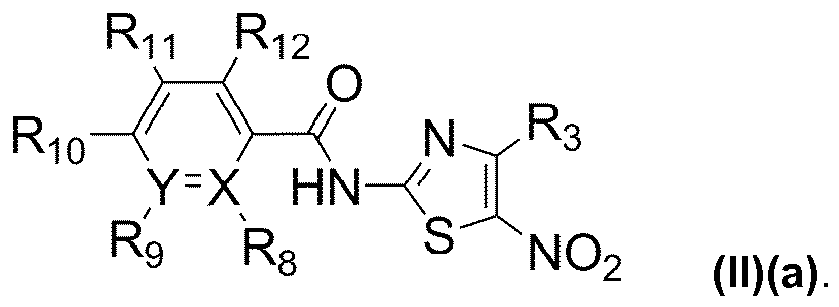
- Verbindung gemäß Anspruch 3, wobei die Verbindung folgende ist:

- Verbindung gemäß Anspruch 1 oder Anspruch 2 der Formel (III)(a):

- Verbindung gemäß Anspruch 5, wobei die Verbindung folgende ist:
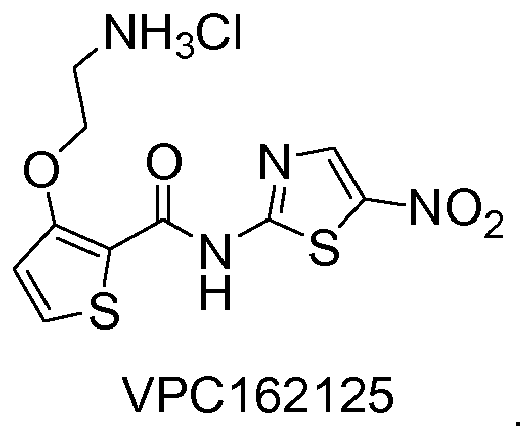
- Verbindung gemäß Anspruch 5 der Formel (III)(c):
 wobei R18-R24 jeweils unabhängig ausgewählt sind aus der Gruppe, bestehend aus H, Halogen, Acyl, Alkyl, Alkenyl, Alkinyl, Cycloalkyl, Heterocyclo, Aryl, Heteroaryl, Alkoxy, Amino, Amid, Thiol, Sulfon, Sulfoxid, Oxo, Oxy, Nitro, Carbonyl, Carboxy, Aminosäureseitenkette und Aminosäure, wobei die Gruppen von R18-R24 optional substituiert sind mit 1, 2, 3 oder 4 Gruppen, wobei die Substituentengruppen unabhängig H, Halogen, Hydroxy, Acyl, Alkyl, Alkenyl, Alkinyl, Cycloalkyl, Heterocyclo, Aryl, Heteroaryl, Alkoxy, Amino, Amid, Thiol, Sulfon, Sulfoxid, Oxo, Oxy, Nitro, Carbonyl, Carboxy, Aminosäureseitenkette und Aminosäure sind;X ausgewählt ist aus O, S, NH und NCH3;Y und Z jeweils unabhängig ausgewählt sind aus C und N, und wenn Y N ist, R18 fehlt, und wenn Z N ist, R19 fehlt.
 - Verbindung gemäß Anspruch 5 der Formel (III)(d) oder (e):
 wobei R25-R29 und R30-R34 jeweils unabhängig ausgewählt sind aus der Gruppe, bestehend aus H, Halogen, Acyl, Alkyl, Alkenyl, Alkinyl, Cycloalkyl, Heterocyclo, Aryl, Heteroaryl, Alkoxy, Amino, Amid, Thiol, Sulfon, Sulfoxid, Oxo, Oxy, Nitro, Carbonyl, Carboxy, Aminosäureseitenkette und Aminosäure, wobei die Gruppen von R25-R29 optional substituiert sind mit 1, 2, 3 oder 4 Gruppen, wobei die Substituentengruppen unabhängig H, Halogen, Hydroxy, Acyl, Alkyl, Alkenyl, Alkinyl, Cycloalkyl, Heterocyclo, Aryl, Heteroaryl, Alkoxy, Amino, Amid, Thiol, Sulfon, Sulfoxid, Oxo, Oxy, Nitro, Carbonyl, Carboxy, Aminosäureseitenkette und Aminosäure sind;X und Y unabhängig ausgewählt sind aus O, S, NH und NCH3.
 - Verbindung gemäß Anspruch 1, wobei W C ist und R2 Nitro ist.
- Verbindung gemäß einem der Ansprüche 1 bis 9, wobei R3 H ist.
- Verbindung gemäß Anspruch 1, wobei die Verbindung aus der Gruppe ausgewählt ist, die aus Folgendem besteht:


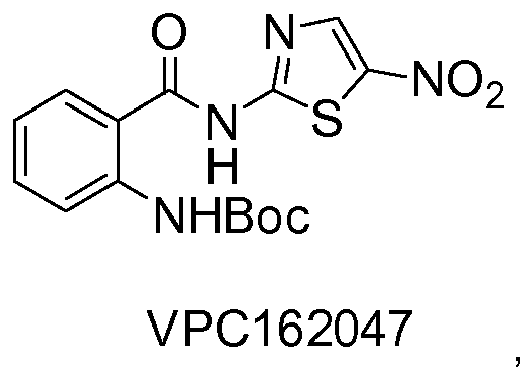


- Eine pharmazeutische Zusammensetzung, die eine wirksame Menge einer Verbindung gemäß einem der Ansprüche 1-11 und einen pharmazeutisch akzeptablen Träger beinhaltet.
- Ein Kit zum Verabreichen einer Verbindung gemäß einem der Ansprüche 1-11, wobei das Kit mindestens eine Verbindung gemäß einem der Ansprüche 1-11, optional geliefert als eine pharmazeutische Zusammensetzung, die einen pharmazeutisch akzeptablen Träger beinhaltet, einen Applikator und Anweisungsmaterial für dessen Verwendung beinhaltet.
- Pharmazeutische Zusammensetzung gemäß Anspruch 12 zur Verwendung bei der Prävention oder Behandlung einer mikrobiellen Infektion, wie etwa einer bakteriellen Infektion, insbesondere von anaeroben Bakterien, Helicobacter pylori, Campylobacter jejuni, Clostridium difficile, Staphylococcus epidermidis oder S. aureus.
- Eine Zusammensetzung, die mindestens eine Verbindung, ausgewählt aus der Gruppe, bestehend aus NTZ, TIZ, AMIX und einer Verbindung gemäß einem der Ansprüche 1-11, beinhaltet, zur Verwendung bei der Prävention oder Behandlung einer viralen Infektion.
- Eine pharmazeutische Zusammensetzung, die eine wirksame Menge mindestens eines Inhibitors bakterieller Biofilmbildung beinhaltet, wobei der Inhibitor der Biofilmbildung ausgewählt ist aus der Gruppe von Verbindungen, bestehend aus NTZ, TIZ, AMIX und einer Verbindung gemäß einem der Ansprüche 1-11, zur Verwendung bei der Inhibierung bakterieller Biofilmbildung.
- Eine pharmazeutische Zusammensetzung, die eine wirksame Menge mindestens einer Verbindung, ausgewählt aus der Gruppe, bestehend aus NTZ, TIZ und AMIX, eine Verbindung gemäß einem der Ansprüche 1-11 und einen pharmazeutisch akzeptablen Träger beinhaltet, zur Verwendung bei der Prävention oder Behandlung von Hepatitis, wie etwa Hepatitis C, Amöbenruhr oder Infektion mit anaeroben Parasiten.
- Verbindung gemäß Anspruch 1 zur Verwendung bei der Prävention oder Behandlung einer Mycobacterium-Infektion, wie etwa einer Infektion mit M. tuberculosis.
Applications Claiming Priority (2)
| Application Number | Priority Date | Filing Date | Title |
|---|---|---|---|
| US16179609P | 2009-03-20 | 2009-03-20 | |
| PCT/US2010/027397 WO2010107736A2 (en) | 2009-03-20 | 2010-03-16 | Broad spectrum benzothiophene-nitrothiazolide and other antimicrobials |
Publications (3)
| Publication Number | Publication Date |
|---|---|
| EP2408770A2 EP2408770A2 (de) | 2012-01-25 |
| EP2408770A4 EP2408770A4 (de) | 2012-08-29 |
| EP2408770B1 true EP2408770B1 (de) | 2014-11-05 |
Family
ID=42740185
Family Applications (1)
| Application Number | Title | Priority Date | Filing Date |
|---|---|---|---|
| EP10753952.0A Active EP2408770B1 (de) | 2009-03-20 | 2010-03-16 | Benzothiophen-nitrothiazolid und andere antimikrobielle stoffe mit breitem spektrum |
Country Status (5)
| Country | Link |
|---|---|
| US (2) | US8835644B2 (de) |
| EP (1) | EP2408770B1 (de) |
| AU (1) | AU2010226857B2 (de) |
| ES (1) | ES2528946T3 (de) |
| WO (1) | WO2010107736A2 (de) |
Families Citing this family (20)
| Publication number | Priority date | Publication date | Assignee | Title |
|---|---|---|---|---|
| CN101801521B (zh) | 2007-05-14 | 2015-06-17 | 纽约州立大学研究基金会 | 生物膜中细菌细胞内的生理学分散响应诱导 |
| EP2178852B9 (de) | 2007-08-03 | 2016-06-22 | Romark Laboratories, L.C. | Alkylsulfonyl-substituierte thiazolidverbindungen |
| PE20121118A1 (es) | 2009-05-12 | 2012-09-05 | Romark Lab Lc | Compuestos de haloalquil heteroaril benzamida |
| AP2012006064A0 (en) | 2009-06-26 | 2012-02-29 | Romark Lab Lc | Compounds and methods for treating influenza. |
| US9333193B2 (en) | 2010-09-20 | 2016-05-10 | University Of Virginia Patent Foundation | Compositions and methods for treating tuberculosis |
| JPWO2012121168A1 (ja) * | 2011-03-04 | 2014-07-17 | 国立大学法人京都大学 | キナーゼ阻害剤 |
| US9604946B2 (en) * | 2013-03-12 | 2017-03-28 | The Board Of Regents Of The University Of Texas System | Methods for modulating bacterial virulence and related compounds |
| CN103242308B (zh) * | 2013-05-24 | 2015-07-01 | 青岛农业大学 | 2-氟烟酰衍生物及其制备方法和其应用 |
| CN103524407B (zh) * | 2013-11-01 | 2015-12-02 | 青岛农业大学 | 一组2-氟-3-吡啶甲酰化合物 |
| WO2017027984A1 (en) * | 2015-08-20 | 2017-02-23 | Simon Fraser University | Compounds and methods for treatment of cancer by inhibiting atg4b and blocking autophagy |
| MX2018008569A (es) | 2016-01-28 | 2018-08-16 | Kimberly Clark Co | Composicion antiadherente contra virus de acido desoxirribonucleico (adn) y metodo para inhibir la adherencia de virus de acido desoxirribonucleico (adn) a una superficie. |
| EP3408270B1 (de) * | 2016-01-29 | 2021-12-15 | Wichita State University | Verbindungen zur hemmung des bakteriellen wachstums über phosphatidylglycerolbindung |
| MX2018013276A (es) | 2016-05-26 | 2019-03-28 | Kimberly Clark Co | Composiciones antiadherentes y metodos para inhibir la adherencia de microbios a una superficie. |
| JP2021501774A (ja) * | 2017-11-03 | 2021-01-21 | バイオイミクス・アクチボラグBioimics AB | 抗感染症複素環式化合物及びその使用 |
| US11541105B2 (en) | 2018-06-01 | 2023-01-03 | The Research Foundation For The State University Of New York | Compositions and methods for disrupting biofilm formation and maintenance |
| CN121108187A (zh) | 2019-04-03 | 2025-12-12 | 阿里戈斯治疗公司 | 吡咯化合物 |
| WO2022206084A1 (zh) * | 2021-03-29 | 2022-10-06 | 北京大学 | 噻唑类化合物在制备治疗和预防癌症药物中的用途 |
| CN115197164B (zh) * | 2021-04-12 | 2025-04-01 | 杜心赟 | 新型噻唑类化合物及其制备方法和用途 |
| WO2023198095A1 (zh) * | 2022-04-12 | 2023-10-19 | 成都贝诺科成生物科技有限公司 | 一种硝基噻唑衍生物在制备抑制幽门螺杆菌的抑菌剂中的用途 |
| EP4511378A4 (de) * | 2022-04-20 | 2026-03-11 | Carthronix Inc | Kleinmolekülige modulatoren von gp130 signalwegen |
Family Cites Families (23)
| Publication number | Priority date | Publication date | Assignee | Title |
|---|---|---|---|---|
| US2735798A (en) * | 1956-02-21 | Acyl amevo-nitrothiazole compositions | ||
| GB723948A (en) * | 1952-10-02 | 1955-02-16 | Wellcome Found | Improvements in or relating to thiazole derivatives |
| FR1306603A (fr) * | 1958-08-14 | 1962-10-19 | Innothera Lab Sa | Dérivés thiazoliques et leur procédé de préparation |
| FR79201E (fr) * | 1959-05-29 | 1962-11-09 | Innothera Lab Sa | Dérivés thiazoliques et leur procédé de préparation |
| GB1440212A (en) * | 1973-08-29 | 1976-06-23 | Phavic Sprl | Derivatives of 2-phenoxyacetamido-5-nitrothiazoles |
| DE3919365A1 (de) * | 1989-06-14 | 1990-12-20 | Bayer Ag | 2-acylamino-4-halogen-5-nitrothiazol-derivate, verfahren zu ihrer herstellung, ihre verwendung in schaedlingsbekaempfungsmitteln und neue zwischenprodukte |
| DE69322118T2 (de) * | 1992-04-17 | 1999-05-20 | Hodogaya Chemical Co., Ltd., Tokio/Tokyo | Amino-Thiazolderivate und ihre Anwendung als Fungizide |
| US5578621A (en) * | 1994-09-08 | 1996-11-26 | Romark Lab Lc | Benzamide derivatives |
| AU689972B2 (en) * | 1994-11-29 | 1998-04-09 | Hisamitsu Pharmaceutical Co., Inc. | Antibacterial preparation or bactericide comprising 2-aminothiazole derivative and/or salt thereof |
| GB9823871D0 (en) | 1998-10-30 | 1998-12-23 | Pharmacia & Upjohn Spa | 2-Amino-thiazole derivatives, process for their preparation, and their use as antitumour agents |
| US7338969B2 (en) | 2002-03-08 | 2008-03-04 | Quonova, Llc | Modulation of pathogenicity |
| CN100357283C (zh) * | 2002-04-02 | 2007-12-26 | 中国科学院上海药物研究所 | 一类甲硫氨酰氨肽酶抑制剂 |
| SE0201194D0 (sv) | 2002-04-19 | 2002-04-19 | Astrazeneca Ab | New compounds |
| RU2309956C2 (ru) * | 2002-10-03 | 2007-11-10 | Ф.Хоффманн-Ля Рош Аг | Производные индол-3-карбоксамида в качестве активаторов глюкокиназы |
| US6737382B1 (en) * | 2002-10-23 | 2004-05-18 | Nippon Soda Co. Ltd. | Insecticidal aminothiazole derivatives |
| WO2006093518A2 (en) | 2004-06-25 | 2006-09-08 | Apath, Llc | Thienyl compounds for treating virus-related conditions |
| US20090247734A1 (en) | 2005-12-14 | 2009-10-01 | Hendrickson Wayne A | Chemically Derivatized CD4 and Uses Thereof |
| AP2907A (en) | 2006-01-09 | 2014-05-31 | Romark Lab Lc | Viral hepatitis treatment |
| EP1849785A1 (de) * | 2006-04-28 | 2007-10-31 | Neuropharma, S.A. | N-(2-Thiazolyl)-Amid-Derivative als GSK-3 Inhibitoren |
| US8030447B2 (en) | 2006-09-20 | 2011-10-04 | The Board Of Regents Of The University Of Texas System | Substrate peptide sequences for plague plasminogen activator and uses thereof |
| EP2178852B9 (de) | 2007-08-03 | 2016-06-22 | Romark Laboratories, L.C. | Alkylsulfonyl-substituierte thiazolidverbindungen |
| US9333193B2 (en) * | 2010-09-20 | 2016-05-10 | University Of Virginia Patent Foundation | Compositions and methods for treating tuberculosis |
| US9387199B2 (en) * | 2013-11-12 | 2016-07-12 | University Of Virginia Patent Foundation | Compositions and methods for treating clostridium infection and preventing recurrence of infection |
-
2010
- 2010-03-16 WO PCT/US2010/027397 patent/WO2010107736A2/en not_active Ceased
- 2010-03-16 AU AU2010226857A patent/AU2010226857B2/en not_active Ceased
- 2010-03-16 EP EP10753952.0A patent/EP2408770B1/de active Active
- 2010-03-16 ES ES10753952.0T patent/ES2528946T3/es active Active
- 2010-03-16 US US13/257,707 patent/US8835644B2/en active Active
-
2014
- 2014-07-30 US US14/446,793 patent/US9376430B2/en active Active
Also Published As
| Publication number | Publication date |
|---|---|
| EP2408770A4 (de) | 2012-08-29 |
| EP2408770A2 (de) | 2012-01-25 |
| US20150018330A1 (en) | 2015-01-15 |
| WO2010107736A2 (en) | 2010-09-23 |
| US8835644B2 (en) | 2014-09-16 |
| WO2010107736A3 (en) | 2011-03-03 |
| AU2010226857A1 (en) | 2011-11-10 |
| AU2010226857B2 (en) | 2016-07-14 |
| ES2528946T3 (es) | 2015-02-13 |
| US9376430B2 (en) | 2016-06-28 |
| US20120010187A1 (en) | 2012-01-12 |
Similar Documents
| Publication | Publication Date | Title |
|---|---|---|
| EP2408770B1 (de) | Benzothiophen-nitrothiazolid und andere antimikrobielle stoffe mit breitem spektrum | |
| US9333193B2 (en) | Compositions and methods for treating tuberculosis | |
| Karegoudar et al. | Synthesis of some novel 2, 4-disubstituted thiazoles as possible antimicrobial agents | |
| Villain-Guillot et al. | Structure− activity relationships of phenyl-furanyl-rhodanines as inhibitors of RNA polymerase with antibacterial activity on biofilms | |
| RS52068B (sr) | Korisni manobaktam antibiotici | |
| Foroumadi et al. | Synthesis and anti-Helicobacter pylori activity of 5-(nitroaryl)-1, 3, 4-thiadiazoles with certain sulfur containing alkyl side chain | |
| JP2005517635A (ja) | 選択的な抗菌剤 | |
| Mirzaei et al. | Synthesis and in vitro anti-Helicobacter pylori activity of N-[5-(5-nitro-2-heteroaryl)-1, 3, 4-thiadiazol-2-yl] thiomorpholines and related compounds | |
| TW474935B (en) | Cephalosporin antibiotics | |
| US20170231962A1 (en) | Compound Combinations for Attenuation of Bacterial Virulence | |
| CN107625766A (zh) | 一种噻唑类化合物用作抗菌增效剂的用途 | |
| AU2006278829A1 (en) | GSK-3 inhibitors | |
| Hardej et al. | The synthesis of phenylalanine-derived C5-substituted rhodanines and their activity against selected methicillin-resistant Staphylococcus aureus (MRSA) strains | |
| Pereira et al. | Thiazolidinedione and thiazole derivatives potentiate norfloxacin activity against NorA efflux pump over expression in Staphylococcus aureus 1199B strains | |
| US20090163536A1 (en) | Methods and compounds for treatment of clostridium based infection | |
| JP2005531608A (ja) | NF−κB阻害剤 | |
| US20110098323A1 (en) | Inhibitors of bacterial biofilm formation | |
| Laboud et al. | Synthesis and anti‐bacterial evaluation of novel scaffolds based on bis‐thiazole or bis‐1, 3, 4‐thiadiazole linked to thieno [2, 3‐b] thiophene as new hybrid molecules | |
| CN101248067A (zh) | 唑烷酮衍生物及其作为抗生素的用途 | |
| CN105820163B (zh) | 取代的1,3-杂唑类化合物、其制备方法、包含其的药物组合物及用途 | |
| Klimesova et al. | Structure-activity relationships of 2-benzylsulfanylbenzothiazoles: synthesis and selective antimycobacterial properties | |
| US20160237058A1 (en) | Phenoxy thiophene sulfonamides and other compounds for use as inhibitors of bacterial glucuronidase | |
| CHIFIRIUC et al. | SYNTHESIS, STRUCTURAL, PHISICO-CHEMICAL CHARACTERIZATION AND ANTIMICROBIAL ACTIVITY SCREENING OF NEW THIOUREA DERIVATIVES | |
| US20250270199A1 (en) | Thiazole derivatives and methods of using the same | |
| US20200087249A1 (en) | Inhibitors of Quorum Sensing Receptor LasR |
Legal Events
| Date | Code | Title | Description |
|---|---|---|---|
| PUAI | Public reference made under article 153(3) epc to a published international application that has entered the european phase |
Free format text: ORIGINAL CODE: 0009012 |
|
| 17P | Request for examination filed |
Effective date: 20111020 |
|
| AK | Designated contracting states |
Kind code of ref document: A2 Designated state(s): AT BE BG CH CY CZ DE DK EE ES FI FR GB GR HR HU IE IS IT LI LT LU LV MC MK MT NL NO PL PT RO SE SI SK SM TR |
|
| DAX | Request for extension of the european patent (deleted) | ||
| RIC1 | Information provided on ipc code assigned before grant |
Ipc: C07D 333/42 20060101ALI20120716BHEP Ipc: A61K 31/343 20060101ALI20120716BHEP Ipc: C07D 409/12 20060101ALI20120716BHEP Ipc: C07D 417/10 20060101ALI20120716BHEP Ipc: C07D 277/58 20060101ALI20120716BHEP Ipc: C07D 417/12 20060101AFI20120716BHEP Ipc: C07D 417/14 20060101ALI20120716BHEP Ipc: A61P 31/00 20060101ALI20120716BHEP Ipc: C07D 277/54 20060101ALI20120716BHEP |
|
| A4 | Supplementary search report drawn up and despatched |
Effective date: 20120726 |
|
| 17Q | First examination report despatched |
Effective date: 20130722 |
|
| GRAP | Despatch of communication of intention to grant a patent |
Free format text: ORIGINAL CODE: EPIDOSNIGR1 |
|
| INTG | Intention to grant announced |
Effective date: 20140604 |
|
| GRAS | Grant fee paid |
Free format text: ORIGINAL CODE: EPIDOSNIGR3 |
|
| GRAA | (expected) grant |
Free format text: ORIGINAL CODE: 0009210 |
|
| AK | Designated contracting states |
Kind code of ref document: B1 Designated state(s): AT BE BG CH CY CZ DE DK EE ES FI FR GB GR HR HU IE IS IT LI LT LU LV MC MK MT NL NO PL PT RO SE SI SK SM TR |
|
| REG | Reference to a national code |
Ref country code: GB Ref legal event code: FG4D |
|
| REG | Reference to a national code |
Ref country code: CH Ref legal event code: EP |
|
| REG | Reference to a national code |
Ref country code: AT Ref legal event code: REF Ref document number: 694565 Country of ref document: AT Kind code of ref document: T Effective date: 20141115 |
|
| REG | Reference to a national code |
Ref country code: IE Ref legal event code: FG4D |
|
| REG | Reference to a national code |
Ref country code: DE Ref legal event code: R096 Ref document number: 602010019984 Country of ref document: DE Effective date: 20141224 |
|
| REG | Reference to a national code |
Ref country code: CH Ref legal event code: NV Representative=s name: MURGITROYD AND COMPANY, CH |
|
| REG | Reference to a national code |
Ref country code: ES Ref legal event code: FG2A Ref document number: 2528946 Country of ref document: ES Kind code of ref document: T3 Effective date: 20150213 |
|
| REG | Reference to a national code |
Ref country code: AT Ref legal event code: MK05 Ref document number: 694565 Country of ref document: AT Kind code of ref document: T Effective date: 20141105 |
|
| REG | Reference to a national code |
Ref country code: NL Ref legal event code: VDEP Effective date: 20141105 |
|
| REG | Reference to a national code |
Ref country code: LT Ref legal event code: MG4D |
|
| PG25 | Lapsed in a contracting state [announced via postgrant information from national office to epo] |
Ref country code: FI Free format text: LAPSE BECAUSE OF FAILURE TO SUBMIT A TRANSLATION OF THE DESCRIPTION OR TO PAY THE FEE WITHIN THE PRESCRIBED TIME-LIMIT Effective date: 20141105 Ref country code: LT Free format text: LAPSE BECAUSE OF FAILURE TO SUBMIT A TRANSLATION OF THE DESCRIPTION OR TO PAY THE FEE WITHIN THE PRESCRIBED TIME-LIMIT Effective date: 20141105 Ref country code: PT Free format text: LAPSE BECAUSE OF FAILURE TO SUBMIT A TRANSLATION OF THE DESCRIPTION OR TO PAY THE FEE WITHIN THE PRESCRIBED TIME-LIMIT Effective date: 20150305 Ref country code: NO Free format text: LAPSE BECAUSE OF FAILURE TO SUBMIT A TRANSLATION OF THE DESCRIPTION OR TO PAY THE FEE WITHIN THE PRESCRIBED TIME-LIMIT Effective date: 20150205 Ref country code: IS Free format text: LAPSE BECAUSE OF FAILURE TO SUBMIT A TRANSLATION OF THE DESCRIPTION OR TO PAY THE FEE WITHIN THE PRESCRIBED TIME-LIMIT Effective date: 20150305 Ref country code: NL Free format text: LAPSE BECAUSE OF FAILURE TO SUBMIT A TRANSLATION OF THE DESCRIPTION OR TO PAY THE FEE WITHIN THE PRESCRIBED TIME-LIMIT Effective date: 20141105 |
|
| PG25 | Lapsed in a contracting state [announced via postgrant information from national office to epo] |
Ref country code: GR Free format text: LAPSE BECAUSE OF FAILURE TO SUBMIT A TRANSLATION OF THE DESCRIPTION OR TO PAY THE FEE WITHIN THE PRESCRIBED TIME-LIMIT Effective date: 20150206 Ref country code: SE Free format text: LAPSE BECAUSE OF FAILURE TO SUBMIT A TRANSLATION OF THE DESCRIPTION OR TO PAY THE FEE WITHIN THE PRESCRIBED TIME-LIMIT Effective date: 20141105 Ref country code: HR Free format text: LAPSE BECAUSE OF FAILURE TO SUBMIT A TRANSLATION OF THE DESCRIPTION OR TO PAY THE FEE WITHIN THE PRESCRIBED TIME-LIMIT Effective date: 20141105 Ref country code: AT Free format text: LAPSE BECAUSE OF FAILURE TO SUBMIT A TRANSLATION OF THE DESCRIPTION OR TO PAY THE FEE WITHIN THE PRESCRIBED TIME-LIMIT Effective date: 20141105 Ref country code: LV Free format text: LAPSE BECAUSE OF FAILURE TO SUBMIT A TRANSLATION OF THE DESCRIPTION OR TO PAY THE FEE WITHIN THE PRESCRIBED TIME-LIMIT Effective date: 20141105 Ref country code: PL Free format text: LAPSE BECAUSE OF FAILURE TO SUBMIT A TRANSLATION OF THE DESCRIPTION OR TO PAY THE FEE WITHIN THE PRESCRIBED TIME-LIMIT Effective date: 20141105 Ref country code: CY Free format text: LAPSE BECAUSE OF FAILURE TO SUBMIT A TRANSLATION OF THE DESCRIPTION OR TO PAY THE FEE WITHIN THE PRESCRIBED TIME-LIMIT Effective date: 20141105 |
|
| PG25 | Lapsed in a contracting state [announced via postgrant information from national office to epo] |
Ref country code: RO Free format text: LAPSE BECAUSE OF FAILURE TO SUBMIT A TRANSLATION OF THE DESCRIPTION OR TO PAY THE FEE WITHIN THE PRESCRIBED TIME-LIMIT Effective date: 20141105 Ref country code: EE Free format text: LAPSE BECAUSE OF FAILURE TO SUBMIT A TRANSLATION OF THE DESCRIPTION OR TO PAY THE FEE WITHIN THE PRESCRIBED TIME-LIMIT Effective date: 20141105 Ref country code: SK Free format text: LAPSE BECAUSE OF FAILURE TO SUBMIT A TRANSLATION OF THE DESCRIPTION OR TO PAY THE FEE WITHIN THE PRESCRIBED TIME-LIMIT Effective date: 20141105 Ref country code: DK Free format text: LAPSE BECAUSE OF FAILURE TO SUBMIT A TRANSLATION OF THE DESCRIPTION OR TO PAY THE FEE WITHIN THE PRESCRIBED TIME-LIMIT Effective date: 20141105 Ref country code: CZ Free format text: LAPSE BECAUSE OF FAILURE TO SUBMIT A TRANSLATION OF THE DESCRIPTION OR TO PAY THE FEE WITHIN THE PRESCRIBED TIME-LIMIT Effective date: 20141105 |
|
| REG | Reference to a national code |
Ref country code: DE Ref legal event code: R097 Ref document number: 602010019984 Country of ref document: DE |
|
| PLBE | No opposition filed within time limit |
Free format text: ORIGINAL CODE: 0009261 |
|
| STAA | Information on the status of an ep patent application or granted ep patent |
Free format text: STATUS: NO OPPOSITION FILED WITHIN TIME LIMIT |
|
| 26N | No opposition filed |
Effective date: 20150806 |
|
| PG25 | Lapsed in a contracting state [announced via postgrant information from national office to epo] |
Ref country code: MC Free format text: LAPSE BECAUSE OF FAILURE TO SUBMIT A TRANSLATION OF THE DESCRIPTION OR TO PAY THE FEE WITHIN THE PRESCRIBED TIME-LIMIT Effective date: 20141105 Ref country code: LU Free format text: LAPSE BECAUSE OF FAILURE TO SUBMIT A TRANSLATION OF THE DESCRIPTION OR TO PAY THE FEE WITHIN THE PRESCRIBED TIME-LIMIT Effective date: 20150316 |
|
| PG25 | Lapsed in a contracting state [announced via postgrant information from national office to epo] |
Ref country code: SI Free format text: LAPSE BECAUSE OF FAILURE TO SUBMIT A TRANSLATION OF THE DESCRIPTION OR TO PAY THE FEE WITHIN THE PRESCRIBED TIME-LIMIT Effective date: 20141105 |
|
| REG | Reference to a national code |
Ref country code: FR Ref legal event code: PLFP Year of fee payment: 7 |
|
| PG25 | Lapsed in a contracting state [announced via postgrant information from national office to epo] |
Ref country code: MT Free format text: LAPSE BECAUSE OF FAILURE TO SUBMIT A TRANSLATION OF THE DESCRIPTION OR TO PAY THE FEE WITHIN THE PRESCRIBED TIME-LIMIT Effective date: 20141105 |
|
| REG | Reference to a national code |
Ref country code: FR Ref legal event code: PLFP Year of fee payment: 8 |
|
| PG25 | Lapsed in a contracting state [announced via postgrant information from national office to epo] |
Ref country code: BG Free format text: LAPSE BECAUSE OF FAILURE TO SUBMIT A TRANSLATION OF THE DESCRIPTION OR TO PAY THE FEE WITHIN THE PRESCRIBED TIME-LIMIT Effective date: 20141105 Ref country code: SM Free format text: LAPSE BECAUSE OF FAILURE TO SUBMIT A TRANSLATION OF THE DESCRIPTION OR TO PAY THE FEE WITHIN THE PRESCRIBED TIME-LIMIT Effective date: 20141105 Ref country code: HU Free format text: LAPSE BECAUSE OF FAILURE TO SUBMIT A TRANSLATION OF THE DESCRIPTION OR TO PAY THE FEE WITHIN THE PRESCRIBED TIME-LIMIT; INVALID AB INITIO Effective date: 20100316 |
|
| PG25 | Lapsed in a contracting state [announced via postgrant information from national office to epo] |
Ref country code: TR Free format text: LAPSE BECAUSE OF FAILURE TO SUBMIT A TRANSLATION OF THE DESCRIPTION OR TO PAY THE FEE WITHIN THE PRESCRIBED TIME-LIMIT Effective date: 20141105 |
|
| PG25 | Lapsed in a contracting state [announced via postgrant information from national office to epo] |
Ref country code: BE Free format text: LAPSE BECAUSE OF FAILURE TO SUBMIT A TRANSLATION OF THE DESCRIPTION OR TO PAY THE FEE WITHIN THE PRESCRIBED TIME-LIMIT Effective date: 20141105 |
|
| REG | Reference to a national code |
Ref country code: FR Ref legal event code: PLFP Year of fee payment: 9 |
|
| PG25 | Lapsed in a contracting state [announced via postgrant information from national office to epo] |
Ref country code: MK Free format text: LAPSE BECAUSE OF FAILURE TO SUBMIT A TRANSLATION OF THE DESCRIPTION OR TO PAY THE FEE WITHIN THE PRESCRIBED TIME-LIMIT Effective date: 20141105 |
|
| P01 | Opt-out of the competence of the unified patent court (upc) registered |
Effective date: 20230622 |
|
| PGFP | Annual fee paid to national office [announced via postgrant information from national office to epo] |
Ref country code: IE Payment date: 20240327 Year of fee payment: 15 |
|
| PGFP | Annual fee paid to national office [announced via postgrant information from national office to epo] |
Ref country code: DE Payment date: 20240327 Year of fee payment: 15 Ref country code: GB Payment date: 20240327 Year of fee payment: 15 |
|
| PGFP | Annual fee paid to national office [announced via postgrant information from national office to epo] |
Ref country code: IT Payment date: 20240321 Year of fee payment: 15 Ref country code: FR Payment date: 20240325 Year of fee payment: 15 |
|
| PGFP | Annual fee paid to national office [announced via postgrant information from national office to epo] |
Ref country code: CH Payment date: 20240402 Year of fee payment: 15 |
|
| PGFP | Annual fee paid to national office [announced via postgrant information from national office to epo] |
Ref country code: ES Payment date: 20240401 Year of fee payment: 15 |
|
| REG | Reference to a national code |
Ref country code: DE Ref legal event code: R119 Ref document number: 602010019984 Country of ref document: DE |
|
| REG | Reference to a national code |
Ref country code: CH Ref legal event code: H13 Free format text: ST27 STATUS EVENT CODE: U-0-0-H10-H13 (AS PROVIDED BY THE NATIONAL OFFICE) Effective date: 20251023 |
|
| GBPC | Gb: european patent ceased through non-payment of renewal fee |
Effective date: 20250316 |
|
| PG25 | Lapsed in a contracting state [announced via postgrant information from national office to epo] |
Ref country code: DE Free format text: LAPSE BECAUSE OF NON-PAYMENT OF DUE FEES Effective date: 20251001 |
|
| PG25 | Lapsed in a contracting state [announced via postgrant information from national office to epo] |
Ref country code: GB Free format text: LAPSE BECAUSE OF NON-PAYMENT OF DUE FEES Effective date: 20250316 |
|
| PG25 | Lapsed in a contracting state [announced via postgrant information from national office to epo] |
Ref country code: IT Free format text: LAPSE BECAUSE OF NON-PAYMENT OF DUE FEES Effective date: 20250316 Ref country code: FR Free format text: LAPSE BECAUSE OF NON-PAYMENT OF DUE FEES Effective date: 20250331 |
|
| PG25 | Lapsed in a contracting state [announced via postgrant information from national office to epo] |
Ref country code: CH Free format text: LAPSE BECAUSE OF NON-PAYMENT OF DUE FEES Effective date: 20250331 |
|
| PG25 | Lapsed in a contracting state [announced via postgrant information from national office to epo] |
Ref country code: IE Free format text: LAPSE BECAUSE OF NON-PAYMENT OF DUE FEES Effective date: 20250316 |