EP2437478A1 - Supplemental information for mobile terminated mobile initiated calling - Google Patents
Supplemental information for mobile terminated mobile initiated calling Download PDFInfo
- Publication number
- EP2437478A1 EP2437478A1 EP10182193A EP10182193A EP2437478A1 EP 2437478 A1 EP2437478 A1 EP 2437478A1 EP 10182193 A EP10182193 A EP 10182193A EP 10182193 A EP10182193 A EP 10182193A EP 2437478 A1 EP2437478 A1 EP 2437478A1
- Authority
- EP
- European Patent Office
- Prior art keywords
- mobile device
- call
- information
- obtaining
- supplemental information
- Prior art date
- Legal status (The legal status is an assumption and is not a legal conclusion. Google has not performed a legal analysis and makes no representation as to the accuracy of the status listed.)
- Granted
Links
Images


Classifications
-
- H—ELECTRICITY
- H04—ELECTRIC COMMUNICATION TECHNIQUE
- H04M—TELEPHONIC COMMUNICATION
- H04M3/00—Automatic or semi-automatic exchanges
- H04M3/42—Systems providing special services or facilities to subscribers
- H04M3/42314—Systems providing special services or facilities to subscribers in private branch exchanges
- H04M3/4234—Remote access to features of PBX or home telephone systems-teleworking in a PBX
-
- H—ELECTRICITY
- H04—ELECTRIC COMMUNICATION TECHNIQUE
- H04Q—SELECTING
- H04Q3/00—Selecting arrangements
- H04Q3/58—Arrangements providing connection between main exchange and sub-exchange or satellite
- H04Q3/62—Arrangements providing connection between main exchange and sub-exchange or satellite for connecting to private branch exchanges
- H04Q3/625—Arrangements in the private branch exchange
-
- H—ELECTRICITY
- H04—ELECTRIC COMMUNICATION TECHNIQUE
- H04W—WIRELESS COMMUNICATION NETWORKS
- H04W4/00—Services specially adapted for wireless communication networks; Facilities therefor
- H04W4/20—Services signaling; Auxiliary data signalling, i.e. transmitting data via a non-traffic channel
-
- H—ELECTRICITY
- H04—ELECTRIC COMMUNICATION TECHNIQUE
- H04M—TELEPHONIC COMMUNICATION
- H04M2203/00—Aspects of automatic or semi-automatic exchanges
- H04M2203/65—Aspects of automatic or semi-automatic exchanges related to applications where calls are combined with other types of communication
- H04M2203/654—Pre, in or post-call message
-
- H—ELECTRICITY
- H04—ELECTRIC COMMUNICATION TECHNIQUE
- H04M—TELEPHONIC COMMUNICATION
- H04M2207/00—Type of exchange or network, i.e. telephonic medium, in which the telephonic communication takes place
- H04M2207/18—Type of exchange or network, i.e. telephonic medium, in which the telephonic communication takes place wireless networks
-
- H—ELECTRICITY
- H04—ELECTRIC COMMUNICATION TECHNIQUE
- H04M—TELEPHONIC COMMUNICATION
- H04M3/00—Automatic or semi-automatic exchanges
- H04M3/42—Systems providing special services or facilities to subscribers
- H04M3/42365—Presence services providing information on the willingness to communicate or the ability to communicate in terms of media capability or network connectivity
-
- H—ELECTRICITY
- H04—ELECTRIC COMMUNICATION TECHNIQUE
- H04M—TELEPHONIC COMMUNICATION
- H04M3/00—Automatic or semi-automatic exchanges
- H04M3/42—Systems providing special services or facilities to subscribers
- H04M3/428—Arrangements for placing incoming calls on hold
-
- H—ELECTRICITY
- H04—ELECTRIC COMMUNICATION TECHNIQUE
- H04W—WIRELESS COMMUNICATION NETWORKS
- H04W76/00—Connection management
- H04W76/10—Connection setup
Definitions
- the present application relates to mobile device communications, such as voice and data communication, and more particularly to calls involving a PBX.
- Mobile devices are used for voice and data communications. Increasingly, mobile devices can be used in a business environment, and it can be desirable to involve telephony systems typically associated with business environments, such as Private Branch Exchanges (PBXs) in mobile telephony. Further advancements in these areas remain desirable.
- PBXs Private Branch Exchanges
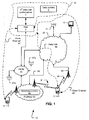
- Figure 1 depicts a diagram of a network involving a PBX, a call control server, and a mobile device, among other elements depicted to provide context;
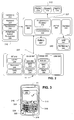
- Figure 2 depicts example of components of an example mobile device
- Figure 3 depicts an example view of an example mobile device, and some of the user interface componentry thereof;
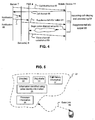
- Figure 4 depicts a signal ladder of example signals that can be exchanged in setting up a voice channel, and a time frame in which supplemental information can be sent, displayed or sent and displayed;
- Figure 5 depicts example sources of supplemental information that can be displayed at a mobile device
- Figure 6 depicts an example method that can be performed at a mobile device according to this disclosure.
- Figure 7 depicts an example method that can be performed at a server communicating with a mobile device, according to this disclosure.
- a mobile device can be notified of a call available at a PBX 4 to be directed to the mobile device.
- this notification can be sent on a data channel, such that no audio channel has yet been established.
- the establishment of the audio channel can be started, for example, from the PBX or from the mobile device. Since mobile devices are often tariffed starting from when an audio channel is established, starting to setup an audio channel from the mobile device, before a user has indicated that it will accept the call can incur charges, even though the user ultimately does not accept the call.
- a time incurred by waiting for a user to accept the call before establishing a voice channel causes a time delay between when the user indicated acceptance of the call to a time when the audio channel actually is available. Such a time delay can cause the user to believe that the call has failed to setup. Also, in general, the user experience is negatively impacted waiting for the call to be setup.
- a data channel exists to the mobile device, such as between the mobile device and a server, such as a third party call control server
- the server can provide information over the data channel to the mobile device, which the mobile device can output, such as aurally, visually or by both audio and visual output means.
- Such information can be related to the incoming call, such as more information about the identity of a person originating the call. If the call originates from an enterprise number, then enterprise information systems may be accessible to provide that information to the mobile device.
- FIG. 1 shows, in block diagram form, an example system arrangement 10, for explaining aspects according to this disclosure in more detail.
- arrangement 10 includes a network 20, which can be comprised of one or more internets and other networks, and can include, for example, a corporate intranet, as well as components of public networks, such as components of the Internet.
- Figure 1 depicts that communication devices, such as a telephone 17 and a computer 15 can be coupled to communicate using network 20.
- PSTN 40 also is depicted as being in communication with network 20.
- PSTN telephones 87a and 87b are depicted as being reachable over the PSTN.
- a Public Land Mobile Network (PLMN) 50 also is depicted, and includes a switching control 86.
- PLMN Public Land Mobile Network
- PLMN 50 can be coupled to PSTN 40, and to network 20, through a data communication, path 93.
- Data communication path 93 can include one or more packet networks, or linkages between packet networks. Separate identification of network 20 and path 93 is at least partially a matter of convenience, in that path 93 also, in many circumstances, can be considered part of network 20.
- PSTN 40 operates over circuit-switched lines.
- Communication path 93, and network 20 can include a wide variety of digital communication technologies, including packet switching technologies and protocols. For example, Internet Protocol (IP) addressing, and Session Initiation Protocol (SIP) can be used for establishing and conducting voice communications carried over path 93 and network 20.
- IP Internet Protocol
- SIP Session Initiation Protocol
- a mobile device 11 is depicted as communicating with PLMN 50 using cellular communication 91.
- Cellular communication 91 can itself be implemented using a wide variety of technologies, and can also include voice and data network components (e.g., a voice channel and a data channel time, frequency, or code division multiplexed, according to any of a variety of implemented or proposed cellular communication approaches).
- Mobile device 11 also can communicate using wireless Local Area Network (LAN) technologies 88, such as those according to the IEEE 802.11 series of standards and proposals. Communication using such WLAN technologies 88 can occur between mobile device 11 and a base station 94, which in turn is coupled with network 20.
- LAN Local Area Network
- Figure 1 also depicts that a voice channel 98 can be established between mobile device 11 and a Private Branch Exchange (PBX) 4, and a voice channel 97 between another device (e.g., a mobile device 14) and PBX 4.
- PBX Private Branch Exchange
- mobile device 14 is attempting to call mobile device 11, and the PBX 4 may establish voice channel 98 in order to complete the call.
- mobile device 11 can request that PBX 4 establish a voice channel to it, and to another entity, such as mobile device 14, or landline phones 87a or 87b.
- a data channel 96 can be provided between third party call control server 7 and mobile device 11. Information can be signaled across data channel 96 for exchanging setup and progress information for voice calls that can be carried over a variety of media, such as portions of the PSTN 40, PLMN 50, and portions of network 20. For example, mobile device 11 can signal to third.party call control server 7 to call mobile device 11, to establish a voice channel.
- Figure 2 depicts example components that can be used in implementing mobile device 11 according to the above description.
- a processing module 221 may be composed of a plurality of different processing elements, including one or more ASICs.222, a programmable processor 224, one or more co-processors 226, which each can be fixed function,; reconfigurable or programmable, and one or more digital signal processors 228.
- ASIC or co-processor 222 may be provided for implementing graphics functionality, encryption and decryption, audio filtering, and other such functions that often involve many repetitive, math-intensive steps.
- Processing module 221 can comprise memory to be used during processing, such as one or more cache memories 230.
- Non-volatile memory 243 can be implemented with one or more of Flash memory, PROM, EPROM, and.so on.
- Non-volatile memory 243 can be implemented as flash memory, ferromagnetic, phase change memory, and other non-volatile memory technologies.
- Non-volatile memory 243 also can store programs, device state, various user information, one or more operating systems, device configuration data, and other data that may need to be accessed persistently.
- a battery 297 can power device 11 occasionally, or in some cases, it can be a sole source of power. Battery 297 may be rechargeable.
- User input interface 210 can comprise a plurality of different sources of user input, such as a camera 202, a keyboard 204, a touchscreen 208, and a microphone, which can provide input to speech recognition functionality 209.
- Output mechanisms 212 can include a display 214, a speaker 216 and haptics 218, for example. These output mechanisms 212 can be used to provide a variety of outputs that can be sensed by a human, in response to information provided from processing module 221.
- Processing module 221 also can use a variety of network communication protocols, grouped for description purposes here into a communication module 237, which can include a Bluetooth communication stack 242, which comprises a L2CAP layer 244, a baseband 246 and a radio 248.
- Communications module 237 also can comprise a Wireless Local Area Network (247) interface, which comprises a link layer 252 with a MAC 254, and a radio 256;
- Communications module 237 also can comprise a cellular broadband data network interface 260, which in turn comprises a link layer 261, with a MAC 262.
- Cellular interface 260 also can comprise a radio 264 for an appropriate frequency spectrum.
- Communications module 237 also can comprise a USB interface 266, to provide wired data communication capability.
- Other wireless and wired communication technologies also can be provided, and this description is exemplary.
- Mobile device 11 comprises a display 312 and a cursor or view positioning device, here depicted as a trackball 314, which may serve as another input member and is both rotational to provide selection inputs and can also be pressed in a direction generally toward housing to provide another selection input.
- Trackball 314 permits multi-directional positioning of a selection cursor 318, such that the selection cursor 318 can be moved in an upward direction, in a downward direction and, if desired and/or permitted, in any diagonal direction.
- the trackball 314 is, in this example, situated on a front face (not separately numbered) of a housing 320, to enable a user to maneuver the trackball 314 while holding mobile device 11 in one hand.
- a trackpad or other navigational control device can be implemented as well.
- the mobile device 11 in Figure 3 also comprises a programmable convenience button 315 to activate a selected application such as, for example, a calendar or calculator.
- mobile device 11 can include an escape or cancel button 316, a menu or option button 324 and a keyboard 329.
- Menu or option button 324 loads a menu or list of options on display 312 when pressed.
- the escape or cancel button 316, menu option button 324, and keyboard 329 are disposed on the front face of the mobile device housing, while the convenience button 315 is disposed at the side of the housing. This button placement enables a user to operate these buttons while holding mobile device 11 in one hand.
- the keyboard 329 is, in this example, a standard QWERTY keyboard.
- Figure 4 depicts a single ladder in which server 7 sends a call notification 62 to mobile device 11.
- Call notification 60 can be sent over a data channel, such as data link 96 depicted in Figure 1 .
- Mobile device 11 upon receiving call notification 60, can display a message of the availability of the incoming call, such as on or through a user interface of device 11, and undertake ancillary processing 64, for example.
- a notification 66 of such call acceptance can be transmitted over the data channel for reception by server 7. Responsive to such notification 66, a notification of call acceptance can be sent from server 7 to server 8, which can responsively obtain one or more elements of supplemental information and send such supplemental, information to mobile device 11.
- server 8 can serve supplemental information 61 to mobile device 11, which will be displayed by mobile device 11 during a time, while voice channel set up 62 is proceeding. Examples of supplemental information that can be transmitted and displayed are described with respect to figures that follow below.
- mobile device 11 can begin set up of a voice channel 62.
- server 7 can signal PBX 4 via a notification 68, to begin setup of voice channel 62 to mobile device 62
- the voice channel can carry audio between mobile device 11 and PBX 4.
- PBX 4 can acknowledge that the voice channel has been established 63, which indicates that the voice channel is ready to carry audio information for the call, and thus the call can proceed.
- availability and presentation of supplemental information 61 allows a better user experience.
- One way in which the user experience is better is that the user is less likely to be confused about call status, because the presentation of such supplemental information tends to indicate that call setup progress is ongoing.
- a user typically expects to be able to talk immediately upon accepting an incoming call. However, such expectation would not be met in these situations, because the mobile phone does not indicate that the voice channel should be established until the call is accepted, and establishing such voice channel takes some time.
- Figure 5 depicts examples of information that can be served by servers 8, which are depicted in Figure 4 .
- Examples of information that can be served from one or more servers include directory information 22, which can be served from a directory server.
- Other organizational information also can be available within an enterprise from one or more servers, such as organizational charts or other information about a structure of an enterprise 23.
- Information 26 relating to presence information on other communication or messaging system also can be accessed and served.
- other information 25 can be identified using identity information of a caller who initiated the call to PBX 4, which is the subject of call notification 60.
- a search can be done on one or more databases to identify information relevant to the caller.
- Still further examples of information that can be accessed include call history information, such as call history information from the caller.
- these sources of information can include one or more servers identified as servers 8 ( FIG. 1 ⁇ : However, a variety of physical implementations in storage for such data can be provided. For example, storage can be implemented in network attached storage, which is accessed by one or more processing nodes according to criteria specified. Such information can be served over data link 96, and which is referred to as supplemental information 61 in Figure 4 .
- Mobile device 11 can receive (502) an indication of an incoming call on data channel, such as a data channel 96.
- Device 11 presents (504) a user interface that allows the call to be accepted, and optionally ignored.
- the user interface forwards input that was received to a function that determines (506) whether the input is indicative of call acceptance. If the input is indicative of call acceptance, mobile device 11 begins (508) set up of a voice channel (indicates to PLMN 50 or other network resources that the voice channel should be setup) to carry audio for the now accepted call.
- Mobile device 11 also can signal (510) that the call has been accepted over the data channel, even while the voice channel is being set up starting from mobile device 11 and ultimately to be terminated at PBX 4.
- Mobile device 11 receives (512) contextual or supplemental information over data channel 96, as described with respect to Figure 4 .
- Mobile device 11 outputs (514) that received contextual or supplemental information, while the voice channel is being set up.
- a determination can be made that the data channel is established, and responsively, call progress information can be displayed (518).
- call progress information can be displayed (518).
- further supplemental or contextual information can be displayed or outputted (514) or the same information can be repeatedly displayed.
- Figure 7 depicts an example method that can be implemented by a server according to aspects described herein.
- PBX 4 can receive (550) an incoming call from an originating device, which is destined for mobile device 11.
- Third-party call control server 7 can signal (552) availability of the call to mobile device 11 over data channel 96.
- Third-party call control server 7 can receive (554) an indication of call acceptance over data channel 96. Responsive to receiving such an indication, third-party call control server 7 can cause other information such as contextual or supplemental information to be gathered or accessed (556), such as by sending (555) a signal to server 8 to gather and/or provide that information to device 11. That contextual or supplemental information can be transmitted (560) over data channel 96 to mobile device 11.
- contextual or supplemental information can be transmitted (560) over data channel 96 to mobile device 11.
- an incoming voice call is received from mobile device (562) and the audio path for that incoming voice call can be bridged (564) to an audio path back to the device that originated the call identified in (550), which completes an audio path for the voice call.
- Mobile devices are increasingly used for communication, such as voice calling and data exchange. Also, mobile devices increasingly can use a wider variety of networks for such communication. For example, a mobile device can have a broadband cellular radio and a local area wireless network radio. Additionally, the broadband cellular capability of a mobile device may itself support a variety of standards, or protocols that have different communication capabilities, such as GSM, GPRS, EDGE and LTE.
Landscapes
- Engineering & Computer Science (AREA)
- Signal Processing (AREA)
- Computer Networks & Wireless Communication (AREA)
- Physics & Mathematics (AREA)
- Astronomy & Astrophysics (AREA)
- General Physics & Mathematics (AREA)
- Mobile Radio Communication Systems (AREA)
- Telephonic Communication Services (AREA)
Abstract
Description
- The present application relates to mobile device communications, such as voice and data communication, and more particularly to calls involving a PBX.
- Mobile devices are used for voice and data communications. Increasingly, mobile devices can be used in a business environment, and it can be desirable to involve telephony systems typically associated with business environments, such as Private Branch Exchanges (PBXs) in mobile telephony. Further advancements in these areas remain desirable.
- Reference will now be made, by way of example, to the accompanying drawings which show example embodiments of the present application, and in which:
-
Figure 1 depicts a diagram of a network involving a PBX, a call control server, and a mobile device, among other elements depicted to provide context; -
Figure 2 depicts example of components of an example mobile device; -
Figure 3 depicts an example view of an example mobile device, and some of the user interface componentry thereof; -
Figure 4 depicts a signal ladder of example signals that can be exchanged in setting up a voice channel, and a time frame in which supplemental information can be sent, displayed or sent and displayed; -
Figure 5 depicts example sources of supplemental information that can be displayed at a mobile device; -
Figure 6 depicts an example method that can be performed at a mobile device according to this disclosure; and -
Figure 7 depicts an example method that can be performed at a server communicating with a mobile device, according to this disclosure. - It would be advantageous to provide enterprise telephony services and other enhanced services to mobile devices. In some situations and call scenarios, a mobile device can be notified of a call available at a
PBX 4 to be directed to the mobile device. In some networks and with some devices, this notification can be sent on a data channel, such that no audio channel has yet been established. The establishment of the audio channel can be started, for example, from the PBX or from the mobile device. Since mobile devices are often tariffed starting from when an audio channel is established, starting to setup an audio channel from the mobile device, before a user has indicated that it will accept the call can incur charges, even though the user ultimately does not accept the call. - However, a time incurred by waiting for a user to accept the call before establishing a voice channel causes a time delay between when the user indicated acceptance of the call to a time when the audio channel actually is available. Such a time delay can cause the user to believe that the call has failed to setup. Also, in general, the user experience is negatively impacted waiting for the call to be setup. Where a data channel exists to the mobile device, such as between the mobile device and a server, such as a third party call control server, the server can provide information over the data channel to the mobile device, which the mobile device can output, such as aurally, visually or by both audio and visual output means. Such information can be related to the incoming call, such as more information about the identity of a person originating the call. If the call originates from an enterprise number, then enterprise information systems may be accessible to provide that information to the mobile device.
- By presenting such information between a time when the call has been accepted through the user interface and when the audio (voice) channel is ready to handle traffic, the user experience is improved.
- Reference is now made to
Figure 1 , which shows, in block diagram form, anexample system arrangement 10, for explaining aspects according to this disclosure in more detail.Figure 1 depicts thatarrangement 10 includes anetwork 20, which can be comprised of one or more internets and other networks, and can include, for example, a corporate intranet, as well as components of public networks, such as components of the Internet.Figure 1 depicts that communication devices, such as atelephone 17 and acomputer 15 can be coupled to communicate usingnetwork 20. PSTN 40 also is depicted as being in communication withnetwork 20. Two PSTNtelephones switching control 86.PLMN 50 can be coupled toPSTN 40, and tonetwork 20, through a data communication,path 93.Data communication path 93 can include one or more packet networks, or linkages between packet networks. Separate identification ofnetwork 20 andpath 93 is at least partially a matter of convenience, in thatpath 93 also, in many circumstances, can be considered part ofnetwork 20. - PSTN 40 operates over circuit-switched lines.
Communication path 93, andnetwork 20 can include a wide variety of digital communication technologies, including packet switching technologies and protocols. For example, Internet Protocol (IP) addressing, and Session Initiation Protocol (SIP) can be used for establishing and conducting voice communications carried overpath 93 andnetwork 20. - A
mobile device 11 is depicted as communicating withPLMN 50 usingcellular communication 91.Cellular communication 91 can itself be implemented using a wide variety of technologies, and can also include voice and data network components (e.g., a voice channel and a data channel time, frequency, or code division multiplexed, according to any of a variety of implemented or proposed cellular communication approaches).Mobile device 11 also can communicate using wireless Local Area Network (LAN)technologies 88, such as those according to the IEEE 802.11 series of standards and proposals. Communication usingsuch WLAN technologies 88 can occur betweenmobile device 11 and abase station 94, which in turn is coupled withnetwork 20. -
Figure 1 also depicts that avoice channel 98 can be established betweenmobile device 11 and a Private Branch Exchange (PBX) 4, and avoice channel 97 between another device (e.g., a mobile device 14) andPBX 4. In one example,mobile device 14 is attempting to callmobile device 11, and the PBX 4 may establishvoice channel 98 in order to complete the call. In other examples,mobile device 11 can request that PBX 4 establish a voice channel to it, and to another entity, such asmobile device 14, orlandline phones - A
data channel 96 can be provided between third partycall control server 7 andmobile device 11. Information can be signaled acrossdata channel 96 for exchanging setup and progress information for voice calls that can be carried over a variety of media, such as portions of thePSTN 40, PLMN 50, and portions ofnetwork 20. For example,mobile device 11 can signal to third.partycall control server 7 to callmobile device 11, to establish a voice channel. -
Figure 2 depicts example components that can be used in implementingmobile device 11 according to the above description.Figure 2 depicts that aprocessing module 221 may be composed of a plurality of different processing elements, including one or more ASICs.222, aprogrammable processor 224, one ormore co-processors 226, which each can be fixed function,; reconfigurable or programmable, and one or moredigital signal processors 228. For example, ASIC orco-processor 222 may be provided for implementing graphics functionality, encryption and decryption, audio filtering, and other such functions that often involve many repetitive, math-intensive steps.Processing module 221 can comprise memory to be used during processing, such as one ormore cache memories 230. -
Processing module 221 communicates withmass storage 240, which can be composed of aRandom Access Memory 241, and ofnon-volatile memory 243.Non-volatile memory 243 can be implemented with one or more of Flash memory, PROM, EPROM, and.so on. Non-volatilememory 243 can be implemented as flash memory, ferromagnetic, phase change memory, and other non-volatile memory technologies. Non-volatilememory 243 also can store programs, device state, various user information, one or more operating systems, device configuration data, and other data that may need to be accessed persistently. Abattery 297 can powerdevice 11 occasionally, or in some cases, it can be a sole source of power.Battery 297 may be rechargeable. -
User input interface 210 can comprise a plurality of different sources of user input, such as acamera 202, akeyboard 204, atouchscreen 208, and a microphone, which can provide input tospeech recognition functionality 209.Output mechanisms 212 can include adisplay 214, aspeaker 216 andhaptics 218, for example. Theseoutput mechanisms 212 can be used to provide a variety of outputs that can be sensed by a human, in response to information provided fromprocessing module 221. -
Processing module 221 also can use a variety of network communication protocols, grouped for description purposes here into acommunication module 237, which can include a Bluetoothcommunication stack 242, which comprises aL2CAP layer 244, abaseband 246 and aradio 248.Communications module 237 also can comprise a Wireless Local Area Network (247) interface, which comprises alink layer 252 with aMAC 254, and aradio 256;Communications module 237 also can comprise a cellular broadbanddata network interface 260, which in turn comprises alink layer 261, with aMAC 262.Cellular interface 260 also can comprise aradio 264 for an appropriate frequency spectrum.Communications module 237 also can comprise a USB interface 266, to provide wired data communication capability. Other wireless and wired communication technologies also can be provided, and this description is exemplary. - Referring to
Figure 3 , there is depicted an example ofmobile device 11.Mobile device 11 comprises adisplay 312 and a cursor or view positioning device, here depicted as atrackball 314, which may serve as another input member and is both rotational to provide selection inputs and can also be pressed in a direction generally toward housing to provide another selection input.Trackball 314 permits multi-directional positioning of aselection cursor 318, such that theselection cursor 318 can be moved in an upward direction, in a downward direction and, if desired and/or permitted, in any diagonal direction. Thetrackball 314 is, in this example, situated on a front face (not separately numbered) of a housing 320, to enable a user to maneuver thetrackball 314 while holdingmobile device 11 in one hand. In other embodiments, a trackpad or other navigational control device can be implemented as well. - The
mobile device 11 inFigure 3 also comprises aprogrammable convenience button 315 to activate a selected application such as, for example, a calendar or calculator. Further,mobile device 11 can include an escape or cancelbutton 316, a menu oroption button 324 and akeyboard 329. Menu oroption button 324 loads a menu or list of options ondisplay 312 when pressed. In this example, the escape or cancelbutton 316,menu option button 324, andkeyboard 329 are disposed on the front face of the mobile device housing, while theconvenience button 315 is disposed at the side of the housing. This button placement enables a user to operate these buttons while holdingmobile device 11 in one hand. Thekeyboard 329 is, in this example, a standard QWERTY keyboard. -
Figure 4 depicts a single ladder in whichserver 7 sends acall notification 62 tomobile device 11. Callnotification 60 can be sent over a data channel, such as data link 96 depicted inFigure 1 .Mobile device 11, upon receivingcall notification 60, can display a message of the availability of the incoming call, such as on or through a user interface ofdevice 11, and undertakeancillary processing 64, for example. - If a user (or more generally, device 11) accepts the call, a
notification 66 of such call acceptance can be transmitted over the data channel for reception byserver 7. Responsive tosuch notification 66, a notification of call acceptance can be sent fromserver 7 toserver 8, which can responsively obtain one or more elements of supplemental information and send such supplemental, information tomobile device 11. One ormore servers 8 can servesupplemental information 61 tomobile device 11, which will be displayed bymobile device 11 during a time, while voice channel set up 62 is proceeding. Examples of supplemental information that can be transmitted and displayed are described with respect to figures that follow below. Responsive to receiving an indication through the interface that the call is accepted,mobile device 11 can begin set up of avoice channel 62. In another example,server 7 can signalPBX 4 via anotification 68, to begin setup ofvoice channel 62 tomobile device 62 - The voice channel can carry audio between
mobile device 11 andPBX 4. - Ultimately,
PBX 4 can acknowledge that the voice channel has been established 63, which indicates that the voice channel is ready to carry audio information for the call, and thus the call can proceed. As such, availability and presentation ofsupplemental information 61, during a time when mobile device is waiting for the voice channel to be established, allows a better user experience. One way in which the user experience is better is that the user is less likely to be confused about call status, because the presentation of such supplemental information tends to indicate that call setup progress is ongoing. By contrast, in typical circumstances, a user typically expects to be able to talk immediately upon accepting an incoming call. However, such expectation would not be met in these situations, because the mobile phone does not indicate that the voice channel should be established until the call is accepted, and establishing such voice channel takes some time. -
Figure 5 depicts examples of information that can be served byservers 8, which are depicted inFigure 4 . Examples of information that can be served from one or more servers includedirectory information 22, which can be served from a directory server. Other organizational information also can be available within an enterprise from one or more servers, such as organizational charts or other information about a structure of anenterprise 23.Information 26 relating to presence information on other communication or messaging system also can be accessed and served. By further example, other information 25 can be identified using identity information of a caller who initiated the call toPBX 4, which is the subject ofcall notification 60. For example, a search can be done on one or more databases to identify information relevant to the caller. Still further examples of information that can be accessed include call history information, such as call history information from the caller. Collectively these sources of information can include one or more servers identified as servers 8 (FIG. 1 }: However, a variety of physical implementations in storage for such data can be provided. For example, storage can be implemented in network attached storage, which is accessed by one or more processing nodes according to criteria specified. Such information can be served overdata link 96, and which is referred to assupplemental information 61 inFigure 4 . -
Figure 6 depicts a first example method according to aspects described herein.Mobile device 11 can receive (502) an indication of an incoming call on data channel, such as adata channel 96.Device 11 presents (504) a user interface that allows the call to be accepted, and optionally ignored. The user interface forwards input that was received to a function that determines (506) whether the input is indicative of call acceptance. If the input is indicative of call acceptance,mobile device 11 begins (508) set up of a voice channel (indicates to PLMN 50 or other network resources that the voice channel should be setup) to carry audio for the now accepted call.Mobile device 11 also can signal (510) that the call has been accepted over the data channel, even while the voice channel is being set up starting frommobile device 11 and ultimately to be terminated atPBX 4. -
Mobile device 11 receives (512) contextual or supplemental information overdata channel 96, as described with respect toFigure 4 .Mobile device 11 outputs (514) that received contextual or supplemental information, while the voice channel is being set up. Ultimately a determination can be made that the data channel is established, and responsively, call progress information can be displayed (518). However, if the voice channel is not yet established then further supplemental or contextual information can be displayed or outputted (514) or the same information can be repeatedly displayed. -
Figure 7 depicts an example method that can be implemented by a server according to aspects described herein.PBX 4 can receive (550) an incoming call from an originating device, which is destined formobile device 11. Third-partycall control server 7 can signal (552) availability of the call tomobile device 11 overdata channel 96. Third-partycall control server 7 can receive (554) an indication of call acceptance overdata channel 96. Responsive to receiving such an indication, third-partycall control server 7 can cause other information such as contextual or supplemental information to be gathered or accessed (556), such as by sending (555) a signal toserver 8 to gather and/or provide that information todevice 11. That contextual or supplemental information can be transmitted (560) overdata channel 96 tomobile device 11. Subsequently, an incoming voice call is received from mobile device (562) and the audio path for that incoming voice call can be bridged (564) to an audio path back to the device that originated the call identified in (550), which completes an audio path for the voice call. - Mobile devices are increasingly used for communication, such as voice calling and data exchange. Also, mobile devices increasingly can use a wider variety of networks for such communication. For example, a mobile device can have a broadband cellular radio and a local area wireless network radio. Additionally, the broadband cellular capability of a mobile device may itself support a variety of standards, or protocols that have different communication capabilities, such as GSM, GPRS, EDGE and LTE.
- Further, some aspects may be disclosed with respect to only certain examples. However, such disclosures are not to be implied as requiring that such aspects be used only in embodiments according to such examples.
- The above description occasionally describes relative timing of events, signals, actions, and the like as occurring "when" another event, signal, action, or the like happens. Such description is not to be construed as requiring a concurrency or any absolute timing, unless otherwise indicated.
- Certain adaptations and modifications of the described embodiments can be made. Aspects that can be applied to various embodiments may have been described with respect to only a portion of those embodiments, for sake of clarity. However, it is to be understood that these aspects can be provided in or applied to other embodiments as well. Therefore, the above discussed embodiments are considered to be illustrative and not restrictive.
Claims (11)
- A method, comprising:receiving (502), at a mobile device (11), an indication of availability of a voice call;outputting an indication of the availability of the voice call through an interface of the mobile device;receiving (512, 61) supplemental information pertaining to the voice call over a data channel;receiving (504, 506) input through the interface that the voice call is to be accepted;beginning (508) to establish the voice channel; andduring establishing of the voice channel, outputting (514) elements of the supplemental information through the interface.
- The method of claim 1, wherein the receiving of the supplemental information comprises receiving one or more of contact information available from an enterprise directory server (22), and organization information (23) pertaining to an identity of a caller (25).
- The method of claim 1, wherein beginning to establish the voice channel comprises signaling to network infrastructure equipment one or more commands.
- The method of claim 1, wherein beginning to establish the voice channel comprises signaling (62) to network infrastructure equipment of a public land mobile network (50).
- A method, comprising:indicating (552), from an enterprise network, over a data channel (91, 88) to a mobile device (11) that a voice call is available for the mobile device (11);receiving (554) an indication on the data channel (91,88) that the call is accepted at the mobile device (11);obtaining (556) supplemental information (21) pertaining to a calling party; andsending (560) the supplemental information to the mobile device (11) over the data channel for display during setup of a voice channel (97) between a Private Branch exchange (PBX) (4) and the mobile device (11).
- The method of claim 5, wherein the obtaining (560) supplemental information comprises obtaining presence information from an enterprise telephony network (26) with which the PBX is coupled.
- The method of claim 5, wherein the obtaining (560) supplemental information comprises obtaining presence information (26) from enterprise communication platforms comprising one or more of e-mail, and instant messaging servers.
- The method of claim 5, wherein the obtaining (560) supplemental information comprises obtaining directory information from an enterprise directory server (22).
- The method of claim 5, wherein the obtaining (560) supplemental information comprises obtaining organization information (23) about a caller associated with the voice call available for the mobile device (11).
- The method of claim 5, wherein the obtaining (26) supplemental information comprises obtaining caller history information pertaining to calls made by a caller associated with the voice call available for the mobile device (11).
- The method of claim 5, wherein the obtaining supplemental information comprises obtaining information about an identity of a caller, and searching one or more databases for information pertaining to the caller.
Priority Applications (2)
| Application Number | Priority Date | Filing Date | Title |
|---|---|---|---|
| EP10182193A EP2437478B1 (en) | 2010-09-29 | 2010-09-29 | Supplemental information for mobile terminated mobile initiated calling |
| CA2746060A CA2746060C (en) | 2010-09-29 | 2011-07-12 | Supplemental information for mobile terminated mobile initiated calling |
Applications Claiming Priority (1)
| Application Number | Priority Date | Filing Date | Title |
|---|---|---|---|
| EP10182193A EP2437478B1 (en) | 2010-09-29 | 2010-09-29 | Supplemental information for mobile terminated mobile initiated calling |
Publications (2)
| Publication Number | Publication Date |
|---|---|
| EP2437478A1 true EP2437478A1 (en) | 2012-04-04 |
| EP2437478B1 EP2437478B1 (en) | 2012-10-24 |
Family
ID=43382551
Family Applications (1)
| Application Number | Title | Priority Date | Filing Date |
|---|---|---|---|
| EP10182193A Active EP2437478B1 (en) | 2010-09-29 | 2010-09-29 | Supplemental information for mobile terminated mobile initiated calling |
Country Status (2)
| Country | Link |
|---|---|
| EP (1) | EP2437478B1 (en) |
| CA (1) | CA2746060C (en) |
Cited By (1)
| Publication number | Priority date | Publication date | Assignee | Title |
|---|---|---|---|---|
| WO2014080208A3 (en) * | 2012-11-22 | 2014-07-17 | Morris, Benedict George | Establishing telephone calls in low cost |
Citations (2)
| Publication number | Priority date | Publication date | Assignee | Title |
|---|---|---|---|---|
| EP1032224A2 (en) * | 1999-02-22 | 2000-08-30 | Selex Communications LLC. | Method and apparatus for providing quasi mobile telephone service |
| US20050243982A1 (en) * | 2004-04-30 | 2005-11-03 | Microsoft Corporation | Integrated telephone call and context notification mechanism |
-
2010
- 2010-09-29 EP EP10182193A patent/EP2437478B1/en active Active
-
2011
- 2011-07-12 CA CA2746060A patent/CA2746060C/en active Active
Patent Citations (2)
| Publication number | Priority date | Publication date | Assignee | Title |
|---|---|---|---|---|
| EP1032224A2 (en) * | 1999-02-22 | 2000-08-30 | Selex Communications LLC. | Method and apparatus for providing quasi mobile telephone service |
| US20050243982A1 (en) * | 2004-04-30 | 2005-11-03 | Microsoft Corporation | Integrated telephone call and context notification mechanism |
Cited By (2)
| Publication number | Priority date | Publication date | Assignee | Title |
|---|---|---|---|---|
| WO2014080208A3 (en) * | 2012-11-22 | 2014-07-17 | Morris, Benedict George | Establishing telephone calls in low cost |
| US10701204B2 (en) | 2012-11-22 | 2020-06-30 | Wonefone Llp | Establishing telephone calls |
Also Published As
| Publication number | Publication date |
|---|---|
| CA2746060C (en) | 2015-10-27 |
| CA2746060A1 (en) | 2012-03-29 |
| EP2437478B1 (en) | 2012-10-24 |
Similar Documents
| Publication | Publication Date | Title |
|---|---|---|
| US8369265B2 (en) | Remote call control for mobile telecommunication devices and services | |
| US9078115B2 (en) | Dock station for mobile devices | |
| US8416767B2 (en) | Communication mode swapping for telecommunications devices | |
| EP1701570A1 (en) | Method and apparatus to use a telephone number stored a mobile terminal for establishing a call between two other terminals | |
| JP2009526482A (en) | Wireless unit status notification system for communication networks | |
| US7130384B2 (en) | End user device supported emergency 9-1-1 function | |
| CN101179794B (en) | Mobile communication terminal and call handover method | |
| WO2017133606A1 (en) | Communication method based on audio gateway | |
| US8190201B2 (en) | Verifying and identifying incoming PBX calls on mobile devices | |
| US8615222B2 (en) | System and method to detect PBX-mobility call failure | |
| EP3451643B1 (en) | Methods and apparatus for transferring an established communication session in a telecommunications network | |
| CA2746060C (en) | Supplemental information for mobile terminated mobile initiated calling | |
| US8750923B2 (en) | Supplemental information for mobile terminated mobile initiated calling | |
| EP2224712B1 (en) | Method of providing message information, including call subject information, to a recipient of a telephone call | |
| EP2355566B1 (en) | Verifying and identifying incoming PBX calls on mobile devices via DTMF | |
| JP2007536838A (en) | Method of starting an extended communication connection and telecommunications system | |
| EP2437514B1 (en) | System and method to detect pbx-mobility call failure | |
| JP4801212B2 (en) | Method of starting an extended communication connection and telecommunications system | |
| JP2007288451A (en) | Communication service system |
Legal Events
| Date | Code | Title | Description |
|---|---|---|---|
| PUAI | Public reference made under article 153(3) epc to a published international application that has entered the european phase |
Free format text: ORIGINAL CODE: 0009012 |
|
| 17P | Request for examination filed |
Effective date: 20100929 |
|
| AK | Designated contracting states |
Kind code of ref document: A1 Designated state(s): AL AT BE BG CH CY CZ DE DK EE ES FI FR GB GR HR HU IE IS IT LI LT LU LV MC MK MT NL NO PL PT RO SE SI SK SM TR |
|
| AX | Request for extension of the european patent |
Extension state: BA ME RS |
|
| GRAP | Despatch of communication of intention to grant a patent |
Free format text: ORIGINAL CODE: EPIDOSNIGR1 |
|
| RIN1 | Information on inventor provided before grant (corrected) |
Inventor name: SPENCER, BRADFORD LAWRENCE Inventor name: IERULLO, SALVATORE Inventor name: GEORGE, RICHARD JOHN |
|
| GRAS | Grant fee paid |
Free format text: ORIGINAL CODE: EPIDOSNIGR3 |
|
| GRAA | (expected) grant |
Free format text: ORIGINAL CODE: 0009210 |
|
| AK | Designated contracting states |
Kind code of ref document: B1 Designated state(s): AL AT BE BG CH CY CZ DE DK EE ES FI FR GB GR HR HU IE IS IT LI LT LU LV MC MK MT NL NO PL PT RO SE SI SK SM TR |
|
| REG | Reference to a national code |
Ref country code: GB Ref legal event code: FG4D |
|
| REG | Reference to a national code |
Ref country code: CH Ref legal event code: EP |
|
| REG | Reference to a national code |
Ref country code: AT Ref legal event code: REF Ref document number: 581425 Country of ref document: AT Kind code of ref document: T Effective date: 20121115 |
|
| REG | Reference to a national code |
Ref country code: IE Ref legal event code: FG4D |
|
| REG | Reference to a national code |
Ref country code: DE Ref legal event code: R096 Ref document number: 602010003320 Country of ref document: DE Effective date: 20121213 |
|
| REG | Reference to a national code |
Ref country code: NL Ref legal event code: T3 |
|
| REG | Reference to a national code |
Ref country code: AT Ref legal event code: MK05 Ref document number: 581425 Country of ref document: AT Kind code of ref document: T Effective date: 20121024 |
|
| PG25 | Lapsed in a contracting state [announced via postgrant information from national office to epo] |
Ref country code: ES Free format text: LAPSE BECAUSE OF FAILURE TO SUBMIT A TRANSLATION OF THE DESCRIPTION OR TO PAY THE FEE WITHIN THE PRESCRIBED TIME-LIMIT Effective date: 20130204 Ref country code: IS Free format text: LAPSE BECAUSE OF FAILURE TO SUBMIT A TRANSLATION OF THE DESCRIPTION OR TO PAY THE FEE WITHIN THE PRESCRIBED TIME-LIMIT Effective date: 20130224 Ref country code: FI Free format text: LAPSE BECAUSE OF FAILURE TO SUBMIT A TRANSLATION OF THE DESCRIPTION OR TO PAY THE FEE WITHIN THE PRESCRIBED TIME-LIMIT Effective date: 20121024 Ref country code: HR Free format text: LAPSE BECAUSE OF FAILURE TO SUBMIT A TRANSLATION OF THE DESCRIPTION OR TO PAY THE FEE WITHIN THE PRESCRIBED TIME-LIMIT Effective date: 20121024 Ref country code: NO Free format text: LAPSE BECAUSE OF FAILURE TO SUBMIT A TRANSLATION OF THE DESCRIPTION OR TO PAY THE FEE WITHIN THE PRESCRIBED TIME-LIMIT Effective date: 20130124 Ref country code: SE Free format text: LAPSE BECAUSE OF FAILURE TO SUBMIT A TRANSLATION OF THE DESCRIPTION OR TO PAY THE FEE WITHIN THE PRESCRIBED TIME-LIMIT Effective date: 20121024 |
|
| PG25 | Lapsed in a contracting state [announced via postgrant information from national office to epo] |
Ref country code: GR Free format text: LAPSE BECAUSE OF FAILURE TO SUBMIT A TRANSLATION OF THE DESCRIPTION OR TO PAY THE FEE WITHIN THE PRESCRIBED TIME-LIMIT Effective date: 20130125 Ref country code: PT Free format text: LAPSE BECAUSE OF FAILURE TO SUBMIT A TRANSLATION OF THE DESCRIPTION OR TO PAY THE FEE WITHIN THE PRESCRIBED TIME-LIMIT Effective date: 20130225 Ref country code: PL Free format text: LAPSE BECAUSE OF FAILURE TO SUBMIT A TRANSLATION OF THE DESCRIPTION OR TO PAY THE FEE WITHIN THE PRESCRIBED TIME-LIMIT Effective date: 20121024 Ref country code: BE Free format text: LAPSE BECAUSE OF FAILURE TO SUBMIT A TRANSLATION OF THE DESCRIPTION OR TO PAY THE FEE WITHIN THE PRESCRIBED TIME-LIMIT Effective date: 20121024 Ref country code: LV Free format text: LAPSE BECAUSE OF FAILURE TO SUBMIT A TRANSLATION OF THE DESCRIPTION OR TO PAY THE FEE WITHIN THE PRESCRIBED TIME-LIMIT Effective date: 20121024 Ref country code: SI Free format text: LAPSE BECAUSE OF FAILURE TO SUBMIT A TRANSLATION OF THE DESCRIPTION OR TO PAY THE FEE WITHIN THE PRESCRIBED TIME-LIMIT Effective date: 20121024 |
|
| PG25 | Lapsed in a contracting state [announced via postgrant information from national office to epo] |
Ref country code: AT Free format text: LAPSE BECAUSE OF FAILURE TO SUBMIT A TRANSLATION OF THE DESCRIPTION OR TO PAY THE FEE WITHIN THE PRESCRIBED TIME-LIMIT Effective date: 20121024 |
|
| PG25 | Lapsed in a contracting state [announced via postgrant information from national office to epo] |
Ref country code: CZ Free format text: LAPSE BECAUSE OF FAILURE TO SUBMIT A TRANSLATION OF THE DESCRIPTION OR TO PAY THE FEE WITHIN THE PRESCRIBED TIME-LIMIT Effective date: 20121024 Ref country code: BG Free format text: LAPSE BECAUSE OF FAILURE TO SUBMIT A TRANSLATION OF THE DESCRIPTION OR TO PAY THE FEE WITHIN THE PRESCRIBED TIME-LIMIT Effective date: 20130124 Ref country code: SK Free format text: LAPSE BECAUSE OF FAILURE TO SUBMIT A TRANSLATION OF THE DESCRIPTION OR TO PAY THE FEE WITHIN THE PRESCRIBED TIME-LIMIT Effective date: 20121024 Ref country code: EE Free format text: LAPSE BECAUSE OF FAILURE TO SUBMIT A TRANSLATION OF THE DESCRIPTION OR TO PAY THE FEE WITHIN THE PRESCRIBED TIME-LIMIT Effective date: 20121024 Ref country code: DK Free format text: LAPSE BECAUSE OF FAILURE TO SUBMIT A TRANSLATION OF THE DESCRIPTION OR TO PAY THE FEE WITHIN THE PRESCRIBED TIME-LIMIT Effective date: 20121024 |
|
| REG | Reference to a national code |
Ref country code: CH Ref legal event code: PFA Owner name: BLACKBERRY LIMITED, CA Free format text: FORMER OWNER: RESEARCH IN MOTION LIMITED, CA |
|
| PG25 | Lapsed in a contracting state [announced via postgrant information from national office to epo] |
Ref country code: RO Free format text: LAPSE BECAUSE OF FAILURE TO SUBMIT A TRANSLATION OF THE DESCRIPTION OR TO PAY THE FEE WITHIN THE PRESCRIBED TIME-LIMIT Effective date: 20121024 Ref country code: IT Free format text: LAPSE BECAUSE OF FAILURE TO SUBMIT A TRANSLATION OF THE DESCRIPTION OR TO PAY THE FEE WITHIN THE PRESCRIBED TIME-LIMIT Effective date: 20121024 |
|
| PLBE | No opposition filed within time limit |
Free format text: ORIGINAL CODE: 0009261 |
|
| STAA | Information on the status of an ep patent application or granted ep patent |
Free format text: STATUS: NO OPPOSITION FILED WITHIN TIME LIMIT |
|
| RAP2 | Party data changed (patent owner data changed or rights of a patent transferred) |
Owner name: BLACKBERRY LIMITED |
|
| 26N | No opposition filed |
Effective date: 20130725 |
|
| REG | Reference to a national code |
Ref country code: CH Ref legal event code: PCOW Free format text: NEW ADDRESS: 2200 UNIVERSITY AVENUE EAST, WATERLOO, ON N2K 0A7 (CA) |
|
| REG | Reference to a national code |
Ref country code: DE Ref legal event code: R097 Ref document number: 602010003320 Country of ref document: DE Effective date: 20130725 |
|
| PG25 | Lapsed in a contracting state [announced via postgrant information from national office to epo] |
Ref country code: CY Free format text: LAPSE BECAUSE OF FAILURE TO SUBMIT A TRANSLATION OF THE DESCRIPTION OR TO PAY THE FEE WITHIN THE PRESCRIBED TIME-LIMIT Effective date: 20121024 |
|
| PG25 | Lapsed in a contracting state [announced via postgrant information from national office to epo] |
Ref country code: MC Free format text: LAPSE BECAUSE OF FAILURE TO SUBMIT A TRANSLATION OF THE DESCRIPTION OR TO PAY THE FEE WITHIN THE PRESCRIBED TIME-LIMIT Effective date: 20121024 |
|
| REG | Reference to a national code |
Ref country code: IE Ref legal event code: MM4A |
|
| PG25 | Lapsed in a contracting state [announced via postgrant information from national office to epo] |
Ref country code: LT Free format text: LAPSE BECAUSE OF FAILURE TO SUBMIT A TRANSLATION OF THE DESCRIPTION OR TO PAY THE FEE WITHIN THE PRESCRIBED TIME-LIMIT Effective date: 20121024 Ref country code: IE Free format text: LAPSE BECAUSE OF NON-PAYMENT OF DUE FEES Effective date: 20130929 |
|
| REG | Reference to a national code |
Ref country code: DE Ref legal event code: R082 Ref document number: 602010003320 Country of ref document: DE Representative=s name: MERH-IP MATIAS ERNY REICHL HOFFMANN, DE |
|
| REG | Reference to a national code |
Ref country code: DE Ref legal event code: R082 Ref document number: 602010003320 Country of ref document: DE Representative=s name: MERH-IP MATIAS ERNY REICHL HOFFMANN, DE Effective date: 20140926 Ref country code: DE Ref legal event code: R081 Ref document number: 602010003320 Country of ref document: DE Owner name: BLACKBERRY LIMITED, WATERLOO, CA Free format text: FORMER OWNER: RESEARCH IN MOTION LIMITED, WATERLOO, ONTARIO, CA Effective date: 20140926 Ref country code: DE Ref legal event code: R082 Ref document number: 602010003320 Country of ref document: DE Representative=s name: MERH-IP MATIAS ERNY REICHL HOFFMANN PATENTANWA, DE Effective date: 20140926 |
|
| REG | Reference to a national code |
Ref country code: CH Ref legal event code: PL |
|
| PG25 | Lapsed in a contracting state [announced via postgrant information from national office to epo] |
Ref country code: SM Free format text: LAPSE BECAUSE OF FAILURE TO SUBMIT A TRANSLATION OF THE DESCRIPTION OR TO PAY THE FEE WITHIN THE PRESCRIBED TIME-LIMIT Effective date: 20121024 |
|
| PG25 | Lapsed in a contracting state [announced via postgrant information from national office to epo] |
Ref country code: TR Free format text: LAPSE BECAUSE OF FAILURE TO SUBMIT A TRANSLATION OF THE DESCRIPTION OR TO PAY THE FEE WITHIN THE PRESCRIBED TIME-LIMIT Effective date: 20121024 Ref country code: MT Free format text: LAPSE BECAUSE OF FAILURE TO SUBMIT A TRANSLATION OF THE DESCRIPTION OR TO PAY THE FEE WITHIN THE PRESCRIBED TIME-LIMIT Effective date: 20121024 |
|
| PG25 | Lapsed in a contracting state [announced via postgrant information from national office to epo] |
Ref country code: LU Free format text: LAPSE BECAUSE OF NON-PAYMENT OF DUE FEES Effective date: 20130929 Ref country code: CH Free format text: LAPSE BECAUSE OF NON-PAYMENT OF DUE FEES Effective date: 20140930 Ref country code: LI Free format text: LAPSE BECAUSE OF NON-PAYMENT OF DUE FEES Effective date: 20140930 Ref country code: HU Free format text: LAPSE BECAUSE OF FAILURE TO SUBMIT A TRANSLATION OF THE DESCRIPTION OR TO PAY THE FEE WITHIN THE PRESCRIBED TIME-LIMIT; INVALID AB INITIO Effective date: 20100929 Ref country code: MK Free format text: LAPSE BECAUSE OF FAILURE TO SUBMIT A TRANSLATION OF THE DESCRIPTION OR TO PAY THE FEE WITHIN THE PRESCRIBED TIME-LIMIT Effective date: 20121024 |
|
| REG | Reference to a national code |
Ref country code: FR Ref legal event code: PLFP Year of fee payment: 7 |
|
| REG | Reference to a national code |
Ref country code: FR Ref legal event code: PLFP Year of fee payment: 8 |
|
| REG | Reference to a national code |
Ref country code: FR Ref legal event code: PLFP Year of fee payment: 9 |
|
| PG25 | Lapsed in a contracting state [announced via postgrant information from national office to epo] |
Ref country code: AL Free format text: LAPSE BECAUSE OF FAILURE TO SUBMIT A TRANSLATION OF THE DESCRIPTION OR TO PAY THE FEE WITHIN THE PRESCRIBED TIME-LIMIT Effective date: 20121024 |
|
| REG | Reference to a national code |
Ref country code: DE Ref legal event code: R082 Ref document number: 602010003320 Country of ref document: DE Ref country code: DE Ref legal event code: R081 Ref document number: 602010003320 Country of ref document: DE Owner name: MALIKIE INNOVATIONS LTD., IE Free format text: FORMER OWNER: BLACKBERRY LIMITED, WATERLOO, ONTARIO, CA |
|
| PGFP | Annual fee paid to national office [announced via postgrant information from national office to epo] |
Ref country code: DE Payment date: 20250926 Year of fee payment: 16 |
|
| PGFP | Annual fee paid to national office [announced via postgrant information from national office to epo] |
Ref country code: NL Payment date: 20250925 Year of fee payment: 16 |
|
| PGFP | Annual fee paid to national office [announced via postgrant information from national office to epo] |
Ref country code: GB Payment date: 20250923 Year of fee payment: 16 |
|
| PGFP | Annual fee paid to national office [announced via postgrant information from national office to epo] |
Ref country code: FR Payment date: 20250925 Year of fee payment: 16 |