EP2483046B1 - Anordnung einer gegenreflektorvorrichtung zur erwärmung eines objekts, anlage und heizverfahren - Google Patents
Anordnung einer gegenreflektorvorrichtung zur erwärmung eines objekts, anlage und heizverfahren Download PDFInfo
- Publication number
- EP2483046B1 EP2483046B1 EP10760089.2A EP10760089A EP2483046B1 EP 2483046 B1 EP2483046 B1 EP 2483046B1 EP 10760089 A EP10760089 A EP 10760089A EP 2483046 B1 EP2483046 B1 EP 2483046B1
- Authority
- EP
- European Patent Office
- Prior art keywords
- reflective
- heating
- reflector
- shield portions
- reflective device
- Prior art date
- Legal status (The legal status is an assumption and is not a legal conclusion. Google has not performed a legal analysis and makes no representation as to the accuracy of the status listed.)
- Active
Links
Images

Classifications
-
- B—PERFORMING OPERATIONS; TRANSPORTING
- B29—WORKING OF PLASTICS; WORKING OF SUBSTANCES IN A PLASTIC STATE IN GENERAL
- B29B—PREPARATION OR PRETREATMENT OF THE MATERIAL TO BE SHAPED; MAKING GRANULES OR PREFORMS; RECOVERY OF PLASTICS OR OTHER CONSTITUENTS OF WASTE MATERIAL CONTAINING PLASTICS
- B29B13/00—Conditioning or physical treatment of the material to be shaped
- B29B13/02—Conditioning or physical treatment of the material to be shaped by heating
- B29B13/023—Half-products, e.g. films, plates
- B29B13/024—Hollow bodies, e.g. tubes or profiles
-
- B—PERFORMING OPERATIONS; TRANSPORTING
- B29—WORKING OF PLASTICS; WORKING OF SUBSTANCES IN A PLASTIC STATE IN GENERAL
- B29C—SHAPING OR JOINING OF PLASTICS; SHAPING OF MATERIAL IN A PLASTIC STATE, NOT OTHERWISE PROVIDED FOR; AFTER-TREATMENT OF THE SHAPED PRODUCTS, e.g. REPAIRING
- B29C49/00—Blow-moulding, i.e. blowing a preform or parison to a desired shape within a mould; Apparatus therefor
- B29C49/42—Component parts, details or accessories; Auxiliary operations
- B29C49/64—Heating or cooling preforms, parisons or blown articles
- B29C49/68—Ovens specially adapted for heating preforms or parisons
- B29C49/6835—Ovens specially adapted for heating preforms or parisons using reflectors
-
- B—PERFORMING OPERATIONS; TRANSPORTING
- B29—WORKING OF PLASTICS; WORKING OF SUBSTANCES IN A PLASTIC STATE IN GENERAL
- B29C—SHAPING OR JOINING OF PLASTICS; SHAPING OF MATERIAL IN A PLASTIC STATE, NOT OTHERWISE PROVIDED FOR; AFTER-TREATMENT OF THE SHAPED PRODUCTS, e.g. REPAIRING
- B29C49/00—Blow-moulding, i.e. blowing a preform or parison to a desired shape within a mould; Apparatus therefor
- B29C49/42—Component parts, details or accessories; Auxiliary operations
- B29C49/64—Heating or cooling preforms, parisons or blown articles
- B29C49/6409—Thermal conditioning of preforms
- B29C49/6436—Thermal conditioning of preforms characterised by temperature differential
- B29C49/6445—Thermal conditioning of preforms characterised by temperature differential through the preform length
-
- H—ELECTRICITY
- H05—ELECTRIC TECHNIQUES NOT OTHERWISE PROVIDED FOR
- H05B—ELECTRIC HEATING; ELECTRIC LIGHT SOURCES NOT OTHERWISE PROVIDED FOR; CIRCUIT ARRANGEMENTS FOR ELECTRIC LIGHT SOURCES, IN GENERAL
- H05B3/00—Ohmic-resistance heating
- H05B3/0033—Heating devices using lamps
- H05B3/0038—Heating devices using lamps for industrial applications
- H05B3/0057—Heating devices using lamps for industrial applications for plastic handling and treatment
-
- B—PERFORMING OPERATIONS; TRANSPORTING
- B29—WORKING OF PLASTICS; WORKING OF SUBSTANCES IN A PLASTIC STATE IN GENERAL
- B29C—SHAPING OR JOINING OF PLASTICS; SHAPING OF MATERIAL IN A PLASTIC STATE, NOT OTHERWISE PROVIDED FOR; AFTER-TREATMENT OF THE SHAPED PRODUCTS, e.g. REPAIRING
- B29C35/00—Heating, cooling or curing, e.g. crosslinking or vulcanising; Apparatus therefor
- B29C35/02—Heating or curing, e.g. crosslinking or vulcanizing during moulding, e.g. in a mould
- B29C35/08—Heating or curing, e.g. crosslinking or vulcanizing during moulding, e.g. in a mould by wave energy or particle radiation
- B29C35/0805—Heating or curing, e.g. crosslinking or vulcanizing during moulding, e.g. in a mould by wave energy or particle radiation using electromagnetic radiation
- B29C2035/0822—Heating or curing, e.g. crosslinking or vulcanizing during moulding, e.g. in a mould by wave energy or particle radiation using electromagnetic radiation using IR radiation
-
- B—PERFORMING OPERATIONS; TRANSPORTING
- B29—WORKING OF PLASTICS; WORKING OF SUBSTANCES IN A PLASTIC STATE IN GENERAL
- B29C—SHAPING OR JOINING OF PLASTICS; SHAPING OF MATERIAL IN A PLASTIC STATE, NOT OTHERWISE PROVIDED FOR; AFTER-TREATMENT OF THE SHAPED PRODUCTS, e.g. REPAIRING
- B29C49/00—Blow-moulding, i.e. blowing a preform or parison to a desired shape within a mould; Apparatus therefor
- B29C49/42—Component parts, details or accessories; Auxiliary operations
- B29C49/64—Heating or cooling preforms, parisons or blown articles
- B29C49/6409—Thermal conditioning of preforms
- B29C49/6418—Heating of preforms
-
- B—PERFORMING OPERATIONS; TRANSPORTING
- B29—WORKING OF PLASTICS; WORKING OF SUBSTANCES IN A PLASTIC STATE IN GENERAL
- B29C—SHAPING OR JOINING OF PLASTICS; SHAPING OF MATERIAL IN A PLASTIC STATE, NOT OTHERWISE PROVIDED FOR; AFTER-TREATMENT OF THE SHAPED PRODUCTS, e.g. REPAIRING
- B29C49/00—Blow-moulding, i.e. blowing a preform or parison to a desired shape within a mould; Apparatus therefor
- B29C49/42—Component parts, details or accessories; Auxiliary operations
- B29C49/64—Heating or cooling preforms, parisons or blown articles
- B29C49/68—Ovens specially adapted for heating preforms or parisons
- B29C49/685—Rotating the preform in relation to heating means
Definitions
- the present invention relates generally to the heating of objects. It relates more particularly to a heating installation comprising a plurality of heating elements adapted to produce heating of objects that typically move along a path, for instance heating of thermoplastic objects such as plastic preforms.
- the invention also relates to a counter reflector device for use in heating a moving object, and a method of heating an object with the aid of such a counter reflector device.
- thermoplastic preform intended for the manufacture of a container
- Ovens for blowing plastic preforms to make plastic bottles often are provided with IR lamps, a back-reflector at the rear of the lamps, and a counter reflector arranged opposite the radiation sources.
- the preform is heated on the move, its neck facing downward or upward.
- Each preform is rotated about itself, around a vertical axis, so that the lamps radiate to the whole periphery of the preform body.
- the height of the heating lamp assembly is chosen in relation to the length of the body of the preform.
- the preforms are moving along a path defined between two respective lateral walls of the oven, one of which is provided with the lamps and the back-reflector, the other one being provided with the counter reflector.
- WO 2006/002751 A1 discloses such a counter reflector according to the preambles of claims 1 and 9, which is profiled on the surface thereof facing the preform.
- the IR beams are directed back onto the preform with such a configuration.
- losses in the oven are reduced and an appreciable concomitant reduction in the consumption of electrical energy is obtained.
- thermoplastic container manufacturers still seek to reduce as far as possible the inherent charges associated with the operation of the machines for manufacturing these containers, and especially the consumption of electrical energy by these machines.
- the object of the invention is therefore to meet this expectation of users and to provide means suitable for optimizing the efficiency in the heating installation.
- Embodiments of the present invention provide a heating installation according to claim 1.
- some parts of the objects to be heated can be protected from the unwanted IR irradiation (e.g. those providing from the main reflective portion).
- some parts of the object and/or driving means for moving the object may advantageously be protected from radiation of the lamps, in particular radiation of the lamps that are the most distant from the level of the proximal reflective surface. Losses due to lost radiation are also minimized.
- the heating installation may be provided with a first shield portion defining with the said plane an angle in the range between 45 and 90°.
- the second shield portion may be integral with the secondary reflective device or correspond to an optional element that can be removed from the secondary reflective device.
- a IR cut-off shield is obtained with a high capacity to reflect radiation from the most distant lamps.
- the free end of such a cut-off shield may also be very close to the object (for instance about 1 cm) to increase the cut-off effect.
- the part of IR radiation that is reflected by the reflective element is focused on the determined portion of the object.
- the heat profile on this determined option of the object is different from the thermal profile of the other parts of the object. Additionally, this thermal profile can be tailored by providing an adapted optical design of the reflective element. This heating of this determined portion is accordingly very well controlled while not disturbing the heating of the other parts of the object. This technique is especially useful if one wishes to heat a part of the object differently from the other parts of the object, e.g. a neck of the preform of a PET bottle if said object is such a preform.
- the heat flux from the lamps is concentrated over a specific part of the preform height, corresponding to the level of the proximal reflecting surface.
- the shield portions by preventing heating outside the concentration area, avoid the use of additional cooling system for the determined portion of the object.
- the secondary reflective device is arranged so that the position of the reflective element with respect to the main reflective portion can be changed, tuned, adapted or adjusted.
- the reflective element may be displaced along the object height in order to heat another specific region.
- one or few other reflective elements with similar or different shapes and properties may be added along the object height.
- a plurality of reflective elements e.g. having the same shape and configuration
- the reflective surface of the main reflective portion is flat, or comprises cavities to reorient the reflected IR radiation as disclosed for example in WO 2006/002751 .
- One object of the present invention is also to provide a counter reflective device suitable for increasing heating efficiency.
- One object of the present invention is also to provide a method adapted for heating objects typically moving along a defined path.
- the method comprises heating more in the first operating area than in a second operating area extending between the second reflector and a second section of the first lateral wall provided with at least one of the heating elements, by disposing a reflective surface of the second reflector, arranged between said transverse shield portions, at a proximal location relative to said object.
- the object to be heated being a thermoplastic preform intended for the manufacture of a container after a forming of the heated object, the method further comprises:
- FIG. 1 A heating installation 10 in accordance with a first embodiment of the invention is depicted in Figs 1-2 .
- the installation may be all or part of an oven.
- the oven is arranged with a gap 11 between the two lateral walls 12, 13.
- a first wall 12 of the lateral walls is provided with heating elements 14, here lamps or similar radiating sources each having a tubular outer bulb 14a. IR halogen lamps may be used.
- preforms 15 are moved along a path crossing said gap 11.
- the preforms 15 are here placed with their necks 15a down.
- any other heat-sensitive objects may be treated through the installation 10.
- the heating installation 10 may be used for any pre-heating application, any heat processing for plastics, heat shrinkage of packaging and may also be used as ovens for semi-conductor, paper applications.
- the heating installation 10 is adapted for use in an oven of a blow molding machine for heating plastic preforms 15 prior to blow molding.
- the lateral walls 12, 13 of the heating installation 10 are elongated and are facing each other a certain distance apart. Preforms 15 thus can be heated when moving within the gap 11, along a defined path.
- Each preform 15 is moved longitudinally between the lateral walls 12, 13, typically with a rotation around its axis YY. The preform 15 is subjected to a predetermined heating profile in a short time.
- the gap 11 may be partly or entirely be closed, beyond the closed end 15b of the preform 15 on the path and near said closed end 15b, here above the closed end 15b, so that at least some of the radiation emitted beyond the closed end 15b of the preform 15 is reflected toward the body 15c of the preform 15. Thereby, the losses due to lost radiation are limited.
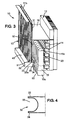
- a transverse plate 16 (only shown in Fig. 3 ) may be removably mounted on one of the lateral walls 12, 13 of the oven for this purpose. A passage for ventilation, preventing the oven from overheating, may be also provided. In Fig. 3 , the transverse plate 16 is attached to the first lateral wall 12.
- the first wall 12 is provided with the heating elements 14 to irradiate the preform 15 from a reflecting face.
- This reflecting face extends along the path, with a length significantly higher (for instance at least four times higher) than an average diameter or similar characteristic dimension of the transversal section in the objects to be heated, here the horizontal section of the plastic preforms 15.
- the first lateral wall 12 is provided with a main reflector 20 that extends between the transverse plate 16 and an opposite level corresponding to the neck 15a of the preform 15.
- Such a main reflector 20 is located adjacent said heating elements 14 and is also called a back-reflector.
- the second lateral wall 13 comprises a first reflector 31, facing at least one part of the preform body 15c and the closed end 15b, and a second reflector 32 facing another part, adjacent the neck 15a, of the preform body 15c.
- the first reflector 31 extends between a first elongated end 31a and a second elongated end 31b. These first and second ends 31 a, 31b follow the longitudinal direction of the path.
- the second reflector 32 is physically secured, directly or indirectly, to the first reflector 31 at said first end 31 a.
- the second reflector 32 is directly secured to the first reflector 31 to form an extension.
- the second reflector 32 may be displaceable with respect to the first reflector 31 and fixed with an adjustable position.
- the second reflector 32 comprises a first elongated transverse shield portion 33 and a second elongated transverse shield portion 34. An elongated cavity 35 is defined between these first and second transverse shield portions 33, 34.
- the spacing between the transverse shield portions 33, 34 may be adjusted according to a portion of the preform height that need a more concentrated heating.
- at least the second transverse shield portions 34 may be separable from the rest of the second reflector 32. It is here understood that these transverse shield portions 33, 34 are significantly different and greater than the optional raised areas which could provided in the counter reflector, for instance in the first reflector 31.
- the first reflector 31 is disposed far from the heating elements 14, behind the preform 15. This disposition reduces the complexity of the thermal management close to the heating elements 14. It also permits a better protection of the part of the preform 15 that is distant from the neck 15a.
- the second reflector32 is arranged with a U profile and a shorter height, in front of some of the heating elements 14 and behind the preform wall, closer as possible from the preform 15.
- reflection of the corresponding radiation is increased at the level of the second reflector 32, which is provided with a proximal reflecting surface.
- the front face defined by the first reflector 31 and the second reflector 32 advantageously comprises said proximal reflecting surface, which is defined by the surface 350 of said cavity 35, and a distal reflective surface, defined by the first reflector 31.
- the junction portion(s) of the second reflector 32 that joint said proximal reflecting surface to the distal reflective surface defined by the first reflector 31 is here provided at the level of the first end 31a.
- a planar section 40 at the top of the second reflector 32, perpendicular to at least one the two lateral walls 12, 13, is in contact with the first end 31a of the first reflector 31.
- this planar section 40 is the junction portion and the first elongated transverse shield portion 33 corresponds to the proximal end of this planar section 40.
- another planar section 42 may be provided at the lower side of the second reflector 32, which is arranged in parallel relative to the planar section 40.
- the second reflector 32 is arranged with the two transverse shield portions 33, 34 protruding from the rest of the second reflector 32. It can be seen in the non-limitative exemplary embodiments of Fig. 1-3 that the cavity 35 is arranged in a region closer to the preform wall than the distal surface, which is here flat, of the second reflector 32.
- the distal surface of the first reflector 31 may be profiled, for instance, with a plurality of identical cavities.
- the proximal reflecting surface extends in a position adjacent to a determined portion of a preform body 15c, here the shoulder region, which extends from the neck 15a, while the distal reflective surface is facing another portion of the preform body 15c, which is complementary to said determined portion.
- the two transverse shield portions 33, 34 protrude transversally with respect to a plane defined by a major portion the front face.
- the front face extends vertically, parallel to the central axis YY around which the preform 15 extends and may be rotated.
- the surface 350 of the cavity 35 is U-shaped in cross section or may be arranged in a general concave shape, for example a parabolic or semi circular shape, a W shape or the like.
- the depth Dc of the cavity 35 is preferably inferior to the distance Dt between the free edge 33a a of the first transverse shield portion 33 and the first reflector 31.
- the proximal surface delimits an interior volume entirely shifted relative to the first end 31a of the first reflector 31.
- a virtual plane secant with the first end 31 a and the second end 31b of the first reflector 31 does not intersect this interior volume. Accordingly, only the interior volume of the cavity 35 has a closer position relative to the path to concentrate the heating on the adjacent preform wall.
- the radiation from the uppermost heating elements 14 is reflected by the respective top surfaces of the transverse shield portions 33, 34, in order to protect the neck 15a or similar end of the object to be heated. Heating of the neck 15a and of any driven means that cooperate with the neck 15a is thus prevented.
- the transverse shield portion 34 of the second reflector 32 extends very close to the preform 15, at the junction between the body 15c and the neck 15a.
- the transverse shield portions 33, 34 function here as reflecting cutoff shields, adapted to protect the corresponding intermediary portion of the preform 15 to be further heated by reflected radiation of the most distant lamps 16.
- the reflecting top surface of the transverse shield portion 34 may be a planar surface.
- the transverse shield portion 34 extends at the level of the central axis of the lower heating element 14, which is partly arranged at a lower level than the body 15c.
- the lower heating element 14 is thus, partly, at a lower level than the proximal reflective surface and the main direction, here inclined, of the radiant output of this heating element 14 is secant with the proximal reflective surface.
- Fig. 1 shows reflection of a beam emitted from one of the upper heating elements 14.
- the top surface, which is here planar, of the first transverse shield portion 33 reflects this beam upward, toward the first reflector 31. This prevents heating of the neck 15a as above indicated and this reflected radiation may advantageously be used for heating of the closed end 15b. As a result, efficiency of the heating process in increased.
- a suitable material for the counter reflector defined by the first and second reflectors 31, 32 is a ceramic material or similar heat conductor material, for example material in alumina or such material having high reflectivity (>90%) and high conductivity (>20W/mK).
- the proximal reflecting surface and the distal reflecting surface may each comprise a material with a melting temperature higher than 600°C.
- the respective first and second reflectors 31, 32 may be integrally made of ceramic material. In the embodiment shown in Fig. 4 , only the surface that is close may be coated with such a material. Ceramic material or other similar heat-conductor material may be used for this purpose.
- the counter reflector with the two different reflectors 31, 32 may be optionally used in an oven of a blow molding machine for heating plastic preforms 15 that are each moved according to a general direction along the transport path.
- the preforms 15 are preferably rotated around their axis YY, using a mandrel (not shown). Such a mandrel may be longitudinally driven between the two lateral walls 12, 13 and typically cooperates with the neck 15a of the preform 15 by engaging elements.
- These preforms 15 are intended for the manufacture of containers such as plastic bottles to be filled with a liquid.
- the method for heating these preforms 15 is performed, here simultaneously with a longitudinal movement of the preforms 15 along the transport path, by heating the preforms 15 (on a predetermined preform height) by the heating elements 14 arranged one above the other according to a general stacking direction, and reflecting the radiation of the heating elements 14 by a counter reflector defined by the first reflector 31 and the second reflector 32.
- this method comprises:
- the radiation may be optically concentrated over a specific area, typically a small area, through use of a proximal reflection with the second reflector 32. While the temperature increases in the first operating area 51, here a lower area, such an increase may be controlled with the configuration of the second reflector 32 since impact of the upper heating elements 14 is limited relative to the first operating area 51. As a result, in comparison with a conventional construction of an oven, for a same heating operation, power of one or several radiating lamps or similar heating elements 14 may be reduced and/or the total number of the heating elements 14 may be reduced.
- the present invention has been described in connection with the preferred embodiments. These embodiments, however, are merely for example and the invention is not restricted thereto. It will be understood by those skilled in the art that other variations and modifications can easily be made within the scope of the invention as defined by the appended claims, thus it is only intended that the present invention be limited by the following claims.
- the invention may be implemented in any machine intended to heat an object, with any possible elongated form for the heating elements 14.
- the word "elongated” should not be interpreted in a restrictive manner and the length of the respective lateral walls 12, 13 may just be equal or slightly superior to the perimeter or similar dimension of the objects to be heated.
- the transport path may also be curved and the lateral walls 12, 13 curved in a corresponding manner and/or decomposed in a plurality of successive walls.
Landscapes
- Physics & Mathematics (AREA)
- Thermal Sciences (AREA)
- Engineering & Computer Science (AREA)
- Mechanical Engineering (AREA)
- Manufacturing & Machinery (AREA)
- Blow-Moulding Or Thermoforming Of Plastics Or The Like (AREA)
Claims (16)
- Erwärmungsanlage, um einen Gegenstand durch Infrarotstrahlung (IR) zu erwärmen, die Folgendes umfasst:- eine primäre Reflexionseinrichtung (12), die dafür ausgelegt ist, mit Heizelementen (14) angeordnet zu werden, um mindestens einen Teil des IR-Spektrums, das von den Heizelementen emittiert worden ist, zu dem Gegenstand zu reflektieren;- eine sekundäre Reflexionseinrichtung (13), die der primären Reflexionseinrichtung (12) in der Weise zugewandt ist, dass die IR-Wege, die durch den Gegenstand verlaufen, zwischen der primären Reflexionsschicht (12) und der sekundären Reflexionsschicht (14) definiert sind;wobei die sekundäre Reflexionseinrichtung (13) Folgendes umfasst:- einen Hauptreflexionsabschnitt (31), der sich im Allgemeinen entlang einer Ebene erstreckt, die der primären Reflexionseinrichtung (12) zugewandt ist;dadurch gekennzeichnet, dass die sekundäre Reflexionseinrichtung ferner umfasst:- ein Reflexionselement (32), das an dem Hauptreflexionsabschnitt (31) körperlich befestigt ist, wobei das Reflexionselement (32) einen ersten und einen zweiten Abschirmungsabschnitt (33, 34), die zumindest für einen Teil des IR-Spektrums nicht durchlässig sind, voneinander beabstandet angeordnet sind und sich von der Ebene zu dem Gegenstand erstrecken, und einen Hohlraum (35), der einerseits durch den ersten und den zweiten Abschirmungsabschnitt und andererseits durch einen unteren Abschnitt, der den ersten und den zweiten Abschirmungsabschnitt miteinander verbindet, begrenzt ist und der der primären Reflexionseinrichtung (12) zugewandt ist, umfasst, wobei die innere Oberfläche des Hohlraums angeordnet ist, um mindestens einen Teil des IR-Spektrums zu reflektieren;und wobei der erste Abschirmungsabschnitt (33) ein freies Ende aufweist, das so angeordnet ist, dass es das am nächsten liegendste Teil der sekundären Reflexionseinrichtung (13) relativ zu dem Gegenstand ist.
- Erwärmungsanlage nach Anspruch 1, wobei der erste Abschirmungsabschnitt (33) mit der Ebene einen Winkel im Bereich von 45° bis 90° definiert.
- Erwärmungsanlage nach Anspruch 1, wobei der zweite Abschirmungsabschnitt (33) ein freies Ende aufweist, das so angeordnet ist, dass es ein anderes nahekommendes Teil der sekundären Reflexionseinrichtung (13) relativ zu dem Gegenstand ist.
- Erwärmungsanlage nach Anspruch 1, wobei die Seiten des ersten und des zweiten Abschirmungsabschnitts, die gegenüber dem Hohlraum (35) angeordnet sind, mindestens einen Teil des IR-Spektrums reflektieren oder absorbieren.
- Erwärmungsanlage nach Anspruch 1, wobei der untere Abschnitt des Hohlraums mit Bezug auf den ersten Hauptreflexionsabschnitt nahe zu dem Gegenstand ist.
- Erwärmungsanlage nach Anspruch 1, wobei das Reflexionselement so angeordnet ist, dass es nahe zu einem bestimmten Abschnitt des Objekts (15c) positioniert ist, so dass der erste und der zweite Abschirmungsabschnitt diesen bestimmten Abschnitt des Objekts vor einem Teil der IR-Strahlung, der in der Erwärmungsanlage vorhanden ist, schützen und dass der Teil der IR-Strahlung, der durch das Reflexionselement (32) reflektiert worden ist, auf diesen bestimmten Abschnitt des Objekts fokussiert wird.
- Erwärmungsanlage nach Anspruch 1, wobei die primäre Reflexionseinrichtung (12) Rückreflektoren (20), die mit Heizelementen verbunden sind, umfasst, wobei mindestens ein Rückreflektor auf einer höheren Ebene in Bezug auf das Reflexionselement (32) angeordnet ist, und wobei mindestens ein Rückreflektor auf einer niedrigeren Ebene in Bezug auf das Reflexionselement (32) angeordnet ist.
- Erwärmungsanlage nach Anspruch 1, wobei die sekundäre Reflexionseinrichtung (13) so angeordnet ist, dass die Position des Reflexionselements (32) in Bezug auf das Hauptreflexionselement (31) geändert werden kann.
- Gegenreflexionseinrichtung (13), die so angeordnet ist, dass sie Heizelementen zugewandt ist, die Infrarotstrahlung (IR) durch einen Gegenstand, der zwischen den Heizelementen und dem Gegenreflektor angeordnet ist, emittieren, wobei der Gegenreflektor Folgendes umfasst:- einen Hauptreflexionsabschnitt (31), der sich im Allgemeinen entsprechend einer Ebene erstreckt, die dem Gegenstand zugewandt ist;dadurch gekennzeichnet, dass die Gegenreflexionseinrichtung ferner Folgendes umfasst:- ein Reflexionselement (32), das körperlich an dem Hauptreflexionsabschnitt (31) befestigt ist, wobei das Reflexionselement (32) einen ersten und einen zweiten Abschirmungsabschnitt (33, 34), die zumindest gegenüber einem Teil des IR-Spektrums nicht durchlässig sind, voneinander beabstandet angeordnet sind und sich von der Ebene in Richtung des Gegenstands erstrecken, und einen Hohlraum (35), der durch den ersten und durch den zweiten Abschirmungsabschnitt und durch einen unteren Abschnitt, der den ersten und den zweiten Abschirmungsabschnitt miteinander verbindet, begrenzt ist, umfasst, wobei die innere Oberfläche des Hohlraums mindestens einen Teil des IR-Spektrums reflektiert;und wobei der erste Abschirmungsabschnitt (33) ein freies Ende aufweist, das so angeordnet ist, dass es das am nächsten liegendste Teil der sekundären Reflexionseinrichtung (13) relativ zu dem Gegenstand ist.
- Gegenreflexionseinrichtung nach Anspruch 9, wobei der Hohlraum des Reflexionselements im Querschnitt U-förmig ist.
- Gegenreflexionseinrichtung nach Anspruch 9, wobei der Hauptreflektor (31) und das Reflexionselement (32) jeweils ein Material mit einer Schmelztemperatur höher als 600 °C umfassen.
- Gegenreflexionseinrichtung nach Anspruch 9, die so angeordnet ist, dass die Position des Reflexionselements (32) in Bezug auf den Hauptreflexionsabschnitt (31) angepasst werden kann.
- Verfahren zum Erwärmen eines Gegenstands, der entsprechend einer allgemeinen Richtung entlang eines definierten Weges bewegt wird, das Folgendes umfasst:Erwärmen des Gegenstands durch mehrere Heizelemente (14), die dem Gegenstand zugewandt sind und in einer ersten Seitenwand (12) übereinander entsprechend einer allgemeinen Stapelrichtung angeordnet sind;Reflektieren einer Strahlung der Heizelemente durch einen ersten Reflektor (31) und durch einen zweiten Reflektor (32), die eine zweite Seitenwand (13) auf der gegenüberliegenden Seite des definierten Weges relativ zu der ersten Seitenwand (12) definieren;teilweises Unterteilen eines Bereichs, der zwischen der ersten Seitenwand und der zweiten Seitenwand definiert ist, durch zwei beabstandet vorstehende, querverlaufende Abschirmungsabschnitte (33, 34) des zweiten Reflektors (32), um einen ersten Betriebsbereich (51), der sich zwischen dem zweiten Reflektor und einem ersten Abschnitt der ersten Seitenwand erstreckt und mit mindestens einem der Heizelemente versehen ist, zu begrenzen; undBegrenzen der Strahlung, die in den ersten Betriebsbereich (51) eintritt und jeweils aus ihm austritt, durch eine IR-Sperrabschirmung, die an einem nahe liegenden Ort relativ zu dem Gegenstand angeordnet ist und durch mindestens einen der querverlaufenden Abschirmungsabschnitte (33, 34) definiert ist.
- Verfahren nach Anspruch 13, das ein stärkeres Erwärmen in dem ersten Betriebsbereich (51) als in einem zweiten Betriebsbereich (52) umfasst, der sich zwischen dem ersten Reflektor (31) und einem zweiten Abschnitt der ersten Seitenwand (12) erstreckt und mit mindestens einem der Heizelemente (14) versehen ist, durch Anordnen einer Reflexionsoberfläche des zweiten Reflektors (32), der zwischen den querverlaufenden Abschirmungsabschnitten (33, 34) an einem nahen Ort in Bezug auf den Gegenstand angeordnet ist.
- Verfahren nach Anspruch 13, wobei der Gegenstand eine thermoplastische Vorform (15) ist, die nach der Ausformung des erwärmten Gegenstandes der Herstellung eines Behälters dient, wobei das Verfahren ferner Folgendes umfasst:Bewegen der Vorform (15) entlang des definierten Weges durch Verwenden eines Dorns, wobei der Dorn mit einem Stutzen (15a) der Vorform zusammenwirkt, wobei der Stutzen einem nicht erwärmten Bereich (53) zugewandt ist;Drehen des Dorns; undauf der Gegenseite der ersten Wand Reflektieren jedes Strahls der Strahlung, die auf den nicht erwärmten Bereich gerichtet ist, durch die querverlaufenden Abschirmungsabschnitte (33, 34) des zweiten Reflektors.
- Verfahren nach Anspruch 13, wobei mindestens ein zusätzliches Reflexionselement so vorgesehen ist, dass spezifische Abstände zwischen ihnen vorhanden sind, um heißere Teile oder Linien entlang der Gegenstandshöhe herzustellen.
Priority Applications (1)
| Application Number | Priority Date | Filing Date | Title |
|---|---|---|---|
| EP10760089.2A EP2483046B1 (de) | 2009-09-29 | 2010-09-15 | Anordnung einer gegenreflektorvorrichtung zur erwärmung eines objekts, anlage und heizverfahren |
Applications Claiming Priority (3)
| Application Number | Priority Date | Filing Date | Title |
|---|---|---|---|
| EP09305908 | 2009-09-29 | ||
| PCT/IB2010/054158 WO2011039667A1 (en) | 2009-09-29 | 2010-09-15 | Arrangement of a counter reflector device for use in heating an object, installation and method of heating |
| EP10760089.2A EP2483046B1 (de) | 2009-09-29 | 2010-09-15 | Anordnung einer gegenreflektorvorrichtung zur erwärmung eines objekts, anlage und heizverfahren |
Publications (2)
| Publication Number | Publication Date |
|---|---|
| EP2483046A1 EP2483046A1 (de) | 2012-08-08 |
| EP2483046B1 true EP2483046B1 (de) | 2013-11-13 |
Family
ID=43569439
Family Applications (1)
| Application Number | Title | Priority Date | Filing Date |
|---|---|---|---|
| EP10760089.2A Active EP2483046B1 (de) | 2009-09-29 | 2010-09-15 | Anordnung einer gegenreflektorvorrichtung zur erwärmung eines objekts, anlage und heizverfahren |
Country Status (2)
| Country | Link |
|---|---|
| EP (1) | EP2483046B1 (de) |
| WO (1) | WO2011039667A1 (de) |
Families Citing this family (5)
| Publication number | Priority date | Publication date | Assignee | Title |
|---|---|---|---|---|
| DE102011052899A1 (de) * | 2011-08-22 | 2013-02-28 | Krones Aktiengesellschaft | Heizeinrichtung und Heizverfahren für Blasmaschine sowie Blasmaschine |
| FR3008019B1 (fr) | 2013-07-04 | 2015-07-17 | Sidel Participations | Module de chauffage comportant une lampe et une lentille fixee par une bride sur une partie non emissive de la lampe |
| FR3022610B1 (fr) * | 2014-06-18 | 2016-07-15 | Sidel Participations | Dispositif de chauffage comportant une lampe montee de maniere amovible sur un reflecteur associe |
| IT201700007077A1 (it) * | 2017-01-24 | 2018-07-24 | Sacmi Imola Sc | Apparecchiatura per il riscaldamento di preforme in materiale termoplastico. |
| WO2024108293A1 (en) * | 2022-11-25 | 2024-05-30 | Husky Injection Molding Systems Ltd. | Conditioning system |
Family Cites Families (4)
| Publication number | Priority date | Publication date | Assignee | Title |
|---|---|---|---|---|
| JP3609939B2 (ja) * | 1998-03-13 | 2005-01-12 | 日精エー・エス・ビー機械株式会社 | プリフォーム加熱装置 |
| IT1311733B1 (it) * | 1999-12-23 | 2002-03-19 | Sipa Spa | Impianto perfezionato per il riscaldamento ad infrarossi di preformein plastica |
| DE202004010454U1 (de) | 2004-07-03 | 2004-09-30 | Krones Ag | Heizofen für Vorformlinge |
| FR2876943B1 (fr) * | 2004-10-22 | 2008-08-15 | Sidel Sas | Procede et dispositif de chauffage d'ebauches en matiere thermoplastique |
-
2010
- 2010-09-15 WO PCT/IB2010/054158 patent/WO2011039667A1/en not_active Ceased
- 2010-09-15 EP EP10760089.2A patent/EP2483046B1/de active Active
Also Published As
| Publication number | Publication date |
|---|---|
| WO2011039667A1 (en) | 2011-04-07 |
| EP2483046A1 (de) | 2012-08-08 |
Similar Documents
| Publication | Publication Date | Title |
|---|---|---|
| EP2480390B1 (de) | Heizanlage und reflexionsvorrichtung für eine heizanlage | |
| EP2139667B1 (de) | Verfahren zur erwärmung von vorformen zur herstellung von behältern und erwärmungsvorrichtung | |
| US6361301B1 (en) | Heater assembly for blow molding plastic preforms | |
| EP2483046B1 (de) | Anordnung einer gegenreflektorvorrichtung zur erwärmung eines objekts, anlage und heizverfahren | |
| EP2964446B1 (de) | Heizsystem für pet-vorformen | |
| CN101804692B (zh) | 用于加热塑料预制件的设备 | |
| MX2007006152A (es) | Proceso e instalacion de fabricacion de recipientes. | |
| CN102574301A (zh) | 容器吹塑成型方法和装置 | |
| US4605839A (en) | Dual parison heating reflector and method | |
| US9004896B2 (en) | Oven for plastic preforms with partly transparent radiator | |
| EP2727706B1 (de) | Heizsystem für Ofen für Vorformlinge | |
| US9999991B2 (en) | Attachable reflector | |
| CN106536160B (zh) | 包括低温空腔的用于加热空心主体的加热装置 | |
| US20150306808A1 (en) | Apparatus and method for heating plastic parisons | |
| HK1173416A (en) | Heating installation and reflecting device for a heating installation | |
| HK1173416B (en) | Heating installation and reflecting device for a heating installation | |
| HK1198021B (en) | Heating system for an oven for performs | |
| JP2003007431A (ja) | 加熱用ランプおよび加熱装置 | |
| HK1192057A (en) | Corner-cube irradiation control |
Legal Events
| Date | Code | Title | Description |
|---|---|---|---|
| PUAI | Public reference made under article 153(3) epc to a published international application that has entered the european phase |
Free format text: ORIGINAL CODE: 0009012 |
|
| 17P | Request for examination filed |
Effective date: 20120306 |
|
| AK | Designated contracting states |
Kind code of ref document: A1 Designated state(s): AL AT BE BG CH CY CZ DE DK EE ES FI FR GB GR HR HU IE IS IT LI LT LU LV MC MK MT NL NO PL PT RO SE SI SK SM TR |
|
| AX | Request for extension of the european patent |
Extension state: BA ME RS |
|
| GRAP | Despatch of communication of intention to grant a patent |
Free format text: ORIGINAL CODE: EPIDOSNIGR1 |
|
| INTG | Intention to grant announced |
Effective date: 20130619 |
|
| GRAS | Grant fee paid |
Free format text: ORIGINAL CODE: EPIDOSNIGR3 |
|
| GRAA | (expected) grant |
Free format text: ORIGINAL CODE: 0009210 |
|
| AK | Designated contracting states |
Kind code of ref document: B1 Designated state(s): AL AT BE BG CH CY CZ DE DK EE ES FI FR GB GR HR HU IE IS IT LI LT LU LV MC MK MT NL NO PL PT RO SE SI SK SM TR |
|
| AX | Request for extension of the european patent |
Extension state: BA ME RS |
|
| REG | Reference to a national code |
Ref country code: GB Ref legal event code: FG4D |
|
| REG | Reference to a national code |
Ref country code: CH Ref legal event code: EP |
|
| REG | Reference to a national code |
Ref country code: AT Ref legal event code: REF Ref document number: 640366 Country of ref document: AT Kind code of ref document: T Effective date: 20131215 |
|
| REG | Reference to a national code |
Ref country code: IE Ref legal event code: FG4D |
|
| REG | Reference to a national code |
Ref country code: DE Ref legal event code: R096 Ref document number: 602010011740 Country of ref document: DE Effective date: 20140109 |
|
| REG | Reference to a national code |
Ref country code: NL Ref legal event code: VDEP Effective date: 20131113 |
|
| REG | Reference to a national code |
Ref country code: AT Ref legal event code: MK05 Ref document number: 640366 Country of ref document: AT Kind code of ref document: T Effective date: 20131113 |
|
| REG | Reference to a national code |
Ref country code: LT Ref legal event code: MG4D |
|
| PG25 | Lapsed in a contracting state [announced via postgrant information from national office to epo] |
Ref country code: FI Free format text: LAPSE BECAUSE OF FAILURE TO SUBMIT A TRANSLATION OF THE DESCRIPTION OR TO PAY THE FEE WITHIN THE PRESCRIBED TIME-LIMIT Effective date: 20131113 Ref country code: NO Free format text: LAPSE BECAUSE OF FAILURE TO SUBMIT A TRANSLATION OF THE DESCRIPTION OR TO PAY THE FEE WITHIN THE PRESCRIBED TIME-LIMIT Effective date: 20140213 Ref country code: SE Free format text: LAPSE BECAUSE OF FAILURE TO SUBMIT A TRANSLATION OF THE DESCRIPTION OR TO PAY THE FEE WITHIN THE PRESCRIBED TIME-LIMIT Effective date: 20131113 Ref country code: HR Free format text: LAPSE BECAUSE OF FAILURE TO SUBMIT A TRANSLATION OF THE DESCRIPTION OR TO PAY THE FEE WITHIN THE PRESCRIBED TIME-LIMIT Effective date: 20131113 Ref country code: IS Free format text: LAPSE BECAUSE OF FAILURE TO SUBMIT A TRANSLATION OF THE DESCRIPTION OR TO PAY THE FEE WITHIN THE PRESCRIBED TIME-LIMIT Effective date: 20140313 Ref country code: NL Free format text: LAPSE BECAUSE OF FAILURE TO SUBMIT A TRANSLATION OF THE DESCRIPTION OR TO PAY THE FEE WITHIN THE PRESCRIBED TIME-LIMIT Effective date: 20131113 Ref country code: LT Free format text: LAPSE BECAUSE OF FAILURE TO SUBMIT A TRANSLATION OF THE DESCRIPTION OR TO PAY THE FEE WITHIN THE PRESCRIBED TIME-LIMIT Effective date: 20131113 |
|
| PG25 | Lapsed in a contracting state [announced via postgrant information from national office to epo] |
Ref country code: BE Free format text: LAPSE BECAUSE OF FAILURE TO SUBMIT A TRANSLATION OF THE DESCRIPTION OR TO PAY THE FEE WITHIN THE PRESCRIBED TIME-LIMIT Effective date: 20131113 Ref country code: ES Free format text: LAPSE BECAUSE OF FAILURE TO SUBMIT A TRANSLATION OF THE DESCRIPTION OR TO PAY THE FEE WITHIN THE PRESCRIBED TIME-LIMIT Effective date: 20131113 Ref country code: CY Free format text: LAPSE BECAUSE OF FAILURE TO SUBMIT A TRANSLATION OF THE DESCRIPTION OR TO PAY THE FEE WITHIN THE PRESCRIBED TIME-LIMIT Effective date: 20131113 Ref country code: LV Free format text: LAPSE BECAUSE OF FAILURE TO SUBMIT A TRANSLATION OF THE DESCRIPTION OR TO PAY THE FEE WITHIN THE PRESCRIBED TIME-LIMIT Effective date: 20131113 Ref country code: AT Free format text: LAPSE BECAUSE OF FAILURE TO SUBMIT A TRANSLATION OF THE DESCRIPTION OR TO PAY THE FEE WITHIN THE PRESCRIBED TIME-LIMIT Effective date: 20131113 |
|
| PG25 | Lapsed in a contracting state [announced via postgrant information from national office to epo] |
Ref country code: PT Free format text: LAPSE BECAUSE OF FAILURE TO SUBMIT A TRANSLATION OF THE DESCRIPTION OR TO PAY THE FEE WITHIN THE PRESCRIBED TIME-LIMIT Effective date: 20140313 |
|
| PG25 | Lapsed in a contracting state [announced via postgrant information from national office to epo] |
Ref country code: EE Free format text: LAPSE BECAUSE OF FAILURE TO SUBMIT A TRANSLATION OF THE DESCRIPTION OR TO PAY THE FEE WITHIN THE PRESCRIBED TIME-LIMIT Effective date: 20131113 |
|
| REG | Reference to a national code |
Ref country code: DE Ref legal event code: R097 Ref document number: 602010011740 Country of ref document: DE |
|
| PG25 | Lapsed in a contracting state [announced via postgrant information from national office to epo] |
Ref country code: RO Free format text: LAPSE BECAUSE OF FAILURE TO SUBMIT A TRANSLATION OF THE DESCRIPTION OR TO PAY THE FEE WITHIN THE PRESCRIBED TIME-LIMIT Effective date: 20131113 Ref country code: SK Free format text: LAPSE BECAUSE OF FAILURE TO SUBMIT A TRANSLATION OF THE DESCRIPTION OR TO PAY THE FEE WITHIN THE PRESCRIBED TIME-LIMIT Effective date: 20131113 Ref country code: CZ Free format text: LAPSE BECAUSE OF FAILURE TO SUBMIT A TRANSLATION OF THE DESCRIPTION OR TO PAY THE FEE WITHIN THE PRESCRIBED TIME-LIMIT Effective date: 20131113 Ref country code: PL Free format text: LAPSE BECAUSE OF FAILURE TO SUBMIT A TRANSLATION OF THE DESCRIPTION OR TO PAY THE FEE WITHIN THE PRESCRIBED TIME-LIMIT Effective date: 20131113 |
|
| PLBE | No opposition filed within time limit |
Free format text: ORIGINAL CODE: 0009261 |
|
| STAA | Information on the status of an ep patent application or granted ep patent |
Free format text: STATUS: NO OPPOSITION FILED WITHIN TIME LIMIT |
|
| PG25 | Lapsed in a contracting state [announced via postgrant information from national office to epo] |
Ref country code: DK Free format text: LAPSE BECAUSE OF FAILURE TO SUBMIT A TRANSLATION OF THE DESCRIPTION OR TO PAY THE FEE WITHIN THE PRESCRIBED TIME-LIMIT Effective date: 20131113 |
|
| 26N | No opposition filed |
Effective date: 20140814 |
|
| REG | Reference to a national code |
Ref country code: DE Ref legal event code: R097 Ref document number: 602010011740 Country of ref document: DE Effective date: 20140814 |
|
| PG25 | Lapsed in a contracting state [announced via postgrant information from national office to epo] |
Ref country code: SI Free format text: LAPSE BECAUSE OF FAILURE TO SUBMIT A TRANSLATION OF THE DESCRIPTION OR TO PAY THE FEE WITHIN THE PRESCRIBED TIME-LIMIT Effective date: 20131113 |
|
| PG25 | Lapsed in a contracting state [announced via postgrant information from national office to epo] |
Ref country code: MC Free format text: LAPSE BECAUSE OF FAILURE TO SUBMIT A TRANSLATION OF THE DESCRIPTION OR TO PAY THE FEE WITHIN THE PRESCRIBED TIME-LIMIT Effective date: 20131113 Ref country code: LU Free format text: LAPSE BECAUSE OF FAILURE TO SUBMIT A TRANSLATION OF THE DESCRIPTION OR TO PAY THE FEE WITHIN THE PRESCRIBED TIME-LIMIT Effective date: 20140915 |
|
| REG | Reference to a national code |
Ref country code: CH Ref legal event code: PL |
|
| GBPC | Gb: european patent ceased through non-payment of renewal fee |
Effective date: 20140915 |
|
| REG | Reference to a national code |
Ref country code: IE Ref legal event code: MM4A |
|
| PG25 | Lapsed in a contracting state [announced via postgrant information from national office to epo] |
Ref country code: CH Free format text: LAPSE BECAUSE OF NON-PAYMENT OF DUE FEES Effective date: 20140930 Ref country code: GB Free format text: LAPSE BECAUSE OF NON-PAYMENT OF DUE FEES Effective date: 20140915 Ref country code: LI Free format text: LAPSE BECAUSE OF NON-PAYMENT OF DUE FEES Effective date: 20140930 |
|
| PG25 | Lapsed in a contracting state [announced via postgrant information from national office to epo] |
Ref country code: IE Free format text: LAPSE BECAUSE OF NON-PAYMENT OF DUE FEES Effective date: 20140915 |
|
| PG25 | Lapsed in a contracting state [announced via postgrant information from national office to epo] |
Ref country code: SM Free format text: LAPSE BECAUSE OF FAILURE TO SUBMIT A TRANSLATION OF THE DESCRIPTION OR TO PAY THE FEE WITHIN THE PRESCRIBED TIME-LIMIT Effective date: 20131113 |
|
| PG25 | Lapsed in a contracting state [announced via postgrant information from national office to epo] |
Ref country code: GR Free format text: LAPSE BECAUSE OF FAILURE TO SUBMIT A TRANSLATION OF THE DESCRIPTION OR TO PAY THE FEE WITHIN THE PRESCRIBED TIME-LIMIT Effective date: 20140214 Ref country code: MT Free format text: LAPSE BECAUSE OF FAILURE TO SUBMIT A TRANSLATION OF THE DESCRIPTION OR TO PAY THE FEE WITHIN THE PRESCRIBED TIME-LIMIT Effective date: 20131113 Ref country code: BG Free format text: LAPSE BECAUSE OF FAILURE TO SUBMIT A TRANSLATION OF THE DESCRIPTION OR TO PAY THE FEE WITHIN THE PRESCRIBED TIME-LIMIT Effective date: 20131113 |
|
| PG25 | Lapsed in a contracting state [announced via postgrant information from national office to epo] |
Ref country code: TR Free format text: LAPSE BECAUSE OF FAILURE TO SUBMIT A TRANSLATION OF THE DESCRIPTION OR TO PAY THE FEE WITHIN THE PRESCRIBED TIME-LIMIT Effective date: 20131113 Ref country code: HU Free format text: LAPSE BECAUSE OF FAILURE TO SUBMIT A TRANSLATION OF THE DESCRIPTION OR TO PAY THE FEE WITHIN THE PRESCRIBED TIME-LIMIT; INVALID AB INITIO Effective date: 20100915 |
|
| REG | Reference to a national code |
Ref country code: FR Ref legal event code: PLFP Year of fee payment: 7 |
|
| REG | Reference to a national code |
Ref country code: FR Ref legal event code: PLFP Year of fee payment: 8 |
|
| PG25 | Lapsed in a contracting state [announced via postgrant information from national office to epo] |
Ref country code: MK Free format text: LAPSE BECAUSE OF FAILURE TO SUBMIT A TRANSLATION OF THE DESCRIPTION OR TO PAY THE FEE WITHIN THE PRESCRIBED TIME-LIMIT Effective date: 20131113 |
|
| REG | Reference to a national code |
Ref country code: FR Ref legal event code: PLFP Year of fee payment: 9 |
|
| PG25 | Lapsed in a contracting state [announced via postgrant information from national office to epo] |
Ref country code: AL Free format text: LAPSE BECAUSE OF FAILURE TO SUBMIT A TRANSLATION OF THE DESCRIPTION OR TO PAY THE FEE WITHIN THE PRESCRIBED TIME-LIMIT Effective date: 20131113 |
|
| PGFP | Annual fee paid to national office [announced via postgrant information from national office to epo] |
Ref country code: DE Payment date: 20220930 Year of fee payment: 13 |
|
| PGFP | Annual fee paid to national office [announced via postgrant information from national office to epo] |
Ref country code: FR Payment date: 20220922 Year of fee payment: 13 |
|
| PGFP | Annual fee paid to national office [announced via postgrant information from national office to epo] |
Ref country code: IT Payment date: 20220926 Year of fee payment: 13 |
|
| P01 | Opt-out of the competence of the unified patent court (upc) registered |
Effective date: 20230530 |
|
| REG | Reference to a national code |
Ref country code: DE Ref legal event code: R119 Ref document number: 602010011740 Country of ref document: DE |
|
| PG25 | Lapsed in a contracting state [announced via postgrant information from national office to epo] |
Ref country code: FR Free format text: LAPSE BECAUSE OF NON-PAYMENT OF DUE FEES Effective date: 20230930 Ref country code: DE Free format text: LAPSE BECAUSE OF NON-PAYMENT OF DUE FEES Effective date: 20240403 |
|
| PG25 | Lapsed in a contracting state [announced via postgrant information from national office to epo] |
Ref country code: IT Free format text: LAPSE BECAUSE OF NON-PAYMENT OF DUE FEES Effective date: 20230915 |
|
| PG25 | Lapsed in a contracting state [announced via postgrant information from national office to epo] |
Ref country code: IT Free format text: LAPSE BECAUSE OF NON-PAYMENT OF DUE FEES Effective date: 20230915 |