EP2589381A1 - Compositions pour améliorer ou préserver une fonction de poumons chez un patient souffrant de troubles pulmonaires - Google Patents
Compositions pour améliorer ou préserver une fonction de poumons chez un patient souffrant de troubles pulmonaires Download PDFInfo
- Publication number
- EP2589381A1 EP2589381A1 EP11250938.5A EP11250938A EP2589381A1 EP 2589381 A1 EP2589381 A1 EP 2589381A1 EP 11250938 A EP11250938 A EP 11250938A EP 2589381 A1 EP2589381 A1 EP 2589381A1
- Authority
- EP
- European Patent Office
- Prior art keywords
- pharmaceutical composition
- acetylcysteine
- patient
- fev
- composition according
- Prior art date
- Legal status (The legal status is an assumption and is not a legal conclusion. Google has not performed a legal analysis and makes no representation as to the accuracy of the status listed.)
- Granted
Links
Images




Classifications
-
- A—HUMAN NECESSITIES
- A61—MEDICAL OR VETERINARY SCIENCE; HYGIENE
- A61K—PREPARATIONS FOR MEDICAL, DENTAL OR TOILETRY PURPOSES
- A61K31/00—Medicinal preparations containing organic active ingredients
- A61K31/185—Acids; Anhydrides, halides or salts thereof, e.g. sulfur acids, imidic, hydrazonic or hydroximic acids
- A61K31/19—Carboxylic acids, e.g. valproic acid
- A61K31/195—Carboxylic acids, e.g. valproic acid having an amino group
- A61K31/197—Carboxylic acids, e.g. valproic acid having an amino group the amino and the carboxyl groups being attached to the same acyclic carbon chain, e.g. gamma-aminobutyric acid [GABA], beta-alanine, epsilon-aminocaproic acid or pantothenic acid
- A61K31/198—Alpha-amino acids, e.g. alanine or edetic acid [EDTA]
-
- A—HUMAN NECESSITIES
- A61—MEDICAL OR VETERINARY SCIENCE; HYGIENE
- A61K—PREPARATIONS FOR MEDICAL, DENTAL OR TOILETRY PURPOSES
- A61K45/00—Medicinal preparations containing active ingredients not provided for in groups A61K31/00 - A61K41/00
- A61K45/06—Mixtures of active ingredients without chemical characterisation, e.g. antiphlogistics and cardiaca
-
- A—HUMAN NECESSITIES
- A61—MEDICAL OR VETERINARY SCIENCE; HYGIENE
- A61P—SPECIFIC THERAPEUTIC ACTIVITY OF CHEMICAL COMPOUNDS OR MEDICINAL PREPARATIONS
- A61P11/00—Drugs for disorders of the respiratory system
-
- A—HUMAN NECESSITIES
- A61—MEDICAL OR VETERINARY SCIENCE; HYGIENE
- A61P—SPECIFIC THERAPEUTIC ACTIVITY OF CHEMICAL COMPOUNDS OR MEDICINAL PREPARATIONS
- A61P11/00—Drugs for disorders of the respiratory system
- A61P11/06—Antiasthmatics
-
- A—HUMAN NECESSITIES
- A61—MEDICAL OR VETERINARY SCIENCE; HYGIENE
- A61P—SPECIFIC THERAPEUTIC ACTIVITY OF CHEMICAL COMPOUNDS OR MEDICINAL PREPARATIONS
- A61P11/00—Drugs for disorders of the respiratory system
- A61P11/12—Mucolytics
-
- A—HUMAN NECESSITIES
- A61—MEDICAL OR VETERINARY SCIENCE; HYGIENE
- A61K—PREPARATIONS FOR MEDICAL, DENTAL OR TOILETRY PURPOSES
- A61K9/00—Medicinal preparations characterised by special physical form
- A61K9/0002—Galenical forms characterised by the drug release technique; Application systems commanded by energy
- A61K9/0007—Effervescent
Definitions
- the present invention relates to N-acetylcysteine compositions for use in methods of treatment for improving or preserving lung function in lung disease.
- a free radical is a highly reactive and usually short-lived molecular fragment with one or more unpaired electrons. Free radicals are highly chemically reactive molecules. Because a free radical needs to extract a second electron from a neighboring molecule to pair its single electron, it often reacts with other molecules, which initiates the formation of many more free radical species in a self-propagating chain reaction. This ability to be self-propagating makes free radicals highly toxic to living organisms.
- ROS Reactive oxygen species
- Oxygen radicals such as the hydroxyl radical (OH-) and the superoxide ion (O 2 - ) are very powerful oxidizing agents that cause structural damage to proteins, lipids and nucleic acids.
- the free radical superoxide anion a product of normal cellular metabolism, is produced mainly in mitochondria because of incomplete reduction of oxygen.
- the superoxide radical although unreactive compared with many other radicals, may be converted by biological systems into other more reactive species, such as peroxyl (ROO - ), alkoxyl (RO - ) and hydroxyl (OH - ) radicals.
- ROO - peroxyl
- RO - alkoxyl
- OH - hydroxyl
- the major cellular sources of free radicals under normal physiological conditions are the mitochondria and inflammatory cells, such as granulocytes, macrophages, and some T-lymphocytes, which produce active species of oxygen via the nicotinamide adenine nucleotide oxidase (NADPH oxidase) system, as part of the body's defense against bacterial, fungal or viral infections.
- mitochondria and inflammatory cells such as granulocytes, macrophages, and some T-lymphocytes, which produce active species of oxygen via the nicotinamide adenine nucleotide oxidase (NADPH oxidase) system, as part of the body's defense against bacterial, fungal or viral infections.
- NADPH oxidase nicotinamide adenine nucleotide oxidase
- Oxidative injury may lead to widespread biochemical damage within the cell.
- the molecular mechanisms responsible for this damage are complex.
- free radicals may damage intracellular macromolecules, such as nucleic acids (e.g., DNA and RNA), proteins, and lipids.
- Free radical damage to cellular proteins may lead to loss of enzymatic function and cell death.
- Free radical damage to DNA may cause problems in replication or transcription, leading to cell death or uncontrolled cell growth.
- Free radical damage to cell membrane lipids may cause the damaged membranes to lose their ability to transport oxygen, nutrients or water to cells.
- Biological systems protect themselves against the damaging effects of activated species by several means. These include free radical scavengers and chain reaction terminators; "solid-state” defenses, and enzymes, such as superoxide dismutase, catalase, and the glutathione peroxidase system.
- Free radical scavengers/chemical antioxidants such as vitamin C and vitamin E, counteract and minimize free radical damage by donating or providing unpaired electrons to a free radical and converting it to a nonradical form.
- reducing compounds may terminate radical chain reactions and reduce hydroperoxides and epoxides to less reactive derivatives.
- solid state defense refers to the mechanism whereby a macromolecule binds a radical-generating compound, de-excites an excited state species, or quenches a free radical.
- the most important solid-state defense in the body is the black pigment melanin, which scavenges odd electrons to form stable radical species, thus terminating radical chain reactions.
- Enzymatic defenses against active free radical species include superoxide dismutase, catalases, and the glutathione reductase/peroxidase system.
- Superoxide dismutase (SOD) is an enzyme that destroys superoxide radicals.
- Catalase a heme-based enzyme that catalyses the breakdown of hydrogen peroxide into oxygen and water, is found in all living cells, especially in the peroxisomes, which, in animal cells, are involved in the oxidation of fatty acids and the synthesis of cholesterol and bile acids.
- Hydrogen peroxide is a byproduct of fatty acid oxidation and is produced by white blood cells to kill bacteria.
- Glutathione a tripeptide composed of glycine, glutamic acid, and cysteine that contains a nucleophilic thiol (SH) group
- GSH reduced thiol form
- GSSG oxidized disulfide form
- glutathione acts as a substrate for the enzymes GSH-S-transferases and GSH peroxidases, both of which catalyze reactions for the detoxification of xenobiotic compounds, and for the reduction of reactive oxygen species and other free radicals.
- xenobiotic is used herein to refer to a chemical which is not a natural component of the organism exposed to it.
- xenobiotics include, but are not limited to, carcinogens, toxins and drugs.
- the metabolism of xenobiotics usually involves two distinct stages. Phase I metabolism involves an initial oxidation, reduction or dealkylation of the xenobiotic by microsomal cytochrome P-450 monooxygenases ( Guengerich, F.P. Chem. Res. Toxicol. 4: 391-407 (1991 ); this step is often needed to provide hydroxyl- or amino groups, which are essential for phase 11 reactions.
- Glutathione detoxifies many highly reactive intermediates produced by cytochrome P450 enzymes in phase I metabolism. Without adequate GSH, the reactive toxic metabolites produced by cytochrome P-450 enzymes may accumulate causing organ damage.
- Phase II metabolism generally adds hydrophilic moieties, thereby making a toxin more water soluble and less biologically active. Frequently involved phase II conjugation reactions are catalyzed by glutathione S-transferases ( Beckett, G.J. & Hayes, J.D., Adv. Clin. Chem. 30: 281-380 (1993 ), sulfotransferases ( Falany, CN, Trends Pharmacol. Sci. 12: 255-59 (1991 ), and UDP-glucuronyl-transferases ( Bock, KW, Crit. Rev. Biochem. Mol. Biol. 26: 129-50 (1991 ).
- Glutathione S-transferases catalyze the addition of aliphatic, aromatic, or heterocyclic radicals as well as epoxides and arene oxides to glutathione. These glutathione conjugates then are cleaved to cysteine derivatives primarily by renal enzymes and then acetylated, thus forming N-acetylcysteine derivatives.
- Examples of compounds transformed to reactive intermediates and then bound to GSH include, but are not limited to, bromobenzene, chloroform, and acetaminophen. Such toxicants may deplete GSH.
- Glutathione is a cofactor for Glutathione peroxidase (GPx), an enzyme of the oxidoreductase class, which catalyzes the detoxifying reduction of hydrogen peroxide and organic peroxides via oxidation of glutathione.
- GSH is oxidized to the disulfide linked dimer (GSSG), which is actively pumped out of cells and becomes largely unavailable for reconversion to reduced glutathione. Loss of large amounts of GSH results in cell death, while loss of smaller amounts can change cell function.
- Glutathione reductase a flavoprotein enzyme of the oxidoreductase class, is essential for the maintenance of cellular glutathione in its reduced form ( Carlberg & Mannervick, J. Biol. Chem. 250: 5475-80 (1975 )). It catalyzes the reduction of oxidized glutathione (GSSG) to reduced glutathione (GSH) in the presence of NADPH and maintains a high intracellular GSH/GSSG ratio of about 500 in red blood cells.
- GSSG oxidized glutathione
- GSH reduced glutathione
- GSH GSH
- cysteine a conditionally essential amino acid that must be obtained from dietary sources or by conversion of dietary methionine via the cystathionase pathway. If the supply of cysteine is adequate, normal GSH levels are maintained. But GSH depletion occurs if supplies of cysteine are inadequate to maintain GSH homeostasis in the face of increased GSH consumption. Acute GSH depletion causes severe -- sometimes fataloxidative and/or alkylation injury, and chronic or slow arising GSH deficiency due to administration of GSH-depleting drugs, such as acetaminophen, or to diseases and conditions that deplete GSH, may be similarly debilitating.
- GSH-depleting drugs such as acetaminophen
- Cysteine is necessary to replenish GSH. Although various forms of cysteine and its precursors have been used as nutritional and therapeutic sources of cysteine, N-acetylcysteine (NAC) is the most widely used and extensively studied. NAC is about 10 times more stable than cysteine and much more soluble than the stable cysteine disulfide, cystine. Glutathione, glutathione monoethyl ester, and L-2-oxothiazolidine-4-carboxylate (procysteine/OTC) also have been used effectively in some studies. In addition, dietary methionine and S-adenosylmethionine are an effective source of cysteine.
- NAC cysteine prodrug
- NAC may act as a direct scavenger for oxidants.
- Treatment with NAC provides beneficial effects in a number of respiratory, cardiovascular, endocrine, infectious, and other disease settings as described in WO05/017094 , the contents of which are herein incorporated by reference.
- rapid administration of NAC is the standard of care for preventing hepatic injury in acetaminophen overdose.
- NAC administered intravenously in dogs has been shown to protect against pulmonary oxygen toxicity and against ischemic and reperfusion damage [ Gillissen, A., and Nowak, A., Respir. Med. 92: 609-23, 613 (1998 )]. NAC treatment also has been shown to decrease NF- ⁇ B activation, which in turn decreases neutrophilic inflammation in the lung.
- the lung exists in a high-oxygen environment, and together with its large surface area and blood supply, is highly susceptible to injury mediated by oxidative stress. Since reactive oxygen species (ROS) are constantly formed in the lung, and since oxygen metabolites are believed to play a predominant role in the pathogenesis of various pulmonary inflammatory disorders, antioxidant therapy would seem to be a rational approach to take in pulmonary diseases.
- ROS reactive oxygen species
- Patients with acute respiratory distress syndrome (ARDS), idiopathic pulmonary fibrosis (IPF), or chronic obstructive pulmonary disorder (COPD) have been the primary targets for clinical studies evaluating the efficacy of NAC in antioxidant therapy. The results have been, for the most part, inconclusive.
- COPD chronic airway inflammation
- An accelerated functional deterioration is accompanied by the development of cough, sputum production, dyspnea, and abnormal gas exchange, and leads to an increasing risk of acute flares of disease referred to as exacerbations.
- Exacerbation frequency increases as the disease progresses, further accelerating lung function decline.
- NAC has been used for over 20 years to treat COPD, a disease not characterized by glutathione deficiency.
- Oral NAC at high doses has been proposed for the treatment (preventive or symptomatic) of exacerbations in a subset of patients with COPD who are not receiving inhaled corticosteroids ( Sutherland, E.R., et al., COPD Chronic Obstructive Pulmonary Disease 3: 195-202 (2006 )).
- Oral NAC at high doses also has been proposed for the treatment (preventive or symptomatic) of exacerbations in chronic bronchitis, an inflammation, or irritation, of the airways in the lungs characterized by a chronic cough and chronic mucus production without another known cause (see Grandjean, E.M. et al., Clinical Therapeutics 22(2): 209-21 (2000 ), and Stey, C., et al., Eur. Resp. J. 16: 253-62 (2000 )).
- Cystic fibrosis is an inherited autosomal recessive disorder. It is one of the most common fatal genetic disorders in the United States, affecting about 30,000 individuals, and is most prevalent in the Caucasian population, occurring in one of every 3,300 live births.
- the gene involved in cystic fibrosis which was identified in 1989, codes for a protein called the cystic fibrosis transmembrane conductance regulator (CFTR).
- CFTR cystic fibrosis transmembrane conductance regulator
- CFTR cystic fibrosis patients
- mutations in the CFTR gene lead to alterations or total loss of CFTR protein function, resulting in defects in osmolarity, pH and redox properties of exocrine secretions.
- CF manifests itself by the presence of a thick mucus secretion which clogs the airways.
- CF may not manifest itself by an obstructive phenotype, but rather by abnormal salt composition of the secretions (hence the clinical sweat osmolarity test to detect CF patients).
- CF mucus which blocks the airway passages, is believed to stem from abnormalities in osmolarity of secretions, as well as from the presence of massive amounts of DNA, actin, proteases and prooxidative enzymes originating from a subset of inflammatory cells, called neutrophils.
- neutrophils a subset of inflammatory cells
- the hyperinflammatory syndrome of CF lungs has several underpinnings, among which an imbalance between pro-inflammatory chemokines, chiefly IL-8, and anti-inflammatory cytokines, chiefly IL-10, seems to play a major role.
- pro-inflammatory chemokines chiefly IL-8
- anti-inflammatory cytokines chiefly IL-10
- the hyperinflammatory syndrome at play in CF lungs may predispose such patients to chronic infections with opportunistic bacterial pathogens.
- the most common bacterium to infect the CF lung is Pseudomonas aeruginosa, a gram-negative microorganism.
- the lungs of most children with CF become colonized by P. aeruginosa before their third birthday. By their tenth birthday, P. aeruginosa becomes dominant over other opportunistic pathogens. See Gibson et al., Am. J. Respir. Crit Care Med., 168(8): 918-951 (2003 ).
- P. aeruginosa infections further exacerbate neutrophilic inflammation, which causes repeated episodes of intense breathing problems in CF patients.
- Treatments for CF lung disease typically involve antibiotics, anti-inflammatory drugs, bronchodilators, and chest physiotherapy to help fight infection, neutrophilic inflammation and obstruction and clear the airways. Nevertheless, the persistent, viscous and toxic nature of airway secretions in cystic fibrosis lung disease still leads to progressive deterioration of lung function. See Rancourt et al., Am. J. Physiol. Lung Cell Mol. Physiol. 286(5): L931-38 (2004 ).
- NAC N-acetylcysteine
- redox-based therapy is an attractive idea for CF, since redox imbalance is a well-recognized aspect of the disease, yet seldom considered as a therapeutic target.
- Systemic oxidative stress may affect blood neutrophils by lowering their intracellular GSH levels, which in turn renders them more prone to lung trapping and dysfunction.
- systemic oxidative stress may alter the chemokine/cytokine balance, favoring inflammation, which systemic NAC treatment may help alleviate.
- ARDS Acute Respiratory Distress Syndrome
- ALI Acute Lung Injury
- Acute exacerbations of CF are characterized by increased oxidative stress and sputum concentrations of bioactive lipid mediators.
- McGrath, L.T. et al, "Oxidative stress during acute respiratory exacerbations in cystic fibrosis," Thorax 54: 518-523 (1999 ) have reported that during acute respiratory exacerbations, patients with CF are subject to acute oxidative attack in addition to the chronic systemic oxidative stress found in this condition.
- Such acute respiratory exacerbations in CF are characterized by increased respiratory symptoms, reduction in forced expiratory volume in one second ("FEV1") of more than 10%, and a decision to treat with intravenous antibiotics.
- FEV1 forced expiratory volume in one second
- antibiotic treatment of the acute infection tended to reduce measures of free radical damage by moderating the infection and hence the immune response.
- ARDS Acute Respiratory Distress Syndrome
- ALI Acute Lung Injury
- CB Chronic Bronchitis
- COPD Chronic Obstructive Pulmonary Disease
- IPF Idiopathic Pulmonary Fibrosis
- Asthma Asthma
- Idiopathic Pulmonary Fibrosis a syndrome regrouping several diseases with progressive fibrosis of the alveoli, is a chronic, progressive, incurable lung disease characterized by deposition of fibers in the lung through the hyperproliferation of myofibroblasts.
- Causative factors remain unknown. In some individuals, it develops quickly, while others have cryptic disease.
- An oxidant-antioxidant imbalance that depletes glutathione levels has been described in IPF.
- the primary endpoints were changes between baseline and month 12 in vital capacity (meaning the total amount of air that may be exhaled after a maximum inspiration) and in single-breath carbon monoxide diffusing capacity ("DL CO ").
- vital capacity meaning the total amount of air that may be exhaled after a maximum inspiration
- DL CO single-breath carbon monoxide diffusing capacity
- Asthma is an inflammatory disease of the lungs characterized by reversible (in most cases) airway obstruction due to narrowing of the conducting airways, hyper-responsiveness/hyper-reactivity, and chronic inflammation characterized by an influx and activation of inflammatory cells, generation of inflammatory mediators, and epithelial cell shedding.
- chronic asthma there is an increased sequestration within the lungs of leukocytes from the peripheral microcirculation. Since many chronic asthma patients have eosinophilic infiltrates, eosinophils are thought to play a critical role in the inflammatory response in chronic asthma. Indeed, it is believed that much of the lung problems in chronic asthma relates to the eosinophil disease.
- neutrophils isolated from peripheral blood of asthmatic patients generate greater amounts of reactive oxygen species than cells from normal subjects, may be involved in acute exacerbations of asthma. ( Kirkham, P., Rahman, I., Pharmacology & Therapeutics 111: 476-94 (2006 )).
- Oxidative stress is believed to play a key role in the pathogenesis of clinically stable (chronic) bronchial asthma. It also has been shown that acute exacerbations of asthma [meaning a sudden increase in breathlessness over the preceding 48 hours and presence of one of the following signs: tachypnea (meaning a respiratory rate of >18), use of accessory muscles or respiration, audible wheezing, prolonged expiration with rhonchi (meaning a sound occurring during inspiration or expiration caused by air passing through bronchi that are narrowed by inflammation, spasm of smooth muscle, or presence of mucus in the lumen heard on auscultation (meaning a diagnostic method of listening to the sounds made) of the chest] are associated with increased inflammation in the airways and with increased oxidative stress. Nadeem, A., et al., J. Asthma 1:45-50 (2005 ).
- Asthmatic exacerbations commonly occur in two phases: an immediate phase, caused by release of mediators, that often is characterized by bronchoconstriction resulting in wheezing and coughing, and an inflammatory or late phase, that includes increasing airway inflammation, which leads to hyper-responsiveness.
- Tuberculosis (TB), once believed to have been almost eradicated, has shown a resurgence and a substantial increase in drug resistance.
- Human immunodeficiency virus (HIV) infection is a major risk factor for the development of TB, and TB seems to make HIV infection worse [ Sacchetini, J.C., et al. Nat. Rev. Microbiol. 6(1):41-52 (2008 )].
- Immune reconstitution inflammatory syndrome (referred to herein as IRS or IRIS), is an adverse consequence of the restoration of pathogen-specific immune responses in HIV infected patients during the initial months of highly active anti-retroviral therapy. Symptoms include fever, lymphadenopathy, and worsening of respiratory and other TB symptoms.
- the present invention describes use of NAC as a primary therapy to improve or preserve lung function in patients suffering from a pulmonary disorder that includes an inflammatory component.
- the described invention provides a pharmaceutical composition for improving or preserving a lung function in a patient suffering from a pulmonary disorder comprising an inflammatory component, the pharmaceutical composition comprising a therapeutically effective amount of N-acetylcysteine, a derivative of N-acetylcysteine, or a pharmaceutically acceptable salt of N-acetylcysteine and a carrier, wherein the therapeutically effective amount is effective to improve or preserve the lung function in the patient.
- the pulmonary disorder comprising an inflammatory component may be cystic fibrosis, chronic obstructive pulmonary disorder (COPD), idiopathic pulmonary fibrosis, or a bacterial infection in the lung.
- the pulmonary disorder comprising an inflammatory component may be tuberculosis.
- the composition is capable of acute or chronic administration.
- the pharmaceutical composition is a tablet.
- the pharmaceutical composition is an effervescent tablet.
- each dose of the pharmaceutical composition is individually wrapped to avoid oxidation.
- the pharmaceutical composition is formulated for oral administration.
- the pharmaceutical composition is formulated for parenteral, intravenous, intratracheal, intramuscular, or intraperitoneal administration.
- the therapeutically effective amount comprises at least 200 mg ofN-acetylcysteine, the derivative of N-acetylcysteine, or the pharmaceutically acceptable salt of N-acetylcysteine but less than 20,000 mg ofN-acetylcysteine, the derivative of N-acetylcysteine, or the pharmaceutically acceptable salt of N-acetylcysteine.
- the therapeutically effective amount ranges from about 900 mg per day of N-acetylcysteine, the derivative ofN-acetylcysteine, or the pharmaceutically acceptable salt of N-acetylcysteine to about 2,700 mg per day of N-acetylcysteine, the derivative of N-acetylcysteine, or the pharmaceutically acceptable salt of N-acetylcysteine.
- the therapeutically effective amount for oral administration is about 900 mg of N-acetylcysteine, the derivative ofN-acetylcysteine, or the pharmaceutically acceptable salt of N-acetylcysteine each time, three times a day.
- the method of treatment using the pharmaceutical composition of the invention further comprises monitoring at least one lung function before and at a plurality of time points during treatment.
- monitoring at least one lung function is carried out at 4, 8, 12, 16, 20, and 24 weeks following treatment.
- improved lung function of the patient is maintained for at least 6 months following administration of the therapeutically effective amount ofN-acetylcysteine, the derivative ofN-acetylcysteine, or the pharmaceutically acceptable salt of N-acetylcysteine.
- the pharmaceutical composition increases Forced Expiratory Volume in one second (FEV1) of the patient compared to the Forced Expiratory Volume in one second (FEV1) of an untreated control patient.
- the pharmaceutical composition increases Forced Expiratory Volume in one second (FEV1) of the patient by at least 4% over the Forced Expiratory Volume in one second (FEV1) of the untreated control patient.
- the pharmaceutical composition increases Forced Expiratory Volume in one second (FEV1) of the patient by at least 0.15% over a baseline Forced Expiratory Volume in one second (FEV1) value of the patient measured before treatment.
- the pharmaceutical composition increases Forced Expiratory Volume in one second (FEV1) of the patient by at least 2% over a baseline Forced Expiratory Volume in one second (FEV1) value of the patient measured before treatment.
- the pharmaceutical composition increases time between exacerbations in the patient compared to a control.
- the pharmaceutical composition reverses at least one symptom associated with the pulmonary disorder.
- the pharmaceutical composition further comprises an anti-infective agent, bronchodilating agent, or anti-inflammatory agent.
- the pharmaceutical composition increases Forced Expiratory Volume in one second (FEV 1 ) of a patient treated with the pharmaceutical composition by a proportion in the range from 4% to 6% over the FEV 1 value of an untreated control patient.
- the pharmaceutical composition increases Forced Expiratory Volume in one second (FEV 1 ) of a patient treated with the pharmaceutical composition by a proportion in the range from 0.15% to 2% over a baseline Forced Expiratory Volume in one second (FEV 1 ) value of the patient measured before treatment.
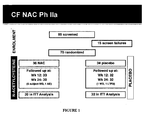
- FIGURE 1 shows a diagram of a multi-center phase IIB randomized placebo-controlled, double-blind study designed for assessing the effects of oral N-acetylcysteine in cystic fibrosis patients.
- FIGURE 2 shows baseline characteristics of cystic fibrosis patients enrolled in the phase IIB clinical study.
- FIGURE 3 shows baseline pulmonary function of cystic fibrosis patients enrolled in the phase IIB clinical study.
- FIGURE 4 shows primary and secondary outcomes of the oral administration of N-acetylcysteine in cystic fibrosis patients as compared to a placebo-treated group.
- FIGURE 5 shows a graph plotting the change in neutrophil elastase activity (ml/ml) measured at screening, week 12 and week 24 for NAC-treated (dark grey) and placebo-treated (light grey).
- FIGURE 6 shows a graph plotting the relative % change in functional expiratory volume in liters measured at screening, week 12 and week 24 for NAC-treated (dark grey) and placebo-treated (light grey).
- FIGURE 7 shows a graph plotting the relative % change in functional expiratory volume in liters measured at screening, week 12 and week 24 forNAC+inhaled antibiotics-treated (solid dark grey), NAC-treated (dashed dark grey), placebo + inhaled antibiotics-treated (solid light grey) and placebo-treated (dashed light grey).
- FIGURE 8 shows a graph plotting the proportion of event-free pulmonary exacerbation over 24 weeks for NAC-treated (dark grey) and placebo-treated (light grey).
- FIGURE 9 shows adverse events measured in N-acetylcysteine-treated and placebo-treated groups.
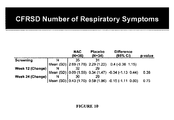
- FIGURE 10 shows cystic fibrosis respiratory symptoms diary (“CFRSD”) results in N-acetylcysteine-treated and placebo-treated groups.
- CRSD cystic fibrosis respiratory symptoms diary
- FIGURE 11 shows cystic fibrosis questionnaire revised (“CFQ-R") respiratory score in N-acetylcysteine-treated and placebo-treated groups.
- FIGURE 12 shows exacerbations (pulmonary and sinus) and related events (hospitalized, antibiotic treatment -oral, inhaled and IV antibiotics) in N-acetylcysteine-treated and placebo-treated groups.
- the present invention describes compositions and methods for improving or preserving lung function in a patient suffering from an inflammatory lung disease.
- the inflammatory lung disease is bronchial asthma.
- the inflammatory lung disease is Idiopathic Pulmonary Fibrosis (IPF).
- the inflammatory lung disease is cystic fibrosis (CF).
- the inflammatory lung disease is tuberculosis, with or without co-infection with HIV.
- acute refers to a rapid onset, brief (not prolonged), and severe health-related state, and to a plan of treatment designed to achieve certain results over a brief term.
- FGF fibroblast growth factor
- FGF1 is also known as acidic FGF
- FGF2 is sometimes called basic FGF (bFGF)
- FGF7 sometimes goes by the name keratinocyte growth factor.
- FGFs can activate a set of receptor tyrosine kinases called the fibroblast growth factor receptors (FGFRs).
- FGFRs fibroblast growth factor receptors
- Receptor tyrosine kinases are proteins that extend through the cell membrane. When the FGF receptor binds an FGF (and only when it binds an FGF), the dormant kinase is activated, and phosphorylates certain proteins within the responding cell, activating those proteins.
- FGFs are associated with several developmental functions, including angiogenesis (blood vessel formation), mesoderm formation, and axon extension. While FGFs often can substitute for one another, their expression patterns give them separate functions. FGF2, for example, is especially important in angiogenesis.
- chromenic refers to a persistent, long-term, health-related state of 3 months duration or longer and to a plan of treatment designed to achieve certain results over a long term.
- condition refers to a variety of health states and is meant to include disorders or diseases, and inflammation caused by any underlying mechanism or disorder.
- disease or “disorder,” as used herein, refers to an impairment of health or a condition of abnormal functioning.
- exacerbations refers to an increase in the severity of a disease or any of its signs or symptoms.
- a pulmonary exacerbation for example, is a worsening of respiratory signs and symptoms.
- the term “event free exacerbation” as used herein therefore refers to an exacerbation that is not connected to an adverse event.
- hypoxia-inducible factor refers to an inducible transcriptional complex that plays an essential role in cellular responses to hypoxia.
- HIF-1 hypoxia-inducible factor
- idiopathic refers to a disease of unknown cause.
- interstitial lung disease includes a variety of chronic lung disorders in which lung tissue is damaged in some known or unknown way, the walls of the air sacs in the lung become inflamed; and scarring (or fibrosis) begins in the interstitium (or tissue between the air sacs) and the lung becomes stiff.
- ILD interstitial lung disease
- inflammation refers to the physiologic process by which vascularized tissues respond to injury. See, e.g., FUNDAMENTAL IMMUNOLOGY, 4th Ed., William E. Paul, ed. Lippincott-Raven Publishers, Philadelphia (1999) at 1051-1053 , incorporated herein by reference.
- Inflammation is often characterized by a strong infiltration of leukocytes at the site of inflammation, particularly neutrophils (polymorphonuclear cells). These cells promote tissue damage by releasing toxic substances at the vascular wall or in uninjured tissue.
- neutrophils polymorphonuclear cells
- acute inflammation refers to the rapid, short-lived (minutes to days), relatively uniform response to acute injury characterized by accumulations of fluid, plasma proteins, and neutrophilic leukocytes.
- injurious agents that cause acute inflammation include, but are not limited to, pathogens (e.g., bacteria, viruses, parasites), foreign bodies from exogenous (e.g. asbestos) or endogenous (e.g., urate crystals, immune complexes), sources, and physical (e.g., bums) or chemical (e.g., caustics) agents.
- chronic inflammation refers to inflammation that is of longer duration and which has a vague and indefinite termination. Chronic inflammation takes over when acute inflammation persists, either through incomplete clearance of the initial inflammatory agent or as a result of multiple acute events occurring in the same location. Chronic inflammation, which includes the influx of lymphocytes and macrophages and fibroblast growth, may result in tissue scarring at sites of prolonged or repeated inflammatory activity.
- control can refer to an active, positive, negative or vehicle control. As will be understood by those of skill in the art, controls are used to establish the relevance of experimental results, and provide a comparison for the condition being tested.
- FEV1 or "Forced Expiratory Volume in One Second” as used herein refers to the volume of air, which can be forcibly exhaled from the lungs in the first second of a forced expiratory maneuver. It is expressed as liters.
- FEV1/FVC or “FEV1 Percent (FEV1%)” as used herein refers to the ratio of FEV1 to FVC. It indicates what percentage of the total FVC was expelled from the lungs during the first second of forced exhalation. This number is called FEV1%, %FEV1 or FEV1/FVC ratio.
- FEV3 or "Forced Expiratory Volume in Three Seconds” as used herein refers to the volume of air which can be forcibly exhaled in three seconds, which is measured in Liters. This volume usually is fairly close to the FVC since, in the normal individual, most of the air in the lungs can be forcibly exhaled in three seconds.
- FEV3/FVC or “FEV3%” as used herein refers to the ratio of FEV3 to the FVC. It indicates what percentage of the total FVC was expelled during the first three seconds of forced exhalation. This is called “%FEV3" or "FEV3%”.
- FEF or "Forced Expiratory Flow” as used herein refers to a measure of how much air can be expired from the lungs. It is a flow rate measurement and is measured as liters/second or liters/minute. The FVC expiratory curve is divided into quartiles and therefore there is a FEF that exists for each quartile. The quartiles are expressed as FEF25%, FEF50%, and FEF75% of FVC.
- FVC Factorative Vital Capacity
- lung function or "pulmonary function” are used interchangeably herein refers to the functional status of the lungs.
- the primary instrument used in pulmonary function testing is the spirometer. It is designed to measure changes in volume and can only measure lung volume compartments that exchange gas with the atmosphere. Spirometers with electronic signal outputs (pneumotachs) also measure flow (volume per unit of time).
- a device is usually attached to the spirometer, which measures the movement of gas in and out of the chest and is referred to as a spirograph.
- Exemplary endpoints that reflect lung function include, but are not limited to, FEV1, FEF, FVC, etc.
- MMV Major Voluntary Ventilation
- L/sec L/min. This test parameter reflects the status of the respiratory muscles, compliance of the thorax-lung complex, and airway resistance.
- PEFR Pulseak Expiratory Flow Rate
- modulate refers to adjusting, changing, or manipulating the function or status of at least one measure. Such modulation may be any change, including an undetectable change.
- oxidative stress refers to a condition caused by an imbalance between reactive oxygen species and the antioxidant defense mechanisms of a cell, leading to an excess production of oxygen metabolites. Skaper, et al., Free Radical Biol. & Med. 22(4): 669-678 (1997 ).
- redox refers to reduction and oxidation. Reduction may occur , for example, by (a) acceptance of one or more electrons by an atom or ion; (b) removal of oxygen from a compound; (c) addition of hydrogen to a compound. Oxidation may occur, for example, by (a) loss of one or more electrons; (b) addition of oxygen to a compound; (c) loss of hydrogen from a compound. Oxidation and reduction generally occur simultaneously (redox reactions); the substance that gains electrons is terms the oxidizing agent, while the substance that loses electrons is termed the reducing agent.
- redox imbalance refers to an imbalance between reactive oxygen species and the antioxidant defense mechanisms of a cell.
- solid state defense refers to the mechanism whereby a macromolecule binds a radical-generating compound, de-excites an excited state species, or quenches a free radical.
- treating includes abrogating, substantially inhibiting, slowing or reversing the progression of a disease, condition or disorder, substantially ameliorating clinical or symptoms of a disease, condition or disorder, and substantially preventing the appearance of clinical or symptoms of a disease, condition or disorder.
- Treating further refers to accomplishing one or more of the following: (a) reducing the severity of the disease, condition or disorder; (b) limiting development of symptoms characteristic of the disease, condition or disorder(s) being treated; (c) limiting worsening of symptoms characteristic of the disease, condition or disorder(s) being treated; (d) limiting recurrence of the disease, condition or disorder(s) in patients that have previously had the disease, condition or disorder(s); and (e) limiting recurrence of symptoms in patients that were previously asymptomatic for the disease, condition or disorder(s).
- VEGF-1 vascular endothelial growth factor-1
- vascular endothelial growth factor-1 vascular endothelial growth factor-1
- the composition of the present invention comprises a therapeutically effective amount of NAC, a NAC derivative, or a pharmaceutically acceptable salt of NAC and a pharmaceutically acceptable carrier.
- the therapeutically effective amount is effective to preserve pulmonary function or to improve lung function by, for example, reducing inflammation, reducing or reversing symptoms, extending the time between exacerbations or a combination thereof.
- the term "improving or preserving lung function" in its various grammatical forms as used herein means increasing or maintaining the performance of the lung in a patient affected by a pulmonary disorder. For example, lung function can be measured by pulmonary function tests using equipment designed for this purpose.
- spirometry which provides information about airflow limitation and lung volumes
- plethysmography which provides information about airway resistance, total lung size, and trapped gas
- transfer factor which provides information about alveolar function
- gas washout tests which provide information about gas mixing, small airway function, and heterogeneous changes in compliance
- computational tomography which provides information about large and small airway deterioration
- oscillometry which may provide information about small airways.
- the terms ""therapeutically effective amount” or “pharmaceutically effective amount” refer to the amount of the compositions of the invention that result in a therapeutic or beneficial effect following its administration to a subject.
- concentration of the substance is selected so as to exert its therapeutic effect, but low enough to avoid significant side effects within the scope and sound judgment of the skilled artisan.
- the effective amount of the composition may vary with the age and physical condition of the biological subject being treated, the severity of the condition, the duration of the treatment, the nature of concurrent therapy, the specific compound, composition or other active ingredient employed, the particular carrier utilized, and like factors.
- the therapeutically effective amount comprises at least 200 mg of N-acetylcysteine, the derivative of N-acetylcysteine, or the pharmaceutically acceptable salt of N-acetylcysteine but less than 20,000 mg thereof.
- a therapeutically effective amount of the compositions described herein by determining the unit dose.
- a "unit dose” refers to the amount of a composition required to produce a response of 50% of maximal effect (i.e. ED50).
- the unit dose may be assessed by extrapolating from dose-response curves derived from in vitro or animal model test systems.
- the amount of the NAC compounds in the compositions of the present invention which will be effective in the treatment of a particular disorder or condition will depend on the nature of the disorder or condition, and may be determined by standard clinical techniques. (See, for example, Goodman and Gilman's THE PHARMACOLOGICAL BASIS OF THERAPEUTICS, Joel G. Harman, Lee E.
- composition refers to a composition that has under gone federal regulatory review, which prevents, reduces in intensity, cures, ameliorates, or otherwise treats a target disorder or disease.
- the pharmaceutical composition is a tablet.
- N-acetylcysteine is formulated as an effervescent tablet dosage form. Effervescent tablets allow for an even distribution of N-acetylcysteine concentration and create a balanced buffered solution for easy absorption.
- each dose of the N-acetylcysteine composition is vacuum-wrapped in foil packaging.
- each dose of the N-Acetylcysteine composition is vacuum-wrapped in paper packaging.
- each dose of the N-acetylcysteine composition is vacuum-wrapped in plastic packaging.
- each tablet contains about 900 mg of N-acetylcysteine.
- each tablet contains about 600 mg of N-acetylcysteine.
- the therapeutically effective amount for oral administration ranges from about 900 mg of N-acetylcysteine, the derivative of N-acetylcysteine, or the pharmaceutically acceptable salt of N-acetylcysteine per day to about 2,700 mg of N-acetylcysteine, the derivative of N-acetylcysteine or the pharmaceutically acceptable salt of N-acetylcysteine per day.
- Ranges, in various aspects, are expressed herein as from “about” or “approximately” one particular value and/or to "about” or “approximately” another particular value. When values are expressed as approximations by use of the antecedent "about,” it will be understood that some amount of variation is included in the range.
- the patient is administered orally about 900 mg of N-acetylcysteine, the derivative ofN-acetylcysteine or the pharmaceutically acceptable salt of N-acetylcysteine each time, three times a day.
- the method further comprises monitoring at least one lung function before treatment and at intervals (e.g., 4, 8, 12, 16, 20, and 24 weeks) following treatment.
- the method further comprises monitoring at least one lung function before chronic treatment.
- the method further comprises monitoring at least one lung function at intervals (e.g., 4, 8, 12, 16, 20, and 24 weeks) following chronic treatment.
- the method further comprises monitoring at least one lung function during chronic treatment.
- the method further comprises monitoring at least one lung function before acute treatment.
- the method further comprises monitoring at least one lung function at intervals following acute treatment.
- the method further comprises monitoring at least one lung function during acute treatment.
- drug carrier refers to a pharmaceutically acceptable inert agent or vehicle for delivering one or more active agents to a mammal, and often is referred to as "excipient.”
- a pharmaceutically acceptable carrier refers to any substantially non-toxic carrier conventionally useable for NAC administration in which NAC will remain stable and bioavailable.
- the carrier suitable for NAC administration must be of sufficiently high purity and of sufficiently low toxicity to render it suitable for administration to the mammal being treated.
- Carriers and vehicles useful herein include any such materials known in the art which are nontoxic and do not interact with other components.
- the (pharmaceutical) carrier may be, without limitation, a binding agent (e.g., pregelatinized maize starch, polyvinylpyrrolidone or hydroxypropyl methylcellulose, etc.), a filler (e.g., lactose and other sugars, microcrystalline cellulose, pectin, gelatin, calcium sulfate, ethyl cellulose, polyacrylates, calcium hydrogen phosphate, etc.), a lubricant (e.g., magnesium stearate, talc, silica, colloidal silicon dioxide, stearic acid, metallic stearates, hydrogenated vegetable oils, corn starch, polyethylene glycols, sodium benzoate, sodium acetate, etc.), a disintegrant (e.g., starch, sodium starch glycolate, etc.), or a wetting agent (e.g., sodium lauryl sulphate, etc.).
- a binding agent e.g., pregelatinized maize starch
- compositions of the present invention include, but are not limited to, water, salt solutions, alcohols, polyethylene glycols, gelatins, amyloses, magnesium stearates, talcs, silicic acids, viscous paraffins, hydroxymethylcelluloses, polyvinylpyrrolidones and the like.
- the carrier of the composition of the present invention includes a release agent such as sustained release or delayed release carrier.
- the carrier may be any material capable of sustained or delayed release to provide a more efficient administration, e.g., resulting in less frequent and/or decreased dosage, improve ease of handling, and extend or delay effects on diseases, disorders, conditions, syndromes, and the like, being treated.
- Non-limiting examples of such carriers include liposomes, microsponges, microspheres, or microcapsules of natural and synthetic polymers and the like. Liposomes may be formed from a variety of phospholipids such as cholesterol, stearylamines or phosphatidylcholines.
- the NAC used should be substantially free of sulfones or other chemicals that interfere with the metabolism of any co-administered drug in its bioactive form, substantially free of its oxidized form, di-N-acetylcysteine, and the composition should be prepared in a manner that substantially prevents oxidation of the NAC during preparation or storage.
- a typical unit dosage may be a solution suitable for oral or intravenous administration; an effervescent tablet suitable for dissolving in water, fruit juice, or carbonated beverage and administered orally; a tablet taken from two to six times daily, or one time-release capsule or tablet taken several times a day and containing a proportionally higher content of active ingredient, etc.
- the time-release effect may be obtained by capsule materials that dissolve at different pH values, by capsules that release slowly by osmotic pressure, or by any other known means of controlled release.
- Unit dosage forms may be provided wherein each dosage unit, for example, teaspoonful, tablespoonful, gel capsule, tablet or suppository, contains a predetermined amount of the compositions of the present invention.
- unit dosage forms for injection or intravenous administration may comprise the compound of the present invention in a composition as a solution in sterile water, normal saline or another pharmaceutically acceptable carrier.
- the specifications for the unit dosage forms of the present invention depend on the effect to be achieved and the intended recipient.
- NAC is formulated at high doses as an effervescent tablet or in granular form in a single dose packet to be dissolved in water to prevent untoward stomach effects.
- Over-the-counter NAC may be variably produced and packaged. Because the production and packaging methods generally do not guard against oxidation, the NAC may be significantly contaminated with bioactive oxidation products. These may be particularly important in view of data indicating that the oxidized form of NAC has effects counter to those reported for NAC and is bioactive at doses roughly 10-100 fold less than NAC. See Samstrand et al., J. Pharmacol. Exp. Ther. 288:1174-84 (1999 ).
- the distribution of the oxidation states of NAC as a thiol and disulfide depends on the oxidation/reduction (redox) potential.
- the half-cell potential obtained for the NAC thiol/disulfide pair is about +63 mV, indicative of its strong reducing activity among natural compounds [see Noszal et al. J. Med. Chem. 43:2176-2182 (2000 )].
- the preparation and storage of the formulation is performed in such a way that the reduced form of NAC is the primary form administered to the patient. Maintaining NAC containing formulation in solid form is preferable for this purpose.
- NAC containing formulations are preferably stored in a brown bottle that is vacuum sealed. Storage in cool dark environments is also preferred.
- the determination of reduced and oxidized species present in a sample may be determined by various methods known in the art, including, but not limited to, for example, capillary electrophoresis, and high performance liquid chromatography as described by Chassaing et al. J. Chromatogr. B. Biomed. Sci. Appl. 735(2):219-27 (1999 )..
- compositions of the present invention may be administered systemically either orally, parenterally, or rectally in dosage unit formulations containing conventional nontoxic pharmaceutically acceptable carriers, adjuvants, and vehicles as desired.
- compositions of the present invention may be in a form suitable for oral use, for example, as tablets, troches, lozenges, aqueous or oily suspensions, dispersible powders or granules, emulsions, hard or soft capsules or syrups or elixirs.
- Compositions intended for oral use may be prepared according to any known method, and such compositions may contain one or more agents selected from the group consisting of sweetening agents, flavoring agents, coloring agents, and preserving agents in order to provide pharmaceutically elegant and palatable preparations. Tablets may contain the active ingredient(s) in admixture with non-toxic pharmaceutically-acceptable excipients which are suitable for the manufacture of tablets.
- excipients may be, for example, inert diluents, such as calcium carbonate, sodium carbonate, lactose, calcium phosphate or sodium phosphate; granulating and disintegrating agents, for example, corn starch or alginic acid; binding agents, for example, starch, gelatin or acacia; and lubricating agents, for example, magnesium stearate, stearic acid or talc.
- the tablets may be uncoated or they may be coated by known techniques to delay disintegration and absorption in the gastrointestinal tract and thereby provide a sustained action over a longer period.
- a time delay material such as glyceryl monostearate or glyceryl distearate may be employed. They also may be coated for controlled release.
- compositions of the present invention also may be formulated for oral use as hard gelatin capsules, where the active ingredient(s) is(are) mixed with an inert solid diluent, for example, calcium carbonate, calcium phosphate or kaolin, or soft gelatin capsules wherein the active ingredient(s) is (are) mixed with water or an oil medium, for example, peanut oil, liquid paraffin, or olive oil.
- an inert solid diluent for example, calcium carbonate, calcium phosphate or kaolin
- an oil medium for example, peanut oil, liquid paraffin, or olive oil.
- compositions of the present invention may be formulated as aqueous suspensions wherein the active ingredient(s) is (are) in admixture with excipients suitable for the manufacture of aqueous suspensions.
- excipients are suspending agents, for example, sodium carboxymethylcellulose, methylcellulose, hydroxy-propylmethylcellulose, sodium alginate, polyvinylpyrrolidone, gum tragacanth, and gum acacia; dispersing or wetting agents may be a naturally-occurring phosphatide such as lecithin, or condensation products of an alkylene oxide with fatty acids, for example, polyoxyethylene stearate, or condensation products of ethylene oxide with long chain aliphatic alcohols, for example, heptadecaethyl-eneoxycetanol, or condensation products of ethylene oxide with partial esters derived from fatty acids and a hexitol such as polyoxyethylene sorbitol monooleate, or condensation products of ethylene oxide with partial est
- compositions of the present invention may be formulated as oily suspensions by suspending the active ingredient in a vegetable oil, for example arachis oil, olive oil, sesame oil or coconut oil, or in a mineral oil, such as liquid paraffin.
- the oily suspensions may contain a thickening agent, for example, beeswax, hard paraffin or cetyl alcohol.
- Sweetening agents, such as those set forth above, and flavoring agents may be added to provide a palatable oral preparation.
- These compositions may be preserved by the addition of an antioxidant such as ascorbic acid.
- compositions of the present invention may be formulated in the form of dispersible powders and granules suitable for preparation of an aqueous suspension by the addition of water.
- the active ingredient in such powders and granules is provided in admixture with a dispersing or wetting agent, suspending agent, and one or more preservatives.
- a dispersing or wetting agent, suspending agent, and one or more preservatives are exemplified by those already mentioned above. Additional excipients, for example, sweetening, flavoring and coloring agents also may be present.
- compositions of the invention also may be formulated as a beverage or as an additive to a beverage, where the term "beverage” refers to any non-alcoholic flavored carbonated drink, soda water, non-alcoholic still drinks, diluted fruit or vegetable juices whether sweetened or unsweetened, seasoned or unseasoned with salt or spice, or still or carbonated mineral waters used as a drink.
- additive refers to any substance the intended use of which results, or may reasonably be expected to result, directly or indirectly, in its becoming a component or otherwise affecting the characteristics of any beverage.
- the beverage is a flavored carbonated beverage.
- the beverage is a flavored non-carbonated beverage.
- the beverage is a natural fruit beverage.
- the beverage also may contain one or more coloring agents, one or more flavoring agents, one or more sweetening agents, one or more antioxidant agents, and one or more preservatives.
- Compositions of the invention also may be in the form of oil-in-water emulsions.
- the oily phase may be a vegetable oil, for example, olive oil or arachis oil, or a mineral oil, for example a liquid paraffin, or a mixture thereof.
- Suitable emulsifying agents may be naturally-occurring gums, for example, gum acacia or gum tragacanth, naturally-occurring phosphatides, for example soy bean, lecithin, and esters or partial esters derived from fatty acids and hexitol anhydrides, for example sorbitan monooleate, and condensation products of the partial esters with ethylene oxide, for example, polyoxyethylene sorbitan monooleate.
- the emulsions also may contain sweetening and flavoring agents.
- compositions of the invention also may be formulated as syrups and elixirs.
- Syrups and elixirs may be formulated with sweetening agents, for example, glycerol, propylene glycol, sorbitol or sucrose.
- Such formulations also may contain a demulcent, a preservative, and flavoring and coloring agents.
- Demulcents are protective agents employed primarily to alleviate irritation, particularly mucous membranes or abraded tissues.
- Others include acacia, agar, benzoin, carbomer, gelatin, glycerin, hydroxyethyl cellulose, hydroxypropyl cellulose, hydroxypropyl methylcellulose, propylene glycol, sodium alginate, tragacanth, hydrogels and the like.
- compositions of the present invention may take the form of tablets or lozenges formulated in a conventional manner.
- compositions of the present invention may be in the form of a sterile injectable aqueous or oleaginous suspension.
- parenteral as used herein includes subcutaneous injections, intravenous, intramuscular, intrasternal injection, or infusion techniques.
- injectable preparations such as sterile injectable aqueous or oleaginous suspensions, may be formulated according to the known art using suitable dispersing or wetting agents and suspending agents.
- the sterile injectable preparation may also be a sterile injectable solution or suspension in a nontoxic parenterally acceptable diluent or solvent, for example, as a solution in 1,3-butanediol.
- acceptable vehicles and solvents that may be employed are water, Ringer's solution, and isotonic sodium chloride solution.
- sterile, fixed oils are conventionally employed as a solvent or suspending medium.
- suitable vehicles consist of solutions, preferably oily or aqueous solutions, as well as suspensions, emulsions, or implants.
- Aqueous suspensions may contain substances which increase the viscosity of the suspension and include, for example, sodium carboxymethyl cellulose, sorbitol and/or dextran.
- the suspension may also contain stabilizers.
- topical refers to administration of an inventive composition at, or immediately beneath, the point of application.
- topically applying describes application onto one or more surfaces(s) including epithelial surfaces.
- Topical administration generally provides a local rather than a systemic effect..
- topical applications shall include mouthwashes and gargles.
- Topical administration may also involve the use of transdermal administration such as transdermal patches or iontophoresis devices which are prepared according to techniques and procedures well known in the art.
- transdermal delivery system transdermal patch or “patch” refer to an adhesive system placed on the skin to deliver a time released dose of a drug(s) by passage from the dosage form through the skin to be available for distribution via the systemic circulation.
- Transdermal patches are a well-accepted technology used to deliver a wide variety of pharmaceuticals, including, but not limited to, scopolamine for motion sickness, nitroglycerin for treatment of angina pectoris, clonidine for hypertension, estradiol for postmenopausal indications, and nicotine for smoking cessation.
- Patches suitable for use in the present invention include, but are not limited to, (1) the matrix patch; (2) the reservoir patch; (3) the multi-laminate drug-in-adhesive patch; and (4) the monolithic drug-in-adhesive patch; TRANSDERMAL AND TOPICAL DRUG DELIVERY SYSTEMS, pp. 249-297 (Tapash K. Ghosh et al. eds., 1997 ), hereby incorporated herein by reference. These patches are well known in the art and generally available commercially.
- compositions of the present invention may be in the form of a dispersible dry powder for pulmonary delivery.
- Dry powder compositions may be prepared by processes known in the art, such as lyophilization and jet milling, as disclosed in International Patent Publication No. WO 91/16038 and as disclosed in U.S. Pat. No. 6,921,527 , the disclosures of which are incorporated by reference.
- the composition of the present invention is placed within a suitable dosage receptacle in an amount sufficient to provide a subject with a unit dosage treatment.
- the dosage receptacle is one that fits within a suitable inhalation device to allow for the aerosolization of the dry powder composition by dispersion into a gas stream to form an aerosol and then capturing the aerosol so produced in a chamber having a mouthpiece attached for subsequent inhalation by a subject in need of treatment.
- a dosage receptacle includes any container enclosing the composition known in the art such as gelatin or plastic capsules with a removable portion that allows a stream of gas (e.g., air) to be directed into the container to disperse the dry powder composition.
- Such containers are exemplified by those shown in U.S. Pat. Nos. 4,227,522 ; U.S. Pat. No.
- Suitable containers also include those used in conjunction with Glaxo's Ventolin® Rotohaler brand powder inhaler or Fison's Spinhaler® brand powder inhaler.
- Another suitable unit-dose container which provides a superior moisture barrier is formed from an aluminum foil plastic laminate. The pharmaceutical-based powder is filled by weight or by volume into the depression in the formable foil and hermetically sealed with a covering foil-plastic laminate.
- Such a container for use with a powder inhalation device is described in U.S. Pat. No. 4,778,054 and is used with Glaxo's Diskhaler® ( U.S. Pat. Nos. 4,627,432 ; 4,811,731 ; and 5,035,237 ). All of these references are incorporated herein by reference.
- compositions of the present invention may be in the form of suppositories for rectal administration of the composition. These compositions may be prepared by mixing the drug with a suitable nonirritating excipient such as cocoa butter and polyethylene glycols which are solid at ordinary temperatures but liquid at the rectal temperature and will therefore melt in the rectum and release the drug. When formulated as a suppository the compositions of the invention may be formulated with traditional binders and carriers, such as triglycerides.
- the therapeutically active agent of the present invention may be formulated per se or in salt form.
- pharmaceutically acceptable salt refers to those salts which are, within the scope of sound medical judgment, suitable for use in contact with the tissues of humans and lower animals without undue toxicity, irritation, allergic response and the like and are commensurate with a reasonable benefit/risk ratio.
- the salts should be pharmaceutically acceptable, but non-pharmaceutically acceptable salts may conveniently be used to prepare pharmaceutically acceptable salts thereof.
- Such salts include, but are not limited to, those prepared from the following acids: hydrochloric, hydrobromic, sulfuric, nitric, phosphoric, maleic, acetic, salicylic, p-toluene sulfonic, tartaric, citric, methane sulfonic, formic, malonic, succinic, naphthalene-2-sulfonic, and benzene sulfonic.
- such salts may be prepared as alkaline metal or alkaline earth salts, such as sodium, potassium or calcium salts of the carboxylic acid group.
- salts are, within the scope of sound medical judgment, suitable for use in contact with the tissues of humans and lower animals without undue toxicity, irritation, allergic response and the like and are commensurate with a reasonable benefit/risk ratio.
- Pharmaceutically acceptable salts are well-known in the art. For example, P. H. Stahl, et al. describe pharmaceutically acceptable salts in detail in “Handbook of Pharmaceutical Salts: Properties, Selection, and Use” (Wiley VCH, Zurich, Switzerland: 2002 ).
- the salts may be prepared in situ during the final isolation and purification of the compounds described within the present invention or separately by reacting a free base function with a suitable organic acid.
- Representative acid addition salts include, but are not limited to, acetate, adipate, alginate, citrate, aspartate, benzoate, benzenesulfonate, bisulfate, butyrate, camphorate, camphorsulfonate, digluconate, glycerophosphate, hemisulfate, heptanoate, hexanoate, fumarate, hydrochloride, hydrobromide, hydroiodide, 2-hydroxyethansulfonate(isethionate), lactate, maleate, methanesulfonate, nicotinate, 2-naphthalenesulfonate, oxalate, pamoate, pectinate, persulfate, 3-phenylpropionate, picrate, pivalate, propionate, succinate, tartrate, thiocyanate, phosphate, glutamate, bicarbonate, p-toluenesulfonate and undecanoate
- the basic nitrogen-containing groups may be quaternized with such agents as lower alkyl halides such as methyl, ethyl, propyl, and butyl chlorides, bromides and iodides; dialkyl sulfates like dimethyl, diethyl, dibutyl and diamyl sulfates; long chain halides such as decyl, lauryl, myristyl and stearyl chlorides, bromides and iodides; arylalkyl halides like benzyl and phenethyl bromides and others. Water or oil-soluble or dispersible products are thereby obtained.
- lower alkyl halides such as methyl, ethyl, propyl, and butyl chlorides, bromides and iodides
- dialkyl sulfates like dimethyl, diethyl, dibutyl and diamyl sulfates
- long chain halides such as decyl
- Basic addition salts may be prepared in situ during the final isolation and purification of compounds described within the invention by reacting a carboxylic acid-containing moiety with a suitable base such as the hydroxide, carbonate or bicarbonate of a pharmaceutically acceptable metal cation or with ammonia or an organic primary, secondary or tertiary amine.
- Pharmaceutically acceptable salts include, but are not limited to, cations based on alkali metals or alkaline earth metals such as lithium, sodium, potassium, calcium, magnesium and aluminum salts and the like and nontoxic quaternary ammonia and amine cations including ammonium, tetramethylammonium, tetraethylammonium, methylamine, dimethylamine, trimethylamine, triethylamine, diethylamine, ethylamine and the like.
- Other representative organic amines useful for the formation of base addition salts include ethylenediamine, ethanolamine, diethanolamine, piperidine, piperazine and the like.
- compositions of the present invention may be readily prepared using technology which is known in the art such as described in Remington's Pharmaceutical Sciences, 18th or 19th editions, published by the Mack Publishing Company of East on, Pennsylvania, which is incorporated herein by reference.
- the present invention further provides a pharmaceutical pack or kit comprising one or more containers filled with one or more of the ingredients of the pharmaceutical compositions of the invention.
- a pharmaceutical pack or kit comprising one or more containers filled with one or more of the ingredients of the pharmaceutical compositions of the invention.
- Associated with such container(s) may be a notice in the form prescribed by a governmental agency regulating the manufacture, use or sale of pharmaceuticals or biological products, which notice reflects approval by the agency of manufacture, use or sale for human administration.
- a pharmaceutical kit for treating inflammation in cystic fibrosis patients includes a first container filled with a pharmaceutically effective amount of a cystic fibrosis therapeutic agent and a second container filled with a composition comprising a therapeutically effective amount of N-acetylcysteine , a pharmaceutically acceptable salt of N-acetylcysteine, or a pharmaceutically acceptable derivative of N-acetylcysteine, and a pharmaceutically acceptable carrier.
- a pharmaceutical kit for preserving or restoring lung function in cystic fibrosis patients includes a first container filled with a pharmaceutically effective amount of a cystic fibrosis therapeutic agent and a second container filled with a composition comprising a therapeutically effective amount of N-acetylcysteine , a pharmaceutically acceptable salt of N-acetylcysteine, or a pharmaceutically acceptable derivative of N-acetylcysteine, and a pharmaceutically acceptable carrier.
- a pharmaceutical kit for prolonging the time interval between exacerbations in cystic fibrosis patients includes a first container filled with a pharmaceutically effective amount of a cystic fibrosis therapeutic agent and a second container filled with a composition comprising a therapeutically effective amount of N-acetylcysteine , a pharmaceutically acceptable salt of N-acetylcysteine, or a pharmaceutically acceptable derivative of N-acetylcysteine, and a pharmaceutically acceptable carrier.
- the composition of the present invention reverses at least one symptom of the pulmonary disorder that includes an inflammatory component.
- Symptoms associated with, for example, cystic fibrosis include but are not limited to chronic coughing, difficulty breathing, pneumonia caused by abnormal mucus in respiratory and gastrointestinal tracts, lung obstruction, infection, poor digestion, poor food absorption, etc.
- known techniques are used to monitor lung function. Such known techniques include, but are not limited to spirometry, plethysmography, transfer factor, gas washout tests, computational tomography, and oscillometry. Exemplary endpoints that reflect lung function include, but are not limited to, FEV1, FEF, FVC, etc.
- administration of a pharmaceutical composition comprising a therapeutically effective amount of N-acetylcysteine, a derivative ofN-acetylcysteine, or a pharmaceutically acceptable salt of N-acetylcysteine, increases Forced Expiratory Volume in one second (FEV 1 ) value of a treated patient from about at least 0.1% to about at least 99%, as compared to the FEV 1 value of an untreated control patient.
- administration of the pharmaceutical composition increases the FEV 1 value of a treated patient at least 0.1% as compared to the FEV 1 value of an untreated control patient.
- administration of the pharmaceutical composition increases the FEV 1 value of a treated patient at least 0.5% as compared to the FEV 1 value of an untreated control patient. In one embodiment, administration of the pharmaceutical composition increases the FEV 1 value of a treated patient at least 1.0% as compared to the FEV 1 value of an untreated control patient. In one embodiment, administration of the pharmaceutical composition increases the FEV 1 value of a treated patient at least 2.0 % as compared to the FEV 1 value of an untreated control patient. In one embodiment, administration of the pharmaceutical composition increases the FEV 1 value of a treated patient at least 3.0 % as compared to the FEV 1 value of an untreated control patient.
- administration of the pharmaceutical composition increases the FEV 1 value of a treated patient at least 4.0 % as compared to the FEV 1 value of an untreated control patient. In one embodiment, administration of the pharmaceutical composition increases the FEV 1 value of a treated patient at least 5.0 % as compared to the FEV 1 value of an untreated control patient. In one embodiment, administration of the pharmaceutical composition increases the FEV 1 value of a treated patient at least 10.0 % as compared to the FEV 1 value of an untreated control patient. In one embodiment, administration of the pharmaceutical composition increases the FEV 1 value of a treated patient at least 15.0% as compared to the FEV 1 value of an untreated control patient.
- administration of the pharmaceutical composition increases the FEV 1 value of a treated patient at least 20.0 % as compared to the FEV 1 of an untreated control patient. In one embodiment, administration of the pharmaceutical composition increases the FEV 1 of a treated patient at least 25.0 % as compared to the FEV 1 value of an untreated control patient. In one embodiment, administration of the pharmaceutical composition increases the FEV 1 value of a treated patient at least 30.0 % as compared to the FEV 1 value of an untreated control patient. In one embodiment, administration of the pharmaceutical composition increases the FEV 1 value of a treated patient at least 35.0 % as compared to the FEV 1 value of an untreated control patient.
- administration of the pharmaceutical composition increases the FEV 1 value of a treated patient at least 40.0 % as compared to the FEV 1 value of an untreated control patient. In one embodiment, administration of the pharmaceutical composition increases the FEV 1 value of a treated patient at least 45.0 % as compared to the FEV 1 value of an untreated control patient. In one embodiment, administration of the pharmaceutical composition increases the FEV 1 value of a treated patient at least 50.0 % as compared to the FEV 1 value of an untreated control patient. In one embodiment, administration of the pharmaceutical composition increases the FEV 1 value of a treated patient at least 60.0 % as compared to the FEV 1 of an untreated control patient.
- administration of the pharmaceutical composition increases the FEV 1 of a treated patient at least 70.0 % as compared to the FEV 1 of an untreated control patient. In one embodiment, administration of the pharmaceutical composition increases the FEV 1 value of a treated patient at least 80.0 % as compared to the FEV 1 value of an untreated control patient. In one embodiment, administration of the pharmaceutical composition increases the FEV 1 value of a treated patient at least 90.0 % as compared to the FEV 1 value of an untreated control patient. In one embodiment, administration of the pharmaceutical composition increases the FEV 1 value of a treated patient at least 99.0 % as compared to the FEV 1 value of an untreated control patient.
- administration of a pharmaceutical composition comprising a therapeutically effective amount of N-acetylcysteine, a derivative of N-acetylcysteine, or a pharmaceutically acceptable salt of N-acetylcysteine, increases Forced Expiratory Volume in one second (FEV 1 ) value measured in a patient following treatment from about at least 0.1% to about at least 99%, as compared to a baseline FEV 1 value measured in the patient measured before treatment.
- administration of the pharmaceutical composition increases the FEV 1 value measured in a patient following treatment by at least 0.1% as compared to a baseline FEV 1 value measured in the patient measured before treatment.
- administration of the pharmaceutical composition increases the FEV 1 value measured in a patient following treatment by at least 0.5% as compared to a baseline FEV 1 value measured in the patient measured before treatment. In one embodiment, administration of the pharmaceutical composition increases the FEV 1 value measured in a patient following treatment by at least 1.0 % as compared to a baseline FEV 1 value measured in the patient measured before treatment. In one embodiment, administration of the pharmaceutical composition increases the FEV 1 value measured in a patient following treatment by at least 2.0 % as compared to a baseline FEV 1 value measured in the patient measured before treatment. In one embodiment, administration of the pharmaceutical composition increases the FEV 1 value measured in a patient following treatment by at least 3.0 % as compared to a baseline FEV 1 value measured in the patient measured before treatment.
- administration of the pharmaceutical composition increases the FEV 1 value measured in a patient following treatment by at least 4.0 % as compared to a baseline FEV 1 value measured in the patient measured before treatment. In one embodiment, administration of the pharmaceutical composition increases the FEV 1 value measured in a patient following treatment by at least 5.0 % as compared to a baseline FEV 1 value measured in the patient measured before treatment. In one embodiment, administration of the pharmaceutical composition increases the FEV 1 value measured in a patient following treatment by at least 10.0 % as compared to a baseline FEV 1 value measured in the patient measured before treatment. In one embodiment, administration of the pharmaceutical composition increases the FEV 1 value measured in a patient following treatment by at least 15.0 % as compared to a baseline FEV 1 value measured in the patient measured before treatment.
- administration of the pharmaceutical composition increases the FEV 1 value measured in a patient following treatment by at least 20.0 % as compared to a baseline FEV 1 value measured in the patient measured before treatment. In one embodiment, administration of the pharmaceutical composition increases the FEV 1 value measured in a patient following treatment by at least 25.0 % as compared to a baseline FEV 1 value measured in the patient measured before treatment. In one embodiment, administration of the pharmaceutical composition increases the FEV 1 value measured in a patient following treatment by at least 30.0 % as compared to a baseline FEV 1 value measured in the patient measured before treatment. In one embodiment, administration of the pharmaceutical composition increases the FEV 1 value measured in a patient following treatment by at least 35.0 % as compared to a baseline FEV 1 value measured in the patient measured before treatment.
- administration of the pharmaceutical composition increases the FEV 1 value measured in a patient following treatment by at least 40.0 % as compared to a baseline FEV 1 value measured in the patient measured before treatment. In one embodiment, administration of the pharmaceutical composition increases the FEV 1 value measured in a patient following treatment by at least 45.0 % as compared to a baseline FEV 1 value measured in the patient measured before treatment. In one embodiment, administration of the pharmaceutical composition increases the FEV 1 value measured in a patient following treatment by at least 50.0 % as compared to a baseline FEV 1 value measured in the patient measured before treatment. In one embodiment, administration of the pharmaceutical composition increases the FEV 1 value measured in a patient following treatment by at least 60.0 % as compared to a baseline FEV 1 value measured in the patient measured before treatment.
- administration of the pharmaceutical composition increases the FEV 1 value measured in a patient following treatment by at least 70.0 % as compared to a baseline FEV 1 value measured in the patient measured before treatment. In one embodiment, administration of the pharmaceutical composition increases the FEV 1 value measured in a patient following treatment by at least 80.0 % as compared to a baseline FEV 1 value measured in the patient measured before treatment. In one embodiment, administration of the pharmaceutical composition increases the FEV 1 value measured in a patient following treatment by at least 90.0 % as compared to a baseline FEV 1 value measured in the patient measured before treatment. In one embodiment, administration of the pharmaceutical composition increases the FEV 1 value measured in a patient following treatment by at least 99.0 % as compared to a baseline FEV 1 value measured in the patient measured before treatment.
- compositions and methods of the present invention may be used in combination with known therapeutic agents, provided that they are compatible with each other.
- "Compatible” as used herein means that the compositions and methods of the present invention are capable of being combined with existing therapies in a manner such that there is no interaction that would substantially reduce the efficacy of either the compositions or methods of the present invention or the therapies under ordinary use conditions.
- existing cystic fibrosis therapeutic agents that may be combined with the compositions and methods of the present invention include, but are not limited to, anti-infective agents, bronchodilating agents, and anti-inflammatory agents.
- Lung and airway infections in cystic fibrosis may be treated with potent anti-infective agents, including antibiotics, to improve lung function, reduce days spent in the hospital and to reduce use of intravenous antibiotics to reduce bacterial levels in the lungs.
- potent anti-infective agents including antibiotics
- Inhaled antibiotics also are used to prevent lung infections that may lead to hospitalization.
- bronchodilating agents are used along with inhaled antibiotics. Bronchodilating agents are used widely for treating a variety of obstructive lung diseases, including cystic fibrosis. They relax smooth muscle in the small airways of the lungs, which dilates the airways and makes breathing easier, particularly when airways are narrowed by inflammation. Inhaled bronchodilator medications used in asthma, such as albuterol, have improved breathing in some people with cystic fibrosis. When used to treat cystic fibrosis, bronchodilating agents are usually given through a nebulizer or with a handheld inhaler. Airway dilatation before physiotherapy helps the cystic fibrosis patient to clear chest secretions.
- Nonsteroidal anti-inflammatory agents reduce inflammation and pain. Cystic fibrosis patients often have persistent lung inflammation which becomes part of the cycle of continued lung damage in these patients. Anti-inflammatory medications, such as ibuprofen, in some patients with CF help to reduce this inflammation. In some children, anti-inflammatory medications may significantly slow the progression of lung disease and improve breathing.
- therapeutic agents such as corticosteroids, anticoagulation agents, and pirfenidone
- Antimicrobial agents also may be used to treat bacterial organisms, opportunistic pathogens, and common respiratory viruses.
- standard doses of existing therapeutic agents for chronic and acute exacerbations of asthma may be combined with the compositions and methods of the present invention.
- these include, but are not limited to, antimicrobial agents, bronchodilators (e.g., epinephrine, terbutaline, ipratropium (Atrovent®)), inhaled corticosteroids, leukotriene antagonists, ⁇ -agonists (e.g., albuterol [e.g., Ventolin ®, Proventil®], levalbuterol, Metaproterenol Sulfate (Alupent), isoprotenerol, chromolyn sodium; aminophylline, and theophylline.
- bronchodilators e.g., epinephrine, terbutaline, ipratropium (Atrovent®)
- inhaled corticosteroids e.g., inhaled corticosteroids
- compositions and methods of the present invention may be used in combination with known therapies, provided that they are compatible with each other.
- respiratory therapy refers to chest physiotherapy, which is used to help clear excess mucus out of the lungs.
- chest physiotherapy To perform chest physiotherapy, a patient is placed in various positions allowing major segments of the lungs to point downward and then clapping firmly over chest and back on part of the lung segment to shake the mucus loose. Once loosened, the mucus will fall to the large airways, where it may be coughed out. Chest physiotherapy may be time-consuming since 3-5 minutes is spent clapping over 10-12 lung segments. It is also difficult for patients to perform on themselves and usually requires a skilled caregiver.
- rehabilitation therapy refers to a therapy designed to help patients use their energy more efficiently, i.e., in a way that requires less oxygen. Rehabilitative therapy improves shortness of breath and overall survival, especially in those with advanced disease.
- a 24-week (6-month) multi-center large clinical trial was designed with randomization stratified to improve balance of baseline characteristics between treatment groups, and to improve precision between group treatment effects.
- a 6-month multi-center phase II clinical trial was performed to evaluate the effect of N-acetylcysteine (PharmaNAC®, BioAdvantex Pharma, Mississauga, Ontario Canada)) 900 mg effervescent tablets taken orally 3 times a day on airway inflammation in CF patients.
- 70 subjects were randomized to placebo or study drug. Randomization was stratified by study site, baseline FEV 1 , age, gender, chronic azithromycin, inhaled aztreonam for inhalation solution (AZLI) or tobramycin inhalation solution, USP (TOBI®, Novartis) and ibuprofen use.
- a cohort of 16 subjects served as an initial safety cohort.
- Figure 1 shows the enrollment scheme. Of 85 subjects screened for eligibility, 70 were enrolled and randomized into NAC and placebo groups of 36 and 34 subjects respectively. Of the NAC group, 33 subjects followed up at week 12, 30 subjects followed up at week 24, 1 subject withdrew from the study and 1 subject showed adverse event and hence was removed from the study. Of the placebo group, 32 subjects followed up at week 12, 32 subjects followed up at week 24, one subject withdrew from the study and one subject was removed for adverse event.
- the inclusion criteria to include candidate subjects in the study included the following: (a) 7 years of age or older who are able to tolerate sputum induction and perform reproducible spirometry; (b) stable mild to moderate lung disease; (c) no use of acute antibiotics in the previous 4 weeks; and (d) no use of anti-oxidants in any form at least 6 weeks prior to and for the duration of the study, although usual doses of vitamin E and vitamin C were allowed.
- Figure 2 shows the baseline characteristics of subjects enrolled in NAC-treated and placebo-treated groups.
- Figure 3 shows baseline characteristics of pulmonary function in NAC-treated and placebo-treated groups. No adverse events and no pulmonary hypertension were shown in the first 16 subject safety cohort study.
- the primary efficacy endpoint in this study were sputum elastase activity as measured by ELISA assay reflecting lung inflammation. Secondary efficacy endpoint were: (i) FEV 1 (liters and % Pred), reflecting lung function; (ii) sputum Human Neurophil Elastase (HNE) activity, reflecting lung inflammation, the current best predictor of CF lung disease; (iii) sputum IL-8 levels reflecting lung inflammation; (iv) whole blood GSH, reflecting redox imbalance; (v) effect of new use of antibiotics; (vi) Cystic Fibrosis Questionnaire Revised (CFQ-R) respiratory domain scores; and (vii) Cystic Fibrosis Respiratory Symptom Diary (CFRSD) scores.
- FEV 1 liters and % Pred
- HNE Human Neurophil Elastase
- HNE Human Neurophil Elastase
- sputum IL-8 reflecting lung inflammation
- whole blood GSH reflecting redox imbalance
- Figure 4 shows primary and secondary outcomes of NAC treatment over placebo-treated group.
- the NAC recipients maintained baseline FEV 1
- the effect of NAC on chronic airway inflammation was measured by examining the change in the log 10 of neutrophil elastase activity measured in sputum from enrollment to the end of the trial.
- the effect of NAC on neutrophil recruitment, lung function, pulmonary and sinus exacerbations, and on weight of CF subjects was measured by: change in the sputum neutrophil count, change in IL-8 in sputum and plasma, change in GSH in whole blood, incidence of pulmonary exacerbations, number of and time to first pulmonary exacerbation, incidence and number of antibiotics for any reason, and change in FEV 1 .
- Patient-reported outcomes (PRO) were measured by the CFQ-R and CFRD instruments.
- NAC may exert anti-inflammatory and/or anti-oxidant effects via action in alternate pathways important in chronic inflammation, such as RANTES (Regulated upon Activation, Normal T-cell Expressed, and Secreted), IL-1 ⁇ / IL-1RA, IL-17, and TGF- ⁇ .
- a patient showing the symptoms of an acute exacerbation of IPF may be treated with a composition comprising an acute exacerbation-reducing amount of either the purified L-enantiomer or the racemate mixture composed of equal proportions of the D- and L-isomers of NAC administered either serially or co-administered two, three or four times a day up to the highest tolerable dose, given that there will be individual variability in the ability to tolerate NAC.
- This dosage of NAC is sufficient to decrease key aspects of an acute exacerbation of IPF in such patients.
- a child or adult showing the symptoms of an acute exacerbation of asthma may be treated with a composition comprising at least one standard asthma therapeutic agent and an acute exacerbation-reducing amount of either the purified L-enantiomer or the racemate mixture composed of equal proportions of the D- and L-isomers of NAC administered either serially or co-administered two, three or four times a day up to the highest tolerable dose, given that there will be individual variability in the ability to tolerate NAC.
- This dosage of NAC is sufficient to decrease key aspects of an acute exacerbation of asthma in such patients.
- Example 6 Use of NAC to treat acute exacerbations of TB in HIV patients
- An HIV patient having latent or active TB who is being treated with a formulation comprising a therapeutically effective amount of a multi-drug regimen as normally used to treat HIV and/or TB may be further treated with a composition comprising an acute exacerbation reducing amount of either the purified L-enantiomer or the racemate mixture composed of equal proportions of the D- and L-isomers of NAC administered either serially or co-administered two, three or four times a day up to the highest tolerable dose, given that there will be individual variability in the ability to tolerate NAC. This dosage of NAC is sufficient to decrease key aspects of IRIS in such patients.
Landscapes
- Health & Medical Sciences (AREA)
- Veterinary Medicine (AREA)
- Public Health (AREA)
- General Health & Medical Sciences (AREA)
- Pharmacology & Pharmacy (AREA)
- Animal Behavior & Ethology (AREA)
- Chemical & Material Sciences (AREA)
- Medicinal Chemistry (AREA)
- Life Sciences & Earth Sciences (AREA)
- Pulmonology (AREA)
- Epidemiology (AREA)
- Bioinformatics & Cheminformatics (AREA)
- Nuclear Medicine, Radiotherapy & Molecular Imaging (AREA)
- General Chemical & Material Sciences (AREA)
- Chemical Kinetics & Catalysis (AREA)
- Organic Chemistry (AREA)
- Engineering & Computer Science (AREA)
- Acyclic And Carbocyclic Compounds In Medicinal Compositions (AREA)
- Pharmaceuticals Containing Other Organic And Inorganic Compounds (AREA)
- Medicines That Contain Protein Lipid Enzymes And Other Medicines (AREA)
Applications Claiming Priority (1)
| Application Number | Priority Date | Filing Date | Title |
|---|---|---|---|
| US201161555678P | 2011-11-04 | 2011-11-04 |
Publications (2)
| Publication Number | Publication Date |
|---|---|
| EP2589381A1 true EP2589381A1 (fr) | 2013-05-08 |
| EP2589381B1 EP2589381B1 (fr) | 2016-08-31 |
Family
ID=45491344
Family Applications (1)
| Application Number | Title | Priority Date | Filing Date |
|---|---|---|---|
| EP11250938.5A Not-in-force EP2589381B1 (fr) | 2011-11-04 | 2011-12-23 | Compositions pour améliorer ou préserver une fonction de poumons chez un patient souffrant de troubles pulmonaires |
Country Status (4)
| Country | Link |
|---|---|
| US (1) | US20130116323A1 (fr) |
| EP (1) | EP2589381B1 (fr) |
| BR (1) | BRPI1106837A2 (fr) |
| WO (1) | WO2013067284A1 (fr) |
Cited By (3)
| Publication number | Priority date | Publication date | Assignee | Title |
|---|---|---|---|---|
| WO2015189479A1 (fr) * | 2014-06-13 | 2015-12-17 | Biohit Oyj | Composition contenant de la cistéine ou un dérivé de celle-ci pour traiter ou prévenir des hypersensibilités aigues |
| US20170252312A1 (en) * | 2014-09-15 | 2017-09-07 | Biohit Oyj | Preparations for treatment and prevention of alcohol flushing and alcohol-induced hypersensitivity reactions |
| EP3285794A4 (fr) * | 2015-04-22 | 2019-01-09 | The University of Chicago | Méthodes pour le traitement de la fibrose pulmonaire idiopathique |
Families Citing this family (7)
| Publication number | Priority date | Publication date | Assignee | Title |
|---|---|---|---|---|
| WO2007024876A2 (fr) * | 2005-08-24 | 2007-03-01 | The Board Of Trustees Of Leland Stanford Junior University | Methodes de traitement et de surveillance de l'inflammation et du desequilibre d'oxydoreduction dans la mucoviscidose |
| LT1976828T (lt) | 2005-12-29 | 2017-04-25 | Celtaxsys, Inc. | Diamino dariniai, kaip leukotrieno a4 hidrolazės inhibitoriai |
| JP5548121B2 (ja) | 2007-05-14 | 2014-07-16 | リサーチ ファウンデーション オブ ステイト ユニバーシティ オブ ニューヨーク | バイオフィルム中の細菌細胞における生理学的分散応答の誘導 |
| CN112654344A (zh) * | 2018-04-17 | 2021-04-13 | 板层小体生物医学有限公司 | 抗纤维化组合物 |
| ES3014615T3 (en) | 2018-05-31 | 2025-04-23 | Celltaxis Llc | Method of reducing pulmonary exacerbations in respiratory disease patients |
| CN116196304A (zh) * | 2021-09-19 | 2023-06-02 | 华中科技大学 | 通过抗氧化剂治疗SARS-CoV-2感染 |
| IT202200009101A1 (it) * | 2022-05-04 | 2023-11-04 | Aqma Italia S P A | Composizione antiossidante per prevenire e trattare stati infiammatori delle vie respiratorie in particolare dei polmoni |
Citations (14)
| Publication number | Priority date | Publication date | Assignee | Title |
|---|---|---|---|---|
| US4105027A (en) | 1975-06-13 | 1978-08-08 | Syntex Puerto Rico, Inc. | Inhalation device |
| US4192309A (en) | 1978-09-05 | 1980-03-11 | Syntex Puerto Rico, Inc. | Inhalation device with capsule opener |
| US4227522A (en) | 1978-09-05 | 1980-10-14 | Syntex Puerto Rico, Inc. | Inhalation device |
| US4627432A (en) | 1982-10-08 | 1986-12-09 | Glaxo Group Limited | Devices for administering medicaments to patients |
| US4778054A (en) | 1982-10-08 | 1988-10-18 | Glaxo Group Limited | Pack for administering medicaments to patients |
| US4811731A (en) | 1985-07-30 | 1989-03-14 | Glaxo Group Limited | Devices for administering medicaments to patients |
| WO1991016038A1 (fr) | 1990-04-13 | 1991-10-31 | Toray Industries, Inc. | Formulation d'un aerosol a usage pharmaceutique comportant des microparticules solides de polypeptide et procede de preparation |
| WO2005017094A2 (fr) | 2003-08-19 | 2005-02-24 | Bioadvantex Pharma Inc. | Compositions de n-acetyle comme therapie complementaire pour le traitement et la prevention des carences en cysteine/glutathion |
| US6921527B2 (en) | 1992-07-08 | 2005-07-26 | Nektar Therapeutics | Composition for pulmonary administration comprising a drug and a hydrophobic amino acid |
| US20070049641A1 (en) * | 2005-08-24 | 2007-03-01 | Rabindra Tirouvanziam | Methods for treating and monitoring inflammation and redox imbalance cystic fibrosis |
| CN101049293A (zh) * | 2006-04-07 | 2007-10-10 | 黄振华 | 乙酰半胱氨酸或其药用盐和细辛脑的药物组合物 |
| CN101053566A (zh) * | 2006-04-14 | 2007-10-17 | 黄振华 | 乙酰半胱氨酸或其盐和抗感染药物的组合物 |
| US20080107746A1 (en) * | 2004-12-13 | 2008-05-08 | Arthur Deboeck | Anti-inflamatory inhalation pharmaceutical composition |
| US20090192227A1 (en) * | 2005-08-24 | 2009-07-30 | Rabindra Tirouvanziam | N-Acetylcysteine Compositions and Methods for Treating Acute Exacerbations of Inflammatory Lung Disease |
Family Cites Families (2)
| Publication number | Priority date | Publication date | Assignee | Title |
|---|---|---|---|---|
| US7045152B2 (en) * | 1999-09-08 | 2006-05-16 | Duke University | Treating pulmonary disorders with gaseous agent causing repletion of GSNO |
| WO2005079782A1 (fr) * | 2004-02-17 | 2005-09-01 | Thiolex Development Corp. | Compositions a base de n-acetylcysteine et procedes de traitement et de prevention du dysfonctionnement endothelial |
-
2011
- 2011-12-23 EP EP11250938.5A patent/EP2589381B1/fr not_active Not-in-force
- 2011-12-29 BR BRPI1106837A patent/BRPI1106837A2/pt not_active IP Right Cessation
-
2012
- 2012-11-02 WO PCT/US2012/063210 patent/WO2013067284A1/fr not_active Ceased
- 2012-11-02 US US13/667,243 patent/US20130116323A1/en not_active Abandoned
Patent Citations (15)
| Publication number | Priority date | Publication date | Assignee | Title |
|---|---|---|---|---|
| US4105027A (en) | 1975-06-13 | 1978-08-08 | Syntex Puerto Rico, Inc. | Inhalation device |
| US4192309A (en) | 1978-09-05 | 1980-03-11 | Syntex Puerto Rico, Inc. | Inhalation device with capsule opener |
| US4227522A (en) | 1978-09-05 | 1980-10-14 | Syntex Puerto Rico, Inc. | Inhalation device |
| US4627432A (en) | 1982-10-08 | 1986-12-09 | Glaxo Group Limited | Devices for administering medicaments to patients |
| US4778054A (en) | 1982-10-08 | 1988-10-18 | Glaxo Group Limited | Pack for administering medicaments to patients |
| US5035237A (en) | 1985-07-30 | 1991-07-30 | Newell Robert E | Devices for administering medicaments to patients |
| US4811731A (en) | 1985-07-30 | 1989-03-14 | Glaxo Group Limited | Devices for administering medicaments to patients |
| WO1991016038A1 (fr) | 1990-04-13 | 1991-10-31 | Toray Industries, Inc. | Formulation d'un aerosol a usage pharmaceutique comportant des microparticules solides de polypeptide et procede de preparation |
| US6921527B2 (en) | 1992-07-08 | 2005-07-26 | Nektar Therapeutics | Composition for pulmonary administration comprising a drug and a hydrophobic amino acid |
| WO2005017094A2 (fr) | 2003-08-19 | 2005-02-24 | Bioadvantex Pharma Inc. | Compositions de n-acetyle comme therapie complementaire pour le traitement et la prevention des carences en cysteine/glutathion |
| US20080107746A1 (en) * | 2004-12-13 | 2008-05-08 | Arthur Deboeck | Anti-inflamatory inhalation pharmaceutical composition |
| US20070049641A1 (en) * | 2005-08-24 | 2007-03-01 | Rabindra Tirouvanziam | Methods for treating and monitoring inflammation and redox imbalance cystic fibrosis |
| US20090192227A1 (en) * | 2005-08-24 | 2009-07-30 | Rabindra Tirouvanziam | N-Acetylcysteine Compositions and Methods for Treating Acute Exacerbations of Inflammatory Lung Disease |
| CN101049293A (zh) * | 2006-04-07 | 2007-10-10 | 黄振华 | 乙酰半胱氨酸或其药用盐和细辛脑的药物组合物 |
| CN101053566A (zh) * | 2006-04-14 | 2007-10-17 | 黄振华 | 乙酰半胱氨酸或其盐和抗感染药物的组合物 |
Non-Patent Citations (56)
| Title |
|---|
| "DRUG FACTS AND COMPARISONS", 1993, FACTS AND COMPARISONS, INC. |
| "Remington's Pharmaceutical Sciences", THE MACK PUBLISHING COMPANY OF EASTON |
| "THE PHYSICIAN'S DESK REFERENCE", 1995, MEDICAL ECONOMICS COMPANY, INC. |
| "TRANSDERMAL AND TOPICAL DRUG DELIVERY SYSTEMS", 1997, pages: 249 - 297 |
| ADHIKARI, N.; BUMS, KEA; MEADE, MO: "The Cochrane Library", vol. 1, 2008, JOHN WILEY & SONS, LTD., pages: 1 - 43 |
| BECKETT, G.J.; HAYES, J.D., ADV. CLIN. CHEM., vol. 30, 1993, pages 281 - 380 |
| BOCK, KW, CRIT. REV. BIOCHEM. MOL. BIOL., vol. 26, 1991, pages 129 - 50 |
| BOUGARIT, A. ET AL., AIDS, vol. 20, 2006 |
| CANTIN, CURR OPIN PULM MED., vol. 10, no. 6, 2004, pages 531 - 6 |
| CARLBERG; MANNERVICK, J. BIOL. CHEM., vol. 250, 1975, pages 5475 - 80 |
| CHASSAING ET AL., J. CHROMATOGR. B. BIOMED. SCI. APPL., vol. 735, no. 2, 1999, pages 219 - 27 |
| CHMIEL ET AL., CLIN REV ALLERGY IMMUNOL., vol. 3, no. 1, 2002, pages 5 - 27 |
| COLLARD, H.R. ET AL., AM. J. RESPIR. CRIT. CARE MED., vol. 176, no. 7, 2007, pages 636 - 43 |
| DATABASE WPI Week 200822, Derwent World Patents Index; AN 2008-D03147, XP002677777 * |
| DATABASE WPI Week 200823, Derwent World Patents Index; AN 2008-D16837, XP002677778 * |
| DECRAMER M ET AL: "Mucoactive therapy in COPD.", EUROPEAN RESPIRATORY REVIEW : AN OFFICIAL JOURNAL OF THE EUROPEAN RESPIRATORY SOCIETY JUN 2010 LNKD- PUBMED:20956182, vol. 19, no. 116, June 2010 (2010-06-01), pages 134 - 140, XP002677773, ISSN: 1600-0617 * |
| DECRAMER MARC ET AL: "Effects of N-acetylcysteine on outcomes in chronic obstructive pulmonary disease (Bronchitis Randomized on NAC Cost-Utility Study, BRONCUS): a randomised placebo-controlled trial.", LANCET 2005 APR 30-MAY 6 LNKD- PUBMED:15866309, vol. 365, no. 9470, 30 April 2005 (2005-04-30), pages 1552 - 1560, XP027764348, ISSN: 1474-547X * |
| DECRAMER, M., LANCET, vol. 365, 2005, pages 1552 - 60 |
| DEKHUIJZEN P N R ET AL: "The role for N-acetylcysteine in the management of COPD.", INTERNATIONAL JOURNAL OF CHRONIC OBSTRUCTIVE PULMONARY DISEASE 2006 LNKD- PUBMED:18046886, vol. 1, no. 2, 2006, pages 99 - 106, XP009160301, ISSN: 1176-9106 * |
| DEMEDTS MAURITS ET AL: "High-dose acetylcysteine in idiopathic pulmonary fibrosis.", THE NEW ENGLAND JOURNAL OF MEDICINE 24 NOV 2005 LNKD- PUBMED:16306520, vol. 353, no. 21, 24 November 2005 (2005-11-24), pages 2229 - 2242, XP002677776, ISSN: 1533-4406 * |
| DEMEDTS, MAURITS ET AL., NEW ENGLAND J. MED., vol. 353, no. 21, 2005, pages 2229 - 42 |
| DROST, E.M.; SKWARSKI, K.N.; SAULEDA, J.; SOLER, N.; ROCA, J.; AGUSTI, A.; MACNEE, W.: "Oxidative Stress and Airway Inflammation in Severe Exacerbations of COPD", THORAX, vol. 60, 2005, pages 293 - 300 |
| DUIJVESTIJN, Y.C.; BRAND, P.L., ACTA PAEDIATR., vol. 88, 1999, pages 38 - 41 |
| FALANY, CN, TRENDS PHARMACOL. SCI., vol. 12, 1991, pages 255 - 59 |
| G. STAFANGER ET AL., EUR. RESPIR. J., vol. 1, no. 2, 1988, pages 161 - 67 |
| GIBSON ET AL., AM. J. RESPIR. CRIT CARE MED., vol. 168, no. 8, 2003, pages 918 - 951 |
| GILLISSEN, A.; NOWAK, A., RESPIR. MED., vol. 92, 1998, pages 609 - 23,613 |
| GILLISSEN; NOWAK, RESPIR. MED., vol. 92, 1998, pages 609 - 23 |
| GOODMAN; GILMAN'S: "THE PHARMACOLOGICAL BASIS OF THERAPEUTICS", 2001, MCGRAW HILL |
| GOTZ ET AL., EUR. J. RESP. DIS., vol. 61, 1980, pages 122 - 26 |
| GRANDJEAN, E.M. ET AL., CLINICAL THERAPEUTICS, vol. 22, no. 2, 2000, pages 209 - 21 |
| GUENGERICH, F.P., CHEM. RES. TOXICOL., vol. 4, 1991, pages 391 - 407 |
| HOGG., PHYSIOL REV., vol. 67, no. 4, 1987, pages 1249 - 95 |
| KIRKHAM, P.; RAHMAN, I., PHARMACOLOGY & THERAPEUTICS, vol. ILL, 2006, pages 476 - 94 |
| MCGRATH, L.T. ET AL.: "Oxidative stress during acute respiratory exacerbations in cystic fibrosis", THORAX, vol. 54, 1999, pages 518 - 523 |
| MILLMAN M ET AL: "USE OF ACETYLCYSTEINE IN BRONCHIAL ASTHMA - ANOTHER LOOK", ANNALS OF ALLERGY, MCLEAN, VA, US, vol. 54, no. 4, 1 April 1985 (1985-04-01), pages 294 - 296, XP000992551, ISSN: 0003-4738 * |
| NADEEM, A. ET AL., J. ASTHMA, vol. 1, 2005, pages 45 - 50 |
| NOSZAL ET AL., J. MED. CHEM., vol. 43, 2000, pages 2176 - 2182 |
| P. H. STAHL ET AL.: "Handbook of Pharmaceutical Salts: Properties, Selection, and Use", 2002, WILEY VCH |
| RANCOURT ET AL., AM. J. PHYSIOL. LUNG CELL MOL. PHYSIOL., vol. 286, no. 5, 2004, pages L931 - 38 |
| RATJEN, F. ET AL., EUR. J. PEDIATR., vol. 144, no. 4, 1985, pages 374 - 78 |
| REID, D.W. ET AL., RESPIROLOGY, vol. 12, no. 1, 2007, pages 63 - 69 |
| ROCHAT ET AL., J. CELL PHYSIOL., vol. 201, no. 1, 2004, pages 106 - 16 |
| SACCHETINI, J.C. ET AL., NAT. REV. MICROBIOL., vol. 6, no. 1, 2008, pages 41 - 52 |
| SADOWSKA ET AL: "Antioxidant and anti-inflammatory efficacy of NAC in the treatment of COPD: Discordant in vitro and in vivo dose-effects: A review", PULMORNARY PHARMACOLOGY & THERAPEUTICS, ACADEMIC PRESS, GB, vol. 20, no. 1, 1 November 2006 (2006-11-01), pages 9 - 22, XP005731988, ISSN: 1094-5539, DOI: 10.1016/J.PUPT.2005.12.007 * |
| SARNSTRAND ET AL., J. PHARMACOL. EXP. THER., vol. 288, 1999, pages 1174 - 84 |
| SHANKAR, E.M., AIDS RESEARCH & THERAPY, vol. 4, 2007, pages 29 |
| SKAPER ET AL., FREE RADICAL BIOL. & MED., vol. 22, no. 4, 1997, pages 669 - 678 |
| STEY, C. ET AL., EUR. RESP. J., vol. 16, 2000, pages 253 - 62 |
| SUTHERLAND E RAND ET AL: "N-acetylcysteine and exacerbations of chronic obstructive pulmonary disease.", COPD DEC 2006 LNKD- PUBMED:17361500, vol. 3, no. 4, December 2006 (2006-12-01), pages 195 - 202, XP009160253, ISSN: 1541-2555 * |
| SUTHERLAND, E.R. ET AL., COPD CHRONIC OBSTRUCTIVE PULMONARY DISEASE, vol. 3, 2006, pages 195 - 202 |
| TIROUVANZIAM RABINDRA ET AL: "High-dose oral N-acetylcysteine, a glutathione prodrug, modulates inflammation in cystic fibrosis.", PROCEEDINGS OF THE NATIONAL ACADEMY OF SCIENCES OF THE UNITED STATES OF AMERICA 21 MAR 2006 LNKD- PUBMED:16537378, vol. 103, no. 12, 21 March 2006 (2006-03-21), pages 4628 - 4633, XP002677771, ISSN: 0027-8424 * |
| WALKER ET AL., INFECT IMMUN., vol. 73, no. 6, 2005, pages 3693 - 3701 |
| WILLIAM E. PAUL: "FUNDAMENTAL IMMUNOLOGY", 1999, LIPPINCOTT-RAVEN PUBLISHERS, pages: 1051 - 1053 |
| WOOD ET AL., J. AM. COLL. NUTR., vol. 20, no. 2, 2001, pages L57 - L65 |
| ZAFARULLAH ET AL., CELL MOL LIFE SCI., vol. 60, no. 1, 2003, pages 6 - 20 |
Cited By (5)
| Publication number | Priority date | Publication date | Assignee | Title |
|---|---|---|---|---|
| WO2015189479A1 (fr) * | 2014-06-13 | 2015-12-17 | Biohit Oyj | Composition contenant de la cistéine ou un dérivé de celle-ci pour traiter ou prévenir des hypersensibilités aigues |
| US20170252312A1 (en) * | 2014-09-15 | 2017-09-07 | Biohit Oyj | Preparations for treatment and prevention of alcohol flushing and alcohol-induced hypersensitivity reactions |
| EP3193859A4 (fr) * | 2014-09-15 | 2018-04-18 | Biohit Oyj | Préparations pour le traitement et la prévention de la réaction d'intolérance à l'alcool ("alcohol flushing") et de réactions d'hypersensibilité induites par l'alcool |
| EP3285794A4 (fr) * | 2015-04-22 | 2019-01-09 | The University of Chicago | Méthodes pour le traitement de la fibrose pulmonaire idiopathique |
| US10543185B2 (en) | 2015-04-22 | 2020-01-28 | The University Of Chicago | Method for treating idiopathic pulmonary fibrosis |
Also Published As
| Publication number | Publication date |
|---|---|
| WO2013067284A1 (fr) | 2013-05-10 |
| EP2589381B1 (fr) | 2016-08-31 |
| BRPI1106837A2 (pt) | 2015-11-10 |
| US20130116323A1 (en) | 2013-05-09 |
Similar Documents
| Publication | Publication Date | Title |
|---|---|---|
| EP2589381B1 (fr) | Compositions pour améliorer ou préserver une fonction de poumons chez un patient souffrant de troubles pulmonaires | |
| US20090192227A1 (en) | N-Acetylcysteine Compositions and Methods for Treating Acute Exacerbations of Inflammatory Lung Disease | |
| Desmard et al. | A carbon monoxide‐releasing molecule (CORM‐3) exerts bactericidal activity against Pseudomonas aeruginosa and improves survival in an animal model of bacteraemia | |
| CN109640967B (zh) | 抑制胆碱向三甲胺(tma)的转化的方法 | |
| EP2453743B1 (fr) | Compositions de n-acétyl cystéine et leur utilisation pour améliorer l'efficacité thérapeutique de l'acétaminophène | |
| US12245998B2 (en) | N-acetylcysteine amide (NACA) and (2R,2R′)-3,3′ disulfanediyl bis(2-acetamidopropanamide) (diNACA) for the prevention and treatment of radiation pneumonitis and treatment of pulmonary function in Cystic Fibrosis | |
| US20100330061A1 (en) | Methods and Devices for Treating Lung Dysfunction | |
| CA2620123C (fr) | Methodes de traitement et de surveillance de l'inflammation et du desequilibre d'oxydoreduction dans la mucoviscidose | |
| Sun et al. | Heme oxygenase-1 attenuates seawater drowning-induced acute lung injury through a reduction in inflammation and oxidative stress | |
| US20230201149A1 (en) | Methods of antipathogenic treatment | |
| JP2018517782A (ja) | 相乗的飲料組成物 | |
| CN103269699A (zh) | 包括给予二氢杨梅素的治疗酒精中毒、酒精使用障碍以及酒精滥用的方法 | |
| Yu et al. | Polydatin attenuates chronic alcohol consumption-induced cardiomyopathy through a SIRT6-dependent mechanism | |
| CA2396165C (fr) | Alcalinisation des voies respiratoires pour le traitement des maladies des voies respiratoires | |
| EP3801559B1 (fr) | Procédé de réduction d'exacerbations pulmonaires chez des patients atteints d'une maladie respiratoire | |
| WO2021252378A1 (fr) | Prévention ou traitement de la covid-19 | |
| CA2662636C (fr) | Compositions de n-acetylcysteine et methodes pour traiter des exacerbations aigues de maladies pulmonaires inflammatoires | |
| CN111344016B (zh) | 用于抑制胆碱向三甲胺(tma)的转化的方法 | |
| KR20230018474A (ko) | 급성 호흡 곤란 증후군, 천식, 또는 알러지성 비염을 치료하기 위한 제형 및 방법 | |
| KR19980070878A (ko) | 새로운 진통제 조성물 | |
| JP5008932B2 (ja) | タンパク質のユビキチン化抑制剤 | |
| RU2817933C1 (ru) | Способ лечения атеросклеротических изменений сердечно-сосудистой системы с целью замедления ее старения | |
| US20250381176A1 (en) | Scd1 inhibitors for treating liver disease | |
| US20230414657A1 (en) | Novel compositions for neutralizing toxic effects of hydrogen peroxide in living cells or tissues | |
| CN111163763A (zh) | 用于抑制胆碱向三甲胺(tma)的转化的方法 |
Legal Events
| Date | Code | Title | Description |
|---|---|---|---|
| PUAI | Public reference made under article 153(3) epc to a published international application that has entered the european phase |
Free format text: ORIGINAL CODE: 0009012 |
|
| AK | Designated contracting states |
Kind code of ref document: A1 Designated state(s): AL AT BE BG CH CY CZ DE DK EE ES FI FR GB GR HR HU IE IS IT LI LT LU LV MC MK MT NL NO PL PT RO RS SE SI SK SM TR |
|
| AX | Request for extension of the european patent |
Extension state: BA ME |
|
| 17P | Request for examination filed |
Effective date: 20131106 |
|
| 17Q | First examination report despatched |
Effective date: 20140904 |
|
| RIC1 | Information provided on ipc code assigned before grant |
Ipc: A61K 31/198 20060101AFI20160201BHEP Ipc: A61K 9/46 20060101ALI20160201BHEP Ipc: A61P 11/00 20060101ALI20160201BHEP Ipc: A61P 11/06 20060101ALI20160201BHEP Ipc: A61K 45/06 20060101ALI20160201BHEP |
|
| GRAP | Despatch of communication of intention to grant a patent |
Free format text: ORIGINAL CODE: EPIDOSNIGR1 |
|
| INTG | Intention to grant announced |
Effective date: 20160315 |
|
| GRAS | Grant fee paid |
Free format text: ORIGINAL CODE: EPIDOSNIGR3 |
|
| GRAA | (expected) grant |
Free format text: ORIGINAL CODE: 0009210 |
|
| AK | Designated contracting states |
Kind code of ref document: B1 Designated state(s): AL AT BE BG CH CY CZ DE DK EE ES FI FR GB GR HR HU IE IS IT LI LT LU LV MC MK MT NL NO PL PT RO RS SE SI SK SM TR |
|
| REG | Reference to a national code |
Ref country code: CH Ref legal event code: EP Ref country code: GB Ref legal event code: FG4D |
|
| REG | Reference to a national code |
Ref country code: IE Ref legal event code: FG4D |
|
| REG | Reference to a national code |
Ref country code: DE Ref legal event code: R096 Ref document number: 602011029790 Country of ref document: DE |
|
| REG | Reference to a national code |
Ref country code: AT Ref legal event code: REF Ref document number: 824352 Country of ref document: AT Kind code of ref document: T Effective date: 20161015 |
|
| REG | Reference to a national code |
Ref country code: NL Ref legal event code: FP |
|
| REG | Reference to a national code |
Ref country code: FR Ref legal event code: PLFP Year of fee payment: 6 |
|
| REG | Reference to a national code |
Ref country code: LT Ref legal event code: MG4D |
|
| REG | Reference to a national code |
Ref country code: AT Ref legal event code: MK05 Ref document number: 824352 Country of ref document: AT Kind code of ref document: T Effective date: 20160831 |
|
| PG25 | Lapsed in a contracting state [announced via postgrant information from national office to epo] |
Ref country code: NO Free format text: LAPSE BECAUSE OF FAILURE TO SUBMIT A TRANSLATION OF THE DESCRIPTION OR TO PAY THE FEE WITHIN THE PRESCRIBED TIME-LIMIT Effective date: 20161130 Ref country code: RS Free format text: LAPSE BECAUSE OF FAILURE TO SUBMIT A TRANSLATION OF THE DESCRIPTION OR TO PAY THE FEE WITHIN THE PRESCRIBED TIME-LIMIT Effective date: 20160831 Ref country code: HR Free format text: LAPSE BECAUSE OF FAILURE TO SUBMIT A TRANSLATION OF THE DESCRIPTION OR TO PAY THE FEE WITHIN THE PRESCRIBED TIME-LIMIT Effective date: 20160831 Ref country code: FI Free format text: LAPSE BECAUSE OF FAILURE TO SUBMIT A TRANSLATION OF THE DESCRIPTION OR TO PAY THE FEE WITHIN THE PRESCRIBED TIME-LIMIT Effective date: 20160831 Ref country code: LT Free format text: LAPSE BECAUSE OF FAILURE TO SUBMIT A TRANSLATION OF THE DESCRIPTION OR TO PAY THE FEE WITHIN THE PRESCRIBED TIME-LIMIT Effective date: 20160831 |
|
| PGFP | Annual fee paid to national office [announced via postgrant information from national office to epo] |
Ref country code: IE Payment date: 20161216 Year of fee payment: 6 |
|
| PG25 | Lapsed in a contracting state [announced via postgrant information from national office to epo] |
Ref country code: GR Free format text: LAPSE BECAUSE OF FAILURE TO SUBMIT A TRANSLATION OF THE DESCRIPTION OR TO PAY THE FEE WITHIN THE PRESCRIBED TIME-LIMIT Effective date: 20161201 Ref country code: ES Free format text: LAPSE BECAUSE OF FAILURE TO SUBMIT A TRANSLATION OF THE DESCRIPTION OR TO PAY THE FEE WITHIN THE PRESCRIBED TIME-LIMIT Effective date: 20160831 Ref country code: AT Free format text: LAPSE BECAUSE OF FAILURE TO SUBMIT A TRANSLATION OF THE DESCRIPTION OR TO PAY THE FEE WITHIN THE PRESCRIBED TIME-LIMIT Effective date: 20160831 Ref country code: SE Free format text: LAPSE BECAUSE OF FAILURE TO SUBMIT A TRANSLATION OF THE DESCRIPTION OR TO PAY THE FEE WITHIN THE PRESCRIBED TIME-LIMIT Effective date: 20160831 Ref country code: LV Free format text: LAPSE BECAUSE OF FAILURE TO SUBMIT A TRANSLATION OF THE DESCRIPTION OR TO PAY THE FEE WITHIN THE PRESCRIBED TIME-LIMIT Effective date: 20160831 |
|
| PG25 | Lapsed in a contracting state [announced via postgrant information from national office to epo] |
Ref country code: RO Free format text: LAPSE BECAUSE OF FAILURE TO SUBMIT A TRANSLATION OF THE DESCRIPTION OR TO PAY THE FEE WITHIN THE PRESCRIBED TIME-LIMIT Effective date: 20160831 Ref country code: EE Free format text: LAPSE BECAUSE OF FAILURE TO SUBMIT A TRANSLATION OF THE DESCRIPTION OR TO PAY THE FEE WITHIN THE PRESCRIBED TIME-LIMIT Effective date: 20160831 |
|
| PG25 | Lapsed in a contracting state [announced via postgrant information from national office to epo] |
Ref country code: CZ Free format text: LAPSE BECAUSE OF FAILURE TO SUBMIT A TRANSLATION OF THE DESCRIPTION OR TO PAY THE FEE WITHIN THE PRESCRIBED TIME-LIMIT Effective date: 20160831 Ref country code: SM Free format text: LAPSE BECAUSE OF FAILURE TO SUBMIT A TRANSLATION OF THE DESCRIPTION OR TO PAY THE FEE WITHIN THE PRESCRIBED TIME-LIMIT Effective date: 20160831 Ref country code: DK Free format text: LAPSE BECAUSE OF FAILURE TO SUBMIT A TRANSLATION OF THE DESCRIPTION OR TO PAY THE FEE WITHIN THE PRESCRIBED TIME-LIMIT Effective date: 20160831 Ref country code: BG Free format text: LAPSE BECAUSE OF FAILURE TO SUBMIT A TRANSLATION OF THE DESCRIPTION OR TO PAY THE FEE WITHIN THE PRESCRIBED TIME-LIMIT Effective date: 20161130 Ref country code: PL Free format text: LAPSE BECAUSE OF FAILURE TO SUBMIT A TRANSLATION OF THE DESCRIPTION OR TO PAY THE FEE WITHIN THE PRESCRIBED TIME-LIMIT Effective date: 20160831 Ref country code: SK Free format text: LAPSE BECAUSE OF FAILURE TO SUBMIT A TRANSLATION OF THE DESCRIPTION OR TO PAY THE FEE WITHIN THE PRESCRIBED TIME-LIMIT Effective date: 20160831 Ref country code: BE Free format text: LAPSE BECAUSE OF FAILURE TO SUBMIT A TRANSLATION OF THE DESCRIPTION OR TO PAY THE FEE WITHIN THE PRESCRIBED TIME-LIMIT Effective date: 20160831 Ref country code: PT Free format text: LAPSE BECAUSE OF FAILURE TO SUBMIT A TRANSLATION OF THE DESCRIPTION OR TO PAY THE FEE WITHIN THE PRESCRIBED TIME-LIMIT Effective date: 20170102 |
|
| REG | Reference to a national code |
Ref country code: DE Ref legal event code: R097 Ref document number: 602011029790 Country of ref document: DE |
|
| PG25 | Lapsed in a contracting state [announced via postgrant information from national office to epo] |
Ref country code: IT Free format text: LAPSE BECAUSE OF FAILURE TO SUBMIT A TRANSLATION OF THE DESCRIPTION OR TO PAY THE FEE WITHIN THE PRESCRIBED TIME-LIMIT Effective date: 20160831 |
|
| PLBE | No opposition filed within time limit |
Free format text: ORIGINAL CODE: 0009261 |
|
| STAA | Information on the status of an ep patent application or granted ep patent |
Free format text: STATUS: NO OPPOSITION FILED WITHIN TIME LIMIT |
|
| REG | Reference to a national code |
Ref country code: CH Ref legal event code: PL |
|
| 26N | No opposition filed |
Effective date: 20170601 |
|
| PG25 | Lapsed in a contracting state [announced via postgrant information from national office to epo] |
Ref country code: SI Free format text: LAPSE BECAUSE OF FAILURE TO SUBMIT A TRANSLATION OF THE DESCRIPTION OR TO PAY THE FEE WITHIN THE PRESCRIBED TIME-LIMIT Effective date: 20160831 |
|
| PG25 | Lapsed in a contracting state [announced via postgrant information from national office to epo] |
Ref country code: MC Free format text: LAPSE BECAUSE OF FAILURE TO SUBMIT A TRANSLATION OF THE DESCRIPTION OR TO PAY THE FEE WITHIN THE PRESCRIBED TIME-LIMIT Effective date: 20160831 |
|
| PG25 | Lapsed in a contracting state [announced via postgrant information from national office to epo] |
Ref country code: LI Free format text: LAPSE BECAUSE OF NON-PAYMENT OF DUE FEES Effective date: 20161231 Ref country code: CH Free format text: LAPSE BECAUSE OF NON-PAYMENT OF DUE FEES Effective date: 20161231 Ref country code: LU Free format text: LAPSE BECAUSE OF NON-PAYMENT OF DUE FEES Effective date: 20161223 |
|
| REG | Reference to a national code |
Ref country code: FR Ref legal event code: PLFP Year of fee payment: 7 |
|
| PGFP | Annual fee paid to national office [announced via postgrant information from national office to epo] |
Ref country code: FR Payment date: 20171227 Year of fee payment: 7 Ref country code: NL Payment date: 20171226 Year of fee payment: 7 |
|
| PGFP | Annual fee paid to national office [announced via postgrant information from national office to epo] |
Ref country code: GB Payment date: 20171227 Year of fee payment: 7 |
|
| PG25 | Lapsed in a contracting state [announced via postgrant information from national office to epo] |
Ref country code: HU Free format text: LAPSE BECAUSE OF FAILURE TO SUBMIT A TRANSLATION OF THE DESCRIPTION OR TO PAY THE FEE WITHIN THE PRESCRIBED TIME-LIMIT; INVALID AB INITIO Effective date: 20111223 Ref country code: CY Free format text: LAPSE BECAUSE OF FAILURE TO SUBMIT A TRANSLATION OF THE DESCRIPTION OR TO PAY THE FEE WITHIN THE PRESCRIBED TIME-LIMIT Effective date: 20160831 |
|
| PG25 | Lapsed in a contracting state [announced via postgrant information from national office to epo] |
Ref country code: TR Free format text: LAPSE BECAUSE OF FAILURE TO SUBMIT A TRANSLATION OF THE DESCRIPTION OR TO PAY THE FEE WITHIN THE PRESCRIBED TIME-LIMIT Effective date: 20160831 Ref country code: MK Free format text: LAPSE BECAUSE OF FAILURE TO SUBMIT A TRANSLATION OF THE DESCRIPTION OR TO PAY THE FEE WITHIN THE PRESCRIBED TIME-LIMIT Effective date: 20160831 Ref country code: IS Free format text: LAPSE BECAUSE OF FAILURE TO SUBMIT A TRANSLATION OF THE DESCRIPTION OR TO PAY THE FEE WITHIN THE PRESCRIBED TIME-LIMIT Effective date: 20160831 |
|
| REG | Reference to a national code |
Ref country code: IE Ref legal event code: MM4A |
|
| PG25 | Lapsed in a contracting state [announced via postgrant information from national office to epo] |
Ref country code: MT Free format text: LAPSE BECAUSE OF NON-PAYMENT OF DUE FEES Effective date: 20161223 |
|
| PG25 | Lapsed in a contracting state [announced via postgrant information from national office to epo] |
Ref country code: IE Free format text: LAPSE BECAUSE OF NON-PAYMENT OF DUE FEES Effective date: 20171223 Ref country code: AL Free format text: LAPSE BECAUSE OF FAILURE TO SUBMIT A TRANSLATION OF THE DESCRIPTION OR TO PAY THE FEE WITHIN THE PRESCRIBED TIME-LIMIT Effective date: 20160831 |
|
| REG | Reference to a national code |
Ref country code: NL Ref legal event code: MM Effective date: 20190101 |
|
| GBPC | Gb: european patent ceased through non-payment of renewal fee |
Effective date: 20181223 |
|
| PG25 | Lapsed in a contracting state [announced via postgrant information from national office to epo] |
Ref country code: NL Free format text: LAPSE BECAUSE OF NON-PAYMENT OF DUE FEES Effective date: 20190101 |
|
| PG25 | Lapsed in a contracting state [announced via postgrant information from national office to epo] |
Ref country code: FR Free format text: LAPSE BECAUSE OF NON-PAYMENT OF DUE FEES Effective date: 20181231 |
|
| PG25 | Lapsed in a contracting state [announced via postgrant information from national office to epo] |
Ref country code: GB Free format text: LAPSE BECAUSE OF NON-PAYMENT OF DUE FEES Effective date: 20181223 |
|
| P01 | Opt-out of the competence of the unified patent court (upc) registered |
Effective date: 20230519 |
|
| PGFP | Annual fee paid to national office [announced via postgrant information from national office to epo] |
Ref country code: DE Payment date: 20231229 Year of fee payment: 13 |
|
| REG | Reference to a national code |
Ref country code: DE Ref legal event code: R119 Ref document number: 602011029790 Country of ref document: DE |
|
| PG25 | Lapsed in a contracting state [announced via postgrant information from national office to epo] |
Ref country code: DE Free format text: LAPSE BECAUSE OF NON-PAYMENT OF DUE FEES Effective date: 20250701 |