EP2597057A1 - Waste packing system with fusion seal apparatus - Google Patents
Waste packing system with fusion seal apparatus Download PDFInfo
- Publication number
- EP2597057A1 EP2597057A1 EP12192895.6A EP12192895A EP2597057A1 EP 2597057 A1 EP2597057 A1 EP 2597057A1 EP 12192895 A EP12192895 A EP 12192895A EP 2597057 A1 EP2597057 A1 EP 2597057A1
- Authority
- EP
- European Patent Office
- Prior art keywords
- film
- less
- copolymer
- packaging device
- waste
- Prior art date
- Legal status (The legal status is an assumption and is not a legal conclusion. Google has not performed a legal analysis and makes no representation as to the accuracy of the status listed.)
- Granted
Links
Images

Classifications
-
- B—PERFORMING OPERATIONS; TRANSPORTING
- B65—CONVEYING; PACKING; STORING; HANDLING THIN OR FILAMENTARY MATERIAL
- B65F—GATHERING OR REMOVAL OF DOMESTIC OR LIKE REFUSE
- B65F1/00—Refuse receptacles; Accessories therefor
- B65F1/04—Refuse receptacles; Accessories therefor with removable inserts
- B65F1/06—Refuse receptacles; Accessories therefor with removable inserts with flexible inserts, e.g. bags or sacks
- B65F1/062—Refuse receptacles; Accessories therefor with removable inserts with flexible inserts, e.g. bags or sacks having means for storing or dispensing spare bags
-
- B—PERFORMING OPERATIONS; TRANSPORTING
- B65—CONVEYING; PACKING; STORING; HANDLING THIN OR FILAMENTARY MATERIAL
- B65B—MACHINES, APPARATUS OR DEVICES FOR, OR METHODS OF, PACKAGING ARTICLES OR MATERIALS; UNPACKING
- B65B5/00—Packaging individual articles in containers or receptacles, e.g. bags, sacks, boxes, cartons, cans, jars
- B65B5/02—Machines characterised by incorporation of means for making the containers or receptacles
-
- B—PERFORMING OPERATIONS; TRANSPORTING
- B29—WORKING OF PLASTICS; WORKING OF SUBSTANCES IN A PLASTIC STATE IN GENERAL
- B29C—SHAPING OR JOINING OF PLASTICS; SHAPING OF MATERIAL IN A PLASTIC STATE, NOT OTHERWISE PROVIDED FOR; AFTER-TREATMENT OF THE SHAPED PRODUCTS, e.g. REPAIRING
- B29C65/00—Joining or sealing of preformed parts, e.g. welding of plastics materials; Apparatus therefor
- B29C65/02—Joining or sealing of preformed parts, e.g. welding of plastics materials; Apparatus therefor by heating, with or without pressure
- B29C65/18—Joining or sealing of preformed parts, e.g. welding of plastics materials; Apparatus therefor by heating, with or without pressure using heated tools
- B29C65/22—Heated wire resistive ribbon, resistive band or resistive strip
- B29C65/221—Heated wire resistive ribbon, resistive band or resistive strip characterised by the type of heated wire, resistive ribbon, band or strip
- B29C65/222—Heated wire resistive ribbon, resistive band or resistive strip characterised by the type of heated wire, resistive ribbon, band or strip comprising at least a single heated wire
-
- B—PERFORMING OPERATIONS; TRANSPORTING
- B29—WORKING OF PLASTICS; WORKING OF SUBSTANCES IN A PLASTIC STATE IN GENERAL
- B29C—SHAPING OR JOINING OF PLASTICS; SHAPING OF MATERIAL IN A PLASTIC STATE, NOT OTHERWISE PROVIDED FOR; AFTER-TREATMENT OF THE SHAPED PRODUCTS, e.g. REPAIRING
- B29C65/00—Joining or sealing of preformed parts, e.g. welding of plastics materials; Apparatus therefor
- B29C65/02—Joining or sealing of preformed parts, e.g. welding of plastics materials; Apparatus therefor by heating, with or without pressure
- B29C65/18—Joining or sealing of preformed parts, e.g. welding of plastics materials; Apparatus therefor by heating, with or without pressure using heated tools
- B29C65/22—Heated wire resistive ribbon, resistive band or resistive strip
- B29C65/228—Heated wire resistive ribbon, resistive band or resistive strip characterised by the means for electrically connecting the ends of said heated wire, resistive ribbon, resistive band or resistive strip
-
- B—PERFORMING OPERATIONS; TRANSPORTING
- B29—WORKING OF PLASTICS; WORKING OF SUBSTANCES IN A PLASTIC STATE IN GENERAL
- B29C—SHAPING OR JOINING OF PLASTICS; SHAPING OF MATERIAL IN A PLASTIC STATE, NOT OTHERWISE PROVIDED FOR; AFTER-TREATMENT OF THE SHAPED PRODUCTS, e.g. REPAIRING
- B29C66/00—General aspects of processes or apparatus for joining preformed parts
- B29C66/01—General aspects dealing with the joint area or with the area to be joined
- B29C66/05—Particular design of joint configurations
- B29C66/10—Particular design of joint configurations particular design of the joint cross-sections
- B29C66/11—Joint cross-sections comprising a single joint-segment, i.e. one of the parts to be joined comprising a single joint-segment in the joint cross-section
- B29C66/112—Single lapped joints
- B29C66/1122—Single lap to lap joints, i.e. overlap joints
-
- B—PERFORMING OPERATIONS; TRANSPORTING
- B29—WORKING OF PLASTICS; WORKING OF SUBSTANCES IN A PLASTIC STATE IN GENERAL
- B29C—SHAPING OR JOINING OF PLASTICS; SHAPING OF MATERIAL IN A PLASTIC STATE, NOT OTHERWISE PROVIDED FOR; AFTER-TREATMENT OF THE SHAPED PRODUCTS, e.g. REPAIRING
- B29C66/00—General aspects of processes or apparatus for joining preformed parts
- B29C66/40—General aspects of joining substantially flat articles, e.g. plates, sheets or web-like materials; Making flat seams in tubular or hollow articles; Joining single elements to substantially flat surfaces
- B29C66/41—Joining substantially flat articles ; Making flat seams in tubular or hollow articles
- B29C66/43—Joining a relatively small portion of the surface of said articles
- B29C66/431—Joining the articles to themselves
- B29C66/4312—Joining the articles to themselves for making flat seams in tubular or hollow articles, e.g. transversal seams
- B29C66/43121—Closing the ends of tubular or hollow single articles, e.g. closing the ends of bags
-
- B—PERFORMING OPERATIONS; TRANSPORTING
- B29—WORKING OF PLASTICS; WORKING OF SUBSTANCES IN A PLASTIC STATE IN GENERAL
- B29C—SHAPING OR JOINING OF PLASTICS; SHAPING OF MATERIAL IN A PLASTIC STATE, NOT OTHERWISE PROVIDED FOR; AFTER-TREATMENT OF THE SHAPED PRODUCTS, e.g. REPAIRING
- B29C66/00—General aspects of processes or apparatus for joining preformed parts
- B29C66/70—General aspects of processes or apparatus for joining preformed parts characterised by the composition, physical properties or the structure of the material of the parts to be joined; Joining with non-plastics material
- B29C66/72—General aspects of processes or apparatus for joining preformed parts characterised by the composition, physical properties or the structure of the material of the parts to be joined; Joining with non-plastics material characterised by the structure of the material of the parts to be joined
- B29C66/723—General aspects of processes or apparatus for joining preformed parts characterised by the composition, physical properties or the structure of the material of the parts to be joined; Joining with non-plastics material characterised by the structure of the material of the parts to be joined being multi-layered
- B29C66/7234—General aspects of processes or apparatus for joining preformed parts characterised by the composition, physical properties or the structure of the material of the parts to be joined; Joining with non-plastics material characterised by the structure of the material of the parts to be joined being multi-layered comprising a barrier layer
- B29C66/72341—General aspects of processes or apparatus for joining preformed parts characterised by the composition, physical properties or the structure of the material of the parts to be joined; Joining with non-plastics material characterised by the structure of the material of the parts to be joined being multi-layered comprising a barrier layer for gases
-
- B—PERFORMING OPERATIONS; TRANSPORTING
- B29—WORKING OF PLASTICS; WORKING OF SUBSTANCES IN A PLASTIC STATE IN GENERAL
- B29C—SHAPING OR JOINING OF PLASTICS; SHAPING OF MATERIAL IN A PLASTIC STATE, NOT OTHERWISE PROVIDED FOR; AFTER-TREATMENT OF THE SHAPED PRODUCTS, e.g. REPAIRING
- B29C66/00—General aspects of processes or apparatus for joining preformed parts
- B29C66/80—General aspects of machine operations or constructions and parts thereof
- B29C66/82—Pressure application arrangements, e.g. transmission or actuating mechanisms for joining tools or clamps
- B29C66/822—Transmission mechanisms
- B29C66/8221—Scissor or lever mechanisms, i.e. involving a pivot point
-
- B—PERFORMING OPERATIONS; TRANSPORTING
- B29—WORKING OF PLASTICS; WORKING OF SUBSTANCES IN A PLASTIC STATE IN GENERAL
- B29C—SHAPING OR JOINING OF PLASTICS; SHAPING OF MATERIAL IN A PLASTIC STATE, NOT OTHERWISE PROVIDED FOR; AFTER-TREATMENT OF THE SHAPED PRODUCTS, e.g. REPAIRING
- B29C66/00—General aspects of processes or apparatus for joining preformed parts
- B29C66/80—General aspects of machine operations or constructions and parts thereof
- B29C66/82—Pressure application arrangements, e.g. transmission or actuating mechanisms for joining tools or clamps
- B29C66/822—Transmission mechanisms
- B29C66/8222—Pinion or rack mechanisms
-
- B—PERFORMING OPERATIONS; TRANSPORTING
- B29—WORKING OF PLASTICS; WORKING OF SUBSTANCES IN A PLASTIC STATE IN GENERAL
- B29C—SHAPING OR JOINING OF PLASTICS; SHAPING OF MATERIAL IN A PLASTIC STATE, NOT OTHERWISE PROVIDED FOR; AFTER-TREATMENT OF THE SHAPED PRODUCTS, e.g. REPAIRING
- B29C66/00—General aspects of processes or apparatus for joining preformed parts
- B29C66/80—General aspects of machine operations or constructions and parts thereof
- B29C66/83—General aspects of machine operations or constructions and parts thereof characterised by the movement of the joining or pressing tools
- B29C66/832—Reciprocating joining or pressing tools
- B29C66/8324—Joining or pressing tools pivoting around one axis
- B29C66/83241—Joining or pressing tools pivoting around one axis cooperating pivoting tools
-
- B—PERFORMING OPERATIONS; TRANSPORTING
- B29—WORKING OF PLASTICS; WORKING OF SUBSTANCES IN A PLASTIC STATE IN GENERAL
- B29C—SHAPING OR JOINING OF PLASTICS; SHAPING OF MATERIAL IN A PLASTIC STATE, NOT OTHERWISE PROVIDED FOR; AFTER-TREATMENT OF THE SHAPED PRODUCTS, e.g. REPAIRING
- B29C66/00—General aspects of processes or apparatus for joining preformed parts
- B29C66/80—General aspects of machine operations or constructions and parts thereof
- B29C66/84—Specific machine types or machines suitable for specific applications
- B29C66/849—Packaging machines
-
- B—PERFORMING OPERATIONS; TRANSPORTING
- B29—WORKING OF PLASTICS; WORKING OF SUBSTANCES IN A PLASTIC STATE IN GENERAL
- B29C—SHAPING OR JOINING OF PLASTICS; SHAPING OF MATERIAL IN A PLASTIC STATE, NOT OTHERWISE PROVIDED FOR; AFTER-TREATMENT OF THE SHAPED PRODUCTS, e.g. REPAIRING
- B29C65/00—Joining or sealing of preformed parts, e.g. welding of plastics materials; Apparatus therefor
- B29C65/74—Joining or sealing of preformed parts, e.g. welding of plastics materials; Apparatus therefor by welding and severing, or by joining and severing, the severing being performed in the area to be joined, next to the area to be joined, in the joint area or next to the joint area
- B29C65/743—Joining or sealing of preformed parts, e.g. welding of plastics materials; Apparatus therefor by welding and severing, or by joining and severing, the severing being performed in the area to be joined, next to the area to be joined, in the joint area or next to the joint area using the same tool for both joining and severing, said tool being monobloc or formed by several parts mounted together and forming a monobloc
- B29C65/7433—Joining or sealing of preformed parts, e.g. welding of plastics materials; Apparatus therefor by welding and severing, or by joining and severing, the severing being performed in the area to be joined, next to the area to be joined, in the joint area or next to the joint area using the same tool for both joining and severing, said tool being monobloc or formed by several parts mounted together and forming a monobloc the tool being a wire
-
- B—PERFORMING OPERATIONS; TRANSPORTING
- B29—WORKING OF PLASTICS; WORKING OF SUBSTANCES IN A PLASTIC STATE IN GENERAL
- B29C—SHAPING OR JOINING OF PLASTICS; SHAPING OF MATERIAL IN A PLASTIC STATE, NOT OTHERWISE PROVIDED FOR; AFTER-TREATMENT OF THE SHAPED PRODUCTS, e.g. REPAIRING
- B29C66/00—General aspects of processes or apparatus for joining preformed parts
- B29C66/70—General aspects of processes or apparatus for joining preformed parts characterised by the composition, physical properties or the structure of the material of the parts to be joined; Joining with non-plastics material
- B29C66/71—General aspects of processes or apparatus for joining preformed parts characterised by the composition, physical properties or the structure of the material of the parts to be joined; Joining with non-plastics material characterised by the composition of the plastics material of the parts to be joined
-
- B—PERFORMING OPERATIONS; TRANSPORTING
- B65—CONVEYING; PACKING; STORING; HANDLING THIN OR FILAMENTARY MATERIAL
- B65F—GATHERING OR REMOVAL OF DOMESTIC OR LIKE REFUSE
- B65F2210/00—Equipment of refuse receptacles
- B65F2210/167—Sealing means
-
- B—PERFORMING OPERATIONS; TRANSPORTING
- B65—CONVEYING; PACKING; STORING; HANDLING THIN OR FILAMENTARY MATERIAL
- B65F—GATHERING OR REMOVAL OF DOMESTIC OR LIKE REFUSE
- B65F2240/00—Types of refuse collected
- B65F2240/132—Diapers
Definitions
- the present invention is directed to a waste packaging system, a method of storing waste and to a film for use in this system and method.
- a lot of waste products produce smells that are annoying to the environment. Examples are decayed food, kid nappies and cat litter.
- the cassette comprises a tubular core, casing wall, cassette bottom and lid.
- the film is stored in an area between tubular core, casing wall and cassette bottom in a compressed configuration.
- the flexible tubing is dispensed from the cassette. After the malodorous item is thrown into the bag the core or the lid is rotated and the flexible tube is twisted so that it closes as hermetically as possible the waste/environment area. To dispose the next diaper the user opens the lid and inserts the diaper. The previous pack is pushed downward and a new knot is formed by twisting the tube above the newly deposited diaper.
- the device stores the diapers in a series of individually wrapped packages in the storage chamber, each package being separated from adjacent packages by twists in the tube.
- US6516588 does not refer to a suitable film that can be sealed efficiently and also through pleats and wrinkles (which are unavoidable during this kind of application).
- the plastic tubing may be any plastic tubing known in the art" as described in col. 4 lines 30-31.
- the present invention provides a safe and simple apparatus that is quick and easy to operate, that stores soiled nappies in flexible tubing in a very hygienic way so that they can be disposed collectively after a certain amount of time. It also provides a suitable plastic film to be used accordingly.
- the present invention in one aspect is directed to a device comprising
- the battery may be rechargeable or non-rechargeable. Preferably, it is rechargeable.
- Another object of the present invention is a method of packing waste items by
- the fusion seal is preferably done with a fusion seal apparatus comprising a battery with a maximum voltage of 20V.
- the present invention further describes a multilayer plastic film comprising at least
- waste refers to any receptable that is useless and has to be disposed of properly.
- waste includes diapers or other dirt.
- dispenser apparatus refers to any apparatus where the film is stored before the application process. Examples are cassettes or reels.
- cassette refers to any container wherein the film can be put. Often the film is in compressed form.
- the cassette is usually plastic and circular but other configurations may be possible.
- fusion seal refers to the sealing of film by melting.
- a different kind of seal is by twisting the plastic film or by used an adhesive(in this latter case a kind of seal is made by pressure alone).
- bin refers to a container where many waste packs are put one after the other. Each pack comprises a portion of the sealed film and of course the waste inside.
- film refers to a flat or tubular flexible structure of thermoplastic material.
- battery refers to one or more electrochemical cells that convert stored chemical energy to electrical energy.
- rechargeable refers to batteries that are designed in a way to be recharged and used multiple times.
- multilayer refers to a film comprising 2 or more layers.
- outer layer refers to the film layer which comes in immediate contact with the outside environment (atmosphere).
- internal layer refers to a film layer located between the outer and the inner layer of the multilayer film. It is not in contact with the atmosphere or the good to be packaged and usually comprises an oxygen barrier material.
- inner layer refers to the film layer that comes in direct contact with the product packed. This is also called “sealing layer” as this layer must be hermetically sealed in order to protect the product from ingress of air.
- homopolymer refers to a polymer resulting from polymerization of a single monomer.
- copolymer refers to a polymer resulting from polymerization of at least two different polymers.
- polymer includes both above types.
- polyolefin refers to any polymerized olefin, which can be linear, branched, cyclic, aliphatic, substituted or unsubstituted. More specifically, included in the term polyolefin are homopolymers of olefin, copolymers of olefin, copolymers of an olefin and a non olefinic comonomer (such as ester) etc.
- polyethylene homopolymer polypropylene homopolymer, polybutene homopolymer, ethylene alpha olefin copolymer, propylene alpha olefin copolymer, butene alpha olefin copolymer, ionomer, ethylene ester copolymer etc.
- polyethylene identifies polymers consisting essentially of the ethylene repeating unit.
- the ones that have a density more than 0.940 are called high density polyethylene (HDPE), the ones that are have less than 0.940 are low density polyethylene (LDPE).
- HDPE high density polyethylene
- LDPE low density polyethylene
- ethylene alpha olefin copolymer refers to polymers like linear low density polyethylene (LLDPE), medium density polyethylene (MDPE), very low density polyethylene (VLDPE), ultra-low density polyethylene (ULDPE), metallocene catalysed polymers and polyethylene plastomers and elastomers.
- LLDPE linear low density polyethylene
- MDPE medium density polyethylene
- VLDPE very low density polyethylene
- ULDPE ultra-low density polyethylene
- metallocene catalysed polymers and polyethylene plastomers and elastomers.
- homogeneous ethylene alpha olefin copolymers refer to ethylene alpha olefin copolymers having a molecular weight distribution less than 2.7 as measured by GPC. Typical examples of these polymers are AFFINITY from DOW or Exact from Exxon.
- styrene polymers refers to styrene homopolymer such as polystyrene and to styrene copolymers such as styrene-butadiene copolymers, styrene-butadiene-styrene copolymers, styrene-isoprene-styrene copolymers, styrene-ethylene-butadiene-styrene copolymers, ethylene-styrene copolymers and the like.
- ethylene methacrylate copolymers refers to copolymers of ethylene and methacrylate monomer.
- the monomer content is less than 40%.
- ethylene vinyl acetate copolymer or EVA refer to copolymers of ethylene and vinyl acetate.
- ethylene ester copolymer includes any polymer made from ethylene and ester monomers. It is obvious that this term includes EVAs, EMAs and other polymers.
- oxygen barrier polymer refers to polymers which have the property to limit the passage of oxygen through a film or a layer comprising the polymer. Common materials, are EVOH, PVDC or polyamide. Those polymers usually are comprised in the internal layer of the multilayer film.
- EVOH refers to saponified products of ethylene vinyl ester copolymers.
- the ethylene content is typically in the range of 25 to 50% per mol. All the later references to EVOH ethylene content will be in % per mol.
- PVDC refers to a vinylidene chloride copolymer wherein a major amount of the copolymer comprises vinylidene chloride and a minor amount of the copolymer comprises one or more monomers such as vinyl chloride and/or alkyl acrylates and methacrylates.
- polyamide refers to homopolymers and copolymers.
- Polyamide 6, polyamide 66, polyamide 12, polyamide 6/66, polyamide 6/12, polyamide elastomers, MXD polyamides and other copolymers are specifically useful for the invention.
- polyester refers to polymers comprising terephthalate units.
- polyesters are PET (polyethylene terephthalate), PBT(polybutylene terephthalate), polyester elastomer (block copolymer comprising ester or ether units), PTT and other similar polymers.
- the term "ionomer” comprises the copolymers of ethylene and methacrylic or acrylic acid being metal neutralized.
- An example of such material is Surlyn from Dupont.
- polypropylene refers to polymers incorporating propylene structural units. Examples of these, are homo polypropylenes, random copolymers of propylene and ethylene, block copolymers of propylene and ethylene, copolymers or blends of propylene and rubber (such as blends of polypropylene and ethylene propylene rubber), propylene ethylene alpha olefin terpolymers and others.
- These polymers may be isotactic, syndiotactic or atactic. Isotactic is preferred.
- the term “inner layer” is to be regarded as an additional outer layer of the multilayer film, which is in direct contact with the item to be packaged (i.e. an outer layer of the film which is located on the inside after a packaging process, not exposed to the environment).
- substantially non resilient material refers to materials or material compounds comprising at least 40% per weight inorganics like calcium carbonate, titanium dioxide, wollastonite, mica, glass fibers, dolomite and the like.
- the rest percentage per weight can be polyethylene, polypropylene, styrene polymer or other thermoplastic material.
- the present invention in one aspect is directed to a device comprising
- the battery may be rechargeable or non-rechargeable. Preferably, it is rechargeable.
- Another object of the present invention is a method of packing waste items by
- the fusion seal is preferably done with a fusion seal apparatus comprising a battery with a maximum voltage of 20V.
- a dispensing apparatus of the present invention preferably has the form of a cassette. Nevertheless, other dispensing apparatus are also possible in which a cassette is not used.
- the film can be wound in the form of a mini roll around a paper core.
- two such mini rolls may comprise the film in such a way that the film wound in the first mini roll will heat seal to the film that is wound in the second mini roll.
- the cassette useful for the invention is circular in shape.
- it is made by plastic, eg polypropylene.
- the cassette comprises a tubular core , casing wall(see , cassette bottom and lid .
- the film is stored in an area between tubular core, casing wall and cassette bottom in a compressed configuration.
- the flexible tubing is dispensed from the cassette.
- the cassette comprises a malodor counteractant useful for absorbing, adsorbing or masking the smell of the waste.
- the film inside the cassette the film is in compressed configuration.
- a preferred version of the sealing apparatus of the present invention is an apparatus capable of impulse sealing.
- An impulse sealer is a jaw sealer backed with resilient silicone rubber. Electric current flows through Nichrome ribbon stretched over one over one or both surfaces and covered with high temperature release film and fabric.
- seal apparatus is wire or knife sealing. According to this method a hot wire or knife seals and cuts the film.
- seal apparatus examples include bar sealing, band sealing, ultrasonic sealing, friction sealing, gas sealing, contact sealing, hot melt sealing, pneumatic sealing, dielectric sealing, magnetic sealing, induction sealing, radiant sealing, solvent sealing etc.
- bar sealing band sealing, ultrasonic sealing, friction sealing, gas sealing, contact sealing, hot melt sealing, pneumatic sealing, dielectric sealing, magnetic sealing, induction sealing, radiant sealing, solvent sealing etc.
- the electric current necessary for the heat sealing and fusion is provided through a rechargeable battery.
- the voltage of the rechargeable battery is preferably equal or less than 20 V, even more preferably less than 16 V, even more preferably less than 12V.
- the temperature for the heat seal is less than 100°C, preferably less than 90°C, preferably less than 80°C.
- the sealing time is less than 5 seconds, more preferably less than 3 seconds, more preferably less than 1 second.
- each pack to the previous one is done simultaneously with the sealing by the use of a wire/knife configuration.
- Another alternative possibility of the invention is the use of more than one heat seal to make an individual pack. So two, three or four seals are possible.
- the film should be in a "single sheet” configuration instead of "flexible tubing".
- the mechanism activates with manual rotation of axis 1.
- the activation of axis 1 can take place by a steering wheel, a lever or an electric motor.
- the gears(2) transfer the movement to the gears(3) and these to the gears(4).
- the gears (3) and (4) are put on the frames (7) and (8) which rotate freely with their ends firmly adjusted on frame(6).
- the sealing bars(5) are firmly adjusted on frames (7) and (8).
- a microswitch When the sealing bars come in contact a microswitch is energized and electric current(produced by battery) pases through the sealing wires.
- the sealing time is controlled through a timer. The sealing time is pre-determined. After the passing of the sealing time, the sealing bars return to theior original position.
Landscapes
- Engineering & Computer Science (AREA)
- Mechanical Engineering (AREA)
- Containers And Plastic Fillers For Packaging (AREA)
- Packages (AREA)
- Laminated Bodies (AREA)
- Wrappers (AREA)
Abstract
Description
- The present invention is directed to a waste packaging system, a method of storing waste and to a film for use in this system and method.
- A lot of waste products produce smells that are annoying to the environment. Examples are decayed food, kid nappies and cat litter.
- In the prior art there are many films that could be used for protection from malodors. As it is well known in the art, the use of materials like EVOH, PVDC, polyacrylonitrile is recommended in order to not allow malodors escape from the container (eg bag or other configuration) and create an unpleasant atmosphere.
- There are also a lot of known configurations of packing a certain length of film (eg 20 meters) in a compressed form (eg in a cassette). Examples of the representative cassettes are shown in
US 4,934,529 orUS 3,536,192 . - Generally the cassette comprises a tubular core, casing wall, cassette bottom and lid. The film is stored in an area between tubular core, casing wall and cassette bottom in a compressed configuration. The flexible tubing is dispensed from the cassette. After the malodorous item is thrown into the bag the core or the lid is rotated and the flexible tube is twisted so that it closes as hermetically as possible the waste/environment area. To dispose the next diaper the user opens the lid and inserts the diaper. The previous pack is pushed downward and a new knot is formed by twisting the tube above the newly deposited diaper. Thus the device stores the diapers in a series of individually wrapped packages in the storage chamber, each package being separated from adjacent packages by twists in the tube.
- Separation of one piece of flexible film from the next by means of a rotary knife is preferred.
- In the prior art as a general rule the separation of each piece of the film in which the smelly item is contained from the next piece of the film is done with a twisting mechanism. This twist separates in a "hermetic" way the one piece from the other.
- That is to say, it is a problem in the prior art techniques that the twist is never really hermetic. Odour molecules being extremely small have the capability to escape through the folds so the odour starts to be noticeable after a few days. There is still a need for a more hermetic way to isolate each individual pack with the next one.
- Methods based on heat sealing have been proposed in the prior art as for example in
EP 0005660 . This concept is quite complicated as it uses sheaths to form discrete packages. The complex nature of this design makes it expensive to manufacture. - According to the prior art document
US 4869049 , the use of electricity is to be avoided anywhere near babies therefore this approach has not been commercially successful. So, twisting is the preferred option for separating one pack from the next. - Heat sealing and cutting as means to separate each pack from the next is also an object of
US 6516588 . In this reference there is no mention to the use of a low voltage battery. So, in general this method is not suitable enough as it involves electricity of high voltage and this is to be avoided for this sensitive application. Also, there is no reference to a low voltage battery. - Further,
US6516588 does not refer to a suitable film that can be sealed efficiently and also through pleats and wrinkles (which are unavoidable during this kind of application). According to this application "the plastic tubing may be any plastic tubing known in the art" as described in col. 4 lines 30-31. - The present invention provides a safe and simple apparatus that is quick and easy to operate, that stores soiled nappies in flexible tubing in a very hygienic way so that they can be disposed collectively after a certain amount of time. It also provides a suitable plastic film to be used accordingly.
- The present invention in one aspect is directed to a device comprising
- 1. A dispensing apparatus wherein a plastic film is stored
- 2. A bin wherein a fusion seal apparatus is located
- 3. A fusion seal apparatus containing sealing jaws and comprising a battery with a maximum voltage of 20V.
- 4. Where the movement of the sealing jaws is done manually by the rotation of an axis.
- The battery may be rechargeable or non-rechargeable. Preferably, it is rechargeable.
- Also another object of the present invention is a method of packing waste items by
- 1. Pulling out plastic film from a dispensing apparatus
- 2. Putting a waste item in a suitable length of the film
- 3. Closing hermetically the plastic film with the use of a fusion seal as defined above where the seal is between a part of the film and another part of the same or other film, where the sealed parts are put sequentially in a bin.
- The fusion seal is preferably done with a fusion seal apparatus comprising a battery with a maximum voltage of 20V.
- The present invention further describes a multilayer plastic film comprising at least
- 1. An outer layer comprising at least 50% per weight of polyethylene homopolymer or copolymer
- 2. An internal layer comprising at least one oxygen barrier material
- 3. An inner layer comprising at least 50% per weight polyethylene homopolymer or copolymer,
- In this application the following definitions are used:
- The term "waste" refers to any receptable that is useless and has to be disposed of properly. For example, the term waste includes diapers or other dirt.
- The term "dispensing apparatus" refers to any apparatus where the film is stored before the application process. Examples are cassettes or reels.
- The term "cassette" refers to any container wherein the film can be put. Often the film is in compressed form. The cassette is usually plastic and circular but other configurations may be possible.
- The term "fusion seal" refers to the sealing of film by melting. A different kind of seal is by twisting the plastic film or by used an adhesive(in this latter case a kind of seal is made by pressure alone).
- The term "bin" refers to a container where many waste packs are put one after the other. Each pack comprises a portion of the sealed film and of course the waste inside.
- The term "film" refers to a flat or tubular flexible structure of thermoplastic material.
- The term "voltage" between two points refers to the electrical driving force that could determine an electric current between these points.
- The term "battery" refers to one or more electrochemical cells that convert stored chemical energy to electrical energy.
- The term "rechargeable" refers to batteries that are designed in a way to be recharged and used multiple times.
- The term "multilayer" refers to a film comprising 2 or more layers.
- The phrase "longitudinal direction" or "machine direction" herein abbreviated "MD" refers to a direction along the length of the film.
- The phrase "outer layer" refers to the film layer which comes in immediate contact with the outside environment (atmosphere).
- The phrase "internal layer" as used herein refers to a film layer located between the outer and the inner layer of the multilayer film. It is not in contact with the atmosphere or the good to be packaged and usually comprises an oxygen barrier material.
- The phrase "inner layer" refers to the film layer that comes in direct contact with the product packed. This is also called "sealing layer" as this layer must be hermetically sealed in order to protect the product from ingress of air.
- As used herein, the term "homopolymer" refers to a polymer resulting from polymerization of a single monomer.
- As used herein, the term "copolymer" refers to a polymer resulting from polymerization of at least two different polymers.
- As used herein, the term "polymer" includes both above types.
- As used herein, the term "polyolefin" refers to any polymerized olefin, which can be linear, branched, cyclic, aliphatic, substituted or unsubstituted. More specifically, included in the term polyolefin are homopolymers of olefin, copolymers of olefin, copolymers of an olefin and a non olefinic comonomer (such as ester) etc.
- Specific examples include polyethylene homopolymer, polypropylene homopolymer, polybutene homopolymer, ethylene alpha olefin copolymer, propylene alpha olefin copolymer, butene alpha olefin copolymer, ionomer, ethylene ester copolymer etc.
- As used herein the term "polyethylene" identifies polymers consisting essentially of the ethylene repeating unit. The ones that have a density more than 0.940 are called high density polyethylene (HDPE), the ones that are have less than 0.940 are low density polyethylene (LDPE).
- As used herein the phrase "ethylene alpha olefin copolymer" refers to polymers like linear low density polyethylene (LLDPE), medium density polyethylene (MDPE), very low density polyethylene (VLDPE), ultra-low density polyethylene (ULDPE), metallocene catalysed polymers and polyethylene plastomers and elastomers.
- As used herein the term "homogeneous ethylene alpha olefin copolymers" refer to ethylene alpha olefin copolymers having a molecular weight distribution less than 2.7 as measured by GPC. Typical examples of these polymers are AFFINITY from DOW or Exact from Exxon.
- As used herein the phrase "styrene polymers" refers to styrene homopolymer such as polystyrene and to styrene copolymers such as styrene-butadiene copolymers, styrene-butadiene-styrene copolymers, styrene-isoprene-styrene copolymers, styrene-ethylene-butadiene-styrene copolymers, ethylene-styrene copolymers and the like.
- As used herein the phrase "ethylene methacrylate copolymers" refers to copolymers of ethylene and methacrylate monomer. The monomer content is less than 40%.
- As used herein the phrase "ethylene vinyl acetate copolymer" or EVA refer to copolymers of ethylene and vinyl acetate.
- As used herein the phrase "ethylene ester copolymer" includes any polymer made from ethylene and ester monomers. It is obvious that this term includes EVAs, EMAs and other polymers.
- As used herein the term "oxygen barrier polymer" refers to polymers which have the property to limit the passage of oxygen through a film or a layer comprising the polymer. Common materials, are EVOH, PVDC or polyamide. Those polymers usually are comprised in the internal layer of the multilayer film.
- As used herein, the term EVOH refers to saponified products of ethylene vinyl ester copolymers. The ethylene content is typically in the range of 25 to 50% per mol. All the later references to EVOH ethylene content will be in % per mol.
- As used herein the term PVDC refers to a vinylidene chloride copolymer wherein a major amount of the copolymer comprises vinylidene chloride and a minor amount of the copolymer comprises one or more monomers such as vinyl chloride and/or alkyl acrylates and methacrylates.
- As used herein the term "polyamide" refers to homopolymers and copolymers.
Polyamide 6, polyamide 66, polyamide 12,polyamide 6/66,polyamide 6/12, polyamide elastomers, MXD polyamides and other copolymers are specifically useful for the invention. - As used herein the term "polyester" refers to polymers comprising terephthalate units. Examples of polyesters are PET (polyethylene terephthalate), PBT(polybutylene terephthalate), polyester elastomer (block copolymer comprising ester or ether units), PTT and other similar polymers.
- As used herein, the term "ionomer" comprises the copolymers of ethylene and methacrylic or acrylic acid being metal neutralized. An example of such material is Surlyn from Dupont.
- As used herein, the term "polypropylene" refers to polymers incorporating propylene structural units. Examples of these, are homo polypropylenes, random copolymers of propylene and ethylene, block copolymers of propylene and ethylene, copolymers or blends of propylene and rubber (such as blends of polypropylene and ethylene propylene rubber), propylene ethylene alpha olefin terpolymers and others.
- These polymers may be isotactic, syndiotactic or atactic. Isotactic is preferred.
- In line with the above definition, it is noted that for the purposes of the present invention, the term "inner layer" is to be regarded as an additional outer layer of the multilayer film, which is in direct contact with the item to be packaged (i.e. an outer layer of the film which is located on the inside after a packaging process, not exposed to the environment).
- As used herein the term "substantially non resilient material" refers to materials or material compounds comprising at least 40% per weight inorganics like calcium carbonate, titanium dioxide, wollastonite, mica, glass fibers, dolomite and the like. The rest percentage per weight can be polyethylene, polypropylene, styrene polymer or other thermoplastic material.
- As used herein the term "manual" means the movement due to human physical force as opposed to automatic movements which do not need the intervention of the human force.
- All measurement methods mentioned herein are readily available for the skilled person. For example, they can be obtained from the American National Standards Institute at: www.webstore.ansi.org
- All percentages are based on weight per weight ratio, except when otherwise stated.
- The present invention in one aspect is directed to a device comprising
- 1. A dispensing apparatus wherein a plastic film is stored
- 2. A bin wherein a fusion seal apparatus is located
- 3. A fusion seal apparatus containing sealing jaws and comprising a battery with a maximum voltage of 20V.
- 4. Where the movement of the sealing jaws is done manually by the rotation of an axis.
- The battery may be rechargeable or non-rechargeable. Preferably, it is rechargeable.
- Also another object of the present invention is a method of packing waste items by
- 1. Pulling out plastic film from a dispensing apparatus
- 2. Putting a waste item in a suitable length of the film
- 3. Closing hermetically the plastic film with the use of a fusion seal where the seal is between a part of the film and another part of the same or other film, where the sealed parts are put sequentially in a bin.
- The fusion seal is preferably done with a fusion seal apparatus comprising a battery with a maximum voltage of 20V.
-
-
Fig. 1 and 2 show a top view and a bottom view of the mechanical rotation mechanism of the present invention. -
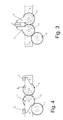
Fig. 3 and 4 each show section views of the mechanical rotation mechanism of the present invention. - A dispensing apparatus of the present invention preferably has the form of a cassette. Nevertheless, other dispensing apparatus are also possible in which a cassette is not used. For example the film can be wound in the form of a mini roll around a paper core. Alternatively, two such mini rolls may comprise the film in such a way that the film wound in the first mini roll will heat seal to the film that is wound in the second mini roll.
- In a preferred embodiment the cassette useful for the invention is circular in shape. Preferably it is made by plastic, eg polypropylene.
- It is also possible to be manufactured from other means more friendly to the environment such as paper, biodegradable plastic or non-biodegradable plastic where a percentage of "degrading" additives have been added.
- Generally, the cassette comprises a tubular core , casing wall(see , cassette bottom and lid . The film is stored in an area between tubular core, casing wall and cassette bottom in a compressed configuration. The flexible tubing is dispensed from the cassette.
- In a further preferred embodiment of the invention the cassette comprises a malodor counteractant useful for absorbing, adsorbing or masking the smell of the waste.
- In a preferred embodiment of the invention the film inside the cassette the film is in compressed configuration.
- A preferred version of the sealing apparatus of the present invention is an apparatus capable of impulse sealing. An impulse sealer is a jaw sealer backed with resilient silicone rubber. Electric current flows through Nichrome ribbon stretched over one over one or both surfaces and covered with high temperature release film and fabric.
- Another preferred version of the seal apparatus is wire or knife sealing. According to this method a hot wire or knife seals and cuts the film.
- Other methods for the seal apparatus that could be used according to the invention include bar sealing, band sealing, ultrasonic sealing, friction sealing, gas sealing, contact sealing, hot melt sealing, pneumatic sealing, dielectric sealing, magnetic sealing, induction sealing, radiant sealing, solvent sealing etc. For these methods please refer to the Wiley Encyclopedia of packaging technology, edition 1997.
- In a preferred embodiment of the invention the electric current necessary for the heat sealing and fusion is provided through a rechargeable battery. The voltage of the rechargeable battery is preferably equal or less than 20 V, even more preferably less than 16 V, even more preferably less than 12V.
- In a preferred version of the invention the temperature for the heat seal is less than 100°C, preferably less than 90°C, preferably less than 80°C.
- In a further preferred version of the invention, the sealing time is less than 5 seconds, more preferably less than 3 seconds, more preferably less than 1 second.
- In a further preferred version of the invention, the cutting of each pack to the previous one is done simultaneously with the sealing by the use of a wire/knife configuration. In another version, there is no cutting. In this case all the packs are put together inside the bin in a single line.
- The use of a rechargeable battery of low voltage assures a safe procedure that is more user friendly than household electricity.
- Another alternative possibility of the invention is the use of more than one heat seal to make an individual pack. So two, three or four seals are possible.
- In the case of three or four seals, the film should be in a "single sheet" configuration instead of "flexible tubing".
- The mechanism activates with manual rotation of
axis 1.
The activation ofaxis 1 can take place by a steering wheel, a lever or an electric motor. - On the
axis 1 which rotates freely with its ends stabilized on theframe 6 two gears(2) are put on either side. - The gears(2) transfer the movement to the gears(3) and these to the gears(4).
The gears (3) and (4) are put on the frames (7) and (8) which rotate freely with their ends firmly adjusted on frame(6). - The sealing bars(5) are firmly adjusted on frames (7) and (8).
- The anticlock wise movement of axis(1) provokes, due to the involvement of gears (2), (3) and (4) a change of position of the sealing bars from the horizontal position(see
figure 1 ) to the vertical position(seefigure 2 ) where they come in touch to each other. - The stiffness of frames (7) and (8) and the set of the pairs of gears ensure that the sealing bars (5) are perfectly parallel during their closing process (sealing).
- When the sealing bars come in contact a microswitch is energized and electric current(produced by battery) pases through the sealing wires. The sealing time is controlled through a timer. The sealing time is pre-determined. After the passing of the sealing time, the sealing bars return to theior original position.
- In the prior art, a lot of possible film configurations either monolayer or multilayer have been proposed. The basic characteristics a film should have in order to be used in the particular case are
- 1. Barrier to odours
- 2. To have the proper deadfold properties (non-resilient) so that is compressed efficiently in the cassette if a cassette is used as a dispensing apparatus.
- 3. To have sufficient mechanical properties (eg tensile strength at break, elongation).
- 4. To have sufficient sealing properties as to be sealed with a low voltage rechargeable battery. Also the sealing properties must be sufficient to seal through wrinkles or pleats that are inevitable for this kind of application.
-
- 1
- axis
- 2
- gear
- 3
- gear
- 4
- gear
- 5
- sealing bar
- 6
- frame
- 7
- frame
- 8
- frame
Claims (15)
- A waste packaging device comprisinga. a dispensing apparatus where a plastic film is storedb. a bin where a fusion seal apparatus is located, andc. a fusion seal apparatus containing sealing jaws and comprising a battery with a maximum voltage of equal or less than 20V,characterized in that the movement of the sealing jaws is initiated by a rotation of an axis.
- The waste packaging device of claim 1, where the rotation of the axis is done with a help of a steering wheel.
- The waste packaging device of claim 1 or 2, where the dispensing apparatus has the form of a cassette.
- The waste packaging device of one or more of the preceding claims, wherein the voltage is less than 16 V, preferably less than 12V.
- The waste packaging device of one or more of the preceding claims, where the temperature for the heat seal is set to less than 100°C, preferably less than 90°C, more preferably less than 80°C.
- The waste packaging device of one or more of the preceding claims, where the sealing time is set to less than 5 seconds, preferably less than 3 seconds, more preferably less than 1 second.
- The waste packaging device of one or more of the preceding claims, where the plastic film is of a weight/surface ration less than 20 grams per square meter.
- A method for storing waste by using the device according to one or more of claims 1-7 comprisinga. pulling out plastic film from a dispensing apparatusb. putting a waste item in a suitable length of the filmc. closing hermetically the plastic film with the use of a fusion seal apparatus where the seal is between a part of the film and another part of the same or other film, where the sealed parts are put sequentially in a bin,characterized in that the movement of the sealing jaws is initiated by a rotation of an axis.
- The method of claim 8, where the rotation of the axis is done with a help of a steering wheel.
- The method according to claim 8 or 9, where the film comprises at least a layer of at least 50% per weight polyethylene homopolymer and/or copolymer,
where the weight/surface ratio is less than 20 grams per square meter and the film can be heat sealed with the thermal energy transferred with a battery with a voltage of less than 20 V. - The method of claim 10, where the film further comprises an internal layer comprising at least one oxygen barrier material, and/or an inner layer comprising at least 50% per weight polyethylene homopolymer and/or copolymer.
- The method of one or more of claims 8-11, where the film comprises at least- an outer layer comprising polyethylene homopolymer and/or copolymer- an internal layer comprising at least one oxygen barrier material- an inner layer comprising polyethylene homopolymer and/or copolymer,where the weight/surface ratio is less than 20 grams per square meter and the film can be heat sealed with the thermal energy transferred with a battery with a voltage of less than 20 V.
- The method of claim 12, wherein the outer and/or inner layer comprise at least 50% per weight polyethylene homopolymer and/or copolymer.
- The method of any of claims 8-13, where the weight/surface ratio of the film is less than 15g/m2, preferably less than less than 13g/m2.
- The method of any of claims 8-14, where the film comprises an oxygen barrier material is EVOH, PVDC or polyamide, or where the polyethylene copolymer is a copolymer of ethylene and butene or a copolymer of ethylene and hexene or a copolymer of ethylene and octene.
Priority Applications (1)
| Application Number | Priority Date | Filing Date | Title |
|---|---|---|---|
| EP12192895.6A EP2597057B1 (en) | 2011-11-23 | 2012-11-16 | Waste packing system with fusion seal apparatus |
Applications Claiming Priority (2)
| Application Number | Priority Date | Filing Date | Title |
|---|---|---|---|
| EP11190266 | 2011-11-23 | ||
| EP12192895.6A EP2597057B1 (en) | 2011-11-23 | 2012-11-16 | Waste packing system with fusion seal apparatus |
Publications (2)
| Publication Number | Publication Date |
|---|---|
| EP2597057A1 true EP2597057A1 (en) | 2013-05-29 |
| EP2597057B1 EP2597057B1 (en) | 2018-09-26 |
Family
ID=47178501
Family Applications (1)
| Application Number | Title | Priority Date | Filing Date |
|---|---|---|---|
| EP12192895.6A Active EP2597057B1 (en) | 2011-11-23 | 2012-11-16 | Waste packing system with fusion seal apparatus |
Country Status (3)
| Country | Link |
|---|---|
| US (1) | US20130227916A1 (en) |
| EP (1) | EP2597057B1 (en) |
| DE (1) | DE202012013351U1 (en) |
Cited By (1)
| Publication number | Priority date | Publication date | Assignee | Title |
|---|---|---|---|---|
| EP3127683A1 (en) * | 2015-08-07 | 2017-02-08 | INDAG Gesellschaft für Industriebedarf mbH & Co. Betriebs KG | Welding station for welding of film bags and method for same |
Families Citing this family (15)
| Publication number | Priority date | Publication date | Assignee | Title |
|---|---|---|---|---|
| US20080003332A1 (en) * | 2006-05-12 | 2008-01-03 | Dimitrios Ginossatis | Multilayer heat shrinkable cook-in film |
| ES2380973T3 (en) * | 2007-04-26 | 2012-05-22 | Flexopack S.A. Plastics Industry | Overlay sealable shrink film |
| PL2077297T3 (en) | 2008-01-02 | 2012-10-31 | Flexopack Sa | PVDC formulation and heat shrinkable film |
| GB2475961B (en) * | 2009-12-02 | 2015-07-08 | Flexopack Sa | Thin film for waste packing cassettes |
| EP2520518B1 (en) | 2011-05-03 | 2020-09-23 | Flexopack S.A. | Waste packaging device |
| DE202011110797U1 (en) | 2011-06-16 | 2016-08-10 | Flexopack S.A. | Waste packaging system and foil |
| US9604430B2 (en) | 2012-02-08 | 2017-03-28 | Flexopack S.A. | Thin film for waste packing cassettes |
| EP2813362B1 (en) | 2013-06-14 | 2019-05-22 | Flexopack S.A. | Heat shrinkable film |
| AU2015258191B2 (en) | 2014-11-19 | 2020-02-27 | Flexopack S.A. | Oven skin packaging process |
| US10351283B2 (en) * | 2015-12-17 | 2019-07-16 | Khs Usa, Inc. | Magnetically operated sealing bar assembly for packaging machines |
| EP3501822A1 (en) | 2017-12-22 | 2019-06-26 | Flexopack S.A. | Fibc liner film |
| EP3663088A1 (en) | 2018-12-06 | 2020-06-10 | Flexopack S.A. | Multilayer cling film |
| CN112079007A (en) * | 2020-08-25 | 2020-12-15 | 南京汉尔斯生物科技有限公司 | Domestic environmental protection automatic packaging garbage bin |
| EP4015218A1 (en) | 2020-12-17 | 2022-06-22 | Flexopack S.A. | Thin film for waste packing cassettes |
| EP4056362A1 (en) | 2021-03-09 | 2022-09-14 | Flexopack S.A. | Multilayer monoaxially oriented film |
Citations (13)
| Publication number | Priority date | Publication date | Assignee | Title |
|---|---|---|---|---|
| US3536192A (en) | 1969-02-17 | 1970-10-27 | John R Couper | Container for incremental withdraw of tubular plastic |
| EP0005660A1 (en) | 1978-05-12 | 1979-11-28 | Société Civile d'Innovations Développement et Organisation SCIDO | Device for packing objects in a continuous tubular web and comprising a positive drive mechanism of the web |
| GB2203326A (en) * | 1987-04-15 | 1988-10-19 | James Patrick Conway | A refuse bag holder |
| US4869049A (en) | 1987-03-05 | 1989-09-26 | Process Improvements Limited | Apparatus and methods for using packs of flexible tubing in packaging |
| US4934529A (en) | 1988-08-02 | 1990-06-19 | Process Improvements Limited | Cassette containing flexible tubing to be dispensed therefrom |
| US5092105A (en) * | 1990-08-27 | 1992-03-03 | Bish Shin Uen | Litter bin |
| US6065272A (en) * | 1995-11-17 | 2000-05-23 | Captiva Holding | Device for collecting and confining hospital and household waste |
| US6220753B1 (en) * | 1999-08-04 | 2001-04-24 | Michael A. Metzger | Plastic liner bag with mouth retaining means |
| US6516588B2 (en) | 2000-10-02 | 2003-02-11 | Tim Allan Nygaard Jensen | Sealable diaper-disposal system and method |
| US20050079372A1 (en) * | 2003-10-09 | 2005-04-14 | Schmal Michael D. | Polyester films and methods for making the same |
| US20090034886A1 (en) * | 2003-03-07 | 2009-02-05 | Conforti Carl J | Odor containment |
| WO2009052291A2 (en) * | 2007-10-18 | 2009-04-23 | Stryker Corporation | Portable cart and bag for containing medical waste |
| EP2194006A1 (en) * | 2008-12-04 | 2010-06-09 | MELITTA HAUSHALTSPRODUKTE GmbH & Co. Kommanditgesellschaft | Container for storing objects, in particular waste |
Family Cites Families (21)
| Publication number | Priority date | Publication date | Assignee | Title |
|---|---|---|---|---|
| US3846569A (en) * | 1971-02-10 | 1974-11-05 | Owatonna Tool Co | Method of making a disposable precharged coffee bag |
| US4705707A (en) * | 1985-12-17 | 1987-11-10 | Presto Products, Incorporated | Polyethylene/polyester nonoriented heat sealable moisture barrier film and bag |
| US4716061A (en) * | 1985-12-17 | 1987-12-29 | Presto Products, Incorporated | Polypropylene/polyester nonoriented heat sealable moisture barrier film and bag |
| US5169708A (en) * | 1989-11-07 | 1992-12-08 | Chicopee | Heat shrinkable, elastic, glueable polyethylene and ethylene vinyl acetate film |
| US5142123A (en) * | 1990-04-12 | 1992-08-25 | Chou Shu Hui | Electric heat sealer energizable by internal battery set or external AC adapter |
| MX9200724A (en) * | 1991-02-22 | 1993-05-01 | Exxon Chemical Patents Inc | HEAT SEALABLE MIX OF POLYETHYLENE OR PLASTOMER OF VERY LOW DENSITY WITH POLYMERS BASED ON POLYPROPYLENE AND THERMAL SEALABLE FILM AS WELL AS ARTICLES MADE WITH THOSE. |
| US6531198B2 (en) * | 1993-06-24 | 2003-03-11 | Pechiney Emballage Flexible Europe | Heat shrinkable barrier bags with anti block additives |
| US6682825B1 (en) * | 1994-06-06 | 2004-01-27 | Cryovac, Inc. | Films having enhanced sealing characteristics and packages containing same |
| US5983607A (en) * | 1997-03-03 | 1999-11-16 | Abbott Laboratories | Heat sealer and method for using same |
| US6058998A (en) * | 1998-02-12 | 2000-05-09 | Tilia International, Inc. | Plastic bag sealing apparatus with an ultracapacitor discharging power circuit |
| US20050044819A1 (en) * | 2003-09-02 | 2005-03-03 | Chomik Richard S. | Waste storage device |
| WO2004011164A2 (en) * | 2002-07-31 | 2004-02-05 | Stravitz David M | Waste disposal device |
| US20060172143A1 (en) * | 2003-07-23 | 2006-08-03 | Breese David R | Extrusion coating process and coated substrates having improved heat seal properties |
| JP3923068B2 (en) * | 2003-10-16 | 2007-05-30 | 共立製薬株式会社 | Garbage can |
| JP4324047B2 (en) * | 2004-07-20 | 2009-09-02 | キヤノン株式会社 | Sheet conveying apparatus, image forming apparatus, and image reading apparatus |
| WO2006076393A2 (en) * | 2005-01-12 | 2006-07-20 | Unovo, Inc. | Method and apparatus for evacuating and sealing containers |
| US20070089688A1 (en) * | 2005-10-24 | 2007-04-26 | Christine Nitzsche | Apparatus and method for temporary storage of animal waste |
| US20090024022A1 (en) * | 2006-10-25 | 2009-01-22 | Siemens Corporate Research, Inc. | System and method for lymph node imaging using co-registration of ct and mr imagery |
| EP2103664B2 (en) * | 2008-03-18 | 2019-06-05 | The Procter and Gamble Company | Release sheet material |
| GB2475961B (en) * | 2009-12-02 | 2015-07-08 | Flexopack Sa | Thin film for waste packing cassettes |
| EP2520518B1 (en) * | 2011-05-03 | 2020-09-23 | Flexopack S.A. | Waste packaging device |
-
2012
- 2012-11-16 DE DE202012013351.9U patent/DE202012013351U1/en not_active Expired - Lifetime
- 2012-11-16 EP EP12192895.6A patent/EP2597057B1/en active Active
- 2012-11-20 US US13/682,160 patent/US20130227916A1/en not_active Abandoned
Patent Citations (13)
| Publication number | Priority date | Publication date | Assignee | Title |
|---|---|---|---|---|
| US3536192A (en) | 1969-02-17 | 1970-10-27 | John R Couper | Container for incremental withdraw of tubular plastic |
| EP0005660A1 (en) | 1978-05-12 | 1979-11-28 | Société Civile d'Innovations Développement et Organisation SCIDO | Device for packing objects in a continuous tubular web and comprising a positive drive mechanism of the web |
| US4869049A (en) | 1987-03-05 | 1989-09-26 | Process Improvements Limited | Apparatus and methods for using packs of flexible tubing in packaging |
| GB2203326A (en) * | 1987-04-15 | 1988-10-19 | James Patrick Conway | A refuse bag holder |
| US4934529A (en) | 1988-08-02 | 1990-06-19 | Process Improvements Limited | Cassette containing flexible tubing to be dispensed therefrom |
| US5092105A (en) * | 1990-08-27 | 1992-03-03 | Bish Shin Uen | Litter bin |
| US6065272A (en) * | 1995-11-17 | 2000-05-23 | Captiva Holding | Device for collecting and confining hospital and household waste |
| US6220753B1 (en) * | 1999-08-04 | 2001-04-24 | Michael A. Metzger | Plastic liner bag with mouth retaining means |
| US6516588B2 (en) | 2000-10-02 | 2003-02-11 | Tim Allan Nygaard Jensen | Sealable diaper-disposal system and method |
| US20090034886A1 (en) * | 2003-03-07 | 2009-02-05 | Conforti Carl J | Odor containment |
| US20050079372A1 (en) * | 2003-10-09 | 2005-04-14 | Schmal Michael D. | Polyester films and methods for making the same |
| WO2009052291A2 (en) * | 2007-10-18 | 2009-04-23 | Stryker Corporation | Portable cart and bag for containing medical waste |
| EP2194006A1 (en) * | 2008-12-04 | 2010-06-09 | MELITTA HAUSHALTSPRODUKTE GmbH & Co. Kommanditgesellschaft | Container for storing objects, in particular waste |
Non-Patent Citations (1)
| Title |
|---|
| "Wiley Encyclopedia of packaging technology", 1997 |
Cited By (2)
| Publication number | Priority date | Publication date | Assignee | Title |
|---|---|---|---|---|
| EP3127683A1 (en) * | 2015-08-07 | 2017-02-08 | INDAG Gesellschaft für Industriebedarf mbH & Co. Betriebs KG | Welding station for welding of film bags and method for same |
| US10793306B2 (en) | 2015-08-07 | 2020-10-06 | Indag Pouch Partners Gmbh | Sealing station for sealing of film bags and corresponding method |
Also Published As
| Publication number | Publication date |
|---|---|
| US20130227916A1 (en) | 2013-09-05 |
| EP2597057B1 (en) | 2018-09-26 |
| DE202012013351U1 (en) | 2016-06-27 |
Similar Documents
| Publication | Publication Date | Title |
|---|---|---|
| EP2597057B1 (en) | Waste packing system with fusion seal apparatus | |
| US10287094B2 (en) | Waste packing system and film | |
| US9440788B2 (en) | Waste packing system and method of use | |
| EP2085216B1 (en) | Thin film for waste packing cassettes | |
| US9604430B2 (en) | Thin film for waste packing cassettes | |
| EP2332723B1 (en) | Thin film for waste packing cassettes | |
| AU2019275630B2 (en) | Multilayer cling film | |
| US20210245478A1 (en) | Thin film for waste packing | |
| DK202100108U3 (en) | Thin film for waste packaging cassettes | |
| AU2021201215B2 (en) | Thin film for waste packing cassettes | |
| EP3636434A1 (en) | Thin film for waste packing | |
| AU2014203745B2 (en) | Thin film for waste packing cassettes | |
| EP3260291B1 (en) | Thin film for waste packing cassettes | |
| EP2261022A2 (en) | Degradable film | |
| CA3072190A1 (en) | Thin film for waste packing | |
| EP4180222A1 (en) | Thin film for waste packing cassettes | |
| NZ782943A (en) | Thin film for waste packing cassettes | |
| NZ772827A (en) | Thin film for waste packing cassettes |
Legal Events
| Date | Code | Title | Description |
|---|---|---|---|
| REG | Reference to a national code |
Ref country code: DE Ref legal event code: R138 Ref document number: 202012013351 Country of ref document: DE Free format text: GERMAN DOCUMENT NUMBER IS 602012051470 |
|
| PUAI | Public reference made under article 153(3) epc to a published international application that has entered the european phase |
Free format text: ORIGINAL CODE: 0009012 |
|
| AK | Designated contracting states |
Kind code of ref document: A1 Designated state(s): AL AT BE BG CH CY CZ DE DK EE ES FI FR GB GR HR HU IE IS IT LI LT LU LV MC MK MT NL NO PL PT RO RS SE SI SK SM TR |
|
| AX | Request for extension of the european patent |
Extension state: BA ME |
|
| 17P | Request for examination filed |
Effective date: 20131128 |
|
| RBV | Designated contracting states (corrected) |
Designated state(s): AL AT BE BG CH CY CZ DE DK EE ES FI FR GB GR HR HU IE IS IT LI LT LU LV MC MK MT NL NO PL PT RO RS SE SI SK SM TR |
|
| 17Q | First examination report despatched |
Effective date: 20140512 |
|
| STAA | Information on the status of an ep patent application or granted ep patent |
Free format text: STATUS: EXAMINATION IS IN PROGRESS |
|
| RIC1 | Information provided on ipc code assigned before grant |
Ipc: B65B 5/02 20060101AFI20170907BHEP Ipc: B29C 65/22 20060101ALI20170907BHEP Ipc: B29C 65/74 20060101ALN20170907BHEP Ipc: B65F 1/06 20060101ALI20170907BHEP Ipc: B29C 65/00 20060101ALI20170907BHEP |
|
| RIC1 | Information provided on ipc code assigned before grant |
Ipc: B65B 5/02 20060101AFI20170925BHEP Ipc: B65F 1/06 20060101ALI20170925BHEP Ipc: B29C 65/00 20060101ALI20170925BHEP Ipc: B29C 65/74 20060101ALN20170925BHEP Ipc: B29C 65/22 20060101ALI20170925BHEP |
|
| REG | Reference to a national code |
Ref country code: DE Ref legal event code: R079 Ref document number: 602012051470 Country of ref document: DE Free format text: PREVIOUS MAIN CLASS: B65F0001060000 Ipc: B65B0005020000 |
|
| GRAP | Despatch of communication of intention to grant a patent |
Free format text: ORIGINAL CODE: EPIDOSNIGR1 |
|
| STAA | Information on the status of an ep patent application or granted ep patent |
Free format text: STATUS: GRANT OF PATENT IS INTENDED |
|
| RIC1 | Information provided on ipc code assigned before grant |
Ipc: B29C 65/22 20060101ALI20180405BHEP Ipc: B29C 65/74 20060101ALN20180405BHEP Ipc: B65F 1/06 20060101ALI20180405BHEP Ipc: B29C 65/00 20060101ALI20180405BHEP Ipc: B65B 5/02 20060101AFI20180405BHEP |
|
| INTG | Intention to grant announced |
Effective date: 20180420 |
|
| RIC1 | Information provided on ipc code assigned before grant |
Ipc: B65B 5/02 20060101AFI20180409BHEP Ipc: B29C 65/22 20060101ALI20180409BHEP Ipc: B65F 1/06 20060101ALI20180409BHEP Ipc: B29C 65/74 20060101ALN20180409BHEP Ipc: B29C 65/00 20060101ALI20180409BHEP |
|
| GRAS | Grant fee paid |
Free format text: ORIGINAL CODE: EPIDOSNIGR3 |
|
| GRAA | (expected) grant |
Free format text: ORIGINAL CODE: 0009210 |
|
| STAA | Information on the status of an ep patent application or granted ep patent |
Free format text: STATUS: THE PATENT HAS BEEN GRANTED |
|
| AK | Designated contracting states |
Kind code of ref document: B1 Designated state(s): AL AT BE BG CH CY CZ DE DK EE ES FI FR GB GR HR HU IE IS IT LI LT LU LV MC MK MT NL NO PL PT RO RS SE SI SK SM TR |
|
| REG | Reference to a national code |
Ref country code: GB Ref legal event code: FG4D |
|
| REG | Reference to a national code |
Ref country code: CH Ref legal event code: EP |
|
| REG | Reference to a national code |
Ref country code: AT Ref legal event code: REF Ref document number: 1045714 Country of ref document: AT Kind code of ref document: T Effective date: 20181015 |
|
| REG | Reference to a national code |
Ref country code: IE Ref legal event code: FG4D |
|
| REG | Reference to a national code |
Ref country code: DE Ref legal event code: R096 Ref document number: 602012051470 Country of ref document: DE |
|
| REG | Reference to a national code |
Ref country code: NL Ref legal event code: MP Effective date: 20180926 |
|
| PG25 | Lapsed in a contracting state [announced via postgrant information from national office to epo] |
Ref country code: FI Free format text: LAPSE BECAUSE OF FAILURE TO SUBMIT A TRANSLATION OF THE DESCRIPTION OR TO PAY THE FEE WITHIN THE PRESCRIBED TIME-LIMIT Effective date: 20180926 Ref country code: SE Free format text: LAPSE BECAUSE OF FAILURE TO SUBMIT A TRANSLATION OF THE DESCRIPTION OR TO PAY THE FEE WITHIN THE PRESCRIBED TIME-LIMIT Effective date: 20180926 Ref country code: BG Free format text: LAPSE BECAUSE OF FAILURE TO SUBMIT A TRANSLATION OF THE DESCRIPTION OR TO PAY THE FEE WITHIN THE PRESCRIBED TIME-LIMIT Effective date: 20181226 Ref country code: RS Free format text: LAPSE BECAUSE OF FAILURE TO SUBMIT A TRANSLATION OF THE DESCRIPTION OR TO PAY THE FEE WITHIN THE PRESCRIBED TIME-LIMIT Effective date: 20180926 Ref country code: NO Free format text: LAPSE BECAUSE OF FAILURE TO SUBMIT A TRANSLATION OF THE DESCRIPTION OR TO PAY THE FEE WITHIN THE PRESCRIBED TIME-LIMIT Effective date: 20181226 Ref country code: LT Free format text: LAPSE BECAUSE OF FAILURE TO SUBMIT A TRANSLATION OF THE DESCRIPTION OR TO PAY THE FEE WITHIN THE PRESCRIBED TIME-LIMIT Effective date: 20180926 Ref country code: GR Free format text: LAPSE BECAUSE OF FAILURE TO SUBMIT A TRANSLATION OF THE DESCRIPTION OR TO PAY THE FEE WITHIN THE PRESCRIBED TIME-LIMIT Effective date: 20181227 |
|
| REG | Reference to a national code |
Ref country code: LT Ref legal event code: MG4D |
|
| PG25 | Lapsed in a contracting state [announced via postgrant information from national office to epo] |
Ref country code: HR Free format text: LAPSE BECAUSE OF FAILURE TO SUBMIT A TRANSLATION OF THE DESCRIPTION OR TO PAY THE FEE WITHIN THE PRESCRIBED TIME-LIMIT Effective date: 20180926 Ref country code: LV Free format text: LAPSE BECAUSE OF FAILURE TO SUBMIT A TRANSLATION OF THE DESCRIPTION OR TO PAY THE FEE WITHIN THE PRESCRIBED TIME-LIMIT Effective date: 20180926 Ref country code: AL Free format text: LAPSE BECAUSE OF FAILURE TO SUBMIT A TRANSLATION OF THE DESCRIPTION OR TO PAY THE FEE WITHIN THE PRESCRIBED TIME-LIMIT Effective date: 20180926 |
|
| REG | Reference to a national code |
Ref country code: AT Ref legal event code: MK05 Ref document number: 1045714 Country of ref document: AT Kind code of ref document: T Effective date: 20180926 |
|
| PG25 | Lapsed in a contracting state [announced via postgrant information from national office to epo] |
Ref country code: ES Free format text: LAPSE BECAUSE OF FAILURE TO SUBMIT A TRANSLATION OF THE DESCRIPTION OR TO PAY THE FEE WITHIN THE PRESCRIBED TIME-LIMIT Effective date: 20180926 Ref country code: IS Free format text: LAPSE BECAUSE OF FAILURE TO SUBMIT A TRANSLATION OF THE DESCRIPTION OR TO PAY THE FEE WITHIN THE PRESCRIBED TIME-LIMIT Effective date: 20190126 Ref country code: AT Free format text: LAPSE BECAUSE OF FAILURE TO SUBMIT A TRANSLATION OF THE DESCRIPTION OR TO PAY THE FEE WITHIN THE PRESCRIBED TIME-LIMIT Effective date: 20180926 Ref country code: CZ Free format text: LAPSE BECAUSE OF FAILURE TO SUBMIT A TRANSLATION OF THE DESCRIPTION OR TO PAY THE FEE WITHIN THE PRESCRIBED TIME-LIMIT Effective date: 20180926 Ref country code: NL Free format text: LAPSE BECAUSE OF FAILURE TO SUBMIT A TRANSLATION OF THE DESCRIPTION OR TO PAY THE FEE WITHIN THE PRESCRIBED TIME-LIMIT Effective date: 20180926 Ref country code: RO Free format text: LAPSE BECAUSE OF FAILURE TO SUBMIT A TRANSLATION OF THE DESCRIPTION OR TO PAY THE FEE WITHIN THE PRESCRIBED TIME-LIMIT Effective date: 20180926 Ref country code: EE Free format text: LAPSE BECAUSE OF FAILURE TO SUBMIT A TRANSLATION OF THE DESCRIPTION OR TO PAY THE FEE WITHIN THE PRESCRIBED TIME-LIMIT Effective date: 20180926 Ref country code: PL Free format text: LAPSE BECAUSE OF FAILURE TO SUBMIT A TRANSLATION OF THE DESCRIPTION OR TO PAY THE FEE WITHIN THE PRESCRIBED TIME-LIMIT Effective date: 20180926 Ref country code: IT Free format text: LAPSE BECAUSE OF FAILURE TO SUBMIT A TRANSLATION OF THE DESCRIPTION OR TO PAY THE FEE WITHIN THE PRESCRIBED TIME-LIMIT Effective date: 20180926 |
|
| PG25 | Lapsed in a contracting state [announced via postgrant information from national office to epo] |
Ref country code: SM Free format text: LAPSE BECAUSE OF FAILURE TO SUBMIT A TRANSLATION OF THE DESCRIPTION OR TO PAY THE FEE WITHIN THE PRESCRIBED TIME-LIMIT Effective date: 20180926 Ref country code: PT Free format text: LAPSE BECAUSE OF FAILURE TO SUBMIT A TRANSLATION OF THE DESCRIPTION OR TO PAY THE FEE WITHIN THE PRESCRIBED TIME-LIMIT Effective date: 20190126 Ref country code: SK Free format text: LAPSE BECAUSE OF FAILURE TO SUBMIT A TRANSLATION OF THE DESCRIPTION OR TO PAY THE FEE WITHIN THE PRESCRIBED TIME-LIMIT Effective date: 20180926 |
|
| REG | Reference to a national code |
Ref country code: DE Ref legal event code: R097 Ref document number: 602012051470 Country of ref document: DE |
|
| REG | Reference to a national code |
Ref country code: CH Ref legal event code: PL |
|
| PG25 | Lapsed in a contracting state [announced via postgrant information from national office to epo] |
Ref country code: MC Free format text: LAPSE BECAUSE OF FAILURE TO SUBMIT A TRANSLATION OF THE DESCRIPTION OR TO PAY THE FEE WITHIN THE PRESCRIBED TIME-LIMIT Effective date: 20180926 Ref country code: DK Free format text: LAPSE BECAUSE OF FAILURE TO SUBMIT A TRANSLATION OF THE DESCRIPTION OR TO PAY THE FEE WITHIN THE PRESCRIBED TIME-LIMIT Effective date: 20180926 Ref country code: LU Free format text: LAPSE BECAUSE OF NON-PAYMENT OF DUE FEES Effective date: 20181116 |
|
| PLBE | No opposition filed within time limit |
Free format text: ORIGINAL CODE: 0009261 |
|
| STAA | Information on the status of an ep patent application or granted ep patent |
Free format text: STATUS: NO OPPOSITION FILED WITHIN TIME LIMIT |
|
| REG | Reference to a national code |
Ref country code: BE Ref legal event code: MM Effective date: 20181130 |
|
| REG | Reference to a national code |
Ref country code: IE Ref legal event code: MM4A |
|
| PG25 | Lapsed in a contracting state [announced via postgrant information from national office to epo] |
Ref country code: CH Free format text: LAPSE BECAUSE OF NON-PAYMENT OF DUE FEES Effective date: 20181130 Ref country code: LI Free format text: LAPSE BECAUSE OF NON-PAYMENT OF DUE FEES Effective date: 20181130 |
|
| 26N | No opposition filed |
Effective date: 20190627 |
|
| PG25 | Lapsed in a contracting state [announced via postgrant information from national office to epo] |
Ref country code: SI Free format text: LAPSE BECAUSE OF FAILURE TO SUBMIT A TRANSLATION OF THE DESCRIPTION OR TO PAY THE FEE WITHIN THE PRESCRIBED TIME-LIMIT Effective date: 20180926 Ref country code: IE Free format text: LAPSE BECAUSE OF NON-PAYMENT OF DUE FEES Effective date: 20181116 |
|
| PG25 | Lapsed in a contracting state [announced via postgrant information from national office to epo] |
Ref country code: BE Free format text: LAPSE BECAUSE OF NON-PAYMENT OF DUE FEES Effective date: 20181130 |
|
| PG25 | Lapsed in a contracting state [announced via postgrant information from national office to epo] |
Ref country code: MT Free format text: LAPSE BECAUSE OF NON-PAYMENT OF DUE FEES Effective date: 20181116 |
|
| PG25 | Lapsed in a contracting state [announced via postgrant information from national office to epo] |
Ref country code: TR Free format text: LAPSE BECAUSE OF FAILURE TO SUBMIT A TRANSLATION OF THE DESCRIPTION OR TO PAY THE FEE WITHIN THE PRESCRIBED TIME-LIMIT Effective date: 20180926 |
|
| PG25 | Lapsed in a contracting state [announced via postgrant information from national office to epo] |
Ref country code: MK Free format text: LAPSE BECAUSE OF NON-PAYMENT OF DUE FEES Effective date: 20180926 Ref country code: HU Free format text: LAPSE BECAUSE OF FAILURE TO SUBMIT A TRANSLATION OF THE DESCRIPTION OR TO PAY THE FEE WITHIN THE PRESCRIBED TIME-LIMIT; INVALID AB INITIO Effective date: 20121116 Ref country code: CY Free format text: LAPSE BECAUSE OF FAILURE TO SUBMIT A TRANSLATION OF THE DESCRIPTION OR TO PAY THE FEE WITHIN THE PRESCRIBED TIME-LIMIT Effective date: 20180926 |
|
| PGFP | Annual fee paid to national office [announced via postgrant information from national office to epo] |
Ref country code: DE Payment date: 20251128 Year of fee payment: 14 |
|
| PGFP | Annual fee paid to national office [announced via postgrant information from national office to epo] |
Ref country code: GB Payment date: 20251121 Year of fee payment: 14 |
|
| PGFP | Annual fee paid to national office [announced via postgrant information from national office to epo] |
Ref country code: FR Payment date: 20251125 Year of fee payment: 14 |