EP2608954B1 - Sac et procédé de fabrication de sacs - Google Patents
Sac et procédé de fabrication de sacs Download PDFInfo
- Publication number
- EP2608954B1 EP2608954B1 EP11743555.2A EP11743555A EP2608954B1 EP 2608954 B1 EP2608954 B1 EP 2608954B1 EP 11743555 A EP11743555 A EP 11743555A EP 2608954 B1 EP2608954 B1 EP 2608954B1
- Authority
- EP
- European Patent Office
- Prior art keywords
- layer
- cover sheet
- tabs
- sack
- air
- Prior art date
- Legal status (The legal status is an assumption and is not a legal conclusion. Google has not performed a legal analysis and makes no representation as to the accuracy of the status listed.)
- Not-in-force
Links
- 238000004519 manufacturing process Methods 0.000 title claims description 17
- 239000000463 material Substances 0.000 claims description 60
- 239000000853 adhesive Substances 0.000 claims description 30
- 230000001070 adhesive effect Effects 0.000 claims description 30
- 238000000034 method Methods 0.000 claims description 26
- 239000004033 plastic Substances 0.000 claims description 17
- 229920003023 plastic Polymers 0.000 claims description 17
- 239000003795 chemical substances by application Substances 0.000 claims description 8
- 238000005304 joining Methods 0.000 claims description 8
- 239000002759 woven fabric Substances 0.000 claims 2
- 230000001939 inductive effect Effects 0.000 claims 1
- 239000004744 fabric Substances 0.000 description 12
- 238000013022 venting Methods 0.000 description 10
- 238000009423 ventilation Methods 0.000 description 8
- 238000000576 coating method Methods 0.000 description 6
- 238000007789 sealing Methods 0.000 description 5
- 239000002689 soil Substances 0.000 description 4
- 238000004026 adhesive bonding Methods 0.000 description 3
- 239000011248 coating agent Substances 0.000 description 3
- 238000005429 filling process Methods 0.000 description 3
- 230000015572 biosynthetic process Effects 0.000 description 2
- 230000009172 bursting Effects 0.000 description 2
- 230000000694 effects Effects 0.000 description 2
- 230000001771 impaired effect Effects 0.000 description 2
- 230000002787 reinforcement Effects 0.000 description 2
- 241000208202 Linaceae Species 0.000 description 1
- 235000004431 Linum usitatissimum Nutrition 0.000 description 1
- 239000004566 building material Substances 0.000 description 1
- 239000000969 carrier Substances 0.000 description 1
- 239000002131 composite material Substances 0.000 description 1
- 238000001816 cooling Methods 0.000 description 1
- 238000009826 distribution Methods 0.000 description 1
- 239000000835 fiber Substances 0.000 description 1
- 239000011888 foil Substances 0.000 description 1
- 230000012447 hatching Effects 0.000 description 1
- 239000004745 nonwoven fabric Substances 0.000 description 1
- 238000004806 packaging method and process Methods 0.000 description 1
- 230000035515 penetration Effects 0.000 description 1
- 239000006223 plastic coating Substances 0.000 description 1
- 239000000047 product Substances 0.000 description 1
- 238000004080 punching Methods 0.000 description 1
- 230000003014 reinforcing effect Effects 0.000 description 1
- 239000011265 semifinished product Substances 0.000 description 1
- 239000011343 solid material Substances 0.000 description 1
- 239000000758 substrate Substances 0.000 description 1
- 238000003466 welding Methods 0.000 description 1
Images

Classifications
-
- B—PERFORMING OPERATIONS; TRANSPORTING
- B65—CONVEYING; PACKING; STORING; HANDLING THIN OR FILAMENTARY MATERIAL
- B65D—CONTAINERS FOR STORAGE OR TRANSPORT OF ARTICLES OR MATERIALS, e.g. BAGS, BARRELS, BOTTLES, BOXES, CANS, CARTONS, CRATES, DRUMS, JARS, TANKS, HOPPERS, FORWARDING CONTAINERS; ACCESSORIES, CLOSURES, OR FITTINGS THEREFOR; PACKAGING ELEMENTS; PACKAGES
- B65D33/00—Details of, or accessories for, sacks or bags
- B65D33/16—End- or aperture-closing arrangements or devices
- B65D33/1658—Elements for flattening or folding the mouth portion
-
- B—PERFORMING OPERATIONS; TRANSPORTING
- B65—CONVEYING; PACKING; STORING; HANDLING THIN OR FILAMENTARY MATERIAL
- B65D—CONTAINERS FOR STORAGE OR TRANSPORT OF ARTICLES OR MATERIALS, e.g. BAGS, BARRELS, BOTTLES, BOXES, CANS, CARTONS, CRATES, DRUMS, JARS, TANKS, HOPPERS, FORWARDING CONTAINERS; ACCESSORIES, CLOSURES, OR FITTINGS THEREFOR; PACKAGING ELEMENTS; PACKAGES
- B65D31/00—Bags or like containers made of paper and having structural provision for thickness of contents
- B65D31/08—Bags or like containers made of paper and having structural provision for thickness of contents with block bottoms
-
- B—PERFORMING OPERATIONS; TRANSPORTING
- B31—MAKING ARTICLES OF PAPER, CARDBOARD OR MATERIAL WORKED IN A MANNER ANALOGOUS TO PAPER; WORKING PAPER, CARDBOARD OR MATERIAL WORKED IN A MANNER ANALOGOUS TO PAPER
- B31B—MAKING CONTAINERS OF PAPER, CARDBOARD OR MATERIAL WORKED IN A MANNER ANALOGOUS TO PAPER
- B31B70/00—Making flexible containers, e.g. envelopes or bags
-
- B—PERFORMING OPERATIONS; TRANSPORTING
- B65—CONVEYING; PACKING; STORING; HANDLING THIN OR FILAMENTARY MATERIAL
- B65D—CONTAINERS FOR STORAGE OR TRANSPORT OF ARTICLES OR MATERIALS, e.g. BAGS, BARRELS, BOTTLES, BOXES, CANS, CARTONS, CRATES, DRUMS, JARS, TANKS, HOPPERS, FORWARDING CONTAINERS; ACCESSORIES, CLOSURES, OR FITTINGS THEREFOR; PACKAGING ELEMENTS; PACKAGES
- B65D33/00—Details of, or accessories for, sacks or bags
- B65D33/01—Ventilation or drainage of bags
-
- B—PERFORMING OPERATIONS; TRANSPORTING
- B65—CONVEYING; PACKING; STORING; HANDLING THIN OR FILAMENTARY MATERIAL
- B65D—CONTAINERS FOR STORAGE OR TRANSPORT OF ARTICLES OR MATERIALS, e.g. BAGS, BARRELS, BOTTLES, BOXES, CANS, CARTONS, CRATES, DRUMS, JARS, TANKS, HOPPERS, FORWARDING CONTAINERS; ACCESSORIES, CLOSURES, OR FITTINGS THEREFOR; PACKAGING ELEMENTS; PACKAGES
- B65D33/00—Details of, or accessories for, sacks or bags
- B65D33/16—End- or aperture-closing arrangements or devices
- B65D33/1691—End- or aperture-closing arrangements or devices using adhesive applied to attached closure elements
-
- B—PERFORMING OPERATIONS; TRANSPORTING
- B31—MAKING ARTICLES OF PAPER, CARDBOARD OR MATERIAL WORKED IN A MANNER ANALOGOUS TO PAPER; WORKING PAPER, CARDBOARD OR MATERIAL WORKED IN A MANNER ANALOGOUS TO PAPER
- B31B—MAKING CONTAINERS OF PAPER, CARDBOARD OR MATERIAL WORKED IN A MANNER ANALOGOUS TO PAPER
- B31B2150/00—Flexible containers made from sheets or blanks, e.g. from flattened tubes
-
- B—PERFORMING OPERATIONS; TRANSPORTING
- B31—MAKING ARTICLES OF PAPER, CARDBOARD OR MATERIAL WORKED IN A MANNER ANALOGOUS TO PAPER; WORKING PAPER, CARDBOARD OR MATERIAL WORKED IN A MANNER ANALOGOUS TO PAPER
- B31B—MAKING CONTAINERS OF PAPER, CARDBOARD OR MATERIAL WORKED IN A MANNER ANALOGOUS TO PAPER
- B31B2150/00—Flexible containers made from sheets or blanks, e.g. from flattened tubes
- B31B2150/001—Flexible containers made from sheets or blanks, e.g. from flattened tubes with square or cross bottom
-
- B—PERFORMING OPERATIONS; TRANSPORTING
- B31—MAKING ARTICLES OF PAPER, CARDBOARD OR MATERIAL WORKED IN A MANNER ANALOGOUS TO PAPER; WORKING PAPER, CARDBOARD OR MATERIAL WORKED IN A MANNER ANALOGOUS TO PAPER
- B31B—MAKING CONTAINERS OF PAPER, CARDBOARD OR MATERIAL WORKED IN A MANNER ANALOGOUS TO PAPER
- B31B2150/00—Flexible containers made from sheets or blanks, e.g. from flattened tubes
- B31B2150/003—Flexible containers made from sheets or blanks, e.g. from flattened tubes made from tubular sheets
-
- B—PERFORMING OPERATIONS; TRANSPORTING
- B31—MAKING ARTICLES OF PAPER, CARDBOARD OR MATERIAL WORKED IN A MANNER ANALOGOUS TO PAPER; WORKING PAPER, CARDBOARD OR MATERIAL WORKED IN A MANNER ANALOGOUS TO PAPER
- B31B—MAKING CONTAINERS OF PAPER, CARDBOARD OR MATERIAL WORKED IN A MANNER ANALOGOUS TO PAPER
- B31B2160/00—Shape of flexible containers
- B31B2160/10—Shape of flexible containers rectangular and flat, i.e. without structural provision for thickness of contents
-
- B—PERFORMING OPERATIONS; TRANSPORTING
- B31—MAKING ARTICLES OF PAPER, CARDBOARD OR MATERIAL WORKED IN A MANNER ANALOGOUS TO PAPER; WORKING PAPER, CARDBOARD OR MATERIAL WORKED IN A MANNER ANALOGOUS TO PAPER
- B31B—MAKING CONTAINERS OF PAPER, CARDBOARD OR MATERIAL WORKED IN A MANNER ANALOGOUS TO PAPER
- B31B2160/00—Shape of flexible containers
- B31B2160/20—Shape of flexible containers with structural provision for thickness of contents
-
- B—PERFORMING OPERATIONS; TRANSPORTING
- B31—MAKING ARTICLES OF PAPER, CARDBOARD OR MATERIAL WORKED IN A MANNER ANALOGOUS TO PAPER; WORKING PAPER, CARDBOARD OR MATERIAL WORKED IN A MANNER ANALOGOUS TO PAPER
- B31B—MAKING CONTAINERS OF PAPER, CARDBOARD OR MATERIAL WORKED IN A MANNER ANALOGOUS TO PAPER
- B31B2170/00—Construction of flexible containers
- B31B2170/20—Construction of flexible containers having multi-layered walls, e.g. laminated or lined
-
- B—PERFORMING OPERATIONS; TRANSPORTING
- B31—MAKING ARTICLES OF PAPER, CARDBOARD OR MATERIAL WORKED IN A MANNER ANALOGOUS TO PAPER; WORKING PAPER, CARDBOARD OR MATERIAL WORKED IN A MANNER ANALOGOUS TO PAPER
- B31B—MAKING CONTAINERS OF PAPER, CARDBOARD OR MATERIAL WORKED IN A MANNER ANALOGOUS TO PAPER
- B31B70/00—Making flexible containers, e.g. envelopes or bags
- B31B70/74—Auxiliary operations
- B31B70/81—Forming or attaching accessories, e.g. opening devices, closures or tear strings
Definitions
- the invention relates to a method for producing sacks from pieces of hose which comprise plastic material, according to the preamble of claim 1 and a sack comprising plastic material, according to the preamble of claim 10.
- the bags provided with such bottoms are known as cross or block bottom bags.
- sacks are often made of a round fabric, which includes plastic threads.
- the round fabric is usually coated on the outside.
- Such bags can be made by hot air sealing without additional adhesive.
- the coating of the fabric during the sealing process of the sack and cover sheet is melted without damaging the tissue.
- the possibility of forming special longitudinal seams is not available.
- pieces of tubing can be used as starting semi-finished products for the production of sacks, which were produced from a seamless tube produced in a blown film process. Again, no special longitudinal seams can be formed. The production of such hoses is also inexpensive.
- the EP 0 767 105 A1 discloses a cross-bottom valve bag in which a filter sheet is integrated into the ground.
- the bottom cover sheet is glued at its edges only partially to the ground, so that the passing through the filter sheet air can escape to the outside.
- the DE 1 761 327 discloses a ventable sack-like container which uses a bottom sheet of foil provided with a series of perforations 67 which are closed by a cover strip made of an air-permeable material. Overall, this document discloses the preamble features of claims 1 and 10. The present invention is therefore based on this document.
- the DE 42 42 178 A1 discloses a packaging bag made of paper or plastic with a punched-out window. In the area of the viewing windows composite reinforcing windows are glued, which consist of a network and a cover piece.
- the US 1 121 080 A and the US Pat. No. 1,867,399 disclose devices for the production of webs, from which soil sheets can be produced later, as for example by the DE 1 761 327 become known container needed.
- the object of the invention is therefore to propose a bag and a method for its production, in which a sufficient venting of the contents is made possible and in which the pressure is reduced and bursting of the adhesive seam during the filling process is prevented.
- the gluing of the air-permeable material takes place in such a way that all apertures of the first layer are surrounded by the connecting seam.
- each individual opening is surrounded by a connecting seam, for example an adhesive trace.
- the respective connecting seam may be at a distance from the surrounding breakthrough, so that the area which is enclosed by the connecting seams is larger than the area of the openings of the first layer.
- the air that is involved in the filling process relatively high pressure is forced through the apertures, distribute over this area. Then it can escape via the air-permeable material.
- the distribution over the surface helps to reduce the pressure and to prevent bursting of the adhesive seam. High venting pressures can also occur when the bags are dropped, for example immediately after filling.
- a bottom cover sheet which at least partially comprises air-permeable material.
- a bottom cover sheet is usually the reinforcement of the soil, but according to the invention also assumes the function of venting.
- Materials that are permeable to air, but impermeable to the contents are known.
- air-permeable materials are therefore those which by themselves already have the property of permitting air to pass through. This property is inherent in the materials. So it means no materials that have been made permeable to air through subsequent processing, for example by needling or perforation.
- the air-permeable materials may be nonwovens or filter papers. Further materials are known to the person skilled in the art of bag making.
- the tabs are folded back so that the edges of the tabs and the edges of the triangular pockets and / or the edge of a valve leaflets surround an opening through which the interior of the bag is accessible. Contrary to the usual manufacturing method in which the bottom flaps overlap, it is therefore provided that an opening is formed between the flaps, so that the air passes unhindered to the air-permeable material and subsequently to the outside. In order to achieve this effect at least approximately, overlapping bottom flaps can also be provided as before, provided with openings, for example perforated.
- the bottom cover sheet comprises at least two layers. It is envisaged that one of these layers comprises air-permeable material.
- air-permeable material is generally less mechanically resilient than the actual sack material. Therefore, the further position of the bottom cover sheet, which is not necessarily made of an air-permeable material, can take over the function of soil reinforcement, while the venting function remains in the air-permeable material.
- a suitable, solid material can be provided for this purpose. An example would be a net of threads or fibers which can absorb tensile forces very well without tearing.
- the breakthroughs can be about editions.
- the openings are advantageously circular, since then the strength is impaired as little as possible.
- This embodiment of the invention makes it possible to provide the same material, from which the tube pieces are produced, for the first layer.
- openings or air passages must now be provided in the first layer.
- the size of the openings is to be chosen so that the strength of the material is impaired only to an acceptable extent.
- the equality of the materials is particularly advantageous because the ground cover sheet can be connected by the same method or the same adhesives very well with the other bag components, as they are also used in the conventional cover sheet attachment. In this case, the joints are high strength.
- the second layer then comprises air-permeable material and is expediently applied to the first layer and connected thereto.
- the bonding is advantageously carried out by gluing, thermal sealing or ultrasonic welding along a connecting seam. Even if that Application is possible after attaching the first layer to the ground, it is preferable to perform the application before attaching the bottom cover sheet to the bag. Since bottom cover sheets are usually provided as a sheet material, it is even advantageous to stick together the first layer and the second layer in a sheet-like state. It is only in the production of the bags that the ground cover sheets forming web material can be singulated to the actual bottom cover sheets.
- each of the surfaces surrounded by the adhesive seams is at least twice as large as the area of the associated aperture. For this case, a good venting effect is expected even at high filling speeds.
- a third layer of the bottom cover sheet is applied to the second layer.
- This layer is or will be connected to the first and / or the second layer. This can in turn be done after the application of the bottom cover sheet on the bag, but preferably before.
- the third layer may in particular be or become connected to the long side edges of the first layer of the generally rectangular bottom cover sheet.
- the third layer can be connected with two adhesive or sealing seams.
- the first and the third layer can also be formed in one piece. After sticking the second layer can then be turned over the second layer overshooting piece of the first layer.
- the edges of the first and thereby resulting third layer can be joined together by a seam. It can also be provided on both sides overshooting pieces. These are turned over, with the edges overlapping.
- the edges are connected to each other, which also adhesive bonding or heat-induced joining methods can be used.
- the third layer preferably remains unconnected to the two first layers, so that through these openings, the air that passes through the air-permeable material can get into the open.
- the seams on the long sides can also be interrupted and / or the end faces to be partially attached.
- mechanically generated openings in the third layer such as needling, may be provided.
- the described third layer can protect the air-permeable material from external influences and thus from damage.
- this layer offers the opportunity to be printed. Finally, penetration of moisture into the interior of the bag is avoided, so that the contents essentially do not change its properties.
- the third layer it is provided to introduce cuts in the third layer. These cuts are preferably in the vicinity of the openings of the first layer. These cuts can serve as a valve. The air that penetrates through the air-permeable material must now not only escape through the openings on the front sides of the bottom cover sheet, but can additionally pass through the incisions to the outside. The venting performance of the bag can be significantly increased in this way. If the breakthrough of the first layer is circular, it is advisable to introduce at least one circular-arc incision. The radius of the circular arc should be slightly larger than the radius of the openings, so that the air-permeable material of the second layer continues to be well protected against external influences. The centers of a breakthrough of the first layer and the circular arc incision should be on top of each other.
- the seamlessly produced tube comprises a round fabric made of stretched plastic tape, which is coated with a plastic.
- the first and the optional third layers of the bottom cover sheet comprise a fabric made of plastic tapes, whereby this fabric is also provided with a coating.
- the sack and bottom cover sheet can be joined together by a heat-induced joining method. The coatings are melted and the individual parts are pressed together. The coatings fuse and form after cooling, a tie layer between the tissues. Damage to the fabric is avoided in this joining process.
- the first layer of the bottom cover sheet guarantees a sufficient strength of the bag in the area of the bottom cover sheet. Being made of fabric, it can absorb high forces.
- the joined connection is suitable for this purpose.
- the apertures to the air passage are small and do not significantly weaken the cover sheet.
- the second layer of air-permeable material retains the contents, but allows an air flow.
- An optimally suitable material can be selected to fulfill this function. This can be, for example, a highly porous paper. It also withstands the heat of the heat-induced joining process. Thus, this material is superior to a plastic fleece.
- the bag according to the invention is characterized according to claim 10 characterized in that the second layer is adhered by means of adhesive seams on the first layer, of which the openings (13) are completely surrounded.
- Fig. 1 shows a partial view of a piece of tubing or a bag 1, which consists for example of a flattened circular fabric of stretched plastic tapes, which was provided after the flattening process with a plastic coating.
- the end of the Hose section 1 has already been raised to a Boden rectangle 2.
- the two superimposed walls of the piece of tubing which arise in the flax laying process, over a fold line 3, which also represents the bottom center line of the subsequent floor, folded over, so that the resulting tabs 4, 5 are then in a plane.
- the tabs 4 and 5 then form the Boden rectangle.
- the triangular pockets 6 and 7 are formed in the side regions.
- On one of the triangular pockets in the case shown on the triangular pocket 7, is a valve leaflet, from which a valve is later formed, or a valve 8 is placed. About this valve 8, the bag can be filled later.
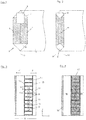
- FIGS. 3 to 6 the production of a bottom cover sheet is shown, which, associated with a bag after the FIG. 2 , generates a bag according to the invention.
- the FIG. 3 shows the base sheet 12, which has a width B which is at least twice as large as the desired width BD of the subsequent bottom cover sheet (see FIG. 7 ).
- the material of the base sheet 12 is preferably the material of the bag 1, so a fabric of plastic tape.
- the base sheet is in contrast to the piece of tubing preferably from one layer and may be coated on one side.
- the material in this case is impermeable to air.
- In the FIG. 3 are further breakthroughs 13 to see, which are preferably circular and soft preferably by means of at least one punching device can be introduced. The breakthroughs can therefore also be referred to as punched out. However, the breakthroughs with other devices such as a laser cutter can be produced.
- the openings 13 are arranged on the base sheet 12 so that they are later on the opening 11 of the soil. Only then can the air that passes through the opening 11 also pass through the openings 13.
- the forces which are symbolized by the arrows F and F '.
- the shape and size of the openings should be chosen so that the durability of the base sheet is limited only to a reasonable extent.
- break-through areas 14 are provided as possible.
- the base sheet 12 is already provided with traces of adhesive.
- These traces of adhesive comprise longitudinal traces of adhesive 15 and transversely extending traces of adhesive 16.
- Each two traces of adhesive 16 and portions of the two adhesive tracks 15 surround a breakthrough 13.
- Such an arrangement of traces of adhesive ensures a secure attachment of an air-permeable sheet or a sheet and prevents air and / or contents can escape laterally under the filter paper.
- the area enclosed by the traces of adhesive surface is preferably twice as large as the area of the openings 13. Also, the breakthrough-free areas 14th can be surrounded by adhesive traces.
- the traces can be applied in a simple manner by means of an applicator roll, which then for the sake of simplicity also remains in abutment-free regions against the base sheet 12. This applies in particular if several base sheets 12 are transported together, for example as a web.
- the FIG. 4 shows the base sheet 12 of the FIG. 3 , but with attached slip 17 made of air-permeable material, which forms the second layer of the later ground cover sheet.
- the slip 17 can be made contiguous, such as in the form of a train available. In the FIG. 4 this piece of paper is shown with a hatching.
- the adhesive tracks 15, 16, which are not visible per se, and the apertures 13 are nevertheless shown.
- the label 17 consists for example of coarse-pored filter paper, which allows very good air pass, but the contents retains. The filter paper per se can not absorb the forces F and F '. Stretchability, however, offers a great advantage.
- FIG. 4 the lateral portions 18 and 19 of the base sheet 12 are shown, wherein in the vicinity of one of the two outer edges, in the example shown in the vicinity of the edge of the portion 18, a further, longitudinal adhesive trace 20 is applied.
- the two lateral sections 18 and 19 are now turned around edges running in the x-direction so that their edges overlap and the adhesive track 20 lies between them. This is in the FIG. 5 shown.
- the now not visible adhesive trace 20 is shown here with broken lines. If the base sheets 12 used in a web present are the reshuffling of the hose formation, as it is known for example in the production of paper tubes for the production of paper bags.
- the lateral sections After the lateral sections have been turned over, at least the entire outer surface of the resulting bottom cover sheet 21 may be coated if a base sheet coated at least on one side has been used.
- the lateral areas which now form a third layer 22, have different functions. First, they protect the slip 17 from damage and moisture. In addition, they can be used as information carriers. For this purpose, prints can be applied to the basesheets 12 even before their processing. The already mentioned several times as an example coatings on fabric of plastic tapes are a well-suited substrate for printing. An example of a print motif 23 is shown.
- FIG. 6 now shows a rear view of the generated cover sheet 21.
- a hatched area representing a part 24 provided with a release agent.
- a release agent is particularly advantageous when the bottom cover sheet 21 is applied by means of a heat-induced joining method on the bag bottom. The bottom cover does not connect to the inner surfaces of the bag.
- a release agent is in this case a release coating, which can be applied to the processing of the base sheet 12 with a known printing method and by means of a printing device on this.
- the provided with the release agent surface 24 is preferably congruent with the opening 11 of the already folded trays.
- the surface 24 may also be slightly larger than the opening 11 to compensate for manufacturing inaccuracies.
- the label 17 is expediently also acted upon by a release agent or consists of a material which does not connect to the adhesive or joining process with the inner surfaces of the bag. This applies, for example, to paper in a heat-sealing process.
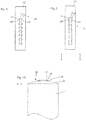
- FIG. 7 shows a portion of a finished bag 1, which includes the finished bag bottom 25, in which the bottom cover sheet 21 was applied, in particular sealed. Dotted is the position of the apertures 13 shown in phantom line, the position of the tabs 4 and 5. This view illustrates that the openings 13 are in the region of the opening 11, which is limited by the tabs 4 and 5 substantially. A broken line shows the position of the valve 8, the edge of which also forms a boundary for the opening 11. The print motif 23 is not shown in this figure.
- FIG. 8 shows the top view of another bottom cover sheet 21, which is useful for a further embodiment of the invention. Visible is the third layer 22 of the bottom cover sheet 21. With a broken line, the openings 13 of the first layer are shown, which in the embodiment of FIG. 8 are circular. Concentric to this circumferential line of the apertures 13 arcuate cuts 26 are provided. By means of these cuts 26 tabs 27 are generated, which can now be lifted off from the third layer, so that the slip 17 can come into direct contact with the environment. The passing through the paper 17 passing air can thus be delivered in a simple way directly to the environment. Shown is that the cuts 26 have a distance from the circumferential lines of the openings.
- Each incision may occupy a certain angular range, which may be 135 degrees, for example. It follows that the angular range in which the tabs are attached to the third layer is two times 45 degrees. If the tabs are raised, there is thus a ventilation channel 28, which points to the outside, ie the air escapes to the outside (see arrows 29 in FIG. 10 ) and thus away from the ground center line. In the course of the ventilation channel, the ventilation cross-section is thus steadily larger, which significantly improves the ventilation.
- FIG. 9 shows a further embodiment of the invention.
- the openings 13 are shown as squares.
- the cuts 26 are formed angular. Shown again is an example in which the cuts 26, the openings 13 surrounded with some distance.
- FIG. 10 shows the side view of a bag 1 at the moment in which the registered air exits.
- the ground cover sheet 21 bulges outwards.
- the tabs 27 are pressed outwards, so that the venting channels 28 open. The air can now, roughly in the direction of arrows 29, escape.
- the present application discloses a variety of features and embodiments related to methods, products, and devices of the present invention. Although various features and embodiments are disclosed only in connection with certain other features and embodiments, all features and embodiments are to be considered as freely combinable with one another without the need for explicit mention of these feature combinations.
Landscapes
- Engineering & Computer Science (AREA)
- Mechanical Engineering (AREA)
- Making Paper Articles (AREA)
- Bag Frames (AREA)
- Orthopedics, Nursing, And Contraception (AREA)
Claims (15)
- Procédé de fabrication de sacs à partir de pièces tubulaires (1), qui comprennent un matériau en matière plastique, dans lequel- un rectangle de fond (2), qui comprend des rabats (4, 5), est plié au moins à une région d'extrémité autour d'une ligne de pliage (3) avec formation de poches triangulaires (6, 7),- des parties des rabats (4, 5) du rectangle de fond (2) sont repliées,- une feuille de couverture de fond (21) est déposée au moins sur des régions des rabats (4, 5) du rectangle de fond (2) et/ou sur des régions des poches triangulaires (6, 7) et assemblée à celles-ci,- on utilise une feuille de couverture de fond (21), qui comprend au moins partiellement du matériau perméable à l'air,- dans lequel la feuille de couverture de fond (21) comprend au moins deux couches, dont une couche comprend du matériau perméable à l'air,- dans lequel la première couche tournée vers les rabats (4, 5) et/ou les poches triangulaires (6, 7) se compose de matériau imperméable à l'air et dans laquelle des passages (13) sont pratiqués,- dans lequel la deuxième couche comprend du matériau perméable à l'air et est appliquée sur la première couche, etcaractérisé en ce que- la deuxième couche est assemblée à la première couche, et- on utilise pour l'assemblage des cordons d'assemblage, par lesquels les passages (13) sont complètement entourés.
- Procédé selon la revendication 1, caractérisé en ce que les rabats (4, 5) sont repliés de telle manière que les bords des rabats (4, 5) et les bords des poches triangulaires (6, 7) et/ou un bord d'une feuille de soupape entourent une ouverture (11), à travers laquelle l'intérieur du sac est accessible.
- Procédé selon l'une quelconque des revendications précédentes, caractérisé en ce que chaque surface entourée par les cordons de colle est au moins deux fois plus grande que la surface du passage correspondant (13).
- Procédé selon l'une quelconque des revendications précédentes, caractérisé en ce que l'on dépose une troisième couche sur la deuxième couche et on l'assemble à la première et/ou à la deuxième couche.
- Procédé selon la revendication précédente, caractérisé en ce que l'on pratique des entailles (26) dans la troisième couche, au moins à proximité de passages (13) de la première couche.
- Procédé selon la revendication précédente, caractérisé en ce que l'on réalise les entailles en forme d'arc de cercle.
- Procédé selon la revendication précédente, caractérisé en ce que l'on utilise un tube fabriqué sans soudure, qui comprend un tissu circulaire en bandelettes de matière plastique étirées, dans lequel le tissu circulaire est revêtu d'une matière plastique.
- Procédé selon l'une quelconque des revendications précédentes, caractérisé en ce que la feuille de couverture de fond (21) est fixée sur la région de fond du sac par un procédé d'assemblage à chaud.
- Procédé selon l'une quelconque des revendications précédentes, caractérisé en ce qu'avant la fixation de la feuille de couverture de fond (21), on applique un moyen de séparation sur la région de fond du sac sur les régions du côté de la feuille de couverture de fond (21) tournées vers le fond du sac, qui recouvrent l'ouverture (11).
- Sac (1), qui comprend un matériau de matière plastique et comprenant les caractéristiques suivantes:- un corps tubulaire,- un fond plié au moins sur une extrémité du corps tubulaire, qui comprend des poches triangulaires (6, 7) et des rabats (4, 5) recouvrant au moins partiellement ces poches triangulaires (6, 7),- une feuille de couverture de fond (21), avec laquelle le fond est recouvert, dans lequel la feuille de couverture de fond (21) est déposée au moins sur des régions des rabats (4, 5) et/ou sur des régions des poches triangulaires (6, 7) et est assemblée à celles-ci, dans lequel la feuille de couverture de fond (21) comprend au moins partiellement du matériau perméable à l'air,- dans lequel la feuille de couverture de fond (21) comprend au moins deux couches, dont une couche comprend du matériau perméable à l'air, dans lequel la première couche, tournée vers les rabats (4, 5) et/ou les poches triangulaires (6, 7), comprend du matériau de matière plastique et des passages comme par exemple des découpes,caractérisé en ce que la deuxième couche est collée sur la première couche au moyen de cordons de colle, par lesquels les passages (13) sont complètement entourés.
- Sac (1) selon la revendication précédente, caractérisé en ce que les rabats (4, 5) sont repliés de telle manière que les bords des rabats (4, 5) et les bords des poches triangulaires (6, 7) et/ou le bord d'une feuille de soupape entourent une ouverture (11), à travers laquelle l'intérieur du sac (1) est accessible.
- Sac (1) selon une des deux revendications précédentes, caractérisé en ce que la deuxième couche est perméable à l'air et est collée sur la première couche.
- Sac (1) selon une des trois revendications précédentes, caractérisé en ce que chaque surface entourée par les cordons de colle est au moins deux fois plus grande que la surface du passage correspondant (13).
- Sac (1) selon une des quatre revendications précédentes, caractérisé en ce qu'une troisième couche est appliquée sur la deuxième couche et est assemblée à la première et/ou à la deuxième couche.
- Sac (1) selon la revendication précédente, caractérisé en ce que la troisième couche comporte des entailles (26) au moins à proximité des passages (13) de la première couche.
Priority Applications (1)
| Application Number | Priority Date | Filing Date | Title |
|---|---|---|---|
| EP11743555.2A EP2608954B1 (fr) | 2010-08-25 | 2011-08-15 | Sac et procédé de fabrication de sacs |
Applications Claiming Priority (5)
| Application Number | Priority Date | Filing Date | Title |
|---|---|---|---|
| US34458110P | 2010-08-25 | 2010-08-25 | |
| DE102010039770A DE102010039770A1 (de) | 2010-08-25 | 2010-08-25 | Sack sowie Verfahren und Vorrichtung zur Herstellung von Säcken |
| EP10189481 | 2010-10-29 | ||
| PCT/EP2011/064004 WO2012025413A2 (fr) | 2010-08-25 | 2011-08-15 | Sac, procédé et dispositif de fabrication de sacs |
| EP11743555.2A EP2608954B1 (fr) | 2010-08-25 | 2011-08-15 | Sac et procédé de fabrication de sacs |
Publications (2)
| Publication Number | Publication Date |
|---|---|
| EP2608954A2 EP2608954A2 (fr) | 2013-07-03 |
| EP2608954B1 true EP2608954B1 (fr) | 2017-03-15 |
Family
ID=45723850
Family Applications (1)
| Application Number | Title | Priority Date | Filing Date |
|---|---|---|---|
| EP11743555.2A Not-in-force EP2608954B1 (fr) | 2010-08-25 | 2011-08-15 | Sac et procédé de fabrication de sacs |
Country Status (4)
| Country | Link |
|---|---|
| US (1) | US9205957B2 (fr) |
| EP (1) | EP2608954B1 (fr) |
| BR (1) | BR112013004340A2 (fr) |
| WO (1) | WO2012025413A2 (fr) |
Families Citing this family (10)
| Publication number | Priority date | Publication date | Assignee | Title |
|---|---|---|---|---|
| EP3269539B1 (fr) * | 2016-07-14 | 2019-02-20 | Starlinger & Co. Gesellschaft m.b.H. | Dispositif destiné à ouvrir une zone d'extrémité d'un corps de sachet tubulaire |
| DE202017001357U1 (de) * | 2017-03-13 | 2018-06-14 | Dy-Pack Verpackungen Gustav Dyckerhoff Gmbh | Mehrlagiger Ventilsack |
| CN109228525B (zh) * | 2018-08-30 | 2024-04-16 | 浙江正威机械有限公司 | 塑料立体袋片料的底部补片对折装置 |
| KR101941897B1 (ko) * | 2018-12-18 | 2019-04-12 | 최상필 | 분해성 필름을 이용한 교체형 음식물 거름망 제조장치 및 그 제조방법 |
| US12303371B2 (en) | 2023-01-25 | 2025-05-20 | The Procter & Gamble Company | Recyclable packages |
| WO2022026783A1 (fr) | 2020-07-30 | 2022-02-03 | The Procter & Gamble Company | Matériau d'emballage d'article absorbant avec fibres naturelles |
| EP4188827A1 (fr) * | 2020-07-30 | 2023-06-07 | The Procter & Gamble Company | Matériau d'emballage d'article absorbant avec des fibres naturelles |
| JP2023537264A (ja) | 2020-07-30 | 2023-08-31 | ザ プロクター アンド ギャンブル カンパニー | 天然繊維を含む吸収性物品パッケージ材料 |
| CN116249657B (zh) | 2020-10-09 | 2025-09-05 | 宝洁公司 | 具有天然纤维和打开特征部的吸收制品包装件 |
| FR3125803B1 (fr) | 2021-07-30 | 2026-02-20 | Procter & Gamble | Conditionnement scellé d'articles absorbants avec des fibres naturelles |
Family Cites Families (15)
| Publication number | Priority date | Publication date | Assignee | Title |
|---|---|---|---|---|
| US333523A (en) * | 1886-01-05 | honiss | ||
| US1121080A (en) | 1912-05-11 | 1914-12-15 | Sterling Elliott | Machine for making stencil-strips. |
| US1867399A (en) | 1931-06-11 | 1932-07-12 | Harmon P Elliott | Method of making stencil frames |
| DE1761327A1 (de) | 1968-05-04 | 1971-07-22 | Hans Lissner | Entlueftbarer sackartiger Behaelter und Verfahren zu dessen Herstellung |
| US3853040A (en) * | 1972-05-02 | 1974-12-10 | Windmoeller & Hoelscher | Process and apparatus for making crossed-end bags from weldable material |
| DE2323726A1 (de) * | 1973-05-10 | 1974-11-21 | Windmoeller & Hoelscher | Kreuzbodensack |
| US3924521A (en) * | 1974-05-22 | 1975-12-09 | Violet M Hanson | Method for forming flat bottom plastic bags |
| DE8337443U1 (de) * | 1983-12-28 | 1984-02-02 | Bischof Und Klein Gmbh & Co, 4540 Lengerich | Ventilsack aus Kunststoffolie |
| DE4014600A1 (de) * | 1990-05-07 | 1991-11-14 | Windmoeller & Hoelscher | Verfahren zur herstellung eines sacks oder beutels mit im gefuellten zustand rechteckigem boden und angesetztem griffteil |
| DE4242178A1 (de) | 1992-12-15 | 1994-06-16 | Goetze Nord West Verpackung | Verpackungsbeutel aus Papier oder Kunststoff sowie Verfahren zu seiner Herstellung |
| DE59601648D1 (de) * | 1995-10-02 | 1999-05-20 | Korsnaes Wilhelmstal Gmbh Papi | Entlüftbarer Kreuzboden-Ventilsack |
| DE102006004291A1 (de) | 2006-01-31 | 2007-08-09 | Windmöller & Hölscher Kg | Sack und Verfahren zur Herstellung desselben |
| DE102008017446A1 (de) * | 2008-04-03 | 2009-10-15 | Windmöller & Hölscher Kg | Vorrichtung und Verfahren zur Herstellung von Säcken |
| DE102008017442B4 (de) | 2008-04-03 | 2013-01-17 | Windmöller & Hölscher Kg | Vorrichtung und Verfahren zur Herstellung von Säcken, welche Gewebe aus gereckten Kunststoffbändchen umfassen |
| DE202009007915U1 (de) | 2009-06-05 | 2009-08-20 | Worff, Herwig, Dipl.-Ing. | Sack |
-
2011
- 2011-08-15 BR BR112013004340A patent/BR112013004340A2/pt not_active IP Right Cessation
- 2011-08-15 EP EP11743555.2A patent/EP2608954B1/fr not_active Not-in-force
- 2011-08-15 WO PCT/EP2011/064004 patent/WO2012025413A2/fr not_active Ceased
- 2011-08-15 US US13/818,776 patent/US9205957B2/en not_active Expired - Fee Related
Also Published As
| Publication number | Publication date |
|---|---|
| BR112013004340A2 (pt) | 2016-05-31 |
| WO2012025413A2 (fr) | 2012-03-01 |
| US9205957B2 (en) | 2015-12-08 |
| US20130156352A1 (en) | 2013-06-20 |
| WO2012025413A3 (fr) | 2012-05-10 |
| EP2608954A2 (fr) | 2013-07-03 |
Similar Documents
| Publication | Publication Date | Title |
|---|---|---|
| EP2608954B1 (fr) | Sac et procédé de fabrication de sacs | |
| DE4303894C2 (de) | Verfahren zum Herstellen eines mit einem Schüttgut füllbaren, im Leerzustand flachen Packmittel | |
| EP2464510B1 (fr) | Procédé de production d'un sac ou sachet à l'aide d'une voile de matière plastique | |
| EP2004505B1 (fr) | Emballage pour matieres en vrac, notamment sac en feuille de plastique | |
| DE2254640B2 (de) | Flach zusammenlegbarer beutel | |
| DE202005003539U1 (de) | Papiersack | |
| EP1910176B1 (fr) | Sac pouvant etre aere | |
| EP2504150B1 (fr) | Procédé pour fermer un corps de sac | |
| EP2752371B1 (fr) | Sac doté d'un dispositif de purge d'air | |
| EP2792609A1 (fr) | Récipient d'emballage pour produits en vrac | |
| EP0767105B1 (fr) | Sac à valve à fond croisé ventilé | |
| EP3519312B1 (fr) | Sac à valve ainsi que procédé et système de fabrication d'un sac à valve | |
| DE102010039770A1 (de) | Sack sowie Verfahren und Vorrichtung zur Herstellung von Säcken | |
| EP2186742A1 (fr) | Sac d'emballage en film, en particulier pour matière de remplissage poudreuse et poussiéreuse | |
| DE102014206792A1 (de) | Packmittel sowie Verfahren und Vorrichtung zur Herstellung eines Packmittels | |
| DE102009057246A1 (de) | Sack mit Membrane | |
| EP3630634B1 (fr) | Sac à valve se prêtant au vide | |
| DE102008021505A1 (de) | Verfahren zum Herstellen eines Verpackungsbehälters | |
| WO2021043908A1 (fr) | Sac à fond croisé en papier couché et procédé de production d'un sac à fond croisé | |
| DE102008035700A1 (de) | Verpackung aus Kunststofffolie | |
| EP1424293B1 (fr) | Récipient d' emballage en plastique | |
| DE202023103791U1 (de) | Kunststoffschlauch zur Herstellung von Verpackungsbehältnissen mit integrierter Entlüftung | |
| DE102021127352A1 (de) | Verfahren und System zur Herstellung eines Standbodenbeutels | |
| DE102012107407A1 (de) | Zuschnitt aus einem Folienmaterial, wie beispielsweise einem Laminat, zum Herstellen einer Verpackung sowie eine aus einem solchen Zuschnitt hergestellte Verpackung | |
| DE202008014263U1 (de) | Verpackungssack zur Verpackung von Packgut |
Legal Events
| Date | Code | Title | Description |
|---|---|---|---|
| PUAI | Public reference made under article 153(3) epc to a published international application that has entered the european phase |
Free format text: ORIGINAL CODE: 0009012 |
|
| 17P | Request for examination filed |
Effective date: 20130325 |
|
| AK | Designated contracting states |
Kind code of ref document: A2 Designated state(s): AL AT BE BG CH CY CZ DE DK EE ES FI FR GB GR HR HU IE IS IT LI LT LU LV MC MK MT NL NO PL PT RO RS SE SI SK SM TR |
|
| DAX | Request for extension of the european patent (deleted) | ||
| 17Q | First examination report despatched |
Effective date: 20151218 |
|
| GRAP | Despatch of communication of intention to grant a patent |
Free format text: ORIGINAL CODE: EPIDOSNIGR1 |
|
| RIC1 | Information provided on ipc code assigned before grant |
Ipc: B65D 33/16 20060101ALI20160825BHEP Ipc: B31B 29/00 20060101ALI20160825BHEP Ipc: B65D 33/01 20060101ALI20160825BHEP Ipc: B65D 30/18 20060101ALI20160825BHEP Ipc: B31B 1/84 20060101AFI20160825BHEP |
|
| INTG | Intention to grant announced |
Effective date: 20160929 |
|
| GRAS | Grant fee paid |
Free format text: ORIGINAL CODE: EPIDOSNIGR3 |
|
| REG | Reference to a national code |
Ref country code: DE Ref legal event code: R079 Ref document number: 502011011847 Country of ref document: DE Free format text: PREVIOUS MAIN CLASS: B31B0029000000 Ipc: B31B0070850000 |
|
| GRAA | (expected) grant |
Free format text: ORIGINAL CODE: 0009210 |
|
| RIC1 | Information provided on ipc code assigned before grant |
Ipc: B65D 33/01 20060101ALI20170202BHEP Ipc: B31B 160/20 20170101ALI20170202BHEP Ipc: B31B 70/85 20170101AFI20170202BHEP Ipc: B65D 30/18 20060101ALI20170202BHEP Ipc: B65D 33/16 20060101ALI20170202BHEP |
|
| AK | Designated contracting states |
Kind code of ref document: B1 Designated state(s): AL AT BE BG CH CY CZ DE DK EE ES FI FR GB GR HR HU IE IS IT LI LT LU LV MC MK MT NL NO PL PT RO RS SE SI SK SM TR |
|
| REG | Reference to a national code |
Ref country code: CH Ref legal event code: EP Ref country code: GB Ref legal event code: FG4D Free format text: NOT ENGLISH |
|
| REG | Reference to a national code |
Ref country code: IE Ref legal event code: FG4D Free format text: LANGUAGE OF EP DOCUMENT: GERMAN |
|
| REG | Reference to a national code |
Ref country code: AT Ref legal event code: REF Ref document number: 875105 Country of ref document: AT Kind code of ref document: T Effective date: 20170415 |
|
| REG | Reference to a national code |
Ref country code: DE Ref legal event code: R096 Ref document number: 502011011847 Country of ref document: DE |
|
| REG | Reference to a national code |
Ref country code: NL Ref legal event code: MP Effective date: 20170315 |
|
| REG | Reference to a national code |
Ref country code: LT Ref legal event code: MG4D |
|
| PG25 | Lapsed in a contracting state [announced via postgrant information from national office to epo] |
Ref country code: HR Free format text: LAPSE BECAUSE OF FAILURE TO SUBMIT A TRANSLATION OF THE DESCRIPTION OR TO PAY THE FEE WITHIN THE PRESCRIBED TIME-LIMIT Effective date: 20170315 Ref country code: GR Free format text: LAPSE BECAUSE OF FAILURE TO SUBMIT A TRANSLATION OF THE DESCRIPTION OR TO PAY THE FEE WITHIN THE PRESCRIBED TIME-LIMIT Effective date: 20170616 Ref country code: FI Free format text: LAPSE BECAUSE OF FAILURE TO SUBMIT A TRANSLATION OF THE DESCRIPTION OR TO PAY THE FEE WITHIN THE PRESCRIBED TIME-LIMIT Effective date: 20170315 Ref country code: LT Free format text: LAPSE BECAUSE OF FAILURE TO SUBMIT A TRANSLATION OF THE DESCRIPTION OR TO PAY THE FEE WITHIN THE PRESCRIBED TIME-LIMIT Effective date: 20170315 Ref country code: NO Free format text: LAPSE BECAUSE OF FAILURE TO SUBMIT A TRANSLATION OF THE DESCRIPTION OR TO PAY THE FEE WITHIN THE PRESCRIBED TIME-LIMIT Effective date: 20170615 |
|
| PG25 | Lapsed in a contracting state [announced via postgrant information from national office to epo] |
Ref country code: BG Free format text: LAPSE BECAUSE OF FAILURE TO SUBMIT A TRANSLATION OF THE DESCRIPTION OR TO PAY THE FEE WITHIN THE PRESCRIBED TIME-LIMIT Effective date: 20170615 Ref country code: RS Free format text: LAPSE BECAUSE OF FAILURE TO SUBMIT A TRANSLATION OF THE DESCRIPTION OR TO PAY THE FEE WITHIN THE PRESCRIBED TIME-LIMIT Effective date: 20170315 Ref country code: SE Free format text: LAPSE BECAUSE OF FAILURE TO SUBMIT A TRANSLATION OF THE DESCRIPTION OR TO PAY THE FEE WITHIN THE PRESCRIBED TIME-LIMIT Effective date: 20170315 Ref country code: LV Free format text: LAPSE BECAUSE OF FAILURE TO SUBMIT A TRANSLATION OF THE DESCRIPTION OR TO PAY THE FEE WITHIN THE PRESCRIBED TIME-LIMIT Effective date: 20170315 |
|
| PG25 | Lapsed in a contracting state [announced via postgrant information from national office to epo] |
Ref country code: NL Free format text: LAPSE BECAUSE OF FAILURE TO SUBMIT A TRANSLATION OF THE DESCRIPTION OR TO PAY THE FEE WITHIN THE PRESCRIBED TIME-LIMIT Effective date: 20170315 |
|
| PG25 | Lapsed in a contracting state [announced via postgrant information from national office to epo] |
Ref country code: CZ Free format text: LAPSE BECAUSE OF FAILURE TO SUBMIT A TRANSLATION OF THE DESCRIPTION OR TO PAY THE FEE WITHIN THE PRESCRIBED TIME-LIMIT Effective date: 20170315 Ref country code: SK Free format text: LAPSE BECAUSE OF FAILURE TO SUBMIT A TRANSLATION OF THE DESCRIPTION OR TO PAY THE FEE WITHIN THE PRESCRIBED TIME-LIMIT Effective date: 20170315 Ref country code: EE Free format text: LAPSE BECAUSE OF FAILURE TO SUBMIT A TRANSLATION OF THE DESCRIPTION OR TO PAY THE FEE WITHIN THE PRESCRIBED TIME-LIMIT Effective date: 20170315 Ref country code: ES Free format text: LAPSE BECAUSE OF FAILURE TO SUBMIT A TRANSLATION OF THE DESCRIPTION OR TO PAY THE FEE WITHIN THE PRESCRIBED TIME-LIMIT Effective date: 20170315 Ref country code: RO Free format text: LAPSE BECAUSE OF FAILURE TO SUBMIT A TRANSLATION OF THE DESCRIPTION OR TO PAY THE FEE WITHIN THE PRESCRIBED TIME-LIMIT Effective date: 20170315 |
|
| PG25 | Lapsed in a contracting state [announced via postgrant information from national office to epo] |
Ref country code: PT Free format text: LAPSE BECAUSE OF FAILURE TO SUBMIT A TRANSLATION OF THE DESCRIPTION OR TO PAY THE FEE WITHIN THE PRESCRIBED TIME-LIMIT Effective date: 20170717 Ref country code: PL Free format text: LAPSE BECAUSE OF FAILURE TO SUBMIT A TRANSLATION OF THE DESCRIPTION OR TO PAY THE FEE WITHIN THE PRESCRIBED TIME-LIMIT Effective date: 20170315 Ref country code: IS Free format text: LAPSE BECAUSE OF FAILURE TO SUBMIT A TRANSLATION OF THE DESCRIPTION OR TO PAY THE FEE WITHIN THE PRESCRIBED TIME-LIMIT Effective date: 20170715 Ref country code: SM Free format text: LAPSE BECAUSE OF FAILURE TO SUBMIT A TRANSLATION OF THE DESCRIPTION OR TO PAY THE FEE WITHIN THE PRESCRIBED TIME-LIMIT Effective date: 20170315 |
|
| REG | Reference to a national code |
Ref country code: DE Ref legal event code: R097 Ref document number: 502011011847 Country of ref document: DE |
|
| PLBE | No opposition filed within time limit |
Free format text: ORIGINAL CODE: 0009261 |
|
| STAA | Information on the status of an ep patent application or granted ep patent |
Free format text: STATUS: NO OPPOSITION FILED WITHIN TIME LIMIT |
|
| PG25 | Lapsed in a contracting state [announced via postgrant information from national office to epo] |
Ref country code: DK Free format text: LAPSE BECAUSE OF FAILURE TO SUBMIT A TRANSLATION OF THE DESCRIPTION OR TO PAY THE FEE WITHIN THE PRESCRIBED TIME-LIMIT Effective date: 20170315 |
|
| 26N | No opposition filed |
Effective date: 20171218 |
|
| PG25 | Lapsed in a contracting state [announced via postgrant information from national office to epo] |
Ref country code: SI Free format text: LAPSE BECAUSE OF FAILURE TO SUBMIT A TRANSLATION OF THE DESCRIPTION OR TO PAY THE FEE WITHIN THE PRESCRIBED TIME-LIMIT Effective date: 20170315 |
|
| REG | Reference to a national code |
Ref country code: DE Ref legal event code: R119 Ref document number: 502011011847 Country of ref document: DE |
|
| REG | Reference to a national code |
Ref country code: CH Ref legal event code: PL |
|
| PG25 | Lapsed in a contracting state [announced via postgrant information from national office to epo] |
Ref country code: MC Free format text: LAPSE BECAUSE OF FAILURE TO SUBMIT A TRANSLATION OF THE DESCRIPTION OR TO PAY THE FEE WITHIN THE PRESCRIBED TIME-LIMIT Effective date: 20170315 |
|
| GBPC | Gb: european patent ceased through non-payment of renewal fee |
Effective date: 20170815 |
|
| PG25 | Lapsed in a contracting state [announced via postgrant information from national office to epo] |
Ref country code: LI Free format text: LAPSE BECAUSE OF NON-PAYMENT OF DUE FEES Effective date: 20170831 Ref country code: CH Free format text: LAPSE BECAUSE OF NON-PAYMENT OF DUE FEES Effective date: 20170831 |
|
| REG | Reference to a national code |
Ref country code: FR Ref legal event code: ST Effective date: 20180430 |
|
| REG | Reference to a national code |
Ref country code: IE Ref legal event code: MM4A |
|
| REG | Reference to a national code |
Ref country code: BE Ref legal event code: MM Effective date: 20170831 |
|
| PG25 | Lapsed in a contracting state [announced via postgrant information from national office to epo] |
Ref country code: LU Free format text: LAPSE BECAUSE OF NON-PAYMENT OF DUE FEES Effective date: 20170815 |
|
| PG25 | Lapsed in a contracting state [announced via postgrant information from national office to epo] |
Ref country code: IE Free format text: LAPSE BECAUSE OF NON-PAYMENT OF DUE FEES Effective date: 20170815 Ref country code: DE Free format text: LAPSE BECAUSE OF NON-PAYMENT OF DUE FEES Effective date: 20180301 Ref country code: GB Free format text: LAPSE BECAUSE OF NON-PAYMENT OF DUE FEES Effective date: 20170815 |
|
| PG25 | Lapsed in a contracting state [announced via postgrant information from national office to epo] |
Ref country code: IT Free format text: LAPSE BECAUSE OF NON-PAYMENT OF DUE FEES Effective date: 20170815 Ref country code: FR Free format text: LAPSE BECAUSE OF NON-PAYMENT OF DUE FEES Effective date: 20170831 Ref country code: BE Free format text: LAPSE BECAUSE OF NON-PAYMENT OF DUE FEES Effective date: 20170831 |
|
| PG25 | Lapsed in a contracting state [announced via postgrant information from national office to epo] |
Ref country code: MT Free format text: LAPSE BECAUSE OF FAILURE TO SUBMIT A TRANSLATION OF THE DESCRIPTION OR TO PAY THE FEE WITHIN THE PRESCRIBED TIME-LIMIT Effective date: 20170315 |
|
| REG | Reference to a national code |
Ref country code: AT Ref legal event code: MM01 Ref document number: 875105 Country of ref document: AT Kind code of ref document: T Effective date: 20170815 |
|
| PG25 | Lapsed in a contracting state [announced via postgrant information from national office to epo] |
Ref country code: AT Free format text: LAPSE BECAUSE OF NON-PAYMENT OF DUE FEES Effective date: 20170815 |
|
| PG25 | Lapsed in a contracting state [announced via postgrant information from national office to epo] |
Ref country code: HU Free format text: LAPSE BECAUSE OF FAILURE TO SUBMIT A TRANSLATION OF THE DESCRIPTION OR TO PAY THE FEE WITHIN THE PRESCRIBED TIME-LIMIT; INVALID AB INITIO Effective date: 20110815 |
|
| PG25 | Lapsed in a contracting state [announced via postgrant information from national office to epo] |
Ref country code: CY Free format text: LAPSE BECAUSE OF NON-PAYMENT OF DUE FEES Effective date: 20170315 |
|
| PG25 | Lapsed in a contracting state [announced via postgrant information from national office to epo] |
Ref country code: MK Free format text: LAPSE BECAUSE OF FAILURE TO SUBMIT A TRANSLATION OF THE DESCRIPTION OR TO PAY THE FEE WITHIN THE PRESCRIBED TIME-LIMIT Effective date: 20170315 |
|
| PG25 | Lapsed in a contracting state [announced via postgrant information from national office to epo] |
Ref country code: TR Free format text: LAPSE BECAUSE OF FAILURE TO SUBMIT A TRANSLATION OF THE DESCRIPTION OR TO PAY THE FEE WITHIN THE PRESCRIBED TIME-LIMIT Effective date: 20170315 |
|
| PG25 | Lapsed in a contracting state [announced via postgrant information from national office to epo] |
Ref country code: AL Free format text: LAPSE BECAUSE OF FAILURE TO SUBMIT A TRANSLATION OF THE DESCRIPTION OR TO PAY THE FEE WITHIN THE PRESCRIBED TIME-LIMIT Effective date: 20170315 |