EP2641622B1 - Méthode de production d'une matière de transplantation osseuse - Google Patents
Méthode de production d'une matière de transplantation osseuse Download PDFInfo
- Publication number
- EP2641622B1 EP2641622B1 EP11836546.9A EP11836546A EP2641622B1 EP 2641622 B1 EP2641622 B1 EP 2641622B1 EP 11836546 A EP11836546 A EP 11836546A EP 2641622 B1 EP2641622 B1 EP 2641622B1
- Authority
- EP
- European Patent Office
- Prior art keywords
- tooth
- sonication
- vacuum
- treated
- solution
- Prior art date
- Legal status (The legal status is an assumption and is not a legal conclusion. Google has not performed a legal analysis and makes no representation as to the accuracy of the status listed.)
- Active
Links
Images






Classifications
-
- A—HUMAN NECESSITIES
- A61—MEDICAL OR VETERINARY SCIENCE; HYGIENE
- A61L—METHODS OR APPARATUS FOR STERILISING MATERIALS OR OBJECTS IN GENERAL; DISINFECTION, STERILISATION OR DEODORISATION OF AIR; CHEMICAL ASPECTS OF BANDAGES, DRESSINGS, ABSORBENT PADS OR SURGICAL ARTICLES; MATERIALS FOR BANDAGES, DRESSINGS, ABSORBENT PADS OR SURGICAL ARTICLES
- A61L27/00—Materials for grafts or prostheses or for coating grafts or prostheses
- A61L27/36—Materials for grafts or prostheses or for coating grafts or prostheses containing ingredients of undetermined constitution or reaction products thereof, e.g. transplant tissue, natural bone, extracellular matrix
- A61L27/3683—Materials for grafts or prostheses or for coating grafts or prostheses containing ingredients of undetermined constitution or reaction products thereof, e.g. transplant tissue, natural bone, extracellular matrix subjected to a specific treatment prior to implantation, e.g. decellularising, demineralising, grinding, cellular disruption/non-collagenous protein removal, anti-calcification, crosslinking, supercritical fluid extraction, enzyme treatment
- A61L27/3691—Materials for grafts or prostheses or for coating grafts or prostheses containing ingredients of undetermined constitution or reaction products thereof, e.g. transplant tissue, natural bone, extracellular matrix subjected to a specific treatment prior to implantation, e.g. decellularising, demineralising, grinding, cellular disruption/non-collagenous protein removal, anti-calcification, crosslinking, supercritical fluid extraction, enzyme treatment characterised by physical conditions of the treatment, e.g. applying a compressive force to the composition, pressure cycles, ultrasonic/sonication or microwave treatment, lyophilisation
-
- A—HUMAN NECESSITIES
- A61—MEDICAL OR VETERINARY SCIENCE; HYGIENE
- A61L—METHODS OR APPARATUS FOR STERILISING MATERIALS OR OBJECTS IN GENERAL; DISINFECTION, STERILISATION OR DEODORISATION OF AIR; CHEMICAL ASPECTS OF BANDAGES, DRESSINGS, ABSORBENT PADS OR SURGICAL ARTICLES; MATERIALS FOR BANDAGES, DRESSINGS, ABSORBENT PADS OR SURGICAL ARTICLES
- A61L27/00—Materials for grafts or prostheses or for coating grafts or prostheses
- A61L27/36—Materials for grafts or prostheses or for coating grafts or prostheses containing ingredients of undetermined constitution or reaction products thereof, e.g. transplant tissue, natural bone, extracellular matrix
-
- A—HUMAN NECESSITIES
- A61—MEDICAL OR VETERINARY SCIENCE; HYGIENE
- A61F—FILTERS IMPLANTABLE INTO BLOOD VESSELS; PROSTHESES; DEVICES PROVIDING PATENCY TO, OR PREVENTING COLLAPSING OF, TUBULAR STRUCTURES OF THE BODY, e.g. STENTS; ORTHOPAEDIC, NURSING OR CONTRACEPTIVE DEVICES; FOMENTATION; TREATMENT OR PROTECTION OF EYES OR EARS; BANDAGES, DRESSINGS OR ABSORBENT PADS; FIRST-AID KITS
- A61F2/00—Filters implantable into blood vessels; Prostheses, i.e. artificial substitutes or replacements for parts of the body; Appliances for connecting them with the body; Devices providing patency to, or preventing collapsing of, tubular structures of the body, e.g. stents
- A61F2/02—Prostheses implantable into the body
- A61F2/28—Bones
-
- A—HUMAN NECESSITIES
- A61—MEDICAL OR VETERINARY SCIENCE; HYGIENE
- A61L—METHODS OR APPARATUS FOR STERILISING MATERIALS OR OBJECTS IN GENERAL; DISINFECTION, STERILISATION OR DEODORISATION OF AIR; CHEMICAL ASPECTS OF BANDAGES, DRESSINGS, ABSORBENT PADS OR SURGICAL ARTICLES; MATERIALS FOR BANDAGES, DRESSINGS, ABSORBENT PADS OR SURGICAL ARTICLES
- A61L27/00—Materials for grafts or prostheses or for coating grafts or prostheses
- A61L27/36—Materials for grafts or prostheses or for coating grafts or prostheses containing ingredients of undetermined constitution or reaction products thereof, e.g. transplant tissue, natural bone, extracellular matrix
- A61L27/3604—Materials for grafts or prostheses or for coating grafts or prostheses containing ingredients of undetermined constitution or reaction products thereof, e.g. transplant tissue, natural bone, extracellular matrix characterised by the human or animal origin of the biological material, e.g. hair, fascia, fish scales, silk, shellac, pericardium, pleura, renal tissue, amniotic membrane, parenchymal tissue, fetal tissue, muscle tissue, fat tissue, enamel
-
- A—HUMAN NECESSITIES
- A61—MEDICAL OR VETERINARY SCIENCE; HYGIENE
- A61L—METHODS OR APPARATUS FOR STERILISING MATERIALS OR OBJECTS IN GENERAL; DISINFECTION, STERILISATION OR DEODORISATION OF AIR; CHEMICAL ASPECTS OF BANDAGES, DRESSINGS, ABSORBENT PADS OR SURGICAL ARTICLES; MATERIALS FOR BANDAGES, DRESSINGS, ABSORBENT PADS OR SURGICAL ARTICLES
- A61L27/00—Materials for grafts or prostheses or for coating grafts or prostheses
- A61L27/36—Materials for grafts or prostheses or for coating grafts or prostheses containing ingredients of undetermined constitution or reaction products thereof, e.g. transplant tissue, natural bone, extracellular matrix
- A61L27/3604—Materials for grafts or prostheses or for coating grafts or prostheses containing ingredients of undetermined constitution or reaction products thereof, e.g. transplant tissue, natural bone, extracellular matrix characterised by the human or animal origin of the biological material, e.g. hair, fascia, fish scales, silk, shellac, pericardium, pleura, renal tissue, amniotic membrane, parenchymal tissue, fetal tissue, muscle tissue, fat tissue, enamel
- A61L27/3608—Bone, e.g. demineralised bone matrix [DBM], bone powder
-
- A—HUMAN NECESSITIES
- A61—MEDICAL OR VETERINARY SCIENCE; HYGIENE
- A61L—METHODS OR APPARATUS FOR STERILISING MATERIALS OR OBJECTS IN GENERAL; DISINFECTION, STERILISATION OR DEODORISATION OF AIR; CHEMICAL ASPECTS OF BANDAGES, DRESSINGS, ABSORBENT PADS OR SURGICAL ARTICLES; MATERIALS FOR BANDAGES, DRESSINGS, ABSORBENT PADS OR SURGICAL ARTICLES
- A61L27/00—Materials for grafts or prostheses or for coating grafts or prostheses
- A61L27/36—Materials for grafts or prostheses or for coating grafts or prostheses containing ingredients of undetermined constitution or reaction products thereof, e.g. transplant tissue, natural bone, extracellular matrix
- A61L27/3683—Materials for grafts or prostheses or for coating grafts or prostheses containing ingredients of undetermined constitution or reaction products thereof, e.g. transplant tissue, natural bone, extracellular matrix subjected to a specific treatment prior to implantation, e.g. decellularising, demineralising, grinding, cellular disruption/non-collagenous protein removal, anti-calcification, crosslinking, supercritical fluid extraction, enzyme treatment
-
- A—HUMAN NECESSITIES
- A61—MEDICAL OR VETERINARY SCIENCE; HYGIENE
- A61L—METHODS OR APPARATUS FOR STERILISING MATERIALS OR OBJECTS IN GENERAL; DISINFECTION, STERILISATION OR DEODORISATION OF AIR; CHEMICAL ASPECTS OF BANDAGES, DRESSINGS, ABSORBENT PADS OR SURGICAL ARTICLES; MATERIALS FOR BANDAGES, DRESSINGS, ABSORBENT PADS OR SURGICAL ARTICLES
- A61L27/00—Materials for grafts or prostheses or for coating grafts or prostheses
- A61L27/36—Materials for grafts or prostheses or for coating grafts or prostheses containing ingredients of undetermined constitution or reaction products thereof, e.g. transplant tissue, natural bone, extracellular matrix
- A61L27/3683—Materials for grafts or prostheses or for coating grafts or prostheses containing ingredients of undetermined constitution or reaction products thereof, e.g. transplant tissue, natural bone, extracellular matrix subjected to a specific treatment prior to implantation, e.g. decellularising, demineralising, grinding, cellular disruption/non-collagenous protein removal, anti-calcification, crosslinking, supercritical fluid extraction, enzyme treatment
- A61L27/3687—Materials for grafts or prostheses or for coating grafts or prostheses containing ingredients of undetermined constitution or reaction products thereof, e.g. transplant tissue, natural bone, extracellular matrix subjected to a specific treatment prior to implantation, e.g. decellularising, demineralising, grinding, cellular disruption/non-collagenous protein removal, anti-calcification, crosslinking, supercritical fluid extraction, enzyme treatment characterised by the use of chemical agents in the treatment, e.g. specific enzymes, detergents, capping agents, crosslinkers, anticalcification agents
-
- C—CHEMISTRY; METALLURGY
- C12—BIOCHEMISTRY; BEER; SPIRITS; WINE; VINEGAR; MICROBIOLOGY; ENZYMOLOGY; MUTATION OR GENETIC ENGINEERING
- C12N—MICROORGANISMS OR ENZYMES; COMPOSITIONS THEREOF; PROPAGATING, PRESERVING, OR MAINTAINING MICROORGANISMS; MUTATION OR GENETIC ENGINEERING; CULTURE MEDIA
- C12N13/00—Treatment of microorganisms or enzymes with electrical or wave energy, e.g. magnetism, sonic waves
-
- C—CHEMISTRY; METALLURGY
- C12—BIOCHEMISTRY; BEER; SPIRITS; WINE; VINEGAR; MICROBIOLOGY; ENZYMOLOGY; MUTATION OR GENETIC ENGINEERING
- C12N—MICROORGANISMS OR ENZYMES; COMPOSITIONS THEREOF; PROPAGATING, PRESERVING, OR MAINTAINING MICROORGANISMS; MUTATION OR GENETIC ENGINEERING; CULTURE MEDIA
- C12N5/00—Undifferentiated human, animal or plant cells, e.g. cell lines; Tissues; Cultivation or maintenance thereof; Culture media therefor
- C12N5/06—Animal cells or tissues; Human cells or tissues
- C12N5/0602—Vertebrate cells
-
- A—HUMAN NECESSITIES
- A61—MEDICAL OR VETERINARY SCIENCE; HYGIENE
- A61L—METHODS OR APPARATUS FOR STERILISING MATERIALS OR OBJECTS IN GENERAL; DISINFECTION, STERILISATION OR DEODORISATION OF AIR; CHEMICAL ASPECTS OF BANDAGES, DRESSINGS, ABSORBENT PADS OR SURGICAL ARTICLES; MATERIALS FOR BANDAGES, DRESSINGS, ABSORBENT PADS OR SURGICAL ARTICLES
- A61L2430/00—Materials or treatment for tissue regeneration
- A61L2430/02—Materials or treatment for tissue regeneration for reconstruction of bones; weight-bearing implants
-
- A—HUMAN NECESSITIES
- A61—MEDICAL OR VETERINARY SCIENCE; HYGIENE
- A61L—METHODS OR APPARATUS FOR STERILISING MATERIALS OR OBJECTS IN GENERAL; DISINFECTION, STERILISATION OR DEODORISATION OF AIR; CHEMICAL ASPECTS OF BANDAGES, DRESSINGS, ABSORBENT PADS OR SURGICAL ARTICLES; MATERIALS FOR BANDAGES, DRESSINGS, ABSORBENT PADS OR SURGICAL ARTICLES
- A61L2430/00—Materials or treatment for tissue regeneration
- A61L2430/40—Preparation and treatment of biological tissue for implantation, e.g. decellularisation, cross-linking
Definitions
- the present invention relates to a method for preparing a bone transplant material using hard body tissues such as extracted teeth or bones, and more particularly, to a method for producing a bone transplant material using an extracted own tooth of a person who has the same or a similar tooth thereof, and a bone transplant material prepared by the same.
- a bone transplant material generally includes an autogenous bone, a similar bone (of another person), a xenogenic bone (in general, cattle bones), a synthetic bone (calcium complex), and so forth.
- the autogenous bond containing cells, organic/inorganic materials and protein is the most preferable transplant material, however, this involves the drawback of potentially causing more damage.
- BMP bone morphogenetic protein
- the xenogenic bone involves a higher immune response, it uses only the inorganic material (calcium complex) without the organic material and shows deteriorated bone regeneration capability, compared to autogenous or similar bone.
- an invention described in Korean Patent Laid-Open Application No. 2010-040427 relates to a method for using a tooth of a patient requiring an implant surgery as a transplant material, which includes: extracting a tooth for the implant surgery; grinding it into powder; washing the ground tooth powder; removing water, fat and minerals from the washed tooth powder; freeze-drying the same; applying the freeze-dried tooth powder to an alveolar bone on which the implant surgery is conducted; and conducting the implant surgery on the alveolar bone.
- the above method entails a problem in that it takes about 10 days or more until a bone transplant material is prepared using the extracted tooth of the patient and the prepared bone transplant material can be practically utilized.
- Prior art document US 6 482 584 B1 discloses a method for preparation of a bone implant by using a cleaning solution or chemical reagent, like for instance ascorbic acid or hydrogen peroxide.
- the chemical treatment is carried out under vacuum sonication at a reduced pressure.
- WO 2004/049900 A2 teaches a method for producing a bone implant comprising: removing an immunologically reactive material by immersing molded cortical bone or teeth in a bath of an electrolyte solution where a suction apparatus and an ultrasonic washer are mounted.
- the ultrasonic washer has the function of generating several hundred thousand of bubbles per on second by a negative pressure phenomenon and a vibrating effect to separate and remove foreign substrates adhered to the substrate and destruct cells.
- Another object of the present invention is to provide a method for producing a bone transplant material, capable of preparing the transplant material from an extracted tooth on-site without moving the extracted tooth to another site ('transfer of the tooth'.
- a method for producing a bone transplant material includes using a chemical reagent to execute at least one chemical treatment of extracted teeth, wherein chemical treatment using a chemical reagent (hereinafter, referred to as 'chemical reagent treatment') is accompanied with sonication including vacuum sonication that provide irradiation by ultrasonic waves at a reduced pressure.
- 'chemical reagent treatment' chemical treatment using a chemical reagent
- the method comprises:
- the sonication may be conducted at an ultrasonic frequency ranging from 15 kHz to 40 kHz in terms of efficient demineralization and a possibility to prevent destruction of tissues.
- the vacuum sonication may be conducted at a vacuum pressure ranging from 1333.22 Pa (10 torr) to 93325.7 Pa (700 torr). More preferably, the vacuum sonication may be conducted at a vacuum pressure ranging from 13332.2 Pa (100 torr) to 79993.4 Pa 600(torr).
- the sonication conducted herein may include vacuum sonication to irradiate ultrasonic waves at a reduced pressure, non-vacuum sonication to irradiate ultrasonic waves without a reduced pressure condition, and further vacuum sonication to irradiate ultrasonic waves at a reduced pressure, in consecutive order.
- the chemical reagent treatment may be conducted in a range of room temperature to 60°C.
- a treatment using distilled water for other purposes except for washing may be further included in addition to the chemical reagent treatment, and the treatment using distilled water may be a method involving sonication.
- the method of the invention may further include: immersing the tooth treated by S4 in a PBS solution containing a protease inhibitor accompanying sonication, taking the tooth out of the solution and washing the same (step S5); immersing the tooth treated by S5 in a calcium chloride solution accompanying sonication, taking the tooth out of the solution and washing the same (step S6); and immersing the tooth treated by S6 in an EDTA solution accompanying sonication, taking the tooth out of the solution and washing the same (step S7).
- the method may further include: immersing the tooth treated by S7 in a lithium chloride solution accompanying sonication, taking the tooth out of the solution and washing the same (step S8); and immersing the tooth treated by S8 in distilled water accompanying sonication (step S9).
- the processed tooth may be stored at a room temperature after cold storage or freeze-drying, and if it is necessary, may be subjected to EO gas sterilization.
- a bone transplant material may be directly prepared on-site without an additional transfer of the tooth. Therefore, according to the method for producing a bone transplant material in one embodiment of the present invention, the extracted tooth may be refrigerated by immersing the tooth in sterile physiological saline, distilled water or ethanol, or otherwise, frozen and stored after removing the immersion solution.
- this process is preferably performed in a range of room temperature to 60 °C for 60 to 75 minutes.
- the immersion in each of steps S5, S6, S7 and S8, respectively is preferably performed in a range of room temperature to 60 °C for 5 to 10 minutes.
- the immersion in each of steps S5 and S7 may be performed under pH 7 to 8.
- the method may be performed on-site using the extracted tooth and may enable the above material without an additional transfer of the tooth.
- the method for producing a bone transplant material according to one embodiment of the present invention may further include cold storage of the tooth treated by S9 in a sterile condition.
- the method for producing a bone transplant material according to one embodiment of the present invention may further include freeze-drying of the tooth treated by S9 and storing the same at a room temperature, after cold storage of the tooth in a sterile condition or just after production of the bone transplant material.
- EO gas sterilization may be further included to conduct additional sterilization.
- the present invention provides a bone transplant material prepared by any one selected from the above methods.
- the method for producing a bone transplant material may suitably produce a bone transplant material by a chemical treatment of a hard body tissue, which is an extracted tooth, using a chemical reagent, wherein the treatment involves sonication including vacuum sonication so as to noticeably reduce a time required for the above chemical reagent treatment.
- the extracted tooth since the extracted tooth can be processed on-site without an additional transfer of the tooth, the extracted tooth may be directly used as a transplant material within 2 hours.
- the present invention may have advantages wherein a time required for preparing a bone transplant material by treating hard body tissues which are extracted teeth, may be considerably reduced, and such a bone transplant material may be prepared using the extracted tooth without an additional transfer of the extracted tooth.
- the present invention relates to a bone transplant material and a method for preparation thereof. More particularly, a method for producing a bone transplant material using a hard body tissue such as autogenous tooth. This method may also be applied to processing allogeneic tooth and bone transplant materials.
- a transplant material for an alveolar bone is a bone to withstand the pressure of chewing and must be subjected to bone remodeling.
- an organic component is Type 1 collagen while an inorganic component comprises elements for bone remodeling.
- the present invention relates to a method for producing a transplant material for treatment of alveolar bones, using a discarded tooth which comprises the same constituents as that of the alveolar bone.
- a 'discarded tooth' or “extracted tooth' may refer to any teeth, including teeth treated by root canal or prosthesis, decayed teeth, etc., and it will be understood that autogenous teeth and allogeneic teeth are included therein.
- the method for producing a bone transplant material according to the present invention is a method of using an extracted tooth and preparing a bone transplant material from the same through a chemical reagent treatment.
- the chemical reagent treatment includes overall processes for production of a bone transplant material for different purposes, for example, defatting, demineralization, extraction of various components from the extracted tooth, etc., and the inventive method may include at least one chemical reagent treatment.
- the chemical reagent treatment is accompanied with sonication that includes vacuum sonication to irradiate ultrasonic waves at a reduced pressure, so as to attain a noticeably improved efficiency, thus remarkably reducing an overall treatment time.
- the vacuum sonication irradiating ultrasonic waves at a reduced pressure may control cavitation depending upon a vacuum level as well as ultrasonic frequency, thus removing bubbles attached to the surface of hard body tissue such as extracted tooth and inducing penetration deep inside a sample.
- a desired level or less in the case of a low pressure
- a vacuum level in a predetermined range
- elements interrupting transfer of ultrasonic waves such as micro-air particles in a sample
- a relative extent of cavitation may be minimized.
- a breaking strength becomes weak, cavities penetrate into the dentin peeled off as described above to thus allow a desired chemical treatment to be performed.
- a vacuum level in vacuum sonication preferably ranges from 10 mmHg (torr) to 700 mmHg (torr). More preferably, the vacuum level may range from 100 mmHg (torr) to 600 mmHg (torr). When the vacuum level is low, vacuum effects may be relatively diminished, hence causing a problem in that desired results of the present invention are expressed too late.
- sonication including vacuum sonication refers to any other sonication methods known in the related art in addition to vacuum sonication irradiating ultrasonic waves at a reduced pressure.
- the sonication is preferably performed in a frequency range of 15 kHz to 40 kHz in aspects of maximum efficiency of the chemical reagent treatment and prevention of tissue destruction by the same. More preferably, the sonication may be performed at 20 kHz to 40 kHz. For example, when the frequency is increased, the ultrasound intensity is low and desired efficiency of the chemical reagent treatment is rarely achieved. On the other hand, if the frequency is decreased, the ultrasound intensity is high and desired efficiency of the chemical reagent treatment can be attained, however, tissue destruction may possibly occur.
- the most preferable sonication in the present invention may simultaneously include vacuum sonication and non-vacuum sonication.
- the non-vacuum sonication may refer to sonication performed without reduced pressure. More particularly, vacuum sonication, non-vacuum sonication and vacuum sonication may be conducted in consecutive order.
- a pressure begins to decrease at a predetermined range of ultrasonic frequencies during a chemical reagent treatment, that is, if vacuum sonication is conducted, air present in a small space within a tooth and bone tissue (Volkman's cannal) interrupting penetration of ultrasonic waves is removed. Then, when such a reduction of pressure is terminated and sonication is conducted under non-vacuum conditions, cavitation may be maximized again and a desired chemical reagent treatment on the surface of a hard tissue may be promoted.
- a pressure begins to decrease at a predetermined range of ultrasonic frequencies during a chemical reagent treatment, that is, if vacuum sonication is conducted, air present in a small space within a tooth and bone tissue (Volkman's cannal) interrupting penetration of ultrasonic waves is removed. Then, when such a reduction of pressure is terminated and sonication is conducted under non-vacuum conditions, cavitation may be maximized again and a desired chemical reagent treatment on the
- Time distribution between vacuum sonication/non-vacuum sonication/vacuum sonication may be varied depending upon ultrasound intensity and conditions of samples.
- the proposed test data was obtained using 0.6N hydrochloric acid solution and, further, it was found that similar results may be obtained using a hydrochloric acid solution having a preferable range of concentrations. Moreover, as a control, a weight variation after the chemical reagent treatment was observed by the existing method described in Korean Patent Laid-Open Application No. 2010-040427 and results thereof are shown in Table 3 below.
- the weight was measured by means of a balance with 1/100 g units (model name: MWP, CAS Co., Ltd.), after bringing out the tissue at a predetermined time, washing the tissue in distilled water, and wiping the wet surface of the tissue with a dry gauze to dry the same.
- a weight reduction ratio may be calculated according to Equation 1 below.
- Weight reduction ratio % initial weight of sample ⁇ weight of sample after a lapse of predetermined time / initial weight ⁇ 100
- the weight reduction ratio demonstrates efficiency of a chemical reagent treatment having accomplished desired objects according to indirect treatment using a hydrochloric acid solution.
- An object of the present invention is to rapidly conduct a chemical reagent treatment on-site without an additional transfer of a subject.
- the main chemical reagent treatment is conducted within about 1 hour and efficiency thereof may be about 40% or more.
- vacuum sonication irradiating ultrasonic waves at a reduced pressure may beneficially effect a chemical reagent treatment of a sample to prepare a bone transplant material.
- a treatment process using distilled water except for washing may also involve sonication and remarkably reduce an overall processing time.
- a time required to process the extracted tooth may be up to about 2 hours, preferably, about 1.5 hours, thereby enabling treatment of the extracted tooth on-site without an additional transfer of the same.
- a processing efficiency may be further improved by increasing a temperature to a desired level.
- the desired temperature preferably ranges from a room temperature to 60°C.
- the increase of temperature includes of course a natural elevation of temperature owing to sonication.
- a method for producing a bone transplant material may include, firstly, removing a soft tissue and dental pulp from an extracted tooth and washing the tooth (step S1).
- an extracted tooth, a tooth having a hole formed by removing a soft tissue and dental pulp after extraction and separating a tooth crown and tooth root, a treated tooth, etc. may be appropriately kept in a refrigerator or freezer.
- the removal of the soft tissue and dental pulp in S1 may be performed using a hydrogen peroxide solution at 3 to 7% concentration (w/w) or ethanol, and simultaneously comprise mechanical agitation to improve an efficiency of the removal.
- step S2 the tooth crown and tooth root are separated from the tooth treated by S1, and several small holes are formed on the separated tooth crown and tooth root (step S2).
- the tooth root may be separated in a longitudinal or transversal direction to obtain desired shapes, without particular limitation thereto.
- Reasons of forming holes in the tooth crown and tooth root are to improve a permeability of a reagent within a short time and to increase effects of enabling easy penetration of the same into new blood vessels.
- a method of forming holes in the tooth crown and tooth root is not particularly limited but may include, for example, using a high speed bur. Also, the number of holes is not particularly limited but preferably ranges from 10 to 16 per 1cm 2 area of tooth, in consideration of improvement of reagent administration effects while retaining an original shape of the tooth.
- step S3 the tooth treated by S2 is washed.
- the tooth may be washed using sterile physiological saline or distilled water, or an ultrasonic bath. Also, a hydrogen peroxide solution may be used for washing.
- a time required for completing S1 to S3 may be sufficiently within 15 minutes. Such a reduction in necessary time may be accomplished because a time required for further chemical reagent treatment is considerably deceased and the above processes can be performed on-site.
- step S3 the tooth treated by S3 is immersed in a hydrochloric acid solution while being subjected to sonication, then taken out of the solution and washed (step S4) .
- S4 is a process of removing minerals from the extracted tooth and extracting an acid-soluble protein, wherein such minerals or acid-soluble protein can delay activation of various proteins for inducing a bone and inhibit new formation of blood vessels important during initial bone formation, therefore, must be removed or extracted
- a concentration of the hydrochloric acid solution used herein may range from 0.5N to 2N, and more preferably, 0.5N to 0.6N in order to remove minerals while retaining valid organic materials such as proteins. If the concentration of the hydrochloric acid solution is too high, damage to organic materials is significant to thus cause a decrease in functions as a transplant material although demineralization is quickly carried out. It is preferable to conduct the above process at an elevated temperature in the range of room temperature to 60°C, in accompaniment with sonication, so as to prevent denaturation of proteins. Further, a processing time may sufficiently range from 60 to 75 minutes.
- the tooth crown it contains about 95% minerals and an amount of residual minerals may be controlled by adjusting a precipitation time in a hydrochloric acid solution. Therefore, when the extracted tooth is intended to be used as a transplant material containing minerals for delaying physical absorption, the immersion time in the hydrochloric acid solution may be regulated to about 30 minutes. In this case, the extracted tooth may also be used as a transplant material containing minerals, thus being effectively used in a variety of clinical applications.
- An amount of the hydrochloric acid solution is not particularly limited so long as an extracted tooth is suitably immersed therein, and preferably ranges from 50 to 100 ml per tooth in consideration of volume of a container.
- the tooth After treating the tooth in an acid solution in accompaniment with sonication, as described above, the tooth is taken out of the solution then washed and the washing may be conducted using distilled water.
- demineralization of the tooth may be terminated.
- vacuum sonication and non-vacuum sonication described above are repeatedly performed, these processes may be repeated at a cycle of reduced pressure (vacuum-on) and atmosphere (vacuum-off) for a predetermined time, thereby maximizing demineralization efficiency.
- step S5 the tooth treated by S4 is immersed in PBS (a phosphorous buffered solution) containing a protease inhibitor, in accompaniment with sonication, taken out of the solution and washed (step S5).
- PBS a phosphorous buffered solution
- S5 is a process of treating the tooth to preserve non-collagenous proteins (NCPs, EX: DMP (dentin matrix protein), DSP (dentin sialophosphoprotein), etc., of an extracted tooth (tooth crown).
- NCPs non-collagenous proteins
- EX DMP (dentin matrix protein), DSP (dentin sialophosphoprotein), etc.
- various proteins should not be removed or decreased during chemical treatment but retained, in order to express functions as a transplant material when they are used to prepare the transplant material.
- PBS is a solution including iodide acetate and sodium azide to retain proteins and controlled to have pH 7 to 8, preferably, about pH 7.4.
- the above process is preferably conducted at an elevated temperature in the range of room temperature to 60°C, in accompaniment with sonication, and a processing time may sufficiently range from 5 to 10 minutes.
- An amount of PBS is not particularly limited so long as an extracted tooth is immersed in the solution, and may range from 10 to 20 ml per tooth in consideration of volume of a container.
- the tooth After treating the tooth in PBS in accompaniment with sonication, the tooth is taken out of the solution and washed and the washing may be conducted using distilled water.
- step S6 the tooth treated by S5 is immersed in a calcium chloride solution, in accompaniment with sonication, taken out of the solution and washed.
- S6 is a process of extracting low molecular weight proteoglycans from the extracted tooth (tooth crown), and the calcium chloride solution may range from 1.5 to 2.5M.
- a lithium chloride or guanidine chloride solution (4 to 5M), urea (6 to 8M) or the like, may be used in place of the calcium chloride solution described above. Otherwise, use of a potassium chloride solution may be considered.
- the above process is preferably conducted at an elevated temperature in the range of room temperature to 60°C, in accompaniment with sonication, and a processing time may sufficiently range from 5 to 10 minutes.
- An amount of the calcium chloride solution is not particularly limited so long as an extracted tooth is immersed in the solution, and may range from 10 to 20 ml per tooth in consideration of volume of a container.
- the tooth After treating the tooth using the calcium chloride solution in accompaniment with sonication, the tooth is taken out of the solution and washed using distilled water.
- step S6 the tooth treated by S6 is immersed in an EDTA solution, in accompaniment with sonication, taken out of the solution and washed (step S7).
- the EDTA solution in S7 may be controlled to have from pH 7 to 8, preferably, about pH 7.4.
- the above process is preferably conducted at an elevated temperature in the range of room temperature to 60°C, in accompaniment with sonication, and a processing time may sufficiently range from 5 to 10 minutes.
- An amount of the EDTA solution is not particularly limited so long as an extracted tooth is immersed in the solution, and may range from 10 to 20 ml per tooth in consideration of volume of a container.
- the tooth After treating the tooth using the EDTA solution in accompaniment with sonication, the tooth is taken out of the solution and washed, and the washing may be conducted using distilled water.
- the tooth treated by S7 is immersed in a lithium chloride solution, in accompaniment with sonication, taken out of the solution and washed (step S8).
- S8 is a gelatinization process and includes, more particularly, shrinking collagen fibril and converting collagen in the tooth into gelatin.
- the lithium chloride solution may be controlled to have a concentration in the range of 7 to 9M.
- the above process is preferably conducted at an elevated temperature in the range of room temperature to 60°C, in accompaniment with sonication, and a processing time may sufficiently range from 5 to 10 minutes.
- An amount of the lithium chloride solution is not particularly limited so long as an extracted tooth is immersed in the solution, and may range from 10 to 20 ml per tooth in consideration of the volume of a container.
- the tooth After treating the tooth using the lithium chloride solution in accompaniment with sonication, the tooth is taken out of the solution and washed, and the washing may be conducted using distilled water.
- the tooth treated by S8 is immersed in distilled water, in accompaniment with sonication (step S9).
- S9 is a process of extracting water-soluble collagen and, when immersion in distilled water in accompaniment with sonication is preferably repeated at least twice, so as to increase extraction efficiency.
- An amount of the distilled water is not particularly limited so long as an extracted tooth is immersed in the solution, and may range from 50 to 2000 ml per tooth in consideration of the volume of a container.
- S8 and S9 among the above steps are processes of gelatinizing collagen in a tooth and, if collagen originally contained in the tooth is used, corresponding steps may be omitted.
- a reagent used for chemical reagent treatment may of course include sterilization.
- the processed tooth may be kept in a freezer or at a room temperature after freeze-drying and, when it is frozen and dried, the tooth may be stored for a long time according to sealing conditions. If it is necessary, sterilization may be conducted with EO gas.
- a time required for preparing a bone transplant material from the extracted tooth according to the above overall processes may be about 2 hours.
- Pressure reduction may be applied to any of the steps including sonication. Such pressure reduction does not always need to be accompanied with sonication. Depending upon conditions of a tooth or bone to be treated, a combination of pressure reduction and sonication may be sufficiently applied to S4 which requires the longest time. However, in order to reduce the processing time, such pressure reduction is preferably applied to all processes including sonication.
- a reduced pressure may begin to be applied through vacuum-on and continuously maintained. However, when the present invention applies the reduced pressure, it can be found that a vacuum application cycle (period) is adjusted to control ultrasonic cavitation, thus reducing a processing time.
- a method of regulating a vacuum application cycle includes turning on a vacuum device to reduce a pressure in the device and start the reduced pressure lower than atmospheric pressure and, after a predetermined time, turning off the vacuum device to keep the inside of the device in balance with the atmospheric pressure.
- the vacuum application cycle may range from 1:1 to 1:4 in terms of a time ratio between the reduced pressure (vacuum-on) and the atmospheric pressure (vacuum-off). For instance, a time period of 40 seconds at a reduced pressure (vacuum-on) and 120 seconds at atmospheric pressure (vacuum-off) may be repeated.
- a time of applying the reduced pressure may depend upon efficiency of the vacuum device but, preferably, ranges from 30 seconds to 2 minutes.
- vacuum application and release to atmospheric pressure may efficiently remove air bubbles in minute spaces that interrupt reaction of a solution, and maximally increase transfer of ultrasonic cavitation (suitably in each of processes).
- a time ratio between vacuum-on and vacuum-off depends upon how promptly the vacuum device becomes in equilibrium to atmospheric pressure after the vacuum device is off, and may be varied according to structural features of the vacuum device. That is, the time ratio may depend upon how quickly the vacuum device reaches a desired vacuum level and how promptly it becomes in equilibrium to atmospheric pressure. In general, if a time for pressure reduction is increased too much or an exchange cycle of reduced pressure-atmosphere is too long, it is found that demineralization efficiency does not increase but is reduced.
- the bone transplant material prepared as according to the above description may be seeded in a site on a tooth which is directly extracted from a patient, and tooth implant effects thereof may be equal to or higher than existing methods for production of transplant materials using autogenous teeth.
- Western blotting is a technique to detect a specific protein through antigen-antibody reaction using an antibody targeting a protein to be found.
- FIG. 3 it was found from the subject sample [1] treated according to the inventive process that growth factor proteins contained in a tooth tissue, such as DMP-1 (57 kDa), DSP (54 kDa) and MMP-2 (74 kDa) relating to bone formation, exhibit excellent results, compared to subject samples ([2], [3] and [4]) processed by other methods.
- DMP-1 57 kDa
- DSP 54 kDa
- MMP-2 74 kDa
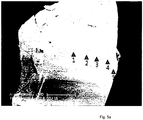
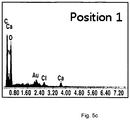
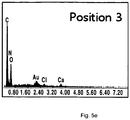
- step S1 to S9 The tooth transplant material treated according to the method for producing a bone transplant material of the present invention (steps S1 to S9) was identified through SEM.
- the tooth treated by S1 to S3 of the present invention was stored in ethanol as shown in FIG. 6A , and similarly stored in saline as shown in FIGS. 6B (significant contamination) and 6C (relatively less significant contamination), respectively.
- the present invention may remarkably reduce a time required for treating a hard body tissue such as an extracted tooth or bone and preparing a bone transplant material using the same, enable preparation of a transplant material from the extracted tooth on a site without an additional transfer of the same, use an autogenous tooth to thus be employed without adverse effects in clinical applications, and exhibit excellent bone curing efficacy.
Landscapes
- Health & Medical Sciences (AREA)
- Life Sciences & Earth Sciences (AREA)
- Chemical & Material Sciences (AREA)
- Engineering & Computer Science (AREA)
- Biomedical Technology (AREA)
- General Health & Medical Sciences (AREA)
- Chemical Kinetics & Catalysis (AREA)
- Veterinary Medicine (AREA)
- Public Health (AREA)
- Animal Behavior & Ethology (AREA)
- Transplantation (AREA)
- Oral & Maxillofacial Surgery (AREA)
- Zoology (AREA)
- Epidemiology (AREA)
- Botany (AREA)
- Dermatology (AREA)
- Medicinal Chemistry (AREA)
- Molecular Biology (AREA)
- Organic Chemistry (AREA)
- Bioinformatics & Cheminformatics (AREA)
- Wood Science & Technology (AREA)
- Genetics & Genomics (AREA)
- Biotechnology (AREA)
- Urology & Nephrology (AREA)
- Microbiology (AREA)
- General Engineering & Computer Science (AREA)
- Biochemistry (AREA)
- Orthopedic Medicine & Surgery (AREA)
- General Chemical & Material Sciences (AREA)
- Cell Biology (AREA)
- Cardiology (AREA)
- Heart & Thoracic Surgery (AREA)
- Vascular Medicine (AREA)
- Materials For Medical Uses (AREA)
- Prostheses (AREA)
- Dental Preparations (AREA)
Claims (13)
- Méthode de production d'une matière de transplantation osseuse faisant appel à au moins un traitement chimique appliqué à un tissu corporel dur issu de dents extraites, au moyen d'un réactif chimique, comprenant :le retrait des tissus mous et de la pulpe dentaire des dents extraites, et le lavage des dents (étape S1) ;la séparation de la couronne dentaire et de la racine dentaire des dents traitées selon l'étape S1, et la formation d'au moins un trou au niveau de la couronne dentaire et de la racine dentaire (étape S2) ;une troisième étape de lavage des dents traitées selon l'étape S2 (étape S3) ; etune quatrième étape d'immersion des dents traitées selon l'étape S3 dans une solution d'acide chlorhydrique dont la concentration varie entre 0,5 N et 0,6 N, en même temps que la réalisation d'une sonication sous vide à pression réduite, puis le retrait des dents de la solution d'acide chlorhydrique, et le lavage des dents (étape S4).
- Méthode selon la revendication 1, dans laquelle la sonication est effectuée à une fréquence ultrasonique allant de 15 kHz à 40 kHz.
- Méthode selon la revendication 1, dans laquelle la sonication sous vide est effectuée sous une dépression allant de 1333,22 Pa (10 torr) à 93325,7 Pa (700 torr).
- Méthode selon l'une quelconque des revendications 1, dans laquelle la sonication comprend successivement une sonication sous vide visant à rayonner des ondes ultrasonores à pression réduite, une sonication qui n'est pas effectuée sous vide visant à rayonner des ondes ultrasonores en l'absence de pression réduite, et une sonication sous vide supplémentaire visant à rayonner des ondes ultrasonores à pression réduite.
- Méthode selon la revendication 1, dans laquelle le traitement par réactif chimique est effectué à température ambiante, dans une plage allant jusqu'à 60 °C.
- Méthode selon la revendication 1, comprenant en outre un traitement faisant appel à de l'eau distillée pour d'autres fins excepté le lavage, le traitement faisant appel à de l'eau distillée étant accompagné d'une sonication.
- Méthode selon la revendication 1, comprenant en outre :l'immersion de la dent traitée en S4 dans une solution tampon phosphate contenant un inhibiteur de protéase, accompagnée d'une sonication, le retrait de la dent de la solution et le lavage de cette même dent (étape S5) ;l'immersion de la dent traitée en S5 dans une solution de chlorure de calcium, accompagnée d'une sonication, le retrait de la dent de la solution et le lavage de cette même dent (étape S6) ; etl'immersion de la dent traitée en S6 dans une solution d'EDTA, accompagnée d'une sonication, le retrait de la dent de la solution et le lavage de cette même dent (étape S7).
- Méthode selon la revendication 7, comprenant en outre :l'immersion de la dent traitée en S7 dans une solution de chlorure de lithium, accompagnée d'une sonication, le retrait de la dent de la solution et le lavage de cette même dent (étape S8) ; etl'immersion de la dent traitée en S8 dans de l'eau distillée, accompagnée d'une sonication (étape S9).
- Méthode selon la revendication 1, dans laquelle la dent extraite est conservée dans une solution saline physiologique stérile, de l'eau distillée ou de l'éthanol.
- Méthode selon la revendication 7, dans laquelle, dans l'étape S4, l'immersion est effectuée à température ambiante, dans une plage allant jusqu'à 60 °C, pendant 60 à 75 minutes.
- Méthode selon la revendication 8, dans laquelle, dans chacune des étapes S5 et S7, l'immersion est effectuée à un pH de 7 à 8.
- Méthode selon la revendication 8, dans laquelle, dans l'étape S8, l'immersion est effectuée à température ambiante, dans une plage allant jusqu'à 60 °C, pendant 5 à 10 minutes.
- Méthode selon la revendication 9, comprenant en outre la mise en oeuvre d'une conservation par le froid de la dent traitée en S9 dans des conditions stériles.
Applications Claiming Priority (3)
| Application Number | Priority Date | Filing Date | Title |
|---|---|---|---|
| KR20100105342 | 2010-10-27 | ||
| KR1020110095888A KR101163594B1 (ko) | 2010-10-27 | 2011-09-22 | 치아 골 이식재 제조방법 및 그로 인해 제조된 골 이식재 |
| PCT/KR2011/007066 WO2012057454A2 (fr) | 2010-10-27 | 2011-09-26 | Méthode de production d'une matière de transplantation osseuse et matière de transplantation osseuse produite par ladite méthode |
Publications (3)
| Publication Number | Publication Date |
|---|---|
| EP2641622A2 EP2641622A2 (fr) | 2013-09-25 |
| EP2641622A4 EP2641622A4 (fr) | 2014-11-19 |
| EP2641622B1 true EP2641622B1 (fr) | 2017-04-12 |
Family
ID=46264138
Family Applications (1)
| Application Number | Title | Priority Date | Filing Date |
|---|---|---|---|
| EP11836546.9A Active EP2641622B1 (fr) | 2010-10-27 | 2011-09-26 | Méthode de production d'une matière de transplantation osseuse |
Country Status (6)
| Country | Link |
|---|---|
| US (1) | US9610383B2 (fr) |
| EP (1) | EP2641622B1 (fr) |
| JP (1) | JP5865382B2 (fr) |
| KR (1) | KR101163594B1 (fr) |
| CN (1) | CN103200972B (fr) |
| WO (1) | WO2012057454A2 (fr) |
Families Citing this family (11)
| Publication number | Priority date | Publication date | Assignee | Title |
|---|---|---|---|---|
| KR101524774B1 (ko) * | 2012-07-23 | 2015-06-01 | 조선대학교산학협력단 | 자가치아 골 이식재 및 그 제조방법 |
| US9457131B2 (en) * | 2013-01-15 | 2016-10-04 | Kometabio Inc. | Apparatus and method for producing a dental bone graft |
| KR101382067B1 (ko) * | 2013-02-14 | 2014-04-04 | 티비엠 주식회사 | 크라운 지지부를 갖는 자가 치아 이식재의 가공방법 |
| KR101386322B1 (ko) | 2013-02-14 | 2014-04-17 | 티비엠 주식회사 | 자가 치아 뼈 이식재의 가공방법 |
| KR101326609B1 (ko) * | 2013-06-07 | 2013-11-20 | (주)코리아덴탈솔루션 | 치아를 골 이식재로 처리하는 자동화 기계 |
| CN110732040A (zh) * | 2018-07-19 | 2020-01-31 | 上海交通大学医学院附属第九人民医院 | 一种骨修复材料、方法及用途 |
| IL262473B (en) * | 2018-10-18 | 2022-02-01 | SAPOZNIKOV Larion | Mammal-derived matrix as a bone replacement |
| KR102396744B1 (ko) | 2019-08-08 | 2022-05-12 | (주)코리아덴탈솔루션 | 구조개선형 자가치아 골이식재 가공기 |
| KR102810449B1 (ko) * | 2021-11-15 | 2025-05-23 | 주식회사 셀코 | 해양 유래 소재인 불가사리 유래의 골 이식재 및 그 제조 방법 |
| CN114795556B (zh) * | 2022-05-10 | 2023-05-12 | 图斯邦柯生物科技(苏州)有限公司 | 离体牙骨储存和制备方法 |
| WO2024220037A1 (fr) * | 2023-04-18 | 2024-10-24 | Ventas Bio Pte. Ltd. | Procédés de fabrication d'un matériau régénératif à partir de dents issues d'une extraction |
Family Cites Families (23)
| Publication number | Priority date | Publication date | Assignee | Title |
|---|---|---|---|---|
| EP0256695A3 (fr) | 1986-08-08 | 1989-10-11 | Paul A. Fugazzotto | Produit utilisable comme agent ostéo-inducteur et son procédé de préparation |
| US5513662A (en) | 1991-12-31 | 1996-05-07 | Osteotech, Inc. | Preparation of bone for transplantation |
| US5797871A (en) | 1994-08-19 | 1998-08-25 | Lifenet Research Foundation | Ultrasonic cleaning of allograft bone |
| US5976104A (en) | 1994-08-19 | 1999-11-02 | Lifenet Research Foundation | Recirculation method for cleaning essentially intact bone grafts using pressure mediated flow of solutions and bone grafts produced thereby |
| US5788941A (en) | 1996-01-31 | 1998-08-04 | Steris Corporation | Method of sterilization of bone tussue |
| US6482584B1 (en) * | 1998-11-13 | 2002-11-19 | Regeneration Technologies, Inc. | Cyclic implant perfusion cleaning and passivation process |
| US6613278B1 (en) | 1998-11-13 | 2003-09-02 | Regeneration Technologies, Inc. | Tissue pooling process |
| JP3657413B2 (ja) | 1997-12-02 | 2005-06-08 | 慶彦 清水 | 人工歯及びその製造方法 |
| KR20020011164A (ko) * | 2000-08-01 | 2002-02-08 | 이건일 | 골이식 물질의 제조방법 |
| US7726319B1 (en) * | 2000-08-24 | 2010-06-01 | Osteotech, Inc. | Method for removal of water associated with bone while diminishing the dimensional changes associated with lyophilization |
| JP2004515318A (ja) | 2000-12-14 | 2004-05-27 | オステオテック インコーポレーテッド | 脱ミネラル化骨粒子の製造方法 |
| US6682695B2 (en) * | 2001-03-23 | 2004-01-27 | Clearant, Inc. | Methods for sterilizing biological materials by multiple rates |
| US20040037735A1 (en) | 2002-08-23 | 2004-02-26 | Depaula Carl Alexander | Allograft tissue purification process for cleaning bone |
| KR100519199B1 (ko) | 2002-12-04 | 2005-10-06 | 최성진 | 흡수지연성 골절고정물의 제조방법 |
| WO2004089432A1 (fr) * | 2003-04-08 | 2004-10-21 | Young-Kyun Kim | Materiau de restauration et de greffage pour defaut de tissus durs et procede de fabrication dudit materiau a l'aide de dents animales |
| EP1698358A4 (fr) * | 2003-12-26 | 2007-12-26 | Cardio Inc | Biomateriau transplantable et son procede de preparation |
| JP4953276B2 (ja) | 2006-02-24 | 2012-06-13 | 学校法人東日本学園・北海道医療大学 | 高度先進医療に応用できる抜去歯粉砕品、抜去歯由来の脱灰粉体、脱灰粉体とアパタイトとの複合体を調製する方法および粉砕機 |
| US20100023129A1 (en) * | 2008-07-22 | 2010-01-28 | Guo-Feng Xu | Jawbone prosthesis and method of manufacture |
| KR20100040427A (ko) | 2008-10-10 | 2010-04-20 | 주식회사 코리아티슈뱅크 | 자기 치아를 이용한 치료방법 및 치아 처리방법 |
| KR20100047412A (ko) * | 2008-10-29 | 2010-05-10 | 한스바이오메드 주식회사 | 탈회골의 제조방법 |
| KR100978562B1 (ko) | 2008-12-31 | 2010-08-27 | 주식회사 코리아본뱅크 | 스폰지형 골 이식재 및 이를 제조하는 방법 |
| JP5429708B2 (ja) * | 2009-03-23 | 2014-02-26 | 学校法人福岡大学 | 生体組織再生用移植材およびその製造方法 |
| JP2011041716A (ja) * | 2009-08-21 | 2011-03-03 | Cell Remover:Kk | 生体組織の処理方法 |
-
2011
- 2011-09-22 KR KR1020110095888A patent/KR101163594B1/ko active Active
- 2011-09-26 JP JP2013536494A patent/JP5865382B2/ja not_active Expired - Fee Related
- 2011-09-26 CN CN201180052326.3A patent/CN103200972B/zh not_active Expired - Fee Related
- 2011-09-26 EP EP11836546.9A patent/EP2641622B1/fr active Active
- 2011-09-26 US US13/881,198 patent/US9610383B2/en active Active
- 2011-09-26 WO PCT/KR2011/007066 patent/WO2012057454A2/fr not_active Ceased
Also Published As
| Publication number | Publication date |
|---|---|
| WO2012057454A3 (fr) | 2012-07-26 |
| CN103200972B (zh) | 2016-02-10 |
| EP2641622A4 (fr) | 2014-11-19 |
| CN103200972A (zh) | 2013-07-10 |
| WO2012057454A2 (fr) | 2012-05-03 |
| JP2013540557A (ja) | 2013-11-07 |
| KR20120044241A (ko) | 2012-05-07 |
| KR101163594B1 (ko) | 2012-07-06 |
| US9610383B2 (en) | 2017-04-04 |
| US20130220365A1 (en) | 2013-08-29 |
| EP2641622A2 (fr) | 2013-09-25 |
| JP5865382B2 (ja) | 2016-02-17 |
Similar Documents
| Publication | Publication Date | Title |
|---|---|---|
| EP2641622B1 (fr) | Méthode de production d'une matière de transplantation osseuse | |
| CN102470034B (zh) | 齿槽骨移植材料的加工方法及由其制备的齿槽骨移植材料 | |
| RU2609201C1 (ru) | Способ получения остеопластического материала | |
| US20120297550A1 (en) | Process for sterilizing acellular soft tissue with irradiation | |
| CA1142430A (fr) | Materiau pour remplacer le tissu osseux et applications | |
| EP3331984B1 (fr) | Systèmes et procédés de traitement d'allogreffe rapides | |
| CN108355171A (zh) | 脱细胞真皮基质引导组织再生膜材料及其制备方法和应用 | |
| US20100296969A1 (en) | Process for sterilizing acellular soft tissue under vacuum | |
| CN108355172A (zh) | 一种软组织修复用脱细胞罗非鱼皮仿生基质及其制备方法和应用 | |
| CN108144124A (zh) | 一种脱细胞异体真皮基质及在口腔疾病中的应用 | |
| RU2721604C1 (ru) | Способ получения остеопластических биоматериалов из костной ткани | |
| CN116328039A (zh) | 一种可调控炎症代谢的特定矿化度天然骨修复材料及其制备方法和应用 | |
| RU2691983C1 (ru) | Способ очистки, модификации и стерилизации производных костной ткани и кожного матрикса с использованием сверхкритического флюида | |
| CN109701077B (zh) | 一种微孔再生组织基质及其制备和应用 | |
| Dănilă et al. | PROCESSED XENOGRAFTS, TOP BIOMATERIALS FOR BONE TISSUE RECONSTRUCTION | |
| CN118105545A (zh) | 一种天然生物骨材料及其制备方法 | |
| CN110732040A (zh) | 一种骨修复材料、方法及用途 | |
| JPH04114656A (ja) | 骨誘導性脱灰歯牙物とその製造方法 | |
| CN119258276B (zh) | 一种人脱细胞牙槽骨基质微粒的制备方法 | |
| RU2476244C1 (ru) | Способ изготовления биоимплантатов из соединительных тканей | |
| RU2769248C1 (ru) | Способ получения ацеллюлярного дермального матрикса | |
| RU2803692C1 (ru) | Способ лечения рецессии десны с применением десневой ткани и препарата стимулятора регенерации | |
| ES2326183T3 (es) | Procedimiento de esterilizacion para la fabricacion de material biologico implantable o trasplantable. | |
| RU2456003C1 (ru) | Способ получения деминерализованного костного матрикса в виде крошки | |
| RU2842504C1 (ru) | Способ получения бесклеточного нереконструированного наноколлагенового матрикса |
Legal Events
| Date | Code | Title | Description |
|---|---|---|---|
| PUAI | Public reference made under article 153(3) epc to a published international application that has entered the european phase |
Free format text: ORIGINAL CODE: 0009012 |
|
| 17P | Request for examination filed |
Effective date: 20130514 |
|
| AK | Designated contracting states |
Kind code of ref document: A2 Designated state(s): AL AT BE BG CH CY CZ DE DK EE ES FI FR GB GR HR HU IE IS IT LI LT LU LV MC MK MT NL NO PL PT RO RS SE SI SK SM TR |
|
| DAX | Request for extension of the european patent (deleted) | ||
| A4 | Supplementary search report drawn up and despatched |
Effective date: 20141020 |
|
| RIC1 | Information provided on ipc code assigned before grant |
Ipc: A61L 27/38 20060101AFI20141014BHEP Ipc: A61F 2/28 20060101ALI20141014BHEP Ipc: C12N 13/00 20060101ALI20141014BHEP Ipc: A61L 27/36 20060101ALI20141014BHEP Ipc: C12N 5/071 20100101ALI20141014BHEP |
|
| GRAP | Despatch of communication of intention to grant a patent |
Free format text: ORIGINAL CODE: EPIDOSNIGR1 |
|
| STAA | Information on the status of an ep patent application or granted ep patent |
Free format text: STATUS: GRANT OF PATENT IS INTENDED |
|
| INTG | Intention to grant announced |
Effective date: 20161123 |
|
| GRAS | Grant fee paid |
Free format text: ORIGINAL CODE: EPIDOSNIGR3 |
|
| GRAA | (expected) grant |
Free format text: ORIGINAL CODE: 0009210 |
|
| STAA | Information on the status of an ep patent application or granted ep patent |
Free format text: STATUS: THE PATENT HAS BEEN GRANTED |
|
| AK | Designated contracting states |
Kind code of ref document: B1 Designated state(s): AL AT BE BG CH CY CZ DE DK EE ES FI FR GB GR HR HU IE IS IT LI LT LU LV MC MK MT NL NO PL PT RO RS SE SI SK SM TR |
|
| REG | Reference to a national code |
Ref country code: GB Ref legal event code: FG4D |
|
| REG | Reference to a national code |
Ref country code: CH Ref legal event code: EP |
|
| REG | Reference to a national code |
Ref country code: IE Ref legal event code: FG4D |
|
| REG | Reference to a national code |
Ref country code: AT Ref legal event code: REF Ref document number: 883222 Country of ref document: AT Kind code of ref document: T Effective date: 20170515 |
|
| REG | Reference to a national code |
Ref country code: DE Ref legal event code: R096 Ref document number: 602011036997 Country of ref document: DE |
|
| REG | Reference to a national code |
Ref country code: NL Ref legal event code: MP Effective date: 20170412 |
|
| REG | Reference to a national code |
Ref country code: LT Ref legal event code: MG4D |
|
| REG | Reference to a national code |
Ref country code: AT Ref legal event code: MK05 Ref document number: 883222 Country of ref document: AT Kind code of ref document: T Effective date: 20170412 |
|
| REG | Reference to a national code |
Ref country code: FR Ref legal event code: PLFP Year of fee payment: 7 |
|
| PG25 | Lapsed in a contracting state [announced via postgrant information from national office to epo] |
Ref country code: NL Free format text: LAPSE BECAUSE OF FAILURE TO SUBMIT A TRANSLATION OF THE DESCRIPTION OR TO PAY THE FEE WITHIN THE PRESCRIBED TIME-LIMIT Effective date: 20170412 |
|
| PG25 | Lapsed in a contracting state [announced via postgrant information from national office to epo] |
Ref country code: HR Free format text: LAPSE BECAUSE OF FAILURE TO SUBMIT A TRANSLATION OF THE DESCRIPTION OR TO PAY THE FEE WITHIN THE PRESCRIBED TIME-LIMIT Effective date: 20170412 Ref country code: LT Free format text: LAPSE BECAUSE OF FAILURE TO SUBMIT A TRANSLATION OF THE DESCRIPTION OR TO PAY THE FEE WITHIN THE PRESCRIBED TIME-LIMIT Effective date: 20170412 Ref country code: FI Free format text: LAPSE BECAUSE OF FAILURE TO SUBMIT A TRANSLATION OF THE DESCRIPTION OR TO PAY THE FEE WITHIN THE PRESCRIBED TIME-LIMIT Effective date: 20170412 Ref country code: ES Free format text: LAPSE BECAUSE OF FAILURE TO SUBMIT A TRANSLATION OF THE DESCRIPTION OR TO PAY THE FEE WITHIN THE PRESCRIBED TIME-LIMIT Effective date: 20170412 Ref country code: NO Free format text: LAPSE BECAUSE OF FAILURE TO SUBMIT A TRANSLATION OF THE DESCRIPTION OR TO PAY THE FEE WITHIN THE PRESCRIBED TIME-LIMIT Effective date: 20170712 Ref country code: AT Free format text: LAPSE BECAUSE OF FAILURE TO SUBMIT A TRANSLATION OF THE DESCRIPTION OR TO PAY THE FEE WITHIN THE PRESCRIBED TIME-LIMIT Effective date: 20170412 Ref country code: GR Free format text: LAPSE BECAUSE OF FAILURE TO SUBMIT A TRANSLATION OF THE DESCRIPTION OR TO PAY THE FEE WITHIN THE PRESCRIBED TIME-LIMIT Effective date: 20170713 |
|
| PG25 | Lapsed in a contracting state [announced via postgrant information from national office to epo] |
Ref country code: BG Free format text: LAPSE BECAUSE OF FAILURE TO SUBMIT A TRANSLATION OF THE DESCRIPTION OR TO PAY THE FEE WITHIN THE PRESCRIBED TIME-LIMIT Effective date: 20170712 Ref country code: IS Free format text: LAPSE BECAUSE OF FAILURE TO SUBMIT A TRANSLATION OF THE DESCRIPTION OR TO PAY THE FEE WITHIN THE PRESCRIBED TIME-LIMIT Effective date: 20170812 Ref country code: RS Free format text: LAPSE BECAUSE OF FAILURE TO SUBMIT A TRANSLATION OF THE DESCRIPTION OR TO PAY THE FEE WITHIN THE PRESCRIBED TIME-LIMIT Effective date: 20170412 Ref country code: PL Free format text: LAPSE BECAUSE OF FAILURE TO SUBMIT A TRANSLATION OF THE DESCRIPTION OR TO PAY THE FEE WITHIN THE PRESCRIBED TIME-LIMIT Effective date: 20170412 Ref country code: SE Free format text: LAPSE BECAUSE OF FAILURE TO SUBMIT A TRANSLATION OF THE DESCRIPTION OR TO PAY THE FEE WITHIN THE PRESCRIBED TIME-LIMIT Effective date: 20170412 Ref country code: LV Free format text: LAPSE BECAUSE OF FAILURE TO SUBMIT A TRANSLATION OF THE DESCRIPTION OR TO PAY THE FEE WITHIN THE PRESCRIBED TIME-LIMIT Effective date: 20170412 |
|
| REG | Reference to a national code |
Ref country code: DE Ref legal event code: R097 Ref document number: 602011036997 Country of ref document: DE |
|
| PG25 | Lapsed in a contracting state [announced via postgrant information from national office to epo] |
Ref country code: CZ Free format text: LAPSE BECAUSE OF FAILURE TO SUBMIT A TRANSLATION OF THE DESCRIPTION OR TO PAY THE FEE WITHIN THE PRESCRIBED TIME-LIMIT Effective date: 20170412 Ref country code: RO Free format text: LAPSE BECAUSE OF FAILURE TO SUBMIT A TRANSLATION OF THE DESCRIPTION OR TO PAY THE FEE WITHIN THE PRESCRIBED TIME-LIMIT Effective date: 20170412 Ref country code: DK Free format text: LAPSE BECAUSE OF FAILURE TO SUBMIT A TRANSLATION OF THE DESCRIPTION OR TO PAY THE FEE WITHIN THE PRESCRIBED TIME-LIMIT Effective date: 20170412 Ref country code: EE Free format text: LAPSE BECAUSE OF FAILURE TO SUBMIT A TRANSLATION OF THE DESCRIPTION OR TO PAY THE FEE WITHIN THE PRESCRIBED TIME-LIMIT Effective date: 20170412 Ref country code: SK Free format text: LAPSE BECAUSE OF FAILURE TO SUBMIT A TRANSLATION OF THE DESCRIPTION OR TO PAY THE FEE WITHIN THE PRESCRIBED TIME-LIMIT Effective date: 20170412 |
|
| PLBE | No opposition filed within time limit |
Free format text: ORIGINAL CODE: 0009261 |
|
| STAA | Information on the status of an ep patent application or granted ep patent |
Free format text: STATUS: NO OPPOSITION FILED WITHIN TIME LIMIT |
|
| PG25 | Lapsed in a contracting state [announced via postgrant information from national office to epo] |
Ref country code: SM Free format text: LAPSE BECAUSE OF FAILURE TO SUBMIT A TRANSLATION OF THE DESCRIPTION OR TO PAY THE FEE WITHIN THE PRESCRIBED TIME-LIMIT Effective date: 20170412 |
|
| 26N | No opposition filed |
Effective date: 20180115 |
|
| PG25 | Lapsed in a contracting state [announced via postgrant information from national office to epo] |
Ref country code: MC Free format text: LAPSE BECAUSE OF FAILURE TO SUBMIT A TRANSLATION OF THE DESCRIPTION OR TO PAY THE FEE WITHIN THE PRESCRIBED TIME-LIMIT Effective date: 20170412 Ref country code: SI Free format text: LAPSE BECAUSE OF FAILURE TO SUBMIT A TRANSLATION OF THE DESCRIPTION OR TO PAY THE FEE WITHIN THE PRESCRIBED TIME-LIMIT Effective date: 20170412 |
|
| REG | Reference to a national code |
Ref country code: IE Ref legal event code: MM4A |
|
| REG | Reference to a national code |
Ref country code: BE Ref legal event code: MM Effective date: 20170930 |
|
| PG25 | Lapsed in a contracting state [announced via postgrant information from national office to epo] |
Ref country code: LU Free format text: LAPSE BECAUSE OF NON-PAYMENT OF DUE FEES Effective date: 20170926 |
|
| PG25 | Lapsed in a contracting state [announced via postgrant information from national office to epo] |
Ref country code: IE Free format text: LAPSE BECAUSE OF NON-PAYMENT OF DUE FEES Effective date: 20170926 |
|
| PG25 | Lapsed in a contracting state [announced via postgrant information from national office to epo] |
Ref country code: BE Free format text: LAPSE BECAUSE OF NON-PAYMENT OF DUE FEES Effective date: 20170930 |
|
| REG | Reference to a national code |
Ref country code: FR Ref legal event code: PLFP Year of fee payment: 8 |
|
| PG25 | Lapsed in a contracting state [announced via postgrant information from national office to epo] |
Ref country code: MT Free format text: LAPSE BECAUSE OF NON-PAYMENT OF DUE FEES Effective date: 20170926 |
|
| PG25 | Lapsed in a contracting state [announced via postgrant information from national office to epo] |
Ref country code: HU Free format text: LAPSE BECAUSE OF FAILURE TO SUBMIT A TRANSLATION OF THE DESCRIPTION OR TO PAY THE FEE WITHIN THE PRESCRIBED TIME-LIMIT; INVALID AB INITIO Effective date: 20110926 |
|
| PG25 | Lapsed in a contracting state [announced via postgrant information from national office to epo] |
Ref country code: CY Free format text: LAPSE BECAUSE OF NON-PAYMENT OF DUE FEES Effective date: 20170412 |
|
| PG25 | Lapsed in a contracting state [announced via postgrant information from national office to epo] |
Ref country code: MK Free format text: LAPSE BECAUSE OF FAILURE TO SUBMIT A TRANSLATION OF THE DESCRIPTION OR TO PAY THE FEE WITHIN THE PRESCRIBED TIME-LIMIT Effective date: 20170412 |
|
| PG25 | Lapsed in a contracting state [announced via postgrant information from national office to epo] |
Ref country code: TR Free format text: LAPSE BECAUSE OF FAILURE TO SUBMIT A TRANSLATION OF THE DESCRIPTION OR TO PAY THE FEE WITHIN THE PRESCRIBED TIME-LIMIT Effective date: 20170412 |
|
| PG25 | Lapsed in a contracting state [announced via postgrant information from national office to epo] |
Ref country code: PT Free format text: LAPSE BECAUSE OF FAILURE TO SUBMIT A TRANSLATION OF THE DESCRIPTION OR TO PAY THE FEE WITHIN THE PRESCRIBED TIME-LIMIT Effective date: 20170412 |
|
| PG25 | Lapsed in a contracting state [announced via postgrant information from national office to epo] |
Ref country code: AL Free format text: LAPSE BECAUSE OF FAILURE TO SUBMIT A TRANSLATION OF THE DESCRIPTION OR TO PAY THE FEE WITHIN THE PRESCRIBED TIME-LIMIT Effective date: 20170412 |
|
| PGFP | Annual fee paid to national office [announced via postgrant information from national office to epo] |
Ref country code: GB Payment date: 20230921 Year of fee payment: 13 |
|
| PGFP | Annual fee paid to national office [announced via postgrant information from national office to epo] |
Ref country code: FR Payment date: 20230918 Year of fee payment: 13 Ref country code: DE Payment date: 20230919 Year of fee payment: 13 |
|
| PGFP | Annual fee paid to national office [announced via postgrant information from national office to epo] |
Ref country code: IT Payment date: 20230929 Year of fee payment: 13 Ref country code: CH Payment date: 20231001 Year of fee payment: 13 |
|
| REG | Reference to a national code |
Ref country code: DE Ref legal event code: R119 Ref document number: 602011036997 Country of ref document: DE |
|
| REG | Reference to a national code |
Ref country code: CH Ref legal event code: PL |
|
| GBPC | Gb: european patent ceased through non-payment of renewal fee |
Effective date: 20240926 |
|
| PG25 | Lapsed in a contracting state [announced via postgrant information from national office to epo] |
Ref country code: DE Free format text: LAPSE BECAUSE OF NON-PAYMENT OF DUE FEES Effective date: 20250401 |
|
| PG25 | Lapsed in a contracting state [announced via postgrant information from national office to epo] |
Ref country code: GB Free format text: LAPSE BECAUSE OF NON-PAYMENT OF DUE FEES Effective date: 20240926 |
|
| PG25 | Lapsed in a contracting state [announced via postgrant information from national office to epo] |
Ref country code: IT Free format text: LAPSE BECAUSE OF NON-PAYMENT OF DUE FEES Effective date: 20240926 |
|
| PG25 | Lapsed in a contracting state [announced via postgrant information from national office to epo] |
Ref country code: FR Free format text: LAPSE BECAUSE OF NON-PAYMENT OF DUE FEES Effective date: 20240930 |
|
| PG25 | Lapsed in a contracting state [announced via postgrant information from national office to epo] |
Ref country code: CH Free format text: LAPSE BECAUSE OF NON-PAYMENT OF DUE FEES Effective date: 20240930 |