EP2649095B1 - Peptides mimétiques dérivés de collagène de type iv et leur utilisation pour traiter des maladies dépendantes de l'angiogenèse et de la lymphangiogenèse - Google Patents
Peptides mimétiques dérivés de collagène de type iv et leur utilisation pour traiter des maladies dépendantes de l'angiogenèse et de la lymphangiogenèse Download PDFInfo
- Publication number
- EP2649095B1 EP2649095B1 EP11847661.3A EP11847661A EP2649095B1 EP 2649095 B1 EP2649095 B1 EP 2649095B1 EP 11847661 A EP11847661 A EP 11847661A EP 2649095 B1 EP2649095 B1 EP 2649095B1
- Authority
- EP
- European Patent Office
- Prior art keywords
- seq
- peptide
- peptides
- angiogenesis
- cell
- Prior art date
- Legal status (The legal status is an assumption and is not a legal conclusion. Google has not performed a legal analysis and makes no representation as to the accuracy of the status listed.)
- Active
Links
Images











Classifications
-
- C—CHEMISTRY; METALLURGY
- C07—ORGANIC CHEMISTRY
- C07K—PEPTIDES
- C07K14/00—Peptides having more than 20 amino acids; Gastrins; Somatostatins; Melanotropins; Derivatives thereof
- C07K14/435—Peptides having more than 20 amino acids; Gastrins; Somatostatins; Melanotropins; Derivatives thereof from animals; from humans
- C07K14/78—Connective tissue peptides, e.g. collagen, elastin, laminin, fibronectin, vitronectin or cold insoluble globulin [CIG]
-
- A—HUMAN NECESSITIES
- A61—MEDICAL OR VETERINARY SCIENCE; HYGIENE
- A61P—SPECIFIC THERAPEUTIC ACTIVITY OF CHEMICAL COMPOUNDS OR MEDICINAL PREPARATIONS
- A61P35/00—Antineoplastic agents
-
- A—HUMAN NECESSITIES
- A61—MEDICAL OR VETERINARY SCIENCE; HYGIENE
- A61K—PREPARATIONS FOR MEDICAL, DENTAL OR TOILETRY PURPOSES
- A61K38/00—Medicinal preparations containing peptides
-
- C—CHEMISTRY; METALLURGY
- C07—ORGANIC CHEMISTRY
- C07K—PEPTIDES
- C07K7/00—Peptides having 5 to 20 amino acids in a fully defined sequence; Derivatives thereof
Definitions
- Cancer is a major public health problem in the United States and other parts of the world. Currently, 1 in 4 deaths in the United States is due to cancer. Angiogenesis plays a critical role in tumor growth and metastasis in most types of cancer. In particular, its importance has been demonstrated in breast cancer, the most commonly diagnosed female malignancy in the United States. Anti-angiogenic therapeutics, either as a monotherapy or in combination with other therapeutics, are promising and are being intensely investigated in both preclinical and clinical studies.
- Anti-VEGF therapeutics showed early promise in clinical trials; however, although an anti-VEGF antibody bevacizumab (Genentech/Roche) was approved by the FDA for breast cancer in 2008 in combination with chemotherapy, in November 2011, the FDA revoked the breast cancer indication because it has not demonstrated an overall survival benefit. Accordingly, the development of anti-angiogenic therapies to treat breast and other cancers, as well as, ocular proliferative diseases, such as age-related macular degeneration, is ongoing. Lymphangiogenesis also plays an important role in cancer metastasis (Holopainen et al., 2011). To date no peptide drugs have been approved for the treatment of cancer or other angiogenesis- and lymphangiogenesis-dependent diseases.
- Peptides have been employed as therapeutics for multiple diseases and recently have been investigated in clinical applications to target tumors either for imaging or therapy (Folkman, 2010; Senger et al., 1983; Leung et al., 1989; Carmeliet, 2005; Carmeliet and Jain, 2000; Carmeliet and Jain, 2011; Rosca et al., 2011).
- Mimetic peptides are peptides that biologically mimic active determinants on biomolecules. In general, peptides are attractive tools as therapeutics due to their specific target binding, ability to penetrate cells and ease of modification giving flexibility for different applications. (Carmeliet and Jain, 2000; Folkman, 2006) Some of the properties that make peptides attractive candidates, however, also contribute to their disadvantages.
- peptides can interact specifically with cellular receptors, sometimes these interactions may be of low affinity.
- the use of peptides as therapeutic agents is currently limited due to their short half-life and reduced bioavailability. Attempts to modify a peptide in order to increase its bioavailability include substitution with non-natural amino acids, pegylation of the peptide, and delivery of the peptide in a nano- or micro-particle.
- the presently disclosed subject matter provides peptide compositions and kits for treating a disease, disorder, or dysfunction that is related to angiogenesis, lymphangiogenesis, vascular permeability or tumorigenesis.
- the presently disclosed peptide compositions and methods in some aspects, inhibit angiogenesis, lymphangiogenesis, vascular permeability or tumorigenesis which play a critical role in multiple diseases or disorders.
- the compositions and methods of the presently disclosed subject matter allow the prevention or reduction of blood vessel, lymphatic vessel, or tumor formation involving a cell, tissue or organ. More particularly, in one aspect, the presently disclosed subject matter provides an isolated peptide comprising an amino acid sequence selected from:
- compositions and kits comprising a pharmaceutically acceptable carrier and an effective amount of at least one of the peptides above.
- the compositions and kits prevent or reduce blood vessel, lymphatic vessel, or tumor formation involving a cell, tissue, or organ.
- the compositions and kits may also inhibit vascular permeability involving a cell, tissue, or organ.
- the presently disclosed subject matter provides an in vitro or ex vivo method for inhibiting angiogenesis, lymphangiogenesis, vascular permeability and/or tumorigenesis involving a cell.
- the method comprises contacting a cell with an isolated peptide described above in an amount sufficient to inhibit angiogenesis, lymphangiogenesis, vascular permeability, and/or tumorigenesis of the cell or involving the cell.
- the contacting of the cell may result in an inhibition of adhesion, migration, proliferation, and/or tube formation of the cell.
- Certain aspects of the presently disclosed subject matter provide the isolated peptides for use in the treatment of a disease associated with angiogenesis, lymphangiogenesis, vascular permeability, and/or tumorigenesis.
- the presently disclosed subject matter provides the isolated peptides for use in a method of treating a subject suffering from a disease related to angiogenesis, lymphangiogenesis, vascular permeability, and/or tumorigenesis or preventing or delaying a subject from getting a disease related to angiogenesis, lymphangiogenesis, vascular permeability, and/or tumorigenesis.
- the method comprises administering to the subject an isolated peptide of the present invention in an amount sufficient to treat, delay, or prevent the disease in the subject.
- the disease may be a cancer or the disease may be related to ocular angiogenesis or other angiogenesis-, tumorigenesis-, vascular permeability-, or lymphangiogenesis-dependent diseases.
- the method can be practiced in vivo as either a therapeutic method of treating a disease or disorder involving angiogenesis, lymphangiogenesis, vascular permeability, or tumorigenesis or as a prophylactic method to prevent angiogenesis, lymphangiogenesis, vascular permeability, or tumorigenesis.
- the method can be practiced in vitro as a research tool to study the effects of angiogenesis, lymphangiogenesis, vascular permeability or tumorigenesis.
- the method also can be practiced ex vivo for therapeutic or research purposes.
- Peptides generally offer many advantages over other types of therapies for certain diseases in that they are non-immunogenic, less toxic because they bind to their targets with high specificity, and are inexpensive to produce (e.g., International Publication WO 2008/085828 and International Publication WO 2007/033215 ).
- the presently disclosed peptides exhibit anti-angiogenic, anti-vascular permeability, anti-tumorigenesis and/or anti-lymphangiogenic properties, which could lead to an increase in overall survival in certain diseases.
- the peptides may benefit cancer patients and may help treat ocular proliferative diseases, such as age-related macular degeneration.
- the presently disclosed peptides are characterized by having the motif comprising the amino acid sequence LRRFSTXPXXXXNINNVXNF (SEQ ID No:1).
- LRRFSTMPFMFAbuNINNVAbuNF (SP2012; SEQ ID No:3) is a previously disclosed peptide (Popel A.S. and Karagiannis E.D. "Peptide Inhibitors or Modifiers of Angiogenesis and Uses Thereof," PCT/WO/2008/085828; Rosca et al., 2011 ).
- X may be a natural or non-natural amino acid.
- the presently disclosed peptide series labeled SP2XXX were tested in angiogenesis and lymphangiogenesis assays in vitro. More particularly, proliferation, adhesion, migration, and tube formation assays were performed on endothelial, e.g., Human Umbilical Vein Endothelial Cells (HUVECs), and other cells in vitro. Selected peptides were also tested in vivo in tumor xenograft and ocular assays. Representative embodiments of the peptide series are shown in Table 1 and are discussed in more detail below. TABLE 1.
- endothelial e.g., Human Umbilical Vein Endothelial Cells (HUVECs)
- Selected peptides were also tested in vivo in tumor xenograft and ocular assays. Representative embodiments of the peptide series are shown in Table 1 and are discussed in more detail below. TABLE 1.
- the peptides have several X residues that may be any amino acid, whether natural or non-natural (X7, X9, X10, X11, X12, and X18).
- natural amino acids it is meant those amino acids that occur in nature.
- non-natural amino acids it is meant amino acids that do not occur in nature but that can be incorporated into a polypeptide chain.
- Non-natural amino acids include, but are not limited to 2-aminobutyric acid (Abu), norleucine (Nle), 4-chloro phenylalanine (4-ClPhe), allylglycine (AllyGly) and other non-natural amino acids such as those detailed in Ma (2003).
- Amino acid analogs that are known in the art may be employed in the present invention.
- a “peptide” or “protein” comprises a string of at least three amino acids linked together by peptide bonds.
- the terms “protein” and “peptide” may be used interchangeably.
- Peptide may refer to an individual peptide or a collection of peptides.
- one or more of the amino acids in a presently disclosed peptide may be modified, for example, by the addition of a chemical entity such as a carbohydrate group, a phosphate group, a farnesyl group, an isofarnesyl group, a fatty acid group, a linker for conjugation, functionalization, or other modification, and the like.
- the modifications of the peptide lead to a more stable peptide (e.g., greater half-life in vivo ). These modifications may include cyclization of the peptide, the incorporation of D-amino acids, and the like. None of the modifications should substantially interfere with the desired biological activity of the peptide.
- Collagen IV derived peptide it is meant a peptide comprising a C-N-X(3)-V-C or P-F-X(2)-C or LX(2)FX(3)PFX(2)CNX(4)CNX collagen motif. If desired, the peptide includes at least about 5, 10, 20, 30, 40, 50 or more amino acids that flank the carboxy or amino terminus of the motif in the naturally occurring amino acid sequence.
- Type IV collagen derived peptides include, for example, pentastatin-1, tumstatin, and targeting RGD.
- alteration is meant a change in the sequence or in a modification (e.g., a post-translational modification) of a gene or polypeptide relative to an endogeneous wild-type reference sequence.
- an “isolated peptide” is meant a peptide of the invention that has been separated from components that naturally accompany it.
- the peptide is isolated when it is at least 60%, by weight, free from the proteins and naturally-occurring organic molecules with which it is naturally associated.
- the preparation is at least 75%, more preferably at least 90%, and most preferably at least 99%, by weight, a presently disclosed peptide of the invention.
- An isolated peptide may be obtained, for example, by extraction from a natural source, by expression of a recombinant nucleic acid encoding such a peptide; or by chemically synthesizing the protein. Purity can be measured by any appropriate method, for example, column chromatography, polyacrylamide gel electrophoresis, or by HPLC analysis.
- substantially identical is meant a peptide, a polypeptide or nucleic acid molecule exhibiting at least 50% identity to a reference amino acid sequence (for example, any one of the amino acid sequences described herein) or nucleic acid sequence.
- a reference amino acid sequence for example, any one of the amino acid sequences described herein
- nucleic acid sequence is at least 60%, more preferably 80% or 85%, and even more preferably 90%, 95% or even 99% identical at the amino acid level or nucleic acid to the sequence used for comparison.
- the presently disclosed peptides can be modified to make them less susceptible to proteolysis.
- they can be truncated to the minimal potent sequence.
- Such truncation is important to limit binding to other receptors that would dilute the effective concentration, as well as lead to unexpected side effects.
- Such truncation also opens up the possibility to create a single multimodal peptide out of multiple short peptides, each of which targets angiogenesis, lymphangiogenesis and tumorigenesis by a different mechanism. Multimodal treatment is very important to reduce the incidence of drug resistance, because it is less likely that the tumor will be able to mount a successful resistance when attacked simultaneously from multiple fronts.
- compositions or methods where multiple types of the presently disclosed peptides allow better prevention or reduction of angiogenesis, vascular permeability, tumorigenesis or lymphangiogenesis. Therefore, instead of a composition with a single multimodal peptide, a composition may be comprised of multiple types of isolated peptides that are not covalently bound together.
- the presently disclosed peptides are all tri-fluoro acetate (TFA) salts.
- TFA salts can be modified to acetate salts or other pharmaceutically acceptable salts.
- salts are meant to include salts of active compounds which are prepared with relatively nontoxic acids or bases, depending on the particular substituent moieties found on the compounds described herein.
- base addition salts can be obtained by contacting the neutral form of such compounds with a sufficient amount of the desired base, either neat or in a suitable inert solvent.
- pharmaceutically acceptable base addition salts include sodium, potassium, calcium, ammonium, organic amino, or magnesium salt, or a similar salt.
- acid addition salts can be obtained by contacting the neutral form of such compounds with a sufficient amount of the desired acid, either neat or in a suitable inert solvent.
- Examples of pharmaceutically acceptable acid addition salts include those derived from inorganic acids like hydrochloric, hydrobromic, nitric, carbonic, monohydrogencarbonic, phosphoric, monohydrogenphosphoric, dihydrogenphosphoric, sulfuric, monohydrogensulfuric, hydriodic, or phosphorous acids and the like, as well as the salts derived from relatively nontoxic organic acids like acetic, propionic, isobutyric, maleic, malonic, benzoic, succinic, suberic, fumaric, lactic, mandelic, phthalic, benzenesulfonic, p-tolylsulfonic, citric, tartaric, methanesulfonic, and the like.
- inorganic acids like hydrochloric, hydrobromic, nitric, carbonic, monohydrogencarbonic, phosphoric, monohydrogenphosphoric, dihydrogenphosphoric, sulfuric, monohydrogensulfuric, hydriodic, or phosphorous acids and
- salts of amino acids such as arginate and the like, and salts of organic acids like glucuronic or galactunoric acids and the like ⁇ see, for example, Berge et al., "Pharmaceutical Salts", Journal of Pharmaceutical Science, 1977, 66, 1-19 ).
- Certain specific compounds of the present disclosure contain both basic and acidic functionalities that allow the compounds to be converted into either base or acid addition salts.
- one or more of the presently disclosed peptides can be incorporated into nano or microparticles, such as those disclosed in U.S. patent application no. 13/272,042, to Green et al. for "Peptide/Particle Delivery Systems," filed October 12, 2011, and International PCT Patent Application Publication No. WO/2010/132879 to Green et al. for “Multicomponent Degradable Cationic Polymers,” filed May 17, 2010.
- the presently disclosed subject matter provides an isolated peptide comprising the amino acid sequence LRRFSTXPXXXXNINNVXNF (SEQ ID No:1), wherein X at position 7 is M, A, or G; X at position 9 is F, A, Y, or G; X at position 10 is M, A, G, dA, or Nle; X at position 11 is F, A, Y, G, or 4-ClPhe; X at position 12 and position 18 are Abu, G, S, A, V, T, I, L or AllyGly; and wherein the peptide does not comprise LRRFSTMPFMFAbuNINNVAbuNF (SEQ ID No:3). Each substitution at an X residue has either been tested (as shown in the Examples below) or is a conservative amino acid substitution for a tested amino acid.
- the presently disclosed subject matter provides an isolated peptide comprising at least one of the following amino acid sequences:
- compositions and kits comprising a pharmaceutically acceptable carrier and an effective amount of at least one of the peptide sequences disclosed herein.
- the amount of peptide can vary widely, but generally the amount is sufficient to perform at least one method described herein.
- compositions are intended to include, but is not limited to, water, saline, dextrose solutions, human serum albumin, liposomes, hydrogels, microparticles and nanoparticles.
- pharmaceutically acceptable carrier is intended to include, but is not limited to, water, saline, dextrose solutions, human serum albumin, liposomes, hydrogels, microparticles and nanoparticles.
- Such media and agents for pharmaceutically active compositions is well known in the art, and thus further examples and methods of incorporating each into compositions at effective levels need not be discussed here.
- Such compositions also can include coatings, antibacterial and/or fungal agents, and any other ingredient that is biologically tolerable.
- the "effective amount" of an active agent or drug delivery device refers to the amount necessary to elicit the desired biological response.
- the effective amount of an agent or device may vary depending on such factors as the desired biological endpoint, the agent to be delivered, the composition of the encapsulating matrix, the target tissue, and the like.
- a presently disclosed kit contains some or all of the components, reagents, supplies, and the like to practice a method according to the presently disclosed subject matter.
- the kit typically comprises an effective amount of peptide to prevent, delay, reduce, or treat a disease related to angiogenesis and/or lymphangiogenesis.
- a kit comprises at least one container (e.g. a vial, tube, or ampoule) comprising an isolated peptide of the presently disclosed subject matter.
- the isolated peptide or peptides will be supplied in one or more container, each container containing an effective amount of isolated peptide to allow a change in angiogenesis and/or lymphangiogenesis to occur.
- Sequence identity is typically measured using sequence analysis software (for example, Sequence Analysis Software Package of the Genetics Computer Group, University of Wisconsin Biotechnology Center, 1710 University Avenue, Madison, Wis. 53705, BLAST, BESTFIT, GAP, or PILEUP/PRETTYBOX programs). Such software matches identical or similar sequences by assigning degrees of homology to various substitutions, deletions, and/or other modifications.
- sequence analysis software for example, Sequence Analysis Software Package of the Genetics Computer Group, University of Wisconsin Biotechnology Center, 1710 University Avenue, Madison, Wis. 53705, BLAST, BESTFIT, GAP, or PILEUP/PRETTYBOX programs.
- Conservative substitutions typically include substitutions within the following groups: glycine, alanine; valine, isoleucine, leucine; aspartic acid, glutamic acid, asparagine, glutamine; serine, threonine; lysine, arginine; and phenylalanine, tyrosine.
- a BLAST program may be used, with a probability score between e -3 and e -100 indicating a closely related sequence.
- Sequence identity in the context of two nucleic acid or polypeptide sequences includes reference to the residues in the two sequences which are the same when aligned for maximum correspondence over a specified comparison window, and can take into consideration additions, deletions and substitutions.
- percentage of sequence identity is used in reference to proteins it is recognized that residue positions which are not identical often differ by conservative amino acid substitutions, where amino acid residues are substituted for other amino acid residues with similar chemical properties (for example, charge or hydrophobicity) and therefore do not deleteriously change the functional properties of the molecule.
- sequences differ in conservative substitutions the percent sequence identity may be adjusted upwards to correct for the conservative nature of the substitution. Sequences which differ by such conservative substitutions are said to have sequence similarity.
- Percentage of sequence identity means the value determined by comparing two optimally aligned sequences over a comparison window, wherein the portion of the polynucleotide sequence in the comparison window may comprise additions, substitutions, or deletions (i.e., gaps) as compared to the reference sequence (which does not comprise additions, substitutions, or deletions) for optimal alignment of the two sequences. The percentage is calculated by determining the number of positions at which the identical nucleic acid base or amino acid residue occurs in both sequences to yield the number of matched positions, dividing the number of matched positions by the total number of positions in the window of comparison and multiplying the result by 100 to yield the percentage of sequence identity.
- substantially identical in their various grammatical forms in the context of polynucleotides means that a polynucleotide comprises a sequence that has a desired identity, for example, at least 60% identity, preferably at least 70% sequence identity, more preferably at least 80%, still more preferably at least 90% and even more preferably at least 95%, compared to a reference sequence using one of the alignment programs described using standard parameters.
- a desired identity for example, at least 60% identity, preferably at least 70% sequence identity, more preferably at least 80%, still more preferably at least 90% and even more preferably at least 95%.
- a "reference sequence” is a defined sequence used as a basis for sequence comparison.
- a reference sequence may be a subset of or the entirety of a specified sequence; for example, a segment of a full-length cDNA or gene sequence, or the complete cDNA or gene sequence.
- the length of the reference polypeptide sequence will generally be at least about 5, 10, or 15 amino acids, preferably at least about 20 amino acids, more preferably at least about 25 amino acids, and even more preferably about 35 amino acids, about 50 amino acids, about 100 amino acids, or about 150 amino acids.
- the isolated peptides of the present invention exhibit anti-angiogenic, anti-lymphangiogenic, anti-tumorigenic, and/or anti-vascular permeable properties.
- Angiogenesis refers to the growth of new blood vessels originating from existing blood vessels.
- Lymphangiogenesis refers to the formation of lymphatic vessels from pre-existing lymphatic vessels, in a method believed to be similar to blood vessel development or angiogenesis.
- Tumorigenesis refers to the formation of a tumor.
- Vascular permeability refers to the property of blood capillary walls that allows for the selective exchange of substances.
- the presently disclosed subject matter provides a method of inhibiting angiogenesis and/or lymphangiogenesis involving a cell.
- the method comprises contacting a cell with a presently disclosed isolated peptide in an amount sufficient to inhibit angiogenesis and/or lymphangiogenesis of the cell.
- the contacting of the cell may result in an inhibition of adhesion, migration, proliferation, and/or tube formation involving the cell.
- the cell is an endothelial cell.
- the isolated peptides of the invention may be for use in a method of the presently disclosed subject matter practiced in vivo as either a therapeutic method of treating a disease or disorder involving angiogenesis or lymphangiogenesis or as a prophylactic method to prevent angiogenesis or lymphangiogenesis.
- the method can be practiced in vitro as a research tool to study the effects of angiogenesis or lymphangiogenesis on a cell.
- the method also can be practiced ex vivo for therapeutic or research purposes.
- Contacting means any action that results in at least one isolated peptide of the presently disclosed subject matter physically contacting at least one cell. It thus may comprise exposing the cell(s) to the isolated peptide in an amount sufficient to result in contact of at least one isolated peptide with at least one cell.
- the method can be practiced in vitro or ex vivo by introducing, and preferably mixing, the isolated peptide and cells in a controlled environment, such as a culture dish or tube.
- the isolated peptides may be for use in the method practiced in vivo, in which case contacting means exposing at least one cell in a subject to at least one isolated peptide of the presently disclosed subject matter, such as administering the isolated peptide to a subject via any suitable route.
- contacting may comprise introducing, exposing, and the like, the isolated peptide at a site distant to the cells to be contacted, and allowing the bodily functions of the subject, or natural (e.g., diffusion) or man-induced (e.g., swirling) movements of fluids to result in contact of the isolated peptide and cell(s).
- natural e.g., diffusion
- man-induced e.g., swirling
- the presently disclosed subject matter provides an isolated peptide of the invention for use in a method for treating a subject suffering from a disease related to angiogenesis, lymphangiogenesis, tumorigenesis, and/or vascular permeability or to prevent or delay a subject from developing a disease related to angiogenesis, lymphangiogenesis, tumorigenesis, and/or vascular permeability.
- the method comprises administering to the subject a presently disclosed isolated peptide in an amount sufficient to treat, delay, or prevent the disease in the subject.
- Representative diseases include those diseases that are angiogenesis-, lymphangiogenesis-, tumorigenesis-, and or vascular permeability-dependent.
- the disease may be a cancer, such as cancer of the breast, lung, glioblastoma, renal cell, hepatic cell, head, neck, or any other cancer that relies on angiogenesis or lymphangiogenesis to occur or spread.
- the method treats a primary tumor.
- the method treats an established metastasized tumor.
- the method may inhibit angiogenesis and/or lymphangiogenesis in or surrounding a tumor.
- the method also may inhibit dissemination of tumor cells through the blood and/or lymphatic vasculature. Further, the method may inhibit the establishment of metastasis or inhibit further metastasis of the cancer.
- the disease may be related to ocular angiogenesis, such as age-related macular degeneration, macular edema, neovascular glaucoma, proliferative diabetic retinopathy, or retinopathy of prematurity.
- ocular angiogenesis such as age-related macular degeneration, macular edema, neovascular glaucoma, proliferative diabetic retinopathy, or retinopathy of prematurity.
- the presently disclosed subject matter provides the isolated peptides for use in the treatment of a disease associated with angiogenesis, lymphangiogenesis, tumorigenesis, and/or vascular permeability.
- the use is in particular for in vivo therapeutic or prophylactic methods of inhibiting angiogenesis, lymphangiogenesis, tumorigenesis, and/or vascular permeability.
- the isolated peptides may be used in the preparation of compositions for medical use, such as pharmaceutical or therapeutic compositions. In general, use of the isolated peptides is in combining them with other substances to make medicinal compositions.
- the peptides according to the disclosure are effective over a wide dosage range.
- dosages from 0.01 to 1000 mg, from 0.5 to 100 mg, from 1 to 50 mg per day, and from 5 to 40 mg per day are examples of dosages that may be used.
- a non-limiting dosage is 10 to 30 mg per day.
- the exact dosage will depend upon the route of administration, the form in which the compound is administered, the subject to be treated, the body weight of the subject to be treated, and the preference and experience of the attending physician.
- disease is meant any condition, dysfunction or disorder that damages or interferes with the normal function of a cell, tissue, or organ.
- cancer in an animal refers to the presence of cells possessing characteristics typical of cancer-causing cells, for example, uncontrolled proliferation, loss of specialized functions, immortality, significant metastatic potential, significant increase in anti-apoptotic activity, rapid growth and proliferation rate, and certain characteristic morphology and cellular markers.
- cancer cells will be in the form of a tumor; such cells may exist locally within an animal, or circulate in the blood stream as independent cells, for example, leukemic cells.
- blood vessel formation is meant the dynamic process that includes one or more steps of blood vessel development and/or maturation, such as angiogenesis, vasculogenesis, formation of an immature blood vessel network, blood vessel remodeling, blood vessel stabilization, blood vessel maturation, blood vessel differentiation, or establishment of a functional blood vessel network.
- blood vessel development and/or maturation such as angiogenesis, vasculogenesis, formation of an immature blood vessel network, blood vessel remodeling, blood vessel stabilization, blood vessel maturation, blood vessel differentiation, or establishment of a functional blood vessel network.
- vasculogenesis is meant the development of new blood vessels originating from stem cells, angioblasts, or other precursor cells.
- blood vessel stability is meant the maintenance of a blood vessel network.
- neoplasia is meant a disease that is caused by or results in inappropriately high levels of cell division, inappropriately low levels of apoptosis, or both. Solid tumors, hematological disorders, and cancers are examples of neoplasias.
- tumor refers to all neoplastic cell growth and proliferation, whether malignant or benign, and all precancerous and cancerous cells and tissues.
- treat refers to reducing or ameliorating a disorder and/or symptoms associated therewith. It will be appreciated that, although not precluded, treating a disorder or condition does not require that the disorder, condition or symptoms associated therewith be completely eliminated.
- the terms "prevent,” “preventing,” “prevention,” “prophylactic treatment” and the like refer to reducing the probability of developing a disorder or condition in a subject, who does not have, but is at risk of or susceptible to developing a disorder or condition.
- reduce is meant a decrease in a parameter (e.g., blood vessel formation) as detected by standard art known methods, such as those described herein.
- a parameter e.g., blood vessel formation
- reduce includes a 10% change, preferably a 25% change, more preferably a 40% change, and even more preferably a 50% or greater change.
- a subject treated by the presently disclosed methods in their many embodiments is desirably a human subject, although it is to be understood that the methods described herein are effective with respect to all vertebrate species, which are intended to be included in the term "subject.”
- a "subject" can include a human subject for medical purposes, such as for the treatment of an existing condition or disease or the prophylactic treatment for preventing the onset of a condition or disease, or an animal subject for medical, veterinary purposes, or developmental purposes.
- Suitable animal subjects include mammals including, but not limited to, primates, e.g., humans, monkeys, apes, and the like; bovines, e.g., cattle, oxen, and the like; ovines, e.g., sheep and the like; caprines, e.g., goats and the like; porcines, e.g., pigs, hogs, and the like; equines, e.g., horses, donkeys, zebras, and the like; felines, including wild and domestic cats; canines, including dogs; lagomorphs, including rabbits, hares, and the like; and rodents, including mice, rats, and the like.
- mammals including, but not limited to, primates, e.g., humans, monkeys, apes, and the like; bovines, e.g., cattle, oxen, and the like; ovines, e.g., sheep and the like; cap
- an animal may be a transgenic animal.
- the subject is a human including, but not limited to, fetal, neonatal, infant, juvenile, and adult subjects.
- a "subject” can include a patient afflicted with or suspected of being afflicted with a condition or disease.
- the terms “subject” and “patient” are used interchangeably herein.
- the compounds of the disclosure can be formulated for a variety of modes of administration, including systemic and topical or localized administration. Techniques and formulations generally may be found in Remington: The Science and Practice of Pharmacy (20th ed.) Lippincott, Williams & Wilkins (2000 ). To aid in bioavailability, the compounds of the disclosure may be delivered in a nano- or micro-particles.
- salts are generally well known to those of ordinary skill in the art, and may include, by way of example but not limitation, acetate, benzenesulfonate, besylate, benzoate, bicarbonate, bitartrate, bromide, calcium edetate, carnsylate, carbonate, citrate, edetate, edisylate, estolate, esylate, fumarate, gluceptate, gluconate, glutamate, glycollylarsanilate, hexylresorcinate, hydrabamine, hydrobromide, hydrochloride, hydroxynaphthoate, iodide, isethionate, lactate, lactobionate, malate, maleate, mandelate, mesylate, mucate, napsylate, nitrate, pamoate (embonate), pantothenate, phosphate/diphosphate, polygalacturonate, salicylate, steacetate
- salts may be found in, for example, Remington: The Science and Practice of Pharmacy (20th ed.) Lippincott, Williams & Wilkins (2000 ).
- Pharmaceutically acceptable salts include, for example, acetate, benzoate, bromide, carbonate, citrate, gluconate, hydrobromide, hydrochloride, maleate, mesylate, napsylate, pamoate (embonate), phosphate, salicylate, succinate, sulfate, or tartrate.
- agents may be formulated into liquid or solid dosage forms and administered systemically or locally.
- the agents may be delivered, for example, in a timed- or sustained- low release form as is known to those skilled in the art. Techniques for formulation and administration may be found in Remington: The Science and Practice of Pharmacy (20th ed.) Lippincott, Williams & Wilkins (2000 ).
- Suitable routes may include oral, buccal, by inhalation spray, sublingual, rectal, transdermal, vaginal, transmucosal, nasal or intestinal administration; parenteral delivery, including intramuscular, subcutaneous, intramedullary injections, as well as intrathecal, direct intraventricular, intravenous, intra-articullar, intra -sternal, intra-synovial, intra-hepatic, intralesional, intracranial, intraperitoneal, intranasal, or intraocular injections or other modes of delivery.
- the agents of the disclosure may be formulated and diluted in aqueous solutions, such as in physiologically compatible buffers such as Hank's solution, Ringer's solution, or physiological saline buffer.
- physiologically compatible buffers such as Hank's solution, Ringer's solution, or physiological saline buffer.
- penetrants appropriate to the barrier to be permeated are used in the formulation. Such penetrants are generally known in the art.
- compositions of the present disclosure in particular, those formulated as solutions, may be administered parenterally, such as by intravenous injection.
- the compounds can be formulated readily using pharmaceutically acceptable carriers well known in the art into dosages suitable for oral administration.
- Such carriers enable the compounds of the disclosure to be formulated as tablets, pills, capsules, liquids, gels, syrups, slurries, suspensions and the like, for oral ingestion by a subject (e.g., patient) to be treated.
- the agents of the disclosure also may be formulated by methods known to those of skill in the art, and may include, for example, but not limited to, examples of solubilizing, diluting, or dispersing substances such as, saline, preservatives, such as benzyl alcohol, absorption promoters, and fluorocarbons.
- compositions suitable for use in the present disclosure include compositions wherein the active ingredients are contained in an effective amount to achieve its intended purpose. Determination of the effective amounts is well within the capability of those skilled in the art, especially in light of the detailed disclosure provided herein.
- these pharmaceutical compositions may contain suitable pharmaceutically acceptable carriers comprising excipients and auxiliaries which facilitate processing of the active compounds into preparations which can be used pharmaceutically.
- suitable pharmaceutically acceptable carriers comprising excipients and auxiliaries which facilitate processing of the active compounds into preparations which can be used pharmaceutically.
- the preparations formulated for oral administration may be in the form of tablets, dragees, capsules, or solutions.
- compositions for oral use can be obtained by combining the active compounds with solid excipients, optionally grinding a resulting mixture, and processing the mixture of granules, after adding suitable auxiliaries, if desired, to obtain tablets or dragee cores.
- suitable excipients are, in particular, fillers such as sugars, including lactose, sucrose, mannitol, or sorbitol; cellulose preparations, for example, maize starch, wheat starch, rice starch, potato starch, gelatin, gum tragacanth, methyl cellulose, hydroxypropylmethyl- cellulose, sodium carboxymethyl-cellulose (CMC), and/or polyvinylpyrrolidone (PVP: povidone).
- disintegrating agents may be added, such as the cross-linked polyvinylpyrrolidone, agar, or alginic acid or a salt thereof such as sodium alginate.
- Dragee cores are provided with suitable coatings.
- suitable coatings may be used, which may optionally contain gum arabic, talc, polyvinylpyrrolidone, carbopol gel, polyethylene glycol (PEG), and/or titanium dioxide, lacquer solutions, and suitable organic solvents or solvent mixtures.
- Dyestuffs or pigments may be added to the tablets or dragee coatings for identification or to characterize different combinations of active compound doses.
- compositions that can be used orally include push-fit capsules made of gelatin, as well as soft, sealed capsules made of gelatin, and a plasticizer, such as glycerol or sorbitol.
- the push-fit capsules can contain the active ingredients in admixture with filler such as lactose, binders such as starches, and/or lubricants such as talc or magnesium stearate and, optionally, stabilizers.
- the active compounds may be dissolved or suspended in suitable liquids, such as fatty oils, liquid paraffin, or liquid polyethylene glycols (PEGs).
- PEGs liquid polyethylene glycols
- stabilizers may be added.
- the term "about,” when referring to a value can be meant to encompass variations of, in some embodiments, ⁇ 100% in some embodiments ⁇ 50%, in some embodiments ⁇ 20%, in some embodiments ⁇ 10%, in some embodiments ⁇ 5%, in some embodiments ⁇ 1%, in some embodiments ⁇ 0.5%, and in some embodiments ⁇ 0.1% from the specified amount, as such variations are appropriate to perform the disclosed methods or employ the disclosed compositions.
- SP2000 (SEQ ID No:19), which has the sequence LRRFSTMPFMFCNINNVCNF, was the original peptide identified by a previously disclosed Bioinformatics approach (Karagiannis and Popel, 2008).
- the cysteines in SP2000 (SEQ ID No: 19) were substituted to determine if the two cysteines are essential for activity (Table 2).
- human umbilical vein endothelial cells (HUVEC), microvascular endothelial cells (MEC), and lymphatic endothelial cells (LEC) were purchased from Lonza and maintained according to the manufacturer's recommendation using Endothelial Basal Media (EBM-2) supplemented with the Bullet Kit (EGM-2, Lonza).
- EBM-2 Endothelial Basal Media
- the MEC and LEC were propagated in Microvascular Endothelial Cell Growth Medium-2 (EGM-2MV, Lonza).
- Breast cancer cells, MDAMB-23l were supplied by Dr. Zaver Bhujwalla (JHMI, Radiology and Oncology).
- the cells were propagated in RPMI-1640 medium (Gibco, Carlsbad, CA) supplemented with 10% FBS and antibiotics (1% penicillin/streptomycin). Cells were 30 maintained under standard conditions of 37°C and 5% CO 2 and the passage numbers of all used cells were between 2 and 7.
- Peptides were synthesized using solid-phase synthesis and were supplied as TFA salts with an amidated C-terminus by two vendors (New England Peptide, Gardner, MA and American Peptide Company, Sunnyvale, CA). The purity of the peptides was >95% and the suppliers provided product characterization (MALDI-TOF and HPLC traces) as proof of MW and purity accuracy. Peptides were solubilized in 5% DMSO and water due to their hydrophobic profile. The pH of solubilized peptides was checked and found to be around pH 7. For all experiments the DMSO % was maintained at non-toxic threshold (determined by toxicity curves of DMSO on cells) with a final DMSO percentage ( ⁇ 0.2%) which was used as control in all experiments.
- a colorimetric based proliferation assay using WST-1 (Roche, 11644807001) proliferation reagent was carried out using HUVEC cells. 2000 cells/well were plated in 96-well plates and allowed to adhere overnight. On the following day, the media was exchanged with fully supplemented media containing peptides or equivalent DMSO vehicle for the controls. Three days later the media containing the peptides was replaced with serum-free EBM-2 media containing WST-1 reagent and the plates were incubated for four hours as per the manufacturer's recommendations.
- the inhibitory potential of the peptides was measured using a real time migration assay system based on electrical impedance (RT-CIM, ACEA Biosciences, CA).
- CIM 16 well plates (Roche, 05665817001) are composed of a top and bottom chamber separated by a microporous (8 ⁇ m) polycarbonate membrane. The membrane was coated with fibronectin (20 ⁇ g/mL), and 45,000 cells/well in serum free media with or without peptides were added to the top compartment. Media with chemoattractant (i.e., fully supplemented EBM-2) was added to the bottom compartment of the chamber and the plate was incubated at 37°C for 20 hours.
- EBM-2 fully supplemented
- the sensors integrated on the bottom side of the membrane monitor and continuously record changes in impedance as the cells move through the membrane.
- the RT-CIM technology allows for easy quantification of cell migration by monitoring the cell index derived from the measured impedances. Assays were performed in at least two independent replicates and each replicate was performed using two experimental duplicates.
- Breast cancer cells MDA-MB-231 are not suitable for the RT-CIM type experiments due to their thin elongated phenotype, thus the inhibition of migration was investigated using a wound healing type assay.
- This assay was performed using the Oris Pro Migration assay (Platypus Technologies, CMA 1.101). Briefly, 20,000 - 25,000 cells/well in full media were added to the 96 well plate containing stoppers to block migration of cells to the center region of the wells. Cells were allowed to adhere for 4 hours, after which the stoppers were removed. Cells were washed one time with PBS and fully supplemented media, with or without compound, was added to the wells.
- the inhibition activity of the peptide in cellular adhesion was assessed using the RT-CIM technology.
- 25,000 cells/well were plated in 16 wells E-plates (Roche, Basel Switzerland) in the presence or absence of the peptide.
- the adhesion was monitored over time (3 hours) by measuring changes in the electrical impedance, which is a direct measure of the cells adhering on the electrodes.
- IC 50 values were calculated from dose response curves. Assays were performed in at least two independent replicates and each replicate was performed using two experimental duplicates.
- the compounds also were tested for their ability to inhibit tube formation, a process critical in angiogenesis. Endothelial cells spontaneously form a network of tubes when plated on extracts of extracellular matrix. This in vitro assay combines aspects of adhesion and migration and it is routinely used in angiogenesis research (Oliveira-Ferrer et al., 2008). The ability to inhibit tube formation is a comprehensive assessment of the anti-angiogenic potential.
- the protocol was described by Arnaoutova et al. (2009) and it consists of plating HUVEC on top of basement membrane extract and after incubation at 37°C the cells naturally rearrange themselves in a network of tubes.
- MRI of vascular volume and permeability surface-area product were determined as follows. Mice with volume-matched tumors were treated with SP2024 or vehicle and imaged 24 h post treatment. The mice were anesthetized and the tail vein was catheterized before placing the animal in the spectrometer. All imaging studies were performed on a 4.7 T Bruker Avance spectrometer, as previously described (Raman et al., 2006; Bhujwalla et al., 2001) using a home-built solenoid coil placed around the tumor. Briefly, multislice relaxation rate (1/T1) maps were obtained by a saturation recovery method combined with fast T1 SNAPSHOT-FLASH imaging (flip angle of 10°, echo time of 2 ms).
- an M o map with a recovery delay of 7 s was acquired following which images of 4 slices (1 mm thick), acquired with an in-plane spatial resolution of 125 mm (128 ⁇ 128 matrix, 16 mm field of view, 8 averages), were obtained for three relaxation delays (100 ms, 500 ms and 1 s).
- These T1 recovery maps were obtained before i.v. administration of 0.2 ml of 60 mg/mL albumin-GdDTPA in saline (dose of 500 mg/kg) and repeated six times starting 3 min after i.v. injection of albumin-GdDTPA.
- Albumin-GdDTPA was synthesized based on the method of Ogan et al. (1988).
- Relaxation maps were reconstructed from data sets for three different relaxation times and the Mo dataset on a pixel-by-pixel basis.
- the animals were sacrificed, 0.5 ml of blood was withdrawn from the inferior vena cava or tail vein, the T1 of blood was measured, and tumors were excised and fixed in 10% buffered formalin for sectioning and staining.
- Vascular volume and PSP maps were generated from the ratio of D(1/T1) values in the images to that of blood. The slope of D(1/T1) ratios versus time in each pixel was used to compute PSP, and the intercept of the line at zero time was used to compute vascular volume, corrected for permeability of the vessels.
- the detectable areas of vascular volume and permeability as well as absolute values of vascular volume and permeability were analyzed.
- Three-dimensional volume data were processed with an operator-independent computer program that enabled selection, mapping and display of the regions. Volume fractions of the regions were determined using the histogram analysis of the volume data. Values of vascular volume and PSP were computed for every voxel in the tumor with a routine written using Interactive Data Language (IDL, Research Systems, Boulder, CO).
- Statistical significance p ⁇ 0.05 within each experiment using the independent replicates was assessed using standard statistical assessments such as Student's t-test and ANOVA accompanied by Dunnett's test if different sets of data were compared to one group.
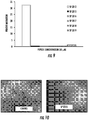
- FIG. 1 shows the results of a proliferation assay. All of the peptides with the Cysteines substituted inhibited the proliferation of HUVECs with the most potent activity shown by SP2024 (SEQ ID No:11) (IC 50 value of 1.29 ⁇ M).
- Migration assays were consistent with the adhesion assays and demonstrated inhibition of migration of HUVECs for all the peptides when compared to the control at a peptide concentration of 50 ⁇ M ( FIG. 3 ).
- FIG. 4 illustrates inhibition of migration with peptide SP2012 (SEQ ID No:3).
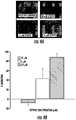
- Panel A shows a wound healing assay with the migration of cells in the presence or absence of peptide under constant concentration of chemoattractant (complete media). The peptide concentration was varied at 0.5 ⁇ M, 5 ⁇ M, and 50 ⁇ M. Migration of MDA-MB-231 cells into the restricted area was quantified after 17 hours of incubation (Panel B). The 50 ⁇ M and 5 ⁇ M treatments were statistically significant versus the control (p ⁇ 0.05). Error bars depict SEM.
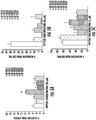
- FIG. 5 illustrates another experiment showing the inhibition of activity in adhesion at 50 ⁇ M (Panel A) and the inhibition of activity in migration at 50 ⁇ M (Panel B) and 5 ⁇ M (Panel C).
- the results again show that all the peptides exhibit inhibition of adhesion and migration of HUVECs.
- the inhibitory activity in the adhesion assay was quite similar to that of the parent compound (SP2012; SEQ ID No:3), resulting in almost complete inhibition at 50 ⁇ M. However, the activity in migration was significantly increased from 60% in the parent compound (SP2012; SEQ ID No:3) to > 90% in the modified peptides.
- the peptides with the substituted cysteines were further tested using the tube formation assay ( FIG. 6 ).
- the control contained 15,000 HUVECs/well plated in complete media.
- Each well contained peptide plated in complete media all plated on matrigel (50 ⁇ L/well).
- the results showed that all of the Cysteine-substituted peptides had inhibitory activity on tube formation. TABLE 2. Summary of Cysteine Substitutions in the Full Peptide Peptide No./ SEQ ID No.
- Tables 4 and 5 list the family of peptides that were generated by eliminating residues from the C-terminus of the parent peptide (SP2012; SEQ ID No:3). Truncations that eliminated the NINNV sequence showed loss of inhibitory activity in proliferation of endothelial cells. Peptides that include representative residues from this critical sequence (i.e. SP2028 (SEQ ID No:20), SP2029 (SEQ ID No:21), SP2032 (SEQ ID No:22)and SP2033 (SEQ ID No:23)) demonstrated potent activity in inhibiting proliferation, even improved activity as compared to the parent compound.
- SP2028 SEQ ID No:20
- SP2029 SEQ ID No:21
- SP2032 SEQ ID No:22
- SP2033 SEQ ID No:23
- FIG. 11 shows the ability of the C-terminal deletions peptides to inhibit adhesion and migration of endothelial cells.
- Panel A lists the amino acid sequences of the peptides used in this series of experiments.
- Panel B illustrates an adhesion experiment at 100 ⁇ M peptide concentration in which significant inhibition can be seen for peptide SP2006 (SEQ ID No: 18).
- Panel C shows a migration experiment at a peptide concentration of 50 ⁇ M. Again, inhibition can be seen for SP2006 (SEQ ID No:18).
- Panel D shows the inhibition of adhesion for SP2006 (SEQ ID No:18) at a concentration of 50 ⁇ M.
- FIG. 12 again illustrates the inhibitory activity of peptides generated by deletions from the C-terminus of SP2012 in HUVEC adhesion (Panel A) and migration assays (Panel B).
- the same four peptides that exhibited activity in the inhibition of proliferation were also very potent in inhibiting adhesion and migration, but did not display increased activity over the parent compound SP2012 (SEQ ID No:3). In the proliferation assay they were more potent than SP2012 (SEQ ID No:3).
- SP2006 SEQ ID No:18
- which did not inhibit proliferation exhibited inhibitory activity in both the adhesion and migration assays.
- NINNV sequence is supported by the absence of activity in the fragments which lack this region (SP2007 (SEQ ID No:24), SP2008 (SEQ ID No:25), SP2013 (SEQ ID No:26) and SP2014 (SEQ ID No:27)). These results also are in accordance with the inhibitory activity in the proliferation assay.
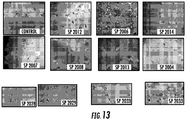
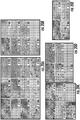
- FIG. 13 shows the HUVEC tube formation assay for the C-terminal deletion peptides. Images shown are compared to an untreated control in complete media. Inhibition of tube formation was seen for SP2006 (SEQ ID No:18), SP2028 (SEQ ID No:20), SP2029 (SEQ ID No:21), SP2032 (SEQ ID No:22), and SP2033 (SEQ ID No:23) . TABLE 4. Summary of C-terminal Deletions Peptide No./ SEQ ID No.
- the peptides generated by removing amino acids from the N-terminus are listed in Table 6. In contrast with the previous series of C-terminus truncations the peptides that lack residues from the N-terminus are virtually inactive at inhibiting proliferation of HUVEC.
- FIG. 14 illustrates the inhibitory activity of compounds generated by truncations from the N-terminus in adhesion (Panel A) and migration (Panel B) of HUVECs. These compounds displayed a range of inhibitory activity in the adhesion and migration assays. For the purpose of comparison, any compound displaying an inhibitory potential of greater than 30% (in the graphs a % inhibition from control lower than 70%) was considered active. Thus in the group of truncations from the N-terminus, peptides SP2010 (SEQ ID No:29) and SP2011 (SEQ ID No:30) showed low inhibitory activity in the adhesion assay and SP2009 (SEQ ID No:31) showed inhibitory activity in the migration assay.
- SP2010 SEQ ID No:29
- SP2011 SEQ ID No:30
- Peptide fragments generated by removing residues from both termini are listed in Table 7.
- the proliferation, adhesion, and migration inhibitory activity suggests that shorter fragments were less active even if they retained most of the NINNV sequence (SP2021 (SEQ ID No:32) and SP2030 (SEQ ID No:33).
- SP2021 SEQ ID No:32
- SP2030 SEQ ID No:33
- addition of two more residues to the N-terminus of the NINNV fragment along with the replacement of Abu by Threonine restored activity to similar levels as the larger 16 amino acid C-terminus truncations.
- Panel A lists the amino acid sequences of the peptides used in this series of experiments.
- Panel B illustrates the adhesion assays,
- Panel C shows the migration assays, and
- Panel D illustrates the proliferation assays.
- Table 7 lists a summary of the results of each of these experiments.
- Peptide Name Peptide sequence Number of residues Modification from the SP2012 IC 50 ⁇ 95 % CI ( ⁇ M) SP2012/3 SP2012 LRRFSTMPFMF Abu NINNV Abu NF 20 Parent peptide for this study 48.1 ⁇ 23.1 SP2020/35 SP2020 F AbuNINNV AbuN 9 Truncated 11 residues 9.8 ⁇ 4.6 SP2021/32 SP2021 FAbuNIN 5 Truncated 15 residues >100 SP2030/33 SP2030 FAbuNINV 6 Truncated 14 residues >100 SP2031/34 SP2031 FTNINNVTN 9 Truncated 11 residues & substituted the Abu residues with Threonine 4.7 ⁇ 1.5
- SP2024 SEQ ID No: 11
- SP2012 SEQ ID No:3
- SP2035 SEQ ID No:16
- the IC 50 was not affected by further substitutions of either one Methionine (position 10) or both (position 7 and 10) with Alanine (SP2035 (SEQ ID No:16); IC 50 2.51 ⁇ 0.88 ⁇ M and SP2036 (SEQ ID No:17); IC 50 2.75 ⁇ 1.22 ⁇ M). However, this activity was increased four times by the introduction of D-Alanine in lieu of the Methionine at position 7 (SP2034 (SEQ ID No:15); IC 50 0.55 ⁇ 0.37 ⁇ M).
- the inhibition of proliferation was increased from the parent SP2012 (SEQ ID No:3; IC 50 48.1 ⁇ 23.1 ⁇ M) by one order of magnitude in SP2024 (SEQ ID No:11; IC 50 7.45 ⁇ 5.7 ⁇ M) and even further by two order of magnitudes from SP2012 (SEQ ID No:3) to SP2034 (SEQ ID No:15) and SP2035 (SEQ ID No:16) with IC 50 0.54 ⁇ 0.19 ⁇ M and IC 50 0.98 ⁇ 0.38 ⁇ M respectively.
- SP2006 (SEQ ID No:18) also was active at inhibiting tube formation, even though it was inactive in the migration assay.
- the compound had 18% activity in inhibiting migration which was below the threshold of at least 70% activity.
- SP2006 (SEQ ID No:18) had strong activity in the adhesion assay thus it supports its activity in inhibition of tube formation.
- the N-terminus truncated SP2011 (SEQ ID No:30) showed no activity in tube formation as expected because it was inactive in the migration assay and it only had minimal activity in adhesion.
- SP2009 (SEQ ID No:31) and SP2010 (SEQ ID No:29) displayed activity in inhibiting tube formation as expected and were active at inhibiting adhesion or migration, respectively.
- the group of peptides generated by truncations from both ends included two active compounds (SP2020 (SEQ ID No:35) and SP2031 (SEQ ID No:34)) and two inactive compounds (SP2021 (SEQ ID No:32) and SP2031 (SEQ ID No:34)). All compounds in the substitution and 2 nd generation substitution group were very active at inhibiting tube formation which is expected as their potency in migration and adhesion was either increased or not affected by the substitutions. TABLE 9. Amino Acid Substitutions and Peptide Activity in Proliferation Table 9 Amino acid substitutions and peptide activity in proliferation Peptide No./SEQ ID No.
- the presently disclosed subject matter provides a small family of peptides which were screened in a series of in vitro assays: proliferation, adhesion, migration and tube formation with macrovascular endothelial cells (HUVEC) commonly used in angiogenesis studies. Selected peptides also were tested using microvascular endothelial cells (MEC), lymphatic endothelial cells (LEC) and MDA-MB-231 breast cancer cells and showed similarity of responses for these cell types. The proliferation inhibition activity was retained when most of the sequence was preserved (SP2028; SEQ ID No:20) or when specific substitutions were introduced.
- MEC microvascular endothelial cells
- LEC lymphatic endothelial cells
- MDA-MB-231 MDA-MB-231 breast cancer cells
- Shorter fragments that still maintained activity included the NINNV sequence which was coupled with additional amino acids on both sides for optimal activity (SP2009 (SEQ ID No:31) vs. SP2020 (SEQ ID No:35)).
- the in vitro activity was improved by two orders of magnitude in comparison to that of the parent peptide, when the length was maintained and certain substitutions were introduced (SP2034; SEQ ID No:15).
- Overall adhesion and migration profiles were similar; generally a compound active at inhibiting adhesion would also be active at inhibiting migration. Similarly the activity in the inhibition of adhesion and migration was maintained if the NINNV sequence was conserved (SP2004 (SEQ ID No:28) vs. SP2028 (SEQ ID No:20)).
- SP2006 (SEQ ID No:18), SP2010 (SEQ ID No:29), SP2011 (SEQ ID No:30) compounds which are active in adhesion but not in migration and compound SP2009 (SEQ ID No:31) which was active in migration but not adhesion.
- Inhibition of tube formation correlates very well with activity in either inhibition of adhesion or migration; if a compound was active in either of those two assays it consistently demonstrated activity in the inhibition of tube formation.
- High concentrations of peptides were used to assess the activity in this assay so that the inhibition was complete and there was no need for quantification of the effects.
- two different phenotypes were observed in the inhibition by these compounds; one in which the cells were clumped (e.g., FIG. 23 , panel B), and the other in which the cells were less clumped and formed fragile and short tubes (e.g., FIG.23 , panel A).
- the clumped profile was observed with all the compounds that inhibited adhesion while the short tubes profile was associated with compounds which were active in migration.
- FIG. 21 shows the inhibition activity of the parent peptide SP2012 (SEQ ID No:3) and SP2024 (SEQ ID No:11) in an adhesion assay (Panel A) and in a migration assay (Panel C) on lymphatic endothelial cells (LEC).
- This figure also shows the inhibition activity of the parent peptide SP2012 (SEQ ID No:3) and SP2024 (SEQ ID No:11) in an adhesion assay (Panel B) and in a migration assay (Panel D) on microvascular cells (MEC) and migration inhibition on breast cancer cells MDA-MB-231 (Panel E).
- FIG. 22 again demonstrates the inhibitory activity of SP2024 (SEQ ID No:11) on breast cancer cells MDA-MB-231.
- Panel A shows inhibition of cell adhesion by the SP2024 (SEQ ID No:11) peptide and Panel B demonstrates inhibition of cell migration.
- mice were housed and treated according to the approved animal protocol of the Institutional Care and Use Committee at Johns Hopkins Medical Institution (JHMI).
- Orthotopic breast tumors were initiated in SCID mice using MDA-MB-231 cells. 2 ⁇ 10 6 cells per 100 ⁇ L aliquot of single cell suspension were injected in the breast mannary fat pad. Tumors reached volumes of 75 mm 3 to 100 mm 3 in approximately 14-21 days. Mice were randomized and arranged in groups (8 mice per group) with similar tumor volumes (no statistical difference among averages) and treatment was commenced.
- Peptides were administered once per day intraperitoneally (i.p.) at doses of 10 mg/kg (subcutaneous delivery was also tested with certain peptides).
- a Matrigel plug assay was performed to evaluate the inhibitory effect of the peptides in angiogenesis and lymphangiogenesis in vivo.
- Basement Membrane Matrix (Matrigel, growth factor reduced, high concentration, LDEV-free, BD Biosciences) containing VEGFA (380 ng/mL) and heparin (10 unit) was mixed with or without the peptides making total volume of 400 ⁇ L.
- the final concentration of the peptides was 25 ⁇ M.
- DMSO contents were controlled identically within all experimental groups.
- the Matrigel mixtures were subcutaneously injected on both flanks on the abdominal side of athymic nude mice under anesthesia (25% xylazine + 25% acepromazine (vol/vol) in PBS giving a concentration of 50 mg/kg of ketamine and 5 mg/kg of acepromazine). Animals were housed and treated according to the approved animal protocol of the Institutional Care and Use Committee at Johns Hopkins Medical Institution (JHMI). After 10 days mice were euthanized and the gels were removed and weighed.
- JHMI Johns Hopkins Medical Institution
- mice were infused intravenously with 200 ⁇ L of FITC (fluorescein isothiocyanate)-Dextran (20 mg/mL; Santa Cruz Biotechnology, Santa Cruz, CA) and 1 h later, Matrigel plugs were surgically removed and placed in 10% formalin (BD Biosciences, San Diego, CA) for 16 hours, then washed in PBS, homogenized, and quantified in a 96-well fluorescent plate reader. Representative sections were imaged using a Nikon microscope to show the amount of vascular invasion into the gel. Quantification of vessels was performed by using immunohistochemistry.
- FITC fluorescein isothiocyanate
- NV ocular laser-induced choroidal neovascularization
- PBS phosphate-buffered saline
- mice were perfused with 1 mL of PBS containing 50 mg/mL of fluorescein-labeled dextran (2 x 10 6 Daltons average molecular weight; Sigma-Aldrich, St. Louis, MO) and choroidal flat mounts were examined by fluorescence microscopy. Images were captured with a Nikon Digital Still Camera DXM1200 (Nikon Instruments Inc., New York, NY). Image analysis software (Image-Pro Plus; Media Cybernetics, Silver Spring, MD) was used to measure the total area of choroidal NV at each rupture site with the investigator masked with respect to treatment group.
- fluorescein-labeled dextran 2 x 10 6 Daltons average molecular weight; Sigma-Aldrich, St. Louis, MO
- choroidal flat mounts were examined by fluorescence microscopy. Images were captured with a Nikon Digital Still Camera DXM1200 (Nikon Instruments Inc., New York, NY). Image analysis software (Image-Pro Plus; Media Cybernetics, Silver
- the ocular Rho/VEGF transgenic mice model of wet age-related macular degeneration also was used to test some of the peptides.
- Transgenic mice in which the rhodopsin promoter drives expression of VEGF in photoreceptors have the onset of VEGF production at P7 and develop extensive NV along the outer surface of the retina by P21 (Okamoto et al., 1997; Tobe et al., 1998).
- mice hemizygous for the transgene were given an intraocular injection of 1 ⁇ l of PBS containing 0.01, 0.1, or 1 ⁇ g of peptide or scramble peptide in one eye at P7 and P14 and at P21 the mice were anesthetized, perfused with fluorescein-labeled dextran, and the total area of neovascularization on the outer surface of the retina was measured on retinal flat mounts by image analysis as above.
- FIG. 23 shows the suppression of tumor growth by peptides SP2000 (SEQ ID No:19) and SP2012 (SEQ ID No:3) (Panel A).
- the control group PBS with 10% DMSO
- the experimental groups (10 mg/kg of peptide to mouse weight) were tested. Measurements were performed every fourth day. Error bars depict SEM.
- tumor growth was inhibited by SP2000 (SEQ ID No:19) and SP2012 (SEQ ID No:3).
- Panel B shows the quantification of microvascular density after the completion of the treatment at 21 days. All groups were statistically different from one another (p ⁇ 0.05)
- FIG. 24 demonstrates the inhibition of breast cancer cells MDA-MB-231 by the peptide SP2024 (SEQ ID No:11).
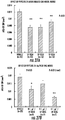
- Panel A shows that SP2024 (SEQ ID No:11) inhibited tumor growth significantly over the control.
- Panel B demonstrates that SP2024 (SEQ ID No:11) reduced relative vascular volume and Panel C showed that the peptide reduced tumor permeability-surface area product compared to the control as measured by MRI.
- FIG. 25 demonstrates that SP2024 (SEQ ID No:11) inhibits lung metastasis in an experiment with luciferase-transfected MDA-MB-231 cells injected into nude mice, as measured with a Xenogen IVIS system.
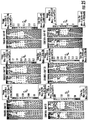
- FIG. 26 shows the results from the injection of SP2024 (SEQ ID No:11) (0.01, 0.1, or 1 ⁇ g) into the mouse eye. Both the area of choroidal neovascularization (Panel A) and the area of retinal neovascularization (Panel B) generally decreased as the amount of SP2024 (SEQ ID No:11) was increased.
- FIG. 27 shows that the injection of SP2034, SP2035, or SP2036 (SEQ ID Nos: 15-17) (0.1 ⁇ g) into a mouse eye inhibited laser-induced choroidal neovascularization (Panel A) and the area of retinal neovascularization in the Rho/VEGF model (Panel B).
- SP2036 SEQ ID No:17
- 0.1 ⁇ g of SP2036 administered directly into the eye inhibited VEGF mediated angiogenesis by about 70%.
Landscapes
- Health & Medical Sciences (AREA)
- Chemical & Material Sciences (AREA)
- Organic Chemistry (AREA)
- Life Sciences & Earth Sciences (AREA)
- General Health & Medical Sciences (AREA)
- Medicinal Chemistry (AREA)
- Gastroenterology & Hepatology (AREA)
- Zoology (AREA)
- Proteomics, Peptides & Aminoacids (AREA)
- Molecular Biology (AREA)
- Genetics & Genomics (AREA)
- Biophysics (AREA)
- Biochemistry (AREA)
- Toxicology (AREA)
- Public Health (AREA)
- Chemical Kinetics & Catalysis (AREA)
- Veterinary Medicine (AREA)
- Pharmacology & Pharmacy (AREA)
- General Chemical & Material Sciences (AREA)
- Animal Behavior & Ethology (AREA)
- Nuclear Medicine, Radiotherapy & Molecular Imaging (AREA)
- Medicines That Contain Protein Lipid Enzymes And Other Medicines (AREA)
- Peptides Or Proteins (AREA)
Claims (15)
- Peptide isolé comprenant une séquence d'acides aminés choisie parmi :(i) LRRFSTXPXXXXNINNVXNF (SEQ ID No : 1), dans lequel X en position 7 est M, A ou G ; X en position 9 est F, A, Y ou G ; X en position 10 est M, A, G, dA ou Nle ; X en position 11 est F, A, Y, G ou 4-ClPhe ; et X en position 12 et en position 18 sont A ou I ;(ii) LRRFSTMPFMFGNINNVGNF (SEQ ID No : 2) ;(iii) LRRFSTMPFMFVNINNVVNF (SEQ ID No : 14) ;(iv) LRRFSTMPFMFTNINNVTNF (SEQ ID No : 12) ;(v) LRRFSTMPFMFAllyGlyNINNVAllyGlyNF (SEQ ID No : 13) ;(vi) LRRFSTMPFMFININNVINF (SEQ ID No : 11) ;(vii) LRRFSTMPFdA FININNVINF (SEQ ID No : 15) ;(viii) LRRFSTMPFAFININNVINF (SEQ ID No : 16) ; et(ix) LRRFSTAPFAFININNVINF (SEQ ID No : 17) ;et dans lequel le peptide présente des propriétés anti-angiogéniques, de perméabilité anti-vasculaire, anti-tumorogenèse et/ou anti-lymphangiogéniques.
- Peptide isolé selon la revendication 1, dans lequel le peptide comprend la séquence d'acides aminés LRRFSTXPXXXXNINNVXNF (SEQ ID No : 1), dans lequel X en position 7 est M, A ou G ; X en position 9 est F, A, Y ou G ; X en position 10 est M, A, G, dA ou Nle ; X en position 11 est F, A, Y, G ou 4-ClPhe ; et X en position 12 et la position 18 est I.
- Peptide isolé selon la revendication 1 ou 2, dans lequel le peptide comprend la séquence d'acides aminés LRRFSTXPXXXXNINNVXNF (SEQ ID No : 1), dans lequel X en position 7 est M, A ou G ; X en position 9 est F, A, Y ou G ; X en position 10 est A ou dA ; X en position 11 est F, A, Y, G ou 4-ClPhe ; et X en position 12 et en position 18 sont A ou I.
- Peptide isolé selon l'une quelconque des revendications précédentes, dans lequel le peptide comprend la séquence d'acides aminés LRRFSTXPXXXXNINNVXNF (SEQ ID No : 1), dans lequel X en position 7 est M, A ou G ; X en position 9 est F, A, Y ou G ; X en position 10 est A ; X en position 11 est F, A, Y, G ou 4-ClPhe ; et X en position 12 et en position 18 sont A ou I.
- Composition comprenant une substance pharmaceutiquement acceptable et une quantité efficace d'au moins un peptide isolé selon l'une quelconque des revendications 1 à 4.
- Kit comprenant un peptide isolé selon l'une quelconque des revendications 1 à 4.
- Procédé in vitro ou ex vivo d'inhibition de l'angiogenèse, de la lymphangiogenèse, de la perméabilité vasculaire et/ou de la tumorigenèse impliquant une cellule, le procédé comprenant :
la mise en contact de la cellule avec un peptide isolé selon l'une quelconque des revendications 1 à 4, dans lequel la cellule est mise en contact par le peptide en une quantité suffisante pour inhiber l'angiogenèse, la lymphangiogenèse, la perméabilité vasculaire et/ou la tumorigenèse impliquant la cellule. - Procédé selon la revendication 7, dans lequel :(a) la mise en contact de la cellule entraîne une inhibition de l'adhésion, de la migration, de la prolifération et/ou de la formation de tube impliquant la cellule ; et/ou(b) la cellule est une cellule endothéliale.
- Peptide isolé selon l'une quelconque des revendications 1 à 4, à utiliser dans un procédé de traitement d'un sujet souffrant d'une maladie liée à l'angiogenèse, la lymphangiogenèse, la perméabilité vasculaire et/ou la tumorigenèse ou pour empêcher ou retarder le développement chez un sujet d'une maladie liée à l'angiogenèse, la lymphangiogenèse, la perméabilité vasculaire et/ou la tumorigenèse, le procédé comprenant l'administration au sujet du peptide en une quantité suffisante pour traiter, retarder ou prévenir la maladie chez le sujet.
- Peptide isolé à utiliser selon la revendication 9, dans lequel le sujet est humain.
- Peptide isolé à utiliser selon la revendication 9, dans lequel le sujet est non humain.
- Peptide isolé à utiliser selon la revendication 9, dans lequel la maladie est un cancer.
- Peptide isolé à utiliser selon la revendication 12, dans lequel :(a) le cancer est un cancer du sein, du poumon, du glioblastome, des cellules rénales, des cellules hépatiques, de la tête, du cou ou tout autre cancer qui repose sur l'angiogenèse ou la lymphangiogenèse pour se produire ou se propager ; ou(b) le procédé inhibe l'angiogenèse, la lymphangiogenèse, la perméabilité vasculaire et/ou la tumorigenèse dans ou autour d'une tumeur ou(c) le procédé inhibe l'établissement de métastases ou inhibe d'autres métastases du cancer ; ou(d) le procédé inhibe la dissémination des cellules tumorales dans le sang et/ou le système vasculaire lymphatique.
- Peptide isolé à utiliser selon la revendication 13(b) dans lequel la tumeur est une tumeur primaire ou une tumeur métastasée établie.
- Peptide isolé à utiliser selon la revendication 9, dans lequel la maladie est liée à l'angiogenèse oculaire, éventuellement dans lequel la maladie est choisie dans le groupe constitué par la dégénérescence maculaire liée à l'âge, l'œdème maculaire, le glaucome néovasculaire, la rétinopathie diabétique proliférante et la rétinopathie de prématurité.
Applications Claiming Priority (3)
| Application Number | Priority Date | Filing Date | Title |
|---|---|---|---|
| US42170610P | 2010-12-10 | 2010-12-10 | |
| US201161546314P | 2011-10-12 | 2011-10-12 | |
| PCT/US2011/064475 WO2012079088A2 (fr) | 2010-12-10 | 2011-12-12 | Peptides mimétiques dérivés de collagène de type iv et leur utilisation pour traiter des maladies dépendantes de l'angiogenèse et de la lymphangiogenèse |
Publications (3)
| Publication Number | Publication Date |
|---|---|
| EP2649095A2 EP2649095A2 (fr) | 2013-10-16 |
| EP2649095A4 EP2649095A4 (fr) | 2014-05-07 |
| EP2649095B1 true EP2649095B1 (fr) | 2021-10-06 |
Family
ID=46207796
Family Applications (1)
| Application Number | Title | Priority Date | Filing Date |
|---|---|---|---|
| EP11847661.3A Active EP2649095B1 (fr) | 2010-12-10 | 2011-12-12 | Peptides mimétiques dérivés de collagène de type iv et leur utilisation pour traiter des maladies dépendantes de l'angiogenèse et de la lymphangiogenèse |
Country Status (3)
| Country | Link |
|---|---|
| US (5) | US9056923B2 (fr) |
| EP (1) | EP2649095B1 (fr) |
| WO (1) | WO2012079088A2 (fr) |
Families Citing this family (10)
| Publication number | Priority date | Publication date | Assignee | Title |
|---|---|---|---|---|
| GB201306623D0 (en) * | 2013-04-11 | 2013-05-29 | Bicycle Therapeutics Ltd | Modulation of structured polypeptide specificity |
| US9802984B2 (en) | 2013-06-07 | 2017-10-31 | The Johns Hopkins University | Biomimetic peptide and biodegradable delivery platform for the treatment of angiogenesis- and lymphangiogenesis-dependent diseases |
| MX2018006194A (es) * | 2015-11-19 | 2018-12-06 | Asclepix Therapeutics Llc | Peptidos con propiedades antiangiogenicas, antilinfangiogenicas y antiedemicas y formulaciones de nanoparticulas. |
| MX2019003895A (es) | 2016-10-04 | 2019-10-07 | Asclepix Therapeutics Inc | Compuestos y metodos para activar la señalizacion tie2. |
| BR112019021056B1 (pt) | 2017-04-06 | 2022-11-22 | Sustain Holdings, Llc | Usos de uma composição que compreende um peptídeo mimético de colágeno para o tratamento ou a prevenção de uma doença, distúrbio ou ferida ocular |
| US11674959B2 (en) | 2017-08-03 | 2023-06-13 | The Johns Hopkins University | Methods for identifying and preparing pharmaceutical agents for activating Tie1 and/or Tie2 receptors |
| MY204234A (en) | 2018-08-27 | 2024-08-16 | Regeneron Pharma | Use of raman spectroscopy in downstream purification |
| AU2020248438A1 (en) | 2019-03-26 | 2021-10-28 | Asclepix Therapeutics, Inc. | Compositions and methods for treating ocular disease |
| EP3958889B1 (fr) | 2019-04-22 | 2025-01-08 | Sustain Holdings, LLC | Compositions de peptides mimétiques de collagène pour le traitement d'une maladie ou d'un trouble oculaire du segment postérieur impliquant la rétine, les vaisseau sanguins rétiniens, les nerfs rétiniens ou le nerf optique |
| CN120554490B (zh) * | 2025-05-28 | 2025-10-31 | 广西福莱明生物制药有限公司 | 一种重组iv型人源化胶原蛋白及其纯化工艺 |
Family Cites Families (19)
| Publication number | Priority date | Publication date | Assignee | Title |
|---|---|---|---|---|
| US5001116A (en) | 1982-12-20 | 1991-03-19 | The Children's Medical Center Corporation | Inhibition of angiogenesis |
| US5192744A (en) | 1990-01-12 | 1993-03-09 | Northwestern University | Method of inhibiting angiogenesis of tumors |
| US6090794A (en) | 1990-04-19 | 2000-07-18 | The General Hospital Corporation | Inhibition of neurofibrosarcoma growth and angiogenesis |
| US5474765A (en) | 1992-03-23 | 1995-12-12 | Ut Sw Medical Ctr At Dallas | Preparation and use of steroid-polyanionic polymer-based conjugates targeted to vascular endothelial cells |
| US5629327A (en) | 1993-03-01 | 1997-05-13 | Childrens Hospital Medical Center Corp. | Methods and compositions for inhibition of angiogenesis |
| DE69412596T2 (de) | 1993-03-10 | 1999-03-04 | Magainin Pharmaceuticals Inc., Plymouth Meeting, Pa. | Steroidderivate, pharmazeutische zusammensetzungen die sie enthalten und ihre verwendung als antibiotika oder desinfektionsmittel |
| US5504074A (en) | 1993-08-06 | 1996-04-02 | Children's Medical Center Corporation | Estrogenic compounds as anti-angiogenic agents |
| US5646136A (en) | 1994-01-04 | 1997-07-08 | Duke University | Methods of inhibiting angiogenesis and tumor growth, and treating ophthalmologic conditions with angiostatic and therapeutic steroids |
| US5795885A (en) | 1995-06-07 | 1998-08-18 | Magainin Pharmaceuticals Inc. | Method of inhibiting profileration of cells by administering an aminosterol compound |
| US5981471A (en) | 1997-02-06 | 1999-11-09 | Entremed, Inc. | Compositions and methods for inhibiting cellular proliferation |
| AU3109199A (en) | 1998-03-25 | 1999-10-18 | Large Scale Biology Corporation | Benzoates derivatives for inhibiting angiogenesis |
| EP1337633A2 (fr) | 2000-01-07 | 2003-08-27 | Beth Israel Deaconess Medical Center | Proteines et fragments de proteines anti-angiogeniques et leurs procede d'utilisation |
| AU2002224403A1 (en) * | 2000-10-13 | 2002-04-22 | Entremed, Inc | Endostatin and pitslre protein kinases as angiogenesis-inhibiting peptides and method of use |
| WO2004067762A2 (fr) * | 2003-01-27 | 2004-08-12 | University Of Kansas Medical Center | Structure cristallisee hexamere a domaine nc1 de collagene de type iv |
| US7662783B2 (en) * | 2003-02-20 | 2010-02-16 | New York University | CLK-peptide and SLK-peptide |
| WO2007044026A2 (fr) * | 2004-11-23 | 2007-04-19 | The Johns Hopkins University | Compositions comportant du collagène modifié et leurs utilisations |
| US20100144641A1 (en) * | 2005-09-12 | 2010-06-10 | Popel Aleksander S | Compositions Having Antiangiogenic Activity and Uses Thereof |
| WO2008085828A2 (fr) * | 2007-01-03 | 2008-07-17 | The Johns Hopkins University | Modulateurs peptidiques de l'angiogenèse et leur utilisation |
| US8198406B2 (en) | 2007-11-07 | 2012-06-12 | Northwestern University | Methods and compositions for inhibiting angiogenesis |
-
2011
- 2011-12-12 EP EP11847661.3A patent/EP2649095B1/fr active Active
- 2011-12-12 US US13/992,998 patent/US9056923B2/en active Active
- 2011-12-12 WO PCT/US2011/064475 patent/WO2012079088A2/fr not_active Ceased
-
2015
- 2015-05-11 US US14/708,829 patent/US20150307592A1/en not_active Abandoned
-
2016
- 2016-12-30 US US15/395,648 patent/US10106597B2/en active Active
-
2018
- 2018-09-14 US US16/131,754 patent/US10774131B2/en active Active
-
2020
- 2020-08-10 US US16/989,411 patent/US11155603B2/en active Active
Non-Patent Citations (1)
| Title |
|---|
| None * |
Also Published As
| Publication number | Publication date |
|---|---|
| US20150307592A1 (en) | 2015-10-29 |
| EP2649095A4 (fr) | 2014-05-07 |
| WO2012079088A2 (fr) | 2012-06-14 |
| US9056923B2 (en) | 2015-06-16 |
| US10106597B2 (en) | 2018-10-23 |
| US10774131B2 (en) | 2020-09-15 |
| EP2649095A2 (fr) | 2013-10-16 |
| US20190002531A1 (en) | 2019-01-03 |
| US20130316950A1 (en) | 2013-11-28 |
| WO2012079088A3 (fr) | 2012-12-27 |
| US20170174749A1 (en) | 2017-06-22 |
| US20200362017A1 (en) | 2020-11-19 |
| US11155603B2 (en) | 2021-10-26 |
Similar Documents
| Publication | Publication Date | Title |
|---|---|---|
| US11155603B2 (en) | Mimetic peptides derived from collagen type IV and their use for treating angiogenesis- and lymphangiogenesis- dependent diseases | |
| US20240391957A1 (en) | Biomimetic peptide and biodegradable delivery platform for the treatment of angiogenesis- and lymphangiogenesis-dependent diseases | |
| EP3893913B1 (fr) | Peptides ciblant un récepteur de la transferrine | |
| US10772966B2 (en) | Compositions and methods for transport across the blood brain barrier | |
| HK40022338A (en) | A biomimetic peptide and biodegradable delivery platform | |
| HK40055788A (en) | Compositions and methods for transport across the blood brain barrier | |
| HK1222542B (zh) | 用於治疗血管生成依赖性和淋巴管生成依赖性疾病的生物模拟肽和生物可降解的递送平台 |
Legal Events
| Date | Code | Title | Description |
|---|---|---|---|
| PUAI | Public reference made under article 153(3) epc to a published international application that has entered the european phase |
Free format text: ORIGINAL CODE: 0009012 |
|
| 17P | Request for examination filed |
Effective date: 20130704 |
|
| AK | Designated contracting states |
Kind code of ref document: A2 Designated state(s): AL AT BE BG CH CY CZ DE DK EE ES FI FR GB GR HR HU IE IS IT LI LT LU LV MC MK MT NL NO PL PT RO RS SE SI SK SM TR |
|
| DAX | Request for extension of the european patent (deleted) | ||
| A4 | Supplementary search report drawn up and despatched |
Effective date: 20140409 |
|
| RIC1 | Information provided on ipc code assigned before grant |
Ipc: A61K 38/39 20060101ALI20140403BHEP Ipc: A61P 35/00 20060101ALI20140403BHEP Ipc: C07K 14/78 20060101AFI20140403BHEP |
|
| 17Q | First examination report despatched |
Effective date: 20151215 |
|
| STAA | Information on the status of an ep patent application or granted ep patent |
Free format text: STATUS: EXAMINATION IS IN PROGRESS |
|
| GRAP | Despatch of communication of intention to grant a patent |
Free format text: ORIGINAL CODE: EPIDOSNIGR1 |
|
| STAA | Information on the status of an ep patent application or granted ep patent |
Free format text: STATUS: GRANT OF PATENT IS INTENDED |
|
| INTG | Intention to grant announced |
Effective date: 20200130 |
|
| GRAJ | Information related to disapproval of communication of intention to grant by the applicant or resumption of examination proceedings by the epo deleted |
Free format text: ORIGINAL CODE: EPIDOSDIGR1 |
|
| STAA | Information on the status of an ep patent application or granted ep patent |
Free format text: STATUS: EXAMINATION IS IN PROGRESS |
|
| INTC | Intention to grant announced (deleted) | ||
| GRAP | Despatch of communication of intention to grant a patent |
Free format text: ORIGINAL CODE: EPIDOSNIGR1 |
|
| STAA | Information on the status of an ep patent application or granted ep patent |
Free format text: STATUS: GRANT OF PATENT IS INTENDED |
|
| INTG | Intention to grant announced |
Effective date: 20210510 |
|
| GRAS | Grant fee paid |
Free format text: ORIGINAL CODE: EPIDOSNIGR3 |
|
| GRAA | (expected) grant |
Free format text: ORIGINAL CODE: 0009210 |
|
| STAA | Information on the status of an ep patent application or granted ep patent |
Free format text: STATUS: THE PATENT HAS BEEN GRANTED |
|
| AK | Designated contracting states |
Kind code of ref document: B1 Designated state(s): AL AT BE BG CH CY CZ DE DK EE ES FI FR GB GR HR HU IE IS IT LI LT LU LV MC MK MT NL NO PL PT RO RS SE SI SK SM TR |
|
| REG | Reference to a national code |
Ref country code: GB Ref legal event code: FG4D |
|
| REG | Reference to a national code |
Ref country code: CH Ref legal event code: EP Ref country code: AT Ref legal event code: REF Ref document number: 1436168 Country of ref document: AT Kind code of ref document: T Effective date: 20211015 |
|
| REG | Reference to a national code |
Ref country code: DE Ref legal event code: R096 Ref document number: 602011071902 Country of ref document: DE |
|
| REG | Reference to a national code |
Ref country code: IE Ref legal event code: FG4D |
|
| REG | Reference to a national code |
Ref country code: SE Ref legal event code: TRGR |
|
| REG | Reference to a national code |
Ref country code: NL Ref legal event code: FP |
|
| REG | Reference to a national code |
Ref country code: LT Ref legal event code: MG9D |
|
| PGFP | Annual fee paid to national office [announced via postgrant information from national office to epo] |
Ref country code: SE Payment date: 20211227 Year of fee payment: 11 Ref country code: IE Payment date: 20211227 Year of fee payment: 11 |
|
| REG | Reference to a national code |
Ref country code: AT Ref legal event code: MK05 Ref document number: 1436168 Country of ref document: AT Kind code of ref document: T Effective date: 20211006 |
|
| PGFP | Annual fee paid to national office [announced via postgrant information from national office to epo] |
Ref country code: NL Payment date: 20211226 Year of fee payment: 11 |
|
| PG25 | Lapsed in a contracting state [announced via postgrant information from national office to epo] |
Ref country code: RS Free format text: LAPSE BECAUSE OF FAILURE TO SUBMIT A TRANSLATION OF THE DESCRIPTION OR TO PAY THE FEE WITHIN THE PRESCRIBED TIME-LIMIT Effective date: 20211006 Ref country code: LT Free format text: LAPSE BECAUSE OF FAILURE TO SUBMIT A TRANSLATION OF THE DESCRIPTION OR TO PAY THE FEE WITHIN THE PRESCRIBED TIME-LIMIT Effective date: 20211006 Ref country code: FI Free format text: LAPSE BECAUSE OF FAILURE TO SUBMIT A TRANSLATION OF THE DESCRIPTION OR TO PAY THE FEE WITHIN THE PRESCRIBED TIME-LIMIT Effective date: 20211006 Ref country code: BG Free format text: LAPSE BECAUSE OF FAILURE TO SUBMIT A TRANSLATION OF THE DESCRIPTION OR TO PAY THE FEE WITHIN THE PRESCRIBED TIME-LIMIT Effective date: 20220106 Ref country code: AT Free format text: LAPSE BECAUSE OF FAILURE TO SUBMIT A TRANSLATION OF THE DESCRIPTION OR TO PAY THE FEE WITHIN THE PRESCRIBED TIME-LIMIT Effective date: 20211006 |
|
| PGFP | Annual fee paid to national office [announced via postgrant information from national office to epo] |
Ref country code: CH Payment date: 20220104 Year of fee payment: 11 |
|
| PG25 | Lapsed in a contracting state [announced via postgrant information from national office to epo] |
Ref country code: IS Free format text: LAPSE BECAUSE OF FAILURE TO SUBMIT A TRANSLATION OF THE DESCRIPTION OR TO PAY THE FEE WITHIN THE PRESCRIBED TIME-LIMIT Effective date: 20220206 Ref country code: PT Free format text: LAPSE BECAUSE OF FAILURE TO SUBMIT A TRANSLATION OF THE DESCRIPTION OR TO PAY THE FEE WITHIN THE PRESCRIBED TIME-LIMIT Effective date: 20220207 Ref country code: PL Free format text: LAPSE BECAUSE OF FAILURE TO SUBMIT A TRANSLATION OF THE DESCRIPTION OR TO PAY THE FEE WITHIN THE PRESCRIBED TIME-LIMIT Effective date: 20211006 Ref country code: NO Free format text: LAPSE BECAUSE OF FAILURE TO SUBMIT A TRANSLATION OF THE DESCRIPTION OR TO PAY THE FEE WITHIN THE PRESCRIBED TIME-LIMIT Effective date: 20220106 Ref country code: LV Free format text: LAPSE BECAUSE OF FAILURE TO SUBMIT A TRANSLATION OF THE DESCRIPTION OR TO PAY THE FEE WITHIN THE PRESCRIBED TIME-LIMIT Effective date: 20211006 Ref country code: HR Free format text: LAPSE BECAUSE OF FAILURE TO SUBMIT A TRANSLATION OF THE DESCRIPTION OR TO PAY THE FEE WITHIN THE PRESCRIBED TIME-LIMIT Effective date: 20211006 Ref country code: GR Free format text: LAPSE BECAUSE OF FAILURE TO SUBMIT A TRANSLATION OF THE DESCRIPTION OR TO PAY THE FEE WITHIN THE PRESCRIBED TIME-LIMIT Effective date: 20220107 Ref country code: ES Free format text: LAPSE BECAUSE OF FAILURE TO SUBMIT A TRANSLATION OF THE DESCRIPTION OR TO PAY THE FEE WITHIN THE PRESCRIBED TIME-LIMIT Effective date: 20211006 |
|
| PGFP | Annual fee paid to national office [announced via postgrant information from national office to epo] |
Ref country code: BE Payment date: 20211227 Year of fee payment: 11 |
|
| REG | Reference to a national code |
Ref country code: DE Ref legal event code: R097 Ref document number: 602011071902 Country of ref document: DE |
|
| REG | Reference to a national code |
Ref country code: NL Ref legal event code: PD Owner name: THE JOHNS HOPKINS UNIVERSITY; US Free format text: DETAILS ASSIGNMENT: CHANGE OF OWNER(S), ASSIGNMENT; FORMER OWNER NAME: THE JOHNS HOPKINS UNIVERSITY Effective date: 20220713 |
|
| REG | Reference to a national code |
Ref country code: DE Ref legal event code: R081 Ref document number: 602011071902 Country of ref document: DE Owner name: THE JOHNS HOPKINS UNIVERSITY, BALTIMORE, US Free format text: FORMER OWNERS: KOSKIMAKI, JACOB E., BALTIMORE, MD, US; PANDEY, NIRANJAN B., WHITE MARSH, MD, US; POPEL, ALEKSANDER S., LUTHERVILLE, MD, US; RIVERA, CORBAN G., BALTIMORE, MD, US; ROSCA, ELENA V., BALTIMORE, MD, US; TAMIZ, AMIR P., SILVER SPRING, MD, US; THE JOHNS HOPKINS UNIVERSITY, BALTIMORE, MD, US |
|
| PG25 | Lapsed in a contracting state [announced via postgrant information from national office to epo] |
Ref country code: SM Free format text: LAPSE BECAUSE OF FAILURE TO SUBMIT A TRANSLATION OF THE DESCRIPTION OR TO PAY THE FEE WITHIN THE PRESCRIBED TIME-LIMIT Effective date: 20211006 Ref country code: SK Free format text: LAPSE BECAUSE OF FAILURE TO SUBMIT A TRANSLATION OF THE DESCRIPTION OR TO PAY THE FEE WITHIN THE PRESCRIBED TIME-LIMIT Effective date: 20211006 Ref country code: RO Free format text: LAPSE BECAUSE OF FAILURE TO SUBMIT A TRANSLATION OF THE DESCRIPTION OR TO PAY THE FEE WITHIN THE PRESCRIBED TIME-LIMIT Effective date: 20211006 Ref country code: MC Free format text: LAPSE BECAUSE OF FAILURE TO SUBMIT A TRANSLATION OF THE DESCRIPTION OR TO PAY THE FEE WITHIN THE PRESCRIBED TIME-LIMIT Effective date: 20211006 Ref country code: EE Free format text: LAPSE BECAUSE OF FAILURE TO SUBMIT A TRANSLATION OF THE DESCRIPTION OR TO PAY THE FEE WITHIN THE PRESCRIBED TIME-LIMIT Effective date: 20211006 Ref country code: DK Free format text: LAPSE BECAUSE OF FAILURE TO SUBMIT A TRANSLATION OF THE DESCRIPTION OR TO PAY THE FEE WITHIN THE PRESCRIBED TIME-LIMIT Effective date: 20211006 Ref country code: CZ Free format text: LAPSE BECAUSE OF FAILURE TO SUBMIT A TRANSLATION OF THE DESCRIPTION OR TO PAY THE FEE WITHIN THE PRESCRIBED TIME-LIMIT Effective date: 20211006 |
|
| RAP2 | Party data changed (patent owner data changed or rights of a patent transferred) |
Owner name: THE JOHNS HOPKINS UNIVERSITY |
|
| PLBE | No opposition filed within time limit |
Free format text: ORIGINAL CODE: 0009261 |
|
| STAA | Information on the status of an ep patent application or granted ep patent |
Free format text: STATUS: NO OPPOSITION FILED WITHIN TIME LIMIT |
|
| REG | Reference to a national code |
Ref country code: BE Ref legal event code: PD Owner name: THE JOHNS HOPKINS UNIVERSITY; US Free format text: DETAILS ASSIGNMENT: CHANGE OF OWNER(S), ASSIGNMENT; FORMER OWNER NAME: POPEL, ALEKSANDER S. Effective date: 20220718 |
|
| 26N | No opposition filed |
Effective date: 20220707 |
|
| REG | Reference to a national code |
Ref country code: GB Ref legal event code: 732E Free format text: REGISTERED BETWEEN 20220915 AND 20220921 |
|
| PG25 | Lapsed in a contracting state [announced via postgrant information from national office to epo] |
Ref country code: LU Free format text: LAPSE BECAUSE OF NON-PAYMENT OF DUE FEES Effective date: 20211212 Ref country code: AL Free format text: LAPSE BECAUSE OF FAILURE TO SUBMIT A TRANSLATION OF THE DESCRIPTION OR TO PAY THE FEE WITHIN THE PRESCRIBED TIME-LIMIT Effective date: 20211006 |
|
| PG25 | Lapsed in a contracting state [announced via postgrant information from national office to epo] |
Ref country code: SI Free format text: LAPSE BECAUSE OF FAILURE TO SUBMIT A TRANSLATION OF THE DESCRIPTION OR TO PAY THE FEE WITHIN THE PRESCRIBED TIME-LIMIT Effective date: 20211006 |
|
| PG25 | Lapsed in a contracting state [announced via postgrant information from national office to epo] |
Ref country code: IT Free format text: LAPSE BECAUSE OF FAILURE TO SUBMIT A TRANSLATION OF THE DESCRIPTION OR TO PAY THE FEE WITHIN THE PRESCRIBED TIME-LIMIT Effective date: 20211006 Ref country code: HU Free format text: LAPSE BECAUSE OF FAILURE TO SUBMIT A TRANSLATION OF THE DESCRIPTION OR TO PAY THE FEE WITHIN THE PRESCRIBED TIME-LIMIT; INVALID AB INITIO Effective date: 20111212 Ref country code: CY Free format text: LAPSE BECAUSE OF FAILURE TO SUBMIT A TRANSLATION OF THE DESCRIPTION OR TO PAY THE FEE WITHIN THE PRESCRIBED TIME-LIMIT Effective date: 20211006 |
|
| P01 | Opt-out of the competence of the unified patent court (upc) registered |
Effective date: 20230404 |
|
| REG | Reference to a national code |
Ref country code: CH Ref legal event code: PL |
|
| REG | Reference to a national code |
Ref country code: SE Ref legal event code: EUG |
|
| REG | Reference to a national code |
Ref country code: NL Ref legal event code: MM Effective date: 20230101 |
|
| REG | Reference to a national code |
Ref country code: BE Ref legal event code: MM Effective date: 20221231 |
|
| PG25 | Lapsed in a contracting state [announced via postgrant information from national office to epo] |
Ref country code: NL Free format text: LAPSE BECAUSE OF NON-PAYMENT OF DUE FEES Effective date: 20230101 |
|
| PG25 | Lapsed in a contracting state [announced via postgrant information from national office to epo] |
Ref country code: SE Free format text: LAPSE BECAUSE OF NON-PAYMENT OF DUE FEES Effective date: 20221213 Ref country code: LI Free format text: LAPSE BECAUSE OF NON-PAYMENT OF DUE FEES Effective date: 20221231 Ref country code: IE Free format text: LAPSE BECAUSE OF NON-PAYMENT OF DUE FEES Effective date: 20221212 Ref country code: CH Free format text: LAPSE BECAUSE OF NON-PAYMENT OF DUE FEES Effective date: 20221231 |
|
| PG25 | Lapsed in a contracting state [announced via postgrant information from national office to epo] |
Ref country code: BE Free format text: LAPSE BECAUSE OF NON-PAYMENT OF DUE FEES Effective date: 20221231 |
|
| PG25 | Lapsed in a contracting state [announced via postgrant information from national office to epo] |
Ref country code: MK Free format text: LAPSE BECAUSE OF FAILURE TO SUBMIT A TRANSLATION OF THE DESCRIPTION OR TO PAY THE FEE WITHIN THE PRESCRIBED TIME-LIMIT Effective date: 20211006 |
|
| PG25 | Lapsed in a contracting state [announced via postgrant information from national office to epo] |
Ref country code: MT Free format text: LAPSE BECAUSE OF FAILURE TO SUBMIT A TRANSLATION OF THE DESCRIPTION OR TO PAY THE FEE WITHIN THE PRESCRIBED TIME-LIMIT Effective date: 20211006 |
|
| PG25 | Lapsed in a contracting state [announced via postgrant information from national office to epo] |
Ref country code: TR Free format text: LAPSE BECAUSE OF FAILURE TO SUBMIT A TRANSLATION OF THE DESCRIPTION OR TO PAY THE FEE WITHIN THE PRESCRIBED TIME-LIMIT Effective date: 20211006 |
|
| PGFP | Annual fee paid to national office [announced via postgrant information from national office to epo] |
Ref country code: GB Payment date: 20251229 Year of fee payment: 15 |
|
| PGFP | Annual fee paid to national office [announced via postgrant information from national office to epo] |
Ref country code: FR Payment date: 20251226 Year of fee payment: 15 |
|
| PGFP | Annual fee paid to national office [announced via postgrant information from national office to epo] |
Ref country code: DE Payment date: 20251229 Year of fee payment: 15 |