EP2662992B1 - Vorrichtung und verfahren zur steuerung der koexistenzinterferenz in vorrichtungen in einem drahtlosen kommunikationssystem - Google Patents
Vorrichtung und verfahren zur steuerung der koexistenzinterferenz in vorrichtungen in einem drahtlosen kommunikationssystem Download PDFInfo
- Publication number
- EP2662992B1 EP2662992B1 EP12732180.0A EP12732180A EP2662992B1 EP 2662992 B1 EP2662992 B1 EP 2662992B1 EP 12732180 A EP12732180 A EP 12732180A EP 2662992 B1 EP2662992 B1 EP 2662992B1
- Authority
- EP
- European Patent Office
- Prior art keywords
- interference
- assistance information
- enb
- drx
- request
- Prior art date
- Legal status (The legal status is an assumption and is not a legal conclusion. Google has not performed a legal analysis and makes no representation as to the accuracy of the status listed.)
- Active
Links
Images








Classifications
-
- H—ELECTRICITY
- H04—ELECTRIC COMMUNICATION TECHNIQUE
- H04W—WIRELESS COMMUNICATION NETWORKS
- H04W72/00—Local resource management
- H04W72/12—Wireless traffic scheduling
- H04W72/1215—Wireless traffic scheduling for collaboration of different radio technologies
-
- H—ELECTRICITY
- H04—ELECTRIC COMMUNICATION TECHNIQUE
- H04W—WIRELESS COMMUNICATION NETWORKS
- H04W72/00—Local resource management
- H04W72/50—Allocation or scheduling criteria for wireless resources
- H04W72/54—Allocation or scheduling criteria for wireless resources based on quality criteria
- H04W72/541—Allocation or scheduling criteria for wireless resources based on quality criteria using the level of interference
-
- H—ELECTRICITY
- H04—ELECTRIC COMMUNICATION TECHNIQUE
- H04W—WIRELESS COMMUNICATION NETWORKS
- H04W16/00—Network planning, e.g. coverage or traffic planning tools; Network deployment, e.g. resource partitioning or cells structures
- H04W16/14—Spectrum sharing arrangements between different networks
-
- H—ELECTRICITY
- H04—ELECTRIC COMMUNICATION TECHNIQUE
- H04B—TRANSMISSION
- H04B1/00—Details of transmission systems, not covered by a single one of groups H04B3/00 - H04B13/00; Details of transmission systems not characterised by the medium used for transmission
- H04B1/38—Transceivers, i.e. devices in which transmitter and receiver form a structural unit and in which at least one part is used for functions of transmitting and receiving
- H04B1/40—Circuits
- H04B1/403—Circuits using the same oscillator for generating both the transmitter frequency and the receiver local oscillator frequency
- H04B1/406—Circuits using the same oscillator for generating both the transmitter frequency and the receiver local oscillator frequency with more than one transmission mode, e.g. analog and digital modes
-
- H—ELECTRICITY
- H04—ELECTRIC COMMUNICATION TECHNIQUE
- H04L—TRANSMISSION OF DIGITAL INFORMATION, e.g. TELEGRAPHIC COMMUNICATION
- H04L1/00—Arrangements for detecting or preventing errors in the information received
- H04L1/12—Arrangements for detecting or preventing errors in the information received by using return channel
- H04L1/16—Arrangements for detecting or preventing errors in the information received by using return channel in which the return channel carries supervisory signals, e.g. repetition request signals
- H04L1/18—Automatic repetition systems, e.g. Van Duuren systems
- H04L1/1812—Hybrid protocols; Hybrid automatic repeat request [HARQ]
-
- H—ELECTRICITY
- H04—ELECTRIC COMMUNICATION TECHNIQUE
- H04W—WIRELESS COMMUNICATION NETWORKS
- H04W72/00—Local resource management
- H04W72/04—Wireless resource allocation
- H04W72/044—Wireless resource allocation based on the type of the allocated resource
- H04W72/0446—Resources in time domain, e.g. slots or frames
-
- H—ELECTRICITY
- H04—ELECTRIC COMMUNICATION TECHNIQUE
- H04W—WIRELESS COMMUNICATION NETWORKS
- H04W72/00—Local resource management
- H04W72/20—Control channels or signalling for resource management
- H04W72/21—Control channels or signalling for resource management in the uplink direction of a wireless link, i.e. towards the network
-
- H—ELECTRICITY
- H04—ELECTRIC COMMUNICATION TECHNIQUE
- H04W—WIRELESS COMMUNICATION NETWORKS
- H04W72/00—Local resource management
- H04W72/20—Control channels or signalling for resource management
- H04W72/23—Control channels or signalling for resource management in the downlink direction of a wireless link, i.e. towards a terminal
-
- H—ELECTRICITY
- H04—ELECTRIC COMMUNICATION TECHNIQUE
- H04W—WIRELESS COMMUNICATION NETWORKS
- H04W72/00—Local resource management
- H04W72/50—Allocation or scheduling criteria for wireless resources
- H04W72/54—Allocation or scheduling criteria for wireless resources based on quality criteria
-
- H—ELECTRICITY
- H04—ELECTRIC COMMUNICATION TECHNIQUE
- H04W—WIRELESS COMMUNICATION NETWORKS
- H04W76/00—Connection management
- H04W76/20—Manipulation of established connections
- H04W76/28—Discontinuous transmission [DTX]; Discontinuous reception [DRX]
-
- H—ELECTRICITY
- H04—ELECTRIC COMMUNICATION TECHNIQUE
- H04W—WIRELESS COMMUNICATION NETWORKS
- H04W88/00—Devices specially adapted for wireless communication networks, e.g. terminals, base stations or access point devices
- H04W88/02—Terminal devices
- H04W88/06—Terminal devices adapted for operation in multiple networks or having at least two operational modes, e.g. multi-mode terminals
Definitions
- the present invention relates to wireless communication and more particularly, an apparatus and a method for coordinating in-device coexistence interference based on time division multiplexing (TDM) scheme in a wireless communication system.
- TDM time division multiplexing
- a conventional wireless communication system exploits a single frequency band for data transmission.
- the second-generation wireless communication system uses bandwidth of 200 KHz to 1.25 MHz while the third-generation wireless communication system uses bandwidth of 5 MHz to 10 MHz.
- the recent 3GPP (3rd Generation Partnership Project) LTE (Long Term Evolution) or IEEE 802.16m is expanding the bandwidth up to 20 MHz or more. Although it is essential to increase bandwidth to meet the demand for high transmission capacity, supporting high bandwidth even when quality of service required is low may incur large power consumption.
- multiple component carrier systems are now emerging, which define a carrier wave to use a predetermined frequency band and center frequency and support broadband data transmission and/or reception through a plurality of carrier waves.
- Both narrow and broadband data communication are supported by utilizing one or more carrier waves. For example, if a carrier wave corresponds to the bandwidth of 5 MHz, a maximum bandwidth of 20 MHz can be supported by using four carrier waves.
- in-device coexistence interference refers to such kind of interference that causes interference caused by data transmission in a particular frequency band on another frequency band.
- the in-device coexistence interference may be developed between the frequency bands of the Bluetooth and the LTE system.
- the in-device coexistence interference is usually generated when separation between boundaries of frequency bands in a heterogeneous network system is not wide enough.
- Frequency division multiplexing (FDM) and time division multiplexing (TDM) may be used as the technique to avoid in-device coexistence interference.
- the FDM technique controls in-device coexistence interference developed between a first frequency band of a first network system and a second frequency band of a second network system by shifting the frequency band of either of the network systems.
- the TDM technique controls the in-device coexistence interference by separating transmission time of the first network system from reception time of the second network system.
- the document " Framework and procedure of in-device coexistence interference avoidance",3GPP DRAFT; R2-106382 discloses FDM and TDM solutions to in-device coexistence interference avoidance, and identify associated open issues
- An object of the present invention is to provide an apparatus and method for controlling in-device coexistence interference.
- Another object of the present invention is to provide an apparatus and method for triggering transmission of assistance information according to in-device coexistence interference in a wireless communication system.
- a yet another object of the present invention is to provide an apparatus and method for transmitting information about in-device coexistence interference in a wireless communication system.
- a still another object of the present invention is to provide an apparatus and method for controlling in-device coexistence interference based on TDM technique.
- a method for controlling interference due to a UE in a wireless communication system comprises performing triggering a request for controlling interference caused by transmission through a first frequency band of a first network system performed in a UE on reception through a second frequency band of a second network system performed in the UE; transmitting to an eNB assistance information including information about a time interval unavailable or available for the first or the second network system due to the interference; and receiving from the eNB response information accepting or rejecting control of the interference in response to the assistance information.
- a UE controlling interference in a wireless communication system comprises a triggering unit performing triggering a request for controlling interference caused by transmission through a first frequency band of a first network system performed in a UE on reception through a second frequency band of a second network system performed in the UE; an assistance information generating unit generating assistance information including information about a time interval unavailable or available due to the interference; an assistance information transmitting unit transmitting the assistance information to an eNB; and a response information receiving unit receiving from the eNB response information accepting or rejecting control of the interference in response to the assistance information.
- a method for controlling interference due to an eNB in a wireless communication system comprises receiving from a UE assistance information requesting coordination of interference caused by transmission through a first frequency band of a first network system performed in the UE on reception through a second frequency band of a second network system performed in the UE; and transmitting to the UE response information accepting or rejecting control of the interference in response to the assistance information.
- the assistance information includes information about a time interval unavailable or available for the first or the second network system due to the interference.
- an eNB controlling interference in a wireless communication system.
- the eNB comprises an assistance information receiving unit receiving assistance information requesting coordination of interference caused by transmission through a first frequency band of a first network system performed in a UE on reception through a second frequency band of a second network system performed in the UE; a response information generating unit generating response information accepting or rejecting control of the interference in response to the assistance information; a response information transmitting unit transmitting the response information to the UE; and an interference coordinator performing control of the interference.
- the assistance information includes information about a time interval unavailable or available for the first or the second network system due to the interference.
- the process of resolving coexistence interference within the device can be simplified and implementation thereof can be easily achieved and reverse compatibility with other existing processes can be maintained. Also, information about in-device coexistence interference exchanged between a UE and an eNB can be clearly defined and interference in the time domain can be effectively resolved.
- constituting elements of the present document terms such as first, second, A, B, (a), (b), and the like can be used. Those terms are introduced only for the purpose of distinguishing a constituting element from the others; therefore, inherent characteristics, order, or sequence of the corresponding constituting element is not limited by the terms. If a particular constituting element is described to be “linked to”, “combined with”, or “connected to” a different constituting element, it should be understood that the constituting element can be directly linked or connected to the different constituting element but a third constituting element can also be “linked to", “combined with”, or “connected to” the individual constituting elements.
- the present document is related to a wireless communication system; tasks performed in a wireless communication system can be carried out while a system controlling the corresponding wireless communication system (for example, an eNB) controls the network or transmits data or the tasks can be carried out in a UE combined with the corresponding wireless network.
- a system controlling the corresponding wireless communication system for example, an eNB
- FIG. 1 illustrates a wireless communication system to which embodiments of the present invention are applied.
- a wireless communication system is widely deployed for providing various communication services such as voice, packet data, and so on; and comprises a user equipment (UE) 10, an eNB (evolved NodeB, eNodeB, eNB) 20, a wireless LAN access point (AP) 30, GPS (Global Positioning System) 40, and satellites.
- UE user equipment
- eNB evolved NodeB, eNodeB, eNB
- AP wireless LAN access point
- GPS Global Positioning System
- the UE 10 can be located within a coverage formed by a plurality of networks such as a cellular network, wireless LAN, broadcast network, satellite network, and so on.
- the latest UE 10 is equipped with a plurality of wireless transceivers to connect to various services and networks such as an eNB 20, wireless LAN access point 20, GPS 40, and so on at any place and time.
- a smart phone is equipped with an LTE, WiFi, and Bluetooth transceiver and a GPS receiver.
- design of UE 10 is getting more complicated to ensure good performance and at the same time, to incorporate much more transceivers into the same UE 10. Therefore, this trend raises the possibility of occurrence of in-device coexistence interference even larger.
- downlink transmission refers to communication from the eNB 20 to the UE 10 while uplink transmission refers to communication from the UE to the eNB 20.
- a transmitter may be part of the eNB 20 while a receiver may be part of the UE 10.
- the transmitter may be part of the UE 10 while the receiver may be part of the eNB 20.
- the UE 10 may be stationary or mobile and can be referred to by different terms such as a mobile station (MS), user terminal (UT), subscriber station (SS), mobile terminal (MT), wireless device, and the like.
- the eNB 20 refers to a fixed station communicating with the UE 10 and can be referred to by different terms such as a base station (BS), base transceiver system (BTS), access point, Femto BS, relay, and the like.
- BS base station
- BTS base transceiver system
- access point Femto BS, relay, and the like.
- multiple access techniques used for a wireless communication system.
- Various multiple access techniques such as CDMA (Code Division Multiple Access), TDMA (Time Division Multiple Access), FDMA (Frequency Division Multiple Access), OFDMA (Orthogonal Frequency Division Multiple Access), SC-FDMA (Single Carrier-FDMA), OFDM-FDMA, OFDM-TDMA, and OFDM-CDMA can be used.
- CDMA Code Division Multiple Access
- TDMA Time Division Multiple Access
- FDMA Frequency Division Multiple Access
- OFDMA Orthogonal Frequency Division Multiple Access
- SC-FDMA Single Carrier-FDMA
- OFDM-FDMA OFDM-FDMA
- OFDM-TDMA OFDM-TDMA
- OFDM-CDMA OFDM-CDMA
- Carrier aggregation supports a plurality of component carriers and is alternatively called spectrum aggregation or bandwidth aggregation.
- An individual carrier wave grouped together by carrier aggregation is called a component carrier (in what follows, it is called CC).
- Each CC is defined by its bandwidth and center frequency.
- Carrier aggregation is employed to support growing throughput, prevent increase of costs due to broadband RF (Radio Frequency) devices, and ensure compatibility with the existing systems. For example, if five CCs are allocated with granularity of 5 MHz bandwidth for each carrier, a maximum of 25 MHz bandwidth can be supported.
- a multiple carrier system refers to the system supporting carrier aggregation.
- the wireless communication system of FIG. 1 can be a multiple carrier system.
- frequency band of a system can comprise a plurality of carrier frequency.
- carrier frequency refers to the center frequency of a cell.
- a cell denotes a downlink CC and an uplink CC.
- a cell can denote a combination of a downlink CC and an optional uplink CC.
- a single cell is constructed always in the form of a pair of a downlink and uplink CC.
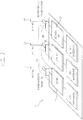
- FIG. 2 illustrates in-device coexistence interference
- the UE 10 comprises an LTE RF module 21, GPS RF module 22, and Bluetooth/WiFi RF module 23.
- a transmit and receive antenna 24, 25, 26 is connected to each RF module.
- various types of RF modules are installed close to each other within a single device platform.
- transmission power of one RF module can be much larger than the reception power level onto other RF receivers.
- frequency spacing between RF modules is not large enough and a sophisticated filtering technique is not available, a transmission signal from an arbitrary RF module can easily cause significant interference on the receivers of other RF modules within the same device.
- (1) is an example where a transmission signal of the LTE RF module 21 causes in-device coexistence interference on the GPS RF module 22 and the Bluetooth/WiFi RF module 23; and (2) is an example where a transmission signal of the Bluetooth/WiFi RF module 23 causes in-device coexistence interference on the LTE RF module 21.
- FIG. 3 is an example illustrating in-device coexistence interference acting on an LTE receiver from an ISM transmitter.
- ISM International, Scientific and Medical
- band refers to the frequency bands that can be used freely without permission for industrial, scientific and medical purposes.
- the radio band of a signal received by the LTE receiver overlaps the radio band of a transmission signal of the ISM transmitter.
- in-device coexistence interference can be developed.
- FIG. 4 illustrates a frequency band divided into the ISM band and the LTE band.
- radio band 40, 7, and 38 belong to the LTE band.
- the radio band 40 occupies the frequency range from 2300 to 2400 MHz in the TDD mode while the radio band 7 occupies the frequency range from 2500 to 2570 MHz as an uplink in the FDD mode.
- the radio band 38 occupies the frequency range from 2570 to 2620 MHz in the TDD mode.
- the ISM band is used for a WiFi channel and a Bluetooth channel and occupies the frequency range from 2400 to 2483.5 MHz.
- in-device coexistence interference situations are summarized in the Table 1.
- the notation of 'a ⁇ b' representing type of interference indicates a situation where transmission of a causes in-device coexistence interference on reception of b. Therefore, in the radio band 40, transmission in the ISM band causes in-device coexistence interference on the TDD downlink reception (LTE TDD DL Rx) of the LTE band. Although a filtering scheme may somewhat alleviate the in-device coexistence interference, it is not sufficient. If FDM or TDM technique is applied in addition to the filtering scheme, in-device coexistence interference can be alleviated more efficiently.
- FIG. 5 illustrates one example where in-device coexistence interference is relieved by employing the FDM technique.
- the LTE band can be shifted to avoid overlapping with the ISM band. And as a result, this introduces a handover of the UE from the ISM band.
- RLF radio link failure
- the ISM band can be reduced and moved away from the LTE band.
- this technique can cause a backward compatibility problem.
- the backward compatibility problem can be somewhat relieved due to an adaptive frequency hopping mechanism but it may not be the case for WiFi.
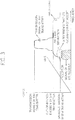
- FIG. 7 illustrates one example where in-device coexistence interference is mitigated by employing the TDM technique.
- reception timing in the LTE band is made not to overlap with transmission timing in the ISM band, in-device coexistence interference can be avoided. For example, if a signal belonging to the ISM band is transmitted at time t 0 , a signal belonging in the LTE band is made to be received at time t 1 .
- a transmit and receive timing employing the TDM technique along the time axis for a signal in the LTE and ISM band can be represented as shown in FIG. 8 .
- in-device coexistence interference can be avoided without incorporating band-to-band movement of the LTE and ISM band.
- the radio interval of FIG. 8 where signal transmission is not carried out for each band is called a blank transmission interval.
- each of the TDM and FDM technique has its own characteristics.
- the TDM technique can also be applied for such a situation where only one carrier band is allocated for the UE; however, since temporal resources are shared among network systems, interference may become too severe or communication may be almost impossible depending on the type of traffic utilized for the UE.
- the FDM technique cannot be applied for such a case where only one carrier band is set up for the UE, since the technique is capable of completely avoiding a band affected by interference, occurrence of interference is less sensitive to the type of traffic than for the TDM technique. If the TDM and FDM technique are combined together to carefully complement disadvantages of the two techniques, interference can be controlled more efficiently.
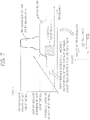
- FIG. 9 is a flow diagram illustrating a method for transmitting information about in-device coexistence interference according to one embodiment of the present invention.
- the UE triggers a request for controlling interference based on the TDM technique S900.
- a request for controlling interference based on the TDM technique is triggered. It should be noted that the following three cases are just examples and thus, the technical principles of the present invention are not limited to the examples shown below.
- a request for interference coordination is re-triggered for re-attempting interference coordination based on the TDM technique.
- the UE transmits to the eNB assistance information required for carrying out interference coordination S905.
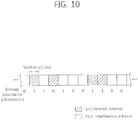
- Assistance information can be defined in various ways depending on a view point. For the convenience of description, suppose that transmission Tx through a first network system performed by the UE causes interference on the reception Rx through a second network system performed by the UE in the interference interval T 1 to T 2 for each period and does not cause interference in the non-interference interval T 2 to T 3 . Since the first network generates interference, it can be called an aggressor system while the second system can be called a victim system since it receives interference.
- the eNB can set up scheduling for the Tx to be performed in the non-interference interval T 2 to T 3 other than the interference interval T 1 to T 2 .
- the scheduling above puts higher priority in the victim system than the aggressor system.
- the eNB may correspond to an eNB belonging to the aggressor system.
- the eNB can set up scheduling for the Rx to be performed in the non-interference interval T 2 to T 3 other than the interference interval T 1 to T 2 .
- the scheduling in this case puts higher priority in the aggressor system than the victim system.
- performing interference coordination based on the TDM technique by prioritizing a particular system may be agreed upon beforehand between the UE and the eNB or determined by the eNB according to its own scheduling. For example, suppose the aggressor system is a WiFi system and important information such as system information is transmitted through the interference interval T 1 to T 2 . Since system information has a relatively high priority, if the WiFi system causes interference on other systems in the interval T 1 to T 2 , the eNB controls such that transmission and reception of other systems is not carried out in the interference interval T 1 to T 2 .
- the interference interval can be defined as unusable whereas the non-interference interval can be defined as usable. If the UE informs the eNB of the interference interval (or unusable interval) or the non-interference interval (or usable interval), the eNB can perform interference coordination by referring to the information.
- the assistance information can be the information indicating the interference interval (or unusable interval) or the information indicating the non-interference interval (or usable interval). A specific form of the assistance information and a method for indicating the interference or non-interference interval will be described later.
- interference coordination can be defined as a kind of scheduling that controls timing at which transmission or reception of the UE is carried out.
- the eNB can carry out scheduling based on the interference and non-interference interval. For example, the eNB can set up scheduling such that the UE does not carry out transmission or reception in the interference interval. Or the eNB can set up scheduling such that the UE carries out transmission or reception in the non-interference interval.
- the eNB can carry out a discontinuous reception (DRX) procedure.
- the DRX procedure can be a DRX command or DRX reconfiguration message, which will be described later.
- the eNB transmits to the UE response information accepting or rejecting a request for interference coordination S915. If the eNB determines from the step of S910 that interference coordination based on the TDM technique cannot be carried out, the eNB transmits to the UE response information accepting a request for interference coordination.
- the response information accepting a request for interference coordination can be varied according to an embodiment of interference coordination based on the TDM technique described in the step of S910.
- the response information accepting a request for interference coordination can be a DRX reconfiguration message.
- the response information accepting a request for interference coordination can be a DRX command message.
- the response information accepting a request for interference coordination can be a simple ACK (acknowledgement).
- the eNB can transmit NACK (Non-acknowledgement) as response information rejecting a request for interference coordination or the eNB may not respond at all, never transmitting the response information to the UE.
- NACK Non-acknowledgement
- the assistance information can be a message generated in the RRC (Radio Resource Control) layer or MAC (Medium Access Control) layer or can correspond to physical layer signaling.
- RRC Radio Resource Control
- MAC Medium Access Control
- the eNB recommends interference coordination based on the TDM technique even though the UE requests interference coordination based on the FDM technique, the UE triggers a request for interference coordination based on the TDM technique and transmits assistance information included the ACK indicator to the eNB.
- FIG. 13 is a flow diagram illustrating a method for controlling interference performed by a UE according to one example of the present invention.
- the UE triggers a request for interference coordination based on the TDM technique S1300. Triggering of a request for interference coordination is carried out due to i) detection of in-device coexistence interference, ii) rejection of interference coordination based on the FDM technique, and iii) failure of interference coordination based on the TDM technique as described in FIG. 9 .
- the UE transmits assistance information to the eNB S1305.
- the assistance information is such kind of information that informs of an interference interval in which in-device coexistence interference is generated or a non-interference interval directly or indirectly.
- the assistance information can indicate the interference or non-interference interval in a predetermined time period in the form of bitmap.
- the assistance information can indicate an unscheduled time interval (or scheduled time interval).
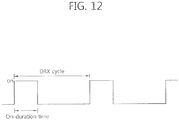
- the assistance information can indicate a scheduled interval or unscheduled interval in the DRX cycle.
- the assistance information can include information about increase of unscheduled interval.
- the assistance information can include the ACK indicator.
- the UE determines whether interference coordination based on the TDM technique is carried out S1310. As one example, if response information indicating acceptance of interference coordination is received from the eNB in response to the assistance information transmitted by the UE, the UE can determine that a process of interference coordination is supposed to be carried out.
- the UE If it is determined that a request for interference coordination is accepted, the UE operates according to interference coordination based on the TDM technique S1315.
- the UE either triggers again the request for interference coordination based on the TDM technique or requests interference coordination based on the FDM technique S1320.
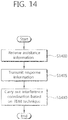
- FIG. 14 is a flow diagram illustrating a method for controlling interference performed by an eNB according to one example of the present invention.
- the eNB receives assistance information from the eNB S1400.
- the assistance information provides information required for controlling in-device coexistence interference based on the TDM technique.
- the eNB can know the interference in which in-device coexistence interference is generated or non-interference interval from the assistance information.
- the eNB In response to the reception of the assistance information, the eNB transmits to the UE response information accepting or rejecting a request for interference coordination S1405. If the eNB determines that interference coordination based on the TDM technique cannot be carried out, the eNB transmits to the UE response information rejecting a request for interference coordination. On the other hand, if the eNB determines that interference coordination based on the TDM technique can be carried out, the eNB transmits to the UE response information accepting the request for interference coordination.
- the response information can be implemented either by a MAC message or physical layer signaling.
- response information accepting a request for interference coordination can correspond to the DRX reconfiguration message.
- the response information accepting a request for interference coordination can be a simple ACK.
- the response information rejecting a request for interference coordination can be NACK.
- the eNB can operate in such a way that it does not respond at all, never transmitting the response information.
- the eNB carries out interference coordination based on the TDM technique S1410.
- the eNB can perform scheduling based on an interference interval and non-interference interval. For example, the eNB can set up scheduling such that transmission or reception of the UE is not carried out in the interference interval while the UE is scheduled in the non-interference interval.
- the eNB carries out a discontinuous reception (DRX) procedure.
- DRX discontinuous reception
- the DRX procedure can be a DRX command or DRX reconfiguration message.
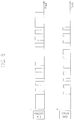
- the UE can operate as shown in FIG. 15 .
- the UE holds the on-duration time. Afterwards, if the DRX command is given, the UE enters the inactivity time. Meanwhile, in case interference coordination is carried out as the DRX reconfiguration procedure, the eNB can control interference by changing DRX configuration parameters.
- FIG. 16 is a block diagram illustrating an apparatus controlling in-device coexistence interference according to one example of the present invention.
- Information about in-device coexistence interference includes assistance information transmitted by the UE 1600 and response information transmitted by the eNB 1650.
- the UE 1600 includes an interference coordination request triggering unit 1605, assistance information generating unit 1610, assistance information transmitting unit 1615, and response information receiving unit 1620.
- the interference coordination request triggering unit 1605 triggers a request for interference coordination from the eNB 1650 in case in-device coexistence interference is generated.
- the in-device coexistence interference can be generated in the following cases.
- the UE while receiving a signal x from the eNB 1650 through the LTE RF module, transmits a signal y through another RF module such as WiFi module. At this time, if the ratio of received signal to interference noise of the signal y exceeds a predetermined threshold value and acts on the signal x as interference, in-device coexistence interference is generated.
- SINR has been used as a reference of interference occurrence, the reference is not limited to the above example but RSRP (Reference Signal Received Power) or RSRQ (Reference Signal Received Quality) can be used as a reference.
- the interference coordination request triggering unit 1605 triggers a request for interference coordination if i) in-device coexistence interference is detected; ii) interference coordination based on the FDM technique is rejected; or iii) interference coordination based on the TDM technique fails as described in FIG. 9 .
- the assistance information generating unit 1610 generates assistance information if a request for interference coordination is triggered.
- the assistance information is such kind of information that informs an interference interval in which in-device coexistence interference is generated or non-interference interval directly or indirectly.
- the assistance information can indicate the interference or non-interference interval in a predetermined time period in the form of bitmap.
- the assistance information indicates a unscheduled time interval (or scheduled time interval).
- the assistance information indicates a scheduled interval or unscheduled interval within the DRX period.
- the assistance information includes information about increase of unscheduled interval.
- the assistance information includes ACK indicator.
- the assistance information transmitting unit 1615 transmits assistance information to the eNB 1650. At this time, the assistance information transmitting unit 1615 can transmit the assistance information through an RRC message, MAC message, or physical layer signaling.
- the eNB 1650 includes an assistance information receiving unit 1655, interference coordination performing unit 1660, response information generating unit 1665, and response information transmitting unit 1670.
- the assistance information receiving unit 1655 receives assistance information from the UE 1600.
- the assistance coordination performing unit 1660 determines whether to control in-device coexistence interference generated in the UE and carries out interference coordination. As one example, the interference coordination performing unit 1660 can carry out scheduling based on an interference interval and non-interference interval. As one example, the interference coordination performing unit 1660 can set up scheduling such that transmission or reception of the UE is not carried out in the interference interval while the UE is scheduled in the non-interference interval. As another example, the interference coordination performing unit 1660 carries out interference coordination through a DRX procedure. This applies for the case where the UE 1600 operates in the DRX mode and assistance information received from the UE 1600 indicates a scheduled interval or unscheduled interval within the DRX period. The discontinuous reception procedure may correspond to a DRX command or DRX reconfiguration message.
- the response information generating unit 1665 generates response information accepting or rejecting interference coordination according to the decision of the interference coordination performing unit 1660.
- response information accepting a request for interference coordination can correspond to the DRX reconfiguration message.
- the response information accepting a request for interference coordination can be a simple ACK.
- the response information rejecting a request for interference coordination can be NACK.
- the eNB can operate in such a way that it does not respond at all, never transmitting the response information.
- the response information transmitting unit 1670 transmits response information to the UE 1600. At this time, the response information transmitting unit 1670 can transmit the response information through an RRC message, MAC message, or physical layer signaling.
Landscapes
- Engineering & Computer Science (AREA)
- Computer Networks & Wireless Communication (AREA)
- Signal Processing (AREA)
- Quality & Reliability (AREA)
- Mobile Radio Communication Systems (AREA)
Claims (12)
- Verfahren zum Koordinieren von Koexistenz-Interferenz in einer Vorrichtung, IDC, durch eine Benutzerausrüstung in einem drahtlosen Kommunikationssystem, wobei das Verfahren umfasst:Auslösen einer ersten Anfrage zum Koordinieren einer Interferenz bei einem Empfang durch ein erstes Frequenzband eines ersten Netzwerksystems, wobei die Interferenz durch eine Übertragung durch ein zweites Frequenzband eines zweiten Netzwerksystems hervorgerufen wird;Übertragen von ersten Assistenzinformationen für die erste Anfrage an einen eNodeB, eNB;Empfangen von Reaktionsinformationen von dem eNB zum Koordinieren der Interferenz auf Grundlage einer Time Division Multiplexing, TDM,-Technik als Reaktion auf die ersten Assistenzinformationen;Durchführen einer ersten Koordination der Interferenz auf Grundlage der Reaktionsinformationen;Auslösen einer zweiten Anfrage zum Koordinieren der Interferenz zum erneuten Versuchen einer Interferenzkoordination auf Grundlage einer TDM-Technik,wenn das Durchführen der ersten Koordination der Interferenz ein Fehlschlag ist; undÜbertragen von zweiten Assistenzinformationen für die zweite Anfrage an den eNB.
- Verfahren nach Anspruch 1, wobei die ersten und zweiten Assistenzinformationen eines aus einer Funk-Ressourcensteuerung, RRC,-Nachricht umfassen.
- Verfahren nach Anspruch 1, wobei die Reaktionsinformationen wenigstens eines aus einer diskontinuierlicher Empfang, DRX,-Rekonfigurationsnachricht in einem DRX-Konfigurationsablauf und einer DRX-Anweisungsnachrichtung umfassen, welche einen Eingang in einen DRX-Modus anweist.
- Benutzerausrüstung, UE, zum Koordinieren von Koexistenz-Interferenz in einer Vorrichtung, IDC, in einem drahtlosen Kommunikationssystem, wobei die UE umfasst:eine Interferenzkoordinations-Anfrageauslöseeinheit (1605), welche eine erste Anfrage zum Koordinieren von Interferenz bei einem Empfang durch ein erstes Frequenzband eines ersten Netzwerksystems auslöst, wobei die Interferenz durch eine Übertragung durch ein zweites Frequenzband eines zweiten Netzwerksystems hervorgerufen wird;eine Assistenzinformation-Erzeugungseinheit (1610), welche erste Assistenzinformationen für die erste Anfrage erzeugt;eine Assistenzinformation-Übertragungseinheit (1615), welche zu einem eNodeB, eNB, die ersten Assistenzinformationen für die erste Anfrage überträgt; undeine Reaktionsinformation-Empfangseinheit (1620), welche von dem eNB Reaktionsinformationen zum Koordinieren der Interferenz auf Grundlage einer Time Division Multiplexing , TDM,-Technik als Reaktion auf die ersten Assistenzinformationen empfängt,wobei die Interferenzkoordinations-Anfrageauslöseeinheit (1605) eine erste Koordination der Interferenz auf Grundlage der Reaktionsinformationen durchführt und eine zweite Anfrage zum Koordinieren der Interferenz auslöst, um eine Interferenzkoordination erneut auf Grundlage einer TDM-Technik zu versuchen, wenn das Durchführen der ersten Koordination der Interferenz ein Fehlschlag ist;wobei die Assistenzinformation-Übertragungseinheit (1615) zu dem eNB zweite Assistenzinformationen für die zweite Anfrage überträgt.
- UE nach Anspruch 4, wobei die ersten und zweiten Assistenzinformationen eines aus einer Funk-Ressourcensteuerung, RRC,-Nachricht umfassen.
- UE nach Anspruch 4, wobei die Reaktionsinformationen wenigstens eines aus einer diskontinuierlicher Empfang, DRX,-Rekonfigurationsnachricht in einem DRX-Konfigurationsablauf und einer DRX-Anweisungsnachrichtung umfassen, welche einen Eingang in einen DRX-Modus anweist.
- Verfahren zum Koordinieren von Koexistenz-Interferenz in einer Vorrichtung, IDC, durch einen eNodeB, eNB, in einem drahtlosen Kommunikationssystem, wobei das Verfahren umfasst:Empfangen von ersten Assistenzinformationen betreffend Interferenz bei einem Empfang durch ein erstes Frequenzband eines ersten Netzwerksystems von einer Benutzerausrüstung, UE, wobei die Interferenz durch eine Übertragung durch ein zweites Frequenzband eines zweiten Netzwerksystems hervorgerufen wird;Übertragen von Reaktionsinformationen zu der UE zum Koordinieren der Interferenz auf Grundlage einer Time Division Multiplexing, TDM,-Technik als Reaktion auf die ersten Assistenzinformationen; undErhalten von zweiten Assistenzinformationen von der UE betreffend die Interferenz, um eine Interferenzkoordination auf Grundlage einer TDM-Technik erneut zu versuchen, wenn das Durchführen der ersten Koordination der Interferenz ein Fehlschlag ist.
- Verfahren nach Anspruch 7, wobei die ersten und zweiten Assistenzinformationen eines aus einer Funk-Ressourcensteuerung, RRC,-Nachricht umfassen.
- Verfahren nach Anspruch 7, wobei die Reaktionsinformationen wenigstens eines aus einer diskontinuierlicher Empfang, DRX,-Rekonfigurationsnachricht in einem DRX-Konfigurationsablauf und einer DRX-Anweisungsnachrichtung umfassen, welche einen Eingang in einen DRX-Modus anweist.
- eNodeB, eNB, zum Koordinieren von Koexistenz-Interferenz in einer Vorrichtung, IDC, in einem drahtlosen Kommunikationssystem, wobei der eNB umfasst:eine Assistenzinformation-Empfangseinheit (1655), welche von einer Benutzerausrüstung, UE, erste Assistenzinformationen betreffend Interferenz bei einem Empfang durch ein erstes Frequenzband eines ersten Netzwerksystems empfängt, wobei die Interferenz durch eine Übertragung durch ein zweites Frequenzband eines zweiten Netzwerksystems hervorgerufen wird; undeine Reaktionsinformation-Übertragungseinheit (1670), welche zu der UE Reaktionsinformationen zum Koordinieren der Interferenz auf Grundlage einer Time Division Multiplexing, TDM,-Technik als Reaktion auf die ersten Assistenzinformationen überträgt; undwobei die Assistenzinformation-Empfangseinheit von der UE zweite Assistenzinformationen betreffend die Interferenz empfängt, um Interferenzkoordination auf Grundlage einer TDM-Technik erneut zu versuchen, wenn das Durchführen der ersten Koordination der Interferenz ein Fehlschlag ist.
- eNB nach Anspruch 10, wobei die ersten und zweiten Assistenzinformationen eines aus einer Funk-Ressourcensteuerung, RRC,-Nachricht umfassen.
- eNB nach Anspruch 10, wobei die Reaktionsinformationen wenigstens eines aus einer diskontinuierlicher Empfang, DRX,-Rekonfigurationsnachricht in einem DRX-Konfigurationsablauf und einer DRX-Anweisungsnachrichtung umfassen, welche einen Eingang in einen DRX-Modus anweist.
Applications Claiming Priority (2)
| Application Number | Priority Date | Filing Date | Title |
|---|---|---|---|
| KR1020110001971A KR101803019B1 (ko) | 2011-01-07 | 2011-01-07 | 무선통신 시스템에서 기기내 공존 간섭을 조정하는 장치 및 방법 |
| PCT/KR2012/000144 WO2012093884A2 (ko) | 2011-01-07 | 2012-01-06 | 무선통신 시스템에서 기기내 공존 간섭을 조정하는 장치 및 방법 |
Publications (3)
| Publication Number | Publication Date |
|---|---|
| EP2662992A2 EP2662992A2 (de) | 2013-11-13 |
| EP2662992A4 EP2662992A4 (de) | 2017-08-09 |
| EP2662992B1 true EP2662992B1 (de) | 2018-10-17 |
Family
ID=46457869
Family Applications (1)
| Application Number | Title | Priority Date | Filing Date |
|---|---|---|---|
| EP12732180.0A Active EP2662992B1 (de) | 2011-01-07 | 2012-01-06 | Vorrichtung und verfahren zur steuerung der koexistenzinterferenz in vorrichtungen in einem drahtlosen kommunikationssystem |
Country Status (6)
| Country | Link |
|---|---|
| US (4) | US9386600B2 (de) |
| EP (1) | EP2662992B1 (de) |
| JP (1) | JP2014505422A (de) |
| KR (1) | KR101803019B1 (de) |
| CN (1) | CN103299561A (de) |
| WO (1) | WO2012093884A2 (de) |
Families Citing this family (21)
| Publication number | Priority date | Publication date | Assignee | Title |
|---|---|---|---|---|
| US10880907B2 (en) * | 2011-11-04 | 2020-12-29 | Sharp Kabushiki Kaisha | In-device coexistence interference avoidance (IDC) |
| CN103581860A (zh) * | 2012-07-23 | 2014-02-12 | 中兴通讯股份有限公司 | 用户设备辅助信息拒绝方法、装置和系统 |
| US10257849B2 (en) | 2013-01-17 | 2019-04-09 | Intel IP Corporation | Method, apparatus, and system for handling in-device coexistence interference in a wireless network |
| US9735818B2 (en) * | 2013-10-28 | 2017-08-15 | Lg Electronics Inc. | Method and apparatus for cancelling interference and receiving signal in wireless communication system |
| WO2015063600A2 (en) * | 2013-11-04 | 2015-05-07 | Marvell World Trade Ltd. | Method and apparatus for scheduling use of radio resources in a wireless network |
| CN105474723B (zh) * | 2014-02-13 | 2019-10-25 | 华为技术有限公司 | 一种数据传输方法和设备 |
| EP2930982B1 (de) * | 2014-04-07 | 2016-05-18 | Alcatel Lucent | Minderung von dl-ul-interferenzen |
| TWI548247B (zh) * | 2014-09-18 | 2016-09-01 | 緯創資通股份有限公司 | 無線通訊裝置 |
| US20160088298A1 (en) * | 2014-09-22 | 2016-03-24 | Ximin Zhang | Video coding rate control including target bitrate and quality control |
| CN107005866B (zh) * | 2014-11-06 | 2020-04-07 | Lg 电子株式会社 | 在无线通信系统中通过终端否定传输的方法和设备 |
| EP3217702A4 (de) * | 2014-11-07 | 2017-11-01 | Ntt Docomo, Inc. | Benutzervorrichtung, basisstation und uplink-trägeraggregationskommunikationsverfahren |
| KR102496365B1 (ko) | 2015-08-07 | 2023-02-06 | 삼성전자 주식회사 | 무선 통신 시스템에서 비연속 수신 모드를 적용하는 방법 및 장치 |
| WO2017043767A1 (ko) * | 2015-09-11 | 2017-03-16 | 엘지전자 주식회사 | 무선 통신 시스템에서 확장된 drx 모드를 적용하여 유휴 모드를 동작하는 방법 및 이를 위한 장치 |
| JP7048739B2 (ja) * | 2017-11-17 | 2022-04-05 | 中興通訊股▲ふん▼有限公司 | 干渉測定パラメータの設定のための方法及びデバイス |
| KR102867406B1 (ko) * | 2019-04-02 | 2025-10-01 | 삼성전자주식회사 | 스피커를 이용하여 먼지를 제거하는 방법 및 이를 지원하는 전자 장치 |
| CN110299931B (zh) * | 2019-06-25 | 2021-06-04 | Oppo广东移动通信有限公司 | 干扰控制方法及相关产品 |
| US20240237105A9 (en) * | 2021-03-11 | 2024-07-11 | Sony Group Corporation | Communication apparatus and communication method |
| US11716782B2 (en) * | 2021-06-24 | 2023-08-01 | Qualcomm Incorporated | Enhanced CDRX operation |
| US12289608B2 (en) * | 2022-08-10 | 2025-04-29 | Qualcomm Incorporated | In-device coexistence interference parameters |
| EP4535907A1 (de) * | 2023-10-04 | 2025-04-09 | INTEL Corporation | Interferenzberichte während einer spezifischen dienstperiode mit kanalnutzung und zielweckzeit (twt) |
| CN121286032A (zh) * | 2024-04-30 | 2026-01-06 | 北京小米移动软件有限公司 | 通信方法、通信设备及通信系统 |
Family Cites Families (17)
| Publication number | Priority date | Publication date | Assignee | Title |
|---|---|---|---|---|
| US20060274704A1 (en) * | 2005-06-01 | 2006-12-07 | Prasanna Desai | Method and apparatus for collaborative coexistence between Bluetooth and IEEE 802.11 G with both technologies integrated onto a system-on-a-chip (SOC) device |
| CN101141155B (zh) | 2006-09-06 | 2011-11-23 | 中国电信股份有限公司 | 规避phs和td-scdma系统共存干扰的方法 |
| US8169957B2 (en) * | 2007-02-05 | 2012-05-01 | Qualcomm Incorporated | Flexible DTX and DRX in a wireless communication system |
| US8072896B2 (en) * | 2008-04-18 | 2011-12-06 | Telefonaktiebolaget L M Ericsson (Publ) | Adaptive coexistence between different wireless communication systems |
| KR101565723B1 (ko) * | 2008-06-30 | 2015-11-03 | 인터디지탈 패튼 홀딩스, 인크 | E-utran에서 핸드오버를 수행하기 위한 방법 및 장치 |
| US8355388B2 (en) | 2008-12-17 | 2013-01-15 | Research In Motion Limited | System and method for initial access to relays |
| CN101932052B (zh) * | 2009-06-23 | 2016-08-24 | 华为技术有限公司 | 一种切换方法、用户终端及网络侧设备 |
| US8626067B2 (en) * | 2009-10-26 | 2014-01-07 | Mediatek Inc. | System and methods for enhancing coexistence efficiency for multi-radio terminals |
| US8724545B2 (en) * | 2010-03-31 | 2014-05-13 | Qualcomm Incorporated | Method and apparatus to facilitate support for multi-radio coexistence |
| US8838046B2 (en) * | 2010-06-18 | 2014-09-16 | Mediatek Inc. | System and method of hybrid FDM/TDM coexistence interference avoidance |
| US8737924B2 (en) * | 2010-08-12 | 2014-05-27 | Mediatek Inc. | Method to trigger in-device coexistence interference mitigation in mobile cellular systems |
| US8780880B2 (en) * | 2010-10-01 | 2014-07-15 | Mediatek Singapore Pte, Ltd. | Method of TDM in-device coexistence interference avoidance |
| JP5544448B2 (ja) * | 2010-10-01 | 2014-07-09 | ブラックベリー リミテッド | デバイス内共存干渉を回避するための方法および装置 |
| CA2813292C (en) * | 2010-10-01 | 2019-04-02 | Research In Motion Limited | Method and apparatus for avoiding in-device coexistence interference |
| US9326162B2 (en) * | 2012-03-16 | 2016-04-26 | Lg Electronics Inc. | Method and apparatus for limiting transmission of in-device coexistence indication message in wireless communication system |
| US20140036745A1 (en) * | 2012-07-31 | 2014-02-06 | Changhoi Koo | Handling in-device coexistence interference |
| WO2014113990A1 (en) * | 2013-01-28 | 2014-07-31 | Qualcomm Incorporated | Ue transmitter sharing by gsm and lte |
-
2011
- 2011-01-07 KR KR1020110001971A patent/KR101803019B1/ko not_active Expired - Fee Related
-
2012
- 2012-01-06 EP EP12732180.0A patent/EP2662992B1/de active Active
- 2012-01-06 WO PCT/KR2012/000144 patent/WO2012093884A2/ko not_active Ceased
- 2012-01-06 US US13/978,519 patent/US9386600B2/en not_active Expired - Fee Related
- 2012-01-06 CN CN2012800047204A patent/CN103299561A/zh active Pending
- 2012-01-06 JP JP2013548357A patent/JP2014505422A/ja not_active Withdrawn
-
2016
- 2016-07-01 US US15/200,980 patent/US9955495B2/en not_active Expired - Fee Related
-
2018
- 2018-03-15 US US15/921,851 patent/US10219288B2/en not_active Expired - Fee Related
-
2019
- 2019-02-26 US US16/286,210 patent/US10701711B2/en active Active
Non-Patent Citations (1)
| Title |
|---|
| None * |
Also Published As
| Publication number | Publication date |
|---|---|
| US20190200372A1 (en) | 2019-06-27 |
| EP2662992A4 (de) | 2017-08-09 |
| US20160316483A1 (en) | 2016-10-27 |
| US20180206254A1 (en) | 2018-07-19 |
| US9386600B2 (en) | 2016-07-05 |
| KR20120080478A (ko) | 2012-07-17 |
| JP2014505422A (ja) | 2014-02-27 |
| WO2012093884A2 (ko) | 2012-07-12 |
| US9955495B2 (en) | 2018-04-24 |
| US10701711B2 (en) | 2020-06-30 |
| WO2012093884A3 (ko) | 2012-10-18 |
| EP2662992A2 (de) | 2013-11-13 |
| US20130287009A1 (en) | 2013-10-31 |
| KR101803019B1 (ko) | 2017-12-01 |
| CN103299561A (zh) | 2013-09-11 |
| US10219288B2 (en) | 2019-02-26 |
Similar Documents
| Publication | Publication Date | Title |
|---|---|---|
| US10701711B2 (en) | Apparatus and method for controlling coexistence interference within device in wireless communication system | |
| US11812298B2 (en) | Apparatus and method for performing measurement report considering in-device coexistence interference | |
| US10903942B2 (en) | Synchronization signal block and downlink channel multiplexing | |
| RU2551648C2 (ru) | Способ и устройство для обработки взаимных помех сосуществования в устройстве в среде беспроводной сети | |
| US9756642B2 (en) | Apparatus and method for transmitting control information in wireless communication system | |
| US20130336281A1 (en) | Apparatus and method for coordinating in-device coexistence interference in a wireless communication system | |
| CN104429143A (zh) | 用于设备内共存检测和抑制的方法及装置 | |
| US20130279423A1 (en) | Apparatus and method for controlling coexistence interference within device in wireless communication system | |
| KR20120092475A (ko) | 기기내 공존 간섭에 관한 제어정보의 전송장치 및 방법 | |
| US12402076B2 (en) | Power consumption optimization under discontinuous reception |
Legal Events
| Date | Code | Title | Description |
|---|---|---|---|
| PUAI | Public reference made under article 153(3) epc to a published international application that has entered the european phase |
Free format text: ORIGINAL CODE: 0009012 |
|
| 17P | Request for examination filed |
Effective date: 20130802 |
|
| AK | Designated contracting states |
Kind code of ref document: A2 Designated state(s): AL AT BE BG CH CY CZ DE DK EE ES FI FR GB GR HR HU IE IS IT LI LT LU LV MC MK MT NL NO PL PT RO RS SE SI SK SM TR |
|
| DAX | Request for extension of the european patent (deleted) | ||
| 19U | Interruption of proceedings before grant |
Effective date: 20160317 |
|
| 19W | Proceedings resumed before grant after interruption of proceedings |
Effective date: 20170301 |
|
| RAP1 | Party data changed (applicant data changed or rights of an application transferred) |
Owner name: PANTECH INC. |
|
| A4 | Supplementary search report drawn up and despatched |
Effective date: 20170711 |
|
| RIC1 | Information provided on ipc code assigned before grant |
Ipc: H04W 88/06 20090101ALI20170706BHEP Ipc: H04W 76/04 20090101ALI20170706BHEP Ipc: H04B 7/26 20060101AFI20170706BHEP Ipc: H04B 1/403 20150101ALI20170706BHEP Ipc: H04B 15/00 20060101ALI20170706BHEP Ipc: H04W 16/14 20090101ALI20170706BHEP Ipc: H04W 72/12 20090101ALI20170706BHEP |
|
| RAP1 | Party data changed (applicant data changed or rights of an application transferred) |
Owner name: GOLDPEAK INNOVATIONS INC. |
|
| RIC1 | Information provided on ipc code assigned before grant |
Ipc: H04B 7/26 20060101AFI20180316BHEP Ipc: H04W 16/14 20090101ALI20180316BHEP Ipc: H04B 15/00 20060101ALI20180316BHEP Ipc: H04W 88/06 20090101ALI20180316BHEP Ipc: H04B 1/403 20150101ALI20180316BHEP Ipc: H04W 72/12 20090101ALI20180316BHEP |
|
| GRAP | Despatch of communication of intention to grant a patent |
Free format text: ORIGINAL CODE: EPIDOSNIGR1 |
|
| STAA | Information on the status of an ep patent application or granted ep patent |
Free format text: STATUS: GRANT OF PATENT IS INTENDED |
|
| INTG | Intention to grant announced |
Effective date: 20180502 |
|
| GRAS | Grant fee paid |
Free format text: ORIGINAL CODE: EPIDOSNIGR3 |
|
| GRAA | (expected) grant |
Free format text: ORIGINAL CODE: 0009210 |
|
| STAA | Information on the status of an ep patent application or granted ep patent |
Free format text: STATUS: THE PATENT HAS BEEN GRANTED |
|
| AK | Designated contracting states |
Kind code of ref document: B1 Designated state(s): AL AT BE BG CH CY CZ DE DK EE ES FI FR GB GR HR HU IE IS IT LI LT LU LV MC MK MT NL NO PL PT RO RS SE SI SK SM TR |
|
| REG | Reference to a national code |
Ref country code: GB Ref legal event code: FG4D |
|
| REG | Reference to a national code |
Ref country code: CH Ref legal event code: EP |
|
| REG | Reference to a national code |
Ref country code: IE Ref legal event code: FG4D |
|
| REG | Reference to a national code |
Ref country code: DE Ref legal event code: R096 Ref document number: 602012052304 Country of ref document: DE Ref country code: AT Ref legal event code: REF Ref document number: 1055233 Country of ref document: AT Kind code of ref document: T Effective date: 20181115 |
|
| REG | Reference to a national code |
Ref country code: NL Ref legal event code: MP Effective date: 20181017 |
|
| REG | Reference to a national code |
Ref country code: LT Ref legal event code: MG4D |
|
| REG | Reference to a national code |
Ref country code: AT Ref legal event code: MK05 Ref document number: 1055233 Country of ref document: AT Kind code of ref document: T Effective date: 20181017 |
|
| PG25 | Lapsed in a contracting state [announced via postgrant information from national office to epo] |
Ref country code: NL Free format text: LAPSE BECAUSE OF FAILURE TO SUBMIT A TRANSLATION OF THE DESCRIPTION OR TO PAY THE FEE WITHIN THE PRESCRIBED TIME-LIMIT Effective date: 20181017 |
|
| PG25 | Lapsed in a contracting state [announced via postgrant information from national office to epo] |
Ref country code: FI Free format text: LAPSE BECAUSE OF FAILURE TO SUBMIT A TRANSLATION OF THE DESCRIPTION OR TO PAY THE FEE WITHIN THE PRESCRIBED TIME-LIMIT Effective date: 20181017 Ref country code: IS Free format text: LAPSE BECAUSE OF FAILURE TO SUBMIT A TRANSLATION OF THE DESCRIPTION OR TO PAY THE FEE WITHIN THE PRESCRIBED TIME-LIMIT Effective date: 20190217 Ref country code: NO Free format text: LAPSE BECAUSE OF FAILURE TO SUBMIT A TRANSLATION OF THE DESCRIPTION OR TO PAY THE FEE WITHIN THE PRESCRIBED TIME-LIMIT Effective date: 20190117 Ref country code: AT Free format text: LAPSE BECAUSE OF FAILURE TO SUBMIT A TRANSLATION OF THE DESCRIPTION OR TO PAY THE FEE WITHIN THE PRESCRIBED TIME-LIMIT Effective date: 20181017 Ref country code: LV Free format text: LAPSE BECAUSE OF FAILURE TO SUBMIT A TRANSLATION OF THE DESCRIPTION OR TO PAY THE FEE WITHIN THE PRESCRIBED TIME-LIMIT Effective date: 20181017 Ref country code: ES Free format text: LAPSE BECAUSE OF FAILURE TO SUBMIT A TRANSLATION OF THE DESCRIPTION OR TO PAY THE FEE WITHIN THE PRESCRIBED TIME-LIMIT Effective date: 20181017 Ref country code: BG Free format text: LAPSE BECAUSE OF FAILURE TO SUBMIT A TRANSLATION OF THE DESCRIPTION OR TO PAY THE FEE WITHIN THE PRESCRIBED TIME-LIMIT Effective date: 20190117 Ref country code: LT Free format text: LAPSE BECAUSE OF FAILURE TO SUBMIT A TRANSLATION OF THE DESCRIPTION OR TO PAY THE FEE WITHIN THE PRESCRIBED TIME-LIMIT Effective date: 20181017 Ref country code: HR Free format text: LAPSE BECAUSE OF FAILURE TO SUBMIT A TRANSLATION OF THE DESCRIPTION OR TO PAY THE FEE WITHIN THE PRESCRIBED TIME-LIMIT Effective date: 20181017 Ref country code: PL Free format text: LAPSE BECAUSE OF FAILURE TO SUBMIT A TRANSLATION OF THE DESCRIPTION OR TO PAY THE FEE WITHIN THE PRESCRIBED TIME-LIMIT Effective date: 20181017 |
|
| PG25 | Lapsed in a contracting state [announced via postgrant information from national office to epo] |
Ref country code: PT Free format text: LAPSE BECAUSE OF FAILURE TO SUBMIT A TRANSLATION OF THE DESCRIPTION OR TO PAY THE FEE WITHIN THE PRESCRIBED TIME-LIMIT Effective date: 20190217 Ref country code: AL Free format text: LAPSE BECAUSE OF FAILURE TO SUBMIT A TRANSLATION OF THE DESCRIPTION OR TO PAY THE FEE WITHIN THE PRESCRIBED TIME-LIMIT Effective date: 20181017 Ref country code: SE Free format text: LAPSE BECAUSE OF FAILURE TO SUBMIT A TRANSLATION OF THE DESCRIPTION OR TO PAY THE FEE WITHIN THE PRESCRIBED TIME-LIMIT Effective date: 20181017 Ref country code: GR Free format text: LAPSE BECAUSE OF FAILURE TO SUBMIT A TRANSLATION OF THE DESCRIPTION OR TO PAY THE FEE WITHIN THE PRESCRIBED TIME-LIMIT Effective date: 20190118 Ref country code: RS Free format text: LAPSE BECAUSE OF FAILURE TO SUBMIT A TRANSLATION OF THE DESCRIPTION OR TO PAY THE FEE WITHIN THE PRESCRIBED TIME-LIMIT Effective date: 20181017 |
|
| REG | Reference to a national code |
Ref country code: DE Ref legal event code: R097 Ref document number: 602012052304 Country of ref document: DE |
|
| PG25 | Lapsed in a contracting state [announced via postgrant information from national office to epo] |
Ref country code: IT Free format text: LAPSE BECAUSE OF FAILURE TO SUBMIT A TRANSLATION OF THE DESCRIPTION OR TO PAY THE FEE WITHIN THE PRESCRIBED TIME-LIMIT Effective date: 20181017 Ref country code: CZ Free format text: LAPSE BECAUSE OF FAILURE TO SUBMIT A TRANSLATION OF THE DESCRIPTION OR TO PAY THE FEE WITHIN THE PRESCRIBED TIME-LIMIT Effective date: 20181017 Ref country code: DK Free format text: LAPSE BECAUSE OF FAILURE TO SUBMIT A TRANSLATION OF THE DESCRIPTION OR TO PAY THE FEE WITHIN THE PRESCRIBED TIME-LIMIT Effective date: 20181017 |
|
| PLBE | No opposition filed within time limit |
Free format text: ORIGINAL CODE: 0009261 |
|
| STAA | Information on the status of an ep patent application or granted ep patent |
Free format text: STATUS: NO OPPOSITION FILED WITHIN TIME LIMIT |
|
| PG25 | Lapsed in a contracting state [announced via postgrant information from national office to epo] |
Ref country code: SM Free format text: LAPSE BECAUSE OF FAILURE TO SUBMIT A TRANSLATION OF THE DESCRIPTION OR TO PAY THE FEE WITHIN THE PRESCRIBED TIME-LIMIT Effective date: 20181017 Ref country code: EE Free format text: LAPSE BECAUSE OF FAILURE TO SUBMIT A TRANSLATION OF THE DESCRIPTION OR TO PAY THE FEE WITHIN THE PRESCRIBED TIME-LIMIT Effective date: 20181017 Ref country code: RO Free format text: LAPSE BECAUSE OF FAILURE TO SUBMIT A TRANSLATION OF THE DESCRIPTION OR TO PAY THE FEE WITHIN THE PRESCRIBED TIME-LIMIT Effective date: 20181017 Ref country code: MC Free format text: LAPSE BECAUSE OF FAILURE TO SUBMIT A TRANSLATION OF THE DESCRIPTION OR TO PAY THE FEE WITHIN THE PRESCRIBED TIME-LIMIT Effective date: 20181017 Ref country code: SK Free format text: LAPSE BECAUSE OF FAILURE TO SUBMIT A TRANSLATION OF THE DESCRIPTION OR TO PAY THE FEE WITHIN THE PRESCRIBED TIME-LIMIT Effective date: 20181017 |
|
| REG | Reference to a national code |
Ref country code: CH Ref legal event code: PL |
|
| 26N | No opposition filed |
Effective date: 20190718 |
|
| PG25 | Lapsed in a contracting state [announced via postgrant information from national office to epo] |
Ref country code: LU Free format text: LAPSE BECAUSE OF NON-PAYMENT OF DUE FEES Effective date: 20190106 |
|
| REG | Reference to a national code |
Ref country code: BE Ref legal event code: MM Effective date: 20190131 |
|
| REG | Reference to a national code |
Ref country code: IE Ref legal event code: MM4A |
|
| PG25 | Lapsed in a contracting state [announced via postgrant information from national office to epo] |
Ref country code: SI Free format text: LAPSE BECAUSE OF FAILURE TO SUBMIT A TRANSLATION OF THE DESCRIPTION OR TO PAY THE FEE WITHIN THE PRESCRIBED TIME-LIMIT Effective date: 20181017 |
|
| REG | Reference to a national code |
Ref country code: DE Ref legal event code: R081 Ref document number: 602012052304 Country of ref document: DE Owner name: MIICS & PARTNERS JAPAN CO., LTD., JP Free format text: FORMER OWNER: GOLDPEAK INNOVATIONS INC., SEOUL, KR Ref country code: DE Ref legal event code: R081 Ref document number: 602012052304 Country of ref document: DE Owner name: SAMSUNG ELECTRONICS CO., LTD., SUWON-SI, KR Free format text: FORMER OWNER: GOLDPEAK INNOVATIONS INC., SEOUL, KR Ref country code: DE Ref legal event code: R081 Ref document number: 602012052304 Country of ref document: DE Owner name: CORANCI, LLC, JP Free format text: FORMER OWNER: GOLDPEAK INNOVATIONS INC., SEOUL, KR |
|
| PG25 | Lapsed in a contracting state [announced via postgrant information from national office to epo] |
Ref country code: BE Free format text: LAPSE BECAUSE OF NON-PAYMENT OF DUE FEES Effective date: 20190131 |
|
| PG25 | Lapsed in a contracting state [announced via postgrant information from national office to epo] |
Ref country code: LI Free format text: LAPSE BECAUSE OF NON-PAYMENT OF DUE FEES Effective date: 20190131 Ref country code: CH Free format text: LAPSE BECAUSE OF NON-PAYMENT OF DUE FEES Effective date: 20190131 |
|
| REG | Reference to a national code |
Ref country code: GB Ref legal event code: 732E Free format text: REGISTERED BETWEEN 20191205 AND 20191211 |
|
| PG25 | Lapsed in a contracting state [announced via postgrant information from national office to epo] |
Ref country code: IE Free format text: LAPSE BECAUSE OF NON-PAYMENT OF DUE FEES Effective date: 20190106 |
|
| REG | Reference to a national code |
Ref country code: GB Ref legal event code: 732E Free format text: REGISTERED BETWEEN 20200220 AND 20200226 |
|
| REG | Reference to a national code |
Ref country code: DE Ref legal event code: R081 Ref document number: 602012052304 Country of ref document: DE Owner name: MIICS & PARTNERS JAPAN CO., LTD., JP Free format text: FORMER OWNER: SAMSUNG ELECTRONICS CO., LTD., SUWON-SI, GYEONGGI-DO, KR Ref country code: DE Ref legal event code: R082 Ref document number: 602012052304 Country of ref document: DE Representative=s name: GULDE & PARTNER PATENT- UND RECHTSANWALTSKANZL, DE Ref country code: DE Ref legal event code: R081 Ref document number: 602012052304 Country of ref document: DE Owner name: CORANCI, LLC, JP Free format text: FORMER OWNER: SAMSUNG ELECTRONICS CO., LTD., SUWON-SI, GYEONGGI-DO, KR |
|
| PG25 | Lapsed in a contracting state [announced via postgrant information from national office to epo] |
Ref country code: TR Free format text: LAPSE BECAUSE OF FAILURE TO SUBMIT A TRANSLATION OF THE DESCRIPTION OR TO PAY THE FEE WITHIN THE PRESCRIBED TIME-LIMIT Effective date: 20181017 |
|
| PG25 | Lapsed in a contracting state [announced via postgrant information from national office to epo] |
Ref country code: MT Free format text: LAPSE BECAUSE OF NON-PAYMENT OF DUE FEES Effective date: 20190106 |
|
| PG25 | Lapsed in a contracting state [announced via postgrant information from national office to epo] |
Ref country code: CY Free format text: LAPSE BECAUSE OF FAILURE TO SUBMIT A TRANSLATION OF THE DESCRIPTION OR TO PAY THE FEE WITHIN THE PRESCRIBED TIME-LIMIT Effective date: 20181017 |
|
| PG25 | Lapsed in a contracting state [announced via postgrant information from national office to epo] |
Ref country code: HU Free format text: LAPSE BECAUSE OF FAILURE TO SUBMIT A TRANSLATION OF THE DESCRIPTION OR TO PAY THE FEE WITHIN THE PRESCRIBED TIME-LIMIT; INVALID AB INITIO Effective date: 20120106 |
|
| PGFP | Annual fee paid to national office [announced via postgrant information from national office to epo] |
Ref country code: FR Payment date: 20220127 Year of fee payment: 11 |
|
| PG25 | Lapsed in a contracting state [announced via postgrant information from national office to epo] |
Ref country code: MK Free format text: LAPSE BECAUSE OF FAILURE TO SUBMIT A TRANSLATION OF THE DESCRIPTION OR TO PAY THE FEE WITHIN THE PRESCRIBED TIME-LIMIT Effective date: 20181017 |
|
| REG | Reference to a national code |
Ref country code: DE Ref legal event code: R081 Ref document number: 602012052304 Country of ref document: DE Owner name: MIICS & PARTNERS JAPAN CO., LTD., JP Free format text: FORMER OWNER: CORANCI, LLC, OSAKA-SHI, JP Ref country code: DE Ref legal event code: R082 Ref document number: 602012052304 Country of ref document: DE Representative=s name: DENNEMEYER & ASSOCIATES S.A., DE Ref country code: DE Ref legal event code: R082 Ref document number: 602012052304 Country of ref document: DE Representative=s name: DENNEMEYER & ASSOCIATES RECHTSANWALTSGESELLSCH, DE |
|
| REG | Reference to a national code |
Ref country code: GB Ref legal event code: 732E Free format text: REGISTERED BETWEEN 20230817 AND 20230823 |
|
| PG25 | Lapsed in a contracting state [announced via postgrant information from national office to epo] |
Ref country code: FR Free format text: LAPSE BECAUSE OF NON-PAYMENT OF DUE FEES Effective date: 20230131 |
|
| REG | Reference to a national code |
Ref country code: DE Ref legal event code: R082 Ref document number: 602012052304 Country of ref document: DE Representative=s name: DENNEMEYER & ASSOCIATES RECHTSANWALTSGESELLSCH, DE |
|
| REG | Reference to a national code |
Ref country code: GB Ref legal event code: 732E Free format text: REGISTERED BETWEEN 20260305 AND 20260311 |
|
| PGFP | Annual fee paid to national office [announced via postgrant information from national office to epo] |
Ref country code: GB Payment date: 20260123 Year of fee payment: 15 |
|
| PGFP | Annual fee paid to national office [announced via postgrant information from national office to epo] |
Ref country code: DE Payment date: 20260121 Year of fee payment: 15 |