EP2686335B1 - Decorinzusammensetzungen und ihre verwendung - Google Patents
Decorinzusammensetzungen und ihre verwendung Download PDFInfo
- Publication number
- EP2686335B1 EP2686335B1 EP12757556.1A EP12757556A EP2686335B1 EP 2686335 B1 EP2686335 B1 EP 2686335B1 EP 12757556 A EP12757556 A EP 12757556A EP 2686335 B1 EP2686335 B1 EP 2686335B1
- Authority
- EP
- European Patent Office
- Prior art keywords
- decorin
- medium
- core protein
- protein
- hydroxyapatite
- Prior art date
- Legal status (The legal status is an assumption and is not a legal conclusion. Google has not performed a legal analysis and makes no representation as to the accuracy of the status listed.)
- Active
Links
Images

Classifications
-
- C—CHEMISTRY; METALLURGY
- C07—ORGANIC CHEMISTRY
- C07K—PEPTIDES
- C07K14/00—Peptides having more than 20 amino acids; Gastrins; Somatostatins; Melanotropins; Derivatives thereof
- C07K14/435—Peptides having more than 20 amino acids; Gastrins; Somatostatins; Melanotropins; Derivatives thereof from animals; from humans
- C07K14/46—Peptides having more than 20 amino acids; Gastrins; Somatostatins; Melanotropins; Derivatives thereof from animals; from humans from vertebrates
- C07K14/47—Peptides having more than 20 amino acids; Gastrins; Somatostatins; Melanotropins; Derivatives thereof from animals; from humans from vertebrates from mammals
- C07K14/4701—Peptides having more than 20 amino acids; Gastrins; Somatostatins; Melanotropins; Derivatives thereof from animals; from humans from vertebrates from mammals not used
- C07K14/4725—Proteoglycans, e.g. aggreccan
-
- A—HUMAN NECESSITIES
- A61—MEDICAL OR VETERINARY SCIENCE; HYGIENE
- A61P—SPECIFIC THERAPEUTIC ACTIVITY OF CHEMICAL COMPOUNDS OR MEDICINAL PREPARATIONS
- A61P17/00—Drugs for dermatological disorders
-
- A—HUMAN NECESSITIES
- A61—MEDICAL OR VETERINARY SCIENCE; HYGIENE
- A61P—SPECIFIC THERAPEUTIC ACTIVITY OF CHEMICAL COMPOUNDS OR MEDICINAL PREPARATIONS
- A61P17/00—Drugs for dermatological disorders
- A61P17/02—Drugs for dermatological disorders for treating wounds, ulcers, burns, scars, keloids, or the like
-
- A—HUMAN NECESSITIES
- A61—MEDICAL OR VETERINARY SCIENCE; HYGIENE
- A61P—SPECIFIC THERAPEUTIC ACTIVITY OF CHEMICAL COMPOUNDS OR MEDICINAL PREPARATIONS
- A61P25/00—Drugs for disorders of the nervous system
-
- A—HUMAN NECESSITIES
- A61—MEDICAL OR VETERINARY SCIENCE; HYGIENE
- A61P—SPECIFIC THERAPEUTIC ACTIVITY OF CHEMICAL COMPOUNDS OR MEDICINAL PREPARATIONS
- A61P35/00—Antineoplastic agents
-
- C—CHEMISTRY; METALLURGY
- C07—ORGANIC CHEMISTRY
- C07K—PEPTIDES
- C07K2319/00—Fusion polypeptide
- C07K2319/01—Fusion polypeptide containing a localisation/targetting motif
- C07K2319/036—Fusion polypeptide containing a localisation/targetting motif targeting to the medium outside of the cell, e.g. type III secretion
Definitions
- the present invention relates to improved methods of decorin production.
- Proteoglycans carrying one or more glycosaminoglycan (GAG) chains form a large gene family that may be classified into five groups according to the structural properties of the core protein.
- One of the groups is the small Leucine-rich proteoglycan family comprised of decorin (DCN), biglycan, fibromodulin and lumican. These are characterized by 40 kDa core proteins that contain Leucine-rich repeats of approximately 12 amino acids.
- DCN is a prototype of the group and is also referred to as PG-S2, PG40, proteodermatan sulphate and DS-PGII. It contains one dermatan chondroitin sulphate GAG chain covalently linked to a Serine of the mature core protein and is considered to be a multifunctional proteoglycan.
- DCN transforming growth factor ⁇
- decorin Infusion of decorin into experimental rodent spinal cord injuries has been shown to suppress scar formation and promote axon growth. Decorin has also been shown to have anti-tumorigenic properties in an experimental murine tumor model and is capable of suppressing the growth of various tumor cell lines. There are multiple alternatively spliced transcript variants known for the decorin gene. Mutations in the decorin gene are associated with congenital stromal corneal dystrophy.
- the present invention relates to improved methods of decorin production.
- a fusion protein comprising a heterologous signal peptide operably linked to a sequence encoding decorin is described.
- the signal sequence can be an alpha-lactalbumin signal sequence.
- the alpha lactalbumin sequence can be a bovine alpha-lactalbumin signal sequence.
- the sequence encoding decorin may encode a decorin core protein.
- the decorin core protein may comprise a mutation at position 4 of the mature decorin core protein.
- the mutation can be a serine to alanine mutation.
- the decorin core protein may lack substantial modification by glycosaminoglycans molecules at position 4 of the mature decorin core protein.
- the vector may comprise a nucleic acid sequence encoding an alpha-lactalbumin signal sequence operably linked to a sequence encoding a decorin core protein.
- a host cell comprising the vectors described above is described.
- the present invention provides methods of producing a non-gagylated decorin core protein comprising: providing host cells expressing non-gagylated decorin core protein; culturing said host cell so that said non-gagylated decorin core protein is produced; and purifying said non-gagylated decorin core protein.
- the non-gagylated decorin core protein is secreted into medium used to culture said host cells.
- the purifying comprises contacting said culture medium with an ion exchange medium.
- the purifying comprises contacting said culture medium with a hydroxyapatite medium.
- the purifying comprises contacting said culture medium with at least one ion exchange medium and at least one hydroxyapatite medium in any order.
- the purifying comprises: contacting said culture medium with a cation exchange medium; washing said cation exchange medium; eluting a first decorin-containing eluate from said cation exchange medium; contacting said first decorin-containing eluate with a hydroxyapatite medium; washing said hydroxyapatite medium; eluting a second decorin-containing eluate from said hydroxyapatite medium.
- the cation exchange medium is SP-Sepharose FF.
- the hydroxyapatite medium is ceramic hydroxyapatite type I.
- the methods further comprise further purification of said second decorin-containing eluate with an ion exchange membrane or column.
- the ion exchange membrane is a Q ion exchange membrane.
- the method further comprises a viral inactivation step or comprise a viral filtration step.
- the viral inaction step comprises treatment with a surfactant.
- the surfactant is Triton X-100.
- the methods further comprise concentrating said decorin.
- the non-gagylated decorin core protein is produced by said host cells at a rate of about greater than 1, 5, or 10 pg/cell/day.
- the present invention provides methods for purifying decorin from a decorin-containing medium comprising: contacting said decorin-containing medium with a cation exchange medium; washing said cation exchange medium; eluting a first decorin-containing eluate from said cation exchange medium; contacting said at first decorin-containing eluate with a hydroxyapatite medium; washing said hydroxyapatite medium; eluting a second decorin-containing eluate from said hydroxyapatite medium; filtering said second decorin-containing eluate with an ion exchange membrane to provide a decorin-containing filtrate; treating said filtrate to remove viruses; and concentrating decorin from said filtrate.
- compositions comprising a purified decorin core protein comprising a mutation at position 4 of the mature decorin core protein so that said decorin protein is substantially non-gagylated, said composition comprising less than about 100 ng residual host cell protein/mg decorin core protein in said composition and less than about 20 pg residual host cell DNA/mg decorin core protein are described.
- the compositions comprise less than about 5 ng residual host cell protein/mg decorin core protein in said composition and less than about 5 pg residual host cell DNA/mg decorin core protein.
- the decorin is formulated as an aqueous solution.
- the aqueous solution comprises a phosphate buffered solution with a pH of from about 6.5 to about 7.5.
- corin refers to a protein molecule having a mature protein sequence that is at least 80% identical to SEQ ID NO:4.
- decorin core protein refers to a decorin protein molecule that has a mutation at amino acid 4 of mature decorin and that substantially lacks modification with a glycosaminoglycan (GAG; i.e., is non-gagylated) at amino acid 4.
- GAG glycosaminoglycan
- the term "host cell” refers to any eukaryotic cell (e.g., mammalian cells, avian cells, amphibian cells, plant cells, fish cells, and insect cells), whether located in vitro or in vivo.
- eukaryotic cell e.g., mammalian cells, avian cells, amphibian cells, plant cells, fish cells, and insect cells
- cell culture refers to any in vitro culture of cells. Included within this term are continuous cell lines (e.g., with an immortal phenotype), primary cell cultures, finite cell lines (e.g., non-transformed cells), and any other cell population maintained in vitro, including oocytes and non-human embryos.
- vector refers to any genetic element, such as a plasmid, phage, transposon, cosmid, chromosome, virus, virion, etc., which is capable of replication when associated with the proper control elements and which can transfer gene sequences between cells.
- vector includes cloning and expression vehicles, as well as viral vectors.
- the terms “complementary” or “complementarity” are used in reference to polynucleotides (i.e., a sequence of nucleotides) related by the base-pairing rules.
- sequence “5'-A-G-T-3'” is complementary to the sequence “3'-T-C-A-5'.”
- Complementarity may be “partial,” in which only some of the nucleic acids' bases are matched according to the base pairing rules. Or, there may be “complete” or “total” complementarity between the nucleic acids.
- the degree of complementarity between nucleic acid strands has significant effects on the efficiency and strength of hybridization between nucleic acid strands. This is of particular importance in amplification reactions, as well as detection methods that depend upon binding between nucleic acids.
- a partially complementary sequence is one that at least partially inhibits a completely complementary sequence from hybridizing to a target nucleic acid sequence and is referred to using the functional term "substantially homologous.”
- the inhibition of hybridization of the completely complementary sequence to the target sequence may be examined using a hybridization assay (Southern or Northern blot, solution hybridization and the like) under conditions of low stringency.
- a substantially homologous sequence or probe i.e., an oligonucleotide which is capable of hybridizing to another oligonucleotide of interest
- conditions of low stringency are such that non-specific binding is permitted; low stringency conditions require that the binding of two sequences to one another be a specific (i.e., selective) interaction.
- the absence of non-specific binding may be tested by the use of a second target which lacks even a partial degree of complementarity (e.g., less than about 30% identity); in the absence of non-specific binding the probe will not hybridize to the second non-complementary target.
- a partial degree of complementarity e.g., less than about 30% identity
- operable combination refers to the linkage of nucleic acid sequences in such a manner that a nucleic acid molecule capable of directing the transcription of a given gene and/or the synthesis of a desired protein molecule is produced.
- the term also refers to the linkage of amino acid sequences in such a manner so that a functional protein is produced.
- the term "signal sequence” refers to any DNA sequence which, when operably linked to a recombinant DNA sequence, encodes a signal peptide which is capable of causing the secretion of the recombinant polypeptide.
- the signal peptides comprise a series of about 15 to 30 hydrophobic amino acid residues (See, e.g., Zwizinski et al., J. Biol. Chem. 255(16): 7973-77 [1980 ], Gray et al., Gene 39(2): 247-54 [1985 ], and Martial et al., Science 205: 602-607 [1979 ]).
- secretion signal sequences are preferably derived from genes encoding polypeptides secreted from the cell type targeted for tissue-specific expression (e.g., secreted milk proteins for expression in and secretion from mammary secretory cells).
- Secretory DNA sequences are not limited to such sequences.
- Secretory DNA sequences from proteins secreted from many cell types and organisms may also be used (e.g., the secretion signals for t-PA, serum albumin, lactoferrin, and growth hormone, and secretion signals from microbial genes encoding secreted polypeptides such as from yeast, filamentous fungi, and bacteria).
- purified refers to molecules, either nucleic or amino acid sequences, that are removed from their normal environment, isolated or separated.
- An "isolated nucleic acid sequence” is therefore a purified nucleic acid sequence.
- substantially purified molecules are at least 60% free, preferably at least 75% free, and more preferably at least 90% free from other components with which they are normally associated.
- the present invention relates to improved methods of decorin production.
- Native decorin is a glycoprotein with an attached glycosaminoglycan and an average molecular weight of 90-140 kD.
- the present invention contemplates the production recombinant decorin.
- the decorin is decorin core protein, i.e., a substantially non-gagylated decorin.
- the decorin core protein comprises a mutation at amino acid 4 (i.e., the 4 th amino acid from the N-terminus) of the mature decorin core protein molecule.
- the mutation is a serine to alanine mutation.
- the decorin core protein is at least 90%, 95% , 99% or 100% identical to SEQ ID NO:1 (mature decorin core protein), provided that that the decorin core protein comprises a mutation at amino acid 4 (i.e., the 4 th amino acid from the N-terminus) of the mature decorin core protein molecule.
- Decorin is commonly expressed as a pre-pro-protein.
- Decorin fusion molecules comprising a heterologous signal sequence in operable association with the decorin propeptide and mature peptide sequences are described.
- the heterologous signal polypeptide may be an alpha-lactalbumin signal polypeptide.
- the alpha-lactalbumin signal polypeptide may be a bovine alpha-lactalbumin signal polypeptide.
- the heterologous signal polypeptide may be at least 80%, 90%, or 100% identical to SEQ ID NO:2.
- the propeptide sequence may be at least 80%, 90%, or 100% identical to SEQ ID NO:3.
- the decorin core protein portion of the fusion polypeptide may be at least 90%, 95% , 99% or 100% identical to SEQ ID NO:1 (mature decorin core protein), provided that that the decorin core protein comprises a mutation at amino acid 4 (i.e., the 4 th amino acid from the N-terminus) of the mature decorin core protein molecule.
- the fusion protein may be at least 80%, 90%, 95%, 99% or 100% identical to SEQ ID NO:4(signal-propeptide decorin core protein), provided that that the decorin core protein comprises a mutation at amino acid 4 (i.e., the 4 th amino acid from the N-terminus) of the mature decorin core protein molecule.
- the heterologous signal polypeptide may be at least 80%, 90%, or 100% identical to SEQ ID NO:5.
- the propeptide sequence may be at least 80%, 90%, or 100% identical to SEQ ID NO:6.
- the decorin core protein portion of the fusion polypeptide may be at least 90%, 95% , 99% or 100% identical to SEQ ID NO:7 (mature decorin core protein), provided that that the decorin core protein comprises a mutation at amino acid 4 (i.e., the 4 th amino acid from the N-terminus) of the mature decorin core protein molecule.
- the fusion protein may be at least 80%, 90%, 95%, 99% or 100% identical to SEQ ID NO:8 (signal-propeptide decorin core protein), provided that that the decorin core protein comprises a mutation at amino acid 4 (i.e., the 4 th amino acid from the N-terminus) of the mature decorin core protein molecule.
- SEQ ID NO. 8 signal-propeptide decorin core protein
- the decorin polynucleotides may be employed for producing decorin polypeptides by recombinant techniques.
- the polynucleotide may be included in any one of a variety of expression vectors for expressing a polypeptide.
- Vectors may include, but are not limited to, retroviral vectors, chromosomal, nonchromosomal and synthetic DNA sequences (e.g., derivatives of SV40, bacterial plasmids, phage DNA; baculovirus, yeast plasmids, vectors derived from combinations of plasmids and phage DNA, and viral DNA such as vaccinia, adenovirus, fowl pox virus, and pseudorabies).
- any vector may be used as long as it is replicable and viable in the host.
- the vectors may be retroviral vectors as described in US Pat. Nos. 6,852,510 and 7,332,333 and U.S. pat. Publ. Nos. 200402335173 and 20030224415 .
- the vectors may be pseudotyped retroviral vectors.
- constructs comprising one or more of the sequences as broadly described above (e.g., SEQ ID NO: 8) are described.
- the constructs may comprise a vector, such as a plasmid or viral vector, into which a sequence of the disclosure has been inserted, in a forward or reverse orientation.
- the heterologous structural sequence (e.g., SEQ ID NO:8) may be assembled in appropriate phase with translation initiation and termination sequences.
- the appropriate DNA sequence may be inserted into the vector using any of a variety of procedures. In general, the DNA sequence is inserted into an appropriate restriction endonuclease site(s) by procedures known in the art.
- vectors include, but are not limited to, the following vectors: 1) Bacterial--pQE70, pQE60, pQE-9 (Qiagen), pBS, pD10, phagescript, psiX174, pbluescript SK, pBSKS, pNH8A, pNH16a, pNH18A, pNH46A (Stratagene); ptrc99a, pKK223-3, pKK233-3, pDR540, pRIT5 (Pharmacia); 2) Eukaryotic--pWLNEO, pSV2CAT, pOG44, PXT1, pSG (Stratagene) pSVK3, pBPV, pMSG, pSVL (Pharmacia); and 3) Baculovirus-pPbac and pMbac (Stratagene).
- vectors include, but are not limited to, the following vectors: 1) Bacterial--pQE70
- Mammalian expression vectors may comprise an origin of replication, a suitable promoter and enhancer, and also any necessary ribosome binding sites, polyadenylation sites, splice donor and acceptor sites, transcriptional termination sequences, and 5' flanking non-transcribed sequences. DNA sequences derived from the SV40 splice, and polyadenylation sites may be used to provide the required non-transcribed genetic elements.
- the DNA sequence in the expression vector may be operatively linked to an appropriate expression control sequence(s) (promoter) to direct mRNA synthesis.
- Promoters useful in the present invention include, but are not limited to, the LTR or SV40 promoter, the E. coli lac or trp, the phage lambda P L and P R , T3 and T7 promoters, and the cytomegalovirus (CMV) immediate early, herpes simplex virus (HSV) thymidine kinase, and mouse metallothionein-I promoters and other promoters known to control expression of gene in prokaryotic or eukaryotic cells or their viruses.
- CMV cytomegalovirus
- HSV herpes simplex virus
- thymidine kinase thymidine kinase
- Recombinant expression vectors may include origins of replication and selectable markers permitting transformation of the host cell (e.g., dihydrofolate reductase or neomycin resistance for eukaryotic cell culture, or tetracycline or ampicillin resistance in E. coli).
- origins of replication e.g., dihydrofolate reductase or neomycin resistance for eukaryotic cell culture, or tetracycline or ampicillin resistance in E. coli.
- Enhancers are cis-acting elements of DNA, usually about from 10 to 300 bp that act on a promoter to increase its transcription. Enhancers useful in the present disclosure include, but are not limited to, the SV40 enhancer on the late side of the replication origin bp 100 to 270, a cytomegalovirus early promoter enhancer, the polyoma enhancer on the late side of the replication origin, and adenovirus enhancers.
- the expression vector may also contain a ribosome binding site for translation initiation and a transcription terminator.
- the vector may also include appropriate sequences for amplifying expression.
- the host cell may be a higher eukaryotic cell (e.g., a mammalian or insect cell).
- the host cell may be a lower eukaryotic cell (e.g., a yeast cell).
- the host cell can be a prokaryotic cell (e.g., a bacterial cell).
- host cells include, but are not limited to, Escherichia coli , Salmonella typhimurium , Bacillus subtilis , and various species within the genera Pseudomonas , Streptomyces , and Staphylococcus , as well as Saccharomycees cerivisiae , Schizosaccharomycees pombe , Drosophila S2 cells, Spodoptera Sf9 cells, Chinese hamster ovary (CHO) cells, COS-7 lines of monkey kidney fibroblasts, ( Gluzman, Cell 23:175 [1981 ]), C127, 3T3, 293, 293T, HeLa and BHK cell lines.
- Escherichia coli Salmonella typhimurium
- Bacillus subtilis and various species within the genera Pseudomonas , Streptomyces , and Staphylococcus , as well as Saccharomycees cerivisiae , Schizos
- the constructs in host cells can be used in a conventional manner to produce the gene product encoded by the recombinant sequence.
- Introduction of the construct into the host cell can be accomplished by retroviral transduction, calcium phosphate transfection, DEAE-Dextran mediated transfection, or electroporation (See e.g., Davis et al. [1986] Basic Methods in Molecular Biology ).
- the polypeptides of the invention can be synthetically produced by conventional peptide synthesizers.
- Proteins can be expressed in mammalian cells, yeast, bacteria, or other cells under the control of appropriate promoters. Cell-free translation systems can also be employed to produce such proteins using RNAs derived from the DNA constructs of the present disclosure. Appropriate cloning and expression vectors for use with prokaryotic and eukaryotic hosts are described by Sambrook, et al. (1989) Molecular Cloning: A Laboratory Manual, Second Edition, Cold Spring Harbor, N.Y .
- Microbial cells employed in expression of proteins can be disrupted by any convenient method, including freeze-thaw cycling, sonication, mechanical disruption, or use of cell lysing agents.
- the present invention provides methods for recovering and purifying decorin from recombinant cell cultures including, but not limited to, ammonium sulfate or ethanol precipitation, acid extraction, anion or cation exchange chromatography, phosphocellulose chromatography, hydrophobic interaction chromatography, affinity chromatography, hydroxylapatite chromatography and lectin chromatography.
- the present invention provides improved methods for the purification of decorin, especially decorin core protein.
- the processes comprise two column chromatography steps and a polishing step.
- cation exchange chromatography is used to capture decorin from medium containing decorin, preferably a clarified medium.
- the cation exchange chromatography medium is SP-Sepharose FF.
- the cation exchange medium is equilibrated at about 5 to 15 mM sodium phosphate, preferably 10 mM sodium phosphate, and 20 to 70 mM NaCL, preferably about 50 mM NaCL at a neutral pH.
- the cation exchange medium is washed.
- the wash buffer comprises about 5 to 15 mM sodium phosphate, preferably 10 mM sodium phosphate, and 20 to 70 mM NaCL, preferably about 50 mM NaCL. Decorin is then eluted from the cation exchange medium.
- the elution buffer comprises about 5 to 15 mM sodium phosphate, preferably 10 mM sodium phosphate, and 150 to 250 mM NaCL, preferably about 200 mM NaCL.
- the eluate containing decorin from the cation exchange chromatography step is applied to a hydroxyapatite medium.
- the hydroxyapatite medium is CHT Type 1.
- the hydroxyapatite medium is equilibrated at about 5 to 15 mM sodium phosphate, preferably 10 mM sodium phosphate, and 150 to 250 mM NaCL, preferably about 200 mM NaCL. After application of the decorin containing medium to the hydroxyapatite medium, the hydroxyapatite medium is washed.
- the wash buffer comprises about 5 to 15 mM sodium phosphate, preferably 10 mM sodium phosphate, and 150 to 250 mM NaCL, preferably about 200 mM NaCL. Decorin is then eluted from the hydroxyapatite medium.
- the elution buffer comprises about 0.2 to 0.4 M sodium phosphate, preferably 0.3 M sodium phosphate, and 150 to 250 mM NaCL, preferably about 200 mM NaCL.
- the eluate containing decorin from the hydroxyapatite chromatography step is buffer exchanged and applied to an ion exchange membrane.
- the ion exchange membrane is a Q ion exchange membrane, for examples a Mustang Q ion exchange medium.
- the membrane is equilibrated with from about 30 mM to 70 mM Tris-HCl, preferably about 50 mM Tris-HCl.
- the wash buffer comprises from about 30 mM to 70 mM Tris-HCl, preferably about 50 mM Tris-HCl.
- the decorin is preferably concentrated to a desired concentration, for example by flow filtration.
- solutions containing the decorin are treated to inactivate or remove viruses.
- solutions comprising decorin are treated with a surfactant to inactivate viruses.
- the surfactant is Triton X-100.
- the surfactant treating step is performed after the cation exchange chromatography step.
- the solutions comprising decorin are filtered to remove viruses.
- the solutions are filtered through a viral Filter (e.g., a Virosart viral filter).
- the filtrations step is performed after the hydroxyapatite chromatography step.
- the processes of the present invention preferably provide decorin compositions suitable for clinical use in human patients as described.
- the compositions may comprise a purified decorin core protein comprising a mutation at position 4 of the mature decorin core protein so that the decorin protein is substantially non-gagylated.
- the compositions may provide purified decorin proteins, and the compositions are characterized in comprising less than about 100, 50, 20, 10, 5 or 2 ng residual host cell protein/mg decorin core protein in the composition and/or less than about 20, 10, 5, or 2 pg residual host cell DNA/mg decorin core protein.
- the decorin is provided in a aqueous solution.
- the aqueous solution is phosphate buffered saline (e.g., 10mM sodium phosphate, 150mM sodium chloride), with a pH of from about 6.5 to 7.5, preferably about 7.0.
- An expression construct was produced for a mutant form of Decorin. A serine to alanine modification was made at amino acid 4 of mature Decorin. The mutation prevents a GAG from being attached to the Decorin molecule.
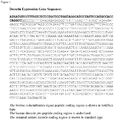
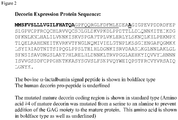
- the expression construct uses the bovine alpha-lactalbumin signal peptide instead of the endogenous signal peptide for protein production and secretion. The construct is depicted in Figures 7 and 8.
- a CHO cell line was made using the GPEx® process and the above gene construct. Decorin was produced and purified. N-terminal amino acid sequencing was done on the purified protein. The resulting sequence is shown below.
- the sequence corresponds to the expected sequence of the mature protein.
- the alanine mutation was incorporated as expected and the signal peptide and pro-protein cleaved to yield the correct mature Decorin N-terminal sequence.
- HyClone (Logan, UT, USA) HyQ PF-CHO Liquid Soy (LS) with L-glutamine and 0.1% Pluronic F68. The medium was received as a complete, sterile liquid.
- HyQ PF-CHO LS is a proprietary protein-free cell culture medium formulation from HyClone. The exact ingredients are not known, however, HyClone does hold a Type II Device File for Serum-Free Medium with the FDA for HyQ PF-CHO LS (reference number BBMF8302).
- HyQ CellBoost R15.4 is proprietary media supplement formulations from HyClone used in the production culture.
- HyQ PF-CHO LS with L-glutamine and 0.1% Pluronic F68 (1 L Bottle) HyClone SH30359.02 HyQ PF-CHO LS with L-glutamine and 0.1% Pluronic F68 (30 L Bag) HyClone SH3A1568.07 HyQ PF-CHO LS with L-glutamine and 0.1% Pluronic F68 (175 L Bag) HyClone SH3A1568.08 HyQ Cell Boost R15.4 Supplement HyClone SH30857.03
- Production lot 09018 was initiated by thawing a MCB vial, Lot number 06005 (Vial #182) in a 37° C water bath. After thawing the frozen MCB vial, the cells were added to a single shake flask (250 mL) (Thermo Fisher Scientific) containing 35 mL of HyQ PF-CHO LS cell culture medium. The initial cell count, determined using a hemacytometer, was 2.25 x 10 5 cells/mL and 90.4% viability.
- the culture was then placed on an Orbit shaker (90 rpm) within an incubator maintained at 37°C in a humidified, 5% CO 2 environment.
- Subculture steps targeted inoculation densities of approximately 2.0 x 10 5 cells/ml.
- the day 3 cell count and percent viability in the flask was 14.24 x 10 5 cells/mL with 95.8% viability and the flask was subcultured to 1 L flask.
- the Day 3 average viable cell count from the 1 L flask was 23.43 x 10 5 cells/mL with 98.1% viability.
- the 1 L flask was subcultured to a Wave Bioreactor System 20EH with a 10 L disposable Wave Bag (GE Healthcare Bioscience Bioprocess Corp, Somerset, NJ) at an initial culture volume and an initial target cell density of 1000 mL and 2.0 x 10 5 cells/mL, respectively.
- the Wave Bioreactor operating settings were 37.0° C incubation temperature, 15.0 cpm rocker speed, 11.0° rocking angle, and 5.0% CO 2 concentration in the aeration gas with gas flow rate of 0.25 L/minute.
- the viable cell density in the Wave Bag was 10.28 x10 5 cells/ml, fresh HyQ PF-CHO LS was added bringing the culture volume to 4992 mL.
- the viable cell density was 18.37 x 10 5 cells/mL and the volume in the Wave Bag was transferred to the 30L bioreactor.
- the operating set-points in the 30 L bioreactor for temperature, pH, dissolved oxygen, pressure, and agitation rate were 37° C, 40% air saturation, 1 psig pressure, and 50 rpm agitation rate, respectively.
- the pH controller was not activated, allowing for the cells to naturally drift toward a pH of 7.
- HyQ PF-CHO LS cell culture medium 137 Kg of HyQ PF-CHO LS cell culture medium and 4.3 Kg HyQ Cell Boost R15.4 12% (w/v) solution were added to the 200 L bioreactor. "Day 0" of the production culture was considered the day the 200 L bioreactor was inoculated.
- the viable cell density in the 30 L bioreactor was 14.87 x 10 5 cells/mL on day two of culture, which was sufficient to inoculate the 200 L bioreactor at an initial target density of 2.00 x 10 5 cells/mL.
- the entire contents of the 30 L were transferred and the post inoculum weight, cell density and viability were 171.9 Kg, 2.90 x 10 5 cells/mL and 93.9%, respectively.
- the operating set-points in the 200 L bioreactor for temperature, pH, dissolved oxygen, pressure, and agitation rate were 37° C, pH 7.0, 40% air saturation, 1 psig pressure, and 35 rpm agitation rate, respectively.
- the pH deadband was initially set at actual pH value minus 7.0, prior to inoculation. This was done to prevent the addition of CO 2 , and allow the cells to naturally drift toward a pH of 7.0.
- the initial deadband setting was 0.32.
- the pH was checked daily and the deadband adjusted to actual pH value minus 7.0. On day 1, the pH deadband was decreased to 0.22 and on day three, the deadband was set to 0.05 and remained at this setting for the rest of the run.
- the first feed was to occur on day 2 or 3, when the glucose level fell below ⁇ 5g/l, or on day 3 by default.
- glucose level fell below 5g/L, so an additional 4.4kg (L) of 12% w/v HyQ Cell Boost R15.4 + 120mM L-glutamine solution was added to the bioreactor.
- the next feed was to occur on day 4 or 5, when the glucose level fell below ⁇ 5g/L.
- the glucose level fell below 5g/L which triggered an additional feed of 9g/L (14.2L) of 12% w/v HyQ Cell Boost R15.4 solution.
- the temperature was reduced from 37°C to 31°C.
- the viable cell density peaked on day 5 at 61.00 x 10 5 cells/mL with a viability of 95.7%.
- the bioreactor was harvested on 11/03/09, (day 14) at a cell viability of 50.2%, with a final weight of the bioreactor at 191.8 Kg.
- the integrated cell number (ICN) was generated and plotted against protein results to give a curve of which the slope gives the pcd (27.316) for the 14 day run.
- This lot was harvested on day 14, at a viability of 50.2% and a titer of 1.240g/L.
- the batch was transferred to downstream and purified per the downstream batch processing record.
- the harvested material from the 200L batch was purified as outlined below resulting in 211g (at 5mg/mL) in a final volume of 42L.
- the final bulk drug substance met the specifications previously approved for this batch. All concentrations were determined by absorbance unless otherwise stated.
- the harvest material (189L) was filtered through a Cuno 60M02 Maximizer filter (2 x 16ft2) at a volume / area of 5.9L/ft2 at an initial flow rate of 3L / min and through a 0.22 ⁇ m 10" Millipore Opticap filter.
- the filter housing was blown down with compressed nitrogen to maximize product recovery.
- Table 1 Analysis of Clarification Step Step Volume (L) Protein * mg/mL Total Protein (g) % Recovery Media 189.3 1.24 235 100 Clarified Media 190.7 1.39 265 113 * concentration based on RP-HPLC.
- SP-Sepharose FF SP-Sepharose FF (GE Healthcare) was used for the capture of the protein from the clarified media.
- the clarified media was diluted to reduce the conductivity prior to capture on to the column. The conditions of this run are shown below along with the analysis of the various fractions.
- the clarified media was processed as two sub batches.
- CHT Type I BioRad was used to further purify DCP from residual CHO protein in the SP-Sepharose pools as well as to remove the Triton from the inactivation step. The conditions of this run are shown below along with the analysis of the various fractions.
- the SP-Sepharose pools were processed as two sub-batches as described above.
- the two CHT pools (47.8L) were combined and diluted with an equal volume of water giving a total volume of 95.6L. This was concentrated ⁇ 2 fold to ⁇ 45L and approximately ⁇ 6.57 mg/mL, using a 0.6m 2 Prep/Scale TFF cartridge (Millipore), 10KMWCO. The re-circulation flow rate was 5L/min and a back pressure of approximately 20psi was maintained.
- the Mustang Q (Pall) step was carried out in flow through mode, with any bound material being eluted with a sodium chloride strip.
- the Buffer exchanged pool was loaded directly onto the conditioned Mustang Q membrane.
- Table 14 Mustang Q Membrane Parameters Matrix Mustang Q (Pall) Filter NP8 Bed Volume (mL) 780 Maximum Load Capacity (g/mL filter volume) 0.5 Load Buffer Exchanged CHT Pool 6.2mg/mL Flow rate 2.6L/min, 3.33 cv/minute Actual Load (mg/mL resin) 0.32
- the Mustang Q pool was viral filtered using a Virosart filter.
- Table 17 Viral Filter Parameters Filter Virosart CPV (Sartorius) Filter Size (inch) 10 Filter Area (cm 2 ) 7000 Load Mustang Q Pool (4.75mg/mL - 46L) Volume / area (mL/cm 2 ) 6.6 (31.2mg/cm 2 ) Pressure 30 psi Compressed Nitrogen
- the filter was wetted with 3L of water for injection (WFI) at 30psi nitrogen.
- Viral Filtrate (48.0L) was concentrated buffer exchanged, using 2 x 0.6m 2 Prep/Scale TFF cartridge (Millipore), 10KMWCO.
- the re-circulation flow rate was 5L/min and a feed pressure of 20psi was maintained.
- the viral filtrate was continuously diafiltered against 6.9 volumes of 10mM sodium phosphate, 150mM sodium chloride, pH 7.0 to a final volume of 48.5L. This bulk was then concentrated down to approximately 40L and then the cartridge was flushed with 2.4L of 10mM sodium phosphate, 150mM sodium chloride, pH 7.0, to remove any remaining protein. This was pooled with the concentrate and the concentration determined to be 5.0g/L (42.2L total volume). The final bulk was then filtered into a bag with a 0.2 ⁇ m filter. Table 19 Analysis of Formulation Samples Volume (L) Protein mg/mL Total Protein (g) % Recovery Adjusted Viral Filtrate 47.8 4.22 202 100 Final filtered Formulated BDS 42.2 5.0* 211 104 * measured by QC
Landscapes
- Health & Medical Sciences (AREA)
- Chemical & Material Sciences (AREA)
- Organic Chemistry (AREA)
- Life Sciences & Earth Sciences (AREA)
- General Health & Medical Sciences (AREA)
- Medicinal Chemistry (AREA)
- General Chemical & Material Sciences (AREA)
- Pharmacology & Pharmacy (AREA)
- Nuclear Medicine, Radiotherapy & Molecular Imaging (AREA)
- Animal Behavior & Ethology (AREA)
- Chemical Kinetics & Catalysis (AREA)
- Public Health (AREA)
- Veterinary Medicine (AREA)
- Bioinformatics & Cheminformatics (AREA)
- Engineering & Computer Science (AREA)
- Proteomics, Peptides & Aminoacids (AREA)
- Genetics & Genomics (AREA)
- Molecular Biology (AREA)
- Biochemistry (AREA)
- Toxicology (AREA)
- Zoology (AREA)
- Biophysics (AREA)
- Gastroenterology & Hepatology (AREA)
- Dermatology (AREA)
- Biomedical Technology (AREA)
- Neurosurgery (AREA)
- Neurology (AREA)
- Peptides Or Proteins (AREA)
- Preparation Of Compounds By Using Micro-Organisms (AREA)
- Medicines That Contain Protein Lipid Enzymes And Other Medicines (AREA)
- Micro-Organisms Or Cultivation Processes Thereof (AREA)
Claims (6)
- Verfahren zur Herstellung eines nicht-gagylierten Decorin-Kern-Proteins, umfassend:Bereitstellen von Wirtszellen, die nicht-gagyliertes Decorin-Kern-Protein exprimieren,Kultivieren der Wirtszelle, so dass das nicht-gagylierte Decorin-Kern-Protein mit einer Rate von etwa größer als 1, 5 oder 10 pg / Zelle / Tag produziert wird und das nicht-gagylierte Decorin-Kern-Protein ins Kulturmedium sezerniert wird, undReinigen des nicht-gagylierten Decorin-Kern-Proteins, wobei das Reinigen umfasst:Inkontaktbringen des Kulturmediums mit einem Kationenaustauschmedium,Waschen des Kationenaustauschmediums,Eluieren eines ersten decorinhaltigen Eluats von dem Kationenaustauschmedium,Inkontaktbringen des ersten decorinhaltigen Eluats mit einem Hydroxylapatit Medium,Waschen des Hydroxylapatit-Mediums,Eluieren eines zweiten Decorin-haltigen Eluats aus dem Hydroxylapatit-Medium undweiterhin umfassend einen Virusinaktivierungsschritt oder einen Virusfiltrationsschritt.
- Verfahren nach Anspruch 1, wobei das Kationenaustauschmedium SP-Sepharose FF oder wobei das Hydroxyapatit-Medium ein keramischer Hydroxylapatit Typ I ist.
- Verfahren nach Anspruch 1, ferner umfassend die weitere Reinigung des zweiten decorinhaltigen Eluats mit einer lonenaustauschmembran oder -säule, wobei die lonenaustauschmembran eine Q-Ionenaustauschmembran ist.
- Verfahren nach Anspruch 1, wobei der Virusinaktivierungsschritt die Behandlung mit einer oberflächenaktiven Substanz umfasst, wobei die oberflächenaktive Substanz vorzugsweise Triton X-100 ist.
- Verfahren nach Anspruch 1, ferner umfassend das Konzentrieren des Decorins.
- Verfahren zum Reinigen von Decorin aus einem decorinhaltigen Medium, umfassend:Inkontaktbringen des decorinhaltigen Mediums mit einem Kationenaustauschmedium,Waschen des Kationenaustauschmediums,Eluieren eines ersten decorinhaltigen Eluats von dem Kationenaustauschmedium,Inkontaktbringen des zunächst decorinhaltigen Eluats mit einem Hydroxylapatit-Medium,Waschen des Hydroxylapatit-Mediums,Eluieren eines zweiten decorinhaltigen Eluats aus dem Hydroxylapatit-Medium,Filtrieren des zweiten decorinhaltigen Eluats mit einer lonenaustauschmembran,um ein decorinhaltiges Filtrat bereitzustellen, Behandeln des Filtrats, um Viren zu entfernen,Konzentrieren von Decorin aus dem Filtrat.
Priority Applications (1)
| Application Number | Priority Date | Filing Date | Title |
|---|---|---|---|
| EP18169033.0A EP3456837A3 (de) | 2011-03-14 | 2012-03-13 | Decorinzusammensetzungen und verwendung davon |
Applications Claiming Priority (2)
| Application Number | Priority Date | Filing Date | Title |
|---|---|---|---|
| US201161452299P | 2011-03-14 | 2011-03-14 | |
| PCT/US2012/028911 WO2012125626A2 (en) | 2011-03-14 | 2012-03-13 | Decorin compositions and use thereof |
Related Child Applications (1)
| Application Number | Title | Priority Date | Filing Date |
|---|---|---|---|
| EP18169033.0A Division EP3456837A3 (de) | 2011-03-14 | 2012-03-13 | Decorinzusammensetzungen und verwendung davon |
Publications (3)
| Publication Number | Publication Date |
|---|---|
| EP2686335A2 EP2686335A2 (de) | 2014-01-22 |
| EP2686335A4 EP2686335A4 (de) | 2015-11-25 |
| EP2686335B1 true EP2686335B1 (de) | 2018-04-25 |
Family
ID=46828968
Family Applications (2)
| Application Number | Title | Priority Date | Filing Date |
|---|---|---|---|
| EP18169033.0A Pending EP3456837A3 (de) | 2011-03-14 | 2012-03-13 | Decorinzusammensetzungen und verwendung davon |
| EP12757556.1A Active EP2686335B1 (de) | 2011-03-14 | 2012-03-13 | Decorinzusammensetzungen und ihre verwendung |
Family Applications Before (1)
| Application Number | Title | Priority Date | Filing Date |
|---|---|---|---|
| EP18169033.0A Pending EP3456837A3 (de) | 2011-03-14 | 2012-03-13 | Decorinzusammensetzungen und verwendung davon |
Country Status (6)
| Country | Link |
|---|---|
| US (2) | US20120238727A1 (de) |
| EP (2) | EP3456837A3 (de) |
| JP (3) | JP5965927B2 (de) |
| CN (1) | CN103917655B (de) |
| DK (1) | DK2686335T3 (de) |
| WO (1) | WO2012125626A2 (de) |
Families Citing this family (5)
| Publication number | Priority date | Publication date | Assignee | Title |
|---|---|---|---|---|
| JP2016519110A (ja) * | 2013-04-22 | 2016-06-30 | キャタレント ファーマ ソリューションズ リミテッド ライアビリティ カンパニー | 獣医学的デコリン組成物及びそれらの使用 |
| HK1223380A1 (zh) | 2013-05-14 | 2017-07-28 | Medimmune, Llc | 绿脓杆菌的psl外多糖的合成寡糖亚基 |
| JP2018048053A (ja) | 2016-09-23 | 2018-03-29 | 昭和電工株式会社 | SiC単結晶成長用坩堝 |
| CN112638403A (zh) * | 2018-07-03 | 2021-04-09 | 康泰伦特药物解决方案有限责任公司 | 包括饰胶蛋白聚糖的多功能蛋白质分子及其用途 |
| CA3174478A1 (en) * | 2020-03-05 | 2021-09-10 | DiaMedica USA Inc. | Ulinastatin polypeptides |
Family Cites Families (14)
| Publication number | Priority date | Publication date | Assignee | Title |
|---|---|---|---|---|
| US5654270A (en) * | 1988-06-28 | 1997-08-05 | La Jolla Cancer Research Foundation | Use of fibromodulin to prevent or reduce dermal scarring |
| AU633011B2 (en) * | 1988-06-28 | 1993-01-21 | La Jolla Cancer Research Foundation | Suppression of cell proliferation by decorin |
| US6509314B1 (en) * | 1988-06-28 | 2003-01-21 | The Burnham Institute | Methods of preventing or reducing scarring with decorin or biglycan |
| ES2188585T3 (es) * | 1991-11-14 | 2003-07-01 | Jolla Cancer Res Found | Inhibidores de factores reguladores celulares y procedimientos para evitar o reducir la formacion de cicatrices. |
| EP0636175A1 (de) * | 1992-04-03 | 1995-02-01 | La Jolla Cancer Research Foundation | Decorin-fragmente und verfahren zur zell-regulationfaktoren-inhibierung |
| US5567807A (en) * | 1994-07-08 | 1996-10-22 | La Jolla Cancer Research Foundation | Processes for the purification of human recombinant decorin and the detection of guanidinium ions |
| HUP0302396A2 (hu) * | 2000-05-05 | 2003-10-28 | Gtc Biotherapeutics, Inc. | Transzgénikus úton előállított dekorin |
| US6852510B2 (en) | 2000-07-03 | 2005-02-08 | Gala Design Inc | Host cells containing multiple integrating vectors |
| US20030224415A1 (en) | 2001-06-29 | 2003-12-04 | Gala Design, Inc. | Selection free growth of host cells containing multiple integrating vectors |
| US20040235173A1 (en) | 2000-07-03 | 2004-11-25 | Gala Design, Inc. | Production of host cells containing multiple integrating vectors by serial transduction |
| US20030124152A1 (en) * | 2001-11-02 | 2003-07-03 | Pang Danny Zhong Der | Use of decorin in a cosmetic or dermatologic composition |
| KR100495126B1 (ko) * | 2002-04-16 | 2005-06-14 | 한국생명공학연구원 | N-아세틸갈락토스아미닐트랜스퍼라제 활성을 갖는 융합 단백질, 이를 코딩하는 유전자 및 상기 유전자가 도입된 형질전환 세포주 |
| ES2496596T3 (es) * | 2007-03-23 | 2014-09-19 | Asahi Kasei Pharma Corporation | Método para producir trombomodulina soluble de gran pureza |
| US8945895B2 (en) * | 2009-07-31 | 2015-02-03 | Baxter International Inc. | Methods of purifying recombinant ADAMTS13 and other proteins and compositions thereof |
-
2012
- 2012-03-13 EP EP18169033.0A patent/EP3456837A3/de active Pending
- 2012-03-13 DK DK12757556.1T patent/DK2686335T3/en active
- 2012-03-13 JP JP2013558110A patent/JP5965927B2/ja active Active
- 2012-03-13 WO PCT/US2012/028911 patent/WO2012125626A2/en not_active Ceased
- 2012-03-13 US US13/419,045 patent/US20120238727A1/en not_active Abandoned
- 2012-03-13 EP EP12757556.1A patent/EP2686335B1/de active Active
- 2012-03-13 CN CN201280013702.2A patent/CN103917655B/zh active Active
-
2016
- 2016-04-15 JP JP2016082308A patent/JP2016185952A/ja active Pending
-
2018
- 2018-08-03 JP JP2018146607A patent/JP6831813B2/ja active Active
-
2021
- 2021-07-02 US US17/366,284 patent/US20220073579A1/en active Pending
Non-Patent Citations (1)
| Title |
|---|
| T. A. H. JARVINEN ET AL: "Target-seeking antifibrotic compound enhances wound healing and suppresses scar formation in mice", PROCEEDINGS OF THE NATIONAL ACADEMY OF SCIENCES, vol. 107, no. 50, 14 December 2010 (2010-12-14), pages 21671 - 21676, XP055026502, ISSN: 0027-8424, DOI: 10.1073/pnas.1016233107 * |
Also Published As
| Publication number | Publication date |
|---|---|
| EP2686335A4 (de) | 2015-11-25 |
| US20220073579A1 (en) | 2022-03-10 |
| JP2014518508A (ja) | 2014-07-31 |
| WO2012125626A3 (en) | 2014-04-24 |
| JP6831813B2 (ja) | 2021-02-17 |
| CN103917655A (zh) | 2014-07-09 |
| WO2012125626A2 (en) | 2012-09-20 |
| EP3456837A2 (de) | 2019-03-20 |
| US20120238727A1 (en) | 2012-09-20 |
| DK2686335T3 (en) | 2018-07-30 |
| JP2016185952A (ja) | 2016-10-27 |
| EP2686335A2 (de) | 2014-01-22 |
| CN103917655B (zh) | 2016-05-25 |
| EP3456837A3 (de) | 2019-04-24 |
| JP5965927B2 (ja) | 2016-08-10 |
| JP2018191647A (ja) | 2018-12-06 |
Similar Documents
| Publication | Publication Date | Title |
|---|---|---|
| US20220073579A1 (en) | Decorin compositions and use thereof | |
| CN114805551B (zh) | 一种重组iii型胶原蛋白及其制备方法 | |
| CN115991764B (zh) | 羟脯氨酸修饰的重组iii型人源化胶原蛋白及其制备方法和应用 | |
| US10378005B2 (en) | Recombinant factor H and variants and conjugates thereof | |
| CN102153653B (zh) | 肿瘤血管靶向多肽与组织因子的融合蛋白及其制备方法 | |
| WO1999011809A1 (en) | Conjugates that contain the homeodomain of antennapedia | |
| JP2010213699A (ja) | 組換えヒトエリスロポイエチンを発現する宿主細胞 | |
| US20260083883A1 (en) | Recombinant human type iii collagen for promoting angiogenesis, and preparation method and application method thereof | |
| JPH09511140A (ja) | スタンニウスの小体の蛋白、スタンニオカルシン | |
| HK40004571A (en) | Decorin compositions and use thereof | |
| US9534038B2 (en) | Isolated laminin-421 | |
| KR20080026085A (ko) | 곤충세포에서 제조한 재조합 e-셀렉틴 | |
| CN121319152A (zh) | 一种重组iv型胶原蛋白及其制备方法和应用 | |
| CN120535605A (zh) | 一种具有降血糖活性的重组索马鲁肽及其应用 | |
| CN120554493A (zh) | 一种改善皮肤弹性的弹性蛋白肽及其制备方法 | |
| Kusewitt et al. | Characterization of cDNA encoding basic fibroblast growth factor of the marsupial Monodelphis domestica | |
| CN121718545A (zh) | 一种高效翻译终止区 | |
| CN113735979A (zh) | 一种重组人血小板衍生因子(rhPDGF-BB)-Fc融合蛋白及其使用 | |
| VOLVULUS | CLONED N-CARBAMOYL SARCOSINE AMIDOHYDROLASE | |
| KR20060108375A (ko) | 인간 과립구 콜로니 형성인자 동종체 및 그 조성물 | |
| JPWO2000001405A1 (ja) | 軟骨細胞の分化促進剤 | |
| MXPA00005180A (en) | Novel i(dkr) polypeptides |
Legal Events
| Date | Code | Title | Description |
|---|---|---|---|
| PUAI | Public reference made under article 153(3) epc to a published international application that has entered the european phase |
Free format text: ORIGINAL CODE: 0009012 |
|
| 17P | Request for examination filed |
Effective date: 20130918 |
|
| AK | Designated contracting states |
Kind code of ref document: A2 Designated state(s): AL AT BE BG CH CY CZ DE DK EE ES FI FR GB GR HR HU IE IS IT LI LT LU LV MC MK MT NL NO PL PT RO RS SE SI SK SM TR |
|
| R17D | Deferred search report published (corrected) |
Effective date: 20140424 |
|
| RIC1 | Information provided on ipc code assigned before grant |
Ipc: C12P 21/02 20060101AFI20141216BHEP |
|
| DAX | Request for extension of the european patent (deleted) | ||
| RIC1 | Information provided on ipc code assigned before grant |
Ipc: C12P 21/02 20060101AFI20150526BHEP |
|
| REG | Reference to a national code |
Ref country code: DE Ref legal event code: R079 Ref document number: 602012045638 Country of ref document: DE Free format text: PREVIOUS MAIN CLASS: C07K0001360000 Ipc: C12P0021020000 |
|
| RIC1 | Information provided on ipc code assigned before grant |
Ipc: C12P 21/02 20060101AFI20151012BHEP |
|
| A4 | Supplementary search report drawn up and despatched |
Effective date: 20151023 |
|
| STAA | Information on the status of an ep patent application or granted ep patent |
Free format text: STATUS: EXAMINATION IS IN PROGRESS |
|
| 17Q | First examination report despatched |
Effective date: 20161110 |
|
| GRAP | Despatch of communication of intention to grant a patent |
Free format text: ORIGINAL CODE: EPIDOSNIGR1 |
|
| STAA | Information on the status of an ep patent application or granted ep patent |
Free format text: STATUS: GRANT OF PATENT IS INTENDED |
|
| INTG | Intention to grant announced |
Effective date: 20171109 |
|
| GRAS | Grant fee paid |
Free format text: ORIGINAL CODE: EPIDOSNIGR3 |
|
| GRAA | (expected) grant |
Free format text: ORIGINAL CODE: 0009210 |
|
| STAA | Information on the status of an ep patent application or granted ep patent |
Free format text: STATUS: THE PATENT HAS BEEN GRANTED |
|
| AK | Designated contracting states |
Kind code of ref document: B1 Designated state(s): AL AT BE BG CH CY CZ DE DK EE ES FI FR GB GR HR HU IE IS IT LI LT LU LV MC MK MT NL NO PL PT RO RS SE SI SK SM TR |
|
| REG | Reference to a national code |
Ref country code: GB Ref legal event code: FG4D |
|
| REG | Reference to a national code |
Ref country code: CH Ref legal event code: EP |
|
| REG | Reference to a national code |
Ref country code: AT Ref legal event code: REF Ref document number: 992966 Country of ref document: AT Kind code of ref document: T Effective date: 20180515 |
|
| REG | Reference to a national code |
Ref country code: IE Ref legal event code: FG4D |
|
| REG | Reference to a national code |
Ref country code: DE Ref legal event code: R096 Ref document number: 602012045638 Country of ref document: DE |
|
| REG | Reference to a national code |
Ref country code: NL Ref legal event code: FP |
|
| REG | Reference to a national code |
Ref country code: DK Ref legal event code: T3 Effective date: 20180719 |
|
| REG | Reference to a national code |
Ref country code: SE Ref legal event code: TRGR |
|
| REG | Reference to a national code |
Ref country code: LT Ref legal event code: MG4D |
|
| PG25 | Lapsed in a contracting state [announced via postgrant information from national office to epo] |
Ref country code: PL Free format text: LAPSE BECAUSE OF FAILURE TO SUBMIT A TRANSLATION OF THE DESCRIPTION OR TO PAY THE FEE WITHIN THE PRESCRIBED TIME-LIMIT Effective date: 20180425 Ref country code: NO Free format text: LAPSE BECAUSE OF FAILURE TO SUBMIT A TRANSLATION OF THE DESCRIPTION OR TO PAY THE FEE WITHIN THE PRESCRIBED TIME-LIMIT Effective date: 20180725 Ref country code: FI Free format text: LAPSE BECAUSE OF FAILURE TO SUBMIT A TRANSLATION OF THE DESCRIPTION OR TO PAY THE FEE WITHIN THE PRESCRIBED TIME-LIMIT Effective date: 20180425 Ref country code: BG Free format text: LAPSE BECAUSE OF FAILURE TO SUBMIT A TRANSLATION OF THE DESCRIPTION OR TO PAY THE FEE WITHIN THE PRESCRIBED TIME-LIMIT Effective date: 20180725 Ref country code: ES Free format text: LAPSE BECAUSE OF FAILURE TO SUBMIT A TRANSLATION OF THE DESCRIPTION OR TO PAY THE FEE WITHIN THE PRESCRIBED TIME-LIMIT Effective date: 20180425 Ref country code: LT Free format text: LAPSE BECAUSE OF FAILURE TO SUBMIT A TRANSLATION OF THE DESCRIPTION OR TO PAY THE FEE WITHIN THE PRESCRIBED TIME-LIMIT Effective date: 20180425 |
|
| PG25 | Lapsed in a contracting state [announced via postgrant information from national office to epo] |
Ref country code: RS Free format text: LAPSE BECAUSE OF FAILURE TO SUBMIT A TRANSLATION OF THE DESCRIPTION OR TO PAY THE FEE WITHIN THE PRESCRIBED TIME-LIMIT Effective date: 20180425 Ref country code: LV Free format text: LAPSE BECAUSE OF FAILURE TO SUBMIT A TRANSLATION OF THE DESCRIPTION OR TO PAY THE FEE WITHIN THE PRESCRIBED TIME-LIMIT Effective date: 20180425 Ref country code: HR Free format text: LAPSE BECAUSE OF FAILURE TO SUBMIT A TRANSLATION OF THE DESCRIPTION OR TO PAY THE FEE WITHIN THE PRESCRIBED TIME-LIMIT Effective date: 20180425 Ref country code: GR Free format text: LAPSE BECAUSE OF FAILURE TO SUBMIT A TRANSLATION OF THE DESCRIPTION OR TO PAY THE FEE WITHIN THE PRESCRIBED TIME-LIMIT Effective date: 20180726 |
|
| REG | Reference to a national code |
Ref country code: AT Ref legal event code: MK05 Ref document number: 992966 Country of ref document: AT Kind code of ref document: T Effective date: 20180425 |
|
| PG25 | Lapsed in a contracting state [announced via postgrant information from national office to epo] |
Ref country code: PT Free format text: LAPSE BECAUSE OF FAILURE TO SUBMIT A TRANSLATION OF THE DESCRIPTION OR TO PAY THE FEE WITHIN THE PRESCRIBED TIME-LIMIT Effective date: 20180827 |
|
| REG | Reference to a national code |
Ref country code: DE Ref legal event code: R097 Ref document number: 602012045638 Country of ref document: DE |
|
| PG25 | Lapsed in a contracting state [announced via postgrant information from national office to epo] |
Ref country code: AT Free format text: LAPSE BECAUSE OF FAILURE TO SUBMIT A TRANSLATION OF THE DESCRIPTION OR TO PAY THE FEE WITHIN THE PRESCRIBED TIME-LIMIT Effective date: 20180425 Ref country code: CZ Free format text: LAPSE BECAUSE OF FAILURE TO SUBMIT A TRANSLATION OF THE DESCRIPTION OR TO PAY THE FEE WITHIN THE PRESCRIBED TIME-LIMIT Effective date: 20180425 Ref country code: RO Free format text: LAPSE BECAUSE OF FAILURE TO SUBMIT A TRANSLATION OF THE DESCRIPTION OR TO PAY THE FEE WITHIN THE PRESCRIBED TIME-LIMIT Effective date: 20180425 Ref country code: EE Free format text: LAPSE BECAUSE OF FAILURE TO SUBMIT A TRANSLATION OF THE DESCRIPTION OR TO PAY THE FEE WITHIN THE PRESCRIBED TIME-LIMIT Effective date: 20180425 Ref country code: SK Free format text: LAPSE BECAUSE OF FAILURE TO SUBMIT A TRANSLATION OF THE DESCRIPTION OR TO PAY THE FEE WITHIN THE PRESCRIBED TIME-LIMIT Effective date: 20180425 |
|
| PG25 | Lapsed in a contracting state [announced via postgrant information from national office to epo] |
Ref country code: IT Free format text: LAPSE BECAUSE OF FAILURE TO SUBMIT A TRANSLATION OF THE DESCRIPTION OR TO PAY THE FEE WITHIN THE PRESCRIBED TIME-LIMIT Effective date: 20180425 Ref country code: SM Free format text: LAPSE BECAUSE OF FAILURE TO SUBMIT A TRANSLATION OF THE DESCRIPTION OR TO PAY THE FEE WITHIN THE PRESCRIBED TIME-LIMIT Effective date: 20180425 |
|
| PLBE | No opposition filed within time limit |
Free format text: ORIGINAL CODE: 0009261 |
|
| STAA | Information on the status of an ep patent application or granted ep patent |
Free format text: STATUS: NO OPPOSITION FILED WITHIN TIME LIMIT |
|
| 26N | No opposition filed |
Effective date: 20190128 |
|
| PG25 | Lapsed in a contracting state [announced via postgrant information from national office to epo] |
Ref country code: SI Free format text: LAPSE BECAUSE OF FAILURE TO SUBMIT A TRANSLATION OF THE DESCRIPTION OR TO PAY THE FEE WITHIN THE PRESCRIBED TIME-LIMIT Effective date: 20180425 |
|
| PG25 | Lapsed in a contracting state [announced via postgrant information from national office to epo] |
Ref country code: MC Free format text: LAPSE BECAUSE OF FAILURE TO SUBMIT A TRANSLATION OF THE DESCRIPTION OR TO PAY THE FEE WITHIN THE PRESCRIBED TIME-LIMIT Effective date: 20180425 |
|
| REG | Reference to a national code |
Ref country code: CH Ref legal event code: PL |
|
| PG25 | Lapsed in a contracting state [announced via postgrant information from national office to epo] |
Ref country code: AL Free format text: LAPSE BECAUSE OF FAILURE TO SUBMIT A TRANSLATION OF THE DESCRIPTION OR TO PAY THE FEE WITHIN THE PRESCRIBED TIME-LIMIT Effective date: 20180425 Ref country code: LU Free format text: LAPSE BECAUSE OF NON-PAYMENT OF DUE FEES Effective date: 20190313 |
|
| REG | Reference to a national code |
Ref country code: BE Ref legal event code: MM Effective date: 20190331 |
|
| PG25 | Lapsed in a contracting state [announced via postgrant information from national office to epo] |
Ref country code: IE Free format text: LAPSE BECAUSE OF NON-PAYMENT OF DUE FEES Effective date: 20190313 Ref country code: LI Free format text: LAPSE BECAUSE OF NON-PAYMENT OF DUE FEES Effective date: 20190331 Ref country code: CH Free format text: LAPSE BECAUSE OF NON-PAYMENT OF DUE FEES Effective date: 20190331 |
|
| PG25 | Lapsed in a contracting state [announced via postgrant information from national office to epo] |
Ref country code: BE Free format text: LAPSE BECAUSE OF NON-PAYMENT OF DUE FEES Effective date: 20190331 |
|
| PG25 | Lapsed in a contracting state [announced via postgrant information from national office to epo] |
Ref country code: TR Free format text: LAPSE BECAUSE OF FAILURE TO SUBMIT A TRANSLATION OF THE DESCRIPTION OR TO PAY THE FEE WITHIN THE PRESCRIBED TIME-LIMIT Effective date: 20180425 |
|
| PG25 | Lapsed in a contracting state [announced via postgrant information from national office to epo] |
Ref country code: MT Free format text: LAPSE BECAUSE OF NON-PAYMENT OF DUE FEES Effective date: 20190313 |
|
| PG25 | Lapsed in a contracting state [announced via postgrant information from national office to epo] |
Ref country code: CY Free format text: LAPSE BECAUSE OF FAILURE TO SUBMIT A TRANSLATION OF THE DESCRIPTION OR TO PAY THE FEE WITHIN THE PRESCRIBED TIME-LIMIT Effective date: 20180425 |
|
| PG25 | Lapsed in a contracting state [announced via postgrant information from national office to epo] |
Ref country code: IS Free format text: LAPSE BECAUSE OF FAILURE TO SUBMIT A TRANSLATION OF THE DESCRIPTION OR TO PAY THE FEE WITHIN THE PRESCRIBED TIME-LIMIT Effective date: 20180825 |
|
| PG25 | Lapsed in a contracting state [announced via postgrant information from national office to epo] |
Ref country code: HU Free format text: LAPSE BECAUSE OF FAILURE TO SUBMIT A TRANSLATION OF THE DESCRIPTION OR TO PAY THE FEE WITHIN THE PRESCRIBED TIME-LIMIT; INVALID AB INITIO Effective date: 20120313 |
|
| PG25 | Lapsed in a contracting state [announced via postgrant information from national office to epo] |
Ref country code: MK Free format text: LAPSE BECAUSE OF FAILURE TO SUBMIT A TRANSLATION OF THE DESCRIPTION OR TO PAY THE FEE WITHIN THE PRESCRIBED TIME-LIMIT Effective date: 20180425 |
|
| PGFP | Annual fee paid to national office [announced via postgrant information from national office to epo] |
Ref country code: SE Payment date: 20260327 Year of fee payment: 15 |
|
| PGFP | Annual fee paid to national office [announced via postgrant information from national office to epo] |
Ref country code: GB Payment date: 20260327 Year of fee payment: 15 |
|
| PGFP | Annual fee paid to national office [announced via postgrant information from national office to epo] |
Ref country code: DK Payment date: 20260325 Year of fee payment: 15 Ref country code: DE Payment date: 20260327 Year of fee payment: 15 |
|
| PGFP | Annual fee paid to national office [announced via postgrant information from national office to epo] |
Ref country code: NL Payment date: 20260326 Year of fee payment: 15 |
|
| PGFP | Annual fee paid to national office [announced via postgrant information from national office to epo] |
Ref country code: FR Payment date: 20260325 Year of fee payment: 15 |