EP2687213A1 - Formes solides comprenant de la (+)-2-[1-(3-éthoxy-4-méthoxyphényl)-2-méthylsulfonyléthyl]-4-acétylaminoisoindoline-1,3-dione, leurs compositions, et utilisations associées - Google Patents
Formes solides comprenant de la (+)-2-[1-(3-éthoxy-4-méthoxyphényl)-2-méthylsulfonyléthyl]-4-acétylaminoisoindoline-1,3-dione, leurs compositions, et utilisations associées Download PDFInfo
- Publication number
- EP2687213A1 EP2687213A1 EP13182315.5A EP13182315A EP2687213A1 EP 2687213 A1 EP2687213 A1 EP 2687213A1 EP 13182315 A EP13182315 A EP 13182315A EP 2687213 A1 EP2687213 A1 EP 2687213A1
- Authority
- EP
- European Patent Office
- Prior art keywords
- compound
- certain embodiments
- solid
- forms
- plot
- Prior art date
- Legal status (The legal status is an assumption and is not a legal conclusion. Google has not performed a legal analysis and makes no representation as to the accuracy of the status listed.)
- Granted
Links
Images










Classifications
-
- A—HUMAN NECESSITIES
- A61—MEDICAL OR VETERINARY SCIENCE; HYGIENE
- A61K—PREPARATIONS FOR MEDICAL, DENTAL OR TOILETRY PURPOSES
- A61K31/00—Medicinal preparations containing organic active ingredients
- A61K31/33—Heterocyclic compounds
- A61K31/395—Heterocyclic compounds having nitrogen as a ring hetero atom, e.g. guanethidine or rifamycins
- A61K31/40—Heterocyclic compounds having nitrogen as a ring hetero atom, e.g. guanethidine or rifamycins having five-membered rings with one nitrogen as the only ring hetero atom, e.g. sulpiride, succinimide, tolmetin, buflomedil
- A61K31/403—Heterocyclic compounds having nitrogen as a ring hetero atom, e.g. guanethidine or rifamycins having five-membered rings with one nitrogen as the only ring hetero atom, e.g. sulpiride, succinimide, tolmetin, buflomedil condensed with carbocyclic rings, e.g. carbazole
- A61K31/4035—Isoindoles, e.g. phthalimide
Definitions
- Enhanced or unregulated TNF- ⁇ production has been implicated in a number of diseases and medical conditions, for example, cancers, such as solid tumors and blood-borne tumors; heart disease, such as congestive heart failure; and viral, genetic, inflammatory, allergic, and autoimmune diseases.
- Adenosine 3',5'-cyclic monophosphate also plays a role in many diseases and conditions, such as, but not limited to, asthma and inflammation, and other conditions ( Lowe and Cheng, Drugs of the Future, 17(9), 799-807, 1992 ). It has been shown that the elevation of cAMP in inflammatory leukocytes inhibits their activation and the subsequent release of inflammatory mediators, including TNF- ⁇ and NF- ⁇ B. Increased levels of cAMP also leads to the relaxation of airway smooth muscle.
- PDE cyclic nucleotide phosphodiesterases
- PDE 4 PDE IV
- compounds that inhibit PDE4 may inhibit inflammation and aid the relaxation of airway smooth muscle with a minimum of unwanted side effects, such as cardiovascular or anti-platelet effects.
- PDE4 inhibitors lack the selective action at acceptable therapeutic doses.
- Cancer is a particularly devastating disease, and increases in blood TNF- ⁇ levels are implicated in the risk of and the spreading of cancer.
- cancer cells Normally, in healthy subjects, cancer cells fail to survive in the circulatory system, one of the reasons being that the lining of blood vessels acts as a barrier to tumor-cell extravasation.
- increased levels of cytokines have been shown to substantially increase the adhesion of cancer cells to endothelium in vitro.
- cytokines such as TNF- ⁇ , stimulate the biosynthesis and expression of a cell surface receptors called ELAM-1 (endothelial leukocyte adhesion molecule).
- ELAM-1 is a member of a family of calcium-dependent cell adhesion receptors, known as LEC-CAMs, which includes LECAM-1 and GMP-140. During an inflammatory response, ELAM-1 on endothelial cells functions as a "homing receptor" for leukocytes. Recently, ELAM-1 on endothelial cells was shown to mediate the increased adhesion of colon cancer cells to endothelium treated with cytokines ( Rice et al., 1989, Science 246:1303-1306 ).
- Inflammatory diseases such as arthritis, related arthritic conditions (e.g., osteoarthritis and rheumatoid arthritis), inflammatory bowel disease (e.g., Crohn's disease and ulcerative colitis), sepsis, psoriasis, atopic dermatitis, contact dermatitis, chronic obstructive pulmonary disease, and chronic inflammatory pulmonary diseases are also prevalent and problematic ailments.
- TNF- ⁇ plays a central role in the inflammatory response and the administration of their antagonists block chronic and acute responses in animal models of inflammatory disease.
- compositions that can block the activity or inhibit the production of certain cytokines may be beneficial therapeutics.
- Many small-molecule inhibitors have demonstrated an ability to treat or prevent inflammatory diseases implicated by TNF- ⁇ (for a review, see Lowe, 1998 Exp. Opin. Ther. Patents 8:1309-1332 ).
- One such class of molecules are the substituted phenethylsulfones described in United States Patent No. 6,020,358 .
- a solid form of a pharmaceutical compound is complex, given that a change in solid form may affect a variety of physical and chemical properties, which may provide benefits or drawbacks in processing, formulation, stability and bioavailability, among other important pharmaceutical characteristics.
- Potential pharmaceutical solids include crystalline solids and amorphous solids. Amorphous solids are characterized by a lack of long-range structural order, whereas crystalline solids are characterized by structural periodicity.
- the desired class of pharmaceutical solid depends upon the specific application; amorphous solids are sometimes selected on the basis of, e.g., an enhanced dissolution profile, while crystalline solids may be desirable for properties such as, e.g., physical or chemical stability ( see, e.g., S. R. Vippagunta et al., Adv. Drug. Deliv. Rev., (2001) 48:3-26 ; L. Yu, Adv. Drug. Deliv. Rev., (2001) 48:27-42 ).
- crystalline or amorphous, potential solid forms of a pharmaceutical compound include single-component and multiple-component solids.
- Single-component solids consist essentially of the pharmaceutical compound in the absence of other compounds. Variety among single-component crystalline materials may potentially arise, e.g., from the phenomenon of polymorphism, wherein multiple three-dimensional arrangements exist for a particular pharmaceutical compound (see, e.g., S. R. Byrn et al., Solid State Chemistry of Drugs, (1999 ) SSCI, West Lafayette). The importance of studying polymorphs was underscored by the case of Ritonavir, an HIV protease inhibitor that was formulated as soft gelatin capsules.
- Crystalline solids comprising two or more ionic species may be termed salts (see, e.g., Handbook of Pharmaceutical Salts: Properties, Selection and Use, P. H. Stahl and C. G. Wermuth, Eds., (2002), Wiley, Weinheim ).
- Additional types of multiple-component solids that may potentially offer other property improvements for a pharmaceutical compound or salt thereof include, e.g., hydrates, solvates, co-crystals and clathrates, among others (see, e.g., S. R.
- multiple-component crystal forms may potentially be susceptible to polymorphism, wherein a given multiple-component composition may exist in more than one three-dimensional crystalline arrangement.
- the preparation of solid forms is of great importance in the development of a safe, effective, stable and marketable pharmaceutical compound.
- This invention relates to methods of treating diseases and disorders utilizing an enantiomer of a substituted phenethylsulfone compound and pharmaceutically acceptable solvates, hydrates, co-crystals, clathrates, prodrugs and polymorphs thereof and methods for reducing the level of cytokines and their precursors in mammals.
- the invention also relates to pharmaceutical compositions comprising the (+) enantiomer of 2-[1-(3-Ethoxy-4-methoxyphenyl)-2-methylsulfonylethyl]-4-acetylaminoisoindoline-1,3-dione and a pharmaceutically acceptable carrier.
- the invention further relates to the (+) enantiomer of 2-[1-(3-Ethoxy-4-methoxyphenyl)-2-methylsulfonylethyl]-4-acetylaminoisoindoline-1,3-dione substantially free of its (-) enantiomer.
- This invention particularly relates to the (+) enantiomer of 2-[1-(3-ethoxy-4-methoxyphenyl)-2-methylsulfonylethyl]-4-acetylaminoisoindoline-1,3-dione.
- This compound is believed to have increased potency and other benefits as compared to its racemate, 2-[1-(3-Ethoxy-4-methoxyphenyl)-2-methylsulfonylethyl]-4-acetylaminoisoindoline-1,3-dione.
- Such disorders include, but are not limited to, cancers, including, but not limited to cancer of the head, thyroid, neck, eye, skin, mouth, throat, esophagus, chest, bone, blood, bone marrow, lung, colon, sigmoid, rectum, stomach, prostate, breast, ovaries, kidney, liver, pancreas, brain, intestine, heart, adrenal, subcutaneous tissue, lymph nodes, heart, and combinations thereof.
- cancers including, but not limited to cancer of the head, thyroid, neck, eye, skin, mouth, throat, esophagus, chest, bone, blood, bone marrow, lung, colon, sigmoid, rectum, stomach, prostate, breast, ovaries, kidney, liver, pancreas, brain, intestine, heart, adrenal, subcutaneous tissue, lymph nodes, heart, and combinations thereof.
- Specific cancers that can be treated by this method are multiple myeloma, malignant melanoma, malignant glioma, leukemia and solid tumor
- the invention also encompasses the use of the (+) enantiomer of 2-[1-(3-Ethoxy-4-methoxyphenyl)-2-methylsulfonylethyl]-4-acetylaminoisoindoline-1,3-dione in the treatment or prevention of heart disease, including, but not limited to congestive heart failure, cardiomyopathy, pulmonary edema, endotoxin-mediated septic shock, acute viral myocarditis, cardiac allograft rejection, and myocardial infarction.
- the invention also encompasses the use of the (+) enantiomer of 2-[1-(3-Ethoxy-4-methoxyphenyl)-2-methylsulfonylethyl]-4-acetylaminoisoindoline-1,3-dione to treat diseases or disorders ameliorated by the inhibition of PDE4.
- the compounds and compositions of the invention may be useful to treat or prevent viral, genetic, inflammatory, allergic, and autoimmune diseases.
- diseases include, but are not limited to: HIV; hepatitis; adult respiratory distress syndrome; bone-resorption diseases; chronic obstructive pulmonary diseases; chronic pulmonary inflammatory diseases; dermatitis; inflammatory skin disease, atopic dermatitis, cystic fibrosis; septic shock; sepsis; endotoxic shock; hemodynamic shock; sepsis syndrome; post ischemic reperfusion injury; meningitis; psoriasis; fibrotic disease; cachexia; graft rejection including graft versus host disease; auto-immune disease; rheumatoid spondylitis; arthritic conditions, such as rheumatoid arthritis and osteoarthritis; osteoporosis; Crohn's disease; ulcerative colitis; inflammatory-bowel disease; multiple sclerosis; systemic lupus erythrematosus; erythema nodosum leprosum (ENL) in leprosy; radiation damage; asthma;
- the stereomerically pure (+) enantiomer of 2-[1-(3-Ethoxy-4-methoxyphenyl)-2-methylsulfonylethyl]-4-acetylaminoisoindoline-1,3-dione is also useful in the treatment or prevention of microbial infections or the symptoms of microbial infections including, but not limited to, bacterial infections, fungal infections, malaria, mycobacterial infection, and opportunistic infections resulting from HIV.
- the invention further encompasses pharmaceutical compositions and single unit dosage forms comprising the (+) enantiomer of 2-[1-(3-Ethoxy-4-methoxyphenyl)-2-methylsulfonylethyl]-4-acetylaminoisoindoline-1,3-dione and pharmaceutically acceptable polymorphs, prodrugs, hydrates, clathrates, and solvates thereof.
- the invention encompasses the (+) enantiomer of 2-[1-(3-Ethoxy-4-methoxyphenyl)-2-methylsulfonylethyl]-4-acetylaminoisoindoline-1,3-dione.
- the invention encompasses a method of producing the stereomerically pure (+) enantiomer of 2-[1-(3-Ethoxy-4-methoxyphenyl)-2-methylsulfonylethyl]-4-acetylaminoisoindoline-1,3-dione which comprises contacting 1-(3-Ethoxy-4-methoxy-phenyl)-2-methanesulfonyl-ethylamine with a chiral amino acid and contacting the product of the first step with N-(1,3-Dioxo-1,3-dihydro-isobenzofuran-4-yl)-acetamide.
- the invention encompasses a chiral salt of 1-(3-Ethoxy-4-methoxy-phenyl)-2-methanesulfonyl-ethylamine.
- Embodiments herein provide solid forms comprising the compound chemically named (+)-2-[1-(3-ethoxy-4-methoxyphenyl)-2-methylsulfonylethyl]-4-acetylaminoisoindoline-1,3-dione ("Compound A").
- Compound A can be synthesized or obtained according to any method apparent to those of skill in the art based upon the teachings herein, including the methods described in the Examples below.
- Compound A can also be prepared according to the methods described in U.S. Patent No. 6,962,940, issued November 8, 2005 , the entirety of which is incorporated by reference herein.
- the solid forms are single-component crystal forms of Compound A. In certain embodiments, the solid forms are multiple-component crystal forms, including, but not limited to, co-crystals and/or solvates (including hydrates) comprising Compound A. In other embodiments, the solid forms are single-component amorphous forms of Compound A. In other embodiments, the solid forms are multiple-component amorphous forms.
- certain novel solid forms provided herein have particular advantageous physical and/or chemical properties making them useful, e.g., for manufacturing, processing, formulation and/or storage, while also possessing particularly advantageous biological properties, such as, e.g., bioavailability and/or biological activity.
- Certain embodiments herein provide methods using the solid forms provided herein for treating, preventing or managing diseases or disorders ameliorated by the inhibition of TNF- ⁇ production in mammals, such as HIV; hepatitis; adult respiratory distress syndrome; bone resorption diseases; chronic obstructive pulmonary diseases; chronic pulmonary inflammatory diseases; asthma; dermatitis; cystic fibrosis; septic shock; sepsis; endotoxic shock; hemodynamic shock; sepsis syndrome; post ischemic reperfusion injury; meningitis; psoriasis; fibrotic disease; cachexia; graft rejection; auto immune disease; rheumatoid spondylitis; arthritic conditions, such as psoriatic arthritis, rheumatoid arthritis and osteoarthritis; osteoporosis; Crohn's disease; ulcerative colitis; inflammatory bowel disease; multiple sclerosis; systemic lupus erythematosus; cutaneous lupus erythematosus;
- Such disorders further include, but are not limited to, cancers, including, but not limited to cancer of the head, thyroid, neck, eye, skin, mouth, throat, esophagus, chest, bone, blood, bone marrow, lung, colon, sigmoid, rectum, stomach, prostate, breast, ovaries, kidney, liver, pancreas, brain, intestine, heart, adrenal, subcutaneous tissue, lymph nodes, heart, and combinations thereof.
- Specific cancers that can be treated by this method are multiple myeloma, malignant melanoma, malignant glioma, leukemia and solid tumors.
- methods using the solid forms provided herein include the reduction or avoidance of certain adverse effects.
- Certain embodiments herein provide methods of using the solid forms provided herein in the treatment or prevention of heart disease, including, but not limited to congestive heart failure, cardiomyopathy, pulmonary edema, endotoxin-mediated septic shock, acute viral myocarditis, cardiac allograft rejection, and myocardial infarction.
- Certain embodiments herein provide methods of using the solid forms provided herein in the treatment or prevention of microbial infections or the symptoms of microbial infections including, but not limited to, bacterial infections, fungal infections, malaria, mycobacterial infection, and opportunistic infections resulting from HIV.
- Particular embodiments herein provide methods of using the solid forms provided herein in the treatment or prevention of diseases including: psoriasis; psoriatic arthritis; rheumatoid arthritis; chronic cutaneous sarcoid; giant cell arteritis; Parkinson's; prurigo nodularis; lichen planus; complex apthosis; Behcet's disease; lupus; hepatitis; uveitis; Sjogren's disease; depression (including major depression); interstitial cystitis; vulvodynia; prostatitis; osteoarthritis; diffuse large B cell lymphoma; polymysoitis; dermatomyositis; constituiuon body myositis; erosive osteoarthritis; interstitial cystitis; hepatitis; endometriosis; radiculopathy; and pyoderma gangrenosum.
- diseases including: psoriasis; psoriatic arthritis;
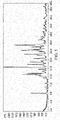
- FIG. 1 provides a representative X-ray Powder Diffraction ("XRPD") pattern of Form A of Compound A.
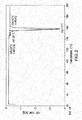
- FIG. 2 provides a representative Differential Scanning Calorimetry ("DSC") plot of Form A of Compound A.
- FIG. 3 provides a representative Thermal Gravimetric Analysis ("TGA”) plot of Form A of Compound A.
- FIG. 5 provides a representative XRPD pattern of Form B of Compound A.
- FIG. 6 provides a representative DSC plot of Form B of Compound A.
- FIG. 7 provides a representative TGA plot of Form B of Compound A.
- FIG. 8 provides a representative DVS plot of Form B of Compound A.
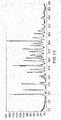
- FIG. 9 provides a representative XRPD pattern of Form C of Compound A.
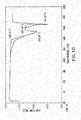
- FIG. 10 provides a representative DSC plot of Form C of Compound A.
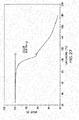
- FIG. 11 provides a representative TGA plot of Form C of Compound A.
- FIG. 13 provides a representative XRPD pattern of Form D of Compound A.
- FIG. 14 provides a representative DSC plot of Form D of Compound A.
- FIG. 15 provides a representative TGA plot of Form D of Compound A.
- FIG. 16 provides a representative DVS plot of Form D of Compound A.
- FIG. 17 provides a representative XRPD pattern of Form E of Compound A.
- FIG. 18 provides a representative DSC plot of Form E of Compound A.
- FIG. 19 provides a representative TGA plot of Form E of Compound A.
- FIG. 20 provides a representative DVS plot of Form E of Compound A.
- FIG. 21 provides a representative XRPD pattern of Form F of Compound A.
- FIG. 23 provides a representative TGA plot of Form F of Compound A.
- FIG. 24 provides a representative DVS plot of Form F of Compound A.
- FIG. 25 provides a representative XRPD of Form G of Compound A.
- FIG. 26 provides a representative DSC plot of Form G of Compound A.
- FIG. 27 provides a representative TGA plot of Form G of Compound A.
- FIG. 28 provides a representative DVS plot of Form G of Compound A.
- FIG. 29 illustrates a preparation of the (+) enantiomer of 2-[1-(3-Ethoxy-4-methoxyphenyl)-2-methylsulfonylethyl]-4-acetylaminoisoindoline-1,3-dione.
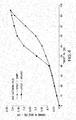
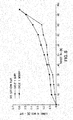
- FIG. 30 illustrates the effect of Compound A on LPS-induced neutrophilia in the lungs of conscious ferrets.
- FIG. 31 illustrates the percent change in epidermal thickness among all 15 subjects at Day 29 in a clinical study evaluating Compound A in patients with severe plaque-type psoriasis.
- FIG. 32 illustrates the change in mean iNOS (normalized to hARP) in biopsy specimens of lesional skin at Day 29 in a clinical study evaluating Compound A in patients with severe plaque-type psoriasis.
- FIG. 33 illustrates the percentage change in total Psoriasis Area and Severity Index (PASI) score among evaluable patients from baseline at Day 29 in a clinical study evaluating Compound A in patients with severe plaque-type psoriasis.
- PASI Psoriasis Area and Severity Index
- Compound A refers to enantiomerically pure (+)-2-[1-(3-ethoxy-4-methoxyphenyl)-2-methylsulfonylethyl]-4-acetylaminoisoindoline-1,3-dione which comes off of an HPLC column at about 25.4 minutes when that column is a 150 mm x 4.6 mm Ultron Chiral ES-OVS chiral HPLC column (Agilent Technology), the eluent is 15:85 ethanol: 20 mM KH 2 PO 4 at pH 3.5, and the observation wavelength is 240 nm.
- the 1 H NMR spectrum of Compound A is substantially as follows: ⁇ (CDCl 3 ); 1.47 (t, 3H); 2.26 (s, 3H); 2.87 (s, 3H); 3.68-3.75 (dd, 1H); 3.85 (s, 3H); 4.07-4.15 (q, 2H); 4.51-4.61 (dd, 1H); 5.84-5.90 (dd, 1H); 6.82-8.77 (m, 6H); 9.46 (s, 1H).
- the term "patient” refers to a mammal, particularly a human.
- prodrug means a derivative of a compound that can hydrolyze, oxidize, or otherwise react under biological conditions (in vitro or in vivo ) to provide the compound.
- prodrugs include, but are not limited to, derivatives and metabolites of Compound A that include biohydrolyzable moieties such as biohydrolyzable amides, biohydrolyzable esters, biohydrolyzable carbamates, biohydrolyzable carbonates, biohydrolyzable ureides, and biohydrolyzable phosphate analogues.
- Prodrugs can typically be prepared using well-known methods, such as those described by 1 Burger's Medicinal Chemistry and Drug Discovery, 172-178, 949-982 (Manfred E. Wolff ed., 5th ed. 1995 ).
- biohydrolyzable amide means an amide, ester, carbamate, carbonate, ureide, or phosphate, respectively, of a compound that either: 1) does not interfere with the biological activity of the compound but can confer upon that compound advantageous properties in vivo, such as uptake, duration of action, or onset of action; or 2) is biologically inactive but is converted in vivo to the biologically active compound.
- biohydrolyzable esters include, but are not limited to, lower alkyl esters, alkoxyacyloxy esters, alkyl acylamino alkyl esters, and choline esters.
- biohydrolyzable amides include, but are not limited to, lower alkyl amides, ⁇ -amino acid amides, alkoxyacyl amides, and alkylaminoalkylcarbonyl amides.
- biohydrolyzable carbamates include, but are not limited to, lower alkylamines, substituted ethylenediamines, aminoacids, hydroxyalkylamines, heterocyclic and heteroaromatic amines, and polyether amines.
- stereomerically pure means a composition that comprises one stereoisomer of a compound and is substantially free of other stereoisomers of that compound.
- a stereomerically pure composition of a compound having one chiral center will be substantially free of the opposite enantiomer of the compound.
- a stereomerically pure composition of a compound having two chiral centers will be substantially free of other diastereomers of the compound.
- a typical stereomerically pure compound comprises greater than about 80% by weight of one stereoisomer of the compound and less than about 20% by weight of other stereoisomers of the compound, more preferably greater than about 90% by weight of one stereoisomer of the compound and less than about 10% by weight of the other stereoisomers of the compound, even more preferably greater than about 95% by weight of one stereoisomer of the compound and less than about 5% by weight of the other stereoisomers of the compound, and most preferably greater than about 97% by weight of one stereoisomer of the compound and less than about 3% by weight of the other stereoisomers of the compound.
- enantiomerically pure means a stereomerically pure composition of a compound having one chiral center.
- adverse effects includes, but is not limited to gastrointestinal, renal and hepatic toxicities, leukopenia, increases in bleeding times due to, e.g., thrombocytopenia, and prolongation of gestation, nausea, vomiting, somnolence, asthenia, dizziness, teratogenicity, extra-pyramidal symptoms, akathisia, cardiotoxicity including cardiovascular disturbances, inflammation, male sexual dysfunction, and elevated serum liver enzyme levels.
- gastrointestinal toxicities includes but is not limited to gastric and intestinal ulcerations and erosions.
- renal toxicities includes but is not limited to such conditions as papillary necrosis and chronic interstitial nephritis.
- a “multiple-component” solid form comprising Compound A comprises a significant quantity of one or more additional species, such as ions and/or molecules, within the solid form.
- a crystalline multiple-component solid form comprising Compound A further comprises one or more species non-covalently bonded at regular positions in the crystal lattice.
- Multiple-component solid forms comprising Compound A include co-crystals, solvates (e.g., hydrates), and clathrates of Compound A.
- the term "solid form comprising Compound A” and related terms include single-component and multiple-component solid forms comprising Compound A.
- solid forms comprising Compound A" and related terms include crystal forms comprising Compound A, amorphous forms comprising Compound A, and mixtures thereof.
- crystalline and related terms used herein, when used to describe a compound, substance, modification, material, component or product, unless otherwise specified, mean that the compound, substance, modification, material, component or product is substantially crystalline as determined by X-ray diffraction. See, e.g., Remington: The Science and Practice of Pharmacy. 21st edition, Lippincott, Williams and Wilkins, Baltimore, MD (2005 ); The United States Pharmacopeia, 23rd ed., 1843-1844 (1995 ).
- crystal forms As used herein and unless otherwise specified, the term "crystal forms,” “crystalline forms” and related terms herein refer to solid forms that are crystalline. Crystal forms include single-component crystal forms and multiple-component crystal forms, and include, but are not limited to, polymorphs, solvates, hydrates, and/or other molecular complexes. In certain embodiments, a crystal form of a substance may be substantially free of amorphous forms and/or other crystal forms.
- solvate and “solvated,” refer to a crystal form of a substance which contains solvent.
- hydrate and “hydrated” refer to a solvate wherein the solvent comprises water.
- Polymorphs of solvates refers to the existence of more than one crystal form for a particular solvate composition.
- polymorphs of hydrates refers to the existence of more than one crystal form for a particular hydrate composition.
- desolvated solvate refers to a crystal form of a substance which may be prepared by removing the solvent from a solvate.
- Techniques for characterizing crystal forms and amorphous forms include, but are not limited to, thermal gravimetric analysis (TGA), differential scanning calorimetry (DSC), X-ray powder diffractometry (XRPD), single-crystal X-ray diffractometry, vibrational spectroscopy, e.g ., infrared (IR) and Raman spectroscopy, solid-state and solution nuclear magnetic resonance (NMR) spectroscopy, optical microscopy, hot stage optical microscopy, scanning electron microscopy (SEM), electron crystallography and quantitative analysis, particle size analysis (PSA), surface area analysis, solubility measurements, dissolution measurements, elemental analysis and Karl Fischer analysis.
- TGA thermal gravimetric analysis
- DSC differential scanning calorimetry
- XRPD X-ray powder diffractometry
- IR infrared
- Raman spectroscopy solid-state and solution nuclear magnetic resonance (NMR) spectroscopy
- optical microscopy hot stage optical microscopy
- SEM scanning
- Characteristic unit cell parameters may be determined using one or more techniques such as, but not limited to, X-ray diffraction and neutron diffraction, including single-crystal diffraction and powder diffraction.
- Techniques useful for analyzing powder diffraction data include profile refinement, such as Rietveld refinement, which may be used, e.g., to analyze diffraction peaks associated with a single phase in a sample comprising more than one solid phase.
- Other methods useful for analyzing powder diffraction data include unit cell indexing, which allows one of skill in the art to determine unit cell parameters from a sample comprising crystalline powder.
- the terms “about” and “approximately,” when used in connection with a numeric value or a range of values which is provided to characterize a particular solid form e.g., a specific temperature or temperature range, such as, e.g., that describing a DSC or TGA thermal event, including, e.g., melting, dehydration, desolvation or glass transition events; a mass change, such as, e.g., a mass change as a function of temperature or humidity; a solvent or water content, in terms of, e.g., mass or a percentage; or a peak position, such as, e.g., in analysis by IR or Raman spectroscopy or XRPD; indicate that the value or range of values may deviate to an extent deemed reasonable to one of ordinary skill in the art while still describing the particular solid form.
- a sample comprising a particular crystal form or amorphous form that is "substantially pure,” e.g., substantially free of other solid forms and/or of other chemical compounds, contains, in particular embodiments, less than about 25%, 20%, 15%, 10%, 9%, 8%, 7%, 6%, 5%, 4%, 3%, 2%, 1%, 0.75%, 0.5%, 0.25% or 0.1% percent by weight of one or more other solid forms and/or of other chemical compounds.
- the terms “treat,” “treating” and “treatment” refer to the eradication or amelioration of a disease or disorder, or of one or more symptoms associated with the disease or disorder. In certain embodiments, the terms refer to minimizing the spread or worsening of the disease or disorder resulting from the administration of one or more prophylactic or therapeutic agents to a patient with such a disease or disorder. In some embodiments, the terms refer to the administration of a compound provided herein, with or without other additional active agent, after the onset of symptoms of the particular disease.
- the terms “prevent,” “preventing” and “prevention” refer to the prevention of the onset, recurrence or spread of a disease or disorder, or of one or more symptoms thereof.
- the terms refer to the treatment with or administration of a compound provided herein, with or without other additional active compound, prior to the onset of symptoms, particularly to patients at risk of diseases or disorders provided herein.
- the terms encompass the inhibition or reduction of a symptom of the particular disease.
- Patients with familial history of a disease in particular are candidates for preventive regimens in certain embodiments.
- patients who have a history af recurring symptoms are also potential candidates for the prevention.
- the term “prevention” may be interchangeably used with the term “prophylactic treatment.”
- the terms “manage,” “managing” and “management” refer to preventing or slowing the progression, spread or worsening of a disease or disorder, or of one or more symptoms thereof. Often, the beneficial effects that a patient derives from a prophylactic and/or therapeutic agent do not result in a cure of the disease or disorder. In this regard, the term “managing” encompasses treating a patient who had suffered from the particular disease in an attempt to prevent or minimize the recurrence of the disease.
- a "therapeutically effective amount" of a compound is an amount sufficient to provide a therapeutic benefit in the treatment or management of a disease or disorder, or to delay or minimize one or more symptoms associated with the disease or disorder.
- a therapeutically effective amount of a compound means an amount of therapeutic agent, alone or in combination with other therapies, which provides a therapeutic benefit in the treatment or management of the disease or disorder.
- the term "therapeutically effective amount” can encompass an amount that improves overall therapy, reduces or avoids symptoms or causes of disease or disorder, or enhances the therapeutic efficacy of another therapeutic agent.
- a prophylactically effective amount of a compound is an amount sufficient to prevent a disease or disorder, or prevent its recurrence.
- a prophylactically effective amount of a compound means an amount of therapeutic agent, alone or in combination with other agents, which provides a prophylactic benefit in the prevention of the disease.
- the term “prophylactically effective amount” can encompass an amount that improves overall prophylaxis or enhances the prophylactic efficacy of another prophylactic agent.
- composition as used herein is intended to encompass a product comprising the specified ingredients (and in the specified amounts, if indicated), as well as any product which results, directly or indirectly, from combination of the specified ingredients in the specified amounts.
- pharmaceutically acceptable it is meant that the diluent, excipient or carrier must be compatible with the other ingredients of the formulation and not deleterious to the recipient thereof.
- This invention relates to stereomerically pure Compound A, which is the (+) enantiomer of 2-[1-(3-Ethoxy-4-methoxyphenyl)-2-methylsulfonylethyl]-4-acetylaminoisoindoline-1,3-dione, substantially free of its (-) enantiomer, as well as novel methods of using, and compositions comprising, stereomerically pure Compound A and/or solid forms comprising Compound A.
- the present invention encompasses the in vitro and in vivo use of Compound A, and the incorporation of Compound A into pharmaceutical compositions and single unit dosage forms useful in the treatment and prevention of a variety of diseases and disorders.
- TNF- ⁇ or inhibition of PDE4 Diseases and disorders which are ameliorated by the reduction of levels of TNF- ⁇ or inhibition of PDE4 are well known in the art and are described herein. Specific methods of the invention reduce or avoid the adverse effects associated with compounds used as TNF- ⁇ inhibitor. Other specific methods of the invention reduce or avoid the adverse effects associated with use of racemic 2-[1-(3-Ethoxy-4-methoxyphenyl)-2-methylsulfonylethyl]-4-acetylaminoisoindoline-1,3-dione.
- Specific methods of the invention include methods of treating or preventing diseases and disorders including, but not limited to, solid tumors, blood-borne tumors and inflammatory diseases.
- compositions of the invention which comprise Compound A or a pharmaceutically acceptable polymorph, prodrug, clathrate, solvate or hydrate thereof (wherein particular embodiments encompass solid forms comprising Compound A as described herein) can be used in the methods of the invention.
- a first embodiment of the invention relates to a method of inhibiting TNF- ⁇ production which comprises contacting a cell exhibiting abnormal TNF- ⁇ production with an effective amount of stereomerically pure Compound A or a pharmaceutically acceptable prodrug, metabolite, polymorph, solvate, hydrate, or clathrate thereof (wherein particular embodiments encompass solid forms comprising Compound A as described herein).
- the invention relates to a method of inhibiting TNF- ⁇ production which comprises contacting a mammalian cell exhibiting abnormal TNF- ⁇ production with an effective amount of stereomerically pure Compound A or a pharmaceutically acceptable prodrug, metabolite, polymorph, solvate, hydrate, or clathrate thereof (wherein particular embodiments encompass solid forms comprising Compound A as described herein).
- the invention also relates to a method of treating, preventing or managing disorders ameliorated by the reduction of levels of TNF- ⁇ in a patient which comprises administering to a patient in need of such treatment or prevention a therapeutically or prophylactically effective amount of stereomerically pure Compound A or a pharmaceutically acceptable prodrug, metabolite, polymorph, solvate, hydrate, or clathrate thereof (wherein particular embodiments encompass solid forms comprising Compound A as described herein).
- diseases or disorders ameliorated by the inhibition of TNF- ⁇ production in mammals include, but are not limited to: HIV; hepatitis; adult respiratory distress syndrome; bone resorption diseases; chronic obstructive pulmonary diseases; chronic pulmonary inflammatory diseases; asthma; dermatitis; cystic fibrosis; septic shock; sepsis; endotoxic shock; hemodynamic shock; sepsis syndrome; post ischemic reperfusion injury; meningitis; psoriasis; fibrotic disease; cachexia; graft rejection; auto immune disease; rheumatoid spondylitis; arthritic conditions, such as psoriatic arthritis, rheumatoid arthritis and osteoarthritis; osteoporosis; Crohn's disease; ulcerative colitis; inflammatory bowel disease; multiple sclerosis; systemic lupus erythematosus; cutaneous lupus erythematosus; pulmonary sarcoidosis; erythe
- Such disorders further include, but are not limited to, cancers, including, but not limited to cancer of the head, thyroid, neck, eye, skin, mouth, throat, esophagus, chest, bone, blood, bone marrow, lung, colon, sigmoid, rectum, stomach, prostate, breast, ovaries, kidney, liver, pancreas, brain, intestine, heart, adrenal, subcutaneous tissue, lymph nodes, heart, and combinations thereof.
- cancers including, but not limited to cancer of the head, thyroid, neck, eye, skin, mouth, throat, esophagus, chest, bone, blood, bone marrow, lung, colon, sigmoid, rectum, stomach, prostate, breast, ovaries, kidney, liver, pancreas, brain, intestine, heart, adrenal, subcutaneous tissue, lymph nodes, heart, and combinations thereof.
- Specific cancers that can be treated by this method are multiple myeloma, malignant melanoma, malignant glioma, leukemia and solid
- a further embodiment of the invention relates to a method of treating or preventing cancer, including but not limited to, solid tumor, blood-borne tumor, leukemias, and in particular, multiple myeloma in a patient which comprises administering to a patient in need of such treatment or prevention a therapeutically effective amount of stereomerically pure Compound A or a pharmaceutically acceptable prodrug, metabolite, polymorph, solvate, hydrate, or clathrate thereof (wherein particular embodiments encompass solid forms comprising Compound A as described herein); in particular wherein the patient is a mammal.
- the invention in another embodiment, relates to a method of inhibiting PDE4 which comprises contacting PDE4 in a cell (e.g. a mammalian cell) with an effective amount of stereomerically pure Compound A or a pharmaceutically acceptable prodrug, metabolite, polymorph, solvate, hydrate, or clathrate thereof (wherein particular embodiments encompass solid forms comprising Compound A as described herein).
- a cell e.g. a mammalian cell
- a pharmaceutically acceptable prodrug, metabolite, polymorph, solvate, hydrate, or clathrate thereof wherein particular embodiments encompass solid forms comprising Compound A as described herein.
- a further embodiment of the invention relates to a method of treating or preventing diseases or disorders ameliorated by the inhibition of PDE4 in a patient which comprises administering to a patient in need of such treatment or prevention a therapeutically or prophylactically effective amount of stereomerically pure Compound A or a pharmaceutically acceptable prodrug, metabolite, polymorph, solvate, hydrate, or clathrate thereof (wherein particular embodiments encompass solid forms comprising Compound A as described herein).
- Disorders ameliorated by the inhibition of PDE4 include, but are not limited to, asthma, inflammation (e.g., inflammation due to reperfusion), chronic or acute obstructive pulmonary diseases, chronic or acute pulmonary inflammatory diseases, inflammatory bowel disease, Crohn's Disease, Behcet's Disease, or colitis.
- the invention in another embodiment, relates to a method of controlling cAMP levels in a cell which comprises contacting a cell with an effective amount of stereomerically pure Compound A or a pharmaceutically acceptable prodrug, metabolite, polymorph, solvate, hydrate, or clathrate thereof (wherein particular embodiments encompass solid forms comprising Compound A as described herein).
- controlling cAMP levels includes preventing or reducing the rate of the breakdown of Adenosine 3',5'-cyclic monophosphate (cAMP) in a cell or increasing the amount of Adenosine 3',5'-cyclic monophosphate present in a cell, preferably a mammalian cell, more preferably a human cell.
- the rate of cAMP breakdown is reduced by about 14, 25, 50, 100, 200, or 500 percent as compared to the rate in comparable cells which have not been contacted with a compound of the invention.
- a further embodiment of the invention relates to a method of treating or preventing depression, asthma, inflammation (e.g., contact dermatitis, atopic dermatitis, psoriasis, rheumatoid arthritis, osteoarthritis, inflammatory skin disease, inflammation due to reperfusion), chronic or acute obstructive pulmonary diseases, chronic or pulmonary inflammatory diseases, inflammatory bowel disease, Crohn's Disease, Behcet's Disease or colitis in a patient which comprises administering to a patient in need of such treatment or prevention a therapeutically or prophylactically effective amount of stereomerically pure Compound A or a pharmaceutically acceptable prodrug, metabolite, polymorph, solvate, hydrate, or clathrate thereof (wherein particular embodiments encompass solid forms comprising Compound A as described herein); in particular wherein the patient is a mammal.
- inflammation e.g., contact dermatitis, atopic dermatitis, psoriasis, rheum
- a separate embodiment of the invention encompasses methods of treating or preventing myelodysplastic syndrome (MDS) which comprises administering to a patient in need of such treatment or prevention a therapeutically or prophylactically effective amount of stereomerically pure Compound A or a pharmaceutically acceptable solvate, hydrate, stereoisomer, clathrate, or prodrug thereof (wherein particular embodiments encompass solid forms comprising Compound A as described herein).
- MDS refers to a diverse group of hematopoietic stem cell disorders. MDS is characterized by a cellular marrow with impaired morphology and maturation (dysmyelopoiesis), peripheral blood cytopenias, and a variable risk of progression to acute leukemia, resulting from ineffective blood cell production. See The Merck Manual 953 (17th ed. 1999 ) and List et al., 1990, J. Clin. Oncol. 8:1424 .
- a separate embodiment of the invention encompasses methods of treating or preventing myeloproliferative disease (MPD) which comprises administering to a patient in need of such treatment or prevention a therapeutically or prophylactically effective amount of stereomerically pure Compound A or a pharmaceutically acceptable solvate, hydrate, stereoisomer, clathrate, or prodrug thereof (wherein particular embodiments encompass solid forms comprising Compound A as described herein).
- MPD myeloproliferative disease refers to a group of disorders characterized by clonal abnormalities of the hematopoietic stem cell. See e.g., Current Medical Diagnosis & Treatment, pp. 499 (37th ed., Tierney et al., ed., Appleton & Lange, 1998 ).
- the invention also encompasses a method of treating, preventing or managing pain, including, but not limited to, complex regional pain syndrome, which comprises administering to a patient in need of such treatment, prevention or management a therapeutically or prophylactically effective amount of a stereomerically pure Compound A or a pharmaceutically acceptable solvate, hydrate, stereoisomer, clathrate, or prodrug thereof (wherein particular embodiments encompass solid forms comprising Compound A as described herein).
- the administration is before, during or after surgery or physical therapy directed at reducing or avoiding a symptom of complex regional pain syndrome in the patient.
- stereomerically pure Compound A or a pharmaceutically acceptable polymorph, prodrug, solvate, hydrate, or clathrate thereof is adjunctively administered with at least one additional therapeutic agent.
- additional therapeutic agents include, but are not limited to, anti-cancer drugs, anti-inflammatories, antihistamines and decongestants.
- Compound A which is the (+) enantiomer of 2-[1-(3-Ethoxy-4-methoxyphenyl)-2-methylsulfonylethyl]-4-acetylaminoisoindoline-1,3-dione, can be prepared according to any method apparent to those of skill in the art, including the methods described in United States Patent No. 6,962,940 , which is incorporated herein by reference.
- Solid forms comprising Compound A include single-component and multiple-component forms, including crystal forms and amorphous forms, and including, but not limited to, polymorphs, solvates, hydrates, co-crystals and clathrates. Particular embodiments herein provide single-component amorphous solid forms of Compound A. Particular embodiments herein provide single-component crystalline solid forms of Compound A. Particular embodiments herein provide multiple-component amorphous forms comprising Compound A. Particular embodiments herein provide multiple-component crystalline solid forms comprising Compound A. Multiple-component solid forms provided herein include solid forms which may be described by the terms salt, co-crystal, hydrate, solvate, clathrate and/or polymorph, and include solid forms which may be described by one or more of these terms.
- Solid forms comprising Compound A can be prepared by the methods described herein, including the methods described in the Examples below, or by techniques known in the art, including heating, cooling, freeze drying, lyophilization, quench cooling the melt, rapid solvent evaporation, slow solvent evaporation, solvent recrystallization, antisolvent addition, slurry recrystallization, crystallization from the melt, desolvation, recrystallization in confined spaces such as, e.g., in nanopores or capillaries, recrystallization on surfaces or templates such as, e.g., on polymers, recrystallization in the presence of additives, such as, e.g., co-crystal counter-molecules, desolvation, dehydration, rapid cooling, slow cooling, exposure to solvent and/or water, drying, including, e.g., vacuum drying, vapor diffusion, sublimation, grinding (including, e.g., cryo-grinding, solvent-drop grinding or liquid assisted grinding), microwave-induced precipitation, sonication-
- the particle size of the resulting solid forms which can vary, ( e.g., from nanometer dimensions to millimeter dimensions), can be controlled, e.g., by varying crystallization conditions, such as, e.g., the rate of crystallization and/or the crystallization solvent system, or by particle-size reduction techniques, e.g., grinding, milling, micronizing or sonication.
- crystallization conditions such as, e.g., the rate of crystallization and/or the crystallization solvent system
- particle-size reduction techniques e.g., grinding, milling, micronizing or sonication.
- certain solid forms are characterized by physical properties, e.g., stability, solubility and dissolution rate, appropriate for pharmaceutical and therapeutic dosage forms.
- certain solid forms are characterized by physical properties (e.g., density, compressibility, hardness, morphology, cleavage, stickiness, solubility, water uptake, electrical properties, thermal behavior, solid-state reactivity, physical stability, and chemical stability) affecting particular processes (e.g., yield, filtration, washing, drying, milling, mixing, tableting, flowability, dissolution, formulation, and lyophilization) which make certain solid forms suitable for the manufacture of a solid dosage form.
- Such properties can be determined using particular analytical chemical techniques, including solid-state analytical techniques (e.g., X-ray diffraction, microscopy, spectroscopy and thermal analysis), as described herein and known in the art.
- compositions comprising one or more of the solid forms. Certain embodiments provide compositions of one or more solid forms in combination with other active ingredients. Certain embodiments provide methods of using these compositions in the treatment, prevention or management of diseases and disorders including, but not limited to, the diseases and disorders provided herein.
- solid forms comprising Compound A In addition to solid forms comprising Compound A, provided herein are solid forms comprising prodrugs of Compound A.
- Solid forms provided herein may also comprise unnatural proportions of atomic isotopes at one or more of the atoms in Compound A.
- the compound may be radiolabeled with radioactive isotopes, such as for example tritium ( 3 H), iodine-125 ( 125 I) sulfur-35 ( 35 S), or carbon-14 ( 14 C).
- Radiolabeled compounds are useful as therapeutic agents, e.g., cancer therapeutic agents, research reagents, e.g., binding assay reagents, and diagnostic agents, e.g., in vivo imaging agents. All isotopic variations of Compound A, whether radioactive or not, are intended to be encompassed within the scope of the embodiments provided herein.
- Form A of Compound A can be obtained from various solvents, including, but not limited to, solvent systems comprising acetone, ethanol, and mixtures thereof. In certain embodiments, Form A can be obtained using a fast cooling crystallization process.
- Form A of Compound A may be characterized by X-ray powder diffraction analysis.
- a representative XRPD pattern of Form A of Compound A is provided in FIG. 1 .
- Form A of Compound A is characterized by XRPD peaks located at one, two, three, four, five, six, seven, eight, nine, ten, eleven or twelve of the following approximate positions: 8.1, 14.4, 15.2, 17.4, 18.4, 19.2, 20.5, 22.8, 23.2 23.6, 24.5, 25.1 degrees 2 ⁇ .
- Form A of Compound A is characterized by an XRPD pattern which matches the pattern exhibited in FIG. 1 .
- Form A of Compound A is characterized by an XRPD pattern having 1, 2, 3, 4, 5, 6, 7, 8, 9, 10, 11, 12, 13, 14, 15, 16, 17, 18, 19, 20, 21, 22, 23, 24 or 25 peaks matching peaks in the representative Form A pattern provided herein.
- Form A of Compound A may be characterized by thermal analysis.
- a representative DSC plot for Form A of Compound A is shown in FIG. 2 .
- Form A is characterized by a DSC plot comprising an endothermic event with an onset temperature of about 145 °C.
- Form A is characterized by a DSC plot further comprising an endothermic event with an onset temperature of about 155 °C.
- a representative TGA plot for Form A of Compound A is shown in FIG. 3 .
- Form A is characterized by a TGA plot comprising a mass loss of less than about 1%, e.g., about 0.05%, of the total mass of the sample upon heating from about 25 °C to about 140°C.
- Form A of Compound A does not contain substantial amounts of either water or other solvent in the crystal lattice.
- Form A is unsolvated.
- Form A is anhydrous.
- Form A of Compound A may be characterized by its stability profile.
- Form A material is stable, e.g., its XRPD pattern remains substantially unchanged, upon exposure to elevated temperature, upon exposure to elevated humidity, upon exposure to one or more solvents, and/or upon compression.
- Form A is stable following exposure to an environment of about 40 °C and about 75% RH environment for about four weeks.
- Form A is stable following exposure to one or more solvent systems comprising, e.g., ethanol, water and/or heptane, at about 40 °C for at least about four weeks.
- Form A converts to Form C of Compound A upon exposure to a solvent including, but not limited to, toluene for four weeks.
- Form A is stable upon compression at about 2000 psi pressure for about one minute.
- Form A of Compound A may be characterized by particle analysis.
- Form A is characterized as a white powder.
- a sample of Form A comprises particles having a plate-like morphology.
- a sample of Form A comprises particles with a D 90 of less than about 18 ⁇ m. (As used herein, the D 90 value represents the 90th percentile of the particle size distribution as measured by length; i.e., 90% of the particles have a length of this value or less).
- Certain embodiments herein provide Form A of Compound A which is substantially pure. Certain embodiments herein provide Form A of Compound A which is substantially free of other solid forms comprising Compound A including, e.g., Forms B, C, D, E, F, G and/or an amorphous solid form comprising Compound A as provided herein. Certain embodiments herein provide Form A as a mixture of solid forms comprising Compound A, including, e.g., a mixture comprising one or more of the following: Forms B, C, D, E, F, G and an amorphous solid form comprising Compound A as provided herein.
- Form B of Compound A can be obtained from various solvents, including, but not limited to, solvent systems comprising 2-propanol, acetone, acetonitrile, ethanol, ethyl acetate, heptane, methanol, methyl ethyl ketone, methyl t-butyl ether, methylene chloride, n-butanol, n-butyl acetate, tetrahydrofuran, toluene, water and mixtures comprising two or more thereof.
- solvent systems comprising 2-propanol, acetone, acetonitrile, ethanol, ethyl acetate, heptane, methanol, methyl ethyl ketone, methyl t-butyl ether, methylene chloride, n-butanol, n-butyl acetate, tetrahydrofuran, toluene, water and mixtures comprising two or more thereof.
- Form B can be obtained by crystallization from a solvent system comprising 1:1 ethanol:water, e.g., by a process comprising evaporation of the 1:1 ethanol:water solvent system at about 25 °C, followed by isolation of Form B.
- Form B can be obtained by crystallization from a solvent system comprising 1:1 acetone:ethanol, e.g., by a process comprising slurrying a solid form comprising Compound A in 1:1 acetone:ethanol at about 25 °C for about 2 days, followed by isolation of Form B.
- Form B of Compound A may be characterized by thermal analysis.
- a representative DSC plot for Form B of Compound A is shown in FIG. 6 .
- Form B is characterized by a DSC plot comprising an endothermic event with an onset temperature of about 154 °C.
- a representative TGA plot for Form B of Compound A is shown in FIG. 7 .
- Form B is characterized by a TGA plot comprising a mass loss of less than about 1%, e.g., about 0.25%, of the total mass of the sample upon heating from about 25 °C to about 140 °C.
- Form B of Compound A does not contain substantial amounts of either water or other solvent in the crystal lattice.
- Form B is anhydrous.
- Form B is unsolvated.
- Form B of Compound A may be characterized by moisture sorption analysis.
- a representative moisture sorption isotherm plot is shown in FIG. 8 .
- Form B when the RH is increased from about 0% to about 95% RH, Form B exhibits a mass change of less than about 1%, e.g., about 0.6%, of the starting mass of the sample.
- mass gained upon adsorption is lost when the RH is decreased back to about 0% RH.
- Form B is substantially nonhygroscopic.
- the XRPD pattern of Form B material is substantially unchanged following the adsorption/desorption analysis.
- Form B is stable with respect to humidity.
- Form B of Compound A may be characterized by its stability profile.
- Form B material is stable, e.g ., its XRPD pattern remains substantially unchanged, upon exposure to elevated temperature, upon exposure to elevated humidity, upon exposure to one or more solvents, and/or upon compression.
- Form B is stable following exposure to an environment of about 40 °C and about 75% RH environment for about four weeks.
- Form B is stable following exposure to a solvent system comprising, e.g., ethanol, water or heptane, at about 40 °C for at least about four weeks.
- Form B converts to Form C of Compound A upon exposure to a solvent system comprising, e.g., toluene for about four weeks. In certain embodiments, Form B is stable following compression at about 2000 psi pressure for about one minute.
- Form B of Compound A may be characterized by particle analysis.
- Form B is characterized as a white powder.
- a sample of Form B comprises particles having a flake-like morphology.
- a sample of Form B comprises particles with a D 90 of less than about 12 ⁇ m.
- Certain embodiments herein provide Form B of Compound A which is substantially pure. Certain embodiments herein provide Form B of Compound A which is substantially free of other solid forms comprising Compound A including, e.g. , Forms A, C, D, E, F, G and/or an amorphous solid form comprising Compound A as provided herein. Certain embodiments herein provide Form B as a mixture of solid forms comprising Compound A, including, e.g., a mixture comprising one or more of the following: Forms A, C, D, E, F, G and an amorphous solid form comprising Compound A as provided herein.
- Form C of Compound A can be obtained from various solvent systems, including, but not limited to, solvent systems comprising acetone, acetonitrile, ethanol, heptane, methanol, methyl ethyl ketone, tetrahydrofuran, toluene, water, and mixtures comprising two or more thereof.
- solvent systems comprising acetone, acetonitrile, ethanol, heptane, methanol, methyl ethyl ketone, tetrahydrofuran, toluene, water, and mixtures comprising two or more thereof.
- Form C can be obtained by crystallization from a solvent system comprising toluene, e.g., by a process comprising the use of toluene as an anti-solvent, followed by isolation of Form C.
- Form C of Compound A may be characterized by X-ray powder diffraction analysis.
- a representative XRPD pattern of Form C of Compound A is provided in FIG. 9 .
- Form C of Compound A is characterized by XRPD peaks located at one, two, three, four, five, six, seven, eight, nine, ten, eleven or twelve of the following approximate positions: 7.5, 11.3, 15.3, 16.4, 17.8, 21.4, 22.6, 23.5, 24.8, 25.5, 26.4, 27.6 degrees 2 ⁇ .
- Form C of Compound A is characterized by an XRPD pattern which matches the pattern exhibited in FIG. 9 .
- Form C of Compound A is characterized by an XRPD pattern having 1, 2, 3, 4, 5, 6, 7, 8, 9, 10, 11, 12, 13, 14, 15, 16, 17, 18, 19, 20, 21, 22, 23, 24 or 25 peaks matching peaks in the representative Form C pattern provided herein.
- Form C of Compound A may be characterized by thermal analysis.
- a representative DSC plot for Form C of Compound A is shown in FIG. 10 .
- Form C is characterized by a DSC plot comprising an endothermic event with an onset temperature of about 138 °C.
- a characteristic Form C DSC plot further comprises one or more additional events, such as, e.g., an endothermic event with an onset temperature of about 166 °C.
- a representative TGA plot for Form C of Compound A is shown in FIG. 11 .
- Form C is characterized by a TGA plot comprising a mass loss of less than about 10%, e.g.
- Form C of Compound A may be characterized by moisture sorption analysis.
- a representative moisture sorption isotherm plot is shown in FIG. 12 .
- Form C when the RH is increased from about 0% to about 95% RH, Form C exhibits a mass change of less than about 1%, e.g., about 0.5%, of the starting mass of the sample.
- mass gained upon adsorption is lost when the RH is decreased back to about 0% RH.
- Form C is substantially nonhygroscopic.
- the XRPD pattern of Form C material is substantially unchanged following the adsorption/desorption analysis.
- Form C is stable with respect to humidity.
- Form C of Compound A may be characterized by particle analysis. In certain embodiments, Form C is characterized as a white powder. In certain embodiments, a sample of Form C comprises particles having a plate-like morphology. In certain embodiments, a sample of Form C comprises particles with a D 90 of less than about 12 ⁇ m.
- Certain embodiments herein provide Form C of Compound A which is substantially pure. Certain embodiments herein provide Form C of Compound A which is substantially free of other solid forms comprising Compound A including, e.g., Forms A, B, D, E, F, G and/or an amorphous solid form comprising Compound A as provided herein. Certain embodiments herein provide Form C as a mixture of solid forms comprising Compound A, including, e.g., a mixture comprising one or more of the following: Forms A, B, D, E, F, G and an amorphous solid form comprising Compound A as provided herein.
- Form D of Compound A can be obtained from various solvents, including, but not limited to, solvent systems comprising methylene chloride.
- Form D can be obtained by crystallization from a solvent system comprising methylene chloride, e.g., by a process comprising the evaporation of methylene chloride, followed by isolation of Form D.
- Form D of Compound A may be characterized by thermal analysis.
- a representative DSC plot for Form D of Compound A is shown in FIG. 14 .
- Form D is characterized by a DSC plot comprising an endothermic event with an onset temperature of about 100 °C.
- a representative TGA plot for Form D of Compound A is shown in FIG. 15 .
- Form D is characterized by a TGA plot comprising a mass loss of less than about 10%, e.g., about 6.5%, of the total mass of the sample upon heating from about 25 °C to about 110 °C.
- the TGA mass loss event comprises the loss of the solvent methylene chloride (i.e.
- Form D of Compound A is solvated.
- Form D is a methylene chloride solvate.
- the crystal lattice of Form D comprises about 2.5 molar equivalents of methylene chloride per mole of Compound A.
- Form D of Compound A may be characterized by moisture sorption analysis.
- a representative moisture sorption isotherm plot is shown in FIG. 16 .
- Form D when the RH is increased from about 0% to about 95% RH, Form D exhibits a mass change of less than about 3%, e.g., about 1.5%, of the starting mass of the sample.
- mass gained upon adsorption is lost when the RH is decreased back to about 0% RH.
- Form D is slightly hygroscopic.
- the XRPD pattern of Form D material is substantially unchanged following the adsorption/desorption analysis.
- Form D is stable with respect to humidity.
- Form D of Compound A may be characterized by its stability profile.
- Form D material is stable, e.g., its XRPD pattern remains substantially unchanged, upon compression.
- Form D is stable following compression at about 2000 psi pressure for about one minute.
- Form D is stable following exposure to an environment of about 40 °C and about 75% RH environment for about four weeks, although, in certain embodiments, the resulting peak intensity of the Form D XRPD pattern is reduced. In certain embodiments, this reduction in XRPD peak intensity results from the formation of amorphous material comprising Compound A.
- Form D converts to Form B of Compound A upon exposure to a solvent system comprising, e.g., heptane, ethanol and/or water at about 40 °C for about four weeks. In certain embodiments, Form D converts to Form C of Compound A upon exposure to a solvent system comprising toluene at about 40 °C for about four weeks.
- Certain embodiments herein provide Form D of Compound A which is substantially pure. Certain embodiments herein provide Form D of Compound A which is substantially free of other solid forms comprising Compound A including, e.g., Forms A, B, C, E, F, G and/or an amorphous solid form comprising Compound A as provided herein. Certain embodiments herein provide Form D as a mixture of solid forms comprising Compound A, including, e.g., a mixture comprising one or more of the following: Forms A, B, C, E, F, G and an amorphous solid form comprising Compound A as provided herein.
- Form E of Compound A can be obtained from various solvents, including, but not limited to, solvent systems comprising acetone, acetonitrile, heptane, methylene chloride, and mixtures comprising two or more thereof.
- Form E can be obtained by crystallization from a solvent system comprising acetonitrile, e.g., by a process comprising the evaporation of acetonitrile, followed by isolation of Form E.
- Form E of Compound A may be characterized by X-ray powder diffraction analysis.
- a representative XRPD pattern of Form E of Compound A is provided in FIG. 17 .
- Form E of Compound A is characterized by XRPD peaks located at one, two, three, four, five, six, seven, eight, nine, ten, eleven or twelve of the following approximate positions: 7.6, 9.2, 11.4, 15.5, 16.5, 17.9, 19.6, 20.5, 21.6, 22.8, 23.8, 26.6 degrees 2 ⁇ .
- Form E of Compound A is characterized by an XRPD pattern which matches the pattern exhibited in FIG. 17 .
- Form E of Compound A is characterized by an XRPD pattern having 1, 2, 3, 4, 5, 6, 7, 8, 9, 10, 11, 12, 13, 14, 15, 16, 17, 18, 19, 20, 21, 22, 23, 24 or 25 peaks matching peaks in the representative Form E pattern provided herein.
- Form E of Compound A may be characterized by thermal analysis.
- a representative DSC plot for Form E of Compound A is shown in FIG. 18 .
- Form E is characterized by a DSC plot comprising an endothermic event with an onset temperature of about 95 °C.
- a representative TGA plot for Form E of Compound A is shown in FIG. 19 .
- Form E is characterized by a TGA plot comprising a mass loss of less than about 8%, e.g., about 4.0%, of the total mass of the sample upon heating from about 25 °C to about 110 °C.
- the TGA mass loss event comprises the loss of the solvent acetonitrile, as indicated, e.g., by TG-IR analysis.
- Form E of Compound A is solvated.
- Form E is an acetonitrile solvate.
- the crystal lattice of Form E comprises about 2.5 molar equivalents of acetonitrile per mole of Compound A.
- Form E of Compound A may be characterized by moisture sorption analysis.
- a representative moisture sorption isotherm plot is shown in FIG. 20 .
- Form E when the RH is increased from about 0% to about 95% RH, Form E exhibits a mass change of less than about 10%, e.g., about 5.1%, of the starting mass of the sample.
- mass gained upon adsorption is lost when the RH is decreased back to about 0% RH.
- Form E is hygroscopic.
- the XRPD pattern of Form E material is substantially unchanged following the adsorption/desorption analysis.
- Form E is stable with respect to humidity.
- Form E of Compound A may be characterized by its stability profile.
- Form E material is stable, e.g ., its XRPD pattern remains substantially unchanged, upon compression.
- Form E is stable following compression at about 2000 psi pressure for about one minute.
- Form E of Compound A may be characterized by particle analysis. In certain embodiments, Form E is characterized as a white powder. In certain embodiments, a sample of Form E comprises particles having a flake-like morphology. In certain embodiments, a sample of Form E comprises particles with a D 90 of less than about 18 ⁇ m.
- Certain embodiments herein provide Form E of Compound A which is substantially pure. Certain embodiments herein provide Form E of Compound A which is substantially free of other solid forms comprising Compound A including, e.g., Forms A, B, C, D, F, G and/or an amorphous solid form comprising Compound A as provided herein. Certain embodiments herein provide Form E as a mixture of solid forms comprising Compound A, including, e.g., a mixture comprising one or more of the following: Forms A, B, C, D, F, G and an amorphous solid form comprising Compound A as provided herein.
- Form F of Compound A can be obtained from various solvents, including, but not limited to, solvent systems comprising acetone, ethanol, water, and mixtures comprising two or more thereof.
- Form F can be obtained by crystallization from a solvent system comprising ethanol and/or water, e.g., by a process comprising contacting a solid form comprising Compound A with a solvent system comprising ethanol and/or water, followed by isolation of Form F.
- Form F of Compound A may be characterized by X-ray powder diffraction analysis.
- a representative XRPD pattern of Form F of Compound A is provided in FIG. 21 .
- Form F of Compound A is characterized by XRPD peaks located at one, two, three, four, five, six, seven, eight, nine, ten, eleven or twelve of the following approximate positions: 8.1, 8.6, 15.6, 17.3, 19.3, 21.4, 22.8, 24.6, 25.4, 25.9, 26.6, 27.7 degrees 2 ⁇ .
- Form F of Compound A is characterized by an XRPD pattern which matches the pattern exhibited in FIG. 21 .
- Form F of Compound A is characterized by an XRPD pattern having 1, 2, 3, 4, 5, 6, 7, 8, 9, 10, 11, 12, 13, 14, 15, 16, 17, 18, 19, 20, 21, 22, 23, 24 or 25 peaks matching peaks in the representative Form F pattern provided herein.
- Form F of Compound A may be characterized by thermal analysis.
- a representative DSC plot for Form F of Compound A is shown in FIG. 22 .
- Form F is characterized by a DSC plot comprising an endothermic event with an onset temperature of about 145 °C.
- a representative TGA plot for Form F of Compound A is shown in FIG. 23 .
- Form F is characterized by a TGA plot comprising a mass loss of less than about 1%, e.g., about 0.1%, of the total mass of the sample upon heating from about 25 °C to about 180 °C.
- Form F of Compound A does not contain substantial amounts of either water or other solvent in the crystal lattice.
- Form F is unsolvated.
- Form F is anhydrous.
- Form F of Compound A may be characterized by moisture sorption analysis.
- a representative moisture sorption isotherm plot is shown in FIG. 24 .
- Form F when the RH is increased from about 0% to about 95% RH, Form F exhibits a mass change of less than about 1%, e.g., about 0.2%, of the starting mass of the sample.
- mass gained upon adsorption is lost when the RH is decreased back to about 0% RH.
- Form F is substantially nonhygroscopic.
- the XRPD pattern of Form F material is substantially unchanged following the adsorption/desorption analysis.
- Form F is stable with respect to humidity.
- Form F of Compound A may be characterized by its stability profile.
- Form F material is stable, e.g., its XRPD pattern remains substantially unchanged, upon compression.
- Form F is stable following compression at about 2000 psi pressure for about one minute.
- Form F is stable following exposure to a solvent system comprising, e.g., ethanol, acetone or mixtures thereof, for about two days at about 25 °C.
- Form F of Compound A may be characterized by particle analysis. In certain embodiments, Form F is characterized as a white powder. In certain embodiments, a sample of Form F comprises particles having a flake-like morphology. In certain embodiments, a sample of Form F comprises particles with a D 90 of less than about 18 ⁇ m.
- Certain embodiments herein provide Form F of Compound A which is substantially pure. Certain embodiments herein provide Form F of Compound A which is substantially free of other solid forms comprising Compound A including, e.g., Forms A, B, C, D, E, G and/or an amorphous solid form comprising Compound A as provided herein. Certain embodiments herein provide Form F as a mixture of solid forms comprising Compound A, including, e.g., a mixture comprising one or more of the following: Forms A, B, C, D, E, G and an amorphous solid form comprising Compound A as provided herein.
- Form G of Compound A can be obtained from various solvents, including, but not limited to, solvent systems comprising ethyl acetate.
- Form G can be obtained by crystallization from a solvent system comprising ethyl acetate, e.g., by a process comprising contacting a solid form comprising Compound A with a solvent system comprising ethyl acetate, followed by isolation of Form G.
- Form G of Compound A may be characterized by X-ray powder diffraction analysis.
- a representative XRPD pattern of Form G of Compound A is provided in FIG. 25 .
- Form G of Compound A is characterized by XRPD peaks located at one, two, three, four, five, six, seven, eight, nine, ten, eleven or twelve of the following approximate positions: 7.9, 9.5, 11.7, 15.7, 16.8, 18.1, 19.7, 21.8, 22.8, 25.1, 25.8, 26.7 degrees 2 ⁇ .
- Form G of Compound A is characterized by an XRPD pattern which matches the pattern exhibited in FIG. 25 .
- Form G of Compound A is characterized by an XRPD pattern having 1, 2, 3, 4, 5, 6, 7, 8, 9, 10, 11, 12, 13, 14, 15, 16, 17, 18, 19, 20, 21, 22, 23, 24 or 25 peaks matching peaks in the representative Form G pattern provided herein.
- Form G of Compound A may be characterized by thermal analysis.
- a representative DSC plot for Form G of Compound A is shown in FIG. 26 .
- Form G is characterized by a DSC plot comprising an endothermic event with an onset temperature of about 109 °C.
- a representative TGA plot for Form G of Compound A is shown in FIG. 27 .
- Form G is characterized by a TGA plot comprising a mass loss of less than about 8%, e.g., about 3.8%, of the total mass of the sample upon heating from about 25 °C to about 110 °C.
- the TGA mass loss event comprises the loss of the solvent ethyl acetate, as indicated, e.g., by TG-IR analysis.
- Form G of Compound A is solvated.
- Form G is an ethyl acetate solvate.
- the crystal lattice of Form G comprises about three molar equivalents of ethyl acetate per mole of Compound A.
- Form G of Compound A may be characterized by moisture sorption analysis.
- a representative moisture sorption isotherm plot is shown in FIG. 28 .
- Form G when the RH is increased from about 0% to about 95% RH, Form G exhibits a mass change of less than about 1%, e.g., about 0.4%, of the starting mass of the sample.
- mass gained upon adsorption is lost when the RH is decreased back to about 0% RH.
- Form G is substantially nonhygroscopic.
- the XRPD pattern of Form G material is substantially unchanged following the adsorption/desorption analysis.
- Form G is stable with respect to humidity.
- Form G of Compound A may be characterized by its stability profile.
- Form G material is stable, e.g., its XRPD pattern remains substantially unchanged, upon compression.
- Form F is stable following compression at about 2000 psi pressure for about one minute.
- Form G converts to Form B upon exposure to a solvent system comprising, e.g., ethanol, acetone or mixtures thereof, for about two days at about 25 °C.
- Form G of Compound A may be characterized by particle analysis. In certain embodiments, Form G is characterized as a white powder. In certain embodiments, a sample of Form G comprises particles having a flake-like morphology. In certain embodiments, a sample of Form G comprises particles with a D 90 of less than about 18 ⁇ m.
- Certain embodiments herein provide Form G of Compound A which is substantially pure. Certain embodiments herein provide Form G of Compound A which is substantially free of other solid forms comprising Compound A including, e.g., Forms A, B, C, D, E, F and/or an amorphous solid form comprising Compound A as provided herein. Certain embodiments herein provide Form G as a mixture of solid forms comprising Compound A, including, e.g., a mixture comprising one or more of the following: Forms A, B, C, D, E, F and an amorphous solid form comprising Compound A as provided herein.
- the invention encompasses methods of treating, preventing and managing diseases or disorders ameliorated by the reduction of levels of TNF- ⁇ in a patient which comprise administering to a patient in need of such treatment, prevention or management a therapeutically or prophylactically effective amount of one or more solid forms comprising Compound A, such as, e.g., Form A of Compound A, Form B of Compound A, Form C of Compound A, Form D of Compound A, Form E of Compound A, Form F of Compound A, Form G of Compound A, or an amorphous form of Compound A, as provided herein.
- Compound A such as, e.g., Form A of Compound A, Form B of Compound A, Form C of Compound A, Form D of Compound A, Form E of Compound A, Form F of Compound A, Form G of Compound A, or an amorphous form of Compound A, as provided herein.
- Specific methods of the invention further comprise the administration of an additional therapeutic agent (i.e., a therapeutic agent other than Compound A).
- additional therapeutic agents include, but are not limited to, anti-cancer drugs such as, but are not limited to: alkylating agents, nitrogen mustards, ethylenimines, methylmetamines, alkyl sulfonates, nitrosoureas, triazenes, folic acid analogs, pyrimidine analogs, purine analogs, vinca alkaloids, epipodophyllotoxins, antibiotics, topoisomerase inhibitors and anti-cancer vaccines.
- anti-cancer drugs such as, but are not limited to: alkylating agents, nitrogen mustards, ethylenimines, methylmetamines, alkyl sulfonates, nitrosoureas, triazenes, folic acid analogs, pyrimidine analogs, purine analogs, vinca alkaloids, epipodophyllotoxins, antibiotic
- Specific additional therapeutic agents include, but are not limited to: acivicin; aclarubicin; acodazole hydrochloride; acronine; adozelesin; aldesleukin; altretamine; ambomycin; ametantrone acetate; aminoglutethimide; amsacrine; anastrozole; anthramycin; asparaginase; asperlin; azacitidine; azetepa; azotomycin; batimastat; benzodepa; bicalutamide; bisantrene hydrochloride; bisnafide dimesylate; bizelesin; bleomycin sulfate; brequinar sodium; bropirimine; busulfan; cactinomycin; calusterone; caracemide; carbetimer; carboplatin; carmustine; carubicin hydrochloride; carzelesin; cedefingol; chlorambucil; cir
- anti-cancer drugs include, but are not limited to: 20-epi-1,25 dihydroxyvitamin D3; 5-ethynyluracil; abiraterone; aclarubicin; acylfulvene; adecypenol; adozelesin; aldesleukin; ALL-TK antagonists; altretamine; ambamustine; amidox; amifostine; aminolevulinic acid; amrubicin; amsacrine; anagrelide; anastrozole; andrographolide; angiogenesis inhibitors; antagonist D; antagonist G; antarelix; anti-dorsalizing morphogenetic protein-1; antiandrogen, prostatic carcinoma; antiestrogen; antineoplaston; antisense oligonucleotides; aphidicolin glycinate; apoptosis gene modulators; apoptosis regulators; apurinic acid; ara-CDP-DL-PTBA;
- Embodiments herein further encompass a method of treating or preventing diseases or disorders ameliorated by the inhibition of PDE4 in a patient which comprise administering to a patient in need of such treatment or prevention one or more solid forms comprising Compound A.
- Disorders ameliorated by the inhibition of PDE4 include, but are not limited to, asthma, inflammation, chronic or acute obstructive pulmonary disease, chronic or acute pulmonary inflammatory disease, inflammatory bowel disease, Crohn's Disease, Behcet's Disease, colitis, ulcerative colitis and arthritis or inflammation due to reperfusion.
- the disease or disorder to be treated or prevented is chronic obstructive pulmonary disease.
- Specific methods of the invention can comprise the administration of an additional therapeutic agent such as, but not limited to, anti-inflammatory drugs, antihistamines and decongestants.
- additional therapeutic agents include, but are not limited to: antihistamines including, but not limited to, ethanolamines, ethylenediamines, piperazines, and phenothiazines; antinflammatory drugs; NSAIDS, including, but not limited to, aspirin, salicylates, acetominophen, indomethacin, sulindac, etodolac, fenamates, tolmetin, ketorolac, diclofenac, ibuprofen, naproxen, fenoprofen, ketoprofen, flurbiprofen, oxaprozin, piroxicam, meloxicam, pyrazolon derivatives; and steriods including, but not limited to, cortical steroids and adrenocortical steroids.
- Solid forms comprising Compound A may further provide an overall improved therapeutic effectiveness, or therapeutic index, over racemic 2-[1-(3-Ethoxy-4-methoxyphenyl)-2-methylsulfonylethyl]-4-acetylaminoisoindoline-1,3-dione, including solid forms thereof.
- certain solid forms comprising Compound A may be used in the treatment or prevention of a wide range of diseases and conditions.
- the magnitude of a prophylactic or therapeutic dose of a particular active ingredient of the invention in the acute or chronic management of a disease or condition may vary with the nature and severity of the disease or condition and the route by which the active ingredient is administered.
- the dose, and perhaps the dose frequency, will also vary according to the age, body weight, and response of the individual patient. Suitable dosing regimens can be readily selected by those skilled in the art with due consideration of such factors.
- the recommended daily dose range for the conditions described herein lie within the range of from about 1 mg to about 1,000 mg per day, given as a single once-a-day dose preferably as divided doses throughout a day.
- the daily dose is administered twice daily in equally divided doses.
- a daily dose range may be from about 5 mg to about 500 mg per day, more specifically, between about 10 mg and about 200 mg per day.
- the daily dose may be administered in 5 mg, 10 mg, 15 mg, 20 mg, 25 mg, 50 mg, or 100 mg dosage forms.
- the therapy should be initiated at a lower dose, perhaps about 1 mg to about 25 mg, and increased if necessary up to about 200 mg to about 1,000 mg per day as either a single dose or divided doses, depending on the patient's global response.
- the daily dose is from 0.01 mg/kg to 100 mg/kg.
- therapeutically effective amount encompasses the above described dosage amounts and dose frequency schedules. Different therapeutically effective amounts may be applicable for different diseases and conditions, as will be readily known by those of ordinary skill in the art. Similarly, amounts sufficient to treat or prevent such disorders, but insufficient to cause, or sufficient to reduce, adverse effects associated with racemic 2-[1-(3-ethoxy-4-methoxyphenyl)-2-methylsulfonylethyl]-4-acetylaminoisoindoline-1,3-dione are also encompassed by the above described dosage amounts and dose frequency schedules.
- compositions and single unit dosage forms comprising one or more solid forms comprising Compound A are provided herein. Also provided herein are methods for preparing pharmaceutical compositions and single unit dosage forms comprising one or more solid forms comprising Compound A.
- individual dosage forms comprising a solid form provided herein or prepared using solid form provided herein may be suitable for oral, mucosal (including rectal, nasal, or vaginal), parenteral (including subcutaneous, intramuscular, bolus injection, intraarterial, or intravenous), sublingual, transdermal, buccal, or topical administration.
- compositions and dosage forms comprising a solid form comprising Compound A, such as, e.g., Forms A, B, C, D, E, F, G or an amorphous solid form comprising Compound A as provided herein, which is substantially free of other solid forms comprising Compound A including, e.g., Forms A, B, C, D, E, F, G and/or an amorphous solid form comprising Compound A as provided herein.
- compositions and dosage forms comprising a mixture of solid forms comprising Compound A, including, e.g., a mixture comprising one or more of the following: Forms A, B, C, D, E, F and an amorphous solid form comprising Compound A as provided herein.
- Pharmaceutical compositions and dosage forms provided herein typically also comprise one or more pharmaceutically acceptable excipient, diluent or carrier.
- a particular pharmaceutical composition encompassed by this embodiment comprises one or more solid forms comprising Compound A and at least one additional therapeutic agent.
- additional therapeutic agents include, but are not limited to: anti-cancer drugs and anti-inflammation therapies including, but not limited to, those provided herein.
- Single unit dosage forms of the invention are suitable for oral, mucosal (e.g., nasal, sublingual, vaginal, buccal, or rectal), parenteral (e.g., subcutaneous, intravenous, bolus injection, intramuscular, or intraarterial), or transdermal administration to a patient.
- parenteral e.g., subcutaneous, intravenous, bolus injection, intramuscular, or intraarterial
- transdermal administration to a patient.
- dosage forms include, but are not limited to:
- composition, shape, and type of dosage forms of the invention will typically vary depending on their use.
- a dosage form used in the acute treatment of inflammation or a related disorder may contain larger amounts of one or more of the active ingredients it comprises than a dosage form used in the chronic treatment of the same disease.
- a parenteral dosage form may contain smaller amounts of one or more of the active ingredients it comprises than an oral dosage form used to treat the same disease or disorder.
- Typical pharmaceutical compositions and dosage forms comprise one or more excipients.
- Suitable excipients are well known to those skilled in the art of pharmacy, and non-limiting examples of suitable excipients are provided herein. Whether a particular excipient is suitable for incorporation into a pharmaceutical composition or dosage form depends on a variety of factors well known in the art including, but not limited to, the way in which the dosage form will be administered to a patient.
- oral dosage forms such as tablets may contain excipients not suited for use in parenteral dosage forms. The suitability of a particular excipient may also depend on the specific active ingredients in the dosage form.
- Lactose-free compositions of the invention can comprise excipients that are well known in the art and are listed, for example, in the U.S. Pharmocopia (USP) SP (XXI)/NF (XVI).
- USP U.S. Pharmocopia
- lactose-free compositions comprise an active ingredient, a binder/filler, and a lubricant in pharmaceutically compatible and pharmaceutically acceptable amounts.
- Preferred lactose-free dosage forms comprise an active ingredient, microcrystalline cellulose, pre-gelatinized starch, and magnesium stearate.
- This invention further encompasses anhydrous pharmaceutical compositions and dosage forms comprising active ingredients, since water can facilitate the degradation of some compounds.
- water e.g., 5%
- water is widely accepted in the pharmaceutical arts as a means of simulating long-term storage in order to determine characteristics such as shelf-life or the stability of formulations over time. See, e.g ., Jens T. Carstensen, Drum Stability: Principles & Practice, 2d. Ed., Marcel Dekker, NY, NY, 1995, pp. 379-80 .
- water and heat accelerate the decomposition of some compounds.
- the effect of water on a formulation can be of great significance since moisture and/or humidity are commonly encountered during manufacture, handling, packaging, storage, shipment, and use of formulations.
- Anhydrous pharmaceutical compositions and dosage forms of the invention can be prepared using anhydrous or low moisture containing ingredients and low moisture or low humidity conditions.
- Pharmaceutical compositions and dosage forms that comprise lactose and at least one active ingredient that comprises a primary or secondary amine are preferably anhydrous if substantial contact with moisture and/or humidity during manufacturing, packaging, and/or storage is expected.
- compositions and dosage forms that comprise one or more compounds that reduce the rate by which an active ingredient will decompose.
- compounds which are referred to herein as “stabilizers,” include, but are not limited to, antioxidants such as ascorbic acid, pH buffers, or salt buffers.
- the amounts and specific types of active ingredients in a dosage form may differ depending on factors such as, but not limited to, the route by which it is to be administered to patients.
- typical dosage forms provided herein lie within the range of from about 1 mg to about 1,000 mg per day, given as a single once-a-day dose in the morning but preferably as divided doses throughout the day. More specifically, the daily dose is administered twice daily in equally divided doses.
- a daily dose range may be from about 5 mg to about 500 mg per day, more specifically, between about 10 mg and about 200 mg per day.
- the therapy may be initiated at a lower dose, perhaps about 1 mg to about 25 mg, and increased if necessary up to about 200 mg to about 1,000 mg per day as either a single dose or divided doses, depending on the patient's global response.
- compositions of the invention that are suitable for oral administration can be presented as discrete dosage forms, such as, but are not limited to, tablets (e.g., chewable tablets), caplets, capsules, and liquids (e.g., flavored syrups).
- dosage forms contain predetermined amounts of active ingredients, and may be prepared by methods of pharmacy well known to those skilled in the art. See generally Remington's Pharmaceutical Sciences, 18th ed., Mack Publishing, Easton PA (1990 ).
- Typical oral dosage forms of the invention are prepared by combining the active ingredient(s) in an intimate admixture with at least one excipient according to conventional pharmaceutical compounding techniques.
- Excipients can take a wide variety of forms depending on the form of preparation desired for administration.
- excipients suitable for use in oral liquid or aerosol dosage forms include, but are not limited to, water, glycols, oils, alcohols, flavoring agents, preservatives, and coloring agents.
- excipients suitable for use in solid oral dosage forms include, but are not limited to, starches, sugars, micro-crystalline cellulose, diluents, granulating agents, lubricants, binders, and disintegrating agents.
- tablets and capsules represent the most advantageous oral dosage unit forms, in which case solid excipients are employed. If desired, tablets can be coated by standard aqueous or nonaqueous techniques. Such dosage forms can be prepared by any of the methods of pharmacy. In general, pharmaceutical compositions and dosage forms are prepared by uniformly and intimately admixing the active ingredients with liquid carriers, finely divided solid carriers, or both, and then shaping the product into the desired presentation if necessary.
- a tablet can be prepared by compression or molding.
- Compressed tablets can be prepared by compressing in a suitable machine the active ingredients in a free-flowing form such as powder or granules, optionally mixed with an excipient.
- Molded tablets can be made by molding in a suitable machine a mixture of the powdered compound moistened with an inert liquid diluent.
- excipients that can be used in oral dosage forms of the invention include, but are not limited to, binders, fillers, disintegrants, and lubricants.
- Binders suitable for use in pharmaceutical compositions and dosage forms include, but are not limited to, corn starch, potato starch, or other starches, gelatin, natural and synthetic gums such as acacia, sodium alginate, alginic acid, other alginates, powdered tragacanth, guar gum, cellulose and its derivatives (e.g., ethyl cellulose, cellulose acetate, carboxymethyl cellulose calcium, sodium carboxymethyl cellulose), polyvinyl pyrrolidone, methyl cellulose, pre-gelatinized starch, hydroxypropyl methyl cellulose, (e.g., Nos. 2208, 2906, 2910), microcrystalline cellulose, and mixtures thereof.
- fillers suitable for use in the pharmaceutical compositions and dosage forms disclosed herein include, but are not limited to, talc, calcium carbonate (e.g., granules or powder), microcrystalline cellulose, powdered cellulose, dextrates, kaolin, mannitol, silicic acid, sorbitol, starch, pre-gelatinized starch, and mixtures thereof.
- the binder or filler in pharmaceutical compositions of the invention is typically present in from about 50 to about 99 weight percent of the pharmaceutical composition or dosage form.
- Suitable forms of microcrystalline cellulose include, but are not limited to, the materials sold as AVICEL-PH-101TM, AVICEL-PH-103TM, AVICEL RC-581TM, AVICEL-PH-105TM (available from FMC Corporation, American Viscose Division, Avicel Sales, Marcus Hook, PA), and mixtures thereof.
- a specific binder is a mixture of microcrystalline cellulose and sodium carboxymethyl cellulose sold as AVICEL RC-581TM.
- Suitable anhydrous or low moisture excipients or additives include AVICEL-PH-103TM and Starch 1500 LMTM.
- Disintegrants are used in the compositions of the invention to provide tablets that disintegrate when exposed to an aqueous environment. Tablets that contain too much disintegrant may disintegrate in storage, while those that contain too little may not disintegrate at a desired rate or under the desired conditions. Thus, a sufficient amount of disintegrant that is neither too much nor too little to detrimentally alter the release of the active ingredients should be used to form solid oral dosage forms of the invention.
- the amount of disintegrant used varies based upon the type of formulation, and is readily discernible to those of ordinary skill in the art.
- Typical pharmaceutical compositions comprise from about 0.5 to about 15 weight percent of disintegrant, specifically from about 1 to about 5 weight percent of disintegrant.
- Disintegrants that can be used in pharmaceutical compositions and dosage forms of the invention include, but are not limited to, agar-agar, alginic acid, calcium carbonate, microcrystalline cellulose, croscarmellose sodium, crospovidone, polacrilin potassium, sodium starch glycolate, potato or tapioca starch, pre-gelatinized starch, other starches, clays, other algins, other celluloses, gums, and mixtures thereof.
- Lubricants that can be used in pharmaceutical compositions and dosage forms of the invention include, but are not limited to, calcium stearate, magnesium stearate, mineral oil, light mineral oil, glycerin, sorbitol, mannitol, polyethylene glycol, other glycols, stearic acid, sodium lauryl sulfate, talc, hydrogenated vegetable oil (e.g ., peanut oil, cottonseed oil, sunflower oil, sesame oil, olive oil, corn oil, and soybean oil), zinc stearate, ethyl oleate, ethyl laureate, agar, and mixtures thereof.
- Additional lubricants include, for example, a syloid silica gel (AEROSIL 200TM, manufactured by W.R. Grace Co. of Baltimore, MD), a coagulated aerosol of synthetic silica (marketed by Degussa Co. of Plano, TX), CAB-O-SILTM (a pyrogenic silicon dioxide product sold by Cabot Co. of Boston, MA), and mixtures thereof. If used at all, lubricants are typically used in an amount of less than about one weight percent of the pharmaceutical compositions or dosage forms into which they are incorporated.
- AEROSIL 200TM a syloid silica gel
- a coagulated aerosol of synthetic silica marketed by Degussa Co. of Plano, TX
- CAB-O-SILTM a pyrogenic silicon dioxide product sold by Cabot Co. of Boston, MA
- lubricants are typically used in an amount of less than about one weight percent of the pharmaceutical compositions or dosage forms into which they are incorporated.
- Solid forms comprising Compound A as provided herein can be administered by controlled release means or by delivery devices that are well known to those of ordinary skill in the art. Examples include, but are not limited to, those described in U.S. Patent Nos.: 3,845,770 ; 3,916,899 ; 3,536,809 ; 3,598,123 ; and 4,008,719 , 5,674,533 , 5,059,595 , 5,591,767 , 5,120,548 , 5,073,543 , 5,639,476 , 5,354,556 , and 5,733,566 , each of which is incorporated herein by reference.
- Such dosage forms can be used to provide slow or controlled-release of one or more active ingredients using, for example, hydropropylmethyl cellulose, other polymer matrices, gels, permeable membranes, osmotic systems, multilayer coatings, microparticles, liposomes, microspheres, or a combination thereof to provide the desired release profile in varying proportions.
- Suitable controlled-release formulations known to those of ordinary skill in the art, including those described herein, can be readily selected for use with the active ingredients of the invention.
- the invention thus encompasses single unit dosage forms suitable for oral administration such as, but not limited to, tablets, capsules, gelcaps, and caplets that are adapted for controlled-release.
- controlled-release pharmaceutical products have a common goal of improving drug therapy over that achieved by their non-controlled counterparts.
- the use of an optimally designed controlled-release preparation in medical treatment is characterized by a minimum of drug substance being employed to cure or control the condition in a minimum amount of time.
- Advantages of controlled-release formulations include extended activity of the drug, reduced dosage frequency, and increased patient compliance.
- controlled-release formulations can be used to affect the time of onset of action or other characteristics, such as blood levels of the drug, and can thus affect the occurrence of side ( e.g., adverse) effects.
- Controlled-release formulations are designed to initially release an amount of drug (active ingredient) that promptly produces the desired therapeutic effect, and gradually and continually release of other amounts of drug to maintain this level of therapeutic or prophylactic effect over an extended period of time.
- the drug In order to maintain this constant level of drug in the body, the drug must be released from the dosage form at a rate that will replace the amount of drug being metabolized and excreted from the body.
- Controlled-release of an active ingredient can be stimulated by various conditions including, but not limited to, pH, temperature, enzymes, water, or other physiological conditions or compounds.
- Suitable vehicles that can be used to provide parenteral dosage forms of the invention are well known to those skilled in the art. Examples include, but are not limited to: Water for Injection USP; aqueous vehicles such as, but not limited to, Sodium Chloride Injection, Ringer's Injection, Dextrose Injection, Dextrose and Sodium Chloride Injection, and Lactated Ringer's Injection; water-miscible vehicles such as, but not limited to, ethyl alcohol, polyethylene glycol, and polypropylene glycol; and non-aqueous vehicles such as, but not limited to, corn oil, cottonseed oil, peanut oil, sesame oil, ethyl oleate, isopropyl myristate, and benzyl benzoate.
- water for Injection USP Water for Injection USP
- aqueous vehicles such as, but not limited to, Sodium Chloride Injection, Ringer's Injection, Dextrose Injection, Dextrose and Sodium Chloride
- Transdermal, topical, and mucosal dosage forms of the invention include, but are not limited to, ophthalmic solutions, sprays, aerosols, creams, lotions, ointments, gels, solutions, emulsions, suspensions, or other forms known to one of skill in the art. See, e.g., Remington's Pharmaceutical Sciences, 16th and 18th eds., Mack Publishing, Easton PA (1980 & 1990 ); and Introduction to Pharmaceutical Dosage Forms, 4th ed., Lea & Febiger, Philadelphia (1985 ). Dosage forms suitable for treating mucosal tissues within the oral cavity can be formulated as mouthwashes or as oral gels. Further, transdermal dosage forms include "reservoir type" or "matrix type” patches, which can be applied to the skin and worn for a specific period of time to permit the penetration of a desired amount of active ingredients.
- Suitable excipients e.g., carriers and diluents
- other materials that can be used to provide transdermal, topical, and mucosal dosage forms encompassed by this invention are well known to those skilled in the pharmaceutical arts, and depend on the particular tissue to which a given pharmaceutical composition or dosage form will be applied.
- penetration enhancers can be used to assist in delivering the active ingredients to the tissue.
- Suitable penetration enhancers include, but are not limited to: acetone; various alcohols such as ethanol, oleyl, and tetrahydrofuryl; alkyl sulfoxides such as dimethyl sulfoxide; dimethyl acetamide; dimethyl formamide; polyethylene glycol; pyrrolidones such as polyvinylpyrrolidone; Kollidon grades (Povidone, Polyvidone); urea; and various water-soluble or insoluble sugar esters such as Tween 80TM (polysorbate 80) and Span 60TM (sorbitan monostearate).
- the pH of a pharmaceutical composition or dosage form, or of the tissue to which the pharmaceutical composition or dosage form is applied may also be adjusted to improve delivery of one or more active ingredients.
- the polarity of a solvent carrier, its ionic strength, or tonicity can be adjusted to improve delivery.
- Compounds such as stearates can also be added to pharmaceutical compositions or dosage forms to advantageously alter the hydrophilicity or lipophilicity of one or more active ingredients so as to improve delivery.
- stearates can serve as a lipid vehicle for the formulation, as an emulsifying agent or surfactant, and as a delivery-enhancing or penetration-enhancing agent.
- Different solid forms comprising the active ingredients can be used to further adjust the properties of the resulting composition.
- kits which, when used by the medical practitioner, can simplify the administration of appropriate amounts of active ingredients to a patient.
- a typical kit of the invention comprises a unit dosage form of compound A, or a pharmaceutically acceptable solid form or prodrug thereof, and a unit dosage form of a second active ingredient.
- second active ingredients include, but are not limited to, those listed herein.
- Kits of the invention can further comprise devices that are used to administer the active ingredient(s).
- devices include, but are not limited to, syringes, drip bags, patches, and inhalers.
- Kits of the invention can further comprise pharmaceutically acceptable vehicles that can be used to administer one or more active ingredients.
- the kit can comprise a sealed container of a suitable vehicle in which the active ingredient can be dissolved to form a particulate-free sterile solution that is suitable for parenteral administration.
- Examples of pharmaceutically acceptable vehicles include, but are not limited to: Water for Injection USP; aqueous vehicles such as, but not limited to, Sodium Chloride Injection, Ringer's Injection, Dextrose Injection, Dextrose and Sodium Chloride Injection, and Lactated Ringer's Injection; water-miscible vehicles such as, but not limited to, ethyl alcohol, polyethylene glycol, and polypropylene glycol; and non-aqueous vehicles such as, but not limited to, corn oil, cottonseed oil, peanut oil, sesame oil, ethyl oleate, isopropyl myristate, and benzyl benzoate.
- aqueous vehicles such as, but not limited to, Sodium Chloride Injection, Ringer's Injection, Dextrose Injection, Dextrose and Sodium Chloride Injection, and Lactated Ringer's Injection
- water-miscible vehicles such as, but not limited to, ethyl alcohol
- a 3 L 3-necked round bottom flask was equipped with a mechanical stirrer, thermometer, and condenser and charged with 2-(3-ethoxy-4-methoxyphenyl)-1-(methylsulphonyl)-eth-2-ylamine (137.0 g, 500 mmol), N-acetyl-L-leucine (52 g, 300 mmol), and methanol (1.0 L).
- the stirred slurry was heated to reflux for 1 hour.
- the stirred mixture was allowed to cool to ambient temperature and stirring was continued for another 3 hours at ambient temperature.
- the slurry was filtered and washed with methanol (250 L).
- FIG. 29 A reaction scheme illustrating a preparation of the (+) enantiomer of Compound A is provided as FIG. 29 .
- Lipopolysaccharide is an endotoxin produced by gram-negative bacteria such as E. coli which induces production of many pro-inflammatory cytokines, including TNF- ⁇ .
- cytokines including TNF- ⁇ .
- PBMC peripheral blood mononuclear cells
- the TNF- ⁇ produced in response to LPS is derived from monocytes, which comprise approximately 5-20% of the total PBMC.
- Compounds were tested for the ability to inhibit LPS-induced TNF- ⁇ production from human PBMC as previously described ( Muller et al., 1996, J. Med. Chem., 39:3238 ).
- PBMC from normal donors were obtained by Ficoll Hypaque (Pharmacia, Piscataway, NJ, USA) density centrifugation.
- PBMC peripheral blood mononuclear cells
- TNF- ⁇ production is often stimulated by the cytokine 1L-1 ⁇ , rather than by bacterially derived LPS.
- Compounds were tested for the ability to inhibit IL-1 ⁇ -induced TNF- ⁇ production from human PBMC as described above for LPS-induced TNF- ⁇ production, except that the PBMC were isolated from source leukocyte units (Sera-Tec Biologicals, North Brunswick, NJ, USA) by centrifugation on Ficoll-Paque Plus (Amersham Pharmacia, Piscataway, NJ, USA), plated in 96-well tissue culture plates at 3 x 10 5 cells/well in RPMI-1640 medium (BioWhittaker, Walkersville, Maryland, USA) containing 10% heat-inactivated fetal bovine serum (Hyclone), 2 mM L-glutamine, 100 U/ml penicillin, and 100 mg/ml streptomycin (complete medium), pretreated with compounds at 10, 2, 0.4, 0.08, 0.016, 0.0032,
- PDE7 is a cAMP-selective PDE expressed mainly in T cells and in skeletal muscle. T cell-derived cytokines such as IL-2 and IFN- ⁇ are potentially regulatable via PDE7 inhibition.
- PDE7 was purified from Hut78 human T cells by anion exchange chromatography as previously described ( Bloom and Beavo, 1996, Proc. Natl. Acad. Sci. USA, 93:14188-14192 ). Compounds were tested against the PDE7 preparation in the presence of 10 nM cAMP as described for PDE4 in Table 1.
- PDE4 enzyme was purified from U937 human monocytic cells by gel filtration chromatography as previously described ( Muller et al., 1998, Bioorg. & Med. Chem. Lett. 8:2669-2674 ). Phosphodiesterase reactions were carried out in 50 mM Tris HCl pH 7.5, 5 mM MgCl 2 , 1 ⁇ M cAMP, 10 nM [ 3 H]-cAMP for 30 min at 30°C, terminated by boiling, treated with 1 mg/ml snake venom, and separated using AG-IXS ion exchange resin (BioRad) as described ( Muller et al., 1998, Bioorg. & Med. Chem. Lett.
- AG-IXS ion exchange resin BioRad
- PDE Specificity Racemic Compound Compound A Compound B* PDE Inhibition PDE4 IC 50 (from U937 cells) (nM) 81.8 73.5 611 PDE1 (% inhib at 10 ⁇ M) 9% 23% 27% PDE2(% inhib at 10 ⁇ M) 19% 6% 10% PDE3 (% inhib at 10 ⁇ M) 21% 20% 31% PDE5 (% inhib at 10 ⁇ M) 3% 3% -9% PDE6 (% inhib at 10 ⁇ M) ND -6% 10% PDE7 IC 50 (nM) 22110 20500 ND PDE Specificity Ratios from above data (*fold) PDE4/PDE1 >2700 >500 >50 PDE4/PDE2 >800 >10000 >260 PDE4/PDE3 >670 >1200 >45 PDE4/PDE
- Staphylococcal Enterotoxin B is a superantigen derived from gram-positive bacteria Staphylococcus aureus. SEB provides a convenient physiological stimulus specifc for T cells expressing particular T cell receptor V ⁇ chains.
- Prostaglandin E 2 (PGE 2 ) binds to prostanoid receptors on monocytes, T cells and other leukocytes and consequently elevates intracellular cAMP levels, resulting in inhibition of cellular responses.
- Intracellular cAMP was measured in human PBMC as follows. PBMC were isolated as described above and plated in 96-well plates at 1 x 10 6 cells per well in RPMI-1640.
- the cells were pre-treated with compounds at 100, 10, 1, 0.1, 0.01, and 0 ⁇ M in a final concentration of 2% DMSO in duplicate at 37°C in a humidified incubator at 5% CO 2 for one hour.
- the cells were then stimulated with PGE 2 (10 ⁇ M) (Sigma) for 1h.
- the cells were lysed with HCl, 0.1 N final concentration to inhibit phosphodiesterase activity and the plates were frozen at -20°C.
- the cAMP produced was measured using cAMP (low pH) Immunoassay kit (R&D Systems).
- PBMC cAMP EC 50 for racemate is 3.09 ⁇ M.
- PBMC cAMP EC 50 for Compound A is 1.58 ⁇ M.
- Elevation of cAMP in human neutrophils was measured as follows. PBMC were removed from source leukocytes (Sera-Tec Biologicals) by centrifugation on Ficoll-Paque Plus (Amersham Pharmacia). The resulting erythrocyte/ polymorphonuclear cell (PMN) pellet was resuspended in Hank's Balanced Salt Solution (BioWhittaker) and mixed with an equal volume of 3% Dextran T-500 (Amersham Pharmacia) in 0.9% saline. Erythrocytes were allowed to sediment for 20 minutes, and the PMN were removed and centrifuged at 120 rpm for 8 minutes at 4 °C.
- PMN erythrocyte/ polymorphonuclear cell
- the remaining erythrocytes were lysed in cold 0.2% saline for 30 seconds, and the cells restored to isotonicity by the addition of an equal volume of 1.6% saline.
- the PMN were centrifuged at 1200 rpm for 8 minutes at 4 °C, then resuspended in RPMI-1640 and assayed for cAMP elevation as described for PBMC above.
- PMN were found to be approximately 74% CD18/CD11b + , 71% CD 16 + CD9 + neutrophils by flow cytometzy on a FACSCalibur (Becton Dickinson, San Jose, CA, USA). Results are shown in Table 2.
- N-formyl-methionine-leucine-phenylalanine is a bacterially derived peptide that activates neutrophils to rapidly degranulate, migrate, adhere to endothelial cells, and release leukotriene LTB4, a product of arachidonic acid metabolism and itself a neutrophil chemoattractant.
- LTB4 leukotriene LTB4
- Neutrophils were isolated as described above and resuspended in phosphate-buffered saline without calcium or magnesium (BioWhittaker) containing 10 mM HEPES pH 7.2 and plated in 96-well tissue culture plates at a concentration of 1.7 x 10 6 cells/well.
- Cells were treated with 50 ⁇ M thimerosal (Sigma)/1 mM CaCl 2 /1 mM MgCl 2 for 15 minutes at 37°C 5% CO 2 , then treated with compounds at 1000, 200, 40, 8, 1.6, 0.32, 0.064, and 0 nM in a final DMSO concentration of 0.01% in duplicate for 10 minutes.
- Neutrophils were stimulated with 1 ⁇ M fMLF for 30 minutes, then lysed by the addition of methanol (20% final concentration) and frozen in a dry ice/isopropanol bath for 10 minutes. Lysates were stored at -70°C until the LTB4 content was measured by competitive LTB4 ELISA (R&D Systems). Results are shown in Table 2.
- Zymosan A or the heat-killed yeast Saccharomyces cerevisiae, binds to the adhesion molecule Mac-1 on the neutrophil surface and triggers phagocytosis, cell activation and IL-8 production.
- Zymosan-induced IL-8 production was measured as previously described ( Au et al., 1998, Brit. J. Pharm., 123:1260-1266 ) with the following modifications.
- CD18/CD11b (Mac-1) expression on neutrophils was measured as previously described ( Derian et al., 1995, J. Immunol., 154:308-3 17 ) with the following modifications.
- Neutrophils were isolated as described above, then resuspended in complete medium at 1x10 6 cells/ml, pretreated with compounds at 10, 1, 0.1, 0.01, and 0 ⁇ M in duplicate at a final DMSO concentration of 0.1% for 10 minutes at 37°C 5%CO 2 . Cells were then stimulated with 30 nM fMLF for 30 minutes and then chilled to 4°C.
- HUVEC Human umbilical vein endothelial cells
- the conscious ferret model has been used to investigate anti-inflammatory, emetic and behavioral effects of PDE4 inhibitors when administered by the oral (p.o.) route. From these experiments, a therapeutic index (TI) for each PDE4 inhibitor may be determined. The TI has been calculated by dividing the threshold dose for causing emetic episodes and behavioral changes by the anti-inflammatory dose (dose that causes 50% inhibition of the LPS-induced neutrophilia).
- Ferrets Male ferrets (Mustela Pulorius Euro, weighing 1 - 2 kg). Ferrets were supplied either by Bury Green Farm or Misay Consultancy. Following transport, the animals were allowed to acclimatize in the holding rooms for a period of not less than seven days.
- the diet comprised SDS diet C pelleted food given ad lib with WhiskersTM cat food given three times per week. Water was pasteurized animal grade drinking water and was changed daily.
- PDE4 inhibitors were administered orally (p.o.), at doses initially of 1-10 g/kg, but subsequently up to 30 mg/kg in order to establish whether the TI was 10 or higher, and/or at lower doses to establish the minimum dose to cause 50% inhibition of neutrophilia.
- Ferrets were fasted overnight but allowed free access to water.
- the animals were orally dosed with vehicle or PDE4 inhibitor using a 15 cm dosing needle that was passed down the back of the throat into the oesophagus. After dosing, the animals were returned to holding cages fitted with Perspex doors to allow observation, and given free access to water. After dosing, the animals were constantly observed and any emesis or behavioral changes were recorded. The animals were allowed access to food 60 to 90 minutes after p.o. dosing.
- a terminal blood sample (10 ml) was removed by trans-thoracic cardiac puncture.
- the blood was spun at 2,500 rpm for 15 minutes and the plasma was removed and stored at -20 °C.
- the brain also removed and frozen at -20 °C for analysis of compound content.
- the bronchoalveolar lavage (BAL) samples were centrifuged at 1,500 rpm for 5 minutes. The supernatant was removed and the resulting cell pellet resuspended in 1 ml PBS. A cell smear of the re-suspended fluid was prepared and stained with Leishmans stain to allow differential cell counting. A total cell count was made using the remaining re-suspended sample. From this, the total number of neutrophils in the BAL was determined.
- the TI was calculated as the highest dose found to not cause emetic episodes divided by the lowest dose found to inhibit pulmonary neutrophilia by 50% or more.
- ferrets were observed for at least two hours and emetic episodes (vomits and retches) and behavioral changes were recorded.
- Conscious ferret Emetic episodes and behavioral changes following oral administration of Compound A Treatment/dose (mg/kg) Vomits Retches Salivation Panting Mouth clawing Flattened posture Ataxia Lip licking Backward walking Vehicle (acetone/ cremophor / dist.
- a therapeutic index (TI) was determined for each compound by dividing the threshold dose for inducing emetic episodes by the ED 50 value for inhibiting the pulmonary neutrophilia.
- the TI calculation is summarized in Table 4.
- Compound A had a TI of 12, causing no emetic episodes at an anti-inflammatory dose of 1 mg/kg Table 4.
- Summary of the effective doses (ED 50 ) for inhibition of LPS-induced pulmonary neutrophilia and induction of emesis and the therapeutic index derived from these values Compound Inhibition of LPS-induced neutrophilia (ED 50 mg/kg) Threshold emetic dose (mg/kg) Therapeutic index Compound A 0.8 10 12
- Compound A is a novel oral agent that downregulates pro-inflammatory cytokine production in human cellular models.
- Compound A has been shown to decrease TNF- ⁇ , IL-12 and IFN- ⁇ production as well as elevate production of IL-10.
- Psoriasis is strongly associated with dysregulation of cytokines and chemokines allowing for potential therapies with immunomodulatory compounds.
- This Phase 2, open-label, single arm, pilot study was designed to assess the biological activity of Compound A in patients with severe plaque-type psoriasis. Additional assessments for clinical outcomes were performed to evaluate the potential efficacy of Compound A in treating severe plaque-type psoriasis.
- Compound A was administered 20 mg orally daily for 29 days with an additional 28-day observational follow-up period for patient safety.
- Skin punch biopsy specimens (6 mm) from target plaques were obtained at baseline, Day 15 and Day 29.
- a nonlesional skin biopsy was also taken at baseline.
- the primary pharmacodynamic endpoint was the percent change from baseline in epidermal thickness at Day 29.
- Epidermal skin thickness measurements and immunohistochemical analysis were carried out by a blinded reviewer to evaluate CD11c, CD83, K16, ICAM-1, HLA-DR, and fillagrin.
- Biopsy specimens were analyzed by RT-PCR for: TNF- ⁇ , p40-IL12/IL23, IL-10, IFN- ⁇ , IP10, IL-2, IL-8, iNOS, p19-IL23, K16, CD 83, and hARP.
- PASI, PGA, and BSA measurements were performed to explore clinical efficacy during the 29-day treatment phase of the study.
- Adverse event reporting, clinical laboratory evaluations, physical examinations, ECG and vital sign measurements assessed safety. A total of 19 patients were enrolled: 15 patients had complete sets of evaluable biopsies and 17 patients had complete efficacy assessments.
- FIG. 31 displays the change in epidermal thickness from baseline to Day 29 among subjects with evaluable biopsies.
- Biopsy specimens were evaluated for mRNA gene expression of key inflammatory markers by RT-PCR including: TNF ⁇ , p40-IL12nL23, IL-10, IFN ⁇ , IP10, IL-2,IL-8, iNOS, p19-IL23, K16 and CD83.
- FIG. 32 graphically displays the change in iNOS expression during the study.
- FIG. 33 displays the percentage change in PASI scores among evaluable patients from baseline at Day 29.
- sPGA static Physician's Global Assessment
- BSA psoriasis body surface area
- Compound A was shown to be well tolerated and safe in subjects with moderate to severe plaque-type psoriasis.
- the proportions of subjects that achieved 50%, 75%, and 90% improvement in PASI demonstrate the clinical activity of Compound A after 12 weeks of treatment.
- Solubility Studies A weighed sample of Compound A (about 100 mg) was treated with about 2 mL of the test solvent. The solvents used were either reagent or HPLC grade. The resulting mixture was agitated for at least 24 hours at about 25 °C. When all of the solids were dissolved by visual inspection, the estimated solubilities were calculated. The solubilities were estimated from these experiments based on the total volume of solvent used to give a solution. The actual solubilities may be greater than those calculated due to the use of large amount of solvent or to a slow rate of dissolution. If dissolution did not occur during the experiment, the solubility was measured gravimetrically. A known volume of filtrate was evaporated to dryness and the weight of the residue was measured.
- Solution Evaporation Studies Solution evaporation was performed for solvents in which the solubility of Compound A was more than about 50 mg/mL, such as acetone, acetonitrile, methylene chloride and tetrahydrofuran. Solid samples were obtained by slowly evaporating the solvents at about 25 °C or about 50 °C in an open vial under nitrogen.
- Cooling Crystallization Studies were performed. The solid was dissolved in a solvent at an elevated temperature, about 65 °C, and allowed to cool to about 25 °C. Samples that did not crystallize at about 25 °C were placed in a refrigerator (about 0-5 °C). Solids were isolated by decantation and allowed to dry in the air.
- Interconversion Studies were performed by making slurries of a solid form in a saturated solvent. The slurries were agitated for at least 2 days at about 25 °C. The saturated solution was removed by filtration and the solid was dried in the air.
- Compression Studies Compression tests were performed by pressing the sample under 2000 psi force for at least one minute with Carver Mini C presser. The sample was then analyzed by XRPD.
- Hygroscopicity studies The hygroscopicity of various solid forms was studied using a Surface Measurement Systems DVS instrument. Typically a sample size of between about 10-50 mg was loaded into the DVS instrument sample pan and the sample was analyzed on a DVS automated sorption analyzer at about 25 °C. The relative humidity was increased in increments of about 10% from about 0% to about 95% RH. The relative humidity was then decreased in a similar manner to accomplish a full adsorption/desorption cycle. The mass was recorded at periodic intervals throughout the experiment.
- XRPD X-Ray Powder Diffraction
- a theta-two theta continuous scan at 2.40°/min (0.5 sec/0.02° step) from 1.5 °2 ⁇ to 40 °2 ⁇ was used.
- a sintered alumina standard was used to check the peak position.
- positions of XRPD peaks are expected to individually vary on a measurement-by-measurement basis by about ⁇ 0.2 °2 ⁇ .
- two XRPD patterns match one another if the characteristic peaks of the first pattern are located at approximately the same positions as the characteristic peaks of the second pattern.
- determining whether two XRPD patterns match or whether individual peaks in two XRPD patterns match may require consideration of individual variables and parameters such as, but not limited to, preferred orientation, phase impurities, degree of crystallinity, particle size, variation in diffractometer instrument setup, variation in XRPD data collection parameters, and/or variation in XRPD data processing, among others.
- the determination of whether two patterns match may be performed by eye and/or by computer analysis. Examples of XRPD patterns collected and analyzed using these methods and parameters are provided herein, e.g., as FIG. 1 , FIG. 5 , FIG. 9 , FIG. 13 , FIG. 17 , FIG. 21 and FIG. 25 .
- DSC Differential Scanning Calorimetry
- TGA Thermal Gravimetric Analyses
- Solvation solvents were identified and quantified by TG-IR experiments using a TA Instruments Q500TM TGA interfaced with a Thermo Nicolet AEM Fourier transform IR spectrophotometer. Typically a sample size of about 20-50 mg was weighed into an aluminum pan and heated to about 200 °C. During the TGA run, the vapor was transferred to the cell through a heated transfer line. The temperature of both transfer line and the cell were set at about 225 °C. IR spectra were collected every 10-second repeat time. Volatiles were identified from a search of the Aldrich vapor phase spectral library and the library match results are presented to show the identified vapor.
- D 90 values were determined using the software Image Plus - Material Plus.
- the D 90 value represents the 90th percentile of the particle size distribution as measured by length; i.e ., 90% of the particles have a length of this value or less.
- Solid forms comprising Compound A which were prepared during the solid form screening studies included Forms A, B, C, D, E, F, G and an amorphous form.
- Representative XRPD patterns, DSC plots, TGA plots and DVS plots for each of Forms A, B, C, D, E, F and G are provided herein as FIG. 1-FIG. 28.
- Cooling Crystallization Studies Results from cooling crystallization studies are summarized in Table 9. Cooling crystallization studies yielded crystalline material from numerous solvents, including acetone, acetonitrile, n-butyl acetate, ethyl acetate, methanol, methylene chloride, methyl ethyl ketone (MEK) and tetrahydrofuran (THF). The crystalline materials obtained were typically characterized by XRPD, DSC and TGA.
- Crystalline material from MTBE/n-butyl acetate and toluene/n-butyl acetate was obtained after stirring overnight.
- water and toluene were added to Form B in acetone solution separately at about 40 °C, precipitates formed immediately and when ethanol and 2.
- propanol were added to Form B in acetone solution separately at about 40 °C, clear solutions were obtained.
- Crystalline material from ethanol/acetone and 2-propanol/acetone were obtained after stirring overnight. Crystalline materials obtained were identified by XRPD, DSC, TGA
- Stability study results are summarized in Table 11.
- the stabilities of Forms A, B, C and D were studied by exposing the solid samples to the stress condition of 40 °C / 75% RH for four weeks Moreover, the stabilities of Forms A, B, C and D in different solvents were studied by equilibration in different solvents at 40 °C for four weeks. The slurries then were filtered and dried in the air Solid samples obtained from the stability experiments were analyzed by XRPD and DSC
- Hygroscopicity- Studies Hygroscopicity (moisture sorption/desorption) studies were performed on Forms A, B, C, D, E, F and G. Each of the solid samples were analyzed by XRPD after undergoing a full adsorption/desorption cycle in the DVS system XRPD results indicated that none of the forms analyzed underwent substantial solid-state transformation as a result of DVS analysis Table 6.
- Table 13 illustrates a batch formulation and single dosage formulation for a single dose unit containing 200 mg of a solid form comprising Compound A, i.e., about 40 percent by weight, in a size #0 capsule Table 13.
- the pregelatinized corn starch (SPRESSTM B-820) and Compound A components are passed through a 710 ⁇ m screen and then are loaded into a Diffusion Mixer with a baffle insert and blended for 15 minutes.
- the magnesium stearate is passed through a 210 ⁇ m screen and is added to the Diffusion Mixer.
- the blend is then encapsulated in a size #0 capsule, 500 mg per capsule (8400 capsule batch size) using a Dosator type capsule filling machine.
- the microcrystalline cellulose, croscarmellose sodium, and Compound A components are passed through a #30 mesh screen (about 430 ⁇ to about 655 ⁇ ).
- the Pluronic F-68® (manufactured by JRH Biosciences, Inc. of Lenexa, KS) surfactant is passed through a #20 mesh screen (about 457 ⁇ to about 1041 ⁇ ).
- the Pluronic F-68® surfactant and 0.5 kgs of croscarmellose sodium are loaded into a 16 qt. twin shell tumble blender and are mixed for about 5 minutes. The mix is then transferred to a 3 cubic foot twin shell tumble blender where the microcrystalline cellulose is added and blended for about 5 minutes.
- the solid form comprising Compound A is added and blended for an additional 25 minutes.
- This pre-blend is passed through a roller compactor with a hammer mill attached at the discharge of the roller compactor and moved back to the tumble blender.
- the remaining croscarmellose sodium and magnesium stearate is added to the tumble blender and blended for about 3 minutes.
- the final mixture is compressed on a rotary tablet press with 250 mg per tablet (200,000 tablet batch size).
Landscapes
- Health & Medical Sciences (AREA)
- Chemical & Material Sciences (AREA)
- Medicinal Chemistry (AREA)
- Pharmacology & Pharmacy (AREA)
- Epidemiology (AREA)
- Life Sciences & Earth Sciences (AREA)
- Animal Behavior & Ethology (AREA)
- General Health & Medical Sciences (AREA)
- Public Health (AREA)
- Veterinary Medicine (AREA)
- Pharmaceuticals Containing Other Organic And Inorganic Compounds (AREA)
Priority Applications (2)
| Application Number | Priority Date | Filing Date | Title |
|---|---|---|---|
| EP13182315.5A EP2687213B1 (fr) | 2008-03-27 | 2008-03-27 | Formes solides comprenant de la (+)-2-[1-(3-éthoxy-4-méthoxyphényl)-2-méthylsulfonyléthyl]-4-acétylaminoisoindoline-1,3-dione, leurs compositions, et utilisations associées |
| ES13182315T ES2746650T3 (es) | 2008-03-27 | 2008-03-27 | Formas sólidas que comprenden (+)-2-[1-(3-etoxi-4-metoxifenil)-2-metilsulfoniletil]-4-acetilaminoisoindolin-1,3-diona, composiciones de las mismas, y usos de las mismas |
Applications Claiming Priority (3)
| Application Number | Priority Date | Filing Date | Title |
|---|---|---|---|
| PCT/US2008/004021 WO2009120167A1 (fr) | 2008-03-27 | 2008-03-27 | Formes solides comprenant de la (+)-2-[1-(3-éthoxy-4-méthoxyphényl)-2-méthylsulfonyléthyl]-4-acétylaminoisoindoline-1,3-dione, leurs compositions, et utilisations associées |
| EP13182315.5A EP2687213B1 (fr) | 2008-03-27 | 2008-03-27 | Formes solides comprenant de la (+)-2-[1-(3-éthoxy-4-méthoxyphényl)-2-méthylsulfonyléthyl]-4-acétylaminoisoindoline-1,3-dione, leurs compositions, et utilisations associées |
| EP08742326.5A EP2276483B1 (fr) | 2008-03-27 | 2008-03-27 | Formes solides comprenant de la (+)-2-[1-(3-ethoxy-4-methoxyphenyl)-2-methylsulfonylethyl]-4-acetylaminoisoindoline-1,3-dione, leurs compositions, et utilisations associees |
Related Parent Applications (2)
| Application Number | Title | Priority Date | Filing Date |
|---|---|---|---|
| EP08742326.5A Division-Into EP2276483B1 (fr) | 2008-03-27 | 2008-03-27 | Formes solides comprenant de la (+)-2-[1-(3-ethoxy-4-methoxyphenyl)-2-methylsulfonylethyl]-4-acetylaminoisoindoline-1,3-dione, leurs compositions, et utilisations associees |
| EP08742326.5A Division EP2276483B1 (fr) | 2008-03-27 | 2008-03-27 | Formes solides comprenant de la (+)-2-[1-(3-ethoxy-4-methoxyphenyl)-2-methylsulfonylethyl]-4-acetylaminoisoindoline-1,3-dione, leurs compositions, et utilisations associees |
Publications (2)
| Publication Number | Publication Date |
|---|---|
| EP2687213A1 true EP2687213A1 (fr) | 2014-01-22 |
| EP2687213B1 EP2687213B1 (fr) | 2019-01-23 |
Family
ID=49776608
Family Applications (1)
| Application Number | Title | Priority Date | Filing Date |
|---|---|---|---|
| EP13182315.5A Revoked EP2687213B1 (fr) | 2008-03-27 | 2008-03-27 | Formes solides comprenant de la (+)-2-[1-(3-éthoxy-4-méthoxyphényl)-2-méthylsulfonyléthyl]-4-acétylaminoisoindoline-1,3-dione, leurs compositions, et utilisations associées |
Country Status (1)
| Country | Link |
|---|---|
| EP (1) | EP2687213B1 (fr) |
Cited By (1)
| Publication number | Priority date | Publication date | Assignee | Title |
|---|---|---|---|---|
| WO2015175773A1 (fr) * | 2014-05-15 | 2015-11-19 | Celgene Corporation | Utilisation d'inhibiteurs de pde4 et de leurs combinaisons pour le traitement de la fibrose kystique |
Citations (15)
| Publication number | Priority date | Publication date | Assignee | Title |
|---|---|---|---|---|
| US3536809A (en) | 1969-02-17 | 1970-10-27 | Alza Corp | Medication method |
| US3598123A (en) | 1969-04-01 | 1971-08-10 | Alza Corp | Bandage for administering drugs |
| US3845770A (en) | 1972-06-05 | 1974-11-05 | Alza Corp | Osmatic dispensing device for releasing beneficial agent |
| US3916899A (en) | 1973-04-25 | 1975-11-04 | Alza Corp | Osmotic dispensing device with maximum and minimum sizes for the passageway |
| US4008719A (en) | 1976-02-02 | 1977-02-22 | Alza Corporation | Osmotic system having laminar arrangement for programming delivery of active agent |
| US5059595A (en) | 1989-03-22 | 1991-10-22 | Bioresearch, S.P.A. | Pharmaceutical compositions containing 5-methyltetrahydrofolic acid, 5-formyltetrahydrofolic acid and their pharmaceutically acceptable salts in controlled-release form active in the therapy of organic mental disturbances |
| US5073543A (en) | 1988-07-21 | 1991-12-17 | G. D. Searle & Co. | Controlled release formulations of trophic factors in ganglioside-lipsome vehicle |
| US5120548A (en) | 1989-11-07 | 1992-06-09 | Merck & Co., Inc. | Swelling modulated polymeric drug delivery device |
| US5354556A (en) | 1984-10-30 | 1994-10-11 | Elan Corporation, Plc | Controlled release powder and process for its preparation |
| US5591767A (en) | 1993-01-25 | 1997-01-07 | Pharmetrix Corporation | Liquid reservoir transdermal patch for the administration of ketorolac |
| US5639476A (en) | 1992-01-27 | 1997-06-17 | Euro-Celtique, S.A. | Controlled release formulations coated with aqueous dispersions of acrylic polymers |
| US5674533A (en) | 1994-07-07 | 1997-10-07 | Recordati, S.A., Chemical And Pharmaceutical Company | Pharmaceutical composition for the controlled release of moguisteine in a liquid suspension |
| US5733566A (en) | 1990-05-15 | 1998-03-31 | Alkermes Controlled Therapeutics Inc. Ii | Controlled release of antiparasitic agents in animals |
| US6020358A (en) | 1998-10-30 | 2000-02-01 | Celgene Corporation | Substituted phenethylsulfones and method of reducing TNFα levels |
| WO2003080049A1 (fr) * | 2002-03-20 | 2003-10-02 | Celgene Corporation | (+)-2-[1-(3-ethoxy-4-methoxyphenyl)-2-methylsulfonylethyl]-4-acetylaminoisoindoline-1,3-dione: leurs procedes d'utilisation et leurs compositions |
-
2008
- 2008-03-27 EP EP13182315.5A patent/EP2687213B1/fr not_active Revoked
Patent Citations (17)
| Publication number | Priority date | Publication date | Assignee | Title |
|---|---|---|---|---|
| US3536809A (en) | 1969-02-17 | 1970-10-27 | Alza Corp | Medication method |
| US3598123A (en) | 1969-04-01 | 1971-08-10 | Alza Corp | Bandage for administering drugs |
| US3845770A (en) | 1972-06-05 | 1974-11-05 | Alza Corp | Osmatic dispensing device for releasing beneficial agent |
| US3916899A (en) | 1973-04-25 | 1975-11-04 | Alza Corp | Osmotic dispensing device with maximum and minimum sizes for the passageway |
| US4008719A (en) | 1976-02-02 | 1977-02-22 | Alza Corporation | Osmotic system having laminar arrangement for programming delivery of active agent |
| US5354556A (en) | 1984-10-30 | 1994-10-11 | Elan Corporation, Plc | Controlled release powder and process for its preparation |
| US5073543A (en) | 1988-07-21 | 1991-12-17 | G. D. Searle & Co. | Controlled release formulations of trophic factors in ganglioside-lipsome vehicle |
| US5059595A (en) | 1989-03-22 | 1991-10-22 | Bioresearch, S.P.A. | Pharmaceutical compositions containing 5-methyltetrahydrofolic acid, 5-formyltetrahydrofolic acid and their pharmaceutically acceptable salts in controlled-release form active in the therapy of organic mental disturbances |
| US5120548A (en) | 1989-11-07 | 1992-06-09 | Merck & Co., Inc. | Swelling modulated polymeric drug delivery device |
| US5733566A (en) | 1990-05-15 | 1998-03-31 | Alkermes Controlled Therapeutics Inc. Ii | Controlled release of antiparasitic agents in animals |
| US5639476A (en) | 1992-01-27 | 1997-06-17 | Euro-Celtique, S.A. | Controlled release formulations coated with aqueous dispersions of acrylic polymers |
| US5591767A (en) | 1993-01-25 | 1997-01-07 | Pharmetrix Corporation | Liquid reservoir transdermal patch for the administration of ketorolac |
| US5674533A (en) | 1994-07-07 | 1997-10-07 | Recordati, S.A., Chemical And Pharmaceutical Company | Pharmaceutical composition for the controlled release of moguisteine in a liquid suspension |
| US6020358A (en) | 1998-10-30 | 2000-02-01 | Celgene Corporation | Substituted phenethylsulfones and method of reducing TNFα levels |
| WO2003080049A1 (fr) * | 2002-03-20 | 2003-10-02 | Celgene Corporation | (+)-2-[1-(3-ethoxy-4-methoxyphenyl)-2-methylsulfonylethyl]-4-acetylaminoisoindoline-1,3-dione: leurs procedes d'utilisation et leurs compositions |
| US6962940B2 (en) | 2002-03-20 | 2005-11-08 | Celgene Corporation | (+)-2-[1-(3-Ethoxy-4-methoxyphenyl)-2-methylsulfonylethyl]-4-acetylaminoisoindoline-1,3-dione: methods of using and compositions thereof |
| US20080027123A1 (en) * | 2002-03-20 | 2008-01-31 | Celgene Corporation | (+)-2-[1-(3-Ethoxy-4methoxyphenyl)-2-methylsulfonylethyl]-4-acetylaminoisoindoline-1,3,-dione:methods of using and compositions thereof |
Non-Patent Citations (56)
| Title |
|---|
| "Introduction to Pharmaceutical Dosage Forms, 4th ed.,", 1985, LEA & FEBIGER |
| "Remington: The Science and Practice of Pharmacy 21st edition", 2005, LIPPINCOTT, WILLIAMS AND WILKINS |
| "Remington's Pharmaceutical Sciences , 16th ed.", 1980, MACK PUBLISHING |
| "Remington's Pharmaceutical Sciences, 18th ed.", 1990, MACK PUBLISHING |
| "The Merck Manual 17th ed.", vol. 953, 1999 |
| "The United States Pharnlacageia 23rd ed.", 1995, pages: 1843 - 1844 |
| AU ET AL., BRIT. J. PHARM., vol. 123, 1998, pages 1260 - 1266 |
| BAEHR ET AL., J. BIOL. CHEM., vol. 254, 1979, pages 11669 |
| BAUGHMAN ET AL., J. LAB. CLIN. MED, vol. 115, 1990, pages 36 - 42 |
| BEAVO; REITSNYDER, TRENDS IN PHARM., vol. 11, 1990, pages 150 - 155 |
| BERTOLINI ET AL., NATURE, vol. 319, 1986, pages 516 - 518 |
| BISSONNETTE ET AL., INFLAMMATION, vol. 13, 1989, pages 329 - 339 |
| BLOOM; BEAVO, PROC. NATL. ACAD. SCI. USA, vol. 93, 1996, pages 14188 - 14192 |
| CLOUSE ET AL., J. IMMUNOL., vol. 142, 1989, pages 431 - 438 |
| CORRAL ET AL., MOL. MED, vol. 2, 1996, pages 506 - 515 |
| DERIAN ET AL., J IMMUNOL., vol. 154, 1995, pages 308 - 3 17 |
| DERIAN ET AL., J. IMMUNOL., vol. 154, 1995, pages 308 - 317 |
| DEZUBE ET AL., LANCET, vol. 335, 1990, pages 662 |
| DUH ET AL., PROC. NAT. ACAD. SCI., vol. 86, 1989, pages 5974 - 5978 |
| ELLIOT ET AL., INT. J PHARMAC, vol. 17, 1995, pages 141 - 145 |
| FERRAI-BALIVIERA ET AL., ARCH. SURG, vol. 124, 1989, pages 1400 - 1405 |
| FOLKS ET AL., PNAS, vol. 86, 1989, pages 2365 - 2368 |
| GILLESPIE ET AL., MOL. PHARM., vol. 36, 1989, pages 773 |
| GRANT D J W: "THEORY AND ORIGIN OF POLYMORPHISM", POLYMORPHISM IN PHARMACEUTICAL SOLIDS, XX, XX, 1 January 1999 (1999-01-01), pages 1 - 10, XP008050146 * |
| GRAU ET AL., N. ENGL. J. MED., vol. 320, 1989, pages 1586 - 1591 |
| HATZELMANN; SCHUDT, J. PHARM. EXP. THER., vol. 297, 2001, pages 267 - 279 |
| HIDAKA; ASANO, BIOCHEM. BIOPHYS. ACTA, vol. 429, 1976, pages 485 |
| HINSHAW ET AL., CIRC. SHOCK, vol. 30, 1990, pages 279 - 292 |
| HOLLER ET AL., BLOOD, vol. 75, 1990, pages 1011 - 1016 |
| JENS T. CARSTENSEN: "Drug-Stability: Principles & Practice, 2d. Ed.,", 1995, MARCEL DEKKER, pages: 379 - 80 |
| JOHNSON ET AL., ENDOCRINOLOGY, vol. 124, 1989, pages 1424 - 1427 |
| L. YU, ADV. DRUG. DELIV. REV., vol. 48, 2001, pages 27 - 42 |
| LIST ET AL., J CLIN. ONCOL., vol. 8, 1990, pages 1424 |
| LOWE, EXP. OPIN. THER. PATENTS, vol. 8, 1998, pages 1309 - 1332 |
| LOWE; CHENG, DRUGS OF THE FUTURE, vol. 17, no. 9, 1992, pages 799 - 807 |
| MANFRED E. WOLFF: "Burger's Medicinal Chemistry and Drug Discovery, 5th ed.", vol. 172-178, 1995, pages: 949 - 982 |
| MILLAR ET AL., LANCET, vol. 2, 1989, pages 712 - 714 |
| MONTO ET AL., BLOOD, vol. 79, 1990, pages 2670 |
| MULLER ET AL., BIOORG. & MED CHEM. LETT., vol. 9, 1999, pages 1625 - 1630 |
| MULLER ET AL., BIOORG. & MED. CHEM. LETT, vol. 8, 1998, pages 2669 - 2674 |
| MULLER ET AL., BIOORG. & MED. CHEM. LETT., vol. 8, 1998, pages 2669 - 2674 |
| MULLER ET AL., J. MED CHEM., vol. 39, 1996, pages 3238 |
| NICHOLSEN ET AL., TRENDS PHARMACO. SCI., vol. 12, 1991, pages 19 |
| P. H. STAHL AND C. G. WERMUTH,: "Handbook of Pharmaceutical Salts: Properties, Selection and Use", 2002, WILEY |
| PIGNET ET AL., NATURE, vol. 344, 1990, pages 245 - 247 |
| POLI ET AL., PROC. NATL. ACAD. SCI., vol. 87, 1990, pages 782 - 784 |
| POLL ET AL., AIDS RES. HUM. RETROVIRUS, 1992, pages 191 - 197 |
| POLL, PROC. NAT. ACAD. SCI., vol. 87, 1990, pages 782 - 785 |
| RICE ET AL., SCIENCE, vol. 246, 1989, pages 1303 - 1306 |
| S. R. BYRN ET AL.: "Solid State Chemistry of Drugs", 1999, SSCI |
| S. R. CHEMBURKAR ET AL., ORG. PROCESS RES. DEV., vol. 4, 2000, pages 413 - 417 |
| S. R. VIPPAGUNTA ET AL., ADV. DRUG. DELIV. REV., vol. 48, 2001, pages 3 - 26 |
| TIERNEY ET AL: "Current Medical Diagnosis & Treatment", 1998, APPLETON & LANGE, pages: 499 |
| TRACEY ET AL., NATURE, vol. 330, 1987, pages 662 - 664 |
| VERGHESE ET AL., J. PHARM. EXPER. THERAPEUT., vol. 272, no. 3, 1995, pages 1313 - 1320 |
| VON DULLEMEN ET AL., GASTROENTEROLOGY, vol. 109, 1995, pages 129 - 135 |
Cited By (1)
| Publication number | Priority date | Publication date | Assignee | Title |
|---|---|---|---|---|
| WO2015175773A1 (fr) * | 2014-05-15 | 2015-11-19 | Celgene Corporation | Utilisation d'inhibiteurs de pde4 et de leurs combinaisons pour le traitement de la fibrose kystique |
Also Published As
| Publication number | Publication date |
|---|---|
| EP2687213B1 (fr) | 2019-01-23 |
Similar Documents
| Publication | Publication Date | Title |
|---|---|---|
| EP2276483B1 (fr) | Formes solides comprenant de la (+)-2-[1-(3-ethoxy-4-methoxyphenyl)-2-methylsulfonylethyl]-4-acetylaminoisoindoline-1,3-dione, leurs compositions, et utilisations associees | |
| US9433606B2 (en) | Solid forms comprising (+)-2-[1-(3-ethoxy-4-methoxyphenyl)-2-methylsulfonylethyl]-4-acetylaminoisoindoline-1,3-dione, compositions thereof, and uses thereof | |
| US11260046B2 (en) | (+)-2-[1-(3-Ethoxy-4- methoxyphenyl)-2-methylsulfonylethyl]- 4-acetylaminoisoindoline-1,3-dione: methods of using and compositions thereof | |
| EP2687213B1 (fr) | Formes solides comprenant de la (+)-2-[1-(3-éthoxy-4-méthoxyphényl)-2-méthylsulfonyléthyl]-4-acétylaminoisoindoline-1,3-dione, leurs compositions, et utilisations associées | |
| JP2014114308A (ja) | (+)−2−[1−(3−エトキシ−4−メトキシフェニル)−2−メチルスルホニルエチル]−4−アセチルアミノイソインドリン−1,3−ジオンを含む固形物形態、その組成物およびその使用 | |
| HK1152648B (en) | Solid forms comprising (+)-2-[1-(3-ethoxy-4-methoxyphenyl)-2-methylsulfonylethyl]-4-acetylaminoisoindoline-1,3-dione, compositions thereof, and uses thereof | |
| HK1152648A (en) | Solid forms comprising (+)-2-[1-(3-ethoxy-4-methoxyphenyl)-2-methylsulfonylethyl]-4-acetylaminoisoindoline-1,3-dione, compositions thereof, and uses thereof | |
| AU2014265073A1 (en) | Solid forms comprising (+)-2-[1-(3-ethoxy-4-methoxyphenyl)-2-methylsulfonylethyl]-4-acetylaminoisoindoline-1,3-dione, compositions thereof, and uses thereof | |
| HK40012663A (en) | (+)-2-[1-(3-ethoxy-4-methoxyphenyl)-2-methylsulfonylethyl]-4-acetylaminoisoindoline-1,3-dione: methods of using and compositions thereof | |
| HK1219049B (en) | (+)-2-[1-(3-ethoxy-4-methoxyphenyl)-2-methylsulfonylethyl]-4-acetylaminoisoindoline-1,3-dione: methods of using and compositions thereof | |
| HK1150030A (en) | (+)-2-[1-(3-ethoxy-4-methoxyphenyl)-2-methylsulfonylethyl]-4-acetylaminoisoindoline-1,3-dione: methods of using and compositions thereof |
Legal Events
| Date | Code | Title | Description |
|---|---|---|---|
| PUAI | Public reference made under article 153(3) epc to a published international application that has entered the european phase |
Free format text: ORIGINAL CODE: 0009012 |
|
| AC | Divisional application: reference to earlier application |
Ref document number: 2276483 Country of ref document: EP Kind code of ref document: P |
|
| AK | Designated contracting states |
Kind code of ref document: A1 Designated state(s): AT BE BG CH CY CZ DE DK EE ES FI FR GB GR HR HU IE IS IT LI LT LU LV MC MT NL NO PL PT RO SE SI SK TR |
|
| 17P | Request for examination filed |
Effective date: 20140717 |
|
| RBV | Designated contracting states (corrected) |
Designated state(s): AT BE BG CH CY CZ DE DK EE ES FI FR GB GR HR HU IE IS IT LI LT LU LV MC MT NL NO PL PT RO SE SI SK TR |
|
| 17Q | First examination report despatched |
Effective date: 20150728 |
|
| TPAC | Observations filed by third parties |
Free format text: ORIGINAL CODE: EPIDOSNTIPA |
|
| TPAC | Observations filed by third parties |
Free format text: ORIGINAL CODE: EPIDOSNTIPA |
|
| STAA | Information on the status of an ep patent application or granted ep patent |
Free format text: STATUS: EXAMINATION IS IN PROGRESS |
|
| TPAC | Observations filed by third parties |
Free format text: ORIGINAL CODE: EPIDOSNTIPA |
|
| GRAP | Despatch of communication of intention to grant a patent |
Free format text: ORIGINAL CODE: EPIDOSNIGR1 |
|
| STAA | Information on the status of an ep patent application or granted ep patent |
Free format text: STATUS: GRANT OF PATENT IS INTENDED |
|
| INTG | Intention to grant announced |
Effective date: 20180412 |
|
| GRAS | Grant fee paid |
Free format text: ORIGINAL CODE: EPIDOSNIGR3 |
|
| RIN1 | Information on inventor provided before grant (corrected) |
Inventor name: MULLER, GEORGE, W. Inventor name: MAN, HON-WAH Inventor name: XU, JEAN Inventor name: SCHAFER, PETER, H. Inventor name: GE, CHUANSHENG |
|
| GRAJ | Information related to disapproval of communication of intention to grant by the applicant or resumption of examination proceedings by the epo deleted |
Free format text: ORIGINAL CODE: EPIDOSDIGR1 |
|
| GRAL | Information related to payment of fee for publishing/printing deleted |
Free format text: ORIGINAL CODE: EPIDOSDIGR3 |
|
| STAA | Information on the status of an ep patent application or granted ep patent |
Free format text: STATUS: EXAMINATION IS IN PROGRESS |
|
| GRAP | Despatch of communication of intention to grant a patent |
Free format text: ORIGINAL CODE: EPIDOSNIGR1 |
|
| STAA | Information on the status of an ep patent application or granted ep patent |
Free format text: STATUS: GRANT OF PATENT IS INTENDED |
|
| GRAA | (expected) grant |
Free format text: ORIGINAL CODE: 0009210 |
|
| STAA | Information on the status of an ep patent application or granted ep patent |
Free format text: STATUS: THE PATENT HAS BEEN GRANTED |
|
| INTC | Intention to grant announced (deleted) | ||
| INTG | Intention to grant announced |
Effective date: 20181212 |
|
| AC | Divisional application: reference to earlier application |
Ref document number: 2276483 Country of ref document: EP Kind code of ref document: P |
|
| AK | Designated contracting states |
Kind code of ref document: B1 Designated state(s): AT BE BG CH CY CZ DE DK EE ES FI FR GB GR HR HU IE IS IT LI LT LU LV MC MT NL NO PL PT RO SE SI SK TR |
|
| REG | Reference to a national code |
Ref country code: GB Ref legal event code: FG4D |
|
| APBM | Appeal reference recorded |
Free format text: ORIGINAL CODE: EPIDOSNREFNO |
|
| REG | Reference to a national code |
Ref country code: CH Ref legal event code: EP |
|
| PUAC | Information related to the publication of a b1 document modified or deleted |
Free format text: ORIGINAL CODE: 0009299EPPU |
|
| STAA | Information on the status of an ep patent application or granted ep patent |
Free format text: STATUS: GRANT OF PATENT IS INTENDED |
|
| APBV | Interlocutory revision of appeal recorded |
Free format text: ORIGINAL CODE: EPIDOSNIRAPE |
|
| GRAC | Information related to communication of intention to grant a patent modified |
Free format text: ORIGINAL CODE: EPIDOSCIGR1 |
|
| GRAL | Information related to payment of fee for publishing/printing deleted |
Free format text: ORIGINAL CODE: EPIDOSDIGR3 |
|
| REG | Reference to a national code |
Ref country code: CH Ref legal event code: PK Free format text: DIE ERTEILUNG WURDE VOM EPA WIDERRUFEN. Ref country code: AT Ref legal event code: REF Ref document number: 1090906 Country of ref document: AT Kind code of ref document: T Effective date: 20190215 |
|
| REG | Reference to a national code |
Ref country code: IE Ref legal event code: FG4D |
|
| REG | Reference to a national code |
Ref country code: DE Ref legal event code: R096 Ref document number: 602008058904 Country of ref document: DE |
|
| DB1 | Publication of patent cancelled |
Effective date: 20190201 |
|
| REG | Reference to a national code |
Ref country code: LU Ref legal event code: HK Effective date: 20190227 |
|
| INTG | Intention to grant announced |
Effective date: 20190208 |
|
| REG | Reference to a national code |
Ref country code: DE Ref legal event code: R107 Ref document number: 602008058904 Country of ref document: DE |
|
| GRAS | Grant fee paid |
Free format text: ORIGINAL CODE: EPIDOSNIGR3 |
|
| GRAA | (expected) grant |
Free format text: ORIGINAL CODE: 0009210 |
|
| STAA | Information on the status of an ep patent application or granted ep patent |
Free format text: STATUS: THE PATENT HAS BEEN GRANTED |
|
| REG | Reference to a national code |
Ref country code: AT Ref legal event code: REZ Ref document number: 1090906 Country of ref document: AT Kind code of ref document: T Effective date: 20190123 |
|
| AC | Divisional application: reference to earlier application |
Ref document number: 2276483 Country of ref document: EP Kind code of ref document: P |
|
| AK | Designated contracting states |
Kind code of ref document: B1 Designated state(s): AT BE BG CH CY CZ DE DK EE ES FI FR GB GR HR HU IE IS IT LI LT LU LV MC MT NL NO PL PT RO SE SI SK TR |
|
| REG | Reference to a national code |
Ref country code: GB Ref legal event code: FG4D |
|
| REG | Reference to a national code |
Ref country code: CH Ref legal event code: EP |
|
| REG | Reference to a national code |
Ref country code: DE Ref legal event code: R096 Ref document number: 602008058904 Country of ref document: DE |
|
| REG | Reference to a national code |
Ref country code: AT Ref legal event code: REF Ref document number: 1090906 Country of ref document: AT Kind code of ref document: T Effective date: 20190815 |
|
| REG | Reference to a national code |
Ref country code: CH Ref legal event code: NV Representative=s name: VALIPAT S.A. C/O BOVARD SA NEUCHATEL, CH Ref country code: CH Ref legal event code: PK Free format text: DIE ERTEILUNG VOM 23.01.2019 WURDE VOM EPA WIDERRUFEN. |
|
| REG | Reference to a national code |
Ref country code: CH Ref legal event code: PL |
|
| REG | Reference to a national code |
Ref country code: NL Ref legal event code: MP Effective date: 20190717 |
|
| REG | Reference to a national code |
Ref country code: LT Ref legal event code: MG4D |
|
| REG | Reference to a national code |
Ref country code: AT Ref legal event code: MK05 Ref document number: 1090906 Country of ref document: AT Kind code of ref document: T Effective date: 20190717 |
|
| PG25 | Lapsed in a contracting state [announced via postgrant information from national office to epo] |
Ref country code: LT Free format text: LAPSE BECAUSE OF FAILURE TO SUBMIT A TRANSLATION OF THE DESCRIPTION OR TO PAY THE FEE WITHIN THE PRESCRIBED TIME-LIMIT Effective date: 20190717 Ref country code: NL Free format text: LAPSE BECAUSE OF FAILURE TO SUBMIT A TRANSLATION OF THE DESCRIPTION OR TO PAY THE FEE WITHIN THE PRESCRIBED TIME-LIMIT Effective date: 20190717 Ref country code: BG Free format text: LAPSE BECAUSE OF FAILURE TO SUBMIT A TRANSLATION OF THE DESCRIPTION OR TO PAY THE FEE WITHIN THE PRESCRIBED TIME-LIMIT Effective date: 20191017 Ref country code: NO Free format text: LAPSE BECAUSE OF FAILURE TO SUBMIT A TRANSLATION OF THE DESCRIPTION OR TO PAY THE FEE WITHIN THE PRESCRIBED TIME-LIMIT Effective date: 20191017 Ref country code: AT Free format text: LAPSE BECAUSE OF FAILURE TO SUBMIT A TRANSLATION OF THE DESCRIPTION OR TO PAY THE FEE WITHIN THE PRESCRIBED TIME-LIMIT Effective date: 20190717 Ref country code: HR Free format text: LAPSE BECAUSE OF FAILURE TO SUBMIT A TRANSLATION OF THE DESCRIPTION OR TO PAY THE FEE WITHIN THE PRESCRIBED TIME-LIMIT Effective date: 20190717 Ref country code: FI Free format text: LAPSE BECAUSE OF FAILURE TO SUBMIT A TRANSLATION OF THE DESCRIPTION OR TO PAY THE FEE WITHIN THE PRESCRIBED TIME-LIMIT Effective date: 20190717 |
|
| REG | Reference to a national code |
Ref country code: ES Ref legal event code: FG2A Ref document number: 2746650 Country of ref document: ES Kind code of ref document: T3 Effective date: 20200306 |
|
| REG | Reference to a national code |
Ref country code: DE Ref legal event code: R026 Ref document number: 602008058904 Country of ref document: DE |
|
| PLBI | Opposition filed |
Free format text: ORIGINAL CODE: 0009260 |
|
| PG25 | Lapsed in a contracting state [announced via postgrant information from national office to epo] |
Ref country code: TR Free format text: LAPSE BECAUSE OF FAILURE TO SUBMIT A TRANSLATION OF THE DESCRIPTION OR TO PAY THE FEE WITHIN THE PRESCRIBED TIME-LIMIT Effective date: 20190717 |
|
| 26 | Opposition filed |
Opponent name: GENERICS (UK) LTD Effective date: 20200319 |
|
| REG | Reference to a national code |
Ref country code: CH Ref legal event code: PUE Owner name: AMGEN (EUROPE) GMBH, CH Free format text: FORMER OWNER: CELGENE CORPORATION, US |
|
| PG25 | Lapsed in a contracting state [announced via postgrant information from national office to epo] |
Ref country code: RO Free format text: LAPSE BECAUSE OF FAILURE TO SUBMIT A TRANSLATION OF THE DESCRIPTION OR TO PAY THE FEE WITHIN THE PRESCRIBED TIME-LIMIT Effective date: 20190717 Ref country code: DK Free format text: LAPSE BECAUSE OF FAILURE TO SUBMIT A TRANSLATION OF THE DESCRIPTION OR TO PAY THE FEE WITHIN THE PRESCRIBED TIME-LIMIT Effective date: 20190717 Ref country code: EE Free format text: LAPSE BECAUSE OF FAILURE TO SUBMIT A TRANSLATION OF THE DESCRIPTION OR TO PAY THE FEE WITHIN THE PRESCRIBED TIME-LIMIT Effective date: 20190717 Ref country code: PL Free format text: LAPSE BECAUSE OF FAILURE TO SUBMIT A TRANSLATION OF THE DESCRIPTION OR TO PAY THE FEE WITHIN THE PRESCRIBED TIME-LIMIT Effective date: 20190717 |
|
| PGFP | Annual fee paid to national office [announced via postgrant information from national office to epo] |
Ref country code: GB Payment date: 20200309 Year of fee payment: 13 Ref country code: IT Payment date: 20200221 Year of fee payment: 13 Ref country code: DE Payment date: 20200310 Year of fee payment: 13 |
|
| REG | Reference to a national code |
Ref country code: DE Ref legal event code: R081 Ref document number: 602008058904 Country of ref document: DE Owner name: AMGEN (EUROPE) GMBH, CH Free format text: FORMER OWNER: CELGENE CORPORATION, WARREN, N.J., US |
|
| REG | Reference to a national code |
Ref country code: CH Ref legal event code: NV Representative=s name: KIRKER AND CIE S.A., CH |
|
| PG25 | Lapsed in a contracting state [announced via postgrant information from national office to epo] |
Ref country code: SK Free format text: LAPSE BECAUSE OF FAILURE TO SUBMIT A TRANSLATION OF THE DESCRIPTION OR TO PAY THE FEE WITHIN THE PRESCRIBED TIME-LIMIT Effective date: 20190717 Ref country code: CZ Free format text: LAPSE BECAUSE OF FAILURE TO SUBMIT A TRANSLATION OF THE DESCRIPTION OR TO PAY THE FEE WITHIN THE PRESCRIBED TIME-LIMIT Effective date: 20190717 Ref country code: MC Free format text: LAPSE BECAUSE OF FAILURE TO SUBMIT A TRANSLATION OF THE DESCRIPTION OR TO PAY THE FEE WITHIN THE PRESCRIBED TIME-LIMIT Effective date: 20190717 |
|
| PGFP | Annual fee paid to national office [announced via postgrant information from national office to epo] |
Ref country code: CH Payment date: 20200312 Year of fee payment: 13 |
|
| REG | Reference to a national code |
Ref country code: LU Ref legal event code: PD Owner name: AMGEN (EUROPE) GMBH; CH Free format text: FORMER OWNER: CELGENE CORPORATION Effective date: 20200508 |
|
| PLAX | Notice of opposition and request to file observation + time limit sent |
Free format text: ORIGINAL CODE: EPIDOSNOBS2 |
|
| PGFP | Annual fee paid to national office [announced via postgrant information from national office to epo] |
Ref country code: FR Payment date: 20200214 Year of fee payment: 13 |
|
| REG | Reference to a national code |
Ref country code: GB Ref legal event code: 732E Free format text: REGISTERED BETWEEN 20200604 AND 20200610 |
|
| REG | Reference to a national code |
Ref country code: ES Ref legal event code: PC2A Owner name: AMGEN (EUROPE) GMBH Effective date: 20200716 |
|
| PGFP | Annual fee paid to national office [announced via postgrant information from national office to epo] |
Ref country code: ES Payment date: 20200401 Year of fee payment: 13 |
|
| PG25 | Lapsed in a contracting state [announced via postgrant information from national office to epo] |
Ref country code: SI Free format text: LAPSE BECAUSE OF FAILURE TO SUBMIT A TRANSLATION OF THE DESCRIPTION OR TO PAY THE FEE WITHIN THE PRESCRIBED TIME-LIMIT Effective date: 20190717 |
|
| RAP2 | Party data changed (patent owner data changed or rights of a patent transferred) |
Owner name: AMGEN (EUROPE) GMBH |
|
| PGFP | Annual fee paid to national office [announced via postgrant information from national office to epo] |
Ref country code: LU Payment date: 20200824 Year of fee payment: 13 Ref country code: IE Payment date: 20200825 Year of fee payment: 13 |
|
| PLAS | Information related to reply of patent proprietor to notice(s) of opposition deleted |
Free format text: ORIGINAL CODE: EPIDOSDOBS3 |
|
| PLBB | Reply of patent proprietor to notice(s) of opposition received |
Free format text: ORIGINAL CODE: EPIDOSNOBS3 |
|
| RDAF | Communication despatched that patent is revoked |
Free format text: ORIGINAL CODE: EPIDOSNREV1 |
|
| REG | Reference to a national code |
Ref country code: DE Ref legal event code: R064 Ref document number: 602008058904 Country of ref document: DE Ref country code: DE Ref legal event code: R103 Ref document number: 602008058904 Country of ref document: DE |
|
| REG | Reference to a national code |
Ref country code: BE Ref legal event code: MM Effective date: 20200331 |
|
| RDAG | Patent revoked |
Free format text: ORIGINAL CODE: 0009271 |
|
| STAA | Information on the status of an ep patent application or granted ep patent |
Free format text: STATUS: PATENT REVOKED |
|
| PG25 | Lapsed in a contracting state [announced via postgrant information from national office to epo] |
Ref country code: BE Free format text: LAPSE BECAUSE OF NON-PAYMENT OF DUE FEES Effective date: 20200331 |
|
| REG | Reference to a national code |
Ref country code: CH Ref legal event code: PL |
|
| REG | Reference to a national code |
Ref country code: FI Ref legal event code: MGE |
|
| 27W | Patent revoked |
Effective date: 20201113 |
|
| GBPR | Gb: patent revoked under art. 102 of the ep convention designating the uk as contracting state |
Effective date: 20201113 |
|
| PG25 | Lapsed in a contracting state [announced via postgrant information from national office to epo] |
Ref country code: PT Free format text: LAPSE BECAUSE OF FAILURE TO SUBMIT A TRANSLATION OF THE DESCRIPTION OR TO PAY THE FEE WITHIN THE PRESCRIBED TIME-LIMIT Effective date: 20190717 |
|
| PG25 | Lapsed in a contracting state [announced via postgrant information from national office to epo] |
Ref country code: LV Free format text: LAPSE BECAUSE OF FAILURE TO SUBMIT A TRANSLATION OF THE DESCRIPTION OR TO PAY THE FEE WITHIN THE PRESCRIBED TIME-LIMIT Effective date: 20190717 |
|
| PG25 | Lapsed in a contracting state [announced via postgrant information from national office to epo] |
Ref country code: SE Free format text: LAPSE BECAUSE OF FAILURE TO SUBMIT A TRANSLATION OF THE DESCRIPTION OR TO PAY THE FEE WITHIN THE PRESCRIBED TIME-LIMIT Effective date: 20190717 |
|
| PG25 | Lapsed in a contracting state [announced via postgrant information from national office to epo] |
Ref country code: MT Free format text: LAPSE BECAUSE OF FAILURE TO SUBMIT A TRANSLATION OF THE DESCRIPTION OR TO PAY THE FEE WITHIN THE PRESCRIBED TIME-LIMIT Effective date: 20190717 |
|
| PG25 | Lapsed in a contracting state [announced via postgrant information from national office to epo] |
Ref country code: CY Free format text: LAPSE BECAUSE OF FAILURE TO SUBMIT A TRANSLATION OF THE DESCRIPTION OR TO PAY THE FEE WITHIN THE PRESCRIBED TIME-LIMIT; INVALID AB INITIO Effective date: 20080327 |
|
| PG25 | Lapsed in a contracting state [announced via postgrant information from national office to epo] |
Ref country code: GR Free format text: LAPSE BECAUSE OF FAILURE TO SUBMIT A TRANSLATION OF THE DESCRIPTION OR TO PAY THE FEE WITHIN THE PRESCRIBED TIME-LIMIT Effective date: 20200331 |