EP2728421A1 - Montre astronomique - Google Patents
Montre astronomique Download PDFInfo
- Publication number
- EP2728421A1 EP2728421A1 EP13185191.7A EP13185191A EP2728421A1 EP 2728421 A1 EP2728421 A1 EP 2728421A1 EP 13185191 A EP13185191 A EP 13185191A EP 2728421 A1 EP2728421 A1 EP 2728421A1
- Authority
- EP
- European Patent Office
- Prior art keywords
- day
- phase
- wheel
- star
- mobile
- Prior art date
- Legal status (The legal status is an assumption and is not a legal conclusion. Google has not performed a legal analysis and makes no representation as to the accuracy of the status listed.)
- Granted
Links
Images




Classifications
-
- G—PHYSICS
- G04—HOROLOGY
- G04B—MECHANICALLY-DRIVEN CLOCKS OR WATCHES; MECHANICAL PARTS OF CLOCKS OR WATCHES IN GENERAL; TIME PIECES USING THE POSITION OF THE SUN, MOON OR STARS
- G04B19/00—Indicating the time by visual means
- G04B19/26—Clocks or watches with indicators for tides, for the phases of the moon, or the like
- G04B19/262—Clocks or watches with indicators for tides, for the phases of the moon, or the like with indicators for astrological informations
-
- G—PHYSICS
- G04—HOROLOGY
- G04B—MECHANICALLY-DRIVEN CLOCKS OR WATCHES; MECHANICAL PARTS OF CLOCKS OR WATCHES IN GENERAL; TIME PIECES USING THE POSITION OF THE SUN, MOON OR STARS
- G04B19/00—Indicating the time by visual means
- G04B19/26—Clocks or watches with indicators for tides, for the phases of the moon, or the like
- G04B19/268—Clocks or watches with indicators for tides, for the phases of the moon, or the like with indicators for the phases of the moon
Definitions
- the invention relates to a mechanism for displaying the day and the phase of at least one first star, comprising a gear train for a constant frequency driving drive on an output of a clockwork movement, said mechanism comprising three-dimensional display means of the day and phase of said first star represented by a first mobile, which are driven by said wheel, which comprises a phase gear and a day train, each engaged on an output of the same said movement.
- the invention also relates to a movement comprising drive means for driving at least one such display mechanism.
- the invention also relates to an astronomical watch, comprising at least one such movement, and / or at least one such mechanism.
- the invention relates to the field of mechanical watchmaking, and in particular complications for the display of the state of certain bodies.
- Astronomical watches are among the timepieces with complications appreciated by users. Their accuracy is often approximate as regards the display of the cycles of certain celestial bodies, in particular the lunar cycles, often because of the small volume available in the movement, which generally does not allow to accommodate the large number of wheels that would be necessary to ensure a precise approximation of the durations of day and lunar months.
- the document WO 91/11756 A1 RICHARD describes a moon display with a first circular plate held in rotation by a drive mechanism of the watch, with a sphere appearing on the moon, movable with this circular support along a window arranged in the dial of the watch.
- the drive mechanism comprises means for rotating the circular support relative to the window, with a speed corresponding to the speed of the apparent movement of the moon in the sky between its rising and setting.
- the mechanism rotates a second plate at a speed slightly different from that of the first plate, the second plate drives a pinion that rotates the sphere rotates about an axis parallel to the dial of the watch.
- the document US 3 766 727 A in the name of DIDIK describes a planetary clock with a complex gear train driving the planets of the solar system represented by spheres, with the moon pivoting around the earth mounted on an inclined axis, and driving the axis of inclination of the earth, of the earth around this axis, and the moon around the earth, which is carried by so many straps in engagement with axial roadways of motion.
- the document FR 12 679 052 A1 in the name of GHIRIMOLDI describes a planetarium clock mechanism with a volume representation.
- the document FR 348 040 A in the name of BURKE describes an astronomical clock with motorization of some stars in rotation compared to others.
- the invention proposes to integrate in a watch a visual indication of the day of a star, in particular of the lunar day, simultaneously with the display of the phase of this star.
- the invention seeks to guarantee, at the same time, a high precision as to the respect of the astral periods, and a very good visibility by a three-dimensional display, attractive for the user.
- the invention relates to a mechanism for displaying the day and the phase of at least one first star, comprising a gear train for a constant frequency drive input on an output of a clockwork movement, said mechanism comprising means for three-dimensional display of the day and the phase of said first star represented by a first mobile, which are driven by said gear train, which comprises a phase gear and a day train, each engaged with an output of even said movement, characterized in that said phase wheel, or / and the day train, comprises at least one disengagement means between its input and its output.
- said phase wheel and the day train each comprise at least one disengagement means between its input and its output.
- the disengagement means of said day train comprise a jumper disposed between, on the one hand, a day wheel kinematically connected to the input wheel from said movement, and on the other hand a tooth wheel.
- male wolf arranged to be driven by said phase gear, and which male wolf gear wheel drives said first mobile in pivoting.
- the disengagement means of said phase train are constituted by the cooperation between, on the one hand, a cam arranged on the periphery of a snail designed to be driven by an intermediate wheel kinematically connected to the gear train. input from said movement, and secondly the first arm of a rocker, said first arm biased by elastic return means to said cam, and whose jump at a slope of said cam controls the pivoting of said rocker and the movement of a second arm that it comprises, and which carries a pawl, arranged to cooperate with said day train and to advance a position during said jump.
- said snail is not permanently driven by said intermediate wheel, which carries a teeth with female wolf teeth, said snail bearing meanwhile a pawl arranged to fasten it pivotally with said intermediate wheel. , and whose jump of said first arm of said latch at said slope of said cam controls the clearance said pawl with respect to said female wolf teeth teeth before being reengaged to the adjacent tooth position.
- said snail is integral in pivoting of said intermediate wheel.
- the invention also relates to a movement comprising drive means for driving at least one such display mechanism.
- said movement comprises a day / night drive mechanism and / or a GMT mechanism for driving at least one mobile representative of a star or / and a semi-transparent globe. covering a said mobile.
- the invention also relates to an astronomical watch, comprising at least one such movement, and / or at least one such mechanism.
- the invention relates to an astronomical timepiece, in particular an astronomical watch, and more particularly to a display mechanism for visualizing the state of at least one first star, whether it be an Earth, a a moon, or whatever.
- the invention relates more particularly to the three-dimensional display of the day and the phase of a star.
- phases of a star, with the exception of the Sun, the successive aspects taken by this star illuminated by the Sun, this star being seen from the Earth.
- the phases of these different planets and satellites are seen, not from the Earth, but from a point in the solar system that is remote from the Earth.
- star refers to planets and satellites, with the exception of the Sun.
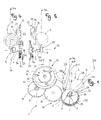
- the invention relates to a display mechanism 1 of the day and the phase of at least a first star, comprising a gear 2 for a constant frequency drive socket on an output of a watch movement 100.
- day of a star is meant here the period during which it pivots on itself to return in the same apparent position compared to a fixed terrestrial observer.
- month of a star is meant a synodic revolution, that is to say the average value of the interval of time which separates two consecutive conjunctions of this star and the sun, moments where this star and the sun have the same celestial longitude, relative to a fixed terrestrial observer.
- the day and the month are to be taken in their usual sense: the day of 24 hours is the average solar day defined by the international convention of 1955 (knowing that the solar sidereal day is close to 23 hours and 56 minutes, the difference between the true solar day and the sidereal day varying between 3 minutes and 36 seconds, and 4 minutes and 26 seconds).
- first a mechanism element relating to a display specific to the first star
- second an element relative to a second star
- this display mechanism 1 comprises three-dimensional display means 3 of the day and phase of the first star represented by a first mobile 5, which are driven by the gear 2.
- these three-dimensional display means 3 comprise a first phase shaft 4, driven directly or indirectly by the gear wheel 2.
- This first phase tree 4 carries a first mobile 5, including a first sphere 5, simulation of the first star, and which performs a revolution whose period has the duration of one month of the first star.
- sphere a mobile representative of a star, 5 or 50, regardless of the actual form of this mobile.
- the mechanism 1 comprises a first day tree 6, driven directly or indirectly pivotally by the gear 2.
- the first mobile 5 or sphere 5 performs a revolution around the first day tree 6, in an orbit whose period has the duration of a day of the first star.
- the gear 2 advantageously comprises a phase gear 10 and a day train 20, each engaged on an output of the same movement 100, for example on the road or on a wheel of twenty-four hours.
- the phase wheel 10 and the day train 20 may be driven by different outputs of the same movement, or alternatively by each other or vice versa.
- the Figures 1 to 6 illustrate a first variant of a mechanism 1 where the first day tree 6 is pivoted by a day train 20, directly or indirectly, from an output of the movement 100.
- the first phase shaft 4, pivoting about a D4 axis, is pivotally driven by a phase wheel 10, directly or indirectly from an output of the movement 100.
- the phase wheel 10 or / and the day train 20 comprises at least one disengagement means between its input and its output.
- the phase gear 10 and the day train 20 each comprise at least one disengagement means between its input and its output.
- the first phase tree 4 is carried by the first day tree 6, or by a mobile phase 7 driven by this first day tree 6.
- the day train 20 comprises an input wheel 21, engaged with a twenty-four hour wheel of the movement, or with an intermediate wheel giving it a pivot in twenty-four hours, and corresponds to the duration of the average solar day. . It meshes if necessary with a deflection wheel 22, which attacks a day wheel of the first star 23, or it meshes directly with the star of the day starwheel 23, according to the desired gear ratio, this wheel 23 pivoting completely in one day of the first star.
- the daylighting wheel 23 of the first star is mounted coaxially pivotally around a pivot axis D6 with a male worm gear wheel 24.
- the wheels 23 and 24 are connected to each other by a jumper 25, an action on the wolf teeth 24 can disengage this mechanism and change their relative angular position.
- the disengaging means of the day train 20 thus comprise this jumper 25 disposed between, on the one hand, a day wheel 23 kinematically connected to the input wheel from the movement 100, and on the other hand a male wolf wheel. 24, arranged for be driven by the phase gear 10, and which drives the first mobile 5 pivoting.
- the wheel 24 carries the first day tree 6, which comprises a front gear 26.
- This front gear 26 meshes with a wheel 27 integral with the first phase shaft 4.
- the phase wheel 10 comprises an input pinion 11, engaged with the roadway of the movement, or with an intermediate wheel giving it a pivot in one hour.
- Pinion 11 meshes if necessary with a return wheel 12, which drives an intermediate wheel 13 which performs a revolution in a given period of time, or meshes directly with the wheel 13 as illustrated in FIG. figure 1 , depending on the desired gear ratio.
- This intermediate wheel 13 has an internal teeth in wolf teeth 14.
- a snail 15 pivots coaxially with the intermediate wheel 13 about an axis D1
- its periphery 15A constitutes a cam 16 having a slope 16A delimiting a spout 16B, and further comprising a ratchet 17 with a tooth, which pivots on a pivot 17A and which cooperates with the internal toothing 14, as visible on the figure 2 .
- the periphery 15A of the snail 15 is traversed by a roller 18, in particular a ruby, which is carried by a rocker 19, pivotally mounted about an axis D9 relative to the plate of the movement 100, and a first arm 19A carrying the roller 18 is returned to the snail 15 by a spring not shown in the figures.
- the roller 18 When, once per turn of the intermediate wheel 13, the roller 18 passes from the high point of the snail 16 to the low point, crossing the spout 16B and the slope 16A, it releases the pawl 7, whose tip then resumes the trough of next tooth of the female teeth 14.
- the disengagement means of the phase gear train 10 comprise, on the one hand, a cam 16 arranged on the periphery 15A of a snub 15 arranged to be driven by an intermediate wheel 13 kinematically linked to the input gear from the movement 100, and secondly the first arm 19A of a rocker 19, the first arm 19A recalled by elastic return means to the cam 16, and whose jump at a slope 16A of the cam control the pivoting of the rocker 19 and the movement of a second arm 19B that it comprises, and which carries a pawl 19C, arranged to cooperate with the wolf wheel 24 of the day train 20 and advance it by one position during this jump.
- the snail 15 is not permanently driven by the intermediate wheel 13, which carries a female wolf teeth 14 teeth, the snail 15 carrying meanwhile a pawl 17 arranged to fasten it pivotally with the wheel intermediate 13, and whose jump of the first arm 19A of the rocker 19 at a slope 16A of the cam 16 controls the release of this pawl 17 relative to the teeth with female teeth wolf 14 before its reengagement in position of neighboring tooth.
- This declutching combined with a recoil decouples the gear train, and adapt at will the resulting period output of the live train.
- This pitch of the wolf tooth of the toothing 14 corresponds to a certain elementary duration, according to its number of teeth.
- the duration until the jump of the next turn is then equal to the difference between the duration of the period of the wheel 13 on the one hand, and this elementary duration on the other hand.
- the movement 100 leads directly or indirectly, particularly by the roadway, an input wheel 21 and a pinion 11, which are coaxial in the case of the figures, but which may equally well have another arrangement, the latter being more favorable in terms of space occupation.
- the input wheel 21 has 57 teeth and performs one revolution in twenty-four hours.
- Pinion 11 has twelve teeth.
- a first part of the train constituted by the day train 20 comprises two wheels.
- the input wheel 21 meshes with a return wheel 22, also of 57 teeth, which makes a turn in twenty-four hours.
- the deflection wheel 22 meshes with a lunar day wheel 23 of 59 teeth, which thus performs a revolution in 24 hours 50 minutes 31.58 seconds.
- a second part of the cogwheel formed by the phase wheel 10 is composed of a very limited number of components.
- the pinion 11 of twelve teeth meshes with an intermediate wheel 13 called six hours, 72 teeth, which performs a turn in six hours.
- This six-hour wheel 13 has an internal toothing of 14 to 64 teeth.
- a snail 15 pivots coaxially with the six-hour wheel 13, it carries a cam 16 having a slope 16A, and a ratchet 17 with a tooth, which cooperates with the internal toothing 14.
- the perimeter 15A of the snail 15 is traversed by a roller 18, in particular a ruby, which is carried by a rocker 19, pivotally mounted relative to the platen of the movement, and a first arm 19A carrying the roller 18 is returned to the snail 15 by a spring not shown in the figures.
- the roller 18 When, once per turn of the six-hour wheel 13, the roller 18 passes from the high point of the snail 16 to the low point, crossing the slope 16A, it releases the pawl 17, the tip of which then resumes the next tooth trough of the female teeth 14.
- the pitch of 0.20000 mm of the wolf tooth of the toothing 14 corresponds to an elementary duration of 5 minutes and 37.5 seconds.
- the duration until the jump of the next turn is 6 hours less this elementary time, 5 hours 54 minutes and 22.5 seconds, 21262.5 seconds.
- the elementary duration would be 5 minutes and 37.98 seconds.
- the duration until the lap jump next is 6 hours less this elementary time, 5 hours 54 minutes and 22.0 seconds, 21262.0 seconds.
- This wolf wheel 24 is pivotally secured around a pivot axis D6, via a jumper 25, a day tree 6, carrying a front gear 26 of twelve teeth.
- This front gear 26 meshes with a shaft wheel 27, of fourteen teeth, integral with a phase shaft 4, which pivots about a pivot axis D4 perpendicular to the pivot axis D6.
- the accuracy depends of course on the precision of the wolf tooth of the toothing 14.
- This value is a very good approximation of the lunar month. Indeed, the duration of the lunar month is highly variable, from one month to the next in a year, and according to the year, with values commonly varying from one or two hours per month over consecutive months, and which can vary up to at six hours a month.
- the usual and arbitrary value of the lunar synodic month of 29,530,589 days is an average, which is tainted with a rather strong range of uncertainty, of the order of 1%. As a result, the value established according to the invention is excellent.
- the mechanism of this star is of mysterious type, and for this purpose the first phase shaft 4 is sapphire, or in a material of similar characteristics.
- the star sphere 5 here a moon in this application, carries different visualizations 5A, 5B, on its two hemispheres.
- the first day tree 6 pivots about its axis D6, and carries in its pivoting the shaft 4 carrying the star sphere 5.
- This shaft 4 thus makes a rotary movement about the axis D6, during which the star sphere 5 pivots around the axis D4.
- the trajectory of the sphere 5 is carried out partially behind a darkened screen 8, smoked glass or the like, defining a horizon line 9 at the pivot axis D6 of the first day tree 6.
- the passage of the first mobile Behind the shaded part of screen 8 simulates the position of the star behind the Earth, invisible to the user at the moment considered, but while leaving the state of the phase of this body visible to the user , which explains that the screen 8 is darkened and not opaque.
- the figure 7 illustrates a second variant of the invention, which includes the same day wheel 20 as in the first variant.
- the phase gear 10 is simplified, the teeth of female wolf 14 is removed.
- the disengagement means of the phase gear 10 are the same as in the first variant, against the snail 15 is pivotally secured to the intermediate wheel 13.
- the input pinion 11 is always engaged with the roadway of the movement, or with an intermediate wheel giving it a pivot in one hour.
- the pinion 11 of 12 teeth meshes with a return wheel 12 of 72 teeth.
- This deflection wheel 12 is rotatably coupled with a 64-tooth phase wheel 12A, which drives the intermediate wheel 13 with 63 teeth.
- the snail 15 pivots coaxially with the intermediate wheel 13 about the axis D1, its periphery 15A constitutes a cam 16 similar to the first variant of the Figures 1 to 6 .
- the roller 18 When, once per turn of the intermediate wheel 13, the roller 18 passes from the high point of the snail 16 to the low point, crossing the spout 16B and the slope 16A, it controls the pivoting of the rocker 19, and the action of the ratchet 19C on the wagon wheel wheel 24 of the day train 20.
- This second variant is more economical to produce than the first variant, because of the smaller number of components and the simplified assembly.
- the combination of teeth results in an error of only 57 seconds per lunar month, which is lower than the known mechanisms.
- the invention lends itself well to the visualization of the state of different bodies, especially in combination with each other.
- the first day tree 6 is embedded on a day mobile 41 which makes a circular or elliptical trajectory around a central axis D0.
- Obtaining an elliptical trajectory can be obtained by a sliding assembly of the mobile 41 on a shaft, with a spring return or the like against an elliptical cam.
- the daytime mobile 41 may also cooperate with an internal circular or elliptical gearing 44 according to the path that it is desired to display, as visible on the figure 10 by an external toothing 43 with which it is associated, and which is advantageously made transparent sapphire or the like, and which rolls inside this internal toothing 44.
- the day mobile 41 carries at least a second sphere 50 for simulating a second star whose angular position is adjustable by manual adjustment means 45 or by a spindle adjustment wheel GMT 46 that involves the movement 100.
- the figure 10 illustrates the relative motion of the moon and the Earth, and the annual orbit of the Earth in a simplified circular form around the axis D0.
- the second sphere 50 of the second star here the Earth, while the sphere 5 illustrates the moon, is surrounded by a third sphere 51 of which one hemisphere is transparent, and which carries, driven by a mobile 47 of training day / night, a revolution whose period has the duration of a day of the second star.
- the day mobile 41 driven directly or indirectly pivotally by the gear 2, performs an eccentric revolution whose period is sub-multiple or multiple of the day of the second star, or whose period has a duration of one year. second star.
- the mechanism 1 according to the invention displays the day and the lunar phase of the first star which is the moon.
- the second star is the Earth
- the mechanism 1 displays, on the one hand, the day-night progression in a meridian of the Earth, and, on the other hand, the local time of the meridian or the position annual Earth in its orbit around the sun.
- the sphere 5 representative of the first star is enclosed in a transparent spherical dome 51 on one hemisphere and darkened on the other, thus constituting a globe with a day portion and a night portion.
- This globe is rotated.
- the position of the star in the globe can be regulated, either by a GMT mechanism according to the figure 13 or manually, by a control rod 45, on which the return for the GMT drive is mounted frictionally.
- the Figures 11 to 13 represent an advantageous type of mounting, in which a mobile representative of a star 5 or 50 is pivotally mounted in a cylindrical sleeve 70 of axis A, capable of being rotated about this axis.
- This sleeve 70 may be in two parts to facilitate assembly.
- the representative spherical portion of the star 5 or 50 is shown enclosed in a hollow globe in two parts, two hemispheres of which can be differentiated in day / night in a plane parallel to the axis A or perpendicular to this axis.
- axis A the representative spherical portion of the star 5 or 50 is shown enclosed in a hollow globe in two parts, two hemispheres of which can be differentiated in day / night in a plane parallel to the axis A or perpendicular to this axis.
- the invention thus lends itself equally well to the representation of the Earth, the moon, or any celestial body periodic orbit.
- the mechanism 1 comprises means for adjusting the 50 sphere of Earth, either by a rod 45 or a GMT mechanism 46 when the timepiece has one, which has the advantage of leaving unchanged the main display, while displaying the day-night progression on the GMT spindle of interest to the user.
- the invention allows the realization of a cosmographic watch, or astronomical, or Earth-moon.
- a moving earth-moon crew travels the big circle in 12 or 24 hours, and gives, by its angular position, the local time: here 2am in Cambodia, which is still in the darkest sector corresponding to the night .
- the moon turns around the Earth in a lunar month, while displaying its phases.
- the axis of the poles of the Earth remains parallel to the axis 12h-6h, as well as the axis of the poles of the moon.
- the display can advantageously incorporate, in different variants, display signals specific to equinoxes and solstices, and / or zodiacal signs, and / or the associated luck factors for Asian countries.
- Yet another variant is the display of tidal coefficients according to GMT time zone.
- the invention also relates to a movement 100 comprising drive means for driving at least one such display mechanism 1.
- this movement 100 involves certain functions of this display mechanism, such as a drive mechanism. day / night 47 or / and a GMT mechanism 46, or similar, for driving at least one mobile 5, 50, representative of a star or / and a globe 51 semi-transparent covering such a mobile 5 , 50.
- the invention also relates to an astronomical timepiece, in particular an astronomical watch, comprising at least one such movement 100 and / or at least one such mechanism 1.
Landscapes
- Physics & Mathematics (AREA)
- Astronomy & Astrophysics (AREA)
- General Physics & Mathematics (AREA)
- Electromechanical Clocks (AREA)
- Toys (AREA)
- Transmission Devices (AREA)
- Electric Clocks (AREA)
Abstract
Description
- L'invention concerne un mécanisme d'affichage du jour et de la phase d'au moins un premier astre, comportant un rouage pour une prise d'entraînement de fréquence constante sur une sortie d'un mouvement d'horlogerie, ledit mécanisme comportant des moyens d'affichage tridimensionnel du jour et de la phase dudit premier astre représenté par un premier mobile, qui sont entraînés par ledit rouage, lequel comporte un rouage de phase et un rouage de jour, chacun en prise sur une sortie du même dit mouvement.
- L'invention concerne encore un mouvement comportant des moyens d'entraînement pour l'entraînement d'au moins un tel mécanisme d'affichage.
- L'invention concerne encore une montre astronomique, comportant au moins un tel mouvement, ou/et au moins un tel mécanisme.
- L'invention concerne le domaine de l'horlogerie mécanique, et en particulier des complications pour l'affichage de l'état de certains astres.
- Les montres astronomiques font partie des montres à complications appréciées par les utilisateurs. Leur précision est souvent approximative en ce qui concerne l'affichage des cycles de certains astres, en particulier les cycles lunaires, souvent en raison du faible volume disponible dans le mouvement, qui ne permet pas en général de loger le grand nombre de roues qui serait nécessaire pour assurer une approximation précise des durées de jour et mois lunaires.
- De plus, la visualisation des phases des astres est souvent malcommode. L'indication du jour astral est délaissée par la plupart des affichages horlogers.
- Le document
WO 91/11756 A1 RICHARD - L'article technique du Jahrbuch der deutschen Gesellschaft für Chronometrie, au nom de GLASER « Astronomische Indikationen bei Uhren », publié le 01.01.1989, vol. 40, pages 139-161, XP000102620, ISSN 0373-7616, décrit une représentation des phases de lune au moyen d'une sphère rotative ou de disques rotatifs. Un entraînement à différentiel entraîne aux vitesses convenables, d'une part la sphère en rotation sur son axe, et d'autre part cet axe en rotation par rapport au cadran.
- Le document
US 3 766 727 A au nom de DIDIK décrit une horloge planétaire avec un rouage complexe entraînant les planètes du système solaire représentées par des sphères, avec la lune pivotant autour de la terre montée sur un axe incliné, et un entraînement de l'axe d'inclinaison de la terre, de la terre autour de cet axe, et de la lune autour de la terre, qui est effectué par autant de courroies en prise avec des chaussées axiales du mouvement. - Le document
FR 12 679 052 A1 au nom de GHIRIMOLDI - Le document
FR 348 040 A au nom de BURKE - L'invention se propose d'intégrer à une montre une indication visuelle du jour d'un astre, en particulier du jour lunaire, en simultané avec l'affichage de la phase de cet astre.
- L'invention s'attache à garantir, à la fois une haute précision quant au respect des périodes astrales, et une très bonne visibilité par un affichage tridimensionnel, attrayant pour l'utilisateur.
- A cet effet, l'invention concerne un mécanisme d'affichage du jour et de la phase d'au moins un premier astre, comportant un rouage pour une prise d'entraînement de fréquence constante sur une sortie d'un mouvement d'horlogerie, ledit mécanisme comportant des moyens d'affichage tridimensionnel du jour et de la phase dudit premier astre représenté par un premier mobile, qui sont entraînés par ledit rouage, lequel comporte un rouage de phase et un rouage de jour, chacun en prise sur une sortie du même dit mouvement, caractérisé en ce que ledit rouage de phase, ou/et le rouage de jour, comporte au moins un moyen de débrayage entre son entrée et sa sortie.
- Selon une autre caractéristique de l'invention, ledit rouage de phase et le rouage de jour comportent chacun au moins un moyen de débrayage entre son entrée et sa sortie.
- Selon une caractéristique de l'invention, les moyens de débrayage dudit rouage de jour comportent un sautoir disposé entre, d'une part une roue de jour cinématiquement liée au rouage d'entrée depuis ledit mouvement, et d'autre part une roue à dents de loup mâle, agencée pour être entraînée par ledit rouage de phase, et laquelle roue à dents de loup mâle entraîne ledit premier mobile en pivotement.
- Selon une caractéristique de l'invention, les moyens de débrayage dudit rouage de phase sont constitués par la coopération entre, d'une part une came agencée sur le pourtour d'un limaçon agencé pour être entraîné par une roue intermédiaire cinématiquement liée au rouage d'entrée depuis ledit mouvement, et d'autre part le premier bras d'une bascule, ledit premier bras rappelé par des moyens de rappel élastique vers ladite came, et dont le saut au niveau d'une pente de ladite came commande le pivotement de ladite bascule et le mouvement d'un deuxième bras qu'elle comporte, et qui porte un cliquet, agencé pour coopérer avec ledit rouage de jour et le faire avancer d'une position lors dudit saut.
- Selon une caractéristique de l'invention, ledit limaçon n'est pas entraîné en permanence par ladite roue intermédiaire, laquelle porte une denture à dents de loup femelle, ledit limaçon portant quant à lui un cliquet agencé pour le solidariser en pivotement avec ladite roue intermédiaire, et dont le saut dudit premier bras de ladite bascule au niveau de ladite pente de ladite came commande le dégagement dudit cliquet par rapport à ladite denture à dents de loup femelle avant son réengagement en position de dent voisine.
- Selon une caractéristique alternative de l'invention, ledit limaçon est solidaire en pivotement de ladite roue intermédiaire.
- L'invention concerne encore un mouvement comportant des moyens d'entraînement pour l'entraînement d'au moins un tel mécanisme d'affichage.
- Selon une caractéristique de l'invention, ledit mouvement comporte un mécanisme d'entraînement jour/nuit ou/et un mécanisme GMT pour l'entraînement d'au moins un mobile représentatif d'un astre ou/et d'un globe à demi transparent recouvrant un dit mobile.
- L'invention concerne encore une montre astronomique, comportant au moins un tel mouvement, ou/et au moins un tel mécanisme.
- D'autres caractéristiques et avantages de l'invention apparaîtront à la lecture de la description détaillée qui va suivre, en référence aux dessins annexés, où :
- les
figures 1 à 6 représentent, de façon schématisée, une première variante de mécanisme d'affichage de jour et de phase d'astre selon l'invention : -
figure 1 en perspective, mécanisme seul ; -
figure 2 en vue de face, mécanisme seul ; -
figure 3 vue de dessous, mécanisme seul ; -
figures 4 et 5 vue de côté, respectivement de droite et de gauche ; - la
figure 6 vue de face, mécanisme derrière un écran, dans sa position visible par l'utilisateur ; - la
figure 7 représente, de façon schématisée et en perspective, similaire à lafigure 1 , une deuxième variante de l'invention, représentée avec l'écran de lafigure 6 ; - la
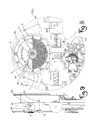
figure 8 représente, de façon schématisée, partielle, et en vue de face, une montre astronomique comportant un affichage tridimensionnel de lune selon l'invention ; - la
figure 9 représente la montre de lafigure 8 en vue de droite ; - la
figure 10 représente, en vue de face, une variante de l'invention avec la représentation simultanée de la Terre et de la Lune toutes deux mobiles dans le plan ; - les
figures 11 à 13 représentent, en vue en coupe, des variantes particulières de représentation d'astres sous forme d'une sphère coiffée par un globe comportant un hémisphère transparent et l'autre assombri, et différents réglages possibles. - L'invention concerne une pièce d'horlogerie astronomique, notamment une montre astronomique, et plus particulièrement un mécanisme d'affichage pour visualiser l'état d'au moins un premier astre, qu'il s'agisse d'une Terre, d'une lune, ou autre.
- L'invention concerne plus particulièrement l'affichage tridimensionnel du jour et de la phase d'un astre. On appelle « phases » d'un astre, à l'exception du Soleil, les aspects successifs pris par cet astre éclairé par le Soleil, cet astre étant vu de la Terre. Dans le cas d'une pièce d'horlogerie de type « planétarium » ou horloge astronomique regroupant les différentes planètes du système solaire et certains de leurs satellites, les phases de ces différentes planètes et satellites sont vues, non pas depuis la Terre, mais depuis un point du système solaire qui est à distance de la Terre. De façon générale, dans la présente description, le terme « astre » désigne planètes et satellites, à l'exception du Soleil.
- L'invention concerne un mécanisme d'affichage 1 du jour et de la phase d'au moins un premier astre, comportant un rouage 2 pour une prise d'entraînement de fréquence constante sur une sortie d'un mouvement 100 d'horlogerie.
- Par jour d'un astre on entend ici la période pendant laquelle il pivote sur lui-même pour revenir dans la même position apparente par rapport à un observateur Terrestre fixe.
- Par mois d'un astre on entend une révolution synodique, c'est-à-dire la valeur moyenne de l'intervalle de temps qui sépare deux conjonctions consécutives de cet astre et du soleil, moments où cet astre et le soleil ont la même longitude céleste, par rapport à un observateur terrestre fixe.
- En ce qui concerne la Terre, le jour et le mois sont à prendre dans leur acception usuelle : le jour de 24 heures est le jour solaire moyen défini par la convention internationale de 1955 (sachant que le jour solaire sidéral est voisin de 23 heures et 56 minutes, l'écart entre le jour solaire vrai et le jour sidéral variant entre 3 minutes et 36 secondes, et 4 minutes et 26 secondes).
- Par convention on qualifie ici de « premier » un élément de mécanisme relatif à un affichage propre au premier astre, par « deuxième » un élément relatif à un deuxième astre, et ainsi de suite.
- Selon l'invention, ce mécanisme d'affichage 1 comporte des moyens d'affichage tridimensionnel 3 du jour et de la phase du premier astre représenté par un premier mobile 5, qui sont entraînés par le rouage 2.
- Dans une réalisation préférée illustrée par les figures, ces moyens d'affichage tridimensionnel 3 comportent un premier arbre de phase 4, entraîné directement ou indirectement en pivotement par le rouage 2.
- Ce premier arbre de phase 4 est porteur d'un premier mobile 5, notamment une première sphère 5, de simulation du premier astre, et qui effectue une révolution dont la période a la durée d'un mois de ce premier astre.
- On appellera ci-après « sphère » un mobile représentatif d'un astre, 5 ou 50, quelle que soit la forme réelle de ce mobile.
- Le mécanisme 1 comporte un premier arbre de jour 6, entraîné directement ou indirectement en pivotement par le rouage 2. Le premier mobile 5 ou sphère 5 effectue une révolution autour de ce premier arbre de jour 6, sur une orbite dont la période a la durée d'un jour du premier astre.
- Le rouage 2 comporte avantageusement un rouage de phase 10 et un rouage de jour 20, chacun en prise sur une sortie du même mouvement 100, par exemple sur la chaussée ou sur une roue de vingt-quatre heures. Le rouage de phase 10 et le rouage de jour 20 peuvent être entraînés par des sorties différentes du même mouvement, ou encore l'un par l'autre ou réciproquement.
- Les
figures 1 à 6 illustrent une première variante d'un mécanisme 1 où le premier arbre de jour 6 est entraîné en pivotement par un rouage de jour 20, directement ou indirectement, depuis une sortie du mouvement 100. Le premier arbre de phase 4, pivotant autour d'un axe D4, est entraîné en pivotement par un rouage de phase 10, directement ou indirectement depuis une sortie du mouvement 100. - De façon avantageuse, le rouage de phase 10, ou/et le rouage de jour 20, comporte au moins un moyen de débrayage entre son entrée et sa sortie. De préférence le rouage de phase 10 et le rouage de jour 20 comportent chacun au moins un moyen de débrayage entre son entrée et sa sortie.
- Dans la réalisation particulière préférée, le premier arbre de phase 4 est porté par le premier arbre de jour 6, ou par un mobile de phase 7 entraîné par ce premier arbre de jour 6.
- Le rouage de jour 20 comporte une roue d'entrée 21, en prise avec une roue de vingt-quatre heures du mouvement, ou avec une roue intermédiaire lui donnant un pivotement en vingt-quatre heures, et correspond à la durée du jour solaire moyen. Elle engrène si nécessaire avec une roue de renvoi 22, qui attaque une roue de jour du premier astre 23, ou bien elle engrène directement avec cette roue de jour de premier astre 23, selon la démultiplication recherchée, cette roue 23 pivotant complètement en un jour du premier astre. La roue 23 de jour du premier astre est montée coaxiale en pivotement, autour d'un axe de pivotement D6, avec une roue à dents de loup mâle 24. Les roues 23 et 24 sont reliées l'une à l'autre par un sautoir 25, une action sur la denture de loup 24 peut débrayer ce mécanisme et modifier leur position angulaire relative. Les moyens de débrayage du rouage de jour 20 comportent ainsi ce sautoir 25 disposé entre, d'une part une roue de jour 23 cinématiquement liée au rouage d'entrée depuis le mouvement 100, et d'autre part une roue à dents de loup mâle 24, agencée pour être entraînée par le rouage de phase 10, et laquelle entraîne le premier mobile 5 en pivotement.
- La roue 24 porte le premier arbre de jour 6, qui comporte un pignon frontal 26.
- Ce pignon frontal 26 engrène avec une roue 27 solidaire du premier arbre de phase 4.
- Le rouage de phase 10 comporte un pignon d'entrée 11, en prise avec la chaussée du mouvement, ou avec une roue intermédiaire lui donnant un pivotement en une heure. Le pignon 11 engrène si nécessaire avec une roue de renvoi 12, qui attaque une roue intermédiaire 13 qui effectue une révolution en une période donnée, ou bien engrène directement avec cette roue 13 tel qu'illustré sur la
figure 1 , selon la démultiplication recherchée. - Cette roue intermédiaire 13 comporte une denture interne en dents de loup 14.
- Un limaçon 15 pivote coaxialement avec la roue intermédiaire 13 autour d'un axe D1, son pourtour 15A constitue une came 16 comportant une pente 16A délimitant un bec 16B, et comportant encore un cliquet 17 à une dent, qui pivote sur un pivot 17A et qui coopère avec la denture interne 14, tel que visible sur la
figure 2 . - Le pourtour 15A du limaçon 15 est parcouru par un galet 18, notamment un rubis, qui est porté par une bascule 19, montée pivotante autour d'un axe D9 par rapport à la platine du mouvement 100, et dont un premier bras 19A porteur du galet 18 est rappelé vers le limaçon 15 par un ressort non représenté sur les figures.
- Lorsque, une fois par tour de la roue intermédiaire 13, le galet 18 passe du point haut du limaçon 16 au point bas, en franchissant le bec 16B et la pente 16A, il dégage le cliquet 7, dont la pointe reprend ensuite le creux de dent suivant de la denture femelle 14.
- Ainsi, les moyens de débrayage du rouage de phase 10 comportent, d'une part une came 16 agencée sur le pourtour 15A d'un limaçon 15 agencé pour être entraîné par roue intermédiaire 13 cinématiquement liée au rouage d'entrée depuis le mouvement 100, et d'autre part le premier bras 19A d'une bascule 19, ce premier bras 19A rappelé par des moyens de rappel élastique vers cette came 16, et dont le saut au niveau d'une pente 16A de la came commande le pivotement de la bascule 19 et le mouvement d'un deuxième bras 19B qu'elle comporte, et qui porte un cliquet 19C, agencé pour coopérer avec la roue à dents de loup 24 du rouage de jour 20 et le faire avancer d'une position lors de ce saut.
- Dans cette première variante le limaçon 15 n'est pas entraîné en permanence par la roue intermédiaire 13, laquelle porte une denture à dents de loup femelle 14, le limaçon 15 portant quant à lui un cliquet 17 agencé pour le solidariser en pivotement avec la roue intermédiaire 13, et dont le saut du premier bras 19A de la bascule 19 au niveau d'une pente 16A de la came 16 commande le dégagement de ce cliquet 17 par rapport à cette denture à dents de loup femelle 14 avant son réengagement en position de dent voisine.
- Ce débrayage conjugué avec un recul permet de découpler le rouage de phase, et d'adapter à volonté la période résultante en sortie du rouage de phase.
- Ce pas de la dent de loup de la denture 14 correspond à une certaine durée élémentaire, selon son nombre de dents. La durée jusqu'au saut du tour suivant est alors égale à la différence entre la durée de la période de la roue 13 d'une part, et cette durée élémentaire d'autre part.
- Lors de ce saut, la chute du premier bras 19A de la bascule 19 fait pivoter celle-ci ; son deuxième bras 19B est muni d'un cliquet 19C, qui coopère avec la roue à dents de loup 24 du rouage de jour 20.
- La description qui suit concerne plus particulièrement une première application préférée de cette première variante des
figures 1 à 6 à l'affichage du jour et de la phase lunaires. - Le mouvement 100 entraîne directement ou indirectement, notamment par la chaussée, une roue d'entrée 21 et un pignon 11, qui sont coaxiaux dans le cas des figures, mais qui peuvent tout aussi bien avoir un autre agencement, celui-ci étant plus favorable en termes d'occupation d'espace.
- La roue d'entrée 21 comporte 57 dents et effectue un tour en vingt-quatre heures. Le pignon 11 comporte douze dents.
- Pour la détermination du mois lunaire, une première partie du rouage constituée par le rouage de jour 20 comporte deux roues.
- La roue d'entrée 21 engrène avec une roue de renvoi 22, également de 57 dents, qui effectue un tour en vingt-quatre heures.
- La roue de renvoi 22 engrène avec une roue de jour lunaire 23 de 59 dents, qui effectue donc un tour en 24 heures 50 minutes 31,58 secondes.
- Pour la détermination de la phase lunaire, une deuxième partie du rouage constituée par le rouage de phase 10, est composée d'un nombre très restreint de composants.
- A l'entrée du rouage, le pignon 11 de douze dents engrène avec une roue intermédiaire 13 dite de six heures, de 72 dents, qui effectue un tour en six heures.
- Cette roue de six heures 13 comporte une denture interne en dents de loup 14 à 64 dents.
- Un limaçon 15 pivote coaxialement avec la roue de six heures 13, il est porteur d'une came 16 comportant une pente 16A, et d'un cliquet 17 à une dent, qui coopère avec la denture interne 14.
- Le pourtour 15A du limaçon 15 est parcouru par un galet 18, notamment un rubis, qui est porté par une bascule 19, montée pivotante par rapport à la platine du mouvement, et dont un premier bras 19A porteur du galet 18 est rappelé vers le limaçon 15 par un ressort non représenté sur les figures.
- Lorsque, une fois par tour de la roue de six heures 13, le galet 18 passe du point haut du limaçon 16 au point bas, en franchissant la pente 16A, il dégage le cliquet 17, dont la pointe reprend ensuite le creux de dent suivant de la denture femelle 14.
- Le pas de 0,20000 mm de la dent de loup de la denture 14 correspond à une durée élémentaire de 5 minutes et 37,5 secondes. La durée jusqu'au saut du tour suivant est alors de 6 heures moins cette durée élémentaire, soient 5 heures 54 minutes et 22,5 secondes, soient 21262,5 secondes.
- Avec une dent de loup idéale ayant un pas de 0,1999999 mm la durée élémentaire serait de 5 minutes et 37,98 secondes. La durée jusqu'au saut du tour suivant est alors de 6 heures moins cette durée élémentaire, soient 5 heures 54 minutes et 22,0 secondes, soient 21262,0 secondes.
- Lors de ce saut, la chute du premier bras 19A de la bascule fait pivoter celle-ci ; son deuxième bras 19B est muni d'un cliquet 19C, qui coopère avec une roue à dents de loup 24 à 140 dents.
- Cette roue à dents de loup 24 est solidaire en pivotement, autour d'un axe de pivotement D6, par l'intermédiaire d'un sautoir 25, d'un arbre de jour 6, porteur d'un pignon frontal 26 de douze dents. Ce pignon frontal 26 engrène avec une roue d'arbre 27, de quatorze dents, solidaire d'un arbre de phase 4, qui pivote selon un axe de pivotement D4 perpendiculaire à l'axe de pivotement D6. De ce fait, le mouvement d'une dent de la roue à dents de loup 24 se traduit par un pivotement de : 360°/ 140 x 14 /12= 3° au niveau de l'arbre de phase 4.
- Une révolution complète de l'arbre 4, correspondant donc à un mois lunaire, est effectuée en 360/3=120 fois la durée entre deux sauts sur la came 16 :

- La précision dépend bien sûr de la précision de la dent de loup de la denture 14.
- Cette valeur constitue une très bonne approximation du mois lunaire. En effet, la durée du mois lunaire est fortement variable, d'un mois à l'autre dans une année, et selon les années, avec des valeurs variant couramment de une ou deux heures par mois sur des mois consécutifs, et pouvant varier jusqu'à six heures par mois. La valeur usuelle et arbitraire du mois synodique lunaire de 29,530589 jours est une moyenne, qui est entachée d'une plage d'incertitude assez forte, de l'ordre de 1 %. De ce fait, la valeur établie selon l'invention est excellente.
- De façon préférée, le mécanisme de cet astre est de type mystérieux, et à cet effet le premier arbre de phase 4 est en saphir, ou dans un matériau de caractéristiques similaires. Un tel arbre en saphir d'un diamètre de 1 mm, conjugué à une sphère d'astre 5 en titane ou dans un alliage de densité inférieure ou égale, d'un diamètre de 5 mm, résiste facilement à des accélérations de 5000 g.
- La sphère d'astre 5, ici une lune dans cette application, porte des visualisations différentes 5A, 5B, sur ses deux hémisphères.
- Comme le montre la
figure 6 , le premier arbre de jour 6 pivote autour de son axe D6, et emporte dans son pivotement l'arbre 4 porteur de la sphère d'astre 5. Cet arbre 4 effectue ainsi un mouvement tournant autour de l'axe D6, pendant lequel la sphère d'astre 5 pivote autour de l'axe D4. La trajectoire de la sphère 5 s'effectue partiellement derrière un écran 8 assombri, en verre fumé ou similaire, définissant une ligne d'horizon 9 au niveau de l'axe de pivotement D6 du premier arbre de jour 6. Le passage du premier mobile 5 derrière la partie ombragée de l'écran 8 simule la position de l'astre derrière la Terre, invisible pour l'utilisateur à l'instant considéré, mais tout en laissant l'état de la phase de cet astre visible pour l'utilisateur, ce qui explique que l'écran 8 soit assombri et non opaque. - La
figure 7 illustre une deuxième variante de l'invention, qui comporte le même rouage de jour 20 que dans la première variante. Le rouage de phase 10 est simplifié, la denture de loup femelle 14 est supprimée. Les moyens de débrayage du rouage de phase 10 sont les mêmes que dans la première variante, par contre le limaçon 15 est solidaire en pivotement de la roue intermédiaire 13. - Le pignon d'entrée 11 est toujours en prise avec la chaussée du mouvement, ou avec une roue intermédiaire lui donnant un pivotement en une heure. Le pignon 11 de 12 dents engrène avec une roue de renvoi 12 de 72 dents. Cette roue de renvoi 12 est couplée en rotation avec une roue de phase 12A de 64 dents, qui attaque la roue intermédiaire 13 de 63 dents.
- Le limaçon 15 pivote coaxialement avec la roue intermédiaire 13 autour de l'axe D1, son pourtour 15A constitue une came 16 similaire à la première variante des
figures 1 à 6 . - Lorsque, une fois par tour de la roue intermédiaire 13, le galet 18 passe du point haut du limaçon 16 au point bas, en franchissant le bec 16B et la pente 16A, il commande le pivotement de la bascule 19, et l'action du cliquet 19C sur la roue à dents de loup 24 du rouage de jour 20.
- Cette deuxième variante est plus économique à produire que la première variante, en raison du moindre nombre de composants et de l'assemblage simplifié. La combinaison des dentures aboutit toutefois à une erreur de seulement 57 secondes par mois lunaire, ce qui est inférieur aux mécanismes connus.
- L'invention se prête bien à la visualisation de l'état de différents astres, notamment en combinaison les uns avec les autres.
- Dans une variante, le premier arbre de jour 6 est embarqué sur un mobile de jour 41 qui effectue une trajectoire circulaire ou elliptique autour d'un axe central D0. L'obtention d'une trajectoire elliptique peut être obtenue par un montage à coulissement du mobile 41 sur un arbre, avec un rappel par ressort ou similaire contre une came elliptique. Le mobile de jour 41 peut aussi coopérer avec une denture interne 44 circulaire ou elliptique selon la trajectoire que l'on désire afficher, tel que visible sur la
figure 10 , par une denture externe 43 à laquelle il est associé, et qui est avantageusement réalisée transparente en saphir ou similaire, et qui roule à l'intérieur de cette denture interne 44. - Dans une complication de la variante précédente, le mobile de jour 41 porte au moins une deuxième sphère 50 de simulation d'un deuxième astre dont la position angulaire est réglable par des moyens de réglage manuels 45 ou par un rouage de réglage de fuseau GMT 46 que comporte le mouvement 100.
- Par exemple, la
figure 10 illustre le mouvement relatif de la lune et de la Terre, et l'orbite annuelle de la Terre sous une forme simplifiée circulaire autour de l'axe D0. - Dans une variante particulière, la deuxième sphère 50 du deuxième astre, ici la Terre, alors que la sphère 5 illustre la lune, est entourée par une troisième sphère 51 dont un hémisphère est transparent, et qui effectue, entraînée par un mobile 47 d'entraînement jour/nuit, une révolution dont la période a la durée d'un jour du deuxième astre. Tandis que le mobile de jour 41, entraîné directement ou indirectement en pivotement par le rouage 2, effectue une révolution excentrique dont la période est sous-multiple ou multiple du jour du deuxième astre, ou dont la période a la durée d'un an du deuxième astre.
- De préférence, le mécanisme 1 selon l'invention affiche le jour et la phase lunaire du premier astre qui est la lune.
- Dans une variante, le deuxième astre est la Terre, et le mécanisme 1 affiche, d'une part la progression jour-nuit en un méridien de la Terre, et, d'autre part, l'heure locale du méridien ou bien la position annuelle de la Terre sur son orbite autour du soleil.
- Dans une variante particulière de l'invention, la sphère 5 représentative du premier astre est enfermée dans une coupole sphérique 51 transparente sur un hémisphère et assombri sur l'autre, constituant ainsi un globe avec une partie jour et une partie nuit. Ce globe est entraîné en pivotement. La position de l'astre dans le globe peut être réglée, soit par un mécanisme GMT selon la
figure 13 , soit manuellement, par une tige de commande 45, sur laquelle le renvoi pour l'entraînement GMT est monté à friction. Lesfigures 11 à 13 représentent un type de montage avantageux, dans lequel un mobile représentatif d'un astre 5 ou 50 est monté pivotant dans un manchon cylindrique 70 d'axe A, susceptible d'être entraîné en rotation autour de cet axe. Ce manchon 70 peut être en deux parties pour faciliter l'assemblage. De la même façon, la partie sphérique représentative de l'astre 5 ou 50 est représentée enfermée dans un globe creux en deux parties, dont deux hémisphères peuvent être différenciés en jour/nuit selon un plan parallèle à l'axe A ou perpendiculaire à cet axe A. - L'invention se prête ainsi tout aussi bien à la représentation de la Terre, que de la lune, ou encore de tout corps céleste à orbite périodique.
- Dans une variante particulière de représentation de la Terre, de façon à faire afficher, pour un utilisateur d'une zone quelconque du monde, une représentation de la Terre sur laquelle est visible son propre pays, le mécanisme 1 comporte des moyens de réglage de la sphère 50 de Terre, soit par une tige 45, soit par un mécanisme GMT 46 quand la pièce d'horlogerie en comporte un, ce qui présente l'avantage de laisser inchangé l'affichage principal, tout en affichant la progression jour-nuit sur le fuseau GMT intéressant l'utilisateur.
- L'invention permet la réalisation d'une montre cosmographique, ou astronomique, ou Terre-lune.
- Par exemple, dans un second fuseau GMT, centré sur la Bolivie dans l'exemple de la
figure 10 , un équipage mobile Terre-lune parcourt le grand cercle en 12 ou 24 heures, et donne, par sa position angulaire, l'heure locale : ici 2h du matin en Bolivie, qui est encore dans le secteur le plus sombre correspondant à la nuit. - Comme exposé plus haut, au sein de l'équipage mobile Terre-lune, la lune tourne autour de la Terre en un mois lunaire, tout en affichant ses phases.
- Dans une variante particulière, l'axe des pôles de la Terre reste parallèle à l'axe 12h-6h, ainsi que l'axe des pôles de la lune.
- Dans une version compliquée, on substitue une représentation circulaire de l'orbite Terrestre une trajectoire elliptique. Dans les deux cas, l'affichage peut incorporer avantageusement, dans différentes variantes, des signaux d'affichage propres aux équinoxes et aux solstices, ou/et aux signes du zodiaque, ou/et les facteurs de chance associés pour les pays asiatiques.
- Une autre variante encore consiste dans l'affichage des coefficients de marée en fonction du fuseau GMT.
- L'invention concerne encore un mouvement 100 comportant des moyens d'entraînement pour l'entraînement d'au moins un tel mécanisme d'affichage 1. Avantageusement ce mouvement 100 entraîne certaines fonctions de ce mécanisme d'affichage, comme un mécanisme d'entraînement jour/nuit 47 ou/et un mécanisme GMT 46, ou similaire, pour l'entraînement d'au moins un mobile 5, 50, représentatif d'un astre ou/et d'un globe 51 à demi transparent recouvrant un tel mobile 5, 50.
- L'invention concerne encore une pièce d'horlogerie astronomique, en particulier une montre astronomique, comportant au moins un tel mouvement 100 ou/et au moins un tel mécanisme 1.
Claims (18)
- Mécanisme d'affichage (1) du jour et de la phase d'au moins un premier astre, comportant un rouage (2) pour une prise d'entraînement de fréquence constante sur une sortie (10) d'un mouvement (100) d'horlogerie, ledit mécanisme (1) comportant des moyens d'affichage tridimensionnel (3) du jour et de la phase dudit premier astre représenté par un premier mobile (5), qui sont entraînés par ledit rouage (2), lequel comporte un rouage de phase (10) et un rouage de jour (20), chacun en prise sur une sortie du même dit mouvement (100), caractérisé en ce que ledit rouage de phase (10), ou/et le rouage de jour (20), comporte au moins un moyen de débrayage entre son entrée et sa sortie.
- Mécanisme (1) selon la revendication 1, caractérisé en ce que ledit rouage de phase (10), et le rouage de jour (20), comportent chacun au moins un moyen de débrayage entre son entrée et sa sortie.
- Mécanisme (1) selon la revendication 1 ou 2, caractérisé en ce que les moyens de débrayage dudit rouage de jour (20) comportent un sautoir (25) disposé entre, d'une part une roue de jour (23) cinématiquement liée au rouage d'entrée depuis ledit mouvement (100), et d'autre part une roue à dents de loup mâle (24), agencée pour être entraînée par ledit rouage de phase (10), et laquelle roue à dents de loup mâle (24) entraîne ledit premier mobile (5) en pivotement.
- Mécanisme (1) selon la revendication 1 ou 2, caractérisé en ce que les moyens de débrayage dudit rouage de phase (10) comportent, d'une part une came (16) agencée sur le pourtour (15A) d'un limaçon (15) agencé pour être entraîné par une roue intermédiaire (13) cinématiquement liée au rouage d'entrée depuis ledit mouvement (100), et d'autre part le premier bras (19A) d'une bascule (19), ledit premier bras (19A) rappelé par des moyens de rappel élastique vers ladite came (16), et dont le saut au niveau d'une pente (16A) de ladite came (16) commande le pivotement de ladite bascule (19) et le mouvement d'un deuxième bras (19B) qu'elle comporte, et qui porte un cliquet (19C), agencé pour coopérer avec ledit rouage de jour (20) et le faire avancer d'une position lors dudit saut.
- Mécanisme (1) selon la revendication précédente, caractérisé en ce que ledit limaçon (15) n'est pas entraîné en permanence par ladite roue intermédiaire (13), laquelle porte une denture à dents de loup femelle (14), ledit limaçon (15) portant quant à lui un cliquet (17) agencé pour le solidariser en pivotement avec ladite roue intermédiaire (13), et dont le saut dudit premier bras (19A) de ladite bascule (19) au niveau de ladite pente (16A) de ladite came (16) commande le dégagement dudit cliquet (17) par rapport à ladite denture à dents de loup femelle (14) avant son réengagement en position de dent voisine.
- Mécanisme (1) selon la revendication 4, caractérisé en ce que ledit limaçon (15) est solidaire en pivotement de ladite roue intermédiaire (13).
- Mécanisme (1) selon l'une des revendications précédentes, caractérisé en ce que lesdits moyens d'affichage tridimensionnel (3) comportent un premier arbre de phase (4), entraîné directement ou indirectement en pivotement par ledit rouage (2), ledit premier arbre de phase (4) étant porteur d'un premier mobile (5) de simulation dudit premier astre et effectuant une révolution dont la période a la durée d'un mois dudit premier astre, et un premier arbre de jour (6), entraîné directement ou indirectement en pivotement par ledit rouage (2), autour duquel premier arbre de jour (6), ledit premier mobile (5) effectue une révolution sur une orbite dont la période a la durée d'un jour dudit premier astre.
- Mécanisme (1) selon la revendication 7, caractérisé en ce que ledit premier arbre de jour (6) est entraîné directement ou indirectement en pivotement par une partie dudit rouage (2) qui est synchrone avec ledit premier arbre de phase (4) qui est entraîné directement ou indirectement en pivotement par une première partie (21) dudit rouage (2).
- Mécanisme (1) selon la revendication 7 ou 8, caractérisé en ce que ledit premier arbre de phase (4) est porté par ledit premier arbre de jour (6) ou par un mobile de phase (7) entraîné par ledit premier arbre de jour (6).
- Mécanisme (1) selon l'une des revendications 7 à 10, caractérisé en ce que la trajectoire dudit premier mobile (5) s'effectue partiellement derrière un écran (8) définissant une ligne d'horizon (9) au niveau de l'axe de pivotement (D6) dudit premier arbre de jour (6).
- Mécanisme (1) selon l'une des revendications précédentes, caractérisé en ce que ledit premier arbre de jour (6) est embarqué sur un mobile de jour (41) qui effectue une trajectoire circulaire ou elliptique autour d'un axe central (D0).
- Mécanisme (1) selon la revendication précédente, caractérisé en ce que ledit mobile de jour (41) porte au moins un deuxième mobile (50) de simulation d'un deuxième astre dont la position angulaire est réglable par des moyens de réglage manuels (43) ou par un rouage de réglage de fuseau GMT (44) dudit mouvement (100), laquelle deuxième sphère (50) est entourée par une troisième sphère (51) dont un hémisphère est transparent, et qui effectue une révolution dont la période a la durée d'un jour dudit deuxième astre, tandis que ledit mobile de jour (41), entraîné directement ou indirectement en pivotement par ledit rouage (2), effectue une révolution excentrique dont la période est sous-multiple ou multiple du jour dudit deuxième astre, ou dont la période a la durée d'un an dudit deuxième astre.
- Mécanisme (1) selon l'une des revendications précédentes, caractérisé en ce qu'il affiche le jour et la phase lunaire dudit premier astre qui est la lune.
- Mécanisme (1) selon la revendication 12, caractérisé en ce que ledit deuxième astre est la Terre, et que ledit mécanisme (1) affiche, d'une part la progression jour-nuit en un méridien de la Terre, et, d'autre part, l'heure locale dudit méridien ou bien la position annuelle de la Terre sur son orbite autour du soleil.
- Mécanisme (1) selon l'une des revendications précédentes, caractérisé en ce que ledit premier arbre de phase (4) est transparent ou en saphir.
- Mouvement (100) comportant des moyens d'entraînement pour l'entraînement d'au moins un dit mécanisme d'affichage (1) selon l'une des revendications précédentes.
- Mouvement (100) selon la revendication précédente, caractérisé en ce qu'il comporte un mécanisme d'entraînement jour/nuit (47) ou/et un mécanisme GMT (46) pour l'entraînement d'au moins un mobile (5 ; 50) représentatif d'un astre ou/et d'un globe (51) à demi transparent recouvrant un dit mobile (5 ; 50).
- Montre astronomique, comportant au moins un dit mouvement (100) selon la revendication 16 ou 17, ou/et au moins un dit mécanisme (1) selon une des revendications 1 à 15.
Priority Applications (1)
| Application Number | Priority Date | Filing Date | Title |
|---|---|---|---|
| EP13185191.7A EP2728421B1 (fr) | 2012-11-06 | 2013-09-19 | Montre astronomique |
Applications Claiming Priority (2)
| Application Number | Priority Date | Filing Date | Title |
|---|---|---|---|
| EP12191477.4A EP2728420B1 (fr) | 2012-11-06 | 2012-11-06 | Montre astronomique |
| EP13185191.7A EP2728421B1 (fr) | 2012-11-06 | 2013-09-19 | Montre astronomique |
Publications (2)
| Publication Number | Publication Date |
|---|---|
| EP2728421A1 true EP2728421A1 (fr) | 2014-05-07 |
| EP2728421B1 EP2728421B1 (fr) | 2015-11-18 |
Family
ID=47172470
Family Applications (2)
| Application Number | Title | Priority Date | Filing Date |
|---|---|---|---|
| EP12191477.4A Active EP2728420B1 (fr) | 2012-11-06 | 2012-11-06 | Montre astronomique |
| EP13185191.7A Active EP2728421B1 (fr) | 2012-11-06 | 2013-09-19 | Montre astronomique |
Family Applications Before (1)
| Application Number | Title | Priority Date | Filing Date |
|---|---|---|---|
| EP12191477.4A Active EP2728420B1 (fr) | 2012-11-06 | 2012-11-06 | Montre astronomique |
Country Status (5)
| Country | Link |
|---|---|
| US (1) | US8995233B2 (fr) |
| EP (2) | EP2728420B1 (fr) |
| JP (1) | JP5695164B2 (fr) |
| CN (1) | CN103809422B (fr) |
| CH (1) | CH707163A2 (fr) |
Cited By (1)
| Publication number | Priority date | Publication date | Assignee | Title |
|---|---|---|---|---|
| EP3211487A1 (fr) | 2016-02-04 | 2017-08-30 | Krayon Sarl | Dispositif pour mécanisme de calcul de phénomènes astronomiques |
Families Citing this family (56)
| Publication number | Priority date | Publication date | Assignee | Title |
|---|---|---|---|---|
| DE102013109288B3 (de) * | 2013-08-27 | 2014-05-22 | Lange Uhren Gmbh | Uhr |
| CN110825299B (zh) | 2014-06-27 | 2024-03-29 | 苹果公司 | 尺寸减小的用户界面 |
| WO2016014601A2 (fr) | 2014-07-21 | 2016-01-28 | Apple Inc. | Interface utilisateur distante |
| EP2977832B1 (fr) * | 2014-07-23 | 2017-08-30 | The Swatch Group Research and Development Ltd. | Pièce d'horlogerie pouvant indiquer le lever ou le coucher du soleil en tout point du globe |
| DE202015005395U1 (de) * | 2014-08-02 | 2015-11-17 | Apple Inc. | Kontextspezifische Benutzerschnittstellen |
| US10452253B2 (en) | 2014-08-15 | 2019-10-22 | Apple Inc. | Weather user interface |
| JP2017527033A (ja) | 2014-09-02 | 2017-09-14 | アップル インコーポレイテッド | ユーザ入力を受信するためのユーザインタフェース |
| US10254948B2 (en) | 2014-09-02 | 2019-04-09 | Apple Inc. | Reduced-size user interfaces for dynamically updated application overviews |
| WO2016036541A2 (fr) | 2014-09-02 | 2016-03-10 | Apple Inc. | Interface utilisateur de téléphone |
| EP3029531B1 (fr) * | 2014-12-02 | 2018-08-01 | Blancpain SA. | Dispositif d'affichage de périodes formant un cycle annuel |
| US10055121B2 (en) | 2015-03-07 | 2018-08-21 | Apple Inc. | Activity based thresholds and feedbacks |
| WO2016144385A1 (fr) | 2015-03-08 | 2016-09-15 | Apple Inc. | Partage de constructions graphiques configurables par l'utilisateur |
| USD867165S1 (en) * | 2015-05-19 | 2019-11-19 | Jacob & Co Sa | Watch |
| US9916075B2 (en) | 2015-06-05 | 2018-03-13 | Apple Inc. | Formatting content for a reduced-size user interface |
| US10304347B2 (en) | 2015-08-20 | 2019-05-28 | Apple Inc. | Exercised-based watch face and complications |
| CH712267B1 (fr) * | 2016-03-16 | 2020-02-28 | Jacob & Co Sa | Pièce d'horlogerie avec visualisation du jour et de la nuit. |
| US12175065B2 (en) | 2016-06-10 | 2024-12-24 | Apple Inc. | Context-specific user interfaces for relocating one or more complications in a watch or clock interface |
| DK201770423A1 (en) | 2016-06-11 | 2018-01-15 | Apple Inc | Activity and workout updates |
| EP3316048B1 (fr) * | 2016-10-28 | 2020-03-18 | Rolex Sa | Mécanisme horloger d'affichage et de correction d'une pluralité d'informations |
| EP3324245A1 (fr) * | 2016-11-17 | 2018-05-23 | Nogerah SA | Système d'entraînement instantané et mécanisme de chronographe équipé d'un tel système |
| EP3339971B1 (fr) * | 2016-12-23 | 2019-08-28 | The Swatch Group Research and Development Ltd | Piece d'horlogerie comportant un affichage jour/nuit tenant compte des variations saisonnieres |
| EP3339972B1 (fr) * | 2016-12-23 | 2020-01-01 | The Swatch Group Research and Development Ltd | Pièce d'horlogerie comportant un affichage jour/nuit tenant compte des variations saisonnières |
| DK179412B1 (en) | 2017-05-12 | 2018-06-06 | Apple Inc | Context-Specific User Interfaces |
| EP3483664B1 (fr) | 2017-11-10 | 2020-06-03 | Montres Breguet S.A. | Mecanisme horloger d'affichage du jour lunaire et de la phase de lune, avec systeme de correction a double chaine cinematique |
| RU2685764C1 (ru) * | 2017-12-21 | 2019-04-23 | Константин Юрьевич Чайкин | Часы с индикацией времени на марсе |
| RU2685766C1 (ru) * | 2017-12-27 | 2019-04-23 | Константин Юрьевич Чайкин | Прибор времени с индикацией периода противостояния марса |
| RU2681297C1 (ru) * | 2018-03-01 | 2019-03-05 | Константин Юрьевич Чайкин | Прибор времени с многофункциональным механизмом индикации циклов противостояния Земли и Марса |
| EP3540524B1 (fr) | 2018-03-13 | 2022-02-16 | Montres Breguet S.A. | Mécanisme d'affichage d'horlogerie sautant et régulé |
| US11327650B2 (en) | 2018-05-07 | 2022-05-10 | Apple Inc. | User interfaces having a collection of complications |
| CH715606A1 (fr) * | 2018-11-30 | 2020-06-15 | Rj Watches Sa | Mécanisme indicateur de phase de lune d'une pièce d'horlogerie. |
| US11960701B2 (en) | 2019-05-06 | 2024-04-16 | Apple Inc. | Using an illustration to show the passing of time |
| WO2020227330A1 (fr) | 2019-05-06 | 2020-11-12 | Apple Inc. | Fonctionnement restreint d'un dispositif électronique |
| US11131967B2 (en) | 2019-05-06 | 2021-09-28 | Apple Inc. | Clock faces for an electronic device |
| EP3786725A1 (fr) * | 2019-08-26 | 2021-03-03 | Blancpain SA | Débrayage de deux trains d'engrenage |
| CN114585275B (zh) | 2019-08-29 | 2025-09-09 | 格鲁贝尔福西公司 | 用于使珠宝件或服装珠宝物品的物体运动的机构 |
| US10878782B1 (en) | 2019-09-09 | 2020-12-29 | Apple Inc. | Techniques for managing display usage |
| EP3842875B1 (fr) * | 2019-12-23 | 2026-01-28 | Blancpain SA | Mecanisme d'affichage des phases de lune |
| RU2737920C1 (ru) * | 2020-03-03 | 2020-12-04 | Константин Юрьевич Чайкин | Часы с марсианским календарем |
| WO2021231345A1 (fr) | 2020-05-11 | 2021-11-18 | Apple Inc. | Interfaces utilisateur pour la gestion du partage d'interface utilisateur |
| DK202070625A1 (en) | 2020-05-11 | 2022-01-04 | Apple Inc | User interfaces related to time |
| US11372659B2 (en) | 2020-05-11 | 2022-06-28 | Apple Inc. | User interfaces for managing user interface sharing |
| RU2759417C1 (ru) * | 2020-07-02 | 2021-11-12 | Константин Юрьевич Чайкин | Прибор времени с индикатором расстояния от Земли до Марса |
| RU2748398C1 (ru) * | 2020-10-07 | 2021-05-25 | Константин Юрьевич Чайкин | Прибор времени с индикацией времени окна запуска космического корабля на Марс |
| RU2747911C1 (ru) * | 2020-11-05 | 2021-05-17 | Константин Юрьевич Чайкин | Прибор времени с механизмом индикации близости Марса в период великих противостояний Марса |
| JP2023553045A (ja) * | 2020-12-07 | 2023-12-20 | グルーベル フォルセイ ソシエテ アノニム | 時計用アニメーション機構 |
| EP4009117B1 (fr) * | 2020-12-07 | 2026-04-08 | Greubel Forsey S.A. | Mecanisme d'animation pour piece d'horlogerie |
| US11694590B2 (en) | 2020-12-21 | 2023-07-04 | Apple Inc. | Dynamic user interface with time indicator |
| US11720239B2 (en) | 2021-01-07 | 2023-08-08 | Apple Inc. | Techniques for user interfaces related to an event |
| US12182373B2 (en) | 2021-04-27 | 2024-12-31 | Apple Inc. | Techniques for managing display usage |
| US11921992B2 (en) | 2021-05-14 | 2024-03-05 | Apple Inc. | User interfaces related to time |
| US12493267B2 (en) | 2022-01-24 | 2025-12-09 | Apple Inc. | User interfaces for indicating time |
| US12053063B2 (en) | 2022-02-09 | 2024-08-06 | Complitime Sa | Mobile support mechanism for an object |
| EP4254079B1 (fr) | 2022-03-28 | 2026-03-04 | Blancpain SA | Mecanisme d'affichage des phases de lune de piece d'horlogerie |
| US12578975B2 (en) | 2022-09-15 | 2026-03-17 | Apple Inc. | User interfaces for indicating time |
| US12602154B2 (en) | 2024-01-18 | 2026-04-14 | Apple Inc. | User interfaces integrating hardware buttons |
| US12405576B1 (en) * | 2024-04-09 | 2025-09-02 | Genuine Ideas, Llc | High-fidelity lunar phase mechanism for clocks and watches |
Citations (7)
| Publication number | Priority date | Publication date | Assignee | Title |
|---|---|---|---|---|
| FR348040A (fr) | 1904-08-12 | 1905-03-29 | John Clinton Burke | Horloge astronomique |
| US3766727A (en) | 1971-08-12 | 1973-10-23 | F Didik | Planetime clock |
| WO1991011756A1 (fr) | 1990-01-25 | 1991-08-08 | Richard Jean Pierre | Dispositif de representation de la lune, notamment sur le cadran d'une montre |
| FR2679052A1 (fr) | 1991-07-09 | 1993-01-15 | Ghirimoldi Juan Carlos | Horloge mini-planetarium. |
| EP1615086A1 (fr) * | 2004-07-08 | 2006-01-11 | Asulab S.A. | Procédé et dispositif pour afficher un cycle d'images de la lune, notamment dans une montre |
| US20060221771A1 (en) * | 2005-03-31 | 2006-10-05 | Richemont International S.A. | Lunar phase display mechanism |
| EP1868049A1 (fr) * | 2006-06-12 | 2007-12-19 | Montres Breguet S.A. | Pièce d'horlogerie équipée d'un indicateur de phases de lune simplifié |
Family Cites Families (13)
| Publication number | Priority date | Publication date | Assignee | Title |
|---|---|---|---|---|
| US4435795A (en) * | 1981-04-07 | 1984-03-06 | A.I.M. Services | Celestial clock |
| CH658763GA3 (fr) * | 1985-03-05 | 1986-12-15 | ||
| US4671669A (en) * | 1986-11-12 | 1987-06-09 | Graves Joseph R | Solar system clock |
| US5344325A (en) * | 1993-05-17 | 1994-09-06 | Wang Zn Hu | Automatic tracking astronomical globe |
| US5457663A (en) * | 1993-12-10 | 1995-10-10 | Mejaski; Stephen G. | Astronomical time clocks |
| US5701678A (en) * | 1996-01-17 | 1997-12-30 | Wang; Jen-Hu | Space-time tracker |
| US6272076B1 (en) * | 1998-04-09 | 2001-08-07 | Asulab S.A. | Astronomic watch |
| EP1445672B1 (fr) * | 2003-02-07 | 2010-04-07 | Richemont International S.A. | Mécanisme pour montrer la phase de la lune |
| EP1475679A1 (fr) * | 2003-05-05 | 2004-11-10 | Asulab S.A. | Dispositif d'affichage des phases de la lune, notamment dans une piece d'horologerie |
| EP1989597B1 (fr) * | 2006-03-01 | 2019-06-26 | Vincent Plomb | Montre avec au moins un indicateur a trois dimensions complémentaire du temps |
| DE602006012857D1 (de) * | 2006-12-13 | 2010-04-22 | Longines Montres Comp D | Mechanismus für die Zeigerstellung eines Stundenanzeigers |
| US20120294125A1 (en) * | 2009-11-27 | 2012-11-22 | Luc Laramee | Astronomical clock |
| CH702842B1 (fr) * | 2010-03-17 | 2014-11-14 | Bulgari Horlogerie Sa | Pièce d'horlogerie munie d'un mécanisme d'affichage rétrograde des phases de lune.. |
-
2012
- 2012-11-06 CH CH02262/12A patent/CH707163A2/fr not_active Application Discontinuation
- 2012-11-06 EP EP12191477.4A patent/EP2728420B1/fr active Active
-
2013
- 2013-09-19 EP EP13185191.7A patent/EP2728421B1/fr active Active
- 2013-11-01 US US14/069,523 patent/US8995233B2/en active Active
- 2013-11-05 CN CN201310539594.9A patent/CN103809422B/zh active Active
- 2013-11-06 JP JP2013230043A patent/JP5695164B2/ja active Active
Patent Citations (7)
| Publication number | Priority date | Publication date | Assignee | Title |
|---|---|---|---|---|
| FR348040A (fr) | 1904-08-12 | 1905-03-29 | John Clinton Burke | Horloge astronomique |
| US3766727A (en) | 1971-08-12 | 1973-10-23 | F Didik | Planetime clock |
| WO1991011756A1 (fr) | 1990-01-25 | 1991-08-08 | Richard Jean Pierre | Dispositif de representation de la lune, notamment sur le cadran d'une montre |
| FR2679052A1 (fr) | 1991-07-09 | 1993-01-15 | Ghirimoldi Juan Carlos | Horloge mini-planetarium. |
| EP1615086A1 (fr) * | 2004-07-08 | 2006-01-11 | Asulab S.A. | Procédé et dispositif pour afficher un cycle d'images de la lune, notamment dans une montre |
| US20060221771A1 (en) * | 2005-03-31 | 2006-10-05 | Richemont International S.A. | Lunar phase display mechanism |
| EP1868049A1 (fr) * | 2006-06-12 | 2007-12-19 | Montres Breguet S.A. | Pièce d'horlogerie équipée d'un indicateur de phases de lune simplifié |
Non-Patent Citations (2)
| Title |
|---|
| DE GLASER, ASTRONOMISCHE INDIKATIONEN BEI UHREN, vol. 40, 1 January 1989 (1989-01-01), pages 139 - 161 |
| GLASER G: "ASTRONOMISCHE INDIKATIONEN BEI UHREN", JAHRBUCH DER DEUTSCHEN GESELLSCHAFT FUR CHRONOMETRIE, DEUTSCHEN GESELLSCHAFT FUR CHRONOMETRIE E.V. STUTTGART, DE, vol. 40, 1 January 1989 (1989-01-01), pages 139 - 161, XP000102620, ISSN: 0373-7616 * |
Cited By (1)
| Publication number | Priority date | Publication date | Assignee | Title |
|---|---|---|---|---|
| EP3211487A1 (fr) | 2016-02-04 | 2017-08-30 | Krayon Sarl | Dispositif pour mécanisme de calcul de phénomènes astronomiques |
Also Published As
| Publication number | Publication date |
|---|---|
| EP2728421B1 (fr) | 2015-11-18 |
| EP2728420A1 (fr) | 2014-05-07 |
| CN103809422B (zh) | 2017-03-01 |
| JP5695164B2 (ja) | 2015-04-01 |
| CH707163A2 (fr) | 2014-05-15 |
| JP2014092549A (ja) | 2014-05-19 |
| US20140126336A1 (en) | 2014-05-08 |
| US8995233B2 (en) | 2015-03-31 |
| CN103809422A (zh) | 2014-05-21 |
| EP2728420B1 (fr) | 2018-01-03 |
Similar Documents
| Publication | Publication Date | Title |
|---|---|---|
| EP2728421B1 (fr) | Montre astronomique | |
| EP0195742B1 (fr) | Montre astronomique | |
| EP3483664B1 (fr) | Mecanisme horloger d'affichage du jour lunaire et de la phase de lune, avec systeme de correction a double chaine cinematique | |
| EP2392976B1 (fr) | Mécanisme d'indication des phases de la lune | |
| EP3267267B1 (fr) | Mécanisme d'affichage de phase de lune | |
| EP3764170B1 (fr) | Mecanisme d'affichage d'horlogerie a aiguille elastique | |
| EP3327516B1 (fr) | Mécanisme d'affichage de période temporelle ou de saison | |
| EP4006651A1 (fr) | Mecanisme d affichage de phases de lune | |
| CH717247A2 (fr) | Pièce d'horlogerie à affichage double face. | |
| EP3807723B1 (fr) | Dispositif d'affichage de phases de lune | |
| EP4055448B1 (fr) | Dispositif d'affichage de lune a la demande | |
| CH704080B1 (fr) | Montre comprenant une indication astronomique. | |
| WO2020152015A1 (fr) | Montre avec dispositif d'affichage des croisements de trajectoires d'astres propices à l'apparition d'éclipses | |
| EP4523049B1 (fr) | Mecanisme d'affichage des phases de la lune pour mouvement horloger | |
| CH714320A2 (fr) | Mécanisme horloger d'affichage du jour lunaire et de la phase de lune, avec système de correction à double chaîne cinématique. | |
| CH708648B1 (fr) | Montre comprenant une indication astronomique. | |
| EP4660715A1 (fr) | Dispositif d affichage d'une phase de lune et d'une phase de terre pour mouvement horloger | |
| CH679355B5 (fr) | ||
| CH714554B1 (fr) | Mouvement horloger comportant un mécanisme d'affichage d'informations relatives au mouvement de la lune. | |
| CH714487A2 (fr) | Mouvement d'horlogerie permettant d'afficher des informations relatives à la Lune. | |
| CH715606A1 (fr) | Mécanisme indicateur de phase de lune d'une pièce d'horlogerie. | |
| HK1198064A (en) | Astronomical watch | |
| HK1198064B (en) | Astronomical watch |
Legal Events
| Date | Code | Title | Description |
|---|---|---|---|
| PUAI | Public reference made under article 153(3) epc to a published international application that has entered the european phase |
Free format text: ORIGINAL CODE: 0009012 |
|
| 17P | Request for examination filed |
Effective date: 20130919 |
|
| AK | Designated contracting states |
Kind code of ref document: A1 Designated state(s): AL AT BE BG CH CY CZ DE DK EE ES FI FR GB GR HR HU IE IS IT LI LT LU LV MC MK MT NL NO PL PT RO RS SE SI SK SM TR |
|
| AX | Request for extension of the european patent |
Extension state: BA ME |
|
| 17P | Request for examination filed |
Effective date: 20141107 |
|
| RBV | Designated contracting states (corrected) |
Designated state(s): AL AT BE BG CH CY CZ DE DK EE ES FI FR GB GR HR HU IE IS IT LI LT LU LV MC MK MT NL NO PL PT RO RS SE SI SK SM TR |
|
| GRAP | Despatch of communication of intention to grant a patent |
Free format text: ORIGINAL CODE: EPIDOSNIGR1 |
|
| INTG | Intention to grant announced |
Effective date: 20150729 |
|
| GRAS | Grant fee paid |
Free format text: ORIGINAL CODE: EPIDOSNIGR3 |
|
| GRAA | (expected) grant |
Free format text: ORIGINAL CODE: 0009210 |
|
| AK | Designated contracting states |
Kind code of ref document: B1 Designated state(s): AL AT BE BG CH CY CZ DE DK EE ES FI FR GB GR HR HU IE IS IT LI LT LU LV MC MK MT NL NO PL PT RO RS SE SI SK SM TR |
|
| REG | Reference to a national code |
Ref country code: GB Ref legal event code: FG4D Free format text: NOT ENGLISH |
|
| REG | Reference to a national code |
Ref country code: CH Ref legal event code: NV Representative=s name: ICB INGENIEURS CONSEILS EN BREVETS SA, CH Ref country code: CH Ref legal event code: EP |
|
| REG | Reference to a national code |
Ref country code: AT Ref legal event code: REF Ref document number: 761850 Country of ref document: AT Kind code of ref document: T Effective date: 20151215 |
|
| REG | Reference to a national code |
Ref country code: IE Ref legal event code: FG4D Free format text: LANGUAGE OF EP DOCUMENT: FRENCH |
|
| REG | Reference to a national code |
Ref country code: DE Ref legal event code: R096 Ref document number: 602013003863 Country of ref document: DE |
|
| REG | Reference to a national code |
Ref country code: NL Ref legal event code: MP Effective date: 20160218 |
|
| REG | Reference to a national code |
Ref country code: LT Ref legal event code: MG4D |
|
| REG | Reference to a national code |
Ref country code: AT Ref legal event code: MK05 Ref document number: 761850 Country of ref document: AT Kind code of ref document: T Effective date: 20151118 |
|
| PG25 | Lapsed in a contracting state [announced via postgrant information from national office to epo] |
Ref country code: NL Free format text: LAPSE BECAUSE OF FAILURE TO SUBMIT A TRANSLATION OF THE DESCRIPTION OR TO PAY THE FEE WITHIN THE PRESCRIBED TIME-LIMIT Effective date: 20151118 Ref country code: ES Free format text: LAPSE BECAUSE OF FAILURE TO SUBMIT A TRANSLATION OF THE DESCRIPTION OR TO PAY THE FEE WITHIN THE PRESCRIBED TIME-LIMIT Effective date: 20151118 Ref country code: HR Free format text: LAPSE BECAUSE OF FAILURE TO SUBMIT A TRANSLATION OF THE DESCRIPTION OR TO PAY THE FEE WITHIN THE PRESCRIBED TIME-LIMIT Effective date: 20151118 Ref country code: NO Free format text: LAPSE BECAUSE OF FAILURE TO SUBMIT A TRANSLATION OF THE DESCRIPTION OR TO PAY THE FEE WITHIN THE PRESCRIBED TIME-LIMIT Effective date: 20160218 Ref country code: LT Free format text: LAPSE BECAUSE OF FAILURE TO SUBMIT A TRANSLATION OF THE DESCRIPTION OR TO PAY THE FEE WITHIN THE PRESCRIBED TIME-LIMIT Effective date: 20151118 Ref country code: IS Free format text: LAPSE BECAUSE OF FAILURE TO SUBMIT A TRANSLATION OF THE DESCRIPTION OR TO PAY THE FEE WITHIN THE PRESCRIBED TIME-LIMIT Effective date: 20160318 Ref country code: IT Free format text: LAPSE BECAUSE OF FAILURE TO SUBMIT A TRANSLATION OF THE DESCRIPTION OR TO PAY THE FEE WITHIN THE PRESCRIBED TIME-LIMIT Effective date: 20151118 |
|
| PG25 | Lapsed in a contracting state [announced via postgrant information from national office to epo] |
Ref country code: PT Free format text: LAPSE BECAUSE OF FAILURE TO SUBMIT A TRANSLATION OF THE DESCRIPTION OR TO PAY THE FEE WITHIN THE PRESCRIBED TIME-LIMIT Effective date: 20160318 Ref country code: FI Free format text: LAPSE BECAUSE OF FAILURE TO SUBMIT A TRANSLATION OF THE DESCRIPTION OR TO PAY THE FEE WITHIN THE PRESCRIBED TIME-LIMIT Effective date: 20151118 Ref country code: PL Free format text: LAPSE BECAUSE OF FAILURE TO SUBMIT A TRANSLATION OF THE DESCRIPTION OR TO PAY THE FEE WITHIN THE PRESCRIBED TIME-LIMIT Effective date: 20151118 Ref country code: RS Free format text: LAPSE BECAUSE OF FAILURE TO SUBMIT A TRANSLATION OF THE DESCRIPTION OR TO PAY THE FEE WITHIN THE PRESCRIBED TIME-LIMIT Effective date: 20151118 Ref country code: AT Free format text: LAPSE BECAUSE OF FAILURE TO SUBMIT A TRANSLATION OF THE DESCRIPTION OR TO PAY THE FEE WITHIN THE PRESCRIBED TIME-LIMIT Effective date: 20151118 Ref country code: SE Free format text: LAPSE BECAUSE OF FAILURE TO SUBMIT A TRANSLATION OF THE DESCRIPTION OR TO PAY THE FEE WITHIN THE PRESCRIBED TIME-LIMIT Effective date: 20151118 Ref country code: LV Free format text: LAPSE BECAUSE OF FAILURE TO SUBMIT A TRANSLATION OF THE DESCRIPTION OR TO PAY THE FEE WITHIN THE PRESCRIBED TIME-LIMIT Effective date: 20151118 Ref country code: GR Free format text: LAPSE BECAUSE OF FAILURE TO SUBMIT A TRANSLATION OF THE DESCRIPTION OR TO PAY THE FEE WITHIN THE PRESCRIBED TIME-LIMIT Effective date: 20160219 |
|
| PG25 | Lapsed in a contracting state [announced via postgrant information from national office to epo] |
Ref country code: CZ Free format text: LAPSE BECAUSE OF FAILURE TO SUBMIT A TRANSLATION OF THE DESCRIPTION OR TO PAY THE FEE WITHIN THE PRESCRIBED TIME-LIMIT Effective date: 20151118 |
|
| REG | Reference to a national code |
Ref country code: DE Ref legal event code: R097 Ref document number: 602013003863 Country of ref document: DE |
|
| REG | Reference to a national code |
Ref country code: FR Ref legal event code: PLFP Year of fee payment: 4 |
|
| PG25 | Lapsed in a contracting state [announced via postgrant information from national office to epo] |
Ref country code: SK Free format text: LAPSE BECAUSE OF FAILURE TO SUBMIT A TRANSLATION OF THE DESCRIPTION OR TO PAY THE FEE WITHIN THE PRESCRIBED TIME-LIMIT Effective date: 20151118 Ref country code: RO Free format text: LAPSE BECAUSE OF FAILURE TO SUBMIT A TRANSLATION OF THE DESCRIPTION OR TO PAY THE FEE WITHIN THE PRESCRIBED TIME-LIMIT Effective date: 20151118 Ref country code: SM Free format text: LAPSE BECAUSE OF FAILURE TO SUBMIT A TRANSLATION OF THE DESCRIPTION OR TO PAY THE FEE WITHIN THE PRESCRIBED TIME-LIMIT Effective date: 20151118 Ref country code: DK Free format text: LAPSE BECAUSE OF FAILURE TO SUBMIT A TRANSLATION OF THE DESCRIPTION OR TO PAY THE FEE WITHIN THE PRESCRIBED TIME-LIMIT Effective date: 20151118 Ref country code: EE Free format text: LAPSE BECAUSE OF FAILURE TO SUBMIT A TRANSLATION OF THE DESCRIPTION OR TO PAY THE FEE WITHIN THE PRESCRIBED TIME-LIMIT Effective date: 20151118 |
|
| PLBE | No opposition filed within time limit |
Free format text: ORIGINAL CODE: 0009261 |
|
| STAA | Information on the status of an ep patent application or granted ep patent |
Free format text: STATUS: NO OPPOSITION FILED WITHIN TIME LIMIT |
|
| 26N | No opposition filed |
Effective date: 20160819 |
|
| PG25 | Lapsed in a contracting state [announced via postgrant information from national office to epo] |
Ref country code: SI Free format text: LAPSE BECAUSE OF FAILURE TO SUBMIT A TRANSLATION OF THE DESCRIPTION OR TO PAY THE FEE WITHIN THE PRESCRIBED TIME-LIMIT Effective date: 20151118 |
|
| PG25 | Lapsed in a contracting state [announced via postgrant information from national office to epo] |
Ref country code: BE Free format text: LAPSE BECAUSE OF NON-PAYMENT OF DUE FEES Effective date: 20160930 |
|
| PG25 | Lapsed in a contracting state [announced via postgrant information from national office to epo] |
Ref country code: MC Free format text: LAPSE BECAUSE OF FAILURE TO SUBMIT A TRANSLATION OF THE DESCRIPTION OR TO PAY THE FEE WITHIN THE PRESCRIBED TIME-LIMIT Effective date: 20151118 |
|
| REG | Reference to a national code |
Ref country code: IE Ref legal event code: MM4A |
|
| PG25 | Lapsed in a contracting state [announced via postgrant information from national office to epo] |
Ref country code: IE Free format text: LAPSE BECAUSE OF NON-PAYMENT OF DUE FEES Effective date: 20160919 |
|
| REG | Reference to a national code |
Ref country code: FR Ref legal event code: PLFP Year of fee payment: 5 |
|
| PG25 | Lapsed in a contracting state [announced via postgrant information from national office to epo] |
Ref country code: LU Free format text: LAPSE BECAUSE OF NON-PAYMENT OF DUE FEES Effective date: 20160919 |
|
| REG | Reference to a national code |
Ref country code: BE Ref legal event code: MM Effective date: 20160930 |
|
| PG25 | Lapsed in a contracting state [announced via postgrant information from national office to epo] |
Ref country code: CY Free format text: LAPSE BECAUSE OF FAILURE TO SUBMIT A TRANSLATION OF THE DESCRIPTION OR TO PAY THE FEE WITHIN THE PRESCRIBED TIME-LIMIT Effective date: 20151118 Ref country code: HU Free format text: LAPSE BECAUSE OF FAILURE TO SUBMIT A TRANSLATION OF THE DESCRIPTION OR TO PAY THE FEE WITHIN THE PRESCRIBED TIME-LIMIT; INVALID AB INITIO Effective date: 20130919 |
|
| PG25 | Lapsed in a contracting state [announced via postgrant information from national office to epo] |
Ref country code: MT Free format text: LAPSE BECAUSE OF FAILURE TO SUBMIT A TRANSLATION OF THE DESCRIPTION OR TO PAY THE FEE WITHIN THE PRESCRIBED TIME-LIMIT Effective date: 20151118 Ref country code: MK Free format text: LAPSE BECAUSE OF FAILURE TO SUBMIT A TRANSLATION OF THE DESCRIPTION OR TO PAY THE FEE WITHIN THE PRESCRIBED TIME-LIMIT Effective date: 20151118 |
|
| PG25 | Lapsed in a contracting state [announced via postgrant information from national office to epo] |
Ref country code: BG Free format text: LAPSE BECAUSE OF FAILURE TO SUBMIT A TRANSLATION OF THE DESCRIPTION OR TO PAY THE FEE WITHIN THE PRESCRIBED TIME-LIMIT Effective date: 20151118 |
|
| REG | Reference to a national code |
Ref country code: FR Ref legal event code: PLFP Year of fee payment: 6 |
|
| PG25 | Lapsed in a contracting state [announced via postgrant information from national office to epo] |
Ref country code: AL Free format text: LAPSE BECAUSE OF FAILURE TO SUBMIT A TRANSLATION OF THE DESCRIPTION OR TO PAY THE FEE WITHIN THE PRESCRIBED TIME-LIMIT Effective date: 20151118 Ref country code: TR Free format text: LAPSE BECAUSE OF FAILURE TO SUBMIT A TRANSLATION OF THE DESCRIPTION OR TO PAY THE FEE WITHIN THE PRESCRIBED TIME-LIMIT Effective date: 20151118 |
|
| P01 | Opt-out of the competence of the unified patent court (upc) registered |
Effective date: 20230611 |
|
| REG | Reference to a national code |
Ref country code: CH Ref legal event code: U11 Free format text: ST27 STATUS EVENT CODE: U-0-0-U10-U11 (AS PROVIDED BY THE NATIONAL OFFICE) Effective date: 20251001 |
|
| PGFP | Annual fee paid to national office [announced via postgrant information from national office to epo] |
Ref country code: DE Payment date: 20250820 Year of fee payment: 13 |
|
| PGFP | Annual fee paid to national office [announced via postgrant information from national office to epo] |
Ref country code: GB Payment date: 20250822 Year of fee payment: 13 |
|
| PGFP | Annual fee paid to national office [announced via postgrant information from national office to epo] |
Ref country code: FR Payment date: 20250821 Year of fee payment: 13 |
|
| PGFP | Annual fee paid to national office [announced via postgrant information from national office to epo] |
Ref country code: CH Payment date: 20251001 Year of fee payment: 13 |