EP2733250A1 - Method of activation of a solenoid valve - Google Patents
Method of activation of a solenoid valve Download PDFInfo
- Publication number
- EP2733250A1 EP2733250A1 EP13193074.5A EP13193074A EP2733250A1 EP 2733250 A1 EP2733250 A1 EP 2733250A1 EP 13193074 A EP13193074 A EP 13193074A EP 2733250 A1 EP2733250 A1 EP 2733250A1
- Authority
- EP
- European Patent Office
- Prior art keywords
- solenoid valve
- compartment
- liquid
- series
- openings
- Prior art date
- Legal status (The legal status is an assumption and is not a legal conclusion. Google has not performed a legal analysis and makes no representation as to the accuracy of the status listed.)
- Granted
Links
Images

Classifications
-
- D—TEXTILES; PAPER
- D06—TREATMENT OF TEXTILES OR THE LIKE; LAUNDERING; FLEXIBLE MATERIALS NOT OTHERWISE PROVIDED FOR
- D06F—LAUNDERING, DRYING, IRONING, PRESSING OR FOLDING TEXTILE ARTICLES
- D06F33/00—Control of operations performed in washing machines or washer-dryers
- D06F33/50—Control of washer-dryers characterised by the purpose or target of the control
- D06F33/52—Control of the operational steps, e.g. optimisation or improvement of operational steps depending on the condition of the laundry
- D06F33/54—Control of the operational steps, e.g. optimisation or improvement of operational steps depending on the condition of the laundry of water filling
-
- D—TEXTILES; PAPER
- D06—TREATMENT OF TEXTILES OR THE LIKE; LAUNDERING; FLEXIBLE MATERIALS NOT OTHERWISE PROVIDED FOR
- D06F—LAUNDERING, DRYING, IRONING, PRESSING OR FOLDING TEXTILE ARTICLES
- D06F58/00—Domestic laundry dryers
- D06F58/32—Control of operations performed in domestic laundry dryers
- D06F58/34—Control of operations performed in domestic laundry dryers characterised by the purpose or target of the control
- D06F58/36—Control of operational steps, e.g. for optimisation or improvement of operational steps depending on the condition of the laundry
-
- D—TEXTILES; PAPER
- D06—TREATMENT OF TEXTILES OR THE LIKE; LAUNDERING; FLEXIBLE MATERIALS NOT OTHERWISE PROVIDED FOR
- D06F—LAUNDERING, DRYING, IRONING, PRESSING OR FOLDING TEXTILE ARTICLES
- D06F2103/00—Parameters monitored or detected for the control of domestic laundry washing machines, washer-dryers or laundry dryers
- D06F2103/28—Air properties
- D06F2103/32—Temperature
-
- D—TEXTILES; PAPER
- D06—TREATMENT OF TEXTILES OR THE LIKE; LAUNDERING; FLEXIBLE MATERIALS NOT OTHERWISE PROVIDED FOR
- D06F—LAUNDERING, DRYING, IRONING, PRESSING OR FOLDING TEXTILE ARTICLES
- D06F2105/00—Systems or parameters controlled or affected by the control systems of washing machines, washer-dryers or laundry dryers
- D06F2105/02—Water supply
-
- D—TEXTILES; PAPER
- D06—TREATMENT OF TEXTILES OR THE LIKE; LAUNDERING; FLEXIBLE MATERIALS NOT OTHERWISE PROVIDED FOR
- D06F—LAUNDERING, DRYING, IRONING, PRESSING OR FOLDING TEXTILE ARTICLES
- D06F2105/00—Systems or parameters controlled or affected by the control systems of washing machines, washer-dryers or laundry dryers
- D06F2105/28—Electric heating
-
- D—TEXTILES; PAPER
- D06—TREATMENT OF TEXTILES OR THE LIKE; LAUNDERING; FLEXIBLE MATERIALS NOT OTHERWISE PROVIDED FOR
- D06F—LAUNDERING, DRYING, IRONING, PRESSING OR FOLDING TEXTILE ARTICLES
- D06F2105/00—Systems or parameters controlled or affected by the control systems of washing machines, washer-dryers or laundry dryers
- D06F2105/36—Condensing arrangements, e.g. control of water injection therefor
-
- D—TEXTILES; PAPER
- D06—TREATMENT OF TEXTILES OR THE LIKE; LAUNDERING; FLEXIBLE MATERIALS NOT OTHERWISE PROVIDED FOR
- D06F—LAUNDERING, DRYING, IRONING, PRESSING OR FOLDING TEXTILE ARTICLES
- D06F25/00—Washing machines with receptacles, e.g. perforated, having a rotary movement, e.g. oscillatory movement, the receptacle serving both for washing and for centrifugally separating water from the laundry and having further drying means, e.g. using hot air
-
- D—TEXTILES; PAPER
- D06—TREATMENT OF TEXTILES OR THE LIKE; LAUNDERING; FLEXIBLE MATERIALS NOT OTHERWISE PROVIDED FOR
- D06F—LAUNDERING, DRYING, IRONING, PRESSING OR FOLDING TEXTILE ARTICLES
- D06F39/00—Details of washing machines not specific to a single type of machines covered by groups D06F9/00 - D06F27/00
- D06F39/40—Steam generating arrangements
-
- D—TEXTILES; PAPER
- D06—TREATMENT OF TEXTILES OR THE LIKE; LAUNDERING; FLEXIBLE MATERIALS NOT OTHERWISE PROVIDED FOR
- D06F—LAUNDERING, DRYING, IRONING, PRESSING OR FOLDING TEXTILE ARTICLES
- D06F58/00—Domestic laundry dryers
- D06F58/20—General details of domestic laundry dryers
- D06F58/24—Condensing arrangements
Definitions
- the present invention relates to a method of activation of a solenoid valve for loading a liquid into a washing and/or drying compartment, said compartment being part of a domestic laundry washing and/or drying machine.
- a method envisages the activation of a solenoid valve of a washing machine in predetermined steps of the washing cycle. Such activation typically occurs at the start of the washing cycle during the washing liquid loading step. The activation also takes place at the start of every rinse.
- the solenoid valve remains open for a plurality of seconds (e.g. 15-40 seconds).
- This data may vary according to the type of cycle selected, the washing machine in use and whether it is in the washing or the rinsing step.
- the water of the solenoid valve flows into a washing compartment from above, wetting a rotating drum contained in the compartment (and the laundry contained in the drum).
- the water accumulates on the bottom of the compartment determining an increase in the water level up to a pre-established value. In this way at the start of the wash or rinse, various litres of water are introduced.
- the object of the present invention is to provide a method of activation of a solenoid valve for loading a liquid into a washing and/or rinsing compartment that prevents wetting the laundry contained in the washing compartment.
- the subject matter of the present invention is a method of activation of a solenoid valve 2 for loading a liquid into a washing and/or drying compartment 3, said compartment 3 being part of a domestic laundry washing and/or drying machine 1.
- the household electrical appliance 1 comprises a rotating drum 4 for housing the laundry.
- the drum 4 is placed inside the compartment 3.
- Appropriately the drum 4 is perforated.
- the method comprises the step of determining a first series of openings in succession of the solenoid valve 2 to allow the transit through the solenoid valve 2 of a liquid (normally water; in some cases water with chemical detergents added to aid the washing).
- the step of determining a first series of openings envisages sending predetermined electric pulses for opening the solenoid valve 2. Every opening of said first series is associated with one of said predetermined electric pulses. Without said predetermined electric pulses the solenoid valve 2 closes.
- Each of said predetermined electric pulses that determine the first series of openings lasts less than 0.5 seconds, preferably less than 0.3 seconds.
- the effective opening duration of the solenoid valve 2 may differ from the duration of the electric pulse due to the inertia of the solenoid valve 2.
- the solenoid valve 2 may have an opening delay and when the pulse stops it may have a closing delay.
- the openings of the first series each last less than 0.5 seconds.
- the openings of the first series last less than 0.3 seconds; preferably the openings of said first series last 0.2 seconds.
- the openings of the first series have the same duration.
- the adjective "first” has the sole purpose of identifying a group of predetermined openings without excluding the fact that such openings may be subsequent to other openings.
- the opportunity to repeatedly open the solenoid valve 2 is connected with the fact that it is necessary to introduce a substantial predetermined quantity of liquid in small doses.
- the liquid in small doses it is possible to prevent a trickle of water being introduced into the tank in the form of a cascade with the risk that it hits the laundry contained in the compartment 3.
- the detachment of the confined flow running along the walls of the compartment 3 is prevented (with small doses of liquid the surface tension makes the confined flow adhere to the walls of the compartment 3).
- Each of said openings in said first series determines the passage of a quantity of liquid less than 1 decilitre, preferably less than 0.5 decilitres.
- the closing intervals of the solenoid valve 2 have the same duration.
- the liquid that transits through the solenoid valve 2 in each opening of the first series flows along at least one delimitation wall 30 of the compartment 3. In this way it enters the compartment 3 but without wetting the rotating drum 4 for housing laundry contained in the compartment 3 and/or the laundry contained in the drum 4. In fact, by introducing the liquid in small quantities the surface tension contributes to keeping the liquid adherent to the delimitation wall 30.
- the step of determining a first series of openings in succession of the solenoid valve 2 envisages actuating the same solenoid valve 2 also used for loading the washing liquid during a previous implementation of a washing cycle.
- the solenoid valve 2 is placed along a conduit 5 which leads into said compartment 3.
- the liquid dispensed by the solenoid valve 2 flows along said conduit 5 to the compartment 3 due to gravity.
- a drawer for introducing detergents and aiding agents for the washing, accessible by the user ( Figure 2 illustrates a housing 50 of the drawer).
- the solenoid valve 2 could however also lead directly into the compartment 3.
- a first application allows the drying of laundry through the household electrical appliance 1 to be facilitated.
- the subject matter of the present invention is also a laundry drying method comprising the step of implementing the activation method of a solenoid valve 2 having one or more of the characteristics described above.
- the liquid introduced in the step of determining a first series of openings in succession of the solenoid valve 2 determines the cooling of said at least one delimitation wall 30 of the compartment 3. Consequently the condensation of at least a part of the moisture contained in the compartment 3 occurs.
- said moisture is caused by the presence in the drum 4 of damp laundry.
- The, at least partial, condensation of moisture on the wall 30 therefore facilitates the drying of the laundry to the extent as to make a condenser placed along an extraction conduit of a fluid from the compartment 3 useless (or at least allowing it to be made smaller with respect to the solution wherein there is no condensation in the compartment 3; in particular, condensation in the compartment 3 allows the use of a solenoid valve to regulate the supply of a coolant into a dedicated condenser to be prevented).
- the openings of said first series are staggered by closing intervals of the solenoid valve 2 lasting between 45 and 75 seconds.
- the openings of said first series affect the whole duration of the drying cycle (staggered by closing periods of the solenoid valve 2).
- a further application of the method of activation of the solenoid valve is that of allowing the cooling of the compartment 3. Such a situation could be useful in the event of a fault that leads to the overheating of the compartment 3.
- a cooling method of the compartment 3 comprising the step of implementing the method of activation of a solenoid valve 2 having one or more of the characteristics described above.
- such a cooling method may be activated by the detection, through a sensor, of a temperature in the compartment 3 over a predetermined value.
- a temperature could therefore be associated with an operating fault.
- the detection of such temperature value could also cause the rotation of the drum 4 to stop.
- a further application of the method of activation of the solenoid valve 2 could be the implementation of special garment treatment cycles.
- the subject matter of the present invention is a method for treating garments.
- This method comprises the step of implementing the activation method of a solenoid valve 2 having one or more of the characteristics indicated above.
- the step of implementing the method of activation of the solenoid valve 2 allows a quantity of liquid to be introduced into the compartment 3 such that:
- the openings of said first series are staggered by closing intervals of the solenoid valve 2 lasting less than 2 seconds.
- this corresponds to the fact that the predetermined opening pulses of the solenoid valve 2 are staggered by intervals lasting less than 2 seconds.
- the garment treatment method further comprises the step of vaporising the liquid loaded into the compartment 3 during said first series of openings.
- the step of vaporising the liquid comprises the step of heating the liquid contained in the compartment 3 using the above-indicated resistance.
- the step of heating the liquid takes place after the liquid has been introduced through the solenoid valve 2.
- the treatment method of the garments advantageously comprises the step of causing a second series of openings of the solenoid valve 2 to introduce a further quantity of liquid for the purpose of compensating for the vaporisation of the liquid contained in the compartment 3 by the resistance.
- the step of performing a second series of openings is controlled by a temperature sensor. In fact, when the level of liquid in the compartment 3 drops, the temperature detected by the temperature sensor increases (the liquid contained in the container allows the heat generated by the resistance to be absorbed). Appropriately also during the second series of openings, the activation pulses of the solenoid valve 2 last less than 0.5 seconds.
- the treatment method of the garments indicated above allows a treatment method to be performed for removing odours from garments. For example, it allows garments to be refreshed without performing an actual wash (in particular without immersing the garments in a liquid). This makes such a treatment particularly effective for delicate garments.
- the invention as it is conceived enables multiple advantages to be attained.
- the introduction of liquid into the compartment 3 without it wetting the laundry may be advantageously used to facilitate condensation in the compartment 3 (allowing savings to be made on the costs of the condenser, but also on the necessary energy for cooling a coolant inside the condenser).
Landscapes
- Engineering & Computer Science (AREA)
- Textile Engineering (AREA)
- Control Of Washing Machine And Dryer (AREA)
- Magnetically Actuated Valves (AREA)
Abstract
Description
- The present invention relates to a method of activation of a solenoid valve for loading a liquid into a washing and/or drying compartment, said compartment being part of a domestic laundry washing and/or drying machine.
- A method is known that envisages the activation of a solenoid valve of a washing machine in predetermined steps of the washing cycle. Such activation typically occurs at the start of the washing cycle during the washing liquid loading step. The activation also takes place at the start of every rinse.
- In that case the solenoid valve remains open for a plurality of seconds (e.g. 15-40 seconds). This data may vary according to the type of cycle selected, the washing machine in use and whether it is in the washing or the rinsing step. In that case, the water of the solenoid valve flows into a washing compartment from above, wetting a rotating drum contained in the compartment (and the laundry contained in the drum). The water accumulates on the bottom of the compartment determining an increase in the water level up to a pre-established value. In this way at the start of the wash or rinse, various litres of water are introduced.
- In this context, the object of the present invention is to provide a method of activation of a solenoid valve for loading a liquid into a washing and/or rinsing compartment that prevents wetting the laundry contained in the washing compartment.
- The stated technical objective and the specified aims are substantially attained by a method of activation of a solenoid valve, comprising the technical characteristics set forth in one or more of the appended claims. Further characteristics and advantages of the present invention will become more apparent from the following indicative, and hence non-limiting, description of a preferred, but not exclusive, embodiment of a household electrical appliance implementing a method according to the present invention and illustrated in the appended drawings, in which:
-
Figure 1 shows a perspective view of a household electrical appliance that implements the method according to the present invention; -
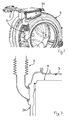
Figure 2 shows a perspective view of a some components of the household electrical appliance ofFigure 1 ; -
Figure 3 shows a section view of some components ofFigure 2 . - The subject matter of the present invention is a method of activation of a
solenoid valve 2 for loading a liquid into a washing and/ordrying compartment 3, saidcompartment 3 being part of a domestic laundry washing and/ordrying machine 1. In particular the householdelectrical appliance 1 comprises a rotatingdrum 4 for housing the laundry. Thedrum 4 is placed inside thecompartment 3. Appropriately thedrum 4 is perforated. - The method comprises the step of determining a first series of openings in succession of the
solenoid valve 2 to allow the transit through thesolenoid valve 2 of a liquid (normally water; in some cases water with chemical detergents added to aid the washing). The step of determining a first series of openings envisages sending predetermined electric pulses for opening thesolenoid valve 2. Every opening of said first series is associated with one of said predetermined electric pulses. Without said predetermined electric pulses thesolenoid valve 2 closes. Each of said predetermined electric pulses that determine the first series of openings lasts less than 0.5 seconds, preferably less than 0.3 seconds. The effective opening duration of thesolenoid valve 2 may differ from the duration of the electric pulse due to the inertia of thesolenoid valve 2. In particular, upon receipt of the pulse thesolenoid valve 2 may have an opening delay and when the pulse stops it may have a closing delay. Preferably the openings of the first series each last less than 0.5 seconds. Appropriately the openings of the first series last less than 0.3 seconds; preferably the openings of said first series last 0.2 seconds. Preferably, but not necessarily, the openings of the first series have the same duration. In the expression "opening of the first series" the adjective "first" has the sole purpose of identifying a group of predetermined openings without excluding the fact that such openings may be subsequent to other openings. - Preferably there are at least three openings in the first series (but there could also be many more). The opportunity to repeatedly open the
solenoid valve 2 is connected with the fact that it is necessary to introduce a substantial predetermined quantity of liquid in small doses. As will be more fully explained below, by introducing the liquid in small doses it is possible to prevent a trickle of water being introduced into the tank in the form of a cascade with the risk that it hits the laundry contained in thecompartment 3. In particular the detachment of the confined flow running along the walls of thecompartment 3 is prevented (with small doses of liquid the surface tension makes the confined flow adhere to the walls of the compartment 3). - Each of said openings in said first series determines the passage of a quantity of liquid less than 1 decilitre, preferably less than 0.5 decilitres. Preferably the closing intervals of the
solenoid valve 2 have the same duration. - The liquid that transits through the
solenoid valve 2 in each opening of the first series flows along at least onedelimitation wall 30 of thecompartment 3. In this way it enters thecompartment 3 but without wetting the rotatingdrum 4 for housing laundry contained in thecompartment 3 and/or the laundry contained in thedrum 4. In fact, by introducing the liquid in small quantities the surface tension contributes to keeping the liquid adherent to thedelimitation wall 30. - The step of determining a first series of openings in succession of the
solenoid valve 2 envisages actuating thesame solenoid valve 2 also used for loading the washing liquid during a previous implementation of a washing cycle. - In the preferred solution the
solenoid valve 2 is placed along aconduit 5 which leads into saidcompartment 3. Appropriately the liquid dispensed by thesolenoid valve 2 flows along saidconduit 5 to thecompartment 3 due to gravity. Appropriately along theconduit 5 between thesolenoid valve 2 and thecompartment 3 there is a drawer for introducing detergents and aiding agents for the washing, accessible by the user (Figure 2 illustrates ahousing 50 of the drawer). In an alternative non-preferred solution, thesolenoid valve 2 could however also lead directly into thecompartment 3. There are many applications of the activation method of thesolenoid valve 2. For example a first application allows the drying of laundry through the householdelectrical appliance 1 to be facilitated. On this point, the subject matter of the present invention is also a laundry drying method comprising the step of implementing the activation method of asolenoid valve 2 having one or more of the characteristics described above. The liquid introduced in the step of determining a first series of openings in succession of thesolenoid valve 2 determines the cooling of said at least onedelimitation wall 30 of thecompartment 3. Consequently the condensation of at least a part of the moisture contained in thecompartment 3 occurs. Typically said moisture is caused by the presence in thedrum 4 of damp laundry. The, at least partial, condensation of moisture on thewall 30 therefore facilitates the drying of the laundry to the extent as to make a condenser placed along an extraction conduit of a fluid from thecompartment 3 useless (or at least allowing it to be made smaller with respect to the solution wherein there is no condensation in thecompartment 3; in particular, condensation in thecompartment 3 allows the use of a solenoid valve to regulate the supply of a coolant into a dedicated condenser to be prevented). In such an embodiment the openings of said first series are staggered by closing intervals of thesolenoid valve 2 lasting between 45 and 75 seconds. Appropriately the openings of said first series affect the whole duration of the drying cycle (staggered by closing periods of the solenoid valve 2). - A further application of the method of activation of the solenoid valve is that of allowing the cooling of the
compartment 3. Such a situation could be useful in the event of a fault that leads to the overheating of thecompartment 3. On this point part of the present invention is a cooling method of thecompartment 3 comprising the step of implementing the method of activation of asolenoid valve 2 having one or more of the characteristics described above. - Appropriately such a cooling method may be activated by the detection, through a sensor, of a temperature in the
compartment 3 over a predetermined value. Such a temperature could therefore be associated with an operating fault. Appropriately in some cases the detection of such temperature value could also cause the rotation of thedrum 4 to stop. - A further application of the method of activation of the
solenoid valve 2 could be the implementation of special garment treatment cycles. - On this point, the subject matter of the present invention is a method for treating garments. This method comprises the step of implementing the activation method of a
solenoid valve 2 having one or more of the characteristics indicated above. The step of implementing the method of activation of thesolenoid valve 2 allows a quantity of liquid to be introduced into thecompartment 3 such that: - the level covers an electric heating resistance of the liquid, the resistance being inside the
compartment 3; - the level does not reach the rotating
drum 4. - Preferably, the openings of said first series are staggered by closing intervals of the
solenoid valve 2 lasting less than 2 seconds. Appropriately, this corresponds to the fact that the predetermined opening pulses of thesolenoid valve 2 are staggered by intervals lasting less than 2 seconds. The garment treatment method further comprises the step of vaporising the liquid loaded into thecompartment 3 during said first series of openings. The step of vaporising the liquid comprises the step of heating the liquid contained in thecompartment 3 using the above-indicated resistance. - The step of heating the liquid takes place after the liquid has been introduced through the
solenoid valve 2. The treatment method of the garments advantageously comprises the step of causing a second series of openings of thesolenoid valve 2 to introduce a further quantity of liquid for the purpose of compensating for the vaporisation of the liquid contained in thecompartment 3 by the resistance. Appropriately the step of performing a second series of openings is controlled by a temperature sensor. In fact, when the level of liquid in thecompartment 3 drops, the temperature detected by the temperature sensor increases (the liquid contained in the container allows the heat generated by the resistance to be absorbed). Appropriately also during the second series of openings, the activation pulses of thesolenoid valve 2 last less than 0.5 seconds. Appropriately the treatment method of the garments indicated above allows a treatment method to be performed for removing odours from garments. For example, it allows garments to be refreshed without performing an actual wash (in particular without immersing the garments in a liquid). This makes such a treatment particularly effective for delicate garments. - The invention as it is conceived enables multiple advantages to be attained.
- In particular, it allows a liquid to be introduced into the
compartment 3 without it wetting the laundry. It allows a gentle treatment to be performed on the garments while preventing them from getting wet, but simply allowing a light dampening thereof for the purpose of refreshing and/or deodorising them. - Furthermore, the introduction of liquid into the
compartment 3 without it wetting the laundry may be advantageously used to facilitate condensation in the compartment 3 (allowing savings to be made on the costs of the condenser, but also on the necessary energy for cooling a coolant inside the condenser). - The invention as conceived is susceptible to numerous modifications and variants, all falling within the scope of the inventive concept characterised thereby. Furthermore all the details can be replaced by other technically equivalent elements. In practice, all the materials used, as well as the dimensions, can be any according to requirements.
Claims (11)
- A method of activation of a solenoid valve (2) for loading a liquid into a washing and/or drying compartment (3), said compartment being part of a domestic laundry washing and/or drying machine (1) and containing a rotating drum (4) for housing the laundry; said method being characterised in that it comprises the step of determining a first series of openings in succession of the solenoid valve (2) so as to allow the transit through the solenoid valve (2) of a liquid; the step of determining a first series of openings envisaging sending predetermined electric pulses to open the solenoid valve (2); each opening in said first series being associated with one of said predetermined electric pulses, without said predetermined electric pulses the solenoid valve (2) closing; each of said predetermined electric pulses lasting less than 0.5 seconds.
- The method according to claim 1, characterised in that there are at least three openings in said first series; the openings in the first series each lasting less than 0.5 seconds.
- The method according to any of the previous claims, characterised in that each of said openings in said first series determines the passage of a quantity of liquid less than 1 decilitre.
- The method according to any one of the previous claims, characterised in that said step of determining a first series of openings in succession of the solenoid valve (2) envisages actuating the same solenoid valve (2) also used for loading a washing liquid during a previous implementation of a washing cycle.
- The method according to any one of the previous claims, characterised in that the solenoid valve (2) is positioned along a conduit (5) that leads into said compartment (3).
- The method according to any one of the previous claims, characterised in that the liquid that flows through the solenoid valve (2) in each opening in the first series flows along at least one delimitation wall (30) of the compartment (3) without wetting said rotating drum (4) for housing laundry contained in the compartment (3) or the laundry contained in the drum (4).
- A laundry drying method comprising the step of implementing the activation method of a solenoid valve (2) according to any of claims 1 to 6, the liquid introduced in the step of determining a first series of openings in succession of the solenoid valve (2) determining the cooling of said at least one delimitation wall (30) and the condensation of at least a part of the moisture contained in the compartment (3) and determined by the presence in the drum (4) of damp laundry.
- The drying method according to claim 7, characterised in that the openings in said first series are staggered by closing intervals of the solenoid valves (2) lasting between 45 and 75 seconds.
- A cooling method of the compartment (3) comprising the step of implementing the activation method of a solenoid valve (2) according to any of claims 1 to 6.
- A method of treating garments comprising the steps of:- implementing the activation method of a solenoid valve (2) according to any of claims 1 to 6; the step of implementing said activation method envisaging introducing into the compartment (3) a quantity of liquid so that the level covers an electrical heating resistance of the liquid placed in the compartment (3) but without reaching the rotating drum (4);- vaporising at least a part of the liquid loaded into the compartment (3) during said first series of openings; the step of vaporising the liquid comprising the step of heating the liquid contained in the compartment (3) using said heating resistance.
- The treatment method according to claim 10, characterised in that said predetermined opening pulses of the solenoid valve are staggered by intervals lasting less than 2 seconds.
Applications Claiming Priority (1)
| Application Number | Priority Date | Filing Date | Title |
|---|---|---|---|
| IT000078A ITPR20120078A1 (en) | 2012-11-19 | 2012-11-19 | METHOD OF ACTIVATION OF A SOLENOID VALVE. |
Publications (2)
| Publication Number | Publication Date |
|---|---|
| EP2733250A1 true EP2733250A1 (en) | 2014-05-21 |
| EP2733250B1 EP2733250B1 (en) | 2020-12-23 |
Family
ID=47633297
Family Applications (1)
| Application Number | Title | Priority Date | Filing Date |
|---|---|---|---|
| EP13193074.5A Active EP2733250B1 (en) | 2012-11-19 | 2013-11-15 | Method of activation of a solenoid valve |
Country Status (2)
| Country | Link |
|---|---|
| EP (1) | EP2733250B1 (en) |
| IT (1) | ITPR20120078A1 (en) |
Cited By (3)
| Publication number | Priority date | Publication date | Assignee | Title |
|---|---|---|---|---|
| EP3279389A1 (en) * | 2016-08-03 | 2018-02-07 | Electrolux Appliances Aktiebolag | Method for operating a household appliance and household appliance |
| EP3981905A1 (en) | 2020-10-08 | 2022-04-13 | BSH Hausgeräte GmbH | Laundry treatment device with steaming function and method for steaming laundry |
| EP4678805A1 (en) | 2024-07-09 | 2026-01-14 | BSH Hausgeräte GmbH | Laundry treating appliance having a steaming function and a method of steaming laundry |
Citations (4)
| Publication number | Priority date | Publication date | Assignee | Title |
|---|---|---|---|---|
| GB2302398A (en) * | 1995-06-20 | 1997-01-15 | Bosch Siemens Hausgeraete | Air treatment in a condenser of an appliance |
| US20060107705A1 (en) * | 2004-11-23 | 2006-05-25 | Unilever Home & Personal Care Usa, Division Of Conopco, Inc. | Automatic stand-alone dispensing device for laundry care composition |
| US20070107471A1 (en) * | 2005-10-25 | 2007-05-17 | General Electric Company | Methods and apparatus for washing machine |
| EP2466002A2 (en) * | 2009-08-11 | 2012-06-20 | LG Electronics Inc. | Dryer and control method of the same |
Family Cites Families (1)
| Publication number | Priority date | Publication date | Assignee | Title |
|---|---|---|---|---|
| GB972411A (en) * | 1961-08-03 | 1964-10-14 | Borg Warner | Combination washer-dryer |
-
2012
- 2012-11-19 IT IT000078A patent/ITPR20120078A1/en unknown
-
2013
- 2013-11-15 EP EP13193074.5A patent/EP2733250B1/en active Active
Patent Citations (4)
| Publication number | Priority date | Publication date | Assignee | Title |
|---|---|---|---|---|
| GB2302398A (en) * | 1995-06-20 | 1997-01-15 | Bosch Siemens Hausgeraete | Air treatment in a condenser of an appliance |
| US20060107705A1 (en) * | 2004-11-23 | 2006-05-25 | Unilever Home & Personal Care Usa, Division Of Conopco, Inc. | Automatic stand-alone dispensing device for laundry care composition |
| US20070107471A1 (en) * | 2005-10-25 | 2007-05-17 | General Electric Company | Methods and apparatus for washing machine |
| EP2466002A2 (en) * | 2009-08-11 | 2012-06-20 | LG Electronics Inc. | Dryer and control method of the same |
Cited By (5)
| Publication number | Priority date | Publication date | Assignee | Title |
|---|---|---|---|---|
| EP3279389A1 (en) * | 2016-08-03 | 2018-02-07 | Electrolux Appliances Aktiebolag | Method for operating a household appliance and household appliance |
| EP3981905A1 (en) | 2020-10-08 | 2022-04-13 | BSH Hausgeräte GmbH | Laundry treatment device with steaming function and method for steaming laundry |
| DE102020212699A1 (en) | 2020-10-08 | 2022-04-14 | BSH Hausgeräte GmbH | LAUNDRY TREATMENT APPLIANCE WITH STEAMING FUNCTION AND METHOD FOR STEAMING LAUNDRY |
| EP4678805A1 (en) | 2024-07-09 | 2026-01-14 | BSH Hausgeräte GmbH | Laundry treating appliance having a steaming function and a method of steaming laundry |
| DE102024206443A1 (en) * | 2024-07-09 | 2026-01-15 | BSH Hausgeräte GmbH | Laundry treatment device with a steaming function and a method for steaming laundry |
Also Published As
| Publication number | Publication date |
|---|---|
| EP2733250B1 (en) | 2020-12-23 |
| ITPR20120078A1 (en) | 2014-05-20 |
Similar Documents
| Publication | Publication Date | Title |
|---|---|---|
| US10648113B2 (en) | Method for washing laundry in a laundry washing machine and laundry washing machine | |
| AU2004226972B2 (en) | Washing apparatus and control method thereof | |
| US8627524B2 (en) | Household-type water-recirculating clothes washing machine with automatic control of the washload weight, and operating method thereof | |
| US20160060800A1 (en) | Laundry treating appliance and method of control | |
| US8528139B2 (en) | Laundry treating appliance with biofilm treating cycle | |
| AU2017203732B2 (en) | Method for operating a laundry treatment appliance and laundry treatment appliance | |
| US9598808B2 (en) | Laundry treating appliance with method to detect the type and size of a load | |
| US10094060B2 (en) | Method for washing laundry in a laundry washing machine and laundry washing machine | |
| EP2733250B1 (en) | Method of activation of a solenoid valve | |
| CN107429470A (en) | Foam for being analyzed and processed by means of motor current is detected to run the method for washing machine and be this suitable washing machine | |
| WO2014111875A1 (en) | Method for controlling filling with water of a water-conducting electric household appliance | |
| US20130000054A1 (en) | Method of operating a laundry treating appliance to detect contact between a drum and tub | |
| EP2465992A1 (en) | Laundry treating method with biofilm treating cycle | |
| EP1197592A2 (en) | Combined clothes washing and drying machine | |
| EP2703537A1 (en) | Method for washing laundry in a laundry washing machine and laundry washing machine | |
| US20140041728A1 (en) | Laundry treating appliance and method of detecting oversuds | |
| WO2023100023A1 (en) | Washing machine and washing method | |
| EP3645779B1 (en) | Method for operating a laundry treatment machine and a laundry treatment machine | |
| RU2362847C2 (en) | Washing machine and method of control thereof | |
| EP3339490B1 (en) | Method for treating textile articles in a laundry washing machine and laundry washing machine configured to implement the method | |
| TR201808299T4 (en) | A laundry cleaning device having a washing water forming apparatus. | |
| US20230323589A1 (en) | Fast sanitization system in a dryer appliance | |
| US11655578B2 (en) | Method of operating a washing machine and washing machine | |
| WO2023100024A1 (en) | Washing machine and washing method | |
| WO2015101873A1 (en) | Household appliance and method for washing and drying laundry |
Legal Events
| Date | Code | Title | Description |
|---|---|---|---|
| PUAI | Public reference made under article 153(3) epc to a published international application that has entered the european phase |
Free format text: ORIGINAL CODE: 0009012 |
|
| 17P | Request for examination filed |
Effective date: 20131115 |
|
| AK | Designated contracting states |
Kind code of ref document: A1 Designated state(s): AL AT BE BG CH CY CZ DE DK EE ES FI FR GB GR HR HU IE IS IT LI LT LU LV MC MK MT NL NO PL PT RO RS SE SI SK SM TR |
|
| AX | Request for extension of the european patent |
Extension state: BA ME |
|
| R17P | Request for examination filed (corrected) |
Effective date: 20141120 |
|
| RBV | Designated contracting states (corrected) |
Designated state(s): AL AT BE BG CH CY CZ DE DK EE ES FI FR GB GR HR HU IE IS IT LI LT LU LV MC MK MT NL NO PL PT RO RS SE SI SK SM TR |
|
| RAP1 | Party data changed (applicant data changed or rights of an application transferred) |
Owner name: WHIRLPOOL EMEA S.P.A |
|
| RIC1 | Information provided on ipc code assigned before grant |
Ipc: D06F 25/00 20060101ALN20200605BHEP Ipc: D06F 39/08 20060101AFI20200605BHEP Ipc: D06F 39/00 20200101ALN20200605BHEP Ipc: D06F 58/24 20060101ALI20200605BHEP |
|
| REG | Reference to a national code |
Ref country code: DE Ref legal event code: R079 Ref document number: 602013074850 Country of ref document: DE Free format text: PREVIOUS MAIN CLASS: D06F0039080000 Ipc: D06F0058240000 |
|
| RIC1 | Information provided on ipc code assigned before grant |
Ipc: D06F 33/34 20200101ALN20200616BHEP Ipc: D06F 39/08 20060101AFI20200616BHEP Ipc: D06F 39/00 20200101ALN20200616BHEP Ipc: D06F 58/30 20200101ALI20200616BHEP Ipc: D06F 33/00 20200101ALI20200616BHEP Ipc: D06F 58/24 20060101ALI20200616BHEP Ipc: D06F 25/00 20060101ALN20200616BHEP |
|
| GRAP | Despatch of communication of intention to grant a patent |
Free format text: ORIGINAL CODE: EPIDOSNIGR1 |
|
| STAA | Information on the status of an ep patent application or granted ep patent |
Free format text: STATUS: GRANT OF PATENT IS INTENDED |
|
| RIC1 | Information provided on ipc code assigned before grant |
Ipc: D06F 25/00 20060101ALN20200721BHEP Ipc: D06F 58/30 20200101ALI20200721BHEP Ipc: D06F 33/00 20200101ALI20200721BHEP Ipc: D06F 58/24 20060101AFI20200721BHEP Ipc: D06F 39/00 20200101ALN20200721BHEP |
|
| INTG | Intention to grant announced |
Effective date: 20200812 |
|
| GRAS | Grant fee paid |
Free format text: ORIGINAL CODE: EPIDOSNIGR3 |
|
| GRAA | (expected) grant |
Free format text: ORIGINAL CODE: 0009210 |
|
| STAA | Information on the status of an ep patent application or granted ep patent |
Free format text: STATUS: THE PATENT HAS BEEN GRANTED |
|
| AK | Designated contracting states |
Kind code of ref document: B1 Designated state(s): AL AT BE BG CH CY CZ DE DK EE ES FI FR GB GR HR HU IE IS IT LI LT LU LV MC MK MT NL NO PL PT RO RS SE SI SK SM TR |
|
| REG | Reference to a national code |
Ref country code: GB Ref legal event code: FG4D |
|
| REG | Reference to a national code |
Ref country code: DE Ref legal event code: R096 Ref document number: 602013074850 Country of ref document: DE |
|
| REG | Reference to a national code |
Ref country code: AT Ref legal event code: REF Ref document number: 1347844 Country of ref document: AT Kind code of ref document: T Effective date: 20210115 |
|
| REG | Reference to a national code |
Ref country code: IE Ref legal event code: FG4D |
|
| PG25 | Lapsed in a contracting state [announced via postgrant information from national office to epo] |
Ref country code: NO Free format text: LAPSE BECAUSE OF FAILURE TO SUBMIT A TRANSLATION OF THE DESCRIPTION OR TO PAY THE FEE WITHIN THE PRESCRIBED TIME-LIMIT Effective date: 20210323 Ref country code: FI Free format text: LAPSE BECAUSE OF FAILURE TO SUBMIT A TRANSLATION OF THE DESCRIPTION OR TO PAY THE FEE WITHIN THE PRESCRIBED TIME-LIMIT Effective date: 20201223 Ref country code: RS Free format text: LAPSE BECAUSE OF FAILURE TO SUBMIT A TRANSLATION OF THE DESCRIPTION OR TO PAY THE FEE WITHIN THE PRESCRIBED TIME-LIMIT Effective date: 20201223 Ref country code: GR Free format text: LAPSE BECAUSE OF FAILURE TO SUBMIT A TRANSLATION OF THE DESCRIPTION OR TO PAY THE FEE WITHIN THE PRESCRIBED TIME-LIMIT Effective date: 20210324 |
|
| REG | Reference to a national code |
Ref country code: AT Ref legal event code: MK05 Ref document number: 1347844 Country of ref document: AT Kind code of ref document: T Effective date: 20201223 |
|
| REG | Reference to a national code |
Ref country code: NL Ref legal event code: MP Effective date: 20201223 |
|
| PG25 | Lapsed in a contracting state [announced via postgrant information from national office to epo] |
Ref country code: SE Free format text: LAPSE BECAUSE OF FAILURE TO SUBMIT A TRANSLATION OF THE DESCRIPTION OR TO PAY THE FEE WITHIN THE PRESCRIBED TIME-LIMIT Effective date: 20201223 Ref country code: LV Free format text: LAPSE BECAUSE OF FAILURE TO SUBMIT A TRANSLATION OF THE DESCRIPTION OR TO PAY THE FEE WITHIN THE PRESCRIBED TIME-LIMIT Effective date: 20201223 Ref country code: BG Free format text: LAPSE BECAUSE OF FAILURE TO SUBMIT A TRANSLATION OF THE DESCRIPTION OR TO PAY THE FEE WITHIN THE PRESCRIBED TIME-LIMIT Effective date: 20210323 |
|
| PG25 | Lapsed in a contracting state [announced via postgrant information from national office to epo] |
Ref country code: NL Free format text: LAPSE BECAUSE OF FAILURE TO SUBMIT A TRANSLATION OF THE DESCRIPTION OR TO PAY THE FEE WITHIN THE PRESCRIBED TIME-LIMIT Effective date: 20201223 Ref country code: HR Free format text: LAPSE BECAUSE OF FAILURE TO SUBMIT A TRANSLATION OF THE DESCRIPTION OR TO PAY THE FEE WITHIN THE PRESCRIBED TIME-LIMIT Effective date: 20201223 |
|
| REG | Reference to a national code |
Ref country code: LT Ref legal event code: MG9D |
|
| PG25 | Lapsed in a contracting state [announced via postgrant information from national office to epo] |
Ref country code: PT Free format text: LAPSE BECAUSE OF FAILURE TO SUBMIT A TRANSLATION OF THE DESCRIPTION OR TO PAY THE FEE WITHIN THE PRESCRIBED TIME-LIMIT Effective date: 20210423 Ref country code: SK Free format text: LAPSE BECAUSE OF FAILURE TO SUBMIT A TRANSLATION OF THE DESCRIPTION OR TO PAY THE FEE WITHIN THE PRESCRIBED TIME-LIMIT Effective date: 20201223 Ref country code: RO Free format text: LAPSE BECAUSE OF FAILURE TO SUBMIT A TRANSLATION OF THE DESCRIPTION OR TO PAY THE FEE WITHIN THE PRESCRIBED TIME-LIMIT Effective date: 20201223 Ref country code: LT Free format text: LAPSE BECAUSE OF FAILURE TO SUBMIT A TRANSLATION OF THE DESCRIPTION OR TO PAY THE FEE WITHIN THE PRESCRIBED TIME-LIMIT Effective date: 20201223 Ref country code: SM Free format text: LAPSE BECAUSE OF FAILURE TO SUBMIT A TRANSLATION OF THE DESCRIPTION OR TO PAY THE FEE WITHIN THE PRESCRIBED TIME-LIMIT Effective date: 20201223 Ref country code: CZ Free format text: LAPSE BECAUSE OF FAILURE TO SUBMIT A TRANSLATION OF THE DESCRIPTION OR TO PAY THE FEE WITHIN THE PRESCRIBED TIME-LIMIT Effective date: 20201223 Ref country code: EE Free format text: LAPSE BECAUSE OF FAILURE TO SUBMIT A TRANSLATION OF THE DESCRIPTION OR TO PAY THE FEE WITHIN THE PRESCRIBED TIME-LIMIT Effective date: 20201223 |
|
| PG25 | Lapsed in a contracting state [announced via postgrant information from national office to epo] |
Ref country code: PL Free format text: LAPSE BECAUSE OF FAILURE TO SUBMIT A TRANSLATION OF THE DESCRIPTION OR TO PAY THE FEE WITHIN THE PRESCRIBED TIME-LIMIT Effective date: 20201223 Ref country code: AT Free format text: LAPSE BECAUSE OF FAILURE TO SUBMIT A TRANSLATION OF THE DESCRIPTION OR TO PAY THE FEE WITHIN THE PRESCRIBED TIME-LIMIT Effective date: 20201223 |
|
| REG | Reference to a national code |
Ref country code: DE Ref legal event code: R097 Ref document number: 602013074850 Country of ref document: DE |
|
| PG25 | Lapsed in a contracting state [announced via postgrant information from national office to epo] |
Ref country code: IS Free format text: LAPSE BECAUSE OF FAILURE TO SUBMIT A TRANSLATION OF THE DESCRIPTION OR TO PAY THE FEE WITHIN THE PRESCRIBED TIME-LIMIT Effective date: 20210423 |
|
| PG25 | Lapsed in a contracting state [announced via postgrant information from national office to epo] |
Ref country code: AL Free format text: LAPSE BECAUSE OF FAILURE TO SUBMIT A TRANSLATION OF THE DESCRIPTION OR TO PAY THE FEE WITHIN THE PRESCRIBED TIME-LIMIT Effective date: 20201223 |
|
| PGFP | Annual fee paid to national office [announced via postgrant information from national office to epo] |
Ref country code: FR Payment date: 20210930 Year of fee payment: 9 |
|
| PLBE | No opposition filed within time limit |
Free format text: ORIGINAL CODE: 0009261 |
|
| STAA | Information on the status of an ep patent application or granted ep patent |
Free format text: STATUS: NO OPPOSITION FILED WITHIN TIME LIMIT |
|
| PG25 | Lapsed in a contracting state [announced via postgrant information from national office to epo] |
Ref country code: DK Free format text: LAPSE BECAUSE OF FAILURE TO SUBMIT A TRANSLATION OF THE DESCRIPTION OR TO PAY THE FEE WITHIN THE PRESCRIBED TIME-LIMIT Effective date: 20201223 Ref country code: ES Free format text: LAPSE BECAUSE OF FAILURE TO SUBMIT A TRANSLATION OF THE DESCRIPTION OR TO PAY THE FEE WITHIN THE PRESCRIBED TIME-LIMIT Effective date: 20201223 |
|
| PGFP | Annual fee paid to national office [announced via postgrant information from national office to epo] |
Ref country code: GB Payment date: 20210922 Year of fee payment: 9 |
|
| 26N | No opposition filed |
Effective date: 20210924 |
|
| PG25 | Lapsed in a contracting state [announced via postgrant information from national office to epo] |
Ref country code: SI Free format text: LAPSE BECAUSE OF FAILURE TO SUBMIT A TRANSLATION OF THE DESCRIPTION OR TO PAY THE FEE WITHIN THE PRESCRIBED TIME-LIMIT Effective date: 20201223 |
|
| PGFP | Annual fee paid to national office [announced via postgrant information from national office to epo] |
Ref country code: IT Payment date: 20211012 Year of fee payment: 9 |
|
| PG25 | Lapsed in a contracting state [announced via postgrant information from national office to epo] |
Ref country code: IS Free format text: LAPSE BECAUSE OF FAILURE TO SUBMIT A TRANSLATION OF THE DESCRIPTION OR TO PAY THE FEE WITHIN THE PRESCRIBED TIME-LIMIT Effective date: 20210423 |
|
| PG25 | Lapsed in a contracting state [announced via postgrant information from national office to epo] |
Ref country code: MC Free format text: LAPSE BECAUSE OF FAILURE TO SUBMIT A TRANSLATION OF THE DESCRIPTION OR TO PAY THE FEE WITHIN THE PRESCRIBED TIME-LIMIT Effective date: 20201223 |
|
| REG | Reference to a national code |
Ref country code: CH Ref legal event code: PL |
|
| PG25 | Lapsed in a contracting state [announced via postgrant information from national office to epo] |
Ref country code: LU Free format text: LAPSE BECAUSE OF NON-PAYMENT OF DUE FEES Effective date: 20211115 Ref country code: BE Free format text: LAPSE BECAUSE OF NON-PAYMENT OF DUE FEES Effective date: 20211130 |
|
| REG | Reference to a national code |
Ref country code: BE Ref legal event code: MM Effective date: 20211130 |
|
| PG25 | Lapsed in a contracting state [announced via postgrant information from national office to epo] |
Ref country code: IE Free format text: LAPSE BECAUSE OF NON-PAYMENT OF DUE FEES Effective date: 20211115 |
|
| PG25 | Lapsed in a contracting state [announced via postgrant information from national office to epo] |
Ref country code: HU Free format text: LAPSE BECAUSE OF FAILURE TO SUBMIT A TRANSLATION OF THE DESCRIPTION OR TO PAY THE FEE WITHIN THE PRESCRIBED TIME-LIMIT; INVALID AB INITIO Effective date: 20131115 |
|
| P01 | Opt-out of the competence of the unified patent court (upc) registered |
Effective date: 20230523 |
|
| PG25 | Lapsed in a contracting state [announced via postgrant information from national office to epo] |
Ref country code: CY Free format text: LAPSE BECAUSE OF FAILURE TO SUBMIT A TRANSLATION OF THE DESCRIPTION OR TO PAY THE FEE WITHIN THE PRESCRIBED TIME-LIMIT Effective date: 20201223 |
|
| GBPC | Gb: european patent ceased through non-payment of renewal fee |
Effective date: 20221115 |
|
| PG25 | Lapsed in a contracting state [announced via postgrant information from national office to epo] |
Ref country code: LI Free format text: LAPSE BECAUSE OF NON-PAYMENT OF DUE FEES Effective date: 20220630 Ref country code: CH Free format text: LAPSE BECAUSE OF NON-PAYMENT OF DUE FEES Effective date: 20220630 |
|
| PG25 | Lapsed in a contracting state [announced via postgrant information from national office to epo] |
Ref country code: IT Free format text: LAPSE BECAUSE OF NON-PAYMENT OF DUE FEES Effective date: 20221115 Ref country code: GB Free format text: LAPSE BECAUSE OF NON-PAYMENT OF DUE FEES Effective date: 20221115 |
|
| REG | Reference to a national code |
Ref country code: DE Ref legal event code: R081 Ref document number: 602013074850 Country of ref document: DE Owner name: WHIRLPOOL EMEA S.R.L., IT Free format text: FORMER OWNER: WHIRLPOOL EMEA S.P.A, PERO, IT |
|
| PG25 | Lapsed in a contracting state [announced via postgrant information from national office to epo] |
Ref country code: FR Free format text: LAPSE BECAUSE OF NON-PAYMENT OF DUE FEES Effective date: 20221130 |
|
| PG25 | Lapsed in a contracting state [announced via postgrant information from national office to epo] |
Ref country code: MK Free format text: LAPSE BECAUSE OF FAILURE TO SUBMIT A TRANSLATION OF THE DESCRIPTION OR TO PAY THE FEE WITHIN THE PRESCRIBED TIME-LIMIT Effective date: 20201223 |
|
| PG25 | Lapsed in a contracting state [announced via postgrant information from national office to epo] |
Ref country code: MT Free format text: LAPSE BECAUSE OF FAILURE TO SUBMIT A TRANSLATION OF THE DESCRIPTION OR TO PAY THE FEE WITHIN THE PRESCRIBED TIME-LIMIT Effective date: 20201223 |
|
| PG25 | Lapsed in a contracting state [announced via postgrant information from national office to epo] |
Ref country code: TR Free format text: LAPSE BECAUSE OF FAILURE TO SUBMIT A TRANSLATION OF THE DESCRIPTION OR TO PAY THE FEE WITHIN THE PRESCRIBED TIME-LIMIT Effective date: 20201223 |
|
| PGFP | Annual fee paid to national office [announced via postgrant information from national office to epo] |
Ref country code: DE Payment date: 20251126 Year of fee payment: 13 |