EP2733599B1 - Serveur de commande, dispositif de traitement de données et dispositif de commande pour dispositif de traitement de données - Google Patents
Serveur de commande, dispositif de traitement de données et dispositif de commande pour dispositif de traitement de données Download PDFInfo
- Publication number
- EP2733599B1 EP2733599B1 EP13192531.5A EP13192531A EP2733599B1 EP 2733599 B1 EP2733599 B1 EP 2733599B1 EP 13192531 A EP13192531 A EP 13192531A EP 2733599 B1 EP2733599 B1 EP 2733599B1
- Authority
- EP
- European Patent Office
- Prior art keywords
- service providing
- specific
- providing server
- server
- command
- Prior art date
- Legal status (The legal status is an assumption and is not a legal conclusion. Google has not performed a legal analysis and makes no representation as to the accuracy of the status listed.)
- Active
Links
Images



Classifications
-
- H—ELECTRICITY
- H04—ELECTRIC COMMUNICATION TECHNIQUE
- H04L—TRANSMISSION OF DIGITAL INFORMATION, e.g. TELEGRAPHIC COMMUNICATION
- H04L63/00—Network architectures or network communication protocols for network security
- H04L63/08—Network architectures or network communication protocols for network security for authentication of entities
-
- G—PHYSICS
- G06—COMPUTING OR CALCULATING; COUNTING
- G06F—ELECTRIC DIGITAL DATA PROCESSING
- G06F16/00—Information retrieval; Database structures therefor; File system structures therefor
- G06F16/90—Details of database functions independent of the retrieved data types
- G06F16/95—Retrieval from the web
- G06F16/957—Browsing optimisation, e.g. caching or content distillation
-
- G—PHYSICS
- G06—COMPUTING OR CALCULATING; COUNTING
- G06F—ELECTRIC DIGITAL DATA PROCESSING
- G06F3/00—Input arrangements for transferring data to be processed into a form capable of being handled by the computer; Output arrangements for transferring data from processing unit to output unit, e.g. interface arrangements
- G06F3/12—Digital output to print unit, e.g. line printer, chain printer
- G06F3/1201—Dedicated interfaces to print systems
- G06F3/1202—Dedicated interfaces to print systems specifically adapted to achieve a particular effect
- G06F3/1203—Improving or facilitating administration, e.g. print management
- G06F3/1204—Improving or facilitating administration, e.g. print management resulting in reduced user or operator actions, e.g. presetting, automatic actions, using hardware token storing data
-
- G—PHYSICS
- G06—COMPUTING OR CALCULATING; COUNTING
- G06F—ELECTRIC DIGITAL DATA PROCESSING
- G06F3/00—Input arrangements for transferring data to be processed into a form capable of being handled by the computer; Output arrangements for transferring data from processing unit to output unit, e.g. interface arrangements
- G06F3/12—Digital output to print unit, e.g. line printer, chain printer
- G06F3/1201—Dedicated interfaces to print systems
- G06F3/1223—Dedicated interfaces to print systems specifically adapted to use a particular technique
- G06F3/1237—Print job management
- G06F3/1238—Secure printing, e.g. user identification, user rights for device usage, unallowed content, blanking portions or fields of a page, releasing held jobs
-
- G—PHYSICS
- G06—COMPUTING OR CALCULATING; COUNTING
- G06F—ELECTRIC DIGITAL DATA PROCESSING
- G06F3/00—Input arrangements for transferring data to be processed into a form capable of being handled by the computer; Output arrangements for transferring data from processing unit to output unit, e.g. interface arrangements
- G06F3/12—Digital output to print unit, e.g. line printer, chain printer
- G06F3/1201—Dedicated interfaces to print systems
- G06F3/1223—Dedicated interfaces to print systems specifically adapted to use a particular technique
- G06F3/1237—Print job management
- G06F3/1265—Printing by reference, e.g. retrieving document/image data for a job from a source mentioned in the job
-
- G—PHYSICS
- G06—COMPUTING OR CALCULATING; COUNTING
- G06F—ELECTRIC DIGITAL DATA PROCESSING
- G06F3/00—Input arrangements for transferring data to be processed into a form capable of being handled by the computer; Output arrangements for transferring data from processing unit to output unit, e.g. interface arrangements
- G06F3/12—Digital output to print unit, e.g. line printer, chain printer
- G06F3/1201—Dedicated interfaces to print systems
- G06F3/1278—Dedicated interfaces to print systems specifically adapted to adopt a particular infrastructure
- G06F3/1285—Remote printer device, e.g. being remote from client or server
- G06F3/1288—Remote printer device, e.g. being remote from client or server in client-server-printer device configuration
-
- G—PHYSICS
- G06—COMPUTING OR CALCULATING; COUNTING
- G06F—ELECTRIC DIGITAL DATA PROCESSING
- G06F3/00—Input arrangements for transferring data to be processed into a form capable of being handled by the computer; Output arrangements for transferring data from processing unit to output unit, e.g. interface arrangements
- G06F3/12—Digital output to print unit, e.g. line printer, chain printer
- G06F3/1201—Dedicated interfaces to print systems
- G06F3/1278—Dedicated interfaces to print systems specifically adapted to adopt a particular infrastructure
- G06F3/1292—Mobile client, e.g. wireless printing
-
- H—ELECTRICITY
- H04—ELECTRIC COMMUNICATION TECHNIQUE
- H04L—TRANSMISSION OF DIGITAL INFORMATION, e.g. TELEGRAPHIC COMMUNICATION
- H04L47/00—Traffic control in data switching networks
- H04L47/70—Admission control; Resource allocation
-
- H—ELECTRICITY
- H04—ELECTRIC COMMUNICATION TECHNIQUE
- H04L—TRANSMISSION OF DIGITAL INFORMATION, e.g. TELEGRAPHIC COMMUNICATION
- H04L67/00—Network arrangements or protocols for supporting network services or applications
- H04L67/01—Protocols
- H04L67/02—Protocols based on web technology, e.g. hypertext transfer protocol [HTTP]
-
- H—ELECTRICITY
- H04—ELECTRIC COMMUNICATION TECHNIQUE
- H04L—TRANSMISSION OF DIGITAL INFORMATION, e.g. TELEGRAPHIC COMMUNICATION
- H04L67/00—Network arrangements or protocols for supporting network services or applications
- H04L67/50—Network services
- H04L67/56—Provisioning of proxy services
-
- H—ELECTRICITY
- H04—ELECTRIC COMMUNICATION TECHNIQUE
- H04W—WIRELESS COMMUNICATION NETWORKS
- H04W12/00—Security arrangements; Authentication; Protecting privacy or anonymity
- H04W12/06—Authentication
-
- H—ELECTRICITY
- H04—ELECTRIC COMMUNICATION TECHNIQUE
- H04W—WIRELESS COMMUNICATION NETWORKS
- H04W4/00—Services specially adapted for wireless communication networks; Facilities therefor
- H04W4/80—Services using short range communication, e.g. near-field communication [NFC], radio-frequency identification [RFID] or low energy communication
Definitions
- the present specification discloses a technique for receiving location information indicating a location of web page data, and executing a process.
- a user terminal comprising a web browser is disclosed in Japanese patent application publication No. 2002-63138 .
- a user registers delivery service information (i.e., service ID, service name, URL) and information relating to authentication (i.e., service ID, user ID, password) in the user terminal. Then, the user selects a desired delivery service from a delivery service list created from the registered delivery service information. In this case, the user terminal sends the registered user ID and password to a system which executes an information delivery service. Thereby, the user can receive the information delivery service without inputting the user ID and password.
- US 8,189,225 discloses a system and a machine implemented method for sending a print request from a device to a cloud printer within a cloud, the cloud comprising the cloud printer and a cloud server.
- a network connection is established with the cloud server, and print data is transmitted from the device to the cloud server via the network connection.
- Print data location information is received from the cloud server via the network connection, the print data location information specifying an address of the print data in the cloud.
- An NFC connection is established with the cloud printer, and a print request is sent to the cloud printer via the NFC connection.
- the print request includes the print data location information and is configured to be used by the cloud printer to obtain the print data from the cloud.
- US 2012/0113464 discloses relay apparatus connected to service providing apparatuses respectively providing services and a communication apparatus that includes an additional-information storage unit configured to store additional information associated with the service and identification information.
- US 2012/0147420 discloses a mobile printing system including a cloud server apparatus, a mobile terminal device, a device management server apparatus, a print-control device, and an image forming apparatus.
- the cloud server apparatus stores a document data file.
- the mobile terminal device transmits the document data file with its device ID to the cloud server apparatus.
- the device management server apparatus receives the document data file in association with the device ID, and converts the document data file to print data and stores it.
- the print-control device detects the mobile terminal device and receives its device ID, and receives the print data from the document management server apparatus, and transmits the print data to the image forming apparatus for printing.
- US 2002/0035546 discloses a printing system using a portable terminal and printing charge collecting method.
- US 2002/0335546 discloses that when the user intends to print out a contents, the user sends authentication information given to him/her to a contents server from his/her cellular phone.
- the users' cellular phone sends print request information to a printer.
- the printer acquires corresponding contents data for print-out from the contents server in accordance with the print request information, and prints out the contents.
- a technique that receives location information indicating a location of web page data and may execute an appropriate process in a case where a terminal device sends the location information by using a short distance wireless communication.
- the present invention provides a control server in accordance with claim 1, a control device in accordance with claim 8, a computer program in accordance with claim 9, and a computer program in accordance with claim 10.
- the control server may comprise: a receiving unit configured to receive first location information indicating a location of specific web page data via a data processing device, in a case where a terminal device comprising a web browser receives the specific web page data from a specific service providing server by using a first type of wireless communication and sends the first location information to the data processing device by using a second type of wireless communication, the second type of wireless communication being a short distance wireless communication having a shorter wireless communication distance than the first type of wireless communication; and a display control unit configured to cause a display unit of the data processing device to display at least N items of account information among M items of account information currently stored in the data processing device, in a case where the first location information is received, the M being an integer of two or more, the N being an integer which is one or more and is equal to the M or less, each of the N items of account information being available for receiving a data providing service from the specific service providing server.
- the terminal device since the terminal device comprises the web browser, the terminal device may receive the specific web page data from the specific service providing server and display a web page. Thereby, a user can see the web page. Then, the terminal device sends the first location information indicating the location of the specific web page data to the data processing device by using a short distance wireless communication.
- the control server receives the first location information via the data processing device, and causes the display unit of the data processing device to display at least the N items of account information currently stored in the data processing device. Thereby, by looking at the display unit of the data processing device, the user may learn the N items of account information being capable of receiving the data providing service from the specific service providing server.
- the control server may provide the user with useful information.
- the M items of account information may include the N items of account information and (M-N) items of account information being available for receiving a data providing service from one or more service providing servers which are different from the specific service providing server.
- the control server may further comprise: a selection unit configured to select, by using the first location information, the specific service providing server from among a plurality of service providing servers including the specific service providing server and the one or more service providing servers.
- the display control unit may be configured to cause the display unit to display the N items of account information among the M items of account information in a manner distinguishable from the (M-N) items of account information.
- the control server can select the specific service providing server by using the first location information. Then, the control server causes the display unit to display, in a manner distinguishable from other account information, the N items of account information being capable of receiving the data providing service from the specific service providing server. Consequently, the control server may provide the user with useful information.
- the control server may further comprise: a first acquisition unit configured to acquire the M items of account information from the data processing device.
- the display control unit may be configured to extract the N items of account information from among the M items of account information, and supply the N items of account information to the data processing device, so as to cause the display unit to display the N items of account information among the M items of account information in the manner distinguishable from the (M-N) items of account information.
- the control server can appropriately cause the display unit of the data processing device to display the N items of account information.
- the display control unit may be configured to supply server information indicating the specific service providing server to the data processing device, so as to cause the data processing device to execute a process of extracting the N items account information from among the M items of account information and a process of displaying on the display unit the N items of account information in the manner distinguishable from the (M-N) items of account information.
- the control server can appropriately cause the display unit of the data processing device to display the N items of account information.
- the control server may further comprise: a second acquisition unit configured to acquire specific authentication information corresponding to specific account information from the data processing device, in a case where the specific account information is selected by a user from among the N items of account information displayed on the display unit; a first command communication unit configured to send a first type of command including the specific authentication information to the specific service providing server by using the first location information, so as to receive a first type of response including second location information from the specific service providing server, the second location information indicating a location of an image file corresponding to a target image represented by the specific web page data; and a specific process execution unit configured to execute a specific process by using the second location information included in the first type of response, the specific process including a process of causing a print execution unit of the data processing device to execute a print according to the image file.
- the control server can appropriately cause the print execution unit of the data processing device to execute the print according to the image file.
- the control server may further comprise: a second command communication unit configured to send a second type of command not including authentication information to the specific service providing server by using the first location information, so as to receive a second type of response from the specific service providing server; and a first determination unit configured to determine, based on the second type of response, whether the specific service providing server is capable of executing a data providing service in response to the second type of command.
- a second command communication unit configured to send a second type of command not including authentication information to the specific service providing server by using the first location information, so as to receive a second type of response from the specific service providing server
- a first determination unit configured to determine, based on the second type of response, whether the specific service providing server is capable of executing a data providing service in response to the second type of command.
- the display control unit may be configured to: cause the display unit to display the at least N items of account information among the M items of account information, in a case where it is determined that the specific service providing server is not capable of executing the data providing service in response to the second type of command; and cause the display unit not to display any account information included in the M items of account information in a case where it is determined that the specific service providing server is capable of executing the data providing service in response to the second type of command.
- the control server can appropriately change whether or not to cause the display unit of the data processing device to display at least the N items of account information, in response to whether or not the specific service providing server corresponds to the second type of command.
- the control server may further comprise: a memory configured to store, for each of a plurality of service providing servers including the specific service providing server and one or more service providing servers which are different from the specific service providing server, information indicating whether the each service providing server is capable of executing a data providing service in response to the second type of command; and a second determination unit configured to determine, based on contents within the memory, whether the specific service providing server is capable of executing a data providing service in response to the second type of command.
- the second command communication unit may be configured to: send the second type of command to the specific service providing server, in a case where it is determined that the specific service providing server is capable of executing the data providing service in response to the second type of command; and not send the second type of command to the specific service providing server, in a case where it is determined that the specific service providing server is not capable of executing the data providing service in response to the second type of command.
- the control server can determine whether or not the specific service providing server corresponds to the second type of command before sending the second type of command to the specific service providing server. Accordingly, the control server can appropriately change, in response to the determination result, whether or not to send the second type of command to the specific service providing server.
- the control server does not send the second type of command to the specific service providing server in the case where the specific service providing server does not correspond to the second type of command. Consequently, a communication load between the control server and the specific service providing server can be reduced.
- the first determination unit may be configured to: determine that the specific service providing server is capable of executing the data providing service in response to the second type of command, in a case where the first type of response includes second location information indicating a location of an image file corresponding to a target image represented by the specific web page data; and determine that the specific service providing server is not capable of executing the data providing service in response to the second type of command, in a case where the first type of response does not include the second location information.
- the control server may appropriately determine whether or not the specific service providing server corresponds to the second type of command.
- the data processing device may comprise: an interface for a second type of wireless communication, the second type of wireless communication being a short distance wireless communication having a shorter wireless communication distance than a first type of wireless communication; a memory; a display unit; a receiving unit configured to receive first location information indicating a location of specific web page data via the interface, in a case where a terminal device comprising a web browser receives specific web page data from a specific service providing server by using the first type of wireless communication and sends the first location information by using the second type of wireless communication; and a display control unit configured to cause the display unit to display at least N items of account information among M items of account information currently stored in the memory, in a case where the first location information is received, the M being an integer of two or more, the N being an integer which is one or more and is equal to the M or less, each of the N items of account information being available for receiving a data providing service from the specific service providing server.
- the data processing device receives the first location information from the terminal device by using the short distance wireless communication.
- the data processing device causes the display unit to display at least the N items of account information currently stored in the memory.
- the data processing device may provide the user with useful information.
- the control device may comprise: a receiving unit configured to receive first location information indicating a location of specific web page data, in a case where a terminal device comprising a web browser receives the specific web page data from a specific service providing server by using a first type of wireless communication and sends the first location information by using a second type of wireless communication, the second type of wireless communication being a short distance wireless communication having a shorter wireless communication distance than the first type of wireless communication; a command communication unit configured to send a specific command not including authentication information to the specific service providing server by using the first location information, so as to receive a specific response from the specific service providing server, the specific response being a response which is sent from the specific service providing server in a case where the specific service providing server is capable of executing a data providing service in response to the specific command; and a specific process execution unit configured to execute a specific process in a case where the specific response is received, the specific process including a process of causing a print
- the control device in the case of receiving the first location information, sends the specific command not including the authentication information to the specific service providing server by using the first location information. Then, in the case where the specific response is received from the specific service providing server, the control device can appropriately cause the data processing device to execute the print according to the image file.
- the data processing device and the control device may be configured separately from each other.
- the receiving unit may be configured to receive the first location information via the data processing device, in a case where the terminal device sends the first location information to the data processing device.
- the specific response may include second location information indicating a location of the image file.
- the specific process may include: a process of generating a template for the data processing device to acquire the image file from the specific service providing server, the template including the second location information and a print instruction for instructing the data processing device to execute the print according to the image file; and a process of sending the template to the data processing device.
- the control device can appropriately cause the print execution unit of the data processing device to execute the print according to the image file.
- a control method, a computer program, and computer-readable instructions for realizing any of the apparatuses described above i.e., control server, data processing device, or control device
- a non-transitory computer-readable medium which stores the computer program or the computer-readable instructions are also novel and useful.
- Fig. 1 shows the configuration of a communication system.
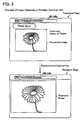
- Fig. 2 shows an example of a web page displayed on a portable terminal.
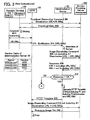
- Fig. 3 shows a sequence diagram of processes executed by devices of a first embodiment.
- Fig. 4 shows a sequence diagram of a continuation of Fig. 3 .
- Fig. 5 shows a sequence diagram of processes executed by devices of a second embodiment.
- Fig. 6 shows a sequence diagram of processes executed by devices of a third embodiment.
- Fig. 7 shows a sequence diagram of processes executed by devices of a fourth embodiment.
- Fig. 8 shows a sequence diagram of a continuation of Fig. 7 .
- a communication system 2 comprises an MFP (an abbreviation of Multi-Function Peripheral) 10, an intermediation server 50, a plurality of service providing servers 100, 110, and a portable terminal 150.
- the devices 10, 50, 100, 110, 150 can be connected to an internet.
- the MFP 10 and the portable terminal 150 are each capable of executing an NFC (an abbreviation of Near Field Communication) communication.
- the MFP 10 is a peripheral device capable of executing multiple functions such as a print function, scan function, copy function, FAX function, etc.
- the MFP 10 comprises an operating unit 12, a display unit 14, an NFC I/F (an abbreviation of NFC Interface) 16, a print execution unit 18, a scan execution unit 20, a network I/F 22 and a controller 30.
- the operating unit 12 comprises a plurality of keys. A user can input various instructions to the MFP 10 by operating the operating unit 12.
- the display unit 14 can display various types of information.
- the print execution unit 18 comprises an ink jet method, laser method, etc. printing mechanism.
- the scan execution unit 20 comprises a CCD, CIS, etc. scanning mechanism.
- the NFC I/F 16 is an interface for executing an NFC scheme wireless communication.
- the NFC scheme is a wireless communication scheme for executing a so-called short distance wireless communication, being e.g., a wireless communication scheme based on international standards ISO/IEC21481 or 18092.
- the network I/F 22 is an interface for connecting with a LAN (an abbreviation of Local Area Network).
- the network I/F 22 may be an interface connected with a wired LAN, or may be an interface connected with a wireless LAN.
- the MFP 10 can be connected with the internet via the network I/F 22 (i.e., via the LAN).
- the controller 30 comprises a CPU 32 and a memory 34.
- the CPU 32 executes various processes according to a program that is stored in the memory 34.
- the functions of units 41 to 49 are realized by the CPU 32 executing processes according to the above program.
- the memory 34 stores a plurality of user information.
- a service table is stored in the memory 34.
- the service table is used in a fourth embodiment (to be described).
- Each of the plurality of user information is user information being capable of receiving a service from the service providing servers 100, 110 (to be described).
- the user information is information in which display name, service name, and access token (called “AT” below) are associated.
- display name and service name are referred to together as "account information”. Consequently, the user information is information in which the account information (i.e., the display name and service name) and the AT are associated.
- the display name is a name for a display of the user on the MFP 10.
- the service name is a name for a service providing server (e.g., 100) from which the user can receive a service.
- the AT is authentication information provided from a service providing server (e.g., 100), and is used for authentication in the service providing server. The manner of storing the user information in the memory 34 will be described later.
- the intermediation server 50 is a server provided by a vendor of the MFP 10, and is a server for intermediating provision of service to the MFP 10 from the service providing servers 100, 110.
- the intermediation server 50 comprises a network I/F 60 and a controller 70.
- the intermediation server 50 is capable of connecting with the internet via the network I/F 60.
- the controller 70 comprises a CPU 72 and a memory 74.
- the CPU 72 executes various processes according to the program that is stored in the memory 74.
- the functions of units 81 to 89 are realized by the CPU 72 executing processes according to the above program.
- the memory 74 stores a service table (to be described; see Fig. 3 ).
- a server table is stored in the memory 74.
- the server table is used in a second embodiment (to be described).
- the service providing servers 100, 110 are each a known service providing server, e.g., "Evemote (registered trademark)", “Google (registered trademark) Docs”, “PICASA (registered trademark)", “Facebook (registered trademark)", etc.
- a name (i.e., service name) of the service providing servers 100, 110 is "AAA", "BBB” respectively.
- the service providing servers 100, 110 are capable of executing a data storing service of acquiring data from a communication apparatus (e.g., the portable terminal 150, the MFP 10) and storing the data. Further, the service providing servers 100, 110 are capable of executing a data providing service of providing data to a communication apparatus.
- the service providing server 100 is a server provided by a first service provider (i.e., a first company), and the service providing server 110 is a server provided by a second service provider (i.e., a second company) which is different from the first service provider.
- the first service provider releases a first API (an abbreviation of Application Program Interface) for receiving a service from the service providing server 100
- the second service provider releases a second API for receiving a service from the service providing server 110. Since the first service provider and the second service provider are different, the first API and the second API are usually different.
- a communication apparatus In order to receive services from, e.g., both the service providing servers 100, 110, a communication apparatus must comprise both the first API (i.e., a first program) and the second API (i.e., a second program).
- the MFP 10 in order for the MFP 10 to receive a service from each of the plurality of service providing servers 100, 110, the MFP 10 must comprise a plurality of APIs and consequently must store many programs.
- storage capacity of the memory 34 of the MFP 10 is less than that of a PC, etc. Consequently, in the present embodiment, the intermediation server 50 is provided so that, without storing many programs in the MFP 10, the MFP 10 can receive a service from each of the plurality of service providing servers 100, 110.
- the intermediation server 50 comprises a plurality of APIs corresponding to the plurality of service providing servers 100, 110.
- the intermediation server 50 executes various communications (e.g., the communication of a command 206, etc. of Fig. 3 , to be described) with the service providing servers 100, 110 by using the APIs corresponding to the service providing servers 100, 110.
- the MFP 10 can receive a service from the service providing servers 100, 110 even without comprising APIs corresponding to the service providing servers 100, 110 (i.e., even without storing many programs).
- the MFP 10 can receive a service from the novel service providing server even without changing a program of the MFP 10.
- the portable terminal 150 is a transportable terminal such as, e.g., a mobile phone (e.g., smart phone), PDA, notebook PC, tablet PC, portable music playback device, portable film playback device, etc.
- the portable terminal 150 comprises an interface for executing an NFC communication, and an interface for executing a wireless communication based on a wireless communication standards defined by Wi-Fi Alliance. Below, the latter wireless communication is called "Wi-Fi communication".
- the portable terminal 150 is capable of executing the Wi-Fi communication and connecting with the internet. Moreover, in the present embodiment, a situation is assumed in which the portable terminal 150 and the MFP 10 are not connected with the same LAN.
- the NFC communication is a wireless communication based on, e.g., international standards ISO/IEC21481 or 18092.
- the Wi-Fi communication is a wireless communication based on, e.g., IEEE (an abbreviation of The Institute of Electrical and Electronics Engineers, Inc.) standard 802.11 and standards conforming thereto (e.g., 802.11a, 11b, 11g, 11n, etc.).
- a Communication speed of the NFC communication e.g., maximum communication speed being equal to 100 to 424Kbps
- a communication speed of the Wi-Fi communication e.g., the maximum communication speed being equal to 11 to 600Mbps).
- a frequency of a carrier wave in the NFC communication (e.g., 13.56MHz band) is different from a frequency of a carrier wave in the Wi-Fi communication (e.g., 2.4GHz band or 5.0GHz band).
- possible communication distance of the NFC communication e.g., 10cm or less
- possible communication distance of the Wi-Fi communication e.g., 100m or less.
- the portable terminal 150 comprises a known OS program that supports the NFC communication and the Wi-Fi communication (e.g., Android (registered trademark)).
- the portable terminal 150 further comprises a known web browser program.
- the portable terminal 150 further comprises the first and the second APIs corresponding to the service providing servers 100, 110.
- the portable terminal 150 does not comprise a particular application program (e.g., printer driver program, scanner driver program) for causing the MFP 10 to execute a function (e.g., print function, scan function).
- the user executes the following advance preparation. For example, using a PC (not shown), the user accesses the intermediation server 50, selects the service name "AAA" of the service providing server 100, and then selects "acquire AT".
- the controller 70 of the intermediation server 50 sends, to the PC, a specific URL (an abbreviation of Uniform Resource Locator) for accessing the service providing server 100.
- a specific URL an abbreviation of Uniform Resource Locator
- the user accesses the service providing server 100 from the PC.
- the PC causes a log-in screen for logging into the service providing server 100 to be displayed.
- the user inputs an account name and password via the PC, and executes an authentication procedure.
- the service providing server 100 creates an AT for the user, and sends the AT to the intermediation server 50.
- the controller 70 of the intermediation server 50 creates a temporary ID, and sends the temporary ID to the PC.
- the PC causes the temporary ID to be displayed. Thereby, the user can learn the temporary ID displayed on the PC.
- the user selects the service name "AAA" of the service providing server 100 and, further, inputs a desired display name (e.g., "Alice") into the MFP 10.
- a desired display name e.g., "Alice”
- the controller 30 of the MFP 10 sends the temporary ID to the intermediation server 50.
- the controller 70 of the intermediation server 50 sends the AT to the MFP 10.
- the controller 30 of the MFP 10 can add one item of user information to the memory 34. That is, the controller 30 of the MFP 10 can store, in the memory 34, one item of user information in which the following are associated: the display name (e.g., "Alice") input by the user; the service name "AAA" selected by the user; and the AT received from the intermediation server 50.
- the display name e.g., "Alice”
- the service name "AAA” selected by the user e.g., "Alice”
- the controller 30 of the MFP 10 can store, in the memory 34, user information corresponding to the service providing server 110 having the service name "BBB". Further, in the present embodiment, a situation is assumed in which the MFP 10 is used in common by a plurality of users. Consequently, the controller 30 of the MFP 10 can store a plurality of user information corresponding to the plurality of users in the memory 34. Consequently, e.g., as shown in Fig. 4 , the memory 34 can store a plurality of user information (four items of user information No. 1 to No. 4 in the example of Fig. 4 ).
- the target user e.g., logs into the service providing server 100 of "Facebook (registered trademark)", etc. by using the portable terminal 150, and uploads, in advance, a resource image file (e.g., a resource image file representing a resource image included in a lower diagram in Fig. 2 ) to the service providing server 100.
- a resource image file e.g., a resource image file representing a resource image included in a lower diagram in Fig. 2
- the resource image file is, e.g., a file having a format such as JPEG (an abbreviation of Joint Photographic Experts Group), PDF (an abbreviation of Portable Document Format), etc.
- the service providing server 100 not only saves the resource image file uploaded from the portable terminal 150, but also creates a thumbnail image file (e.g., a file representing a thumbnail image included in an upper diagram in Fig. 2 ) based on the resource image file, and saves the thumbnail image file.
- a thumbnail image file e.g., a file representing a thumbnail image included in an upper diagram in Fig. 2
- the target user When the resource image file and the thumbnail image file are saved in the service providing server 100, the target user, by using the portable terminal 150, can view a thumbnail page (see a web page shown in the upper diagram in Fig. 2 ) that includes the thumbnail image represented by the thumbnail image file, and can view a resource page (see a web page shown in the lower diagram in Fig. 2 ) that includes the resource image represented by the resource image file.
- the target user first performs an operation on the portable terminal 150 for activating the web browser, and logs into the service providing server 100.
- the target user performs an operation on the portable terminal 150 for viewing the thumbnail page (e.g., an operation of selecting a predetermined album from a list of albums, an operation of selecting a predetermined thumbnail image from a list of thumbnail images included in the album, etc.).
- the web browser sends, by using the Wi-Fi communication, a thumbnail demanding command 200 of HTTP (an abbreviation of Hyper Text Transfer Protocol) to the service providing server 100.
- the thumbnail demanding command 200 includes a URL 100a as a destination URL.
- the URL 100a indicates a location of thumbnail data 202 representing the thumbnail page.
- the thumbnail data 202 is HTML (an abbreviation of Hyper Text Markup Language) format data representing the thumbnail page.
- the service providing server 100 Upon receiving the thumbnail demanding command 200 from the portable terminal 150, the service providing server 100 sends the thumbnail data 202 to the portable terminal 150 according to the destination URL 100a included in the thumbnail demanding command 200.
- the web browser of the portable terminal 150 receives the thumbnail data 202 by using the Wi-Fi communication. Thereby, the web browser can cause a display unit (not shown) of the portable terminal 150 to display the thumbnail page represented by the thumbnail data 202.
- the upper diagram in Fig. 2 shows an example of the thumbnail page displayed on the portable terminal 150.
- the thumbnail page includes the URL 100a, the thumbnail image (an image of a flower in Fig. 2 ),and a text indicating various types of information (e.g., title "photo album", comment "image of flower”, etc.).
- the URL 100a includes a server name "www.aa.com” of the service providing server 100. This means that the thumbnail data 202 is being provided from the service providing server 100.
- a character string "xxxxx" included in the URL 100a includes an ID for specifying the thumbnail image file.
- the thumbnail data 202 is HTML format data.
- the target user performs a predetermined operation (e.g., an operation of clicking on the thumbnail image) on the portable terminal 150 while the thumbnail page is in a state of being displayed.
- a predetermined operation e.g., an operation of clicking on the thumbnail image
- the web browser sends an image demanding command to the service providing server 100, for demanding the service providing server 100 to send the resource image file, and receives the resource image file from the service providing server 100.
- the web browser can cause the display unit of the portable terminal 150 to display the resource page including the resource image.
- the lower diagram in Fig. 2 shows an example of a resource page displayed on the portable terminal 150.
- the resource page includes a URL 100b of the resource image file, and a resource image.
- the URL 100b includes the server name "www.aa.com” of the service providing server 100.
- a character string "yyyyy” included in the URL 100b includes ID for specifying the resource image file.
- the resource image file is JPEG format data.
- a data format (i.e., HTML format) of the thumbnail data 202, and a data format (i.e., JPEG format) of the resource image file are different.
- the resource image represents the same object (i.e., the flower) as the thumbnail image, but has a larger size than the thumbnail image. That is, a number of pixels of the resource image is greater than a number of pixels of the thumbnail image.
- the target user may wish to cause the MFP 10 to print the thumbnail image (i.e., the image of the flower) included in the thumbnail page.
- the target user brings the portable terminal 150 closer to the MFP 10 so that an NFC connection is established between the portable terminal 150 and the MFP 10.
- the NFC I/F 16 of the MFP 10 sends detecting radio waves for detecting an apparatus capable of executing the NFC communication (e.g., the portable terminal 150).
- an NFC I/F (not shown) of the portable terminal 150 also sends detecting radio waves for detecting an apparatus capable of executing the NFC communication (e.g., the MFP 10).
- a distance between the MFP 10 and the portable terminal 150 becomes smaller than a distance that the detecting radio waves reach (e.g., 10cm)
- a distance that the detecting radio waves reach e.g. 10cm
- the OS program of the portable terminal 150 sends the URL 100a of the thumbnail page currently being displayed on the portable terminal 150 to the MFP 10.
- This type of mechanism is a mechanism installed in advance in the OS program. That is, in case the web browser is operating as a foreground program, the OS program has a mechanism which, when an NFC connection is to be established, sends a URL of a web page being displayed by the web browser (i.e., the URL 100a in the present embodiment) by the NFC communication.
- a receiving unit 41 of the MFP 10 receives the URL 100a by using the NFC communication (i.e., via the NFC I/F 16).
- the controller 30 of the MFP 10 sends a URL notification 204 of HTTP to the intermediation server 50 via the network I/F 22.
- the URL notification 204 includes the URL 100a.
- the memory 34 stores, in advance, information (e.g., a URL of the intermediation server 50) for sending data to the intermediation server 50. Consequently, the controller 30 can send the URL notification 204 to the intermediation server 50 by using this information.
- the MFP 10 since the MFP 10 does not comprise the first API, the MFP 10 cannot create an image demanding command 206 (to be described) by using the first API. That is, due to not comprising the first API, the MFP 10 cannot acquire the URL 100b of the resource image file even if the MFP 10 receives the URL 100a of the thumbnail data 202. Consequently, in the present embodiment, the MFP 10 sends the URL notification 204 including the URL 100a to the intermediation server 50. Thereby, even without comprising the first API, the MFP 10 can acquire the URL 100b of the resource image file via the intermediation server 50 (see HTTP template 210 of Fig. 3 , HTTP template 232 of Fig. 4 ; to be described). Consequently, the MFP 10 can acquire the resource image file appropriately.
- a receiving unit 81 of the intermediation server 50 receives the URL notification 204 including the URL 100a from the MFP 10. Thereby, the receiving unit 81 can receive the URL 100a from the portable terminal 150 via the MFP 10.
- a selection unit 82 of the intermediation server 50 selects, from the plurality of service providing servers 100, 110, the service providing server 100 which sent the thumbnail data 202 to the portable terminal 150. Specifically, the selection unit 82 executes the following process.
- the memory 74 of the intermediation server 50 stores the service table.
- the following are associated in the service table for each of the plurality of service providing servers 100, 110: the server name of the service providing server, and the service name corresponding to the service providing server.
- the service providing server 100 the server name "www.aa.com” and the service name "AAA” are associated and, further, for the service providing server 110, the server name "www.bb.com” and the service name "BBB" are associated.
- the service table is stored in advance in the memory 74 of the intermediation server 50 by a vendor of the MFP 10 (i.e., an administrator of the intermediation server 50).
- the selection unit 82 first extracts the server name "www.aa.com” by extracting a character string described before the first slash "/" within the character string after "http://" included in the URL 100a. Referring to the service table within the memory 74, the selection unit 82 acquires the service name "AAA" associated with the extracted server name "www.aa.com”. Thereby, the selection unit 82 can select the service providing server 100 (i.e., the service name "AAA”) from the plurality of service providing servers 100, 110.
- a command communication unit 86 of the intermediation server 50 creates an image demanding command 206 by using the URL 100a and the first API corresponding to the selected service providing server 100.
- the image demanding command 206 is an HTTP command for demanding the service providing server 100 to send the URL 100b of the resource image file (see the lower diagram in Fig. 2 ).
- the command communication unit 86 executes the following process according to the first API (i.e., program). That is, the command communication unit 86 extracts the character string "xxxxx" from the URL 100a. As described above, the character string "xxxxx" includes an ID (called “specific ID” below) for specifying the thumbnail image file.
- the command communication unit 86 extracts the specific ID within the character string "xxxxx", and creates the image demanding command 206 including the specific ID.
- the image demanding command 206 includes the URL 100a as the destination URL.
- Known service providing servers include a server (called “compliant server” below) that corresponds to a public command, this being a command not including an AT (i.e., authentication information), and a server (called “non-compliant server” below) that does not correspond to a public command.
- the compliant server Upon receiving the public command, the compliant server sends an OK response (e.g., a response including requested information) in response to the public command.
- the non-compliant server sends an NG response (e.g., a response not including requested information).
- a communication apparatus e.g., the portable terminal 150
- the portable terminal 150 acquires the AT from the service providing server 100, and sends the thumbnail demanding command 200 including the AT to the service providing server 100. Consequently, the portable terminal 150 can appropriately receive the thumbnail data 202 (i.e., the OK response) from the service providing server 100.
- the intermediation server 50 does not have an AT for receiving a service from the service providing server 100. Consequently, in order for the intermediation server 50 to send the image demanding command 206 including the AT to the service providing server 100, the intermediation server 50 must acquire the AT from the MFP 10. However, for this purpose, the communication of various information must be executed between the intermediation server 50 and the MFP 10 (e.g., the communication of information 220, 222, 224, 226 shown in Fig. 4 ), and consequently a communication load between the intermediation server 50 and the MFP 10 becomes large.
- the intermediation server 50 first attempts communication with the service providing server 100 by using the public command not including the AT. If the service providing server 100 is the compliant server, as will be described later (see a case of YES in S12, to be described), the intermediation server 50 can cause the MFP 10 to execute a print of an image (i.e., the image of the flower) included in the thumbnail page even without executing the communication of various information between the intermediation server 50 and the MFP 10.
- the command communication unit 86 creates the image demanding command 206 which is the public command not including the AT. Thereupon, the command communication unit 86 sends the image demanding command 206 to the service providing server 100.
- the service providing server 100 Upon receiving the image demanding command 206, the service providing server 100 sends an HTTP response 208 to the intermediation server 50.
- the service providing server 100 specifies the URL 100b of the resource image file based on the specific ID included in the image demanding command 206, and sends the response 208 that includes the URL 100b (i.e., an OK response) to the intermediation server 50.
- the service providing server 100 is the non-compliant server, the service providing server 100 sends the response 208 not including the URL 100b (i.e., the NG response) to the intermediation server 50.
- the command communication unit 86 of the intermediation server 50 receives the response 208 from the service providing server 100.
- a first determination unit 87 of the intermediation server 50 determines whether the service providing server 100 is the compliant server or the non-compliant server based on the response 208. Specifically, the first determination unit 87 determines that the service providing server 100 is the compliant server (i.e., YES in S12) in a case where the URL 100b is included in the response 208, and determines that the service providing server 100 is the non-compliant server (i.e., NO in S12) in a case where the URL 100b is not included in the response 208.
- a display control unit 83 of the intermediation server 50 proceeds to Fig. 4 (to be described), and causes an account selection screen to be displayed on the display unit 14 of the MFP 10.
- the display control unit 83 does not cause the account selection screen to be displayed on the display unit 14 of the MFP 10.
- the intermediation server 50 can appropriately change whether or not to display the account selection screen in response to the determination result of S12.
- a specific process execution unit 89 of the intermediation server 50 creates an HTTP template 210.
- the HTTP template 210 is data in which commands, etc. relating to HTTP are described, and is data for the MFP 10 to create an image demanding command 212 (to be described) and send the image demanding command 212 to the service providing server 100.
- the specific process execution unit 89 creates the HTTP template 210 such that the destination URL of the image demanding command 212 matches the URL 1 00b included in the response 208 (i.e., the URL of the resource image file). That is, the HTTP template 210 includes the URL 100b. Further, the specific process execution unit 89 creates the HTTP template 210 that includes a print instruction for instructing the MFP 10 to execute a print. As described above, since it has been confirmed that the service providing server 100 is the compliant server (i.e., because S12 is YES), the HTTP template 210 does not include an AT. The specific process execution unit 89 sends the HTTP template 210 to the MFP 10.
- the controller 30 of the MFP 10 receives the HTTP template 210 from the intermediation server 50. In this case, the controller 30 interprets the print instruction included in the HTTP template 210, and recognizes that the print is to be executed. Then, the controller 30 creates the image demanding command 212 by using the HTTP template 210. Specifically, the controller 30 creates the image demanding command 212 that includes, as the destination URL, the URL 100b included in the HTTP template 210.
- the image demanding command 212 is an HTTP command that can be created without using the first API. That is, the image demanding command 212 is a command that can be created by the MFP 10 which does not comprise the first API. On this point, the image demanding command 212 differs from the image demanding command 206.
- the controller 30 sends the image demanding command 212 to the service providing server 100.
- the service providing server 100 Upon receiving the image demanding command 212 from the MFP 10, the service providing server 100 sends, to the MFP 10, a resource image file 240 (i.e., the JPEG file representing the resource image of the lower diagram in Fig. 2 ) according to the destination URL 100b included in the image demanding command 212.
- a resource image file 240 i.e., the JPEG file representing the resource image of the lower diagram in Fig. 2
- the controller 30 of the MFP 10 receives the resource image file 240 from the service providing server 100.
- the controller 30 converts the JPEG format resource image file 240 into data having a format that can be interpreted by the print execution unit 18.
- the controller 30 converts the resource image file 240, which is RGB multi-gradation (e.g., 256 gradations) data, into CMYK multi-gradation (e.g., 256 gradations) data, and then converts the CMYK multi-gradation data into CMYK binary (e.g., dot ON or OFF) data.
- the controller 30 supplies the CMYK binary data to the print execution unit 18. Consequently, the print execution unit 18 prints the resource image (i.e., the image of the flower) represented by the resource image file 240 onto a print medium. Thereby, the target user can acquire the printed print medium.
- a configuration was adopted in the present embodiment in which the intermediation server 50 sends the HTTP template 210 to the MFP 10 and, by using the HTTP template 210, the MFP 10 can receive the resource image file 240 from the service providing server 100 not via the intermediation server 50.
- adoption could be considered of a configuration in which the intermediation server 50 does not send the HTTP template 210 to the MFP 10, i.e., a configuration in which the intermediation server 50 receives the resource image file 240 from the service providing server 100, and sends the resource image file 240 to the MFP 10.
- the target user could feel uncomfortable about the resource image file 240 representing a private image of the target user passing via the intermediation server 50.
- a configuration is adopted in the present embodiment in which the resource image file 240 does not pass via the intermediation server 50, i.e., a configuration in which the intermediation server 50 sends the HTTP template 210 to the MFP 10.
- the service providing server 100 is the non-compliant server that does not correspond to the public command.
- the intermediation server 50 in order to receive the OK response from the service providing server 100, the intermediation server 50 must send an HTTP command including an AT capable of receiving a service from the service providing server 100. Accordingly, the intermediation server 50 executes the following processes shown in Fig. 4 , and acquires the AT from the MFP 10.
- a second acquisition unit 84 of the intermediation server 50 first sends a user information sending command 220 to the MFP 10.
- the controller 30 of the MFP 10 receives the user information sending command 220 from the intermediation server 50.
- the controller 30 sends, to the intermediation server 50, a list 222 (a list of four items of user information in the example of Fig. 4 ) of the plurality of user information (i.e., all the user information) that is stored in the memory 34.
- the plurality of user information includes two items of user information (i.e., "Alice-AAA-GGG", “Catherine-AAA-III”) being capable of receiving a service from the service providing server 100, and two items of user information (i.e., "Bob-BBB-HHH", “David-CCC-JJJ”) being capable of receiving a service from a service providing server (e.g., the service providing server 110) different from the service providing server 100.
- two items of user information i.e., "Alice-AAA-GGG", “Catherine-AAA-III
- two items of user information i.e., "Bob-BBB-HHH", “David-CCC-JJJ”
- the second acquisition unit 84 of the intermediation server 50 acquires the plurality of user information by receiving the list 222 from the MFP 10. As described above, in the process of Fig. 3 , the selection unit 82 of the intermediation server 50 selected the service name "AAA" of the service providing server 100.
- the display control unit 83 of the intermediation server 50 extracts, from the plurality of user information included in the list 222, one or more items of user information 224 that include the selected service name "AAA" (in the example of Fig. 4 , two items of user information (i.e., "Alice-AAA-GGG", "Catherine-AAA-III”)).
- the display control unit 83 supplies (i.e., sends) the extracted one or more items of user information 224 to the MFP 10.
- the intermediation server 50 can appropriately cause the account selection screen (to be described) to be displayed in the display unit 14 of the MFP 10.
- the display control unit 83 When supplying the extracted one or more items of user information 224 to the MFP 10, the display control unit 83 further supplies the MFP 10 with a command (called “sending command” below) which instructs the sending of an AT corresponding to account information selected from the account selection screen.
- sending command a command which instructs the sending of an AT corresponding to account information selected from the account selection screen.
- the display control unit 83 supplies the MFP 10 with the sending command which instructs the sending of an AT "GGG" corresponding to the account information "Alice-AAA", and the sending command which instructs the sending of an AT "III” corresponding to the account information "Catherine-AAA".
- the controller 30 of the MFP 10 receives the one or more items of user information 224 and the sending command from the intermediation server 50.
- a display control unit 43 of the MFP 10 writes one or more items of account information (i.e., the display name and the service name) included in the one or more items of user information 224 into a template for display that is stored in advance in the memory 34, and creates data for display that represents the account selection screen. Then, the display control unit 43 supplies the created data for display to the display unit 14. Thereby, the display unit 14 displays the account selection screen.
- account information i.e., the display name and the service name
- two items of account information i.e., "Alice-AAA", “Catherine-AAA” including the service name "AAA” of the service providing server 100 are described in the account selection screen, and two items of account information (i.e., "Bob-BBB", “David-CCC") including the service name of another service providing server (e.g., the service name "BBB" of the service providing server 110) are not described in the account selection screen. That is, in the account selection screen, of the four items of account information stored in the memory 34, the two items of account information capable of receiving the service from the service providing server 100 are distinguished from the other two items of account information. Consequently, the target user can appropriately select, from the account selection screen displayed on the display unit 14, account information being capable of receiving the service from the service providing server 100.
- the target user operates the operating unit 12 and selects, from the account selection screen, account information (e.g., "Alice-AAA”) that includes the display name of the target user.
- account information e.g., "Alice-AAA”
- the controller 30 sends an AT 226 (e.g., "GGG") corresponding to the selected account information to the intermediation server 50 according to the sending command.
- a first acquisition unit 85 of the intermediation server 50 acquires the AT 226 by receiving the AT 226 from the MFP 10.
- the command communication unit 86 of the intermediation server 50 creates an image demanding command 228 by using the URL 100a and the first API that corresponds to the service providing server 100.
- a method of creating the image demanding command 228 is the same as the method of creating the image demanding command 206 of Fig. 3 .
- the image demanding command 228 includes the AT 226. That is, the image demanding command 228 is not the public command.
- the image demanding command 228 differs from the image demanding command 206 of Fig. 3 .
- the command communication unit 86 sends the image demanding command 228 to the service providing server 100.
- the service providing server 100 Upon receiving the image demanding command 228, the service providing server 100 sends an HTTP response 230 to the intermediation server 50. Specifically, the service providing server 100 first executes authentication by using the AT 226 included in the image demanding command 228. If the target user selects appropriate account information from the account selection screen, the authentication usually succeeds. Consequently, based on the specific ID
- the service providing server 100 specifies the URL 100b of the resource image file, and sends the response 230 including the URL 100b to the intermediation server 50.
- the command communication unit 86 of the intermediation server 50 receives the response 230 from the service providing server 100.
- the specific process execution unit 89 of the intermediation server 50 creates an HTTP template 232.
- the HTTP template 232 is a template for the MFP 10 to create an image demanding command 234 (to be described), and send the image demanding command 234 to the service providing server 100.
- a method of creating the HTTP template 232 is the same as the method of creating the HTTP template 210 of Fig. 3 .
- the specific process execution unit 89 creates the HTTP template 232 such that the image demanding command 234 including the AT 226 is sent from the MFP 10 to the service providing server 100. That is, the HTTP template 232 includes the AT 226.
- the HTTP template 232 differs from the HTTP template 210 of Fig. 3 .
- the specific process execution unit 89 sends the HTTP template 232 to the MFP 10.
- a subsequent process is approximately the same as the process of Fig. 3 , but differs in the following point. That is, by using the HTTP template 232, the controller 30 of the MFP 10 sends the image demanding command 234 including the AT 226 to the service providing server 100. Upon receiving the image demanding command 234, the service providing server 100 executes authentication by using the AT 226 included in the image demanding command 234. When the authentication succeeds, the service providing server 100 sends the resource image file 240 to the MFP 10. Consequently, the print execution unit 18 of the MFP 10 prints the resource image (i.e., the image of the flower) represented by the resource image file 240 onto a print medium. Thereby, the target user can acquire the printed print medium.
- the resource image i.e., the image of the flower
- the portable terminal 150 acquires the thumbnail data 202 from the service providing server 100, and causes the thumbnail page (see the upper diagram in Fig. 2 ) to be displayed. Thereupon, by bringing the portable terminal 150 closer to the MFP 10 while the thumbnail page is in a state of being displayed on the portable terminal 150, the target user can cause the MFP 10 to execute the print of the image (i.e., the image of the flower) included in the thumbnail page.
- the MFP 10 executes the print according to the resource image file 240 without executing the print according to the thumbnail data 202.
- the number of pixels of the resource image included in the resource image file 240 is greater than the number of pixels of the thumbnail image included in the thumbnail data 202. Consequently, if a configuration is adopted, as in the present embodiment, in which the MFP 10 executes the print according to the resource image file 240, a high-quality print result can be provided to the target user. Further, the target user usually does not wish to print the text such as the title "photo album", the comment "image of flower", etc.
- the MFP 10 can interpret JPEG format data such as the resource image file 240 (i.e., can create CMYK binary data from the JPEG format data), but cannot interpret HTML format data such as the thumbnail data 202.
- the intermediation server 50 can appropriately cause the MFP 10 to execute print by causing the MFP 10 to execute the print according to the resource image file 240, which is not the thumbnail data 202.
- the portable terminal 150 can acquire the resource image file 240 from the service providing server 100 by a predetermined operation being executed by the target user while the thumbnail page is in the state of being displayed. Consequently, adoption of a configuration (called “configuration of comparative example” below) can be considered in which the portable terminal 150 sends the acquired resource image file 240 to the MFP 10, and causes the MFP 10 to execute the print.
- the portable terminal 150 must comprise a particular application for creating a print instruction that instructs the MFP 10 to execute the print, and for sending the print instruction and the resource image file 240 to the MFP 10.
- adoption of a configuration could be considered in which the resource image file 240 is sent by using the NFC communication.
- the portable terminal 150 must comprise the particular application for sending the print instruction and the resource image file 240 by using the NFC communication.
- adoption of a configuration could be considered in which the resource image file 240 is sent by using the Wi-Fi communication.
- the target user in order to adopt such a configuration, not only must the portable terminal 150 comprise the particular application for sending the print instruction and the resource image file 240 by using the Wi-Fi communication, but the MFP 10 and the portable terminal 150 must be present within the same network.
- the target user in order to adopt the configuration of the comparative example, the target user must install the above particular application in the portable terminal 150.
- the target user in case of the portable terminal 150 sending the resource image file 240 to the MFP 10 by using the Wi-Fi communication, the target user must create an environment in which the MFP 10 and the portable terminal 150 are present within the same network.
- the MFP 10 can appropriately execute the print.
- the MFP 10 can appropriately be caused to execute print, as shown in Fig. 3 and Fig. 4 .
- the intermediation server 50 selects the service providing server 100 from among the plurality of service providing servers 100, 110 by using the URL 100a. Thereupon, as shown in Fig. 4 , the intermediation server 50 causes the following to be displayed on the display unit 14 of the MFP 10: the two items of account information (i.e., "Alice-AAA", "Catherine-AAA") being capable of receiving the service from the selected service providing server 100 among all the account information (i.e., four items of account information) stored in the MFP 10.
- the two items of account information i.e., "Alice-AAA", "Catherine-AAA"
- the other two items of account information (“Bob-BBB", “David-CCC”) are not displayed on the display unit 14 of the MFP 10. Consequently, the target user can select the account information being capable of receiving the service from the service providing server 100 more easily than in a configuration which displays all the account information (i.e., four items of account information) that is stored in the MFP 10.
- the intermediation server 50 in case of receiving the URL notification 204, sends the image demanding command 206, this being the public command, to the service providing server 100 by using the URL 100a. Thereupon, in case of receiving the response 208 including the URL 100b from the service providing server 100 (i.e., in case of YES in S12), the intermediation server 50 executes the process (i.e., creation and sending of the HTTP template 210) for causing the MFP 10 to execute the print according to the resource image file 240.
- the process i.e., creation and sending of the HTTP template 2
- the intermediation server 50 can appropriately cause the MFP 10 to execute the print according to the resource image file 240 without acquiring the AT 226 for receiving the service from the service providing server 100 (i.e., without executing the various communications shown in Fig. 4 between the intermediation server 50 and the MFP 10).
- the MFP 10, the portable terminal 150 and the service providing server 100 are respectively examples of the "data processing device", the "terminal device” and the "specific service providing server”.
- the intermediation server 50 is an example of the "control server” and the "control device for the data processing device".
- the thumbnail data 202, the thumbnail image and the resource image file 240 are respectively examples of the "specific web page data", the "target image” and the “image file”.
- the URL 100a and the URL 100b are respectively examples of the "first location information" and the "second location information”.
- the selected account information and the AT 226 are respectively examples of the "specific account information" and the "specific authentication information”.
- the four items of account information stored in the MFP 10 are respectively examples of the "M items of account information", the "N items of account information", and the "(M-N) items of account information".
- the image demanding command 228 and the response 230 are respectively examples of the "first type of command” and the "first type of response”. Consequently, the process of sending the image demanding command 228 to the service providing server 100 and receiving the response 230 is an example of the process executed by the "first command communication unit”.
- the image demanding command 206 i.e., the public command
- the response 208 is an example of the "second type of response” and the “specific response”. Consequently, the process of sending the image demanding command 206 to the service providing server 100 and receiving the response 208 is an example of the process executed by the "second command communication unit” and the "command communication unit".
- the Wi-Fi communication and the NFC communication are respectively examples of the "first type of communication" and the "second type of communication”.
- the process of creating the HTTP template 210 (or 232) and the process of sending the HTTP template 210 (or 232) is an example of the "specific process”.
- the memory 74 of the intermediation server 50 stores a server table in addition to the service table.
- the server table stores an association of the following for each of the plurality of service providing servers 100, 110: the service name (e.g., "AAA") of the service providing server, and information ("OK” or "NG") indicating whether the service providing server is the compliant server. "OK” indicates that the service providing server is the compliant server, i.e., that the service providing server is capable of sending the OK response in response to the public command.
- NG indicates that the service providing server is the non-compliant server, i.e., that the service providing server is a server which sends the NG response in response to the public command.
- the vendor of the MFP 10 investigates whether the various known service providing servers 100, 110 are compliant servers, and stores, in advance, the server table based on the results of the investigation in the memory 74 of the intermediation server 50.
- a second determination unit 88 of the intermediation server 50 determines, based on the server table within the memory 74, whether the selected service providing server 100 is the compliant server. In the example of Fig. 5 , "OK" is associated with the service name "AAA" corresponding to the selected service providing server 100 in the server table. Consequently, the second determination unit 88 determines that the selected service providing server 100 is the compliant server (i.e., YES in S11). However, in a case where "NG" is associated with the service name "AAA" in the server table, the second determination unit 88 determines that the selected service providing server 100 is the non-compliant server (i.e., NO in S11).
- the communication of the image demanding command 206 and the response 208 is executed, and the determination of S12 is executed, as with Fig. 3 .
- the selected service providing server 100 is the compliant server
- YES is usually determined in S12.
- the response 208 is the NG response not including the URL 100b.
- the intermediation server 50 executes the determination of S12 even in the case where YES is determined in S11.
- the command communication unit 86 of the intermediation server 50 does not send the image demanding command 206, which is the public command, to the service providing server 100.
- the command communication unit 86 of the intermediation server 50 does not send the image demanding command 206, which is the public command, to the service providing server 100.
- a third embodiment will be described with reference to Fig. 6 .
- the intermediation server 50 extracts the user information 224 corresponding to the selected service providing server 100, and supplies the user information 224 to the MFP 10.
- the extraction process is executed not by the intermediation server 50, but by the MFP 10.
- the display control unit 83 of the intermediation server 50 supplies (i.e., sends) server information 250 indicating the selected service providing server 100, i.e., the server information 250 including the selected service name "AAA", to the MFP 10.
- the controller 30 of the MFP 10 receives the server information from the intermediation server 50.
- the display control unit 43 of the MFP 10 extracts the user information 224 by using a method that is the same as the method for extracting the user information 224 used by the display control unit 83 of the intermediation server 50 of the first embodiment (see Fig. 4 ).
- the display control unit 43 causes the display unit 14 to display the account selection screen by using the user information 224. Subsequent processes are the same as those of the first embodiment.
- the intermediation server 50 can appropriately cause the MFP 10 to execute the process of extracting the user information 224, and the process of causing the display unit 14 to display the account information (i.e., "Alice-AAA", "Catherine-AAA") included in the user information 224.
- the intermediation server 50 can cause appropriate account information to be displayed on the display unit 14 of the MFP 10.
- the communication of the list 222 and the user information 224 (see Fig. 4 ) is not executed between the MFP 10 and the intermediation server 50. Consequently, the communication load between the MFP 10 and the intermediation server 50 can be reduced.
- the intermediation server 50 is provided because the MFP 10 does not comprise APIs corresponding to the service providing servers 100, 110.
- the MFP 10 comprises APIs corresponding to the service providing servers 100, 110, and the intermediation server 50 is not provided.
- the memory 34 of the MFP 10 stores the service table.
- a selection unit 42 of the MFP 10 refers to the service table within the memory 34, and selects the service providing server 100 from the plurality of service providing servers 100, 110.
- a command communication unit 46 of the MFP 10 creates an image demanding command 306 by using the URL 100a and the first API corresponding to the selected service providing server 100.
- a method by which the command communication unit 46 creates the image demanding command 306 is the same as the method by which the command communication unit 86 of the intermediation server 50 of the first embodiment creates the image demanding command 206 (see Fig. 3 ). That is, the image demanding command 306 is the public command not including the AT. Due to comprising the first API, the MFP 10 can appropriately create the image demanding command 306.
- the command communication unit 46 sends the image demanding command 306 to the service providing server 100, and receives a response 308.
- a first determination unit 47 of the MFP 10 determines whether the service providing server 100 is the compliant server based on the response 308.
- a determination method of S42 is the same as the determination method of S12 of Fig. 3 of the first embodiment.
- a specific process execution unit 49 of the MFP 10 creates an image demanding command 312, and sends the image demanding command 312 to the service providing server 100.
- the image demanding command 312 is an HTTP command which can be created without using the first API.
- a destination URL of the image demanding command 312 is the URL 100b included in the response 308 (i.e., an URL of the resource image file 240). Further, the image demanding command 312 is the public command not including the AT.
- the service providing server 100 Upon receiving the image demanding command 312 from the MFP 10, the service providing server 100 sends the resource image file 240 to the MFP 10 according to the destination URL 100b included in the image demanding command 312.
- the specific process execution unit 49 of the MFP 10 receives the resource image file 240 from the service providing server 100.
- the specific process execution unit 49 converts the resource image file 240 into CMYK binary data, and supplies the data to the print execution unit 18. Thereby, the print process is executed.
- the display control unit 43 of the MFP 10 extracts, from the plurality of user information stored in the memory 34, the one or more items of user information (i.e., "Alice-AAA-GGG", “Catherine-AAA-III") that include the selected service name "AAA”.
- the display control unit 43 describes the one or more items of account information (i.e., "Alice-AAA", "Catherine-AAA") included in the extracted one or more items of user information in the template for display stored in advance in the memory 34.
- the display control unit 43 causes the display unit 14 to display the account selection screen.
- a second acquisition unit 45 of the MFP 10 acquires an AT 326 by identifying, from the memory 34, the AT 326 (e.g., "GGG") associated with the selected account information.
- the command communication unit 46 of the MFP 10 creates an image demanding command 328 including the AT 326 by using the URL 100a and the first API corresponding to the service providing server 100.
- a method of creating the image demanding command 328 is the same as the method of creating the image demanding command 228 of Fig. 4 . Due to comprising the first API, the MFP 10 can appropriately create the image demanding command 328. Thereupon, the command communication unit 46 sends the image demanding command 328 to the service providing server 100.
- the service providing server 100 Upon receiving the image demanding command 328, the service providing server 100 usually succeeds in authentication, and sends a response 330 including the URL 100b to the MFP 10.
- the command communication unit 46 of the MFP 10 receives the response 330 from the service providing server 100.
- the specific process execution unit 49 of the MFP 10 creates an image demanding command 334.
- the image demanding command 334 is an HTTP command which can be created without using the first API.
- a destination URL of the image demanding command 334 is the URL 100b included in the response 330. Further, the image demanding command 334 includes the AT 326.
- Subsequent processes are approximately the same as the processes of Fig. 7 . That is, the controller 30 of the MFP 10 sends the image demanding command 334 including the AT 326 to the service providing server 100. Upon receiving the image demanding command 334, the service providing server 100 executes authentication by using the AT 326 included in the image demanding command 334. When the authentication succeeds, the service providing server 100 sends the resource image file 240 to the MFP 10. Consequently, the print execution unit 18 of the MFP 10 prints, onto a print medium, the resource image (i.e., the image of the flower) represented by the resource image file 240. Thereby, the target user can acquire the printed print medium.
- the controller 30 of the MFP 10 sends the image demanding command 334 including the AT 326 to the service providing server 100.
- the service providing server 100 executes authentication by using the AT 326 included in the image demanding command 334.
- the service providing server 100 sends the resource image file 240 to the MFP 10. Consequently, the print execution unit 18 of the MFP 10 prints
- the same results as the first embodiment can be obtained.
- not providing the intermediation server 50 allows the configuration of the communication system 2 to be simplified.
- the memory 34 of the MFP 10 may further store the server table (see Fig. 5 ) of the second embodiment.
- a second determination unit 48 of the MFP 10 may determine whether or not the service providing server 100 is the compliant server based on the server table, as with S11 of Fig. 5 of the second embodiment.
- the command communication unit 46 of the MFP 10 may send the image demanding command 306 to the service providing server 100 in a case where it is determined that the service providing server 100 is the compliant server, and may not send the image demanding command 306 to the service providing server 100 in a case where it is determined that the service providing server 100 is the non-compliant server (i.e., processes of Fig. 8 may be executed). According to this configuration, the same results as the second embodiment can be obtained.
- the MFP 10 is an example of the "data processing device” and the controller 30 of the MFP 10 is an example of the "control device for the data processing device”.
- the image demanding command 328 and the response 330 are respectively examples of the "first type of command” and the "first type of response”. Consequently, the process of: sending the image demanding command 328 to the service providing server 100; and receiving the response 330 is an example of the process executed by the "first command communication unit”.
- the image demanding command 306 i.e., the public command
- the response 308 is an example of the "second type of response” and the "specific response”.
- the process of: sending the image demanding command 306 to the service providing server 100; and receiving the response 308 is an example of the process executed by the "second command communication unit” and the "command communication unit".
- the process of creating the image demanding command 312, the process of sending the image demanding command 312 and receiving the resource image file 240, the process of creating the CMYK binary data from the resource image file 240, and the process of supplying the data to the print execution unit 18 is an example of the "specific process".
- a situation is assumed in which an NFC connection is established between the portable terminal 150 and the MFP 10 while the thumbnail page (see the upper diagram in Fig. 2 ) is in a state of being displayed on the portable terminal 150. That is, a situation is assumed in which the URL 100a of the thumbnail data 202 is sent from the portable terminal 150 to the MFP 10.
- an NFC connection may be established between the portable terminal 150 and the MFP 10 while the resource page (see the lower diagram in Fig. 2 ) is in a state of being displayed on the portable terminal 150.
- the URL 100b of the resource image file 240 is sent from the portable terminal 150 to the MFP 10.
- the receiving unit 41 of the MFP 10 receives the URL 100b by using the NFC communication (i.e., via the NFC I/F 16).
- the receiving unit 81 of the intermediation server 50 receives the URL 100b via the MFP 10.
- the selection unit 82 selects the service providing server 100.
- the command communication unit 86 creates a specific image demanding command not including an AT.
- the specific image demanding command is a command for demanding the service providing server 100 to send the URL 100b of the resource image file 240.
- the command communication unit 86 creates the specific image demanding command including an ID for specifying the resource image file 240, this ID being included in the URL 100b. Thereupon, the command communication unit 86 sends the specific image demanding command to the service providing server 100. Moreover, since having acquired the URL 100b from the MFP 10, the intermediation server 50 does not need to acquire the URL 100b from the service providing server 100. However, in order to determine whether the service providing server 100 is the compliant server or the non-compliant server, the intermediation server 50 sends the specific image demanding command to the service providing server 100.
- the service providing server 100 sends an OK response including the URL 100b to the intermediation server 50.
- the service providing server 100 sends an NG response not including the URL 100b to the intermediation server 50.
- the command communication unit 86 of the intermediation server 50 receives the response from the service providing server 100.
- the first determination unit 87 of the intermediation server 50 determines that the service providing server 100 is the compliant server in a case where the URL 100b is included in the response, and determines that the service providing server 100 is the non-compliant server in a case where the URL 100b is not included in the response.
- the specific process execution unit 89 of the intermediation server 50 creates an HTTP template including the URL 100b (however, this HTTP template does not include an AT).
- This HTTP template is the same as the template 210 of Fig. 3 .
- Subsequent processes are the same as the processes of Fig. 3 .
- processes which are the same as those of Fig. 4 are executed.
- the resource page including a resource image represented by the resource image file 240, and the URL 100b are respectively examples of the "specific web page data" and the "first location information”.
- the display control unit 83 causes the display unit 14 to display the account selection screen that includes the display name and the service name. That is, in the above embodiments, the display name and the service name are an example of the "account information". Instead, the display control unit 83 (or 43) may cause the display unit 14 to display an account selection screen that includes the display name, the service name, and the AT. In the present variant, the display name, the service name, and the AT are an example of the "account information”. Further, in another variant, the display control unit 83 (or 43) may cause the display unit 14 to display an account selection screen that includes only the display name. In the present variant, the display name is an example of the "account information".
- the display control unit 83 may cause the display unit 14 to display an account selection screen that includes account information other than the display name, the service name, etc. (e.g., an account name registered in the service providing server 100, user ID, mail address, etc.).
- account information other than the display name, the service name, etc. (e.g., an account name registered in the service providing server 100, user ID, mail address, etc.).
- the display control unit 83 causes the display unit 14 to display the two items of account information (i.e., "Alice-AAA", “Catherine-AAA") corresponding to the service providing server 100, among the four items of account information stored in the memory 34 of the MFP 10. That is, in the above embodiments, "M” is four, and “N” is two. However, the total number of items of account information stored in the memory 34 may be greater than four, or smaller than four. That is, "M” may be any integer which is two or more. Further, the number of items of account information corresponding to the service providing server 100 that are stored in the memory 34 may be greater than two, or smaller than two. That is, "N” may be any integer which is one or more and equal to M or less.
- the display control unit 83 causes the display unit 14 to display the two items of account information corresponding to the service providing server 100, among the four items of account information stored in the memory 34 of the MFP 10, and does not cause the display unit 14 to display the other two items of account information. That is, the display control unit 83 (or 43) causes the display unit 14 to display the former account information in a manner distinguishable from the latter account information. Instead, the display control unit 83 (or 43) may cause the display unit 14 to display the former account information in a first color (e.g., red), and to display the latter account information in a second color (e.g., black) that is different from the first color.
- a first color e.g., red
- a second color e.g., black
- all the former account information and the latter account information may be displayed in a manner selectable by the user or, (2) the former account information may be displayed in a manner selectable by the user, and the latter account information may be displayed in a manner not selectable by the user (e.g., grayed out manner).
- the present variant also includes the configuration in which the "display the N items of account information among the M items of account information in a manner distinguishable from the (M-N) items of account information".
- the display control unit 83 causes the display unit 14 to display the account information corresponding to the service providing server 100, among all the account information stored in the memory 34 of the MFP 10, and does not cause the display unit 14 to display the account information corresponding to the other service providing server. Instead, the display control unit 83 (or 43) may cause the display unit 14 to display all the account information stored in the memory 34 of the MFP 10. That is, the user may be able to select at least the account information corresponding to the service providing server 100. In general terms, the display control unit 83 (or 43) may cause the display unit 14 to display at least N items of account information among M items of account information.
- the specific process execution unit 89 of the intermediation server 50 creates the HTTP template 210 (or 232), and sends the HTTP template 210 (or 232) to the MFP 10.
- the specific process execution unit 89 may send the URL 100b and the print instruction to the MFP 10 without creating the HTTP template 210 (or 232).
- the controller 30 of the MFP 10 may create the image demanding command 212 (or 234) including the URL 100b as the destination URL, and send the image demanding command 212 (or 234) to the service providing server 100. Since the image demanding command 212 (or 234) is an HTTP command which can be created without using the first API, the MFP 10 can create the image demanding command 212 (or 234) appropriately.
- the process of sending the URL 100b and the print instruction is an example of the "specific process"
- the "authentication information” is not restricted to the access token, but may be other information (e.g., user ID, password, etc.) used in authentication of the service providing servers 100,110.
- the "first type of wireless communication” is not restricted to the Wi-Fi communication (i.e., HTTP communication), but may be e.g., a wireless communication such as 3G, etc. complying with the standards of IMT2000 (an abbreviation of International Mobile Telecommunication 2000). Further, instead of the HTTP communication, a communication may be utilized that is in accordance with another protocol for a communication of web data (e.g., HTTPS, etc. conforming to HTTP). Further, the "second type of wireless communication” is not restricted to the NFC communication, but may be e.g., an infrared communication, a Bluetooth (registered trademark) communication, transfer jet communication etc.
- the "data processing device” is not restricted to the MFP 10, but may be a device such as a printer, scanner, PC, terminal device, etc.
- functions of the units 41 to 49, 81 to 89 are realized by the CPUs 32, 72 of the MFP 10 and the intermediation server 50 executing processes according to software.
- at least a part of the functions of the units 41 to 49, 81 to 89 may be realized by hardware such as a logic circuit, etc.
Landscapes
- Engineering & Computer Science (AREA)
- Theoretical Computer Science (AREA)
- General Engineering & Computer Science (AREA)
- Computer Networks & Wireless Communication (AREA)
- Signal Processing (AREA)
- General Physics & Mathematics (AREA)
- Physics & Mathematics (AREA)
- Human Computer Interaction (AREA)
- Computer Security & Cryptography (AREA)
- Databases & Information Systems (AREA)
- Computer Hardware Design (AREA)
- Computing Systems (AREA)
- Data Mining & Analysis (AREA)
- Information Transfer Between Computers (AREA)
- Facsimiles In General (AREA)
Claims (10)
- Serveur de commande (50) comprenant :une unité de réception (81) configurée de façon à recevoir des premières informations d'emplacement qui indiquent l'emplacement des données d'une page Web spécifique par l'intermédiaire d'un dispositif de traitement de données (10), dans un cas où un dispositif terminal (150) qui comprend un navigateur Web, reçoit les données d'une page Web spécifique en provenance d'un serveur fournisseur de service spécifique (100) en utilisant un premier type de communication sans fil, et envoie les premières informations d'emplacement au dispositif de traitement de données (10) en utilisant un second type de communication sans fil, les données d'une page Web spécifique représentant une image timbre-poste, le second type de communication sans fil étant une communication sans fil à courte distance qui présente une distance de communication sans fil plus courte que celle du premier type de communication sans fil ;une unité de commande d'affichage (83) configurée de façon à faire afficher par une unité d'affichage (14) du dispositif de traitement de données (10) au moins N articles d'informations de compte parmi M articles d'informations de compte actuellement stockés dans le dispositif de traitement de données (10), dans un cas où les premières informations d'emplacement sont reçues, M étant un nombre entier égal ou supérieur à deux, N étant un nombre entier égal ou supérieur à un, et égal ou inférieur à M, chacun des N articles d'informations de compte étant disponible de façon à recevoir un service fournisseur de données en provenance du serveur fournisseur de service spécifique (100) ;une première unité d'acquisition (85) configurée de façon à acquérir des informations d'authentification spécifique qui correspondent aux informations de compte spécifique en provenance du dispositif de traitement de données (10), dans un cas où les informations de compte spécifique sont sélectionnées par un utilisateur à partir des N articles d'informations de compte affichés par l'unité d'affichage (14) ;une première unité de communication de commande (86) configurée de façon à envoyer un premier type de commande qui comprend les informations d'authentification spécifique au serveur fournisseur de service spécifique (100) en utilisant les premières informations d'emplacement, de manière à recevoir un premier type de réponse qui comprend les secondes informations d'emplacement du serveur fournisseur de service spécifique (100), les secondes informations d'emplacement indiquant l'emplacement d'un fichier image qui représente une image de ressource, l'image de ressource représentant le même objet que l'image timbre-poste, le nombre de pixels de l'image de ressource étant supérieur au nombre de pixels de l'image timbre-poste ; etune unité d'exécution de traitement spécifique (89) configurée de façon à exécuter un traitement spécifique en utilisant les secondes informations d'emplacement incluses dans le premier type de réponse, le traitement spécifique comprenant un traitement consistant à faire exécuter par une unité d'exécution d'impression (18) du dispositif de traitement de données (10), une impression selon le fichier image.
- Serveur de commande (50) selon la revendication 1, dans lequel :les M articles d'informations de compte comprennent les N articles d'informations de compte et (M - N) articles d'informations de compte étant disponibles de façon à recevoir un service fournisseur de données en provenance d'un ou de plusieurs serveurs fournisseurs de service (110) qui sont différents du serveur fournisseur de service spécifique (100) ;le serveur de commande (50) comprend en outre :une unité de sélection (82) configurée de façon à sélectionner, en utilisant les premières informations d'emplacement, le serveur fournisseur de service spécifique (100) à partir d'une pluralité de serveurs fournisseurs de services (100, 110) qui comprend le serveur fournisseur de service spécifique (100) et le ou les serveurs fournisseurs de service (110) ;dans lequel l'unité de commande d'affichage (83) est configurée de façon à faire afficher par l'unité d'affichage (14) les N articles d'informations de compte parmi les M articles d'informations de compte d'une façon distincte des (M - N) articles d'informations de compte.
- Serveur de commande (50) selon la revendication 2, comprenant en outre :une seconde unité d'acquisition (84) configurée de façon à acquérir les M articles d'informations de compte à partir du dispositif de traitement de données (10) ;dans lequel l'unité de commande d'affichage (83) est configurée de façon à extraire les N articles d'informations de compte parmi les M articles d'informations de compte, et à fournir les N articles d'informations de compte au dispositif de traitement de données (10), de manière à faire afficher par l'unité de visualisation (14) les N articles d'informations de compte parmi les M articles d'informations de compte d'une façon distincte des (M - N) articles d'informations de compte.
- Serveur de commande (50) selon la revendication 2, dans lequel :l'unité de commande d'affichage (83) est configurée de façon à fournir des informations de serveur qui indiquent le serveur fournisseur de service spécifique (100) au dispositif de traitement de données (10), de manière à faire exécuter par le dispositif de traitement de données (10) un traitement consistant à extraire les N articles d'informations de compte, des M articles d'informations de compte, et un traitement consistant à afficher sur l'unité d'affichage (14) les N articles d'informations de compte d'une façon distincte des (M - N) articles d'informations de compte.
- Serveur de commande (50) selon l'une quelconque des revendications 1 à 4, comprenant en outre :une seconde unité de communication de commande (86) configurée de façon à envoyer un second type de commande qui ne comprend pas d'informations d'authentification au serveur fournisseur de service spécifique (100) en utilisant les premières informations d'emplacement, de manière à recevoir un second type de réponse en provenance du serveur fournisseur de service spécifique (100) ; etune première unité de détermination (87) configurée de façon à déterminer, sur la base du second type de réponse, si le serveur fournisseur de service spécifique (100) est capable d'exécuter un service fournisseur de données en réponse au second type de commande ;dans lequel l'unité de commande d'affichage (83) est configurée de façon à :faire afficher par l'unité d'affichage (14) les N articles d'informations de compte au moins parmi les M articles d'informations de compte, dans un cas où l'on détermine que le serveur fournisseur de service spécifique (100) n'est pas capable d'exécuter le service fournisseur de données en réponse au second type de commande ; etne pas faire afficher par l'unité d'affichage (14) les informations de compte incluses dans les M articles d'informations de compte, dans un cas où l'on détermine que le serveur fournisseur de service spécifique (100) est capable d'exécuter le service fournisseur de données en réponse au second type de commande.
- Serveur de commande (50) selon la revendication 5, comprenant en outre :une mémoire (74) configurée de façon à stocker, pour chacun d'une pluralité de serveurs fournisseurs de services (100, 110) qui comprend le serveur fournisseur de service spécifique (100) et un ou plusieurs serveurs fournisseurs de services (110) qui sont différents du serveur fournisseur de service spécifique (100), des informations qui indiquent si chaque serveur fournisseur de service (100, 110) est capable d'exécuter un service fournisseur de données en réponse au second type de commande ; etune seconde unité de détermination (88) configurée de façon à déterminer, sur la base du contenu présent à l'intérieur de la mémoire (74), si le serveur fournisseur de service spécifique (100) est capable d'exécuter un service fournisseur de données en réponse au second type de commande ;dans lequel la seconde unité de communication de commande (86) est configurée de façon à :envoyer le second type de commande au serveur fournisseur de service spécifique (100), dans un cas où l'on détermine que le serveur fournisseur de service spécifique (100) est capable d'exécuter le service fournisseur de données en réponse au second type de commande ; etne pas envoyer le second type de commande au serveur fournisseur de service spécifique (100), dans un cas où l'on détermine que le serveur fournisseur de service spécifique (100) n'est pas capable d'exécuter le service fournisseur de données en réponse au second type de commande.
- Serveur de commande (50) selon la revendication 5 ou la revendication 6, dans lequel :la première unité de détermination (87) est configurée de façon à :déterminer que le serveur fournisseur de service spécifique (100) est capable d'exécuter le service fournisseur de données en réponse au second type de commande, dans un cas où le premier type de réponse comprend des secondes informations d'emplacement qui indiquent l'emplacement d'un fichier image qui correspond à l'image timbre-poste représentée par les données d'une page Web spécifique ; etdéterminer que le serveur fournisseur de service spécifique (100) n'est pas capable d'exécuter le service fournisseur de données en réponse au second type de commande, dans un cas où le premier type de réponse ne comprend pas les secondes informations d'emplacement.
- Dispositif de commande (50) d'un dispositif de traitement de données (10) configuré de manière distincte du dispositif de commande (50), le dispositif de commande (50) comprenant :une unité de réception (41, 81) configurée de façon à recevoir des premières informations d'emplacement qui indiquent l'emplacement des données d'une page Web spécifique par l'intermédiaire du dispositif de traitement de données (10), dans un cas où un dispositif terminal (150) qui comprend un navigateur Web, reçoit les données d'une page Web spécifique en provenance d'un serveur fournisseur de service spécifique (100) vers le dispositif de traitement de données (10) en utilisant un premier type de communication sans fil, et envoie les premières informations d'emplacement en utilisant un second type de communication sans fil, le second type de communication sans fil étant une communication sans fil à courte distance qui présente une distance de communication sans fil plus courte que celle du premier type de communication sans fil, les données d'une page Web spécifique représentant une image timbre-poste;une unité de communication de commande (86) configurée de façon à envoyer une commande spécifique qui ne comprend pas d'informations d'authentification au serveur fournisseur de service spécifique (100) en utilisant les premières informations d'emplacement, de façon à recevoir une réponse spécifique qui comprend des secondes informations d'emplacement qui indiquent l'emplacement d'un fichier image qui représente une image de ressource en provenance du serveur fournisseur de service spécifique (100), la réponse spécifique étant une réponse qui est envoyée par le serveur fournisseur de service spécifique (100) dans un cas où le serveur fournisseur de service spécifique (100) est capable d'exécuter un service fournisseur de données en réponse à la commande spécifique, l'image de ressource représentant le même objet que l'image timbre-poste, le nombre de pixels de l'image de ressource étant supérieur au nombre de pixels de l'image timbre-poste ; etune unité d'exécution de traitement spécifique (89) configurée de façon à exécuter un traitement spécifique dans un cas où la réponse spécifique est reçue ;dans lequel le traitement spécifique comprend :un traitement consistant à générer un modèle de façon à ce que le dispositif de traitement de données (10) acquière le fichier image en provenance du serveur fournisseur de service spécifique (100), le modèle comprenant les secondes informations d'emplacement et une instruction d'impression consistant à demander au dispositif de traitement de données (10) d'exécuter l'impression selon le fichier image ;un traitement consistant à envoyer le modèle au dispositif de traitement de données (10) ; etun traitement consistant à faire exécuter par l'unité d'exécution d'impression (18) du dispositif de traitement de données (10), une impression selon le fichier image.
- Programme informatique qui comprend des instructions qui peuvent être lues par un ordinateur d'un serveur de commande (50),
dans lequel les instructions qui peuvent être lues par un ordinateur, quand elles sont exécutées par un processeur (72) du serveur de commande (50), font exécuter par le serveur de commande (50) les étapes consistant à :recevoir des premières informations d'emplacement qui indiquent l'emplacement des données d'une page Web spécifique par l'intermédiaire d'un dispositif de traitement de données (10), dans un cas où un dispositif terminal (150) qui comprend un navigateur Web, reçoit les données d'une page Web spécifique en provenance d'un serveur fournisseur de service spécifique (100) en utilisant un premier type de communication sans fil, et envoie les premières informations d'emplacement au dispositif de traitement de données (10) en utilisant un second type de communication sans fil, les données d'une page Web spécifique représentant une image timbre-poste, le second type de communication sans fil étant une communication sans fil à courte distance qui présente une distance de communication sans fil plus courte que celle du premier type de communication sans fil ;faire afficher par une unité d'affichage (14) du dispositif de traitement de données (10) au moins N articles d'informations de compte parmi M articles d'informations de compte actuellement stockés dans le dispositif de traitement de données (10), dans un cas où les premières informations d'emplacement sont reçues, M étant un nombre entier égal ou supérieur à deux, N étant un nombre entier égal ou supérieur à un et est égal ou inférieur à M, chacun des N articles d'informations de compte étant disponible de façon à recevoir un service fournisseur de données en provenance du serveur fournisseur de service spécifique (100) ;une première unité d'acquisition (85) configurée de façon à acquérir des informations d'authentifications spécifiques qui correspondent aux informations de comptes spécifiques en provenance du dispositif de traitement de données (10), dans un cas où les informations de comptes spécifiques sont sélectionnées par un utilisateur à partir des N articles d'informations de comptes affichés sur l'unité d'affichage (14) ;une première unité de communication de commande (86) configurée de façon à envoyer un premier type de commande qui comprend les informations d'authentification spécifique au serveur fournisseur de service spécifique (100) en utilisant les premières informations d'emplacement, de manière à recevoir un premier type de réponse qui comprend les secondes informations d'emplacement du serveur fournisseur de service spécifique (100), les secondes informations d'emplacement indiquant l'emplacement d'un fichier image qui représente une image de ressource, l'image de ressource représentant le même objet que l'image timbre-poste, le nombre de pixels de l'image de ressource étant plus grand que le nombre de pixels de l'image timbre-poste ; etune unité d'exécution de traitement spécifique (89) configurée de façon à exécuter un traitement spécifique en utilisant les secondes informations d'emplacement incluses dans le premier type de réponse, le traitement spécifique comprenant un traitement consistant à faire exécuter par une unité d'exécution d'impression (18) du dispositif de traitement de données (10), une impression selon le fichier image. - Programme informatique qui comprend des instructions qui peuvent être lues par un ordinateur d'un dispositif de commande (50) d'un dispositif de traitement de données (10), configuré de manière distincte du dispositif de commande (50) ;
dans lequel les instructions qui peuvent être lues par un ordinateur, quand elles sont exécutées par le processeur (32, 72) du dispositif de commande (50), font exécuter par le dispositif de commande (50) les étapes consistant à :recevoir des premières informations d'emplacement qui indiquent l'emplacement des données d'une page Web spécifique par l'intermédiaire du dispositif de traitement de données (10), dans un cas où un dispositif terminal (150) qui comprend un navigateur Web, reçoit les données d'une page Web spécifique en provenance d'un serveur fournisseur de service spécifique (100) vers le dispositif de traitement de données (10) en utilisant un premier type de communication sans fil, et envoie les premières informations d'emplacement en utilisant un second type de communication sans fil, le second type de communication sans fil étant une communication sans fil à courte distance qui présente une distance de communication sans fil plus courte que celle du premier type de communication sans fil, les données d'une page Web spécifique représentant une image timbre-poste;envoyer une commande spécifique qui ne comprend pas d'informations d'authentification au serveur fournisseur de service spécifique (100) en utilisant les premières informations d'emplacement, de façon à recevoir une réponse spécifique qui comprend des secondes informations d'emplacement qui indiquent l'emplacement d'un fichier image qui représente une image de ressource en provenance du serveur fournisseur de service spécifique (100), la réponse spécifique étant une réponse qui est envoyée par le serveur fournisseur de service spécifique (100) dans un cas où le serveur fournisseur de service spécifique (100) est capable d'exécuter un service fournisseur de données en réponse à la commande spécifique, l'image de ressource représentant le même objet que l'image timbre-poste, le nombre de pixels de l'image de ressource étant supérieur au nombre de pixels de l'image timbre-poste ; etexécuter un traitement spécifique dans un cas où la réponse spécifique est reçue, dans lequel le traitement spécifique comprend :un traitement consistant à générer un modèle de façon à ce que le dispositif de traitement de données (10) acquière le fichier image en provenance du serveur fournisseur de service spécifique (100), le modèle comprenant les secondes informations d'emplacement et une instruction d'impression consistant à demander au dispositif de traitement de données (10) d'exécuter l'impression selon le fichier image ;
un traitement consistant à envoyer le modèle au dispositif de traitement de données (10) ; et
un traitement consistant à faire exécuter par l'unité d'exécution d'impression (18) du dispositif de traitement de données (10), une impression selon le fichier image.
Applications Claiming Priority (1)
| Application Number | Priority Date | Filing Date | Title |
|---|---|---|---|
| JP2012249956A JP5954127B2 (ja) | 2012-11-14 | 2012-11-14 | 制御サーバ、データ処理装置、及び、データ処理装置のための制御装置 |
Publications (2)
| Publication Number | Publication Date |
|---|---|
| EP2733599A1 EP2733599A1 (fr) | 2014-05-21 |
| EP2733599B1 true EP2733599B1 (fr) | 2015-08-12 |
Family
ID=49596079
Family Applications (1)
| Application Number | Title | Priority Date | Filing Date |
|---|---|---|---|
| EP13192531.5A Active EP2733599B1 (fr) | 2012-11-14 | 2013-11-12 | Serveur de commande, dispositif de traitement de données et dispositif de commande pour dispositif de traitement de données |
Country Status (4)
| Country | Link |
|---|---|
| US (1) | US9231934B2 (fr) |
| EP (1) | EP2733599B1 (fr) |
| JP (1) | JP5954127B2 (fr) |
| CN (1) | CN103813046B (fr) |
Families Citing this family (11)
| Publication number | Priority date | Publication date | Assignee | Title |
|---|---|---|---|---|
| JP6142700B2 (ja) * | 2013-07-03 | 2017-06-07 | ブラザー工業株式会社 | コンピュータプログラム、および、端末装置 |
| SG10201404112WA (en) * | 2014-07-16 | 2016-02-26 | Msc Consulting S Pte Ltd | Service management method |
| JP6405850B2 (ja) * | 2014-09-30 | 2018-10-17 | ブラザー工業株式会社 | 端末装置、サーバ、及びプリンタ |
| JP6421643B2 (ja) * | 2015-02-27 | 2018-11-14 | ブラザー工業株式会社 | 画像形成装置、サーバ装置、及び通信システム |
| JP6421644B2 (ja) | 2015-02-27 | 2018-11-14 | ブラザー工業株式会社 | 画像形成装置、サーバ装置、及び通信システム |
| JP6547479B2 (ja) * | 2015-07-16 | 2019-07-24 | ブラザー工業株式会社 | 通信システム、中継装置および通信方法 |
| US10057261B2 (en) * | 2015-11-09 | 2018-08-21 | Fotonation Limited | Method for configuring access for a limited user interface (UI) device |
| JP2017151514A (ja) * | 2016-02-22 | 2017-08-31 | 富士ゼロックス株式会社 | プログラム及び情報処理装置 |
| CN119382754A (zh) * | 2017-10-26 | 2025-01-28 | 松下电器(美国)知识产权公司 | 通信装置以及通信方法 |
| JP7414617B2 (ja) * | 2020-03-31 | 2024-01-16 | キヤノン株式会社 | システム、サーバー装置、および方法 |
| CN113992749B (zh) * | 2021-10-08 | 2024-05-14 | 浪潮云信息技术股份公司 | 一种基于go语言的http反向代理方法及系统 |
Family Cites Families (17)
| Publication number | Priority date | Publication date | Assignee | Title |
|---|---|---|---|---|
| US7315386B1 (en) | 1997-06-30 | 2008-01-01 | Fujifilm Corporation | Image communication system and method |
| JP3636647B2 (ja) | 2000-08-23 | 2005-04-06 | 日本電信電話株式会社 | インターネット接続装置及びインターネット接続プログラムを記録した記録媒体 |
| JP2002091857A (ja) * | 2000-09-18 | 2002-03-29 | Ricoh Co Ltd | 携帯情報端末を用いたプリンティングシステムにおけるプリント代金徴収方法 |
| JP2002215499A (ja) | 2001-01-18 | 2002-08-02 | Hitachi Ltd | Url切替制御方法及びサイト課金方法 |
| JP2004334511A (ja) | 2003-05-07 | 2004-11-25 | Canon Inc | ホストベース印刷システム |
| JP2004348652A (ja) | 2003-05-26 | 2004-12-09 | Seiko Epson Corp | 携帯電話、サーバ、その印刷システム、携帯電話における画像の印刷制御方法およびサーバの課金方法 |
| JP2005070974A (ja) * | 2003-08-21 | 2005-03-17 | Seiko Epson Corp | 印刷管理装置および印刷管理方法並びにプログラム |
| US7460151B2 (en) * | 2004-03-29 | 2008-12-02 | Fujifilm Corporation | Image file sharing method, and digital camera and center server used in image file sharing system |
| WO2007103818A2 (fr) * | 2006-03-02 | 2007-09-13 | Vxv Solutions, Inc. | Procédés et appareil pour la mise en oeuvre de serveurs mandataires fiables et adaptatifs |
| JP2008040991A (ja) * | 2006-08-09 | 2008-02-21 | Nec Corp | 印刷システム,印刷方法並びに印刷用プログラム |
| JP2011087226A (ja) * | 2009-10-19 | 2011-04-28 | Konica Minolta Business Technologies Inc | スキャン画像送信装置およびスキャン画像送信システム |
| JP5411735B2 (ja) * | 2010-02-09 | 2014-02-12 | キヤノン株式会社 | 画像処理装置、その制御方法、及びコンピュータプログラム |
| KR101673188B1 (ko) | 2010-03-02 | 2016-11-08 | 삼성전자주식회사 | 컨텐츠 공유 장치 및 방법 |
| JP5609544B2 (ja) * | 2010-10-29 | 2014-10-22 | セイコーエプソン株式会社 | 画像入力システム、コンテンツサーバー、仲介サーバー、および、画像入力方法 |
| JP5316515B2 (ja) * | 2010-11-04 | 2013-10-16 | ブラザー工業株式会社 | 通信システムおよび中継装置 |
| US8593677B2 (en) | 2010-12-08 | 2013-11-26 | Kyocera Document Solutions Inc. | Mobile printing system using a device management server |
| US8189225B1 (en) * | 2011-10-04 | 2012-05-29 | Google Inc. | Printing to a cloud printer via NFC |
-
2012
- 2012-11-14 JP JP2012249956A patent/JP5954127B2/ja active Active
-
2013
- 2013-11-08 US US14/075,435 patent/US9231934B2/en active Active
- 2013-11-12 EP EP13192531.5A patent/EP2733599B1/fr active Active
- 2013-11-14 CN CN201310566317.7A patent/CN103813046B/zh active Active
Also Published As
| Publication number | Publication date |
|---|---|
| CN103813046B (zh) | 2017-01-18 |
| JP2014099013A (ja) | 2014-05-29 |
| EP2733599A1 (fr) | 2014-05-21 |
| US20140137194A1 (en) | 2014-05-15 |
| US9231934B2 (en) | 2016-01-05 |
| JP5954127B2 (ja) | 2016-07-20 |
| CN103813046A (zh) | 2014-05-21 |
Similar Documents
| Publication | Publication Date | Title |
|---|---|---|
| EP2733599B1 (fr) | Serveur de commande, dispositif de traitement de données et dispositif de commande pour dispositif de traitement de données | |
| US10620890B2 (en) | Terminal device and printer | |
| JP5958254B2 (ja) | 特定のサーバ及び通信装置 | |
| JP6098095B2 (ja) | 特定のサーバ及び通信装置 | |
| JP6070466B2 (ja) | 端末装置とプリンタ | |
| JP6098423B2 (ja) | 端末装置とプリンタ | |
| US9451103B2 (en) | Printing device, mobile terminal, and computer readable recording medium for the same | |
| US10055182B2 (en) | Communication device executing communication data with external device for process related to data | |
| US9286017B2 (en) | Technique for displaying thumbnail images on an information processing device | |
| JP6296376B2 (ja) | 端末装置とプリンタ | |
| JP2016173861A (ja) | 特定のサーバ及び通信装置 | |
| JP6405850B2 (ja) | 端末装置、サーバ、及びプリンタ | |
| JP6288167B2 (ja) | 制御サーバ、データ処理装置、及び、データ処理装置のための制御装置 | |
| JP6551810B2 (ja) | 端末装置とプリンタ | |
| JP6245331B2 (ja) | 端末装置とプリンタ | |
| JP2019185805A (ja) | 端末装置とプリンタ |
Legal Events
| Date | Code | Title | Description |
|---|---|---|---|
| PUAI | Public reference made under article 153(3) epc to a published international application that has entered the european phase |
Free format text: ORIGINAL CODE: 0009012 |
|
| 17P | Request for examination filed |
Effective date: 20131112 |
|
| AK | Designated contracting states |
Kind code of ref document: A1 Designated state(s): AL AT BE BG CH CY CZ DE DK EE ES FI FR GB GR HR HU IE IS IT LI LT LU LV MC MK MT NL NO PL PT RO RS SE SI SK SM TR |
|
| AX | Request for extension of the european patent |
Extension state: BA ME |
|
| R17P | Request for examination filed (corrected) |
Effective date: 20141120 |
|
| RBV | Designated contracting states (corrected) |
Designated state(s): AL AT BE BG CH CY CZ DE DK EE ES FI FR GB GR HR HU IE IS IT LI LT LU LV MC MK MT NL NO PL PT RO RS SE SI SK SM TR |
|
| GRAP | Despatch of communication of intention to grant a patent |
Free format text: ORIGINAL CODE: EPIDOSNIGR1 |
|
| INTG | Intention to grant announced |
Effective date: 20150310 |
|
| GRAS | Grant fee paid |
Free format text: ORIGINAL CODE: EPIDOSNIGR3 |
|
| GRAA | (expected) grant |
Free format text: ORIGINAL CODE: 0009210 |
|
| AK | Designated contracting states |
Kind code of ref document: B1 Designated state(s): AL AT BE BG CH CY CZ DE DK EE ES FI FR GB GR HR HU IE IS IT LI LT LU LV MC MK MT NL NO PL PT RO RS SE SI SK SM TR |
|
| REG | Reference to a national code |
Ref country code: GB Ref legal event code: FG4D |
|
| REG | Reference to a national code |
Ref country code: CH Ref legal event code: EP |
|
| REG | Reference to a national code |
Ref country code: AT Ref legal event code: REF Ref document number: 742695 Country of ref document: AT Kind code of ref document: T Effective date: 20150815 |
|
| REG | Reference to a national code |
Ref country code: IE Ref legal event code: FG4D |
|
| REG | Reference to a national code |
Ref country code: DE Ref legal event code: R096 Ref document number: 602013002623 Country of ref document: DE |
|
| REG | Reference to a national code |
Ref country code: FR Ref legal event code: PLFP Year of fee payment: 3 |
|
| REG | Reference to a national code |
Ref country code: LT Ref legal event code: MG4D |
|
| REG | Reference to a national code |
Ref country code: AT Ref legal event code: MK05 Ref document number: 742695 Country of ref document: AT Kind code of ref document: T Effective date: 20150812 |
|
| REG | Reference to a national code |
Ref country code: NL Ref legal event code: MP Effective date: 20150812 |
|
| PG25 | Lapsed in a contracting state [announced via postgrant information from national office to epo] |
Ref country code: LV Free format text: LAPSE BECAUSE OF FAILURE TO SUBMIT A TRANSLATION OF THE DESCRIPTION OR TO PAY THE FEE WITHIN THE PRESCRIBED TIME-LIMIT Effective date: 20150812 Ref country code: FI Free format text: LAPSE BECAUSE OF FAILURE TO SUBMIT A TRANSLATION OF THE DESCRIPTION OR TO PAY THE FEE WITHIN THE PRESCRIBED TIME-LIMIT Effective date: 20150812 Ref country code: NO Free format text: LAPSE BECAUSE OF FAILURE TO SUBMIT A TRANSLATION OF THE DESCRIPTION OR TO PAY THE FEE WITHIN THE PRESCRIBED TIME-LIMIT Effective date: 20151112 Ref country code: LT Free format text: LAPSE BECAUSE OF FAILURE TO SUBMIT A TRANSLATION OF THE DESCRIPTION OR TO PAY THE FEE WITHIN THE PRESCRIBED TIME-LIMIT Effective date: 20150812 Ref country code: GR Free format text: LAPSE BECAUSE OF FAILURE TO SUBMIT A TRANSLATION OF THE DESCRIPTION OR TO PAY THE FEE WITHIN THE PRESCRIBED TIME-LIMIT Effective date: 20151113 |
|
| PG25 | Lapsed in a contracting state [announced via postgrant information from national office to epo] |
Ref country code: HR Free format text: LAPSE BECAUSE OF FAILURE TO SUBMIT A TRANSLATION OF THE DESCRIPTION OR TO PAY THE FEE WITHIN THE PRESCRIBED TIME-LIMIT Effective date: 20150812 Ref country code: AT Free format text: LAPSE BECAUSE OF FAILURE TO SUBMIT A TRANSLATION OF THE DESCRIPTION OR TO PAY THE FEE WITHIN THE PRESCRIBED TIME-LIMIT Effective date: 20150812 Ref country code: IS Free format text: LAPSE BECAUSE OF FAILURE TO SUBMIT A TRANSLATION OF THE DESCRIPTION OR TO PAY THE FEE WITHIN THE PRESCRIBED TIME-LIMIT Effective date: 20151212 Ref country code: RS Free format text: LAPSE BECAUSE OF FAILURE TO SUBMIT A TRANSLATION OF THE DESCRIPTION OR TO PAY THE FEE WITHIN THE PRESCRIBED TIME-LIMIT Effective date: 20150812 Ref country code: SE Free format text: LAPSE BECAUSE OF FAILURE TO SUBMIT A TRANSLATION OF THE DESCRIPTION OR TO PAY THE FEE WITHIN THE PRESCRIBED TIME-LIMIT Effective date: 20150812 Ref country code: ES Free format text: LAPSE BECAUSE OF FAILURE TO SUBMIT A TRANSLATION OF THE DESCRIPTION OR TO PAY THE FEE WITHIN THE PRESCRIBED TIME-LIMIT Effective date: 20150812 Ref country code: PL Free format text: LAPSE BECAUSE OF FAILURE TO SUBMIT A TRANSLATION OF THE DESCRIPTION OR TO PAY THE FEE WITHIN THE PRESCRIBED TIME-LIMIT Effective date: 20150812 Ref country code: PT Free format text: LAPSE BECAUSE OF FAILURE TO SUBMIT A TRANSLATION OF THE DESCRIPTION OR TO PAY THE FEE WITHIN THE PRESCRIBED TIME-LIMIT Effective date: 20151214 |
|
| PG25 | Lapsed in a contracting state [announced via postgrant information from national office to epo] |
Ref country code: NL Free format text: LAPSE BECAUSE OF FAILURE TO SUBMIT A TRANSLATION OF THE DESCRIPTION OR TO PAY THE FEE WITHIN THE PRESCRIBED TIME-LIMIT Effective date: 20150812 |
|
| PG25 | Lapsed in a contracting state [announced via postgrant information from national office to epo] |
Ref country code: IT Free format text: LAPSE BECAUSE OF FAILURE TO SUBMIT A TRANSLATION OF THE DESCRIPTION OR TO PAY THE FEE WITHIN THE PRESCRIBED TIME-LIMIT Effective date: 20150812 Ref country code: SK Free format text: LAPSE BECAUSE OF FAILURE TO SUBMIT A TRANSLATION OF THE DESCRIPTION OR TO PAY THE FEE WITHIN THE PRESCRIBED TIME-LIMIT Effective date: 20150812 Ref country code: EE Free format text: LAPSE BECAUSE OF FAILURE TO SUBMIT A TRANSLATION OF THE DESCRIPTION OR TO PAY THE FEE WITHIN THE PRESCRIBED TIME-LIMIT Effective date: 20150812 Ref country code: DK Free format text: LAPSE BECAUSE OF FAILURE TO SUBMIT A TRANSLATION OF THE DESCRIPTION OR TO PAY THE FEE WITHIN THE PRESCRIBED TIME-LIMIT Effective date: 20150812 Ref country code: CZ Free format text: LAPSE BECAUSE OF FAILURE TO SUBMIT A TRANSLATION OF THE DESCRIPTION OR TO PAY THE FEE WITHIN THE PRESCRIBED TIME-LIMIT Effective date: 20150812 |
|
| REG | Reference to a national code |
Ref country code: DE Ref legal event code: R097 Ref document number: 602013002623 Country of ref document: DE |
|
| PG25 | Lapsed in a contracting state [announced via postgrant information from national office to epo] |
Ref country code: RO Free format text: LAPSE BECAUSE OF FAILURE TO SUBMIT A TRANSLATION OF THE DESCRIPTION OR TO PAY THE FEE WITHIN THE PRESCRIBED TIME-LIMIT Effective date: 20150812 |
|
| PLBE | No opposition filed within time limit |
Free format text: ORIGINAL CODE: 0009261 |
|
| STAA | Information on the status of an ep patent application or granted ep patent |
Free format text: STATUS: NO OPPOSITION FILED WITHIN TIME LIMIT |
|
| PG25 | Lapsed in a contracting state [announced via postgrant information from national office to epo] |
Ref country code: MC Free format text: LAPSE BECAUSE OF FAILURE TO SUBMIT A TRANSLATION OF THE DESCRIPTION OR TO PAY THE FEE WITHIN THE PRESCRIBED TIME-LIMIT Effective date: 20150812 Ref country code: LU Free format text: LAPSE BECAUSE OF FAILURE TO SUBMIT A TRANSLATION OF THE DESCRIPTION OR TO PAY THE FEE WITHIN THE PRESCRIBED TIME-LIMIT Effective date: 20151112 |
|
| 26N | No opposition filed |
Effective date: 20160513 |
|
| REG | Reference to a national code |
Ref country code: IE Ref legal event code: MM4A |
|
| PG25 | Lapsed in a contracting state [announced via postgrant information from national office to epo] |
Ref country code: SI Free format text: LAPSE BECAUSE OF FAILURE TO SUBMIT A TRANSLATION OF THE DESCRIPTION OR TO PAY THE FEE WITHIN THE PRESCRIBED TIME-LIMIT Effective date: 20150812 |
|
| REG | Reference to a national code |
Ref country code: FR Ref legal event code: PLFP Year of fee payment: 4 |
|
| PG25 | Lapsed in a contracting state [announced via postgrant information from national office to epo] |
Ref country code: IE Free format text: LAPSE BECAUSE OF NON-PAYMENT OF DUE FEES Effective date: 20151112 |
|
| PG25 | Lapsed in a contracting state [announced via postgrant information from national office to epo] |
Ref country code: BE Free format text: LAPSE BECAUSE OF FAILURE TO SUBMIT A TRANSLATION OF THE DESCRIPTION OR TO PAY THE FEE WITHIN THE PRESCRIBED TIME-LIMIT Effective date: 20150812 |
|
| PG25 | Lapsed in a contracting state [announced via postgrant information from national office to epo] |
Ref country code: HU Free format text: LAPSE BECAUSE OF FAILURE TO SUBMIT A TRANSLATION OF THE DESCRIPTION OR TO PAY THE FEE WITHIN THE PRESCRIBED TIME-LIMIT; INVALID AB INITIO Effective date: 20131112 Ref country code: BG Free format text: LAPSE BECAUSE OF FAILURE TO SUBMIT A TRANSLATION OF THE DESCRIPTION OR TO PAY THE FEE WITHIN THE PRESCRIBED TIME-LIMIT Effective date: 20150812 |
|
| PG25 | Lapsed in a contracting state [announced via postgrant information from national office to epo] |
Ref country code: CY Free format text: LAPSE BECAUSE OF FAILURE TO SUBMIT A TRANSLATION OF THE DESCRIPTION OR TO PAY THE FEE WITHIN THE PRESCRIBED TIME-LIMIT Effective date: 20150812 |
|
| REG | Reference to a national code |
Ref country code: CH Ref legal event code: PL |
|
| PG25 | Lapsed in a contracting state [announced via postgrant information from national office to epo] |
Ref country code: CH Free format text: LAPSE BECAUSE OF NON-PAYMENT OF DUE FEES Effective date: 20161130 Ref country code: LI Free format text: LAPSE BECAUSE OF NON-PAYMENT OF DUE FEES Effective date: 20161130 |
|
| PG25 | Lapsed in a contracting state [announced via postgrant information from national office to epo] |
Ref country code: MT Free format text: LAPSE BECAUSE OF FAILURE TO SUBMIT A TRANSLATION OF THE DESCRIPTION OR TO PAY THE FEE WITHIN THE PRESCRIBED TIME-LIMIT Effective date: 20150812 |
|
| REG | Reference to a national code |
Ref country code: FR Ref legal event code: PLFP Year of fee payment: 5 |
|
| PG25 | Lapsed in a contracting state [announced via postgrant information from national office to epo] |
Ref country code: SM Free format text: LAPSE BECAUSE OF FAILURE TO SUBMIT A TRANSLATION OF THE DESCRIPTION OR TO PAY THE FEE WITHIN THE PRESCRIBED TIME-LIMIT Effective date: 20150812 |
|
| PG25 | Lapsed in a contracting state [announced via postgrant information from national office to epo] |
Ref country code: MK Free format text: LAPSE BECAUSE OF FAILURE TO SUBMIT A TRANSLATION OF THE DESCRIPTION OR TO PAY THE FEE WITHIN THE PRESCRIBED TIME-LIMIT Effective date: 20150812 |
|
| REG | Reference to a national code |
Ref country code: FR Ref legal event code: PLFP Year of fee payment: 6 |
|
| PG25 | Lapsed in a contracting state [announced via postgrant information from national office to epo] |
Ref country code: AL Free format text: LAPSE BECAUSE OF FAILURE TO SUBMIT A TRANSLATION OF THE DESCRIPTION OR TO PAY THE FEE WITHIN THE PRESCRIBED TIME-LIMIT Effective date: 20150812 Ref country code: TR Free format text: LAPSE BECAUSE OF FAILURE TO SUBMIT A TRANSLATION OF THE DESCRIPTION OR TO PAY THE FEE WITHIN THE PRESCRIBED TIME-LIMIT Effective date: 20150812 |
|
| P01 | Opt-out of the competence of the unified patent court (upc) registered |
Effective date: 20230529 |
|
| PGFP | Annual fee paid to national office [announced via postgrant information from national office to epo] |
Ref country code: DE Payment date: 20251013 Year of fee payment: 13 |
|
| PGFP | Annual fee paid to national office [announced via postgrant information from national office to epo] |
Ref country code: GB Payment date: 20251009 Year of fee payment: 13 |
|
| PGFP | Annual fee paid to national office [announced via postgrant information from national office to epo] |
Ref country code: FR Payment date: 20251013 Year of fee payment: 13 |