EP2781507A1 - Kationisches lipid mit verbesserter intrazellulärer kinetik - Google Patents
Kationisches lipid mit verbesserter intrazellulärer kinetik Download PDFInfo
- Publication number
- EP2781507A1 EP2781507A1 EP12850198.8A EP12850198A EP2781507A1 EP 2781507 A1 EP2781507 A1 EP 2781507A1 EP 12850198 A EP12850198 A EP 12850198A EP 2781507 A1 EP2781507 A1 EP 2781507A1
- Authority
- EP
- European Patent Office
- Prior art keywords
- mend
- group
- lipid
- nucleic acid
- prepared
- Prior art date
- Legal status (The legal status is an assumption and is not a legal conclusion. Google has not performed a legal analysis and makes no representation as to the accuracy of the status listed.)
- Granted
Links
- KMEADTKWGZUBDD-VTEIXPNISA-N CC1(C)C(/C=C/C(/C=CC/C2=C\C(OCCCN(C)CCSSCCN(C)CCCO3)=O)=C(/C=C/C4=C(C)CCCC4(C)C)\C=CC/C2=C\C3=O)=C(C)CCC1 Chemical compound CC1(C)C(/C=C/C(/C=CC/C2=C\C(OCCCN(C)CCSSCCN(C)CCCO3)=O)=C(/C=C/C4=C(C)CCCC4(C)C)\C=CC/C2=C\C3=O)=C(C)CCC1 KMEADTKWGZUBDD-VTEIXPNISA-N 0.000 description 1
Images






Classifications
-
- C—CHEMISTRY; METALLURGY
- C12—BIOCHEMISTRY; BEER; SPIRITS; WINE; VINEGAR; MICROBIOLOGY; ENZYMOLOGY; MUTATION OR GENETIC ENGINEERING
- C12N—MICROORGANISMS OR ENZYMES; COMPOSITIONS THEREOF; PROPAGATING, PRESERVING, OR MAINTAINING MICROORGANISMS; MUTATION OR GENETIC ENGINEERING; CULTURE MEDIA
- C12N15/00—Mutation or genetic engineering; DNA or RNA concerning genetic engineering, vectors, e.g. plasmids, or their isolation, preparation or purification; Use of hosts therefor
- C12N15/09—Recombinant DNA-technology
- C12N15/87—Introduction of foreign genetic material using processes not otherwise provided for, e.g. co-transformation
- C12N15/88—Introduction of foreign genetic material using processes not otherwise provided for, e.g. co-transformation using microencapsulation, e.g. using amphiphile liposome vesicle
-
- A—HUMAN NECESSITIES
- A61—MEDICAL OR VETERINARY SCIENCE; HYGIENE
- A61K—PREPARATIONS FOR MEDICAL, DENTAL OR TOILETRY PURPOSES
- A61K47/00—Medicinal preparations characterised by the non-active ingredients used, e.g. carriers or inert additives; Targeting or modifying agents chemically bound to the active ingredient
- A61K47/06—Organic compounds, e.g. natural or synthetic hydrocarbons, polyolefins, mineral oil, petrolatum or ozokerite
- A61K47/20—Organic compounds, e.g. natural or synthetic hydrocarbons, polyolefins, mineral oil, petrolatum or ozokerite containing sulfur, e.g. dimethyl sulfoxide [DMSO], docusate, sodium lauryl sulfate or aminosulfonic acids
-
- A—HUMAN NECESSITIES
- A61—MEDICAL OR VETERINARY SCIENCE; HYGIENE
- A61K—PREPARATIONS FOR MEDICAL, DENTAL OR TOILETRY PURPOSES
- A61K47/00—Medicinal preparations characterised by the non-active ingredients used, e.g. carriers or inert additives; Targeting or modifying agents chemically bound to the active ingredient
- A61K47/06—Organic compounds, e.g. natural or synthetic hydrocarbons, polyolefins, mineral oil, petrolatum or ozokerite
- A61K47/22—Heterocyclic compounds, e.g. ascorbic acid, tocopherol or pyrrolidones
-
- A—HUMAN NECESSITIES
- A61—MEDICAL OR VETERINARY SCIENCE; HYGIENE
- A61K—PREPARATIONS FOR MEDICAL, DENTAL OR TOILETRY PURPOSES
- A61K9/00—Medicinal preparations characterised by special physical form
- A61K9/0012—Galenical forms characterised by the site of application
- A61K9/0019—Injectable compositions; Intramuscular, intravenous, arterial, subcutaneous administration; Compositions to be administered through the skin in an invasive manner
-
- A—HUMAN NECESSITIES
- A61—MEDICAL OR VETERINARY SCIENCE; HYGIENE
- A61K—PREPARATIONS FOR MEDICAL, DENTAL OR TOILETRY PURPOSES
- A61K9/00—Medicinal preparations characterised by special physical form
- A61K9/10—Dispersions; Emulsions
- A61K9/127—Synthetic bilayered vehicles, e.g. liposomes or liposomes with cholesterol as the only non-phosphatidyl surfactant
- A61K9/1271—Non-conventional liposomes, e.g. PEGylated liposomes or liposomes coated or grafted with polymers
-
- A—HUMAN NECESSITIES
- A61—MEDICAL OR VETERINARY SCIENCE; HYGIENE
- A61K—PREPARATIONS FOR MEDICAL, DENTAL OR TOILETRY PURPOSES
- A61K9/00—Medicinal preparations characterised by special physical form
- A61K9/10—Dispersions; Emulsions
- A61K9/127—Synthetic bilayered vehicles, e.g. liposomes or liposomes with cholesterol as the only non-phosphatidyl surfactant
- A61K9/1271—Non-conventional liposomes, e.g. PEGylated liposomes or liposomes coated or grafted with polymers
- A61K9/1272—Non-conventional liposomes, e.g. PEGylated liposomes or liposomes coated or grafted with polymers comprising non-phosphatidyl surfactants as bilayer-forming substances, e.g. cationic lipids or non-phosphatidyl liposomes coated or grafted with polymers
-
- C—CHEMISTRY; METALLURGY
- C07—ORGANIC CHEMISTRY
- C07C—ACYCLIC OR CARBOCYCLIC COMPOUNDS
- C07C323/00—Thiols, sulfides, hydropolysulfides or polysulfides substituted by halogen, oxygen or nitrogen atoms, or by sulfur atoms not being part of thio groups
- C07C323/23—Thiols, sulfides, hydropolysulfides or polysulfides substituted by halogen, oxygen or nitrogen atoms, or by sulfur atoms not being part of thio groups containing thio groups and nitrogen atoms, not being part of nitro or nitroso groups, bound to the same carbon skeleton
- C07C323/24—Thiols, sulfides, hydropolysulfides or polysulfides substituted by halogen, oxygen or nitrogen atoms, or by sulfur atoms not being part of thio groups containing thio groups and nitrogen atoms, not being part of nitro or nitroso groups, bound to the same carbon skeleton having the sulfur atoms of the thio groups bound to acyclic carbon atoms of the carbon skeleton
- C07C323/25—Thiols, sulfides, hydropolysulfides or polysulfides substituted by halogen, oxygen or nitrogen atoms, or by sulfur atoms not being part of thio groups containing thio groups and nitrogen atoms, not being part of nitro or nitroso groups, bound to the same carbon skeleton having the sulfur atoms of the thio groups bound to acyclic carbon atoms of the carbon skeleton the carbon skeleton being acyclic and saturated
-
- C—CHEMISTRY; METALLURGY
- C07—ORGANIC CHEMISTRY
- C07D—HETEROCYCLIC COMPOUNDS
- C07D311/00—Heterocyclic compounds containing six-membered rings having one oxygen atom as the only hetero atom, condensed with other rings
- C07D311/02—Heterocyclic compounds containing six-membered rings having one oxygen atom as the only hetero atom, condensed with other rings ortho- or peri-condensed with carbocyclic rings or ring systems
- C07D311/04—Benzo[b]pyrans, not hydrogenated in the carbocyclic ring
- C07D311/58—Benzo[b]pyrans, not hydrogenated in the carbocyclic ring other than with oxygen or sulphur atoms in position 2 or 4
- C07D311/70—Benzo[b]pyrans, not hydrogenated in the carbocyclic ring other than with oxygen or sulphur atoms in position 2 or 4 with two hydrocarbon radicals attached in position 2 and elements other than carbon and hydrogen in position 6
- C07D311/72—3,4-Dihydro derivatives having in position 2 at least one methyl radical and in position 6 one oxygen atom, e.g. tocopherols
-
- C—CHEMISTRY; METALLURGY
- C07—ORGANIC CHEMISTRY
- C07C—ACYCLIC OR CARBOCYCLIC COMPOUNDS
- C07C2601/00—Systems containing only non-condensed rings
- C07C2601/12—Systems containing only non-condensed rings with a six-membered ring
- C07C2601/16—Systems containing only non-condensed rings with a six-membered ring the ring being unsaturated
Definitions
- the present invention relates to a cationic lipid having improved intracellular kinetics, a lipid membrane structure containing same, and use thereof.
- virus vectors are nucleic acid delivery carriers with good expression efficiency, they have practical problems from the aspect of safety. Therefore, the development of non-viral nucleic acid delivery carriers that can be used more safely is ongoing.
- carriers using a cationic lipid are non-viral nucleic acid delivery carriers most generally used at present.
- Cationic lipids are largely composed of an amine moiety and a lipid moiety, wherein the amine moiety showing cationicity and a polyanion nucleic acid electrostatically interact to form a positively-charged liposome or lipid membrane structure, which promotes uptake into cells and delivers the nucleic acid into cells.
- DOTAP and DODAP can be mentioned. These known cationic lipids form a positively-charged liposome or lipid membrane structure when combined with a phospholipid, which electrostatically interacts with a nucleic acid to be able to deliver the nucleic acid to the target cells (non-patent document 1).
- Patent document 1 describes a cationic lipid containing a large amount of amino group so as to increase the amount of uptake into cells. The document argues that this cationic lipid shows high cellular uptake potency and acts on various cells having different cellular membrane compositions.
- cationic lipids having improved in vivo kinetics have been developed as shown above, in view of the property of the nucleic acid delivery carriers that they generally introduce exogenous substances into cells, a large effect output from a small uptake amount is desired. That is, when a lipid membrane structure is used as a delivery carrier of an expression vector into cells, it is desired to increase the expression level per unit lipid membrane structure incorporated into the cells and enhance intracellular expression efficiency. To enhance the intracellular expression efficiency, it is necessary to also improve, besides in vivo kinetics, intracellular kinetics such as uptake process, escape from endosome and the like, nuclear membrane permeation and the like. Moreover, it is known that dissociation of nucleic acids from the carrier and enhancement of the bindability of transcription factors are necessary to facilitate intracellular transcription (non-patent document 3).
- Examples of the facilitation of intracellular dissociation of nucleic acid from a lipid membrane structure include a compound wherein one amine moiety and two lipid moieties are bonded via disulfide (patent document 2) and a compound wherein one amine moiety and two lipid moieties are each bonded via a disulfide bond (patent document 3). It is described that these compounds have an effect to dissociate the nucleic acid interacting with the amine moiety from the lipid membrane structure by utilizing intracellular cleavage of the disulfide bond.
- An object of the present invention is to provide a cationic lipid capable of achieving high intracellular expression efficiency when used as a nucleic acid delivery carrier.
- the present inventors have conducted intensive studies and found that the compound of patent document 2 maintains a structure having two lipid moieties even after cleavage of disulfide bond and, as a result, the lipid membrane structure does not collapse in the cell, and the encapsulate compound such as nucleic acid and the like is not efficiently released into the cytoplasm.
- the compound of patent document 2 is used for nucleic acid introduction, moreover, nucleic acid is released into the cell while being interactive with an amine moiety, which possibly prevents a transcription factor from accessing and binding to the nucleic acid.
- the produced residues are divided into the amine moiety, which is a polar group, and the lipid moiety, which is a non-polar group, upon intracellular cleavage of the disulfide bond, thus losing its surface activity. While the disappearance of such surface activity is advantageous for inducing the collapse of an intracellular lipid membrane structure, it does not allow expectation of destabilization of endosome membrane and an endosomal escape promoting effect associated therewith.
- the present invention encompasses the following.
- the present invention relates to a compound having two tertiary amino groups and two lipid moieties, and a disulfide bond which is a biodegradable group, and a lipid membrane structure containing the compound.
- the compound of the present invention can form a stable lipid membrane structure such as liposome and the like, and can adjust pKa of the lipid membrane structure to near neutral.
- the disulfide bond contained in the cationic lipid of the present invention is cleaved in the intracellular reductive environment, and release of the encapsulated substance (nucleic acid) is promoted due to the destabilization of the lipid membrane structure. Therefore, not only intracellular expression efficiency of the delivered gene, namely, intracellular expression efficiency per unit lipid membrane structure incorporated in cells, can be enhanced, but also efficient gene knockdown via the delivered nucleic acid can be achieved.
- transgene When transgene is performed using the compound of the present invention, or a lipid membrane structure containing the same, degradation of the nucleic acid by the serum components is suppressed, which is advantageous for transgene in the presence of serum or transgene in vivo.
- the present invention provides a compound represented by the formula (1).
- X a and X b are each independently X 1 or X 2 shown below, preferably X 1 .
- R 4 in X 1 is an alkyl group having 1 - 6 carbon atoms, which may be linear, branched or cyclic.
- the alkyl group preferably has a carbon number of 1 - 3.
- Specific examples of the alkyl group having 1 - 6 carbon atoms include methyl group, ethyl group, propyl group, isopropyl group, n-butyl group, sec-butyl group, isobutyl group, tert-butyl group, pentyl group, isopentyl group, neopentyl group, t-pentyl group, 1,2-dimethylpropyl group, 2-methylbutyl group, 2-methylpentyl group, 3-methylpentyl group, 2,2-dimethylbutyl group, 2,3-dimethylbutyl group, cyclohexyl group and the like.
- R 4 is preferably a methyl group, an ethyl group, a propyl group or an
- X 2 is 1 or 2.
- X 2 is preferably a pyrrolidinium group
- X 2 is preferably a piperidinium group.
- X a may be the same as or different from X b , and X a is preferably the same group as X b .
- n a and n b are each independently 0 or 1, preferably 1.
- R 3a binds to X a via Y a and R 2a , and when n a is 0, a structure of R 3a -X a -R 1a -S- is taken.
- R 3b binds to X b via Y b and R 2b , and when n b is 0, a structure of R 3b -X b -R 1b -S- is taken.
- n a may be the same as or different from n b , and n a is preferably the same as n b .
- R 1a and R 1b are each independently an alkylene group having 1 - 6 carbon atoms, which may be linear or branched, preferably linear. Specific examples of the alkylene group having 1 - 6 carbon atoms include methylene group, ethylene group, trimethylene group, isopropylene group, tetramethylene group, isobutylene group, pentamethylene group, neopentylene group and the like.
- R 1a and R 1b are each preferably a methylene group, an ethylene group, a trimethylene group, an isopropylene group or a tetramethylene group, most preferably an ethylene group.
- R 1a may be the same as or different from R 1b , and R 1a is preferably the same group as R 1b .
- R 2a and R 2b are each independently an alkylene group having 1 - 6 carbon atoms, which may be linear or branched, preferably linear.
- Examples of the alkylene group having 1 - 6 carbon atoms include those recited as the examples of the alkylene group having 1 - 6 carbon atoms for R 1a or R 1b .
- R 2a and R 2b are each preferably a methylene group, an ethylene group, a trimethylene group, an isopropylene group or a tetramethylene group, most preferably a trimethylene group.
- R 2a may be the same as or different from R 2b , and R 2a is preferably the same group as R 2b .
- Y a and Y b are each independently an ester bond, an amide bond, a carbamate bond, an ether bond or a urea bond, preferably an ester bond, an amide bond or a carbamate bond, most preferably an ester bond. While the binding direction of Y a and Y b is not limited, when Y a is an ester bond, a structure of R 3a -CO-O-R 2a - is preferable, and when Y b is an ester bond, a structure of R 3b -CO-O-R 2b - is preferable.
- Y a may be the same as or different from Y b , and Y a is preferably the same group as Y b .
- R 3a and R 3b are each independently a sterol residue, a liposoluble vitamin residue or an aliphatic hydrocarbon group having 12 - 22 carbon atoms, preferably a liposoluble vitamin residue or an aliphatic hydrocarbon group having 12 - 22 carbon atoms, most preferably a liposoluble vitamin residue.
- the sterol residue examples include a cholesteryl group (cholesterol residue), a cholestaryl group (cholestanol residue), a stigmasteryl group (stigmasterol residue), a ⁇ -sitosteryl group ( ⁇ -sitosterol residue), a lanosteryl group (lanosterol residue), and an ergosteryl group (ergosterol residue) and the like.
- the sterol residue is preferably a cholesteryl group or a cholestaryl group.
- the liposoluble vitamin residue a residue derived from liposoluble vitamin, as well as a residue derived from a derivative obtained by appropriately converting a hydroxyl group, aldehyde or carboxylic acid, which is a functional group in liposoluble vitamin, to other reactive functional group can be used.
- the hydroxyl group can be converted to a carboxylic acid by reacting with succinic acid anhydride, glutaric acid anhydride and the like.
- the liposoluble vitamin examples include retinoic acid, retinol, retinal, ergosterol, 7-dehydrocholesterol, calciferol, cholecalciferol, dihydroergocalciferol, dihydrotachysterol, tocopherol, tocotrienol and the like.
- Preferable examples of the liposoluble vitamin include retinoic acid and tocopherol.
- the aliphatic hydrocarbon group having 12 - 22 carbon atoms may be linear or branched, preferably linear.
- the aliphatic hydrocarbon group may be saturated or unsaturated.
- the aliphatic hydrocarbon group generally contains 1 - 6, preferably 1 - 3, more preferably 1 - 2 unsaturated bonds. While the unsaturated bond includes a carbon-carbon double bond and a carbon-carbon triple bond, it is preferably a carbon-carbon double bond.
- the aliphatic hydrocarbon group has a carbon number of preferably 12 - 18, most preferably 13 - 17.
- the aliphatic hydrocarbon group includes an alkyl group, an alkenyl group, an alkynyl group and the like, it is preferably an alkyl group or an alkenyl group.
- Specific examples of the aliphatic hydrocarbon group having 12 - 22 carbon atoms include dodecyl group, tridecyl group, tetradecyl group, pentadecyl group, hexadecyl group, heptadecyl group, octadecyl group, nonadecyl group, icosyl group, henicosyl group, docosyl group, dodecenyl group, tridecenyl group, tetradecenyl group, pentadecenyl group, hexadecenyl group, heptadecenyl group, octadecenyl group, nonadecenyl group, icosenyl group, henicosen
- the aliphatic hydrocarbon group having 12 - 22 carbon atoms is preferably tridecyl group, tetradecyl group, heptadecyl group, octadecyl group, heptadecadienyl group or octadecadienyl group, particularly preferably tridecyl group, heptadecyl group or heptadecadienyl group.
- an aliphatic hydrocarbon group having 12 - 22 carbon atoms which is derived from fatty acid, aliphatic alcohol, or aliphatic amine is used.
- R 3a (or R 3b ) is derived from fatty acid
- Y a (or Y b ) is an ester bond or an amide bond
- fatty acid-derived carbonyl carbon is included in Y a (or Y b ).
- R 3a (or R 3b ) is a heptadecadienyl group.
- R 3a may be the same as or different from R 3b , and R 3a is preferably the same group as R 3b .
- X a is the same as X b
- n a is the same as n b
- R 1a is the same as R 1b
- R 2a is the same as R 2b
- R 3a is the same as R 3b
- Y a is the same as Y b .
- X a and X b are each independently X 1
- R 4 is an alkyl group having 1 - 3 carbon atoms
- n a and n b are each 1
- R 1a and R 1b are each independently an alkylene group having 1 - 6 carbon atoms
- R 2a and R 2b are each independently an alkylene group having 1 - 6 carbon atoms
- Y a and Y b are each an ester bond
- R 3a and R 3b are each independently an aliphatic hydrocarbon group having 12 - 22 carbon atoms.
- X a and X b are each X 1
- R 4 is an alkyl group having 1 - 3 carbon atoms
- n a and n b are each 1
- R 1a and R 1b are each an alkylene group having 1 - 6 carbon atoms
- R 2a and R 2b are each an alkylene group having 1 - 6 carbon atoms
- Y a and Y b are each an ester bond
- R 3a and R 3b are each an aliphatic hydrocarbon group having 12 - 22 carbon atoms
- X a is the same as X b
- R 1a is the same as R 1b
- R 2a is the same as R 2b
- R 3a is the same as R 3b .
- X a and X b are each X 1
- R 4 is a methyl group
- n a and n b are each 1
- R 1a and R 1b are each an ethylene group
- R 2a and R 2b are each a trimethylene group
- Y a and Y b are each -CO-O-
- R 3a and R 3b are each independently an alkyl group or alkenyl group having 13 - 17 carbon atoms.
- X a and X b are each X 1 , R 4 is a methyl group, n a and n b are each 1, R 1a and R 1b are each an ethylene group, R 2a and R 2b are each a trimethylene group, Y a and Y b are each -CO-O-, R 3a and R 3b are each an alkyl group or alkenyl group having 13-17 carbon atoms, and R 3a is the same as R 3b .
- X a and X b are each independently X 1
- R 4 is an alkyl group having 1 - 3 carbon atoms
- n a and n b are each 1
- R 1a and R 1b are each independently an alkylene group having 1-6 carbon atoms
- R 2a and R 2b are each independently an alkylene group having 1-6 carbon atoms
- Y a and Y b are each an ester bond
- R 3a and R 3b are each independently a liposoluble vitamin residue (e.g., retinoic acid residue, tocopherol residue).
- X a and X b are each X 1
- R 4 is an alkyl group having 1 - 3 carbon atoms
- n a and n b are each 1
- R 1a and R 1b are each an alkylene group having 1 - 6 carbon atoms
- R 2a and R 2b are each an alkylene group having 1 - 6 carbon atoms
- Y a and Y b are each an ester bond
- R 3a and R 3b are each a liposoluble vitamin residue (e.g., retinoic acid residue, tocopherol residue)
- X a is the same as X b
- R 1a is the same as R 1b
- R 2a is the same as R 2b
- R 3a is the same as R 3b .
- X a and X b are each X 1
- R 4 is a methyl group
- n a and n b are each 1
- R 1a and R 1b are each an ethylene group
- R 2a and R 2b are each a trimethylene group
- Y a and Y b are each -CO-O-
- R 3a and R 3b are each independently a liposoluble vitamin residue (e.g., retinoic acid residue, tocopherol residue).
- X a and X b are each X 1 , R 4 is a methyl group, n a and n b are each 1, R 1a and R 1b are each an ethylene group, R 2a and R 2b are each a trimethylene group, Y a and Y b are each -CO-O-, R 3a and R 3b are each a liposoluble vitamin residue (e.g., retinoic acid residue, tocopherol residue), and R 3a is the same as R 3b .
- R 4 is a methyl group
- n a and n b are each 1
- R 1a and R 1b are each an ethylene group
- R 2a and R 2b are each a trimethylene group
- Y a and Y b are each -CO-O-
- R 3a and R 3b are each a liposoluble vitamin residue (e.g., retinoic acid residue, tocopherol residue)
- R 3a is the same as R 3
- Specific examples of the compound of the present invention include the compounds of the following B-2, B-2-2, B-2-3, B-2-4 and B-2-5.
- Table 1 compound name structure B-2 B-2-2 B-2-3 B-2-4 B-2-5
- the compound of the present invention has an -S-S-(disulfide) bond. Therefore, the production method includes, for example, a method including producing R 3a - (Y a -R 2a ) n a -X a -R 1a -HH, and R 3b - (Y b -R 2b ) n b -X b -R 1b -HH, and subjecting them to oxidation (coupling) to give the compound of the present invention containing -S-S-, a method including sequentially bonding necessary parts to a compound containing an -S-S- bond to finally obtain the compound of the present invention and the like. Preferred is the latter method.
- Examples of the starting compound include -S-S- bond-containing two terminal carboxylic acid, two terminal carboxylate, two terminal amine, two terminal isocyanate, two terminal alcohol, two terminal alcohol having a leaving group such as MsO (mesylate group) and the like, a two terminal carbonate having a leaving group such as pNP (p-nitrophenylcarbonate group) and the like, and the like.
- an alkali catalyst such as potassium carbonate, sodium carbonate, potassium t-butoxide and the like may be used as a catalyst, or the reaction may be performed without a catalyst.
- potassium carbonate or sodium carbonate is used as a catalyst.
- the amount of catalyst is 0.1 - 100 molar equivalents, preferably, 0.1 - 20 molar equivalents, more preferably 0.1 - 5 molar equivalents, relative to compound (1).
- the amount of compound (2) to be charged is 1 - 50 molar equivalents, preferably 1 - 10 molar equivalents, relative to compound (1).
- the solvent to be used for the reaction of compound (1) and compound (2) is not particularly limited as long as it is a solvent or aqueous solution that does not inhibit the reaction.
- ethyl acetate, dichloromethane, chloroform, benzene, toluene and the like can be mentioned. Among these, toluene and chloroform are preferable.
- the reaction temperature is -20 to 200°C, preferably 0 to 80°C, more preferably 20 to 50°C, and the reaction time is 1 - 48 hr, preferably 2 - 24 hr.
- an alkali catalyst such as potassium carbonate, sodium carbonate, potassium t-butoxide and the like, or an acid catalyst such as PTS (p-toluenesulfonic acid), MSA (methanesulfonic acid) and the like may be used, like the catalyst used for the reaction of compound (1) and compound (2), or the reaction may be performed without a catalyst.
- PTS p-toluenesulfonic acid
- MSA methanesulfonic acid
- reaction product of compound (1) and compound (2) may be directly reacted with compound (3) by using a condensing agent such as DCC (dicyclohexylcarbodiimide), DIC (diisopropylcarbodiimide), EDC (1-ethyl-3-(3-dimethylaminopropyl)carbodiimide hydrochloride) and the like.
- a condensing agent such as DCC (dicyclohexylcarbodiimide), DIC (diisopropylcarbodiimide), EDC (1-ethyl-3-(3-dimethylaminopropyl)carbodiimide hydrochloride) and the like.
- compound (3) may be treated with a condensing agent to be once converted to an anhydride and the like, after which it is reacted with the reaction product of compound (1) and compound (2).
- the amount of compound (3) to be charged is 1 - 50 molar equivalents, preferably 1 - 10 molar equivalents, relative to the reaction product of compound (1) and compound (2).
- the catalyst to be used is appropriately selected according to the functional groups to be reacted.
- the amount of catalyst is 0.05 - 100 molar equivalents, preferably 0.1 - 20 molar equivalents, more preferably 0.2 - 5 molar equivalent, relative to compound (1).
- the solvent to be used for the reaction of the reaction product of compound (1) and compound (2) with compound (3) is not particularly limited as long as it is a solvent or aqueous solution that does not inhibit the reaction.
- ethyl acetate, dichloromethane, chloroform, benzene, toluene and the like can be mentioned. Among these, toluene and chloroform are preferable.
- the reaction temperature is 0 to 200°C, preferably 0 to 120°C, more preferably 20 to 50°C, and the reaction time is 1 - 48 hr, preferably 2 - 24 hr.
- the reaction product obtained by the above-mentioned reaction can be appropriately purified by a general purification method, for example, washing with water, silica gel column chromatography, crystallization, recrystallization, liquid-liquid extraction, reprecipitation, ion exchange column chromatography and the like.
- Examples using a compound having an -S-S- bond and leaving groups such as MsO (mesylate group) and the like at two terminals as a starting material, and involving binding 3-(methylamino)-1-propanol, and binding fatty acid or liposoluble vitamin are described below (see Examples 1 - 5).
- Those of ordinary skill in the art can produce a desired compound of the present invention by appropriately selecting the starting material and performing the reactions according to the method of the Examples.
- the lipid membrane structure of the present invention contains a compound represented by the above-mentioned formula (1) as a membrane-constituting lipid.
- the "lipid membrane structure” in the present invention means a particle having membrane structure wherein the hydrophilic groups of amphipathic lipid are arranged in the interface, facing the aqueous phase side.
- the form of the inventive lipid membrane structure containing a lipid is not particularly limited, for example, liposome (monolayer liposome, multilayer liposome), O/W emulsion, W/O/W emulsion, spherical micelle, worm-like micelle, or disordered layer structure and the like can be mentioned as a form of dispersion in an aqueous solvent.
- the lipid membrane structure is preferably a liposome.
- the lipid membrane structure of the present invention may further contain a molecule other than the compound of the present invention, for example, a lipid (phospholipid (phosphatidylinositol, phosphatidylserine, phosphatidylethanolamine, phosphatidylcholine etc.), glycolipid, peptidelipid, cholesterol, cationic lipid other than the compound of the present invention, PEG lipid etc.), a surfactant (e.g., CHAPS, sodium cholate, octylglucoside, N-D-gluco-N-methylalkaneamides etc.), polyethylene glycol, a protein and the like.
- a lipid phospholipid (phosphatidylinositol, phosphatidylserine, phosphatidylethanolamine, phosphatidylcholine etc.), glycolipid, peptidelipid, cholesterol, cationic lipid other than the compound of the present invention, PEG lipid etc.
- the content of the compound of the present invention to be contained in the lipid membrane structure of the present invention is not particularly limited, when the lipid membrane structure is used as the below-mentioned agent for introducing a nucleic acid, it is generally an amount sufficient for introducing the nucleic acid.
- the compound of the present invention is contained in 5 - 100 mol%, preferably 10 - 70 mol%, more preferably 30 - 50 mol%, of the total lipid.
- the lipid membrane structure of the present invention can be used after modifying a surface of the lipid membrane with functional elements capable of conferring various functions to a lipid membrane structure, such as polyarginine peptide described in WO 2005/032593 , GALA peptide, which is described in WO 2008/105178 , that potentiates resistance to biological components, polyalkyleneglycol that enhances stability in blood, and others, by a method known for each element.
- functional elements capable of conferring various functions to a lipid membrane structure, such as polyarginine peptide described in WO 2005/032593 , GALA peptide, which is described in WO 2008/105178 , that potentiates resistance to biological components, polyalkyleneglycol that enhances stability in blood, and others, by a method known for each element.
- the lipid membrane structure of the present invention can be prepared by dispersing the compound of the present invention and other constituent components (lipid etc.) in a suitable dispersing medium, for example, aqueous solvent and alcoholic solvent, and performing an operation to induce organization as necessary.
- a suitable dispersing medium for example, aqueous solvent and alcoholic solvent
- the "operation to induce organization” include, but are not limited to, methods known per se such as an ethanol dilution method, a simple hydration method, sonication, heating, vortex, an ether injecting method, a French press method, a cholic acid method, a Ca 2+ fusion method, a freeze-thaw method, a reversed-phase evaporation method and the like.
- a nucleic acid can be introduced into a cell in vivo and/or in vitro by encapsulating the nucleic acid in the lipid membrane structure of the present invention and contacting the lipid membrane structure with the cell. Therefore, the present invention provides an agent for introducing a nucleic acid, containing the above-mentioned compound or lipid membrane structure of the present invention.
- nucleic acid can be introduced into a cell.
- the kind of nucleic acid include, but are not limited to, DNA, RNA, chimera nucleic acid of DNA and RNA, DNA/RNA hybrid and the like. While any nucleic acid having 1 to 3 chains can be used, it is preferably a single strand or double strand.
- the nucleic acid may be other type of nucleotide such as N-glycoside of purine or pyrimidine base or other oligomer having a non-nucleotide backbone (e.g., commercially available peptide nucleic acid (PNA) etc.), other oligomer containing a special bond (said oligomer comprising base pairing or a nucleotide having a configuration permitting attachment of base, which are found in DNA and RNA) and the like.
- PNA peptide nucleic acid
- nucleic acid added with known modification for example, one with a label known in the field, one with a cap, methylated one, one or more natural nucleotides substituted by an analog, one with intramolecular nucleotidyl modification, for example, one with non-charge bond (e.g., methylphosphonate, phosphotriester, phosphoramidate, carbamate and the like), one with a charged bond or sulfur-containing bond (e.g., phosphorothioate, phosphorodithioate and the like), for example, one with a side chain group such as protein (nuclease, nuclease inhibitor, toxin, antibody, signal peptide, poly-L-lysine and the like), sugar (e.g., monosaccharide and the like) and the like, one with an intercalating compound (e.g., acridine, psoralen and the like), one with a chelate compound (e.
- Any kind of DNA can be selected as appropriate according to the object of use.
- plasmid DNA, cDNA, antisense DNA, chromosomal DNA, PAC, BAC and the like can be mentioned.
- Preferred are plasmid DNA, cDNA and antisense DNA, and more preferred is plasmid DNA.
- a circular DNA such as plasmid DNA and the like can be digested as appropriate with a restriction enzyme and the like, and also used as a linear DNA.
- any kind of RNA can be selected as appropriate according to the object of use.
- siRNA, miRNA, shRNA, antisense RNA messenger RNA, single strand RNA genome, double strand RNA genome, RNA replicon, transfer RNA, ribosomal RNA and the like can be mentioned, with preference given to siRNA, miRNA, shRNA, mRNA, antisense RNA, and RNA replicon.
- the nucleic acid used in the present invention is preferably purified by a method generally used by those of ordinary skill in the art.
- the nucleic acid used in the present invention has a low and suppressed CpG sequence frequency, and preferably does not contain a CpG sequence.
- the nucleic acid introduced into the cell stays in the cell for a long period, and maintains the physiological effect thereof for a long period.
- the CpG sequence is a 2 base sequence of a type having guanine appearing after cytosine from 5' to 3'.
- the frequency of the CpG sequence in the nucleic acid used in the present invention is not more than one per 50 bases, preferably not more than one per 100 bases, more preferably not more than one per 1000 bases, most preferably none.
- a CpG sequence induces an innate immune response, and therefore, the development of side effects such as inflammation and the like caused by the innate immune response can be avoided by using a nucleic acid having low and suppressed CpG sequence frequency (preferably, nucleic acid free of CpG sequence) in the present invention.
- a nucleic acid having low and suppressed CpG sequence frequency preferably, nucleic acid free of CpG sequence
- the compound and the lipid membrane structure of the present invention themselves are less stimulatory, and they scarcely induce production of inflammatory cytokine when administered to the body.
- the risk of developing side effects such as inflammation and the like caused by innate immune response can be suppressed to the minimum by using the lipid membrane structure of the present invention and a nucleic acid having low and suppressed CpG sequence frequency (preferably, nucleic acid free of CpG sequence) in combination.
- Examples of the embodiment of using the agent for introducing a nucleic acid of the present invention so as to introduce a nucleic acid into cells in the body include use for the administration of a nucleic acid for the prophylaxis and/or treatment to the body (in vivo) with the aim of preventing or treating a disease, such as what is called gene therapy. Therefore, in one preferable embodiment of the present invention, the nucleic acid to be introduced into cells by the agent for introducing a nucleic acid of the present invention has a prophylactic and/or therapeutic activity for a given disease.
- the lipid structure of the present invention encapsulating the nucleic acid is formed by the co-presence of the object nucleic acid when forming the lipid membrane structure of the present invention.
- a liposome is formed by an ethanol dilution method
- an aqueous nucleic acid solution and a solution of the constituent components (lipid etc.) of the lipid membrane structure of the present invention in an ethanol are vigorously stirred in a vortex and the like, and the mixture is diluted with an appropriate buffer.
- the constituent components (lipid etc.) of the lipid membrane structure of the present invention are dissolved in an appropriate organic solvent, and the solution is placed in a glass container and dried under reduced pressure to evaporate the solvent, whereby a lipid thin film is obtained. Thereto is added an aqueous nucleic acid solution and, after hydration, the mixture is sonicated by a sonicator.
- the present invention also provides such above-mentioned lipid membrane structure encapsulating a nucleic acid.
- a multifunctional envelope-type nano device prepared by encapsulating an electrostatic complex of a nucleic acid and a polycation (e.g., protamine) in a liposome
- a polycation e.g., protamine
- This structure can be used as a drug delivery system for selectively delivering a nucleic acid and the like into a particular cell, and useful for, for example, a DNA vaccine, gene therapy of tumor and the like, by introducing antigen gene into dendritic cells.
- the surface charge (zeta potential) of the lipid membrane structure of the present invention encapsulating the nucleic acid is preferably -10 to +10 mV, more preferably -10 to +5 mV.
- particles electrically charged to have a plus surface potential have been mainly used. This is useful as a method for promoting electrostatic interactions with heparin sulfate on the negatively-charged cell surface to enhance uptake into cells.
- positive surface charge may induce suppression of transcription due to the intracellular interaction with the introduced gene and suppression of translation due to the intracellular interaction with mRNA. This problem can be solved by adjusting the surface charge to fall within the above-mentioned range.
- the surface charge can be measured using Metasizer Nano (Malvern).
- the surface charge of the lipid membrane structure can be adjusted by the composition of the constituent component of the lipid membrane structure containing the compound of the present invention.
- the thus-obtained lipid membrane structure of the present invention encapsulating the nucleic acid is brought into contact with cells to introduce the encapsulated nucleic acid into the cells.
- the kind of the cell is not particularly limited, a prokaryotic or eucaryotic cell can be used, with preference given to eucaryote.
- the kind of the eukaryotic cell is not particularly limited and, for example, vertebrates such as mammals including human (human, monkey, mouse, rat, hamster, bovine etc.), birds (chicken, ostrich etc.), amphibia (frog etc.), fishes (zebrafish, rice-fish etc.) and the like, invertebrates such as insects (silk moth, moth, Drosophila etc.) and the like, plants, microorganisms such as yeasts, and the like can be mentioned. More preferably, the target cell in the present invention is an animal or plant cell, more preferably a mammalian cell.
- the cell may be a culture cell line including a cancer cell, or a cell isolated from an individual or tissue, or a cell of a tissue or tissue piece.
- the cell may be an adherent cell or a non-adherent cell.
- the target cell into which the nucleic acid is to be introduced is preferably a cell expressing cellular retinoic acid-binding protein II (CRABPII). Since CRABPII has a function to transport retinoic acid to the nucleus in a sumoylation dependent manner, use of the compound of the present invention, wherein R 3a and R 3b are retinoic acid residues, is expected to promote transport of the nucleic acid into the nucleus, due to the function of CRABPII. Whether the cell expresses CRABPII can be confirmed by Western blotting and the like.
- CRABPII cellular retinoic acid-binding protein II
- CRABPII vascular endothelial growth factor
- normal tissues such as skin, testis, uterus, ovary, choroid plexus and the like, various cancer tissues (retina blastoma, Wilms' tumor)
- cell that expresses CRABPII include, but are not limited to, fibrosarcoma cell (HT1080 cell), orally squamous cell carcinoma (BHY cell), breast cancer cell (KATO3 cell, BT474, MCF-7, MDA-MB-134) and the like.
- the step of contacting the lipid membrane structure of the present invention encapsulating the nucleic acid with the cell in vitro is specifically explained below.
- the cells are suspended in a suitable medium several days before contact with the lipid membrane structure, and cultured under appropriate conditions. At the time of contact with the lipid membrane structure, the cells may or may not be in a proliferative phase.
- the culture medium on contact may be a serum-containing medium or a serum-free medium, wherein the serum concentration of the medium is preferably not more than 30%, more preferably not more than 20%, since when the medium contains excess protein such as serum and the like, the contact between the complex and the cell may be inhibited.
- the cell density on contact is not particularly limited, and can be appropriately determined in consideration of the kind of the cell and the like. It is generally within the range of 1 ⁇ 10 4 - 1 ⁇ 10 7 cells/mL.
- a suspension of the aforementioned lipid membrane structure is added to the thus-prepared cells.
- the amount of the complex-containing solution to be added is not particularly limited, and can be appropriately determined in consideration of the cell number and the like.
- the concentration of the lipid membrane structure to be contacted with the cells is not particularly limited as long as the desired introduction of the nucleic acid into the cells can be achieved.
- the lipid concentration is generally 1 - 100 nmol/ml, preferably 10 - 50 nmol/ml, and the concentration of the nucleic acid is generally 0.01 - 100 ⁇ g/ml, preferably 0.1 - 10 ⁇ g/ml.
- the temperature, humidity and CO 2 concentration when the complex-containing solution is added to the medium and the cells are cultured are appropriately determined in consideration of the kind of the cell.
- temperature about 37°C, humidity about 95% and CO 2 concentration about 5% are generally employed.
- the culture period can also be appropriately determined in consideration of the conditions such as the kind of the cell and the like, it is generally 0.1 - 24 hr, preferably 0.25 - 4 hr, more preferably 0.5 - 2 hr.
- the nucleic acid is introduced into cells.
- the culture is further continued preferably by exchanging the medium with a fresh medium, or adding a fresh medium to the medium.
- the fresh medium preferably contains a serum or nutrition factor.
- a nucleic acid can be introduced into cells not only outside the body (in vitro) but also in the body (in vivo) by using the lipid membrane structure of the present invention. That is, by administration of the lipid membrane structure of the present invention encapsulating the nucleic acid to a subject, the lipid membrane structure reaches and contacts with the target cells, and the nucleic acid encapsulated in the lipid membrane structure is introduced into the cells in vivo.
- the subject to which the complex can be administered is not particularly limited and, for example, vertebrates such as mammals including human (human, monkey, mouse, rat, hamster, bovine etc.), birds (chicken, ostrich etc.), amphibia (frog etc.), fishes (zebrafish, rice-fish etc.) and the like, invertebrates such as insects (silk moth, moth, Drosophila etc.) and the like, plants and the like can be mentioned.
- the subject of administration of the complex is preferably human or other mammal.
- the kind of the target cell is not particularly limited, and a nucleic acid can be introduced into cells in various tissues (e.g., liver, kidney, pancreas, lung, spleen, heart, blood, muscle, bone, brain, stomach, small intestine, large intestine, skin, adipose tissue etc.) by using the lipid membrane structure of the present invention.
- tissues e.g., liver, kidney, pancreas, lung, spleen, heart, blood, muscle, bone, brain, stomach, small intestine, large intestine, skin, adipose tissue etc.
- the administration method of the complex is not particularly limited as long as the complex reaches and contacts with the target cells, and the compound to be introduced, which is contained in the complex, can be introduced into the cells, and an administration method known per se (oral administration, parenteral administration (intravenous administration, intramuscular administration, topical administration, transdermal administration, subcutaneous administration, intraperitoneal administration, spray etc.) etc.) can be appropriately selected in consideration of the kind of the compound to be introduced, the kind and the site of the target cell and the like.
- an administration method known per se oral administration, parenteral administration (intravenous administration, intramuscular administration, topical administration, transdermal administration, subcutaneous administration, intraperitoneal administration, spray etc.) etc.) can be appropriately selected in consideration of the kind of the compound to be introduced, the kind and the site of the target cell and the like.
- the dose of the lipid membrane structure is not particularly limited as long as the introduction of the compound into the cells can be achieved, and can be appropriately selected in consideration of the kind of the subject of administration, administration method, the kind of the compound to be introduced, the kind and the site of the target cell and the like.
- the compound or lipid membrane structure of the present invention When used as an agent for introducing a nucleic acid, they can be formulated according to a conventional method.
- the carrier of the present invention can be provide as it is or as a sterile solution or suspension with, for example, water or other physiologically acceptable solution (e.g., the aforementioned aqueous solvent, organic solvent such as ethanol, methanol, DMSO and the like or a mixture of aqueous solvent and organic solvent etc.).
- physiologically acceptable solution e.g., the aforementioned aqueous solvent, organic solvent such as ethanol, methanol, DMSO and the like or a mixture of aqueous solvent and organic solvent etc.
- the agent can appropriately contain physiologically acceptable excipient, vehicle, preservative, stabilizer, binder and the like, which are known per se.
- the carrier of the present invention can be provide as an oral preparation (for example, tablet, capsule etc.) or parenteral agent (for example, injection, spray etc.) as it is or by blending the carrier with a pharmaceutically acceptable known additives such as carrier, flavor, excipient, vehicle, preservative, stabilizer, binder and the like in a conventionally admitted unit dosage form required for practicing preparation formulation.
- a pharmaceutically acceptable known additives such as carrier, flavor, excipient, vehicle, preservative, stabilizer, binder and the like in a conventionally admitted unit dosage form required for practicing preparation formulation.
- the agent for introducing a nucleic acid of the present invention can also be provided in the form of a kit.
- the kit can contain, in addition to the compound or lipid membrane structure of the present invention, a reagent used for the introduction of a nucleic acid.
- the agent (or kit) for introducing a nucleic acid of the present invention further contains a polycation (e.g., protamine).
- an electrostatic complex of nucleic acid and polycation e.g., protamine
- MEND lipid membrane structure of the present invention
- pDNA plasmid DNA Chol: Cholesterol NBD-DOPE: 1,2-Dioleoyl-sn-glycero-3-phosphoethanolamine-N-(7-nitro-2-1,3-benzoxadiazol-4-yl)
- DMEM Dulbecco's modified eagle medium
- PEG 2000 -DSG 1,2-Distearoyl-sn-glycerol, methoxypolyethylene Glycol (PEG MW 2000)
- PEG 2000 -DMG 1,2-Dimyristoyl-sn-glycerol, methoxypolyethylene Glycol (PEG MW 2000)
- DOPE 1,2-Dioleyl-sn-glycero-3-phosphoethanolamine
- SOPE 1-Stearoyl-2-oleoyl-sn-glycero-3-phsophoethanolamine
- SOPC 1-Stearoyl-2-oleoyl-sn-glycero-3-phosphocholine
- Table 2 shows the names and structures of the compounds produced in the following Examples and Comparative Examples. Table 2 compound name structure Example 1 B-2 Example 2 B-2-2 Example 3 B-2-3 Example 4 B-2-4 Example 5 B-2-5 Comparative Example 1 B-2-1 Comparative Example 2 DADAP Comparative Example 3 DOTAP
- Acetonitrile (143 ml) was added to 2,2'-dithiodiethanol (manufactured by ACROS) (15 g, 97.2 mmol) and the mixture was dissolved at 20 - 25°C.
- Triethylamine (33.3 g, 328 mmol) was added and, after stirring at 20 - 25°C for 5 min, methanesulfonyl chloride 34.5 g (300 mmol) was added under ice-cooling and the mixture was reacted at 20 - 25°C for 3 hr.
- the dimesylated compound (5.0 g, 16 mmol) was dissolved in acetonitrile (127 ml) at 40°C, potassium carbonate (5.5 g, 39.8 mmol) was added and the mixture was stirred at 25°C for 5 min.
- 3-(Methylamino)-1-propanol (manufactured by Tokyo Chemical Industry) (7.2 g, 80.8 mmol) was dissolved in acetonitrile (9.2 ml) at 25°C, and added dropwise to the above-mentioned dimesylated compound/acetonitrile solution over 1.5 hr.
- di-MAP compound 2.0 g, 6.7 mmol
- stearic acid 4 g, 16.2 mmol
- DMAP 0.33 g, 2.7 mmol
- EDC 1-ethyl-3-(3-dimethylaminopropyl)carbodiimide hydrochloride
- reaction mixture was extraction-washed with 5% aqueous sodium bicarbonate (10 g), after which the aqueous layer was discarded. Then, to the recovered organic layer was added water (10 g) to wash the layer with water. The aqueous layer was discarded, and magnesium sulfate (0.4 g) was added to the organic layer to perform a dehydrating treatment. Insoluble materials were filtered off by filtration using Opuraito and filter paper (5A), and the solvent was evaporated by an evaporator to give an orange liquid (hereinafter diacylated compound) (7.9 g).
- diacylated compound 7.9 g
- the diacylated compound was dissolved in hexane (45 ml), and acetonitrile (38 ml) was added to perform extraction washing. The acetonitrile layer was discarded, and hexane/acetonitrile washing was repeated twice. The hexane layer was recovered, and the solvent was evaporated by an evaporator to give a colorless transparent liquid (7.1 g). The obtained liquid was purified by silica gel column chromatography (eluent: ethyl acetate) to give the object product, compound B-2-2 (1.4 g).
- the di-MAP compound (2.0 g, 6.7 mmol) and linoleic acid (4.5 g, 16.0 mmol) were dissolved in chloroform (20 ml), and DMAP (0.33 g, 2.7 mmol) and EDC (3.9 g, 20.3 mmol) were added.
- 10 mM HEPES buffer pH 5.3
- 10 mM HEPES buffer pH 7.4
- a lipid solution in ethanol was prepared by mixing 5 mM cationic lipid, 5 mM phospholipid and 5 mM cholesterol (Chol) at desired ratios to achieve 165 nmol total lipid in an Eppendorf tube, further adding various PEG lipids (1 mM solution in ethanol) in an amount corresponding to 3 mol% of the total lipid, and adding ethanol to achieve a total volume of 100 ⁇ L.
- lipid thin film To the lipid thin film was added 250 ⁇ L of the gene electrostatic complex (in 10 mM HEPES; pH 7.4) prepared in [Experimental Example 1] (1) to a total lipid concentration of 1.65 mM, and the mixture was stood at room temperature for 10 min to allow for hydration, and sonicated by a sonicator (AIWA MEDICAL INDUSTRY CO., LTD.) for 1 min.
- a sonicator AIWA MEDICAL INDUSTRY CO., LTD.
- Rhodamine-labeled pDNA was prepared using Label/IT CX-Rhodamine Labeling Kit (Mirus) according to the attached protocol. The concentration of the obtained rhodamine-labeled pDNA solution was calculated using Nano Drop (Thermo Scientific).
- MEND MEND encapsulating the rhodamine-labeled pDNA
- the pDNA solution described in [Experimental Example 1] (1) was completely replaced by rhodamine-labeled pDNA, and the method described in [Experimental Example 1] (2), (3) was performed to prepare MEND.
- MEND with fluorescence-labeled lipid membrane was prepared by adding a solution of NBD-DOPE (Avanti Polar Lipids) in ethanol in an amount corresponding to 1 mol% of the total lipid during preparation of the MENDs described in (2), (3).
- NBD-DOPE Advanti Polar Lipids
- the particle size and the surface potential were measured by the dynamic light scattering method (Zetasizer Nano; Malve Rn).
- the particle size and the surface potential of the various MENDs prepared by the preparation method of [Experimental Example 1] are shown in Table 3.
- the charge of B-2 and DODAP at physiological pH was in a preferable mode of - 10 to +10 mV, whereas that of B-2-1 was +12.3, which is not less than +10 mV.
- the surface potential of MEND using a known cationic lipid, DOTAP was about +50 mV.
- DTT was added to various MEND solutions to a final concentration of 10 mM and the mixtures were stood at 37°C.
- the fluorescence intensity was measured using TNS (6-(p-Toludino)-2-Naphthalene Sulfonic acid) at the time points of 0, 1, 2, 4, 8, 24 hr later.
- the MEND solutions were diluted to 0.5 mM.
- the 0.5 mM MEND solution (12 ⁇ L), 20 mM citrate buffer (186 ⁇ L, containing 150 mM NaCl, acidic pH (pH 4.0)), and 0.6 mM TNS (2 ⁇ L) were added to a 96-well plate for fluorescence measurement (Nunc), and the fluorescence intensity was measured at excitation wavelength 321 nm, detection wavelength 447 nm, at 37°C.
- MEND solution added with the same amount of 10 mM HEPES buffer free of DTT at 0 hr and stood for each time at 37°C was used, and the fluorescence intensity was measured using TNS by the same treatment.
- the fluorescence intensity under reductive environment was divided by the fluorescence intensity of the control and used as an index of the destabilization of lipid membrane. The results are shown in Fig. 1 .
- TNS fluorescence due to the DTT treatment was not observed in DODAP and B-2-1 not having a disulfide bond.
- B-2 showed disappearance of TNS fluorescence in a time-dependent manner.
- TNS is adsorbed, under an acidic environment of pH 4.0, to a particle surface having a positive surface potential via electrostatically interactions, and emits fluorescence according to the liposoluble environment of the lipid structure part of a liposome.
- the disappearance of fluorescence in B-2 in this result is considered to stem from the loss of liposoluble environment, and suggests collapse of the lipid membrane structure due to the degradation of lipid.
- PEG 2000 DSG was used as PEG lipid
- MEND solutions corresponding to 0.55 mM of the lipid concentration were prepared.
- the lipids of various MENDs were labeled with fluorescence according to the method described in [Experimental Example 1] (5).
- HT1080 cells were plated on a 6-well plate at 2 ⁇ 10 5 cells/2 mL/well 24 hr before, various sample MENDs were diluted with DMEM (FBS+) to a lipid concentration of 27.5 nmol/l mL/well and transfected into the well. After 1 hr, MEND-containing DMEM was removed, and the cells were washed twice with heparin (20 units/mL, 1 mL), and further once with PBS(-) (1 mL). 0.05% Trypsin solution (500 ⁇ L) was added, and the mixture was stood in an incubator at 37°C for 3 min.
- DMEM FBS+
- PBS(-) PBS(-)
- DMEM FBS+ (1 mL) was added and the mixture was centrifuged (700 g, 4°C, 5 min). The supernatant was removed and the cells were suspended in FACS buffer (1 mL). The suspension was centrifuged (700 g, 4°C, 5 min), the supernatant was removed and the cells were resuspended in FACS buffer (500 ⁇ L). The suspension was passed through a 44 ⁇ m nylon mesh immediately before the measurement, and the fluorescence intensity of intracellular NBD was measured. The results are shown in Fig. 2 .
- the lipid membrane in MEND was modified with fluorescence-labeled lipid, NBD-DOPE, and the intracellular uptake of MEND was evaluated.
- PEG 2000 DSG was used as PEG lipid
- MEND solutions corresponding to 0.55 mM of the lipid concentration were prepared.
- HT1080 cells were plated on a 24-well plate at 4 ⁇ 10 4 cells/500 ⁇ L/well 24 hr before, various MENDs were diluted with DMEM (FBS 10%+) to a pDNA amount of 0.4 ⁇ g/500 ⁇ L/well and transfected. 24 hr later, the cells were washed with PBS(-) (500 ⁇ L), 1 ⁇ Lysis buffer was added to each well by 75 ⁇ L, and the mixture was stood at -80°C for 30 min or longer.
- DMEM FBS 10%+
- the frozen 24-well plate was thawed on ice, the cells were detached with a cell scraper, and the total amount thereof was transferred into an Eppendorf tube and centrifuged under the conditions of 15000 rpm, 4°C, 5 min. The supernatant (50 ⁇ L) was recovered in a different Eppendorf tube, and used for luciferase assay and BCA assay.
- the activity of MENDs formed from B-2 and B-2-1 exceeded that of a conventionally-known cationic lipid, DODAP.
- the activity of MEND prepared from B-2 was significantly higher than that of MEND prepared from B-2-1.
- the activity equivalent to that of DOTAP, which is a conventionally-known cationic lipid could be obtained in B-2.
- MEND composed of B-2 shows a gene expression activity equivalent to that of MEND composed of cationic lipid DOTAP, even though it shows low uptake into the cell as compared thereto.
- the gene transfer activity is divided by the intracellular uptake amount obtained in [Experimental Example 4] (1), and the obtained values are shown in Fig. 4 . Since the value of B-2 is high as compared to conventional DOTAP, DODAP and B-2-1 free of disulfide group, superior intracellular kinetic property after uptake into the cell is shown.
- PEG 2000 DSG was used as PEG lipid
- MEND solutions corresponding to 0.55 mM of the lipid concentration were prepared.
- the gene expression was evaluated by the method described in [Example 4] (2). The results are shown in Fig. 5 .
- MEND preparation the Rhodamine-labeled pDNA prepared by the method of [Experimental Example 1] (4) was used.
- PEG 2000 -DMG was used as PEG lipid
- MEND solutions corresponding to 0.55 mM of the lipid concentration were prepared.
- HT1080 cells were plated on a glass bottom dish at 1 ⁇ 10 5 cells/2 mL/dish 24 hr before. Since MENDs composed of B-2 or DODAP show low uptake activity into cells, MEND was diluted with Krebs buffer to pDNA 8 ⁇ g/1 mL Krebs buffer/dish. As for B-2-1 or DOTAP MEND having a high uptake activity, MEND was diluted with Krebs buffer to pDNA 1.6 ⁇ g/1 mL Krebs buffer/dish and transfected into the cells. After 2.5 hr, Lysotracker Green (Life technologies) was added at 1 ⁇ L/dish and, 30 min later, Hoechst 33342 (Dojindo) was further added at 1 ⁇ L/dish.
- Lysotracker Green Life technologies
- the cells were washed twice with heparin (20 units/mL, 2 mL), Krebs buffer (1 mL) was added, and the mixture was observed by a confocal laser scan microscope. The results are shown in Fig. 6 . The results are quantified and shown in Fig. 7 .
- Rhodamine-labeled pDNA, endosome/lysosome, and nucleus were shown in pseudo colors of red, green and blue, respectively.
- the endosomal escape potency was evaluated by the colocalization of red and green.
- the red signal alone was present in B-2, B-2-1 and DOTAP, which seemingly indicates high endosomal escape potency of each MEND.
- colocalization of red and green was notable in DODAP, and yellow dots were observed.
- the endosomal escape potency is superior in MENDs formed using B-2 or B-2-1 as compared to MEND using DODAP.
- the gene endosomal escape efficiency was quantified to find higher efficiency in the order of DODAP ⁇ B-2-1 ⁇ B-2.
- HT1080 cells were plated on a glass bottom dish at 1 ⁇ 10 5 cells/2 mL/dish 24 hr before.
- B-2 MEND was diluted with Krebs buffer to achieve pDNA 8 ⁇ g/1 mL Krebs buffer/dish.
- B-2-1 or DOTAP MEND MEND was diluted with Krebs buffer to achieve pDNA 1.6 ⁇ g/1 mL Krebs buffer/dish and transfected.
- Hoechst 33342 was added at 1 ⁇ L/dish and, 30 min later, the cells were washed twice with heparin solution (20 units/mL, 2 mL), Krebs buffer (1 mL) was added, and the cells were observed by a confocal laser scan microscope. The results are shown in Fig. 8 .
- Rhodamine-labeled pDNA, lipid membrane of MEND and nucleus were shown in pseudo colors of red, green and blue, respectively. Red dots were notable in B-2 and DOTAP, and the gene is considered to have been efficiently dissociated from MEND in the cell. On the other hand, B-2-1 showed clear colocalization of red and green, and almost all pDNAs were observed as yellow dots. Therefrom it is considered that the gene decapsulation efficiency of B-2 MEND is superior to that of B-2-1 MEND.
- a solution (750 ⁇ L) of the electrostatic complex composed of gene and protamine was mixed with the lipid solution (750 ⁇ L), and the mixture was quickly stirred, diluted with 10 mM HEPES solution (pH 5.3) to 15 mL, and subjected to ultrafiltration using Amicon(R) Ultra-15 100K device at 3,000 rpm, 15 min, 25°C.
- the solution after ultrafiltration was diluted with 100 mM HEPES buffer (pH 7.4), and subjected to the ultrafiltration again.
- the solution was diluted with 10 mM HEPES buffer to 750 ⁇ L.
- a MEND solution prepared by the method shown in (1), and cationic MEND using MPC/GALA, which shows high gene expression in the liver were each administered to 5-week-old male ICR mice from the tail vein in an amount corresponding to 40 ⁇ g DNA.
- the mice were euthanized by a cervical spine destaining method 6, 24, 48, 72 hr later, and the liver, lung and spleen were isolated and frozen with liquid nitrogen. They were thawed in a Lysis buffer to prepare homogenates.
- luciferase activity was measured using Luminescenser-PSN (AB2200 ATTO).
- concentration of the protein in the sample was quantified using a BCA protein assay kit, and the gene expression activity was measured as RLU/mg protein. The results are shown in Fig. 9 and Fig. 10 .
- B-2 MEND shows a background-level of gene expression activity in the lung and spleen and is superior in the organ selectivity (particularly, liver selectivity) ( Fig. 10 ).
- PEG 2000 -DMG was used as PEG lipid
- MEND solutions corresponding to 0.55 mM of the lipid concentration were prepared.
- HT1080 cells were plated on a 24-well plate at 4 ⁇ 10 4 cell/500 ⁇ L/well 24 hr before, bafilomycin A1 was added at 0.5 ⁇ M 30 min before for a pre-treatment.
- Various MENDs were diluted with DMEM (FBS 10%+) to a pDNA amount of 0.4 ⁇ g/500 ⁇ L/well, bafilomycin A1 was added at 0.5 ⁇ M, and transfection was performed. 3 hr later, the MEND solution was removed, and DMEM (FBS 10%+) was added at 500 ⁇ L/well to change the medium.
- the cells were washed with PBS(-) (500 ⁇ L), 1 ⁇ Lysis buffer was added to each well by 75 ⁇ L, and the mixture was stood at -80°C for 30 min or longer.
- the frozen 24-well plate was thawed on ice, the cells were detached with a cell scraper, and the total amount thereof was transferred into an Eppendorf tube and centrifuged under the conditions of 15000 rpm, 4°C, 5 min.
- the supernatant (50 ⁇ L) was recovered in a different Eppendorf tube, and used for luciferase assay and BCA assay.
- the gene expression was evaluated by the method described in [Example 4] (2).
- B-2-1 and DOTAP which are cationic under a physiological pH environment did not show a decrease in the gene expression activity.
- B-2, DODAP showed a decrease in the gene expression activity.
- PEG 2000 -DMG was used as PEG lipid
- MEND solutions corresponding to 0.55 mM of the lipid concentration were prepared.
- Luciferase-mRNA solution was diluted to 0.005 ⁇ g/ ⁇ L.
- Various MEND solutions were added in 0.0625, 0.125, 0.25 ⁇ g relative to 1 ⁇ L of mRNA solution to adjust the total amount to 6.5 ⁇ L.
- PEG 2000 -DMG was used as PEG lipid, and MEND solution corresponding to 0.55 mM of the lipid concentration was prepared.
- pCpGfree-Luc(0) described in WO 2011/132713 was used as pDNA completely excluding CpG sequence known to induce immune response and, as a general pDNA having a CpG sequence, a plasmid DNA (pcDNA3.1-Luc(+); CpG sequence total 425) containing a CpG sequence in the back bone of the plasmid DNA and having a CpG sequence even between the initiation codon and the stop codon of the luciferase sequence (marker gene) was used.
- pCpGfree-Luc(0) alone was used.
- luciferin in vivo grade, Promega
- luciferin in vivo grade, Promega
- imaging was performed using IVIS LuminaII (Caliper Life Sciences).
- imaging was performed about twice a week even after 72 hr.
- the total luminescence amount in the mouse abdomen was calculated as photon/sec from the obtained images, and used as an index of gene expression activity in the liver.
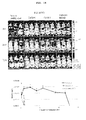
- the obtained images are shown in Fig. 14 (the upper panel) and a graph of the total luminescence amount is shown in Fig. 14 (the lower panel).
- Cationic MEND using R8/GALA showed a strong luminescence 6 hr later, after which the gene expression rapidly decreased over time, and the luminescence was not seen at all 72 hr later.
- In vivo JetPEI-Gal showed very high lung-derived luminescence and low organ selectivity for the liver, particularly 6 hr later. Furthermore, the sustainability of the gene expression using this vector was also poor.
- B-2 MEND using pcDNA3.1-Luc(+) showed a weak luminescence 6 hr later, after which the gene expression decreased.
- Rhodamine-DOPE adjuvanti polar lipids
- mice 50 mg/mL Sodium pentobarbital (Nacalai Tesque) was diluted 5-fold with saline and intraperitoneally administered to ICR mice (5-week-old male) for anesthesia. Griffonia simplicifolia Lectin I-B4 Isolectin, FITC Conjugate (VECTOR Laboratories, about 80 ⁇ L) was administered to the mice under anesthesia from the tail vein to stain the vascular endothelial cells. The mice underwent laparotomy to expose the liver, and Immersol TM 518F (Carl Zeiss) was added dropwise to the organ to prevent the organ from drying.
- Immersol TM 518F Carl Zeiss
- a winged intravenous indwelling needle connected with an extension tube filled with the MEND solution was indwelled in the tail vein of the mouse.
- a device for fixing the liver by adsorption Shimizu K et al., J Biosci Bioeng. 112(5): 508-10
- MEND was administered to the mouse such that 40 ⁇ g DNA/mouse was achieved in about 5 seconds from the start of filming and the filming was finished in about 10 min. The results are shown in Fig. 15 .
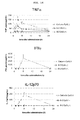
- MENDs used in [Experimental Example 12] were each administered to 5-week-old male ICR mice from the tail vein in an amount corresponding to 40 ⁇ g DNA. 1, 3, 6, 24 hr later, the blood was collected from the heart, and TNF- ⁇ , IFN- ⁇ , IL-12p70 were measured using Quantikine ELISA kit (R&D Systems). Each blood concentration profile is shown in Fig. 16 .
- Cationic MEND showed a somewhat high TNF- ⁇ value 3 hr after administration, even though it contained pCpGfree-Luc(0), and IFN- ⁇ value became high 6 hr later.
- B-2 MEND using pcDNA3.1-Luc(+) showed a high TNF- ⁇ value 3 hr later, and high IL-12p70 value 6 hr later.
- 3 kinds of cytokines all maintained the normal value at any time point.
- Cy5-labeled pDNA was prepared using Label/IT Cy5 Labeling Kit (Mirus) and according to the attached protocol. The concentration of the obtained Cy5-labeled pDNA solution was calculated using Nano Drop (Thermo Scientific). When MEND encapsulating Cy5-labeled pDNA was prepared, 10% of the pDNA solution described in [Experimental Example 1] (1) was replaced by Cy5-labeled pDNA, and MEND was prepared according to the method described in [Experimental Example 1] (2) and (3).
- the particle size and the surface potential were measured by the dynamic light scattering method (Zetasizer Nano; Malvern).
- the particle size and the surface potential of the various MENDs prepared by the preparation method of [Experimental Example 1] are shown in Table 4. Both B-2-4 and B-2-5 showed a preferable charge of -10 to +10 mV at physiological pH.
- [Table 4] cationic lipid:DOPE:Chol 3:3:4 size (nm) PDI zeta (mV) B-2-4 146.7 0.12 -7.22 (Example 4)
- cationic lipid:POPE:Chol 3:4:3 size (nm) PDI zeta (mV) B-2-5 131.7 0.15 -9.35 (Example 5)
- MENDs of B-2 (Example 1) and B-2-4 (Example 4) were prepared according to [Experimental Example 1] (1), (2) and [Experimental Example 15].
- PEG 2000 -DMG was used as PEG lipid
- MEND solutions corresponding to 1.38 mM of the lipid concentration were prepared.
- a 50% sucrose solution (pH 5.3) (5 mL) was added to a centrifugation tube, on which a 10% sucrose solution (pH 5.3) (5 mL) was layered, and a MEND solution (1.5 mL) was further overlaid to form an discontinuous density gradient.
- MENDs were prepared according to [Experimental Example 1](1) and (2).
- PEG 2000 -DMG was used as PEG lipid
- MEND solutions corresponding to 0.55 mM of the lipid concentration were prepared.
- the activity of the MEND formed from B-2-5 was equivalent to the activity of B-2.
- the activity of the MEND formed from B-2-4 was significantly higher than the activity of B-2 and B-2-5.
- MENDs of B-2-4 (Example 4), B-2 (Example 1) were prepared according to [Experimental Example 1] (1), (2), [Experimental Example 15].
- PEG 2000 -DMG was used as PEG lipid
- MEND solutions corresponding to 0.55 mM of the lipid concentration were prepared.
- pDNA was labeled with fluorescence according to the method described in [Experimental Example 15] (2).
- HT1080 cells were plated on a 6-well plate at 2 ⁇ 10 5 cells/2 mL/well 24 hr before, various sample MENDs were diluted with DMEM (FBS+) to a pDNA concentration of 1.6 ⁇ g/2 mL/well and transfected into the well. After 1, 3, 6 hr, MEND-containing DMEM was removed, and the cells were washed twice with heparin (20 units/mL, 1 mL), and further once with PBS(-) (1 mL). 0.05% Trypsin solution (500 ⁇ L) was added, and the cells were stood in an incubator at 37°C for 3 min.
- DMEM FBS+
- PBS(-) PBS(-)
- DMEM FBS+ (1 mL) was added and the mixture was centrifuged (700 g, 4°C, 5 min). The supernatant was removed and the cells were suspended in FACS buffer (1 mL). The suspension was centrifuged (700 g, 4°C, 5 min), the supernatant was removed and the cells were resuspended in FACS buffer (500 ⁇ L). The suspension was passed through a 44 ⁇ m nylon mesh immediately before the measurement, and the fluorescence intensity of intracellular Cy5 was measured. The results are shown in Fig. 19 .
- pDNA was fluorescently modified with Cy5, and the intracellular uptake by MEND was evaluated.
- MEND using B-2-4 was more highly uptaken than B-2.
- MENDs of B-2-4 (Example 4), B-2 (Example 1) were prepared according to [Experimental Example 1] (1), (2), and [Experimental Example 18].
- PEG 2000 -DMG was used as PEG lipid
- MEND solutions corresponding to 0.55 mM of the lipid concentration were prepared.
- HT1080 cells were plated on a 3.5 cm cell culture dish at 4 ⁇ 10 4 cells/2 mL/dish 24 hr before, various MENDs were diluted with DMEM (FBS 10%+, Phenol red free) containing a final concentration of 200 ⁇ M of D-luciferin potassium to achieve 1.6 ⁇ g/2 mL/dish based on the pDNA amount and transfection was performed.
- DMEM FBS 10%+, Phenol red free
- the luminescence amount was measured for 2 min every 20 min and taken as the luciferase activity (RLU/2 min). The results are shown in Fig. 20 .
- the activity of MEND formed from B-2-4 was significantly higher than that of MENDs formed from B-2-1 and DOTAP.
- the activity of B-2 was equivalent to that of DOTAP.
- MEND composed of B-2-4 shows a significantly high gene expression activity as compared to that of MEND composed of cationic lipid DOTAP, even though it shows low uptake into the cell as compared thereto. It was shown that B-2-4 is further superior in the intracellular kinetic property after uptake into the cell as compared to B-2 and conventional DOTAP.
- Rhodamine-labeled pDNA prepared by the method of [Experimental Example 1] (4) was used.
- MEND encapsulating rhodamine-labeled pDNA 50% of the pDNA solution described in [Experimental Example 1] (1) was replaced by rhodamine-labeled pDNA.
- PEG 2000 -DMG was used as PEG lipid, and MEND solutions corresponding to 0.55 mM of the lipid concentration were prepared.
- HT1080 cells were plated on a glass bottom dish at 5 ⁇ 10 4 cells/2 mL/dish 24 hr before.
- MEND was diluted with DMEM (FBS 10%+) to achieve pDNA 1.6 ⁇ g/2 mL and transfected into cells.
- Lysotracker Green Life technologies was added at 2 ⁇ L/dish. 6 hr after the transfection, the cells were washed twice with heparin (20 units/mL, 2 mL), Krebs buffer (1 mL) was added, and the cells were observed by a confocal laser scan microscope. The results are shown in Fig. 21 .
- Rhodamine-labeled pDNA, endosome/lysosome and nucleus were shown in pseudo colors of red, green and blue, respectively.
- PEG 2000 -DMG was used as PEG lipid, and MEND solutions corresponding to 0.55 mM of the lipid concentration were prepared.
- HT1080 cells were plated on a glass bottom dish at 5 ⁇ 10 4 cells/2 mL/dish 24 hr before.
- MEND was diluted with DMEM (FBS 10%+) to achieve pDNA 1.6 ⁇ g/2 mL and transfected into the cells.
- the cells without transfection of MEND were used as a control.
- Lysotracker Green Life technologies
- Hoechst 33342 Hoechst 33342 (Dojindo) was further added at 2 ⁇ L/dish 30 min later.
- the cells were washed twice with heparin (20 units/mL, 2 mL), Krebs buffer (1 mL) was added, and the cells were observed by a confocal laser scan microscope. The results are shown in Fig. 23 .
- Rhodamine-labeled pDNA prepared by the method of [Experimental Example 1] (4) was used for preparation of MEND encapsulating the rhodamine-labeled pDNA.
- 50% of the pDNA solution described in [Experimental Example 1] (1) was replaced by the rhodamine-labeled pDNA.
- the lipid constituting the MEND was labeled with fluorescence by the method described in [Experimental Example 1] (3).
- PEG 2000 -DMG was used as PEG lipid, and MEND solutions corresponding to 0.55 mM of the lipid concentration were prepared.
- HT1080 cells were plated on a glass bottom dish at 5 ⁇ 10 4 cells/2 mL/dish 24 hr before.
- MEND was diluted with DMEM (FBS 10%+) to achieve pDNA 1.6 ⁇ g/2 mL and transfected into cells. 3, 6, 9, 12 hr later, the cells were washed twice with heparin solution (20 units/mL, 2 mL), Krebs buffer (1 mL) was added, and the images at 3, 6, 9, 12 hr after the transfection were obtained by a confocal laser scan microscope. The results are shown in Fig. 25 .
- Rhodamine-labeled pDNA and lipid membrane of MEND were shown in pseudo colors of red and green, respectively.
- Intracellular kinetics Intracellular uptake pathway
- HT1080 cells were plated on a 6-well plate at 2 ⁇ 10 5 cells/2 mL/well 24 hr before.
- the medium was changed to DMEM (FBS+) containing filipin at a final concentration of 10 ⁇ g/ ⁇ L 30 min before transfection.
- the medium was changed to DMEM (FBS+) containing a final concentration of 0.3M sucrose, and 1 mM amiloride 15 min before transfection.
- various MENDs were added to the dish at 1.6 ⁇ g/2 mL/dish based on the pDNA amount. 3 hr after the transfection, the intracellular pDNA amount was measured by the method described in [Experimental Example 19] (1). The results are shown in Fig. 27 .
- the intracellular uptake was sucrose- and amiloride-sensitive for both B-2 and B-2-4, suggesting involvement of clathrin mediated endocytosis and macropinocytosis.
- MENDs were prepared according to [Experimental Example 1] (1), (2).
- PEG 2000 -DMG was used as PEG lipid, and MEND solutions corresponding to 0.55 mM of the lipid concentration were prepared.
- HT1080 cells were plated on a 24-well plate at 4 ⁇ 10 4 cells/500 ⁇ L/well 24 hr before.
- the medium was changed to DMEM (FBS+) containing filipin at a final concentration of 10 ⁇ g/ ⁇ L 30 min before transfection.
- the medium was changed to DMEM (FBS+) containing a final concentration of 0.3M sucrose, and 1.5 mM amiloride 15 min before transfection.
- various MENDs were added to the well at 0.8 ⁇ g/500 ⁇ L/well based on the pDNA amount. Thereafter, the gene expression activity was evaluated by the method described in [Experimental Example 4] (2). The results are shown in Fig. 28 .
- B-2 The gene expression of B-2 was inhibited by sucrose and amiloride.
- the gene expression of B-2-4 was inhibited by amiloride.
- both B-2, B-2-4 are incorporated by sucrose- and amiloride-sensitive pathway. It was suggested that an amiloride-sensitive pathway greatly contributes to the gene expression in B-2-4.
- HT1080 cells were plated on a 3.5 cm cell culture dish at 4 ⁇ 10 4 cells/2 mL/dish 24 hr before.
- the medium was changed to DMEM (FBS 10%+) containing 0.5 ⁇ M BafA1 (Bafilomycin A1) 30 min before transfection. 30 min later, various MENDs were added to the dish at 1.6 ⁇ g/2 mL/dish based on the pDNA amount. 3 hr after the transfection, the medium was changed to DMEM (FBS 10%+, Phenol red free) containing a final concentration 200 ⁇ M of D-luciferin potassium. According to the Kronos Dio package insert, the luminescence amount was measured for 2 min every 20 min and taken as the luciferase activity (RLU/2 min). The results are shown in Fig. 29 .
- Endosomal acidification inhibition using BafA1 inhibited the activity of B-2-4 and B-2. It was suggested that B-2-4 is activated by endosomal acidification and cause gene expression.
- HT1080 cells were plated on a 3.5 cm cell culture dish at 4 ⁇ 10 4 cells/2 mL/dish 24 hr before, various MENDs were diluted with DMEM (FBS 10%+, Phenol red free) containing a final concentration 200 ⁇ M of D-luciferin potassium and 0, 5, 7.5, 10 ⁇ M RA (sigma) to achieve 1.6 ⁇ g/2 mL/dish based on the pDNA amount and transfection was performed. According to the Kronos Dio package insert, the luminescence amount was measured for 2 min every 20 min and taken as the luciferase activity (RLU/2 min). The results are shown in Fig. 30 .
- the gene expression activity of MEND formed from B-2-4 was decreased by RA in a concentration dependent manner ( Fig. 30 , right).
- the gene expression activity of MEND formed from B-2 was not decreased ( Fig. 30 , left). It was suggested that the recognition of RA is involved in the gene expression due to B-2-4.
- Rhodamine-labeled pDNA prepared by the method of [Experimental Example 1] (4) was used for preparation of MEND encapsulating the rhodamine-labeled pDNA.
- the pDNA solution described in [Experimental Example 1] (1) was completely replaced by rhodamine-labeled pDNA.
- the lipid constituting MEND was labeled with fluorescence by the method described in [Experimental Example 1] (3).
- PEG 2000 -DMG was used as PEG lipid, and MEND solutions corresponding to 0.55 mM of the lipid concentration were prepared.
- HT1080 cells were plated on a glass bottom dish at 5 ⁇ 10 4 cells/2 mL/dish 24 hr before.
- MEND was diluted with DMEM (FBS 10%+) to achieve pDNA 1.6 ⁇ g/2 mL and transfected into cells.
- hoechst33342 (1 ⁇ L) was added and, 10 min later, the cells were washed twice with heparin solution (20 units/mL, 2 mL). Krebs buffer (1 mL) was added, and the image was obtained by a confocal laser scan microscope. The results are shown in Fig. 31 .
- B-2 was diffused in the cell, B-2-4 was observed to accumulate near the nucleus. This suggests presence of a nuclear transport mechanism.
- HT1080 cells were plated on a 3.5 cm cell culture dish at 4 ⁇ 10 4 cells/2 mL/dish 24 hr before, various MENDs were diluted with DMEM (FBS 10%+, Phenol red free) containing a final concentration of 200 ⁇ M of D-luciferin potassium and 0, 25, 50, 100 ⁇ M of GA (Calbiochem) to achieve 1.6 ⁇ g/2 mL/dish based on the pDNA amount and transfection was performed. According to the Kronos Dio package insert, the luminescence amount was measured for 2 min every 20 min and taken as the luciferase activity (RLU/2 min). The results are shown in Fig. 32 .
- GA showed a higher inhibitory effect on B-2-4 than on B-2.
- GA is a small molecule that inhibits sumoylation of intracellular protein.
- HT1080 expresses intracellular retinoic acid binding protein II (CRABPII) that transports RA to the nucleus in a sumoylation dependent manner.
- CRABPII retinoic acid binding protein II
- the drastic decrease in the gene expression activity of B-2-4 is considered to have been caused by a decreased activity of CRABPII due to GA.
- nucleic acid electrostatic complex composed of siRNA and protamine
- a solution (400 ⁇ L) of a nucleic acid electrostatic complex composed of siRNA/protamine prepared in [Experimental Example 27] was mixed, then 10 mM HEPES buffer (pH 5.3, 2.4 mL) was quickly added, and the mixture was vigorously stirred.
- the mixture was subjected to centrifugal ultrafiltration using Amicon Ultra-15 100K device (Millipore) at 1000 g, 10 min, 30°C.
- the mixture was sufficiently diluted with 10 mM HEPES buffer (pH 7.4), and again subjected to centrifugal ultrafiltration. This solution was adjusted to an object lipid concentration with 10 mM HEPES buffer (pH 7.4).
- a MEND solution prepared by the method shown in [Experimental Example 28] was administered to 4-week-old male ICR mice at 3 mg siRNA/kg from the tail vein, and blood was collected 24 hr later. This blood sample was centrifuged at 1000 g, 10 min, 4°C, and the supernatant was recovered to obtain plasma. The amount of Factor VII (FVII) in the plasma was quantified by BIOPHEN FVII CHROMOGENIC ASSAY (HYPHEN BioMed). The results are shown in Fig. 33 . All of B-2, B-2-4, B-2-5 showed a decrease in the FVII expression level as compared to the non-treatment group. Among them, B-2-5 MEND showed the greatest knockdown effect.
- a MEND solution prepared by the method shown in [Experimental Example 28] was administered to 4-week-old male ICR mice at 3 mg siRNA/kg from the tail vein, and blood was collected sequentially every 24 hr from the tail vein up to day 6 from the administration to follow the expression level of FVII over time. The results are shown in Fig. 34 .
- nucleic acid since nucleic acid can be intracellularly introduced with high efficiency, it is useful for gene therapy and biochemical experiments.
Landscapes
- Health & Medical Sciences (AREA)
- Chemical & Material Sciences (AREA)
- Life Sciences & Earth Sciences (AREA)
- Organic Chemistry (AREA)
- General Health & Medical Sciences (AREA)
- Engineering & Computer Science (AREA)
- Animal Behavior & Ethology (AREA)
- Epidemiology (AREA)
- Public Health (AREA)
- Pharmacology & Pharmacy (AREA)
- Medicinal Chemistry (AREA)
- Veterinary Medicine (AREA)
- Genetics & Genomics (AREA)
- General Engineering & Computer Science (AREA)
- Molecular Biology (AREA)
- Wood Science & Technology (AREA)
- Biomedical Technology (AREA)
- Bioinformatics & Cheminformatics (AREA)
- Zoology (AREA)
- Biophysics (AREA)
- Biotechnology (AREA)
- Dispersion Chemistry (AREA)
- Chemical Kinetics & Catalysis (AREA)
- Oil, Petroleum & Natural Gas (AREA)
- General Chemical & Material Sciences (AREA)
- Plant Pathology (AREA)
- Microbiology (AREA)
- Physics & Mathematics (AREA)
- Biochemistry (AREA)
- Dermatology (AREA)
- Medicines That Contain Protein Lipid Enzymes And Other Medicines (AREA)
- Pharmaceuticals Containing Other Organic And Inorganic Compounds (AREA)
- Medicinal Preparation (AREA)
- Organic Low-Molecular-Weight Compounds And Preparation Thereof (AREA)
Applications Claiming Priority (2)
| Application Number | Priority Date | Filing Date | Title |
|---|---|---|---|
| JP2011252309 | 2011-11-18 | ||
| PCT/JP2012/079160 WO2013073480A1 (ja) | 2011-11-18 | 2012-11-09 | 細胞内動態を改善したカチオン性脂質 |
Publications (3)
| Publication Number | Publication Date |
|---|---|
| EP2781507A1 true EP2781507A1 (de) | 2014-09-24 |
| EP2781507A4 EP2781507A4 (de) | 2015-10-14 |
| EP2781507B1 EP2781507B1 (de) | 2017-03-22 |
Family
ID=48429540
Family Applications (1)
| Application Number | Title | Priority Date | Filing Date |
|---|---|---|---|
| EP12850198.8A Active EP2781507B1 (de) | 2011-11-18 | 2012-11-09 | Kationisches lipid mit verbesserter intrazellulärer kinetik |
Country Status (5)
| Country | Link |
|---|---|
| US (1) | US9708628B2 (de) |
| EP (1) | EP2781507B1 (de) |
| JP (1) | JP6093710B2 (de) |
| CN (1) | CN103930398B (de) |
| WO (1) | WO2013073480A1 (de) |
Cited By (7)
| Publication number | Priority date | Publication date | Assignee | Title |
|---|---|---|---|---|
| EP3315125A1 (de) | 2016-10-31 | 2018-05-02 | Silence Therapeutics (London) Ltd | Lipidnanopartikelformulierung |
| WO2019232095A1 (en) * | 2018-05-30 | 2019-12-05 | Translate Bio, Inc. | Vitamin cationic lipids |
| EP3597197A4 (de) * | 2017-03-17 | 2021-01-06 | National University Corporation Chiba University | Neuartige technik zur behandlung von krebs mithilfe von strukturell verstärktem s-tud |
| WO2021123332A1 (en) * | 2019-12-20 | 2021-06-24 | Curevac Ag | Lipid nanoparticles for delivery of nucleic acids |
| WO2022152109A3 (en) * | 2021-01-14 | 2022-08-25 | Suzhou Abogen Biosciences Co., Ltd. | Lipid compounds and lipid nanoparticle compositions |
| EP4204390A1 (de) * | 2021-05-24 | 2023-07-05 | Suzhou Abogen Biosciences Co., Ltd. | Lipidverbindungen und lipidnanopartikelzusammensetzungen |
| EP4153144A4 (de) * | 2020-05-18 | 2024-07-03 | Generation Bio Co. | Neuartige lipide und nanopartikelzusammensetzungen daraus |
Families Citing this family (112)
| Publication number | Priority date | Publication date | Assignee | Title |
|---|---|---|---|---|
| WO2015098907A1 (ja) * | 2013-12-24 | 2015-07-02 | 国立大学法人北海道大学 | 核内移行性を有する脂質膜構造体 |
| CA2975371C (en) | 2015-01-30 | 2024-02-13 | Nof Corporation | Cationic lipid for nucleic acid delivery |
| KR101687735B1 (ko) * | 2015-09-18 | 2016-12-19 | 서울대학교 산학협력단 | 신규의 동결건조보조제 및 새로운 인지질 용해용 혼합용매를 이용한 리포좀 동결분체의 제조방법 |
| JP6875685B2 (ja) * | 2015-10-08 | 2021-05-26 | 日油株式会社 | O/w型エマルション |
| WO2019103151A1 (ja) * | 2017-11-27 | 2019-05-31 | 国立大学法人千葉大学 | 核酸を細胞内に送達するための脂質膜構造体 |
| CA3088485A1 (en) | 2018-01-18 | 2019-07-25 | Etherna Immunotherapies Nv | Lipid nanoparticles |
| EP3792246B1 (de) * | 2018-03-16 | 2024-11-27 | Kabushiki Kaisha Toshiba | Biologisch abbaubare verbindung, lipidteilchen, lipidteilchenhaltige zusammensetzung und kit |
| CN111902397B (zh) * | 2018-03-27 | 2024-04-12 | 日油株式会社 | 改进了细胞内动力学的阳离子脂质 |
| CN111164068B (zh) | 2018-08-21 | 2023-11-14 | 株式会社东芝 | 生物降解性化合物、脂质粒子、含有脂质粒子的组合物、及试剂盒 |
| JP2022516318A (ja) * | 2019-01-04 | 2022-02-25 | オンコラス, インコーポレイテッド | カプセル化ポリヌクレオチド及び使用方法 |
| BR112021023411A2 (pt) | 2019-05-22 | 2022-02-01 | Massachusetts Inst Technology | Composições e métodos de rna circular |
| WO2021046265A1 (en) | 2019-09-06 | 2021-03-11 | Generation Bio Co. | Lipid nanoparticle compositions comprising closed-ended dna and cleavable lipids and methods of use thereof |
| JP7204890B2 (ja) | 2019-09-10 | 2023-01-16 | 株式会社東芝 | 電極の製造方法および光電変換素子の製造方法 |
| EP4035686A4 (de) | 2019-09-26 | 2023-11-01 | NOF Corporation | Lyophilisierte lipidnanoteilchenzusammensetzung |
| JP2023502576A (ja) * | 2019-11-22 | 2023-01-25 | ジェネレーション バイオ カンパニー | イオン化可能な脂質およびそれらのナノ粒子組成物 |
| JP7746280B2 (ja) | 2020-03-27 | 2025-09-30 | ジェネレーション バイオ カンパニー | 新規脂質及びそれらのナノ粒子組成物 |
| WO2021193397A1 (ja) | 2020-03-27 | 2021-09-30 | 日油株式会社 | シスチン骨格を有する新規カチオン性脂質 |
| IL298362A (en) | 2020-05-20 | 2023-01-01 | Flagship Pioneering Innovations Vi Llc | Coronavirus antigen compositions and their uses |
| EP4153223A1 (de) | 2020-05-20 | 2023-03-29 | Flagship Pioneering Innovations VI, LLC | Immunogene zusammensetzungen und verwendungen davon |
| KR20230029685A (ko) | 2020-05-29 | 2023-03-03 | 플래그쉽 파이어니어링 이노베이션스 브이아이, 엘엘씨 | Trem 조성물 및 이에 관련된 방법 |
| WO2021243301A2 (en) | 2020-05-29 | 2021-12-02 | Flagship Pioneering Innovations Vi, Llc. | Trem compositions and methods relating thereto |
| AU2021307952A1 (en) * | 2020-07-17 | 2023-03-02 | Generation Bio Co. | Methods for encapsulating polynucleotides into reduced sizes of Lipid nanoparticles and novel formulation thereof |
| AU2021336976A1 (en) | 2020-09-03 | 2023-03-23 | Flagship Pioneering Innovations Vi, Llc | Immunogenic compositions and uses thereof |
| IL303886A (en) | 2020-12-23 | 2023-08-01 | Flagship Pioneering Inc | Compositions of modified trems and uses thereof |
| AU2022207550C1 (en) * | 2021-01-14 | 2025-04-17 | Suzhou Abogen Biosciences Co., Ltd. | Lipid compounds and lipid nanoparticle compositions |
| EP4313109A1 (de) | 2021-03-31 | 2024-02-07 | Flagship Pioneering Innovations V, Inc. | Apotransmission-polypeptide und deren verwendung bei der behandlung von krebs |
| EP4377457A1 (de) | 2021-07-26 | 2024-06-05 | Flagship Pioneering Innovations VI, LLC | Trem-zusammensetzungen und verwendungen davon |
| WO2023015200A1 (en) * | 2021-08-04 | 2023-02-09 | The Trustees Of The University Of Pennsylvania | Amniotic fluid stabilized compositions and methods for in utero delivery of therapeutic agents |
| MX2024003262A (es) | 2021-09-17 | 2024-06-19 | Flagship Pioneering Innovations Vi Llc | Composiciones y metodos para producir poliribonucleotidos circulares. |
| CA3235625A1 (en) | 2021-10-18 | 2023-04-27 | Flagship Pioneering Innovations Vi, Llc | Compositions and methods for purifying polyribonucleotides |
| TW202334080A (zh) | 2021-11-08 | 2023-09-01 | 美商歐納醫療公司 | 用於遞送環狀聚核苷酸之脂質奈米粒子組合物 |
| IL312965A (en) | 2021-11-24 | 2024-07-01 | Flagship Pioneering Innovations Vi Llc | Immunogenic compositions and their uses |
| EP4436984A1 (de) | 2021-11-24 | 2024-10-02 | Flagship Pioneering Innovations VI, LLC | Coronavirus-immunogen-zusammensetzungen und ihre verwendungen |
| CN118401544A (zh) | 2021-11-24 | 2024-07-26 | 旗舰创业创新六公司 | 水痘-带状疱疹病毒免疫原组合物及其用途 |
| KR20240118174A (ko) | 2021-12-17 | 2024-08-02 | 플래그쉽 파이어니어링 이노베이션스 브이아이, 엘엘씨 | 변성 조건 하에서의 원형 rna의 풍부화를 위한 방법 |
| EP4453201A1 (de) | 2021-12-22 | 2024-10-30 | Flagship Pioneering Innovations VI, LLC | Zusammensetzungen und verfahren zur reinigung von polyribonukleotiden |
| KR20240118881A (ko) | 2021-12-23 | 2024-08-05 | 플래그쉽 파이어니어링 이노베이션스 브이아이, 엘엘씨 | 항푸소제닉 폴리펩티드를 인코딩하는 원형 폴리리보뉴클레오티드 |
| KR20240166554A (ko) | 2022-03-25 | 2024-11-26 | 세일 바이오메디슨스, 인크. | 신규한 이온화 가능 지질 및 지질 나노입자, 및 이를 사용하는 방법 |
| JPWO2023190164A1 (de) | 2022-03-28 | 2023-10-05 | ||
| WO2023190166A1 (ja) * | 2022-03-28 | 2023-10-05 | 日油株式会社 | ジスルフィド結合を有するカチオン性脂質、これを含む脂質膜構造体、これらのいずれかを含む核酸導入剤及び医薬品組成物、核酸を細胞又は標的細胞内へ導入する方法、及び細胞医薬品の製造方法 |
| WO2023190170A1 (ja) * | 2022-03-28 | 2023-10-05 | 日油株式会社 | 核酸内封脂質ナノ粒子の製造方法及びこれを含む医薬品組成物の製造方法、並びに、核酸を細胞内又は標的細胞内に導入する方法 |
| WO2023190175A1 (ja) * | 2022-03-28 | 2023-10-05 | 日油株式会社 | 末梢血単核細胞へ核酸を送達するための脂質ナノ粒子およびこれを用いて末梢血単核細胞へ核酸を送達する方法 |
| US20260115316A1 (en) | 2022-03-28 | 2026-04-30 | Nof Corporation | Lipid nanoparticles for delivering nucleic acid to splenic tissue, and method for delivering nucleic acid to splenic tissue using same |
| WO2023196634A2 (en) | 2022-04-08 | 2023-10-12 | Flagship Pioneering Innovations Vii, Llc | Vaccines and related methods |
| CA3257006A1 (en) | 2022-05-09 | 2023-11-16 | Flagship Pioneering Innovations Vi, Llc | TREM COMPOSITIONS AND METHODS OF USE FOR TREATING PROLIFERATIVE DISORDERS |
| TW202409283A (zh) | 2022-05-13 | 2024-03-01 | 美商旗艦先鋒創新有限責任(Vii)公司 | 雙股dna組合物及相關方法 |
| EP4536197A1 (de) | 2022-06-07 | 2025-04-16 | Generation Bio Co. | Lipidnanopartikelzusammensetzungen und verwendungen davon |
| US20250179492A1 (en) | 2022-06-22 | 2025-06-05 | Flagship Pioneering Innovations Vi, Llc | Compositions of modified trems and uses thereof |
| US12297285B2 (en) | 2022-06-24 | 2025-05-13 | Orna Therapeutics, Inc. | Circular RNA encoding chimeric antigen receptors targeting BCMA |
| CA3262131A1 (en) | 2022-07-15 | 2025-06-13 | Nof Corporation | FREEZE-DRIED COMPOSITION OF LIPID NANOPARTICLES CHARGED WITH NUCLEIC ACID |
| CN119604276A (zh) | 2022-07-15 | 2025-03-11 | 日油株式会社 | 脂质纳米粒子及其制造方法、封入有核酸的脂质纳米粒子及其制造方法以及使用封入有核酸的脂质纳米粒子赋予生物体获得性免疫的方法 |
| EP4565604A2 (de) | 2022-08-01 | 2025-06-11 | Flagship Pioneering Innovations VII, LLC | Immunmodulatorische proteine und zugehörige verfahren |
| WO2024035952A1 (en) | 2022-08-12 | 2024-02-15 | Remix Therapeutics Inc. | Methods and compositions for modulating splicing at alternative splice sites |
| US20260060926A1 (en) | 2022-08-31 | 2026-03-05 | Sail Biomedicines, Inc. | Novel ionizable lipids and lipid nanoparticles and methods of using the same |
| US20240174732A1 (en) | 2022-10-05 | 2024-05-30 | Flagship Pioneering Innovations V, Inc. | Nucleic acid molecules encoding trif and additional polypeptides and their use in treating cancer |
| EP4612296A1 (de) | 2022-10-31 | 2025-09-10 | Flagship Pioneering Innovations VI, LLC | Zusammensetzungen und verfahren zur reinigung von polyribonukleotiden |
| WO2024102730A1 (en) | 2022-11-08 | 2024-05-16 | Orna Therapeutics, Inc. | Lipids and nanoparticle compositions for delivering polynucleotides |
| WO2024102677A1 (en) | 2022-11-08 | 2024-05-16 | Orna Therapeutics, Inc. | Circular rna compositions |
| TW202434728A (zh) | 2022-11-08 | 2024-09-01 | 美商旗艦先鋒創新有限責任公司 | 用於產生環狀多核糖核苷酸的組成物和方法 |
| WO2024102762A1 (en) | 2022-11-08 | 2024-05-16 | Orna Therapeutics, Inc. | Lipids and lipid nanoparticle compositions for delivering polynucleotides |
| AU2023406303A1 (en) | 2022-12-01 | 2025-05-29 | Generation Bio Co. | Lipid nanoparticles comprising nucleic acids, ionizable lipids, sterols, lipid anchored polymers and helper lipids, their uses |
| WO2024119074A1 (en) | 2022-12-01 | 2024-06-06 | Generation Bio Co. | Stealth lipid nanoparticle compositions for cell targeting |
| EP4626400A1 (de) | 2022-12-01 | 2025-10-08 | Generation Bio Co. | Neue polyglycerolkonjugierte lipide und lipidnanopartikelzusammensetzungen damit |
| WO2024119103A1 (en) | 2022-12-01 | 2024-06-06 | Generation Bio Co. | Lipid nanoparticles comprising nucleic acids and lipid-anchored polymers |
| TW202430215A (zh) | 2022-12-14 | 2024-08-01 | 美商旗艦先鋒創新有限責任(Vii)公司 | 用於將治療劑遞送至骨之組成物和方法 |
| WO2024140893A1 (zh) | 2022-12-29 | 2024-07-04 | 辽宁键凯科技有限公司 | 一种类固醇-阳离子脂质化合物及其应用 |
| US20240252520A1 (en) | 2023-01-09 | 2024-08-01 | Beth Israel Deaconess Medical Center, Inc. | Therapeutic agents and their use for treating chronic wounds |
| WO2024151583A2 (en) | 2023-01-09 | 2024-07-18 | Flagship Pioneering Innovations Vii, Llc | Vaccines and related methods |
| WO2024151673A2 (en) | 2023-01-09 | 2024-07-18 | President And Fellows Of Harvard College | Recombinant nucleic acid molecules and their use in wound healing |
| WO2024151687A1 (en) | 2023-01-09 | 2024-07-18 | Flagship Pioneering Innovations V, Inc. | Genetic switches and their use in treating cancer |
| WO2024167885A1 (en) | 2023-02-06 | 2024-08-15 | Flagship Pioneering Innovations Vii, Llc | Immunomodulatory compositions and related methods |
| CN121263425A (zh) | 2023-02-13 | 2026-01-02 | 旗舰创业创新第七有限责任公司 | 含可裂解接头的可电离脂质和用于治疗性组合物的脂质载体 |
| EP4665405A1 (de) | 2023-02-17 | 2025-12-24 | Flagship Pioneering Innovations VII, LLC | Dns-zusammensetzungen mit modifiziertem uracil |
| IL322378A (en) | 2023-02-17 | 2025-09-01 | Flagship Pioneering Innovations Vii Llc | DNA compositions containing modified cytosine |
| EP4680750A1 (de) | 2023-03-15 | 2026-01-21 | Flagship Pioneering Innovations VI, LLC | Zusammensetzungen mit polyribonukleotiden und verwendungen davon |
| CN121358494A (zh) | 2023-03-15 | 2026-01-16 | 旗舰创业创新第六有限责任公司 | 免疫原性组合物及其用途 |
| CN120957730A (zh) | 2023-03-29 | 2025-11-14 | 国立大学法人东北大学 | 核酸封装脂质纳米粒子的制造方法 |
| KR20250161642A (ko) | 2023-03-29 | 2025-11-17 | 고쿠리츠다이가쿠호진 도호쿠다이가쿠 | 디설파이드 결합을 갖는 양이온성 지질 |
| WO2024205657A2 (en) | 2023-03-29 | 2024-10-03 | Orna Therapeutics, Inc. | Lipids and lipid nanoparticle compositions for delivering polynucleotides |
| EP4695391A1 (de) | 2023-04-12 | 2026-02-18 | Flagship Pioneering Innovations VI, LLC | Trems zur verwendung bei der korrektur von fehlmessungsmutationen |
| EP4695393A1 (de) | 2023-04-12 | 2026-02-18 | Flagship Pioneering Innovations VI, LLC | Modifizierte treme, zusammensetzungen und zugehörige verfahren |
| WO2024220746A2 (en) | 2023-04-21 | 2024-10-24 | Flagship Pioneering Innovations Vii, Llc | Rnai agents targeting fatty acid synthase and related methods |
| EP4705481A2 (de) | 2023-05-05 | 2026-03-11 | Orna Therapeutics, Inc. | Zirkuläre rna-zusammensetzungen und verfahren |
| WO2024258829A1 (en) | 2023-06-12 | 2024-12-19 | Flagship Pioneering Innovations Vii, Llc | Sars-cov-2 vaccine compositions and related methods |
| WO2025006684A1 (en) | 2023-06-28 | 2025-01-02 | Flagship Pioneering Innovations Vi, Llc | Circular polyribonucleotides encoding antifusogenic polypeptides |
| KR20260044217A (ko) | 2023-07-25 | 2026-04-01 | 플래그쉽 파이어니어링 이노베이션스 Vii, 엘엘씨 | Cas 엔도뉴클레아제 및 관련 방법 |
| WO2025042786A1 (en) | 2023-08-18 | 2025-02-27 | Flagship Pioneering Innovations Vi, Llc | Compositions comprising circular polyribonucleotides and uses thereof |
| WO2025054236A2 (en) | 2023-09-06 | 2025-03-13 | Flagship Pioneering Innovations Vii, Llc | Sars-cov-2 vaccine compositions and related methods |
| WO2025052180A2 (en) | 2023-09-07 | 2025-03-13 | Axelyf ehf. | Lipids and lipid nanoparticles |
| WO2025064475A2 (en) | 2023-09-18 | 2025-03-27 | Flagship Pioneering Innovations Vii, Llc | Ionizable lipidoid compositions and therapeutic uses thereof |
| WO2025063214A1 (ja) * | 2023-09-22 | 2025-03-27 | 国立大学法人東北大学 | 核酸を内封したリガンド修飾脂質ナノ粒子の製造方法 |
| WO2025072331A1 (en) | 2023-09-26 | 2025-04-03 | Flagship Pioneering Innovations Vii, Llc | Cas nucleases and related methods |
| WO2025096807A2 (en) | 2023-10-31 | 2025-05-08 | Flagship Pioneering Innovations Vii, Llc | Novel therapeutic dna forms |
| WO2025101501A1 (en) | 2023-11-07 | 2025-05-15 | Orna Therapeutics, Inc. | Circular rna compositions |
| WO2025106670A1 (en) | 2023-11-14 | 2025-05-22 | Flagship Pioneering Innovations Vii, Llc | Ionizable lipidoid compositions and therapeutic uses thereof |
| WO2025117877A2 (en) | 2023-12-01 | 2025-06-05 | Flagship Pioneering Innovations Vii, Llc | Cas nucleases and related methods |
| CN121263400A (zh) | 2023-12-15 | 2026-01-02 | 厦门赛诺邦格生物科技股份有限公司 | 一种含二硫键的可降解阳离子脂质及其应用 |
| CN121358717A (zh) | 2023-12-15 | 2026-01-16 | 厦门赛诺邦格生物科技股份有限公司 | 一种含二硫键的可降解阳离子脂质及其应用 |
| TW202545974A (zh) | 2024-01-26 | 2025-12-01 | 美商旗艦先鋒創新有限責任(Vii)公司 | 免疫受體抑制蛋白及相關方法 |
| WO2025182865A1 (ja) * | 2024-03-01 | 2025-09-04 | 国立大学法人東海国立大学機構 | 脂質粒子 |
| CN121399094A (zh) | 2024-03-28 | 2026-01-23 | 厦门赛诺邦格生物科技股份有限公司 | 一种含二硫键和可离子化侧基的阳离子脂质及其应用 |
| WO2025217275A2 (en) | 2024-04-10 | 2025-10-16 | Flagship Pioneering Innovations Vii, Llc | Immune cell targeted compositions and related methods |
| US20250353881A1 (en) | 2024-05-16 | 2025-11-20 | Flagship Pioneering Innovations Vii, Llc | Immunoreceptor inhibitory proteins and related methods |
| WO2025245111A1 (en) | 2024-05-22 | 2025-11-27 | Flagship Pioneering Innovations Vii, Llc | Immunoreceptor targeting proteins and related methods |
| WO2025250751A1 (en) | 2024-05-31 | 2025-12-04 | Orna Therapeutics, Inc. | Circular rna compositions and methods |
| US20260000702A1 (en) | 2024-06-26 | 2026-01-01 | Flagship Pioneering Innovations Vii, Llc | Therapeutic circular dna forms |
| WO2026003582A2 (en) | 2024-06-27 | 2026-01-02 | Axelyf ehf. | Lipids and lipid nanoparticles |
| WO2026055543A1 (en) | 2024-09-06 | 2026-03-12 | Flagship Pioneering Innovations Vii, Llc | Modified dna compositions and related methods |
| WO2026055547A1 (en) | 2024-09-06 | 2026-03-12 | Flagship Pioneering Innovations Vii, Llc | Dna compositions and related methods |
| WO2026064313A1 (en) | 2024-09-17 | 2026-03-26 | Flagship Pioneering Innovations Vii, Llc | Rna compositions and related methods |
| WO2026064512A1 (en) | 2024-09-18 | 2026-03-26 | Generation Bio Co. | Polyglycerol-conjugated lipids and lipid nanoparticle compositions comprising the same |
| WO2026085300A1 (en) | 2024-10-16 | 2026-04-23 | Flagship Pioneering Innovations Vii, Llc | Compositions and methods |
Family Cites Families (15)
| Publication number | Priority date | Publication date | Assignee | Title |
|---|---|---|---|---|
| DE1816572A1 (de) * | 1968-12-23 | 1970-07-09 | Agfa Gevaert Ag | Photographische Halogensilberemulsion mit erhoehter Empfindlichkeit und vermindertemSchleier |
| US4217914A (en) * | 1974-05-16 | 1980-08-19 | L'oreal | Quaternized polymer for use as a cosmetic agent in cosmetic compositions for the hair and skin |
| CH611635A5 (en) * | 1974-05-16 | 1979-06-15 | Oreal | Process for the preparation of new quaternised polymers |
| US6169078B1 (en) * | 1998-05-12 | 2001-01-02 | University Of Florida | Materials and methods for the intracellular delivery of substances |
| NZ512244A (en) | 1998-11-12 | 2003-12-19 | Invitrogen Corp | Polycationic transfection reagents for introducing anions into a cell |
| DE10084308D2 (de) * | 2000-01-24 | 2002-08-14 | Mec Sys Media Comm Systems Ag | Verfahren und Vorrichtung zur Wiedergabe von Informationen |
| JP4628955B2 (ja) | 2003-10-01 | 2011-02-09 | 独立行政法人科学技術振興機構 | 核移行能を有するポリアルギニン修飾リポソーム |
| CN101039701A (zh) * | 2004-08-26 | 2007-09-19 | 尼古拉斯皮拉马尔印度有限公司 | 含有生物可裂解二硫化物连接物的前药和共药 |
| KR20070053214A (ko) | 2004-08-26 | 2007-05-23 | 니콜라스 피라말 인디아 리미티드 | 신규 생분해성 링커를 함유하는 프로드럭 |
| US7404969B2 (en) | 2005-02-14 | 2008-07-29 | Sirna Therapeutics, Inc. | Lipid nanoparticle based compositions and methods for the delivery of biologically active molecules |
| WO2008045486A2 (en) * | 2006-10-09 | 2008-04-17 | The University Of North Carolina At Chapel Hill | Nanoparticle compositions for controlled delivery of nucleic acids |
| US20100104623A1 (en) | 2007-02-28 | 2010-04-29 | National University Corporation Hokkaido University Kyoto University And Shionogi & Co Ltd | Agent for enhancing the resistance of liposome against biological component, and liposome modified with the agent |
| FR2921256B1 (fr) * | 2007-09-24 | 2009-12-04 | Oreal | Composition pour la coloration de fibres keratiniques comprenant au moins un colorant direct a fonction disulfure/thiol et au moins un polymere a fonction thiol et procede utilisant la composition |
| CN111808084A (zh) | 2008-11-10 | 2020-10-23 | 阿布特斯生物制药公司 | 用于递送治疗剂的新型脂质和组合物 |
| JP5794541B2 (ja) | 2010-04-21 | 2015-10-14 | 国立大学法人北海道大学 | 核内移行性を有する脂質膜構造体 |
-
2012
- 2012-11-09 WO PCT/JP2012/079160 patent/WO2013073480A1/ja not_active Ceased
- 2012-11-09 CN CN201280056417.9A patent/CN103930398B/zh active Active
- 2012-11-09 JP JP2013544251A patent/JP6093710B2/ja active Active
- 2012-11-09 EP EP12850198.8A patent/EP2781507B1/de active Active
-
2014
- 2014-05-16 US US14/280,016 patent/US9708628B2/en active Active
Cited By (12)
| Publication number | Priority date | Publication date | Assignee | Title |
|---|---|---|---|---|
| EP3315125A1 (de) | 2016-10-31 | 2018-05-02 | Silence Therapeutics (London) Ltd | Lipidnanopartikelformulierung |
| EP3597197A4 (de) * | 2017-03-17 | 2021-01-06 | National University Corporation Chiba University | Neuartige technik zur behandlung von krebs mithilfe von strukturell verstärktem s-tud |
| US11479769B2 (en) | 2017-03-17 | 2022-10-25 | National University Corporation Chiba University | Technique for treating cancer using structurally-reinforced S-TuD |
| WO2019232095A1 (en) * | 2018-05-30 | 2019-12-05 | Translate Bio, Inc. | Vitamin cationic lipids |
| CN112533909A (zh) * | 2018-05-30 | 2021-03-19 | 川斯勒佰尔公司 | 维生素阳离子脂质 |
| CN112533909B (zh) * | 2018-05-30 | 2024-11-15 | 川斯勒佰尔公司 | 维生素阳离子脂质 |
| US12240824B2 (en) | 2018-05-30 | 2025-03-04 | Translate Bio, Inc. | Vitamin cationic lipids |
| WO2021123332A1 (en) * | 2019-12-20 | 2021-06-24 | Curevac Ag | Lipid nanoparticles for delivery of nucleic acids |
| US12589078B2 (en) | 2019-12-20 | 2026-03-31 | CureVac SE | Lipid nanoparticles for delivery of nucleic acids |
| EP4153144A4 (de) * | 2020-05-18 | 2024-07-03 | Generation Bio Co. | Neuartige lipide und nanopartikelzusammensetzungen daraus |
| WO2022152109A3 (en) * | 2021-01-14 | 2022-08-25 | Suzhou Abogen Biosciences Co., Ltd. | Lipid compounds and lipid nanoparticle compositions |
| EP4204390A1 (de) * | 2021-05-24 | 2023-07-05 | Suzhou Abogen Biosciences Co., Ltd. | Lipidverbindungen und lipidnanopartikelzusammensetzungen |
Also Published As
| Publication number | Publication date |
|---|---|
| EP2781507B1 (de) | 2017-03-22 |
| US9708628B2 (en) | 2017-07-18 |
| WO2013073480A1 (ja) | 2013-05-23 |
| EP2781507A4 (de) | 2015-10-14 |
| US20140335157A1 (en) | 2014-11-13 |
| JPWO2013073480A1 (ja) | 2015-04-02 |
| CN103930398A (zh) | 2014-07-16 |
| JP6093710B2 (ja) | 2017-03-08 |
| CN103930398B (zh) | 2016-08-24 |
| WO2013073480A9 (ja) | 2013-07-18 |
Similar Documents
| Publication | Publication Date | Title |
|---|---|---|
| EP2781507B1 (de) | Kationisches lipid mit verbesserter intrazellulärer kinetik | |
| US20240366508A1 (en) | Novel cationic lipid exhibiting improved intracellular dynamics | |
| CA2975371C (en) | Cationic lipid for nucleic acid delivery | |
| CN115362143A (zh) | 可离子化脂质 | |
| EP4130282A1 (de) | Neues kationisches lipid mit cystinskelett | |
| JP6605477B2 (ja) | 核酸送達のためのカチオン性脂質 | |
| CN108348615A (zh) | O/w型乳液 | |
| JP6826014B2 (ja) | 生分解性化合物、脂質粒子、脂質粒子を含む組成物、およびキット | |
| WO2023190166A1 (ja) | ジスルフィド結合を有するカチオン性脂質、これを含む脂質膜構造体、これらのいずれかを含む核酸導入剤及び医薬品組成物、核酸を細胞又は標的細胞内へ導入する方法、及び細胞医薬品の製造方法 |
Legal Events
| Date | Code | Title | Description |
|---|---|---|---|
| PUAI | Public reference made under article 153(3) epc to a published international application that has entered the european phase |
Free format text: ORIGINAL CODE: 0009012 |
|
| 17P | Request for examination filed |
Effective date: 20140616 |
|
| AK | Designated contracting states |
Kind code of ref document: A1 Designated state(s): AL AT BE BG CH CY CZ DE DK EE ES FI FR GB GR HR HU IE IS IT LI LT LU LV MC MK MT NL NO PL PT RO RS SE SI SK SM TR |
|
| DAX | Request for extension of the european patent (deleted) | ||
| RA4 | Supplementary search report drawn up and despatched (corrected) |
Effective date: 20150910 |
|
| RIC1 | Information provided on ipc code assigned before grant |
Ipc: A61K 48/00 20060101ALI20150904BHEP Ipc: A61K 47/20 20060101ALI20150904BHEP Ipc: A61K 47/44 20060101ALI20150904BHEP Ipc: C07C 323/25 20060101AFI20150904BHEP |
|
| GRAJ | Information related to disapproval of communication of intention to grant by the applicant or resumption of examination proceedings by the epo deleted |
Free format text: ORIGINAL CODE: EPIDOSDIGR1 |
|
| GRAP | Despatch of communication of intention to grant a patent |
Free format text: ORIGINAL CODE: EPIDOSNIGR1 |
|
| INTG | Intention to grant announced |
Effective date: 20160930 |
|
| GRAS | Grant fee paid |
Free format text: ORIGINAL CODE: EPIDOSNIGR3 |
|
| STAA | Information on the status of an ep patent application or granted ep patent |
Free format text: STATUS: GRANT OF PATENT IS INTENDED |
|
| GRAA | (expected) grant |
Free format text: ORIGINAL CODE: 0009210 |
|
| STAA | Information on the status of an ep patent application or granted ep patent |
Free format text: STATUS: THE PATENT HAS BEEN GRANTED |
|
| RAP1 | Party data changed (applicant data changed or rights of an application transferred) |
Owner name: NOF CORPORATION Owner name: NATIONAL UNIVERSITY CORPORATION HOKKAIDO UNIVERSIT |
|
| AK | Designated contracting states |
Kind code of ref document: B1 Designated state(s): AL AT BE BG CH CY CZ DE DK EE ES FI FR GB GR HR HU IE IS IT LI LT LU LV MC MK MT NL NO PL PT RO RS SE SI SK SM TR |
|
| REG | Reference to a national code |
Ref country code: GB Ref legal event code: FG4D |
|
| REG | Reference to a national code |
Ref country code: CH Ref legal event code: NV Representative=s name: BOHEST AG, CH Ref country code: CH Ref legal event code: EP |
|
| REG | Reference to a national code |
Ref country code: AT Ref legal event code: REF Ref document number: 877585 Country of ref document: AT Kind code of ref document: T Effective date: 20170415 |
|
| REG | Reference to a national code |
Ref country code: IE Ref legal event code: FG4D |
|
| REG | Reference to a national code |
Ref country code: DE Ref legal event code: R096 Ref document number: 602012030298 Country of ref document: DE |
|
| REG | Reference to a national code |
Ref country code: NL Ref legal event code: MP Effective date: 20170322 |
|
| PG25 | Lapsed in a contracting state [announced via postgrant information from national office to epo] |
Ref country code: FI Free format text: LAPSE BECAUSE OF FAILURE TO SUBMIT A TRANSLATION OF THE DESCRIPTION OR TO PAY THE FEE WITHIN THE PRESCRIBED TIME-LIMIT Effective date: 20170322 Ref country code: GR Free format text: LAPSE BECAUSE OF FAILURE TO SUBMIT A TRANSLATION OF THE DESCRIPTION OR TO PAY THE FEE WITHIN THE PRESCRIBED TIME-LIMIT Effective date: 20170623 Ref country code: NO Free format text: LAPSE BECAUSE OF FAILURE TO SUBMIT A TRANSLATION OF THE DESCRIPTION OR TO PAY THE FEE WITHIN THE PRESCRIBED TIME-LIMIT Effective date: 20170622 Ref country code: LT Free format text: LAPSE BECAUSE OF FAILURE TO SUBMIT A TRANSLATION OF THE DESCRIPTION OR TO PAY THE FEE WITHIN THE PRESCRIBED TIME-LIMIT Effective date: 20170322 Ref country code: HR Free format text: LAPSE BECAUSE OF FAILURE TO SUBMIT A TRANSLATION OF THE DESCRIPTION OR TO PAY THE FEE WITHIN THE PRESCRIBED TIME-LIMIT Effective date: 20170322 |
|
| REG | Reference to a national code |
Ref country code: LT Ref legal event code: MG4D |
|
| REG | Reference to a national code |
Ref country code: AT Ref legal event code: MK05 Ref document number: 877585 Country of ref document: AT Kind code of ref document: T Effective date: 20170322 |
|
| PG25 | Lapsed in a contracting state [announced via postgrant information from national office to epo] |
Ref country code: SE Free format text: LAPSE BECAUSE OF FAILURE TO SUBMIT A TRANSLATION OF THE DESCRIPTION OR TO PAY THE FEE WITHIN THE PRESCRIBED TIME-LIMIT Effective date: 20170322 Ref country code: LV Free format text: LAPSE BECAUSE OF FAILURE TO SUBMIT A TRANSLATION OF THE DESCRIPTION OR TO PAY THE FEE WITHIN THE PRESCRIBED TIME-LIMIT Effective date: 20170322 Ref country code: BG Free format text: LAPSE BECAUSE OF FAILURE TO SUBMIT A TRANSLATION OF THE DESCRIPTION OR TO PAY THE FEE WITHIN THE PRESCRIBED TIME-LIMIT Effective date: 20170622 Ref country code: RS Free format text: LAPSE BECAUSE OF FAILURE TO SUBMIT A TRANSLATION OF THE DESCRIPTION OR TO PAY THE FEE WITHIN THE PRESCRIBED TIME-LIMIT Effective date: 20170322 |
|
| PG25 | Lapsed in a contracting state [announced via postgrant information from national office to epo] |
Ref country code: NL Free format text: LAPSE BECAUSE OF FAILURE TO SUBMIT A TRANSLATION OF THE DESCRIPTION OR TO PAY THE FEE WITHIN THE PRESCRIBED TIME-LIMIT Effective date: 20170322 |
|
| PG25 | Lapsed in a contracting state [announced via postgrant information from national office to epo] |
Ref country code: EE Free format text: LAPSE BECAUSE OF FAILURE TO SUBMIT A TRANSLATION OF THE DESCRIPTION OR TO PAY THE FEE WITHIN THE PRESCRIBED TIME-LIMIT Effective date: 20170322 Ref country code: RO Free format text: LAPSE BECAUSE OF FAILURE TO SUBMIT A TRANSLATION OF THE DESCRIPTION OR TO PAY THE FEE WITHIN THE PRESCRIBED TIME-LIMIT Effective date: 20170322 Ref country code: SK Free format text: LAPSE BECAUSE OF FAILURE TO SUBMIT A TRANSLATION OF THE DESCRIPTION OR TO PAY THE FEE WITHIN THE PRESCRIBED TIME-LIMIT Effective date: 20170322 Ref country code: CZ Free format text: LAPSE BECAUSE OF FAILURE TO SUBMIT A TRANSLATION OF THE DESCRIPTION OR TO PAY THE FEE WITHIN THE PRESCRIBED TIME-LIMIT Effective date: 20170322 Ref country code: ES Free format text: LAPSE BECAUSE OF FAILURE TO SUBMIT A TRANSLATION OF THE DESCRIPTION OR TO PAY THE FEE WITHIN THE PRESCRIBED TIME-LIMIT Effective date: 20170322 Ref country code: AT Free format text: LAPSE BECAUSE OF FAILURE TO SUBMIT A TRANSLATION OF THE DESCRIPTION OR TO PAY THE FEE WITHIN THE PRESCRIBED TIME-LIMIT Effective date: 20170322 Ref country code: IT Free format text: LAPSE BECAUSE OF FAILURE TO SUBMIT A TRANSLATION OF THE DESCRIPTION OR TO PAY THE FEE WITHIN THE PRESCRIBED TIME-LIMIT Effective date: 20170322 |
|
| REG | Reference to a national code |
Ref country code: FR Ref legal event code: PLFP Year of fee payment: 6 |
|
| PG25 | Lapsed in a contracting state [announced via postgrant information from national office to epo] |
Ref country code: PT Free format text: LAPSE BECAUSE OF FAILURE TO SUBMIT A TRANSLATION OF THE DESCRIPTION OR TO PAY THE FEE WITHIN THE PRESCRIBED TIME-LIMIT Effective date: 20170724 Ref country code: IS Free format text: LAPSE BECAUSE OF FAILURE TO SUBMIT A TRANSLATION OF THE DESCRIPTION OR TO PAY THE FEE WITHIN THE PRESCRIBED TIME-LIMIT Effective date: 20170722 Ref country code: SM Free format text: LAPSE BECAUSE OF FAILURE TO SUBMIT A TRANSLATION OF THE DESCRIPTION OR TO PAY THE FEE WITHIN THE PRESCRIBED TIME-LIMIT Effective date: 20170322 Ref country code: PL Free format text: LAPSE BECAUSE OF FAILURE TO SUBMIT A TRANSLATION OF THE DESCRIPTION OR TO PAY THE FEE WITHIN THE PRESCRIBED TIME-LIMIT Effective date: 20170322 |
|
| REG | Reference to a national code |
Ref country code: DE Ref legal event code: R097 Ref document number: 602012030298 Country of ref document: DE |
|
| PLBE | No opposition filed within time limit |
Free format text: ORIGINAL CODE: 0009261 |
|
| STAA | Information on the status of an ep patent application or granted ep patent |
Free format text: STATUS: NO OPPOSITION FILED WITHIN TIME LIMIT |
|
| PG25 | Lapsed in a contracting state [announced via postgrant information from national office to epo] |
Ref country code: DK Free format text: LAPSE BECAUSE OF FAILURE TO SUBMIT A TRANSLATION OF THE DESCRIPTION OR TO PAY THE FEE WITHIN THE PRESCRIBED TIME-LIMIT Effective date: 20170322 |
|
| 26N | No opposition filed |
Effective date: 20180102 |
|
| PG25 | Lapsed in a contracting state [announced via postgrant information from national office to epo] |
Ref country code: SI Free format text: LAPSE BECAUSE OF FAILURE TO SUBMIT A TRANSLATION OF THE DESCRIPTION OR TO PAY THE FEE WITHIN THE PRESCRIBED TIME-LIMIT Effective date: 20170322 |
|
| PG25 | Lapsed in a contracting state [announced via postgrant information from national office to epo] |
Ref country code: MC Free format text: LAPSE BECAUSE OF FAILURE TO SUBMIT A TRANSLATION OF THE DESCRIPTION OR TO PAY THE FEE WITHIN THE PRESCRIBED TIME-LIMIT Effective date: 20170322 |
|
| PG25 | Lapsed in a contracting state [announced via postgrant information from national office to epo] |
Ref country code: LU Free format text: LAPSE BECAUSE OF NON-PAYMENT OF DUE FEES Effective date: 20171109 |
|
| REG | Reference to a national code |
Ref country code: IE Ref legal event code: MM4A |
|
| PG25 | Lapsed in a contracting state [announced via postgrant information from national office to epo] |
Ref country code: MT Free format text: LAPSE BECAUSE OF NON-PAYMENT OF DUE FEES Effective date: 20171109 |
|
| PG25 | Lapsed in a contracting state [announced via postgrant information from national office to epo] |
Ref country code: IE Free format text: LAPSE BECAUSE OF NON-PAYMENT OF DUE FEES Effective date: 20171109 |
|
| PG25 | Lapsed in a contracting state [announced via postgrant information from national office to epo] |
Ref country code: HU Free format text: LAPSE BECAUSE OF FAILURE TO SUBMIT A TRANSLATION OF THE DESCRIPTION OR TO PAY THE FEE WITHIN THE PRESCRIBED TIME-LIMIT; INVALID AB INITIO Effective date: 20121109 |
|
| PG25 | Lapsed in a contracting state [announced via postgrant information from national office to epo] |
Ref country code: CY Free format text: LAPSE BECAUSE OF NON-PAYMENT OF DUE FEES Effective date: 20170322 |
|
| PG25 | Lapsed in a contracting state [announced via postgrant information from national office to epo] |
Ref country code: MK Free format text: LAPSE BECAUSE OF FAILURE TO SUBMIT A TRANSLATION OF THE DESCRIPTION OR TO PAY THE FEE WITHIN THE PRESCRIBED TIME-LIMIT Effective date: 20170322 |
|
| PG25 | Lapsed in a contracting state [announced via postgrant information from national office to epo] |
Ref country code: TR Free format text: LAPSE BECAUSE OF FAILURE TO SUBMIT A TRANSLATION OF THE DESCRIPTION OR TO PAY THE FEE WITHIN THE PRESCRIBED TIME-LIMIT Effective date: 20170322 |
|
| PG25 | Lapsed in a contracting state [announced via postgrant information from national office to epo] |
Ref country code: AL Free format text: LAPSE BECAUSE OF FAILURE TO SUBMIT A TRANSLATION OF THE DESCRIPTION OR TO PAY THE FEE WITHIN THE PRESCRIBED TIME-LIMIT Effective date: 20170322 |
|
| P01 | Opt-out of the competence of the unified patent court (upc) registered |
Effective date: 20230410 |
|
| REG | Reference to a national code |
Ref country code: CH Ref legal event code: U11 Free format text: ST27 STATUS EVENT CODE: U-0-0-U10-U11 (AS PROVIDED BY THE NATIONAL OFFICE) Effective date: 20251201 |
|
| PGFP | Annual fee paid to national office [announced via postgrant information from national office to epo] |
Ref country code: DE Payment date: 20251119 Year of fee payment: 14 |
|
| PGFP | Annual fee paid to national office [announced via postgrant information from national office to epo] |
Ref country code: GB Payment date: 20251121 Year of fee payment: 14 |
|
| PGFP | Annual fee paid to national office [announced via postgrant information from national office to epo] |
Ref country code: FR Payment date: 20251125 Year of fee payment: 14 |
|
| PGFP | Annual fee paid to national office [announced via postgrant information from national office to epo] |
Ref country code: BE Payment date: 20251119 Year of fee payment: 14 |
|
| PGFP | Annual fee paid to national office [announced via postgrant information from national office to epo] |
Ref country code: CH Payment date: 20251201 Year of fee payment: 14 |