EP2809365B1 - Blutungsstillende wundversorgung - Google Patents
Blutungsstillende wundversorgung Download PDFInfo
- Publication number
- EP2809365B1 EP2809365B1 EP13708510.6A EP13708510A EP2809365B1 EP 2809365 B1 EP2809365 B1 EP 2809365B1 EP 13708510 A EP13708510 A EP 13708510A EP 2809365 B1 EP2809365 B1 EP 2809365B1
- Authority
- EP
- European Patent Office
- Prior art keywords
- fibrinogen
- peptide
- dressing material
- amino acid
- xaa
- Prior art date
- Legal status (The legal status is an assumption and is not a legal conclusion. Google has not performed a legal analysis and makes no representation as to the accuracy of the status listed.)
- Active
Links
Images


Classifications
-
- A—HUMAN NECESSITIES
- A61—MEDICAL OR VETERINARY SCIENCE; HYGIENE
- A61L—METHODS OR APPARATUS FOR STERILISING MATERIALS OR OBJECTS IN GENERAL; DISINFECTION, STERILISATION OR DEODORISATION OF AIR; CHEMICAL ASPECTS OF BANDAGES, DRESSINGS, ABSORBENT PADS OR SURGICAL ARTICLES; MATERIALS FOR BANDAGES, DRESSINGS, ABSORBENT PADS OR SURGICAL ARTICLES
- A61L24/00—Surgical adhesives or cements; Adhesives for colostomy devices
- A61L24/001—Use of materials characterised by their function or physical properties
- A61L24/0015—Medicaments; Biocides
-
- A—HUMAN NECESSITIES
- A61—MEDICAL OR VETERINARY SCIENCE; HYGIENE
- A61L—METHODS OR APPARATUS FOR STERILISING MATERIALS OR OBJECTS IN GENERAL; DISINFECTION, STERILISATION OR DEODORISATION OF AIR; CHEMICAL ASPECTS OF BANDAGES, DRESSINGS, ABSORBENT PADS OR SURGICAL ARTICLES; MATERIALS FOR BANDAGES, DRESSINGS, ABSORBENT PADS OR SURGICAL ARTICLES
- A61L15/00—Chemical aspects of, or use of materials for, bandages, dressings or absorbent pads
- A61L15/16—Bandages, dressings or absorbent pads for physiological fluids such as urine or blood, e.g. sanitary towels, tampons
- A61L15/22—Bandages, dressings or absorbent pads for physiological fluids such as urine or blood, e.g. sanitary towels, tampons containing macromolecular materials
- A61L15/32—Proteins, polypeptides; Degradation products or derivatives thereof, e.g. albumin, collagen, fibrin, gelatin
-
- A—HUMAN NECESSITIES
- A61—MEDICAL OR VETERINARY SCIENCE; HYGIENE
- A61L—METHODS OR APPARATUS FOR STERILISING MATERIALS OR OBJECTS IN GENERAL; DISINFECTION, STERILISATION OR DEODORISATION OF AIR; CHEMICAL ASPECTS OF BANDAGES, DRESSINGS, ABSORBENT PADS OR SURGICAL ARTICLES; MATERIALS FOR BANDAGES, DRESSINGS, ABSORBENT PADS OR SURGICAL ARTICLES
- A61L26/00—Chemical aspects of, or use of materials for, wound dressings or bandages in liquid, gel or powder form
-
- A—HUMAN NECESSITIES
- A61—MEDICAL OR VETERINARY SCIENCE; HYGIENE
- A61L—METHODS OR APPARATUS FOR STERILISING MATERIALS OR OBJECTS IN GENERAL; DISINFECTION, STERILISATION OR DEODORISATION OF AIR; CHEMICAL ASPECTS OF BANDAGES, DRESSINGS, ABSORBENT PADS OR SURGICAL ARTICLES; MATERIALS FOR BANDAGES, DRESSINGS, ABSORBENT PADS OR SURGICAL ARTICLES
- A61L15/00—Chemical aspects of, or use of materials for, bandages, dressings or absorbent pads
- A61L15/16—Bandages, dressings or absorbent pads for physiological fluids such as urine or blood, e.g. sanitary towels, tampons
- A61L15/22—Bandages, dressings or absorbent pads for physiological fluids such as urine or blood, e.g. sanitary towels, tampons containing macromolecular materials
- A61L15/32—Proteins, polypeptides; Degradation products or derivatives thereof, e.g. albumin, collagen, fibrin, gelatin
- A61L15/325—Collagen
-
- A—HUMAN NECESSITIES
- A61—MEDICAL OR VETERINARY SCIENCE; HYGIENE
- A61L—METHODS OR APPARATUS FOR STERILISING MATERIALS OR OBJECTS IN GENERAL; DISINFECTION, STERILISATION OR DEODORISATION OF AIR; CHEMICAL ASPECTS OF BANDAGES, DRESSINGS, ABSORBENT PADS OR SURGICAL ARTICLES; MATERIALS FOR BANDAGES, DRESSINGS, ABSORBENT PADS OR SURGICAL ARTICLES
- A61L15/00—Chemical aspects of, or use of materials for, bandages, dressings or absorbent pads
- A61L15/16—Bandages, dressings or absorbent pads for physiological fluids such as urine or blood, e.g. sanitary towels, tampons
- A61L15/42—Use of materials characterised by their function or physical properties
- A61L15/425—Porous materials, e.g. foams or sponges
-
- A—HUMAN NECESSITIES
- A61—MEDICAL OR VETERINARY SCIENCE; HYGIENE
- A61L—METHODS OR APPARATUS FOR STERILISING MATERIALS OR OBJECTS IN GENERAL; DISINFECTION, STERILISATION OR DEODORISATION OF AIR; CHEMICAL ASPECTS OF BANDAGES, DRESSINGS, ABSORBENT PADS OR SURGICAL ARTICLES; MATERIALS FOR BANDAGES, DRESSINGS, ABSORBENT PADS OR SURGICAL ARTICLES
- A61L15/00—Chemical aspects of, or use of materials for, bandages, dressings or absorbent pads
- A61L15/16—Bandages, dressings or absorbent pads for physiological fluids such as urine or blood, e.g. sanitary towels, tampons
- A61L15/42—Use of materials characterised by their function or physical properties
- A61L15/44—Medicaments
-
- A—HUMAN NECESSITIES
- A61—MEDICAL OR VETERINARY SCIENCE; HYGIENE
- A61L—METHODS OR APPARATUS FOR STERILISING MATERIALS OR OBJECTS IN GENERAL; DISINFECTION, STERILISATION OR DEODORISATION OF AIR; CHEMICAL ASPECTS OF BANDAGES, DRESSINGS, ABSORBENT PADS OR SURGICAL ARTICLES; MATERIALS FOR BANDAGES, DRESSINGS, ABSORBENT PADS OR SURGICAL ARTICLES
- A61L24/00—Surgical adhesives or cements; Adhesives for colostomy devices
- A61L24/001—Use of materials characterised by their function or physical properties
- A61L24/0036—Porous materials, e.g. foams or sponges
-
- A—HUMAN NECESSITIES
- A61—MEDICAL OR VETERINARY SCIENCE; HYGIENE
- A61L—METHODS OR APPARATUS FOR STERILISING MATERIALS OR OBJECTS IN GENERAL; DISINFECTION, STERILISATION OR DEODORISATION OF AIR; CHEMICAL ASPECTS OF BANDAGES, DRESSINGS, ABSORBENT PADS OR SURGICAL ARTICLES; MATERIALS FOR BANDAGES, DRESSINGS, ABSORBENT PADS OR SURGICAL ARTICLES
- A61L24/00—Surgical adhesives or cements; Adhesives for colostomy devices
- A61L24/0047—Composite materials, i.e. containing one material dispersed in a matrix of the same or different material
- A61L24/0073—Composite materials, i.e. containing one material dispersed in a matrix of the same or different material with a macromolecular matrix
-
- A—HUMAN NECESSITIES
- A61—MEDICAL OR VETERINARY SCIENCE; HYGIENE
- A61L—METHODS OR APPARATUS FOR STERILISING MATERIALS OR OBJECTS IN GENERAL; DISINFECTION, STERILISATION OR DEODORISATION OF AIR; CHEMICAL ASPECTS OF BANDAGES, DRESSINGS, ABSORBENT PADS OR SURGICAL ARTICLES; MATERIALS FOR BANDAGES, DRESSINGS, ABSORBENT PADS OR SURGICAL ARTICLES
- A61L24/00—Surgical adhesives or cements; Adhesives for colostomy devices
- A61L24/04—Surgical adhesives or cements; Adhesives for colostomy devices containing macromolecular materials
- A61L24/10—Polypeptides; Proteins
- A61L24/108—Specific proteins or polypeptides not covered by groups A61L24/102 - A61L24/106
-
- A—HUMAN NECESSITIES
- A61—MEDICAL OR VETERINARY SCIENCE; HYGIENE
- A61L—METHODS OR APPARATUS FOR STERILISING MATERIALS OR OBJECTS IN GENERAL; DISINFECTION, STERILISATION OR DEODORISATION OF AIR; CHEMICAL ASPECTS OF BANDAGES, DRESSINGS, ABSORBENT PADS OR SURGICAL ARTICLES; MATERIALS FOR BANDAGES, DRESSINGS, ABSORBENT PADS OR SURGICAL ARTICLES
- A61L26/00—Chemical aspects of, or use of materials for, wound dressings or bandages in liquid, gel or powder form
- A61L26/0009—Chemical aspects of, or use of materials for, wound dressings or bandages in liquid, gel or powder form containing macromolecular materials
- A61L26/0028—Polypeptides; Proteins; Degradation products thereof
-
- A—HUMAN NECESSITIES
- A61—MEDICAL OR VETERINARY SCIENCE; HYGIENE
- A61P—SPECIFIC THERAPEUTIC ACTIVITY OF CHEMICAL COMPOUNDS OR MEDICINAL PREPARATIONS
- A61P17/00—Drugs for dermatological disorders
- A61P17/02—Drugs for dermatological disorders for treating wounds, ulcers, burns, scars, keloids, or the like
-
- A—HUMAN NECESSITIES
- A61—MEDICAL OR VETERINARY SCIENCE; HYGIENE
- A61P—SPECIFIC THERAPEUTIC ACTIVITY OF CHEMICAL COMPOUNDS OR MEDICINAL PREPARATIONS
- A61P7/00—Drugs for disorders of the blood or the extracellular fluid
- A61P7/04—Antihaemorrhagics; Procoagulants; Haemostatic agents; Antifibrinolytic agents
-
- A—HUMAN NECESSITIES
- A61—MEDICAL OR VETERINARY SCIENCE; HYGIENE
- A61L—METHODS OR APPARATUS FOR STERILISING MATERIALS OR OBJECTS IN GENERAL; DISINFECTION, STERILISATION OR DEODORISATION OF AIR; CHEMICAL ASPECTS OF BANDAGES, DRESSINGS, ABSORBENT PADS OR SURGICAL ARTICLES; MATERIALS FOR BANDAGES, DRESSINGS, ABSORBENT PADS OR SURGICAL ARTICLES
- A61L2300/00—Biologically active materials used in bandages, wound dressings, absorbent pads or medical devices
- A61L2300/20—Biologically active materials used in bandages, wound dressings, absorbent pads or medical devices containing or releasing organic materials
- A61L2300/25—Peptides having up to 20 amino acids in a defined sequence
-
- A—HUMAN NECESSITIES
- A61—MEDICAL OR VETERINARY SCIENCE; HYGIENE
- A61L—METHODS OR APPARATUS FOR STERILISING MATERIALS OR OBJECTS IN GENERAL; DISINFECTION, STERILISATION OR DEODORISATION OF AIR; CHEMICAL ASPECTS OF BANDAGES, DRESSINGS, ABSORBENT PADS OR SURGICAL ARTICLES; MATERIALS FOR BANDAGES, DRESSINGS, ABSORBENT PADS OR SURGICAL ARTICLES
- A61L2300/00—Biologically active materials used in bandages, wound dressings, absorbent pads or medical devices
- A61L2300/20—Biologically active materials used in bandages, wound dressings, absorbent pads or medical devices containing or releasing organic materials
- A61L2300/252—Polypeptides, proteins, e.g. glycoproteins, lipoproteins, cytokines
-
- A—HUMAN NECESSITIES
- A61—MEDICAL OR VETERINARY SCIENCE; HYGIENE
- A61L—METHODS OR APPARATUS FOR STERILISING MATERIALS OR OBJECTS IN GENERAL; DISINFECTION, STERILISATION OR DEODORISATION OF AIR; CHEMICAL ASPECTS OF BANDAGES, DRESSINGS, ABSORBENT PADS OR SURGICAL ARTICLES; MATERIALS FOR BANDAGES, DRESSINGS, ABSORBENT PADS OR SURGICAL ARTICLES
- A61L2300/00—Biologically active materials used in bandages, wound dressings, absorbent pads or medical devices
- A61L2300/40—Biologically active materials used in bandages, wound dressings, absorbent pads or medical devices characterised by a specific therapeutic activity or mode of action
- A61L2300/418—Agents promoting blood coagulation, blood-clotting agents, embolising agents
-
- A—HUMAN NECESSITIES
- A61—MEDICAL OR VETERINARY SCIENCE; HYGIENE
- A61L—METHODS OR APPARATUS FOR STERILISING MATERIALS OR OBJECTS IN GENERAL; DISINFECTION, STERILISATION OR DEODORISATION OF AIR; CHEMICAL ASPECTS OF BANDAGES, DRESSINGS, ABSORBENT PADS OR SURGICAL ARTICLES; MATERIALS FOR BANDAGES, DRESSINGS, ABSORBENT PADS OR SURGICAL ARTICLES
- A61L2300/00—Biologically active materials used in bandages, wound dressings, absorbent pads or medical devices
- A61L2300/60—Biologically active materials used in bandages, wound dressings, absorbent pads or medical devices characterised by a special physical form
- A61L2300/606—Coatings
-
- A—HUMAN NECESSITIES
- A61—MEDICAL OR VETERINARY SCIENCE; HYGIENE
- A61L—METHODS OR APPARATUS FOR STERILISING MATERIALS OR OBJECTS IN GENERAL; DISINFECTION, STERILISATION OR DEODORISATION OF AIR; CHEMICAL ASPECTS OF BANDAGES, DRESSINGS, ABSORBENT PADS OR SURGICAL ARTICLES; MATERIALS FOR BANDAGES, DRESSINGS, ABSORBENT PADS OR SURGICAL ARTICLES
- A61L2400/00—Materials characterised by their function or physical properties
- A61L2400/04—Materials for stopping bleeding
-
- A—HUMAN NECESSITIES
- A61—MEDICAL OR VETERINARY SCIENCE; HYGIENE
- A61L—METHODS OR APPARATUS FOR STERILISING MATERIALS OR OBJECTS IN GENERAL; DISINFECTION, STERILISATION OR DEODORISATION OF AIR; CHEMICAL ASPECTS OF BANDAGES, DRESSINGS, ABSORBENT PADS OR SURGICAL ARTICLES; MATERIALS FOR BANDAGES, DRESSINGS, ABSORBENT PADS OR SURGICAL ARTICLES
- A61L2400/00—Materials characterised by their function or physical properties
- A61L2400/18—Modification of implant surfaces in order to improve biocompatibility, cell growth, fixation of biomolecules, e.g. plasma treatment
Definitions
- This invention relates to haemostatic wound dressings, kits for formation of haemostatic wound dressings and methods of making the dressings.
- Absorbable gelatin sponges such as Gelfoam
- Gelfoam can absorb over forty times its weight in blood and expand to approximately two hundred percent of its initial volume.
- the surface of the sponge causes platelet activation via the contact activation pathway of the coagulation cascade.
- An alternative gelatin-based product, Floseal includes gelatin granules that have been cross-linked so that they do not swell to nearly the same extent as Gelfoam.
- Oxidised cellulose sheets such as Surgicel, are derived from alpha-cellulose, and act at the same point in the contact activation pathway of the coagulation cascade as Gelfoam. When saturated with blood, the sheets swell rapidly into a gelatinous mass.
- Microfibrillar collagen such as Avitene, uses collagen derived from bovine skin. It comes in the form of flour or sheets. It binds tightly to blood surfaces and causes minimal swelling. It causes contact activation, but also activates platelets directly.
- Topical haemostats are often used in conjunction with thrombin, which generates fibrin from fibrinogen and promotes platelet activation, thereby accelerating blood coagulation.
- Purified bovine or human thrombin, or recombinant human thrombin is used.
- bovine thrombin is contaminated with bovine antigen, in particular bovine Factor V. Antibodies generated against this antigen can cross-react with human factor V and lead to life threatening bleeding and, in some circumstances, anaphylaxis and death.
- Human thrombin has been isolated from pooled plasma of donors in an effort to minimize these risks, but has the potential to transmit blood-borne pathogens, especially viruses.
- a recombinant human thrombin has been developed and approved for use by the FDA. It has the advantage of being minimally antigenic and does not carry the risk of viral transmission. However, it is made using a genetically modified Chinese hamster ovary cell line, and so is relatively expensive to produce.
- WO 2008/065388 A1 discloses a biogel kit for wound sealing.
- the kit comprises a plurality of carriers and a plurality of fibrinogen binding moieties immobilised to each carrier.
- Purified bovine, and recombinant human thrombin preparations are stored at room temperature as a powder which must be reconstituted with saline into solution before use.
- the FDA-approved purified human thrombin is packaged as a solution, but this can only be stored at room temperature for up to 24 hours; long-term storage requires freezing ( Lew and Weaver, Biologics: Targets & Therapy 2008:2(4) 593-599 ).
- a further disadvantage of using thrombin is that it takes time for the enzyme to convert fibrinogen to fibrin, so there is a slight delay before blood coagulation is accelerated.
- a haemostatic wound dressing which comprises a non-colloidal porous dressing material, and a plurality of fibrinogen-binding peptides immobilised to the non-colloidal porous dressing material, wherein each fibrinogen-binding peptide comprises: an amino acid sequence Gly-Pro-Arg-Xaa (SEQ ID NO: 1) at an amino-terminal end of the peptide, wherein Xaa is any amino acid other than Val, preferably Pro, Sar, or Leu; or an amino acid sequence Gly-His-Arg-Xaa (SEQ ID NO: 2) at an amino-terminal end of the peptide, wherein Xaa is any amino acid other than Pro, and wherein the non-colloidal porous dressing material comprises a sheet, pad, sponge, foam, film, gauze, mesh, granules or beads, and wherein if the non-colloidal porous dressing material comprises granules or beads, at least a majority of the gran
- Fibrinogen comprises two terminal domains (D-domains), each of which can bind to a fibrinogen-binding peptide.
- D-domains terminal domains
- fibrinogen for example in plasma or blood
- a copolymer is formed comprising the fibrinogen-binding peptides and fibrinogen which has characteristics of a fibrin clot.
- the presence of the fibrinogen-binding peptides in a haemostatic wound dressing of the invention thus accelerates haemostasis.
- Haemostatic wound dressings of the invention have surprisingly been found to have significantly better haemostatic properties than a conventional gelatin pad soaked in thrombin.
- Haemostatic wound dressings of the invention do not rely on the action of exogenous thrombin.
- the fibrinogen-binding peptides can be made synthetically and so are minimally antigenic, do not carry the risk of viral transmission, can be made more cheaply than recombinant proteins expressed in mammalian cell lines, and can be stored long-term at room temperature in solution.
- Haemostatic wound dressings of the invention do not require enzymatic activity to accelerate haemostasis, and so accelerate haemostasis immediately on contact with fibrinogen.
- non-colloidal porous dressing material is used herein to refer to sheets, pads, sponges, foams, films, gauzes, mesh, granules, and beads.
- Non-colloidal porous dressing material is suitable for topical application to a wound, but not suitable for injection into the body.
- the granules or beads are too large to pass through the lung capillary bed. At least a majority of the granules or beads have a maximum dimension that is greater than 6 ⁇ m.
- the non-colloidal porous dressing material may comprise any suitable chemical. Examples include gelatin, cotton, rayon, polyester, collagen, alginate, and oxidised cellulose. Gelatin is preferred.
- Thrombin cleaves peptides (releasing fibrinopeptides A and B) from the amino terminals of the ⁇ and ⁇ chains of fibrinogen to expose the sequences NH2-GPRV- (SEQ ID NO: 3) and NH2-GHRP- (SEQ ID NO: 4), respectively.
- the fibrinogen-binding peptides of the haemostatic wound dressing of the invention therefore, differ in sequence from the sequences exposed by the action of thrombin on fibrinogen.
- at least some (more preferably, all) of the fibrinogen-binding peptides comprise the sequence NH2-GPRP- (SEQ ID NO: 5) at the amino terminal end.
- the fibrinogen-binding peptides are each 4-60, preferably 4-30, more preferably 4-10, amino acid residues in length.
- each fibrinogen-binding peptide is able to bind to "holes" in the fibrinogen molecule ( Shoesl, Fibrinogen and Fibrin, Advances in Protein Chemistry, 2005, Vol. 70, pp. 247-299 ).
- any sequence of the fibrinogen-binding peptides that is carboxy-terminal to the four amino acid residues at the amino-terminal end of each peptide is not critical as long as this sequence does not inhibit binding of the amino-terminal end of the peptide to fibrinogen.
- each fibrinogen-binding peptide is at least 5 amino acid residues long to ensure that the peptide is sufficiently long to engage with high affinity to its binding site in fibrinogen.
- each fibrinogen binding peptide is 5-60, 5-30, or 5-10 amino acid residues in length.
- the fifth amino acid residue from the amino-terminal end of each such fibrinogen-binding peptides is a glycine residue.
- each fibrinogen-binding peptide may be at least 6, 7, 8, 9, 10, or 11 amino acid residues in length. It is prefered that each fibrinogen binding peptide is no longer than 60 amino acid residues in length, more preferably no longer than 30 amino acid residues in length.
- each fibrinogen-binding peptide is a synthetic peptide.
- the fibrinogen binding peptides bind to fibrinogen with a dissociation constant of between 10 -9 to 10 -6 M, for example around 10, 20, 30, 40, 50, 60, 70, 80, 90, 100, 110, 120, 130, 140, 150, 200, 250, 300, 350, 400, or more nM.
- a dissociation constant of around 100nM is preferred.
- the fibrinogen-binding peptides may each have the same sequence, preferably each comprising sequence of SEQ ID NO: 1 at the amino-terminal end.
- the fibrinogen-binding peptides may comprise peptides of different sequence, as long as each peptide comprises sequence of SEQ ID NO: 1 or SEQ ID NO: 2 at its amino-terminal end.
- the plurality of fibrinogen-binding peptides may be covalently or non-covalently immobilised to the non-colloidal porous dressing material.
- a plurality of carriers are non-covalently immobilised to the non-colloidal porous dressing material, and a plurality of fibrinogen-binding peptides are immobilised, preferably covalently immobilised, to each carrier.
- fibrinogen for example in plasma or blood
- fibrinogen-binding peptides immobilised to the carriers it binds to the peptides. Because each fibrinogen molecule can bind two peptides, the fibrinogen molecules become non-covalently cross-linked via the carriers, and a copolymer is formed comprising the carriers and fibrinogen which has characteristics of a fibrin clot.
- the carriers may be soluble or insoluble carriers, but are not platelets.
- the carriers should be suitable for topical administration to a bleeding wound site.
- the carriers may comprise a soluble or insoluble polymer, for example a protein, a polysaccharide, or a synthetic biocompatible polymer, such as polyethylene glycol, or a combination of any of these.
- Albumin is a preferred protein carrier.
- An insoluble carrier may be a microparticle (including a solid, hollow, or porous microparticle, preferably a substantially spherical microparticle).
- the microparticle may be formed of any suitable substance, for example cross-linked protein.
- a suitable protein is albumin (serum-derived or recombinant, human or non-human in sequence).
- Microparticles suitable for use as insoluble carriers in the present invention may be formed by spray drying human serum albumin (HSA) using well known spray-drying technology, for example as in WO 92/18164 .
- HSA human serum albumin
- Alternatives to use of microparticles as carriers include liposomes, synthetic polymer particles (such as polylactic acid, polyglycolic acid and poly(lactic/glycolic) acid), or cell membrane fragments.
- At least a majority of the carriers preferably have a maximum dimension that is less than 6 ⁇ m.
- fibrinogen-binding peptides there is no upper limit to the number of fibrinogen-binding peptides per carrier molecule.
- the optimum number is likely to depend on many factors, such as the nature of the carrier, and the number of reactive groups on each carrier for attaching the fibrinogen-binding peptides.
- a preferred range is 10-20 fibrinogen-binding peptides per carrier molecule.
- fibrinogen-binding peptides are covalently immobilised to the carriers.
- the carriers may comprise reactive groups which permit attachment of the fibrinogen-binding peptides.
- the carriers may comprise thiol moieties or amine moieties on their surface. If the carriers are proteinaceous, the thiol or amine moieties may be provided by side chains of amino acids, for example cysteine or lysine.
- reactive groups may be added to the carrier. This is particularly advantageous if the carrier is formed from protein, such as HSA.
- the carrier may be thiolated using a reagent such as 2-iminothiolane (2-IT) which is able to react with primary amine groups on the carrier.
- cystamine may be coupled to carboxyl groups on the carrier in the presence of 1-Ethyl-3-(3-dimethylaminopropyl) carbodiimide hydrochloride (EDC) and N-hydroxysuccinimide (NHS), followed by reductive cleavage of the introduced disulphide bond.
- EDC 1-Ethyl-3-(3-dimethylaminopropyl) carbodiimide hydrochloride
- NHS N-hydroxysuccinimide
- the fibrinogen-binding peptides are covalently immobilised to the carrier via a spacer.
- a preferred spacer is a non-peptide spacer, for example comprising a hydrophilic polymer such as polyethylene glycol (PEG).
- PEG polyethylene glycol
- a plurality of peptide conjugates, each comprising a fibrinogen-binding peptide linked to a thiol-reactive group (for example, a maleimide group) by a PEG spacer are reacted with a thiolated carrier (for example prepared using 2-IT or cystamine as described above).
- the carriers may be non-covalently immobilised to the non-colloidal porous dressing material by contacting an aqueous solution or suspension of the carriers with the dressing material for sufficiently long that the carriers become immobilised to the dressing material.
- the carriers are soaked onto the dressing material.
- each fibrinogen-binding peptide is covalently immobilised directly to the non-colloidal porous dressing material, optionally via a spacer.
- a preferred spacer is a non-peptide spacer, preferably comprising a hydrophilic polymer such as PEG.
- the non-colloidal porous dressing material preferably comprises granules or beads.
- the granules or beads comprise a polymeric substance, for example a protein such as gelatin.
- the non-colloidal dressing material may comprise reactive groups which permit attachment of the fibrinogen-binding peptides.
- the dressing material may comprise thiol moieties or amine moieties on its surface. If the dressing material is proteinaceous, the thiol or amine moieties may be provided by side chains of amino acids, for example cysteine or lysine. Alternatively, reactive groups may be added to the dressing material. This is particularly advantageous if the dressing material is formed from protein, such as gelatin.
- the dressing material may be thiolated using a reagent such as 2-iminothiolane (2-IT) which is able to react with primary amine groups on the dressing material.
- cystamine may be coupled to carboxyl groups on the dressing material in the presence of 1-Ethyl-3-(3-dimethylaminopropyl) carbodiimide hydrochloride (EDC) and N-hydroxysuccinimide (NHS), followed by reductive cleavage of the introduced disulphide bond.
- EDC 1-Ethyl-3-(3-dimethylaminopropyl) carbodiimide hydrochloride
- NHS N-hydroxysuccinimide
- the fibrinogen-binding peptides are covalently immobilised to the non-colloidal dressing material via a spacer.
- a preferred spacer is a non-peptide spacer, for example comprising a hydrophilic polymer such as polyethylene glycol (PEG).
- PEG polyethylene glycol
- a plurality of peptide conjugates, each comprising a fibrinogen-binding peptide linked to a thiol-reactive group (for example, a maleimide group) by a PEG spacer are reacted with a thiolated dressing material (for example prepared using 2-IT or cystamine as described above).
- a haemostatic wound dressing of the invention may be in dry form, preferably in freeze-dried form.
- Example 5 below shows that a haemostatic wound dressing of the invention retains ability to co-polymerise fibrinogen following re-hydration after freeze-drying.
- the wound dressing is sterile.
- a haemostatic wound dressing of the invention may be provided as a sterile wound dressing ready for administration to a wound.
- haemostatic wound dressing of the invention packaged with instructions for application of the wound dressing to a wound.
- kits for formation of a haemostatic wound dressing which comprises a non-colloidal porous dressing material, and, separately, a haemostatic agent comprising a plurality of carriers and a plurality of fibrinogen-binding peptides immobilised to each carrier, wherein each fibrinogen-binding peptide comprises: an amino acid sequence Gly-Pro-Arg-Xaa (SEQ ID NO: 1) at an amino terminal end of the peptide, wherein Xaa is any amino acid other than Val, preferably Pro, Sar, or Leu; or an amino acid sequence Gly-His-Arg-Xaa (SEQ ID NO: 2) at an amino-terminal end of the peptide, wherein Xaa is any amino acid other than Pro, and wherein the non-colloidal porous dressing material comprises a sheet, pad, sponge, foam, film, gauze, mesh, granules or beads, and wherein if the non-colloidal porous dressing material comprises
- the kit may further comprise instructions to apply the agent to the non-colloidal porous dressing material before application of the dressing material to a wound and/or instructions for application of the haemostatic wound dressing to a wound.
- a haemostatic agent comprising a plurality of carriers and a plurality of fibrinogen-binding peptides immobilised to each carrier, wherein each fibrinogen-binding peptide comprises: an amino acid sequence Gly-Pro-Arg-Xaa (SEQ ID NO: 1) at an amino-terminal end of the peptide, wherein Xaa is any amino acid other than Val, preferably Pro, Sar, or Leu; or an amino acid sequence Gly-His-Arg-Xaa (SEQ ID NO: 2) at an amino-terminal end of the peptide, wherein Xaa is any amino acid other than Pro, and wherein the agent is packaged with instructions to apply the agent to a non-colloidal porous dressing material before application of the dressing material to a wound is also disclosed.
- Gly-Pro-Arg-Xaa SEQ ID NO: 1
- Xaa is any amino acid other than Val, preferably Pro, Sar, or Leu
- Gly-His-Arg-Xaa SEQ
- the haemostatic agent may be in solution, in suspension, or in dry form, for example freeze-dried form.
- Example 3 demonstrates that a haemostatic agent of the invention retains ability to co-polymerise fibrinogen following extraction into solution from a freeze-dried haemostatic wound dressing of the invention.
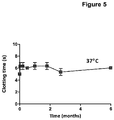
- Example 6 shows that a haemostatic agent of the invention is stable in solution for at least six months at 37°C.
- a haemostatic agent of the invention can be stored in solution thereby avoiding the need for reconstitution into solution prior to use.
- a method of controlling bleeding, especially severe bleeding, which comprises administering a haemostatic wound dressing of the invention to a wound is also disclosed.
- severe bleeding is used herein to include bleeding that requires intervention (surgical or endoscopic) or decompression of a closed space to stop or control the event, bleeding causing hemodynamic compromise (requiring blood, fluid replacement, inotropic support, or surgical intervention), or bleeding which cannot be controlled by conventional intervention such as manual pressure, cauterization or sutures.
- a method of making a haemostatic wound dressing which comprises immobilising a plurality of fibrinogen-binding peptides to a non-colloidal porous dressing material, optionally wherein the plurality of fibrinogen binding peptides are immobilised to the non-colloidal porous dressing material by immobilising a plurality of carriers to the non-colloidal porous dressing material, wherein a plurality of fibrinogen binding peptides are immobilised to each carrier, wherein each fibrinogen-binding peptide comprises: an amino acid sequence Gly-Pro-Arg-Xaa (SEQ ID NO: 1) at an amino-terminal end of the peptide, wherein Xaa is any amino acid other than Val, preferably Pro, Sar, or Leu; or an amino acid sequence Gly-His-Arg-Xaa (SEQ ID NO: 2) at an amino-terminal end of the peptide, wherein Xaa is any amino acid other than Pro, wherein
- the plurality of fibrinogen-binding peptides may be covalently or non-covalently immobilised to the non-colloidal porous dressing material.
- a plurality of carriers are non-covalently immobilised to the non-colloidal porous dressing material, and a plurality of fibrinogen-binding peptides are immobilised, preferably covalently, to each carrier.
- Suitable methods for covalently immobilising the fibrinogen-binding peptides to the carriers, optionally via a spacer preferably a non-peptide spacer, for example comprising a hydrophilic polymer such as PEG, are described above.
- Suitable methods for covalently immobilising each fibrinogen-binding peptide directly to the non-colloidal porous dressing material, optionally via a spacer preferably a non-peptide spacer, for example comprising a hydrophilic polymer such as PEG, are described above.
- a method of making a haemostatic wound dressing which comprises applying a haemostatic agent to a non-colloidal porous dressing material, wherein the haemostatic agent comprises a plurality of carriers and a plurality of fibrinogen-binding peptides immobilised to each carrier, wherein each fibrinogen-binding peptide comprises: an amino acid sequence Gly-Pro-Arg-Xaa (SEQ ID NO: 1) at an amino terminal end of the peptide, wherein Xaa is any amino acid other than Val, preferably Pro, Sar, or Leu; or an amino acid sequence Gly-His-Arg-Xaa (SEQ ID NO: 2) at an amino-terminal end of the peptide, wherein Xaa is any amino acid other than Pro, wherein the non-colloidal porous dressing material comprises a sheet, pad, sponge, foam, film, gauze, mesh, granules, or beads, and wherein if the non-colloidal porous
- the haemostatic agent may be non-covalently applied to the non-colloidal porous dressing material, for example by contacting an aqueous solution or suspension of the haemostatic agent with the dressing material for sufficiently long that the haemostatic agent becomes immobilised to the dressing material.
- the haemostatic agent is soaked onto the dressing material.
- haemostatic wound dressings of the invention comprise a plurality of soluble carriers (preferably soluble protein carriers, such as albumin carriers) to which a plurality of fibrinogen-binding peptides (each peptide preferably comprising an amino acid sequence Gly-Pro-Arg-Pro-Gly- (SEQ ID NO: 6) at the amino-terminal end of the peptide) are covalently immobilised via a non-peptide spacer (suitably a hydrophilic polymer, such as polyehtylene glycol) to each carrier.
- the carriers are non-covalently immobilised to a non-colloidal porous dressing material (preferably comprising gelatin, such as a gelatin pad, or comprising rayon or polyester). Examples of such haemostatic wound dressings are described in Examples 2, 3, and 4 below.
- haemostatic wound dressings of the invention comprise a plurality of fibrinogen-binding peptides (each peptide preferably comprising an amino acid sequence Gly-Pro-Arg-Pro-Gly- at the amino-terminal end of the peptide) covalently immobilised via a non-peptide spacer (suitably a hydrophilic polymer, such as polyethylene glycol) directly to a non-colloidal porous dressing material (preferably comprising gelatin, such as gelatin granules). Examples of such haemostatic wound dressings are described in Example 5 below.
- clot formation and “clotting activity” in relation to haemostatic wound dressings and haemostatic agents of the invention is reference to formation of a copolymer comprising the fibrinogen-binding peptides of the dressings or agents and fibrinogen, which has characteristics of a fibrin clot.
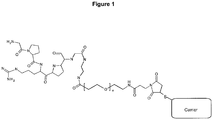
- This example describes conjugation of a fibrinogen-binding peptide of sequence GPRPG, linked to a maleimide group (Mal) by a polyethylene glycol (PEG) linker, to an albumin carrier.
- PEG polyethylene glycol
- Human serum albumin is diluted to 50 mg/mL in reaction buffer (50 mM sodium phosphate, 150 mM sodium chloride, 100 mM Ethylenediaminetetraacetic acid [EDTA], pH 8.0 ⁇ 0.2) and thiolated by the addition of a sixty-fold molar excess of 2-iminothiolane hydrochloride. After incubation for one hour at room temperature, thiolated albumin is separated from unreacted 2-iminothiolane hydrochloride by tangential flow diafiltration using 20 mM sodium phosphate, 150 mM sodium chloride, 1 mM EDTA pH 7.2 ⁇ 0.2 (filtration buffer).
- Peptide conjugation is performed by dissolving peptide (GPRPG-PEG12-maleimide) at a concentration of 50 mg/mL in filtration buffer and adding to thiolated albumin at a ratio of 0.95 mg peptide per 1 mg albumin. Following incubation for one hour at room temperature, excess peptide is removed by dialysing against a 60-fold excess of Tris-buffered saline (TBS; 20 mM Tris, 150 mM sodium chloride pH 7.2 ⁇ 0.2) using dialysis membrane with a molecular weight cut-off of 10-14 KD for at least 16 hours at 4oC, with one change of buffer. Recovered PeproStat is diluted to 5 mg/mL in TBS, sterile filtered through a 0.2 ⁇ m filter, dispensed and stored at 4°C.
- TBS Tris-buffered saline
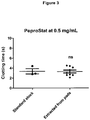
- the activity of the final product is investigated using a Sigma Amelung KC4 coagulometer. Briefly, 30 ⁇ L test sample at 0.5mg/ml is added to 100 ⁇ L purified human fibrinogen at 3 mg/ml, the KC4 registers clot formation in less than 6 seconds.
- the molecular weight of the final product is estimated by SDS-PAGE of reduced samples using 4-15% Tris-glycine precast gels stained with Coomassie by comparison with the band profile of unstained protein ladder.
- the haemostatic activity of PeproStat was to be determined using a heparinised rabbit model. However, before using this model, it was important to determine that the product is active in a rabbit, and in particular that the fibrinogen-binding sequence of PeproStat (GPRP-) binds to rabbit fibrinogen. This was done by conjugating a GPRPG peptide to albumin microparticles, which were then incubated with FITC-labelled rabbit fibrinogen. Fluorescent fibrinogen binding to the particles can then be measured using a Flow Cytometer. By this method it was shown that binding of PeproStat to rabbit fibrinogen was comparable to that of human fibrinogen. This confirms published data showing that the relevant rabbit and human fibrinogen binding sequence exposed when thrombin cleaves Fibrinopeptide A from fibrinogen is the same.
- the fibrinogen binding sequence (GPRP) in PeproStat is derived from the sequence GPR that is exposed when Fibrinopeptide A is cleaved from fibrinogen by the action of thrombin.
- the fourth amino acid in the sequence (proline) confers a higher affinity for fibrinogen than the natural cleaved sequence in human fibrinogen which has a valine residue at that position ( Laudano and Doolittle Biochemistry 1980, 19: 1013-1019 ). Laudano and Doolittle have shown that whilst all species share the terminal GPR sequence, there is variation in the amino acid at position four, which is known to affect affinity for fibrinogen. Sequence data shows that rabbit fibrinogen also has a valine residue at position four and therefore rabbit and human fibrinogen might be expected to have comparable affinity for GPRP, as we have found.
- a rabbit liver abrasion injury model was used to assess the comparative haemostatic effect of PeproStat, thrombin, or saline soaked onto a gelatin pad. Haemostatic activity was determined in rabbits dosed with heparin at 1000 IU/kg.
- a gelatin pad was cut to 2.0 x 3.0 cm using a scalpel blade.
- a pad sample was immersed in a 1.5ml aliquot of test solution (a PeproStat, thrombin, or saline solution). It was then withdrawn and squeezed between gloved fingers to expel air bubbles, then returned to the solution until required.
- test solution a PeproStat, thrombin, or saline solution
- a superficial circular lesion (diameter 10.3mm, depth 2-3mm) was created by abrading the surface of the liver lobe using a Dremel hand drill (Model 395 Type 5, USA;10,000-35,000rpm) with a flat surface abrasion stone (Dremel, part no. 85602 USA). Blood exiting the wound was collected for 15s with a pre-weighed dry swab. The weight of blood collected was used as a measure of bleeding severity. After removal of the swab the pre-soaked test pad was applied, and wet gauze was used to apply gentle pressure to the treated wound for 30 seconds.
- Seven injuries can be performed sequentially on each liver, and test pads randomised across the seven sites. 34 tests were performed on each test pad.
- a score of 0 (i.e. no bleeding) is judged as successful haemostasis at each time point.
- PeproStat at 10mg/ml was desalted using an Amicon Ultra centrifugal filter device and diluted to 2.5mg/ml.
- a 40cm 2 gelatin pad was soaked in 8ml PeproStat at 2.5mg/ml and the pad then squeezed through gloved fingers to remove air bubbles. The pads were left in the solution and gently rocked for 1 hour at room temperature to ensure all the solution was adsorbed.
- the pad was then freeze-dried using a bench-top Freeze Dryer.
- the shelves of the Freeze-Dryer were equilibrated at -36°C, and the pads placed on the pre-frozen shelf and subjected to thermal treatment steps bringing the temperature up to - 20°C over a period of 270 minutes.
- the freeze-dried pad was stored in a desiccator.
- the 40cm 2 pad containing 40mg PeproStat was found to weigh 440mg in total after freeze-drying.
- the clotting activity of the sample was measured using a Sigma Amelung KC-4 coagulometer which measures the time taken to form a clot.
- the analysis of clotting activity of the eluted PeproStat was compared with that of non freeze-dried PeproStat.
- the haemostatic activity of 0.5mL PeproStat at 5 mg/mL soaked onto a polyester/rayon blend was measured using a blood impedance method as follows: A double layer of the polyester/rayon gauze was stretched over a Universal container with an internal diameter of 2.5cm and the area of gauze covering the open tube was marked. The gauze was removed from the tube and 0.5mL PeproStat at 5 mg/mL was applied to the marked circle; 0.5 ml water was applied to a second dressing marked in the same manner as a control.
- the Universal containers were weighed and the soaked gauzes stretched across the mouth of the tube. 4 x 0.5mL citrated whole blood was then applied sequentially to the soaked gauze, and blood transfer through the gauze was measured by the weight of blood in the tube.
- This example describes preparation of two different preferred haemostatic wound dressings of the invention, and their haemostatic properties.
- Both dressings comprise a plurality of gelatin carriers, with a plurality of fibrinogen-binding peptides covalently immobilised to each carrier via a PEG linker.
- the gelatin carriers or granules provide the non-colloidal porous dressing material.
- 2-iminothiolane was used to covalently attach a plurality of fibrinogen-binding peptide-PEG linker conjugates to the gelatin carrier.
- cystamine moieties were conjugated to the carboxyl groups of gelatin in the presence of 1-Ethyl-3-(3-dimethylaminopropyl) carbodiimide hydrochloride (EDC) and N-hydroxysuccinimide (NHS), followed by reductive cleavage of the introduced disulphide bond to generate a free thiol for attachment of the fibrinogen-binding peptide.
- EDC 1-Ethyl-3-(3-dimethylaminopropyl) carbodiimide hydrochloride
- NHS N-hydroxysuccinimide
- Gelatin granules were thiolated using 2-iminothiolane which modifies amine residues.
- the method used was that of Ltdareddy S, Amiji M, 2005, Bioconjugate Chem 16: 1423-1432 .
- 1g of gelatin granules were weighed and hydrated in 40ml of a buffer containing 50mM sodium phosphate, 0.15M NaCl, 0.1M EDTA pH 8.0 ⁇ 0.2, by mixing on a roller mixer for 10 minutes at room temperature. 102g of 2-iminothiolane are added to the hydrated gelatin and mixed on a roller mixer for 1 hour. The granules were then spun at 500rpm-RCF 28 for 2 minutes, the supernatant removed, and volume replaced with 20mM sodium phosphate, 0.15M NaCl, 0.1 M EDTA pH 7.2 ⁇ 0.2. This was repeated four times to remove the 2-iminothiolane.
- TCEP tris(2-carboxyethyl)phosphine
- the shelves of the freeze-dryer were equilibrated at -36°C, and the gelatin granules placed on the pre-frozen shelf and subjected to thermal treatment steps bringing the temperature up to -20°C over a period of 270 minutes. Primary drying was accomplished over 800 minutes decreasing the vacuum from 800mTorr with a concomitant increase in temperature to 20°C. The freeze-dried granules were stored in a desiccator prior to testing.
- TBS tris-buffered saline
- This example describes the results of stability testing of fibrinogen-binding peptides immobilised to carriers in solution at 37°C.
- PeproStat (comprising fibrinogen-binding peptides, each of sequence GPRPG immobilised to HSA carrier) was stored in solution for 6 months at 37°C. At time zero, and various times during the storage period, samples of the stored solution were assayed for ability to form a co-polymer with fibrinogen, as follows: Fibrinogen was diluted in 10mM HEPES, 0.15M NaCl, pH 7.3+/1 0.2 to 6mg/ml. 25 ⁇ l PeproStat at 5mg/ml was added to 400 ⁇ l of the diluted fibrinogen, and the time taken for formation of a visual clot comprising a co-polymer of PeproStat and fibrinogen was recorded.
Landscapes
- Health & Medical Sciences (AREA)
- Chemical & Material Sciences (AREA)
- Life Sciences & Earth Sciences (AREA)
- Animal Behavior & Ethology (AREA)
- General Health & Medical Sciences (AREA)
- Public Health (AREA)
- Veterinary Medicine (AREA)
- Engineering & Computer Science (AREA)
- Epidemiology (AREA)
- Materials Engineering (AREA)
- Hematology (AREA)
- Surgery (AREA)
- Dispersion Chemistry (AREA)
- Pharmacology & Pharmacy (AREA)
- Organic Chemistry (AREA)
- Bioinformatics & Cheminformatics (AREA)
- Chemical Kinetics & Catalysis (AREA)
- General Chemical & Material Sciences (AREA)
- Medicinal Chemistry (AREA)
- Nuclear Medicine, Radiotherapy & Molecular Imaging (AREA)
- Composite Materials (AREA)
- Dermatology (AREA)
- Diabetes (AREA)
- Peptides Or Proteins (AREA)
- Materials For Medical Uses (AREA)
- Medicines That Contain Protein Lipid Enzymes And Other Medicines (AREA)
- Medicinal Preparation (AREA)
Claims (13)
- Hämostatische Wundversorgung, die ein nicht kolloidales, poröses Verbandmaterial umfasst und eine Mehrzahl von Fibrinogen-Bindungspeptiden, die an dem nicht kolloidalen, porösen Verbandmaterial immobilisiert sind, wobei jedes Fibrinogen-Bindungspeptid folgendes umfasst:eine Aminosäuresequenz Gly-Pro-Arg-Xaa (SEQ ID NO: 1) an einem Amino-Terminus des Peptids, wobei Xaa eine beliebige Aminosäure außer Val ist, vorzugsweise Pro, Sar oder Leu; odereine Aminosäuresequenz Gly-His-Arg-Xaa (SEQ ID NO: 2) an einem Amino-Terminus des Peptids, wobei Xaa eine beliebige Aminosäure außer Pro ist, undwobei das nicht kolloidale, poröse Verbandmaterial eine Lage, ein Pad, einen Schwamm, einen Schaum, eine Folie, einen Mull, ein Netz, Körnchen oder Kügelchen umfasst, und wobei, wenn das nicht kolloidale, poröse Verbandmaterial Körnchen oder Kügelchen umfasst, wenigstens eine Mehrheit der Körnchen oder Kügelchen eine maximale Größe von über 6 µm aufweisen.
- Wundversorgung nach Anspruch 1, wobei die Mehrzahl von Fibrinogen-Bindungspeptiden nicht kovalent an dem nicht kolloidalen, porösen Verbandmaterial immobilisiert sind.
- Wundversorgung nach Anspruch 1 oder 2, wobei eine Mehrzahl von Trägern an dem nicht kolloidalen, porösen Verbandmaterial immobilisiert sind, und wobei eine Mehrzahl von Fibrinogen-Bindungspeptiden an jedem Träger immobilisiert sind, wobei optional die Mehrzahl von Fibrinogen-Bindungspeptiden kovalent an jedem Träger immobilisiert sind, wobei optional jedes Fibrinogen-Bindungspeptid durch einen Nicht-Peptid-Spacer an dem Träger immobilisiert ist, wobei der Nicht-Peptid-Spacer optional ein hydrophiles Polymer umfasst, und wobei das hydrophile Polymer optional Polyethylenglycol umfasst.
- Wundversorgung nach Anspruch 3, wobei die Träger lösliche Träger sind.
- Wundversorgung nach Anspruch 1, wobei die Mehrzahl von Fibrinogen-Bindungspeptiden an dem nicht kolloidalen, porösen Verbandmaterial kovalent immobilisiert sind, wobei jedes Fibrinogen-Bindungspeptid optional durch einen Nicht-Peptid-Spacer an dem kolloidalen, porösen Verbandmaterial kovalent immobilisiert ist, wobei der Nicht-Peptid-Spacer optional ein hydrophiles Polymer umfasst, und wobei das hydrophile Polymer optional Polyethylenglycol umfasst.
- Wundversorgung nach einem der vorstehenden Ansprüche, wobei das nicht kolloidale, poröse Verbandmaterial Gelatine, Baumwolle, Rayon, Polyester, Collagen, Alginat oder Oxyzellulose umfasst.
- Wundversorgung nach einem der vorstehenden Ansprüche, die in trockener Form gegeben ist.
- Wundversorgung nach einem der vorstehenden Ansprüche, die in gefriergetrockneter Form gegeben ist.
- Wundversorgung nach einem der vorstehenden Ansprüche, wobei die Fibrinogen-Bindungspeptide jeweils eine Länge von 4 bis 60 Aminosäureresten aufweisen.
- Wundversorgung nach einem der Ansprüche 1 bis 9, verpackt mit Anweisungen zum Aufbringen der Wundversorgung auf eine Wunde.
- Wundversorgung nach einem der Ansprüche 1 bis 9 zur Blutstillung.
- Kit zur Bildung einer hämostatischen Wundversorgung, die ein nicht kolloidales, poröses Verbandmaterial und separat eine hämostatische Substanz umfasst, die eine Mehrzahl von Trägern und eine Mehrzahl von Fibrinogen-Bindungspeptiden umfasst, die an jedem Träger immobilisiert sind, wobei jedes Fibrinogen-Bindungspeptid folgendes umfasst: eine Aminosäuresequenz Gly-Pro-Arg-Xaa (SEQ ID NO: 1) an einem Amino-Terminus des Peptids, wobei Xaa eine beliebige Aminosäure außer Val ist, vorzugsweise Pro, Sar oder Leu; oder eine Aminosäuresequenz Gly-His-Arg-Xaa (SEQ ID NO: 2) an einem Amino-Terminus des Peptids, wobei Xaa eine beliebige Aminosäure außer Pro ist, und wobei das nicht kolloidale, poröse Verbandmaterial eine Lage, ein Pad, einen Schwamm, einen Schaum, eine Folie, einen Mull, ein Netz, Körnchen oder Kügelchen umfasst, und wobei, wenn das nicht kolloidale, poröse Verbandmaterial Körnchen oder Kügelchen umfasst, wenigstens eine Mehrheit der Körnchen oder Kügelchen eine maximale Größe von über 6 µm aufweisen.
- Verfahren zur Herstellung einer hämostatischen Wundversorgung, das folgendes umfasst:a) Immobilisieren einer Mehrzahl von Fibrinogen-Bindungspeptiden an einem nicht kolloidalen, porösen Verbandmaterial, wobei die Mehrzahl von Fibrinogen-Bindungspeptiden optional durch Immobilisieren einer Mehrzahl von Trägern an dem nicht kolloidalen, porösen Verbandmaterial an dem nicht kolloidalen, porösen Verbandmaterial immobilisiert werden, wobei eine Mehrzahl von Fibrinogen-Bindungspeptiden an jedem Träger immobilisiert werden; oderb) Auftragen einer hämostatischen Substanz auf ein nicht kolloidales, poröses Verbandmaterial, wobei die hämostatische Substanz eine Mehrzahl von Trägern umfasst sowie eine Mehrzahl von Fibrinogen-Bindungspeptiden, die an jedem Träger immobilisiert sind,wobei jedes Fibrinogen-Bindungspeptid folgendes umfasst:eine Aminosäuresequenz Gly-Pro-Arg-Xaa (SEQ ID NO: 1) an einem Amino-Terminus des Peptids, wobei Xaa eine beliebige Aminosäure außer Val ist, vorzugsweise Pro, Sar oder Leu; odereine Aminosäuresequenz Gly-His-Arg-Xaa (SEQ ID NO: 2) an einem Amino-Terminus des Peptids, wobei Xaa eine beliebige Aminosäure außer Pro ist, undwobei das nicht kolloidale, poröse Verbandmaterial eine Lage, ein Pad, einen Schwamm, einen Schaum, eine Folie, einen Mull, ein Netz, Körnchen oder Kügelchen umfasst, und wobei, wenn das nicht kolloidale, poröse Verbandmaterial Körnchen oder Kügelchen umfasst, wenigstens eine Mehrheit der Körnchen oder Kügelchen eine maximale Größe von über 6 µm aufweisen.
Priority Applications (1)
| Application Number | Priority Date | Filing Date | Title |
|---|---|---|---|
| HRP20211112TT HRP20211112T8 (hr) | 2012-02-01 | 2013-02-01 | Hemostatski zavoj za rane |
Applications Claiming Priority (2)
| Application Number | Priority Date | Filing Date | Title |
|---|---|---|---|
| GBGB1201751.3A GB201201751D0 (en) | 2012-02-01 | 2012-02-01 | Haemostatic wound dressing |
| PCT/GB2013/050237 WO2013114132A1 (en) | 2012-02-01 | 2013-02-01 | Haemostatic wound dressing |
Publications (3)
| Publication Number | Publication Date |
|---|---|
| EP2809365A1 EP2809365A1 (de) | 2014-12-10 |
| EP2809365B1 true EP2809365B1 (de) | 2021-05-12 |
| EP2809365B8 EP2809365B8 (de) | 2021-06-23 |
Family
ID=45876478
Family Applications (1)
| Application Number | Title | Priority Date | Filing Date |
|---|---|---|---|
| EP13708510.6A Active EP2809365B8 (de) | 2012-02-01 | 2013-02-01 | Blutungsstillende wundversorgung |
Country Status (11)
| Country | Link |
|---|---|
| US (1) | US9808553B2 (de) |
| EP (1) | EP2809365B8 (de) |
| JP (1) | JP6258868B2 (de) |
| KR (1) | KR102168157B1 (de) |
| CN (1) | CN104114198B (de) |
| ES (1) | ES2879558T3 (de) |
| GB (2) | GB201201751D0 (de) |
| HR (1) | HRP20211112T8 (de) |
| IN (1) | IN2014DN06952A (de) |
| RU (1) | RU2661036C2 (de) |
| WO (1) | WO2013114132A1 (de) |
Families Citing this family (36)
| Publication number | Priority date | Publication date | Assignee | Title |
|---|---|---|---|---|
| GB0516091D0 (en) * | 2005-08-04 | 2005-09-14 | Haemostatix Ltd | Therapeutic agent |
| GB0808376D0 (en) | 2008-05-08 | 2008-06-18 | Bristol Myers Squibb Co | Wound dressing |
| GB0817796D0 (en) | 2008-09-29 | 2008-11-05 | Convatec Inc | wound dressing |
| GB201020236D0 (en) | 2010-11-30 | 2011-01-12 | Convatec Technologies Inc | A composition for detecting biofilms on viable tissues |
| PL2648795T3 (pl) | 2010-12-08 | 2023-05-08 | Convatec Technologies Inc. | System do usuwania wysięków z miejsca rany |
| JP5965409B2 (ja) | 2010-12-08 | 2016-08-03 | コンバテック・テクノロジーズ・インコーポレイテッドConvatec Technologies Inc | 創傷滲出液を評価するための統合システム |
| CN103347562B (zh) | 2010-12-08 | 2016-08-10 | 康沃特克科技公司 | 伤口分泌液系统附件 |
| GB201115182D0 (en) | 2011-09-02 | 2011-10-19 | Trio Healthcare Ltd | Skin contact material |
| GB2497406A (en) | 2011-11-29 | 2013-06-12 | Webtec Converting Llc | Dressing with a perforated binder layer |
| GB201120693D0 (en) | 2011-12-01 | 2012-01-11 | Convatec Technologies Inc | Wound dressing for use in vacuum therapy |
| JP2016507663A (ja) | 2012-12-20 | 2016-03-10 | コンバテック・テクノロジーズ・インコーポレイテッドConvatec Technologies Inc | 化学修飾セルロース系繊維の加工 |
| GB201400292D0 (en) * | 2014-01-08 | 2014-02-26 | Haemostatix Ltd | Peptide dendrimers and agents |
| EP3200809B1 (de) | 2014-10-02 | 2023-09-13 | Wake Forest University Health Sciences, Inc. | Amnionmembranpulver und dessen verwendung in der wundheilung und bei gewebezüchtungskonstrukten |
| GB201508014D0 (en) * | 2015-05-11 | 2015-06-24 | Haemostatix Ltd | Haemostatic device |
| GB201508020D0 (en) * | 2015-05-11 | 2015-06-24 | Haemostatix Ltd | Haemostatic material |
| GB201508024D0 (en) | 2015-05-11 | 2015-06-24 | Haemostatix Ltd | Haemostatic compositions |
| WO2016200905A1 (en) * | 2015-06-08 | 2016-12-15 | The Procter & Gamble Company | Methods for identifying circadian rhythm-dependent cosmetic agents for skin care compositions |
| US20180243465A1 (en) * | 2015-09-01 | 2018-08-30 | Baxter International Inc. | Hemostatic material |
| GB2543307B (en) * | 2015-10-14 | 2020-12-09 | Selentus Science Ltd | Haemostatic device |
| GB2543544A (en) | 2015-10-21 | 2017-04-26 | Brightwake Ltd | Wound dressing |
| WO2017173069A1 (en) | 2016-03-30 | 2017-10-05 | Convatec Technologies Inc. | Detecting microbial infections in wounds |
| WO2017212345A2 (en) | 2016-03-30 | 2017-12-14 | Synovo Gmbh | Detecting microbial infection in wounds |
| GB201608099D0 (en) | 2016-05-09 | 2016-06-22 | Convatec Technologies Inc | Negative pressure wound dressing |
| JP7071957B2 (ja) | 2016-07-08 | 2022-05-19 | コンバテック・テクノロジーズ・インコーポレイテッド | 可撓性陰圧システム |
| BR112019000284A2 (pt) | 2016-07-08 | 2019-04-16 | Convatec Technologies Inc. | aparelho de coleta de fluido |
| ES2912094T3 (es) | 2016-07-08 | 2022-05-24 | Convatec Technologies Inc | Detección de flujo de fluidos |
| CN106344960B (zh) * | 2016-09-20 | 2019-02-22 | 安徽思维特生物科技有限公司 | 利用微晶纤维素接枝改性胎牛皮胶原纤维制备的止血凝胶 |
| US12161792B2 (en) | 2017-11-16 | 2024-12-10 | Convatec Limited | Fluid collection apparatus |
| IL256405A (en) * | 2017-12-19 | 2018-01-31 | Omrix Biopharmaceuticals Ltd | Wound bandage and method for its production |
| GB2571080A (en) * | 2018-02-14 | 2019-08-21 | Medtrade Products Ltd | Haemostatic material |
| EP4295869B1 (de) | 2019-06-03 | 2026-01-28 | Convatec Limited | Vorrichtungen zur zerstörung und eindämmung von pathogenen |
| CN110448719B (zh) | 2019-06-28 | 2020-05-22 | 浙江大学 | 一种促进凝血的丝素-多肽电纺膜及其制备方法 |
| US11771819B2 (en) | 2019-12-27 | 2023-10-03 | Convatec Limited | Low profile filter devices suitable for use in negative pressure wound therapy systems |
| US11331221B2 (en) | 2019-12-27 | 2022-05-17 | Convatec Limited | Negative pressure wound dressing |
| GB2596525A (en) * | 2020-06-26 | 2022-01-05 | Fujifilm Corp | Modified gelatins |
| CN112206307B (zh) * | 2020-09-15 | 2023-12-05 | 广州领晟医疗科技有限公司 | 一种可注射的温敏型水凝胶及其制备方法与应用 |
Family Cites Families (23)
| Publication number | Priority date | Publication date | Assignee | Title |
|---|---|---|---|---|
| DE3171072D1 (en) | 1981-06-25 | 1985-07-25 | Stroetmann M Serapharm | Enriched plasma derivative for promoting wound sealing and wound covering |
| GB9107628D0 (en) | 1991-04-10 | 1991-05-29 | Moonbrook Limited | Preparation of diagnostic agents |
| DE69333924T2 (de) | 1992-05-29 | 2006-08-17 | University Of North Carolina At Chapel Hill | Im immobilisierten Zustand getrocknete pharmazeutisch verträgliche menschliche Blutplättchen |
| EP0914096B1 (de) | 1996-05-17 | 2003-08-13 | Elan Drug Delivery Limited | Mikropartikel und deren verwendung in der wundbehandlung |
| ES2232862T3 (es) | 1996-10-21 | 2005-06-01 | Quadrant Drug Delivery Limited | Sustitutos de plaquetas y procedimientos de conjugacion apropiados para su preparacion. |
| US6891077B2 (en) | 2001-07-25 | 2005-05-10 | The United States Of America As Represented By The Secretary Of The Army | Fibrinogen bandages and arterial bleeding models and methods of making and using thereof |
| AU2003231731A1 (en) | 2002-04-15 | 2003-11-03 | American National Red Cross | Method for detecting ligands and targets in a mixture |
| US20040101546A1 (en) * | 2002-11-26 | 2004-05-27 | Gorman Anne Jessica | Hemostatic wound dressing containing aldehyde-modified polysaccharide and hemostatic agents |
| US7550282B2 (en) | 2002-11-20 | 2009-06-23 | Bar-Ilan University | Biological glue based on thrombin-conjugated nanoparticles |
| DE10323794A1 (de) | 2003-05-23 | 2004-12-09 | Dr. Suwelack Skin & Health Care Ag | Verfahren zur Herstellung von Alginat-haltigen porösen Formkörpern |
| CN1835723B (zh) | 2003-06-16 | 2011-06-22 | 洛马林达大学医学中心 | 可展开的多功能止血剂 |
| US7186684B2 (en) | 2003-08-07 | 2007-03-06 | Ethicon, Inc. | Hemostatic device containing a protein precipitate |
| US7927626B2 (en) | 2003-08-07 | 2011-04-19 | Ethicon, Inc. | Process of making flowable hemostatic compositions and devices containing such compositions |
| GB0323378D0 (en) * | 2003-10-07 | 2003-11-05 | Univ Leicester | Therapeutic agent |
| MX2007000918A (es) | 2004-07-22 | 2007-12-04 | Hemo Nanoscience Llc | Composiciones y metodos para tratar sangrado excesivo. |
| US9358318B2 (en) | 2004-10-20 | 2016-06-07 | Ethicon, Inc. | Method of making a reinforced absorbable multilayered hemostatic wound dressing |
| GB0516091D0 (en) * | 2005-08-04 | 2005-09-14 | Haemostatix Ltd | Therapeutic agent |
| GB0623607D0 (en) * | 2006-11-27 | 2007-01-03 | Haemostatix Ltd | Tissue adhesive |
| CN101854960B (zh) * | 2006-12-15 | 2014-06-25 | 生命连结有限公司 | 明胶-转谷氨酰胺酶止血敷料和密封材料 |
| CA2695288A1 (en) * | 2007-08-01 | 2009-02-05 | Ethicon, Inc. | Collagen-related peptides and uses thereof |
| US8512740B2 (en) | 2008-03-26 | 2013-08-20 | Baxter International Inc. | Fibrin foam and process for making |
| US20100021527A1 (en) | 2008-07-25 | 2010-01-28 | Chunlin Yang | Collagen-related peptides and uses thereof and hemostatic foam substrates |
| WO2011006069A1 (en) | 2009-07-09 | 2011-01-13 | Georgia Tech Research Corporation | Peptides for binding fibrinogen and fibrin |
-
2012
- 2012-02-01 GB GBGB1201751.3A patent/GB201201751D0/en not_active Ceased
-
2013
- 2013-02-01 CN CN201380007527.0A patent/CN104114198B/zh active Active
- 2013-02-01 RU RU2014132763A patent/RU2661036C2/ru active
- 2013-02-01 ES ES13708510T patent/ES2879558T3/es active Active
- 2013-02-01 US US14/376,023 patent/US9808553B2/en active Active
- 2013-02-01 EP EP13708510.6A patent/EP2809365B8/de active Active
- 2013-02-01 HR HRP20211112TT patent/HRP20211112T8/hr unknown
- 2013-02-01 KR KR1020147023963A patent/KR102168157B1/ko active Active
- 2013-02-01 WO PCT/GB2013/050237 patent/WO2013114132A1/en not_active Ceased
- 2013-02-01 GB GB1301847.8A patent/GB2501348B/en active Active
- 2013-02-01 JP JP2014555315A patent/JP6258868B2/ja active Active
- 2013-02-01 IN IN6952DEN2014 patent/IN2014DN06952A/en unknown
Non-Patent Citations (1)
| Title |
|---|
| None * |
Also Published As
| Publication number | Publication date |
|---|---|
| EP2809365A1 (de) | 2014-12-10 |
| JP2015506764A (ja) | 2015-03-05 |
| EP2809365B8 (de) | 2021-06-23 |
| HRP20211112T8 (hr) | 2022-01-21 |
| RU2661036C2 (ru) | 2018-07-11 |
| CN104114198A (zh) | 2014-10-22 |
| US20150071985A1 (en) | 2015-03-12 |
| WO2013114132A1 (en) | 2013-08-08 |
| KR20140121864A (ko) | 2014-10-16 |
| ES2879558T3 (es) | 2021-11-22 |
| RU2014132763A (ru) | 2016-03-27 |
| GB201301847D0 (en) | 2013-03-20 |
| GB2501348B (en) | 2020-06-24 |
| US9808553B2 (en) | 2017-11-07 |
| IN2014DN06952A (de) | 2015-04-10 |
| HRP20211112T1 (hr) | 2021-10-15 |
| CN104114198B (zh) | 2018-09-04 |
| KR102168157B1 (ko) | 2020-10-21 |
| JP6258868B2 (ja) | 2018-01-10 |
| GB201201751D0 (en) | 2012-03-14 |
| GB2501348A (en) | 2013-10-23 |
Similar Documents
| Publication | Publication Date | Title |
|---|---|---|
| EP2809365B1 (de) | Blutungsstillende wundversorgung | |
| CA2851332C (en) | Hemostatic compositions | |
| RU2503464C2 (ru) | Биогель | |
| CN108495658B (zh) | 止血材料 | |
| JP2004174223A (ja) | アルデヒド変性した多糖類および止血物質を含有している止血用の傷用包帯 | |
| US20130096082A1 (en) | Hemostatic compositions | |
| CN101797377B (zh) | 纤维蛋白封闭剂及其制备方法 | |
| RU2744694C2 (ru) | Гемостатические композиции | |
| EP3074055A1 (de) | Trockenpad mit thrombin und pektin | |
| JP2023541650A (ja) | 止血管理を改善するシステム |
Legal Events
| Date | Code | Title | Description |
|---|---|---|---|
| PUAI | Public reference made under article 153(3) epc to a published international application that has entered the european phase |
Free format text: ORIGINAL CODE: 0009012 |
|
| 17P | Request for examination filed |
Effective date: 20140822 |
|
| AK | Designated contracting states |
Kind code of ref document: A1 Designated state(s): AL AT BE BG CH CY CZ DE DK EE ES FI FR GB GR HR HU IE IS IT LI LT LU LV MC MK MT NL NO PL PT RO RS SE SI SK SM TR |
|
| AX | Request for extension of the european patent |
Extension state: BA ME |
|
| DAX | Request for extension of the european patent (deleted) | ||
| STAA | Information on the status of an ep patent application or granted ep patent |
Free format text: STATUS: EXAMINATION IS IN PROGRESS |
|
| 17Q | First examination report despatched |
Effective date: 20170726 |
|
| GRAP | Despatch of communication of intention to grant a patent |
Free format text: ORIGINAL CODE: EPIDOSNIGR1 |
|
| STAA | Information on the status of an ep patent application or granted ep patent |
Free format text: STATUS: GRANT OF PATENT IS INTENDED |
|
| INTG | Intention to grant announced |
Effective date: 20201214 |
|
| GRAS | Grant fee paid |
Free format text: ORIGINAL CODE: EPIDOSNIGR3 |
|
| GRAA | (expected) grant |
Free format text: ORIGINAL CODE: 0009210 |
|
| STAA | Information on the status of an ep patent application or granted ep patent |
Free format text: STATUS: THE PATENT HAS BEEN GRANTED |
|
| RAP3 | Party data changed (applicant data changed or rights of an application transferred) |
Owner name: HAEMOSTATIX LIMITED |
|
| RAP3 | Party data changed (applicant data changed or rights of an application transferred) |
Owner name: HAEMOSTATIX LIMITED |
|
| AK | Designated contracting states |
Kind code of ref document: B1 Designated state(s): AL AT BE BG CH CY CZ DE DK EE ES FI FR GB GR HR HU IE IS IT LI LT LU LV MC MK MT NL NO PL PT RO RS SE SI SK SM TR |
|
| REG | Reference to a national code |
Ref country code: GB Ref legal event code: FG4D |
|
| REG | Reference to a national code |
Ref country code: CH Ref legal event code: EP |
|
| RBV | Designated contracting states (corrected) |
Designated state(s): AL AT BE BG CH CY CZ DE DK EE ES FI FR GR HR HU IE IS IT LI LT LU LV MC MK MT NL NO PL PT RO RS SE SI SK SM TR |
|
| REG | Reference to a national code |
Ref country code: CH Ref legal event code: PK Free format text: BERICHTIGUNG B8 |
|
| REG | Reference to a national code |
Ref country code: DE Ref legal event code: R096 Ref document number: 602013077439 Country of ref document: DE |
|
| REG | Reference to a national code |
Ref country code: IE Ref legal event code: FG4D |
|
| REG | Reference to a national code |
Ref country code: AT Ref legal event code: REF Ref document number: 1391745 Country of ref document: AT Kind code of ref document: T Effective date: 20210615 |
|
| REG | Reference to a national code |
Ref country code: HR Ref legal event code: TUEP Ref document number: P20211112T Country of ref document: HR |
|
| REG | Reference to a national code |
Ref country code: NL Ref legal event code: FP |
|
| REG | Reference to a national code |
Ref country code: LT Ref legal event code: MG9D |
|
| REG | Reference to a national code |
Ref country code: HR Ref legal event code: T1PR Ref document number: P20211112 Country of ref document: HR Ref country code: AT Ref legal event code: MK05 Ref document number: 1391745 Country of ref document: AT Kind code of ref document: T Effective date: 20210512 |
|
| PG25 | Lapsed in a contracting state [announced via postgrant information from national office to epo] |
Ref country code: BG Free format text: LAPSE BECAUSE OF FAILURE TO SUBMIT A TRANSLATION OF THE DESCRIPTION OR TO PAY THE FEE WITHIN THE PRESCRIBED TIME-LIMIT Effective date: 20210812 Ref country code: AT Free format text: LAPSE BECAUSE OF FAILURE TO SUBMIT A TRANSLATION OF THE DESCRIPTION OR TO PAY THE FEE WITHIN THE PRESCRIBED TIME-LIMIT Effective date: 20210512 Ref country code: FI Free format text: LAPSE BECAUSE OF FAILURE TO SUBMIT A TRANSLATION OF THE DESCRIPTION OR TO PAY THE FEE WITHIN THE PRESCRIBED TIME-LIMIT Effective date: 20210512 Ref country code: LT Free format text: LAPSE BECAUSE OF FAILURE TO SUBMIT A TRANSLATION OF THE DESCRIPTION OR TO PAY THE FEE WITHIN THE PRESCRIBED TIME-LIMIT Effective date: 20210512 |
|
| REG | Reference to a national code |
Ref country code: ES Ref legal event code: FG2A Ref document number: 2879558 Country of ref document: ES Kind code of ref document: T3 Effective date: 20211122 |
|
| PG25 | Lapsed in a contracting state [announced via postgrant information from national office to epo] |
Ref country code: SE Free format text: LAPSE BECAUSE OF FAILURE TO SUBMIT A TRANSLATION OF THE DESCRIPTION OR TO PAY THE FEE WITHIN THE PRESCRIBED TIME-LIMIT Effective date: 20210512 Ref country code: RS Free format text: LAPSE BECAUSE OF FAILURE TO SUBMIT A TRANSLATION OF THE DESCRIPTION OR TO PAY THE FEE WITHIN THE PRESCRIBED TIME-LIMIT Effective date: 20210512 Ref country code: IS Free format text: LAPSE BECAUSE OF FAILURE TO SUBMIT A TRANSLATION OF THE DESCRIPTION OR TO PAY THE FEE WITHIN THE PRESCRIBED TIME-LIMIT Effective date: 20210912 Ref country code: GR Free format text: LAPSE BECAUSE OF FAILURE TO SUBMIT A TRANSLATION OF THE DESCRIPTION OR TO PAY THE FEE WITHIN THE PRESCRIBED TIME-LIMIT Effective date: 20210813 Ref country code: LV Free format text: LAPSE BECAUSE OF FAILURE TO SUBMIT A TRANSLATION OF THE DESCRIPTION OR TO PAY THE FEE WITHIN THE PRESCRIBED TIME-LIMIT Effective date: 20210512 Ref country code: PT Free format text: LAPSE BECAUSE OF FAILURE TO SUBMIT A TRANSLATION OF THE DESCRIPTION OR TO PAY THE FEE WITHIN THE PRESCRIBED TIME-LIMIT Effective date: 20210913 Ref country code: PL Free format text: LAPSE BECAUSE OF FAILURE TO SUBMIT A TRANSLATION OF THE DESCRIPTION OR TO PAY THE FEE WITHIN THE PRESCRIBED TIME-LIMIT Effective date: 20210512 Ref country code: NO Free format text: LAPSE BECAUSE OF FAILURE TO SUBMIT A TRANSLATION OF THE DESCRIPTION OR TO PAY THE FEE WITHIN THE PRESCRIBED TIME-LIMIT Effective date: 20210812 |
|
| REG | Reference to a national code |
Ref country code: HR Ref legal event code: T8IS Ref document number: P20211112 Country of ref document: HR |
|
| PG25 | Lapsed in a contracting state [announced via postgrant information from national office to epo] |
Ref country code: SK Free format text: LAPSE BECAUSE OF FAILURE TO SUBMIT A TRANSLATION OF THE DESCRIPTION OR TO PAY THE FEE WITHIN THE PRESCRIBED TIME-LIMIT Effective date: 20210512 Ref country code: SM Free format text: LAPSE BECAUSE OF FAILURE TO SUBMIT A TRANSLATION OF THE DESCRIPTION OR TO PAY THE FEE WITHIN THE PRESCRIBED TIME-LIMIT Effective date: 20210512 Ref country code: CZ Free format text: LAPSE BECAUSE OF FAILURE TO SUBMIT A TRANSLATION OF THE DESCRIPTION OR TO PAY THE FEE WITHIN THE PRESCRIBED TIME-LIMIT Effective date: 20210512 Ref country code: EE Free format text: LAPSE BECAUSE OF FAILURE TO SUBMIT A TRANSLATION OF THE DESCRIPTION OR TO PAY THE FEE WITHIN THE PRESCRIBED TIME-LIMIT Effective date: 20210512 Ref country code: DK Free format text: LAPSE BECAUSE OF FAILURE TO SUBMIT A TRANSLATION OF THE DESCRIPTION OR TO PAY THE FEE WITHIN THE PRESCRIBED TIME-LIMIT Effective date: 20210512 Ref country code: RO Free format text: LAPSE BECAUSE OF FAILURE TO SUBMIT A TRANSLATION OF THE DESCRIPTION OR TO PAY THE FEE WITHIN THE PRESCRIBED TIME-LIMIT Effective date: 20210512 |
|
| REG | Reference to a national code |
Ref country code: HR Ref legal event code: ODRP Ref document number: P20211112 Country of ref document: HR Payment date: 20211217 Year of fee payment: 10 |
|
| REG | Reference to a national code |
Ref country code: DE Ref legal event code: R097 Ref document number: 602013077439 Country of ref document: DE |
|
| PLBE | No opposition filed within time limit |
Free format text: ORIGINAL CODE: 0009261 |
|
| STAA | Information on the status of an ep patent application or granted ep patent |
Free format text: STATUS: NO OPPOSITION FILED WITHIN TIME LIMIT |
|
| 26N | No opposition filed |
Effective date: 20220215 |
|
| PG25 | Lapsed in a contracting state [announced via postgrant information from national office to epo] |
Ref country code: IS Free format text: LAPSE BECAUSE OF FAILURE TO SUBMIT A TRANSLATION OF THE DESCRIPTION OR TO PAY THE FEE WITHIN THE PRESCRIBED TIME-LIMIT Effective date: 20210912 Ref country code: AL Free format text: LAPSE BECAUSE OF FAILURE TO SUBMIT A TRANSLATION OF THE DESCRIPTION OR TO PAY THE FEE WITHIN THE PRESCRIBED TIME-LIMIT Effective date: 20210512 |
|
| PG25 | Lapsed in a contracting state [announced via postgrant information from national office to epo] |
Ref country code: MC Free format text: LAPSE BECAUSE OF FAILURE TO SUBMIT A TRANSLATION OF THE DESCRIPTION OR TO PAY THE FEE WITHIN THE PRESCRIBED TIME-LIMIT Effective date: 20210512 |
|
| PG25 | Lapsed in a contracting state [announced via postgrant information from national office to epo] |
Ref country code: LU Free format text: LAPSE BECAUSE OF NON-PAYMENT OF DUE FEES Effective date: 20220201 |
|
| REG | Reference to a national code |
Ref country code: HR Ref legal event code: ODRP Ref document number: P20211112 Country of ref document: HR Payment date: 20221220 Year of fee payment: 11 |
|
| P01 | Opt-out of the competence of the unified patent court (upc) registered |
Effective date: 20230524 |
|
| REG | Reference to a national code |
Ref country code: HR Ref legal event code: ODRP Ref document number: P20211112 Country of ref document: HR Payment date: 20231219 Year of fee payment: 12 |
|
| PG25 | Lapsed in a contracting state [announced via postgrant information from national office to epo] |
Ref country code: HU Free format text: LAPSE BECAUSE OF FAILURE TO SUBMIT A TRANSLATION OF THE DESCRIPTION OR TO PAY THE FEE WITHIN THE PRESCRIBED TIME-LIMIT; INVALID AB INITIO Effective date: 20130201 |
|
| PG25 | Lapsed in a contracting state [announced via postgrant information from national office to epo] |
Ref country code: MK Free format text: LAPSE BECAUSE OF FAILURE TO SUBMIT A TRANSLATION OF THE DESCRIPTION OR TO PAY THE FEE WITHIN THE PRESCRIBED TIME-LIMIT Effective date: 20210512 Ref country code: CY Free format text: LAPSE BECAUSE OF FAILURE TO SUBMIT A TRANSLATION OF THE DESCRIPTION OR TO PAY THE FEE WITHIN THE PRESCRIBED TIME-LIMIT Effective date: 20210512 |
|
| PG25 | Lapsed in a contracting state [announced via postgrant information from national office to epo] |
Ref country code: MT Free format text: LAPSE BECAUSE OF FAILURE TO SUBMIT A TRANSLATION OF THE DESCRIPTION OR TO PAY THE FEE WITHIN THE PRESCRIBED TIME-LIMIT Effective date: 20210512 |
|
| REG | Reference to a national code |
Ref country code: HR Ref legal event code: ODRP Ref document number: P20211112 Country of ref document: HR Payment date: 20241211 Year of fee payment: 13 |
|
| PGFP | Annual fee paid to national office [announced via postgrant information from national office to epo] |
Ref country code: CH Payment date: 20250301 Year of fee payment: 13 |
|
| PG25 | Lapsed in a contracting state [announced via postgrant information from national office to epo] |
Ref country code: TR Free format text: LAPSE BECAUSE OF FAILURE TO SUBMIT A TRANSLATION OF THE DESCRIPTION OR TO PAY THE FEE WITHIN THE PRESCRIBED TIME-LIMIT Effective date: 20210512 |
|
| REG | Reference to a national code |
Ref country code: CH Ref legal event code: R17 Free format text: ST27 STATUS EVENT CODE: U-0-0-R10-R17 (AS PROVIDED BY THE NATIONAL OFFICE) Effective date: 20251215 |
|
| PGFP | Annual fee paid to national office [announced via postgrant information from national office to epo] |
Ref country code: HR Payment date: 20251211 Year of fee payment: 14 Ref country code: FR Payment date: 20251204 Year of fee payment: 14 |
|
| PGFP | Annual fee paid to national office [announced via postgrant information from national office to epo] |
Ref country code: IE Payment date: 20251204 Year of fee payment: 14 |
|
| REG | Reference to a national code |
Ref country code: HR Ref legal event code: ODRP Ref document number: P20211112 Country of ref document: HR Payment date: 20251211 Year of fee payment: 14 |
|
| PGFP | Annual fee paid to national office [announced via postgrant information from national office to epo] |
Ref country code: NL Payment date: 20260113 Year of fee payment: 14 |
|
| REG | Reference to a national code |
Ref country code: CH Ref legal event code: U11 Free format text: ST27 STATUS EVENT CODE: U-0-0-U10-U11 (AS PROVIDED BY THE NATIONAL OFFICE) Effective date: 20260301 |
|
| PGFP | Annual fee paid to national office [announced via postgrant information from national office to epo] |
Ref country code: ES Payment date: 20260306 Year of fee payment: 14 |
|
| PGFP | Annual fee paid to national office [announced via postgrant information from national office to epo] |
Ref country code: DE Payment date: 20260109 Year of fee payment: 14 |
|
| PGFP | Annual fee paid to national office [announced via postgrant information from national office to epo] |
Ref country code: BE Payment date: 20260113 Year of fee payment: 14 Ref country code: IT Payment date: 20251215 Year of fee payment: 14 |