EP2820703B1 - Utilisation d'une charge amovible durant la fabrication d'une électrode composite - Google Patents
Utilisation d'une charge amovible durant la fabrication d'une électrode composite Download PDFInfo
- Publication number
- EP2820703B1 EP2820703B1 EP13724310.1A EP13724310A EP2820703B1 EP 2820703 B1 EP2820703 B1 EP 2820703B1 EP 13724310 A EP13724310 A EP 13724310A EP 2820703 B1 EP2820703 B1 EP 2820703B1
- Authority
- EP
- European Patent Office
- Prior art keywords
- particle
- filler
- surface portion
- electroactive
- use according
- Prior art date
- Legal status (The legal status is an assumption and is not a legal conclusion. Google has not performed a legal analysis and makes no representation as to the accuracy of the status listed.)
- Active
Links
Images
Classifications
-
- H—ELECTRICITY
- H01—ELECTRIC ELEMENTS
- H01M—PROCESSES OR MEANS, e.g. BATTERIES, FOR THE DIRECT CONVERSION OF CHEMICAL ENERGY INTO ELECTRICAL ENERGY
- H01M4/00—Electrodes
- H01M4/02—Electrodes composed of, or comprising, active material
- H01M4/36—Selection of substances as active materials, active masses, active liquids
- H01M4/362—Composites
-
- H—ELECTRICITY
- H01—ELECTRIC ELEMENTS
- H01M—PROCESSES OR MEANS, e.g. BATTERIES, FOR THE DIRECT CONVERSION OF CHEMICAL ENERGY INTO ELECTRICAL ENERGY
- H01M4/00—Electrodes
- H01M4/02—Electrodes composed of, or comprising, active material
- H01M4/13—Electrodes for accumulators with non-aqueous electrolyte, e.g. for lithium-accumulators; Processes of manufacture thereof
-
- A—HUMAN NECESSITIES
- A61—MEDICAL OR VETERINARY SCIENCE; HYGIENE
- A61K—PREPARATIONS FOR MEDICAL, DENTAL OR TOILETRY PURPOSES
- A61K47/00—Medicinal preparations characterised by the non-active ingredients used, e.g. carriers or inert additives; Targeting or modifying agents chemically bound to the active ingredient
- A61K47/02—Inorganic compounds
-
- A—HUMAN NECESSITIES
- A61—MEDICAL OR VETERINARY SCIENCE; HYGIENE
- A61K—PREPARATIONS FOR MEDICAL, DENTAL OR TOILETRY PURPOSES
- A61K9/00—Medicinal preparations characterised by special physical form
- A61K9/14—Particulate form, e.g. powders, Processes for size reducing of pure drugs or the resulting products, Pure drug nanoparticles
-
- C—CHEMISTRY; METALLURGY
- C09—DYES; PAINTS; POLISHES; NATURAL RESINS; ADHESIVES; COMPOSITIONS NOT OTHERWISE PROVIDED FOR; APPLICATIONS OF MATERIALS NOT OTHERWISE PROVIDED FOR
- C09C—TREATMENT OF INORGANIC MATERIALS, OTHER THAN FIBROUS FILLERS, TO ENHANCE THEIR PIGMENTING OR FILLING PROPERTIES ; PREPARATION OF CARBON BLACK ; PREPARATION OF INORGANIC MATERIALS WHICH ARE NO SINGLE CHEMICAL COMPOUNDS AND WHICH ARE MAINLY USED AS PIGMENTS OR FILLERS
- C09C1/00—Treatment of specific inorganic materials other than fibrous fillers; Preparation of carbon black
- C09C1/28—Compounds of silicon
-
- H—ELECTRICITY
- H01—ELECTRIC ELEMENTS
- H01M—PROCESSES OR MEANS, e.g. BATTERIES, FOR THE DIRECT CONVERSION OF CHEMICAL ENERGY INTO ELECTRICAL ENERGY
- H01M10/00—Secondary cells; Manufacture thereof
- H01M10/05—Accumulators with non-aqueous electrolyte
- H01M10/052—Li-accumulators
- H01M10/0525—Rocking-chair batteries, i.e. batteries with lithium insertion or intercalation in both electrodes; Lithium-ion batteries
-
- H—ELECTRICITY
- H01—ELECTRIC ELEMENTS
- H01M—PROCESSES OR MEANS, e.g. BATTERIES, FOR THE DIRECT CONVERSION OF CHEMICAL ENERGY INTO ELECTRICAL ENERGY
- H01M4/00—Electrodes
- H01M4/02—Electrodes composed of, or comprising, active material
- H01M4/13—Electrodes for accumulators with non-aqueous electrolyte, e.g. for lithium-accumulators; Processes of manufacture thereof
- H01M4/131—Electrodes based on mixed oxides or hydroxides, or on mixtures of oxides or hydroxides, e.g. LiCoOx
-
- H—ELECTRICITY
- H01—ELECTRIC ELEMENTS
- H01M—PROCESSES OR MEANS, e.g. BATTERIES, FOR THE DIRECT CONVERSION OF CHEMICAL ENERGY INTO ELECTRICAL ENERGY
- H01M4/00—Electrodes
- H01M4/02—Electrodes composed of, or comprising, active material
- H01M4/13—Electrodes for accumulators with non-aqueous electrolyte, e.g. for lithium-accumulators; Processes of manufacture thereof
- H01M4/134—Electrodes based on metals, Si or alloys
-
- H—ELECTRICITY
- H01—ELECTRIC ELEMENTS
- H01M—PROCESSES OR MEANS, e.g. BATTERIES, FOR THE DIRECT CONVERSION OF CHEMICAL ENERGY INTO ELECTRICAL ENERGY
- H01M4/00—Electrodes
- H01M4/02—Electrodes composed of, or comprising, active material
- H01M4/13—Electrodes for accumulators with non-aqueous electrolyte, e.g. for lithium-accumulators; Processes of manufacture thereof
- H01M4/136—Electrodes based on inorganic compounds other than oxides or hydroxides, e.g. sulfides, selenides, tellurides, halogenides or LiCoFy
-
- H—ELECTRICITY
- H01—ELECTRIC ELEMENTS
- H01M—PROCESSES OR MEANS, e.g. BATTERIES, FOR THE DIRECT CONVERSION OF CHEMICAL ENERGY INTO ELECTRICAL ENERGY
- H01M4/00—Electrodes
- H01M4/02—Electrodes composed of, or comprising, active material
- H01M4/36—Selection of substances as active materials, active masses, active liquids
-
- H—ELECTRICITY
- H01—ELECTRIC ELEMENTS
- H01M—PROCESSES OR MEANS, e.g. BATTERIES, FOR THE DIRECT CONVERSION OF CHEMICAL ENERGY INTO ELECTRICAL ENERGY
- H01M4/00—Electrodes
- H01M4/02—Electrodes composed of, or comprising, active material
- H01M4/36—Selection of substances as active materials, active masses, active liquids
- H01M4/362—Composites
- H01M4/364—Composites as mixtures
-
- H—ELECTRICITY
- H01—ELECTRIC ELEMENTS
- H01M—PROCESSES OR MEANS, e.g. BATTERIES, FOR THE DIRECT CONVERSION OF CHEMICAL ENERGY INTO ELECTRICAL ENERGY
- H01M4/00—Electrodes
- H01M4/02—Electrodes composed of, or comprising, active material
- H01M4/36—Selection of substances as active materials, active masses, active liquids
- H01M4/38—Selection of substances as active materials, active masses, active liquids of elements or alloys
-
- H—ELECTRICITY
- H01—ELECTRIC ELEMENTS
- H01M—PROCESSES OR MEANS, e.g. BATTERIES, FOR THE DIRECT CONVERSION OF CHEMICAL ENERGY INTO ELECTRICAL ENERGY
- H01M4/00—Electrodes
- H01M4/02—Electrodes composed of, or comprising, active material
- H01M4/36—Selection of substances as active materials, active masses, active liquids
- H01M4/38—Selection of substances as active materials, active masses, active liquids of elements or alloys
- H01M4/386—Silicon or alloys based on silicon
-
- H—ELECTRICITY
- H01—ELECTRIC ELEMENTS
- H01M—PROCESSES OR MEANS, e.g. BATTERIES, FOR THE DIRECT CONVERSION OF CHEMICAL ENERGY INTO ELECTRICAL ENERGY
- H01M4/00—Electrodes
- H01M4/02—Electrodes composed of, or comprising, active material
- H01M4/36—Selection of substances as active materials, active masses, active liquids
- H01M4/38—Selection of substances as active materials, active masses, active liquids of elements or alloys
- H01M4/387—Tin or alloys based on tin
-
- H—ELECTRICITY
- H01—ELECTRIC ELEMENTS
- H01M—PROCESSES OR MEANS, e.g. BATTERIES, FOR THE DIRECT CONVERSION OF CHEMICAL ENERGY INTO ELECTRICAL ENERGY
- H01M4/00—Electrodes
- H01M4/02—Electrodes composed of, or comprising, active material
- H01M4/36—Selection of substances as active materials, active masses, active liquids
- H01M4/38—Selection of substances as active materials, active masses, active liquids of elements or alloys
- H01M4/42—Alloys based on zinc
-
- H—ELECTRICITY
- H01—ELECTRIC ELEMENTS
- H01M—PROCESSES OR MEANS, e.g. BATTERIES, FOR THE DIRECT CONVERSION OF CHEMICAL ENERGY INTO ELECTRICAL ENERGY
- H01M4/00—Electrodes
- H01M4/02—Electrodes composed of, or comprising, active material
- H01M4/36—Selection of substances as active materials, active masses, active liquids
- H01M4/38—Selection of substances as active materials, active masses, active liquids of elements or alloys
- H01M4/44—Alloys based on cadmium
-
- H—ELECTRICITY
- H01—ELECTRIC ELEMENTS
- H01M—PROCESSES OR MEANS, e.g. BATTERIES, FOR THE DIRECT CONVERSION OF CHEMICAL ENERGY INTO ELECTRICAL ENERGY
- H01M4/00—Electrodes
- H01M4/02—Electrodes composed of, or comprising, active material
- H01M4/36—Selection of substances as active materials, active masses, active liquids
- H01M4/38—Selection of substances as active materials, active masses, active liquids of elements or alloys
- H01M4/46—Alloys based on magnesium or aluminium
-
- H—ELECTRICITY
- H01—ELECTRIC ELEMENTS
- H01M—PROCESSES OR MEANS, e.g. BATTERIES, FOR THE DIRECT CONVERSION OF CHEMICAL ENERGY INTO ELECTRICAL ENERGY
- H01M4/00—Electrodes
- H01M4/02—Electrodes composed of, or comprising, active material
- H01M4/36—Selection of substances as active materials, active masses, active liquids
- H01M4/48—Selection of substances as active materials, active masses, active liquids of inorganic oxides or hydroxides
-
- H—ELECTRICITY
- H01—ELECTRIC ELEMENTS
- H01M—PROCESSES OR MEANS, e.g. BATTERIES, FOR THE DIRECT CONVERSION OF CHEMICAL ENERGY INTO ELECTRICAL ENERGY
- H01M4/00—Electrodes
- H01M4/02—Electrodes composed of, or comprising, active material
- H01M4/36—Selection of substances as active materials, active masses, active liquids
- H01M4/48—Selection of substances as active materials, active masses, active liquids of inorganic oxides or hydroxides
- H01M4/485—Selection of substances as active materials, active masses, active liquids of inorganic oxides or hydroxides of mixed oxides or hydroxides for inserting or intercalating light metals, e.g. LiTi2O4 or LiTi2OxFy
-
- H—ELECTRICITY
- H01—ELECTRIC ELEMENTS
- H01M—PROCESSES OR MEANS, e.g. BATTERIES, FOR THE DIRECT CONVERSION OF CHEMICAL ENERGY INTO ELECTRICAL ENERGY
- H01M4/00—Electrodes
- H01M4/02—Electrodes composed of, or comprising, active material
- H01M4/36—Selection of substances as active materials, active masses, active liquids
- H01M4/58—Selection of substances as active materials, active masses, active liquids of inorganic compounds other than oxides or hydroxides, e.g. sulfides, selenides, tellurides, halogenides or LiCoFy; of polyanionic structures, e.g. phosphates, silicates or borates
-
- H—ELECTRICITY
- H01—ELECTRIC ELEMENTS
- H01M—PROCESSES OR MEANS, e.g. BATTERIES, FOR THE DIRECT CONVERSION OF CHEMICAL ENERGY INTO ELECTRICAL ENERGY
- H01M4/00—Electrodes
- H01M4/02—Electrodes composed of, or comprising, active material
- H01M4/36—Selection of substances as active materials, active masses, active liquids
- H01M4/58—Selection of substances as active materials, active masses, active liquids of inorganic compounds other than oxides or hydroxides, e.g. sulfides, selenides, tellurides, halogenides or LiCoFy; of polyanionic structures, e.g. phosphates, silicates or borates
- H01M4/5805—Phosphides
-
- H—ELECTRICITY
- H01—ELECTRIC ELEMENTS
- H01M—PROCESSES OR MEANS, e.g. BATTERIES, FOR THE DIRECT CONVERSION OF CHEMICAL ENERGY INTO ELECTRICAL ENERGY
- H01M4/00—Electrodes
- H01M4/02—Electrodes composed of, or comprising, active material
- H01M4/36—Selection of substances as active materials, active masses, active liquids
- H01M4/58—Selection of substances as active materials, active masses, active liquids of inorganic compounds other than oxides or hydroxides, e.g. sulfides, selenides, tellurides, halogenides or LiCoFy; of polyanionic structures, e.g. phosphates, silicates or borates
- H01M4/581—Chalcogenides or intercalation compounds thereof
-
- H—ELECTRICITY
- H01—ELECTRIC ELEMENTS
- H01M—PROCESSES OR MEANS, e.g. BATTERIES, FOR THE DIRECT CONVERSION OF CHEMICAL ENERGY INTO ELECTRICAL ENERGY
- H01M4/00—Electrodes
- H01M4/02—Electrodes composed of, or comprising, active material
- H01M4/36—Selection of substances as active materials, active masses, active liquids
- H01M4/58—Selection of substances as active materials, active masses, active liquids of inorganic compounds other than oxides or hydroxides, e.g. sulfides, selenides, tellurides, halogenides or LiCoFy; of polyanionic structures, e.g. phosphates, silicates or borates
- H01M4/581—Chalcogenides or intercalation compounds thereof
- H01M4/5815—Sulfides
-
- H—ELECTRICITY
- H01—ELECTRIC ELEMENTS
- H01M—PROCESSES OR MEANS, e.g. BATTERIES, FOR THE DIRECT CONVERSION OF CHEMICAL ENERGY INTO ELECTRICAL ENERGY
- H01M4/00—Electrodes
- H01M4/02—Electrodes composed of, or comprising, active material
- H01M4/36—Selection of substances as active materials, active masses, active liquids
- H01M4/58—Selection of substances as active materials, active masses, active liquids of inorganic compounds other than oxides or hydroxides, e.g. sulfides, selenides, tellurides, halogenides or LiCoFy; of polyanionic structures, e.g. phosphates, silicates or borates
- H01M4/582—Halogenides
-
- H—ELECTRICITY
- H01—ELECTRIC ELEMENTS
- H01M—PROCESSES OR MEANS, e.g. BATTERIES, FOR THE DIRECT CONVERSION OF CHEMICAL ENERGY INTO ELECTRICAL ENERGY
- H01M4/00—Electrodes
- H01M4/02—Electrodes composed of, or comprising, active material
- H01M4/62—Selection of inactive substances as ingredients for active masses, e.g. binders, fillers
-
- C—CHEMISTRY; METALLURGY
- C01—INORGANIC CHEMISTRY
- C01P—INDEXING SCHEME RELATING TO STRUCTURAL AND PHYSICAL ASPECTS OF SOLID INORGANIC COMPOUNDS
- C01P2002/00—Crystal-structural characteristics
- C01P2002/80—Crystal-structural characteristics defined by measured data other than those specified in group C01P2002/70
- C01P2002/84—Crystal-structural characteristics defined by measured data other than those specified in group C01P2002/70 by UV- or VIS- data
-
- C—CHEMISTRY; METALLURGY
- C01—INORGANIC CHEMISTRY
- C01P—INDEXING SCHEME RELATING TO STRUCTURAL AND PHYSICAL ASPECTS OF SOLID INORGANIC COMPOUNDS
- C01P2006/00—Physical properties of inorganic compounds
- C01P2006/40—Electric properties
-
- H—ELECTRICITY
- H01—ELECTRIC ELEMENTS
- H01M—PROCESSES OR MEANS, e.g. BATTERIES, FOR THE DIRECT CONVERSION OF CHEMICAL ENERGY INTO ELECTRICAL ENERGY
- H01M4/00—Electrodes
- H01M4/02—Electrodes composed of, or comprising, active material
- H01M4/04—Processes of manufacture in general
- H01M4/0402—Methods of deposition of the material
- H01M4/0404—Methods of deposition of the material by coating on electrode collectors
-
- H—ELECTRICITY
- H01—ELECTRIC ELEMENTS
- H01M—PROCESSES OR MEANS, e.g. BATTERIES, FOR THE DIRECT CONVERSION OF CHEMICAL ENERGY INTO ELECTRICAL ENERGY
- H01M4/00—Electrodes
- H01M4/02—Electrodes composed of, or comprising, active material
- H01M4/04—Processes of manufacture in general
- H01M4/0471—Processes of manufacture in general involving thermal treatment, e.g. firing, sintering, backing particulate active material, thermal decomposition, pyrolysis
-
- Y—GENERAL TAGGING OF NEW TECHNOLOGICAL DEVELOPMENTS; GENERAL TAGGING OF CROSS-SECTIONAL TECHNOLOGIES SPANNING OVER SEVERAL SECTIONS OF THE IPC; TECHNICAL SUBJECTS COVERED BY FORMER USPC CROSS-REFERENCE ART COLLECTIONS [XRACs] AND DIGESTS
- Y02—TECHNOLOGIES OR APPLICATIONS FOR MITIGATION OR ADAPTATION AGAINST CLIMATE CHANGE
- Y02E—REDUCTION OF GREENHOUSE GAS [GHG] EMISSIONS, RELATED TO ENERGY GENERATION, TRANSMISSION OR DISTRIBUTION
- Y02E60/00—Enabling technologies; Technologies with a potential or indirect contribution to GHG emissions mitigation
- Y02E60/10—Energy storage using batteries
Definitions
- the present invention relates to the use of a removable filler to improve the resistance of a structured electroactive particle to degradation and agglomeration during manufacture of a composite electrode, and further relates to structured active particles, particularly but not exclusively to structured silicon particles for use in a range of applications such as electrochemical cells, metal-ion batteries such as secondary battery applications, lithium air batteries, flow cell batteries, fuel cells, solar cells, filters, sensors, electrical and thermal capacitors, micro-fluidic devices, gas or vapour sensors, thermal or dielectric insulating devices, devices for controlling or modifying the transmission, absorption or reflectance of light or other forms of electromagnetic radiation, chromatography or wound dressings.
- structured active particles particularly but not exclusively to structured silicon particles for use in a range of applications such as electrochemical cells, metal-ion batteries such as secondary battery applications, lithium air batteries, flow cell batteries, fuel cells, solar cells, filters, sensors, electrical and thermal capacitors, micro-fluidic devices, gas or vapour sensors, thermal or dielectric insulating devices, devices for controlling or modifying the transmission, ab
- the invention relates to composite particles comprising a structured active particle and a filler, especially structured active silicon particles, which include a removable filler, methods of preparing same and their use in the preparation of electrodes. More especially the invention relates to structured active particles, particularly structured active silicon particles and their use in battery applications, particularly lithium ion battery applications.
- structured particle includes within its definition porous particles substantially as described in WO 2010/128310 ; porous particle fragments substantially as described in United Kingdom patent application number GB 1115262.6 ; particles including both branched and unbranched pillars extending from a particle core (hereafter referred to as pillared particles) substantially as described in US 2011/0067228 , US 2011/0269019 , US 2011/0250498 or prepared using the techniques described in US 7402829 , JP 2004281317 , US 2010/0285358 , US 2010/0297502 , US 2008/0261112 or WO 2011/117436 ; fibres substantially as described in US 8101298 , the fibres including pores or voids distributed over the surface thereof; flakes and ribbons substantially as described in US 2010/0190061 (also having pores or voids distributed over the surface thereof) and fractals substantially as described in GB 1115262.6 .
- EP 1 797 199 A1 discloses a negative-electrode material for a lithium secondary battery that includes particles which are selected from the group consisting of carbon-material particles, metal particles, and metal-oxide particles; and two or more different polymeric materials each attached to different sites of the particles.
- WO 2009/089018 A2 discloses a removable filler material that may be employed during fabrication of an electrochemical cell, or component thereof, to produce electrochemical devices having improved cell performance and rate capability.
- All particles disclosed herein are suitably defined in terms of their size and shape. Not all particles will be truly spherical and will generally be characterised by a principal or larger dimension (or diameter) and a minor (or smallest) dimension or diameter. For a spherical or substantially spherical particle the principal and minor dimensions will generally be the same or similar. For an elongate particle such as a fibre, however, the principal dimension will generally be defined in terms of the fibre length and the minor dimension will generally be defined in terms of the fibre thickness.
- the particles may also be defined in terms of their aspect ratio, which is the ratio of the magnitude of the principal dimension to that of the minor dimension; for a substantially spherical particle the aspect ratio will be of the order of 1.
- An elongate particle will generally have an aspect ratio of greater than 1, for example greater than 2, greater than 3, greater than 5 or greater than 10.
- the dimensions of particles may be measured by scanning electron microscopy or transmission electron microscopy.
- Mean average lengths and thicknesses may be obtained by measuring lengths and thicknesses in a sample of a particulate material.
- a composition or powder comprises a plurality of particles having a size distribution.
- a distribution of the particle sizes within a powder may be measured by laser diffraction, in which the particles being measured are typically assumed to be spherical, and in which particle size is expressed as a spherical equivalent volume diameter, for example using the MastersizerTM particle size analyzer available from Malvern Instruments Ltd.
- a spherical equivalent volume diameter is the diameter of a sphere with the same volume as that of the particle being measured. If all particles in the powder being measured have the same density then the spherical equivalent volume diameter is equal to the spherical equivalent mass diameter which is the diameter of a sphere that has the same mass as the mass of the particle being measured.
- the powder is typically dispersed in a medium with a refractive index that is different to the refractive index of the powder material.
- a suitable dispersant for powders of the present disclosure is water.
- a particle size analyser provides a spherical equivalent volume diameter distribution curve.
- Size distribution of particles in a powder measured in this way may be expressed as a diameter value Dn in which at least n % of the volume of the powder is formed from particles have a measured spherical equivalent volume diameter equal to or less than D. All dimensions quoted herein are referred to as a D 50 value, that is the diameter in which at least 50% of the volume of the powder is formed from particles having a measured spherical equivalent diameter equal or less than the value of D 50 .
- active particle should be understood to mean a particle comprising a material, which possesses an inherent property (for example an electrical, electronic, electrochemical or optical property) so that the operation of a product including a particle comprising that material is dependent on its inherent property.
- an inherent property for example an electrical, electronic, electrochemical or optical property
- the particle comprises a material that is inherently electroactive, that electroactivity can form the basis of a secondary battery including that particle.
- electroactive it should be understood to mean a material which, when used in battery applications is able to insert into its structure, and release therefrom, metal ions such as lithium, sodium, potassium, calcium or magnesium during the respective battery charging phase and discharging phases.
- the material is able to insert and release lithium.
- the particle comprises a material that exhibits photovoltaic activity
- particles including such a photovoltaic material can be used in the formation of solar cells, for example.
- the material is placed in an environment in which it naturally corrodes, the resulting corrosion current can be harnessed and the material can be used as a battery to power an external device; devices of this type are commonly known as "fuel cells" in which the corroding material provides the fuel.
- fuel cells the corroding material provides the fuel.
- the operation of devices such as sensors, particularly silicon sensors depends on the induced changes in the resistivity or conductivity that arise as a result of the presence of sensed contaminants, for example, the inherent property of such devices being the resistivity or conductivity of the sensor material.
- structured active particle as used herein will therefore be understood to mean a structured particle as defined herein above, which comprises a material having an inherent property that forms the operational basis of a device of which it forms a part.
- composite material as used herein should be understood to mean a material comprising a structured active particle and one or more additional components selected from the group comprising a binder, a conductive material, a filler, an auxiliary electroactive material or a mixture thereof.
- Composite materials are generally formed by drying a slurry including the components described above to remove the slurry solvent.
- electrode material as used herein should be understood to mean a composite material in which the structured active particle comprises an electroactive material.
- composite mix as used herein should be understood to mean a composition comprising a slurry of a composite material in a liquid carrier.
- electrode mix as used herein should be understood to mean a composite mix in which the structured active particle comprises an electroactive material.
- stable suspension as used herein should be understood to mean a dispersion of particles in a liquid carrier, wherein the particles do not or do not tend to form aggregates.
- Structured active particles such as those described above may be used in applications including electrochemical cells, metal ion batteries such as lithium-ion batteries, lithium air batteries, flow cell batteries, other energy storage devices such as fuel cells, thermal batteries, photovoltaic devices such as solar cells, filters, sensors, electrical and thermal capacitors, microfluidic devices, gas/vapour sensors, thermal or dielectric insulating devices, devices for controlling or modifying the transmission, absorption or reflectance of light or other forms of electromagnetic radiation, chromatography or wound dressings.
- US 5,914,183 discloses a luminescent device comprising a wafer including quantum wires formed at the surface thereof.
- Porous silicon particles may also be used for the storage, controlled delivery or timed release of ingredients or active agents in consumer care, nutritional or medical products.
- Examples of porous silicon particles of this type are disclosed in US 2010/0278931 , US 2011/0236493 , US 7,332,339 , US 2004/0052867 , US 2007/0255198 and WO 2010/139987 . These particles tend to be degraded or absorbed in the physiological environment of the body.
- Degradable or absorbable particles are inherently unsuitable for use in the applications such as electrochemical cells, metal ion batteries such as lithium-ion batteries, lithium air batteries, flow cell batteries, other energy storage devices such as fuel cells, thermal batteries, photovoltaic devices such as solar cells, filters, sensors, electrical and thermal capacitors, microfluidic devices, gas/vapour sensors, thermal or dielectric insulating devices, devices for controlling or modifying the transmission, absorption or reflectance of light or other forms of electromagnetic radiation, chromatography or wound dressings.
- metal ion batteries such as lithium-ion batteries, lithium air batteries, flow cell batteries, other energy storage devices such as fuel cells, thermal batteries, photovoltaic devices such as solar cells, filters, sensors, electrical and thermal capacitors, microfluidic devices, gas/vapour sensors, thermal or dielectric insulating devices, devices for controlling or modifying the transmission, absorption or reflectance of light or other forms of electromagnetic radiation, chromatography or wound dressings.
- Secondary batteries including composite electrodes comprising a layer of structured silicon particles on a current collector are known and are described in, for example: US20100112475 , US4002541 , US4363708 , US7851086 , US 2004/0214085 , US 2009/0186267 , US 2011/0067228 , WO 2010/130975 , WO 2010/1309766 and WO 2010/128310 .
- Electrode materials used in the formation of these batteries are characterised by high homogeneity and intimate connectivity.
- batteries including anodes comprising structured silicon particles exhibit better capacity and life cycle characteristics compared to batteries comprising native or unstructured silicon particles as structured silicon particles have a reduced tendency to crack and are more able to accommodate stress build-up during the charging and discharging phases of the battery.
- the structured silicon particles tend to be highly porous (or can be engineered so that they are) and are characterised by a large surface area; although this provides a large surface area over which insertion and release of metal ions can occur and can improve the rate of charge/discharge, the structures may be inherently fragile.
- the storage and bulk transport of such structures or the preparation of electrode materials comprising structured silicon particles can be problematic: although voids or channels in the structured electroactive material have been found to be advantageous in minimising the build up of stress within the electrode material, they represent a physical barrier to the passage of charge within the electrode material, which means that the insertion and release characteristics of the structured material are not always fully optimised and the internal conductivity of the electrode material is reduced. In addition, if the pores are small, efficient wetting of the electroactive material by a liquid electrolyte may not occur, which also reduces the efficiency of charge transfer therein; penetration by a gel electrolyte is almost impossible.
- pillar loss may be due to either the frictional forces experienced by each particle due to collisions with the other particles in the slurry or may simply be the result of the inherently fragile nature of a highly porous particle. Inherent fragility means that the processing, storage and transportation of such materials is difficult.
- a structured active particle which is able to optimise both insertion and release of lithium and other charge carriers, particularly where the structured particle is used in battery applications.
- a structured active particle which is able to optimise electrical conductivity within a material of which it forms a part in both battery and other related applications.
- a structured active particle that can promote active wetting of a material of which it forms a part in a battery and other applications.
- a structured active particle which is able to resist degradation and to avoid being agglomerated during manufacture of a composite electrode.
- a method of preparing structured active material There is a further need for preparing structured active material. The present invention addresses these needs.
- the present invention is defined by the claims and relates to the use of a removable filler to improve the resistance of a structured electroactive particle to degradation and agglomeration during manufacture of a composite electrode.
- a first aspect of the disclosure provides a composite particle comprising a first particle component and a second particle component in which:
- the composite particles of the first aspect of the disclosure do not degrade to a significant extent and are suitable for use in applications such as electrochemical cells, metal ion batteries such as lithium-ion batteries, lithium air batteries, flow cell batteries, other energy storage devices such as fuel cells, thermal batteries, photovoltaic devices such as solar cells, filters, sensors, electrical and thermal capacitors, microfluidic devices, gas/vapour sensors, thermal or dielectric insulating devices, devices for controlling or modifying the transmission, absorption or reflectance of light or other forms of electromagnetic radiation or chromatography or wound dressings applications.
- the composite particles may additionally make it easier to disperse the active materials evenly throughout a composite material by the reduction or elimination of agglomeration.
- Dispersion may be aided for example Furthermore, by making the second component removable, it will not impede the function of the active material within the application after manufacture.
- the composite particles are particularly suitable for use in secondary battery applications. The composite particles are unsuitable for delivering substances to the human body as they do not tend to disintegrate in physiological fluids.
- the surface portion of the first particle component may be defined as that part of the particle that contains structural features or the greatest number of structural features within the particle volume. The presence of voids within the surface portion imparts an inherent porosity to the first particle component.
- the structural features and one or more voids of the surface portion suitably extend between the body portion and the particle boundary (outer surface of the surface portion). The distance over which these features extend defines the thickness of the surface portion.
- the structural features may comprise pillars, which may be branched or un-branched. Preferably the structural features comprise unbranched pillars, more preferably substantially straight, unbranched pillars. Each structural feature may be separated from an adjacent feature by one or more voids. Particles having substantially straight pillars extending from the body portion are disclosed to in US 2011/0067228 and are typically referred to as pillared particles.
- a structural feature may be fused to an adjacent structural feature; either along the entirety of its length where the structural feature is a substantially straight, un-branched pillar or at points over the surface, where the structural feature is branched.
- Particles comprising branched pillars having points of fusion over the pillar surface define, in effect, a particle having a plurality of pores or voids distributed over the surface thereof; such particles are referred to in WO 2010/128310 as porous particles.
- the structural features and one or more voids are suitably distributed over at least 20% of the area occupied by the surface portion, preferably at least 30% and especially at least 50%.
- the one or more voids in the surface portion may suitably be in the form of pores or channels. Pores are suitably distributed over the surface portion of the first particle component and are in direct or indirect (via other pores, for example) communication with the particle boundary. Channels suitably extend from the body portion to the particle boundary. Channels may be straight or convoluted, but are preferably substantially straight. Both the pores and channels provide a path whereby a filler can penetrate and occupy void spaces comprised within the surface portion of the first particle component. Composite particles comprising as first particle component a pillared particle having a solid core and substantially straight pillars and channels extending through the surface portion are preferred.
- the SMF is the mass of silicon structures divided by the mass of the whole particle.
- the SMF may be determined by various methods. If the structures are grown on, deposited on or attached to the particle cores then the SMF may be calculated by measuring the mass of a plurality of particle cores before growth or attachment and the mass of the structured particles after growth or attachment and subtracting one from the other to calculate the mass of structures in the above equation.
- the SMF may be determined by an oxidation technique. This involves firstly measuring the mass of a quantity of structured particles and then measuring a change in mass over time of the quantity of structured particles during oxidation, for example by heating structured particles in an oxygen-containing atmosphere, e.g. by heating to 1040oC in air.
- the structures are fully oxidised first, and oxidise at a relatively rapid rate (shown as a relatively rapid increase in the rate of mass increase). Oxidation of the structures is deemed to be complete when the rate of mass increase is observed to reduce and become linear with time.
- the rate of mass increase is due only by steady oxidation of the silicon into the particle core.
- the observed increase in mass up to this point is mostly due to oxidation of the structures and using the difference in density between silicon and silicon oxide, the mass of the structures before oxidation and hence the PMF can be determined.
- the particles cores of the smaller structured particles may additionally be oxidised and a correction factor may need to be applied to take account of the core oxidation.
- the correction factor can be estimated by doing the measurement on a sample comprising the particle cores with the structures absent or removed. This method is particularly suitable for structured particles having silicon pillars.
- the SMF may also be determined by measuring the mass of a quantity of structured particles, removing the structures from the particle cores, for example by mechanical agitation (such as ultrasonication), scraping or chemical etching, separating the detached structures from the particle cores and measuring either the mass of the quantity of particle cores and / or the mass of the detached structures. This method is preferred because it may be applied to pillared particles of any material.
- the SMF may be affected by, for example, the average dimensions of the structures, their porosity and the percentage coverage of the particle core by the structures (the structure density).
- the SMF is preferably greater than or equal to 5 %, more preferably at least 10 %, most preferably at least 20%.
- the SMF is preferably no more than 95%, more preferably no more than 80%. Most preferably the SMF is 20-60%, especially 25-50%.
- a higher SMF value means that the high capacity active structures make a larger contribution to the active mass of a device of which they form a part, such as an electrode, and provide a higher overall capacity per unit mass can be obtained.
- the cost of manufacturing the structured particles may increase so that the cost to performance ratio of the electrode materials becomes uncompetitive, the structures may become too densely packed and/or the mechanical/electronic integrity of the pillar to core connection may be weakened.
- the Structure Volume Fraction (SVF) may be measured instead of SMF, although it will be appreciated that SVF is applicable to the cases in which the core and structure densities are substantially the same (in which case the SVF value will be substantially the same as the SMF value) and the case in which the core and structure densities are significantly different.
- SVF may be derived from SMF measurements using a ratio of densities of the core material and the structure material.
- the volumes of the structures and the structured particles are the volumes which do not include volumes of open pores. Closed pores or voids that are completely enclosed within the bulk of a core or structure are included in the volumes. Accordingly, if the structures or cores are porous, the porosity may need to be measured.
- Example techniques that may be used to measure porosity include mercury porosimetry and Barret-Joyner-Halenda (BJH) analysis.
- the degree of porosity is proportional to the amount of void space contained within the first particle component and is generally a reflection of the amount of void space present in the surface portion and is suitably at least 20% of the total volume of the surface portion, preferably less than 80%, for example 30 to 70 vol%. It will therefore be appreciated that the coating or filler will occupy some or all of the void space present in the surface portion of the first particle component upon the formation of a composite particle.
- the volumes and dimensions of the structures and of the structured particles may be measured using a MasterSizer system or other similar laser diffractometry device, as described above.
- the volume of a structured particle is measured; structures are detached from the structured particles by a mechanical process such as ultrasonication; and the volume of the structures is measured.
- the porosity is determined and the measured volume is adjusted. For example, if porosity is 5 % then measured volume is adjusted by 0.95 to give a solid volume.
- the volumes may also be measured using 2D digital imaging systems such as Morphologi, as described above, though they typically are unable to resolve particles with a dimension below 0.5 ⁇ m.
- the SVF may be affected by, for example, the average dimension of the structures and the percentage coverage of the particle core by the structures (the structure density) and the density of the particle core and structure materials.
- the SVF is preferably greater than or equal to 5 %, more preferably at least 10 %, most preferably at least 20%.
- the SVF is preferably no more than 95%, more preferably no more than 80%. Most preferably the SVF is 20-60%, especially 25-50%.
- a higher SVF value means that the high capacity active structures make a larger contribution to the active mass of the electrode and a higher overall capacity per unit volume can be obtained.
- the cost of manufacturing the structured particles may increase so that the cost to performance ratio of the electrode materials becomes uncompetitive, the structures may become too densely packed and/or the mechanical/electronic integrity of the structure to core connection may be weakened.
- the particles can also be characterised by their specific surface area, which may be measured by various techniques including BET (Brunauer, Emmett and Teller) and laser diffractometry.
- BET Brunauer, Emmett and Teller
- the surface portion of the first particle component may comprise pores or voids with an opening to the surface with a principal dimension in the range 1 nm to 5 ⁇ m.
- the pores may be at least 2nm, or at least 5nm.
- the pores may have a size no more than 2 ⁇ m.
- the specific surface area, area per unit mass, or BET value of a powder formed from a plurality of the first particle components is preferably reduced by the application of the removable filler, so that the first particle components can be more easily mixed into a composite material.
- the BET of plurality of first particle components with the temporary filler is no more than 200 m 2 /g, more preferably it is no more than 100 m 2 /g, or no more than 80 m 2 /g. Most preferably it is no more than 50 m 2 /g or less than 30 m 2 /g.
- the percentage ratio of the BET value after application of the filler to the BET value without the filler is no more than 90%, preferably no more than 80%, more preferably no more than 60%.
- the active material of the first particle component suitably comprises an electroactive material.
- the first particle component comprises an electroactive material selected from the group comprising silicon, tin, germanium, gallium, lead, zinc and aluminium and electroactive alloys and compounds thereof. It is especially preferred that the first particle component comprises silicon, an electroactive alloy or compounds containing silicon and oxygen, compounds containing silicon and nitrogen, compounds containing silicon and fluorine, tin, tin alloys, compounds containing tin and oxygen, compounds containing tin and nitrogen, and compounds containing tin and fluorine.
- structured particles comprising the first particle component include but are not limited to pillared particles, porous particles, porous particle fragments and fibres as defined herein.
- the first particle component comprises structured particles selected from the group comprising silicon comprising pillared particles, porous particles, porous particle fragments and silicon comprising fibres or mixtures thereof.
- a first particle component comprising a silicon pillared particle is especially preferred.
- the body portion of the first particle component may be devoid of structural features, comprise fewer structural features than the surface portion or have a different structure to that of the surface portion.
- the body portion suitably defines a core, which supports the structural features of the surface portion.
- the body portion suitably has principal dimension or diameter in the range 0.1 to 40 ⁇ m, preferably 1 to 35 ⁇ m, more preferably 5 to 30 ⁇ m and especially 5 to 20 ⁇ m.
- the size of the body portion may vary according to the application to which the composite particle is put.
- the body portion suitably has principal dimension or diameter in the range 0.1 to 40 ⁇ m, preferably 1 to 35 ⁇ m, more preferably 5 to 30 ⁇ m and especially 5 to 20 ⁇ m.
- the removable filler may completely or partially occupy the one or more voids in the surface portion.
- Complete occupation of a void should be understood to mean that voids including the filler are full or the meniscus of the filler bulges above the void opening.
- Partial occupation of a void should be understood to include situations in which the filler provides a thin coating on some of the void walls, situations where the filler merely provides a thin coating on the void walls, situations in which the filler occupies a significant volume within the void, but where the meniscus of the filler extends up the walls of the void and situations in which the filler has a substantially flat meniscus and occupies a significant volume within the void.
- the removable filler suitably remains in place until it has either been used in the formation of a composite electrode or until formation of a battery cell is complete.
- a removable filler may comprise a material that either sublimes or disintegrates at or above a temperature used to dry a composite material including the composite particle. Typically the removable filler sublimes or disintegrates at or above 50°C, preferably between 70 and 200°C, preferably 80 to 110°C, more preferably 90 to 100°C.
- the removable filler may be soluble in a liquid used to wash a composite material including the composite particle electrode or in a liquid, which supports a device including the composite material.
- the liquid in which the filler is soluble is selected from the group comprising an electrolyte, an electrolyte solvent or an ionic liquid.
- ionic liquid it should be understood to mean a salt, which is liquid below 100°C.
- electrolyte it should be understood to mean a solution of a salt in a polar solvent.
- electrolyte solvent it should be understood to mean a polar solvent, which is capable of solubilising an organic or inorganic salt.
- electrolyte solvents include polar solvents such as water, an alcohol and an organic carbonate. Non-aqueous electrolyte solvents are preferred.
- non-aqueous electrolyte solvents examples include non-protic organic solvents such as N-methylpyrrolidone, propylene carbonate, ethylene carbonate, butylene carbonate, dimethyl carbonate, diethyl carbonate, gamma butyro lactone, 1,2-dimethoxy ethane, 2-methyl tetrahydrofuran, dimethylsulphoxide, 1,3-dioxolane, formamide, dimethylformamide, acetonitrile, nitromethane, methylformate, methyl acetate, phosphoric acid tri-ester, trimethoxy methane, sulpholane, methyl sulpholane and 1,3-dimethyl-2-imidazolidione.
- non-protic organic solvents such as N-methylpyrrolidone, propylene carbonate, ethylene carbonate, butylene carbonate, dimethyl carbonate, diethyl carbonate, gamma butyro lactone, 1,2-dimethoxy
- electrolyte salts include but are not limited to LiCl, LiBr, Lil, LiClO 4 , LiBF 4 , LiB 10 C 20 , LiPF 6 , LiCF 3 SO 3 , LiAsF 6 , LiSbF 6 , LiAlCl 4 , CH 3 SO 3 Li and CF 3 SO 3 Li.
- the removable filler suitably remains in place during the manufacture of a composite material including the composite particle.
- the filler may be subsequently removed together with the slurry solvent during a drying step.
- the removable filler may comprise an organic or inorganic material, which undergoes dissolution only when the composite particle is placed in a device of which it forms a part.
- the composite particle is used in the manufacture of battery cells and the filler dissolves in the electrolyte or electrolyte solvent on formation of the battery cell.
- Examples of materials that can be used to fully or partially coat a first particle component and which can be removed once a composite electrode has been formed include o- and p-cresol, 3-nonanol, 1-methyl cyclohexanol, p-toluenenitrile, 2-methoxyphenol, 2-phenol-2-propanl, 2,3-dimethylanisole, phenol, 2,4-diemthylphenol, 3,4,4-trimethylpentanol, carboxyl acids such as oxalic acid and butanediol.
- These coating or filling materials suitably have a melting point of between 20 and 30°C and a boiling point of 150 to 200°C.
- the coating material is suitably removed by sublimation, evaporation or degradation simultaneously with or subsequent to removal of the slurry solvent during the drying stage of electrode manufacture. The use of higher boiling point solids is preferred as this introduces additional porosity into the final electrode structure.
- Examples of materials that can be used to fully or partially coat a first particle component and which can be removed by dissolution in a solvent (such as an electrolyte solvent) on inclusion in a device include waxes and surfactants. These coatings must be soluble in the solvent and must be stable under the operating conditions of the device. Where the composite particle is used in the manufacture of a lithium ion battery, the wax or surfactant must be stable under the voltage range at which the battery is cycled.
- suitable waxes include natural wax such as 12-hydroxystearic acid, synthetic wax such as low molecular weight polyethylene, petroleum waxes such as paraffin wax, and microcrystalline waxes.
- surfactants include carboxylic acid esters, carboxylic acid amides, sulfonic acid esters, sulfonic acid amides, particularly fatty acid esters and amides and alkyl sulfonic acid esters and amides.
- the surfactant may comprise a fluorinated compound.
- the surfactant comprises a perfluorinated compound.
- a wax, a wax mixture or a surfactant as described above may be beneficial to combine with other inorganic compounds, such as Li 2 CO 3 , LiF, Li 3 PO 4 , SiO 2 , Li 4 SiO 4 , LiAlO 2 , Li 2 TiO 3 , LiNbO 3 and the like, to improve both air stability and polar solvent stability.
- other inorganic compounds such as Li 2 CO 3 , LiF, Li 3 PO 4 , SiO 2 , Li 4 SiO 4 , LiAlO 2 , Li 2 TiO 3 , LiNbO 3 and the like.
- the composite particle including the wax filler is easier to handle.
- an inorganic component provides the possibility of using commonly used polar solvents that dissolve commonly used polymer binders in the manufacture of a composite material. Waxes typically boil at temperatures in the range 120 to 200°C.
- the temporary coating is soluble in a solution of an organic carbonate or a mixture thereof but is insoluble or partially soluble in water and/or ethanol.
- the temporary filler or coating is soluble in a 0.5 to 2.5 moles per litre (M) solution of a salt in an organic carbonate;
- suitable salt solutions in which the coating or filler is soluble include solutions of one or more salts selected from but not limited to the group comprising LiCl, LiBr, LiI, LiClO 4 , LiBF 4 , LiB 10 C 20 , LiPF 6 , LiCF 3 SO 3 , LiAsF 6 , LiSbF 6 , LiAlCl 4 , CH 3 SO 3 Li and CF 3 SO 3 Li or a mixture thereof in an organic carbonate.
- the composite particles of the first aspect of the disclosure can be prepared using techniques that are well known to a person skilled in the art.
- Such techniques include micro-encapsulation techniques such as pan coating, centrifugal extrusion, spray drying, in-situ polymerisation and oligomerisation techniques, dip coating and sol-gel coating.
- the first particle component is a pillared particle comprising a particle core with pillars extending there from.
- the body portion essentially comprises the particle core and the surface portion is defined by the volume through which the silicon comprising pillars and one or more voids extend.
- the pillars are integrally formed with the particle core.
- the removable filler fully or partially occupies the voids surrounding the pillars. Where the filler is removed on composite electrode formation, it has been found that evaporation of the filler has the effect of pulling the other components of the electrode material into or adjacent the voids of the first particle component thereby to enhance the internal connectivity of the electrode material.
- the filler is soluble only in the electrolyte solution of a battery, it has been found that dissolution of the filler results in superior wetting of the active material compared to materials that are not so coated, thereby enhancing the conductivity of a battery including a structured active particle. Further, the presence of a filler in the voids of the first particle component has been found to prevent detachment of the pillars from the core during the manufacture of both the composite electrode and a battery.
- the diameter and length of the pillars comprised in the pillared particle will depend on the application to which the pillared particle is to be put.
- the pillars will typically have a diameter of greater than 10nm, suitably a diameter in the range 30 to 500nm, preferably 40 to 400nm, more preferably 40 to 150nm.
- the pillar length will suitably be in the range 0.5 to 10 ⁇ m, preferably 1 to 5 ⁇ m. Pillared particles having an overall diameter (core plus pillar length) in the range 0.5 to 40 ⁇ m, preferably 1 to 25 ⁇ m, more preferably 2 to 15 ⁇ m, especially 3 to 5 ⁇ m have been found to be suitable for secondary battery applications.
- the surface portion essentially comprises the region (or volume) of the particle into which the coating or filler penetrates; where the particle is a sphere, this will typically be defined by the outer volume of the sphere.
- the body portion will consequently be defined by the volume (typically the inner or core volume) of the particle that has not been penetrated by the filler or coating.
- a filler or coating penetrates the entirety of the particle volume, it will be appreciated that the body portion will comprise a negligible volume compared to the volume occupied by the surface portion. It will, therefore, be understood that where the structured particle is a porous particle, the structural features comprise pores, voids or channels extending fully or partially into the volume of the particle and the coating or filler is distributed partially or completely within the voids.
- a temporary filler promotes intimate connectivity between components such as a pillared particle or a porous particle and the other components of a material of which they form a part.
- the temporary filler also improves the homogeneity of the composite material by preventing aggregation.
- the first particle component may (as described herein above) be in the form of an elongate element such as a fibre, wire, thread, tube, flake or ribbon as defined herein having structural features and voids distributed over the surface thereof.
- elongate particles may be characterised by a smaller dimension, a larger dimension and an aspect ratio (the ratio of the larger dimension to the smaller dimension).
- the minor (smallest) dimension of the elongate element is at least 10nm, preferably at least 30nm.
- the aspect ratio of the elongate element is suitably at least 2:1, preferably at least 3:1, more preferably at least 5:1.
- the elongate element is provided in the form of a fibre, more preferably a porous fibre.
- Elongate elements according to the first aspect of the disclosure will typically comprise a body portion and a surface portion.
- the body portion comprises that internal volume of the core, which is devoid of pores, voids or channels.
- the surface portion comprises the outer volume of the fibre, which is defined in part by the depth to which the pores or voids extend.
- the average number and diameter of pores, voids or channels distributed over the surface of the first particle component will depend upon the application in which the composite particle is to be used.
- the pores, voids or channels provided distributed over the surface of the first particle component preferably have a diameter in the range 1 nm to 1500nm, preferably 3.5 to 750nm and especially 50nm to 500nm.
- the surface portion of the first particle component suitably has a porosity in the range 10 to 70%, preferably 20 to 50% and the number and diameter of the pores, voids and channels is sufficient to reflect this.
- the material from which the body portion is formed may be the same or different to that of the surface portion.
- the surface portion of the first particle component suitably comprises an electroactive material.
- the surface portion is formed from an electroactive material selected from the group comprising silicon, gallium, germanium, aluminium, lead, tin, selenium, tellurium, boron and zinc or electroactive oxides, nitrides, hydrides, fluorides, alloys, compounds and mixtures thereof, especially silicon.
- the body portion may comprise an electroactive or a non-electroactive material. Where the body portion comprises an electroactive material, this may be the same or different to the electroactive material of the surface portion.
- the body and surface portions of the first particle component may be formed integrally, either by etching structural features into a surface portion of a starting particle or by growing structural features onto a body portion.
- both the body portion and the surface portion comprise silicon or an electroactive alloy or compound of silicon.
- the body portion comprises a first electroactive material and the surface portion comprises a second electroactive material having a composition different to that of the first electroactive material of the body portion.
- the surface and/or body portion of the first particle component according to the first aspect of the disclosure may also or alternatively comprise, as indicated herein, compounds or mixtures of electroactive materials, which are themselves electroactive.
- suitable electroactive compounds or mixtures include but are not limited to BC, BSi, Si-C, SiGe, SiSn, GeSn, WC, SiO x , SnO x , lithium titanium oxides, TiO 2 , binary metal oxides, BN, BAs, AlN, AlP, AlAs, AlSb, GaN, GaP, GaAs, GaSb, InN, InP, InAs, ZnO, ZnS, ZnSe, ZnTe, CdS, CdSe, CdTe, BeSe, BeTe, GeS, GeSe, GeTe, SnS, SnSe, SnTe, PbO, PbSe, PbTe, AgF, AgCl, AgBr, Agl, BeS
- the first particle component may have an aspect ratio (ratio of the largest dimension to the smallest dimension) in the range 1:1 to 1:1000, preferably 1:1 to 1:100, more preferably 1:1 to 1:50. It will therefore be appreciated that the composite particle of the first aspect of the disclosure will also have a shape and aspect ratio that is the same as or is substantially similar to that of the first particle component from which it comprises.
- the composite particle of the first aspect of the disclosure may optionally be combined with one or more additional components and formed into a composite electroactive material for inclusion as a composite layer in the formation of an electrode, preferably an anode.
- the first particle component will also typically have a principal diameter or thickness in the range 100nm to 100 ⁇ m.
- the composite particles according to the first aspect of the disclosure may be readily prepared and a second aspect of the disclosure provides a method of fabricating a composite particle according to the first aspect of the disclosure, the method comprising the steps of contacting a first particle component as defined above with a removable filler thereby to form a composite particle in which the filler completely or partially fills said voids.
- Suitable techniques for contacting the first particle component with the filler include micro-encapsulation techniques such as pan coating, air suspension coating, centrifugal extrusion, spray drying, in-situ polymerisation or oligomerisation techniques, dip-coating and sol-gel coating.
- the liquid filler can be directly mixed with the first particle component.
- the filler may be provided in the form of a solution to infuse the voids of the first particle component.
- the filler or coating infuses into the pores, channels or voids of the first particle component.
- the composite particle can either be formed by warming the coating material to form a flow-able liquid or by dissolving the filler material in a suitable solvent, preferably an organic solvent before contacting the filler with the first particle component.
- a suitable solvent preferably an organic solvent
- a pillared particle is mixed with a removable filler to form a composite particle.
- the filler will suitably be formed from a material that is insoluble in a solvent used to form the slurry at the temperature at which a composite electrode is formed; the filler suitably has a boiling point or sublimation point that is greater than the temperature at which the electrode is formed, preferably a temperature that is similar to or greater than that of the boiling point of the slurry solvent.
- a material that can be removed on formation of the composite electrode is oxalic acid.
- the first particle component is mixed with a solution of oxalic acid, filtered and dried.
- Aqueous solutions of oxalic acid having a strength in the range 0.001 to 10wt% may be used, preferably 0.05 to 5wt%, more preferably 0.05 to 0.5wt%.
- An example of a filler that can be removed on formation of a device includes a surfactant such as a perfluoro-alkyl carboxylic acid or sufonic acid ester such as a perfluoro-octane sulfonic acid ester.
- the first particle component is mixed with an aqueous solution of the surfactant as described above and formed into a composite electrode.
- Aqueous solutions of surfactant having a strength in the range 0.001 to 10wt% may be used, preferably 0.05 to 5wt%, more preferably 0.05 to 0.5wt%.
- the filler is suitably contacted with the first particle component by forming a slurry of the first particle component in a solution of the filler and gently agitating the slurry to form a slurry including the composite particle.
- Solutions of the filler material can be readily prepared for filler materials having a melting point of not less than 15°C above room temperature, preferably not less than 10°C above room temperature by gently heating a filler/solvent mixture prior to contacting the solution with the first particle component.
- the first particle component is mixed with a filler or a solution of the filler at a similar temperature to that of the filler in order to promote efficient infusion of the filler into the voids of the surface portion of the first particle component.
- the temperature can be increased on mixing if necessary.
- the resulting liquid slurry including a composite particle is suitably dried to remove or substantially remove the slurry solvent to give composite particles in the form of individual particles, an aggregate or a dispersion.
- the concentration of the filler in the solvent may depend, in part, on the size of the filler molecules; a large molecular weight filler is suitably provided in a lower concentration solution compared to coating materials comprising lower molecular weight components as this improves the extent to which the molecule infuses into the first particle component.
- the composite particles referred to herein can be used in the manufacture of devices such as electrochemical cells, metal ion batteries such as lithium-ion batteries, lithium air batteries, flow cell batteries, other energy storage devices such as fuel cells, thermal batteries, photovoltaic devices such as solar cells, filters, sensors, electrical and thermal capacitors, microfluidic devices, gas/vapour sensors, thermal or dielectric insulating devices, devices for controlling or modifying the transmission, absorption or reflectance of light or other forms of electromagnetic radiation, chromatography or wound dressings and a third aspect of the disclosure provides the use of a composite particle according to the first aspect of the disclosure in the manufacture of any one of these devices.
- devices such as electrochemical cells, metal ion batteries such as lithium-ion batteries, lithium air batteries, flow cell batteries, other energy storage devices such as fuel cells, thermal batteries, photovoltaic devices such as solar cells, filters, sensors, electrical and thermal capacitors, microfluidic devices, gas/vapour sensors, thermal or dielectric insulating devices, devices for controlling or modifying the transmission, absorption
- the composite particles referred to herein can be used in the manufacture of a composite material and a fourth aspect of the disclosure provides a method of fabricating a composite material, the method comprising the steps of forming a composite mix comprising a composite particle according to the first aspect of the disclosure and applying the composite mix to a substrate.
- the composite material is an electrode material.
- the composite mix is an electrode mix.
- the substrate is a current collector.
- the coated current collector is suitably dried. The drying step may effect removal of the temporary filler.
- a fifth aspect of the disclosure provides a composite electrode comprising a current collector having a layer of an electrode material applied thereon, wherein the electrode material comprises a composite particle according to the first aspect of the disclosure.
- the composite particles of the first aspect of the invention can be used in the manufacture of battery cells, preferably in the manufacture of secondary battery cells and a sixth aspect of the disclosure provides a battery comprising an anode, a cathode, a separator and an electrolyte, wherein the anode comprises a current collector having an electrode material provided thereon, the electrode material comprising a composite particle according to the first aspect of the disclosure.
- a seventh aspect of the disclosure provides a method of fabricating a battery cell, the method comprising providing a cell housing, an anode comprising an electrode material comprising a composite particle according to the first aspect of the disclosure, a cathode, a separator and an electrolyte, disposing the separator between the anode and the cathode, placing the anode, cathode and separator in the cell housing and filling the cell housing with electrolyte.
- the disclosure also provides an electrode material comprising a composite particle according to the first aspect of the disclosure and, optionally, one or more components.
- Suitable components for inclusion into an electrode material include but are not limited to a binder and a conductive component.
- the binder is selected from but not limited to the group comprising polyvinylidene fluoride (PVDF), sodium carboxymethyl cellulose (NaCMC), polyacrylic acid (PAA), sodium polyacrylate (NaPAA), styrene butadiene rubber (SBR), lithium polyacrylate (LiPAA) and polyimide.
- the disclosure also provides a method of fabricating an electrode material, the method comprising the steps of providing a composite particle according to the first aspect of the disclosure and combining the composite particle with one or more selected components selected from but not limited to a binder and a conductive carbon.
- the disclosure provides in a further eighth aspect of the disclosure a composition comprising a stable suspension of composite particles according to the first aspect of the disclosure or a composite material according to the fourth aspect of the disclosure in a carrier liquid in which the filler does not degrade or dissolve.
- the compositions according to the eighth aspect of the disclosure can be used to store or transport composite particles, particularly structured particles as defined in the first aspect of the disclosure.
- the filler suitably includes a surfactant, which helps to maintain the composite particles in suspension for prolonged periods of time.
- the solvent used to support the suspension may be a polar or a non-polar solvent. Further the solvent may suitably comprise a gel-able component, which facilitates the formation of a gel suspension, thereby increasing the stability of a composition according to the eighth aspect of the disclosure still further.
- Example 2 Formation of a Perfluoro-octane sulfonic acid ester solution.
- Perfluoro-octane sulfonic acid ester was dissolved in an aqueus solution to give a final solution containing 0.05wt% of perfluoro-octane sulfonic acid ester.
- Suitable surfactants are sold by 3MTM as FC4330, which contains fluoroaliphatic polymeric esters.
- Silicon pillared particles having an average D50 value in the range 3 to 10 ⁇ m were added to a solution as described in Examples 1 or 2 and stirred for between 2 and 3 hours.
- the wet particles were separated from the bulk mixture by filtration.
- the coated particles were then dried in an airstream until dry.
- the resulting particles were characterised by the presence of either an oxalic acid or a perfluoro octane sulfonic acid ester.
- the final solids content of the slurry is in the range 30 to 50%.
- the viscosity of the slurry is in the range 1000 to 4500 mPa.s.
- the resulting slurry was cast onto a copper foil to a thickness of 60g/cm2.
- the desired amount of composite particle was added to a carbon mixture that had been bead milled in deionised water as specified above.
- the resulting mixture was then processed using a T25 IKA High Shear® overhead mixer at 1200 rpm for around 3 hours.
- the desired amount of binder in solvent or water was added.
- the overall mix was finally processed using a ThinkyTM mixer for around 15 minutes to give the composite materials described in Examples 3a and 3b above.
- the anode mixture (either 3a or 3b) was applied to a 10 ⁇ m thick copper foil (current collector) using a doctor-blade technique to give a 20-35 ⁇ m thick coating layer.
- the resulting electrodes were then allowed to dry.
- Composite materials comprising oxalic acid released CO 2 gas during the drying process.
- the cathode material used in the test cells was a commercially available lithium MMO electrode material (e.g. Li 1+x Ni 0.8 Co 0.15 Al 0.05 O 2 ) on a stainless steel current collector.
- the electrolyte used in all cells was a 1.2 moles per litre (M) solution of lithium hexafluorophosphate dissolved in solvent comprising a mixture of ethylene carbonate and ethyl methyl carbonate (in the ratio 3:7 by volume) (82%), FEC (15wt%) and VC (3wt%).
- the electrolyte was also saturated with dissolved CO 2 gas before being placed in the cell.
Landscapes
- Chemical & Material Sciences (AREA)
- Chemical Kinetics & Catalysis (AREA)
- Electrochemistry (AREA)
- General Chemical & Material Sciences (AREA)
- Inorganic Chemistry (AREA)
- Engineering & Computer Science (AREA)
- Health & Medical Sciences (AREA)
- Materials Engineering (AREA)
- Composite Materials (AREA)
- Epidemiology (AREA)
- Public Health (AREA)
- Pharmacology & Pharmacy (AREA)
- Veterinary Medicine (AREA)
- Life Sciences & Earth Sciences (AREA)
- Animal Behavior & Ethology (AREA)
- General Health & Medical Sciences (AREA)
- Medicinal Chemistry (AREA)
- Bioinformatics & Cheminformatics (AREA)
- Organic Chemistry (AREA)
- Manufacturing & Machinery (AREA)
- Battery Electrode And Active Subsutance (AREA)
- Secondary Cells (AREA)
- Fuel Cell (AREA)
- Cell Separators (AREA)
Claims (15)
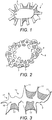
- Utilisation d'un charge pouvant être éliminée (4) pour améliorer la résistance d'une particule électroactive structurée (1) à la dégradation et l'agglomération pendant la fabrication d'une électrode composite, dans laquelle la particule électroactive structurée comprend une partie de corps (2) et une partie de surface, la partie de surface comprenant un ou plusieurs éléments structuraux (3) et un ou plusieurs vides (5), la partie de surface et la partie de corps formant ensemble la particule électroactive structurée, et dans laquelle la partie de surface comprend une matière électroactive, ou la partie de corps et la partie de surface comprennent toutes deux une matière électroactive ; et dans laquelle la charge pouvant être éliminée est contenue à l'intérieur d'un ou plusieurs vides compris à l'intérieur de la partie de surface de la particule électroactive structurée ; et la charge soit a une température de sublimation ou de désintégration d'au moins 50 °C et/ou est soluble dans un liquide ionique ou une solution électrolytique ou les deux ;
dans laquelle la matière électroactive est une matière qui, lorsqu'elle est utilisée dans des applications de batterie, est capable d'incorporer dans sa structure, et de libérer hors de celle-ci, des ions métalliques choisis entre le lithium, le sodium, le potassium, le calcium et le magnésium pendant la phase de charge et la phase de décharge respectives de la batterie. - Utilisation selon la revendication 1, dans laquelle la charge (4) est soluble dans une solution électrolytique ayant une concentration en sels d'au moins 0,7 mole par litre (M), éventuellement dans la plage de 0,7 à 2 moles par litre (M) ; ou dans laquelle la charge se sublime ou se dégrade à une température dans la plage de 70 à 200 °C, éventuellement dans la plage de 70 à 110 °C.
- Utilisation selon la revendication 1 ou la revendication 2, dans laquelle la charge (4) est soluble dans une solution choisie dans le groupe comprenant la N-méthylpyrrolidone, le carbonate de propylène, le carbonate d'éthylène, le carbonate de butylène, le carbonate de diméthyle, le carbonate de diéthyle, la gamma-butyrolactone, le 1,2-diméthoxyéthane, le 2-méthyltétrahydrofurane, le diméthylsulfoxyde, le 1,3-dioxolane, le formamide, le diméthylformamide, l'acétonitrile, le nitrométhane, le formiate de méthyle, l'acétate de méthyle, un triester de l'acide phosphorique, le triméthoxyméthane, le sulfolane, le méthylsulfolane et la 1,3-diméthyl-2-imidazolidione.
- Utilisation selon l'une quelconque des revendications 1 à 3, dans laquelle la charge (4) est choisie dans le groupe comprenant l'o-crésol et le p-crésol, le nonan-3-ol, le 1-méthylcyclohexanol, le p-toluènenitrile, le 2-méthoxyphénol, le 2-phénolpropan-2-ol, le 2,3-diméthylanisole, le phénol, le 2,4-diméthylphénol, le 3,4,4-triméthylpentanol, le butanediol, l'acide oxalique, un tensioactif et une cire naturelle ou une cire synthétique choisies dans le groupe comprenant l'acide 12-hydroxystéarique, le polyéthylène de faible masse moléculaire, les cires de pétrole telles que la cire paraffinique et les cires microcristallines.
- Utilisation selon l'une quelconque des revendications précédentes, dans laquelle la particule électroactive structurée (1) est une particule à piliers dans laquelle la partie de surface comprend un ou plusieurs piliers (3) répartis sur une partie de corps (2) .
- Utilisation selon l'une quelconque des revendications 1 à 4, dans laquelle les vides (5) présents dans la partie de surface sont sous la forme de pores répartis sur la partie de surface de la particule électroactive structurée (1) et en communication directe ou indirecte avec le bord de la particule, éventuellement dans laquelle la particule poreuse est une fibre, un fil métallique, un fil, un tube, une paillette ou un ruban présentant une petite dimension d'au moins 10 nm, éventuellement dans laquelle les vides sont repartis à la surface de la particule.
- Utilisation selon l'une quelconque des revendications 1 à 4, dans laquelle les vides (5) de la partie de surface sont sous la forme de canaux s'étendant de la partie de corps vers le bord de la particule.
- Utilisation selon l'une quelconque des revendications 1 à 4, dans laquelle la partie de corps (2) comprend un ou plusieurs vides (5) s'étendant à travers celle-ci.
- Utilisation selon l'une quelconque des revendications précédentes, dans laquelle la particule a un diamètre principal dans la plage de 100 nm à 100 µm.
- Utilisation selon l'une quelconque des revendications précédentes, dans laquelle la partie de corps (2) et la partie de surface comprennent une matière électroactive, la matière électroactive de la partie de corps étant la même que la matière électroactive de la partie de surface ou la matière électroactive de la partie de corps étant différente de la matière électroactive de la partie de surface.
- Utilisation selon la revendication 10, dans laquelle la partie de corps (2) et la partie de surface sont formées d'un seul tenant.
- Utilisation selon l'une quelconque des revendications précédentes, dans laquelle la matière électroactive est choisie dans le groupe comprenant le silicium, le germanium, le gallium, le plomb, l'aluminium, l'étain, Se, Te, B, P, les oxydes métalliques binaires, BC, BSi, Si-C, SiGe, SiSn, GeSn, WC, SiOx, les oxydes de lithium et de titane, TiO2, BN, BAs, AlN, AlP, AlAs, AlSb, GaN, GaP, GaAs, GaSb, InN, InP, InAs, ZnO, ZnS, ZnSe, ZnTe, CdS, CdSe, CdTe, BeSe, BeTe, GeS, GeSe, GeTe, SnS, SnSe, SnTe, PbO, PbSe, PbTe, AgF, AgCl, AgBr, AgI, BeSiN2, ZnGeP2, CdSnAs2, ZnSnSb2, CuGeP3, CuSi2P3, Si3N4, Ge3N4, Al2O3, Al2CO ou les oxydes, nitrures, hydrures, fluorures, mélanges ou alliages de ceux-ci, de préférence dans laquelle l'élément électroactif est choisi entre le silicium, le germanium, le gallium, l'étain, le plomb, l'aluminium, les oxydes, nitrures, hydrures, fluorures, alliages et mélanges de ceux-ci, de préférence dans laquelle la matière électroactive est le silicium, un alliage de silicium ou un composé électroactif du silicium.
- Utilisation selon l'une quelconque des revendications précédentes, dans laquelle la matière électroactive est capable d'incorporer et de libérer du lithium.
- Utilisation selon l'une quelconque des revendications précédentes, dans laquelle la partie de surface est formée à partir d'une matière électroactive choisie dans le groupe comprenant le silicium, le gallium, le germanium, l'aluminium, le plomb, l'étain, le sélénium, le tellure, le bore et le zinc ou les oxydes, nitrures, hydrures, fluorures, alliages, composés et mélanges électroactifs de ceux-ci.
- Utilisation selon l'une quelconque des revendications précédentes, dans laquelle la partie de surface est formée à partir de silicium.
Applications Claiming Priority (2)
| Application Number | Priority Date | Filing Date | Title |
|---|---|---|---|
| GB1203447.6A GB2499984B (en) | 2012-02-28 | 2012-02-28 | Composite particles comprising a removable filler |
| PCT/GB2013/050507 WO2013128201A2 (fr) | 2012-02-28 | 2013-02-28 | Particules de silicium structurées |
Publications (2)
| Publication Number | Publication Date |
|---|---|
| EP2820703A2 EP2820703A2 (fr) | 2015-01-07 |
| EP2820703B1 true EP2820703B1 (fr) | 2018-12-26 |
Family
ID=45991856
Family Applications (1)
| Application Number | Title | Priority Date | Filing Date |
|---|---|---|---|
| EP13724310.1A Active EP2820703B1 (fr) | 2012-02-28 | 2013-02-28 | Utilisation d'une charge amovible durant la fabrication d'une électrode composite |
Country Status (8)
| Country | Link |
|---|---|
| US (1) | US10103379B2 (fr) |
| EP (1) | EP2820703B1 (fr) |
| JP (1) | JP6490965B2 (fr) |
| KR (1) | KR20140141590A (fr) |
| CN (1) | CN104137308B (fr) |
| GB (1) | GB2499984B (fr) |
| TW (1) | TW201400410A (fr) |
| WO (1) | WO2013128201A2 (fr) |
Families Citing this family (35)
| Publication number | Priority date | Publication date | Assignee | Title |
|---|---|---|---|---|
| GB0709165D0 (en) | 2007-05-11 | 2007-06-20 | Nexeon Ltd | A silicon anode for a rechargeable battery |
| GB0713898D0 (en) | 2007-07-17 | 2007-08-29 | Nexeon Ltd | A method of fabricating structured particles composed of silcon or a silicon-based material and their use in lithium rechargeable batteries |
| WO2011041468A1 (fr) | 2009-09-29 | 2011-04-07 | Georgia Tech Research Corporation | Electrodes, batteries au lithium-ion, et procédés de réalisation et d'utilisation associés |
| GB2492167C (en) | 2011-06-24 | 2018-12-05 | Nexeon Ltd | Structured particles |
| EP2810322A1 (fr) | 2012-01-30 | 2014-12-10 | Nexeon Limited | Composition de matière électroactive à base de si/c |
| GB2499984B (en) | 2012-02-28 | 2014-08-06 | Nexeon Ltd | Composite particles comprising a removable filler |
| GB2502625B (en) | 2012-06-06 | 2015-07-29 | Nexeon Ltd | Method of forming silicon |
| US10374221B2 (en) | 2012-08-24 | 2019-08-06 | Sila Nanotechnologies, Inc. | Scaffolding matrix with internal nanoparticles |
| GB2507535B (en) | 2012-11-02 | 2015-07-15 | Nexeon Ltd | Multilayer electrode |
| KR101704103B1 (ko) * | 2013-09-17 | 2017-02-07 | 주식회사 엘지화학 | 다공성 실리콘계 음극 활물질 및 이를 포함하는 리튬 이차전지 |
| KR101567203B1 (ko) | 2014-04-09 | 2015-11-09 | (주)오렌지파워 | 이차 전지용 음극 활물질 및 이의 방법 |
| KR101604352B1 (ko) | 2014-04-22 | 2016-03-18 | (주)오렌지파워 | 음극 활물질 및 이를 포함하는 리튬 이차 전지 |
| KR101550781B1 (ko) | 2014-07-23 | 2015-09-08 | (주)오렌지파워 | 2 차 전지용 실리콘계 활물질 입자의 제조 방법 |
| DE102014223608A1 (de) | 2014-11-19 | 2016-05-19 | Robert Bosch Gmbh | Kathodische Elektrode eines auf Lithium basierenden Akkumulators |
| GB2533161C (en) | 2014-12-12 | 2019-07-24 | Nexeon Ltd | Electrodes for metal-ion batteries |
| KR101614016B1 (ko) | 2014-12-31 | 2016-04-20 | (주)오렌지파워 | 실리콘계 음극 활물질 및 이의 제조 방법 |
| CN104617271B (zh) * | 2015-01-29 | 2017-01-18 | 中南大学 | 一种用于钠离子电池的硒化锡/氧化石墨烯负极复合材料及其制备方法 |
| KR101726037B1 (ko) | 2015-03-26 | 2017-04-11 | (주)오렌지파워 | 실리콘계 음극 활물질 및 이의 제조 방법 |
| EP3323164A4 (fr) * | 2015-07-13 | 2019-01-09 | Sila Nanotechnologies Inc. | Cathodes stables à base de fluorure de lithium pour batteries métal et métal-ion |
| US10476071B2 (en) | 2015-10-05 | 2019-11-12 | Sila Nanotechnologies, Inc. | Protection of battery electrodes against side reactions |
| ES2993278T3 (en) | 2016-06-14 | 2024-12-26 | Nexeon Ltd | Electrodes for metal-ion batteries |
| CN106058227A (zh) * | 2016-06-28 | 2016-10-26 | 南昌大学 | 一种锂离子电池用硅粉的表面氮化改性方法 |
| KR101773719B1 (ko) | 2016-08-23 | 2017-09-01 | (주)오렌지파워 | 2 차 전지용 실리콘계 활물질 입자 및 이의 제조 방법 |
| KR101918815B1 (ko) | 2016-08-23 | 2018-11-15 | 넥시온 엘티디. | 이차 전지용 음극 활물질 및 이의 제조 방법 |
| JP2018084452A (ja) * | 2016-11-22 | 2018-05-31 | セイコーエプソン株式会社 | ガスセル、磁場計測装置、およびガスセルの製造方法 |
| US20180301698A1 (en) * | 2017-04-14 | 2018-10-18 | Rhode Island Council On Postsecondary Education | Carboxylic Acids As Surface Modifier for Improved Electrode |
| GB2563455B (en) | 2017-06-16 | 2019-06-19 | Nexeon Ltd | Particulate electroactive materials for use in metal-ion batteries |
| US12218341B2 (en) * | 2018-11-08 | 2025-02-04 | Nexeon Limited | Electroactive materials for metal-ion batteries |
| CN112142988B (zh) * | 2019-06-29 | 2022-12-13 | 多氟多新材料股份有限公司 | 一种聚丙烯酸-聚乙二醇共聚物及其制备方法和应用 |
| JP7318517B2 (ja) * | 2019-12-19 | 2023-08-01 | トヨタ自動車株式会社 | 負極活物質用複合粒子 |
| WO2021199618A1 (fr) * | 2020-03-30 | 2021-10-07 | パナソニックIpマネジメント株式会社 | Matériau actif d'électrode positive revêtu et batterie l'utilisant |
| CN112234189A (zh) * | 2020-10-13 | 2021-01-15 | 深圳大学 | 一种碲化锡基电极材料及其制备方法与锂离子电池 |
| CN112397705B (zh) * | 2021-01-18 | 2021-05-18 | 湖南雅城新材料有限公司 | 一种锂离子电池负极材料及其制备方法与应用 |
| CN113363464A (zh) * | 2021-06-08 | 2021-09-07 | 广东工业大学 | 一种镓硅磷复合负极活性材料、锂离子电池及其制备方法和应用 |
| CN114725376B (zh) * | 2022-04-21 | 2023-04-25 | 中国工程物理研究院电子工程研究所 | 一种热电池阴极材料及其制备方法和应用 |
Citations (3)
| Publication number | Priority date | Publication date | Assignee | Title |
|---|---|---|---|---|
| EP1791199A1 (fr) * | 2004-07-20 | 2007-05-30 | Mitsubishi Chemical Corporation | Matériau à électrode négative pour accumulateur au lithium, procédé de production, électrode négative pour accumulateur au lithium utilisant ce procédé et accumulateur au lithium |
| JP2008186732A (ja) * | 2007-01-30 | 2008-08-14 | Nippon Carbon Co Ltd | リチウム二次電池用負極活物質、それを使用した負極及び製造方法 |
| WO2009089018A2 (fr) * | 2008-01-08 | 2009-07-16 | Sion Power Corporation | Electrodes poreuses et procédés associés |
Family Cites Families (205)
| Publication number | Priority date | Publication date | Assignee | Title |
|---|---|---|---|---|
| GB980513A (en) | 1961-11-17 | 1965-01-13 | Licentia Gmbh | Improvements relating to the use of silicon in semi-conductor devices |
| US4002541A (en) | 1972-11-03 | 1977-01-11 | Design Systems, Inc. | Solar energy absorbing article and method of making same |
| SU471402A1 (ru) | 1973-03-02 | 1975-05-25 | Предприятие П/Я Г-4671 | Травильный раствор |
| SU544019A1 (ru) | 1975-07-22 | 1977-01-25 | Одесский Ордена Трудового Красного Знамени Государственный Университет Им.И.И.Мечникова | Травитель дл полупроводниковых материалов |
| AU516584B2 (en) | 1977-06-01 | 1981-06-11 | Bicc Limited | Fabrication of copper |
| US4192720A (en) | 1978-10-16 | 1980-03-11 | Exxon Research & Engineering Co. | Electrodeposition process for forming amorphous silicon |
| DE3020012C2 (de) | 1980-05-24 | 1983-03-03 | Daimler-Benz Ag, 7000 Stuttgart | Verfahren zum Freilegen der Siliciumkristalle an der Oberfläche eines Körpers aus einer Aluminiumlegierung mit hohem Siliciumgehalt |
| US4686013A (en) | 1986-03-14 | 1987-08-11 | Gates Energy Products, Inc. | Electrode for a rechargeable electrochemical cell and method and apparatus for making same |
| JPS63215041A (ja) | 1987-03-04 | 1988-09-07 | Toshiba Corp | 結晶欠陥評価用エツチング液 |
| JP2997741B2 (ja) | 1992-07-29 | 2000-01-11 | セイコーインスツルメンツ株式会社 | 非水電解質二次電池及びその製造方法 |
| WO1995000977A1 (fr) | 1993-06-23 | 1995-01-05 | Toray Industries, Inc. | Electrode d'element, element secondaire utilisant cette electrode d'element et son procede de production |
| DE4326944A1 (de) * | 1993-08-11 | 1995-02-16 | Varta Batterie | Negative Elektrode für gasdichte alkalische Akkumulatoren, die eine Ruß enthaltende Gasverzehrschicht besitzt |
| EP0733269B1 (fr) | 1993-12-06 | 2002-01-16 | QinetiQ Limited | Materiau semiconducteur poreux |
| JPH097638A (ja) | 1995-06-22 | 1997-01-10 | Seiko Instr Inc | 非水電解質二次電池 |
| GB9611437D0 (en) | 1995-08-03 | 1996-08-07 | Secr Defence | Biomaterial |
| US6337156B1 (en) | 1997-12-23 | 2002-01-08 | Sri International | Ion battery using high aspect ratio electrodes |
| JPH11250896A (ja) | 1998-02-27 | 1999-09-17 | Sii Micro Parts:Kk | 化学電池 |
| US6132724A (en) | 1998-04-29 | 2000-10-17 | City Of Hope National Medical Center | Allelic polygene diagnosis of reward deficiency syndrome and treatment |
| AU4822499A (en) | 1998-06-15 | 2000-01-05 | Boeing Company, The | Making particulates of controlled dimensions |
| JP2000022162A (ja) | 1998-07-06 | 2000-01-21 | Advanced Display Inc | 液晶表示装置の製法 |
| GB9815819D0 (en) | 1998-07-22 | 1998-09-16 | Secr Defence | Transferring materials into cells and a microneedle array |
| US6809229B2 (en) | 1999-01-12 | 2004-10-26 | Hyperion Catalysis International, Inc. | Method of using carbide and/or oxycarbide containing compositions |
| EP1126536B1 (fr) | 2000-02-16 | 2007-05-16 | Nisshinbo Industries, Inc. | Structure d'électrode multicouche et sa méthode d'élaboration |
| JP2001266866A (ja) | 2000-03-21 | 2001-09-28 | Nippon Steel Corp | リチウムイオン二次電池用負極活物質およびリチウムイオン二次電池 |
| US6334939B1 (en) | 2000-06-15 | 2002-01-01 | The University Of North Carolina At Chapel Hill | Nanostructure-based high energy capacity material |
| EP1184918B1 (fr) | 2000-08-28 | 2009-10-14 | Nissan Motor Co., Ltd. | Batterie rechargeable lithium-ion |
| JP4626105B2 (ja) | 2000-08-28 | 2011-02-02 | 日産自動車株式会社 | リチウムイオン二次電池 |
| EP1335438A4 (fr) | 2000-09-01 | 2009-03-25 | Sanyo Electric Co | Electrode negative pour accumulateur au lithium et procede de production |
| US6733922B2 (en) * | 2001-03-02 | 2004-05-11 | Samsung Sdi Co., Ltd. | Carbonaceous material and lithium secondary batteries comprising same |
| JP4136344B2 (ja) | 2001-09-05 | 2008-08-20 | アオイ電子株式会社 | リチウム二次電池及びその製造方法 |
| US20030099883A1 (en) | 2001-10-10 | 2003-05-29 | Rosibel Ochoa | Lithium-ion battery with electrodes including single wall carbon nanotubes |
| JP3714665B2 (ja) | 2002-01-25 | 2005-11-09 | Necトーキン栃木株式会社 | リチウムイオン二次電池の製造方法 |
| JP3897709B2 (ja) * | 2002-02-07 | 2007-03-28 | 日立マクセル株式会社 | 電極材料およびその製造方法、並びに非水二次電池用負極および非水二次電池 |
| DE10392291B4 (de) | 2002-02-14 | 2013-01-31 | Rec Silicon Inc. | Energie-effizientes Verfahren zum Züchten von polykristallinem Silicium |
| WO2003078688A1 (fr) | 2002-03-15 | 2003-09-25 | Canon Kabushiki Kaisha | Materiau poreux et son procede de fabrication |
| JP3896025B2 (ja) | 2002-04-10 | 2007-03-22 | 三洋電機株式会社 | 二次電池用電極 |
| US8092940B2 (en) | 2002-05-08 | 2012-01-10 | Gs Yuasa International Ltd. | Non-aqueous electrolyte secondary battery |
| US20040140222A1 (en) | 2002-09-12 | 2004-07-22 | Smedley Stuart I. | Method for operating a metal particle electrolyzer |
| KR100484642B1 (ko) | 2002-09-23 | 2005-04-20 | 삼성에스디아이 주식회사 | 리튬-설퍼 전지용 양극 활물질 및 그 제조방법 |
| GB2395059B (en) | 2002-11-05 | 2005-03-16 | Imp College Innovations Ltd | Structured silicon anode |
| JP3664252B2 (ja) | 2002-11-19 | 2005-06-22 | ソニー株式会社 | 負極およびそれを用いた電池 |
| JP4046601B2 (ja) | 2002-12-03 | 2008-02-13 | 大阪瓦斯株式会社 | リチウム二次電池用負極材及びそれを用いたリチウム二次電池 |
| JP3827642B2 (ja) | 2003-01-06 | 2006-09-27 | 三星エスディアイ株式会社 | リチウム二次電池用負極活物質及びその製造方法並びにリチウム二次電池 |
| CN100452493C (zh) * | 2003-01-06 | 2009-01-14 | 三星Sdi株式会社 | 再充电锂电池用的负极活性材料、其制法和再充电锂电池 |
| US7244513B2 (en) | 2003-02-21 | 2007-07-17 | Nano-Proprietary, Inc. | Stain-etched silicon powder |
| JP2004281317A (ja) | 2003-03-18 | 2004-10-07 | Matsushita Electric Ind Co Ltd | 非水電解質二次電池用電極材料とその製造方法、ならびにそれを用いた非水電解質二次電池 |
| JP3930002B2 (ja) | 2003-07-28 | 2007-06-13 | 昭和電工株式会社 | 高密度電極及びその電極を用いた電池 |
| KR20120088005A (ko) | 2003-07-28 | 2012-08-07 | 쇼와 덴코 가부시키가이샤 | 고밀도 전극 및 이 전극을 사용한 전지 |
| US7479351B2 (en) | 2003-10-09 | 2009-01-20 | Samsung Sdi Co., Ltd. | Electrode material for a lithium secondary battery, lithium secondary battery, and preparation method for the electrode material for a lithium secondary battery |
| NO325620B1 (no) * | 2003-10-21 | 2008-06-30 | Revolt Technology Ltd | Elektrode, fremgangsmate for fremstilling derav, metall/luft-brenselcelle og metallhydrid-battericelle |
| US8025960B2 (en) | 2004-02-02 | 2011-09-27 | Nanosys, Inc. | Porous substrates, articles, systems and compositions comprising nanofibers and methods of their use and production |
| US20110039690A1 (en) | 2004-02-02 | 2011-02-17 | Nanosys, Inc. | Porous substrates, articles, systems and compositions comprising nanofibers and methods of their use and production |
| US7553371B2 (en) | 2004-02-02 | 2009-06-30 | Nanosys, Inc. | Porous substrates, articles, systems and compositions comprising nanofibers and methods of their use and production |
| CN100338800C (zh) | 2004-02-17 | 2007-09-19 | 比亚迪股份有限公司 | 一种锂电池正极及其制备方法以及锂离子二次电池 |
| US20050186378A1 (en) | 2004-02-23 | 2005-08-25 | Bhatt Sanjiv M. | Compositions comprising carbon nanotubes and articles formed therefrom |
| DE102004016766A1 (de) | 2004-04-01 | 2005-10-20 | Degussa | Nanoskalige Siliziumpartikel in negativen Elektrodenmaterialien für Lithium-Ionen-Batterien |
| CN1263677C (zh) | 2004-04-22 | 2006-07-12 | 华中师范大学 | 纳米金属或金属氧化物均布于碳纳米管表面的复合材料制备 |
| JP3799049B2 (ja) | 2004-05-12 | 2006-07-19 | 三井金属鉱業株式会社 | 非水電解液二次電池用負極及びその製造方法 |
| JP4967268B2 (ja) | 2004-07-20 | 2012-07-04 | 三菱化学株式会社 | リチウム二次電池用負極材料及びその製造方法、並びにそれを用いたリチウム二次電池用負極及びリチウム二次電池 |
| JP4999292B2 (ja) | 2004-07-21 | 2012-08-15 | 三洋電機株式会社 | 非水電解質電池 |
| US20070207318A1 (en) | 2004-07-21 | 2007-09-06 | Sungho Jin | Catalytically Grown Mano-Bent Nanostructure and Method for Making the Same |
| US7713849B2 (en) | 2004-08-20 | 2010-05-11 | Illuminex Corporation | Metallic nanowire arrays and methods for making and using same |
| JP5256403B2 (ja) | 2004-09-06 | 2013-08-07 | 有限会社ジーイーエム | リチウム二次電池用負極活物質粒子と負極及びそれらの製造方法 |
| GB2418144A (en) | 2004-09-17 | 2006-03-22 | Psimedica Ltd | Medical device for delivery of beneficial substance |
| JP2006134770A (ja) | 2004-11-08 | 2006-05-25 | Sony Corp | 正極および電池 |
| JP4646612B2 (ja) | 2004-12-08 | 2011-03-09 | パナソニック株式会社 | 非水電解質二次電池用負極およびその製造法ならびに非水電解質二次電池 |
| JP2006172860A (ja) | 2004-12-15 | 2006-06-29 | Matsushita Electric Ind Co Ltd | リチウム二次電池用負極およびその製造方法、ならびにリチウム二次電池 |
| JP4824394B2 (ja) | 2004-12-16 | 2011-11-30 | パナソニック株式会社 | リチウムイオン二次電池用負極、その製造方法、およびそれを用いたリチウムイオン二次電池 |
| JPWO2006068066A1 (ja) | 2004-12-24 | 2008-06-12 | 松下電器産業株式会社 | 非水電解液二次電池用もしくは非水電解液電気化学キャパシタ用の複合電極活物質およびその製造法 |
| US20060147802A1 (en) | 2005-01-05 | 2006-07-06 | Kiyotaka Yasuda | Anode for nonaqueous secondary battery, process of producing the anode, and nonaqueous secondary battery |
| US20080113269A1 (en) | 2005-01-11 | 2008-05-15 | Teruaki Yamamoto | Negative Electrode Material For Lithium Secondary Battery, Negative Electrode Using The Material, Lithium Secondary Battery Using The Negative Electrode, And Manufacturing Method Of Negative Electrode Material |
| DE102005011940A1 (de) | 2005-03-14 | 2006-09-21 | Degussa Ag | Verfahren zur Herstellung von beschichteten Kohlenstoffpartikel und deren Verwendung in Anodenmaterialien für Lithium-Ionenbatterien |
| JP4024254B2 (ja) | 2005-03-23 | 2007-12-19 | 三井金属鉱業株式会社 | 非水電解液二次電池 |
| US20060216603A1 (en) | 2005-03-26 | 2006-09-28 | Enable Ipc | Lithium-ion rechargeable battery based on nanostructures |
| AU2006295332A1 (en) | 2005-05-09 | 2007-04-05 | Vesta Research, Ltd. | Porous silicon particles |
| JP2006339092A (ja) * | 2005-06-06 | 2006-12-14 | Matsushita Electric Ind Co Ltd | 非水電解液二次電池およびその負極 |
| JP2007019638A (ja) | 2005-07-05 | 2007-01-25 | Toshiba Corp | 鍵管理装置および方法 |
| US7851085B2 (en) | 2005-07-25 | 2010-12-14 | 3M Innovative Properties Company | Alloy compositions for lithium ion batteries |
| US8080334B2 (en) | 2005-08-02 | 2011-12-20 | Panasonic Corporation | Lithium secondary battery |
| JP4942319B2 (ja) | 2005-09-07 | 2012-05-30 | 三洋電機株式会社 | リチウム二次電池 |
| KR100745733B1 (ko) | 2005-09-23 | 2007-08-02 | 삼성에스디아이 주식회사 | 음극 활물질, 그의 제조방법 및 이를 채용한 리튬 전지 |
| CN100456533C (zh) | 2005-11-14 | 2009-01-28 | 松下电器产业株式会社 | 非水电解质二次电池用负极及其制造方法、以及二次电池 |
| JP5162825B2 (ja) | 2005-12-13 | 2013-03-13 | パナソニック株式会社 | 非水電解質二次電池用負極とそれを用いた非水電解質二次電池 |
| FR2895572B1 (fr) | 2005-12-23 | 2008-02-15 | Commissariat Energie Atomique | Materiau a base de nanotubes de carbone et de silicium utilisable dans des electrodes negatives pour accumulateur au lithium |
| GB0526332D0 (en) * | 2005-12-23 | 2006-02-01 | Psimedica Ltd | Pharmaceutical product |
| US8080337B2 (en) | 2005-12-27 | 2011-12-20 | Panasonic Corporation | Electrode for lithium secondary battery and lithium secondary battery using same |
| GB0601319D0 (en) | 2006-01-23 | 2006-03-01 | Imp Innovations Ltd | A method of fabricating pillars composed of silicon-based material |
| GB0601318D0 (en) | 2006-01-23 | 2006-03-01 | Imp Innovations Ltd | Method of etching a silicon-based material |
| CA2535064A1 (fr) | 2006-02-01 | 2007-08-01 | Hydro Quebec | Materiau multi-couches, procede de fabrication et utilisation comme electrode |
| TWI368347B (en) * | 2006-02-16 | 2012-07-11 | Lg Chemical Ltd | Electrode including organic/inorganic composite coating layer and electrochemical device prepared thereby |
| WO2007094240A1 (fr) * | 2006-02-17 | 2007-08-23 | Matsushita Electric Industrial Co., Ltd. | Particules composites electroconductrices, procede pour les produire et plaque d'electrodes et batterie rechargeable au lithium ionique utilisant lesdites particules |
| US7776473B2 (en) | 2006-03-27 | 2010-08-17 | Shin-Etsu Chemical Co., Ltd. | Silicon-silicon oxide-lithium composite, making method, and non-aqueous electrolyte secondary cell negative electrode material |
| JP4985949B2 (ja) | 2006-03-27 | 2012-07-25 | 信越化学工業株式会社 | 珪素−珪素酸化物−リチウム系複合体の製造方法、並びに非水電解質二次電池用負極材 |
| JP5003047B2 (ja) | 2006-04-28 | 2012-08-15 | 東ソー株式会社 | エッチング用組成物及びエッチング方法 |
| EA200802296A1 (ru) | 2006-05-09 | 2009-04-28 | Норск Хюдро Аса | Способ производства тетрахлорида кремния |
| JP2007335198A (ja) | 2006-06-14 | 2007-12-27 | Matsushita Electric Ind Co Ltd | 非水電解質二次電池用複合活物質とそれを用いた非水電解質二次電池 |
| JP5200339B2 (ja) | 2006-06-16 | 2013-06-05 | パナソニック株式会社 | 非水電解質二次電池 |
| JP5398962B2 (ja) | 2006-06-30 | 2014-01-29 | 三洋電機株式会社 | リチウム二次電池及びその製造方法 |
| US7615206B2 (en) | 2006-08-11 | 2009-11-10 | Georgia Tech Research Corporation | Methods of fabricating nanoscale-to-microscale structures |
| US8236454B2 (en) * | 2006-09-14 | 2012-08-07 | Panasonic Corporation | Negative electrode for lithium ion secondary battery and lithium ion secondary battery including the same |
| WO2008044683A1 (fr) | 2006-10-10 | 2008-04-17 | Panasonic Corporation | Électrode négative pour accumulateur secondaire à électrolyte non aqueux |
| CN101188281A (zh) | 2006-11-16 | 2008-05-28 | 吴乃立 | 用于锂离子二次电池的负极活性材料、其制备方法及含此负极活性材料的锂离子二次电池 |
| US20090010833A1 (en) | 2006-11-28 | 2009-01-08 | Cima Nano Tech Israel Ltd. | Process for producing ultra-fine powder of crystalline silicon |
| JP2008171802A (ja) | 2006-12-13 | 2008-07-24 | Matsushita Electric Ind Co Ltd | 非水電解質二次電池用負極とその製造方法およびそれを用いた非水電解質二次電池 |
| KR100818263B1 (ko) | 2006-12-19 | 2008-03-31 | 삼성에스디아이 주식회사 | 다공성 음극 활물질, 그 제조 방법 및 이를 채용한 음극과리튬 전지 |
| JP2008166013A (ja) | 2006-12-27 | 2008-07-17 | Matsushita Electric Ind Co Ltd | 複合活物質およびそれを用いた電気化学素子 |
| JP4345810B2 (ja) * | 2006-12-27 | 2009-10-14 | ソニー株式会社 | 二次電池用電極及びその製造方法、並びに二次電池 |
| JP5162934B2 (ja) | 2007-03-23 | 2013-03-13 | Jsr株式会社 | 上層反射防止膜形成用組成物及びレジストパターン形成方法 |
| KR101400994B1 (ko) | 2007-04-10 | 2014-05-29 | 한국과학기술원 | 고용량 리튬 이차전지용 전극 및 이를 함유하는 리튬이차전지 |
| JP2008269827A (ja) | 2007-04-17 | 2008-11-06 | Matsushita Electric Ind Co Ltd | 電気化学素子の電極材料およびその製造方法並びにそれを用いた電極極板および電気化学素子 |
| GB0709165D0 (en) | 2007-05-11 | 2007-06-20 | Nexeon Ltd | A silicon anode for a rechargeable battery |
| JP4501963B2 (ja) | 2007-05-28 | 2010-07-14 | ソニー株式会社 | リチウムイオン二次電池用負極およびリチウムイオン二次電池 |
| JP5218808B2 (ja) | 2007-06-11 | 2013-06-26 | トヨタ自動車株式会社 | リチウムイオン電池 |
| GB0713896D0 (en) | 2007-07-17 | 2007-08-29 | Nexeon Ltd | Method |
| GB0713895D0 (en) | 2007-07-17 | 2007-08-29 | Nexeon Ltd | Production |
| GB0713898D0 (en) | 2007-07-17 | 2007-08-29 | Nexeon Ltd | A method of fabricating structured particles composed of silcon or a silicon-based material and their use in lithium rechargeable batteries |
| WO2009033082A2 (fr) | 2007-09-06 | 2009-03-12 | Boston Scientific Limited | Dispositifs médicaux contenant des particules de silicate et de carbone |
| EP2037516B1 (fr) | 2007-09-14 | 2011-12-28 | Hong Fu Jin Precision Industry (ShenZhen) Co. Ltd. | Batterie au lithium et son procédé de fabrication |
| JP2009099495A (ja) | 2007-10-19 | 2009-05-07 | Toyota Motor Corp | リチウム二次電池 |
| JP5143700B2 (ja) | 2007-10-24 | 2013-02-13 | パナソニック株式会社 | 電気化学素子用電極およびそれを用いた電気化学素子 |
| JP5338676B2 (ja) | 2007-11-12 | 2013-11-13 | 三洋電機株式会社 | 非水電解質二次電池負極材、非水電解質二次電池用負極及び非水電解質二次電池 |
| CN101442124B (zh) | 2007-11-19 | 2011-09-07 | 比亚迪股份有限公司 | 锂离子电池负极用复合材料的制备方法及负极和电池 |
| JP2009176719A (ja) | 2007-12-26 | 2009-08-06 | Sony Corp | 電解液、二次電池およびスルホン化合物 |
| US20090186267A1 (en) | 2008-01-23 | 2009-07-23 | Tiegs Terry N | Porous silicon particulates for lithium batteries |
| GB2457664A (en) | 2008-02-19 | 2009-08-26 | Science Technology Res Partner | Electrolyte composition for a dye sensitized solar cell |
| WO2009105546A2 (fr) | 2008-02-19 | 2009-08-27 | Board Of Regents Of The Nevada System Of Higher Education, On Behalf Of The University Of Nevada, Reno | Cible et son procédé de fabrication |
| JP4998358B2 (ja) | 2008-04-08 | 2012-08-15 | ソニー株式会社 | リチウムイオン二次電池用負極およびリチウムイオン二次電池 |
| WO2009128800A1 (fr) | 2008-04-17 | 2009-10-22 | The Board Of Trustees Of The University Of Illinois | Formation de nanofils et de composites de silicium et nanofils de silicium à pureté élevée et de longueur uniforme |
| CN101591478B (zh) * | 2008-05-26 | 2013-03-20 | 连云港东海硅微粉有限责任公司 | 电子级超细硅微粉干法表面改性方法 |
| JP4511631B2 (ja) | 2008-07-07 | 2010-07-28 | パナソニック株式会社 | 薄膜製造方法およびその方法に使用できるシリコン材料 |
| KR101441447B1 (ko) * | 2008-07-15 | 2014-09-17 | 유니베르시타트 뒤스부르크-에쎈 | 규소 및/또는 주석이 삽입된 다공성 탄소 기질 |
| CN101335342A (zh) * | 2008-07-30 | 2008-12-31 | 郑力 | 内部粒子可活动的蓄电池电极及其生产方法 |
| FR2935546B1 (fr) | 2008-09-02 | 2010-09-17 | Arkema France | Materiau composite d'electrode, electrode de batterie constituee dudit materiau et batterie au lithium comprenant une telle electrode. |
| GB0817936D0 (en) | 2008-09-30 | 2008-11-05 | Intrinsiq Materials Global Ltd | Porous materials |
| GB2464158B (en) | 2008-10-10 | 2011-04-20 | Nexeon Ltd | A method of fabricating structured particles composed of silicon or a silicon-based material and their use in lithium rechargeable batteries |
| GB2464157B (en) | 2008-10-10 | 2010-09-01 | Nexeon Ltd | A method of fabricating structured particles composed of silicon or a silicon-based material |
| JP2010135170A (ja) | 2008-12-04 | 2010-06-17 | Hitachi Vehicle Energy Ltd | リチウム二次電池、二次電池モジュールおよび二次電池パック |
| US8580432B2 (en) | 2008-12-04 | 2013-11-12 | Nanotek Instruments, Inc. | Nano graphene reinforced nanocomposite particles for lithium battery electrodes |
| EP2369659B1 (fr) | 2008-12-19 | 2014-12-17 | NEC Energy Devices, Ltd. | Electrode négative pour pile secondaire à solution électrolytique non aqueuse et pile secondaire à solution électrolytique non aqueuse l'utilisant, et procédé de fabrication d'une électrode négative pour une pile secondaire à solution électrolytique non aqueuse |
| CN102256897A (zh) | 2008-12-26 | 2011-11-23 | 积水化学工业株式会社 | 电极用碳粒子的制造方法、电极用碳粒子及锂离子二次电池用负极材料 |
| CN102037158B (zh) * | 2009-01-28 | 2014-05-28 | 东洋铝株式会社 | 碳包覆铝材及其制造方法 |
| JP2010205609A (ja) | 2009-03-04 | 2010-09-16 | Nissan Motor Co Ltd | 電極およびこれを用いた電池 |
| JP2010225494A (ja) | 2009-03-25 | 2010-10-07 | Shin-Etsu Chemical Co Ltd | 非水電解質二次電池用負極材及びその製造方法、ならびにリチウムイオン二次電池 |
| JP4835881B2 (ja) | 2009-03-31 | 2011-12-14 | 宇部興産株式会社 | リチウムイオン電池用電極およびその製造方法 |
| US9023896B2 (en) | 2009-05-04 | 2015-05-05 | Psivida Us, Inc. | Porous silicon drug-eluting particles |
| GB2470056B (en) | 2009-05-07 | 2013-09-11 | Nexeon Ltd | A method of making silicon anode material for rechargeable cells |
| US20100285358A1 (en) | 2009-05-07 | 2010-11-11 | Amprius, Inc. | Electrode Including Nanostructures for Rechargeable Cells |
| GB2470190B (en) | 2009-05-11 | 2011-07-13 | Nexeon Ltd | A binder for lithium ion rechargeable battery cells |
| GB0908089D0 (en) * | 2009-05-11 | 2009-06-24 | Nexeon Ltd | A binder for lithium ion rechargaable battery cells |
| GB2495951B (en) | 2011-10-26 | 2014-07-16 | Nexeon Ltd | A composition for a secondary battery cell |
| FR2945378B1 (fr) * | 2009-05-11 | 2011-10-14 | Commissariat Energie Atomique | Cellule de pile a combustible haute temperature a reformage interne d'hydrocarbures. |
| ES2910086T3 (es) | 2009-05-19 | 2022-05-11 | Oned Mat Inc | Materiales nanoestructurados para aplicaciones de batería |
| GB0909460D0 (en) | 2009-06-02 | 2009-07-15 | Intrinsiq Materials Global Ltd | Mesoporus material |
| TW201106524A (en) | 2009-06-29 | 2011-02-16 | Applied Materials Inc | Passivation film for solid electrolyte interface of three dimensional copper containing electrode in energy storage device |
| CN101938013B (zh) * | 2009-06-30 | 2014-07-02 | 比亚迪股份有限公司 | 聚合物电解质及其制备方法和聚合物锂二次电池 |
| WO2011031297A2 (fr) | 2009-08-28 | 2011-03-17 | Sion Power Corporation | Cellules électrochimiques comprenant des structures poreuses comprenant du soufre |
| KR20130026522A (ko) | 2009-09-03 | 2013-03-13 | 모레큘러 나노시스템즈, 아이엔씨. | 적어도 하나의 기능성 구배를 전극 안에 갖는 전극을 제조하는 방법 및 시스템 및 그로부터 제조된 장치 |
| GB0917635D0 (en) | 2009-10-08 | 2009-11-25 | Intrinsiq Materials Global Ltd | Process for the preparation of nano-scale particulate silicon |
| US7964172B2 (en) | 2009-10-13 | 2011-06-21 | Alexander Mukasyan | Method of manufacturing high-surface-area silicon |
| US20110111279A1 (en) | 2009-11-09 | 2011-05-12 | Florida State University Research Foundation Inc. | Binder-free nanocomposite material and method of manufacture |
| JP5175826B2 (ja) | 2009-12-02 | 2013-04-03 | トヨタ自動車株式会社 | 活物質粒子およびその利用 |
| JP5573146B2 (ja) | 2009-12-21 | 2014-08-20 | パナソニック株式会社 | 電気化学素子 |
| JP5617265B2 (ja) | 2010-02-05 | 2014-11-05 | ソニー株式会社 | リチウムイオン二次電池用負極、リチウムイオン二次電池、電動工具、電気自動車および電力貯蔵システム |
| WO2011101930A1 (fr) | 2010-02-19 | 2011-08-25 | パナソニック株式会社 | Batterie secondaire au lithium en forme de pièce de monnaie |
| US9172088B2 (en) | 2010-05-24 | 2015-10-27 | Amprius, Inc. | Multidimensional electrochemically active structures for battery electrodes |
| JP5557003B2 (ja) | 2010-03-19 | 2014-07-23 | 株式会社豊田自動織機 | 負極材料、非水電解質二次電池および負極材料の製造方法 |
| ES2350334B1 (es) | 2010-03-24 | 2011-11-11 | Alberto Muñoz Herencia | Proceso de medicion de la calidad de la estimulacion sexual ofrecida. |
| GB201005979D0 (en) | 2010-04-09 | 2010-05-26 | Nexeon Ltd | A method of fabricating structured particles composed of silicon or a silicon-based material and their use in lithium rechargeable batteries |
| US9876221B2 (en) * | 2010-05-14 | 2018-01-23 | Samsung Sdi Co., Ltd. | Negative active material for rechargeable lithium battery and rechargeable lithium battery including same |
| KR101120053B1 (ko) | 2010-06-04 | 2012-03-22 | 삼화콘덴서공업주식회사 | 복합전극을 이용한 하이브리드 슈퍼 커패시터 |
| JP5676173B2 (ja) | 2010-08-09 | 2015-02-25 | 日本電気株式会社 | 二次電池用負極の製造方法 |
| US8526166B2 (en) | 2010-08-31 | 2013-09-03 | Samsung Electro-Mechanics Co., Ltd. | Lithium ion capacitor |
| GB201014707D0 (en) | 2010-09-03 | 2010-10-20 | Nexeon Ltd | Electroactive material |
| GB201014706D0 (en) | 2010-09-03 | 2010-10-20 | Nexeon Ltd | Porous electroactive material |
| CN103118976B (zh) | 2010-09-17 | 2016-07-06 | 古河电气工业株式会社 | 多孔质硅粒子及多孔质硅复合体粒子、以及它们的制造方法 |
| JP5809897B2 (ja) | 2010-09-17 | 2015-11-11 | 古河電気工業株式会社 | 多孔質シリコン粒子及びその製造方法、並びにリチウムイオン二次電池用負極及びリチウムイオン二次電池 |
| JP5535158B2 (ja) | 2010-09-17 | 2014-07-02 | 古河電気工業株式会社 | リチウムイオン二次電池用負極、リチウムイオン二次電池、およびリチウムイオン二次電池用負極の製造方法 |
| EP2630684A4 (fr) | 2010-10-22 | 2015-12-23 | Amprius Inc | Structures composites contenant des matériaux actifs poreux haute capacité contraints dans des enveloppes |
| DE102010063815A1 (de) | 2010-12-21 | 2012-06-21 | Sgl Carbon Se | Kohlenstoff-Silizium-Mehrschichtsysteme |
| FR2970245B1 (fr) | 2011-01-07 | 2013-01-25 | Commissariat Energie Atomique | Materiau composite silicium/carbone, procede de synthese et utilisation d'un tel materiau |
| CN102157731B (zh) | 2011-03-18 | 2015-03-04 | 上海交通大学 | 一种锂离子电池硅碳复合负极材料及其制备方法 |
| GB2492167C (en) | 2011-06-24 | 2018-12-05 | Nexeon Ltd | Structured particles |
| JP2014199714A (ja) | 2011-08-09 | 2014-10-23 | パナソニック株式会社 | 非水電解質二次電池用負極およびその非水電解質二次電池 |
| GB2500163B (en) | 2011-08-18 | 2016-02-24 | Nexeon Ltd | Method |
| CN103165870B (zh) | 2011-12-13 | 2016-03-16 | 上海杉杉科技有限公司 | 一种硅基复合材料、锂离子电池及其制备方法和应用 |
| EP2810322A1 (fr) | 2012-01-30 | 2014-12-10 | Nexeon Limited | Composition de matière électroactive à base de si/c |
| GB2499984B (en) | 2012-02-28 | 2014-08-06 | Nexeon Ltd | Composite particles comprising a removable filler |
| GB201205178D0 (en) | 2012-03-23 | 2012-05-09 | Nexeon Ltd | Etched silicon structures, method of forming etched silicon structures and uses thereof |
| KR101368474B1 (ko) | 2012-03-23 | 2014-03-03 | 강원대학교산학협력단 | 리튬 이차 전지용 음극 활물질, 이의 제조방법 및 이를 포함하는 리튬 이차 전지 |
| CN103733393B (zh) | 2012-03-26 | 2016-03-02 | 古河电气工业株式会社 | 锂离子二次电池用负极材料及其制造方法、以及使用该负极材料的锂离子二次电池用负极及锂离子二次电池 |
| GB2502625B (en) | 2012-06-06 | 2015-07-29 | Nexeon Ltd | Method of forming silicon |
| KR101634843B1 (ko) | 2012-07-26 | 2016-06-29 | 주식회사 엘지화학 | 이차전지용 전극 활물질 |
| CN103633295B (zh) | 2012-08-23 | 2018-03-02 | 上海杉杉科技有限公司 | 一种硅碳复合材料、锂离子电池及其制备方法和应用 |
| GB2507535B (en) | 2012-11-02 | 2015-07-15 | Nexeon Ltd | Multilayer electrode |
| CN103840140B (zh) | 2012-11-21 | 2017-12-26 | 清华大学 | 多孔碳硅复合材料及其制备方法 |
| KR101494715B1 (ko) | 2012-11-30 | 2015-02-23 | 강원대학교산학협력단 | 리튬 이차 전지용 음극 활물질, 이의 제조 방법, 그리고 이를 포함하는 음극 및 리튬 이차 전지 |
| SG11201504566VA (en) | 2013-01-07 | 2015-07-30 | Univ Rice William M | Combined electrochemical and chemical etching processes for generation of porous silicon particulates |
| US20140235884A1 (en) | 2013-02-20 | 2014-08-21 | The Governors Of The University Of Alberta | Method of preparing silicon nanocrystals |
| GB2516895C (en) | 2013-08-05 | 2019-05-15 | Nexeon Ltd | Structured particles |
| EP2873646B1 (fr) | 2013-09-02 | 2019-04-03 | LG Chem, Ltd. | Particules à base de silicium poreux, leur procédé de préparation et substance active d'anode les comprenant |
| KR101704103B1 (ko) | 2013-09-17 | 2017-02-07 | 주식회사 엘지화학 | 다공성 실리콘계 음극 활물질 및 이를 포함하는 리튬 이차전지 |
| GB2520946A (en) | 2013-12-03 | 2015-06-10 | Nexeon Ltd | Electrodes for Metal-Ion Batteries |
| GB2529410A (en) | 2014-08-18 | 2016-02-24 | Nexeon Ltd | Electroactive materials for metal-ion batteries |
| GB2529411A (en) | 2014-08-18 | 2016-02-24 | Nexeon Ltd | Electroactive materials for metal-ion batteries |
| GB2533161C (en) | 2014-12-12 | 2019-07-24 | Nexeon Ltd | Electrodes for metal-ion batteries |
-
2012
- 2012-02-28 GB GB1203447.6A patent/GB2499984B/en active Active
-
2013
- 2013-02-28 JP JP2014559297A patent/JP6490965B2/ja active Active
- 2013-02-28 US US14/371,822 patent/US10103379B2/en active Active
- 2013-02-28 EP EP13724310.1A patent/EP2820703B1/fr active Active
- 2013-02-28 KR KR1020147025964A patent/KR20140141590A/ko not_active Ceased
- 2013-02-28 CN CN201380011033.XA patent/CN104137308B/zh not_active Expired - Fee Related
- 2013-02-28 WO PCT/GB2013/050507 patent/WO2013128201A2/fr not_active Ceased
- 2013-03-01 TW TW102107227A patent/TW201400410A/zh unknown
Patent Citations (3)
| Publication number | Priority date | Publication date | Assignee | Title |
|---|---|---|---|---|
| EP1791199A1 (fr) * | 2004-07-20 | 2007-05-30 | Mitsubishi Chemical Corporation | Matériau à électrode négative pour accumulateur au lithium, procédé de production, électrode négative pour accumulateur au lithium utilisant ce procédé et accumulateur au lithium |
| JP2008186732A (ja) * | 2007-01-30 | 2008-08-14 | Nippon Carbon Co Ltd | リチウム二次電池用負極活物質、それを使用した負極及び製造方法 |
| WO2009089018A2 (fr) * | 2008-01-08 | 2009-07-16 | Sion Power Corporation | Electrodes poreuses et procédés associés |
Also Published As
| Publication number | Publication date |
|---|---|
| EP2820703A2 (fr) | 2015-01-07 |
| WO2013128201A2 (fr) | 2013-09-06 |
| KR20140141590A (ko) | 2014-12-10 |
| GB201203447D0 (en) | 2012-04-11 |
| TW201400410A (zh) | 2014-01-01 |
| JP6490965B2 (ja) | 2019-03-27 |
| WO2013128201A3 (fr) | 2013-11-28 |
| US10103379B2 (en) | 2018-10-16 |
| GB2499984A (en) | 2013-09-11 |
| JP2015513180A (ja) | 2015-04-30 |
| US20140349183A1 (en) | 2014-11-27 |
| CN104137308B (zh) | 2017-08-25 |
| GB2499984B (en) | 2014-08-06 |
| CN104137308A (zh) | 2014-11-05 |
Similar Documents
| Publication | Publication Date | Title |
|---|---|---|
| EP2820703B1 (fr) | Utilisation d'une charge amovible durant la fabrication d'une électrode composite | |
| EP2771929B1 (fr) | Composition d'électrode pour une batterie secondaire | |
| US10822713B2 (en) | Structured particles | |
| US9853292B2 (en) | Electrode composition for a secondary battery cell | |
| RU2595710C2 (ru) | Пористый электроактивный материал | |
| US20150140423A1 (en) | Composite particle | |
| US11476467B1 (en) | Porous conductive scaffolds containing battery materials | |
| EP2922119A1 (fr) | Un additive pour les piles lithium-ion rechargable | |
| KR20160043979A (ko) | 개선된 리튬 산화금속 풍부 캐소드 물질 및 이를 제조하는 방법 | |
| KR102903958B1 (ko) | 복합 재료 | |
| HK1182685B (en) | Porous electroactive material |
Legal Events
| Date | Code | Title | Description |
|---|---|---|---|
| PUAI | Public reference made under article 153(3) epc to a published international application that has entered the european phase |
Free format text: ORIGINAL CODE: 0009012 |
|
| 17P | Request for examination filed |
Effective date: 20140829 |
|
| AK | Designated contracting states |
Kind code of ref document: A2 Designated state(s): AL AT BE BG CH CY CZ DE DK EE ES FI FR GB GR HR HU IE IS IT LI LT LU LV MC MK MT NL NO PL PT RO RS SE SI SK SM TR |
|
| AX | Request for extension of the european patent |
Extension state: BA ME |
|
| DAX | Request for extension of the european patent (deleted) | ||
| STAA | Information on the status of an ep patent application or granted ep patent |
Free format text: STATUS: EXAMINATION IS IN PROGRESS |
|
| 17Q | First examination report despatched |
Effective date: 20161109 |
|
| GRAP | Despatch of communication of intention to grant a patent |
Free format text: ORIGINAL CODE: EPIDOSNIGR1 |
|
| STAA | Information on the status of an ep patent application or granted ep patent |
Free format text: STATUS: GRANT OF PATENT IS INTENDED |
|
| RIC1 | Information provided on ipc code assigned before grant |
Ipc: H01M 4/136 20100101ALI20180710BHEP Ipc: H01M 4/38 20060101ALI20180710BHEP Ipc: H01M 4/134 20100101ALI20180710BHEP Ipc: A61K 9/14 20060101ALI20180710BHEP Ipc: H01M 4/58 20100101ALI20180710BHEP Ipc: H01M 4/36 20060101ALI20180710BHEP Ipc: H01M 10/0525 20100101ALI20180710BHEP Ipc: C09C 1/28 20060101ALI20180710BHEP Ipc: H01M 4/13 20100101ALN20180710BHEP Ipc: H01M 4/04 20060101ALN20180710BHEP Ipc: H01M 4/48 20100101ALI20180710BHEP Ipc: A61K 47/02 20060101ALI20180710BHEP Ipc: H01M 4/131 20100101AFI20180710BHEP |
|
| INTG | Intention to grant announced |
Effective date: 20180803 |
|
| GRAJ | Information related to disapproval of communication of intention to grant by the applicant or resumption of examination proceedings by the epo deleted |
Free format text: ORIGINAL CODE: EPIDOSDIGR1 |
|
| STAA | Information on the status of an ep patent application or granted ep patent |
Free format text: STATUS: EXAMINATION IS IN PROGRESS |
|
| REG | Reference to a national code |
Ref country code: DE Ref legal event code: R079 Ref document number: 602013048765 Country of ref document: DE Free format text: PREVIOUS MAIN CLASS: H01M0004360000 Ipc: H01M0004131000 |
|
| GRAR | Information related to intention to grant a patent recorded |
Free format text: ORIGINAL CODE: EPIDOSNIGR71 |
|
| GRAS | Grant fee paid |
Free format text: ORIGINAL CODE: EPIDOSNIGR3 |
|
| STAA | Information on the status of an ep patent application or granted ep patent |
Free format text: STATUS: GRANT OF PATENT IS INTENDED |
|
| GRAA | (expected) grant |
Free format text: ORIGINAL CODE: 0009210 |
|
| STAA | Information on the status of an ep patent application or granted ep patent |
Free format text: STATUS: THE PATENT HAS BEEN GRANTED |
|
| INTC | Intention to grant announced (deleted) | ||
| RIC1 | Information provided on ipc code assigned before grant |
Ipc: H01M 4/134 20100101ALI20181030BHEP Ipc: A61K 9/14 20060101ALI20181030BHEP Ipc: H01M 4/136 20100101ALI20181030BHEP Ipc: H01M 4/38 20060101ALI20181030BHEP Ipc: H01M 4/36 20060101ALI20181030BHEP Ipc: H01M 10/0525 20100101ALI20181030BHEP Ipc: H01M 4/58 20100101ALI20181030BHEP Ipc: C09C 1/28 20060101ALI20181030BHEP Ipc: H01M 4/13 20100101ALN20181030BHEP Ipc: H01M 4/131 20100101AFI20181030BHEP Ipc: A61K 47/02 20060101ALI20181030BHEP Ipc: H01M 4/48 20100101ALI20181030BHEP Ipc: H01M 4/04 20060101ALN20181030BHEP |
|
| INTG | Intention to grant announced |
Effective date: 20181115 |
|
| AK | Designated contracting states |
Kind code of ref document: B1 Designated state(s): AL AT BE BG CH CY CZ DE DK EE ES FI FR GB GR HR HU IE IS IT LI LT LU LV MC MK MT NL NO PL PT RO RS SE SI SK SM TR |
|
| REG | Reference to a national code |
Ref country code: GB Ref legal event code: FG4D |
|
| REG | Reference to a national code |
Ref country code: CH Ref legal event code: EP |
|
| REG | Reference to a national code |
Ref country code: AT Ref legal event code: REF Ref document number: 1082666 Country of ref document: AT Kind code of ref document: T Effective date: 20190115 |
|
| REG | Reference to a national code |
Ref country code: DE Ref legal event code: R096 Ref document number: 602013048765 Country of ref document: DE |
|
| REG | Reference to a national code |
Ref country code: IE Ref legal event code: FG4D |
|
| PG25 | Lapsed in a contracting state [announced via postgrant information from national office to epo] |
Ref country code: LV Free format text: LAPSE BECAUSE OF FAILURE TO SUBMIT A TRANSLATION OF THE DESCRIPTION OR TO PAY THE FEE WITHIN THE PRESCRIBED TIME-LIMIT Effective date: 20181226 Ref country code: HR Free format text: LAPSE BECAUSE OF FAILURE TO SUBMIT A TRANSLATION OF THE DESCRIPTION OR TO PAY THE FEE WITHIN THE PRESCRIBED TIME-LIMIT Effective date: 20181226 Ref country code: NO Free format text: LAPSE BECAUSE OF FAILURE TO SUBMIT A TRANSLATION OF THE DESCRIPTION OR TO PAY THE FEE WITHIN THE PRESCRIBED TIME-LIMIT Effective date: 20190326 Ref country code: LT Free format text: LAPSE BECAUSE OF FAILURE TO SUBMIT A TRANSLATION OF THE DESCRIPTION OR TO PAY THE FEE WITHIN THE PRESCRIBED TIME-LIMIT Effective date: 20181226 Ref country code: BG Free format text: LAPSE BECAUSE OF FAILURE TO SUBMIT A TRANSLATION OF THE DESCRIPTION OR TO PAY THE FEE WITHIN THE PRESCRIBED TIME-LIMIT Effective date: 20190326 Ref country code: FI Free format text: LAPSE BECAUSE OF FAILURE TO SUBMIT A TRANSLATION OF THE DESCRIPTION OR TO PAY THE FEE WITHIN THE PRESCRIBED TIME-LIMIT Effective date: 20181226 |
|
| PGFP | Annual fee paid to national office [announced via postgrant information from national office to epo] |
Ref country code: CH Payment date: 20190215 Year of fee payment: 7 Ref country code: GB Payment date: 20190227 Year of fee payment: 7 |
|
| REG | Reference to a national code |
Ref country code: NL Ref legal event code: MP Effective date: 20181226 |
|
| REG | Reference to a national code |
Ref country code: LT Ref legal event code: MG4D |
|
| PG25 | Lapsed in a contracting state [announced via postgrant information from national office to epo] |
Ref country code: GR Free format text: LAPSE BECAUSE OF FAILURE TO SUBMIT A TRANSLATION OF THE DESCRIPTION OR TO PAY THE FEE WITHIN THE PRESCRIBED TIME-LIMIT Effective date: 20190327 Ref country code: RS Free format text: LAPSE BECAUSE OF FAILURE TO SUBMIT A TRANSLATION OF THE DESCRIPTION OR TO PAY THE FEE WITHIN THE PRESCRIBED TIME-LIMIT Effective date: 20181226 Ref country code: AL Free format text: LAPSE BECAUSE OF FAILURE TO SUBMIT A TRANSLATION OF THE DESCRIPTION OR TO PAY THE FEE WITHIN THE PRESCRIBED TIME-LIMIT Effective date: 20181226 Ref country code: SE Free format text: LAPSE BECAUSE OF FAILURE TO SUBMIT A TRANSLATION OF THE DESCRIPTION OR TO PAY THE FEE WITHIN THE PRESCRIBED TIME-LIMIT Effective date: 20181226 |
|
| REG | Reference to a national code |
Ref country code: AT Ref legal event code: MK05 Ref document number: 1082666 Country of ref document: AT Kind code of ref document: T Effective date: 20181226 |
|
| PG25 | Lapsed in a contracting state [announced via postgrant information from national office to epo] |
Ref country code: NL Free format text: LAPSE BECAUSE OF FAILURE TO SUBMIT A TRANSLATION OF THE DESCRIPTION OR TO PAY THE FEE WITHIN THE PRESCRIBED TIME-LIMIT Effective date: 20181226 |
|
| PG25 | Lapsed in a contracting state [announced via postgrant information from national office to epo] |
Ref country code: PL Free format text: LAPSE BECAUSE OF FAILURE TO SUBMIT A TRANSLATION OF THE DESCRIPTION OR TO PAY THE FEE WITHIN THE PRESCRIBED TIME-LIMIT Effective date: 20181226 Ref country code: IT Free format text: LAPSE BECAUSE OF FAILURE TO SUBMIT A TRANSLATION OF THE DESCRIPTION OR TO PAY THE FEE WITHIN THE PRESCRIBED TIME-LIMIT Effective date: 20181226 Ref country code: PT Free format text: LAPSE BECAUSE OF FAILURE TO SUBMIT A TRANSLATION OF THE DESCRIPTION OR TO PAY THE FEE WITHIN THE PRESCRIBED TIME-LIMIT Effective date: 20190426 Ref country code: ES Free format text: LAPSE BECAUSE OF FAILURE TO SUBMIT A TRANSLATION OF THE DESCRIPTION OR TO PAY THE FEE WITHIN THE PRESCRIBED TIME-LIMIT Effective date: 20181226 Ref country code: CZ Free format text: LAPSE BECAUSE OF FAILURE TO SUBMIT A TRANSLATION OF THE DESCRIPTION OR TO PAY THE FEE WITHIN THE PRESCRIBED TIME-LIMIT Effective date: 20181226 |
|
| PG25 | Lapsed in a contracting state [announced via postgrant information from national office to epo] |
Ref country code: RO Free format text: LAPSE BECAUSE OF FAILURE TO SUBMIT A TRANSLATION OF THE DESCRIPTION OR TO PAY THE FEE WITHIN THE PRESCRIBED TIME-LIMIT Effective date: 20181226 Ref country code: IS Free format text: LAPSE BECAUSE OF FAILURE TO SUBMIT A TRANSLATION OF THE DESCRIPTION OR TO PAY THE FEE WITHIN THE PRESCRIBED TIME-LIMIT Effective date: 20190426 Ref country code: EE Free format text: LAPSE BECAUSE OF FAILURE TO SUBMIT A TRANSLATION OF THE DESCRIPTION OR TO PAY THE FEE WITHIN THE PRESCRIBED TIME-LIMIT Effective date: 20181226 Ref country code: SM Free format text: LAPSE BECAUSE OF FAILURE TO SUBMIT A TRANSLATION OF THE DESCRIPTION OR TO PAY THE FEE WITHIN THE PRESCRIBED TIME-LIMIT Effective date: 20181226 Ref country code: SK Free format text: LAPSE BECAUSE OF FAILURE TO SUBMIT A TRANSLATION OF THE DESCRIPTION OR TO PAY THE FEE WITHIN THE PRESCRIBED TIME-LIMIT Effective date: 20181226 |
|
| REG | Reference to a national code |
Ref country code: DE Ref legal event code: R097 Ref document number: 602013048765 Country of ref document: DE |
|
| PG25 | Lapsed in a contracting state [announced via postgrant information from national office to epo] |
Ref country code: AT Free format text: LAPSE BECAUSE OF FAILURE TO SUBMIT A TRANSLATION OF THE DESCRIPTION OR TO PAY THE FEE WITHIN THE PRESCRIBED TIME-LIMIT Effective date: 20181226 Ref country code: DK Free format text: LAPSE BECAUSE OF FAILURE TO SUBMIT A TRANSLATION OF THE DESCRIPTION OR TO PAY THE FEE WITHIN THE PRESCRIBED TIME-LIMIT Effective date: 20181226 Ref country code: LU Free format text: LAPSE BECAUSE OF NON-PAYMENT OF DUE FEES Effective date: 20190228 Ref country code: MC Free format text: LAPSE BECAUSE OF FAILURE TO SUBMIT A TRANSLATION OF THE DESCRIPTION OR TO PAY THE FEE WITHIN THE PRESCRIBED TIME-LIMIT Effective date: 20181226 |
|
| PLBE | No opposition filed within time limit |
Free format text: ORIGINAL CODE: 0009261 |
|
| STAA | Information on the status of an ep patent application or granted ep patent |
Free format text: STATUS: NO OPPOSITION FILED WITHIN TIME LIMIT |
|
| REG | Reference to a national code |
Ref country code: BE Ref legal event code: MM Effective date: 20190228 |
|
| REG | Reference to a national code |
Ref country code: IE Ref legal event code: MM4A |
|
| 26N | No opposition filed |
Effective date: 20190927 |
|
| PG25 | Lapsed in a contracting state [announced via postgrant information from national office to epo] |
Ref country code: IE Free format text: LAPSE BECAUSE OF NON-PAYMENT OF DUE FEES Effective date: 20190228 |
|
| PG25 | Lapsed in a contracting state [announced via postgrant information from national office to epo] |
Ref country code: SI Free format text: LAPSE BECAUSE OF FAILURE TO SUBMIT A TRANSLATION OF THE DESCRIPTION OR TO PAY THE FEE WITHIN THE PRESCRIBED TIME-LIMIT Effective date: 20181226 Ref country code: BE Free format text: LAPSE BECAUSE OF NON-PAYMENT OF DUE FEES Effective date: 20190228 |
|
| PG25 | Lapsed in a contracting state [announced via postgrant information from national office to epo] |
Ref country code: TR Free format text: LAPSE BECAUSE OF FAILURE TO SUBMIT A TRANSLATION OF THE DESCRIPTION OR TO PAY THE FEE WITHIN THE PRESCRIBED TIME-LIMIT Effective date: 20181226 |
|
| PG25 | Lapsed in a contracting state [announced via postgrant information from national office to epo] |
Ref country code: MT Free format text: LAPSE BECAUSE OF NON-PAYMENT OF DUE FEES Effective date: 20190228 |
|
| REG | Reference to a national code |
Ref country code: CH Ref legal event code: PL |
|
| GBPC | Gb: european patent ceased through non-payment of renewal fee |
Effective date: 20200228 |
|
| PG25 | Lapsed in a contracting state [announced via postgrant information from national office to epo] |
Ref country code: CH Free format text: LAPSE BECAUSE OF NON-PAYMENT OF DUE FEES Effective date: 20200229 Ref country code: LI Free format text: LAPSE BECAUSE OF NON-PAYMENT OF DUE FEES Effective date: 20200229 |
|
| PG25 | Lapsed in a contracting state [announced via postgrant information from national office to epo] |
Ref country code: GB Free format text: LAPSE BECAUSE OF NON-PAYMENT OF DUE FEES Effective date: 20200228 |
|
| PG25 | Lapsed in a contracting state [announced via postgrant information from national office to epo] |
Ref country code: CY Free format text: LAPSE BECAUSE OF FAILURE TO SUBMIT A TRANSLATION OF THE DESCRIPTION OR TO PAY THE FEE WITHIN THE PRESCRIBED TIME-LIMIT Effective date: 20181226 |
|
| PG25 | Lapsed in a contracting state [announced via postgrant information from national office to epo] |
Ref country code: HU Free format text: LAPSE BECAUSE OF FAILURE TO SUBMIT A TRANSLATION OF THE DESCRIPTION OR TO PAY THE FEE WITHIN THE PRESCRIBED TIME-LIMIT; INVALID AB INITIO Effective date: 20130228 |
|
| PG25 | Lapsed in a contracting state [announced via postgrant information from national office to epo] |
Ref country code: MK Free format text: LAPSE BECAUSE OF FAILURE TO SUBMIT A TRANSLATION OF THE DESCRIPTION OR TO PAY THE FEE WITHIN THE PRESCRIBED TIME-LIMIT Effective date: 20181226 |
|
| P01 | Opt-out of the competence of the unified patent court (upc) registered |
Effective date: 20230517 |
|
| PGFP | Annual fee paid to national office [announced via postgrant information from national office to epo] |
Ref country code: FR Payment date: 20251231 Year of fee payment: 14 |
|
| PGFP | Annual fee paid to national office [announced via postgrant information from national office to epo] |
Ref country code: DE Payment date: 20260102 Year of fee payment: 14 |